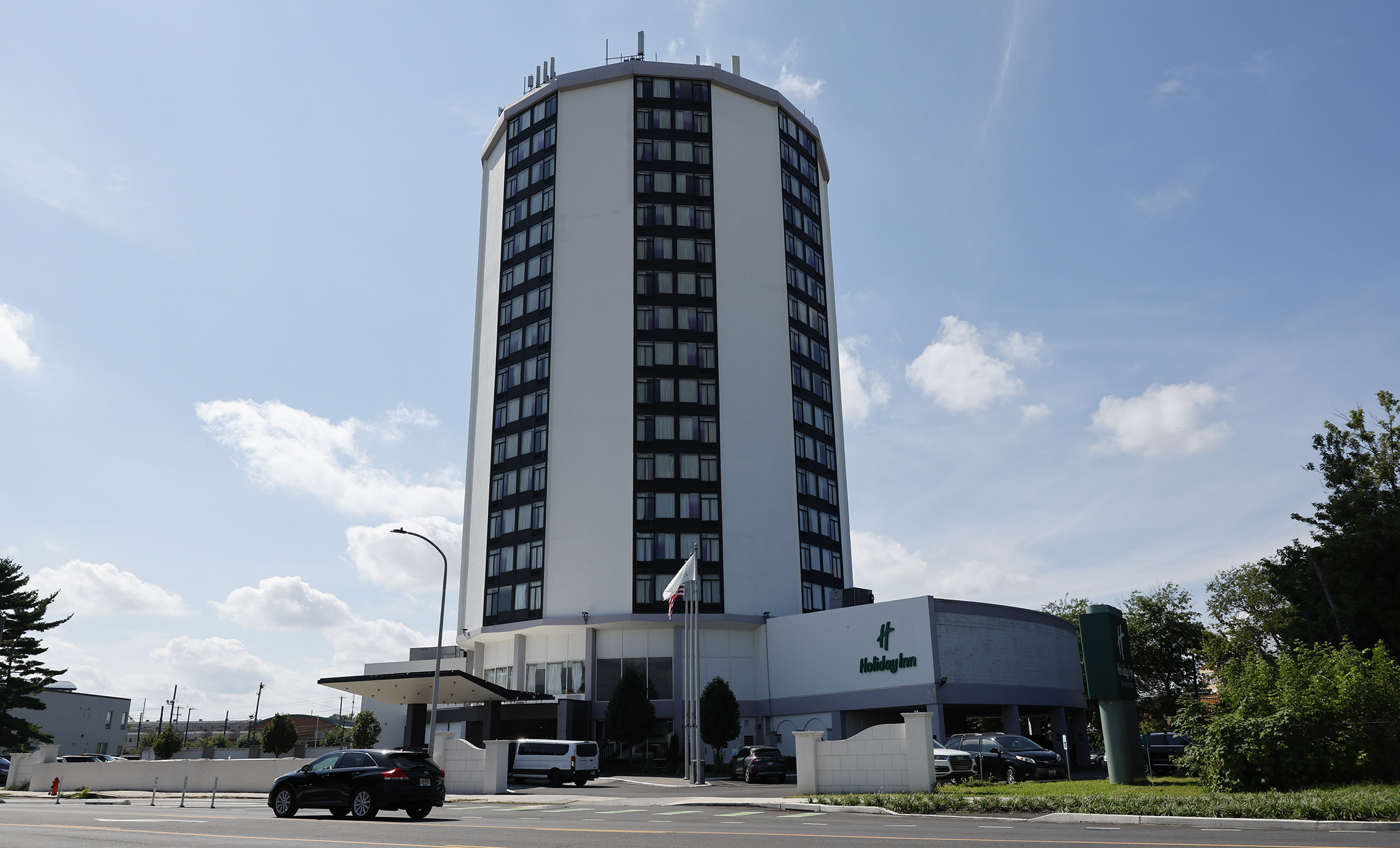
All publicity is good publicity, the adage goes, but the Penrose Hotel had a rough reputation before closing its doors in March 2020.
Online reviews paint a vivid picture of the establishment to the north of FDR Park before its post-pandemic renovation and rebrands: Bedbugs, fossilized vomit, blood splatters, gang tags, and mold encompassed with the aroma of urine, cigarettes, and weed.
“At least I wasn’t alone through this and the bedbugs keep me company,” a Yelp review from 2018 says. ”I guess you can say I am survivor but I wouldn’t recommend this to the faint of heart.”
The Justice Department accuses a New Jersey-based father-son duo, Pankaj Sheth and Rajan Sheth, among other family members, of using chronically understaffed and underfunded hotels in a state of gross disrepair, and a revolving door of business entities, to fraudulently obtain government-secured loans.
The sprawling 332-page, 133-count federal complaint, filed Friday in the U.S. District Court of the Eastern District of Pennsylvania, names as defendants seven members of the Sheth family, 21 business entities, and eight of the family’s business associates.
It asks a federal judge to order the defendants to return “all funds paid by the United States by which the defendants were unjustly enriched.”
A spokesperson for the U.S. Attorney’s Office declined to comment.
Rajan Sheth, the son, denied the Justice Department’s claims against him, his family, and their businesses.
“The business we’re in is buying distressed properties and we turn them around,” Sheth said. “There is no scheme here.”
The U.S. Attorney’s Office has been investigating the operation for more than two years, Rajan Sheth said, and the family complied with requests for documents. “Every penny” the family borrowed was paid back and they continue to operate and invest in the hotels, he said.
The family intends to fight the allegations and file a countersuit, Rajan Sheth said.
Repeated cycle
The lawsuit alleges the Sheth family and its associates obtained government-backed loans they were not eligible for because of their financial history — past defaults, bankruptcies, fraud judgments, and overwhelming debt — by transferring the ownership of over a dozen hotels in the Mid-Atlantic to straw companies.
These companies, typically limited-liability corporations, would lie to obtain a loan for a property, the suit says. The funds would go to pay old loans and enrich the Sheth family, according to the complaint, while defaulting on the new loan. The Sheths would then use delay tactics in court to prevent foreclosure until another straw company obtained a new fraudulent loan.
“The Sheths repeated this cycle many times,” the complaint says.
The family owned the hotel on Penrose Avenue since 1999, according to the complaint, and defaulted on the loan it obtained to purchase the property shortly thereafter.
The hotel has changed names multiple times in the years since, from Skyview Plaza to Penrose, Radisson, and most recently Holiday Inn Philadelphia Airport-Stadium Area. During that time, the Sheths transferred ownership and created new shell businesses that claimed to run the operations of the hotel. That was to prevent banks and the federal government from knowing about past defaults, according to the suit.
For example, in 2018, the family used a company called Penn Hospitality Management LLC to take a $5 million loan from the Small Business Administration and a $3.1 million loan from a commercial lender. The Sheths pocketed $1.8 million, the suit says, which was intended to renovate the hotel before rebranding as the Radisson.
The hotel defaulted on the 2018 loan at the end of 2020, the suit says, and the Sheths used a new straw company, 2015 Hospitality Management LLC to secure a fresh $12 million loan, which allowed them to keep control of the property.
The family also took advantage of federal COVID-19 recovery efforts, such as the CARES Act business loans and Payment Protection Program.
All told, the Sheths used the Penrose property as collateral to obtain loans worth more than $45 million, the suit says, and like at other hotels, nearly every new, larger loan was used to back pay the previous default. In other words, according to the government, a Ponzi scheme of $100 million across the various properties.
The federal complaint focuses on Penrose in the period between 2016 to 2022 but Philadelphia property records show that the hotel is still owned by Vraj Brig PA LLC, one of the business entities named as a defendant.
This time, this is about Alec Bohm, a career .273 hitter with a .734 OPS entering Monday night. That’s about 30 points better than the average major league batting average since Bohm hit the big leagues in 2020, and a slightly above-average OPS in the same span. That batting average is second-highest among the 11 everyday third basemen who have played at least 600 games at third since 2020.
He does not stink.
You’d never know that to listen to the critics.
The ones who wanted Bohm traded in the offseason.
The ones who wanted Bohm out of the lineup so Bryce Harper could move back to first base from right field, his natural position and where he was forced to return when the Phillies added infielder Luis Arraez near the trade deadline (Arraez’s arrival moved second baseman Bryson Stott to third base and Bohm to first).
The ones who went mysteriously silent over the last seven games going into Monday, in which Bohm hit .542 with four doubles, a homer, six RBIs, and a 1.426 OPS.
Monday night, he added what became the game-winning RBI.
These are the same folks who will tell you that Sixers cornerstones Andre Iguodala was overrated, Tobias Harris stole money, and Shayne Gostisbehere … yawn.
To this day, Sixers aficionados will deride Iguodala as the first casualty of Josh Harris’ disastrous ownership tenure, traded after the 2012 season as part of a package that brought Andrew Bynum to Philly for a season in which Bynum did not play. Iguodala was an All-Star that year, was first-team All-Defense two years later in Golden State, where he won four titles and the 2015 NBA Finals MVP award.
They’ll also bury Tobias Harris, who, in their minds, the Sixers chose to retain over Jimmy Butler in 2019. That’s a vast oversimplification, since there’s no real reason to believe the Sixers would have been better with Butler, who benefited from the presence of Harris that season, when Harris scored 18.2 points and pulled 7.9 rebounds and played well in the playoffs. Harris has had issues in other playoff appearances, but it’s foolish to let them diminish his overall body of work.
But this isn’t about whether Harris was better than Butler. It’s about whether Harris was a good player. And he was. Maybe not good enough to warrant a maximum contract, but he was really good, and, on a team that gave players playoff games off for having upset tummies, Harris showed up; only eight players in the NBA played more minutes between 2019-20 and 2023-24 than Harris.
Jimmy Butler (left) benefited from the presence of Tobias Harris in 2019.CHARLES FOX / Staff Photographer
As for “Ghost,” the Flyers traded him to Arizona in 2021 for salary-cap relief. He’d accumulated 219 points in six seasons by then, but nobody much cared that he was gone. He’s got 243 points in the five seasons since, and he just won the Stanley Cup with Carolina, while the Flyers are still looking for a defenseman to run the point on their power play.
I’ve been keeping this one in my holster for a few weeks, waiting for Bohm to surge. Even with his recent proficiency, Bohm is hitting .242 with a .684 OPS. He’s not having a great year, but few players have great years every year. Besides, there are obvious reasons.
First, he’s in a contract year. He’ll be a free agent for the first time after this season. That’s a lot of pressure on any player regardless of their personal situation.
Second, he’s got a personal situation. As the season began, Bohm sued his parents for mismanaging his money. The suit remains active, the next hearing is scheduled for Sept. 3.
Third, Bohm changed positions. He went 3-for-16 in his first five games at first base.
Should stud players be able to play through the noise and changes? Yes. Is Alec Bohm a stud player? Probably not.
But he does not stink.
For some, Bohm, who turned 30 two weeks ago, is the embodiment of Gen Z entitlement.
Alec Bohm will be a free agent for the first time after this season.Yong Kim / Staff Photographer
He’s a first-round pick, No. 3 overall in 2018, who signed for a nearly $6 million bonus and has made almost $30 million. He’s also 6-foot-4 and weighs 218 pounds — both likely outdated underestimates — but has just 14 homers this season and, since he’s 16 shy, he probably won’t break the 100-homer mark as a Phillie, assuming they don’t re-sign him.
Further, in 2022, after Bohm made two errors, he said, on camera and on the field, “I (bleeping) hate this place.” He apologized, and he has been effusively pro-Philly since, but, for some, this was unforgivable.
Also, he was an All-Star in 2024. He has not been an All-Star caliber player since, but he hasn’t stunk, either.
Finally, he pouts. He sulks. He has not been alone in this behavior — Taijuan Walker and Nick Castellanos come to mind — but now it’s part of his brand. Of course, the Phillies released both Walker and Castellanos this year, but less for their attitude than for their aptitude.
Bohm remains because his aptitude outweighs his occasionally sour attitude.
Dave Dombrowski, clearly a learned classicist, paraphrased the Greek aphorism “Familiarity breeds contempt” when asked recently why he didn’t trade Bohm at the deadline:
“When you see a player every day, you have a tendency to look at their downside.”
And that’s a choice.
As of Monday, Bohm’s tenure as a Phillie included just 37 more regular-season games. It would be wise to choose to appreciate him.
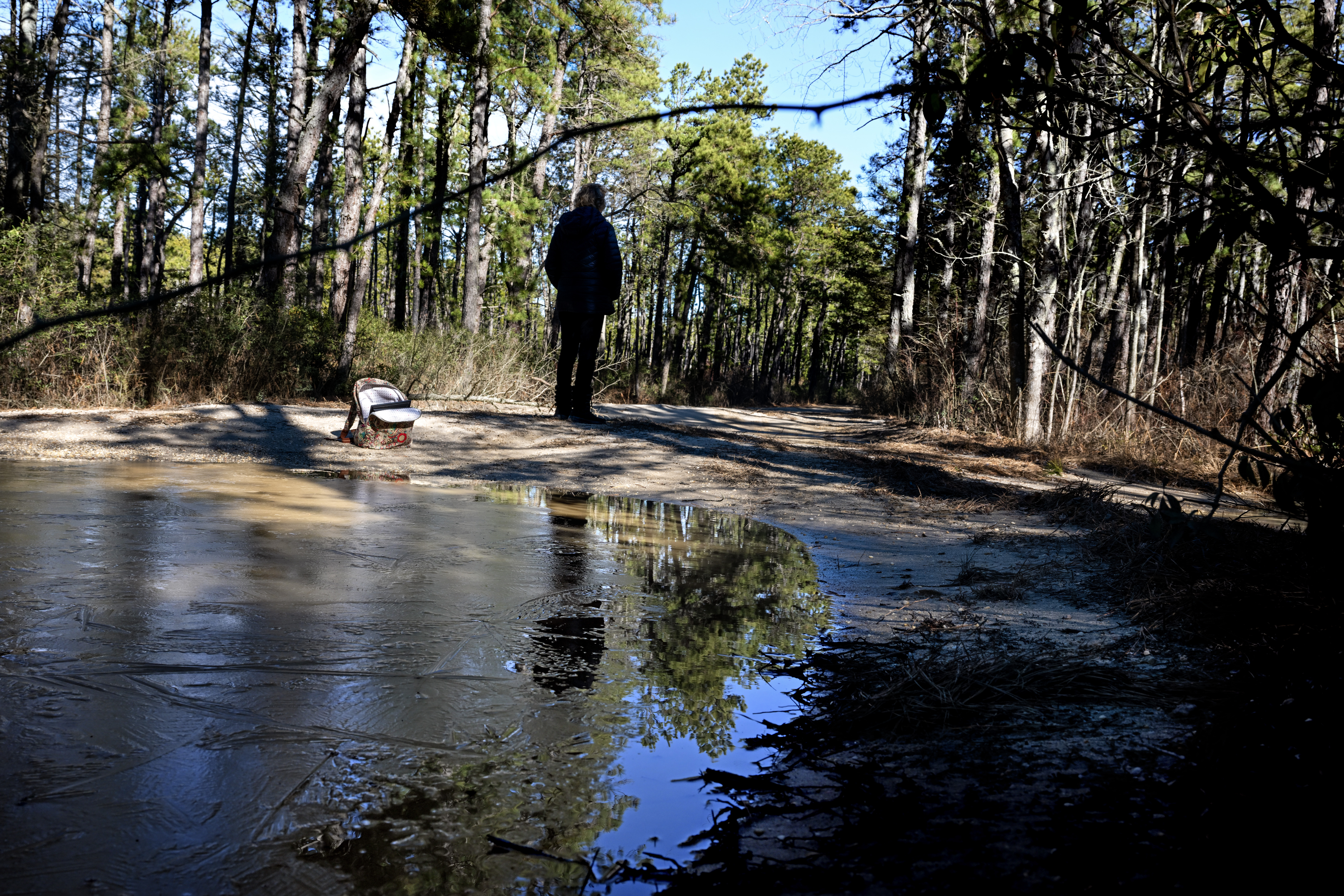
Pine after pine rolls by on a windy winter day, until the road becomes sand and snakes its way through this wild stretch of New Jersey.
For millions of visitors, these Pine Barrens are a magical, mysterious place, full of folklore. For Sue Quackenbush, the pines feel ominous, a place to fear ever since her daughter, Danielle Lopez, disappeared there in April 2024.
“This isn’t grief, yet. This is terror,” Quackenbush said on a January afternoon there.
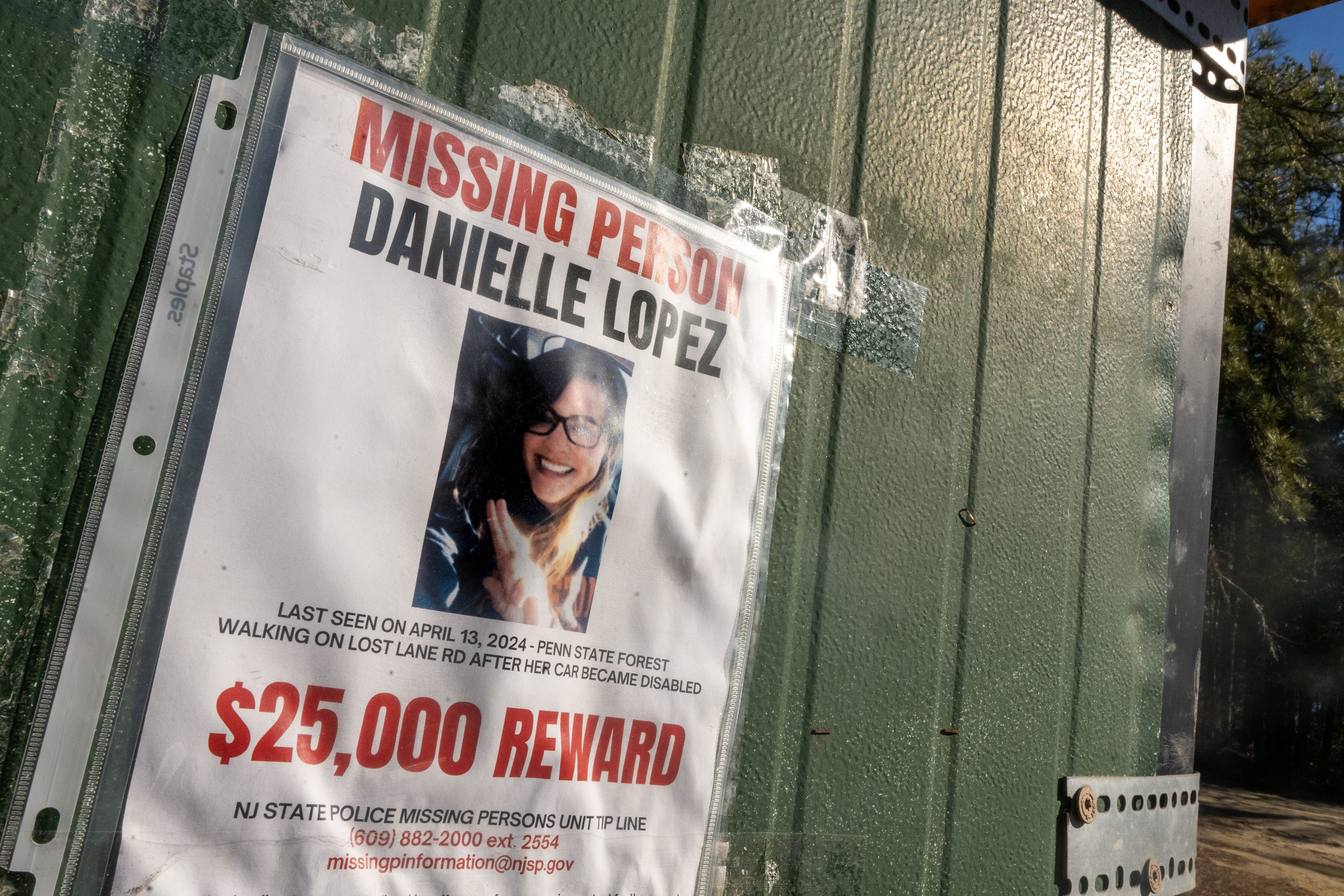
Sue Quackenbush is on Lost Lane Road in Woodland Township on Jan. 12. In April, 2024 her daughter Danielle Lopez disappeared farther up the dirt road while camping with her boyfriend in New Jersey’s Brendan T. Byrne State Forest. She is offering a $25,000 reward for information leading to solving the case.Tom Gralish / Staff Photographer
Vanished from camp
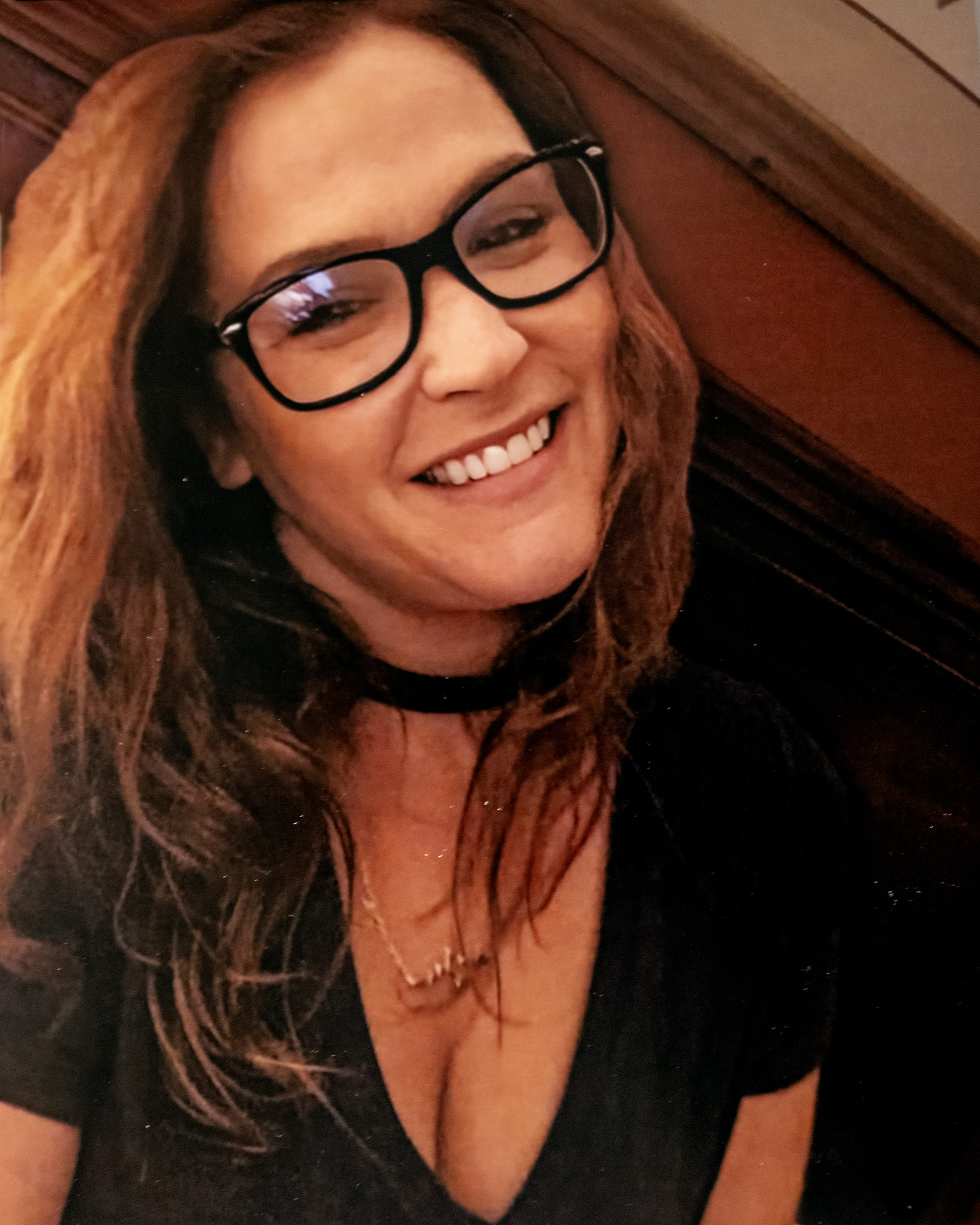
Lopez was 37 at the time of her disappearanceand staying with a boyfriend, James Scott Dunn, at a campground in Brendan T. Byrne State Forest, about 16 miles north of Lost Lane, in April 2024.
Just after 9 a.m. on April 13, 2024, Lopez was captured on surveillance buying coffee at a Burlington County Wawa, not far from the campground.
Later on April 13, around 6 p.m., witnesses saw her walking alone on Lost Lane, a desolate, sandy road pocked with muddy puddles deep in the Pine Barrens.
She was never seen again.
Quackenbush reported Lopez missing 11 days later on April 24. Dunn went to see the police a week later, at Quackenbush’s urging, and was arrested on unrelated drug charges. According to the New Jersey Department of Corrections, Dunn was sentenced to five years in prison on Oct. 25, 2025, on those charges, along with a theft by deception charge. He is currently incarcerated at South Woods State Prison.
Lopez’s car, a 2008 Hyundai Accent, was not discovered until May 1, 2024, disabled and abandoned on Lost Lane, in one of the many muddy holes that dot the road.
Quackenbush, whom the Inquirer has been speaking to since January, said her daughter, known as “D-Lo,” was vivacious and loud. She also had some issues with alcohol, and had sought help for it in the past.
“There’s no denying Danielle had alcohol issues. I’ve never tried to mislead or cover that up. There’s no denying that most people don’t go camping in April … in New Jersey,” she said.
The investigation
The New Jersey State Police are investigating Lopez’s disappearance and have declined to comment to The Inquirer on the case.
In a social media post on the two-year anniversary of her disappearance, police said they were still “seeking the public’s assistance in locating Danielle and gathering any information related to her disappearance.”
In 2024, investigators told NBC’s Dateline that witnesses who saw Lopez walking on Lost Lane that evening on April 13 were filming with a GoPro camera. Based on the footage, investigators told Dateline that Lopez was alone and “did not appear to be in distress” in the video, which has not been released. Lopez allegedly asked those witnesses to help push her car out, but they didn’t.
A family photo of Danielle Lopez, who disappeared in April 2024 while camping with her boyfriend in New Jersey’s Brendan T. Byrne State Forest.Courtesy of Sue Quackenbush
Investigators told Dateline they found “multiple items” belonging to Lopez in her car, but not her phone. Police told Dateline there were no signs of suspicious activity associated with the abandoned car.
In an interview with The Inquirer in prison, Dunn said he and Lopez were “homeless” and living in and out of hotels before moving to the campground, which has a 14-day camping limit.
He discussed a handful of alibis that kept him away from the campground for several days: He said he picked up a motorcycle, visited friends, hotels, and a truck stop. When he returned to the campground after April 13, 2024, he said it was in “disarray.”
“And I was wondering where Danielle was,” he said.
(A New Jersey Department of Corrections spokesman sat in on The Inquirer’s interview with Dunn and recorded it for “recordkeeping.” NJSP investigators later shared the recording with Quackenbush. The NJSP did not return a request for comment on why they shared the interview with Quackenbush.)
A mother’s grief
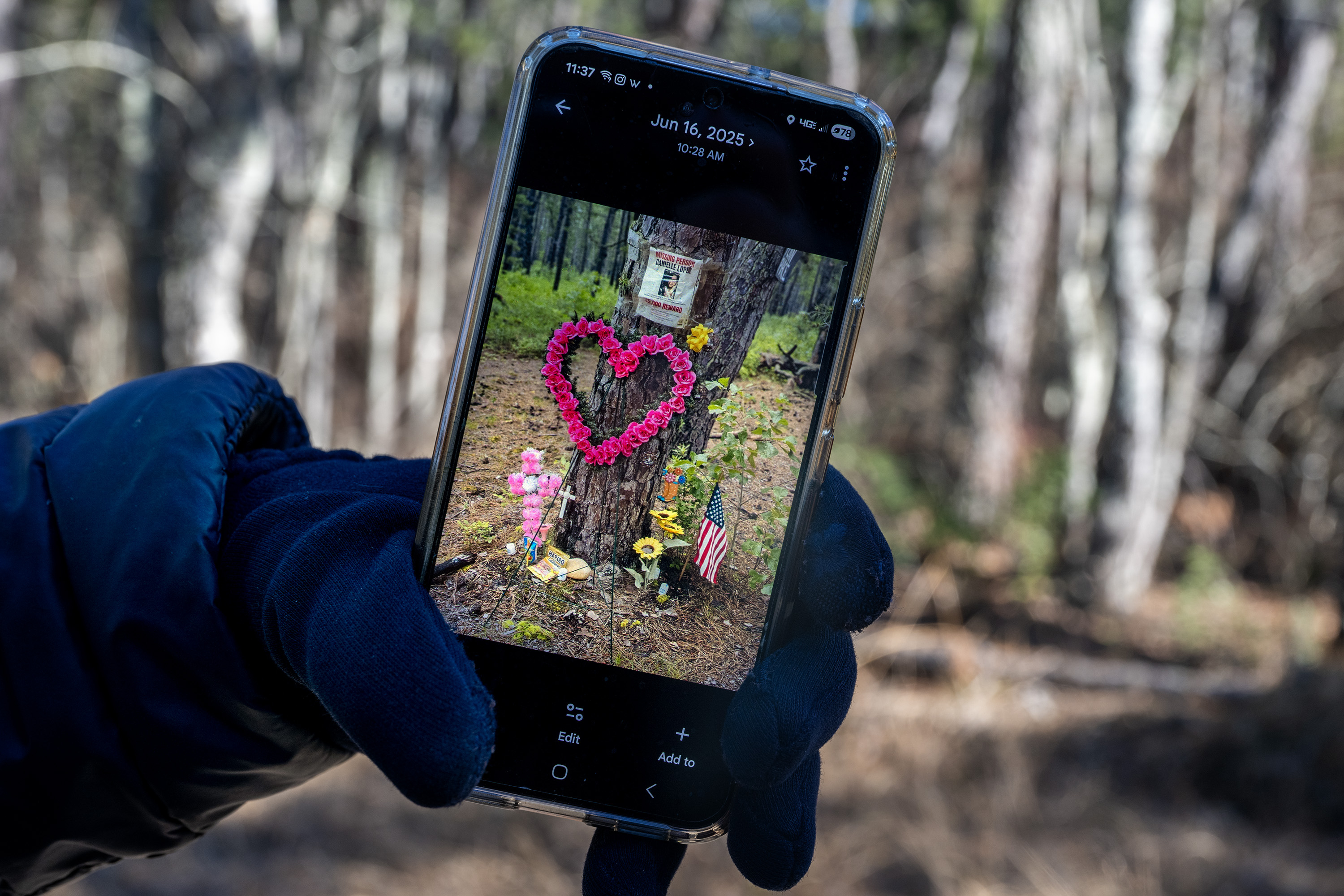
Quackenbush now brings pepper spray when she drives to Lost Lane from Pennsylvania, and her voice trembles a bit as she gets closer to the desolate road where her daughter was last seen alive. On a January afternoon, a large puddle stopped Quackenbush and The Inquirer from visiting the memorial she erected near the site. The water was too murky, and there was no way to tell how deep it was.
Quackenbush suspects her daughter wanted to see Lake Oswego near Lost Lane when the car got stuck, and believes she could have walked the 16 or so miles back to the Brendan Byrne campground, if she knew the way.
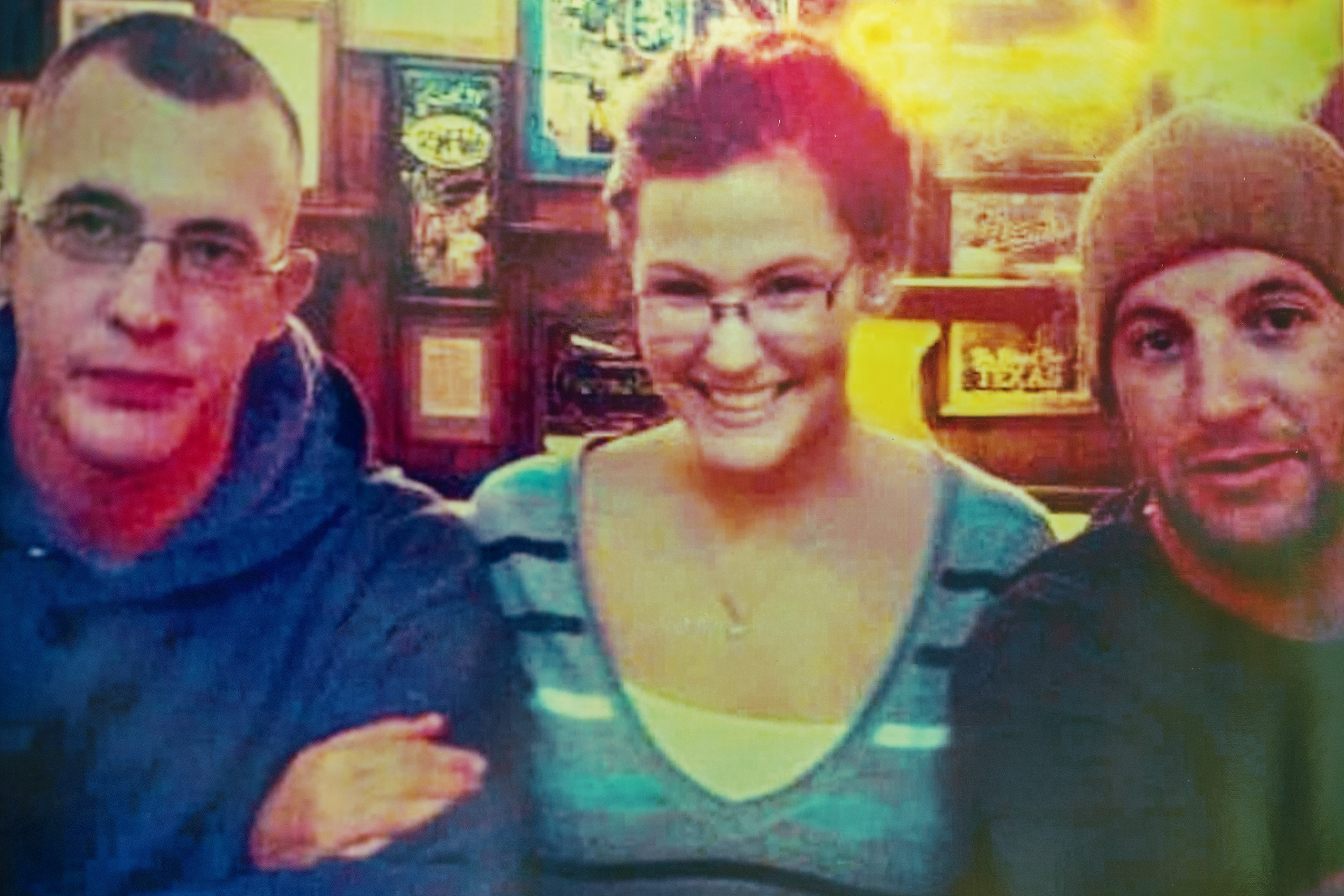
A family photo of Danielle Lopez with her two brothers. She disappeared in April 2024 while camping with her boyfriend in New Jersey’s Brendan T. Byrne State Forest.Courtesy of Sue Quackenbush
Quackenbush holds on to hope, the belief that her daughter is alive, because she suffered so deeply in the past.
“More than most,” she said.
Quackenbush lost her eldest son, Eric, to suicide in 2015. Her younger son, Michael, a Marine who served in Afghanistan, died in a Florida car crash in 2016.
Lopez struggled with loss as well, Quackenbush said, including the deaths of her grandfather in May 2020 and her father a month later. Roscoe, Lopez’s beloved rescue dog, had to be euthanized a few months before her disappearance.
A reward poster on a parking lot restroom on Lost Lane Road in Woodland Township. In April, 2024 Sue Quackenbush’s daughter Danielle Lopez disappeared farther up the dirt road while camping with her boyfriend in New Jersey’s Brendan T. Byrne State Forest.Tom Gralish / Staff Photographer
Quackenbush is offering a $25,000 reward to anyone with information that could solve the case. In January, she said many tips have come in as a result. She’s also been on podcasts and is an administrator of a Facebook group dedicated to the case that has over 1,500 followers.
“Danielle, no day shall erase you from the memory of time,” she wrote on Facebook on the second anniversary of her disappearance.
Sue Quackenbush holds a collage of photos of her daughter Danielle Lopez.Tom Gralish / Staff Photographer
In January, Quackenbush cried during her visit to the Pine Barrens as she clutched photos of her daughter and sons. The memorial for Lopez was still a 20-minute walk beyond the puddle, on Lost Lane.
“It’s my goal to get the name of this road changed,” she said.
Sue Quackenbush holds a photo she took last summer of the memorial she created for her daughter.Tom Gralish / Staff Photographer
Anyone with information is urged to contact the New Jersey State Police Missing Persons Unit at (609) 882-2000 ext. 2554 or email missingpinformation@njsp.gov.
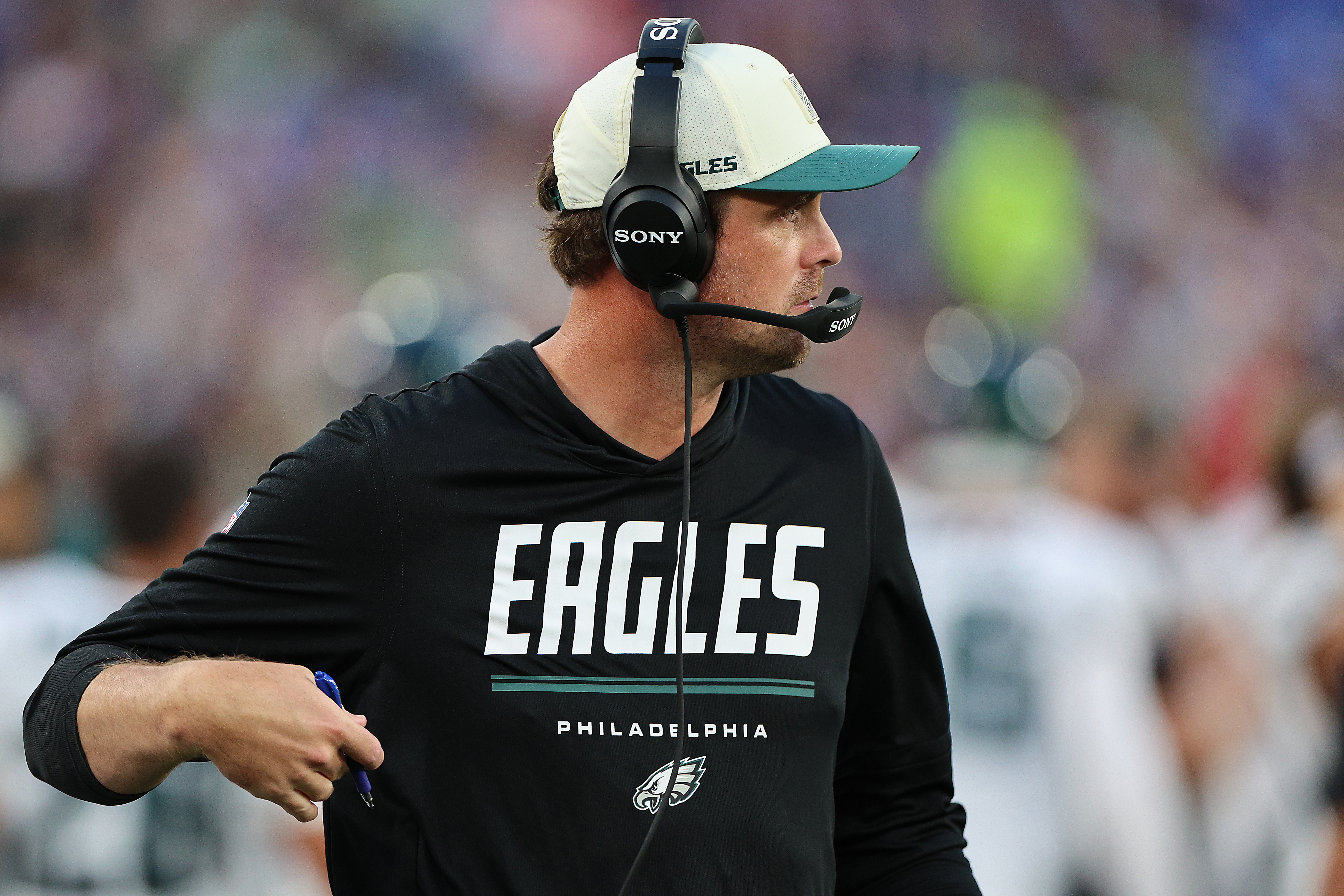
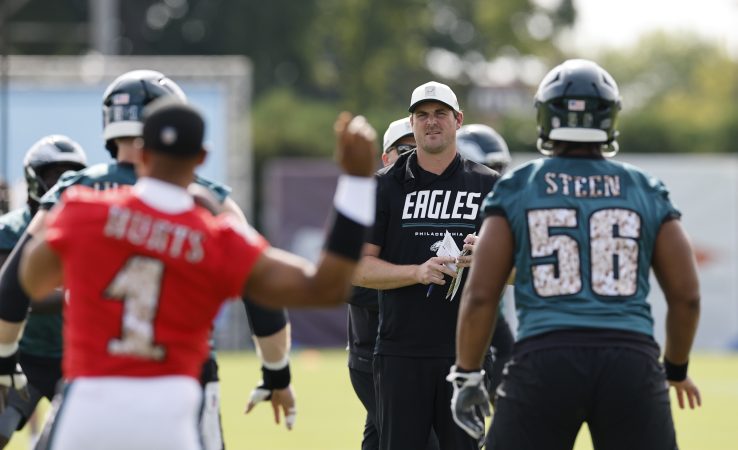
Much like Sean Mannion’s first-ever play-calling experience in an exhibition atmosphere at the East-West Shrine Bowl earlier this year, the first-year Eagles offensive coordinator’s debut on Saturday night didn’t offer detailed play designs nor gaudy production.
The Eagles’ 24-7 loss to the Ravens did, however, give the 34-year-old an opportunity to call and sequence plays at the NFL level and provided a glimpse into the many influences that could ultimately shape what the offense, in full, will look like during the 2026 regular season.
And there were encouraging signs that the offense has been modernized this offseason to keep pace with some of the league’s potent attacks.
Here’s what the film showed in Mannion’s first stab at calling plays for the Eagles:
Outside zone leads the way in run game
All spring and summer, there was an expectation that the Eagles would move toward running the Sean McVay/Kyle Shanahan outside zone run scheme as a key tenet of the run game, and the results from the preseason opener backed that up.
Six of the 12 called run plays (including those that included post-snap penalties) were of the outside run variety. Four of them gained 8 yards (and two were called back for holding), and one went backward for a 3-yard loss because of a missed block.
There will be growing pains implementing the new blocking style, which requires the offensive linemen and tight ends to create vertical seams to allow the running back to find a lane and go while stretching the defense horizontally.
Counted 6 reps (including penalties) of the #Eagles running outside zone runs in their preseason opener, 4 to the right side of the formation, 2 to the left. No surprise most productive drive in first half came when two runs popped to the right side. Missed blocks by WRs and at… pic.twitter.com/auUyj3qL1F
With the Rams, McVay paired the duo run to his patented outside zone run scheme, thriving when implementing it from under center.
The Eagles ran duo three times from under center on Saturday, and it was the second-most called run scheme on a night where the ground game was hardly present in the second half. The run scheme allows the back to get downhill quicker and opens up play-action passing opportunities.
Can see some Sean McVay influence on the #Eagles run game, they called under center duo three times in the preseason opener. Will be a nice complement to the OZ runs if they choose to implement it moving forward into the regular season. pic.twitter.com/xLfQKdOv22
For the other three runs, the Eagles sprinkled in under-center split zone with tight end Eli Stowers coming from the back side of the formation to block the play side edge rusher, inside zone from shotgun, and a zone-read keep from Cole Payton with a tight end leading the way on the edge.
That last run should be particularly noteworthy should Jalen Hurts reemerge as a key part of the running game.
Pre-snap motion limited, but effective
Across the entire game, there weren’t many pre-snap motions or shifts as Andy Dalton and Tanner McKee got the offense set on their respective drives. In fact, of the six pre-snap motions that occurred, it was McKee who signaled them the most, accounting for five that Mannion dialed up.
There were flashes of success because of how it made the defense react. On McKee’s 13-yard pass to Darius Cooper, he motioned Stowers away from a bunch set on the left side of the formation to align at tight end off the line to the right, and changed Baltimore’s off-ball linebacker from a second-level defender to a standup edge rusher. It opened a lane for Cooper to get hit in stride on a slant route.
Another example of presnap motion syncing up with the snap of the ball and defining the read on quick game. Tanner McKee sends over Darius Cooper, bumps out the field side corner to give Eli Stowers room to catch the out route vs. Cover 2 and set up manageable 3rd down distance. https://t.co/ditHR1NNGDpic.twitter.com/9rIgWOA9Ev
On another occasion, in the quick passing game, Cooper went from McKee’s right to his left on a motion, bumping the corner aligned over Stowers to outside the numbers, creating room for McKee to find the rookie tight end for a short gain.
There was also an example of the offense changing its formation after breaking the huddle. After coming out in 10 personnel (one running back, zero tight ends), Carson Steele motioned to outside receiver, creating an empty backfield for McKee. It forced Baltimore to show its blitz and McKee was able to identify it and get the ball out.
From a presentation perspective, I think it just makes more sense to try and give the defense a completely different formational look. #Eagles go from 10 personnel to empty, run a basic stick concept, but motion Carson Steele out of the backfield. Tanner McKee hits hit hot route… https://t.co/EK7GELCTwypic.twitter.com/cdseYBZB3z
Compared to last year’s offense, there already seems to be a different approach to formation presentation. The more an offense can confuse the defense with motions and shifts, the more answers it can provide to a quarterback and keep defenses guessing.
Generating ‘layup’ throws
Under-center play-action throws have been an element of the offense the Eagles have shown during training camp, and carried over into the preseason opener.
Dalton, McKee, and Payton each had an opportunity to run play-action from under center, with the first two quarterbacks running bootleg actions off it.
On both of the play-action bootleg actions on Saturday night for the #Eagles, they ran a similar concept and hit the flat route coming across the line of scrimmage for easy, 4-5 yard gains (second play had presnap motion, too). As teams take those away, can open up the… https://t.co/cC7AQ7rCBYpic.twitter.com/lOZkB1TmrN
The route combinations off the bootleg action — a deep corner route, a back side crossing route, and short flat route — are part of the McVay/Shanahan style of offense and can stress a defense that must respect the wide zone run threat.
As teams prepare for that threat of play-action, the other route options will open up if the Eagles can generate those types of easy completions that weren’t always available for Hurts last season. Those quick-hitting throws on the move also allow for receivers to generate big plays in space.
One play, from under-center, I kept seeing from that style of offense (and from Ben Johnson, too) is the bootleg with a flat route, deep corner route, and a backside crosser. Easy way to settle in your QB, makes it hard for defenses to cover ground to cover, and a nice way to… pic.twitter.com/NoRj29XsEE
As the Eagles were deciding their next offensive coordinator hire, Josh Grizzard, who previously worked as a the Buccaneers’ pass game specialist, then was promoted to offensive coordinator, was among the candidates.
Mannion has mentioned the offense would be a “blend” of various approaches and Grizzard, who was hired as Eagles pass game specialist, appears to have his fingerprints on the passing game — especially in third-down situations.
Last one (for now) but this one is exclusive to Josh Grizzard under Liam Coen in 2024 (from the McVay tree) but I love the concept of having bunch sets and having an in-breaker and out-breaker clearing the way for an option route on third downs, to sit at the sticks or convert it… pic.twitter.com/tVCic0vR1x
A play Tampa commonly ran in 2024, when Grizzard presided over the third-down offense, featured a bunch formation that had two receivers clear out and created space for an option route for the third receiver to sit in a vacant area in zone coverage, or take advantage of a defender’s leverage in man coverage.
On a couple of third downs in the preseason opener, the Eagles showed a similar type of play design: The two receivers ran in- or out-breaking routes and the tight ends got close to the first down line or found vacant space to turn and prepare for a pass to come their way, which was often a tight end.
Can see some of Josh Grizzard's fingerprints on the #Eagles passing game, especially in third-and-medium situations. During the preseason game, the Eagles dialed up bunch set with 2 routes clearing out and an option route (which was mostly settling in space ahead of the sticks). https://t.co/ScWE72RIy7pic.twitter.com/vsv6XUXApI
Another play Grizzard has seemingly brought from Tampa is mesh rail, which features two inside receiver shallow crossing routes, a route sitting over the middle of the field behind the mesh action, an outside receiver running a deep route, and a running back running a wheel route out of the backfield.
The Bucs would catch teams off guard by quickly lining up and running the play while the defense was still getting set. The Eagles utilized this vs. the Ravens as they moved down the field on their lone touchdown drive.
While the Eagles’ offense was vanilla with the objective of not revealing much, Mannion’s scheme change appears to match the expectation of the style of offense the team intends to run. The key will be the execution, and limiting the mistakes that prevented Mannion and the offense to get into a true game flow on Saturday night.
We won’t see the offense in full until the season opener, but Saturday offered a glimpse of what the long-term vision can look like when plays are executed.
Chances are you’ve heard that before, and that’s kind of the mantra it appears Eagles offensive coordinator Sean Mannion will continue to employ despite the Birds’ less-than-impressive performance against the Baltimore Ravens on Saturday.
Sweeping changes aren’t on the table, it would appear — well, one, but it doesn’t pertain to the team. Mannion, who noted that during planned joint practices and a preseason game against the New England Patriots, he’ll call plays from the booth as opposed to the field, as he did against the Ravens.
Why?
“I think it’s an opportunity to get a feel for both,” Mannion said on Monday. “I think it’ll be an interesting perspective, but, you know, I think for this preseason, an opportunity to kind of experience.”
Despite Saturday’s score, there were positives Mannion noted he’s focusing on going forward. Inquirer writer Ryan Novozinsky dives into what Mannion said and more right here.
It’s Tuesday, Philly. Expect some rain today, with highs in the low 80s.
Kyle Schwarber has a .368 on-base percentage this season.Monica Herndon / Staff Photographer
Going into the last week of July, the Phillies reached base at a .303 clip, tied for last. But they also had the fourth-best hard-hit rate and were near the middle of the pack in barrel rate, which measures how often a hitter makes contact with the optimal combination of exit velocity and launch angle.
Maybe it was bad luck. The Phillies were batting .281 on balls in play. (Major league average is .289.) Or maybe it was self-inflicted. As a team, they swung at the second-highest rate of non-strikes (34%).
And on Monday, Cristopher Sánchez became the first MLB pitcher to earn 16 wins this season as the Phillies held off the Marlins, 6-5.
Next: The Phillies continue their series against Miami at 6:40 p.m. tonight (NBCSP). Zack Wheeler (10-4, 2.89 ERA) will start for the Phillies. The Marlins have not announced a starter yet.
Manager Ryan Richter (center) celebrates after the Union’s 3-2 win over New York City FC at Yankee Stadium on Sunday.Philadelphia Union
So the Union are back in the win column. In part was due to gutsy play to come from behind, this time against New York City FC, but it was also a test put out by interim manager Ryan Richter.
“It was more about challenging the guys to just play better,” Richter said after the Union’s 3-2 victory. “To give more, to be more connected when they didn’t have the ball.”
Richter didn’t call out guys specifically he urged to step up and put the edict out, but as Inquirer writer Jonathan Tannenwald explains, he didn’t have to, given who outperformed in the second half.
Now, the Union hope to do the same against league-leading Miami on Wednesday (7:30 p.m., Apple TV).
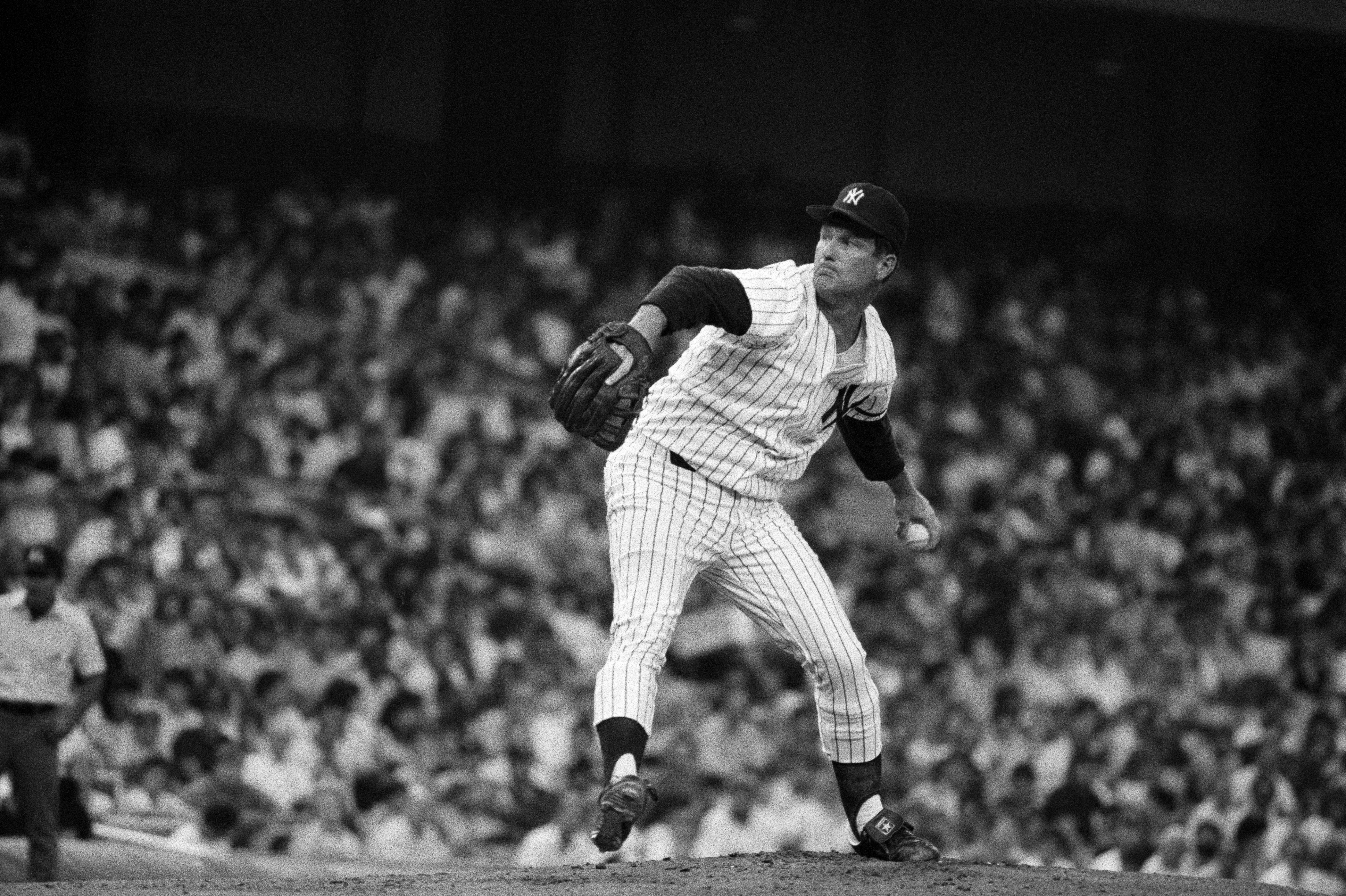
Former pitcher Tommy John, who died Saturday, was a teammate and friend of Phillies manager Don Mattingly. LARRY C. MORRIS
Tommy John is widely known across the baseball world for the elbow surgery that bears his name, one which has revived the careers of thousands of pitchers.
But to Phillies interim manager Don Mattingly, he was better known as a great teammate and a fellow Indiana native.
John died Saturday at age 83. Yesterday, Mattingly took some time to remember his Yankees teammate, as the duo played together in 1982 and again from 1986-89.
On this date
Aug. 18, 2016: Jamaican sprinter Usain Bolt wins an Olympic gold medal in the 200 meters for the third straight time, this time at the Summer Games in Brazil with a time of 19.78 seconds.
“The notion that throwing a pick during training camp should serve as any kind of referendum on any NFL starting quarterback is so stupid that it could gain traction only on X.” — Sielski’s latest looks at what people are saying about Eagles quarterback Jalen Hurts on social media entering the season. Read that and more in his latest op-ed.
🧠 Trivia time
For all of the Eagles fans pining for the start of the season, it’ll be here before you know it. Until then, see if you know this: what number did Eagles defensive legend Reggie White wear in his rookie season?
A) 90
B) 92
C) 91
D) 95
What you’re saying about the Phillies
We asked: What will it take for the Phillies to make the playoffs and go on a run?
More consistent hitting over the stretch to back up the starting pitching. Hitting that was evident during the recent Twins series must continue. The bullpen must pull its weight; the top three starters are excellent and give them a chance to win with almost every start. This is probably the last rodeo for this group. Perhaps they have reached their peak as a team, and there is very little upside to keeping them together for yet another season. — Bill B.
What will it take for the Phils to make the playoffs? Nothing special. Just each guy playing up to his capabilities. No mysterious slumps (looking at you, Brandon Marsh). They are a better team on paper than Atlanta or San Diego or Arizona or the Cubs. Now they need to play that way on the field. With their three top starters, they could go deep in the playoffs. Very deep. — Dirk D.
Right now I am somewhat pessimistic about the Phillies’ playoff chances. Going to take a big turnaround in both hitting and pitching to make it happen. Phils are 22nd best in batting average and 15th in runs scored. Marsh at .274, Harper at .256, Turner at .247, and JT at .215 are not going to do it. Very questionable relief group, and with Nola at a 5.33 ERA and Painter at 6.43, and Nola leading all MLB pitchers with 30 home runs allowed, it is not looking good. Maybe Mattingly has some magic he can perform, but I am not betting on it. — Everett S.
Consistency. They need to be at their best and go on a run. They have a good start but need to keep it up. The bullpen, starters, and lineup need to do what they just did against the Twins. As Alec Bohm said in his postgame interview after the Saturday win, he needs to just make contact and not try to hit the ball out of the ballpark. And they need to take advantage of their schedule and win series against poorer teams. — Mitch B.
We compiled today’s newsletter using reporting from Ryan Novozinsky, Lochlahn March, Scott Lauber, Jonathan Tannenwald, Mike Sielski, Gabriela Carroll, Mia Messina, Jeff Neiburg, Conor Smith, and Ariel Simpson.
By submitting your written, visual, and/or audio contributions, you agree to The Inquirer’s Terms of Use, including the grant of rights in Section 10.
Thanks, Philly. We’ll catch you tomorrow. If you can’t sleep tonight, ESPN is showing a replay of the Corgi races at Emerald Downs from 2023 at 4 a.m. on the Ocho. No, seriously.— Kerith
There was a time when Sam Brown thought his college football career was over.
Before transferring to Temple from Rutgers this past offseason, the running back was limited to 16 carries for 38 yards during an injury-riddled 2025 season with the Scarlet Knights.
“There was a point where I didn’t really want to play anymore,” said Brown, a fifth-year senior from La Salle College High. “It was a lot on me mentally. Injuries were weighing on me a lot, and I didn’t want to be in a situation where I got hurt again.”
Brown has been hampered with injuries throughout his college career. He dealt with a season-ending lower-body injury in 2024 which lingered into 2025, when he played in just three games. As a freshman in 2022, , he suffered a broken foot in the middle of the season. His sophomore year was his only complete season; he had 216 yards and two touchdowns in 12 games.
Before his foot fracture in his freshman season, he had rushed for 374 yards and three touchdowns. Now, in his final year of college, he’s looking to get back to that.
“I wanted a fresh start,” he said. “I wanted to go somewhere that was definitely home-oriented, with a great coaching staff and great teammates. That is what went into my decision. And I met with everyone when I took my visit. It just felt like the right place and the right fit.”
‘Can’t just give up’
The injuries took a physical and mental battle on Brown. But he spent most of his life playing football, so walking away wasn’t going to be easy.
“I noticed that [quitting] wasn’t the right way to go about things,” said Brown. “I just thought [about] all the sacrifices that my parents made for me since I was 4 years old playing football, and I was like, I can’t just give up. I have another year left, and I need to take advantage of that.”
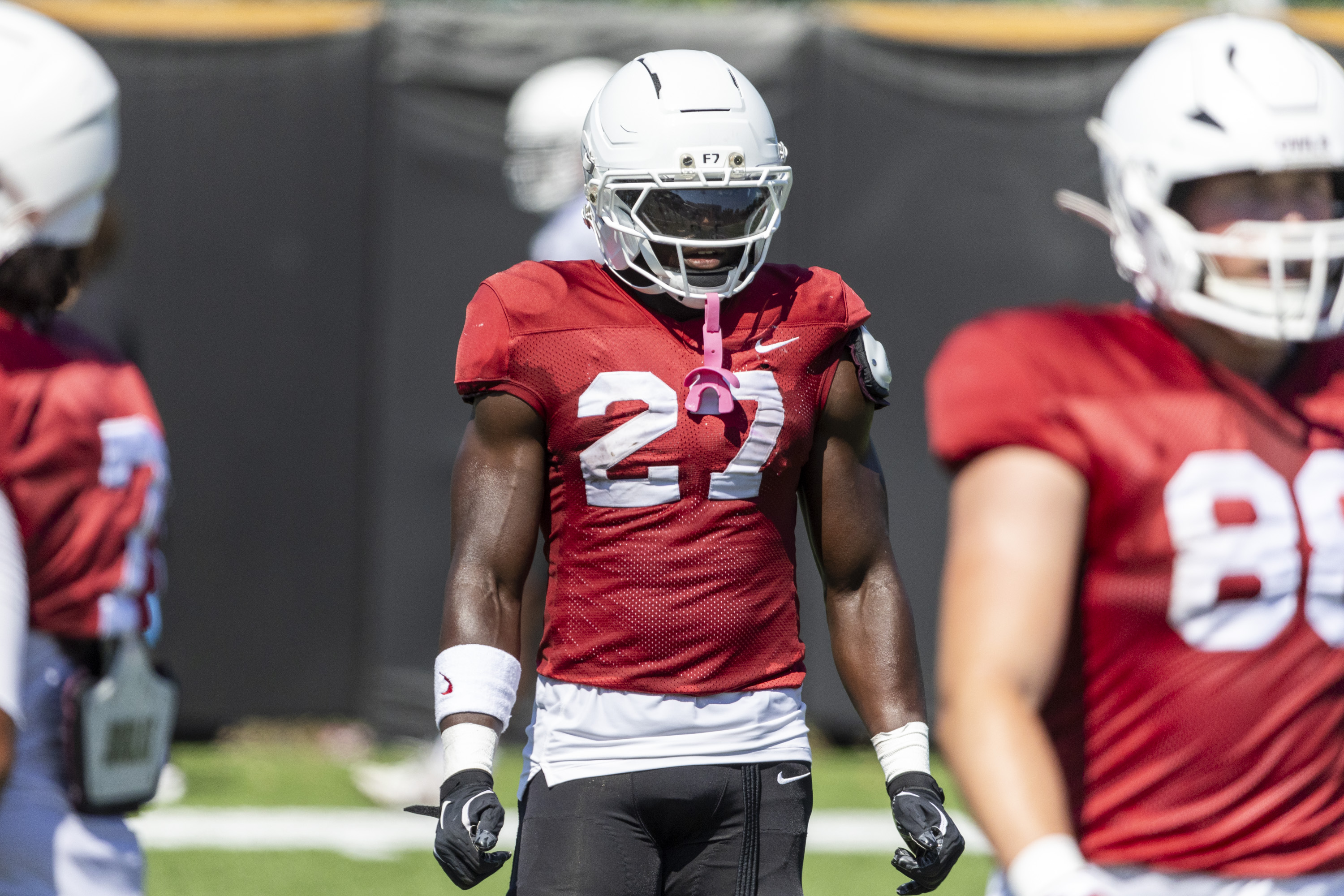
Sam Brown could be a key piece to Temple’s offense this season.Tyger Williams / Staff Photographer
But it’s taken Brown some time to feel like himself again.
“It was definitely tough,” he said. “But my coaching staff at Rutgers and I, we already had kind of talked, and we kind of knew what the plan was for me [last] year. Even through that season, I wasn’t myself.”
When Brown entered the transfer portal, he had an idea of what he wanted in a new school. As it turned out, that school wasn’t entirely new to him.
While playing for La Salle College High, Brown, who grew up in Hunting Park, was recruited by Temple out of high school, albeit by a different regime.
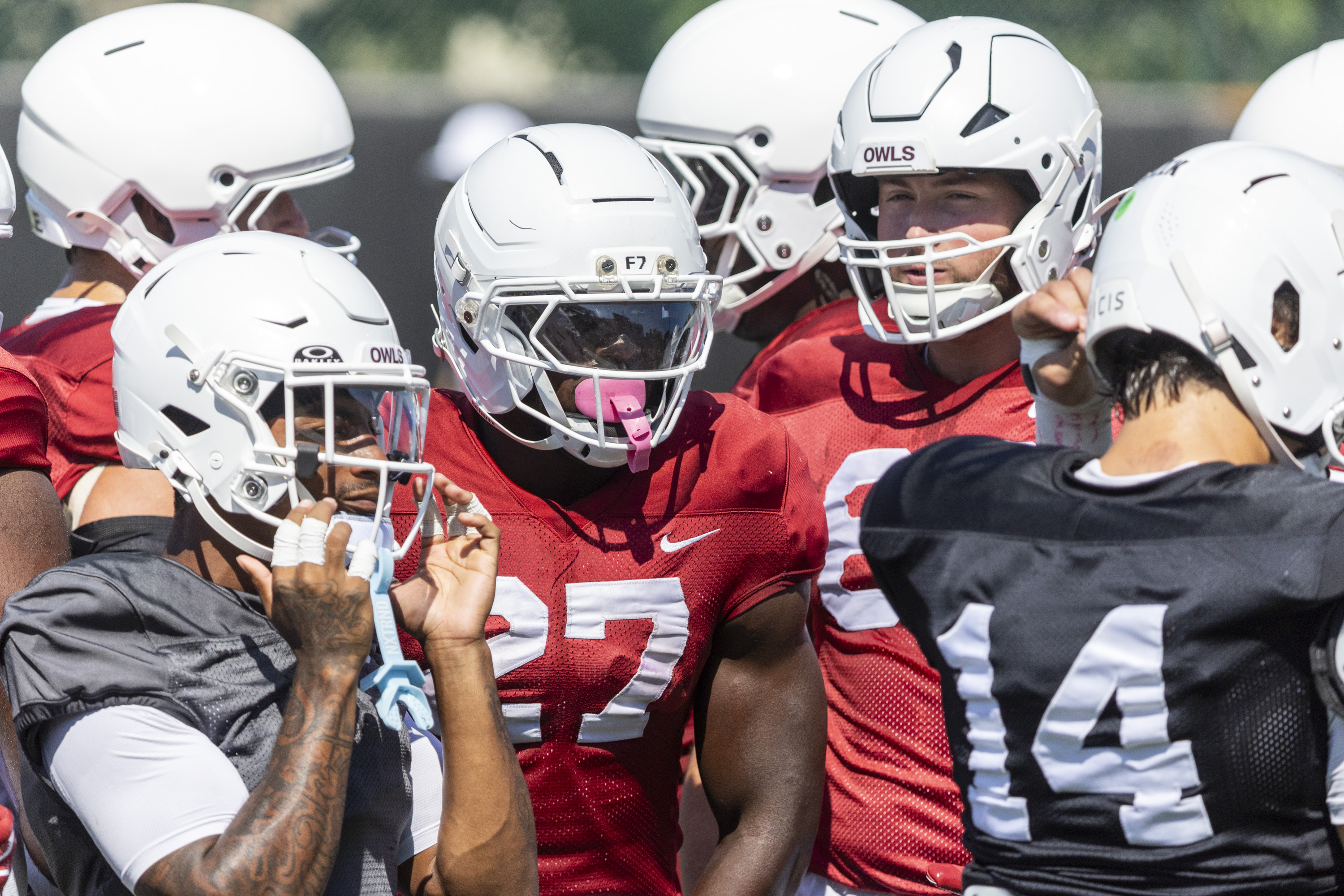
With the Owls losing one of their top producers in Jay Ducker to graduation, the starting spot was open. Brown has been competing in the backfield with Hunter Smith and Keveun Mason.
“I think it’s a testament to his ability to fight through adversity,” said running backs coach Andrew Pierce. “He could have easily just said, ‘I’m done with football after injuries and all of those things,’ he could have said, ‘Football’s over for me, I’m going to move on.’ It’s just his ability to put his head down and work every single day, and I think that just improved the room overall.”
Another opportunity
Brown came into spring practices, getting reps with the second- and first-team offenses but quickly built separation between himself and the rest of the room.
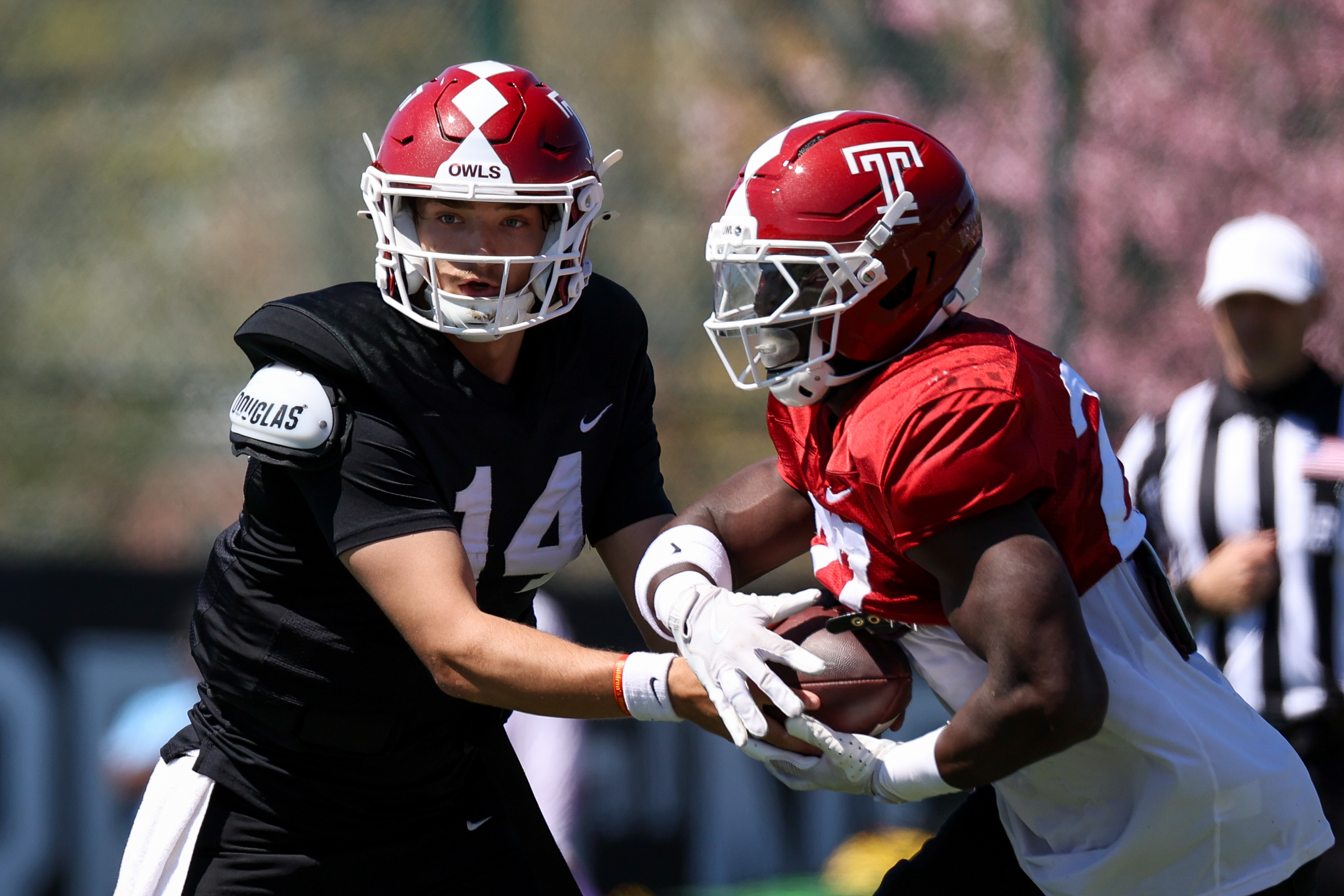
During the Owls’ Cherry and White spring game, Brown was the first running back to have his name called in the first drive of the game.
Brown, at 6-foot-1, 215 pounds, is a powerful figure on the field. He can put defenders on their backs and trudge through the line in short-yardage spots.
Temple quarterback Jaxon Smolik (14) hands the ball to running back Sam Brown (27) during the Cherry and White Spring Game on April 11.Isaiah Vazquez / For The Inquirer
But Brown’s new calling card since he made it to North Broad has been speed.
Since taking the field, and healthy for the first time in nearly two whole years, Brown’s acceleration out of the backfield has changed the Owls’ offense.
“A lot of the work that I put in with the strength program played a big part in everything,” he said. “Having the spring, having the summer to train, even in the moments where I wasn’t in here, I was at home with my trainers. That all [played a] part in just staying positive and staying confident in my abilities through it all.”
Temple kicks off its season against Rhode Island on Sept. 5 at Lincoln Financial Field, and Brown looks poised to headline the backfield.
“The first thing is his character,” Pierce said. “Just who he is as a person, he’s the right fit for this program and what we are trying to accomplish. I think his character speaks volumes, and obviously, as a player, just his ability to be a big physical back who also can just run as well.
“He is not a very talkative guy, but he also leads by example. Anybody in that building can tell you he’s in here 24/7 trying to get better every single day. And that, I think, trickles down to our room, which I think only improves everybody in there.”
Nearly a year after Brown questioned whether he still wanted to play football, he is preparing to enter this season as one of the Owls’ most important offensive pieces.
This time, there’s little question about whether he wants to be there.
“I’m just grateful for every opportunity I get,” Brown said. “I just got to keep working and I’ll get what I deserve.”
Philadelphia-area patients say they are often being left in the dark about side effects that could result from new medications given during hospitalizations, even though hospitals are required to explain the potential risks.
One in three patients at Philadelphia-area hospitals claimed that staff did not consistently explain possible side effects of medication, according to a leading patient satisfaction survey conducted annually by the Centers for Medicare and Medicaid Services.
To gauge the patient experience, the Hospital Consumer Assessment of Healthcare Providers and Systems (HCAHPS) survey asks questions about the hospital environment and how staff treated them during their stay. These quality indicators are less tangible thanclosely watched rates of infections or falls but still can offer meaningful insight into hospital culture and help administrators identify gaps in care.
The regional hospitals where large portions of patientssurveyed reported not being told about medication side effects included three operated by the Virtua health system in New Jersey. About 40% of patients at Our Lady of Lourdes, Mount Holly, and Willingboro said staff had “never” or only “sometimes” explained side effects.
“These survey results reinforce that it is not enough for patients to receive clear information most of the time,” Jen Khelil, executive vice president and chief clinical officer at Virtua, said in a statement.
(function(){function e(){window.addEventListener(`message`,function(e){if(e.data[`datawrapper-height`]!==void 0){var t=document.querySelectorAll(`iframe`);for(var n in e.data[`datawrapper-height`])for(var r=0,i;i=t[r];r++)if(i.contentWindow===e.source){var a=e.data[`datawrapper-height`][n]+`px`;i.style.height=a}}})}e()})();
“Our goal is for every patient to feel fully informed about new medications, including their potential side effects, every time,” Khelil said.
Medication safety
The most recent HCAHPS report, released in June, includes responses from about 2.3 millionpatients across the country, including nearly 32,000 from Philadelphia-area hospitals, between July 2024 and June 2025.
The survey covers topics such as noise levels, room cleanliness, staff friendliness, and whether they would overall recommend the hospital.
Among the questions: Before giving you any new medicine, how often did hospital staff tell you what the medicine was for?
Patients can answer “never,” “sometimes,” “usually,” or “always.” The survey results published by CMS combine “never” and “sometimes” answers.
These multiple-choice answers are subjective. But generally speaking, doctors and nurses should strive to always explain side effects, said Jeffrey Millstein, an internist and regional medical director for Penn Primary Care who regularly writes about the doctor-patient relationship as an Inquirer contributor.
Patients who do not fully understand potential side effects may disregard a dangerous complication as “normal.” Alternatively, a common, harmless side effect could be alarming to a patient who wasn’t educated about what to expect when taking a new medication, he said.
“They need to know the real red flags, and to not discontinue their medicine for the wrong reason,” he said.
In busy medical settings, staff may focus on other aspects of medication adherence, such as explaining what the medication does, instructions for when and how to take it, and whether it will negatively mix with a patient’s other medications. Side effects may be mentioned last, quickly, or by telling patients to refer to a manufacturer’s pamphlet with warnings.
“That’s really useless,” Millstein said. “It doesn’t put anything in context.”
Doctors and nurses should open a conversation about side effects by asking patients what they know about a drug, or what concerns they have, which can allow staff to dispel inaccurate information, he said.
Philadelphia-area hospitals respond
Across the Philadelphia region, three Penn Medicine hospitals scored the highest marks for explaining medication side effects.
More than half of survey respondents who stayed at Chester County Hospital, Penn Presbyterian Medical Center, and Hospital of the University of Pennsylvania said staff “always” explained side effects. About a quarter of respondents said they had received such information “sometimes” or “never” during their stay at the Penn hospitals.
(function(){function e(){window.addEventListener(`message`,function(e){if(e.data[`datawrapper-height`]!==void 0){var t=document.querySelectorAll(`iframe`);for(var n in e.data[`datawrapper-height`])for(var r=0,i;i=t[r];r++)if(i.contentWindow===e.source){var a=e.data[`datawrapper-height`][n]+`px`;i.style.height=a}}})}e()})();
Lower Bucks Hospital and Roxborough Memorial Hospital — both owned by California-based Prime Healthcare Foundation — received the region’s lowest marks for explaining side effects.
Forty-five percent of survey respondents said Lower Bucks staff had “never” or only “sometimes” explained side effects, while 34% said they had “always” received such information during their stay.
Michelle Aliprantis, a spokesperson for Prime, said the 2024-2025 data in the CMS survey does not reflect more recent efforts at the hospitals to improve bedside medication education and postdischarge follow-up. The health system has also expanded pharmacy consultation to ensure patients understand medications.
“We are always focused on continued improvement,” Aliprantis said in a statement.
Virtua’s chief medical officer said the health system closely monitors results from the CMS survey, which includes responses from about 2,000 patients across the New Jersey hospital system.
Administrators review feedback from a total of some 300,000 consumers a year from satisfaction surveys, Google ratings, and other ratings systems.
Virtua has been working to improve consistency and patient communication.
“We remain committed to listening, learning, and improving so that every patient receives clear, compassionate, and consistent communication,” she said.
(function(){function e(){window.addEventListener(`message`,function(e){if(e.data[`datawrapper-height`]!==void 0){var t=document.querySelectorAll(`iframe`);for(var n in e.data[`datawrapper-height`])for(var r=0,i;i=t[r];r++)if(i.contentWindow===e.source){var a=e.data[`datawrapper-height`][n]+`px`;i.style.height=a}}})}e()})();
Chinatown’s Wizard of Ducks did not come from poultry royalty. Chuien Liu was born to a long line of Fujianese fishermen on a rural island beside the East China Sea.
“Going out every day to catch fish, shrimp, and crabs? That was a necessity,” says his son, Kenneth Liu, translating for his father. “But making duck was his passion, mostly because he liked to eat it.”
In that respect, Chuien Liu scored big-time when he came to Philadelphia in the mid-1990s, following a wave of immigration from Fujian Province, on China’s southeastern coast, to the United States. He landed a spot beside the roasting oven at Chinatown’s iconic Sang Kee Peking Duck House, and he remained there as the master of ducks, soy sauce chicken, and crispy pig for 25 years.
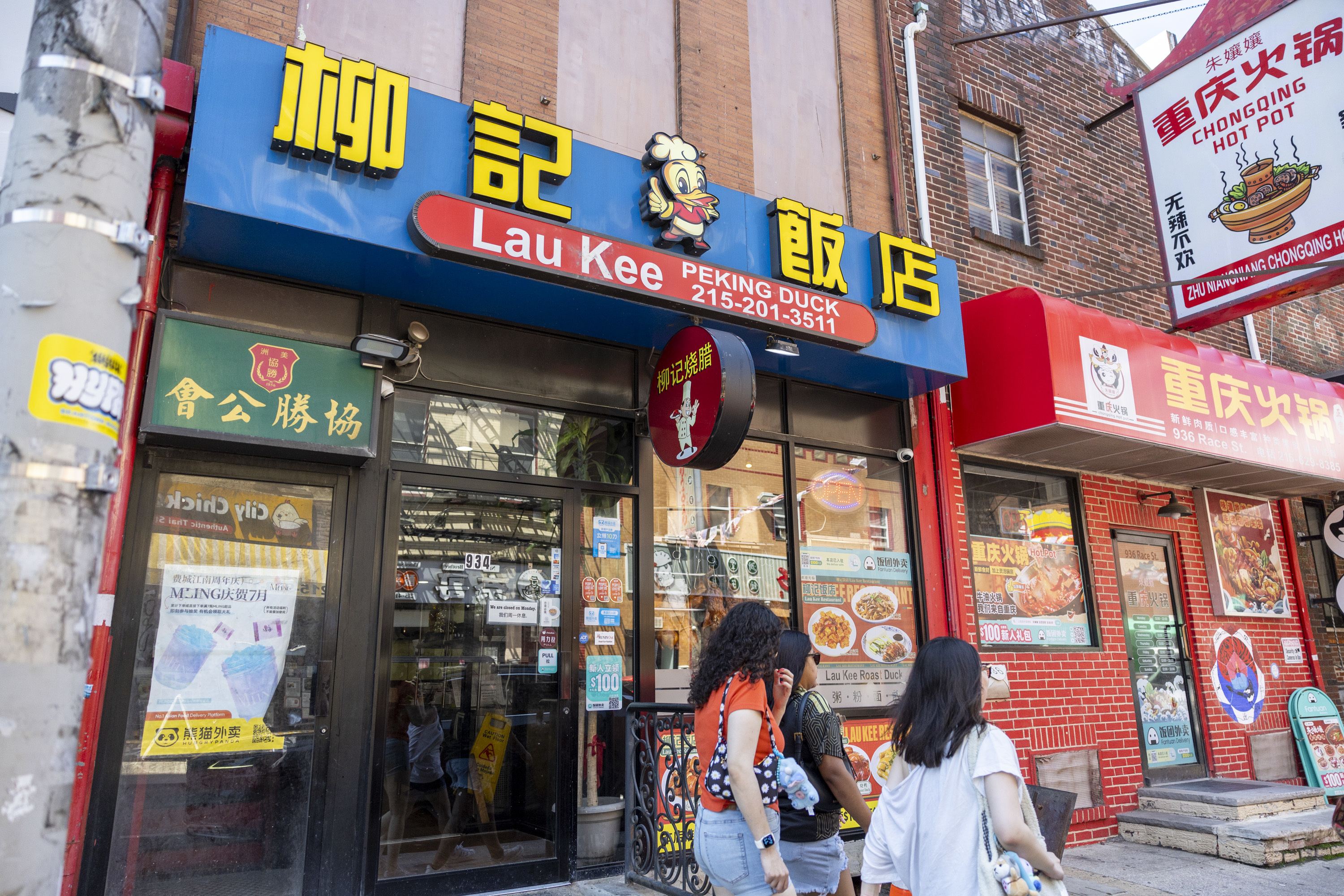
And then we, the voracious duck eaters of Philadelphia, became the lucky ones. Liu and his family went independent in 2019 to claim their own little slice of Chinatown at Lau Kee, a cozy 20-seater with no decorations on the walls, but an absolute masterpiece display of Cantonese-style roasted meats hanging in the spotless front window.
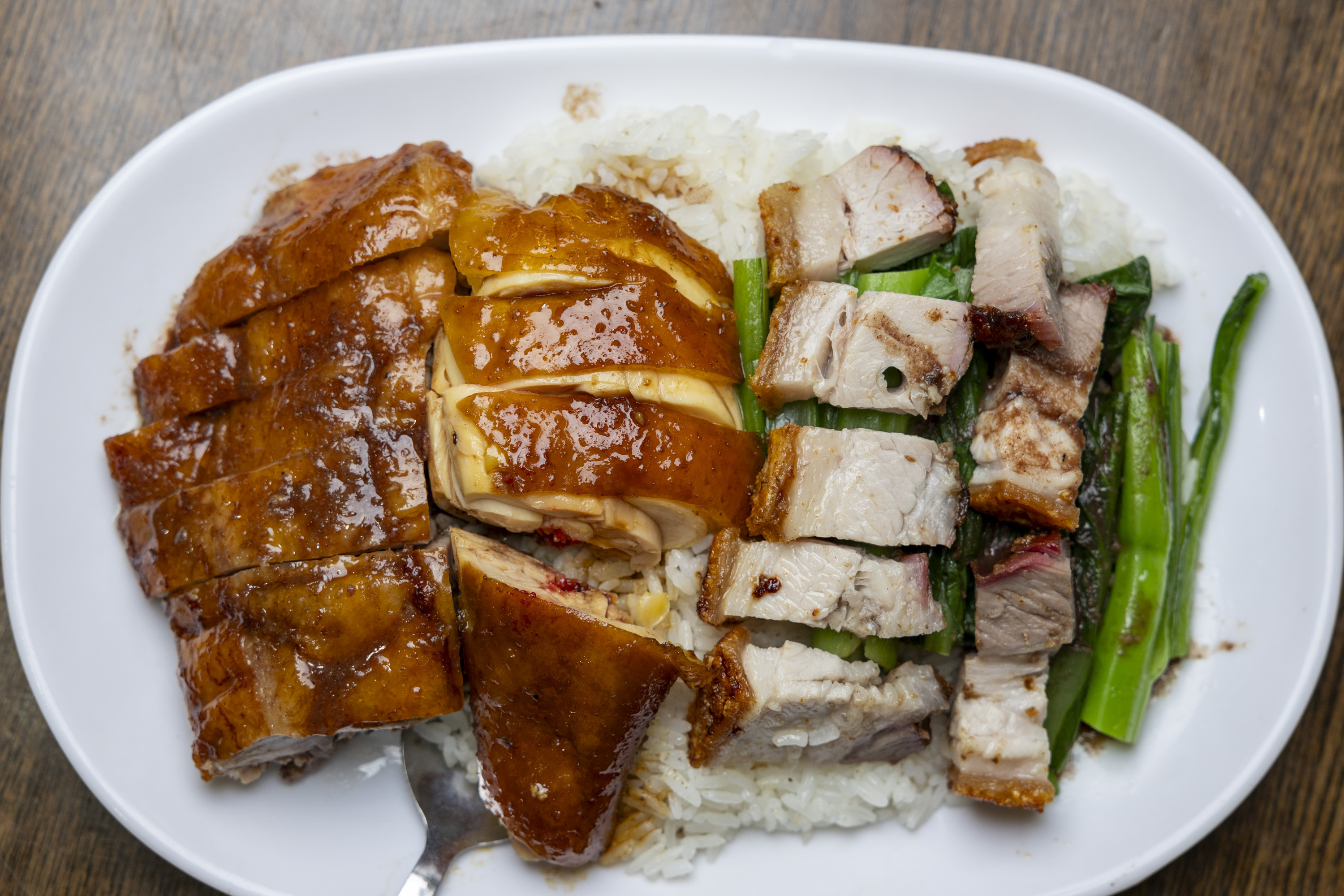
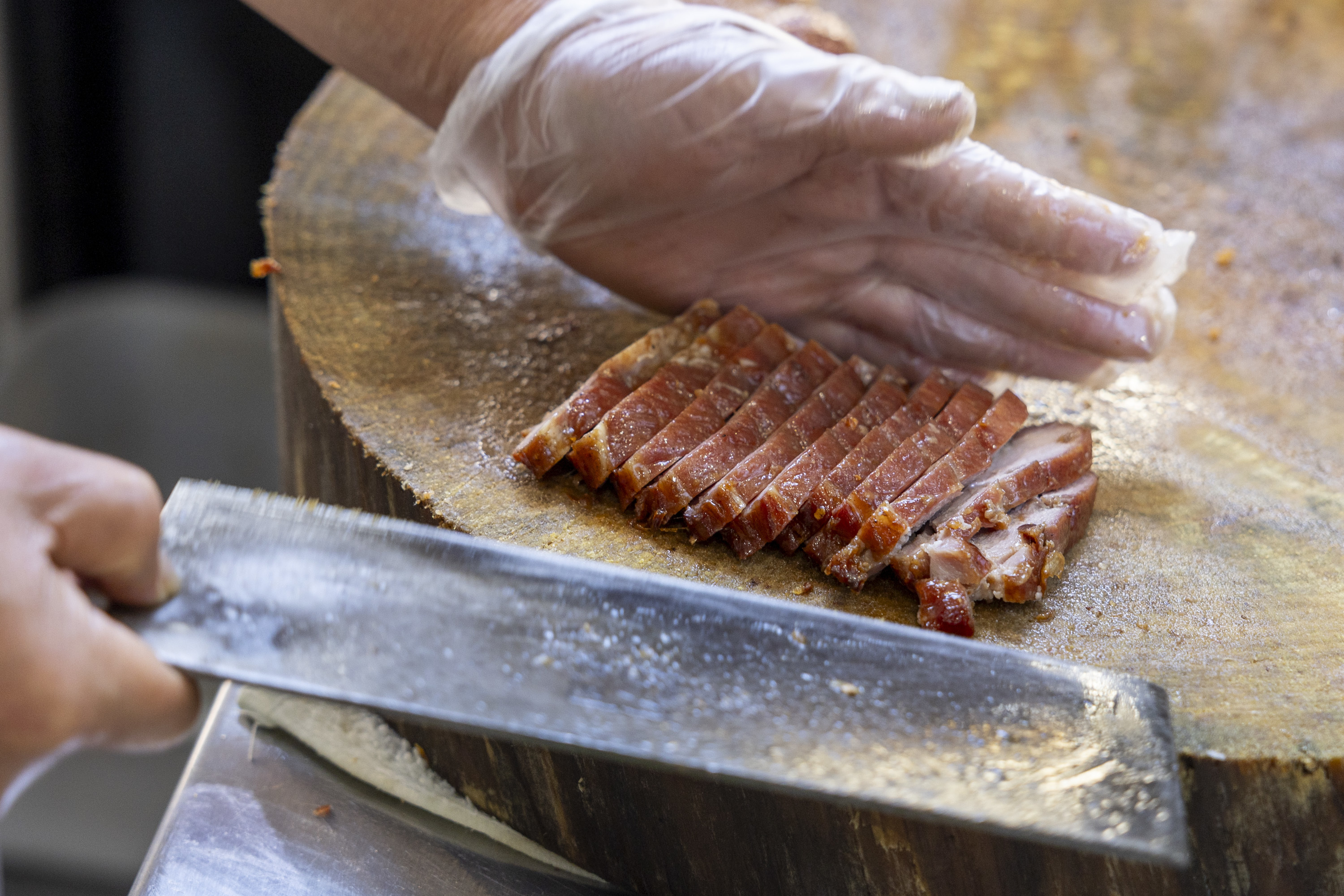
Lacquered brown ducks dangle temptingly from hooks beside paper-wrapped bundles of whole chickens, pink-edged hunks of sweet char siu pork shoulder, and tawny sheets of pork belly, whose slow-rendered layers of pale meat, pearly fat, and cracker-crisp skin are simultaneously so moist, tender, and shatteringly crunchy, taking merely one bite is not an option.
The three meat platter over rice at Lau Kee, in Philadelphia, Pa., on Friday, Aug. 7, 2026.Tyger Williams / Staff PhotographerOutside street view of Lau Kee, in Philadelphia, Pa., on Friday, Aug. 7, 2026.Tyger Williams / Staff Photographer
There are other, larger, better-known duck houses in Chinatown with long-established and devoted patrons, from Ting Wong to M Kee, takeout-only Siu Kee, and, of course, Liu’s alma mater, Sang Kee.
But with more than 31 years of experience and nearly half a million birds beneath his cleaver, Liu, now 55, is currently Chinatown’s longest-tenured duck chef — and also my vote for Philly’s best. As one of the very few chef-owners in the neighborhood, there is also an exceptional consistency in his insistence on doing things right.
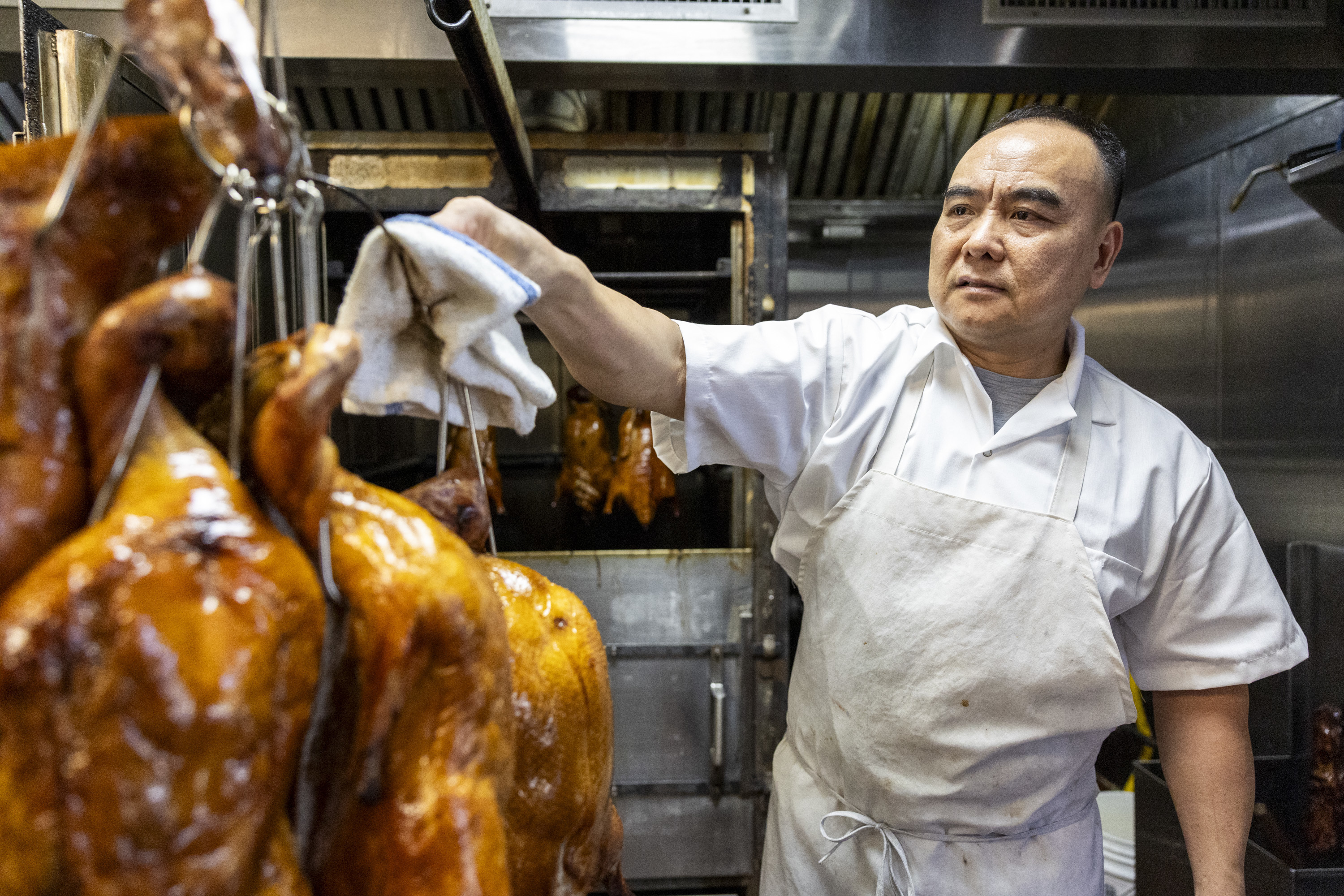
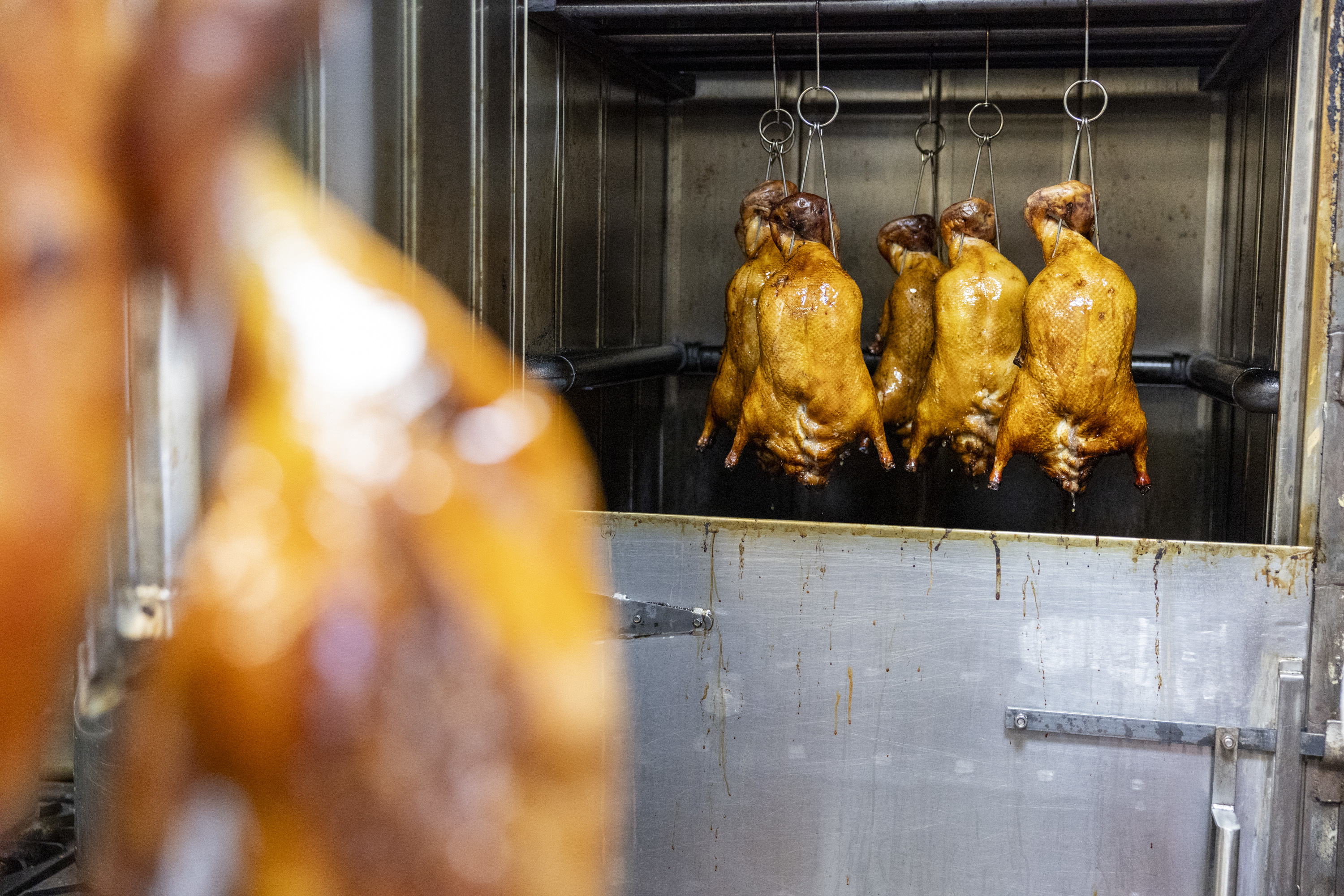
Just preparing the ducks is a laborious, dayslong process, beginning with inflating them with air to separate the meat from the skin. A gingery marinade with chee hou sauce (a fermented bean paste that’s less sweet than hoisin) comes next, followed by a hot water bath to open the skin’s pores, then a dunk in a vinegar-sugar glaze that dries overnight. The following day, the ducks are hung in a vertical oven over an open flame to roast low and slow as juices collect below for a final basting. And that’s just for the Hong Kong-style roasted duck, which always comes chopped on the bone.
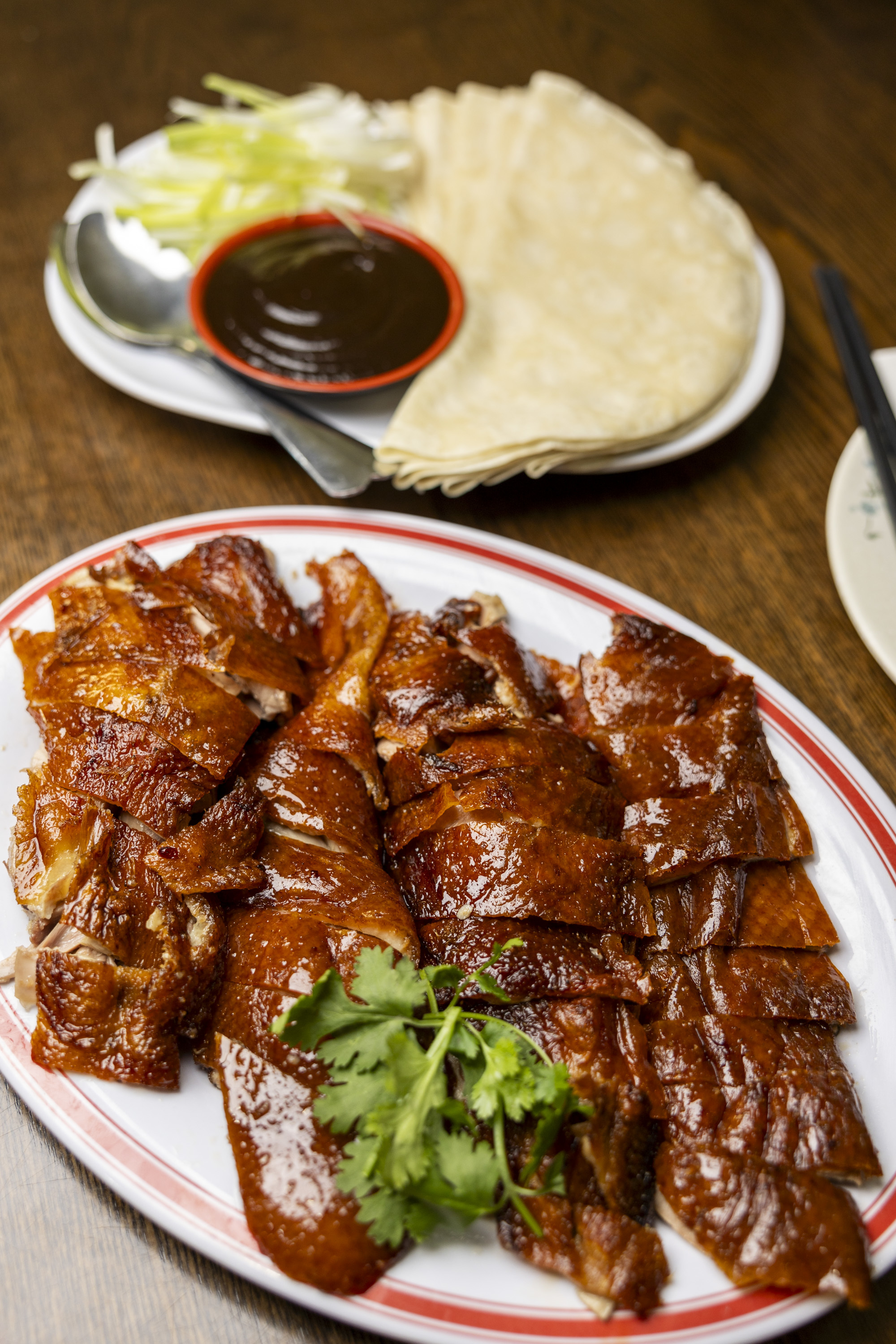
Chuien Liu, Owner of Lau Kee, is taking out the cooked ducks from the oven in Philadelphia, Pa., on Friday, Aug. 7, 2026.Tyger Williams / Staff PhotographerA platter of Peking duck at Lau Kee, in Philadelphia, Pa., on Friday, Aug. 7, 2026.Tyger Williams / Staff Photographer
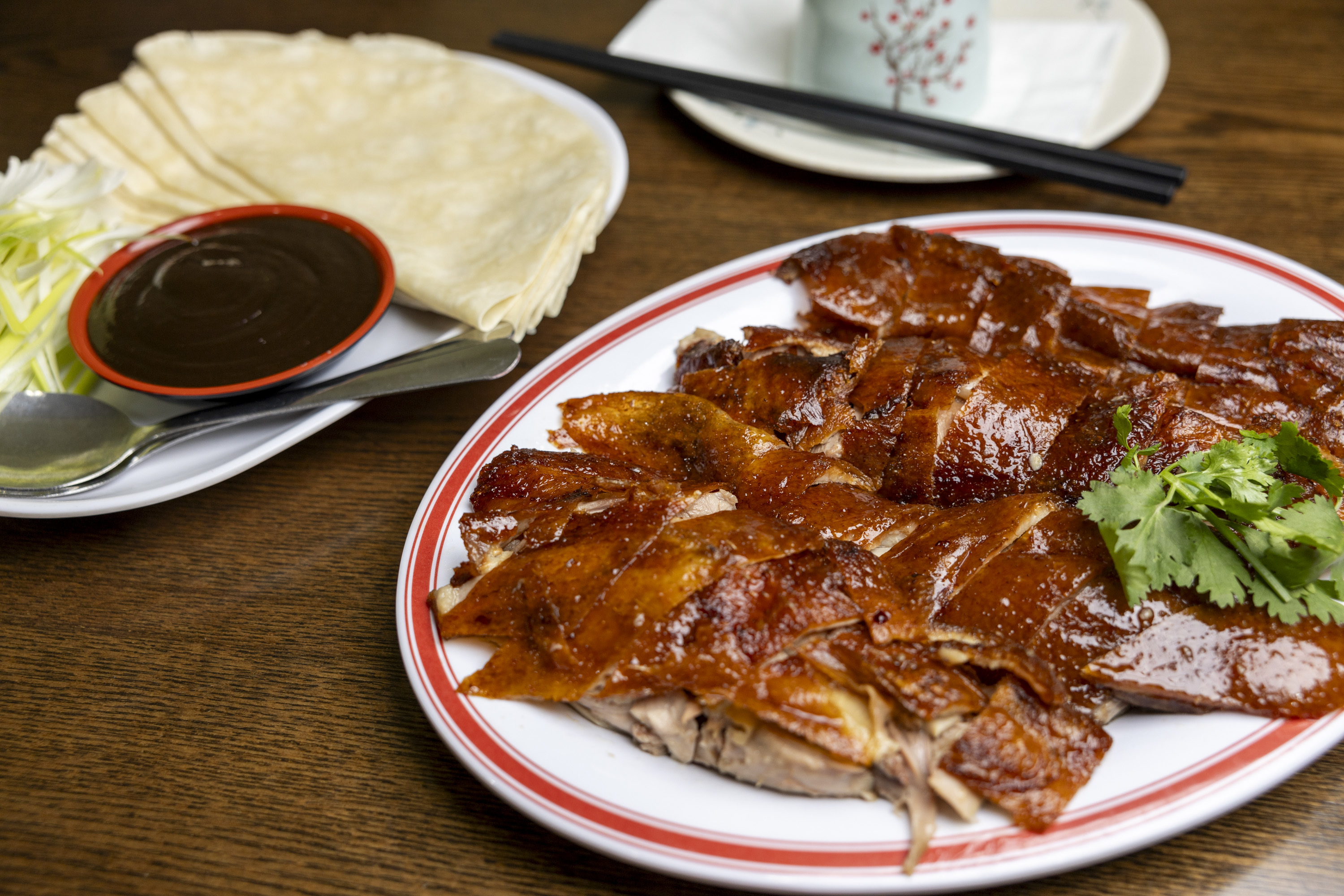
The Peking-style duck is yet another process, involving a slightly sweeter marinade with a more pronounced five-spice savor plus a longer roast time to give that skin a delicate snap. At $30 for a half duck or $47 a whole bird, the sliced meat, served boneless alongside pancakes and scallions, is a delicious centerpiece for a sharing meal.
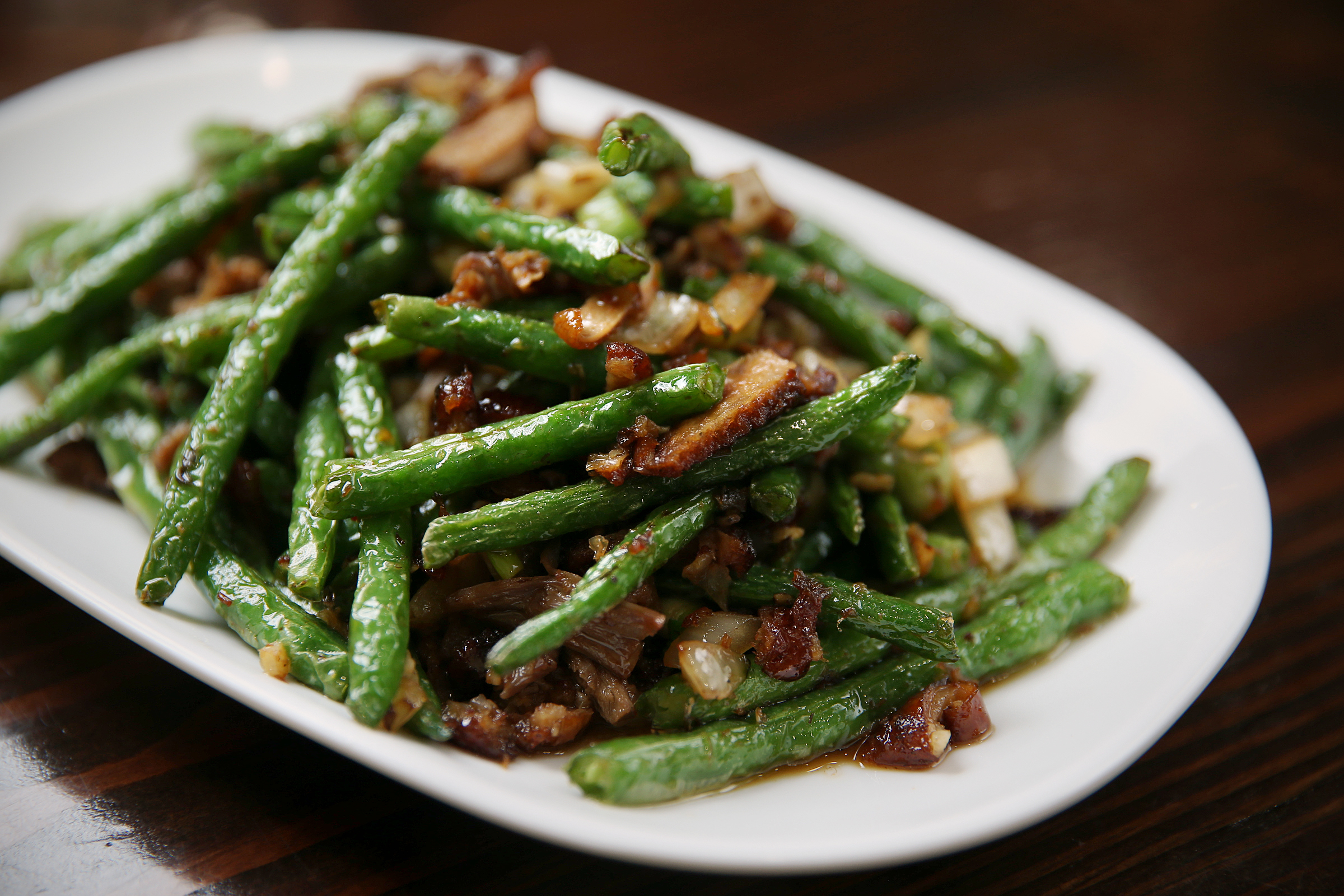
If that’s too much of a commitment, Lau Kee makes appetizer-size duck rolls out of its copious duck trim — the perfect balance of tender meat, crunchy scallions, and dark hoisin — folded inside a soft pancake. A generous helping of shredded duck also stars in a stir-fry of snappy green beans tossed with ground pork and XO sauce. The earthiness of sliced duck and the roasted flavor of its skin also fully infuse the bowls of congee, whose rice porridge is regularly beaten to a snowy white mist and refreshed throughout the day so its texture remains airy and light. (“It’s almost fluffy,” opined my Inquirer colleague, Kiki Aranita, a noted congee scholar.)
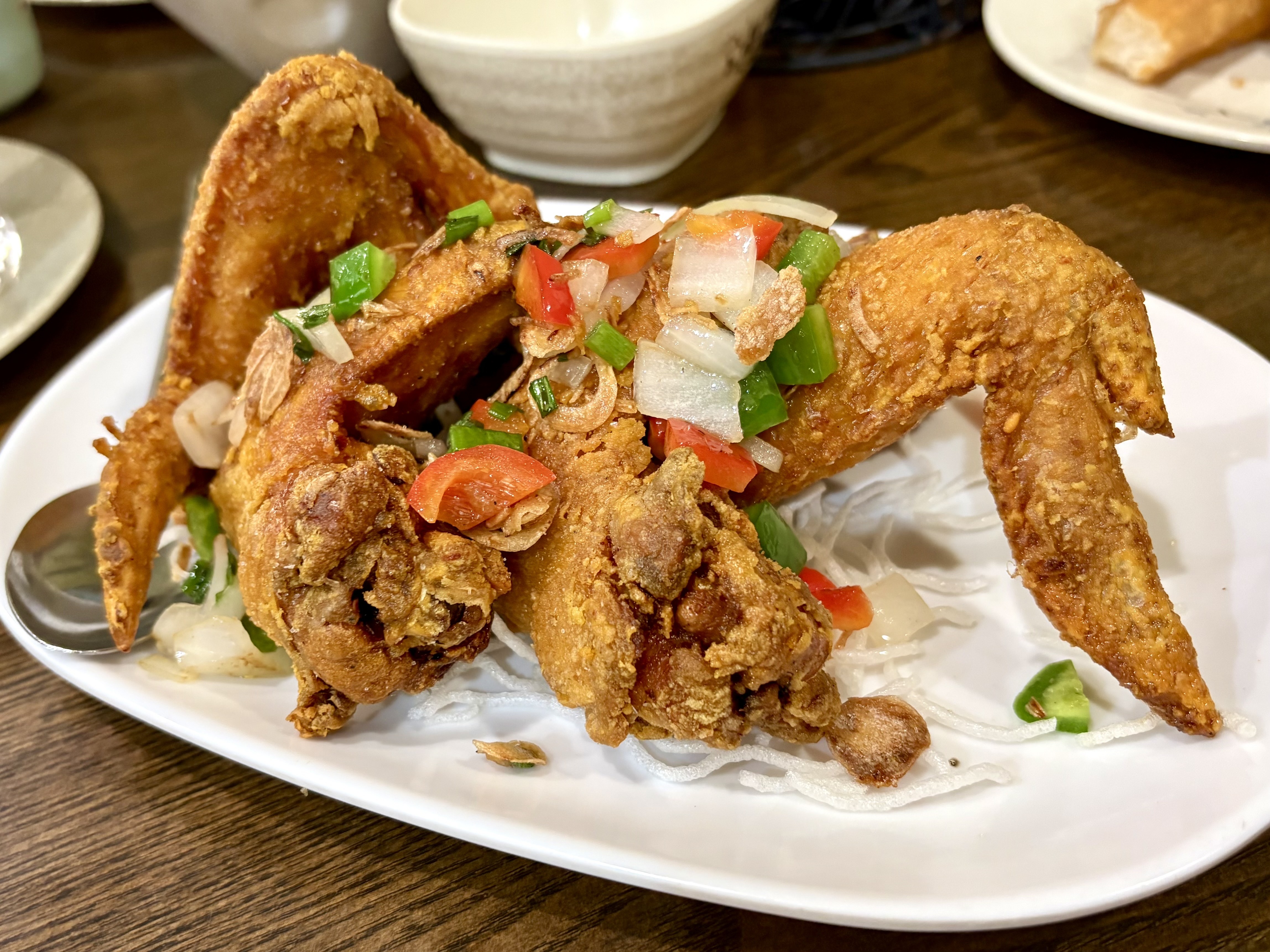
The shredded duck with string beans is pictured at Lau Kee in Philadelphia’s Chinatown on Thursday, April 1, 2021.TIM TAI / Staff PhotographerThe salt-baked chicken wings at Lau Kee are juicy, crisp and crackling with spice.Craig LaBan / Staff
Other popular congee combinations contain thousand-year egg and pork, or sliced flounder mingled with ginger threads and scallion — options that are standard at a dozen other Cantonese kitchens across Chinatown.
But it’s the subtle details of execution that make the difference in Lau Kee’s various soups, dumplings, stir-fries, and crispy delights. The battered crust on its salt-and-pepper shrimp in five-spice flavor might look heavy, but it’s as airy and crisp as tempura. Lau Kee’s juicy “salt-baked” chicken wings — which are actually perfectly fried — crackle with the spice of a crust infused with turmeric, cooking wine, and chili oil and easily rank among the city’s best.
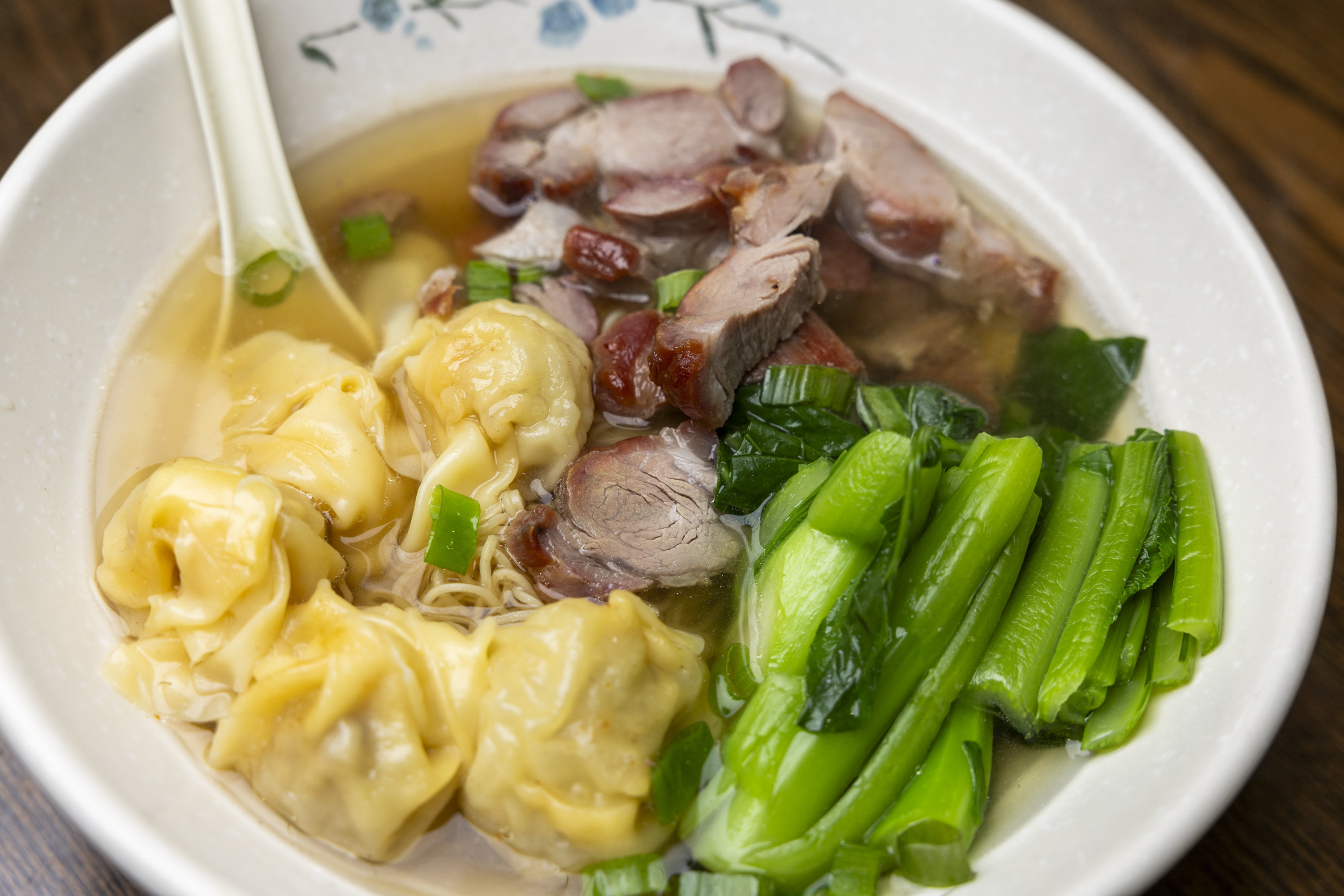
The broth in Lau Kee’s wonton noodle soup is crystalline gold yet complex, drawing subtle smoky depth from a lightly charred salt fish that steeps for five hours with chicken bones. The poached yu choy greens that bolster the soup are snappy yet toothsome, and Lau Kee’s wontons, made by Liu’s wife, Fannie Qiu, are special. The addition of mushroom adds tenderness to a shrimp-and-pork stuffing that elsewhere can become overly bouncy. Top the soup with any of the meats, but char siu is my favorite, the star anise sweetness of the pork’s glaze adding even more layers to the brew.
Wonton soup with greens and roast pork at Lau Kee.Tyger Williams / Staff Photographer
Those wontons are also perfect splashed with the vibrant orange house chili oil, defined more by its fragrance ofdried chilies than numbing Szechuan peppercorns.
Lau Kee’s shrimp dumplings are memorable, reminiscent of Sang Kee’s but softer, thanks to the addition of bamboo, and more fragrant from a pinch of curry. The West Lake beef soup is also one of my favorites, its hearty pairing of ground beef and silky tofu batons bobbing in broth sparkling with white pepper, delicate egg drop ribbons, and crunchy cilantro greens.
Lau Kee’s dry noodle dishes are solid, though less exciting. The minimalist scallion noodles, bright with shredded fresh ginger, is one of my two picks. The sesame oil-laced crispy noodle basket topped with morsels of flounder is another, notable for its delicacy and dual-textured noodles, both crunchy around the edges and soft in the middle from a velvety whitegravy. Other noodle standbys were fine but forgettable: a serviceable Singapore noodles, and a beef chow fun that lacked the smoky singe of wok hei.
Fresh cut char siu pork shoulder at Lau Kee, in Philadelphia, Pa., on Friday, Aug. 7, 2026.Tyger Williams / Staff PhotographerThe Mongolian beef from Lau Kee in Chinatown.Craig LaBan / Staff
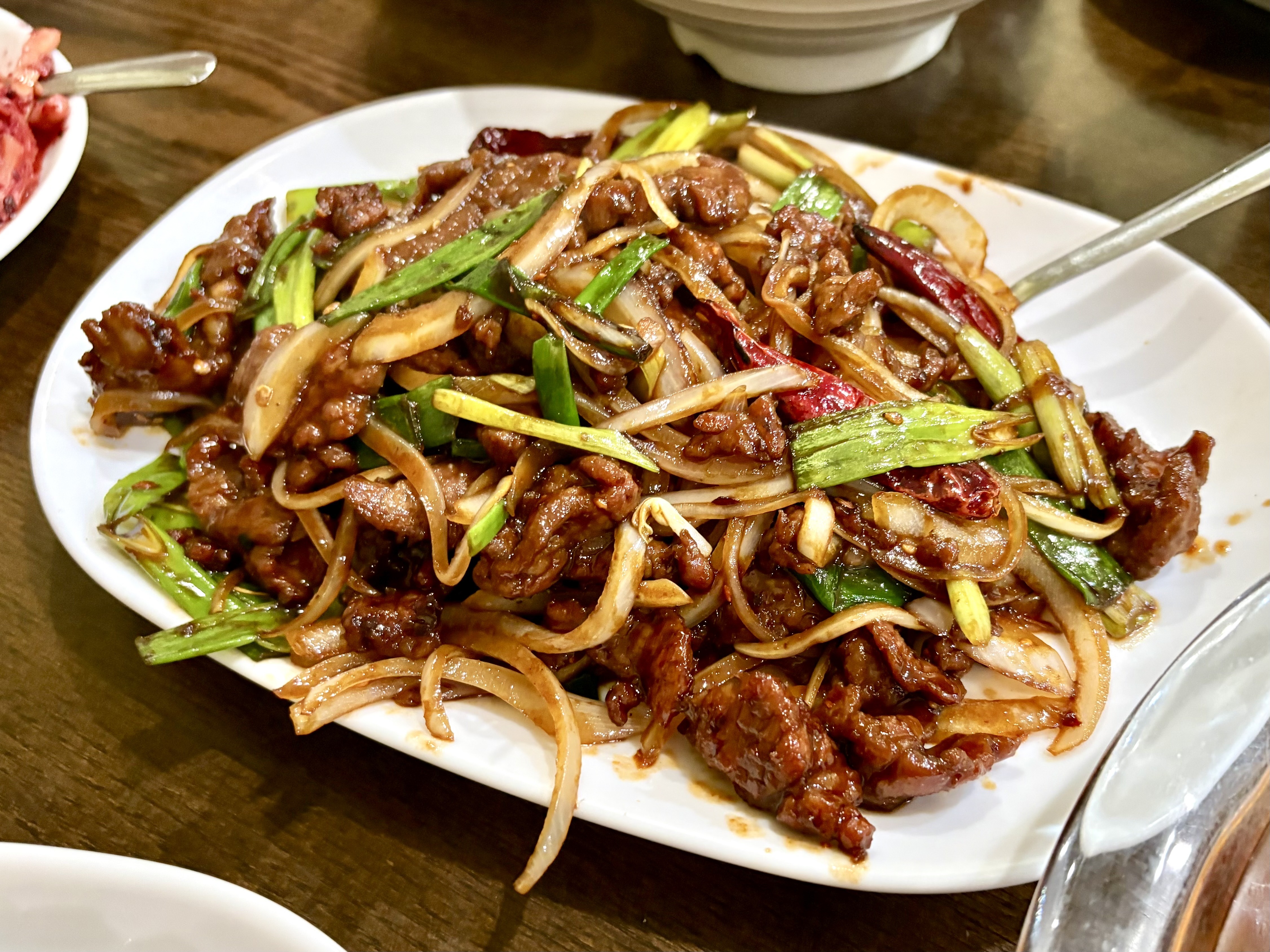
That whiff of caramelized char was absolutely present on the Mongolian beef, whose frizzled onion laces and dried chile heat added umami and sneaky spice to the sweet hoisin. It’s a specialty that traveled well by takeout, along with some good Americanized classics, including General Tso’s chicken, whose tender nuggets were glazed in a sweet sauce that also flickered with chili oil.
As a small business that needs every order (beyond the 250 ducks Chuien Liu sells each week), Lau Kee caters to the demands of a broad audience, and, to my mind, does many familiar dishes better than most.
But there’s an uncommon specialty on this vast menu that points to a niche of Fujianese specialties I wish Lau Kee would embrace more fully. Liu’s wife has mastered the Fujianese art of fermenting Qinghong, a wine made from sticky rice laced with red rice yeast.
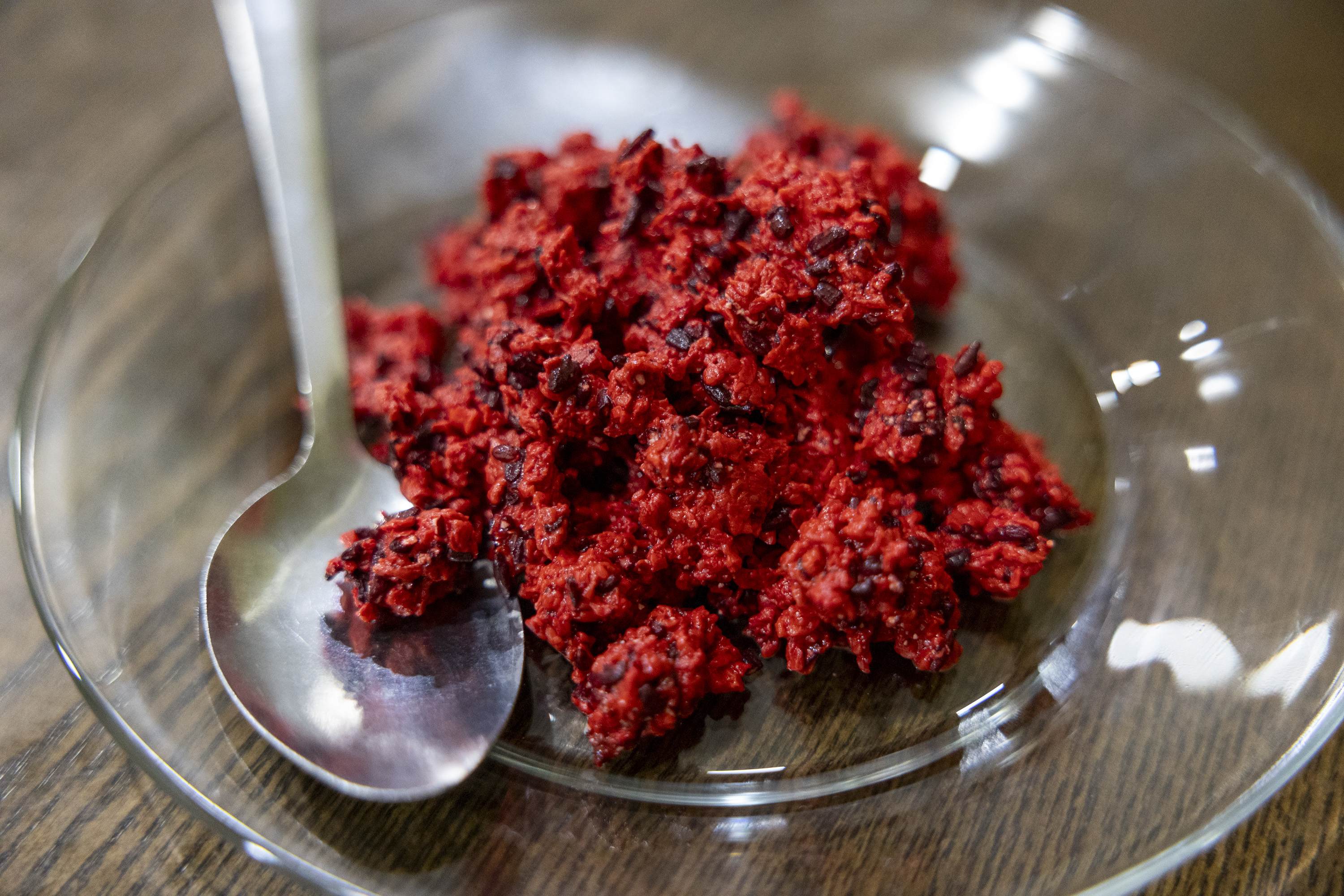
The red vinasse before processing to turn it into sauce at Lau Kee, in Philadelphia, Pa., on Friday, Aug. 7, 2026.Tyger Williams / Staff Photographer
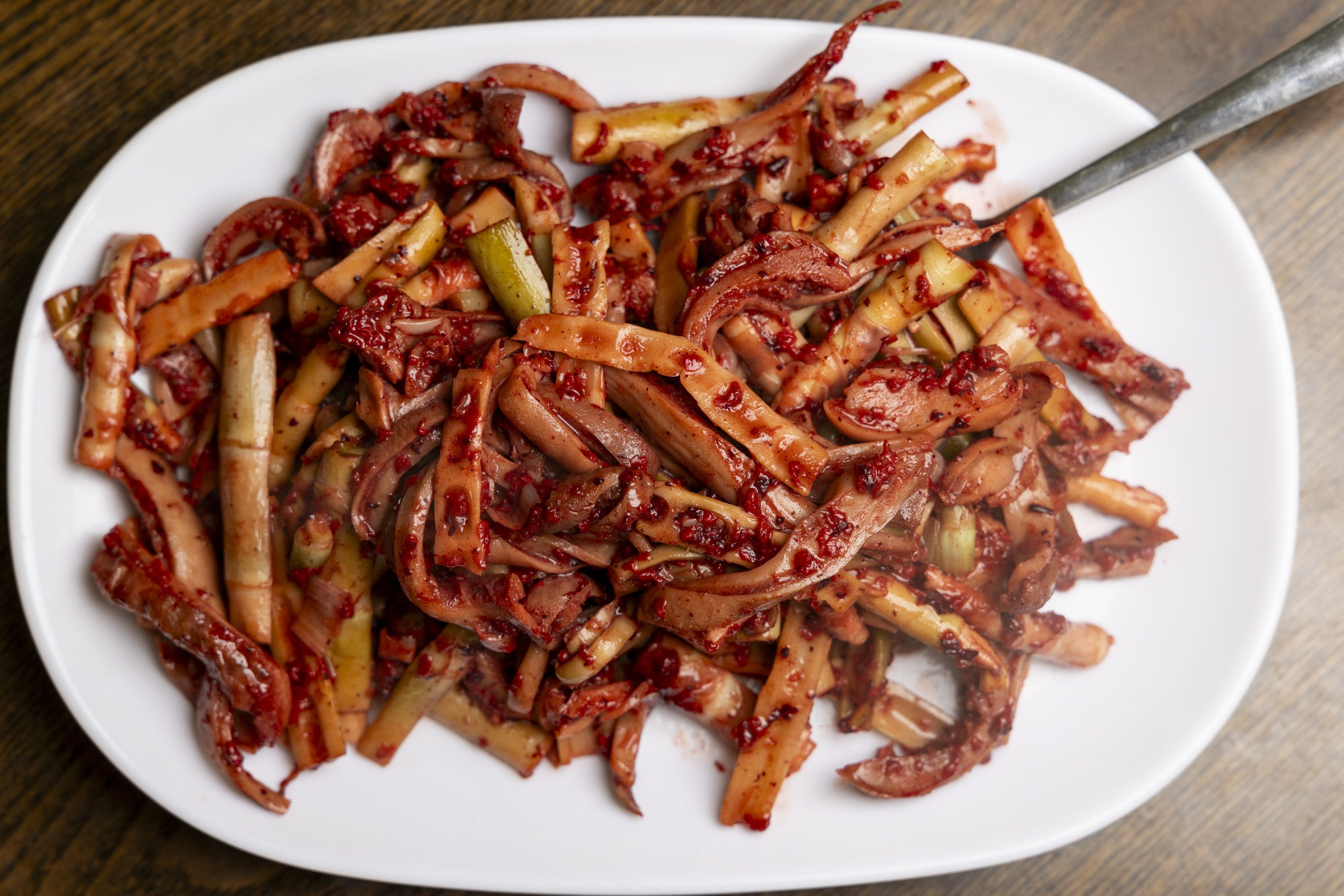
As Kenneth Liu notes only half-jokingly, “My dad does not share his wine.” But the leftover lees, a crimson paste noted on the menu as “red vinasse,” is a valuable condiment that carries a fruity, fermented note and yeasty tang. It’s a transformative addition to Lau Kee’s stir-fry of chopped pig stomach with bamboo shoots. (The squeamish can order it instead with shredded pork meat.) There’s a toothy-yet-tender snap to the offal and an earthy undertone that harmonizes with the lightly boozy lees for a far more rewarding dish.
The pig stomach with red vinasse at Lau Kee, in Philadelphia, Pa., on Friday, Aug. 7, 2026.Tyger Williams / Staff Photographer
Considering the sizable community of Fujianese entrepreneurs who’ve moved to this region over the past two decades and opened everything from Americanized Chinese takeout windows to sushi restaurants and, yes, excellent Cantonese duck houses, there are precious few places showcasing traditional Fujianese food, an underrated regional cuisine. Since the closure of both Ming River Side Walk House and my other longtime 10th Street favorite, simply called “Chinese Restaurant” (aka Tai Jiang), I can no longer find delicate noodles in peanut sauce, fried taro cakes studded with pork, wok-fried baby oyster omelets, and Fujianese wonton soup with tiny dumplings no larger than a penny.
Lau Kee doesn’t make them either, sadly, and even recently dropped another Fujianese specialty, drunken ribs, when Qiu’s brother retired from their kitchen. “[Fujianese cuisine] is not the fanciest food, and not everyone is willing to try,” says Kenneth Liu.
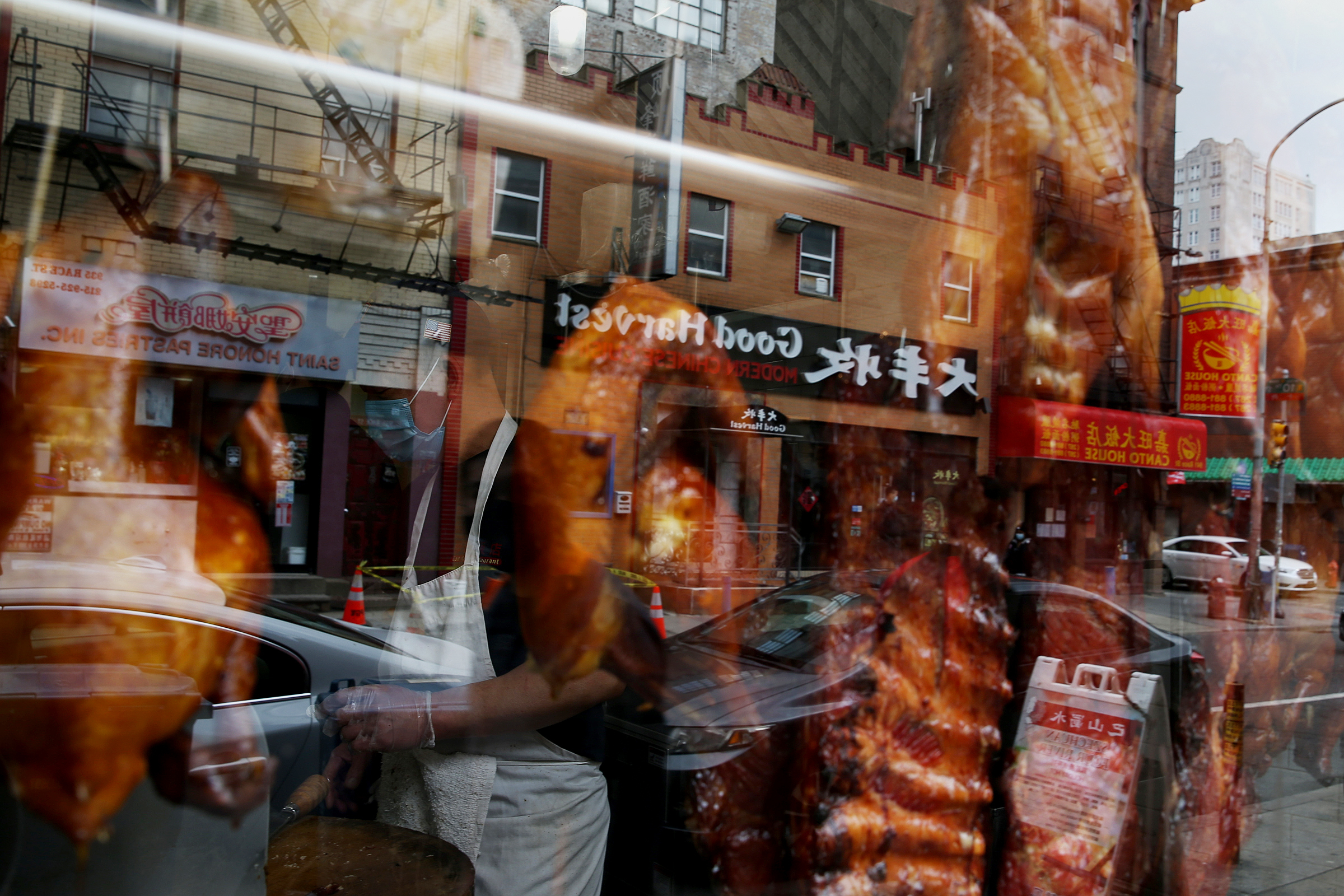
Businesses are reflected in a window in front of roasted ducks at Lau Kee in Philadelphia’s Chinatown on Thursday, April 1, 2021.Tim Tai / Staff Photographer
And yet, perhaps Philly’s diners would try if only they knew more of Lau Kee’s abilities to so beautifully represent their home region? My own enthusiasm was at least genuine enough to convince chef Liu to share a sample of his Qinghong wine stash.
“Don’t drink it all at once — it’s strong!” he warned, showing me the small bowl from which he sips a chilled cup of Qinghong daily.
I took a sniff. It was tart like crushed red berries. I took a taste: a fruity tang but also dry and pleasantly funky, not unlike a refreshing sherry. I took another sip, and one more. And I understood. No matter what Lau Kee’s menu says, or how many perfect ducks Chuien Liu roasts for his adopted hometown of Philadelphia, this descendant of Fujianese fishermen will never forget the taste of home.
Qinghong, a Chinese wine made from fermented red rice, is made by Fannie Qiu for her husband, Chuien Liu, the chef-owner of Lau Kee in Chinatown, who used the leftover solids from the process to make Fujianese-style stir-fries.Craig LaBan / Staff
Lau Kee
934 Race St., 215-201-3511. Menu is posted on delivery apps.
Open 9 a.m. to 8 p.m. Tuesday through Sunday for dine-in; until 9 p.m. for takeout.
Wheelchair accessible via a small portable ramp.
Not ideal for gluten-free diners. A small portion of the menu can be made gluten-free, but none of the roasted meats.
BYOB
Menu highlights: Roasted meats: Hong Kong-style roast duck, (boneless) Peking duck, char siu pork, crispy pig, soy sauce chicken; Peking duck rolls; sliced beef in scallion pancake roll; wonton noodle soup with roast pork; shrimp dumpling noodle soup; West Lake beef soup; congee with roast duck; ginger-scallion noodles; shredded duck with string beans and XO sauce; Mongolian beef; pig stomach with red vinasse; salt-baked chicken wings.
The platter of Peking duck at Lau Kee, in Philadelphia, Pa., on Friday, Aug. 7, 2026.Tyger Williams / Staff Photographer
“Confidence is shaky in the construction industry,” said Ed DeAngelis, founder and head of Bensalem-based EDA Contractors Inc., whose 450 union workers do outdoor construction— roofs, walls, sides, masonry, glass, waterproofing.
“First, we saw the architects starting to slow down,” he said. “Then we started to see developers financing, not from banks, but private credit, names we don’t know.” A few stopped payment as they waited for financing.
The Philadelphia region needs more towering cranes building homes and big office projects, he said. “But our margins are not high enough to afford your default. Even if you can still pay 50 cents on the dollar, it takes years for us to make up for that loss.”
In past years, a commercial slowdown meant falling back on “eds and meds” — college, hospital, and drug-company jobs.
The majority of the action this summer is industrial with Pennsylvania lenders and investors backing strategic metals, minerals, and manufacturing projects, of all sizes, including military contractors, said Dan Fitzpatrick, head of the Mid-Atlantic and Midwest regions for Citizens Bank, which operates the Philadelphia area’s largest branch network.
Dan Fitzpatrick, head of Mid-Atlantic and Midwest regions for Citizens Bank, shown at Citizen’s Bank Park in 2013.Photographer: CHARLES FOX
In residential development, “we are going through an adjustment period,” he said. Higher interest rates and higher fuel, materials, and labor prices have pushed up new home costs.
While “there’s now a bit of a glut of luxury homes, we have a shortage of more modest, $200,000 to $500,000 homes,” Fitzpatrick said. “But it’s tough for developers to build those right now with a reasonable return.”
Citizens has been funding more apartment construction since 2020, but there, too, “developers are hitting a pause.”
Turning to D.C.
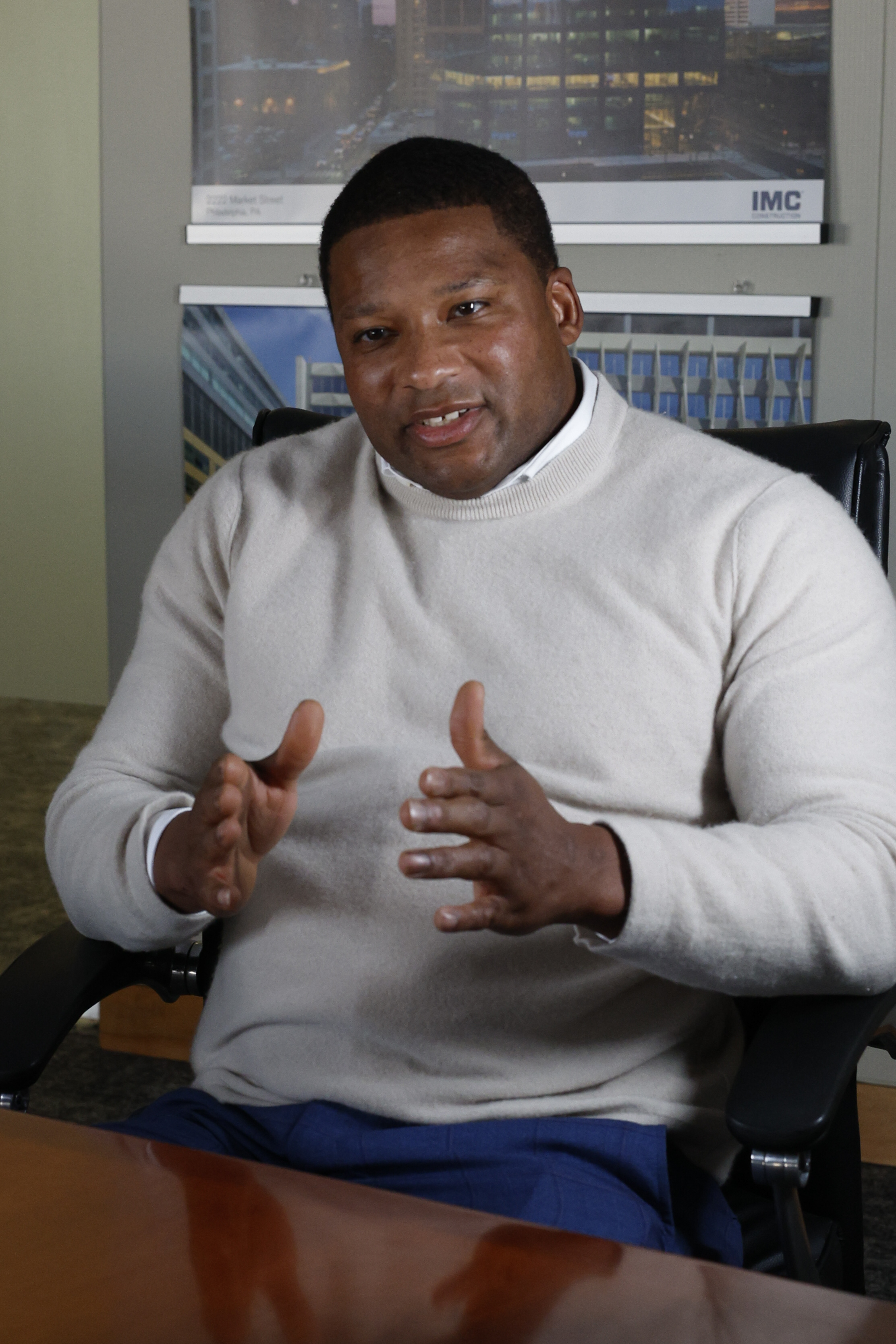
Mike Lloyd, CEO and owner of IMC Construction, at his Malvern headquarters.Steven M. Falk / For The Inquirer
One of the Philadelphia area’s largest builders, Malvern-based IMC Construction, is adding a Washington-area office because data and military contractors, anticipating next year’s record military budget, are hiring and growing there.
“Northern Virginia has been the data-center capital,” said Mike Lloyd, IMC’s CEO and owner. So much is going up — not just data centers, but commercial development that follows big capital investments — that some of the largest, multibillion-dollar national general contractors are overstretched.
A $100 million project used to be very attractive to big national firms, but “now it’s not large enough to put their best teams on,“ he said. ”And some of the traditional defense contractors are now busy with data center work. That has created a niche for firms like ours in the D.C. market.”
“With respect to the Philadelphia market more broadly, I’d say the only projects that can get financed right now are data centers, multifamily, and senior living,” Lloyd said.
He pointed to a Philadelphia-area life-sciences projecthe said has collected tenant commitments but still can’t attract financing. “You are seeing a crowding-out of other commercial sectors by the data-center hyperscalers.”
Philadelphia Mayor Cherelle L. Parker’s “Lower South Philly” program of speeding permits for defense, port, and industrial contractors acknowledges that capital is flowing into industrial development and jobs, he added.
“She’s understanding our competitive strengths and leaning into them,” Lloyd said. ”There are entire supply chains centered around defense projects, and contractors here are ramping up investment.” There’s still demand for Class A office space, but firms are still moving to smaller quarters.
To Lloyd, “the big question is, why does Pennsylvania still lag in data centers?” He was among the builders who went to Harrisburg in 2019 to testify in favor of a data-center sales-tax exemption, which passed.
Pennsylvania ranks with Texas as a source of natural gas for cheap power. Lloyd said that in his native Louisiana, communities are prospering from data center-funded job training and road improvements, but in much of Pennsylvania, residents have mobilized against the projects.
“There are ways to facilitate that growth in an equitable fashion that benefits all parties,” he said.
On the roads
Unlike colleges or healthcare, spending for federal transportation didn’t change with the Trump administration, said James Bilella, new CEO of Philadelphia-based Urban Engineers, which designs and advises cities and states on large public projects.
“We have not seen a drop off in federal transportationspending, especially in the rail and transit industry,” he said. “This administration is trying to be sharper, with quicker turnaround, more efficiency.”
Bilella said the Parker administration has pledged ongoing support for heavy industry, biotech, and military industries, while continuing to back popular infrastructure safety upgrades like the “Great Streets” project, which Urban helped design.
Bilella said he is excited by the prospects for Lower South. “It’s rare in a well-established city to have an opportunity to rededicate such a large area [two square miles] to industry and create jobs that can improve lives and attract new people.”
He added,“We still need to decide about the infrastructure that get people to work there easily. Can people walk in safety? Can they drive, bike, use the river? It’s the kind of project we hope to get involved with.”
Long-term investments
“Industrial, logistics, data center, and defense-related projects” are attracting capital because lenders and investors believe they’ll be in demand a long time, said Abe Ibrahim, regional president for the Philadelphia area at Dauphin County-based Mid Penn Bank, whose largest investor is the family of Cooper University Health Care board chairman George Norcross.
“It’s not that lenders are walking away from office or multifamily, as much as we’re seeing a return to disciplined underwriting,” Ibrahim said. “There are still plenty of opportunities for well-conceived projects to move forward.”
This story has been updated to correct the location of IMC Construction’s headquarters.
Aug. 22 will be the last day of service for SEPTA’s Route 47M bus. But the route, which runs from Spring Garden to Whitman Plaza, should never have been eliminated in the first place. The 47M runs past three major hospitals here in the city: Pennsylvania Hospital, Wills Eye, and Jefferson. Having SEPTA shut down the 47M will affect many riders who use the bus to get to those destinations and others. This route has been a savior for many who depend on SEPTA for transportation to any of these hospitals. Furthermore, many seniors rely on the bus to get them to the Italian Market to do their grocery shopping. Now, they’ll have to travel farther — and that’s unfair for them, since the 47M is already an easy route to take to the market. People need to speak up about this, and contact their local representatives and tell them to save the 47M before it’s gone for good. I hope the 47M can carry on with its service for the people of Spring Garden, Center City, and South Philadelphia — and the only way that would happen is if SEPTA comes to its senses and brings it back to life.
Peter Iannelli, Philadelphia
Unequal sacrifice
Let me get this straight: Ghislaine Maxwell — convicted child sex trafficker and partner in crime of Donald Trump’s old best buddy, the late Jeffrey Epstein — is serving time in a federal prison camp.
Congressional whistleblowers revealed that Maxwell receives preferential treatment, including customized meal deliveries, private after-hours gym access, a service puppy, private warden-arranged visits with snacks, and unmonitored communication access.
God forbid, however, if Ms. Maxwell had a toilet that wouldn’t flush, a meal that wasn’t cooked to perfection, or wasn’t allowed to play with her puppy.
Join the conversation: Send letters to letters@inquirer.com. Limit length to 150 words and include home address and day and evening phone number. Letters run in The Inquirer six days a week on the editorial pages and online.