AUSTIN, Texas — It would be unfair to compare the vibrant reception U.S. Senate candidate James Talarico received at the recent Texas Tribune Festival to the muted response U.S. Sen. John Fetterman drew here two days later.
But allow me to do so anyway.
It was a hometown crowd for the rising Talarico, who, if the polls are to be believed, may become the first Texas Democrat elected to statewide office since 1994. When the doors closed to a capacity crowd at First Baptist Church — with more than 100 people left outside to grumble in the humid 95-degree weather — the vibe as groups of young people rushed to find seats was more pop star than politician.
Even with media access, I barely made it inside. A standing ovation greeted Talarico, and it seemed like every other sentence uttered by the charismatic 37-year-old was met with applause. I had no such trouble finding a seat for Fetterman.
Yet, it wasn’t long ago that the Pennsylvania Democrat elicited similar swooning during his own Senate run in 2022, or that the imposing Fetterman — who leaned progressive and ditched the suit and tie for gym attire — seemed like the future of the party.
Cut to TribFest 2026 and the biggest reaction the Keystone State senator produced from the largely polite, mostly liberal audience was gales of laughter and some jeers from the balcony as he misspoke and identified himself as a “lifelong Republican.”
While some called it a Freudian slip, perhaps Fetterman had seen the Inquirer/New York Times/Siena University poll published earlier that week that showed a majority of Pennsylvania voters saw him more as a Republican than a Democrat.
I couldn’t help but feel for the senator, who expressed genuine exasperation over being questioned about his ideological loyalty. He was speaking my language, after all, when he said he respected Republicans and that to tackle the important kinds of problems facing the nation, “we’re going to need bipartisanship.”
Fetterman is also right when he says he votes with Democrats around 90% of the time. Unfortunately, when he splits, it’s been a doozy.
The senator has unquestionably backed the Israeli government’s response to the brutal Oct. 7, 2023, attacks by Hamas in which terrorists killed about 1,200 people and kidnapped more than 200 others. Israel’s subsequent invasion of Gaza has resulted in the deaths of more than 74,000 Palestinians, in what is labeled by some (including many Democrats) as a genocide.
Support by the government led by Prime Minister Benjamin Netanyahu has increasingly emboldened illegal settlements and violence in the occupied West Bank, as well.
Texas Tribune editor-in-chief Matthew Watkins (right) speaks with Texas Democratic Senate nominee James Talarico during a one-on-one conversation at the Texas Tribune Festival 2026.Eli Hartman for The Texas Tribune
On Tuesday, Fetterman was the lone Democrat to vote against a measure that would have required the U.S. Department of State to report on any investigations into the killings of nine U.S. citizens by Israeli security forces or settlers since 2022.
Fetterman has also blindly supported President Donald Trump’s war of choice in Iran, telling his Texas audience that “the Iranians are really no different than the Nazis.” The senator has been the only Democrat to consistently reject efforts to enact a war powers resolution to rein in the White House, most recently on Sept. 24.
What comes through listening to Fetterman defend his positions is his earnest belief in what he’s doing. He tried to frame his actions as those of someone led by common sense and a plain understanding of right and wrong.
“We’re the good guys,” he said. “The problem is Iran and Hamas.”
When questioned by an audience member about his apparent black-and-white worldview and whether there was room for nuanced positions in U.S. geopolitics, Fetterman said he was nothing but.
“My argument is nuance,” he noted. “That’s why it’s not a genocide [in Gaza], and that’s why is Iran allowed to build a nuclear bomb? That there is nuance.”
Maybe later I’ll coin the term for the sound of a mass skeptical smirk, but here I’ll just call it the audience response to Fetterman’s answer.
The senator’s problem — and why he’s losing Democrats across the country — is that regardless of his earnest belief in what he’s doing, he’s wrong.
He can’t see that you can understand that what happened on Oct. 7 was an atrocity and that the Israeli government’s reaction has gone beyond any reasonable response; that while Iran was a rogue nation that punished its people and sought to undermine Western allies, Trump’s ill-planned war has done nothing but destabilize the region, raise energy prices, and make America weaker.
Still, there seems to be a method to Fetterman’s foolhardiness, and his time on the Texas stage was a mix of defensiveness and defiance.
Pennsylvania’s senior senator seems to be betting on the fact that even if someone like the beloved Talarico wins his race, the electoral reality may leave the Senate almost evenly split between Democrats and Republicans.
“What if that happens …? Who’s 51 …? Oh, yeah,” he mugged. “Wait until the midterms and let’s see what happens.”
Sure, let’s.
Based on his misguided stubbornness, if Fetterman is going to receive any standing ovations from a Texas crowd, it will be down the road in Houston at the 2028 Republican National Convention.
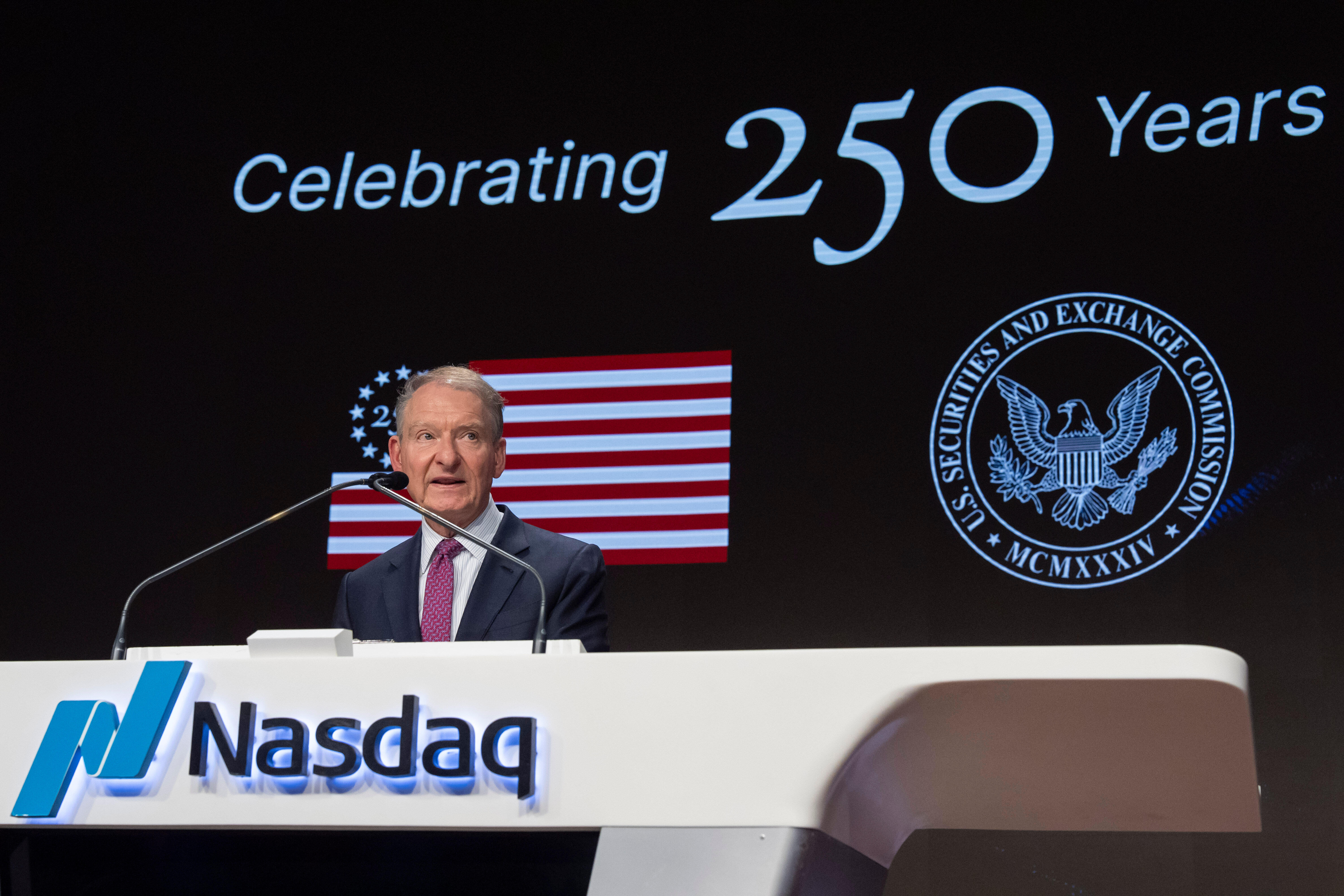
The Securities and Exchange Commission board plans to rescind a rule that said Wall Street money managers who gave money to state and local campaigns were barredfrom collecting fees for managing state and local-government dollars, for two years after they donated.
The SEC rule, created in 2010, had special resonance in Pennsylvania, which ishome to nearly one-third of the nation’s 5,000 public pension funds. Before then,private money managers had donated relentlessly to the politicians whose pension investment boards hired them.
The proposal would end the limit on political contributions and stop requiring investment advisers to keep detailed political-contribution records.
“The SEC is not the nation’s elections regulator,” SEC chairman Paul S. Atkins, wrote in a public letter accompanying his September proposal to ease the rule. Acknowledging the rule he wants to gut “was intended to deter fraud” by barring donors from getting paid to manage public money, Atkins wrote that the rule instead “resulted in the suppression of free speech,” pushing extra-careful firms to ban all political donations, and reducing Wall Street funding for political candidates.
Fraud is already illegal; leave policing money managers’ influence-buying to state and local law and federal election rules, Atkins urged.
But some money managers, including Pennsylvania fund managers, expressed concern about the scale of the federal rollback.
The 2010 SEC rule was “an objective, preventive restraint,” to prevent corruption, Christopher Tobe, a former Kentucky state pension trustee, said in a summary of his comments to the SEC.
By contrast, state and local antifraud laws are typically applied only “after misconduct and harm have occurred,” added Tobe, a critic of private investments in public funds, who features in the public-pension documentaryPension Fight Club.
The first civil case brought under the SEC rule, in 2011, resulted in then-Pennsylvania Gov. Tom Corbett and Philadelphia Mayor Michael Nutter returning campaign contributions to TL Ventures. The state and city pension boards had hired thismoney-losing Chester County firm in a failed attempt to cash in on the dot-com boom. TL agreed to return nearly $300,000 in fees and interest, which the SEC said the firm hadwrongly collected after donating to the campaigns of top state city and state officeholders.
The Pennsylvania State Capitol in Harrisburg. A rolled-back SEC rule could loosen restrictions on state-elected officials taking campaign donations from money managers who work for the government.
Politicians were convicted over investment-firm donations
The SEC rule limiting pay-to-play was enacted amid a string of pay-to-play scandals.
In the late 2000s, a string of mostly Democratic state and city politicians went to prison for receiving or demanding bribes in exchange for hiring professional investors to manage public pension money. In 2010, California pension chief Fred Buenrostro and New York State Comptroller Alan Hevesi were each convicted of corruption charges for taking campaign cash from investment contractors, and sentenced to prison.
The political contributors cited in Buenrostro’s case, portrayed by prosecutors as victims of public officials’ extortion, included Apollo Global Management. Apollo was then headed by Leon Black, who later lost the job over his relationship with disgraced financier and sex offender Jeffrey Epstein. Apollo is now the largest private-equity fund and its clients include Pennsylvania’s state pension funds.
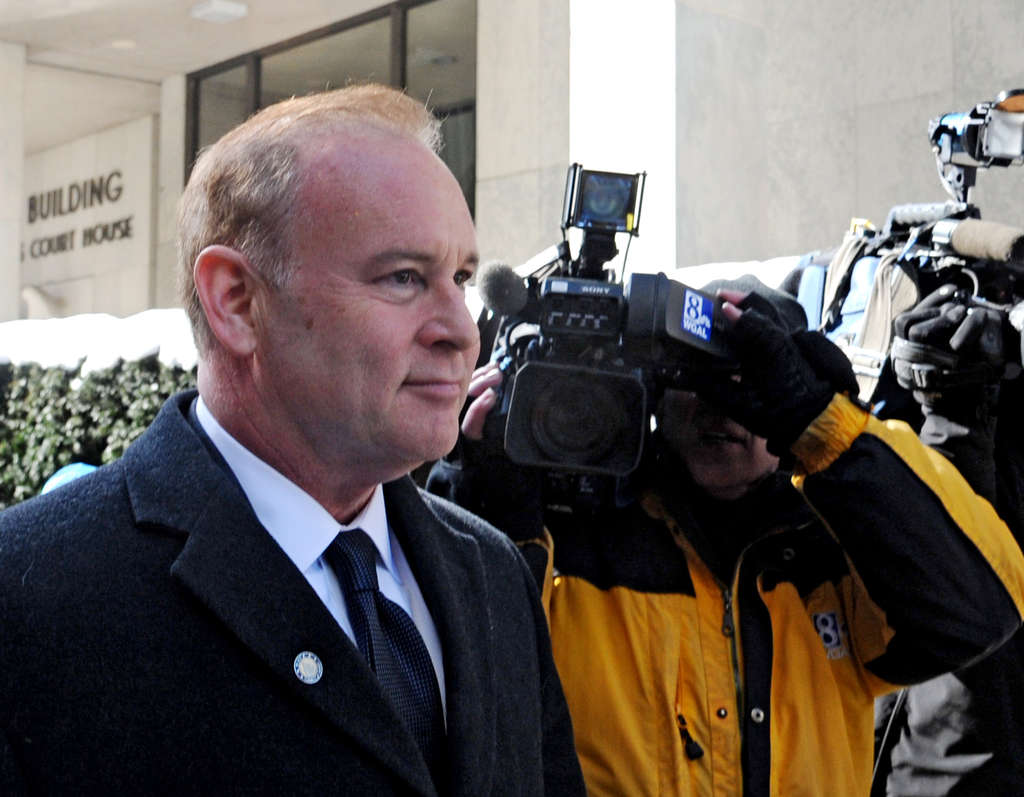
In Pennsylvania, elected state treasurers Rob McCord in 2015 and Barbara Hafer in 2017 pleaded guilty to criminal violations related to their handling of campaign contributions from money managers.
McCord, who had been a tireless political fundraiser for governors and his own campaigns, was sentenced to federal prison; he was released early. Hedidn’t return calls seeking comment.
Rob McCord, former state treasurer, leaves Federal Court in Harrisburg after pleading guilty to two counts of attempted extortion of an investor seeking contracts to manage state funds, in 2015. CLEM MURRAY / File Photograph
Hafer, who got probation and a fine, died last year.
Prior to the SEC rule, it was a common practice for money managers to fund Pennsylvania campaigns forgovernor, treasurer, and legislators. “Not only do they give me money, I hope they vote for me,” Hafer told The Inquirer in 2002.
Political contributions continued
Still, the rule didn’t stop political contributions altogether.
On Sept. 14, 2020, the state officials, teachers’ union local officers, and school board reps who formed the state school pension (PSERS) board met in secret to approve a $100 million investment. The target, code-named Project Newton, was a proposal by Pittsburgh tycoon and Steelers co-ownerThomas Tull.
Two days later, The Inquirer reported, Tull gave $711,000 to campaign funds backing Joe Biden, who was running for president, and $750,000 to a national super PAC for U.S. Senate Republicans. “There is no connection,” Tull said of the timing, so soon after the state’s secret investment. That investment, in hospital-wear maker Figs, later proved profitable.
Indeed, the SEC rule didn’t stop investment managers from donating to national politicians or even out-of-state races.
Still, Tull and national Democrats promised to recover $10,000 of Tull’s money after The Inquirer noted that those funds had been passed to Pennsylvania Democrats, whose leaders included pension board members. The SEC filed no complaint.
What money managers say
“I thought the rule had it right,” said Michael DiPiano, founder of NewSpring Capital, a $3.5 billion private investment fund group in Radnor, whose clients have included the Pennsylvania state and New York City pension funds.
“Limiting or eliminating pay-to-play took donor pressure off of [private-investment fund managers] and leveled the playing field,” so larger firms that could afford the biggest donations wouldn’t crowd out smaller firms, DiPiano said.
“Tighter pay-to-play restrictions should lead to a more objective-based approach” for picking money managers, he added.
Richard Vague, the former banker and Pennsylvania Secretary of Banking who chairs the PSERS pension board, says SEC limits might fairly be eased in some details but “an outright rescinding goes far beyond.”
The rule came after Wall Street “corruption” was exposed in the late 2000s, with the pension fraud cases, he noted. “Protective regulations, laws, and other safeguards get put in place in the aftermath of a major crisis,” Vague added.
It’s not surprising that money managers and their Washington allies chip away at those rules, but with too much trimming, “those safeguards largely disappear,” Vague concluded.
“That makes a subsequent crisis all the more likely.”
For a moment, it felt like the tide was changing. That the Eagles were going to come away with a win on a rainy Sunday at Lincoln Financial Field — and break the week-long curse of Philly sports teams losing.
But then the Los Angeles Rams mustered 14 unanswered points in just over two minutes late in the fourth quarter to seal the Birds’ 24-20 loss.
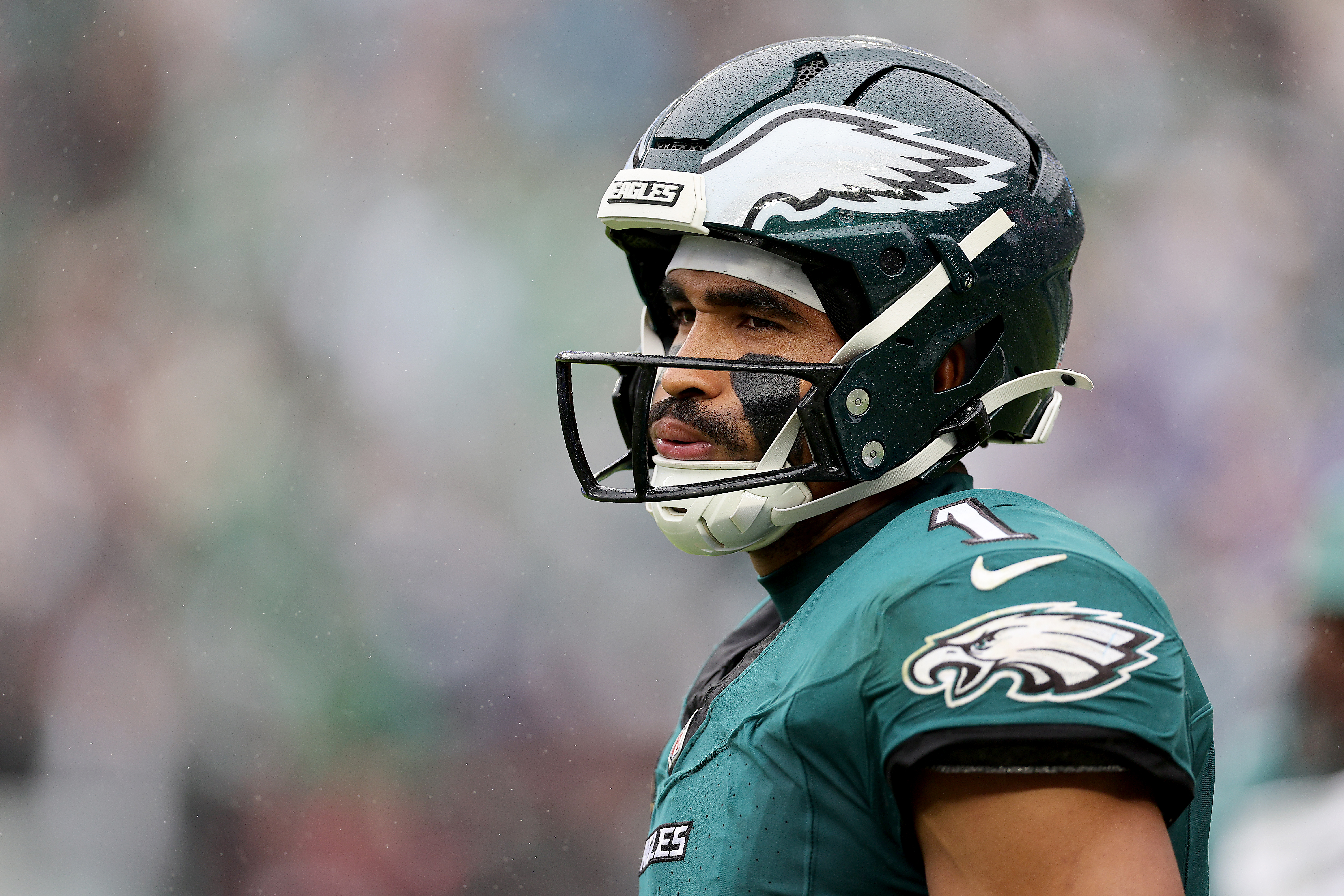
Jalen Hurts and the offense were held scoreless in the second half. The defense was sound until the Rams marched 79 yards down the field and scored the go-ahead touchdown on a 7-yard Kyren Williams run.
Hurts threw for less than 100 yards and the defense faltered late under the weight of the team’s offensive struggles. Jeff McLane hands out his grades on the Eagles and their issues on both sides of the ball.
The Eagles were also plagued by injuries.
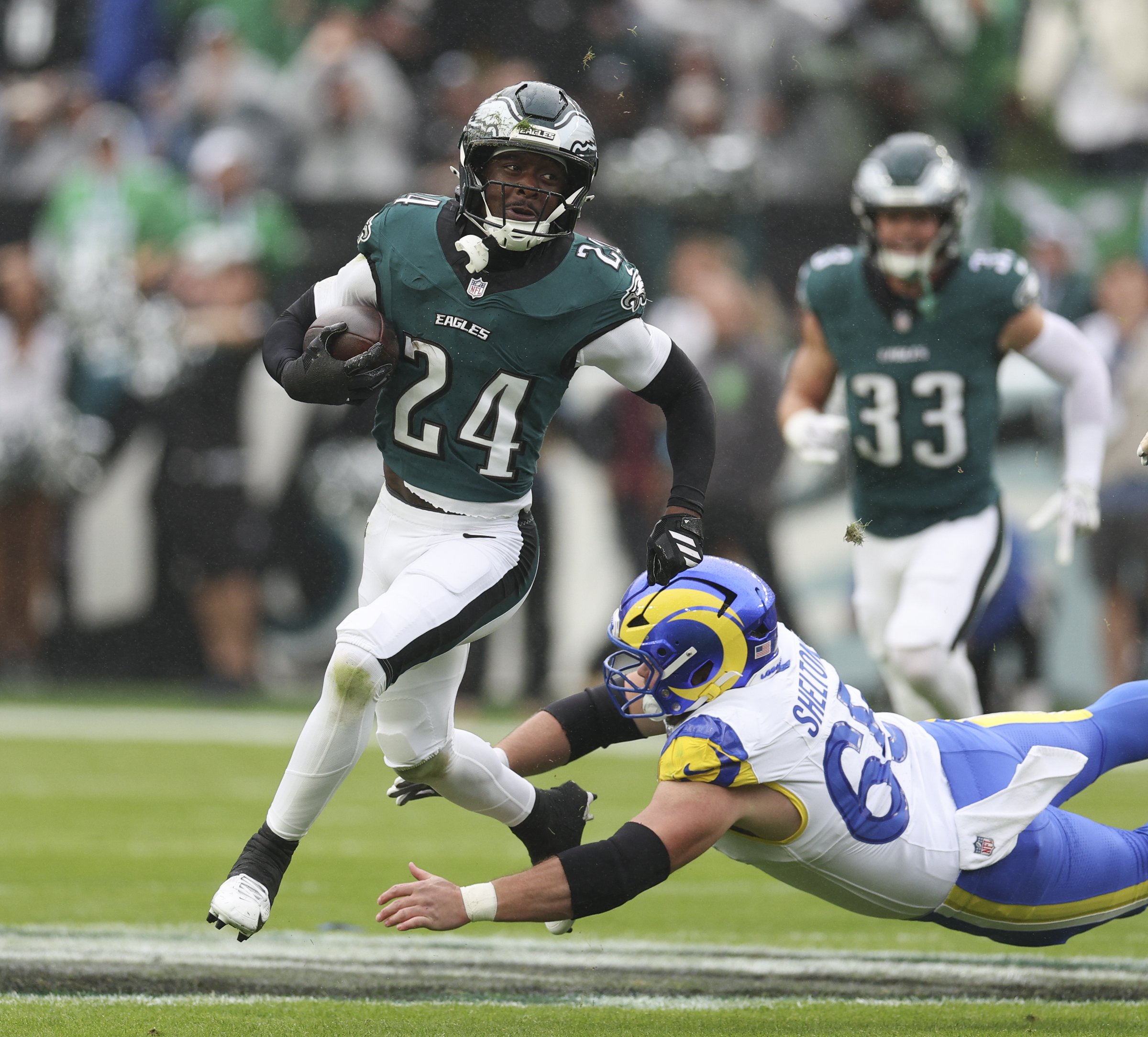
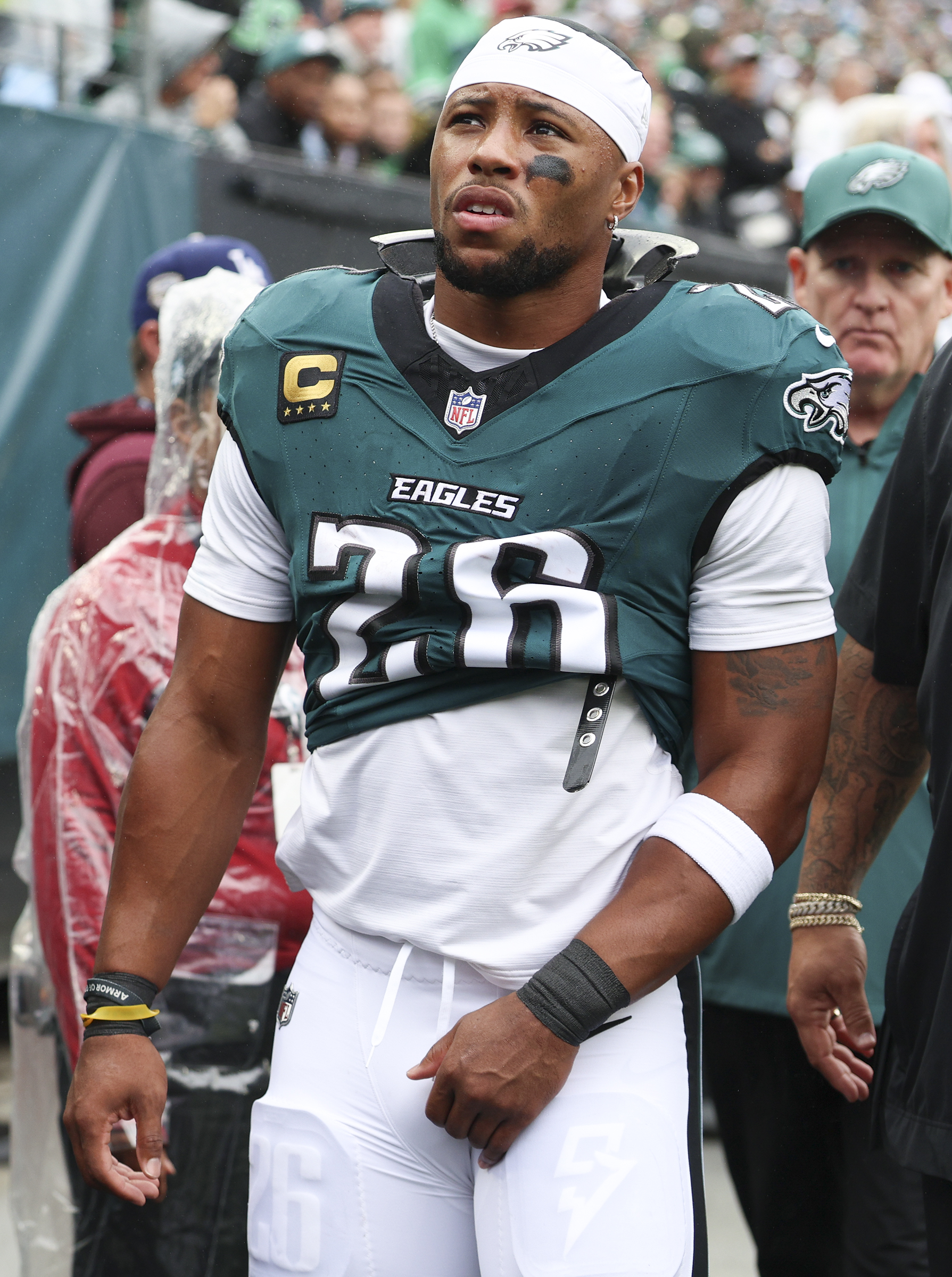
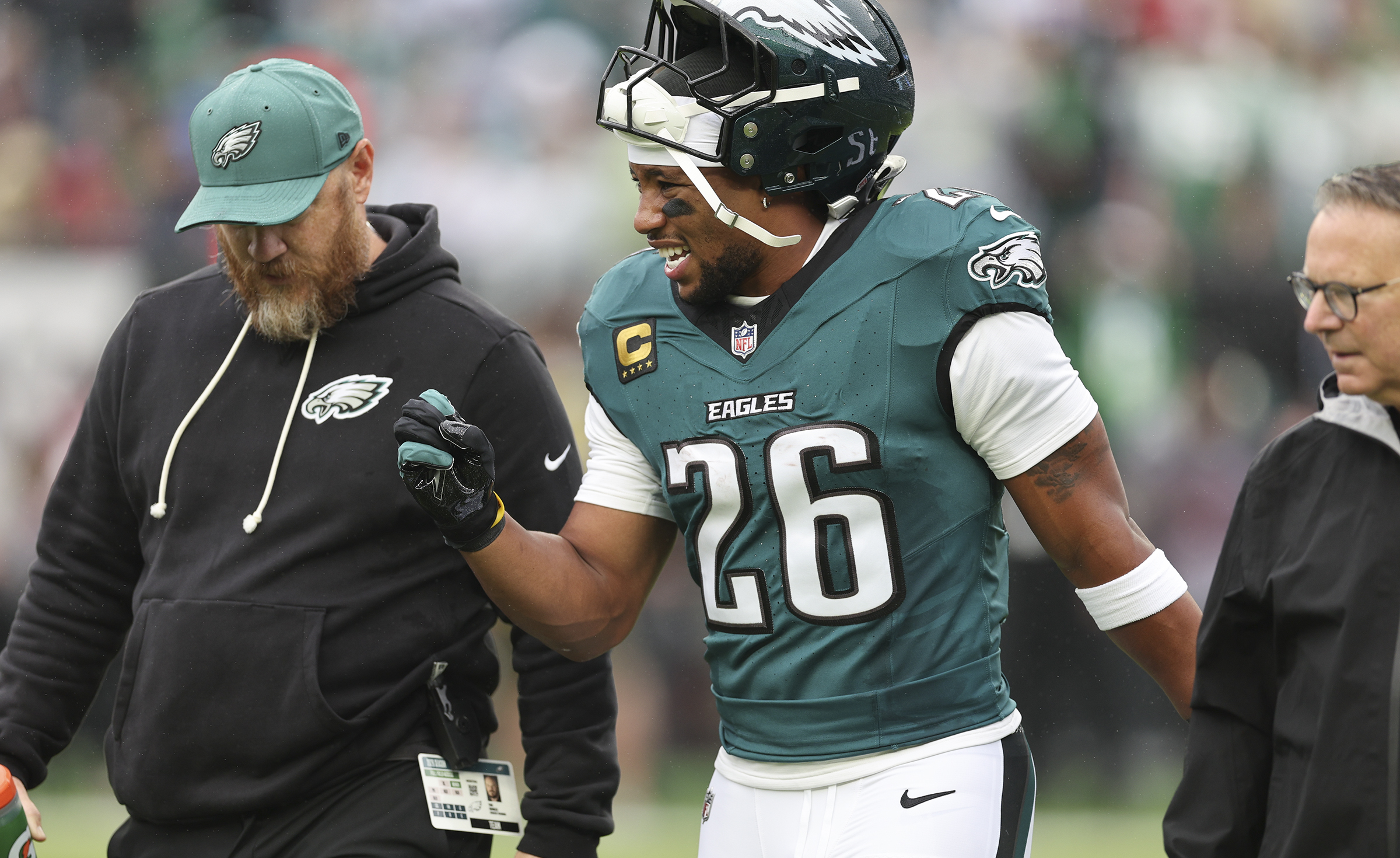
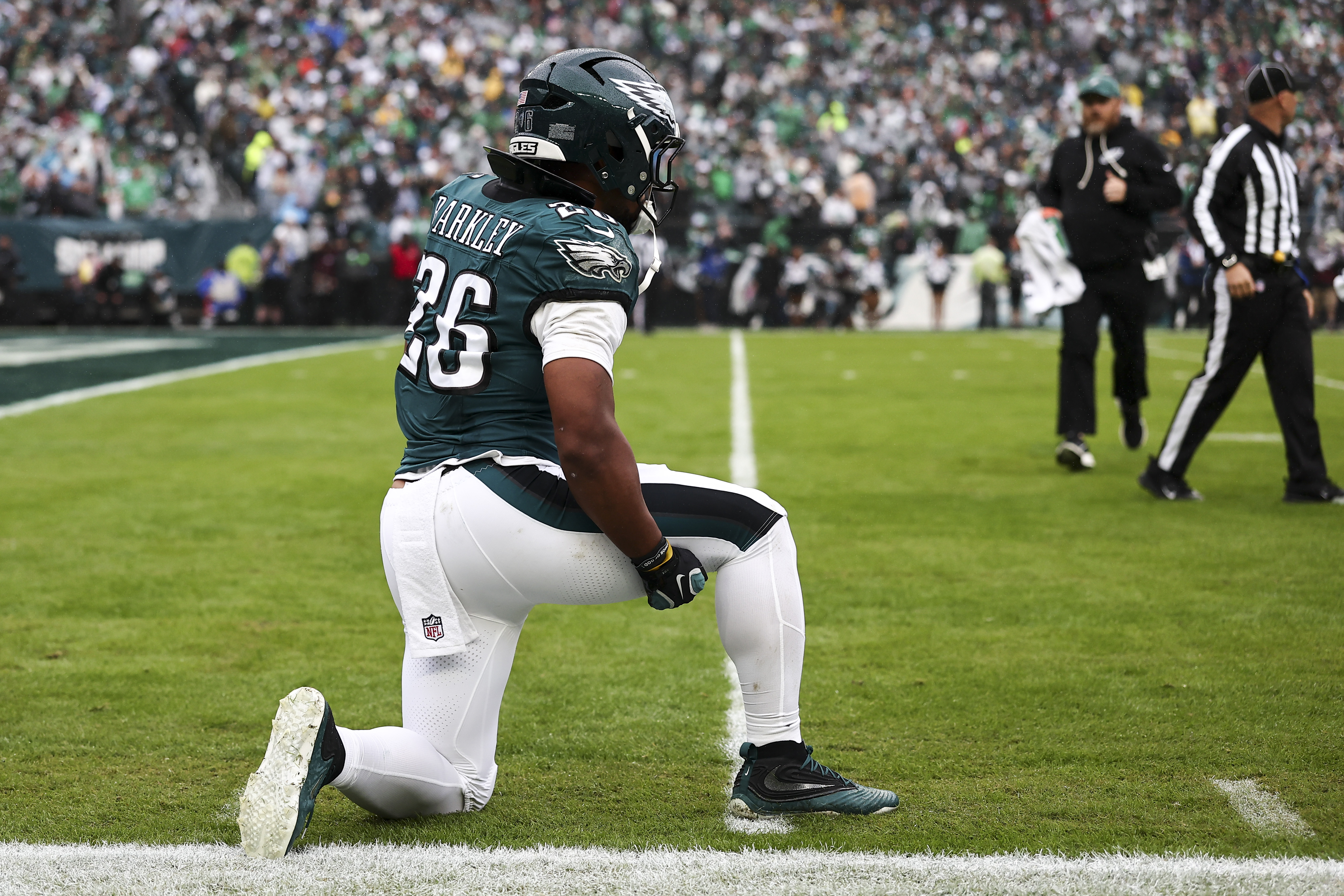
Entering Sunday’s game, Lane Johnson was a late scratch due to what the team called a personal issue. To make matters worse, they also lost Saquon Barkley, Quinyon Mitchell, Jonathan Greenard, and Tank Bigsby during the game. But Johnson’s late-breaking absence forced the Eagles to scramble. It’s unclear if he’ll be back for Week 5.
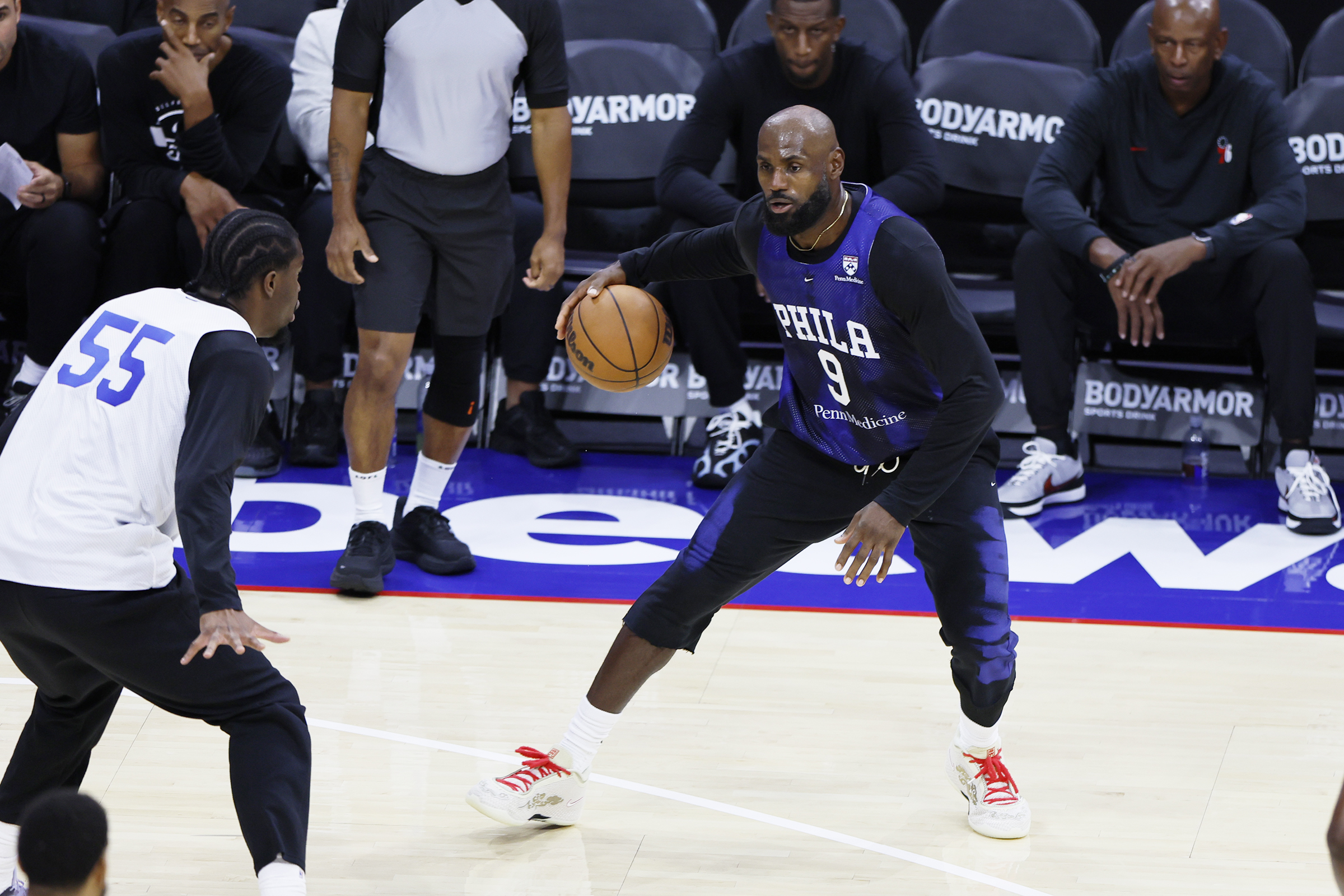
LeBron James during the Sixers’ Blue x White scrimmage on Saturday at Xfinity Mobile Arena.Elizabeth Robertson / Staff Photographer
The crowd inside Xfinity Mobile Arena erupted right before LeBron Jameswas introduced during the Blue x White scrimmage on Saturday, and the all-time great put on a show for his new city. As for James, he said, “I’m still getting more and more comfortable off the floor. … It’s been a great first week.”
However, even with a new star-studded team, Mike Gansey, the new president of basketball operations, said they will still be relying on Tyrese Maxey and Joel Embiid.
And Embiid seems to be in good health and spirits through the first week of camp. He also played a good portion of the Sixers scrimmage on Saturday.
The Sixers will begin preseason play tonight against the New York Knicks.
What we’re…
👀 Hearing: What Tom Brady said about the Eagles during Sunday’s Fox broadcast as he called the offense “really ugly.”
🙌 Praising: The Waterdogs won the 2026 Premier Lacrosse League championship. The team believes it will help in terms of developing fan engagement in Philly.
📖 Reading: Wet conditions didn’t stop spectators at the Jefferson Lehigh Valley Classic. For golfers, it was a different test.
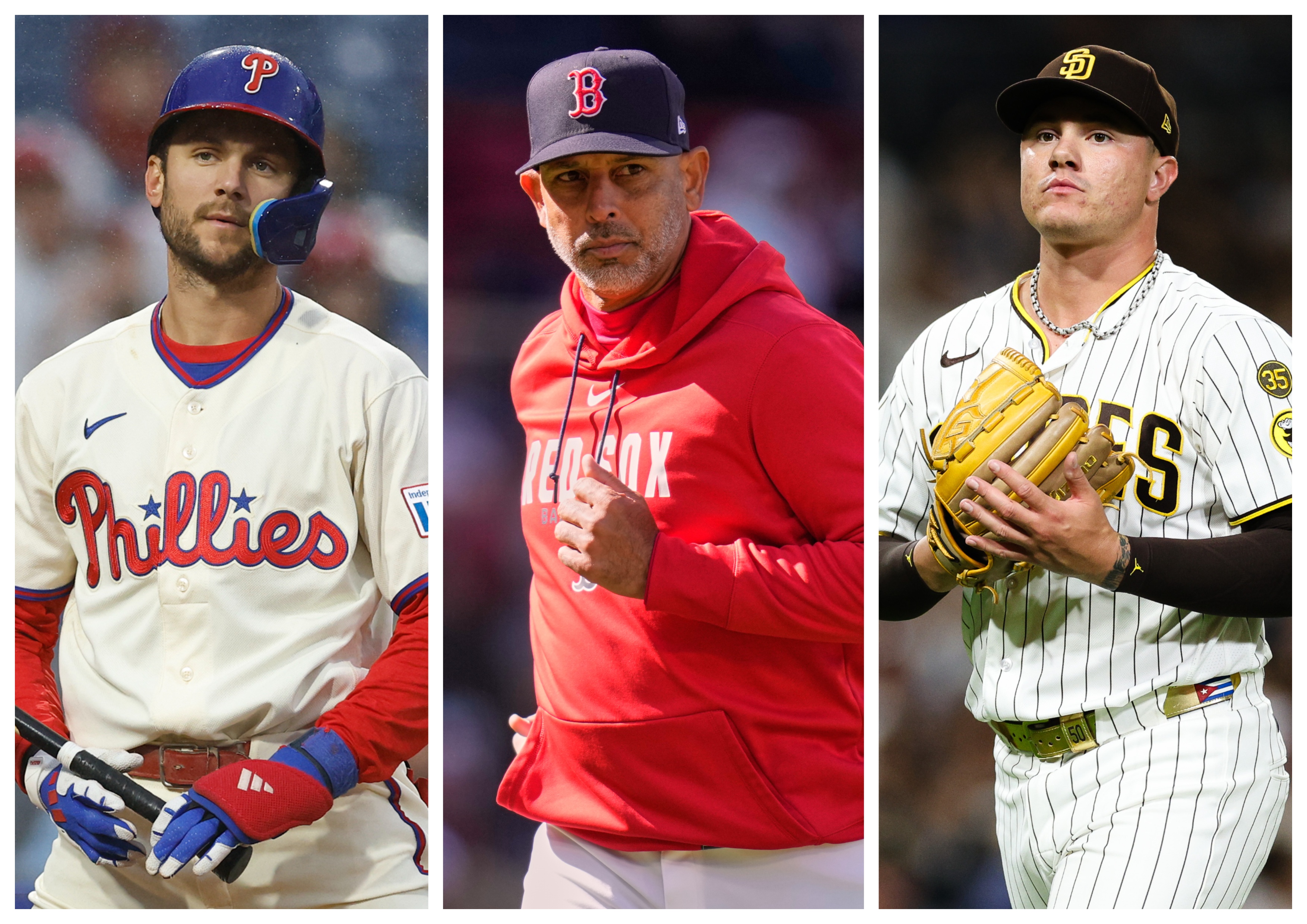
Trea Turner (left) had a down season, Alex Cora could be the next Phillies manager, and Adrian Morejon could be a pricey option for a bullpen upgrade.Yong Kim and Associated Press
The Phillies have made the playoffs five years straight for only the second time in their 144-season history, but haven’t won a series since 2023. They’ve actually backslid one round every year since their unexpected run to the 2022 World Series.
Fixing the roster is up to Dave Dombrowski, who has one year left on his contract and is expected to get an extension. But the Phillies’ core of Bryce Harper, Kyle Schwarber, Trea Turner, Aaron Nola, J.T. Realmuto, and Zack Wheeler isn’t getting any younger.
There’s a lot of work to be done on a $322 million roster that only narrowly avoided a historic collapse, writes Scott Lauber.
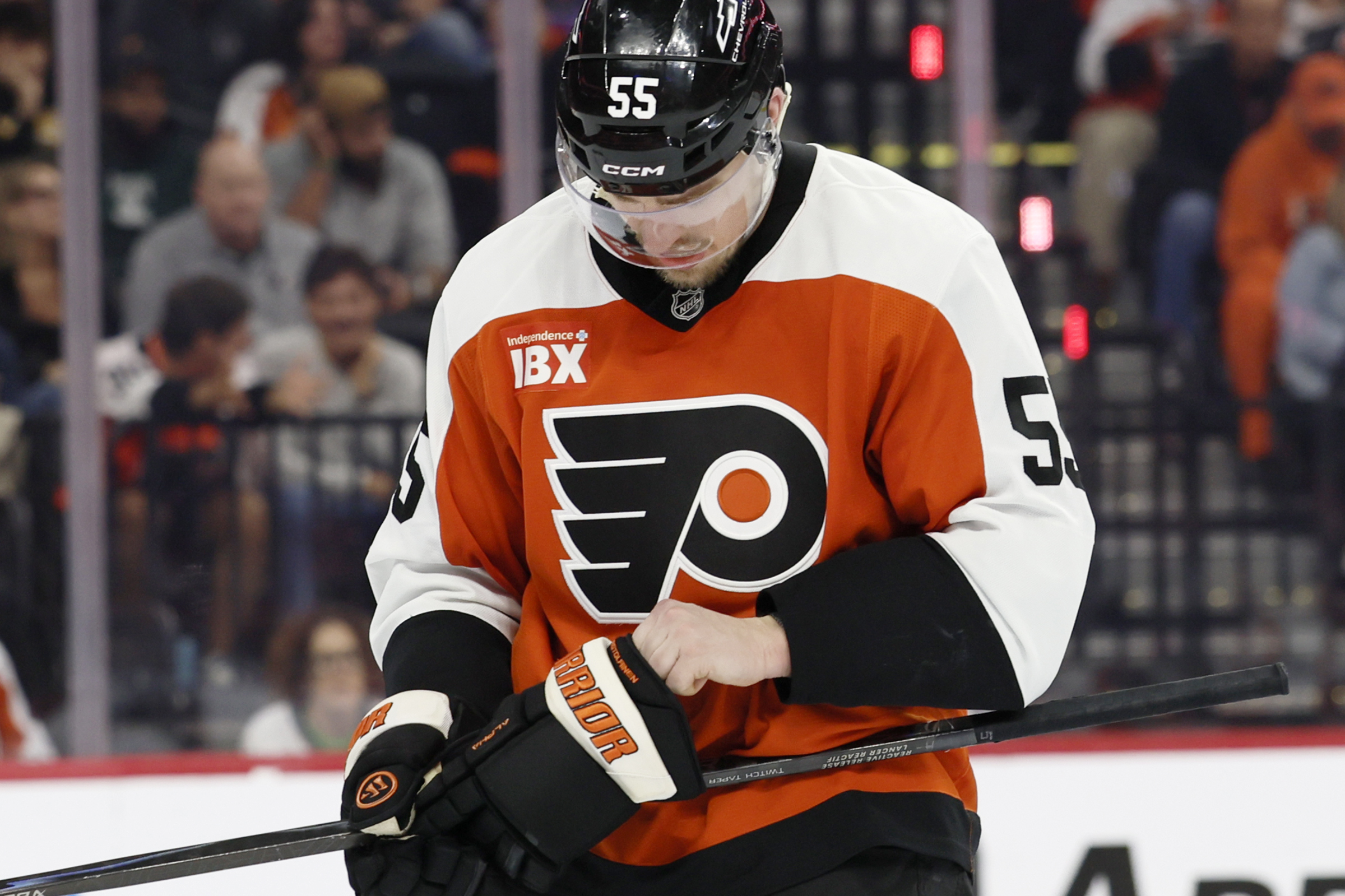
So Rick Tocchet decided it’s time for a change. He needs to get back to the basics. His team has been outshot 122-62 across the first three games, and they still haven’t been able to sync up. Their first extended road trip of the season could offer a chance to get on the same page.
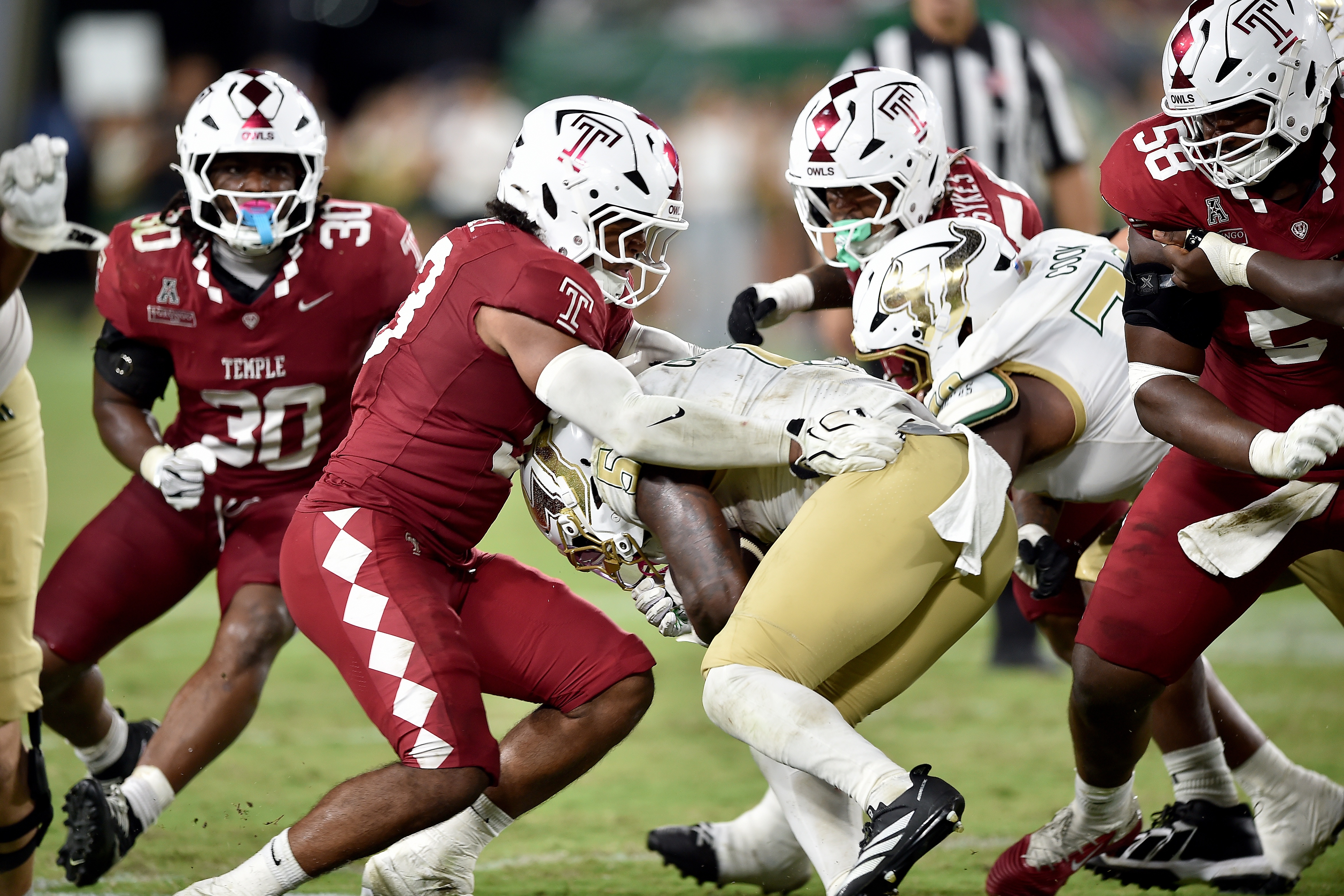
Temple’s defense played a major part in keeping the Owls in competition with South Florida after the offense got off to a slow start.Kelly Sheehan
For the past two weeks, Temple struggled to finish down the stretch. But on Saturday, against then-unbeaten South Florida, the Owls upset the Bulls, 17-13, on the road.
After trailing by three following a fumble by Ajani Sheppard near the goal line, the senior quarterback bounced back by running in for a touchdown. But Temple’s victory, which snapped a two-game losing skid, wouldn’t have been possible without the help from its defense.
However, Penn, Villanova, and Penn State didn’t have similar outcomes. Let’s start with Friday night at Northwestern, where the Wildcats played their first game in an $875 million stadium and ran all over the Nittany Lions in a 34-13 loss.
Villanova still hasn’t won a game at home this season after dropping a 38-35 game to Morgan State, while Penn opened Ivy League play against Dartmouth, but spoiled coach Rick Santos’ return to New Hampshire.
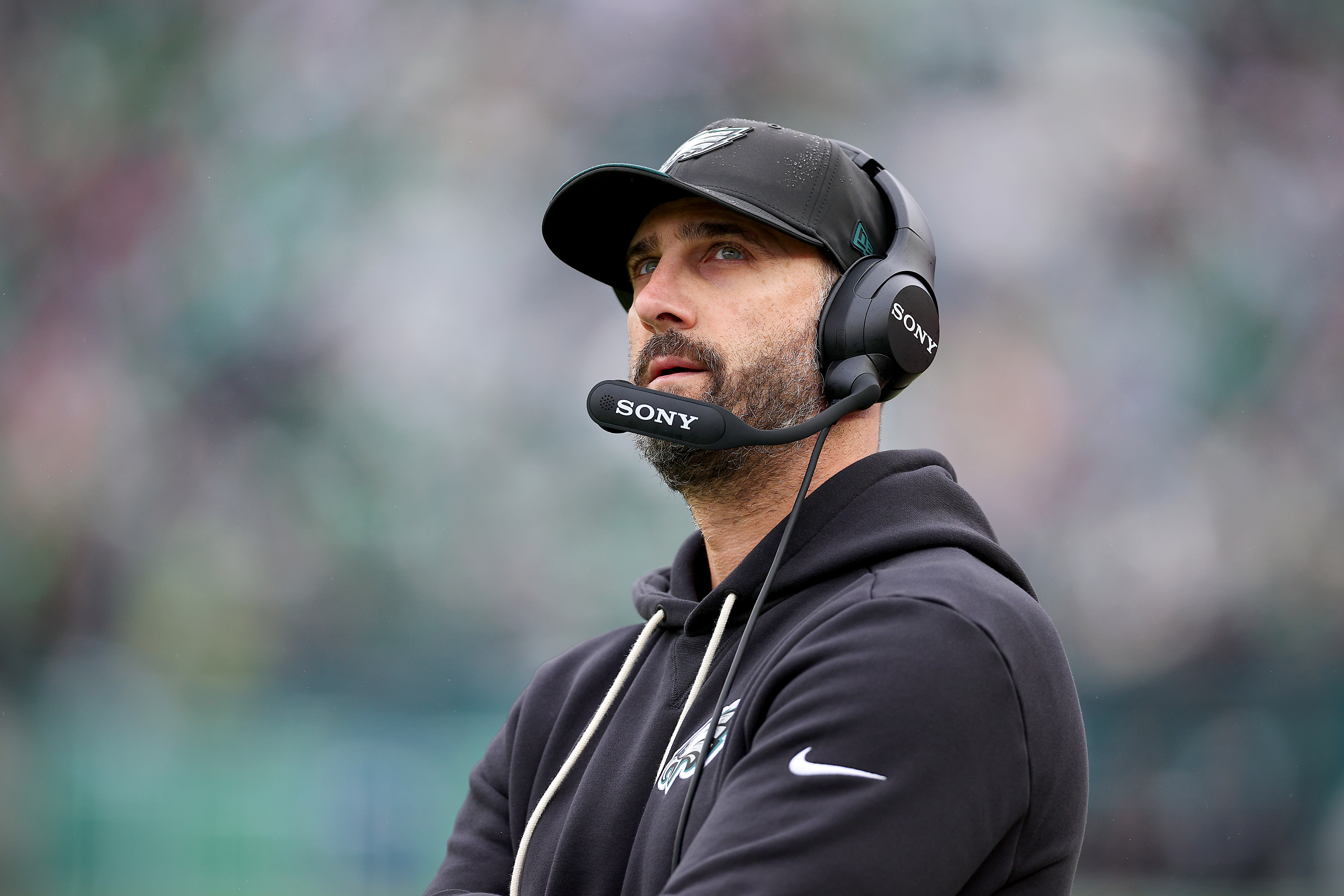
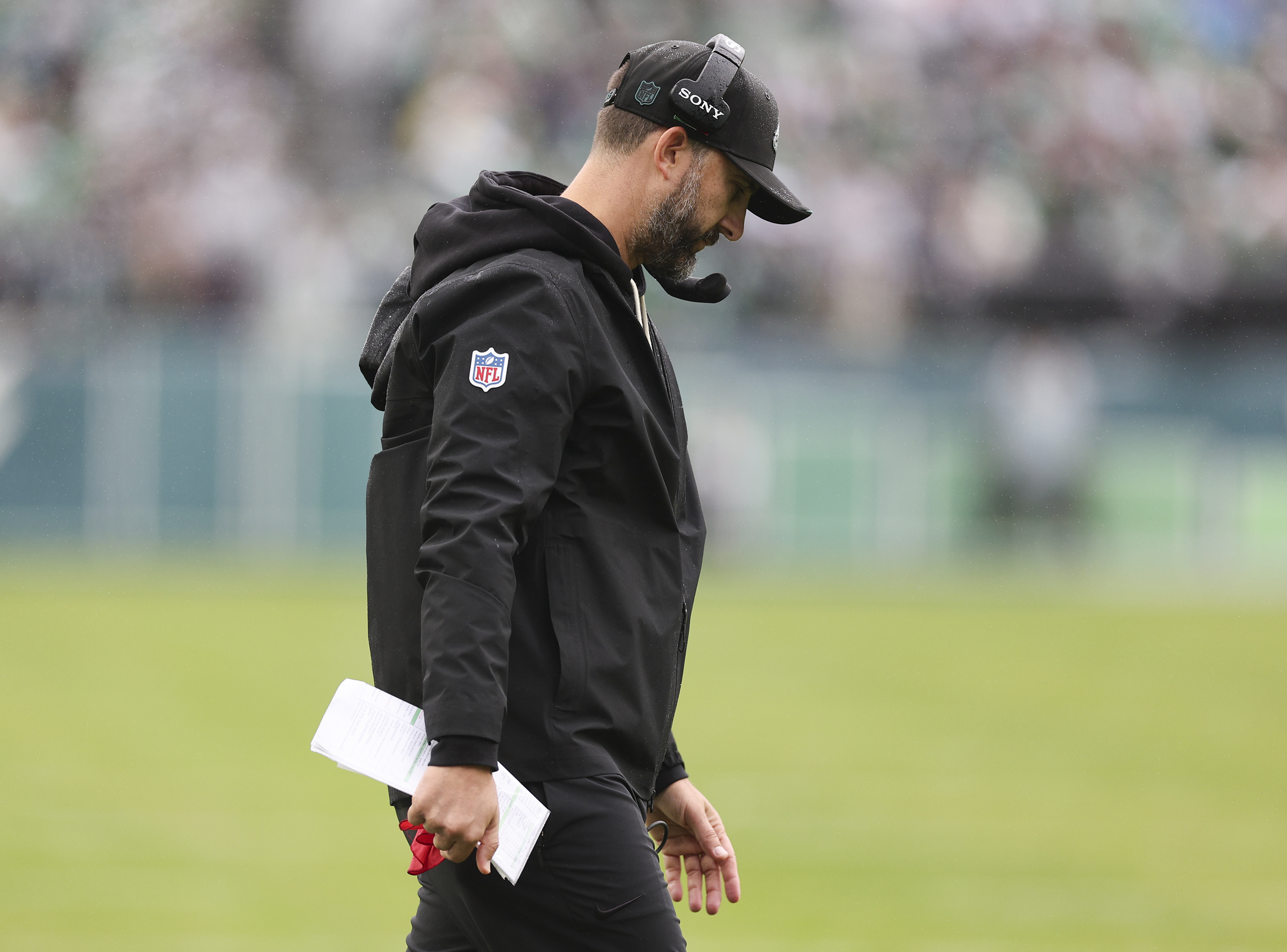
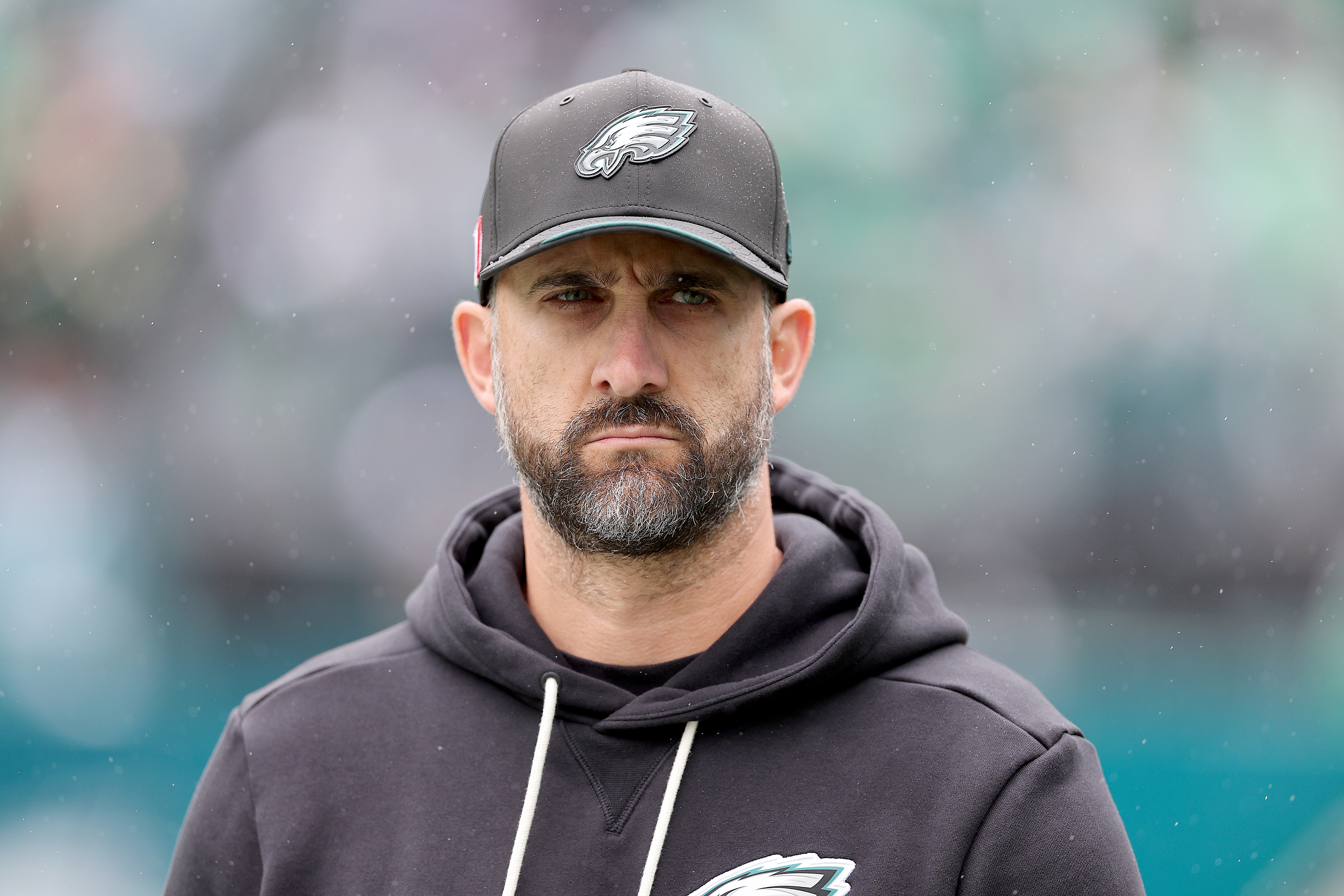
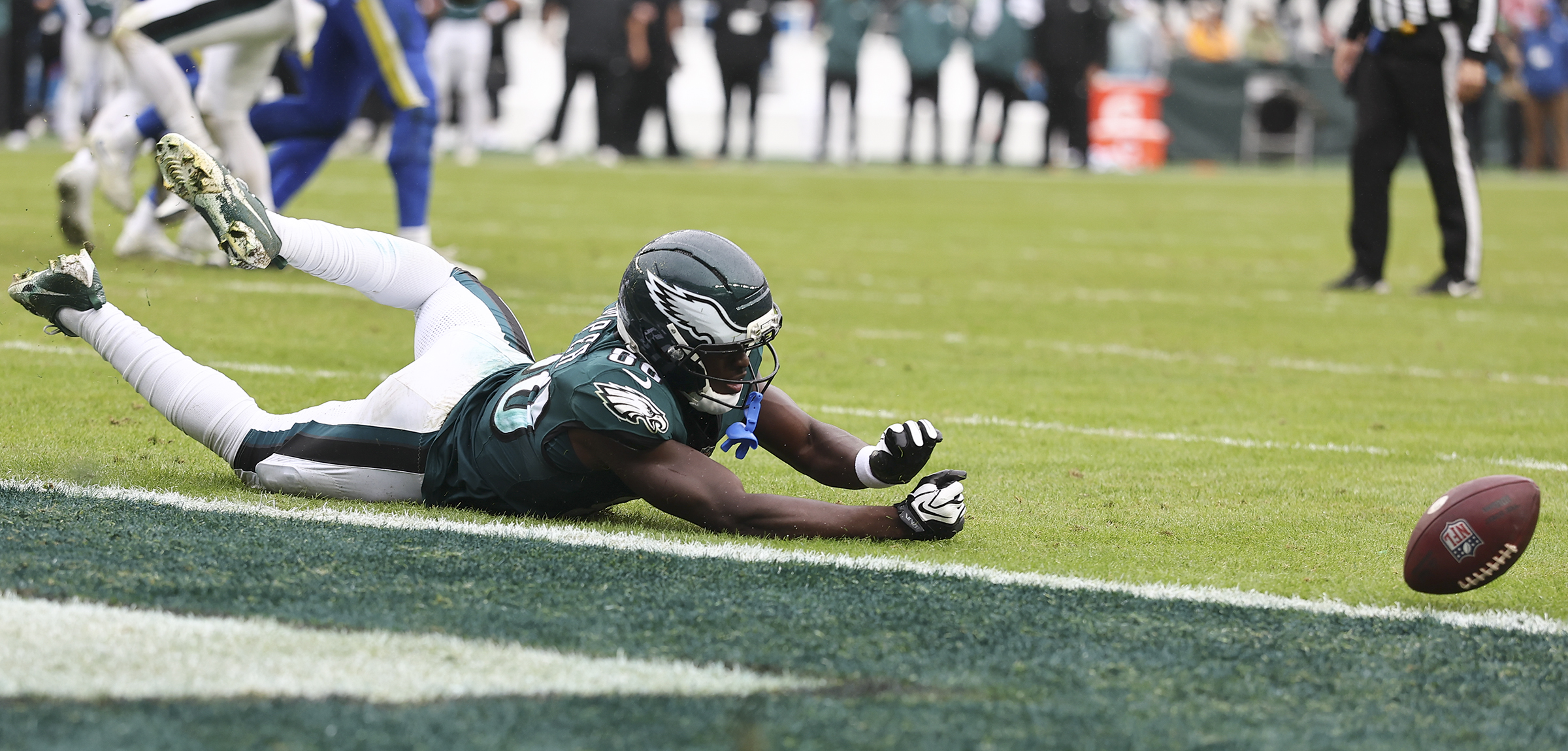
Eagles head coach Nick Sirianni went for it and failed on fourth down multiple times.David Maialetti / Staff Photographer
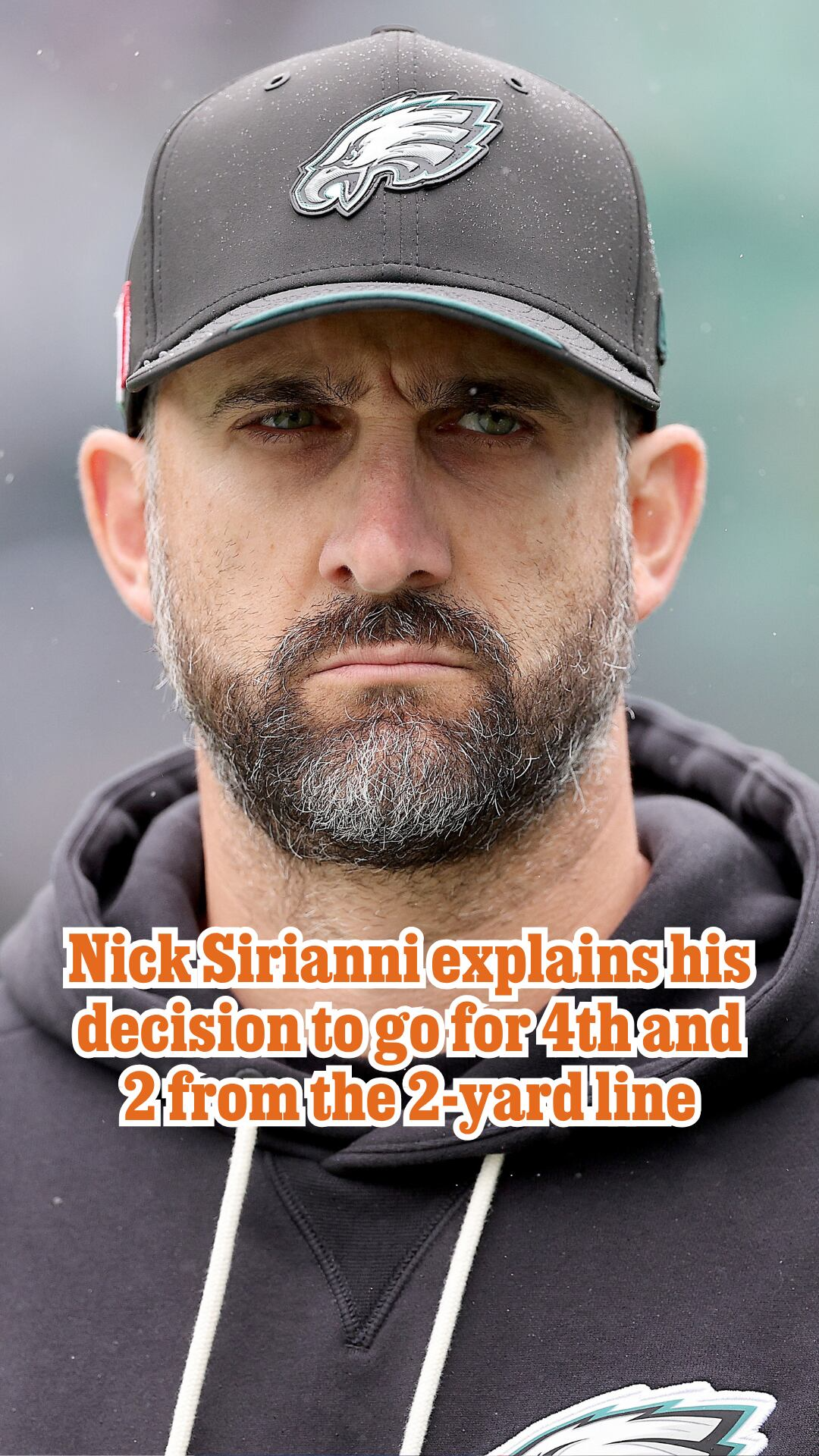
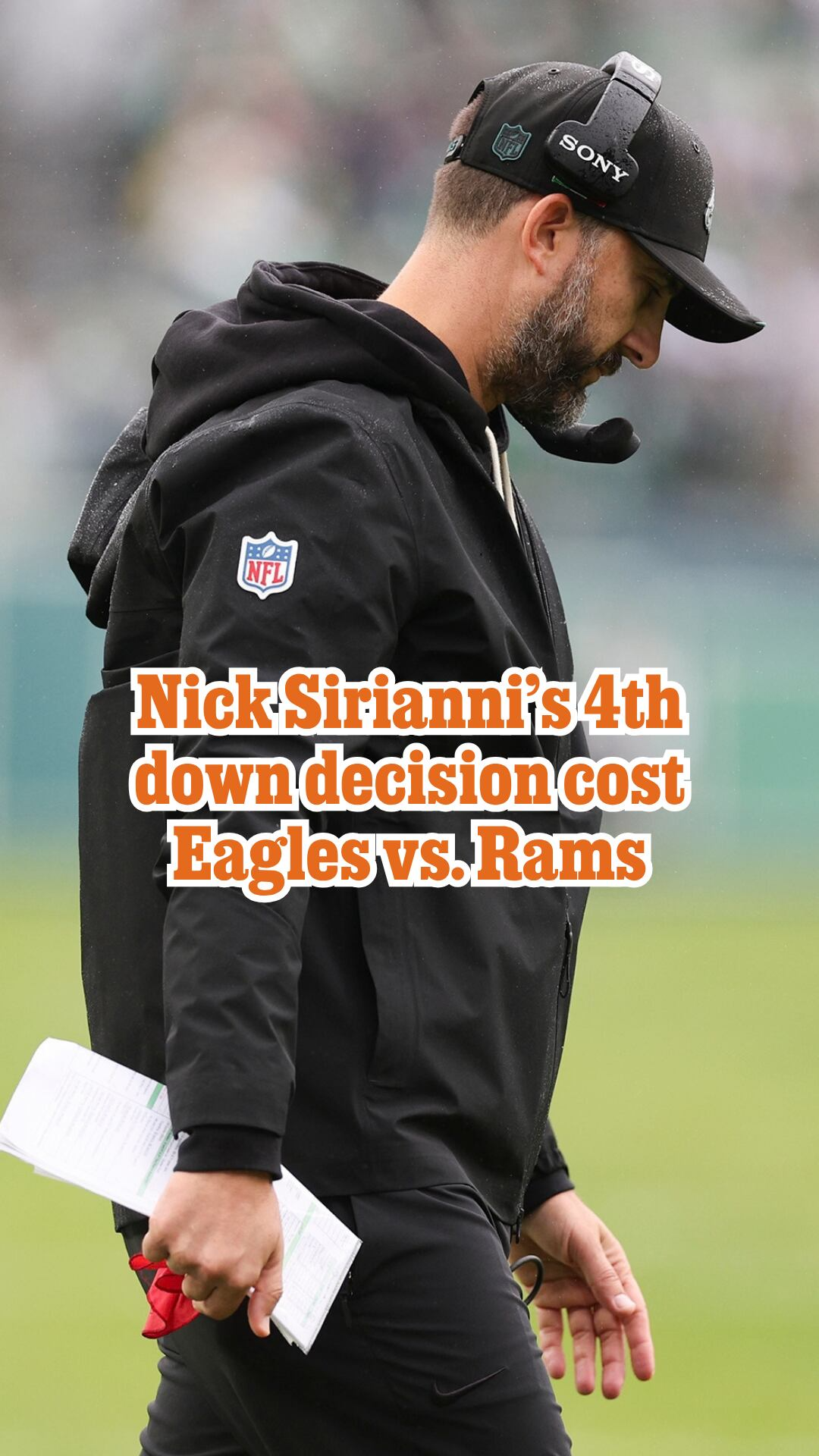
The Eagles led by 10 with 7½ minutes to play, at home, against a one-win team that lacked its two best defensive players. Then Nick Sirianni went for it on fourth-and-goal from the 2, called a pass play after running it down the Rams’ throats, gave away three points, and revived the Rams. Blame injuries if you like. That’s a loser’s excuse, writes columnist Marcus Hayes.
We compiled today’s newsletter using reporting from Olivia Reiner, Marcus Hayes, Ryan Novozinsky, Jeff McLane, Scott Lauber, Jeff Neiburg, Gina Mizell, Conor Smith, Mia Messina, Lauren Jones, Jackie Spiegel, Gabriela Carroll, Chris Hine, Mike Livingston, Dylan Johnson, Hannah Chang, and Lexie Linderman.
By submitting your written, visual, and/or audio contributions, you agree to The Inquirer’s Terms of Use, including the grant of rights in Section 10.
Thanks for getting your morning started with me. Have a wonderful Monday. Matt Mullin will be in your inbox tomorrow. — Bella
After nearly reaching the quarter pole of the season, it’s become evident that Sean Mannion’s Eagles offense is disjointed, unimaginative, and ultimately, ineffective.
Or is it Nick Sirianni’s offense? Or Jalen Hurts’? Or does it even matter who is given ownership of a unit that failed to capitalize on an impressive defensive performance against the Los Angeles Rams?
Of course, everyone played a part in a 24-20 loss on Sunday. Vic Fangio’s defense could have gotten a stop on the Rams’ two late fourth-quarter touchdown drives. The Lane Johnson-less offensive line could have opened more holes and given Hurts more time. The wide receivers, running backs, and tight ends could have done something to convert just one third down.
Jalen HurtsDavid Maialetti
But the offense has reached an inflection point after its regression in each of the first four games, and it’s on the figureheads at the top to decide where to go from here. Should Sirianni allow Mannion to fully implement the Kyle Shanahan scheme that was at the core of his hiring? Or should they just abandon the under-center heavy system that has been woefully unproductive thus far?
“I’ve got a ton of confidence in Sean and he’s going to wear a lot of this. There’s no doubt,” Sirianni said. “I’m going to wear a lot of this. Our offense is going to wear a lot of this. You win together, you lose together. I have no complaints on what happened there today.”
Sirianni was referencing Mannion’s play-calling. But the game planning is at the heart of the matter. The Eagles want a sophisticated offense that can marry the run with the pass off play-action, but they also want Hurts in the shotgun playing to his strengths.
The problem is they can’t function properly on run downs because defenses are stacking the box when Hurts is under center, and when they’re forced into obvious pass downs, the quarterback is getting blitzed to death. In essence, they haven’t been either thing.
There was always going to be some blending of the old with the new. But asking a 34-year-old first-time offensive coordinator to take on that responsibility when he had little experience in more than one scheme is starting to look like a tall task.
Hurts did not play well vs. the Rams. He fell short of standards last week in Chicago. But he carried the Eagles to victories in the first two weeks, and did so by executing some of the new intricacies that Mannion brought to Philly.
The Eagles can win with Hurts. It’s been shown over and over. But he can’t be at the center of it all, even if he plays the most important position. Two years ago after a 2-2 start, Sirianni pivoted to a run-based offense after it was clear that the quarterback couldn’t thrive in Kellen Moore’s scheme.
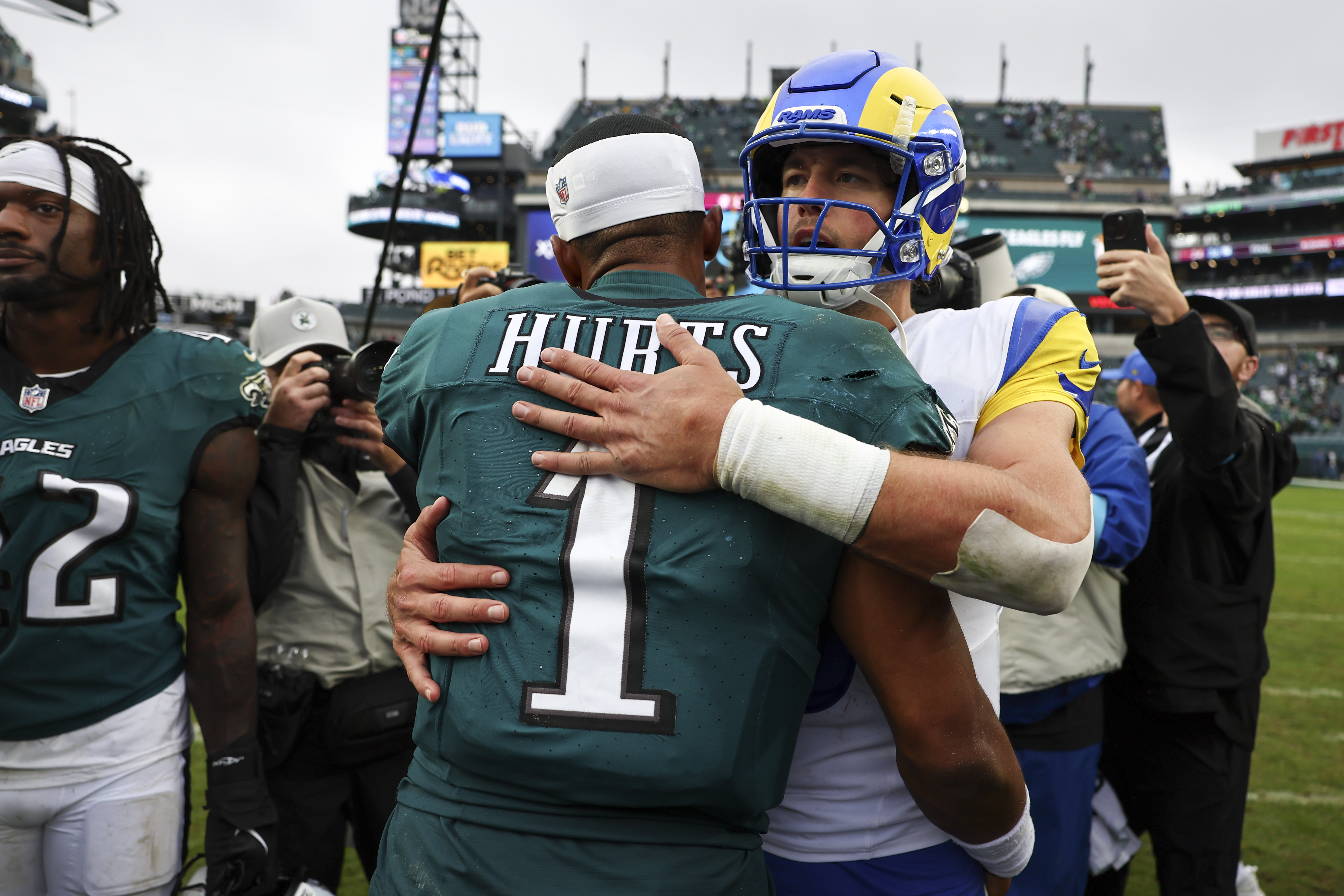
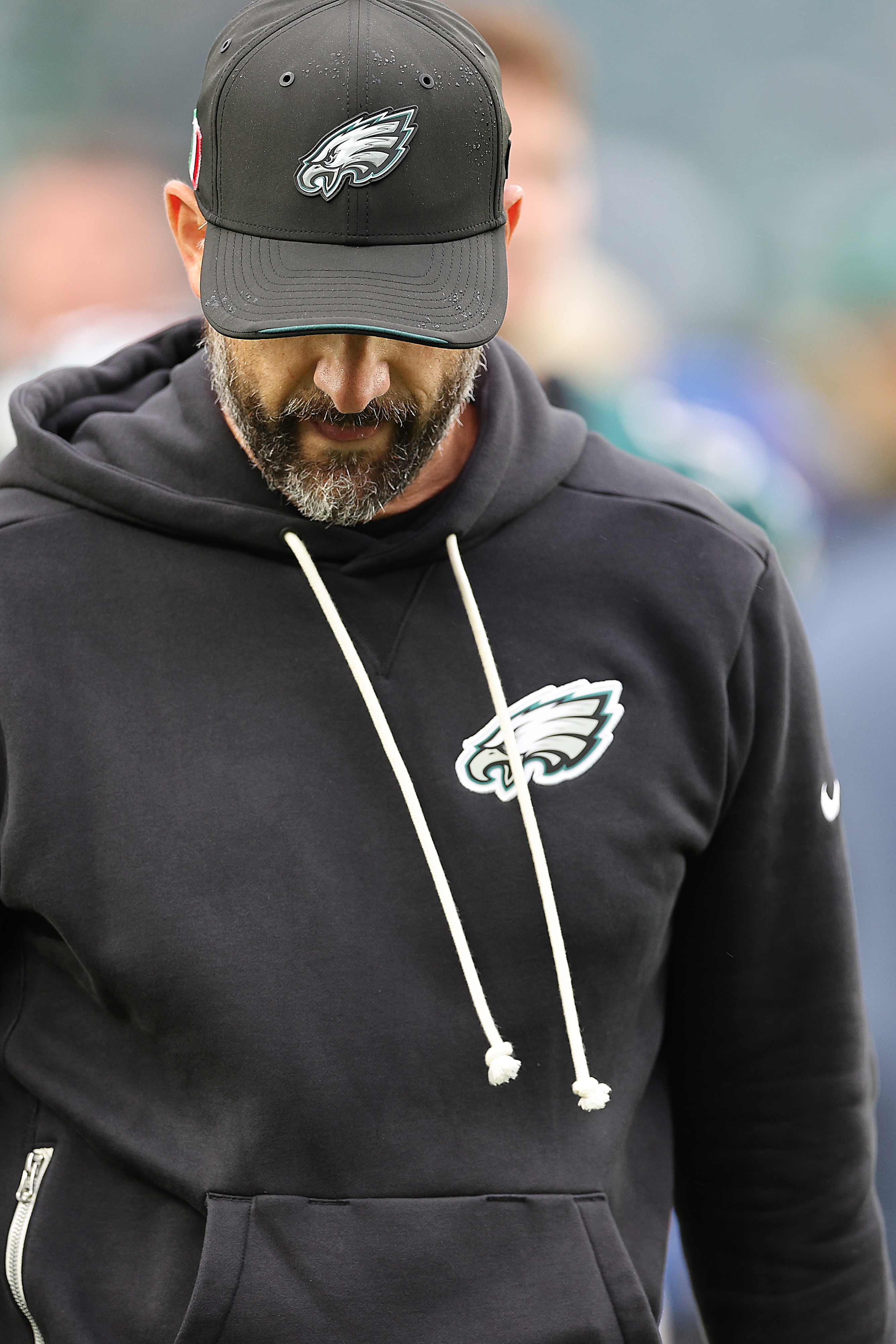
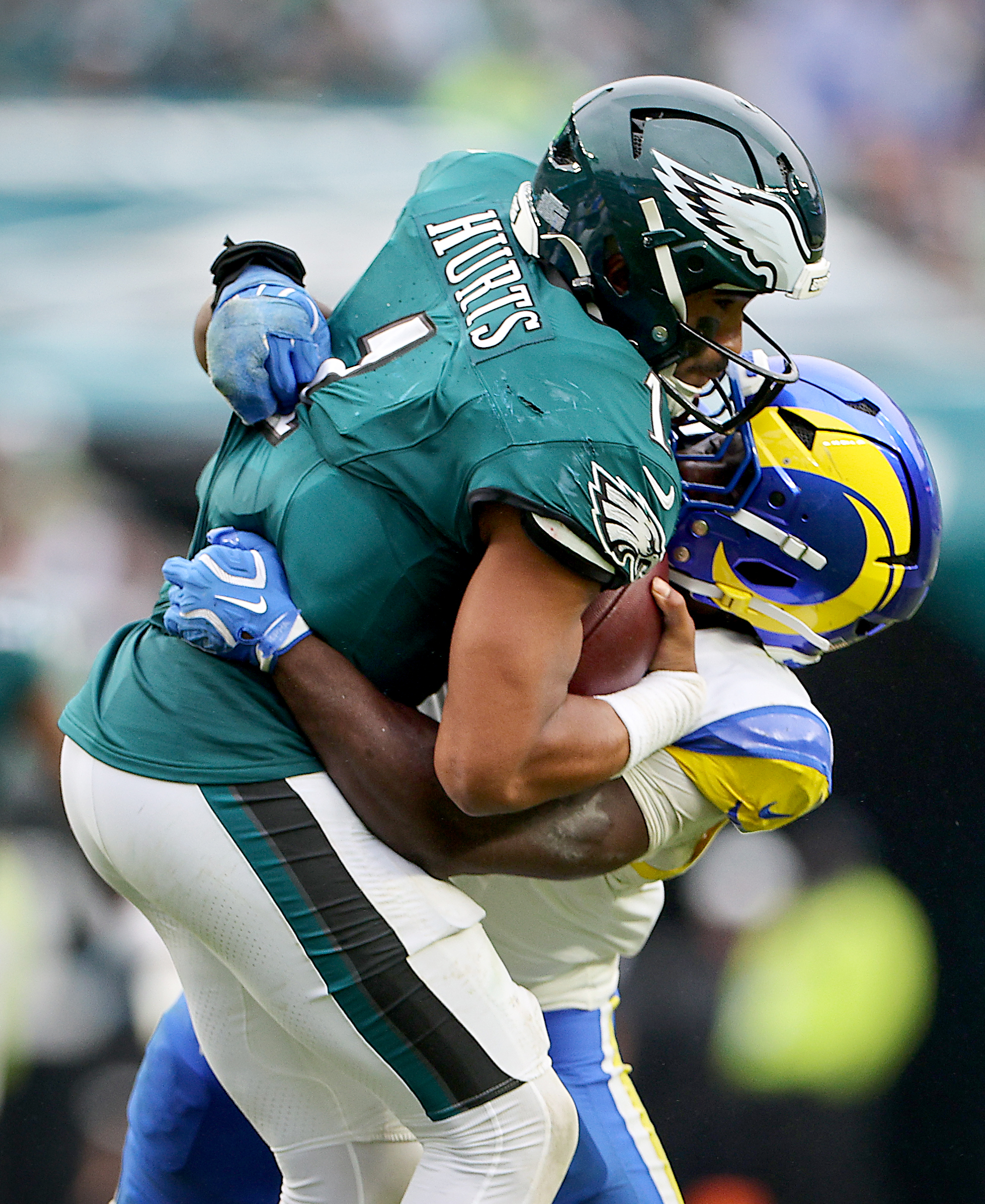
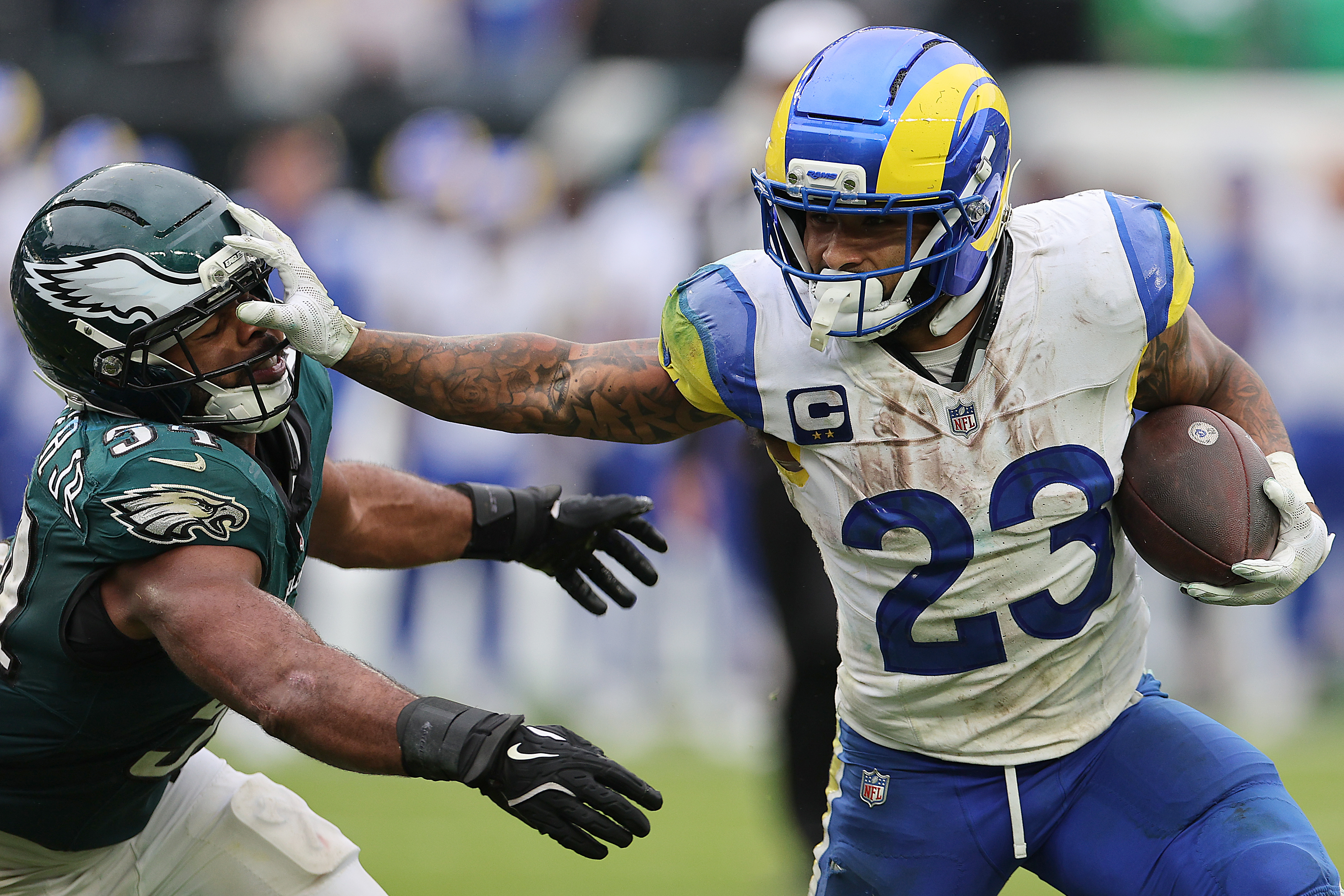
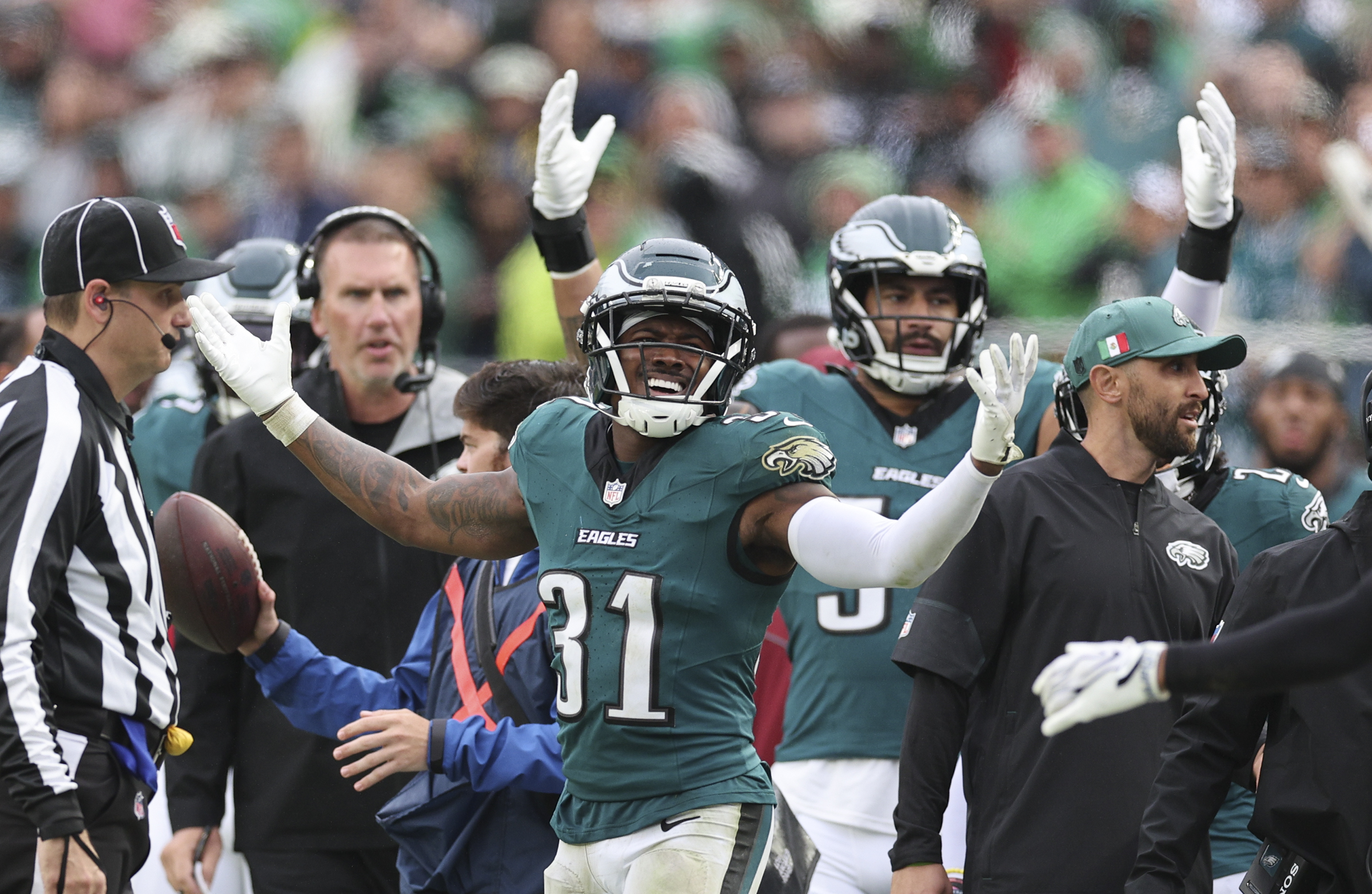
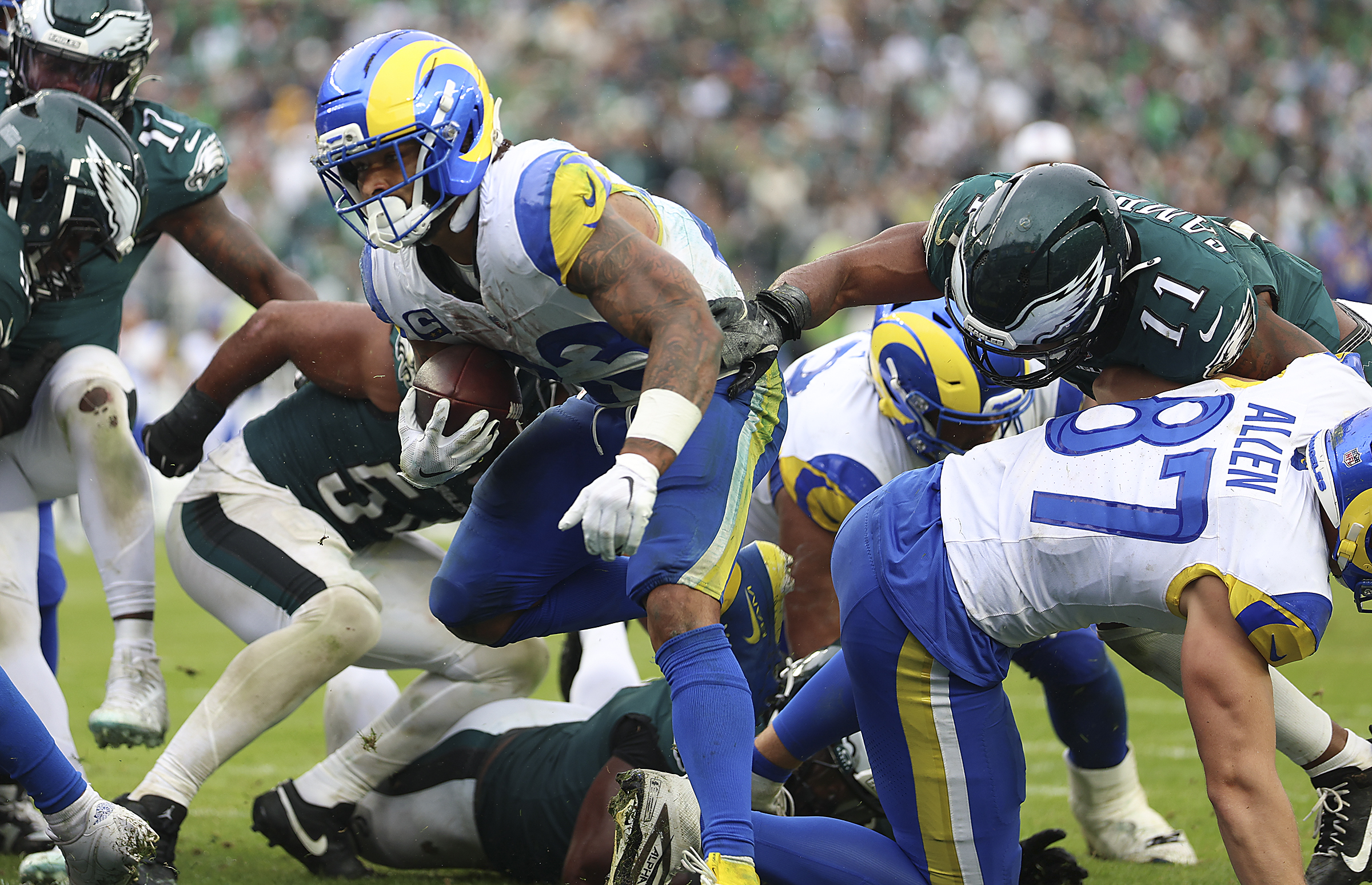
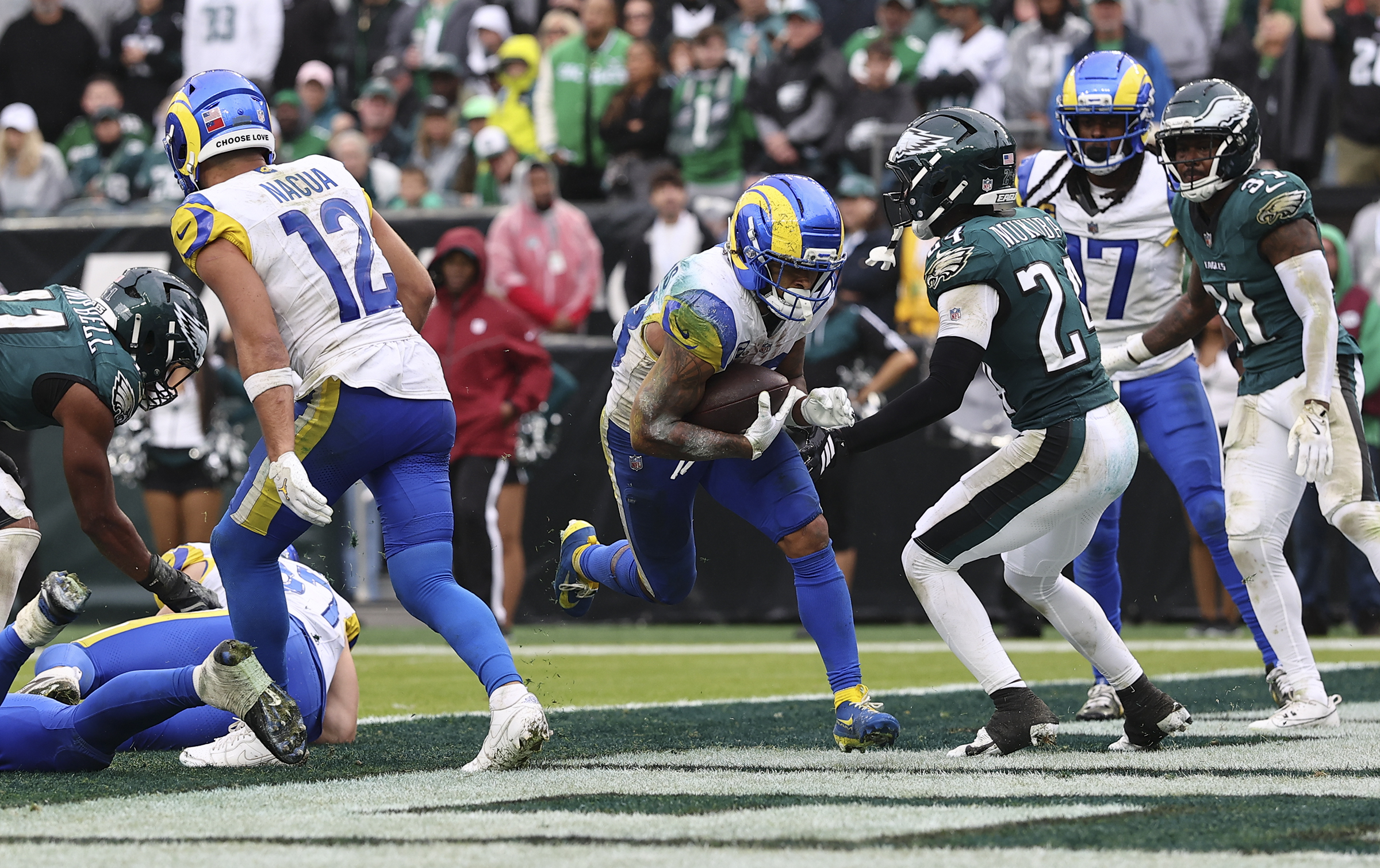
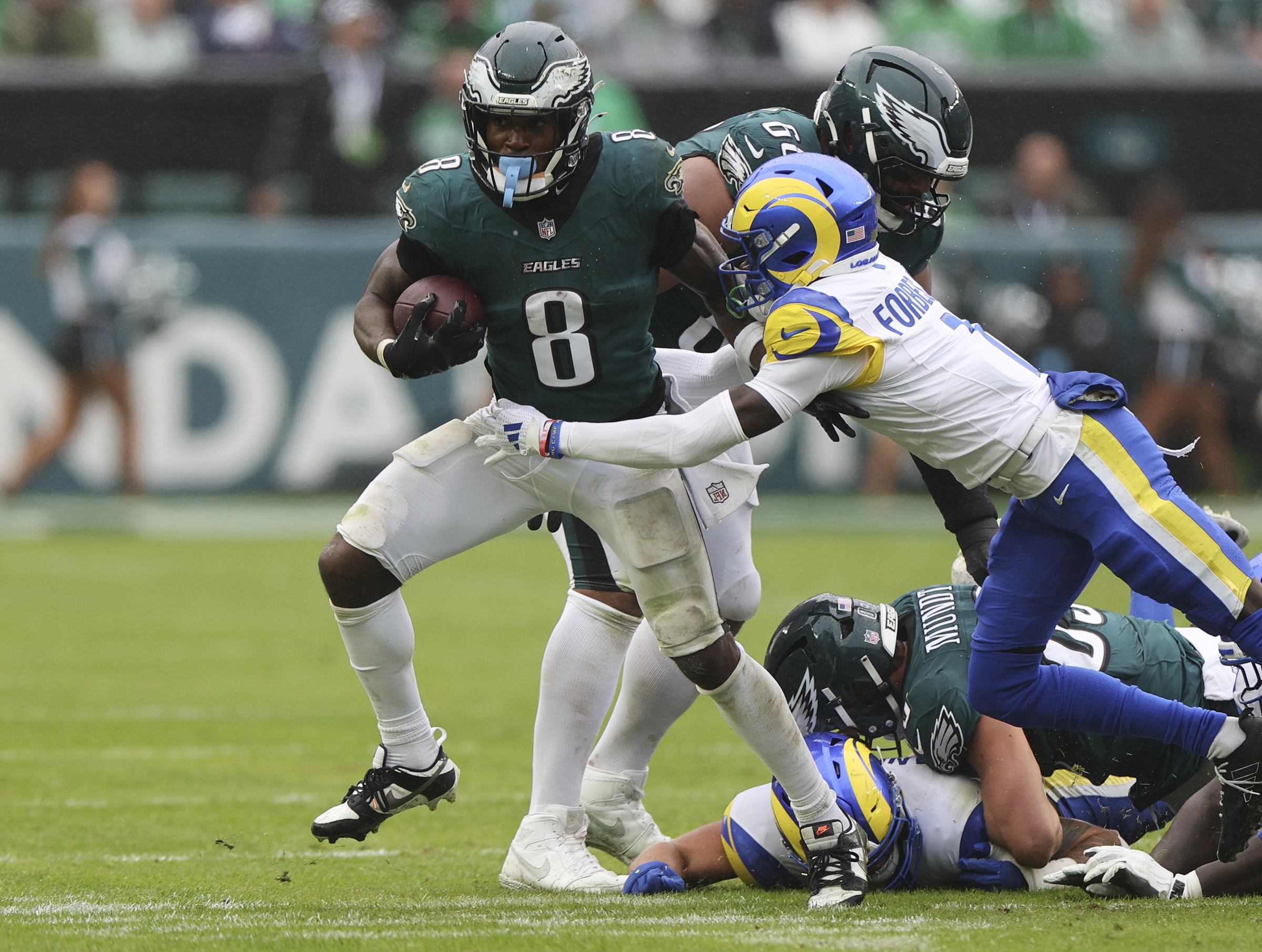
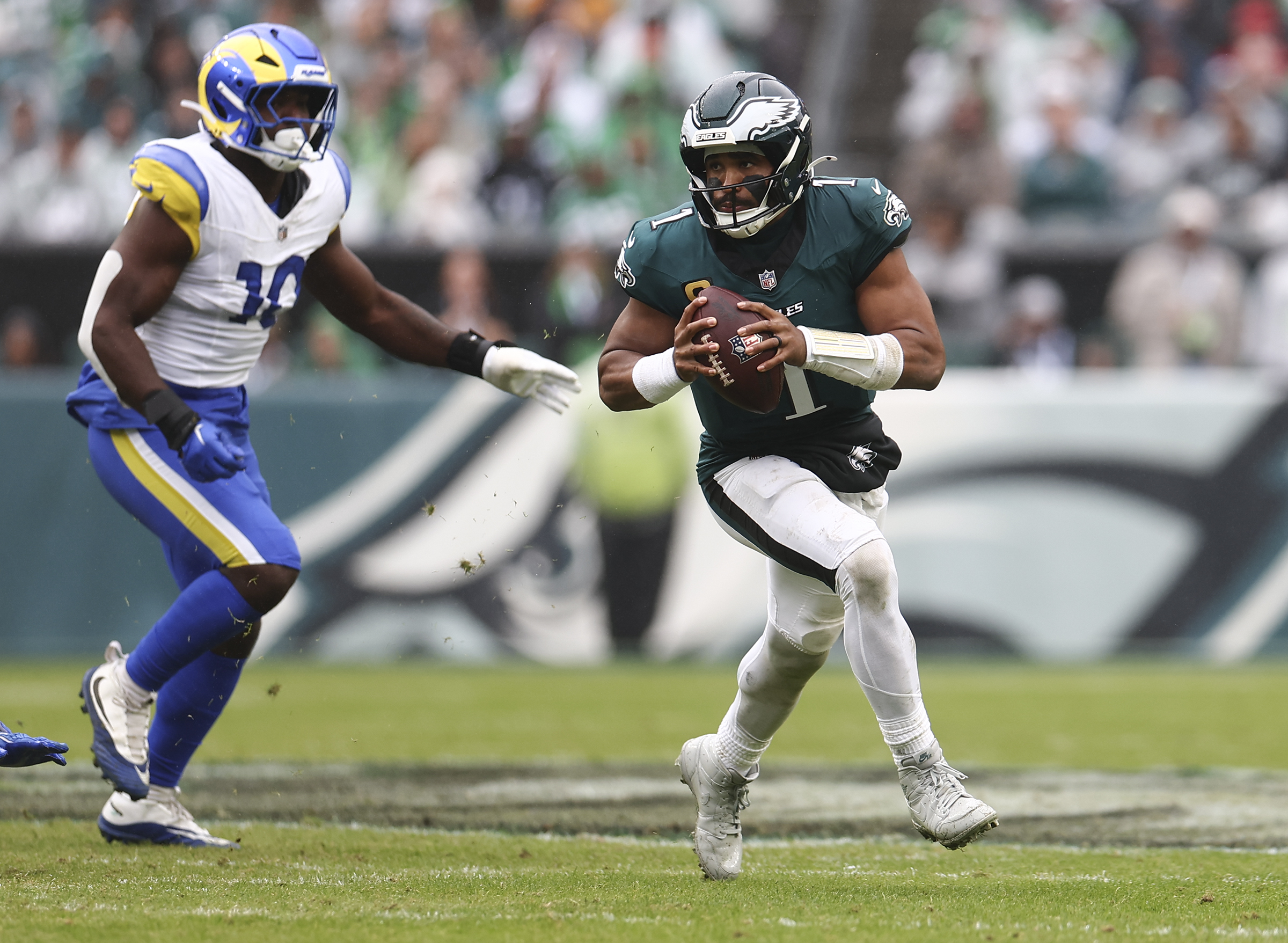
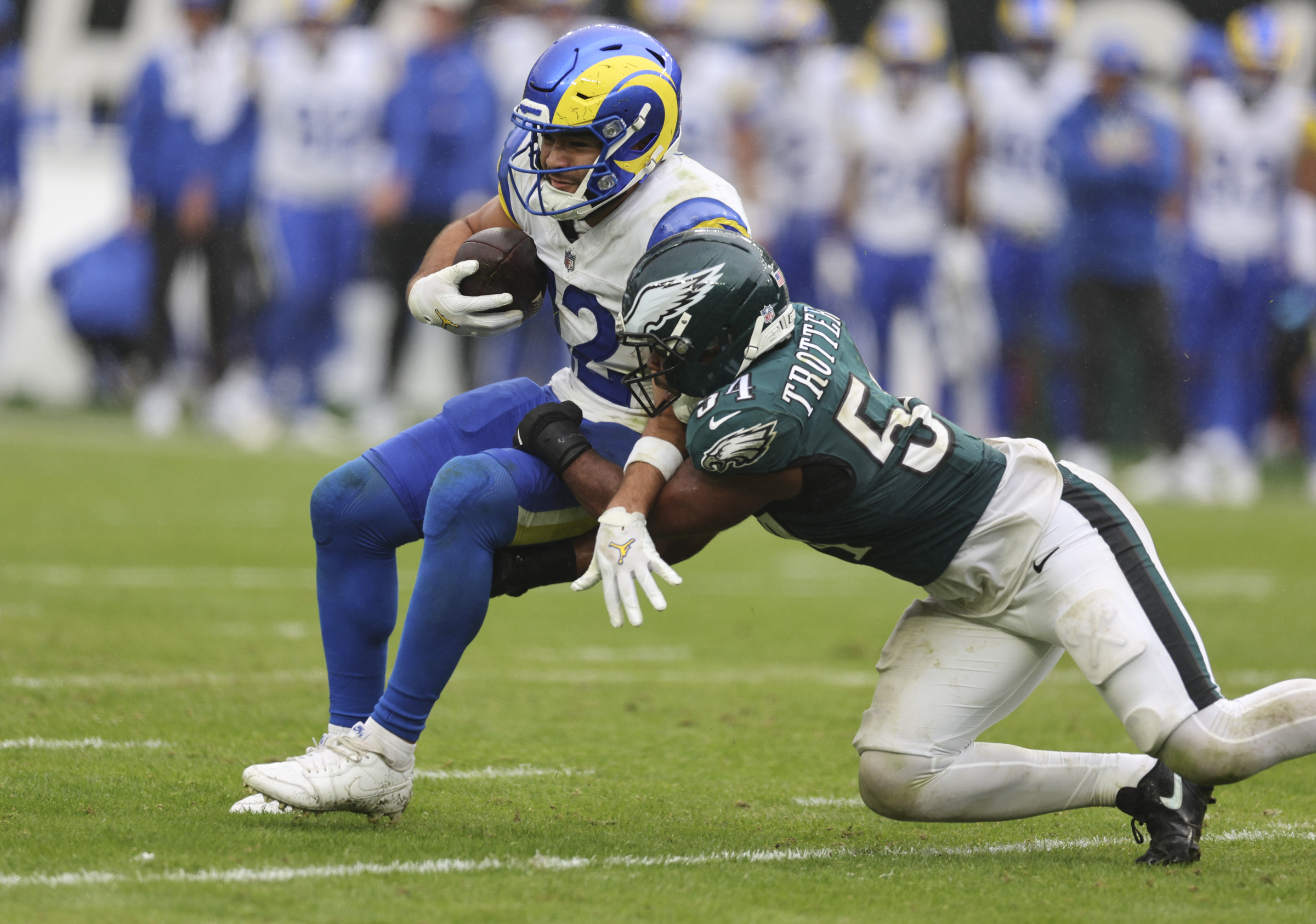
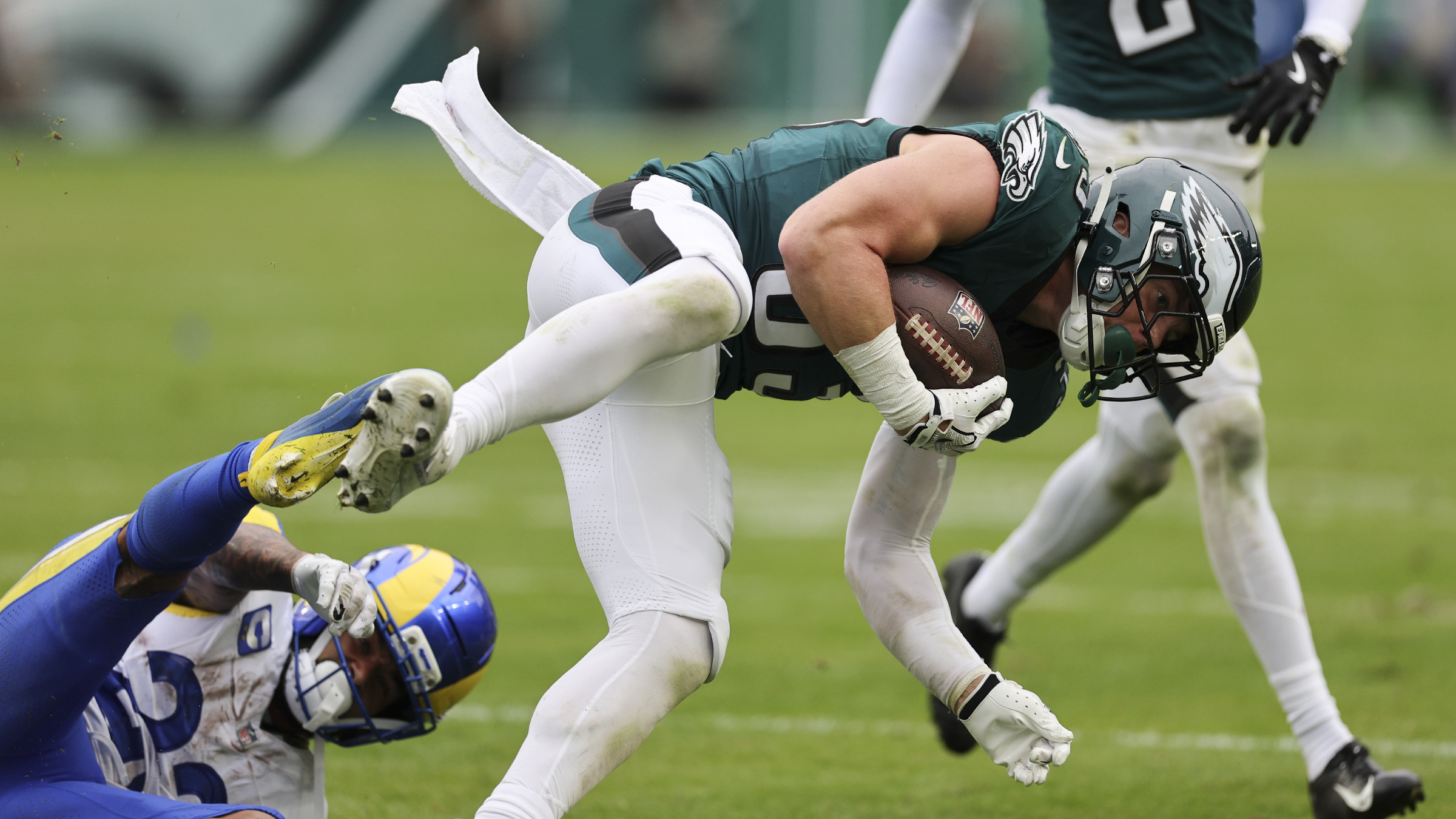
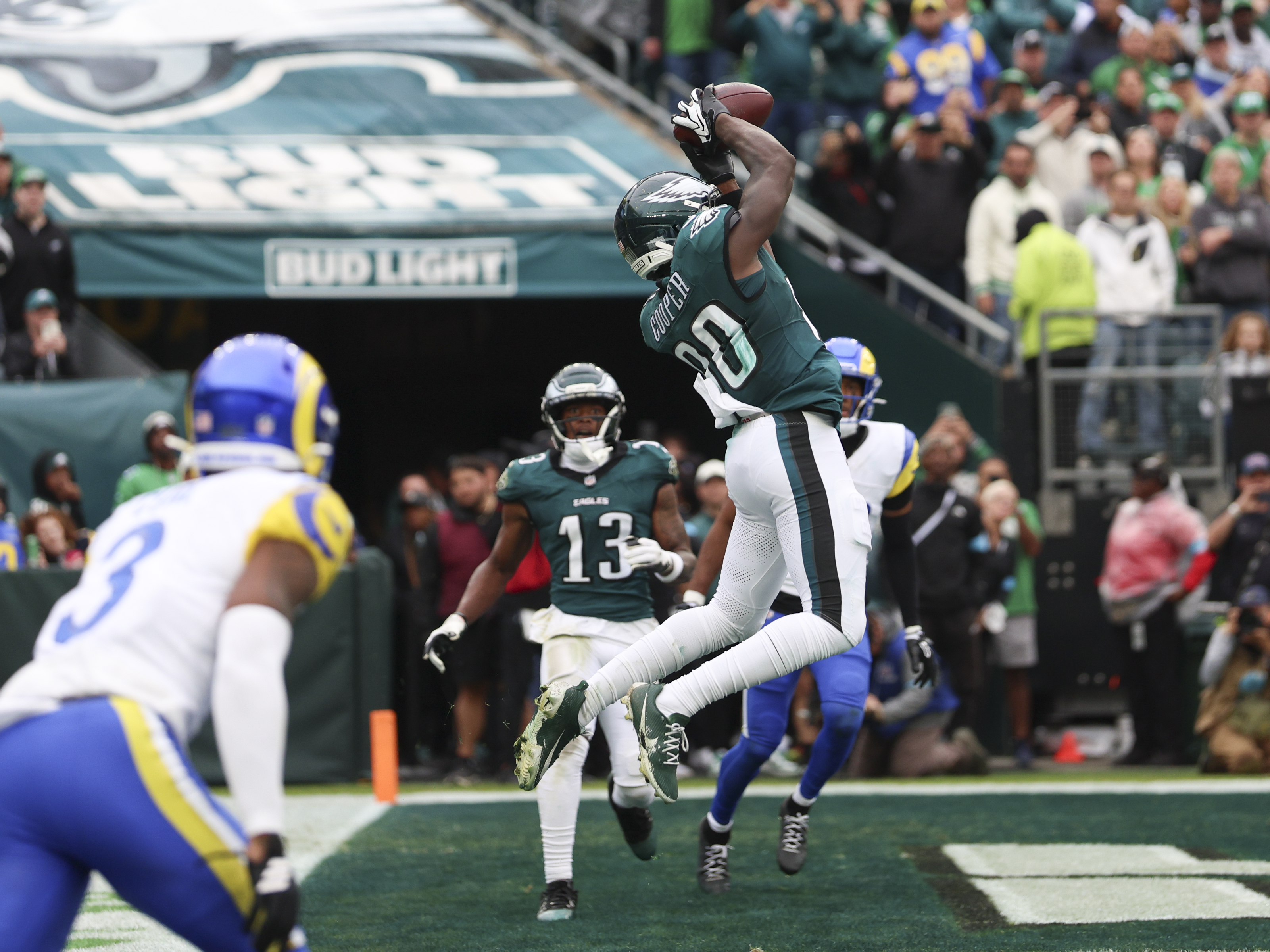
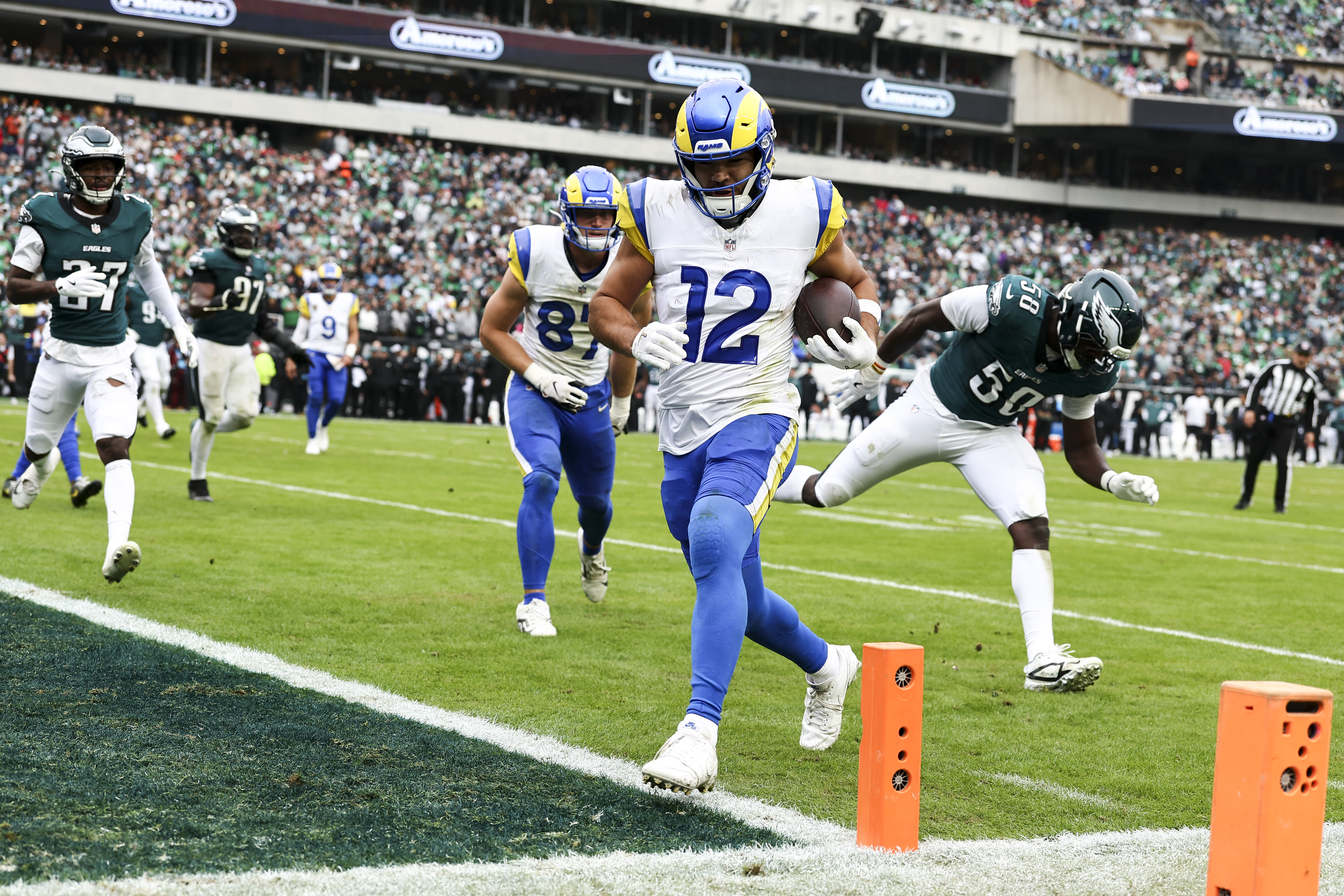
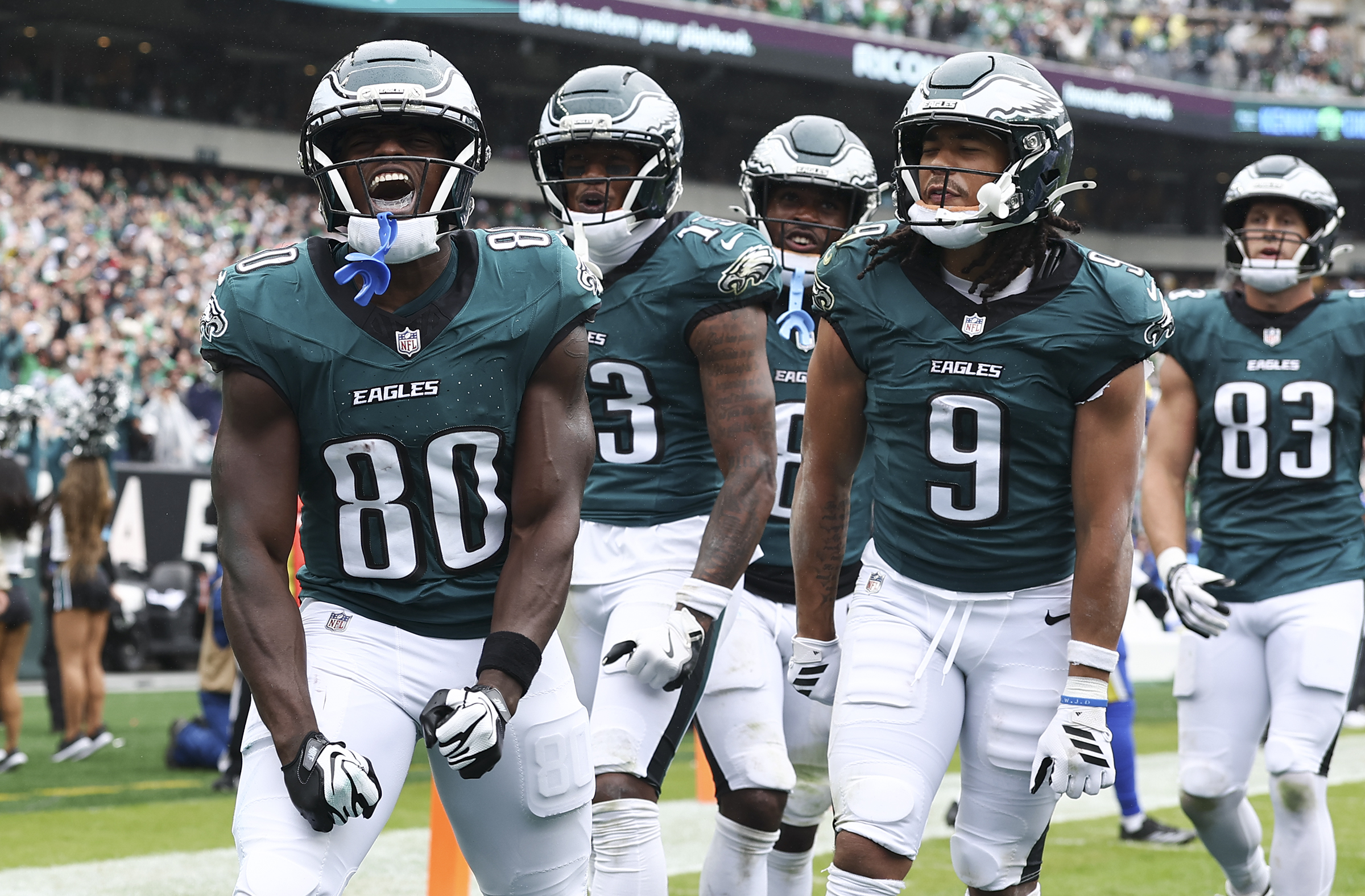
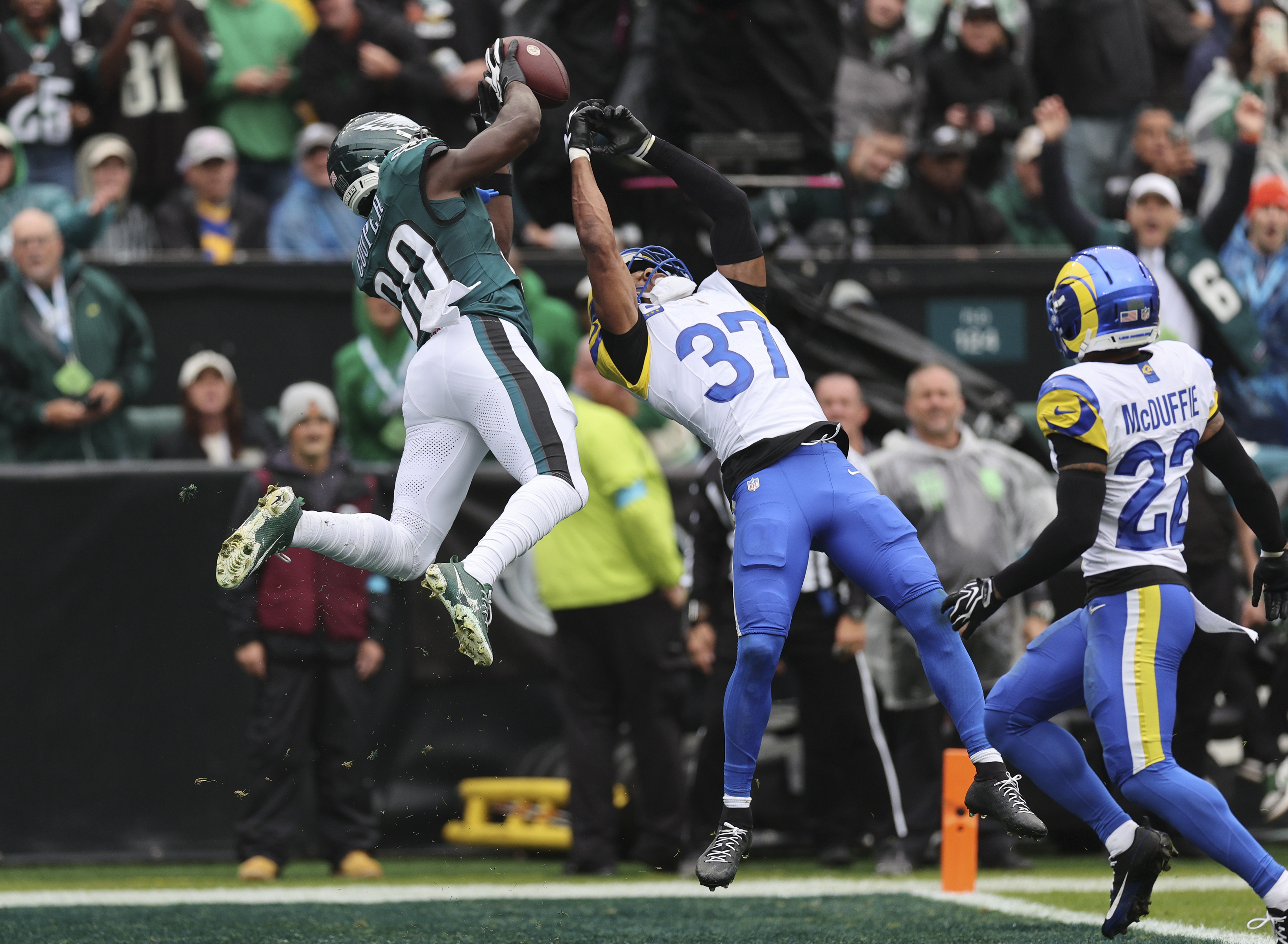
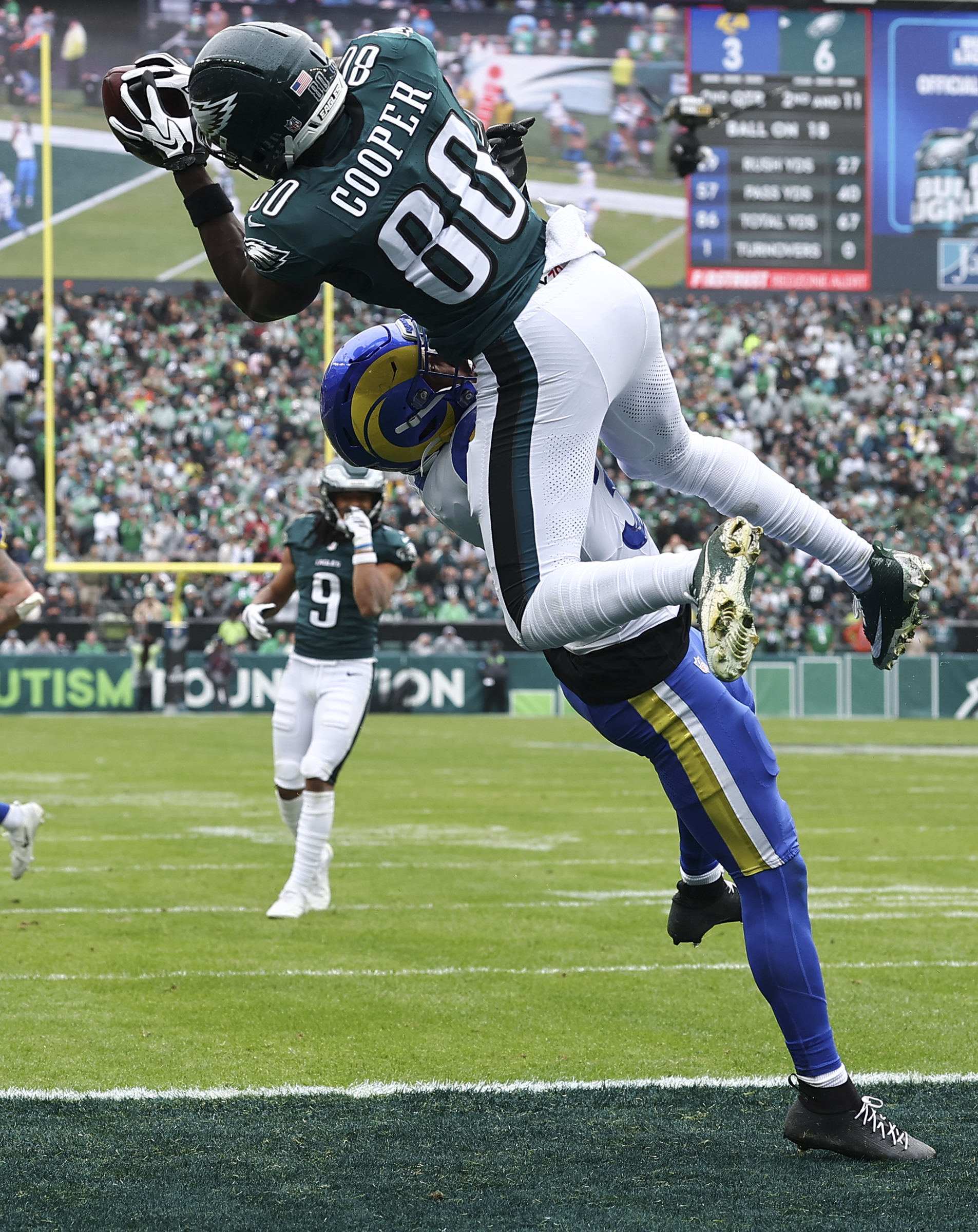
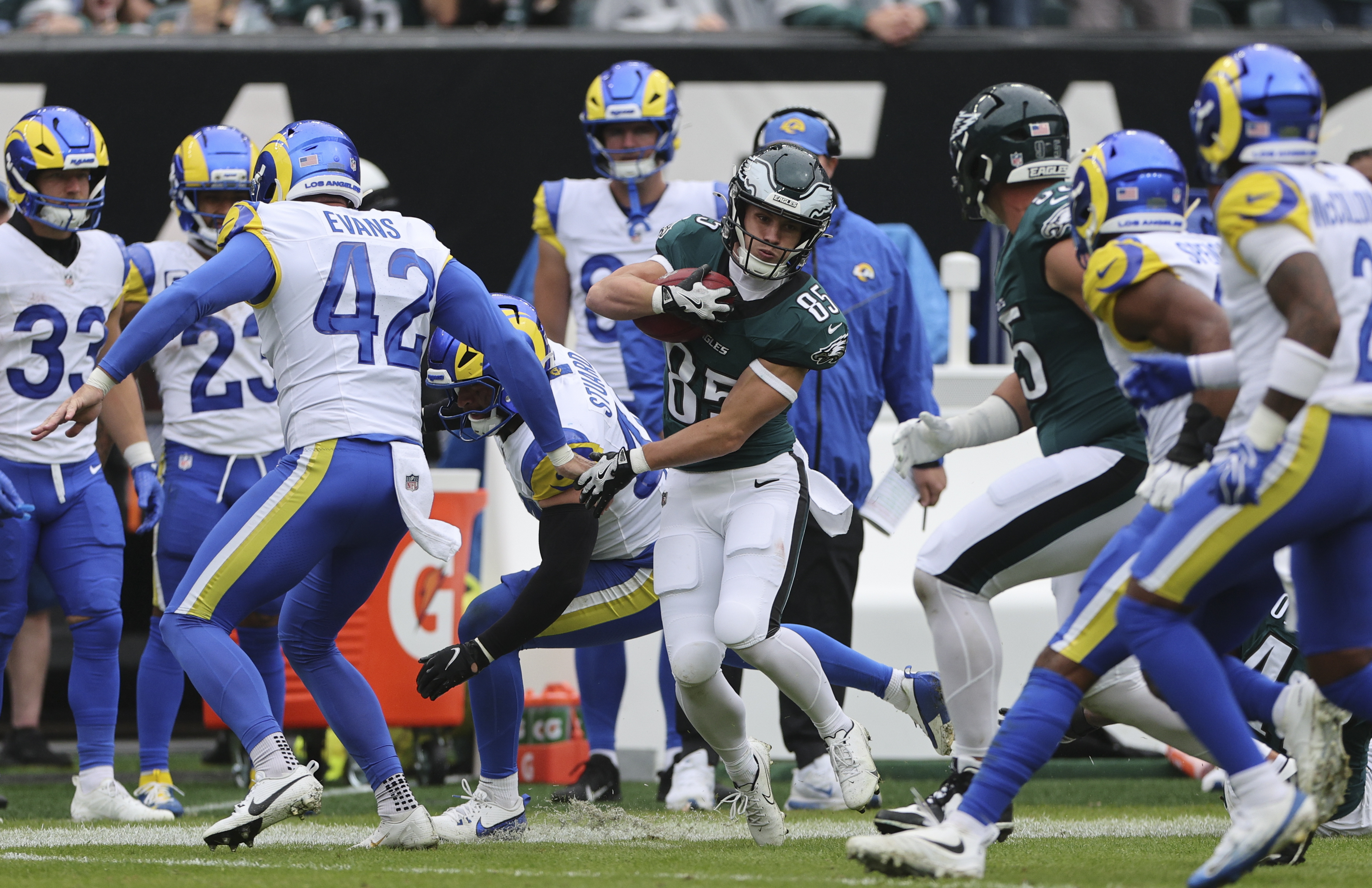
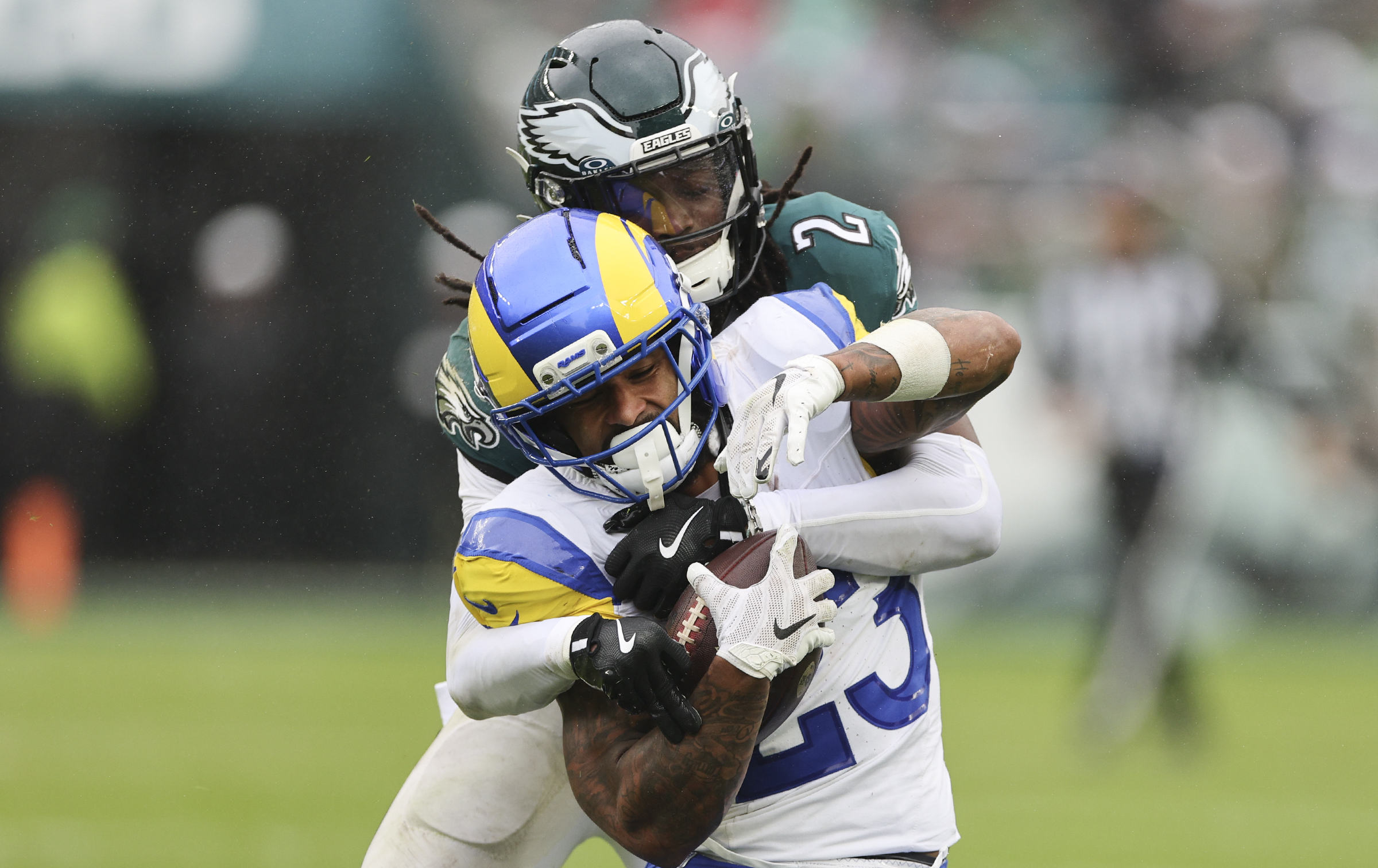
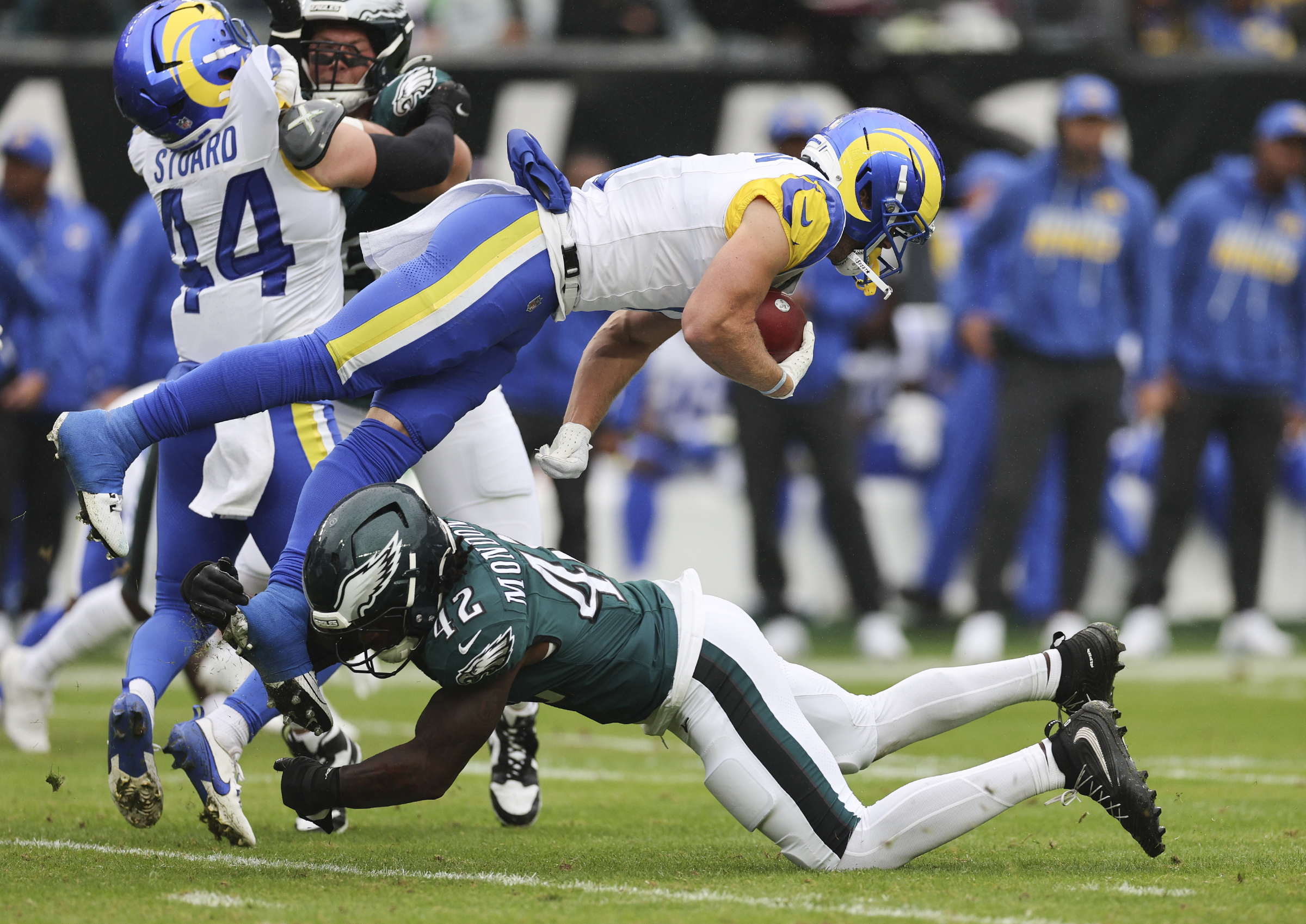
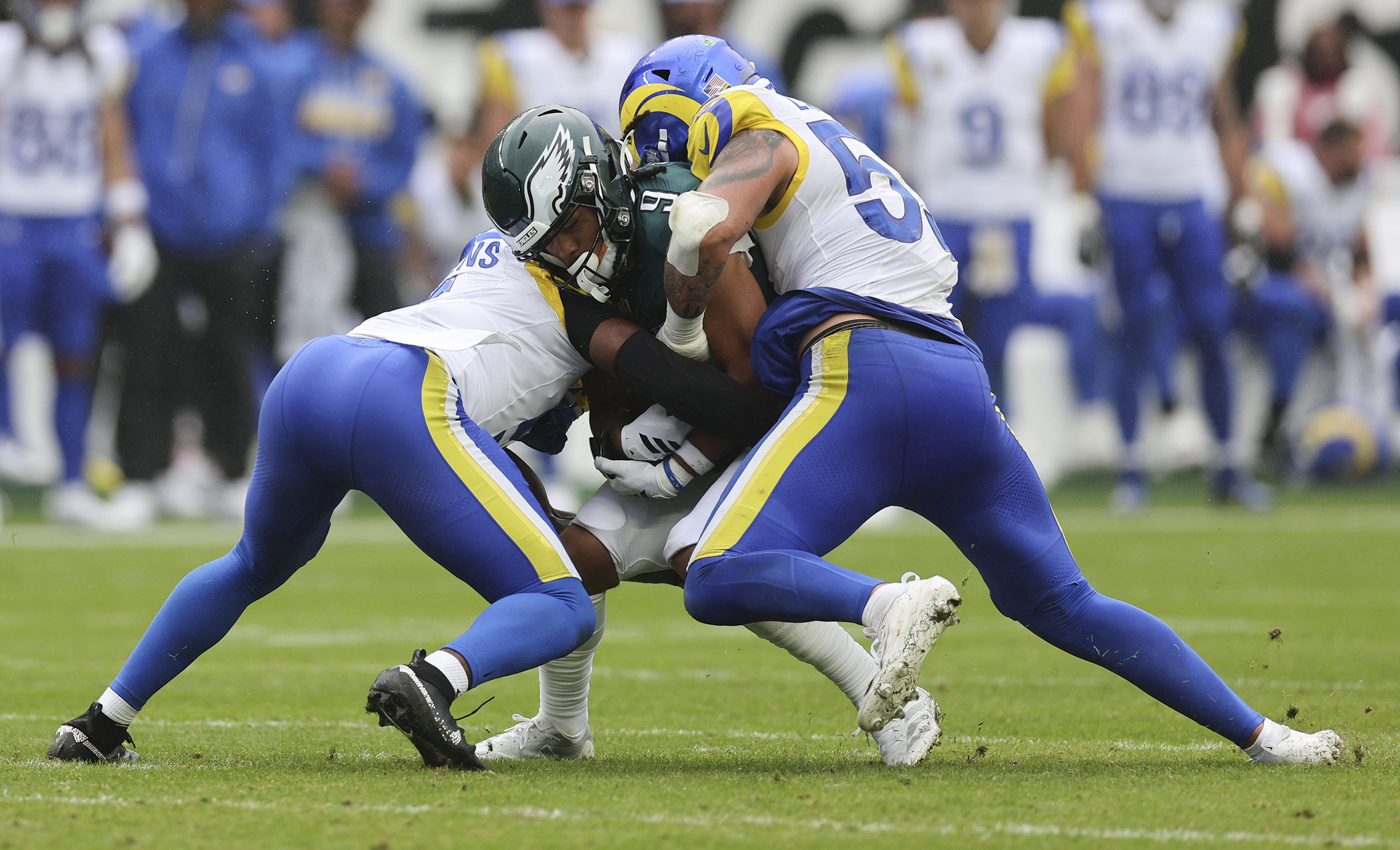
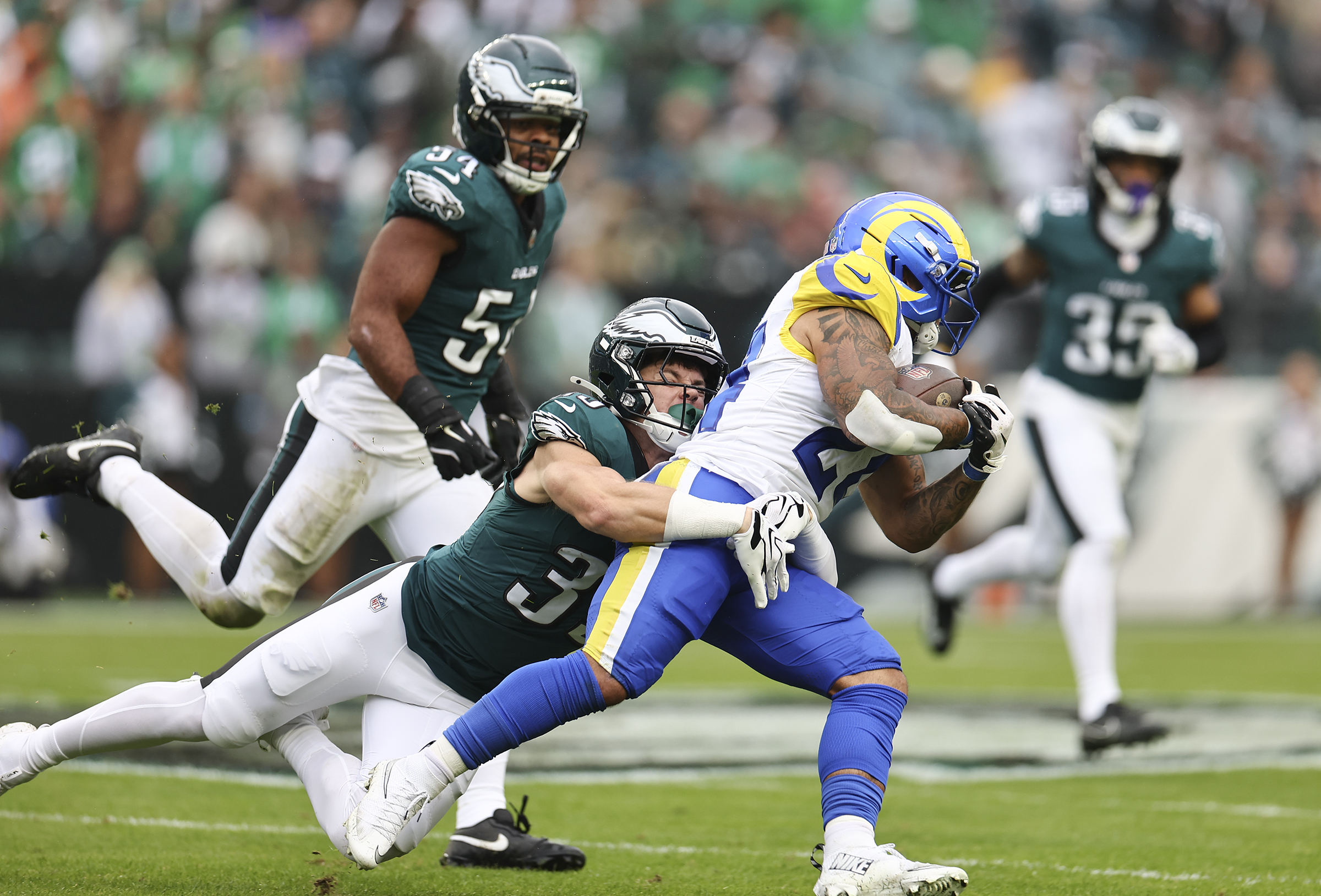
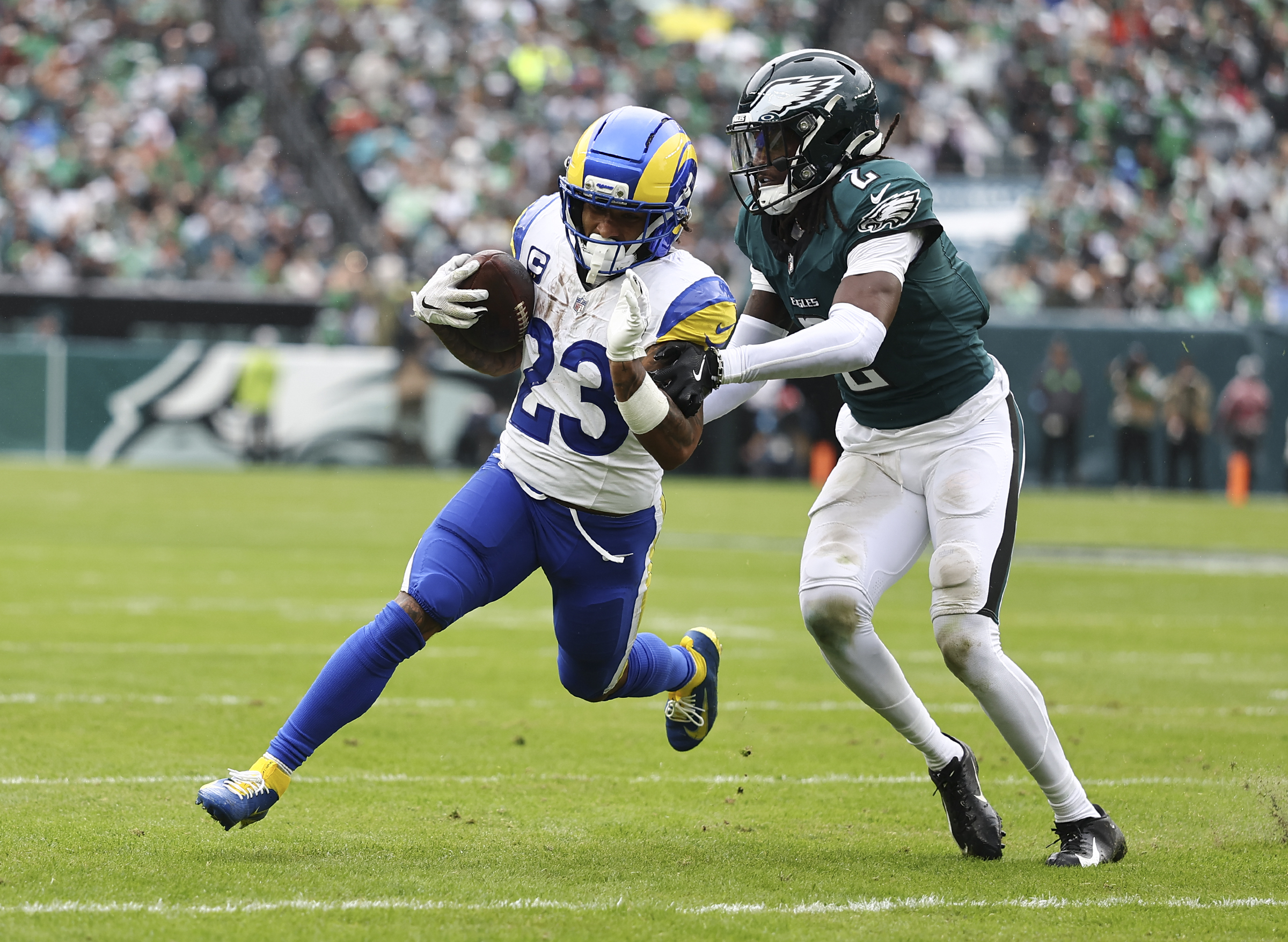
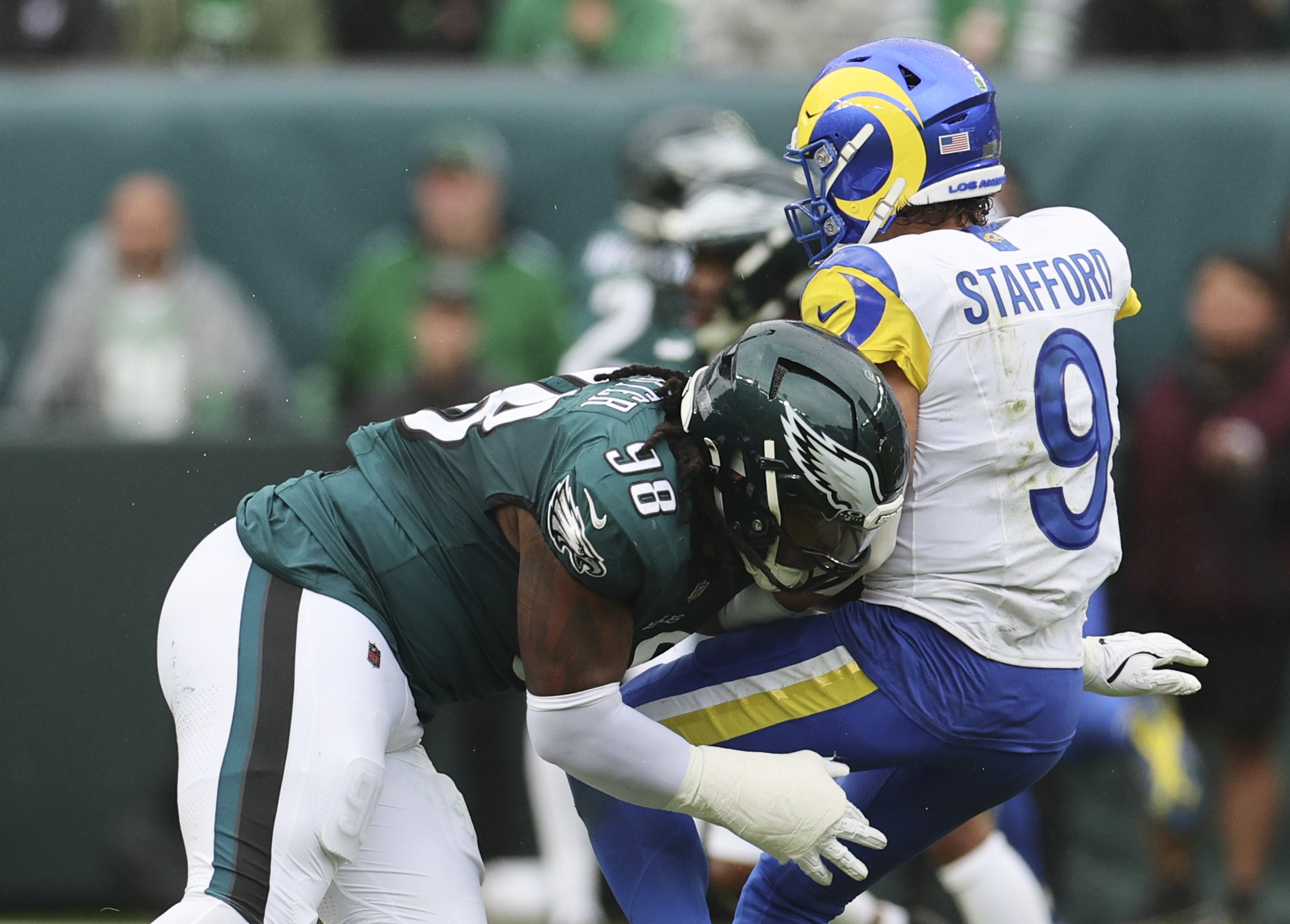
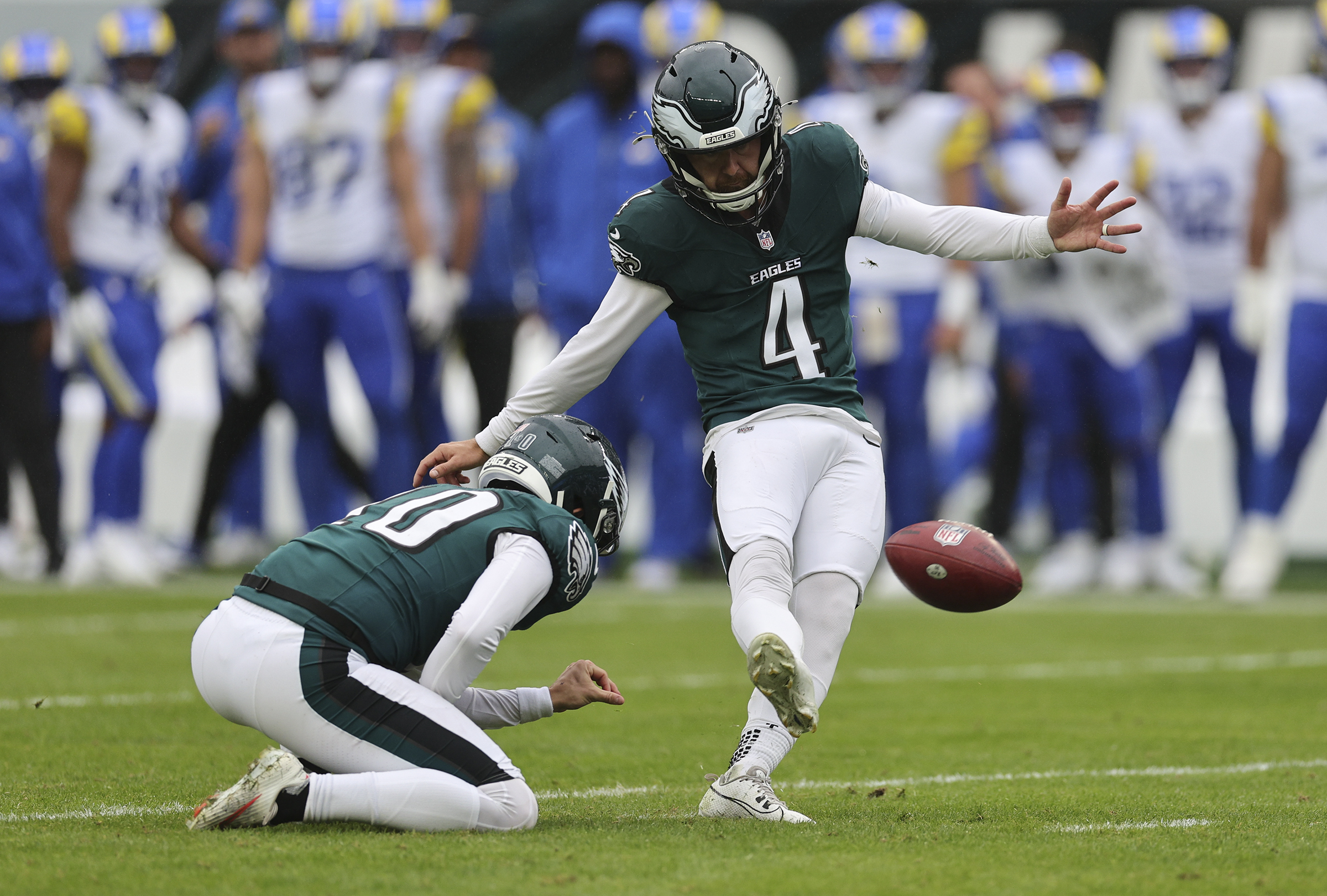
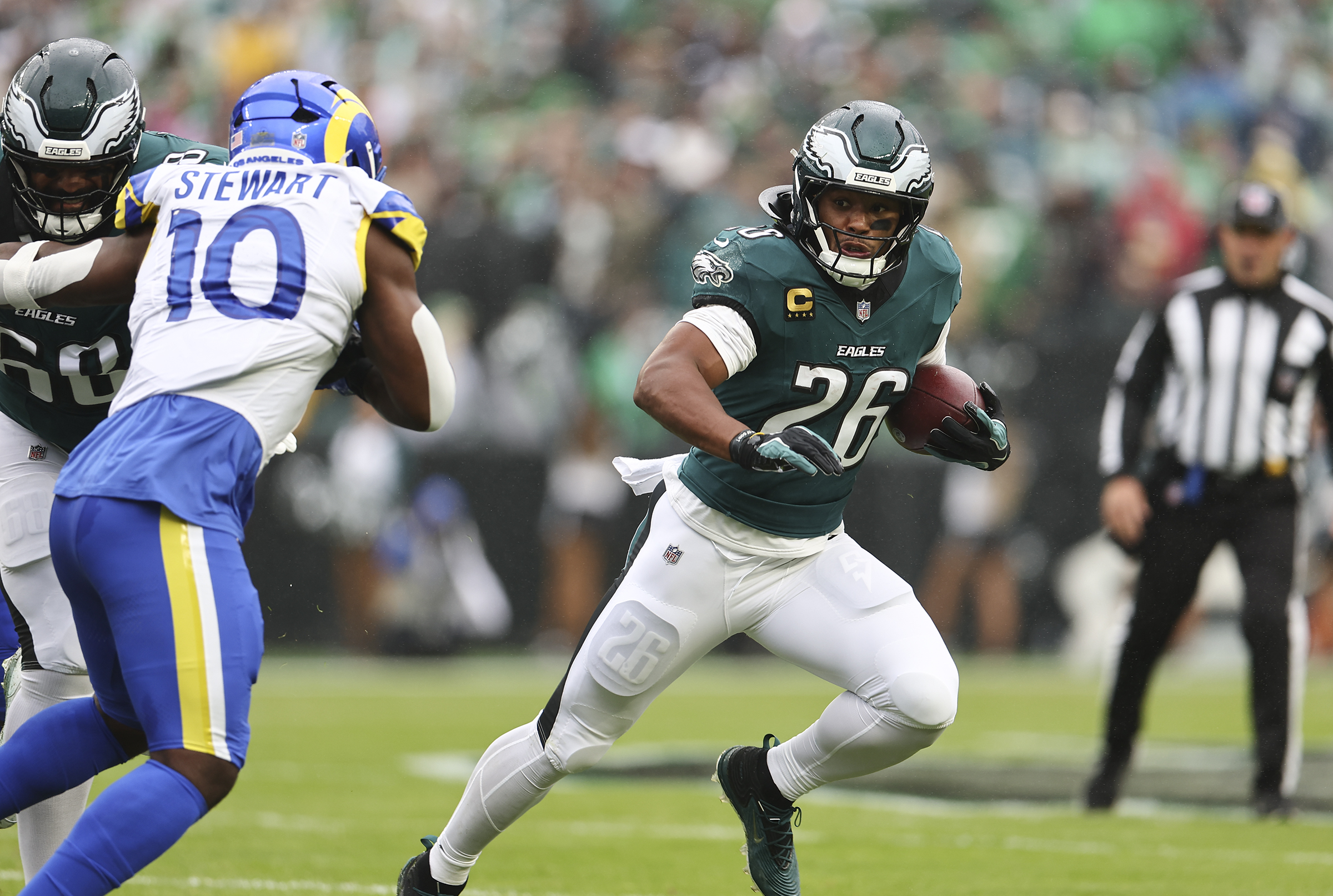
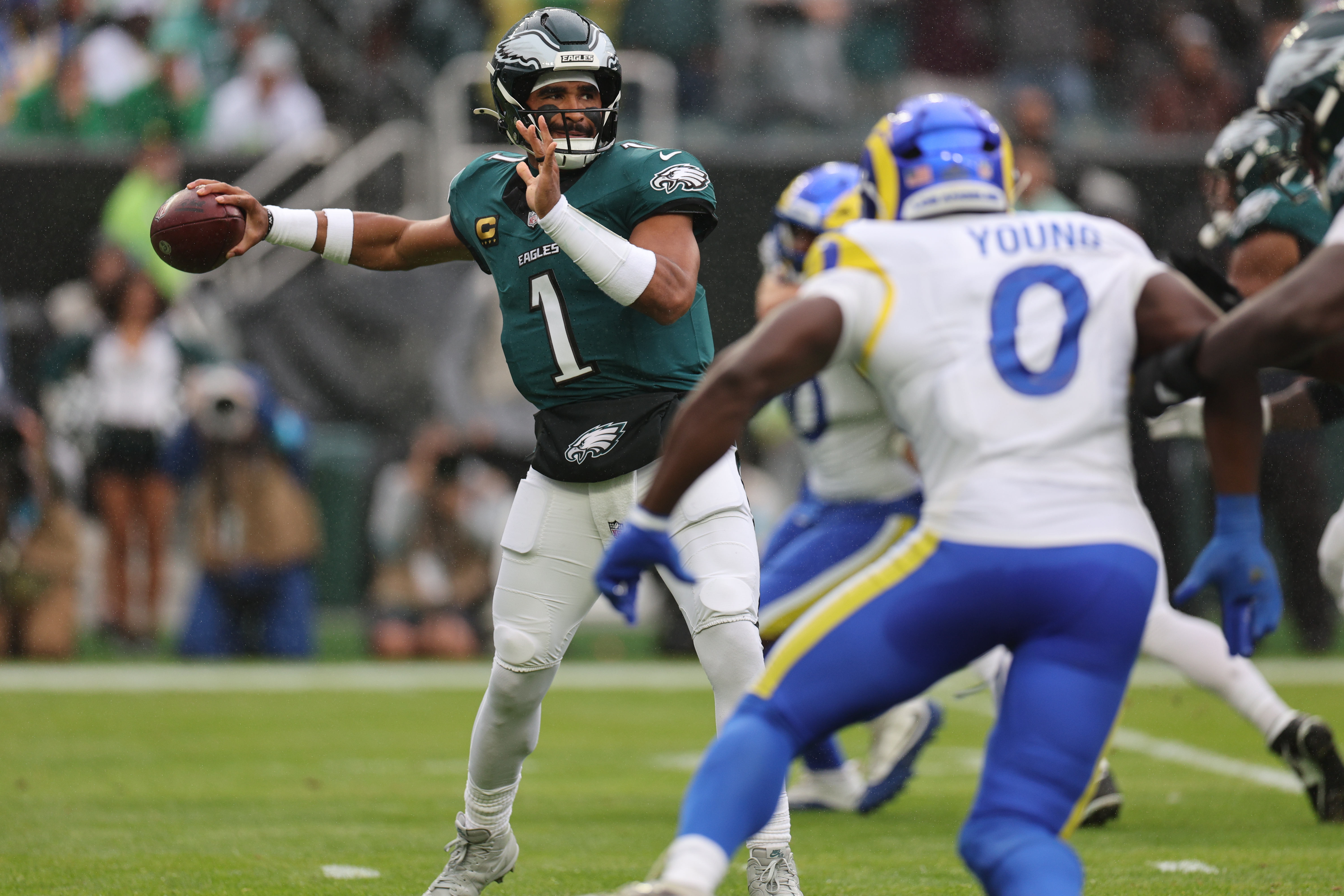
Eagles quarterback Jalen Hurts greets Rams quarterback Matthew Stafford after the Eagles lost to the Rams, 24-20.Monica Herndon / Staff PhotographerEagles head coach Nick Sirianni walks off the field after their loss to the Rams.David Maialetti / Staff PhotographerRams linebacker Byron Young (right) sacks Philadelphia Eagles quarterback Jalen Hurts on their final drive of the game.David Maialetti / Staff PhotographerRams running back Kyren Williams stiff-arms Eagles linebacker Jeremiah Trotter Jr. on his touchdown run late in the fourth quarter.David Maialetti / Staff PhotographerEagles defensive back Jonathan Jones reacts after getting called for personal foul penalty in the fourth quarter.David Maialetti / Staff PhotographerRams running back Kyren Williams scores a fourth quarter touchdown past Eagles linebacker Jihaad Campbell.David Maialetti / Staff Photographerrunning back Kyren Williams scores a fourth quarter touchdown against Eagles safety Andrew Mukuba.Monica Herndon / Staff PhotographerEagles running back Tank Bigsby runs with the football against Rams cornerback Emmanuel Forbes in the fourth quarter.David Maialetti / Staff PhotographerEagles quarterback Jalen Hurts runs with football past Rams linebacker Josaiah Stewart in the fourth quarter.Monica Herndon / Staff PhotographerEagles head coach Nick Sirianni looks down at the turf with his team on the goal line during the fourth quarter. The Eagles gave-up the football on downs.David Maialetti / Staff PhotographerEagles linebacker Jeremiah Trotter Jr., stops Rams wide receiver Puka Nacua in the third quarter.David Maialetti / Staff PhotographerEagles cornerback Cooper DeJean intercepts the football past Rams running back Kyren Williams during the second quarter.David Maialetti / Staff PhotographerEagles wide receiver Darius Cooper catches a second quarter touchdown against the Rams. The touchdown was Cooper’s second during the second quarter.David Maialetti / Staff PhotographerRams wide receiver Puka Nacua scores during the second quarter against the Eagles.Monica Herndon / Staff PhotographerEagles wide receiver Darius Cooper (left) celebrates his first, second quarter touchdown with his teammates.Monica Herndon / Staff PhotographerEagles wide receiver Darius Cooper catches his first second quarter touchdown against Rams safety Quentin Lake (center) and cornerback Trent McDuffie.David Maialetti / Staff PhotographerEagles wide receiver Darius Cooper catches his first second quarter touchdown against Rams safety Quentin Lake.Monica Herndon / Staff PhotographerEagles kick returner Britain Covey runs with he football in the second quarter.David Maialetti / Staff PhotographerEagles cornerback Riq Woolen stops Rams running back Kyren Williams in the second quarter.David Maialetti / Staff PhotographerRams Alex Bachman flies during a second quarter kick-off return against Eagles linebacker Smael Mondon Jr..David Maialetti / Staff PhotographerEagles wide receiver Makai Lemon catches the football against Rams safety Kam Curl (left) and linebacker Nate Landman in the second quarter.David Maialetti / Staff PhotographerEagles cornerback Cooper DeJean goes after Rams running back Blake Corum in the first quarter.Monica Herndon / Staff PhotographerRams running back Kyren Williams runs past Eagles cornerback Riq Woolen in the first quarter.Monica Herndon / Staff PhotographerEagles defensive tackle Jalen Carter goes after Rams quarterback Matthew Stafford in the first quarter.David Maialetti / Staff PhotographerEagles kicker Jake Elliott kicks a first quarter field goal with holder Braden Mann.David Maialetti / Staff PhotographerEagles safety Andrew Mukuba runs with the football during a first quarter interception against Rams center Coleman Shelton.David Maialetti / Staff PhotographerEagles running back Saquon Barkley walks off the field in the first quarter. Barkley got hurt against the Rams.David Maialetti / Staff PhotographerEagles running back Saquon Barkley leaves the field with members of the medical staff in the first quarter.David Maialetti / Staff PhotographerEagles running back Saquon Barkley kneels in pain during the first quarter.Monica Herndon / Staff PhotographerEagles running back Saquon Barkley runs with the football against the Rams during the first quarter.Monica Herndon / Staff PhotographerEagles quarterback Jalen Hurts throws the football during the first quarter.David Maialetti / Staff Photographer
The Eagles may need another shift, although it’s not like they haven’t tried to run the ball so far.
“We’re going to forge together,” Hurts said when reminded about the 2024 change that spearheaded a run to a championship. “We’re going to figure out a way.”
That team had Saquon Barkley and a dominant offensive line. But Barkley left in the first quarter after straining his hamstring Sunday, and the O-line was without right tackle Lane Johnson, who was a late scratch due to personal reasons.
Who knows how long either player will be out? The Eagles were also without receiver DeVonta Smith, tight end Dallas Goedert, and left guard Landon Dickerson. Backup tailback Tank Bigsby was knocked out late in the game.
The injuries and Johnson being out were unfortunate. The defense entered without linebacker Zack Baun and safety Marcus Epps (probably an upgrade), but it also lost cornerback Quinyon Mitchell (knee) and outside linebacker Jonathan Greenard (ankle).
After several seasons of being one of the healthiest teams in the NFL, the law of averages has seemingly caught up to the Eagles. The rest of the league isn’t crying for them. The Rams were down three starters on defense, including two future Hall of Famers in defensive linemen Myles Garrett and Aaron Donald.
The Eagles’ issues go deep, or they’ve been further exposed by the injuries, particularly on offense where they lack depth at receiver and tight end. The game got off to a fitting start when Hurts barked at reserve Elijah Moore — “Get off the [bleeping] ball! Come on!” — when the receiver didn’t start his pre-snap motion.
Video: Nick Sirianni explains his decision to go for 4th and 2 from the 2-yard line
It was one of many examples of the offense just not being in sync. Left guard Cam Jurgens had another rough outing. He’s playing a new position, but he caused a bungled exchange at the 2-yard line when he hit the ball as it was snapped to Hurts late in the game.
Tight end Johnny Mundt brought back a long Bigsby run with a holding penalty. Johnson’s replacement, Markel Bell, lined up in an illegal formation on third down. The Eagles were 0-for-12 on third down and have failed to convert their last 17 third downs stretching back to the first half of the Bears loss.
“I know when you’re 0-for-whatever we were today, everybody has a hand in that,” Sirianni said. “Our job is to figure out what happened and get better from it and not assign blame. That’s what we’ll be doing.”
The offense was able to turn two first-half interceptions of Matthew Stafford into 10 points. Receiver Darius Cooper had a couple of touchdown catches. And there was some ground success on a decent fourth-quarter drive. But the Eagles failed to punch it into the end zone and expand a 20-10 lead.
The Rams went 98 yards the other way and then scored again after yet another Eagles three-and-out. The second-half offense has been horrid. The Eagles have gone three-and-out on 12 of 15 possessions in the third quarter.
They’ve had some early success on outside zone runs the last two weeks — the play being the “DNA” of the Shanahan scheme, according to left tackle Jordan Mailata — but Mannion got away from the perimeter runs after Barkley left.
“I just know that this offense is built off outside zone,” Mailata said, “and in order to effectively execute this system and all these under-center play-actions, we got to get that run game going.”
Video: Nick Sirianni’s 4th down decision cost Eagles vs. Rams
But a lot of the runs are still coming out of the shotgun and on inside-zone blocking. When there is a play-action dialed up, the results have often been disastrous. On one naked bootleg, receiver Makai Lemon ran into a defender and Hurts was forced to throw the ball into the dirt.
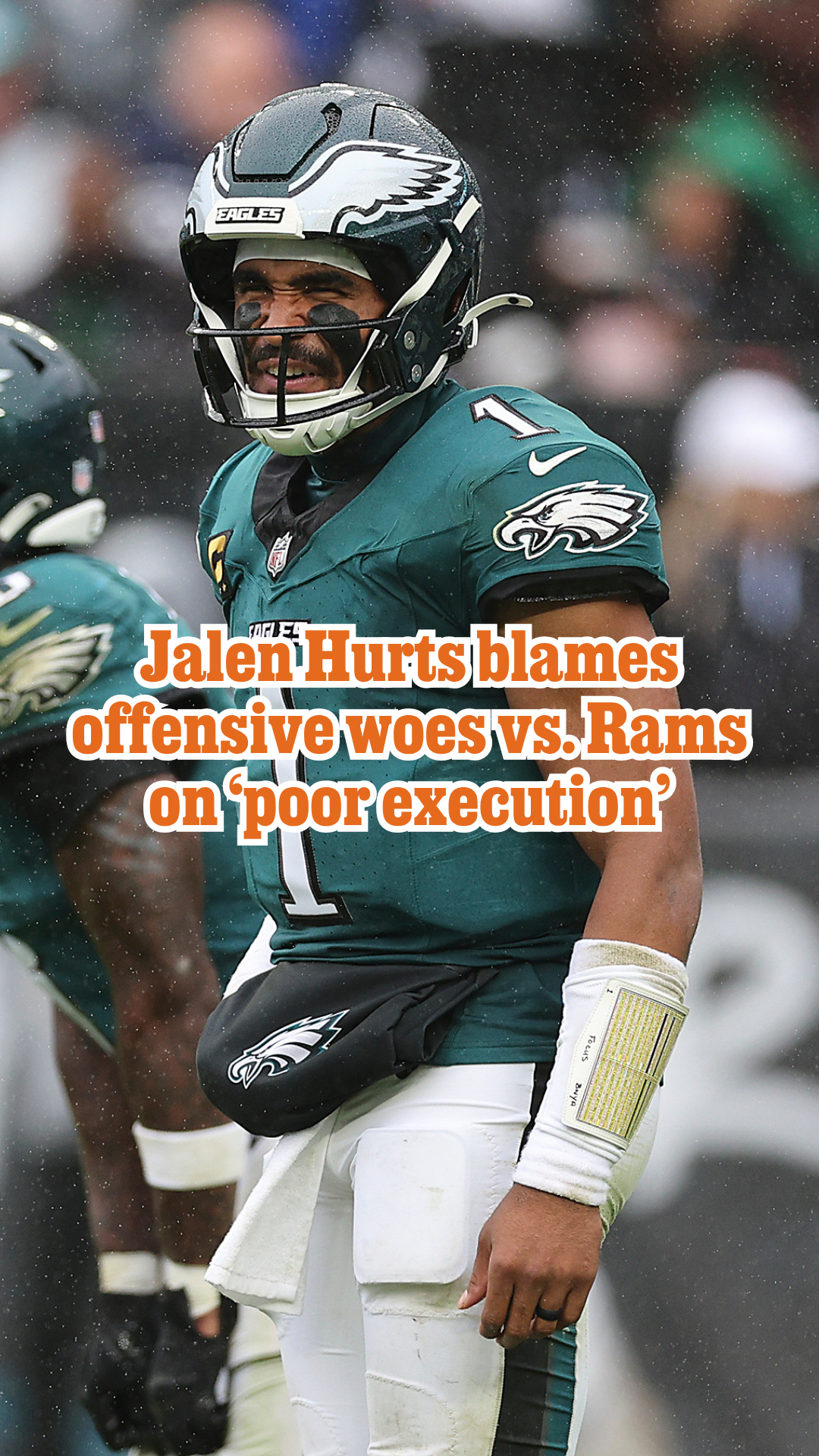
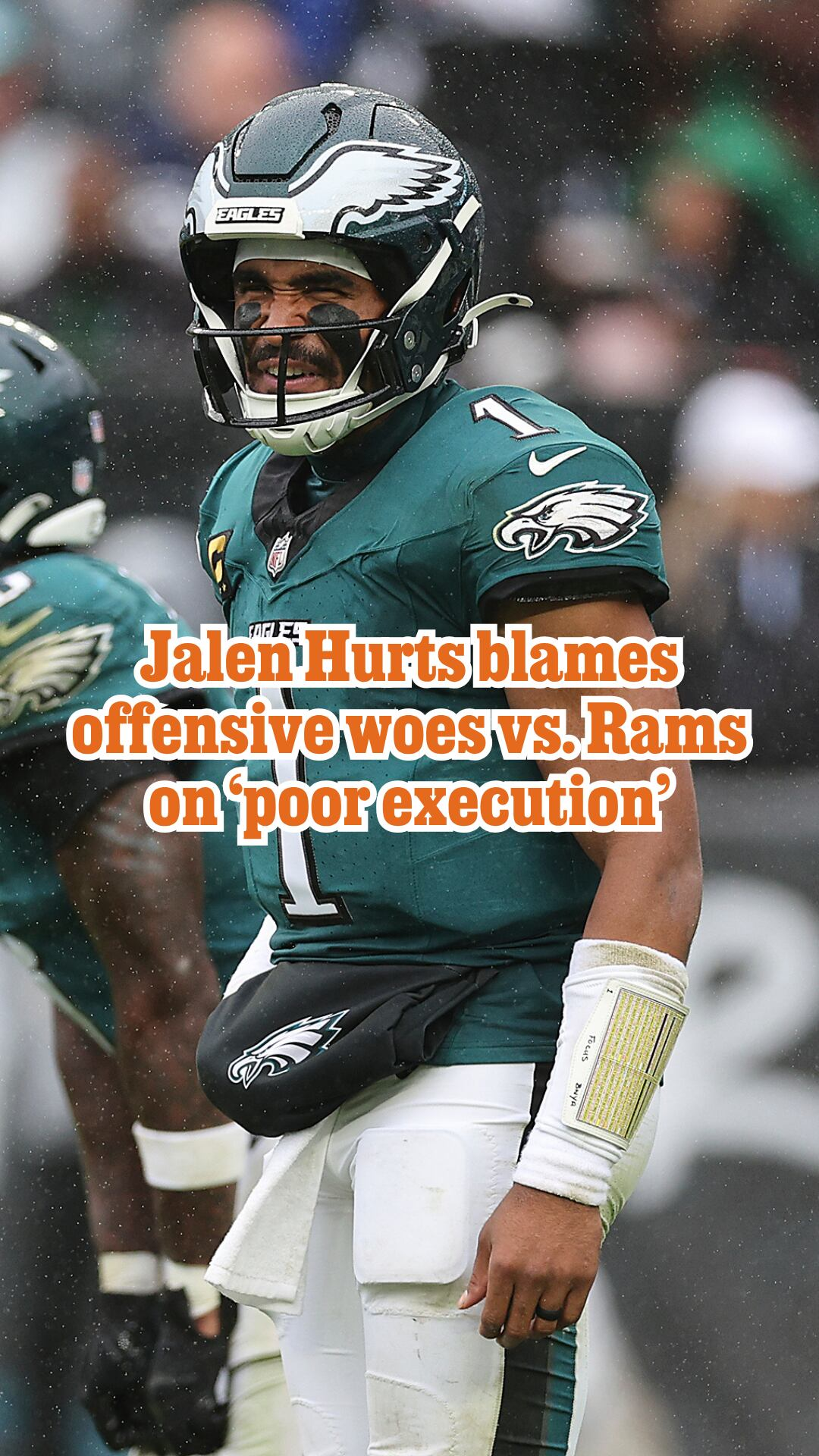
“I can’t say it’s our flow. We’re finding our flow,” Hurts said. “We’re finding our flow of things, and ultimately, it comes down to execution.”
The passing offense has been just as inadequate. When Hurts does connect with his receivers, there’s often little opportunity to pick up yards after the catch.
Handling the blitz has been the biggest problem. Defenses are often sending more than the Eagles can account for and the pre-snap calls aren’t helping to set protections. That’s on the scheme, but it’s also on the blockers and, ultimately, Hurts.
“I felt like we were five down almost every snap, run or pass,” Mailata said, “and so, we’re trying to pick up the five D-linemen and whatever extra is on whatever the protection call is.”
It’s been an issue that predates Mannion’s arrival. The Eagles previously found ways to offset some of Hurts’ deficiencies pre-snap. They took portions off his plate during the 2024 turnaround.
Jalen Hurts can’t be expected to put the offense on his back every week. David Maialetti / Staff Photographer
But they had a bye week to tinker with the offense two years ago. They had a veteran offensive coordinator in Moore and O-line coach in Jeff Stoutland to assist Sirianni in the alterations. They had a better, healthier roster.
“It’s a team game, and it takes all of us to go out there and do what we do and grow from it,” Hurts said. “I’ve said it all year to this point. It’s not about making any promises or anything.
“It’s just looking at this thing practically and saying, ‘Who are we?’”
The Eagles are a team in search of an offensive identity.
“We’ve still got a ways to go there,” Sirianni said, “and it’s obvious that we’re still trying to figure that out.”
Before we tackle the daunting question of what that thing is, or what it should be, or what it could be eventually, or whether such a thing even exists, let’s remind ourselves of what it looks like. The Rams’ thing was Matthew Stafford throwing the ball to Puka Nacua, regardless of the coverage.
The veteran quarterback did it six times in the final eight minutes of play. Those plays resulted in 80 of the 177 yards the Rams would travel on their two touchdown drives that erased a 20-10 Eagles lead. They included catches of 32, 16, 12, 9, and 7 yards, as well as a 4-yard pass interference penalty. They were the driving forces behind Kyren Williams’ 1-yard touchdown run with 3 minutes, 59 seconds remaining that cut the Eagles lead to 20-17 and Williams’ 7-yard touchdown run with 1:10 left that gave the Rams the lead for good.
It was who the Rams are. It was what they do.
The question: Who are the Eagles?
“We know our formula of how we need to do that within the week and we have to trust that even though sometimes growth feels invisible, you’ve got to trust and keep putting the work in,” head coach Nick Sirianni said.
Those words might come across as maddeningly upbeat, but Sirianni was nothing of the sort in his postgame news conference. His body language suggested a man who understands his team is falling well short of its standard.
Video: Jalen Hurts blames offensive woes vs. Rams on ‘poor execution’
Injuries are a factor. But only to an extent. The Eagles had to scramble to adjust for the absence of All-Pro right tackle Lane Johnson, who missed the game for what the team is calling a personal matter. Sirianni declined to offer any further detail. They were already without wide receiver DeVonta Smith, who could miss multiple weeks with a hamstring injury. The absence of Johnson left them with three players in foreign positions: Cam Jurgens, filling in for injured guard Landon Dickerson; Drew Kendall, filling in for Jurgens at center; and rookie Markel Bell, making his first NFL start. Compounding matters was hamstring injury Saquon Barkley suffered early in the game on Sunday (backup Tank Bigsby later left the game).
“I’m never going to use anything as an excuse,” Sirianni said. “We have to look at ourselves in the mirror. We have to pick ourselves back up and you have to do … Life hands you a lot of different scenarios. Football hands you a lot of different scenarios. You’ve got to be accountable to who you are and to what you do, each and every one of us. You’ll never hear me say a word about an injury. I have a lot of faith in everybody on this football team. There’s a reason they’re Philadelphia Eagles. I’ve got to do a better job. We’ve got to play better. We’ve got to coach better. All of us have things to get better from. I don’t care who’s on the field.”
On the defensive side, All-Pro cornerback Quinyon Mitchell left the game with a knee injury, while defensive end Jonathan Greenard left with an ankle injury. The Eagles were already playing without star linebacker Zack Baun.
“Obviously, you want your best players on the field,” said cornerback Cooper DeJean, who had one of the Eagles’ two interceptions and also was briefly shaken up himself. “It’s tough when they’re not out there. … You just have to move on and hope those guys get healthy. But the next guys have to be ready.”
The Eagles are living life as a lot of NFL teams know it. It is an alternate universe compared to the one they enjoyed in 2024, when a dominant and healthy offensive line was backed by a defense that largely avoided the injury report. This was a week when the Eagles needed to find a way to basic competence. The search came up empty.
The Rams couldn’t do anything right. By halftime, they’d allowed more return yards on punts and interceptions than they had total yards of offense. But they had a place to which they could turn.
Eagles quarterback Jalen Hurts greets Rams quarterback Matthew Stafford after the Eagles lost to the Rams, 24-20.Monica Herndon / Staff PhotographerEagles head coach Nick Sirianni walks off the field after their loss to the Rams.David Maialetti / Staff PhotographerRams linebacker Byron Young (right) sacks Philadelphia Eagles quarterback Jalen Hurts on their final drive of the game.David Maialetti / Staff PhotographerRams running back Kyren Williams stiff-arms Eagles linebacker Jeremiah Trotter Jr. on his touchdown run late in the fourth quarter.David Maialetti / Staff PhotographerEagles defensive back Jonathan Jones reacts after getting called for personal foul penalty in the fourth quarter.David Maialetti / Staff PhotographerRams running back Kyren Williams scores a fourth quarter touchdown past Eagles linebacker Jihaad Campbell.David Maialetti / Staff Photographerrunning back Kyren Williams scores a fourth quarter touchdown against Eagles safety Andrew Mukuba.Monica Herndon / Staff PhotographerEagles running back Tank Bigsby runs with the football against Rams cornerback Emmanuel Forbes in the fourth quarter.David Maialetti / Staff PhotographerEagles quarterback Jalen Hurts runs with football past Rams linebacker Josaiah Stewart in the fourth quarter.Monica Herndon / Staff PhotographerEagles head coach Nick Sirianni looks down at the turf with his team on the goal line during the fourth quarter. The Eagles gave-up the football on downs.David Maialetti / Staff PhotographerEagles linebacker Jeremiah Trotter Jr., stops Rams wide receiver Puka Nacua in the third quarter.David Maialetti / Staff PhotographerEagles cornerback Cooper DeJean intercepts the football past Rams running back Kyren Williams during the second quarter.David Maialetti / Staff PhotographerEagles wide receiver Darius Cooper catches a second quarter touchdown against the Rams. The touchdown was Cooper’s second during the second quarter.David Maialetti / Staff PhotographerRams wide receiver Puka Nacua scores during the second quarter against the Eagles.Monica Herndon / Staff PhotographerEagles wide receiver Darius Cooper (left) celebrates his first, second quarter touchdown with his teammates.Monica Herndon / Staff PhotographerEagles wide receiver Darius Cooper catches his first second quarter touchdown against Rams safety Quentin Lake (center) and cornerback Trent McDuffie.David Maialetti / Staff PhotographerEagles wide receiver Darius Cooper catches his first second quarter touchdown against Rams safety Quentin Lake.Monica Herndon / Staff PhotographerEagles kick returner Britain Covey runs with he football in the second quarter.David Maialetti / Staff PhotographerEagles cornerback Riq Woolen stops Rams running back Kyren Williams in the second quarter.David Maialetti / Staff PhotographerRams Alex Bachman flies during a second quarter kick-off return against Eagles linebacker Smael Mondon Jr..David Maialetti / Staff PhotographerEagles wide receiver Makai Lemon catches the football against Rams safety Kam Curl (left) and linebacker Nate Landman in the second quarter.David Maialetti / Staff PhotographerEagles cornerback Cooper DeJean goes after Rams running back Blake Corum in the first quarter.Monica Herndon / Staff PhotographerRams running back Kyren Williams runs past Eagles cornerback Riq Woolen in the first quarter.Monica Herndon / Staff PhotographerEagles defensive tackle Jalen Carter goes after Rams quarterback Matthew Stafford in the first quarter.David Maialetti / Staff PhotographerEagles kicker Jake Elliott kicks a first quarter field goal with holder Braden Mann.David Maialetti / Staff PhotographerEagles safety Andrew Mukuba runs with the football during a first quarter interception against Rams center Coleman Shelton.David Maialetti / Staff PhotographerEagles running back Saquon Barkley walks off the field in the first quarter. Barkley got hurt against the Rams.David Maialetti / Staff PhotographerEagles running back Saquon Barkley leaves the field with members of the medical staff in the first quarter.David Maialetti / Staff PhotographerEagles running back Saquon Barkley kneels in pain during the first quarter.Monica Herndon / Staff PhotographerEagles running back Saquon Barkley runs with the football against the Rams during the first quarter.Monica Herndon / Staff PhotographerEagles quarterback Jalen Hurts throws the football during the first quarter.David Maialetti / Staff Photographer
Stafford played a jarringly bad game of quarterback on Sunday. All is not well for the now 2-2 Rams. It is difficult for a passer’s feet to be concurrently happy and flat, but Stafford achieved the feat on several different drop-backs. Is that a Vic Fangio thing? It might be. Fangio entered the day 3-0 against Stafford, Sean McVay, and the Rams in his first two seasons in Philly.
A year ago, the Eagles held Stafford to 19-of-33 passing for 196 yards and an interception in a come-from-behind 33-26 win at Lincoln Financial Field. On Sunday, he was even worse. Both of his interceptions came on awful overthrows in dangerous parts of the field. One led to an Eagles field goal. The other led to an Eagles touchdown. For three-and-a-half quarters, Fangio could claim perhaps his most decisive victory yet.
Then again, maybe the Rams will ultimately go down as the NFL’s paper-est of tigers since the 2012 Eagles Dream Team. In Week 4, Stafford didn’t look all that different than he did in the Rams’ season-opening loss to the 49ers. Is playing a 1 p.m. East Coast game the same as flying to Australia two days before kickoff? It sure looked like it.
These are the sorts of questions that animate an NFL season. Every week adds another game to the sample by which a team is ultimately judged. One thing you could say about the Rams this week: they had something to fall back on.
Have the Eagles had such a thing all season?
They sure haven’t had it like they’ve had it in the past.
Video: Nick Sirianni’s 4th down decision cost Eagles vs. Rams
In 2022, their thing was Jalen Hurts scrambling like everyone else on the field was moving at a slower speed. We have seen flashes of the player we saw when he almost single-handedly led the Eagles to an upset over the Chiefs. We saw it most vividly two weeks ago during the game-winning drive that he engineered against the Titans. It has been a while since we have consistently seen that player. That doesn’t mean he is a bad quarterback, or the wrong quarterback for this team. It just means that the Eagles can’t lean on Hurts, which is what they’ve needed to do these first four weeks.
In 2024, the thing was Saquon Barkley, the offensive line, and a running game that was as unstoppable as continental drift.
Before this season, A.J. Brown qualified as a thing.
Brown is gone. Jury is out on the run game.
“This offense can’t keep relying on Jalen to bail us out on third down,” left tackle Jordan Mailata said.
That was clear against the Rams. The Eagles were 0-for-12 on third down. They gained just 12 first downs total. The Rams had 26. Those two interceptions that Stafford threw left the Eagles needing to gain just 52 yards to score 10 points. At no point did they look capable of gaining much more than that. It is a problem, and a big one, and they are lucky they will try to solve it at 2-2 rather than 1-3.
They need to figure out what they do the best. Then, they need to do it better.
Speaking to the media following Saturday night’s overtime loss to the Carolina Hurricanes, Flyers forward Trevor Zegras was asked if there is a concern about the number of shots the team has given up.
“I know they had a ton, but a lot of them, for the most part, were them flinging it from the outside,” he said. “I still think we gave up maybe one too many from inside the house, but that’s their kind of game, and their M.O. is to put pucks on the net.
“So I’m probably more concerned with how many shots we had, opposed to how many they had, but we’re getting better. We’ll learn from it and keep going.”
The Flyers allowed 40 shots to the defending Stanley Cup champion Hurricanes, compared to their own 18.
Carolina, which eliminated the hometown team from the playoffs in a sweep, is a high-shot-volume team that throws pucks from everywhere. That was to be expected.
But the issue isn’t that the Hurricanes purely outshot Philadelphia more than two-to-one. It isn’t that this was the third straight game the Flyers allowed a team to eclipse the 37-shot mark, and the second straight past 40, or that they are averaging the fourth-fewest shots (20.7) in the NHL themselves. And it isn’t that, according to NHL Edge, they have spent 46% of the time in the defensive zone.
The more concerning issue is where the shots from their opponents are coming from. A team that has prided itself on protecting the middle of the ice in the defensive zone is allowing teams to walk right in and take high-danger shot attempt after high-danger shot attempt. They are forcing goalies Dan Vladař, who didn’t get much prep time due to an upper-body injury in the opening period of his only preseason game, and new addition Joseph Woll to stand on their heads.
Year, Coach
(Numbers via Natural Stat Trick)
HDCF
HDCA
HDCF%
HDGF
HDGA
HDGF%
2026-27, Tocchet
24
48
33.33
2
4
33.33
2025-26, Tocchet
993
878
53.07
100
99
50.25
2024-25, Tortorella/Shaw
916
837
52.25
117
127
47.95
2023-24, Tortorella
1005
900
52.76
113
129
46.69
2022-23, Tortorella
933
1090
46.12
122
131
48.22
The “house” or “home plate” is the area where the analytic community believes a player has a higher probability of scoring. Although it can be subjective, especially when talking about shot attempts, it is accurate that shooting from the slot down to the goal line gives a player a greater opportunity to score.
Analytics site Natural Stat Trick defines a high-danger shot as “any shot attempt on net (goals and shots on net) that qualifies as a high-danger scoring chance.”
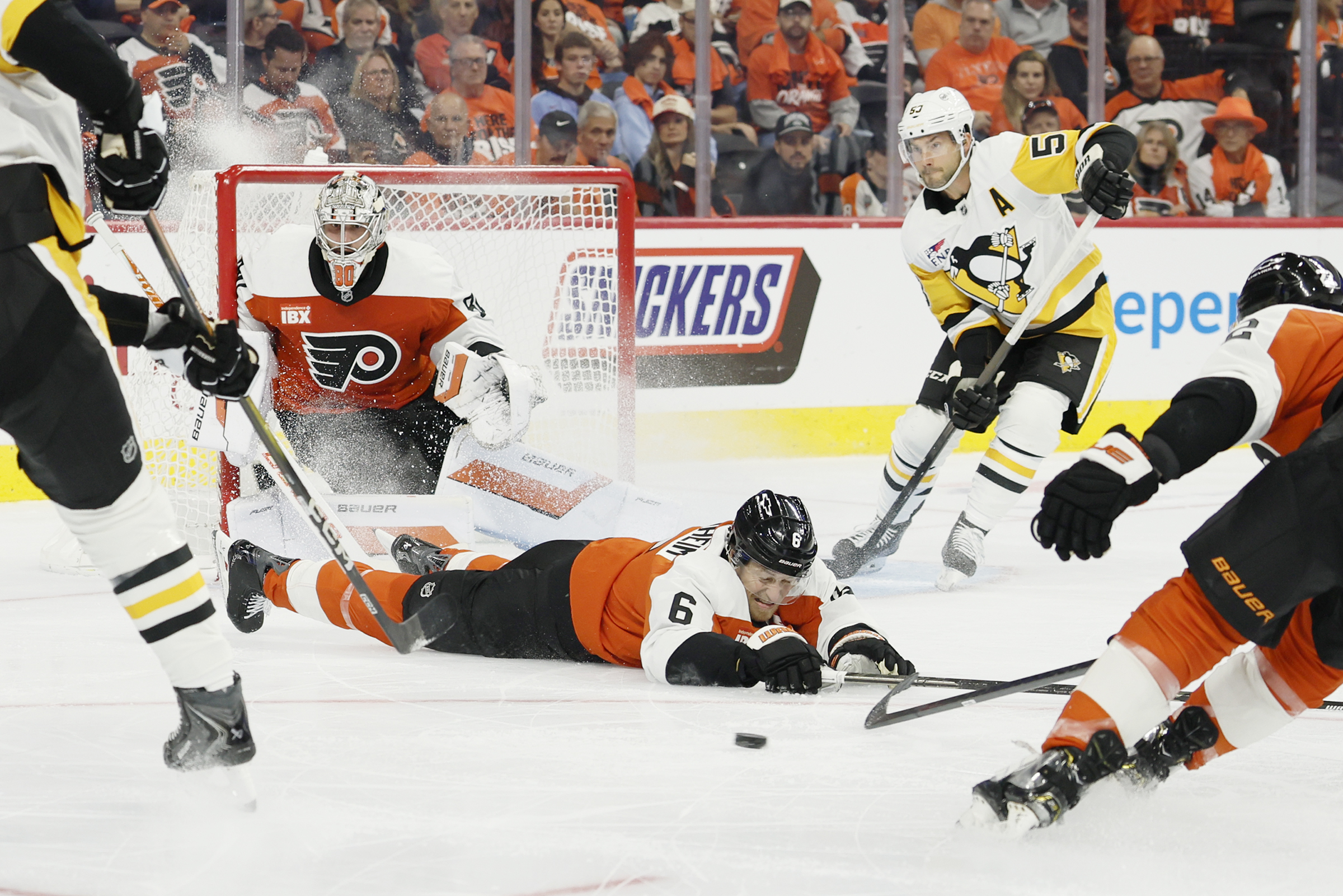
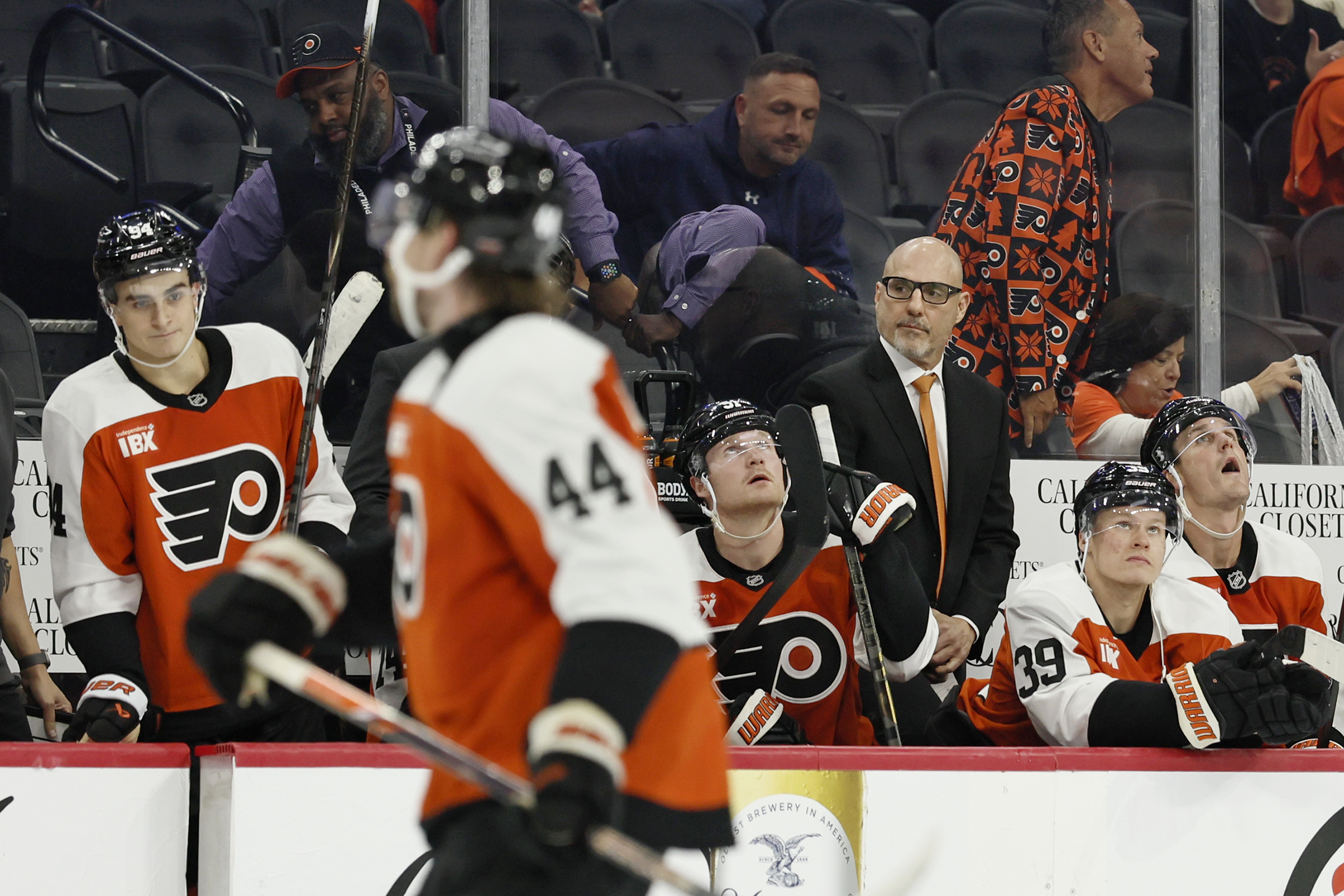
Rick Tocchet’s Flyers are struggling to defend, which is their identity.Elizabeth Robertson / Staff Photographer
A high-danger scoring chance is any “scoring chance with a score of 3 or higher,” and they assign anything straight down the middle, from the slot to the goal line, as a high-danger scoring chance. A shot from a spot assigned a 2 can become a 3 if it’s off the rush or on a quick rebound attempt.
The Flyers have two high-danger goals: Rasmus Ristolainen’s redirect of a Travis Sanheim point shot from atop the crease during a delayed penalty on the New Jersey Devils, and the one an untouched Matvei Michkov finished against the Hurricanes. The opposition has four across all strengths.
“We shot ourselves in the foot on a couple of them,” Sanheim said after the 7-0 loss to the Pittsburgh Penguins in the season opener. “We gave them probably half their goals.”
Pittsburgh scored three high-danger goals on 21 high-danger chances at all strengths. The Flyers’ defensive zone looked messy, reverting to the six weeks leading up to the Olympic break when shots from the middle and weak-side goals against were a dime a dozen. The Devils had 14 chances, scoring once, to the Flyers’ five for the second straight game.
On Saturday, Philly finally found itself on the plus side; it registered 14 high-danger chances to the Hurricanes’ 13 at all strengths. Woll stood on his head again, including stopping William Carrier near the goal mouth. This backs up what Zegras said about many of Carolina’s shots being weaker attempts from the perimeter.
It may sound like an insignificant improvement, but winning the high-danger chance battle was noteworthy, especially for a team struggling to create in the early going, and whose entire defensive zone strategy is built on protecting the middle.
Although the Flyers primarily employed the box-and-one when Tocchet came on board — during training camp, he called it “a very aggressive zone” — the bench boss tweaked the structure after speaking with his fellow Hockey Canada coaches at the Olympics when things started going south last season. “We’re not strict man-on-man, but we’re trying to be more aggressive,” he said back in March.
The changes worked. The Flyers ended the regular season seventh in high-danger chances for percentage (53.07%) and allowed the third-fewest high-danger chances (878) in the NHL.
Tocchet said in March he was keeping the changes simple and would make it more complex as the team graduates. If that’s the case, it could take a little more time to get back on track.
But when it does, the hope is that it will right the ship at both ends and get the Flyers up the ice more and back to attacking the middle in the offensive zone, too. Entering Sunday, they ranked 22nd in high-danger shots, per NHL Edge, with 12.
“Well, I think that just comes with our systems, and eventually, once it becomes second nature, your systems, it’s easier to read off, you know exactly where each guy is going to be,” Sanheim told The Inquirer on Saturday morning. “Right now, it just feels like we’re off just a little bit, and guys aren’t exactly where you think they’re going to be or where they need to be.
“Just continue to work on that, watch film, get better in those areas, and as a group, once that kind of clicks, I feel like it’s just going to come natural, and it’s going to be easier to make those plays, understand where the puck needs to go, and should look a lot cleaner.”
Bill Tierney knows a thing or two about building a winning lacrosse program.
In 1988, his first year as Princeton’s head coach, his team finished 2-13. He went on to win six national championships.
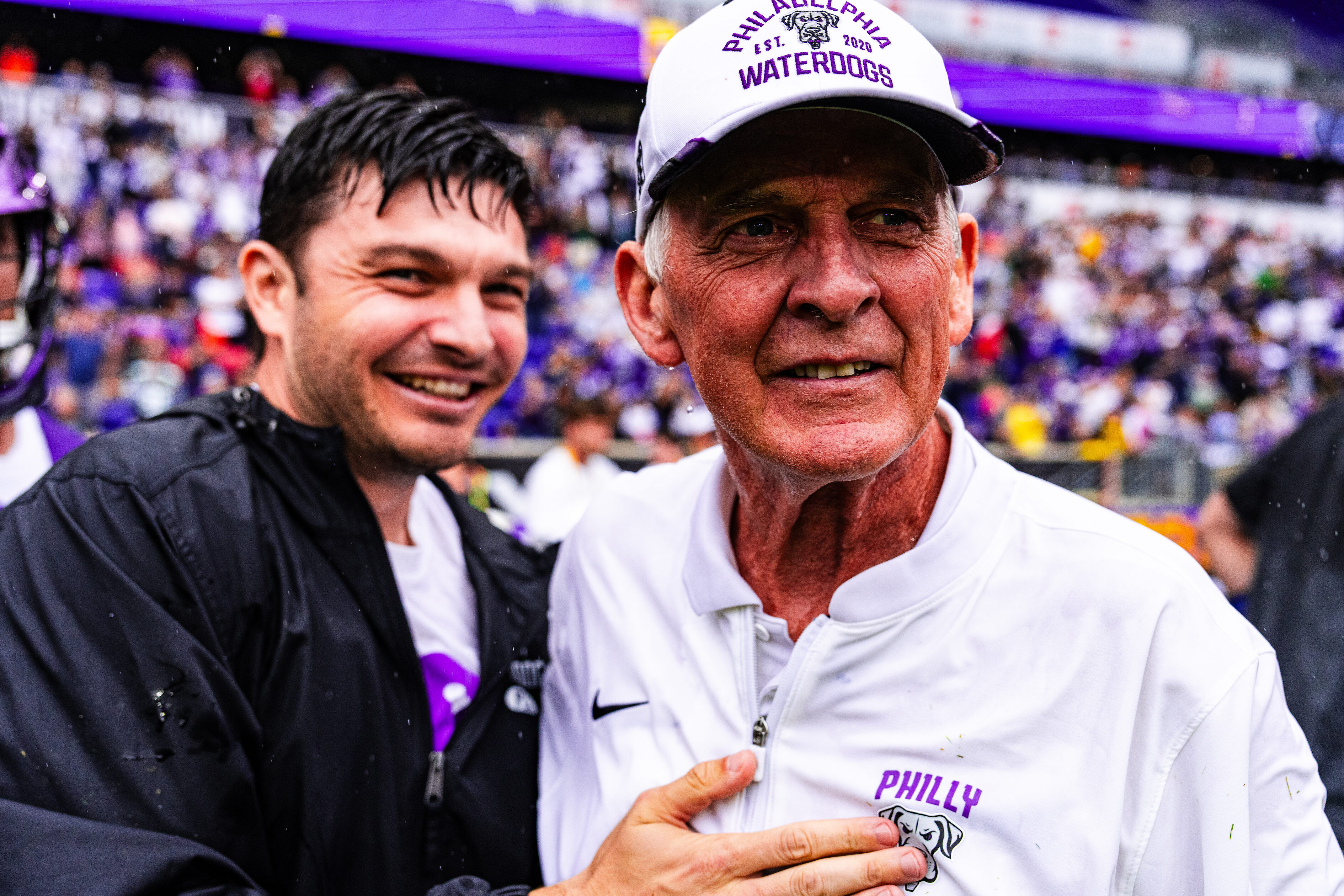
In 2024, the Philadelphia Waterdogs had a 2-8 record. Two years later, Tierney led the Waterdogs to the 2026 Premier Lacrosse League championship with a dominant 14-4 victory over the Denver Outlaws on Sept. 20 in Harrison, N.J.
This is the Waterdogs’ second league title since the PLL’s inaugural season in 2018. They won their first in 2022. Their success is fueling fan interest in Philadelphia.
“We’re proud to have brought this championship to Philly so that we can be on board with all those other great franchises and championship programs in the city,” Tierney said.
In total, Tierney has won seven NCAA championships — six at Princeton and one at Denver — and he became the first lacrosse coach to win a college and professional championship. But his lacrosse career began later than most.
When Tierney arrived at SUNY Cortland in fall 1969, a friend who lived on his dorm floor was a lacrosse goalie and asked Tierney to shoot on him to help prepare for the season. Tierney, who had never played lacrosse prior to that, eventually tried out for the team, and by his senior year, Cortland won a national championship.
“By sitting on the bench a lot I was able to listen to coaches and take a lot in,” he said. “So it was the best of both worlds.”
Tierney retired from coaching in 2023 and spent seven months away from the game before receiving a call about coaching the Waterdogs in the PLL.
Transitioning to the professional league came with a different challenge for Tierney, he said. Unlike college teams whose players practice together every day, PLL players balance lacrosse with full-time jobs and only practice together on the weekends before a game.
“The key is the culture,” Tierney said. “What you got to learn at the pro level with the lack of real contact with the guys is to dive in with them on their personal lives and them getting to know you better off the field. It took me a while to do that better than I did at first.”
Building those relationships off the field helped the Waterdogs create that championship culture.
Philadelphia had the No. 1 pick in the 2025 PLL College Draft after finishing 2-8 in 2024 and 2-6 in 2025. The Waterdogs selected CJ Kirst, who was the youngest player since 2009 to earn the 2026 PLL MVP award.
Kirst won a national championship at Cornell in 2025 before receiving the Tewaaraton Award as the nation’s top college lacrosse player. He broke the PLL single-season record with 34 goals in 10 games and earned Championship MVP honors after recording seven points in the championship game.
“My motivation every weekend is just the excitement that I have when I go and play the game,” Kirst said. “I just love being a part of the locker rooms and showing up and being a part of something that is so much bigger than yourself. I pride myself in playing with a ton of passion and that is the fire inside me where I have so much joy playing the game.”
Growing the game
A Montgomery County native and 2026 PLL Attackman of the Year, Michael Sowers said winning is essential to building a fan base and growing the league in Philadelphia.
“When you’re trying to break into a new market, there’s no better way to do it than winning and especially in the city of Philadelphia, the city rallies behind winners,” he said.
In 2024, the PLL announced that each team would be tied to a home market, and the Waterdogs were assigned Philadelphia.
Its losing record made creating a local following difficult when the Waterdogs first relocated to the city in 2024.
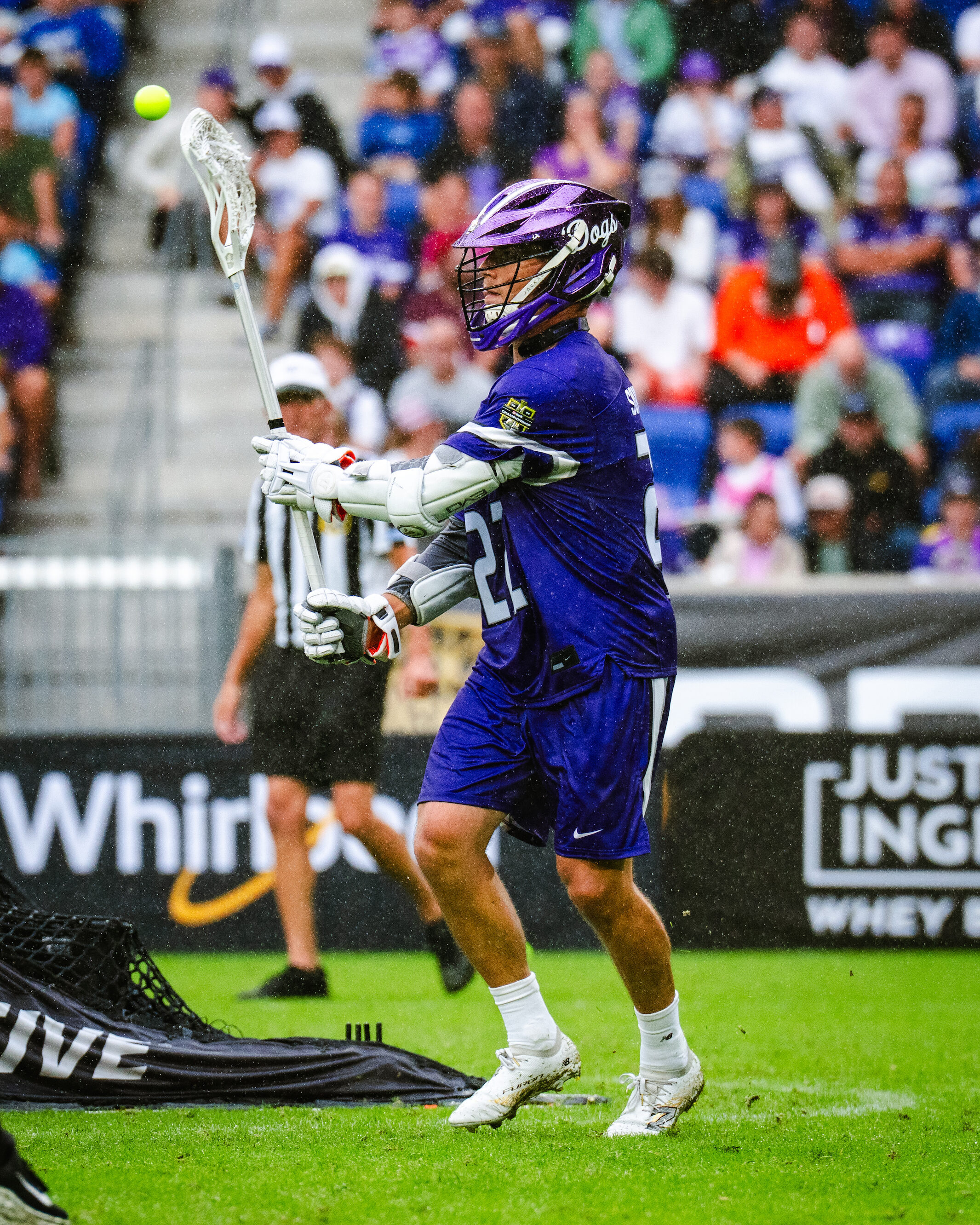
Michael Sowers, a Montgomery County, says “the city rallies behind winners.”Premier Lacrosse League
“I remember being embarrassed to tell people I played for the Waterdogs because the first question they would ask is, ‘How’d you guys do this year?’ And it was like, ‘Oh, we’re 2-8, we sucked,’” Sowers said. “So, now to be able say we’re champions for the best team in the world, like that’s pretty cool.”
The Waterdogs are also trying to establish themselves in a city with a history in lacrosse. Sowers previously played for the Philadelphia Wings, whose National Lacrosse League franchise ceased operations on Sept. 10 after Comcast Spectator withdrew its ownership following the 2025-26 season.
“It’s as simple as winning,” Sowers said. “And unfortunately for the Wings, we just didn’t really win.”
The championship game on Sept. 20 showed the team’s and PLL’s growth.
ESPN announced that the Waterdogs-Outlaws game on ABC was the most-viewed championship game in PLL history, averaging 405,000 viewers.
Kirst has noticed more local fans supporting the team when they play on the road each weekend from May to September.
“It’s very visible now when I’m on the field looking into the stands and seeing tons of purple,” Kirst said. “Obviously it’s a great representation of family and friends, but I think now having little kids who are wearing the jerseys and showing support is truly special. Philadelphia is definitely gravitating towards being Waterdogs fans.”
Winning the PLL title is an opportunity to continue to build something lasting in Philadelphia.
“We’re in position, hopefully, to really create something special here and be in a position to win for the foreseeable future,” Sowers said.
An era of higher interest rates — with the 30-year U.S. Treasury bond reaching 5.609%, its highest yield since 2002 — generally is good news for savers, as banks may increase payouts on savings accounts or newly issued certificates of deposit. But many seniors may not realize that rising rates could hit them in other ways, including higher Medicare premiums or reduced health-insurance subsidies. Some Social Security beneficiaries may also face a surprise tax bill.
Here are three ways rising interest rates might unexpectedly zing seniors, and what to do about it.
Higher interest income can raise Medicare premiums
One potential land mine is Medicare’s income-related monthly adjustment amount (IRMAA). Beneficiaries with a modified adjusted gross income that exceeds certain limits face a surcharge on both Medicare Part B (the core part of Medicare) and Part D (prescription) premiums.
Medicare generally has a two-year lookback period, so additional interest earned in 2026 could affect premiums in 2028. For 2026, the limit of $218,000 for joint filers (or $109,000 for single filers) is applied to 2024 income.
Medicare beneficiaries exceeding this limit by even a single dollar could see premiums rise. Joint filers enrolled in Medicare Parts B and D, for example, could each end up paying $284.10 per month for Part B instead of the standard $202.90, plus a $14.50 monthly Part D surcharge. That translates to an additional annual payment of $2,296.80 for the couple.
When interest income rises, the tax burden on retirees can become worse, even for those who don’t realize it. Joshua Mangoubi, a chartered financial analyst and founder and chief investment officer of Considerate Capital, said that interest earned in a taxable CD, for example, counts as income even when the account owner leaves it untouched. “Whether you spend the interest or leave it in your account does not matter,” he said.
More Social Security benefits may become taxable
The formula the IRS uses to determine the taxability of Social Security benefits can also be affected by higher interest rates. “Combined income” for Social Security purposes generally includes adjusted gross income, tax-exempt interest, and half of Social Security benefits.
“If you earn $40,000 in Social Security, $20,000 of that counts,” said Brian Seymour, a certified financial planner and founder of Prosperitage Wealth. Tax-exempt municipal-bond interest is also included in the calculation, he said. “It is one of the only places in the tax code where tax-exempt income still works against you.”
Singles with more than $34,000 in combined income could face taxation on as much as 85% of their Social Security benefits. The same is true for joint filers with combined income in excess of $44,000.
Consider a single individual with $40,000 in Social Security income and $14,000 in other income. An additional $1,000 of interest would raise combined income to $35,000 and cause another $850 of Social Security benefits to become taxable, per the IRS formula.
Affordable Care Act subsidies may have to be repaid
Early retirees with coverage through the ACA, or Obamacare, may receive subsidies based on their expected income for the year. If their actual income is higher, they may have received too much help with their premiums. “There is no cap on repayment in 2026; they may have to pay it all back, Mangoubi said.
Rising income from higher interest rates can help retirees deal with day-to-day costs, but there may be a price to pay in the form of increased costs elsewhere. To avoid surprises, it’s a good idea for retirees to review their year-to-date interest and projected modified adjusted gross income before year-end.
“Don’t think about making less income. Think about coordinating your income,” Mangoubi said. For example, someone expecting $4,000 more in CD interest might take $4,000 less from a fully taxable traditional IRA, he said, provided it is not a required distribution. “Try to stay below these lines when it makes sense.”
ACA Marketplace customers can also update their projected income when it changes. Working with a tax professional can be a good way to calculate the effects before the additional income produces a surprise premium or tax bill.
In late June, Chester County reported two cases of measles, as an outbreak in bordering Lancaster County crossed into the farmlands that blend into the suburban sprawl of Philadelphia’s collar communities.
Case numbers grew tenfold in July, and by late August, three dozen people had gotten sick up and down the county’s western border.
The latest numbers now show 83 measles cases in Chester County, more than most entire states have seen all year, making it a locus in Pennsylvania’s largest measles outbreak in more than three decades.
Chester is the first county in the Philadelphia region to grapple with wide circulation of a highly contagious virus that could spread like wildfire if it reaches other under-vaccinated communities, especially densely populated ones closer to the city.
As cases rise in Chester County, public health officials are ramping up educational outreach, scheduling pop-up clinics, and even bringing doses of the vaccine to people’s homes, all in an effort to contain known hot spots in the outbreak.
At Chester County’s schools, homecoming parades, and grocery stores, many families say they are aware of the outbreak, but are not deeply concerned. Those who are vaccinated worry more that their social and school lives may be disrupted, as they were during the COVID-19 pandemic, if the virus continues to spread.
Anne Nemeth, who lives in Paradise in Lancaster County, feels only a little worried, given that her two sons are vaccinated.
At a time of declining vaccination rates, she isn’t sure whether some of her closest neighbors, who the family regularly gets together with,are vaccinated.
They are Amish, and she has read that many of the people getting sick in her area were part of the Plain community. Two Amish infants in Lancaster County died in August after contracting measles in the state’s first deaths linked to the outbreak.
“I’m hoping they would tell us if they were sick,” she said. “It’s a lot of trust.”
Pennsylvania has reported five deaths associated with measles. A 20-year-old Amish woman who died lived just over the Chester border in Lancaster County. She wanted the vaccine after her parents and eight siblings got sick, but couldn’t get it because she was being treated for leukemia.
Close to 1,000 people statewide have been sickened by the virus, marking one of the most robust outbreaks the United States has seen in years. And experts say the cases that have been reported are likely an undercount, as many people do not seek medical care for their symptoms and some have been reluctant to speak with the health department.
“Public health is now in a race with the disease,” said Dale Weiser, the clinical services supervisor for Chester County’s health department. “It’s going to either burn through all the susceptible people, or we’re going to make fewer people susceptible through vaccination. That’s the only way it ends.”
(function(){function e(){window.addEventListener(`message`,function(e){if(e.data[`datawrapper-height`]!==void 0){var t=document.querySelectorAll(`iframe`);for(var n in e.data[`datawrapper-height`])for(var r=0,i;i=t[r];r++)if(i.contentWindow===e.source){var a=e.data[`datawrapper-height`][n]+`px`;i.style.height=a}}})}e()})();
Measles spreads in Chester County
Measles is so contagious that nine out of 10 unvaccinated individuals who come in contact with the disease will get sick.
That’s how a county like Chester, with one of the highest vaccination rates in the state, has also come to log the third-most cases in the outbreak.
Chester County’s kindergarten measles vaccination rate falls just below the 95% threshold that scientists say is necessary to keep the virus from spreading widely. Kindergarten vaccination offers a view into a community’s protection because the vaccines are required for school attendance.
But the county — like the rest of the Philadelphia region — is pockmarked with areas where vaccination has dropped well below the so-called herd immunity threshold, leaving families vulnerable to severe illness.
In eastern Chester County, for instance, five elementary schools in West Chester had kindergarten measles vaccination rates below 95% — one of the vulnerable areas in theregion identified by an Inquirer analysis of 2025-26 school-level data.
Farther east, Chester City in Delaware County, and neighborhoods in West and North Philadelphia have also similarly seen measles vaccination rates drop below so-called herd immunity.
In Chester County, the health department seeks to limit the virus from spreading from west to east across the county, where it would reach more densely populated communities, said Jeanne Franklin, Chester County’s health director.
“If it finds that pocket of unvaccinated individuals, it’s going to popcorn until it finds no one left,” Franklin said.
(function(){function e(){window.addEventListener(`message`,function(e){if(e.data[`datawrapper-height`]!==void 0){var t=document.querySelectorAll(`iframe`);for(var n in e.data[`datawrapper-height`])for(var r=0,i;i=t[r];r++)if(i.contentWindow===e.source){var a=e.data[`datawrapper-height`][n]+`px`;i.style.height=a}}})}e()})();
The health department began reaching out to hospitals and schools months before Chester County reported its first cases, because public health leaders knew it was likely only a matter of time before the virus spread from Lancaster County, Franklin said.
Hospitals were asked to develop a measles screening protocol, if they didn’t have it already, so that early symptoms, such as fever, cough, and runny nose, wouldn’t be dismissed as seasonal illnesses.
Schools were urged to start tracking vaccine status among staff. When a school identifies a measles case, the county requires any student or staff member who is unvaccinated or does not have proof of vaccination to stay home for 21 days, Franklin said. Since many adults don’t have their vaccination records handy, that could create a major staffing disruption.
As case counts in Chester County grow, pop-up vaccine clinics have been scheduled across the county.
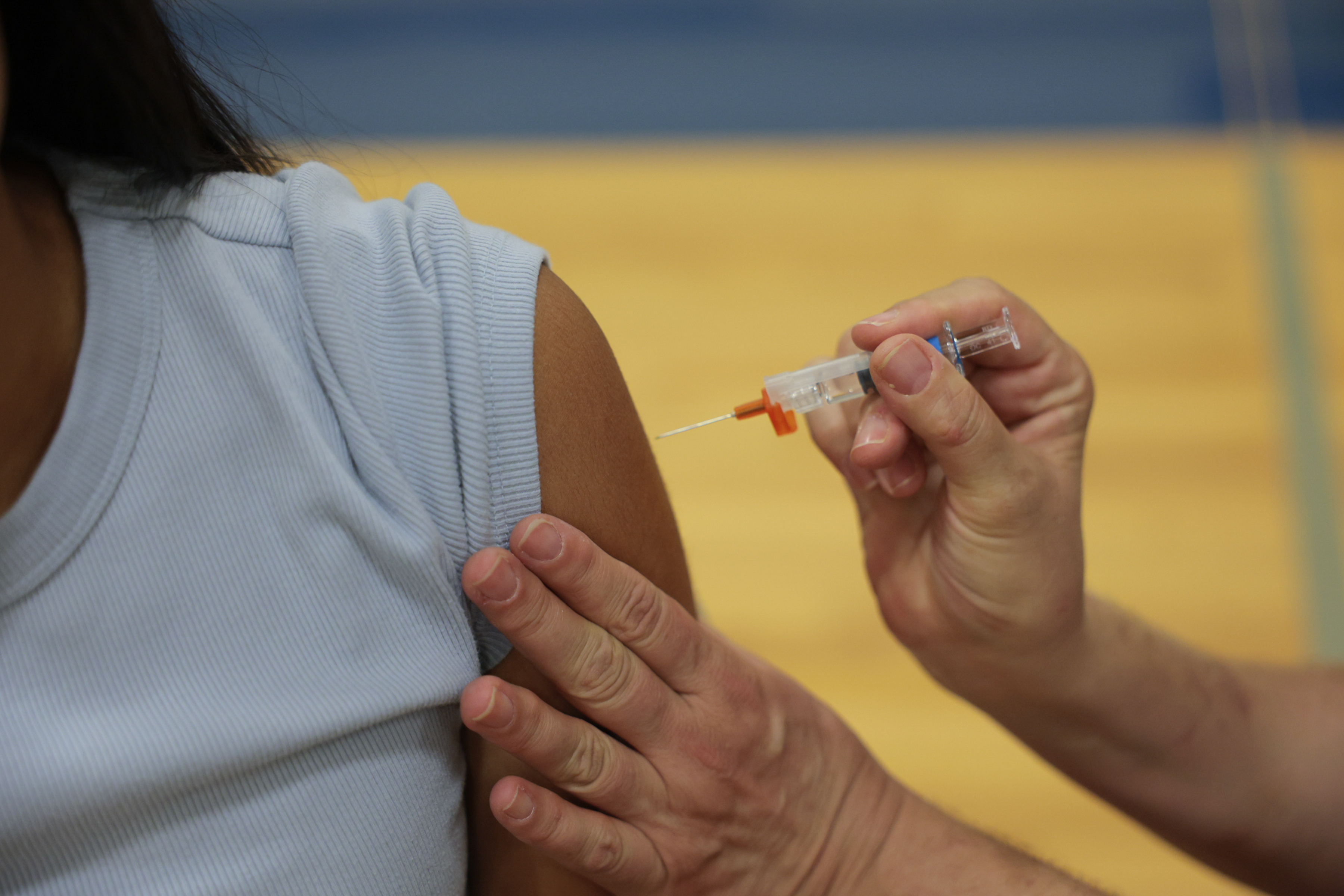
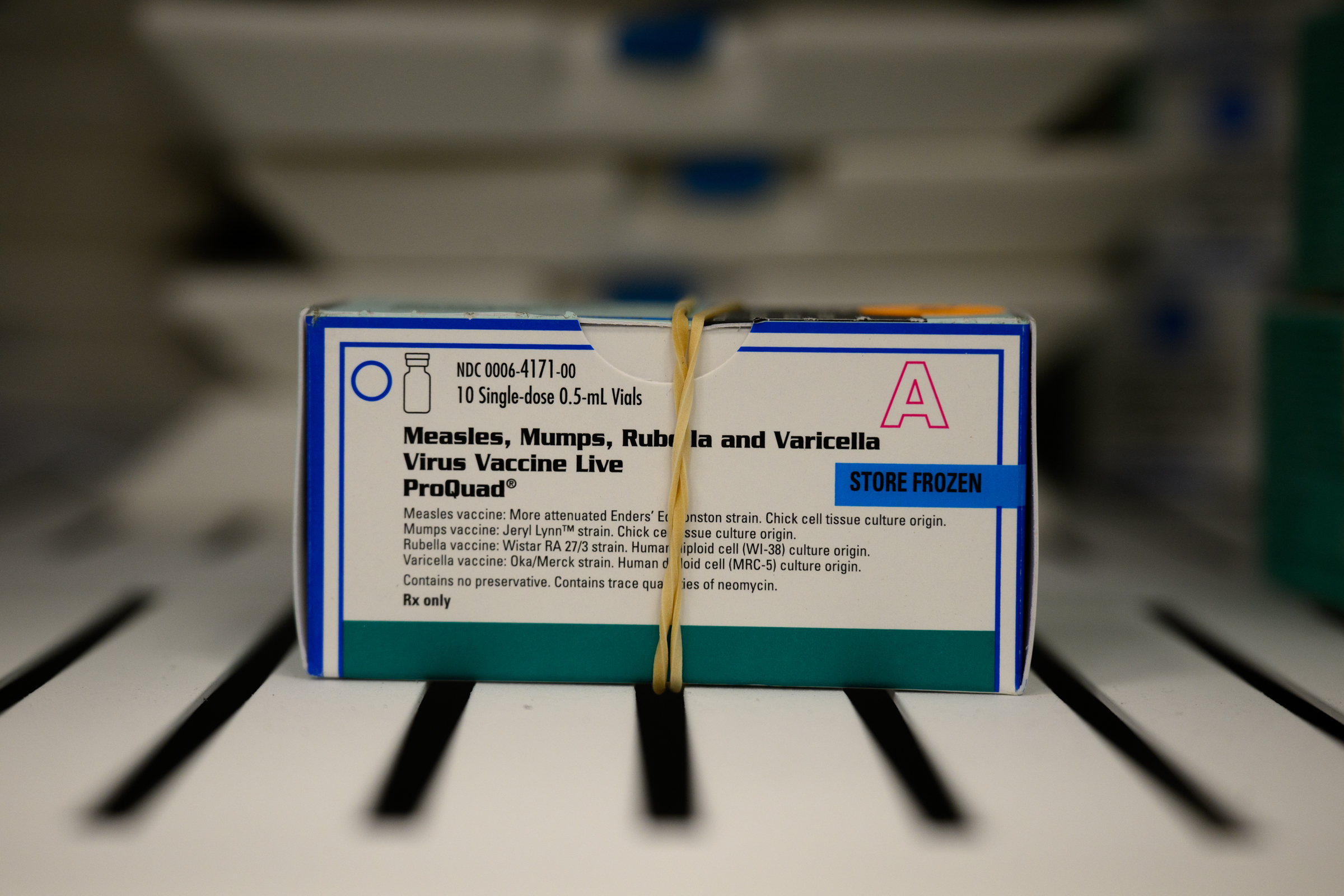
The health department has administered more than 500 doses of the measles, mumps, and rubella (MMR) vaccine so far this year, most of them since the outbreak began in April.
The health department’s nurses will bring doses of the vaccine to homes and farms of residents who don’t travel. Vaccines are also available at the county’s health clinics.
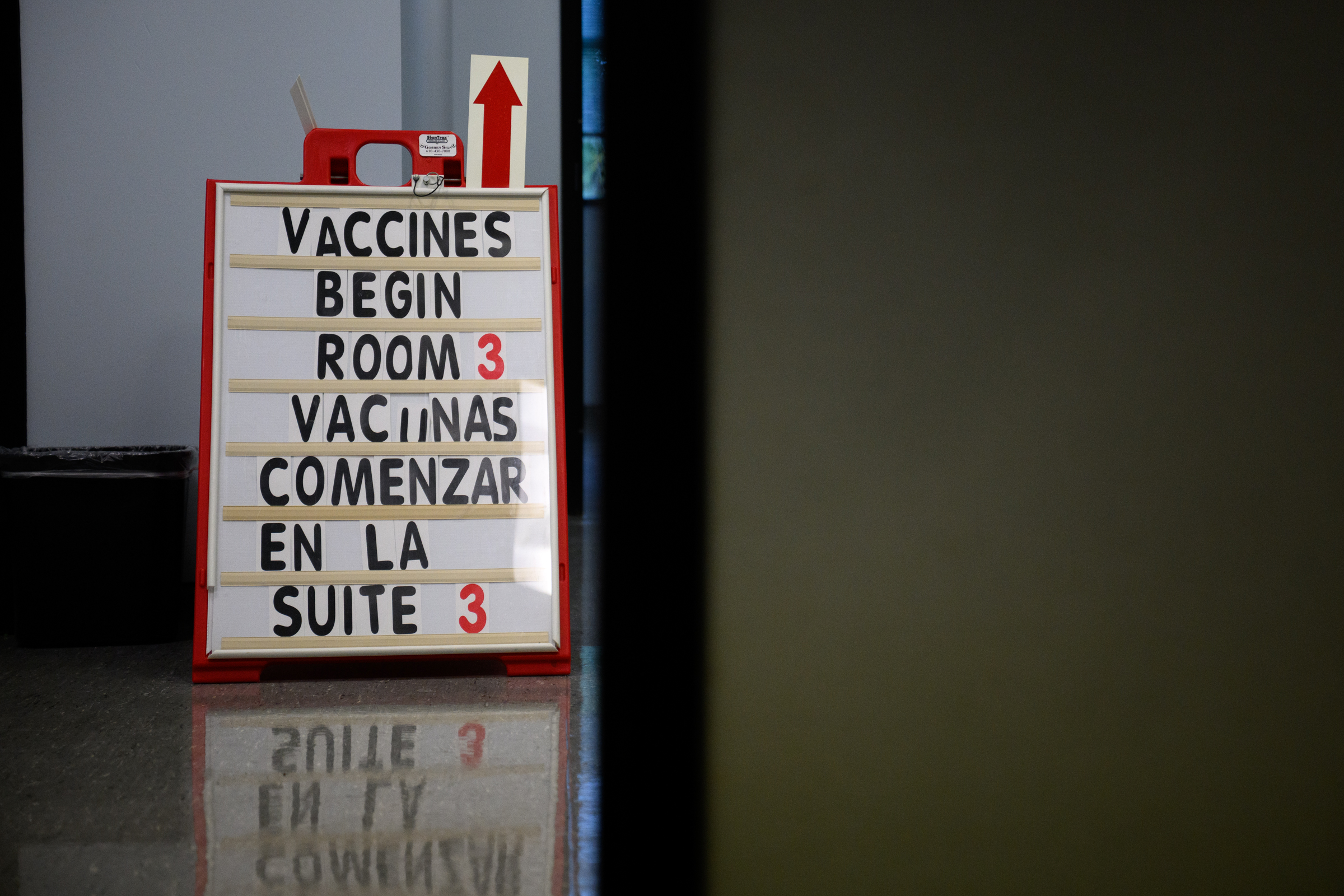
A sign for vaccinations directs visitors at the Chester County Health Department in West Chester.Kriston Jae Bethel / For the Inquirer
Debunking vaccine myths
Many of the parents lined up along Atglen’s Main Street last week for the local school district’s homecoming parade said they did not feel a reason to be deeply concerned about the outbreak because their families are vaccinated.
“I guess I have the same level of concern as I have for all sickness with kids in public schools,” said Sandi Wrigley, a Cochranville mother whose children, ages 9 and 11, are vaccinated. “If we take the time to worry about that, it’ll be an endless worry.”
Until recently, measles was considered eradicated in the United States, and despite declining vaccination rates, most families are still choosing to vaccinate their children.
Some were angry that measles is even a conversation.
Michael Lavender, from Parkesburg, said vaccinating his 12-year-old daughter was an “easy decision.”
“I really feel like there should be no reason to even talk about it,” he said.
On the other side of the county, families lined up inside the Great Valley Middle School gymnasium in Malvern for flu and COVID-19 vaccines.
Kevin Wrabley, of Malvern, doesn’t worry about his 11-year-old son contracting measles because he is vaccinated. But he does worry about other children and adults who aren’t able to get vaccinated.
“It’s discouraging, things we thought were safely behind us are coming back,” he said.
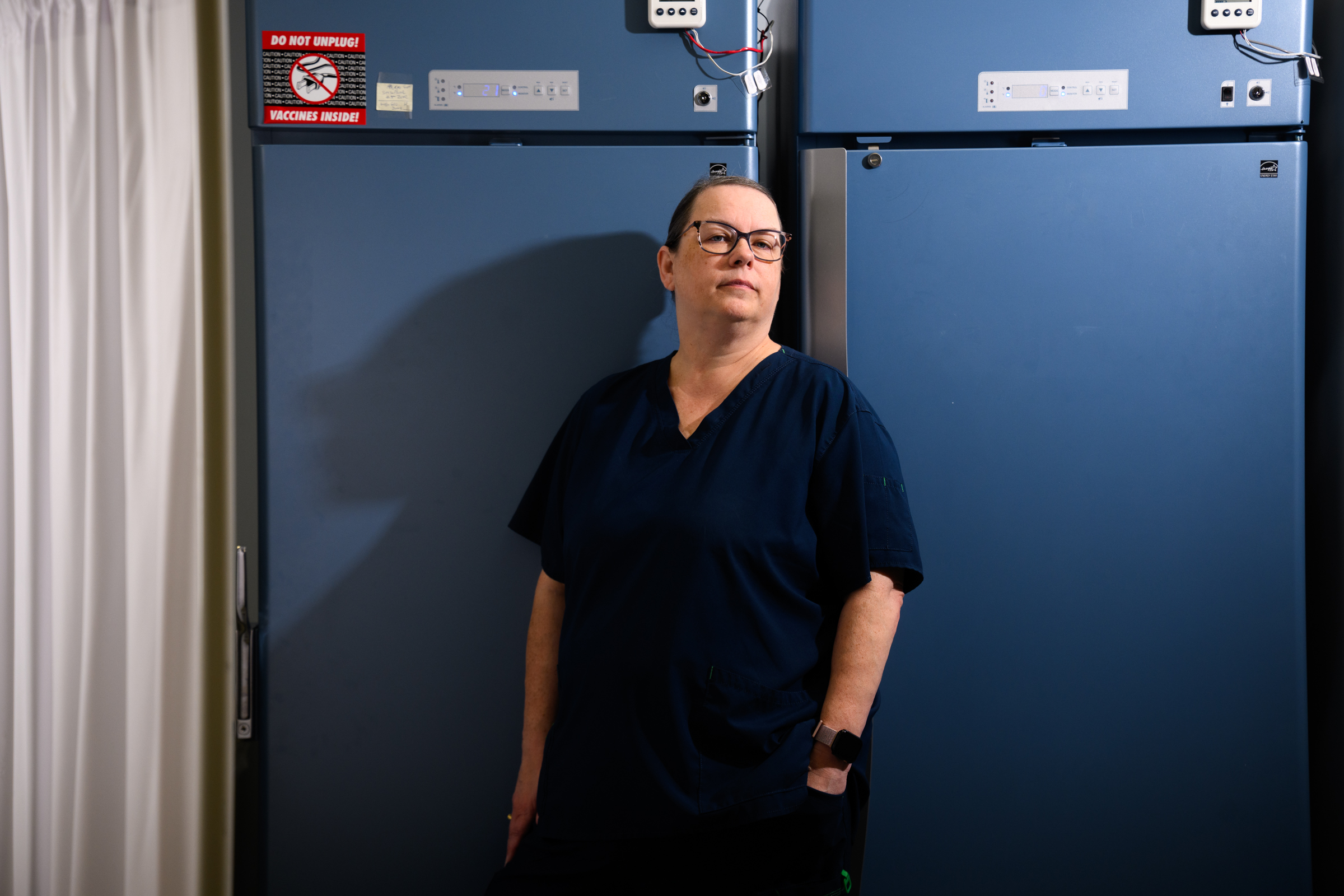
Dale Weiser, clinical services supervisor at the Chester County Health Department, stands in front of freezers storing vaccines at the department’s office in West Chester.Kriston Jae Bethel / For the Inquirer
In Chester County, public health educators have the task of trying to untangle the myriad reasons people are opting out of a vaccination. Many have little to do with science: Two doses of the measles vaccine provide 97% protection — better than most vaccines.
The MMR vaccine is among those long required to attend school in Pennsylvania and every other state. But families here have increasingly been deciding against vaccination for religious and philosophical reasons, as state law permits, often by simply printing and signing a form noting their objection.
Some fluctuations in kindergarten vaccination rates are typical from year to year, but the rise of anti-vaccine rhetoric in federal leadership and a growing distrust in public health authorities has exacerbated fears about vaccination.
On measles awareness flyers posted on social media and in public spaces, Chester County advertises its public health hotline, where people can call to talk to a nurse. Weiser and her colleagues work to dispel worries from callers over misinformation that the vaccine contains tracking chips, heavy metals, and can cause people to become sterile.
Some call back multiple times, with new questions. Weiser answers them all, without judgment and without pushing people to get vaccinated.
“We have a way to prevent this,” Weiser said. “There is no reason that any child, adolescent or adult in this country should be suffering with measles.”
Personalized measles outreach
Standard public health messaging — get vaccinated to protect yourself and your family — may not resonate in the area’s rural farming communities that overlap with Lancaster County.
The area has a large concentration of Amish and Mennonite families who are not necessarily opposed to vaccines, but have gone without most traditional medicine for generations.
Anabaptist religions emphasize self-sacrifice for the betterment of others, said Kevin Ressler, CEO of Alliance for Health Equity, a healthcare nonprofit in Chester County.
Instead of vaccinating, families may isolate themselves at the earliest signs of illness to keep anyone else from getting sick, said Ressler, who is Mennonite and has served as a pastor.
Outside New Holland, Gina King self-quarantined when she and her eight children got sick with measles in June. King was vaccinated, but she and her husband chose not to vaccinate the children.
Her 14-year-old son was briefly hospitalized for breathing difficulty, but he and his siblings all recovered. King, who spoke with The Inquirer in July, later drafted a tip sheet for other families in her Plain community based on their experience, such as stocking up on groceries to avoid going out in the community while contagious.
“If you made the choice to not vaccinate, you knew there was a risk of getting sick,” King wrote. “We should care about others enough to be willing to make some sacrifices to protect vulnerable people.”
Ressler thinks public health messaging may need to be more direct: You are hurting other people by not getting vaccinated.
Measles symptoms may not develop for days or even weeks after exposure, meaning many more people could be exposed before a family decides to quarantine.
Public health nurses say they have had the most success with face-to-face conversations, at people’s homes.
Nurses employed by Chester County and local nonprofit organizations often take doses of the MMR vaccine directly to people’s homes in rural parts of the region. Kriston Jae Bethel / For the Inquirer
Over the last 15 years, Union Community Care, a public health nonprofit in Lancaster County, has developed a route for its mobile clinic with stops at homes, farms, and churches through Lancaster and western Chester Counties.
The program’s nurse practitioner diagnoses earaches and eye infections, gives general physicals, and can administer vaccines.
The program, called Plain Healthy, depends on hard-earned trust that the nurse will come every 10 days for anyone who needs help. It has spread by word of mouth, adding several more stops in Chester County since the outbreak began, said Alisa Jones, CEO of Union Community Care.
“The most important thing is it is community led,” Jones said. “We are invited to these homes and farms. We do not invite ourselves.”
We’ve recommended the best places in Philadelphia to get a hoagie. We’ve told you how the hoagie got its name. We’ve even had you vote for your favorite Italian hoagie place. But one question remains: What exactly is the perfect Italian hoagie made up of?
story continues after advertisement
If you look at menus across the city, everyone does it a little differently. Even the number of cured meats varies. Fink’s signature “Original Italian, includes four meats (coteghino, Genoa salami, ham capicola, pepperoni), while A Cut Above Deli’s “Classic Italian” hoagie includes only two (prosciutto and dry cured capicola). Neither of these include mortadella or hot capicola. And that’s just the deli meat, we haven’t mentioned the choice between plain or seeded roll, or mild vs. sharp provolone.
So, Philly, we are asking you to finally settle this: What is the perfect Italian hoagie?
Assemble your hoagie
Step 1 (Choose one)
Roll
Seeded roll
Plain roll
Pick your roll to continue tomeats
Step 2 (Choose at least one)
Meats
Genoa salami
Ham
Capicola
Hot capicola
Prosciutto
Mortadella
Coteghino
Pepperoni
Pick your meats to continue tocheese
Step 3 (Choose any)
Cheese
American
Sharp provolone
Mild provolone
Pick your cheese or skip totoppings
Step 4 (Choose any)
Toppings
Lettuce
Tomato
Onion
Cherry Peppers
Banana Peppers
Pickles
Oil
Vinegar
Mayo
Salt
Pepper
Oregano
Pick your toppings or skip tosee your results
Your Italian hoagie is ready
toppings list
See all results
How our readers voted
percent of our readers picked your exact hoagie.
Here’s the breakdown for every ingredient, based on reader's votes, so far:
We’ll be back to reveal your canonical Italian hoagie in a few weeks. In the meantime, let us know if we missed any toppings or why you made your choices, in the form below.