Blog

  • Russia moves to tamp down speculation about plague in Siberia

    Russia moves to tamp down speculation about plague in Siberia

    The rumors have been swirling for days. That a young lab worker died of suspected plague in Siberia. That authorities feared an epidemic might spread and had quarantined hundreds of people.

    While concrete information is scant, conflicting reports abound. The name of the lab worker. Her age. If she died or what she may have died from.

    Russia’s consumer watchdog, which oversees disease control, has said only that “an employee of an anti-plague institute in the Irkutsk Region” was “diagnosed with pneumonia” of unknown origin.

    That has not stopped the rumors — fueled in part by contradictory statements from local officials as well as by a widespread distrust of Russian authorities, who have in the past concealed emergencies, like the AIDS outbreak in the 1980s — from making international headlines.

    With the Kremlin on Monday urging people to ignore speculation, here is what to know.

    The official line

    The Russian consumer watchdog did not name the employee. In a statement carried by state news outlets and published in pieces, the agency said that “no microorganisms linked to her professional activity were identified in the patient’s samples” and that “no health changes related to infectious pathology” had been identified among her contacts.

    A commission also checked the anti-plague institute in Irkutsk for compliance with “biological safety requirements,” the agency said, and “no emergency situations involving pathogenic microorganisms were identified.”

    The Irkutsk institute conducts research on a number of infectious diseases, including plague, which is caused by a bacterium. While there are a few hundred cases globally every year, mainly in Africa, plague can be easily treated with antibiotics if caught early.

    In its statement, the consumer watchdog added that the “sanitary and epidemiological situation” in the Irkutsk region was “stable.”

    The statement was issued Sunday, two days after initial reports emerged about something more concerning happening in the Irkutsk region, which is about 2,600 miles east of Moscow.

    Contradictory statements

    The first signs of a potential issue came Friday, when the Irkutsk regional governor said that he had held “an extraordinary meeting” with Russia’s chief sanitary physician about “a suspected case of a particularly dangerous infection in a resident.”

    “All identified contacts” of the resident “have been placed under medical observation,” the governor, Igor I. Kobzev, wrote in a statement on social media.

    That day, the mayor of Shelekhov, a town close to the city of Irkutsk, the regional capital, said that he had received “many inquiries” from residents and could confirm that the local hospital’s inpatient department was closed for quarantine. The mayor, Maksim N. Modin, said the hospital’s laboratory had suspended operations. He urged residents “not to spread rumors.”

    The governor of the neighboring Buryatia region, Aleksei Tsydenov, was the first to officially raise the prospect of plague. He said Friday that “the woman who died of plague in the Irkutsk region” had not visited Buryatia. His post on a state-linked messaging app was later updated to read “possibly died of plague.”

    The following day, authorities in Baikalsk, a town about 50 miles from the city of Irkutsk, cited “unofficial information” about “a case of plague” in a statement advising against travel to Shelekhov. That statement, on Telegram, was later deleted.

    So were at least three posts by Ren-TV, a federal news network, including one that named the deceased lab worker and reported that she had researched plague.

    Modin, the Shelekhov mayor, said Monday that the consumer watchdog had the situation “under strict control,” adding, “a set of anti-epidemic measures is being carried out.”

    Theories and speculation

    Local news media have painted a bleaker picture. Lyudi Baikala, a regional outlet, reported that in addition to the Shelekhov hospital, other clinics and a maternity ward had been closed in Irkutsk.

    Pavel Stepanov, a local journalist, posted on his Telegram channel that a young laboratory assistant had broken a test vial and died. That statement could not be independently verified. In a subsequent post Monday, Stepanov defended his reporting and questioned why some government agencies and Kremlin-friendly news outlets had deleted statements and stories about Irkutsk.

    The authorities, he said, “should investigate whether all this is not a sabotage by our enemies, who are acting with increasingly sophisticated methods.”

    Any reason to be scared?

    Officials in the United States and the European Union have said they are aware of and monitoring the reports about Irkutsk.

    A potential lab leak and a feared disease prompted some comparisons with COVID-19, but experts noted that even if plague were confirmed, the risk would be limited. Human cases of plague occur each year and are relatively simple to treat.

    Professor Ian Jones, a virus expert at the University of Reading, England, said in an emailed statement that the Irkutsk case “seems like a rare lab accident and is unlikely to go much further.”

    This article originally appeared in the New York Times.
  • Two prosecutors said if Philly DA Larry Krasner doesn’t retract ‘untrue’ court filings, they will quit

    Two prosecutors said if Philly DA Larry Krasner doesn’t retract ‘untrue’ court filings, they will quit

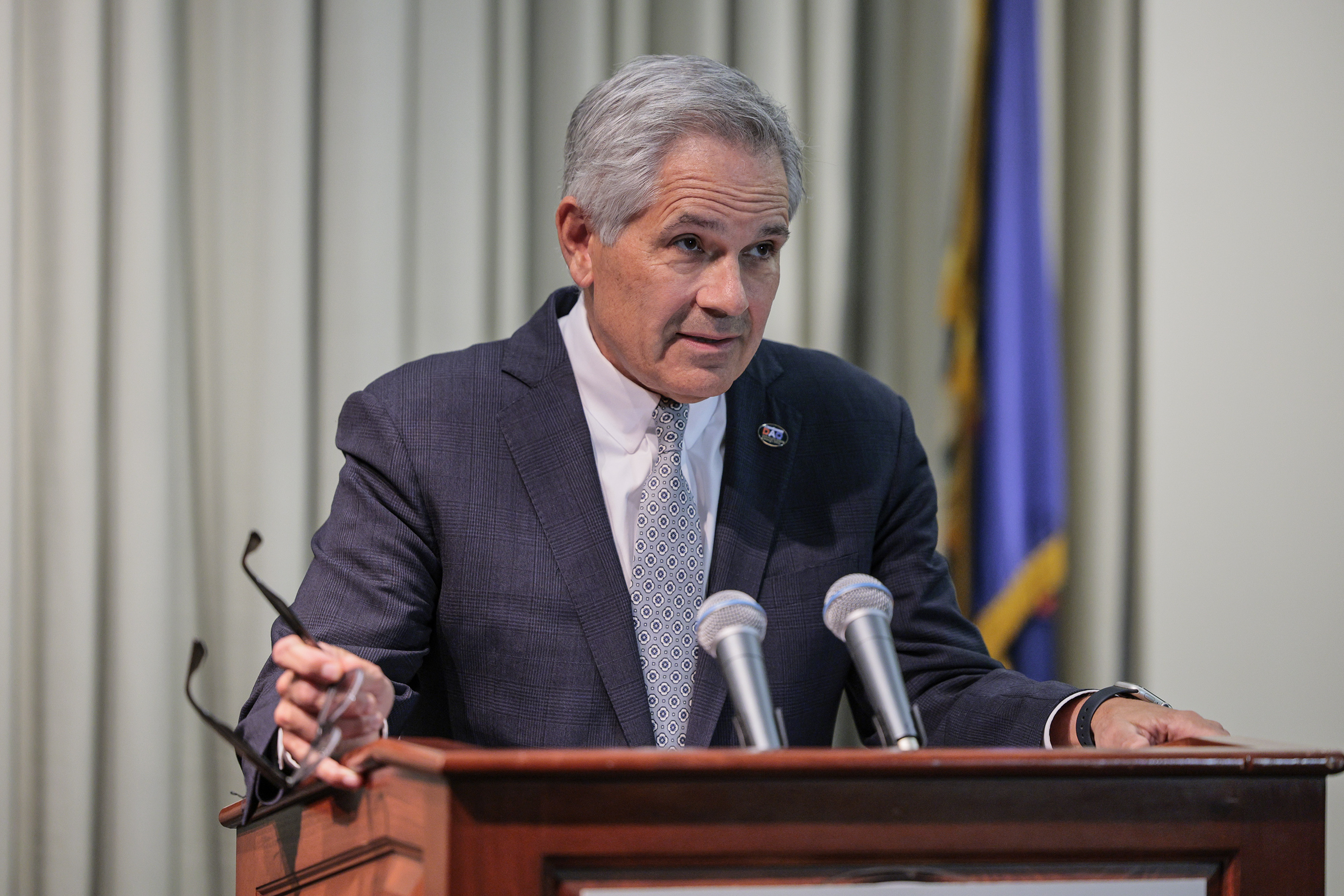
    Two prosecutors involved in a post-conviction case that has roiled District Attorney Larry Krasner’s office sent a letter to Krasner on Monday accusing him of filing court documents that were “filled with misrepresentations aimed transparently and shamefully at harming our reputations.”

    In a five-page memo, obtained by The Inquirer, Katherine Ernst and Steven Wildberger said they “vehemently” denied some of the assertions Krasner made in court documents he filed last week with U.S. District Judge Paul S. Diamond.

    Those assertions, said Ernst and Wildberger — some of which they said included inaccurate accounts of their actions — were the culmination of what they called “repeated retaliation” from Krasner over how they have handled the matter in recent months.

    And they said Krasner’s behavior toward them had “made it impossible for us to continue” working for him and his office.

    Still, they stopped short of immediately resigning. Instead, they said, they would allow Krasner until the end of Tuesday to correct what they called the “misrepresentations” in his filings with Diamond. If he didn’t, they said, they would resign.

    “Any reasonable person with any self-respect would feel compelled to resign when their employer has made such misrepresentations about them in a federal filing,” they wrote.

    Krasner said he could not comment on the situation publicly, as the underlying case remains pending.

    In a response he emailed to Ernst, Wildberger, and several others, however — which was also obtained by The Inquirer — Krasner said that the documents he filed were accurate, and that Ernst and Wildberger had displayed “patterns of inappropriate behavior” throughout the case.

    “I have shown great restraint in not taking action within the office against your insubordination, your legally incorrect and unexamined positions, your factually misleading representations, and the damage they have caused your co-workers and the office,” he wrote. “Despite my restraint, you now falsely claim that your decision to quit the office is somehow a termination for reasons that are also obviously self-serving.”

    Ernst and Wildberger declined to comment.

    Their memo served as the latest development in a saga that has already caused a variety of issues for Krasner and his office.

    Last month, Diamond, in a highly unusual memo of his own, said Krasner and one of his top supervisors, Matthew Stiegler, may have committed crimes including conspiracy, obstruction of justice, or perjury while participating in the underlying case — a complex matter in which a man is seeking to have his murder conviction overturned.

    Diamond also said he had referred the situation to the U.S. Attorney’s Office for a potential criminal investigation into Krasner, Stiegler, or others in the office.

    Not long after Diamond made that statement, Stiegler stepped down from his supervisory position, although he remains employed in the office’s conviction integrity unit.

    Ernst, meanwhile, had already stepped back from her role leading the law division for unrelated reasons. And Wildberger gave up his supervisory role in the same unit this summer, which he said was because he had “lost faith in the administration of the Philadelphia District Attorney’s Office.”

    Trying to ‘deflect blame’?

    In their memo, Ernst and Wildberger took issue with several statements Krasner made about them in court documents he filed last week.

    The filings were extensive and concerned more than just the conduct of Ernst and Wildberger. Krasner also took aim at Diamond, saying any suggestions that he or Stiegler committed crimes were “baseless” and that the judge should be removed from the case.

    Still, in providing his version of events, Krasner recounted instances in which he interacted with — and often disagreed with — Ernst and Wildberger. And some of his recollections, Ernst and Wildberger wrote, included “egregious misrepresentations” about what they said unfolded.

    In one instance, they said, Krasner inaccurately recounted a plan Stiegler had proposed about how to proceed with part of the case.

    In Krasner’s telling, when Stiegler found out that another prosecutor, Jaclyn Mason, had filed a brief filled with errors, Stiegler proposed a “sweeping ‘sentinel review’” to see if Mason had done the same thing in other cases.

    Krasner viewed that proposal as reasonable, saying in the court filings he thought it could “get to the truth” about what happened. But Ernst and Wildberger disagreed. And Krasner said he believed their opposition stemmed from “fear” that if Mason had made other mistakes, those errors could be held against Ernst and Wildberger, who supervised her.

    But Ernst and Wildberger, in their memo, challenged his account and said Krasner’s sole goal in entertaining the plan was a “transparent effort” to improperly scapegoat Mason and absolve Stiegler.

    “We heard your words, and we saw your demeanor,” they wrote. “You were not trying to get to the truth; you simply wanted to deflect blame from Stiegler.”

    Calling subordinates ‘human shields’

    The memo also said Krasner “grossly misrepresents” a conversation he had with Ernst after she became supervisor of the Law Division. Ernst took over shortly after two of its prior supervisors, Paul George and Nancy Winkelman, were disbarred and suspended, respectively, over their conduct in a separate federal matter.

    According to Krasner’s filing, Ernst asked for a raise, in part, because she feared similar scrutiny, and said “she could need higher compensation to ‘hire a lawyer’ to ‘defend’ her against unjust targeting.”

    But Ernst and Wildberger’s memo disputed that.

    Ernst requested the raise, they said, because in taking over the unit, she was “facing a nearly insurmountable task: to clean up the mess her predecessors had left behind.” She was working up to 70 hours per week and supervising nearly 100 people while making “significantly less” money than her predecessor, they said.

    Krasner’s account sought to harm Ernst’s reputation, they said, and cast her “as a panicked, irrational woman terrified of Judge Diamond.”

    The letter also took issue with Krasner characterizing their decisions to speak out on the matter as being “driven by fear.”

    “We were driven simply by a desire to do the right thing and fulfill our ethical obligations and duty of candor to the court,” they wrote.

    In closing, they accused Krasner of saying that the prosecutors who work for him are “human shields,” and saying that “judges can’t get to you because you don’t sign any filings.”

    “But the ADAs of the Philadelphia District Attorney’s Office are not your shields; we are people,” they wrote.

    And they said if he did not “correct the misrepresentations” in his filings by Tuesday, “you will have constructively terminated us.”

  • Spain calls early election after housing crisis roils government

    Spain calls early election after housing crisis roils government

    MADRID — Prime Minister Pedro Sánchez of Spain called for early elections Monday, days after his left-wing governing coalition, which lacks a majority in parliament, lost a parliamentary vote to pass a package of emergency housing measures.

    Sánchez and other left-wing politicians are seeking to frame the early election around Spain’s housing crisis, after thousands of people protested in recent days against soaring rents and home prices. But the conservative Popular Party and the far-right Vox party are expected to focus instead on the migration crisis, and on Sánchez himself, a deeply unpopular figure among right-wing voters.

    The snap election will be held Nov. 29, months ahead of schedule, Sánchez said on Monday.

    Sánchez, one of Europe’s longest-serving leaders, had become a hero to the global left for standing up to the Trump administration over the war in Iran, and for supporting renewable energy and inclusive immigration policies. At home, his popularity was dented first by corruption accusations directed at his innermost circle, and then by a major migration crisis spurred by the sudden surge of tens of thousands of migrants into a Spanish territory in North Africa.

    The defeat of the housing measures, which Sánchez had hoped would soothe public anger at rising evictions and soaring rents — symbolized by the recent eviction of María del Carmen Abascal, an 87-year-old woman in Madrid — amounted to the final straw. The loss showed that his government was essentially paralyzed and unable to pass legislation that its liberal base deemed vital.

    But it also handed Sánchez an issue that could rally his left-wing base during the campaign, as he tries to defeat conservatives who currently outperform his Socialist Party in polls.

    “To carry out the far-reaching reforms to reduce inequality,” Sánchez said in a press briefing Monday, “we must mobilize to secure a much larger progressive majority in parliament — one capable of taking on the elites, achieving new social advances, and continuing to transform Spain.”

    Sánchez said voters would have to choose between keeping Spain as “a bastion of social justice” or “the far-right wave that brings regression wherever it governs.” That was a reference to Vox, which could join a right-wing government led by the Popular Party, the main conservative opposition group.

    The Popular Party celebrated Sánchez’s announcement as a victory, as it had been calling for months for an early election. “FINALLY,” the party said on social media Monday morning. “We will deliver justice, recover lost time, money and hope, and rebuild our country,” the party said in a video.

    Sánchez’s decision comes amid voter outrage at the eviction of Abascal. Though she was subsequently allowed to return home, her treatment led to mass protests and a tent encampment in central Madrid — and to the failed parliamentary vote last week.

    Polls in Spain have consistently shown broader support for right-wing parties in recent months. According to current projections, Sánchez’s left-wing bloc is falling well short of the numbers needed for a parliamentary majority. But after nearly a decade of leading the country, Sánchez has built a reputation for political comebacks.

    Sánchez’s decision to call an early election added to the shakiness that has been troubling European assets in financial markets recently. On Monday, the euro dropped to about $1.12, its lowest level since May 2025 against the U.S. dollar.

    This article originally appeared in the New York Times.

  • Volunteers cleaned up racist and antisemitic graffiti at beloved Glenside ‘cheese’ playground

    Volunteers cleaned up racist and antisemitic graffiti at beloved Glenside ‘cheese’ playground

    Parts of an Abington School District playground may still need work after volunteers cleaned racist and antisemitic graffiti off the structures over the weekend.

    Volunteers joined township and school district staff on Saturday morning to scrub off red, spray-painted swastikas and an anti-Black slur at the recently renovated Glenside Weldon playground. A community rally at the site is planned for Thursday.

    Abington Township police announced Saturday they’re investigating the incident, and urged anyone with information to contact the department.

    Weldon Fire Company supplied water to clean off racist graffiti at Glenside Weldon playground on Saturday.Krystn Kuckleman

    The neighbors who showed up Saturday to clean off the graffiti included Glenside Civic Association president Krystn Kuckelman, who led efforts to restore the beloved park before it reopened in 2022.

    Glenside cheese sculpture defaced

    Residents, local businesses, and officials raised almost $80,000 to restore the playground, Kuckelman said — including an iconic sculpture that became the symbol of the campaign.

    Known as the ”Cheese,” the concrete yellow playwall has delighted children for decades, local residents say. Rosalie Guzofsky, executive director of the Abington Art Center, who consulted on preserving the structure during renovations, said it was designed by prominent mid-century sculptor Jim Miller-Melberg.

    The Cheese and a map mural on the pavement created by a local artist were both vandalized and need a fresh coat of paint, Kuckelman said Monday. A playground sign was also defaced.

    “Today was one of my saddest day[s],” Kuckelman wrote to the school board president in a Facebook comment on Saturday.

    Rally planned at Glenside Weldon playground

    The antisemitic symbol and anti-Black slur “are reminders of the worst behavior of human beings over the last 500 years,” the Salem Baptist Church of Abington wrote on social media.

    Faith leaders, neighbors, and local officials plan to gather at the playground for a unity rally on Thursday at 5:30 p.m., according to a flyer shard by a township commissioner, Matt Vahey, to “reclaim a shared community space from hate.”

    This suburban content is produced with support from the Leslie Miller and Richard Worley Foundation and The Lenfest Institute for Journalism. Editorial content is created independently of the project donors. Gifts to support The Inquirer’s high-impact journalism can be made at inquirer.com/donate. A list of Lenfest Institute donors can be found at lenfestinstitute.org/supporters.

  • Eagles open as underdogs against the Jaguars in London; Super Bowl odds plummet after latest loss

    Eagles open as underdogs against the Jaguars in London; Super Bowl odds plummet after latest loss

    The Eagles blew a late lead as they fell to the Los Angeles Rams, 24-20, Sunday for their second consecutive loss. Now, the 2-2 Birds will prepare to travel to London to take on their Week 5 opponent, the Jacksonville Jaguars.

    From the Eagles’ chances this weekend to updates on their Super Bowl odds, here’s what the oddsmakers are saying at two of the biggest sportsbooks …

    Eagles-Jaguars odds

    Despite a 10-point lead heading into halftime, the Eagles were held scoreless in the second half, and allowed the Rams to score 14 unanswered points on the way to their second loss of the season. They also have a ton of unanswered injury questions, including Saquon Barkley and Quinyon Mitchell, both of whom left Sunday’s loss and didn’t return.

    Meanwhile, the Jaguars (3-1) are coming off two straight wins — a 35-6 rout of the New England Patriots, followed by a 22-17 victory over the Cincinnati Bengals — and have the best point differential (plus-51) in the AFC.

    Now, the two teams will travel to London for their Week 5 matchup. They last played each other in November 2024, when the Eagles defeated the Jaguars at home in a game that is remembered more for one specific play (Saquon Barkley’s iconic backward hurdle) than the actual result (a 28-23 Eagles’ win).

    As they prepare to meet again Sunday, the Eagles enter the neutral-site matchup as 5.5-point underdogs at both FanDuel and DraftKings, marking the second straight week in which they’re underdogs, something that hasn’t happened since 2023.

    FanDuel

    • Spread: Eagles +5.5 (-105); Jaguars -5.5 (-115)
    • Moneyline: Eagles (+205); Jaguars (-250)
    • Total: Over 42.5 (-115); Under 42.5 (-105)

    DraftKings

    • Spread: Eagles +5.5 (-108); Jaguars -5.5 (-112)
    • Moneyline: Eagles (+195); Jaguars (-238)
    • Total: Over 42.5 (-118); Under 42.5 (-102)
    The Rams are one of the favorites to win the NFC through the first four games of the season.David Maialetti / Staff Photographer

    NFC odds update

    At DraftKings, the Eagles’ odds of winning the NFC have fallen again following the team’s loss to the Rams. They now trail the Detroit Lions and Minnesota Vikings with the seventh-best odds.

    DraftKings

    This week Last week
    49ers +355 +400
    Rams +380 +400
    Seahawks +455 +470
    Bears +850 —
    Vikings +920 +870
    Lions +1325 +970
    Eagles +1350 +920

    Super Bowl odds

    The Eagles’ Super Bowl odds have also fallen at both sportsbooks after dropping two straight, and they’re now below their Week 5 opponent as well. The Rams and Buffalo Bills still top the list as early Super Bowl favorites.

    FanDuel

    This week Last week
    Rams +600 +650
    Bills +750 +650
    Ravens +800 +950
    Seahawks +850 +1000
    49ers +950 +1000
    Chiefs +1100 +1100
    Jaguars +1400 —
    …
    Eagles +2500 +1700

    DraftKings

    This week Last week
    Rams +650 +670
    Bills +750 +670
    49ers +850 +900
    Ravens +850 +900
    Seahawks +950 +1000
    Chiefs +950 +1050
    Jaguars +1500 —
    …
    Eagles +2400 +1700
  • Obama to appear with El-Sayed in Detroit as the ex-president gets more involved in the midterms

    Obama to appear with El-Sayed in Detroit as the ex-president gets more involved in the midterms

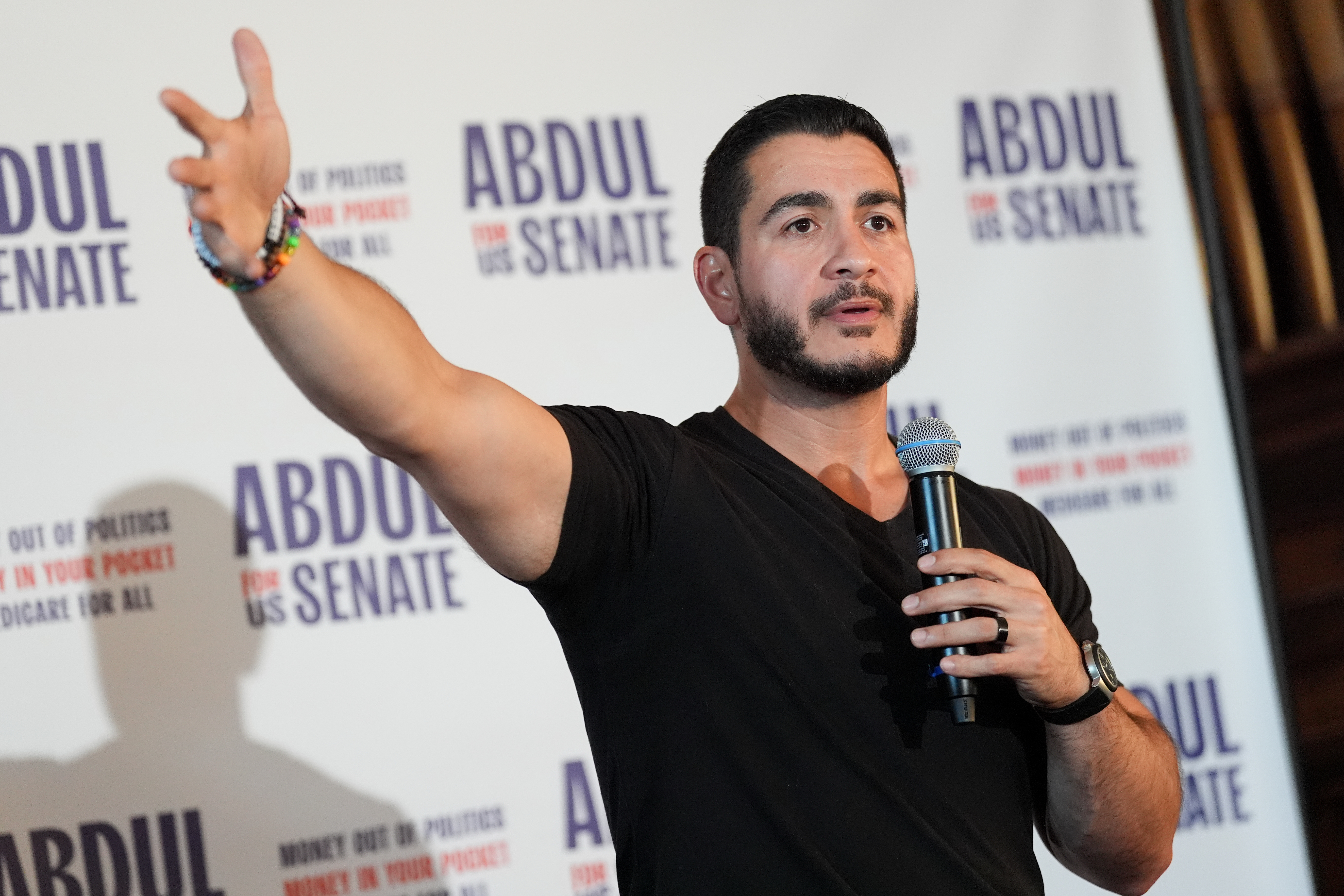
    DETROIT — Former President Barack Obama will campaign alongside Michigan Senate candidate Abdul El-Sayed in Detroit later this month, lending his support to the progressive nominee after a bruising Democratic primary exposed divisions within the party.

    Obama will appear with El-Sayed at an Oct. 24 rally that will also feature other top Democratic candidates in Michigan, including Jocelyn Benson, the party’s nominee for governor. Obama is getting significantly more involved in the midterm elections, with additional campaign stops and advertisements expected to come in the closing weeks, according to plans shared first with the Associated Press.

    The Detroit event is a notable show of support for El-Sayed, who defeated moderate Rep. Haley Stevens in an August primary and has since worked to consolidate Democratic support in his race against Republican Mike Rogers. The open seat is expected to be among a handful that will decide which party controls the majority next year.

    Obama taped two dozen ads last week for Democratic candidates for governor and Senate that will be released in the coming days and weeks, in addition to more campaign stops soon to be announced.

    He appeared earlier this year in a campaign ad with Iowa Senate candidate Josh Turek and campaigned in Texas with Senate candidate James Talarico and the candidate for governor, Gina Hinojosa. This week, he will headline a Washington fundraiser supporting Democratic Senate candidates.

    Obama aims to help El-Sayed shore up support in a key area

    El-Sayed defeated Stevens by less than a percentage point in a primary that became a national test of the Democratic Party’s ideological direction. El-Sayed drew support from leading progressives, including Vermont independent Sen. Bernie Sanders and Democratic Rep. Alexandria Ocasio-Cortez of New York. Stevens was backed by Senate Democratic Leader Chuck Schumer.

    Some ads that supported Stevens showed Obama praising her, and she outperformed El-Sayed in Wayne County, winning about 51% of the Democratic primary vote compared with 45% for El-Sayed. The county includes Detroit, where more than three-quarters of residents are Black.

    Kamala Harris, the first Black and South Asian person to serve as vice president, campaigned with El-Sayed last month.

    Now the Oct. 24 rally with Obama, the first Black president, could give El-Sayed a boost on the first day of Michigan’s required early in-person voting period. Obama spoke with El-Sayed by phone following his primary victory.

    It will also be a boost for the other candidates in what is one of the most consequential elections in recent Michigan history. There are open races for governor, secretary of state, and attorney general, in addition to control of the state legislature being at play.

    Benson, who will also appear with Obama, is facing Republican Rep. John James in the race for governor.

    Benson and James are set to debate for the first time on Tuesday, and El-Sayed and Rogers are scheduled to debate for the first time on Oct. 8.

    Obama returns to the campaign trail for the closing stretch

    Obama has been selective in his involvement in the midterms so far, but his planned ramp-up in the final weeks follows a pattern from recent elections. He campaigned in Detroit on Oct. 22 during the 2024 presidential election and was in the city Oct. 29 during the 2022 midterms.

    His campaign appearances can draw large crowds and prominent guests. Rapper Eminem introduced Obama at his Detroit rally in 2024.

    This week, he will headline an event with the Democratic Senatorial Campaign Committee that will include a conversation with Delaware Sen. Lisa Blunt Rochester. That follows a September event with the Democratic Congressional Campaign Committee.

  • Two people were injured in a shooting at a Camden County Wawa on Sunday night

    Two people were shot inside a Wawa in Sicklerville Sunday night, according to Winslow Township police and the Camden County Prosecutor’s Office.

    Winslow officers responded to a report of a person shot at the Wawa at 400 Sicklerville Rd. around 9 p.m. Sunday, the department said in a news release Monday.

    At the Wawa, police found a 20-year-old man with a gunshot wound. He was taken to Cooper Norcross University Hospital in stable condition, police said.

    Officers were later notified that another 20-year-old man with a gunshot wound walked into Washington Township’s Jefferson Hospital before he was taken to Cooper Norcross University Hospital in Camden.

    No arrests have been made as of Monday afternoon, police said, and the investigation is ongoing.

  • Flyers activate Denver Barkey and place Nikita Grebenkin on IR; Rasmus Ristolainen out for Monday’s game

    Flyers activate Denver Barkey and place Nikita Grebenkin on IR; Rasmus Ristolainen out for Monday’s game

    TAMPA, Fla. ― The Flyers’ high-motor forward is back.

    Denver Barkey has been activated from injured reserve and in a corresponding move, the Flyers placed forward Nikita Grebenkin on IR with an upper-body injury.

    Grebenkin took a hard hit in his preseason debut Sept. 24 against the Boston Bruins. Coach Rick Tocchet confirmed three days later that the Russian winger was “a little banged up after last game, is working on a couple of little things.” He said the current injury is unrelated to the upper-body injury he suffered in March that caused the feisty winger to miss the rest of the regular season and the playoffs.

    Barkey will make his season debut Monday against the Tampa Bay Lightning (7 p.m., NBCSP). Tocchet said earlier in the day he will move him around, both at wing and center, but added he will “probably play him on the wing tonight.” Based on forward lines in warmups, he will be on the left wing with Trevor Zegras and Owen Tippett.

    The hope is Barkey’s high hockey IQ and ability to drive play will boost a Flyers squad still looking for its first win of the season (0-1-2). Last season, after making his NHL debut in late December in which he posted two assists at Madison Square Garden, Barkey finished with five goals and 17 points across 43 regular-season games.

    In the playoffs, slotting in often at center, he added two points, with his assist coming on the Flyers’ first postseason goal since 2020.

    “Holding pucks, making plays off. We’re playing a team that likes to swarm on you, so we need some guys to be able to get out of the swarm and make some plays. And he’s one guy that can do that for us,” Tocchet said about his offensive abilities.

    “He’s a really smart hockey player,” he added. “He goes to the right areas, the right spots. He defends well. I think his hockey IQ is really outstanding, and, other than getting hurt, he was actually having a really good camp for us.”

    Barkey, 21, suffered a lower-body injury in the first period of the Flyers’ preseason opener. The 5-foot-10, 171-pound forward was crunched along the boards by Washington Capitals defenseman Martin Fehérváry, who is 6-2, 215. He appeared to have trouble accelerating after the hit, and despite trying to battle through it, he ultimately left the game and did not return.

    Winger Alex Bump, who played the first three games of the season and stayed out on the ice for an extended period of time on Monday during the team’s optional skate, is a healthy scratch.

    “It’s awesome to get [Barkey] back. Just such a smart player,” Noah Cates said. “I think he’ll bring just, even though he’s younger, kind of like a calming presence. He’s in the right spots, does the right things all the time. The guys that’ll play with him are going to have that sense of relief that he’s in the right place [and] he’s doing the right things. Power play, he adds such a good element of poise and creativity. So it’s definitely huge to get him back.”

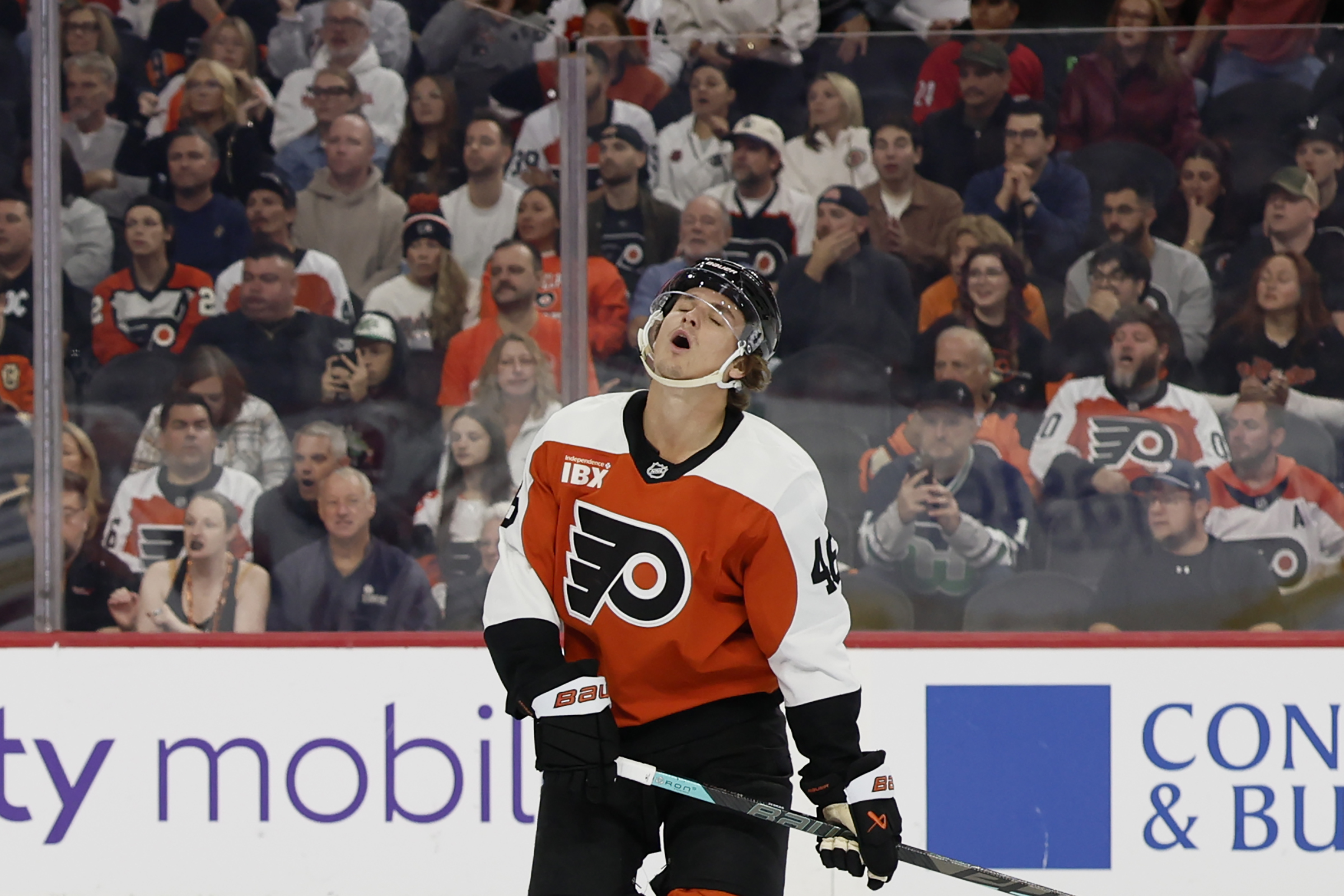
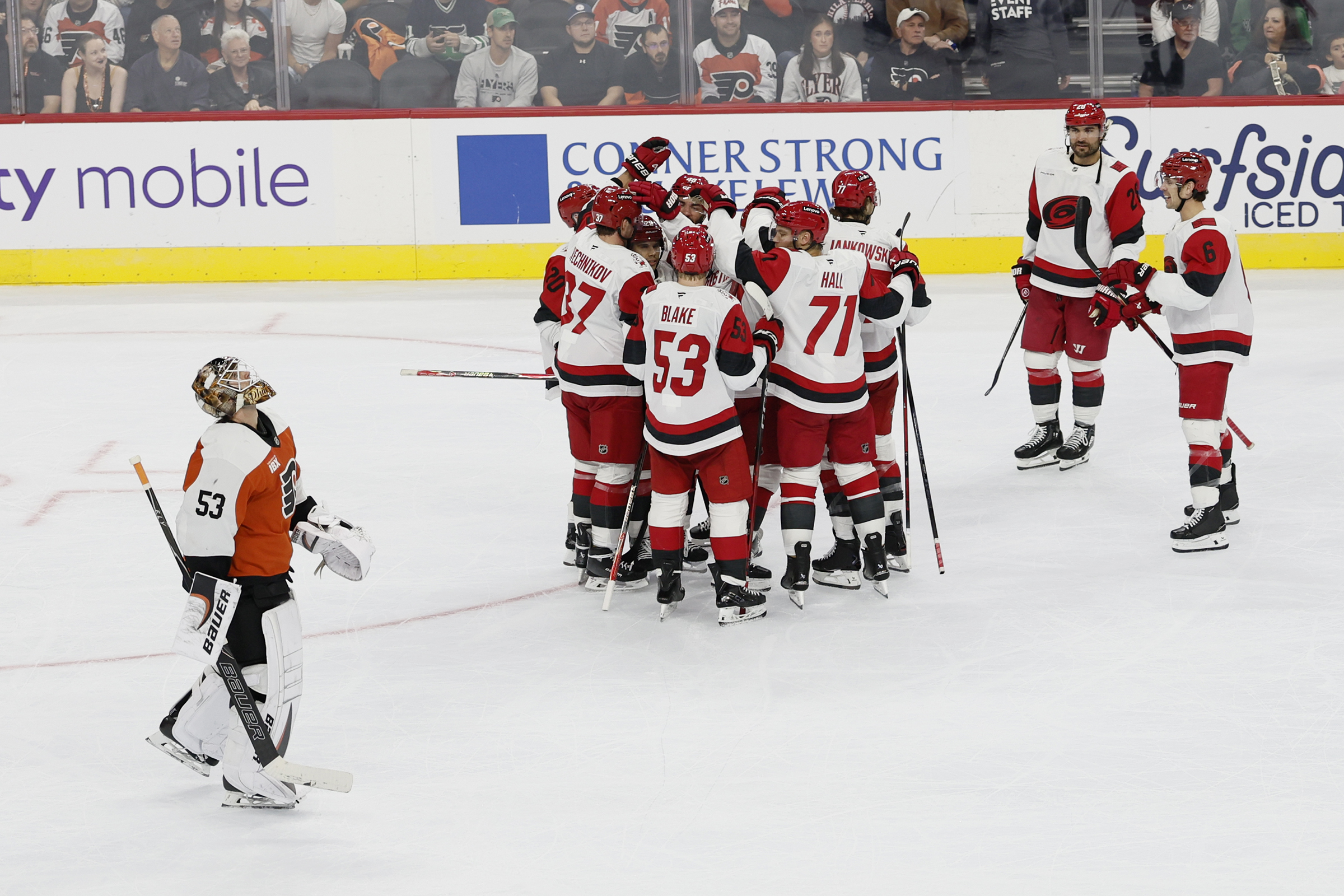
    Although Barkey returned, Rasmus Ristolainen did not play on Monday. The defenseman left Saturday’s overtime loss to the Carolina Hurricanes in the third period with an undisclosed injury. Ristolainen blocked a shot by Hurricanes defenseman K’Andre Miller late in the second, took a 37-second shift to start the third period, and did not return.

    “Still [a] game time [decision],” Tocchet said earlier Monday. “He’s going to try to figure out if he can play.”

    Ristolainen was on the ice for the optional skate but appeared to be skating without a stick individually with assistant coach Jay Varady. Travis Sanheim and Simon Benoit took the optional and participated in the drills with the group of roughly five players. Sanheim is back on the right side of Cam York. Benoit is now paired with Jamie Drysdale, and David Jiříček, who did not skate, also remains in the lineup, skating with Nick Seeler, after making his season debut against Carolina.

    Breakaways

    Dan Vladař will make his second start of the season on Monday. The Czech goalie played in the season opener, allowing seven goals on 38 shots. … The Philadelphia Jr. Flyers are one of 29 programs invited to join the USA Hockey Development League, which will begin play next season. According to the press release, each program will field one 15U and one 17U team. The programs will “identify, train and develop players from across the country to advance to junior hockey, including the United States Hockey League and the North American Hockey League, as well as USA Hockey’s National Team Development Program, college hockey and the NHL.” Jr. Flyers and Pittsburgh Penguins Elite are the two programs representing Pennsylvania. Three Northern New Jersey programs, Wolfpack Hockey Club, Rockets Hockey Club, and North Jersey Avalanche, were also named.

  • Why you should think about getting your flu shot right now

    Why you should think about getting your flu shot right now

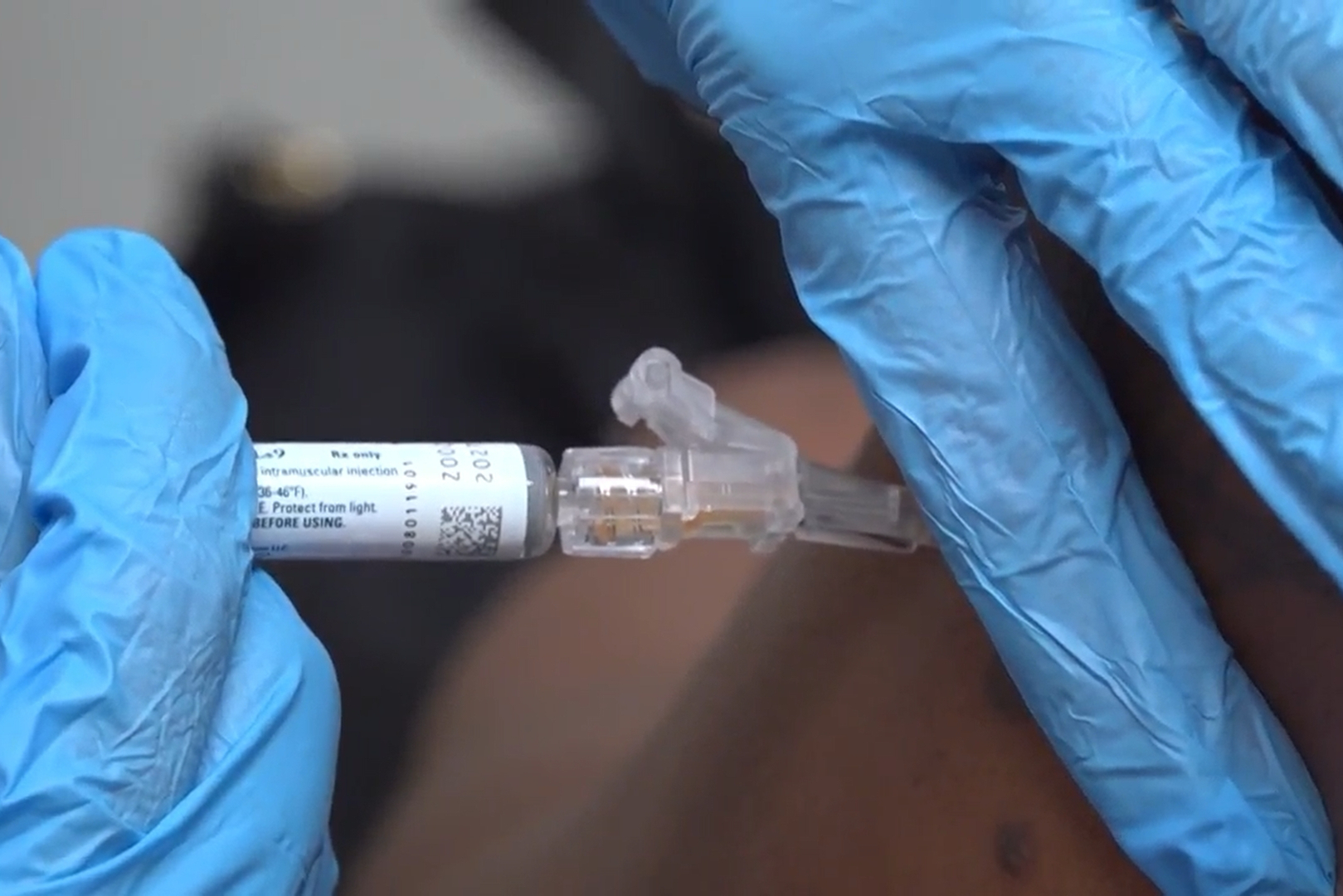
    Flu is hitting unusually early in parts of the West, catching doctors by surprise as some hospitals see levels of illness more typical of early winter, when the respiratory virus season normally gets underway.

    Across Seattle Children’s hospital system, about 150 children have tested positive for influenza in the past two weeks, a level the system typically does not see until early December. By comparison, for the same time period last fall, the health system had about 10 flu cases, said Danielle Zerr, who heads the pediatric infectious diseases division. The percentage of flu tests coming back positive has also risen sharply, signaling that the virus is spreading more widely in the community.

    The flu season generally is considered to begin around Oct. 1 and clinicians typically advise people to get their vaccines by the end of October. Even though it is too early to know whether the September activity foreshadows a severe flu season or is an unusual surge that could subside, epidemiologists and clinicians are encouraging patients to get their shots sooner instead of waiting.

    “We’re about two months early. So this is really concerning because people haven’t been working hard to get their vaccines quite yet,” Zerr said. “The way flu is circulating now, you wanted that vaccine in you two weeks ago, if not even a little before that.”

    Seattle Children’s is also seeing an increase in COVID-19 cases, Zerr said. But that rise is less unusual: COVID-19 is less seasonally predictable than flu, with transmission surging at different points of the year.

    Other signs of unusually early flu activity are emerging across the West. Southern Nevada health officials last week reported their first flu-related death of the season, a man in his 50s with underlying health conditions. In addition to Washington state, Alaska, California, and Hawaii are also reporting sharp increases in the percentage of laboratory tests coming back positive for influenza.

    “Consider encouraging patients to get vaccinated as soon as possible, rather than waiting until later in the season, particularly in the Western region,” wrote Caitlin Rivers, an epidemiologist who tracks outbreak-prone pathogens in a weekly newsletter, FOI Clinical, for clinicians and public health practitioners.

    Spread of COVID-19 cases remains uneven across U.S.

    Scientists do not know what is driving the early rise. Flu activity remains low nationally, according to the Centers for Disease Control and Prevention. Health officials caution against drawing broad conclusions from what is happening in a handful of places. They are watching increased influenza activity in parts of Asia, including Japan, as well as changes in the strains circulating this year. International travel could also help viruses move quickly between countries.

    The CDC assesses the severity of each flu season based on three indicators: visits to doctors’ offices and clinics for influenzalike illnesses, flu-related hospitalizations, and flu deaths. The agency expects this flu season to be of moderate severity overall, although it cautions that there is considerable uncertainty this early. Last season was considered moderate across all ages but was classified as high severity for children.

    As of Sept. 30, the CDC’s Center for Forecasting and Outbreak Analytics estimates that influenza infections are growing or likely growing in 48 states, declining or likely declining in one state, and not changing in one state.

    Flu seasons can vary widely in their timing and severity, depending in part on which strains are circulating and how much immunity people have from previous infections and how well the vaccine is matched to circulating viruses.

    Seasons dominated by H3N2 viruses have historically tended to be more severe, particularly for older adults. Early surveillance in Washington this fall shows H1N1 predominating.

    Helen Chu, an infectious-diseases professor at the University of Washington, said the shift could help explain why flu is taking off so early. H3N2 dominated last season, meaning people may have less recent immunity against H1N1, she said. Whether that is actually driving the early spread — and what it might mean for the months ahead — remains unclear.

    Flu seasons are notoriously difficult to predict from year to year, said Robert Hopkins, medical director for the National Foundation for Infectious Diseases and an infectious diseases physician in Little Rock.

    Hopkins said there have been a few more influenza cases this fall than usual, but not a dramatic increase. And so far, there have been more COVID-19 cases than flu in his region, he said.

    Nationally, the summer COVID wave appears to be leveling off or declining, and hospitalizations remain low. Unlike flu, which generally follows a fall-and-winter pattern, COVID circulates year-round and has repeatedly produced waves in both summer and winter.

    Transmission remains uneven. As of Sept. 30, the CDC estimated that infections were rising in 19 states, falling in eight and holding steady in 23. Wastewater data show elevated levels in parts of the West and increases in parts of the Northeast, including New York City and surrounding counties.

    RSV remains very low nationally, although Florida — where RSV activity often begins earlier — is reporting increases in RSV-related emergency-room visits and hospital admissions among children younger than 5.

    For clinicians at Seattle Children’s, however, the timing is unmistakably unusual. September simply does not normally look like this.

    “The flu came so early this year that all the people who would normally get vaccinated might just not have had the opportunity yet or just hadn’t taken the opportunity to do it,” said Seattle Children’s Zerr. In addition, she said, there are some who are hesitant or reluctant to get the shots.

    Flu vaccines for the 2026-27 season are already widely available. Influenza vaccines are less effective in preventing infections than other vaccines such as the one for measles, mumps, and rubella, which the CDC says prevents measles in about 97% of cases when patients have received two doses. But multiple studies have shown the flu vaccine reduces the disease’s severity and averts hospitalizations and deaths.

    The 2024-25 flu season was especially harsh, and the CDC estimates there were 51 million influenza-related illnesses and 45,000 deaths, including 298 pediatric deaths.

    In 2023, the CDC launched a flu vaccine campaign called Wild to Mild to advertise how getting a flu vaccine reduces flu risk. But Health Secretary Robert F. Kennedy Jr. ordered the CDC to halt promotions for that ad campaign early last year.

    Unlike in previous years, the CDC has not launched a broad public campaign this fall urging Americans to get their flu shots, even as unusually early activity is emerging in parts of the West. The vaccine takes about two weeks to build protection.

    Kennedy has disparaged the flu shot or linked it to his voice condition at least two dozen times over the last six years. Early this year, the federal government reversed course and revised vaccination guidelines to no longer recommend routine flu shots for children and adolescents as part of an overhaul of the pediatric immunization schedule.

    But that action, along with other vaccine policy changes under Kennedy, was put on hold by a federal judge in March. The CDC’s influenza website currently recommends annual vaccinations for nearly everyone 6 months and older, generally advising people to get vaccinated in September or October.

    The website, updated Sept. 1, has a note at the top saying: “Because of legal uncertainties and inquiries, the CDC states the recommendations for seasonal influenza vaccination from the July 2025 immunization schedule remain in effect for the 2026-2027 influenza season.”

    Asked if the CDC plans a public campaign urging flu vaccination, Emily Hilliard, a spokesperson for the Department of Health and Human Services, said in a statement that the CDC is “developing a communications strategy to provide clear, accessible information about influenza vaccination and other critical steps people can take to protect themselves during respiratory virus season.” She said this includes information “about the benefits and risks of vaccination to support informed decision-making.”

  • ‘It’s over’: Eagles O-line is ‘hot garbage,’ Nick Sirianni is to blame, and what else they’re saying after the Rams loss

    ‘It’s over’: Eagles O-line is ‘hot garbage,’ Nick Sirianni is to blame, and what else they’re saying after the Rams loss

    Despite holding a late double-digit lead, the Eagles were handed their second loss of the season Sunday at Lincoln Financial Field.

    After a game that saw the Los Angeles Rams score 14 unanswered points in the fourth quarter, most of the discourse surrounding the team has been centered around concerns over a “broken” offensive line, an “inept” offense, and Nick Sirianni’s fourth-down decision-making.

    Here’s everything they’re saying about the Birds following their second consecutive loss of the season, starting with the struggling O-line …

    ‘Their whole offensive line is broken’

    After the Eagles took an early lead Sunday, they were held scoreless in the second half.

    The Eagles struggled offensively, with both their touchdowns coming after the defense and special teams gifted them great field position — their two touchdown drives combined for just 52 yards. They finished the game 0-for-12 on third downs; dating back to the Bears game, they have now failed on 17 straight third-down attempts. The Eagles also added two more failed fourth-down attempts in the second half Sunday — first on a fourth-and-1 at their own 38-yard line late in the third quarter, and then on a fourth-and-goal at the Rams’ two-yard line in the fourth quarter that would’ve likely iced the game.

    On ESPN’s Get Up show, Domonique Foxworth was asked what’s wrong with the team’s offense.

    “This is the first time where I feel like they kind of have a legitimate excuse,” Foxworth said. “Their whole offensive line is broken. Their best receiver is out. Their best running back is out. That gives them a little excuse to not be as good as they’ve been in the past.

    “But you got to convert a first down. Like, you’re all NFL players. I understand you don’t have great players out there at this moment, but you have enough to be able to close the game out and finish on that fourth down. That was the big moment. You got to finish on that spot.”

    The offensive line is ‘hot garbage’

    Former NFL head coach Rex Ryan had harsher words for the offensive line.

    “I think their offensive line is absolutely hot garbage right now,” Ryan said on the Get Up. “Look, Landon Dickerson, out. He’s not the player he once was anyway, even if he comes back. Neither is Lane Johnson. So, to me, they’re not moving anybody off the ball.

    “They get stopped on a fourth-and-1 on the [Tush Push]. It ain’t there. It’s getting pushed back now. So, to me, that’s where it starts. It starts up front. They are abysmal up front. I get it, you don’t have DeVonta Smith, you don’t have your tight end, [Dallas] Goedert. I get all that. But it’s the offensive line, that’s the biggest issue.”

    ‘This loss is on Nick Sirianni’

    Sure, it was a depleted Eagles team heading into Sunday’s game. They were already without DeVonta Smith (hamstring), Zack Baun (concussion), and Goedert (knee). Before kickoff, they lost Lane Johnson (personal reasons), and shortly after they lost Saquon Barkley (hamstring). Later in the game, they also lost Quinyon Mitchell (knee), Tank Bigsby (hip), and Jonathan Greenard (ankle).

    But not everyone is giving the Eagles a pass for their injuries, with some questioning who is really to blame for Sunday’s loss.

    Some analysts have pointed fingers at the offense, following a game that saw Jalen Hurts complete 12 of 27 passes for 93 yards and two touchdowns. But former Eagles linebacker Seth Joyner believes the head coach is to blame, in large part due to his fourth-down decision-making.

    “Everything that could go their way, went their way,” Joyner said. “Until Nick Sirianni did what Nick Sirianni does. People are going to say, ‘But look at his record.’ But look at his record lately. When a team loses a game because the players don’t get it done, it’s one thing. It’s a whole other situation when the head coach is the reason you lose the game.

    “I’m sorry, this loss today is on one Nick Sirianni. As bad as Jalen [Hurts] played and as bad as the defense played the last two possessions of the game, this loss is on Nick Sirianni.”

    ‘Everybody is improving except them’

    On the Nightcap podcast, Shannon Sharpe was asked if the Birds’ run as one of the NFC’s best was over. And the blame? There’s more than enough to go around according to the Hall of Famer.

    “Yeah, it’s over,” Sharpe said. “Everybody is improving except them. Carolina is getting better, the Bears are getting better. The 49ers aren’t going anywhere. Seattle isn’t going anywhere. … Your quarterback, that makes $55 million, is 12-of-27 for less than 100 yards. Your run game is nonexistent. There’s so much going on that I don’t even know who to blame.

    “You had it [fourth]-and-goal from the 2-yard line, you’re up 10 [points] with eight minutes and you got two turnovers and you still lose. Do you realize how inept your offense has to be? … The Eagles got some problems. They got some problems.”