Blog

  • Pentagon weighing smaller U.S. military presence in Gulf once Iran war ends

    Pentagon weighing smaller U.S. military presence in Gulf once Iran war ends

    The Pentagon is evaluating its military footprint in the Middle East in an early sign of the Iran war’s potential to transform the U.S. presence in the region, according to eight people, including officials and others familiar with the matter.

    One of the key areas the Defense Department is assessing is whether to pull back troops from the Persian Gulf, where America’s large overseas military bases have been battered by months of Iranian strikes, two people familiar with the ongoing analysis said.

    The damage to these facilities has prompted a once-in-a-generation chance for the Pentagon to reconsider its presence in the region. The Defense Department has already signaled that it might not rebuild its bases as they were before the conflict.

    The evaluation is being led by the Pentagon’s policy office, though a senior Pentagon official, who like others spoke on the condition of anonymity to discuss the sensitive analysis, said that the Joint Staff and U.S. Central Command were also studying the issue.

    Defense Secretary Pete Hegseth had not yet ordered a formal review of U.S. posture in the region, the official said. Instead, the official cast the analysis as “prudent planning” that could eventually inform how the administration addresses whether to rebuild the bases damaged during the war.

    “Decisions are going to have to be made on some of this stuff,” the official said.

    U.S. Central Command, which runs U.S. military operations in the Middle East, normally stations about 40,000 troops across almost 20 sites in a 1,500-mile arc from Jordan to Oman.

    Since early this year, the military has surged warships, fighters, air defense assets and other scarce military equipment to the region to defend U.S. forces and carry out more than 13,000 strikes against Iran.

    America’s largest and most permanent bases in the Middle East are in the Persian Gulf, where Bahrain hosts the headquarters of the U.S. Fifth Fleet and where other states, such as Kuwait, house Army and Air Force assets.

    Allies in the Gulf have for decades depended on U.S. forces for their defense. Any regional drawdown could leave states unable to defend themselves against Iranian attacks. Investing in domestic capabilities or partnering with other powers to offset the shortfall could take months to years.

    People familiar with the Pentagon’s analysis said the issue is likely to intensify a debate between camps within the administration that support military interventions and others that have argued the Pentagon should curtail some of its security commitments to refocus on defending the U.S. homeland or deterring more powerful adversaries, like China.

    The discussions have also involved Adm. Bradley Cooper, the head of U.S. Central Command, who supports deliberations about potentially moving U.S. troops west from the Persian Gulf, said a U.S. official.

    A spokesperson for U.S. Central Command declined to comment.

    Before the start of the war in February, U.S. Central Command evacuated many of its bases, judging them too vulnerable to Iranian missile and drone attacks to maintain normal staffing levels. Some of the shifts away from the major Gulf facilities might last after the war, a person familiar with the posture adjustments said.

    “Iran thinks we are in the traditional places,” the person said, declining to specify the changes so as not to put U.S. service members at risk. “And we are not.”

    Six U.S. service members were killed in a March strike on Port Shuaiba, a military facility in Kuwait, and more than 200 U.S. facilities have been damaged or destroyed during the conflict, the Washington Post reported in May.

    While defending its personnel in the region, the U.S. military has also expended more than 1,000 sophisticated air-defense interceptors, draining the Pentagon’s stockpile of Patriot and Terminal High Altitude Area Defense missiles, the Post reported in March.

    “The war really did highlight the vulnerability … of U.S. forces in the region,” said Michael Ratney, a former diplomat who served as the U.S. ambassador to Saudi Arabia and the deputy chief of mission in Qatar.

    Moving troops and equipment further west to Jordan, Israel, or the Red Sea coast of Saudi Arabia could help alleviate some of the pressure, he argued, while noting the added distance wasn’t a “perfect solution to this problem.”

    Iran has already demonstrated it can strike faraway targets in Jordan and Israel. Last month an Iranian attack on Jordan killed four U.S. service members.

    Tehran’s retaliatory attacks against bases in the Persian Gulf plunged the region into crisis and are stoking frustration among core U.S. allies there, who feel they were not properly consulted by the Trump administration before starting the war.

    Allison Minor, who served during the first Trump administration as the director for Arabian Peninsula affairs on the National Security Council, said the Gulf countries could maintain elements of their security partnership with the U.S. — such as arms sales and intelligence sharing — while hosting a smaller troop presence.

    “But you need to be discussing all of those comprehensively and not just the question of the sheer number of troops,” she said.

    The Pentagon has publicly estimated that the war’s cost will reach about $37.5 billion by the end of September, but that price tag does not account for the money it will take to rebuild bases in the region.

    Jules Hurst III, the Defense Department’s comptroller, told the Senate in May that the reconstruction costs were being left out because the administration has not yet decided how it wants to rebuild from the damage.

    In April, the center-right American Enterprise Institute estimated it would cost $5 billion to repair the U.S. bases that have been targeted.

    Multiple people familiar with the Pentagon’s analysis cautioned that any permanent changes to U.S. posture were still distant and would require the approval of senior administration officials.

    In June, President Donald Trump signed a preliminary peace deal with Tehran and signaled that the war was coming to a close. The agreement later collapsed, and the two sides have sporadically exchanged strikes in the months since.

    A recent policy proposal from Defense Priorities, a think tank that advocates for military restraint, calls for closing U.S. bases in close striking range of Iran’s missiles and drones, such as Kuwait. The proposal also calls for moving forces dispersed in the United Arab Emirates, Jordan, and Bahrain to more secure facilities such as the Prince Sultan Air Base near Riyadh.

    More hawkish voices in Washington have sought to influence the Pentagon’s planning by proposing the movement of U.S. troops in the region to Israel. A report by the pro-Israel group Jewish Institute for National Security of America in March called for more U.S. military assets to be moved to Israel’s Ovda Airbase.

    This winter, in the run-up to Operation Epic Fury, Washington sent F-22 Raptor fighter jets to the base in a sign of deepening U.S.-Israel military relations.

    There is disagreement within the Trump administration over that recommendation given concerns that an expanded U.S. presence there could pose a counterintelligence vulnerability amid the Pentagon’s growing concern about Israeli espionage.

    Also, the office of Undersecretary of Defense for Policy Elbridge Colby has launched a public review of America’s military presence in NATO, after the Trump administration announced it was pulling thousands of troops out of Germany and Poland. The study is set to conclude in December.
  • Kennett Square is capping Airbnbs and other short-term rentals to address housing availability

    Kennett Square is capping Airbnbs and other short-term rentals to address housing availability

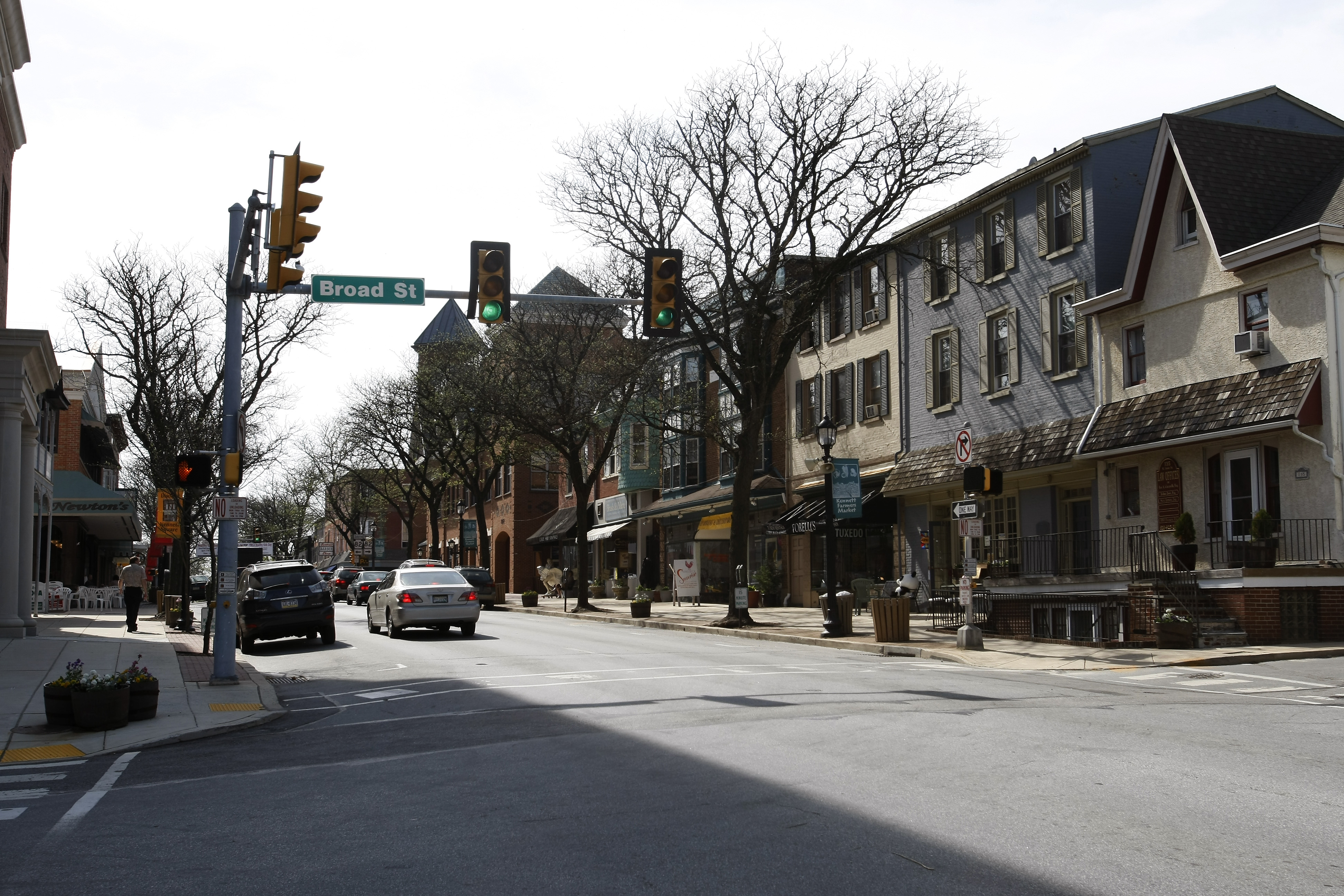
    In an effort to “drastically” cut down on short-term rentals like Airbnbs, Kennett Square council passed an ordinance Monday capping the number of active units and restricting where they’re able to pop up.

    Council voted unanimously to update its ordinance, allowing for a maximum of 20 short-term rentals, and prohibiting single-family homes from turning into short-term rentals as their primary use.

    The decision comes after the borough has seen soaring population growth in recent years — an increase of 16% since 2020 — but as housing has become increasingly limited.

    Residents had decried several homes getting snapped up, only to be turned into full-time short-term rentals. The borough’s planning commission took up the issue again this year, after a first foray in 2025 didn’t go far enough, officials said previously.

    Under the new short-term rental ordinance, the existing units — roughly 22 — will be grandfathered in. But if people sell, move, or don’t maintain rental registration, that status is gone. Future rentals will only be allowed in accessory units — like garages, or guest houses — and the number of available units won’t be able to exceed 20. The property must be owner-occupied during the rental period. Pre-existing short-term rentals will lose their grandfathering status if they don’t maintain rental registration.

    “The net effect of this is to actually drastically reduce the potential number of short-term rentals,” council president Bob Norris said. “But it actually reduces the possibility and the probability of having more and more, especially in single-family homes, which we heard loud and clear was a major issue.”

    In Chester County, which saw some of the highest population growth in Pennsylvania between 2020 and 2024, the demand for housing is outpacing supply. Fewer single-family detached homes were built in 2024 than in the last several years, according to the county’s planning commission, and fewer new units were being constructed this decade compared with last.

    Meanwhile, cost is going up. In 2024, the median sales price hit $525,000 — the highest in the county’s history. That year, 331 homes sold for under $250,000, a decrease from 462 units in 2023, according to the commission. In 2025, 315 homes were sold in that range, making up just 5.3% of all sales.

    Kennett Square officials have viewed cutting down on the short-term rentals as one way to address housing availability.

    Kennett Square isn’t the only one to grapple with balancing meeting the needs of tourism with the desires of residents. West Chester similarly capped its short-term rentals at 20, and contained them to its town center. It sent cease-and-desist letters to those that weren’t in that radius, officials said previously. But in Phoenixville, short-term rentals have been meeting a need not otherwise addressed by the borough’s singular boutique hotel.

    This suburban content is produced with support from the Leslie Miller and Richard Worley Foundation and The Lenfest Institute for Journalism. Editorial content is created independently of the project donors. Gifts to support The Inquirer’s high-impact journalism can be made at inquirer.com/donate. A list of Lenfest Institute donors can be found at lenfestinstitute.org/supporters.

  • Is Trump-touted Freedom Fuel from Venezuela? | Will Bunch Newsletter

    What a difference three words can make. For weeks, the American body politic has watched the strange relationship between Donald Trump and his ever-present 35-year-old aide Natalie Harp in a state of puzzled silence. Then, Georgia Democratic Sen. Jon Ossoff spoke at a weekend rally and said that Trump “doesn’t want to do the job” and would rather “build his ballroom and travel with Natalie on their apparently defenseless flying palace.” The floodgates opened — on social media and sites like the Drudge Report and in angry retorts from the White House that only threw gasoline on the controversy. It goes to show what Democrats can accomplish when they’re not afraid to speak the truth.

    If someone forwarded you this email, sign up for free here.

    An expert raises questions about Freedom Fuel and Venezuelan oil

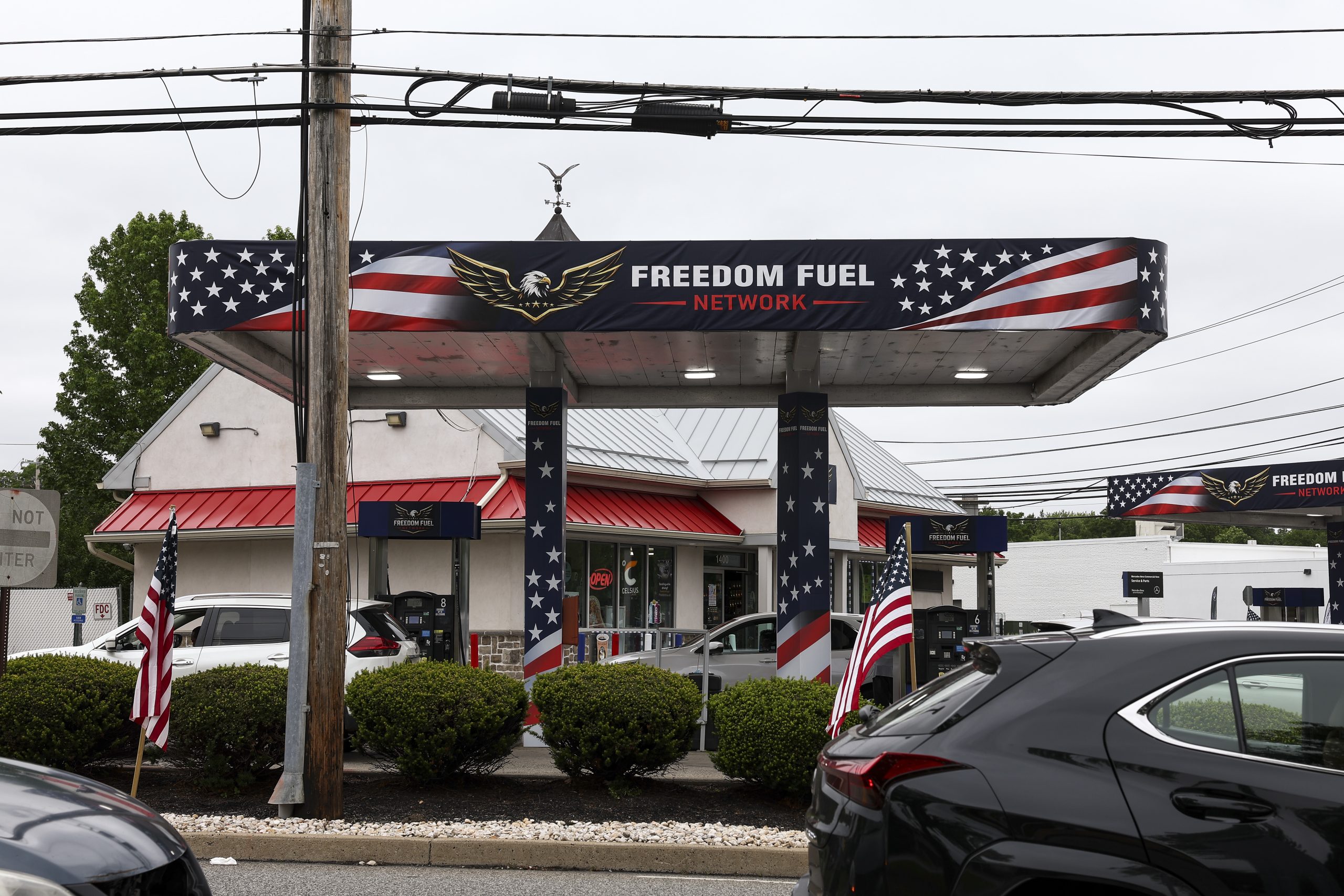
    The Freedom Fuel Network gas station at 1400 Dreshertown Rd. in Dresher last month.Monica Herndon / Staff Photographer

    For a government that seems to be in your face 24 hours a day, the Trump regime has managed to produce more mysteries than Sir Arthur Conan Doyle. Where’s Melania? Why was the president’s butt sticking way out at his last event? But here in Philadelphia, one Donald Trump-linked mystery has confounded motorists for weeks.

    Why is Trump-promoted Freedom Fuel, a web of 29 service stations that popped up out of nowhere this summer, able to continue to sell gas cheaper than its rivals down the street?

    The mostly suburban stations in Southeastern Pennsylvania and South Jersey burst onto the scene with prices at $3.47 a gallon — lower than anything since Trump’s disastrous war of choice against Iran launched in late February — and continue to undercut their competitors by about 10-20 cents per gallon. Experts have said that’s not sustainable, unless the stations are somehow getting their gasoline on the cheap.

    Now a former high-level State Department official in the Barack Obama administration is trying to connect the dots between the Freedom Fuel conundrum and the ongoing questions about millions of barrels of crude oil Trump has bragged that the United States has taken out of Venezuela.

    Jonathan Winer, who recently wrote about Freedom Fuel and Venezuela for the Washington Spectator and discussed his findings on the Court of History podcast, doesn’t connect all the dots, but his research is a reminder of how little the American public knows about the aftermath of the Trump regime’s January assault on Venezuela that captured strongman Nicolás Maduro and installed a friendlier head of state.

    The Inquirer and other outlets have reported extensively on Freedom Fuel stations in Greater Philadelphia, including its ties to pro-Trump Republican ex-mayor of Evesham Township, N.J., Randy Brown, who signed Freedom Fuel’s certificate of formation. Former commodities trader Yoni Gontownik — a major donor to GOP causes and a New Jersey-based pro-Israel political action committee — also signed those papers.

    Trump promoted the launch of Freedom Fuel on his Truth Social feed, but the White House has denied direct involvement in the flag-themed gas stations, and so has the company itself. “Freedom Fuel Network is a privately owned and proudly patriotic company — along with its convenience store operators, haulers, sign companies, and operational partners — that answered President Trump’s call to action to lower prices at the pump,” it proclaims on its website.

    Veterans in tracking the complicated oil market remain baffled. “People can’t mysteriously get fuel at a lower price and continue to offer that,” Winer said on the podcast. “You could, of course, do a very short promotion, but you basically can’t [sustain] it.”

    It may be a total coincidence, but the giant enigma that is Freedom Fuel and its cheap gasoline surfaced at exactly the same time the president boasted about the cheap oil the United States is supposedly getting from the resource-rich South American nation his troops invaded.

    “We’re taking their oil,” Trump proclaimed about Venezuela while in Las Vegas earlier this month. “To the victor belong the spoils.” He added that what America has taken has paid for the brief January war “many, many, many times.” But analysts know next to nothing about what is actually happening to as much as one million barrels of oil that Venezuela produces every day.

    Winer pointed to a couple of common bonds between the efforts to market low-cost gasoline here in Philly and White House efforts to control the flow of Venezuelan oil.

    The first is the role of Jarrod Agen, executive director of the National Energy Dominance Council inside the White House, who posted two photos of himself giving a thumbs-up at a new Freedom Fuel station in Philadelphia when it opened on the July 4 weekend. Both Agen and the president himself insisted that the new gas retailer is proof of what the Trump regime is doing to lower prices at the pump.

    Winer noted that Agen was also a key member of an American team that traveled to Caracas in April, met with the Trump-backed new president, Delcy Rodríguez, and came home bragging of new commodities deals, including in the oil sector.

    The second overlap that Winer points to involves a Texas-based global commodities firm, Mercuria, which announced on May 1 that it had reached a major deal with Venezuela under what it called a “White House-supported initiative.” The announcement featured a photo of a top Mercuria official posing with Agen.

    Mercuria told the Washington Post, which has also investigated Freedom Fuel, that it has no involvement with Freedom Fuel. Yet Gontownik, the trader listed as a backer of Freedom Fuel, was also listed as recently as March in campaign finance reports as an executive with Mercuria. But he also insists that he no longer works for the Texas firm — which has been linked to other Trump-regime commodities initiatives. (The ex-Philly journalist Maureen Tkacik, investigations editor at American Prospect, also raises a lot of questions about the role of Mercuria, Gontownik, and the firm Blue Owl Capital, which Trump invested in earlier this year.)

    It must be stressed again that all of these connections are circumstantial. At the same time, this much cannot be disputed: The American people have not been given the most basic information about the extent of U.S. involvement in the Venezuelan oil trade, how much money is involved, or where all that money is going at a time when the price of crude oil has skyrocketed.

    I could not agree more with Winer’s plea that Congress go after the U.S. Treasury, State, and Energy Departments that are sitting on undisclosed records of U.S.-linked oil transactions — even though realistically that might have to wait until Democrats gain a foothold on Capitol Hill next year. He also called on the media to dig deeper, which is why I wanted to amplify Winer’s early-stage reporting.

    Look, we all want to pay less for gas, which is why motorists have been lining up at Freedom Fuel pumps since the stations opened last month. But most of us don’t want to live in a dying empire where a strongman’s tin soldiers steal a sovereign nation’s buried treasure so that favored insiders can profit. We still have no idea what’s been done in Venezuela in our name, and we need to find out.

    Yo, do this!

    • It’s great that people — especially younger people — are returning to brick-and-mortar movie theaters in the long, hot summer of 2026, but the quality of the releases hasn’t really matched the boffo box-office numbers. That may change starting this weekend with the release of Tony, a movie that could have been titled “Becoming Anthony Bourdain.” The film stars Dominic Sessa playing the future chef, author, and beloved TV traveler as a lanky, awkward 19-year-old, spending a summer on Cape Cod and learning to embrace his love for the kitchen — and humanity. I’m really looking forward to this one.
    • There are two must-read articles out this week from Adam Bonica, a Stanford University professor who specializes in money and politics. The first is his lengthy investigation into dodgy fundraising practices by top Democratic Party committees and leaders, in which endless spam fundraising emails have hit home with susceptible elderly donors, some of whom have drained their life savings. The second is the story behind the story of how both the New York Times and the “Never Trumper” website the Bulwark both chickened out on publishing Bonica’s essential journalism. The cowardice of the elite media in America’s authoritarian moment is beyond disheartening.

    Ask me anything

    Question: Why aren’t more Democrats supporting and campaigning on the 32 hour work week? It seems like a policy that would appeal to working people across the political spectrum. — brown cloud (@milehighdsa.bsky.social) via Bluesky

    Answer: Good question. One political leader, Vermont Sen. Bernie Sanders, has aggressively pushed the 32-hour workweek without a reduction in pay, noting that this would pass the productivity gains of the computer era back to the workers who are being more productive. So, yeah, what’s not to like? It’s certainly true that a lot of Democrats, especially centrists, are heavily dependent on campaign contributions from corporate types who don’t like the idea of a shorter workweek. But I think ultimately, Democratic cowardice on these pro-worker issues goes all the way back to the Ronald Reagan era, and a fear that they’ll be branded by the GOP as the party of “free stuff.” But this isn’t free stuff. We’ve earned it.

    What you’re saying about …

    Last week’s question about how Democrats should view the primary success of leftists such as Michigan Senate hopeful Abdul El-Sayed drew a response that was both robust (despite the summer doldrums) and fairly unanimous. Proposals from the progressive movement like Medicare-for-All and taxing the wealthy, you agreed, are long overdue. Tom Lees noted that the GOP is trying to find the most extreme democratic socialists, but that “the [Rep. Alexandria Ocasio-Cortez] branch which supports ideas similar to European Social Democrats is the group that is getting people excited.” Craig Strimel added that leftist candidates have failed in the past, but “I also believe that we are so far deep in the current fiasco, and so damned close to total collapse of democracy, that we really are in an all-or-nothing situation right now.”

    📮 This week’s question: Georgia Democratic Sen. Jon Ossoff has caused something of a political earthquake with his blunt criticisms of Donald Trump, including a reference to his ever-present young aide Natalie Harp. Has Ossoff crossed a line of incivility that’s a bad look for Dems, or are his criticisms a breath of fresh air? Please email me your answer and put the exact phrase “Ossoff comments” in the subject line.

    Backstory on Jason Arday, casualty in the ‘war on woke’

    Torchbearer Jason Arday carries the Olympic flame on the torch relay leg between Sutton and Merton in London in July 2012.Joe Giddens

    There are two kinds of people in this world. There are normal folks who maybe get a slight whiff of news from the TV or when they boot up their computer, and never heard of a man named Jason Arday. Then there are people who (like me) spend far too much of their day on social media, and now know all about the charismatic Cambridge professor — the youngest Black man to reach those heights in the university’s long history — who came under fire for alleged plagiarism and biographical exaggerations.

    The allegations apparently simmered from the day of Arday’s 2023 appointment, but boiled over in recent weeks. He acknowledged some citation errors in his 2015 doctoral thesis — mistakes that Liverpool John Moores University called “honest and reasonable” — but the allegations kept coming. They were fueled by a Cambridge colleague and self-proclaimed “race realist” who went on British national TV to lambaste Arday as “not smart” and label him as merely a diversity hire.

    The famously not-laid-back British press went wild on the controversy, with literally hundreds of articles about Arday — not just the Fleet Street tabloids, but even the august Times of London, which ran 60 stories. The media frenzy over the young, dreadlocked sociology of education professor didn’t stop when Arday resigned his Cambridge post, saying that “the relentless accusations, speculation and public commentary have taken a profound toll on me and on those I love.” The media frenzy didn’t even stop when Arday was found dead in his home last Friday. He was 41.

    Just one day after Arday’s body was found, Julia Hartley-Brewer, a host on a Rupert Murdoch-owned U.K. TV network, told her audience that Arday “was a liar and a fraud who was rightly exposed for what he really was by academics and journalists who were simply doing their job.”

    I’m sorry, but as a lifelong journalist, I never realized that hounding a professor who wasn’t perfect but was loved by his students to his early death is part of the job. To the contrary, I think that good journalism might involve noting that scores of white professors and authors who’ve been caught and admitted to plagiarism or similar issues have been allowed to apologize and go on with their careers. And that bad journalism might be implying that Arday’s middling issues are some kind of commentary on any and every academic with darker skin — as opposed to researching the systemic racism that leaves a supposedly enlightened school like Cambridge with 0.4% Black professors, in an England that’s 4.2% Black.

    The ghouls who hounded Arday to his death didn’t work in a vacuum. They tapped into a disgusting narrative that way too many journalists and self-appointed public intellectuals are spreading not just in the U.K. and the rest of Europe, but here in the United States. They think the righteous COVID-19-era outcry against police brutality and a grossly unequal society was some kind of mania they’ve branded “Woke 1.0.” Never mind that the police were never defunded in 2020, not even close. The nattering nabobs of anti-wokeness won’t rest until every college classroom or airplane cockpit is made safe for white privilege.

    Let me do my job as an opinion writer and tell you what I think about these mostly aging, mostly white, mostly male pundits who have so little to say about right-wing fascism that’s in power in America and on the rise in Britain and instead desperately cling to their status from the perceived threat of a few Black intellectuals. With key elections approaching on both sides of the pond, they opportunistically saw Arday as their latest chance to stir up white voters and preserve the status quo, even if that means tolerating an authoritarian police state. Now, a once-promising Black professor is a casualty in their glorious “war on woke.” Have they no shame?

    What I wrote on this date in 2020

    As I noted in this space a couple of weeks ago, there’s so much about the peak year of the COVID-19 pandemic that we’ve successfully tried to forget. That includes much about the consequential yet somehow anemic showdown between Donald Trump and Joe Biden, which included their virtual, prepackaged summer conventions. On this date six years ago, I grumpily covered the Democratic National Convention from my couch in Delco and — stop me if this sounds familiar — complained that the party was ducking progressive issues. “If viewers didn’t notice what the Democrats left out in their tightly scripted telethon so focused on Trump’s coronavirus failings and his paranoid style — such as climate change, gun violence, and the other things that young people across America have been marching for — the history books might.”

    Please read the rest: “The future is a no-show at telethon-style DNC.”

    Recommended Inquirer reading

    • I’ve cut back on column writing this month, mainly because I’m working on a long-term investigation that I’m really excited about. In my one piece published this weekend, I took a deeper dive into the stunning reports that winter drone attacks on fishing boats off the coast of Ecuador — with eight sailors missing and presumed dead — were a covert operation by Donald Trump’s CIA. This callous disregard for innocent human life is the latest example of a White House death cult that must be held to account by a new Congress, and eventually by prosecutors.
    • It’s truly remarkable the extent to which public opposition to the data centers that support artificial intelligence, or AI, has gone from near zero to 60 mph (or maybe 80) in a matter of months — especially here in Pennsylvania. With public unrest over these behemoths around their air and noise pollution and impact on electric bills, as well as growing discomfort with AI itself, becoming a key issue in the fall election, The Inquirer has been all over this story. On Tuesday, veteran business columnist Joseph M. DiStefano looked at how major contractors are hoping that demand for new data centers will get them through an otherwise sluggish economy. That might be a pipe dream if municipalities respond to voters by rejecting these proposals, as happened last week with a massive facility planned for suburban King of Prussia. You’re going to want to read The Inquirer’s in-depth coverage of this debate before you vote in November, which means it’s time to finally subscribe. What have you been waiting for?

    By submitting your written, visual, and/or audio contributions, you agree to The Inquirer’s Terms of Use, including the grant of rights in Section 10.

  • A wave election could open the door to sorely needed reforms in Congress

    A wave election could open the door to sorely needed reforms in Congress

    The 2026 midterm election cycle has hinged on a demand for reform, amid an unpopular war and an administration mired in ethics scandals. It’s not the first time midterms have generated such substantive demands for change.

    Against the backdrop of the increasingly costly and unpopular Vietnam War and the Watergate scandal, the 1974 election produced one of the largest freshman classes in congressional history and stirred significant institutional change. Their road map for change provides us with important lessons on how to translate campaign promises into substantive reform in a dysfunctional institution resistant to change.

    The first lesson: harnessing momentum. In a body where influence is currency, the incoming freshman class recognized that steps toward meaningful reform would require decentralizing Congress’ power structure. Between November 1974 and January 1975, new members of Congress provided key votes for opening up avenues for junior members. They weakened the “seniority” system guiding committee assignments by shifting that responsibility from the Ways and Means Committee to the Party Steering Committee. That led to a legislative process in which junior members could more easily rise through the ranks.

    Lawmakers also increased the size of the powerful Ways and Means Committee. That committee has long been responsible for drafting bills that raised money, including taxes and tariffs, and programs such as Social Security and Medicare. Providing greater opportunities for new members to join gave them a powerful seat at the table. Serving on the committee also gave these new members an opportunity to address their economic campaign promises and to have a legislative impact for their constituents.

    “We realized we were a large enough group to make a difference,” former New York Rep. Tom Downey told the Atlantic, adding that support from more senior members of Congress helped to “mold” the class “into the effective tool they wanted to modify the seniority system.”

    Former Connecticut Rep. Toby Moffett, a member of the 1974 class, agreed, recalling that some senior members vocalized how central the freshman class was to getting critical reforms across the finish line. “I remember once … in some hearing on government operations … [former New York Rep.] Bella Abzug pushed the button on her mic and she said, ‘Reinforcements have arrived,’” he said.

    As a result of these structural changes and strategic networking, former members like Moffett, Steve Neal of North Carolina, and Henry Waxman of California rose from freshmen in 1974 to be committee chairs relatively quickly, as others gained seats on powerful committees and subcommittees.

    Building alliances with more experienced members also mattered. Waxman leveraged his relationship with senior member Phil Burton, a representative from California, to get onto the Energy and Commerce Committee, which he believed proved crucial to his impact on health policy, one of his major priorities. Relationships were also important for freshman members of the Republican minority. Former Ohio Rep. Willis “Bill” Gradison built relationships on the Banking Committee and was dedicated to working with the majority in order to craft monetary policy.

    Made By History sponsors. FOR USE ON MADE BY HISTORY STORIES ONLY.Inquirer Staff

    Yet, 1974’s freshmen were also careful to thread the needle between cooperating with senior leaders and standing up for their own positions. “This system still works on knowledge … You can’t be totally intransigent, but you don’t want leadership to think they can count on you automatically either,” Moffett said.

    Another equally important factor in the class’s success was coalition building. “Patience and a knack for finding allies (especially unlikely ones) are two of the most important qualities of being a legislator,” Waxman told the Atlantic.

    For example, when former California Rep. Leo Ryan was killed in the Jonestown massacre, it left the chairmanship of the Government Operations subcommittee vacant. Moffett described how he and other junior members like Massachusetts Rep. Barney Frank, Waxman, and Michigan Rep. John Conyers joined forces to back his campaign for the chairmanship against more senior members.

    It worked. Under Moffett’s leadership, the committee took on oversight. In 1975, the newly minted subcommittee chairman helped to defeat President Gerald Ford’s request for additional military aid to Cambodia and South Vietnam. Later, Moffett pressed President Ronald Reagan’s Environmental Protection Agency to publicly disclose contaminated water sites when EPA chief Anne Gorsuch and Interior Secretary James Watt refused to hand over subpoenaed documents.

    There are clear lessons here for current and future members. Today’s Congress is hypercentralized, with rank-and-file members becoming increasingly dependent on their relationships with senior members to see legislative priorities through. If 2026 is another wave election, that could create openings for new ideas and opportunities and incentives for new members to build coalitions and get Congress working again. It might even open the door to addressing major structural changes: expanding the size of the U.S. House, restoring much of the lost staff expertise in Congress, ethics reforms, and establishing an upper age limit for Congress, among other key reforms.

    It is not enough to just be elected to Congress. Members of the Class of 2026 will have to apply lessons from their predecessors to achieve the change they are campaigning on.

    Editor’s note: This article has been updated to reflect the fact that Tom Downey’s and Henry Waxman’s remarks were made to the Atlantic.

    Maya Kornberg is a senior research fellow in the elections and government program at the Brennan Center for Justice at New York University Law and author most recently of “Stuck: How Money, Media, and Violence Prevent Change in Congress” (Johns Hopkins University Press, March 10).

    Made By History takes readers beyond the headlines with articles written and edited by professional historians. Opinions expressed do not necessarily reflect the views of The Inquirer.

  • Google just made it easier for campaigns to send you fundraising emails

    Google just made it easier for campaigns to send you fundraising emails

    Google quietly rolled out a new program Monday that will allow candidates, political parties, and political action committees to more easily bypass Gmail’s spam filter and send fundraising appeals to the inboxes of the company’s many millions of email users.

    The change comes after years of complaints from Republicans that Gmail’s spam algorithm unfairly blocked their committees’ emails more than those of their Democratic counterparts, although those complaints were dismissed in court. For campaigns and PACs that meet the terms of the program, it is expected to route an influx of cash solicitations into Gmail inboxes, helping campaigns raise millions of dollars more in the final sprint to the midterm elections.

    Google chose not to debut the new program with any fanfare, instead posting an update to its Help Center on Monday. The company began to reach out to some political committees in both parties Monday after publishing the change, according to three people briefed on the outreach who spoke on the condition of anonymity to describe private conversations.

    Political strategists in both parties said the new policy could be deeply consequential for candidates — even if frustrating for users in the United States, who are likely to be bombarded with pleas for donations.

    “Heading into the 2026 elections, Gmail users are going to be flooded with unwanted political spam because Google decided to create a VIP lane for campaigns,” said Kenneth Pennington, a Democratic digital strategist and veteran online fundraiser. “This is a bad deal for Gmail users and a gift to bad actors in the political fundraising space.”

    José Castañeda, a spokesperson for Google, said the new program resulted from an effort to provide long-term clarity for both campaigns and users.

    “This program is designed to connect people with the emails they want to receive while keeping them fully in control of their inboxes,” he said in a statement. “To participate, bulk senders must meet strict security and compliance requirements, ensuring that messages people receive are relevant, useful, and verified.”

    The new program is set to begin Sept. 8, the day after Labor Day — and the day before Republicans are set to hold a rare midterm convention in Dallas.

    The change comes four years after Google rolled out a similar program on a pilot basis that was discontinued months later.

    At the time, the Republican National Committee sued the technology giant, accusing it of “throttling its email messages,” though Google said the party had not signed up for the program. A federal court later dismissed the case, with Judge Daniel J. Calabretta writing of the RNC’s claims, “This is pure speculation, lacking facts from which the Court could infer animus or an absence of good faith.”

    The Federal Election Commission also dismissed a formal complaint from Republicans that Gmail’s spam filter was biased against the party.

    Whether a fundraising email winds up in users’ spam folders or inboxes can be worth millions of dollars to campaigns over time.

    It is not immediately clear whether the changes would affect one party more than the other, but some Republicans appeared optimistic.

    “For years Google’s algorithm silenced Republican voices, burying our emails in spam while Democrats’ landed in the inbox,” said Will Kiley, the communications director for the National Republican Congressional Committee. “This program is a real chance to fix it and let voters hear from the candidates they choose to follow. We’ll be watching closely to make sure Google follows through.”

    Some Democrats feared the change could open the door for so-called scam PACs, which spend little of their money on actual campaigns, to more easily reach inboxes. Other Democrats hoped the change might help deliver the party an advantage because Democrats generally have been better at online fundraising than Republicans.

    The RNC did not immediately respond to a request for comment.

    Google’s new program will require that candidates, PACs, and party committees register the domain they send emails from and that their spam rates, the percentage of emails that users mark as spam, remain below 0.3%, according to the policy.

    Pennington feared that Google made the change because of pressure from Republicans.

    “While there could theoretically be another reason for this policy shift, it appears that Google is sacrificing the inbox sanity of its customers simply to placate a false, bad faith narrative from Republicans claiming partisan spam bias,” he said.

    Amanda Elliott, a Republican digital strategist, said the mistrust on the right with the tech industry runs deep, especially around the issue of whether fundraising emails wind up in inboxes or spam folders.

    “For everyone who’s been talking about censorship and bias, this could be a put-up or shut-up moment,” she wrote in a text message. “Are your emails landing in spam filters because you’re a Republican or because you’re just running a subpar email program and not following best practices? Perhaps we’re about to find out!”

    This article originally appeared in the New York Times.

  • What do students lose when they stop writing?

    What do students lose when they stop writing?

    After years of studying how humans write, cognitive psychologist Ronald T. Kellogg concluded that drafting a basic persuasive essay was as mentally taxing as digging a ditch was physically exhausting.

    Writing well requires a command of vocabulary, spelling, and grammar. It forces writers to comprehend a subject, to sift through their working memory of that topic, to organize and plan. Writing an essay is so difficult that a person in the throes of it can do hardly anything else — as anyone who has shushed a spouse or child while trying to compose a decent sentence can attest.

    Very few people would volunteer to dig a ditch. Likewise, it is hard — almost impossible, many English teachers will admit — to turn a reluctant writer into an enthusiastic one.

    Yet the American education system expects nearly all students to learn how to write an essay. It’s little wonder, then, that as soon as a tool arrived promising to lessen the pain people grabbed it.

    Like it or not, artificial intelligence is now firmly embedded in how students produce text. Somewhere between two-thirds and 90% of high school and college students are already using AI for schoolwork, according to recent surveys, often requesting help with writing assignments.

    A growing number of educators are alarmed, and insist that students should write without AI. These teachers are returning to handwriting, blue books, and proctored, in-class essay tests — all attempts to prevent students from outsourcing their writing to chatbots.

    This is baffling to tech industry leaders, who see AI rejection as a form of educational malpractice. They point out that writing is already the leading use of AI in the workplace, and argue there is no need to continue suffering through the task without help. After all, they say, chatbots now exceed the ability of most humans to produce fluent prose.

    All this points to some questions about writing itself: Why work so hard to learn it? And what do students stand to lose when they stop facing down a blank page, alone with their thoughts?

    The scholars who study writing and cognition are rarely reflexively opposed to AI. Many have spent decades anticipating a leap in computer-assisted writing, just like the one we are living through. They tend to be excited by the technology’s potential.

    Still, their work casts doubt on the tech-industry push to embed AI at every stage of the student writing process, from brainstorming to drafting to revising. Research shows that traditional, unassisted composition is valuable, not despite its difficulty, but because of it. Writing builds our working memory, executive planning skills, and metacognition — the ability to think about our thinking, weigh alternate viewpoints, and revise for clarity and style. It takes decades to develop writing skills, from toddlerhood into adulthood.

    “Writing is a technology for thinking,” Kellogg said.

    Writing substitute or helper?

    Learning to write did not always matter so much.

    Before the 1870s, American students were tested through oral exams. College seats were reserved for the elite — future ministers and lawyers, professions where public speaking dominated.

    But the rise of the modern, urban economy, and the invention of the typewriter, produced jobs that dealt more heavily with the written word, like office clerks and advertising copywriters. Starting in the late 19th century, students needed to learn how to write more fluently, and school curriculums, tied closely to the demands of industry, adapted. As more students went to college, and class sizes grew, administering oral tests also became too time-consuming, according to linguist Naomi S. Baron, who traces this history in her book Who Wrote This?

    Besides, teachers discovered that writing itself deepened knowledge. “If you want to think, understand, and learn something, text really is preferable,” Baron said.

    Cognitive research confirms that writing is a powerful aid in helping us to retain information we read. The work of writing forces us to stress-test our ideas, allowing the writer to respond to counterarguments and cite sources. Revision is a practice of self-critique and self-improvement, and can be social, as well, if feedback is elicited. Writing can also be empowering, allowing us to share our experiences and express our views. It can even be healing, which is why therapists sometimes suggest keeping a journal.

    It is not clear if these benefits can be fully realized when writing alongside artificial intelligence. There are reasons to be wary.

    Last year, a small study from the Massachusetts Institute of Technology showed that individuals who wrote in partnership with AI chatbots recorded lower brain activity while they wrote, compared with those who worked without chatbots. The writers who used AI struggled to remember what, exactly, they had written, and felt little ownership over their work.

    The findings join a growing body of research suggesting that frequent AI use can degrade critical thinking.

    Nevertheless, tech companies are aggressively marketing AI writing assistants to students and schools.

    Jenny Maxwell, general manager for education at Superhuman, the AI company that makes the popular writing app Grammarly, told me we are living through a “burn it down” moment for teaching and learning. Educators who try to withhold AI writing tools are essentially announcing to their students — “consumers,” she called them — that their coursework is irrelevant to the job market.

    She did acknowledge that some basic, human writing skills remain valuable. Students need to write well enough to have a sense of which AI text suggestions to accept and which to reject, she said. Maxwell also insisted that creativity in writing would persist, because people would still want to express their personal voice and style.

    To that end, companies such as Grammarly, Google, and OpenAI are creating so-called Socratic versions of their chatbots, sold to schools as writing helpers that will guide students through assignments without doing the work for them.

    The need for limits

    AI is already ubiquitous: on every device, in every web search, insisting that it can summarize for us, analyze for us, write for us. It steps in even when we have not invited it.

    For students with still-developing minds, the most urgent question, then, is how to protect thinking in a world where it has become so easy to outsource writing.

    We might begin by considering what AI is actually good at when it comes to composition. AI can be especially useful for those with disabilities or who are non-native English speakers, said Steve Graham, a writing expert and educational psychologist at Arizona State University. Chatbots can correct grammar and suggest potential trims or revisions for clarity. With AI, there have been immense strides in accurate voice-to-text transcription for writers who cannot physically type or write by hand.

    And AI can offer all of this help privately, with no need to be vulnerable and expose a rough first draft to another person’s judgment. For many American students, especially the third with below-basic literacy skills, the writing process can be painful and embarrassing, and a reason many dread homework and exams.

    But, Graham cautioned, there is no part of the writing process that can be handed over to AI without some cost. Intellectual growth occurs at every stage, from brainstorming to fine-tuning a final draft. If writing is thinking, then any part of the struggle that is outsourced to technology amounts to relinquishing some freedom to perceive. How will students ever know what they really think of anything — whether it’s The Crucible or AI itself — if they ask a machine to spit out an answer for them?

    Last year, a group of writing experts, including Graham, assembled at the University of California, Irvine, to produce recommendations to schools.

    They did not reject AI. Instead, they called on schools to resist the temptation to devote less time to writing — not because it will continue to be such a critical skill in the workplace, where it’s already waning, but to sharpen the mind.

    Writing should be embedded across the curriculum, they advised. Students should continue to do the hard work of drafting their own sentences, paragraphs, and eventually full essays about their lives and about what they have read, both fiction and nonfiction. All this teaches grammar and vocabulary, certainly. But it also allows students to master the knowledge they are gaining.

    There is room for AI, these experts suggested: The technology can help educators generate engaging writing prompts on whatever subjects they are teaching.

    Teachers might also encourage students to use AI to get initial feedback on their writing before turning it in. Anna Mills, a writing instructor at the College of Marin in California, has developed detailed AI prompts that students can use to elicit useful feedback without outsourcing all the work.

    Still, there is probably a need to limit access to the technology.

    The University of Sydney has developed a policy known as the two-lane approach. Across every discipline, professors are required to give some assessments in person under secure conditions, limiting AI use. But they must also allow AI for other assessments, so students can show they know how to apply the technology.

    Jessica Binney is dealing with AI as an English teacher at John Jay High School in the New York suburbs.

    In a creative-writing class, she had students prompt a chatbot to write a poem. The results were predictably generic, so students then asked the chatbot to make revisions, considering where the bot performed well and where it fell short.

    Still, like many educators, she had tired of policing AI misuse on take-home assignments. In her Advanced Placement English course, she moved much of the essay writing, produced inside the classroom, to pen and paper.

    For the most part, students did not complain. Many had already been through an initial whirlwind romance with AI, before rethinking their relationship with the tools. Ainsley Graham, a junior, said she was thrilled by ChatGPT’s ability to help with data analysis in a science research class, but recognized the risks of using chatbots to write essays about literature.

    “You’re not strengthening that muscle by actually analyzing these really hard texts,” she said. “They’re meant to be hard.”

    When Cassady Tondorf, 17, learned how chatbots produced writing, she realized their utter lack of originality. “The entire internet is open to it,” she said. “It’s just regenerating the same things, over and over.”

    If she wanted to be valuable on the job market, she felt, she would need to have ideas and skills that were uniquely her own.

    This article originally appeared in the New York Times.

  • Jaguars are ready to come back, but the border wall might stop them

    Jaguars are ready to come back, but the border wall might stop them

    Movement triggers a trail camera in a wildlife preserve in northern Sonora, Mexico, 2 miles south of the border with the United States. It captures two adult jaguars winding through oak thickets and tall grasses. The cats look relaxed, softly vocalizing to each other.

    It’s remarkable to see any jaguars in these borderlands. But to observe two together is unheard of, said Ganesh Marín, a researcher with the environmental group Borderlands Restoration Network. Even more jaw-dropping is that one of the big cats looks to be a female. “When I saw it, I was excited,” Marín said of watching the video in 2023. “I thought, ‘This is fantastic.’”

    No native female jaguars have been seen in the United States, or anywhere particularly close, for more than 70 years. So Marín waited for more evidence before he went public. He collected several more sightings of the cat, which he and his adviser named Adela. Then, this year, a camera-trap video surfaced that gave a clear view of another jaguar’s rear end, proving, according to Marín and other cat experts, that the individual in question is a female.

    “It’s a game changer,” said Eamon Harrity, a researcher with Sky Island Alliance, a conservation science group.

    Including Adela, five or six jaguars have been recorded at the wildlife preserve, Cuenca Los Ojos, since 2020, suggesting that the jaguar is closer than previously thought to reestablishing a population on the doorstep of the United States. “It totally deflates the narrative that female jaguars are over 100 miles to the south,” Harrity said. “They could be a day away from the U.S., or already here.” At the same time, the only known jaguar in the United States, a male named Cinco, has been roaming throughout southern Arizona. He has everything he needs — except a mate.

    Geopolitics might get in the way of his acquiring one. Since 2025, contractors working for the Department of Homeland Security have finished 56 miles of new wall along the U.S.-Mexico border and 48 miles of secondary fencing. In Arizona, many areas of the border will soon have two 30-foot walls right next to each other. This barrier is poised to cut off three of the four most important remaining wildlife corridors between Mexico and Arizona, threatening the jaguar’s re-expansion despite all the positive recent signs. The wall, Harrity said, would make it “very unlikely the jaguars can come back on their own to the U.S. — at least for now.”

    ‘No campfire dies without talk of him’

    Jaguars once roamed much of Sonora, western New Mexico, and Arizona, as far north as the Grand Canyon. The size of the population is unknown, but it was probably small and widely dispersed. Although they have long been revered in both countries — naturalist Aldo Leopold wrote in 1949 that the jaguar’s mythic nature so pervaded the borderlands that “no campfire dies without talk of him” — jaguars were also once regularly killed on sight, by government officials as well as hunters.

    Since 1949, when a hunter killed a female jaguar near Arivaca in southern Arizona, no native female had been seen in the United States, or anywhere particularly close to the border in Mexico. The northernmost core breeding population was thought to be centered near the community of Sahuaripa, more than 100 miles south of the border, which includes a private protected area for the species called the Northern Jaguar Reserve.

    A turning point came in early March 1996, when rancher Warner Glenn set off to hunt cougars in the Peloncillo Mountains, which start at the Mexican border and run north, straddling Arizona and New Mexico. His dogs caught the scent of a large cat and gave chase, and the feline finally stopped on a rocky outcropping. Peering up through pinyon pines, the rancher realized this was no mountain lion; it was a full-grown male jaguar.

    Still, in 1997, with only a few such sightings of roaming males, the jaguar was listed as endangered. In 2014, the U.S. Fish and Wildlife Service designated more than 760,000 acres of critical habitat for the big cats, but after lawsuits from mining and ranching groups, that dropped to 640,000 acres.

    Soon after Marín set up the camera network in 2020 for a doctoral project at the University of Arizona, he was elated to record a male jaguar he named Bonito, and a second male shortly after. Then came Adela and yet another male in 2023.

    When Marín first saw the video of the two jaguars, he thought Adela was female because she has a smaller frame. Also, two males are unlikely to appear together and vocalize, he explained.

    This year, he reinspected a video from April 2023 that showed a clear view of a jaguar’s rear end, and did a double take: No testicles were visible. And the spot pattern looked different from Adela’s, suggesting it could be a second female.

    He sent the clip to Brett Dickson, a wild cat expert with Conservation Science Partners. “I was struck right away that I was likely looking at a female,” said Dickson, who forwarded the video to jaguar experts. (The video also shows the cat has skin folds that look like mammary glands. The possibility that this could be a lactating female “cannot be ruled out,” Dickson said.) Seven of the nine scientists agreed it was female; two are unsure.

    While male jaguars can range hundreds of miles from their birthplace in search of new territory and mates, females generally do not travel as far from where they were born, and their mobility is a limiting factor in the species’ expansion. Seeing a female in Cuenca most likely means that she was born nearby, and that the breeding range of the jaguar extends farther north into the species’ historical territory than previously thought.

    The ‘fabric of the jaguar’

    To revisit the spot where Adela first showed up, Marín and Valerie Gordon, executive director of Cuenca Los Ojos, drove into the northernmost foothills of the Sierra Madre. A hike through grassy hills punctuated by oaks and mesquite took them to a spot where Marín lashed a camera around an alligator juniper back in 2020.

    Less than 2 miles away — a brief stroll for a jaguar — they pointed out the short vehicle barrier on the U.S. border. This is one of the most important remaining unwalled wildlife corridors in the Southwest United States, Marín said.

    A walk into the mountains took them to another camera that filmed Adela, showing her softly huffing as she passed. Marín gestured southward, where he envisions female jaguars making up a continuous thread that stretches vast distances through Mexico and far beyond. “The fabric of the jaguar is closer than we thought,” he said.

    Under the first Trump administration, 30-foot fencing impervious to most large animals went up along more than 220 miles of the border in Arizona, curtailing north-to-south wildlife movement and depleting aquifers, since contractors use vast quantities of water for construction, said Myles Traphagen, a researcher with Cuenca. As codified in the Real ID Act of 2005, the homeland security secretary has the authority to waive nearly any law — including the Endangered Species Act — in building border walls.

    John Mennell, a DHS spokesperson, said in a statement that the department planned to incorporate an unknown number of small wildlife passages, and referred further questions to the Fish and Wildlife Service, which declined to comment. These openings would be 8.5 inches by 11 inches, too small for jaguars.

    Cameras on both sides of a 30-foot border wall in Cuenca Los Ojos have shown large wildlife pacing, trying to get through. Animals including bears, mountain lions, and jaguars have to move long distances to find water in arid areas, and border fencing makes this more difficult, Gordon said.

    In the spring, Traphagen took a drive to check on the status of the wall, passing through the Baboquivari Mountains, a sacred place within the Tohono O’odham Nation. To the south, he saw contractors putting up 30-foot panels of new wall, one of about six places in Arizona where such work has begun, and miles of razor wire had been strung up.

    “That corridor has been open since time immemorial,” said Kinley Ragan, a biologist with the Phoenix Zoo, who manages a network of cameras in the area. “We know this will have serious impacts on wildlife. It’s quite devastating.”

    Several groups have worked to protect jaguars in Mexico, where the species is listed as endangered. For example, to change attitudes and make the animals more valuable alive than dead, the Northern Jaguar Reserve started a program in 2002 that compensates ranchers for trail camera photos of cats.

    Since 2010, jaguar populations have increased throughout Mexico by about 30%, to a total of more than 5,300, according to a Mexican jaguar census released last year and led by Gerardo Ceballos, an ecologist and a senior researcher at the National Autonomous University of Mexico.

    Among the main threats have been illegal hunting and retaliatory killings for perceived cattle predation, though research shows the cats much prefer native wildlife. Killings still happen, but the situation seems to have improved over the last two decades. Ceballos has argued for years that a female jaguar could return to the United States soon, if the two countries continue working together to protect habitat and connectivity.

    While jaguars might not be welcomed back by every segment of society, they are rare and shy enough that they present no risk to humans. The return of an apex predator would be good for the area’s ecology, and an indicator that the environment is doing well, said Susan Malusa, director of the University of Arizona wild cat research center.

    Females would enjoy the same legal protection as males, as endangered species, but ecologically and symbolically, the return of females would be a much bigger deal and would make jaguar conservation more urgent rather than theoretical.

    Back at the spot where the first video was taken, Gordon mused about how vast this tract of wilderness is, and Marín noted how important it will be to keep this border free of 30-foot-tall walls while reestablishing wildlife corridors where possible.

    “Jaguars are coming back,” Marín said, if we don’t get in their way. “I hope the U.S. is prepared for that — prepared to let that happen.”

    This article originally appeared in the New York Times.

  • With 6abc potentially facing a Trump-forced blackout, ABC sues the FCC

    With 6abc potentially facing a Trump-forced blackout, ABC sues the FCC

    ABC is moving to block President Donald Trump’s administration from the unprecedented step of taking eight local stations off the air, including 6abc in Philadelphia.

    On Tuesday, the network filed a lawsuit against the Federal Communications Commission, which is threatening to take away the stations’ broadcast licenses in a move ABC described as an “existential threat” to its business.

    “Acting through the Federal Communications Commission, the administration has waged a retaliatory campaign against ABC for a single reason: it disapproves of what ABC broadcasts,” said the lawsuit, filed in the U.S. District Court for the District of Columbia.

    The FCC has the power to regulate 6abc and the other stations because they broadcast over public airwaves.

    The lawsuit comes as the FCC considers its next move following an unusual early review of the stations’ broadcast licenses in April. That review came shortly after Trump called for late-night host Jimmy Kimmel to be fired over a joke he made involving first lady Melania Trump.

    ABC also filed a motion for a temporary restraining order against the FCC’s attempt to force an early renewal.

    “Again and again, the administration has attacked ABC’s speech,” the lawsuit states. “Over time, those attacks have escalated into express demands that ABC be stripped of its broadcast licenses because of its speech.”

    6abc’s broadcast license, renewed without controversy in 2023, runs through 2030.

    The FCC, led by chairman Brendan Carr, contends the review stems from an earlier investigation into diversity, equity, and inclusion initiatives at ABC’s parent company, Disney, citing “the agency’s prohibition on unlawful discrimination.” Carr also said the agency would consider ABC’s decisions not to air Trump’s primetime address on election security last month, in which he repeated his baseless claims about the results of the 2020 election, which he lost to former President Joe Biden.

    “All broadcasters have a legal obligation to operate in the public interest — even Disney,” an FCC spokesperson said in a statement. “Disney is obviously very concerned about the FCC’s proceeding, as evidenced by their ongoing campaign of disinformation as well as their decision to ask a court to stop the FCC from further pursuing matters.”

    So far, the FCC has not presented evidence 6abc or the other seven ABC stations have violated public interest requirements.

    “We’re very principled on this. We’re going to stand up to what we believe is journalistic integrity,” Disney CEO Josh D’Amaro said during a CNBC interview last week. “And we’re not going to be told how to run that side of our business.”

    FCC could move against 6abc and others soon

    FCC Chairman Brendan Carr with then President-elect Donald Trump in November 2024. Brandon Bell

    The next step would be for the FCC to issue a hearing designation order, which would officially begin a legal process that could end with the stations losing their broadcast licenses.

    ABC said in its lawsuit if the FCC issued such an order, an “adverse outcome is all-but-guaranteed.”

    A hearing would normally be decided by an administrative law judge, but the Trump-controlled commission could designate itself to to preside over the case. The commission has two Trump appointees and one Biden appointee, Anna Gomez, who praised ABC’s “courage” and willingness to fight back.

    “For months, the FCC has waged a campaign of censorship and control against Disney’s ABC stations, using the threat of broadcast license revocations to punish a company for speech this administration doesn’t like,” Gomez said in a statement. “This should be a welcome sign for every broadcaster who has felt the weight of this overreaching government pressure in silence.”

    If the FCC moves to revoke 6abc and the other stations’ broadcast licenses, Disney could appeal the case to federal court. The legal process could take years.

    “Regardless of the outcome, the adjudication itself would be immensely harmful to ABC and the stations,” the lawsuit states. “The proceedings are likely to be expensive and protracted.”

    It’s been nearly 40 years since the FCC revoked a TV station’s broadcast license. The last time it happened was in 1987, when RKO General Inc. lost its licenses in Boston, New York, and Los Angeles because of business misconduct.

    There is no official timeline, but the FCC’s final deadline for public comments was Aug. 5, and respondents were overwhelmingly supportive of 6abc and the network’s other local stations.

    “The loss of 6ABC broadcasting would deeply impact the Philadelphia region,” wrote the Philadelphia Police Foundation, ”removing a trusted journalistic voice and a critical pillar of support that local nonprofits and public safety organizations rely upon.”

  • A Chester County borough will join a regional police force, dismantling its own over budgetary concerns

    A Chester County borough will join a regional police force, dismantling its own over budgetary concerns

    Oxford’s century-old police department will be disbanded, with the borough joining several other municipalities under the service of a regional law enforcement agency next year, the borough council decided during a meeting that grew contentious Monday.

    The council voted 5-2 to join the Southern Chester County Regional Police Department and Commission and approved a memorandum of understanding for the services, effective Jan. 1.

    The borough has struggled for years to keep its police force from cutting too deeply into the municipality’s budget. Though Oxford’s financial health has been stronger in recent years than had been forecast, maintaining the department without increasing taxes was becoming untenable, officials said previously.

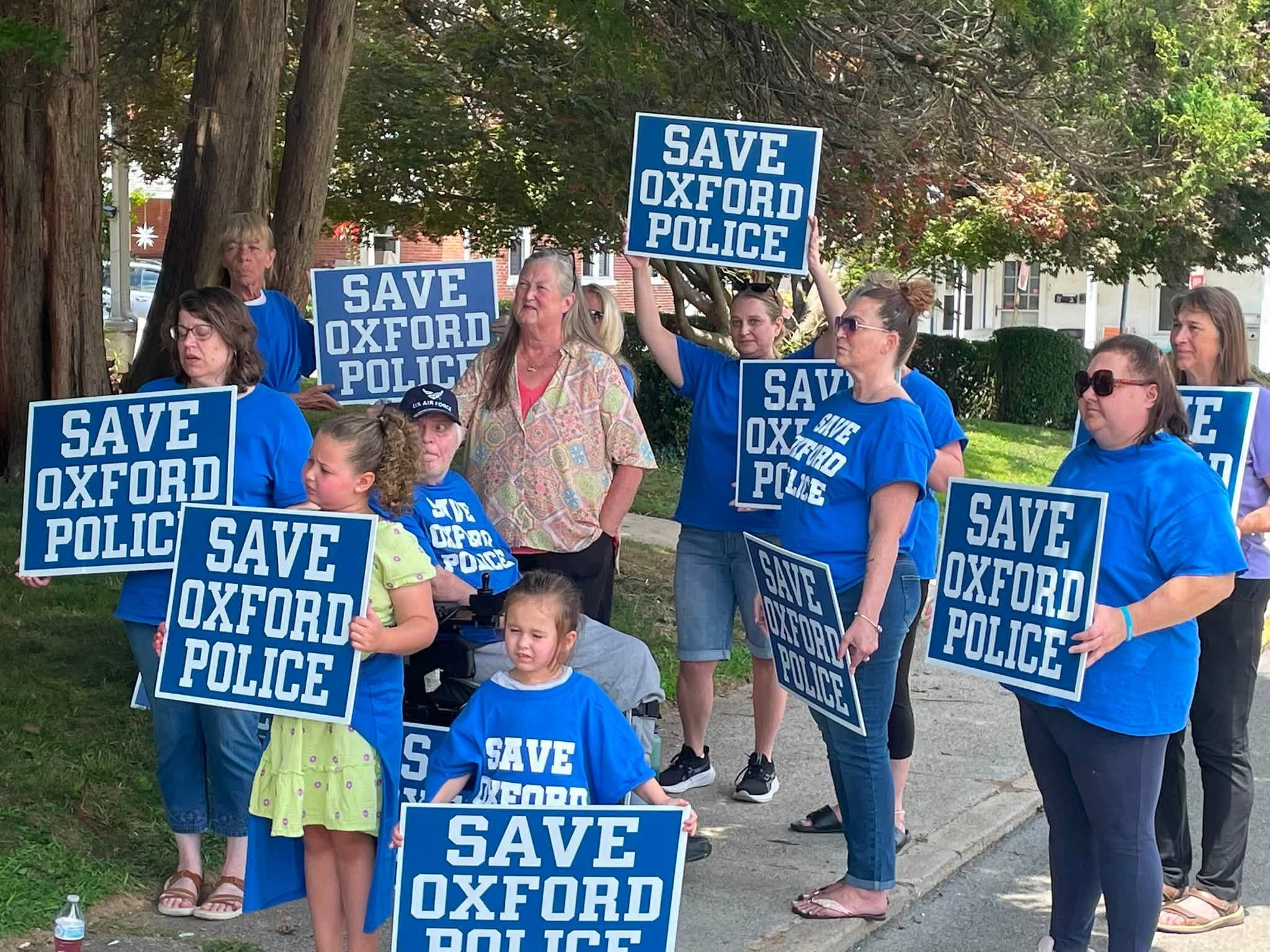
    But the choice to cut the department has stoked fears from residents, who have designed T-shirts and lawn signs, held protests, started petitions and social media pages, and turned up at meetings to oppose the effort.

    On Monday, residents called on the council to retain the department or delay the vote. The meeting grew contentious. As people shouted from the audience, the council requested that disrupters be escorted out several times through the 1½-hour meeting. As council members weighed their vote, attendees shouted for them to “resign now.”

    With the vote, Oxford will now join nearby municipalities New Garden, West Grove, and Avondale for service through the regional department.

    The regional department, formed in 2017, employs 21 full-time officers, who patrol and investigate, in addition to providing services like traffic safety, public outreach, and evidence management. The borough will have a seat at the table in the governance of the department.

    The memorandum stipulates that the department will add 12 new officers to serve Oxford, with a substation where officers will begin and end their shifts, according to borough officials. Two officers will be on patrol 24-7, as they currently are. Borough leaders hope to see the entirety of their 11-officer force accept positions in the regional department.

    Still, residents have worried over the loss of their homegrown force, with concerns about sluggish response times or increased crime due to the regionalization.

    Oxford police responded to about 4,400 calls for service, mostly for property and house checks, in 2023, according to the most recent data in a July analysis from Keystone Municipal Solutions.

    “What I pray to God does not happen is that I have to get a call because we didn’t have a local police department to protect our residents,” said resident Henry “Ted” Ruffenach, a funeral director. “I don’t want to get that call. If it does happen, this will be on every one of your resumes.”

    Bob McCarron, president of the Chester County Fraternal Order of Police, urged the council to consider whether giving up local control was worth regionalization.

    “It truly is a decision that, once you make it, you won’t be able to come back from,” he said.

    An attempt to table the decision — raised by council member Amanda Birdwell, who argued she had not talked to enough residents about their stance on regionalization — did not receive enough votes. She ultimately voted against regionalization, joined by council member Raul Juarez-Lara.

    “Even though people are being disrespectful and rude, we were still elected to represent them, and I feel like another reason I asked to table is because while I know we all want this to be over with, we can’t make a decision because we’re mad that people aren’t being nice to us,” she said. “That’s irresponsible.”

    But others felt it was the only sustainable way forward.

    “I truly believe that the only way to maintain policing in the Borough of Oxford … going forward, for my children, is regional,” council member Michael Brandt said. “We will not have a police force in less than several years at the rate things are going. I’m sorry none of you can listen to us and understand that.”

    The borough will hold a town hall with the regional department’s police chief, Joe Greenwalt, on Thursday.

    This suburban content is produced with support from the Leslie Miller and Richard Worley Foundation and The Lenfest Institute for Journalism. Editorial content is created independently of the project donors. Gifts to support The Inquirer’s high-impact journalism can be made at inquirer.com/donate. A list of Lenfest Institute donors can be found at lenfestinstitute.org/supporters.

  • Trump threatened to bomb Oman because he’s unhappy with the country’s deal with Iran, officials say

    Trump threatened to bomb Oman because he’s unhappy with the country’s deal with Iran, officials say

    CAIRO — U.S. President Donald Trump threatened to bomb Oman because he is unhappy the country is close to a deal with Iran to manage ship traffic through the Strait of Hormuz, two regional officials said Tuesday, a day after Trump leveled the threat.

    The officials said the Trump administration has told Oman it is opposed to parts of the yet-to-be-announced deal, including the joint Iranian and Omani management of the exit route out of the passage that’s critical to global supplies of oil and natural gas. The officials were briefed on the U.S. position and how the administration views Oman’s position.

    Meanwhile, a projectile hit a ship as it sailed out of the strait, according to the British military’s maritime monitoring agency, and an Iranian official said the waterway would not reopen until the United States meets Iran’s conditions.

    U.S. believes Oman has not been tough enough with Iran

    The U.S. believes Oman has not been tough enough in its negotiations with Iran and is unhappy with Oman’s agreement to collect voluntary fees from vessels, even if the charges are related to security and maritime environmental protection, according to the officials, who spoke on condition of anonymity because they were not authorized to talk to journalists.

    Trump on Monday threatened to bomb Oman as it works with Iran on a deal to open the strait and pave the way for the U.S. and Iran to resume negotiations to end the war.

    He posted a map on social media Tuesday depicting the strait as a U.S. territory. The president first mentioned the idea in an offhand comment last week. On Monday, he told reporters in the Oval Office, “I like the idea of declaring it a territory,” without providing details.

    The White House on Tuesday referred to Trump’s remarks in the Oval Office and declined to comment further about Oman.

    President Donald Trump speaks in the Oval Office of the White House on Monday, Aug. 17. Manuel Balce Ceneta

    Iran refers to Trump’s ‘delusion’ about the strait

    Iranian Deputy Foreign Minister Kazem Gharibabadi appeared to respond to Trump’s post on social media depicting the strait as American territory.

    “Just as Trump correctly wrote the name of the eternal Persian Gulf, his delusion regarding the Strait of Hormuz will soon either be corrected, or we will correct this deluded man’s delusions for him,” Gharibabadi wrote on X.

    Trump’s comment on Monday was not the first time he has threatened Oman. In May, he told reporters during a Cabinet meeting that Oman “will behave just like everybody else, or we will have to blow them up.”

    Iran reiterated Tuesday that Tehran plans to maintain its grip on shipping traffic until Washington meets its conditions.

    “Until the United States fulfills its commitments under the agreement, including lifting the blockade, releasing frozen assets, lifting oil sanctions, ending threats and military operations on all fronts, and implementing the other conditions to which it committed, the Strait of Hormuz will not reopen,” said Mohammad Bagher Qalibaf, Iran’s parliamentary speaker and negotiator in previous talks with the U.S.

    The Egyptian Foreign Ministry said Tuesday that the Iranian-Omani deal could pave the way for Washington and Tehran to return to negotiations for a “comprehensive and permanent deal that addresses all concerns and enhances regional security and stability.”

    The statement came after a meeting between Egyptian Foreign Minister Badr Abdelatty and Omani counterpart Badr al-Busaidi. But it did not address Trump’s latest threat against Oman.

    President insists strait is open as more attacks are reported

    Trump said Tuesday the U.S. has no planned talks with Iran but insisted the strait is “open and operating,” despite limited traffic, the reported boat strike and the end on Monday of the 60-day negotiating period between the countries.

    Trump wrote on social media that a U.S. blockade of the strait remains “in full force and effect,” adding that all water mines have been removed.

    As the talks between Iran and Oman continue, more attacks were reported in the region.

    An unidentified projectile hit a ship early Tuesday in the strait off the coast of Oman, damaging the engine room and causing a casualty, according to the U.K. Maritime Trade Operations center.

    The monitoring agency did not release any details about the ship or its cargo, and it was unclear whether the crew member was killed or wounded. The agency said the Omani Coast Guard was assisting other crew members and that authorities were investigating.

    And Yemen’s Iran-backed Houthi rebels claimed they fired drones at an oil refinery in neighboring Saudi Arabia, the latest attack that threatened to reignite Yemen’s civil war and open another front in the Middle East.

    The attack targeted a facility run by Saudi Aramco, Saudi Arabia’s state-owned oil company, according to a report by the Houthi-run SABA news agency. There were no immediate reports of damage or comment from Saudi Arabia.