Blog

  • Police searching for person in Chucky-style mask seen harassing Center City pedestrians

    Police searching for person in Chucky-style mask seen harassing Center City pedestrians

    Police are searching for a person in a horror-movie mask who has harassed multiple Center City pedestrians in recent days.

    Officials say the suspect — a young man who police believe may be filming the encounters for social media — approached a 40-year-old woman near City Hall last Wednesday and made threatening comments while holding his hand behind his back.

    The incident unfolded around 5:30 a.m. on the 1500 block of JFK Boulevard while the woman was out for a jog, authorities said.

    The frightening encounter caused her to stumble and injure herself as she fled to a nearby SEPTA station.

    <iframe width="560" height="315" src="https://www.youtube.com/embed/FvM9sq6Bnjc?si=DGUy9jD9zVMokaJM" title="YouTube video player" frameborder="0" allow="accelerometer; autoplay; clipboard-write; encrypted-media; gyroscope; picture-in-picture; web-share" referrerpolicy="strict-origin-when-cross-origin" allowfullscreen></iframe>

    On Tuesday, images of the suspect wearing a mask resembling the evil doll from the Chucky slasher movie franchise went viral on social media, while other Philadelphians recounted similar confrontations in recent days.

    Police believe the suspect is a man between the ages of 16 and 20 with a thin build and average height.

    Officials are asking anyone who encounters him to call 911 and refrain from approaching.

    Those with information are encouraged to submit an anonymous tip at www.phillypolice.com/forms/submit-a-tip or call 215-686-TIPS (8477).

  • Trump administration moves to allow logging in pristine national forests

    Trump administration moves to allow logging in pristine national forests

    WASHINGTON — The Trump administration on Tuesday advanced a plan to open nearly 45 million acres of wilderness in national forests to road construction and logging, removing protections that had been in place for a quarter century.

    The proposal by the U.S. Forest Service would repeal the 2001 “roadless rule,” enacted during the Clinton administration to preserve the wild nature of forest land. It comes as President Donald Trump pressures the agency to increase logging and to thin forests to prevent wildfires.

    The repeal would hand a major victory to Republican-led states and industry groups that have argued for years that the prohibitions have hindered economic development. More than a dozen lawsuits have unsuccessfully sought to strike down the rule.

    During his first term, Trump stripped protections from Alaska’s Tongass National Forest, the largest intact temperate rainforest in the world, only for the Biden administration to restore them in 2023.

    This time, the Forest Service is eliminating protections for the 9 million undeveloped acres within the Tongass, as well as millions more acres of pristine wilderness across the rest of the United States.

    “For too long, outdated restrictions have kept tens of millions of forested acres off-limits to the very treatments that improve forest health and reduce wildfire risk to our communities,” Brooke Rollins, the secretary of the Agriculture Department, which includes the Forest Service, said in a statement.

    Environmentalists said the plan would destroy untouched landscapes, including crucial habitats for migratory species and headwaters for major municipal water supplies. Multiple advocacy groups are expected to sue to block the repeal.

    “By ripping protections from some of our oldest intact forests, the Trump administration is endangering the drinking water supplies of tens of millions and threatening wildlife habitats and recreation opportunities in almost every state,” said Drew McConville, a senior fellow at the Center for American Progress, a liberal research organization.

    Roadless areas make up about 30% of all national forest land, encompassing nearly 60 million acres of America’s last wild areas and old-growth forests. They are home to more than half of imperiled wildlife, including grizzly bears, wolves, elk, salmon, and wolverines. Forest land in the United States also absorbs millions of tons of carbon per year, helping slow climate change.

    The proposal would affect the management of 44.7 million acres nationally. Idaho and Colorado have their own regulations that supersede the federal rule and insulate those states from being affected by any change in national policy.

    Damien Schiff, a senior attorney with the Pacific Legal Foundation, a libertarian public interest law firm that has been fighting the roadless rule in the Tongass National Forest, said he believed the federal protections had harmed mining, timber production, and other economic development. In Alaska, he argued, restrictions around the Tongass have made it difficult for surrounding communities to connect to electric grids.

    “It has had a depressing impact on the use of the national forest for productive activity generally,” Schiff said.

    The Trump administration and many Republicans argue that the ability to build roads would enable firefighters to more easily reach forest fires.

    “For 25 years, the heavy thumb of Washington, D.C., has hindered Montana’s ability to properly manage wildfire risk and road development on nearly 60% of Forest Service land across the Treasure State,” Montana Gov. Greg Gianforte, a Republican, said in a statement.

    Ecologists largely agree that the government needs to improve the ways it manages forest land. But experts do not agree that cutting down pristine forests to build more roads is the best way to do it.

    In fact, some warned, roads could actually increase the threat of wildfires — partly because roads bring people. Nearly 85% of wildfires begin with human activity such as discarded cigarette butts, burning debris, or sparks from equipment, research has shown. Roads can also be corridors for invasive species, including flammable grasses.

    “Introducing roads and human activities in areas that are otherwise undisturbed will increase wildfires where the risk is currently low,” said Alexandra D. Syphard, a senior research ecologist at the Conservation Biology Institute, a nonprofit group based in Oregon. “The unintentional impact of this could actually be creating a worse situation.”

    Camille Stevens-Rumann, director of the Colorado Forest Restoration Institute and an associate professor of fire ecology at Colorado State University, added that new roads would not necessarily help address the most destructive wildfires because they tend to ignite near existing roads. Fires in remote areas, which often are sparked by lightning strikes, tend to burn far fewer acres, she said.

    “We have smokejumpers for one, that’s how you get into those remote areas,” said Sen. Martin Heinrich (D., N.M.). He noted that prescribed burns, pruning and other treatments are routine across millions of acres of forests, and those areas are afterward closed again to motorized access.

    Democrats from Western states said they believed wildfire arguments were designed to hide the administration’s real goal: enabling more logging.

    Trump has made timber production a top priority. Last year, he called for a 25% increase in logging from national forests and directed agencies to bypass endangered species protections and other environmental regulations to make it possible.

    Rollins then issued a secretarial memo declaring an “emergency situation” in national forests, establishing a process for the Forest Service to fast-track logging by cutting short public participation and legal reviews.

    After the proposal is published in the Federal Register, which is expected later this week, the Forest Service will accept public comments before making the rule final.

    This article originally appeared in the New York Times.

  • Flyers sign restricted free agent Hunter McDonald to a two-year contract worth $1.825 million

    Flyers sign restricted free agent Hunter McDonald to a two-year contract worth $1.825 million

    Hunter McDonald is sticking around Philly.

    The hulking 6-foot-4, 238-pound defenseman and the Flyers agreed to a two-year, $1.825 million contract with an average annual value of $912,500 on Tuesday.

    The first year is designated as a two-way deal, which means McDonald will be paid at a minor league rate for games he plays with Lehigh Valley of the American Hockey League. The second season of the contract is one-way, which means McDonald will be paid at the NHL rate no matter what.

    McDonald, who was a restricted free agent, was the final piece of business the Flyers had on the table. They also re-signed restricted free agents Trevor Zegras, Jamie Drysdale, and Nikita Grebenkin earlier in the offseason.

    A sixth-round pick in 2022, McDonald, 24, made his NHL debut in the season finale of the 2025-26 season after the Flyers clinched the third seed in the Metropolitan Division the previous night at Xfinity Mobile Arena. He registered an assist on a goal by his defensive partner Oliver Bonk, who was also making his NHL debut.

    “Hunter took a big step last year in his development, and that’s why he played that game late in the season,” Flyers general manager Danny Brière told The Inquirer in early June.

    “I think our coaching staff was really impressed on how he took a step forward this year. He put in the work and really elevated his game, earned that NHL game at the end, and he was around the team when we played in the playoffs as well.

    “Really exciting to see him have growth to his development. It’s a big summer for him, but we’re excited about him. A big, physical defenseman like that is not easy to find, and we hope he’s going to be one of those guys, eventually. But he’s going to have to beat someone at some point to earn those minutes.”

    Oliver Bonk (left) celebrates after scoring on an assist from Hunter McDonald against the Montréal Canadiens on April 14. Derik Hamilton

    Described as a “throwback” to the Broad Street Bullies by Jerry Keefe, his coach at Northeastern, he had three assists in 11 regular-season games and one goal in six playoff games with Lehigh Valley after his 2023-24 season ended with the Huskies.

    Two seasons ago, his first as a full-time pro, he had four goals, 18 points, and 99 penalty minutes in 71 regular-season games. He led the team in games played and was tied for second in plus-minus (plus-12). The Western New York native added another goal in seven playoff games.

    McDonald registered six assists and 92 penalty minutes in 65 regular-season games in his second full season. Out of the eight players who played in at least 60 games with the Phantoms, he was one of three (Zayde Wisdom and Tucker Robertson) who had at least an even plus-minus (even).

    “He’s still learning the game and learning the type of player that he’s going to have to be to be an NHL player every day,” Phantoms coach John Snowden said.

    “I thought he did a really good job with that. And maturing too and handling the ups and downs of the season, and knowing that you’re knocking on the door, and maybe you’re not the guy called up, and then you get your call-up, and what do you do with it? We saw his one game, and he was very good.”

    McDonald was also recalled by the Flyers in January for the three-game swing through Colorado, Las Vegas, and Utah, due to an injury to defenseman Rasmus Ristolainen. He did not play in any of the games.

    The expectation is McDonald will push for a spot on the Flyers’ defensive corps when training camp opens Sept. 17. While he said in January that he had been working at not getting sent to the penalty box as often, he said he’s still a physical blueliner.

    “I think a bit. Kind of, hitting people,” McDonald said with a chuckle when asked if he considered himself a “throwback.”

    “I want to get a stick on you, ending plays. I think that’s a super important part of the game. If I can end these plays in the D zone, be a pain to play against, and then we can go play offense.”

  • Site of a Walnut Street beer garden will become a two-story retail building, not an apartment tower

    Site of a Walnut Street beer garden will become a two-story retail building, not an apartment tower

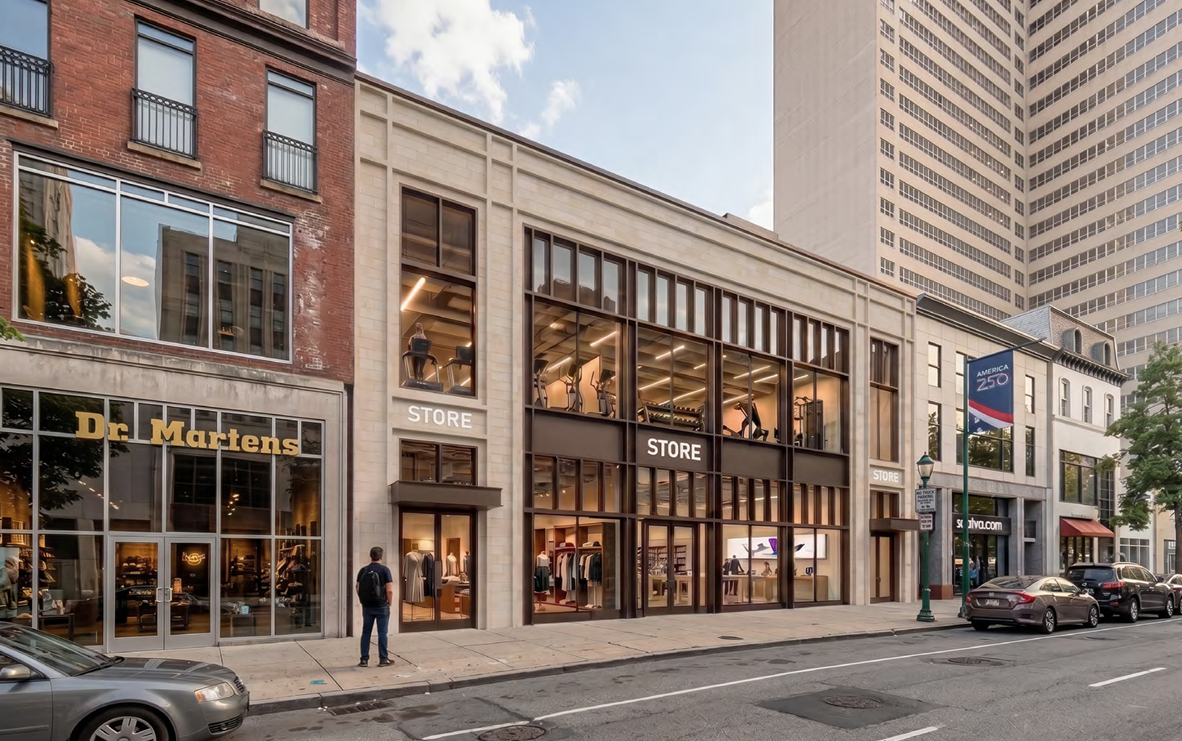
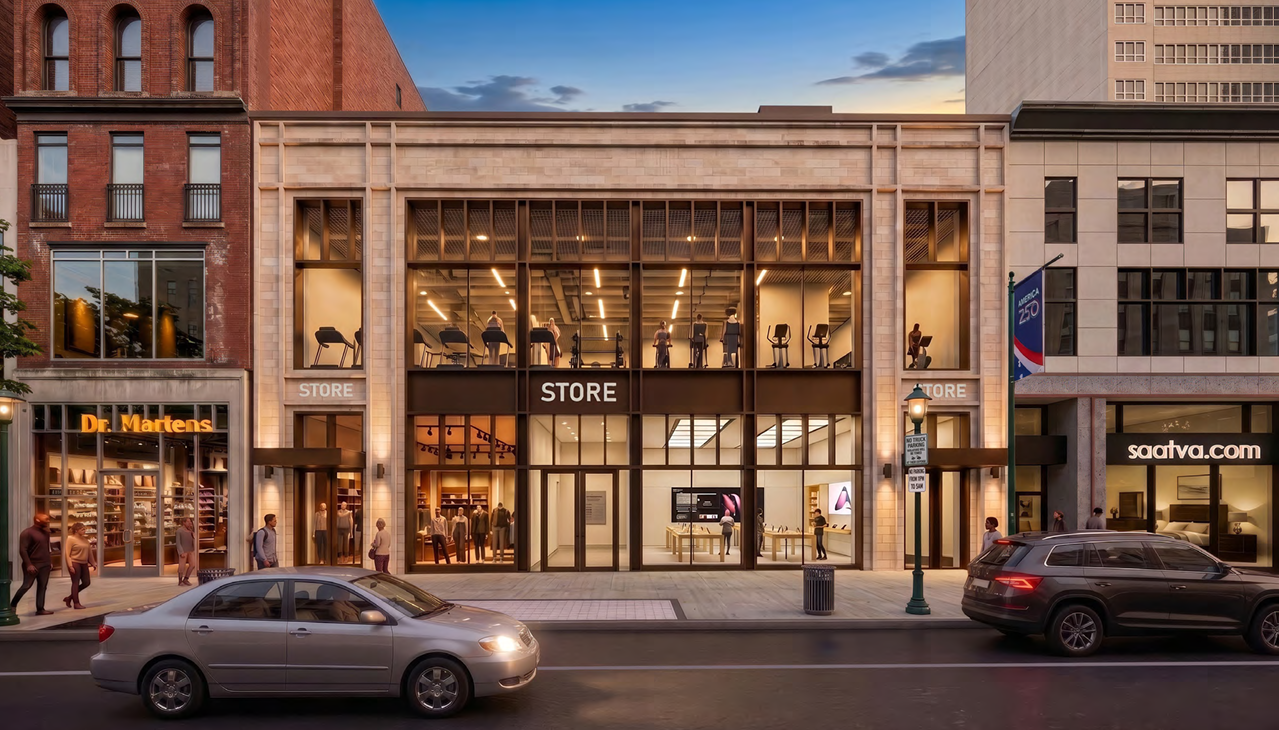
    A two-story, 33,000-square-foot retail building is being proposed for 1706-10 Walnut St., the current site of a beer garden and formerly where three historic buildings were demolished after being damaged by fires during unrest in 2020.

    The property is owned by the Gridmark Group, which was founded by Ari Weber, a Brooklyn-based real estate investor. The building is being designed by Philadelphia-based JKRP Architects.

    After Weber acquired the property in late 2022 for over $12 million, he said he eventually planned to build a 30-story apartment building on the site. Now he has decided that conditions are not favorable for such a large-scale project.

    “You see around Philly that there are sites that are on hold right now, that are sitting there waiting,” Weber said. “We were talking about a 30-story building, and I have made a decision that the time is not right for building such a high tower.”

    Weber didn’t let the Walnut Street property sit empty for long after he acquired it. The Walnut Gardens opened in June 2023 and became a popular outdoor food-and-drinks attraction.

    But Weber said he’s been fielding a lot of calls from high-end national retail companies searching for space on this in-demand stretch of Walnut Street.

    “Currently, [a tower] is not what it calls for. What it calls for is beautiful retail commercial space that will change the block,” Weber said. “It’s the number-one retail block in the whole of Philly.”

    The project will receive oversight from the Philadelphia Historical Commission because the property is in the Rittenhouse-Fitler Historic District. It will be considered by the commission’s Architectural Review committee on Tuesday.

    Materials submitted to the commission show a limestone-clad building that will feature a roof deck “with a restaurant enclosure” and outdoor seating. The commission’s staff recommended approval of the project’s design.

    “It’s meant to be like any other new construction in the historic district,” said Jerry Roller, the principal with JKRP Architects. “It’s meant to be in keeping with and in harmony with the remainder of the streetscape on Walnut Street.”

    A rendering of Ari Weber’s proposed retail building, with a setback roof deck and restaurant, for the site where the Walnut Gardens currently sits.JKRP Architects

    Before demolition, the site held three 19th-century townhomes, one designed by Frank Furness’s architecture firm, which had been converted to retail and restaurant uses, including a McDonald’s.

    During unrest following protests over the police murder of George Floyd in Minneapolis, the buildings were damaged by arson in May 2020. Philadelphia’s Department of Licenses & Inspections found them too damaged to be saved, and they were then demolished in early 2021.

    “It’s not surprising, given the state of the development market today, we all know that there are very few projects coming out of the ground,” said Paul Steinke, head of the Preservation Alliance of Greater Philadelphia.

    “I’m glad that they’re not waiting around in hope for a better day, but that they’re going ahead and knitting back the urban fabric once again,” he said.

    After Weber acquired the properties, he partnered with Philadelphia restaurateur Avram Hornik, of FCM Hospitality, to open the Walnut Gardens outdoor bar and restaurant.

    “Every season was better than the season before,” Hornik said. “It’s been great for us, and it’s been great for the neighborhood. But we always knew it would be a temporary use for this type of property.”

    Hornik said the closure date for Walnut Gardens depends on Weber’s construction timeline — although he believes they will be open through the end of the year.

    “We’ll be open all the way through our regular Halloween and Christmas activations,” he said, and possibly into next year.

    For Weber, the time is right for construction of a modest scale. Weber said he does not intend to have the retail structure built in such a way that it could be used as a podium for a future tower.

    “We’re going to put in something that’s really going to change the whole block and fill in that gap,” he said. “There cannot be any new developments like this on this block. You can’t tear down anything. We’re the only one — it’s unique — so I decided to start making moves and bring tenants in.”

    When Weber first came to Center City, he was known in New York for the apartment brokerage group Brookliv, but he said he sold that company last year. Now, he wants to pursue more projects in Philadelphia, which he said is more conducive to real estate development.

    “I feel like New York is a little bit of a shaky situation, but I like Philadelphia because … everybody wants to see Philly build,” he said. “We are looking at other [sites] in Philadelphia right now.”

  • The Moscow region is hit by a drone blitz as Russian missiles kill 10 in a Ukrainian village

    The Moscow region is hit by a drone blitz as Russian missiles kill 10 in a Ukrainian village

    KYIV, Ukraine — Ukrainian forces launched one of their biggest drone attacks on Russia since Moscow’s invasion over four years ago, firing almost 800 drones only two days after a similar salvo, officials said Tuesday.

    Meanwhile, a Russian missile strike on a village in northeastern Ukraine’s Kharkiv region killed at least 10 people and wounded 17 others as the barrage demolished homes, officials said.

    The countries are locked in an escalating duel of long-range aerial strikes. Fighting on the roughly 780-mile front line in eastern and southern Ukraine is restricted by large numbers of drones and ground robots threatening troop movements, and neither side is making significant battlefield progress, analysts say.

    Putin resists pressure for peace talks

    In the past year, Ukraine has devised and deployed domestically produced long-range drones for strikes deep inside Russia. Its drone technology has impressed governments and defense manufacturers around the world.

    Officials in Kyiv aim to make the Russian public feel the war’s consequences and pressure Russian President Vladimir Putin into negotiating a peace settlement. Putin has so far shown no sign he intends to stop the invasion.

    “Putin continues to drag out the war instead of accepting Ukraine’s realistic ceasefire proposals and ending the bloodshed,” Ukrainian Foreign Minister Andrii Sybiha said in a post on X.

    Russian air defenses overnight intercepted 791 Ukrainian drones over a number of regions, as well as annexed Crimea and the Black and the Azov seas, the Defense Ministry in Moscow said, in what was the second-largest drone attack since January 2025, according to an Associated Press tally.

    More than 600 Ukrainian drones flew toward the Moscow region, where 180 were shot down, Moscow Mayor Sergei Sobyanin said without elaborating.

    Officials reported no deaths or major damage. Ukraine has increasingly launched swarms of hundreds of drones to try to overwhelm Russian air defenses.

    In the region that surrounds the capital, three people were wounded, Gov. Andrei Vorobyov said.

    Three people were also wounded in the adjacent Ryazan region where three private houses were damaged, Gov. Pavel Malkov said.

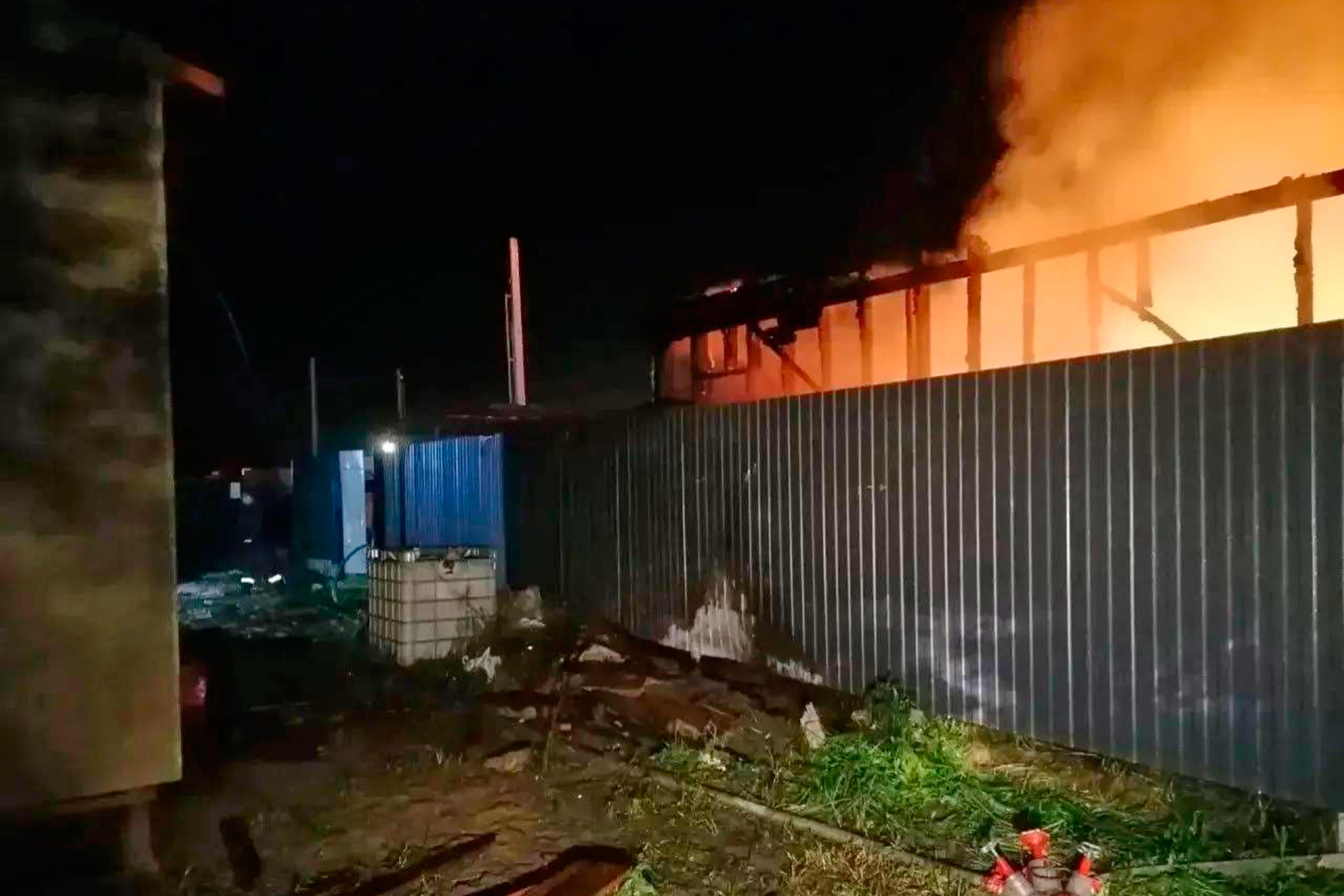
    The overnight attack started a fire at a warehouse of Wildberries, Russia’s biggest online retailer, in an industrial zone. Ukraine has repeatedly targeted the company, which it says helps supply the Russian military, an allegation Moscow denies.

    Wildberries said its facility sustained “insignificant damage.”

    Russian TV doesn’t report news of the attack

    Coverage of the attack in state and Kremlin-backed Russian media was mostly muted, as is often the case. Russia’s main TV channels — state-run Russia 1 and Channel One — did not mention the attack at all in their morning news bulletins.

    But Russian state news agency RIA Novosti featured it among the main news on its website’s homepage, describing it as “one of the most large-scale attacks on Moscow since the beginning of the summer.”

    State newspaper Rossiyskaya Gazeta on its website prominently featured a roundup of what Moscow regional Gov. Andrei Vorobyov reported about the attack, describing it as “massive” in the headline. Pro-Kremlin tabloid MK featured a news brief about it on its home page.

    Zelensky accuses Russia of a ‘brutal attack’ on civilians

    A Russian missile strike on the village of Pechenihy in Ukraine’s Kharkiv region killed 10 civilians, according to preliminary information, said Oleh Syniehubov, head of the Kharkiv regional military administration.

    Another 17 people were wounded, he said. Ukrainian President Volodymyr Zelensky called it “a brutal attack” that damaged 10 homes, a cafe, a post office, a store, and at least seven vehicles, according to Syniehubov.

    “We will definitely respond to this Russian strike,” he said on social media.

    Also, three people were killed and three others were wounded over the past day in Russian attacks on Ukraine’s Sumy region, Ukraine’s National Police said.

    U.K. vows continued Ukraine support

    British Prime Minister Andy Burnham, who took office last month, said the U.K. will continue to stand by Ukraine after Russia said that Kyiv’s reported use of British drones for attacks on Russian soil would bring unidentified consequences.

    “We are providing support so that Ukraine can defend itself, and that’s been the British position all the way through this conflict by previous prime ministers,” Burnham said. “It remains the case with me.”

    British newspaper the Sunday Times reported that two U.K. companies made drones used by Ukraine to hit Russia.

    Following the report, the Russian Embassy in the U.K. said in a statement that “London’s actions will inevitably carry consequences.”

    Russian Foreign Minister Sergey Lavrov told Russian state TV that Moscow has the right to view British involvement in strikes on Russian territory as “participation in the war, with all the ensuing consequences.”

  • Russians pull billions from banks, fearing Kremlin will seize deposits for war

    Russians pull billions from banks, fearing Kremlin will seize deposits for war

    Russians are pulling billions from the country’s banking system ― a record cash outflow amid intensifying Ukrainian drone attacks and rising fear that the Kremlin could start seizing deposits to finance its war.

    Nearly $3.4 billion (286.4 billion rubles) was withdrawn in the first two weeks of August, on top of the $7.3 billion withdrawn in July and more than $4.5 billion in June, according to Russian Central Bank data.

    Total withdrawals this year could nearly double the amount taken out in the first year of Russia’s full-scale invasion of Ukraine, according to Taras Skvortsov, a senior executive at Sberbank, Russia’s biggest retail financial institution.

    The withdrawals are causing liquidity problems, according to Skvortsov and a former senior Russian finance official, overstretching a financial sector already strained by increasing levels of bad debts following a government-directed lending boom to ramp up military output.

    “Drones are flying. Things are burning down. Nervousness is growing. And people’s everyday wisdom may be kicking in that they need to have cash under their pillow and not somewhere in banks where it may never be returned,” said the former finance official, who like others spoke on the condition of anonymity to discuss sensitive issues.

    “For some banks this really is a problem,” the former official said. “They didn’t expect this, and they invested all the cash elsewhere, and yet people are coming and taking out half a trillion rubles a month.”

    Alexandra Prokopenko, a former adviser to the Russian Central Bank, said the withdrawals reflected deepening fear among the Russian public.

    “It means people have no trust in the Russian banking system or in the Russian financial system,” Prokopenko said. “This is all a consequence of the fear that the government will do something with the banking system, that it could nationalize deposits.”

    She said she believed that such a nationalization was unlikely but added, “I would not exclude that the authorities could impose limits on withdrawals.”

    The total siphoned out this year already exceeds the $24.7 billion (2 trillion rubles) removed in the first year following the February 2022 invasion.

    In the first two weeks of the invasion, $23 billion fled the system, and banks appeared to be imperiled by depositors and businesses lining up to empty their accounts, until the government stemmed the drain by imposing tough capital controls and sharply raising interest rates.

    Now, big businesses are also seeking to move money out of the reach of Russian regulators as anxiety grows over potential asset seizures. That is further exacerbating the problems, the former official said.

    In all, more than $9.4 billion was transferred out of Russia in the second quarter of 2026, according to Central Bank data.

    “Each month there is a big outflow,” Skvortsov told RBK Radio, a Russian radio station. “If the trend continues things are not going to get better.”

    The withdrawals have already undermined the Russian government’s efforts to raise money to finance the war through issuing state bonds.

    The Finance Ministry last month was forced to cancel planned bond issues, even though it has become ever more dependent on them as a means of filling a yawning budget deficit as spending on the military continues to grow while the economy stalls.

    Skvortsov told RBK Radio that the banks’ liquidity problems mean many cannot spare cash to buy government bonds.

    “If there is an ominous sign of imperial overreach, this is clearly one of them,” said Craig Kennedy, a former vice chairperson in investment banking at Bank of America Merrill Lynch who is now a scholar at Harvard University’s Davis Center for Russian and Eurasian Studies.

    “Great powers don’t have repeated treasury bond failures in the middle of a war,” Kennedy said.

    As a result of government orders to ramp up lending to the defense sector, Russian banks “appear to have so much exposure to nonviable borrowers that they’re not certain how it’s going to get restructured, when it’s going to get restructured, and how much of that they are going to have to eat,” Kennedy added.

    In a sign of how sensitive the strain on Russia’s finances is becoming for the Kremlin, the chief economist at VEB, one of the country’s biggest state banks, Andrei Klepach, was fired from his post this weekend after commenting that Russia could not win a war of attrition against Ukraine while Kyiv is supported by the West.

    “We won’t win the competition in this war of attrition,” Klepach said in a presentation he made in May, which was circulated in the media last week. “We’re under the illusion that everything [in Ukraine] will collapse. It hasn’t, and it won’t. Meanwhile, the costs we bear are mounting.”

    Ever since Ukraine began expanding its drone campaign against Russian oil facilities this spring, taking out more than 30% of the country’s refining capacity and causing the worst fuel crisis since the fall of the Soviet Union, anxiety has intensified.

    In June, the Russian Central Bank was forced to limit an expected interest rate cut because of fears that fuel price hikes could spur inflation. Panic spiraled through the bond market, driving interest rates up to 17% for the government’s 10-year bonds and forcing the Finance Ministry to postpone further issues.

    With the budget deficit for January to July already at 6.46 trillion rubles ($76.1 billion) — far exceeding the 3.8 trillion rubles forecast for the entire year — fears are mounting that the Kremlin could seize big businesses’ revenue to finance the war.

    “If the government needs cash, Putin will just do a grab for assets. He doesn’t care,” said an associate of one Russian billionaire. “And that’s where I think it’s heading.”

    In addition, “there is the feeling that political power is becoming not quite as stable, and this is such a period when it is better not to be present,” the former finance official said.

    Already several businesses owned by Russian billionaires have been targeted by the government in a nationalization drive that last year alone saw $51.5 billion in assets seized for the state, according to Russian prosecutors.

    In June, the Russian state seized $7.6 billion (550 billion rubles) of assets linked to Vadim Moshkovich, who founded Rosagro, one of Russia’s biggest agricultural holdings, after the billionaire was detained and charged with large-scale fraud.

    It was the biggest asset seizure in Russia since the start of the full-scale invasion. Others who have lost assets to the state include Dmitry Kamenschik, who previously owned Domodedovo airport in Moscow; and Konstantin Strukov, who controlled one of the country’s biggest gold mines.

    Some economists argue that the Kremlin’s drive to direct bank lending into cranking up military output is strangling the civilian economy, especially because high interest rates and inflation leave banks and companies with few funds left for investment in nonmilitary sectors.

    The Russian economy ground to a halt in the first half of 2026, with gross domestic product growth falling to 0.3%, compared with 1.2% in the first half of 2025.

    For now, however, the Trump administration’s war with Iran has pushed oil prices back up and given the Kremlin a partial reprieve from its budget squeeze.

    Russian state oil and gas revenue increased by 60% in July compared with the same month the previous year, as global oil prices rose, but it is still down 11% between January and July compared with the same period last year.

    Ukraine’s attacks on Russian oil refineries as well as on the sprawling network of warehouses belonging to Wildberries, Russia’s largest online retailer, are also hitting Russian billionaires’ bottom line.

    “It’s costing these guys money,” said the associate of the Russian billionaire, referring to Russia’s richest individuals. “They have to put their hands in their pocket. They’re not used to having all these problems.”

    Ukraine has hit more than 20 Wildberries warehouses since it began targeting the company’s facilities on July 18, in an onslaught that some economists estimate has destroyed more than $6 billion in goods and caused more than $3 billion in damages to Wildberries infrastructure.

    “It’s not a place you want to be doing business,” the billionaire’s associate added. “If you can pull money out, you do it.”

    One Moscow business executive said, “Everyone who can is trying to move money out of the country, but it’s getting more and more difficult to do so.”

    A key channel for removing money from Russia, amid increasing government restrictions on large cash transfers abroad, involves opening brokerage accounts in neighboring Kazakhstan, Kyrgyzstan, and Armenia, according to the Moscow business executive and the former finance official.

    “From there this money can be invested across the world,” the former finance official said.

    As concerns grow over the war’s mounting financial toll, several senior officials have staged rare public interventions in recent weeks.

    German Gref, the head of Sberbank, broke ranks at the end of June by publicly saying everyone wanted the war to end as soon as possible.

    Then early in August, the powerful Moscow mayor, Sergei Sobyanin, spoke out against calls by hard-line members of parliament to further focus the economy on the war.

    “If there’s no economy of peaceful life itself, there will be no taxes, no income for the population, the political situation will be completely different, and then we won’t achieve success in the war either,” Sobyanin told Tass, a state news agency. “And to kill life, to kill the civilian economy, is to kill the country itself.”


  • Pirro challenges release of woman accused of vandalizing World War II Memorial

    Pirro challenges release of woman accused of vandalizing World War II Memorial

    Jeanine Pirro, the U.S. attorney for the District of Columbia, criticized a federal judge’s order releasing a woman charged with vandalizing the World War II Memorial in Washington.

    The judge ordered the release Monday, rejecting a request from prosecutors that she remain in custody while awaiting trial on two felony charges.

    Federal prosecutors led by Pirro asked the court to reverse the decision, arguing that Melissa L. Farris posed an “exceptionally high risk of flight.”

    In a motion filed Monday, prosecutors cited evidence that Farris, 41, had searched for bus and airline tickets on the day the incident took place, as well as her lack of stable housing or ties to Washington and a previous failure to appear in court.

    Pirro criticized the judge’s decision in a statement. “If anyone is a flight risk, it is certainly her,” she said.

    Magistrate Judge Matthew J. Sharbaugh instead released Farris, though he ordered her to remain outside Washington, report to federal pretrial officials in Ohio, and surrender her passport. She was also ordered to stay away from the memorial. The judge did not impose electronic monitoring or require a third-party custodian, restrictions that prosecutors later requested.

    Farris, of Elizabethtown, Ky., was charged Friday with two federal felonies after investigators said she spray-painted “Clean Hands Dirty $” on the memorial and splattered paint on its stonework. Prosecutors said she also poured detergent into a fountain, causing it to fill with foam and bubbles.

    The National Park Service estimated that cleanup and restoration costs had exceeded $1,000, and the memorial was closed for most of the day, according to the filing.

    Farris livestreamed the incident and later posted videos in which she acknowledged that she had defaced federal property and predicted that police would pursue her. The next morning, she turned herself in at the federal courthouse in Alexandria, Va.

    Days earlier, Farris had been cited by U.S. Park Police for unlawfully camping on federal property a few blocks north of the World War II Memorial.

    Earlier this month, President Donald Trump publicly criticized Pirro, a key ally, over her handling of another case involving what he said was vandalism at the Lincoln Memorial Reflecting Pool. Trump said Pirro had “choked” after her office dropped charges against a man accused of damaging it. But Pirro concluded that the damage had been caused by faulty installation.

    Hours after publicly criticizing Pirro, Trump met with her in the White House, though she was not fired and did not offer her resignation, according to two people briefed on the outcome.

    The president has also denounced the vandalism of the World War II memorial, calling it an insult to Americans who died in the war. In a Truth Social post Friday, he also linked the episode to the recent controversy over the Reflecting Pool.

    In a social media post on the same day, Pirro wrote that defacing the memorial “is a despicable attack on a sacred monument honoring the Americans who fought and died for our freedom.” She also noted that the felony charges in the case carry potential punishment of up to 10 years in prison.

    This article originally appeared in the New York Times.

  • Trump votes by mail again in Florida

    Trump votes by mail again in Florida

    WASHINGTON — President Donald Trump voted by mail before Florida’s Republican primary on Tuesday, according to the White House, participating for at least the third time in a practice that he has railed against for years and has equated to cheating.

    Trump voted by mail in Palm Beach County in 2020, and did so again this year in the special election between Democrat Emily Gregory and Republican Jon Maples to represent the district in the Florida statehouse. Records show Trump has been registered to vote there since 2019.

    Politico earlier reported that Trump had voted by mail in Tuesday’s primary, citing voting records from Palm Beach Country, home to Mar-a-Lago, his private club. The New York Times could not access these records through the Palm Beach County Supervisor of Elections website, which said that Trump’s voting record was “protected from public disclosure.”

    In an unsigned statement, the Palm Beach elections office confirmed that it had blocked access to Trump’s voting records, saying that the publicly available documents were “intended for use by a registered voter to determine his or her voter registration and voting status. Voters with protected information will not appear in this search.”

    Olivia Wales, a White House spokesperson, confirmed that Trump voted by mail in the primary, saying that “this is a nonstory.”

    “As everyone knows, the president is a resident of Palm Beach and participates in Florida elections, but he obviously primarily lives at the White House in Washington, D.C.,” she said, repeating a White House statement about Trump’s last vote by mail, in March.

    Trump has continued to push for Republicans in Congress to pass legislation before the midterms that would strengthen voter identification requirements and make mail-in voting significantly more difficult. There was not enough Republican support to push through the legislation this year, and senators abandoned the effort so they could get home to their states to campaign for reelection.

    Trump has long fixated on mail-in voting to bolster his baseless claims of widespread voter fraud, and has called the SAVE Act one of the most consequential pieces of legislation in the country’s history. During his State of the Union address, Trump falsely claimed that “cheating is rampant in our elections” and called for “no more crooked mail-in ballots,” though states that vote entirely by mail see little fraud.

    This article originally appeared in the New York Times.

  • Bill Rasmussen, ESPN co-founder, dies at 93

    Bill Rasmussen, ESPN co-founder, dies at 93

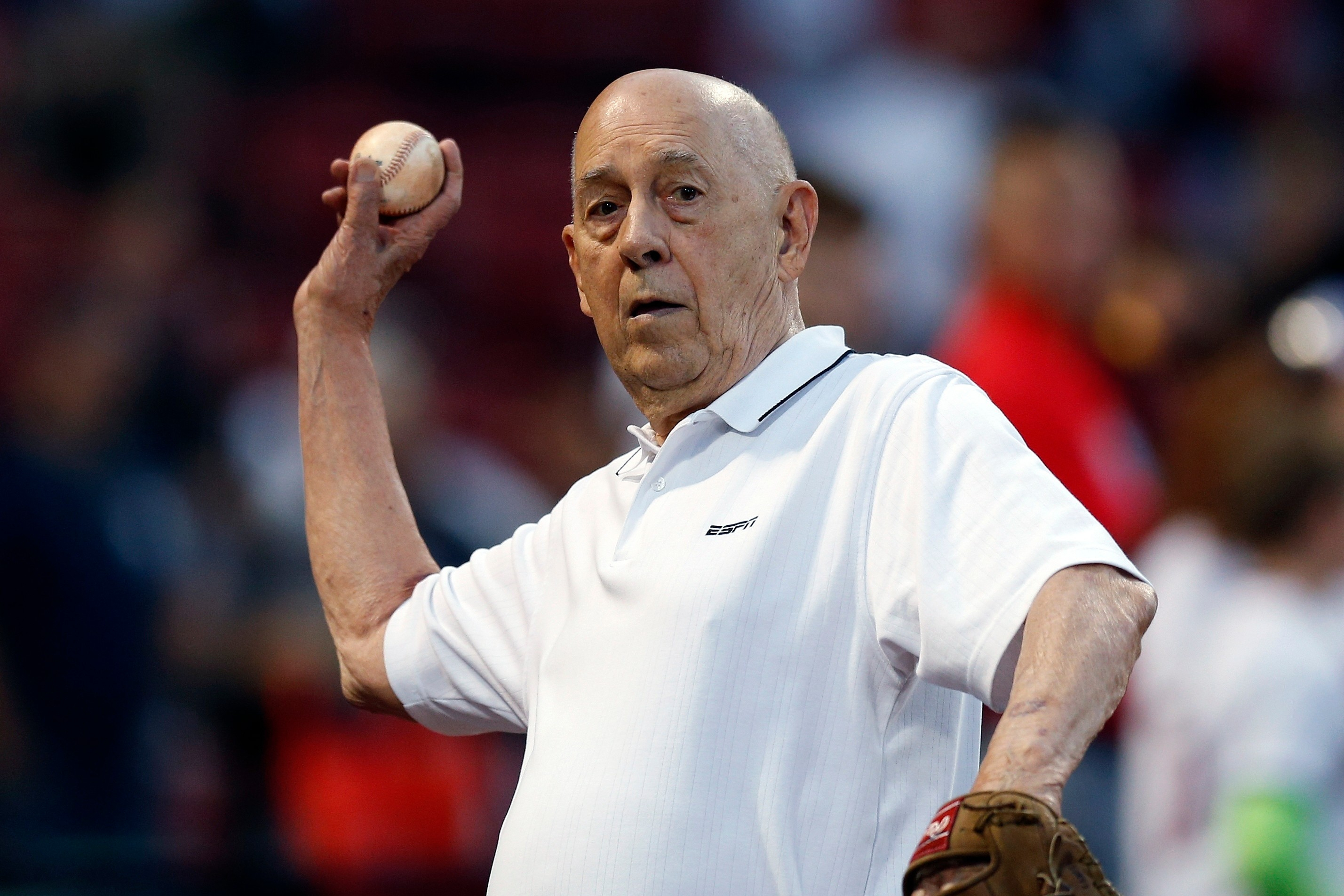
    LAND O’ LAKES, Fla. — Bill Rasmussen, who co-founded ESPN in 1979 after being fired from a public relations job in the World Hockey Association, died Tuesday. He was 93.

    ESPN historian Mike Soltys said Mr. Rasmussen died at his Florida home from the effects of Parkinson’s disease. Mr. Rasmussen announced in 2019 that he had been diagnosed with the degenerative disease in 2014.

    “Bill was a remarkable man — a visionary and an innovator who conceived the idea of a network entirely devoted to sports,” ESPN chairperson Jimmy Pitaro said in a statement. “Quite simply, none of us would be here today if it wasn’t for Bill’s passion and all the hard work and entrepreneurial spirit he put into building ESPN in the late 1970s — key aspects of our company culture that still carry on to this day.”

    Mr. Rasmussen and his son Scott came up with the idea of a network carrying sports around the clock, and it would revolutionize Americans’ TV-watching habits. But the pair didn’t stick around long. They were forced out after only a year by ESPN majority owner Getty Oil.

    Bill Rasmussen’s original idea was a cable channel covering only Connecticut sports. Many cable operators in the state were skeptical, but someone suggested buying satellite time to reach a national audience.

    ESPN was launched on Sept. 7, 1979. George Grande welcomed viewers to the first SportsCenter broadcast before the network’s first live event, a slow-pitch softball game between the Kentucky Bourbons and the Milwaukee Schlitz.

    “In those days, we didn’t know if we’d last four weeks, four years, let alone 40-some, but we knew it was special,” Grande said. “Bottom line was Bill Rasmussen was the true purveyor of the original American dream, and he gave us all something very special that we still have today.”

    The Rasmussens secured financial backing from Getty Oil and a rights deal with the NCAA, and built a studio in Bristol, Conn., still under construction when ESPN went on the air.

    The Getty investment and the deal with the NCAA occurred on the same day.

    “When someone tells you you can’t do something, you want to prove them wrong,” Bill Rasmussen said. “Many, many people told us there wasn’t enough sports to do a 24-hour channel. I didn’t argue with anybody. I just thought they were wrong and I was right.”

    When the Rasmussens were forced out of ESPN in 1980, Getty owned 85% of the network. Texaco, which had acquired Getty, sold its interest in ESPN to ABC in 1984.

    Bill Rasmussen and ESPN were estranged until 1999, when company executives invited him to the 20th anniversary celebration. Since then, he has been embraced and recognized for his vision of creating an all-sports network. He toured the country in 2019 for the 40th anniversary and gave speeches at Walt Disney Co. and ESPN events.

    “Bill was our George Washington and a good friend,” said veteran anchor Chris Berman, who joined ESPN three weeks after the network launched in 1979. “He was such a grateful person and every sports fan can be grateful for Bill. He wasn’t a glass half-full guy; his glass was always overflowing with optimism. He greeted everyone with a smile and we can all smile knowing Bill’s legacy.”

    Born in Chicago, Mr. Rasmussen earned degrees from DePauw University in Indiana and Rutgers University and served in the Air Force. He started an advertising services business, then worked in radio and television as a broadcaster during the 1960s.

    He was hired in 1974 as public relations director for the WHA’s New England Whalers in Hartford, Conn. The team’s entire front office was fired in 1978, and Mr. Rasmussen soon turned his attention to brainstorming with his son on the creation of sports on cable TV with the help of a $9,000 credit card advance.

    “There was a whole lot of chutzpah and a whole lot of vision, and they’re maxed out on their credit cards. It’s the American dream,” said Bob Ley, one of the network’s original anchors.

    Mr. Rasmussen was inducted into the Sports Broadcasting Hall of Fame in 2025.

    Mr. Rasmussen was preceded in death by his wife of 56 years, Lois, in 2011 and is survived by two sons, Scott Rasmussen and his wife, Laura, and Glenn Rasmussen, daughter Lynn Van Hollebeke and her husband, Louie, seven grandchildren, one great-grandson, and one great-granddaughter. In addition to his wife, Mr. Rasmussen was predeceased by his brothers Robert and Donald Rasmussen, sister Vivien, and a grandson.

  • Two men convicted of first-degree murder in 2020 killing of Philadelphia teen rapper

    Two men convicted of first-degree murder in 2020 killing of Philadelphia teen rapper

    Six years after an up-and-coming teenage rapper was shot to death outside a West Philadelphia home, two of his killers have been convicted and sentenced, prosecutors said.

    Donovan Williams, 24, was found guilty last week of first-degree murder in the killing of Aamir Johnson-Daye, known as D4M Skiano, and of the attempted murder of a man who was with him, the Philadelphia District Attorney’s Office announced Tuesday.

    A judge on Friday sentenced Williams to life in prison without the possibility of parole, plus 46 to 92 years, court records show.

    Williams’ codefendant, Bahij Dini, 28, pleaded guilty earlier this month to third-degree murder, conspiracy, and firearms offenses, and was sentenced to 13½ to 42 years, prosecutors said.

    But the two convictions have not closed the case. Prosecutors said that three gunmen climbed from a car on July 5, 2020, and opened fire on the family’s home, but that the third shooter has not yet been identified. Nor was a possible fourth participant, they said, who may have stayed in the vehicle.

    “We don’t have all the answers here,” District Attorney Larry Krasner said, appealing for the public’s help.

    Johnson-Daye’s parents stood with prosecutors at the news conference, just days before what would have been their son’s 25th birthday, they said.

    His mother, Latoya, thanked investigators, saying: “This is a perfect happy birthday for him.”

    But she also pressed the public for information on the people being sought who have not yet been identified. “Please just come forward,” she said. “We’re still not done yet.”

    One night, two killings

    Johnson-Daye was part of a West Philadelphia rap collective whose videos drew hundreds of thousands of views online. His songs were also played on the radio.

    Prosecutors said it was possible that his killing on the 1400 block of North 61st Street grew out of an earlier death the same night. A 15-year-old football player, Angelo Walker, was fatally shot nearby on Nassau Road, said Assistant District Attorney Jeff Hojnowski, who helps lead the office’s homicide unit and prosecuted the case against Williams and Dini.

    Walker was affiliated with Williams and Dini, and word of his death spread quickly, Hojnowski said. He said a long-running feud between two neighborhood groups — one Williams belonged to and a rival that Johnson-Daye rapped with — may have also played a role in the fatal shootings.

    About two hours after Walker was killed, he said, Williams, Dini, and a third gunman drove to the North 61st Street house. Johnson-Daye was on the front porch with another man when the gunmen approached and opened fire, killing him, Hojnowski said. No one else at the home was hit, he said.

    Detectives recovered 14 spent casings, Hojnowski said, and determined three guns were used — one for each shooter.

    The case against Williams and Dini was built almost entirely from surveillance video, cell phone location data, and digital records rather than eyewitnesses, Hojnowski said. Cameras captured a tinted Buick registered to Williams parking on the block with its lights off, then three figures walking toward the porch and the flashes of discharged bullets.

    Prosecutors said the gunman they identified as Williams fired with his left hand — Williams is left-handed — and wore clothing later recovered from his home and car. Cell phone records placed him and Dini at the scene, and tracked them afterward to a hotel near Philadelphia International Airport.

    Williams’ attorney did not immediately return a phone call Tuesday.

    Dini had initially been charged with first-degree murder. Coley Reynolds, Dini’s attorney, called the plea to third-degree murder “an extremely competitive offer that resolved the case without looking at a possible life sentence.” Cooperation with the ongoing investigation, Reynolds said, was not part of Dini’s deal with prosecutors.

    ‘We can get these things done’

    Johnson-Daye’s 2020 killing came in a year of increasing violence in the city. The conviction of his killers, Krasner said, comes during one where homicides are down about 18% from last year — when such killings reached a decades-long low.

    “We can get these things done,” he said. “But we can’t do anything without the support of the public.”

    Anyone with information is encouraged to contact the Philadelphia police tip line at 215-686-TIPS (8477).