Blog

  • Margo Howard, reluctant columnist and daughter of Ann Landers, dies at 86

    Margo Howard, reluctant columnist and daughter of Ann Landers, dies at 86

    Margo Howard was a reluctant columnist, despite the encouragement of her mother, Eppie Lederer, the wildly popular advice maven known as Ann Landers, and a succession of admiring editors.

    She lacked ambition, she was quick to say, as well as journalistic training. (She had dropped out of Brandeis University to marry her first husband.) But she was mouthy — a “mouth on a trolley,” as her father put it — and possessed of a tart wit.

    When she divorced that first husband, she thought that a job might be nice, if it wasn’t too taxing, and in 1970 she began producing a frothy, thrice-weekly column called “Margo” for the Chicago Tribune. She wrote of mores on college campuses (“Parietal rules are so relaxed they’re prone”), the conundrum of marriage (“Marriages are all quite happy. It’s the living together afterward that’s so tough”), and playground hierarchies, deploying the phrase “the nanny mafia” to describe the action, after which novelist Tom Wolfe’s lawyers threatened to sue, saying she had stolen the phrase from him.

    David Reuben, author of Everything You Always Wanted to Know About Sex (But Were Afraid to Ask), the 1969 blockbuster, also threatened a lawsuit after she compared the book’s style to a cross between Helen Gurley Brown and Popular Mechanics. (“I was only nervous once,” she wrote of their interview. “When he removed his cuff links and rolled up his sleeves.”)

    Ms. Howard was proud, she said much later, that soon all her columns had to pass muster with the paper’s lawyers before publication.

    “You are the star in my crown and the thorn in my side,” her exasperated editor told her.

    Ms. Howard died on July 13. She was 86. Her daughter Cricket Coleman confirmed the death but did not give a cause or location.

    Over the decades, Ms. Howard dipped in and out of the news business, and marriage. After ditching the wealthy businessperson whom she described as her “starter husband” and who was the father of her three children, she went on to marry three more times. Husband No. 2 was an undertaker — when she left him after three years, she gave him the family dog as consolation, which upset the children — and No. 3 was actor Ken Howard, whom she married in 1977.

    The couple fell in love after she interviewed him for a column, after which she gave up newspapering for a spell. It was a mostly happy union and lasted more than a decade.

    No. 4, a keeper, was Ronald J. Weintraub, a cardiologist whom she referred to variously as Dr. Pussycat and Dr. Perfect.

    In 2014, Ms. Howard published a memoir of her matrimonial adventures, Eat, Drink and Remarry: Confessions of a Serial Wife.

    “Writing is what Margo does between husbands,” editor James Hoge once teased.

    But Ms. Howard’s most significant relationship was with her mother. Her first book, Eppie: The Story of Ann Landers (1982), told of how the twin daughters of Russian-Jewish immigrants became celebrated (and often feuding) advice columnists.

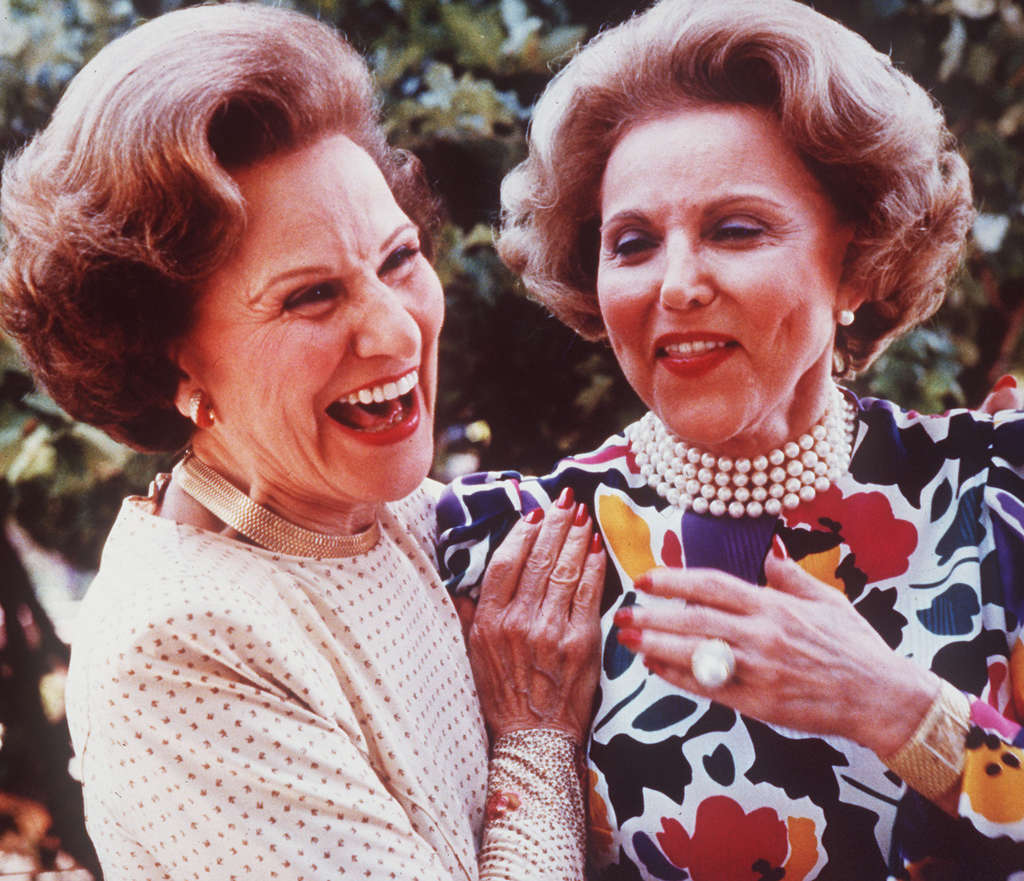
    Esther Pauline Lederer was first to the game, winning a contest in the 1950s to write the “Dear Ann Landers” column for the Chicago Sun-Times. Soon after, her deeply competitive sister, Pauline Esther Phillips, known as Popo, began writing her own advice column for the San Francisco Chronicle, “Dear Abby.” The rivalry, as depicted by Ms. Howard, was one-sided, with Phillips sniping, often in public, at her sister, and Lederer doing her best to rise above, and frequently cutting off contact altogether.

    “She was a girl who kept on trucking,” Ms. Howard said, describing her mother to an interviewer in 2003. “She sucked it up.”

    When Jules Lederer, Lederer’s husband of 35 years, left her for a much younger woman, she soldiered on, even buying him clothes and food once he was in his new apartment. It had been a drawn-out process: He had enlisted his daughter to deliver the news of his affair and plans for divorce months earlier.

    Unlike her mother, Ms. Howard never forgave him, and they remained estranged until just before his death.

    Ms. Howard’s second book, A Life in Letters: Ann Landers’ Letters to Her Only Child, published in 2003, a year after her mother’s death, chronicled their intimacy through the decades. Her mother’s vivid, salty style, peppered with the Yiddishisms she grew up with, is enticing, as are her passions, which included the Democratic Party and anti-war activism, as well as the happiness and intellectual growth of her precocious daughter.

    “One of the good things she passed on to me was that it’s almost immaterial what happens to you — it’s how you deal with it that matters,” Ms. Howard told Alex Witchel of the New York Times in 2003. “She’d say, ‘When things go seriously haywire, take a nap and then get busy.’ I went into a depression when she died, so I had my nap. It was time to get busy.”

    Margo Lederer was born on March 15, 1940, in Sioux City, Iowa. Her father was a salesperson turned businessperson who would go on to found Budget Rent A Car. He wooed her mother, then Esther Pauline Friedman, who was affianced to someone else, while she was shopping for wedding veils.

    The family lived in eight cities by the time Margo was 7, including New Orleans and Eau Claire, Wis., before moving to Chicago, where she would later settle as an adult, after her first marriage.

    Throughout her peripatetic journalism career, Ms. Howard fielded many offers to write an advice column, including a plea from her mother to take over as Ann Landers. “Honey, I don’t want to work that hard,” Ms. Howard responded.

    But in 1998, when economist Herbert Stein quit after a few months of writing “Dear Prudence,” the pithy advice column he had pioneered (and written anonymously) for Slate, the publication’s editor, Michael Kinsley, offered the column to Ms. Howard. The effort required would be minimal, he promised; she would have to answer only four letters twice a week.

    As she told Vanity Fair, “I’d had a big life: I’d been analyzed, I’d been married — certainly more than once — and I decided that I would write from my experience.”

    Her tone was sassy and wise, and “Dear Prudence,” which she wrote for eight years, was a hit.

    To Turned Off in Kansas, a reader whose boyfriend’s underwear was problematic, Ms. Howard replied:

    Dear Turned,

    He wears the baggy briefs underneath? I offer you two suggestions. Since things are going over his head, try under his nose. Write him a short love note saying it would mean a lot to you if he — forgive the pun — bagged his lucky underpants and only wore boxers. Alas, the alternative is to forget it. Would you think Prudie salacious if she were to suggest that it’s what’s inside the briefs or boxers that counts?

    — Prudie, briefly

    In addition to her daughter Cricket, Ms. Howard is survived by her husband, Weintraub; another daughter, Abra Coleman; a son, Adam Coleman Howard; and seven grandchildren.

    This article originally appeared in the New York Times.

  • Nancy Kissinger, philanthropist and wife of former Secretary of State Henry Kissinger, dies at 92

    Nancy Kissinger, philanthropist and wife of former Secretary of State Henry Kissinger, dies at 92

    NEW YORK — Philanthropist Nancy Kissinger, onetime foreign policy researcher and wife of former Secretary of State Henry Kissinger, has died. She was 92.

    She died Thursday at her home in Kent, Conn., Robert Johnson, manager of the property, told the Associated Press. The cause of her death was not disclosed. Johnson said she will be buried next to her late husband at Arlington National Cemetery at a later date.

    The daughter of a New York City lawyer, she met Henry Kissinger while working for New York Gov. Nelson Rockefeller. The couple wed in 1974.

    She was described by one profiler as a brainy, Blass-bedecked blond. She was often seen at high fashion openings and was a strong presence on the New York philanthropy scene.

    “Nancy Kissinger can pick up the phone and get right through to the CEO. Nobody keeps her waiting,” philanthropist Judy Peabody said after chairing a successful hospital charity event in 1989.

    Michael Bloomberg — the billionaire founder of the Bloomberg financial-news empire, former New York City mayor, and a friend of the Kissingers — said in a social media post that Nancy Kissinger “was a powerhouse of ideas and insights that she put to work throughout her life in government and philanthropy — and as Henry’s most valued and trusted adviser.”

    He added, “She was the ultimate diplomat — as wise as she was discreet — and I know how completely Henry admired and loved her. Diana and I were fortunate to call her a dear friend, and to see their extraordinary partnership in action over the decades. We will miss her greatly.”

    Nancy Kissinger made headlines in 1982 when she tried to throttle a woman who harassed her and her husband with insulting questions at Newark Airport. The couple was going to Boston, where Henry Kissinger was to undergo bypass surgery.

    The woman, a leafleter for a group affiliated with politician Lyndon LaRouche, accused Nancy Kissinger of choking both her throat and her free-speech rights. Nancy Kissinger said she only wanted to protect her husband from upset.

    A judge acquitted Nancy Kissinger of assault and called her behavior “a spontaneous and somewhat human reaction to an offensive question.”

    The Kissingers met in the mid-1960s when he was a consultant for Rockefeller and she was on the staff of Rockefeller’s Commission on Critical Choices for America.

    Henry Kissinger had joined the Nixon administration and was secretary of state when he and the former Nancy Sharon Maginnes married on March 30, 1974, in a civil ceremony in Arlington, Va.

    After leaving Washington, they returned to New York and lived in homes in Manhattan and Kent, Conn.

    The daughter of an Episcopalian Park Avenue lawyer, Nancy Kissinger grew up with two brothers and a horse on an estate in White Plains.

    She attended Good Counsel Academy, a Catholic girls school in White Plains, and the exclusive Master’s School in Dobbs Ferry, from which she graduated in 1951. She returned to the school to teach history for two years after graduating from Mount Holyoke in 1955.

    Graduate studies at the University of California at Berkeley followed before she went to work for Rockefeller.

  • The Philly Naked Bike Ride is this weekend. Here’s the route.

    The Philly Naked Bike Ride is this weekend. Here’s the route.

    Saturday sees the return of the Philly Naked Bike Ride, which brings cyclists to a 12-mile route of bare-as-you-dare city riding for the event’s 17th edition.

    This year, the ride is slated to kick off at 5 p.m. at the Dragon Boat Dock along Martin Luther King Drive, with a slightly different route than in previous years. For 2026, riders will head toward Eakins Oval and use the Benjamin Franklin Parkway to make their way around Logan Square to get to City Hall before heading to Rittenhouse Square and South Philly and making their way back north.

    It all wraps up at the Iroquois statue on the Benjamin Franklin Parkway, a work created by artist Mark di Suvero that the city has owned for nearly two decades. The route’s finish stands just east of the Philadelphia Museum of Art, roughly two miles from its start.

    That’s a slightly different route from 2025, which had riders start at Lemon Hill and end at the art museum itself. Lemon Hill also served as the ride’s starting point in 2023 and 2022.

    The 2026 Philly Naked Bike Ride will start at the Dragon Boat Dock at 1233 Martin Luther King Jr. Dr.Philly Naked Bike Ride

    Traditionally, pre-ride festivities like body painting sessions start a few hours before the ride.

    Held annually with the exception of the pandemic year of 2020, the Philly Naked Bike Ride began in 2009 as a four-mile course that attracted roughly 400 riders. Now, it often brings out thousands of participants for the clothing-optional festivities. No fee or registration is required.

    As per usual, this year’s event aims to promote cycling advocacy, body positivity, environmentalism, and safe cycling infrastructure. Nudity is not required to participate, organizers note online, and the ride is designed to be “safe and enjoyable for everyone.”

    According to a code of conduct posted to the event’s website, organizers expect that participants not participate in “any form of sexual or physical harassment,” and refrain from any “unwelcome behavior.”

    “Ultimately, one of the goals of the Philly Naked Bike Ride is to desexualize nudity and to encourage everyone to embrace nudity as a normal, enjoyable way of life,” the code of conduct reads. “Following this policy will help further this goal and teach all of us how to be better people in general.”

  • Barbara McDermott, a longtime Philadelphia homicide judge who worked with jurors and resentenced juvenile lifers, has died at 71

    Barbara McDermott, a longtime Philadelphia homicide judge who worked with jurors and resentenced juvenile lifers, has died at 71

    Barbara Ann McDermott, 71, a former Philadelphia judge who, for 40 years, spent nearly every workday inside the city’s criminal courthouse defending, prosecuting, and later presiding over some of the city’s most serious criminal cases, died Tuesday, Aug. 11, following a yearslong battle with a rare form of uterine cancer.

    “Heaven will now be well-run and much more efficient,” her family wrote in an obituary shared online.

    Judge McDermott spent nearly 14 years in Philadelphia’s Common Pleas Court — the majority of that time presiding over homicide cases — before retiring earlier this year.

    She was known for running a tough and orderly courtroom, starting her day promptly and putting up with little fuss and few excuses from prosecutors, defense attorneys, police, and defendants alike.

    Born and raised in Aliquippa, in Western Pennsylvania, Judge McDermott said in an interview this spring that, growing up, she was a tomboy who pushed the boundaries of her small, steel mill town. She delivered the local paper even when supervisors said the work was only for boys. When leaders of her local Catholic school balked at her request to start a girls basketball team — saying young women “weren’t strong enough” to play full-court — she found a coach who would let her.

    She attended Seton Hill College, then an all-women’s university outside of Pittsburgh. There, she became passionate about pastoral theology and social justice, and led the student government association.

    She initially thought she would follow local tradition and become a teacher or establish a chain of daycares, but then, she said, “I realized … I’ve been gifted with a brain. I want to do something more than the tradition.”

    She took an interest in legal issues and attended Georgetown Law School. (She enjoyed pointing out that she was rejected by the University of Pennsylvania.)

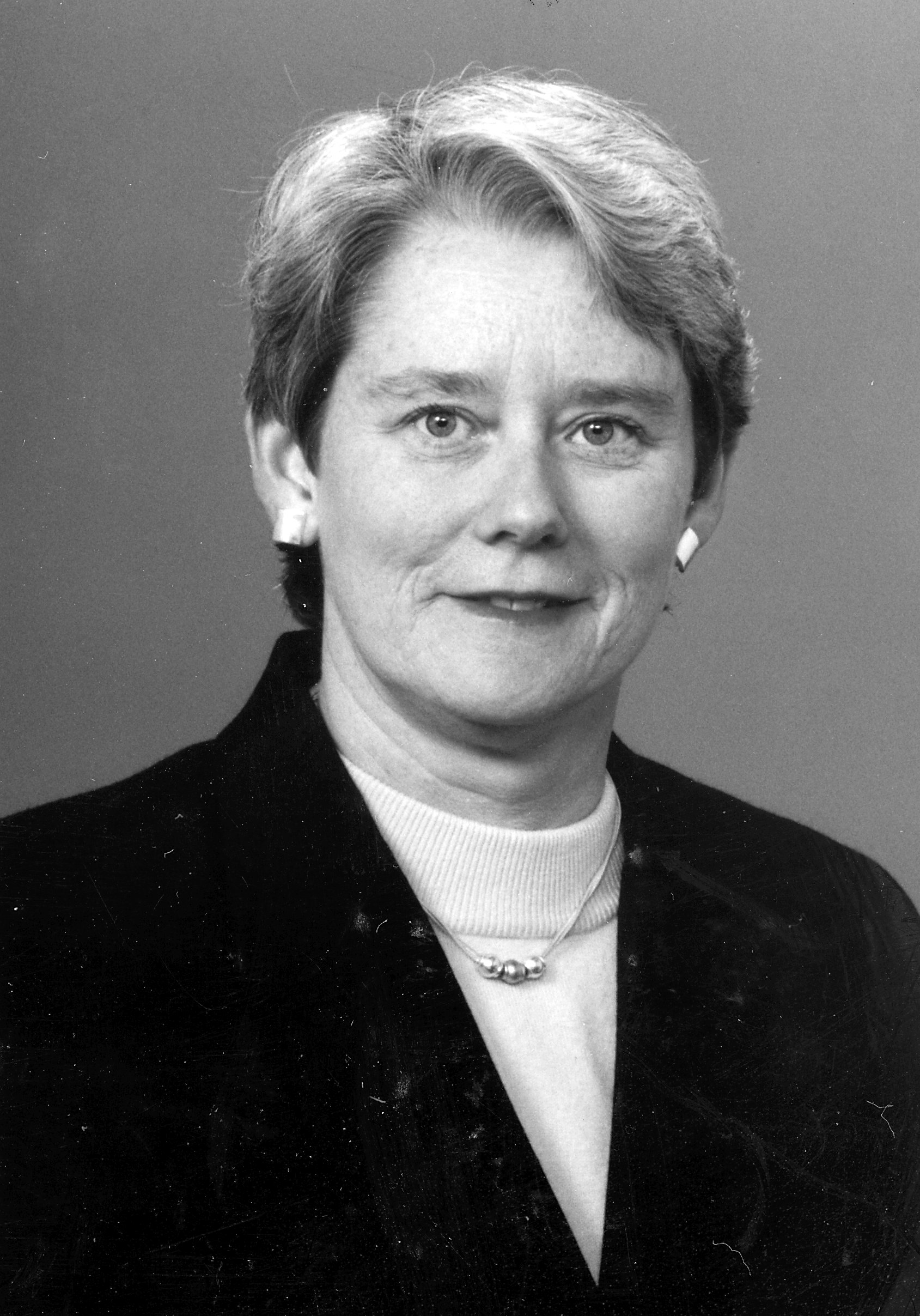
    Barbara McDermott in 2001.Courtesy of Barbara McDermott

    She first worked in the attorney general’s office, but longed to practice in Philly, where she said she was inspired by female judges like Lois Forer, Lisa Richette, and Juanita Kidd Stout.

    “I wanted to practice around lawyers that were better, and I wanted to practice around a diverse bench,” she said.

    She joined the Philly DA’s office in 1984 under Ron Castille’s leadership, but left after several years due to what she described as “disagreements,” including that she did not support the death penalty.

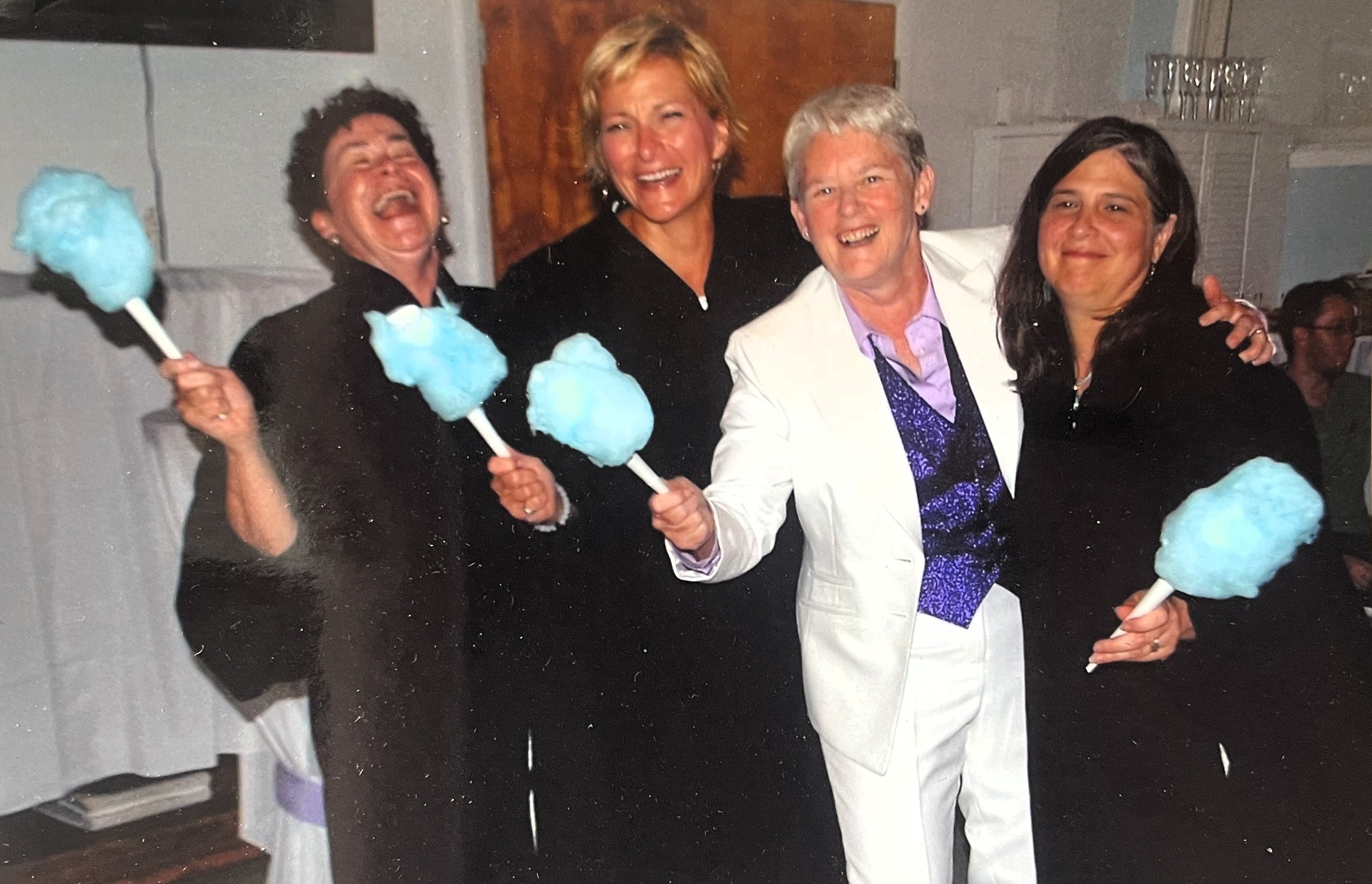
    She started her own practice as a criminal defense attorney, and adopted two daughters, Nicole and Colette, in the early 1990s. She raised them alongside her partner — and, later, wife — of 37 years, Jeanne Buckley.

    Buckley, in an interview with the Philadelphia Gay News, said she and Judge McDermott had been introduced by friends at St. Vincent de Paul Catholic Church in Germantown, a service-oriented congregation they remained a part of through their life.

    She told the outlet that, early in their relationship, they went to Rehoboth Beach, Del. There, Judge McDermott asked her to close her eyes and placed sparklers around her. This was what life would be like together, she said.

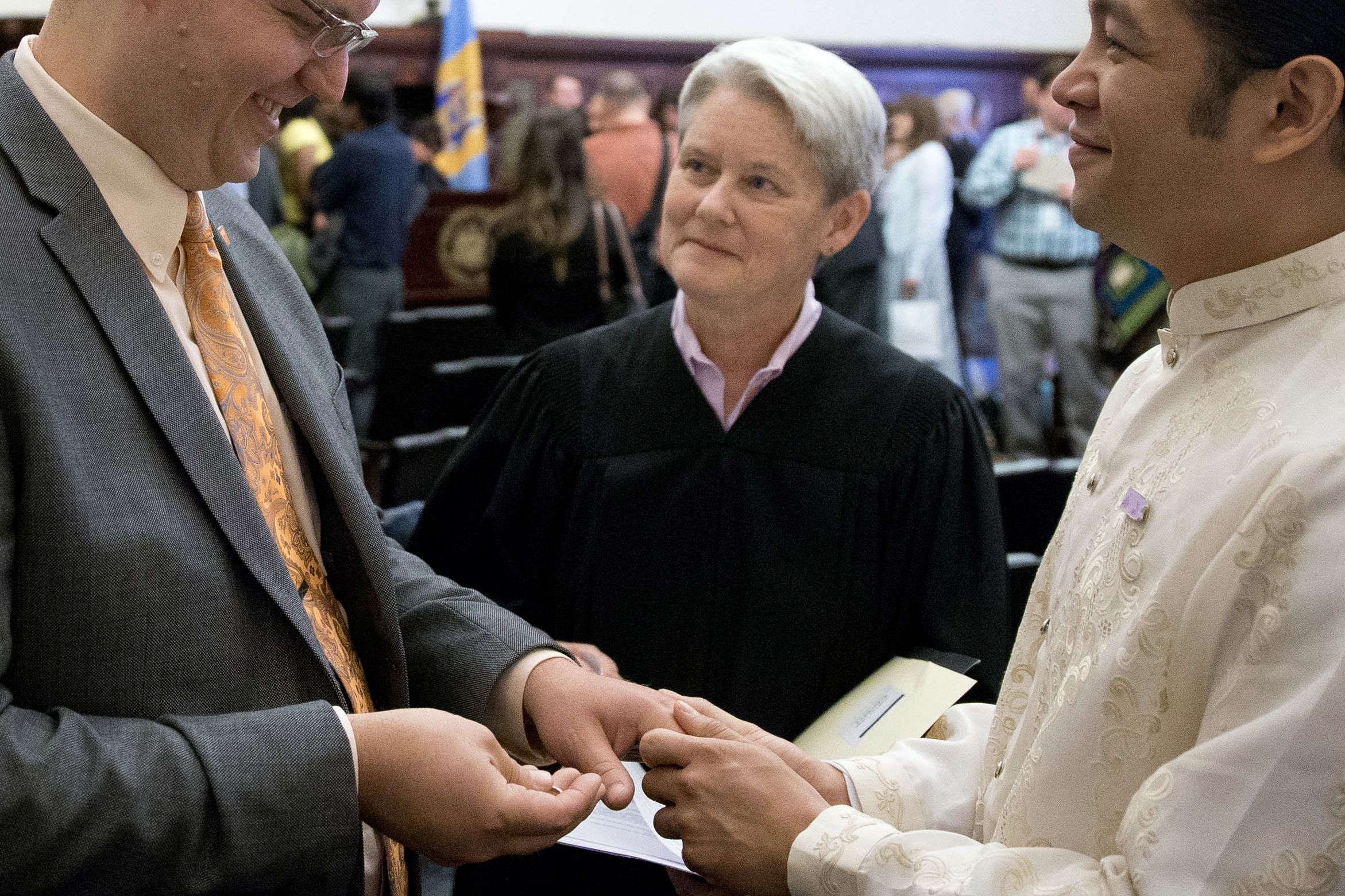
    As their life together went on, Judge McDermott was later elected to Common Pleas Court, joining the bench in 2012. Soon afterward, she started overseeing homicide cases.

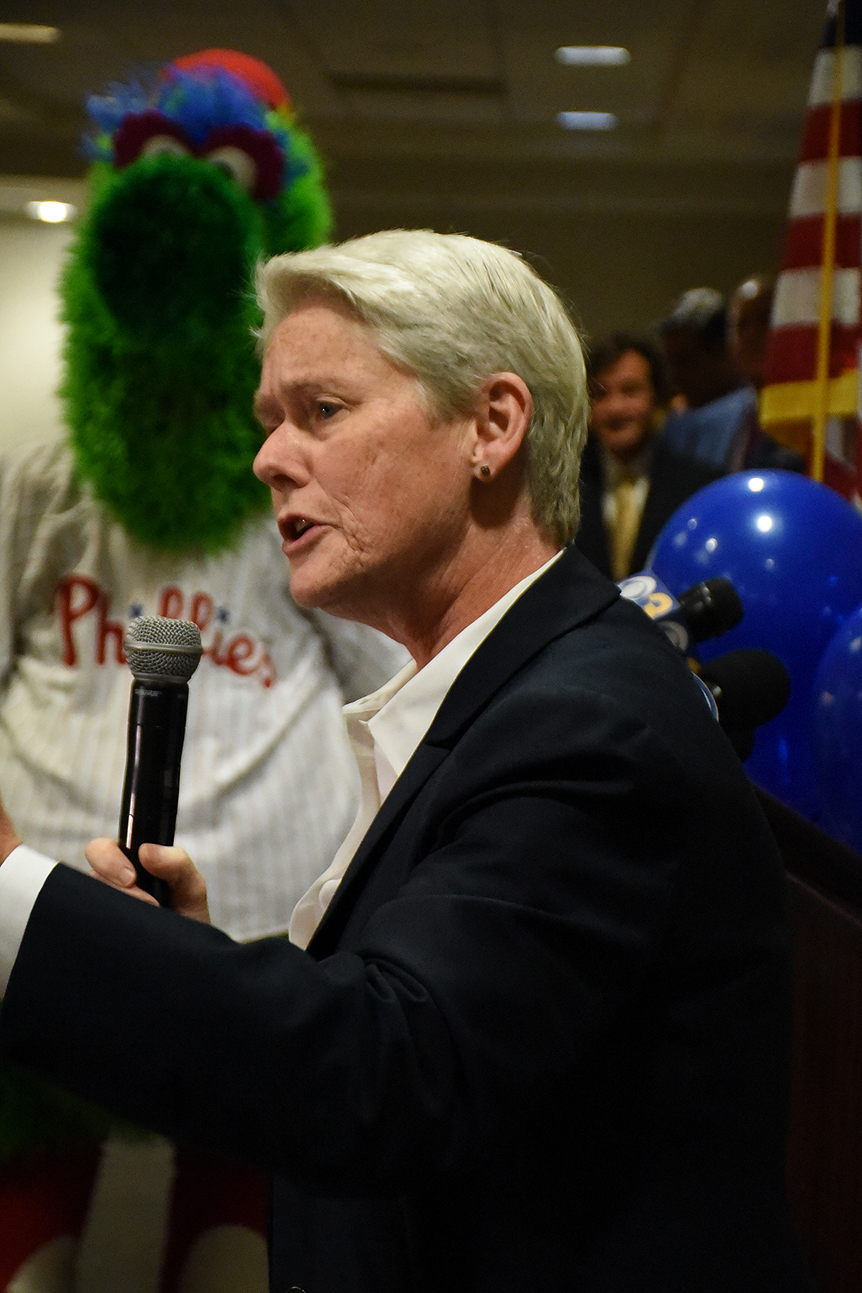
    Barbara McDermott speaks at an event with the Phillie Phanatic in the background.Courtesy of Barbara McDermott

    She presided over numerous resentencings of former juvenile lifers, in one case surprising both defense lawyers and prosecutors when she decided to exonerate one, Terrance Lewis, who had been found innocent by a federal magistrate judge but remained in prison on a procedural issue.

    She said that work, seeing how people changed over time, was some of the most fulfilling of her career.

    But she also drew criticism from some youth justice advocates who said she was unduly harsh in dealing with teenagers accused of violent crimes, denying requests to transfer their cases to juvenile court and imposing substantial state prison sentences.

    Judge McDermott could be exacting from the bench. But her concern for how people experienced the courthouse and the justice system extended beyond the parties before her.

    Colleagues called her a trailblazer for women and LGBTQ+ attorneys, and said she worked to get more female judges in leadership at the First Judicial District. She helped create a curriculum on how judges and court staff should treat transgender witnesses and victims. She also sought to improve conditions for jurors, and coordinated efforts to add a lactation booth to the criminal courthouse.

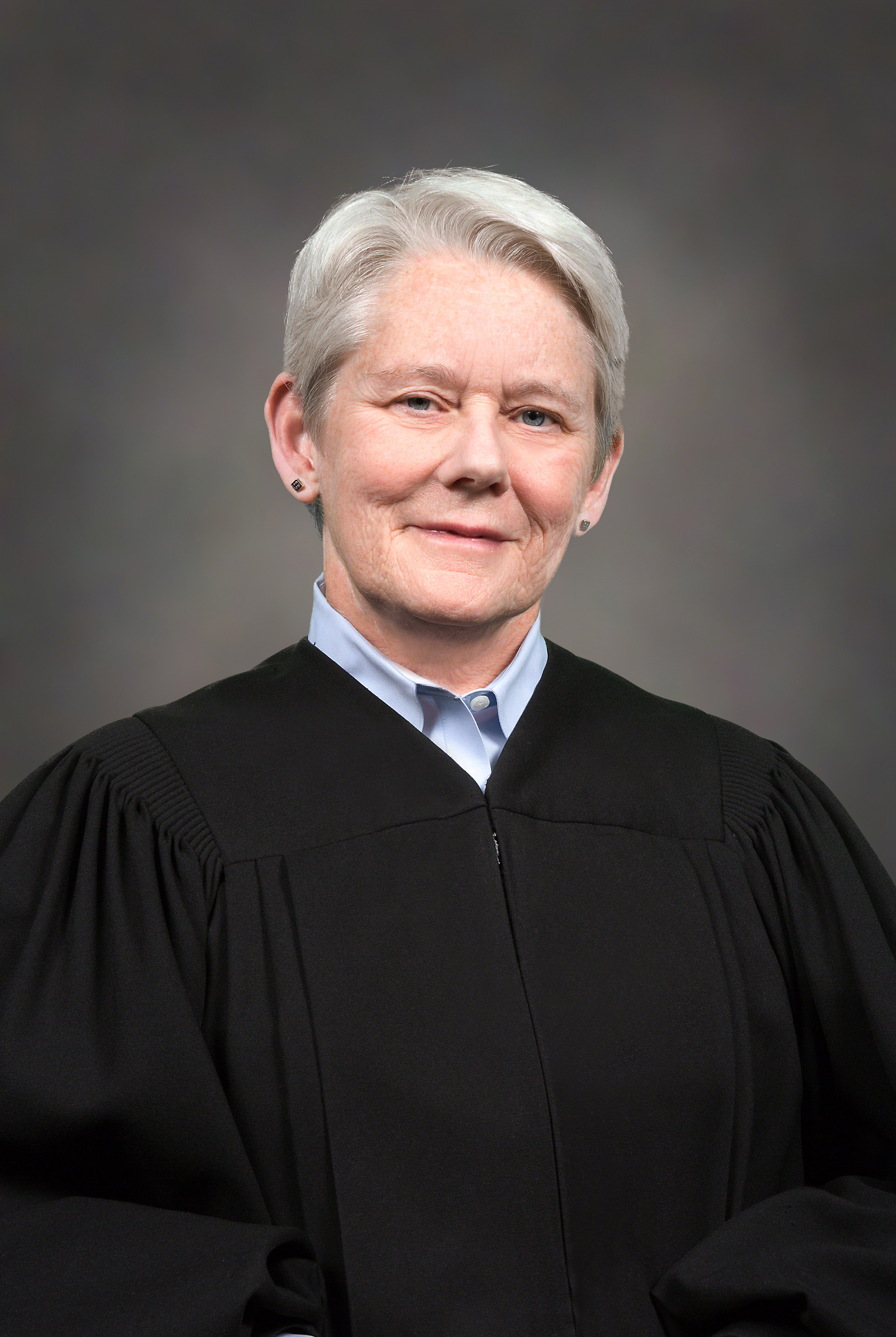
    Barbara McDermott joined Philadelphia’s Court of Common Pleas in 2012.Anthony Leonardo

    When she was fed up with how rundown the furniture was in the jury deliberation room, she brought in a sander and refinished the tables and chairs herself. A pungent smell took over her courtroom that “did linger longer than I thought,” she later joked.

    Jury Commissioner Pat Martin said their work with jurors led to an unexpected friendship.

    “I don’t know how or why,” he said. ”But I’m grateful.”

    He particularly enjoyed her dry sense of humor.

    “She took on people and didn’t care. She didn’t worry about the feathers that she ruffled,” he said.

    Outside of court, she enjoyed volunteering, biking, camping, hiking, traveling, and spending time with her family and grandchildren, her family wrote.

    Friend and retired Common Pleas Court Judge Ann Butchart recalled a time when she and her wife had plans to meet Judge McDermott and her wife for dinner. McDermott invited them to go on a walk beforehand — which quickly became a challenging, miles-long hike.

    “It’s getting darker and darker, and the hills are getting steeper and steeper,” she said. “We ended up at some hole in the wall in Roxborough.”

    That was Judge McDermott, she said: “This very intense, very, very funny, very, very smart, and very, very determined woman.”

    On the bench and in their friendship, she said, Judge McDermott was complex and honest, and rarely wavered in her positions.

    Barbara McDermott, center right, with fellow judges at her wedding in 2014.Courtesy of Barbara McDermott

    She pointed to a Latin saying: “Sometimes wrong, but never in doubt.”

    “She was so fiercely certain of her decisions and her perspective and her positions on things,” she said. “It was challenging at times, but to see and live in that confidence is a pretty amazing place to be. She manifested that in every part of her life, including her approach to her illness.”

    When Judge McDermott was diagnosed with a rare form of cancer several years ago, Butchart said, there was little research on the illness and many doctors were unsure about the best course of treatment.

    “She challenged every doctor. She was certain that if an approach had been recommended, it wasn’t thorough enough, wasn’t complete enough, wasn’t the best,” she said. “I think personally it added a good year and a half to her life.”

    Martin and Butchart said they will never forget the unveiling of her judicial portrait at the criminal courthouse. A ceremony that is typically stale and sleepy became a celebration of her life.

    She asked her colleagues to perform a skit that featured “a day in the life” of her courtroom, 507.

    Butchart said she and other judges wore sparkly collars on their robes, waved little flags, and sang a personalized song to the tune of “Gloria” by Laura Branigan.

    When they finished, she said, Judge McDermott quipped that the song was not even original — they had sung that at her birthday.

    They could only shake their heads and laugh.

    “This was so vintage Barb,” Butchart said. “She never had an experience that she couldn’t have improved upon or found wanting in some way.”

    And then, naturally, she gifted them shirts donning her portrait.

    Judge McDermott, in the months before her death, said she embarked on a “World Tour” to see and thank the people who had touched her over the years. It reinforced, she said, that her life was a gift.

    “You’ve had 70 years,” she said she told herself. “You’ve had a life.”

    Judge McDermott is survived by her wife and daughters, three grandsons, six siblings, and 20 nieces and nephews.

    A celebration of her life is to be held in mid-September.

  • AmeriHealth Caritas to invest $15M in a company that serves people with intellectual and developmental disabilities

    AmeriHealth Caritas, a Medicaid insurer based in Delaware County, has agreed to invest $15 million in Deon Health, a Michigan start-up that works with states and insurers to improve care for people with intellectual and developmental disabilities, the two companies announced Friday.

    Deon was founded in 2024 to work with local providers to help people with intellectual and developmental disabilities (I/DD) overcome the silos that make it hard to coordinate primary care, specialty services, behavioral health, and long-term supports needed to allow individuals to live in community settings.

    “We built Deon Health to create a better way to organize care around people with I/DD, their families and the professionals who support them every day,” Sara Ratner, chief executive of Deon Health, said in a news release. “AmeriHealth Caritas brings deep Medicaid experience and shares our commitment to a model built around strong local relationships.”

    Other investors in Deon include Town Hall Ventures, First Trust Capital Partners, and Difference Partners.

    Independence Health Group, the parent company of Independence Blue Cross, is the majority owner of AmeriHealth Caritas. Independence’s partner in the business is Blue Cross Blue Shield of Michigan. Among the nation’s largest Medicaid insurers, AmeriHealth Caritas has contracts in 13 states and Washington D.C.

  • With 89 new cases in a week, Pa. reports the nation’s third-largest measles outbreak

    With 89 new cases in a week, Pa. reports the nation’s third-largest measles outbreak

    Pennsylvania health officials confirmed 89 new measles cases in the state in the last seven days, an escalation of a rapidly growing measles outbreak now impacting more than two dozen counties.

    As of Thursday, Pennsylvania had reported the third-highest number of measles cases in the country for 2026, behind Utah and South Carolina, according to data from the Centers for Disease Control and Prevention.

    Delaware has reported 22 cases this year, the first time in a decade that the highly contagious disease has been diagnosed in state residents. New Jersey has confirmed just one case.

    In Pennsylvania, children made up about one-third of the 379 patients diagnosed with measles in two separate outbreaks so far this year, state officials say. None of the patients diagnosed with measles this year has been fully vaccinated.

    In all of 2025, the state reported just 16 measles cases.

    Lancaster County, with some of the lowest measles vaccination rates in the state, has been at the center of both Pennsylvania outbreaks this year. As of Friday, the county has tallied 181 cases.

    State officials warned earlier this week that the public may have been exposed to the disease on Aug. 4 and 5 at a soccer camp at Millersville University and on Aug. 12 at a Whole Foods in Lancaster.

    Chester County has the second-highest number of cases in the state, at 41; it is the only Philadelphia-area county to report cases in the current outbreak, which began in April.

    And cases are climbing in central Pennsylvania, with Centre County reporting 13 cases and neighboring Mifflin County reporting 25.

    State health officials said that 70 people, including 22 children, have been hospitalized with measles this year. That’s about 18% of the total cases reported.

    In August alone, state officials have confirmed nearly 200 new cases in Pennsylvania.

    The true number of cases is likely much higher, physicians and health officials in Lancaster and Chester Counties say.

    In Chester County, some residents have refused to cooperate with health workers looking to trace their contacts to understand how measles is spreading in the county, officials there have said.

    Local officials also worry about the spreading outbreak as many children return to school next week. Overall, about 93% of kindergarteners in Pennsylvania were vaccinated against measles, mumps, and rubella (MMR) in the 2025-26 school year.

    That’s just below the 95% “herd immunity” threshold, the level at which scientists say a given population must be immunized to prevent the spread of measles, which can infect nine in 10 unvaccinated people exposed to it.

    Analyses earlier this year by The Inquirer and the Pittsburgh Post-Gazette show pockets of vulnerability across the state, with hundreds of kindergarten classes reporting vaccination rates below herd immunity, putting students and communities at risk for an outbreak.

    Still, most Pennsylvania students are fully vaccinated and schools “benefit from robust community immunity that serves as a powerful barrier against the virus,” state health officials said in a statement.

    The state hosted medical briefings for nearly 1,000 school nurses over the summer to provide guidance on preventing measles as they prepare for the upcoming school year, officials said.

    Most measles cases resolve in weeks with mild-to-moderate flulike symptoms, but the disease is particularly risky for young children and can result in severe complications, including death.

    This year, Pennsylvania hospitals have treated adults with brain swelling and pneumonia, and children with dehydration or damaged organs from measles.

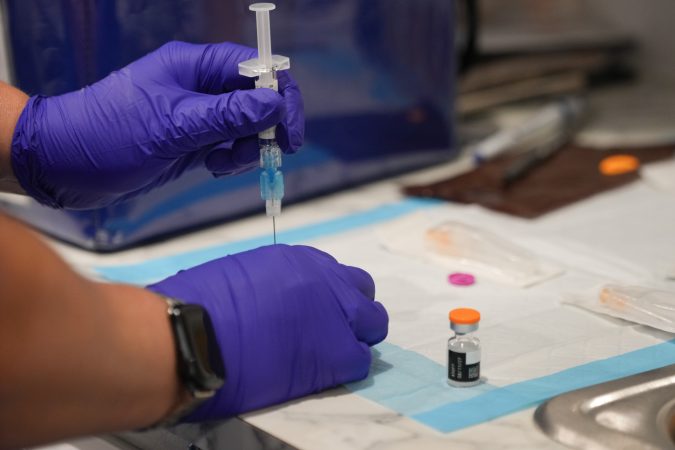
    State officials have stepped up vaccination campaigns in response to the outbreak, with health department staff dispensing more than 4,000 vaccinations in the state this year — and more than 1,800 in August alone.

    The department has held 85 pop-up clinics in affected counties since April and has scheduled “dozens” of additional clinics for the coming weeks and months.

    The state has also hosted briefings for healthcare providers on how to recognize and treat measles, and is recommending that doctors offer early vaccinations for children as young as six months old in affected areas.

  • The Philly School District, with 70,000 empty seats, will spend $7M for a lease for a single school

    The Philly School District, with 70,000 empty seats, will spend $7M for a lease for a single school

    The Philadelphia school board voted Thursday night to spend up to $7 million on rental space to house a district high school in Center City.

    The four-year agreement — the district will pay $1.7 million annually for two years, then $1.8 million and $1.9 million in the final two years — covers classrooms and related spaces at 18 S. Seventh St., the longtime home of Constitution High School.

    The move comes months after the district voted to close 17 schools, in part because it has 70,000 empty seats in schools across the city. The school system will also merge some schools — like Overbrook High and the Workshop School — as part of its $3 billion facilities master plan, to be enacted over the next decade, but it opted not to move Constitution High into any school with empty space.

    Board members voted unanimously to pass the resolution, which noted the district “continues to work through the completion of the Facilities Master Plan to properly identify appropriate space for our students.”

    Officials will “review the opportunities that may exist in the coming years that would cause us to re-evaluate the current necessary decision to remain at this location, which accommodates the needs of the students within this program. If the opportunity arises for the school district to consider relocation, the community and stakeholders will become aware and involved in this process.”

    The facilities plan calls for Constitution to move in 2035-36 into the current Bodine High building in Northern Liberties. Bodine will eventually expand and move into the current Penn Treaty building, in Fishtown, and Constitution will then occupy the Bodine space.

    Constitution, a citywide admissions school, has been located at its current building since the school opened in 2006 as part of Philadelphia’s small-schools boom. The school was designed with a civics focus, and deliberately located near the National Constitution Center.

    The district has moved other schools out of rental properties. It relocated Science Leadership Academy, which had been in rental space near the Franklin Institute, into Benjamin Franklin High. District officials have pointed to that colocation as a model.

    Charter renewals, but no mention of missing PSSAs or Kensington asbestos relocation

    The board also voted Thursday night to renew two charters: YouthBuild Philadelphia Charter, on North Broad Street in North Philadelphia, and Inquiry Charter, on Belmont Avenue in West Philadelphia.

    Both schools received five-year renewals.

    YouthBuild’s renewal came with conditions: agreeing to submit a student attendance plan, tracking students’ daily attendance, and divulging supports offered; and promising to ensure the school’s suspension rate is at or below the district’s suspension rate.

    No district official addressed two brewing matters: either the asbestos-related relocation of Kensington High students to the former Meehan Middle School building in the Northeast, more than seven miles away, or the district’s missing PSSA scores.

    Earlier on Thursday, a Lincoln High parent and a Mayfair resident were attempting to block Kensington’s move to Meehan, a closed district school currently used as swing space to house school populations that need a temporary home.

    Meehan shares a campus with Lincoln and Northeast Community Propel Academy, both of which are overcrowded. Parent Harold Brown and Peter McDermott, a former Philadelphia teacher who’s active in Mayfair civic life and city Democratic politics, say moving Kensington onto the campus will harm students.

    They also say placing 400 Kensington students and 90 staff at Meehan violates a Community Benefits Agreement signed in 2019, when neighbors OK’d building Propel to ease overcrowding at other Northeast schools.

    No mention was made, either, of the lack of data around Philadelphia students’ PSSA and Keystone exams.

    District officials said they won’t release the scores of students’ spring tests — which district officials have access to — because of a delay in Harrisburg.

    Though the district did receive preliminary student-level scores, and released limited data to some teachers and administrators in order to correctly roster a limited number of students, they have walled off the data from the vast majority of educators.

    A district spokesperson said this week that they won’t be using PSSA scores for the school selection process that admits students to 37 magnet schools. Instead, students can take an alternate assessment the district declined to name or detail.

    The scores are consequential in a district where officials frequently state their goal to become the fastest-improving large urban school system in the country. Philadelphia has posted academic gains during Superintendent Tony B. Watlington Sr.’s tenure and earned national attention for its post-pandemic improvement, but its students still generally struggle.

    Citywide, 34% of students score at grade level in English and 23% in math, as judged by 2024-25 standardized tests.

    Administration of this year’s PSSAs, given to students in third through eighth grades, was snarled by some technical glitches. It was the first year Pennsylvania required students to take the exams online.

    Research shows that scores usually dip when tests move online.

    Kristin Luebbert, a retired district teacher, urged the board and the district to release the scores.

    “Obviously, the administration must have strong feelings about what they show,” Luebbert said of the scores. “At this point, we all know they’re out there, so you might as well release them.”

  • ICE begins deporting Haitians who lost TPS back to homeland

    ICE begins deporting Haitians who lost TPS back to homeland

    The first deportation flight to Haiti since the Trump administration ended humanitarian protections for 350,000 people living in the United States landed Thursday in the Caribbean nation, and activists say immigration arrests are beginning to ramp up.

    The flight carrying 170 people, ranging in age from 19 to 71, landed in Cap-Haitien, on the northern coast of Haiti. Commercial flights from the U.S. have been blocked from landing in the Caribbean nation’s primary airport in the capital of Port-au-Prince due to gang activity and reports of aircraft being struck by gunfire.

    The federal government has been sending deportees back to Haiti on monthly flights, but Thursday’s removal was among the largest that community leaders said they had seen during the second Trump administration.

    Many of the passengers had been detained by U.S. Immigration and Customs Enforcement in the last three weeks, and at least one had recently lost temporary protected status, according to Guerline Jozef of the Haitian Bridge Alliance.

    “People are losing TPS status and losing their asylum cases,” she said. “It’s become easier and easier to be taken and deported.”

    The Department of Homeland Security did not respond to questions about the deportation flight.

    For months, Haitians have been bracing for ICE to begin making arrests en masse, although the new enforcement push has unfolded slowly and quietly so far.

    DHS has placed ankle monitors on Haitians who have lost their protected status. Arrests have also been made in communities home to large numbers of people from the violence-ridden Caribbean nation.

    The U.S. Supreme Court cleared the way for the Trump administration to end humanitarian protections for Haitians in June, and in early August a federal judge took the final step in allowing the Trump administration to terminate the benefit for Haitians.

    On Thursday, community leaders in Springfield, Ohio, said ICE arrested a well-known Christian pastor, Joubert Adrien. He was driving home when officers boxed in his vehicle at a gas station, the activists said. He had recently lost TPS, according to Vilés Dorsainvil of the Haitian Support Center.

    The arrest has sent chills through Adrien’s congregation and the larger Haitian community, Dorsainvil added.

    ICE officers have also been spotted making arrests over the last week in Springfield outside grocery stores and after traffic stops. Local residents and clergy members have been protesting the arrests, and a legal advocacy organization has been trying to help those detained.

    Many Haitians in Springfield are now wondering if they will be the next to get arrested, community leaders said.

    Springfield became a focal point during President Donald Trump’s 2024 campaign after he falsely claimed that Haitian residents there were killing and eating their neighbors’ pets.

    The city includes a large number of the country’s middle class who worked as physicians, judges, and in other professions in Haiti, Dorsainvil said. They moved to Ohio after the country was plunged into chaos following the 2021 assassination of the country’s then-president, he said.

    “That’s why they left Haiti,” said Dorsainvil, himself a former TPS holder. “They were not looking for work. They left because they were at risk.”

    But in Springfield they have worked factory jobs, filled healthcare vacancies, continued their university studies, and started businesses. Now, instead of using their skills to benefit U.S. communities, Dorsainvil said, they face the possibility of being sent back to a place where they recently had urgent reasons to flee.

    Dorsainvil said he is fielding dozens of calls each day from terrified neighbors who tell of ICE visits to their homes. He heard from a woman on Thursday who couldn’t find her husband on ICE’s detainee locator website and was panicking, believing that he could be on the deportation flight.

    Deportees from the U.S. are especially vulnerable to kidnapping, extortion, and murder once they land in Haiti, Jozef said. Criminals think they have been given money by the Trump administration to self-deport or have savings from their time stateside, he said.

    U.S. military personnel who served in Haiti recently testified in Congress on the country’s gang crisis and characterized the nation as a conflict zone.

    Top Haitian government security officials have been kidnapped by armed groups. More than 1.4 million Haitians have been internally displaced and much of the population is going hungry.

    “This isn’t a country where anyone should be deported right now,” said Savi Arvey of Human Rights First, an advocacy group tracking deportation flights. “We are gravely concerned this administration seems poised to intentionally take legal status from people in service of its mass deportation campaign and intentionally and knowingly deporting people to danger.”

  • Sixers hiring assistant coach Phil Handy, a veteran with deep ties to LeBron James

    Sixers hiring assistant coach Phil Handy, a veteran with deep ties to LeBron James

    The 76ers are adding a well-regarded assistant to their bench who is familiar with both LeBron James and head coach Nick Nurse.

    The Sixers are hiring Phil Handy, who was with the Dallas Mavericks last season, a source confirmed. Handy is regarded as one of the elite player development coaches in the league.

    But prior to the Mavericks, Handy had stops with the Cleveland Cavaliers (2013-18), Toronto Raptors (2018-19) and Los Angeles Lakers (2019-24). In Cleveland, Handy won a championship in 2016 along with James. He stayed in Cleveland until the 2018-19 season, when he joined Nurse’s staff in Toronto, where he also won a championship with the Raptors.

    The following season, Handy reunited with James in Los Angeles, where he stayed for the next five years. He was part of Frank Vogel’s staff that led the Lakers to a title in 2020 and stayed with the Lakers through multiple head coaching changes from Vogel to Darvin Ham and JJ Redick.

    He joined Jason Kidd’s staff in Dallas last season before Kidd and the Mavericks mutually parted ways this offseason. Handy made his reputation in the league in part because of his player development work with Kobe Bryant.

  • Meet the Philly drag king competing in Season 2 of ‘King of Drag’

    Meet the Philly drag king competing in Season 2 of ‘King of Drag’

    Philadelphia’s drag scene returns to the TV spotlight this fall in Season 2 of the reality competition show, King of Drag. For a second year in a row, the show has cast a Philly drag king: The new contestant is Cyrus K. Stratton.

    The West Philly performer, whose offstage name is Simone Lawrence, follows drag king Henlo Bullfrog, who competed in last year’s inaugural season and landed in third place.

    King of Drag premiered in 2025 on the LGBTQ+ streaming service Revry as the first show of its kind for drag kings, following the yearslong success of RuPaul’s Drag Race and its many spin-offs. (Drag Race has also turned its attention to drag queens representing Philly recently, like Sapphira Cristál and Mandy Mango.)

    The second season premieres Sept. 20 with actor-comedian Cameron Esposito serving as host and competition judges including Our Flag Means Death actor Vico Ortiz, Drag Race alum Gottmik, and King of Drag cocreator Damian Pelliccione. Ten contestants will face off in weekly challenges showcasing drag artistry, performance, and originality across eight episodes.

    By day, Lawrence is a painter and art therapist. Originally from California’s Bay Area, she began performing drag while attending graduate school for psychology in Madison, Wisc. Typically an introvert who shied away from the spotlight, Lawrence found that drag provided a chance to explore and embrace her queerness.

    “I’m a pretty quiet and shy person by nature, but stepping on stage, I felt empowered … just trying on a beard or a mustache gives you permission to play with gender, to wear what you want and look how you want,” said Lawrence, 35, who studied art therapy at Drexel University. “The stage was a space to feel liberated as a queer person. I think it gave me the opportunity to reclaim space or to take up space.”

    Philadelphia drag king Cyrus K. Stratton, aka Simone Lawrence, is a painter and art therapist.Courtesy of Cyrus K. Stratton

    She moved to Philadelphia about five years ago and has appeared on local stages with performances inspired by Black male artists like Prince, Stevie Wonder, and Barry White. She took the name Stratton in honor of the drag king who first inspired her in Wisconsin, Kingston Stratton.

    Cyrus K. Stratton has since become a fixture in the Philly drag community, working with Henlo Bullfrog to recruit and train amateur drag kings and producing all-drag king shows around the city. In an effort to build community with fellow Black drag kings in the city, Stratton combined his passion for painting and drag to create the 2024 exhibit “The Coronation” at Prism Arts Philadelphia; it featured portraits of local drag kings including Mister Right, Sir Suavey, and Mo Betta.

    “I have seen the king scene grow since I’ve been here — prominent kings in Philadelphia take bigger stages and are more respected, accepted, and celebrated by the wider community,” said Lawrence. “For example, Fabrika [the drag performance space in Fishtown] only ever had [Drag Race] girls or the most prominent queens, and [last year] I was the first drag king to perform on that stage and sort of infiltrate that space.”

    Appearing on King of Drag was an intense and stressful experience, but Lawrence believes the friendship she found while competing was worth it. She worked with a team of 10 designers from Philadelphia to prepare her outfits, songs, and choreography for the show.

    Cyrus K. Stratton in a promotional poster for Season 2 of “King of Drag.”Courtesy of Cyrus K. Stratton

    As the premiere date nears, Lawrence is a bit nervous for all the attention, but she recognizes the power in representing Black drag kings on a national platform. She’s also excited to have Philly’s drag community supporting the show: Center City’s Franky Bradley’s will host weekly watch parties as the season progresses, so fans can see Stratton on screen and in person.

    “People are still learning what it means to be a drag king and why people do kinging. It’s about challenging different stereotypes and archetypes of manhood and masculinity,” said Lawrence. “It’s just so important for so many of us [to have] an opportunity to maybe dismantle masculinity and dismantle the patriarchy, and give people sort of a new interpretation of what masculinity could be.”

    Season 2 of “King of Drag” premieres Sept. 20 on Revry.