Blog

  • Amid attacks by Trump, judge weighs golf course plan in tense hearing

    Amid attacks by Trump, judge weighs golf course plan in tense hearing

    U.S. District Judge Ana C. Reyes began her workday with the president of the United States calling her a “crazed lunatic” and questioning whether she “may be insane.” She ended it telling a packed courtroom that her family was alerting her to reports that she had received death threats.

    In the nearly seven hours between, the federal judge overseeing President Donald Trump’s planned overhaul of East Potomac Golf Links tried to untangle conflicting statements from the president, his administration, and the attorneys representing it about what exactly the government intends to do with the historic public golf course.

    “This is where we are,” Reyes said near the end of the hearing, after saying her mother and brother had contacted her about news reports of threats and referencing disturbing emails and voicemails she had received. “A federal judge is getting death threats over a golf course. I really don’t think that’s what the founders envisioned.”

    The extraordinary atmosphere followed a Justice Department request Friday that Reyes recuse herself, accusing her of “open hostility” toward the administration. Reyes, a Biden appointee, rejected the request Sunday night, and Trump responded Monday morning with his personal attack while declaring that Interior has an “absolute right” to remake East Potomac and that work would begin “IMMEDIATELY!”

    The tension spilled into the courtroom early on Monday. Reyes ordered the government to resubmit its latest filing with the names of Justice Department lawyers who were willing to stand behind it, then asked those attorneys to raise their hands. Associate Attorney General Stanley Woodward Jr., the department’s third-ranking official and the lone lawyer who signed Friday’s recusal motion, objected and instructed them not to respond.

    The confrontation set the tone for a hearing in which Reyes repeatedly struggled to reconcile what Trump was saying publicly with what his administration was telling her in court.

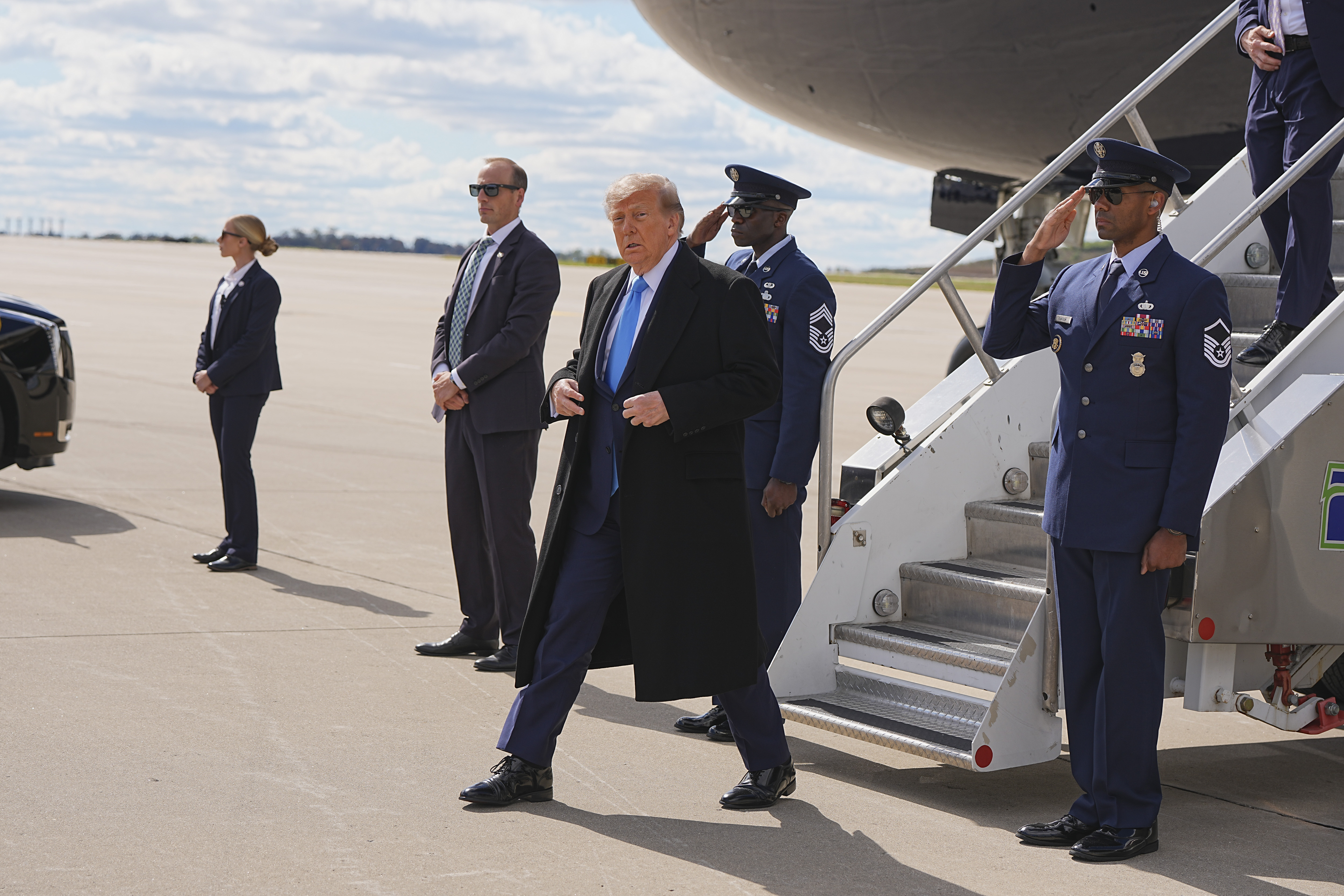
    Trump said Sunday that the Interior Department and famed golf architect Tom Fazio had “developed a plan” to transform East Potomac into a championship course and that the existing course would close Nov. 15. By Monday morning, Trump said work would begin immediately.

    Senior officials responsible for the property offered a markedly different picture.

    Gregory Wischer, Interior Secretary Doug Burgum’s deputy chief of staff for policy, testified that he learned of the Nov. 15 date from Trump’s social media post. He said he first saw the new Fazio design last Thursday, when it was sent to his personal cell phone from Gavin Fazio, the architect’s son.

    Asked about Trump’s announcement Monday that work would begin immediately, Wischer said: “We’re not ready at this point.”

    Jessica Bowron, the acting National Park Service director, testified that she had not been made aware of any plan to close East Potomac on Nov. 15 and said such a decision was something she “would certainly” expect to know about. Justice Department lawyers, meanwhile, maintained that there is no final plan.

    “If there’s no plan, if it’s still in development, how is it going to start immediately?” Reyes asked.

    Later, after a government attorney again said the Park Service had no plan to close the course Nov. 15, Reyes put it more starkly: “So who do I believe? Do I believe the president of the United States or do I believe you?”

    The questions have become more consequential since National Park Service crews and contractors removed more than 400 trees from East Potomac on Oct. 10, prompting Reyes to temporarily halt further cutting, saying she felt misled by the government lawyers.

    The administration has maintained that the tree removal was unrelated to Trump’s overhaul and instead was a response to recommendations from a 2019 report intended to restore East Potomac’s historic links-style design.

    Wischer and Bowron testified Monday that they became familiar with the seven-year-old report only in late September. Within days, a tree-management plan was drafted and approved, and the cutting began Oct. 10.

    “There is no universe in which all of this just coincidentally happened at the same time,” Reyes said. “There just isn’t.”

    The Fazio rendering would replace East Potomac’s existing 36 holes with a single 18-hole championship course. It also appears to eliminate Ohio Drive, a historic miniature golf course, and a century-old grove of Japanese cherry trees, potentially affecting thousands of runners, cyclists, and other visitors to Hains Point.

    Bowron testified that the Park Service was seeking to protect East Potomac’s historic landscape, while Trump’s rendering depicts an entirely new course.

    “I’m hearing testimony after testimony after testimony that the basis of this was to go back to the original design,” Reyes said, “and now I have indications that we’re going to get a brand new design.”

    “I don’t know what to do when I keep getting different stories from the government,” she said later.

    By the end of Monday’s hearing, Reyes said the evidence had pushed her toward a consequential conclusion: that the removal of the trees was part of Trump’s broader plan to remake East Potomac.

    “I absolutely plan, as of this moment, to make that finding,” she said.

    Trump offered his own description of the project Monday at the White House.

    “It’s old, it’s tired, it’s beaten up, it’s useless, it doesn’t do much business,” he said of East Potomac, the region’s busiest public golf facility. “We’re going to basically build a better golf course. You can call it a renovation. It should be very simple.”

    Bowron reaffirmed Monday that a major renovation would require environmental and historic-preservation reviews before proceeding. Trump, by contrast, said Interior is “allowed to do” the project and is simply fixing up federal property.

    Reyes did not rule Monday. She indicated she was unlikely to halt Trump’s redevelopment altogether but was considering continuing the prohibition on additional tree removal and requiring advance notice before other irreversible changes.

    “There’s no way we’re going back to, you know, ‘Just trust me. We’ll give you notice,’” Reyes said. “We’re way past that.”
  • Haverford College taps Tulane University dean as its new president: ‘Looking for the next chapter’

    Haverford College taps Tulane University dean as its new president: ‘Looking for the next chapter’

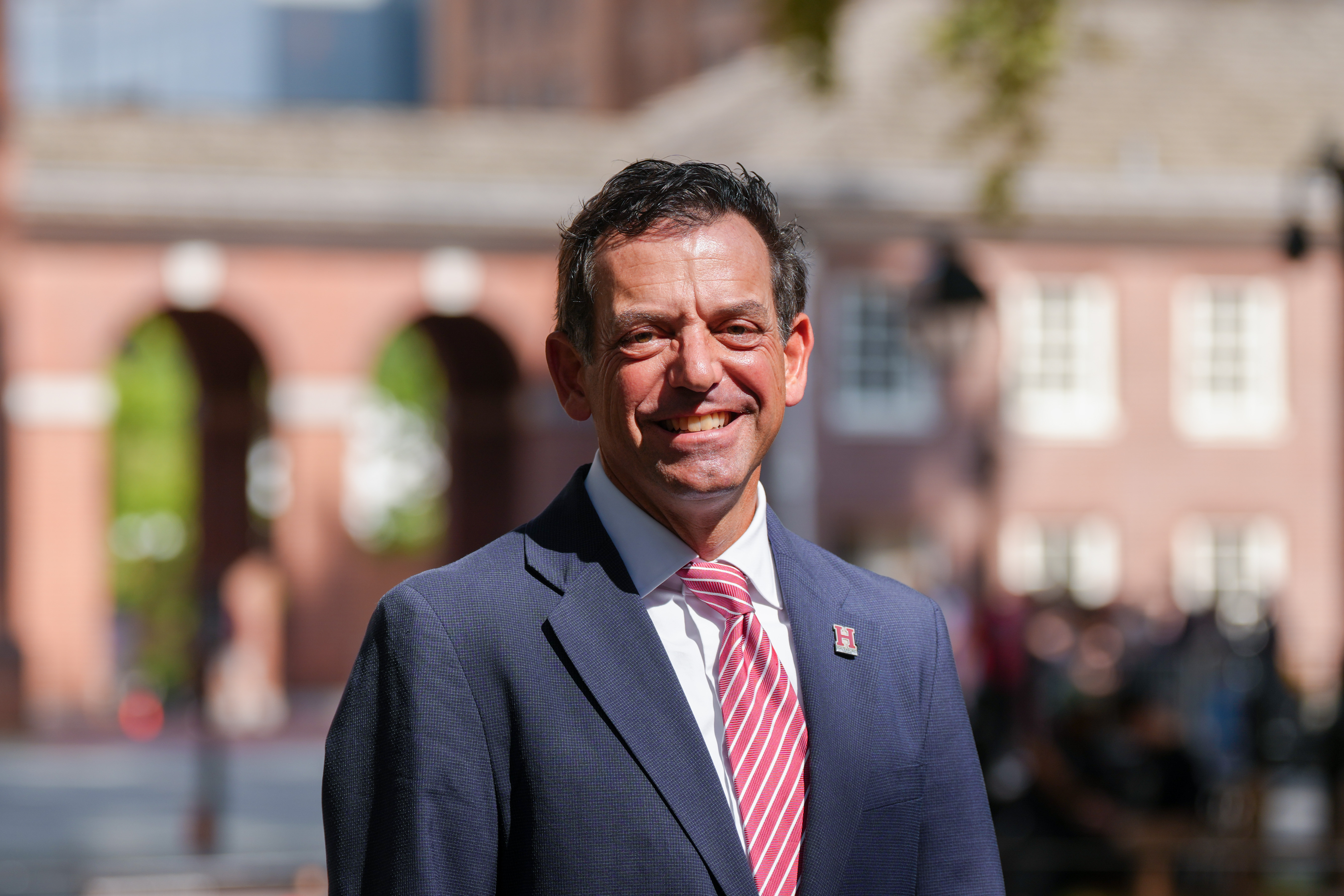
    A Tulane University dean and Middle East and North African studies scholar will become the new president of Haverford College, the school announced Monday.

    Brian T. Edwards, dean of Tulane’s school of liberal arts since 2018, will replace Wendy Raymond, who announced nearly a year ago she would step down in June 2027.

    Edwards will start July 1 at the small, highly selective Main Line college that enrolls about 1,470 students.

    His appointment comes as Haverford continues to face controversy over its handling of antisemitism complaints. The school in August reached a settlement with a Jewish group suing the college over its handling of antisemitism allegations, prompting an outcry from a group of alumni and students calling on Haverford to “preserve the rights to free speech and academic freedom.”

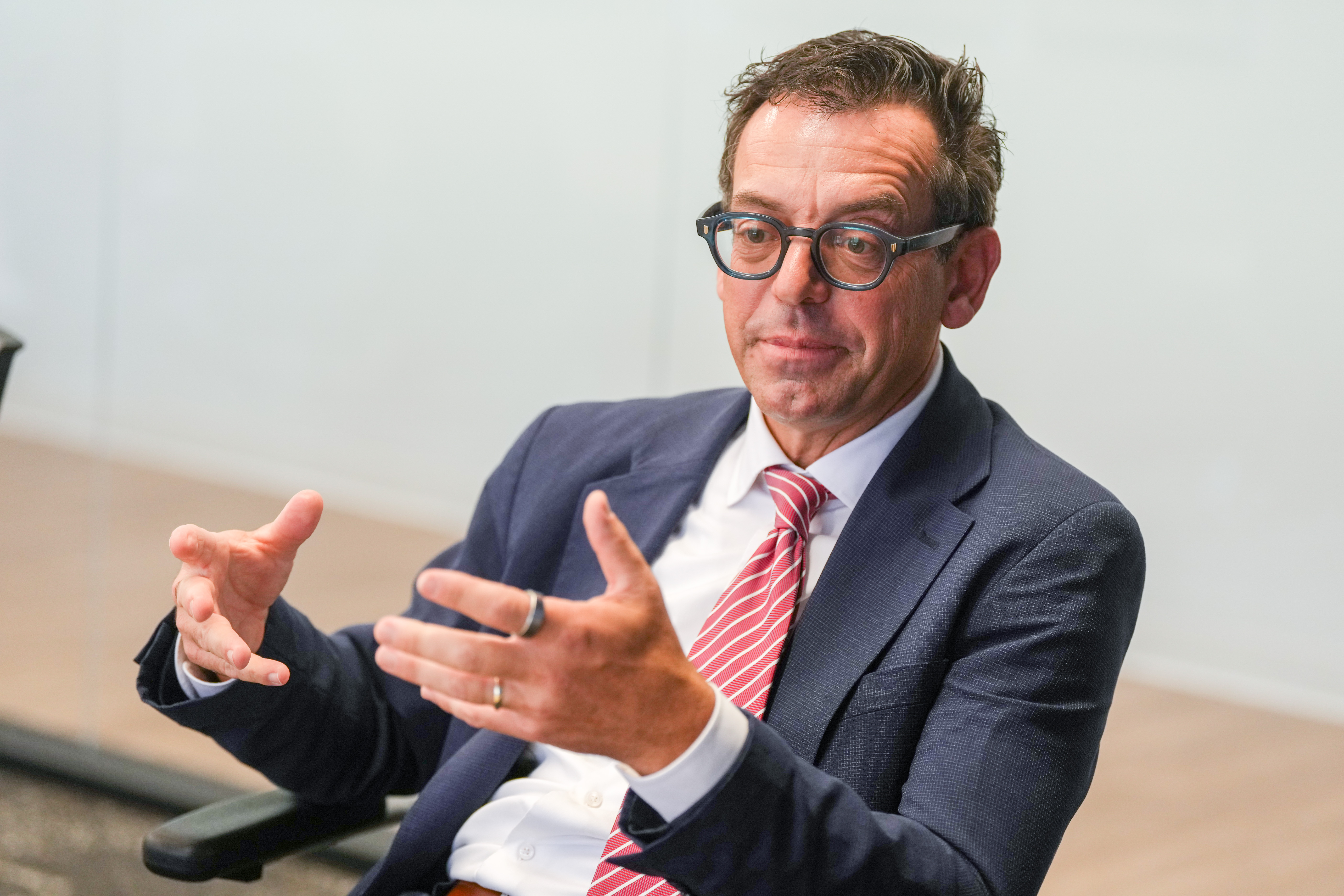
    “I’m incredibly grateful to have this opportunity at this particular moment, because I’m sure that Haverford — and I’ve sensed it — is optimistic, too, and is looking for a next chapter,” said Brian T. Edwards, who will become Haverford College’s president July 1. Jessica Griffin / Staff Photographer

    The lawsuit was filed in May 2024 as tensions mounted on many college campuses, including Haverford, in the wake of the Israel-Gaza war, following Hamas’ 2023 attack on Israel. Raymond last year faced intense grilling by a Republican-led congressional committee probing antisemitism complaints on college campuses.

    And Guangtian Ha, an assistant professor of religion at Haverford, was arrested earlier this month and accused of sending antisemitic threats to a colleague.

    Edwards, 58, said his approach to the issue will be “listening and respecting voices and making safe spaces for students, faculty, and staff to speak to one another and to listen to one another.”

    “These are fractious times, where people have become polarized on a whole lot of issues,” he said in an interview. “I often find that some students in general in the United States … are just increasingly nervous about speaking and learning and hearing each other… Listening to one another, being able to change your mind about something, that is actually what education is.”

    Edwards said he’s optimistic about Haverford’s future and has heard the same from those on campus.

    “I’m incredibly grateful to have this opportunity at this particular moment, because I’m sure that Haverford — and I’ve sensed it — is optimistic, too, and is looking for a next chapter,” he said.

    Michael B. Kim, chair of Haverford’s board of trustees, said in a statement that Edwards is “the ideal person to lead Haverford.”

    “He has the experience and the deep commitment to the liberal arts we were looking for, but what really sets him apart is how well he understands what this place is all about: trust in our students, a commitment to ethical leadership, and the value we place on listening to one another,” Kim said.

    Edwards said the need has never been greater for liberal arts graduates who can provide ethical leadership through difficult challenges and in an ever-changing career landscape.

    “I stand in front of the first-year students at Tulane … and I say, four years from now, most of you will be applying for jobs or career paths that don’t exist right now,” he said. “I feel comfortable and confident that the kind of broad liberal arts education that we provide to students is exactly what they should be doing.”

    He also said fundraising will be a priority. Haverford in 2024 set the goal of increasing its endowment, which has lagged behind some of its peers, to $1 billion by 2030. The endowment stood at $869 million as of Sept. 30.

    “I am very ambitious for building Haverford’s endowment to where it needs to be,” Edwards said. “There are already ambitious goals, but we’re already talking about even more ambitious goals, and I’m very confident that we’ll reach them.”

    Growing the endowment will allow the college to provide more financial aid, he said. Haverford is among 15 colleges nationally where total costs including tuition, fees, room and board, books, and transportation top $100,000, according to the Princeton Review, though many families receive aid and don’t pay that sticker price.

    “For a lot of people, going to Haverford is much cheaper than going to their state school because of the financial aid,” Edwards said, noting that the school needs to better communicate that.

    Before Tulane, Edwards was a professor of Middle East studies, English, and comparative literary studies at Northwestern University for 18 years. He was also the founding director of the program in Middle East and North African studies (MENA).

    Born in Brooklyn, Edwards grew up in Connecticut, the son of a middle school principal and information consultant.

    He graduated magna cum laude from Yale University with a bachelor’s degree in English and got his doctorate from Yale in American studies. He has written about literature, film, and new media from Morocco, Egypt, and Iran and has spent time there doing research.

    “Right now I’m finishing an essay … on this Singapore artist who works on the water and I go and see him and we travel on the water,” he said.

    His wife, Kate Baldwin, a professor of English, communication and gender and sexuality studies at Tulane, also will be moving to Haverford, as a visiting professor. The couple has four children ranging from ages 14 to 27.

    He enjoys tennis and running and looks forward to cheering on the Phillies. New Orleans, where Tulane is based, doesn’t have a baseball team.

    Edwards said he plans to start meeting and listening to a lot of folks in the Haverford community this weekend, which is “family and friends weekend” at the college.

  • Trump defends plans to ease Russia sanctions and hints at a hostage deal

    Trump defends plans to ease Russia sanctions and hints at a hostage deal

    President Donald Trump, defending his decision to ease tariffs and other sanctions against Russia, said on Sunday that he was making “great progress” in a peace deal with the Kremlin and suggested for the first time that the process included “hostage negotiations.”

    He did not specify whose release he was seeking. But the only American now categorized by the State Department as “wrongfully detained” in Russia is Stephen Hubbard, a Michigan teacher who was seized from his home in Ukraine just months after Russia invaded that country in February 2022 and was charged with being a mercenary. He was sentenced to more than six years in a penal colony, on charges that the United States has said are fabricated.

    “My decision on Russia is a very simple one,” Trump wrote on social media, an apparent reference to his move late Friday to neutralize the sanctions resolution that he had signed only a few weeks earlier. “I am in the process of negotiating Peace in the war between Russia and Ukraine, and don’t want to do anything that will drive, foolishly, Russia away from the bargaining table.”

    Until Sunday, Trump had said little about the remarkable, rapid-fire steps he has taken over the past 10 days to side with the Russians in a conflict that has now gone on longer than World War I. Those steps amount to the reversal of nearly five years of sanctions following Russian President Vladimir Putin’s decision to invade Ukraine.

    In that time period, Trump has announced that the United States will buy diesel fuel from Russia — though the announced purchases are far too small to have a significant effect on prices, despite Trump’s claims — and that he will waive imposing tariffs on Russia under a newly signed law named for its chief proponent, Sen.Lindsey Graham (R., S.C.), who died in July.

    Both decisions have been criticized by U.S. lawmakers, including fellow Republicans. Sen. Darline Graham, who was appointed to her brother’s seat and is now running for a full term, gently disagreed on Saturday with Trump’s decision on the sanctions law, saying that she “would choose to put the pressure on Russia to end the war and get gas prices down.”

    The breach with Ukraine has been sudden and perhaps irreparable.

    Trump has declared publicly that Ukraine needs a new leader, the first time he has called for replacing President Volodymyr Zelensky, with whom Trump has had a contentious relationship. And he and other administration officials have declined to explain whether they deliberately cut off intelligence warnings to Ukraine about incoming missile and drone attacks, or throttled the speed of data to the country from Starlink, Elon Musk’s critical satellite network, or its military cousin, called Starshield.

    Taken together, those steps amount to a major reversal in U.S. strategy, after more than four years in which, to varying degrees, the United States has sided with Ukraine as the victim of Russian aggression.

    And while Trump has episodically tacked toward Putin, for whom he has often expressed admiration, the United States has largely let intelligence assistance flow and continued to sell arms to Ukraine through the Europeans, who are paying for the deliveries.

    But Trump and his two leading negotiators — Steve Witkoff, his special envoy, and Jared Kushner, his son-in-law, who holds unofficial status as the president’s personal negotiator — have been trying a new approach. They have scrapped the administration’s previous insistence that business deals with Russia would come only after a peace accord was struck. Now they have announced the diesel deal, and they are trying to put together a purchase of Lukoil, one of Russia’s biggest energy companies, as an early confidence-building measure to assure Putin that they are about to uncork a series of lucrative projects.

    Trump on Sunday accused Zelensky of targeting diesel refineries in Russia “knowing that these attacks are seriously hurting the world diesel markets, including those in the United States.”

    It is the opposite of the position he has taken in defending the blockade on Iranian oil shipments, in which he has said Americans are paying a necessary price to ensure that Iran never gets a nuclear weapon. (Russia already has the world’s largest nuclear arsenal, and at various points in the Ukraine war, Putin has hinted that it may be used.)

    In his social media post, Trump praised Russia for “sending, at a low price, millions of barrels of diesel to the World,” and he accused Zelensky of ingratitude. “Zelensky doesn’t care, and frankly, with all the money that Europe is famously giving him, and that Crooked Joe Biden gave him in the past, he doesn’t want to end this war, and probably never did.”

    Zelensky, for his part, has lamented Trump’s decisions as “weak” — a word he knows will inflame the president — and accused the president of pressuring Ukraine to relent to Russia.

    This article originally appeared in the New York Times.

  • Longtime CNN anchor Christiane Amanpour leaving network after a storied career of 43 years

    Longtime CNN anchor Christiane Amanpour leaving network after a storied career of 43 years

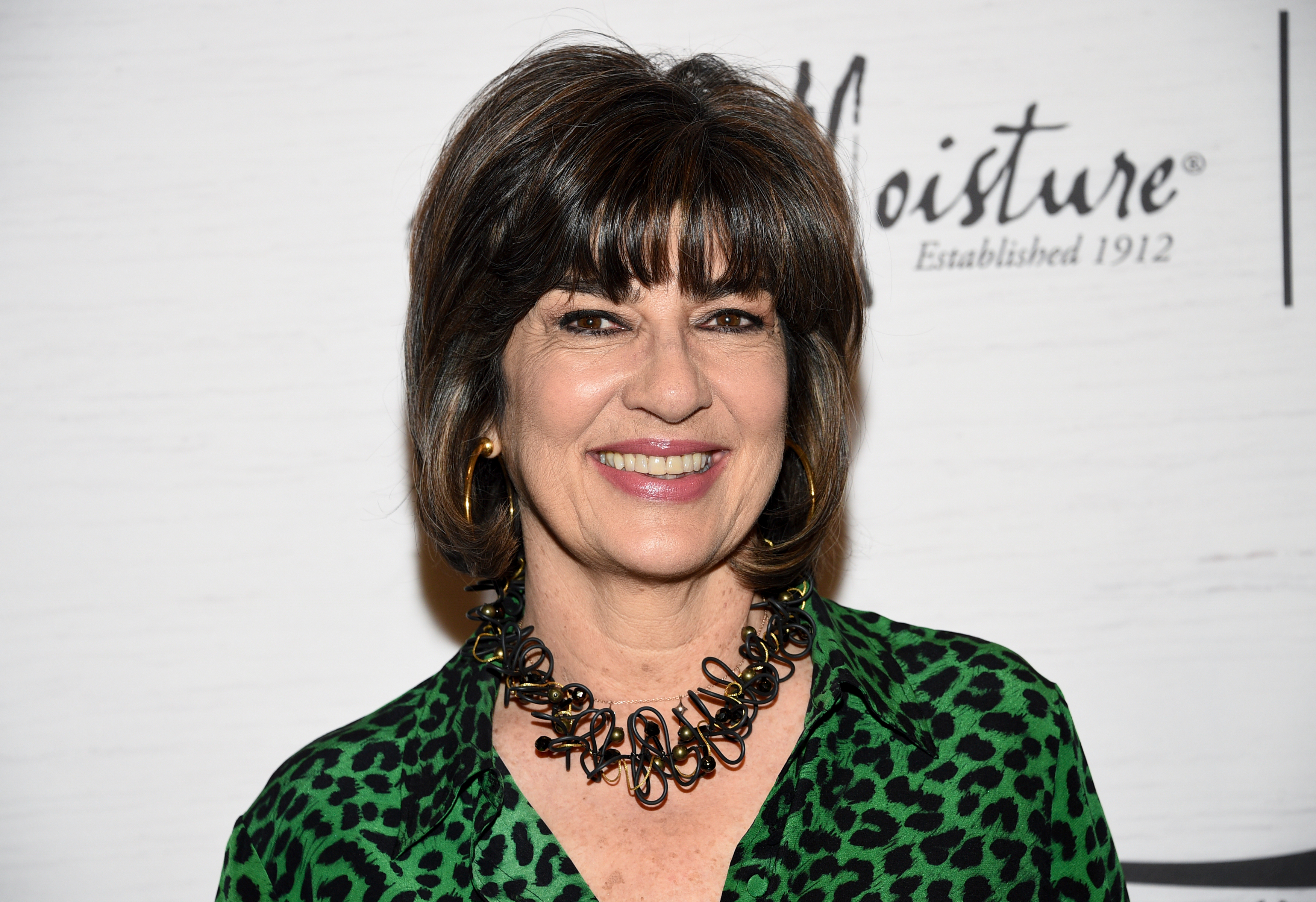
    Longtime CNN anchor Christiane Amanpour, who began as an entry-level assistant and rose to become one of the most visible correspondents and anchors on TV, reporting from war zones and hot spots for decades, will be leaving the network after 43 years.

    Amanpour, the network’s chief international anchor, will scale back her daily show, Amanpour, on CNN International to once a week at the beginning of 2027, and end it in May, leaving the network the following month. She said in a statement Monday that she looks forward to “interesting new projects down the line.”

    Amanpour, 68, also will end her PBS show, Amanpour & Co, at the end of the year, she said in her statement, shared by CNN. She will continue her podcast, The Ex Files, with her ex-husband, Jamie Rubin, a former U.S. diplomat.

    “After many months of thought and a few sleepless nights, I have decided to separate from CNN, my partner of 43 fantastic years!” Amanpour said. She added she would “always be rooting for CNN and maintaining its history of independent journalism. Remember: Always be truthful, not neutral.”

    No reason given for her departure

    Amanpour did not give a reason for her departure, nor did she specifically mention changes at her network. But her exit coincides with a new era at CNN as it comes under a new owner, Skydance. After a yearlong process, Skydance-owned Paramount closed its $81 billion buyout of Warner Bros. Discovery on Oct. 6. The merger unites under one roof two giants in TV news — CBS and CNN.

    On a personal front. Amanpour has spoken openly about her 2021 diagnosis of ovarian cancer and two later recurrences, calling it “the invisible killer.” She has urged others to “get all the scans that you can.”

    Amanpour joined CNN as an assistant in Atlanta in 1983. In his own message Monday, CNN’s chief executive, Mark Thompson, wrote that at the time, her promise was not universally appreciated. “Famously, one of her bosses told her back then that she didn’t have what it took to become a foreign correspondent — or to hold any on-air role at all,” Thompson wrote. “Boy, did she prove him wrong!”

    Fame came during the first Gulf War

    Amanpour became a reporter, and an international correspondent seven years later. She earned fame in the early 1990s, covering the Gulf War, conflict in the Middle East, and many other hot spots. War reporting is “a sense of mission, it’s a sense of purpose, it’s a sense of being able to tell a story,” she said.

    She aimed to bring international news — including complicated stories — to American viewers. “I’ve never believed that things are too complicated to put on American television,” she told the Associated Press in 2023. I’ve never talked down to an audience. I’ve never believed that they just want to know what’s happening in their backyard.”

    Amanpour also noted that her upbringing gave her a unique perspective.

    “Because of my upbringing — I’m half-Iranian and half-British — I’ve had the great privilege of being able to see the world from two very distinct perspectives,” she said. “I’ve always spoken out about the need to bridge gaps. I know we can live in a world that’s not 100% tribalized.”

    In her remarks Monday, Amanpour thanked her field crews and show teams,

    “From my very first big exciting assignment covering the first Gulf War, to the horrors of the Bosnian War, Rwanda, Afghanistan, Ukraine, and Iran and all the points in between, it’s the teams and the camaraderie that counted so much,” she wrote, “as we together battled to seek the facts, the evidence, and the humanity, so that CNN could always broadcast the truth about the world and to the world, without fear nor favor.”

  • Doctors found blood clots in Jalen Hurts’ lungs. Here’s what that means.

    Doctors found blood clots in Jalen Hurts’ lungs. Here’s what that means.

    Jalen Hurts is sidelined with blood clots in his lungs, a serious condition that could require at least three months of blood thinners to treat.

    And no football or contact sports will be allowed during treatment, local doctors not involved in his care say.

    Why the Eagles quarterback flew internationally from London — having played there after minimal sleep related to an earlier blood-clot diagnosis — drew scrutiny Monday after his medical status was disclosed.

    The Eagles quarterback was diagnosed with deep vein thrombosis and blood clots in both his lungs — a more serious diagnosis than the superficial clot in his calf initially announced last week.

    Now Hurts is out indefinitely and possibly set to miss the remainder of the 2026 season, according to a statement released Monday morning by the Eagles and his agent, Nicole Lynn.

    Eagles head coach Nick Sirianni did not answer questions seeking specifics on the decision-making around Hurts’ care at a Monday afternoon news conference, but he noted the team’s medical experts were closely involved.

    “We get medical information from our guys, and we always put the players’ health first and foremost in every situation,” Sirianni said.

    Blood clots can be of different sizes and severities. However, the clots in Hurts’ lungs are probably small, said Thomas Meyer, system chief of pulmonary and critical care medicine at Main Line Health, who is not his doctor.

    He based that on the team’s statement, which said Hurts is clinically stable with no significant functional limitations.

    “He’s lucky it wasn’t more significant than that,” he said.

    A pulmonary embolism can be deadly if left untreated and allowed to block blood flow to the lungs.

    The real question, Meyer said, is why these clots formed.

    According to team statements, doctors initially found a superficial blood clot — a clump of blood that forms in a vein close to the skin surface — in Hurts’ calf during an ultrasound on Oct. 10, following the team’s flight to London.

    It’s possible an earlier injury — Hurts had taken a cleat to the calf during the Eagles’ Week 4 loss to the Los Angeles Rams — could have contributed to the clot, Meyer said.

    Immobility during Hurts’ international flights — a known risk factor for clots — may have also played a role.

    “Could it be immobility plus trauma resulted in the formation of a clot?” Meyer said.

    Here’s what to know about Hurts’ diagnoses and outlook.

    What is deep vein thrombosis?

    Deep vein thrombosis, or DVT, is a serious condition that involves blood clots in veins deep within the body.

    The legs have two primary vein systems: superficial and deep. The superficial veins connect to the deep system, and together they carry blood back to the heart.

    (function() { var l = function() { new pym.Parent( ‘hurts-lung3__graphic’, ‘https://media.inquirer.com/storage/inquirer/ai2html/hurts-lung3/index.html’); }; if(typeof(pym) === ‘undefined’) { var h = document.getElementsByTagName(‘head’)[0], s = document.createElement(‘script’); s.type = ‘text/javascript’; s.src = ‘https://pym.nprapps.org/pym.v1.min.js’; s.onload = l; h.appendChild(s); } else { l(); } })();

    It’s possible the superficial blood clot could have migrated into a deep vein, resulting in DVT. The Eagles had ruled him out last Wednesday for Sunday’s game, after finding “movement in the small blood clot,” according to an earlier statement.

    Once in the deep vein system, a piece of the clot could have broken loose and traveled through the heart.

    “From the heart, it’s a free highway to the lung,” said Parth Rali, who directs the pulmonary embolism response team at Temple Health and is not Hurts’ doctor.

    What is a pulmonary embolism?

    A pulmonary embolism occurs when a blood clot becomes lodged in an artery in the lungs, blocking blood flow.

    In Hurts’ case, doctors have diagnosed “bilateral pulmonary emboli,” according to the team statement. That means he has blood clots in both lungs, likely stemming from the clot in his leg.

    “It’s the same clot which has kind of distributed into multiple tiny fragments,” Rali said.

    Both Rali and Meyer said Hurts will probably need to be on blood thinners for at least three months.

    People on blood-thinning medicines generally cannot play contact sports because the risk of bleeding while taking these drugs is high.

    Doctors will need to monitor Hurts to make sure the clots in his lungs and leg resolve, and that new ones don’t form.

    From the statement, it sounds like Hurts hasn’t felt any symptoms, Meyer speculated, which would typically include shortness of breath and chest pain.

    “He’s lucky his doctors found it while it was still small and easily treatable,” he said.

    When could Hurts return?

    The Eagles’ statement said Hurts should not suffer any long-term effects, an assessment local experts agreed with.

    Patients typically start feeling better within four to six weeks of starting blood thinners, said Rali, who described the process as a “gradual recovery.”

    Blood thinners help prevent new clots from forming.

    “As the injury recovers, it is very likely that he may be able to come off the blood thinners. But three months is the minimum time,” he said.

    Doctors initially diagnosed Hurts with a superficial blood clot in his calf in London, before the Eagles’ Week 5 loss to the Jaguars. As a precaution, they told him not to sleep before the game. Initial reports indicated that Hurts had been awake for roughly 36 hours when he took the field, but Lynn clarified Monday that Hurts did sleep in the hours leading up to the game.

    Rali said he does not know why a recommendation to avoid sleep would have been made, emphasizing that sleep is important for rest and recovery.

    “I struggle to find any connection with avoiding sleep in the setting of a blood clot,” Rali said.

    He also pointed out that Hurts took back-to-back flights to and from London. It is generally considered low risk to fly with a superficial blood clot, compared to deep vein thrombosis. However, long-haul flights can still raise the risk of clots forming.

    Rali said he assumes Hurts’ medical team had valid reasons for that decision, adding that it is difficult to assess the situation without him knowing the location or characteristics of Hurts’ original clot.

    “That is something that, in hindsight, makes you wonder: Was it an appropriate decision or not?” Rali said.

    “As an Eagles fan, I wish him nothing but the best,” he added.

  • Houthi rebels strike Yemen’s government forces with ballistic missiles, killing at least 53

    Houthi rebels strike Yemen’s government forces with ballistic missiles, killing at least 53

    CAIRO — Iran-backed Houthi rebels struck Yemeni government forces with ballistic missiles on Monday, killing at least 53 soldiers at a military camp in one of the deadliest attacks since a resurgence in fighting this summer, Yemeni military officials said.

    The attack wounded an additional 200 recruits at the military camp in the southern province of Shabwa, the provincial government there said. The rebels acknowledged targeting the camp.

    The fighting between the Houthis and Yemen’s Saudi-backed government forces is a widening front in the Iran war that began in February. The escalation shattered a 2022 ceasefire deal that largely stopped fighting in Yemen’s civil war.

    The Houthis have put their growing military capabilities on display on multiple fronts in recent weeks, repeatedly striking Saudi Arabia’s main international airport from hundreds of miles away and seizing territory inside Yemen near a key shipping chokepoint.

    Iran and its allies in Lebanon and Iraq provide expertise, training, and sophisticated weapons to the Houthis, according to U.N. and other experts. Iran denies arming the Houthis, which would violate a U.N. embargo.

    The provincial government in Yemen says death toll may rise

    The provincial government in Shabwa said the death toll from Monday’s attack could rise. “This bloody, treacherous attack targeted new recruits in the training and preparation phase and is considered an extremely critical military escalation and a blatant aggression on the security and stability of Shabwa province,” the statement said.

    It called on Yemen’s president, the Saudi-led coalition, and the government to expedite air defense and early warning systems to reinforce Shabwa’s capabilities.

    The head of Yemen’s ruling Presidential Leadership Council, Rashad al-Alimi, promised a “firm response” and said the attack reflects the Houthis’ “approach of resorting to cowardly terrorist attacks whenever they face pressures or their Iranian-backed sabotage plots falter.”

    One Yemeni military official said the missiles struck while recruits were lining up in formation for a training session. The official spoke on condition of anonymity because they were not authorized to talk to the media.

    A Houthi military spokesperson claimed the camp was targeted because it is operated by Saudi officers, and that some of them were killed in the attack — though he provided no evidence. The Saudi government did not immediately comment.

    Saudi Arabia cancels investment conference

    On Sunday, the Houthi-run Health Ministry blamed Saudi-led forces for an airstrike that killed at least nine people in Yemen’s rebel-held northern province of Saada. Five children and two women were killed in the attack, one of several that killed or wounded more than 30 people over the weekend, according to the rebels.

    There was no immediate comment from Saudi Arabia.

    The Houthis, a Shiite religious and political movement rooted in northern Yemen, are increasingly attacking Saudi Arabia because it supports Yemen’s internationally recognized government in the civil war. The Sunni kingdom, which has long feared the emergence of a well-armed ally of Shiite Iran on its border, joined the war in 2015 after the rebels seized much of northern Yemen, including the capital, Sana’a.

    In recent weeks, the Houthis have targeted Saudi airports, oil and military facilities, and the headquarters of Saudi oil giant Aramco.

    On Monday, Houthi rebels claimed to have carried out six attacks targeting oil infrastructure, airports, and military sites across Saudi Arabia, including facilities in the kingdom’s east and the international airport in the capital, Riyadh. But the group did not specify when the attacks took place.

    The Saudi Civil Defense issued danger alerts but no immediate reports of casualties or damage. However, in a sign that the Houthi attacks are unsettling Saudi society, the kingdom on Monday said it was canceling a global investment conference scheduled for next week that was expected to draw executives from Wall Street and beyond.

    In Yemen, the Houthis recently seized more territory along the Red Sea coast and near the Bab el-Mandeb Strait, a crucial shipping alternative to the Strait of Hormuz. The Saudi-led coalition launched a major military offensive earlier this month to dislodge the rebels from that strategic perch and retake the territory.

    Monday marked five years since Houthis detained more than 20 Yemeni staff of the U.S. embassy in Sana’a. The embassy had suspended operations in 2015 but local staff still provided security and basic maintenance of the facility. The State Department on Monday called for their “immediate and unconditional release.”

  • The ‘lynchpin’ of a scheme to steal $84 million worth of U.S. Treasury checks was sentenced to five years in prison

    The ‘lynchpin’ of a scheme to steal $84 million worth of U.S. Treasury checks was sentenced to five years in prison

    The plan seemed simple enough.

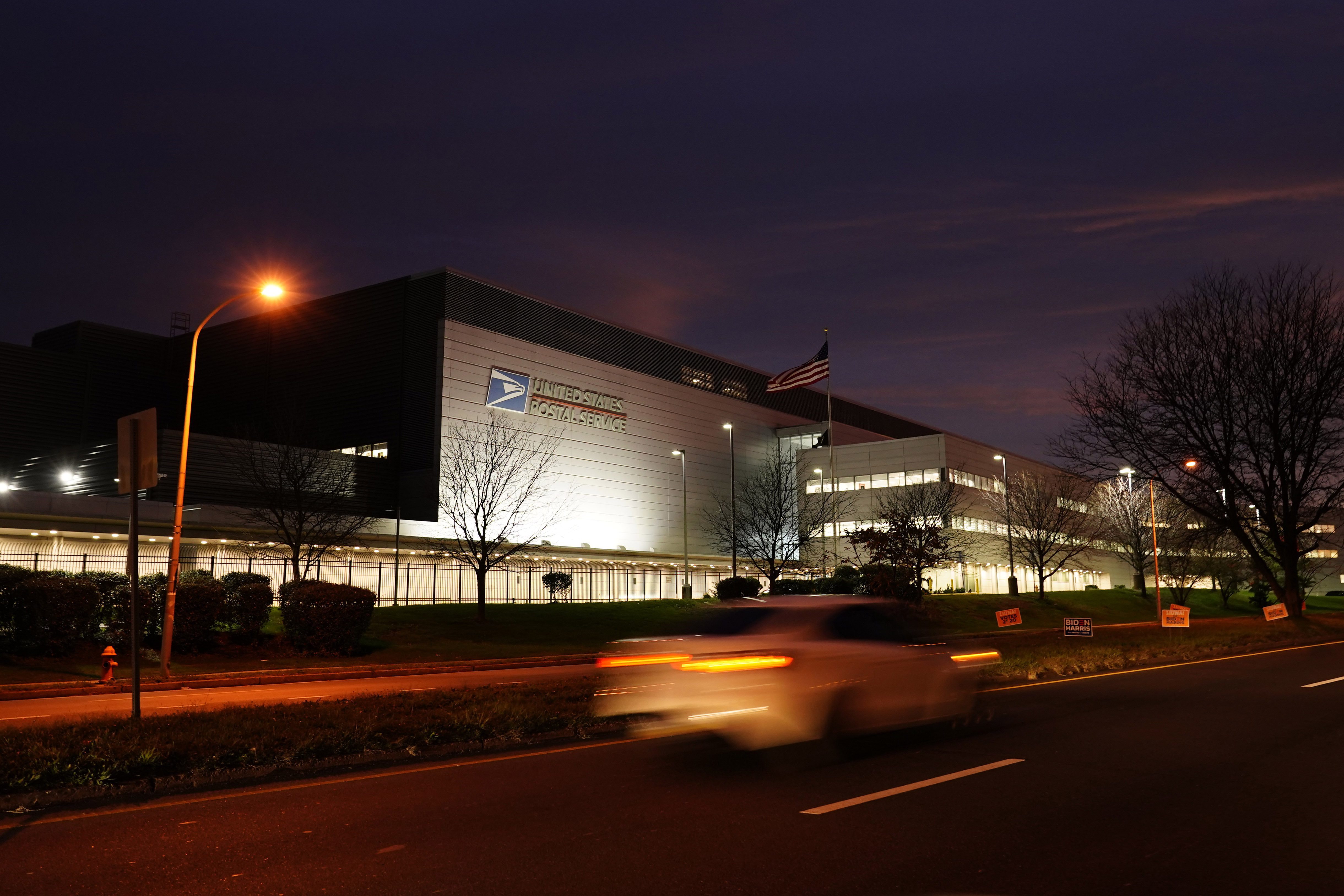
    While working as a U.S. Postal Service clerk in Philadelphia, Saahir Irby had access to government-issued checks that were marked “return to sender” when they couldn’t be delivered.

    Starting in 2023, prosecutors said, rather than help those checks get back to the U.S. Treasury Department, Irby decided to begin stealing them: stuffing them into his coat, his pockets, his backpack, and then working with other people to resell them on the social media platform Telegram.

    In about a year, prosecutors said, Irby pocketed profits of nearly $75,000 — money he and his lawyers said he put toward a “severe” gambling addiction.

    But the face value of the checks he stole exceeded $84 million, prosecutors said. And the government ultimately paid out about $11 million in fraudulent benefits to people who’d bought stolen checks from Irby or his co-conspirators.

    On Monday, U.S. District Judge Joshua Wolson sentenced Irby to more than five years in prison for his role in the scheme, which the judge called a “significant, serious crime.”

    Irby, 28, said he understood and apologized. He told Wolson his gambling addiction had consumed him and led him to take actions he knew were wrong — at one point, he said, he was directing 80% of his earnings toward casinos — and he vowed not to commit similar transgressions in the future.

    “I owe it to myself, and especially my son, because I don’t want him to follow in my footsteps,” Irby said.

    The penalty imposed on Irby served as a final chapter in the check-stealing scheme. His three co-defendants — Tauheed Tucker, Cory Scott, and Alexander Telewoda — were each also sentenced to at least three years in prison by Wolson.

    Assistant U.S. Attorney Jessica Rice said in court Monday that Irby was the “lynchpin” of the conspiracy, and said the number of checks he stole, and the amount they were worth, were “eye popping.”

    Both she and Wolson also said that beyond the monetary loss, the scheme was a violation of Irby’s responsibility to the public. As a Postal Service worker, they said, he had access to huge amounts of sensitive materials being sent by mail — including the government-issued checks, which came from agencies such as the Internal Revenue System, Social Security Administration, and Department of Veterans Affairs.

    The Postal Service “needs employees in its facilities operating the various lines, and it needs them to be honest and upright,” Wolson said. “Mr. Irby breached that trust.”

    The scheme began in June 2023, prosecutors said, when Irby started coordinating with Scott and Telewoda. Irby’s role was to steal the checks from the postal facility, prosecutors said, then give them to Scott and Telewoda, who would advertise them for sale online at a fraction of their face value. Buyers could then try to find a bank or financial institution to cash the stolen checks.

    Rice said Irby, during his shifts, would visit the part of the facility where checks were sent after they couldn’t get delivered to their intended recipients. He would then steal dozens at a time, often by stuffing them into bags or his clothes.

    Later that summer, prosecutors said, Irby recruited Tucker, his younger cousin and coworker, to help steal checks from the facility. Each received a small cut of the resale proceeds.

    The conspiracy continued for about a year, prosecutors said, at which point Irby and Tucker were fired and charged alongside Scott and Telewoda with conspiracy and theft-related crimes.

    All pleaded guilty earlier this year.

    Irby’s sentence will total 63 months in prison, along with three years of supervised release.

    Telewoda earlier this year received a six-and-a-half year prison sentence, Scott was sentenced to nearly six years behind bars, and Tucker was sentenced to three-and-a-half years in prison.

  • Funeral services for slain Philly police officer will close roads

    Funeral services for slain Philly police officer will close roads

    Some roads in Center City are slated for temporary closures as mourners lay fallen Philadelphia Police Officer Shane Seiber to rest Tuesday.

    Seiber, 40, was shot and killed on Oct. 10 while responding to reports of a person with a gun near 52nd and Race Streets in West Philadelphia. His partner, Hector Rodriguez III, 33, was injured in the attack, and remained hospitalized last week.

    Family and friends plan to hold two public viewings and a funeral for Seiber. The first viewing was scheduled to take place at 6 p.m. Monday in Northeast Philadelphia, followed by another viewing at 8:15 a.m. Tuesday at the Cathedral Basilica of SS. Peter and Paul in Center City.

    Seiber’s funeral will then take place at the basilica starting at noon.

    As part of the services, the city on Monday announced a series of road closures and detours to accommodate the events. Officials asked motorists to avoid the area and allow for extra driving time.

    Road closures

    Road closures were slated to start Monday afternoon in Northeast Philadelphia, and carry over to Center City early Tuesday morning. Though officials announced a series of planned closures, additional restrictions may be instituted in Center City pending conditions, officials said.

    Starting at 3:30 p.m. Monday, Academy Road between Comly Road and Red Lion Road in Northeast Philadelphia will be closed for the duration of Seiber’s first viewing.

    Closures that begin Tuesday morning, and will last through the end of that day’s services, include:

    Closing at 5 a.m.:

    • 18th Street between Benjamin Franklin Parkway and Vine Street

    Closing at 5:30 a.m.:

    • 15th Street between Spring Garden and Callowhill Streets
    • Broad Street between Spring Garden and Callowhill Streets
    • Callowhill Street between Broad and 17th Streets
    • 17th Street between Callowhill Street and Benjamin Franklin Parkway

    Closing at 6 a.m.:

    • Benjamin Franklin Parkway between 16th and 22nd Streets
    • Vine Street between Logan Circle and 16th Street
    • Race Street between 16th and 18th Streets
    • 17th Street between Vine Street and Benjamin Franklin Parkway
    • 19th Street between Benjamin Franklin Parkway and Cherry Street

    Parking restrictions

    All roads listed above will also be “Temporary No Parking” zones during the services, officials said. Vehicles parked on those roads during the closure times will be relocated.

    If your vehicle is relocated, officials said the best course of action is to contact the police district of the parking area.

    SEPTA detours

    SEPTA route detours were expected, though the city did not identify specific routes that could be impacted. Officials recommended public transportation users check SEPTA’s system status page for updates before traveling.

  • Sixers admit ‘it’s hard to know’ what to expect from their big five entering season opener

    Sixers admit ‘it’s hard to know’ what to expect from their big five entering season opener

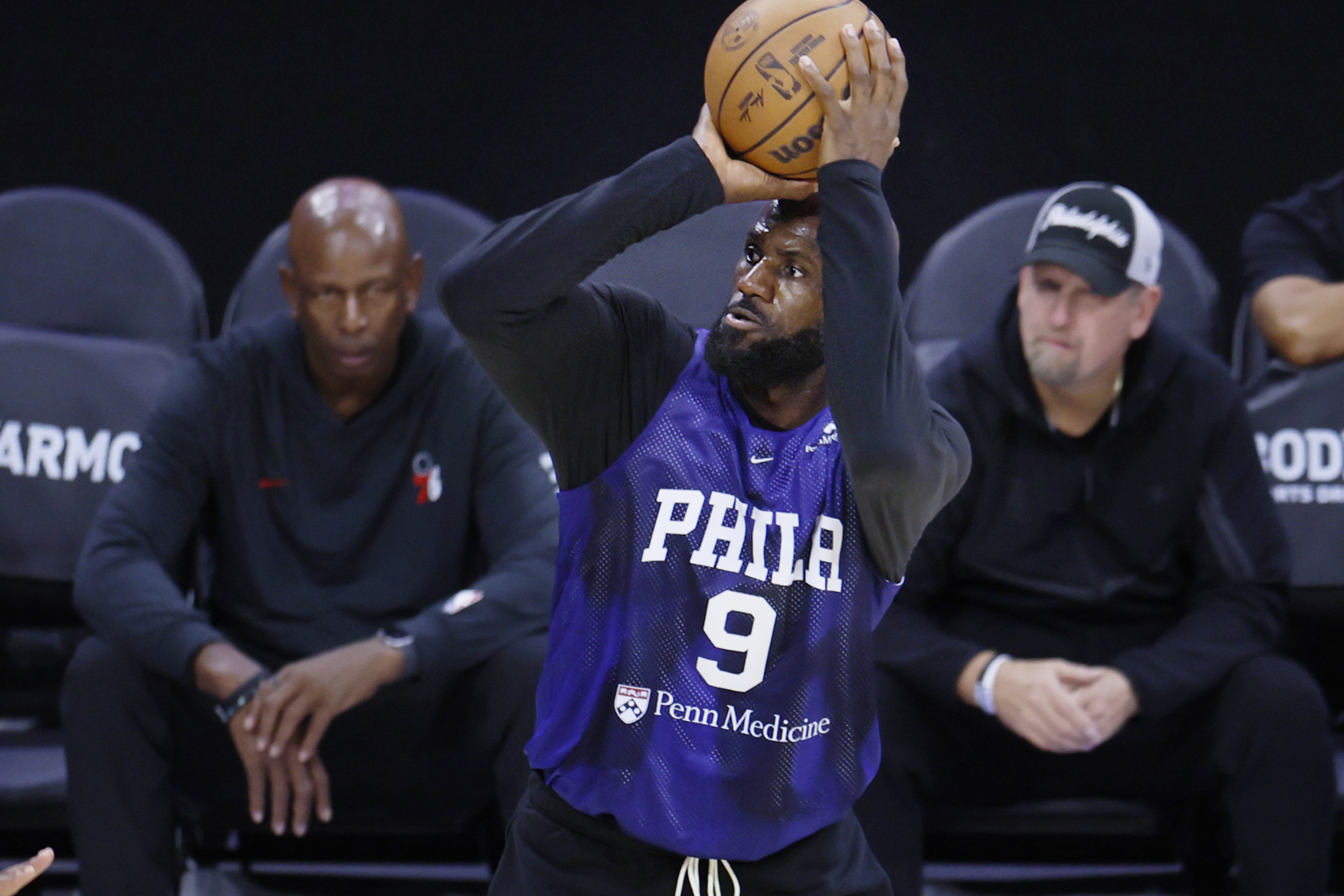
    When LeBron James signed with the 76ers, the NBA had not yet released its schedule for this season. In fact, NBA commissioner Adam Silver said the league was waiting to see where James would land before finalizing the schedule.

    It came as a shock to nobody that Tuesday’s opening night, when the defending champions Knicks are set to receive their rings, sees the Sixers playing in Madison Square Garden (7 p.m., NBC10, Peacock).

    The NBA world will finally start to get answers on what the Sixers will look like after adding James and Jaylen Brown this offseason, and even the Sixers themselves don’t quite know what to expect when the season officially begins.

    “It’s hard to know, until we get there [Tuesday],” coach Nick Nurse said at practice Monday. “ … You don’t get a read of much of anything in the preseason, so I feel good about the work we’ve put in and the focus these guys have had. I obviously feel great, Joel [Embiid] is ready to go. Those things weren’t going on a year ago. So, there are a lot of things to be positive about.”

    Sixers guard Jaylen Brown expects there to be a learning period for his team. Yong Kim / Staff Photographer

    One of those things is the health of the starting lineup, with the projected big five making it through the preseason without any significant injuries. They played one preseason game together against Brooklyn as a five-man unit, while four of the five played against Boston on Friday, with VJ Edgecombe sitting that one out as a precaution.

    They have some preseason tape, and a body of work in practice to evaluate how all the pieces fit together, but there’s nothing like learning from regular-season games, especially against the current standard-bearers of the Eastern Conference.

    “We’re excited, but we also know we got to get better,” Brown said. “We’re not where we want to be right now. We’re happy we had a good preseason. We had a good training camp. We’re building habits. We set the rules for ourselves, accountability. But it’s going to take some time. Hopefully on the shorter end, but we’re not where we want to be yet. That’s just a part of it.”

    As Nurse put it, there have been some “wow” moments from the starters over the last few weeks, while there have also been moments in which “you think, ‘Oh man, these guys haven’t played together at all,’” he said. But Nurse added that so far, the starters are playing with the right mindset on offense — sharing the ball, finding the open man, getting out in transition.

    “There certainly have been some rough edges. But, my thought is that, I think, the intent is great,” Nurse said. “I think we’re looking up, we’re looking to move [the ball]. Is it a little mistimed and out of rhythm? Yeah, that should be expected. And the quicker that we can gather more minutes, and grab some more reps, I think those things will smooth themselves out. But the intent, I think, has been awesome.”

    While the starters are healthy, the Sixers will go into New York a little dinged up overall, with Dean Wade missing the last two practices because of an injured ankle he suffered in the team’s final preseason game Friday. Anfernee Simons, who has missed time because of a hamstring injury, played coy when asked if he’d be available.

    “I can’t confirm or deny,” he said.

    But with the starters fully healthy, all eyes will be on them, with a chance Tuesday to knock off the defending champions. Even if the Sixers are downplaying the importance of the game, it would send an early message to the league that this collection of talent can find a way to come together and compete at the highest level.

    “It’s very early for a group of a lot of new players,” Nurse said. “Play as well as we can. Play very hard, and then start figuring out where we can learn and start heading this direction. But we need the data, and we need some information, and we need some real lights on scene, so we can determine that again.”

  • Israeli police arrest 10 in connection with West Bank assaults

    Israeli police arrest 10 in connection with West Bank assaults

    TEL AVIV — Ten people were arrested on Monday in the West Bank in connection with the beating of a Washington Post photographer and an alleged assault on European diplomats, Israeli authorities said.

    In separate incidents on Friday and Saturday, the photojournalist, Heidi Levine, and the diplomats reported being attacked by Israeli settlers who appeared to be attempting to disrupt the annual olive harvest by Palestinian residents of the occupied territory. Levine was wearing a vest clearly identifying her as “press” on front and back.

    Police said the arrests were part of Operation Olive Leaf, in which police officers, Border Police, and Israel Defense Forces troops, with aerial support, entered several locations in the Binyamin area north of Jerusalem early Monday.

    Items linking the suspects to the alleged offenses were seized, along with several vehicles, according to police. The suspects were detained on suspicion of involvement in the reported violence, violating a military order declaring a closed zone, and illegal construction, police said.

    Security forces also cleared illegal construction and acted against the unlawful takeover of a Palestinian home, according to the police.

    A resident of Abu Falah, the Palestinian village where Levine was attacked on Friday, confirmed to the Washington Post that two settler outposts there had been demolished early Monday morning.

    “The law in Judea and Samaria applies to everyone, regardless of identity or affiliation,” Israel Police Commissioner Daniel Levy said in a statement. Judea and Samaria are biblical names for the West Bank used by the Israeli government.

    The suspects will be brought before a court after questioning, police said.

    United States officials, including Ambassador to Israel Mike Huckabee, had demanded a full investigation into the beating of Levine, who was left with four broken vertebrae and two broken ribs and required surgery to repair a finger that was torn open.

    Settler activity, including attacks on Palestinian homes and property, has accelerated sharply in recent months. Settlers, emboldened by support from Prime Minister Benjamin Netanyahu’s government, have established scores of government-backed settlements and illegal outposts, drastically reshaping the long-disputed map.

    An Israeli military official acknowledged the seriousness of the violence in the West Bank but said the IDF cannot station troops at every potential flashpoint.

    “Doing so would require at least 10 additional battalions, diverting forces from other operational fronts,” said the official, who spoke on the condition of anonymity because they were not authorized to speak to the media.

    The military has deployed two additional regular battalions, the headquarters of the 98th Division and Border Police companies, the official told the Post, but significant personnel shortages remain.

    Levine, in a brief interview on Monday, described the police response as encouraging but said more needed to be done. She noted that settler violence against Palestinian residents occurs regularly in the West Bank.

    “It was good to hear that there are some arrests that have been made,” she said. “As we’ve seen before in the past, just because someone is arrested doesn’t mean they are actually brought to trial. I am not as optimistic as I wish I could be, but of course I’m grateful to hear that there have been some arrests and hoping that there will be more.”

    Defense Minister Israel Katz, in a statement that did not mention the arrests or the attacks on Levine and the diplomats, said violence by “a handful of Jewish rioters” is a matter for the police. The military, he said, should “fight Palestinian terrorism and protect the state’s borders and the Jewish communities.”

    Katz also ruled out reinstating administrative orders against settlers, calling them “draconian.” The controversial practice allows security forces to detain people without trial, on the signature of the defense minister. Israel uses the practice widely against Palestinians, but Katz ended its use against Jews in the West Bank shortly after taking office in November 2024.

    “Administrative orders are not the solution — rather, strong and effective police enforcement,” he said.

    National Security Minister Itamar Ben-Gvir, the far-right politician and overt supporter of settlers who oversees the police, said Monday in an interview with Galatz Radio that anyone who deliberately harmed Levine should be punished, but he cast doubt on her account of what happened.

    “It’s worth condemning when there’s evidence,” Ben-Gvir said, adding that his children ride to school in an armored car. “Let’s not turn the victim into the accused.”

    Ben-Gvir acknowledged that “hilltop youth” — a term often used by Israeli officials to refer to radical young Jewish settlers — sometimes “cross the line” and should be dealt with severely. But he added: “Let’s not forget who the real victim is here, and who the attacker is.”