The news came two days after the quarterback was placed on injured reserve — despite initial reports stating the team wouldn’t place him on IR — and four days after last week’s announcement that he had a blood clot in his calf.
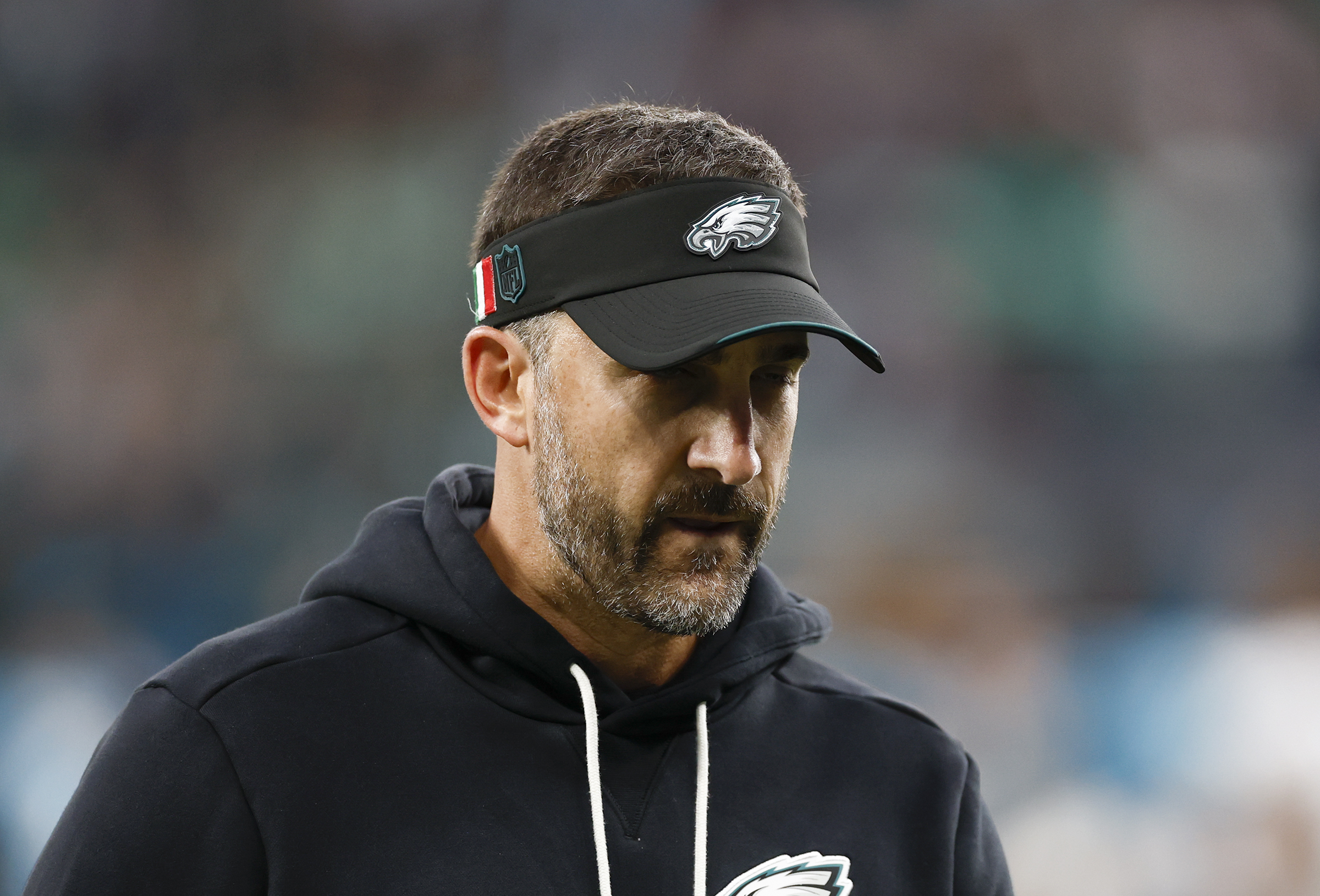
The sixth-year coach made it clear that he “wasn’t a medical expert,” repeating some version of that phrase five times in the 15-minute news conference. As the only Eagles representative made available to speak on the Hurts situation to date, reporters directed multiple questions to Sirianni about the handling of the injury.
Interest in the Eagles’ approach to the injury intensified Monday when one report, which was later clarified, stated that doctors warned Hurts “not to sleep as a precaution, so he had been awake for roughly 36 hours when he started against the Jaguars.” The later report stated that after being evaluated at a hospital overnight, Hurts did get some sleep upon rejoining the team and had a room set aside for him at Tottenham Hotspur Stadium.
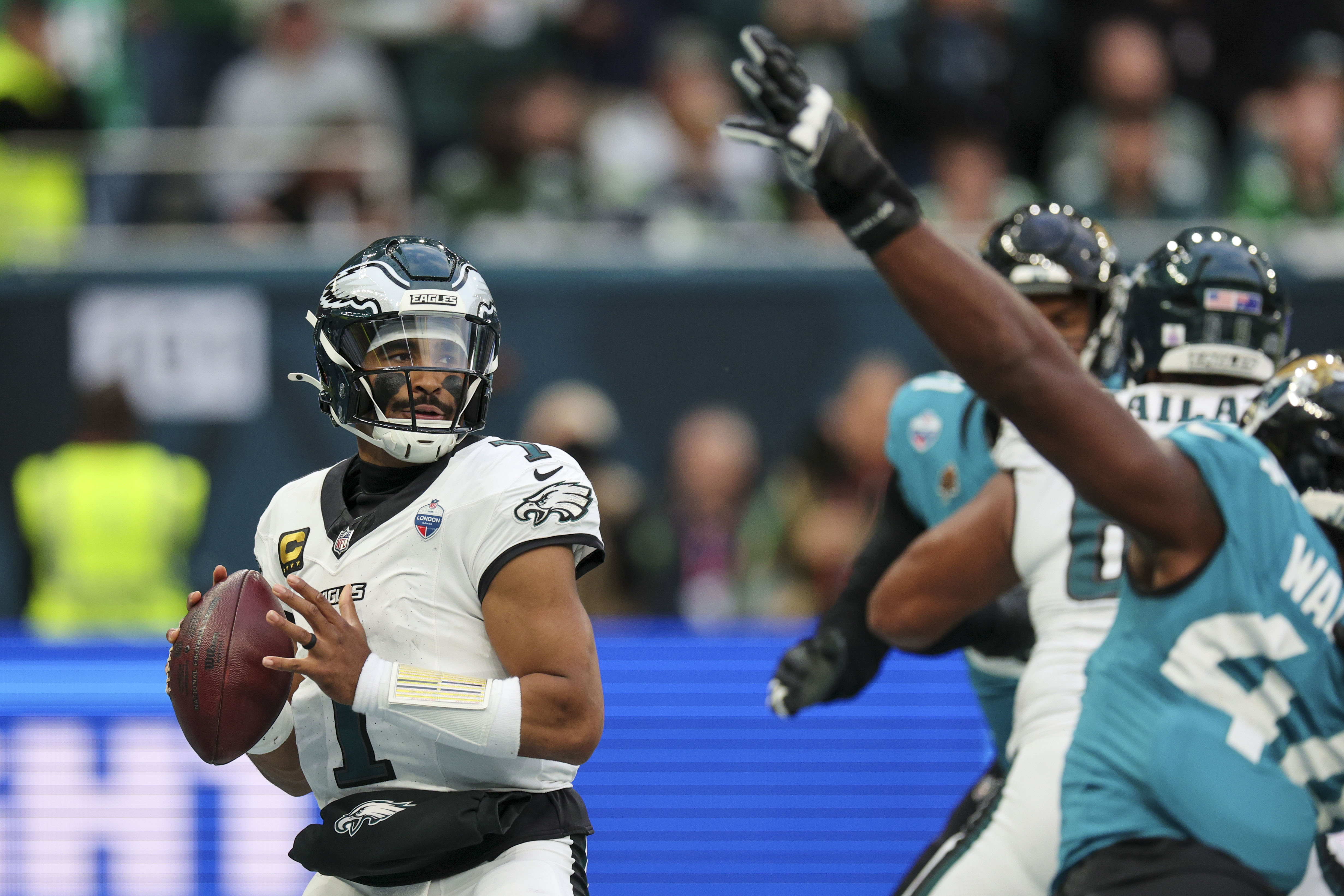
Hurts played the entire game, tossing for 220 yards and a touchdown in the 19-17 loss.
“I think that reporter that put that out came out with another report,” Sirianni said. “I know you guys saw that. The health of our players are as always at the forefront of our mind and leave that up to the medical experts, but we always, always care deeply about our players, and that’s when you are completely focused on together and connection. You’re always thinking about the well being of your guys and that’s where we were in that situation.”
Video: unCovering the Birds: Questions arise around the handling of Jalen Hurts’ injury
According to a statement from Hurts’ agent Monday morning, the former Super Bowl MVP will be placed on blood thinners and is expected to make a “full recovery.”
Sirianni was also asked about the team allowing Hurts to fly back and forth from London with injury.
“Again, I’m not a medical expert,” Sirianni said. “Same deal there. We get medical information from our guys, and we always put players’ health first and foremost in every situation. That’s where we were there.”
Sirianni wouldn’t answer specific medical questions about Hurts, who he said he “misses” having around. Sirianni gave the Eagles’ medical team a full vote of confidence.
“I fully trust the people that are involved in helping us all make these decisions,” Sirianni said. “We have great people here. … The same doctors and trainers that helped 21 of our 22 starters be available in the Super Bowl are the same guys today that deeply care about our guys to help them.
“Don’t have much more to say about that. That’s why we put the statement out. Full trust in those guys … kind of feels like you’re questioning that, and I know you guys have a job to do, but I’ve got the relationship with the players that I have because of the time that we spend together and because of the care that we have for each other. So, it’s always at the forefront of our mind.”
Beyond the Hurts news, Sirianni confirmed that offensive coordinator Sean Mannion would still be calling plays moving forward. This came one day after he said “everything’s on the table” following the Birds’ 25-14 loss to the Carolina Panthers — the team’s fourth loss in a row.
“Our coaches will do everything we can do to help us win football games,” Sirianni said. “As far as who’s coaching the positions and who’s calling the plays, that will remain the same. We’re looking for answers and we’re looking for solutions.”
Maya Thomas died Oct. 13 after India Miller and Sean Scott, her mother and stepfather, called police to report that they suspected their daughter had been struck by a vehicle. Instead, an autopsy revealed “injuries not consistent with a vehicle crash” that suggested she had faced “prolonged abuse,” prosecutors said last week. Her parents were charged with murder, among other crimes.
Maya lived across the street from Second Baptist Church and next to the playground at Loudenslager Elementary School, which she would have attended if she had not been homeschooled, local officials said.
“It’s just heartbreaking when you think this 9-year-old child could see a beautifully manicured playground at the school,” said State Sen. John Burzichelli, a Democrat who represents Gloucester County.
Burzichelli, a former mayor of Paulsboro, lives two blocks from the home where Miller and Scott allegedly abused Maya. He said he drives by the house every day, and he never saw anything suspicious. None of his neighbors have either, Burzichelli said, but there are now rumors.
“Nothing, nothing, nothing, nothing, nothing,” Burzichelli said. “There are now some stories. Somebody saw her mother at the post office, saw [Maya] with her mother on another occasion. The child looked like maybe she had a bruise. But there weren’t enough interactions where that stuff could be registered.”
New Jersey is one of 13 states that the Home School Legal Defense Association recognizes as having “low regulations” for homeschooling. Parents in New Jersey do not have to notify the state that they are homeschooling their children. It is unclear exactly how many children across the state are homeschooled.
Parents who homeschool also do not need any teaching qualifications. No review or approval is required for curriculums set by parents, and local boards of education are not required to establish records for children who learn outside of school.
Parents and guardians need only to give their children “equivalent instruction” to typical schooling, and previous state court cases have affirmed that the term applies only to academic lessons, not social development, according to the New Jersey Department of Education.
“We don’t know how many others Mayas there are out there that are suffering behind a barrier that has caused them to drop off the radar screen and become invisible,” Burzichelli said. “That’s a 9-year-old child that had no one else to speak for her.”
Homeschooling can be successful, Burzichelli said, so he does not want to upend New Jersey’s education rules. But it is currently too easy for children with no record to slip through the cracks, he said. If Maya had gone to school, Burzichelli said, a watchful teacher likely would have noticed her injuries.
Burzichelli said his office is researching homeschooling rules implemented by other states and coordinating with leadership in the legislature to soon propose legislation to refresh the state’s alternative education statute.
He is not certain yet which child protections New Jersey should take from other states, he said, but he wants to find a system that protects kids from flying under the radar, including a potential requirement for homeschooled children to meet with the school district annually and to ban guardians with criminal records from teaching children at home.
This would not be the first time state legislators have tried to amend New Jersey’s homeschooling rules.
Last year, after a Gloucester Township couple was charged with abusing their homeschooled teenager by locking her in a dog crate, both the New Jersey Assembly and Senate introduced bills that would have required children in home education programs and their parents to meet annually with a school district representative. Burzichelli was a sponsor, but the bill did not progress to a vote in either chamber.
An identical bill was proposed in January but has not progressed. Another bill that followed the Gloucester Township case, proposed by Assemblyman Sterley Stanley, would have required registration and oversight of home education programs, but that didn’t get anywhere, either.
Burzichelli said he wants to meet with homeschool advocates to make sure new legislation can move forward.
“We don’t have the luxury of making this a war with people who may not be favorable to this,” Burzichelli said.
The state’s homeschooling advocates say they worry conflating homeschooling and Maya’s killing could hurt parents who elect to teach from home.
“Keeping a child home is not the same as homeschooling. Genuine homeschooling involves educating a child; a child being kept out of school does not, by itself, establish that homeschooling is taking place,” the New Jersey Homeschool Freedom Association wrote in a statement.
The NJHFA instructed parents to call Burzichelli and Moriarty on Monday to “express [their concerns] that public statements connecting this tragedy to homeschooling risk stigmatizing thousands of responsible New Jersey homeschooling families.”
Pamela Kerr, a New Jersey Homeschool Association board member, expressed similar sentiments in a social media message to The Inquirer.
“Please be clear that Maya Thomas’ murder is a tragedy that has nothing to do with homeschooling,” Kerr wrote. “Abuse happens all too often. It happens to children who attend school. It happens to adults who go to work. Less frequently, it happens to children or adults who have been secluded from society and unlawfully restrained.”
Kerr added that children who are homeschooled do not have to fear ongoing safety issues, like school lockdowns, and benefit from individualized attention. Kerr said the NJHA believes New Jersey’s current law “appropriately gives parents the opportunity and right to educate their children without undue interference.”
Paulsboro Mayor John Giovannitti, who has worked in the borough’s school district for 39 years and now serves as an assistant principal, said the state should track children who learn at home.
He also said those children should have access to Paulsboro’s counseling services and extracurricular programming to keep them as engaged in the community as possible.
“A twice-a-year check to see how they’re doing, I don’t think it could hurt,” Giovannitti said. “It’s just, ‘Where is this kid? How are they doing?’”
The 76ers’ frontcourt depth is thin as they head into the season opener against the New York Knicks on Tuesday, and it might remain that way for a little while.
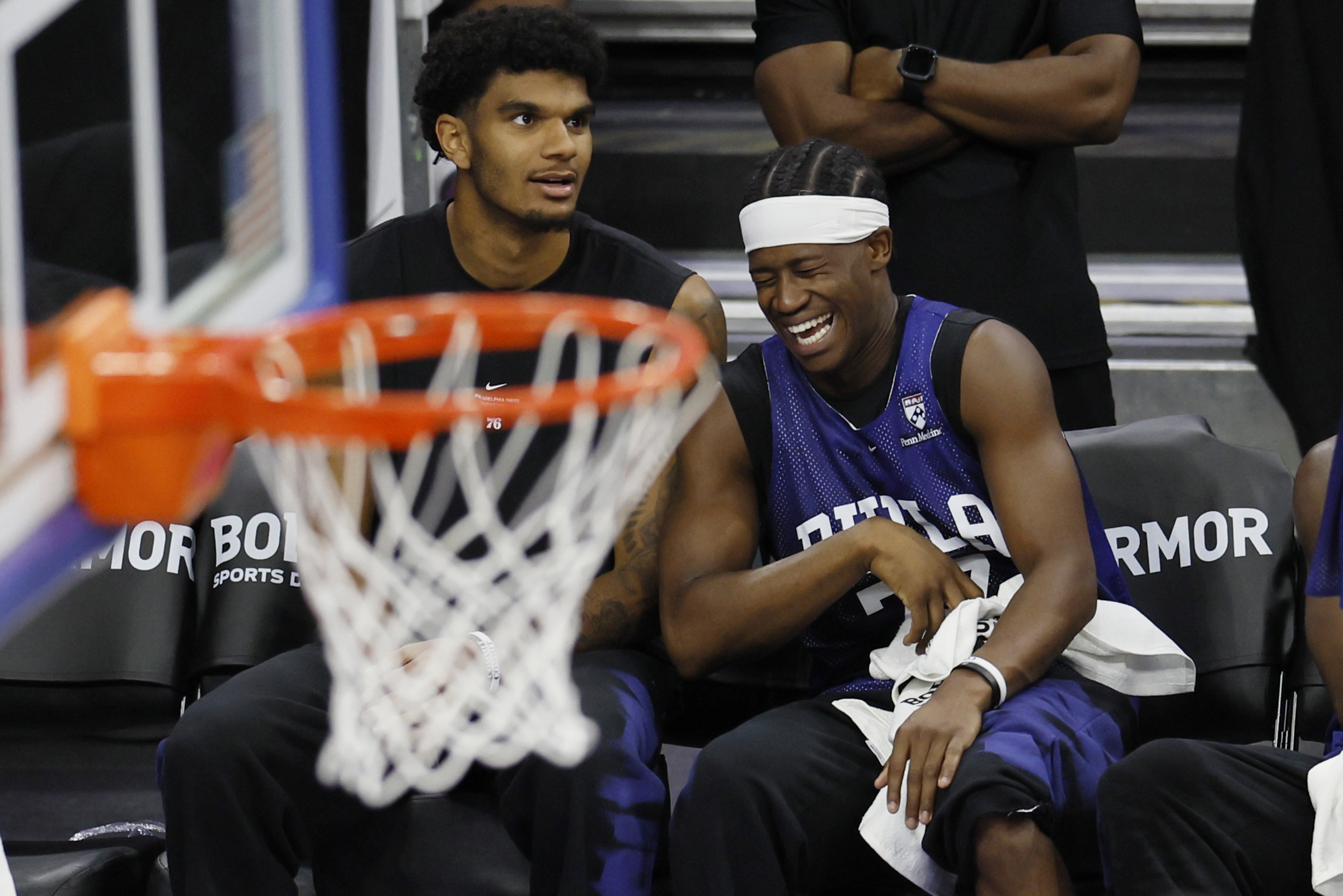
The Sixers will be without Dominick Barlow for at least two weeks, as Barlow, who has not been practicing, has a lumbar spine bone stress response, the team said.
When he returns, Barlow can help provide depth at the power forward position while also serving as a small-ball center option for coach Nick Nurse. The 6-foot-9 Barlow is in his fifth year and is on the main roster after he was on a two-way contract to begin last season.
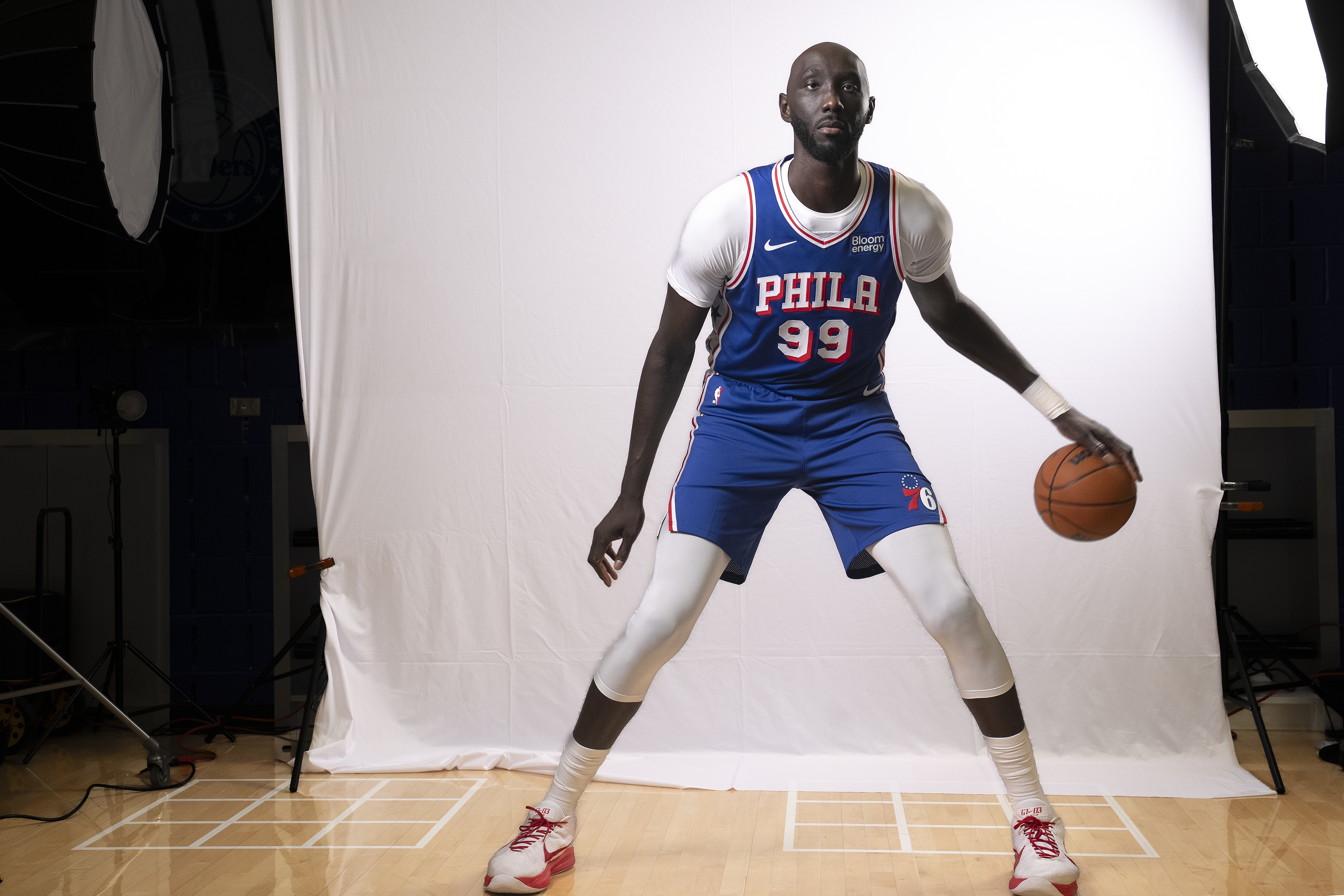
Tacko Fall will also miss Tuesday’s season opener with a left quad strain.Jose F. Moreno / Staff Photographer
The center position is already thinned out after Ariel Hukporti tore his Achilles in the first preseason game and is out for the year. Adem Bona is backing up Joel Embiid at center to begin the season, but Bona is listed as questionable for Tuesday’s opener because of a left foot sprain that held him out of practice at the beginning of training camp. Tacko Fall (left quad strain), whom the team signed to a two-way contract on Saturday, is also out.
The frontcourt injuries don’t end there. Also on the injury report is forward Dean Wade, who is questionable because of a left ankle sprain. Wade did not participate in practice the last two days but was shooting around after Monday’s session.
Rounding out the injury report is guard Anfernee Simons, who is questionable because of a hamstring injury that kept him out of the Sixers’ preseason games. When asked if he was playing Tuesday, Simons said, “I can’t confirm or deny that.”
Sixers guarantee Edgecombe’s third year
In other roster news, the Sixers made an obvious procedural move in guaranteeing the third year of VJ Edgecombe’s rookie contract. Standard rookie contracts for first-round picks are four years with team options on years three and four. Edgecombe, the No. 3 overall pick in the 2025 draft, is entering his second year after placing third in Rookie of the Year voting last season.
Edgecombe averaged 16 points per game in his rookie year and is making $11.7 million this season. His third season will be worth $12.2 million while the contract will jump up to $15.4 million in year four. After that, Edgecombe would be a restricted free agent.
After more than two decades of melted cheeses and chocolates, diners in South Jersey hoping to dip into an entirely fondue-based meal will have to look elsewhere after The Melting Pot closes its doors this weekend.
The restaurant’s final day will be Oct. 25, franchisee Charlie LaRosa said through a spokesperson for the company.
“This milestone marks the close of a meaningful chapter filled with memorable experiences, special celebrations, and lasting connections with guests and the community,” LaRosa said in the statement.
Known for providing a one-of-a-kind dining experience, the restaurant chain founded in 1975 offers a wide range of options including a multi-course, interactive meal centered around fondue pots at each table.
Today, the company has more than 90 locations worldwide where diners can enjoy their choice of a variety of melted cheeses with bread, vegetables, and fruit for dipping before they cook their own entrees — a mix of meat, seafood, and vegetables — in flavorful, simmering broth.
The meals then typically conclude with a chocolate fondue desert accompanied by fruit, brownies, pound cake, and more.
Following the restaurant’s closure in Maple Shade, only two Philadelphia-area Melting Pot locations will remain: King of Prussia and Wilmington, Del. The Melting Pot has one other New Jersey location in Red Bank, according to the company’s website.
Melting Pot gift cards do not expire and are redeemable at all restaurant locations.
While the fondue pots might be leaving the building, it appears that the restaurant won’t be empty for long.
Istanbul Bay Premium Mediterranean Restaurant recently signed a lease for the 6,500-square-foot restaurant and plans to move in as soon as permits allow, said Emre Yucel, the restaurant’s leasing agent.
Serving authentic Turkish cuisine, Istanbul Bay operates locations across New York and New Jersey, including a restaurant in Englishtown that opened this summer.
The William Penn School District reinstated some of its fall sports teams Monday, reversing abrupt suspensions imposed last week after the district learned of an incident it said “implicates culture and climate in athletics.”
“After reviewing student-athlete survey feedback, the district will move forward with reinstating the following fall high school teams: cheer, boys’ soccer, boys’ and girls’ cross-country, volleyball, and girls’ tennis (although their season is over),” the district said in a statement Monday. “Our athletic director is working with coaches and teams to complete the remainder of the fall season.”
The district did not specify when or if football might be reinstated. Middle school athletics were not mentioned in the release.
William Penn announced on Thursday that all Penn Wood High School sports were suspended “in response to information received about an alleged incident that implicates culture and climate in athletics.”
The district, which added Friday that middle school sports were also suspended, did not describe the incident, or which team or teams were allegedly involved. Students at the high school walked out Friday in protest.
The district said that it was trying to ensure student safety and that suspensions were not meant to be permanent.
On Monday, William Penn said it had “partnered with Grand River Solutions (GRS) who will coordinate a response under district policy and investigate specific allegations of misconduct.”
The California-based firm’s website says it has experience investigating “allegations of harassment, discrimination, retaliation and bullying, as well as sexual violence and stalking.”
William Penn said it is also “reviewing athletic operations and using feedback from students and coaches to identify areas for improvement.”
Before we address how the progression of the blood clot through Jalen Hurts’ body will affect the Eagles’ profile as an organization, we will first address the larger issue.
Jalen Hurts is a 28-year-old and recently married. He now faces a medical issue that threatens his life, and could linger as a threat if and when it is resolved in the short term. It’s happened before to athletes in his situation. Nothing matters more than preserving his health.
Which begs the question:
Did the Eagles and Hurts’ handlers have this in mind the past few days? Yes, according to two medical sources contacted by The Inquirer who have no ties to Hurts or the Eagles.
Hurts’ situation has been a cascading series of unfortunate, unlikely events, none of which can reasonably be blamed on the Eagles’ well-advised, if counterintuitive, course of action.
Eagles coach Nick Sirianni did not offer any clarity on any of the questions surrounding the team’s decisions and pointed only to a pair of vague statements issued by the franchise and Hurts’ representative.
Did they have Hurts’ best interests in mind on Thursday, Oct. 8, when he first reported symptoms in his calf? Yes, said Dr. Michael Seidman, a hematology professor at Fox Chase Cancer Center; there was no reported indication that further examination was necessary, and football players get minor injuries, like calf bruises, all the time.
Did they have this in mind when Hurts was diagnosed with a superficial blood clot in his calf in a London hospital on Saturday, Oct. 10, just hours before a game against the Jaguars? Did they have this in mind when, with the blood clot present, he flew home after the game?
Sure, Seidman said, considering the clot, at the time, was a stationary, superficial clot and specific safety measures were followed.
“A superficial clot — I don’t think he put himself at any risk by playing,” Seidman said. “Even flying, with a superficial clot, as long as you can get up and move around, wear compression gear — that’s not unreasonable.”
Hurts reportedly was not allowed to sleep during the testing and stayed awake all night. Did the Eagles have his best interests in mind when they allowed Hurts to play despite having so little sleep?
”The staying awake part — not knowing what they found and how that led into keeping him awake — it’s hard to make a comment on that,“ Seidman said.
Asked specifically about allowing Hurts to play while sleep deprived, Sirianni only insisted that the team’s top priority is the players’ health.
Notably, the Eagles and the NFL do not have pristine track records in this regard.
Did the Eagles have Hurts’ best interests in mind when they let Hurts work out twice and practice once in the three days following the game? The Eagles say that doctors recommended a three-day lapse between the game and Hurts’ follow-up exam.
“That is completely reasonable. It’s not as if, within 12 hours, you’re going to get a clear change,” Seidman said. “We typically [wait three days] to see if that superficial clot extends to the deep veins.”
That exam revealed that the blood clot had, indeed, moved, and the team announced that Hurts would miss at least one game, Sunday against the visiting Panthers.
On Saturday, the team had announced that Hurts would be placed on injured reserve, which would sideline him for at least four weeks, an indication that the clot was not dissolving on its own. The implication was that Hurts would start a regimen of blood thinners, which would preclude him from playing since athletes cannot play contact sports while on blood thinners.
On Monday, they announced, in conjunction with Hurts’ agent, that Hurts’ clot had become deep-vein thrombosis and that he had multiple clots in both lungs.
The medical experts The Inquirer spoke with agreed that, had he simply gone on IR, Hurts would have needed four to six weeks to let the medicine work and allow it to evacuate from his system.
Now, they say, Hurts will not be allowed to engage in contact for three to six months. That’s how long Saints receiver Chris Olave needed to get clearance after he was diagnosed with a pulmonary embolism in December.
That’s where Hurts stands today.
So, were the Eagles responsible in their handling of Hurts?
Despite the deterioration of Hurts’ condition, the two experts contacted by The Inquirer say, generally, yes. The way the Eagles acted in relation to Hurts — letting him play, letting him fly, letting him practice — followed sensible recommendations and plans of treatment.
Allowing him to play without much sleep? Neither would touch that one.
Secondarily, for the prospects of a team — already rocked by injuries, a surprise retirement, and an early-season trade — that has lost four games in a row.
The long-term concern is about Jalen Hurts’ health.Monica Herndon / Staff Photographer
And, finally, fairly or not, it is a nightmare scenario in regards to optics.
Remember: Hurts reported the initial injury just 12 days ago. It got steadily worse, and quickly.
He then practiced at least three times after reporting the injury and also flew across the Atlantic Ocean. After it was diagnosed as a blood clot, Hurts stayed up all night, then he played an entire NFL football game. Then he flew back across the ocean. Then he (presumably) worked out for two days, then practiced again, before finally being shut down.
None of these practices raised concerns for either of the hematologists The Inquirer contacted, but public perception and experts’ opinions often diverge.
The Eagles and Hurts’ agent, Nicole Lynn, on Monday offered a few details in a statement about how this situation was handled.
They did not offer complete details. The mechanics of Hurts’ hospital stay in London came from independent reporting. The progression of the diagnosis was only vaguely referenced: The statement references “Over the last few days.” The doctors involved were not detailed, only “Physician experts,” which, in itself, is an unfortunate malaprop.
The statement asserts that Hurts is expected to make a full recovery and one day return to playing football.
Maybe. Maybe not.
Basketball Hall of Fame center Chris Bosh was diagnosed with a blood clot in his lower leg that traveled to his lung in February of 2015 and cost him the rest of that season. He returned to the league but in February of 2016 he developed another clot, and that ended his career. Bosh also reported that a clot-related pulmonary embolism nearly killed him earlier this year in January.
Bosh was speaking in the context of NBA star Victor Wembanyama, who dealt with deep-vein thrombosis in his shoulder during the 2024-25 season. Recently in Philadelphia, Phillies ace Zack Wheeler dealt with deep-vein thrombosis in his shoulder that cost him the last portion of the 2025 season and the first month in 2026, but that situation was different from Bosh’s and Hurts’.
Hurts’ situation is similar to Bosh’s. Hurts’ clot appears to have stemmed from getting cleated in the previous game, which indicates a lesser likelihood of a recurring issue, according to a medical source who wished to remain anonymous. Seidman concurred.
However, the origin of Bosh’s clot was a calf bruise suffered late in 2014, not unlike Hurts’. However, unlike Hurts, Bosh’s clot went undiagnosed for several weeks, during which time Bosh traveled extensively and without precautions, such as constant movement and leg compression devices.
Former Eagles player Chris Maragos (middle) won a major medical malpractice lawsuit in 2023.Tom Gralish / Staff Photographer
And, while the successful lawsuit filed by Maragos, a former Eagles safety, has nothing to do with blood clots, it has everything to do with the profile of the Eagles.
Maragos won a $43.5 million award in 2023 from his medical malpractice suit directed at Dr. James Bradley and Rothman Orthopaedics Institute for their treatment of his knee injury in 2017. The suit led to the end of Rothman’s long association with the Eagles as their official team physicians. Bradley was not an employee of Rothman and was sued independently of the institute.
Maragos didn’t have a blood clot, and he didn’t sue the Eagles or the NFL, but his case was a massive news story and featured Super Bowl LII MVP Nick Foles as a key witness, and it wasn’t fully settled until it was upheld on appeal in 2024.
It was the last big medical news story associated with the team, until now.
NEW YORK — Stocks in the artificial-intelligence industry bounced back on Wall Street Monday and recovered some of their steep losses from last week, but the rest of the market and stocks worldwide were shaky.
The S&P 500 rose 0.4%, coming off its worst week since June, and the Nasdaq composite rallied 1.1% because it’s full of technology stocks. The majority of U.S. stocks outside of AI and tech fell, though, and the Dow Jones Industrial Average swung between losses and gains before finishing with a drop of 36 points, or 0.1%.
In Europe, the losses were sharper, and indexes slid more than 1% following violent protests that could ultimately force the French government to increase its spending to ease voters’ anger. That in turn could put even more pressure on bond markets, and yields cranked higher worldwide.
Even with all the cross currents flowing through financial markets, AI stocks stood out, as they have for most of the past few years. A frenzy in spending for AI technology has forced them to the forefront of the market, sending them to record prices and driving indexes higher. Last week, AI stocks grabbed the spotlight after tumbling on worries about how expensive it has become to borrow money, which could threaten the boom.
Much of the spending on AI chips and data centers has come from borrowed money, and Treasury yields in the bond market have recently hit their highest levels in years or even decades. That has raised the cost of borrowing money for everyone.
Nvidia added 1.4% Monday and was one of the strongest forces lifting the S&P 500. Because it’s the largest stock on Wall Street by total market value, a 1% move for its stock has more effect on the index than any other’s.
SpaceX, which controls the xAI business, rose 1.3% to $147.96. Its founder, Elon Musk, pledged on Monday to give one share of SpaceX to “every kid in America” next year. The offer came after Anthropic said over the weekend that it will commit 5% of the shares in its highly anticipated initial public offering of stock to a new “public benefit” fund.
The moves for AI stocks were still choppy, though. Consider CoreWeave, a company that’s borrowed to buy AI chips that it rents out to customers over the cloud and has been at the center of the market’s swings. After initially jumping more than 7% in the morning, it flipped to a loss of 3.5% before finishing with a dip of 0.4%. That followed its loss last week of 25.2%.
The swings came ahead of profit reports coming later in the week that could offer more details about the strength of AI-related spending.
Meta Platforms, which is pushing its Muse AI agent, will report its latest quarterly results on Wednesday. Lam Research, which supplies equipment and services for the making of semiconductors, will also talk about how its business is doing on Wednesday.
Expectations are high across the board for U.S. companies’ profits from the summer. Analysts are forecasting overall growth of 29% for companies in the S&P 500 from the prior summer, according to FactSet. Those high expectations are what has allowed the U.S. stock market to run to records despite worries about war, high inflation and pressure from the bond market.
Cleveland-Cliffs rallied 16.3% after reporting a bigger profit for the latest quarter than analysts expected. CEO Lourenco Goncalves said it was the strongest quarter for the company in three years and that the outlook for profit in 2027 “has improved materially” from three months ago.
All told, the S&P 500 rose 31.29 points to 7,690.73. The Dow Jones Industrial Average dipped 36.38 to 51,966.03, and the Nasdaq composite rallied 290.85 to 26,430.89.
In stock markets abroad, rebounds for AI stocks helped South Korea’s Kospi jump 1.8% to recover some of its 14.5% drop from last week. It is dominated by two huge players in the AI industry, Samsung Electronics and SK Hynix, which has made it much jumpier than other markets.
In Europe, bond yields climbed following the French protests against the rising cost of living and poor school conditions. The protests could put pressure on governments to boost their spending to offer help, but that would likely only add to their already big piles of debt.
Yields rose for French bonds on worries about the government’s already strained budget and climbed much more than yields for German government bonds, which investors have historically seen as a safer bet.
In the U.S. bond market, the yield on the 10-year Treasury climbed to 5.14% from 5.09% late Friday. It topped 5.30% earlier this month and touched its highest level since 2002.
Oil prices remained shaky. The price for a barrel of Brent crude, the international standard, swung between $107 and $110 through the day before settling at $109.55, down 0.3%.
It has been yo-yoing between $97 and $110 this month on uncertainty about when the war with Iran will allow the energy industry to return to normal.
Bucks County-based W. Atlee Burpee Co., which celebrated its 150th anniversary this year, has been acquired by Central Garden & Pet Co.
Burpee, a pioneering seed and garden supply company, has been rooted in the Philadelphia area since it was founded in 1876 in Philadelphia by W. Atlee Burpee.
The company has changed hands in the past but has remained local and still operates Fordhook Farm in Doylestown. Its headquarters is in Warminster.
Burpee was purchased in 1991 by George Ball, now the former owner and executive chair.
“Burpee is an unmatched, beloved brand in home gardening, and my goal in this transaction was to find it a home that would be a strong steward of that legacy,” Ball said in a statement, noting that current leadership will remain.
The acquisition by California-based Central Garden & Pet closed on Sept. 30. The announcement was made Monday.
Burpee will continue to operate as a separate entity and remain headquartered in Pennsylvania, according to a news release. CEO Jamie Mattikow will continue to lead the company.
“Burpee is an iconic American brand with a remarkable 150-year legacy of innovation, quality and consumer trust,” said Niko Lahanas, chief executive officer of Central Garden & Pet.
Lahanas said Burpee’s established relationship with its customers and digital capabilities “make it a compelling addition to our garden portfolio.”
Based in Walnut Creek, Calif., Central Garden & Pet has been in the pet and garden industries for 45 years.
Its portfolio includes Pennington, Ferry-Morse, and American Seed in the lawn and seed categories. It also includes pet foods, plant fertilizer, flea and tick control, and aquarium products.
It had net sales of $3.1 billion in fiscal year 2025 and employs over 6,000 people, mostly in North America, according to the company.
Burpee’s iconic seeds
Burpee began introducing what would become its iconic seeds starting in the 19th century. Over the decades, it developed iceberg lettuce, Big Boy tomatoes, Snowbird sugar snap peas, and Golden Bantam sweet corn.
Burpee’s growth exploded when it became an early adopter of mail-order catalogs. Its catalog became a rural household staple.
In 1888, Burpee bought a farm on New Britain Road in Doylestown. He named it Fordhook and transformed it into the company’s experimental garden and began conducting thousands of seed trials. The 60-acre property still opens to the public once a year.
Burpee expanded beyond seeds long ago and sells other products such as live plants and supplies like soil and cages. Its products can be found in big box stores and online.
In a previous interview, Mattikow, Burpee’s CEO, declined to share financial details or an employee count. But, he said, consumers spent $242 million on Burpee products in 2025, a 120% jump from 2019.
On Monday, Mattikow said in an email that “the Burpee team and I are excited about the news.”
He called Central Garden & Pet “a successful company committed to the gardening category who appreciate what makes Burpee special as a brand and a company” and has “resources to help us accelerate our growth and provide opportunities for our employees.”
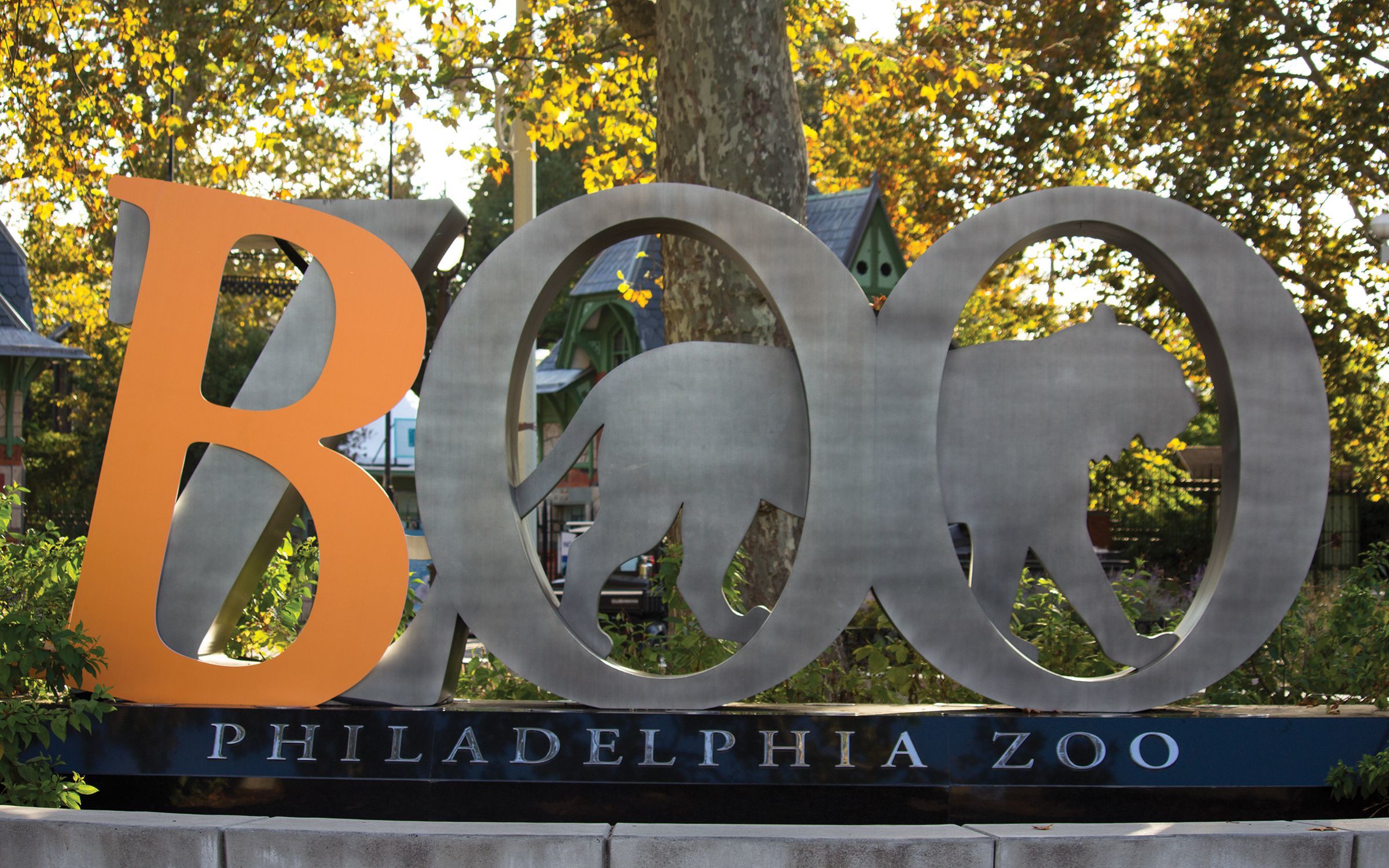
The online sportsbook recently extended a new offer to some of its VIP customers: an opportunity to bring their kids to the Philadelphia Zoo on Saturday for its annual “Boo at the Zoo” festivities, promising in an email “the perfect combination of Halloween fun, family entertainment, and VIP treatment for all ages.”
A digital flyer for the event, obtained by The Inquirer, shows that the perk also includes complimentary parking passes, and lunch and snacks at the zoo’s Garden Pavilion for the sportsbook’s VIP customers and up to three guests. The flyer notes that FanDuel will have a registration table near the zoo’s entrance.
“Kids and adults can get into the spirit with face painting, personalized caricature drawings, and explore the zoo in costume as part of the beloved Boo at the Zoo tradition,” reads one passage of the flyer.
Addiction experts said the offer of a benefit that could be enjoyed by children of heavy gamblers, in a family-centric setting, is troubling, and raises new questions over how VIP programs operate.
“So, this is a bad idea,” said Timothy Fong, the co-director of the UCLA Gambling Studies Program. “Maybe someone in the zoo’s offices doesn’t understand the gravity of the situation. Even if [FanDuel] pays a good chunk of money, the zoo still has a choice to say no.”
Fong said this particular VIP reward could create “a brand value” with a family that is able to visit the zoo specifically because of FanDuel. “I’m not castigating them,” he said, “but [FanDuel] is an adult product for people who are 21 and up.”
A spokesperson for the zoo did not respond Monday to a request for comment. Messages left for John Ginter, chairman of the zoo’s board of directors, and Jo-Elle Mogerman, its president and CEO, were not immediately returned.
On its website, zoo admission tickets for two adults, two children, and a parking pass for Oct. 24 would normally cost $134.
In an email Monday, a FanDuel spokesperson wrote: “FanDuel is not a sponsor of ‘Boo at the Zoo’ and there is no FanDuel branding on site. FanDuel has played no role in the planning or execution of this event and purchased tickets through normal channels to give customers the option of attending.
FanDuel is offering VIP customers and their families admission to the “Boo at the Zoo” celebration, now in its 20th year, as well as lunch, snacks, drinks, and parking. Philadelphia Zoo
“Like many consumer companies, we offer our most loyal customers a range of complimentary benefits. Examples include access to museum exhibits; tickets for sports and cultural events; and priority restaurant reservations.”
The flyer, however, describes the offer as a “Boo at the Zoo VIP Event” with “lasting memories in true FanDuel VIP style.”
Doug Harbach, a spokesperson for Pennsylvania’s Gaming Control Board, said on Monday that “providing a benefit to someone under 21 years old is a matter in which we may request more info, and we’re looking into this particular situation to see if that is occurring.”
The board doesn’t review in advance rewards that gambling companies might offer their customers, Harbach said. “At the same time, in the normal course of our regulatory processes, a promotion is subject to audit.”
Longtime addiction counselors have said that Pennsylvania is the epicenter of a gambling addiction crisis. Researchers at Pennsylvania State University have found that between 2.4% and 6.4% of Pennsylvanians might be problem gamblers — more than double the reported national average of 1% to 3%.
Pennsylvania recorded $7.7 billion in overall gambling revenue in 2025, a sum that trailed only Nevada, while the Philadelphia media market last year outpaced even Las Vegas and New York City for gambling advertisements.
Sportsbooks have expanded into other corners of everyday life with sponsorship arrangements. Last fall, when SEPTA enacted service cuts amid a budget crisis, FanDuel paid $80,000 to cover the operating cost of express trains on the Broad Street Line during and after an Eagles game against the Dallas Cowboys, while DraftKings recently paid for visitors’ parking at a state fair in Texas.
In 2025, FanDuel paid $80,000 so that SEPTA could offer additional express trains on the Broad Street Line for an Eagles game against the Dallas Cowboys. A budget crisis had forced the transit agency to cut service.
But Cort M. Dorn-Medeiros, an addiction expert and professor in the Counseling, Therapy, and School Psychology department at Lewis and Clark College in Portland, Ore., said a kid-friendly zoo event — which includes the promise of a free lunch and “spooktacular snacks” — represents a dangerous escalation.
“It’s the desensitization and targeting of a market that is not yet in your realm, but very soon could be, and a very lucrative target population,” Dorn-Medeiros said.
A 2025 Common Sense Media survey of 1,017 boys ages 11 to 17 found that 36% had participated in some form of gambling during the previous year. At least 49% reported that they had encountered gambling content on social media, and nearly 60% said the content appeared even when they had not searched for it.
“An event like this, nothing happens by accident,” Dorn-Medeiros said. “I think these companies know what they’re doing. They can present it as appreciation for customers, but why are children involved? Why is it being held in a venue that clearly is for children?”
Galapagos tortoises Mommy (right, estimated to be 97 years old) and Little Girl (left, estimated to be 85 years old) at the Philadelphia Zoo in 2025. Tom Gralish / Staff Photographer
Three members of Congress have since August accused FanDuel of using its VIP rewards to “drive bettors into debt and addiction” and called on the company to end such programs, citing The Inquirer’s reporting about a VIP account manager who in 2024 sent a video of Harper personally greeting a local bettor who had an addiction and his young son.
In a written response to the lawmakers’ criticism, a FanDuel executive insisted that the company’s customer rewards are “not designed to encourage destructive gambling,” and that its VIP managers are trained to recognize and report signs of problem betting.
Frank James, a psychiatrist with the Department of Child and Adolescent Psychiatry and Behavioral Sciences at Children’s Hospital of Philadelphia, said the general idea of a gambling company being involved with a kid-friendly event is reminiscent of how the tobacco industry once found creative ways to market chewing tobacco and cigarettes to adolescents.
In 1998, the four largest tobacco companies — facing nationwide litigation over the harm their products caused to consumers’ health — entered into a master settlement agreement with the National Association of Attorneys General. The companies paid more than $200 billion to 46 states, including Pennsylvania, and were prohibited from marketing their products to adolescents.
“We learned from this when it came to cigarettes and kids. We need to look at what we learned in the past and maybe apply it to gaming and gambling,” James said. “I think if [Boo at the Zoo] was sponsored by a tobacco company we would have a different reaction to it.”
Brian Carr, a former president and chief operating officer of Sands Casino Resort Bethlehem, said that it’s not unusual for brick-and-mortar casinos to do charitable outreach to seniors or veterans, or to sponsor a booth or a stage at a music festival.
Such efforts were clearly “focused on adults,” Carr said. “It was always an unspoken rule that you didn’t do anything with kids.”
Carr, now a casino consultant, said that if he still operated a gambling entity, he “wouldn’t be comfortable signing off” on a bettor reward that could potentially involve children.
“If someone brought it to me,” he said, “I’d be like, ‘No.’”
The Inquirer will continue to report on issues related to the growth of gambling addiction — among teens and adults — across Pennsylvania. If you, or someone you know, wants to speak with a reporter, please contact David Gambacorta or William Bender at dgambacorta@inquirer.com and wbender@inquirer.com
The deal is a sign of the software industry’s rush to keep up with accelerating demand for well-organized, easy-to-read business data, images, and video. Such material can be rapidly processed by artificial intelligence agents and used to launch software, sales, and other projects.
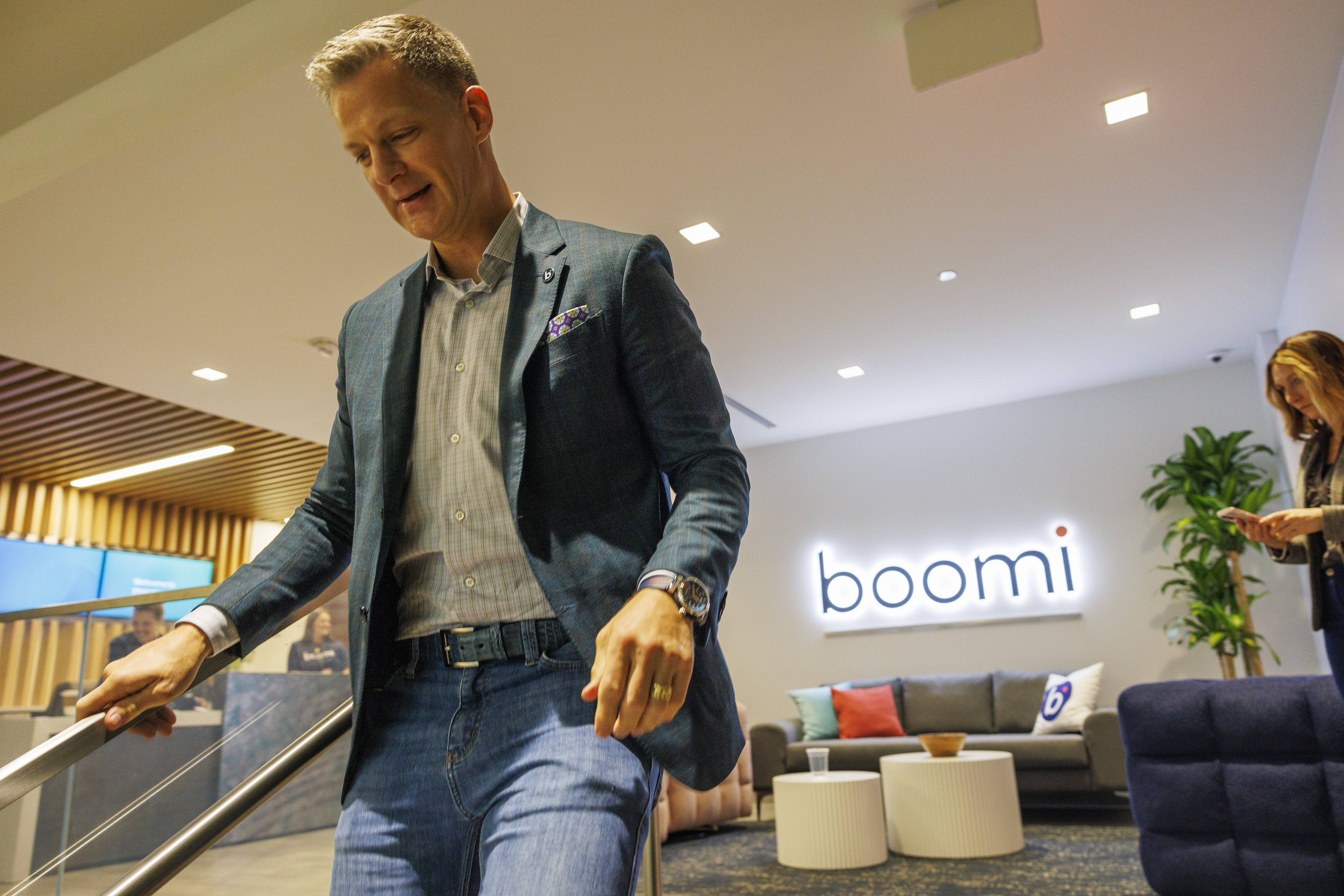
Elementary is the third Israeli AI startup Boomi has agreed to buy in the two years since the company moved to its headquarters to Conshohocken from an office park in Berwyn.
Boomi employs around 2,300, including around 200 in the Philadelphia area, with the rest at offices in countries including India, Canada, and Israel, as well as its suburban Philadelphia home.
Elementary Datawas founded in 2022 by former Israeli Defense Forces electronic-warfare specialists Maayan Salom and Or Avidov. It is backed by Tel Aviv-based TLV Partners and by Silicon Valley investors.
Elementary says its software helps clients find, rank, and fix data for use by AI agents, ensuring results are reliable — a major issue for early AI users worried about “hallucination” or false results.
“AI is only as trustworthy as the data behind it,” Steve Lucas, Boomi’s chairman and chief executive officer, said in a statement.
A Forrester Consulting study Boomi paid for this summer found that most companies are using AI but only about one-third trust the results. Boomi’s Lucas says better data will increase reliability, trust, and use of AI applications by businesses.
“Joining Boomi, with 30,000+ customers and 800+ partners, lets us make trusted data the default for the AI era, not the exception. We’re just getting started,” Elementary CEO Salom, who will join Boomi with her whole team, said in a statement.
“When agents act on your data at machine speed, trust in that data stops being a nice-to-have and becomes the foundation the whole enterprise stands on,” Salom added.