Blog

  • The Academy of Natural Sciences is closing its museum after nearly two centuries

    The Academy of Natural Sciences is closing its museum after nearly two centuries

    Philadelphia’s Academy of Natural Sciences of Drexel University is closing its museum after nearly two centuries in existence, citing financial pressures and dwindling attendance.

    The museum, which opened to the public in 1828, will cease operations at the end of the business day Sept. 30. Its last day open to the public with regular hours will be Sunday, Sept. 27, staff were notified on Tuesday.

    Visitorship at the museum had slipped in recent years, according to a statement signed by Drexel president Antonio Merlo and Academy board chair Suzanne Biemiller. Though the Academy had worked to rebuild attendance after the pandemic, “patterns of visitation and audience behavior changed in lasting ways, while the costs of operating the museum continued to rise,” the statement said.

    “Over time, it became clear that these were not temporary pressures, but fundamental changes in the economics of the Academy’s operational model, costs that have imperiled the Academy’s ability to discharge its overall mission and preserve its legacy.”

    Closing the current Parkway museum, was, therefore, “a difficult decision taken to concentrate resources on the Academy’s enduring scientific assets and research,” said the statement.

    The aim is ultimately to relocate the Academy’s collections and sell the building, which, is owned by the Academy, and has a lot of deferred maintenance needs, said a source close to the talks between Drexel and the Academy, who asked not to be identified.

    The Academy building on the Benjamin Franklin Parkway at 19th Street, “will continue to house collections and laboratories while we consider possible pathways forward that place the utmost priority on preservation and support of the collections, library, archives, and research initiatives,” a Drexel spokesperson said.

    Biemiller declined to comment on the potential relocation of the collections.

    The museum cut back its hours of operation from five days a week to three — Friday through Sunday — as of last Oct. 1 (though it added back Thursdays in July and August for its Dino-Mite Summer program).

    One of two shell sculptures placed on either side of the 19th Street entrance to the Academy of Natural Sciences of Drexel University on Aug. 17.Tom Gralish / Staff Photographer

    Drexel said 27 of the Academy’s 80 employees — about a third — will be “impacted” by the closure. The university did not say whether that meant they would be laid off or transferred, and did not respond to a question on how much money the move will save.

    Simultaneously Tuesday, the university and science institute announced that Scott Cooper, Academy of Natural Sciences president and CEO for nearly nine years, is stepping down immediately.

    The Drexel and the Academy boards will “continue working together to identify an appropriate governance structure and interim and permanent leadership for the Academy,” the statement said.

    Former Comcast executive and U.S. Ambassador to Canada David L. Cohen, who has been helping to broker an agreement between Drexel and the Academy, said the two institutions are close to striking a deal on a “term sheet” on governance and finances. He has been tapped by Gov. Josh Shapiro to serve as a third-party facilitator in the process, the university said in its message.

    “We want to preserve the Academy,” he said, “but we also don’t want to jeopardize Drexel.”

    Collections and research will remain unaffected

    The Academy, which became affiliated with Drexel in 2011, is known to the general public for its museum that features a Dinosaur Hall with dinosaur bones and full-scale replicas. Its exhibitions have explored environmental issues and centered on the Academy’s collection of approximately 19 million specimens, as well as historically significant items associated with Thomas Jefferson and Lewis and Clark.

    It offers hands-on science experiences, like a “big-dig” fossil exhibit, and old-school dioramas of bison, bears, tigers, and other animals in their ecosystems. The museum’s current “Botany of Nations” show “reshape[s] the historic tale of Lewis & Clark through Indigenous perspectives,” says an exhibition description.

    Closure of the museum does not affect the rest of the institution, which builds and maintains the collections and conducts research through departments such as the Patrick Center for Environmental Research, all housed in the Parkway structure. All of that will remain there, the university said.

    Biemiller said that “the trustees of the Academy know that this news about the closure of the museum is going to be a blow to Philadelphians, and I would love for them to know we share their feelings of loss about this beloved space and place. And we also know that work remains to develop and fund a new strategic and operating model that will ensure that the Academy’s important centuries-long mission to understand the world and inspire us to care for it continues.”

    Asked whether the intent was to reopen a museum, Biemiller said: “I would hope so. That’s the goal. I think we have not given up on that part of our mission. The Academy is research, it is [specimens and library] collections, and it is public engagement.”

    While she said it was “incumbent upon us to find places and ways” for the museum to continue, what form it would take has not been determined.

    “It could be at the current location in a different configuration, it could be a new location, it could be imagined in different ways.”

    What’s important, she said, was the “fundamental goal to ensure that people have access to the natural world, can see these birds from North American or dinosaur bones and fossils the Academy scientists have collected and understand how they connect to the world.”

    “It’s a sad day to see it close,” said Franklin Institute president and CEO Larry Dubinski of the Academy museum, which is about a block from the institute. “It’s a profound loss for the community and for the city and the region. And it’s one of those days that I hope the community takes stock in. This is a city driven by arts and culture. We have a phenomenal city of arts and culture, unlike almost any other in the United States.”

    However, Dubinski said, the arts here are “underresourced and underfunded, and that does continue to challenge the ability to have a sustainable arts and culture community. I think today’s another wake-up call to that issue.”

    Dinosaur Hall at the Academy of Natural Sciences Aug. 5, 2026.Allie Ippolito / For The Inquirer

    Ongoing financial challenges at Drexel

    The museum closure comes amid financial challenges at Drexel University, which has been seeking to overcome a budget deficit, overhaul academic programs, change from a quarter-based calendar to semesters by fall 2027, and cope with another national dip in high school students beginning this year.

    Over about the last decade, the West Philadelphia university has lost about 20% of its enrollment. Last fall, Drexel saw a 19% drop in freshmen; numbers for this fall aren’t yet available, though the school is projecting a 16% jump in first-year students. And the school, which enrolled 20,868 undergraduate and graduate students in 2025-26, is projected to continue to run deficits through fiscal year 2028, according to a report from Moody’s, a global financial services company that releases credit ratings.

    Merlo, Drexel’s president, told The Inquirer in April that the school projected ending the year with a $20 million deficit, down from almost $40 million last year and $63 million in 2024. In May, the school said it had implemented $93 million of “permanent strategies” to deal with the “structural imbalance” and had identified $11 million more.

    The Academy has become a drain on the university, a source familiar with the situation, who was not authorized to speak about the matter and asked not to be identified, told The Inquirer in April.

    The university has provided the Academy with substantial support — $8,288,000 and $8,914,000 for operations in fiscal years 2025 and 2024, respectively, according to financial statements posted on the Academy website. These numbers include in-kind support that Drexel is providing to the Academy.

    Friction between the Academy and Drexel became public in April, The Inquirer reported, revealing Drexel’s wish to totally take over the Academy, or end the partnership.

    Uncertain long-term future for the Academy

    Talks are continuing between the two institutions, with the offices of Gov. Shapiro and Mayor Cherelle L. Parker involved, underscoring the importance of the Academy to both the city and the state.

    “I don’t want to lose the Academy on my watch, and neither does the mayor,” Shapiro told Cohen, according to Cohen, who has led dozens of meetings over the last eight months and created a draft proposal for an agreement between Drexel and the Academy.

    “Drexel and the Academy are working with my office, with Governor Shapiro’s office, and with Ambassador David L. Cohen, as the governor’s representative, to preserve the essential mission of the Academy,” Parker said in a statement.

    “We are working collaboratively toward the outcome we all seek for the City of Philadelphia.”

    The governor’s press office did not respond to The Inquirer’s request for comment.

    Cohen has long been a negotiator in many major city issues, formerly serving as chief of staff to former Philadelphia Mayor Ed Rendell and leading the board of trustees at the University of Pennsylvania.

    “Together, we are advancing discussions focused on the Academy’s long-term future and identifying new opportunities to strengthen its scientific mission, ensure access to its world-renowned collections, expand public engagement in the natural sciences, and maintain the Academy’s enduring presence in Philadelphia,” the statement said.

    The Academy of Natural Sciences on the Parkway, Aug. 5, 2026.Allie Ippolito / For The Inquirer

    The Academy’s affiliation with Drexel is 15 years old. It announced a partnership agreement with Drexel in 2011 that blended the two organizations somewhat, but stopped short of being a full merger. The two groups maintain separate boards.

    According to a 2013 Drexel audit, the 2011 affiliation agreement between the two institutions stated that the Academy would retain its status as separate nonprofit organization, but that as of September 2012 it would become a Drexel subsidiary owned 100% by the university.

    A Drexel spokesperson said in April that the school had “invested a substantial amount annually in the Academy to maintain access to the Academy’s collections while we worked with the Academy and the community to identify a sustainable path to keep this resource in Philadelphia.”

    Cooper was named the Academy’s leader in 2017 after serving as vice president of collections, knowledge and engagement at the Royal British Columbia Museum in Victoria, Canada. Before that, he was director of museums at the Qatar Foundation in Doha, Qatar.

    Under his leadership, the Academy “renewed its public and scientific mission,” Tuesday’s joint statement from Drexel and the Academy said. “It revitalized galleries, developed original exhibitions showcasing its collections and research, and advanced co-curatorial approaches that brought new voices into programs and interpretation.”

    Cooper, who will remain for a time as a consultant to the Academy, was not available for comment, a spokesperson said.

    “We’re sorry he’s leaving, but understand his decision,” said Biemiller.

    “It’s a competitive world that museums inhabit, and people make choices every single day,” Cooper told the Inquirer after his 2017 announcement. “We need to ensure that when they come to the Academy they are getting a reward for their investment of time.”


  • U.N. report finds Syria was building a nuclear reactor in Deir el-Zour under former President Assad

    U.N. report finds Syria was building a nuclear reactor in Deir el-Zour under former President Assad

    VIENNA — Syria was constructing a nuclear reactor in Deir el-Zour under the leadership of ousted former President Bashar Assad, according to a U.N. report seen Tuesday by the Associated Press.

    Inspectors with the U.N. nuclear watchdog visited several sites in Syria in August and carried out verification work that confirmed the existence of a long-suspected nuclear site, according to the confidential report circulated to member states.

    Based on this visit, the International Atomic Energy Agency reported that it is “able to establish that the former Syrian authorities had failed to report nuclear material, facilities, and activities as required under the NPT Safeguards Agreement.”

    This information included a nuclear reactor under construction in Deir el-Zour, a fuel fabrication plant, and another site used for fuel storage during the rule of Assad.

    Under Assad, Syria was believed to have operated an extensive undeclared nuclear program that included a nuclear reactor built by North Korea in eastern Deir el-Zour province. Following Assad’s ouster, the new government agreed to give IAEA inspectors access to suspected former nuclear sites.

    The site in Deir el-Zour only became public knowledge after Israel launched airstrikes in 2007 that destroyed the facility. Syria later leveled the site and never responded fully to the IAEA’s questions about it. Israel is believed to have its own undeclared atomic weapons program that makes it the only country in the Mideast with nuclear bombs.

    Israel neither confirms nor denies having atomic weapons.

    The IAEA took samples at the site in 2024 and reported last year that they contained uranium particles.

    The new Syrian authorities have also expressed an interest in developing a civilian nuclear energy program and said any nuclear material found in the country would remain in Syria’s custody under international safeguards.

    The IAEA reported Tuesday that its inspectors visited the Deir el-Zour site on Aug. 29 “to monitor progress on the excavation work.”

    “Based on observations made at the location, the Agency confirms that the cooling infrastructure which has now been uncovered is consistent with that of a nuclear reactor.”

    In its confidential report, the IAEA said three locations were “functionally related” to the Deir el-Zour site. One was related to “conversion and/or fuel fabrication activities,” another was for “temporary storage of construction material,” and another was for the “temporary storage of construction materials being transferred to/from” the site, as well as for “planned reprocessing activities.”

    During the visit to Syria, IAEA Director General Rafael Grossi and a team of senior inspectors also visited a previously undeclared site in the country.

    Syria notified the agency of the site’s existence in a July 17 letter and invited the IAEA “to cooperate with the Syrian authorities in the inspection and verification of the site and of any nuclear material to be potentially found.”

    The IAEA said in its report that this new site contained “natural uranium metal in the form of fuel rods with cladding.” The agency verified the material and confirmed “the presence of around 73 tonnes of natural uranium metal.” The agency reported that “all of this nuclear material is currently subject to Agency containment and surveillance measures.”

  • Montgomery County cop charged with manslaughter for killing a college student who accidentally knocked on the door of the wrong house

    Montgomery County cop charged with manslaughter for killing a college student who accidentally knocked on the door of the wrong house

    An Upper Pottsgrove police officer was charged with manslaughter Tuesday in the fatal shooting of a college student that prosecutors said was unjustified.

    Cpl. Sean Farrell, 58, shot Glenwood Pysher IV on Aug. 23 after Pysher accidentally knocked on the door of the wrong house after a night out drinking with friends. The residents, thinking Pysher was trying to break in, called police, authorities said.

    Montgomery County District Attorney Kevin Steele said that Pysher was not a threat, and that Farrell’s use of force was criminal.

    “At the time the fatal shots were fired, Mr. Pysher had his hands up, he had no weapon, he did not charge the officer or act aggressively in any way,” Steele said. “This was not a legal use of force under Pennsylvania law.”

    Montgomery County District Attorney Kevin Steele shows a still image taken from the body-worn camera of Cpl. Sean Farrell. Steele said Farrell was not justified in using lethal force against Glenwood Pysher IV.Vinny Vella / Staff

    Body-camera footage recorded the entire encounter, which Steele said lasted “seconds, not minutes.”

    After the shooting, the DA said, Farrell told a colleague that Pysher acted aggressively, “charged” him, and ignored his commands.

    Steele said the footage contradicts Farrell’s account, and shows Pysher calmly listening to the officer.

    Even if Pysher had been aggressive, Steele said, Farrell could have used the nonlethal weapons he was carrying that night, including a Taser and a baton, rather than reaching for his gun.

    Pysher, 22, affectionately known as “Bubba,” was days away from returning to St. Elizabeth University in North Jersey for his senior year. He had a made a wrong turn while walking to a friend’s house, and didn’t realize he was at a stranger’s door, said his mother, Erin.

    Minutes later, Farrell responded to a 911 call reporting an attempted break-in. After arriving at the home, Farrell identified himself as a police officer and told Pysher to show him his hands and drop to the ground, according to the affidavit of probable cause for his arrest.

    Pysher raised his hands and walked toward Farrell, who again told him to drop to the ground, the affidavit said. Farrell then yelled “stop or I’ll …” and fired his gun twice before finishing his warning.

    Pysher, who was no more than 20 feet away from Farrell, was struck in his chest and collapsed.

    The Montgomery County Coroner’s Office ruled the death a homicide.

    Farrell, who has served as an officer in Upper Pottsgrove since 2005, has been placed on administrative leave. He is a third-generation police officer, according to an interview he did with the Reading Eagle.

    During an arraignment Tuesday afternoon, District Judge Cathleen Kelly Rebar initially set Farrell’s bail at 10% of $75,000, but decided to keep Farrell in custody until he can surrender his personal firearms.

    His attorney, Michael Gottlieb, told the judge Farrell is “a decorated police officer” who “was out there doing his duty.”

    “He did not have any ill will” toward Pysher, the lawyer said. “He didn’t go there with intent to injure this young gentleman.”

    A lawyer the Pysher family, Ken Fulginiti, meanwhile, said Tuesday they are “grateful for the work of the Montgomery County District Attorney’s office and they are looking forward to justice in this horribly tragic, preventable and reckless conduct that took the life of their son.”

    In the days after the shooting, Pysher’s family expressed sadness and outrage and said they wondered why the officer didn’t take steps to de-escalate the situation.

    “It was a senseless loss, and it shouldn’t have happened,” Erin Pysher said in an interview. “I don’t know what the officer was thinking or doing that his first response was to shoot an unarmed kid.

    “This was all a huge mistake, and they killed him.”

  • Drones helped find people after Nepal floods but the search inside hydropower tunnels is a challenge

    Drones helped find people after Nepal floods but the search inside hydropower tunnels is a challenge

    KATHMANDU, Nepal — Drone pilot Manish Maharjan has helped rescue teams in Nepal find people missing after last week’s catastrophic floods, sometimes using speakers mounted on the devices to call out to or play music for those stranded on hillsides.

    But the search for hundreds of workers believed to be trapped in power plant tunnels — now a major focus of rescue operations — presents an entirely different challenge, he said.

    “We found tunnels were filled with mud like toothpaste in a tube,” Maharjan said. “There was no hollow or empty space inside.”

    Maharjan, who is also a filmmaker, joined the Nepal Army’s rescue efforts a day after the Aug. 26 flash floods, which have killed more than 1,000 people and left thousands missing in Nepal and Tibet.

    “We used microphone speakers to call out to them. In some places, we even played songs and then waited for a response,” Maharjan said. “That worked in a few cases and helped us locate people.”

    The torrent of water unleashed after a glacial collapse caused widespread damage to critical infrastructure, including roads, buildings, bridges, and hydropower plants — in the latest sign of the growing risks across the rapidly warming Himalayas. At least 900 workers are still missing from 12 hydropower projects buried under mud and debris. About 500 of them are believed to be trapped inside power plant tunnels.

    Some workers in the tunnels managed to call for help when the disaster struck, according to Mohan Kumar Dangi, president of the Independent Power Producers’ Association. But it was unclear whether rescuers have had any contact with the trapped workers since the initial calls for help.

    As time slips away, rescuers are finding it increasingly difficult to locate these missing people.

    Maharjan, who has been operating thermal drones in the tunnels, said the searches were challenging because of their difficult access and the absence of any empty space.

    “I can only fly drones in tunnels that are long and straight,” he said. “Once there are bends, turns, or zigzags, it becomes much harder to operate and search effectively.”

    At the Rasuwagadhi hydropower project on Monday, Maharjan managed to send a drone to search deep inside and all the way to the end of the tunnel but found no sign of any life.

    “We checked repeatedly but it was filled with mud and debris,” he said. “Looking at it, I could only imagine the force of the flood.”

  • House passes short-term funding bill to avoid a shutdown before the election

    House passes short-term funding bill to avoid a shutdown before the election

    WASHINGTON — The House passed a short-term measure Tuesday to fund the federal government into early December, a move designed to avoid a chaotic shutdown as lawmakers campaign for reelection.

    Lawmakers needed to act before the fiscal year concludes at the end of September to avoid a funding lapse. They were determined not to bump up against that deadline during the campaign season following this past year’s historic shutdowns.

    The House passed the bill by a vote of 370-48. The Senate has already overwhelmingly approved the measure, so it now moves to President Donald Trump’s desk for his signature.

    “It gives the nation and our constituents certainty, certainty that the government will remain open, certainty that our service members will be paid,” said Rep. Tom Cole, the Republican chairperson of the House Appropriations Committee.

    A record 43-day shutdown occurred last fall when the two parties disagreed on renewing an expiring tax credit that lowers the cost of health coverage obtained through Affordable Care Act marketplaces. Then came the shutdown of the Department of Homeland Security, which lasted 76 days before lawmakers agreed to fund much of the department but not its immigration enforcement operations.

    Lawmakers were wary of a repeat before voters go to the polls. They also blamed the other party for the recent impasses.

    “We’re going to avoid the threat of another Democratic shutdown,” House Speaker Mike Johnson told reporters in advance of the vote.

    Rep. Rosa DeLauro, the lead Democrat on the House Appropriations Committee, encouraged her Democratic colleagues to vote for the measure during a closed-door meeting Tuesday morning.

    She said the bill was much improved from the product that passed the House earlier this summer on a mostly party-line basis. For example, she said it prevents the Department of Homeland Security from transferring funds to the Border Patrol, and it delays a proposed rule that would give political appointees in the Trump administration more authority to stop federal grants from going out for programs they view as not in line with the president’s agenda. Those changes were made when the Senate approved its version of the bill.

    Democrats fear the administration will use the proposed regulation on grants to steer money away from Democratic-led states. DeLauro called the delay an important first step, but said more must be done to block the policy from taking effect.

    “Whether a community receives disaster relief should not depend on who they voted for in the last election,” DeLauro said.

    The short-term measure funds federal agencies generally at current levels through Dec. 11. It will give lawmakers more time to find compromise on a full-year measure, though that will likely be quite difficult.

    Republicans are seeking hundreds of billions of dollars in additional spending for the military while cutting most nondefense programs. Democrats say that’s a non-starter and insist on a bipartisan approach that treats domestic programs with parity.

  • Eagles lead NFL with eight players on ESPN’s Top 100 list for 2026; Jalen Hurts comes in at No. 97

    Eagles lead NFL with eight players on ESPN’s Top 100 list for 2026; Jalen Hurts comes in at No. 97

    The Eagles have many reasons to believe they have one of the NFL’s most talented rosters, and ESPN offered another one Tuesday.

    The Birds led the NFL with eight players on ESPN’s projected Top 100 players list for the 2026 season. This is the second consecutive year the Eagles have had more players on the list than any other team. The Lions and 49ers followed with six players each.

    The ranking was decided by 12 ESPN NFL analysts and reporters who evaluated players based on their expected performance in the 2026 season, rather than past performance.

    The Eagles’ eight selections are spread across offense and defense, from quarterback and running back to a receiver, two offensive tackles and three defensive players. Find out who made the list below.

    Quinyon Mitchell will have the best 2026 season for an Eagle, per ESPN’s projections. Monica Herndon / Staff Photographer

    Quinyon Mitchell, No. 34

    Mitchell was the Eagles’ highest-ranked player, moving up 47 spots from No. 81 last year.

    The third-year cornerback led all NFL cornerbacks in opponent catch rate during the 2025 season at 42.4%. .

    ESPN projects Mitchell to record 54 tackles, 19 passes and three interceptions in 2026.

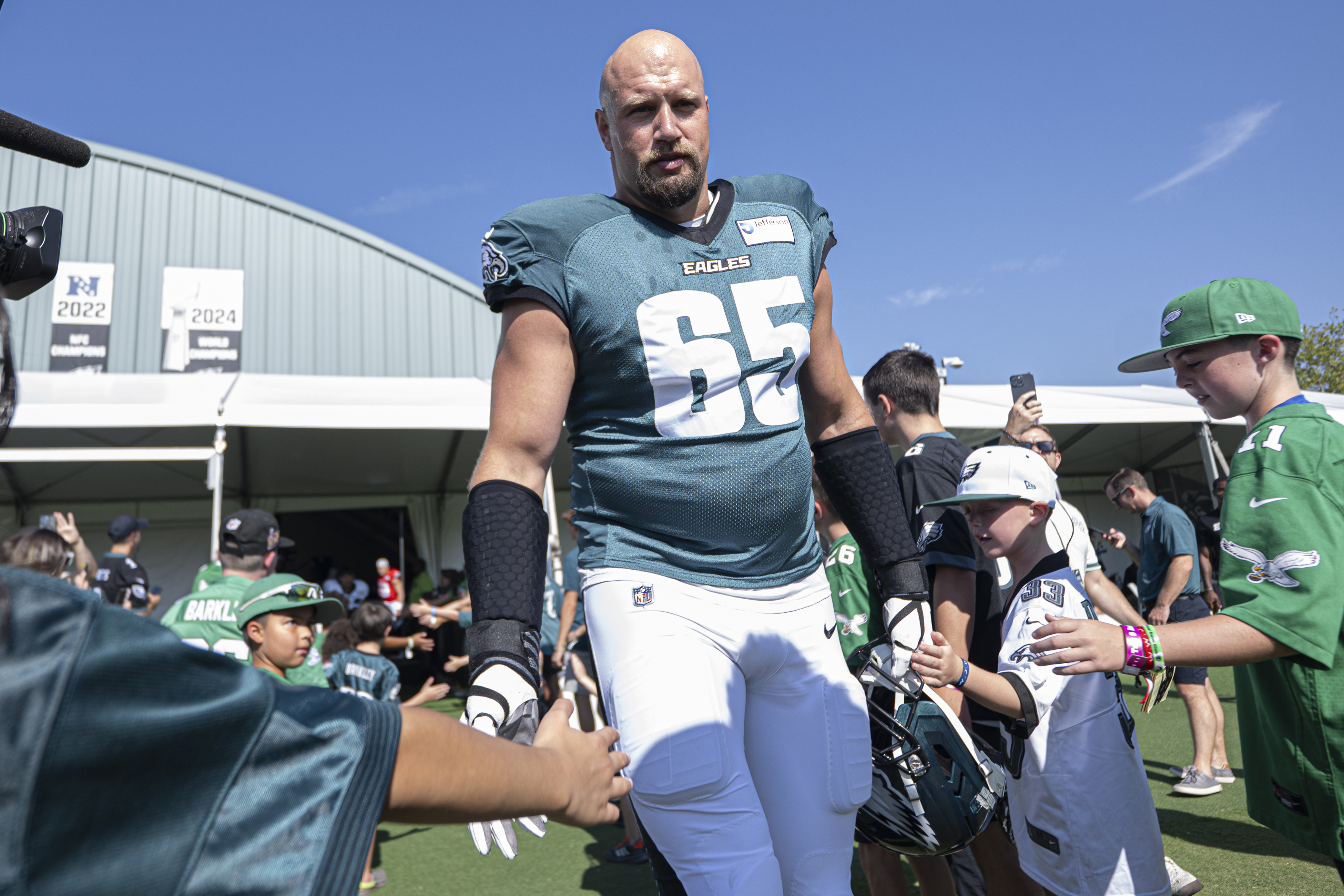
    Lane Johnson is a top-40 player in what will probably be his final year. Jose F. Moreno / Staff Photographer

    Lane Johnson, No. 40

    The veteran right tackle dropped from No. 12 to No. 40 this year, but ESPN still views Johnson as one of the league’s best offensive linemen.

    Johnson, 36, is entering what he has indicated will probably be his final NFL season. He is a five-time All-Pro and two-time Super Bowl champion with the Eagles. Johnson is returning from a Lisfranc injury that cost him the final eight games of last season, including the playoffs.

    Jordan Mailata’s (left) production dipped in 2025 but he is still considered an elite lineman. Monica Herndon / Staff Photographer

    Jordan Mailata, No. 48

    Mailata also fell from last year, when he was ranked No. 23.

    Still, ESPN considers the Eagles left tackle one of the league’s premier offensive linemen, after being a seventh-round pick for the Eagles in the 2018 draft. Mailata has the third-highest Pro Football Focus grade among offensive tackles since 2022, behind the 49ers’ Trent Williams and Lions’ Penei Sewell.

    Mailata still ranks fifth among offensive tackles in run block win rate of 83.3% since 2020, even though he had a career-low 72.4% rate in 2025.

    Jalen Carter could move back up the Top 100 list with a healthier 2026. Monica Herndon / Staff Photographer

    Jalen Carter, No. 58

    After a shoulder injury shortened Carter’s 2025 season, he dropped 40 spots from No. 18.

    The Eagles defensive tackle played just 11 games last season but has the chance to be “one of the most disruptive linemen in the NFL,” according to ESPN. Even though he played in only 11 games, he had four pass rushes that led to forced interceptions.

    He signed a four-year, $152 million extension this offseason and arrived at training camp 10 pounds lighter and healthy.

    Saquon Barkley will look to recapture the magic of his 2024 season after having just 1,140 yards last year.Elizabeth Robertson / Staff Photographer

    Saquon Barkley, No. 63

    Barkley dropped significantly in the rankings, moving down 46 spots from No. 17 after his 2025 season did not match his historic first season with the Eagles. After rushing for 2,005 yards in 2024, Barkley finished with 1,140 yards last season. ESPN projects Barkley to rush for 1,285 yards and nine touchdowns on 300 carries in 2026.

    An All-Pro performance in 2025 strengthened Cooper DeJean’s projection for 2026. Yong Kim / Staff Photographer

    Cooper DeJean, No. 71

    DeJean moved up 21 spots from No. 92 after being a 2025 first-team All-Pro. He is expected to have an even more versatile role this season, as the Eagles plan to have him play safety in base and slot in sub packages, keeping him on the field as much as possible.

    ESPN projects he will have 82 tackles, 17 pass deflections, two interceptions and one forced fumble.

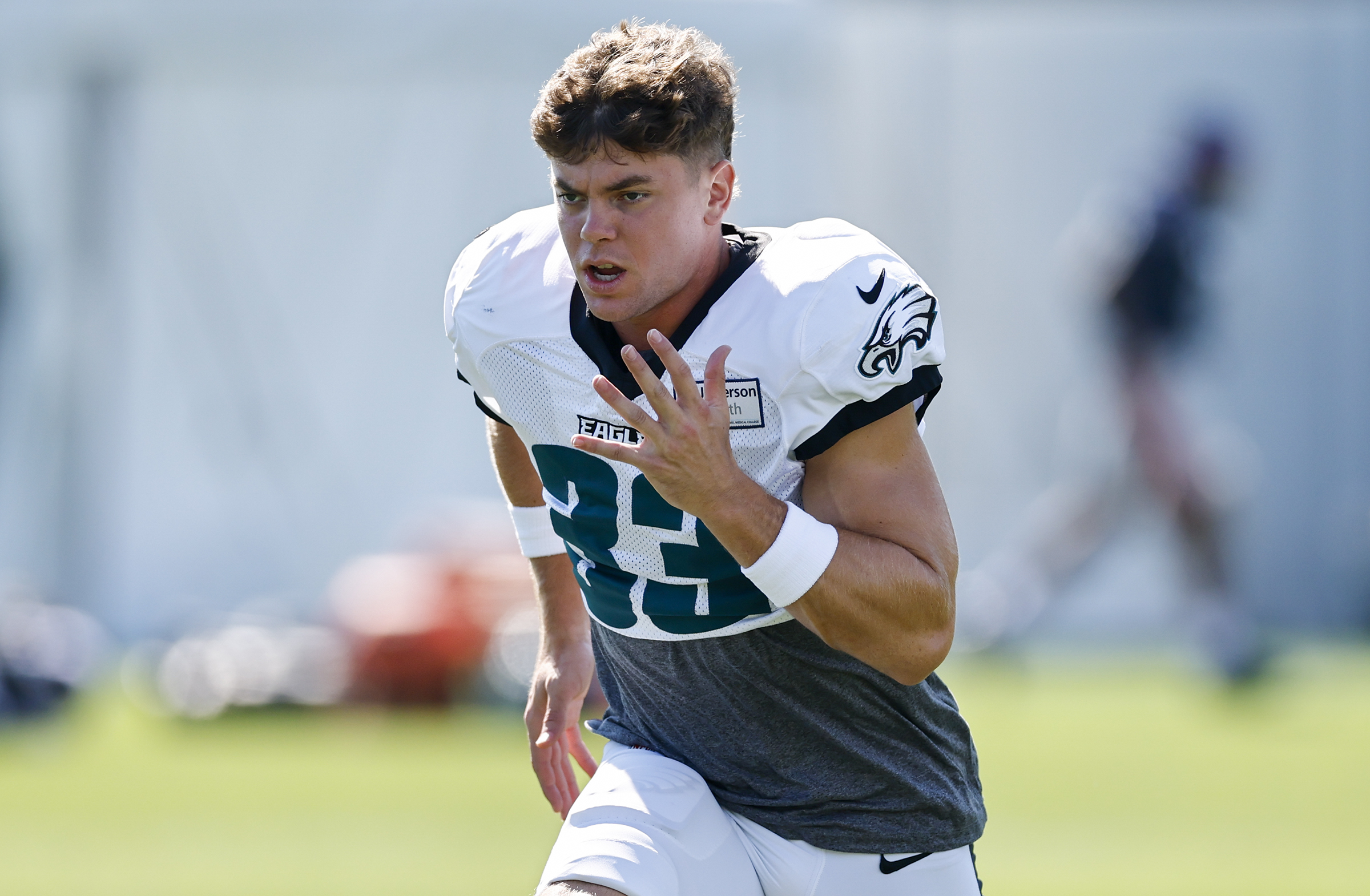
    DeVonta Smith has a top-100 projection heading into his first year as a WR1. David Maialetti / Staff Photographer

    DeVonta Smith, No. 93

    Smith is the new Eagles face on ESPN’s list, making the Top 100 for the first time.

    With A.J. Brown now in New England, Smith enters the season as the team’s clear No. 1 receiver. According to ESPN, a 100-catch season seems possible, as he came close in 2022 with 95 catches for nearly 1,200 yards.

    Smith has won a Heisman Trophy, college football title, and Super Bowl, making him one of five players to accomplish that feat. The others are Tony Dorsett, Marcus Allen, Reggie Bush, and Charles Woodson.

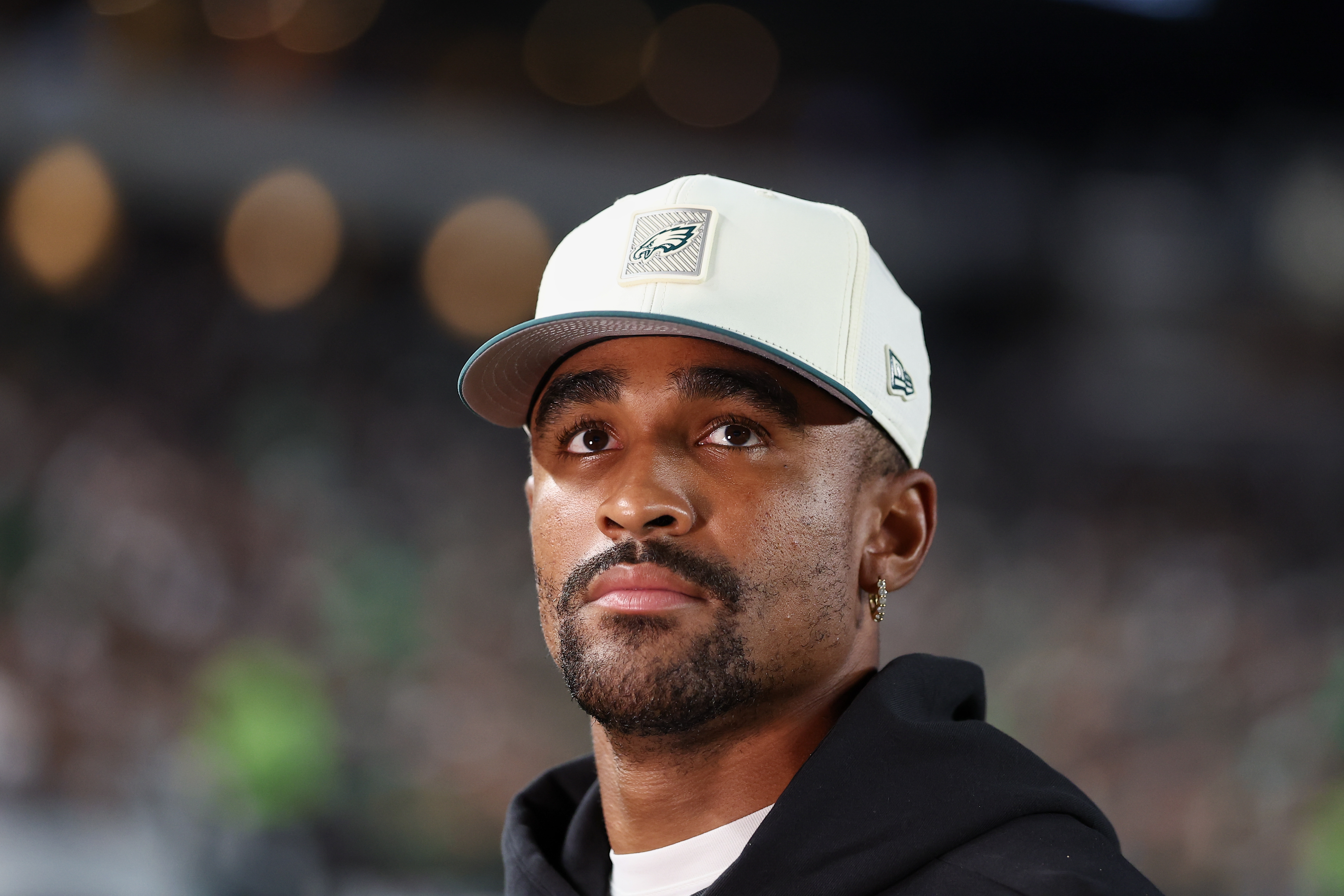
    Jalen Hurts fared better among his fellow players on NFL Network’s Top 100 list than he did on ESPN’s 2026 projections. Monica Herndon / Staff Photographer

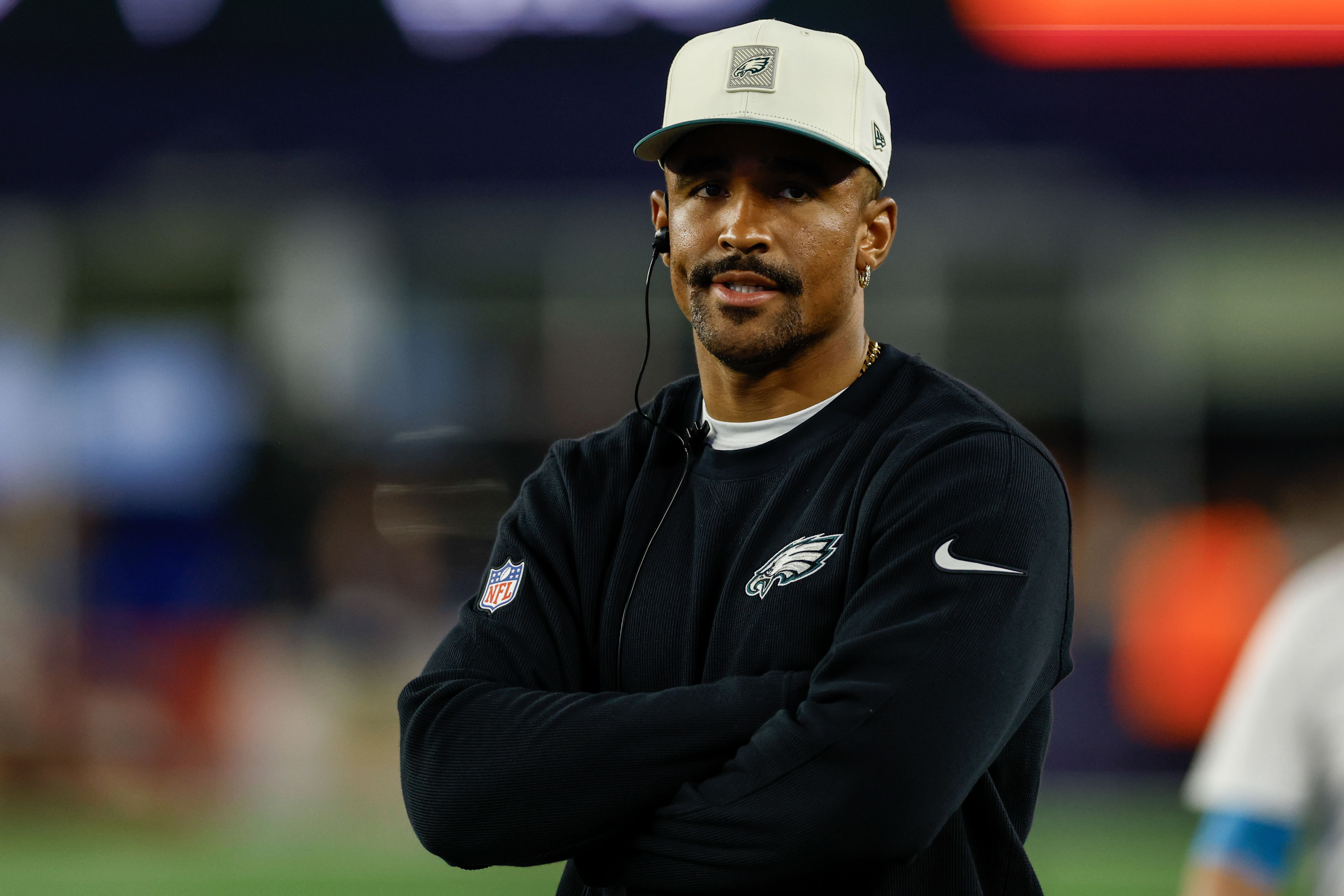
    Jalen Hurts, No. 97

    Hurts had the steepest drop of any Eagle after falling from No. 38 last year to No. 97 this year.

    His ranking comes after an “up-and-down” 2025 season, according to ESPN. Hurts is preparing for his first year in a new offense under coordinator Sean Mannion, but ESPN notes Hurts has found ways to adapt from adversity in the past.

    He is 57-25 as a starter and has 138 total touchdowns since 2022.

    Hurts also recorded at least 30 combined passing and rushing touchdowns in four consecutive seasons, which is the fourth-longest active streak behind Josh Allen’s six.

    ESPN projects him to throw for 3,779 yards with 24 touchdowns, 438 rushing yards, and nine rushing touchdowns.

    According to NFL Network’s Top 100 list, voted on by the players themselves, Hurts is ranked No. 56, a stark difference from ESPN’s list. In the 2025 season, he threw a career-high 25 touchdowns and rushed for eight more.

  • How the Pentagon is getting into the Venezuelan oil business under Trump

    How the Pentagon is getting into the Venezuelan oil business under Trump

    WASHINGTON — As the U.S. government faced shortcomings in the country’s weapons manufacturing, the Pentagon set up a new office that would make investments to help boost defense industrial production.

    That effort, which began in 2022 during the Biden administration, is now taking a sharp turn with the Pentagon’s involvement in an oil production deal between the United States and Venezuela that President Donald Trump announced on Friday.

    The Pentagon’s little-known Office of Strategic Capital, which reports to the deputy defense secretary, is the leading U.S. government entity in forming a partnership with a private oil producer whose founder, Alejandro Betancourt López, is a powerful and polarizing figure in international commerce.

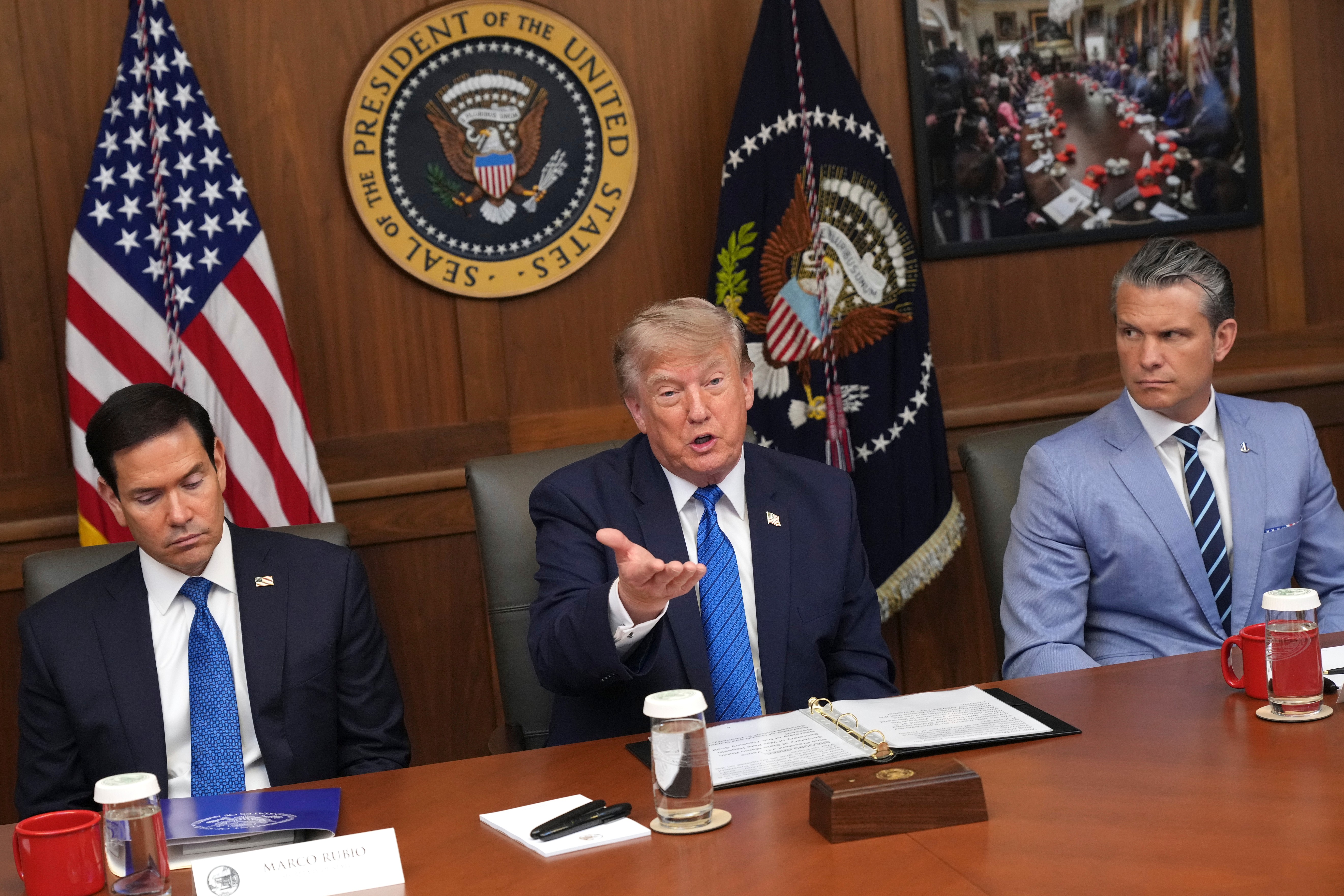
    Trump said Pete Hegseth, the defense secretary, and Marco Rubio, the secretary of state and White House national security adviser, reached the agreement with the Venezuelan government on securing billions of barrels of oil reserves “through a partnership with private business.”

    The deal would give the U.S. government the option to take up to a 35% stake in the parent company of Betancourt’s firm, North American Blue Energy Partners. This would come in the form of a financial instrument known as a warrant, plus preferential access to much of the oil that the company produces.

    Warrants would give the government the right to buy shares in the oil company at a predetermined price. The value of warrants, which can be bought and sold, fluctuates based on the value of the company that issued them.

    In this case, the warrants would be what are known as penny warrants, according to two people familiar with the deal, meaning they could be converted into shares for very little money, often just 1 cent.

    Typically, companies issue warrants in exchange for something of value. During the coronavirus pandemic, for example, the federal government bailed out U.S. airlines with more than $50 billion in grants and loans to help the companies pay employees and cover other costs. In return, the Treasury Department received warrants from roughly a dozen airlines, most of which it later sold to private investors.

    In this case, the deal would come “all at zero cost to the United States,” the White House said in a statement Monday night. The federal government’s partnership and seal of approval could make it easier for the company to raise money from private investors and also shield it from legal scrutiny or political upheaval in Venezuela.

    In a statement, Betancourt said the deal would unleash Venezuela’s potential “to the great benefit of both Venezuelans and Americans.”

    During the Biden administration, the Office of Strategic Capital made loans to private companies to bolster strategic industrial production in the United States, and asked for repayment of the loans with interest at below-market federal rates. In the Trump administration, the office has typically asked companies to give it warrants as well as repay the loans.

    The office falls under Stephen A. Feinberg, the deputy secretary of defense. Feinberg, a billionaire businessperson and political appointee under Trump, has been tasked with trying to help rejuvenate the U.S. defense industrial base. Feinberg approves the office’s deals.

    The office was founded under the previous defense secretary, Lloyd Austin. At that time, in 2022, U.S. officials were concerned about the fact that critical items for certain weapons systems were made in China. They were also grappling with weaknesses in arms production exposed by Russia’s war against Ukraine and global supply chain problems exposed by the pandemic.

    Those issues have become even more acute, given the drawdown of U.S. weapons stockpiles during the war against Iran that Trump and Israel started six months ago.

    The office’s initial $1 billion loan authority has ballooned to $100 billion, largely because of a boost from Trump’s major domestic policy legislation that Congress passed in July 2025.

    The director of the office is now David Lorch, who worked at Cerberus Capital Management, the private equity firm cofounded by Feinberg. In November, the month Lorch started his job, the office announced a loan of $620 million to Vulcan Elements and one of $80 million to ReElement Technologies to increase domestic magnet production and “significantly bolster U.S. critical minerals supply chains.” The office said it would get warrants from those companies.

    That kind of financing would help the United States decrease its dependency on Chinese manufacturing. But Vulcan Elements has financial ties to the president’s oldest son, Donald Trump Jr., which prompted Democratic senators to criticize the arrangement. Peter Navarro, a White House aide and friend of the younger Trump, requested the financing, ProPublica reported.

    By July, the other company, ReElement Technologies, a rare earths firm, had withdrawn from the loan process because it was struggling to meet federal due diligence standards, Reuters reported.

    On Saturday, the chief Pentagon spokesperson, Sean Parnell, said in a statement that the office “does not take equity stakes in private companies.” The White House’s statement on Monday about the deal contradicts Parnell’s assertion.

    In addition to receiving warrants, the federal government would be guaranteed 20% of the oil that Betancourt’s company produces “at production cost,” according to the White House, meaning at a favorable price. The State Department would also have right of first refusal to buy the remaining 80% of the company’s output.

    That would put the State Department in an unusual role since it is oil companies and other traders who typically buy and sell oil. Any decision to buy oil to refill U.S. government stockpiles would require authorization, including from Congress, and typically be handled by the Energy Department.

    In any case, it would most likely take years for new projects in Venezuela to generate meaningful amounts of oil.

    Betancourt, the U.S. government’s partner, received no-bid oil contracts in Venezuela many years ago. He has been under investigation in Spain and Switzerland on accusations of money laundering and tax fraud. He usually lives in Britain and was barred from foreign travel by the British government while he was in that country because of an extradition agreement with Switzerland, where prosecutors had issued an arrest warrant.

    However, Rubio wanted to get Betancourt to Venezuela to work on oil deals and production, and the State Department in recent months pressed the Swiss and British governments to ease up on him, said a person with knowledge of that effort.

    “Mr. Betancourt has never been charged with a crime in any jurisdiction,” Sara Chouraqui, general counsel for North American Blue Energy Partners, said in a statement Saturday.

    This article originally appeared in the New York Times.

  • Wendell K. Daniels Sr., retired Air Force master sergeant and longtime basketball referee, has died at 68

    Wendell K. Daniels Sr., retired Air Force master sergeant and longtime basketball referee, has died at 68

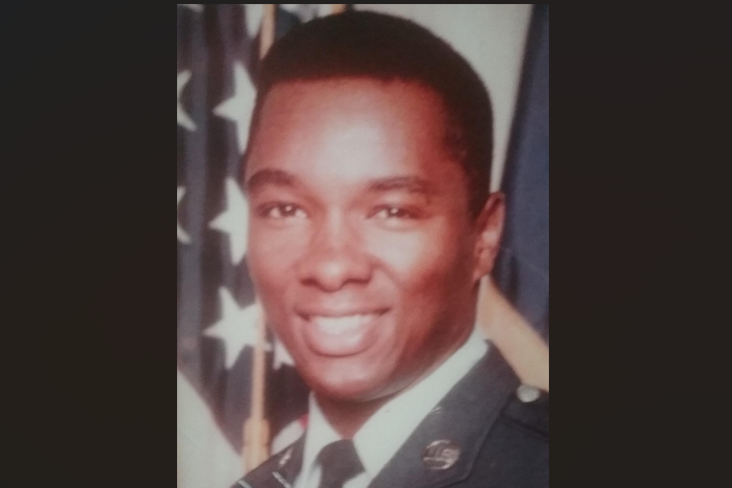
    Wendell K. Daniels Sr., 68, formerly of Philadelphia, retired Air Force master sergeant, former facilities manager at Langley Air Force Base in Virginia, mentor, artist, chess wizard, golfer, and basketball player, coach, and referee, died Friday, Aug. 28, of cancer at a hospice center near his home in San Antonio, Texas.

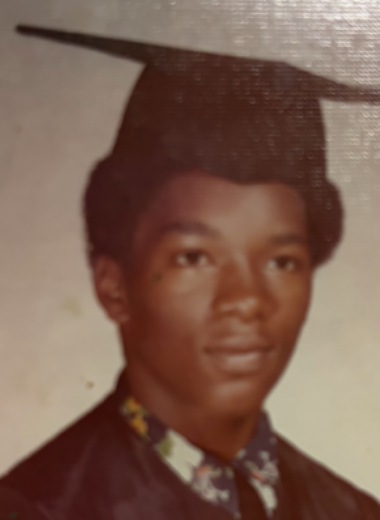
    Born and reared in West Philadelphia, Sgt. Daniels joined the Air Force after graduating from West Philadelphia High School in 1976 and spent 24 years and six months serving at military bases in South Korea, Panama, Hawaii, California, Virginia, North Carolina, South Carolina, Texas, and elsewhere.

    Before retiring in 2002, he worked in military intelligence at the Pentagon, was stationed at presidential retreat Camp David in Maryland, and took part in the 1989 operation that captured military dictator Manuel Noriega in Panama. He attended leadership programs in the Air Force, rose to master sergeant, and mentored young airmen and junior non-commissioned officers.

    He organized relief efforts after natural disasters and earned military awards and medals. He followed his father, uncle, and older brother into the Air Force by enlisting in 1978.

    “It was his sense of duty,” his daughter, Lyndell Anderson, said. “It was part of his family.”

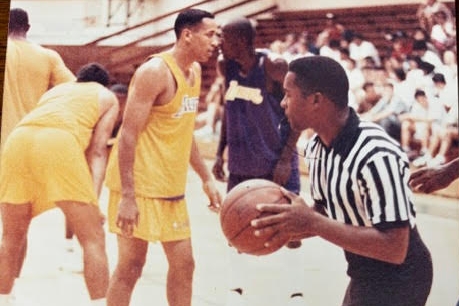
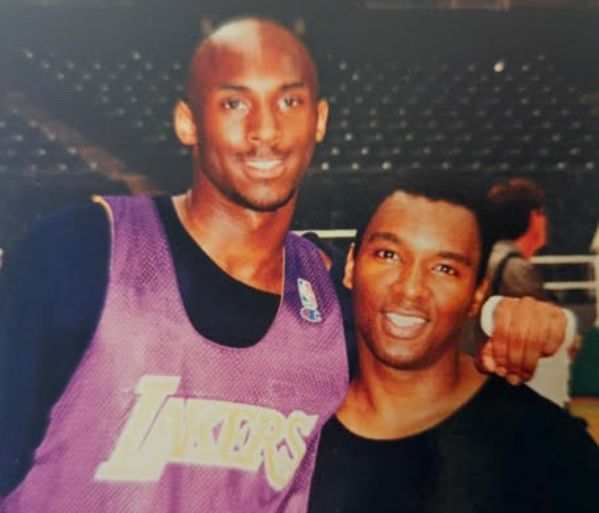
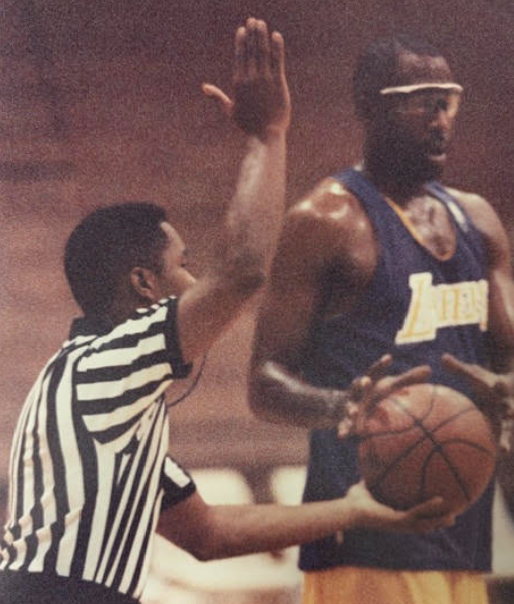
    A natural athlete — he played baseball, football, and basketball on West Philly playgrounds as a boy — Sgt. Daniels played basketball on Air Force base teams, coached women’s basketball base teams, and, certified as a referee, officiated at base games and college games in Philadelphia and elsewhere. He refereed summer camp games for the NBA’s Los Angeles Lakers when he was stationed in Hawaii and smiled in pictures with Kobe Bryant, Shaquille O’Neal, and Jerry West.

    Sgt. Daniels played golf often and met President Barack Obama (right below) in 2023. Courtesy of the family

    He started drawing and painting in high school, and considered a career as a cartoonist. In 2023, he personally presented a rendering of President Barack Obama to the president at a golf outing.

    He was the best player on his junior high school chess team and later came close to becoming a master. He played golf for years and followed the Eagles and 76ers.

    Sgt. Daniels worked as a facilities manager at Langley after leaving the Air Force and settled in San Antonio in 2017. In February, he championed racial equality and more opportunities for Black college basketball officials on a podcast with fellow former college referee Ted Valentine.

    Sgt. Daniels graduated from West Philadelphia High School in 1976 (above) and married Lyndery Webb in 1978 (below). Courtesy of the family

    “He could be outgoing one minute and reflective the next,” his daughter said. “He liked reading and parties.”

    Wendell Kennedy Daniels was born Aug. 13, 1958. He collected autographs as a boy, played varsity baseball, and was a starting cornerback on the high school football team.

    He met Lyndery Webb after playing football with her brothers in the neighborhood, and they married in 1978 and had a daughter, Lyndell, and a son, Wendell Jr. He and his wife posed for wedding pictures on the steps of the Philadelphia Museum of Art and moved from base to base for more than two decades. But only after the children had finished the school year, his wife said.

    Sgt. Daniels officiated Los Angeles Lakers summer games in Hawaii (above) and posed with Kobe Bryant (left below) for a photo. Courtesy of the family

    He stayed in touch with high school friends and was active in West Philadelphia alumni events. “He was the life of the party,” his wife said. “But he was serious about making people happy.”

    In addition to his wife and children, Sgt. Daniels is survived by two sisters, two brothers, and other relatives. A brother died earlier.

    A celebration of his life is to be held later.

    Donations in his name may be made to the American Liver Foundation, Box 299, West Orange, N.J. 07052.

    Sergeant Daniels, left in the top photo, was comfortable with big players on the basketball court and with his small daughter, in the bottom photo, at home. Courtesy of the family
  • Germany blames Russia for last month’s attempted drone attack at Leipzig airport

    Germany blames Russia for last month’s attempted drone attack at Leipzig airport

    BERLIN — The German government on Tuesday blamed Russia for an attempted attack at Leipzig/Halle Airport last month using a drone laden with explosives, and announced that it would shut down a Russian consulate among other measures.

    The drone was found near a Ukrainian plane on Aug. 4 and the device was defused. German officials said at the time that the incident posed a new level of danger.

    Moscow has been widely accused by Western officials of running a campaign of sabotage and disruption with the aim of undermining support for Ukraine and destabilizing European nations.

    Minister says evidence points to a familiar pattern

    German Interior Minister Alexander Dobrindt said authorities found elements such as the drone configuration, components, explosives, and detonator that are “known to us from other Russian hybrid operations and its war against Ukraine.” He said the device pointed to “a high degree of technical expertise” and painstaking planning, but carrying out the plan appears to have been left to “low-level” agents.

    Dobrindt told reporters that intelligence points to “people being involved who acted on behalf of Russian state entities,” though he didn’t specify which ones. “Taken together, the police investigations, the pattern, and intelligence findings prove a Russian responsibility for the attempted attack at Leipzig airport.”

    Germany will shut a Russian consulate

    Foreign Minister Johann Wadephul said that “with the attempted attack in Leipzig, the Russian leadership decided deliberately to do significant damage again to our already massively burdened bilateral relationship.” He said the Russian consulate in Bonn will be closed effective Sept. 18 and the contract under which the Russian House cultural center in Berlin is operated will be rescinded.

    Germany will propose the addition of more people from Russia to European Union sanctions lists “in the context of hybrid attacks,” step up entry controls for people from Russia, and increase “pressure on the shadow fleet,” a reference to tankers suspected of shipping Russian oil in violation of international sanctions, Wadephul said. The EU has sanctioned hundreds of “shadow fleet” ships.

    The Russian ambassador was summoned to the Foreign Ministry in Berlin.

    Russian Foreign Ministry spokesperson Maria Zakharova said there would be a “fitting response” to the planned closures, Russian state news agency Tass reported.

    She rejected claims of Russian involvement in the attempted drone attack, calling them a “far-fetched and contrived pretext” for Berlin to escalate tensions and arguing that “as usual, no convincing or serious evidence has been presented whatsoever.”

    Around 200 incidents blamed on Russia

    Leipzig/Halle is a major hub for international freight and for providing support to Ukraine. The planes that regularly use it include Ukrainian Antonov transport aircraft.

    It is also home to NATO’s Strategic Airlift International Solution, or SALIS, which is currently operational almost every day in delivering equipment to NATO battle groups along its eastern flank from Finland to Romania and supporting EU and alliance nation missions.

    In 2024, an incendiary device ignited at a logistics center at the airport and set fire to a freight container before it could be loaded onto a cargo plane, part of a plot that Western security officials suspect was organized by Russian intelligence.

    The Associated Press has tracked around 200 incidents of sabotage and malign activity across Europe blamed on Russia by Western officials since the invasion of Ukraine.

    That includes organizing plots to set fire to warehouses, launching drones and trying to kill enemies abroad as well as stealing defense technology and carrying out cyberattacks on critical European infrastructure.

    In May, Russian President Vladimir Putin responded to the AP findings and said Moscow is not waging a sabotage campaign against Europe. He demanded that AP “name one proven fact.”

    Russia has faced many packages of EU sanctions

    The EU has slapped almost two dozen packages of sanctions on Russia over its war in Ukraine, targeting roughly 3,000 people and entities. EU foreign ministers will meet in Ireland Wednesday.

    European allies rallied around Germany after Tuesday’s announcement. NATO Secretary-General Mark Rutte said in a post on X that he had spoken with Chancellor Friedrich Merz and “NATO stands in full solidarity with Germany after the Russian hybrid attack in Leipzig.”

    In mid-August, the German Cabinet approved plans to give the country’s intelligence services broader powers for actions such as disabling sabotage and hacking attempts. The planned reform, which had been in the works for months, still requires parliamentary approval.

    Hours before Tuesday’s German statement, Polish Prime Minister Donald Tusk, who has frequently warned that Russia is carrying out a campaign of sabotage against NATO countries, said Poland has been targeted by new acts of sabotage including arson within the past “dozens of hours.”

    He spoke the day after a fire broke out at WB Electronics, which the Polish government has described as Europe’s biggest drone manufacturer.

    Prosecutors said Monday they launched an investigation based on suspicions of the “participation of foreign intelligence activities against the Republic of Poland,” without elaborating on what country might be responsible. They said the fire in Skarżysko-Kamienna destroyed warehouse facilities and caused damage estimated at at least 15 million zlotys ($4 million).

  • 2026 men’s college basketball transfer portal tracker: Latest Big 5 moves, where Philly-area recruits are heading

    2026 men’s college basketball transfer portal tracker: Latest Big 5 moves, where Philly-area recruits are heading

    The college basketball season is officially over, which means it’s time for the transactional period to begin. Welcome to the 2026 transfer portal.

    More than 1,500 men’s basketball players were in the portal in the first 24 hours after it officially opened on April 7. The portal is open for two weeks, but players do not need to make their commitment to a new school during that window. The next few weeks will be filled with salary negotiations during the yearly NCAA free agency process.

    We’ll be tracking it all here, from players moving in and out of — or around — the Big 5 to keeping tabs on Philly-area players at other schools. We’ll also take a look at where some of the top local high school recruits from the Class of 2026 will be playing in the fall.

    Big 5 portal entries

    Here are the players who were at Big 5 schools during the 2025-26 season but have entered the transfer portal.

    Villanova

    • Acaden Lewis (point guard) started for the Wildcats during his freshman year and averaged 12.2 points, 5.3 assists, and 3 rebounds. (Transferring to Miami.)
    • Bryce Lindsay (guard) was a redshirt sophomore and Villanova’s best scorer during its nonconference schedule. (Transferring to Indiana.)
    • Malachi Palmer (forward) was a solid contributor off the bench who started down the stretch after Matt Hodge went down. But Villanova recruited multiple forwards out of the portal. (Transferring to Minnesota.)
    • Chris Jeffrey (guard), a freshman backup point guard who missed time after knee surgery but had promising moments.
    • Braden Pierce (center), a redshirt freshman reserve who followed coach Kevin Willard from Maryland, played 6.5 minutes per game and averaged 1.2 points. (Transferring to College of Charleston.)
    • Zion Stanford (forward/West Catholic graduate) transferred to Villanova from Temple, left the team in March after playing in 10 games. (Transferring to Towson.)
    • Tafara Gapare (forward), a senior, left the program at midseason after playing in just nine games.

    Temple

    • Aiden Tobiason (guard) averaged 15.3 points, second on the team, and led the Owls with 39 steals. He’ll have two years of eligibility left. (Transferring to Syracuse.)
    • Babatunde Durodola (forward), a sophomore, started as a freshman and was a key rotational player this season. (Transferring to Ball State.)
    • Jamai Felt (forward) started in 23 games and averaged 4.1 rebounds. (Transferring to Arkansas-Little Rock.)
    • AJ Smith (guard) averaged 7.8 points in eight games and had his season cut short by a shoulder injury.
    • Spencer Mahoney (forward) made 13 appearances as a redshirt sophomore. (Transferring to Denver.)
    • Ayuba Bryant Jr. (forward) appeared in 27 games, averaging 8.1 minutes.
    • Connor Gal (guard/Great Valley High graduate) played 12 minutes across five games and will have one year of eligibility left.
    Dasear Haskins was a key starter for the Hawks this season.Elizabeth Robertson / Staff Photographer

    St. Joseph’s

    • Deuce Jones (guard/La Salle), who led the Hawks in scoring during the first two months of the season, was dismissed from the team in December. (Transferring to Alabama-Birmingham.)
    • Dasear Haskins (guard/Camden High graduate) averaged 11.1 points and started for the Hawks as a redshirt sophomore. (Transferring to Ole Miss.)
    • Anthony Finkley (forward/Roman Catholic graduate), a junior, averaged 19 minutes in 35 games. (Transferring to La Salle.)
    • Kevin Kearney (forward) appeared in 14 games as a redshirt freshman. (Transferring to Manhattan.)
    • Jaden Smith (center) averaged 2.8 points and 1.8 rebounds in 9.1 minutes after transferring from Fordham. (Transferring to Ball State.)
    • Steven Solano (center), a redshirt freshman, played in eight games. (Transferring to Delaware.)
    • Al Amadou (center/Springside Chestnut Hill Academy graduate) transferred from Marquette and appeared in 11 games. (Transferring to Wisconsin-Milwaukee.)

    Penn

    • Ethan Roberts (forward) has one year of eligibility remaining — the Ivy League prohibits graduate students from playing intercollegiate athletics — and was the Quakers’ leading scorer (16.9 points per game). (Transferring to Notre Dame.)
    • Cam Thrower (guard), a senior who spent four years at Penn, averaged 17 minutes in 27 games. (Transferring to Elon.)
    • Dylan Williams (guard) played in seven of Penn’s first 10 games before the senior missed the rest of the season with an injury. (Transferring to Northwestern)
    • Michelangelo Oberti (center) appeared in 12 games. (Transferring to Boston University)
    • Alex Massung (guard), who averaged 5.6 minutes in 10 games played. (Transferring to Saint Anselm.)
    • Bradyn Foster (forward) saw action in Penn’s season opener.

    Drexel

    • Shane Blakeney (guard) was Drexel’s leading scorer, averaging 14.2 points in 33 games as a junior. (Transferring to South Carolina.)
    • Kevon Vanderhorst (guard) averaged 9.3 points and 2.9 assists while starting all 33 games for the Dragons. (Transferring to Iona.)
    • Villiam Garcia Adsten (guard), a junior, averaged 17.5 minutes in 32 games. (Transferring to Maine.)
    • Horace Simmons Jr. (forward/La Salle College High School graduate) appeared in 13 games.

    La Salle

    • Ashton Walker (guard) started 21 games and averaged 8.2 points as a freshman. (Transferring to Monmouth.)
    • Eric Acker (guard), a junior, appeared in 26 games, starting 10, and averaged 18.9 minutes. (Transferring to Northern Kentucky.)
    • Nas Hart (forward) played in 20 games as a freshman. (Transferring to Quinnipiac.)
    • Edwin Daniel (forward) played 31 games (14.5 minutes) and averaged nearly four points and 3.5 rebounds. (Transferring to Stephen F. Austin.)
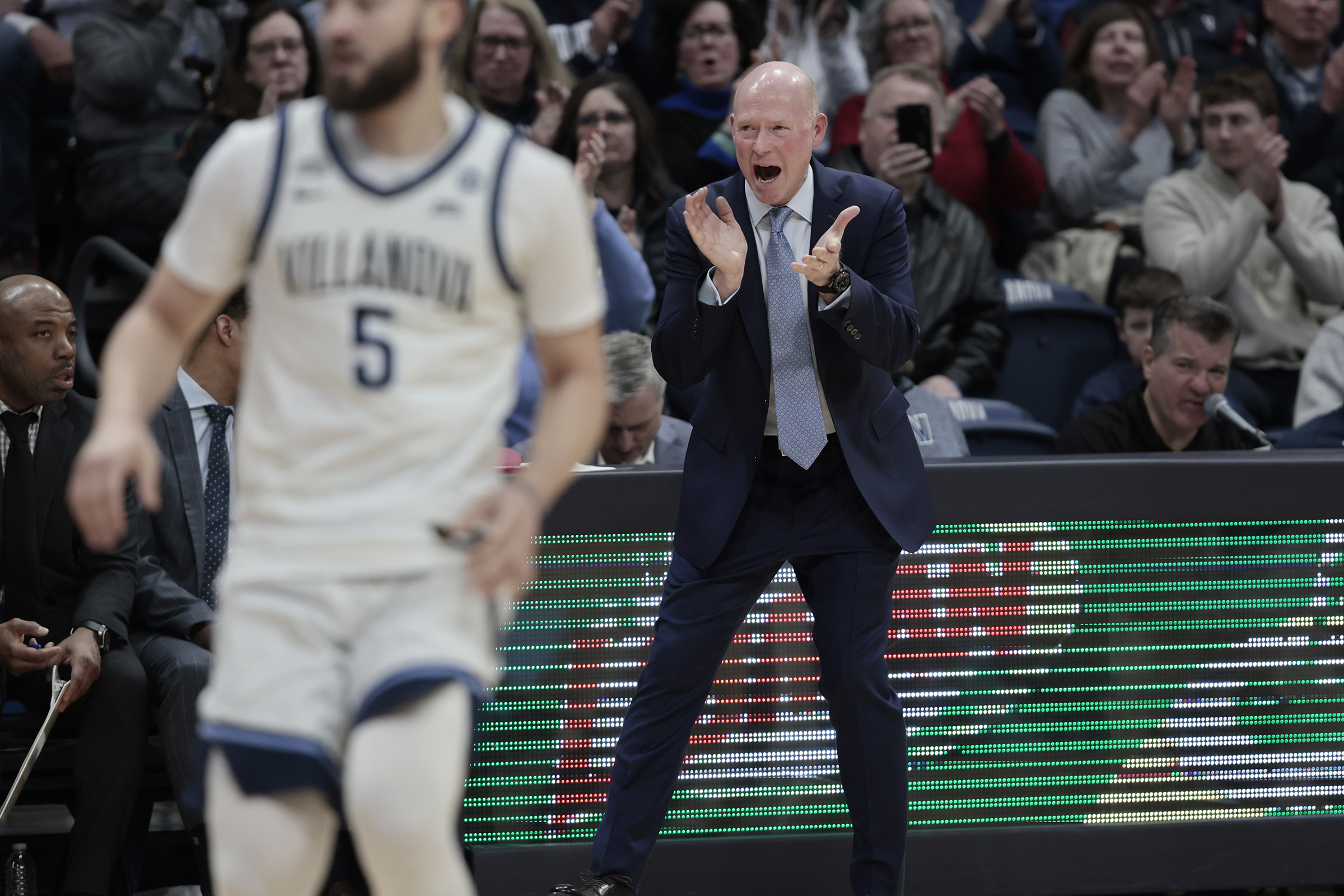
    Villanova coach Kevin Willard directs his team against Butler on Feb. 25. Elizabeth Robertson / Staff Photographer

    Big 5 portal additions

    These are the players who are transferring to Big 5 schools.

    Drexel

    • Panagiotis Pagonis (forward/New Orleans)
    • LaDricus Pittman (guard/LeMoyne-Owen College)
    • Adrian Petkovic (guard/Germany)
    • David Simonovic (center/Le Mans U21 in France)

    La Salle

    • Trey Moss (guard/George Washington)
    • Vice Zanki (forward/Niagara)
    • Anthony Finkley (forward/St. Joe’s)
    • Jamison Lynam (guard/Arcadia)
    • Kam Burton (guard/Stephen F. Austin)
    • Devin Booker (guard/George Mason/Cristo Rey HS)
    • Eunique Rink (forward/Hampton)

    Penn

    • Sir Mohammed (guard/Notre Dame)
    • Dorian Glogovac (guard/California Institute of Technology)

    St. Joe’s

    • Gavin Marrs (center/Oregon State)
    • Logan Carey (guard/Maine)
    • Don Flamer (forward/Elizabeth City State – Division II)
    • Sean Logan (center/Davidson)
    • Luis Nonfon (forward/Augusta University – Division II)

    Temple

    • Dez White (guard/Oregon State)
    • Dallis Dillard (guard/Indiana University of Pennsylvania)
    • Baboucarr Njie (forward/UTSA)
    • Cam Scott (guard/South Carolina)
    • Jason Drake (guard/Indiana)
    • Jordan Marsh (guard/USC)
    • Sir Isaac Herron (forward/Louisiana Tech)

    Villanova

    Local portal entries

    In addition to the local players in the Big 5 mentioned above, here are some notable players from the Philly area who are on the move:

    • Kevair Kennedy, Merrimack to Wake Forest (guard/Father Judge)
    • Jalil Bethea, Alabama to Pittsburgh (guard/Archbishop Wood)
    • DJ Wagner, Arkansas to Maryland (guard/Camden)
    • Justin Moore, Loyola-Chicago to Hofstra (guard/Drexel, Archbishop Wood)
    • Budd Clark, Seton Hall to Ole Miss (guard/West Catholic)

    Where local 2026 recruits are going to college

    Here’s a look at where some of the area’s top boys’ basketball players are heading off to play in the fall.

    • Sammy Jackson, Virginia Commonwealth (small forward/Roman Catholic)
    • Ethan Johnston, Marquette (shooting guard/Hill School)
    • Xavier Blake, Hofstra (shooting guard/Phelps School)
    • Derrick Morton-Rivera, Temple (shooting guard/Father Judge)
    • Mani Sajid, Towson (shooting guard/Plymouth Whitemarsh)
    • Darnell Lloyd, Boston University (center/Perkiomen School)
    • RJ Smith, La Salle (guard/Roman Catholic)
    • Michael Pereira, Penn (center/Plymouth Whitemarsh)
    • Latief Lorenzano-White, Drexel (guard/Imhotep)

    2026 recruits headed to Big 5 schools

    Villanova

    Penn

    • Isaiah Carroll (small forward/Blair Academy of Warren County)
    • Ethan Lin (point guard/Montgomery High of Somerset County)
    • Michael Pereira (center/Plymouth Whitemarsh)
    • Chase Geremia (guard/Newman School)
    • Finley Billy (forward/Bullis School)
    • Johnny Keenan (guard/St. Thomas More)

    Temple

    La Salle

    • RJ Smith (guard/Roman Catholic)
    • Breylon Webb (guard/Western Reserve Academy)

    Drexel

    • BJ Brown (guard/Sumter)
    • Tre Paulding (forward/Lee’s Summit North)
    • Latief Lorenzano-White (guard/Imhotep)

    St. Joe’s

    • BJ Ranson (guard/Mount St. Joseph)
    • Keoni Sacco (forward/Fork Union Military Academy)