Blog

  • U.S. strikes Iran and Tehran fires back as hostilities flare again

    U.S. strikes Iran and Tehran fires back as hostilities flare again

    WASHINGTON — The U.S. military hit targets in Iran on Tuesday and Tehran fired missiles and drones in response as hostilities flare once again in an intermittent war that has lasted more than six months. One U.S. strike hit a home hosting a wedding, killing two people and wounding dozens, local officials said.

    The U.S. strikes followed others on Sunday that abruptly ended a month without military action and threatened to fully reignite a conflict that has spiked global oil prices and posed political problems for Republicans in November’s midterm congressional elections. The renewed fighting comes after President Donald Trump had appeared to pivot toward trying to bend Iran to his will through economic sanctions.

    “If the failed Nation of Iran retaliates for this very justified attack, they will be hit again at a much harder and higher level, but it will not be the biggest attack of them all, that is waiting in the wings,” Trump warned on social media.

    U.S. Central Command said the latest strikes were in response to Tehran trying to attack commercial ships and American forces in the Middle East. Trump offered an additional explanation, telling Fox News in a phone call that U.S. forces struck Iran’s radars.

    “They tried to rebuild their radar because they can’t see anything,” Trump told Fox. “We waited until it was almost built and then we hit it.”

    Iranian state media reported that the U.S. had bombed civilian sites along Iran’s southern coast and hit a civilian airport. A U.S. strike hit a home where a wedding ceremony was being held in Kuhestak in southern Iran, killing two people and wounding at least 50 others, Ahmad Nafisi, Hormozgan Province’s deputy governor, told Iranian state television in a phone call. Red Crescent rescue officials in the province said the death toll had risen to four, including a child.

    U.S. Central Command did not immediately respond to an email seeking comment on those reports.

    Iran’s military warns of ‘devastating blows’

    Iran’s Armed Forces General Staff and its joint military command said the armed forces would deliver what they described as “crushing and devastating blows” against the United States. The state-run IRNA news agency cited a statement by Iran’s paramilitary Revolutionary Guard, which warned that the attacks have only strengthened the Islamic Republic’s resolve and tightened Iran’s effective closure of the Strait of Hormuz, through which 20% of the world’s oil normally flows.

    Explosions were reported across several southern Iranian coastal areas, including the port city of Bandar Abbas that is home to naval and air force facilities as well as Qeshm Island in the Strait of Hormuz. Witnesses in Bandar Abbas told the Associated Press that the explosions were stronger than those on Sunday and said they saw smoke rising from the eastern part of the city on the strait.

    Iranian state television said U.S. strikes hit a fishmeal factory on Qeshm Island and several civilian sites in Hormozgan province. It said a fishing pier and a Ports and Maritime Organization tower in Sirik were among the locations struck.

    State TV also reported that the U.S. military struck the civilian Jiroft Airport in central Iran’s Kerman province, saying a projectile struck an area outside the runway and caused no casualties or damage to airport infrastructure.

    The U.S. and Iran are both seeking control over the Strait of Hormuz, a narrow waterway off Iran’s coast that is a vital oil shipping corridor. Tehran effectively closed it after the war began.

    Oil prices have moved sharply higher this week with renewed clashes between Iran and the United States. Crude, already up about 7% this week, continued to rise following the strikes on Tuesday.

    The price of crude has jumped more than 50% this year and it’s dragged the cost of gasoline upward with it. The cost for a gallon of regular gasoline in the U.S. ticked higher again overnight to $4.10, according to AAA. Last year at this time, a gallon cost $3.19.

    Strikes have renewed after Iran said it would stick to a ceasefire deal if the U.S. did the same

    Before military action began again, the Trump administration had argued that hitting the right economic target in a campaign of financial isolation would get Tehran to its breaking point. Now, strikes are renewing even as U.S. stockpiles of advanced interceptors have been diminishing and the war has been unpopular among many Americans.

    A return to open conflict would be dangerous for the region, where Iran has targeted U.S. military bases and infrastructure in Gulf countries since the war began.

    Iranian President Masoud Pezeshkian said earlier Tuesday before the latest strikes that the Islamic Republic is ready to return to the interim ceasefire deal reached with the U.S. in June if Washington does the same.

    “If the U.S. returns to its commitments in the memorandum of understanding, the Islamic Republic of Iran will immediately reciprocate,” Iranian state media cited Pezeshkian as saying at the Shanghai Cooperation Organization summit in Kyrgyzstan.

    The June interim deal called for an immediate ceasefire and started a 60-day period for negotiations aimed at reaching a wider agreement, but crumbled soon afterward.

    In the previous strikes on Sunday, U.S. Central Command said its forces struck Iranian rocket launchers that would launch sea mines into the strait.

    Iran responded to Sunday’s attacks by launching missiles at U.S. sites in Jordan, which were intercepted, while the United Arab Emirates said it stopped an Iranian drone over its waters. Trump acknowledged Monday that more strikes might be necessary.

    The American military in recent days has cast the renewed fighting as limited, though Trump had acknowledged Monday that more strikes might be necessary.

    U.S. Central Command said Monday on X that its attacks on Iranian targets on Sunday were narrowly focused.

    “U.S. forces took limited, precise action against IRGC minelaying forces posing an imminent threat in the Strait of Hormuz,” U.S. Central Command said. “In essence, Iran created the threat and the U.S. military eliminated it to protect civilian mariners, commercial shipping, and the free flow of global commerce.”

    Central Command reiterated Tuesday that its attacks followed Iranian aggression against commercial vessels and American troops in the region.

  • College student steps into traffic, is killed after losing immigration status

    College student steps into traffic, is killed after losing immigration status

    A Haitian immigrant who had grown increasingly distraught after losing his protection from deportation and being outfitted with an ankle monitor was run over and killed Monday in what his family believes was a suicide.

    Pierre Damas Bel, 20, parked on the shoulder of Interstate 70 in Springfield, Ohio, some time before 8:45 a.m., got out of his vehicle and walked into westbound traffic, the Ohio State Highway Patrol said. He was hit by a tractor-trailer and pronounced dead at the scene.

    Like an estimated 350,000 Haitian immigrants, Bel had recently lost temporary protected status, which is given to people fleeing nations experiencing disaster. He had a pending asylum claim but had been summoned to an Immigration and Customs Enforcement office after the Supreme Court allowed the Trump administration to proceed with canceling the status for Haitian recipients. Federal immigration agents placed an electronic monitoring device on his ankle, which is one way the agency tracks immigrants it is seeking to remove from the country.

    “He felt like he was treated like an animal,” his father, Pierres Ronal Bel, 40, recounted in a handwritten statement.

    Ohio authorities said they are investigating the crash.

    The Department of Homeland Security declined to comment on the circumstances of Bel’s death while the investigation is ongoing. The Trump administration has been calling Haitian immigrants into ICE offices to be equipped with ankle monitors and has sent two deportation flights to Haiti since temporary protected status was canceled for people from the troubled Caribbean nation. Advocates for the immigrants say the U.S. government is sending people back to a country where criminal gangs are responsible for massacres, kidnappings, and extortion.

    Haitian leaders in Springfield and beyond said Bel’s death is symptomatic of the extreme stress many immigrants are under as they fear being detained and sent back.

    “These policies are what caused his untimely death,” said Guerline Jozef of the Haitian Bridge Alliance, a nonprofit that provides legal and humanitarian aid to migrants.

    Bel came to the U.S. in 2024 to reunite with his parents, who had fled Haiti three years before. ICE said its records show he entered through CBP One, the mobile app the Biden administration established for immigrants to enter the country at a port of entry and request asylum.

    The family was granted temporary protected status, purchased a home in Springfield and settled into life in the U.S. Bel dreamed of studying medicine and graduated from high school in May with honors and as a proud member of the Junior Reserve Officer Training Corps (JROTC), his father said. He was the eldest of three siblings, and his family described him as smart and responsible.

    The young man’s Instagram account is full of photos of himself smiling in his JROTC uniform and displaying his diploma and various academic awards.

    Bel wanted to continue life as a cadet in the program but was distressed by what transpired after temporary protected status was canceled for Haitians. His father said he couldn’t play soccer as he had for years because of the weight of the tracker. Classmates bullied him and made cruel remarks. He begged federal immigration officers to remove the bracelet, his father said, but they refused.

    “I came to this country to pursue my education. I didn’t come here to commit a crime or hurt anyone,” he wrote on Instagram in late July. “Yet now I’m walking through the streets of the United States with a GPS monitor on my leg, carrying a feeling of shame and humiliation that I never imagined I would experience.”

    Then on Friday, his JROTC class instructor handed students their uniforms, which resemble those of the U.S. armed forces, but did not give one to Bel. His father said the college student concluded it was because of the device strapped around his ankle.

    “He came home that day feeling very bad,” Pierres Ronal Bel said through an interpreter.

    The younger Bel’s next asylum court hearing was scheduled for October. He did not want to return to his home country because he was afraid of the rampant violence, according to Vilés Dorsainvil, executive director of the Haitian Support Center in Springfield, which is supporting the family.

    On Monday morning, he left his family’s home and placed a video call to his father at 8:03 a.m.

    “‘I’m not feeling OK,’” Pierres Ronal Bel recalled his son stating. “I told him to come so that we can talk.”

    Hours later, he said police officers arrived at his door to report that his son “threw himself under a truck.”

    Community leaders consoled Bel’s parents at their home Monday evening. His solemn father gave interviews with reporters, and his mother wailed from an upstairs room. Residents have been banding together to support Haitian neighbors and call for an end to ICE’s enforcement campaign against them.

    Carl Ruby, a pastor who leads a Springfield congregation and advocates for Haitian immigrants, said he was struggling to make sense of the younger Bel’s untimely death.

    “I know that I’m a pastor and I’m supposed to be forgiving,” he said. “But right now as I sit with a broken family, I’m crying out to God for righteous judgment in those who made this happen.”

    If you or someone you know needs help, visit 988lifeline.org or call or text the Suicide & Crisis Lifeline at 988.

  • Heavy Metal Sausage was forced to stop serving dinner. It may shutter the acclaimed South Philly restaurant

    Heavy Metal Sausage was forced to stop serving dinner. It may shutter the acclaimed South Philly restaurant

    South Philly butcher shop Heavy Metal Sausage Co. indefinitely paused its after-hours Italian dinners last week following a failed health inspection that ordered the shop to remove all indoor seating. Co-owners Patrick Alfiero and Melissa Pellegrino say the resulting loss of revenue could close the business.

    An inspector with Philadelphia’s Department of Public Health ordered the shop to remove its eight seats and cease all food prep in the basement on Aug. 21. The inspection found Heavy Metal’s setup did not align with the restaurant’s plan review, a document detailing operating procedures that all restaurants must submit to the health department in order to receive a food license.

    Among the three-hour inspection’s other findings: flies, mouse dropping, and unauthorized kitchen equipment, plus evidence that Heavy Metal was canning foods and dry-aging meat without an FDA-mandated food safety plan.

    The most consequential violation on the report, however, is that “the food facility does not have a handwash sink conveniently located in the customer dining area” because “access to the toilet room is located through the kitchen.”

    The location of Heavy Metal’s bathroom renders the space unsuitable for indoor dining, according to the health department. The recent determination — which came four years into Heavy Metal’s run as a hybrid butcher-restaurant — could cost Heavy Metal thousands of dollars in renovations and lost revenue, Pellegrino said.

    Alfiero and Pellegrino opened Heavy Metal Sausage Co. at 1527 W. Porter St. in 2022. By day, it’s a deli where Alfiero uses local ingredients and artisanal cured meats to create hearty, inventive sandwiches. By night Thursday through Sunday, the 500-square-foot space transforms into an intimate trattoria. Tables are pressed against deli cases and seats are tucked into empty corners, lending a vaguely illicit, punk-rock aura to what’s otherwise a traditional prix fixe meal.

    The unorthodox setup (coupled with Alfiero’s masterful cooking) earned Heavy Metal a spot on Bon Appetit’s best new restaurants list in 2023 and a James Beard Award nomination that same year.

    The $98 dinners are also a moneymaker, accounting for well over half of Heavy Metal’s revenue, Pellegrino said. Without them, the duo have already had to lay off a cook and a server.

    “When the [health inspector] asked if we could stop dinner, I told him we might not be here in six weeks to be reinspected,” Alfiero said. “I was just like, ‘How are we going to survive this?’”

    Heavy Metal Sausage Co. chef/co-owner Patrick Alfiero prepares the antipasto course during the trattoria dinner on Nov. 17, 2022.Yong Kim / Staff Photographer

    Same setup, new violation

    Pellegrino and Alfiero told The Inquirer that they were blindsided by the findings in August’s health inspection. Heavy Metal has never hidden how it operates.

    The couple started offering the after-hours dinners just six months after opening as a way to offset the costs of running a niche butcher shop, which has never been profitable.

    A copy of the business’ plan review, reviewed by The Inquirer last week, shows that some form of indoor seating has been always accounted for. It also shows that the deli’s bathroom is accessible to customers via a hallway that runs parallel to the kitchen.

    The issue is brand-new despite Heavy Metal’s layout remaining static for months, according to a review of city records. The business has had an active food preparation and serving license since 2022. Heavy Metal has also passed all previous health inspections, including one in April 2026, whose report makes no mention of unauthorized seating, kitchen equipment, or food prep. It also doesn’t touch on sink or bathroom access.

    Heavy Metal Sausage Co. chef/co-owner Patrick Alfiero preps food before a trattoria dinner on Nov. 17, 2022.Yong Kim / Staff Photographer

    Health inspections are considered “snapshots in time” that may not necessarily be indicative of day-to-day operations, department spokesperson Jason Brooks said over email. During Heavy Metal Sausage’s prior inspections, inspectors only noted a basement storage space, “indicating that no food prep activities were taking place there — at that time,” Brooks wrote.

    “In April, our inspector did not observe any seating for indoor dining. Inspectors are investigating what they can physically observe and document during the inspection,” he wrote. “During this most recent inspection, our inspector observed, in real time, food preparation in an unapproved space and unapproved indoor dining. For this, the food business was cited for violations of its approved plan.”

    Pellegrino disputes the idea that Heavy Metal’s seating is a new development. “We were inspected four months ago, and we have done absolutely nothing different in those four months,” Pellegrino said. “Not a single thing has changed.”

    The deli’s inspection comes amid other notable health department shutdowns.

    The front window is reflected in the top of the meat case inside of the Heavy Metal Sausage Co., 1527 W. Porter St. in Philadelphia, on Aug. 9, 2024.Elizabeth Robertson / Staff Photographer

    Last week, Victory Brewing Co.’s three-level taproom on the Benjamin Franklin Parkway was ordered to temporarily cease operations after an inspector documented 26 health code violations that included live roaches, mice, and flies. And in mid-August, the health department failed Stargazy over “two unapproved countertop deep fryers without adequate mechanical ventilation,” a violation that has forced the East Passyunk Avenue restaurant to stop serving fish and chips.

    How can Heavy Metal fix this?

    Since Heavy Metal’s violations didn’t pose an imminent health hazard, the restaurant is allowed to remain open without indoor dining, Brooks confirmed.

    The butcher and deli counters are still open during normal daytime hours (11 a.m. to 4 p.m. Thursday through Saturday, 11 a.m. to 3 p.m. Sunday) for takeout only. Pellegrino and Afiero said they’ve addressed most of the violations by creating the required food safety plans and limiting the basement to storage only.

    The only hitch: What to do about the sink?

    Heavy Metal Sausage Co. co-owner Melissa Pellegrino (left) greets diners Jeannette Armstrong (center) and Liz Rissover as chef/owner Patrick Alfiero prepares meals in the kitchen during the trattoria dinner on Nov. 17, 2022.Yong Kim / Staff Photographer

    Heavy Metal must submit a new plan of review to the health department for approval. If the plan is approved and the restaurant passes reinspection, Brooks said, they will be allowed to restart indoor dining.

    But to do so, Pellegrino said the health department recommended Heavy Metal install a customers-only sink at the front of the restaurant, a change that would require a separate, weeks-long permitting process and a contractor. When Pellegrino asked the health department if she could add curtains or room dividers to more clearly separate the bathroom hallway from the kitchen — which she considers a more cost-effective solution — she said they didn’t respond.

    “All of these things take time and money,” Pellegrino said, “and we will have to make a calculus of what’s worth doing.”

  • Flash flooding causes major damage to the Grand Canyon’s critical water pipeline

    Flash flooding causes major damage to the Grand Canyon’s critical water pipeline

    WASHINGTON — The sole pipeline that supplies water for millions of Grand Canyon visitors was badly damaged by weekend flash flooding, setting up a tricky repair scenario and upending a yearslong construction project to upgrade the line laid over terrain so rugged helicopters are often required to make basic fixes.

    “We anticipate miles of the pipeline being destroyed,” Grand Canyon Deputy Superintendent Brian Drapeaux said, but a full survey of the devastation wouldn’t be completed until Tuesday at the earliest.

    From flyovers, park officials estimate that roughly 40% of the pipeline endured damage. The long-term implications to the park’s infrastructure, visitors, and year-round residents weren’t immediately clear. The 12.5-mile-long Transcanyon Waterline has endured dozens of breaks in recent years. A more than $200 million repair and replacement project was well underway when the floods hit.

    At least two people died in the floods, and one person remained missing Monday night after rescuers saved some 80 people over the weekend, officials said. The park halted overnight accommodations, and officials said significant water reductions are needed — short showers, turning off the tap while brushing teeth, and flushing toilets selectively to protect the limited stored water on the South Rim, where most visitors go.

    “They have got to keep law enforcement going, they have to keep rescue operations going, backcountry operations, park admin going, the clinic, and the campground,” said longtime river runner and Grand Canyon hiker Tom Martin. “In the past, the park has hauled water” in tanker trucks.

    Even routine repairs can be tricky

    The pipeline, which was finished in the 1970s, has broken more than 85 times since 2010. It moves water from one side of the canyon, down to its base, across a bridge and back up the other side of the rough landscape. Any effort to fix a break from rock falls or flash floods is time-consuming, precarious, and costly, so addressing the latest damage will be complicated.

    The pipeline upgrade project, which began in 2023, took more than a decade to design, consider, and fund. It involves installing helicopter pads, building water treatment facilities, and replacing several miles of pipeline. The project also sought to move the water intake for the pipeline farther down the canyon to Bright Angel Creek. That would place it closer to Phantom Ranch, a popular lodge at the base of the canyon. An evaluation of the project in 2018 said key infrastructure for the intake would be outside of areas likely to flood.

    Basic decisions were complicated. For example, the original pipe was aluminum, which is lighter and easier to move into the steep canyon but is susceptible to breaking. Engineers picked a flex-steel material to balance weight with durability.

    Frequent breaks cause water restrictions

    Even routine pipeline breaks force water restrictions. In 2016, a hotel on the canyon’s rim that offers luxury dining and boasts about its history hosting presidents was forced to reduce dishwashing and use paper plates and plastic utensils.

    In 1995, a 28-day repair effort on the pipeline required officials to truck in water.

    The park had water conservation measures in place even before the latest bout of flooding and damage.

    The flooding has forced parts of the park to close and additional flooding was possible Monday, according to the National Park Service.

    “Consider changing your plans if you were going to hike, boat, or paddleboard to a slot canyon or normally dry wash. If you do still decide to recreate, check in at a nearby visitor center or ranger station,” a notice on the park website said.

    Officials said previously that the repair and replacement project would ensure that the park will be able to meet its water supply needs for the next 50 years or more. The park had roughly 4.4 million visitors last year.

    When the original pipeline was nearing completion in the 1960s, more than a foot of rain fell, flooding the inner canyon. That rare, historic flood caused 40% of the project to be destroyed, officials said.

  • The Academy of Natural Sciences is closing its museum after nearly two centuries

    The Academy of Natural Sciences is closing its museum after nearly two centuries

    Philadelphia’s Academy of Natural Sciences of Drexel University is closing its museum after nearly two centuries in existence, citing financial pressures and dwindling attendance.

    The museum, which opened to the public in 1828, will cease operations at the end of the business day Sept. 30. Its last day open to the public with regular hours will be Sunday, Sept. 27, staff were notified on Tuesday.

    Visitorship at the museum had slipped in recent years, according to a statement signed by Drexel president Antonio Merlo and Academy board chair Suzanne Biemiller. Though the Academy had worked to rebuild attendance after the pandemic, “patterns of visitation and audience behavior changed in lasting ways, while the costs of operating the museum continued to rise,” the statement said.

    “Over time, it became clear that these were not temporary pressures, but fundamental changes in the economics of the Academy’s operational model, costs that have imperiled the Academy’s ability to discharge its overall mission and preserve its legacy.”

    Closing the current Parkway museum, was, therefore, “a difficult decision taken to concentrate resources on the Academy’s enduring scientific assets and research,” said the statement.

    The aim is ultimately to relocate the Academy’s collections and sell the building, which, is owned by the Academy, and has a lot of deferred maintenance needs, said a source close to the talks between Drexel and the Academy, who asked not to be identified.

    The Academy building on the Benjamin Franklin Parkway at 19th Street, “will continue to house collections and laboratories while we consider possible pathways forward that place the utmost priority on preservation and support of the collections, library, archives, and research initiatives,” a Drexel spokesperson said.

    Biemiller declined to comment on the potential relocation of the collections.

    The museum cut back its hours of operation from five days a week to three — Friday through Sunday — as of last Oct. 1 (though it added back Thursdays in July and August for its Dino-Mite Summer program).

    One of two shell sculptures placed on either side of the 19th Street entrance to the Academy of Natural Sciences of Drexel University on Aug. 17.Tom Gralish / Staff Photographer

    Drexel said 27 of the Academy’s 80 employees — about a third — will be “impacted” by the closure. The university did not say whether that meant they would be laid off or transferred, and did not respond to a question on how much money the move will save.

    Simultaneously Tuesday, the university and science institute announced that Scott Cooper, Academy of Natural Sciences president and CEO for nearly nine years, is stepping down immediately.

    The Drexel and the Academy boards will “continue working together to identify an appropriate governance structure and interim and permanent leadership for the Academy,” the statement said.

    Former Comcast executive and U.S. Ambassador to Canada David L. Cohen, who has been helping to broker an agreement between Drexel and the Academy, said the two institutions are close to striking a deal on a “term sheet” on governance and finances. He has been tapped by Gov. Josh Shapiro to serve as a third-party facilitator in the process, the university said in its message.

    “We want to preserve the Academy,” he said, “but we also don’t want to jeopardize Drexel.”

    Collections and research will remain unaffected

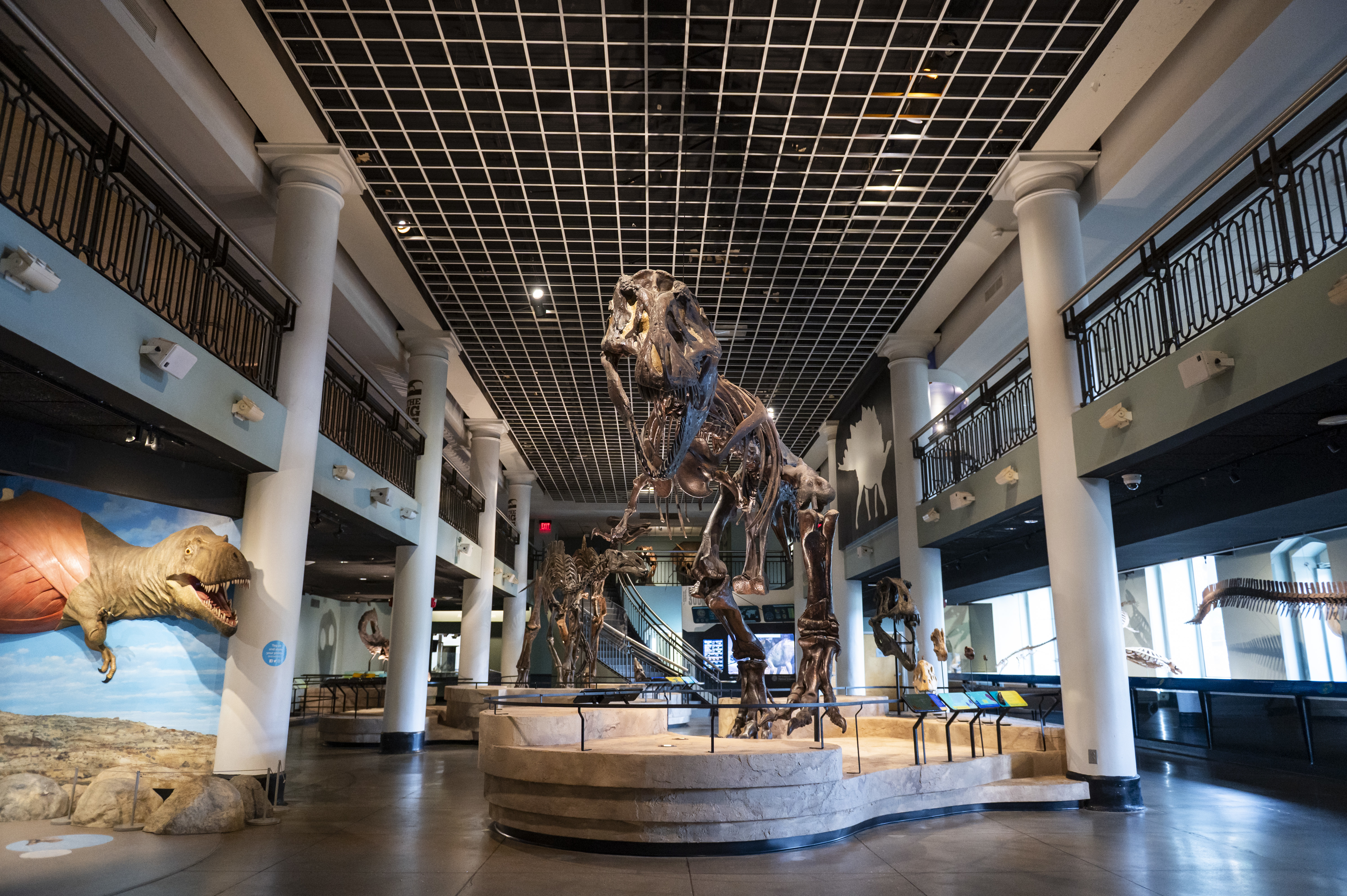
    The Academy, which became affiliated with Drexel in 2011, is known to the general public for its museum that features a Dinosaur Hall with dinosaur bones and full-scale replicas. Its exhibitions have explored environmental issues and centered on the Academy’s collection of approximately 19 million specimens, as well as historically significant items associated with Thomas Jefferson and Lewis and Clark.

    It offers hands-on science experiences, like a “big-dig” fossil exhibit, and old-school dioramas of bison, bears, tigers, and other animals in their ecosystems. The museum’s current “Botany of Nations” show “reshape[s] the historic tale of Lewis & Clark through Indigenous perspectives,” says an exhibition description.

    Closure of the museum does not affect the rest of the institution, which builds and maintains the collections and conducts research through departments such as the Patrick Center for Environmental Research, all housed in the Parkway structure. All of that will remain there, the university said.

    Biemiller said that “the trustees of the Academy know that this news about the closure of the museum is going to be a blow to Philadelphians, and I would love for them to know we share their feelings of loss about this beloved space and place. And we also know that work remains to develop and fund a new strategic and operating model that will ensure that the Academy’s important centuries-long mission to understand the world and inspire us to care for it continues.”

    Asked whether the intent was to reopen a museum, Biemiller said: “I would hope so. That’s the goal. I think we have not given up on that part of our mission. The Academy is research, it is [specimens and library] collections, and it is public engagement.”

    While she said it was “incumbent upon us to find places and ways” for the museum to continue, what form it would take has not been determined.

    “It could be at the current location in a different configuration, it could be a new location, it could be imagined in different ways.”

    What’s important, she said, was the “fundamental goal to ensure that people have access to the natural world, can see these birds from North American or dinosaur bones and fossils the Academy scientists have collected and understand how they connect to the world.”

    “It’s a sad day to see it close,” said Franklin Institute president and CEO Larry Dubinski of the Academy museum, which is about a block from the institute. “It’s a profound loss for the community and for the city and the region. And it’s one of those days that I hope the community takes stock in. This is a city driven by arts and culture. We have a phenomenal city of arts and culture, unlike almost any other in the United States.”

    However, Dubinski said, the arts here are “underresourced and underfunded, and that does continue to challenge the ability to have a sustainable arts and culture community. I think today’s another wake-up call to that issue.”

    Dinosaur Hall at the Academy of Natural Sciences Aug. 5, 2026.Allie Ippolito / For The Inquirer

    Ongoing financial challenges at Drexel

    The museum closure comes amid financial challenges at Drexel University, which has been seeking to overcome a budget deficit, overhaul academic programs, change from a quarter-based calendar to semesters by fall 2027, and cope with another national dip in high school students beginning this year.

    Over about the last decade, the West Philadelphia university has lost about 20% of its enrollment. Last fall, Drexel saw a 19% drop in freshmen; numbers for this fall aren’t yet available, though the school is projecting a 16% jump in first-year students. And the school, which enrolled 20,868 undergraduate and graduate students in 2025-26, is projected to continue to run deficits through fiscal year 2028, according to a report from Moody’s, a global financial services company that releases credit ratings.

    Merlo, Drexel’s president, told The Inquirer in April that the school projected ending the year with a $20 million deficit, down from almost $40 million last year and $63 million in 2024. In May, the school said it had implemented $93 million of “permanent strategies” to deal with the “structural imbalance” and had identified $11 million more.

    The Academy has become a drain on the university, a source familiar with the situation, who was not authorized to speak about the matter and asked not to be identified, told The Inquirer in April.

    The university has provided the Academy with substantial support — $8,288,000 and $8,914,000 for operations in fiscal years 2025 and 2024, respectively, according to financial statements posted on the Academy website. These numbers include in-kind support that Drexel is providing to the Academy.

    Friction between the Academy and Drexel became public in April, The Inquirer reported, revealing Drexel’s wish to totally take over the Academy, or end the partnership.

    Uncertain long-term future for the Academy

    Talks are continuing between the two institutions, with the offices of Gov. Shapiro and Mayor Cherelle L. Parker involved, underscoring the importance of the Academy to both the city and the state.

    “I don’t want to lose the Academy on my watch, and neither does the mayor,” Shapiro told Cohen, according to Cohen, who has led dozens of meetings over the last eight months and created a draft proposal for an agreement between Drexel and the Academy.

    “Drexel and the Academy are working with my office, with Governor Shapiro’s office, and with Ambassador David L. Cohen, as the governor’s representative, to preserve the essential mission of the Academy,” Parker said in a statement.

    “We are working collaboratively toward the outcome we all seek for the City of Philadelphia.”

    The governor’s press office did not respond to The Inquirer’s request for comment.

    Cohen has long been a negotiator in many major city issues, formerly serving as chief of staff to former Philadelphia Mayor Ed Rendell and leading the board of trustees at the University of Pennsylvania.

    “Together, we are advancing discussions focused on the Academy’s long-term future and identifying new opportunities to strengthen its scientific mission, ensure access to its world-renowned collections, expand public engagement in the natural sciences, and maintain the Academy’s enduring presence in Philadelphia,” the statement said.

    The Academy of Natural Sciences on the Parkway, Aug. 5, 2026.Allie Ippolito / For The Inquirer

    The Academy’s affiliation with Drexel is 15 years old. It announced a partnership agreement with Drexel in 2011 that blended the two organizations somewhat, but stopped short of being a full merger. The two groups maintain separate boards.

    According to a 2013 Drexel audit, the 2011 affiliation agreement between the two institutions stated that the Academy would retain its status as separate nonprofit organization, but that as of September 2012 it would become a Drexel subsidiary owned 100% by the university.

    A Drexel spokesperson said in April that the school had “invested a substantial amount annually in the Academy to maintain access to the Academy’s collections while we worked with the Academy and the community to identify a sustainable path to keep this resource in Philadelphia.”

    Cooper was named the Academy’s leader in 2017 after serving as vice president of collections, knowledge and engagement at the Royal British Columbia Museum in Victoria, Canada. Before that, he was director of museums at the Qatar Foundation in Doha, Qatar.

    Under his leadership, the Academy “renewed its public and scientific mission,” Tuesday’s joint statement from Drexel and the Academy said. “It revitalized galleries, developed original exhibitions showcasing its collections and research, and advanced co-curatorial approaches that brought new voices into programs and interpretation.”

    Cooper, who will remain for a time as a consultant to the Academy, was not available for comment, a spokesperson said.

    “We’re sorry he’s leaving, but understand his decision,” said Biemiller.

    “It’s a competitive world that museums inhabit, and people make choices every single day,” Cooper told the Inquirer after his 2017 announcement. “We need to ensure that when they come to the Academy they are getting a reward for their investment of time.”

  • U.N. report finds Syria was building a nuclear reactor in Deir el-Zour under former President Assad

    U.N. report finds Syria was building a nuclear reactor in Deir el-Zour under former President Assad

    VIENNA — Syria was constructing a nuclear reactor in Deir el-Zour under the leadership of ousted former President Bashar Assad, according to a U.N. report seen Tuesday by the Associated Press.

    Inspectors with the U.N. nuclear watchdog visited several sites in Syria in August and carried out verification work that confirmed the existence of a long-suspected nuclear site, according to the confidential report circulated to member states.

    Based on this visit, the International Atomic Energy Agency reported that it is “able to establish that the former Syrian authorities had failed to report nuclear material, facilities, and activities as required under the NPT Safeguards Agreement.”

    This information included a nuclear reactor under construction in Deir el-Zour, a fuel fabrication plant, and another site used for fuel storage during the rule of Assad.

    Under Assad, Syria was believed to have operated an extensive undeclared nuclear program that included a nuclear reactor built by North Korea in eastern Deir el-Zour province. Following Assad’s ouster, the new government agreed to give IAEA inspectors access to suspected former nuclear sites.

    The site in Deir el-Zour only became public knowledge after Israel launched airstrikes in 2007 that destroyed the facility. Syria later leveled the site and never responded fully to the IAEA’s questions about it. Israel is believed to have its own undeclared atomic weapons program that makes it the only country in the Mideast with nuclear bombs.

    Israel neither confirms nor denies having atomic weapons.

    The IAEA took samples at the site in 2024 and reported last year that they contained uranium particles.

    The new Syrian authorities have also expressed an interest in developing a civilian nuclear energy program and said any nuclear material found in the country would remain in Syria’s custody under international safeguards.

    The IAEA reported Tuesday that its inspectors visited the Deir el-Zour site on Aug. 29 “to monitor progress on the excavation work.”

    “Based on observations made at the location, the Agency confirms that the cooling infrastructure which has now been uncovered is consistent with that of a nuclear reactor.”

    In its confidential report, the IAEA said three locations were “functionally related” to the Deir el-Zour site. One was related to “conversion and/or fuel fabrication activities,” another was for “temporary storage of construction material,” and another was for the “temporary storage of construction materials being transferred to/from” the site, as well as for “planned reprocessing activities.”

    During the visit to Syria, IAEA Director General Rafael Grossi and a team of senior inspectors also visited a previously undeclared site in the country.

    Syria notified the agency of the site’s existence in a July 17 letter and invited the IAEA “to cooperate with the Syrian authorities in the inspection and verification of the site and of any nuclear material to be potentially found.”

    The IAEA said in its report that this new site contained “natural uranium metal in the form of fuel rods with cladding.” The agency verified the material and confirmed “the presence of around 73 tonnes of natural uranium metal.” The agency reported that “all of this nuclear material is currently subject to Agency containment and surveillance measures.”

  • Montgomery County cop charged with manslaughter for killing a college student who accidentally knocked on the door of the wrong house

    Montgomery County cop charged with manslaughter for killing a college student who accidentally knocked on the door of the wrong house

    An Upper Pottsgrove police officer was charged with manslaughter Tuesday in the fatal shooting of a college student that prosecutors said was unjustified.

    Cpl. Sean Farrell, 58, shot Glenwood Pysher IV on Aug. 23 after Pysher accidentally knocked on the door of the wrong house after a night out drinking with friends. The residents, thinking Pysher was trying to break in, called police, authorities said.

    Montgomery County District Attorney Kevin Steele said that Pysher was not a threat, and that Farrell’s use of force was criminal.

    “At the time the fatal shots were fired, Mr. Pysher had his hands up, he had no weapon, he did not charge the officer or act aggressively in any way,” Steele said. “This was not a legal use of force under Pennsylvania law.”

    Montgomery County District Attorney Kevin Steele shows a still image taken from the body-worn camera of Cpl. Sean Farrell. Steele said Farrell was not justified in using lethal force against Glenwood Pysher IV.Vinny Vella / Staff

    Body-camera footage recorded the entire encounter, which Steele said lasted “seconds, not minutes.”

    After the shooting, the DA said, Farrell told a colleague that Pysher acted aggressively, “charged” him, and ignored his commands.

    Steele said the footage contradicts Farrell’s account, and shows Pysher calmly listening to the officer.

    Even if Pysher had been aggressive, Steele said, Farrell could have used the nonlethal weapons he was carrying that night, including a Taser and a baton, rather than reaching for his gun.

    Pysher, 22, affectionately known as “Bubba,” was days away from returning to St. Elizabeth University in North Jersey for his senior year. He had a made a wrong turn while walking to a friend’s house, and didn’t realize he was at a stranger’s door, said his mother, Erin.

    Minutes later, Farrell responded to a 911 call reporting an attempted break-in. After arriving at the home, Farrell identified himself as a police officer and told Pysher to show him his hands and drop to the ground, according to the affidavit of probable cause for his arrest.

    Pysher raised his hands and walked toward Farrell, who again told him to drop to the ground, the affidavit said. Farrell then yelled “stop or I’ll …” and fired his gun twice before finishing his warning.

    Pysher, who was no more than 20 feet away from Farrell, was struck in his chest and collapsed.

    The Montgomery County Coroner’s Office ruled the death a homicide.

    Farrell, who has served as an officer in Upper Pottsgrove since 2005, has been placed on administrative leave. He is a third-generation police officer, according to an interview he did with the Reading Eagle.

    During an arraignment Tuesday afternoon, District Judge Cathleen Kelly Rebar initially set Farrell’s bail at 10% of $75,000, but decided to keep Farrell in custody until he can surrender his personal firearms.

    His attorney, Michael Gottlieb, told the judge Farrell is “a decorated police officer” who “was out there doing his duty.”

    “He did not have any ill will” toward Pysher, the lawyer said. “He didn’t go there with intent to injure this young gentleman.”

    A lawyer the Pysher family, Ken Fulginiti, meanwhile, said Tuesday they are “grateful for the work of the Montgomery County District Attorney’s office and they are looking forward to justice in this horribly tragic, preventable and reckless conduct that took the life of their son.”

    In the days after the shooting, Pysher’s family expressed sadness and outrage and said they wondered why the officer didn’t take steps to de-escalate the situation.

    “It was a senseless loss, and it shouldn’t have happened,” Erin Pysher said in an interview. “I don’t know what the officer was thinking or doing that his first response was to shoot an unarmed kid.

    “This was all a huge mistake, and they killed him.”

  • Drones helped find people after Nepal floods but the search inside hydropower tunnels is a challenge

    Drones helped find people after Nepal floods but the search inside hydropower tunnels is a challenge

    KATHMANDU, Nepal — Drone pilot Manish Maharjan has helped rescue teams in Nepal find people missing after last week’s catastrophic floods, sometimes using speakers mounted on the devices to call out to or play music for those stranded on hillsides.

    But the search for hundreds of workers believed to be trapped in power plant tunnels — now a major focus of rescue operations — presents an entirely different challenge, he said.

    “We found tunnels were filled with mud like toothpaste in a tube,” Maharjan said. “There was no hollow or empty space inside.”

    Maharjan, who is also a filmmaker, joined the Nepal Army’s rescue efforts a day after the Aug. 26 flash floods, which have killed more than 1,000 people and left thousands missing in Nepal and Tibet.

    “We used microphone speakers to call out to them. In some places, we even played songs and then waited for a response,” Maharjan said. “That worked in a few cases and helped us locate people.”

    The torrent of water unleashed after a glacial collapse caused widespread damage to critical infrastructure, including roads, buildings, bridges, and hydropower plants — in the latest sign of the growing risks across the rapidly warming Himalayas. At least 900 workers are still missing from 12 hydropower projects buried under mud and debris. About 500 of them are believed to be trapped inside power plant tunnels.

    Some workers in the tunnels managed to call for help when the disaster struck, according to Mohan Kumar Dangi, president of the Independent Power Producers’ Association. But it was unclear whether rescuers have had any contact with the trapped workers since the initial calls for help.

    As time slips away, rescuers are finding it increasingly difficult to locate these missing people.

    Maharjan, who has been operating thermal drones in the tunnels, said the searches were challenging because of their difficult access and the absence of any empty space.

    “I can only fly drones in tunnels that are long and straight,” he said. “Once there are bends, turns, or zigzags, it becomes much harder to operate and search effectively.”

    At the Rasuwagadhi hydropower project on Monday, Maharjan managed to send a drone to search deep inside and all the way to the end of the tunnel but found no sign of any life.

    “We checked repeatedly but it was filled with mud and debris,” he said. “Looking at it, I could only imagine the force of the flood.”

  • House passes short-term funding bill to avoid a shutdown before the election

    House passes short-term funding bill to avoid a shutdown before the election

    WASHINGTON — The House passed a short-term measure Tuesday to fund the federal government into early December, a move designed to avoid a chaotic shutdown as lawmakers campaign for reelection.

    Lawmakers needed to act before the fiscal year concludes at the end of September to avoid a funding lapse. They were determined not to bump up against that deadline during the campaign season following this past year’s historic shutdowns.

    The House passed the bill by a vote of 370-48. The Senate has already overwhelmingly approved the measure, so it now moves to President Donald Trump’s desk for his signature.

    “It gives the nation and our constituents certainty, certainty that the government will remain open, certainty that our service members will be paid,” said Rep. Tom Cole, the Republican chairperson of the House Appropriations Committee.

    A record 43-day shutdown occurred last fall when the two parties disagreed on renewing an expiring tax credit that lowers the cost of health coverage obtained through Affordable Care Act marketplaces. Then came the shutdown of the Department of Homeland Security, which lasted 76 days before lawmakers agreed to fund much of the department but not its immigration enforcement operations.

    Lawmakers were wary of a repeat before voters go to the polls. They also blamed the other party for the recent impasses.

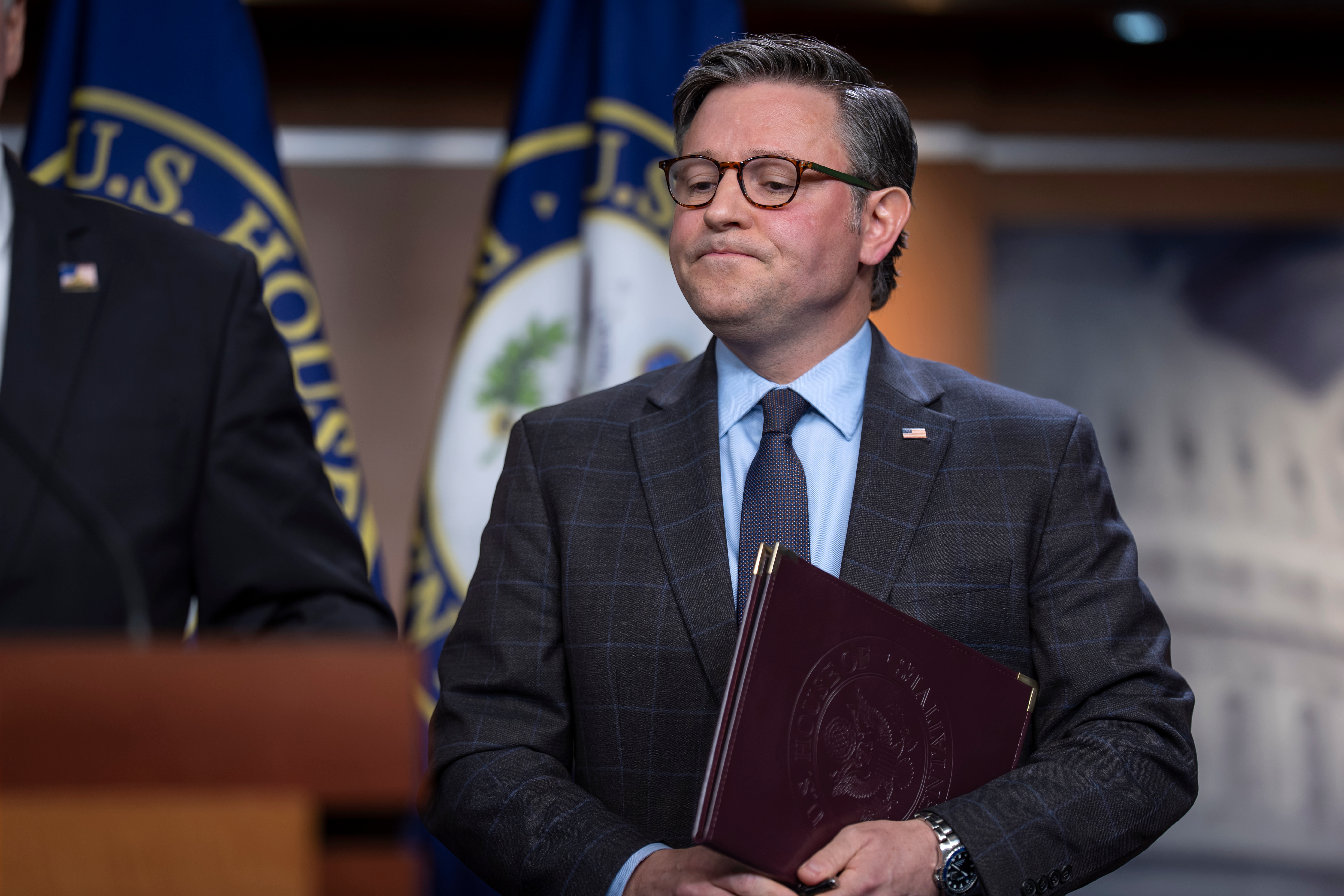
    “We’re going to avoid the threat of another Democratic shutdown,” House Speaker Mike Johnson told reporters in advance of the vote.

    Rep. Rosa DeLauro, the lead Democrat on the House Appropriations Committee, encouraged her Democratic colleagues to vote for the measure during a closed-door meeting Tuesday morning.

    She said the bill was much improved from the product that passed the House earlier this summer on a mostly party-line basis. For example, she said it prevents the Department of Homeland Security from transferring funds to the Border Patrol, and it delays a proposed rule that would give political appointees in the Trump administration more authority to stop federal grants from going out for programs they view as not in line with the president’s agenda. Those changes were made when the Senate approved its version of the bill.

    Democrats fear the administration will use the proposed regulation on grants to steer money away from Democratic-led states. DeLauro called the delay an important first step, but said more must be done to block the policy from taking effect.

    “Whether a community receives disaster relief should not depend on who they voted for in the last election,” DeLauro said.

    The short-term measure funds federal agencies generally at current levels through Dec. 11. It will give lawmakers more time to find compromise on a full-year measure, though that will likely be quite difficult.

    Republicans are seeking hundreds of billions of dollars in additional spending for the military while cutting most nondefense programs. Democrats say that’s a non-starter and insist on a bipartisan approach that treats domestic programs with parity.

  • Eagles lead NFL with eight players on ESPN’s Top 100 list for 2026; Jalen Hurts comes in at No. 97

    Eagles lead NFL with eight players on ESPN’s Top 100 list for 2026; Jalen Hurts comes in at No. 97

    The Eagles have many reasons to believe they have one of the NFL’s most talented rosters, and ESPN offered another one Tuesday.

    The Birds led the NFL with eight players on ESPN’s projected Top 100 players list for the 2026 season. This is the second consecutive year the Eagles have had more players on the list than any other team. The Lions and 49ers followed with six players each.

    The ranking was decided by 12 ESPN NFL analysts and reporters who evaluated players based on their expected performance in the 2026 season, rather than past performance.

    The Eagles’ eight selections are spread across offense and defense, from quarterback and running back to a receiver, two offensive tackles and three defensive players. Find out who made the list below.

    Quinyon Mitchell will have the best 2026 season for an Eagle, per ESPN’s projections. Monica Herndon / Staff Photographer

    Quinyon Mitchell, No. 34

    Mitchell was the Eagles’ highest-ranked player, moving up 47 spots from No. 81 last year.

    The third-year cornerback led all NFL cornerbacks in opponent catch rate during the 2025 season at 42.4%. .

    ESPN projects Mitchell to record 54 tackles, 19 passes and three interceptions in 2026.

    Lane Johnson is a top-40 player in what will probably be his final year. Jose F. Moreno / Staff Photographer

    Lane Johnson, No. 40

    The veteran right tackle dropped from No. 12 to No. 40 this year, but ESPN still views Johnson as one of the league’s best offensive linemen.

    Johnson, 36, is entering what he has indicated will probably be his final NFL season. He is a five-time All-Pro and two-time Super Bowl champion with the Eagles. Johnson is returning from a Lisfranc injury that cost him the final eight games of last season, including the playoffs.

    Jordan Mailata’s (left) production dipped in 2025 but he is still considered an elite lineman. Monica Herndon / Staff Photographer

    Jordan Mailata, No. 48

    Mailata also fell from last year, when he was ranked No. 23.

    Still, ESPN considers the Eagles left tackle one of the league’s premier offensive linemen, after being a seventh-round pick for the Eagles in the 2018 draft. Mailata has the third-highest Pro Football Focus grade among offensive tackles since 2022, behind the 49ers’ Trent Williams and Lions’ Penei Sewell.

    Mailata still ranks fifth among offensive tackles in run block win rate of 83.3% since 2020, even though he had a career-low 72.4% rate in 2025.

    Jalen Carter could move back up the Top 100 list with a healthier 2026. Monica Herndon / Staff Photographer

    Jalen Carter, No. 58

    After a shoulder injury shortened Carter’s 2025 season, he dropped 40 spots from No. 18.

    The Eagles defensive tackle played just 11 games last season but has the chance to be “one of the most disruptive linemen in the NFL,” according to ESPN. Even though he played in only 11 games, he had four pass rushes that led to forced interceptions.

    He signed a four-year, $152 million extension this offseason and arrived at training camp 10 pounds lighter and healthy.

    Saquon Barkley will look to recapture the magic of his 2024 season after having just 1,140 yards last year.Elizabeth Robertson / Staff Photographer

    Saquon Barkley, No. 63

    Barkley dropped significantly in the rankings, moving down 46 spots from No. 17 after his 2025 season did not match his historic first season with the Eagles. After rushing for 2,005 yards in 2024, Barkley finished with 1,140 yards last season. ESPN projects Barkley to rush for 1,285 yards and nine touchdowns on 300 carries in 2026.

    An All-Pro performance in 2025 strengthened Cooper DeJean’s projection for 2026. Yong Kim / Staff Photographer

    Cooper DeJean, No. 71

    DeJean moved up 21 spots from No. 92 after being a 2025 first-team All-Pro. He is expected to have an even more versatile role this season, as the Eagles plan to have him play safety in base and slot in sub packages, keeping him on the field as much as possible.

    ESPN projects he will have 82 tackles, 17 pass deflections, two interceptions and one forced fumble.

    DeVonta Smith has a top-100 projection heading into his first year as a WR1. David Maialetti / Staff Photographer

    DeVonta Smith, No. 93

    Smith is the new Eagles face on ESPN’s list, making the Top 100 for the first time.

    With A.J. Brown now in New England, Smith enters the season as the team’s clear No. 1 receiver. According to ESPN, a 100-catch season seems possible, as he came close in 2022 with 95 catches for nearly 1,200 yards.

    Smith has won a Heisman Trophy, college football title, and Super Bowl, making him one of five players to accomplish that feat. The others are Tony Dorsett, Marcus Allen, Reggie Bush, and Charles Woodson.

    Jalen Hurts fared better among his fellow players on NFL Network’s Top 100 list than he did on ESPN’s 2026 projections. Monica Herndon / Staff Photographer

    Jalen Hurts, No. 97

    Hurts had the steepest drop of any Eagle after falling from No. 38 last year to No. 97 this year.

    His ranking comes after an “up-and-down” 2025 season, according to ESPN. Hurts is preparing for his first year in a new offense under coordinator Sean Mannion, but ESPN notes Hurts has found ways to adapt from adversity in the past.

    He is 57-25 as a starter and has 138 total touchdowns since 2022.

    Hurts also recorded at least 30 combined passing and rushing touchdowns in four consecutive seasons, which is the fourth-longest active streak behind Josh Allen’s six.

    ESPN projects him to throw for 3,779 yards with 24 touchdowns, 438 rushing yards, and nine rushing touchdowns.

    According to NFL Network’s Top 100 list, voted on by the players themselves, Hurts is ranked No. 56, a stark difference from ESPN’s list. In the 2025 season, he threw a career-high 25 touchdowns and rushed for eight more.