Blog

  • Authorities investigating reports of irritating fumes inside Walmart in South Jersey

    Authorities investigating reports of irritating fumes inside Walmart in South Jersey

    Authorities said nearly 20 people were taken to hospitals for evaluations after they were exposed late Tuesday afternoon to irritating fumes inside a Walmart in Deptford Township, a Gloucester County spokesperson said.

    Around 4:15 p.m., people started calling 911 reporting an unknown irritant inside the Walmart on the 800 block of Cooper Street, said Andrew Halter, chief of hazmat for Gloucester County Emergency Response.

    Emergency personnel encountered around 24 people exiting the department store showing signs, such as coughing and raspy throats, of exposure to an unknown irritant, Halter said.

    The store was being investigated by local authorities and by personnel from Walmart, Halter said.

    The store was closed for the night and was scheduled to reopen around 6 a.m. for normal business, though some shelves may be bare because some food, such as produce and baked goods, were removed “out of an abundance of caution,” Halter said.

    The symptoms people showed or reported were “minor in nature,” Halter said, though he could not say if some people were admitted to the hospital for more serious concerns.

    Investigators were reviewing whether the fumes came from something mechanical, or if the exposures happened in one or more sections of the store, Halter said.

    “Right now, there’s no hazards present after everything that we’ve checked, which is key for having the store reoccupied by employees,” he said.

  • Eagles WR coach believes Makai Lemon has ‘done a great job’ despite a slow start to his career

    Eagles WR coach believes Makai Lemon has ‘done a great job’ despite a slow start to his career

    It has not been an ideal summer for Makai Lemon.

    He had a quiet OTAs. He missed the majority of training camp. Then, when he finally played in the Eagles’ final preseason game, he struggled, recording just 3 yards on three catches and a drop that led to an interception.

    Time to hit the panic button? The Eagles certainly aren’t.

    “He’s done a good job,” said wide receivers coach Aaron Moorehead. “I mean, Makai, like any rookie, is going to have things that [they do] really well and things that he is going to have to improve on. …
You’re correcting everything, you’re praising everything, and you’re just allowing the guys to be in the best free position to go out there and play their best.”

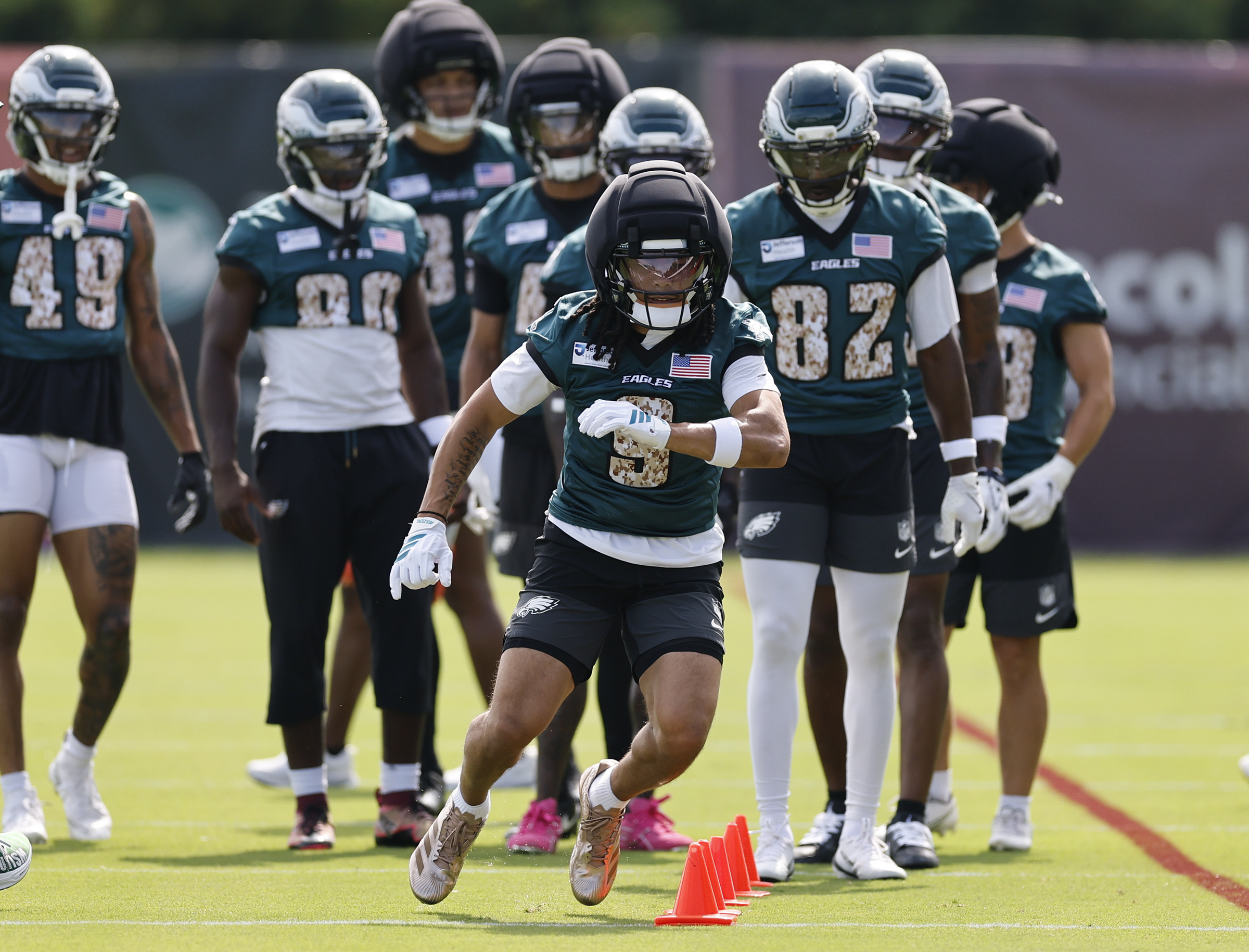
    Moorehead added that Lemon, the Eagles’ No. 20 pick in the first round of April’s draft, is still going through the motions after he missed nearly three weeks of training camp with a hamstring injury. Fellow Eagles wide receiver DeVonta Smith was sidelined the majority of camp too, but as Moorehead noted, it’s far easier for a veteran like Smith to ramp up than a rookie.

    What’s the biggest hurdle Lemon must overcome following his injury?

    Makai Lemon was sidelined for nearly three weeks of training camp with a hamstring injury.Yong Kim / Staff Photographer

    “It’s really just timing,” Moorehead said. “That’s really the big thing is this timing and getting on the same page with everybody and making sure that they’re kind of pressing forward.

    “With Makai, we had to come up with creative ways to get him walk-throughs and get him doing different things that he could do while he was out. He couldn’t physically run, but he could walk through things or we could talk through things, and we could have him hear it, break the huddle, and go where he needed to go, just to catch him up that way. It wasn’t the most fun thing in the world. I know he wanted to be out there and we know we all wanted him to be out there, but that’s what you do. You sacrifice your time, you sacrifice your energy to get to where you want to go. He really took it really well.”

    It’s clear the Eagles’ top brass isn’t panicking because of Lemon’s college resumé. Lemon starred at Southern Cal last season, earning unanimous All-American honors by finishing with 1,156 yards and 11 touchdowns. There’s a reason the Eagles traded up in the first round with the rival Dallas Cowboys in order to pick him.

    General manager Howie Roseman raved about Lemon and the rest of position group in a press conference on Monday.

    “The receiver core, obviously you would’ve liked them to be together a little bit more here through the summer but have a lot of confidence in that group,” Roseman said. “I think it’s a talented group from top to bottom. All those guys, they play different roles. It starts with Smitty, who I don’t think it’s a secret how high we are on him. Tay’s [Dontayvion Wicks] exactly what we thought he would be. Obviously, prior to the regular season, going into the regular season, have tremendous confidence in Makai Lemon, Hollywood Brown. Everyone saw Coop [Darius Cooper] and the growth that he showed and development that he showed.”

  • ‘Our city is losing a big part of its heart’: Philadelphians mourn the closure of the Academy of Natural Sciences’ museum

    ‘Our city is losing a big part of its heart’: Philadelphians mourn the closure of the Academy of Natural Sciences’ museum

    Within hours of the announcement of that the Academy of Natural Sciences of Drexel University would close its museum, Philadelphians across generations found themselves reeling and reminiscing about staring wide-eyed at taxidermied bison and petrified bugs.

    The museum opened in 1828, and moved to its current location on the Benjamin Franklin Parkway in 1876. Its last day with regular hours for the public will be Sunday, Sept. 27.

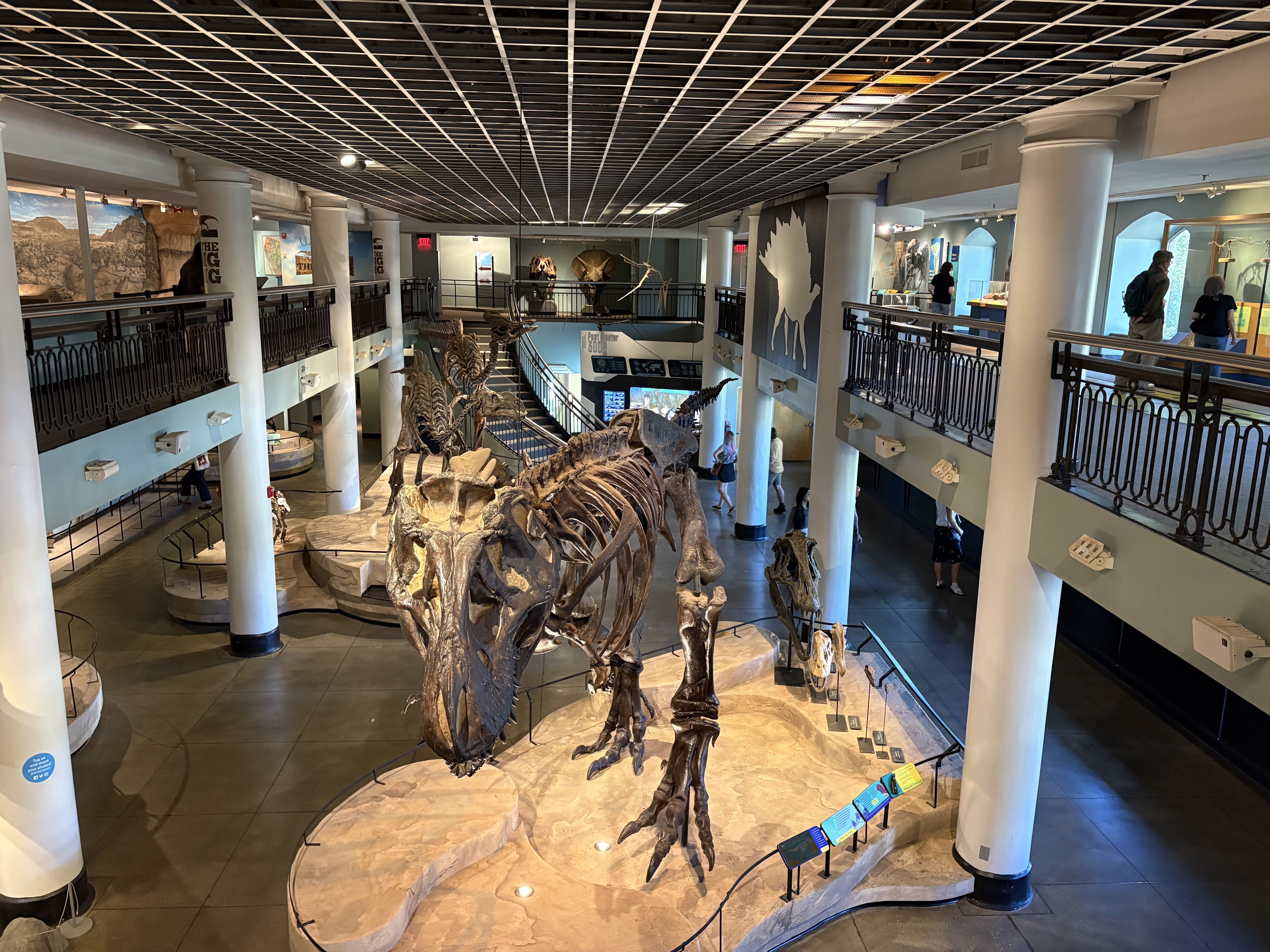
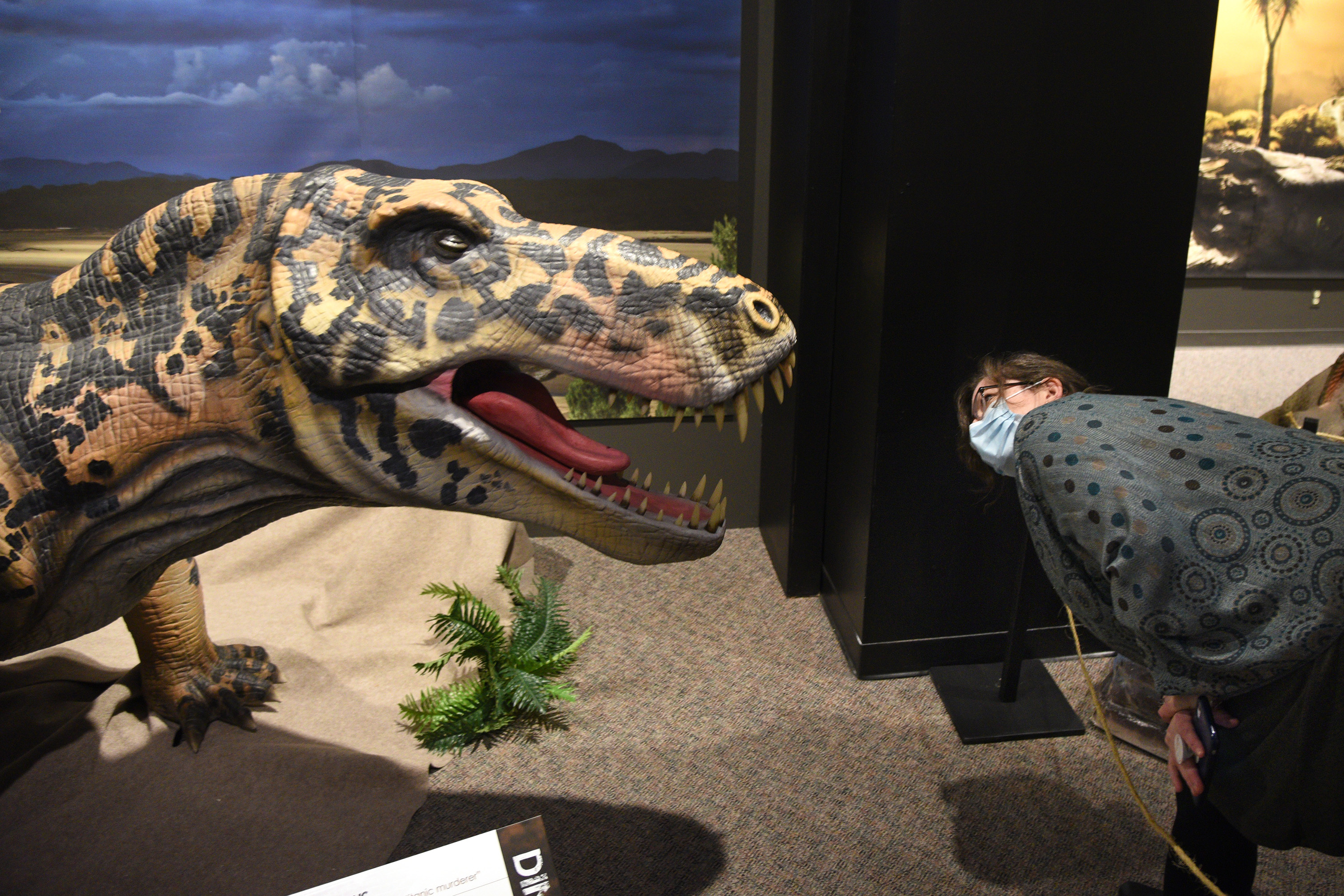
    For some, the greatest loss was the sense of wonder children get when they peruse the museum, see bugs squirm, explore enormous nest displays and dioramas and, of course, lay eyes on the gigantic dinosaur skeleton.

    “I’ll always remember the first time I went to the museum and I saw the dinosaur bones,” said Sakura Okuri, a 53-year-old retired FBI special agent who grew up in Germantown. “I’m just sorry that young kids aren’t going to be able to have that memory.”

    Okuri, who now lives outside Pittsburgh, took comfort in knowing that if he missed something in one of the rich, expansive exhibits he’d have another chance because “it would always be there for me,” he said. “Apparently that’s not the case.”

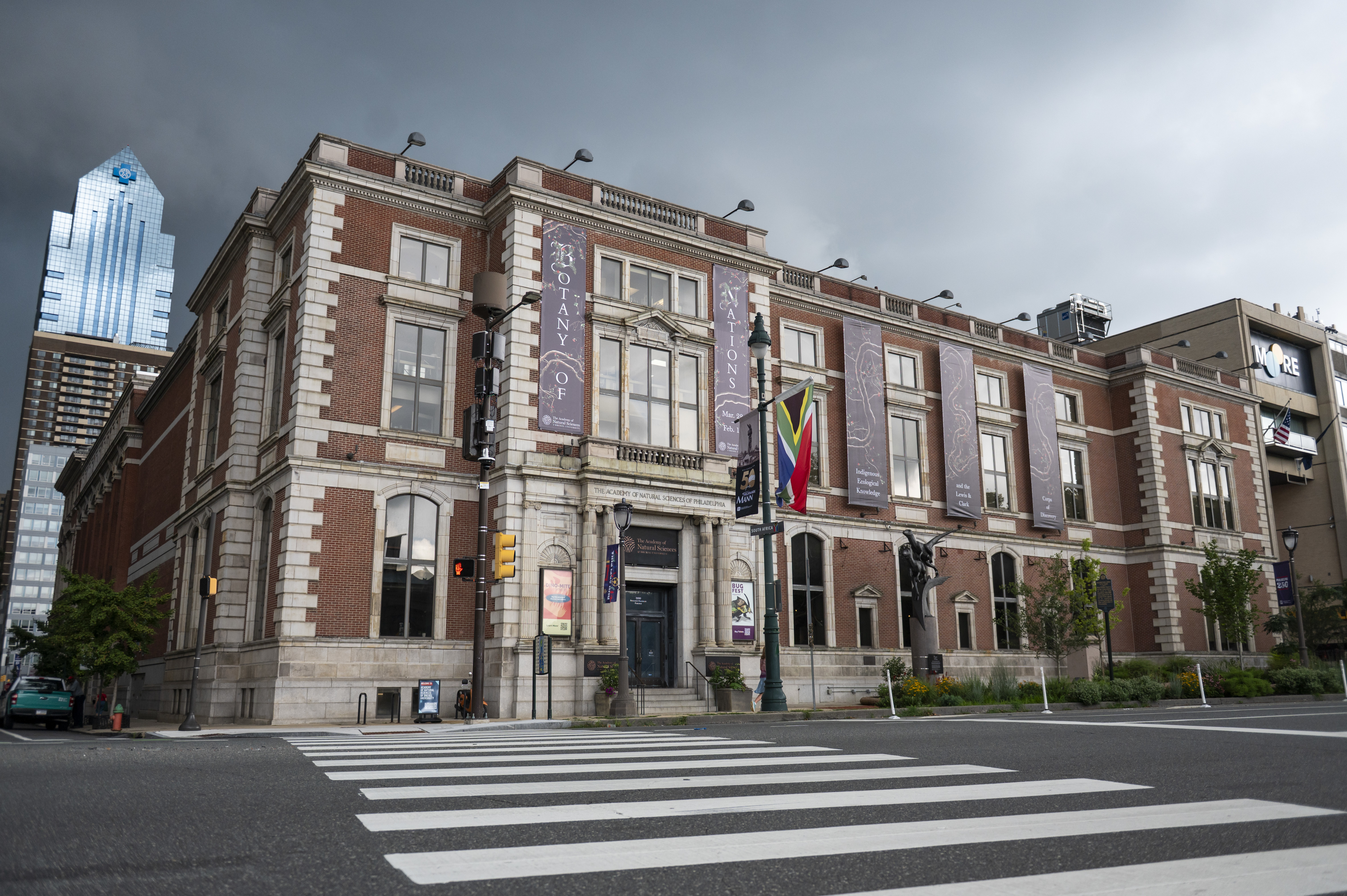
    The exterior of the Academy of Natural Sciences on Aug. 5.Allie Ippolito / For The Inquirer

    The news landed hard for 9-year-old Mira Thompson, who was leaving the Free Library of Philadelphia’s Parkway Central branch with her dad Tuesday afternoon when she got word. She’d gone to the Academy museum on multiple school field trips recently and was looking forward to more visits.

    “That’s where I learned about pH testing last year,” Thompson said. “I didn’t know how to do that before going. I’m going to miss just being there.”

    For many, it was a site of family bonding. Temple University senior Sean McClendon recalled fond memories there with his Opa, his grandfather, who worked at the museum taking care of owls and birds. Michael Ginsberg, a 60-year-old Northeast Philly native, remembers zealously volunteering to hold a hissing cockroach during a presentation at the museum to “get a rise out of my daughter.”

    “My wife was not a fan of that,” he recalled. “‘Go wash your hands,’” she instructed.

    One of two shell sculptures placed on either side of the entrance on the 19th Street entrance to the Academy of Natural Sciences of Drexel University.Tom Gralish / Staff Photographer

    Ginsberg’s dad took him there when he was in first grade. Seeing the dinosaur bones in real life was a thrill after only knowing them on the pages of library books. He was shocked to see they were brown and not white like in renderings.

    When he became a dad, himself, he started bringing his daughter.

    “Dad, why are all the animals dead?” he remembered his then-toddler asking.

    “They’re stuffed, hon,” he explained to her. “It’s a really cool art. It’s a way to get you closer. Just trust me, this is really cool stuff.”

    The aim , ultimately, is to relocate the Academy’s collections and sell the building, which has a lot of deferred maintenance needs, said a source close to the talks between Drexel and the Academy, who asked not to be identified.

    The interactive “Ocean Bound” exhibit at Academy of Natural Sciences in 2023.Courtesy of the Academy of Natural Sciences of Drexel University

    Online, tributes poured in. Some said the museum inspired them to study museum education, others brought their kids there when they learned to walk, they said, or when the air-conditioning in their homes broke in the summer. Some parents considered it a seminal part of parenthood in Philadelphia; others relayed fond memories of bringing their kids with disabilities to the sensory friendly hour.

    Kim Lynne, from Drexel Hill, often brought her 18-year-old son, Ethan, who is on the autism spectrum, to the museum starting around age 3. He appreciated the dinosaurs and bugs; she appreciated the discount Ethan’s medical needs access card granted them on the admission fee.

    “He loved the third floor where they had the children’s area, the insects,” Lynne said. “He was into it early on.”

    Colleen Hall, 45, often marveled at the museum when she passed by it during her years at Community College of Philadelphia. She then ventured in for social events and was wowed by the dinosaurs, butterflies, and polar bears. She enrolled at St. Joseph’s Museum and Cultural Heritage education graduate program in hopes of working there one day.

    It’s hard to wrap her mind around the notion that the museum is really closing.

    “My brain just isn’t going there yet,” she said when asked how she felt about the closure.

    “It’s not the 11th hour yet,” she added.

    For longtime Philadelphians, the loss of the museum marks another step in the city losing its character as shiny new facades slowly replace the old and storied institutions closing their doors.

    “We are losing some of the things that make us a historic city,” said McClendon, the Temple senior. “I think that’s really something that’s part of Philly’s brand or image, not just cheesesteaks, and I think people might forget how much history there is because it’s so modernized.”

    To those who’ve gone with parents and kids like Ginsberg, the facility is a generational treasure and one of the few places that Philadelphians of all ages, races, and socio-economic classes can enjoy.

    “Our city is losing a big part of its heart,” he said.

  • A former confidant to Mayor Cherelle L. Parker tried to bilk campaign for rent money, court document shows

    A former confidant to Mayor Cherelle L. Parker tried to bilk campaign for rent money, court document shows

    William F. Dunbar Sr., a former confidant to Mayor Cherelle L. Parker who pleaded guilty this week to federal tax fraud charges, also sought to bilk a political campaign out of rent payments he was not entitled to, according to a court document filed Tuesday.

    The document does not name the campaign, but it appears to be Parker’s.

    Dunbar, 42, never actually received any ill-gotten funds related to the lease with the campaign, prosecutors said, and he was not charged in connection with the matter.

    But prosecutors said in court documents that he’s agreed to let a judge consider the episode and two other incidents of “additional misconduct” as she weighs his sentence for tax fraud.

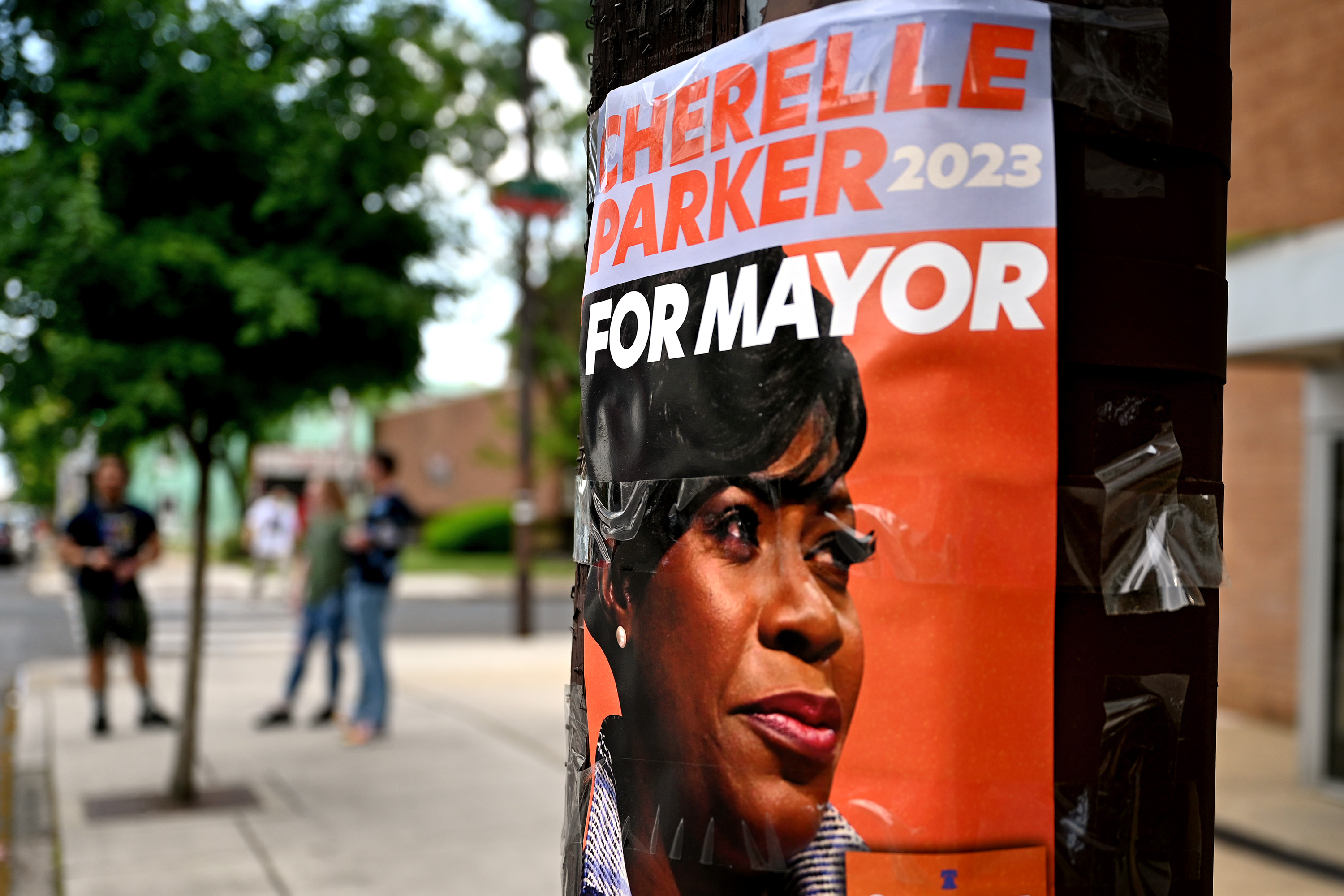
    Dunbar, a Philadelphia lobbyist, was an unpaid but important adviser to Parker during her winning campaign for mayor in 2023. He officially joined her campaign, People for Parker, around the time she took office in January 2024.

    The mayor let Dunbar go from her campaign in July 2024 in a move that Dunbar at the time described as Parker’s decision.

    The campaign made a series of rent payments totaling $22,850 to his lobbying firm, Dunbar Public Affairs & Associates, between March 2024 and November 2024, according to campaign finance records. The address listed for the rent payments was an office in the Penn Center complex near Philadelphia City Hall.

    According to Dunbar’s plea agreement, in February 2025 he “falsified certain terms of a lease agreement for office space that [he] had entered as the lessor with a Philadelphia political campaign.”

    The city’s online database of campaign finance records shows People for Parker as the only campaign that has made rent payments to Dunbar’s firm.

    “The facts speak for themselves,” said Aren Platt, executive director of People for Parker, declining to comment further on Tuesday.

    Dunbar declined to comment.

    William F. Dunbar Sr., a lobbyist and a former informal adviser to Mayor Cherelle L. Parker.Courtesy of William F. Dunbar Sr.

    The plea agreement, which was signed by Dunbar and his attorney, said he “falsely modified the terms of the lease agreement” to increase the notice the campaign was required to give him to terminate the lease.

    Had the campaign not discovered the change, the agreement said, Dunbar would have received money he was not owed. “The defendant’s efforts in this regard did not result in his obtaining any funds, and he ceased making any efforts to obtain these funds before learning of the federal criminal investigation resulting in the charges in this case,” the agreement said.

    Dunbar on Monday pleaded guilty to filing false tax returns for himself and his wife between 2020 and 2025 and claiming substantial refunds when, in reality, they owed money. Prosecutors said in court papers that the tax loss related to the fraud was between $350,000 and $750,000. The charges carry a maximum sentence of 16 years in prison, plus supervised release and fines.

    Dunbar’s attorney, Brian McMonagle, said in a statement Tuesday that the plea agreement “reflects Mr. Dunbar’s acceptance of responsibility for his own conduct.”

    McMonagle said that the agreement “does not include any cooperation obligations” and that Dunbar is “not required under the agreement to provide information or testimony regarding any other individual.”

    The four charges to which Dunbar pleaded guilty are unrelated to his firm’s lease with the Parker campaign and the two other incidents of “additional misconduct” that Dunbar stipulated in the agreement. The other incidents involve falsifying a document for a mortgage application and submitting false financial information to receive additional financial aid at a private school.

    Although those episodes did not lead to criminal charges against Dunbar, U.S. District Court Judge Kelley B. Hodge will be able to consider them when determining his sentence. A sentencing hearing is scheduled for January.

    Staff writer Chris Palmer contributed to this article.

  • Oil giant Chevron is expected to announce it will expand operations in Venezuela, U.S. official says

    Oil giant Chevron is expected to announce it will expand operations in Venezuela, U.S. official says

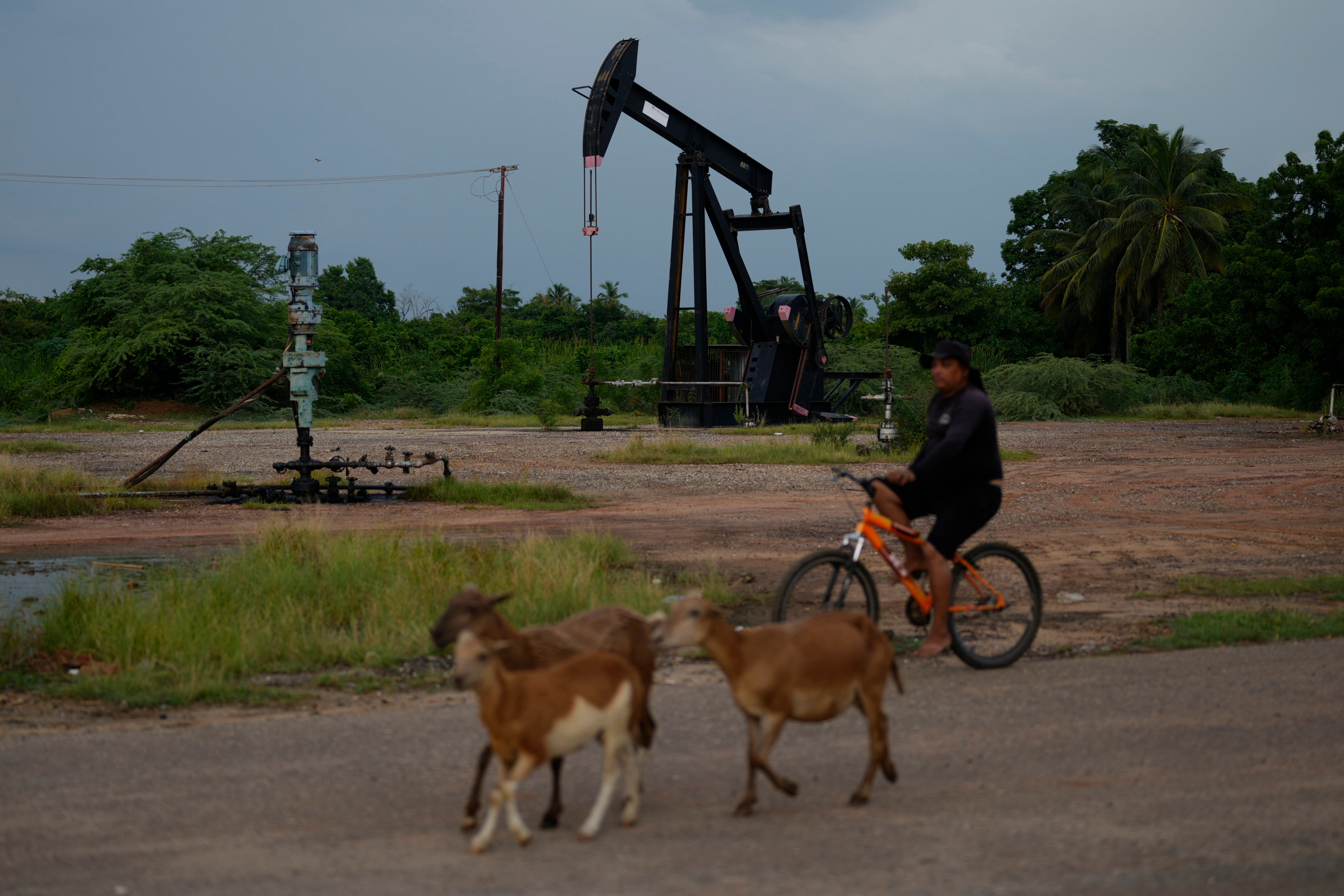
    WASHINGTON — Oil giant Chevron is planning to expand its operations in Venezuela, a U.S. official said Tuesday, just days after President Donald Trump announced an ambitious deal to develop the nation’s oil reserves and give the Pentagon a stake in the profits.

    The official, who briefed reporters on the expected announcement, said the company’s officials and Energy Secretary Chris Wright are expected to visit Venezuela on Wednesday where the new investment will be formally unveiled. The official spoke on condition of anonymity under ground rules set by the White House for the call.

    Chevron is the second-largest U.S. oil company and the only one with a major presence in Venezuela. Chevron did not immediately respond to a request for comment.

    The announcement comes after the White House confirmed on Monday it is partnering with North American Blue Energy Partners as part of President Donald Trump‘s push to tap into Venezuela’s oil industry.

    The sweeping agreement has been met with skepticism from analysts who say it will take years to revive Venezuela’s production. They have questioned whether Venezuela’s acting President Delcy Rodríguez has the legal authority to give the company 100-year rights over 17 oil fields with reserves of 65 billion barrels — and whether future Venezuelan or American administrations would overturn the agreement.

    Deal being pitched as step toward stability, democracy for Venezuelans

    The Trump administration wants elections to happen as quickly as is feasible, but is aiming to maintain stability as it helps Venezuela transition following decades of autocratic rule, the official said.

    The official argued that maintaining stability during such transitions “almost invariably requires you to work with elements of the existing structure, even as you are creating a new one.”

    The Pentagon’s role in the deal comes through its Office of Strategic Capital, which was created under former President Joe Biden to invest in technology needed for national security.

    A second U.S. official speaking on condition of anonymity described the Venezuela agreement as “a very standard deal” and said the office has made several similar ones since Trump returned to office.

    Trump says other companies are readying for business

    Trump has had his eyes on Venezuela’s oil since Maduro’s capture, and his aides call it a path away from reliance on oil from the Middle East. Trump has been pressing to get U.S. businesses to restore a presence in the country. President Hugo Chávez completed the nationalization of Venezuela’s oil industry in 2007, leading major players like ExxonMobil and ConocoPhillips to leave Caracas.

    Talking to reporters at the White House on Monday, Trump suggested that other oil companies were readying for business in Venezuela. “We have Exxon going in, we have Chevron going in. We have our big oil companies going in,” he said. ExxonMobil did not immediately respond to a request for comment. Trump in January said he was inclined to leave Exxon out of Venezuela after CEO Darren Woods called the country “uninvestable.”

    Chevron has been the only major American oil company actively operating in Venezuela since the nationalization.

    Trump was scheduled to meet with a group of large and small oil refiners on Tuesday to discuss ways to increase America’s capacity to refine oil into gasoline.

    The White House has said that increasing the number of refineries and expanding the capacity at existing facilities would eventually reduce prices for consumers. The administration also sees the need for more refineries to process oil from Venezuela.

  • An affordable housing complex with 120 apartments in Voorhees seeks planning board approval

    An affordable housing complex with 120 apartments in Voorhees seeks planning board approval

    The developer of an affordable housing apartment complex in Voorhees expects the same heavy demand from potential tenants that he experienced with a similar complex his company opened nearby in April.

    Hundreds of potential tenants fill the waiting list for available apartments at the 81-unit Victory Commons, a $30 million project that held a grand opening on April 30 at 1223 Haddonfield-Berlin Road, said Nicholas J. Cangelosi, regional vice president of The Michaels Organization, the Camden-based national developer of rental properties.

    Cangelosi said he expects far more applicants than openings when his firm opens 120 affordable housing apartments on the 6.6-acre site of the now-vacant L&L Redi Mix concrete company at 600 and 602 Centennial Boulevard.

    Centennial Housing Associates LLC, owned by Michaels, is scheduled to appear before the Voorhees Planning Board on Sept. 9 for preliminary and final site plan approvals for The Oaks at Centennial, which would feature 120 apartments built in two phases. The meeting begins at 7 p.m. after a 6:45 caucus at the Voorhees Township Municipal Building.

    The $50 million Oaks at Centennial project is included in the fourth round of the township’s affordable housing commitment.

    A third Michaels project in Voorhees, a $23 million project with 60 affordable units on Sheppard Road, has been approved by the planning board and awaits financing approval by the New Jersey Housing and Mortgage Finance Agency, Cangelosi said.

    The total of 261 units developed by Michaels in the town will be sought because families want to live in Voorhees, he said.

    The now-vacant concrete plant on the Voorhees property will be demolished to make way for the apartment complex.Neill Borowski

    Rent for the affordable units will be paid by the tenants, whose incomes must fall under a maximum amount.

    Many of the Victory Commons units have been rented to “essential workers” in the community who are employed in retail, healthcare, and schools, Cangelosi said.

    “They’re the essential backbone of the community,” he said. “They get to live close to where they work,” he added.

    Monthly rent for a two-bedroom unit at the proposed Oaks development for a family earning 60% of Area Median Income would be $1,587. Rent for a one-bedroom unit would be $1,323 and $1,834 for three bedrooms.

    In the developer’s application to the Planning Board, traffic consultant Shropshire Associates LLC of Atco estimates The Oaks would generate 43 extra trips during the morning peak hour and 60 extra trips during the afternoon peak hour.

    New Jersey’s elected leaders are focused on the shortage of housing. Gov. Mikie Sherrill in April signed an Executive Order that called for a housing plan to be delivered in September.

    “We can’t make New Jersey more affordable without making housing more affordable,” Sherrill said in a statement when she signed the order. “With this Executive Order, we are aligning every tool at our disposal to accelerate housing production and make it easier for families to put down roots in the communities they love,” she said.

    70and73.com is a hyperlocal news site focused on South Jersey, including the communities of Cherry Hill, Evesham, Mount Laurel, Voorhees, Medford, Medford Lakes, and Moorestown.

  • The Academy of Natural Sciences museum is closing. What happens to memberships and planned events?

    The Academy of Natural Sciences museum is closing. What happens to memberships and planned events?

    Drexel University and the Academy of Natural Sciences announced Tuesday that the museum would close for good on Sept. 30. Its last day open to the public with regular hours will be Sunday, Sept. 27.

    While the Academy’s research and collections will be unaffected by this closure, here’s how things will change for the museum’s members and its events.

    Will museum members get refunds?

    Most recently, memberships for the Academy museum cost $65 for individuals. $135 for families.

    “Members will receive direct communication in the coming days with information about their memberships, including benefits, expiration dates, and transition options,” Drexel said in a statement.

    The Franklin Institute, the university said, will honor Scademy memberships through their expiration dates, so members can visit the institute situated only about a block away from the Academy.

    Members could also “adjust the tax-deductible portion of their membership or request a prorated refund for the remaining membership period,” the university said.

    The university said it will provide information to members and also post it on the Academy’s website when it becomes available.

    What will happen to events scheduled at the museum?

    “All programs and events scheduled to take place before the closure will continue as planned,” the university said. The university did not respond to what will happen to events that are rescheduled after Sept. 30 or if there are any.

    What happens to the interns and students currently working in co-ops at the museum?

    “Five Drexel students are currently working at the Academy in co-op positions. Their roles support the Academy’s research and collections’ activities and are not affected by the closure of the museum,” the university statement said.

    Will hours be expanded if the closure announcement drives a high turnout?

    The university said visitors should come to the museum through Sept. 27 “and participate in programs and events offering opportunities to experience and celebrate the museum during its final weeks.”

    The Academy of Natural Sciences of Drexel University, 1900 Benjamin Franklin Parkway, is open Friday to Sunday 10 a.m. to 5 p.m. ansp.org

  • Drexel and the Academy of Natural Sciences are close on deal to continue the Academy’s operations and keep it in Philadelphia, Pa. leader says

    Drexel and the Academy of Natural Sciences are close on deal to continue the Academy’s operations and keep it in Philadelphia, Pa. leader says

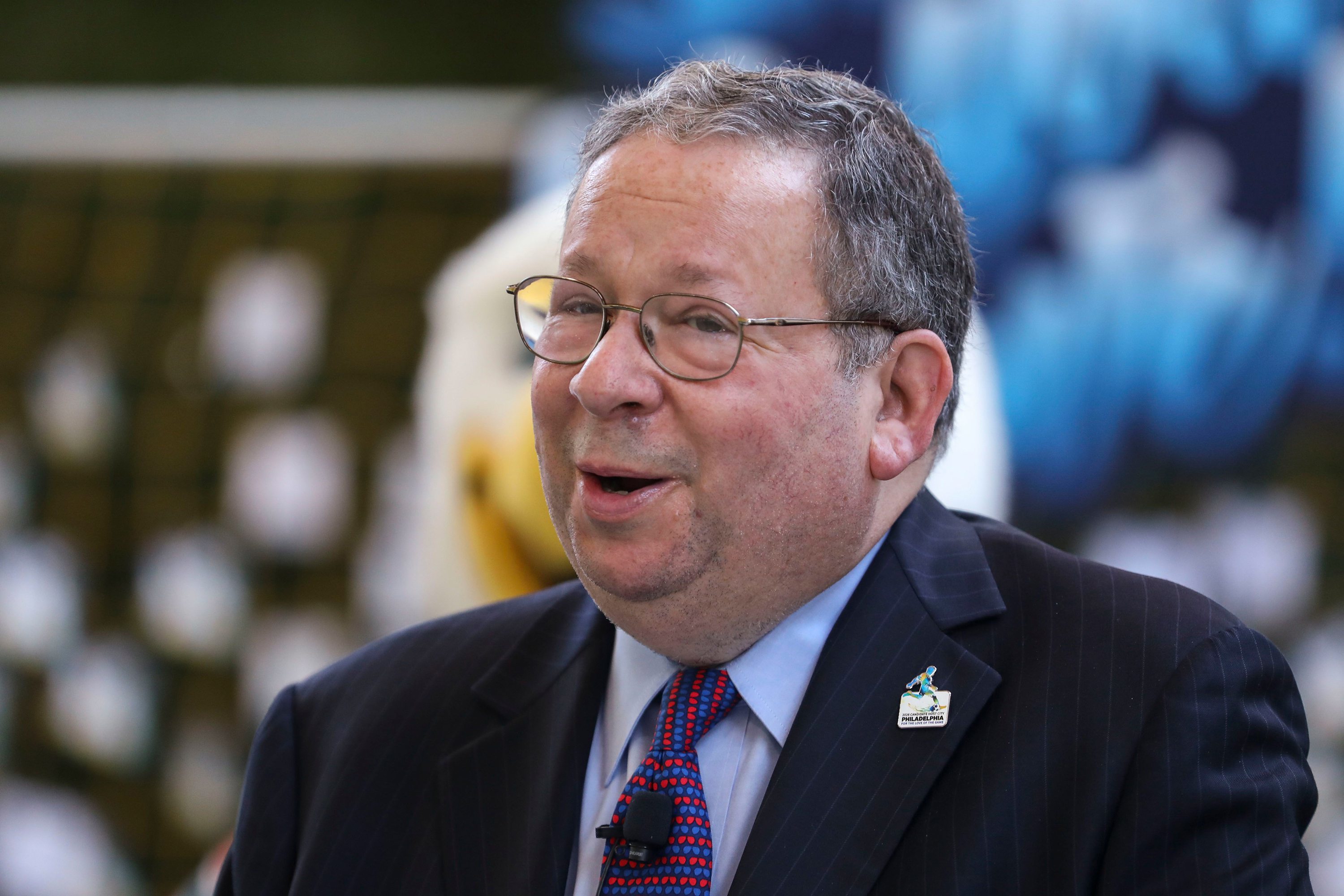
    David L. Cohen, the former U.S. ambassador to Canada and Comcast executive, said the governor asked him to be his “agent” in helping to broker a deal between Drexel University and the Academy of Natural Sciences.

    No one, he said, wanted to see another University of the Arts, which abruptly closed in June 2024, leaving a hole in the city’s arts landscape and sending students and staff scrambling.

    “I don’t want to lose the Academy on my watch, and neither does the mayor,” Gov. Josh Shapiro told Cohen, Cohen said. “Can you figure out if there’s a solution here? If there’s a solution, can you help convince the Academy and Drexel to pursue that solution.”

    That’s what Cohen said he has been doing, holding 40 or 50 meetings over the last several months in search of an agreement and producing a draft proposal for the future of the Academy.

    The two entities, he said, are close to agreeing to terms on governance and finances. While the museum is closing, as Drexel and the Academy announced Tuesday, the larger agreement would allow for the continued operation and growth of the Academy in Philadelphia, without jeopardizing Drexel, which is facing its own financial challenges.

    “We want to preserve the Academy,” he said, “but we also don’t want to jeopardize Drexel.”

    “Drexel and the Academy are working with my office, with Gov. Shapiro’s office, and with Ambassador David L. Cohen, as the governor’s representative, to preserve the essential mission of the Academy. We are working collaboratively toward the outcome we all seek for the City of Philadelphia,” Mayor Cherelle L. Parker said in a statement.

    The governor’s press office did not responded to requests for comment.

    The exterior of the Academy of Natural Sciences on Wednesday, Aug. 5, 2026.Allie Ippolito / For The Inquirer

    Cohen has long been a negotiator in many major city issues, formerly serving as chief of staff to former Philadelphia Mayor Ed Rendell and leading the board of trustees of the University of Pennsylvania.

    Shapiro, he said, was clear about the objectives.

    “The goal that the governor articulated to me and the mayor was to preserve the essential mission of the Academy, all three legs on the stool,” he said citing research, education and public engagement with the collection. “Some of the legs might be a little shorter. They might be a little skinnier. But the goal is that the Academy survives and has a foundation to thrive and grow in Philadelphia. This is a matter of civic importance.”

    Drexel and the Academy are exploring establishing another museum, maybe a smaller one, in another location through a third partner, Cohen said.

    “That’s a work in process,” he said. “I had an hour and a half meeting yesterday with one of the potential institutions that could serve that function for the Academy and for Drexel.”

    Cohen said he hopes ultimately the community rallies around the Academy and helps to support it.

    “We don’t need a single savior here,” he said. “This can be a community effort. I know the Philadelphia nonprofit and foundation community, and time and again this community has stepped up, and I have every hope that we, and it’s a we, will step up again.”

    Cohen credited both Drexel and the Academy for their cooperation and willingness to “focus on a common need for the community as a whole. They really deserve the credit for doing this.”

    The mayor, too, commended Drexel University and the Academy of Natural Sciences “for its significant, ongoing work to preserve the Academy’s educational mission and extraordinary two-century legacy as a natural history institution, including its world-renowned collections.”

    Cohen said he first got involved in the matter about a year ago when he was home recovering from back surgery and got a call from two members of the Academy board about the issues they were having with their partner, Drexel.

    The Academy was looking at possibly leaving the city, though it really didn’t want to do that, he said. He suggested they talk to the mayor and the governor. The board members told him they had been trying to do that but were unable to get attention.

    Cohen texted the governor and mayor on the spot from his living room, he said. Meetings were convened, and that led to the governor seeking Cohen’s help.

    “My wife says to me ‘why in the world did you take this on,” Cohen recalled. “Let me tell you, this legacy, this mission, this institution is worth fighting for. There is real history here, real value.”

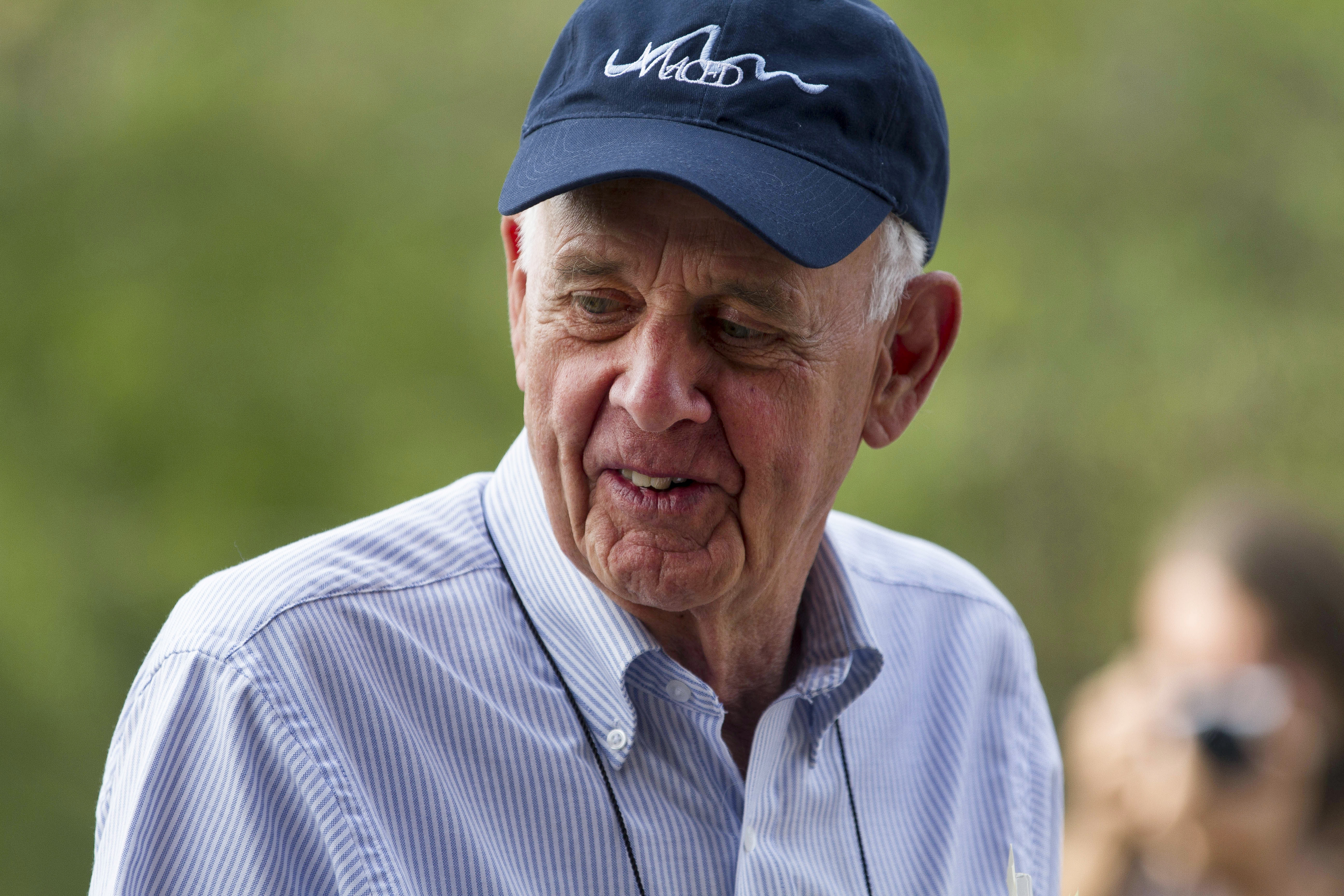
  • Wendell Berry, writer who extolled America’s agrarian past, dies at 92

    Wendell Berry, writer who extolled America’s agrarian past, dies at 92

    Wendell Berry, a Kentucky farmer who plowed his fields behind Belgian draft horses and wrote lyrical poems, novels, and essays — mostly in pencil and without electric light — that explored his elegiac visions of the life and death of agrarian America, died Monday at his home in Port Royal, Ky. He was 92.

    His daughter, Mary Berry, confirmed the death.

    Lanky and rawboned in middle age, with melancholy eyes, a jutting chin, and a widow’s peak reminiscent of Lincoln’s, Wendell Berry wrote more than 50 volumes of poetry, fiction, and argument that championed small family farms, the environment, local foods, and interdependent communities, and railed against chemicals, most technologies, agribusiness, and distant government.

    “The national economy that is really run for the benefit of a very few people is preying upon and slowly destroying local communities everywhere,” Mr. Berry told Sierra magazine in 1990. “Everything we produce in rural America makes more money for other people than it does for those who produce it. We’re destroying rural America.”

    Mr. Berry was once hailed by author and historian Page Smith as “a prophetic American voice of our day.” He never became a household name but, as his oeuvre grew over a half-century, advocates of agrarian and ecological causes embraced his work as an eloquent, if sometimes didactic, expression of their own hopes. Some critics likened his landed exhortations to those of Henry David Thoreau or Thomas Jefferson.

    Toward the end of his long fight for agrarian justice, waged from a cabin in the backwoods of Kentucky, Mr. Berry was showered with honors, including the National Humanities Medal, the nation’s highest award for humanitarian services, presented by President Barack Obama at the White House in 2011, “for his achievements as a poet, novelist, farmer, and conservationist.”

    Raised on a farm in north-central Kentucky, he studied English at the University of Kentucky and writing at Stanford with the environmentalist-novelist Wallace Stegner, traveled in Italy, and landed in New York, intending to write and teach. He married, had two children, and taught for two years at New York University.

    But at 30, he confronted in himself a deep need to return to his roots — specifically, to an old two-room cabin on the Kentucky River at Port Royal, in Henry County, where his ancestors had lived since 1803. The cabin had been built in the 1920s by a great-uncle. He had known the place all his life; indeed, had visited it often as a boy and spent a summer there with his wife, Tanya.

    “In the life we lived that summer, we represented to ourselves what we wanted — and it was not the headlong pilgrimage after money and comfort and prestige,” he recalled in an essay titled for its inspirational setting, “The Long-Legged House.”

    In 1964, the couple resolved to stay and work the land. Nearby, they bought a 125-acre farm, called Lanes Landing, and started raising sheep, corn, and grain crops, and planted gardens for their own table. Mr. Berry also initiated a 20-year teaching association at the University of Kentucky, in Lexington.

    Returning to his home as a place to write for the rest of his life was a way to insure, to himself, that he would always be bound by the truth, Mr. Berry said in a phone interview in 2018 for this obituary.

    “It made a permanent connection between me and my native place, and with its landscape,” he said. “The landscape was there to check me if I was wrong. I could never go away and make up stuff at cocktail parties about the backwoods of Kentucky. I worked with people here in all walks of life and learned from them. It’s been a very rich experience.”

    He rebuilt the Long-Legged House and began writing there about sustainable agriculture and the culture of life on small farms and in farming towns — polemics about how such places were vital to individual liberties and why they were rapidly disappearing from a landscape increasingly afflicted with topsoil erosion, polluted water, and toxic chemicals.

    Over the next half-century, he wrote with a pencil or pen on paper during daylight hours. His farmhouse had electricity, but he refused to use electric lights at the Long-Legged House, where he wrote, because, he said, the power was supplied by strip-mined coal. His wife critiqued his work and typed his manuscripts on an old Royal standard. He refused to have a television set, or a computer after they came along.

    Mr. Berry first won national attention with The Unsettling of America: Culture & Agriculture (1977), a manifesto to save small farms from big business and a government bent on agricultural efficiencies that, he said, were destroying the land and a way of life. The book launched the modern movement for sustainable farming and became a conservationist classic.

    “The concentration of farmland into larger and larger holdings and fewer and fewer hands — with the consequent increase in overhead, debt, and dependence on machines — is a matter of complex significance, and its agricultural significance cannot be disentangled from its cultural significance,” Mr. Berry wrote.

    In a review for the New York Times, farmer-poet Donald Hall hailed its “worldview that derives its premises from the experience of working on the land.” Its author, Hall added, “argues with careful logic for the recovery of lost land, for the return of the small farmer to the countryside, the small farmer expropriated by the army of agribusiness.”

    Mr. Berry elaborated on this theme in The Gift of Good Land (1981) and Home Economics (1987), essay collections that described organic farming techniques in America and abroad. They argued that “industrial values” were killing family farms and threatening American society as a whole.

    (END OPTIONAL TRIM.)

    Marshaling fiction to his cause, Mr. Berry wrote more than a dozen novels and volumes of short stories. He invented a Kentucky town, Port William, as a setting for generations of lives interwoven in tales of murder, alcoholism, marital discord, and remembrance against subtexts of fading agrarian life. Some critics called his fiction moralistic and short on plot and character development.

    Others found his novels moving. The Memory of Old Jack (1974), the recollections of a 92-year-old farmer on his last day of life, was “magnificent,” English scholar Joan Joffe Hall wrote in the New Republic, saying it “makes us grieve that these rhythms of work and speech are lost to us.”

    As a poet, Mr. Berry produced some 30 volumes of collected verses, starting with The Broken Ground (1964). His “Sparrow,” in its entirety, was typically economical:

    A sparrow is

    his hunger organized.

    Filled, he flies

    before he knows he’s going to,

    And he dies by the

    same movement filled

    with himself, he goes

    by the eye-quick

    reflex of his flesh

    out of sight,

    leaving his perfect

    absence without a thought.

    “The quiet but sure and melodious voice of Wendell Berry makes The Broken Ground an immediate pleasure,” poet and critic Robert Pack wrote in a review for the Times. “He is essentially elegiac, ranging from praise to requiem; throughout his poems there broods a reverential hush.”

    Farmers caught in an economic squeeze regarded Mr. Berry’s ideas as naive. So did Charles Barnhart, a dean at the University of Kentucky’s college of agriculture.

    “What Wendell is talking about is a primitive agriculture,” Barnhart told the Times in 1988. “It’s a nice way of life if you have a rich father and you’re a tenured member of the faculty at a university. But I don’t see a great proportion of the American public returning to farms. And I don’t see it as an industry that would ever be capable of feeding 225 million people.”

    Still, Mr. Berry won a wide following. “It’s a movement on the way up, and Wendell’s influence in it is pervasive,” Ron Kroese, director of the Land Stewardship Project in Stillwater, Minn., told the Times in 1988. “Wendell Berry has been the contemporary conscience of American agriculture.”

    Wendell Erdman Berry was born in Louisville, Ky., on Aug. 5, 1934, the first of four children of John Marshall Berry, a lawyer and tobacco farmer in Port Royal, and Virginia (Erdman) Berry. The families of both parents had farmed in the county for more than five generations.

    Like his siblings — John Jr., Mary Jo, and Martha — Wendell Berry helped work the farm. He learned from a grandfather how to harness and drive a team of mules. He was a melancholy boy. But in childhood retreats to the Long-Legged House, he found peace and solitude and read Walden, Thoreau’s reflections on two years in a woodland cabin in Concord, Mass.

    A rebellious teenager, Mr. Berry was sent to Millersburg Military Institute, a boarding school near Lexington. He hated it. “The highest aim,” he recalled, “was to produce a perfectly obedient, militarist, puritanical moron who could play football.”

    At the University of Kentucky, he earned a bachelor’s degree in 1956 and a master’s in 1957.

    Mr. Berry and Tanya Amyx were married in 1957. In addition to his wife and daughter, he is survived by a son, Pryor Berry, known as “Den”; two sisters, Mary Jo Berry and Martha Baxter; five grandchildren; and four great-grandchildren.

    In recent years, still living and writing in Port Royal, Wendell Berry also joined nonviolent protests against mountaintop-removal coal mining, coal-fired power plants, and the death penalty.

    Besides the humanities medal, Mr. Berry received more than 30 awards, including the Sewanee Review’s Allen Tate Poetry Prize in 2014 and the Ivan Sandrof Lifetime Achievement Award of the National Book Critics Circle in 2016. He was the subject of a 2016 documentary, Look & See: A Portrait of Wendell Berry, directed by Laura Dunn and Jef Sewell.

    “His writing has sometimes been called radical, but he thinks of himself as a conservative, conserving what is most human in our landscapes and ourselves,” journalist and artist Paul Trachtman wrote in a 2005 Smithsonian magazine profile of Mr. Berry.

    “You know,” the story quoted Mr. Berry as saying, “if you subtracted the Gospels and the Constitution and the Declaration of Independence from my work, there wouldn’t be very much left.”

    This article originally appeared in the New York Times.

  • Tony Romo acknowledges drinking issue, plans to return to CBS in first comments since arrest

    Tony Romo acknowledges drinking issue, plans to return to CBS in first comments since arrest

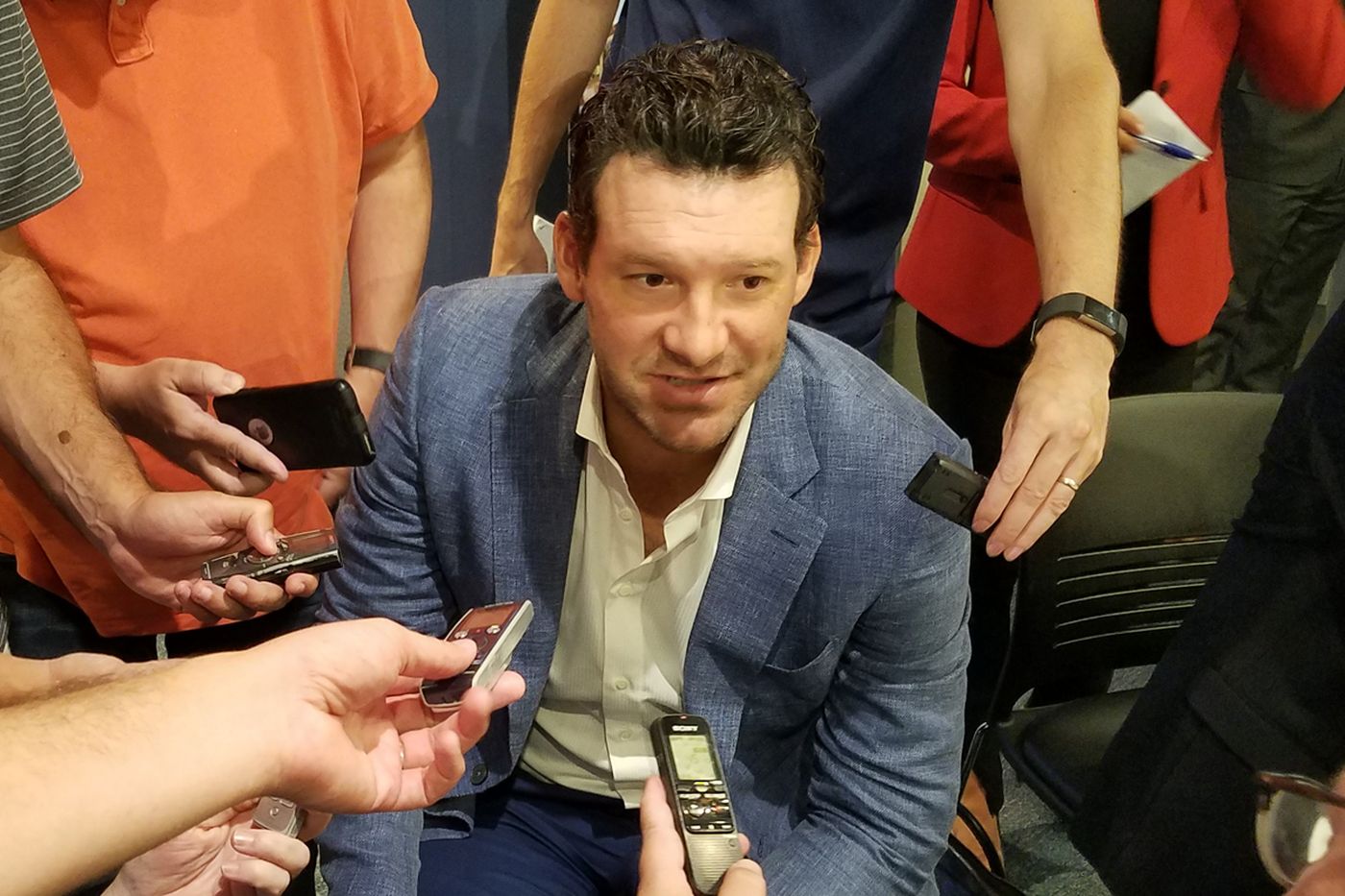
    Tony Romo pleaded no contest Tuesday to operating a vehicle while intoxicated and said he planned to return to CBS “in time.”

    The Dallas Cowboys quarterback-turned-NFL broadcaster confirmed the no-contest plea and called the incident a “personal failure” in a statement shared on his Instagram account.

    Romo was arrested in Wisconsin on July 23 for suspicion of operating a vehicle while under the influence. Body camera video released by the Milwaukee County Sheriff’s Office showed Romo denying he was drinking while struggling at times to follow the officers’ instructions.

    As a result of the plea, Romo will be forced to give up his driver’s license for six months and pay a fine of $784, according to court records. He’s also required to complete an alcohol assessment program and install a Breathalyzer to the ignition of any car he owns.

    Romo also admitted to using alcohol to cope with the multiple injuries he suffered during his 13-year NFL career.

    “Multiple back surgeries ended my career earlier than I expected and left me with constant debilitating pain,” Romo wrote. “That pain led to a dependence on pain medication, and my efforts to get those medications led to an over-reliance on alcohol.”

    “None of this is an excuse,” Romo added. “These are my failures, and I take responsibility for them.”

    Romo also asked for privacy and said he was turning his attention to his health, family, and “in time, my return to CBS.”

    CBS declined to comment.

    Romo is on leave at CBS, and will be replaced by former Houston Texans defender J.J. Watt in Week 1. Replacing Watt in the network’s No. 2 booth will be Eagles preseason announcer Ross Tucker.

    The network hasn’t announced its Week 2 lineup.

    Tony Romo (right) has been calling games alongside Jim Nantz since 2017. CBS Sports

    During a media day event with reporters last month, CBS Sports President David Berson called Romo’s status an “evolving situation” and said there was “no timetable or final decision” on when — or if — the network’s top NFL analyst could be back in the booth.

    “Fortunately, we have a very deep bench, and I’m really proud of the way everyone’s stepping up and responding,” Berson said.

    Romo isn’t the first high-profile announcer to be involved in a drunk driving incident.

    In 2009, former Sixers star and Hall of Famer Charles Barkley spent three days in jail and was suspended six weeks by TNT after pleading guilty to having driven under the influence on New Year’s Eve.

    Jalen Rose was suspended but later returned to ESPN after his DUI arrest in 2011, despite waiting three weeks to tell the network. Al Michaels was arrested for DUI in 2013, but NBC took no disciplinary action, and he didn’t miss any Sunday Night Football games since his legal issues were resolved before the start of the season.

    Romo joined CBS in 2017 and immediately became a fan favorite, thanks to his lighthearted tone and ability to predict plays. But in recent years Romo has faced criticism for appearing to be unprepared and chemistry issues with his partner, veteran play-by-play announcer Jim Nantz.

    “He was everything we made him out to be in those first three years,” The Athletic’s Andrew Marchand said of Romo on this week’s The Varsity with John Ourand podcast. “He’s gone backward, and we’ve seen things that just haven’t sounded right … The fact is he hasn’t been good, and the work ethic’s been questioned.”

    Staff writer Abraham Gutman contributed to this article.