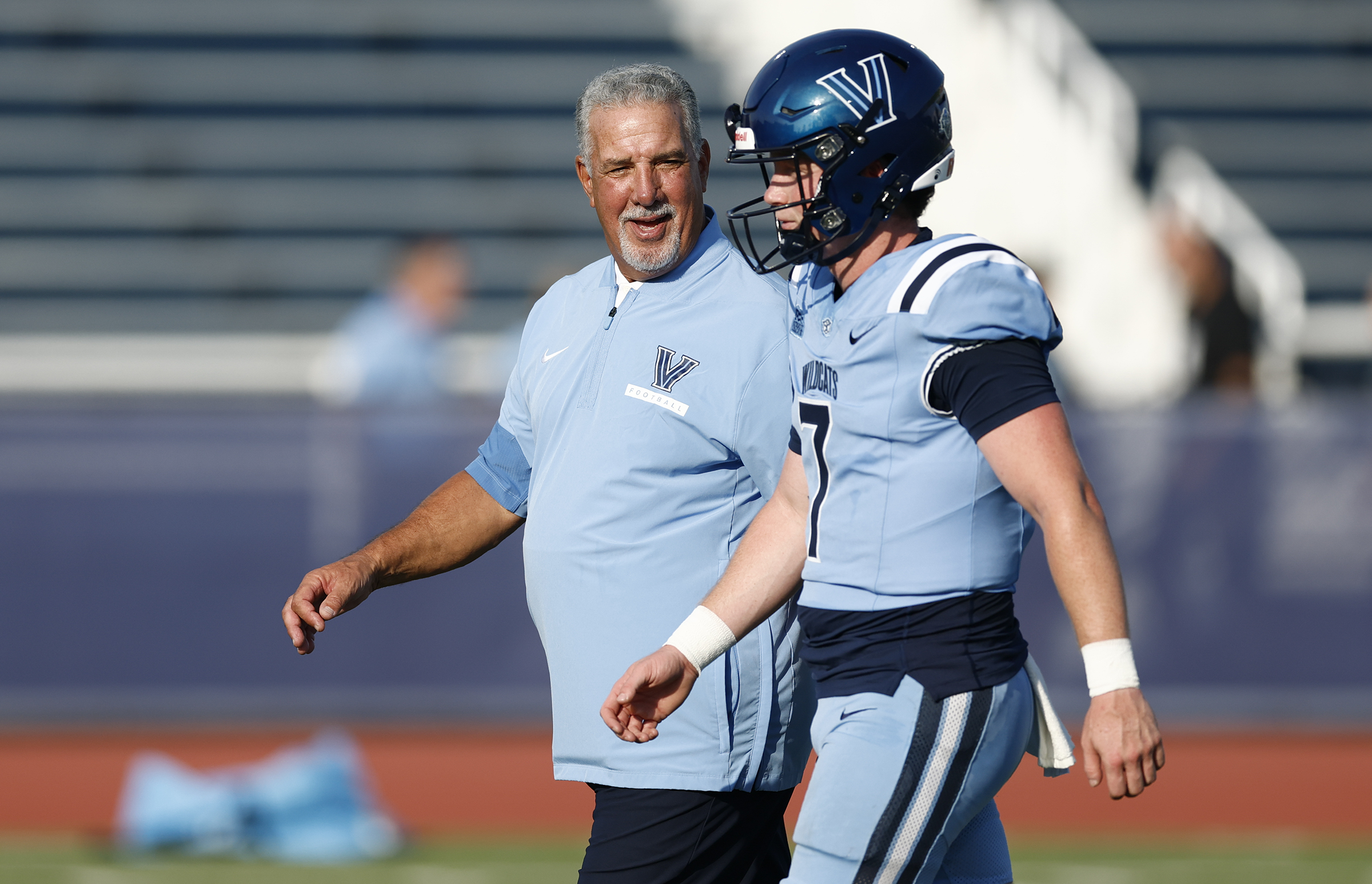
Villanova head coach Mark Ferrante sat behind his large wooden desk on Thursday. He peered out the window to his left and looked at Villanova Stadium. It was the site of the Wildcats’ agonizing season-opening loss to William & Mary last week.
Villanova led William & Mary by 10 points with 58 seconds remaining in regulation. Then a slew of mistakes by the Wildcats allowed William & Mary to make a field goal, recover an onside kick, score a touchdown, intercept Villanova, and kick a game-winning 45-yard field goal as time expired.
As much as Ferrante strives to move on from games, this one stuck with him, and not by choice. While Villanova is preparing for Saturday’s Patriot League matchup at Bucknell (6 p.m., ESPN+), radio shows and media interviews have peppered Ferrante with the same questions about the season-opening loss.
“We want to try to follow our own advice as coaches,” Ferrante said. “Learn from it, digest it the day after, celebrate the victories, mourn the losses, 24 hour rule, come in the next day, make the corrections, and then put it in the rearview and move on. So I’m hoping that’s what our team and our staff have done.”
To shorten it, Ferrante simply said: “We took the L, but the L stands for learn.”
There are still 11 regular season games left on Villanova’s schedule, beginning with Bucknell (0-1, 0-1 Patriot League) on the road on Saturday.
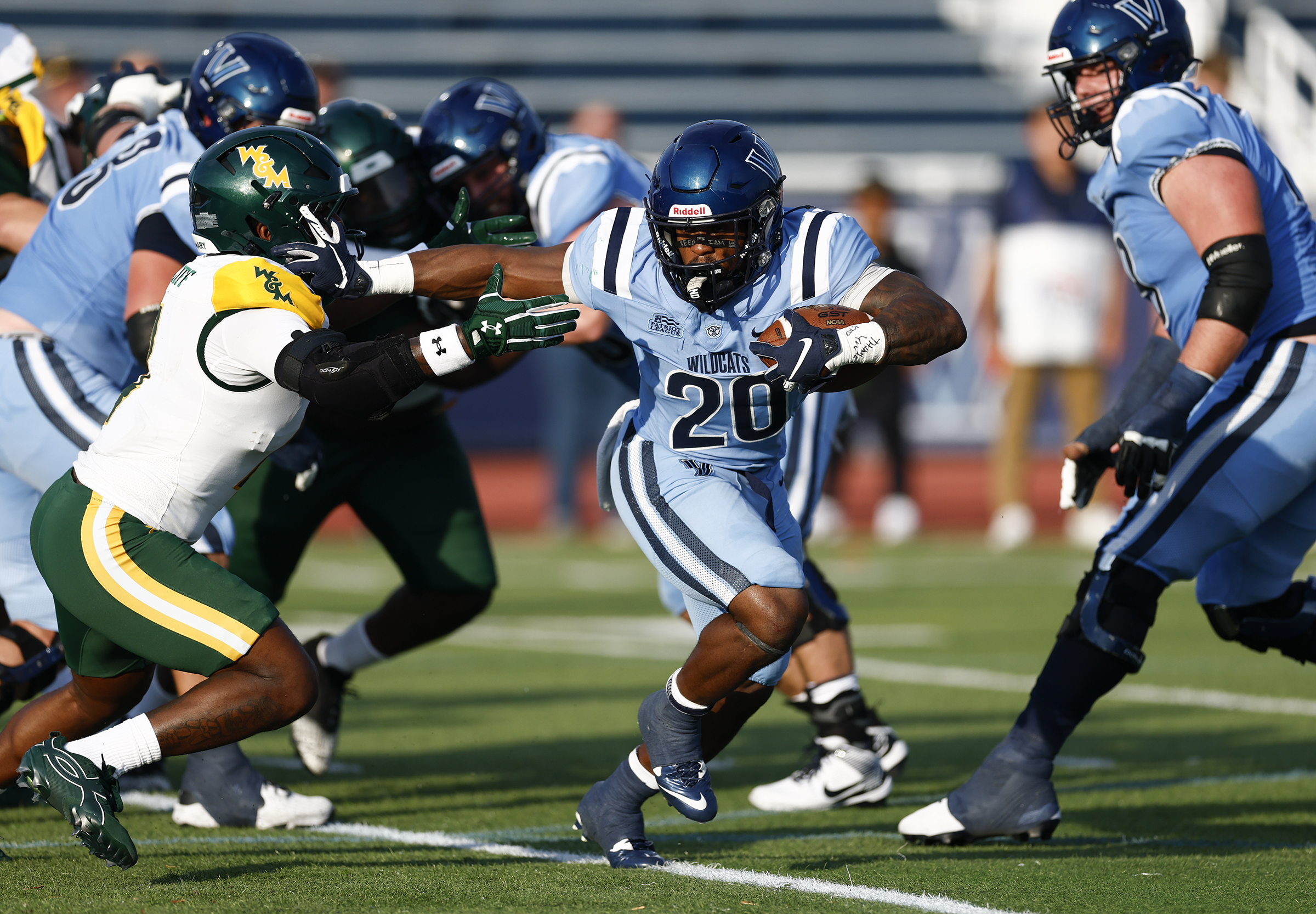
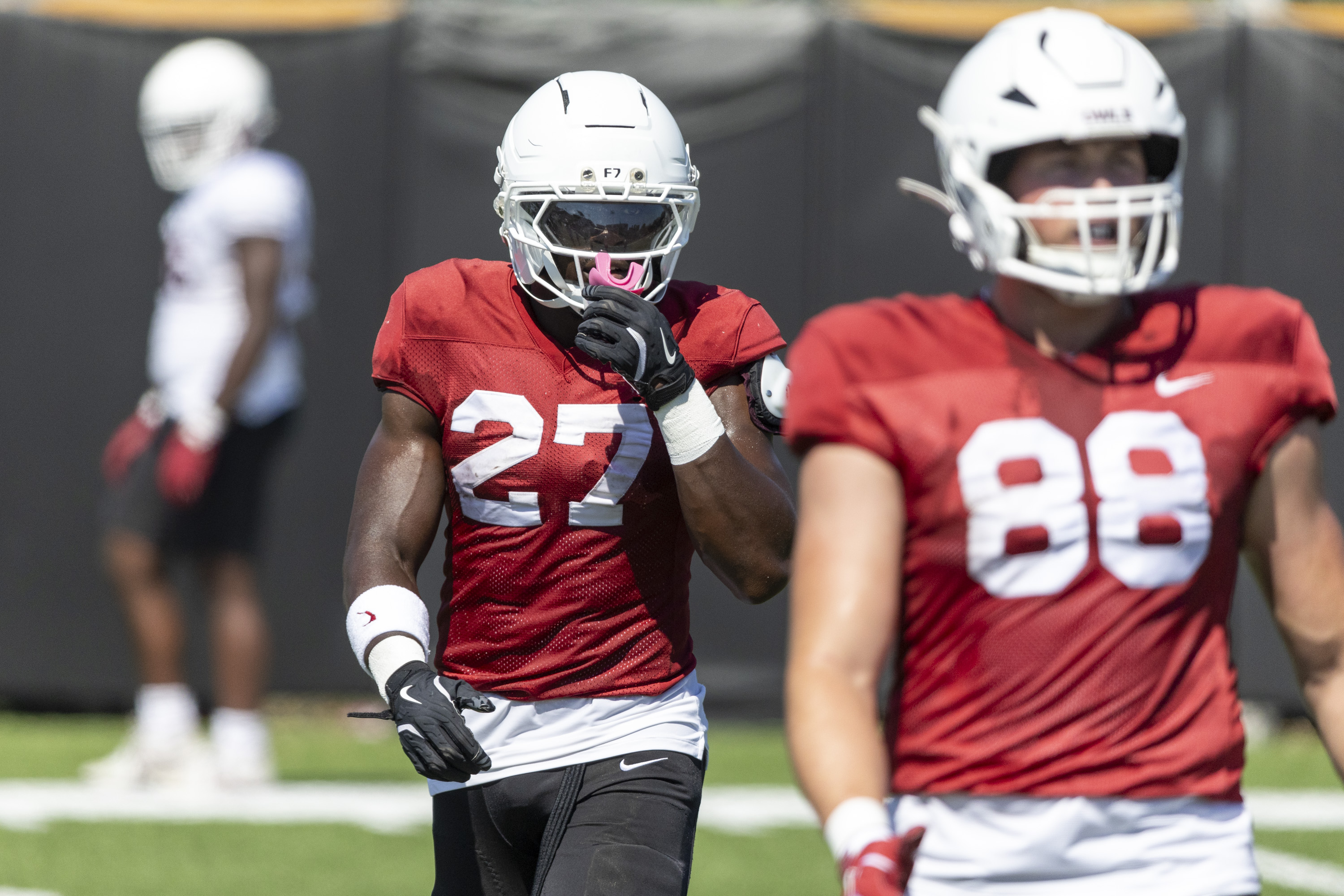
Villanova running back Isaiah Ragland finds daylight against William & Mary’s defense in last week’s season opener.Yong Kim / Staff Photographer
Villanova has not started seasons quickly in recent years. The Wildcats previously showed mental lapses on both sides of the ball, even in wins. Those errors lessened as those seasons progressed, especially last year after Villanova suffered a 51-33 blowout loss to Monmouth in Week 3. The Wildcats responded with an 11-game win streak to parlay a run to the FCS playoff semifinals.
Ferrante does not view seasons game-by-game or even half-to-half. He views the season in the form of each play, referencing the words of recent champions in Indiana head coach Curt Cignetti and New York Knicks star Jalen Brunson.
“Cignetti says the same thing,” Ferrante said. “Every play has a life of its own. And once that play’s over, you have to get to the next play, regardless of what happened. Jalen Brunson came down, and he popped into our Ocean City practice. He basically said the same thing. Take one play at a time, regardless of the outcome of that play, put it in the rearview and get to the next play.”
In preparation for this weekend, Villanova has prioritized cleaning up the penalties after committing 15 for 107 yards against William & Mary. In comparison, William & Mary had three penalties for 22 yards.
Villanova also lost the turnover battle, 4-1.
“You’re going to have a couple of penalties during the course of the game,” Ferrante said. “When you can put 15 of them together, that’s a big deal. … If you tell me we’re going to have a turnover a game, we’re going to have 11, 12 turnovers by the end of the year, that’s probably a pretty good year. Right now we’re on pace to have 60 if we do five a game. That’s not a good year.”
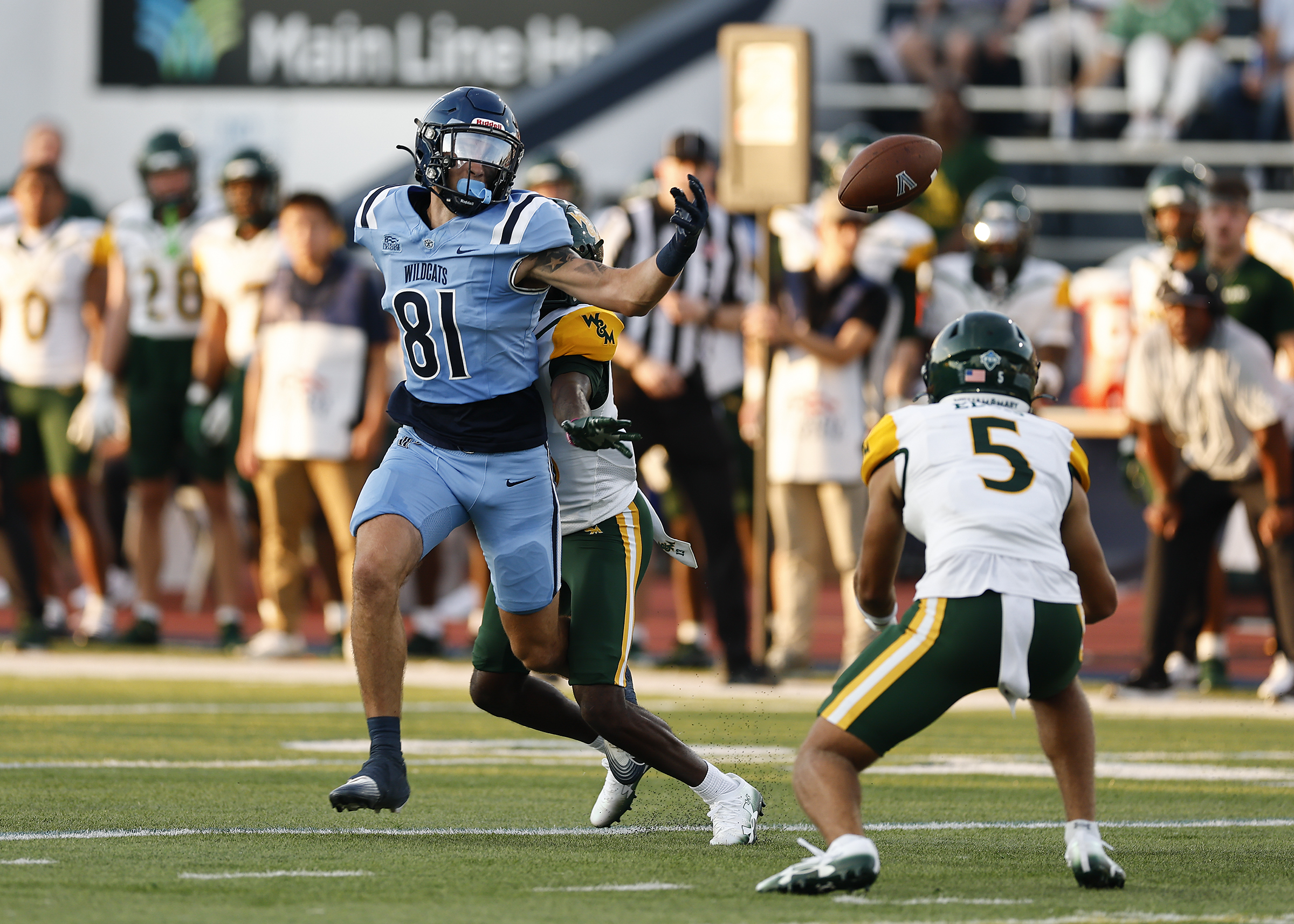
Villanova wide receiver Brandon Binkowski tips the football that was intercepted by William & Mary defensive back Cade Ellis (right), one of four Wildcats turnovers last Friday.Yong Kim / Staff Photographer
However, there is still good that came out of the loss for Ferrante, notably the team’s tackling.
In previous seasons, the Wildcats struggled early on with tackling in the open field, attributed to the lack of live tackling during the preseason.
“One of the positives, I thought, looking at previous opening games is we looked fast, and our tackling was a little better than some preseason or early games in previous years,” Ferrante said. “So I think that’s something we can build off of. But one week to the next is all you got. And this one will come up a lot faster. You don’t have all preseason to get ready for the next one.”
Villanova last faced Bucknell in 2021, when the Wildcats dominated the Bison, 55-3. A lot has changed since then. Bucknell named Jeff Behrman its 28th head coach earlier this year.
“This one might even be a little trickier than the opener because we haven’t played Bucknell in a long time and they have a new coaching staff,” Ferrante said. “So all we have to go on is film from where they came from, John Carroll, a semifinal team from a year ago [in] Division III, and then last week’s Richmond game. … We think [Jeff Behrman will] run the same offense he ran at John Carroll.
“We’re excited for the challenge. We’re looking forward to going out there and playing better and putting a better product on the field than we did last week, collectively, at least for four quarters, and minimizing our mistakes.”
This article was originally published Sept. 14, 2021.
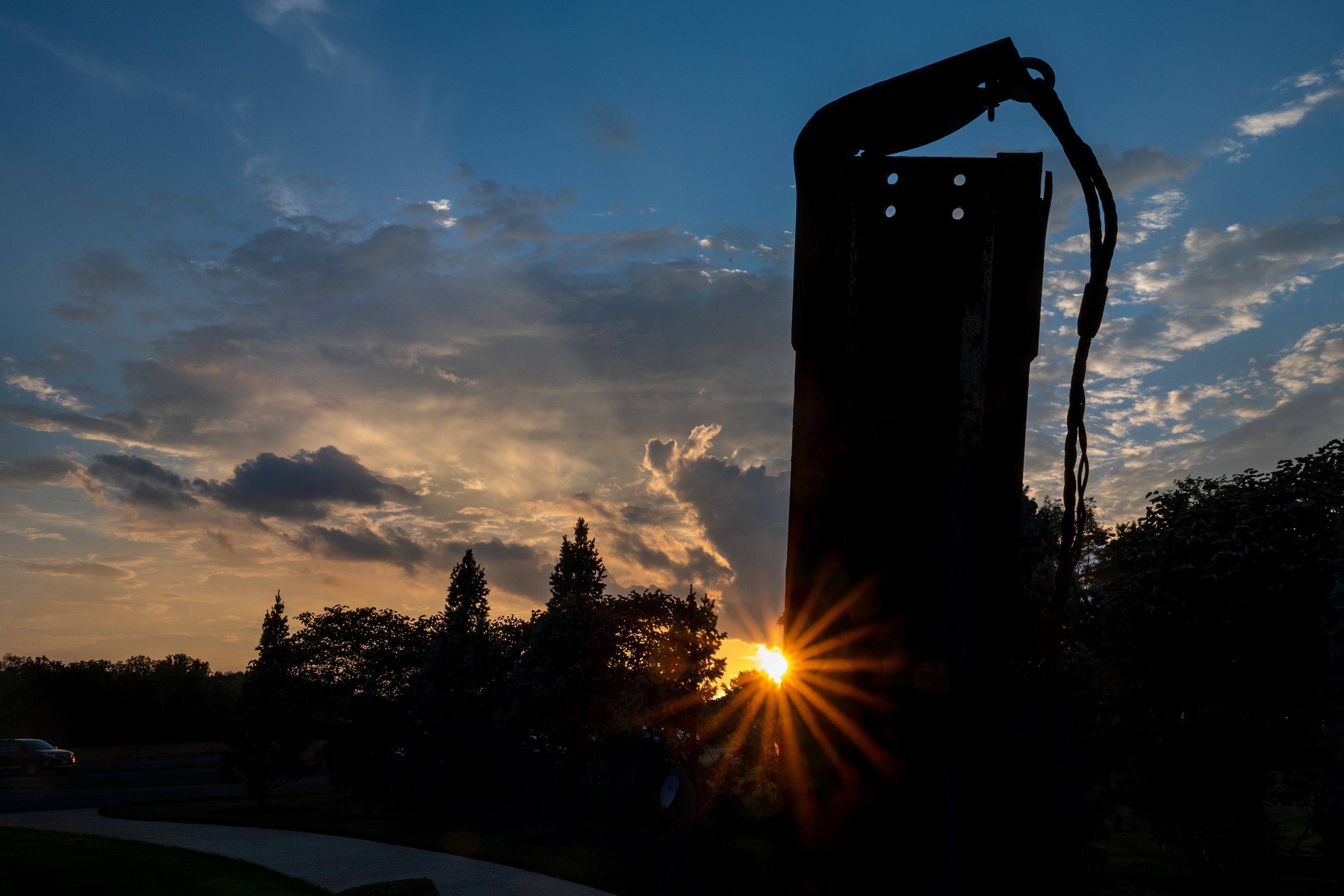
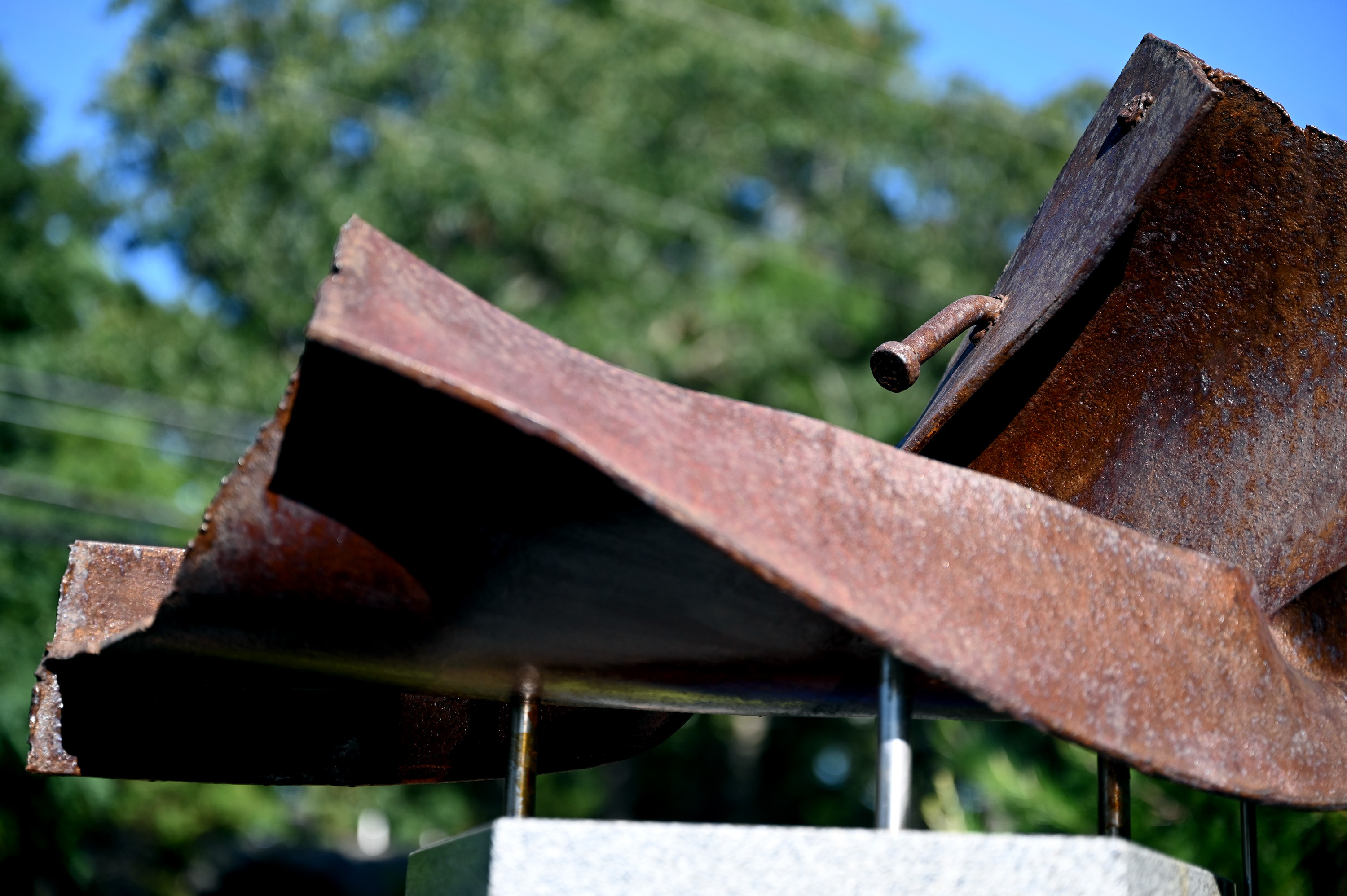
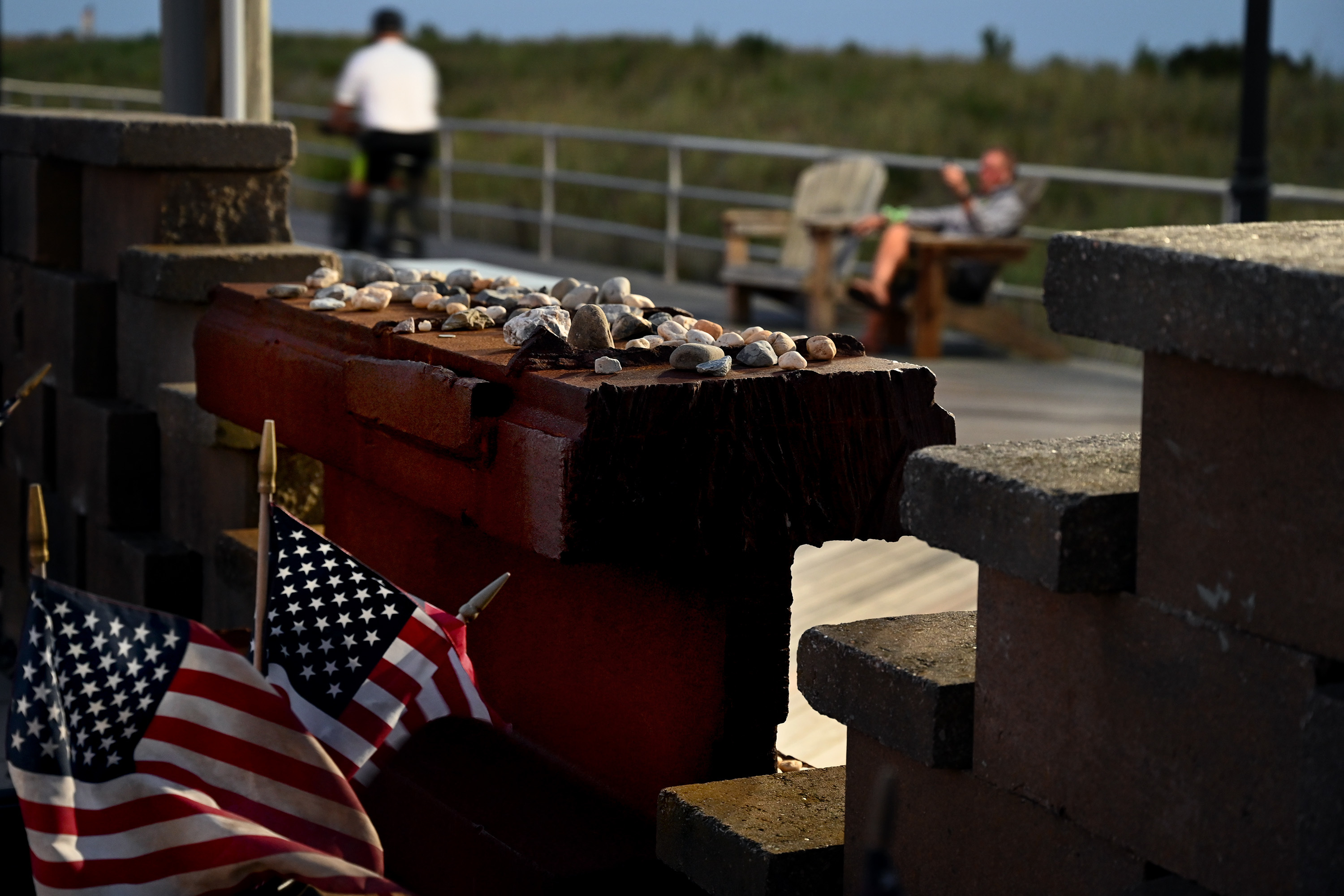
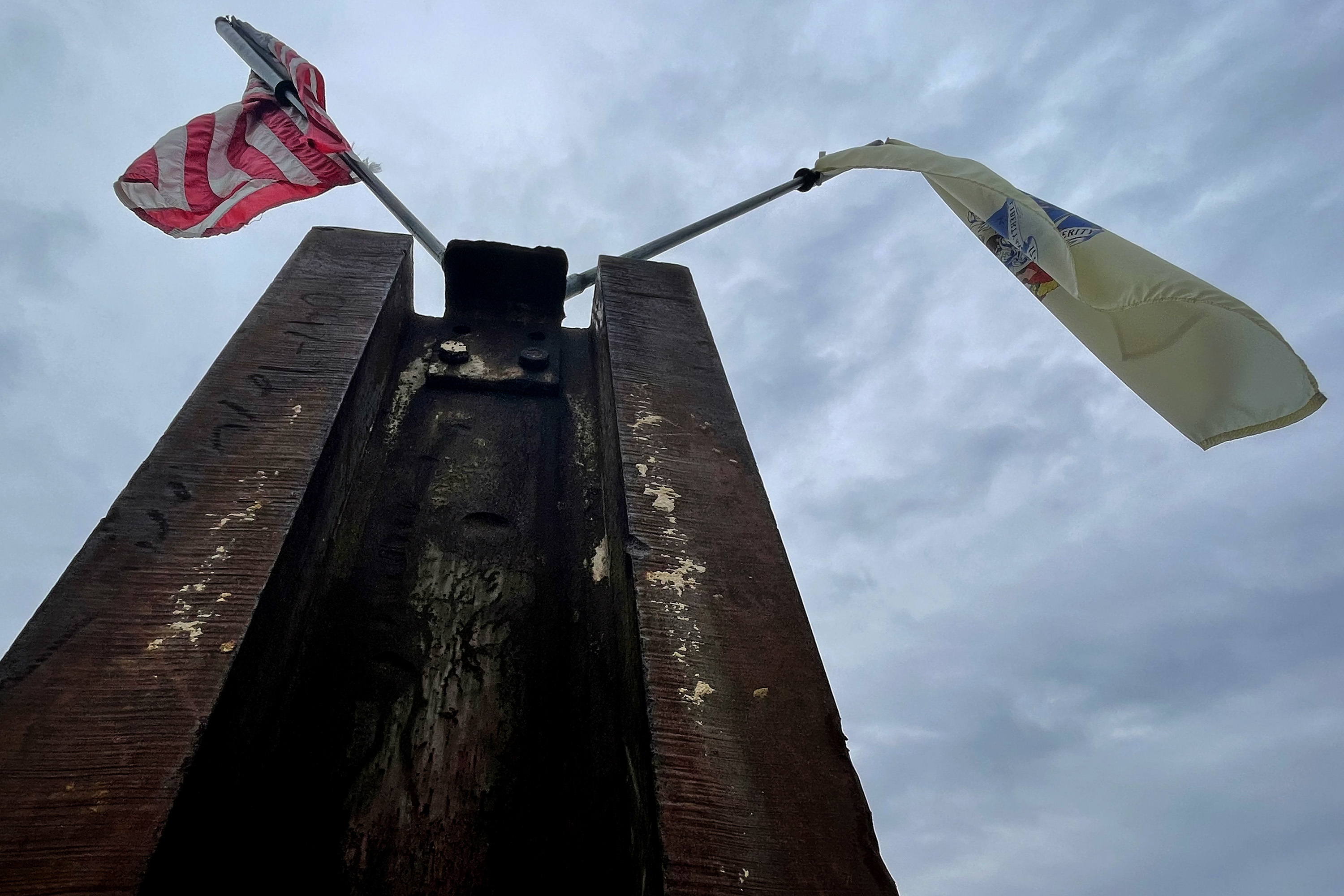
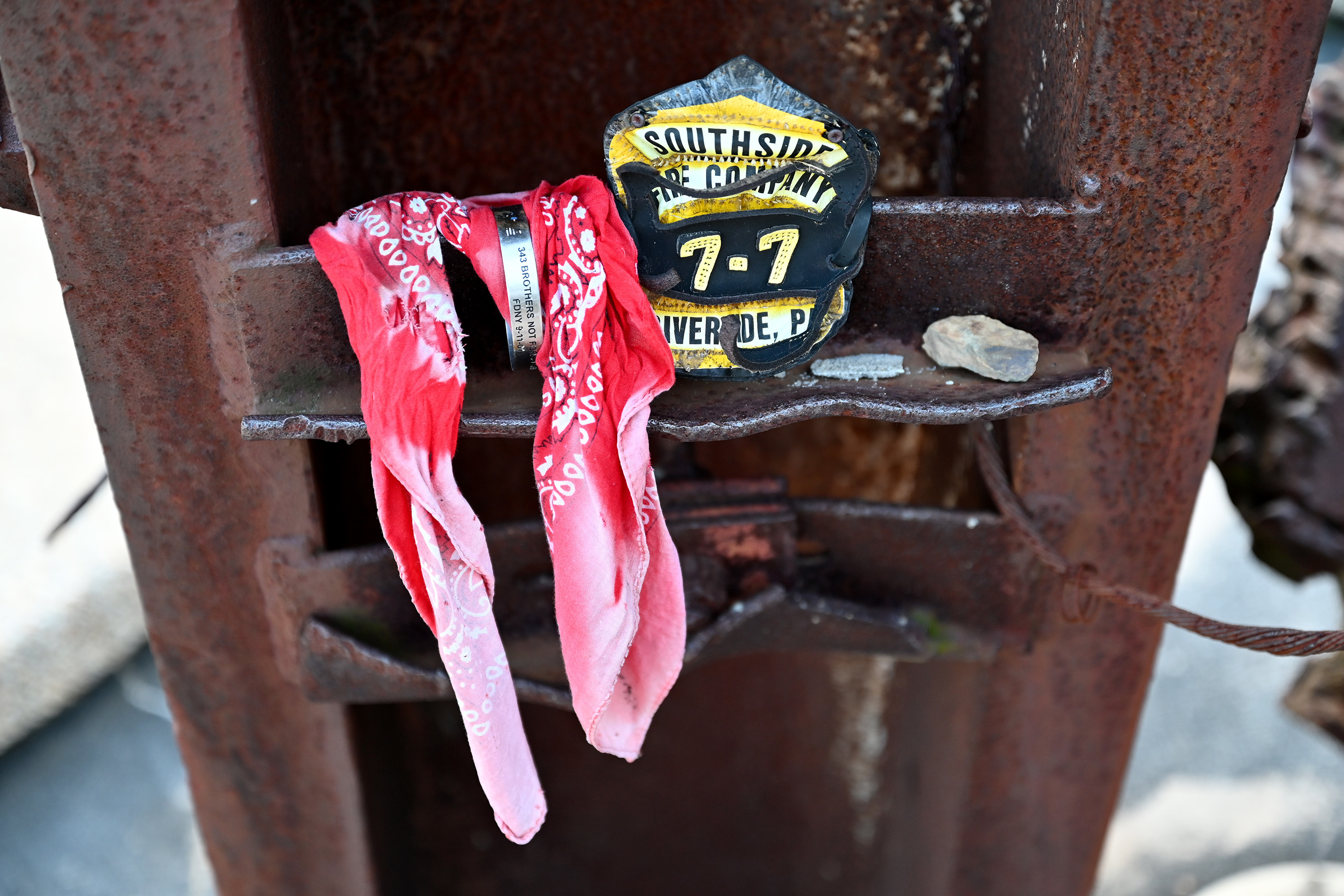
After Sept. 11, 2001, thousands of rusted pieces of twisted steel from the Twin Towers, damaged emergency vehicles, signs, clothing and other relics were disseminated to all 50 states and to the far reaches of the world. The Port Authority of New York and New Jersey began a program to distribute them to more than 2,000 fire and police departments, museums, municipalities and organizations to remember the nearly 3,000 people who died that day.
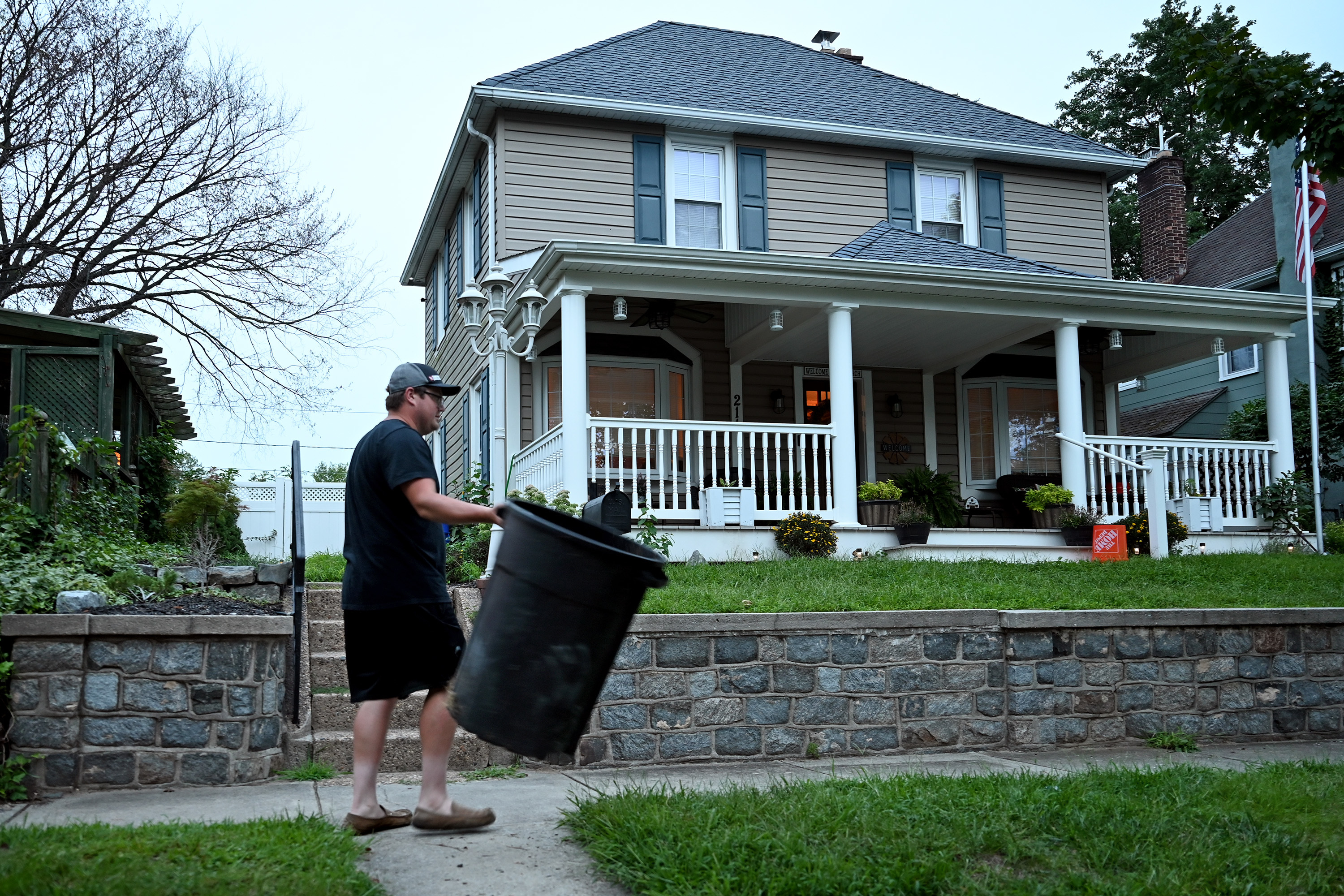
There are 154 artifact pieces in New Jersey towns, 82 in Pennsylvania. In the weeks leading up to Sept. 11 this year, we visited some of those towns and spoke with the people who live there.
Shanksville, Pa.
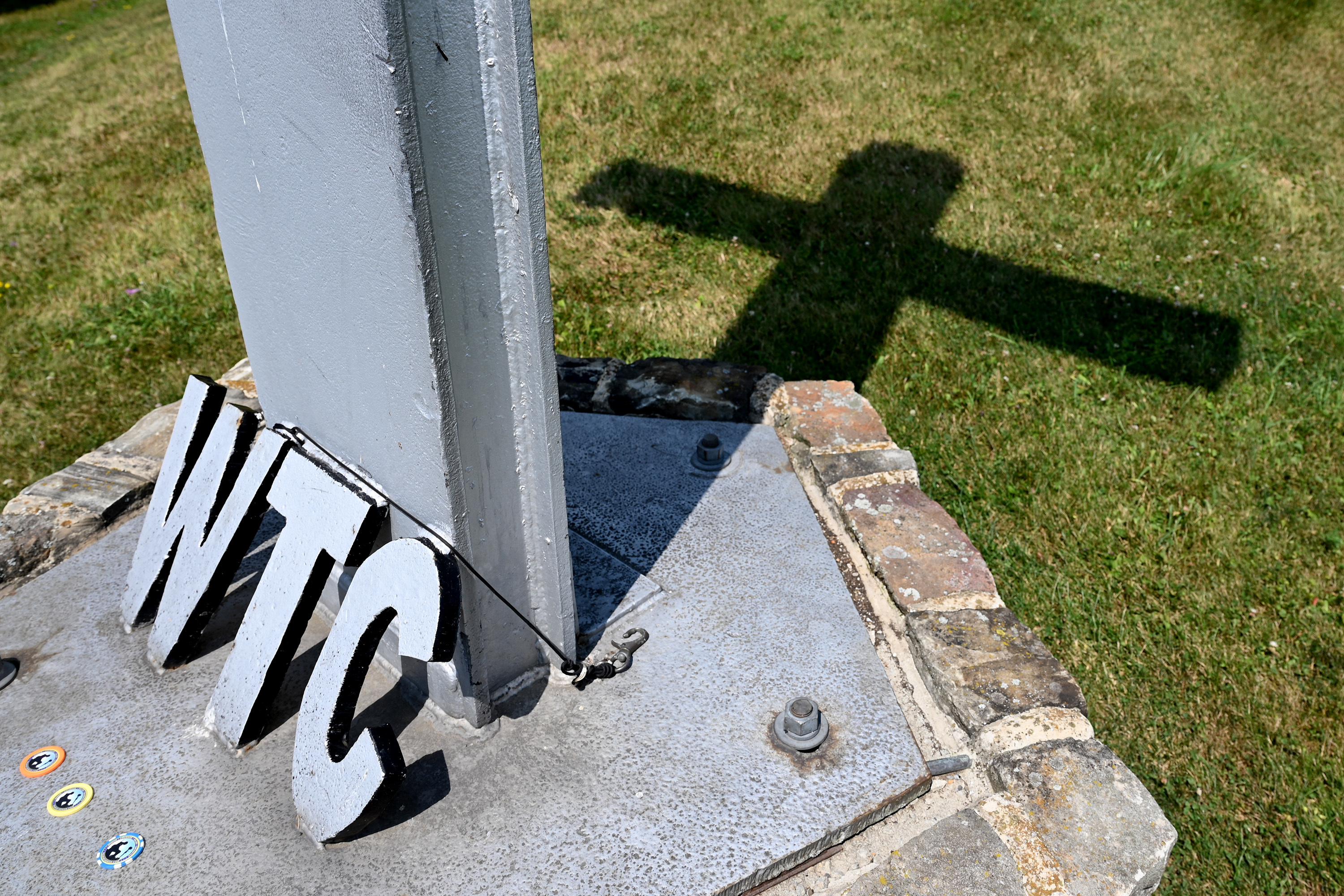
A cross made of World Trade Center steel is mounted outside the Shanksville Volunteer Fire Company. They were the first firefighters to respond when United Flight 93 crashed nearby,Tom Gralish / Staff PhotographerDan Wolf is redoing his grandfather’s cabin on Indian Lake, where debris from Flight 93 washed up. He hopes it becomes a place for his brothers to gather following the deaths of their parents a few years ago.TOM GRALISH / Staff Photographer
Lehigh Valley International Airport
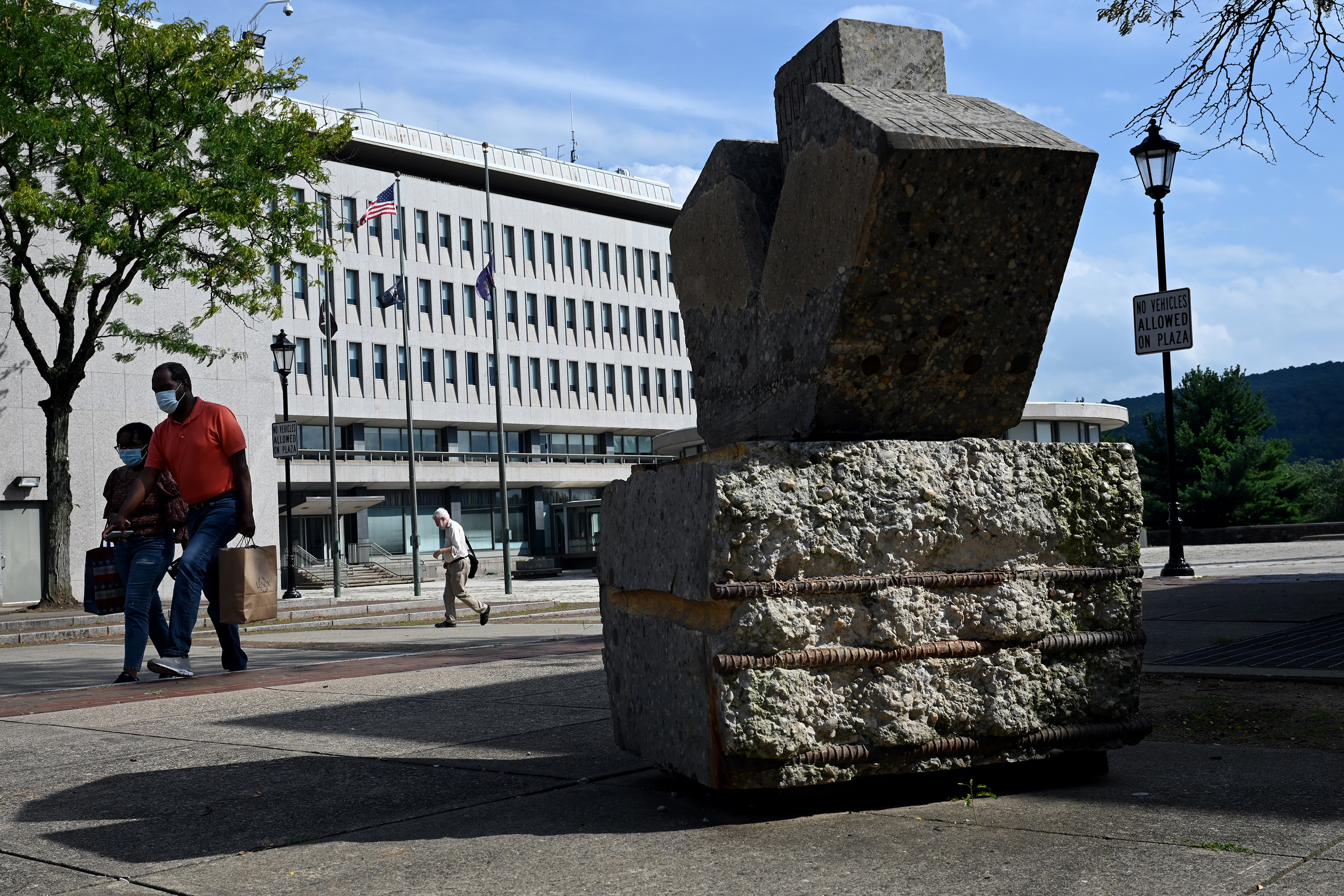
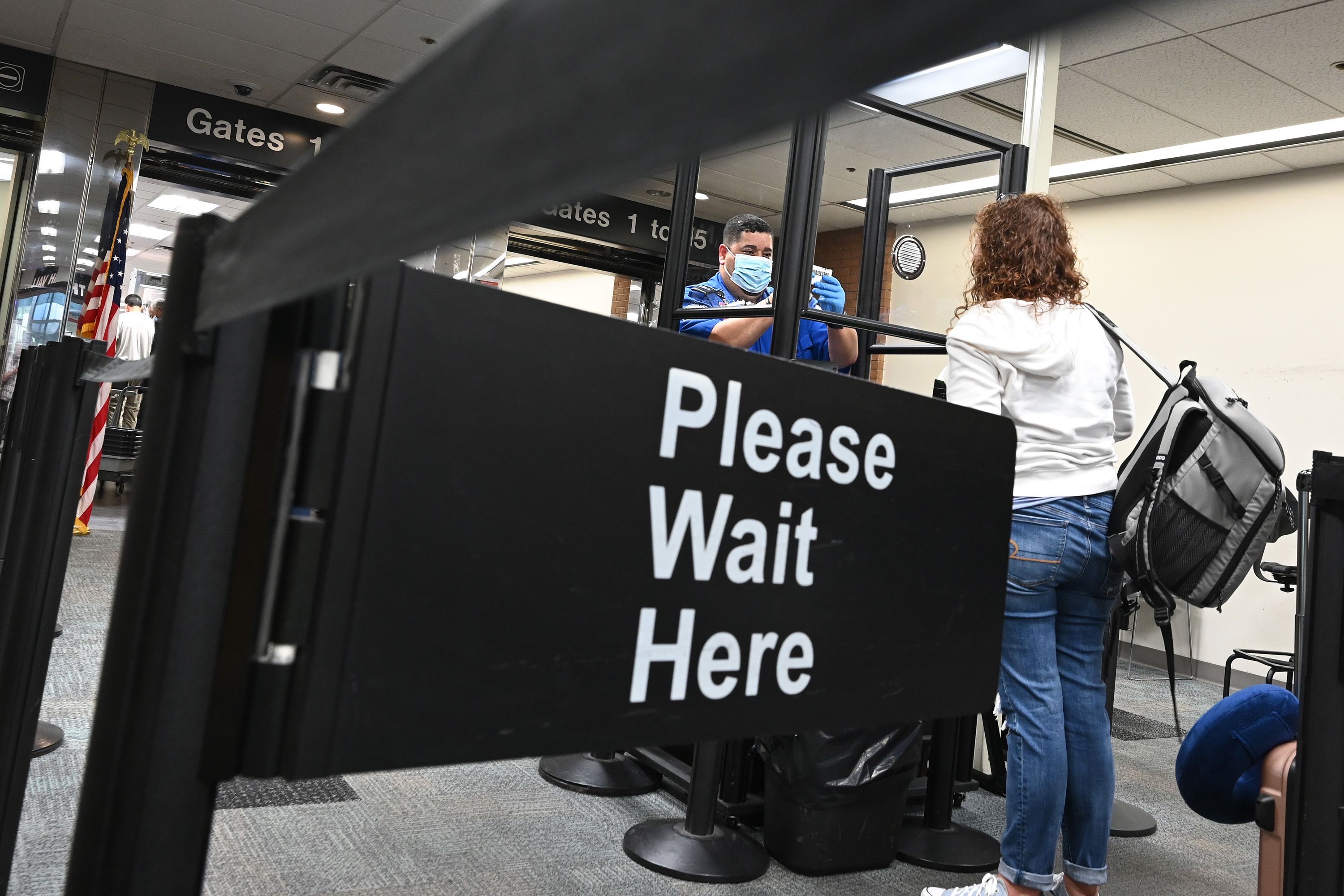
“Victorii Rebuild” in Bethlehem was carved by Florida artist Sandra Priest from a 4-foot-thick piece of the underground wall that still protects the foundation of the World Trade Center site from Hudson River groundwater seepage. The wall survived the attacks on 9/11, and pieces of it were removed later to make room for the new PATH station that now sits beneath the rebuilt center.Tom Gralish / Staff PhotographerTSA worker Hector Rivera Jr., 47, screens passengers departing Lehigh Valley International Airport. He worked for a security contractor there, then joined the Transportation Security Administration when it was founded after 9/11.Tom Gralish / Staff Photographer
Haddon Township, N.J.
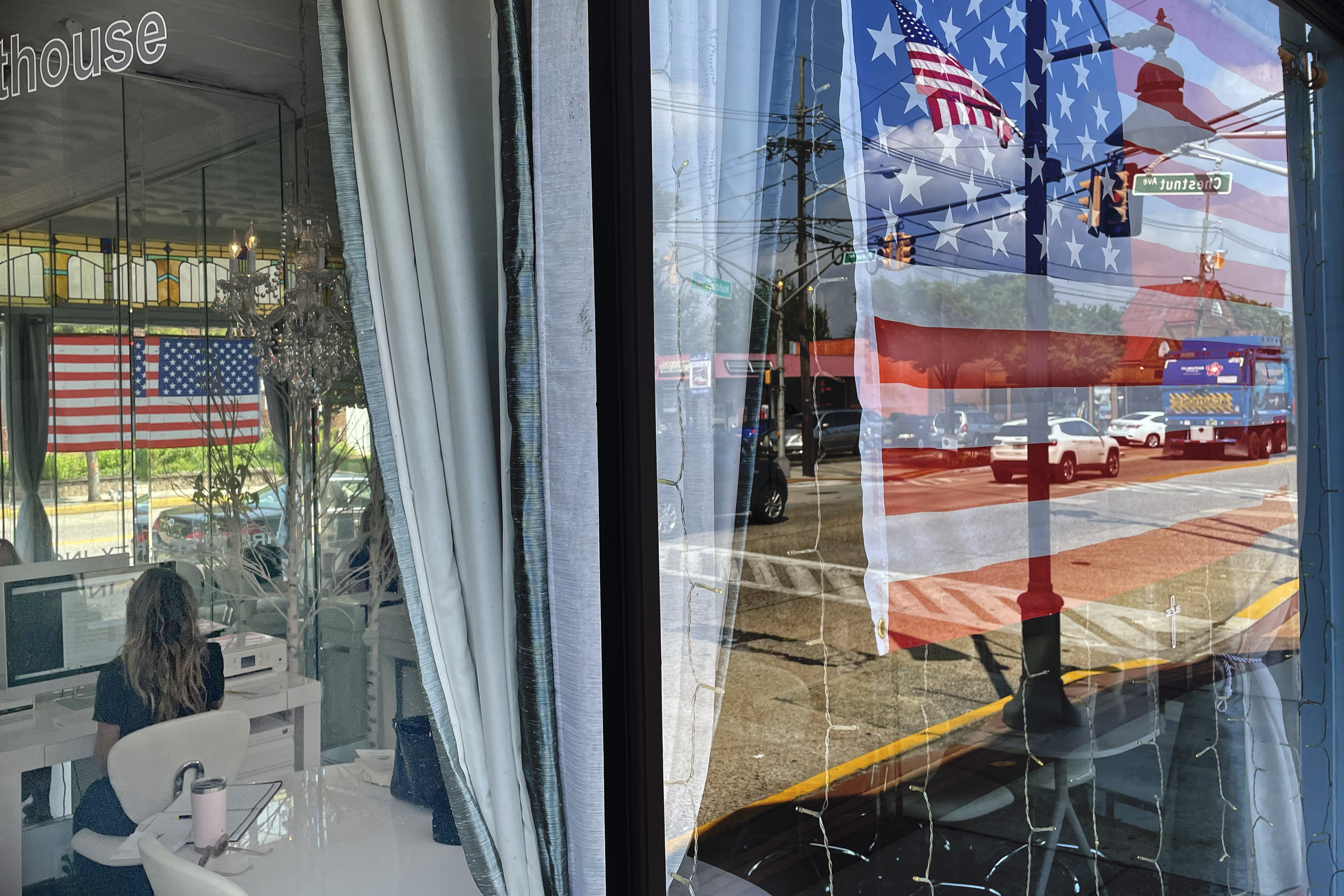
The township’s memorial is made of three parts: Steel from the World Trade Center, limestone from the Pentagon and a stone from Shanksville.Tom Gralish / Staff PhotographerEmily Stout works in her real estate storefront office a block away from the memorial at Westmont Fire Company No. 1.TOM GRALISH / Staff Photographer
Absecon, N.J.
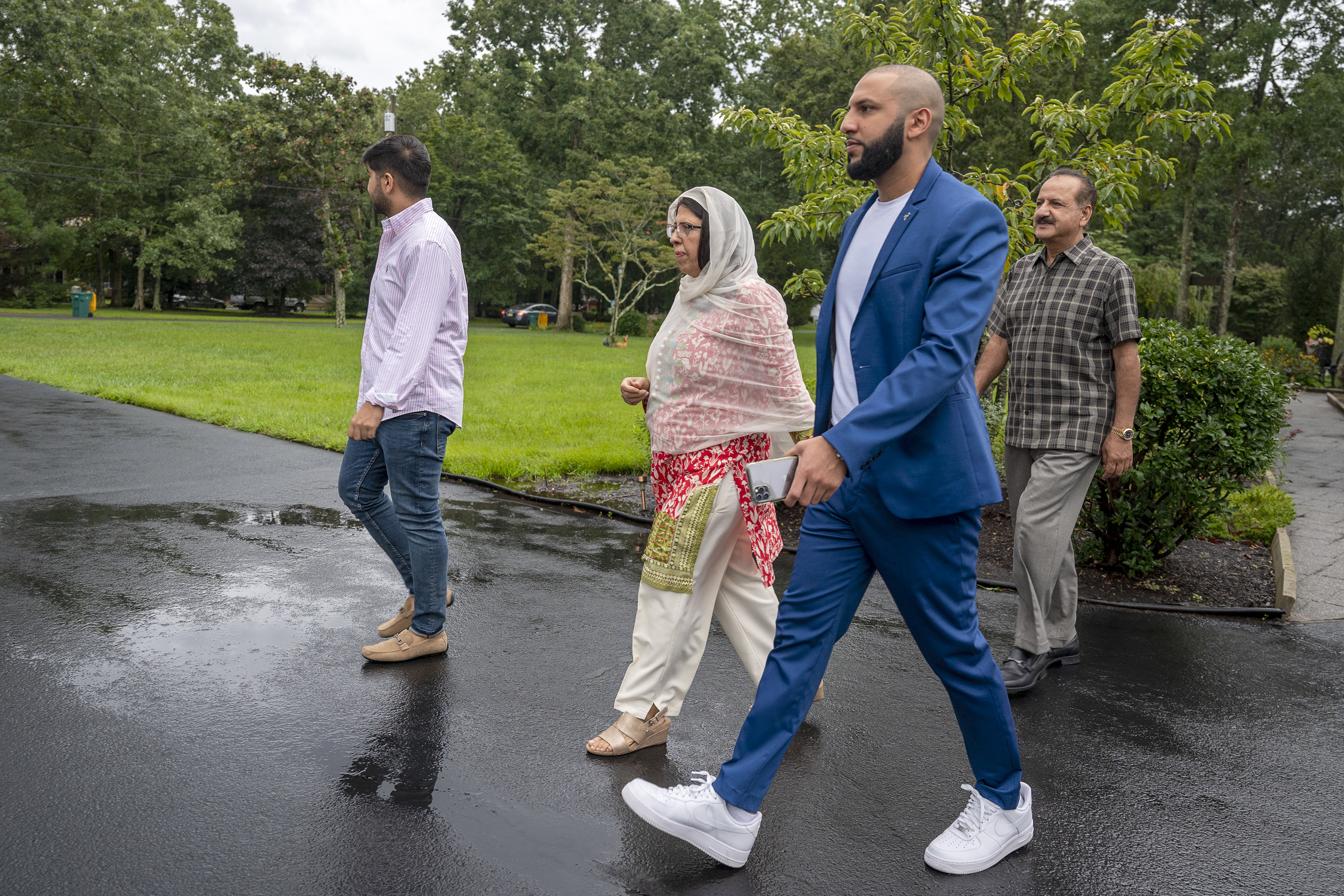
Granite reproductions of the Twin Towers in Absecon’s Heritage Park showcase a 16-foot I-beam from the 39th floor of the South Tower as well as memorial markers for the victims in Shanksville and at the Pentagon.Tom Gralish / Staff PhotographerAmjad Rehman, of nearby Galloway Township, goes out to dinner with his wife, Neelamm, and sons, Ali and Sammad. Rehman moved to New Jersey from Pakistan as a child. Ali, 30, was in fifth grade on 9/11 and suffered anti-Muslim taunting from classmates.Tom Gralish / Staff Photographer
Mantua, N.J.
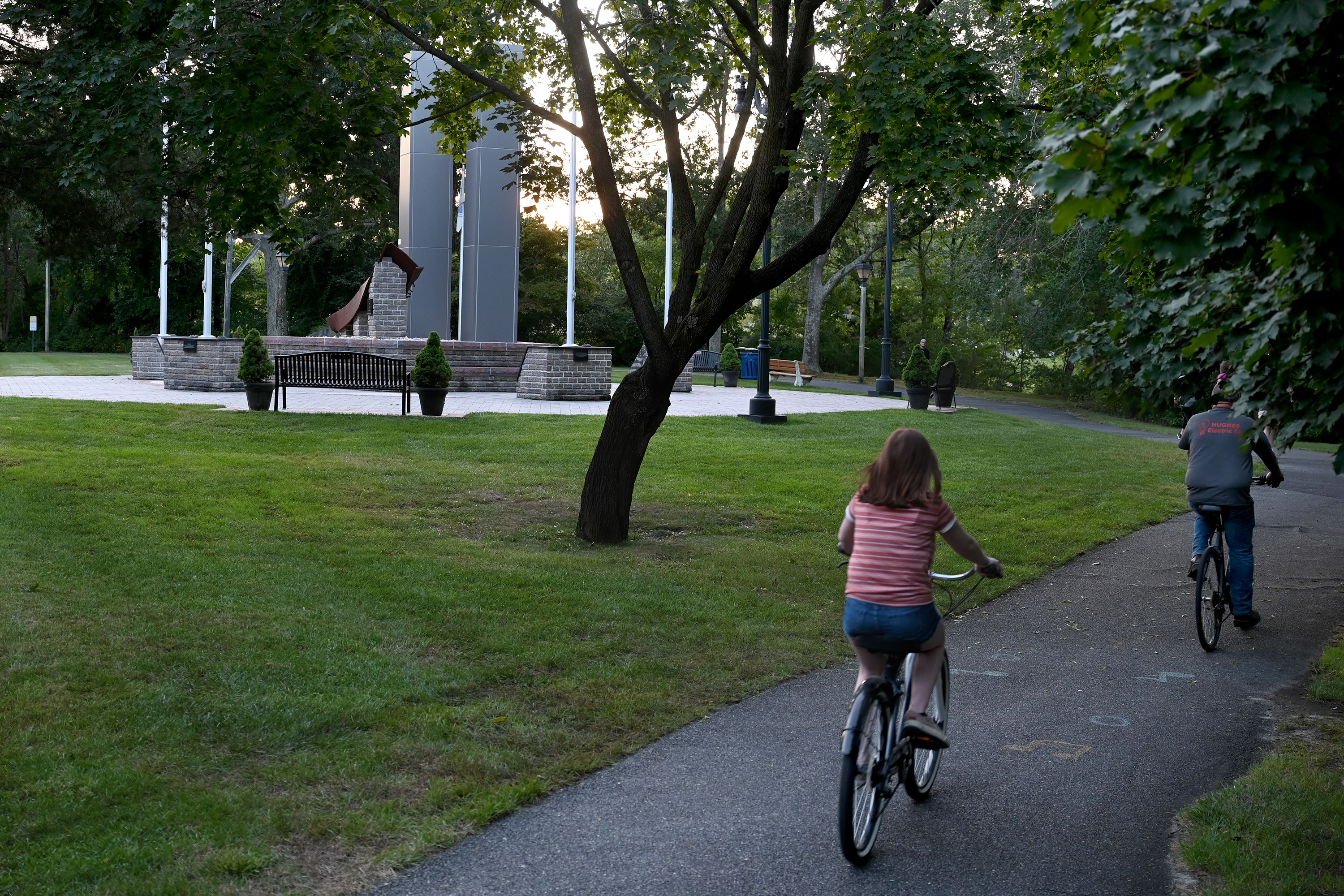
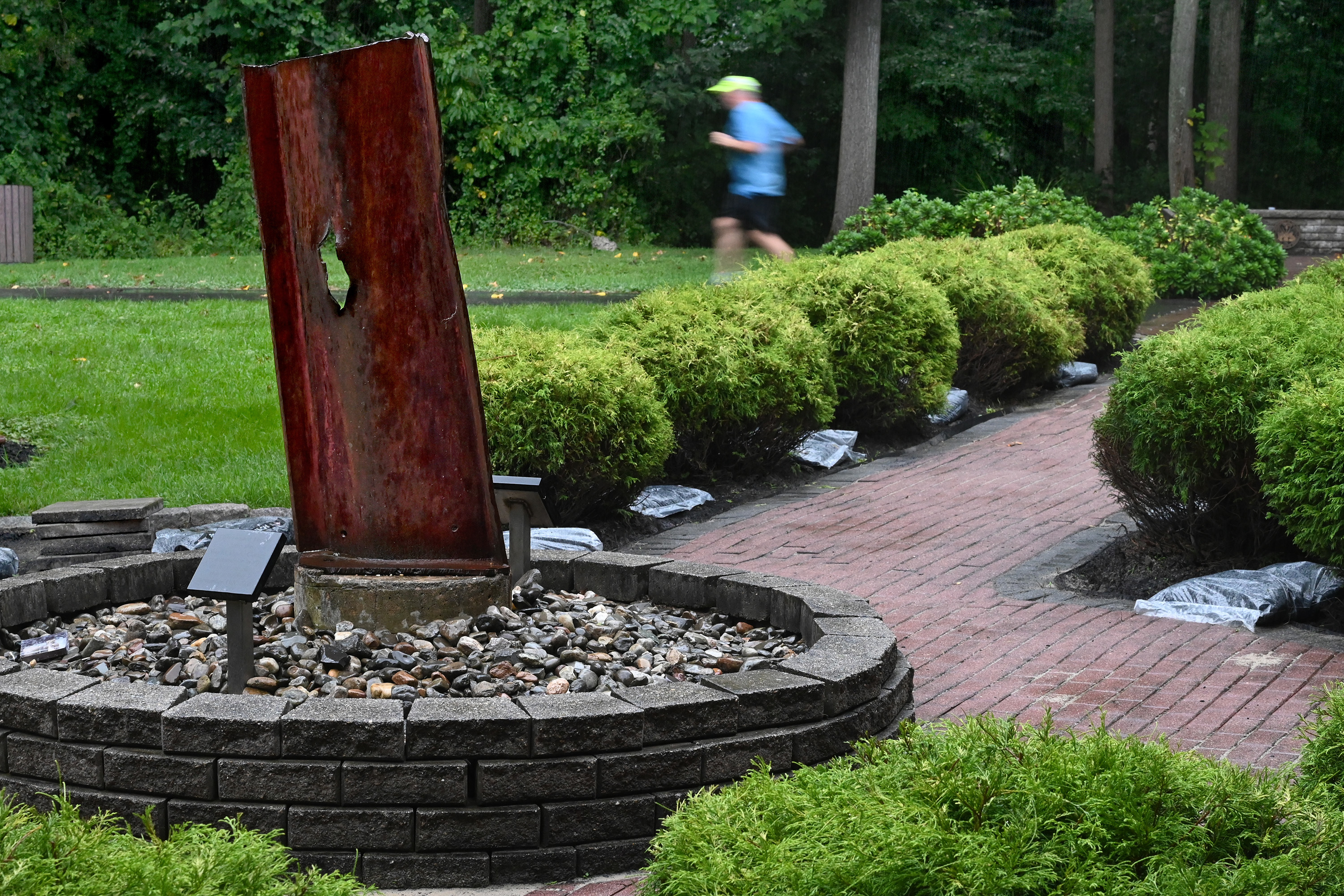
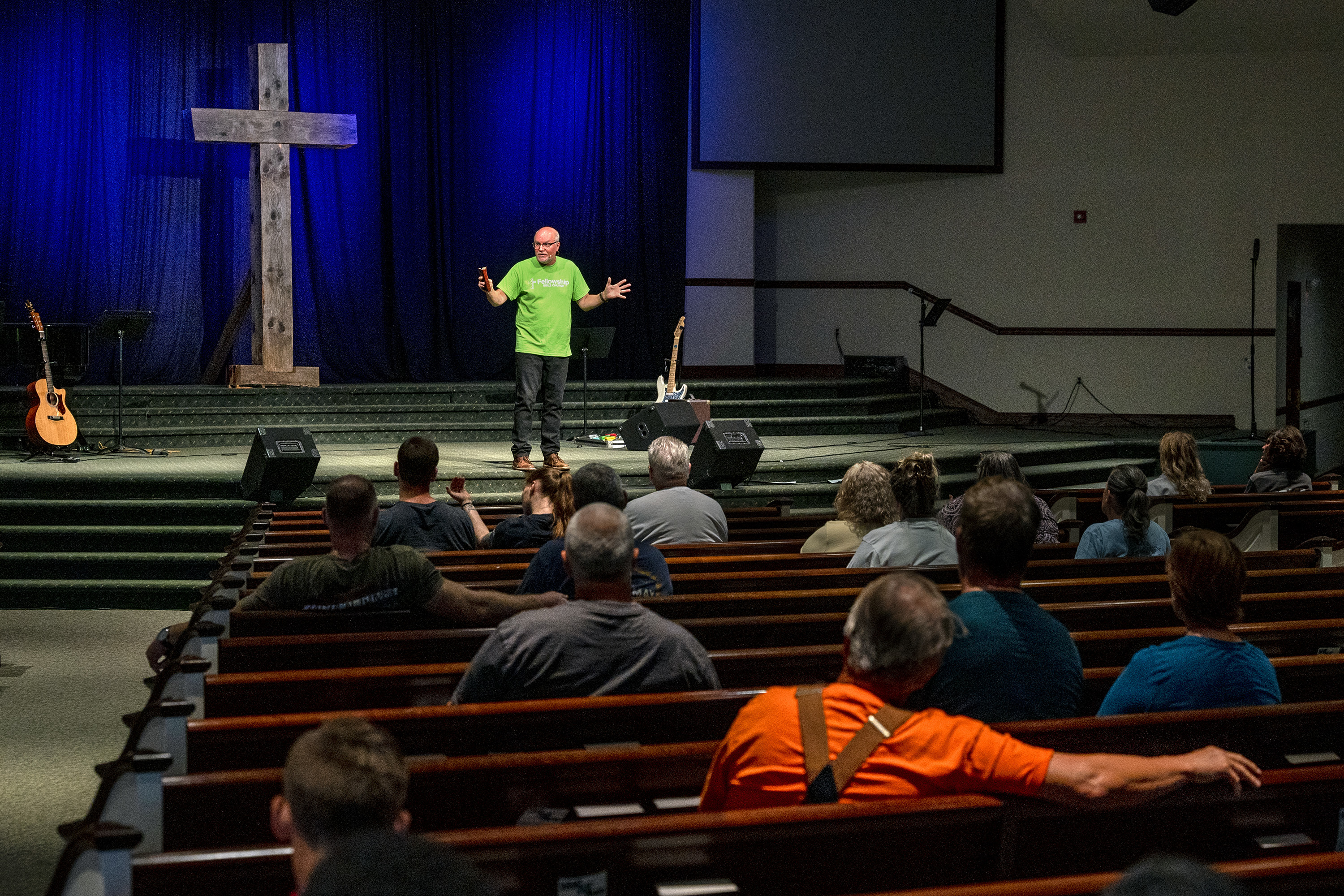
A 3-foot World Trade Center steel I-beam with a hole ripped through it in Chestnut Branch Park’s Place of Reflection in Mantua.Tom Gralish / Staff PhotographerA quarter-mile walk from the parking lot along a tree-lined path leads to the Place of Reflection, dedicated to three Gloucester County residents who lost their lives on 9/11.Tom Gralish / Staff PhotographerPastor Phil Moser at Fellowship Bible Church in nearby Mullica Hill. Ten years after 9/11, the church also served victims of Hurricane Sandy, and this month helped neighbors clean up after tornadoes ravaged their community.Tom Gralish / Staff Photographer
Coatesville, Pa.
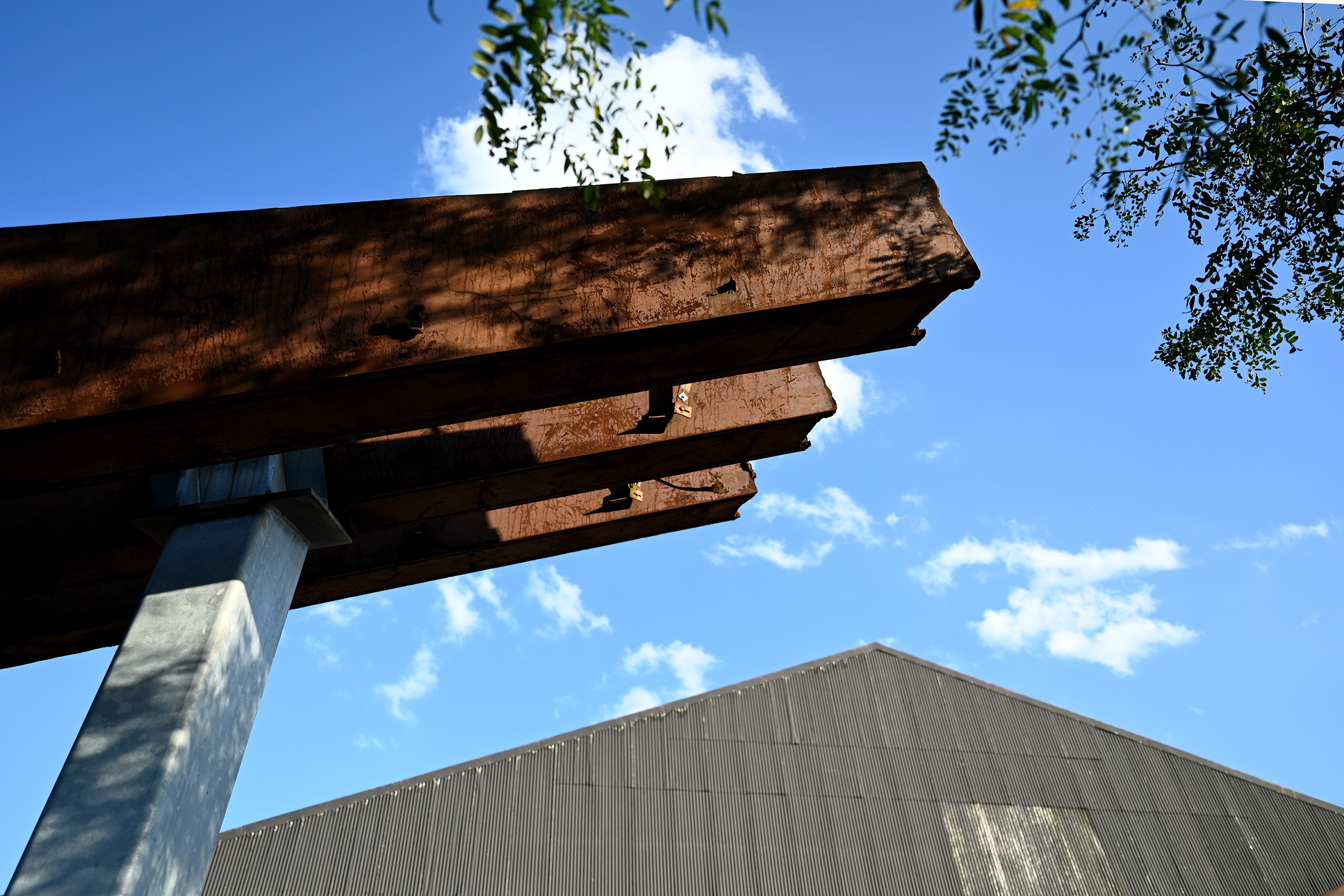
One of the steel supports from the North Tower is displayed outside the National Iron & Steel Heritage Museum in Coatesville. Originally made at the Lukens Steel plant there for construction of the World Trade Center in 1966, it helped to support the first nine floors of the Twin Towers. A portion of these columns was the only structure left standing when the towers collapsed on 9/11.Tom Gralish / Staff PhotographerWaleah Britt, 39, pauses outside a salon after her daughter Janiyah got her back-to-school hair styled in downtown Coatesville, in Chester County.Tom Gralish / Staff Photographer
King of Prussia
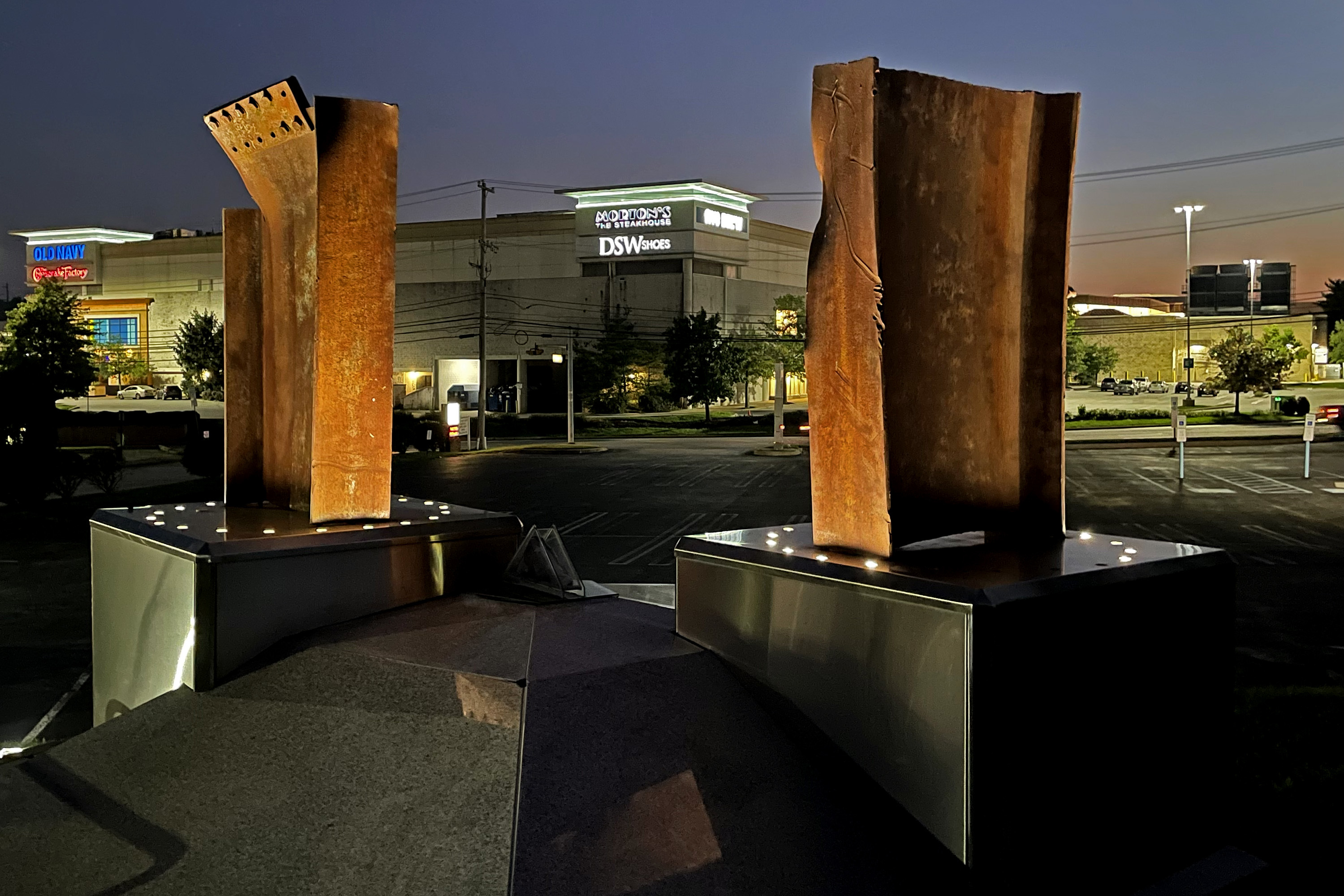
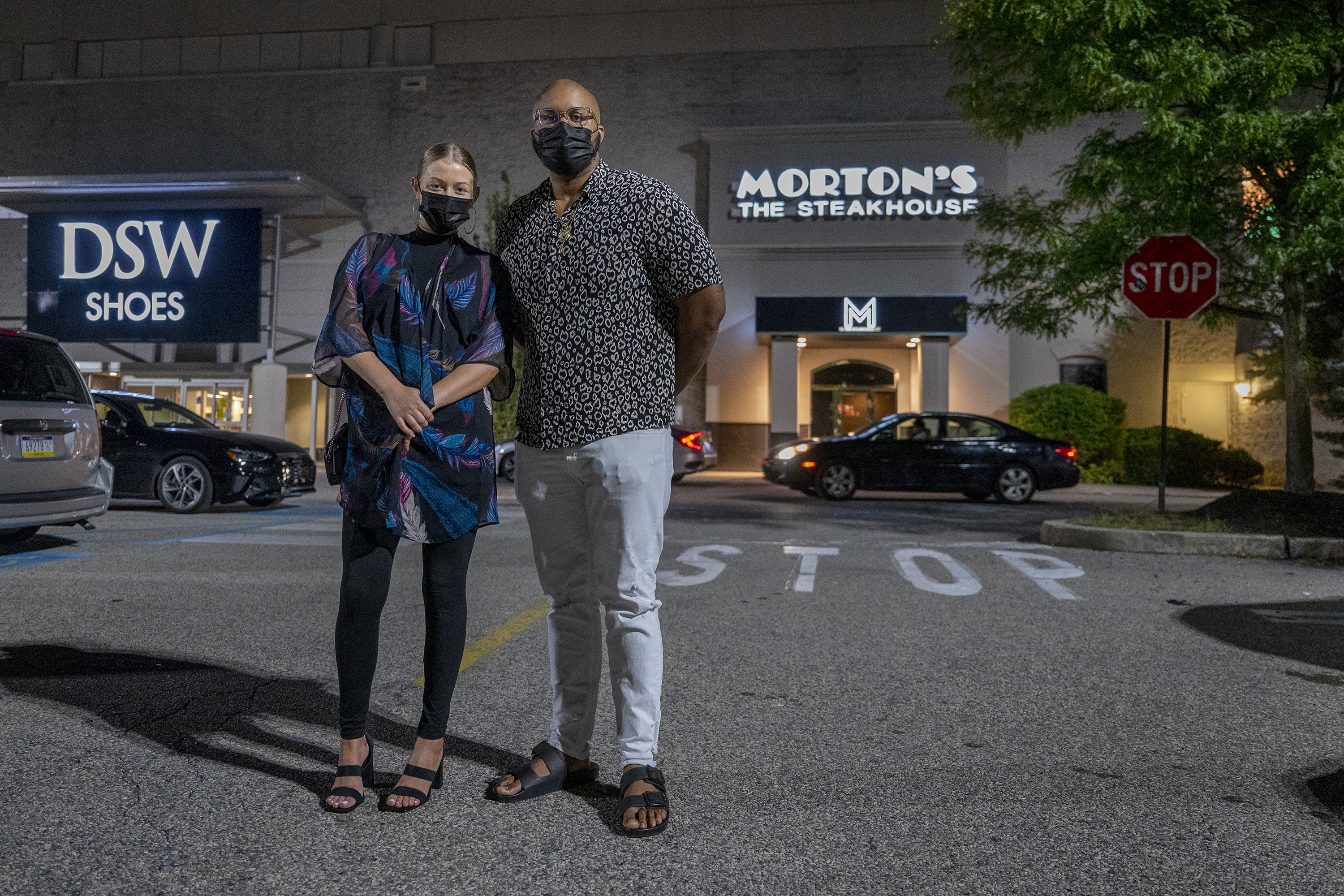
Next to the King of Prussia Volunteer Fire Company Station 47, and across from the mall, the 9/11 memorial features two World Trade Center steel I-beams and design elements that represent all four doomed flights on 9/11.Tom Gralish / Staff PhotographerEngaged couple Shawn Harrison II and Kaitlyn Buckley before dinner at Morton’s at the King of Prussia Mall, across the street from the 9/11 memorial.Tom Gralish / Staff Photographer
Medford Lakes, N.J.
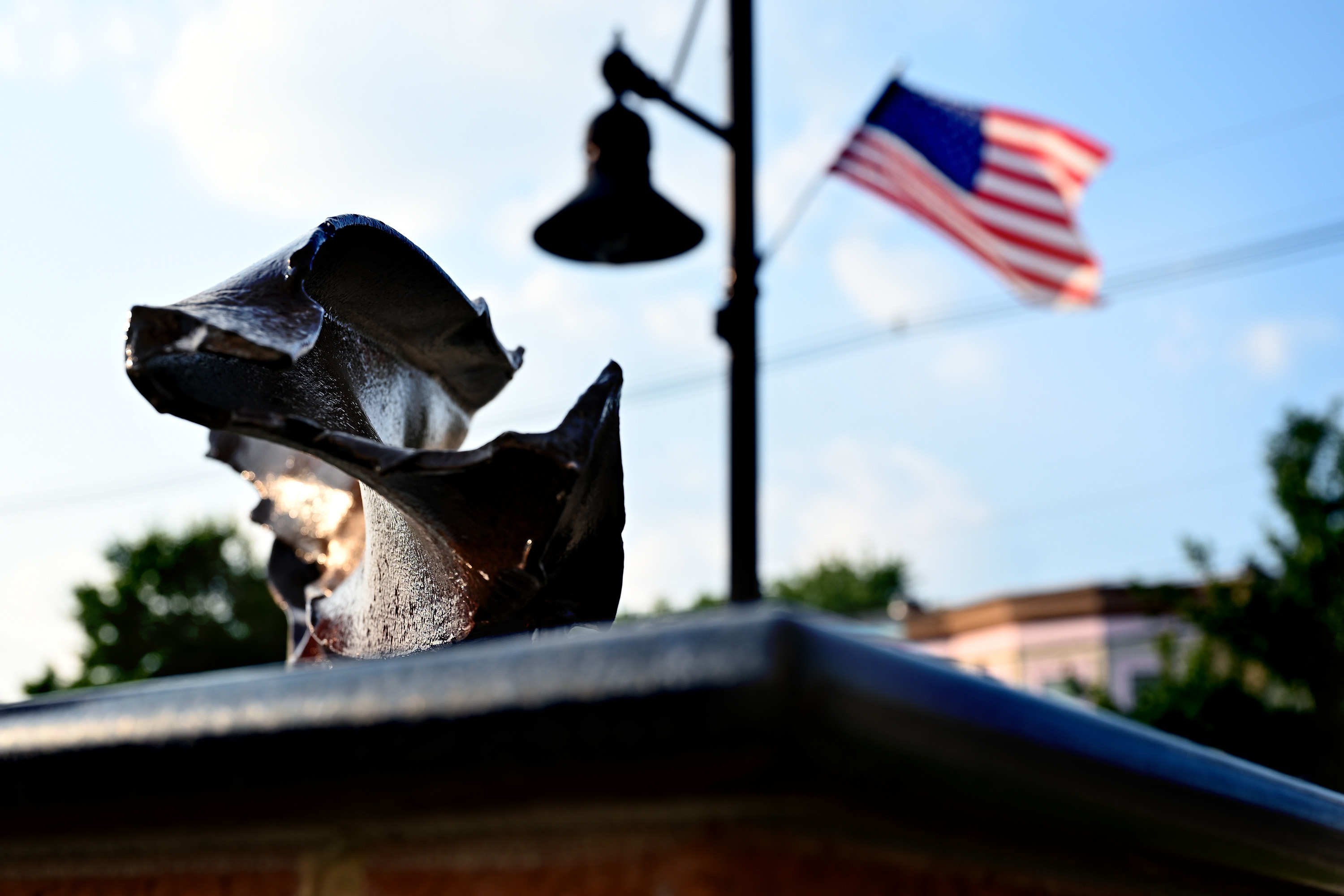
A pentagon-shaped concrete pedestal holds a granite monument topped with a piece of steel from the North Tower surrounded by a water feature in Leon E. Todd Memorial Park.Tom Gralish / Staff PhotographerDan Kiernan, 54, daughter Sydney, 16, and golden doodle Oskar.Tom Gralish / Staff Photographer
Atlantic City, N.J.
The Saracini-O’Neill 9/11 Memorial on the Boardwalk at Jackson Avenue, on the border of Atlantic City and Ventnor. The memorial is dedicated to Atlantic City natives Victor John Saracini and John P. O’Neill.Tom Gralish / Staff PhotographerTom Harris, walking with his wife, Carol, after dinner salutes the flag at the 9/11 Memorial. John P. O’Neill was head of security at the World Trade Center, who died while helping others to evacuate. Victor J. Saracini was the pilot of Flight 175 when it was hijacked and flown into the South Tower.Tom Gralish / Staff Photographer
Brooklawn, N.J.
The township’s 9/11 Memorial features a Pentagon-shaped base supporting a 9-foot-11 piece of World Trade Center steel. It is framed by two stone pedestals supporting artifacts from Shanksville and the Pentagon.Tom Gralish / Staff PhotographerMiles Jesuncosky outside his home in Brooklawn, N.J., which is around the corner from the memorial.Tom Gralish / Staff Photographer
Berwick, Pa.
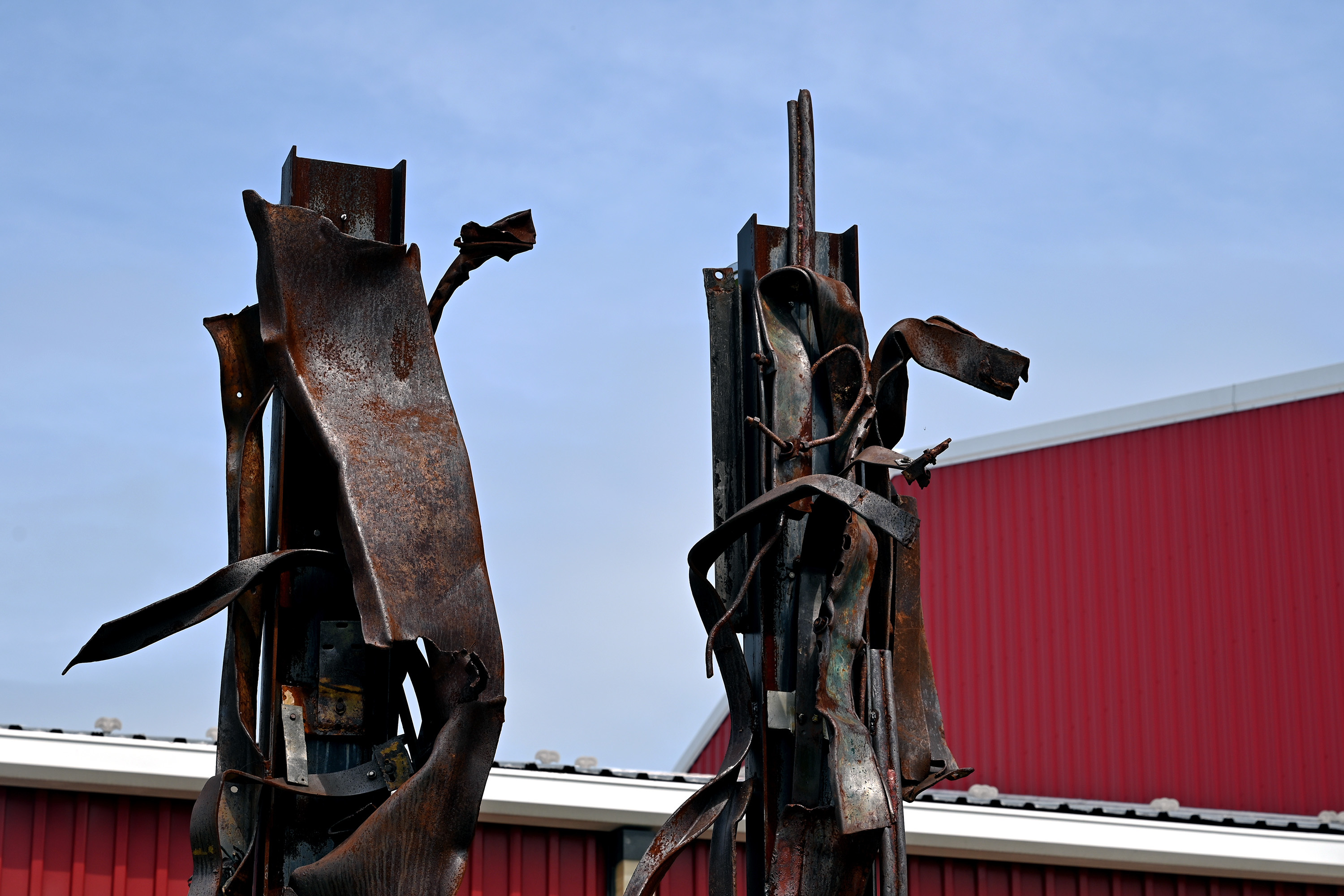
Boy Scout Colin Hill built a memorial from steel remnants of the World Trade Center for his Eagle Scout project. Two 12-foot beams made from 350 pounds of twisted metal are outside Reliance Fire Company No. 1, in Berwick, Columbia County,Tom Gralish / Staff PhotographerHeather Schon shops at the Weis Markets grocery store in Bloomsburg, Pa., with her 2-year-old son, Blaise.Tom Gralish / Staff Photographer
Lower Makefield Township, Pa.
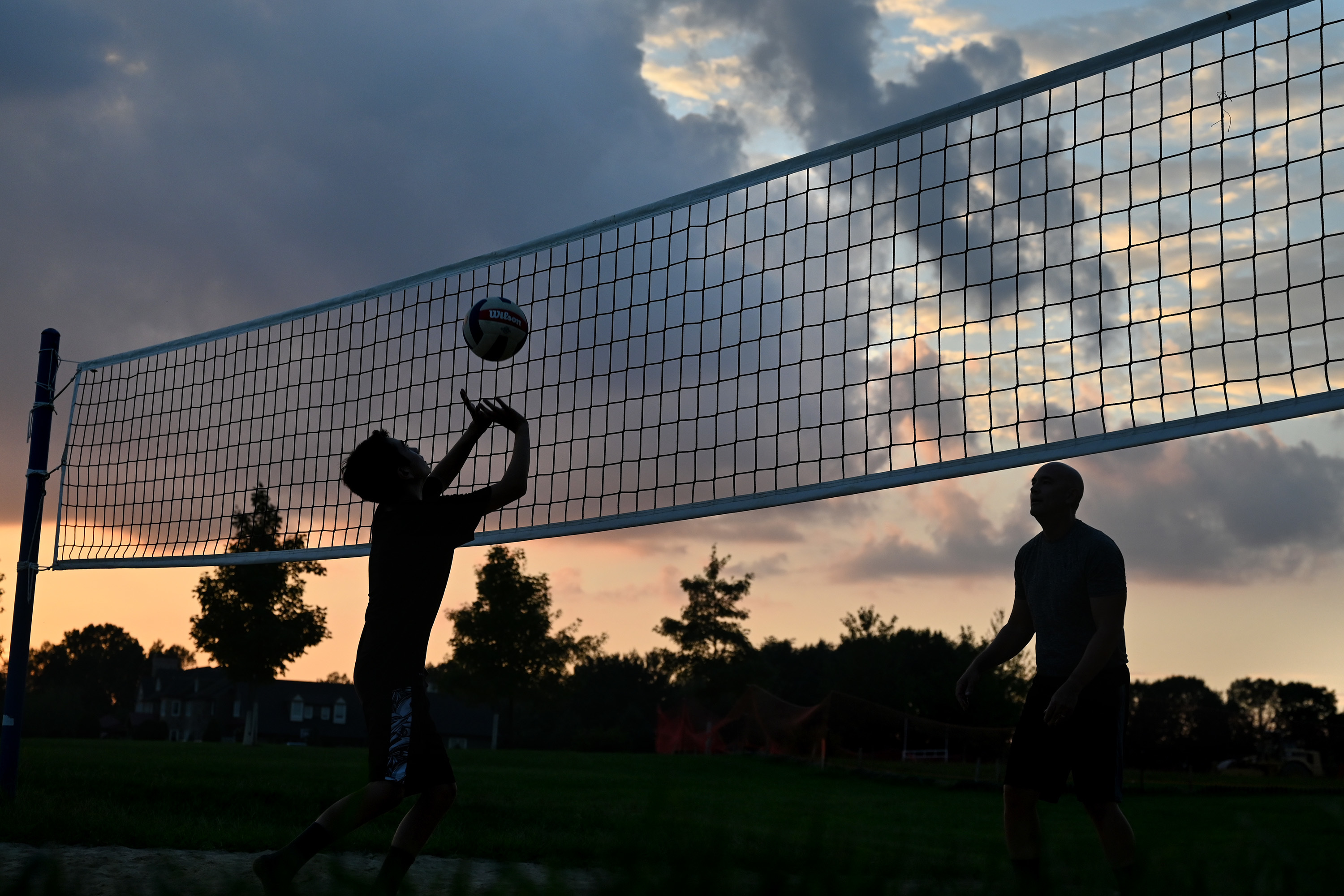
The official Pennsylvania memorial to the victims of 9/11 in Bucks County.TOM GRALISH / Staff PhotographerSteve Murphy practices volleyball with son Stevie, 11, in one of the fields at 62-acre Memorial Park in Lower Makefield Township.Tom Gralish / Staff Photographer58 Pennsylvania were killed in the attacks. Among them were 18 from Bucks County and nine residents of Lower Makefield.Tom Gralish / Staff Photographer
Theatre Philadelphia announced the nominees for the 2026 Barrymore Awards — recognizing the best theatrical productions, actors, directors, behind-the-curtain designers, and artists in the Philly area — on Friday morning.
This year’s selection includes productions from more than 30 regional theater companies across 22 categories during the 2025-2026 season. Old City’s Arden Theatre Company led the nominations, receiving 20 nods, while People’s Light in Malvern trailed close behind with 19. Other theater companies with 10 or more nominations include Inis Nua Theatre Company, which stages productions from Ireland and the U.K. at the Drake in Center City, the Tony Award-winning Wilma Theater on Avenue of the Arts, and Norristown’s Theatre Horizon.
“In the 250th year of our nation, Philadelphia theaters gave us the fuel we needed to get out of our houses and filled our year with great theater,” said Darnelle Radford, executive director of Theatre Philadelphia, in an email to The Inquirer. “We laughed, we cried, we got fired up and while we are celebrating our nominees, we are really celebrating the resilience of Philadelphia theater and we want the region to know there is world-class theater in our world-class city!”
The 2025 production of the beloved classic Little Shop of Horrors, based on the 1960 monster comedy, was a clear favorite among Barrymore voters. Directed by Molly Rosa Houlahan and presented by People’s Light, the musical is up for 11 awards including outstanding overall production of a musical, direction, costume design, and props or puppetry design, a new Barrymore category this year.
Little Shop actors Anna Faye Lieberman and Jessica Money earned nods for lead performances in a musical, while their supporting actors Mary Elizabeth Scallen and Andrew Kane were nominated in the corresponding category; they’re also in the running for outstanding musical ensemble.
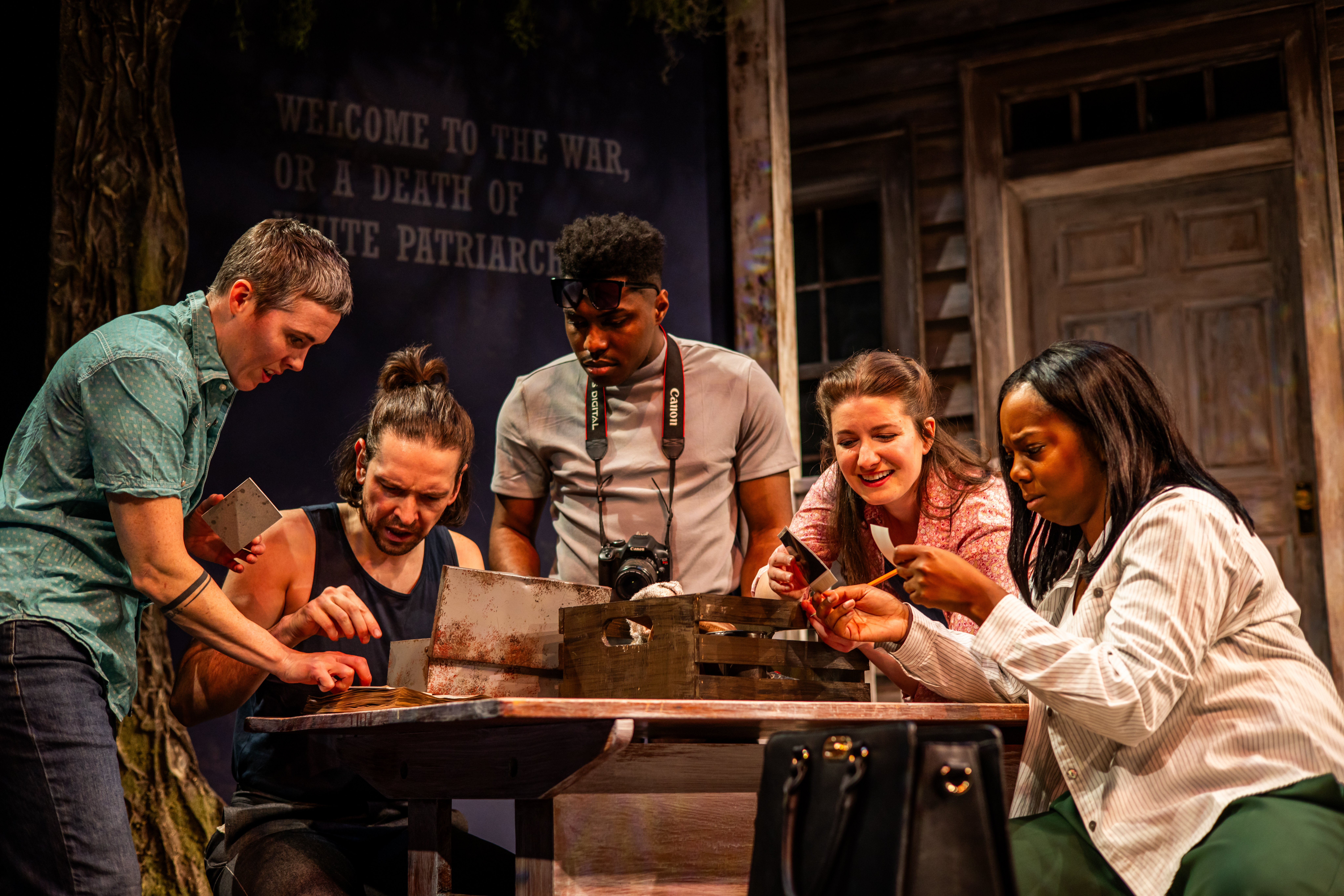
From left: Nancy Boykin, Ciera Gardner, Jayson Brown, Jada Mayo, Anthony Martinez-Briggs, and Steven Anthony Wright in “The Most Spectacularly Lamentable Trial of Miz Martha Washington,” nominated for nine Barrymore Awards.Johanna Austin
Miz Martha received nine nominations, including outstanding production of a play, choreography/movement in a play (for Dominic Moore-Dunson), ensemble, and design categories in scenic, costume, and lighting. (Two other Ijames’ plays, the world premiere of Wilderness Generation and his 2023 play Good Bones, are previous Barrymore nominees.)
Two theater artists, Pax Ressler and Jordan McCree, received three nominations each. For Girl Dolls: The American Musical, which they created with Jackie Soro in collaboration with Bearded Ladies Cabaret, Ressler is up for outstanding original music, music direction, and original production. McCree is also in the running in the original music category for their work on Miz Martha, in addition to two nods for outstanding sound design in Miz Martha and Philadelphia Theatre Company’s Caesar.
Seven artists received double nominations. Theatre Horizon’s incoming artistic director, Amina Robinson, was nominated for outstanding direction of a play for Primary Trust and of a musical for Ain’t Misbehavin’, while Brett Ashley Robinson received nods for her direction of Miz Martha and her lead performance in the role of narrator inThe Greatest Play in the History of the World.
New this year: Stage managers for the nominees in outstanding overall productions in play and musical categories are now named in the Barrymore Awards nominations list. It’s part of the organizers’ efforts to spotlight the pivotal behind-the-scenes work that stage managers contribute to each show. (The awards recognize all participating artists for the winning productions.)
“As the shepherds of these creative teams, the stage managers facilitate and encourage the smooth cohesion of all the incredible artists, technicians and administrators from all corners of the theater that make these Overall Productions so outstanding,” said CJ Higgins, Theatre Philadelphia’s director of programming and operations, in an email.
Theatre Philadelphia also grants the Philadelphia Award for Social Insight, celebrating “the ability of theatre to illuminate the way we live and interact with others as we seek to build community,” reads the description. This year, 12 productions are nominated for the recognition, which comes with a $25,000 cash prize funded by the Virginia Brown Martin Fund of the Philadelphia Foundation.
The 2026 Barrymore Awards ceremony will be held on Monday, Nov. 16, at 7 p.m. at the Suzanne Roberts Theatre in Center City.
See the full list of nominees here:
Outstanding overall production of a play
Patreshettarlini Adams — The Most Spectacularly Lamentable Trial of Miz Martha Washington, The Wilma Theater
Celia HuttonJohns — Same Team, Inis Nua Theatre Company
Brigitte Rottman — Little Shop of Horrors, People’s Light
Brigitte Rottman — Wishing to Grow Up Brightly, Theatre Horizon
Gina Giachero — Falsettos, Arden Theatre Company
Outstanding outdoor production
A Bottom’s Dream — Shakespeare in Clark Park
Twelfth Night, O Lo Que Quieras — Delaware Shakespeare
Fraternity — Theatre in the X
Outstanding original production
Jackie Soro and Pax Ressler — Girl Dolls: The American Musical, Bearded Ladies
Chaz T. Martin — Class C, Azuka Theatre and Simpatico Theatre
Alice Yorke and Scott R. Sheppard — Lions, Lightning Rod Special
John Bellomo — Sacco & Vanzetti: A Tragedia dell’Arte, Curio Theatre Company
Chris Davis — The Presented, Chris Davis
Dan Kitrosser — Marsha Blovotnik and the Magical Chicken Soup, Theatre Ariel
Saymoukda Duangphouxay Vongsay — Seng’s Hair Salon, InterAct Theatre Company
The Philadelphia award for social insight
Inheritors — Philadelphia Artists’ Collective
Draw the Circle — Hedgerow Theatre Company
Good Bones — Arden Theatre Company
The White Chip — New Light Theatre
Sacco & Vanzetti: A Tragedia dell’Arte — Curio Theatre Company
Ain’t Misbehavin’ — Theatre Horizon
The Woman Question — People’s Light
The America Play — Wilma Theater
Franklinland — Lantern Theater Company
Same Team — Inis Nua Theatre Company
The Great Privation — Theatre Exile
1 Pound 4 Ounces — Azuka Theatre and Simpatico Theatre
Correction: This article has been updated to reflect updated information from Theatre Philadelphia. Eliana Pinckney and Andrew Kane’s names have been corrected and the nominee for outstanding sound design for ‘JOB’ is Andrew Nelson.
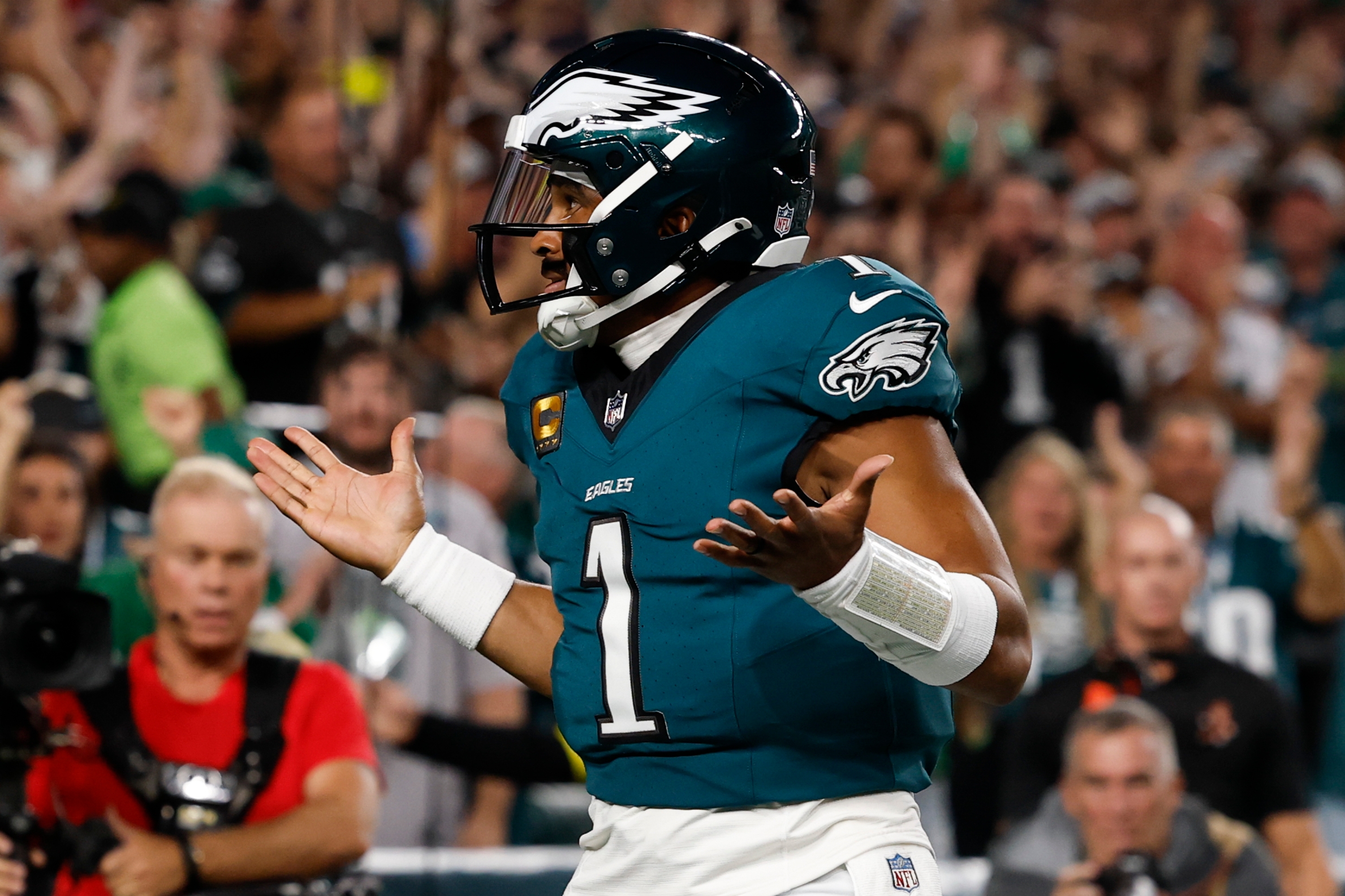
Jalen Hurts wanted more context. He wanted to know why a certain question was asked, or more pointedly, the narrative of the story that was clearly behind the asking.
Hurts, on rare occasions, will pull a reporter aside post-news conference and ask for clarification and even offer more information. This was partially that. But he also seemed to genuinely entertain the premise, and in doing so, slightly lifted his carefully maintained veil.
The Eagles quarterback tried earlier to answer the big-picture question about the concept of pressure and his excellence when the stakes were highest following an August practice during a dog day of training camp.
“It’s hard to think about any other thing than just improving every day,” Hurts said last month. “That pressure that you’re talking about, those opportunities that I relish in, they start now in these moments.”
The timing and the setting didn’t allow for depth, especially from someone who prefers to shun introspection. But Hurts must have sensed there was more to the premise. And he was correct. It wasn’t just in big games that he thrived. He’s had his best seasons when facing external doubts about his future.
Hurts nodded. He understood the construct. He may claim that he doesn’t read or listen to outside opinion, but he did cop to being aware of current storylines about him. It’s part of the job. And he’s heard this one before.
“No narratives are new,” Hurts said, “just recycled.”
In 2024, the Eagles were coming off a season with offensive regression that led to an early playoff exit and the coordinator getting fired. Hurts and Co. responded, of course, by winning a Super Bowl.
Jalen Hurts, having won the Super Bowl MVP award in the Eagles’ victory over the Kansas City Chiefs, holds up the Lombardi Trophy on the stage at the Art Museum during the team’s victory parade.Yong Kim / Staff Photographer
The circumstances are similar two Septembers later. Hurts will have another new play caller in Sean Mannion as coach Nick Sirianni searches for a constant that prevents the fluctuation that has led to annual turnover at the position.
But for the first time in the Sirianni-Hurts tenure, the scheme will be dramatically different. At least that’s the plan. And the quarterback won’t have A.J. Brown, his former No. 1 wide receiver and close friend, to throw to for the first time in five seasons.
The notion that Hurts is on the hot seat, though, comes more from various reports that his uncompromising ways and resistance to change has contributed to the team’s overall struggles, and that an unresolved contract situation doesn’t guarantee his return in 2027.
General manager Howie Roseman has decried the reports and denied the suggestion that the Eagles have put the 28-year-old on the clock by not restructuring his deal.
Hurts addressed the characterizations and the uncertainty over his future in June. But given all the variables and what they could amount to, he didn’t discredit the perception. He just said it wasn’t his reality.
“Pressure is an illusion,” Hurts said to The Inquirer. “Fear is an illusion.”
More was said, but he preferred his cryptic response to stand alone. The conversation lasted less than 10 minutes. Its depiction here isn’t meant to suggest exclusivity or great insight into Hurts. But one-on-one opportunities have been fleeting over his six-plus years in Philadelphia.
In this case, it was as much the answers he gave as it was the questions he asked. Hurts is making an effort. He’s trying to let his guard down. It’s been evident in his pressers this summer, in the recent profile he did with GQ, and most importantly, inside the Jefferson Health Training Complex.
The Eagles seemingly never have to worry about Hurts’ work ethic or his behavior off the field. But as the franchise quarterback, there are interpersonal parts of the job that are almost requirements. Hurts isn’t naturally outgoing.
“Overall, he’s been better,” a team source said, “when it comes to communication and being around.”
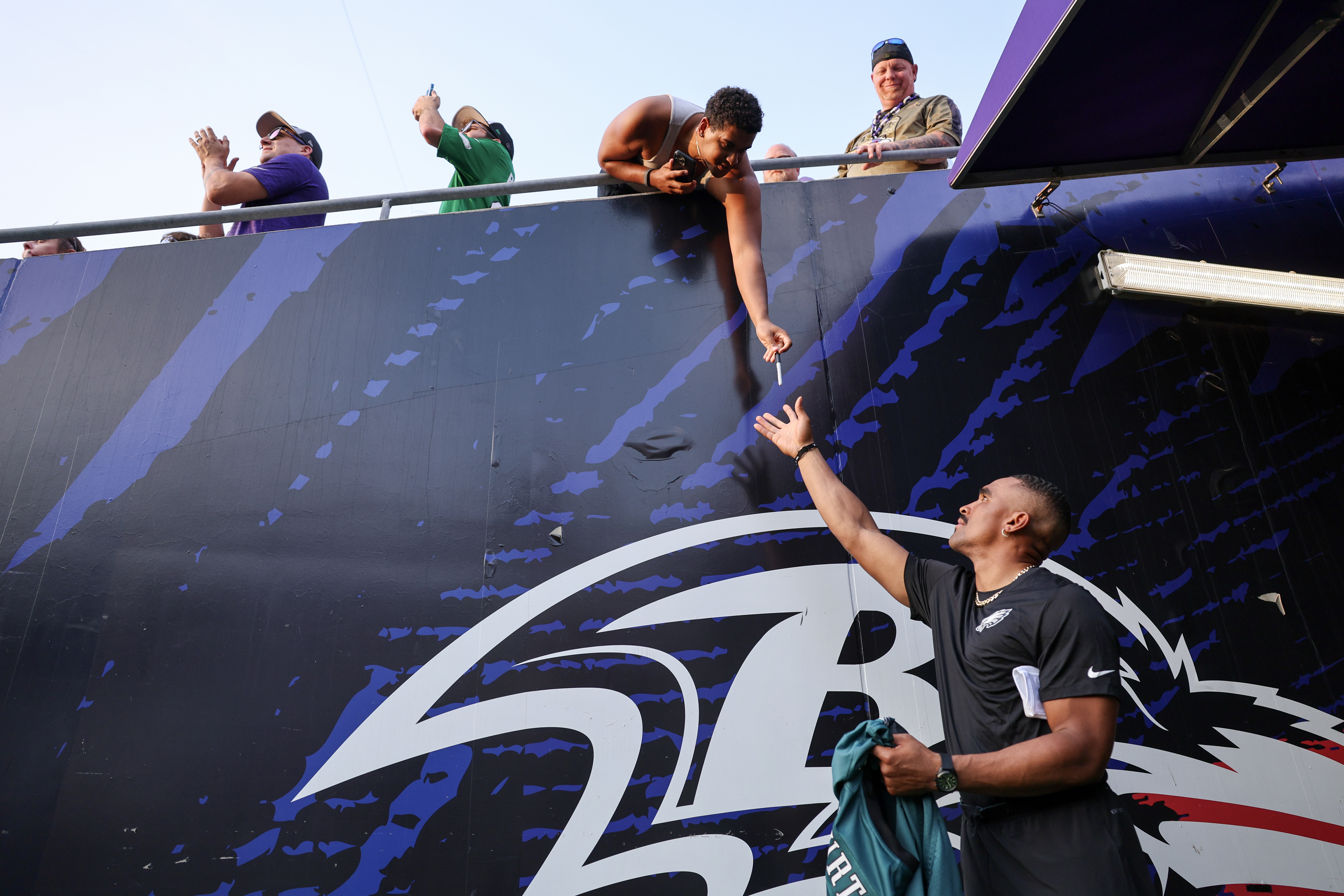
Jalen Hurts signs a jersey for an Eagles fan as he comes out of the tunnel ahead of a preseason game against the Ravens in August.David Maialetti / Staff Photographer
It may be just a simple hello in the hallway, or hanging in the locker room longer, or talking about himself more openly. Hurts has organized summer workouts with skill position players before, but he had almost full attendance in the session he ran in Orlando this July.
No one desires for him to be inauthentically extroverted. Like his goatee that was shaved into a mustache for most of this offseason, Hurts has made outward tweaks. But he remains a figure mostly shrouded in mystery, and seems to relish it.
Asked to reveal more about a recent anecdote he’d relayed about his wife, Hurts said, “Maybe … if you’re nice to me.”
Adjustments and growth
The personality stuff is secondary to performance. Hurts, like many on offense, didn’t play up to expectations in 2025. He finished with his lowest expected points added per dropback since he became the full-time starter in 2021, and ranked a career-worst 18th in EPA among qualified quarterbacks.
The Eagles haven’t had a pass-heavy offense when at their best, though. And the inability to run with running back Saquon Barkley after a historic 2024 compounded the struggles through the air. But what confounded the most, perhaps, was Hurts being less of a factor on the ground.
Another year, another new offensive coordinator for Jalen Hurts: This year it’s Sean Mannion (left).Yong Kim / Staff Photographer
Numbers hardly tell the full story. The offense was predictable, conservative, and failed to evolve and incorporate modern trends like having more motion. The end result: Kevin Patullo was fired after one season as offensive coordinator, Brown wanted out, and Sirianni hired a first-time play-caller in Mannion, who brings with him the trendy Kyle Shanahan-Sean McVay system.
Mannion is just the latest in a long line of coordinator changes Hurts has had to endure stretching back to college at Alabama and Oklahoma.
“I think you can appreciate the 11 different coordinators I’ve had,” he said last month in explaining the ups and downs of his career.
But as receiver DeVonta Smith said after the playoff loss to the 49ers in January, and as Eagles defensive coordinator Vic Fangio noted last month, the offense hadn’t changed all that much since Sirianni became coach and Hurts his quarterback.
“A lot’s been made about him, all these coordinators he’s been with, but it’s basically been the same offense every year,” Fangio said. “This is different.”
Hurts has previously worked from under center. He’s thrown down the middle of the field. He’s had pure progression reads. But he’ll have to do those things at a much higher rate if marrying the run with the pass off play-action is the central principle of the new offense.
(function() { var l = function() { new pym.Parent( ‘hurts-zones2__graphic’, ‘https://media.inquirer.com/storage/inquirer/ai2html/hurts-zones2/index.html’); }; if(typeof(pym) === ‘undefined’) { var h = document.getElementsByTagName(‘head’)[0], s = document.createElement(‘script’); s.type = ‘text/javascript’; s.src = ‘https://pym.nprapps.org/pym.v1.min.js’; s.onload = l; h.appendChild(s); } else { l(); } })();
It may seem counterproductive to ask him to major in something he’s only minored in before. But Hurts has shown that he can execute all of the above. The question is how far is he willing to go, or for that matter, how far is the turnover-adverse Sirianni willing to let him go?
Hurts, by all accounts, has embraced the changes.
“He’s all-in on this system,” Eagles tackle Jordan Mailata said in July at the start of camp. “The way he’s commanding the huddle. The way he’s getting that ball out. The way he’s throwing it. … He’s all-in. It’s refreshing to see.”
The scheme could unlock a new version of Hurts as a passer. And having an offense where running is the focal point while not being as dependent on his involvement could limit the hits as he enters the next stage of his career.
But what happens if there are the expected speed bumps? Or even worse, potholes?
Hurts has previously resisted new elements, as he did early in former offensive coordinator Kellen Moore’s tenure two years ago. Moore had wanted to include more motion in his scheme, but the Eagles were still near bottom in the league in motion usage through the first four games of the 2024 season.
A 2-2 start that year in which Hurts turned the ball over seven times prompted offensive changes, the most significant of which was leaning into Barkley and the run game. But motion utilization — pre-snap and at the snap — increased as the season progressed. In April, ESPN published a story that detailed Hurts’ “strong preferences” — a reluctance to motion being one — that sources said had stunted the offense in 2025.
“I’m always open to growth. I’m always open to improving,” Hurts said when he was finally asked in June about the assertions. “I think a lot of it is, what do we put our time on task? What are we exhausting? What are we repping?”
While he ultimately didn’t refute the report — “Just let it live,” Hurts said — he did say he wasn’t responsible for the fateful “four verticals” call that ended the season against the 49ers, and a play that in its story ESPN implied Hurts directed.
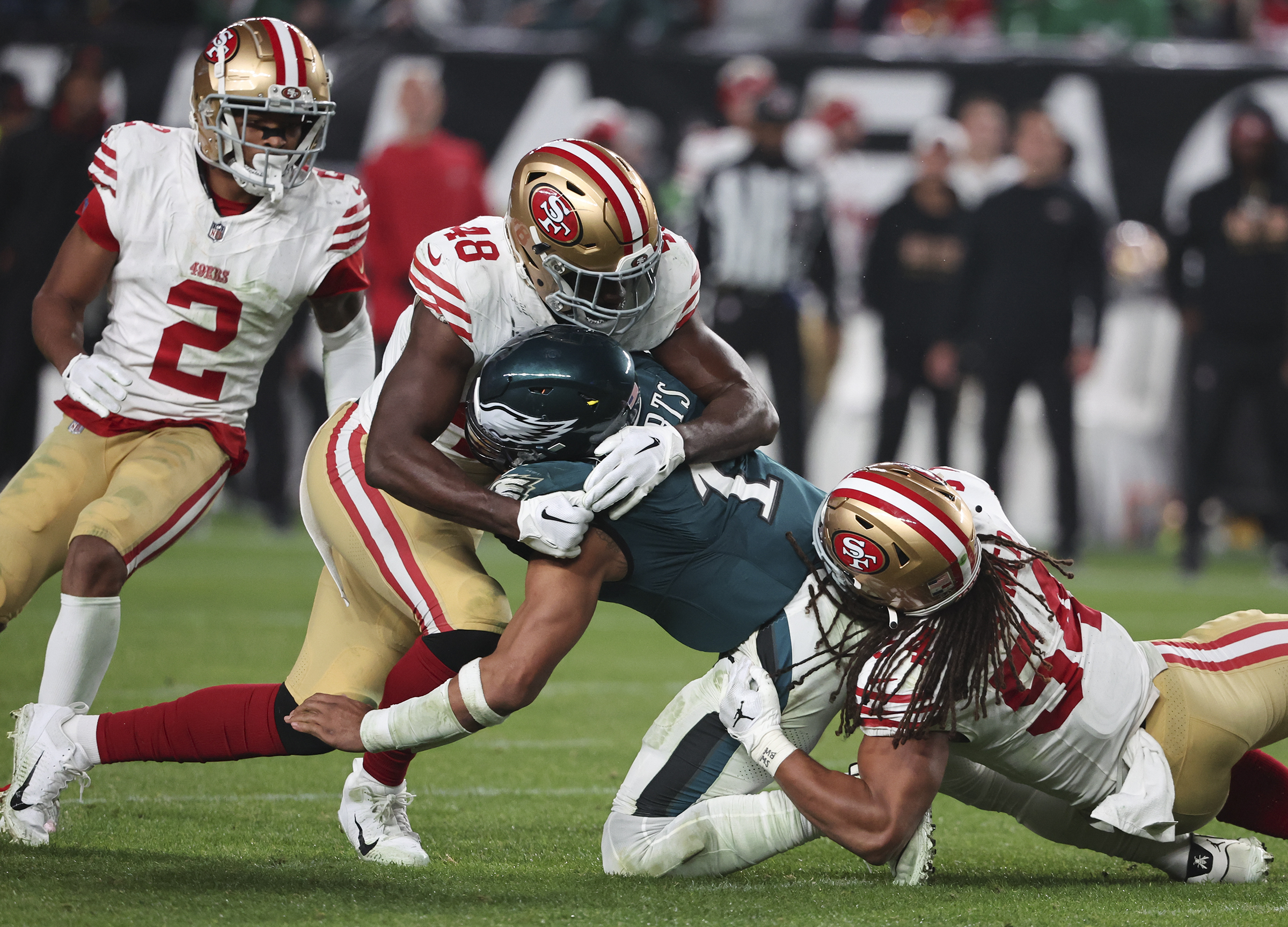
Last season ended for the Eagles and Jalen Hurts with a home loss to the 49ers. Here, Niners linebacker Fred Warner (right) and linebacker Oren Burks converge to tackle Hurts.David Maialetti / Staff Photographer
While a source close to the situation confirmed that it was Hurts who suggested the play, two sources familiar with the events said it was only because Patullo had “froze” when going over the play sheet. Ultimately, Sirianni had final say.
If the outcome was successful, a statue would not have been erected like with the “Philly Special.” But there wouldn’t have been as much consternation about who was responsible: the player who came up with the idea, or the coach who decided it made sense.
Either way, the play-calling process had become more cumbersome under Patullo than it was under Moore. Some team sources have described Moore as a savant, capable of getting a call in early enough to give Hurts additional information until the cutoff time.
But Patullo was a first-time play caller, and thus a by-committee approach was used with Sirianni’s supervision. Mannion, also a first-timer, is expected to adopt a similar system with pass game coordinator Josh Grizzard, who has play-calling experience, and others feeding him necessary data.
Every NFL offensive coordinator has play-calling help. But the Eagles were 1.3 seconds slower out of the huddle last season and had the most snaps in the league (150) with one second or less left on the clock.
There weren’t any noticeable game management issues in the preseason, but Hurts has yet to play a game with Mannion at the controls. Mannion’s gameday whereabouts — he practiced calling plays from the field and in the booth in the preseason — have yet to be decided.
“I think the operation’s been good regardless of where he’s been,” Sirianni said.
Jalen Hurts did not play during the Eagles’ three preseason games.Monica Herndon / Staff Photographer
Handling pressure on and off the field
While the getting-out-of-the-huddle issue can be mostly attributed to the play-calling process, the late snaps are probably more of a quarterback problem. Mannion has added more plays in which the offense breaks the huddle and hurries to the line for a quick snap.
But that tactic can be deployed only so often. Hurts still has to make checks at the line and change protection calls based upon his pre-snap reads of a defense. In terms of setting the protections, particularly vs. pressure looks, former Eagles center Jason Kelce took charge until he retired in 2023.
Hurts has made strides against the blitz over the past two seasons, in particular in finding his hot reads. But he struggled more last season with simulated pressures — in which defenses feign sending extra rushers — with the Eagles often errant in their protection assignments.
Mannion said the pre-snap calls will be made by either Hurts or the offensive line “dependent on the protection scheme,” Eagles center Cam Jurgens said. “It’s similar, but not the same,” in terms of how responsibilities are doled out.
Hurts faced a lot of unblocked pass rushers in two joint practices with the Patriots last month. It was a good test for Mannion’s unit because New England loves to disguise its looks and send simulated pressure at quarterbacks.
The Eagles offense was effective on the ground in the early portion of Day 1. But Hurts was hurried or sacked on multiple drops in the latter team drills. And on Day 2, he threw multiple interceptions, although there were positive moments through the air as well.
As important as the scrimmages were for the teams, Brown’s performance against his former team garnered as much attention. “He was the best player on both offenses,” an Eagles source said of the new Patriots receiver.
Brown said after the first workout on Aug. 19 that he hadn’t spoken to Hurts since he was traded on June 1. Both players were guests at Eagles receiver DeVonta Smith’s wedding just 12 days later.
Jalen Hurts and A.J. Brown exchanged greetings after the Eagles and Patriots had a joint practice in August.Yong Kim / Staff Photographer
But on his way to the locker room after the second practice, Brown jogged down to Hurts as he was throwing passes, and the two embraced. They asked about each other’s families, wished the other good luck in the coming season, and exchanged a few jokes, according to a source briefed on the interaction.
Both teams had wanted a made-for-the-cameras reconciliation and Brown, who had told NBC Sports at the time of the trade that he was no longer close to Hurts, agreed when an intermediary intervened.
In June, Hurts gave an ambiguous answer about being “focused on the collective” when asked about Brown’s description of their relationship. But when GQ pressed him on the subject of whether they were no longer as tight, Hurts said, “Clearly.”
Brown declined to address why he wanted to be traded. Several Eagles sources opined that there wasn’t more behind his exit than what was on the surface: He wanted to further cement his legacy as a Hall of Fame-caliber receiver and didn’t believe that was possible in Philly.
And while that implied that Hurts was at the core of his leaving, there were off-field reasons for why they drifted apart. Brown, for instance, had organized team bonding trips to an escape room and Top Golf, or get-togethers at the movies or his house. Hurts was among those who didn’t always attend such excursions.
Hurts, as quarterback, had other responsibilities. But there was a general feeling from some team leaders that he needed to be more engaged.
In July, Hurts hosted many Eagles skill position players in Orlando for workouts at Central Florida’s Bounce House. But the players also golfed, had dinners, and socialized. When asked about the excursion at the start of camp, Hurts talked about “unity” and protecting the “intimacy of this team.”
Brown, who was often outwardly emotional, had expressed public frustrations via social media, something he later said he regretted.
The sphinxlike Hurts has preferred to let his actions on the field do most of the talking. And his accomplishments in just five seasons as the starter speak for themselves: 56 victories and a 71.8 winning percentage, five playoff appearances, two Super Bowl trips, and an MVP performance in beating the Chiefs in the title game just two seasons ago.
Hurts’ resumé should make it almost inconceivable that the Eagles would contemplate — no matter how this season unfolds — parting with him next offseason. And yet, his contract doesn’t make it a foregone conclusion.
Forecasting the future
Hurts is guaranteed $51.5 million for 2026, but less than half of his $51 million average annual salary ($22 million) is guaranteed in 2027. He has no guarantee in 2028, the final year of the five-year, $255 million extension he signed in April 2023.
Eagles owner Jeffrey Lurie, when asked about the deal in April at the league meetings, said Hurts was in the “middle of the new contract now.” But teams have given extensions to franchise quarterbacks with similarly structured contracts to create salary cap space.
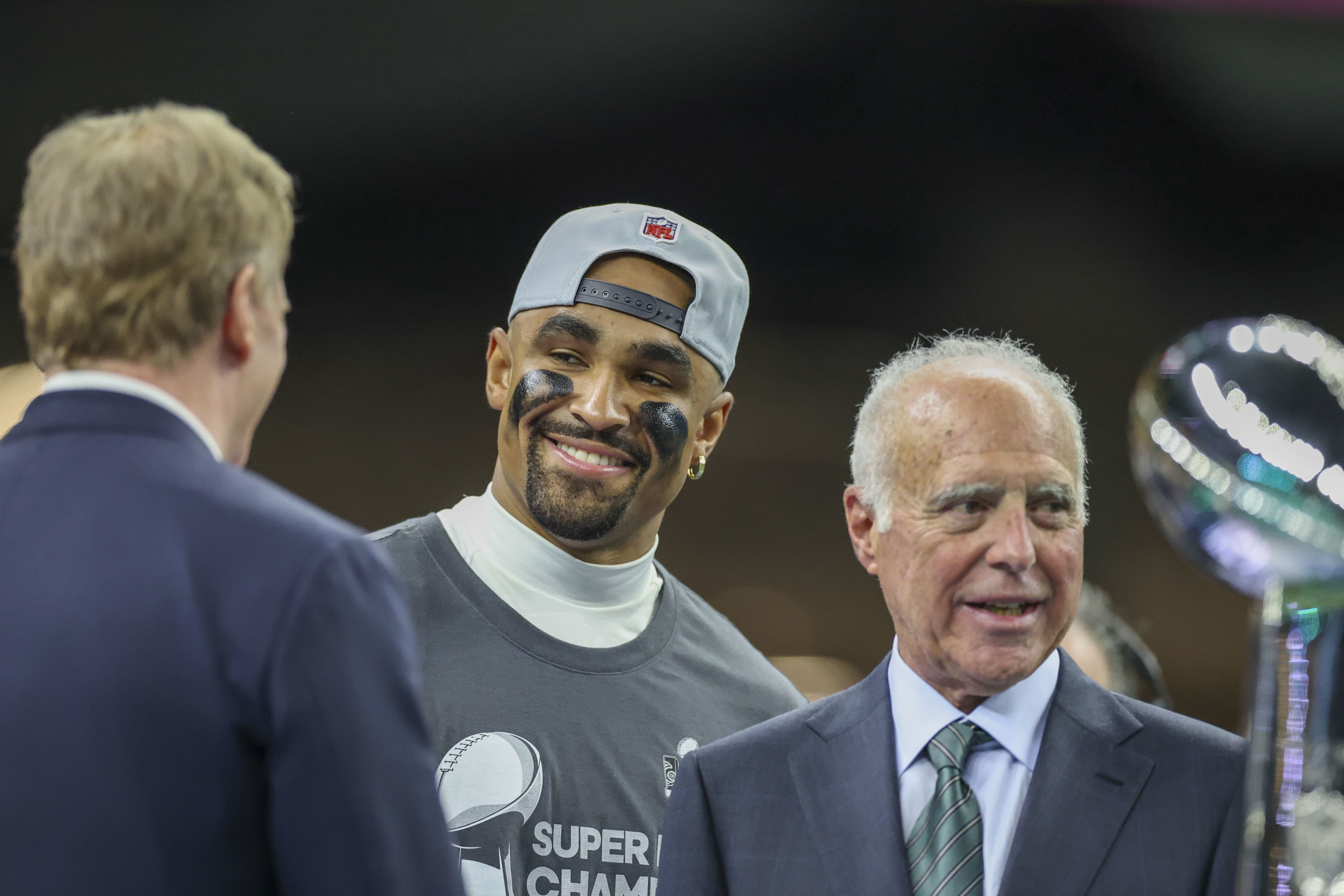
Jalen Hurts and Eagles owner Jeffrey Lurie have enjoyed the ultimate success together. David Maialetti / Staff Photographer
Lurie was otherwise effusive praising Hurts. The owner pushed for Roseman to select the Oklahoma product in the second round of the 2020 draft. Hurts may not have a bigger fan in the building, and that’s notable when looking at his future.
The Eagles front office views his deal as winding down and expects optimum production — like any player under similar circumstances — but it’s hard to predict anything with the next offseason eons away in NFL terms.
“For me, I’m truly focused on being the best I can be right now,” Hurts said when asked about his contract in June. “That’s where my energy is.”
When camp opened a month later, Hurts appeared trimmer than previous years. Fangio and a few defensive players said he looked faster. Hurts said he felt the same and hadn’t altered his training regimen.
Last season, he finished with his lowest number of rushing attempts (105) and rushing yards (421) since becoming the starter in 2021. The Eagles wanted to curtail Hurts’ exposure to harm early on, but despite Patullo’s pledge that more carries were coming, Hurts was rarely a plus-one factor down the stretch. Hurts insisted that he was willing to run as much as he had previously, and has said as much about this season. But there will likely be fewer opportunities for designed runs with more plays starting from under center.
“I don’t think that’s something I can manage,” Hurts said last month. “That’s ultimately up to what we’re doing as an offense and how we put everything together. When you look back about 2020 and 2021 and those times we were a heavy [shotgun] team, ran a lot of inside zone, run a lot of [run-pass option], got to the edge a good bit, and defense was different, too. And the game has changed.
“That doesn’t mean you remove those elements, but again the base of the offense was run inside zone and that’s not typical for this West Coast-type of style.”
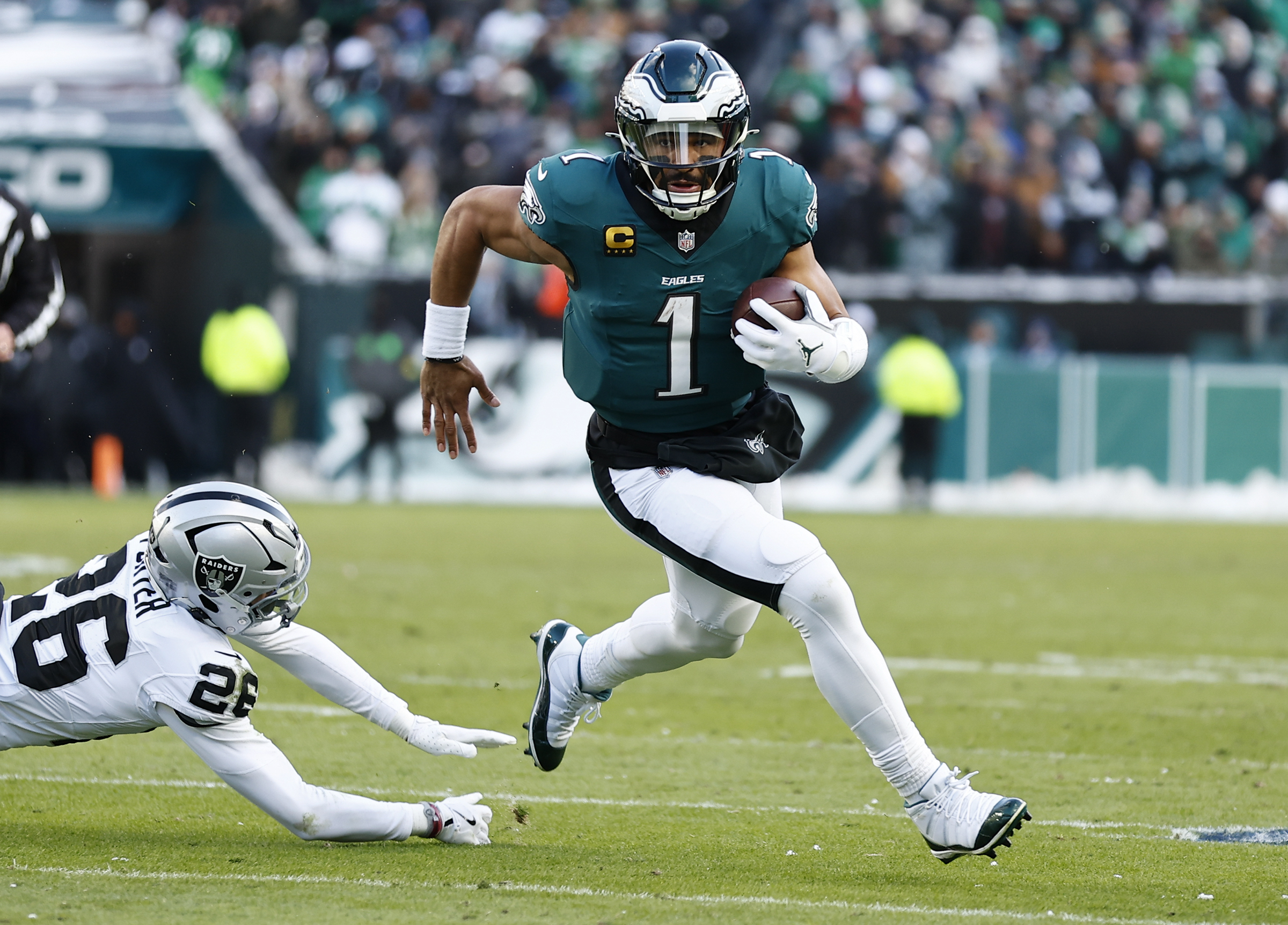
Jalen Hurts’ effectiveness as a runner will be scrutinized within Sean Mannion’s scheme. Monica Herndon / Staff Photographer
The outside zone is the base run play of the Shanahan-McVay offense, and its effectiveness sets up throws off naked bootlegs that are designed in part to be layups for the passing game. There is a horizontal stretching of defenses, but the play-action is also designed to create space for receivers downfield.
Backup quarterbacks Andy Dalton and Tanner McKee were under center on 38% of the snaps they took in the preseason. But it was a small sample and neither player has Hurts’ mobility and athleticism.
“The piece of him as an athlete in the running game is something unique,” Mannion said. “Those are elements we can lean into a little bit, as well.”
But with so much of the scheme predicated on marrying the run with the pass and keeping defenses on their toes by not giving away plays based on formation and technique, it will be difficult to shift the play-calling.
Sirianni hired the 34-year-old Mannion for his acumen, but also for his knowledge of this scheme.
Overall, Hurts was accurate and efficient in camp. But he also had rough moments and tossed eight interceptions. That’s seven more than he threw last summer, so practice doesn’t always correlate to regular-season performance.
Jalen Hurts had an up-and-down camp as he learned the new offense. Jose F. Moreno / Staff Photographer
But with more full-field progression reads than the coverage reads that were a larger part of the previous system, timing with his receivers will be pivotal. Hurts may have less to do pre-snap, but with many new faces, there will likely be a learning curve.
Mannion didn’t gloss over the interceptions from the joint practices. He pointed them out and didn’t excuse them as experimental throws. But there is some question as to whether Hurts will overpower a young coordinator when expressing his preferences.
There is a balance to strike in doing what’s best for the quarterback and what’s best for the entire group. The same could be said about a possible blending of the old with the new. For all the hand wringing about the offense last year — that was also affected by O-line injuries — the scheme had produced remarkable highs in the past.
“I think that’s a great question,” Hurts said when asked about carryover. “And it’s something that you keep in mind when you’ve had so much success. How will it look? You don’t really know. Do you want to win? Absolutely.
“So we’ve got to figure out who we are as a team. Obviously, coaches come in with a great mindset, great philosophy and putting everything together. It brings us a bit more structure. In the end, it’s about what’s going to go out there and be the best for our team.
“I know Sean will come up with the answer over time.”
Jalen Hurts has seemed open to both schematic and personal changes that will help turn the page on a disappointing 2025. Yong Kim / Staff Photographer
‘I am who I am’
Time will show if the relative openness Hurts has shown to others will extend to the offensive changes. But if stoicism or hardheadedness were his worst crimes, he wouldn’t be unlike many high achievers.
Four years ago, Hurts agreed to participate in what has remained his lone sit-down interview with The Inquirer. The topic of the Eagles’ legacy of Black quarterbacks was one that appealed to him because he admired his predecessors and knew the bleak history of how African American men were treated in relation to the position.
“I think there’s levels to that, and I’ll just leave it at that,” Hurts said when asked if he felt Black quarterbacks still faced additional scrutiny.
A follow-up posed the question of whether he didn’t show more of his personality because of the history.
“As I grow and mature, that will evolve,” Hurts said then. “But I am who I am in terms of my character, how I was raised and where it comes from. But like I said, there’s levels to everything.”
Hurts isn’t any less an enigma than he was then or ever. He’s seemingly let outsiders in just a little. But it’s also his coolness that defines him and helps him maintain a fierce number of loyalists.
When Hurts told the story at the start of camp of how he offered the recently extended Jalen Carter the $5 bill his wife, Bryonna, puts in his backpack — “A little inside joke between her and I,” he said — it was one of the rare times he ever spoke anecdotally.
It also gave a glimpse, perhaps, of his private life. The Inquirer later asked for more detail. Hurts repeated what he said several times before when the reporter asked for additional access: “Maybe … if you’re nice to me.”
When the question was posed again, following the brief post-news conference interaction a few weeks later, Hurts laughed, then walked away.
Labor Day is often seen as the unofficial end of summer — a long weekend for barbecues and family gatherings. But before enjoying the day off, we should remember the people whose work makes our daily lives possible. As a mail carrier, I see this every day. Behind every functioning neighborhood are workers who quietly keep life moving, including teachers, nurses, first responders, sanitation crews, farmers, and caregivers. Many work early mornings, late nights, and holidays. We often notice their work only when something goes undone.
As an Ahmadi Muslim, I was taught that serving others is an essential expression of faith. That value guides me on my route every day. Labor Day reminds us that our nation was not built by famous names alone, but by ordinary people willing to work, serve, and contribute — often without recognition. This Labor Day, let’s take a moment to thank those who keep our communities running. Every honest worker deserves our respect.
Farid Ahmad, Easton
Walk the walk
Inga Saffron’s column about being car-free or car-light was interesting and positive. We moved here in 2021 to eventually be car-free as we aged and are car-light now. We have volunteered with Save Our Train to keep the Chestnut Hill West line running. We take all forms of SEPTA and appreciate very much what is available. But I have to wonder how much continual advocacy transit, in all forms, has with our City Council and with our state representatives. Do Council members and their staff take transit, bike, or walk to work frequently? If not, it should be a requirement. If they had, maybe the new work on Broad Street would have been more thoughtful for pedestrians and bicyclists. Same question for Mayor Cherelle L. Parker and her staff. Perhaps she could take a page from New York’s mayor. The same goes for our state representatives. Our elected officials need to make it possible for people of all ages to get out of cars. If they only know a car-centric life, how do they effectively advocate for transit?
Liese Sadler,Philadelphia
More like Daffy
Recently leaked information from the Pentagon reveals that leaders of the U.S. European Command, the U.S. Pacific Command, and the U.S. Southern Command, along with the Navy’s top admiral, all formally disagreed with the administration’s Iran war conduct and planning. Troops and vessels are unevenly distributed, critical munitions are running out, and even homeland defense is weakened. This revealing show of no-confidence is a point when serious, competent civilian leadership should make a rational and considered about-face.
At a time when the more than 1.3 million people in active-duty service look to their commander in chief for strong, coherent leadership, this will assuredly not be happening. Over the weekend, Donald Trump instead reposted on his Truth Social account a meme showing a troop of rifle-toting Trump-like geese guarding his newly named “Lake America” from the Canadians, titled “Protected by Donald Ducks.” It is beyond shocking that while in violent war, our president, so frustrated and infuriated by his own incompetence, will simply hide in this absurd renaming fantasy for amusement. This is who we have in the dangerous real world where the rest of us live.
Joseph B. Baker,Honey Brook
Join the conversation: Send letters to letters@inquirer.com. Limit length to 150 words and include home address and day and evening phone number. Letters run in The Inquirer six days a week on the editorial pages and online.
Temple almost reached a bowl game during K.C. Keeler’s first season. The Owls began their 2025 campaign 5-3 and needed one more win to be eligible, but four consecutive losses left them short of their first bowl appearance since 2019.
Keeler enters his second season with a revamped roster, higher expectations, and uncertainty at the sport’s most important position. Temple added 22 players through the transfer portal and plans to play quarterbacks Ajani Sheppard and Jaxon Smolik in its season opener on Saturday against Rhode Island at Lincoln Financial Field (2 p.m., ESPN+).
Before kickoff, here are five things to know about Temple’s key players, newcomers, schedule, and preseason expectations.
Both quarterbacks will get an opportunity
Temple’s well-documented quarterback battle will continue in the season opener.
Smolik and Sheppard have battled for the starting job since the spring and it has persisted through preseason camp. Both quarterbacks have seemingly struggled and thrived in unison, making any decision difficult for the Owls coaching staff.
Keeler has shown little urgency in naming a signal caller.
“Early on, I think it was sort of a battle, but they weren’t playing great,” Keeler said. “The quarterback play was just OK. Now, all of a sudden, they’ve both made dramatic improvements. I think we feel like we can live with two quarterbacks. I’m going to ask one of those guys to go out there and start the game, obviously. But I think it’s a little bit like last year — we had no idea. We had to go out there and put some stuff down, see where they were, and let somebody steal that job and give us some peace of mind.”
Jaxon Smolik will split reps in pocket with Ajani Sheppard in the season opener on Saturday.Tyger Williams / Staff Photographer
Neither candidate has extensive college experience. Smolik appeared sparingly during three seasons at Penn State and never attempted a collegiate pass. Sheppard played in five games across two seasons at Rutgers, completing both of his attempts for 23 yards, before missing the entire 2025 season at Washington State because of an injury.
Keeler faced a similar decision last season with Evan Simon and Gevani McCoy. Both were expected to play in the opener against Massachusetts, but Simon seized the job by throwing six touchdown passes in a 42-10 victory. Keeler will again lean on game action to produce separation.
Brown is healthy … kind of
Sam Brown enters Saturday’s matchup as the Owls’ starting running back, a role he carved out for himself in spring and fall camp.
Brown has been primarily healthy through the past six months, which is notable considering the fifth-year senior has yet to compete in a full season of his collegiate career. He suffered injuries in 2022, 2024, and 2025 at Rutgers.
Over the past two weeks — and for the first time since joining the Owls — Brown has been limited in practice. He did not participate in team or contact drills after taking a hard hit on Aug. 20.
Sam Brown will be Temple’s starting running back as long as he’s healthy.Tyger Williams / Staff Photographer
“It’s one of those things where we’re trying to protect Sam from Sam, because Sam is a compulsive worker,” Keeler said. “When you get into those situations, you just try to back him off. That’s what we’re trying to do — back him off a little bit and have a fresh version of him when we get to game day, and if we had a game today, he’d be playing.”
Assuming Brown takes the field on Saturday, it’ll be a huge boost for the offense.
Entering his second season, Keeler added several transfers and recruits in the offseason, but kept nearly all his returning starters, which is considered rare in today’s college football climate.
That effort comes from a culture shift in the wake of Keeler’s hiring. The Owls broke their streak of four consecutive 3-9 seasons last year.
In 2026, Keeler and company will be tasked with taking another step forward.
“I’ve driven this team really hard — maybe as hard as any team I’ve ever driven,” Keeler said. “I strongly believe in them. We have a lot of new players, and we had to get them up to the culture and how we do things. I don’t want to get to game day and, all of a sudden, we’re under some adversity or strife and don’t know how to handle those things. As a collective group — and me in particular — we pushed this team quite hard. I don’t think you push a team hard if you think its ceiling is right there. You push it hard when you think the ceiling is really high.”
Almost every great Temple football team has been spearheaded by a strong, gritty linebacker corps.
In the mid-2010s, Temple boasted names like Tyler Matakevich and Avery Williams. Al Golden’s teams featured Tahir Whitehead, while even Wayne Hardin’s 1970s glory-day teams had former pros, including Mike Curcio.
Now, the 2026 defense will be led by linebackers Eric Stuart and Curly Ordonez. Stuart was also selected as a defensive captain and awarded a single-digit for the season.
Linebacker Eric Stuart returns as Temple’s lead tackler from the 2025 season.Isaiah Vazquez / For The Inquirer
The defense wreaked havoc throughout preseason camp. On the defensive line, Keeler and defensive coordinator Brian Smith are planning to regularly rotate 10 players during games. The safety room is also deep, with Avery Powell and former Illinois defensive back Saboor Karriem leading the room.
“I feel like we have one of the best rooms,” Ordonez said. “We have guys and can go three or four deep. I just feel like there is no slack off. That’s one thing I see in our room, just how ready everyone is, no matter what, whenever we need them.”
A telling September awaits
After six months of facing each other, the Owls will finally get their first game action against Rhode Island. It will be a measuring stick for Temple’s nonconference schedule as the Rams are one of the FCS’ best squads.
Then, Temple will face No. 18 Penn State in Philadelphia in Week 2.
The rest of September includes a Week 3 matchup with one of the Mid-American Conference’s best teams, Toledo, which will also be Temple’s first road game. The Rockets won eight games last season and punched a ticket to the Boca Raton Bowl. Toledo was selected third in the MAC preseason coaches’ poll.
The month will conclude with Temple’s American Conference opener against Army at Lincoln Financial Field. The Owls lost, 14-13, in West Point, N.Y., last season after a potential game-winning field goal was blocked in the final seconds.
By the end of September, the Owls could show if they’re capable of reaching a bowl game.
Welcome to Shackamaxon, a weekly politics column focused on what’s happening at City Hall and in Harrisburg. It is named for the place where the Lenape chiefs would meet to conduct the people’s business, which is now known as Penn Treaty Park.
This week’s edition covers sinkholes, the embrace of “slopulism,” the ongoing struggle over the future of the Cecil B. Moore Library branch, and the loss of a venerable museum.
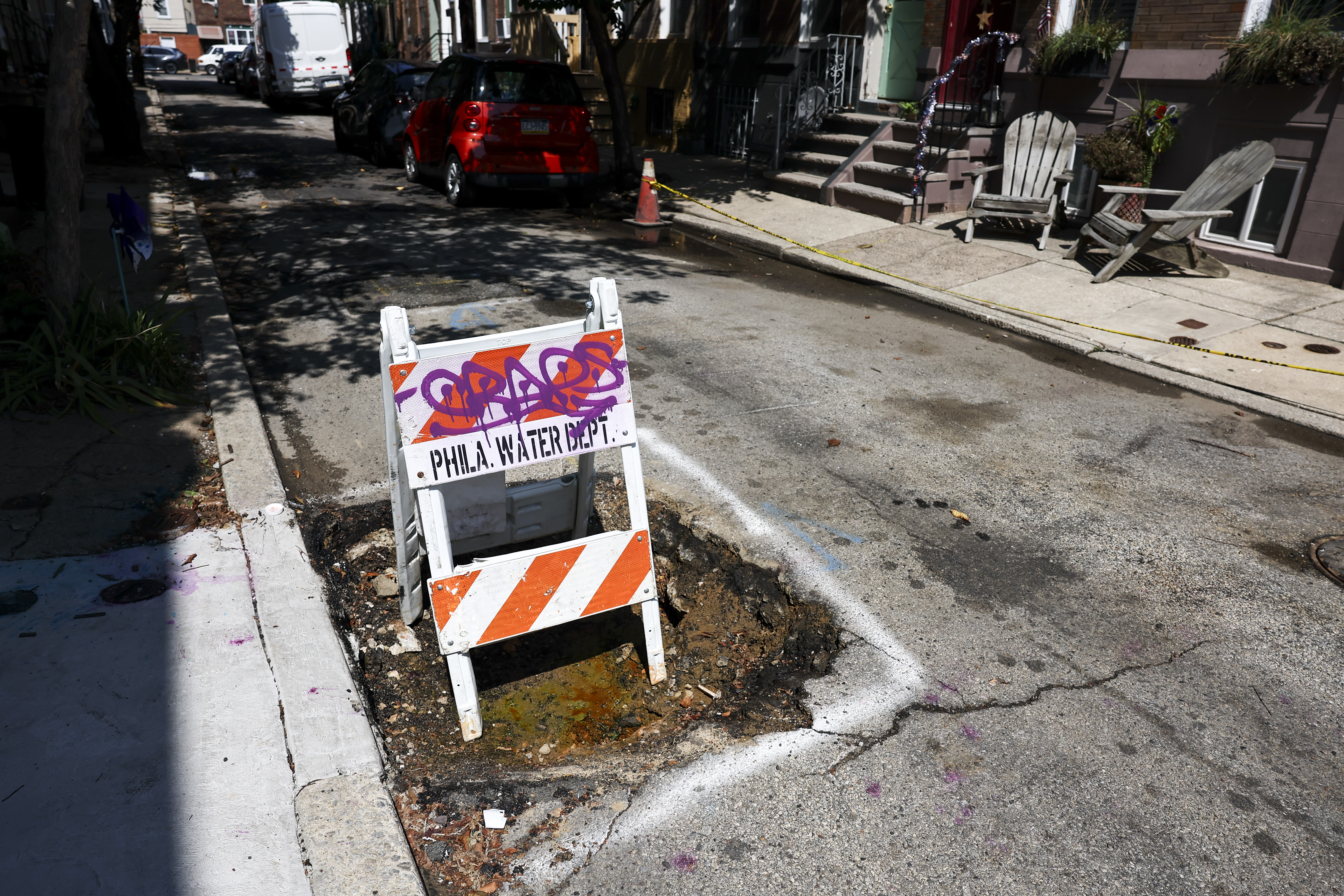
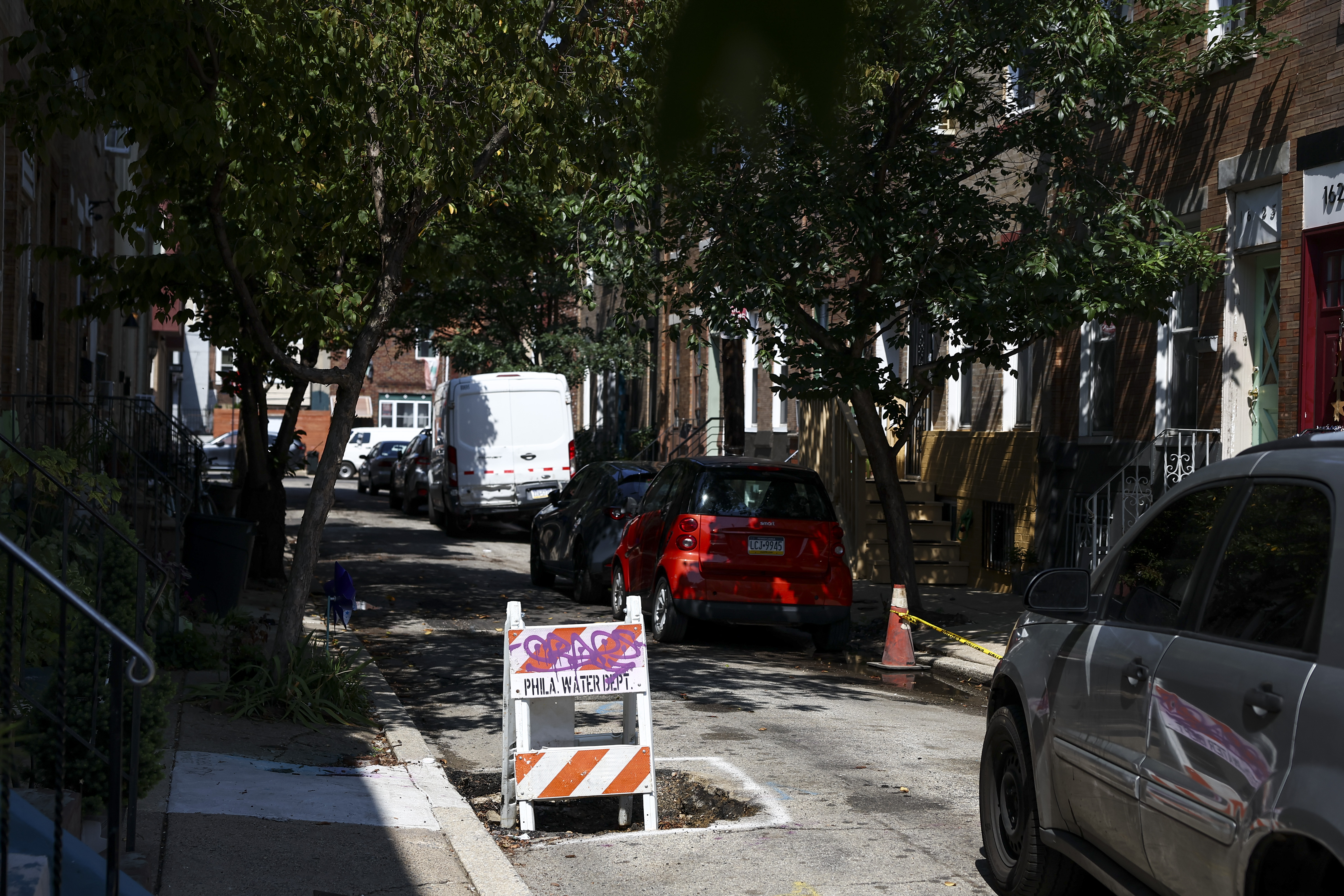
Signage marks a hole in the road on the 1600 block of South Lawrence Street on Tuesday. Neighbors have been complaining about the street’s integrity for more than a decade.Monica Herndon / Staff Photographer
Sinkhole street
How long does it take for a 311 request to be resolved? For residents of the 1600 block of South Lawrence Street, it has been 13 years — and counting. In the meantime, city officials have repeatedly ignored their emails and offered excuses.
It all began with a 2013 complaint about road instability. According to residents, their block once hosted a factory, which means that when their homes were built and their street was initially paved, it had to be filled in. Their concern is that, over time, this fill may have eroded, leading to the repeated formation of sinkholes and putting their buried utility pipes at risk.
Given that one of the neighbors who contacted me, Tim Dunn, is a civil engineer, I would say this is a credible worry.
While the city paid to fix three water laterals after the main broke, the neighbors believe three or four additional laterals were damaged and should have been covered, too. They also report that the laterals the city replaced experienced issues almost immediately. The block is scheduled to be repaved next year, and if underlying problems remain, the effort could be futile.
You would think that would lead officials at the city’s Streets and Water Departments to investigate. But until this week, that wasn’t the case.
The neighbors have compiled a timeline, complete with notes and evidence, of their efforts to get the departments to take their concerns seriously. Councilmember Mark Squilla, who represents the street, confirmed their account. Even he had trouble getting emails answered about this situation.
Out of 36 requests from Squilla or residents for help or information, 19 went unanswered. Adding insult to injury, the neighbors told me the city has repeatedly deployed no parking signs, only to not send anyone to do any work. This was perceived as an intimidation tactic.
When I reached out to the city to get their side of the story, they said they are now on top of the situation. On Tuesday, after my initial outreach, they finally sent a sewer operations team to investigate exactly what is happening underground.
Changes in how we get around and how we shop have had an impact on our streets. When these homes were built back in the 1920s, cars were rare in Philadelphia. The most popular model, Ford’s famous Model T, weighed up to 1,500 pounds. People increasingly use SUVs and heavy-duty trucks as their daily rides, putting strain on roads created without them in mind. The total weight rating for a loaded Amazon delivery van can be almost 10,000 pounds. This is part of why Mayor Cherelle L. Parker proposed a “pothole tax” on deliveries.
More money, however, would not fix what went wrong on South Lawrence Street. If existing communication and coordination issues aren’t resolved, residents will understandably see the pothole tax as yet another cash grab from City Hall.
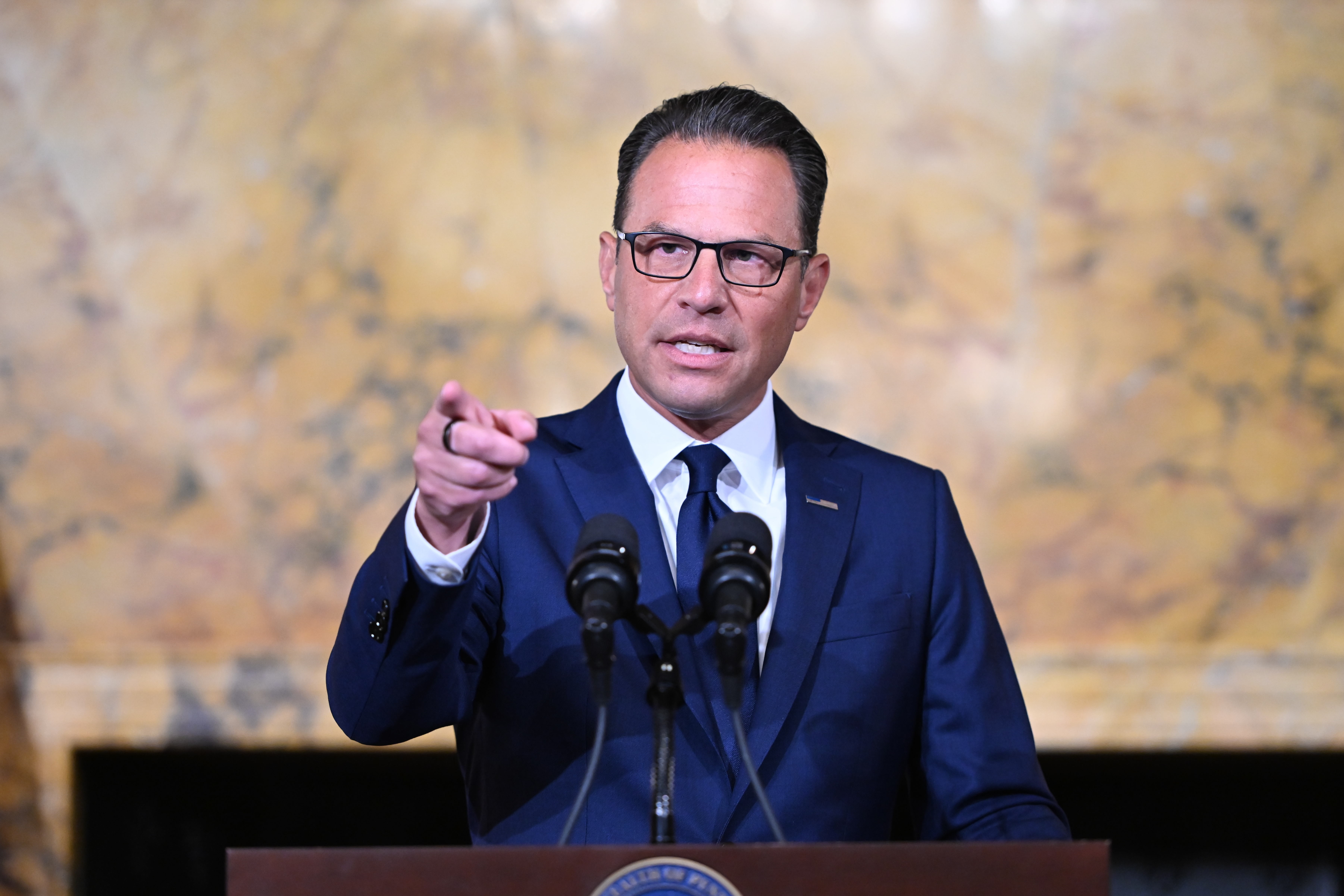
Pennsylvania Gov. Josh Shapiro speaks during a news conference at the state Capitol, Aug. 18.Marc Levy
Shapiro’s slopulism
One of the most frustrating parts of post-pandemic politics is the rise of “slopulism.” Short-form videos make it easy to build support for ideas that pander to our biases but are either not factual or impractical. From inciting claims about voter fraud to the idea that we can “just make transit free,” no one wants to read the boring evidence when there’s a cool, colorful video that tells them what they want to hear.
Gov. Josh Shapiro, a dedicated performer in the TikTok and Reels sphere, has embraced slopulism before. During his 2022 gubernatorial campaign, he promised to pursue “gas tax rebates,” an idea that would have depleted the state’s reserves and disproportionately sent cash to wealthier households. Mercifully, it doesn’t seem to have come up since he won.
While Shapiro’s critics will often say that the Ambitious Abingtonian watches the polls like a hawk, he’s mostly avoided relapsing into slopulism as governor. At least, until recently.
First came his about-face on data centers. Now he’s indicated support for a ban on automatic license plate readers known as Flock cameras.
There are real concerns about their misuse. Many feel uncomfortable with a private company like Flock Safety playing such a big role in law enforcement, and there have been troubling instances of police officers using the devices to stalk ex-romantic partners. Guardrails must be established.
At the same time, automatic license plate readers and other cameras have become an essential law enforcement tool. They can help identify stolen cars, track shooters after an incident, find hit-and-run drivers, and ensure detectives get the right perpetrator. While a spokesperson made clear that the governor’s statements were not meant as an endorsement for any particular piece of legislation currently before the General Assembly, Shapiro must ensure whatever restrictions are placed on the technology don’t curtail the important gains in reducing violence and solving crimes.
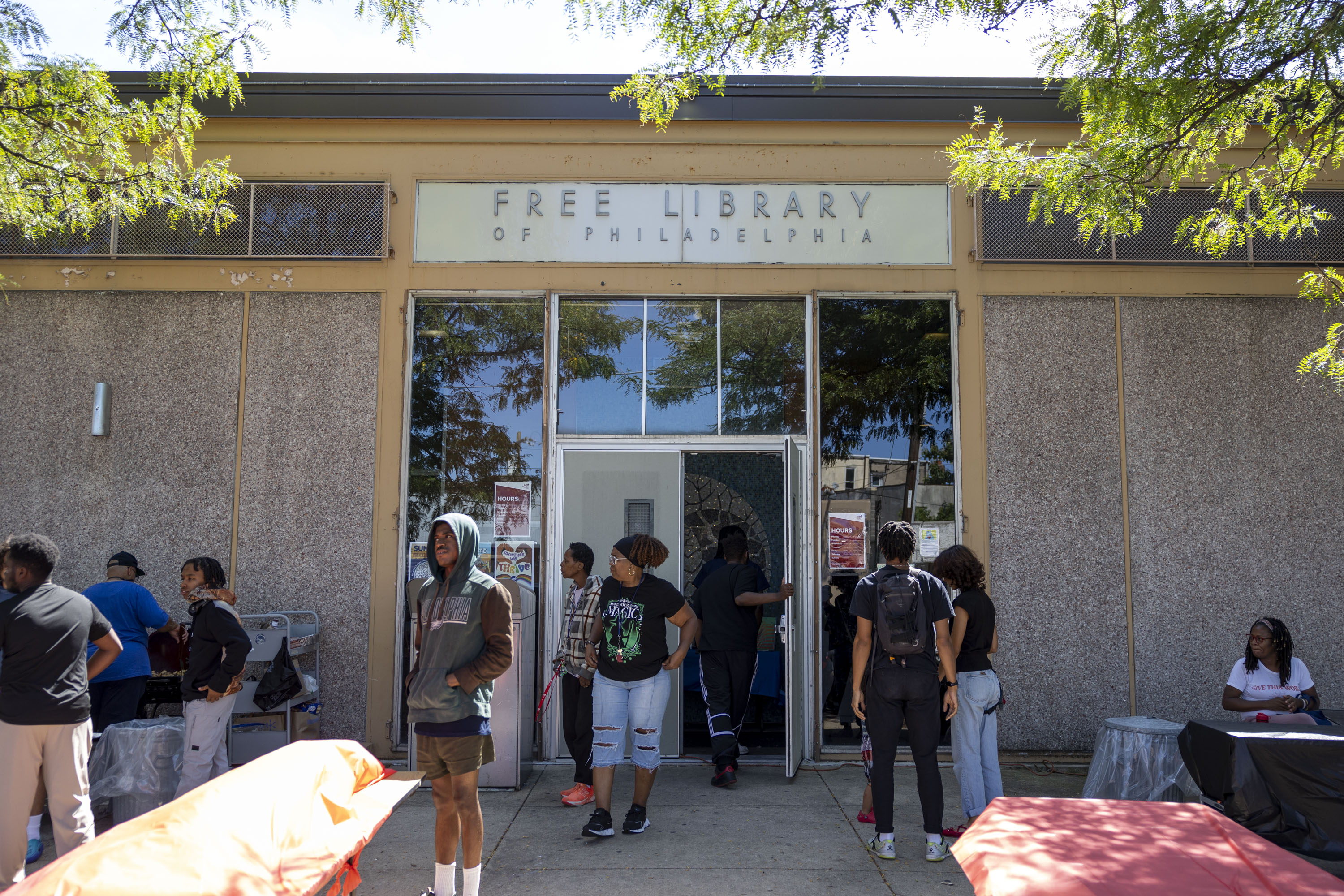
People in the community come out for a meeting and cookout to discuss the funding and renovations for Cecil B. Moore Library on Aug. 29.Tyger Williams / Staff Photographer
Limited library
One politician who can’t be accused of following the polls is Jeffery “Jay” Young, City Council’s quarrelsome contrarian. After years of conversation, Young has agreed to allow renovations at the Cecil B. Moore Library in North Philadelphia to move forward. There’s just one big problem: His plan is only a fraction of what neighbors had asked for.
Instead of adding a teen space, a private study room, new computers, and other physical improvements for which proponents had raised $8 million, the library will get a bare-bones approach. Young prefers building a new library and has so far been unwilling to reconsider that vision.
Residents, for their part, are passionate and organized about saving their original plan. Sadly, councilmanic prerogative, the tradition that keeps Council members from second-guessing each other’s decisions, gives neighbors next to no recourse to stop Young.
The Dinosaur Hall at the Academy of Natural Sciences’ museum.Peter Dobrin
Use it or lose it
Since 1828, the Academy of Natural Sciences’ museum has offered visitors a glimpse into the planet’s living past. Like many Philadelphians, I have gawked at the massive, reconstructed Tyrannosaurus rex many times. The museum, however, has announced it may go the way of the dinosaurs.
This set off a firestorm of criticism of both the Academy and Drexel, its partner. How could they do this to us? Why don’t we have more time? Did anyone ask for help?
Almost in response, longtime civic leader and former Mayor Ed Rendell lieutenant David L. Cohen revealed that he had been trying to save the Academy for some time — and was close to a deal to keep the Academy in the city, even if the museum closes.
While his efforts are welcome, this closure and the financial struggles at the Philadelphia Museum of Art are a reminder that a critical part of keeping these illustrious institutions around is showing up.
After all, declining ticket sales and attendance are a running thread in this post-pandemic world. As much as the ornate stone buildings these collections reside in suggest permanence, they can and do close when support is not offered. I’ll include myself in saying that all of us need to appreciate and utilize the tremendous legacy past Philadelphians have left behind before it is gone.
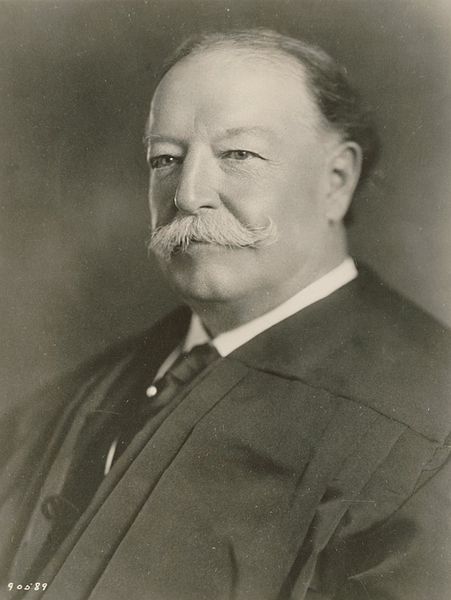
Chief Justice John Roberts and his conservative majority like to cosplay as historians when they write court opinions that determine what rights we get to have and exercise. In August, though, Roberts tried the real thing. He took to the In Pursuitproject’s Substack to write a brief history of a man he admires: former president and chief justice, William Howard Taft.
Roberts’ version of Taft is a sober, steady president (1909-1913) to be hailed for his refusal to unduly use executive power. And for Roberts, Chief Justice Taft (1921-1930) is “one of [the nation’s] great Chief Justices” because he started modernizing the Supreme Court by growing the institution’s status and constitutional authority — a project Roberts continues to make his own.
But Roberts’ history of Taft is irresponsibly shoddy; he cherry-picks facts, ignores narratives that don’t fit with his rosy portrait of Taft’s presidency, and he completely omits Taft’s damning record on race relations and civil rights.
In truth, Taft was a white supremacist. He admitted as much on the campaign trail in 1906, when he told Republican voters in North Carolina that Black people were “a class of persons so ignorant” and likened them to the “mental stature” of children.
Taft’s racism was partly opportunistic. In 1908 he was running as the Republican standard-bearer against Democrat William Jennings Bryan to succeed President Theodore Roosevelt. Since Reconstruction, the southern states had voted exclusively for Democrats. But Taft believed he could find a way to “break” the “Solid South” by luring away racist white voters to vote Republican. His preferred tactic was a racist dog-whistle.
And so, while Taft once lamented the arsenal of racist laws that disenfranchised Black Americans throughout the country, he didn’t think Jim Crow discrimination was a very big deal. After all, it was merely “the ignorant colored voter,” he believed, who was being kept away from the polls — downplaying the violence that upheld disenfranchisement. Perhaps things might change, he added, if Black men got smarter and worked harder. For Taft, Black Americans needed to earn the vote and prove to white society that they could be entrusted with that privilege.
Taft’s electoral strategy never panned out. Even though he handily won the 1908 election, the “Solid South” stuck with Democrats. Nonetheless, as president, Taft continued to side with white supremacy.
In 1911, the Ninth Cavalry Regiment of Black troops — the famed “Buffalo Soldiers” — were stationed in San Antonio, where they encountered Jim Crow streetcar laws that mandated segregated seating. The troops refused to obey, destroying the segregation signs and standing up to streetcar conductors who demanded compliance. Democratic congressman and future Vice President John Nance Garner lobbied Taft to punish the U.S. soldiers, and the Taft eagerly complied, dispatching the Buffalo Soldiers to the desert to monitor the U.S.-Mexican border.
President Taft also did nothing to confront the lynching epidemic that claimed roughly 250 Black lives during his presidency. In his first Annual Message to Congress — the forerunner to today’s State of the Union address — Taft explained that he sympathized with those who might choose to become part of the lynch mob. Yes, he conceded, lynchings involved “lawless violence and cruelty.” But Taft excused this, arguing that white people conjured the lynch mob because they were sick and tired of waiting for the ponderous court system to deal with Black people that supposedly broke the law. Faced with this “injustice,” the white lynch mob’s actions were justified, according to Taft.
Taft’s forgiving attitude toward the lynch mob wasn’t just theoretical. On April 20, 1911, a white lynch mob in Livermore, Kentucky murdered a Black pool hall manager named Will Potter inside the local opera house. For the supposed crime of kicking white ruffians out of the pool hall, Potter “was dragged before the footlights and his body riddled with bullets from the guns of an audience of half a hundred determined avengers,” according to the New York Times. Rumor had it that witnesses were charged admission. Those who wanted to be part of the firing squad had to pay extra. When the shooting stopped, “the lights were then extinguished, the curtain lowered, and the mob then filed out.”
The NAACP’s executive committee dispatched a plea to leading government officials, including Taft, demanding action. An NAACP committee even visited Taft to request that he condemn lynching. According to an NAACP internal document dated June 11, 1911, “The President assured the Committee that he could do nothing, that it was a matter to be left to the individual states.”
Taft’s refusal to use executive authority to confront lynching is shocking. However, it is this type of inaction that Chief Justice Roberts believes made Taft a model chief executive. Roberts’ favorable interpretation of the Taft presidency highlights his restraint. “Steady competence, self-restraint, and respect for the other branches were the hallmarks of the Taft Administration,” writes Roberts.
Taft’s contemporaries were less impressed with his presidency.
Taft was one of the few incumbent presidents to lose reelection, somehow coming in third in what should have been a two-way race in the 1912 contest. He’d promised to lower tariffs but ended up raising them, and Taft’s unwavering support for an ultra-conservative Supreme Court all but doomed progressive reforms in areas like labor rights. So dire was Taft’s record that his former mentor, Teddy Roosevelt, came out of retirement to challenge him for the Republican nomination. In the general election, Democrat Woodrow Wilson trounced Roosevelt — running as the Progressive Party candidate — as well as Taft and Socialist Eugene Debs.
Roberts reserves his greatest appreciation for Taft’s contributions as chief justice between 1921 and 1930, which grew the “prestige” and “authority” of the Supreme Court. Namely, Taft pushed passage of the Judiciary Act of 1925, “which gave the Supreme Court control over its own docket,” and oversaw construction of the court’s august building on Capitol Hill.
But what about the Taft Court’s actual decisions? Here Roberts has little to say, but recent scholarship by law professors Nikolas Bowie and Daphna Renan shows that, at best, Taft and most of his colleagues had a studied disinterest in civil rights. At worst, Taft used his opinion in the 1926 case Myers v. United States to stamp the Supreme Court’s imprimatur on the white supremacist version of the history of Reconstruction.
The case concerned a Reconstruction-era law that prevented President Andrew Johnson from firing federal officers committed to implementing the Reconstruction Acts after the Civil War. For Taft, Reconstruction wasn’t an attempt to use the law to right the wrongs of slavery and legislate equality, but an attempt “to reverse” the Constitution.
Of all his contributions on the bench, this was the decision of which Chief Justice Taft was most proud. Taft’s prized decision was of a piece with an emerging white supremacist revisionist history of the Civil War and Reconstruction seen, for example, in D.W. Griffith’s film Birth of a Nation (1915) and in the explicitly pro-slavery, pro-Confederacy approach to writing American history pioneered by William Dunning and his students, whose work was used to bolster Jim Crow.
Made By History sponsors. FOR USE ON MADE BY HISTORY STORIES ONLY.Inquirer Staff
So the question, then, is: why did Roberts write this fluffy, mythological history of Taft? Is it because Roberts’ selective historical method ignored Taft’s abysmal record on civil rights and lynching? Or perhaps Roberts has never heard of Taft’s Myers decision.
A less generous answer might be that while Roberts chose to airbrush Taft’s race relations and civil rights story out of his history, the current chief justice knows more than he’s letting on. After all, in cases like Callais v. Louisiana (2026), Brnovich v. Democratic National Committee (2021), and Shelby County v. Holder (2013), Roberts led the charge to destroy the single most significant civil rights legislation ever enacted: the Voting Rights Act.
If Taft’s legacy was to retrench the freedoms won during the Civil War and Reconstruction, Roberts’ legacy may one day be recognized as an assault on the victories of the Civil Rights Movement.
It doesn’t take much digging in the history of race relations and civil rights to see that Taft’s executive restraint and court stewardship that Roberts so admires served the agenda of perpetuating Jim Crow white supremacy. This is bad history. But perhaps Roberts’ methodological sins of omission tell us exactly why the sitting chief justice sees so much to admire in his predecessor.
Made by History takes readers beyond the headlines with articles written and edited by professional historians. Opinions expressed do not necessarily reflect the views of The Inquirer.
It appears harmless, but the stubborn ragweed can grow almost anywhere, and it relentlessly torments allergy sufferers every year.
We’re in the midst of its peak season for high volume, and all that recent rain may have given it a boost, too. Just one single tooth-leaved plant can produce billions of pollen particles.
🌿 Intensity can be tough to predict. In the Philly region, the season tends to spike in early and mid-September, but high pollen levels can last into the autumnal equinox. Our pollen-counting network has also shrunk, making it harder to know just how much is in the air.
🤧 Sensitive to pollen? You are in the company of roughly several hundred thousand people in the region. To help the side effects, limit time outdoors on dry, windy days. When outside, wear a dust mask. When indoors, keep windows shut, and shower before going to bed.
Fairmount Park has become a favorite target of illegal tire dumpers with U-Haul trucks, frustrating park-goers and the city as it engages in whack-a-mole.
From roller skating to festivals, immersive exhibits, and more over Labor Day weekend around Philadelphia, we rounded up the best family-friendly things to do.
Only Pennsylvania separates departments for managing fish and wildlife. Combining them could save $34 million a year.
Officials are weighing a settlement that would significantly preserve more of Chester County’s sprawling Rock Hill Farm — but still allow for development.
The Trump administration has proposed giving a small parcel of land in Yosemite National Park in California to a private developer, the New York Times reports.
🐛 Your outdoorsy experience
Reader Barbara B. sent in another snap from her adventures:
A bug’s-eye view from a summer meadow. This was taken at Idlewild Farm Natural Lands Preserve in Gladwyne.
Thanks for sharing.
📥 I’d love to see your photos, too. What are you doing or seeing out there? Send me an email, and you may see your stories and/or pictures featured right here.
🎤 Now we’re passing the microphone to Tony Wood, our resident weather expert.
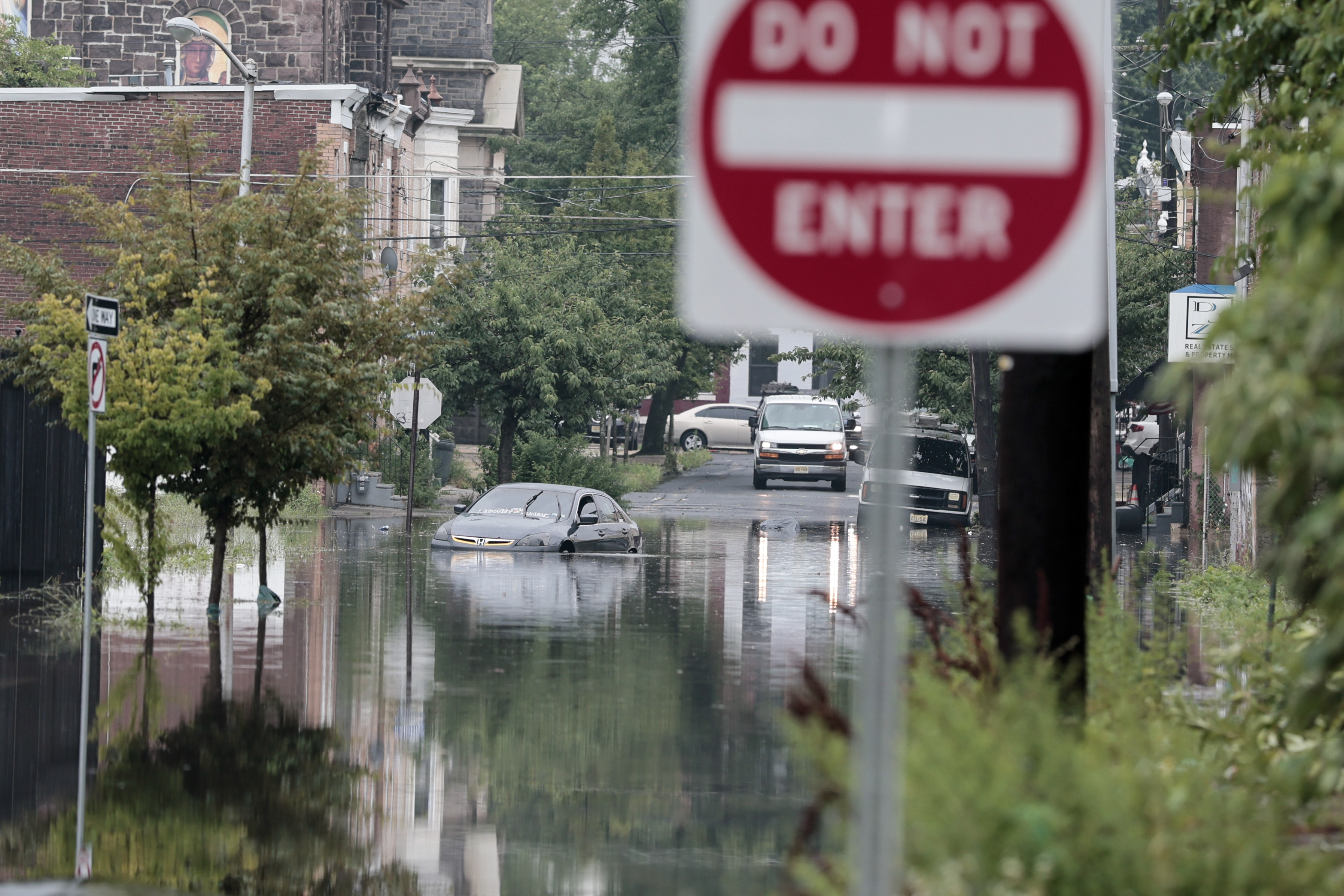
If you perceive that the Philadelphia region has had an extraordinary number of flood events this summer, you are not hallucinating.
The National Weather Service in Mount Holly has set a record for issuing flood warnings this year with 147 in its coverage area from Delaware to northern New Jersey, including 76 in the Philadelphia region,and monthly records in July and August. And an Inquirer analysis documented that among 2,200 U.S. counties, Philly and six of its neighboring counties rank in the top 25 for warnings issued this year, most of which have been followed by actual floods.
In addition, with four months to go, The Inquirer analysis found, the region already has had nearly triple the annual average for flood warnings, during the 18 years in which it has been using its current methodology.
All this without a whiff of a tropical-storm remnant, and the region still emerging from drought conditions. — Anthony R. Wood
Mikiah Roberson expected to receive her federal $6,700 student loan disbursement sometime between May 27 and June 3, just in time to make her rent and car payments. Instead, June 3 came and went. Days, weeks and finally over a month passed.
Roberson, a graduate student in University of Maryland Global Campus’s digital forensics and cyber investigation program, said the stress only compounded as her eight-week summer semester continued without any of her expected financial aid. As a disabled veteran, Roberson’s tuition is covered, but she relies on federal student loans to pay for living expenses while in school.
“It had a major impact on my mental and emotional health,” Roberson said, as she struggled to get clear answers on when or if she might receive the money. “Just constantly stressing out whether an eviction notice would be coming, if my lights would be turned off, if my car would be repossessed.”
Federal student loan disbursements for many students, like Roberson, were delayed over the summer session after new federal rules kicked in on July 1 that required major updates to the systems colleges use to administer aid. While no one is tracking the full scale of the problem, experts are worried about whether delays will persist into the fall semester that is underway. That could have severe impacts for the nearly 60 percent of students who already experience some form of housing or food insecurity.
When loan money gets held up, students have no recourse against either their school or the federal government. Instead they must find ways to temporarily cover personal budget gaps of thousands of dollars — at a time when the cost of housing and other basic needs are rising rapidly.
Delayed student loan disbursements are “incredibly significant in terms of whether a student is able to remain enrolled and remain housed and cover their own basic needs,” said Aissa Canchola Bañez, policy director at Protect Borrowers, a nonprofit that advocates for student loan borrowers. “Everything is more expensive, and so that just makes financial aid and the loans that these students are eligible for and entitled to even more consequential.”
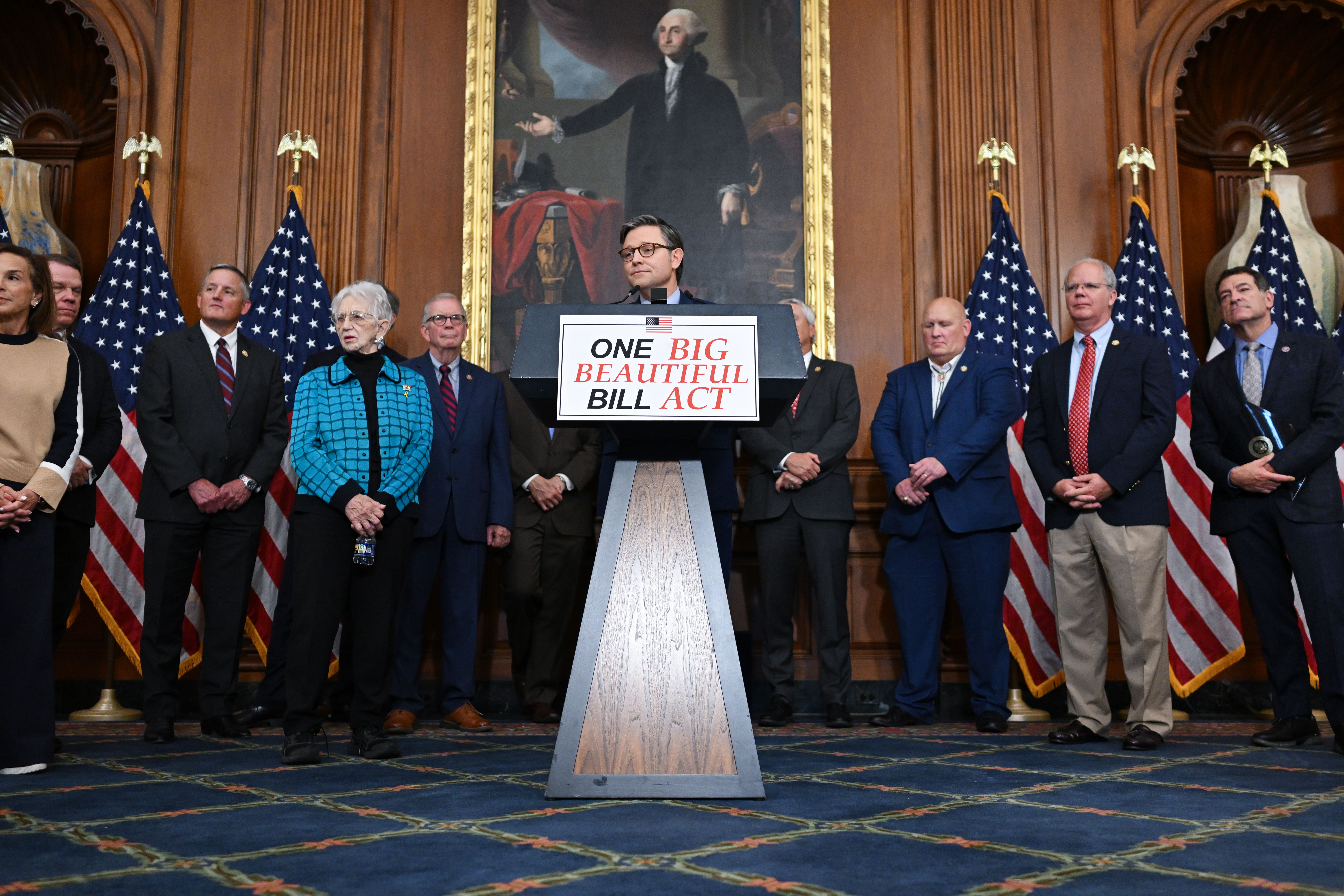
Experts, advocates and financial aid administrators place the blame on atypical planning from Congress when it passed the One Big Beautiful Beautiful Bill Act. The legislation didn’t give the Education Department enough time to issue full guidance on new student loan regulations, leaving many colleges struggling to adapt. In some cases they are waiting on third-party software vendors to make needed changes or are calculating and administrating aid by hand.
Ellen Keast, a spokesperson for the Education Department, said in an email that the department worked within the deadlines set by the One Big Beautiful Bill Act, which required the changes to take effect on July 1, 2026.
“Congress gave the Department less than a year to implement these changes,” Keast said.
She noted that the agency released the final rules in May, which she said provided “time for schools to prepare.”
Rep. Tim Walberg (R-Michigan), chairman of the House Committee on Education and Workforce, said in an emailed statement that the legislation significantly overhauled a “broken system” and praised the work the Education Department had done.
“Delaying needed reforms would have negative consequences for students and taxpayers,” he said.
The One Big Beautiful Bill Act, signed by President Donald Trump on July 4, 2025, includes a number of provisions that reshape federal student loans, including a new lifetime borrowing limit and lowered limits on outstanding aggregate debt for graduate students. The bill also placed new limits on Parent PLUS loans and eliminated the Graduate PLUS loan program. Another provision, starting the 2026-27 school year, requires schools to prorate loan amounts based on how many credits a student is taking. Altogether, the changes are expected to impact a significant number of the roughly 13 million students annually who rely on federal financial aid.
When students don’t receive their money on time, the delays set off an avalanche of financial problems.
One student in National University’s graduate program in marriage and family therapy told The Hechinger Report she expected a $5,000 disbursement sometime around June 1. The student (whose name is being withheld out of concern of retaliation from her university) relies on these disbursements every three months to cover two months of rent, as she slowly saves up to pay the third month’s rent through her part-time job as a nanny.
“I had to reach out to family members and get help, and that was also really stressful for them because I was hoping to be able to pay them back with my refund, and nobody knew when the refund was coming,” she said. “And so that just kind of created a cascade of tough situations.”
She didn’t receive her funds until mid-July. By that point, she’d paid rent late in June and July, with a $100 late fee each time.
National University did not respond to requests for comment.
When it comes to disbursing financial aid, the relationship between the federal government and higher education institutions is complex. To help mitigate that, the Higher Education Act lays out a “master calendar,” which outlines formal dates and deadlines the Education Department must follow.
Under the master calendar, the department has to start the rulemaking process a full year and a half before the academic school year starts. After negotiations, months of public comment and department review, a final rule needs to be issued in November of the preceding year. But because the One Big Beautiful Bill Act was signed in July 2025 with an effective date of July 1, the department couldn’t follow this timeline. And that gave colleges less time to adjust.
Colleges normally spend the months between November and the start of the next academic year understanding any new regulations, getting clarifying questions answered by the Education Department, and making sure their software vendors have what they need to update their systems, according to Sarah Austin, a policy analyst at the National Association of Student Financial Aid Administrators.
“Just having enough time to get the information, make sure the software vendors have the information, make sure they can then reprogram everything, getting the specs that they need — all of that takes time,” Austin said. “What we’ve seen here is a condensed version of that.” As of August, some of the major software vendors used by colleges still weren’t caught up, she noted.
The National Association of Student Financial Aid Administrators and over 40 other higher education organizations had previously called on the Education Department to delay implementation until July 1, 2027, to allow the process to follow the normal timeline.
“That is not a minor inconvenience. It is a fundamental breakdown in the infrastructure that supports federal student aid delivery,” wrote Kenneth Ferreira, then-president of the Eastern Association of Student Financial Aid Administrators, in an April op-ed.
Institutions also say that the federal government has been slow to roll out guidance and clarifications about some of these changes, and some details are still up in the air, said Austin. The Department released formal guidance on prorating loans for students who aren’t enrolled full-time, for instance, in early August, just a couple of weeks before classes began at many institutions.
Some of the guidance has also been conflicting, with differing information across some of the Education Department’s written materials and webinars, according to the National Association of Student Financial Aid Administrators. On Aug. 20, a group of 16 congressional Democrats sent a letter calling on the Education Department to issue additional guidance clarifying how schools should prorate loans.
“We ended up seeing a lot of last-minute changes, and not enough guidance. And the reason why we have a master calendar provision is it is difficult for colleges to adapt to new regulations when there’s not enough time,” said Mark Kantrowitz, a student loan and financial aid expert.
To Keast, though, the final rule should not have come as a surprise to any colleges. She noted that last November, the department reached consensus on the proposed rules, an early stage in the process.
“If institutions waited until the final rule was issued to start preparing, that was their decision,” Keast said. She also pointed to available published guidance, Q&As, webinars and other resources from the department.
This rift between the department and many of the major organizations representing colleges and financial aid administrators is trickling down to students like Roberson.
“There was a whole lot of passing the buck,” Roberson said on her attempts to get answers on what happened to her financial aid. University of Maryland Global Campus directed her to the Education Department’s Federal Student Aid office. Employees there told her to contact her school.
“Nobody had answers for when the funds would be released,” said Roberson, who said she often received conflicting information.
In an emailed statement, Kaitlin O’Connor, vice president of University Communications at the University of Maryland Global Campus, said the university has been working on the federally required processing changes.
“The university has continued processing and awarding aid, reviewing individual student cases and working closely with federal and higher education partners to ensure compliance with applicable requirements while supporting students throughout the process,” the statement said.
Roberson negotiated partial payments with her landlord and entered payment arrangements for other bills. But the wait stretched into its second month. “You’re telling them, ‘Hey, the money’s coming,’ but weeks are passing and nothing changes,” she said. “I kept pushing out the dates and saying next month I’ll be good, and then here we are at month two, and it’s like now things are getting very detrimental.”
Roberson continued, “You have to start to decide between do I pay a bill or do I get groceries? Do I get gas or do I get food?”
Meanwhile, the stress took a toll on her studies. “I knew that I didn’t want to fail, but it was very, very hard,” she said. “Me and a lot of my classmates were expressing to each other how difficult it is to focus on schoolwork when you have bills piling up and all these things you need to pay.”
Experts predict the crunch will continue into the fall semester as schools try to catch up with the new rules.
Nick Prewett, executive director of financial aid and scholarship services at Stony Brook University and the president of the Eastern Association of Financial Aid Administrators, said so far the delayed disbursement has mostly impacted the school’s medical students, who start in the summer.
But with fall semester underway at most schools, he said, “I think we’re going to see some delays in aid getting out to students. And I think you’re going to hear that kind of message across the country that students, particularly graduate students, are waiting,” Prewett said.
Prewett added that for students enrolled part-time, Stony Brook plans on waiting until the end of the add/drop period (a couple of weeks after school starts) to adjust student loans based on the number of units students end up with. “And I think that’s going to cause a little bit of confusion and maybe a little bit of panic on behalf of the student,” he said.
Roberson eventually received her summer disbursement in mid-July, about six weeks late into an eight-week summer program. She’s supposed to receive another $6,700 disbursement in early September, but she’s no longer counting on getting those funds on time. She’s taking on work as a delivery driver for Amazon — a challenge with her back pain from her disability.
“I’m nervous because I don’t know if we’re going to hit this situation again,” Roberson said. “It’s very nerve-racking just trying to prepare ahead of time for if an issue arises, which is unfair when you’re trying to focus on class.”
This story about student loan changes was produced by The Hechinger Report, a nonprofit, independent news organization focused on inequality and innovation in education.