Blog

  • Mistrial is declared in Lindsay Clancy child killings case after jury deadlocks

    Mistrial is declared in Lindsay Clancy child killings case after jury deadlocks

    PLYMOUTH, Mass. — A judge in the Lindsay Clancy murder trial declared a mistrial Friday after jurors failed to reach a verdict in a case that sharply divided many Americans over whether the Massachusetts woman should be held criminally responsible for killing her three young children.

    The trial generated intense interest for more than a month, drawing attention to issues around maternal mental health after childbirth.

    Clancy, a 36-year-old former labor and delivery nurse, never disputed that she killed the children. But her attorney said she had a rare condition called postpartum psychosis when she strangled her kids, the youngest just 8 months old, then tried to take her own life in 2023. Prosecutors said Clancy knew what she was doing.

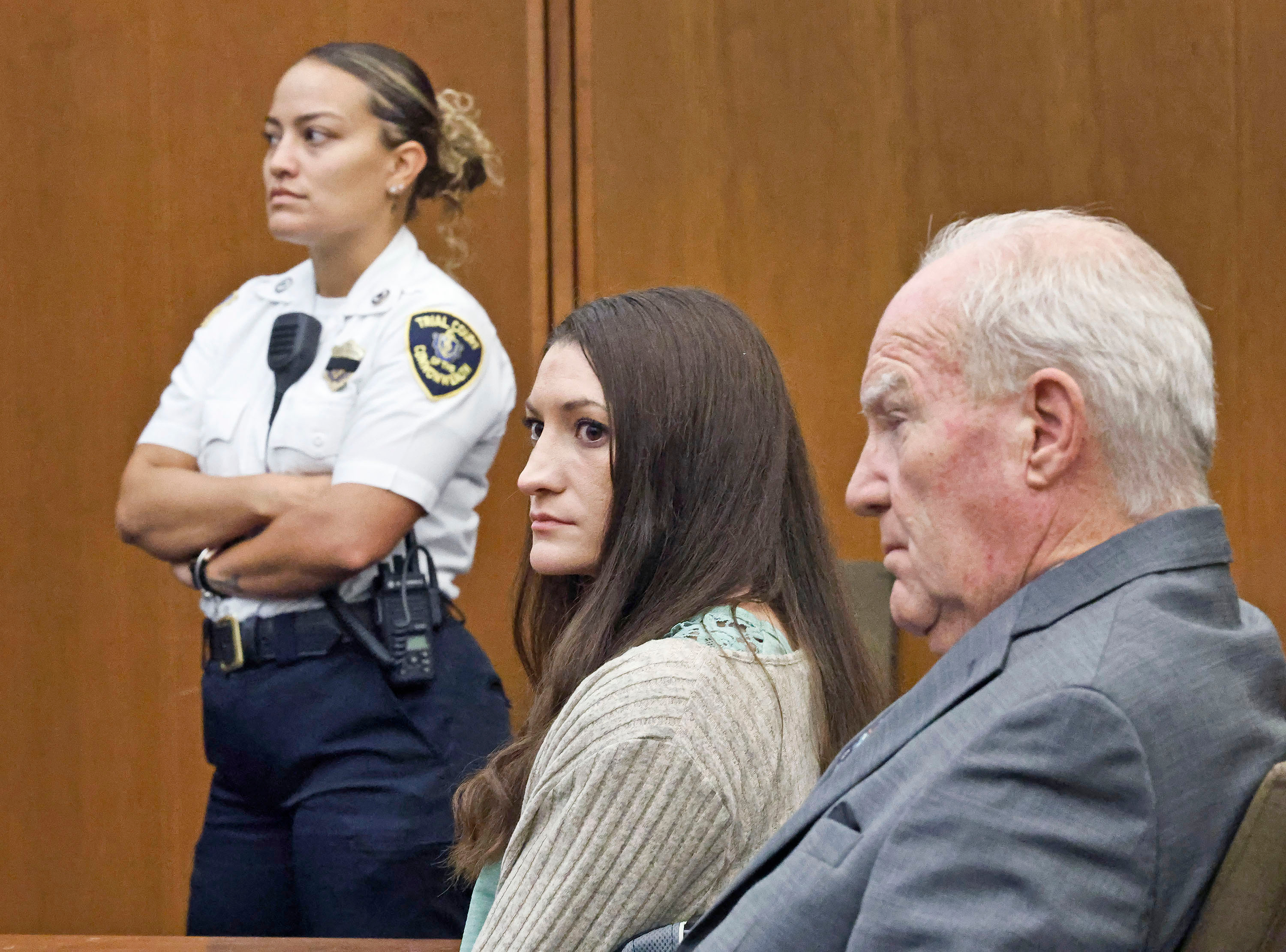
    Friday’s mistrial, on the seventh day of deliberations, leaves the case unresolved. In the end, the decision seemed to surprise no one in the courtroom. Neither Clancy nor her family showed any emotion as the judge announced the trial was ending without a resolution.

    Her parents and her sister were escorted by state police from the back of the courthouse, saying nothing to reporters. Her ex-husband Patrick Clancy, the trial’s first witness, has said in past interviews that he forgives her and believes her actions were the result of mental illness.

    Lindsay Clancy could face another trial

    The prosecutor who originally decided to charge Clancy said there would not be an immediate decision about a second trial. He said public opinion would not influence any decision.

    “This was and has always been about getting justice for those three little babies,” said Plymouth County District Attorney Timothy Cruz. “This case is not about the healthcare system, or about how women are treated in it, or what diagnoses there are.”

    He pointed out that the two trial prosecutors were “both mothers themselves.”

    The deliberations took a dramatic turn when the judge said he was going to declare a mistrial Friday before suddenly changing course and letting her defense attorney appeal that decision to the top court in Massachusetts. But the court declined to stop the judge from declaring a mistrial.

    Prosecutors said Clancy acted deliberately when she strangled 5-year-old Cora, 3-year-old Dawson, and 8-month-old Callan Clancy with exercise bands. They said she contrived to get her husband out of the house on Jan. 24, 2023, by sending him to pick up medicine for one of their children and dinner for the family.

    Clancy’s lawyer, Kevin Reddington, said she should not be held criminally responsible because of her postpartum psychosis, a rare mental illness linked to the stress, sleep deprivation, and hormonal changes that follow childbirth.

    Trump weighs in on Lindsay Clancy case

    Three times this week, jurors said they were unable to reach a unanimous decision. The jury’s foreperson told the judge Thursday that a single juror wouldn’t follow the court’s instructions about reasonable doubt.

    Outside the courthouse Friday, Reddington blasted the juror he believes stood in the way of an acquittal by other jurors.

    “They (the jury) know they were robbed by one man, for whatever his agenda was, who stole seven weeks of the life of these other jurors that were so attentive, so beautiful, so wonderful,” he said.

    “You could see how defeated they were sitting there,” he said. “I got a funny feeling they would have gone on for another week if they had to. So I hope that guy can sleep well at night.”

    Millions across the U.S. watched the livestreamed trial. Even President Donald Trump said he was following the coverage.

    “It’s a terrible situation. Look, she did a horrible, horrible thing,” Trump said Friday. “Can’t be worse. But you’ll find out what the price to pay is. There’ll be a price — a mental institution or jail or something.”

    The judge acknowledged early during deliberations that the trial had been emotionally and physically exhausting for everyone. Much of the testimony was excruciating to hear, from the heartbreaking 911 call made by the children’s father who found their bodies, to the descriptions of how they died.

    Clancy was brought to tears several times. At one point, the judge called a short break as Clancy’s loud sobs filled the courtroom while the children’s autopsy photos were shown.

    Clancy’s mental health was the focus of the trial

    Over 21 days of testimony, jurors heard how Clancy’s mental health collapsed after Callan’s birth.

    Deeply anxious about a planned return to work, unable to sleep, and experiencing what she described as a disturbing brain fog, Clancy sought care from experts in postpregnancy mood disorders, who prescribed multiple psychiatric medications.

    Clancy’s family members testified that she expressed concern about her mental health decline. Her former mother-in-law, Susan Clancy, described her as a “very nurturing, very loving mother” who was “begging for help.”

    In early January, she checked herself in to a psychiatric hospital for more intensive treatment, but her stay was short. She killed the children 19 days after she was discharged, leaving their bodies in the basement of the family’s home in coastal Duxbury, Mass. Clancy jumped from a second-story window immediately after and remains paralyzed from the waist down.

    Clancy jurors heard differing views from experts

    Prosecutors conceded that Clancy had severe mental illness, but insisted she was able to understand and control her actions. They emphasized that although she claimed to have heard a male voice commanding her to kill the children, she never disclosed hearing voices to her mental health providers before the killings.

    In its latter stages, the trial became a battle of medical experts.

    Kirk Heilbrun, a forensic psychologist hired by prosecutors, testified he didn’t believe her story about hearing voices or that she had acute psychosis. He said she took the children’s lives so they wouldn’t “suffer” after she killed herself.

    Phillip Resnick, a forensic psychiatrist who testified for the defense, said Clancy was “clearly psychotic” and not in control of her actions. “It was almost like she was a puppet and someone else was pulling the strings,” he said.

  • Crestmont is the product of American racism and Black survival

    Crestmont is the product of American racism and Black survival

    Before you can understand Abington Township’s historically African American unincorporated community of Crestmont, you have to understand Willow Grove Park.

    Not the mall with that name, but the Willow Grove Park that predates it: One of the largest and most famous amusement parks on the East Coast.

    It opened in 1896, built by the Philadelphia Rapid Transit Co. It had roller coasters, a lake, restaurants, concerts, a massive music pavilion, and crowds pouring in.

    It shaped the entire local economy and brought thousands of people out to the suburbs every week. A place like that needed labor. Real labor. Constant labor. And that’s where Crestmont’s story begins.

    The “Welcome to Crestmont” sign sits directly across from the Willow Grove Mall.DJ Atkins

    I didn’t grow up in Glenside or Willow Grove. I came out here for work, almost 15 years ago, and eventually I moved here. Eight years living in these suburbs gives you time to notice things, to ask questions, to wonder about the layout of the place. And one question kept coming back to me: Why is Crestmont, a mostly Black community, sitting right in the middle of overwhelmingly white suburbs?

    If you know the area, you know exactly what I mean. Roslyn, Glenside, Willow Grove, Abington … they’re all majority white, and have been that way for generations.

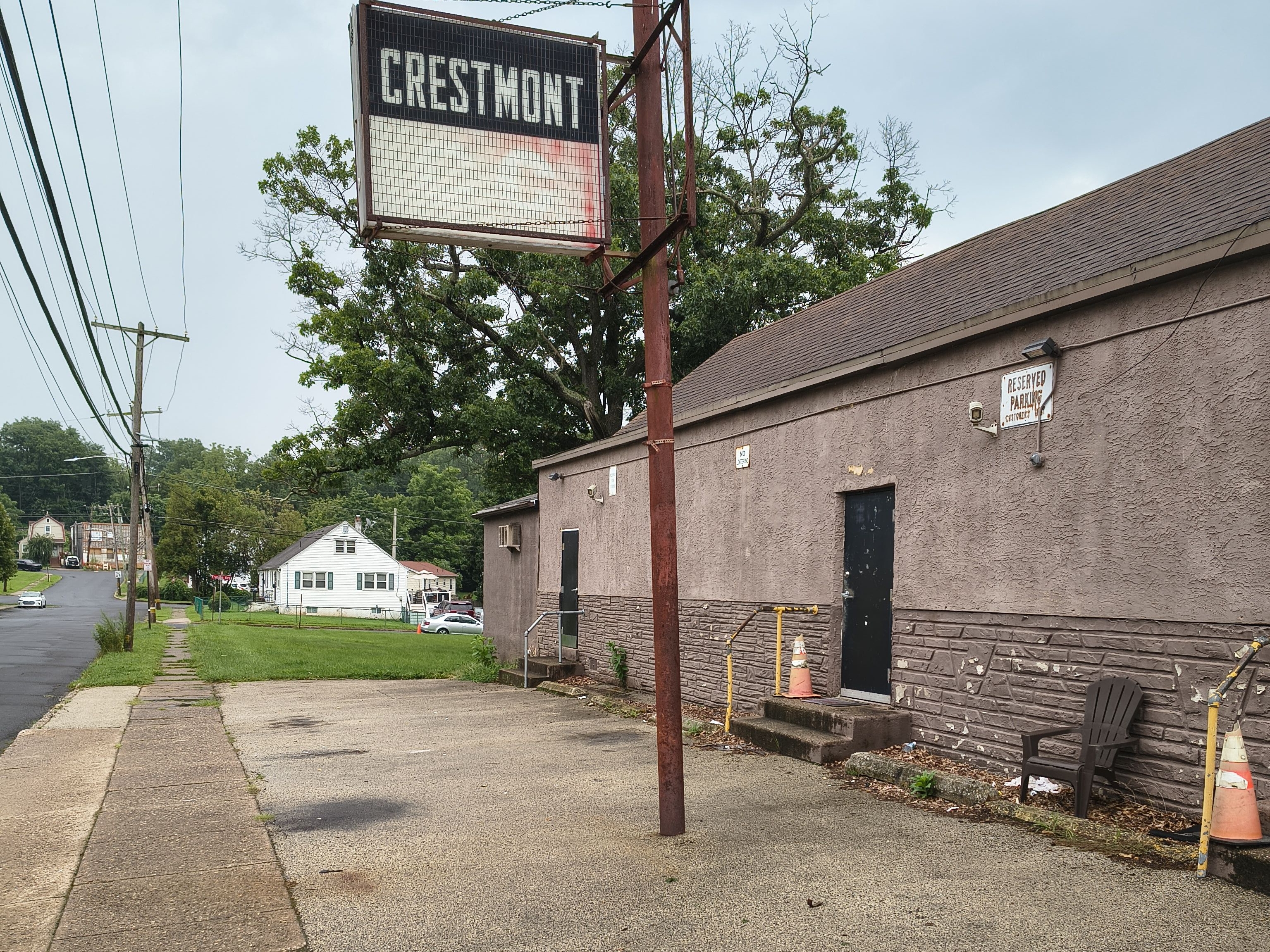
    Then suddenly, right next to the Willow Grove Mall parking lot, there’s Crestmont.

    Houses closer together. A different feel. A different history. A different story.

    Crestmont’s density, the layout, the architecture, the vibe, the community identity — all of it comes from early working‑class development, limited access to loans, limited access to improvements, township decisions, generational continuity, racial boundaries, economic exclusion, and the strength of the people who lived there, writes DJ Atkins.DJ Atkins

    I started talking about Crestmont to people who grew up here. I started learning about Willow Grove Park, looking at the geography, thinking about the era, and the truth became impossible to ignore.

    It’s a truth all of us need to hear, because it shows exactly how racism shapes the places we live.

    Willow Grove Park opened only 31 years after slavery ended. That was the same year Plessy v. Ferguson legalized segregation. Old newspaper coverage, township references, and public history written about the park all describe a large-scale operation with ties to the trolley company, township officials, police, contractors, and local business owners.

    A machine like that needed workers who could show up every day, early, late, and in all seasons. Black workers came to fill Willow Grove Park jobs and stayed because the work kept coming. In line with what the public record shows, people with long family histories in Crestmont talked to me about how common it was for their relatives and neighbors to all work at the park.

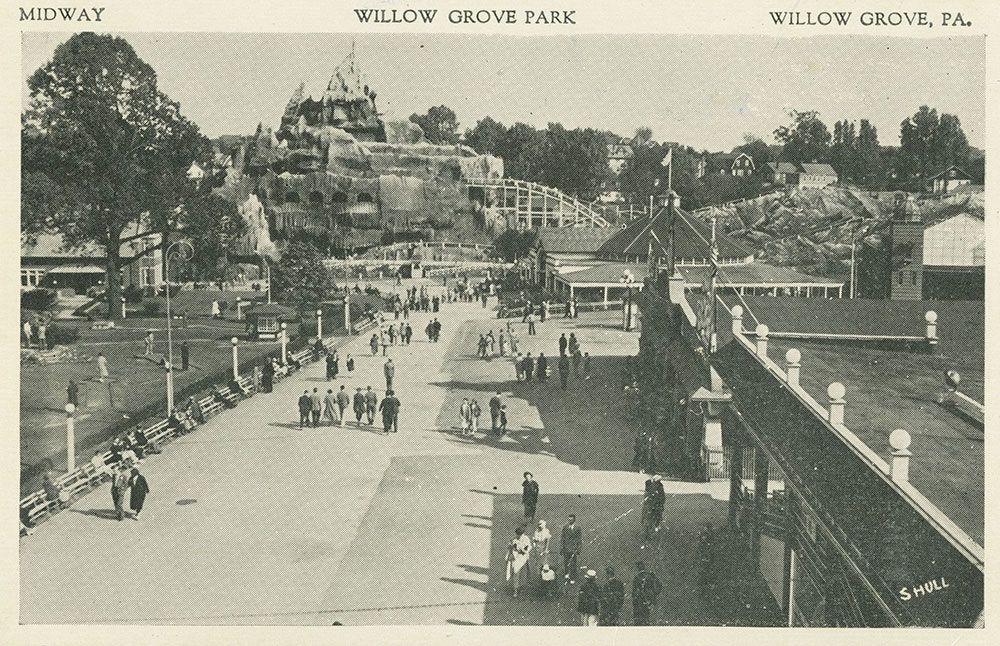
    A vintage postcard showing the Willow Grove Park midway. Willow Grove Park opened in 1896; it was closed in 1975 and demolished a year later.Courtesy of D.J. Atkins

    But many of those workers didn’t have cars, and walking through certain neighborhoods wasn’t safe. Black people weren’t welcome. Renting was restricted, and loans for home purchases were denied. Still, the workers needed to live close. Close to the park, close to the trolley line, close to the commercial strip that fed the park.

    Exactly where Crestmont is.

    Once a few Black families moved in, the neighborhood took shape. Word spread. More families followed. White buyers stayed away. Black buyers were directed toward the same area. The lots stayed small. The houses stayed close. The community grew through necessity, connection, and resilience.

    People who grew up here remember the tensions between high schoolers. They remember buying packaged goods in Crestmont because they couldn’t get them elsewhere. They remember the social boundaries. They remember how Crestmont stood out from the surrounding suburbs. None of that is random. It’s the long-term result of how the neighborhood began.

    Crestmont exists because Willow Grove Park existed. Segregation created the boundary. The park created the need. Together, they created the neighborhood.

    One of the homes in Crestmont, photographed in 2026.DJ Atkins

    Crestmont isn’t unique.

    Across the country, Black neighborhoods formed near major employers because segregation blocked housing everywhere else.

    In Ardmore, Black families lived near the railroad and the estates they worked in. In Bryn Mawr, the Black neighborhood grew beside the service corridors of the Main Line mansions. In Atlantic City, Black workers lived near the Boardwalk hotels they kept running. In Pittsburgh’s Hill District, Black families settled near the steel mills and rail yards. In Baltimore, Black neighborhoods formed beside the shipyards and factories.

    Wherever a big employer needed labor, and wherever white neighborhoods refused to open their doors, a Black community formed in the one pocket where the pressure made it possible — and they look the way they do today because of their origins.

    One of the homes in Crestmont, an unincorporated community in Abington Township that owes its existence to Willow Grove Park and to housing segregation in the surrounding communities.DJ Atkins

    Crestmont’s density, the layout, the architecture, the vibe, the community identity — all of it comes from early working‑class development, limited access to loans, limited access to improvements, township decisions, generational continuity, racial boundaries, economic exclusion, and the strength of the people who lived there.

    It’s not a mystery. It’s not random. It’s not accidental. It’s a product of American racism and Black survival.

    People around here know Crestmont. But they don’t necessarily know its origin or see in it an example of how racism shapes geography and how Black communities build life anyway.

    Once you see that, you can’t unsee it.

    DJ Atkins is a Philly‑area DJ, radio host, and cultural writer. He also works in poetry, blending storytelling, music, and community history in his creative work.

  • WNBA commissioner Cathy Engelbert, a South Jersey native, to retire in December

    WNBA commissioner Cathy Engelbert, a South Jersey native, to retire in December

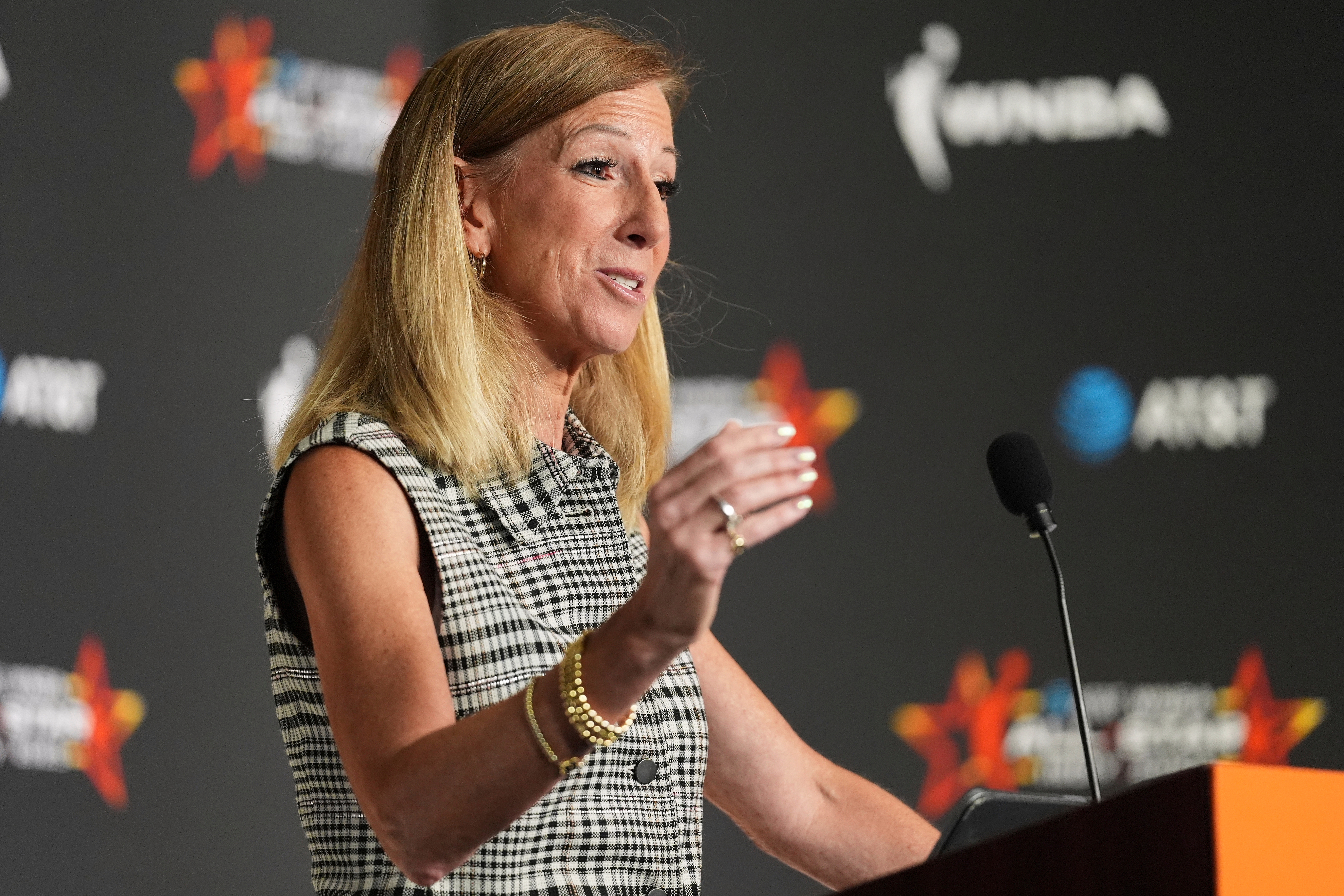
    WNBA commissioner Cathy Engelbert is retiring at the end the year, bringing to a close her seven-plus years at the helm of the league and a stewardship that has been transformative and at times tumultuous.

    Engelbert is the second-longest tenured WNBA president or commissioner, and she helped negotiate a lucrative collective bargaining agreement this past spring that resulted in the league’s first set of million-dollar player salaries. Philly-based lawyer Deb Willig helped lead negotiations for that CBA.

    “Cathy has presided over the WNBA through the most significant period of growth in the league’s 30-year history,” NBA commissioner Adam Silver said Friday when announcing Engelbert’s decision. “We are grateful for Cathy’s leadership and unwavering commitment to the advancement of women’s basketball.”

    Engelbert, a Collingswood native who turns 62 in November, told the Associated Press that she has been thinking about retiring for months.

    “When I first came to the league, I intended to do this for 3½ years,” she said in a phone interview. “The 7½ years exceeded that time. This is a really good time, given the financial transformation journey we’ve been on. Getting the collective bargaining agreement done, getting a long-term media rights deal done, getting expansion done.”

    Engelbert insists that the decision to leave was her own and that she did not feel any pressure to step down from NBA or WNBA stakeholders.

    Who’s next?

    The commissioner said she has been working on a succession plan over the last few years. While she didn’t give any specifics on who might be considered for the position, Engelbert did say there are both internal and external potential candidates on the league’s radar.

    “It’s a good time to hand it off to the next leader to take the ‘W’ into a better phase,” she said. “I’m proud of the team we built and everything we accomplished. A leader knows when it’s time to drop the mic and move on after building a powerhouse team in the league office.”

    Engelbert said she has mixed emotions about leaving.

    “I love women’s basketball, and am not going anywhere yet,” said Engelbert, who was a point guard for Muffet McGraw at Lehigh. “We’ll run a real succession process in the remaining four months. If we don’t find someone, I’ll stay on. I had no transition. I walked in the door, and I was by myself as no one transitioned me into this role.

    “Hopefully I can help this next leader transition in especially considering the elevation of this league.”

    The WNBA has grown at an exponential rate during Engelbert’s tenure as commissioner, with record television ratings, strong attendance, a new long-term media rights deal and expansion to 18 teams by the end of the decade. That run of expansion will be capped by a team coming to Philadelphia in 2030.

    “I was brought in as a business leader to transform the business,” she said. “I look at revenue and merchandise, viewership and attendance,” she said, noting how they’ve all improved. “A great leader senses when it’s time for someone else to come in. When I came in, this league was facing questions about our long-term viability and sustainability.”

    Turmoil, tension

    Engelbert said the growth of the league has “blown away her expectations” since she stepped into her role after leaving her previous position as president of Deloitte in 2019.

    Besides the new CBA, the list of things she is most proud of includes getting charter travel for players, keeping the league going during the coronavirus pandemic, the historic media rights deal and exponential increase in the value of WNBA franchises. In 2019, the average value of a WNBA franchise was $10 million; in 2026, it is about $460 million.

    Along with the financial gains, however, turmoil and tension have accompanied the WNBA’s growth.

    Players say they have seen more social media vitriol directed toward them over the last few years, and some don’t feel the league has done enough to ensure their safety. The league also has been at the center of discussions about transgender athletes playing in the league.

    Engelbert has repeatedly said the online attacks of players are unacceptable and she backs league initiatives to protect players. She also said there should be no confusion on the transgender question.

    “We have no current eligibility issues in the WNBA,” Engelbert said, adding that “if we did, we would have a thoughtful policy discussion with the [players’ association] and the players.”

    While there was a strained partnership between the commissioner and players during the recent CBA negotiations, Engelbert insists she has a good relationship with them.

    Talks between the commissioner and players have been complicated.

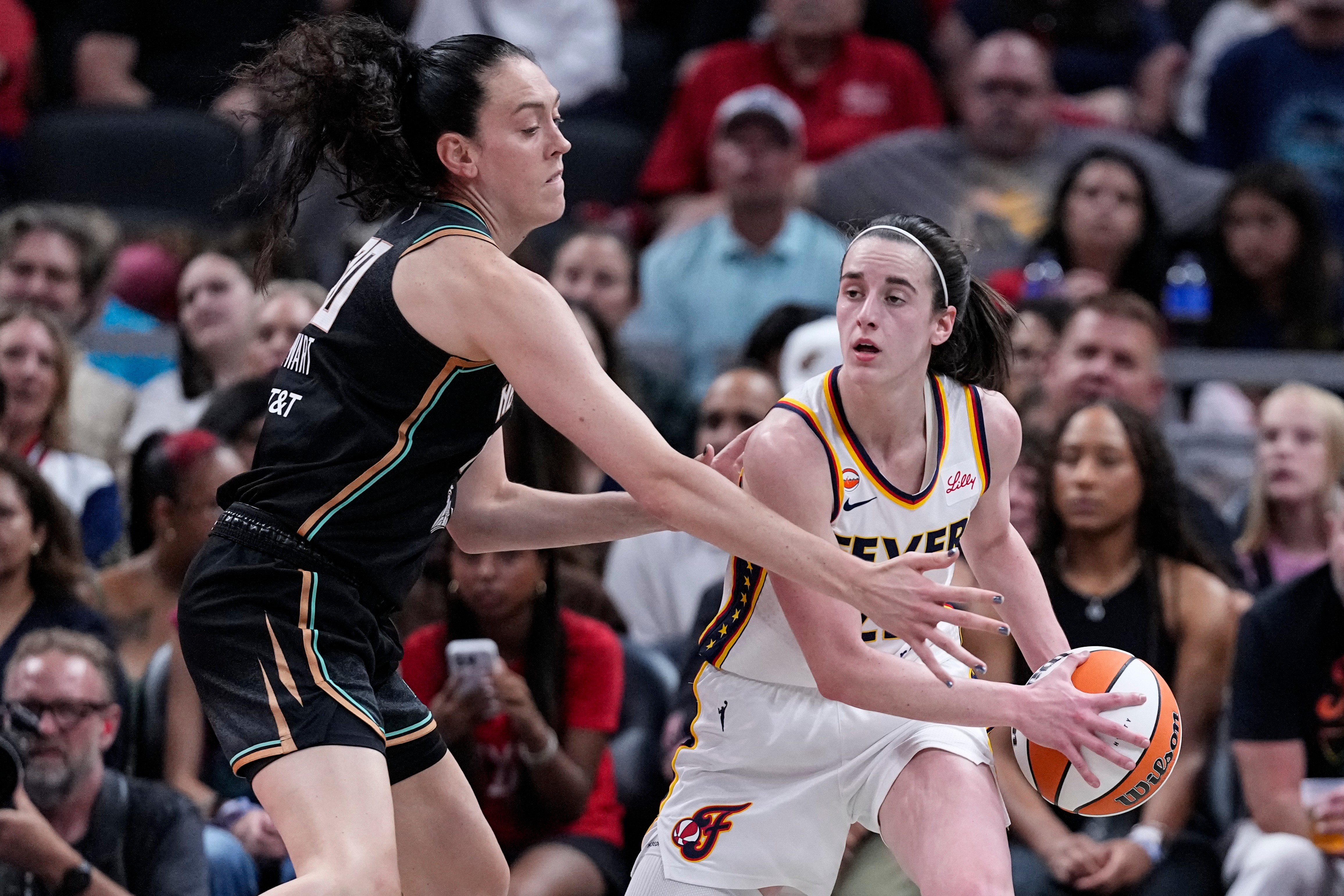
    New York Liberty forward Breanna Stewart, who’s vice president of the WNBA players’ union executive committee, said before the All-Star Game that there is a respect for Engelbert among the players, just not much of a relationship.

    New York Liberty forward Breanna Stewart (30) defends as Indiana Fever guard Caitlin Clark looks to pass in the first half of a game on Aug. 11 in Indianapolis.Michael Conroy

    Engelbert’s future

    Engelbert said she is ready to do what most retirees plan: spend more time with family.

    She also admitted that the online hate she receives has affected her family as well, though she did not share details of the impact.

    “There have been some hard parts of that on my family with the vitriol and hate I get online,” Engelbert said.

    Sixers majority owner Josh Harris (left), Detroit Pistons vice chairman Arn Tellem, WNBA commissioner Cathy Engelbert, and Cleveland Cavaliers CEO Nic Barlage celebrate the announcement of three new teams, including a franchise coming to Philly.Jonathan Tannenwald

    Her retirement will make her mother happy. Her father, Kurt, was a Hall of Fame basketball player at St. Joseph’s who died in 1987. Her parents were from Northeast Philly, and five of her siblings attended Villanova, according to a 2019 Inquirer article.

    “My mom is turning 90 this year, and she said that ‘it would be good if you were retired to spend more time with me,’” Engelbert said, laughing. “I have two children, one I barely see.

    “I’m one of eight kids [and I] have five brothers. They always say can you retire so you can spend more time with us.”

    Come Jan. 1, her family will get its wish.

  • John Fetterman reportedly dismissed CHOP leaders, rejected other meetings as he avoids Senate duties

    John Fetterman reportedly dismissed CHOP leaders, rejected other meetings as he avoids Senate duties

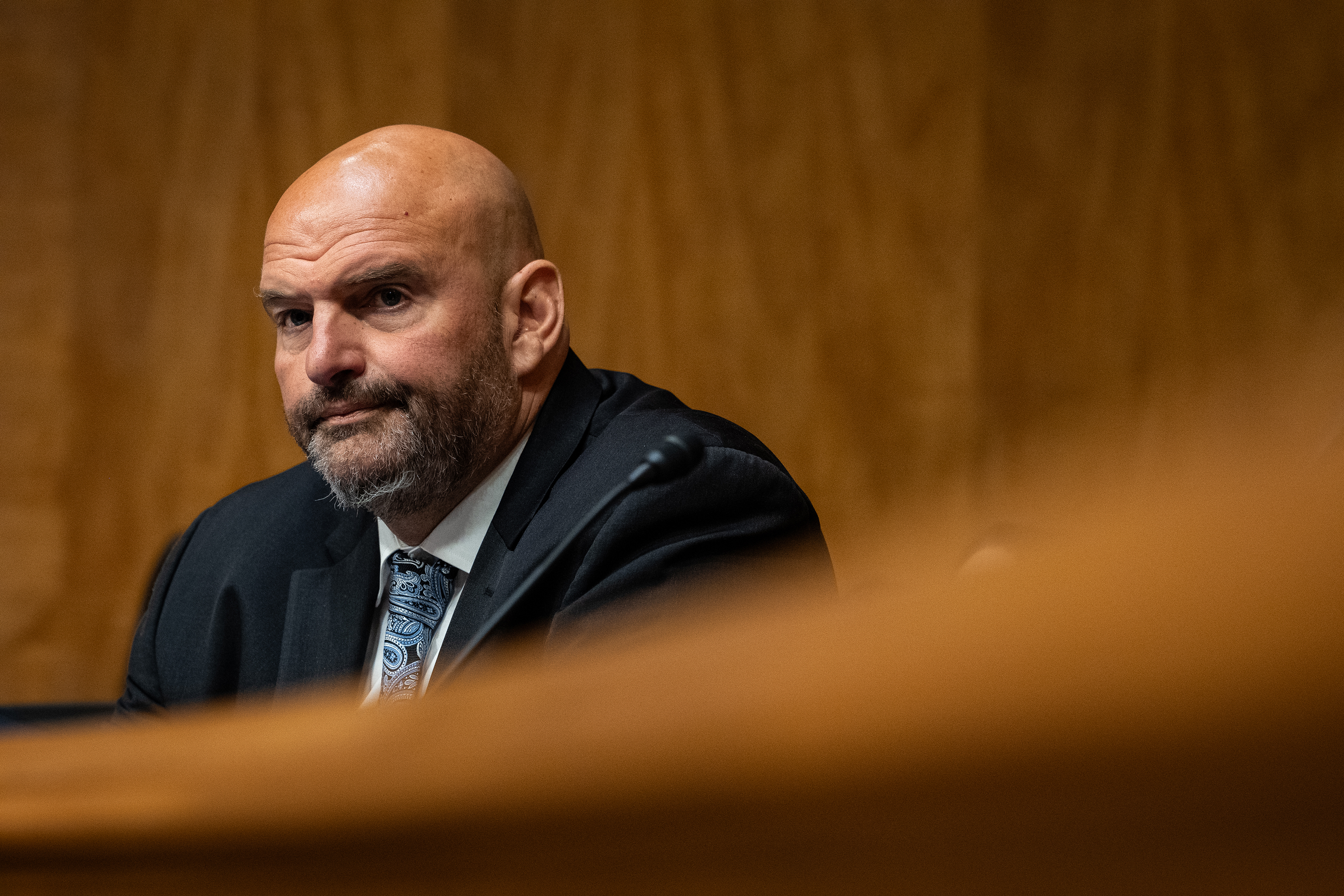
    U.S. Sen. John Fetterman privately rejected the concerns of leaders at the Children’s Hospital of Philadelphia who requested a meeting to talk about vaccine policy and Medicaid cuts, speculating to an aide that they “just want free trips to DC,” according to a new report that sparked another wave of criticism aimed at the first-term senator.

    The report from The Wall Street Journal details several meetings or events that while routine for many senators in Washington Fetterman frequently tried to get out of, including the meeting with CHOP and a funeral for three York County police officers who were killed while on duty.

    Claims that Fetterman is not fully performing the role of a U.S. senator have plagued much of his nearly four years in office. His former staffers have publicly and privately said he often cancels meetings at the last minute, including with constituent groups and Pennsylvania officials who would normally be considered allies.

    As he increasingly attacks his own party, the Pennsylvania Democrat has instead appeared regularly on conservative media. He’s prioritized meetings and events about Israel, whose war in Gaza had been a flashpoint in his break with former Democratic allies and supporters, and he does not make regular public appearances across the state he represents.

    Among the new revelations in The Wall Street Journal story is an interaction the senator had with Yechiel Leiter, the Israel ambassador to the U.S. last year.

    After Fetterman said he wanted to craft a Senate resolution that would require his colleagues to vote on whether the war in Gaza was a genocide, Leiter suggested Fetterman instead write an op-ed about why he supported Israel, The Wall Street Journal reported. Leiter’s embassy later “sent over drafted points for Fetterman to consider,” but Fetterman’s staff withheld them from him out of concerns that writing the op-ed based on the talking points “risked violating the Foreign Agents Registration Act,” according to the report.

    Trump administration official comes to Fetterman’s defense as critics react

    Fetterman’s office did not immediately respond to The Inquirer about the claims in the report or about the reactions to it.

    “John Fetterman is a disgrace,” U.S. Rep. Brendan Boyle (D., Phila.) wrote on social media in response to the story. “Our state deserves better than a lazy trust fund baby who is too lazy to do the job.”

    U.S. Rep. Chris Deluzio (D., Allegheny) called Fetterman’s behavior “pathetic.”

    “[B]etween the laziness, disrespect, and willingness to carry water for a foreign government, it shows us something we already know: this man has no sense of duty,” Deluzio wrote on social media. “He is not up for the high office he was elected to — and we in Pennsylvania will do something about it in 2028.”

    Former U.S. Rep. Conor Lamb and State Rep. Malcolm Kenyatta, Fetterman’s opponents in the 2022 Democratic primary, also condemned him.

    “This report is horrifying, but not new to many of us in PA. John barely showed up as [lieutenant governor] and is constantly MIA as our Senator,” Kenyatta, vice chair of the Democratic National Committee, wrote on social media.

    Boyle, Deluzio, Lamb and Kenyatta are among the Pennsylvania Democrats who are considered potential candidates when Fetterman’s seat is on the ballot again in 2028. Fetterman has not said whether he will seek a second term, and he’s rejected speculation that he will switch parties to become a Republican.

    A robust Democratic primary is likely either way. Just one out of every five likely Democratic voters have a favorable view of him, an Inquirer/New York Times/Siena University poll found last month. At the same time, his favorability among Republicans had grown to a higher level than Pennsylvania’s Republican senator, Dave McCormick.

    The Working Families Party, a left-leaning organization that backed Fetterman in the general election in 2022, has said since late last year that it will recruit a Democratic challenger to replace him. And State Rep. Chris Rabb’s sweeping win in Philadelphia’s race to succeed retiring U.S. Rep. Dwight Evans last spring has given some members of the party hope about the chances for a progressive, anti-establishment candidate for the position.

    Fetterman, meanwhile, has also isolated himself from other Democrats in Washington, according to The Wall Street Journal and other reports this year. The party is looking to capture the Senate majority in the midterm elections this fall — a tall task considering the map of competitive races, but one that could make Fetterman a key swing vote depending on how narrow the majority is for either party. Senate Minority Leader Chuck Schumer, who has called Fetterman “an important member of our caucus,” had dinner with Fetterman last month, according to The Wall Street Journal.

    But Fetterman’s detractors in the party — and his former staffers — have indicated they will continue to put pressure on the senator.

    On Friday as the latest story was circulating, an X account claiming to be a group of the senator’s former staffers launched with the message that it would share their experiences.

    “It’s even worse than you thought,” the first post stated, calling the latest news “the tip of the iceberg.”

    One former staffer with insight into the project, and who spoke with The Inquirer on the condition of anonymity, said it was a legitimate group of former staffers who plan to share real accounts of working for the senator.

    The account quickly gained tens of thousands of followers on Friday afternoon, even drawing the attention of a Trump administration official.

    “I’m disgusted by anonymous leakers, actually,” Harmeet Dhillon, an assistant attorney general for the Civil Rights Division of the U.S. Department of Justice, wrote in a response on X.

    Tré Easton, a former legislative director for Fetterman who has frequently criticized him since leaving his staff in early 2025, said it was “sort of extraordinary” to see other former staffers create such an account. He said he is not involved in the effort.

    Easton said the claims in the story aligned with his experience working for Fetterman.

    “A lot of ink has been spilled about John and his time in office,” Easton said. “What this Journal story captured that these other stories really haven’t is how completely disconnected he is from the work and how he just doesn’t care about it — how he doesn’t care about his constituents and doesn’t care about Pennsylvania in a worthwhile way.”

    ‘Why do I have to keep having to meet with chop’

    The newspaper’s report includes text messages between Fetterman and his staff as they discuss meetings and events that senators would normally attend.

    “3 hours??” Fetterman wrote in response to an aide who told him about the length of a funeral last year for three police officers who were killed while serving a warrant in York County, where Fetterman grew up.

    Fetterman wrote that the time “may be a nonstarter” and did not attend, the Journal reported.

    Discussing the meeting with CHOP officials last September, Fetterman wrote, “Why do I have to keep having to meet with chop,” and an aide responded it was to talk about vaccines and Medicaid cuts, according to the report.

    Along with children’s hospitals and health systems nationally, CHOP faces financial pressure from Medicaid cuts starting next year. While the internationally prominent research institution remains financially strong, around half its patients rely on Medicaid for coverage.

    During the debate over President Donald Trump’s signature budget legislation, CHOP circulated form letters to federal lawmakers that warned about the potential for the cuts to harm families, asking staff and patient families to sign them in opposition.

    Vaccines have also become increasingly political as Trump’s health secretary, Robert F. Kennedy Jr., a longtime anti-vaccine activist, has sought to upend longstanding federal recommendations about the timing and number of immunizations that children receive.

    Fetterman has not weighed in publicly about vaccine changes. But he has loudly rejected the Medicaid changes — saying in a statement last year that he was voting “HELL NO” on the Republican bill, which he called “a disaster.”

    About two months later, he wrote to an aide while discussing the CHOP meeting that he was not concerned about, the Journal reported.

    “I’m convinced they just want free trips to DC,” he wrote.

    Asked for comment on Friday, CHOP, in a statement to The Inquirer, did not comment on that text or its relationship with Fetterman in general.

    “We value the productive conversations we have with legislators and government officials at a local, state and federal level,” the statement read. “Their decisions have a direct impact on children’s ability to thrive in Pennsylvania and beyond, and we take our role as a voice for children very seriously.”

    Staff writer Wendy Ruderman contributed to this article.

  • The Phillies’ Alec Bohm and his parents settled a multimillion-dollar financial mismanagement lawsuit

    The Phillies’ Alec Bohm and his parents settled a multimillion-dollar financial mismanagement lawsuit

    Alec Bohm and his parents have settled a multimillion-dollar financial mismanagement lawsuit, nearly six months after the Phillies’ infielder accused the elder Bohms of enriching themselves off his baseball earnings.

    The terms of the settlement are confidential, said Gary DeVito, a Zarwin Baum attorney representing Bohm.

    The 30-year-old one-time All-Star accused his parents of using several limited liability companies to funnel money from his personal financial accounts, which they then “converted to their own use,” the suit said.

    The young Bohm asked a Philadelphia Common Pleas Judge to order his parents to pay him at least a $3 million judgment.

    The parents denied wrongdoing throughout the litigation. In court filings, they called the allegations “cruel and publicly humiliating.”

    Justin Kadoura, a Holland & Knight attorney for Daniel and Lisa Bohm, confirmed the case was settled and declined to comment further.

    Bohm’s parents had overseen his finances since 2019, using a series of LLCs to hold the money and assets he earned as a professional baseball player, the suit says.

    The Phillies player alleged his parents told him they needed to take a 10% interest in those LLCs on paper in order to act as authorized representatives of his interests, but he would retain all the assets and funds they contained.

    Daniel and Lisa Bohm went on to gain access to their son’s personal financial accounts, the lawsuit says. They would limit the amount of money in Alec Bohm’s personal accounts, and transfer the rest to ones held by LLCs, according to the suit.

    While the money was intended for “traditional investment purposes,” such as stock trading, to secure the player’s passive income, the suit says, Bohm’s parents “converted to their own use” an undetermined amount, and used money from the Alec Bohm Foundation — which they also established — to “pay their own personal expenses.”

    When Alec Bohm asked his parents in January to provide him with information about his holdings, the suit says, they opted to “engage counsel,” who then gave minimal information.

    Bohm’s parents later allegedly indicated they would bill the Phillie for “all the time they spent to administer Alec’s affairs” at a rate of $50 per hour.

    In the suit, the 2018 third-overall MLB draft pick asked the court to order his parents to return any money they used for their own purposes, as well as pay “make Alec whole.”

    Daniel and Lisa Bohm said in court records their son was aware of the corporate entities that held his assets and the entities were created based on advice of Alec Bohm’s attorney and financial adviser.

    The baseball player’s “apparent lack of knowledge” over his finances “emanates solely from his own lack of attention and interest,” the parents’ said in a court filing.

    “He had been perfectly happy to have Mom and Dad do all of the work, while he focused on baseball and enjoyed an otherwise carefree life,” the filing said.

    The settlement was announced Thursday night, hours after a scheduled hearing in the Philadelphia Court of Common Pleas that did not take place.

    In a May hearing, attorneys clashed over a request for an injunction that would have halted arbitration proceeding in Florida and freeze $528,618 that his parents transferred into their attorney’s trust account.

    The majority of the hearing surrounded minute legal details about jurisdiction and the type of fraud that Bohm alleged his parents committed.

    Throughout the summer, the parties sparred in court filings over when Alec Bohm would sit for a deposition. The parents’ attorneys sought a court order compelling their son to be deposed. They called the delays in scheduling “gamesmanship designed to avoid the truth.”

    Attorneys for both sides declined to say whether Bohm was deposed.

    The public family dispute comes to an end as the Phillies prepare to face the Atlanta Braves in an attempt to take over the top spot in their division. The team has been red-hot over the past month, and Bohm is playing the best baseball he has played this year.

  • Former Labor Secretary oversaw hostile work environment, misused funds, report says

    Former Labor Secretary oversaw hostile work environment, misused funds, report says

    NEW YORK — Former Labor Secretary Lori Chavez-DeRemer oversaw a “toxic, intimidating, and humiliating” work environment and engaged in numerous violations of department policy, according to a new report from the department’s Office of Inspector General.

    The report alleges that Chavez-DeRemer “engaged in an inappropriate relationship” with a member of her security detail and repeatedly directed staff to perform personal tasks on government time. It also accuses her of inappropriately combining personal and official travel, violating the department’s alcohol policies, and failing to report gifts through proper channels.

    Based on interviews with dozens of current and former labor department staffers and a review of more than 500 documents, images, and videos, the report includes several striking allegations.

    During a personal trip to Oregon, it reports, Chavez-DeRemer allegedly stopped at a strip club featuring partially nude dancers and directed her limousine driver to come inside and give money to a performer, despite his hesitation. She then “took additional money from her purse and asked the agent to drop the bills one by one onto the partially nude woman,” despite his protests.

    Chavez-DeRemer, who resigned earlier this year, could not immediately be reached for comment.

    She is also accused of repeatedly directing staff to perform personal tasks during work hours. That included, at one point, directing her personal aide and executive assistant to travel to her home and organize her bedroom closet. After completing the task, they were asked to provide a video documenting their work. The report includes a photo of neatly hung, colorful blazers, alongside purses and shoes.

    In other instances, it alleges, she sent staffers to her home to retrieve packages from the mail room, instructed them to make personal purchases that weren’t always reimbursed, and directed a Hispanic federal employee to communicate with Spanish-speaking workers, including a house cleaner and movers.

    The report alleges Chavez-DeRemer developed and maintained an inappropriate and unprofessional relationship with a senior agent on her security detail, documenting in extensive detail witness reports of her massaging the agent’s shoulder, the two golfing and gambling together, and leaving an event walking arm-in-arm.

    Investigators obtained electronic hotel door lock records that suggested the two were spending time overnight in each other’s rooms. And they obtained key fob records and video footage to document his visits to her home.

    The relationship, they said, “appeared to continue even after he was placed on administrative leave and was suspended from his official duties.”

    The office also concluded that the former secretary and senior staff consumed and stored alcohol on federal property without permission, and that she combined personal and official travel, including visits to family, personal residences, and Las Vegas. And it identified a handful of gifts that were not reported, including tickets to attend a rodeo, an alligator-hide wallet, and cowboy hats.

    The report also alleged that Chavez-DeRemer oversaw a hostile workplace, with senior staff “routinely engaged in threatening, demeaning, and abusive verbal and written communication” that she was seemingly aware of but did not take action to stop.

    Witnesses described the work environment as “toxic, intimidating, and humiliating,” with staff accused of berating employees in front of colleagues, openly discussing performance issues in the presence of other staff, and frequently making threats of termination.

    Senior staff were also accused of making staffing decisions based on physical appearance instead of qualifications, including relocating one employee’s desk because they did not want a “fat person” seen in the front office.

  • 14 people sent to hospital in Gloucester County after a 5-vehicle crash involving a school bus and 2 dump trucks

    14 people sent to hospital in Gloucester County after a 5-vehicle crash involving a school bus and 2 dump trucks

    Fourteen people, including a dozen children, were sent to the hospital after a dump truck caused a chain-reaction crash involving a school bus in Monroe Township Thursday.

    A dump truck driver traveling north on North Tuckahoe Road failed to brake for traffic caused by a stopped school bus and struck the back of a passenger vehicle with one adult and three children, according to a statement from Monroe Township police.

    The force pushed that vehicle into the back of another passenger vehicle with an adult driver. The second passenger vehicle then struck the back of the school bus, which struck a second dump truck.

    One child in the backseat of the first passenger vehicle got trapped and had to be removed by the fire department, according to police.

    Monroe Township Public Schools confirmed on social media Thursday that the bus was traveling from Oak Knoll Elementary School.

    “A number of students were transported to the hospital for further evaluation. Parents of students riding the bus were immediately notified,” the statement reads. “The students were evaluated by medical staff at the hospital and subsequently released. Thankfully, the driver and students are safe and healthy.”

    As of Thursday night, all 12 children and two adults sent to area hospitals for evaluation were either released or were “in stable condition with non-life-threatening injuries,” according to police.

    Monroe Township police are still investigating the crash, but said the commercial carrier associated with the dump trucks is cooperating and motor vehicle complaints are pending.

    The crash wasn’t the first involving a school bus in Gloucester County this week. On Wednesday, four children were sent to the hospital in Washington Township after a vehicle struck a school bus headed to Bells Elementary School.

  • U.S. diesel prices hit a record high, pushing up transportation costs for a long list of goods

    U.S. diesel prices hit a record high, pushing up transportation costs for a long list of goods

    CHICAGO — Diesel hit a record price in the U.S. on Friday, soaring to an average of $5.85 a gallon for the first time as the six-month war with Iran disrupts the world’s flow of fuel.

    Because diesel is used for many freight and delivery networks, higher diesel prices mean higher transportation costs for a long list of everyday goods.

    This could add to Republicans’ political challenges ahead of November’s midterm elections, with voters already sour on President Donald Trump’s management of the economy. AP-NORC polling this summer showed 2 out of 3 U.S. adults disapproved of how Trump is handling the economy.

    More expensive fuel is increasing bills for businesses across sectors — some of which have already passed on costs to consumers in the form of added fees on online orders and packages in the mail. And shoppers may see more and more sticker shock trickle down to store shelves.

    One of the most immediate strains is being felt in the grocery aisle, particularly with produce, meat, and other perishable foods that need to be hauled in and restocked frequently — or even harvested using diesel-powered farm equipment. It can take time for all of those costs to trickle down.

    Still, experts warn that price hikes could mount the longer diesel remains expensive. A range of other products are also transported by diesel trucks, trains, and boats, including clothing, cosmetics, furniture, and more.

    The price for regular gasoline has also been going up, although not as fast as the price of diesel. The average price was $4.15 a gallon, compared with $3.20 at this time last year, according to AAA, which says gas has never been above $4 a gallon on Labor Day.

    What’s driving the latest jump for diesel

    Before the U.S. and Israel launched their war against Iran in late February, the national average for a gallon of diesel was about $3.76 in the U.S., per AAA. Prices quickly climbed as the cost of crude oil — the main ingredient in diesel, as well as gasoline — soared amid supply chain disruptions and production cuts across the Middle East, notably with most tanker traffic bottlenecked in the key Strait of Hormuz.

    Despite prices cooling some during hopes for peace earlier in the summer, oil has now renewed its climb as fighting once more escalates between the U.S. and Iran. Brent crude, the international standard, rose to $96.28 a barrel Friday, up from roughly $70 before the war. Prices at the pump always follow closely behind.

    The last time U.S. businesses and drivers saw sky-high fuel prices was in June 2022, when diesel reached as high as nearly $5.82 a gallon on average, months after the Ukraine war began and world leaders imposed sanctions against Russia, a leading oil producer.

    When adjusted for inflation, however, prices have been higher in the past. Ahead of the 2008 financial crisis, for example, diesel peaked at about $4.74 a gallon — equivalent to $7.20 in 2026, according to the government’s latest data. And 2022’s record of nearly $5.82 would be about $6.56 this year when accounting for inflation.

    That doesn’t take the pain away from today’s steep prices, which are already bringing ripple effects for the economy and wider costs of living. Drivers are feeling the pain each time they fill up gasoline, too.

    The average $4.15 for a gallon of regular unleaded is up from $2.98 before the Iran war, although still well below the 2022 peak of nearly $5.02 a gallon nationwide.

    Diesel has been more expensive than gasoline for decades, and its price has risen at a faster pace during recent energy crises. Some reasons include tighter supply, less flexibility in demand, and diesel’s position in global commerce overall. Individual households may find ways to drive less when gas prices are high, for example, but there’s fewer immediate substitutes for networks that rely on diesel to help produce and haul goods worldwide.

    All eyes on food

    Diesel is integral to every part of the food supply chain. It powers farm equipment and fishing boats as well as the trains and trucks that get food to grocery stores.

    Fuel accounts for roughly 15% to 30% of the total cost of food, according to the Independent Grocers Alliance, a grouping of 7,500 global supermarkets. Because of this, higher diesel costs often result in more expensive food, although it can take a while for energy shocks to wind their way through the supply chain.

    Items that need to stay refrigerated while they’re transported are often the first to see prices rise, according to David Ortega, a professor of food economics and policy at Michigan State University. In July, for example, overall U.S. grocery prices were up 2.7% compared with last July, but seafood prices were up 7% and fresh fruit prices were up 4.9%.

    Ortega cautioned that there can be other factors at play when food prices go up or down. Lettuce also faced higher transportation costs in July, but a drop in demand due to the cyclospora outbreak caused prices to fall.

    Still, consumers could feel more of a squeeze the longer diesel prices remain high.

    “Early on, much of the cost increase gets absorbed along the supply chain through existing freight contracts and retailer margins,” Ortega said. “But as contracts reprice and fuel surcharges take hold, more of that cost makes its way to the grocery store.”

    More fuel shocks

    Back in April, e-commerce giant Amazon rolled out a temporary 3.5% fuel and logistics surcharge on some third-party sellers. And United Parcel Service, FedEx, and the United States Postal Service also moved to add fees on some of the packages they ship earlier in the war, citing rising operational costs for fuel overall.

    Ajesh Kapoor, CEO and founder of trucking technology company SemiCab, said trucking and transportation can adapt to rising diesel prices — but at some point there is a limit.

    “Diesel price has a very, very direct impact on everything that moves on pretty much any mode,” Kapoor said.

    The ramifications extend beyond the movement of consumer goods. Some public transit buses and trains also run on diesel — and diesel generators are often used for backup or emergency power, if not central electricity sources in some remote parts of the world.

    Experts warn that the consequences could continue to deepen — particularly in countries in Africa and Asia, which rely more heavily on imports from the Middle East and have already been hit the hardest by energy shocks over the course of the war.

    Neil Atkinson, energy analyst and senior fellow at the National Center for Energy Analytics, said refined oil products like diesel are becoming more expensive as supplies get stretched.

    “This is gradually becoming a major crisis because A) the prices themselves are very high — but the physical stocks of these products are dwindling,” he said in a weekly briefing with maritime data firm Lloyd’s List Intelligence, pointing to the strain on the global refining system. “This cannot go on forever.”

  • New study reveals a major perk of being single

    New study reveals a major perk of being single

    Marriage has been well-studied and has even been linked with certain mental and physical health benefits. But new research suggests that singlehood comes with its own boon.

    In a series of three studies, which included two diary studies followed by an experimental one, researchers examined what they call “singlehood self-expansion potential,” or the belief that being single offers opportunities to broaden your sense of self via exposure to new experiences, perspectives, and relationships in a way that has previously been associated with being in a partnership.

    “Self-expansion theory has assumed that self-expansion happens in the context of close relationships,” said Yuthika Girme, an associate professor at Simon Fraser University and co-author of the study published in August 2026 in the Personality and Social Psychology Bulletin. “While that is true, our findings also highlight the potential benefits of personal growth and expansion during solo activities.”

    With this research, “we hoped to deviate from the existing social narrative that romantic relationships are the key to living a fulfilling life and personal growth, and recognize singlehood itself as an opportunity for self-expansion,” said Elina Moreno, the study’s lead author who conducted the research as a social-personality undergraduate mentee at Simon Fraser University and is now a graduate student at the University of Toronto.

    The value of self-expansion while single

    Psychologists have extensively studied self-expansion, or the idea that people are wired to want to develop new perspectives, abilities, and identities throughout life. Much of that existing research has focused on romantic relationships, with findings showing that a partner can introduce you to new people, interests, and ideas.

    Researchers set out to see how this concept may apply to single people, in particular. “The lived experiences of single people are understudied despite the rising numbers of folks who are delaying romantic relationships and choosing to remain single instead,” Moreno said.

    Across three studies, the researchers measured how strongly single participants believed their relationship status offered them opportunities for expansion and examined how those beliefs affected their experiences and emotional well-being.

    Here’s what they found: People with stronger beliefs in singlehood’s potential for growth engaged in more self-expanding activities, from hiking and trying new restaurants to learning skills and playing sports. Those beliefs were also linked to greater satisfaction with singlehood and life overall, less fear of being single, and stronger feelings of autonomy, competence, and connection to others.

    But single people weren’t always engaging in these enriching experiences by themselves. Up to 82% relied on friends and family to join them in these moments of self-expansion — no romantic relationship required.

    Why mindset matters

    Generally, how you look at a situation can influence how you respond to it. “So much of what we experience and perceive in daily life is influenced by our mindset,” Moreno said. But there’s some nuance to that idea when it comes to this study’s findings.

    People who already had higher self-esteem and felt happier about being single were more likely to view singlehood as an opportunity for expansion. Similarly, those who were more anxious about remaining single or felt a romantic relationship was necessary for their happiness were less likely to see that potential.

    “The important variable may not simply be whether someone is single, but what being single means to that person,” said psychologist Avigail Lev, director of Bay Area CBT Center, who was not involved in this research.

    In the third study, the researchers asked participants to imagine specific scenarios meant to encourage them to see singlehood as an opportunity for growth. They found that this did little to change people’s preconceptions.

    “Although people reported engaging in more self-expanding activities and positive mood after our intervention, we were not able to increase people’s singlehood self-expansion potential scores,” Girme said. “This was surprising and highlights that shifting people’s overall mindsets about singlehood may be more challenging than anticipated.”

    Other research on singlehood points in a similar direction. One study of lifelong singles found that those who chose to remain single viewed their relationship status as a source of autonomy and self-fulfillment, while those who felt forced into that choice expressed more regret. Another study on young adults found that those who attributed being single to self-enhancing motivations or a lack of interest in relationships reported greater well-being than those who reported “self-defeating” reasons.

    That distinction is important, said Mandolin Moody, an associate therapist at Gateway to Solutions in New York City who was not part of this research. Singlehood can create room to explore interests and identities independently, but that doesn’t mean everyone experiences it positively, particularly when being single isn’t what they want.

    The study series has a few limitations: Most participants were young adults, Girme said. People in this group may have more time or social permission to prioritize exploration than older adults who may be juggling more responsibilities. More research is needed to determine whether the findings apply across different stages of life.

    Additionally, the well-being boost from solo self-expanding activities — such as an increase in life satisfaction and strong feelings of autonomy and competence — was short-lived. “The research showed that benefits were largely limited to same-day associations rather than indicating prolonged benefits,” Moody said.

    How to make singlehood more expansive

    Self-expansion doesn’t require booking an expensive bucket-list vacation, for instance. Trying a new hiking trail, sampling a cuisine that’s new to you, or joining a pickup pickleball game can count, Girme clarified. What matters is allowing yourself to try something new and step outside your usual routines. Consider the following tips:

    • Try something new. Take an online class, pick up a new hobby, or start learning about new subjects you’ve always been curious about.
    • Get to know yourself better. Journaling can create space to reflect on what interests you and what you’re learning about yourself. “Therapy can be a great resource for enhancing self-discovery and for evaluating belief systems that may be impacting your self-esteem or personal singlehood self-expansion potential,” Moody said.
    • Find new communities. Look for opportunities to meet people who share your interests, whether that’s through a recreational sports team, book club, sewing circle, or community garden. Moody recommends staying consistent and open-minded as you build connections outside of romantic ones.
    • Travel solo. “Solo travel is known to be a great opportunity for self-expansion, as it fosters the full exercise of personal freedom, decision-making, self-reliance, and socializing outside of your usual environment,” Moody said.

    Think of being single as an opportunity to focus more of your time and energy inward, Moody added.

    Ultimately, the goal isn’t to decide whether being single or partnered is better than the other, Lev said. “It’s to stop treating singlehood as a state that must be escaped. When we approach it as an opportunity rather than a deficiency, we gain the freedom to use it for exploration, connection, and growth, and to become more intentional about who we want to be.”

  • A fifth straight postseason is in sight. Here are the big things to watch from the Phillies over the final month.

    A fifth straight postseason is in sight. Here are the big things to watch from the Phillies over the final month.

    Not that anyone was counting, but the Phillies went 130 days between series against the Braves. If that doesn’t seem like a long time, consider the circumstances when they last met on April 26 in Atlanta:

    It seemed improbable then — and unlikely even a month ago — that the National League East crown would hang in the balance when the rivals reunited over Labor Day weekend. Yet here are the Braves, toting a four-game lead into town after the Phillies went 21-7 in August, including a 15-3 roll since their Field of Dreams diversion.

    “We’re all excited for the challenge,” Kyle Schwarber said.

    It’s a taste of Red October one month early. But no matter what happens over the next two weekends against the Braves, the Phillies are in good position to play in the postseason for the fifth consecutive year, the second-longest active streak after the Dodgers.

    With 22 games left, the Sons of Don Mattingly are on pace for 91 wins. A check of their playoff odds going into the weekend: 99.4% (Fangraphs); 99.5% (Baseball Reference); 99.8% (Baseball Prospectus). There’s no such thing as a lock, but based on predictive modeling, the Phillies are close.

    In that case, September is more about gearing up for a run through the postseason than merely making it.

    The competition is about to toughen. A team can play only against its schedule, but the Phillies played one game in August against a team that is holding a playoff spot. They’re 27-29 against clubs that are presently above .500. September is filled with those opponents, notably the Braves, Astros, Brewers, and Rays.

    Here, then, are the biggest things to watch as the final month of the regular season unfolds.

    Hard-throwing rookie righty Alex McFarlane could be a pivotal piece in the Phillies’ bridge to closer Jhoan Duran.Elizabeth Robertson / Staff Photographer

    The bullpen bridge

    Jhoan Duran threw seven pitches in the ninth inning last Saturday night in Anaheim, so he went back out for the 10th, the first time this season that he got more than three outs in a game.

    He surely will be asked to do it in the playoffs.

    But as a modern closer, Duran has gone more than one inning only seven times in the last three years, including the postseason. He won’t suddenly turn into 1980 Tug McGraw and rack up three-inning saves. And even if Mattingly pushes Duran for four, five, or even six outs, the Phillies will still need a bridge to get to him.

    Consider: Cristopher Sánchez and Jesús Luzardo may finish in the top-five in the Cy Young race and are averaging 18 outs per start. Zack Wheeler is averaging 17.5, excluding a rain-shortened start last month in Baltimore. The difference, then, between winning and losing a series may come down to getting outs 19 through 22 or 23 in each game and still holding a lead.

    That’s been the case in the last three postseasons.

    Last year, in Game 1 of the division series, the Phillies led 3-2 with two out in the seventh inning (20 outs into the game) when the Dodgers’ Teoscar Hernández took Matt Strahm deep. In 2024, Game 1 against the Mets, they led 1-0 in the eighth (21 outs into the game) when Jeff Hoffman and Strahm gave up a total of five runs.

    And in 2023, of course, Orion Kerkering blew a 1-0 lead 18 outs into Game 3 of the NL Championship Series against the Diamondbacks, one night before Craig Kimbrel coughed up a 5-3 lead 22 outs into Game 4.

    So, who gets those outs this year?

    Orion Kerkering has had mixed success as a high-leverage reliever in the Phillies’ bullpen since September 2023.Elizabeth Robertson / Staff Photographer

    Jonathan Bowlan emerged as the main setup man after Brad Keller’s season-ending elbow surgery in July. Kerkering and lefty José Alvarado are experienced but inconsistent. Trade-deadline addition Brooks Raley has had success in his career against Dodgers lefty hitters Shohei Ohtani (1-for-7, three walks), Freddie Freeman (1-for-6), and Max Muncy (1-for-4, walk). Fellow lefty Tim Mayza hasn’t gotten many high-leverage chances lately.

    Andrew Painter has a 3.12 ERA in seven starts since returning from triple A, and the Phillies won’t need five starters in the playoffs. But given his first-inning difficulties and lack of bullpen experience, it seems more likely that his postseason role would involve multiple-inning appearances or perhaps splitting a start with Aaron Nola, similar to Ranger Suárez in Game 4 at Dodger Stadium last year.

    Then, there’s Alex McFarlane.

    Drafted one round before Kerkering in 2022, the 100-mph-throwing 25-year-old has overcome Tommy John elbow surgery and moved to the bullpen. In 10 major league appearances, he has already retired Ohtani and Muncy and struck out Byron Buxton, JJ Wetherholt, Randy Arozarena, Mike Trout, and Nolan Arenado.

    “[He] doesn’t really pitch like a rookie,” Nola said.

    McFarlane has allowed one earned run in 10⅓ innings, but also walked the leadoff batter in four appearances. If he’s able to kick that habit, he will be an increasingly intriguing leverage option for Mattingly.

    Open auditions will continue through September.

    Zack Wheeler is scheduled to start at home Saturday night against the Braves.Yong Kim / Staff Photographer

    Getting the Wheels back

    Last week, after the worst start in his worst six-start stretch in seven seasons with the Phillies, even Wheeler conceded he was searching for answers.

    And no theory was too conspiratorial.

    “First, I’m going to check off the box of, hey, am I doing something to where other teams are seeing it, you know?” Wheeler said, thinking aloud that pitch-tipping may have been at the root of a four-homer, five-walk, eight-run thumping Aug. 24 in Seattle. “At this point, you’ve got to check off all the boxes.”

    Two days later, after a biomechanical dive that went deeper than Jacques Cousteau, pitching coach Caleb Cotham said he believed Wheeler’s problems were “a sum of a couple of small things.” And in pitching, a small thing can go a long way.

    Specifically, the Phillies discovered that Wheeler, when he came set in his delivery in the Seattle start, held his glove 2 inches lower than usual, the continuation of an insidious trend. It messed with his mechanics, causing him to over-rotate and drift toward the third-base on-deck circle rather than going directly to the plate.

    After making the fix, Wheeler was better last Sunday in Anaheim. He gave up a run in a 19-pitch first inning, then threw up zeros for the next five against the Angels.

    But he remained measured in his satisfaction.

    “I’m still not out of it,” said Wheeler, who has a 7.12 ERA in his last seven starts after posting a 2.16 mark through his first 16. “Certain things, usually it just clicks once I get out there, and right now I’m just having to grind a little bit, which is normal. But I expect a standard out of myself and just haven’t been there.”

    Saturday night against the Braves will be another test.

    Trea Turner continued to struggle at the plate in August, even as the Phillies hit better as a team.Elizabeth Robertson / Staff Photographer

    Searching for Trea Turner

    The question arose again last week, as Trea Turner went through an 0-for-19 spell that represented the latest frustration in the worst season of his career.

    How long will he remain in the No. 2 spot in the order?

    “Where do you want me to put him?” Mattingly said, playfully. “And who do you want me to put there?”

    Absent any solutions, Mattingly continued.

    “I think we all know that Trea’s going to come out of this, and when he does, it’ll be hot,” Mattingly said. “We’ve seen it with Schwarb, we’ve seen it with [Bryce Harper], we’ve seen it with [Luis] Arraez. You’ve just got to hang in with guys over the course of the season.”

    It’s reasonable to wait for Turner to show up because he’s a .291 career hitter and a two-time batting champion. He’s also the only sensible righty-swinging choice to hit near the top of the order and split up Schwarber, Harper, and Arraez, all left-handed hitters.

    But Turner remains susceptible to spin — sliders and curveballs, in particular — and sometimes looks like he’s trying to pull everything to left field. While most of the lineup cooked in August, he batted .215 with a .292 on-base percentage and .572 OPS.

    Overall, Turner is hitting .239 with a .668 OPS and a career-high 21.8% strikeout rate.

    Turner is a thinker, sometimes to his detriment. He met Ichiro Suzuki in Seattle last week and asked a series of questions about using the opposite field, not flying open in his swing, and how he corrected his mistakes. Then, Turner made an adjustment and was happier with his process.

    Trea Turner continues to hit in the No. 2 spot in the Phillies’ order.Monica Herndon / Staff Photographer

    “Me and [hitting coach] Kevin [Long] were talking a lot,” Turner said. “He said he liked the swing a lot, but you want to see the results. Just keep competing, keep working, try to get hot, and end the year strong.”

    Imagine if he’s able to do that.

    Mattingly has.

    “If there’s a point where it’s like, OK, this has got to go, then you get there,” Mattingly said of dropping Turner in the order. “But right now, I mean, for me, it feels to guys like it’s panic when you start making changes like that.”