Blog

  • A Philly man who was serving life in prison for murder will be released after yearslong legal appeal

    A Philly man who was serving life in prison for murder will be released after yearslong legal appeal

    A man serving life in prison for a 2010 first-degree murder conviction will be released from prison after pleading no contest to lesser crimes for his role in a fatal North Philadelphia shooting.

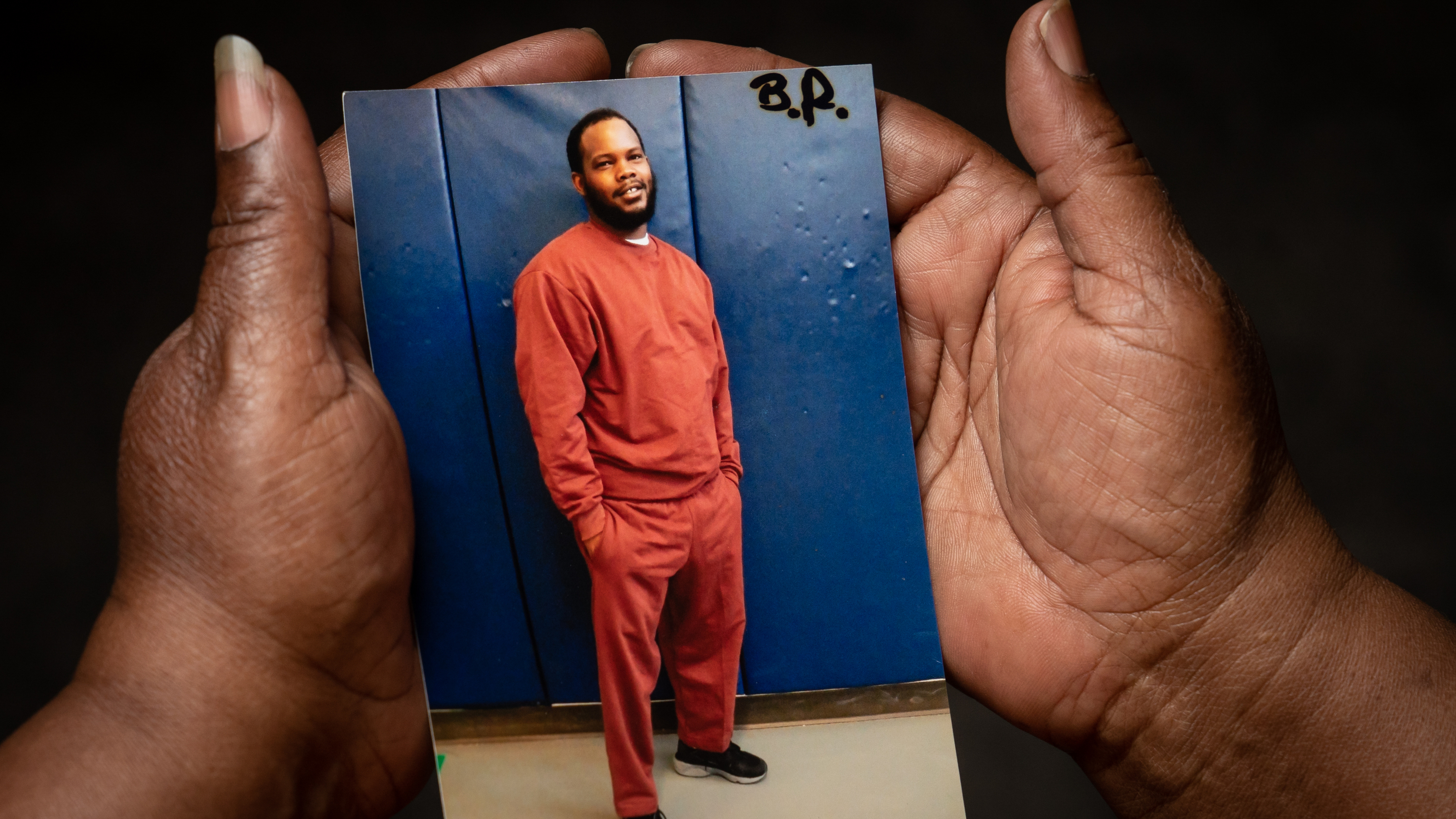
    Rasheem Hall, 42, was granted the right to a new trial in April after a judge agreed with his defense attorney that prosecutors had withheld evidence that could have aided Hall’s ongoing effort to appeal his conviction.

    They said prosecutors’ main witness had been an unreliable jailhouse informant who had recanted statements he’d made about Hall’s involvement in the 2007 shooting that left 34-year-old Ronald Kennel dead.

    Rather than retry the case, however, prosecutors agreed to conditions Friday that allowed Hall to plead no contest to aggravated assault and a firearms violation. During the hearing, Common Pleas Court Judge Diana L. Anhalt approved a sentence of nine to 18 years in prison in exchange for Hall’s plea.

    Because he had already served that time in custody, he could be released as early as Friday afternoon, she said.

    Hall’s family members reacted to the news with a mixture of smiles and tears.

    “I’m just happy for Rasheem, I’m just happy for his family,” Hall’s defense attorney, Robert Gamburg, said after the hearing.

    The development comes as District Attorney Larry Krasner’s office faces scrutiny of its handling of post-conviction cases. Last week, a federal judge said actions city prosecutors took in another case could amount to perjury, conspiracy, or obstruction of justice.

    Friday’s hearing ended a yearslong campaign by Hall to appeal his conviction.

    That effort centered on issues with Deric Williams, an informant who was recorded on a jailhouse phone line telling his mother he had wrongfully implicated Hall in the crime and that he had tried, unsuccessfully, to recant his statements to detectives.

    Earlier this year, Gamburg told a judge prosecutors had failed to hand over that recording of Williams to Hall in 2013 during his appeal, though prosecutors contended that jurors had heard similar remarks from Williams at Hall’s 2010 trial.

    Judge Rose Marie DeFino-Nastasi sided with Hall, saying that in addition to the phone recording, emails between prosecutors with details of their relationship with Williams should have been turned over to his defense team.

    On Friday, Assistant District Attorney Trey Flynn told Anhault that while prosecutors accepted Hall’s plea, they stood by their earlier assertions about the case.

    He said prosecutors would have told jurors that Hall and another man, David Satchell, only fired guns during the May 20, 2007, incident after being shot at by another person first.

    Hall’s gunfire struck a bystander, Charlene MacDonald, in the leg, Flynn said.

    “It was individuals firing at Hall who actually struck Ronald Kennel, who was standing behind them,” Flynn said.

    Still, prosecutors would have argued that Hall was responsible for Kennel’s death via transferred intent, Flynn said. The legal theory holds a defendant responsible for injury or death based on their intent to harm, regardless of who was actually affected.

    Flynn said he had spoken with Kennel’s brother “at length” about prosecutors’ decision to accept Hall’s plea. And he said District Attorney Larry Krasner agreed with the decision as well.

    Outside the courtroom, Hall’s family members were moved to tears by his imminent release and return home for the first time since his early 20s.

    “It’s been almost 19 years,” said Hall’s father, Ronald. “He’s got a daughter, he’s got nieces, nephews. People that passed away. It’s a lot of time lost, time you can’t get back.”

    Ronald Hall said his son only learned of the opportunity to plea to lesser charges last week, and that the gravity of the news is still fresh.

    Naturally, Hall said of his son, “he’s ecstatic.”

  • Trump threatens to halt some trade unless the Fed cuts rates

    Trump threatens to halt some trade unless the Fed cuts rates

    President Donald Trump threatened Friday to halt a broad swath of U.S. trade unless the Federal Reserve slashed interest rates, issuing a sweeping ultimatum that could prove costly to the economy if he were to carry it out.

    The Fed is a politically independent institution, and it has long kept rates steady as it tries to tame years of persistent inflation. Trump’s demand risked undermining that work, while choking off commerce in ways that could harm American families and businesses.

    The president delivered his threat on a day that began on a positive note for the White House. Hiring figures showed that employers added about 162,000 jobs in August, evincing a labor market that has weathered a range of shocks under Trump — from the global trade war he commenced last year to the war with Iran that has intensified recently.

    On social media, Trump heralded that development before seizing on it to issue his demands. He called on the Fed to reduce borrowing costs to “the LOWEST RATE of any country in the World.”

    The Fed has kept rates steady since December as it tries to discern whether recent economic turbulence represents a short-term problem or a longer-term driver of higher prices. In fact, policymakers have actually signaled that they are considering whether to raise rates as soon as this month, after failing for more than five years to bring inflation down to the central bank’s 2% target.

    But Trump insisted Friday that the U.S. economy was “STRONG” and, as a result, could afford to lower borrowing costs. Such a move could actually worsen inflation. But absent a cut, Trump signaled that he could interrupt global trade.

    “LOWER THE RATE OR I’LL STOP TRADING WITH COUNTRIES WITH WHICH WE HAVE A DEFICIT, which the U.S. Supreme Court, in its ridiculous and very costly Tariff decision, strongly acknowledged ‘the President’ has an absolute right to do,” Trump said.

    The list of countries with which the United States has a trade deficit is lengthy, including its neighbors, Canada and Mexico, nations in the European Union, and others including China, according to federal data. That represents a substantial amount of the goods bought and imported by American families and businesses.

    Globally, the U.S. trade deficit in goods and services rose to its biggest gap in 16 months in July, data released this week showed. Some economists see that activity as a sign of strength for the United States, one caused in part by surging domestic demand for the electronics that help to power artificial intelligence. But Trump disagrees and has sought to apply substantial tariffs globally in the hopes of driving down the imbalance.

    “The Fed Board, with its great new leader, must get smart — BE PATRIOTS for a change,” the president said. “High interest rates put the U.S.A. at a very unfair disadvantage, and I won’t allow that to happen!”

    Trump’s remarks were his latest attempt to pressure the Fed, even after securing the confirmation of his handpicked chair, Kevin Warsh. The president has made no secret about his views on monetary policy or the lengths he is willing to go to achieve them, even targeting — and trying to oust — Fed officials who do not share his stance.

    The Fed’s decision on interest rates later this month hinges in part on inflation data coming out next Friday. Investors started to ratchet up bets about a possible increase after Warsh signaled in a speech last week that he was open to the idea. He did not explicitly call for a rate increase.

    Other top policymakers this week conveyed different degrees of urgency around the need to raise rates.

    On Thursday, Christopher J. Waller, a governor, said that a “hot” report on inflation from the Bureau of Labor Statistics would compel him to support a rate increase. But if there was further evidence that inflation was not getting worse, he said he would be inclined to hold rates steady.

    “What’s the cost of waiting one meeting? Hiking 25 basis points one meeting right now is not going to bring the CPI down to 2%,” Waller said, referring to the bureau’s Consumer Price Index. “You want to take a chance to see if disinflation continues, but I’m not taking a big chance on it.”

    Michael S. Barr, a Fed governor, said Tuesday that if inflation data showed continued signs of progress, then the Fed could afford to take more time to assess if rate increases are needed.

    “However, if inflation appears not to be moderating sufficiently, then I think we should act decisively to raise rates,” Barr said.

    This article originally appeared in the New York Times.

  • 5 EU nations agree on model to send rejected migrants to ‘return hubs’ as early as 2027

    5 EU nations agree on model to send rejected migrants to ‘return hubs’ as early as 2027

    Denmark and four other European Union countries agreed Friday on a model for “return hubs” in non-EU nations and hope to begin sending migrants to the facilities as early as 2027, an official said Friday.

    The announcement, made after a one-day meeting in Copenhagen, is the latest development in an effort by EU states to send people whose asylum requests have been rejected to third countries outside the bloc.

    “We are moving forward toward what is actually a fundamental transformation of the common European migration and asylum system,” said Morten Bødskov, Denmark’s minister of immigration and integration.

    He briefed reporters alongside counterparts from Germany, the Netherlands, Austria, and Greece. The five countries have been negotiating with governments mainly in Africa over potential sites, pioneering the initiative for the whole of the EU.

    Human rights groups have criticized plans to deport migrants to centers or prisons in third countries, arguing that European nations cannot guarantee their rights will be respected there.

    Bødskov rejected the idea that “return hubs” were a euphemism for detention and deportation centers and said the International Organization for Migration and the U.N. Refugee Agency would monitor the centers.

    “We are not talking about camps, we are talking about opportunities, for a new chance for irregular migrants who cannot return to their own country today and who have no legal grounds to be in our countries,” Bødskov said.

    The UNHCR told the Associated Press that it “has not been approached with details of such a proposal,” and therefore “cannot comment on the specific arrangements being discussed or on what any potential role for UNHCR might entail.”

    IOM told AP that no decision had been made on IOM’s potential role in return hubs. “Discussions remain exploratory,” and IOM had provided only “technical advice to some EU Member States on safeguards and operational considerations.”

    “We have consistently underscored that any such initiative must comply with EU regulatory and legal frameworks, protect migrants’ rights, respect partner countries’ interests, and ensure individuals’ access to meaningful, sustainable solutions,” an IOM spokesperson said in an emailed statement.

    Return hubs abroad would be first for EU migration policy

    Although the ministers did not specify which third countries were being considered, Bødskov said they expect to reach their first deal by early 2027.

    He acknowledged that the concept of return hubs was mocked only a few years ago and deemed incompatible with EU and international law.

    EU laws, however, have changed due to public and political pressure for tougher measures against irregular migration.

    European lawmakers voted in June to allow member states to set up centers outside the EU on their own or in small coalitions, and to send rejected asylum seekers there instead of to their home countries.

    “This is something new and it’s groundbreaking,” said Bart van den Brink, the Netherlands’ minister of asylum and migration.

    Rwanda in negotiations with European nations

    In early August, a spokesperson for the Rwandan government said it “was natural” for her government to negotiate with European countries and others to potentially host asylum seekers who are not allowed to live elsewhere.

    Speaking to Royal FM Kigali, Rwandan government spokesperson Yolande Makolo cited an emergency transit mechanism established in Gashora in 2018 for people evacuated from Libya, who could stay there until they were resettled in third countries.

    Makolo said one of the ideas discussed was to offer a “safe place” where people who have nowhere else to go could get medical care, training, and rest while their asylum applications were processed, until they could go back home if safe or get resettled to yet another country.

    “We want to be part of a solution to a big global problem,” Makolo said.

    It remained unclear what countries in negotiations with EU nations would gain in return for taking Europe’s rejected migrants.

    Rights groups concerned about enforcement of law outside EU

    Migrant rights groups have criticized European efforts to set up migrant centers abroad where it may be difficult to monitor and enforce human rights.

    In an emailed statement, the Council of Europe Commissioner for Human Rights, Michael O’Flaherty, said “vague assurances of compliance with human rights law are not enough.”

    “States need to commit to the guardrails necessary to prevent setting up human rights black holes,” he said.

    The European ministers in Copenhagen emphasized the new hubs would abide by European and international law.

    Van den Brink, the Dutch immigration minister, said technical talks and missions to potential partner countries would be used “to gain more insight into the human rights situation and the living conditions of the refugees.”

    “Because we want to do this in a European way, in line with our values and international law and human rights at its core,” he said.

    Brussels-based rights group PICUM condemned the meeting in Copenhagen.

    “EU leaders may call these centers an ‘innovative solution,’ but outsourcing migration control is an old tactic to simply move people out of sight and evade human rights obligations,” director Michele LeVoy said.

  • An airman stationed in Dover raped a Bucks County teen he met on Snapchat, prosecutors say

    An airman stationed in Dover raped a Bucks County teen he met on Snapchat, prosecutors say

    Dylan Drake Williams knew the girl he had befriended on Snapchat was 15. But that didn’t stop him, federal prosecutors said Friday, from asking her how badly she wanted to be kidnapped, and whether she would be his “sex slave.”

    And Williams, an airman stationed at Dover Air Force Base, eventually followed through, according to court filings. He drove to the girl’s Falls Township home Aug. 20, instructed her to leave her phone behind and delete some of the incriminating text messages, and took her to his home, where, the girl told police, he raped her.

    Williams, 27, has been charged in U.S. District Court in Delaware with coercion and enticement, transportation with intent to engage in criminal sexual activity, and travel with intent to engage in illicit sexual conduct. Prosecutors in Bucks County have filed a parallel case, in which he faces similar charges, including unlawful contact with a minor and corruption of minors.

    He also faces a third, separate investigation in Kent County, Delaware, where he is charged with rape.

    Williams will remain in federal custody ahead of a detention hearing later this month, according to court records. Neither his federal attorney, Conor Wilson, nor the attorney representing him in Bucks County, Ellis Klein, returned calls for comment.

    The girl told police she began messaging Williams in April, according to the affidavit of probable cause for his arrest. He knew she was underage, she said, but asked her to send him explicit photos of herself, which he returned in kind.

    Eventually, Williams arranged to meet the girl in Bucks County, and drove to a basketball court not far from her home, the affidavit said. There, Williams coerced the girl to perform a sex act in his car.

    Afterward, the two continued to exchange sexually charged messages. In early August, Williams asked the girl if he could see her again, telling her he wanted “to take ownership” of her and was planning to drive to her home to pick her up in the middle of the night.

    As they planned the meeting, the girl, fearful, asked Williams if he was going to kill her, but he reassured her, telling her he genuinely liked her, and that she “was brave for doing this.”

    Before dawn on Aug. 20, the girl left her home through her bedroom window and walked to Williams’ nearby car. Per his instructions, she had left her cell phone behind.

    Her parents, finding her phone and reading some of the text messages the two had exchanged, called Falls Township Police. Detectives there were able to identify Williams through his Snapchat account, and find that he was enlisted at the Dover base.

    Meanwhile, Williams drove the girl more than 100 miles back to Delaware, where he hid her in the basement apartment he was renting. The girl later told police he forced her to have sex, ignoring her complaints that she was in pain.

    When police arrived at the base, Williams admitted that the girl was at his home, and that he had sex with her.

    He said he knew that getting caught would ruin his life, and said he preferred the death penalty, because he “was too much of a coward to take his life,” the affidavit said.

  • Echoes of the Lindsay Clancy case in a 1989 Northeast Philly infant murder

    Echoes of the Lindsay Clancy case in a 1989 Northeast Philly infant murder

    Samuel C. Stretton, the high-profile Chester County lawyer, said he’s been hearing from women about Lindsay Clancy, the Massachusetts mother facing murder charges for killing her three young children.

    “You know, Sam, she’s innocent,” he recalled one woman telling him at a supermarket.

    Stretton knows the Clancy case has struck a nerve. He knows because he defended a woman in a similar case 37 years ago.

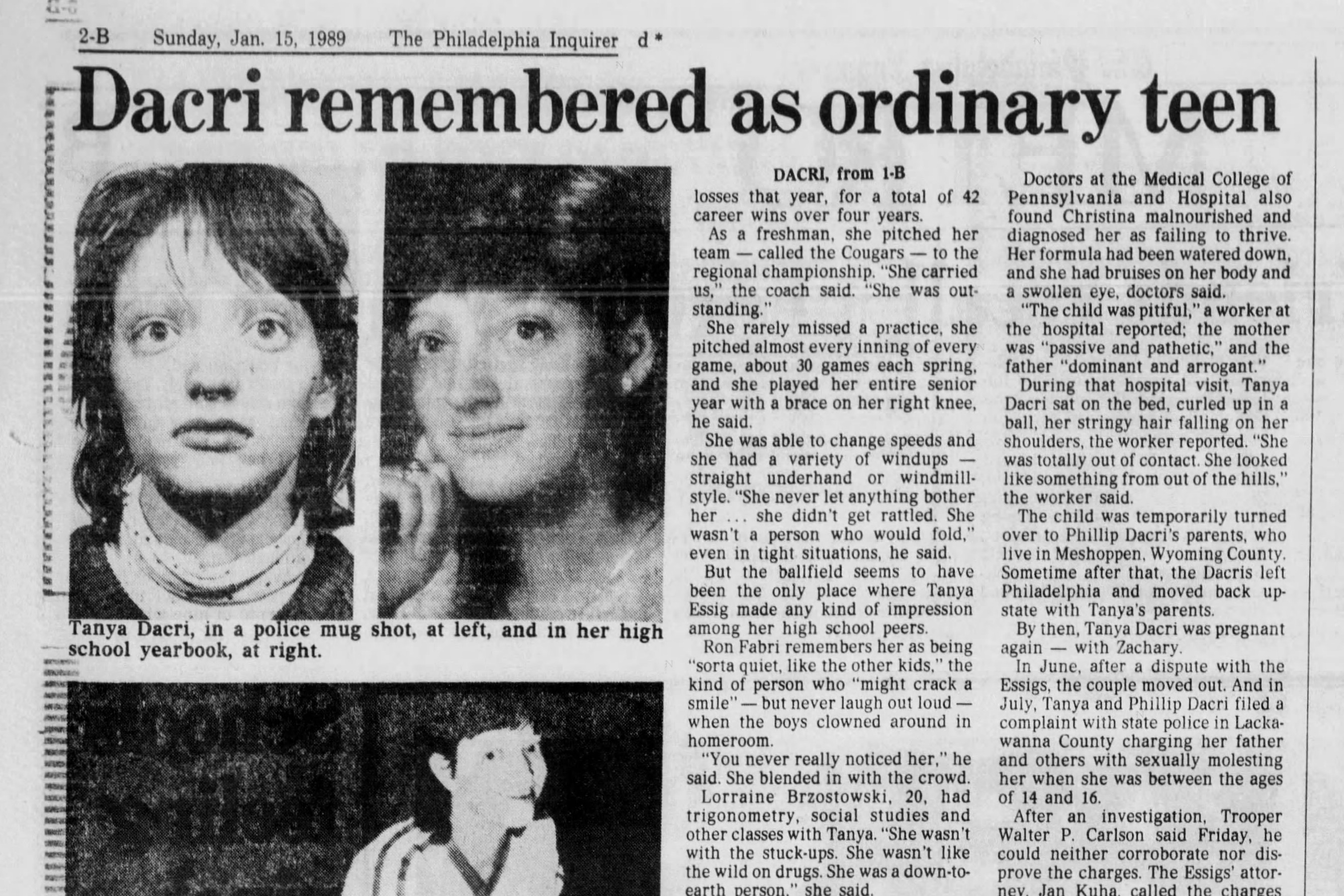
    He represented Tanya Dacri, a Northeast Philadelphia woman who pleaded guilty in 1989 to drowning her infant son Zacharry and dismembering his body.

    She was sentenced to life in prison.

    “I don’t think there’s any question now, in hindsight, that she suffered from [the] postpartum diagnosis. Problem was, it wasn’t understood back then, like it is now,” Stretton said in a phone interview Tuesday night.

    Lindsay Clancy sits at the defense table as Kevin Reddington asks the jury to find her not guilty during her murder trial at Plymouth Superior Court in Plymouth, Mass., on Aug. 27. Greg Derr

    The jury in the Clancy case began deliberating last week. Unable to reach a verdict, Judge William Sullivan declared a mistrial Friday afternoon. A status hearing to decide where the case goes from here was scheduled for Sept. 29.

    Clancy, a former labor and delivery nurse, admits she strangled her children, but her legal defense is that postpartum psychosis led to her actions. Clancy, 36, has pleaded not guilty by reason of lack of criminal responsibility. Prosecutors say she knew what she was doing.

    In Pennsylvania, Dacri, now 58, is serving her sentence at the State Correctional Institution at Muncy, the state prison for women.

    Stretton believes “it’s the right time” for Dacri to seek a pardon or commutation. That would require a unanimous decision from the state Board of Pardons, and then the approval of the governor.

    “She and I have been talking about it for about 10 years, but I told her to wait a little longer. I thought that would enhance her chances, and now I think it’s the right time,” Stretton said.

    The last time Stretton communicated with Dacri was by letter several years ago. Stretton said he would move forward with a clemency application “if she still wants to do it.”

    Dacri has been behind bars since she was arrested in 1989.

    In 1989, Tanya Dacri pleaded guilty to drowning her 2-month-old son Zacharry in a Northeast Philadelphia apartment and dismembering his body.Philadelphia Inquirer

    “She’s done well in prison. She’s adjusted. She’s attended all the programs. She’s sorry. She’s regretful,” Stretton said.

    Dacri “has been adequately punished, and therefore we’re asking them to allow a sentence to be commuted or a pardon be granted, so she can get out and have some of her life left,” Stretton said.

    “Postpartum psychosis” as a legal defense was unusual but not unknown before Dacri’s case, according to a paper published in the spring 1991 Dickinson Law Review.

    Wide-ranging sentences

    While Dacri was sentenced to life in prison, mothers with similar Pennsylvania cases were given wildly different sentences.

    For example, the paper’s author, Amy L. Nelson, cited the case of Sharon Weisensale, who was found guilty but mentally ill in Bucks County of third-degree murder for the 1984 drowning death of her 2-month-old daughter.

    “She was given a five-year suspended prison sentence and was required to undergo psychiatric treatment,” Nelson wrote.

    In another case, Sharon Comitz, of Osceola Mills, Pa., pleaded guilty but mentally ill to third-degree drowning in the 1985 death of her month-old son, Nelson wrote.

    According to testimony, Comitz was treated for severe postpartum depression at the time of the murder, Nelson said. Comitz received a prison sentence of eight to 20 years.

    In another Pennsylvania case, Chanda Smith was convicted of third-degree murder in the drowning death of her three-week-old daughter, Nelson said. Smith was sentence to five to 10 years in prison.

    “Experts testified that Smith, like Weisensale and Comitz, murdered her child while suffering from severe postpartum psychosis,” Nelson wrote.

    A false story falls apart

    On the morning of Jan. 12, 1989, the Dacri story hit the front page of The Inquirer under the headline, “Police: Mother drowned baby.”

    Tanya Dacri, who was 20 years old at the time, initially told police that Zacharry had been taken by purse-snatching Black men — a detail that drew accusations of racism from some media commentators.

    However, investigators were immediately suspicious. Dacri’s fake story quickly fell apart that same day and she told police she killed her son because he was always crying, The Inquirer reported.

    She told police she dismembered his body and put the pieces in weighted plastic bags. She and her husband, Phillip Dacri, then disposed of the bags in the Neshaminy Creek in Bucks County and a creek in Carbon County.

    Phillip Dacri pleaded guilty to helping his wife dispose of the remains and served 10 months in prison.

    In court, During court proceedings, a psychologist for the defense and a psychiatrist for the prosecution agreed Dacri had a mental disorder that might have deteriorated to psychosis on the day she killed her infant son, The Inquirer reported.

    But they disagreed on whether Dacri specifically intended to kill her Zacharry.

    “I am convinced beyond a reasonable doubt that, when you placed your son in that bathtub and when you turned on the water and put the plug in the tub, that it was your intention to kill him,” Common Pleas Court Judge Michael Stiles told Dacri during her sentencing.

  • Trump to use Qatari plane for international trip despite security worries

    Trump to use Qatari plane for international trip despite security worries

    President Donald Trump plans to fly to Ireland next week aboard the Boeing 747 gifted to him by Qatar, a senior White House official said, marking his first international trip on the jet since a security threat in July prompted him to leave Turkey secretly aboard an alternate aircraft.

    The trip underscores Trump’s continued fondness for and reliance on the Qatari jet despite concerns that it lacks some of the security features of the highly customized, heavily fortified Boeing 747-200B jumbo jets that have carried presidents for decades.

    Trump said in July that the new plane would be sent away to be “maxed out” to address those concerns. Despite suggestions that the security upgrades would be made this fall, the White House has not announced a schedule for the work, which could slip until after the midterm elections.

    “We don’t comment on specific upgrades or modifications to Air Force One,” said a senior administration official in a statement. “We maintain a consistent posture that ensures a safe, secure, and reliable capability for the President of the United States and routinely evolve the capability as required to maintain that posture.”

    In the absence of those upgrades, Trump is poised to use the Qatari-gifted plane more frequently as he ramps up his campaign-season travel. He is scheduled to travel to Texas next week to headline the Republican miniconvention in Dallas and said this week that he will be traveling to Alaska and other states with tight races before the Nov. 3 elections.

    The Ireland trip, however, is more personal to Trump. He plans to attend the Irish Open, which is being held at his golf course in Doonbeg. Officials say he also will hold some official meetings. The BBC has reported that he plans to meet with Irish President Catherine Connolly and Prime Minister Micheál Martin.

    The United States already has spent $400 million retrofitting the Boeing 747 from Qatar. The administration has not said how much more it will need to pay to improve the jet in the coming months.

    Former White House press secretary Karoline Leavitt previously told the Washington Post that the modifications would begin in the fall and take about a month to complete, but security experts have been skeptical that the necessary upgrades could be made on that fast a timeline.

    The gift of the plane from the Qatari government and royal family is an unprecedented arrangement largely intended to address Trump’s frustration with delays in replacing the fleet of decades-old planes that are known as Air Force One when ferrying the president. The Air Force awarded a contract to Boeing in 2017 to purchase two 747s for use as presidential transports. It is not clear if they will be ready before Trump’s term ends in January 2029.

    The Government Accountability Office has estimated that the costs to enhance the 747s now exceed $5.6 billion. Lawmakers have questioned why those upgrades have cost so much more than the changes made to the Qatari jet, and whether the jet is as secure as the government-purchased planes.

    In early July, Trump began traveling on the new plane with the red, white, and navy livery to events celebrating the 250th anniversary of the nation’s founding, including the opening of the Theodore Roosevelt presidential library in North Dakota.

    But questions about the security of the aircraft emerged just weeks into its use, when the president traveled on it internationally for the first time to the NATO summit in Ankara, Turkey.

    He did not take the jet on his return flight after the government received intelligence about a potential Iranian threat to attack it.

    Trump initially claimed that he departed Turkey on the “former Air Force One,” writing on social media that he took the trip for “old time’s sake” and so that U.S. troops stationed in Britain could see the former Qatari aircraft.

    Reporting by the Post revealed that Trump did not actually take that plane out of Turkey. After boarding the old Air Force One in front of TV cameras, he was secretly shuttled to an Air Force C-32A on a catering truck.

    Trump flew the C-32A to Britain with a few personal aides and Defense Secretary Pete Hegseth. Several other Cabinet members, White House staff, and the traveling pool of reporters scheduled to fly with Trump remained on the old Air Force One, which had become a decoy. The press and at least some of the government officials on board were not aware of the switch.

    After the operation, the White House defended the security of the Qatari plane.

    “The new Air Force One is a state-of-the-art aircraft that has been fitted with high-level security protocols that ensure the safety of the President and his staff,” White House communications director Steven Cheung told the Post last month.

  • At the end of a busy summer, Philly band Snacktime has a new song and a new video

    At the end of a busy summer, Philly band Snacktime has a new song and a new video

    Snacktime has had an excellent summer.

    The Philly soul-funk band that got its start busking in Rittenhouse Square in 2020, had high-profile gigs this year. That includes the Newport Folk Festival, where they backed up Ms. Lauryn Hill as well as played their own set, and the Lollapalooza Festival in Chicago.

    Now the septet, which was the house band for Jason Kelce’s ESPN late-night TV show, has released a new single. It has also signed with Nashville’s Thirty Tigers, which will handle the band’s label services and distribution. Their other clients include Rufus Wainwright, Jason Isbell & the 400 Unit, and Rosanne Cash, as well as Philadelphians Amos Lee and Eric Slick.

    The new single, “Can’t Imagine Why You’d Stay,” features singer Nico Bryant, who joined the group in 2025, after vocalist and sax player Yesseh Furaha-Ali departed.

    The song, which was mixed and produced in Los Angeles and Philadelphia by Josh Lucas, who’s previously teamed with Khalid and Daniel Caesar, shows the continued evolution of the group from its horn-happy busking beginnings.

    For one thing, Snacktime is (sometimes) less “horn-y” than it used to be. In the accompanying music video directed by the band’s tenor saxophonist Ben Stocker, sousaphone player Sam Gellerstein plays bass, trumpeter Eric Sherman is on guitar, and trombonist Michael Spearman plays keys.

    The band can still shift to a four-horn attack when it pleases, but on the snappy dysfunctional relationship song “Can’t Imagine Why You’d Stay,” the only brass heard is Stocker’s sax.

    On Thursday, Snacktime will celebrate its new era with a show that’s free (but you must RSVP) at the Bok Bar in South Philly; a party put on by Ilegal Mezcal as part of its Bar Ilegal tour. Tattoo artist Daniel Cottee will also be on hand.

    Snacktime kicks off a tour with Delaware County-bred soul singer Devon Gilfillian on Sept. 14 in Carrboro, N.C., and will play a late-night set at the Sea.Hear.Now Festival in Asbury Park on Sept. 18. A full Snacktime album is expected in 2027.

    Snacktime at the Bok Bar, 800 Mifflin St. on Thursday Sept. 10. at 7 p.m. RSVP at ilegalmezcal.com/barilegal

  • Key Pennsylvania races to watch in the midterm elections this November

    Key Pennsylvania races to watch in the midterm elections this November

    In the country’s premier battleground state, Pennsylvania Democrats believe they’re in striking distance of a tidal-wave victories that would dramatically shift the balance of power in both Washington and Harrisburg.

    For the first time in decades, the party could take full control of the legislature. That would give Democratic Gov. Josh Shapiro — seeking reelection with a wide polling gap on his Republican challenger Stacy Garrity — significantly more power to shape the direction of the state as he potentially pursues a White House bid in 2028.

    Democrats also see a chance to flip four congressional seats and take control of the U.S. House. Republicans, meanwhile, are prioritizing defending the Pennsylvania seats with their House majority on the line as President Donald Trump, who won the state just two years ago, sinks in popularity.

    The path for power in Washington in the high-stakes midterms runs through Pennsylvania and its results will be closely watched as both parties prepare for a presidential race in two years when the state promises to play a pivotal role.

    Voters across Pennsylvania will head to the polls in November to cast their ballots for races that will decide the balance of power in the state and nation.

    Here are the races to watch and how to vote.

    Shapiro’s November could dictate his 2028

    Shapiro, widely viewed as a likely contender for the 2028 presidency, has big ambitions this fall when he’ll stand for reelection against Garrity, the state’s treasurer.

    More than just securing his own reelection, Shapiro hopes to run up the margin and carry downballot Democrats across the finish line.

    Another double-digits win and a string of coattail victories would be a show of strength about his ability to perform in a key swing state that his party lost in the last presidential election. In a presidential primary, Shapiro could use that result to make an argument that he’s a strong general election candidate who can boost the Democratic brand.

    Two months out from the election, all signs point to a Shapiro win. He holds a historically large campaign war chest and a commanding 55-39% lead in the race against Garrity, according to a recent Philadelphia Inquirer/New York Times/Siena University poll.

    Garrity, who has been endorsed by Trump, broke the record in 2024 for the most number of votes received by a candidate running for state-level office in Pennsylvania. But support from the national GOP establishment has been limited, and as she faces off against a formidable incumbent, the question is: Can she overcome her stark cash disadvantage and low name recognition to become the state’s first female governor?

    Will Republicans hold on in competitive congressional seats?

    There are four U.S. House districts in the eastern portion of Pennsylvania, targeted by both parties as must wins. In each, the Republican incumbents are seeking to fend off highly financed challengers amid deep frustration among voters with the leader of their party that could translate into a wave of Democratic victories down ballot.

    1st Congressional District: Five-term Republican U.S. Rep. Brian Fitzpatrick faces a challenge from Bucks County Commissioner Bob Harvie in the district, which covers all of Bucks County and a portion of Montgomery. Fitzpatrick, a moderate who has survived previous blue waves, has maintained a fundraising advantage on Harvie unlike the other swing-district incumbents.

    7th Congressional District: Freshman Republican U.S. Rep. Ryan Mackenzie narrowly flipped the Lehigh Valley district two years ago and is widely seen as one of most vulnerable incumbents in Congress. He’s facing a challenge Democrat Bob Brooks, a retired firefighter and union leader whose blue-collar campaign has attracted support across the party’s ideological spectrum with endorsements from Shapiro and U.S. Sen. Bernie Sanders.

    8th Congressional District: Freshman Republican U.S. Rep. Rob Bresnahan ousted a six-term incumbent in this district centered in former President Joe Biden’s hometown of Scranton two years ago. But as he faces a tough challenge from Scranton Mayor Paige Cognetti, Bresnahan has faced scrutiny over his stock trades and his vote to cut Medicaid — to pay for Trump’s tax cuts — despite a promise to protect the program.

    10th Congressional District: Republican U.S. Rep. Scott Perry, a close ally of Trump, faces a November rematch against Democrat Janelle Stelson, a former TV anchor, in the Harrisburg area district. Stelson has consistently outraised Perry after narrowly losing in 2024.

    In addition to these four races both national parties have targeted, Shapiro has argued that the 9th Congressional District, where Democrat Rachel Wallace is taking on incumbent GOP U.S. Rep. Dan Meuser, is flippable — despite the strong GOP lean in the district, which stretches from Berks County to the New York state border. The district is home to two warehouses that ICE was planning to convert into detention centers before abandoning the plan after a backlash from residents.

    Will Democrats flip the Pennsylvania Senate?

    In Harrisburg, Democrats hold an extremely narrow majority in the state House, but the Pennsylvania state Senate has been under Republican control for more than 30 years.

    This year, Shapiro wants to flip the chamber and win a trifecta to push forward his key priorities, such as codifying abortion access, raising the state’s minimum wage, and increasing funding for transit.

    Republicans currently hold 27 of the chamber’s 50 seats. Democrats, who currently hold 23 seats, need to win at least two additional seats and the governor’s office to win control of the chamber with the lieutenant governor as a tiebreaking vote.

    The seats, drawn advantageously for Republicans, have been stubbornly resistant to political change for decades.

    But this year a blue wave could usher in Democratic pickups in Philadelphia suburbs and the Lehigh Valley.

    Races to watch include:

    • Bucks County’s 6th District, where Republican incumbent State Sen. Frank Farry faces a challenge from Democrat Eileen Hartnett Albillar.
    • Montgomery County’s 24th District, where incumbent Republican State Sen. Tracy Pennycuick is up for reelection against Democrat Chris Thomas.
    • Bucks and Lehigh County’s 16th District, which will see a rematch race between incumbent Republican State Sen. Jarrett Coleman and Democrat Mark Pinsley, the Lehigh County controller.

    What are the important dates to know?

    Election Day is Nov. 3.

    The deadline to register to vote is Oct. 19. You must be at least 18 years old, a resident of Pennsylvania and a citizen of the United States to vote. You can register online, by mail, at your county elections office, or at one of several other government buildings.

    You can check your voter registration on the Department of State’s website.

    Pennsylvanians can vote by mail with no excuse required. To apply, fill out an application by mail, online, or in-person and send it into your county election office. Applications must be received by Oct. 27 at 5 p.m. and the completed mail ballot must be received — not just postmarked — by 8 p.m. on Election Day.

    An application and mail ballot can be completed in one visit at an election office, essentially functioning as early voting.

    Staff writer Fallon Roth contributed to this article.

  • Women gathered in a small Iranian town for a wedding. Then deadly strikes hit

    Women gathered in a small Iranian town for a wedding. Then deadly strikes hit

    KUHESTAK, Iran — Women with their children were gathered in the house and yard, waiting for the bride and groom to arrive to kick off a wedding celebration in this small town in southern Iran. Then an explosion turned the scene to carnage.

    The town of Kuhestak is still reeling from a barrage of strikes that killed five people during an American bombardment of southern Iran on Tuesday evening. Lampposts at the entrance to the town displayed large posters of four of the dead — a 4-year-old boy, a 16-year-old, and two women. Another woman, one of more than 60 people wounded in the blasts, died Thursday at a hospital.

    On Friday, an Associated Press team made a rare visit to the town on the coast overlooking the Strait of Hormuz. Within a densely built neighborhood of houses and unpaved alleys stood the compound of the Mallahi family, which was struck as relatives celebrated their daughter’s wedding.

    A U.S. weapons expert who reviewed images from the scene said the evidence suggests the strikes were carried out with American guided bombs.

    Blast left a gaping hole in the roof

    Ali Mallahi, a cousin of the bride, pointed to a gaping hole in the roof of a room that took a direct hit in one of the compound’s four houses. Big cracks ran through walls decorated with floral designs. Windows were shattered, and twisted sections of roofing and metal framework lay across the courtyard, among carpets and household appliances that the family had pulled out of other damaged rooms.

    Video of the immediate aftermath aired in Iranian media showed colorful decorations and palm fronds strewn across the ground.

    Weddings in the area are traditionally segregated by gender, and on Tuesday evening, roughly 150 women were gathered in the house, while the men held a separate celebration in another building about 50 yards away, Mallahi said.

    A strike hit the room where the women were due to be served dinner, but at the time, celebrations were only just getting started, Mallahi said. The bride and groom had not yet arrived.

    “Thank God, the casualties were not higher,” he said. The father of the bride, his uncle, is also named Ali Mallahi.

    Sasan Zarei, a neighbor, said she rushed to the Mallahis’ home and helped people out of the rubble. “Most of the injured were kids. The scenes were very heartbreaking.”

    Vance says US is investigating

    U.S. Vice President JD Vance said Thursday that he was briefed on the wedding attack. “We’re investigating it very fully,” he said. He said the U.S. never targets civilians in combat but added, “Sometimes things happen.”

    Residents described to the AP how a series of heavy explosions shook Kuhestak, lighting up the night sky. The blasts came amid the latest round of American bombardment in southern Iran that the U.S. military said targeted air defenses, radar systems, and maritime assets.

    Also hit was a communications tower by Kuhestak’s port, just over 100 yards from the Mallahis’ home. AP footage showed the tower toppled and heavy damage to the neighboring building that houses the town’s telecommunications department.

    Hassan Sayadi, a technician with the department, said the tower had provided telephone and internet connections across the area. The Hormozgan provincial telecommunications department said Wednesday that U.S. attacks had disrupted landlines and mobile phone service in multiple locations, including Kuhestak, and that it was working to restore services. On Friday, mobile phones and data services were operating.

    Town is not far from site where U.S. hit a primary school.

    Kuhestak is about 18 miles from the town of Minab, where more than 100 children were killed in an American missile strike that hit a primary school on Feb. 28, the opening day of the war launched by the U.S. and Israel.

    Following Tuesday’s strikes, residents and Iranian media showed fragments of munitions found at the scene, including a thermal battery unit, a segment of a control fin, and part of the exterior body of the munition.

    Weapons experts told the AP that they believe imagery of fragments found at the site points to an American guided munition. Trevor Ball, a former U.S. Army explosive ordnance disposal technician and an analyst at Armament Research Services, said the imagery shows remnants of both a JSOW and GBU-39, which are types of guided, air-delivered glide bombs.

    The images were “being evaluated to determine if one of these munitions, or another model, was responsible,” he said.

    Videos released by U.S. Central Command of its operations that night in Iran show aircraft heading on missions, including an F/A-18E loaded with a JSOW.

    The AP could not immediately determine where the remnants were collected or whether they all came from the wedding venue or also from the communication tower.

  • Ryan Richter has ‘too much work to do’ to enjoy the growing buzz around the Union

    Ryan Richter has ‘too much work to do’ to enjoy the growing buzz around the Union

    The spotlight keeps growing on Cavan Sullivan, Neil Pierre, and the Union’s push for a playoff berth. But interim manager Ryan Richter remains steadfastly unmoved.

    “I’m not just saying this when you guys ask,” he said heading into Saturday’s home game against CF Montréal (7:30 p.m., Apple TV). “The reality is, there’s too much work to do on a game-to-game basis to worry about the big-picture stuff, and where we’re at in the league, and what the next 10 games might look like. There’s too much to focus on today, and what we want to see out of training, and the environment that we want to create to get the best out of the guys — and I really mean that.”

    Richter proved his sincerity when asked if the team would get a boost in spirits from rising above the playoff line. The Union enter the weekend in 12th place in the East (6-10-6, 24 points), but just one point back of ninth-place Orlando. Toronto and D.C. are also on 25 points, while eighth-place Red Bull New York is on 26, and seventh-place New York City FC is on 28.

    The three teams beneath the Union — Atlanta, Montréal, and Columbus — are on 21, 21, and 20 respectively. And no one expects Columbus to remain in the basement, having just signed former NYCFC winger Santi Rodríguez.

    Though the Union are on a seven-game unbeaten run in league play, Ryan Richter (left) knows there’s still a lot of work to do.Elizabeth Robertson / Staff Photographer

    “It’s not important to me,” Richter said. “There’s no psychological bounce of being above that line. … There’s too much to focus on here that takes all the attention away from what-could-be types of things.”

    An eight-point difference from seventh to 15th makes for a pretty big traffic jam. It probably won’t clear up any time soon, with 12 games still to play in the last two months of the season and a two-week FIFA international window in the middle. It’s so much congestion that there will be a full round of games during the first weekend of that FIFA window, a practice the league used to swear off.

    That includes the Union’s quick turnarounds to their next two games: Wednesday at home vs. FC Cincinnati (7:30 p.m., FS1, Apple TV), then the longest road trip of the year to play San Diego next Sunday (9 p.m., Apple TV).

    But a team can make its situation worse by not doing what it should. That certainly applies to Saturday’s game at Subaru Park. Not only is Montréal beneath the Union in the standings, but it played a Canadian Championship cup game in Vancouver on Wednesday. Another midweek game awaits next Wednesday, at home against Charlotte.

    MLS’s schedule flip next year will fix much of this, because the league won’t have to jam games in places to make room for breaks during major tournaments. Until then, Richter offered sympathies to the visitors.

    “It’s a tough week for them,” Richter said. “I don’t want to say it’s a break for us, but it makes it a tough week for them, playing in Vancouver. And sometimes you need these breaks in your schedule. But we know that doesn’t mean it’s going to be an easy game.”

    Nor might it be the easiest to scout from film. Montréal is still integrating its two big summer signings, former Colorado Rapids winger Dante Sealy and Chilean legend of many big European clubs Alexis Sánchez.

    Though Sánchez has only played as a substitute so far, the 37-year-old is one of those players who could pull a rabbit out of his hat at any time.

    Alexis Sánchez (right) has played for a slew of big clubs in his career, including Spain’s Barcelona, England’s Arsenal and Manchester United, and Italy’s Inter Milan.Graham Hughes

    “For us, it’s a little unpredictable what kind of lineup they’ll go with,” Richter said. “We’ll see where Alexis Sánchez is exactly fitness-wise: if he’s ready to start a game, if he’s available for that. But they’ve added some quality pieces, so it’s a dangerous team.”

    A front office addition

    The Union have filled the role of technical director in their front office for the first time since Chris Albright’s departure.

    Roberto Giménez, who was the club’s head of academy scouting from 2021-24, has returned to Chester and been hired for the new title. He spent the last two years as U.S. Soccer’s talent identification manager for the West Region.

    “Roberto has a strong understanding of our club, our identity, and strategy, and our approach to identifying and developing talent,” Union sporting director Jon Scheer said in a statement. “His time with U.S. Soccer has broadened his perspective on best practices across the landscape, while allowing him to collaborate with club and federation leaders domestically and internationally. … We are excited to welcome him back, as he will play an important role in advancing our sporting strategy across every level of our professional player pathway — from the academy through Union II and into the first team.”

    Union sporting director Jon Scheer.Alejandro A. Alvarez / Staff Photographer

    That work has been done by a range of people in recent years, especially Scheer before he was promoted to the top job. His previous title was head of academy and professional development.

    Now the front office’s leaders are Scheer, Giménez, assistant sporting director Matt Ratajczak, and director of scouting Chris Zitterbart.

    The standings

    Since it’s September, it’s time to start looking at the Eastern Conference standings. Here’s how the bottom end stacks up heading into this weekend, with eight teams separated by eight points.

    The first standings tiebreaker is total wins, then goal difference.

    7. New York City FC: 7-8-7, 28 points, +5 goal difference

    8. Red Bull New York: 7-10-5, 26 pts., -14 GD

    9. Orlando City: 7-11-4, 25 pts., -17

    10. Toronto FC: 5-7-10, 25 pts., -6

    11. D.C. United: 5-7-10, 25 pts. -8

    12. Union: 6-10-6, 24 pts., -5

    13. Atlanta United: 6-13-3, 21 pts., -13

    14. CF Montréal: 5-11-6, 21 pts., -16

    15. Columbus Crew: 5-12-5, 20 pts., -8