Blog

  • SPS Technologies reached an agreement to settle a class-action lawsuit over a massive 2025 factory fire in Montgomery County

    SPS Technologies reached an agreement to settle a class-action lawsuit over a massive 2025 factory fire in Montgomery County

    SPS Technologies and its parent company reached a multimillion-dollar agreement last week to settle a class-action lawsuit stemming from the massive 2025 factory fire in Montgomery County that shuttered schools, halted SEPTA trains, and forced scores of nearby residents to evacuate.

    The proposed agreement was announced on Friday by Kroll Settlement Administration, the firm handling the legal deal, which is pending before the county’s Court of Common Pleas.

    If approved by the court, SPS Technologies and its owner, Precision Castparts Corp., would create a $5 million fund to provide cash payments to those impacted by the four-alarm blaze that erupted on Feb. 17, 2025, prompting officials to declare a disaster emergency.

    “The plaintiffs allege that individuals and businesses were impacted, injured, or damaged by the fire,” Kroll Settlement Administration wrote in a news release. “SPS and PCC deny any wrongdoing.”

    Under the proposed settlement, business owners, employees of impacted businesses, and homeowners within a 1-mile radius of the former factory in Abington Township could be eligible for payouts. The amounts would cover unreimbursed business losses of up to $5,000, unreimbursed property damage losses of up to $300, and unreimbursed hourly wage losses of up to $200, according to Kroll. Claim forms must be filed by Dec. 3.

    Pending court approval, the proposed $5 million fund would also provide a maximum $1.75 million in “reasonable attorneys’ fees, costs, and expenses” and an extra payment of $2,500, known as a ”service award,” to lead plaintiffs in the class-action suit.

    Last year, a judge agreed to consolidate three lawsuits into a single class-action suit. The lawsuits were brought against the aerospace parts manufacturer by a school bus driver for Abington School District, co-owners of an auto service business that is less than a mile from the SPS facility, and a resident in neighboring Jenkintown whose apartment was engulfed in smoke and has experienced coughing and chest pain.

    “The fire and explosion was caused by the defendant’s failures to inspect, properly maintain, and/or operate its facility, including the location of the origin of the fire,” according to the lawsuit. It also states that SPS “failed to uphold industry standards” in facility operations and as a result “hundreds if not thousands of persons have been damaged.”

    The bus driver declined to comment on Sunday evening. The other class members did not return phone calls from a reporter, and their lawyers did not immediately respond to an email.

    After a series of explosions at the Highland Avenue factory, fire engulfed the complex, drawing emergency responders from nearly 80 fire companies. Local officials ordered residents within a mile of the facility to shelter in place. A voluntary evacuation order for about 250 homes, mostly in neighboring Jenkintown, came soon after.

    It took firefighters five days to extinguish the conflagration, while plumes of smoke drifted over the neighborhood, and residents worried about air quality because of the types of chemicals stored at the factory.

  • Assailant lunged at Democratic candidate for Ohio governor at fair, campaign says

    Assailant lunged at Democratic candidate for Ohio governor at fair, campaign says

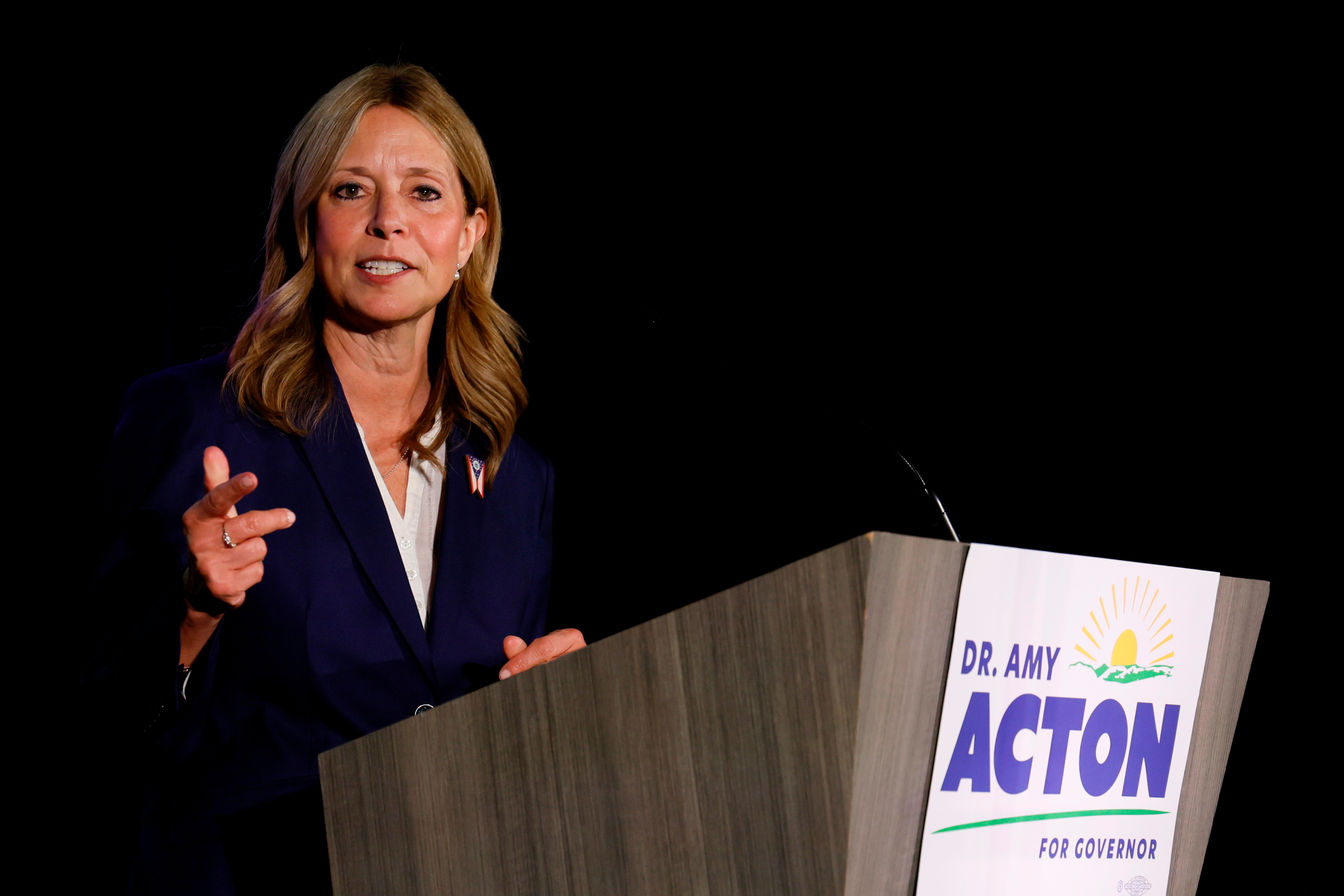
    WASHINGTON — An armed assailant lunged at the Democratic candidate for Ohio governor, Amy Acton, on Sunday during a campaign stop at the Canfield Fair, injuring several people, campaign officials said.

    The suspect knocked volunteers to the ground and was arrested with “multiple weapons,” Mahoning County Democratic Party chairperson Chris Anderson said in a statement.

    Acton, the state’s former public health director, was not injured, but her campaign said multiple people were hurt.

    “Dr. Acton will always stand up to the chaos, hate, and vitriol that pits us against one another,” said Addie Bullock, communications director for the campaign.

    Ohio State Highway Patrol and other authorities at the fair quickly responded “when a man tried to forcefully push himself toward Dr. Acton as she was speaking and injured other attendees at the Mahoning County Democrat booth,” Republican Gov. Mike DeWine said in a statement.

    “Violence or the threat of violence at political or public events is always unacceptable,” he added.

    The attempted attack is the latest political violence to roil the United States. And the Ohio gubernatorial race is one of the most high-profile races this year as the campaigns enter the final six weeks of campaigning before the election in November.

    Acton is facing Republican Vivek Ramaswamy, who has parlayed his national name recognition, tech industry connections, and alliance with President Donald Trump into a record fundraising haul that he is tapping for advertising spots aimed at the November election. He is using campaign rallies and advertising to criticize Acton.

    Ramaswamy’s campaign called the incident Sunday unacceptable.

    “Candidates should be able to meet with voters without having to worry about threats or violence. What happened today is completely unacceptable and has no place in politics, and we hope that no one was hurt,” Ramaswamy’s communications director, Connie Luck, said in a statement.

    The fairground’s police department referred inquiries to the Mahoning County Sheriff’s Department, which didn’t immediately return a message seeking comment. The Ohio State Highway Patrol didn’t immediately respond to a request for information.

    The incident brought condemnation from Ohio Republican Sen. John Husted, who said on X that he and his wife were “disturbed by the attempted attack on Amy Acton today at the Canfield Fair. We are grateful for law enforcement’s quick response. There is no place for this kind of behavior, and it must never be tolerated.”

    The country has seen a rise in political violence over the past decade. That includes the 2017 shooting at a Republican congressional baseball team practice in Alexandria, Va.; the 2022 hammer assault on the husband of Democratic then-House Speaker Nancy Pelosi in California; the 2024 assassination attempt on Donald Trump at a Pennsylvania rally during his presidential campaign as well as another on the president at this year’s White House Correspondents’ Association Dinner in April; and the assassinations last year of a Democratic Minnesota state lawmaker and her husband and of conservative commentator Charlie Kirk in Utah.

    Federal political committees spent more than $40 million on expenses labeled as security during the 2023-24 campaign cycle, the most recent one for which data is publicly available, according a report released in April from the Public Service Alliance, a nonpartisan group that focuses on security for public officials.

    Before running for governor, Acton had been recruited by DeWine in 2019 to lead the Ohio Department of Health while serving as an associate professor of public health at Ohio State University. As the COVID-19 pandemic ramped up in early 2020, she was thrown into the state and national spotlight — becoming a source of comfort to many viewers of the governor’s daily news conferences.

    For her service as health director, Acton earned the John F. Kennedy Library Foundation’s Profile in COVID Courage Award, the Columbus Foundation’s Spirit of Columbus Award and Ohio State’s highest alumni honor, the Alumni Medalist Award.

    Her position as the face of the DeWine administration’s aggressive stance against the virus also earned Acton many enemies, among them Statehouse Republicans and average Ohioans who opposed pandemic restrictions.

  • Villanova University was briefly placed under lockdown as police looked for a suspect in a stabbing

    Villanova University was briefly placed under lockdown as police looked for a suspect in a stabbing

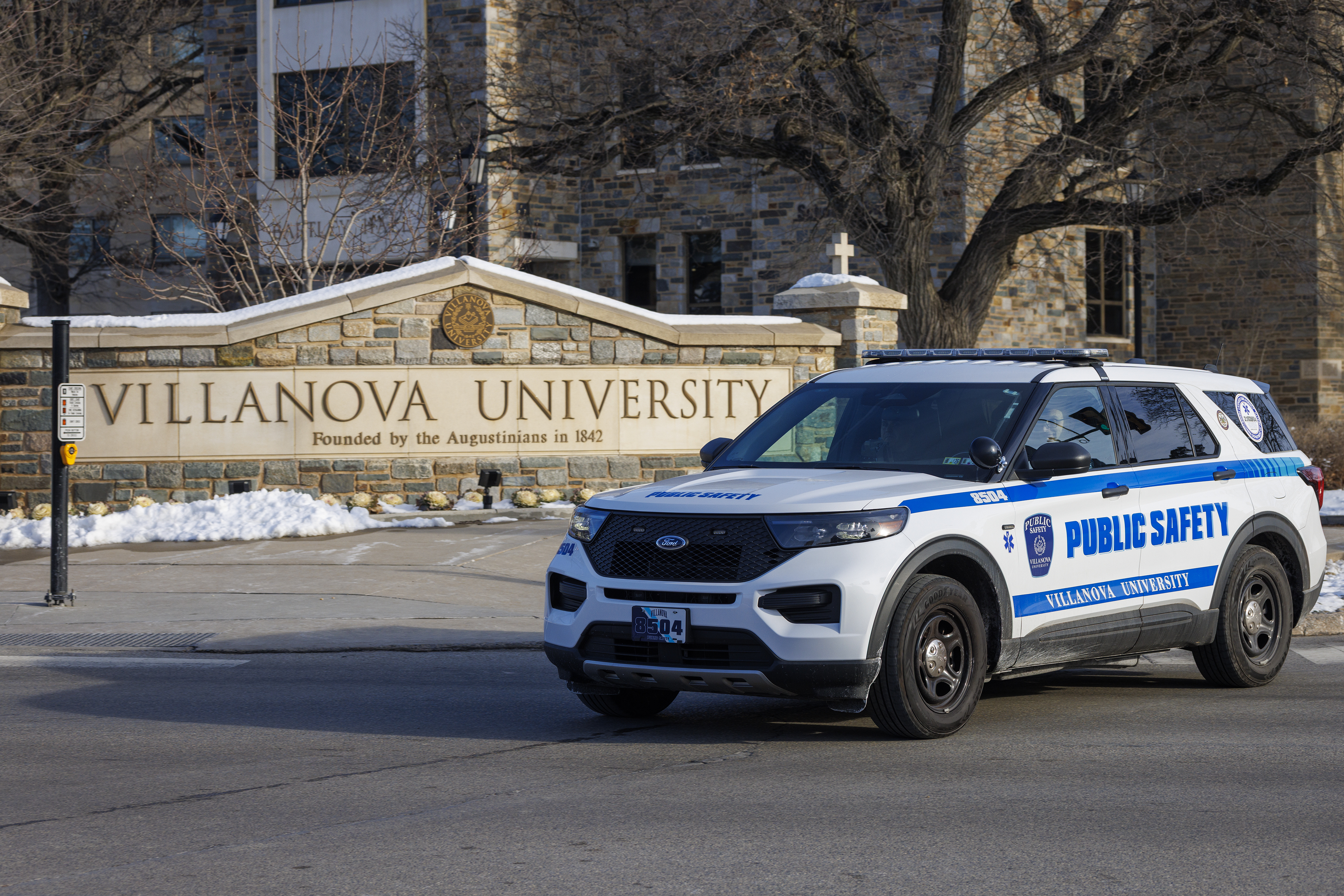
    Villanova University’s campus was briefly under a lockdown Sunday evening as police searched for an attacker wanted in connection with a stabbing.

    The lockdown was lifted at 6:41 p.m. after the suspect was apprehended off campus, according to the university’s alert system. The school issued the lockdown at 6:10 as a “precautionary measure due to the proximity of the search,” the alert said.

    The stabbing occurred on I-476 and the alleged attacker fled, according to a statement posted to Facebook from Radnor Township police, who were assisting Pennsylvania State Police.

    Authorities took the suspect into custody “without incident” in the 1000 block of East Lancaster Avenue, according to the post. An earlier alert from Villanova University said the person was armed.

    “There is no threat to the community at this time, and all involved parties have been placed in custody,” Radnor police said on Facebook. “Our thoughts are with the victim and their family.”

    The victim’s condition was not immediately known, and police did not identity the person in custody.

    Pennsylvania State Police are investigating.

  • Philadelphia bystanders lifted a car to save a woman who was trapped underneath

    Philadelphia bystanders lifted a car to save a woman who was trapped underneath

    A driver of a Volkswagen Beetle was making a right turn in suburban Philadelphia when he collided with an e-bike rider on the shoulder of a road.

    The driver jumped out of his car and ran to the passenger side, but only the woman’s legs were visible. He tried to lift the roughly 2,000-pound car, but it was too heavy.

    Chrissy Vollmer, who owns a sign shop near the crash site in Prospect Park, said she heard the woman yell: “Get this car off of me.”

    “It’s a sound that you can’t really ignore,” said Vollmer, 47, who called 911.

    In the ensuing seconds Monday morning, Vollmer and other bystanders rushed to the car to help, which local police called “courageous, selfless, and potentially lifesaving.”

    The driver and Vollmer tried lifting the car to no avail. Amelia Cannon, who works at a homecare agency next to the crash site, heard the woman cry for help and rushed from her office to assist. A FedEx delivery driver ran over a few seconds later, followed by another man.

    The group counted down from three and tipped the side of the car a few inches off the street — just as a police officer arrived on the scene. In a video of the rescue, more people seemed to show up out of nowhere to keep the car in place and to pull the bike rider out from underneath.

    The rider, who police identified as a 44-year-old woman from Ridley Park, was free within a minute of the crash, Prospect Park Police Chief David Madonna said.

    The woman was transported to a local hospital with upper body injuries but is in stable condition and expected to recover, Madonna said.

    “When you’re dealing with a trauma patient, every second counts,” Madonna said. “If we would have had to wait for some type of heavy equipment to remove that vehicle, or use other means to extricate her from that position, things could’ve certainly been worse for her.”

    Madonna said he doesn’t expect anyone will be charged. He said the driver, whom he identified as a 66-year-old man from Prospect Park, made a legal turn and wasn’t at fault.

    After the e-bike rider was free, she thanked the people around her, Vollmer said. Vollmer and Cannon said they returned to their jobs after the rescue but struggled to focus because their adrenaline was flowing.

    A few days later, they said they were surprised that people were commending them on social media after local news outlets covered the story.

    “It’s kind of normal if someone’s in need of help,” Vollmer said, “you want to help them.”

    Still, in his three decades working in law enforcement, Madonna said he has rarely seen people make as much of an effort to help a neighbor as they did Monday.

    “When you put yourself in potentially harm’s way, and you don’t stop to consider the risks that you’re exposing yourself to, how can you not be impressed by that?” Madonna said. “That is humanity at its finest.”

  • At least 5 dead after Amazon cargo plane overshoots runway in Miami

    At least 5 dead after Amazon cargo plane overshoots runway in Miami

    MIAMI — An Amazon cargo plane barreled off a runway at Miami International Airport on Sunday, killing at least five people as it struck vehicles and burst into flames, authorities said.

    The aircraft overran the runway around 2 p.m. after arriving from San Juan, Puerto Rico. Five people were killed, three critically injured, and two others hospitalized with less severe injuries, Miami-Dade County officials told a news conference.

    More than 60 Miami-Dade Fire Rescue units responded to the crash, arriving to find the aircraft on fire as crews worked to extinguish the flames and assess patients.

    The Prime Air plane came to rest beside a roadway near two semi-trucks, according to images from the scene. The aircraft appeared to be resting on its belly and was largely intact despite the fire.

    The flight had been operated by 21 Air, a cargo carrier based in North Carolina. The 32-year-old Boeing 767 was originally built to carry passengers and flew for several airlines for more than two decades before being converted to a cargo plane in 2015, according to flight-tracking site Flightradar24.

    About 250 flights were delayed at the airport late afternoon Sunday, according to FlightAware, a website that tracks flight disruptions.

    The National Transportation Safety Board said it was gathering information about the crash.

    “We’re working closely with local authorities and officials to understand exactly what happened,” Amazon spokesperson Kelly Nantel said in a social media post. “Right now, our absolute priority is the safety, well-being, and care of everyone involved.”

  • Latimore, R&B singer ‘so hip that he only needed one name,’ dies at 86

    Benny Lattimore, the soul singer, songwriter, and pianist known as Latimore whose sultry baritone, coifed hair, and funky songs about romance — notably “Let’s Straighten It Out” — made him an R&B fixture of the 1970s and ’80s, died on Aug. 22 at his home in Riverview, Fla., near Tampa. He was 86.

    His death was confirmed by his wife, Yvonne Lattimore.

    In the 1960s, under the slightly shorn last name Benny Latimore, he worked with Miami-based producer Henry Stone on his Blade and Dade labels to release “Rain From the Sky” and “Let’s Move and Groove Together.”

    He subsequently ditched his first name and released his first album with Stone’s Glades label, the self-titled Latimore, in 1973. His swingy cut “(They Call It) Stormy Monday” received so much radio time in Chicago that it was later released as a single.

    Writing in Blues Blast Magazine in 2017, music journalist Bill Dahl said that recording was his revelatory introduction to Mr. Latimore. “Not only did it swing with a vengeance,” Dahl wrote, “it was by a soulful singer sporting a set of richly burnished baritone pipes who was so hip that he only needed one name.”

    “Stormy Monday” jolted Mr. Latimore’s career forward, and he went on to write many of his own hits. The most successful was “Let’s Straighten It Out,” which appeared on his album More, More, More and topped the R&B charts in 1974. The song went, in part:

    Sit yourself down girl, and talk to me

    And tell me what’s on your mind

    Don’t you keep on tellin’ me everything’s okay

    Cause if it was then you wouldn’t be cryin’

    A masterful blend of soul and contemporary blues, it was the last song he played at shows for decades. The song was later covered by R&B singers Monica and Usher and by entertainers including Etta James, B.B. King, and Millie Jackson.

    Mr. Latimore remained for several more years a part of Stone’s orbit. Of all his studio musicians, journalist Steve Ditlea wrote in the New York Times in 1976, “keyboard player B. Latimore seems to be the one with the most wit and variety. On the Latimore III album, tunes like the nasty ‘Keep the Home Fires Burnin,’ the seductive ‘Ladies Man,’ and the playful ‘There’s a Red‐Neck in the Soul Band’ serve to demonstrate his vocal fluency with blues motifs in updated settings.”

    After working separately for years, Mr. Latimore and Stone reunited to produce some of his later albums under their joint LatStone record label, including the 2013 release Latimore Remembers Ray Charles. Four years later, Latimore was inducted into the Blues Hall of Fame.

    Benny William Lattimore was born on Sept. 7, 1939, in Charleston, Tenn., to Eddie and Edna Lattimore. He grew up in a musical home: His mother played guitar, and his father played banjo.

    Living Blues magazine described his parents as “serious-minded, hard-working country people.” “My father said he never wanted me to have to work as hard as he did,” Mr. Latimore was quoted as saying in the magazine. “They didn’t have the chance to get an education.”

    He first performed at his Baptist church, singing in the junior choir while his mother sang in the senior choir.

    He gravitated to the blues naturally. “It found me,” he told WREG News Channel 3, a Memphis, Tenn.-based station, in 2017. “Country and blues and gospel,” he added, “they all have a kinship.”

    After graduating from high school, he enrolled in Tennessee Agricultural & Industrial State College, the historically Black college now called Tennessee State University, in 1957, and joined a singing group. “I got less interested in my studies than I was in singing — that’s what I wanted to do,” he said in a 2012 video interview.

    He dropped out of college to sing with a Nashville R&B combo led by saxophonist Louis Brooks, who taught him to play piano. In the early 1960s, his quickly developing skills caught the attention of the smoky-voiced singer Joe Henderson. After Henderson had a major R&B hit with “Snap Your Fingers,” Mr. Latimore went on the road with him. He settled in Florida after a gig in Miami.

    In 1971, Mr. Latimore married Yvonne Fernandez. Besides his wife, no further information on survivors was immediately available.

    Mr. Latimore continued to perform into his late 70s and early 80s, his soulful voice intact even as his hair turned white.

    He performed with the Roots on Jimmy Fallon’s late-night talk show in 2014 and drew crowds at festivals.

    He often remembered something Brooks had taught him: “Always leave the people with a good taste in their mouth.”

    “I love for the people to enjoy themselves,” Mr. Latimore told the News & Observer in 2009. “If they can leave there with a good taste in their mouth and a good sound in their ears, then that’s great.”

    This article originally appeared in the New York Times.

  • Robin Morgan, voice of radical feminism, dies at 85

    Robin Morgan, voice of radical feminism, dies at 85

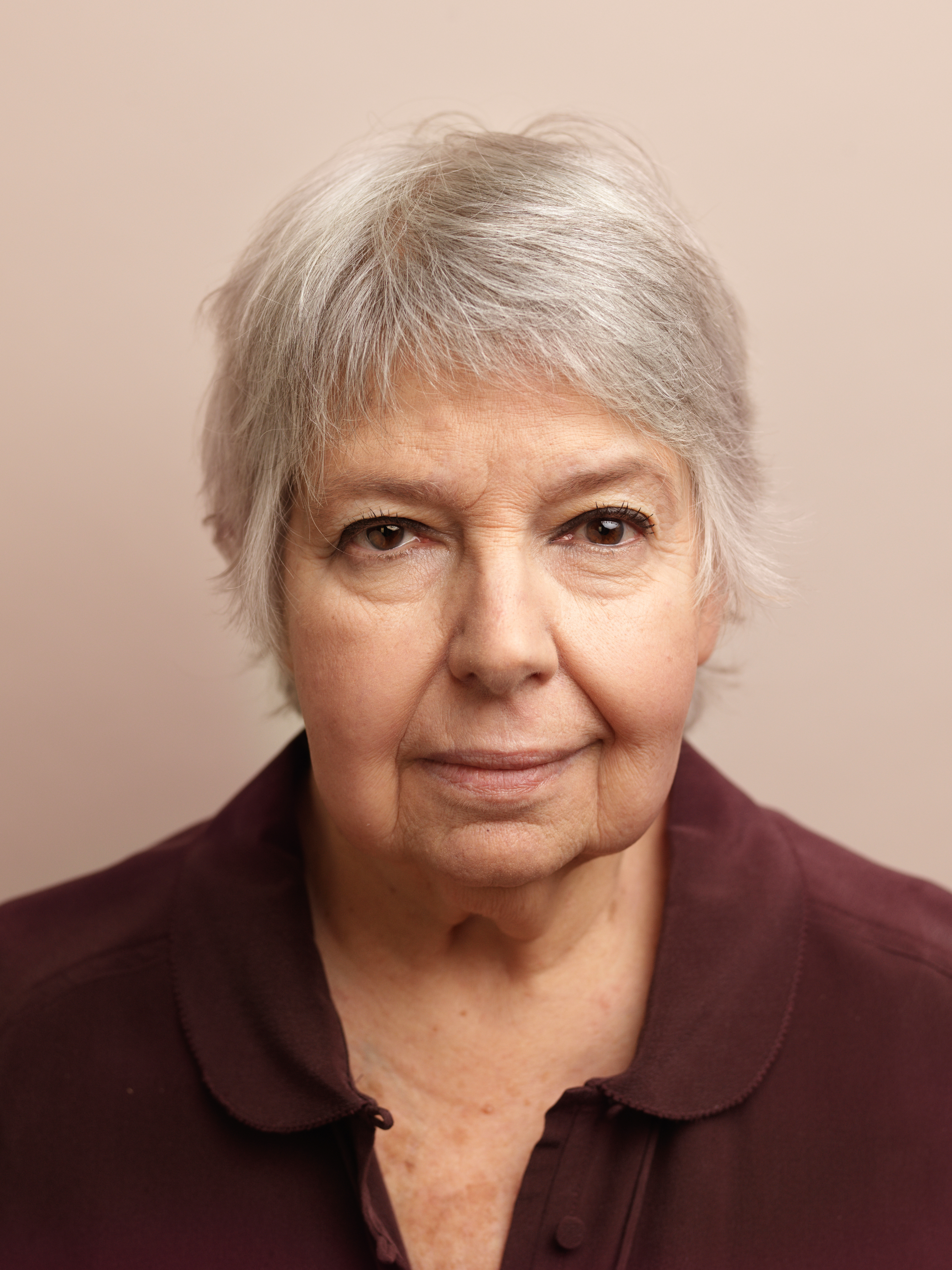
    Robin Morgan, a prolific feminist writer and radical activist who edited the landmark 1970 anthology Sisterhood Is Powerful, served as editor-in-chief of Ms. magazine for five years, and helped organize one of the first protests of the Miss America pageant, died Saturday in New York City. She was 85.

    Her death, in a hospital, was confirmed by her son, musician Blake Morgan, who is her sole survivor.

    From the front lines of a much-splintered feminist movement, Ms. Morgan gave voice to women as a poet, journalist, novelist, memoirist, agitator, and iconoclast. She came of age in the Civil Rights and anti-Vietnam War movements, but along with other young women of the new left, she found those movements dominated by men, and, in particular, men who wanted to keep women as second-class citizens.

    “We were tired of making coffee and not policy,” she told the Guardian in 2006.

    Ms. Morgan caused shock waves in 1970 when she published an essay in Rat, an underground newspaper. The article, titled “Goodbye to All That,” named specific men as sexists. “Goodbye to Hip Culture and the so-called Sexual Revolution,” she wrote, stating that the murderous Charles Manson was “only the logical extreme of the normal American male’s fantasy.” The piece became an instant classic of second-wave feminism; it also brought her death threats from counterculture activists. “They called it ‘the shot heard round the Left,’” she told the New Yorker in 2008.

    She returned to that theme in 2008 with “Goodbye to All That (#2),” an essay calling out the toxic misogyny aimed at Hillary Clinton, then a senator who was running for the Democratic presidential nomination. The article went viral (and was mass-forwarded by Chelsea Clinton, her daughter).

    Ms. Morgan’s early activism in the late 1960s included cofounding the radical feminist groups Women’s International Terrorist Conspiracy from Hell and New York Radical Women, which in 1968 organized one of the first protests against the Miss America pageant for its objectification of women.

    At the protest, on Atlantic City’s boardwalk in New Jersey, several hundred women staged guerrilla theater actions: Some threw bras, girdles, hair curlers, mops, and other symbols of women’s “enslavement” into a trash bin (but, contrary to popular belief, Ms. Morgan insisted that there was no bra burning). The climax of the day’s events was the unfurling of a banner inside the city’s convention hall that said, “Women’s Liberation.” The protest earned Ms. Morgan prominent mention in the New York Times Magazine under the headline, “Meet the Women of the Revolution, 1969.”

    She coined the term “herstory” — history written from women’s point of view — and claimed partial credit for the slogan “the personal is political.” Her phrase “pornography is the theory; rape is the practice” became a rallying cry for the anti-porn movement.

    As the keynote speaker at the 1973 West Coast Lesbian Conference, Ms. Morgan protested the presence of transgender folk singer Beth Elliott, whose performance became a symbolic dividing line between feminist groups at the event. “No, I will not call a man ‘she,’” Ms. Morgan said in her speech. “Thirty-two years of suffering in this androcentric society, and surviving, have earned me the title of ‘woman.’”

    Decades later, this speech earned her the label “trans-exclusionary radical feminist” as 21st century gender politics brought about a rethinking of sex, gender, and transgender rights. When asked about that speech in a 2024 interview for this obituary, she said, “I believe that trans rights are human rights.” Then she paused and sighed before adding, “It’s complicated.”

    Ms. Morgan created the iconic image on the cover of Sisterhood Is Powerful, taking the symbol for female — a circle above a cross — and filling it with a raised red fist. The book, a comprehensive collection of the writings of second-wave feminists such as Kate Millett, Eleanor Holmes Norton, and Florynce Kennedy as well as documents from feminist organizations, became a bestseller; it was included in the New York Public Library’s “Books of the Century” exhibition and was named by the American Library Association as one of the 100 most influential books of the 20th century. Ms. Morgan used the royalties to create the Sisterhood Is Powerful Fund, a feminist grant-giving organization.

    Her second anthology, Sisterhood Is Global (1984), focused on interviews with women from around the world, which led her to establish the Sisterhood Is Global Institute with French activist Simone de Beauvoir. She worked on the book from her office at Ms. magazine, where she was a contributing editor. In 1989, she was asked by its cofounder Gloria Steinem to become editor-in-chief and reestablished the publication as an ad-free, international bimonthly magazine. Circulation soared, and the magazine won numerous journalism awards. She resigned as editor-in-chief in 1994 but remained on as consulting global editor.

    She completed her final Sisterhood anthology, Sisterhood Is Forever, with essays by more than 50 feminists, in 2003. She then joined forces with Steinem and Jane Fonda in 2005 to create the Women’s Media Center, a nonprofit organization supporting women working in the media. She hosted a podcast on politics for the center for many years. (Steinem died on Wednesday.)

    By her 80s, Ms. Morgan had published two dozen books, including poetry, novels, nonfiction works, and numerous essays in both the mainstream and alternative media. Her books included the bestseller, The Demon Lover: The Roots of Terrorism (1989), a feminist analysis of violence, and her acclaimed memoir Saturday’s Child in 2001.

    Robin Evonne Morgan was born on Jan. 29, 1941, in Lake Worth, Fla., to Faith Malkah Teitlebaum Berkley, a sales clerk at Lerner Stores, a women’s clothing chain. Faith was not married and had traveled to Florida from New York to hide her pregnancy; for years, she told Robin that she was born in 1942.

    Robin did not meet her father, Mordechai Morgenstern, a gynecologist, until she was 20. He handed her a birth certificate that revealed she had been born a year earlier.

    Robin’s aunt pushed her into child modeling, and Faith became an aggressive stage mother. By age 5, Robin had her own half-hour weekly call-in radio program, The Little Robin Morgan Show, on WOR in New York. At around age 8, she began appearing on TV and starred in the popular show Mama, about a working-class Norwegian immigrant family in turn-of-the-century San Francisco. When she was a teenager, she quit acting to become a writer against her mother’s wishes. She enrolled in nonmatriculated literature classes at Columbia University at 16.

    Instead of earning a degree, she landed a secretarial job with the Curtis Brown literary agency by her early 20s, which gave her access to influential writers such as W.H. Auden. She joined a writing workshop, where she met poet Kenneth Pitchford, a founder of the Gay Liberation Front. They married in 1962, shortly after his boyfriend broke up with him — and served as best man at their wedding.

    As an adult, she loathed any mention of her having been a child star. She famously walked off The Tonight Show Starring Johnny Carson, which was airing live, in 1969, when it showed footage of her as a child actor while she was talking to Carson about rape. “Imagine talking about such a subject and having it trivialized like that,” she told the Guardian.

    Her marriage ended in divorce in 1990. Pitchford died in 2020.

    She always remained prolific — and fiery.

    “I’m now 77,” she said in 2018, “which once would have sounded positively antique to me. But I just came out with my 23rd book.” She added: “I am still intensely an activist. When younger women come to me for advice, I smile. ‘Get your own torch,’ I tell them, ‘I’m not done with mine yet.’”

    This article originally appeared in the New York Times.

  • The ex-salesman bringing the far right to the cusp of power in Germany

    The ex-salesman bringing the far right to the cusp of power in Germany

    TANGERMÜNDE, Germany — During the coronavirus pandemic, a little-known German state lawmaker with an upbeat patter and a telegenic smile started railing on TikTok against pandemic regulations. Complaining about masks, vaccinations, and other government requirements that he deemed “crazy,” the lawmaker attracted millions of viewers with his videos by using an affable tone to deliver an antiestablishment message.

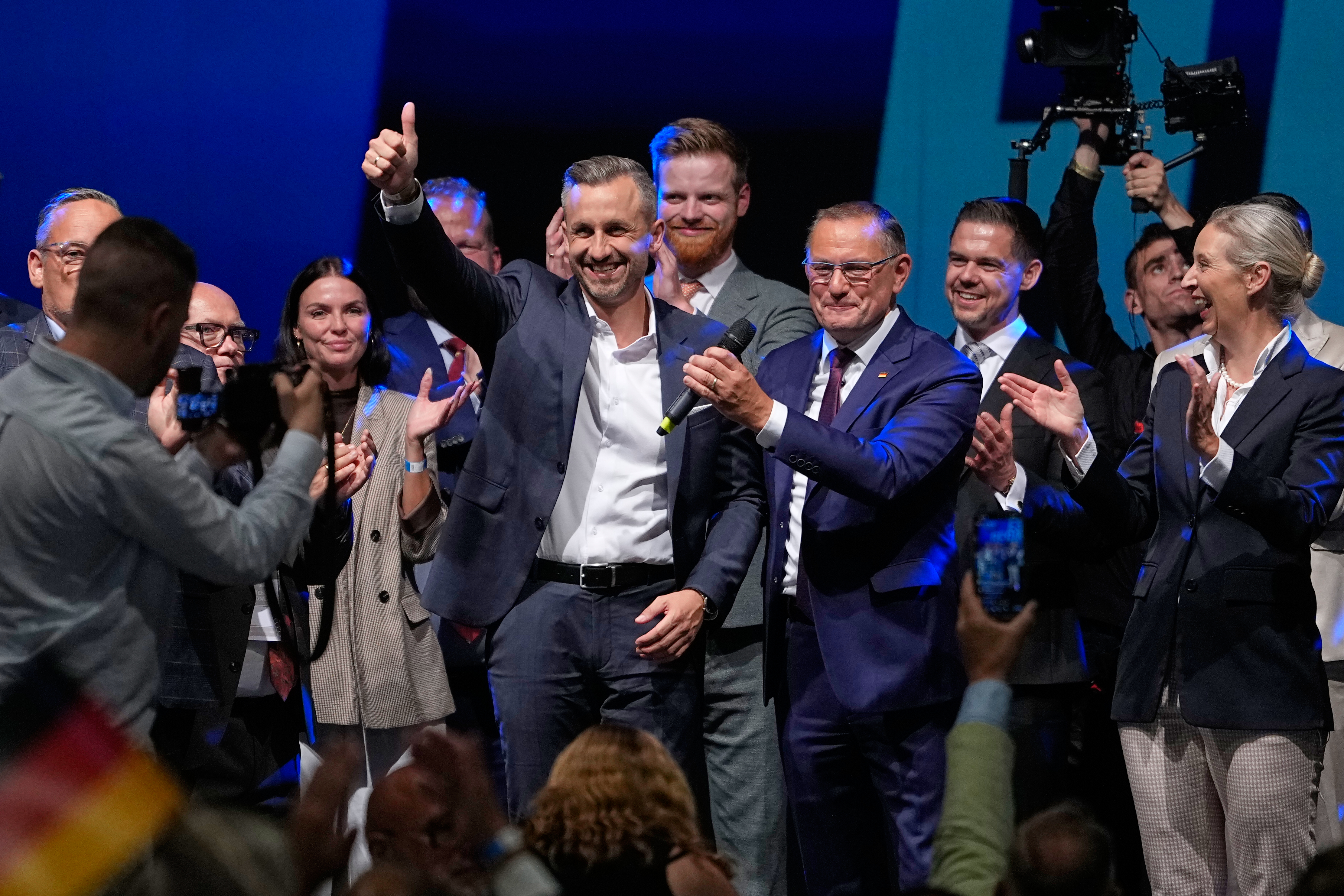
    Now, that lawmaker, Ulrich Siegmund, has harnessed his online popularity to come closer to power than any other far-right politician in Germany since the Nazi era ended in 1945.

    Siegmund, 35, a former air freshener salesperson, is the lead candidate for the Alternative for Germany party in Saxony-Anhalt, a state in eastern Germany where the party was projected to finish first in a statewide election on Sunday.

    If the party, known by its German initials, AfD, wins an outright majority, Siegmund will become the first far-right politician to govern a German state since the reestablishment of the country’s democracy nearly eight decades ago. That would be a convulsive moment for Germany’s postwar political system, which was designed in the aftermath of World War II to prevent politicians deemed extremist from ever taking office.

    To the political establishment in Berlin, Siegmund’s party is an outcast. The domestic intelligence agency has labeled it as “suspected extremist,” an accusation it rejects as politically motivated. The party has said that Islam is incompatible with the German Constitution and has vowed mass deportations of immigrants. Several of its leaders are close to Russia, and some have made dog whistle comments about the Nazi era, such as minimizing the Holocaust and repeating Nazi slogans.

    Siegmund himself has said, in a podcast interview with Politico, that he could not “presume to judge” if the Holocaust was humanity’s worst-ever crime, “because I can’t possibly come to terms with the entirety of human history.” He also declined to condemn supporters who chanted his surname, Siegmund, in the style of the Nazi salute, “Sieg Heil.”

    Still, Siegmund has won over voters in Saxony-Anhalt, experts say, through his ability to present the party’s hard-line policies in a more approachable and optimistic tone than many of his AfD colleagues, without distancing himself from extremists. In addition to deporting immigrants, the party has proposed cutting funding for public broadcasters, banning gay pride flags in schools, and teaching more Russian, as well as providing tax breaks for large families and free childcare.

    “I can provide motivation, create a sense of optimism, and get things moving forward again,” Siegmund said in an interview with the New York Times this year. (He declined more recent interview requests.)

    That affability has made him more acceptable to voters beyond his hard-right base, said Steffen Mau, a prominent sociologist at Humboldt University of Berlin.

    “He’s a canvas onto which people can project some kind of promise for the future,” Mau said.

    Many mainstream politicians, who have said Siegmund and the AfD are dangerous, also call his proposals unrealistic. “Whenever the topic turns to substance, when people actually ask how you intend to move our country forward economically, you’re nowhere to be found,” Sven Schulze, the incumbent governor of Saxony-Anhalt, said to Siegmund during a televised debate last month.

    An August cover story in Germany’s premier newsmagazine, Der Spiegel, called him “the most dangerous man in Germany,” partly because his sunny disposition makes his party’s hard-line goals more palatable to some voters. Siegmund’s followers took it as a badge of honor and, during campaign stops, asked him to sign copies of the edition.

    Siegmund is “so approachable and charming,” said Wolfram Adler, 67, a retired train driver who attended one of those rallies.

    From air fresheners to politics

    Born in 1990, weeks after the reunification of East and West Germany, Siegmund was raised in the picturesque medieval town of Tangermünde, in eastern Germany.

    Growing up in the east, he came of age amid increasing resentment about how reunification played out for his home region. The east’s economy, employment rates, and population ebbed after 1990, leading many East Germans to feel excluded in the new Germany. It was a sense of grievance on which the AfD would later capitalize, particularly in Saxony-Anhalt where the unemployment rate of roughly 8% is well above the national average.

    In his 20s, Siegmund worked as an account manager at a healthcare provider before starting his own business in Berlin selling room deodorizers.

    He joined the Christian Democratic Union, a mainstream conservative party that currently leads the national coalition government.

    But he soon grew tired of the party’s rigid leadership structures, he has said in past interviews with the news media, and joined the AfD in 2014. He was drawn to the AfD, he said, because the party stood against what he perceived as the high-handed policies of the national government in Berlin.

    The AfD was founded in opposition to Germany’s adoption of the euro. After it shifted to an anti-immigrant message, Siegmund ran on the party’s slate for the statehouse in 2016. He won a seat as the party netted 24% of the state vote, profiting from growing concerns about Germany’s decision to welcome roughly 1 million refugees during the European migrant crisis. He also served on his local council alongside his father and brother.

    He rose to national fame in 2021 with his personable videos about pandemic restrictions, helping to project both the party and himself as the voice of voters who felt disenfranchised by mainstream parties.

    Now, Siegmund has more than 850,000 followers on TikTok, an astronomical number for any German politician, giving him a platform that helped to amplify his stump speeches on the campaign trail this summer.

    When speaking to sizable crowds, he has often filmed the scene on his phone, turning the camera toward the crowds to show viewers how big they were.

    “When you see all of Siegmund’s campaign appearances, it becomes perfectly clear: They’re not primarily intended for the live audience, they’re primarily for the internet,” said Paula Diehl, a professor who studies populist leaders at Kiel University.

    His preppy shirts and his trademark tuft of graying hair have made him instantly recognizable in Tangermünde, his hometown of 10,000 residents. During the Times interview this year, passersby repeatedly greeted him, wished him luck or smiled.

    Throughout the conversation, he combined a measured, even tolerant tone with a hard-line, exclusionary message.

    He said that he did not blame immigrants for coming to Germany — before, seconds later, vowing to make their lives in his state “very uncomfortable.”

    Combining nostalgia with optimism

    The backgrounds of his campaign team also highlight his contradictions. The production company behind Siegmund’s genial campaign videos is led by a far-right activist with the Identitarians, a movement that German intelligence has accused of extremism. Siegmund’s spokesperson was once part of a banned extremist group inspired by the Hitler Youth.

    Siegmund did not reply to requests for comment about these links. In interviews with other outlets, he dismissed their relevance.

    Siegmund, said Diehl, “pretends to engage in an inclusive discourse and then immediately shatters it.”

    Part of his strategy has been to tap into nostalgia for East Germany among some residents, even though he was born after it collapsed. Though many remember Communism as a dictatorship, some recall it as a time of full employment and stability.

    One campaign event featured a comedian who sang the East German national anthem — an act so contentious, because it appeared to validate an authoritarian regime, that even some AfD politicians distanced themselves from it.

    At some events, Siegmund rode through the countryside on a Simson, an anemic two-stroke East German motorcycle that has long been associated with life during Communism. His machine was painted baby blue to match the AfD’s colors.

    At other times, he has sought to look forward instead of back. Tapping into widespread disenchantment with high unemployment and living costs, he has painted a picture of a better, if ill-defined, future under AfD leadership.

    “Things are going downhill everywhere, and that’s a bad and demotivating place to start,” he said in the Times interview. “I want things to start moving uphill,” he said.

    Critics say he is simply selling false hope, pointing to his past life as a salesperson.

    “I discovered my strength in sales early on,” Siegmund told a business magazine in 2014. “I love to sell.”

    This article originally appeared in the New York Times.

  • Alex McFarlane gives up game-tying three-run homer as Braves top Phillies in NL East setback

    Alex McFarlane gives up game-tying three-run homer as Braves top Phillies in NL East setback

    There’s something about a rookie who throws 100 mph that thrills a jam-packed crowd. In September, amid a tightening pennant race, it can overstimulate even the public-address announcer.

    Over to you, Dan Baker.

    “Now pitching for the Phillies … number 71 … Aaalexxx McFaaaaaaarlane!”

    To be fair, there was juice in the ballpark as the eighth inning began Sunday. Aaron Nola got not three but five outs in the seventh to hold a one-run lead before Derek Hill and Kyle Schwarber homered, leaving the Phillies six outs from shaving the Braves’ division lead to three games.

    Baker kicked in extra oomph only to suit the mood.

    If only McFarlane had met the moment.

    Instead, making his 12th major-league appearance, the 25-year-old righty gave up back-to-back one-out hits and a game-tying three-run homer to arms-flapping, stutter-stepping Ronald Acuña Jr. that exposed the Phillies’ most-glaring flaw and put a crimp in their chase for a third consecutive NL East crown.

    “It was a tough one today,” Nola said after a 5-4 loss shoved the Phillies back to five games out of first place with 19 to play. “No doubt about it.”

    Said interim manager Don Mattingly: “It’s one of those where you feel like it’s a tough one.”

    Jhoan Duran (right) gave up the go-ahead run in the ninth inning of the Phillies’ 5-4 loss Sunday.Monica Herndon / Staff Photographer

    OK, for the record, Jhoan Duran gave up the go-ahead run in the ninth on Ozzie Albies’ leadoff double and Austin Riley’s triple. It was only the second earned run allowed by the star closer since Aug. 1.

    Before that, though, the worst fear of 42,793 paying customers at sold-out Citizens Bank Park — and the biggest concern for team officials — reared its head again. Because as well as the Phillies have played over the last three months, the bridge to Duran is as creaky as ever.

    Jonathan Bowlan has emerged as the primary eighth-inning reliever, but Mattingly noted that “his stuff ticks down a little bit” when he pitches on back-to-back days. Orion Kerkering has faltered. José Alvarado is inconsistent.

    The choice, then, with a 4-1 lead was McFarlane, who was still in double-A at the All-Star break but has the kind of big arm that leaves organizations dreaming that he could be an X factor in October.

    McFarlane gave up a single on a first-pitch fastball to Mike Yastrzemski and a double to Drake Baldwin on a slider. He threw seven fastballs in a row — all 100 mph or more — to Acuña, the Braves’ best player and Public Enemy No. 1 these days in Philly baseball for his showboating home-run trot.

    “That was the plan there,” McFarlane said. “Just trust [catcher Garrett Stubbs]’ calls and trust myself to make those pitches.”

    Said Mattingly: “You feel like he beat him with most of those, and like the sixth pitch was the first one I felt like [Acuña] was on time. Maybe [go to] something different. But I’m just backseat quarterbacking.”

    With a 1-2 count, McFarlane intended to put the seventh fastball above the strike zone. It wasn’t elevated enough, and Acuña drove it into the bleachers in left-center field.

    Cue the boos. Watch the air leave the balloon.

    Here, then, is the state of play in the NL East: By taking two of three in this four-game holiday weekend series, the Braves are assured of leaving town with no less than a four-game lead that would functionally be five games by virtue of winning the season series.

    It appears the Phillies’ best path to the playoffs is the wild card, where they maintained a 4½-game cushion. They’re also still a half-game behind the Cubs for the top wild card, which brings a home series in the best-of-three initial round.

    Oh, but think of what might have been if not for that eighth-inning collapse.

    “I figured it was a good spot for Alex,” Mattingly said. “He’s been pitching well. You want to give him that shot. I think it was the right [move] for today. … Alex was rested. We felt like it was a good spot.”

    Next time, who knows?

    That’s the problem.

    Nola dazzled again, setting down the first 10 batters before allowing a one-out double to Acuña in the fourth. It wasn’t until the sixth that he gave up a run on a one-out walk, a single, and a sacrifice fly.

    With Nola’s pitch count under control, Mattingly sent him back out for the seventh inning against the middle of the Braves’ order. And with one out, Mauricio Dubón doubled on a ball that Bryce Harper lost in the sun in right field.

    Still, Mattingly stuck with Nola.

    The sun blinded Alec Bohm on a foul pop down the first-base line with two outs. Nola regrouped to strike out Sean Murphy and hold a 2-1 lead. As Nola walked off the mound and reached out with his right hand to have it checked, the umpire almost had to get in line behind teammates who wanted to shake it.

    Aaron Nola throws during the second inning against the Atlanta Braves on Sunday.Monica Herndon / Staff Photographer

    But the Phillies were still three outs from Duran. And given the state of the bullpen, there aren’t three more difficult outs for them to get.

    Now, they’ll find out how McFarlane handles adversity.

    “I think we see how he responds, and I think I feel good about the way he’s going to respond,” Mattingly said. “It’s going to happen to everybody if you play long enough, so we’ll see. I think he’ll be fine. He’s been a kid that’s handled everything.”

    Except blowing a three-run lead in the eighth inning.

    “Just come to the field the next day, flush it, and just believe in yourself,” McFarlane said. “Understand that you don’t let that moment define you and just accept failure for what it is and continue to keep pushing.”

  • 15-year-old boy was critically injured in a Cobbs Creek e-bike crash

    15-year-old boy was critically injured in a Cobbs Creek e-bike crash

    Two teens remain hospitalized after their e-bike collided with a Cadillac early Sunday morning in West Philadelphia.

    A 15-year-old boy, who was riding the e-bike with a passenger and whose name police did not release yet, was listed in critical condition.

    Shortly after 1 a.m., the teens were riding westbound on Hazel Avenue, approaching 58th Street, when they disregarded a stop sign and collided with a red Cadillac CTS, police said.

    Paramedics transported the 15-year-old e-bike operator to Children’s Hospital of Philadelphia, where he was listed in critical condition, police said. His 16-year-old passenger, whose name police also did not release, was listed in stable condition.

    The driver of the Cadillac, who remained at the scene, was not injured.

    The crash remains under active investigation.