Blog

  • As midterms approach, Republicans find there is no escape from Trump

    As midterms approach, Republicans find there is no escape from Trump

    WASHINGTON — In the White House Rose Garden, President Donald Trump recently gathered some of the most politically endangered House Republicans for a dinner where he promised to make himself the face of the party’s uphill battle to keep control of Congress.

    He was with them “100% — all the way until November,” Trump told the roughly two dozen lawmakers as they dined on prime aged beef burgers at tables adorned with bouquets of yellow roses. The president said he would travel to 35 key districts “to see if we can get everyone elected.”

    The scene encapsulated the box that GOP lawmakers have found themselves in as they stare down a bleak political environment.

    They cannot afford to snub Trump, needing help from his enormous financial reserves and strong turnout from his base to win their campaigns. But they also do not want the election to be a referendum on the president, whose popularity is at a record low. And so far, he has shown little appetite for focusing on anyone’s political needs besides his own.

    Two months before the midterm elections, Trump and the Republicans who have long tied their political fortunes to him appear to be at cross-purposes as the party struggles to keep the House and Senate in GOP hands.

    As Republicans work to distance themselves from the president’s unpopular decisions, Trump is headlining a splashy convention in Dallas this week and has said that voters should “pretend, please, that I’m on the ballot.” As the candidates work to show they are focused on the concerns of everyday Americans, the president is spending much of his time in Washington focused on the construction of a White House ballroom, a 250-foot arch, and a golf course on a public park alongside the Potomac River. And as they brace for the final costly weeks of their campaigns, he has yet to dole out hardly any of the nearly $1 billion he says his political action committee has raised.

    “This is my money that I control,” Trump said Friday, suggesting he would spend between $400 million and $500 million on “Republicans that I think are good.” His political operation reported Saturday that it had made its first expenditure, to defend a Senate seat in Texas. But beyond that, Republicans have received little information about when or where the money may come.

    For now, Trump appears to be focused primarily on promoting himself and boosting his popularity.

    The first 30-second television spot released by his political team, the launch of a post-Labor Day ad blitz, was a case in point. It touted the president as “the toughest, most resilient person” and made no mention of Democrats, the midterm elections, or any Republican candidates.

    And as Trump gathers Republicans in Dallas on Wednesday for the unprecedented two-day midterm party convention, the festivities will be as much about boosting his own approval ratings and public self-esteem as it is the candidates who are actually on the ballot, a person involved with the planning said.

    “The president called me two nights before Thanksgiving last fall, and he said, ‘Mike, we got to do a midterm convention,’” House Speaker Mike Johnson said. “And I said, ‘That’s not a thing.’ And he said, ‘Make it a thing.’ OK. So we’re going to do a midterm convention.”

    ‘A ball and chain’

    Many vulnerable Republicans are steering clear of this week’s convention, choosing instead to spend time campaigning in their states and districts. And while some see a benefit in the confab as a way to raise money for the party — tickets cost $25,000, including for lawmakers — they also worry that it will do exactly what candidates most want to avoid: turn the election into a national conversation about Trump.

    After 10 years of tying themselves to Trump, Republicans have little room to maneuver around him. Candidates up and down the ballot have embraced his lies about American elections, while few have publicly broken with him on signature issues such as spending cuts, tariffs, or the war with Iran.

    A White House spokesperson disputed that there was any fissure between the president and his party.

    “President Trump is the unequivocal leader of the Republican Party, who is committed to maintaining Republicans’ majority in Congress,” Olivia Wales, the spokesperson, said.

    But some Republicans fear the party has little to campaign on after two years that have yielded few legislative achievements and a spare congressional schedule that involved weeks on end at home. Some of Trump’s moves, they argue, have made things worse.

    “I’m fearful that the president’s numbers are a ball and chain that will be hard to overcome,” said Rep. Don Bacon of Nebraska, a moderate Republican who is not running for reelection in his battleground district. “I’m worried that we’ve lost a lot of our swing voters. In the Midwest, tariffs aren’t popular. Ukraine polls at 70% — why aren’t we doing more for them? Nebraskans don’t like chaos and all the name-calling and treating our allies bad.”

    Republicans are banking instead on portraying Democrats as socialist extremists and themselves as the sane and sober alternative. (A handful of democratic socialists have won primaries this year, though their numbers in Congress are likely to remain in the single digits.)

    Johnson, who has raised $135 million this cycle, has been leaning heavily on that contrast.

    “Imagine a nightmare scenario with these insurgent, Marxist Democrats taking over the Congress,” Johnson said this past week while campaigning in Texas. “They would impeach the president on the first day.”

    Placing bets, but when?

    The biggest question for Republicans has been when — and if — Trump will begin spending down his political operation’s prodigious resources.

    Trump’s super PAC, MAGA Inc., has so far stayed almost entirely on the sidelines and has not communicated its plans, even privately.

    Two of Trump’s political advisers, James Blair, a former top White House aide, and Tony Fabrizio, a longtime pollster, briefed Republican senators last month and left a strong impression that money was coming imminently, according to two people who attended the private meeting and spoke on the condition of anonymity. But little has been spent as some Republicans are growing anxious that races in North Carolina and Georgia may be falling further out of reach.

    Apart from the new investment in Texas, so far Trump’s super PAC has only spent this year to boost Sen. Darline Graham in last month’s Republican primary in South Carolina. The president had put his reputation on the line in that contest by endorsing Graham, but its outcome in a solidly Republican state was unlikely to affect his party’s chances of holding the Senate.

    Trump’s advisers, people familiar with their thinking said, are reluctant to spend his money when House and Senate leaders have yet to drain their own campaign coffers.

    Blair has been in regular contact with counterparts in the Republican leaders’ political operations to strategize about how to most effectively use the president’s funds in the midterms.

    But there have been some major splits. Trump’s decision to back Ken Paxton, the scandal-tarnished Texas attorney general who defeated Sen. John Cornyn in a primary this year, angered Sen. John Thune of South Dakota, the majority leader, and other Republicans who saw it as making that state far more costly for the party to defend.

    Thune has all but begged Trump to put some of his own resources into the race. On Saturday, MAGA Inc. reported it had begun doing so, spending $10 million on television and digital advertising in Texas.

    Separation is hard

    A handful of vulnerable Republicans have sought to carefully create some distance between themselves and Trump. Unlike previous presidents who have made themselves scarce when politics demanded it, Trump has not made it easy.

    Rep. Mike Lawler of New York recently aired a digital advertisement that features the president calling him a “pain in the a—” for advocating the repeal of the cap on the state and local tax deduction. But Lawler is also planning to speak at the convention.

    Rep. Tom Barrett of Michigan bought ads on Facebook touting his votes to limit Trump’s war powers in Iran. But in July, Trump held a rally in his district and called the congressman to the stage alongside him. “I’m proud to stand with you today,” Barrett said.

    A handful of other Republicans, including the party’s nominees for governor of Georgia and Maine and several running for Congress, have quietly scrubbed photos of Trump from their campaign websites or removed mentions of his endorsement — which they were happy to promote during primary contests.

    But there are not many examples of Trump-era Republicans successfully distancing themselves from the president in the eyes of voters. In 2018, the last midterm election with Trump in office, he celebrated the defeat of House Republicans like then-Rep. Mia Love of Utah, who had been critical of him.

    “The idea that you can run away from him is silly,” said Corry Bliss, who ran the House Republican super PAC in 2018. “Republicans need to have a thoughtful conversation with their voters about what they’ve accomplished. Some of them won’t have a single thing to say, and they’re the ones who will lose.”

    This article originally appeared in the New York Times.

  • Nepal flood survivor’s family in China relieved after days of anxious waiting

    Nepal flood survivor’s family in China relieved after days of anxious waiting

    HONG KONG — After days of waiting anxiously, Lu Haitao’s family could finally breathe a sigh of relief when the Chinese man was rescued from a tunnel in Nepal where devastating floods killed more than 1,300 people.

    Rescuers carried out Lu from a 740-foot hydropower tunnel and evacuated him by helicopter Saturday, 10 days after the floods. He was taken to a hospital and was in stable condition, Chinese state broadcaster CCTV reported.

    The Aug. 26 floods were likely caused by a glacier collapse, and nearly 4,900 remain missing in the South Asian country, according to Nepal’s disaster management agency.

    Lu recalled climbing to the highest point inside the tunnel and thinking the whistles he heard from the rescue crews were in his imagination, according to audio shared by CCTV. He told a Chinese embassy staffer that the emergency personnel initially could not hear him when he shouted toward their lights.

    “When they shone before my eyes, I couldn’t believe it,” he said. “I no longer shouted. I had lost hope.”

    Lu Hairong, Lu’s sister in China, told state media Red Star News that she received a call about the rescue before the news emerged. But she only found it believable after seeing him in a picture in the news.

    Her 49-year-old brother, who is married with a son, was previously a farmer from Henan province in central China and took additional work, mainly carpentry, during his spare time. He headed to Nepal for work with a fellow villager in February, his first time working abroad, she told Red Star News.

    She told Cover News, another Chinese state media outlet, that Lu had not shared his exact working location and she could only watch the news sent by others in a mutual aid group for families of the missing, unable to eat or sleep well.

    “It’s a stroke of sheer luck amid the misfortune,” she said of the rescue.

    Lu’s cousin, Lu Haiqing, said her mind went blank after learning he was missing on the sixth day after the floods. She then searched for Nepal news every day and used artificial intelligence to translate Nepali to Chinese. She wept every day on her way to work, Chinese news portal Jiupai News reported.

    On Saturday, Lu’s cousin received a picture from his sister asking her to help confirm his identity. The man looked very similar but she needed to call another relative to help confirm, the report said.

    “This day has finally come,” she was quoted as saying. “There is hope when one doesn’t give up.”

    On the Tibet side of the border, 43 people died and 519 were missing, of whom 261 were foreigners, as of Saturday evening, CCTV reported.

    Rescuers operated excavators to search for those unaccounted for after a mudslide hit the Gyirong border facility and swallowed people, according to videos from foreign media pool coverage on a government-organized trip.

    The border crossing area was seen Sunday covered by fragments of rocks and gravel, with yellow chrysanthemums being laid on the ground in the disaster zone in an apparent tribute to the victims.

  • Deadly Iran wedding strike likely due to U.S. bomb missing a nearby target

    Deadly Iran wedding strike likely due to U.S. bomb missing a nearby target

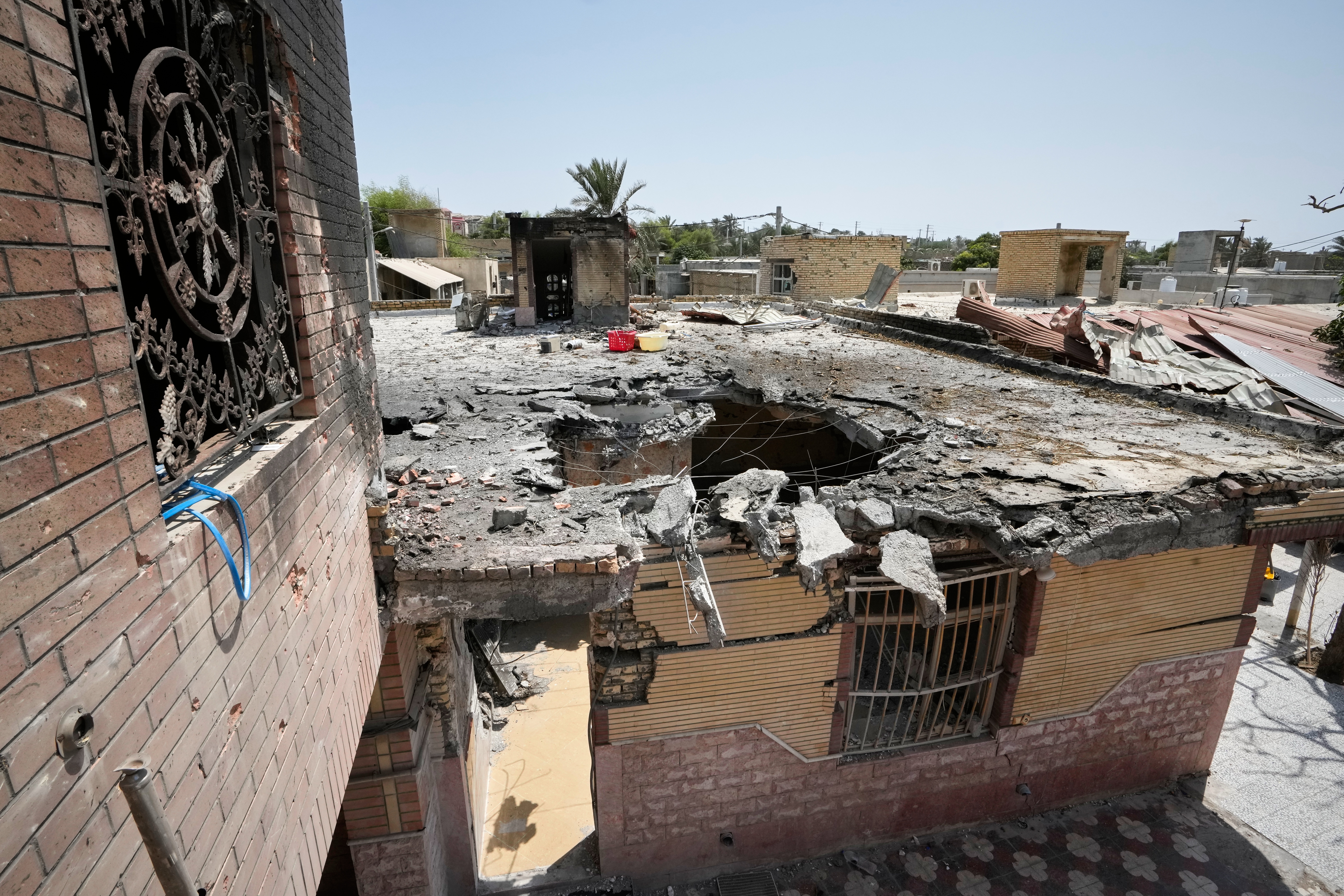
    The Pentagon is investigating the high likelihood that an explosion in southern Iran that destroyed a home hosting a wedding celebration was caused by a U.S. bomb that missed a nearby target, a person familiar with the operation said.

    The strike on the home, which Iranian officials said killed at least four civilians and injured dozens more, was part of a larger wave of attacks on Tuesday in southern Iran, described by U.S. officials as retaliation for increased threats to U.S. troops and commercial shipping.

    U.S. forces launched an airstrike in the coastal town of Kuhestak that targeted a communications complex, a U.S. official said. The complex, which included a small building at its base, sat in a civilian area but was believed to be utilized in part by Iranian forces to conduct operations, the person familiar said.

    Six bombs dropped by U.S. Navy jets traveled on a tight pathway toward the tower and all struck the site except for one, which appeared to go astray, said the person, who like others spoke on the condition of anonymity to discuss sensitive operations.

    An explosion tore into the roof of the home approximately 440 feet from the tower, according to visuals verified by the Washington Post.

    The explosion killed at least two women and two children aged 4 and 16 years old, according to Ali Jafarian, Iran’s deputy health minister, and injured more than 90 others. The Post could not independently verify those figures.

    The mishap followed an exhaustive targeting process, which include U.S. personnel working to minimize harm to civilians, the person familiar said, like multiple layers of verifying target locations.

    “We’re investigating it because obviously we care. We want to know,” Vice President JD Vance said when asked about the strike in a news conference Thursday.

    Central Command, which oversees military operations in the area, said it was aware of reports of civilian casualties and is “looking into them” but declined to provide additional details.

    “The U.S. military never targets civilians, unlike the IRGC,” said Navy Capt. Tim Hawkins, a spokesperson for Central Command, using the acronym for Iran’s paramilitary Revolutionary Guard.

    Officials are assessing one other possibility for the explosion at the home, including an air defense missile falling out of the sky — a circumstance the person familiar and weapons experts independently said was highly unlikely.

    The tower was the only target slated for attack in Kuhestak, the person familiar said, ruling out a scenario that the home was intentionally struck or was mixed up with some other target.

    The Post verified photographs and video from the night of the attack and aftermath published on social media to determine locations and precise distances.

    Details of the strike were earlier reported by the New York Times and Reuters.

    The bombing is among a growing list of U.S. strikes that have killed civilians during the six-month conflict, which has entered a tenuous ceasefire marked by occasional attacks.

    The Trump administration has dismissed concerns raised by lawmakers and human rights groups that have alleged airstrikes without due regard for civilians nearby are violations of international law. The Pentagon has mostly dismantled an office focused on mitigating civilian harm and reassigned personnel who investigate such incidents.

    An airstrike on an Iranian military compound in the early hours of the war in February struck a nearby school, killing at least 175 people, many of them children, according to Iranian state media. That strike was the result of an error that involved outdated targeting information, the Post previously reported.

    Video posted by the Iranian Red Crescent Society from the night of the wedding attack showed people with flashlights rushing into the damaged buildings, and emergency workers appearing to use a hose to douse fires.

    “In the new list of war crimes and attacks by the U.S. army on civilian targets in Iran, after schools, stadiums, and residential homes, now add wedding ceremonies to this list too,” the Iranian Red Crescent Society wrote on X.

    It is unclear why the bomb in Tuesday’s strike did not hit its intended target. Guided munitions rely on several precise capabilities, including GPS coordinates, and almost always strike their intended targets, munition experts have said. Errant strikes are rare and typically the result of flawed intelligence, human error, or malfunctions on the weapon itself.

    The munitions used to target the tower complex were U.S. glide bombs known as Joint Standoff Weapons, or JSOW, the person familiar with the incident said. One of the several variants carries a 500-pound warhead, according to the Navy.

    Images from an Iranian state news channel showed strike remnants that were consistent with the JSOW’s tail fin and casing, said Trevor Ball, a weapons technical analyst for Armament Research Services who served as an Army explosive ordnance disposal technician. The Post was not able to independently verify the pieces were recovered from the site.

    The damage seen is consistent with a variant of JSOW that uses two warheads with about 193 pounds of explosives inside, Ball said. The uniform shape of the crater, plus a spread of fragmentation on the structure and nearby buildings, showed a munition that detonated directly on the roof or exploded right above it, he said.

    He ruled out other possibilities for the damage, like an Iranian air defense missile falling onto the home or a weapons depot exploding nearby, because the damage and shrapnel marks would have appeared significantly different.

    The JSOW can be manually updated on its way to a target and it is possible they missed by aiming for a narrow segment of the tower, said Mark Cancian, a senior adviser with the Center for Strategic and International Studies think tank.

    It is unlikely that electronic jamming or some other interference would alone be sufficient to disrupt the trajectory of a JSOW, which have complementary guidance systems, Cancian said. He said it was “highly likely” the strikes at the tower and home were conducted by U.S. forces after reviewing imagery and other details.

    Wes Bryant, who previously served as a targeter in Air Force Special Operations, said military planners are obliged to consider the immediate area when attacking in a populated area.

    “Civilian pattern of life should be established prior to attack, and every structure adjacent to the targeted structure should be characterized,” said Bryant, who later served in the Pentagon office focused on mitigating harm to noncombatants.

  • U.S. denies Iran’s claim to have struck an unmanned ship in Strait of Hormuz

    U.S. denies Iran’s claim to have struck an unmanned ship in Strait of Hormuz

    The U.S. military has denied Iran‘s claim to have struck an unmanned American military vessel in the Strait of Hormuz, calling it a “total lie.”

    Meanwhile, Israeli strikes in southern Lebanon killed seven people and leveled a vacant hospital, according to Lebanese authorities, near an area that has become a flash point in fighting between Israel and the Iran-backed militant group Hezbollah.

    Iran says it hit a U.S. boat in the strait

    State-run media in Tehran said the U.S. vessel was trying to enter an area that Iran says is restricted in the Strait of Hormuz, but Capt. Tim Hawkins, spokesperson for the U.S. Central Command, called it “a total lie.”

    The claim came a day after the U.S. said it struck Iranian oil tankers in retaliation for Iran launching ballistic missiles at Navy warships. Attacks resumed last week after roughly a month of quiet.

    The war began with U.S. and Israeli attacks on Iran on Feb. 28. But negotiations have collapsed after a ceasefire agreement was announced in June, and on-and-off fighting has persisted with both sides trying to inflict military and economic pain.

    Iran’s parliament speaker and chief negotiator, Mohammad Bagher Qalibaf, said the era of “proportionate responses” is over and Iran’s retaliation will be “faster, heavier and more painful.”

    Israeli strikes kill 7 in Lebanon

    Israeli strikes killed at least seven people in southern Lebanon and leveled an empty hospital, Lebanon’s Health Ministry said.

    Strikes on the village of Arabsalim killed two, the ministry said. Two others were killed in Nabatiyeh al-Fawqa, near a strategic hill that Israel said its forces gained control over Thursday. And three people were killed in the village of Nabatiyeh al-Tahta after an Israeli drone struck a parking lot. At least 20 others were wounded in strikes, the ministry said, among them three children and five women.

    Israel’s military said its latest strikes came in response to a drone attack launched earlier Sunday by Hezbollah on troops in southern Lebanon. It said Hezbollah had used the empty hospital as a command center.

    Since a ceasefire went into effect between Israel and Hezbollah more than two months ago, low-level skirmishes and Israeli strikes continue in the south.

    Mass funeral in Gaza for over 110 Palestinians found in rubble

    Dozens of Palestinians gathered in Gaza City to mourn over 110 people, including at least 70 children, after their remains were recovered.

    Rescue crews have been digging out the bodies from the Zeitoun neighborhood. They said the dead came from three families whose houses were flattened by Israeli strikes earlier in the war.

    “We are witnessing a painful, heartbreaking scene,” said Mustafa Quzghat, a relative.

    The bodies were wrapped in white shrouds and draped with Palestinian flags. Some shrouds bore images of the deceased, according to Associated Press footage. They were laid out in rows on the ground.

    Over 73,650 Palestinians have been killed since the war in Gaza began, according to Gaza’s Health Ministry. The ministry, part of the Hamas-run government, maintains detailed records viewed as generally reliable by U.N. agencies and international organizations. It doesn’t give a breakdown of civilians and militants.

    Kushner says Gaza has long been ‘dystopian’

    Jared Kushner, President Donald Trump’s son-in-law, defended the lack of progress in talks about next steps in the fragile Gaza ceasefire, saying, “It’s been a dystopian place for a long time.”

    Speaking at a news conference in Ukraine, Kushner defended his work with Trump’s special envoy, Steve Witkoff, saying the militarization by the Hamas militant group in the Palestinian territory was “beyond our comprehension, so demilitarizing it is not going to be easy.”

    “But we’re very determined, and we’re working through these things,” Kushner said.

    He added: “We’re working through some political issues in Israel. I think we agree with them on the end state. They just have a crazy election, and that makes them a little irrational in certain regards.” Israel’s election is set for Oct. 27.

    Israeli strike in Gaza kills a father and daughter

    An Israeli strike on a civilian vehicle in western Gaza City killed a father and his daughter and wounded at least six others, according to health officials at Shifa Hospital, where the casualties were taken.

    The Israeli military said it struck a “terrorist” in Gaza City.

    Israeli strikes have killed at least 1,344 Palestinians in Gaza since a ceasefire agreement was reached with the Hamas militant group in October, according to Gaza’s Health Ministry. Israel says it is targeting Hamas and other militants who pose a threat, and in response to ceasefire violations, including occasional attacks.

    The war began when Hamas-led militants attacked southern Israel on Oct. 7, 2023, killing around 1,200 people and taking 251 others hostage.

    Muslim nations condemn Israeli proposal to empty Gaza

    Any Israeli plan or action to remove Palestinians from Gaza would violate international law and undermine the U.S.-backed plan for drawing down the war, the foreign ministers of Egypt, Saudi Arabia, Jordan, and five other governments said in a statement.

    Israel’s national security minister, Itamar Ben-Gvir, last week published a plan to encourage Palestinian migration from Gaza. Israel’s defense minister, Israel Katz, has said Israel is prepared to facilitate the removal of Palestinians by sea, air, or other means, and that plans remain under discussion.

    The governments called the statements “inflammatory” and said they threatened the “legitimate and inalienable rights” of Palestinians and the future establishment of a Palestinian state.

  • ‘He’s been so key for us’: Is Jhoan Duran having the best season ever by a Phillies closer?

    ‘He’s been so key for us’: Is Jhoan Duran having the best season ever by a Phillies closer?

    Jhoan Duran unleashed a sinking, 99-mph splitter for a game-ending groundout, clapped his glove three times, and shook hands.

    Ho-hum.

    But Duran’s 11-pitch ninth inning in Saturday night’s 4-2 victory over the Braves was notable in that it marked his 30th save. And a Phillies reliever hadn’t recorded 30 saves in a season since … checks notes … Jeanmar Gómez in 2016.

    “He makes me feel good when I’m able to say, ‘OK, let’s go to Jo,” interim manager Don Mattingly said before Sunday’s game. “It’s nice to have that guy out there.”

    Just to prove he’s human, Duran gave up the go-ahead run in the ninth inning of Sunday’s 5-4 loss to the Braves. After Alex McFarlane allowed a game-tying three-run homer to Ronald Acuña Jr. in the eighth, Ozzie Albies doubled and Austin Riley tripled against Duran.

    But Duran has been mostly automatic — 1.85 ERA, 99 strikeouts in 73 innings, 46-for-51 in save chances — since coming over at the trade deadline last season. The Phillies don’t take him for granted, though — and not only because they sent top-100 prospects Eduardo Tait and Mick Abel to the Twins to get him.

    “When you feel like you have that guy that you can just hand him the ball in the ninth, it feels like it sets up the way we’re able to go get the ball to our bullpen,” Kyle Schwarber said. “He’s been so key for us.”

    Duran converted his first 16 saves this season before a hiccup June 9 in Toronto. His only other blown save came July 27 in Miami. In 51⅓ innings, he has allowed one homer, a solo shot to pinch-hitting Kyle Manzardo that decided a 1-0 loss to Cleveland on May 22.

    Phillies closer Jhoan Duran has allowed one homer in 51 1/3 innings this season.Monica Herndon / Staff Photographer

    In fact, Duran’s dominance prompts the question of whether he’s having the best season ever by a Phillies closer.

    Pitching in a bygone era for relievers, Jim Konstanty logged 152 innings, won 16 games and saved 22, and was named NL MVP for the 1950 Whiz Kids. Steve Bedrosian notched 40 saves and won the Cy Young Award in 1987. Brad Lidge famously went 48-for-48 in save chances, including the postseason, and threw the clinching pitch of the 2008 World Series.

    But based on ERA, walks/hits per inning pitched, and opponents’ batting average, there’s only one instance of a Phillies closer being as unhittable as Duran this season:

    • Billy Wagner, 2005: 1.51 ERA, 0.837 WHIP, 87 strikeouts, 6 homers, .165 average
    • Duran, 2026: 1.72 ERA, 1.05 WHIP, 72 strikeouts, 1 homer, .232 average

    The Phillies likely will ask Duran to get more than three outs in postseason games. If anything, though, his presence amplifies the Phillies’ need to bridge the gap between the starter and their star closer when they have a lead in the seventh and eighth innings.

    Jonathan Bowlan has taken over as the primary setup man, although lefty José Alvarado could also be in the mix, especially against pockets of left-handed hitters. McFarlane faltered for the first time Sunday as his role increases, especially given Orion Kerkering’s inconsistency.

    But there’s no question about the ninth inning.

    “I was excited at the beginning of this year to be able to get [Duran] from the start and really feel like we can get him where he needs to be,” Schwarber said. “And he’s been that guy since we traded for him. We’re lucky to have that guy at the back end.”

    Phillies top prospect Aidan Miller played in his first game of the season Saturday night for low-A Clearwater.Jose F. Moreno / Staff Photographer

    Miller time

    Top prospect Aidan Miller doubled off the left-field wall in his first at-bat of the season Saturday night for low-A Clearwater.

    More significantly, he stayed off the injury report after the game.

    “I know he got a hit — he got a double — and I know he was swinging the bat pretty good in the live [batting practices],” Mattingly said. “I don’t think any of that’s what you’re really searching for. You’re searching for him being on the field, bouncing back, all that kind of stuff, and being able to progress. I think that’s what we’re looking at.”

    Miller, a 22-year-old shortstop, was sidelined since spring training by a low back condition that required a spinal procedure in June. He played five innings at shortstop in his first game, also drawing a walk and committing an error.

    The Phillies could keep Miller in Clearwater for the Florida State League playoffs, which begin next week, before moving him through the system. Double-A Reading is closing in on an Eastern League playoff spot; triple-A Lehigh Valley’s season runs through Sept. 21.

    Barring a setback, Miller is tentatively slated to play in the Arizona Fall League, although rosters haven’t been announced yet.

    “I didn’t hear anything bad coming out of [Saturday night],” Mattingly said. “So, we’ll see where it goes.”

    Extra bases

    Veteran lefty Nestor Cortes, who signed a minor-league contract last month, is scheduled to pitch next week for Clearwater in a Florida State League playoff game, according to Mattingly. The 31-year-old had surgery last November on a torn tendon in his throwing arm. The Phillies took a flier in hopes that he can help down the stretch and in the postseason. … Jesús Luzardo (13-5, 3.02 ERA) is scheduled to start the series finale at 1:05 p.m. Monday against Braves righty Grant Holmes (9-5, 3.62).

  • Trump envoys make first visit to Kyiv

    Trump envoys make first visit to Kyiv

    KYIV, Ukraine — President Donald Trump’s envoys, Steve Witkoff and Jared Kushner, met with officials in Ukraine on Sunday, their first trip to the country and the second stop on a diplomatic tour aimed at reviving efforts to end the war between Ukraine and Russia.

    Witkoff and Kushner came straight from Moscow, where they spoke Saturday with Russian President Vladimir Putin for several hours. They arrived in Kyiv, the capital, by train, alighting on a platform bearing a sign that read, “PEACE EXPRESS,” and then were taken by motorcade to meet Ukrainian President Volodymyr Zelensky.

    Witkoff and Kushner, who have traveled to Moscow several times, had never before visited Kyiv, despite multiple official invitations.

    “We have been waiting for Steve and Jared, Witkoff and Kushner, for a long time,” Zelensky told reporters before greeting the two with hugs.

    The men met for about three hours in the gilded halls of Mariinsky Palace, the official residence of Zelensky. They briefly addressed journalists afterward, with Witkoff saying it had been a meaningful, substantive, and encouraging conversation.

    “We look forward to continuing this day as long as it takes,” he said, seated across a large table from the Ukrainian delegation. A second round of talks got underway soon after, with national security advisers from Britain, France, and Germany joining the discussion.

    Witkoff thanked the Ukrainian delegation, saying they had a “delightful trip” and were having a “great time” in Kyiv, calling the hospitality “unsurpassed.”

    The meetings come at a dangerous moment in the nearly five-year conflict. Russia and Ukraine have both been escalating, waging an intensifying air war at least in part to try to gain the upper hand in settlement talks.

    That was reflected in the delicate, weekslong discussions around the U.S. envoys’ travel. The United States insisted that Ukraine temporarily cease attacks on Moscow and that Russia temporarily halt attacks on Kyiv while the men were in those cities, according to officials familiar with the diplomatic effort.

    Zelensky publicly committed to doing so Friday evening, hours before Witkoff, the president’s special envoy, and Kushner, his son-in-law and frequent negotiator, landed in Moscow. While they were there, the Kremlin announced that Russia would pause strikes on Kyiv for three days.

    Few expect a breakthrough from the U.S. envoys’ trip, which has been billed as the first step toward reviving talks mediated by the Trump administration. Those are expected to resume late this month — days after Russia’s parliamentary election and weeks before U.S. midterm elections, Ukraine’s chief negotiator, who greeted the envoys at the train station Sunday, recently told the New York Times.

    Trump returned to office last year pledging to end the war in Ukraine swiftly. He enlisted Witkoff and later Kushner to assist with negotiations, which have unfolded in fits and starts.

    By February, Witkoff and Russian and Ukrainian negotiators had whittled a 20-point peace plan to two key unresolved points: management of a Russian-occupied nuclear power plant and control of territory that Ukraine still holds in the eastern Donbas region. Then the United States and Israel attacked Iran, shifting the White House’s attention away from resolving the war in Ukraine.

    Trump told reporters Friday that Witkoff and Kushner were traveling with a proposal to end the war, but he did not provide further details.

    It was unclear whether it was a new proposal or if the men would be pushing to close the gap on the remaining issues.

    Few in Ukraine expect a speedy resolution. The Kremlin has given no indication that it is ready to stop the fighting, and Ukrainian officials say they expect Russian forces to try to inflict as much pain on Ukraine as possible during the winter in hopes of pummeling Kyiv into submission at the negotiating table.

    The Russian military’s gains on the battlefield have slowed in recent months. Yet the Kremlin’s foreign policy aide, Yuri Ushakov, told reporters that Putin, in his meeting with the Americans, emphasized that Russia’s forces were advancing and would achieve their goals.

    This article originally appeared in the New York Times.
  • Trump removes White House shrouds as he prepares for Xi visit

    Trump removes White House shrouds as he prepares for Xi visit

    Workers on Saturday removed drapes shrouding the White House’s iconic North Portico, as President Donald Trump prepares to show off his renovation work when Chinese President Xi Jinping visits the White House later this month.

    Teams of workers had been working under the shrouds for two months to repair the North Portico’s tall white columns, as well as fortifying the portico’s entrance to the White House.

    The removal meant that scaffolding on the portico’s columns was newly visible for the first time since July. Workers are expected to soon remove the scaffolding, too, said two people who spoke on the condition of anonymity to discuss the project.

    The White House did not immediately respond to questions about the state of construction on the North Portico. Administration officials have previously said Trump has personally driven the project.

    “President Trump comes out to greet a world leader. He sees door dings in the pillars and says, ‘Look at all this stuff. It needs to be repaired,’” Interior Secretary Doug Burgum said in July on The Katie Miller Podcast.

    The North Portico project is among a slew of White House construction and renovation projects launched by Trump, with the president seeking to complete several before Xi visits for a planned state dinner on Sept. 24.

    Trump earlier this year sped up a project to build a new helipad on the White House’s South Lawn and overhaul a nearby portion of the driveway, hoping to have the work done before Xi arrived. That project was completed this week, Trump has said.

    Trump also has mused about more renovations, such as redoing the North Portico’s graceful Ionic columns, which have served to frame the White House’s main entrance for two centuries. Trump prefers more decorative columns, a style known as Corinthian, the Washington Post first reported in March.

    “To be honest with you, the White House should have used Corinthian,” Trump said in a New York Magazine interview that published Friday, adding that the White House was a “luxury house” that deserved a higher level of column. “Maybe I’ll fix that, too.”

    Asked by reporters on Friday what he hoped to accomplish during Xi’s visit, the president quickly pivoted to the helipad.

    “We have a beautiful heliport, should he want to use a helicopter, just opened,” Trump said. “If you want to go outside and check it out, it’s beautiful. Just was completed, under budget, ahead of schedule, and beautiful.”

    Trump has also invoked Xi’s visit as a reason he is working to complete his new White House ballroom. The president has said that the White House is not currently equipped to hold large events to honor VIPs, forcing officials to either set up tents outside on the lawn or limit attendance.

    “Everybody’s fighting for tickets,” Trump said in a Rose Garden event on Wednesday. “We’re arguing over seats, but we won’t have that in a year from now. We won’t have that problem anymore.”

  • Trump officials draft plan to pay at-home parents, using funds for working ones

    Trump officials draft plan to pay at-home parents, using funds for working ones

    WASHINGTON — The Trump administration is moving to allow married couples with a stay-at-home spouse to collect childcare subsidies, a policy championed by Vice President JD Vance, using funds from a federal program intended to assist working parents, according to people familiar with the discussions.

    The change would create the only federal subsidy to pay parents to stay home and raise their children, one of the most significant efforts to date by the Trump administration to harness federal funds to promote a traditional view of families.

    To do so, officials are seeking to use a Health and Human Services Department fund that was created in the 1990s to help low-income and working-class parents afford childcare so they could work or go to school.

    Under the draft new rule, parents who stay home with their children could benefit from the program, which typically provides about $9,000 per child each year, potentially reshaping which families get federal childcare money.

    The move could end up redirecting money away from working parents and their childcare providers, causing some to raise their rates or even close, critics said, potentially worsening what many experts say is a childcare crisis in the country.

    About 80% of the 870,000 families who currently get the childcare subsidies have single working parents, most of them mothers, according to Health Department data.

    The policy change would effectively create a government incentive for parents to stay home with their children, an idea embraced as part of a broader conservative effort to advance policies that promote more mothers staying at home.

    The new rule being drafted would allow married couples with one stay-at-home parent in certain income brackets to collect a subsidy, according to the people, who spoke on the condition of anonymity to describe the plan before it is finalized. The change could be made without approval from Congress.

    More than 80% of stay-at-home parents are mothers, according to the Pew Research Center.

    The plan is being pushed by the White House and is seen as a top priority of Vance, according to several people familiar with the discussions. The draft rule also incorporates policies in legislation written by Secretary of State Marco Rubio when he was a senator from Florida.

    Representatives for the White House, Vance, and the Department of Health and Human Services did not respond to requests for comment.

    Vance, whose wife Usha, a former corporate lawyer, gave birth to their fourth child in July, has long advocated for more mothers to stay at home with young children and called for efforts to open up childcare subsidy programs to those providing “kinship care.”

    In 2021, Vance co-wrote an opinion essay in the Wall Street Journal contending that daycare can harm children and declaring, “Young children are clearly happier and healthier when they spend the day at home with a parent.”

    He also wrote then on Twitter that “normal Americans” want a “family policy that doesn’t shunt their kids into crap daycare so they can enjoy more ‘freedom’ in the paid labor force.”

    Some family policy experts said the changes to the program would hurt parents who have to work and have difficulty affording childcare.

    “I am a big proponent of more support for stay-at-home parents. But this is not how I would choose to do it,” said Joshua McCabe, director of social policy at the Niskanen Center, a centrist think tank.

    “Expanding the eligibility without increasing funding would mean more parents competing for the same dollars, and leaving more parents — particularly single working parents — worse off,” he said.

    The $12 billion Child Care and Development Fund, which is run by the Health Department’s Administration for Children and Families, was created during the Clinton administration to support the employment of low- to moderate-income parents. It subsidizes the care of children up to age 13 and currently offsets the costs for caring for about 1.3 million children.

    Under the current rules, most of the money is distributed to states, which in turn distribute it to parents, usually in the form of vouchers or direct deposits to childcare providers.

    To qualify, parents must prove that their income is lower than 85% of their state’s median income and that they are working, in school, or receiving job training. Some states set a lower threshold of 60% of the state’s median income.

    Under the proposed rule changes, the same pot of money would also be used to pay married parents who meet the income requirements when one parent works and the other cares for the child. The money would be intended to help offset the lost income of the stay-at-home parent.

    The proposal “creates the option for a new category of care, parent-based childcare, that will allow one married parent to receive CCDF assistance to care for their own child, while a spouse works at least 35 hours per week,” according to a draft document viewed by the New York Times.

    Unmarried couples in which one parent stays at home would not qualify under the draft. Single parents who do not work are currently not eligible for the subsidy, nor would they be under the new proposal for married couples.

    The rule, which could still be changed before publication, would need to be approved by the White House and then would be posted online for public comment. If it is finalized, it could go into effect as soon as next year.

    Some department lawyers working on the plan have questioned the legality of requiring recipients to be married, according to the people familiar with the matter. Some have also raised concerns about whether the change could increase the risk of fraud, since the money would be going to individuals rather than businesses. The administration has sought to crack down on fraud in social services programs, particularly childcare.

    The idea of paying parents to stay home was outlined in Project 2025, the conservative blueprint published by the Heritage Foundation ahead of President Donald Trump’s return to office, much of which overlaps with the administration’s policy agenda.

    “Instead of providing universal daycare, funding should go to parents either to offset the cost of staying home with a child or to pay for familial, in-home childcare,” it says, although it does not specify how or which fund to use.

    “You don’t need statutes to do it, and with existing programs we can end discrimination against stay-at-home parents,” said Roger Severino, a vice president at the Heritage Foundation who wrote the Project 2025 section on childcare policy.

    “It would be a welcome change to see equal treatment between commercial daycare and the contribution stay-at-home parents provide in caring for and raising the next generation,” he said in an interview. “It doesn’t get more pro-family than that.”

    Severino said he believed that the provision privileging married parents would most likely withstand a legal challenge. He said that under the Supreme Court decision Obergefell v. Hodges, married same-sex parents would most likely also qualify for the subsidies.

    In a letter to governors on Mother’s Day, Alex Adams, head of the Administration for Children and Families, previewed that policy changes were coming and urged states to “use every available” flexibility to distribute federal money in ways that “support married two-parent families,” and particularly “families who choose to have a parent remain at home with young children.”

    Childcare policy experts said they anticipate that in some states, the rule change could lead to much of the money going to stay-at-home parents. States have some flexibility in determining how their subsidies from the Child Care and Development Fund are allocated, and lawmakers in some red states, including Idaho, Wyoming, and Utah, have pushed for new policies for the states to support stay-at-home parents.

    That outcome could in turn shutter some of the roughly 225,000 childcare providers that rely on the subsidies for tuition payments.

    Krystal Gastineau, owner of Cribs 2 Crayons, a childcare center in Aurora, Colo., said that about half the children she cares for receive the subsidies, which are paid directly to Gastineau’s business via direct deposit. “If they could, I think parents would choose to take the money and stay home,” she said. “That would take away a major source of income.”

    “I think that’s a misuse of the system,” she said.

    Lezlie Cranston, in Auburn, Wash., uses the subsidy program to pay for care for her 4-year-old son, Ricky, and her 2-year-old daughter, Samantha, while she pursues a certification at Skagit Valley College. The subsidies have “helped tremendously with allowing me to do my coursework,” said Cranston, a single parent.

    “But changing it to let the money go to stay-at-home parents is going to create conflict between parents,” she said. “That’s a bad situation. We’re already trying to figure out how more working parents can get the subsidies. This could lead to single parents not being able to afford childcare again.”

    This article originally appeared in the New York Times.

  • Trump appeals to Supreme Court as time runs out on push to restrict mail voting

    Trump appeals to Supreme Court as time runs out on push to restrict mail voting

    MADISON, Wis. — President Donald Trump is running out of time in his quest to limit voting by mail, even as he filed another last-ditch appeal to the Supreme Court on Sunday.

    A judge has consistently held up the administration’s plans, and election officials have begun sending ballots to voters in two swing states and are gearing up to send them across the country.

    Nearly a third of voters used mail ballots in 2024, and last-minute changes to how they are handled could lead to undelivered ballots and uncounted votes.

    Trump has long argued that mail ballots are prone to fraud, though evidence over many elections and independent investigations suggests that mail-in balloting is secure and that any fraud is exceedingly rare. Trump regularly votes by mail, including in last month’s primaries in Florida.

    A lower-court judge has blocked Trump’s plans for now in a legal fight that has made its way to the Supreme Court once and could soon be before the justices again. On Sunday, the Trump administration asked the Supreme Court to pause the injunction, saying its reasoning is “baseless” and erroneously blocks the president’s goals.

    The Supreme Court could still upend mail ballot rules, but the president and the U.S. Postal Service are running out of options that don’t involve significant upheaval because tens of thousands of voters will be getting ballots in their mailboxes in the coming days.

    New rules are ‘effectively impossible’

    Wisconsin’s bipartisan elections board told local officials on Aug. 31 they could start putting ballots in the mail, and by Tuesday at least a few already had. And officials in North Carolina mailed ballots to voters on Friday. Election clerks in other states plan to do the same soon.

    Those ballots are getting placed in the mail under long-standing policies, not the new ones Trump has spent months trying to impose. Some officials said they wanted to mail ballots as soon as possible because they considered the new rules — which require new approvals and the use of technology that has not yet been deployed — impossible to follow.

    “There’s no practical way for Wisconsin clerks to comply,” said Don Millis, chairperson of Wisconsin’s elections board.

    Millis, a Republican who has helped oversee Wisconsin elections for years, said the president’s proposal would “hurt the Republican turnout more than the Democratic turnout.”

    Cities that are home to large numbers of Democratic voters can easily expand early in-person voting opportunities if mail voting is curtailed. Republican-leaning rural communities in Wisconsin don’t have the staffing or budgets to do the same, he said.

    Even if the president can win in court, he will have tremendous difficulty changing how ballots are mailed because of timing constraints and logistical obstacles, according to election officials and those who work closely with them.

    In a court filing, Tammy Patrick, chief programs officer at the National Association of Election Officials, called making required changes in time for this year’s election “effectively impossible.”

    Under Trump’s plans, the Postal Service is seeking to have state and local officials submit lists of voters — possibly multiple times a day — through an online portal that has not yet been made public. An anonymous whistleblower has submitted a report to Congress describing the portal as riddled with errors and at risk of a catastrophic failure.

    The plans would also require thousands of jurisdictions to get approval for the design of their ballot envelopes. It’s unclear how long the approvals would take, and election officials say there’s not enough time to redesign them and print new ones if they’re rejected.

    Election officials would have difficulty updating the Postal Service on their voter lists because they change so frequently, said Gerry Cohen, a Democrat on the elections board in Wake County, N.C. His county receives about 1,500 voter registrations a week, he said.

    “Tell me you don’t know anything about elections without telling me you don’t know anything about elections,” he said after reviewing the Postal Service’s plans.

    The online portal will probably be made available to states this week, according to the Postal Service, which has said its plans will ensure that mail ballots “will be handled securely and delivered reliably.” White House spokesperson Lauren Bis said the technology the Postal Service plans to deploy “is neither complex nor unique” and would help make elections “safe, transparent, and honest.”

    Ballots are in the mail

    Officials across North Carolina mailed ballots to tens of thousands of voters on Friday under a state law that requires them to be promptly sent to those who request them starting 60 days before an election. The swing state is home to one of the most closely watched Senate races this year.

    In Wisconsin — a battleground state with a marquee race for governor — ballots don’t need to be mailed under state law until mid-September. But local officials can send them before then, and state officials are recommending they do so.

    “It’s more important that we get the ballots out because there are other ways at least to return them” in ballot drop boxes or at government offices, said Ann Jacobs, a Democrat on Wisconsin’s elections commission. “But if you can’t even get the ballots out, people can’t vote.”

    By Tuesday, the tiny Wisconsin towns of Alban and Lanark had mailed out ballots, said Portage County Clerk Maria Davis. Others, including larger cities such as Madison, plan to follow soon, local officials said.

    Richard Hasen, a UCLA law professor and director of the school’s Safeguarding Democracy Project, said “it is already too late” to implement the president’s executive order.

    “I cannot see how any court in good conscience could allow them to be implemented for the midterm elections,” Hasen said.

    That may be true of some courts, but the Supreme Court has shown a willingness to disregard local timelines, even after warnings of chaos. In April, the conservative majority on the court hollowed out a major section of the Voting Rights Act, eliminating the need to preserve Black-majority districts. The ruling prompted several red states to redraw their congressional districts to benefit Republicans, in one case after thousands of primary election ballots had been cast.

    The Supreme Court revived the fight over mail ballots last month, issuing a ruling that gave the administration a temporary lifeline in imposing the new rules. The administration’s plans have since been blocked again, and it is trying to get the Supreme Court to allow them to go into effect.

    The most recent setback to Trump’s plans came Friday, when U.S. District Judge Indira Talwani in Massachusetts issued an injunction barring the new postal rules for the midterm elections. She wrote that the postal policy “threatens disenfranchisement of millions of United States citizens who seek to vote by mail.”

    In appealing to the Supreme Court on Sunday, Solicitor General D. John Sauer disputed that characterization, saying the Postal Service was well within its authority. The new rule, he wrote, “simply imposes reasonable preparation requirements for certain election-related mail.”

    Officials in some states want to follow the new postal policies even if they are not required to do so. Missouri Secretary of State Denny Hoskins (R) said in a court filing that he was “figuring out some details of implementation” but believed it would be “straightforward” to adhere to the rules for the midterm elections.

    Hoskins did not respond to questions about what he had done to voluntarily comply. It’s unclear how voters in that state would be affected if Hoskins carries out such plans — or whether local officials would go along with them.

    Talking to FedEx and UPS

    Even if Trump’s executive order remains blocked, election officials fear more mail ballots will be discounted because of delays in postmarking them. In 19 counties in Washington state, more than twice as many primary ballots were rejected this year compared with two years ago, according to state officials. For instance, in Mason County, 258 ballots were rejected this year for having a late postmark, compared with 60 in the primary two years ago.

    Election officials have said they don’t expect Trump’s executive order to go into effect but are developing contingency plans in case they do. Some are considering establishing pickup locations where voters can get their ballots. Others are planning to deploy more ballot drop boxes so voters have more options to return them.

    New Mexico officials are talking to FedEx and UPS about using their companies to deliver mail ballots instead of the Postal Service, said Secretary of State Maggie Toulouse Oliver (D). The cost would be manageable because the state sends out a relatively small number of mail-in ballots, she said.

    “We are still planning for plan B in a worst-case scenario,” she said. “There are other ways to deliver ballots.”

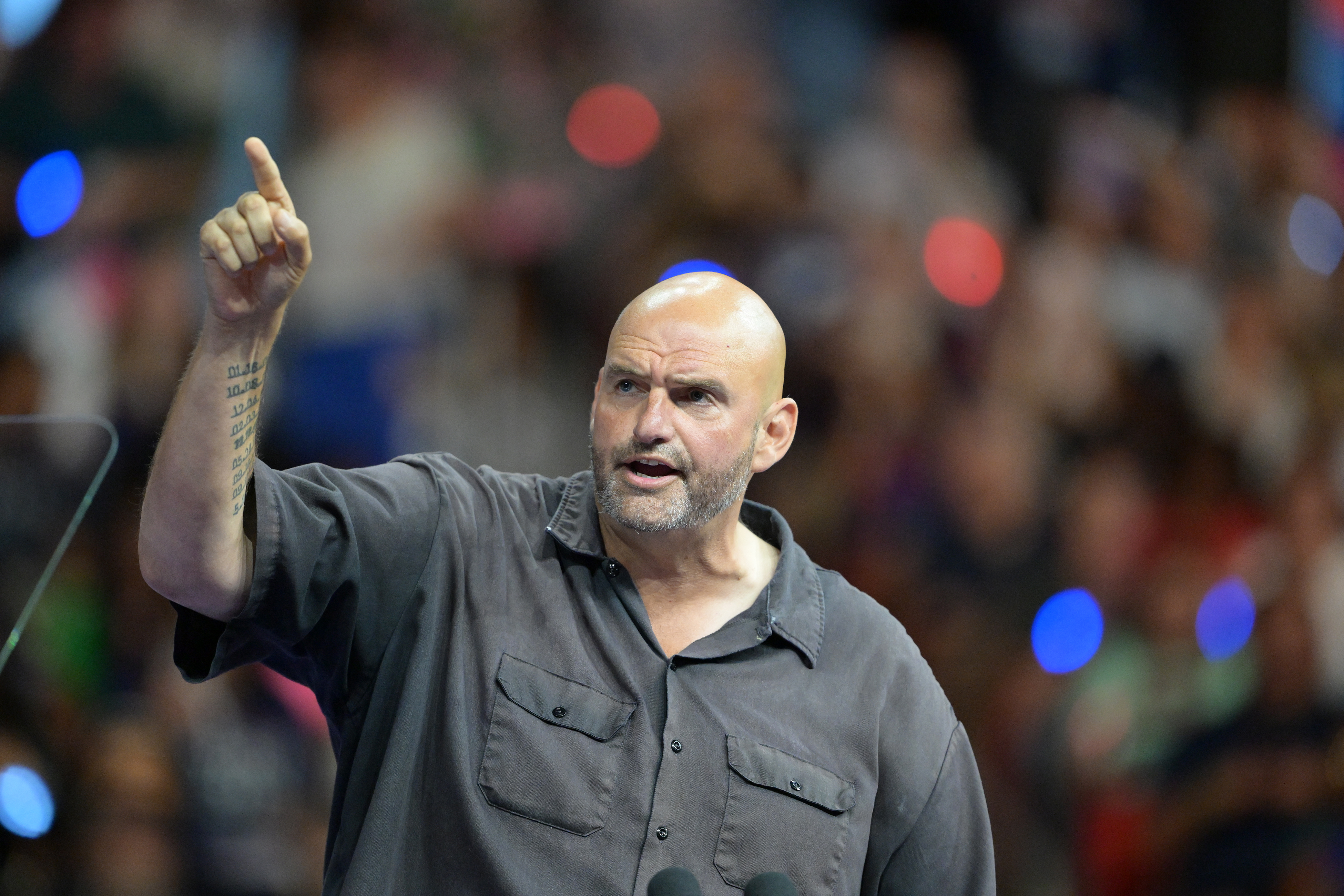
  • Report: Fetterman called Wall Street Journal story ‘a hit piece’ and apologized for a text message dismissing CHOP leaders

    Report: Fetterman called Wall Street Journal story ‘a hit piece’ and apologized for a text message dismissing CHOP leaders

    A curt text message privately rejecting concerns from leaders at the Children’s Hospital of Philadelphia about Medicaid cuts was a “dumb joke,” U.S. Sen. John Fetterman (D., Pa.) told CNN this weekend.

    In his statement to CNN, Fetterman called a recent report from the Wall Street Journal — which reignited claims that he’s not fully performing the role of a U.S. senator — a “hit piece from disgruntled staffers.”

    “Per usual — lies, half-truths, innuendos, smears, and anonymous,” Fetterman said. He later added: “No matter how many smears or stories, I’m proud to continue to deliver for Pennsylvania.”

    The Wall Street Journal report included text messages between Fetterman and his staff and detailed several meetings or events that Fetterman tried to get out of attending, including the meeting with CHOP leaders and a funeral for three York County police officers who were killed while on duty.

    Fetterman said the leaked text messages were “stripped of any context and circumstances.”

    According to the Wall Street Journal, while discussing the meeting with CHOP officials last September, Fetterman asked in a text, “Why do I have to keep having to meet with chop.”

    An aide responded, “Because they’re worried about Medicaid cuts.” Fetterman wrote back, “Well, I’m not.” He then wrote, “I’m convinced they just want free trips to DC.”

    Fetterman told CNN that comment was a “dumb joke,” and “for that, I sincerely apologize.”

    “My office and I always have, and always will, advocate for CHOP, support their requests and any other needs that we can assist with,” Fetterman told CNN.

    The newspaper’s report also included text messages in which Fetterman questioned the length of the funeral for the three York County police officers, writing “3 hours??,” and said attending “may be a nonstarter.” Fetterman, who grew up in York County, did not attend the funeral, according to the report.

    Fetterman told CNN that he “privately ordered flowers to be delivered for their families and expressed my condolences publicly” on the day of the fatal shooting. He also said he privately attended a fundraiser for the officers’ families in June, saying, “I met with their chief and the family members directly to express my personal condolences.”

    The first-term senator’s tenure has been plagued with criticism. Former staffers have said he often cancels meetings at the last minute, and he has increasingly isolated himself from Democrats in Washington, according to the Wall Street Journal. He regularly appears on conservative media and attacks his own party, and he does not make regular public appearances in the Keystone State.

    And pressure on the senator appears to be mounting. After the Wall Street Journal article, an X profile claiming to be former Fetterman staffers said it would post accounts of working for the senator.

    “If you were troubled by yesterday’s Wall Street Journal story… trust us, that’s just the tip of the iceberg,” the account posted. “It’s even worse than you thought.”

    Staff writer Sam Janesch contributed to this article.