BRUSSELS — The European Union on Monday sought to reassure a jittery Greenland with the promise of a stronger partnership and hundreds of millions of euros in investment following repeated threats from U.S. President Donald Trump to take control of the island.
During a visit to the capital Nuuk, European Commission President Ursula von der Leyen offered 200 million euros ($232 million) in support over the next two years to help Greenland tackle climate change, boost internet connections, and improve hydropower plants, fisheries, and education.
The EU has increased its focus on Greenland since Trump began insisting that the United States should take control of the island for security reasons. His persistent claims raised sovereignty concerns and pushback from Greenlandic and Danish leaders and heightened tensions among NATO allies.
“Greenland’s future is for the people of Greenland and Denmark to decide. No one else,” von der Leyen said. “Territorial integrity, sovereignty, the inviolability of borders. These are fundamental principles of international law.”
EU promises money for Greenland’s development
Funds are also earmarked for better housing, support to small businesses, and sustainable tourism. Von der Leyen also said that she wants to double EU budget support to Greenland to around half a billion euros ($580 million) from 2028.
“Greenland can count on the EU,” she said, after signing an EU-Greenland declaration with Prime Minister Jens-Frederik Nielsen and Danish Prime Minister Mette Frederiksen. Greenland is a semiautonomous territory of NATO ally Denmark.
Nielsen described the 27-nation EU as “a loyal and trusted friend,” notably at a time when the island faces “new challenges that we cannot tackle alone.”
“Through these challenging times, your support to us is unfailing,” he said. “You have stood by us and continue to stand by us. We feel it and are deeply grateful.”
Denmark and European allies resist Trump’s pressure
The Trump administration also leaned on Denmark. “We have been under pressure,” Frederiksen told reporters. “It has been very clear, and we are very thankful for the great support we have received from our European partners but, by the way, also globally.”
Denmark and seven of its European allies sent a small group of military personnel to the island in January, publicly for military exercises focused on strengthening Arctic security, but with the intention of showing support for Greenland’s sovereignty.
In response, Trump threatened to slap new tariffs on them all: Denmark, Finland, France, Germany, the Netherlands, Norway, Sweden, and the United Kingdom. They condemned the move as undermining trans-Atlantic relations, and Trump eventually backed down after NATO agreed to boost security in the Arctic region.
Von der Leyen’s visit came as 11 NATO countries began military exercises in Greenland on Monday involving around 400 military personnel, including special forces troops trained to operate in Arctic conditions from Canada, Denmark, and Finland. No U.S. troops are taking part in the Arctic Shield drills, which run Sept. 7-18.
Tanner Banks is eligible to be reinstated from the 60-day injured list on Monday, but the Phillies want to give him more time to build up.
The left-hander has been on the shelf since July 9 with a left forearm strain, and has already made four rehab appearances for triple-A Lehigh Valley as he works to rejoin the major league bullpen. But the Phillies want to continue building him into the three-inning range, so he can be a bulk option for the major league club.
“He’s getting to the point where he’s pretty much ready if needed,” said interim manager Don Mattingly.
Banks has been efficient in his rehab outings. Across 6⅔ innings, he has allowed just two hits and one earned run. He is next scheduled to throw three innings or 40 pitches on Tuesday for the IronPigs.
“I think you can see how we’re building him right now, is that we would look at him as more of a length option; be able to come in, throw multiples, do different things like that,” Mattingly said. “We’re sitting with three lefties [José Alvarado, Tim Mayza, and deadline acquisition Brooks Raley]; they’ve all been actually pretty good lately. So it would be hard to say I got to force Banks into that, in one of those roles.
“But I think the way we’re building, is that he is a guy that can come into a game and throw two or three innings, if he’s been built up to a pitch count where you’re comfortable and he’s used to that.”
Tanner Banks had a 7.14 ERA and 2.00 WHIP in 29 major league innings when he went on the injured list on July 9.Jose F. Moreno / Staff Photographer
Before his injury, Banks was having a down season and was even optioned in June. He had a 7.14 ERA and 2.00 WHIP in 29 major league innings in 2026, a stark drop-off from his 3.07 ERA and 1.01 WHIP in the majors in 2025.
“You just keep paying attention, who’s rolling and who’s getting their outs, things like that,” Mattingly said of his bullpen mix. “But this is our team. This is our club. Roles are semi-set, but I think you try to make decisions based on what’s best right now, and not necessarily how it’s been all year long.”
Nestor Cortes on Tuesday will see his first official game action since signing with the Phillies on Aug. 19. The left-hander is scheduled to be reinstated from the seven-day injured list and pitch for low-A Clearwater.
Mattingly said he wasn’t sure if Cortes would start the game for the Threshers, but he is scheduled to appear at some point. Cortes, 31, was signed to a major league deal as organizational pitching depth, but he has been on the injured list since Aug. 25 to give him time to build up. He last appeared in a game on Sept. 3, 2025, for the Padres before undergoing arm surgery that sidelined him for most of 2026.
Extra bases
Andrew Painter (3-8, 5.55 ERA) is scheduled to start Tuesday’s series opener against Astros right-hander Hayden Wesneski (4-1, 3.18).
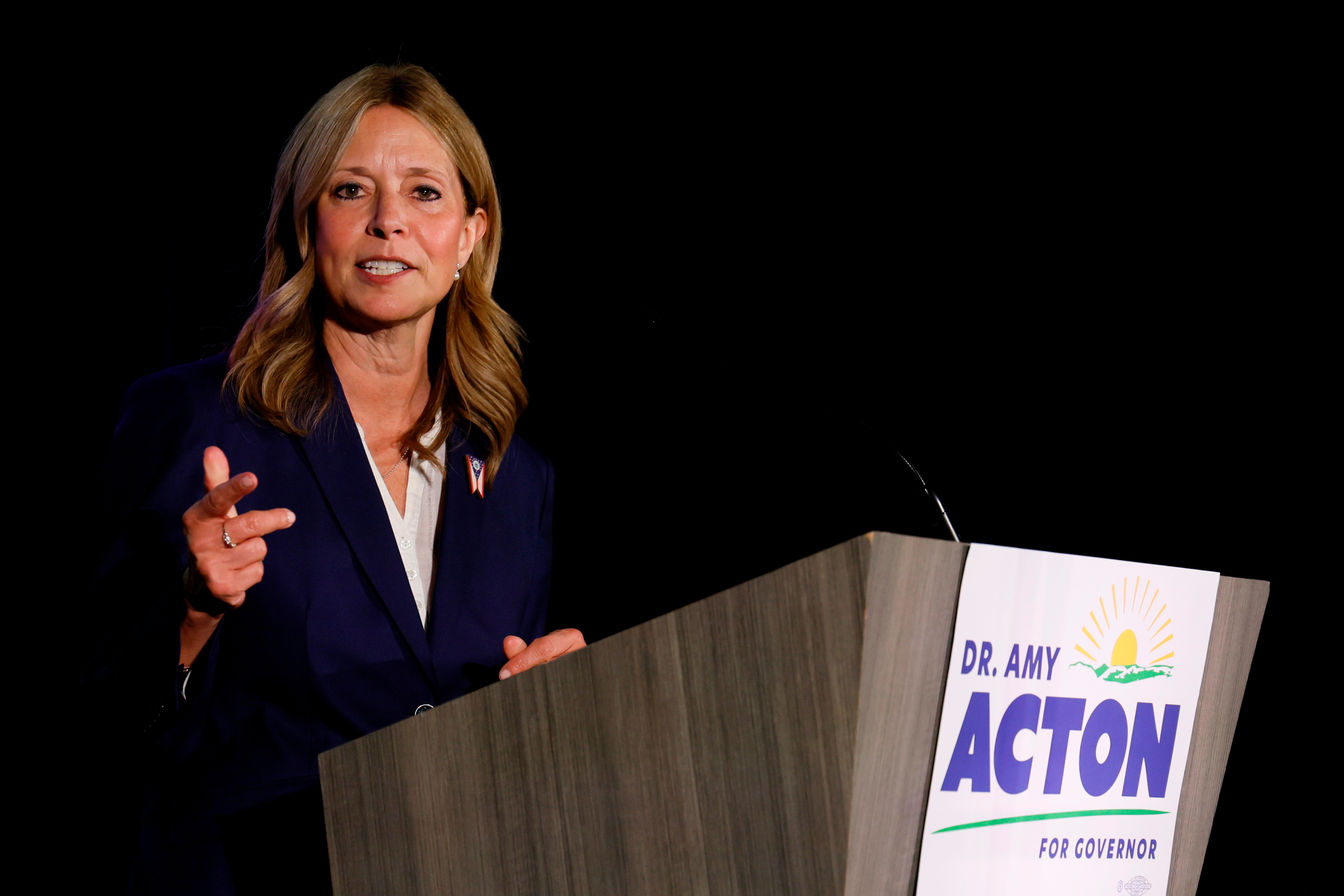
WASHINGTON — An armed assailant charged toward the Democratic candidate for Ohio governor, Amy Acton, on Sunday during a campaign stop at the Canfield Fair, injuring several people before he was stopped by troopers, the Ohio State Highway Patrol said.
The Ohio State Highway Patrol said in a statement that a man it identified as Patrick Havas, 38, forced his way through a crowd, knocking over multiple members of the audience as he moved toward Acton, the state’s former public health director. He had a taser and two pistols, the statement said.
The Mahoning County Sheriff’s Office said two handguns and a set of brass knuckles were recovered after his arrest, and “no weapons were ever brandished or even removed from their holsters.”
Havas was taken to the county jail and booked on charges of disorderly conduct and two counts of assault, the highway patrol statement said, adding that no other details were available pending an investigation. Online court records didn’t yet list the case, and it wasn’t clear as of Sunday night whether Havas has an attorney.
Republican Gov. Mike DeWine said in a statement.that the man “tried to forcefully push himself” toward Acton as she was speaking at the fair in Canfield, in northeastern Ohio. “Violence or the threat of violence at political or public events is always unacceptable,” he added.
The attempted attack is the latest political violence to roil the United States. And the Ohio gubernatorial race is one of the most high-profile races this year as the campaigns enter the final six weeks of campaigning before the election in November.
Acton is facing Republican Vivek Ramaswamy, who has parlayed his national name recognition, tech industry connections, and alliance with President Donald Trump into a record fundraising haul that he is tapping for advertising spots aimed at the November election. He is using campaign rallies and advertising to criticize Acton.
Ramaswamy’s campaign called the incident Sunday unacceptable.
“Candidates should be able to meet with voters without having to worry about threats or violence. What happened today is completely unacceptable and has no place in politics, and we hope that no one was hurt,” Ramaswamy’s communications director, Connie Luck, said in a statement.
Addie Bullock, communications director for Acton’s campaign, said in a statement that the suspect “lunged” at Acton. She said the Democratic candidate “will always stand up to the chaos, hate, and vitriol that pits us against one another.”
The incident brought condemnation from Ohio Republican Sen. Jon Husted, who said on X that he and his wife were “disturbed by the attempted attack on Amy Acton today at the Canfield Fair. We are grateful for law enforcement’s quick response. There is no place for this kind of behavior, and it must never be tolerated.”
Federal political committees spent more than $40 million on expenses labeled as security during the 2023-24 campaign cycle, the most recent one for which data is publicly available, according a report released in April from the Public Service Alliance, a nonpartisan group that focuses on security for public officials.
Before running for governor, Acton was recruited by DeWine in 2019 to lead the Ohio Department of Health while serving as an associate professor of public health at Ohio State University. As the COVID-19 pandemic ramped up in early 2020, she was thrown into the state and national spotlight — becoming a source of comfort to many viewers of the governor’s daily news conferences.
For her service as health director, Acton earned the John F. Kennedy Library Foundation’s Profile in COVID Courage Award, the Columbus Foundation’s Spirit of Columbus Award, and Ohio State’s highest alumni honor, the Alumni Medalist Award.
Her position as the face of the DeWine administration’s aggressive stance against the virus also earned Acton many enemies, among them statehouse Republicans and average Ohioans who opposed pandemic restrictions.
MIAMI — The five people killed when an Amazon cargo jet ran off a runway at Miami International Airport were all inside a van carrying seven people from a cleaning company and an SUV hit outside of airport property, National Transportation Safety Board Chairperson Jennifer Homendy said Monday.
Homendy called the scene of Sunday’s crash “utter devastation.” She didn’t detail how many people were in the SUV or where the dead were located.
Homendy walked the route the Boeing 767 followed, noting tire marks from the pavement into the grass, the destroyed van carrying the cleaning crew, torn fencing, navigational equipment, and the crushed SUV outside airport property.
The debris included vehicle air bags, equipment from the vehicles, the airplane, and the airport, and “fencing everywhere,” Homendy said.
“It’s pretty extensive. Hard to see and I’m sure it must have been very difficult for the responders as well,” Homendy said.
The airline, all told, traveled about 1,300 feet past the paved surface. Debris was everywhere, she said.
“I would describe it in one word as devastating, utter devastation,” Homendy said.
The van with seven people inside was “torn apart. It certainly must have been devastating,” she said. The van was owned by Professional Ocean Service Corp., an airline cleaning contractor.
Homendy said the NTSB would issue more information on Tuesday, including possibly information on speed that is confirmed by the flight data recorder.
Federal investigators examining cause
Federal investigators examining the crash spent Monday determining whether the plane touched down too late to stop safely.
Video of Sunday’s landing appears to show the Boeing 767 remaining airborne well down the runway before touching down. Aviation experts said investigators will seek to determine exactly where the plane landed, whether it was beyond the normal touchdown zone, and why the pilots did not abandon the landing.
Investigators will also examine the plane’s speed and braking, weather and wind conditions, the aircraft’s mechanical condition, and other factors that could have contributed to the deadly overrun.
The aircraft on Sunday flew from Cincinnati to Miami and then to San Juan, Puerto Rico. It was returning to Miami when it overran the runway around 2 p.m. and plowed across a road used by warehouse workers and other businesses that surround the airport.
Aside from the five who died, three people were critically injured and two others were hospitalized with less severe injuries, officials said.
The crash, which sent thick black smoke billowing into the sky, trapped the pilot and copilot in the cockpit and some occupants in cars, said Miami-Dade Fire Rescue Chief Ray Jadallah. The agency said crews also had to extricate a person who was trapped under a vehicle.
The typical landing zone for a plane is within the first 3,000 feet of a runway, experts said. If the cargo jet was beyond that area, it should have aborted the landing and gone around for another try, aviation safety expert Steve Arroyo said.
Mary Schiavo, who is a pilot and former Inspector General of the Transportation Department, said video posted online shows the Amazon plane floating above the runway for an extended period without flaring the nose upward to force the main landing gear onto the ground.
It wasn’t raining at the time, but dark storm clouds loomed and strong winds were reported. Schiavo said that if the plane had a tail wind, that could have contributed to it floating further down the runway.
“A tail wind would certainly add to your troubles if you’ve already given up a good chunk of the runway by not touching down and landing right away,” Schiavo said.
Airport appears compliant without updated system
The Miami airport is not equipped with arresting systems that the FAA says have been installed at more than 120 airports nationwide to safely stop planes that do go past the end of a runway. Those beds of lightweight, crushable material at the end of a runway have been credited by the FAA with helping save at least 497 lives aboard planes that overran runways.
Miami’s airport appears to be in compliance and wasn’t required to have an arresting system because it has a 1,000-foot safety buffer at the end of its runways, said Mike O’Donnell, the FAA’s former director of airport safety and accident investigations.
The requirement was prompted by American Airlines Flight 1420 overrunning a runway at Little Rock National Airport in Arkansas in 1999, killing nine.
The Prime Air plane came to rest beside a roadway near two semitrucks, images showed. The aircraft appeared to be resting on its belly and was largely intact despite the fire.
The flight had been operated by 21 Air, a cargo carrier based in North Carolina. The 32-year-old Boeing 767 was originally built to carry passengers and flew for several airlines for more than two decades before being converted to a cargo plane in 2015, according to flight-tracking site Flightradar24.
Schiavo said the NTSB will also closely examine the maintenance history of this plane — particularly since it has a history of foreign ownership, including by a Russian company.
The crash halted flights at the busy travel hub for much of Sunday afternoon and continued to hamper air travel into Monday.
Miami International Airport said that two of its four runways remained closed Monday and that operations were to be affected throughout the day because of aircraft and flight crews not arriving there due to Sunday’s cancellations after the crash.
An airport spokesperson said there were 160 cancellations and more than 300 delayed flights Sunday, plus another 69 canceled flights Monday through mid-afternoon. Flight tracking sites were reporting widespread delays at the airport.
Amazon said in a statement that it would cooperate with any investigation.
“We’re heartbroken to learn that five people lost their lives in today’s incident at Miami International Airport,” the company said. “Our deepest sympathies go out to the families, loved ones, and all those affected by this devastating loss.”
Last year, a UPS plane crashed after losing its engine while accelerating down the runway at Louisville’s Muhammad Ali International Airport. The crash killed all three pilots and 12 people on the ground. Twenty-three more were injured.
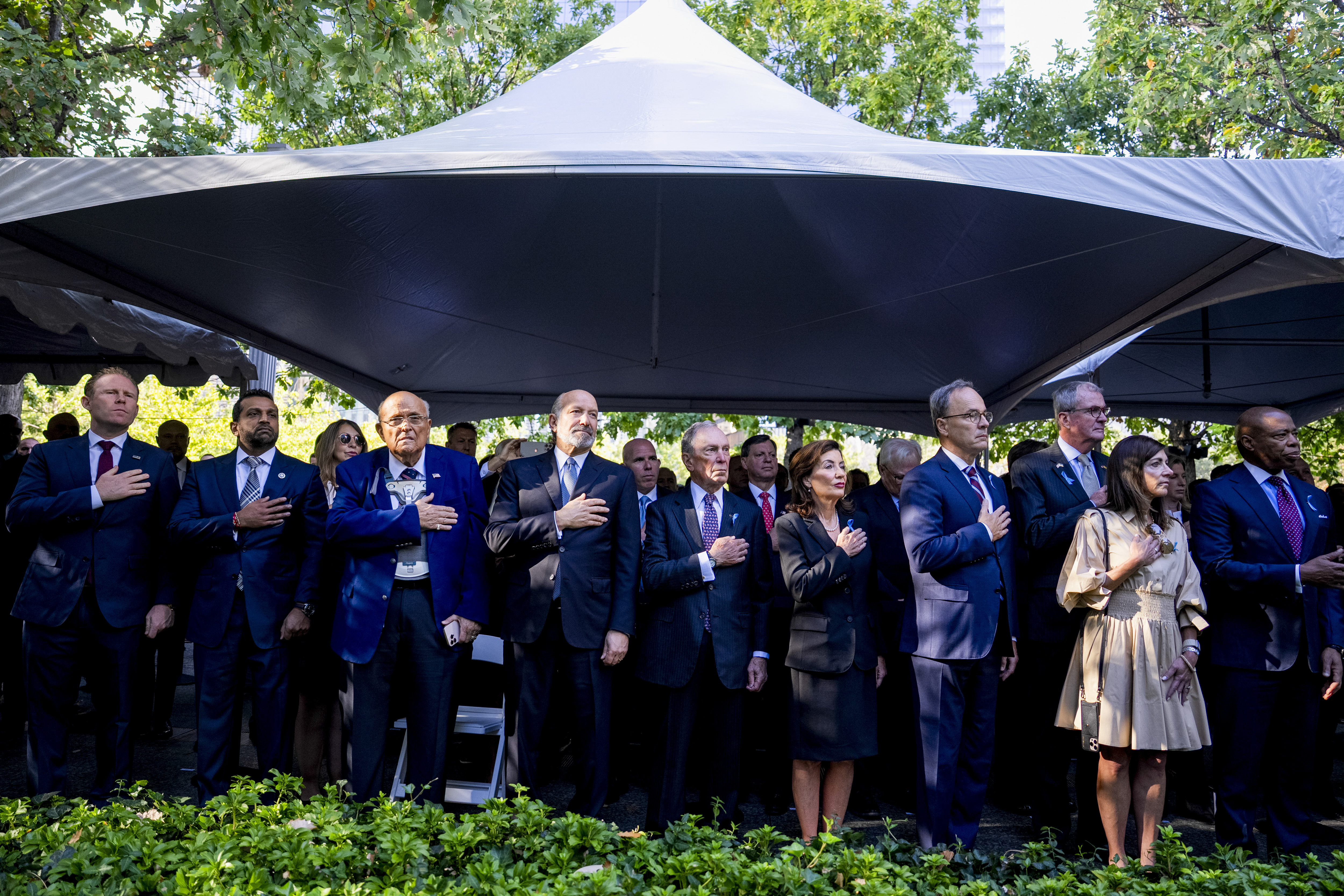
NEW YORK — Rudy Giuliani, the former mayor who shepherded New York City through the Sept. 11 attacks, said on Sunday that he did not think Mayor Zohran Mamdani should attend upcoming memorial ceremonies to mark the 25th anniversary of the attacks.
“It offends me,” Giuliani said in an anti-Muslim diatribe on the far-right news outlet Newsmax, regarding Mamdani plans to attend the New York memorial. Giuliani also compared Mamdani to the Sept. 11 hijackers, who he said had hostility to America and “they weren’t hiding it like Mamdani is trying to hide it.”
Giuliani’s tirade also included baseless claims, including that Mamdani is a supporter of a Muslim plot that aimed at “taking over certain parts of America and certain parts of Europe,” a right-wing conspiracy theory he has endorsed in the past.
His comments on Sunday made him the most prominent person to endorse a call from some conservatives for Mamdani to skip the upcoming memorial ceremonies.
That demand has also been the subject of an online petition, which by Sunday had drawn almost 100,000 signatures.
Mamdani’s office declined on Sunday to directly address Giuliani’s comments, but directed reporters to his response to that online petition.
“I will proudly honor the families, the survivors, the first responders forever impacted by that horrific terror attack by standing alongside them at this year’s 9/11 commemoration, reaffirming that we will never forget the solemn day felt by all of us who call this city home and, frankly, by all of us who call this country home,” the mayor’s statement said.
The mayor’s office also pointed to two executive orders he signed this past week to establish Sept. 11 as an annual “Citywide Day of Remembrance and Service” and to take steps to modernize the city’s emergency preparedness procedures.
According to his schedule, Mamdani has already attended or plans to attend roughly a dozen Sept. 11 memorial events, primarily at firehouses across the city that had been the home stations for firefighters who died in the attack or developed illnesses in its aftermath.
Giuliani is expected to attend the ceremonies. Earlier this year, he was hospitalized with a serious case of pneumonia and said he believed his health problems stemmed in part from exposure to airborne toxins that blanketed parts of the city after the collapse of the World Trade Center.
Giuliani was two blocks away from the first tower when it collapsed, and his head and shoulders were dusted with ash from the disaster as he joined the throngs of people fleeing north through lower Manhattan.
Mamdani was 9 years old and in class at his Upper West Side elementary school when the attacks took place. He has spoken about the attacks as a formative experience for him as a child.
In an interview with the New York Times last year, he spoke of how important it is “to honor the memories of those that were killed” and described “learning their stories over the many years that I’ve been a New Yorker, the deep sorrow, that continues to this day, of futures that were stolen from so many and families that continue to live with that.”
He also talked about how Islamophobic backlash to the attacks had made anti-Muslim prejudice “a fact of life” for Muslim Americans.
“It was this horrific day that was also for many New Yorkers the moment at which they were marked an ‘other,’” he said.
Giuliani was widely praised and seen as a unifying figure after Sept. 11 for his stoic response to the attacks, which killed more than 2,700 people in New York City and left parts of Manhattan devastated for years.
But in the years since, Giuliani has politically drifted far to the right, serving as a high-profile surrogate and personal attorney for President Donald Trump. Last year, Trump pardoned Giuliani and several others who had been accused of trying to overturn the results of the 2020 presidential election.
When I moved into my Philadelphia home 10 years ago, I bought a used wingback chair and put it on the top floor of my “trinity”; the heat of summer chased upward from the cooler floors below.
I sat in that chair and read Walt Whitman: A Lifeby Justin Kaplan. As I read, I turned my chair toward the east-facing window, toward Camden’s Mickle Street, where Whitman spent his final years. Despite being in ill health after a stroke, he would travel by ferry the short distance to bustling Philadelphia and speak to large audiences of admirers. He was already a literary celebrity by the time he lived there in the 1870s and 1880s.
Fast-forward to 2016, to me sitting in a too-warm house, new to Philadelphia, feeling a bit of magic in those quiet moments. My proximity to the ghost of Whitman in the warmth of my top floor made me nostalgic for a time before air-conditioning, when writers wrote in pencil on any scrap of paper they could find.
A statue of Walt Whitman at the Camden Children’s Garden. In his last years, the poet, who lived in Camden, frequently came to Philadelphia to read. ED HILLE / Staff Photographer
But I’d like to talk about the 20% of people she points to who are not only readers, but whose reading “accounted for more than 80% of all books read last year.” She quotes Leah Price of Rutgers University, who says that reading has become a niche hobby, like stamp collecting, and those who engage in it spend more time reading each day than they did two decades ago.
Deep reading
In the United States, 20% of the population — that’s one in five people — consider themselves readers, and most of these consider themselves deep readers. While it’s useful and important to look at the negative implications of the downward trend in reading, I suggest we also look at this situation in another way.
If fewer people are reading more deeply, more comprehensively, more robustly, more passionately, then there is optimism masked in this otherwise pessimistic data. And this is reflected in my own life, and the lives of people in the community I inhabit.
Walt Whitman was the 19th century’s version of an influencer. He enthusiastically promoted Leaves of Grass, his magnum opus he revised numerous times over the course of his life. He was shameless when it came to advertising his own work, and he was convinced of his own skill.
While he was often criticized for this, in today’s social media world full of personalities happy to call themselves influencers, he would fit right in. TikTok’s BookTok and Instagram’s Bookstagram — lively and prolific subsections of these platforms — feature well-read figures who have gained significant followings to show what they are reading, talk about it with an interested audience, and tie their identities to literature and to the pure joy of reading.
One doesn’t have to be a social media star to influence others to read. Readers are influencers whether they try to be or not, and their influence can create communities or even microcommunities of readers. This is not mass reading culture — as Horowitch says, those days may be over — but it is something else. It is the emergence of an ecosystem in which reading is central, a chosen activity around which people identify.
Reading groups
The Rosenbach Museum and Library offers one example of this shift, where we have begun investing more seriously in reading courses. The Rosenbach holds one of the world’s great collections of the written word, from rare books to original manuscripts. Reading courses are taught by experts, usually university instructors, and extend over one hour or several months.
The data are compelling: In 2017, we offered between two and four courses a year on books such as Moby-Dick and Ulysses. Around 2018, we expanded the program dramatically, offering 17 courses, the largest number in our history. By 2025, we were offering 40 courses, nearly 70% of which sold out.
These aren’t large courses. We generally have between 15 and 45 people attending them, both on-site and online. The main idea, though, is that people discuss books with one another, and we give them the forum and a group leader to facilitate the conversation. Since then, we’ve also added ongoing book clubs and livestreamed literary talk shows about everything from Dracula to The Hobbit to works by Jane Austen.
As the Rosenbach has seen an uptick in interest in our reading courses, we have simultaneously watched humanities programs disappear from universities due to lack of enrollment. While that is disappointing, we also see evidence that there is a hunger for reading as an extracurricular pursuit. We hear from course participants that reading simply makes life more meaningful, and they enjoy reading and discussing books together, in a community. Maybe hunger for something that has become a bit more elusive isn’t such a bad thing.
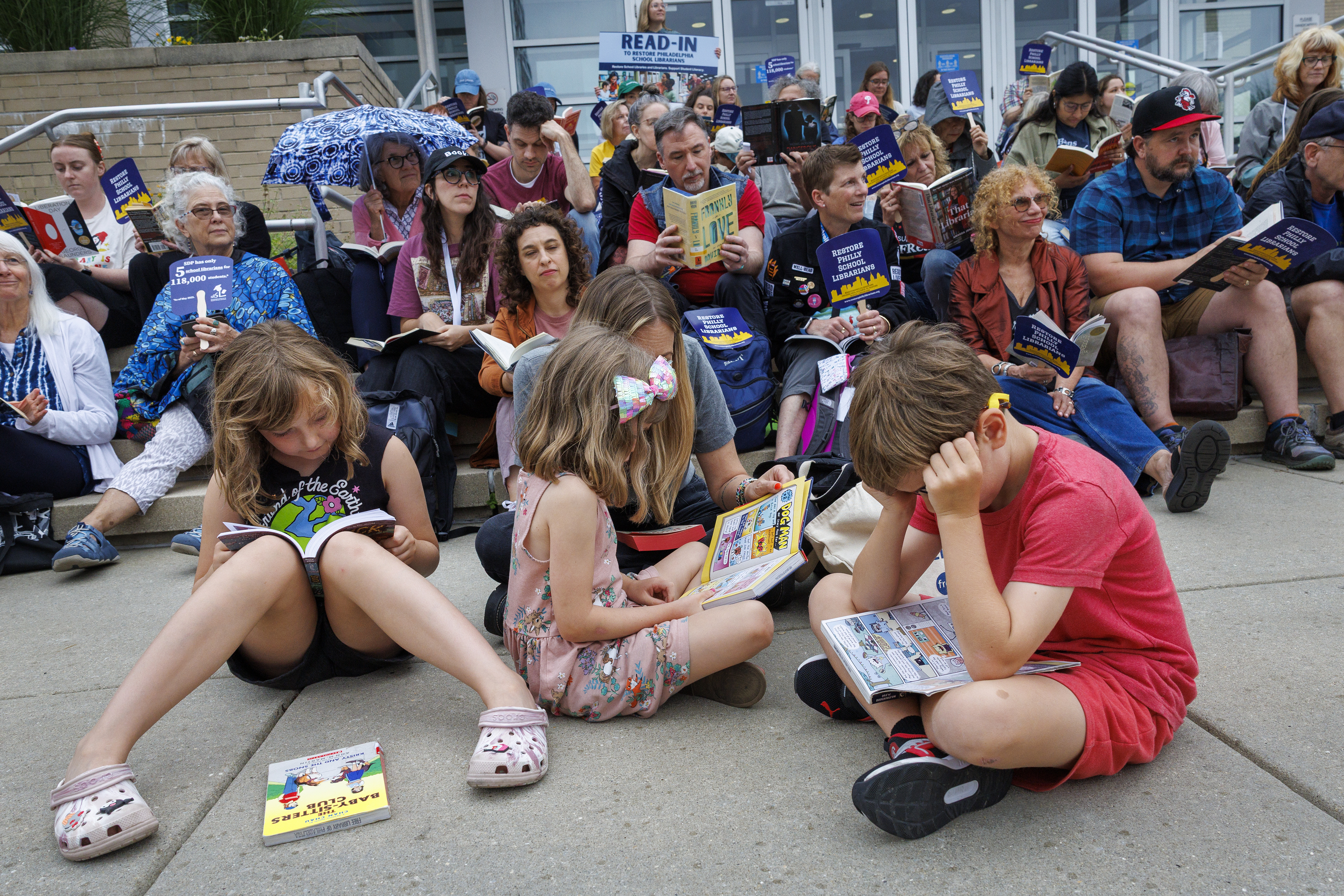
Children and adults hold a “read-in” on the steps of the Philadelphia School District’s building in 2025 to call attention to the sorry state of libraries in city schools. Alejandro A. Alvarez / Staff Photographer
One woman who takes our courses wrote, “The world is in a dark place right now and I find a place of refuge in Rosenbach courses.” This sentiment has been echoed by numerous other course participants, especially over the last five years.
New ways to read
People like this participant are the 20%, and they are the very ones we need to nourish. They are responsible for the interest in programs like the Rosenbach offers, the resurgence of bookstores across the country, and the popularity of BookTok and Bookstagram. They are forging communities that may not be wide, but they are very deep.
When Whitman traveled across the Delaware to Philadelphia to speak, hundreds of people — the stalwarts, the loyal fans — gathered to listen. That audience is our 20% today. They are the people who would have gotten dressed, trundled down the street to sit — or potentially stand — in a room with no air-conditioning, to listen to the aging poet.
The fact is that the future of reading may not look anything like the past. It may belong to smaller communities, devoted individuals, and institutions that bring people together around books. It may look like a group of friends who trundle down the street to read Whitman at a Rosenbach reading course.
If all that’s true, our task is not to lament the loss of a mass reading culture. Our task is to nourish the people who are still reading, and to create places where others can discover why they should.
Kelsey Scouten Bates is the John C. Haas Director of the Rosenbach.
It’s also true that American feminism has too often minimized the unique needs of Black women.
And while I don’t pretend to comprehend the various intricacies of Black womanhood, I do understand that among the duties of Black manhood, one of them looms larger than most.
We must stand up for our women.
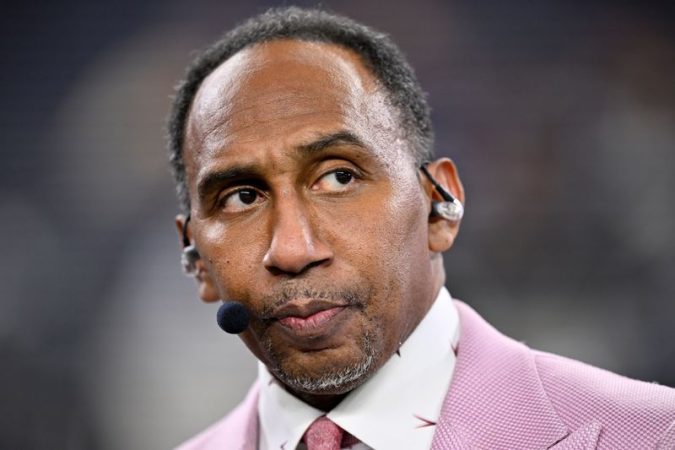
In recent months, it’s become increasingly clear that some of our most prominent men have spent far too much time doing anything but that. In fact, national figures like ESPN analyst Stephen A. Smith have been rightly castigated for their inordinate criticism of Black women, including former Vice President Kamala Harris, U.S. Rep. Jasmine Crockett, and journalist Joy-Ann Reid.
But the call to protect and defend Black women is not just about Smith and his cutting criticism of national figures. It is also about the Black men I have watched cast boulders at the first female mayor of Philadelphia.
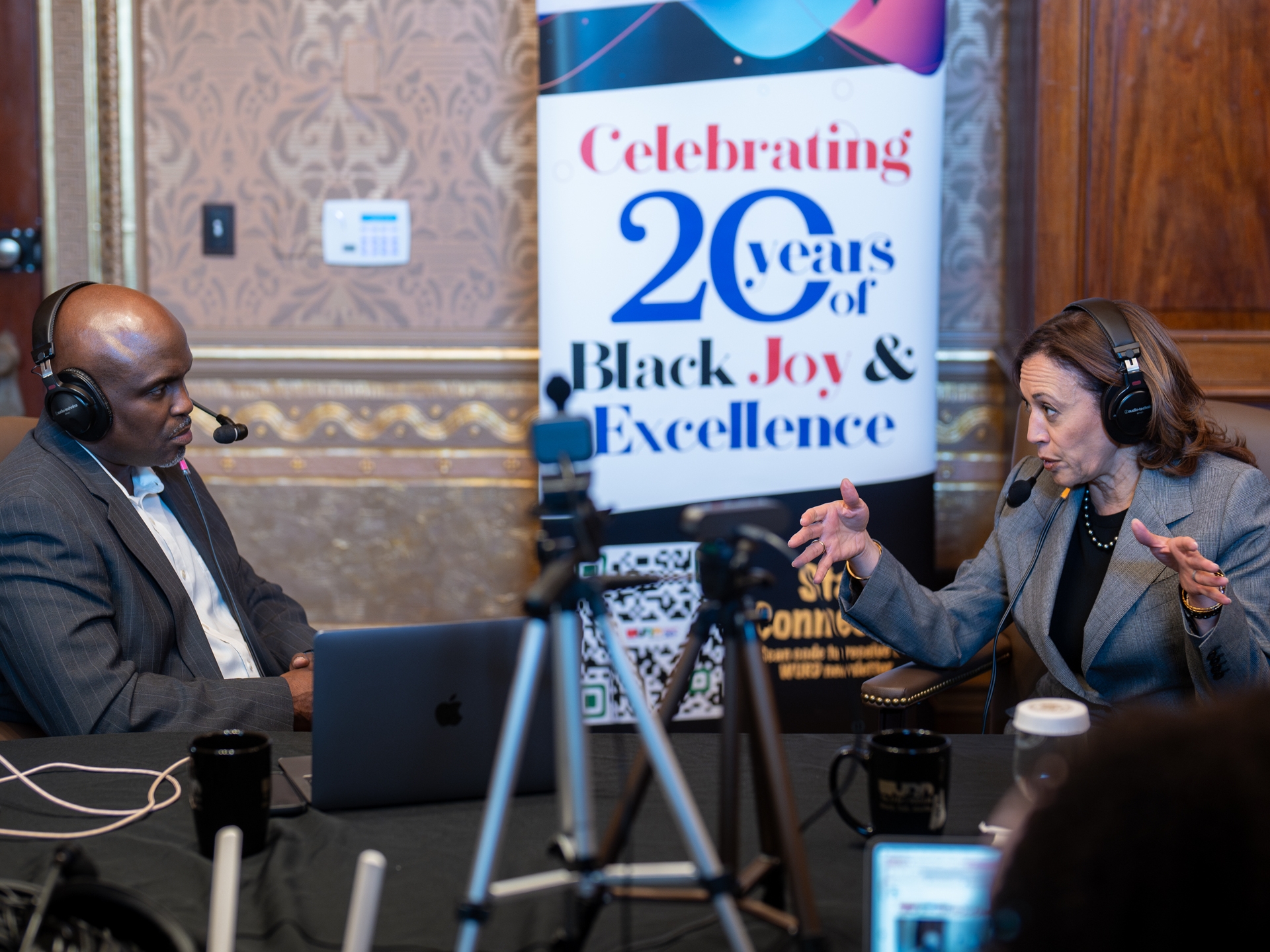
Solomon Jones interviews Vice President Kamala Harris during his radio show on WURD in February 2024. Harris has been a target of Stephen A. Smith’s barbs.Lawrence Jackson
As a matter of full disclosure, I have known Cherelle L. Parker for more than 20 years. As neighbors, we’ve watched each other’s children grow up. And while I don’t agree with her on every policy or political priority, I respect her because she has always been the same steady person, the same tenacious fighter, the same Black woman I met so many years ago.
On this point, I will not waver, whether the Black woman in question is Michelle Obama, or Parker, or Miss Dot from 25th and Oxford.
This does not mean there will never be disagreements between us. It does not mean arguments will never happen.
In truth, disagreement is a normal and healthy aspect of any functioning relationship. It is when those disagreements spin into hateful diatribes and rhetorical violence that we lose ourselves in the chaos.
This is not the time for abject pettiness, for a crabs-in-the-barrel mentality, or for fomenting discord under the guise of holding leaders accountable.
After watching 300,000 Black women lose their jobs in just a few months after the Trump administration’s cuts in the federal workforce, we have to know that sisters are under attack, and we must act accordingly.
That means standing beside them as they lead in communities.
It means standing in front of them when they are under attack.
It means standing behind them when they need someone to push them forward.
Black men understand, in ways others simply don’t, that Black women are stronger than they look, more vulnerable than they seem, and more beautiful than they know.
When they present all that to the world, the totality of their power can be intimidating — especially for those who harbor insecurities of their own.
But as the husbands, brothers, and sons of these strong women, we cannot afford to see them as competitors.
We must see them as partners, because in these uncertain times, when racism removes its hood and stands boldly in America’s streets, Black men and women can ill afford to turn on one another.
We must instead turn toward one another, and face the slings and arrows of this world together.
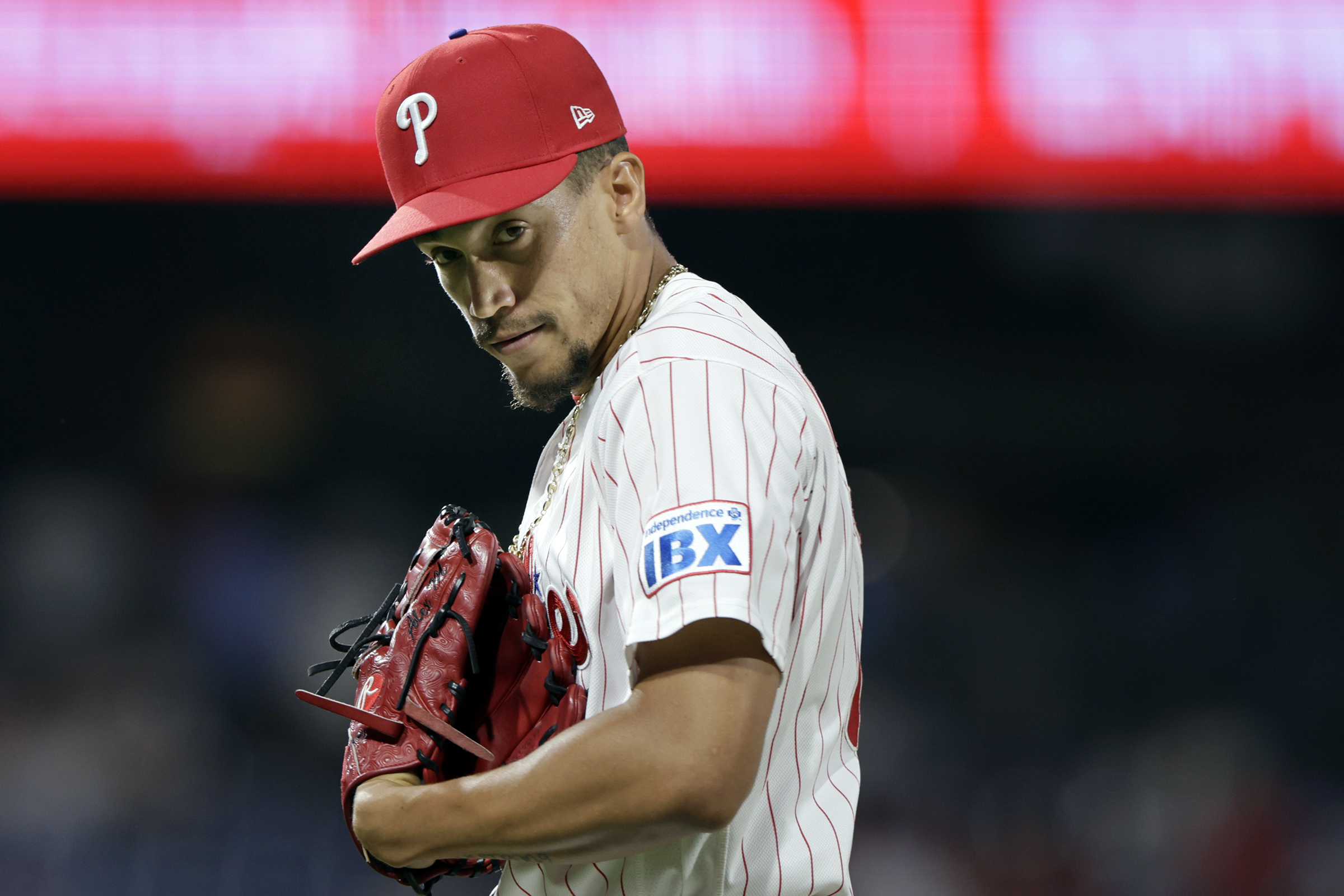
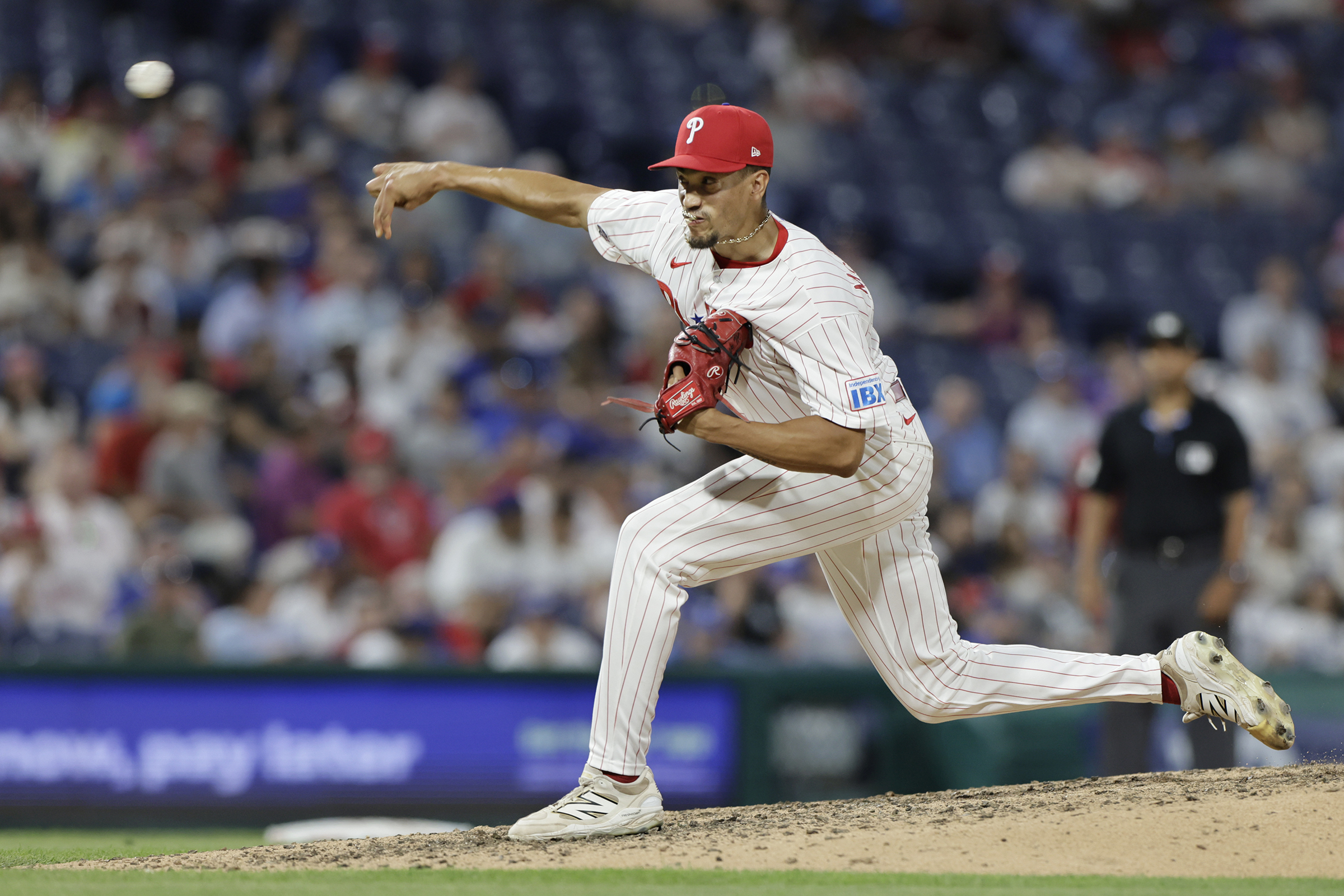
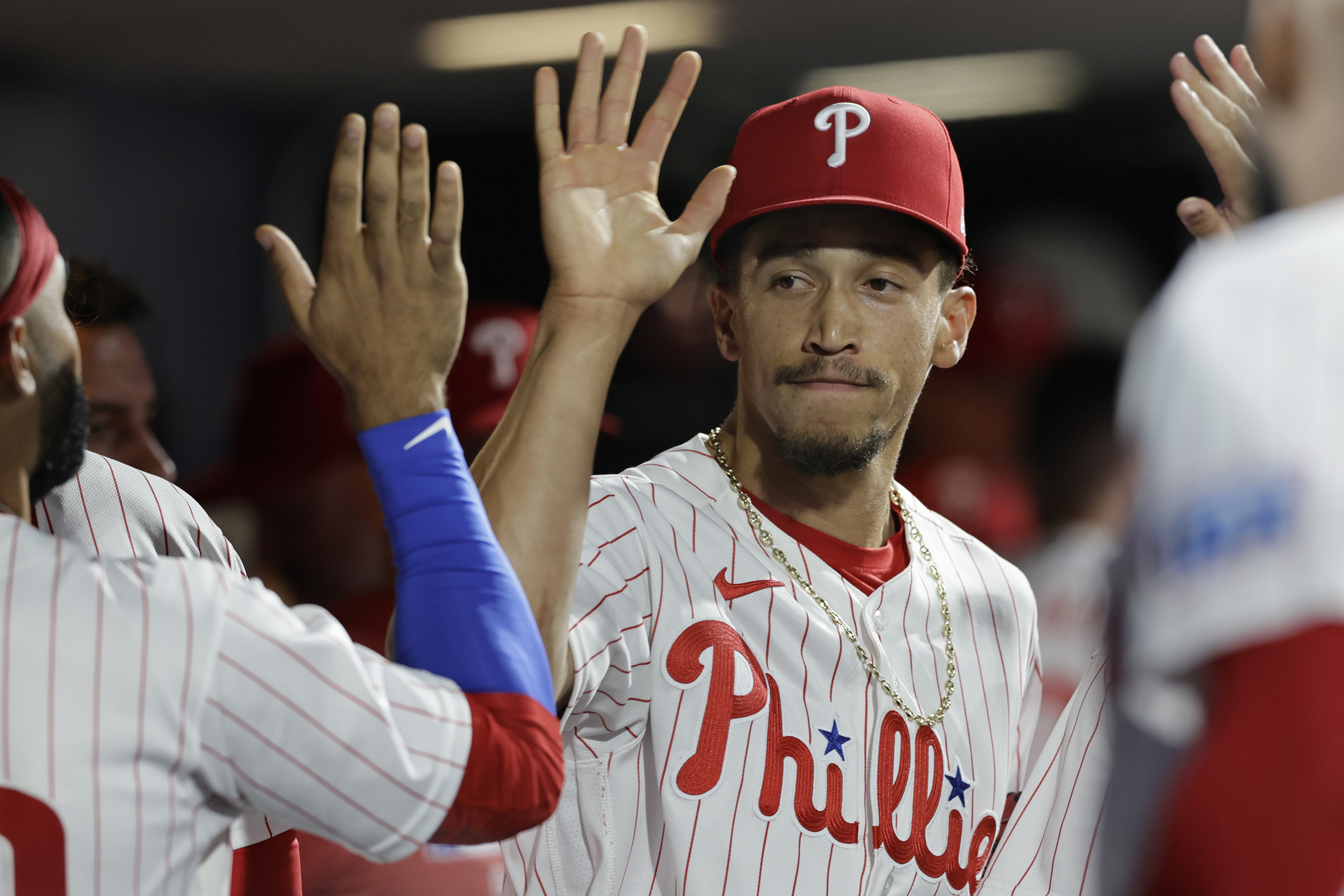
The worst thing the Phillies can possibly do is allow Sunday’s misfortune to impact their handling of Alex McFarlane.
They have 22 days until the NL wild-card round begins. They will play 19 games before then. They don’t have any other options.
In a perfect world, McFarlane would not have been the guy standing on the mound in the eighth inning on Sunday afternoon. He would not have been the one watching his 100 mph, 1-2 fastball disappear over the outfield wall. He would not have suffered the indignity of seeing, feeling Ronald Acuña Jr. circle the bases, arms out like an airplane, dive bombing the Phillies’ division title hopes with a three-run home run that lifted the Braves to a 5-4 win.
It is not a perfect world. McFarlane was there for two reasons. One, he has the stuff to warrant it. Two, he is their best hope.
Nothing else matters at this point. With less than a month to go before the playoffs begin, the back of the Phillies bullpen consists of Jhoan Duran, Jonathan Bowlan, two guys who have shown that they can’t be trusted, and one guy who needs to show he can.
Interim manager Don Mattingly has no choice but to err on the side of the third guy. He needs to find out if McFarlane can handle the role.
There is a fun bit of trivia about McFarlane that is more quirky than significant but nevertheless provides an entry point to state the obvious: that the Phillies owe it to themselves, their clubhouse and their fans to spend the next month preparing McFarlane for a major postseason role.
Twelve games into his career, the 25-year-old reliever has already picked up four big-league wins. He ranks sixth on the team in that department — two behind Aaron Nola, one ahead of Andrew Painter — despite having yet to celebrate his first full month of major league service. McFarlane also has a page in the history books. Before him, no Phillies reliever had ever won four games in his first 11 appearances. In fact, over the last 60 years, only three had won two.
While McFarlane’s accomplishment is first and foremost a testament to the fluky nature of pitcher wins and their inadequacy as a measure of individual performance, deeper under the hood lies something real. It isn’t just his fastball that sits at 100 mph and has touched 102. By practically every measure of stuff and performance, McFarlane has been the second or third best arm in the Phillies bullpen since his promotion on Aug. 11. More importantly, those measures rank him among the upper tier of all big-league relievers, the realm in which legitimate postseason bullpens are constructed.
To get a sense of who a pitcher really is, you have to look at three different levels: the stuff itself, the hitters’ reaction to that stuff, and the end result. McFarlane has looked solid on all three levels.
Opposing hitters have swung and missed at 22% of Alex McFarlane’s pitches in the strike zone. Elizabeth Robertson / Staff Photographer
1. The stuff
You don’t need numbers to see true sizzle. But, good golly, McFarlane’s numbers are impressive. Only two relievers in the majors have bettered his 100.2 average fastball velocity since his promotion. One of those relievers is the Dodgers’ Edgardo Henriquez. The other is Jhoan Duran.
The spin rate on McFarlane’s fastball and slider both rank among the top 10 in the majors among relievers.
2. Hitters’ reactions
Herein lies the biggest reason to be excited about McFarlane. That paradox of pitching is that you have to avoid hard contact while also avoiding walks. Plenty of guys throw hard. The real question is whether a pitcher’s stuff is putting hitters at a disadvantage. Are they getting good swings? Are those swings producing good contact?
The pitchers who have the advantage are the ones who can throw their pitches in the strike zone and still miss a bat. McFarlane has done it better than almost everyone in the majors over the last month. Opposing hitters have swung and missed at 22% of his pitches in the strike zone. That ranks 12th among relievers, just ahead of the Astros’ Josh Hader.
Contact in the zone is an important metric for McFarlane, in particular. One legitimate question about his eventual bullpen ceiling is his lack of a pitch that hitters will consistently chase outside the zone. Take Duran, for example. This season, hitters have swung at 35% of his pitches outside the strike zone. Hader is at 41%. McFarlane’s chase rate is about 29%, which is middle of the pack among relievers. His slider has played quite well overall, generating a 50% whiff rate on swings. But hitters have been laying off roughly two of every three pitchers outside the zone. All of this is per Fangraphs’ pitch split data.
3. The results
You can get results without having stuff, and you can have stuff without getting results. But the most sustainable bullpen arms generally do both. That’s what McFarlane has done in his limited sample of big league innings. His strikeout rate is rather ordinary at 11 of 34 batters, considering his fastball. But he has yet to allow an extra-base hit, thanks in large part to his ability to keep the ball on the ground. His 56% ground ball percentage ranks 19th among 96 big league relievers who have thrown at least 10 innings over the last four weeks. Two of the six hits he’s allowed have been infield hits. In general, the quality of contact has been a big positive.
Likewise with his situational performance.
Before Alex McFarlane, no Phillies reliever had ever won four games in his first 11 appearances.Elizabeth Robertson / Staff Photographer
Toward the end of the Phillies’ recent West Coast trip, Mattingly and pitching coach Caleb Cotham decided to begin the McFarlane experiment in earnest. One night after they called on him to protect a one-run lead in the seventh inning against the Angels, the Phillies gave McFarlane his most significant opportunity yet. Leading the Diamondbacks 2-1 in the sixth inning, Aaron Nola allowed the first two batters he faced to reach base. That prompted a call to the bullpen. McFarlane was the choice.
Three batters later, the Phillies were onto the eighth. McFarlane gave up a long fly ball to Lars Nootbaar before striking out Nolan Arenado and getting Tim Tawa to ground out weakly to third base.
These are exactly the sorts of situations that Mattingly and Cotham should be seeking for McFarlane between now and the end of the regular season. They are the exact sort of situation they thrust him into on Sunday. Three-run lead. Must-win game.
It didn’t work out this time. McFarlane came on to face the 8-9-1 hitters. Austin Riley lined out, and then Mike Yastrzemski singled to center to bring the top of the order to the plate. Drake Baldwin doubled. Acuña did what he did. It happens. The key is finding out how McFarlane responds.
For most of the year, the biggest reason to doubt the Phillies has been their lack of a solution for Jose Alvarado’s regression and Orion Kerkering’s implosion. Kerkering may have rendered himself unplayable after a two-run eighth inning against the Braves in Friday’s 5-2 loss. In his last six appearances before Sunday, he’d allowed 12 of 30 batters to reach base with seven runs allowed and just four strikeouts.
At this point, Mattingly has little choice but to operate as if McFarlane will be the man who will fill the vacuum in the postseason. A lot will depend on his ability to continue to throw strikes. But for a team that has no other options, McFarlane is one that could break right in a big way.
When Brett Callahan was called up by the Detroit Tigers on Aug. 16 to make his major league debut, he became the fifth player in St. Joseph’s baseball history to reach his sport’s peak.
Callahan, who was drafted in the 13th round in 2023, then hit a two-run triple to left on the first major league pitch he saw in a 7-5 Tigers loss to the Chicago White Sox.
“Whenever a guy that you coached gets to the pinnacle of the game, it’s a thrill,” Hawks coach Fritz Hamburg said. “It’s a thrill for us as coaches. It’s a thrill for his teammates. It’s a thrill for, obviously, his family. And I mean, it’s just so cool to see. There’s no other way to say it.”
Callahan follows in the footsteps of Fritz Henrich, Jamie Moyer, Jimmy Yacabonis, and Brian O’Keefe, representing a long line of St. Joe’s baseball players who have chased, or are chasing, that dream. (A sixth MLB player, Allan Travers, was a student at St. Joe’s but not on the team when he played one game for the Tigers in 1912 under strange circumstances.)
Thirty-seven St. Joe’s players have been MLB draft picks, and another 25 have signed with MLB or independent clubs in free agency. Seventeen of those draft picks have come under Hamburg, who’s entering his 19th season with the Hawks.
Sunday: MLB debut, 2 RBI Monday: 2 more RBI Tuesday: the first Major League home run ever hit by a Hawk
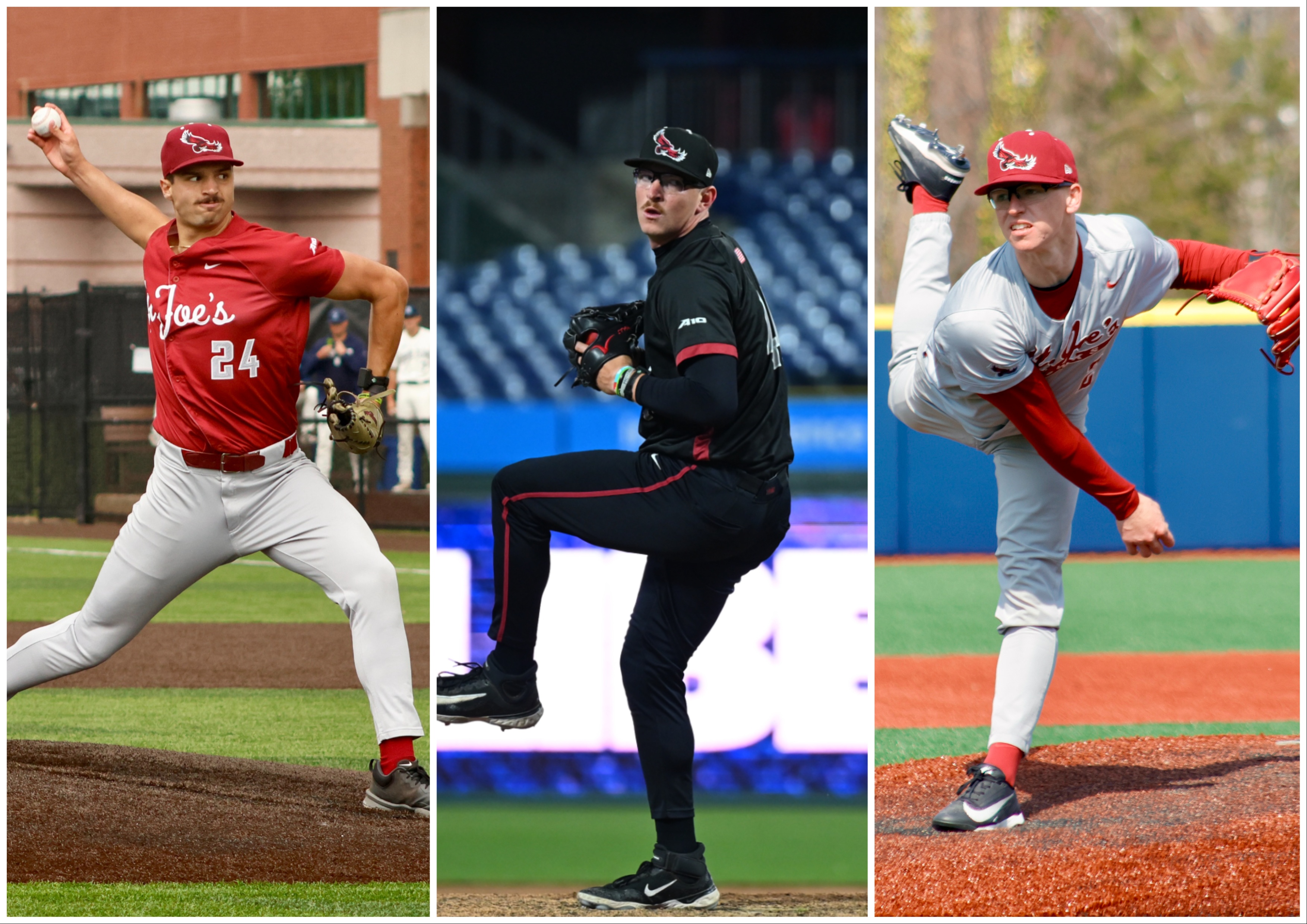
Earlier this summer, three Hawks pitchers were picked on the second day of the MLB draft — Andrew Gaines, in the 10th round by the Brewers, Christian Coppola two rounds later by the Phillies, and Duke McCarron in the 17th round by the Marlins. A few weeks later, left-handed pitcher Cole Fehrman signed a minor league contract with the Rangers on July 24.
While there is an excitement to hearing his players’ names called each summer, Hamburg also said it’s “a viable and an important part to any program.”
“First and foremost, it’s most important for the players, them having the confidence in our program, our coaching staff, and the development process,” Hamburg said. “That we’ve been able to have the number of players that have worked to have the opportunity to be drafted and to play professionally is, for me personally, really important. That’s always been a big driving force for what we do, and it speaks to, I think, the overall experience that the guys have in our program.”
Gaines, Coppola, McCarron, and Fehrman transferred into St. Joe’s ahead of the 2026 season, in which the program won a school-record 36 games, won its second Atlantic 10 regular-season title, and won the most conference games in A-10 history before falling in the consolation bracket of the conference championship.
Despite their short time with the program, Hamburg said their four pitchers’ careers “took off this year.” He credited that to both the pitching coach, Scott Boches, and to the players themselves, who put in the work with the Hawks.
When the group first committed to St. Joe’s, there was no pitching coach on staff. Boches’ hiring wasn’t announced until Aug. 18, 2025. But the group trusted Hamburg and the program. When Boches was hired, Coppola said it was clear Hamburg was blending metrics with “old-school baseball,” and the recipe worked for the Hawks.
“I think [Hamburg] has an understanding of what gets players drafted and what kind of pitching coach he needs to bring in to accomplish that,” Coppola said. “The fact that he’s still able to manage to recruit three draft picks and one free-agent signing in one portal transfer class, that’s amazing.”
In their final season with their previous programs, the quartet had ERAs in double figures. During the 2026 season with the Hawks, all four pitchers saw their ERAs drop and their appearances increase. Gaines also tied the school’s single-season saves record (10).
Gaines said the respect and trust from Boches helped. Boches offered open and honest feedback on how to improve the pitchers’ existing routines but didn’t try to change much. In return, this allowed them to pitch more free and loose.
“Obviously, you’re going to mess up, and they expect you not to be your best every single time. They expect you to go out there and do your job, but it’s baseball,” Gaines said. “At Pitt, I was super stressed about doing well because I wasn’t throwing well and worrying about what was going to be said, but [at St. Joe’s], it was so easy to go out there and do my job.”
For McCarron, the teammates surrounding him also made a difference.
“We were all pushing for each other,” he said. “Everyone around you is pushing for the same thing. It breeds a good environment. … Everyone really wanted the best for each other, and it was just a great team culture.”
Developing a reputation
The trio of pitchers were the second-most picks to come out of St. Joe’s in one draft. Four Hawks were selected in the 2024: pitchers Matt McShane and Luke Gabrysh, and outfielders Ryan Picollo and Ryan Cesarini.
Gabrysh and Cesarini are playing for the double-A affiliates of the Mets and Guardians, respectively. McShane is with the Red Sox’ high-A affiliate, the Greenville Drive. Picollo was released from the Mariners single-A affiliate in early August.
St. Joe’s has two other players playing in double A, one in triple A, and one in the rookie league. Yacabonis plays for the Diablos Rojos del México in the Mexican League. Of the dozen Hawks still playing, 10 are pitchers.
The most notable player to come from St. Joe’s, Jamie Moyer, who pitched in the majors for 25 seasons, said this is partially because all teams need good pitching, no matter the level.
“It’s always, ‘We need more pitching,’” said Moyer, a three-sport athlete at Souderton Area High School before his Hawks and major league career that included 2006-10 with the Phillies. “The game doesn’t happen without pitchers.”
Despite being months away, Coppola expects St. Joe’s to continue to get players drafted. Coppola projected that catcher Blake Primrose would be part of the 2027 MLB draft class. He set the single-season program records in home runs (24), runs scored (75), and RBIs (72), and was named the Atlantic 10 Player of the Year and a Buster Posey Award semifinalist as a sophomore in 2026.
With his 20th home run of the season on Sunday, Blake Primrose has set a new single-season program record! #THWNDpic.twitter.com/SS7c4l9BSC
— Saint Joseph's Baseball (@SJUHawks_Base) May 3, 2026
No matter what happens in 2027, St. Joe’s has a track record as a local school with draft success over the years, which Hamburg said is a “fun part” of the program that he’s proud of.
But what he remains most proud of is the players he watches every night on MiLB Network, talks to regularly, and learns from every time they come around.
“To have that and those guys remain part of our program, and to know that this is how people see our program, that we’re winning on the field and beyond, has always been a goal for me as a coach in my career, and something I’m very proud of,” Hamburg said. “Happy that those guys are getting to live out their dreams.”
The two-time defending NFC East champion Eagles begin their season Sunday, with the Washington Commanders coming to town for the Week 1 opener at the Linc (4:25 p.m. Fox). With that in mind, let’s meet every member of the 53-man squad. Players are listed by expected order on the Eagles’ depth chart.
Quarterbacks (4)
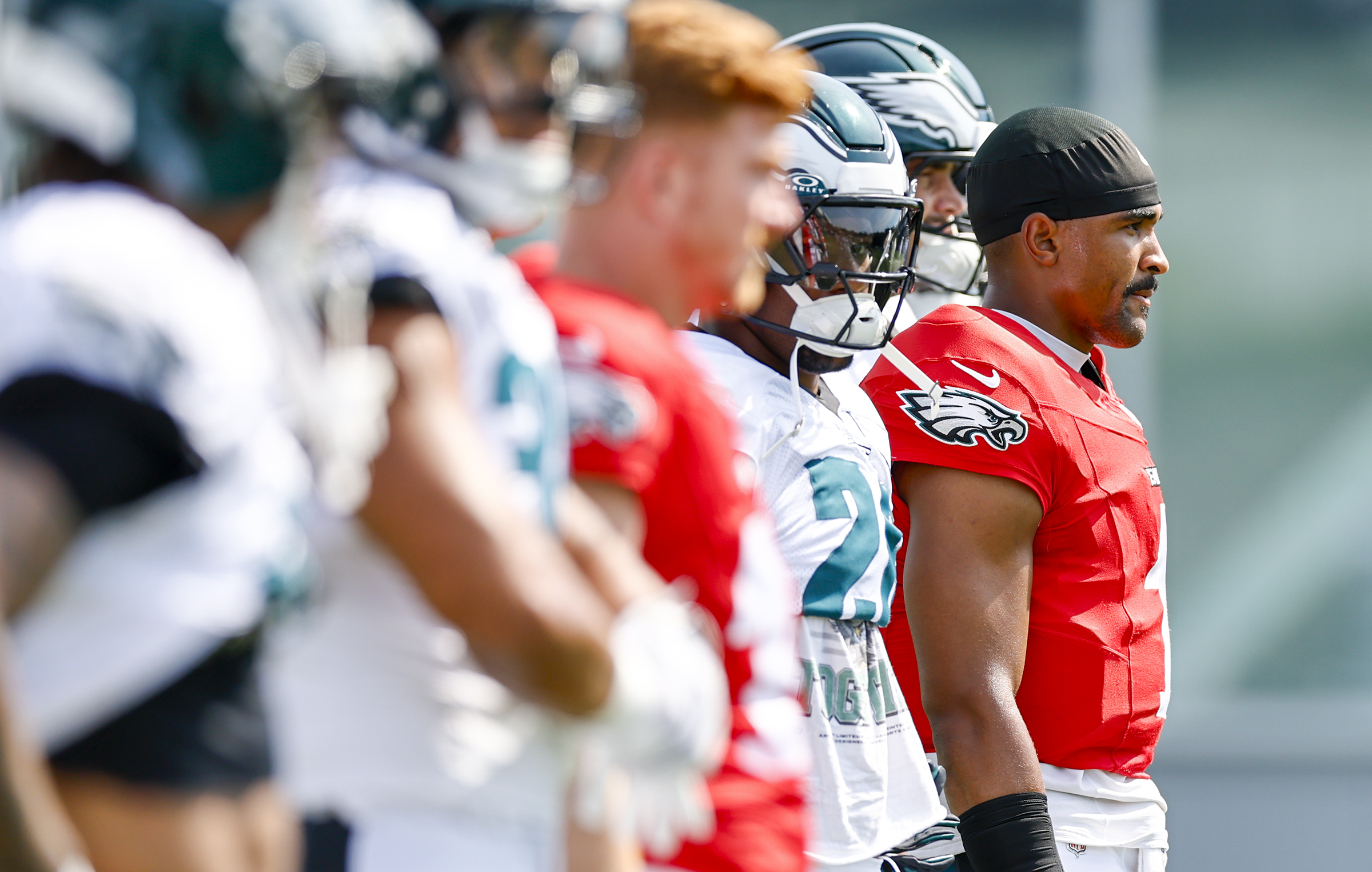
Jalen Hurts
College: Oklahoma | Years pro: 6 | 6-1, 223
Another year, another new offensive coordinator and play caller for Hurts, who has dealt with constant change since he was in college. All eyes are on the quarterback as the Eagles enter 2026 with a revamped offense under new coordinator Sean Mannion. How will Hurts take to running an offense that has him taking more snaps from under center, utilizing more play action, and one that may even ask him to run a little more often? How will he deal with a wide receiving corps that doesn’t have A.J. Brown anymore? There are a lot of question marks hanging over the offense, and Hurts is under the spotlight. — Neiburg
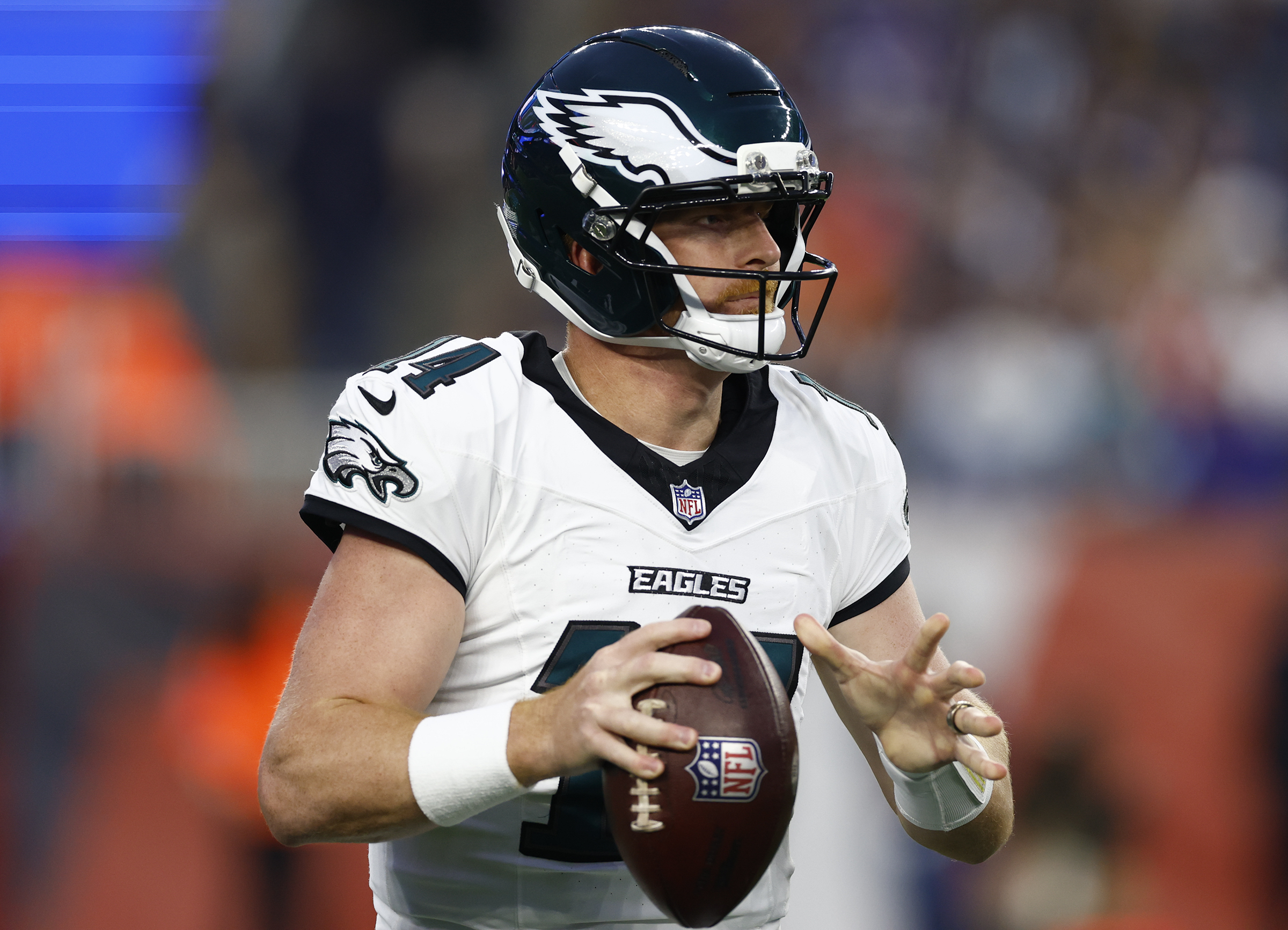
Andy Dalton struggled in the preseason. Could he still be a trade target?Yong Kim / Staff Photographer
Andy Dalton
College: TCU | Years pro: 15 | 6-2, 220
The Eagles traded a seventh-round pick for Dalton in hopes that the 38-year-old could compete for the No. 2 job behind Hurts or, if Tanner McKee outperformed him in camp, could be used as trade bait to a quarterback-needy team. Neither happened, and so Dalton enters the 2026 season either second or third on the depth chart. Dalton has played a lot of football, but he’s four years removed from being a starter. — Neiburg
Tanner McKee
College: Stanford | Years pro: 2 | 6-6, 231
Coach Nick Sirianni and GM Howie Roseman are hesitant to name a backup quarterback, so McKee will either be the No. 2 or No. 3 guy behind Hurts on the depth chart. It’s a clear battle between him and Dalton, who might have the edge due to his experience. McKee has shown flashes over the years — tossing 269 yards and two touchdowns in a meaningless game against the Giants in 2024 — but he hasn’t quite jelled with Mannion’s offense. — Novozinsky
Cole Payton
College: North Dakota State | Years pro: 1st | 6-3, 232
Payton, a rookie fifth-round pick from North Dakota State, fell victim to the QB battle in front of him this summer. He saw some garbage-time action in the preseason, but it wasn’t nearly enough to showcase his dual-threat potential. Roseman and Sirianni (rightly) gave his reps to Dalton and McKee, who are still battling for the QB2 job. — Novozinsky
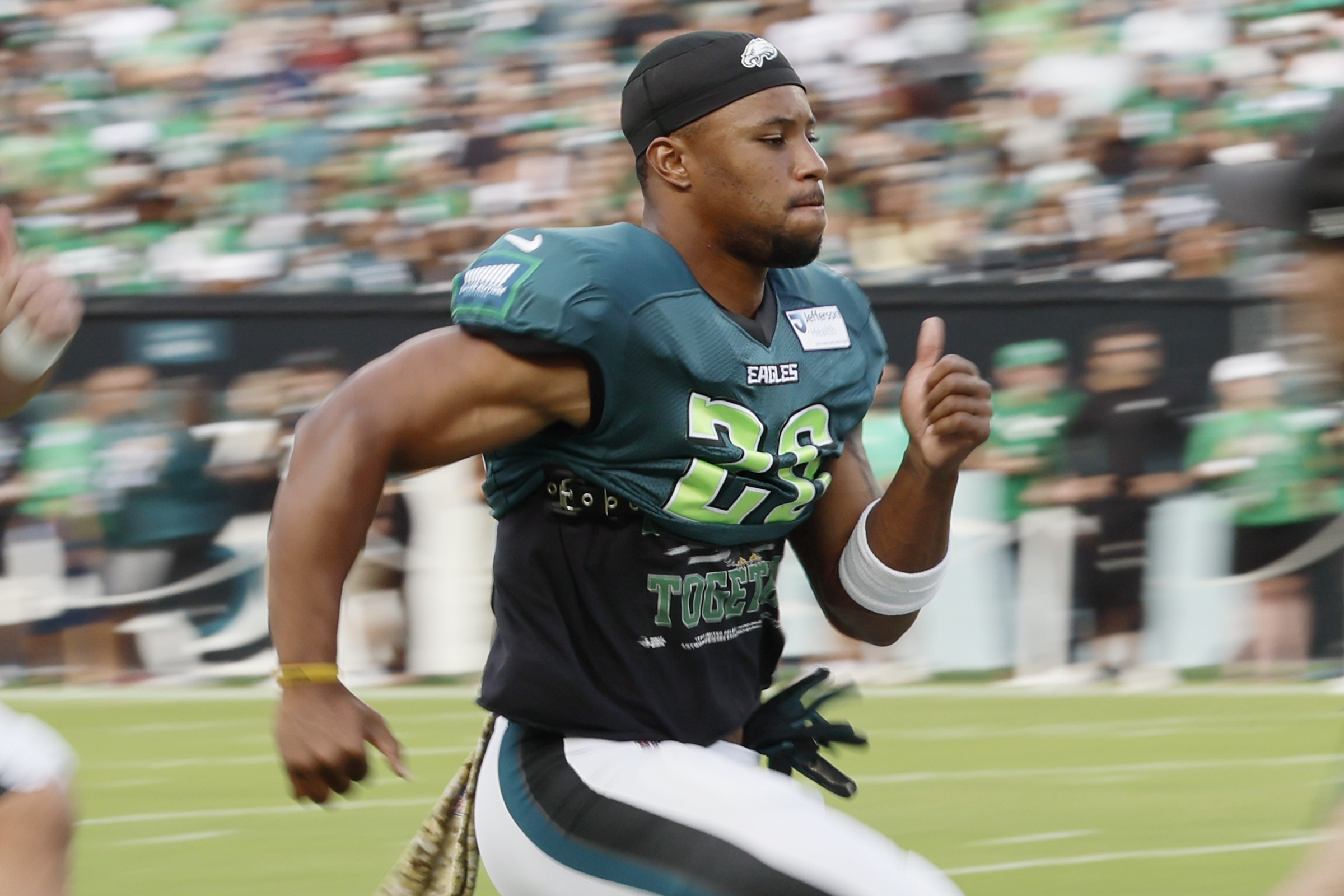
Saquon Barkley’s effectiveness in Sean Mannion’s offensive scheme will be a major storyline. Elizabeth Robertson / Staff Photographer
Running Backs (3)
Saquon Barkley
College: Penn State | Years pro: 8 | 6-0, 233
The offense took a step back last year in part because Barkley could not come close to replicating his 2024 season, when he became the ninth player in NFL history to rush for more than 2,000 yards in a season. Doing it again would have been a big ask, but Barkley’s ability to pile up yards was hampered by an offensive line that was injured and an offensive scheme that couldn’t find ways to get him the ball in space. This year, the Eagles are implementing a wide zone running scheme that should favor Barkley and a running game that will be pivotal to the team’s success. — Neiburg
Tank Bigsby
College: Auburn | Years pro: 3 | 5-11, 215
The Eagles acquired Bigsby a few weeks into the 2025 season and the backup running back was one of the few bright spots on offense. He rushed 58 times for 344 yards (5.9 per carry) but had more than four carries in only three games. A new-look rushing attack could ask for Bigsby to spell Barkley more often this year. — Neiburg
Will Shipley
College: Clemson | Years pro: 2 | 5-11, 209
Shipley enters his third season with the team as the third-string running back behind Barkley and Bigsby and as a key special teams contributor, particularly at kick returner. He won’t likely have ample touches on offense, but he acquitted himself nicely in the preseason, both as a runner and as a receiver. Mannion could find a role for him in the offense in certain situations. — Reiner
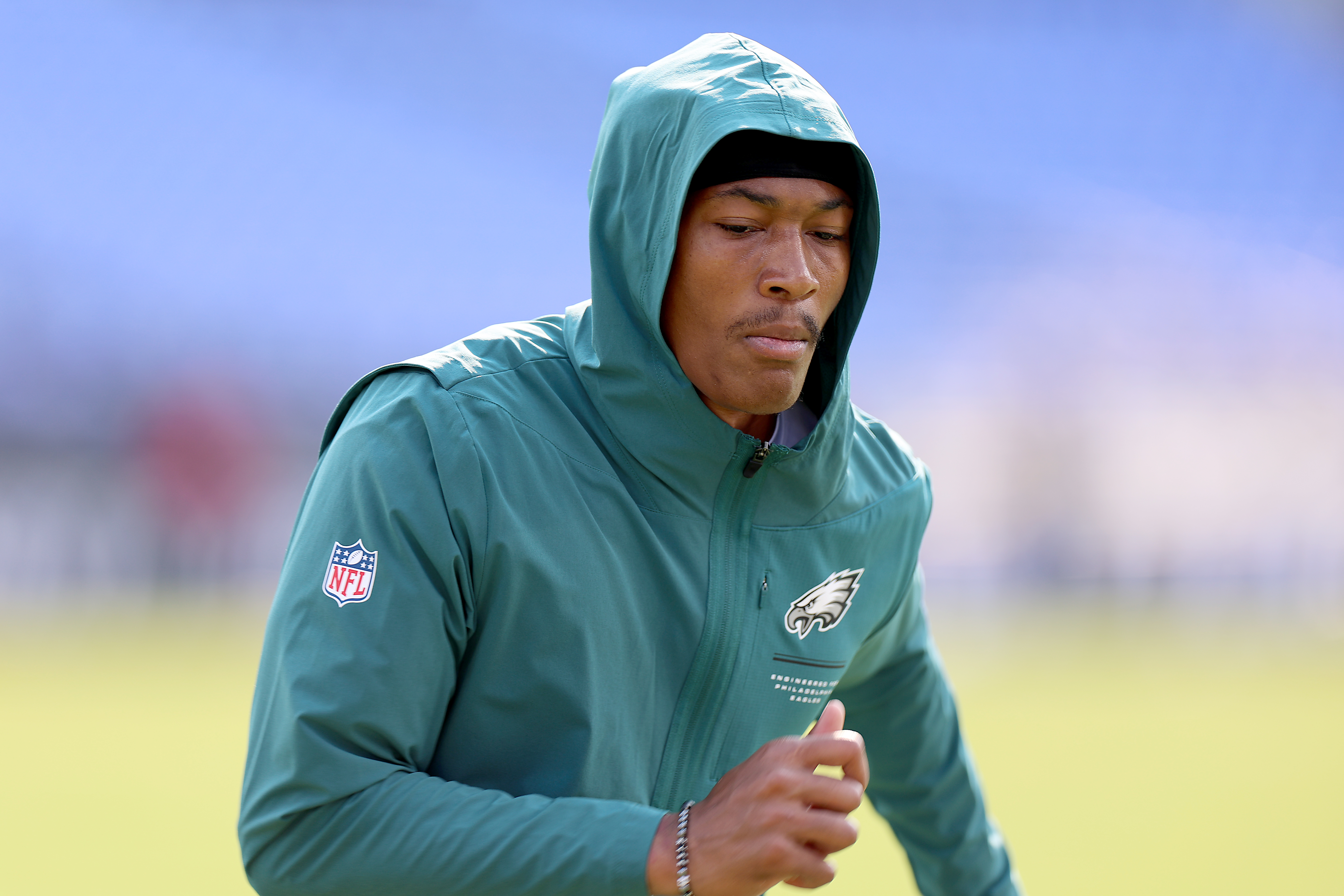
is DeVonta Smith ready to embrace WR1 status?David Maialetti / Staff Photographer
Wide receivers (6)
DeVonta Smith
College: Alabama | Years pro: 5 | 6-0, 170
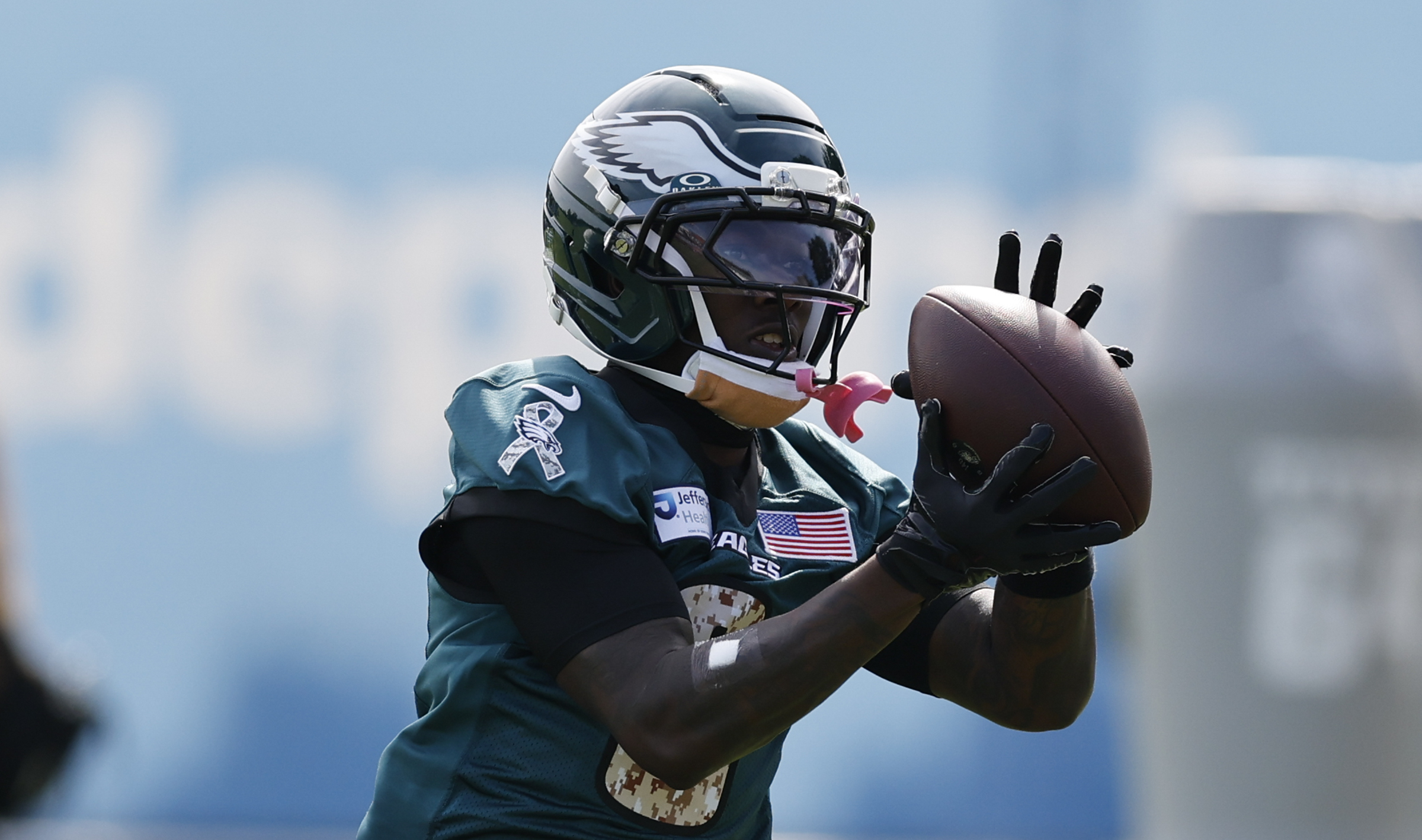
With A.J. Brown shipped off to the Patriots, all eyes are on Smith as the Eagles’ WR1. Prominent members of the organization, including Sirianni and Roseman, have stated they believe Smith is ready to take on a bigger role in the offense. Smith, who turns 28 in November, could be the team’s leading receiver for the first time since 2021. He missed most of training camp with a hamstring injury, but he is expected to be available for Week 1. — Reiner
Dontayvion Wicks
College: Virginia | Years pro: 3 | 6-1, 206
The Eagles acquired the 25-year-old Wicks from the Green Bay Packers this offseason. He made the most of his opportunities throughout camp, and with Makai Lemon sidelined for a significant portion of the offseason with a hamstring injury, Wicks made his case for the WR2 job. Wicks’ best season came in his rookie year in 2023, when he racked up 581 yards and four touchdowns on 39 receptions. The two seasons that followed paled in comparison. Wicks will look to prove he’s capable of taking on a greater workload in the Eagles offense. — Reiner
Can Makai Lemon recover from a low-impact preseason and training camp?Yong Kim / Staff Photographer
Makai Lemon
College: USC | Years pro: 1st | 5-11, 192
Fans and pundits will be looking at Lemon under a microscope this season — and for good reason. The 22-year-old rookie was drafted in hopes that he could help replicate Brown’s production in the aggregate, alongside the Eagles’ other weapons. Lemon isn’t off to the best start, missing the majority of training camp then struggling in his lone preseason appearance (3 yards on three catches and a drop that led to an interception). — Novozinsky
Darius Cooper
College: Tarleton State | Years pro: 1 | 5-11, 210
Last year’s training camp darling earned a roster spot by doing a lot of what Sirianni called the “dirty work.” The Eagles asked Cooper mostly to be a blocker and play special teams. He was targeted just 11 times on 212 offensive snaps. Cooper had a good start to training camp but seemed to fade a little down the stretch. That being said, there’s an opportunity for Cooper to have a bigger role in the offense this year. — Neiburg
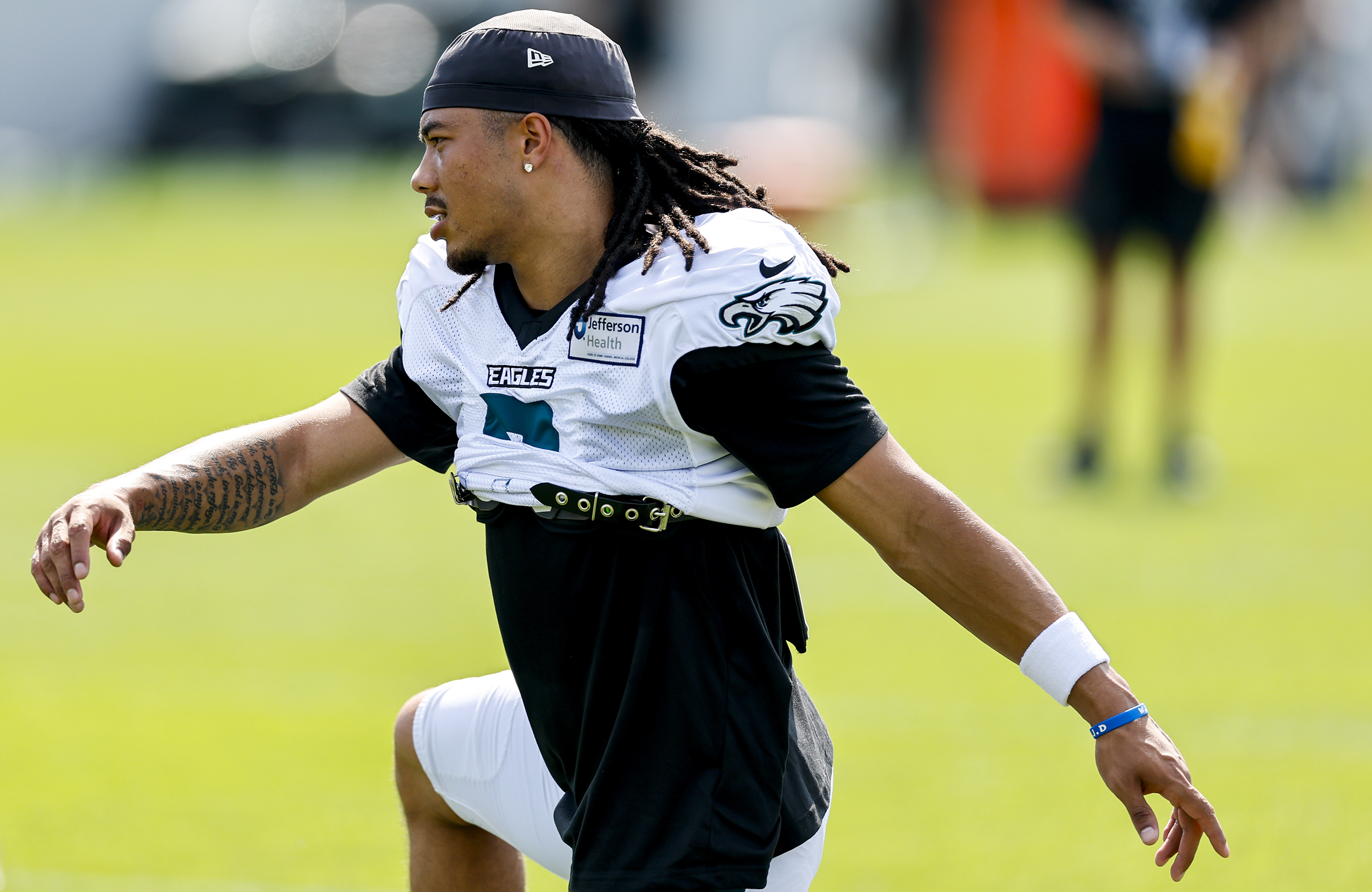
Hollywood Brown is a former 1,000-yard receiver who is looking to revive his career in Philly. Yong Kim / Staff Photographer
Hollywood Brown
College: Oklahoma | Years pro: 7 | 5-9, 170
Roseman signed Brown to a one-year deal in free agency worth $5 million guaranteed after Brown followed up an injury-shortened 2024 campaign by catching 49 passes for 587 yards and five touchdowns last year with Kansas City. He’s not the same receiver he was when he broke into the league as a 2019 first-round pick with Baltimore, but Brown could be a reliable third or fourth option despite being invisible at times during his first training camp in Philly. — Neiburg
Elijah Moore
College: Ole Miss | Years pro: 5 | 5-10, 178
Out is A.J. Brown, in is his college friend and teammate. The Eagles signed Moore to a one-year deal to add some depth to the position group. The 2021 second-round pick then went out and earned his spot with a strong training camp. Moore’s 2025 season with the Bills and Broncos was rocky, and he came to the Eagles facing a career crossroads. He could have a revival, especially if Lemon struggles early and the Eagles ask Moore to be their slot receiver. — Neiburg
Video: unCovering the Birds: Is tight end the biggest area of concern?
Tight ends (4)
Dallas Goedert
College: South Dakota State | Years pro: 8 | 6-5, 256
Goedert is back with the Eagles for a ninth season after the team signed the 31-year-old to a one-year deal. Goedert is coming off a productive 2025 season where he had more touchdowns (11) than he did in the previous three seasons combined. Goedert will again be relied on in the passing game, but the Eagles will need him to give a little more as a blocker in a run scheme that asks more of the tight ends than the previous one did. — Neiburg
Johnny Mundt
College: Oregon | Years pro: 8 | 6-4, 245
Blocking from the tight end spot was a struggle at times for the Eagles in 2025, so they tried to rectify that by signing Mundt, who has become one of the better blocking tight ends in the NFL over the last few seasons. What’s more, he’s also experienced in the Eagles’ new style of offense, having played on multiple teams that deploy some version of the Kyle Shanahan-Sean McVay offense. — Neiburg
Eli Stowers’ ability to make a Year 1 impact is in question. Jose F. Moreno / Staff Photographer
Eli Stowers
College: Vanderbilt | Years pro: 1st | 6-3, 239
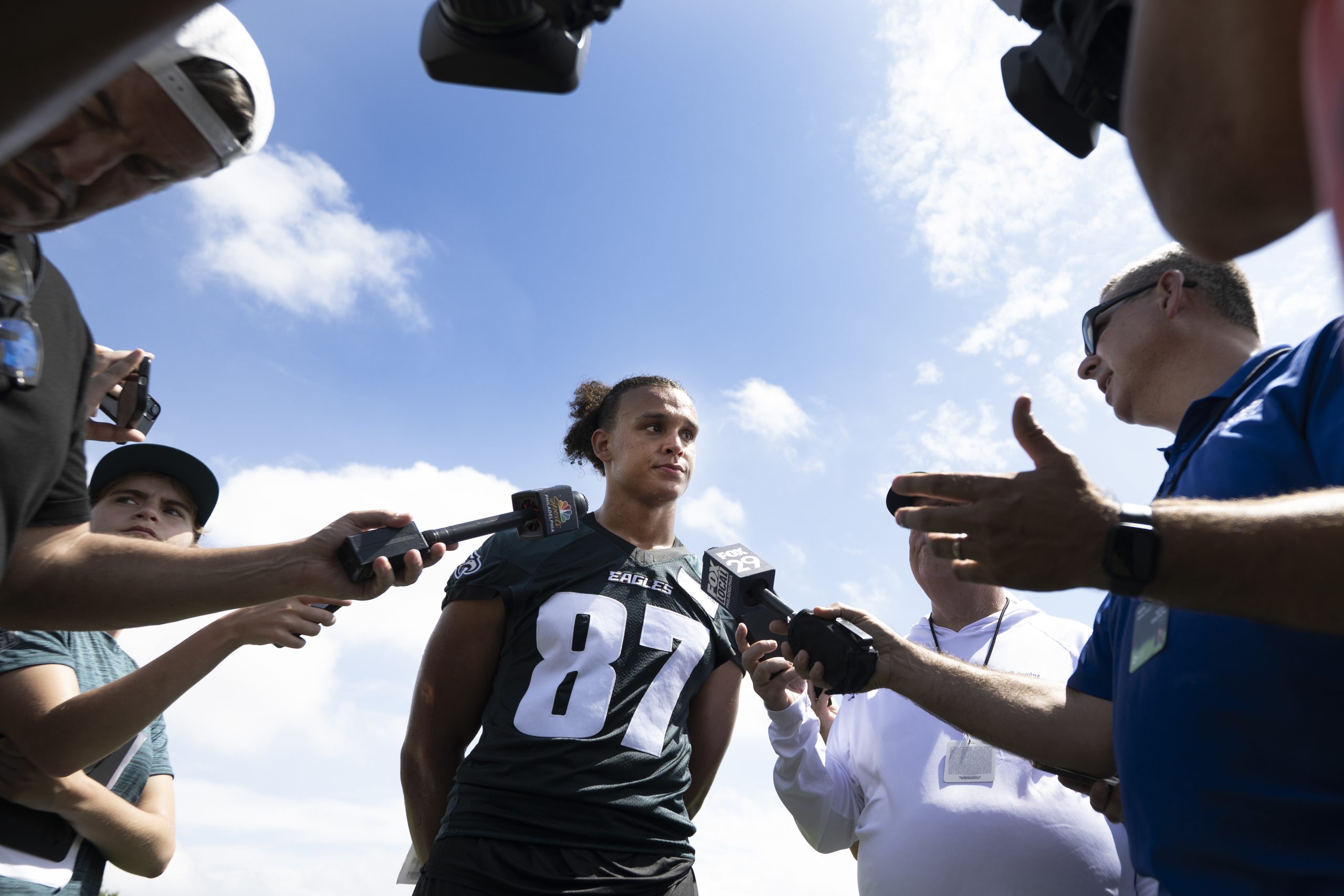
The Eagles selected Stowers with their second-round pick in part because it’s past time they started planning for the future at the position. Stowers is a former quarterback who transitioned to tight end in college after a shoulder injury. The Eagles loved his athleticism and think they’ll eventually be able to take advantage of some mismatches when he’s running routes, but it’s unclear how involved the rookie will be in the offense early in the season. — Neiburg
EJ Jenkins
College: Georgia Tech | Years pro: 1 | 6-6, 245
Jenkins was one of the bubble offensive skill players who made the initial 53-man roster. He has been with the Eagles for most of the last three years, primarily on the practice squad, and he has appeared in 14 games between the regular season and the postseason. Jenkins checks the box as another “Y” tight end responsible for lining up inline and blocking, a coveted role in the Shanahan/McVay offense. — Reiner
Jordan Mailata returns as one of the Eagles’ most reliable players. Yong Kim / Staff Photographer
Offensive linemen (9)
Jordan Mailata
College: N/A | Years pro: 8 | 6-8, 365
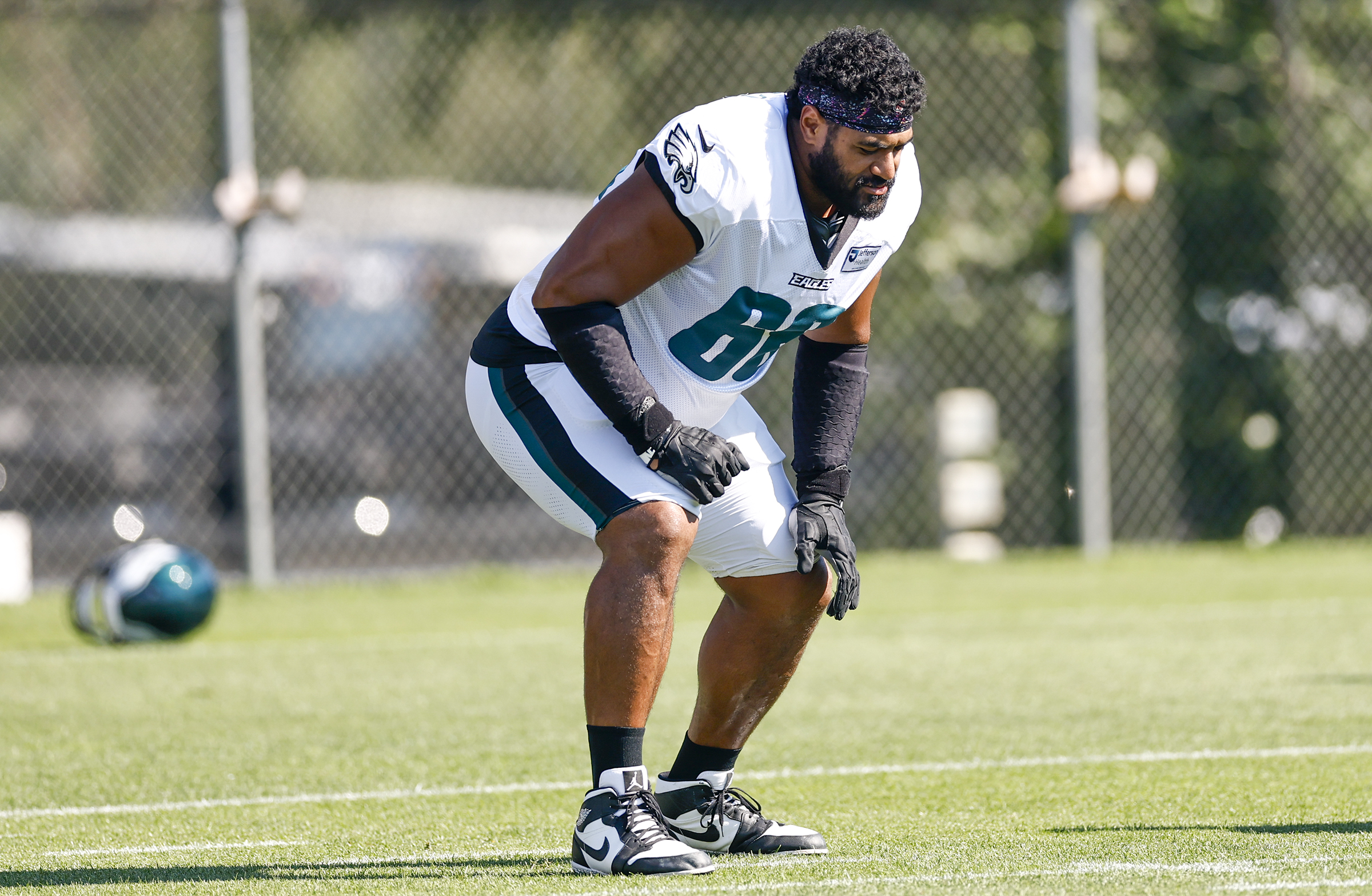
While most of the offensive line was hampered by injury last season, Mailata was one of the unit’s healthiest members, starting in all 16 games that the starters played (not including Week 18). He has seemingly improved with age — according to Pro Football Focus, Mailata conceded two sacks in 2025, the second-lowest total of his career (he gave up one sack in 2024). Two years ago, he earned second-team All-Pro honors. Can he earn leaguewide acclaim in 2026? — Reiner
Landon Dickerson
College: Alabama | Years pro: 5 | 6-6, 332
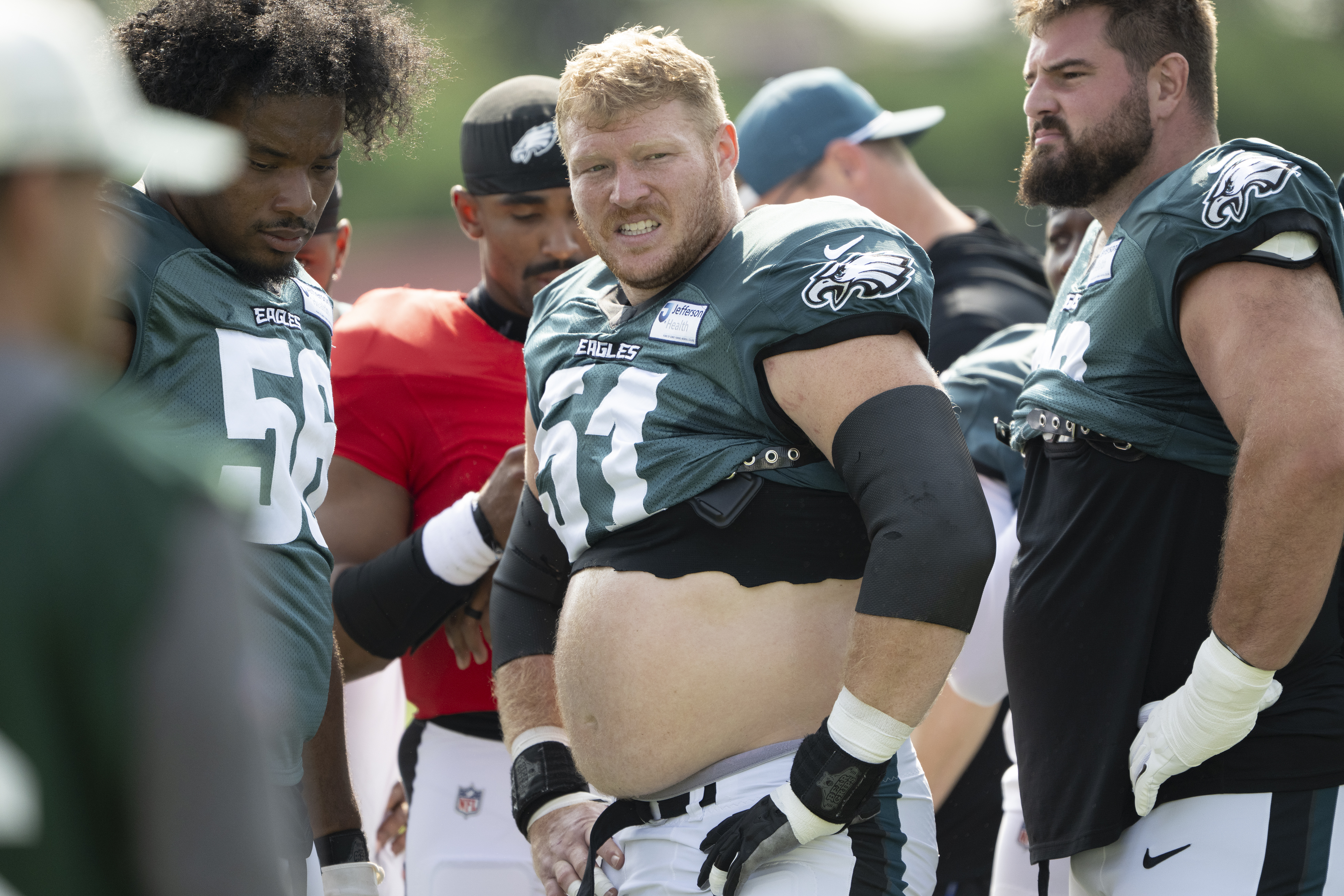
Dickerson admitted that last season, he returned to action too quickly after undergoing meniscus surgery. He had a full offseason to recover from his various injuries, which included traveling to Colombia to receive stem cell therapy to manage his pain. Now, Dickerson says he’s healthy as he aims to bounce back in his sixth season as the starting left guard. Can he get back to the standard he established from 2022-24 when he was an original-selection Pro Bowler for three straight years? — Reiner
A healthy Cam Jurgens would be a mark in the Eagles’ favor in 2026. Jose F. Moreno / Staff Photographer
Cam Jurgens
College: Nebraska | Years pro: 4 | 6-3, 303
Chronic back pain slowed Jurgens at times in 2025, though he still was named to the Pro Bowl for the second consecutive season. Like Dickerson, Jurgens sought to rid himself of that pain by flying to Colombia for stem cell therapy treatment during the offseason. Jurgens says he’s feeling a lot better, and he appears to be moving around a lot better, too. The new running attack should fit his athletic profile. — Neiburg
Tyler Steen
College: Alabama | Years pro: 3 | 6-6, 321
Steen is heading into his second season as the starting right guard. He was solid in his first season, conceding just two sacks, according to PFF. His teammates have lauded his improvement throughout training camp as he heads into a contract year. Steen will have an opportunity to play his way into a pay raise, either in Philadelphia or elsewhere. — Reiner
Lane Johnson said 2026 will probably be his last go-round. Jose F. Moreno / Staff Photographer
Lane Johnson
College: Oklahoma | Years pro: 13 | 6-6, 325
Johnson’s reign at right tackle is nearing its end. During training camp, Hurts’ 36-year-old protector said that 2026 will “probably” be his final season. Johnson played just 10 games last season, as he was sidelined with a Lisfranc foot injury. The six-time Pro Bowl, two-time All-Pro right tackle will have an opportunity to end his career on a high note in a new offense featuring a different blocking scheme in the run game, so long as he can stay healthy. — Reiner
Fred Johnson
College: Florida | Years pro: 7 | 6-7, 326
Johnson has been a quiet mainstay in his previous three seasons with the Eagles, appearing in all 57 of the team’s games from 2023-25 (51 regular season, 6 playoffs). He’s mainly played on special teams units but has also earned 14 starts as the swing tackle during his time in Philly, including eight last year. Whether he serves as the primary tackle backup this season remains an open question — the team is high on rookie Markel Bell — but Johnson will provide veteran depth no matter his place on the depth chart. — Novozinsky
Markel Bell could be the Eagles’ starting tackle of the future. Jose F. Moreno / Staff Photographer
Markel Bell
College: Miami (FL) | Years pro: 1st | 6-9, 346
The Eagles identified Lane Johnson’s heir apparent when they selected Bell in the third round of the draft. Throughout camp, he made the transition to right tackle, as he had primarily played at left tackle in college. Bell will have the opportunity to develop this season behind Johnson. If the 14-year veteran gets hurt, the Eagles don’t necessarily have to turn to Bell right away, as they also have Fred Johnson in a reserve role. — Reiner
Drew Kendall
College: Boston College | Years pro: 1 | 6-4, 308
The Eagles drafted Kendall, a college center, in the fifth round last year and then started cross-training him at guard. A year working behind some veteran offensive linemen and getting in an NFL training facility has done wonders. Kendall is bigger, stronger, and looks ready to step in if called upon to play any of the three interior offensive line positions. — Neiburg
Willie Lampkin was one of the stories of training camp for the Eagles. Jose F. Moreno / Staff Photographer
Willie Lampkin
College: North Carolina | Years pro: 1 | 5-11, 290
The Eagles claimed Lampkin at the end of camp last season after the Los Angeles Rams waived him with an injury designation. He spent the entire season on injured reserve. Finally healthy, Lampkin impressed throughout the preseason despite his undersized stature and earned himself a spot as a depth interior lineman on the initial 53. Can the Eagles find a way to get him on the field in specialized personnel packages this season? — Reiner
Micah Morris
College: Georgia | Years pro: 1st | 6-5, 334
It’s easy to see why the Eagles, in search of offensive line depth, used a sixth-round pick on Morris this year. He has the body type and athleticism to play guard in the NFL. Morris showed some flashes during training camp and in preseason contests. He’s likely the last guy on the depth chart and won’t be called upon to play much, but the 23-year-old could be an intriguing prospect for the future. — Neiburg
Jalen Carter (left) and Jordan Davis are both looking to deliver in 2026 after earning huge offseason contract extensions. Jose F. Moreno / Staff Photographer
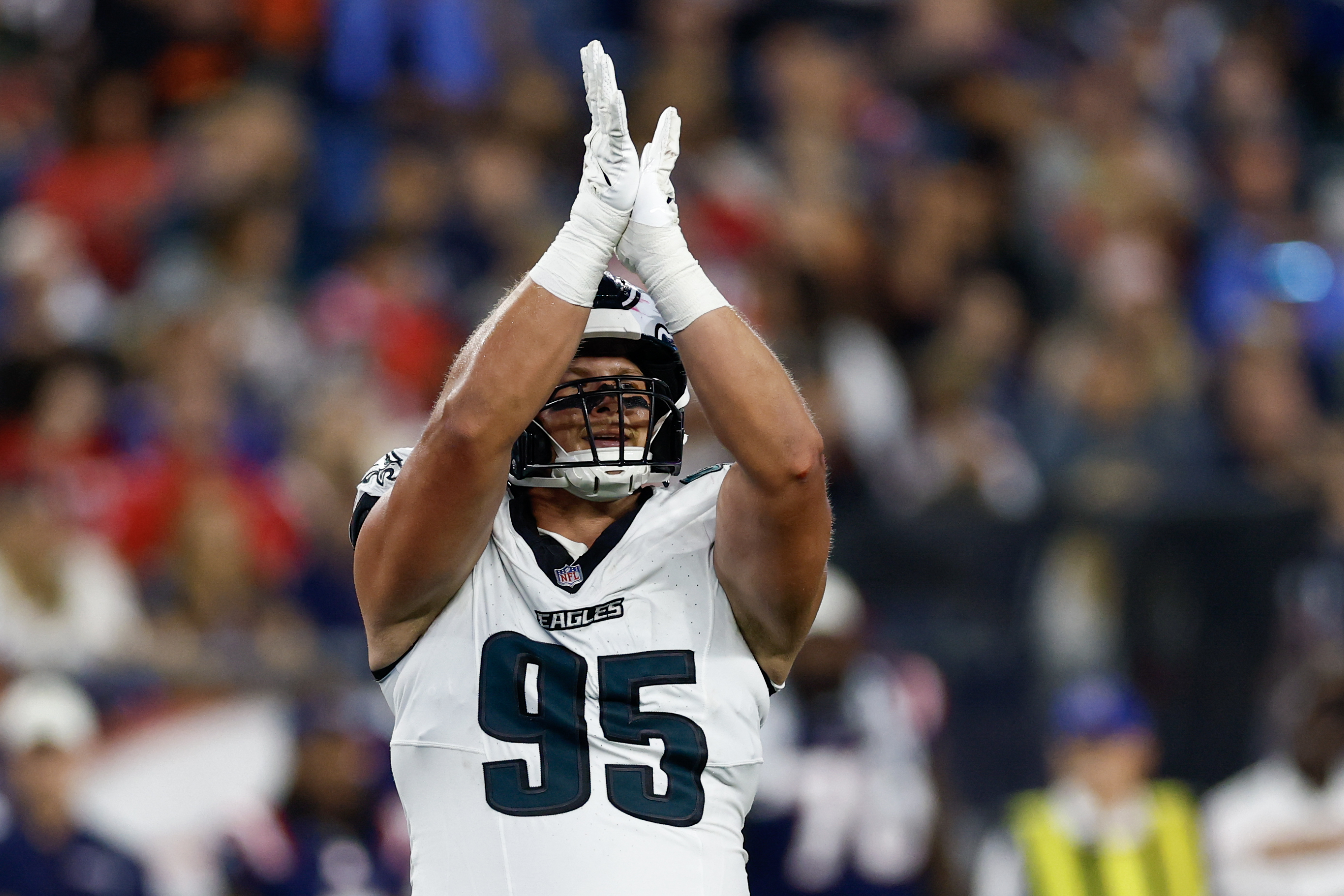
Interior defensive line (5)
Jalen Carter
College: Georgia | Years pro: 3 | 6-3, 314
He got paid. Now can he bounce back? Last season, Carter generated a career-low 7.7% pressure rate while facing a double-team on a career-low 41.7% of his pass rushes, according to Next Gen Stats. This came after his wildly successful 2024 season, during which he helped propel the Birds to a Super Bowl win. Now recovered from injury and 10 pounds lighter, Carter should be one of the top defensive tackles in the league this season. — Novozinsky
Jordan Davis
College: Georgia | Years pro: 4 | 6-6, 336
It’s clear that Davis has a different mindset entering this season. Look no further than the fact that the Eagles named the 26-year-old a first-time captain on Friday. Davis, who inked a three-year, $78 million extension in March, is going to be a force in Vic Fangio’s defense once again this year. He’s coming off a career-best 72-tackle and 4.5-sack season and should replicate that this season. — Novozinsky
Moro Ojomo had a strong training camp for the Eagles. Monica Herndon / Staff Photographer
Moro Ojomo
College: Texas | Years pro: 3 | 6-3, 292
Ojomo watched Carter and Davis — who sit ahead of him on the depth chart — become two of the highest-paid defensive tackles in the league this offseason. The 2023 seventh-round pick is using that as motivation. The trio of Carter, Davis and an extra-motivated Ojomo have a chance to form the best DT trio in the NFL this season. — Novozinsky
Byron Young
College: Alabama | Years pro: 3 | 6-3, 292
Young is sort of the otherguy along a defensive interior front that could be among the best in the NFL with Carter, Davis and Ojomo. But Young has more than held his own when the Eagles have called his number. He played in all 17 games last season and tallied 37 tackles. He had three tackles for loss and four quarterback hits while playing 30% of the defensive snaps. With a healthier Carter, Young could see fewer snaps, but the Eagles certainly like what they have with their No. 4 defensive tackle. — Neiburg
Ty Robinson was a preseason standout. Yong Kim / Staff Photographer
Ty Robinson
College: Nebraska | Years pro: 1 | 6-5, 288
Robinson has been on “life support” for the past year, according to Fangio, as he struggled to get on the field in his rookie season. His defensive coordinator said he “came to life” as training camp progressed. Robinson led the Eagles with three sacks in the preseason. He will have the opportunity to make an impact in a depth role behind the top trio of Carter, Davis, and Ojomo. — Reiner
Edge rushers/outside linebackers (5)
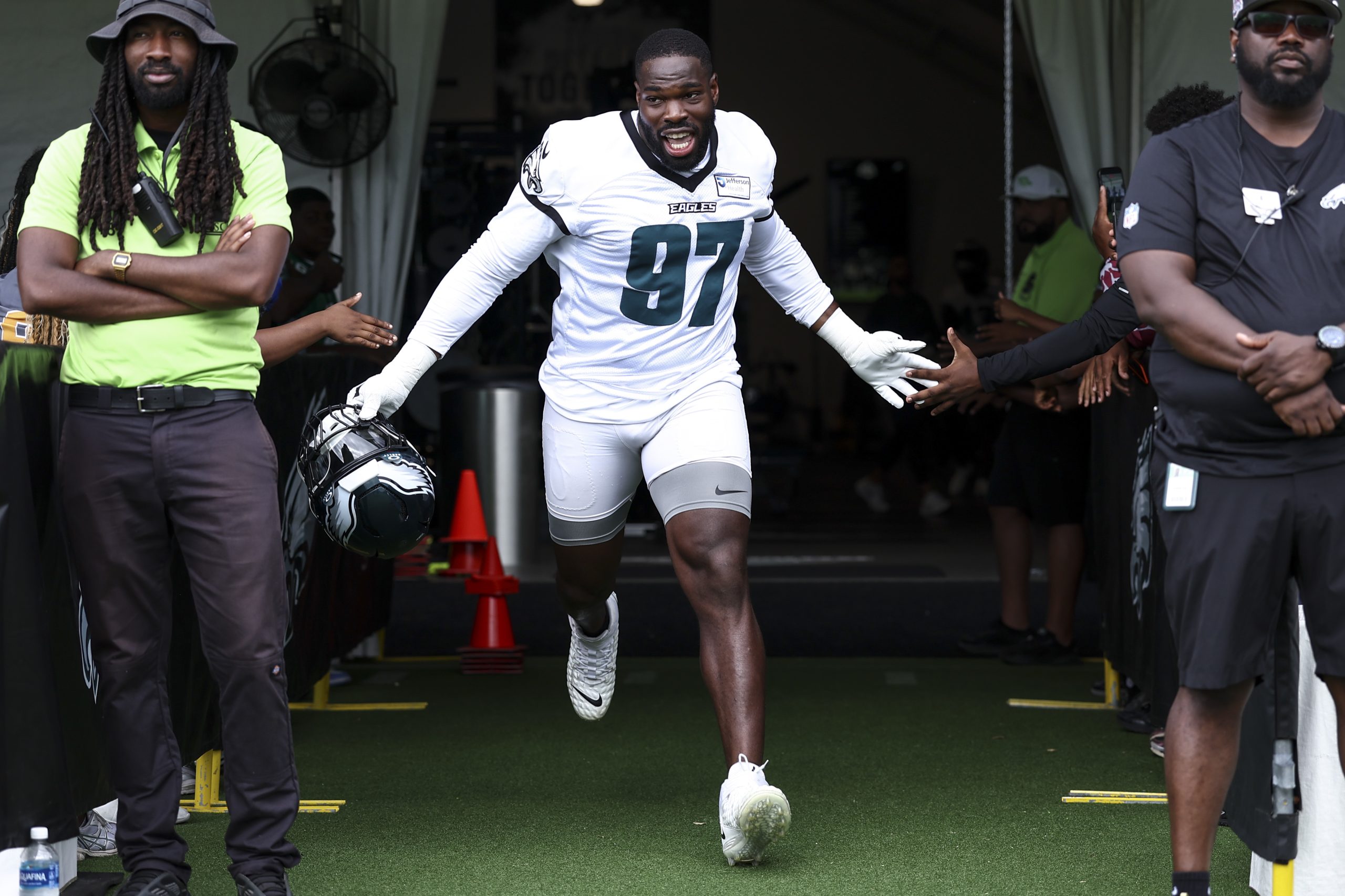
Jonathan Greenard
College: Florida | Years pro: 6 | 6-3, 263
Greenard was the biggest acquisition of the offseason. The Eagles during draft weekend sent two third-round picks to Minnesota to acquire Greenard and a seventh-round pick, and then quickly signed the 29-year-old to a four-year deal worth nearly $100 million. But Greenard missed all of training camp after suffering a pectoral injury late in the offseason and his availability for Week 1 is uncertain. When he’s healthy, the Eagles will need Greenard to consistently get after the quarterback. He had at least 12 sacks in 2023 and 2024 before his injury-shortened 2025 season. — Neiburg
Video: unCovering the Birds mailbag: Analyzing Jalyx Hunt’s productive training camp
Jalyx Hunt
College: Houston Christian | Years pro: 2 | 6-3, 252
Hunt arguably had the best training camp of any Eagles player this summer. The 25-year-old edge rusher lived in the backfield during training camp, sweeping past the Eagles’ best offensive tackles with ease. With Greenard potentially injured to start the season, look for Hunt to take his reps and thrive. He had a 6.5-sack season last year. It’s not a stretch to say he might double that this year. — Novozinsky
Nolan Smith Jr.
College: Georgia | Years pro: 3 | 6-2, 238
Smith re-injured his triceps last season, forcing him to miss over a month of game action. His production declined, going from 6.5 sacks in 2024 to three in 2025. Now healthy, Smith had a strong performance in training camp opposite Hunt while Greenard was sidelined. He’ll look to take his game to the next level with the opportunity for a contract extension looming. — Reiner
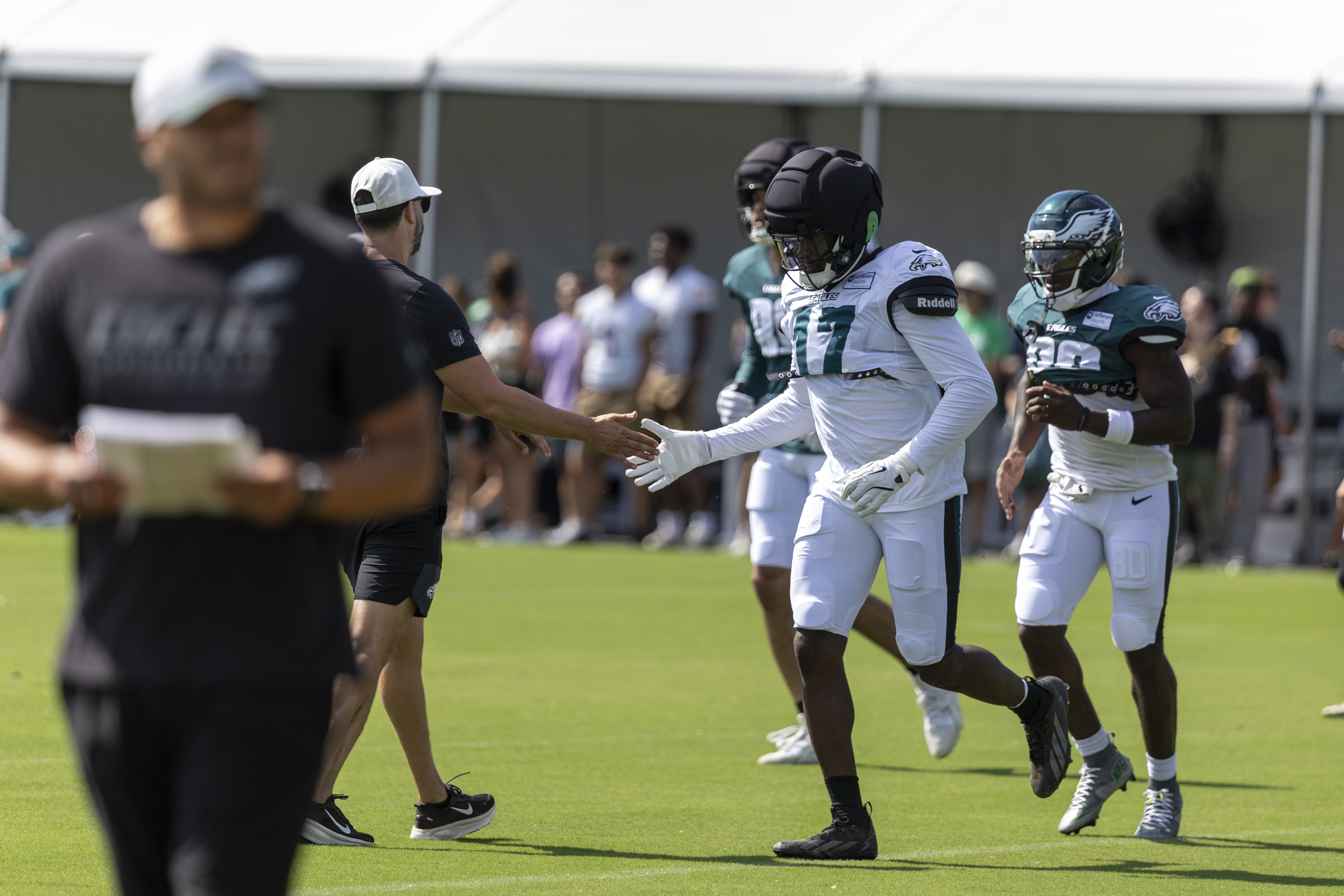
Former Penn State and Temple star Arnold Ebiketie (17) is looking to make his name as an Eagle. Tyger Williams / Staff Photographer
Arnold Ebiketie
College: Penn State | Years pro: 4 | 6-3, 256
After four years with Atlanta, Ebiketie hit free agency and found a team in the Eagles who needed to fill out the depth chart on the edge. His playing time dropped off a bit in 2025. He was on the field for 35% of the defensive snaps after playing 49% a year earlier. The Eagles have some workhorses at the top of the depth chart in Greenard, Hunt and Smith, but Ebiketie may need to play a little more if Greenard isn’t ready for Week 1. — Neiburg
A.J. Epenesa
College: Iowa | Years pro: 6 | 6-6, 260
It was a weird offseason for Epenesa. The Browns signed him to a one-year deal worth up to $5 million before balking at the deal weeks later, reportedly due to a failed physical. Now, he finds himself on a loaded Eagles defensive front — and he couldn’t be happier. The 27-year-old looked sharp in camp too, recording a handful of sacks and nabbing an interception on Day 2. — Novozinsky
Zack Baun is a linchpin of the Eagles defense. Yong Kim / Staff Photographer
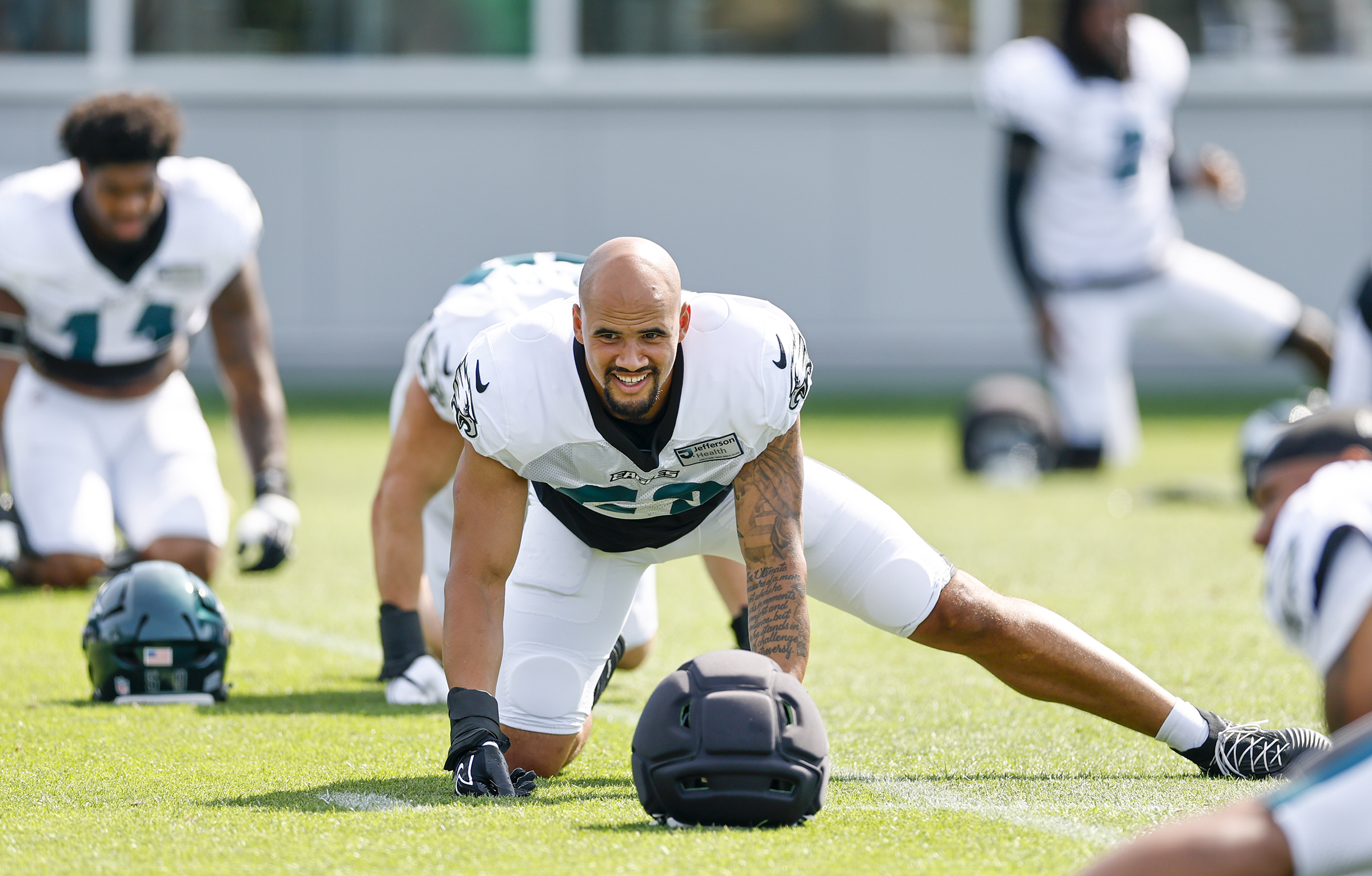
Inside linebackers (4)
Zack Baun
College: Wisconsin | Years pro: 6 | 6-3, 225
Three years ago, Baun arrived in Philadelphia as an expected special teams ace and a prospective edge rusher. Since then, he’s become an All-Pro, two-time Pro Bowl, Super Bowl champion inside linebacker and one of the most important players in Fangio’s defense. After Nakobe Dean signed with the Las Vegas Raiders in free agency, Baun is set to take on green dot responsibilities as the on-field defensive play caller this season. — Reiner
Jihaad Campbell
College: Alabama | Years pro: 1 | 6-3, 235
Campbell made an immediate impact in his rookie season, playing in all 17 games and recording a decent stat line of 80 tackles, one interception and three pass deflections. Can he have an even stronger sophomore year? He’ll have help in the room — Campbell, Zack Baun and Jeremiah Trotter Jr. form one of the deepest linebacker corps in the league. — Novozinsky
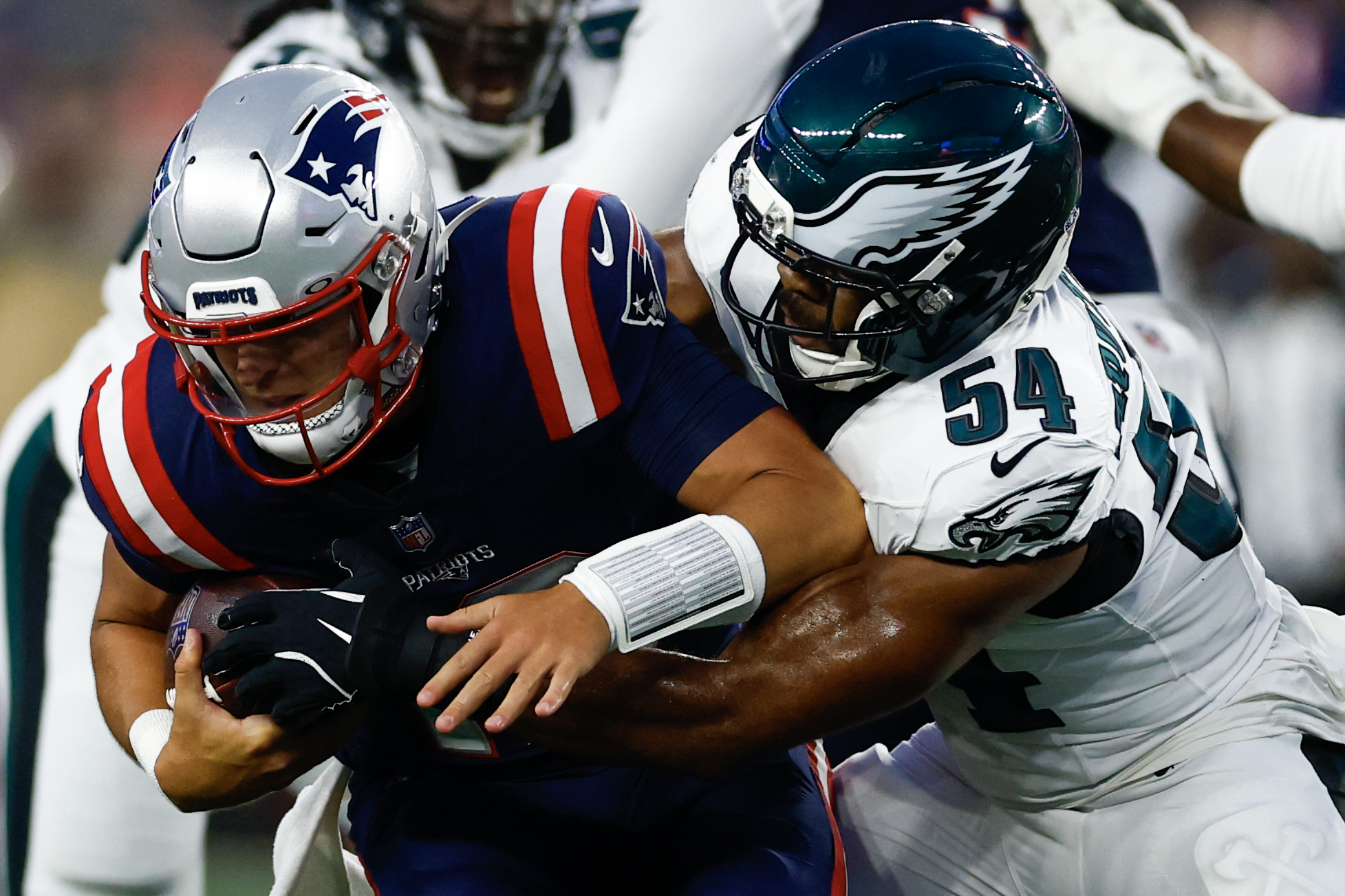
Is this the year Jeremiah Trotter Jr. (54) breaks through on defense? Yong Kim / Staff Photographer
Jeremiah Trotter Jr.
College: Clemson | Years pro: 2 | 6-0, 225
Trotter heads into his third season with the Eagles as the next man up behind Baun and Campbell. But the 2024 fifth-round pick has demonstrated in the preseason that he could start in any other defense. He finished behind Robinson with two sacks in the preseason, plus one tackle for a loss. Should either Baun or Campbell go down this year, the Eagles ought to feel comfortable with Trotter taking their place. — Reiner
Smael Mondon Jr.
College: Georgia | Years pro: 1 | 6-2, 224
The 2025 fifth-round pick played just 14 defensive snaps last season but was a core special teamer. That shouldn’t change much in 2025 unless the Eagles suffer a few injuries. Linebacker is arguably their deepest position. Mondon seems to be developing nicely and held off a few challengers for a roster spot. — Neiburg
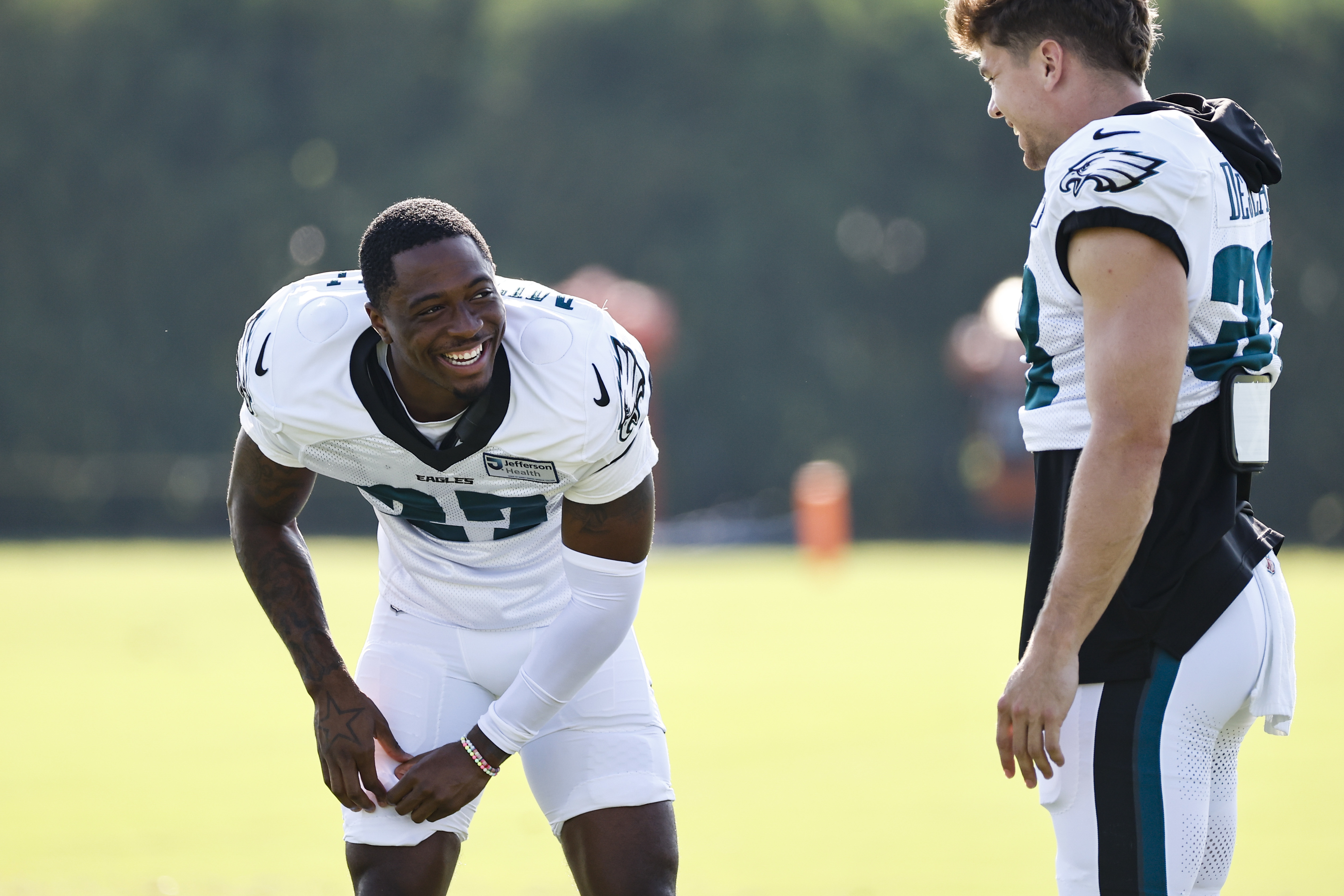
Quinyon Mitchell (27) and Cooper DeJean are seeking to build on All-Pro seasons. Monica Herndon / Staff Photographer
Cornerbacks (6)
Quinyon Mitchell
College: Toledo | Years pro: 2 | 6-0, 193
In his rookie season, Mitchell proved he was a stud in the making, being named to the All-Rookie team and finishing second in Defensive Rookie of the Year honors. He took it another step last year when he was named an All-Pro and a Pro Bowler. Can Mitchell keep leveling up in Year 3? Can he prove that he’s the best cornerback in the NFL (and deserves to get paid like it)? — Novozinsky
Cooper DeJean
College: Iowa | Years pro: 2 | 6-0, 198
DeJean followed up an impressive rookie season by being selected as a first-team All-Pro and being named to the Pro Bowl. DeJean is arguably the best nickel corner in the NFL, but he’s taking on a new job for 2026: safety. DeJean will play on the back line when the Eagles are in their base defense and return to the slot in nickel and dime packages. — Neiburg
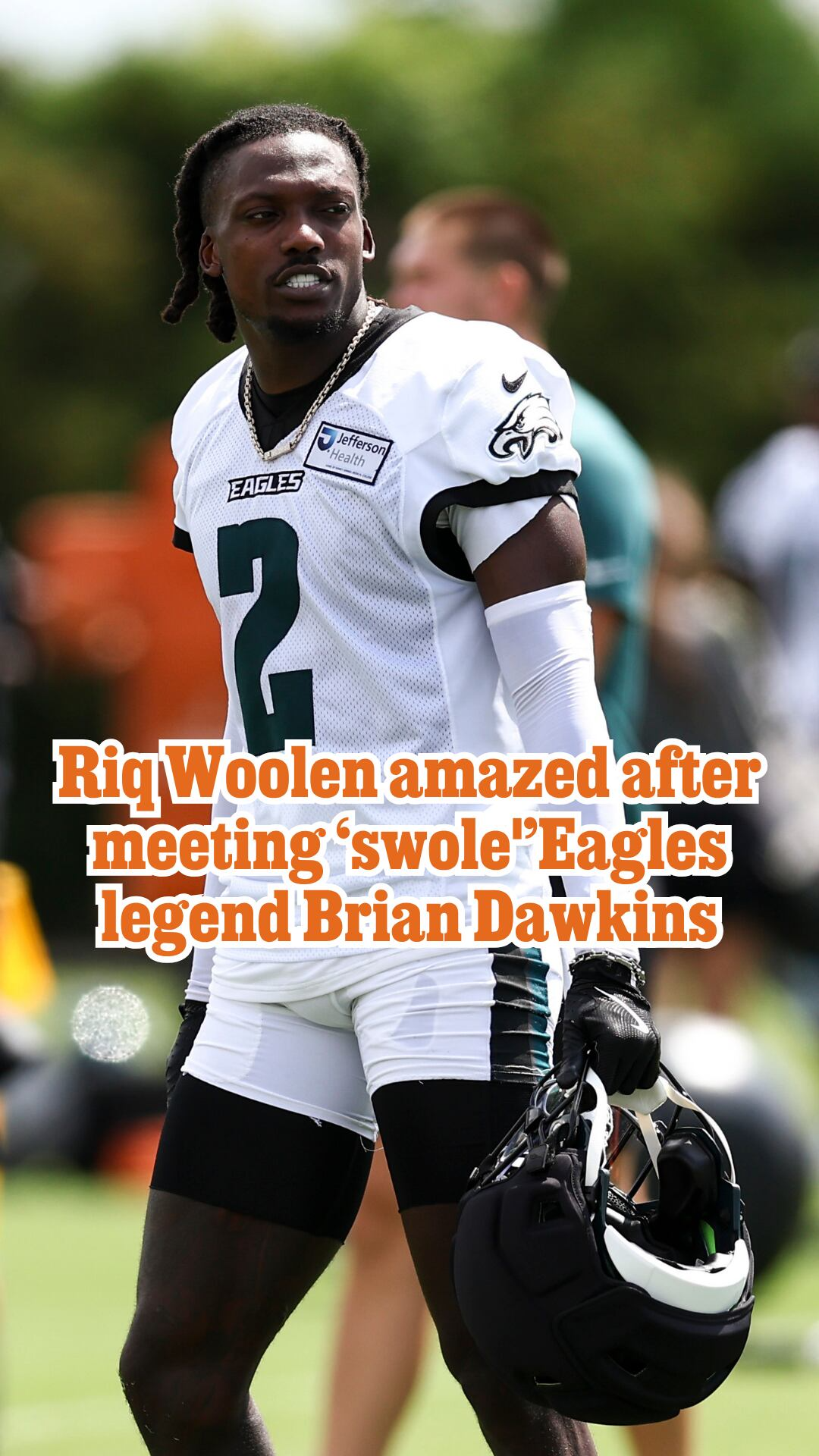
Video: Riq Woolen amazed after meeting ‘swole’ Eagles legend Brian Dawkins
Riq Woolen
College: UTSA | Years pro: 4 | 6-4, 210
Woolen’s career with the Seahawks got off to a hot start. He was a Pro Bowler and All-Pro in his rookie season in 2022 and was a key member of their Super Bowl team last season. So, how did the Eagles manage to sign him to a one-year deal in free agency? Well, his inconsistency made him an occasional liability for Mike Macdonald in Seattle. Let’s see if the 6-foot-4 corner can find stability in Fangio’s defense. — Novozinsky
Jonathan Jones
College: Auburn | Years pro: 10 | 5-9, 190
Jones is expected to be the Eagles’ top backup cornerback. He spent last season with the Commanders — Philly’s Week 1 opponent — and signed a one-year deal, $2-million contract with the Eagles in March. He had 78 starts in his first 10 seasons, so he brings a wealth of experience if an Eagles corner goes down this season. — Novozinsky
Kelee Ringo remins a valuable secondary backup and special-teamer. Yong Kim / Staff Photographer
Kelee Ringo
College: Georgia | Years pro: 3 | 6-2, 207
Last training camp, Ringo was in competition with Adoree’ Jackson for the starting outside cornerback job opposite Mitchell. This year, Ringo wasn’t in the picture, with Woolen signing a prove-it deal in the offseason to command that post. Ringo isn’t even the first outside cornerback off the bench — that’s Jones’ job. But the 24-year-old cornerback is a valued special teamer, hence his roster spot. — Reiner
Mac McWilliams
College: UCF | Years pro: 1 | 5-10, 191
McWilliams looks like a more well-rounded version of his rookie self. He earned occasional reps with the first-team defense throughout training camp and made some plays when doing so. He won’t start if the cornerback room stays healthy, but don’t be surprised if he climbs up the depth chart and earns snaps. — Novozinsky
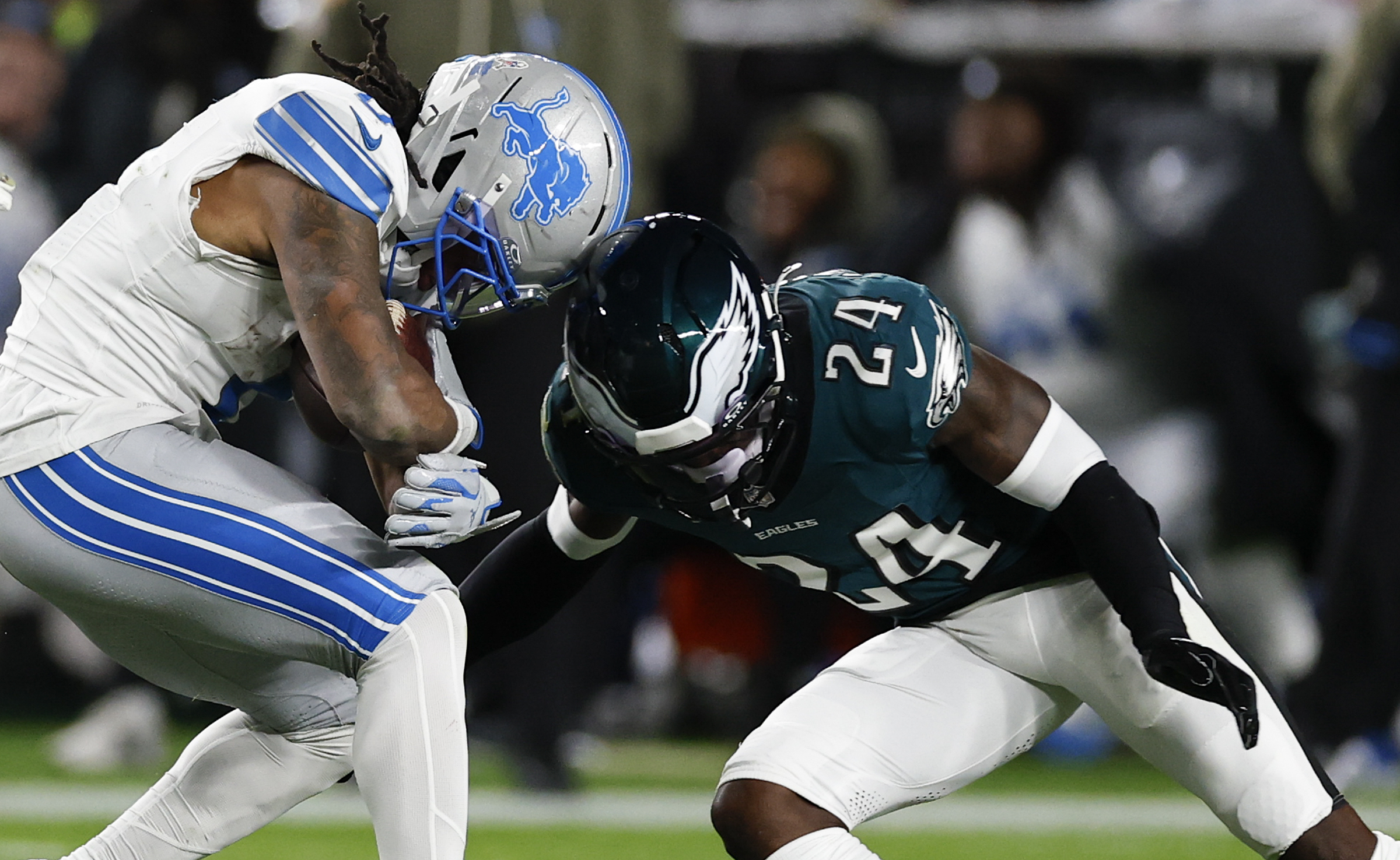
Can Andrew Mukuba (24) bounce back from the injury that prematurely ended his 2025?Yong Kim / Staff Photographer
Safeties (3)
Andrew Mukuba
College: Texas | Years pro: 1 | 5-11, 186
Mukuba saw his rookie season cut short in late November when he fractured his fibula. Now healthy, he will look to stay on the field in his role as one of two starting safeties in his sophomore season. Despite missing the last two months of the 2025 season, Mukuba did not see any preseason action, reinforcing the confidence that the Eagles have in him to do his job come Week 1. Fangio lauded Mukuba’s improved “knowledge and knowhow of the defense” in training camp. — Reiner
Marcus Epps
College: Wyoming | Years pro: 7 | 6-0, 198
Epps is expected to serve as the starting safety alongside Mukuba in Week 1. It was a tough battle between him and Michael Carter II this summer, but Epps experience and institutional knowledge — he was a key starter on the Eagles’ 2022 Super Bowl team — won him the job. Now comes the hard part for Epps: Can he keep the job all season? Carter will be gunning for it every week. — Novozinsky
Michael Carter II will have a key role after a productive training camp and preseason. Monica Herndon / Staff Photographer
Michael Carter II
College: Duke | Years pro: 5 | 5-10, 184
With Mukuba and Epps the likely Week 1 starters at safety, Carter figures to serve as the next safety off the bench. He is the expected backup to DeJean at nickel cornerback, too. Fangio also revealed that Carter will be the sixth defensive back on the field in the dime package. Even though it always seemed like Epps was the frontrunner for the starting safety vacancy this offseason, Fangio said Carter did “nothing but [help] himself” with his performance in camp. — Reiner
Specialists (3)
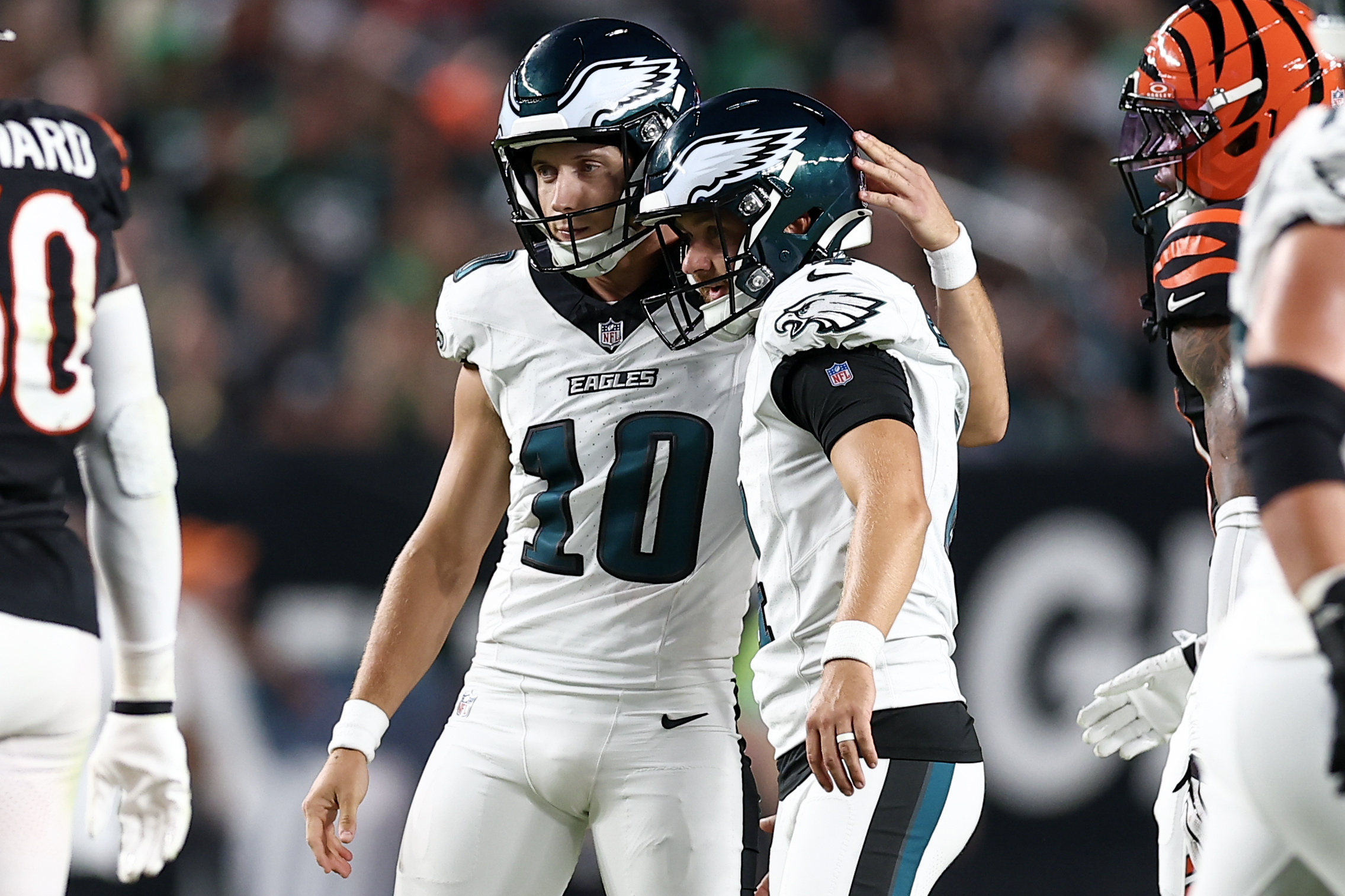
Jake Elliott
College: Memphis | Years pro: 9 | 5-9, 167
Elliott is coming off of another shaky season in which he went 20-for-27 on his field goal attempts (74.1% conversion rate; his second-lowest rate of the regular season). He is 48-for-63 over the last two regular seasons (76.2%). Still, the Eagles displayed their confidence in the 31-year-old kicker this offseason by restructuring his contract in 2026, agreeing on a $1 million pay cut but guaranteeing $5 million. He did not have any competitors in camp, further reinforcing that the job is his to keep so long as he can establish consistency. — Reiner
Braden Mann (10) and Jake Elliott (right) are back, but will have a new teammate doing the snapping on kicks. Monica Herndon / Staff Photographer
Braden Mann
College: Texas A&M | Years pro: 6 | 5-11, 198
Mann had a good offseason. The 28-year-old punter got paid in March, signing a four-year, $14 million contract extension, and he looked rock solid in training camp. He’s a practice squad success story, with the Eagles initially picking him up from the Steelers in 2023. — Novozinsky
Rocco Underwood
College: Florida | Years pro: 1st | 6-3, 240
The Eagles had stability at long snapper from 2000-2024, with Mike Bartrum, Jon Dorenbos and Rick Lovato all being good enough to earn multiple contracts. They’re hoping Underwood can be that next guy — though things aren’t off to the best start. Underwood, who has shown potential in the past, winning the 2024 Patrick Mannelly Award for the nation’s best long snapper, had a rough start to training camp due to a few bad snaps. He’s since turned it around, but it’s hard to forget those early mistakes. For now, they’ll have to deal with his possible inconsistency and bank on his potential. — Novozinsky