When Anne Ryan arrived in Gettysburg for a ghost tour last month, she was a skeptic.
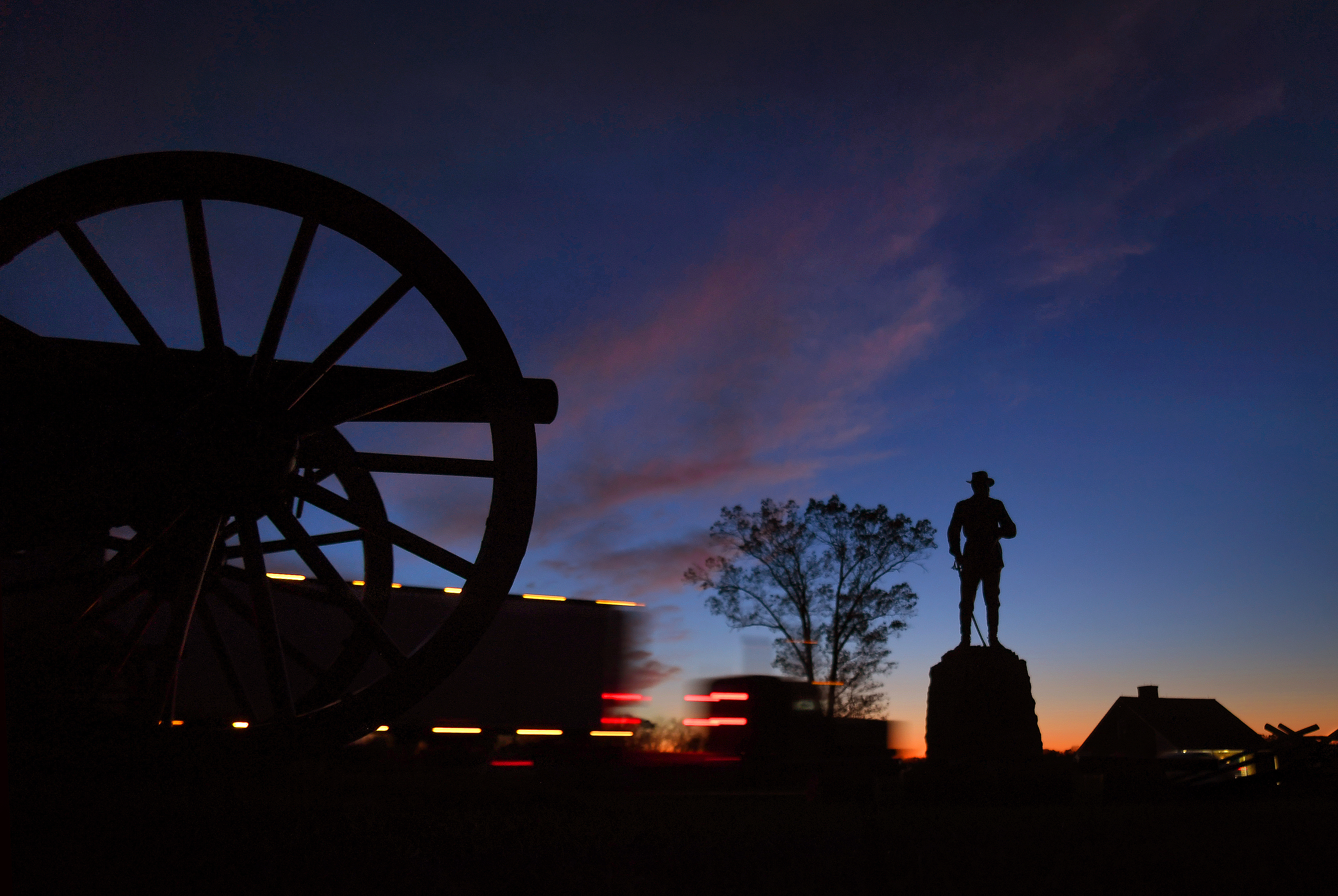
The Civil War battle of Gettysburg, where Union troops defeated Confederate forces in 1863, was the bloodiest battle in American history. More than 7,000 soldiers died on both sides and thousands more were injured.
If ever a place should be haunted, it’s Gettysburg. Ryan, Pennsylvania’s deputy secretary of tourism, was hosting a group of writers there and figured she’d play along.
“I don’t believe in ghosts,” Ryan told The Inquirer this week.
Still, Ryan left that night with a ghostly picture she can’t explain and found her double-knotted sneakers untied, a specialty of Gettysburg ghosts.
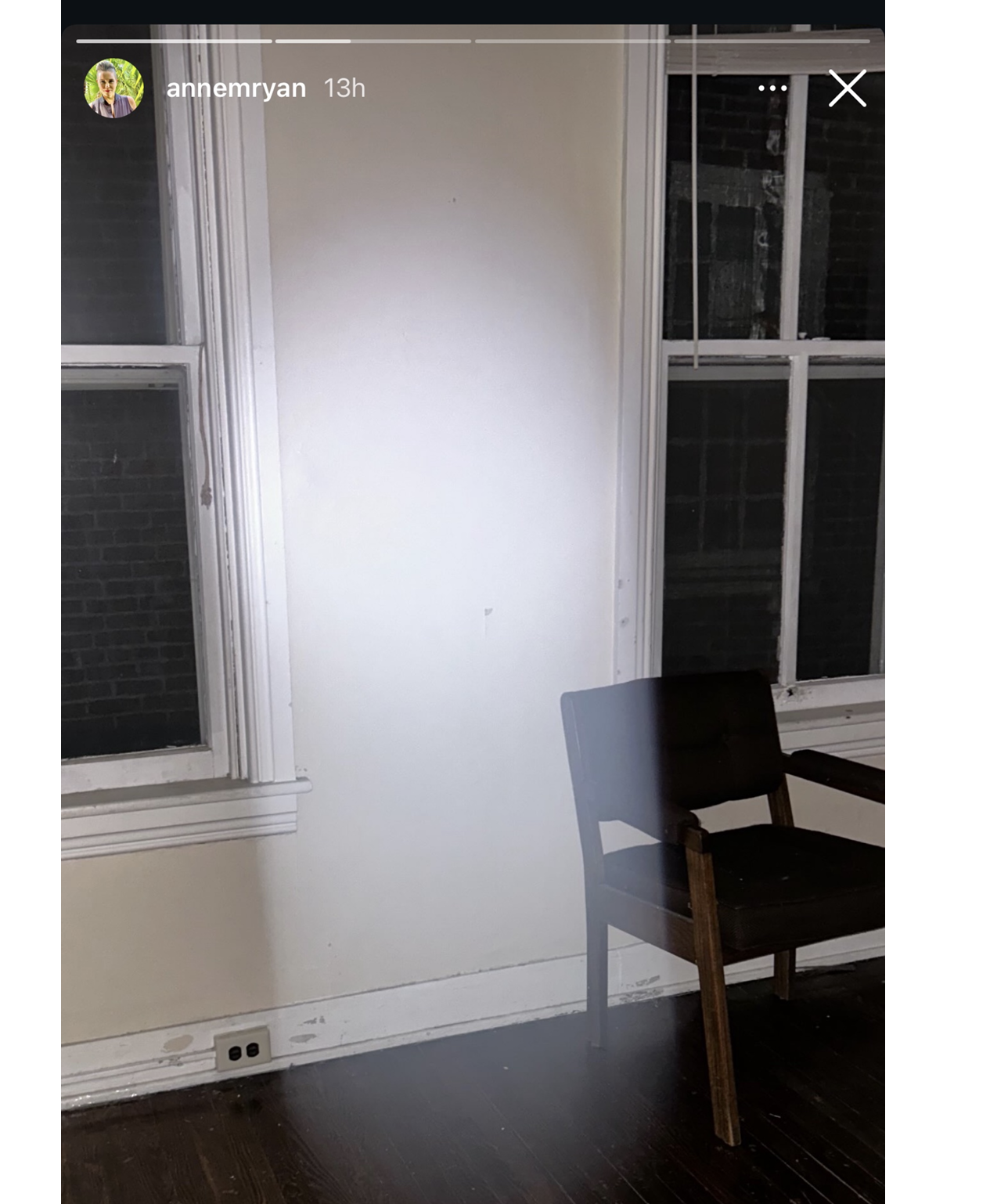
Ryan said she snapped a photo on her phone at a house, looking for what ghost hunters describe as orbs in a room where a murder had allegedly taken place. Online, that location has been dubbed the “Baltimore Street Murder House.”
Is this a ghost? Who knows. Anne Ryan took this photo last month in Gettysburg.Anne Ryan
Ryan snapped a photo with her phone and can’t explain the glowing white shape that appeared. Ryan said she isn’t sure she’s a believer, but she sounds like one. Or a savvy deputy tourism secretary.
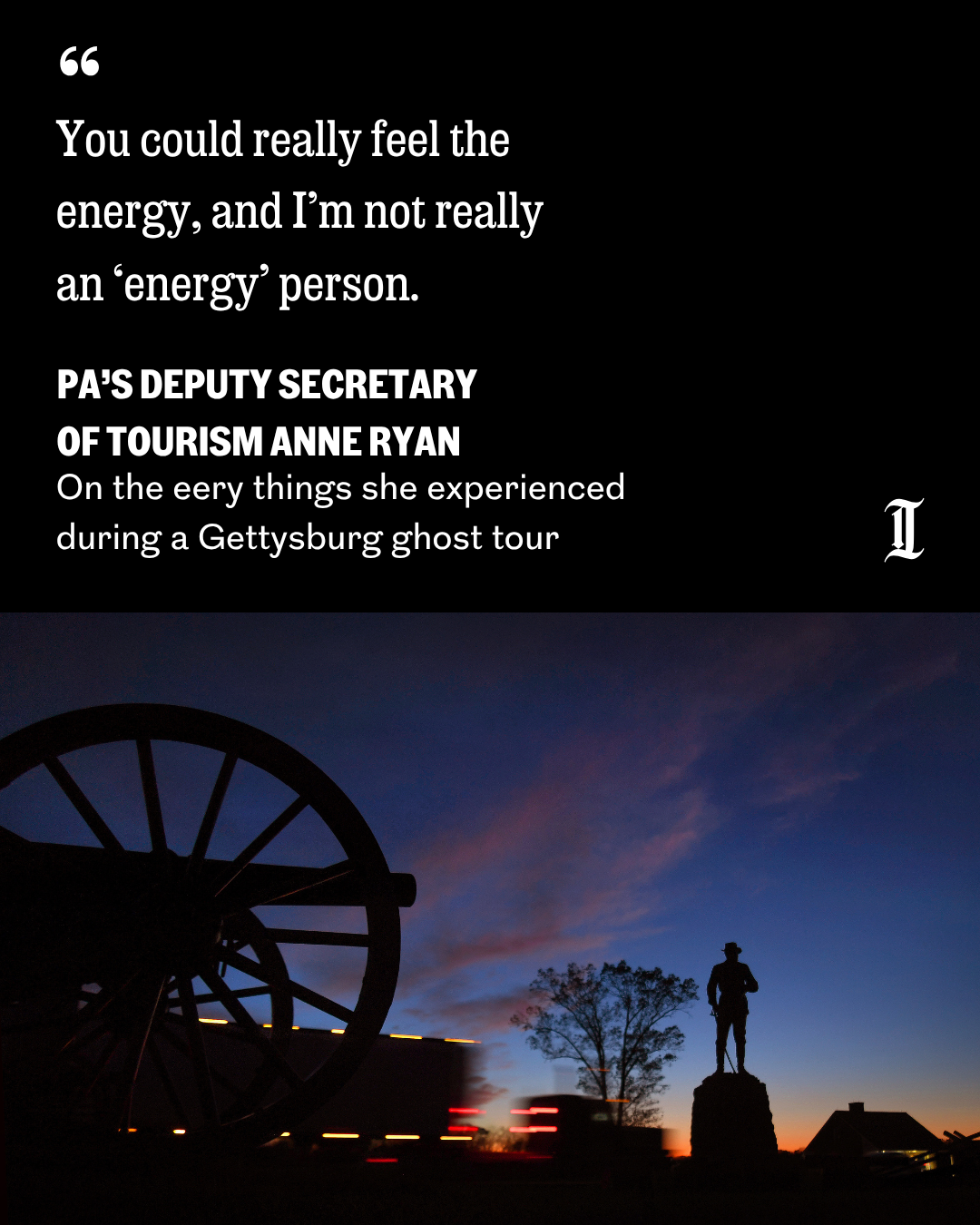
“You could really feel the energy, and I’m not really an ‘energy’ person,” she said.
The Union lost 3,155 soldiers and the Confederacy lost 3,903 during the bloody, three-day battle that raged from July 1 to July 3. Across the 6,000 acres of Gettysburg National Military Park, more than 1,300 monuments have been placed since the war ended.
“According to the tour guide, a lot of the ghosts there are soldiers who still believe they’re in battle,” she said. “Essentially, there are so many spirits that are still stuck in those three days and the days that followed.”
Ryan’s tour guide had also warned visitors that ghosts of “mischievous child ghosts” like to untie shoelaces.
“So I double-knotted my sneakers,” she said.
Before she left, though, Ryan visited a home that had been struck by countless bullets. It was nighttime. She began walking to her car. Then she looked down, and her Adidas were untied.
“I couldn’t get out of there fast enough,” she said. “I don’t want any ghost, even a child ghost, in my orbit.”
That being said, Ryan thinks Gettysburg is a great place to visit during Halloween. Just make sure you tie your shoes.
What does the future hold for Wayne? A 144-page document accepted by Radnor’s commissioners may have some clues.
The Radnor Township Board of Commissioners on Oct. 12 voted to accept “A Vision for Wayne,” a downtown master plan that outlines land use, transportation, economic development, and infrastructure policy recommendations to allow Wayne in 2036 to “continue to be the premier suburban town center on the Main Line” and “a vibrant, active place for people of all ages, abilities, and backgrounds to live, learn, work, dine, shop, relax, and socialize.”
The document includes resident survey data, a historical look at downtown Wayne, and a menu of recommendations for spurring economic development.
Though the plan was accepted by commissioners, Township Manager William White clarified at the meeting that it is “conceptual,” and that any new developments or policy changes would need to be approved by the board through separate processes.
Here are six takeaways from “A Vision For Wayne.”
Residents love Wayne’s walkability
When asked what they love most about downtown Wayne, 77% of survey respondents cited walkability. Wayne is “highly valued for its historic village character and human-scaled streets,” according to the report, and its compact, mixed-use planning creates an “active, well-connected community.” Following walkability, 54% of respondents said retail and restaurants are the things they love most about Wayne, and 40% said Wayne’s historic character.
A report accepted by Radnor’s commissioners outlines a vision for the next decade in downtown Wayne. Jasmine Goldband / Staff
Lancaster Avenue presents the ‘biggest mobility challenge’
While Lancaster Avenue, which cuts through downtown Wayne, is a “vital regional roadway,” it presents “the most significant mobility challenge within the downtown core,” according to the report.
At evening rush hour, the busiest time of day on Lancaster Avenue, its main intersection with Wayne Avenue handles around 2,130 vehicles per hour. Frequent curb cuts, fast vehicle speeds, and difficult crossing conditions “feel out of step” with the village’s quaint character and create a “barrier that divides the business district,” according to the report.
The visioning document, as well as Radnor’s 2035 comprehensive plan, calls for numerous traffic calming solutions along Lancaster Avenue, including changing traffic flows, installing speed reduction devices, reducing the number of driving lanes, and strictly enforcing speed limits.
Market pressures could threaten to displace local businesses
DowntownWayne “exists in a kind of equilibrium right now,” with a healthy mix of restaurants, shops, large brands, and independent retailers, according to the report.
Wayne has long staved off an influx of national chains due to its smaller storefronts and proximity to large malls, the report says. Now, however, many large retailers are gravitating toward “Main Street” settings. FP Movement and Ballard Designs, both national brands, relocated to Wayne from King of Prussia last year.
Low storefront turnover and rising tenant interest suggest that, as leases expire, higher-priced dining concepts and large chains that can pay rising rents may have the upper hand.
“In other words, some existing boutiques and other mom-and-pops might be lost in the shuffle,” the report reads.
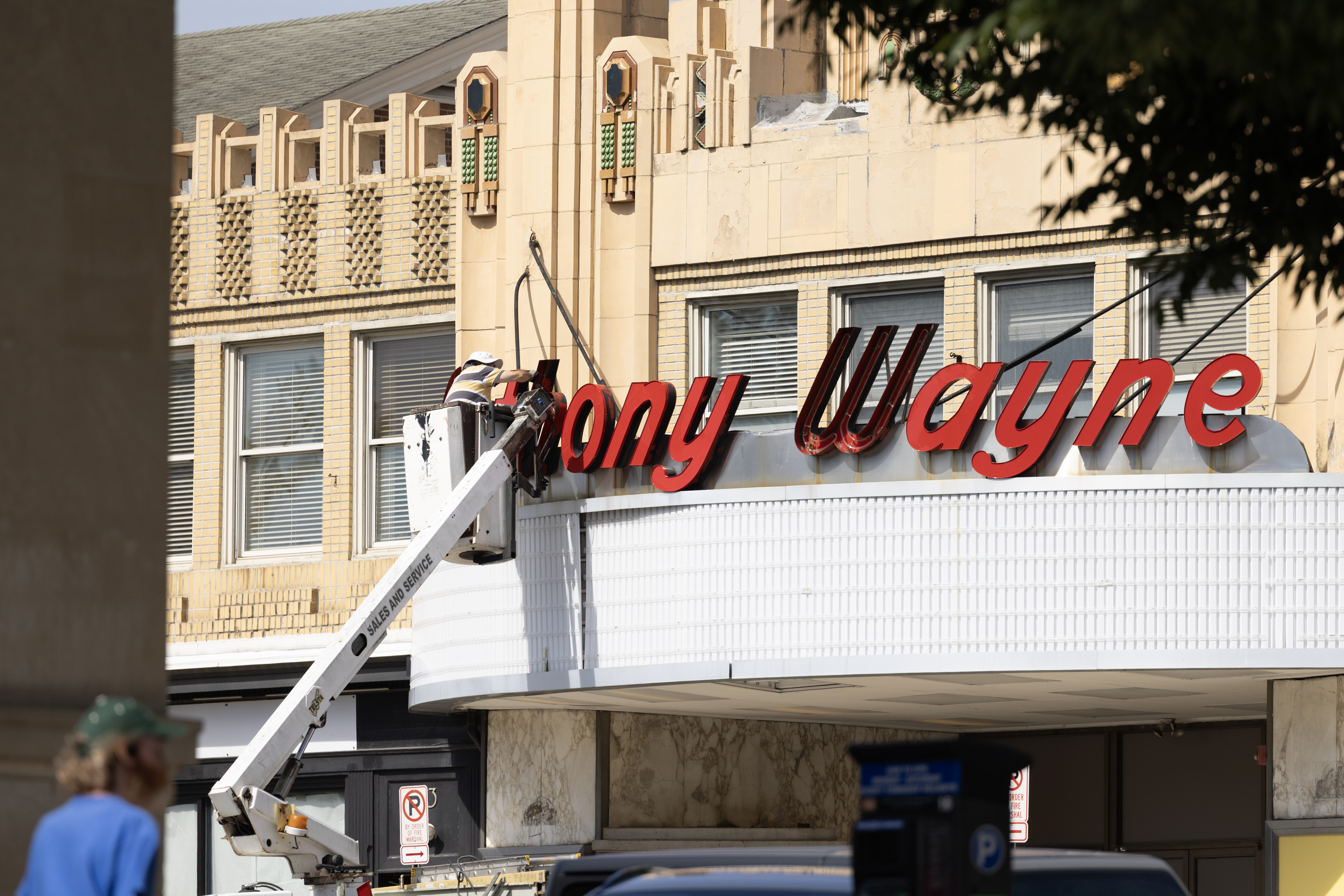
A visioning document proposes a host of policy changes that stakeholders say will bolster Wayne’s economy in the decade to come. Jasmine Goldband / Staff
The data say Wayne has an ‘overall surplus of parking,’ though it doesn’t always feel that way
The numbers say Wayne has plenty of parking — but not everyone feels that way.
According to a comprehensive parking supply-and-demand analysis conducted by Walker Consultants, there are nearly 2,400 parking spaces in Wayne, the majority of which are in private, business-specific lots. During peak occupancy in Wayne, around noon on a day in September 2025, only around 1,550 spaces, or 66% of the total supply, were in use, according to Walker Consultants’ study. At that lunchtime peak, there were over 80 vacant spots in public off-street lots, 145 vacant street parking spaces, and 550 vacant spaces in private lots. While there is technically a “surplus,” according to the report, hot spots like North Wayne Avenue and the North Wayne lot saw excess use, whereas spaces on the periphery of the downtown core had more availability.
While the data show enough parking, the report acknowledges that “parking is an emotional and highly subjective experience for most users,” and that just as important as data is “how parking in a community is perceived.”
Wayne’s special zoning district provides an ‘important framework,’ but needs updating
In 2006, Radnor Township adopted the Wayne Business District Master Plan, a framework for land use and economic decisions designed to spur the development of a vibrant downtown core in Wayne. One of the provisions that arose from the plan was the Wayne Business Overlay District, a special zoning and land use district that established Wayne-specific architecture standards.
While the overlay district has provided an “important framework” for guiding Wayne, the report suggests a number of updates, including creating standards and incentives for the development of diverse housing options, clarifying language to allow explicitly for everyday retail uses like grocery stores and fitness studios, and creating clearer guidelines for how buildings can look.
Radnor Township’s approval process can make development too cumbersome
Likemany municipal governments, Radnor currently requires developers to navigate multiple levels of approvals to update or construct new buildings. In some cases, this involves receiving a green light from the historical architectural review board, planning commission, zoning hearing board, and board of commissioners, depending on the proposal at hand. This approval structure “creates a real burden for minor applications,” the report says, and can “inhibit investment and unnecessarily prolong commercial vacancies.” The report recommends allowing administrative approval for certain smaller changes and exempting planning commission and board of commissioners reviews for buildings under a certain square footage.
Clarification: This story has been updated to note that the board of commissioners accepted the “Vision for Wayne” recommendations.
This suburban content is produced with support from the Leslie Miller and Richard Worley Foundation and The Lenfest Institute for Journalism. Editorial content is created independently of the project donors. Gifts to support The Inquirer’s high-impact journalism can be made at inquirer.com/donate. A list of Lenfest Institute donors can be found at lenfestinstitute.org/supporters.
Happy Monday, Philly. Halloween week is looking stunning, weather-wise. We kick it off with sunny, calm, clear skies and temperatures nearing 70 degrees.
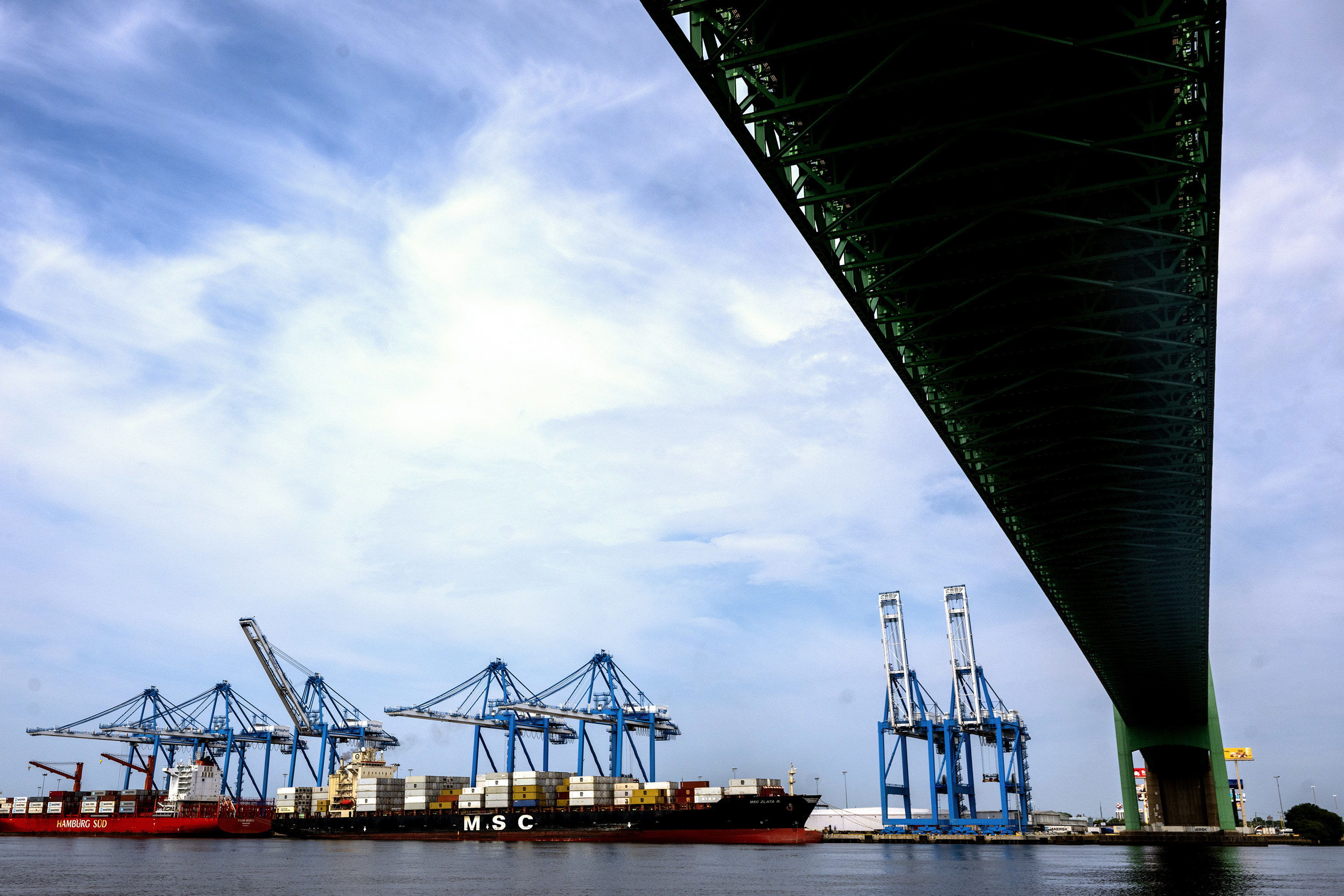
Today, we’re starting at the Port of Philadelphia, a massive installation on the Delaware River that’s expected to more than double its container capacity in the coming years. We’ll cover what that actually means.
The Port of Philadelphia is getting a huge infusion of cash, to the tune of more than $800 million in state, federal, and private investment.
Already, cargo ships carrying automobiles, paper, petroleum products, steel, and cocoa beans dock in Philly. But the new capital promises to radically increase the volume of trade that can flow through the city.
It can be hard to wrap your head around sums this large, so here’s a little breakdown, by the numbers, of what this expansion is projected to do.
6,000: The number of new direct jobs expected to be created.
100,000: The number of additional cars able to be imported.
$45 million: The annual state and local tax revenue the expansion is expected to create.
How do you reach an intensely private and insular community, whose members often avoid modern technology?
Public health officials asked themselves this question as they sought to raise awareness of measles vaccine clinics in the Lancaster area, the epicenter of the nation’s largest measles outbreak in decades.
After consulting with Amish elders and religious leaders, they decided to use what some call the “Amish Internet,” essentially word-of-mouth within the community. They also made the clinics discreet, so much so that some people at neighboring businesses and homes were unaware they were happening.
Notable quote: “We thought, ‘Is this going to work or not?’ It totally flipped what public health normally is,” said pediatrician Jennifer Wallace, medical director of the state’s health centers. But with time, “it’s gone gangbusters,” she said.
Americans for Prosperity, a pro-business policy group that helps turn out Republican voters, is dropping its endorsement of Philly’s only GOP state representative, Martina White, over her vote to amend the state’s prevailing-wage law.
🪦 Visiting. Did you know there is a Victorian-era pet cemetery in Northeast Philly? The Inquirer’s Maggie Prosser checked out memorials to Fido (d. 1882), Fanny (d. 1878), and other good boys and girls.
🎃 Snapping. Throngs gathered at Linvilla Orchard over the weekend to pick pumpkins. Inquirer photographer David Maialetti was there to capture the fall festivities.
🧩 Unscramble the anagram
Hint: Neighborhood in Northeast Philly bounded on one side by the Delaware River.
Cheers to Dawn Macy who correctly solved Sunday’s anagram: Walt Whitman. A historic church in Camden County once hosted meetings for abolitionists and housed the famed poet. You can buy it for $455,000.
Photo of the day
Athletes row past spectators in the 56th Head of the Schuylkill Regatta Sunday, Oct. 25, 2026, Philadelphia’s largest and most inclusive rowing competition. The two-day event, held Saturday and Sunday, brings nearly 9,000 competitors from more than 30 states and five countries to Philadelphia.Tom Gralish / Staff Photographer
📬 Your ‘only in Philly’ story
Welcome back to our ‘only in Philly’ series, where we highlight stories from you, dear readers. Think back to a time you saw an example of real Philly spirit or something that made you feel like you belonged here. Then, jot it down and email it to us for a chance to be featured in the Monday edition of this newsletter.
This week, we continue with our fall-themed submissions and have an excerpt from reader Sandra Mueller’s submission, as she reminisces about Halloween in her old neighborhood:
I only lived in Philadelphia for the first five years of my life. My grandfather had a real estate office in South Philadelphia and my parents and I lived in the apartment above it. …
One Halloween season my parents and I carved a pumpkin. Common enough a happening at this time of year. But we had no suitable place to show it. So I recall my father setting it on the second floor wall outside the apartment. Then he walked me down the stairs so we could view it from the narrow street below.
I love how Philly makes the most of small spaces to display big holiday cheer.
👋 Catch you tomorrow.
By submitting your written, visual, and/or audio contributions, you agree to The Inquirer’s Terms of Use, including the grant of rights in Section 10.
As the housing shortage in the United States has become more acute, a political movement called Yes in My Backyard (YIMBY) has sought to promote policy solutions and advocate for more construction.
That idea cuts against the sense that many city residents have of how gentrification works. New buildings are often understood as driving nearby housing costs up.
Author Ned Resnikoff argues that new housing is, in fact, responding to gentrification that is already taking place, and without construction, neighborhood rents will get even more expensive.
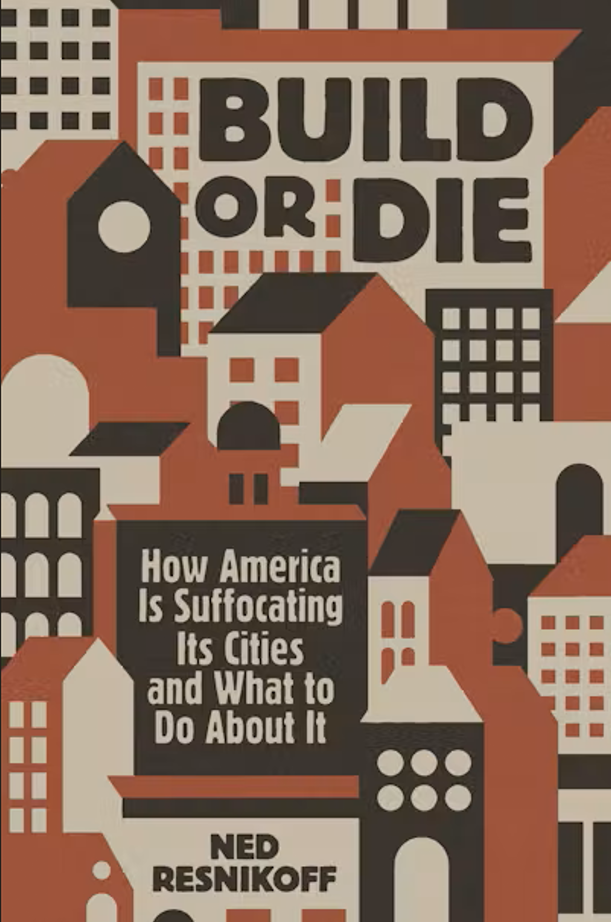
Resnikoff, who was policy director for California YIMBY, has been on the front lines of housing policy fights in Sacramento. He uses that perch to explore why American cities have struggled with growth in the 21st century in his new book, Build or Die, which comes out Dec. 8.
Resnikoff also argues for renewed and more competitive local democracy in America’s cities and for a transportation system that doesn’t center on private automobiles.
This conversation has been edited for length and clarity.
Many people don’t believe that an abundance of new homes will lower prices the same way it does for other goods. What would you say to those skeptics?
Homes occupy a different space politically and emotionally than the vast majority of consumer goods. We’re in this weird situation where housing is very often primarily an investment vehicle for homeowners, but at the same time, it’s their actual home.
It’s not like a car or a phone that you expect to depreciate over time, and then you’ll drop it and get a new one. That personal connection can complicate our understanding of the underlying economics of housing and how it’s similar to other consumption goods.
Then there is the time scale that changes in the housing market operate on and the sequencing of when new housing starts to go up and what effect it is having on prices and what prices are having on housing construction. It makes the causality harder to see.
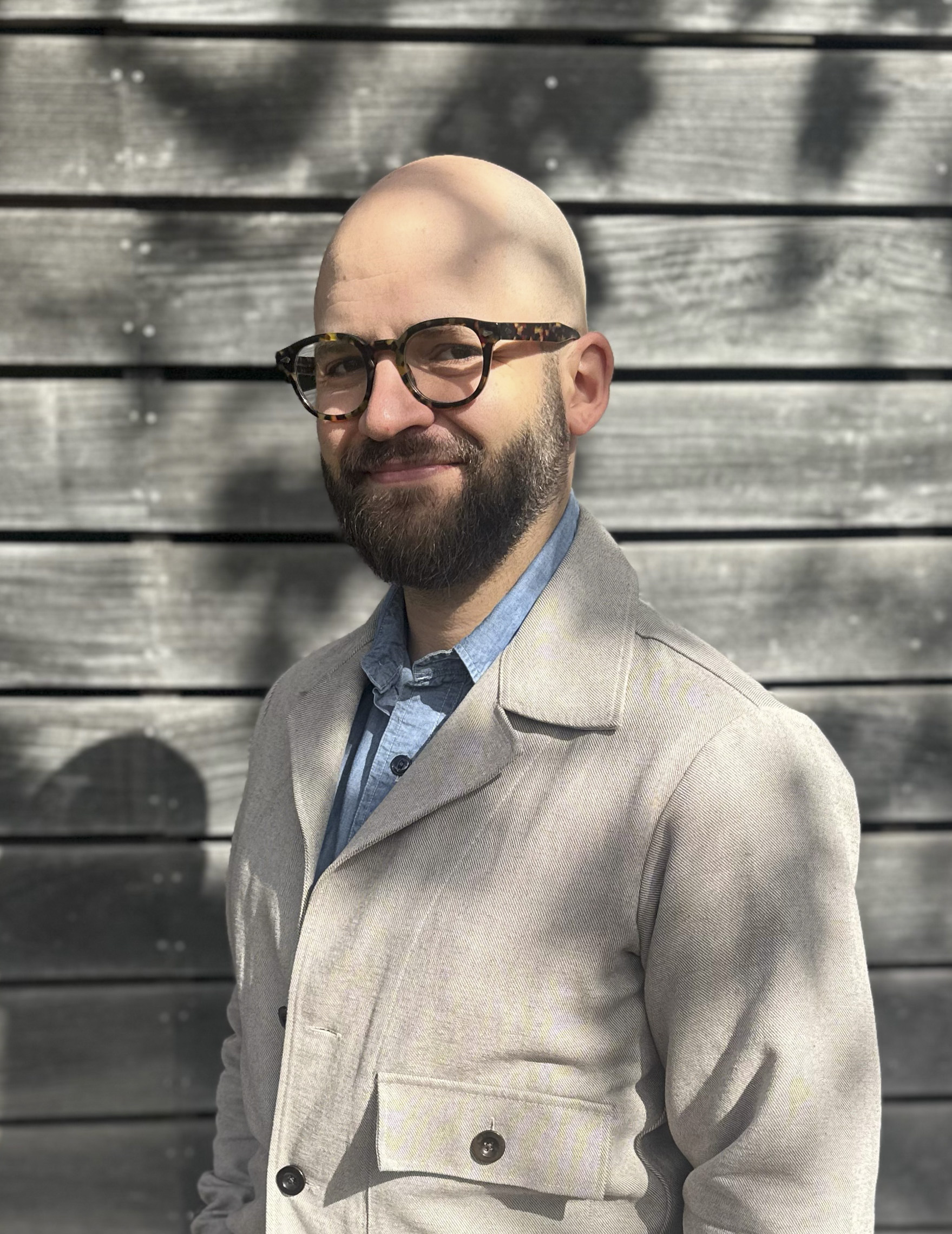
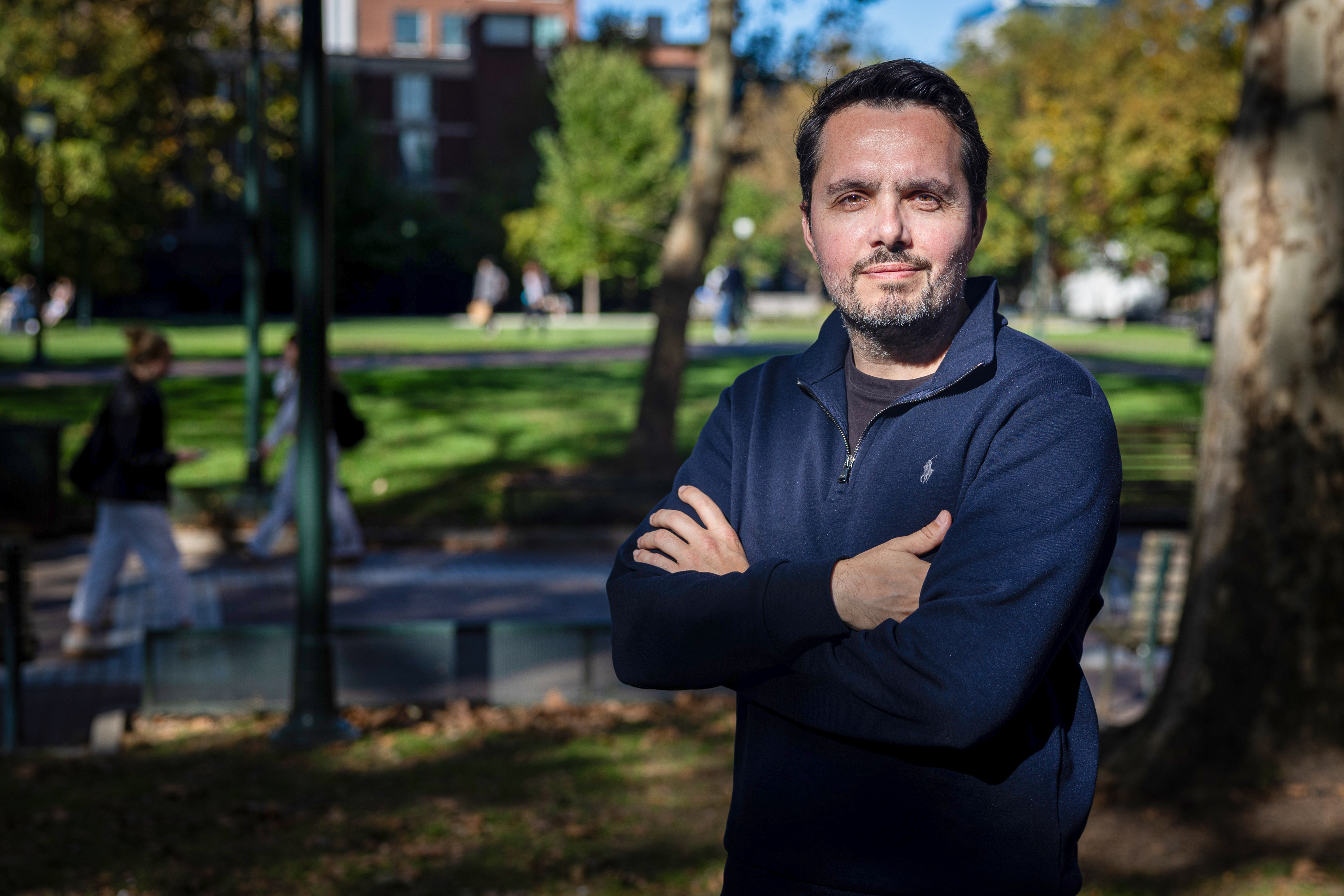
Ned Resnikoff is a writer, researcher, and policy consultant in California.Ned Resnikoff
You argue that healthy cities need more housing development and that this would boost many progressive goals such as fighting homelessness. That’s a counterintuitive idea to many people.
If you live in a neighborhood that is getting more expensive, then you’re probably going to see new construction going up well before rents start to go down. A lot of that new construction is probably going to be nicer and shinier than the existing housing.
And depending on how much new construction actually happens, it might not cause rents to drop. It might just slightly slowthe rate at which rents would otherwise increase.
As a result, it’s very easy and understandable to say, “Oh, all these new buildings are going up, and my rent is going up.” So the causal connection must be that these shiny new luxury buildings are causing my rent to go up.
When, in fact, the causal relationship is more the reverse: The fact that an area is seeing more demand pressure creates a market opportunity for developers.
What about the sheer scale of construction that would be required to bring affordability to a city like New York? 700,000 new homes over the next decade sounds like an unimaginable number.
Sometimes people think, oh well, New York or San Francisco is always going to be expensive. But that wasn’t always the case with those cities.
Really high-cost cities for the foreseeable future are going to be more expensive than midsize cities in the United States, but the vast gulf in housing costs between, say, New York City and a Raleigh, N.C., is not a permanent fact.
It’s hard to conceptualize the scale, and so as a result, when people, for example in New York, see new pencil towers going up on Billionaires’ Row, they think, Oh wow, that’s so much housing, and it’s clearly not having an impact on my rent.
But in the context of a metropolitan area the size of New York, a handful of mega projects in Manhattan is actually not all that much housing.
The cover of Resnikoff’s new book, which comes out in December.Island Press
How does the YIMBY theory apply in a city like Philadelphia, which is still 500,000 people under its 1950 peak? Some neighborhoods are seeing strong growth, but others are still losing population.
A couple other cities that come to mind in that in-between zone would be Pittsburgh and Chicago. These are dense, fairly vibrant cities with growing populations, but for better and for worse, they don’t have the “superstar” status.
The way to think about housing policy in those cities is with a combination of different interventions, some of which are more relevant to declining Rust Belt towns and some of which are more relevant to “superstar” cities.
With a growing population, the things that really help a city grow in a deliberate, net positive way are things like building more housing, continuously improving transit, making sure that there’s room for new amenities and small businesses to accommodate residents.
Then for the areas where you have declining populations, it’s a combination of focusing on housing preservation, so that the existing housing stock is not deteriorating.
And then, really thinking about economic development, and how can those areas benefit from the overall city growth?
What else could help?
To the extent that these areas are cut off by freeways, I’m a big proponent of tearing down all interurban freeways and making sure that there’s good transit connectivity to the central city for those areas and that there’s economic development happening there.
That could involve new housing construction, but it could also involve investment in local businesses and local amenities and trying to make sure that as the central city grows and becomes wealthier and denser and more affluent, that that has positive spillover effects for everyone else.
Wim Orth is a journalist with WELT in Berlin and an Arthur F. Burns fellow at The Inquirer.
For generations of Germans, the United States had always felt like the slightly cooler cousin from overseas. In culture, there were icons like Coca-Cola, denim jeans, fast food chains, rock and roll — and, of course, Hollywood — that shaped culture not only in America but across the Atlantic as well.
Politically, the U.S. helped West Germany get back on its feet after World War II had left it in rubble. The Marshall Plan, signed by President Harry S. Truman, helped Germany and other European governments rebuild, and the trust shown by America toward the German people would frequently overrule the doubts that British and French forces had toward their former enemy.
That trust went so far that just a few years after the war, the U.S. stationed nuclear warheads in bases in Germany and encouraged the Adenauer government to set up its own army again. To guarantee a contained German military, the Bundeswehr became part of NATO right after its founding. Additionally, government and military leaders worked closely together with the U.S. to prove that the days of aggressive German militarism were a thing of the past.
From then on, Germans and Americans in particular — and Western Europe and Americans in general — would work in unison to counter aggression by the Soviet Union and its proxies, defend West Germany against the constant threat of Soviet invasion, and eventually bring down the Berlin Wall and shred the Iron Curtain.
For decades, Germany and the rest of Europe knew they could count on the United States, and America was guaranteed devoted partners across the pond. In case there was any doubt, this partnership and its steadfastness was proved when Article 5 of the NATO treaty was invoked for the first and only time so far on Sept. 12, 2001.
After the terrorist attacks on New York City and Washington, it was America’s NATO partners who helped patrol the American skies and were part of the war on terror, commanding several missions in Afghanistan and Iraq.
Now, take all that shared history and goodwill and put it in the trash.
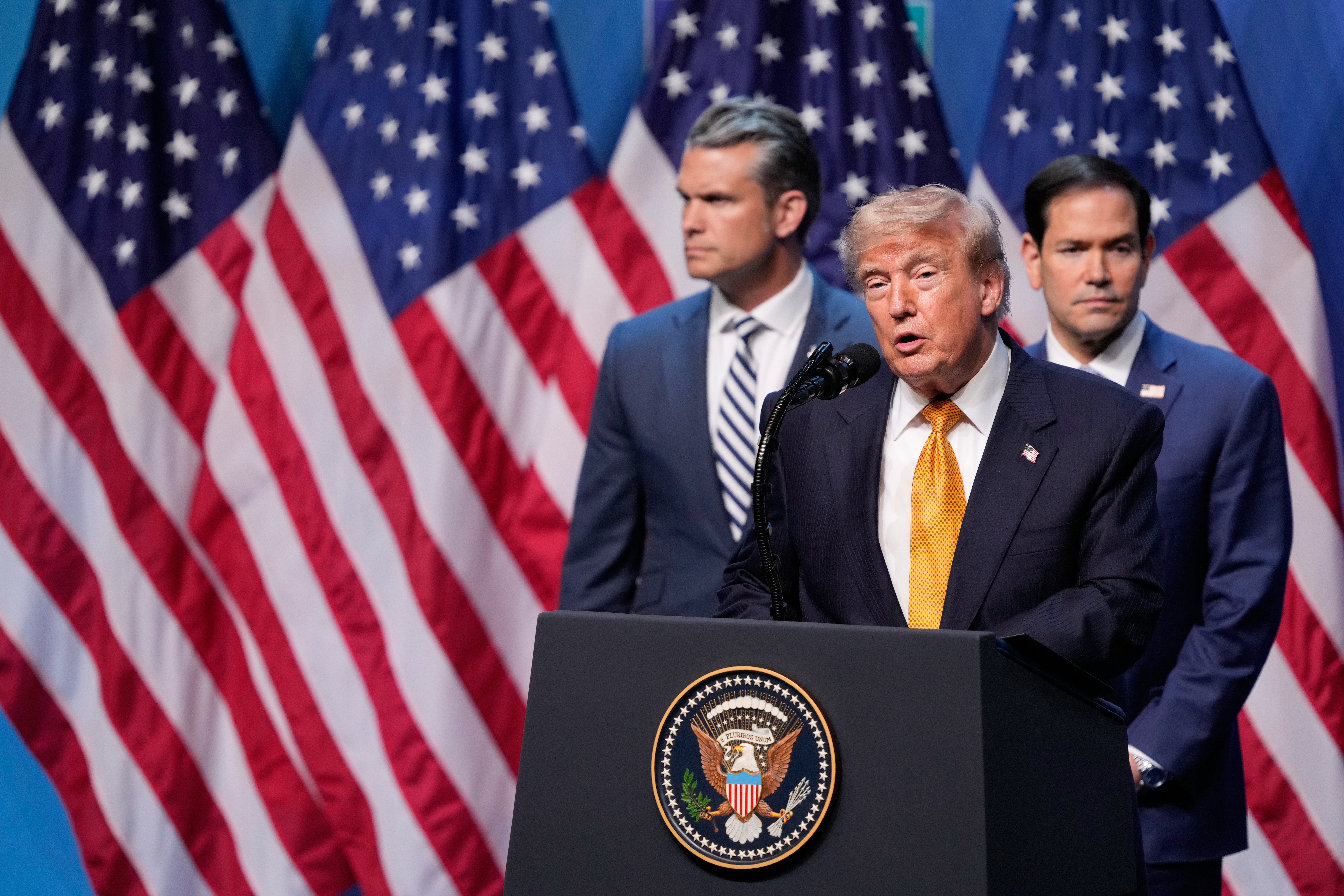
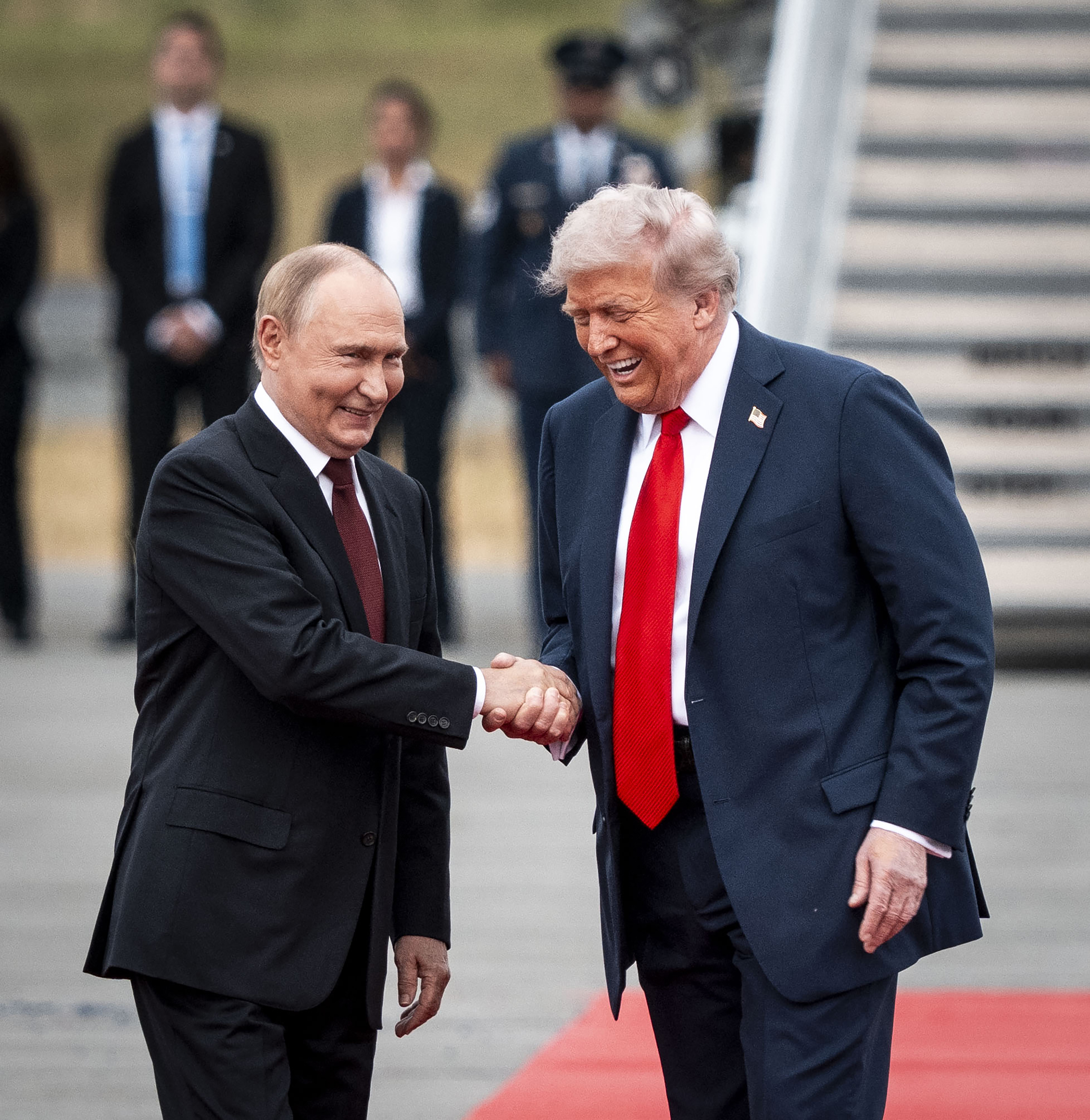
President Donald Trump with President Vladimir Putin of Russia in Anchorage, Alaska, on Aug. 15, 2025.Doug Mills
Today, not even two years since Donald Trump returned to the White House, there is painfully little trust left between the United States and its NATO partners — only plenty of doubt that if the situation were reversed, and Europe were attacked, that America and its NATO allies would step side by side into the breach.
After months of being battered and bruised by Trump and his administration, most Germans aren’t even mad about the situation anymore. Some are disappointed, others have simply moved on from the cooler cousin who grew up and grew distant. In the regions formerly under Soviet control, people may even turn to a bit of “I told you so” thinking.
When Trump was first elected in 2016, his presidency was regarded by many Europeans as an “accident” of the country’s curious electoral system, where having the most votes does not automatically equal victory. After all, how could the same voters who made history when they sent Barack Obama to the White House (twice!) now support a bigoted charlatan?
Europeans were convinced that it was over for Trump after he lost the 2020 presidential contest against Joe Biden and lied about the election being stolen, with his falsehoods culminating in the assault by Trump supporters on the U.S. Capitol on Jan. 6, 2021. Trump then went on trial several times and was found liable for sexual abuse and was convicted of 34 felony counts.
And yet … when Americans went to the polls in 2024, Trump defeated Kamala Harris. There were no Electoral College excuses as he won the popular vote by more than two million votes. That Election Day result was the moment when many Europeans shifted from hope to utter disbelief.
Unlike the eye rolls that greeted much of Trump’s ridiculous rhetoric during his first term, the president’s words and deeds the second time around have seriously damaged the relationship between Europe and America.
Vice President JD Vance addresses the audience during the Munich Security Conference at the Bayerischer Hof Hotel in Munich, Germany, on Feb. 14, 2025.Matthias Schrader
Incidents like Vice President JD Vance supporting far-right extremists under the guise of lecturing Germans on free speech at the Munich Security Conference, the scandalous treatment of Ukrainian President Volodymyr Zelensky, and Trump’s apparently unwavering support of Vladimir Putin, even as Russia continues to target Ukrainian civilians and play with provocations toward NATO — including a failed drone attack on a German airport.
Europe was used to having a bad partner in the White House during Trump’s first term. Now, we wonder if the term partner can even be applied anymore.
(And that’s not even considering the Trump administration’s assault on human rights as it deploys immigration enforcement agents — who have so far killed nine people and shot at least a dozen more — and detains people indefinitely in substandard conditions over civil immigration offenses.)
While some podcasters and journalists in Europe seem to embrace the president’s sillier shenanigans — think renaming the Gulf of Mexico and Lake Ontario — many people I’ve spoken with in Europe have lost faith in the United States.
A recent study conducted across Europe found 73% of respondents agreeing to the question whether they “think it’s time for Europe to go its own way.” In Germany, just 27% see the U.S. as a “trustworthy partner” anymore.
Polling in the U.S. finds that Americans themselves are repudiating Trump’s policies and there is hope that the midterm elections will provide a critical check on the president’s rampant abuses and ill-advised positions.
But it may be too little, too late.
After Trump’s defeat in 2020, Europeans thought that America had come to its senses. Seeing Trump being not only reelected, but cheered on as he berated partners, allies, and friends across the globe, had an impact.
The damage has been done, and one or two elections won’t be able to erase the doubt that lingers.
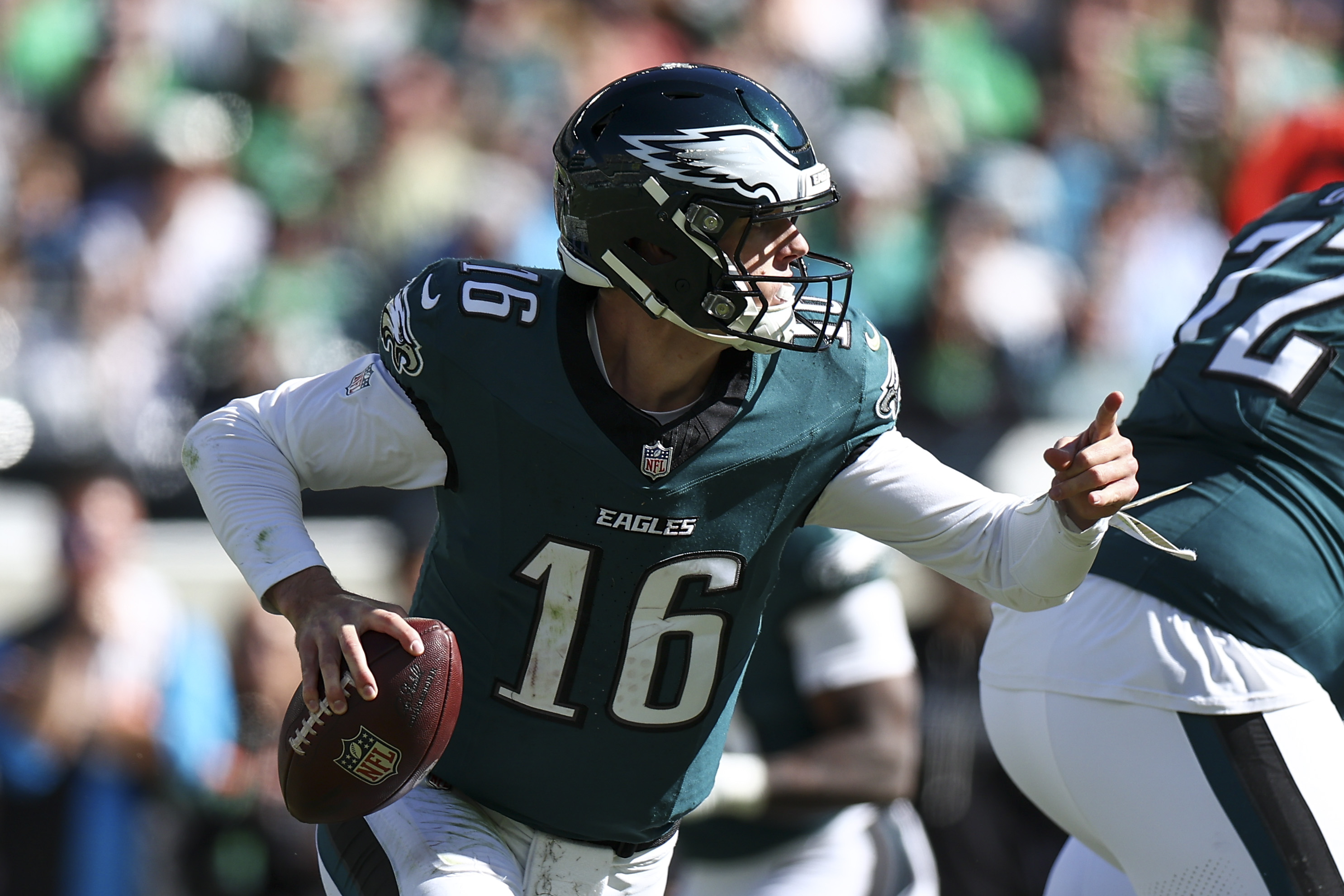
The Eagles are in need of some positive energy. As Jalen Hurts continues going through treatment for blood clots, Tanner McKee will be under center for the foreseeable future.
And Monday night’s showdown at the Linc against the Cowboys is his first consecutive start of his career. The Eagles, which are on a four-game losing streak, will be without DeVonta Smith and Dontayvion Wicks.
However, Dallas Goedert is available, and Saquon Barkley could play. The running back missed the last two contests with a hamstring injury and is listed as questionable. His return could spark the struggling Eagles offense.
But a lot will be dependent on McKee. The 26-year-old is tasked with bring everyonetogether. McKee has shown that he is capable of flipping the switch within. His teammates and those who have coached him describe him as “one of the most positive people” who inspires confidence with his command.
Can he help flip the switch on the Eagles’ season? Well, he’ll have another opportunity against the Cowboys to prove he can run the offense. Check out Jeff Neiburg’s guide to the Birds’ Week 7 matchup on Monday Night Football (8:15 p.m., 6abc).
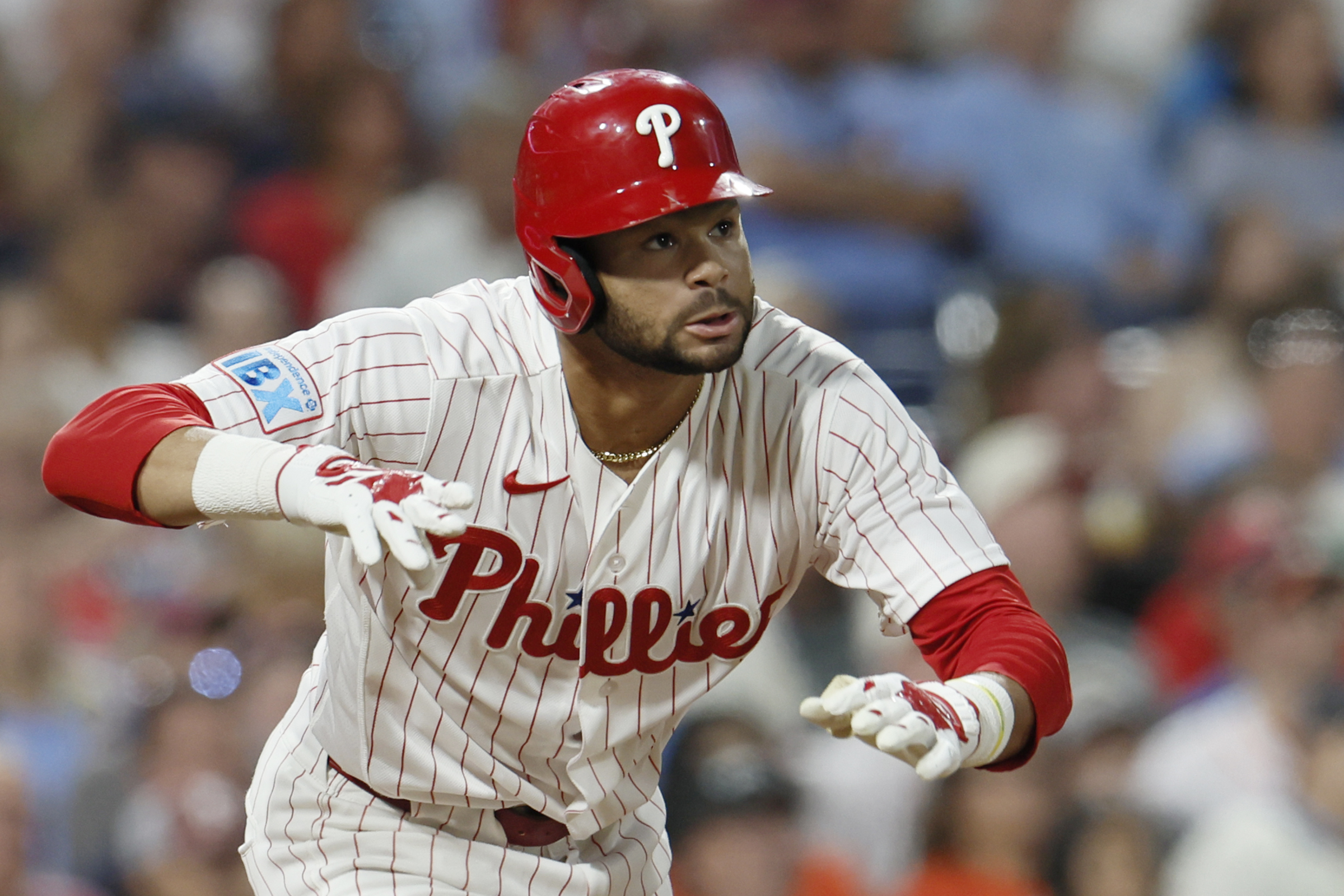
Better utilizing the speed of Phillies like Justin Crawford is part of Don Mattingly’s vision for improving the offense in 2027.Elizabeth Robertson / Staff Photographer
It wasn’t long ago that the Phillies had a high-powered offense. From 2022 to 2025, they scored the fifth-most runs of any team in baseball and ranked third in both on-base percentage and slugging.
But with mostly the same hitters, they struggled this season. To win, offenses must be multidimensional. The Rays and Brewers are first and second in the majors, respectively, in bunt hits, infield hits, and sacrifice bunt attempts. There’s a lot about those two rosters that’s worth imitating.
What we’re…
🤔 Wondering: What the national media is saying about Monday’s matchup at the Linc. Several experts are favoring the Cowboys.
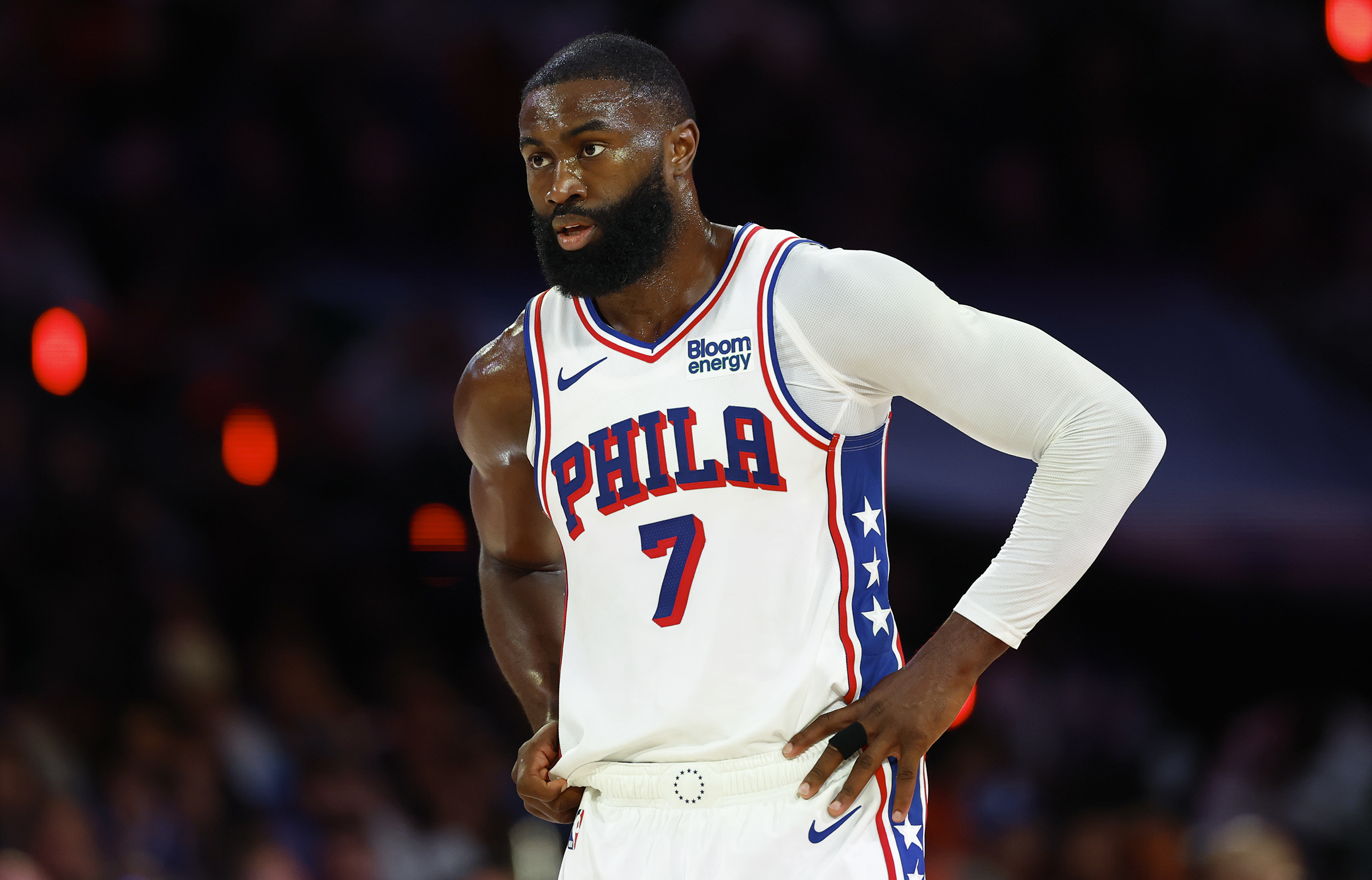
Sixers guard Jaylen Brown against the Milwaukee Bucks on Saturday, Oct. 24, 2026 in Philadelphia.Yong Kim / Staff Photographer
Jaylen Brown had a busy 30th birthday. On Saturday, the new Sixers forward scored 27 points in a win over the Bucks, he then answered questions about one of the league’s most intriguing bits of reality-show-style drama: the state of his relationship with former Celtics teammate Jayson Tatum.
It seemed as if the two had beef after the Celtics traded Brown to the Sixers, but Brown prefers a different term. “There’s no beef, but it might be a little lamb chops and some gravy.”
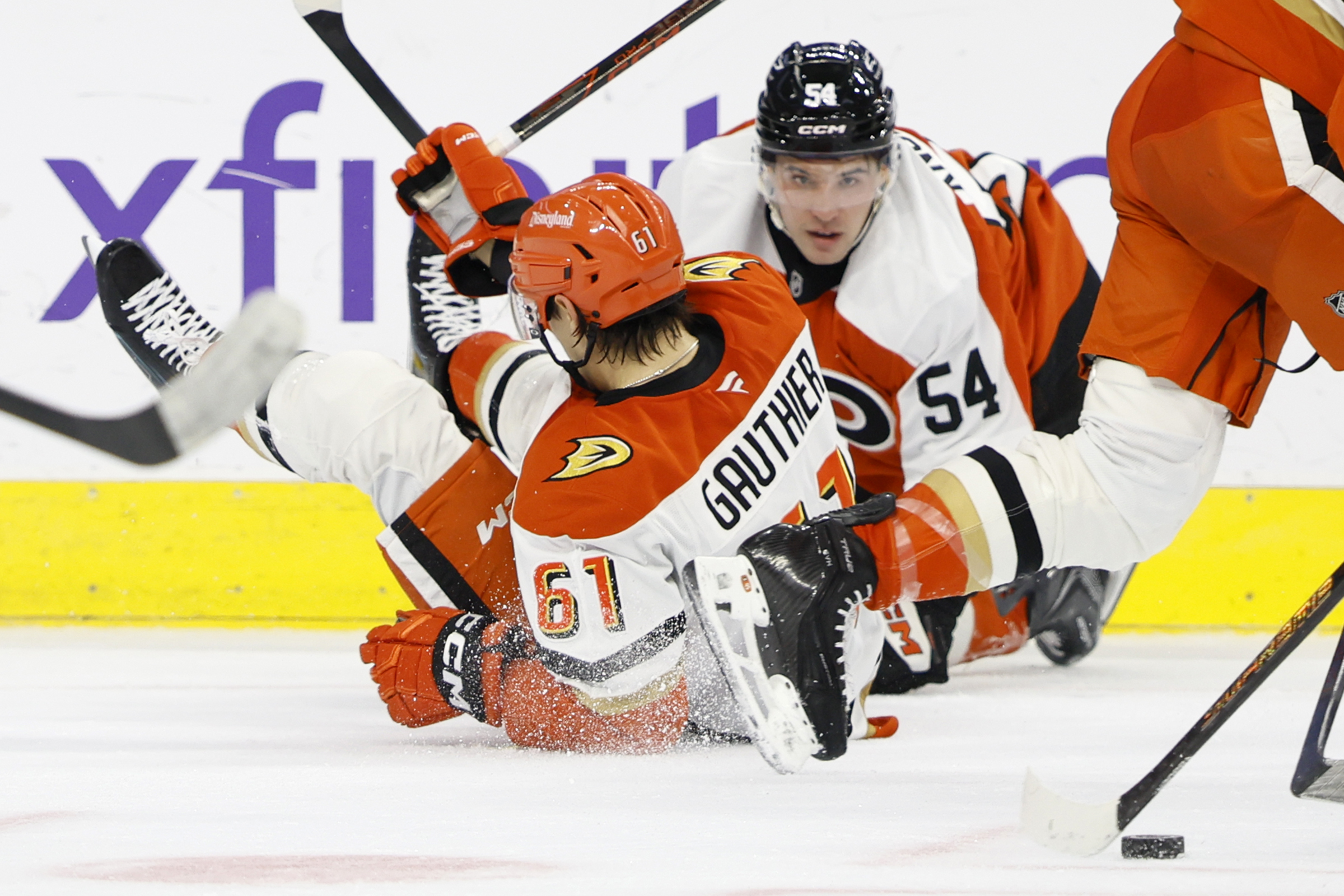
Anaheim’s Cutter Gauthier battles on the ice with the Flyers’ Cole Knuble during the first period of their game on Saturday.Elizabeth Robertson / Staff Photographer
It seems as though the Flyers and Ducks have built a real rivalry.
Three years ago, former No. 5 overall pick Cutter Gauthier spurned the Flyers and was traded to Anaheim for Jamie Drysdale and a second-round pick. Then, the Flyers landed Trevor Zegras from the Ducks the following offseason. The latest wrinkle in the rivalry is this summer’s offer sheet on the Ducks’ young star center Leo Carlsson, who decided to remain in Anaheim.
Saturday’s matchup was a little less electric compared to the first two meetings between these two teams, but as the Flyers fell, 5-4, the game still had its fireworks.
Up next, the Flyers will host the Blue Jackets on Tuesday. (7 p.m./ESPN)
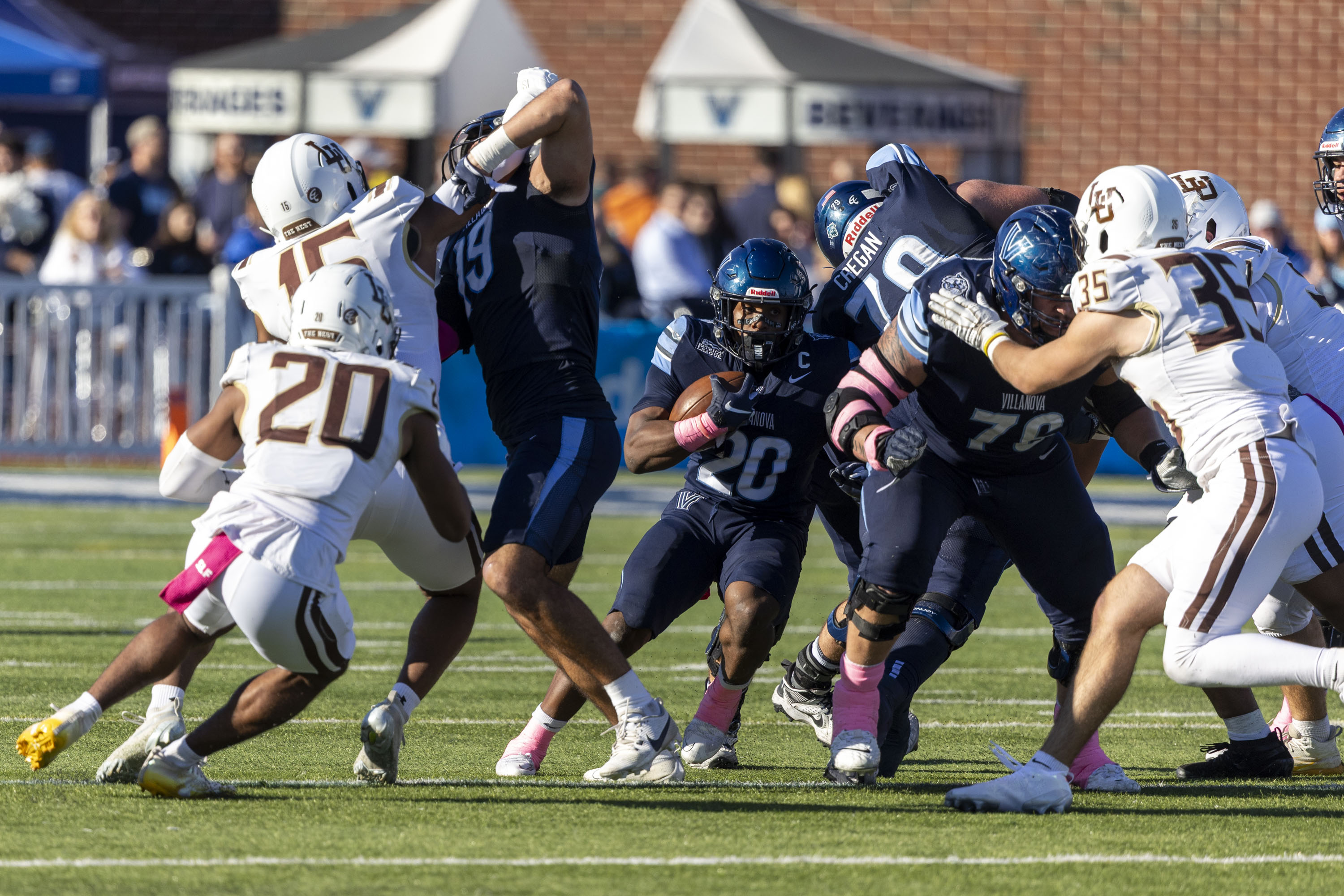
Villanova ran all over No. 12 Lehigh en route to a much-needed win at home on Saturday.Tyger Williams / Staff Photographer
It was a quieter weekend in local college football, with Penn State and Temple on byes. But for Penn and Villanova, it was about rebounding. Villanova picked up its first home win since November 2025, thanks to Garrett Rogan’s game-sealing sack against No. 12 Lehigh.
The Quakers also achieved a first of the season. On Friday night, they earned their first Ivy League victory against a tough Yale team at Franklin Field. After missing a game-winning field goal against Columbia, Penn was on the other side of a special teams flub.
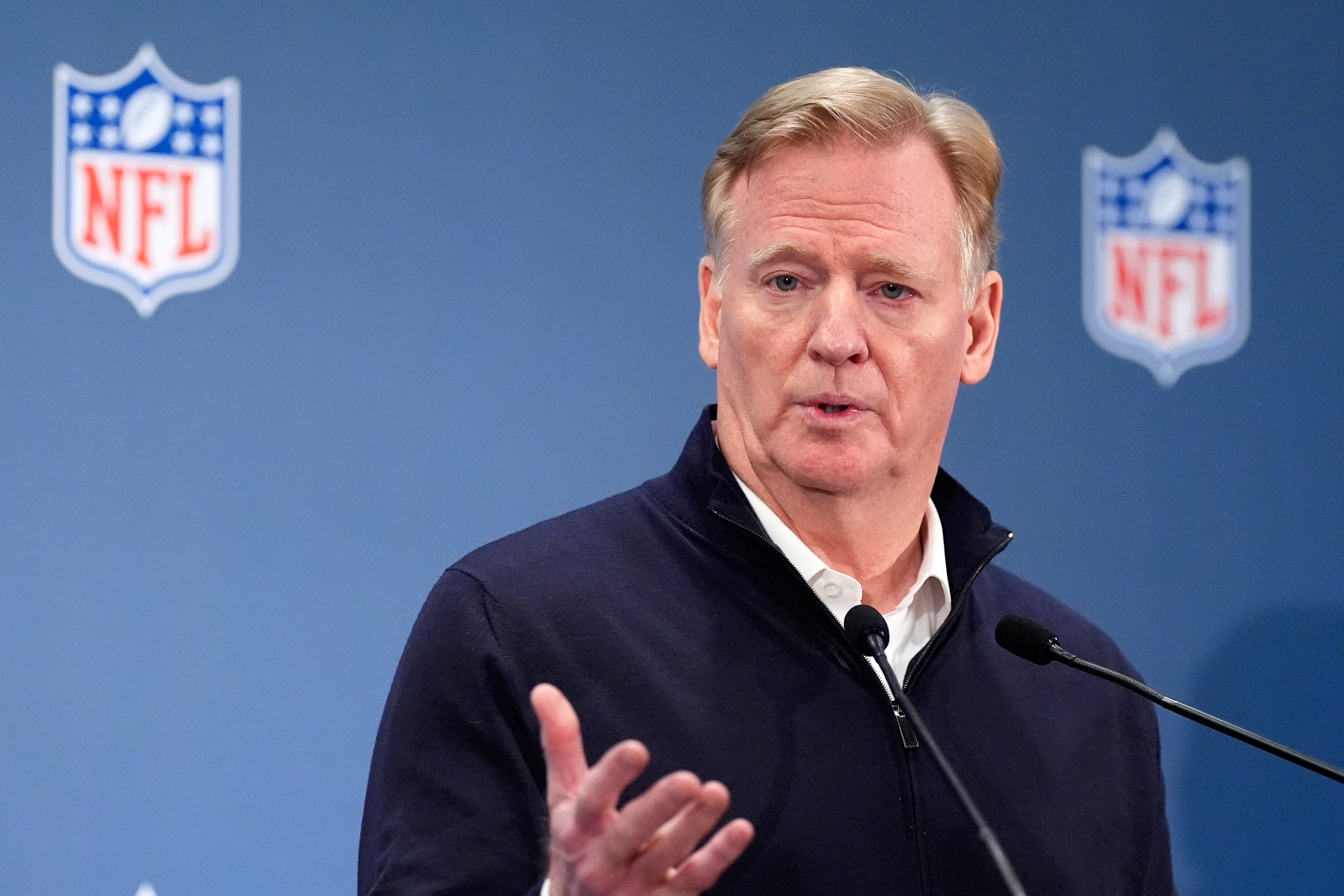
NFL commissioner Roger Goodell had to field questions surrounding Jalen Hurts during the NFL owners’ meetings last week.Yuki Iwamura
Several NFL sources indicated that the NFL office and commissioner Roger Goodell are “furious” at how the Eagles handled the deteriorating health of Jalen Hurts. The doctors weren’t the problem. The problem lies with transparency and messaging, writes columnist Marcus Hayes.
We compiled today’s newsletter using reporting from Jeff McLane, Marcus Hayes, Olivia Reiner, Jeff Neiburg, Scott Lauber, Mia Messina, Gina Mizell, Lauren Jones, Jonathan Tannenwald, Chris Hine, Jackie Spiegel, Gabriela Carroll, and Dylan Johnson.
By submitting your written, visual, and/or audio contributions, you agree to The Inquirer’s Terms of Use, including the grant of rights in Section 10.
Thanks for getting your morning started with me. Hope you had a restful weekend and enjoyed the weather.I’ll be back in your inbox on Tuesday. — Bella
Join Ryan Novozinsky after the final whistle for a full breakdown of the Eagles’ matchup against the Cowboys, including the biggest moments, standout performances, key takeaways and what’s next for Philadelphia.
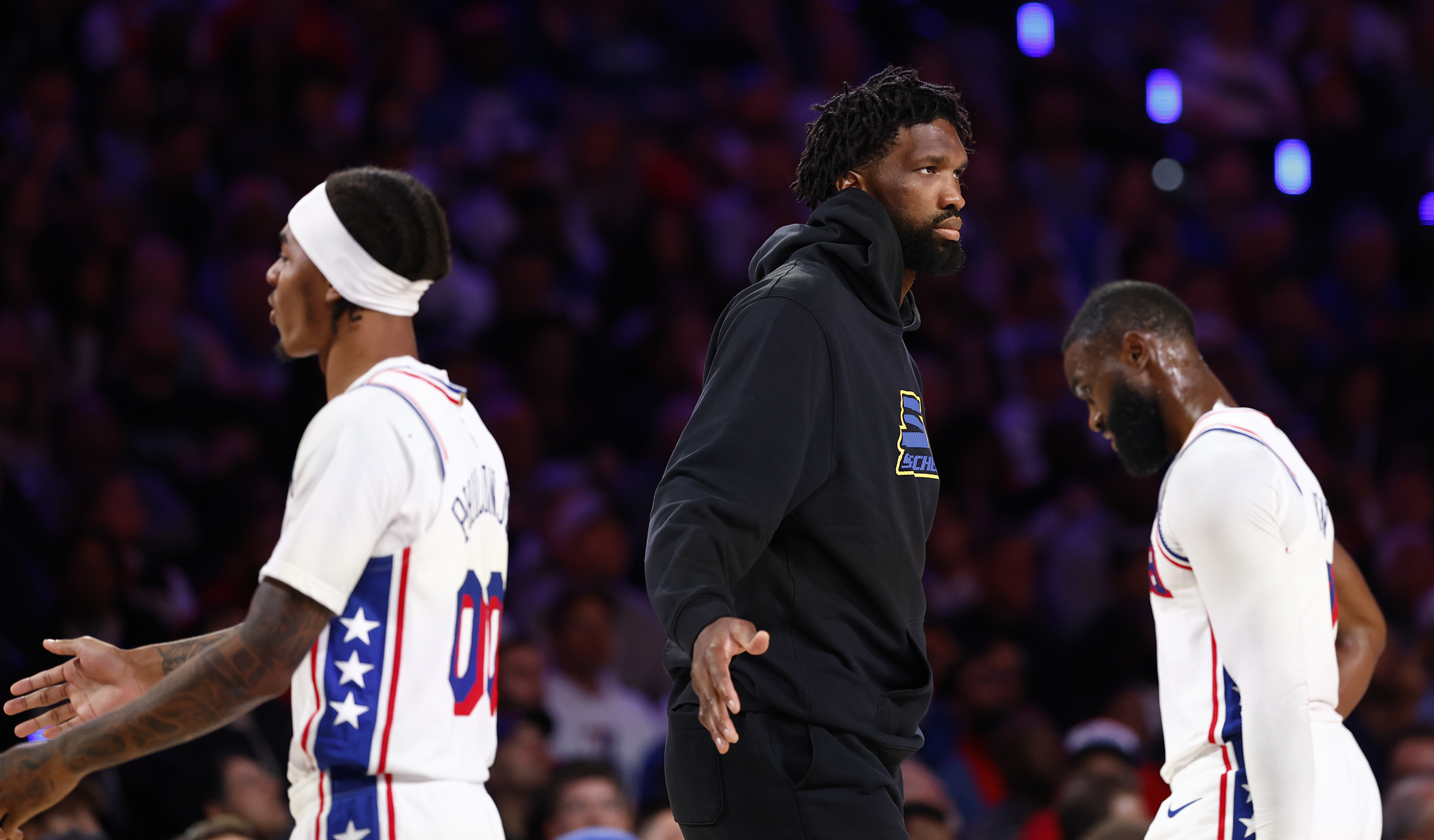
Give Joel Embiid credit for lobbying to be out there.
Give his bosses even more credit for not listening.
The 76ers need Embiid healthy for the long haul. Desperately so. That much was obvious in their first game without him, a 106-93 loss to the Pistons on Sunday night. It was a scheduled breather for Embiid. But it was also a stress test, and the Sixers very much failed it, in every phase of the game. Head coach Nick Nurse has little choice but to cling to the hope that two-way player Tacko Fall can offer a semblance of a solution as he nears a return from a quad strain. Maybe Dominick Barlow (back) and Jabari Walker (knee), too.
“It’s been a little bit of a concern,” Nurse said. “We’ve had a bunch of different people in that haven’t really solidified. I think it’s a work in progress a little bit. I hope it settles down a little.”
At the moment, though, the reality is one Nurse and his predecessors know quite well. Their only contingency plan for an extended absence by Embiid is to hope that there isn’t one.
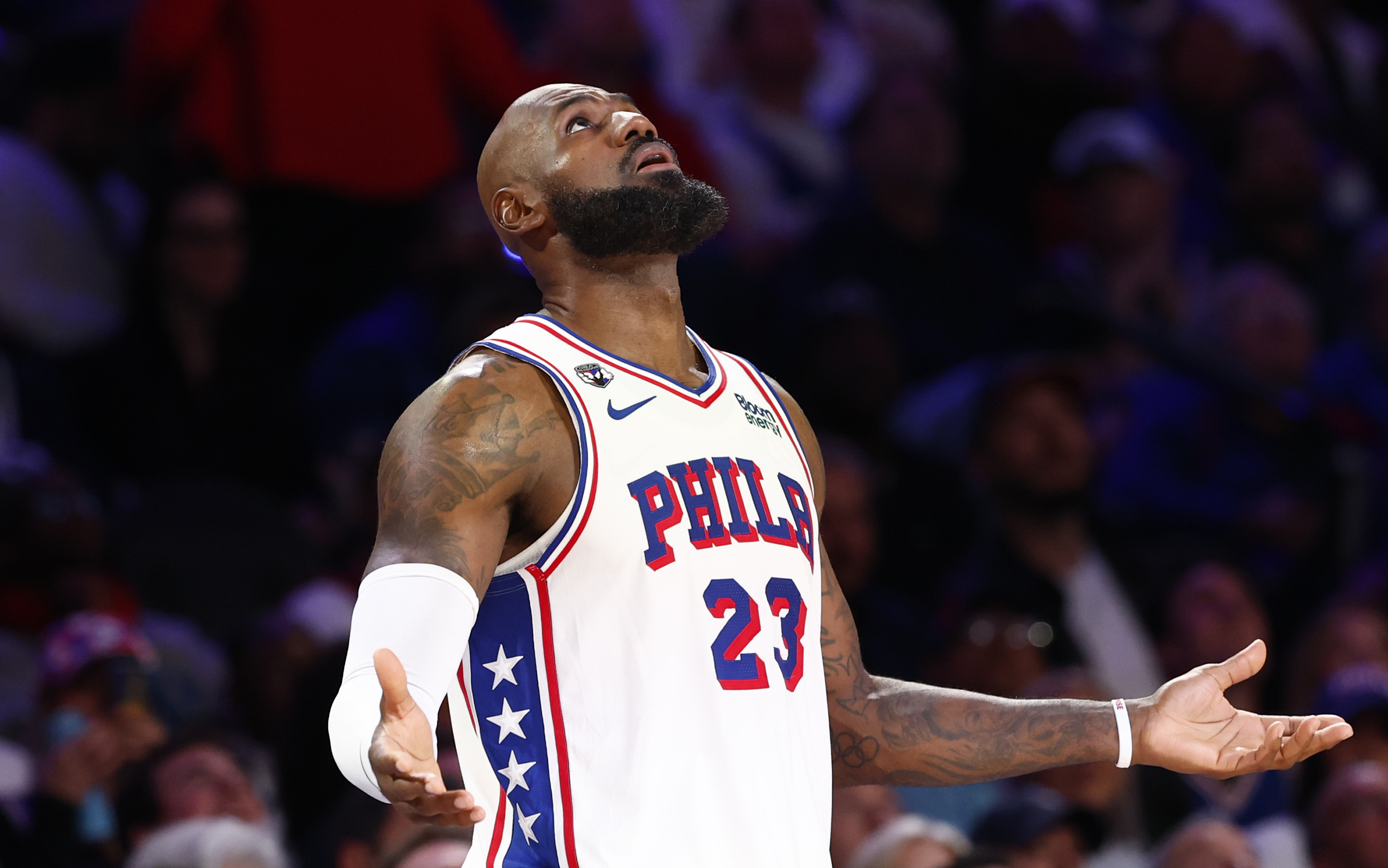
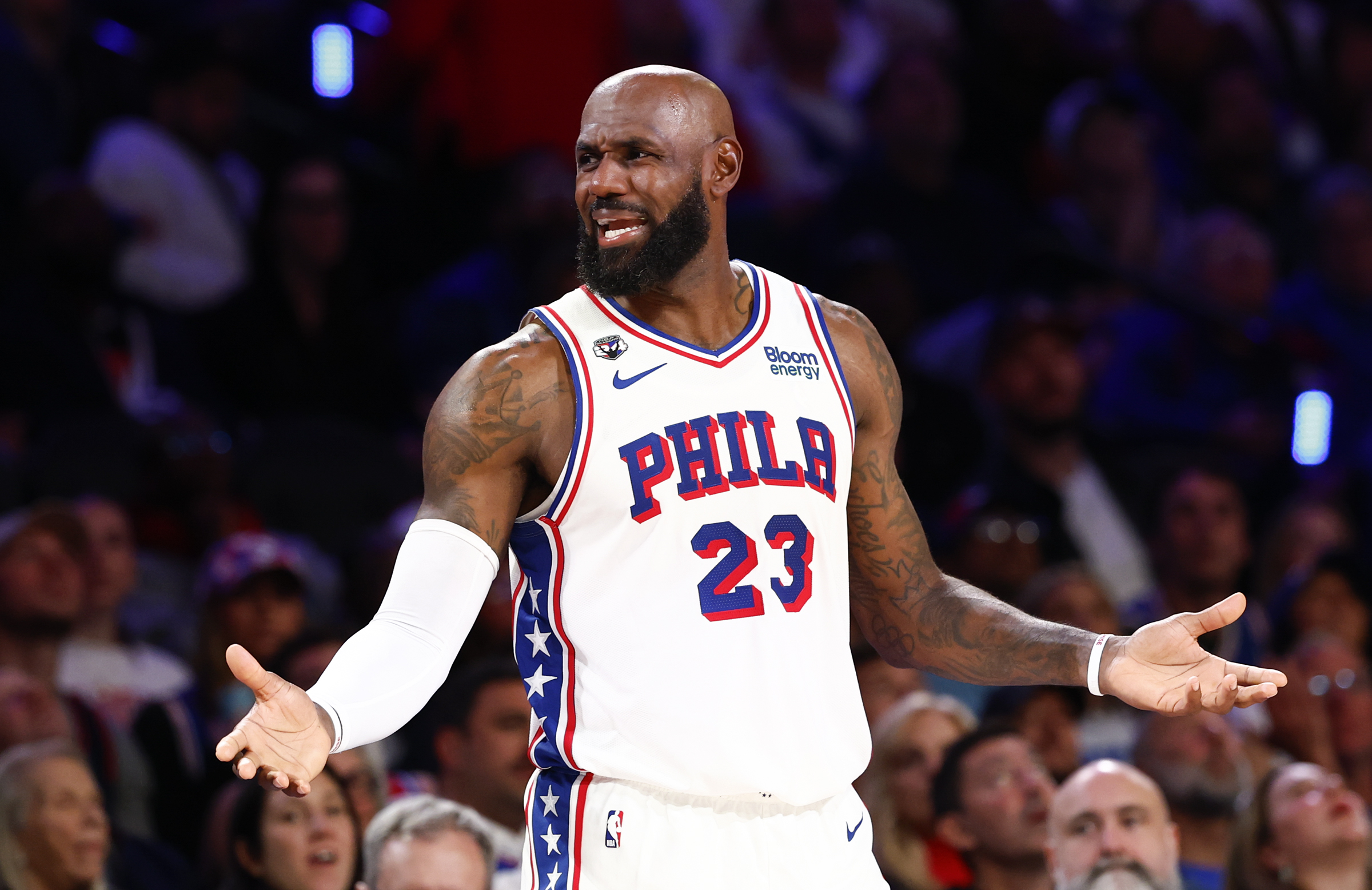
Was it fun to see LeBron James in the midcourt circle for the opening tip? Sure. Fun is one word you could use. Another: disconcerting. Still another: ominous.
Despite stepping in at center at times, Sixers forward LeBron James finished Sunday’s loss with only two rebounds. Yong Kim / Staff Photographer
While James won the tip against former Sixer Paul Reed, it was the only thing that went right in the game’s opening minutes. The Pistons played as if they’d been waiting to pounce since the starting lineups were announced. They are a team uniquely situated to take advantage of a void in the middle, with a forward-sized point guard in Cade Cunningham, a best-in-class sharpshooter in Duncan Robinson, and plenty of athleticism in the dunker spots in John Collins and Reed. The formula was formulaic by the end of the Pistons’ 20-4 run to open the game: get to the spot where Embiid would normally be, and watch the Sixers’ defense and rebounding disintegrate.
Detroit did not execute this strategy with a particularly high degree of efficiency or beauty. Neither was needed. Embiid’s absence was enough to ensure that volume would eventually pay off. The Pistons scored a couple of early buckets on putbacks, one of them a putback by Reed of his own miss, which followed his offensive rebound of a Robinson miss. They finished the night with 24 second-chance points, a number that somehow managed to understate the reality on the ground.
None of this is new. I don’t need to tell you that. The Sixers have spent the entirety of the Embiid Era attempting — and mostly failing — to survive the minutes he is not on the court. The greatest testament to Embiid’s impact has always been his absence.
What is new is the realization that the old rules apply even when Jaylen Brown and LeBron are on the team.
There are qualifiers, sure. The game never felt like a scheduled loss the way it previously would have. In fact, given how poorly the Pistons played, a win was very much in the range of potential outcomes. The Sixers cut their deficit to as little as four early in the fourth quarter. They shot 7-for-27 from three-point range and 14-of-23 from the foul line in a game they lost by 13.
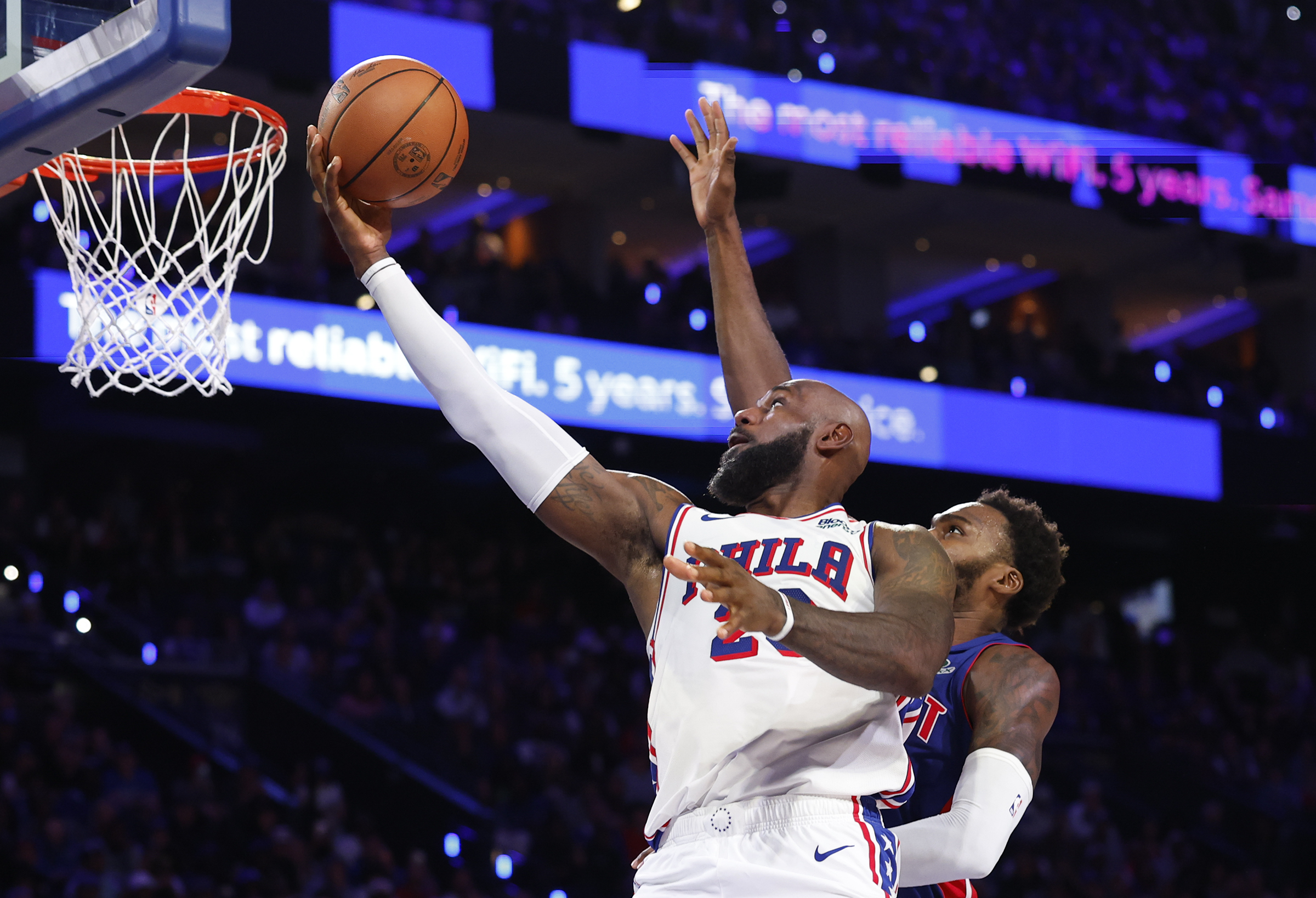
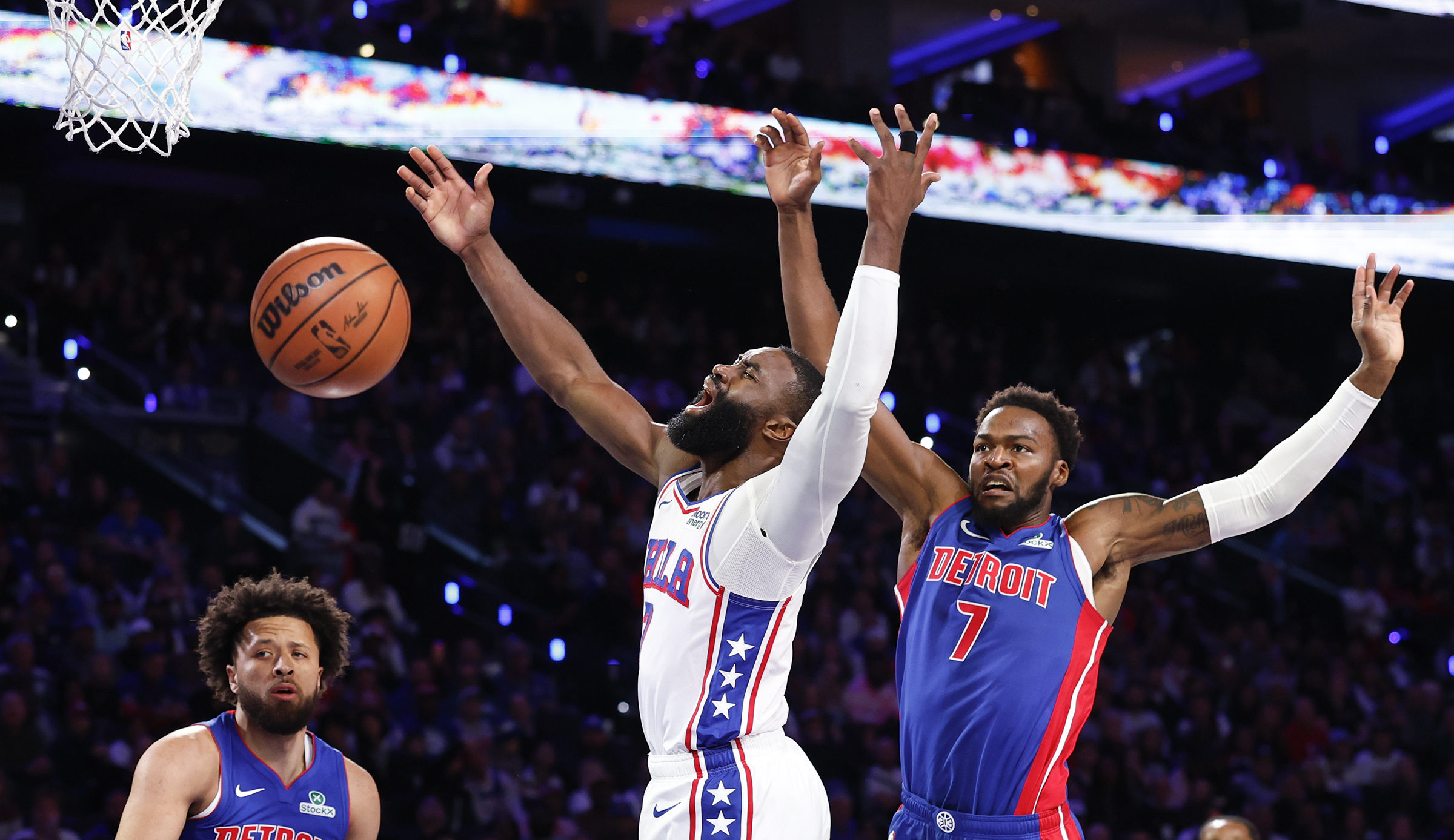
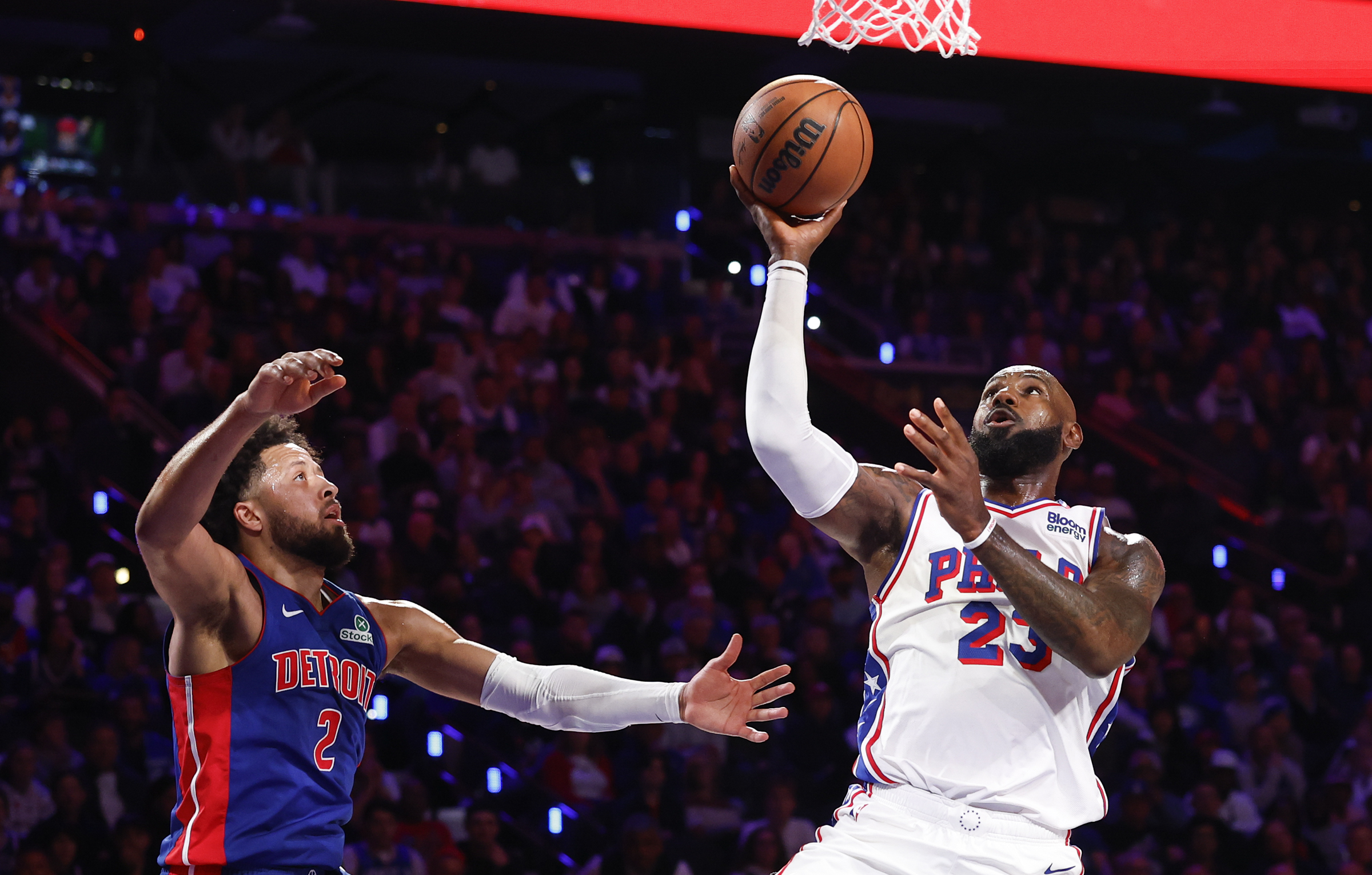
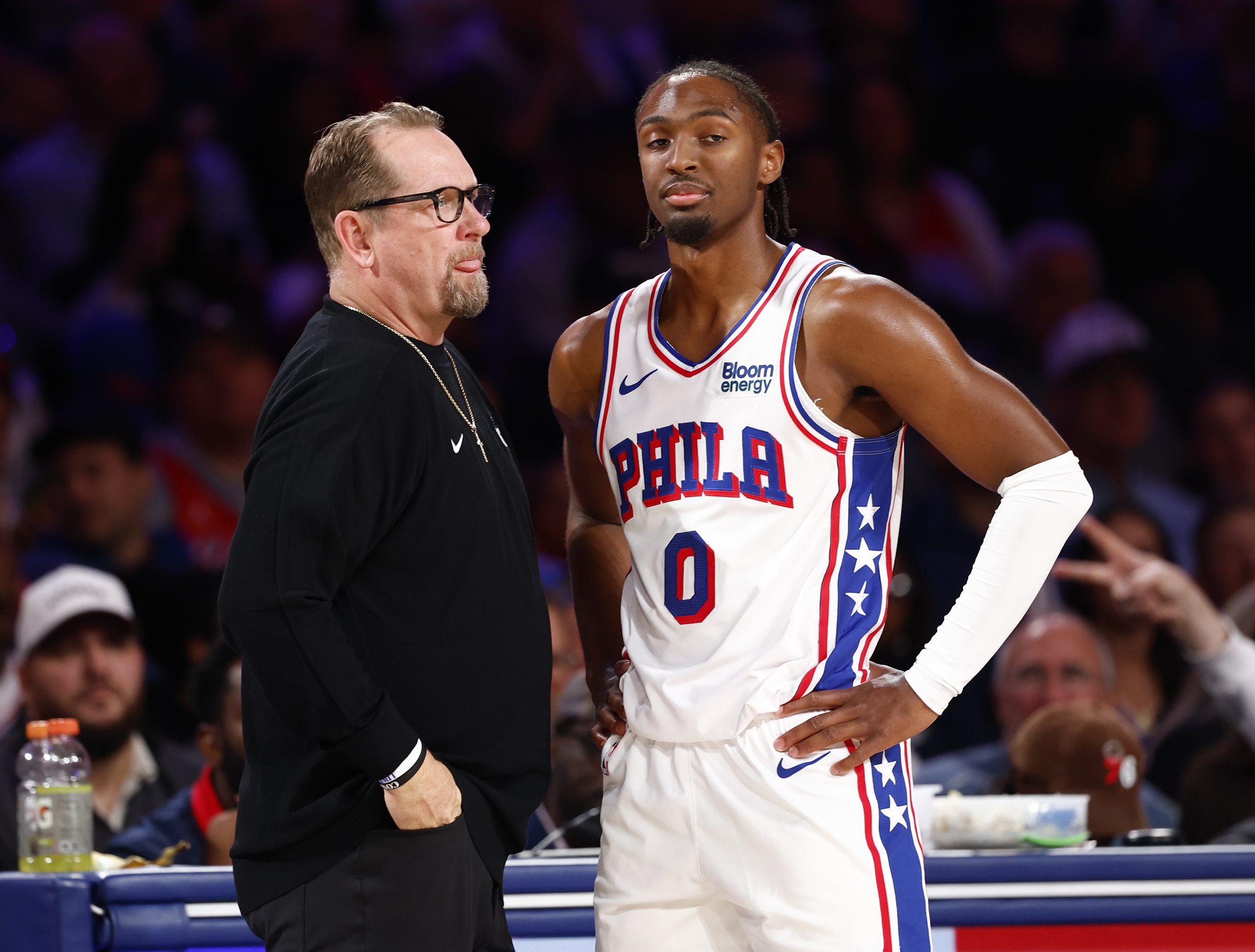
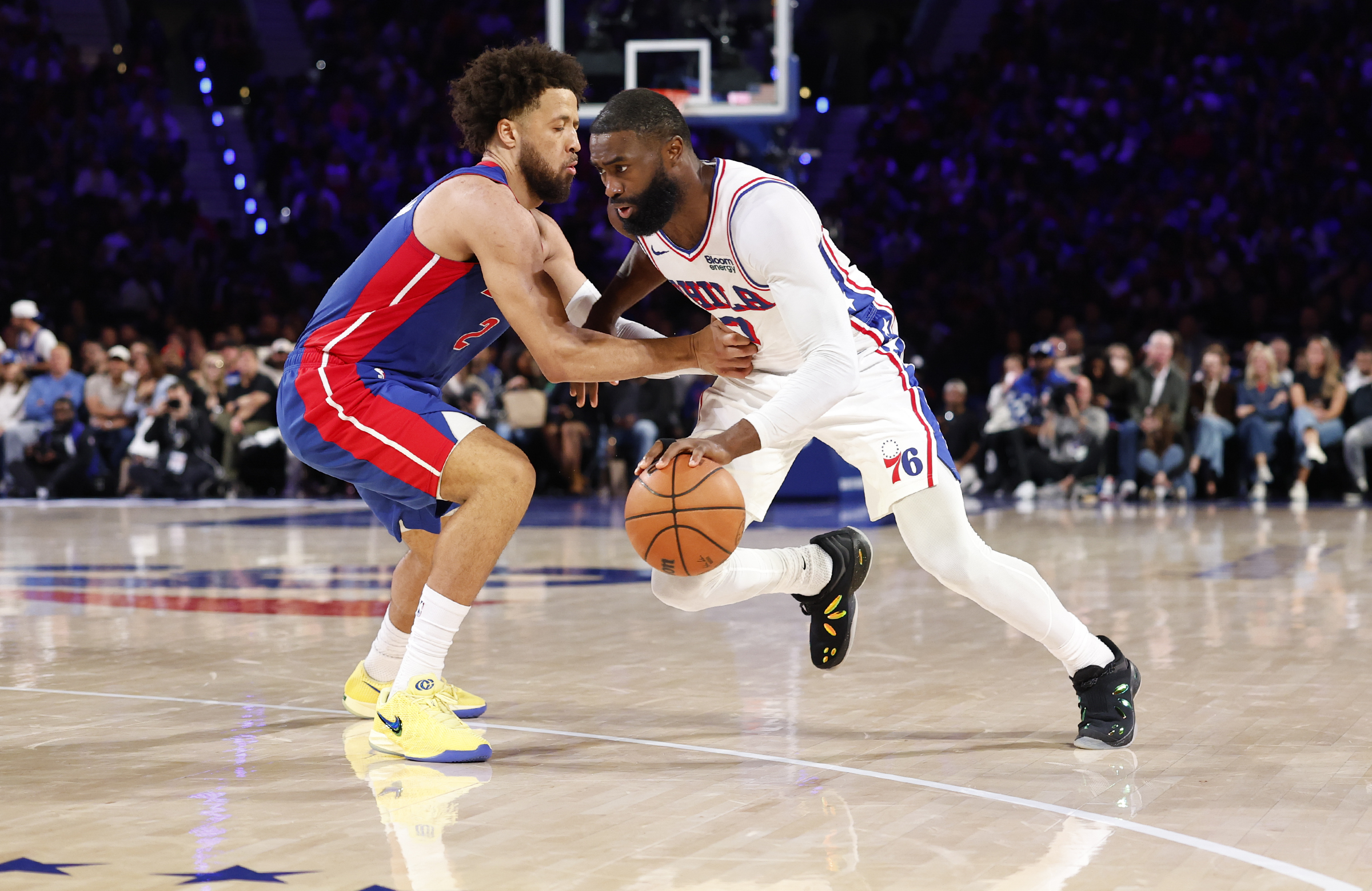
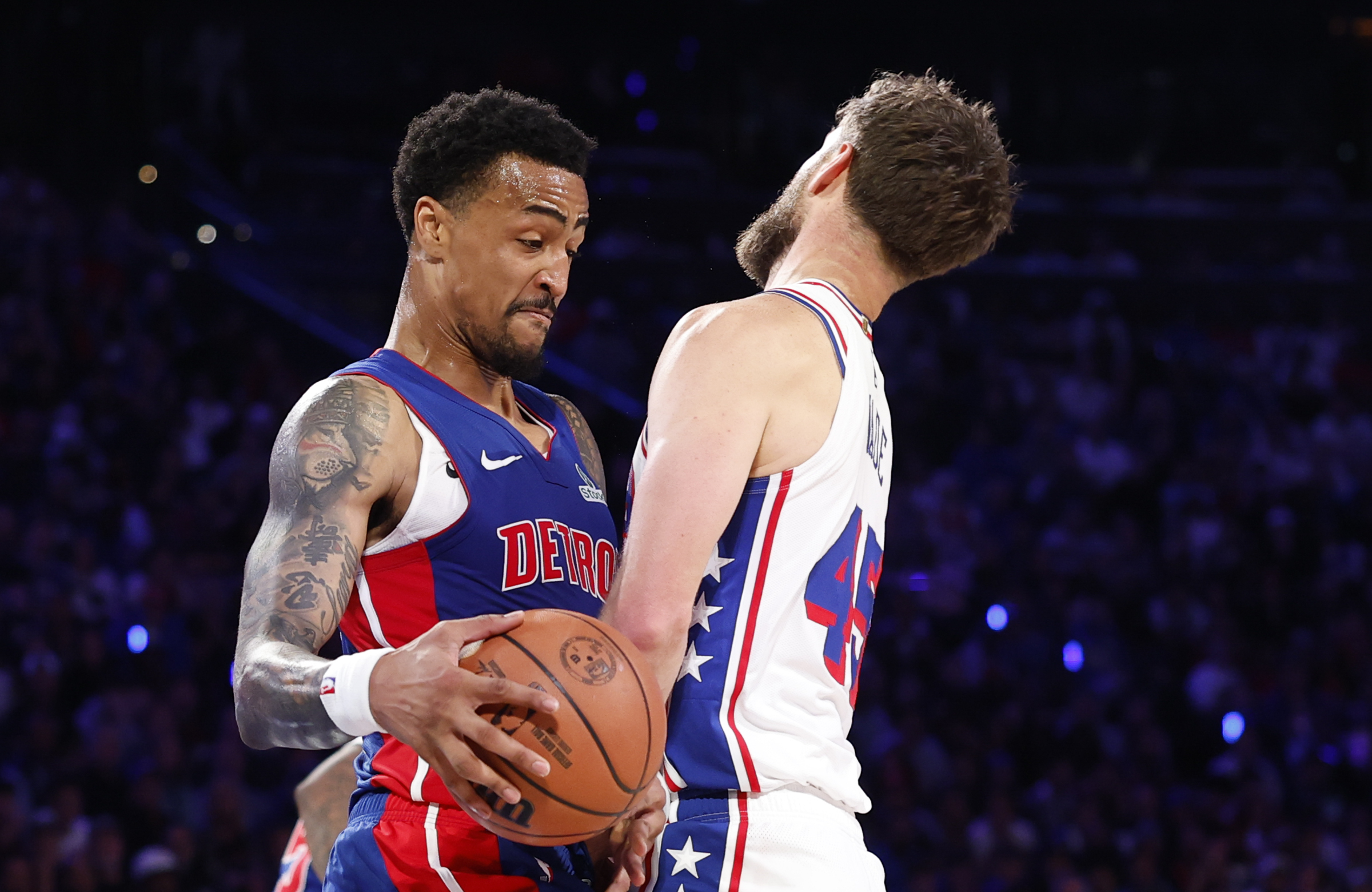
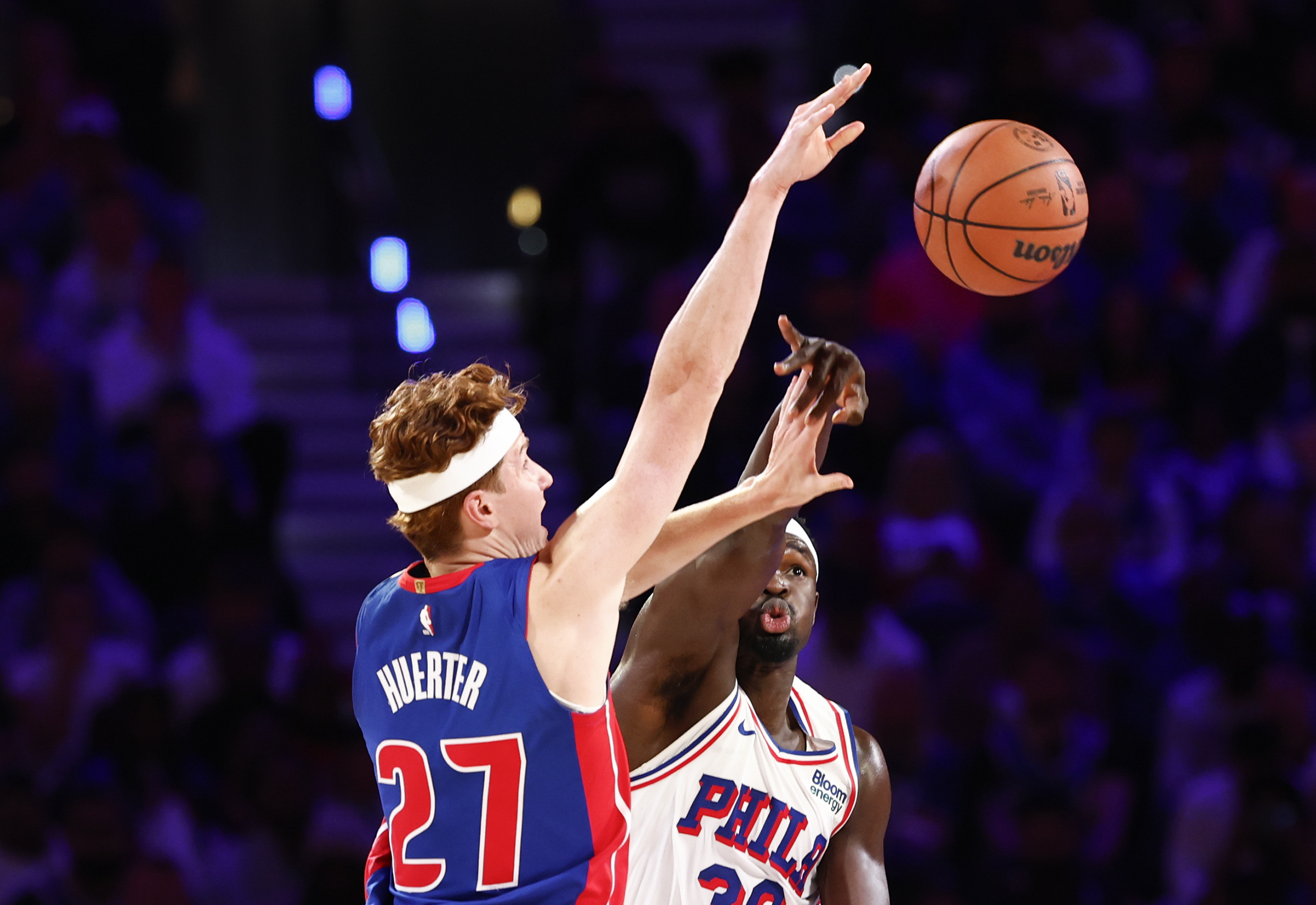
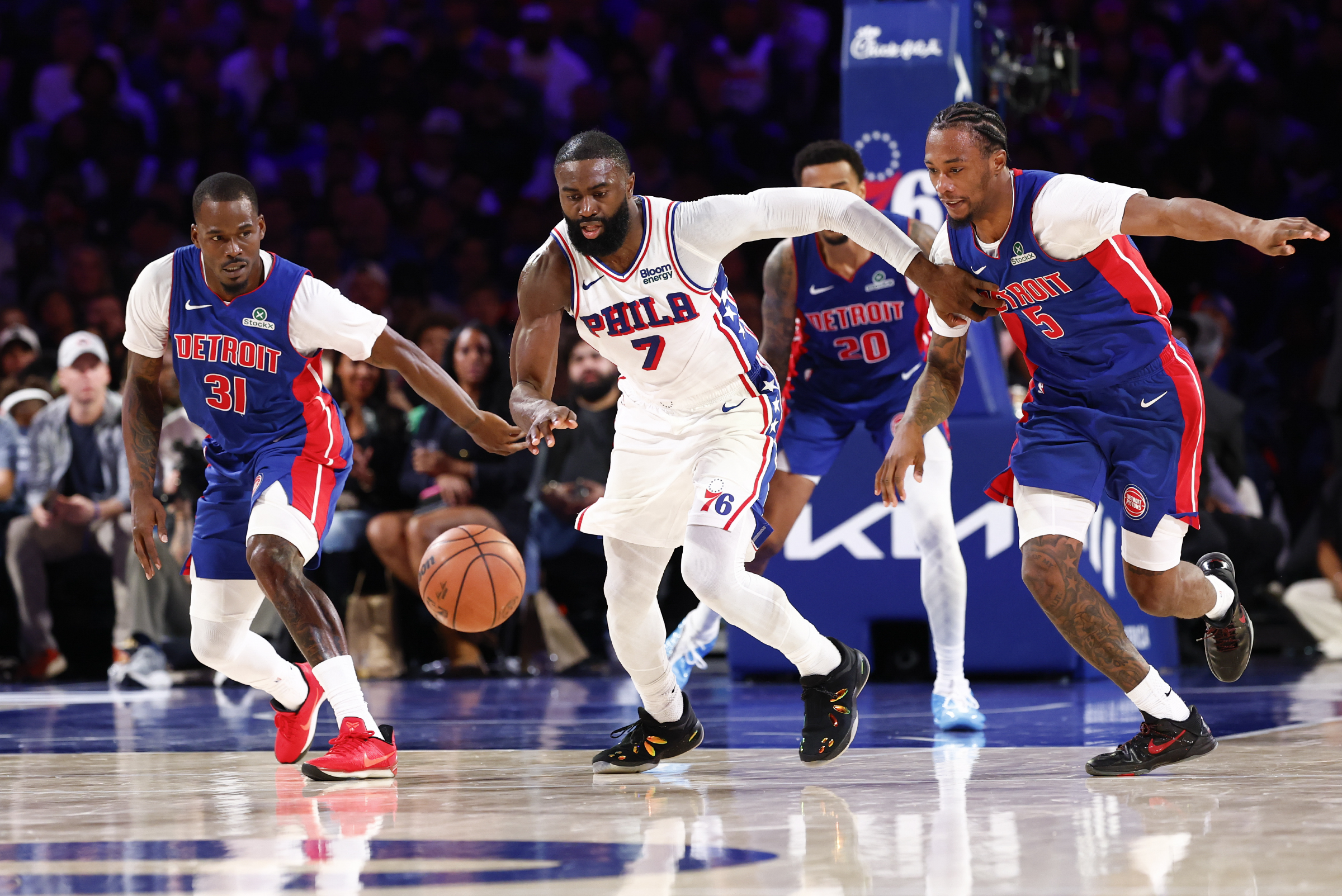
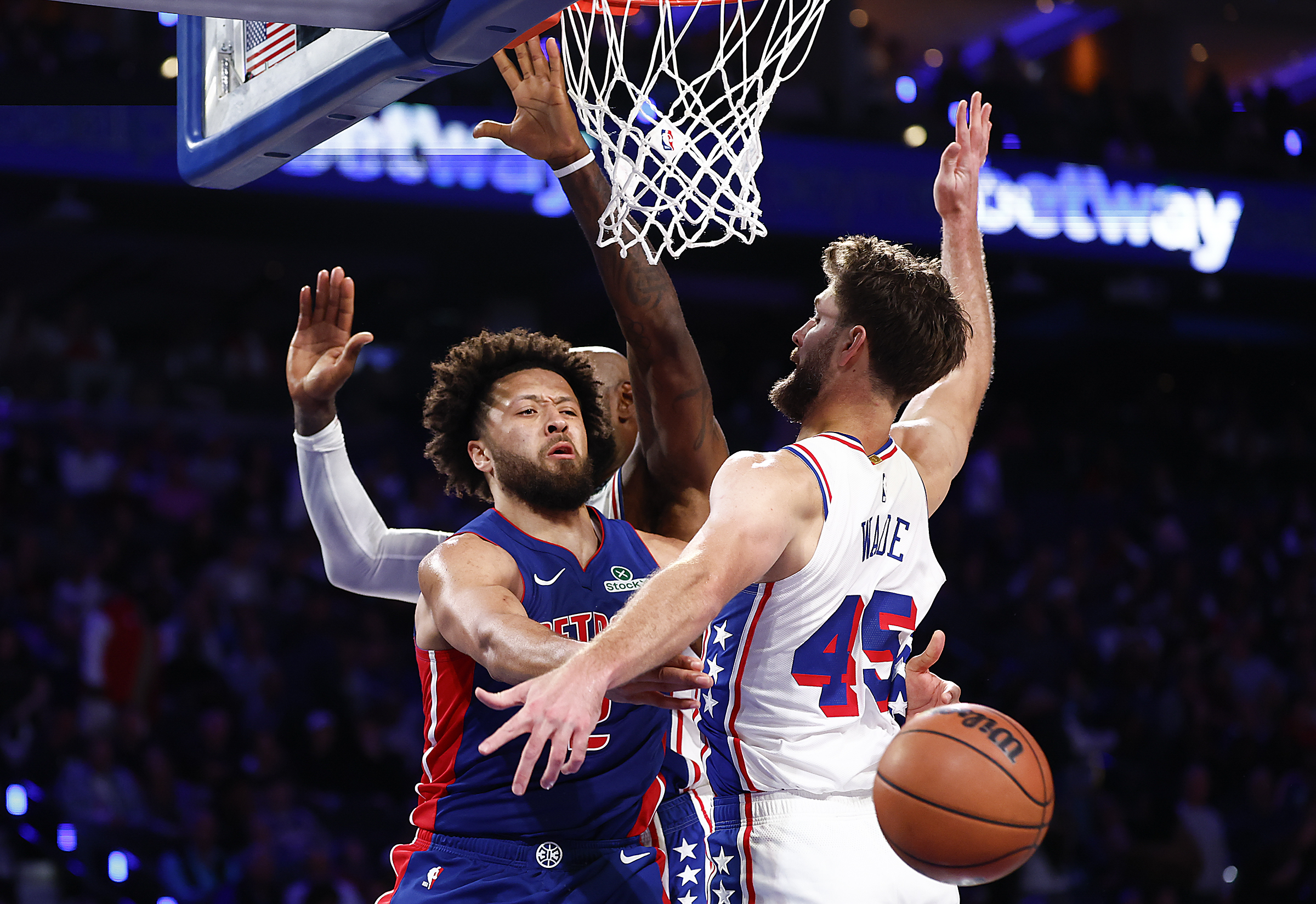
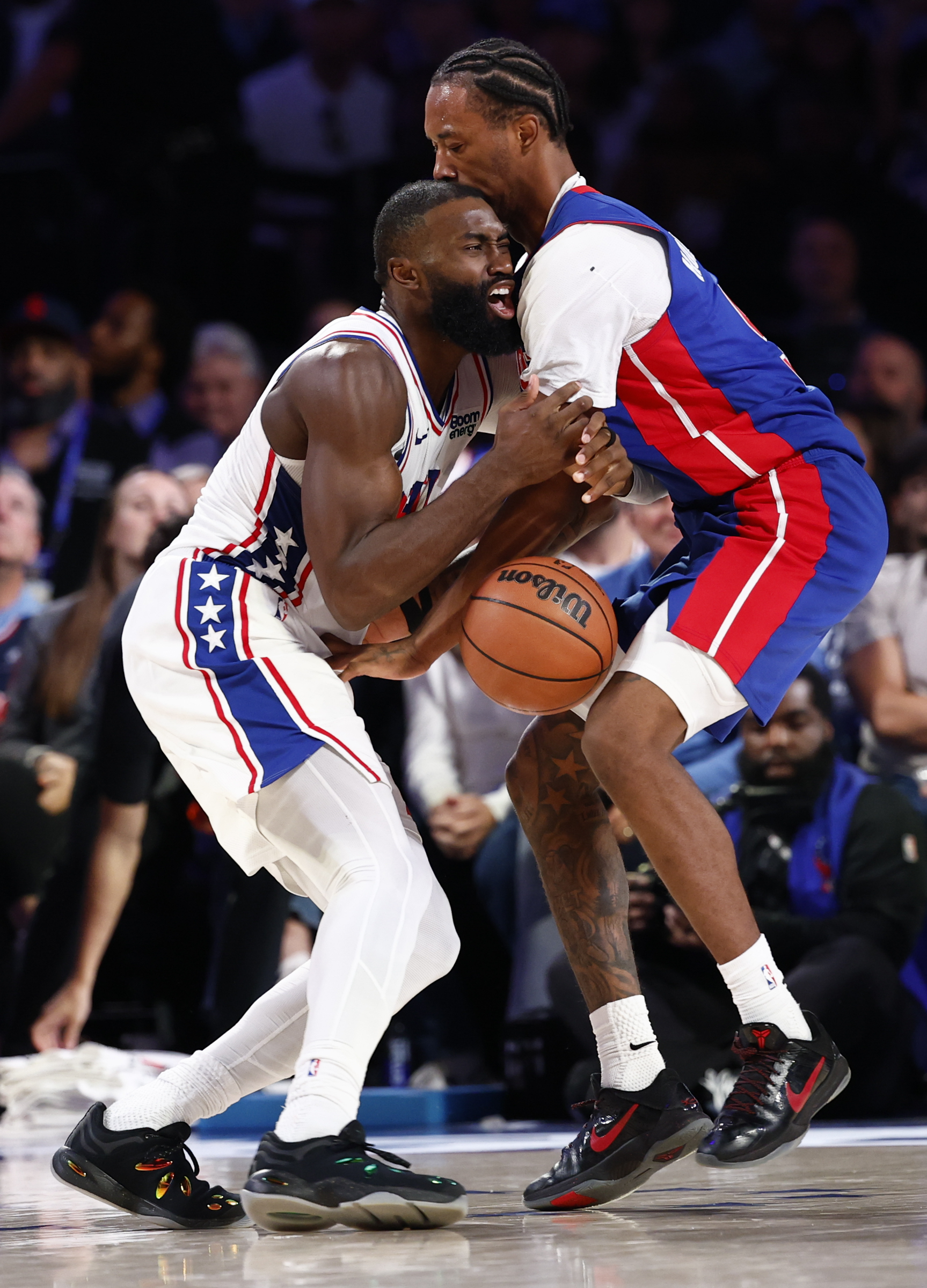
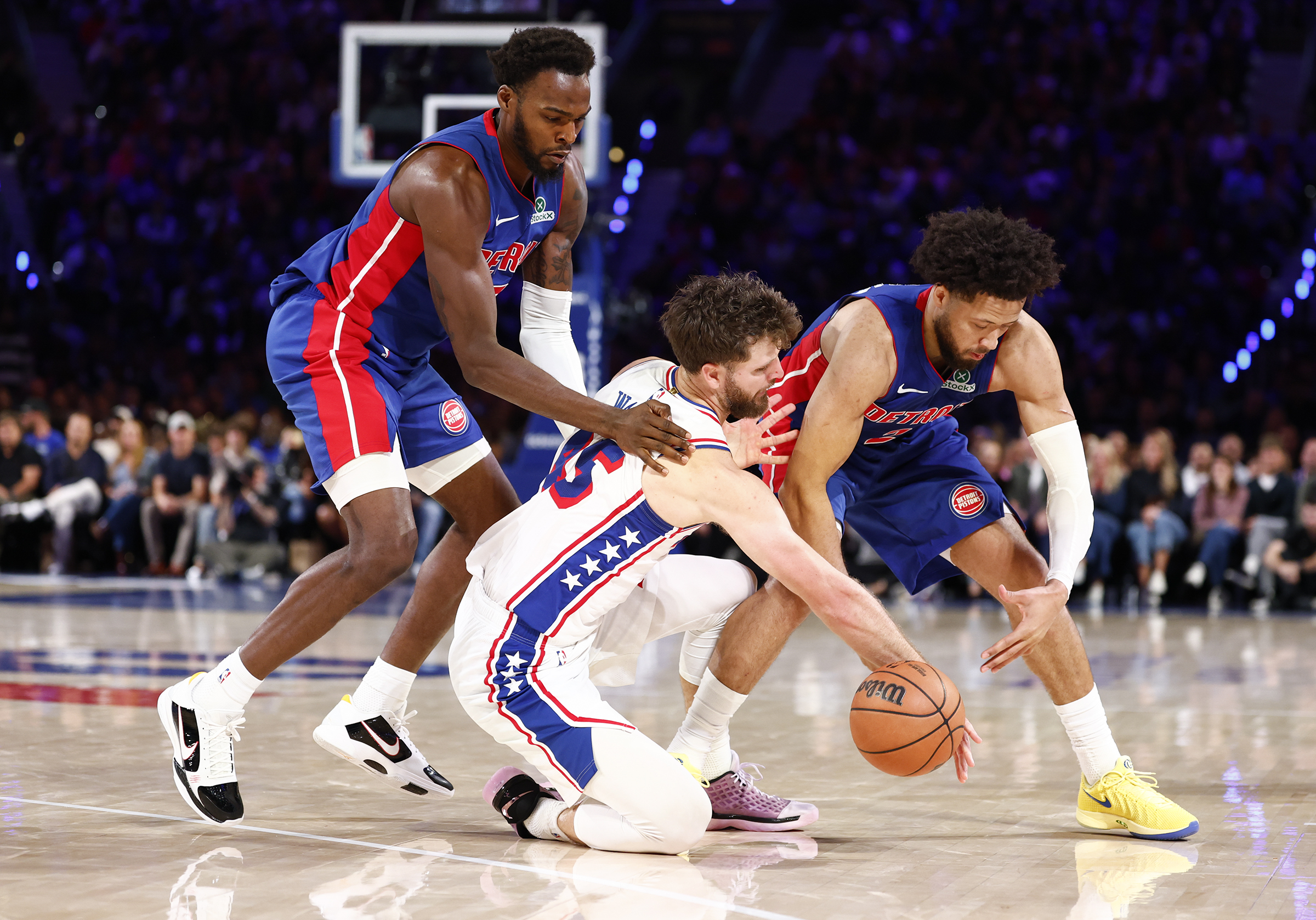
Sixers guard Jaylen Brown gets fouled driving to the basket against Pistons forward Paul Reed in the first quarter.Yong Kim / Staff PhotographerSixers forward LeBron James lays-up the basketball against Pistons guard Cade Cunningham during the first quarter.Yong Kim / Staff PhotographerSixers head coach Nick Nurse and guard Tyrese Maxey meet during the first quarter.Yong Kim / Staff PhotographerSixers guard Jaylen Brown drives to the basket against Pistons guard Cade Cunningham during the second quarter.Yong Kim / Staff PhotographerPistons forward John Collins collides with Sixers forward Dean Wade in the second quarter.Yong Kim / Staff PhotographerSixers center Adem Bona deflects the basketball against Pistons guard Kevin Huerter during the second quarter.Yong Kim / Staff PhotographerSixers forward LeBron James reacts after committing a second quarter offensive foul.Yong Kim / Staff PhotographerSixers center Joel Embiid greets his teammates during the third quarter. Embiid did not play due to plantar fasciitis management.Yong Kim / Staff PhotographerSixers guard Jaylen Brown (center) chases after the basketball against Pistons guard Javonte Green (left) and forward Ron Holland II during the fourth quarter.Yong Kim / Staff PhotographerPistons guard Cade Cunningham passes the basketball past Sixers forward Dean Wade in the fourth quarter.Yong Kim / Staff PhotographerSixers guard Jaylen Brown loses the basketball against Pistons forward Ron Holland II in the fourth quarter.Yong Kim / Staff PhotographerSixers forward Dean Wade (center) goes after the basketball against Pistons guard Cade Cunningham (right) and forward Paul Reed in the fourth quarter.Yong Kim / Staff Photographer
Previous versions of the Sixers would not have played the Pistons even from the second quarter on. They would not have coalesced down the stretch to keep the Pistons’ ballhandlers and cutters largely out of the paint. They would not have forced Cunningham to settle for low-percentage shots as consistently as they did in the second half. They did not have Dean Wade, the offseason signee who brings a rare combination of length, strength, and lateral agility.
“The first half, we had so many fouls, so it was hard. We guarded the ball way better,” said guard Tyrese Maxey, who spent much of the first half in foul trouble. “We knew what we were doing coverage wise. That was a group we hadn’t played with so we weren’t 100% sure if Dean and Bron were switching on everything on some possessions. But we’ll clean it up.”
It is too early to pinpoint the optimal version of the Sixers without Embiid. But it is very clear how much better they are with him. Which is a good thing. As long as they play the majority of this season with him.
The subplot had been percolating before Sunday night. It was easy to ignore given the Sixers’ 3-0 start. A win over the defending champs on opening night, a dramatic comeback against the other Eastern Conference finalist, a win without James on Saturday in the front end of the back-to-back … it’s tough to nit-pick a team that is on pace to go 82-0.
But the nit was there, and it was real. In the season-opener, Embiid scored just 13 points on 2-of-7 shooting. Yet the Sixers outscored the Knicks by 13 when he was on the court, and the Knicks outscored the Sixers by seven when he was off it. In the Sixers’ comeback win over the Cavaliers in their home opener, Cleveland outscored them by 10 in the 14 minutes backup center Adem Bona was on the court. Embiid finished at +18 in a game the Sixers won by eight. In their first three games combined, the Sixers were plus-49 with Embiid on the court and minus-25 with him off it.
The storyline erupted into full view on Sunday. The night before, after a win over the Bucks that improved the Sixers to 3-0, Embiid told reporters he wanted to play against the Pistons.
“I actually want to play tomorrow, so can you guys put pressure on them,” he said with a smile that suggested he knew his fate had already been decided.
The Sixers did the right thing by sticking to their plan. A one-game absence will not derail a season. Anything longer than that could be a problem.
Some people call it the “ICE tax,” the higher costs and labor shortages attributed to stricter enforcement by U.S. Immigration and Customs Enforcement.
University of Pennsylvania professor Zeke Hernandez studied one particular aspect — the price paid by local businesses and communities in the aftermath of ICE activity and arrests, events that are often sudden, public, and violent.
The cost, Hernandez found in a new study, “ICE-ing the Economy,” is big and lasting, dramatically pronounced under President Donald Trump’s mass-deportation agenda. One voice in the research compared an immigration raid to a hurricane, where the impact reverberates long after the event itself has ended.
“This new approach to enforcement,” Hernandez, a scholar at the university’s Wharton School, said in an interview, “has real consequences.”
Hernandez found that foot traffic and spending in targeted metro areas fell significantly where ICE activity and arrests occurred — a 2.9% drop in foot traffic and a 6.9% drop in consumer spending. That amounts to 8.1 billion fewer visits to businesses and workplaces, and up to $14 billion in forgone spending during the first year of Trump’s second administration.
He estimated Philadelphia saw a 193 million decline in visits to stores and workplaces and about $811 million in lost sales.
The drops occurred regardless of neighborhood demography. They affected multiple industries. And the impact did not dissipate over time — fear kept shoppers and workers away.
“The breadth of the local economic damage,” Hernandez wrote in the study, “mirrors the breadth of the enforcement approach.”
The Department of Homeland Security, which oversees Immigration and Customs Enforcement, disputed the study’s findings.
“Let’s be clear,” a DHS spokesperson said when asked about the study, “if there was any correlation between rampant illegal immigration and a good economy, Biden would have had a booming economy. Removing these criminals from the streets makes communities safer for business owners and customers.”
The agency cited several immigrant “public safety threats” whom ICE has arrested in Pennsylvania, including men from Guatemala, Haiti, and China that it said were convicted of crimes including kidnapping, aggravated assault, rape, terroristic threats, andweapons offenses.
In Philadelphia, evidence of an ICE tax has shown up at places like the Italian Market, where rumors of impending ICE raids emptied stores and sidewalks last year, as worried workers and customers stayed away.
Gerardo Flores, who operates a food truck in North Philadelphia, says he sees the proof with his own eyes. He works near the Maria De Los Santos Health Center, at Fourth Street and Allegheny Avenue, where worries around ICE are constant.
“Families have been scared, and there has been a decline in the business,” Flores said in an interview. “We have felt that.”
Hernandez examined how ICE arrests and visibility increased dramatically during Trump’s first year.
The professor used data on 5,388 geocoded ICE arrests or places of documented activity, combined with foot-traffic and spending data for 5.4 million retailers or workplaces, everything from coffee shops to gas stations.
One way to think of it, Hernandez said, is to view each geocoded ICE event as a little earthquake, the ripples expanding outward. Businesses closest to the epicenter are the most impacted, but others farther away also feel the ground shake.
He found that economic activity decreased both on the supply side, with workers not showing up, and on the demand side, with customers not visiting and spending less when they did.
Hernandez, author of The Truth About Immigration: Why Successful Societies Welcome Newcomers, became interested in the topic as he watched the news. He noted that the fatal January shooting of Minnesota nurse Alex Pretti, killed by immigration officers who were trying to arrest him, took place outside a doughnut shop.
He wondered, “What happens to that doughnut shop, that butcher shop, that supermarket? What is the local economic effect on this street of ICE showing up, and showing up in a very different way than they did before?”
In its first year, the Trump administration’s tough enforcement tactics produced “significant and persistent negative economic spillovers for virtually all residents and types of businesses in targeted areas,” he wrote.
That raises important policy issues for governments, Hernandez said, matters that reach beyond the humanitarian. Lost business activity falls on workers, customers, and business owners regardless of their immigration status or political beliefs.
Local economies depend on small, independent businesses that have limited capacity to absorb sustained shocks to demand or supply. And state and local governments that rely on the economic vitality of neighborhoods should see that enforcement decisions made elsewhere have measurable local implications.
”This approach to enforcement is doing a lot more than affecting people who they have a right to arrest,” Hernandez said. “It’s clearly creating fear among people who have no reason to be detained.”
The professor did not invent the term “ICE tax.” It’s often used by immigrant-advocacy groups and Democratic elected leaders to describe the economic costs of the Trump administration’s deportation efforts, the dollars lost or demanded by labor shortages and the higher prices attributed to the targeting of farmworkers, construction laborers, and health aides.
The administration was on track to complete about 660,000 deportations in fiscal year 2026, up from 620,000 during the first year of the current administration.
The study showed that a growing share of immigration arrests have taken place in communities within the interior United States, increasing from 28% in 2025 to 39% in July 2026. The pace of interior arrests has more than doubled from an average 8,000 per month to 19,000 per month.
Critics of the concept of an ICE tax say enforcement is legal and proper, that people in the country without permission have violated U.S. immigration laws and it’s up to the government to make them go.
Some argue that undocumented immigrants create hidden costs to society by straining local resources such as schools and hospitals. And that an oversupply of low-wage foreign workers hurts the pay of native-born workers and legal residents.
However, the America’s Voice Education Fund, a pro-immigrant nonprofit group, said its research showed a drop of 1.2 million people in the foreign-born workforce in the last two years, accompanied by cost increases in foods and goods that are often produced by immigrants. For instance, the cost of building homes jumped nearly 11% in states most reliant on foreign-born workers, compared with 5.8% in other states since the start of the Trump administration, the group said in a new report.
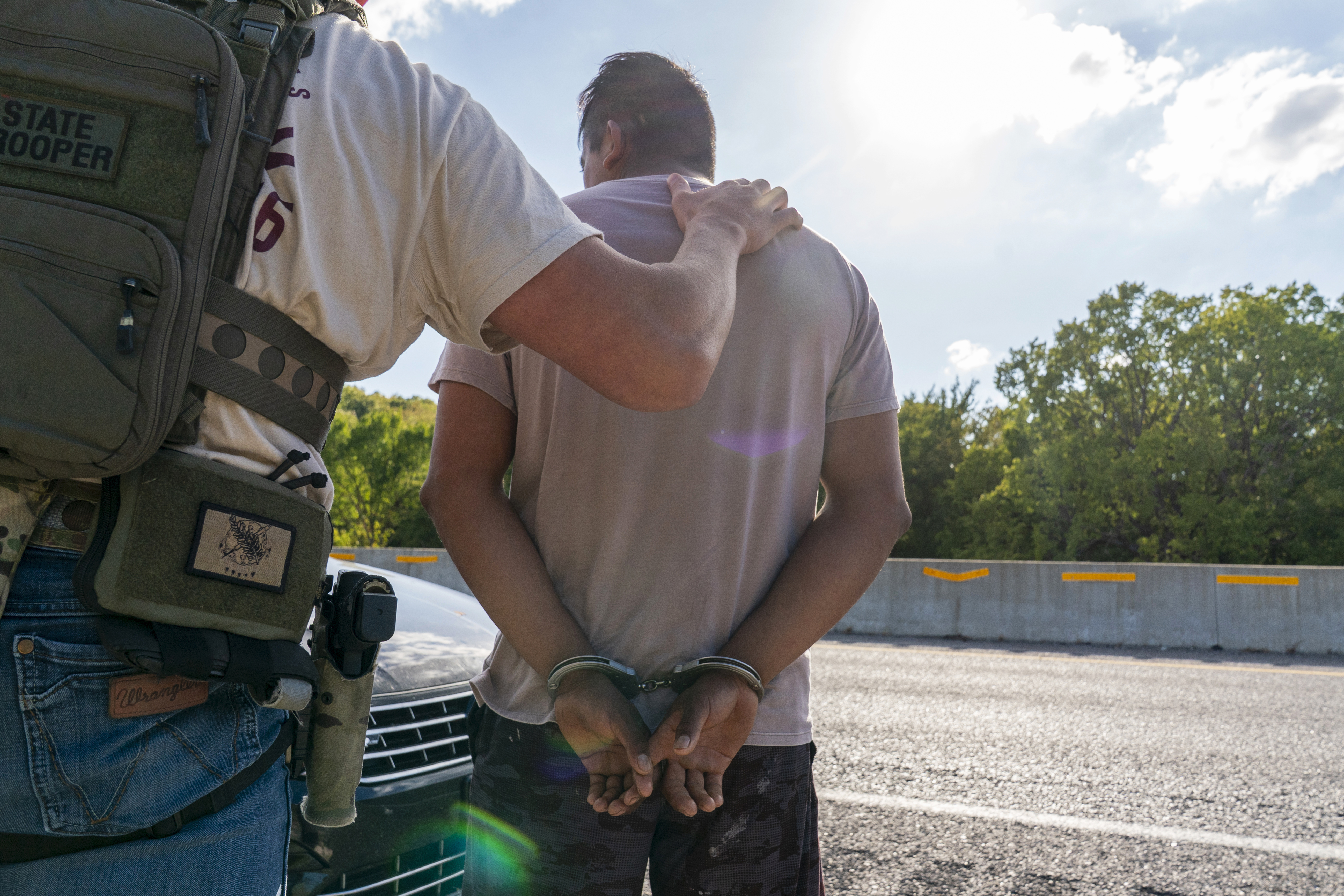
Law enforcement officials detain a man in Pittsburg County, Oklahoma. (Nick Oxford for The Washington Post)Nick Oxford
The Trump administration says it’s focused on arresting and deporting the “worst of the worst,” criminal immigrants who are wanted for violent offenses, though the most recent data shows more than 70% of those held in detention had no criminal convictions.
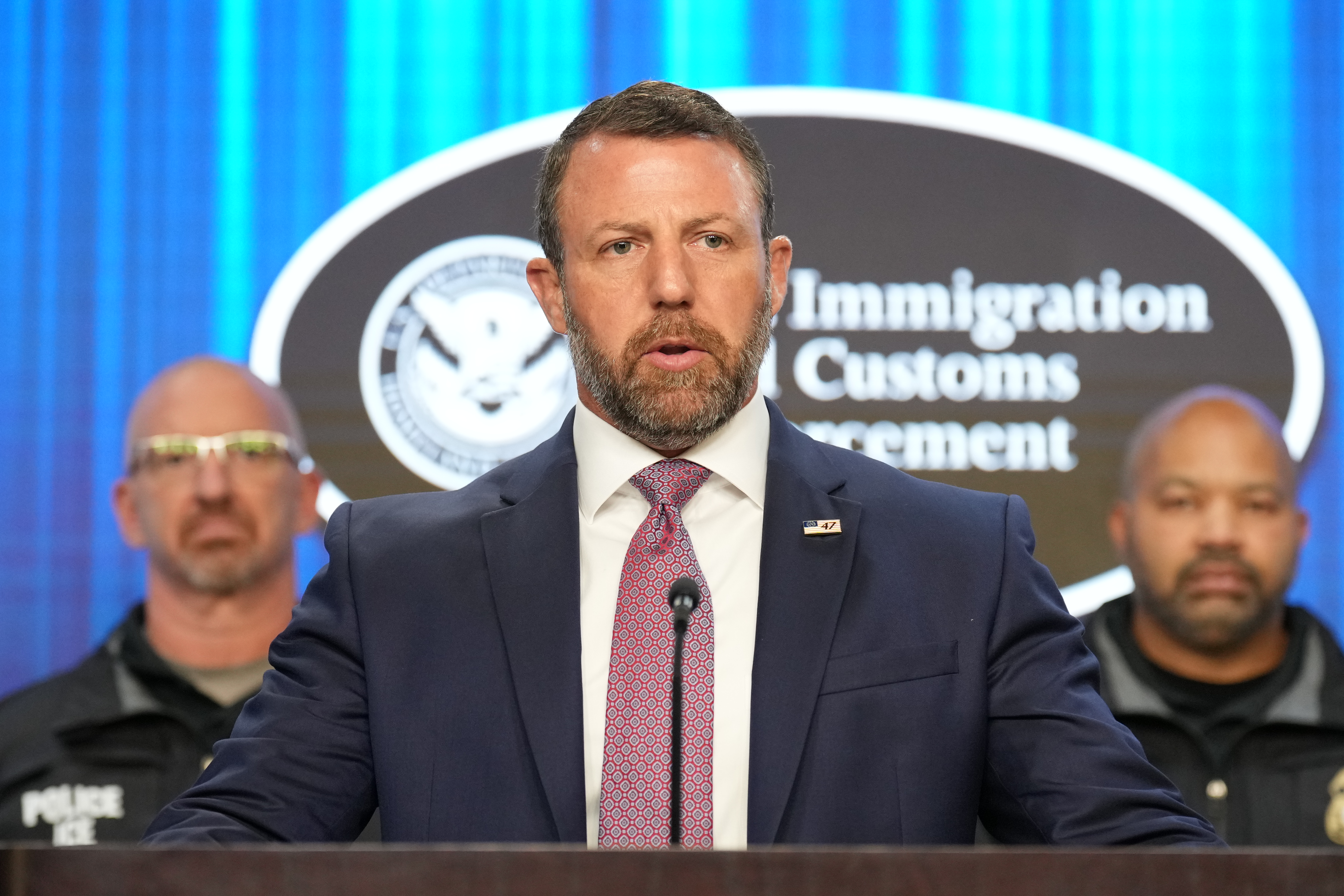
Secretary of Homeland Security Markwayne Mullin, with Immigration and Customs Enforcement (ICE) officials, speaks during a news conference at ICE Headquarters, Friday, Oct. 9, 2026, in Washington. (AP Photo/Jacquelyn Martin)Jacquelyn Martin
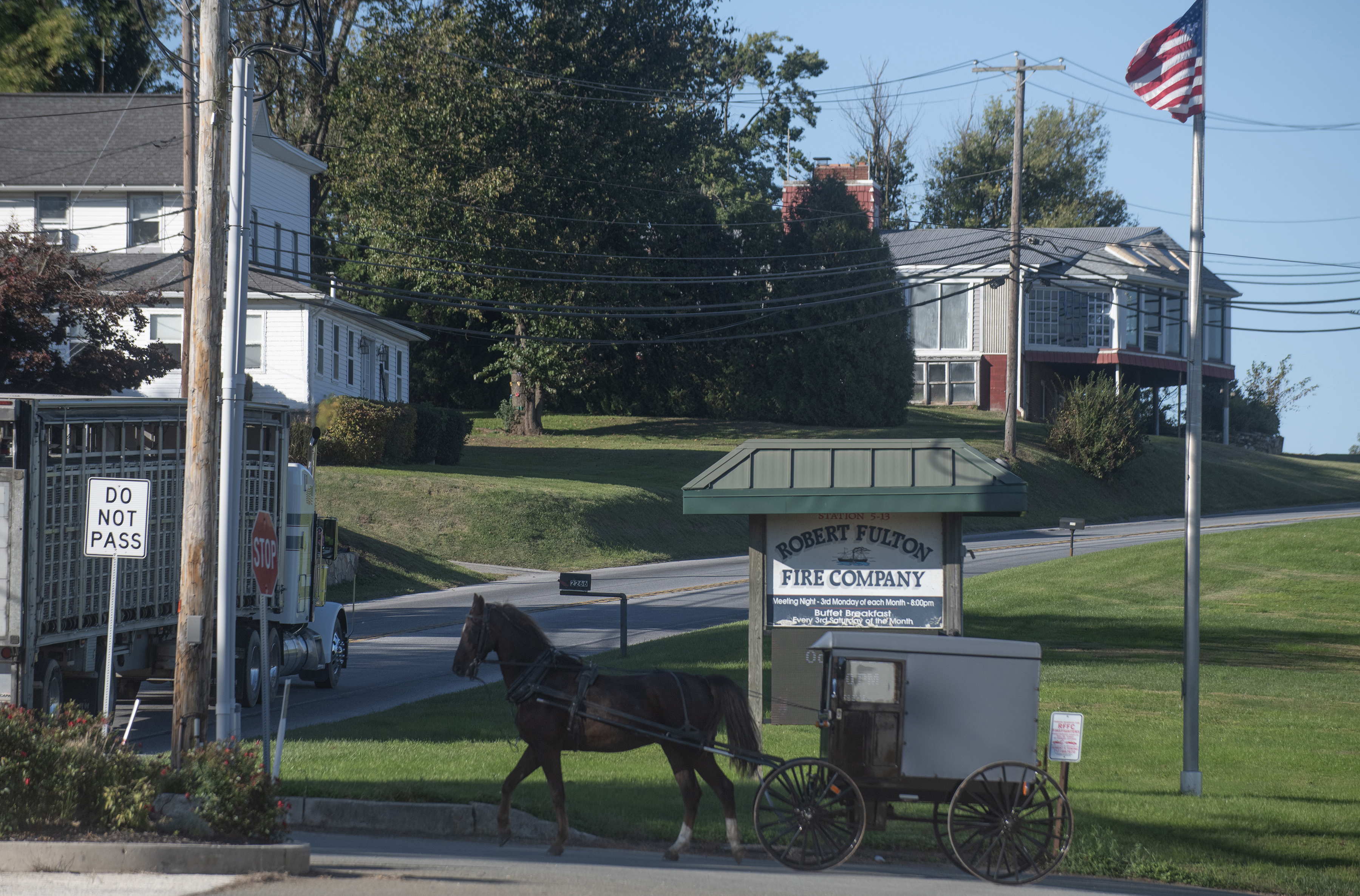
Outside a Lancaster County fire station, an electronic billboard flashed an invitation toa forthcoming Halloween “trunk or treat,” a “thank you” to communitydonors, and the localtime and weather: a balmy 68 degrees on a Tuesday afternoon.
No signage advertisedthe pop-up measles vaccination clinic held inside the Robert Fulton Fire Company last week in the village of Peach Bottom, at the epicenter of the nation’s largest outbreak in decades. So far, Pennsylvaniahas reported more than 1,300 cases.
Yet moments after the clinic opened at 4 p.m., Amish families — parents with as many as 10 children — converged in the gravel parking lot behind the fire hall, out of view from the rural highway.
They slipped through a back door: mothers with babies hoisted on hips; fathers clutching the hands of toddlers. Some hired drivers because most Amish people, in keeping with tradition, don’t operate motor vehicles.
When the highly contagious virus began to spread this spring, notably in places with sizable Amish communities, state health officials faced the challenge of convincing an intensely private and insular community to get vaccinated. Many Amish residentshave skipped vaccines for generations, partly due to a cultural preference fornatural remedies and mistrust of what is in the shots.
Public health campaigns through social media, email blasts, texts, and highway billboards seemed unlikely to penetrate Amish communities who often avoid modern technology. Nor would news conferences and public service announcements of the kind that promptedmass COVID-19 vaccinations at health centers and crashed government websites as people tried to schedule appointments online.
This time, the state decided to bring measles vaccines to the doorsteps of Amish families.
Health department officials brainstormed ways to draw Amish community members to free measles vaccination clinics near their homes, or even allow them into their kitchens or barns to administer shots, according to pediatrician Jennifer Wallace, medical director of the state’s health centers.
They sought input from Amish elders and religious leaders, who recommended their own back channels. This “Amish Internet,” as some call it, is a word-of-mouth connectivity as invisible as radio waves.
“We thought, ‘Is this going to work or not?’ It totally flipped what public health normally is,” said Wallace, who runs the pop-up clinics. “We were very nervous about whether or not we could get the word out that way.”
Additionally, Amish leaders advised, the response would be better if their communitycould receive shots discreetly.
Health officials said Amish people are not necessarily opposed to vaccines. However, many had not felt any need or urgency to get vaccinated against a disease few could remember. Measles was declared eliminated in the U.S. in 2000, thanks to widespread vaccination, which also protected the relatively few Americans who were not vaccinated.
In the months since the outbreak started in April,Lancaster County has led the state with the highest number of measles cases, now reporting nearly 470 cases, or nearly 40% of all Pennsylvania cases. Two local infants and a 20-year-old woman from Lancaster County were among the six measles-associated deaths identified by the state and local coroner’s offices.
State nurses go out and do wellness checks on families. “When the mother answers the door, the nurses can hear the children moaning in the background,” Wallace said, describing measles’ high fever, rash, and dry cough as “miserable.” Some symptoms can last more than two weeks.
Pediatrician Jennifer Wallace runs the state’s pop-up measles vaccination clinics. The clinics are promoted mostly by word of mouth. The only indication that a clinic was happening at this Lancaster County fire station was this sign at the back entrance, out of view from the rural highway.
Bob Williams / For The Inquirer
‘It’s gone gangbusters’
When the state launched the pop-up clinics in early May, health officials worried about the low turnout.
At the first one, held in Lebanon County at the request of a community member, only 30 attended and 26 got shots, according to the health department.
Then, in mid-June, the clinics took off as word got out, Wallace said.
“We were willing to try it out, and it’s gone gangbusters,” she said.
The turnout picked up even more after health officials opened clinics in the evenings to accommodate farmers who work the fields until late afternoon.
The state has organized 223 clinics statewide, including 51 in Lancaster County, and vaccinated more than 6,000 people through them.
Sometimes, clinicians are invited to a private home to vaccinate a family of 12, only to also meet throngs of friends and relatives.
At one Lancaster County home, 110 people formed “a line out the kitchen door,” Wallace said.
“We were like, ‘Whoa.’ We had to run back to the health center twice to get more vaccine,” Wallace said. “It starts out as a very private family thing, and it ends up being a neighborhood community thing.”
At Tuesday’s clinic, 79 out of 94 people who showed up chose to get vaccinated, according to the state. It was the third clinic at that fire station, where the volunteer company includes Amish firefighters.
An Amish family leaves Tuesday’s pop-up measles vaccination clinic on at the Robert Fulton Fire Company in southeastern Lancaster County, four miles from the Maryland state border and about 15 miles outside Chester County, Pa.Bob Williams / For The Inquirer
Questions, then relief and tears
Wallace said most Amish people who come to the clinics ultimately opt to get vaccinated, but prefer to keep it private.
“There is an element of, they don’t want people to know both in their own community as well as outside their community,” Wallace said. “They tend to be very private people.”
Many ask about what’s in the shots.
Is there a microchip in the vaccine? No. Is it made of aborted babies? No.
What offers more immunity? Getting measles or the vaccine?
Wallace has a ready answer. “They both give you immunity. However, I would rather have the measles vaccine, which maybe gives you a little bit of a fever, maybe a little bit of a sore arm for a couple of days, vs. the measles disease, which can have very serious consequences up to death.”
She will tell them the vaccine is free, whether they are insured or not. Some will counter, “Well, I’ll just get measles. That’s free, too,” and she will reply that measles complications can result in expensive hospital bills. Most Amish do not have health insurance, and sometimes must pay cash or turn to a community medical fund.
Increasingly, mothers coming to the clinics are more worried about their kids getting measles than about the vaccine. Wallace will administer doses into tiny arms and watch the mother’s face wash over with relief. Some cry afterward, she said.
“It all started with, ‘What are the communities we are trying to target, and how can we be respectful and work with them? Let’s not push what we think public health should be,’” Wallace said. “And it worked. It’s just snowballed.”
Pediatrician Jennifer Wallace, who serves as medical director of the state’s 58 health centers, is also in charge of the pop-up measles vaccination clinics. “I can tell you quite honestly that since May, this has been the most rewarding work of my life,” she said.Bob Williams / For The Inquirer
‘Never been vaccinated in my life’
The pop-up clinics are not aimed at persuading those who oppose vaccinations, Wallace said.
“The anti-vaxxers are never going to walk through these doors. They’ve made up their mind,” she said. “Many of them have already closed their mind to it.”
Art Winter, 48, runs an auto-repair business behind the fire station where Tuesday’s clinic was held. The clinic drew Amish families from Quarryville, about 10 miles away, where Winter lives, but he had not heard about any of the state’s clinics.
“I don’t fall for that crap,” he said about vaccinations. “Never been vaccinated in my life.”
He went to a public elementary school in Upper Darby. Although state law required the measles, mumps, and rubella vaccine to enroll, his mother opted out under Pennsylvania’s widely permitted exemptions for people with religious, philosophical, or medical concerns.
He is not worried about getting measles, even though cases are all around him. “I don’t live my life in fear,” he said.
Angela Conrad, who lives about 30 feet from the fire station in a white trailer, said she had “no clue” that a vaccination clinic was occurring. “Was that on social media?” she asked. Regardless, the 57-year-old resident said she had been vaccinated as a child, like more than 90% of Pennsylvanians.
People who are unsure whether they were vaccinated as infants, or cannot remember whether they had measles, can get a blood test to show whether they need vaccine protection. But people who get tested do not need extra outreach to get vaccinated.
As the conversation around measles vaccinations has become increasingly politically charged, some providers consider not publicizing the pop-up clinics to be a security precaution.
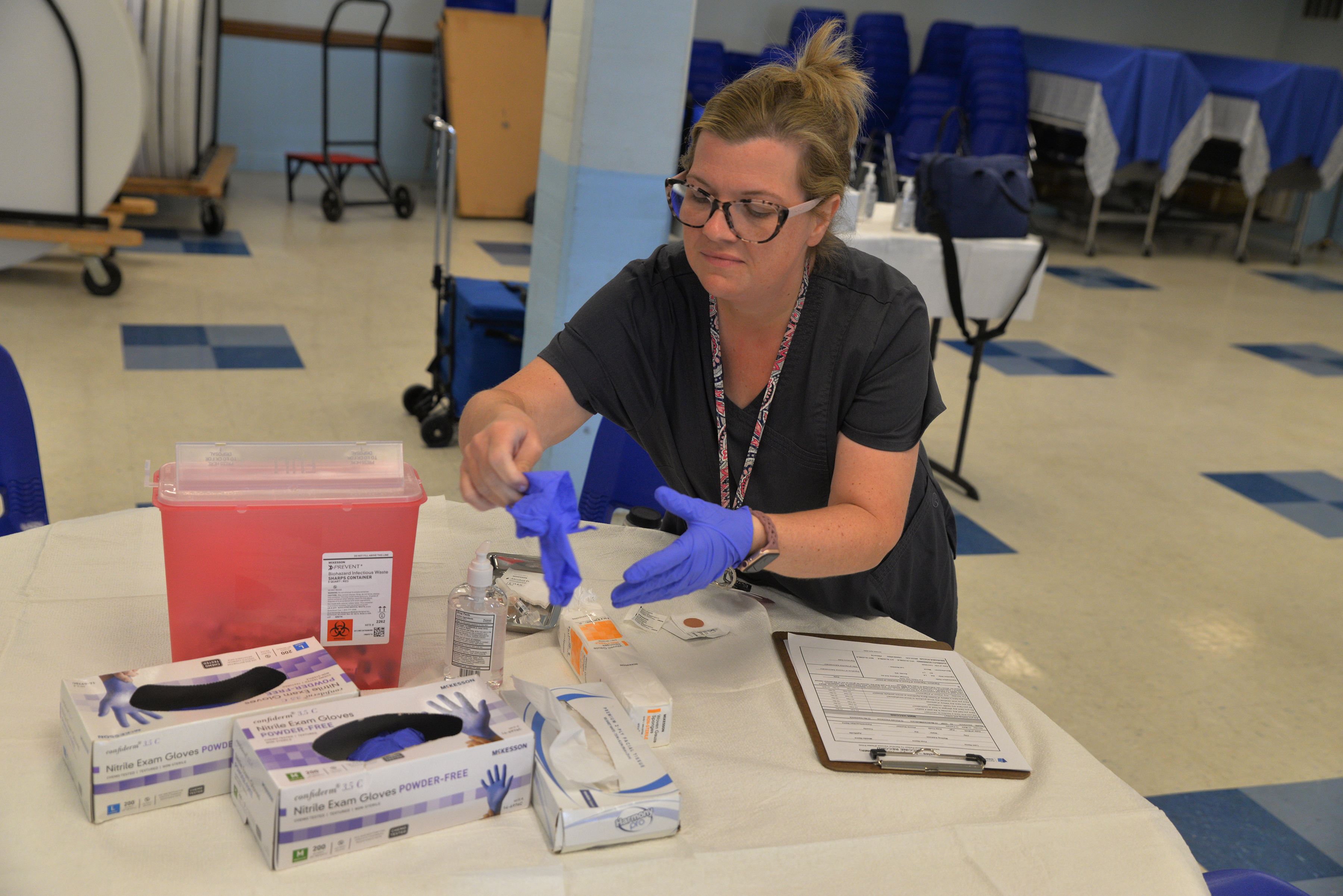
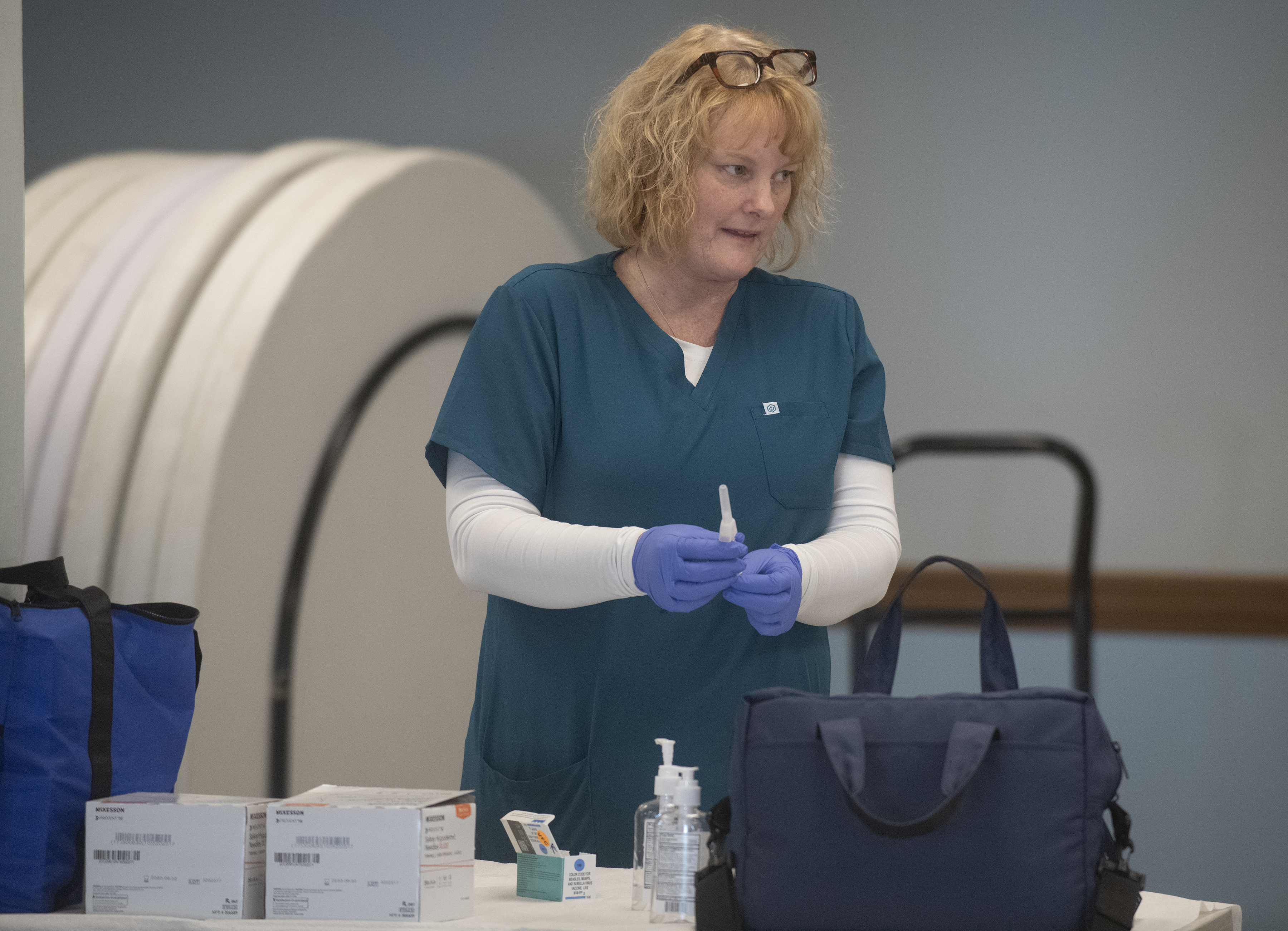
“There are so many people who maybe don’t approve of vaccines that we don’t want to bring any negative attention to the clinics, so it’s just a word-of-mouth type of clinic,” said Beth Smith, a nurse whose worked for the state health department for 27 years and was at Tuesday’s clinic administering shots.
Beth Smith was one of four nurses who administered measles vaccinations on Tuesday to Amish community members inside a fire station in rural Lancaster County. Bob Williams / For The Inquirer