Blog

  • As Social Security fund runs dry, some Republicans say it’s time to raise taxes

    As Social Security fund runs dry, some Republicans say it’s time to raise taxes

    For decades, Washington has replayed the same fight over taming the soaring national debt: Democrats cite a need for more taxes. Republicans refuse. And anyone who suggests cutting the biggest source of spending — federal retirement benefits — gets attacked.

    But a coming crisis in Social Security appears to be pushing at least a few Republicans off the GOP’s long-standing pledge never to raise taxes.

    This summer, Sen. Bernie Moreno (R., Ohio) joined Sen. Elizabeth Warren (D., Mass.) in proposing to raise the payroll tax cap so people with higher incomes pay more into the program. Now the idea is emerging as an acceptable fix among other GOP lawmakers, including Rep. Tom Cole (Oklahoma), the influential chairperson of the House Appropriations Committee.

    “We’ve got too many people who say, ‘Well, we have to stay within the current income level or stay at the current tax rate,’” Cole said in an interview. “I’m willing to look at the tax rate. I am willing to raise the amount of income through tax.”

    The rare GOP concessions on taxes come as lawmakers begin to confront a Social Security shortfall so large and so imminent that the party’s traditional demand for curtailing benefits is unlikely to suffice. In just six years, millions of Social Security recipients will absorb a 22% cut in benefits unless lawmakers provide an immediate infusion of nearly $500 billion.

    “Twenty or thirty years ago,” when the shortfall was far in the future, “you could come up with a straight-faced solution” that solved the problem entirely by cutting future benefits, said Charles Blahous, a senior research strategist at George Mason University’s Mercatus Center who served from 2010 to 2015 as the Republican public trustee for Social Security.

    Now the problem is so big and urgent, Blahous said, “I don’t think you can look at it with a straight face and not do all of the above.”

    Grover Norquist, founder of Americans for Tax Reform and the longtime enforcer of Republican anti-tax orthodoxy, dismissed the crack in party discipline, arguing that Republicans should stick to demanding spending cuts. Otherwise, he said, they risk infuriating voters already angry about the high cost of living.

    “When Republicans say no to tax increases, they win. When they say yes to tax increases, they lose,” Norquist said. “They don’t get spending cuts — at all. And, they get smeared in the next election.”

    But Cole, at least, said he thinks the political blowback from Social Security benefit cuts would be far worse than a comprehensive solution that includes raising taxes.

    “I love Grover. But … you’ve got to deal with Social Security,” Cole said. “And believe me, you’ll have a lot bigger problem if it goes bankrupt than you’ll have keeping it whole, because people will feel cheated.”

    Created during the Great Depression, Social Security provides monthly cash benefits to more than 70 million Americans. It is the single largest program in the $7.4 trillion federal budget, paying out $1.7 trillion this year, according to the nonpartisan Congressional Budget Office. (Medicare is a close second at $1.3 trillion.)

    The program is funded by a payroll tax on wages up to a “cap” of $184,500 a year, with workers and employers each paying 6.2%. Workers who pay into the system can receive monthly checks as early as age 62, though the full retirement age is 67.

    For years, annual tax collections exceeded the cost of benefits, allowing the program to amass a surplus known as the Social Security trust fund. As the baby boom generation retired, however, the math flipped: Social Security now pays out far more than it collects and is draining the trust fund to make up the difference.

    The trust fund is projected to run dry in 2032. At that point, Social Security would have to rely solely on incoming tax collections — meaning monthly checks would shrink by $440 on average unless Congress acts, according to the Bipartisan Policy Center, a Washington think tank.

    Closing the shortfall would require $459 billion in cuts or fresh revenue in 2033 alone, according to the BPC — and the sum would grow larger every year.

    That relentless math persuaded Moreno, a former car dealership owner who rode into office with President Donald Trump’s endorsement in 2024, to break ranks with his party on tax hikes. In his proposal with Warren, Moreno calls for eliminating the payroll tax cap so highly compensated workers pay the tax on their entire income.

    “Why should a middle-class nurse pay a larger share of her paycheck than a wealthy corporate lawyer?” Moreno and Warren wrote in an op-ed for the New York Times, noting that one recent poll found that 62% of Republicans support lifting the cap. “This is doubly unfair in an economy in which top earners’ wages, over time, have pulled far ahead of those of the average worker.”

    Moreno declined an interview request. His spokesperson Reagan McCarthy said in an email: “Sen. Moreno promised Ohioans he would fight for them in DC and make sure they get the benefits they were promised and that’s exactly why he’s leading this effort.”

    Removing the cap without increasing benefits for high-earning workers would close more than half the program’s shortfall, according to the Committee for a Responsible Federal Budget, a nonpartisan group focused on deficit reduction. Blahous and others have cautioned against that approach, saying it would sever the connection between contributions and benefits that makes Social Security different from — and more popular than — other social welfare programs.

    Uncapping the payroll tax alone would push the top marginal federal tax rate over 50%, according to the Manhattan Institute, a conservative think tank.

    Some Democrats would go further. Sen. Sheldon Whitehouse (D., R.I.) argues not only for lifting the payroll cap but also for taxing the investment income of wealthy households and closing a loophole that lets business owners shrink their personal tax bills.

    That proposal, which would fall entirely on the backs of the wealthy, would raise enough cash to fully fund Social Security for at least 75 years, according to a 2023 estimate by the program’s chief actuary.

    The historic link between contributions and benefits makes changing Social Security politically perilous. That’s why many in Congress want negotiations to be outsourced to a bipartisan commission or advisory board.

    Cole has introduced one of several proposals to form such a panel. He argues that more tax revenue, including from raising the payroll tax cap, “ought to certainly be on the table” alongside adjustments that would reduce future spending, such as raising the retirement age.

    A third GOP lawmaker, Rep. Lloyd K. Smucker of Pennsylvania, has also said he sees more tax revenue as part of a Social Security fix. “You’ll probably have to do something on the payroll half of the money being paid into the system,” Smucker told Roll Call last week.

    Smucker said lawmakers should also consider means testing, so benefits are reduced for the wealthy while low-income retirees are protected. Smucker’s office did not respond to requests for comment.

    Though raising taxes is unpopular among Republicans, it has long been part of bipartisan plans to solve the Social Security puzzle. In 1983, President Ronald Reagan, a Republican, and House Speaker Tip O’Neill, a Democrat, saved the program from its last bout with insolvency, agreeing to a mix of solutions that included increasing payroll taxes and gradually raising the retirement age.

    In 2005, Sen. Lindsey Graham (R., S.C.) argued for raising the payroll cap and trimming benefits. Weeks later, President George W. Bush said he was open to a “variety of options,” though his plan to curtail future benefits for all but low-income retirees and divert some tax dollars to new private retirement accounts was dismissed by Congress.

    And in 2010, several Republicans on a commission formed by President Barack Obama voted in favor of a debt-reduction plan that included raising the payroll cap, raising the retirement age to 69 and trimming benefits for wealthy retirees. The plan offered by the so-called Bowles-Simpson commission never received a vote in Congress.

    Sen. Mike Crapo (R., Idaho) was among the commission’s yes votes. Crapo now serves as chairperson of the powerful Senate Finance Committee, which has jurisdiction over both taxes and Social Security.

    At a committee hearing last month, Crapo said the Bowles-Simpson plan “has informed subsequent Social Security solvency discussions.” His office did not respond to questions about his current position on tax hikes.

    Another hallmark of Social Security reform has been deep involvement by the White House. Cole said he has urged Trump to take on the hard work of fixing the program, calling it a potential “crowning achievement.” Since Trump is not running for office again, he could “do it with no political risk,” Cole said, adding, “I think he’ll get enormous political credit for it.”

    But while Trump has warned Republicans not to cut “a single penny from Medicare or Social Security,” he has not said how he would raise the vast sums needed to bolster the programs’ deteriorating finances.

    White House spokesperson Liz Huston did not respond to questions about fixing the program, saying via email only that “there will be zero reductions to Social Security payments” under Trump’s leadership.


  • Rittenhouse’s contemporary Vietnamese restaurant is finally here

    Rittenhouse’s contemporary Vietnamese restaurant is finally here

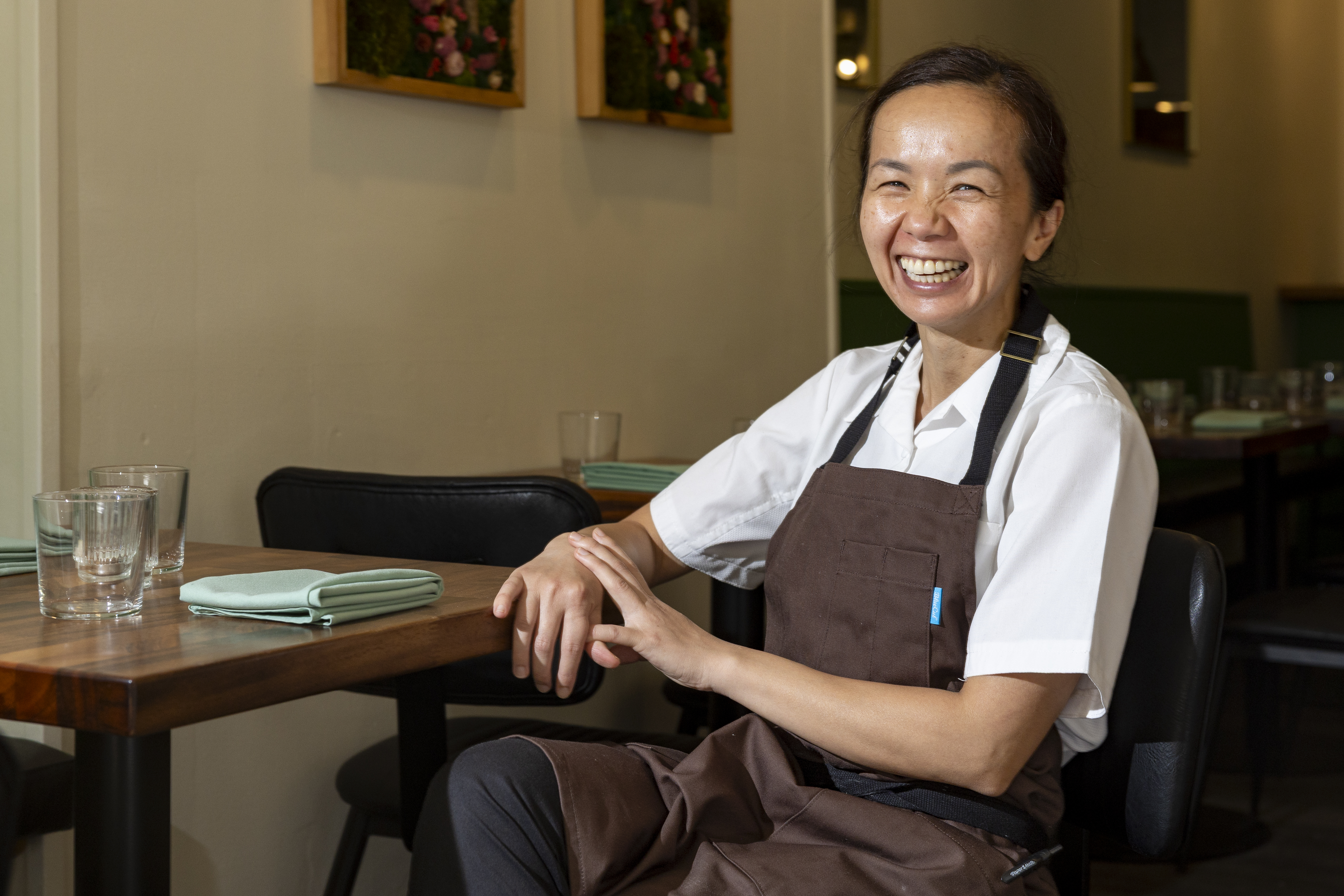
    After 20 years of cooking other people’s food around the region, Carolyn Nguyen is finally telling her own story.

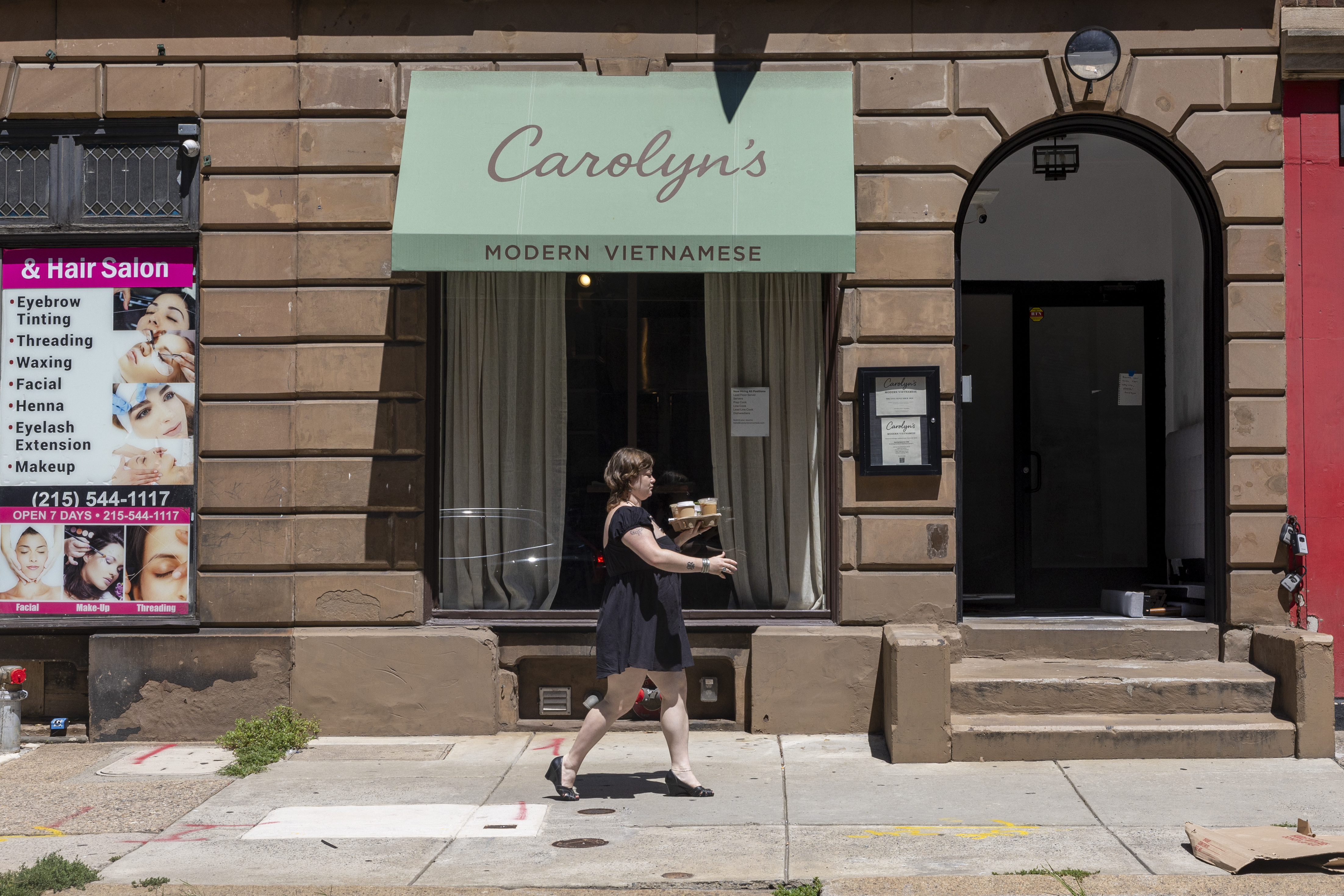
    Carolyn’s Modern Vietnamese opens Wednesday at 2015 Walnut St. with a menu that draws from Nguyen’s personal history: the Vietnamese and Louisiana foods Nguyen grew up eating, the French techniques she learned in culinary school and restaurant kitchens, and the freewheeling combinations that defined her food trucks and Revolution Taco, the fast-casual restaurant she co-owned in the space for a decade.

    Chef Carolyn Nguyen adds butter to a pan while cooking curry duck potato gnocchi.Aidan T. Gallo / Staff Photographer

    Bánh canh, a thick Vietnamese noodle soup, is presented as a seafood boil with poached shrimp, mussels, fried potatoes, and scallions. Thịt kho tàu, a Vietnamese braised pork dish, becomes slow-cooked grits topped with pork belly, a soft egg, and pickled vegetables. Hoi An chicken comes with ginger dirty rice, braised collards, and herb remoulade.

    Other large plates include lemongrass smoked beef short rib with fish sauce-caramel jus, warm potato salad, and cabbage slaw; corn and crab congee with crispy shallots, and herbs; and a salt-and-pepper cornmeal-crusted whole fish with ginger sauce.

    Carolyn Nguyen sprinkles Chinese chives onto her potato gnocchi.Aidan T. Gallo / Staff Photographer

    Curry duck potato gnocchi with Thai basil pesto carries a memory from Nguyen’s time at Old City’s Fork, where she worked for chef Terence Feury. At midday, she said, they would stop and make gnocchi together.

    The small plates ($12 to $22) include tofu hummus, mushroom and leek dumplings, polenta-daikon fries, dry aged beef in betal leaves, chicken liver mousse, and tasso-crab spring rolls.

    Pandan bread pudding dessert at Carolyn’s Modern Vietnamese.Aidan T. Gallo / Staff Photographer

    Large plates are priced from $24 to $46, plus a market-price whole fish. Desserts include coconut rice pudding with bananas Foster sauce and pandan bread pudding with coconut sauce.

    “It’s both coming home to the food that I grew up with and then the food that I’ve cooked and learned how to cook,” she said. “It’s food that I love.”

    Nguyen was born and raised in Amelia, in Louisiana’s St. Mary Parish. Her parents, Paul and Mai Nguyen, were born in Vietnam but met in the United States. Her father arrived in the late 1960s and later helped Vietnamese refugees settling around New Orleans. He met Nguyen’s mother while driving her to appointments. The family moved to South Carolina when Carolyn was 16.

    Lotus root salad with watermelon, corn, heirloom tomatoes, and Thai basil as served at a preview for Carolyn’s Modern Vietnamese.Kiki Aranita / Staff

    “I always knew I wanted to pursue cooking,” she said. “Unfortunately, in South Carolina, there wasn’t really any fine-dining environment.” When her sister moved to Philadelphia to go to dental school around 2005, Nguyen moved north with her and enrolled in the culinary school at the Art Institute of Philadelphia. The goal was working in New York, “but I fell in love with Philadelphia because of the food environment,” she said.

    Her first restaurant job was as a cook at Susanna Foo on Walnut Street. Besides Fork, she later worked at such restaurants as Nectar in Berwyn (also with Feury), Maia in Villanova, and Russet in Center City. At Peachtree & Ward catering, she met her initial business partner, Michael Sultan.

    Chef Carolyn Nguyen in her dining room at Carolyn’s Modern Vietnamese.Aidan T. Gallo / Staff Photographer

    In 2012, Nguyen and Sultan entered the food-truck business with Street Food Philly. Taco Mondo followed, and in January 2016, Nguyen, Sultan, and Alan Krawitz opened Revolution Taco, whose taco fillings included pork belly, duck, beef tongue, Korean fried chicken, smoked mushrooms, and curried cauliflower.

    The other partners moved on, but Nguyen still owns the Revolution location at the Comcast Center’s concourse. Eight months ago, she closed the Walnut Street location but kept the lease, figuring that converting its counter-service format into a full-service experience would be “easy-peasy – maybe a month.”

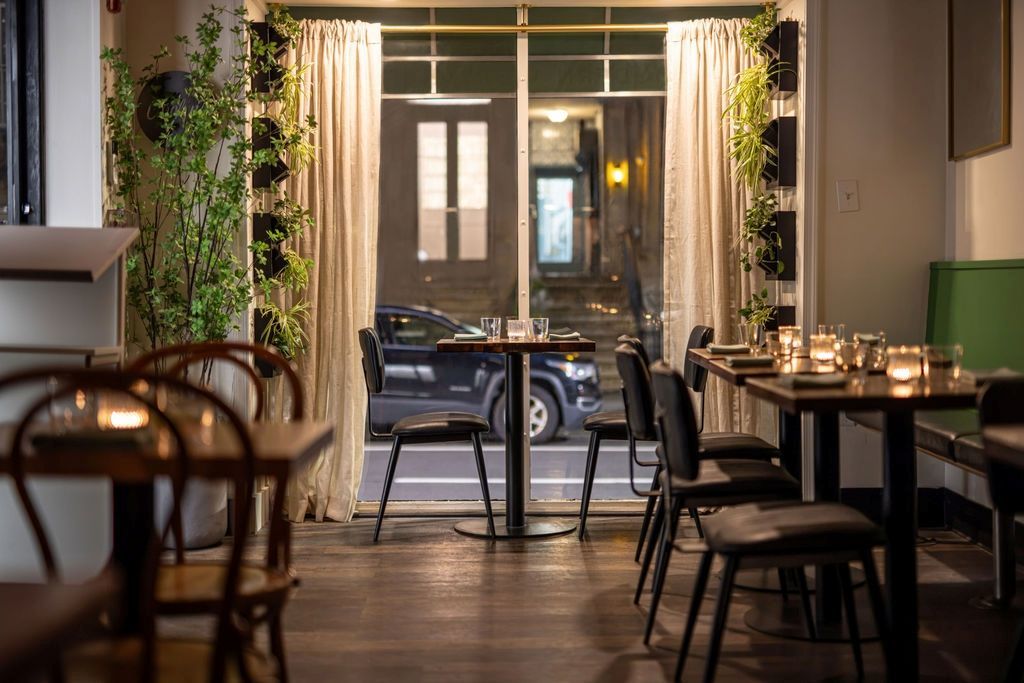
    Instead, the concept and design evolved as Nguyen worked through permitting and paperwork, much of which she handled herself. Carolyn’s has 28 seats at tables and along a banquette, plus five at a counter.

    The dining room is spare and contemporary, with cream-colored walls, butcher-block-style tables, black upholstered chairs, and a deep-green banquette. An arched brass-framed mirror and two narrow pieces of preserved-moss botanical art soften the black track lighting.

    Carolyn’s Modern Vietnamese, 2015 Walnut St., replaces Revolution Taco.Gab Bonghi

    Pale-green cloth napkins, metal chopsticks, and wooden rests carry the palette to the tables. The Louisiana connection extends to the soundtrack, with ragtime- and blues-inflected New Orleans jazz by early figures such as King Oliver and Buddy Bolden.

    Nguyen wanted the room to feel relaxed and unhurried. Green “represents growth and new beginnings for me,” she said.

    The bar will emphasize locally produced wines and spirits. Two cocktails are inspired by Nguyen’s parents: a tropical Mama Mai Tai for her mother and the Ông Xuyên (Mr. Xuyen) for her father, an avid gardener who grows dozens of plant varieties and keeps chickens at the family home.

    Her father once returned from a shrimping trip with fish bones and used them to make fish sauce in a barrel. Nguyen plans to put a small amount of house-made fish sauce in his namesake cocktail for a savory undertone.

    Carolyn’s Modern Vietnamese, 2015 Walnut St.Aidan T. Gallo / Staff Photographer

    Carolyn’s will start with dinner Wednesday to Saturday. Nguyen eventually hopes to add Tuesday dinner and a more casual lunch or brunch, potentially with more traditional Vietnamese dishes.

    Carolyn’s Modern Vietnamese, 2015 Walnut St., instagram.com/carolynsvietnamese. Hours: 5 to 9 p.m. Wednesday and Thursday, 5 to 10 p.m. Friday and Saturday. Reservations via OpenTable.

  • Charles views the Bayeux Tapestry, this time as king

    Charles views the Bayeux Tapestry, this time as king

    LONDON — The last time King Charles III of Britain saw the Bayeux Tapestry, in September 1987, he had to travel to its home in northern France. Accompanied by Diana, Princess of Wales, the then prince marveled at the over 900-year-old embroidery depicting William the Conqueror’s invasion of England in 1066, and he impressed local residents with a brief speech in French about its impact.

    On Sept. 2, almost 40 years later, Charles got to view the tapestry in notably different circumstances — now as king, just like the tapestry’s main characters, and this time without having to leave his home soil. Instead, he went to the British Museum in London, accompanied by Queen Camilla, to witness the tapestry’s return to Britain for the first time since it was made.

    The tapestry is not just a historic artifact, but a personal reminder of “what I like to think of as the French side of my family’s history,” Charles joked during an eight-minute speech at the museum. He also spoke of his joy at seeing the 220-foot-long embroidery in London, where it is the focus of a blockbuster exhibition that opened on Thursday.

    “The tapestry’s story is one of ambition and uncertainty, of oaths and journeys, of ships, councils, kings, comets, and consequences,” Charles said, calling it “70 meters of memory and artistry.”

    The British Museum hopes that attendance for the show, which runs through July 11, will rival the 1.6 million visitors who flocked to its “Treasures of Tutankhamen” exhibition in 1972.

    Before the speeches, British Museum curators had walked Charles along the tapestry and pointed out key scenes, including one showing the coronation of Harold Godwinson, England’s last Anglo-Saxon monarch, and another depicting Godwinson’s death at the Battle of Hastings. In that scene, the dying monarch clasps an arrow that has thwacked his eye.

    Although the tapestry shows a time of conflict between France and England, the recent event was a sedate affair, bringing together President Emmanuel Macron of France and Prime Minister Andy Burnham of Britain and their wives, alongside Charles and Camilla.

    The tapestry recounts a conflict, Charles said during his speech, “yet here it is today, nearly 1,000 years later, as a precious symbol of trust at a time when trust seems sadly to be in short supply between nations.”

    Macron also spoke at the museum, saying how the Norman invasion depicted in the tapestry “was just the start” of events that have entwined Britain and France, including “marriages, alliances, inheritances, and successions” as well as shared cultural artifacts.

    The tapestry’s reappearance in Britain was a long time coming. Embroidered in the 11th century, most likely in Canterbury, England, it was later moved to Bayeux, France, where it eventually was listed in a 1476 inventory of the town’s cathedral.

    Over the past 70 years, British officials have repeatedly tried to borrow the artwork — including for the coronation of Elizabeth II, Charles’ mother — but French art experts insisted that it was too fragile to travel.

    That situation changed in 2018, when Macron announced that France had agreed to lend the tapestry to Britain as a gesture of friendship between the two nations. The loan has been able to go ahead thanks to techniques developed by conservation experts to ensure that the tapestry could travel to London.

    Last year, Macron said in a speech at the British Museum that Charles had been a key figure behind the scenes encouraging the project.

    Charles has long been a supporter of arts and culture, and as a prince, he often discussed his love of traditional art and architecture in interviews. In 2004, he co-founded an academy for traditional arts, whose short courses include training in weaving and embroidery. And his foundation, in collaboration with Chanel, runs specialist embroidery courses aimed at students who want to work in high-end ateliers.

    The royal has also added stitches to several artworks inspired by the tapestry. In 2000, he sewed the final stitch for the New World Tapestry, an attempt to depict British colonialism in the Americas that has since been accused of perpetuating racist stereotypes.

    In 2012, on a visit to Alderney, one of the Channel Islands, Charles contributed a few stitches to a work of embroidery that aims to continue the Bayeux Tapestry’s story beyond its current end point depicting William the Conqueror’s successful invasion of England.

    Kate Russell, a founder of that tapestry project, said in an interview that during his visit Charles urged people to go and see the original tapestry in Bayeux. She also said it was obvious why he would love the tapestry given the story it relays: “You can’t be a member of the English royal family and not have a sense of the ties to those events.”

    Toward the end of Charles’ speech, the king switched to French and pointed out that the tapestry’s final scenes were missing. (They were likely worn away over time.)

    “It falls to each generation to add its own stitch to the fabric of our shared history,” Charles said, “from this evening and into many generations to come.”

    This article originally appeared in the New York Times.

  • Villanova’s Brynn McCurry to miss 2026-27 season after surgery to repair torn ACL and meniscus

    Villanova’s Brynn McCurry to miss 2026-27 season after surgery to repair torn ACL and meniscus

    Villanova senior forward Brynn McCurry announced Tuesday on social media that she underwent surgery to repair a torn right ACL and meniscus on Sept. 1. She will miss the 2026-27 season.

    “I’m walking into this next season of healing with a heart full of peace because this game has given me so much more than it took,” McCurry wrote in an Instagram post. “Basketball has always been such a meaningful part of my story, but it was never the entirety of it.”

    Losing McCurry is a major blow to Villanova. While the injury occurred in April and allowed coach Denise Dillon time to fill McCurry’s spot, it will be difficult to fill her workload.

    McCurry, a 6-foot-1 forward, was coming off a career-best campaign in which she started 29 of 33 games and was the team’s second-leading scorer with 10.7 points per game. She also won the Big East’s Most Improved Player award.

    Projected as one of four returning starters for Villanova, McCurry’s season-long absence will test Villanova’s depth at forward. The Wildcats have solid pieces in their frontcourt, headlined by 6-3 Quinnipiac transfer Anna Foley, and returning starters Jasmine Bascoe, Kelsey Joens, and Kennedy Henry.

    Dillon also will have to find a combination to fill McCurry’s minutes. She averaged 26.5 minutes last season, third most on the team behind Henry and Bascoe.

    McCurry suffered two prior knee injuries — she tore her left ACL and meniscus during her senior year of high school and tore her right ACL and meniscus before her sophomore season at Villanova. She then tore the UCL in her right arm before the start of her junior year and underwent Tommy John surgery this past April, two days after her third knee injury.

    The Wildcats open their season on Nov. 1 in Rome as a part of the Eternal City Tip-Off. They’ll face Notre Dame in their first meeting in eight years.

  • Islamophobia: A 9/11 legacy that refuses to die | Will Bunch Newsletter

    Islamophobia: A 9/11 legacy that refuses to die | Will Bunch Newsletter

    For anyone who noticed I was gone, I’m back. It was a weird two weeks of flex time — half vacation, including jaunts to a couple of Jersey Shore points (see below) and an OG family reunion in the Hudson Valley, and half working on my biggest investigative reporting project in several years. It’s coming very soon. Stay tuned.

    If someone forwarded you this email, sign up for free here.

    On the 25th anniversary of 9/11, anti-Islamic hate is getting worse

    Amina Barhumi (center), the advocacy and policy lead of the Muslim Civic Coalition, prays with members of the Council on American-Islamic Relations outside the Will County Courthouse in Joliet, Ill., where a jury found defendant Joseph Czuba guilty of murder and hate crime charges in February 2025.Nam Y. Huh

    Friday is the 25th anniversary of the Sept. 11, 2001, terror attacks that killed 2,977 Americans and their paranoid aftermath — enough years for that grim day to harden as history and to look back on things from that era, like orange-coded terror alerts, as increasingly hazy memories.

    The footprints of the World Trade Center’s twin towers are now a memorial attached to a well-attended museum. Osama bin Laden is dead, and the last U.S. combat troops finally left Afghanistan five years ago. But there is one thing that spiked immediately after the attack and never really went away.

    In fact, anti-Islamic hate is a bigger force in our politics than it ever was. Republicans, desperate to cling to power in an election when all the cards — including another “dumb war” in the Middle East and sky-high gas prices — are stacked against them, are frantically waving the bloody shirt of 9/11 and the Islamophobia it inspired.

    You can see it in Lower Manhattan, where the man who was New York City’s mayor in 2001, Rudy Giuliani, is now saying that the idea of the current mayor — Zohran Mamdani, the first Muslim American to hold the post, who was only 9 years old on the morning of the attack — attending the 9/11 memorial ceremony “offends me.” His comments were part of a bigger racist diatribe that somehow tied Mamdani to a Muslim plot aimed at “taking over certain parts of America and certain parts of Europe.”

    You can see it in Michigan, where a wave of anti-Muslim hate has surged after an Islamic doctor and public health expert, Abdul El-Sayed, won the Democratic primary for U.S. Senate. This includes events like “the Christian Crusader March” organized by the Donald Trump-pardoned Jan. 6, 2021, insurrectionist Jack Lang, which flooded the city council of majority-Muslim Dearborn with anti-Islam placards and even a Nazi flag.

    And you can read all about it when a sitting congressman like Tennessee’s Andy Ogles has no problem taking to the cesspool of Elon Musk-owned X last March to write that “Muslims don’t belong in American society.” The fact that the fanatically pro-Trump Ogles lost his GOP primary a couple of months later could have been a warning to his fellow Republicans to dial it back, but few seem to have gotten the memo as Sept. 11, 2026, arrives.

    To be clear, I don’t believe Islamophobia is the only permanent scar from the day the United States was attacked by four planes and their 19 hijackers who were followers of bin Laden’s Islamist brand of extremism. It’s been five years — although it feels like yesterday — since the 20th anniversary of the attacks, when I wrote that the fear and loathing of the 9/11 aftermath hadn’t evaporated but instead metastasized.

    I argued in September 2021 that the “conspiratorial mindset we embraced in the wake of 9/11 — would be turned against nations that had nothing to do with the attacks, against immigrants in general, against legitimate protest, and finally, inevitably, against one another.”

    I could write that exact same column today … so I won’t. The role the attack played in pointing America toward fascism hasn’t changed, but it is striking after five more years that while many overt symptoms of a 9/11 hangover have subsided over the years, the virus of Islamophobia has only grown more persistent.

    Prejudice toward Muslims existed, of course, yet it exploded after the attacks on the World Trade Center, the Pentagon, and the fourth jetliner that crashed in Shanksville, Pa., in ways both large and small.

    Large: On Sept. 15, 2001, a Dallas-area neo-Nazi killed a Pakistani immigrant working in a convenience store — the same day a Sikh native of India was also murdered at a Mesa, Ariz., gas station by a man who believed the victim was Muslim. Smaller but not insignificant: Islamic schoolchildren from coast to coast were bullied and slurred by classmates who called them “terrorists” or just “Osama.”

    At the highest levels of the U.S. government, there was schizophrenia. Many recall that the president, George W. Bush, visited the Islamic Center of Washington, D.C., to insist that U.S. Muslims “love America as much as I do,” had no connection to the foreign extremists, and that “Islam is peace.”

    Less well-remembered is the federal operation that targeted thousands of Muslims and South Asians — especially men under the age of 45 — in the weeks immediately after the attacks. They were detained, interrogated, fingerprinted, or subjected to deportation proceedings.

    In a new piece, the “war on terror” historian Spencer Ackerman chronicled how agents went through a Brooklyn neighborhood known as Little Pakistan, dropping cards under doors with instructions such as: “This is the FBI. This is the INS. This is the NYPD. We need to talk. I have questions. Call me. ASAP.” It’s believed that thousands found the post 9/11-climate so hostile that they left Little Pakistan … and the United States.

    Islamophobia has managed to both persist and change over the last quarter century. Certainly one can’t imagine Trump going to a mosque and acknowledging that Islam is a peaceful religion; the man who entered national politics by calling for — and partially enacting — a “Muslim ban” just last month labeled Democratic candidates in the midterms as “jihadists.” Today, the fish stinks from the head, and those middle-school punks who called their classmates “terrorists” are all grown up and running for office in November.

    To some extent, it’s one step up and one step back for American Muslims. The stunning success of Mamdani, who’s more popular than ever after eight months in City Hall, and the rise of El-Sayed and other mostly progressive young Muslim American politicians is a next chapter of immigrant success that seems to have rattled the ancient U.S. hierarchies around race and religion.

    But mostly it feels like Republicans — seeing that the crowd doesn’t want to hear the new stuff like the Iran war or data centers — have reverted to playing the hits, like railing against “men in women’s sports” in a desperate bid to get an unearned encore.

    That’s pathetic yet predictable, but one thing I find appalling is that a news media that ought to know better keeps going along with this malarkey. That includes grilling every Democrat who appears on TV about what they think about a Turkish American Twitch streamer named Hasan Piker, even as most voters have never heard of Piker while some subjects of these inquisitions have never met him.

    Last week, CBS News — purchased by a pro-Trump billionaire who put the over-her-head conservative opinion writer Bari Weiss in charge — ran one of the most irresponsible pieces of journalism I’ve ever read, implying there was something sinister about El-Sayed’s anodyne early 2020 social media comments that America should take the coronavirus seriously because it had killed (at that time) as many people as died on 9/11. One CBS staffer told the website Status that the dubious hit piece on El-Sayed was “shameful,” adding, “The racism is overt.”

    The staffer was being kind.

    Someday — hopefully in my lifetime — there’ll be a U.S. president who won’t only call Islam a religion of peace, but will also stop dropping bombs on Muslim countries. Until then, demagogues are going to demagogue, but the media needs to be calling out the racists, not empowering them. If we keep giving in to our worst instincts, then — as folks used to say 25 years ago — the terrorists will have won.

    Yo, do this!

    • One reason my two-week hiatus passed so quickly was that I immersed myself (and thus finished too quickly, perhaps) in this month’s riveting audiobook, Housewives of the Underground: The Untold Story of the Women Who Made the JFK Assassination Our Most Enduring Mystery by the Atlantic writer Kaitlyn Tiffany. The book tells the story of how the majority of Americans came to doubt the Warren Commission’s official story of John F. Kennedy’s 1963 murder in Dallas through the persistence of very average citizens — including the three middle- or nearing-middle-age women of the 1960s at the center of Tiffany’s compelling narrative. This is not “another Kennedy assassination book,” but rather a robust and much-needed tale about regular folks successfully challenging their government to do better that resonates in the Trump era.
    • I did somehow find time to make the short drive (90 minutes from Center City Philadelphia) to Long Branch, N.J., for a Bruce Springsteen pilgrimage centered on a visit to the new and impressive Bruce Springsteen Center for American Music. It was just our luck that our tickets were for the day after the Jersey rock icon stunned fans with a surprise visit there (and also popped on stage that night at Asbury Park’s Stone Pony). But the collection of artifacts — amplified by a film and listening booths, and illuminating not only Springsteen’s 60-year career, but the artists from soul, country, and early rock ‘n’ roll who inspired a legend — is well worth the trip. Augment the day, as we did, with a trip to Asbury Park’s revived boardwalk and a drive-by of Bruce’s childhood homes in nearby Freehold. Bonus: Springsteen’s remarkable “Land of Hope and Dreams” show that wrapped up his 2026 tour at Philadelphia’s Xfinity Mobile Center in May was recorded for a full-length film that begins streaming Wednesday!

    Ask me anything

    Question: Given the current outbreak of measles in Pennsylvania and the start of the school year, how long will it be until the first case of polio is diagnosed? — @mcsween66.bsky.social via Bluesky

    Answer: Hopefully a long time, or never, although polio has not been completely eradicated and there was a case earlier this year in Rockland County, N.Y. (here’s a good explainer of how that happened and what it means). Experts are right to be worried if low U.S. vaccination rates persist. But right now I’m more worried about something else that your question hints at: a stunning lack of information about the measles outbreak in Lancaster County, which seems to have caused two deaths, and which I know much more about from reading an article in the Atlantic than from our public health officials. At the core of this seems to be the politics of a Democratic governor in Josh Shapiro and a Trump-y GOP, including the elected county coroner in Lancaster County as well as in Washington. Public health is way too important to get tangled up in political spin.

    What you’re saying about …

    My question from late August about transgender politics in the November election drew a spirited response from readers, most of whom agree with me that Democrats should openly embrace transgender rights and not either run away or equivocate on the issue. The most passionate response came from Zoë Sparks, a transgender woman, who wrote it would be best for Dems if they “stood up boldly, made it an issue of civil rights, pointed out that history, statistics, science, and medicine are all on our side and MAGA has only fake history, fake statistics, pseudoscience, and quack medicine in their favor …” But Arlene Stach argued that it’s commonsense politics to support keeping transgender athletes who were born with male biology out of women’s sports. She wrote, “If the Democrats think this will win for them, they are mistaken!”

    📮 This week’s question: The passage of Labor Day means it will be Election Day in what will feel like the blink of an eye. Democrats seem all but certain to gain at least the handful of seats needed to retake the House, but the Senate is up for grabs. Do you think Dems will win at least 51 Senate seats, and why? What are the key races? Please email me your answer and put the exact phrase “a Democratic Senate” in the subject line.

    Backstory on the mysterious masked men of Dover

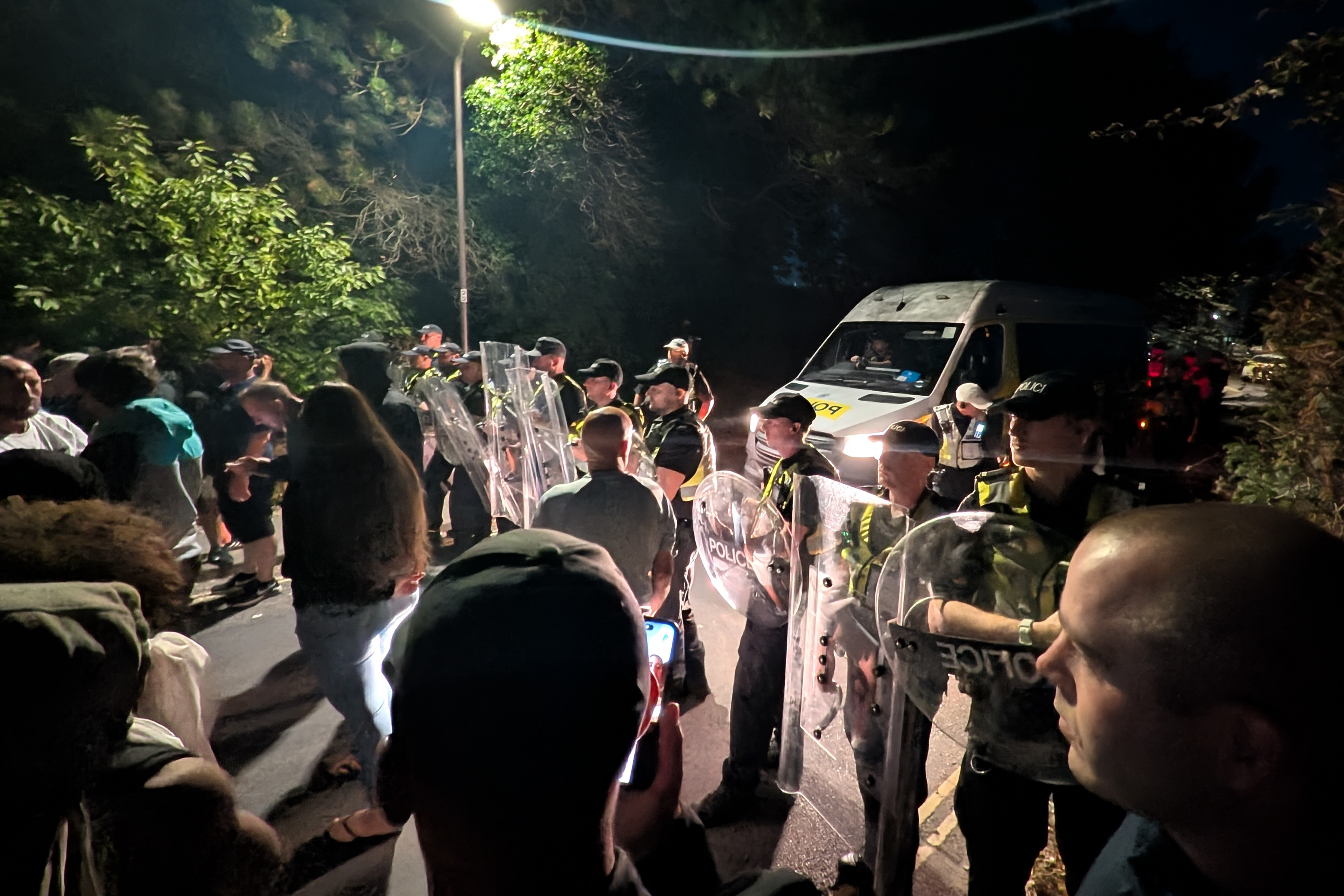
    Police officers form a line to block protesters near Eastney Beach, in Portsmouth, England, on Sunday.PA

    The myth that nothing ever happens on Labor Day weekend was punctured repeatedly in 2026, including the gruesome Miami crash of a cargo jetliner that killed five people on the ground and an armed man lunging at Ohio Democratic gubernatorial candidate Amy Acton at a campaign event. But the weekend’s most puzzling and arguably most alarming news was barely covered on American television: the sudden appearance in two British port cities — Dover and Portsmouth — of hundreds of black-clad, right-wing male protesters, their heads covered in balaclavas, there to cause chaos and protest the arrival of migrant boats.

    The mysterious men — eventually tied to a self-proclaimed Christian group called the Patriot Platform, led by a former associate of the anti-Islamic, far-right political activist Tommy Robinson — attempted to block lifeboats carrying migrants from landing, and also tried to blockade their buses once on shore, while snarling local traffic as Dover’s famed white cliffs loomed in the background. The protests were a dramatic public illustration of the rising tide of right-wing reaction — much of it xenophobic rage over refugees — that has increasingly roiled politics in the United Kingdom, posing a threat to the milquetoast, inept Labour government.

    But, in the spirit of the U.K.’s most famous fictional detective Sherlock Holmes, the real mystery along the British seacoast was the dog that did not bark. Although police did eventually restore order in the two port cities, the authorities were painfully slow to respond to such a large-scale civil disturbance, and few or no arrests were made. That’s in stark contrast to the frequent images over the last year of grandmothers and other peaceful, placard-carrying protesters getting dragged away by British bobbies when protesting for a free Palestine.

    The reaction from the government of new Labour Prime Minister Andy Burnham was equally languid. A Burnham spokesperson, pressed by a reporter for a political response, would only call the shocking protests “an operational matter for the police to set out their response to the protests on the ground. So I will leave them to respond to that.” Winston Churchill, who (despite his many flaws) famously promised to fight fascists “on the beaches,” must have been spinning in his grave.

    Speaking of Nazis, the protests and the sudden police embrace of pacifism coincided with a regional victory in a battered former industrial corner of eastern Germany for the extreme right AfD (Alternative for Germany) Party, the unholy heirs to Adolf Hitler’s legacy. This weekend’s echoes of Western Europe’s failed appeasement of the Nazis in the late 1930s are almost as troubling as the thuggish extremism itself. The coddling needs to end, or else we are condemned to repeat the absolute worst of our past.

    What I wrote on this date in 2016

    The protests in South Dakota, led by its Indigenous people, against the Dakota Access oil pipeline that erupted in the late summer of 2016 were a peak moment of 2010s political activism, and a lost cause (the pipeline opened the following year, after Donald Trump became president) that was totally worth fighting for. On this date 10 years ago, I was crusading — also unsuccessfully — for the Pennsylvania State Employees’ Retirement System (PSERS) to drop its roughly $192 million investment in the pipeline owner. I wrote, “Pennsylvania doesn’t have a great track record of environmental leadership — but there’s no reason why that history can’t be altered.”

    Check out the rest: “Money trumps morals when Pa. invests your tax dollars.”

    Recommended Inquirer reading

    • I’ve mentioned it before in this space, but no one has done more to keep the tradition of the great American sports columnist alive than The Inquirer’s Mike Sielski. Last week he published a remarkable — and remarkably timely — deep dive into the case of a then-19-year-old from Pennsylvania Amish country whose addiction to online sports gambling and social isolation led him to make a bomb threat against the U.S. Open tennis tournament. The case was hardly an isolated incident, but the hallmark of an alarming trend: the growing number of threats not just against major sporting events but individual athletes, as more and more people — especially vulnerable young men like the one Sielski chronicles here — get addicted to the ubiquitous, heavily advertised betting sites. The piece is a reminder that great storytelling doesn’t need to be a dying art — but also that in-depth journalism requires time and your support. You provide that — and get some great reads in return — when you subscribe to The Inquirer.

    By submitting your written, visual, and/or audio contributions, you agree to The Inquirer’s Terms of Use, including the grant of rights in Section 10.

  • U.K. government bans goods from Israeli settlements and accuses settlers of ‘ethnic cleansing’

    U.K. government bans goods from Israeli settlements and accuses settlers of ‘ethnic cleansing’

    LONDON — The United Kingdom on Tuesday banned trade with Israeli settlements in the occupied West Bank, where it says “settler terrorists” are carrying out “ethnic cleansing” of Palestinians, in a significant toughening of Britain’s stance toward a longtime ally.

    France and Canada announced they would take similar action in an attempt to prevent expanding settlements and growing violence from making it impossible to establish a future Palestinian state.

    Israel responded angrily and said it would close the British consulate in Jerusalem.

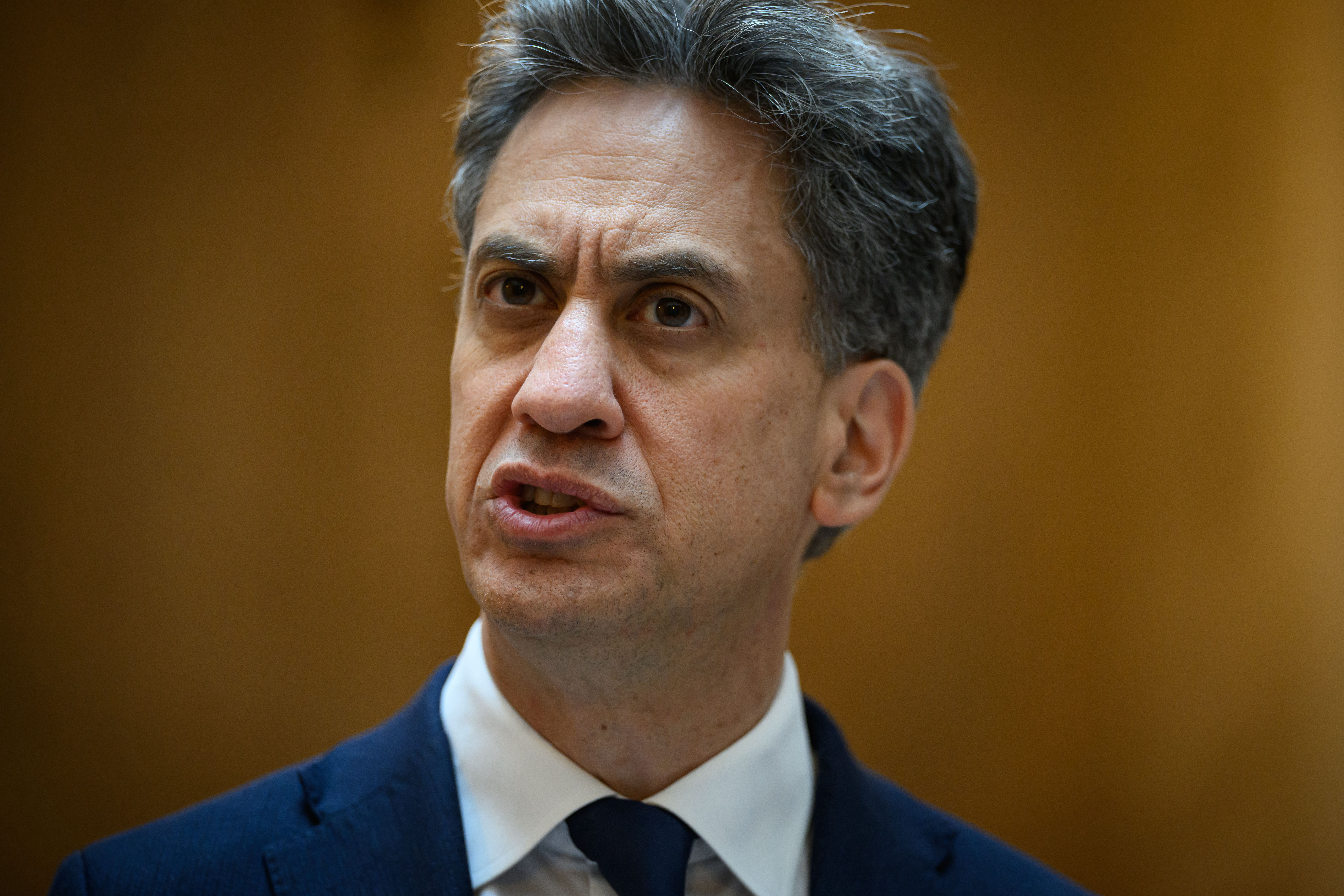
    Foreign Secretary Ed Miliband said the U.K. will ban imports of all goods from the settlements and bar companies from providing services for the settlements, including financing, construction, infrastructure, real estate, and advertising.

    “I do not believe the British people want us supporting the occupation by accepting products from settlements in our shops and supermarkets,” Miliband said.

    In a joint statement, British Prime Minister Andy Burnham, French President Emmanuel Macron, and Canadian Prime Minister Mark Carney said settlement expansion and settler violence in the West Bank “pose a direct and urgent threat” to the two-state solution. They said they decided to act “before it is too late.”

    The economic impact is likely to be limited, since the settlements produce only a small amount of largely agricultural exports. But the move is a symbolic expression of displeasure with Israel by some of its closest allies, and it offers a new sign of the Israeli government’s growing isolation as a result of the Gaza war.

    Miliband said that he feels “a deep sense of shame about what has unfolded in Palestine under the eyes of the international community.”

    “We will not acquiesce in the destruction of the two-state solution,” he said.

    Israeli Foreign Minister Gideon Sa’ar condemned the “despicable” move. He said Israel would expel U.K. representatives from a joint military center monitoring the Gaza ceasefire and end U.K. training of the Palestinian Authority’s security forces in the West Bank. In addition, Israel barred entry to a dozen British lawmakers and other U.K. citizens whom Sa’ar said were “involved in antisemitic and anti-Israel activity.”

    Settlements have expanded under Netanyahu

    Under the ultranationalist government of Israeli Prime Minister Benjamin Netanyahu, settlement construction in the West Bank — seized by Israel in the 1967 Mideast war — has surged. Netanyahu’s government views the West Bank as the biblical and historical homeland of the Jewish people and is opposed to the creation of a Palestinian state.

    The international community overwhelmingly considers such construction to be illegal. Britain and other countries have voiced particular concern about the E1 settlement project approved by Israel, which would effectively cut the territory in two.

    There have been marked increases in attacks by settlers on Palestinians, evictions from Palestinian towns, Israeli military operations, and checkpoints that choke freedom of movement, as well as several Palestinian attacks on Israelis.

    “The British government agrees that there is ethnic cleansing of Palestinians in areas of the West Bank, perpetrated by settler terrorists,” Miliband said. He said there had been “houses bulldozed, roads and public infrastructure destroyed, families displaced from their homes.”

    The ban on trade will be in place in six to nine months, Miliband said. He said Denmark, Finland, Iceland, Poland, Portugal, and Sweden have pledged to “support further action.”

    The Netherlands, Ireland, Belgium, Spain, and Norway have either banned goods from settlements or are in the process of doing so, he said.

    Miliband also tightened Britain’s embargo on weapons sales to Israel for use in Gaza to include arms “that materially contribute to the occupation” of Palestinian territories.

    Move follows U.K. recognition of a Palestinian state

    Britain recognized Palestinian statehood last year in an attempt to revive dwindling efforts to achieve a two-state solution.

    In a change of Britain’s position, Miliband said Tuesday that the U.K. regards Israel’s occupation of the West Bank, and not just the settlements, as illegal.

    The new position is likely to be welcomed by many Labour voters and lawmakers, who have urged the government to go further in sanctioning Israel and supporting the Palestinians.

    But some expressed concern that the sanctions could boost support for Netanyahu, who is facing a tough battle for reelection in October, or lead to attacks on British Jews. The U.K.’s chief rabbi, Ephraim Mirvis, said it was “a dark day for British Jews.”

    Opposition Conservative Party foreign affairs spokesperson Tom Tugendhat said that “turning Israel into a pariah will risk sectarian division in our own country and risk a further rise in antisemitic violence on our own streets.”

    Announcement sparks anger in Israel

    Before Miliband’s announcement, Itamar Ben-Gvir, Israel’s hard-line public security minister and a settler leader, called on Netanyahu to recognize Argentina’s claim to the Falkland Islands, a British overseas territory in the South Atlantic known in Argentina as the Malvinas.

    Israeli President Isaac Herzog called the ban “a grave miscalculation, a decision that will fall on the wrong side of history.

    “In the current context, it would be a gross interference in the democratic elections of a sovereign nation,” he said.

    The move was also criticized by the U.S. ambassador to Israel, Mike Huckabee, a longtime supporter of the settlements, who said that it was “discrimination against the Jewish people.” He said the U.K. could face “repercussions or retaliations” from the U.S. if it imposed the sanctions.

    Several U.S. states have laws banning contracts or investments with businesses that boycott Israeli firms, including those based in the West Bank.

    Burnham’s office said he spoke with U.S. President Donald Trump on Monday and set out “the U.K.’s commitment to working toward peace and security in the region” and achieving a two-state solution. There was no word on how Trump responded.

    Miliband, whose parents came to the U.K. as refugees from the Nazis, told lawmakers he spoke “as a proud British Jew” and supporter of Israel.

    “Our argument is not with the people of Israel, with whom the U.K. has unshakable bonds,” Miliband said. “Our argument is with the conduct of its government.”

  • A huge, 857-unit development is planned in Lumberton Township as part of its affordable housing mandate

    A huge, 857-unit development is planned in Lumberton Township as part of its affordable housing mandate

    Property tax breaks from Lumberton Township are part of the redevelopment agreement for Lumberton Village, a $77-million project of 857 proposed residential units on undeveloped farmland and wooded acreage in the relatively small town.

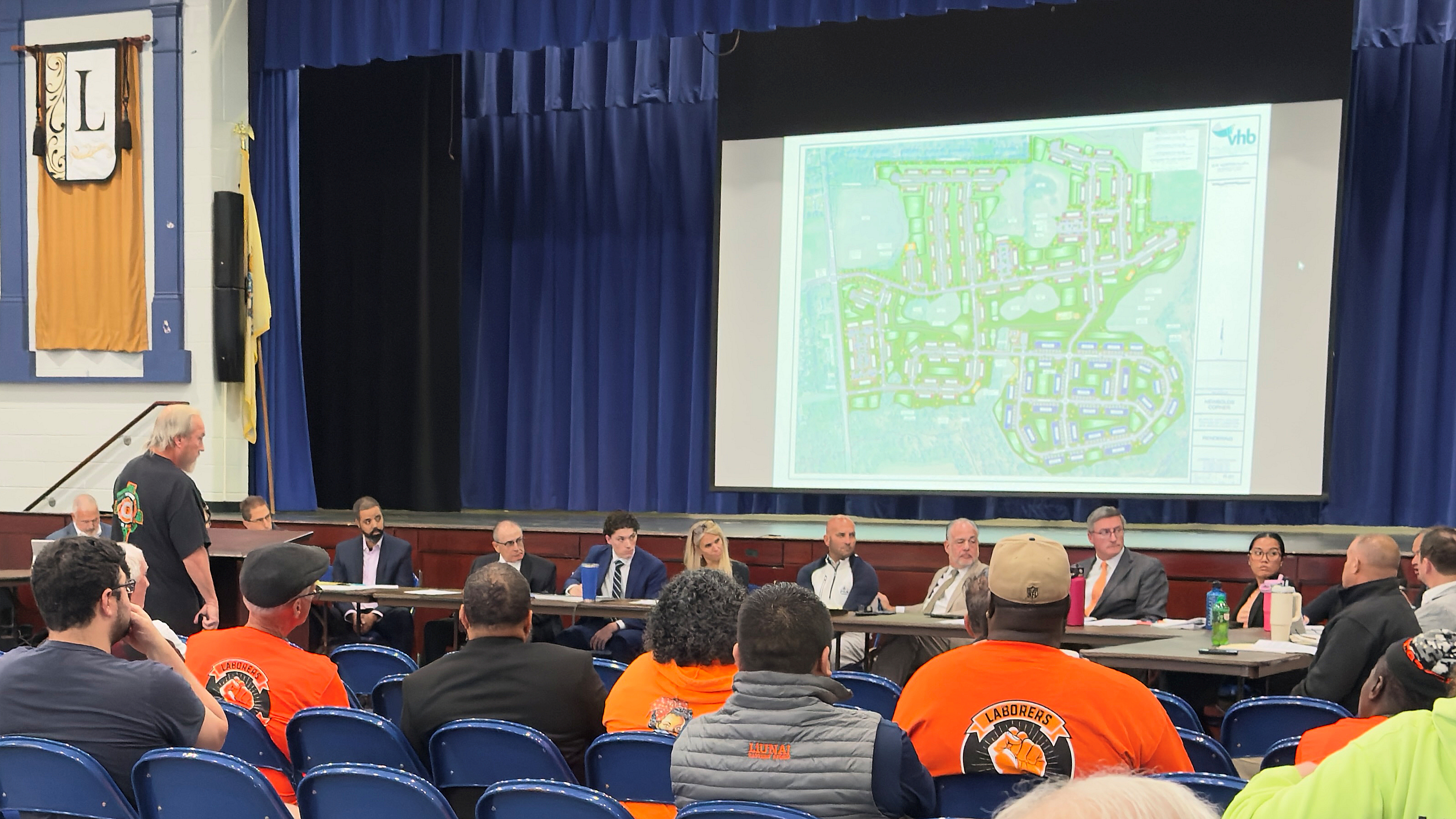
    National homebuilder D.R. Horton Inc.’s project, which the Burlington County town maintains is an essential part of its commitment to affordable housing, is scheduled to go before the Township Land Development Board on Thursday at 7 p.m. for preliminary and final site plan approval.

    Despite requiring board approval, the Horton project is viewed as a lock because of the affordable housing component, Township officials said at a community meeting.

    “We’re stuck. We’re under court order. We have to proceed,” the Township affordable housing lawyer, Michael Herbert, of the Parker McCay firm, told residents at the May meeting in Bobby’s Run School. Herbert said the property at Newbolds Corner and Eayrestown Roads has been part of the township’s affordable housing plan for many years.

    Lumberton Village would include 506 market-rate townhouses, 179 senior citizen townhouses, 92 affordable family apartments, and 80 age-restricted affordable apartments.

    A 30-year Payment in Lieu of Taxes (PILOT) program for the 172 affordable and age-restricted apartments and a five-year tax abatement/exemption plan for the 179 age-restricted market rate units are included in the township redevelopment agreement, which was signed in August.

    The project would increase the number of housing units in the town by about 17%. The Census Bureau’s American Community Survey estimated that Lumberton had 5,036 housing units in 2024, when the population was estimated at 12,882.

    Under the plan, not all of the 412 acres that D.R. Horton purchases at the Lumberton site would be used for development. The Burlington County Commission in June approved spending up to $3.73 million to buy and preserve 226 acres at the southern end of the property under the Farmland Preservation program.

    A traffic light will be installed at one of the development’s two entrances on Eayrestown Road. D.H. Horton’s traffic consultant, Shropshire Associates LLC of Atco, projects that the residential development will generate 449 trips during the weekday morning peak hour and 435 trips during the afternoon peak hour.

    70and73.com is a hyperlocal news site focused on South Jersey, including the communities of Cherry Hill, Evesham, Mount Laurel, Voorhees, Medford, Medford Lakes, and Moorestown.

  • With more modes of speech, why aren’t we freely communicating?

    With more modes of speech, why aren’t we freely communicating?

    We have never had so many ways to speak. Yet rarely has speaking felt so fraught.

    A defining feature of this moment in history is its extraordinary capacity for speech. Social media offers direct pathways to audiences. Generative tools can now help us refine our own voices. The barriers to speaking have never been lower.

    But the expansion of our ability to speak has not necessarily strengthened the conditions for free expression or led to more meaningful exchange. The same technologies that connect us to vast audiences also keep us within communities of shared views. And even as avenues for expression have multiplied, many Americans feel less certain that they can speak freely.

    New research from the John S. and James L. Knight Foundation and SSRS found that across activities from journalism and art to protest and political expression online, barely half of Americans believe they can exercise their expressive rights freely.

    Just 54% say they feel “very” or “mostly” free to express their political views without government interference or punishment. Asked to think back 10 years, 72% said they had felt that free. Looking ahead 10 years, only 42% expect to. While some among us may feel this more or less acutely than others, the pessimistic outlook holds across a host of different demographic and partisan groups.

    There may be more ways to speak than ever, but Americans are increasingly uncertain about participating in our nation’s public conversation. This should alarm us all.

    The First Amendment protects our right to speak, but free expression also depends on venues where people can actually use that right. In recent decades, we have invested enormously in technologies that increase the quantity of expression while neglecting the places — whether civic institutions, public spaces, or so-called third places — where we cultivate social trust. The spaces where constitutional rights grow into habits of forthrightness, curiosity, listening, and mutual respect; where we learn to recognize one another as participants in a shared civic life.

    The First Amendment gives us the framework. It’s up to us to foster the spaces where it comes to life.

    Critical infrastructure

    Our civic institutions are part of the critical infrastructure of free expression. They create opportunities for discovery and encounters that enrich our understanding. Museums invite us into the complexity of the past, revealing the stories, context, and perspectives that give history texture and meaning. Universities bring competing ideas into conversation and subject them to scrutiny, an aspiration that has always been messier in practice than in principle. Libraries give us the freedom to follow our curiosity, pursue knowledge on our own terms, and venture beyond the familiar. Where they still exist, local newsrooms surface stories that might otherwise go untold.

    None of these institutions gets it right every time. But their value lies partly in creating environments that welcome people in while making room for the friction that meaningful inquiry inevitably produces: disagreement, challenge, surprise, and sometimes a change of mind.

    The same technologies that connect us to vast audiences also keep us within communities of shared views.

    The information economy generated enormous investment in the technologies that have reshaped our civic life. But investment in the institutions that help us make sense of these changes has not kept pace.

    Philanthropy has an important role in this work. It can invest where markets won’t and governments can’t. It can absorb the risk that comes with genuine experimentation in new approaches to civic learning and engagement. It can identify and bring to scale emerging, community-led models that renew the institutions, relationships, and face-to-face experiences that remain essential to democratic life, even as more of our lives move online. And it can help institutions lower barriers and welcome new audiences.

    A new partnership between the National Constitution Center and Knight Foundation is one effort to put these ideas into practice. On Wednesday, the center will host its inaugural First Amendment Day, inviting visitors to explore our expressive freedoms through history, conversation, creativity, and civic engagement. They will have opportunities to exercise their own rights, encounter the perspectives of others, and join conversations about the changing landscape of speech being shaped by new technologies. Later that evening, Govs. Josh Shapiro (D., Pa.) and Spencer Cox (R., Utah) will discuss free expression and civic dialogue at the Kimmel Center. And to ensure this special programming is available to as many people as possible, admission is free to all.

    The goal is not simply to teach what the First Amendment says, but to practice the culture it makes possible.

    Philadelphia has a rich history of civic discourse and debate. It is here that these ideas took root. The Civic Decade ahead, as we celebrate the 250th anniversaries of the Constitution and the Bill of Rights, offers us a chance to invest anew in our institutions of self-government. Building a culture of free expression should be part of that work.

    We have more ways to speak than any generation before us. We must be just as ambitious about nurturing the spaces that remind us not to take our First Amendment rights for granted.

    Julie Silverbrook is the chief content and learning officer of the National Constitution Center. John Sands is vice president of information and society at the John S. and James L. Knight Foundation.

  • A controversial development plan calls for 743 homes to be built on the historic Freeway Golf Course in Gloucester Township

    A controversial development plan calls for 743 homes to be built on the historic Freeway Golf Course in Gloucester Township

    A controversial Gloucester Township development plan for 743 residential units on the site of the nation’s first African American-owned, 18-hole golf course is scheduled before the zoning board on Wednesday.

    Freeway Golf Course was purchased by four Black businessmen in 1967 and saw the last round of golf played in November 2015. The 154-acre property at 1858 Sicklerville Rd. was offered for sale in 2016.

    Hamilton-based US Home LLC, doing business as Lennar, filed with the township as the developer of the $292 million project. Lennar Corp. is a national homebuilder founded in 1954 with national headquarters in Miami. Lennar is traded on the New York Stock Exchange. The property owner is Black Horse Properties LLC of Blackwood, according to the application.

    Some neighbors have banded together to oppose the development, posting their objections on the Friends of Freeway Facebook page. A post on Saturday with the agenda of the 7 p.m. meeting says “Don’t let this builder determine the fate of OUR community! He’ll make millions and leave us to deal with the mess.”

    “We have our research, we have our facts, we have our attorney and planner! The last thing we need is your attendance,” according to the page, which also featured photos of wildlife asking: “We are taking their homes. Where will they go?”

    The proposed development would be “a mixture of 177 single-family detached homes with an average sales price of $497,000, 67 (now 63) age-restricted single family detached homes with a sales price of $469,000, along with 222 traditional townhouse units and 168 stacked townhouse units with estimated sales prices of $430,000 and $365,000, respectively,” according to Lennar’s plans.

    Estimated monthly rent for the 113 affordable housing rental apartments would be $1,240.

    A fiscal-impact analysis by Richard B. Reading Associates submitted with the application states that the Freeway Pointe development would add 2,086 residents and require $1,698,000 in municipal services, which would be offset by the estimated $2,542,230 in municipal tax revenue from the homeowners.

    The financial study also expects that 214 students would live in Freeway Pointe and attend the Gloucester Township School District and 101 students would attend the Black Horse Pike Regional School District. The higher costs from the new students would be more than offset by property taxes, according to the analysis.

    70and73.com is a hyperlocal news site focused on South Jersey, including the communities of Cherry Hill, Evesham, Mount Laurel, Voorhees, Medford, Medford Lakes, and Moorestown.

  • Sixers and Flyers release first looks of new arena in South Philly

    Sixers and Flyers release first looks of new arena in South Philly

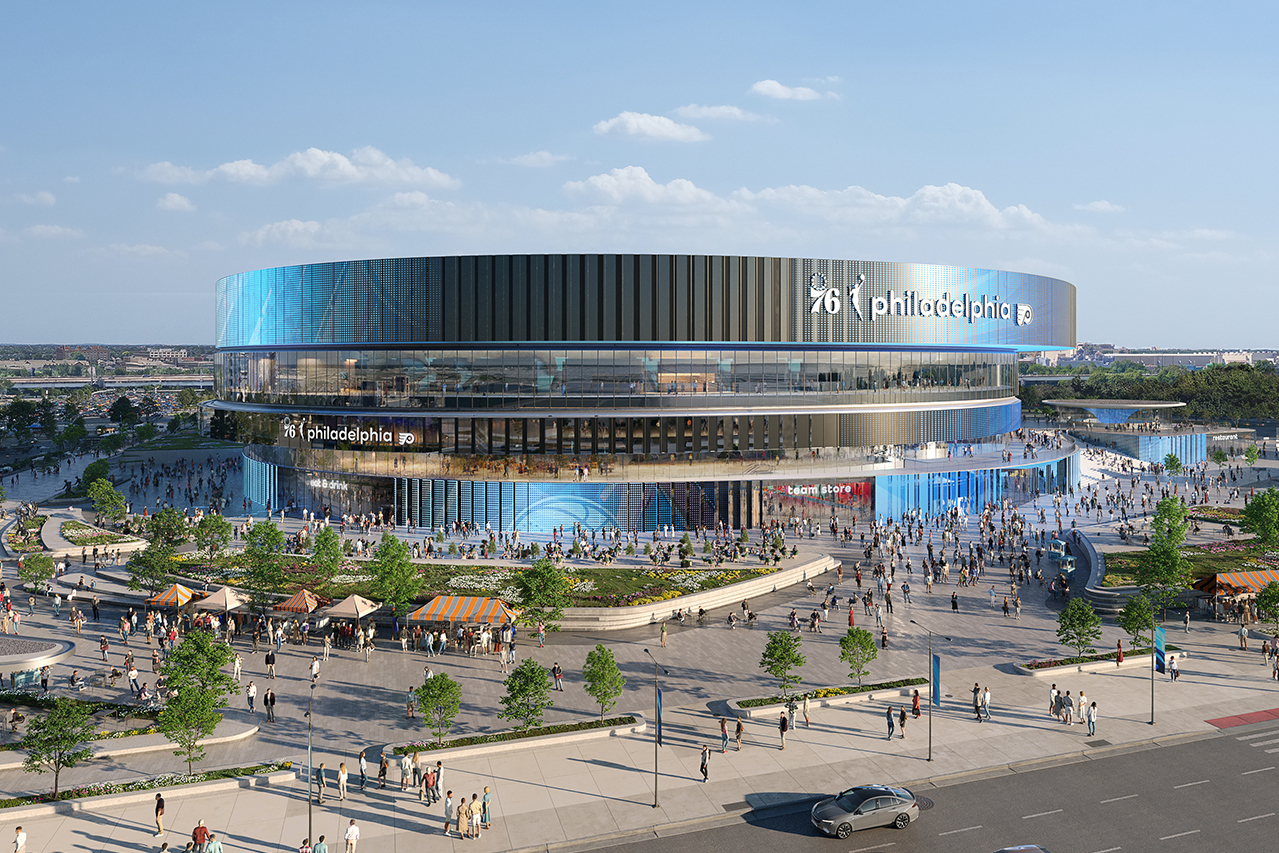
    A new home for the 76ers and Flyers is scheduled to open in 2030, and now we have our first glimpse of what the new arena might look like.

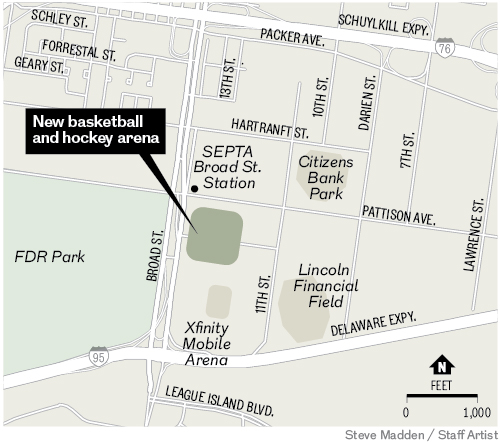
    The teams released the first renderings of the privately funded arena Tuesday that will be built at the former site of the Spectrum, next to where Xfinity Mobile Arena sits.

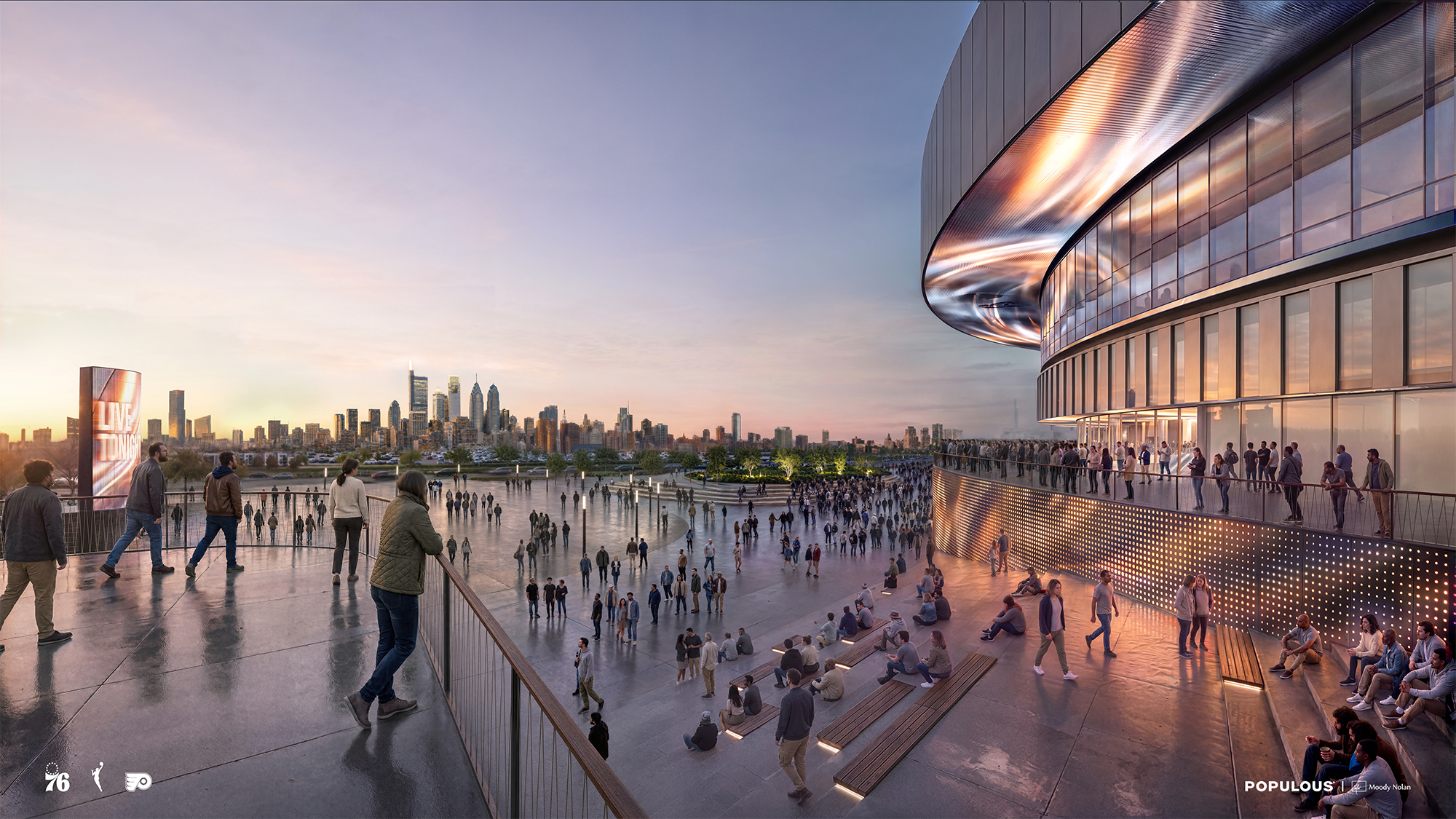
    The new design features inspiration from the Spectrum, the former home of both teams from 1967 to 1996. The renderings show the facade will be composed of three stacked and cantilevered “bands,” a nod to the Spectrum’s exterior.

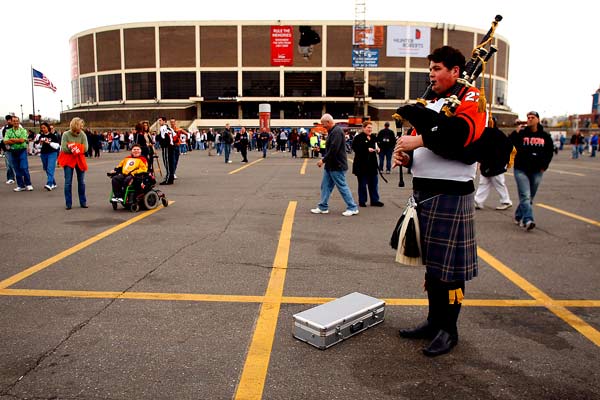
    The Spectrum was home of the Sixers and Flyers until 1996. It was demolished in 2010.

    “To build our future where Ed Snider and the Spectrum made history makes this project truly special,” Comcast chairman Brian Roberts said in a statement.

    A plaza outside the arena will feature over a half-acre of outdoor space. The renderings show an expansive footprint that includes food and beverage pavilions, along with a giant screen outside the stadium.

    “The first-look renderings reflect fan feedback and stakeholder input on the arena experience, public spaces and amenities,” the teams said in a statement. “Fan surveys, focus groups, community engagement, and public review will continue throughout the design and approval process.”

    Stateside Live!, previously known as Xfinity! Live, sits near the new stadium site on 11th Street and just underwent a $15 million expansion. It is expected to remain open.

    The location of the yet-to-be-named new arena. Steve Madden

    In addition to the Sixers and Flyers, the arena will also be home to the yet-to-be named WNBA team slated to begin playing in Philly in 2030.

    The stadium will be co-owned by Comcast and Harris Blitzer Sports & Entertainment, which owns the Sixers. Comcast owns the naming rights of the new arena but hasn’t announced a name. It’s unclear how much the new arena will cost, but it will be the largest fully privately funded project in the city’s history, according to a Comcast spokesperson.

    “Philly fans deserve the best arena in the world, and we are excited to partner with Comcast to deliver just that,” 76ers managing partner Josh Harris said in a statement.

    The new arena is scheduled to open in 2030. Courtesy of the Philadelphia 76ers and Flyers
    How the new arena might look for Flyers fans arriving for a game. Courtesy of the Philadelphia 76ers and Flyers

    The Sixers’ original plan was to build a new $1.3 billion stadium on Market Street in Center City, a contentious idea backed by Mayor Cherelle L. Parker that secured legislative approval in 2024.

    Weeks later, the project was canceled after the Sixers struck a deal with Comcast to build a new arena in South Philly.

    The new arena still needs regulatory and legislative approval before the start of construction, which is scheduled to begin in the first half of 2027.

    Parker’s office did not respond to a request for comment, but the city shared the renderings on social media along with the comment, “Get excited Philly fans!”

    Ryan Boyer, the head of the Philadelphia Building and Construction Trades Council praised the project’s job creations. “Beyond the construction jobs themselves, this is the kind of investment that opens doors for new contractors, suppliers, and small businesses throughout the city of Philadelphia.”

    What remains unclear is the future of Comcast’s plan to transform parking lots at the South Philadelphia stadium district into a sports-and-entertainment complex featuring hotels, residences, restaurants, and shops.

    That announcement came before the Sixers abandoned their Center City stadium idea and decided to remain in South Philly. For now, the focus is on the new arena.

    “We see [this location] as a unique opportunity to connect the retail affiliated with the arena, to the retail that we have in Stateside Live! and the expansion of that effort,” Comcast Spectacor chairman and CEO Dan Hilferty told The Inquirer in April.

    Beyond the new retail, restaurant, and outdoor activation space included in the new arena’s plan, there is an opportunity for the four teams (five once the WNBA comes to town) to work together to further develop the sports complex, according to Phillies CEO and managing partner John Middleton.

    “Having four major professional sports teams together in one destination creates an energy and sense of community that is unmatched anywhere in the country,” Middleton said, adding the new arena “represents an exciting next chapter for South Philadelphia and creates important opportunities” to realize the potential of the sports comlex space.

    The arena is expected to feature an outdoor plaza with food pavillions. Courtesy of the Philadelphia 76ers and Flyers
    The new arena will sit in the South Philly sports complex at the former site of The Spectrum. Courtesy of the Philadelphia 76ers and Flyers
    A renderings also show a giant screen outside the arena. Courtesy of the Philadelphia 76ers and Flyers

    As for Center City, demolition planned for some of the properties purchased by Comcast and Harris Blitzer Sports & Entertainment on Market Street across from Fashion District Philadelphia was pushed back until after the city’s 2026 celebrations.

    Revitalizing the beleaguered Market East corridor has been a focus of Parker’s, which includes a reimagining of the Wanamaker Building following Macy’s closure last year.

    Over the summer, Comcast and Harris Blitzer Sports & Entertainment upgraded and donated storefronts for use as pop-up retail stores and other temporary activations to take advantage of the city’s busy calendar.

    Last month, the companies extended the leases of four pop-up retail stores along Market Street, and both continue to work with the mayor’s Market East Advisory Committee on a master plan for the corridor, according to a Comcast spokesperson.