Blog

  • UAE warned Netanyahu of major Hamas operation days before Oct. 7 attack, news report says

    UAE warned Netanyahu of major Hamas operation days before Oct. 7 attack, news report says

    JERUSALEM — Prime Minister Benjamin Netanyahu was directly warned by the president of the United Arab Emirates that Hamas was planning a major offensive just days before the militant group attacked on Oct. 7, 2023, according to an Israeli newspaper report.

    UAE President Mohammed bin Zayed spoke with Netanyahu 10 days before the attack and said Yahya Sinwar, the leader of Hamas in Gaza at the time, was planning an operation, the Haaretz daily said.

    Bin Zayed said it would lead to bloodshed and could destabilize the region and undermine the Abraham Accords, the normalization agreements between Israel and several Arab and Muslim-majority nations, the newspaper reported.

    But Netanyahu “reacted with relative calm,” according to Haaretz, which said he assured bin Zayed that Israel was prepared for any scenario and a possible attack was more likely to come from the occupied West Bank.

    Hamas militants killed some 1,200 people and took another 251 hostage in the Oct. 7 attack. Hundreds of Israelis, mostly soldiers, have been killed in continued fighting in wars in Gaza, Lebanon, and Iran.

    Haaretz reported Netanyahu’s office called the report an “absolute lie” and said Netanyahu did not speak with the UAE president “during the period in question and received no warning from him.”

    Netanyahu has rejected calls for an official government inquiry into the events surrounding the Oct. 7 attack.

    His office denied Tuesday that the UAE gave him a warning. “If there was any relevant information, it was passed through intelligence channels between the two countries,” the statement said.

    The UAE’s Foreign Ministry also said that it would not comment on “speculation regarding conversations between government leaders.”

    Israel and the UAE have maintained “open and direct lines of communication” since they formally established ties five years ago, the statement said. It added: “When necessary, all relevant intelligence has been and continues to be communicated.”

    Israel is holding national elections next month and Netanyahu’s actions around the time of the Oct. 7 attack are a key issue in the campaign.

    Gadi Eisenkot, a former top general who is seen as Netanyahu’s main opponent in election, accused the prime minister of ignoring dozens of warnings ahead of the attack.

    “He is unfit,” Eisenkot wrote on social media.

    Another Netanyahu rival, Naftali Bennett, said, “Netanyahu bears personal and direct responsibility for the failure that led to the deaths of thousands of Israelis on his watch.”

    Israel’s offensive in Gaza has killed more than 73,650 Palestinians, according to Gaza’s Health Ministry.

  • Documents suggest New Yorkers were misled about air quality after 9/11

    Documents suggest New Yorkers were misled about air quality after 9/11

    NEW YORK — In the harrowing months that followed the attacks on the World Trade Center, New Yorkers were repeatedly assured that the air around the fallen towers was safe to breathe.

    But 10 months later, health officials were still finding evidence of asbestos as much as half a mile away, according to a sample of air quality records being released Tuesday.

    The documents, reviewed by the New York Times in advance of their release, include more than 170,000 pages of air quality reports, contamination records, and correspondence among city officials that were stored in 68 boxes in a city office, shielded from public view for more than two decades, and, according to city officials, discovered only last year.

    Mayor Zohran Mamdani has directed his administration to release the records to the public through an online portal, timing it to the commemoration of the 25th anniversary of the attacks in lower Manhattan.

    Over the course of the next year, his administration intends to review, redact, and publicize many more papers, found in municipal and insurance offices, that relate to the environmental toxins brought about by Sept. 11.

    The records being released Tuesday provide a snapshot of the frenzied months following the attacks, when New York City and its leaders were struggling to balance the city’s recovery with fears of terrorism and lingering toxins.

    The documents are limited in scope, offering only a fraction of the air quality reports taken around ground zero. And while they also include a smattering of internal memos — including the so-called Harding memo, in which the city discussed its potential liability stemming from the Sept. 11 air quality — many more are presumably absent.

    But even in a scattershot way, the records seem to strengthen the notion that New Yorkers were instructed to return to the ground zero area before it was safe to do so, potentially exposing workers and residents to dangerous toxins.

    “The very least our city owes the families, survivors, and first responders whose lives were forever changed by the horrific terror attack of Sept. 11 is transparency and accountability,” Mamdani said in a statement.

    Releasing the documents was both a massive logistical hurdle, for which the mayor budgeted $34 million, and an acknowledgment that, even after so many years, as fewer Americans remember the attacks, the health effects persist. More people are believed to have died from illnesses related to the attacks than the nearly 3,000 people who were killed Sept. 11. They are succumbing to lung and blood cancers and heart and respiratory diseases.

    Records related to 15 John St., a building less than a mile from the World Trade Center, offer a glimpse into the prolonged, frenzied, and often confusing cleanup work that took place around ground zero.

    On July 13, 2002, with New Yorkers still reeling from the attacks on the World Trade Center that blanketed lower Manhattan in debris, inspectors were busy collecting dust samples from the building.

    Each report echoed the last: Asbestos present on the facade ledge. Asbestos present on the west side roof. Asbestos present on the top electrical cable.

    Some reports show that asbestos levels appeared to stay under limits set by environmental and worker protection agencies; others indicate they may have been too high, though many of the papers are not accompanied by written analysis.

    The documents show that the asbestos found at 15 John St. was not an outlier: Lists of environmental quality measurements taken by city agencies, the Environmental Protection Agency, and privately contracted laboratories demonstrate the presence of asbestos and other contaminants, sometimes at levels exceeding acceptable limits, in dust and air in other parts of lower Manhattan after Sept. 11.

    They include records preserved by the Giuliani administration, as well as documents related to 7 World Trade Center, which collapsed on the afternoon of Sept. 11.

    A letter to the city’s Department of Environmental Protection from a New Yorker in February 2002 underscores how isolated and frightened people felt at that time.

    A resident of 333 Rector Place detailed what she viewed as extensive missteps by city officials and her building’s property manager in attempting to remove asbestos and other contaminants from the premises.

    “Sept. 11, 2001. Felt I had to do something,” the resident, Marisa Ramírez de Arellano, wrote, describing how she had “scooped up dust from coffee table into a paper bag. Also started to clean the floor with wet paper towels,” an effort she acknowledged was “mostly futile.”

    Reached Monday, Ramírez de Arellano, 80, said she had spent several years after the attacks under the care of an allergist and a pulmonologist. She was prescribed steroids and other medications because respiratory tests led doctors to fear she had suffered lung damage, she said.

    She said she spent several hours in her apartment Sept. 11 because she “didn’t realize that very lightweight dust that was coming in was as bad for human beings as it turned out to be.” She left the apartment when firefighters came to evacuate her.

    By the time she returned several weeks later, officials said the air was safe to breathe, but she had doubts, especially one night when a hazmat team came to dig up the grass from a small roundabout in the neighborhood.

    “They dug several inches down and took it all away and replaced it with new dirt, new sod, new grass,” Ramírez de Arellano said. “And I thought, if they were thinking the grass is contaminated, then what are we all breathing?”

    A draft document of data collected by the city’s DEP listed locations throughout lower Manhattan where asbestos levels in some dust samples exceeded hazardous limits in the days immediately after the attacks. Another undated document lists ambient samples that were also above acceptable asbestos limits.

    An audit from November 2001, prepared by a private firm and submitted to the federal EPA based on data collected by New York City and state agencies, showed other troubling findings. That audit demonstrated that air concentration of the carcinogen benzene was still spiking near the towers’ footprint, and that the concentration of asbestos in the air at the Fresh Kills landfill on Staten Island had increased after the attacks.

    But the uncertainty about the air quality in residential and commercial buildings in lower Manhattan was already raising concern among public officials including Rep. Jerrold Nadler, a Manhattan Democrat whose district included ground zero at the time.

    “Congressman Nadler believes that the EPA has neglected its responsibility for monitoring indoor air quality around ground zero,” according to a memo from a city official, Ester Fuchs, sent to six others including the city’s top lawyer, Michael Cardozo, on Feb. 28, 2002, two months after Michael Bloomberg took office as mayor, replacing Rudy Giuliani.

    She noted that Nadler said that the federal Environmental Protection Agency “handed over responsibility for measuring indoor air quality to the city without putting in place proper oversight measures,” a responsibility the city passed on to property owners.

    (BEGIN OPTIONAL TRIM.)

    The city’s health department instructed citizens to “clean their buildings with wet mops and rags,” Fuchs said, and summarized the agency’s position that air quality testing, while painting an incomplete picture, had not shown results “that would indicate long-term health impacts.”

    In an interview this week, Nadler recalled trying to persuade the administrations of Giuliani and Bloomberg to release whatever information they had collected on air quality around the site of the attacks.

    “They knew about the air quality and they essentially did nothing about it,” Nadler said. “I suspect that all they cared about was getting Wall Street reopened, and they didn’t give a damn about the health of the people down there.”

    Indeed, city and federal officials, most memorably Christine Todd Whitman, the administrator of the EPA at the time, reassured Americans that the air around ground zero was safe to breathe. Whitman has since apologized.

    A review of news articles and interview transcripts in the days and weeks following Sept. 11 show that Giuliani continued to vouch for the safety of the air quality.

    “I come down here in the morning and sometimes the odor is terrible,” he said in late October 2001, according to an article in the New York Daily News, which had reported on toxic chemicals and metals that had been released into the environment around ground zero. “You smell it and you feel there must be something wrong with it. But what I’m told is that it is not dangerous to your health.”

    In February 2002, Bloomberg said, “Every test that has been done says the air quality was in acceptable limits. I think some people are just never going to want to believe that.”

    A spokesperson for Bloomberg declined to comment. A spokesperson for Giuliani did not respond to a request for comment.

    Correspondence between Deutsche Bank, at 130 Liberty St., and the city DEP discusses testing from September 2001 through April 2002 that found asbestos in dust samples exceeding the 1% threshold for harm throughout the building, as well as the presence of carcinogenic organic contaminants, heavy metals, fungi, and bacteria.

    The bank’s experts “have recommended a systematic testing program” to quantify the hazard and identify appropriate methods for handling and disposing of the materials, the company’s managing director for corporate real estate wrote in a June 2002 letter to the DEP commissioner. The building would eventually be demolished.

    Asbestos exposure can cause lung tissue scarring, mesothelioma, and lung cancer. Dust, smoke, and other pollutants from the site have also been associated with lymphoma, leukemia, and other cancers.

    The release of the documents resolves litigation brought by 9/11 Health Watch, an advocacy organization that sued to force the publication of the documents.

    “For 25 years, four different mayoral administrations kept from the public, the U.S. Congress, and the City Council documents showing what the city actually knew about the danger of the toxic chemicals in Lower Manhattan and Western Brooklyn after the World Trade Center collapse, even as city officials continued messaging to the public that the air was ‘safe and acceptable,’” Ben Chevat, the executive director of the 9/11 Health Watch, said in a statement.

    But the documents’ release may expose the city to new or amended lawsuits. The information could also help those sickened in the years after Sept. 11 with their applications for federal victim compensation funds. The mayor and the city’s chief lawyer, Steven Banks, agreed that it was important to make the documents public, Banks recalled in a recent interview.

    “For years, families, city workers, and survivors have been crying out for more transparency from their government,” Banks wrote in an introductory letter contained in the document release.

    In a recent interview, Denise Verzi discussed losing her husband, Michael Verzi, a New York City firefighter, to lymphoma that was linked to his time working at ground zero.

    “He truly loved being a firefighter. That was his calling,” Verzi said of her husband, who died in 2022. “All that being said, now years later we’re finding out that there’s all these files.”

    She said her husband and his colleagues had been assured that “the air quality is fine, you can be down there.” And while they would have gone to the site regardless, she said, “maybe different precautions would have been taken.”

    “I don’t understand hiding it to begin with,” Verzi said. “That was horrific. But 25 years in, there’s people that are still getting sick.”

    This article originally appeared in the New York Times.

  • Brandon Graham is ‘officially done.’ Let’s look back at his most memorable moments with the Eagles.

    Brandon Graham is ‘officially done.’ Let’s look back at his most memorable moments with the Eagles.

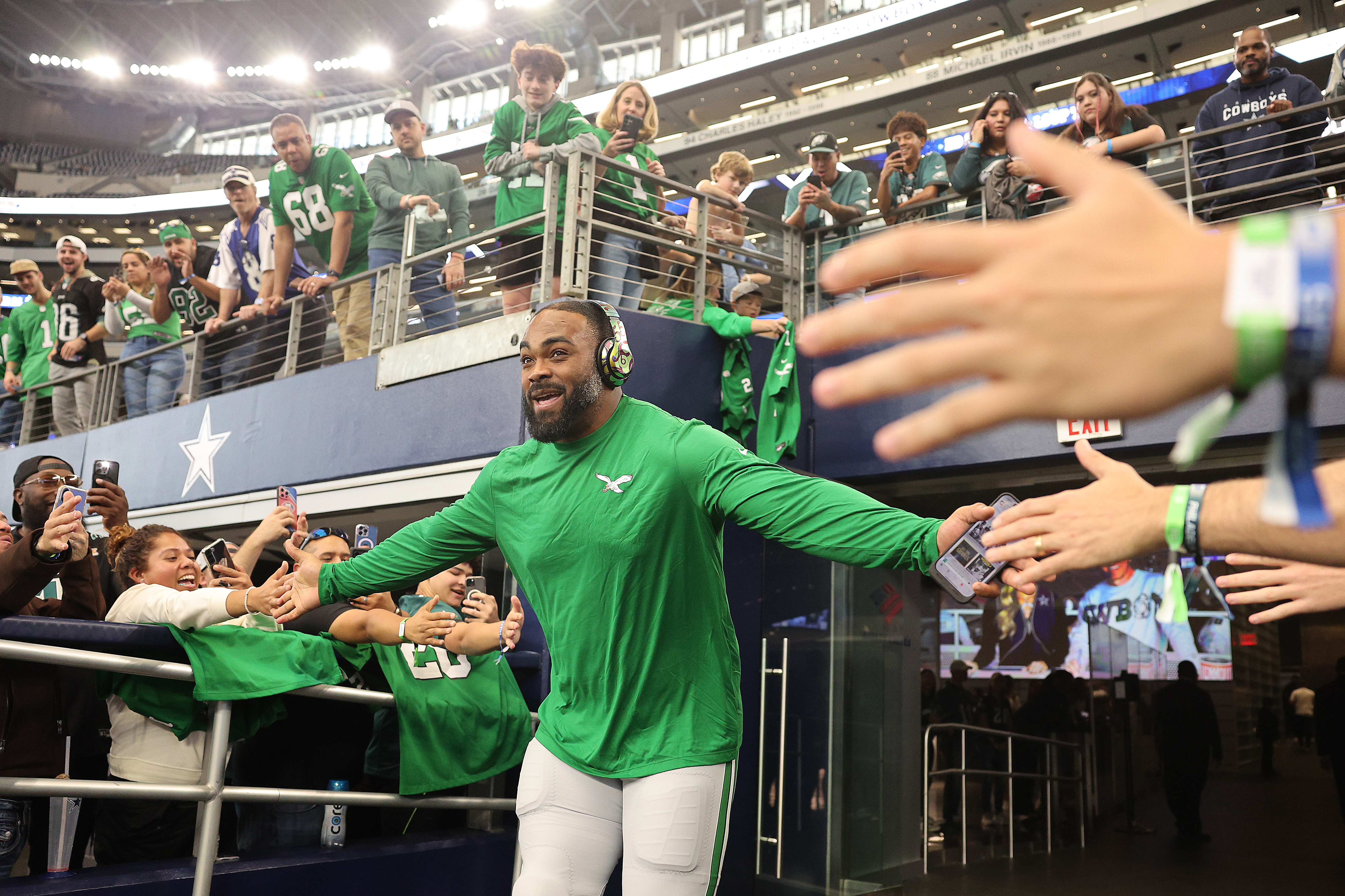
    Brandon Graham is retiring — again.

    On Tuesday, at a “Breakfast with the Birds” event hosted by Jefferson Health, the Eagles great announced that he was “officially done.” Graham, 38, retired in March 2025 following the Eagles’ victory in Super Bowl LIX. But the Eagles re-signed Graham after Week 7 last season as they lacked depth on the defensive line.

    On Tuesday, Graham put to rest any question whether he would return to the Eagles in 2026.

    “But let me tell you this, [the Eagles] are in great hands,” Graham said. “Jordan Davis, I’m telling you, he is a guy that’s going to get the defense going. On offense, I can’t wait for Jalen [Hurts] to prove them haters wrong as always and get us back to the promised land.

    “I’m going to still be around. … I’m still giving wisdom, helping the guys.”

    When Graham called it quits the first time, The Inquirer put together a list of his best moments on and off the field. Just like Graham did for the Eagles, we are running it back with another list of No. 55’s most memorable moments:

    His tearful goodbye

    When Graham announced his retirement in 2025, the Eagles all-time leader in games played took to the podium to say his goodbyes. Just as Jason Kelce did a year prior, Graham fought through tears to thank his coaches, teammates, and the city.

    “And finally, to Philadelphia,” Graham said. “We didn’t start so tight. As you know, you made me work for this, and I appreciate you for that. Through the struggles, the injuries, and the moment where I had to prove myself over and over again, you never let me get comfortable.

    “You held me accountable. You kept that chip on my shoulder. You pushed me to be better, and when the time came, we celebrated together two times. This city is built on hard work, resilience, and unmatched passion, and you bring the same energy to every game, every moment, every season.”

    The strip sack

    Two photographs from Super Bowl LII are hanging in many a sports bar in Philadelphia: Nick Foles catching the touchdown pass on the “Philly Special” and Graham’s strip sack of Tom Brady.

    The latter helped clinch the Eagles’ first Super Bowl in franchise history, cementing Graham as an all-time great. When asked about the play in 2023, Graham said it “changed my life.” Like many Eagles fans, Graham admitted he watches the play to cheer him up when he’s having a “bad day.”

    Before the Eagles’ 23-19 loss to the San Francisco 49ers in the wild-card round of the playoffs last season, Graham reunited on the field with Brady, who was in town for Fox’s broadcast of the game.

    Mason Spencer (right), 8, of Langhorne, presented Brandon Graham with the Mason Spencer Man of the Year Award in 2025.William Thomas Cain / For The Inquirer

    Winning the Mason Spencer ‘Man of the Year Award’

    In December 2019, Mason Spencer received a kidney transplant at just 3 years old. Following his operation, Spencer met with Graham four times. The two quickly formed a friendship.

    “I consider BG my friend,” Spencer said. “The reason I’m awarding this to him is for his kindness and his charity.”

    In 2025, after Graham missed out on the Walter Payton Man of the Year Award, which honors players for their philanthropy and community impact, Spencer awarded him with the “Mason Spencer Man of the Year Award” — fit with a custom superhero trophy.

    The award’s significance was not lost on Graham.

    “I’m glad that I can be a service to him and his family,” Graham told The Inquirer. “Especially during a time nobody wants to go through. It’s a beautiful thing when you have support behind you and you have people that’s fighting with you. So for him to go through everything he had to go through, it’s so cool that he can still think about others.

    Brandon Graham had to take on a new role when he unretired during the 2025 season and rejoined the Eagles.David Maialetti / Staff Photographer

    Learning a new position

    After unretiring in 2025, Graham expected to contribute as an edge rusher — as he had through his first 15 years in the league. However, with Jalen Carter sidelined for multiple weeks following a shoulder procedure, Graham was tasked with consistent snaps at defensive tackle for the first time in his career.

    The veteran was game for the challenge and learned from Davis — who is 12 years younger than him.

    “When I’m watching him, man, I’m learning as I’m going,” Graham told The Inquirer. “Because they’re the ones running everything over there. They know what’s going on. So I’m just picking their brain and just asking them what they think when I go.“

    Added defensive tackle Moro Ojomo: “It’d be similar to maybe someone writing with their right hand and then starting to write with their left hand. It’s not as easy as you may think it is. There are similarities, but it takes some time, and, definitely, if anyone can do it the way he’s doing it, it would be him.”

    Brandon Graham with former Eagles quarterback and Chiefs backup Carson Wentz after the Eagles won Super Bowl LIX on Feb. 9, 2025.Yong Kim / Staff Photographer

    Retearing his triceps during the Super Bowl

    In a win over the Los Angeles Rams in November 2024, Graham tore his triceps. He had already announced that the season would be his last, so it appeared Graham’s playing career would end at So-Fi Stadium in Inglewood, Calif.

    However, the Graham made a surprise comeback to suit up for Super Bowl LIX just 11 weeks later.

    Following the Eagles’ 40-22 win over the defending champion Kansas City Chiefs, Graham celebrated in the locker room. He embraced general manager Howie Roseman, who drafted him in 2010, took a selfie with Hurts, and danced with fellow Detroit native Avonte Maddox. He also made sure to FaceTime fellow team legend Jason Peters.

    To any onlooker, it would be difficult to tell that Graham was dealing with significant pain. During the game, Graham actually retore his triceps.

  • A former Philly principal must repay $31k in school book fair, trip, and class dues money

    A former Philly principal must repay $31k in school book fair, trip, and class dues money

    The former principal of a Northeast Philadelphia elementary is on the hook for $31,000 paid to the school by students but never deposited into its bank account.

    According to the Philadelphia School District’s inspector general, the former principal of Robert Pollock Elementary, Yvette Jackson, received the money from events including book fairs, holiday bazaars, and class trips — plus dues for graduating eighth graders — but “failed to deposit proceeds.” Jackson has since retired.

    Multiple vendors, including Scholastic Books Inc., were not paid for goods delivered under Jackson’s watch, according to Pollock sources and documents reviewed by The Inquirer. The inspector general’s report confirmed the lack of payments.

    Jackson’s actions violated the district’s policies, “eroded the public’s trust and violated the district’s ethical standards required by the [Employee Code of Ethics] mandating honesty and forthrightness and avoiding falsification, misrepresentations and deceptions in records the former principal kept while managing and administering” school activities funds, wrote Sha S. Brown, the inspector general.

    The report stopped short of accusing Jackson of taking the funds, but said she was liable for all losses “resulting from administrative negligence and failure to exercise proper oversight and accounting” of student funds.

    At Brown’s recommendation, the district is withholding $31,576.24 from Jackson’s final termination pay. Jackson did not respond to a request for comment, but, according to the inspector general’s report, “the former principal acknowledged receipt of the memo and did not object to the proposed withholding.”

    Pollock, a K-8 school on Welsh Road, educates 900 students, 77% of whom are considered economically disadvantaged.

    Missing money, missing records

    The possible financial improprieties came to light during a reconciliation of school accounts after Jackson retired from Pollock at the end of the 2024-25 school year.

    When district personnel attempted to balance the books, money from trips, bake sales, class dues, and the holiday bazaar was missing, according to sources. Scholastic Books was not paid for either its fall 2024 or spring 2025 book sales.

    Ultimately, the district’s office of general accounting filed a complaint with the inspector general’s office “pertaining to the mismanagement of the Robert Pollock School Student Activity Fund (SAF) by the retiring principal,” according to documents reviewed by The Inquirer.

    The inspector general’s probe concluded that Jackson failed to keep adequate records and that over the course of the 2023-24 and 2024-25 school years, she made only five bank deposits, despite cash having been received for various school events through the year.

    District policy requires cash received for student activities be deposited into the bank “as soon as possible, ideally daily unless this would cause an undue hardship.”

    None of the deposits Jackson made came with required documentation, such as the dates and descriptions of the activities, number of students who participated, cost of participation, and more, the report said.

    “The former principal failed to account for, and deposit, the proceeds of several fundraising activities including book fairs and class dues (graduation fees) … the OIG could only partially match one bank deposit pertaining to the school’s 2023 fall book fair sales over this two-year period. Further, records indicate the former principal failed to pay invoices of SAF-related vendors,” Brown said.

    Brown found that Jackson collected the $31,576.24 but never deposited it. She also told a staffer managing the book fair that there was “no need for receipts,” the investigation found, despite district policy explicitly stating that receipts were required.

    In some instances, vendors were stiffed. Both Scholastic and a business that provided goods for the holiday bazaar were not paid, the report said.

    Book fair money is typically used to purchase books for classroom libraries and for students to take home. Other activities, like the bake sale, fund things like classroom pizza parties and assorted celebrations.

    “According to an administrator of the school, the holiday bazaar vendor said the former principal kept telling the vendor they were ‘… good for the money,’” the report said. “In total, the OIG found that three invoices remained unpaid and totaled $16,840.49.”

    Going forward, Brown said, the district must require student activities fund money be deposited into a bank account weekly.

    “Accounting and Financial Reporting staff will continue to work with school leaders to make timely deposits,” chief financial officer Mike Herbstman said in the district’s response to the report.

    The school district had no immediate comment Tuesday on the inspector general filing.

  • Navy failed to protect pilots from brain injury, House report says

    Navy failed to protect pilots from brain injury, House report says

    As concerns mounted that the extreme physical strain of flying fighter jets was causing brain injuries in pilots, and may have led to the death of a number of career aviators, the Navy did almost nothing.

    It didn’t even study its pilots to understand if it had a problem.

    That is one of the numerous findings in a harshly critical report released Tuesday by the powerful House Oversight Committee. The report said that because the Navy had repeatedly failed to act, Congress should pass legislation requiring the military to create a specific program to study and care for the brain health of all aviators.

    “Despite credible warnings, external reporting and internal awareness, the Navy has yet to determine whether the very conditions that define naval aviation may also be causing long-term harm to the pilots who endure them,” the report said. “Instead, it has relied on a system designed to respond to visible injuries, while leaving potential cumulative damage largely unexamined.”

    Naval aviators are repeatedly exposed to body-crushing forces as they catapult off aircraft carriers and pull high G-force turns in training. The Navy has never studied how those forces over time affect the human brain, which contains 100 billion neurons in a network with a consistency similar to Jell-O.

    A number of career pilots have raised concerns that those repeated exposures may cause brain injuries that slowly accrue over years of service and lead to debilitating mental health problems.

    “Landing on a carrier is like a car crash. In my career I’ve been in hundreds of car crashes,” said Matthew Buckley, a former TOPGUN pilot who after 15 years of flying struggled with headaches, mood swings, and suicidal thoughts. He later started an organization to help the many other pilots he encountered who were experiencing similar problems.

    “I’m almost shaking, I’m so furious,” he said after learning about the findings of the House committee. “People have died. We know we have a problem. And you’re telling me someone needs to call for legislation to have the admirals do their jobs? It’s insane.”

    In 2024, the New York Times published an investigation showing that three pilots who all had symptoms consistent with brain injuries died by suicide in an 18-month span, and that a dozen current and former pilots were struggling with similar issues.

    In the following months, Rep. James Comer (R., Ky.), who heads the House Oversight Committee, formally demanded to know how the Navy was responding to the problem.

    The report released this week said the Navy had barely responded at all: It had not done a formal investigation to see if fighter jets were causing injuries. It had not put monitoring in place that might detect injuries. And it had no plans to offer expanded brain health services to its aviators.

    While the Navy has done extensive research on the immediate health effects of flying fighter jets, it has never looked at the long-term impacts. Because the Navy had no evidence of a brain-injury problem, its medical officials maintained that no problem existed. It continued to do so even as Navy doctors started sending pilots who were experiencing issues to a civilian neurologist.

    When that neurologist raised concerns to the Navy in 2020 that he was seeing a pattern of brain injury, he said it stopped sending him patients.

    Internal documents reviewed by the House committee showed that a few years later, when three career pilots who flew the Navy’s F/A-18 Super Hornet died by suicide, several Naval officers grew deeply concerned.

    In 2024 a Navy doctor and former pilot conducted an informal survey of pilots and found widespread mental health issues that were often going untreated. His report rippled through the pilot community, and a Navy captain soon sent the report to several admirals.

    “Feedback from the bro-network is that this is a hot topic … and it is affecting retention of our senior aviators,” the captain wrote. “The suicides may, or may not, be linked by common causes. But we will not know until we choose to study this problem.”

    The committee said no study took place.

    Instead, Naval leaders blamed the crisis on stubborn barriers to seeking mental health, including pilots not coming forward out of fear that they might be grounded. The Navy tended to blamed individuals for not seeking help. The House report found no evidence that leaders considered that the problem could be caused by its jets.

    The Navy’s elite TOPGUN fighter jet school saw things differently.

    In 2024 it surreptitiously set up a brain health program, known as Project Odin’s Eye, to monitor its top flyers, modeled on a program created by the Navy SEALs. TOPGUN did not alert the larger Navy to the suspected problem, or inform other fighter wings, the report said.

    Navy leadership knew nothing about Project Odin’s Eye until the Times wrote about its existence in December 2024.

    After the Times published its investigation, top Navy leaders pushed Navy medical experts on whether flying was causing brain injuries, according to the report. In a bit of circular reasoning that seemed pulled straight from the novel Catch-22, the experts said the Navy had never studied the problem, so there was no hard evidence that it existed. And since there was no hard evidence that existed, there was no reason to study it.

    “The medical team argued that because there was no evidence, there would be no need to investigate further,” the report noted.

    The House committee was particularly critical of that decision because, it said, the Navy was “well equipped” to study the issue, and already had an extensive aviation physiology research and monitoring program that could easily add a brain health study.

    The Navy, by its own estimate, could conduct a long-term study of brain health for 1,000 pilots for $3.9 million — about the cost of training one pilot to fly.

    Instead, the Navy chose to do nothing, the report said.

    “In sum, the Navy’s response to the committee reveals a paradox: A well-funded and expansive research enterprise that has nonetheless failed to address a consequential question in aviator health,” the report said. “Given the Navy’s substantial investment in human capital, failing to allocate comparable resources to understanding risks and protecting that investment, particularly in terms of long-term health, is unfortunate.”

    The committee recommended that Congress step in and require a comprehensive program that would create a frontline brain healthcare program for all pilots, modeled on Project Odin’s Eye.

    The committee also called for requiring the Defense Department to track catapult takeoffs and high G-force maneuvers in aviators’ medical records, and conduct a comprehensive study of the cumulative effects over time, including after pilots leave the military.

    This article originally appeared in the New York Times.

  • Temple terminates $55 million gift from school’s largest donor amid federal investigation into his company

    Temple terminates $55 million gift from school’s largest donor amid federal investigation into his company

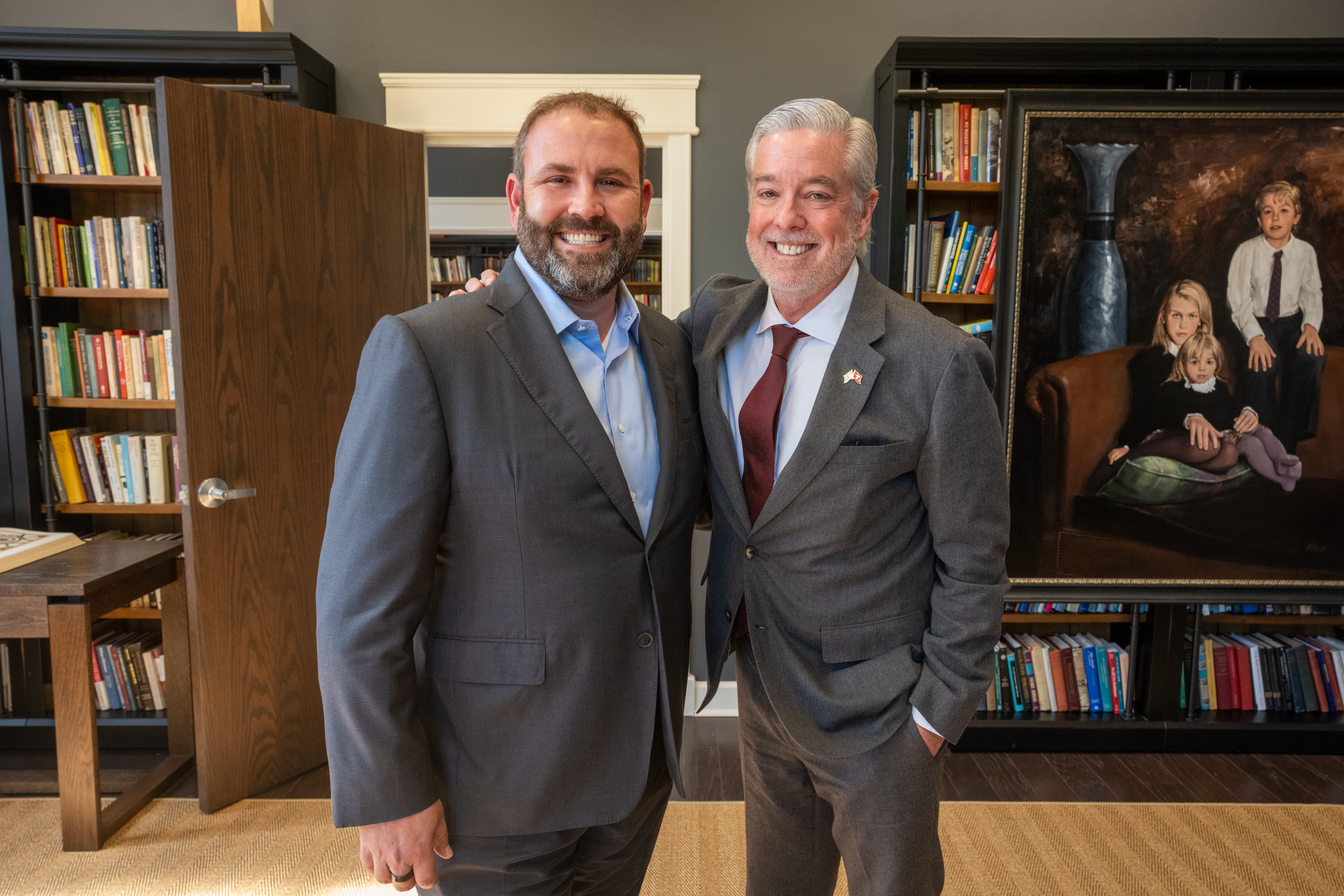
    Temple University will terminate a $55 million gift — the largest donation in the school’s history — from alumnus Christopher M. Barnett, whose company is under federal criminal investigation over allegations of money laundering, wire fraud, and other crimes.

    Barnett, a behavioral healthcare business leader whose company, ABA Centers of America, provides services to children with autism, has resigned from Temple’s board of trustees, Temple president John Fry said Tuesday.

    The gift, largely intended for Temple’s College of Public Health, was announced with much fanfare last October, but none of the payments had yet been made to Temple under the gift agreement schedule, Fry said.

    The decision to terminate the gift was mutual, Fry said, and came as Barnett is “recovering from a life-threatening medical event.” Particularly difficult was that the federal allegations concern healthcare fraud and the gift was intended for the public health college, the president said.

    “We have to think about our values,” Fry said in an interview Tuesday. “We have to think about our reputation. Given the nature of the allegations, we felt that the best thing to do was to separate ourselves from this … as painful as that is.”

    Fry said that he became aware of the allegations Thursday from recently unsealed court documents in the case and that Temple reached out to Barnett, who resigned from the board Saturday. Temple decided to announce its intention to terminate the gift after the board of trustees got a briefing on Monday, Fry said.

    The College of Public Health will no longer bear Barnett’s name, nor will the dean’s title in the College of Liberal Arts or an “essential needs hub” that Temple recently opened on campus to help improve student success, Fry said.

    Barnett has not been charged. He “strenuously denies” the allegations and intends to “vigorously defend” against them, Fry and Mitchell L. Morgan, chair of the board of trustees, said in a message to the campus community, but the university “believes the actions outlined here are necessary.”

    “After careful deliberation we believe that moving forward with the gift would not be in the best interest of Temple,” Fry and Morgan said.

    Barnett’s company did not immediately respond to a request for comment Tuesday.

    What federal investigators are looking at

    Federal investigators in December obtained a search warrant for Barnett’s Microsoft accounts, as well as those of other company executives, court records show. The warrant application, unsealed in July in federal court in New Hampshire, says evidence suggests ABA Centers of America billed insurance companies for unnecessary treatments and falsified records to justify the higher reimbursement.

    The federal investigation and documents were reported last week by Behavioral Health Business, an industry publication.

    The warrant was the second a federal judge in New Hampshire approved last year as part of the investigation by the Department of Health and Human Services’ Office of Inspector General.

    Investigators allege that Barnett executed the scheme through a web of interlinked companies he founded, including ABA Centers of America, ICBD Holdings, and Exact Billing Solutions. His archived biography on ICBD Holdings’ website, which was removed in recent days, said Barnett is “actively involved” in the companies and served as the chairman of ABA Centers of America.

    The company misrepresented the location in which services took place to get the higher reimbursement costs, investigators said, and “billed for services that did not qualify as legitimate medical treatment, such as when a client is napping or watching television,” according to the affidavit accompanying the warrant request.

    ABA Centers of America was a “giant billing mill,” one former employee told federal investigators, according to court records. ABA has affiliated companies providing services in Pennsylvania, including in the Philadelphia area, and New Jersey.

    Barnett, who has no medical training, personally set minimum hours of treatment for patients and gave bonuses to employees who billed according to those goals, emails obtained by investigators show.

    The fraudulently obtained payments funded Barnett’s “lavish lifestyle,” which included a fleet of rare cars, a lease for a $20 million waterfront home in Fort Lauderdale, Fla., and a $9.95 million private jet decked out with Hermès goods, according to court records.

    A brochure for the private jet Christopher Barnett purchased using funds ABA Centers of America fraudulently obtained, according to federal investigators.Court records

    The autism-services provider also faces multiple civil lawsuits, including a suit over allegations of inflated billing practices in Florida. A federal judge overseeing that case said last month that if evidence produced in the litigation corroborates the allegations, “ABA Centers have engaged in criminal conduct.”

    Historic contribution and its impact on Temple

    Barnett’s historic contribution to Temple was announced last October, less than a year after Fry became president of the university. Barnett met with Fry before Fry took the helm at Temple in November 2024, the president said, and Barnett joined the Temple board in May 2025.

    About $20 million of Barnett’s gift was targeted for an autism center at the public health college. Fry said Tuesday that initiative now would have to be “rethought.” The essential needs hub will continue, and Fry said he will seek another donor to support it.

    Barnett had made other, smaller gifts previously, Fry said, and Temple will be reviewing those. He did not elaborate.

    When announcing the gift, Barnett told The Inquirer how he initially had been rejected by Temple but bought a plane ticket and showed up unannounced at the office of the director of transfer admissions, waiting hours until she finally agreed to see him.

    “I said I need you to take a chance on me, and if you do that, I promise you I will graduate with a 4.0 and I’ll be a prominent alum and I’ll give back to the university,” Barnett said in an interview last October.

    Barnett’s gift surpassed the $27.5 million given by philanthropists Sidney and Caroline Kimmel earlier that year. That gift now stands again as Temple’s official record.

    “I believe in Temple University,” Barnett, who has homes in Fort Lauderdale and Philadelphia, said in October. “Temple took a chance on me when the odds were uncertain. And it helped shape who I am and what I’ve been able to do for my communities.”

    Temple officials on Tuesday indicated Barnett was continuing to think about Temple.

    “Mr. Barnett has expressed a desire to avoid any negative impact on Temple and, in keeping with such desire, has cooperated with the university through this difficult process,” Fry and Morgan said.

    Fry acknowledged the loss of the gift would be disappointing to students, faculty, staff, and alumni at the public health college. And it is a gut punch to the university at a time when the school has been making cuts to close a budget deficit and dealing with enrollment declines.

    “This is clearly a setback,” Fry said.

    But he noted that even without Barnett’s gift, the university experienced the biggest fundraising year in its history in fiscal 2026, taking in $159 million.

    “This action does not diminish the philanthropic momentum and strength of Temple,” Fry and Morgan wrote in the campus message.

    The university will look at its practices for accepting gifts, Fry said.

    “We will go back and we’ll scrutinize ourselves over this, and, if there are practices we need to tighten up, we’ll tighten up those practices,” he said.

  • As the Union push for the playoffs, Ryan Richter is ‘never going to be excited about being in ninth place’

    As the Union push for the playoffs, Ryan Richter is ‘never going to be excited about being in ninth place’

    As he left Subaru Park on Saturday night, Union interim manager Ryan Richter thought about something he’d said in his news conference after the 2-0 win over CF Montréal.

    Looking ahead to Wednesday’s home game against FC Cincinnati (7:45 p.m., FS1, Fox Deportes, Apple TV), Richter called the matchup a chance “to show that we can compete with the next level of teams in the Eastern Conference.”

    He wasn’t wrong in how he described his team or the opposition. But it struck him, just as it struck people who heard the remark, that for a long time before this year, the Union were at that next level.

    The proof is well-known: Supporters’ Shields in 2020 and ‘25, the Eastern Conference regular-season title in 2022, and the most regular-season points of any team in MLS from 2019 through the first half of 2024.

    Last year’s Supporters’ Shield was the second in Union history.Elizabeth Robertson / Staff Photographer

    Even today, the Union are still one one of just two teams that have amassed more than 400 regular-season points since the start of 2019, and to have averaged more than 50 points per season. (Using both figures accounts for expansion teams that have joined the league in that time.)

    That serves as a reminder of why the rest of the league is looking over its shoulder as the Union fight their way up the standings. They enter Wednesday’s game with a 7-10-6 record (27 points), edging Red Bull New York for ninth place and the last playoff spot on a tiebreaker.

    “I thought about this after Saturday [when] the question was, ‘Is there a boost being in a playoff position?’” Richter said in his news conference Tuesday afternoon. “And then I thought about it more.”

    By the time he sat down at the microphone, he had his answer.

    Union fans celebrating after Danley Jean Jacques (right) scored the opening goal in Saturday’s win over CF Montréal.Elizabeth Robertson / Staff Photographer

    “I’m never going to be excited about being in ninth place,” he said. “Because I’ve seen the levels that this club has hit over the last seven, eight years, and [was] lucky enough to be a part of a couple of those really special seasons. And that’s the target that we set as a club, as a team: We want to be competing for home playoff spots, competing for Supporters’ Shields.”

    There’s a full round of games leaguewide Wednesday, so everything will get thrown up in the air again. The Union could rise as high as seventh with a win, or fall as low as 12th with a loss.

    “That’s the level that we want to be competing at, and there’s not going to be celebrations for just getting into a playoff position,” Richter said. “So we need to continue to push, and the opportunity with Cincinnati at home shows that’s where we are competing. And that’s what we have to be ready [for], to show up and play a really good game to make that kind of statement.”

    Richter will not be alone in casting the Cincinnati matchup as a measuring-stick moment. Many Union fans will too, as will a growing number of watchers leaguewide. The visitors are led by midfield playmaker Evander, who would likely have a league MVP award by now if not for Lionel Messi; and striker Kévin Denkey, who has 15 goals in 27 games across all competitions this year.

    But the defense behind them has allowed 51 goals this season, the second-most in the East and third-most leaguewide. That’s why Cincinnati stands sixth in the conference (8-7-7, 31 points), even as it is seen as among the league’s upper class.

    “It’s hard to win against good teams, and we have to be at a really good level ourselves to be able to compete in the game the way that we want to, and the way that we believe we can,” Richter said. “So, it’s a great opportunity for us to show against a good team in Cincinnati that we’re at that level, and we can compete against that level of team in MLS.”

    window.addEventListener(“message”,function(a){if(void 0!==a.data[“datawrapper-height”]){var e=document.querySelectorAll(“iframe”);for(var t in a.data[“datawrapper-height”])for(var r,i=0;r=e[i];i++)if(r.contentWindow===a.source){var d=a.data[“datawrapper-height”][t]+”px”;r.style.height=d}}});

  • Trump threatens Canadian jetmaker Bombardier, which has an extensive U.S. footprint

    Trump threatens Canadian jetmaker Bombardier, which has an extensive U.S. footprint

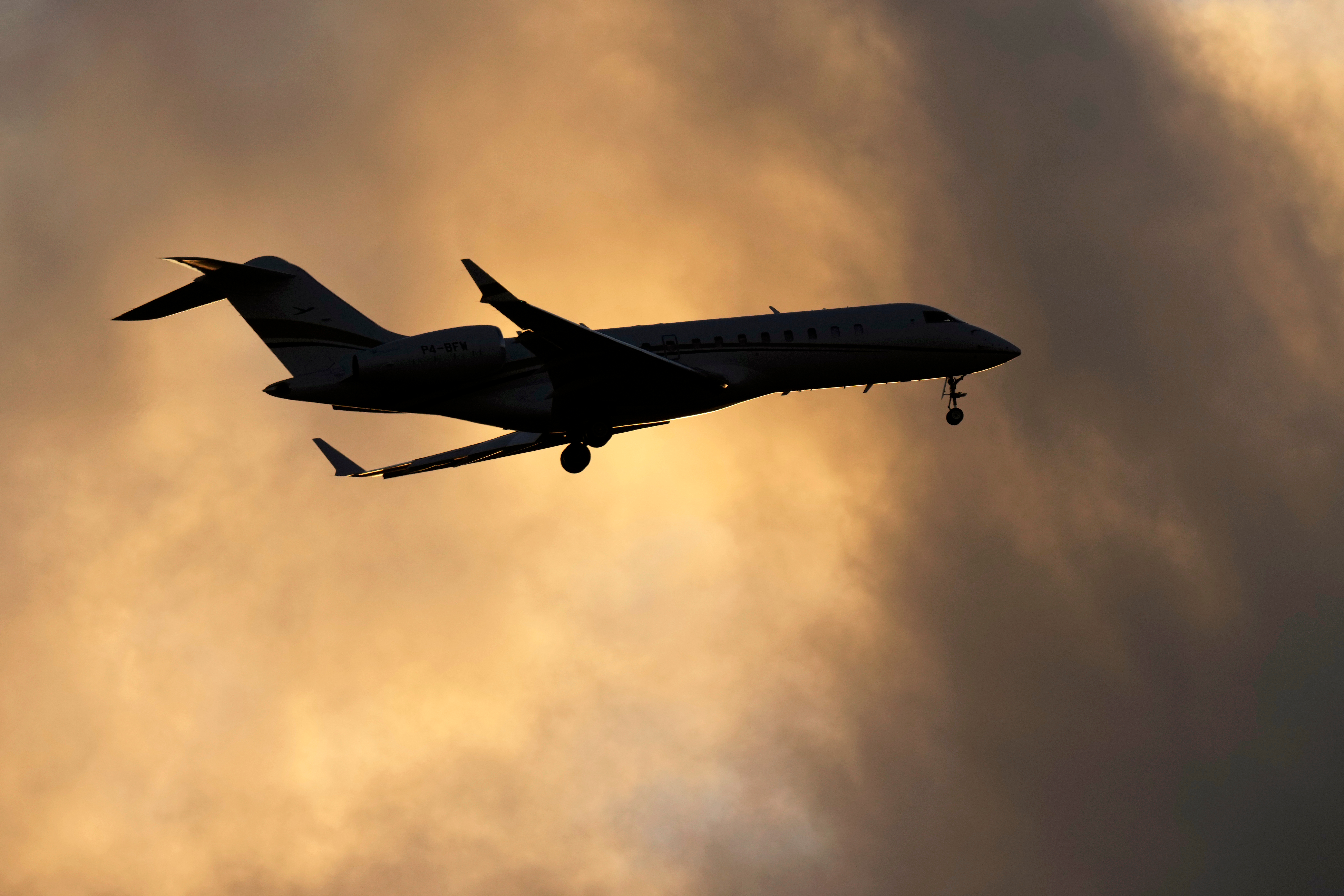
    U.S. President Donald Trump has threatened to ban the sale of aircraft from Canada’s Bombardier unless it manufactures planes in the United States.

    The maker of private jets in response pointed out that major components for its planes, from wings to engines, are produced in the U.S. and that its supply chain relies heavily on U.S. companies.

    Since Canada-U.S. trade talks collapsed on Aug. 21, Trump and his administration have unleashed a barrage of tariffs, threats, and personal attacks portraying Canada as weak and dependent. Canada retaliated Tuesday with tariffs on about $20 billion worth of U.S. goods.

    “NO MORE SELLING BOMBARDIER IN THE UNITED STATES! Their products aren’t good enough!” Trump said in a social media post Monday. “If they want our Market, they must build here, and stop treating America like a ‘piggybank.’”

    Bombardier said in a statement that the American aerospace industry is a “clear winner on trade and exports.” It said it creates tens of thousands of jobs both directly and through its supply chain.

    Bombardier’s supply chain includes about 2,800 U.S. companies in 47 states, it said. Among other things, wings for its business jets are made in Texas and flight control components are produced near Los Angeles. Honeywell, a major U.S. aerospace manufacturer, makes engines for Bombardier’s Challenger jets in Phoenix, and Collins Aerospace makes avionics and communications equipment in Cedar Rapids, Iowa.

    “Bombardier values its great partnership with American companies and its U.S. employees. Our plan is to continue to invest in our people, our customers, and the communities in which we operate across the country,” it said.

    Bombardier has significant operations in Kansas, where Republicans have held a solid grip on both U.S. Senate seats for a century. Trump won the state by about 16 percentage points in 2024. Both senators said they had contacted the White House to express concerns about the threat to the Canadian company and its potential impact on Kansas workers.

    “I reached out to the Trump administration to make certain the President is aware of the significant contributions of Bombardier to Kansas and the importance of its presence in Wichita to many Kansas workers at Bombardier and in the Bombardier supply chain,” Sen. Jerry Moran wrote in a social media post.

    Moran promised to continue working to ensure that the planemaker’s manufacturing operations remain in Kansas.

    Sen. Roger Marshall voiced the same support in a social media post Tuesday, saying, “I’m going to fight to keep Bombardier’s over 1,200 Kansas jobs. I’ve already taken that concern inside the Oval Office.”

    Earlier this year, Canadian Prime Minister Mark Carney announced that his government would buy six early-warning radar planes from Sweden’s Saab and Bombardier, rather than from U.S. aircraft makers. The Saab planes use Bombardier’s Global 6500 aircraft platform, supporting Canadian manufacturing. They have 20% U.S. content. The alternatives would have been U.S.-made E-7A Wedgetail surveillance aircraft made by Boeing or the Aeris X, made by L3Harris.

    The Canadian government is reviewing plans to buy U.S. F-35 fighter jets. Saab has proposed making its Gripen fighter jet in Canada.

    Bombardier is one of Canada’s oldest and most well-known manufacturers. The company was founded by Joseph-Armand Bombardier, an inventor and entrepreneur from rural Quebec who started out making snowmobiles and other snow-going equipment in the 1930s.

    Over its long history, it entered and left the train-making business and expanded for a time into making regional and commercial aircraft. But it sold off those parts of its business as it restructured to focus on making private business jets.

    The company has also spun off parts of its business that made snowmobiles and other recreational equipment.

  • Radnor drops plans to turn an old veterinary hospital into a local district court

    Radnor drops plans to turn an old veterinary hospital into a local district court

    Radnor Township has abandoned plans to purchase a shuttered veterinarian’s office and convert it into a local courthouse following pushback from neighbors.

    The township has canceled plans to acquire 405 W. Wayne Ave., the former home of St. George Hunt Memorial Veterinary Hospital, following a “thorough review of the site and vital feedback” from residents regarding infrastructure, traffic, financial issues, and “neighborhood compatibility,” according to a statement released Thursday.

    Radnor’s board of commissioners “remains committed to fiscal responsibility and to ensuring that civic developments properly align with the character and practical needs of our residential communities,” the statement read.

    The township had set out to purchase the Wayne building and convert it into Radnor’s magisterial district court, which, due to a struggle to find a local home, has been located in Newtown Square for the last three years. Officials said the township would purchase the building for $1.45 million and convert it into a courthouse, then lease it back to Delaware County, which would pay Radnor back over the course of 10 years. Bringing the district court back to Radnor would cut down on travel time and costs for residents and law enforcement officers, township officials said.

    Magisterial district courts typically handle minor criminal cases, landlord-tenant disputes, traffic cases, and civil cases involving amounts up to $12,000.

    Commissioners at a July meeting said that the township had looked extensively for a commercial space to house the district court and that the Wayne location presented the most realistic option. The former veterinary hospital was selected for its parking availability, commercial zoning, and price.

    The proposal faced considerable pushback from residents, who said a courthouse would be a poor fit for the largely residential neighborhood. Many warned of traffic concerns, a lack of parking, and the safety of holding court proceedings in an area with children and families. Some called the plan “ridiculous” and “not appropriate.”

    While the former veterinarian’s office is no longer on the table, “the fundamental need to find a suitable home for our local court remains,” the township’s statement read.

    The commissioners plan to host a public information session to provide information about the magisterial district court, the court’s day-to-day operations, and the reasoning for bringing the court back into the township’s bounds. No date or time has been set for the meeting.

    This suburban content is produced with support from the Leslie Miller and Richard Worley Foundation and The Lenfest Institute for Journalism. Editorial content is created independently of the project donors. Gifts to support The Inquirer’s high-impact journalism can be made at inquirer.com/donate. A list of Lenfest Institute donors can be found at lenfestinstitute.org/supporters.

  • LSU cracks top 10, Michigan falls out of AP Top 25, Penn State moves up to No. 16

    LSU cracks top 10, Michigan falls out of AP Top 25, Penn State moves up to No. 16

    LSU jumped back into the top 10 in the first Associated Press Top 25 college football poll of the regular season on Tuesday, Oregon slipped out of the top five and Michigan fell out of the rankings altogether after it needed a second-chance Hail Mary try at home to beat Western Michigan.

    Ohio State remained No. 1 by a wide margin entering its showdown with No. 4 Texas on Saturday. The Buckeyes received 46 first-place votes from the voting panel of 69 writers and broadcasters. The other 23 first-place votes were divided among six teams.

    Georgia, Notre Dame, Texas, and Indiana each moved up one spot with Oregon going from No. 2 to No. 6 following a 34-27 win over Boise State as a 25.5-point favorite. Miami, LSU, Mississippi and Texas A&M rounded out the top 10.

    Defending national champion Indiana received the second-most No. 1 votes, with eight. LSU got five, Notre Dame four, Oregon three, Texas two, and Miami one.

    LSU’s promotion bumped Oklahoma out of the top 10. The Sooners shut out UTEP 51-0 and will take a No. 11 ranking into their visit to Michigan. That matchup lost some luster in light of Michigan’s slogging offensive performance against Western Michigan, a game the Wolverines won 13-12.

    In and out

    Virginia rode an impressive Week 0 win over North Carolina State to a No. 25 ranking. It’s the first time since 2005 the Cavaliers have been ranked in a first regular-season poll. They finished No. 16 in the final Top 25 last season but received just one vote in the preseason poll.

    Michigan went from No. 16 — where Penn State moved up to from No. 18 — out of the Top 25. It’s first time since at least 2008 that a team ranked so high was bounced after a win. Kansas State went from No. 17 to unranked after holding off North Dakota of the Football Championship Subdivision last year.

    Full rankings

    1. Ohio State
    2. Georgia
    3. Notre Dame
    4. Texas
    5. Indiana
    6. Oregon
    7. Miami
    8. LSU
    9. Ole Miss
    10. Texas A&M
    11. Oklahoma
    12. Alabama
    13. Texas Tech
    14. USC
    15. BYU
    16. Penn State
    17. SMU
    18. Tennessee
    19. Washington
    20. Utah
    21. Iowa
    22. Houston
    23. Missouri
    24. Louisville
    25. Virginia