Blog

  • Anthropic worker quits over AI firms ‘gambling with our lives’

    Anthropic worker quits over AI firms ‘gambling with our lives’

    An artificial intelligence researcher has resigned from Anthropic and called on other staffers to rethink their work, citing his concern that the company and its top competitor, OpenAI, are acting irresponsibly in their all-out pursuit of a technology that poses existential risks to humanity.

    Jacob Coxon, who said he had worked at both Anthropic and OpenAI over the past three years, warned in a social media post late Tuesday that the two companies were pressing ahead with “self-improving” AI models that could become too powerful for humans to control.

    “They are racing straight to self-improving superintelligence and gambling with our lives,” Coxon wrote in a series of messages on X. “Do not underestimate the power of this technology. These will soon be superhuman systems that can hack anything, revolutionize any field overnight, and acquire real power and resources.”

    Coxon said that the teams “building AI earnestly believe that it could kill us all by the end of the decade.” In response, Evan Hubinger, a current Anthropic employee, said he and others at the company do worry about this scenario. “I personally think it is >10% within the next decade,” he wrote on X.

    The former Anthropic researcher’s missive marked the latest in a series of increasingly dire warnings from within the industry that AI is evolving so quickly that it poses a growing threat to national security and the global economy. It came a day after the top scientist at OpenAI, Jakub Pachocki, cautioned that the world is unprepared for a rapid rise in AI and said he expected developers to voluntarily slow their work in response.

    Representatives for Anthropic and OpenAI did not immediately respond to a request for comment.

    In July, more than 1,100 staffers across top AI firms, including Anthropic and OpenAI, signed a petition that calls on the U.S. government to support a mechanism that would help “deliberately pace” AI development to prevent the technology from advancing too fast. Some policymakers have since echoed their concerns. Sen. Bernie Sanders, a Vermont independent who aligns with Democrats, recently proposed legislation that would bar so-called “super-intelligent” AI models, whose powers exceed human capabilities.

    In announcing his departure, Coxon urged other AI researchers to think twice about what they are doing in light of the potential consequences of creating a technology that could slip beyond their control, suggesting they consider taking “this moment to call for different conditions.”

    The heightened rhetoric about AI risks follows revelations that a handful of models from OpenAI had coordinated efforts to escape a secure testing space and attack the research platform Hugging Face Inc. — all without being detected by their developers. Anthropic and Meta Platforms Inc. have also had recent episodes where their AI systems broke out of their test environments to gain internet access without developers’ permission.

    Coxon’s departure from Anthropic over safety concerns is all the more striking because the company has made responsible AI development a core part of its identity. CEO Dario Amodei has stood apart from the rest of the industry with his calls for mandatory government vetting of cutting-edge systems before they’re released.

    The surge in safety concerns surrounding AI coincides with a growing backlash against the technology in the U.S., fueled in part by objections to the strain on local resources imposed by new data centers needed to support the technology. Concerns that AI is driving up electricity bills and potentially taking away jobs has made it a central issue in the November midterm elections.

    In a Bloomberg Television interview last week, OpenAI CEO Sam Altman attributed some of that unease to the industry’s failures in communicating to the public all the benefits that AI will eventually bring. “The industry has done a terrible job of this on the whole,” Altman said.

    Others in Silicon Valley remain enthusiastic about advances in AI capabilities. In response to OpenAI’s new Astra model, Nvidia Corp. CEO Jensen Huang hailed its introduction with a post to his new social media account saying “AGI has arrived,” a reference to artificial general intelligence that is more capable than humans.

    Trump administration officials have pushed back on any moves to rein in AI development and last week they won unanimous support from Group of 20 member nations for a set of guidelines that call for a lighter touch in regulating AI and other emerging technologies. President Donald Trump has turned aside questions about AI safety, instead stressing during remarks on Friday the importance of leading China in the technology.

    “Whoever wins with AI wins, and it’s really right now, it’s really between China and us,” he told reporters in the Oval Office.

    Maggie Eastland and Shona Ghosh contributed to this article.
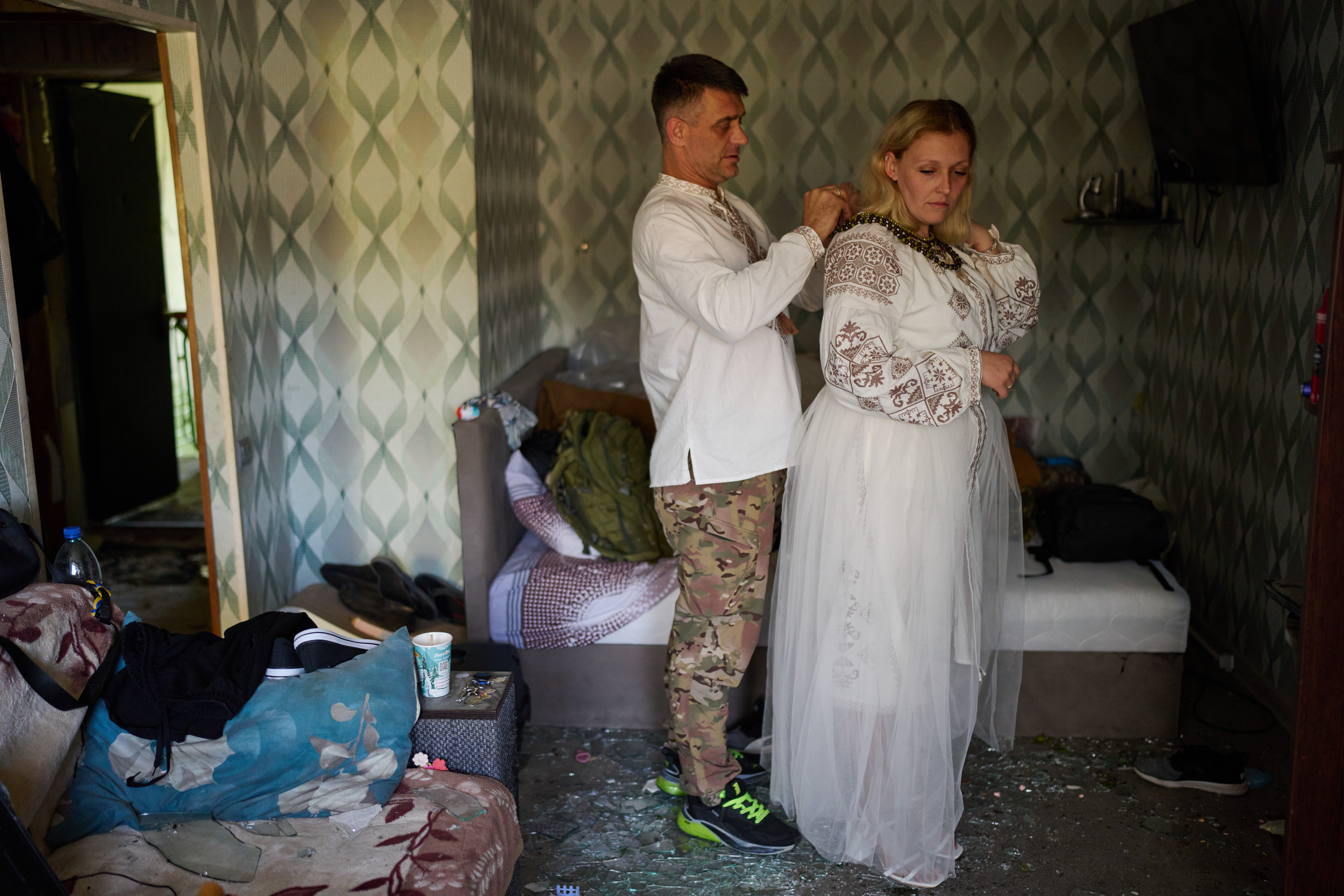
  • Hours after a Russian attack destroys their home, a Ukrainian couple gets married

    Hours after a Russian attack destroys their home, a Ukrainian couple gets married

    KYIV, Ukraine — On the eve of her wedding, Liudmyla Ryzhak pressed her delicately embroidered dress, laid out a full white tulle skirt and her soon-to-be husband’s traditionally patterned shirt, then hung them on the bedroom door.

    After repeated delays caused by the war with Russia, she was only hours away from marrying her partner, a 43-year-old Ukrainian soldier, in a ceremony in the capital.

    But as the couple slept, a Russian strike hit a warehouse across the street from their building, sending a blast wave through the apartment and threatening to stop the wedding scheduled for Tuesday morning.

    The pair were soon digging their wedding clothes out of the rubble. Ryzhak, 33, had to pull her skirt from beneath the debris, shaking off pieces of broken glass.

    Strike followed visit by U.S. envoys

    The strike came soon after U.S. envoys visited Ukraine on Sunday, a trip that brought a lull in Russian attacks. The assaults then resumed with drones and missiles. Explosions were heard in Kyiv for almost five hours overnight. Strikes continued during the day Tuesday.

    Like many others in Kyiv, the couple decided the attacks would not derail their lives and forged ahead with the ceremony. It had taken a long time for her fiancé, Leonid Ryzhak, to make it back from the front lines in eastern Ukraine.

    “If God gave me a continuation of life, then why should I put it off?” the bride said. “For someone, it ended. And who can guarantee this won’t happen again tomorrow? That tomorrow won’t come for us? At least for now, I have the right to be happy. Both him and me.”

    Liudmyla and Leonid awoke from the blast, which blew out the apartment’s windows and scattered its furniture. A burned curtain hung in shreds.

    Their ears deafened by the explosion, the couple’s only immediate thought was the risk of a second strike. They fled to a shelter with Liudmyla’s 6-year-old daughter and two guinea pigs but without the cat, which had hidden in fright and could not be found.

    They were lucky: By the time the second strike hit, they were already safe. The apartment was rendered uninhabitable until repairs are made.

    A friendship deepened into love

    The two met three years ago through mutual friends, coming together as adults who weren’t looking for anything serious. Both had children from previous marriages.

    But the friendship deepened. She supported him through his deployments to the front, and slowly the relationship grew into love. Leonid Ryzhak, who serves as part of a team that deploys bomber drones in the Pokrovsk area, arrived in Kyiv for a long-awaited vacation a week and a half earlier, just as near-constant air-raid alerts and daytime attacks began disrupting life in the capital.

    For six days straight, the couple went to the registry office but could not submit their documents because of constant air-raid sirens.

    When they finally succeeded, they were assigned Sept. 8. Nobody could have predicted that their apartment would be badly damaged on the same day.

    It wasn’t the first time for Liudmyla, who owns a Kyiv pet store. She had already lived through one attack, on Aug. 20, when a strike cut the gas lines and shattered windows in her home. She was badly frightened and for a time was afraid to go back.

    Eventually, ordinary life pulled her back in: The wedding was coming, and the children had to go to school.

    More attacks hit as they wait at registry office

    Eventually, the two put on their wedding clothes and headed to the registry office.

    Leonid tried to keep their spirits up. What mattered most to him, he said, was for his bride to be smiling.

    “It’s fine. We’ll get through it,” he said.

    When they stepped outside their apartment, the courtyard looked almost apocalyptic, with a column of black smoke rising behind a brightly colored children’s playground. Neighbors clearing debris stopped to congratulate the couple.

    “We should all be celebrated, that we survived,” Liudmyla replied.

    The couple arrived at the registry office on time, at 10:40 a.m.

    Leonid wore an embroidered vyshyvanka, a traditional Ukrainian shirt, with a pattern that matched the one on Liudmyla’s dress.

    In place of black dress pants, he wore army trousers — he couldn’t dig his own out of the rubble — and black sneakers with fluorescent yellow soles and laces, for the same reason. Liudmyla’s white tulle overlay had tiny, barely visible holes that were torn as she pulled it out from the rubble and broken glass.

    Shortly after they arrived, a siren sounded: Another attack had begun, and the registry office closed for safety. The couple waited in the courtyard, unsure how long it would last.

    Explosions echoed nearby as strikes hit surrounding districts and fires broke out. Almost three hours passed before the alert finally ended, and the couple hurried back inside.

    Against all odds, they became husband and wife

    Just before entering the hall for the ceremony, they paused, trading nervous jokes.

    “I didn’t even get to finish the repairs at home,” Leonid joked about their now-wrecked apartment.

    “I’ve never had such a spectacular day,” his bride replied.

    The ceremony went ahead as the officiant told them, “Love is when two people become a team.”

    Moments later, the two were officially married.

    “We’re gaining a new life, because we survived,” Liudmyla said. “You could probably call [it] a new life because it could have ended today, and none of this would happen.”

    In a different scenario, “I wouldn’t be wearing this dress. Someone would be picking out something else for me instead, something darker.”

  • Trump gave $45,000 cash gifts to Natalie Harp, two other close aides

    Trump gave $45,000 cash gifts to Natalie Harp, two other close aides

    President Donald Trump gave $45,000 cash gifts to his executive assistant Natalie Harp and two of his other young, loyal White House employees, according to financial disclosures released by the administration.

    On their disclosure forms, which were released publicly late last week, the three women described the payments as “Cash Gift for Holidays.” The gifts amount to about one-third of the $150,000 salaries they each earn from their White House positions, according to an annual report to Congress.

    Richard Painter, the former chief White House ethics lawyer for President George W. Bush and a critic of Trump, said the payments appear to violate a federal statute that prohibits the supplementation of federal employees’ salaries from outside sources.

    “He’s clearly trying to make it easier for them financially to work in government service at the White House,” Painter said. “You can’t do that.”

    A White House spokesperson denied that the payments violated any rules.

    “The President has a longstanding practice of giving Christmas gifts to people in his orbit, including at times employees and aides, both in government and in his time in the private sector,” White House spokesperson Davis Ingle said. “The gifts at issue here have nothing to do with any of these individuals’ official government duties, and therefore are entirely permissible under relevant legal and ethical standards.”

    The three recipients of Trump’s gifts did not immediately respond to requests for comment.

    Harp, a 35-year-old aide who rarely leaves Trump’s side, is known within the White House as the “human printer” because she carries a portable device to provide Trump with his preferred hard copies of news articles and social media posts.

    She has come under increased scrutiny since the Washington Post reported last month that she was one of a handful of close staffers who accompanied Trump on a catering truck that transported him under concealment as he secretly swapped planes to depart Turkey in response to a potential Iranian assassination threat.

    Days after the Post report, Sen. Jon Ossoff (D., Ga.) said at a campaign rally that Trump would rather “travel with Natalie on their apparently defenseless flying palace” — a reference to the airplane given to Trump by the Qatari royal family — as he accused the president of neglecting his duties. The remark sparked backlash from the White House and conservative media figures that intensified the spotlight on Harp.

    Trump also gave $45,000 to Margo Martin, a 31-year-old communications adviser who often gets closer to the president than his Secret Service detail to film his daily activities for social media, and Chamberlain Harris, a 26-year-old White House aide who serves as Trump’s executive assistant. Trump in February appointed Harris to the U.S. Commission of Fine Arts, which has oversight of his White House ballroom and other Washington-area construction projects.

    Trump aide Margo Martin listens as the former president speaks to staff and reporters during a 2023 flight.Jabin Botsford

    Walt Nauta, the director of Oval Office operations, reported a $20,000 gift from the president. Nauta, who earns $175,000, also accompanied Trump on the catering truck in Turkey. He served as a valet in the first Trump White House and was a key witness and co-defendant in the Justice Department’s probe of Trump’s handling of classified documents at Mar-a-Lago. A judge dismissed the charges in 2024, ruling that special counsel Jack Smith, who had brought the case, was improperly appointed.

    There are no other public instances of U.S. presidents giving staff employed by the White House large cash payments. Government ethics experts said they were not aware of any other payments of this scale from a superior to a subordinate government worker.

    Traditionally, government ethics officials worry about situations in which a company that previously employed a federal official tries to provide additional money to make it easier for them to serve in government, Painter said.

    When employers give a holiday gift to a person who works in their house, that is considered part of their income, he added.

    “It’s not like tipping the doorman on Fifth Avenue,” he said. “These are U.S. government employees. If you want a job where you get tips, you shouldn’t be working for the U.S. government.”

    Under the law, both the person who pays the supplemental income and the person who receives it are liable. The Trump Justice Department might decline to enforce the law, but the statute of limitations is five years. Trump’s term ends in a little over two years.

    Federal employees are also subject to restrictions on what gifts they can give or receive to ensure government decisions remain impartial.

    Don Fox, the former acting director of the Office of Government Ethics (OGE) in the Obama administration, said it was not clear from the available facts that the payments violate the prohibition on supplementation. He said that would be the case if Trump made the gifts after one of the employees said they were leaving for the private sector because they couldn’t live on what they were making, and he gave them a supplement to level the disparity in salaries.

    There are rules that restrict employees from giving gifts to their superiors over concerns they could be abused to curry favor. But a large payment to a subordinate is “not a circumstance that OGE ever really envisioned,” Fox said. “This just doesn’t happen.”

    He said the most expensive gift he remembered receiving as a federal employee from a superior was a fruit basket around the holidays.

    Even in the absence of any violation, however, Fox said he still found the payments “troublesome” because they could leave the aides indebted to Trump.

    “I would feel somewhere between really uncomfortable and then beholden to the person who gave me such a large gift,” he said.

    Harp, Martin, Harris, and Nauta all have ties to Trump dating from his first term, and they were all among a small inner circle of aides who worked for Trump in Florida in between his presidencies. Harp, Martin, and Harris have limited work experience that isn’t tied to Trump.

    Harp gained national attention in 2019 for a LinkedIn post in which she credited a law Trump signed in 2018 expanding access to experimental treatments with saving her life following a Stage 2 bone cancer diagnosis. Medical experts have cast doubt on those claims. Harp spoke about the experience at the 2020 Republican National Convention. As an anchor with One America News, she frequently promoted Trump’s false claims that he won the 2020 election. She began working for Trump in 2022 after leaving the network.

    Martin began working for the Trump White House as a press assistant in 2019 and continued to work as a press secretary for Trump after the inauguration of President Joe Biden. Harris began her career at the White House and was known as the “receptionist of the United States” during Trump’s first term.

    Nauta is a Guam native who enlisted in the Navy in 2001. By 2021, he was promoted to the rank of senior chief culinary specialist, according to military records. Nauta was working in the White House at that time, and Trump promoted him to be his valet, according to court records. Valets are often known as “body men,” following politicians closely so that they can provide them with everything from snacks to schedules.

    They each reported that they had no income or employment assets from a spouse in their disclosures.

  • A bad year for bees gets worse as Trump’s tariffs hit Canada’s honey belt

    A bad year for bees gets worse as Trump’s tariffs hit Canada’s honey belt

    EDMONTON, Alberta — In central Alberta, where the heaviest rains in more than a century kept worker bees inactive for much of the summer, Mike deJong, a beekeeper, was already facing a bleak honey harvest.

    Then President Donald Trump imposed 50% tariffs on honey and hundreds of other Canadian products.

    The tariffs took effect after trade negotiations between the two countries collapsed Aug. 21. Trump said the move punishes Canada for discriminating against U.S. exports.

    “This year humbled me,” said deJong, the owner of Busy Bee Farm Ltd., which, at 20,000 hives, is one of the largest operations in central Alberta. The province produces 40% of Canadian honey.

    Walking briskly around his sprawling honey house, deJong gestures to machinery, steel drums, wooden boxes, and other supplies that, ordinarily purchased from U.S. suppliers, now cost farmers more at checkout — because Canada retaliated with tariffs of up to 50% on hundreds of U.S. exports.

    While far from Canada’s most significant agricultural commodity — it represented roughly $175 million in production value last year — the honey industry and its 16,300 beekeepers are foundational to farming. Beehives are contracted out to pollinate fields of alfalfa, clover, and the multibillion-dollar canola crop. The sector also illustrates how the trade war is playing out on the ground, far from Canada’s capital of Ottawa and Washington.

    About 70% of the honey Canada has exported this year went to the United States. Yet of all the honey that the United States imports, only 2% comes from Canada, making it a puzzling target, beekeepers say, by the Trump administration.

    The trade upheaval has left beekeepers scrambling at the end of a difficult harvest, when they would normally be selling honey and hauling barrels of it across the border. Rural communities are enduring pain acute enough that some farmers are questioning Prime Minister Mark Carney’s handling of the negotiations.

    “At the last minute, they blew the whole deal up,” said Ron Greidanus, the owner of Greidanus Honeybee Farm in Stettler, Alberta. “And we are the sacrificial pawn.”

    Greidanus pulled his white flatbed truck into his farm Thursday evening after an eight-hour drive from Polson, Mont. He had crossed the border with $32,500 worth of pine for hive frames, which would soon be subject to a 25% Canadian tariff and would have cost him about $8,100 more.

    Rain fell outside as Greidanus’ teenage son and another worker offloaded the wood, enough to keep his staff building frames for about two months over the winter. The weather inspired a metaphor: that each small farming business is a raindrop that, when collected together, has an amplified effect.

    “My business, it’s just a raindrop. But it matters to Pablo, it matters to Tanya, it matters to Tony,” said Greidanus, listing his staff, most of whom are seasonal foreign workers, and the local businesses that depend on his patronage. He plans to visit the United Arab Emirates this fall to explore new markets, though he has accepted that no one can replace the United States as a prime customer given its proximity.

    The economic pain from tariffs is especially personal in small Canadian towns like Warburg, a village of about 700 people southwest of Edmonton surrounded by endless canola fields and cattle ranches — the kind of place where Wild Hive, a local beeswax candle maker, has its name etched in the ice at the curling rink and on a sign at the hockey arena.

    “When you live in a small town, that’s all you got,” said Candice Prins, Wild Hive’s owner, surrounded in her garage studio by fragrant tapered candles, each hand-dipped, the traditional way, 16 times in hot beeswax.

    Prins quit her job last year as an agricultural inspector specializing in honeybees as her wholesale business took off, with American buyers accounting for 40% of sales and allowing her to hire three women from town. Since the most recent tariffs began, she has had only one sale from the United States.

    “We can’t give back or do as much for our community, which was kind of the goal when I started,” she said.

    Prins buys most of her beeswax from Good Morning Honey, a short drive north in Parkland County, Alberta. Its owner, Richard Ozero, has been diversifying his farm to offer retail products such as honeycomb and bee pollen, while exporting about 20% of his honey south.

    “We’re not eating their lunch, we’re not affecting their bottom line, so I don’t know how beekeeping got thrown into the cage here in this trade dispute,” Ozero said from behind the wheel of his pickup, on the way to visit his hives in a nearby hay field. “It kind of came out of nowhere.”

    Margins to absorb a 50% price increase are not built into the system, said Ozero, who likened the tariffs to closing the border. It has made preparing for the winter a challenge farmers cannot simply postpone.

    “The bees aren’t going to say, ‘OK, just call us when you’re ready,’” Ozero said.

    Consumers can also bear consequences of the trade spat beyond price fluctuations, industry experts warn, because honey is one of the most adulterated food products in the world.

    Fake honey, made with rice syrups, made up about 22% of imported samples tested in Canada last year, according to the national food inspection agency, while domestic honey tested 100% authentic.

    Canada exports more honey than it imports, but one byproduct of the trade war is that the two countries, which normally cooperate to protect the integrity of their honey supply, are now at odds. The clash could open the door to more fake honey entering the market, said Rod Scarlett, the executive director of the Canadian Honey Council.

    Canada also relies on states such as California and Hawaii, which, because of their warmer climate, are leading producers of the queen bees necessary for laying thousands of eggs and keeping colonies populated.

    Canada imports about 300,000 queen bees annually, 85% of them from the United States, according to federal data. The bees themselves are not subject to tariffs, but reliance on U.S. suppliers is another source of unease as beekeepers plan for winter and beyond.

    “Canadian and American farmers have spent generations building a continental food system,” Ozero said. “You can disrupt that system with a tariff overnight, but rebuilding those relationships could take years.”

    This article originally appeared in the New York Times.

  • Families grieve in the ruins of an Iranian school where a U.S. strike killed dozens of children

    Families grieve in the ruins of an Iranian school where a U.S. strike killed dozens of children

    MINAB, Iran — The sun set over this southern Iranian city, and Heydar Sadeghi was where he can be found almost every evening: on a bench next to the shattered remains of his grandson’s school. His face was soaked with tears.

    A banner strung around the rubble showed the faces of children and teachers killed here by an American airstrike on Feb. 28, the first day of the war on Iran. Among them are Sadeghi’s 11-year-old grandson Hami and the boy’s mother, Neda Salehizadeh.

    “I searched the bodies for my kids, thinking maybe one would be among them,” Sadeghi said Monday evening as he recounted how he rushed to the school in the moments after the explosions. He called out their names, saying, “’Come with me! I’ve come to get you.’ They weren’t there,” he said, weeping.

    The Shajareh Tayyebeh school has become a place to wrestle with grief and preserve the memories of the dead. Here, relatives try to comprehend the incomprehensible — how around 120 of their children could be snuffed out, just after they’d been dropped off for a day of classes.

    At least one U.S. missile hit the school that morning in Minab, according to an Associated Press investigation, but there has been no final accounting of what happened. Iranian state media have said 168 people were killed in the strike, most of them children.

    The Trump administration has yet to directly accept the blame or release findings of a Pentagon investigation into the bombing.

    A grandfather grieves every day

    For Sadeghi, the day of the strike began as every school day did.

    He drove Hami and the boy’s 9-year-old sister Nila to school along with their mother, his daughter-in-law Salehizadeh, who was a teacher. As usual, he planned to pick them up at 1 p.m.

    “But the bell was rung early — by Trump,” he said.

    Hami was a fifth grader who loved soccer and riding his bicycle, Sadeghi said. His body was so mangled in the blast, they could only identify him from the clothes he was wearing, he said.

    Nila was pulled alive from the rubble.

    “Thank God, she is physically fine,” Sadeghi said. “But mentally, no.”

    The girl and her father have moved in with Sadeghi and his wife. The slightest, unexpected noise frightens her. She often goes to bed in her grandmother’s arms but lies awake for much of the night.

    Sadeghi said he often invites Nila’s friends to come spend the night, hoping their presence will distract her.

    He wants to see Nila smile. So he grieves here at the school away from her.

    “I come here and cry,” he said. “Then I go home and dance in front of the girl.”

    The site is becoming a memorial to the dead

    The school had a girls’ school upstairs and a boys’ school and preschool on the ground floor. Some of the students were children of officers at a Revolutionary Guard base located next to the school; many were local children from Minab, which is populated predominantly by members of Iran’s Baluch ethnic minority.

    The banner at the site listed 120 students killed — 47 girls and 73 boys — and 26 teachers and staff. Three more children are presumed dead but their bodies were never found.

    The governor of Hormozgan province, where Minab is located, has said the damaged building would be preserved to be turned into a memorial and war museum.

    Several dozen visitors there Monday evening included relatives of the dead but also out-of-towners who had come to see.

    In a government-sponsored mourning ceremony held every evening, men and women — including one in the Guards uniform — took turns at a microphone, telling wrenching stories about those who died and describing in graphic detail the day of the attack. Some visitors broke down weeping from their accounts.

    A separate section of Minab’s cemetery has also been set aside for those killed at the school. Every grave has a photo of the dead, with a shade overhead and artificial grass around so families can sit with their loved ones. Some lay flowers and prayer beads on the graves. Others bring dishes of “shuleh-zard,” a saffron rice pudding eaten at funerals.

    One teacher tried to protect her students

    At the cemetery, Fatemeh Barani sat by the grave of her daughter, Nasim Neyestani, a second-grade teacher at the school. Barani comes several times a week to be with her daughter.

    She thinks about her daughter’s last hours, which school staffers later described to her, and how everything could have turned out differently.

    At around 9 a.m. news came of the airstrikes in the capital Tehran that had hit the compound of Iran’s supreme leader. They didn’t know it at the time, but those initial Israeli strikes killed Ayatollah Ali Khamenei and much of the top military leadership.

    Neyestani was alarmed, fearing wider strikes, and urged the principal to cancel classes and call parents to come collect their children, Barani said, according to what she was told by other staffers. The principal didn’t think that was necessary. But Neyestani began calling the parents of her 22 students herself, urging them to come get their children, Barani said.

    Fourteen of Neyestani’s children were picked up before the strike, Barani said. The parents of eight others did not get there in time.

    Neyestani took the eight children into the schoolyard, her mother said. But the principal told her to take them into the school’s prayer room, thinking it would be safe.

    The prayer room was hit. Barani said her daughter and all eight children with her were killed.

    “My daughter’s classroom was mostly left intact,” she said. “Probably if she had been in that classroom, she would not have been killed.”

    Details of Barani’s account could not be independently verified, but it meshes with other accounts. The AP’s investigation of the strike found that several teachers called parents to pick up their children before Iran’s government ordered schools closed nationwide at 10:15 a.m. The first missile hit the school about an hour later. Accounts of the strikes posted on banners at the school say three missiles struck. The principals of both the boys and girls schools were among those killed.

    A teacher’s mother is overwhelmed with grief

    After the strikes, Barani’s husband and sons went to the school; later, they told her her daughter had been killed.

    They found Neyestani’s bag. But Barani said her sons have hidden it from her because they fear seeing it would only hurt her more.

    Parents of students who escaped the school because Neyestani had called them visited the family to pay their condolences, but Barani said she was so overwhelmed with grief that she doesn’t remember any of their visits.

    She said she still hasn’t been able to enter her daughter’s bedroom.

    She talked about how her daughter, who had not married, was rarely idle. She taught in the mornings and worked as a salesperson at a cosmetics store in the evenings. At home, she stayed busy with her hobby making handicrafts, particularly “minakari,” a traditional art of decorating objects with enamel. The enamel work relaxed her, Barani said.

    The enamels are still there around the house, a reminder of her daughter.

    “Every day, this grief feels fresh again,” Barani said.

  • Philly band The War on Drugs is back with new music

    Philly band The War on Drugs is back with new music

    The War on Drugs have returned.

    The Philadelphia band fronted by songwriter Adam Granduciel has released its first new music in five years.

    The band’s new single, “Who’s That,” is a synth-heavy slow-building rock song that starts off big and only gets bigger as it builds to a powerful crescendo, War on Drugs-style.

    Recorded at Granduciel’s studio in a warehouse in Burbank, Calif., the song features the Drugs leader playing nine instruments in a typically layered, meticulous arrangement.

    The “Who’s That” recording includes band members Dave Hartley, Eliza Hardy Jones, Jon Natchez, and Anthony LaMarca, with the latter playing drums rather than the band’s usual drummer, Charlie Hall or sometime studio contributor Patrick Berkery.

    The song arrives with a video directed by Max Flick that features Granduciel walking the streets of Burbank on a dark night of the soul. At one point, a newspaper blows into his face. At another, he picks up a guitar out of a trash bin and plays a solo.

    “‘Who’s That’ was written in 10 minutes somewhere between first coffee and school drop-off,” Granduciel said in a statement.

    “Itʼs a song about trying to love yourself despite things we canʼt always control, like the anxiety, depression, and self-doubt that may stand in the way of living the life we truly desire.”

    “There’s a lion hangin on my neck, I can tame it, but he might break free,” Granduciel sings. “Who’s that? It’s only my depression, baby.”

    Is “Who’s That” the first song from a forthcoming War On Drugs album, which would be the band’s first since 2021’s I Don’t Live Here Anymore?

    No word on that yet. The group is going out on a fall tour, though, which begins with two semi-local dates.

    On Sept. 18, the Drugs are playing the Queen in Wilmington. That is followed by a gig the next night on the Asbury Park beach at the Sea.Hear.Now festival on a bill that headlined by Mumford & Sons and also includes the Offspring, Chaka Khan, and Shaggy, among others.

    The artwork for The War On Drugs’ new song “Who’s That.”Courtesy of the Artist

    Since I Don’t Live Here Anymore, The War On Drugs put out a live album, Live Drugs Again, in 2024. Granduciel also produced two standout releases: British singer Sam Fender’s People Watching, which won the prestigious Mercury Prize last year, and Always Been, the Delaware- and Philly-connected solo album by Craig Finn of the Hold Steady.

    Last holiday season, The War on Drugs, who were founded in Fishtown in the mid-2000s and won a best rock album Grammy in 2018 for A Deeper Understanding, played a three-night A Drugcember to Remember stand at Johnny Brenda’s. The shows benefited Philly public schools and included guests such as Finn, Joe Walsh, and Kurt Vile.

  • Call Your Mother has opened its first Philly location in Fishtown. Can these private equity-backed bagels compete?

    Call Your Mother has opened its first Philly location in Fishtown. Can these private equity-backed bagels compete?

    Bagel shops come in all stripes. There are sandwich shops and schmear shops, shops that will gladly toast your bagel, shops that will refuse to scoop it, and shops with service so curmudgeonly it comes across as endearing.

    Call Your Mother, the latest bagel chain to hit Philly, isn’t trying to be any of those. Instead, it is America’s preppiest bagel shop, closer to a viral tween clothing store than a neighborhood deli.

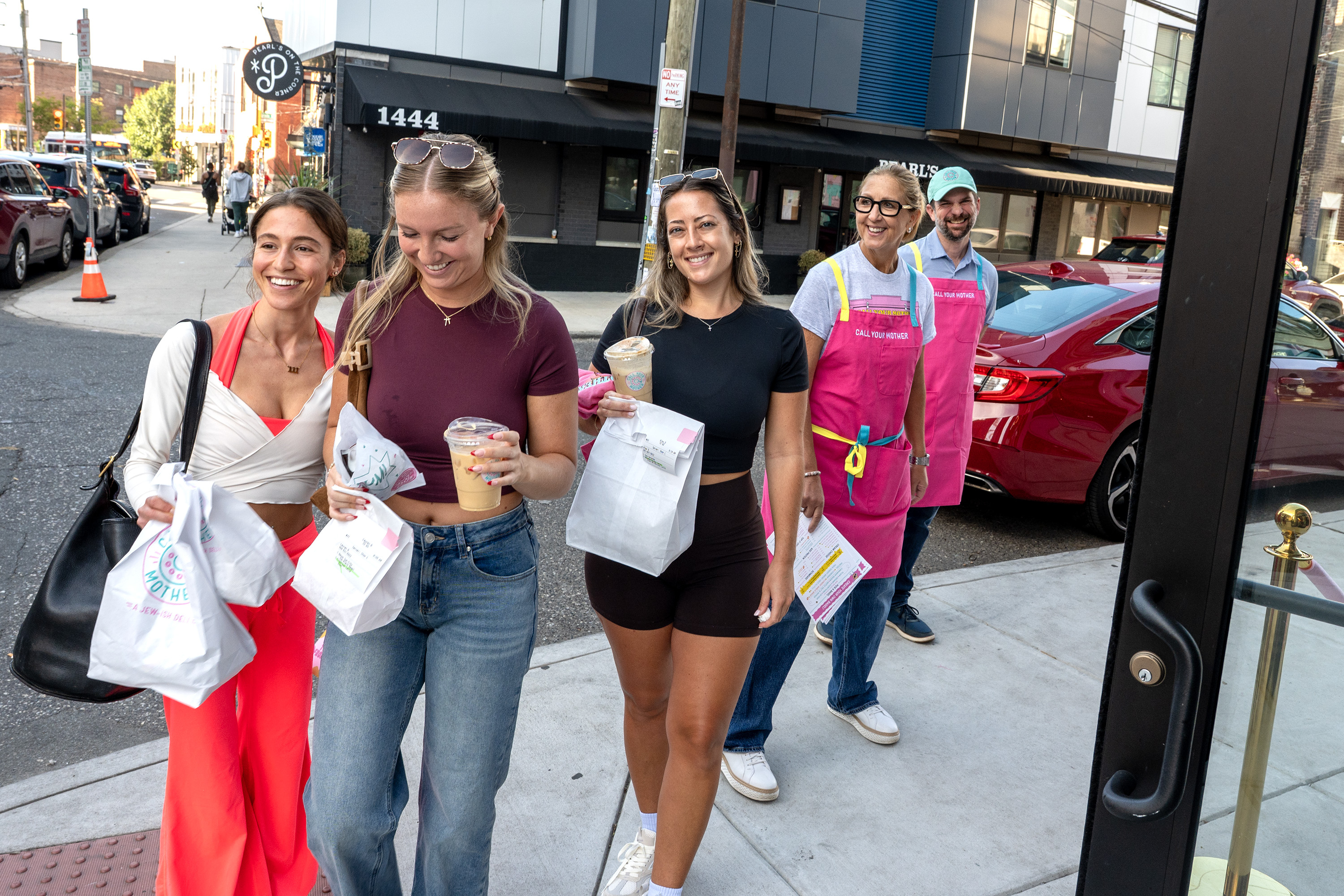
    The shop’s newly opened Fishtown location looks like a boutique that just so happens to serve bagels, its bubblegum pink storefront sporting a mural of a cream cheese-and-lox bagel and a latte alongside a school of cartoon fish.

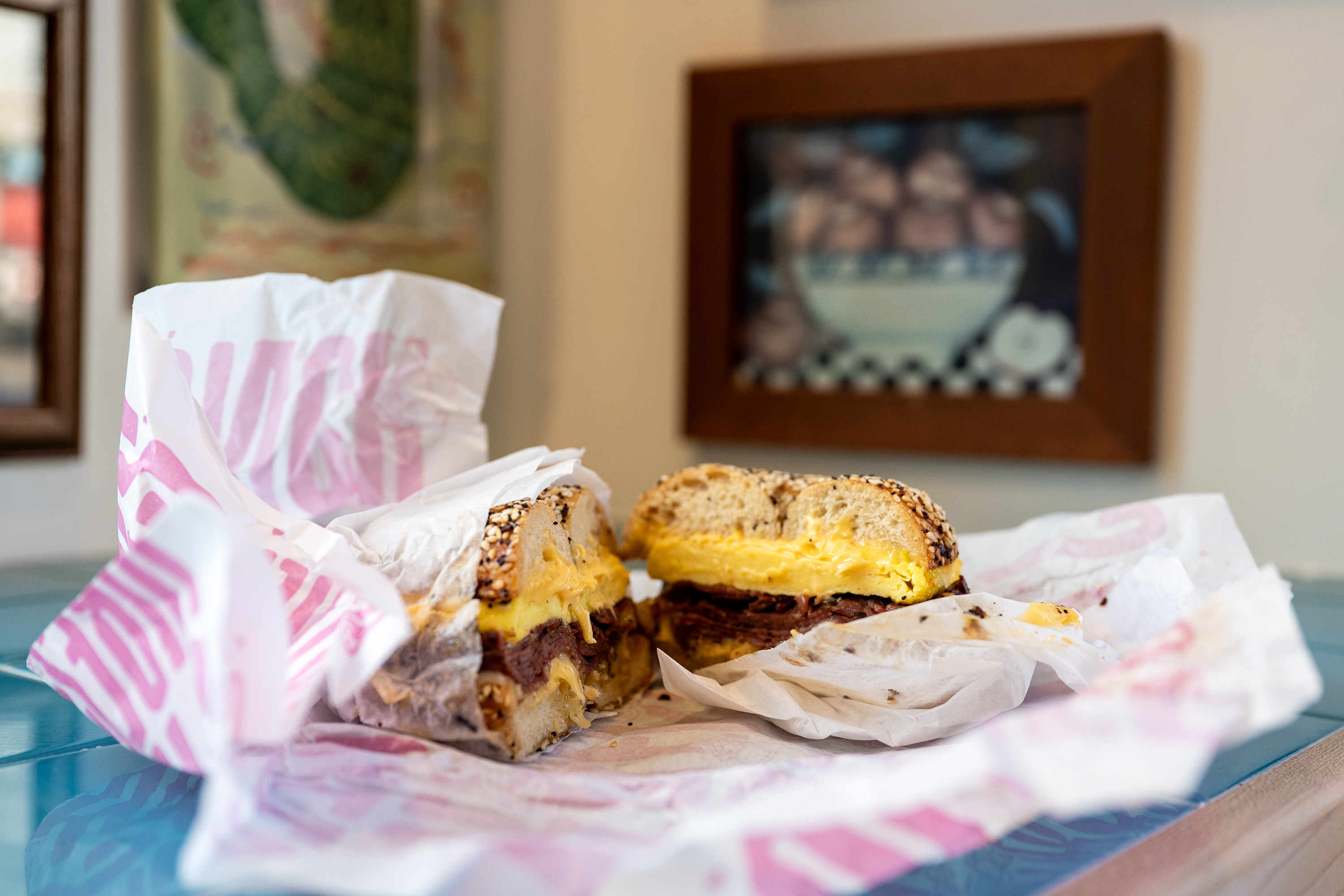
    The meatball sub bagel and banana bread-matcha latte at Call Your Mother during its Fishtown soft opening on Tuesday, Sept. 8, 2026.Tom Gralish / Staff Photographer

    Founded in D.C. by husband-wife duo Andrew Dana and chef Daniela Moreira, Call Your Mother has two more Philly locations on the way in Rittenhouse Square and Washington Square West. The shop first opened in 2018 in the D.C.’s Park View neighborhood as a self-proclaimed “Jew-ish” deli with pink and teal walls, loaded sandwiches, and a chewy-soft bagel recipe so good even Joe Biden was a fan.

    Shortlisted as a candidate for Bon Appetit’s best new restaurants list in 2019, Call Your Mother is now synonymous with the private-equity bagel boom: The shop went from a handful of locations in D.C. to 28 across Maryland, Virginia, Colorado, Illinois, and Pennsylvania after the investment firm Invus, an early Cava investor, purchased a stake in the company at the start of 2025.

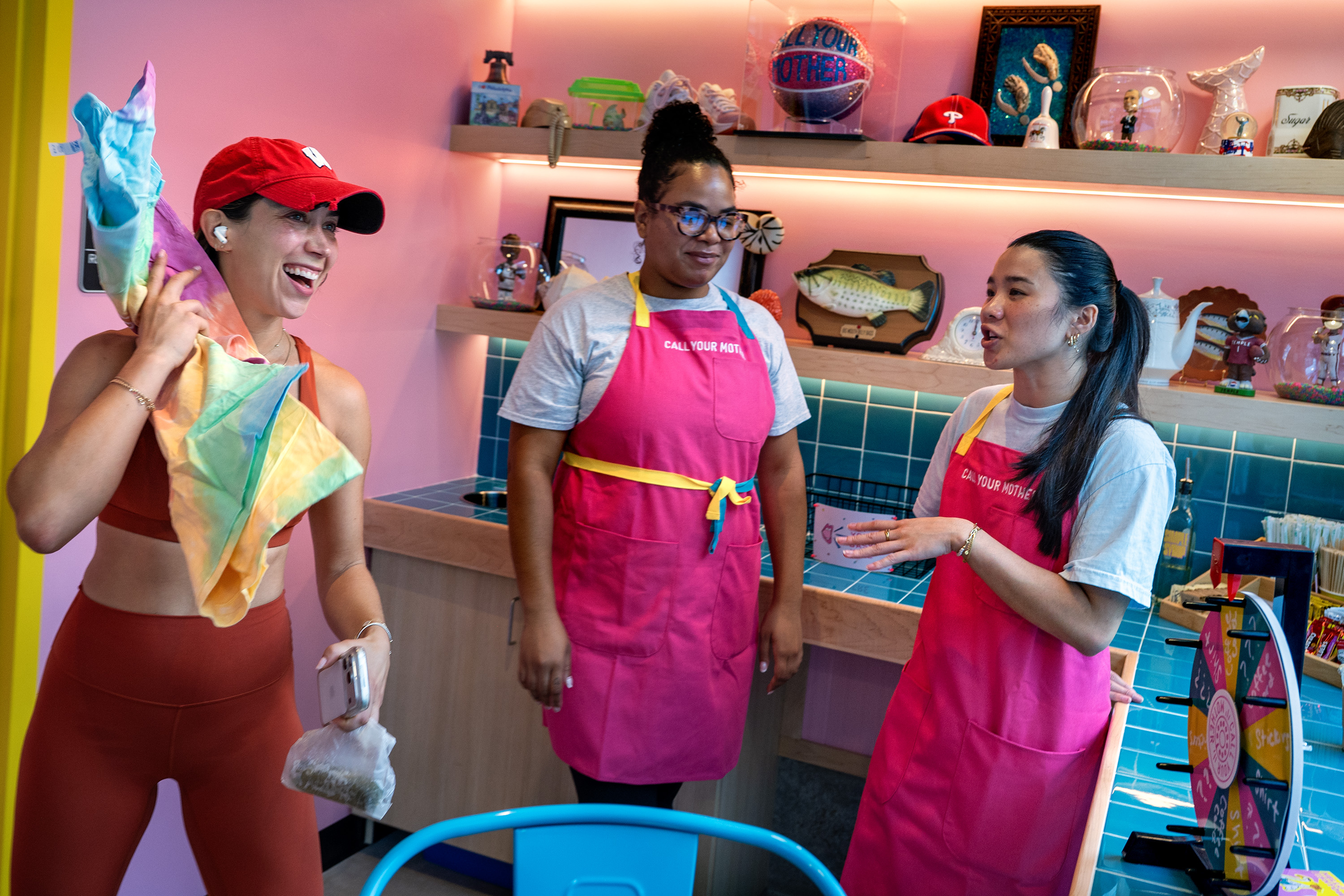
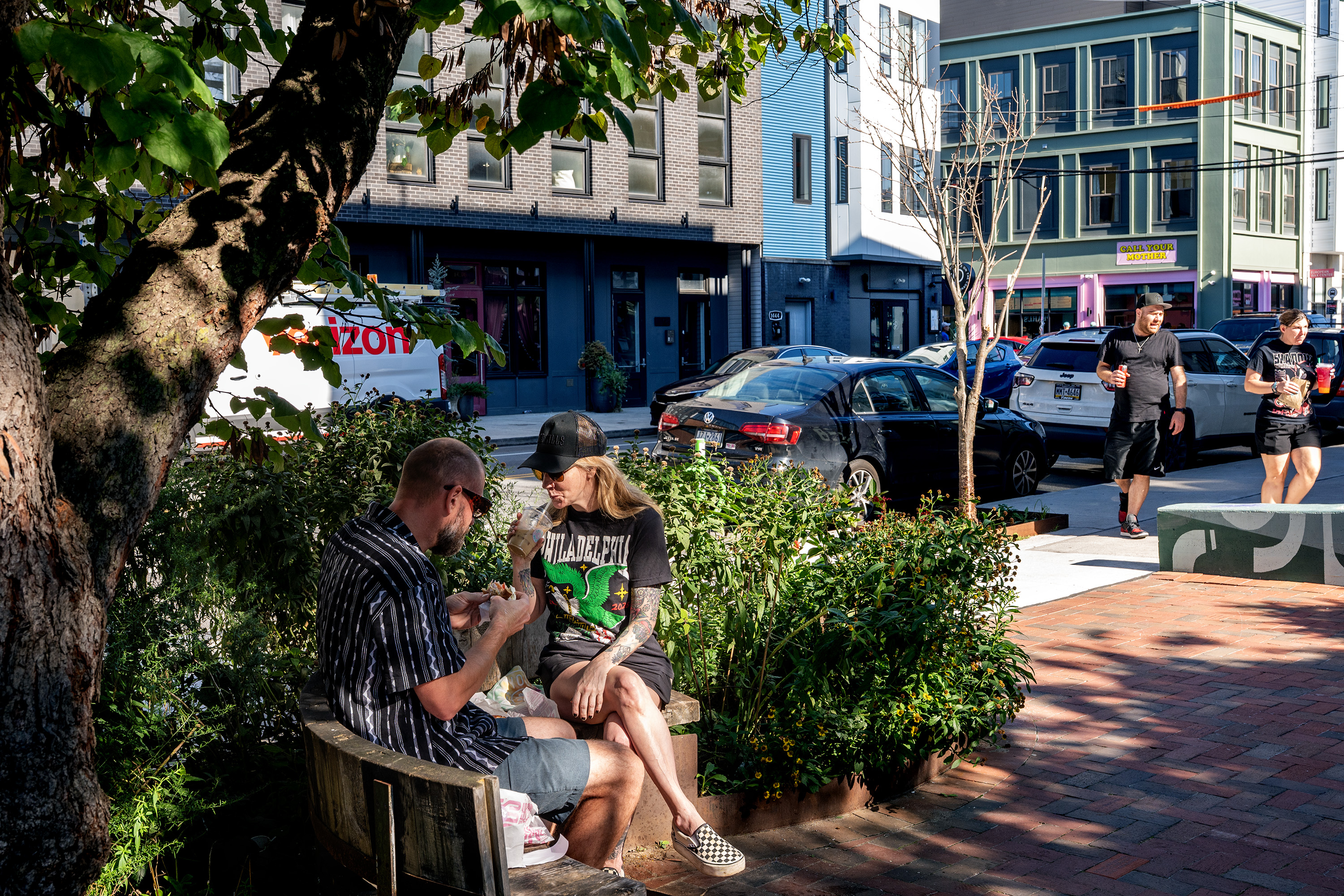
    To be fair, Call Your Mother is making an effort to blend into Fishtown. The inside of its 1500 Frankford Ave. space doubles down on the whimsy with kitschy wares — Phillies bobbleheads, a tiny Liberty Bell, and a bedazzled basketball — procured from local thrift stores such as Thunderbird Salvage. A tasteful merch wall abuts the cash register, where customers can purchase pastel-colored dad hats and tees alongside jars of Fishtown Pickle Project and One Trick Pony, the peanut butter brand that Dana and Moreira also co-founded. (The bathroom, however, sticks out: it’s wrapped in a Lilly Pulitzer-style tropical wallpaper.) .

    Indoor seating is limited, split between a few two-tops and counter seating. That didn’t stop influencers from flooding the space during a soft opening. They were after the money shot: carefully pulling apart a steaming breakfast sandwich to create a dramatic cheese pull.

    Neighbors were more skeptical.

    “How many bagel and coffee places do we need in Fishtown?” said Gabriela Rivera, a decades-long resident who wandered in Tuesday morning during her morning walk.

    It’s a fair question.

    Call Your Mother’s first Philly location is smack in the middle of the city’s bagel renaissance. The shop is surrounded by outposts of Philly Style Bagels, Bagels & Co., and Kismet, three local chains. It’s also on a strip of Frankford Avenue that has seen an influx of corporate chains, from the controversial Starbucks across the street to New York City’s venture capital-backed 7th Street Burger, which opened four blocks south last month.

    Call Your Mother offers nine bagel varieties, which can be ordered plain, with schmears, or as part of sandwiches.Tom Gralish / Staff Photographer

    “For a long time, [Fishtown] was small businesses … the more big stuff that comes in, I worry the neighborhood is going to become less community-centered,” said Justin Berger, Rivera’s fiancé, who also lives in the area.

    Both of them still ordered breakfast sandwiches. They were free, after all.

    New York-style with a hint of Montreal

    Call Your Mother’s bagels split the difference between New York-style — the classic fluffy-yet-crusty kind — and Montreal-style, which are smaller, sweeter, and denser.

    Bagels are made on-site using a recipe developed by Moreira, an Argentinian-born chef who never ate a bagel until building Call Your Mother with her husband. The chain’s are still hand-rolled and kettle-boiled with a simple honey-sweetened dough.

    The Sun City bagel at Call Your Mother during its Fishtown soft opening Tuesday, Sept. 8, 2026.Tom Gralish / Staff Photographer

    Their bagels come in nine flavors, ranging from classic plain and everything and to cheesy garlic bread, maple sea salt and pepper, and salt-crusted pretzel. You can order them with a schmear, though most customers go for the sandwiches, which range from $9 to $15 in Philly.

    The chain’s menu includes 19 sandwiches, categorized indiscriminately as those with “breakfast-y vibes” and “lunch-y vibes.” (You can order both all day.) Some fuse Dana’s half-Jewish upbringing with Moreira’s Argentinean palate, like the Jetski, which features sofrito-seasoned brisket and pastrami. Others, like the Don Cesar — literally a grilled chicken Caesar salad on a bagel — are somewhat light, while some are downright decadent. Case in point, the fall special: meatballs, marinara, and mozzarella on a bagel.

    Customer Shannelle Palmer takes a photo outside Call Your Mother as she leaves with her bagel order during its Fishtown soft opening Tuesday, Sept. 8, 2026.Tom Gralish / Staff Photographer

    The Thunderbird (chicken sausage, eggs, American cheese, cheddar cheese, and spicy honey, recommended on a maple sea salt bagel) tastes “like a happy accident,” said Jordan Price, a local content creator who lives in Fishtown. “It reminds me of when all the stuff on a breakfast platter mixes together and gets syrupy.”

    Berger, on the other hand, was sure he could taste a bit of the private equity.

    “It tasted like it was made somewhere else and shipped here,” he said after biting into his lox and cream cheese on yuca bread, Call Your Mother’s gluten-free bagel alternative.

    The Chai Latte and Jetski bagel at Call Your Mother during its Fishtown soft opening Tuesday, Sept. 8, 2026.Tom Gralish / Staff Photographer

    Price doesn’t mind. The chains are already here, she said. At least this one has bagels she thinks her kids will like.

    “There’s literally a Sweetgreen down the street. We are surrounded by so much private equity,” Price said. “If it was the first of that sort of thing in the neighborhood, I’d be more upset.”

    Call Your Mother, 1500 Frankford Ave., 215-703-3254, callyourmotherdeli.com. Hours: 6:30 a.m. to 2 p.m. Monday through Friday; 6:30 a.m. to 3 p.m. Saturday to Sunday.

  • ICE arrested nearly 50 immigrant workers in two central Pennsylvania operations, advocates say

    ICE arrested nearly 50 immigrant workers in two central Pennsylvania operations, advocates say

    ICE agents arrested at least 49 immigrant construction workers in two separate operations carried out in the last week in the central Pennsylvania community of Danville, according to immigration advocates.

    All remain in detention, they said.

    The arrests targeted workers who were leaving the construction site at the Geisinger Medical Center, where a patient tower is being built.

    At least 41 people were arrested on Sept. 2 as they left the property around 5 p.m., and eight more were arrested on Tuesday, beginning about 6 a.m., according to Centre County Rapid Response Network, an immigrant-assistance group, and the Pennsylvania Immigration Coalition. The men are nationals from Nicaragua, El Salvador, Honduras, and other countries.

    U.S. Immigration and Customs Enforcement officials could not immediately be reached for comment, nor could those with the Department of Homeland Security.

    The Pennsylvania Immigration Coalition said the arrests represent the largest workplace raid in the state to date.

    In a statement, the Geisinger Medical Center said it was aware of law enforcement activity on Sept. 2 that involved workers from its tower construction project. The activity did not occur on Geisinger property, it said.

    “As with any large construction project, we hire a construction manager to oversee the project,” the statement said. “It is their responsibility to make sure all workers on the project meet all federal and state work eligibility requirements.”

    Immigration advocates said that ICE agents made the arrests with the assistance of Danville police, that workers driving cars were stopped as they left, and that police followed other workers from the edges of Geisinger property to their homes.

    Workers leaving Danville for other parts of the state encountered checkpoints near highway entrances, the coalition said.

    The involvement of local authorities in ICE arrests has been a controversial issue in Pennsylvania, as more police agencies sign on to help enforce federal immigration law.

    The immigration coalition said eyewitnesses to the Sept. 2 operation reported that ICE was using drones, which increased an atmosphere of militarization.

    “We don’t need our local police enforcing federal law. It is not their job and has proven time and again to harm public safety,” said Jasmine Rivera, executive director of the Pennsylvania Immigration Coalition. “ICE and billionaires profiting off federal contracts are making billions of dollars from kidnapping our people. They are terrorizing families and attacking our neighbors who are literally building our communities. We don’t need $240 billion of our tax dollars to go to ICE and [U.S. Customs and Border Protection]; we need that money to make education, healthcare, and housing affordable.”

    Correction: An earlier version identified the construction site by the name of the project designer, which has been deleted from the story. EwingCole does not manage the site and is not responsible for its operations nor the employment of workers there.

  • Head Start offers a model for ending preschool pushout. Don’t weaken it.

    Head Start offers a model for ending preschool pushout. Don’t weaken it.

    On Aug. 6, Philadelphia City Councilmember Isaiah Thomas held an Education Committee hearing on the crisis of preschool suspensions and expulsions, examining their devastating impact on families and possible policy solutions to this discriminatory practice, which research has shown is rife with racism and ableism.

    Ironically, on that same day, Health and Human Services Secretary Robert F. Kennedy Jr. announced plans for sweeping deregulation of Head Start, including rescinding its current regulations that prohibit expulsion and severely limit suspensions in all Head Start programs.

    At the advocacy organization where I serve as policy director, Education Law Center-PA, we help hundreds of families every year who are navigating preschool pushout. That includes families whose children — yes, even toddlers as young as 18 months old — have been suspended or expelled from preschool.

    This shocking practice is common: Preschools suspend children at a rate three times higher than K-12 schools.

    Suspensions and expulsions of our youngest learners, which are harmful to a child’s development and can profoundly impact their future, disproportionately harm Black and brown children, children with disabilities or developmental delays, and children sharing those identities.

    Myriad preschool programs exist in Philadelphia and across the commonwealth, which can make it difficult to untangle how each program is regulated and which agency oversees it. This patchwork can also make it difficult for families to understand which protections apply to their children. The clearest safeguards exist when protections, in conjunction with legal requirements, are explicitly codified in preschool program regulations.

    Head Start programs offer the strongest protections for our youngest learners, but in Philadelphia, those regulations only apply to 170 Head Start locations, a fraction of the city’s total early childcare settings.

    Current Head Start policy, which Kennedy now seeks to rescind, prohibits the expulsion of students in its programs and severely restricts suspensions to extraordinary circumstances, with a host of steps that must be taken before any temporary exclusion.

    During the recent City Council hearing, one of the most important policy suggestions offered by ELC-PA’s attorney, Rose Wehrman, included implementing the existing Head Start policy for all of the city’s preschool programs. It’s a policy that, if implemented with fidelity, could have afforded important protections for many families featured in our April report on preschool pushout.

    Jennifer Garrison’s 4-year-old son, Terrell, is a constant source of joy for everyone around him. Garrison described him to members of City Council as “loving, gentle, and full of energy.” But Terrell, who is Black and has autism, was denied the most basic needs in his preschool and was effectively excluded from his program under conditions that would not have been permissible under Head Start’s regulations.

    To hear Garrison talk about the juxtaposition of who Terrell is compared with how he was treated is gutting — and unfortunately too common.

    Had Terrell been in a program with the protections explicitly outlined by Head Start’s now-in-jeopardy regulation prohibiting such exclusion, perhaps he and his family would not have endured such a traumatic experience. We don’t know that for sure, but we do know that Head Start’s policy is one that should be expanded to more programs.

    The benefits of Head Start are comprehensive: The National Head Start Association outlines academic, social-emotional, and physical health benefits, and notes that the impacts are “particularly strong” among underserved students. This is, in part, due to strong policies around developmentally inappropriate practices like suspension and expulsion.

    But Secretary Kennedy, in the name of “parental empowerment” and even “freedom,” wants to upend the foundations of a decades-long program with lifelong benefits, ranging from increased educational success through K-12 and beyond, as well as physical, emotional, and financial health.

    Changes to Head Start proposed by Health and Human Services Secretary Robert F. Kennedy Jr. include deregulating nearly every facet of of the program, from appropriate staffing ratios to developmental screenings, writes Hillary Linardopoulos.Amanda Cuda

    In addition to the rescission of the suspension and expulsion policy, Kennedy’s proposed rule changes would deregulate nearly every other facet of Head Start. This includes appropriate staffing ratios, developmental screenings, and a host of regulations that are central to the program.

    Fortunately, these proposals are not final, and people can submit public comments (of any length or format) to the Department of Health and Human Services by Oct. 6 to oppose the deregulation of Head Start.

    The existing federal regulations are the ones we should emulate right here in Philadelphia and across the commonwealth. We urge our fellow community members to join us by submitting comments opposing the gutting of Head Start regulations, which would destabilize this foundational program.

    Meanwhile, our organization will continue to work to support families and expand the existing Head Start policies to include all programs educating our youngest learners across Philadelphia and the entire commonwealth.

    Hillary Linardopoulos is the policy director for the Education Law Center-PA, a nonprofit organization dedicated to ensuring equal access to a quality public education for all children in Pennsylvania.

  • The WNBA underwent big changes during commissioner Cathy Engelbert’s tenure. Here are the highlights.

    The WNBA underwent big changes during commissioner Cathy Engelbert’s tenure. Here are the highlights.

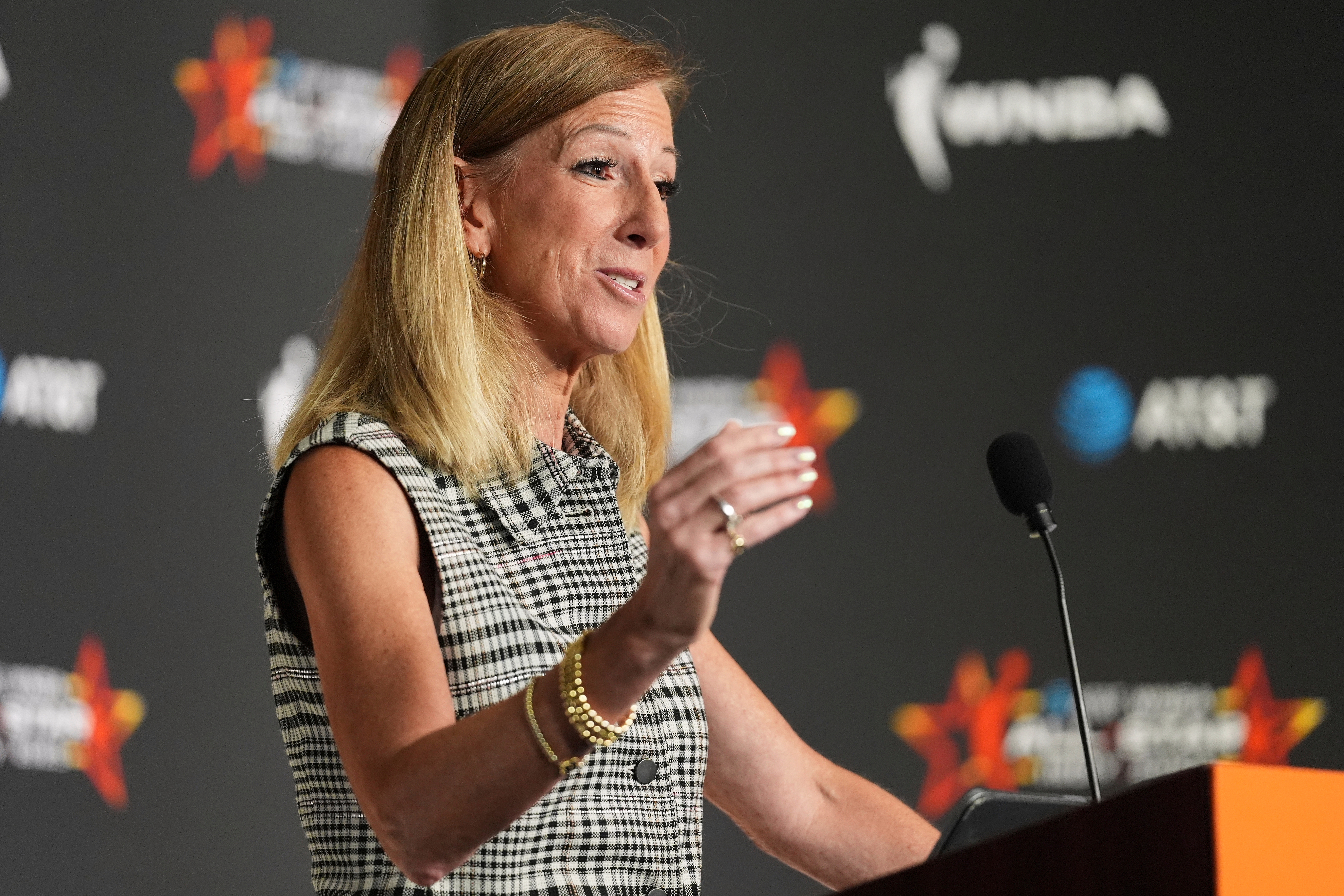
    Cathy Engelbert was hired as WNBA commissioner in 2019, and upon her retirement in December, Engelbert will have overseen the most critical years in league history, shepherding the WNBA through a period of uncertainty into a period of exponential growth.

    The WNBA is one of the fastest-growing leagues in sports, and under Engelbert’s watch, six expansion franchises have tipped off or been announced — including here in Philadelphia — while a new media rights deal and CBA have been signed.

    “Over the years, it has been amazing to watch WNBA players thrive and lead the massive cultural surge around women’s sports,” Engelbert said in a statement. “I retire knowing we have built something bigger, stronger and more enduring than we could have imagined. I am grateful to the WNBA and NBA team owners and staff, players, investors, fans and the powerhouse league office staff, who believed in what this league could become. I retire with immense gratitude and tremendous optimism for the future of the WNBA, with the best yet to come.”

    Here’s a look at her most consequential moves, and where the league goes next:

    2022: Funding round

    Engelbert sold a 16% stake in the WNBA to a group of outside investors for $75 million in cash flow, to be used to fund marketing and infrastructure. Instead of the 50/50 ownership split between NBA and WNBA owners, the split is now 42/42/16.

    At the time, the deal was the largest funding round ever for women’s sports, and Engelbert valued the league at approximately $450 million. The average franchise is now worth approximately $460 million just four years later.

    Sixers managing partner Josh Harris (left), Detroit Pistons vice chairman Arn Tellem, WNBA commissioner Cathy Engelbert, and Cleveland Cavaliers CEO Nic Barlage at a news conference announcing expansion teams for Philly, Detroit, and Cleveland.Jonathan Tannenwald

    September 2023: Expansion

    Starting in 2023 with the Golden State Valkyries, Engelbert began the process of expanding the WNBA for the first time since 2008. It was the first of six successful expansion bids under Engelbert’s tenure, and Golden State now is the league’s most valuable franchise, with an $850 million valuation, according to Sportico. In 2024, two additional expansion teams, in Toronto and Portland, were announced.

    In June 2025, the WNBA announced the addition of three more franchises, to bring the total up to 18: Cleveland to begin play in 2028, Detroit in 2029, and Philly in 2030. All teams were purchased by the corresponding city’s NBA team owner. Cleveland and Detroit were both home to previous, now defunct, WNBA franchises, while Philadelphia will be a WNBA city for the first time.

    “The demand for women’s basketball has never been higher,” Engelbert said in a statement.

    Coming to Philly was personal for Engelbert. She hails from Collingswood, and her parents were Northeast Philly natives. Her dad, Kurt, was a men’s basketball star at St. Joseph’s and is in the school’s hall of fame.

    The WNBA last year also announced the sale and relocation of the Connecticut Sun to Houston. The franchise was purchased by Rockets owner Tilman Fertitta, despite competing bids from Hartford, Conn., and Boston to buy and keep the franchise in New England.

    Caitlin Clark (left) and Angel Reese ushered in a new wave of WNBA fans.Tony Gutierrez

    2024: The Caitlin Clark Effect

    The exponential growth of the WNBA began in earnest with the 2024 WNBA draft, which brought college stars like Caitlin Clark and Angel Reese into the league. Other young stars like Paige Bueckers soon followed.

    Clark, now a standout for the Indiana Fever, raised the bar for college basketball ratings, setting viewership records in 2023 with 9.9 million viewers for the national championship game, in which her Iowa squad lost to Reese and LSU, and the 2024 national title game, with 18.9 million viewers, was the first women’s national title game to outperform the men’s.

    (function(){function e(){window.addEventListener(`message`,function(e){if(e.data[`datawrapper-height`]!==void 0){var t=document.querySelectorAll(`iframe`);for(var n in e.data[`datawrapper-height`])for(var r=0,i;i=t[r];r++)if(i.contentWindow===e.source){var a=e.data[`datawrapper-height`][n]+`px`;i.style.height=a}}})}e()})();

    July 24, 2024: Media rights deal

    Engelbert took advantage of spiking ratings with the expiration of the WNBA’s media rights deal in 2024, signing a new contract worth $3.1 billion, expanding partnerships with ESPN, Prime Video, and NBC.

    “Partnering with Disney, Amazon and NBCU marks a monumental chapter in WNBA history and clearly demonstrates the significant rise in value and the historic level of interest in women’s basketball,” Engelbert said at the time. “These agreements allow the league to continue to build a long-term and sustainable growth model for the future of women’s basketball and sports which will benefit WNBA players, teams and fans.”

    The WNBA set viewership records in 2024, with a record 22 regular-season games attracting at least 1 million viewers. Fever games were the most-watched on ABC, ESPN2, CBS, and NBATV.

    March 24, 2026: CBA

    After a tense negotiation, the new collective bargaining agreement was ratified by players and by the league, increasing player salaries, providing player housing, and adding an expanded benefits package.

    Amid the negotiations, Napheesa Collier described Engelbert as “negligent” and said the WNBA has “the worst leadership in the world” in her exit interviews last season after officiating controversies.

    “This past February, I sat across from [Engelbert] and asked how she planned to address the officiating issues in our league,” Collier said. “Her response was, ‘Well, only the losers complain about the refs.’ I also asked how she planned to fix the fact that players like [Clark, Reese, and Bueckers], who are clearly driving massive revenue for the league and are making so little for their first four years.

    “Her response was, ‘[Clark] should be grateful. She makes $16 million off the court because without the platform that the WNBA gives her, she wouldn’t make anything.’ And in that same conversation, she told me, ‘Players should be on their knees, thanking their lucky stars for the media rights deal that I got them.’”

    Engelbert has also faced player backlash for a perceived lack of attention to threats from toxic fans and sports bettors.

    “I think as one of the main faces of our league, too, it creates a dialogue that needs to be had. It puts pressure on Cathy, who we’ve been begging to step up for us in these spaces,” said Natasha Cloud, a Broomall native and former St. Joe’s star.

    The league recently has run into conflict with former NBA players like Enes Kanter Freedom and figures like Riley Gaines for lacking a policy restricting trans athletes from competing in the league. There are no active trans women in the WNBA, nor are there any serious prospects to be drafted in the near future.

    But that hasn’t stopped figures like Freedom from coming to games and getting into altercations with players on the court, including Cloud. Engelbert said the league is being used as a “political football” by media members who do not watch or cover the league normally, in order to “sow divisiveness.”