Blog

  • A brake-check on the Blue Route led to a road-rage attack and stabbing, police say

    A brake-check on the Blue Route led to a road-rage attack and stabbing, police say

    The near-fatal stabbing that took place on an entrance ramp to the Blue Route in Upper Merion on Saturday occurred when a Kensington man intentionally rear-ended another driver and then used two other vehicles he was traveling with to box the man in on an exit ramp, officials said Wednesday.

    And while the other driver was trapped, Samuel Marquez, 40, got out of the U-Haul truck he was driving, punched the man in the face multiple times, and eventually stabbed him in the abdomen with a box cutter when he got out of the vehicle, authorities said.

    The attack came because Marquez was upset that the man brake-checked him for driving too closely behind him, police said.

    Marquez has been charged with aggravated assault, terroristic threats, and related crimes. He remained in custody Wednesday, in lieu of $1 million bail. It was unclear if he had an attorney.

    The U-Haul Marquez was driving was part of a caravan of vehicles, including a Toyota Sienna minivan and an Acura SUV, whose drivers were heading to Philadelphia to help Marquez move to the city from Reading, according to the affidavit of probable cause for his arrest.

    While driving on I-76 in Upper Merion, the minivan, driven by Marquez’s girlfriend, had engine trouble, and she had to pull over. When the car was repaired and the vehicles attempted to merge back onto the highway, they cut closely in front of a Mercedes-Benz, the affidavit said.

    The driver of the Mercedes told police he honked his horn and drove around the group. Moments later, the U-Haul had sped up behind him, driving aggressively, and was practically touching his bumper, according to the affidavit.

    The man said he brake-checked the truck to get it to back off, and then took the exit onto a ramp connecting the highway with the Blue Route. As he took the exit, the U-Haul intentionally rammed his vehicle, while the minivan and SUV drove past and stopped in front of him, boxing him in, the affidavit said.

    The impact from the collision with the U-Haul spun his car and pushed it about 20 feet, the man told police. Afterward, Marquez and another man ran up to his open window and began punching him in the face, the affidavit said.

    The driver heard Marquez tell the other man that he was “going to grab his knife,” the affidavit said.

    The driver ran onto the median of the Blue Route, and then back toward the U-Haul, to photograph its license plate. Marquez’s girlfriend got out of her minivan and prevented him from taking a picture of her van’s license plate.

    As the man argued with the woman, he felt a sharp pain in his side, the affidavit said. He told authorities that he looked down, saw blood, and realized Marquez had stabbed him.

    Medics arrived and took the man to Lankenau Medical Center, where he was treated for his stab wound.

    Marquez and the other cars’ drivers fled. Villanova University’s campus was briefly under a lockdown as police searched for the stabbing suspect. Lower Merion police located the U-Haul at a Sunoco gas station not long after and took its passenger into custody.

    Marquez, meanwhile, ran away and was later arrested while sitting on a park bench at Memorial Park in Bryn Mawr. He had a silver box cutter in his pocket.

    In 2023, Upper Chichester police said that Marquez was wanted in connection with a 2022 armed robbery at a convenience store in the township.

    Marquez is scheduled to appear before a district judge for a preliminary hearing on Sept. 22.

    Staff writer Robert Moran contributed to this article.

  • U.N. nuclear watchdog board reports Iran to the U.N. Security Council for the first time in 20 years

    U.N. nuclear watchdog board reports Iran to the U.N. Security Council for the first time in 20 years

    VIENNA — The U.N. atomic watchdog’s board on Wednesday reported Iran to the U.N. Security Council for the first time in 20 years, citing it for failure to cooperate in a long-running investigation into uranium traces detected by inspectors at undeclared sites.

    Western officials suspect that the traces could provide evidence that Iran had a secret nuclear weapons program until 2003. Iran says that it’s not pursuing nuclear weapons, and that its program is entirely peaceful.

    Reporting Iran to the Security Council opens the country to possible sanctions and asset freezes, though such punitive measures are unlikely because Iran’s allies Russia and China hold veto power on the panel.

    Twenty-three countries on the International Atomic Energy Agency’s 35-member board of governors voted for Wednesday’s resolution at IAEA headquarters in Vienna.

    China, Russia, and Niger opposed it, while eight countries abstained and one didn’t vote as it was in arrears, according to diplomats who spoke on condition of anonymity to describe the outcome of the closed-door vote.

    The resolution was put forward by the United States, Britain, France, and Germany.

    The diplomatic move has been under consideration since June 2025, when the IAEA board found Iran officially in noncompliance with its nonproliferation obligations because of Tehran’s lack of cooperation in the investigation.

    Iran’s ambassador to the U.N. in Vienna, Reza Najafi, rejected the resolution, describing it as a “political tool” and saying that it ruined confidence in the IAEA’s “independence, impartiality, and credibility.”

    He suggested that compliance with any obligation to allow U.N. inspections of nuclear sites inside Iran was, in any case, impossible at the moment because of the country’s continuing war with the U.S. and Israel.

    The U.S. this week destroyed five Iranian oil tankers and Tehran hit back at American targets in Jordan, the latest burst of back-and-forth strikes that have lurched the sides back toward open hostilities in a more than 6-month-old war.

    The draft resolution, which was seen by The Associated Press, requested IAEA Director General Rafael Grossi to report the agency’s concerns “to the Security Council and the General Assembly of the United Nations, in accordance with the relevant provisions of the IAEA Statute.”

    The resolution also reiterated its call upon Iran “to urgently remedy its non-compliance” with previous agreements and to take steps deemed necessary by the IAEA to assure “the non-diversion of nuclear material.”

    Since Israel and the U.S. struck Iran’s nuclear sites during the 12-day war in June 2025, Iran hasn’t given IAEA inspectors access to nuclear sites that were affected by the strikes. The IAEA also has been unable to verify the status of Iran’s stockpile of near weapons-grade uranium since the June bombing.

    Najafi said that airstrikes by the U.S. and Israel made safe access for inspectors to Iran’s nuclear sites “materially impossible.” He said that Iran has “neither stopped nor suspended its safeguards obligations,” adding that “performance is currently impossible under continuing military operations and persistent threats.”

    Iran’s Deputy Foreign Minister Kazem Gharibabadi echoed that sentiment in an post on X.

    “They attack Iran’s safeguarded nuclear facilities, disrupt the normal verification process, and then use that very disruption as a pretext to pass a resolution at the IAEA Board of Governors,” he said.

    According to the IAEA, Iran maintains a stockpile of 972 pounds of uranium enriched up to 60% purity — a short, technical step away from weapons-grade levels of 90%.

    That stockpile could allow Iran to build as many as 10 nuclear bombs, should it decide to weaponize its program, IAEA chief Grossi warned in an interview last year with the AP. He said that it doesn’t mean that Iran has such a weapon.

  • These famous Philadelphia-adjacent folks are hosting Saturday Night Live this season

    These famous Philadelphia-adjacent folks are hosting Saturday Night Live this season

    If Jalen Brunson, who just won the NBA championship for the New York Knicks, and Shane Gillis, who broke two Guinness World Records for a one-night-only comedy show at Lincoln Financial Field, weren’t already having a good year — they’re now gracing the stage of Saturday Night Live’s 52nd season.

    Brunson, who is known to many locals as the Villanova superstar who brought home two NCAA national championships to the Philadelphia-adjacent school, will host the season premiere on Sept. 26 with girl pop group Katseye as musical guest.

    Gillis, a comedian from Mechanicsburg, Pa., who got his start in Philadelphia, will host episode three on Oct. 10 alongside Spanish singer-songwriter Rosalía. Gillis cocreated the West Chester-filmed Netflix series Tires, and was at one point hired and fired from SNL.

    SNL is charging forward after more than a half century in the American cultural zeitgeist, bringing celebs into 30 Rockefeller to flub, break, and laugh through the jokes.

    Pennsylvania showed up in a big way last season, too, with Quakertown’s Sabrina Carpenter, Downingtown’s Miles Teller, and West Philadelphia’s Colman Domingo (the latter of whom was honored by Mayor Cherelle L. Parker on July 4).

    Joining the first slate of episodes, announced on Wednesday, are actress Dakota Johnson with Baltimore rockers Turnstile on Oct. 3. Inde Navarrette, a breakout star from indie horror film Obsession, will host on Halloween, with Gracie Abrams as musical guest.

    SNL’s 52nd season will premiere Sept. 26 at 11:30 p.m. Philadelphia time on NBC. Stream episodes the day after they air on Peacock.

  • Wildwood sued after child operating a golf cart in a police DUI simulation injured bystanders

    Wildwood sued after child operating a golf cart in a police DUI simulation injured bystanders

    Bystanders who were injured when police allowed an 11-year-old to operate a golf cart while they simulated drunken driving conditions have sued the City of Wildwood and its police department.

    The incident took place on Aug. 6, 2024, during National Night Out, with Police Officer Jonathan Goraj in the passenger seat of the golf cart, the suit alleges.

    The 11-year-old was outfitted with “impairment goggles,” to simulate intoxicated driving, the lawsuit states.

    The child pressed the accelerator pedal, lost control of the golf cart, and crashed through the course that had been set up with orange police cones on the outfield of the baseball field in Fox Park, injuring several bystanders.

    The plaintiffs in the lawsuit, filed Aug. 5, 2026, in Cape May County Superior Court, are Wildwood resident Christopher Hines and a family from Ohio: David and Lori Galambos, their daughter, Rachel Kelly, and their two grandsons, Simon and Gideon.

    Injured in the crash were Hines, David Galambos, and Simon Galambos, the lawsuit states. Wildwood officials had previously said five people in all were injured in the incident. The mom, grandmother, and sibling all witnessed the crash, the lawsuit states.

    Named as defendants are the City of Wildwood, its police force, Goraj, and the National Night Out organization. National Night Out, also known as National Association of Town Watch, is a Wynnewood-based organization.

    Hines suffered injuries to his neck, back, and legs, the lawsuit states.

    Simon, the child, suffered a collapsed lung, a concussion, and injuries to his neck and back, in addition to emotional distress, the lawsuit states.

    The grandfather suffered injuries to his neck, rib, and hip, in addition to “severe emotional trauma,” the lawsuit states.

    Wildwood spokesperson Alicia Deluca said the city does not comment on open litigation.

    The lawsuit alleges that the police officer and department should have known the risk involved in putting a minor in the driver’s seat of a golf cart while simulating intoxication “because the very purpose of the demonstration was to illustrate the dangers of impaired driving.”

  • The psychological toll of Cuba’s multiple crises is pushing many islanders to the breaking point

    The psychological toll of Cuba’s multiple crises is pushing many islanders to the breaking point

    HAVANA — Sweltering nights. Water and power shortages. Dwindling fuel and crumbling homes. Limited public transportation and weak cell phone signals.

    The psychological toll of daily life in Cuba is pushing many to their breaking point on this island of nearly 10 million people, with no relief in sight as a U.S. energy embargo persists and longtime economic and financial troubles deepen.

    “Before there was hope,” Yomeidis Felicó Riverón said. “Right now, what people have lost is exactly that.”

    Felicó Riverón is a primary care physician, but she has embraced an additional role as Cubans grind through their days.

    “They come and cry about their troubles, because they have no one else to vent to,” she said of her patients. “We end up having to play psychologist.”

    Children attend a workshop to make gift bags and perfume in Havana last month.Ramon Espinosa

    Parents shield children from Cuba’s realities

    On a recent sunny afternoon, six girls and one boy crowded around a table as their parents sat in the background, trying to fan away the stifling heat.

    The children were learning how to make gift bags and perfume, a free workshop that offered them a brief respite from Cuba’s realities.

    “My son doesn’t know if there’s food or if there’s no food,” Felicó Riverón said, confiding that she never tells him when she doesn’t have money to buy something he wants.

    Instead, she distracts him: “Let’s go play, let’s go to the park. We’ll come back another day.”

    Dianne Tamayo was among the mothers present that day. The workshop served as an oasis for her and her daughter. Tamayo socialized and temporarily forgot what awaited at home.

    “My husband is my rock,” she said. “When I’m going crazy, my husband tells me, ‘Sit down, breathe … let’s put on some music.’”

    He sometimes has to remind Tamayo that their daughter is coming home from school soon, and that they need to keep their troubles, anxieties, and frustrations to themselves.

    “I do the best I can with the tools I have, but there’s still a moment where I get overwhelmed,” she said.

    Tears fell as she confided that she doesn’t have anything in her life that relaxes her, and that she has never questioned how to release her feelings about life in Cuba.

    “They are exterminating us,” she said, “and we remain complacent.”

    U.S. Embassy issues health alerts

    Cuba’s crises worsened after President Donald Trump announced in late January that he would impose tariffs on any country that sells or provides oil to the Caribbean country. Longtime U.S. sanctions also have taken their toll, Cuba’s government said.

    From March 2025 to the end of February, “the U.S. policy of economic strangulation” amounted to more than $8 billion, “a record figure,” according to Cuban Foreign Affairs Minister Bruno Rodríguez.

    Island-wide blackouts have increased this year, and daily outages now surpass 24 hours. As a result, water is often scarce, and small protests have erupted, despite the fear of being detained, as anger and frustration boil over.

    The situation has worsened to a point that the U.S. Embassy recently issued two public health alerts.

    On Aug. 28, the embassy noted that “Cuba’s water supply infrastructure is increasingly unstable ” and that there are “residential neighborhoods experiencing long periods without water from municipal or public sources.”

    On Friday, the embassy warned of an increase in gastrointestinal illnesses linked to the “degradation of the water and energy infrastructure. …. Recent cases have included E. coli, norovirus, Shigella, and other gastrointestinal pathogens.”

    Water and power shortages persist, but 81-year-old Havana resident Oscar Joaquín López said that he doesn’t dwell on what he lacks.

    “Why?” López said. “Because it drives you crazy, and nobody is going to drive me crazy.”

    On a recent afternoon, he leaned against the doorframe of his home as he watched his 58-year-old roommate fill up nearly a dozen plastic containers with water that flowed from a pipe on the street. They had been without water for several days, so they acted quickly.

    With temperatures hovering above 90 degrees, López said that he sits in his doorframe until midnight to catch a breeze from the nearby ocean, a steel pipe nearby to ward off any intruders. After midnight, he goes to bed, hoping the wooden slat he wedged into his window will catch any wind, however slight.

    Nearby, 62-year-old mason José Laó Faviel dug through overflowing garbage on the street, looking for food to feed his pig and her 10 piglets, because he had none to give them.

    “What are you going to do?” he said. “We’re living through difficult times.”

    Minutes later, another man rifled through the same pile of garbage. After opening several bags, he found something to eat.

    Cubans find solace in family

    Sweat gathered around Armando Lafita’s brow as the 60-year-old pushed a cart through the crumbling buildings in Old Havana. Authorities have evacuated some residents in the area for safety reasons, but those with nowhere else to live now sleep on the street, ducking inside their building when they need something.

    Lafita’s cart was filled with red roses and white ginger lilies, Cuba’s national flower. He sells them for 10 to 40 cents a bunch, but sometimes he goes home without a single sale.

    “Everybody is fighting to survive here,” he said. “It’s getting harder every day.”

    Like many Cubans, Lafita said the only thing that keeps him going is family: his 19-year-old son.

    José Manuel Borroto Díaz, 70, and his 93-year-old mother, Teresita del Rosario González Ricardo, lean on each other to keep going.Ramon Espinosa

    It’s the same reason that 70-year-old José Manuel Borroto Díaz and his 93-year-old mother, Teresita del Rosario González Ricardo, keep going: They have each other.

    “Our situation is like something out of a movie, but we’re going to press on,” said Borroto, a retired aviation official who was in Angola during Cuba’s military intervention in the 1970s.

    Across the island, Cubans are pressing on even as the crises deepen, including 90-year-old Lázaro Alfonso Oviedo. He recently attended a weekly gathering to help raise the spirits of elderly people.

    Oviedo danced and sang in a deep, robust voice “to forget for a little while the suffering the empire puts us through,” he said, referring to the United States.

    “We are not going to give up,” he said as he praised Cubans’ unwavering resilience. “We get it precisely from the spirit forged by the revolution itself — a revolution spanning more than 60 years.”

  • Ron Jaworski departs NBC Sports Philadelphia ahead of Eagles’ season

    Ron Jaworski departs NBC Sports Philadelphia ahead of Eagles’ season

    NBC Sports Philadelphia is losing an Eagles legend.

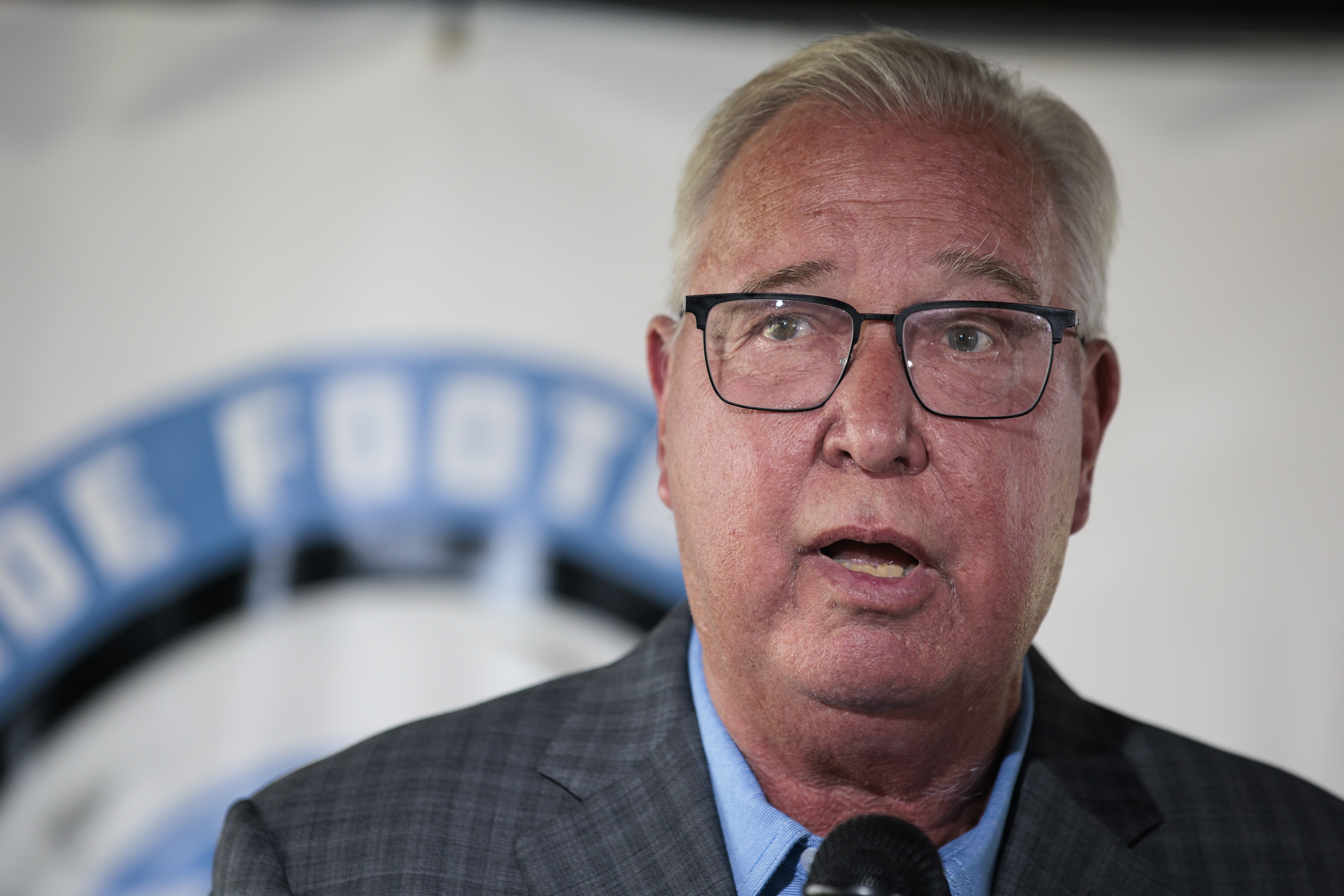
    Ron Jaworski, the former Eagles quarterback known to most fans simply as “Jaws,” announced on social media he is cutting back his broadcast work and leaving the network’s Eagles pre- and postgame coverage after four seasons.

    “It’s been a great run!” Jaworski wrote. “Thank you all, and Go Birds!”

    NBC Sports Philadelphia isn’t planning on filling Jaworski’s empty seat. Michael Barkann will return as host of the network’s pre- and postgame coverage, joined by Barrett Brooks, Reuben Frank, and former Eagles wide receiver Jason Avant.

    “There are certain people in this businesses who are irreplaceable, and Jaws is one of those people,” said Alexandra Matcham, the vice president of content for NBC Sports Philadelphia. “You don’t replace a person who was a pioneer in the NFL broadcast world, and we have no intention of doing so.”

    Jaworski was hired by NBC Sports Philadelphia in 2022 to help fill the void left by Ray Didinger’s retirement and the departure of former Eagles defender Seth Joyner. Prior to that, Jaworski spent 27 years at ESPN as an announcer and analyst, including a five-year stint on Monday Night Football.

    It was also Jaworski who helped lead the Eagles to the franchise’s first Super Bowl appearance in 1980 under Hall of Fame head coach Dick Vermeil. Jaworski spent 15 years as a quarterback in the NFL, 10 with the Birds, and his 99-yard touchdown pass to Mike Quick during the 1985 season remains tied for the longest in NFL history.

    Outside of the NFL, Jaworski was the owner of the Philadelphia Soul, the city’s Arena Football League franchise, until the league shuttered in 2019. He also manages golf courses in South Jersey and northeast Pennsylvania.

  • The largely hidden force helping drive America’s craze for weight-loss drugs

    The largely hidden force helping drive America’s craze for weight-loss drugs

    Carlos Campos spends most of his days as a family physician, seeing patients for all manner of conditions, especially obesity and diabetes. But he has built a steady side gig beyond his practice in south-central Texas.

    Over the past seven years, drug manufacturers have paid Campos nearly $1 million to spread the gospel of weight-loss and diabetes drugs known as GLP-1s to colleagues in his home state and beyond.

    “I’m a lot like an evangelical preacher man,” Campos said. “They hire me to sell the science.”

    Whether speaking in a private dining room at a fancy steakhouse or over bags of Chick-fil-A in a primary care office, Campos is part of a vast effort by drug companies to build sales of their revolutionary weight-loss drugs by targeting the prescribers who act as the gatekeepers to the American healthcare system, according to an analysis of public federal government data by The Washington Post and interviews with six physicians involved in the marketing program.

    The analysis shows that Eli Lilly and Novo Nordisk, the largest manufacturers of the weight-loss drugs, have made at least one payment to more than a quarter of a million individual doctors and other prescribers including nurse practitioners since 2018, the first full year that Ozempic, Novo Nordisk’s blockbuster medicine, was on the market. No other class of prescription drugs was promoted as heavily over this period.

    In total, companies spent more than $270 million on these promotional efforts, according to the data, which is reported to the federal government by the manufacturers. The spending — which the federal government says encompasses both direct payments and in-kind payments for food and beverages — was spread among 140,000 individual prescribers in 2025 alone, the most of any year in the Post analysis.

    The GLP-1 craze stoked by TV advertising and word-of-mouth for the novel class of drugs — including Wegovy and Zepbound — has generated abundant patient demand. But the lesser-known spending on doctors, which is legal and disclosed publicly, represents promotional efforts — largely hidden from consumers — of the drugs’ success that some medical experts say pose a conflict of interest.

    Physicians paid by the drug companies say they are helping colleagues overcome hesitancy and even skepticism among practitioners who may not be familiar with how the drugs work or still view obesity as a matter of patient willpower. In interviews, they said payments don’t influence their views of the drugs, opinions they said have been shaped by phenomenal results in their own patients. They described how in meetings with other doctors, they observe government limits on what claims can be made while sharing unbiased, evidence-based data about benefits and side effects.

    But some doctors warn that these sessions, and the money that physicians receive as direct payments on the side, carry a number of risks — both to patients and to the health system at large.

    The costly drugs, which most users have to take for life to maintain their results, are relatively new, with underappreciated side effects in some patients, the critics say.

    “The patient comes in saying, ‘I want it,’ and if they don’t give it to them, they will find another doctor who will,” said Robert Lustig, a doctor and professor emeritus at the University of California at San Francisco who advocates for reducing sugar and processed foods in the American diet.

    “The problem is getting worse,” he said, “and now people have taken their eye off the ball: ‘Oh, I can just take a drug, a shot, and eat whatever the hell I want.’ It’s just a Band-Aid.”

    Spending to purchase the drugs by consumers and health insurance companies has exploded. Total sales (excluding rebates and discounts) in 2025 eclipsed all other drugs, with Eli Lilly’s Mounjaro and Zepbound leading the way at $63 billion, and Novo Nordisk’s Ozempic and Wegovy close behind at $59 billion.

    Private health plans are cracking under the burden, and some are beginning to cancel coverage. Federal costs are poised to shoot into the billions now that Medicare, as of July, is covering the drugs for weight loss.

    Nearly 1 in 5 U.S. adults has reported having taken one of the drugs for diabetes or weight loss, according to a survey by KFF, the independent healthcare policy organization.

    The drug companies defended their promotional practices as appropriate and important for health.

    “This responsible interaction and collaboration between industry and the medical community benefits patients by advancing care and science,” Novo Nordisk spokeswoman Liz Skrbkova said. “In all our engagements with the medical community, we follow the highest ethical standards as well as all legal and regulatory requirements.”

    Eli Lilly said its programs are grounded in science.

    “These interactions, from medical education to clinical consultation, help ensure healthcare professionals have accurate, current information to make informed treatment decisions,” the company said. “All such engagement is conducted under Lilly’s rigorous compliance standards and disclosed transparently.”

    Lectures over steak dinners

    The drugs, initially rolled out years ago for diabetes, are seeing their fastest prescription growth outside of diabetes clinics. Providers at internal medicine and cardiology practices are writing prescriptions at the highest rate, according to IQVIA, a pharmaceutical data and consulting firm, which called GLP-1s the “Swiss Army knife” of healthcare.

    In addition to diabetes and weight loss, the drugs are now also approved for reducing cardiovascular risk and sleep apnea, and many other indications are being researched.

    The Post tracked how Eli Lilly and Novo Nordisk are using the traditional pharmaceutical marketing playbook to boost sales behind the scenes. They are making payments to doctors who serve on the boards of the prominent diabetes and obesity medical societies; those boards shape how medicine is practiced. They are dispatching hundreds of doctors — whom they pay tens of thousands of dollars a year each — to help discuss the drugs at medical conferences and in private meetings with doctors in every corner of the country.

    A “key opinion leader,” as industry insiders calls these paid ambassadors, Campos said he visits with doctors and physician assistants in their offices over takeout or at local restaurants, often traveling to other states. He is typically accompanied by a sales representative, whose job is to market the drug while Campos explains how it works, he said. His payments placed him among the most handsomely compensated physician GLP-1 promoters in the country, according to the Post review.

    A review of invitations to doctors to attend promotional dinners shows the broad geographical reach of these efforts. Physician promoters such as Campos extolled the benefits of the drugs over plates of pasta in Lancaster; in the “unmatched grandeur” of a Pittsburgh waterfront steak-and-seafood house; and over Mexican-inspired fare at a brewpub in Missoula, Mont. The gatherings often occurred in the private dining rooms of upscale chains such as Ruth’s Chris and Capital Grille.

    The Post review drew from mandatory federal reports by drug companies, data that is posted online for public examination by the Centers for Medicare and Medicaid Services. In addition to doctors, the data includes spending on nurse practitioners and physician assistants, who also prescribe drugs.

    The Food and Drug Administration’s instructions for use of the drugs say they are supposed to be taken in tandem with a reduced-calorie diet and increased physical activity. Marketing materials for Eli Lilly’s Zepbound aimed at doctors and obtained by The Post show those elements are mentioned as part of the prescribing regimen, but they are not emphasized as key pillars of treatment, even though a joint advisory from major medical groups in 2025 said doctors should make those elements a priority.

    The marketing materials display side effects, including nausea and constipation, which cause large numbers of patients to stop taking them. But what is not discussed is a major subject of concern in the medical community: the metabolic dangers of “weight-cycling,” when the fat returns if patients stop taking the drugs (a common occurrence) and the risk of cardiovascular events increases. Eli Lilly said that its promotional materials carefully adhere to the FDA-approved label and that it views obesity as a chronic disease that may need continuous treatment, otherwise the weight can return.

    The drugs also are being prescribed to people with eating disorders, as well as the elderly, who are at risk of falls and fractures if they lose too much bone and muscle mass — a serious concern with the rapid weight loss driven by GLP-1s.

    The drugs carry “black box” warnings from the Food and Drug Administration that they can cause cancer in rats and state that they could cause thyroid cancer in humans. Those warnings are prominently displayed in marketing materials.

    Campos said he believes in the revolutionary nature of the drugs, which are remarkably effective at reducing weight and simultaneously bringing down blood pressure, lowering cholesterol, and reducing inflammation. From his home practice in New Braunfels, Texas, near San Antonio, Campos travels to states such as Ohio, Kentucky, and Tennessee to meet with groups of doctors, he said.

    Many of his colleagues did not learn how to treat obesity in medical school, Campos said. When he asks for a show of hands, he said, about a third of doctors in a room indicate they do not believe obesity is a disease, even though the American Medical Association recognized it as one in 2013.

    “You need to know this,” he said he tells other doctors, “to develop a tremendous empathy for this patient that needs your help. Now we have tools in our toolbox that we can use to help them.”

    Expounding on a clinical trial finding that semaglutide, the key ingredient in Novo Nordisk’s Wegovy and Ozempic, can reduce heart attacks, Campos said, “cardiologists should be writing [prescriptions for] this with both hands.”

    Drug companies have marketed medicines directly to doctors for decades. It is even recognized by the Food and Drug Administration as an important source of information for prescribers. FDA rules require that promotional claims stay within the boundaries of scientific evidence contained in a drug’s label. But the dangers of the practice emerged during the opioid crisis that began in the 1990s, when Purdue Pharma, the manufacturer of OxyContin, and other companies were found to have heavily marketed addictive opioids while minimizing risks.

    Doctors say the trips to the Caribbean and free booze of the past are no longer common, but free steak dinners and in-office lunches continue to be a staple of the trade. Nowadays, if doctors at the dinners want an alcoholic beverage, they have to purchase their own, participants said.

    “When a drug company is financing it, they present it in the best possible light,” said Bruce Rowe, a Wisconsin physician who recalled attending an event about Wegovy led by a colleague at Mr. B’s steakhouse outside Milwaukee. “Any time you go to one of these presentations, you have to have a little bit of skepticism.”

    He said the clinical trial data in the event’s slide deck was encouraging, but what really won him over were results in patients, who lost weight and had better glucose control. About 25% of his patients are now taking one of the drugs, he said. “It’s a really important tool in our tool kit right now.”

    Medication for life

    Paying physicians has raised questions of conflict of interest. Decades of research has shown that financial relationships between physicians and pharmaceutical companies are associated with higher prescribing rates of the sponsoring company’s drugs. Even relatively modest financial relationships can potentially create unconscious bias, making industry payments to influential doctors a persistent ethical issue in medicine, according to researchers who have examined the question.

    In interviews about GLP-1s, some physicians paid by Eli Lilly and Novo Nordisk said a part of their effort has been helping other physicians overcome hesitancy. Many providers are wary of prescribing a costly new drug that a patient probably will need to take for many years, if not for life, to keep their weight under control.

    Doctors also ask how and when they can wean patients off the drugs.

    “The first question is always, ‘When do you stop the medication?’” said Ethan Lazarus, an obesity medicine doctor who practices outside of Denver and has been paid about $585,000 to promote the drugs.

    He said he tries to reset their expectations: “We should go into this with our eyes wide-open, that these are long-term treatments.”

    He added, “If they want to have a successful practice, they need to understand how to use these drugs.”

    Responding to critics of paid arrangements for key opinion leaders, Lazarus cited American Medical Association ethical guidance that he said “permits legitimate consulting and educational programs, provided the physician offers genuine, objective scientific services.”

    Interviewed by phone recently from his car, Long Island obesity medicine doctor Michael Kaplan said he was on his way to meet with four doctors over lunch to promote Foundayo, Eli Lilly’s oral GLP-1. He said he would meet an Eli Lilly sales representative for a pregame huddle 10 minutes before the meeting.

    Kaplan disputes that drugs such as Wegovy and Foundayo are overprescribed. On the contrary, he said just 11% of people with a body mass index (BMI) over 40 are being treated with a GLP-1.

    “The market is gigantic,” he said.

    Obesity doctors say their field has long been neglected by the medical establishment. Now, Kaplan said, promotional efforts by Eli Lilly and Novo Nordisk are helping educate physicians on how to treat obesity. Weight-loss clinics once operated on the fringes of healthcare, but that began to change after the American Medical Association recognized obesity as a disease in 2013.

    “The medical establishment hasn’t stepped up. The pharmaceutical industry has been the only ones trying to make sure the providers have knowledge,” said Kaplan, who was paid about $648,000 between 2018 and 2025 by GLP-1 manufacturers.

    Critics of these practices say the paid physician ambassadors may not be giving a full, objective picture of the drugs and their side effects.

    “They are generally chosen for their charisma and their willingness to say what the drug company wants them to say,” said Steven Brown, a family physician in Phoenix who has urged doctors to refuse drug company largess, including meals and free samples, which he said distort physician decision-making.

    “The drugs sell themselves,” he said of the GLP-1s. “The reason for all this marketing is the competition between the companies to sell more of theirs compared to the others.”

    Doctors interviewed by The Post acknowledged competition between Eli Lilly and Novo Nordisk may be boosting the number of meetings, but said competition also is driving innovation and bringing down prices, which is improving clinical outcomes. They disputed the contention they are parroting corporate talking points.

    “‘Pay-to-play’ prescribing or accepting compensation just to say what a company wants is unequivocally unethical,” Lazarus said, again citing AMA guidelines.

    Many of the 50 doctors who have received the most money from the drug companies are also among the country’s most influential voices on obesity and diabetes.

    They include leaders of the nation’s most prominent medical societies in endocrinology and obesity, who write or help shape clinical guidance. Physicians who lecture in continuing medical education programs, and a few who have helped shape the conversation around GLP-1 drugs though their public platforms on YouTube and podcasts, also are part of the marketing push.

    Medical practice remains deeply local and hierarchical. Physicians look to respected colleagues to help interpret new evidence, establish standards of care, and signal which treatments are worth adopting — whether a patient’s best option is a new drug, an older generic medication, a lifestyle intervention, or watchful waiting.

    John E. Anderson, a former president of medicine and science for the American Diabetes Association who held substantial leadership roles in the organization for more than two decades, received nearly $1 million from 2018 through 2025, the fifth-highest-paid doctor, according to The Post’s analysis.

    He was the lead author of an ADA journal article in 2022 about optimizing the use of GLP-1 drugs in Type 2 diabetes and moderated an ADA educational series about the drug class that same year.

    The 2022 GLP-1 article states that Anderson served “as an adviser, consultant, and/or speaker” for Eli Lilly and Novo Nordisk, among several other drug or device companies. The educational materials were funded by a grant from Novo Nordisk, which was disclosed. The ADA said in a statement that Anderson did not serve as a subject matter expert or peer reviewer for the organization’s guidelines on care for diabetes or obesity for 2017 to 2026.

    Anderson, an internist and diabetes specialist at the Frist Clinic in Nashville, a medical group affiliated with TriStar Centennial Medical Center, declined to comment. TriStar did not respond to questions and declined a request to interview Anderson, but said in a statement that many of its physicians “may share their knowledge through educational, advisory, or consulting work with pharmaceutical and medical device companies” in compliance with federal laws and regulations, as well as the company’s processes.

    The Obesity Medicine Association’s past president and chief science officer, its president-elect, and three trustees all received payments ranging from $14,000 to $95,000 during the time period studied, with some receiving multiple payments over that time.

    The OMA declined to comment on specific individuals but said in a statement that it requires all those involved in continuing education to disclose their financial ties and that they are reviewed by a separate committee.

    “Industry funding never gives a company control over topics, faculty, content, or evaluation. We believe this process is effective, and we continue to strengthen it as the standards and the evidence evolve,” the group said.

    Aaron Kesselheim, a professor of medicine at Harvard University who studies relationships between doctors and drug companies, said influencing a relatively small network of highly respected clinicians can have ripple effects throughout the medical community, making these relationships a powerful part of the industry’s marketing strategy.

    “While there’s nothing wrong with professionals talking among each other, and sharing business practices and approaches to prescription drugs, this system can be fudged to market drugs,” Kesselheim said. “There’s the question of how much of their recommendations are driven by review of science and how much by industry’s marketing.”

    Many medical societies have adopted conflict-of-interest policies intended to insulate clinical recommendations from financial influence. But Meredith Rosenthal, a professor of health economics and policy at the Harvard T.H. Chan School of Public Health, said research suggests those policies are unevenly enforced.

    “So when you see a recommendation, you want to believe they are based on best evidence and not financial conflict, but you really don’t know,” she said.

    A unique U.S. model

    The United States is unusual in allowing pharmaceutical companies to make direct payments to physicians for activities such as speaking, consulting, and advisory work. In many other countries, the dissemination of information about new treatments is more often coordinated through independent professional bodies, academic institutions, or organizations funded by governments or nonprofit groups.

    Efforts to move the United States toward a similar model have repeatedly failed.

    Doctors who participate in the system said they saw no ethical dilemma. Robert Busch, who treats diabetes patients at Albany Med Health System in New York, topped the list of doctors receiving payments related to GLP-1 drugs from 2018 to 2025, with $1.2 million. He also conducts research, which allows him to speak to doctors about clinical trials that he helped lead.

    “I’m educating my peers. I feel very good about that,” he said, “and I hope that leads them to benefit their patients, as I do my own.”

    A review of the content of promotional material for Zepbound, Eli Lilly’s blockbuster weight-loss drug, shows how the promotional and educational missions are intertwined. A slide deck presented to doctors by paid peers and obtained by The Post is largely dedicated to clinical trial results, interspersed with more colorful depictions of actors posing as patients.

    “When patients like Andrea and Alan are ready to take the next step, how do you get them off to a good start?” says one of the slides, showing the actors alongside a fine-print disclaimer that mentions the potential for thyroid cancer associated with Zepbound.

    The doctors interviewed by The Post declined to discuss or share specific slide decks, citing confidentiality agreements with the drug companies. In general, they said the materials strictly observe FDA rules, and reflect prescribing information and clinical studies cited in the product label.

    The Post asked a leading researcher and critic of drug company promotional activities, Georgetown professor Adriane Fugh-Berman, to review the slide deck.

    What the 75-slide presentation leaves out is telling, Fugh-Berman said. It does not substantially discuss the weight people often regain when they stop taking the drug, and does not include any information about how common it is for people to stop in the real world, outside of clinical trials, she said. Adherence rates to GLP-1 drugs for weight loss in the United States have been shown to be 60% or less.

    “Of course the company would like it to be taken indefinitely, but no evidence supports either efficacy or safety for long-term use,” she said.

    The presentation is an example of how Eli Lilly is using its promotional savvy to directly influence the medical community’s views, Fugh-Berman added.

    “They have controlled the discourse on weight and health so that people equate thinness with health, and that is just wrong,” she said. “You can be fat and healthy. You can be thin and unhealthy.”

    Eli Lilly did not respond directly to Fugh-Berman’s critique. It said Zepbound has been shown to be safe and effective in clinical trials, including one that tracked 13,000 patients over four years. Its promotional slide deck, on Page 61, contains information about weight regain among subjects in a clinical trial who were switched to a lower dose as well as a placebo.

    Specialists said more study of the drugs is needed. David Ludwig, a Harvard University professor and endocrinologist at Boston Children’s Hospital whose work focuses on improving people’s diet, said he has struggled to scrape together money for a clinical trial to test, in combination with GLP-1 use, whether a low-sugar, low-carbohydrate diet can reduce obesity and cardiometabolic outcomes.

    He said he has asked the major manufacturers of GLP-1s for funding, with no success. Eli Lilly and Novo Nordisk did not confirm or discuss the request but said they review all grant requests.

    “If your only tool is a hammer,” Ludwig said, “then you are going to want to make an argument to keep hammers available for lifelong use.”

    Methodology

    The Washington Post analyzed data from the Centers for Medicare and Medicaid Services’ Open Payments program for 2018 through 2025, the most recent year available. The analysis covers general payments — the category that includes payments pharmaceutical companies make to doctors and other licensed prescribers for meals, travel, speaking fees, consulting and similar services.

    To identify classes of drugs and the conditions they treated, The Post matched each drug’s national drug code to a standardized identifier called an RxCUI. This was used to link a medication’s brand name in the Open Payments data to its generic ingredient (for instance, Ozempic to semaglutide). The Post then matched each RxCUI to a drug class as defined by the World Health Organization’s Anatomical Therapeutic Chemical (ATC) Classification System — such as GLP-1s, blood thinners and antipsychotics. Where no ATC classification was available, other federal drug-classification sources were used to fill gaps. Nearly 450 drug groups were identified in the CMS Open Payments data. The drugs included in the GLP-1 group were: Bydureon, Byetta, Mounjaro, Ozempic, Rybelsus, Saxenda, Soliqua, Trulicity and Zepbound.

    – — –

    Graphics:

  • Camden’s Holtec hopes to raise $750 million in an IPO, as Wall Street signs on

    Camden’s Holtec hopes to raise $750 million in an IPO, as Wall Street signs on

    Holtec Nuclear Corp., a Camden company best known for servicing spent uranium fuel and shutting down aging nuclear power plants, is trying to raise more than $750 million by going public.

    The company plans to use the money to further its vision for new products including small nuclear reactors that can be swapped in and out of power grids without shutting down a nuclear station.

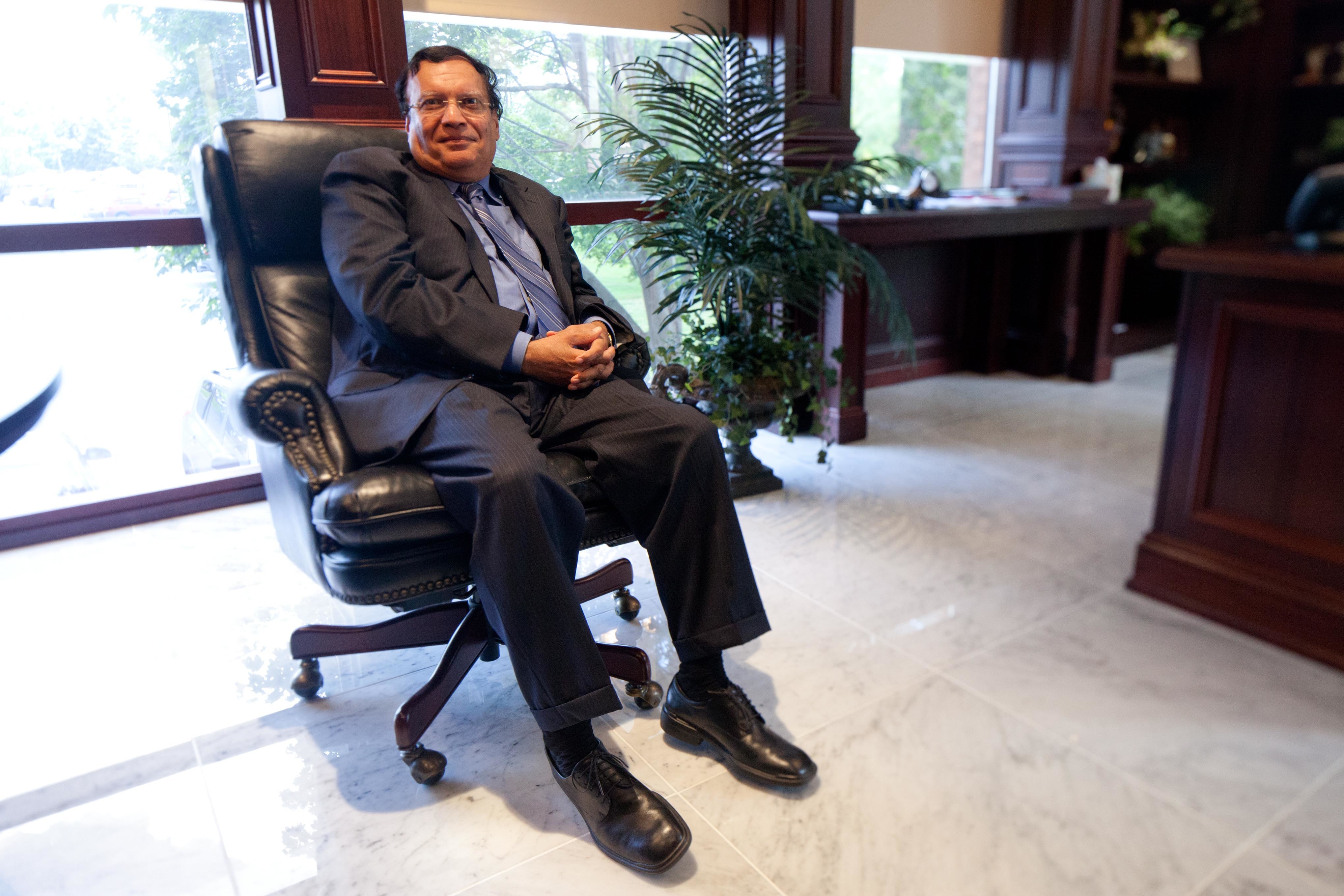
    The company, led by CEO Krishna P. Singh, and its share salespeople are trying to sell at least 50 million shares at more than $15 a share. They plan to list the company on the Nasdaq Stock Market under the symbol HNUC, according to a preliminary prospectus filed Tuesday with the Securities and Exchange Commission.

    The new filing adds details to the initial public stock offering proposal Holtec announced in July. No date has been set.

    Proceeds of the sale would be used to build and sell small reactors, Green Boiler power batteries, uranium storage facilities, and for new markets such as cybersecurity and military products.

    J.P. Morgan, Guggenheim Securities, Goldman Sachs & Co., Citigroup, and Bank of America’s securities arm are leading the sales effort and “road show” marketing Holtec to big investors. Morgan Stanley, Commerce Secretary Howard Lutnick’s Cantor Fitzgerald, and other firms also are participating, according to the SEC filing.

    Holtec said in the statement that the company expects to cash in on a “surge” in demand for electric power in general — and nuclear-powered plants in particular — to supply data centers, compensate for increasingly extreme weather, and meet power needs for other new customers.

    Risk factors Holtec disclosed include that the company’s plans “are premised on assumptions regarding future electricity demand, utilization levels, and long-term market conditions that may not be fully realized,” a potential pullback in data center and artificial intelligence power demand, and changes in government regulators’ or the public’s support of nuclear energy.

    Krishna P. Singh, CEO of Holtec International, in 2014, before he moved the company to Camden from Marlton, N.J. DAVID M. WARREN

    Founder Singh, who will be 80 next year, would control a disproportionately large 10 votes for each of his Class B shares, giving him 99% of the vote in naming board members and other shareholder decisions, sharply limiting the influence of investors buying Class A common shares in the offering.

    As members of the Holtec board, Singh and his wife, Martha, a real estate investor, form a “concentration of ownership” that “may not be fully aligned with the interests” of shareholders buying into the IPO, the company warned potential investors. There are also four independent directors, including Susan N. Story, former CEO of Camden-based American Water Works.

    The company employs around 4,150 people at facilities including its Advanced Manufacturing Division in Camden and manufacturing units in Pittsburgh and Orrville, Ohio, according to the prospectus.

  • ‘I was so tired of that question’: Brandon Graham turns his attention from the Eagles to his new media career

    ‘I was so tired of that question’: Brandon Graham turns his attention from the Eagles to his new media career

    Brandon Graham had a choice — announce on his Unblocked podcast he’s officially done with the Eagles, or blurt it out at an event at a Jefferson Health.

    He chose the latter, a decision he initially regretted before leaning on the media savviness he picked up during his 16-year career with the Birds.

    “I actually wanted to wait, but man, I was so tired of that question being asked all the time, so that just got me,” Graham said. But he landed on the announcement helping him, because it got fans interested to “tune in” and hear him explain why.

    So begins Graham’s transition from Eagles legend and two-time Super Bowl champ to a budding media career talking about football.

    After being injured during the 2024 season, Graham, 38, still felt like he had a little gas in the tank. So when the Eagles called him up last season, he was ready to unretire and get back on the field to “finish the season clean.”

    Graham went into this offseason hopeful he might jump back into football. He stayed in contact with Eagles general manager Howie Roseman and was even prepared to participate in training camp to be properly prepared if the Birds needed him. But the stars didn’t align.

    “It didn’t work out like that because [Roseman] got the team he needed,” Graham said. “So in my mind, I was like, ‘Yeah, I think I’m going to be done.’”

    In hindsight, it’s been something of a relief. Now Graham can focus his efforts on a budding media career that will start off with the second season of his Unblocked podcast and joining PHLY for postgame coverage of Eagles games.

    “Last year, I was one foot in, one foot out, because I thought there was an opportunity for me to go back and play,” Graham said. “This year I didn’t want that feeling so I can work in the media space how I worked in football. Otherwise I’m doing myself a disservice.”

    Learning on WIP and late-night 6abc hits

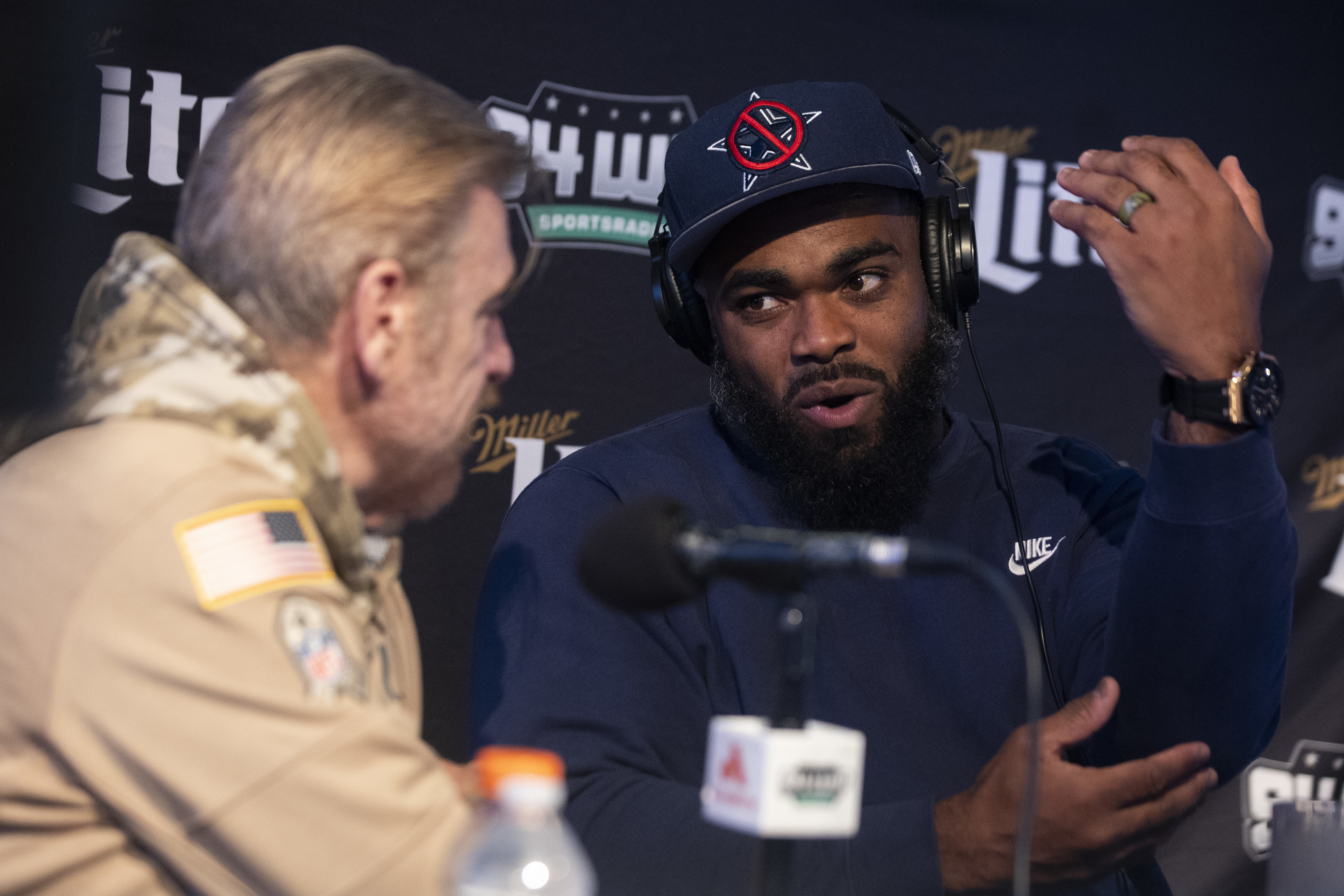
    Brandon Graham hosted a weekly show on 94.1 WIP for nine seasons alongside former host Howard Eskin. Monica Herndon / Staff Photographer

    Graham’s interest in the media began during his playing days, where he’d listen back and critique interviews he gave with reporters. It didn’t take long for his engaging personality to win over the press, who began offering him more opportunities to jump on the air.

    An early break was with 94.1 WIP, a gig that transformed from him calling in on Tuesdays to hosting his own weekly show during the season at Chickie’s & Pete’s alongside former host Howard Eskin.

    Learning on the job also meant sometimes wading in controversy. He was forced to walk back comments he made about then-teammates Jalen Hurts and A.J. Brown in 2024. Graham was injured at the time and based his remarks on a video of Brown speaking, something he’s since learned to approach with caution.

    “It was an emotional time and I should have been patient,” Graham said. “But I felt like it helped us a little bit, too, because we ended up winning the Super Bowl that year.”

    Graham also got some early reps on 6abc during the 2015 season. After Sunday Eagles games, Graham would drive to the station’s studios on City Avenue to join the 11 p.m. edition of Action News and talk Birds with Ducis Rodgers.

    “Boy, that was a grind,” Graham said.

    In 2024, Graham participated in the NFL’s broadcast boot camp, which allows players to experience what it’s like working on a studio show or calling games. Graham said the experience was enlightening, and helped him land appearances on ESPN and the NFL Network.

    “At ESPN, I went through what they call the car wash, when you appear on all the different shows,” Graham said. “They ended up liking me, and I got put on Good Morning Football before I went back to play … I expect I’ll do more of that.”

    Joining PHLY and learning to criticize his former teammates

    Brandon Graham is entering his second season hosting the “Unblocked” podcast for PHLY.PHLY

    Graham is entering his second NFL season with PHLY, the digital start up that began in Denver in 2015 and expanded to Philly in 2023 as part of the ALLCITY Network.

    The network took notice of Graham’s abilities during a July 2025 interview on the Exciting Mics podcast, hosted by Eagles cornerback Cooper DeJean and former Birds safety Reed Blankenship (who signed with the Houston Texans in March). Graham said parent company ALLCITY made him a strong proposal, and within a few weeks he launched his Unblocked podcast, co-hosted by Bo Wulf.

    “BG brings an incredible depth of knowledge and an understanding of the game, but what truly sets him apart is his authenticity and infectious energy,” said Todd Berman, PHLY’s general manager.

    This year Graham is expanding his duties beyond Unblocked to include co-hosting PHLY’s crowded postgame coverage alongside Wulf, Fran Duffy, Brandon Lee Gowton, and former Inquirer reporter EJ Smith.

    Graham won’t appear after every Eagles game — he’ll rotate with former Eagles defender and Super Bowl champ Vinny Curry. But his appearances will place Graham in the potentially awkward position of having to criticize his former teammates.

    But Graham isn’t too concerned. As a player, he understood the media had their own job to do, even during his first few seasons with the Eagles when “Philly people were really bashing me.”

    “Everybody’s takes are different. Some people do it for clickbait just to get people to click on your show,” Graham said. “I’m going to be honest and tell viewers the truth … It will be challenging, because sometimes there’s certain stuff you can’t just beat around.”

    While he’s entering the season hopeful about a future in the sports media machine, he’s open to different paths, including public speaking. For now, Graham’s happy to have a manageable schedule where he works a few days a week, spends time with his family, and has the freedom to explore different interests.

    “Who knows what the media stuff will do,” Graham said, “But I’m trying to get this golf game right, too.”

  • Vaccines hurt. Skipping them hurts more. | Expert Opinion

    Vaccines hurt. Skipping them hurts more. | Expert Opinion

    As a pediatrician, I recommend children get approximately 30 injections between birth and 18 years of age, following the American Academy of Pediatrics vaccination schedule — and that’s not including their annual influenza vaccine.

    While these vaccines keep children healthy from vaccine-preventable illnesses, I recognize that pain related to these shots can worry children and their parents. Unfortunately, myths surrounding vaccine pain — including that pain is something that needs to be endured without help, or that the pain is too much for a small child to handle — can lead families to delay vaccination.

    This is risky at a time of rising vaccine hesitancy. Pennsylvania is currently experiencing the nation’s third-largest outbreak of measles, a vaccine-preventable disease, with more than 500 cases reported statewide so far this year.

    Most parents want to do everything they can to protect their children. That can feel hard when protection comes with a painful experience. Many parents tell me and my colleagues they “can’t look” when their child receives a shot. Some may be drawing on their own fear of needles; others simply find it difficult to watch their child cry or experience pain.

    As children grow older and begin to voice their own concerns about shots, these fears can become even more difficult to navigate. “I hate shots,” kids say to me all the time. And while I often quip that “no one likes getting shots,” that’s not entirely true.

    The experience of vaccine pain varies by child — age, developmental stage, prior experiences with pain, and temperament can all impact their pain perception. It takes time to assess how best to address a patient’s pain, because there is no one-size-fits-all approach.

    Historically, healthcare providers viewed vaccine pain as a normal part of a pediatric medical visit. We expected patients to bear it without any support. In a survey of nurses and medical assistants at Children’s Hospital of Philadelphia in 2022 regarding vaccine pain, one nurse said, “better to get it done and move on.” While well-intentioned, that mindset overlooks what we know about children’s experiences with pain.

    Pain is complex and deeply personal. Children’s memories of past procedures and their fears can shape how they respond to future vaccinations and medical visits. Anticipation and anxiety can become as important as the procedure itself.

    For some children, fear of pain can become a barrier to healthcare, affecting not only a single visit but their willingness to return for future care. By addressing pain proactively, pediatric practices can reduce distress, strengthen trust, and help children feel safer engaging with healthcare throughout their lives.

    That’s why CHOP created the Guided by Comfort program, enabling patients in our primary care locations to choose from a menu of comfort measures to address needle-related pain.

    Using evidence-based guidelines on the best way to manage needle pain, patients can be positioned for comfort and offered distractions. We also offer additional options for the appropriate ages, such as breastfeeding, sweetened water, vibration with ice, a plastic disc, and cooling spray. The comfort menu includes photos and descriptions of each item, much like the menu at a restaurant.

    In the 16 months since we introduced the Guided by Comfort program in all primary care offices, we have reached nearly 200,000 patients, with 82.5% electing to use a menu offering. One parent reported that her child “felt understood and in control of her own health.” These comfort menu options are helping parents and children to build trust and partnership with their healthcare team.

    This program offers a solution to a common concern identified through Pediatric Health Chat, a CHOP initiative tracking common myths and rumors in pediatric healthcare. CHOP teams have also created informational videos that empower parents and their children with practical strategies to make vaccinations more comfortable and help prevent pain from becoming a barrier to vaccination.

    We have proven that offering comfort measures to patients and families can make getting vaccines on schedule less stressful. Comfort isn’t an extra; we are treating it as part of the vaccination experience.

    The views expressed in this article are those of the authors and not necessarily those of CHOP. This information is not intended to provide medical advice, diagnosis, or treatment. Always consult a qualified healthcare professional regarding any health or medical concerns.

    Katie Lockwood is a primary care pediatrician at Children’s Hospital of Philadelphia and cofounder of Pediatric Health Chat, an online initiative providing resources for families looking for good information on the latest myths and misconceptions about children’s health.