After a record-setting debut at Xfinity Mobile Arena in 2026, Unrivaled will return to South Philadelphia on Feb. 15, 2027.
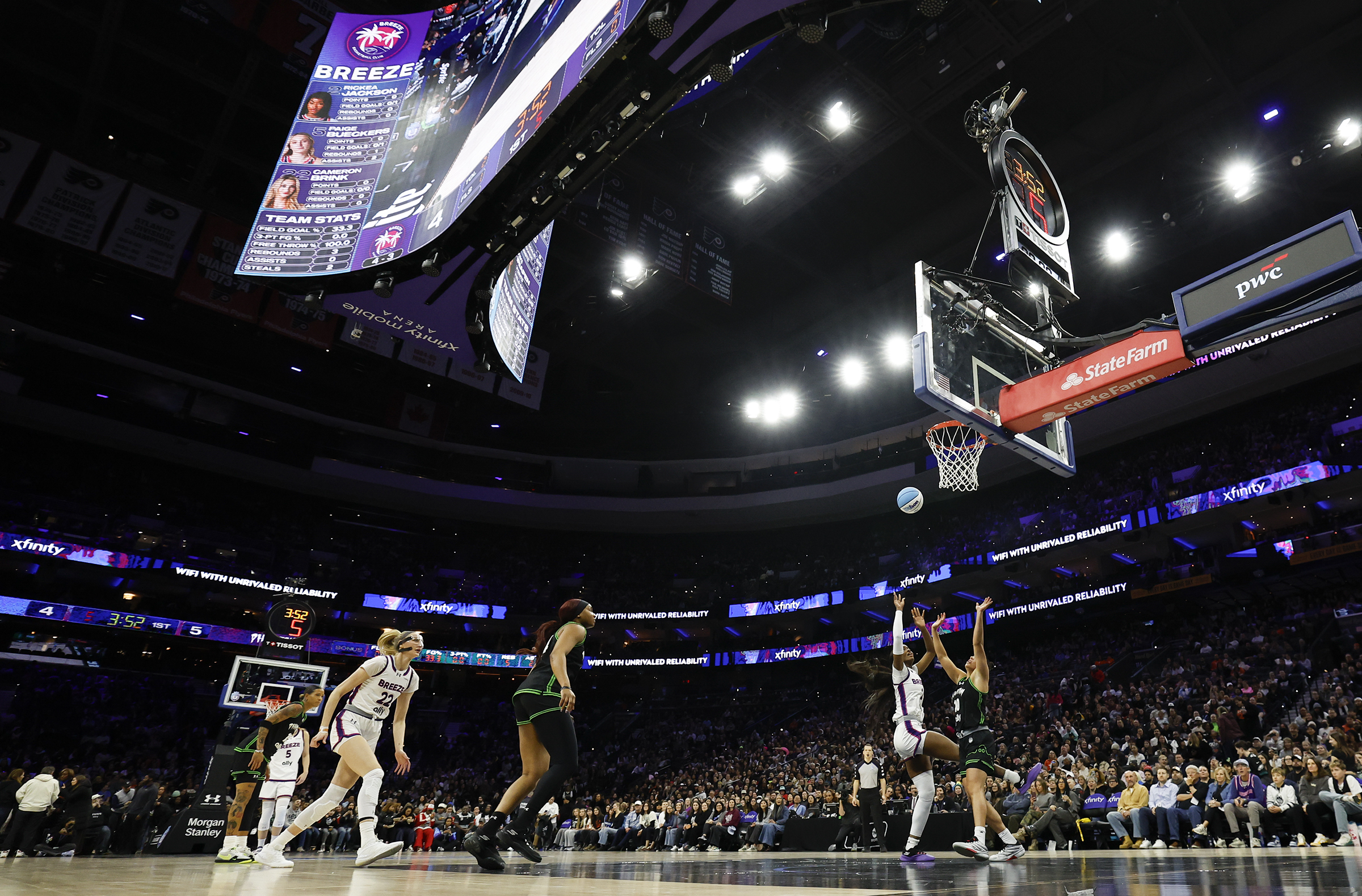
The South Florida-based three-on-three women’s basketball league hit the road for the first time in 2026, bringing four of its eight teams to Philadelphia for its inaugural tour stop.
“It was our first tour stop ever, and because we broke every attendance record, it was a no-brainer to come back to Philly,” Unrivaled commissioner Micky Lawler said. “It felt like Philly was part of our family, and we’d worked hard to get there and to do what we did there. So it was like Thanksgiving coming back.”
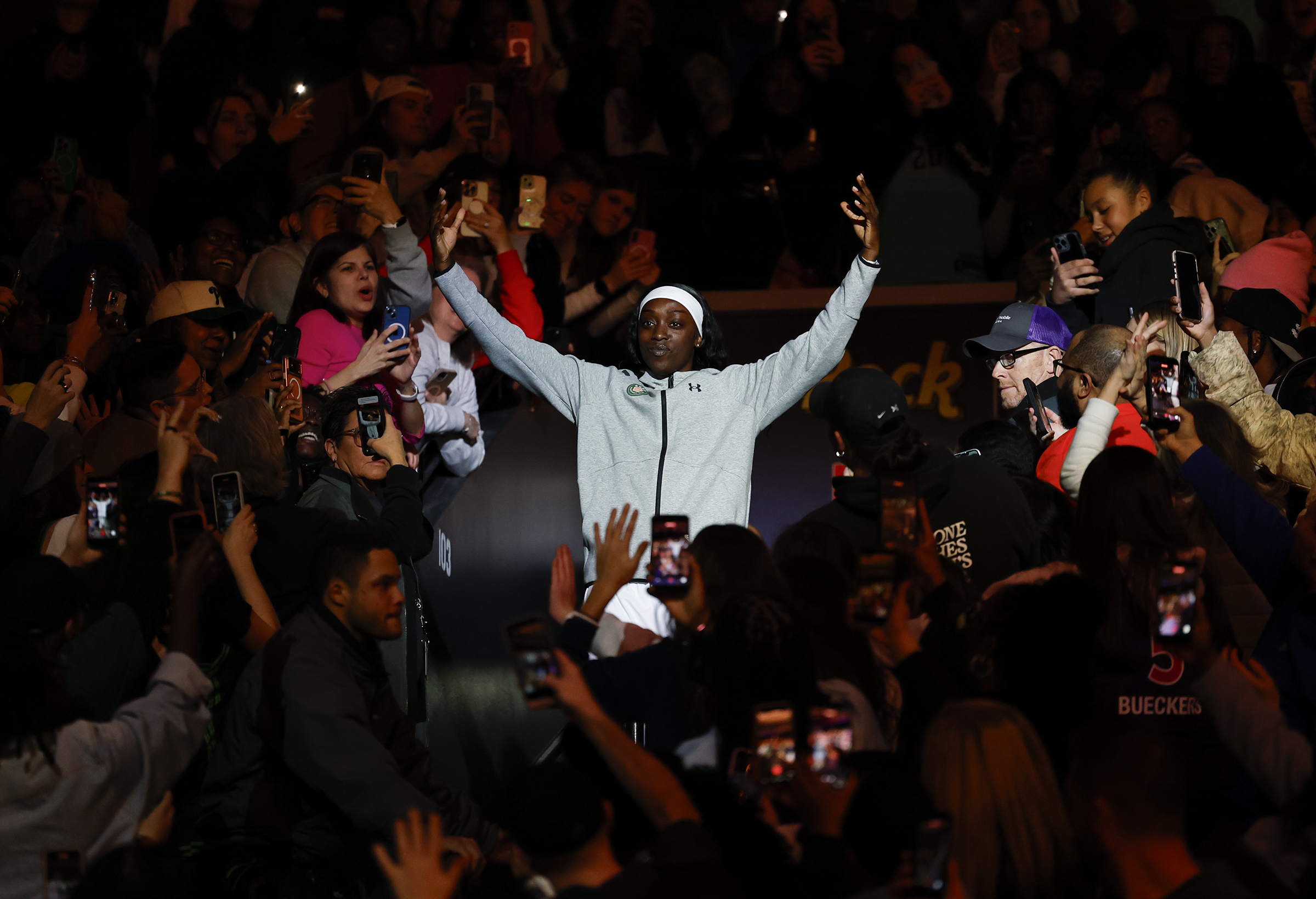
Celebrities like Dawn Staley, Kylie and Jason Kelce, Kyle Lowry, Robin Roberts, and Leslie Jones were in the building, and big names like Paige Bueckers, Marina Mabrey, and locals Natasha Cloud and Kahleah Copper were on the court for the 2026 doubleheader.
The Unrivaled doubleheader that included the Breeze and Phantom set attendance records at Xfinity Mobile Arena.Yong Kim / Staff Photographer
“It was unbelievable,” cofounder Napheesa Collier said. “You could feel the love tonight. I’m so glad we came here. I just can’t explain it more than I was just so filled up with joy. It was amazing.”
Lawler could not confirm which of Unrivaled’s teams or players would play in the 2027 tour stop. The four clubs will be finalized later in December.
Ashley Lunkenheimer, vice president of the Philadelphia Sisters, an organization dedicated to bringing professional women’s sports to Philadelphia, said attendees from last year’s event already are inquiring about purchasing suites, and there’s increased sponsorship interest. Tickets go on sale at 3 p.m. for Unrivaled newsletter subscribers and 4 p.m. for the general public.
The Sisters played a critical role in attracting Unrivaled to Philly, which provided proof of concept that women’s sports can be successful in the city. Lunkenheimer hopes Unrivaled’s continued presence in the city helps to lay the foundation for Philadelphia’s WNBA team, which is set to begin play in 2030.
“For Philadelphia specifically, it’s the makings, I hope, of a season ticket list, right?” Lunkenheimer said. “… We need to build back the awareness for the broader crowds, so they all know when the WNBA comes.”
Unrivaled was the first major pro women’s basketball event in Philly since 1998. Philly’s embrace of it ensured it won’t be the last.
“It was a mutual opportunity to showcase that we believed in our city and in Unrivaled,” Lunkenheimer said. “I’d like to believe that’s why New York and Barclays said, ‘Let’s jump on that.’ Now they’re going to all these other cities because every other city is saying, ‘We want it.’ They could have said, ‘Well, we’re going to skip Philly. We already did that.’ But they didn’t. They value that partnership.”
In California, oaked chardonnay was once the norm, with its faint accents of butterscotch. Nowadays, the unoaked style has come into its own, and this seems likely to continue. Almost all of the world’s white wines are unoaked, and the current fashion favors refreshment over richness, so it’s no surprise that even chardonnay specialists known for an oakier style might want to broaden their portfolio.
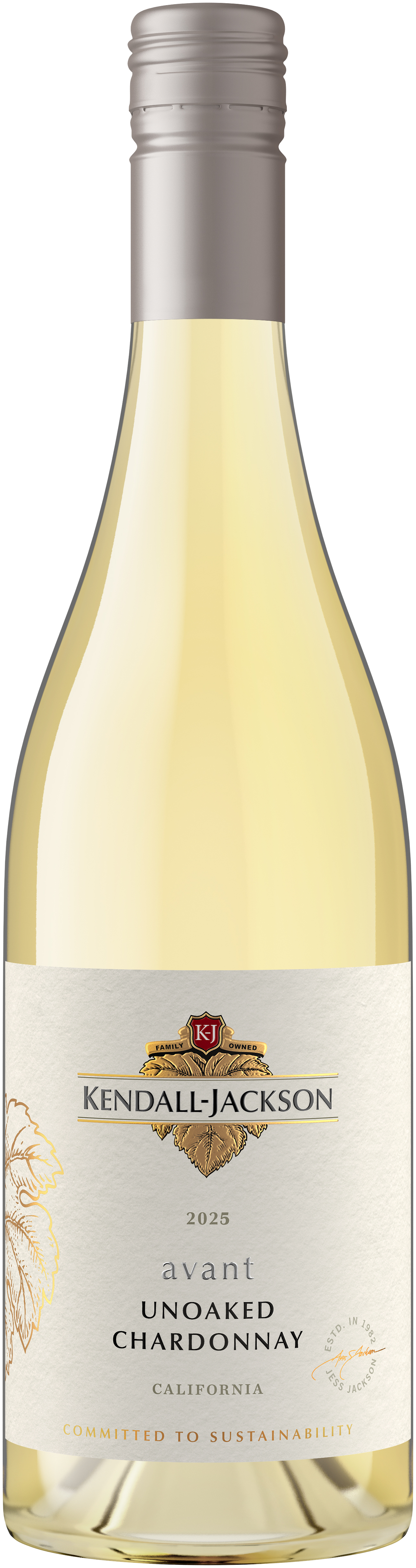
Kendall-Jackson is not just known for its chardonnay — the brand has helped to define California chardonnay as an oaky white wine in the minds of Americans. Their “Vintner’s Reserve” bottling has been the top-selling chardonnay brand in the U.S. for over 30 years. That wine has always featured the bright apple-pear profile of the chardonnay grape itself, intensified and enriched with a layer of flavors derived from fermentation and aging in new oak barrels, adding a taste similar to butter pecan ice cream.
Applying new oak to a chardonnay wine results in the kinds of flavors you get when you add butter and sugar to fresh apples and bake them. So when chardonnay is labeled as “unoaked,” shoppers should not expect that caramelized quality. Instead, they will find a flavor profile that is lighter and more tangy — closer to that of fresh apples and pears than to baked fruit desserts — since no new toasted oak is involved.
The grapes for Kendall-Jackson’s Avant chardonnay are sourced entirely from coastal counties of California, adding a bright lemony freshness and hints of pineapple to chardonnay’s apple-pear core that make it a great partner for seafood and poultry.
PLCB Item #3697 – on sale for $14.99 through Oct. 4 (regularly $17.99)
Also available at: Total Wine & More ($12.99, totalwine.com) in Wilmington and Claymont, Del.; Hopewell Super Buy Rite ($13.99, buyrite.wine) in Pennington, N.J.; WineWorks ($14.98, wineworksonline.com) in Marlton, N.J.
The spotlight coming into Wednesday’s Union game was on Cavan Sullivan, as the 16-year-old continues to seize headlines across American soccer.
At kickoff, Cavan shared it with Quinn Sullivan, since the brothers were starting a regular-season game together for the first time. It was a big game, too, the Union’s first in a while against a big-time Eastern Conference opponent.
The stakes rose a little more when interim Union manager Ryan Richter chose to start Ezekiel Alladoh at striker with Bruno Damiani. It was a gamble to rest Milan Iloski, even if it was helpful in a three-game week.
That setup meant the Sullivans had to be the Union’s playmaking engine, and then they’d hope that the duo in front of them could finish the chances they created.
They delivered with style in a 5-0 rout of FC Cincinnati. Cavan had team highs of five chances created and 15 touches in the opponent’s 18-yard box, and his 73 touches were the most of any player in the front six. He completed 42 of 55 passes, sent six passes into the attacking third, and took two shots.
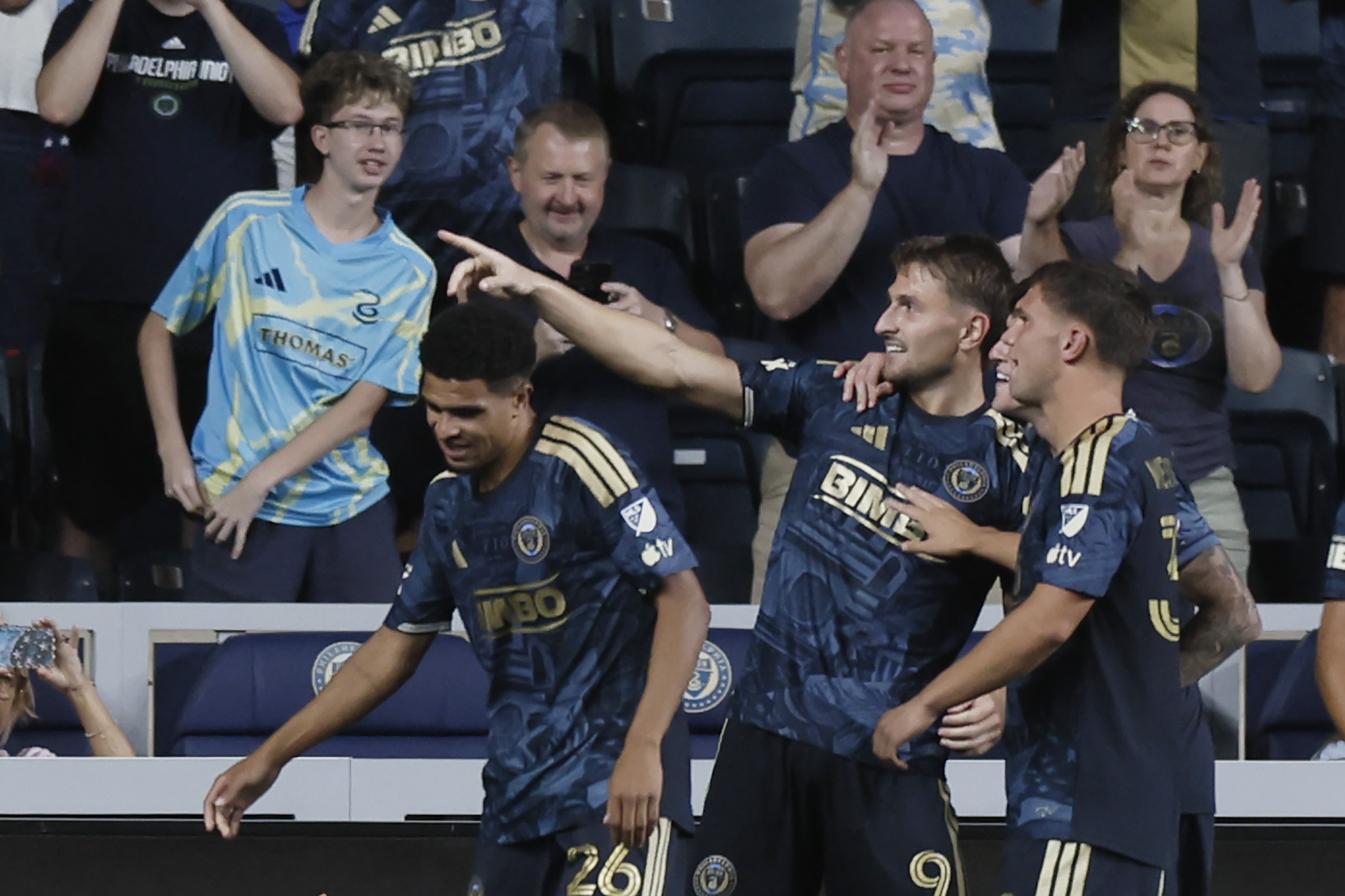
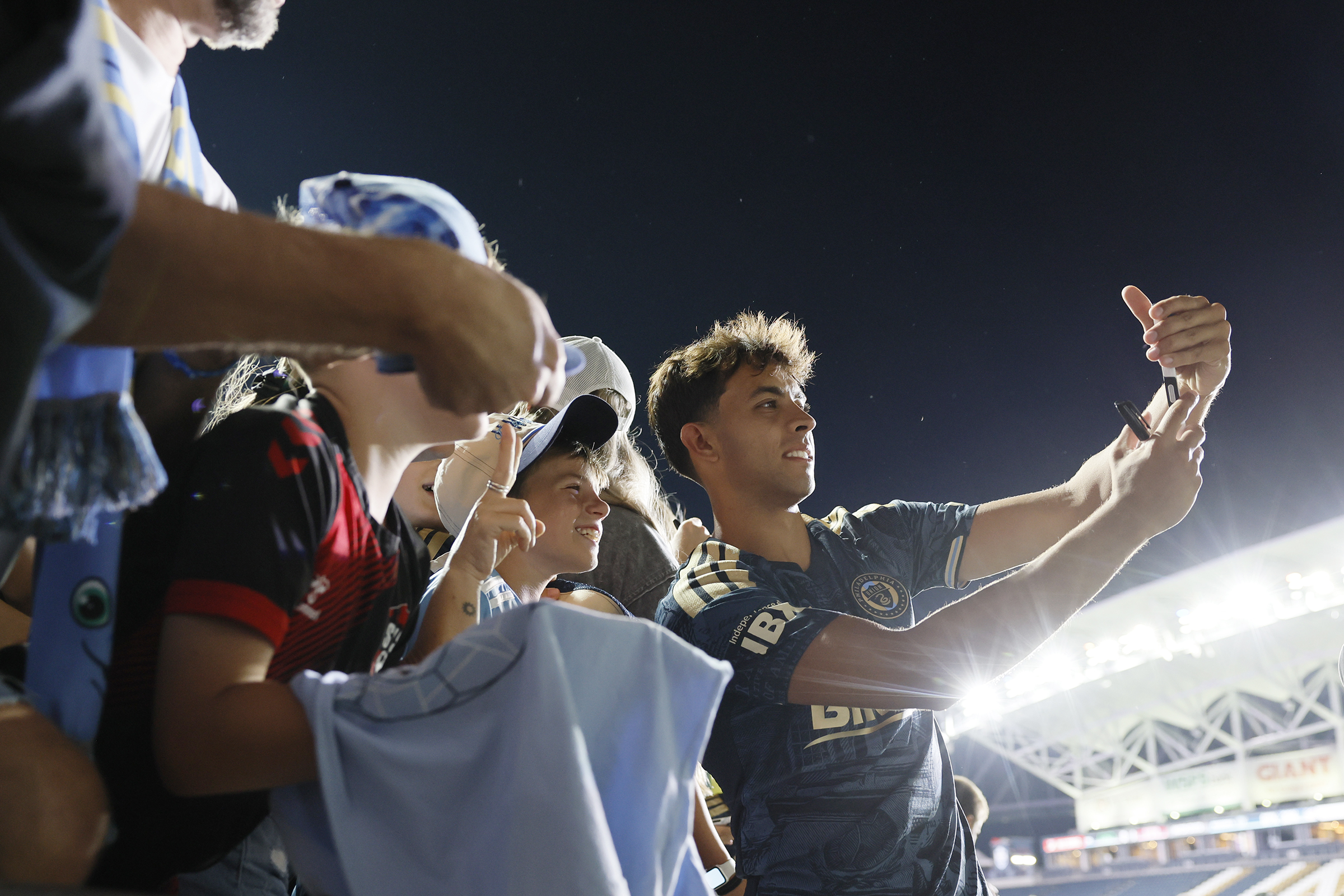
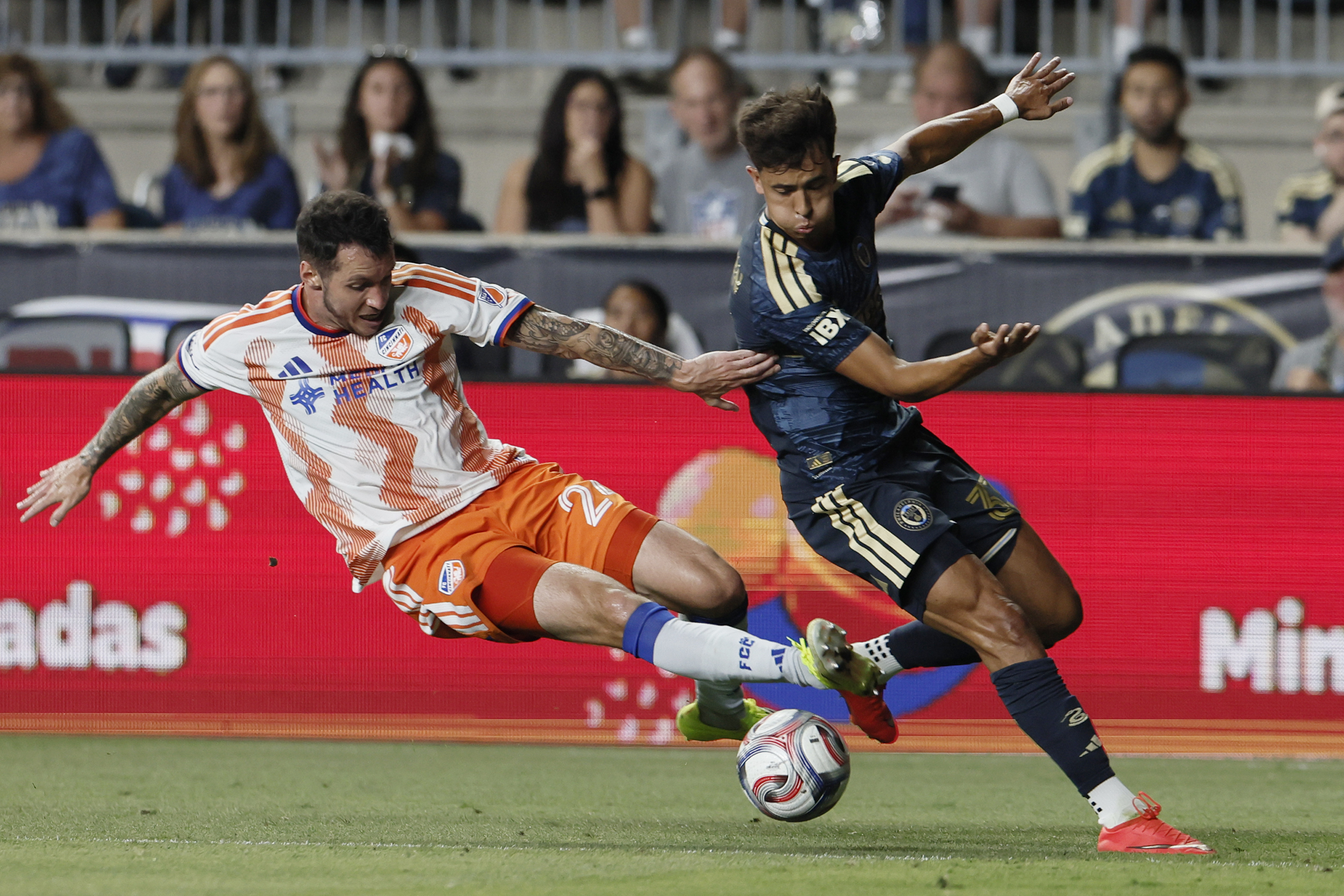
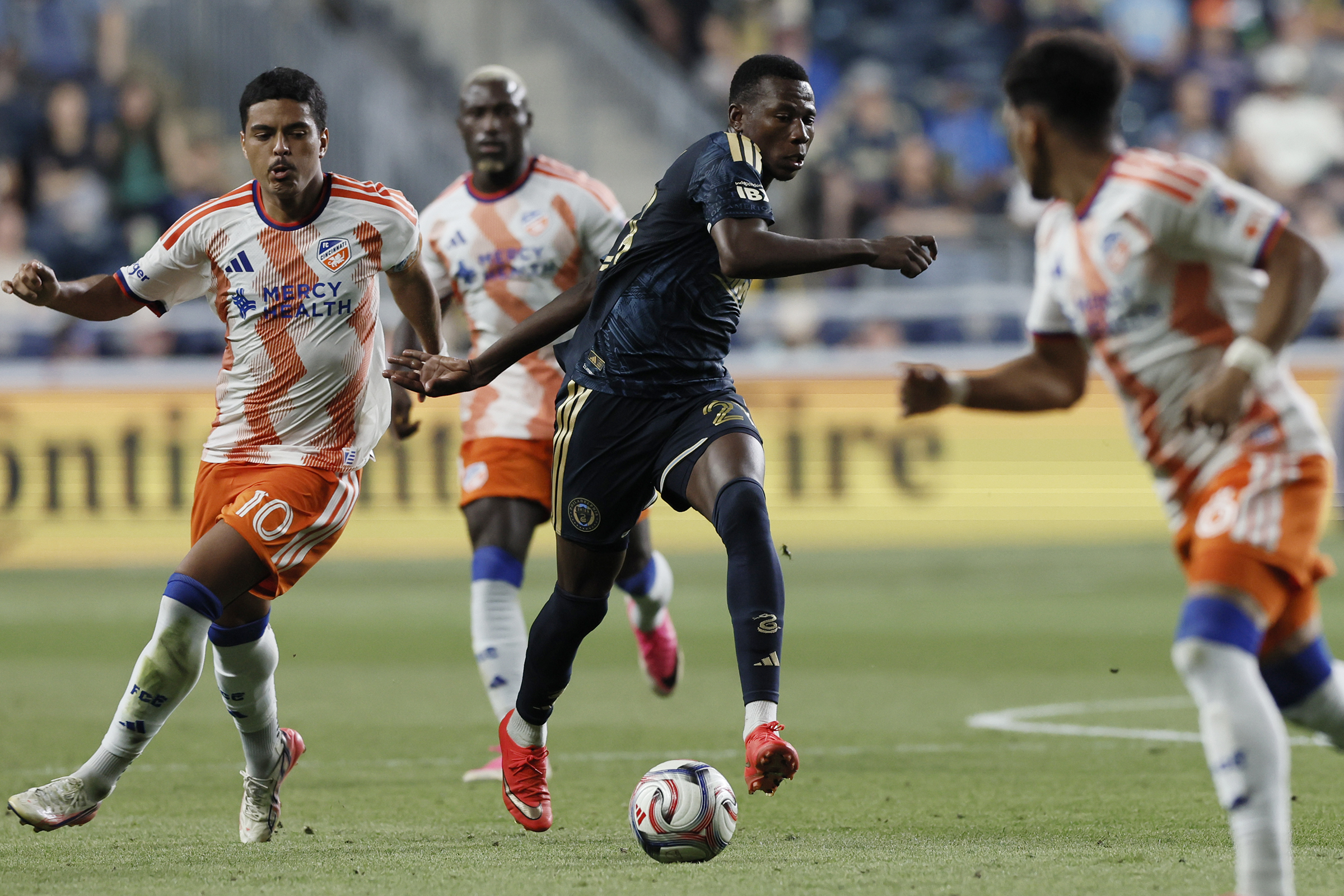
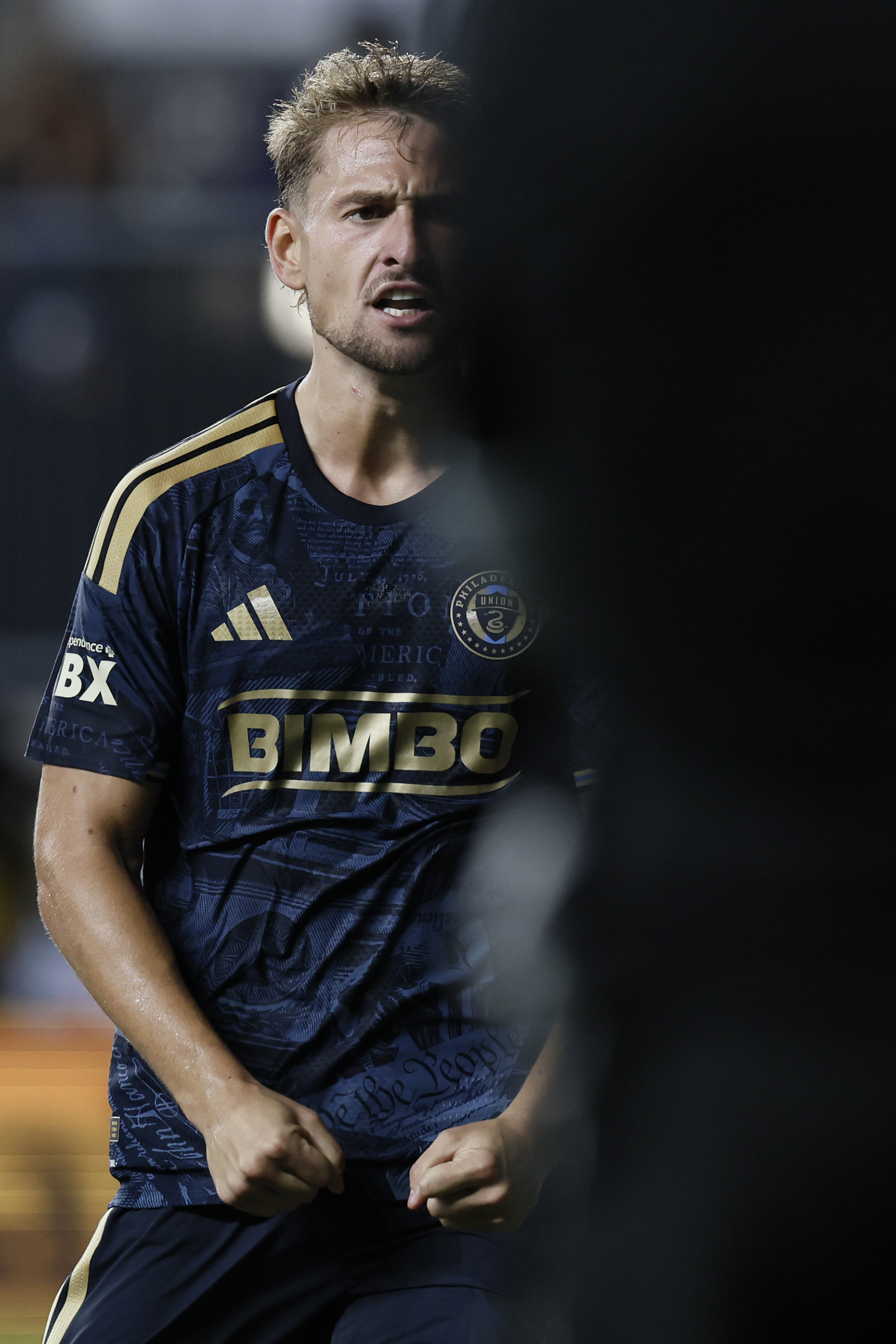
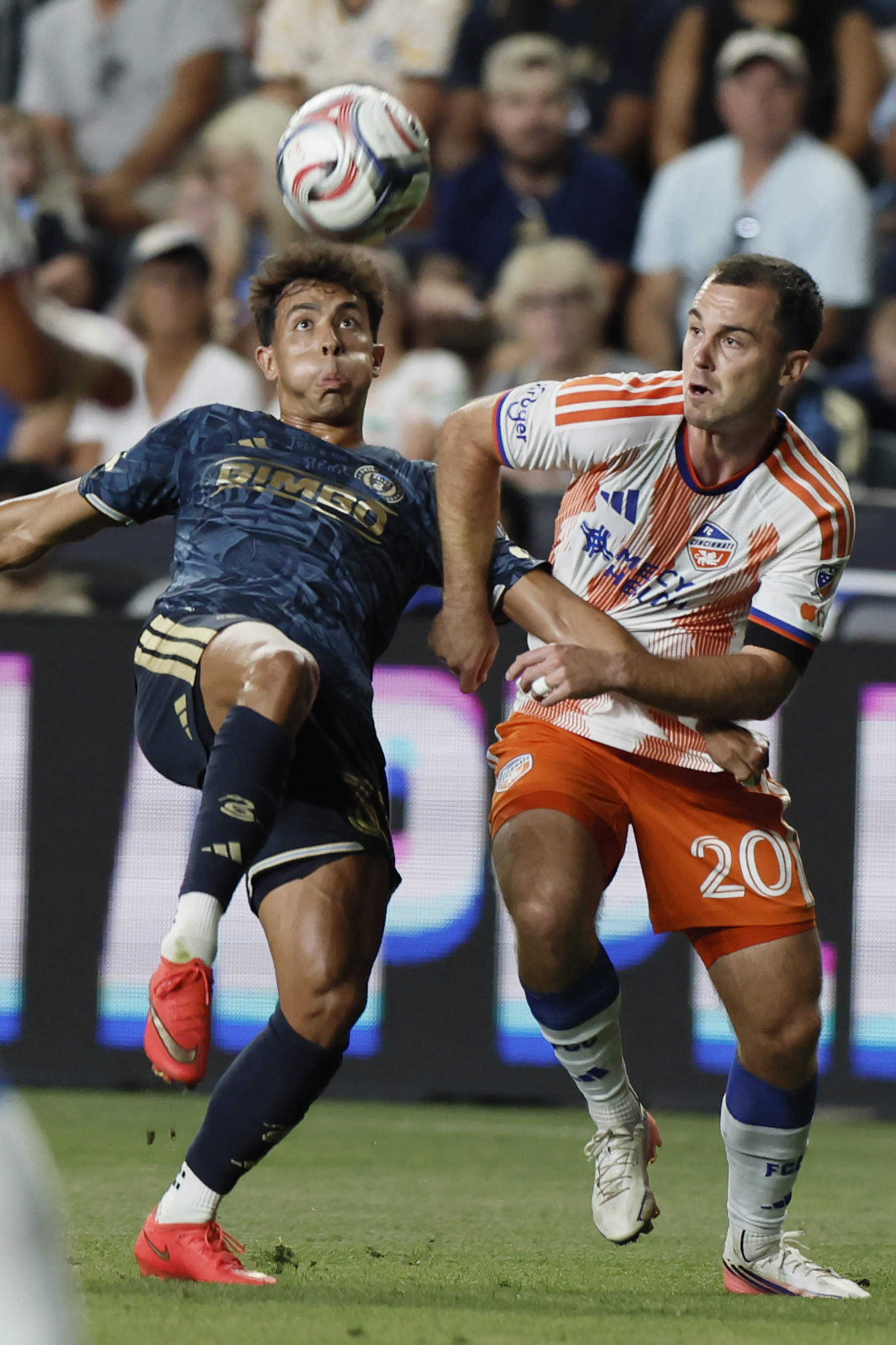
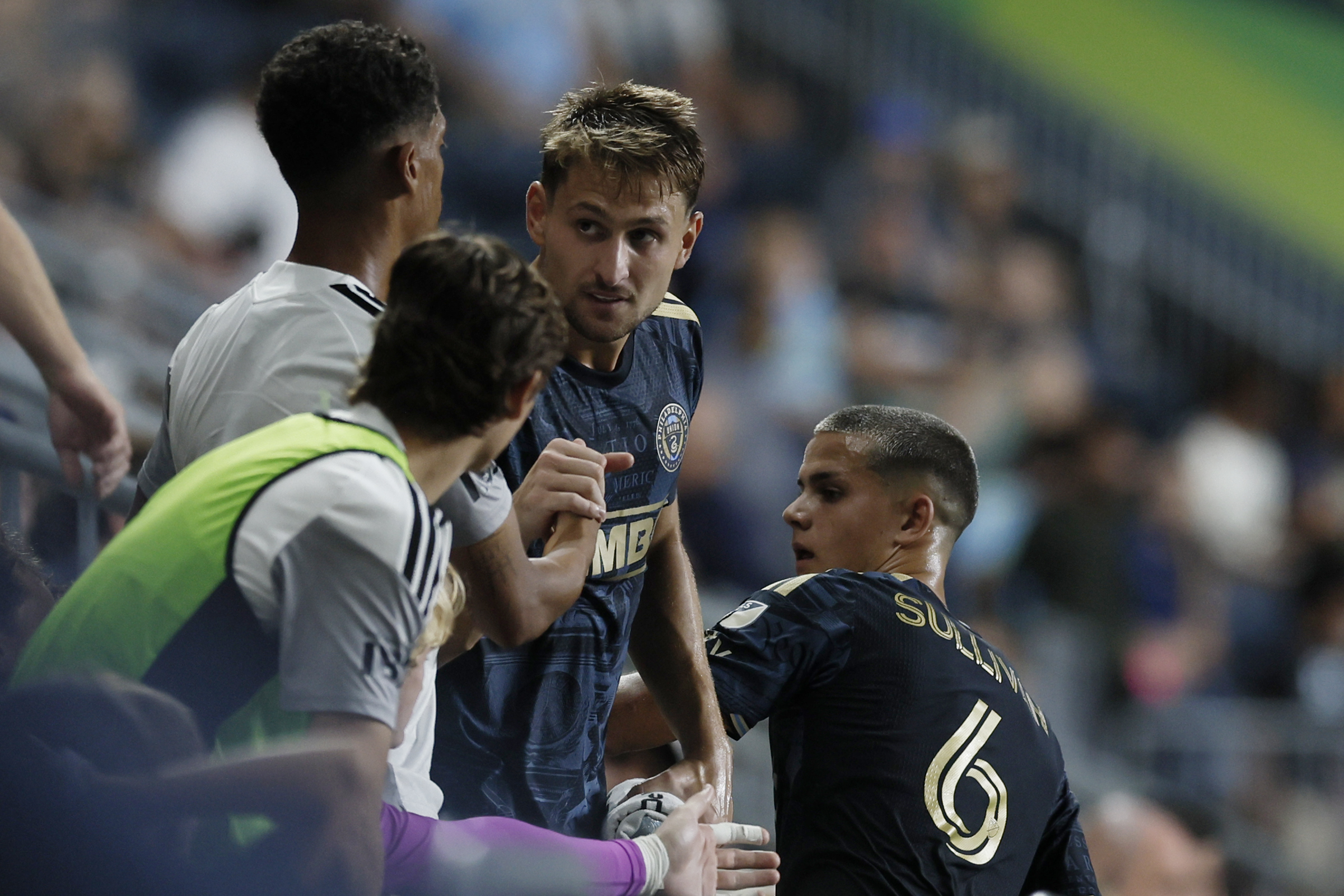
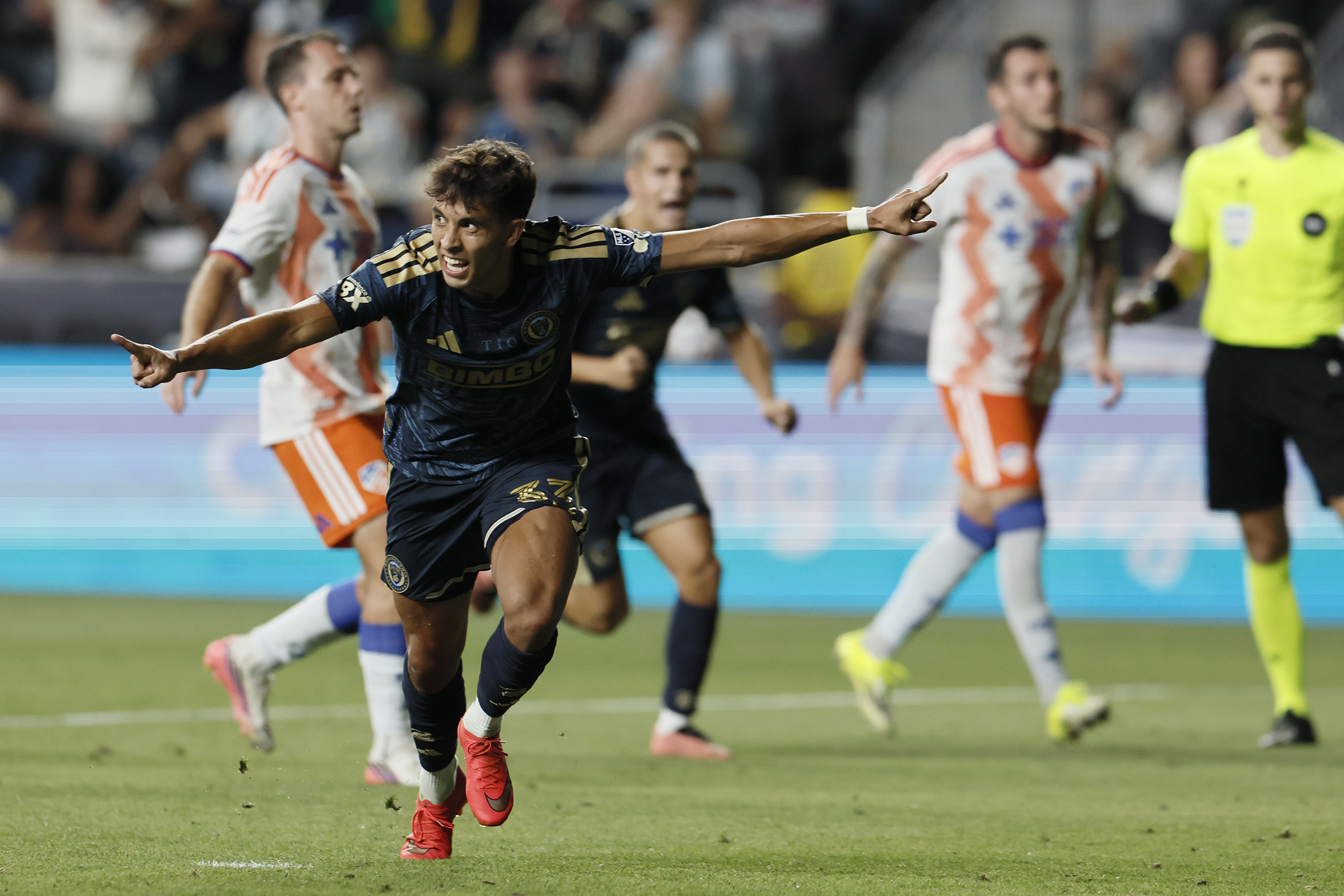
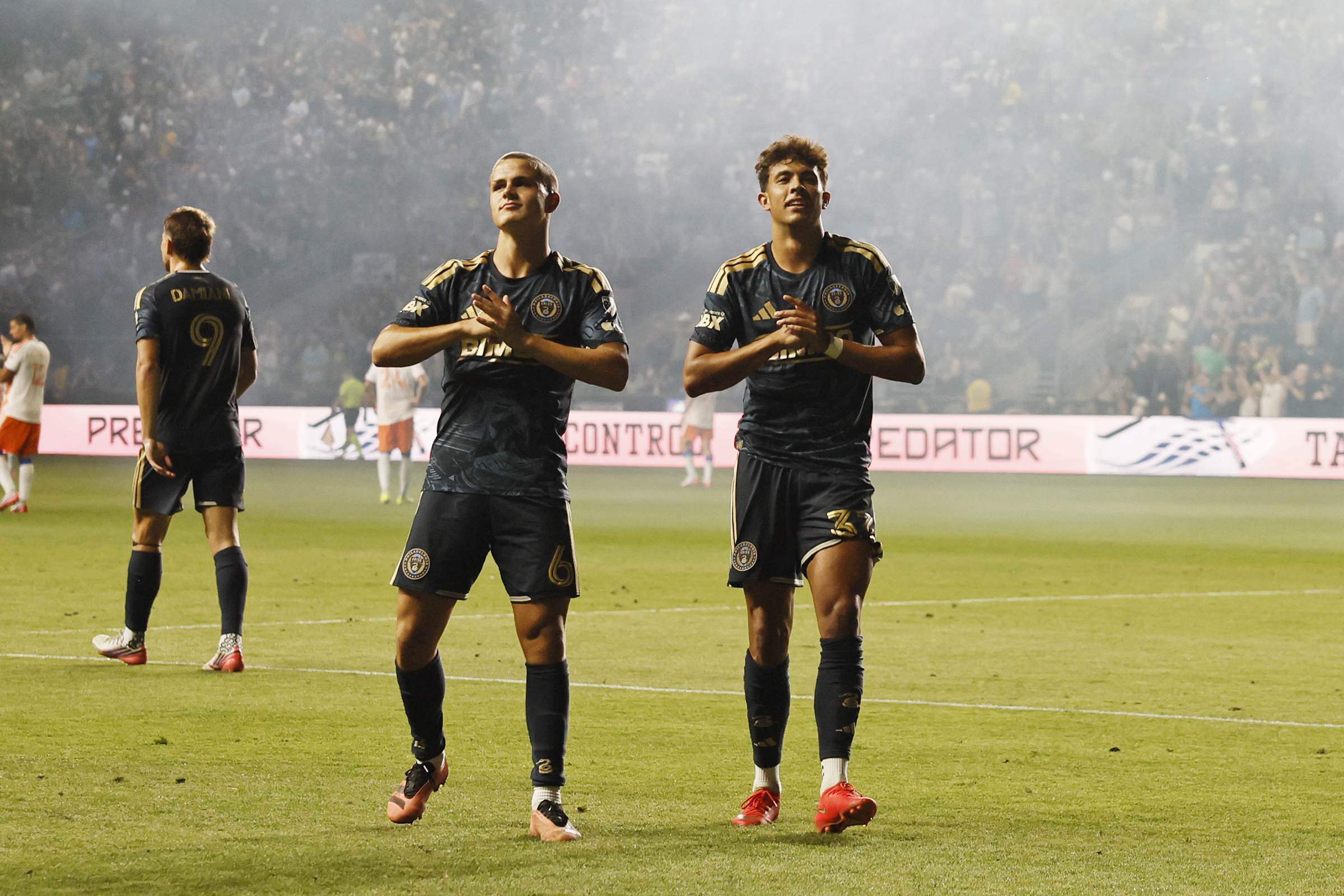
Union’s Quinn Sullivan takes a selfie with young fans after the Union vs. FC Cincinnati soccer match at Subaru Park in Chester on Wednesday, September 9, 2026.Elizabeth Robertson / Staff PhotographerCincinnati’s # 24 Kyle Smith and Union’s Quinn Sullivan pursue the ball during the Union vs. FC Cincinnati soccer match at Subaru Park in Chester on Wednesday, September 9, 2026.Elizabeth Robertson / Staff PhotographerCincinnati’s # 10 Evander and Union’s # 21 Danley Jean Jacques run towards the ball during the Union vs. FC Cincinnati soccer match at Subaru Park in Chester on Wednesday, September 9, 2026.Elizabeth Robertson / Staff PhotographerUnion’s Bruno Damiani celebrates his first half goal during the Union vs. FC Cincinnati soccer match at Subaru Park in Chester on Wednesday, September 9, 2026.Elizabeth Robertson / Staff PhotographerUnion’s Quinn Sullivan and Cincinnati’s # 20 Pavel Bucha fight for position during the Union vs. FC Cincinnati soccer match at Subaru Park in Chester on Wednesday, September 9, 2026.Elizabeth Robertson / Staff PhotographerUnion’s Bruno Damiani and Cavan Sullivan high five teammates after coming out of the game in the second half of the Union vs. FC Cincinnati soccer match at Subaru Park in Chester on Wednesday, September 9, 2026.Elizabeth Robertson / Staff PhotographerUnion’s Milan Iloski after scoring in the second half of the Union vs. FC Cincinnati soccer match at Subaru Park in Chester on Wednesday, September 9, 2026.Elizabeth Robertson / Staff PhotographerUnion’s Quinn Sullivan celebrates his first half goal during the Union vs. FC Cincinnati soccer match at Subaru Park in Chester on Wednesday, September 9, 2026.Elizabeth Robertson / Staff PhotographerUnion’s # 9 Bruno Damiani surrounded by teammates after scoring in the second half of the Union vs. FC Cincinnati soccer match at Subaru Park in Chester on Wednesday, September 9, 2026.Elizabeth Robertson / Staff PhotographerUnion’s Cavan (left) and Quinn Sullivan celebrate Quinn’s goal that put the Union up 1-0 in the first half of the Union vs. FC Cincinnati soccer match at Subaru Park in Chester on Wednesday, September 9, 2026.Elizabeth Robertson / Staff Photographer
Quinn had 54 touches, including eight in the 18-yard box. He created two chances, took two shots, and had six defensive recoveries and one tackle.
You may have noticed that none of those stat lines included their assists. That’s because they wouldn’t have been recorded if someone else hadn’t scored the chances.
His hat trick, scored with his mother and brother in the stands at Subaru Park, was what mattered most — not just for this game, but for the rest of the season.
They were all different goals, too: a sliding charge at the goal line in first-half stoppage time, a first-touch hit from the middle of the 18-yard box in the 49th minute, and a cut and smash from the top of the box in the 61st.
It could even have been four had Kai Wagner not trapped a pass with an arm before crossing for Damiani’s finish in the 73rd. A video review took that off the board.
“I’m sure he feels a weight off his shoulders in some ways, but also he should be proud of the work that he put in, and he deserves the goals he scored tonight,” Richter said. “And for the team, when your striker leads the line like this, then he’s doing his job in the best way possible.”
Nothing has held this team back more this year than a lack of goals from Damiani and Alladoh. Coming into Saturday, the two most expensive signings in team history had combined for just eight goals in all competitions across 3,028 minutes in 30 games.
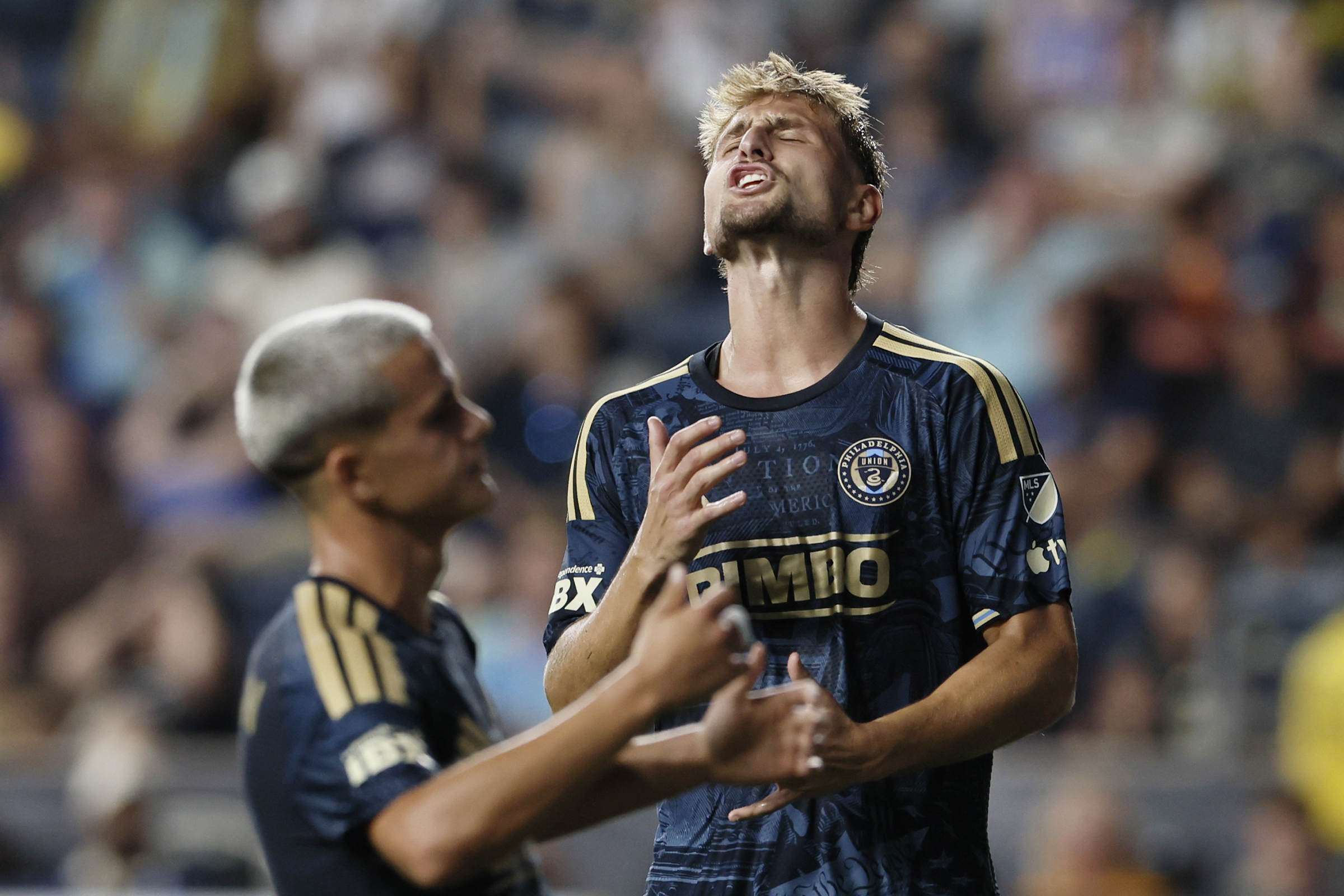
Bruno Damiani’s reaction to a big miss against CF Montréal last saturday.Elizabeth Robertson / Staff Photographer
Even worse, Damiani’s six goals in all competitions came from 52 shots, many of which resulted in awful misses. Union fans need no reminding of the wide-open chances he fluffed in last Saturday’s 2-0 win over CF Montréal.
Alladoh, meanwhile, had just two goals from 19 shots. That’s a reflection of his having under-delivered so badly that he spends most of his time on the bench. Wednesday’s game was his first regular-season start since May 9, a span of 13 contests.
Consider this, too: Before Wednesday, Damiani ranked fifth on the Union’s season scoring chart. Iloski was at the top with 12 (now 13) in all competitions, Cavan Sullivan has seven, then Danley Jean Jacques and Neil Pierre have four each.
That’s an attacking midfielder (a very good one, for sure), a defensive midfielder, and a centerback, all with more goals than a striker.
¡GOOOL de Bruno Damiani 🇺🇾!
El uruguayo anota al cierre del primer tiempo ante Cincinnati tras un pase de Sullivan.
“A game like tonight, scoring that hat trick is big for him, and hopefully it’s a snowball,” Iloski said. “If me and him are both firing, that’s so big for the team going down the stretch.”
Iloski also praised his frontline partner’s other contributions, as Richter has also done repeatedly.
“Bruno does a lot for us, and he does a lot for me,” he said. “He battles with guys constantly, and lets me kind of run a bit more free. And he does so much work defensively.”
But Iloski knows what matters most, because it’s what he’s also paid to do.
¡Doblete de Bruno Damiani 🇺🇾!
El uruguayo anota su segundo gol del partido a favor de @PhilaUnion.
When Damiani scored twice at New York City FC just under a month ago, there was hope he was finally unlocked, having also tallied in a Leagues Cup game a week earlier. At that point, he had just one goal in 19 regular-season outings.
Then he went scoreless in the next four, with especially ugly misses against Inter Miami and Montréal.
Everyone saw Damiani’s frustrated reactions. It was clear that the burden weighed on his shoulders, as it did earlier in the year and in prior droughts.
“I’m an emotional person, an emotional player — and yeah, of course when things don’t go my way, like the team didn’t perform really well in the first half of the season, I wasn’t happy,” he said. “I’m happy now that things are working, game-to-game we’re improving, keeping the clean sheet and winning the games. I’m also happy for my personal moment, too, that I scored a hat trick this time.”
¡Hat-trick uruguayo!
Bruno Damiani anota su tercer gol del partido a favor de @PhilaUnion.
Richter has backed Damiani all along, and did so again Wednesday.
“Of course, the goal didn’t come [until now], but assists, affecting plays that lead to goals, his hold-up play [has been] outstanding, his work against the ball top,” he said. “What he can control is, he’ll do all these things every game, and we know that, and we know that it makes the team better. And then, yeah, his main job is to score goals, and when he starts chipping in and doing the job that he did tonight, then it’s a complete striker.”
Wednesday’s win nudged the Union up to eighth place (8-10-6, 30 points) heading into Sunday’s game at San Diego FC (9 p.m., Apple TV), their longest road trip of the season. The standings remain a logjam, with four points separating sixth-place Orlando City from 12th-place Red Bull New York.
“Yeah, we are in the playoff [places]. It feels good,” Damiani said. “We have the [standings] table in the gym, and we can see our club in the playoff spots. We should be there all the time. So, it’s good, but let’s stay game-after-game.”
Bruno Damiani (center) gets congratulations from teammates on the bench after coming out of the game.Elizabeth Robertson / Staff Photographer
He channeled his manager in saying that, and when he called it “the hard thing to do now, and the best thing to do. … That mentality is what brings us here.”
And will that mentality now deliver more goals? Or will this game become another mirage, rooted in the Union’s man advantage from the 16th minute on thanks to Obinna Nwobodo’s red card?
The answer will be one of the biggest factors in how this season ends up.
window.addEventListener(“message”,function(a){if(void 0!==a.data[“datawrapper-height”]){var e=document.querySelectorAll(“iframe”);for(var t in a.data[“datawrapper-height”])for(var r,i=0;r=e[i];i++)if(r.contentWindow===a.source){var d=a.data[“datawrapper-height”][t]+”px”;r.style.height=d}}});
And the insurance company with the biggest piece of that business in Pennsylvania is making its voice heard in Harrisburg, Washington, and across the political landscape.
Newtown Square-based AmeriHealth Caritas, an affiliate of the Philadelphia-based healthcare giant IBX, contributed $500,000 total last year to national Democratic and Republican groups that work to elect governors and state legislators, more than double what it gave those entities in 2020.
As the GOP-led Congress passed legislation making deep cuts to Medicaid spending last year, AmeriHealth spent $1.7 million on federal lobbying, the most since at least 2008. And the company made charitable contributions aligned with causes promoted by political leaders in states where it does business — including a $5 million donation to food banks announced by North Carolina’s Democratic governor and 250 book bags for schoolchildren as a gift to the Democratic speaker of the Pennsylvania House.
It all adds up to a growing influence operation run by a company in a competitive industry that relies on government for revenue. Last year, AmeriHealth generated almost $16 billion from Pennsylvania contracts — more than half its total revenue.
Medicaid — a joint state-federal program that funds healthcare for low-income people, children, seniors, and individuals with disabilities — is also the single biggest cost driver in Pennsylvania’s budget. Almost three million Pennsylvanians, or more than one-fifth of the population, are covered by Medicaid.
AmeriHealth’s corporate political giving has drawn criticism from some Republican state lawmakers, who call it an inappropriate use of taxpayer dollars.
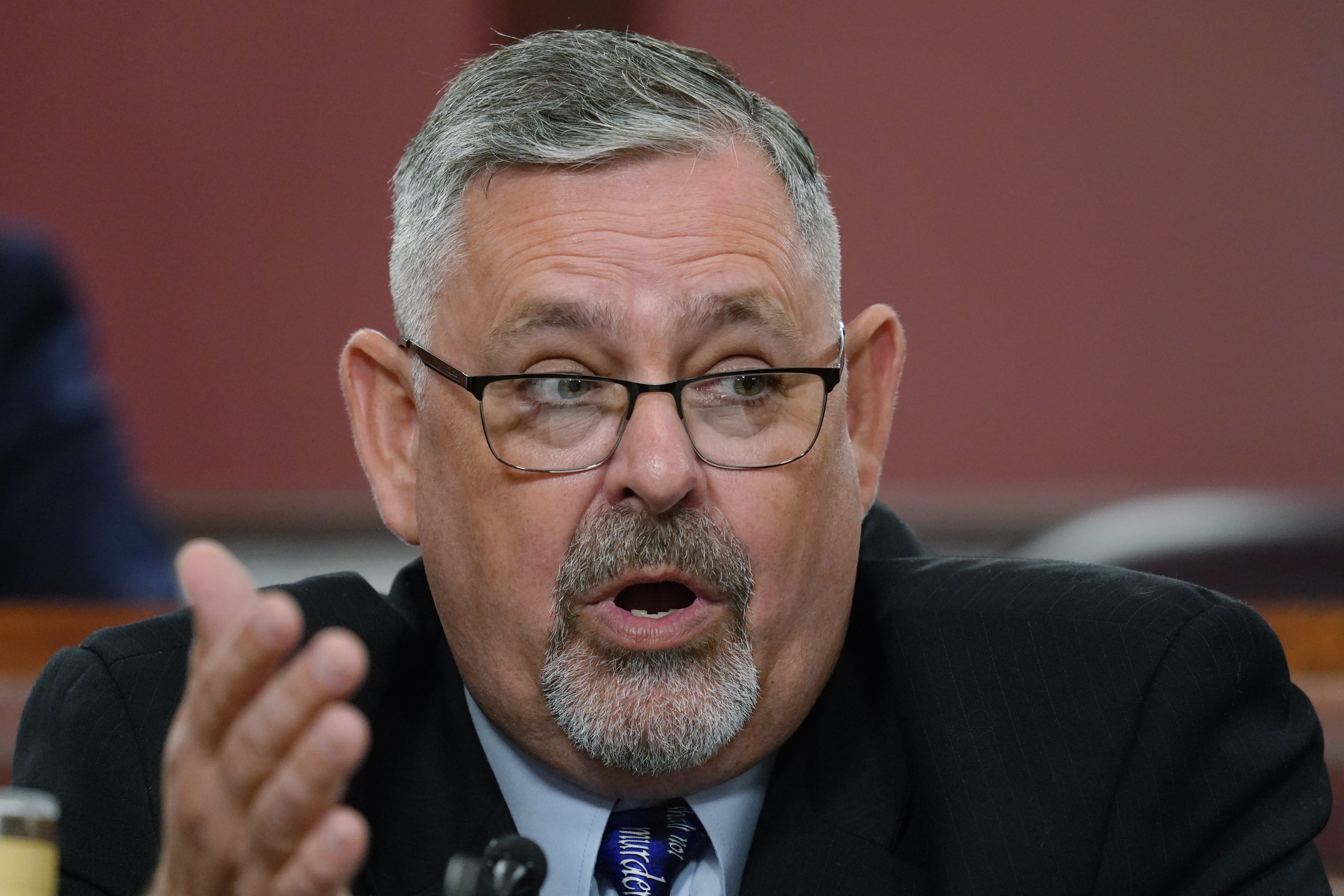
“That’s money that’s supposed to be going out to our hospitals, pharmacies, and disabled service providers,” said State Sen. Cris Dush (R., Jefferson).
State Sen. Cris Dush (R., Jefferson) in 2021.Matt Rourke / AP
AmeriHealth’s increased political activity has come during a volatile period for Medicaid. Enrollment surged during the COVID-19 pandemic as a federal emergency declaration meant people didn’t have to reapply for benefits, even if they no longer qualified. Once states resumed verifying eligibility, insurers including AmeriHealth saw membership decline — and those most likely to maintain coverage were sicker than average.
Now insurers are grappling with the biggest cuts to federal healthcare spending in history — $1 trillion over the next decade, mostly to Medicaid — in President Donald Trump’s big domestic policy legislation last summer. They are set to take effect next year.
Lee Drutman, a senior fellow at New America, a Washington, D.C.-based think tank, said AmeriHealth’s political activity is part of a “tried-and-true playbook” in corporate America.
“If you do business with the government or have contracts or regulatory interests, you want to make sure the people who are making the decisions have a nice warm feeling when they think about your company,” said Drutman, author of The Business of America is Lobbying. “The best way to give them that nice warm feeling is to contribute to their campaigns and their causes.”
AmeriHealth said in a statement that it reviews all political contributions to ensure compliance with applicable laws and regulations and that the company does not make contributions “from legal entities that have state or federal contracts.”
AmeriHealth did not say what revenue source it uses to fund its corporate political contributions and did not answer questions about whether it had any revenue streams that were not tied to tax dollars.
“Our participation in the public policy process focuses on healthcare issues affecting our members and the communities we serve,” AmeriHealth said, adding that it supports organizations across the political spectrum.
Donations to DGA and RGA
Like most states, Pennsylvania contracts with private insurers — also known as managed care organizations (MCOs) — to manage Medicaid beneficiaries’ benefits.
Federal law sets broad coverage requirements, but states have flexibility in determining which populations are eligible and which services to include.
And every year, they set monthly rates they pay insurers for Medicaid enrollees. Federal regulators review the rates.
“That all has a huge impact on the financial health, the success of the Medicaid managed care plan,” said Edwin Park, research professor at the McCourt School of Public Policy at Georgetown University.
It is not surprising, then, that insurers like AmeriHealth donate to political groups that elect governors and state legislators.
Among the groups that have benefited from AmeriHealth’s giving is the Democratic Governors Association, which in 2022 gave $7.2 million to then-Pennsylvania Attorney General Josh Shapiro’s successful gubernatorial campaign and which has given $750,000 to his reelection bid.
From 2021 through last year, AmeriHealth gave $250,000 to the DGA annually, up from $100,000 in 2020. It gave $250,000 to the Republican Governors Association in 2025, up from $100,000 each of the previous two years.
The donations put AmeriHealth in the top 10% of donors to each group in 2025, according to an Inquirer analysis of Internal Revenue Service data compiled by ProPublica.
(function(){function e(){window.addEventListener(`message`,function(e){if(e.data[`datawrapper-height`]!==void 0){var t=document.querySelectorAll(`iframe`);for(var n in e.data[`datawrapper-height`])for(var r=0,i;i=t[r];r++)if(i.contentWindow===e.source){var a=e.data[`datawrapper-height`][n]+`px`;i.style.height=a}}})}e()})();
The RGA has not invested in Pennsylvania’s gubernatorial election this year, in which Shapiro is favored against Republican state Treasurer Stacy Garrity.
Pennsylvania law prohibits corporations and labor unions from making direct contributions to state campaigns, though those groups can form political action committees. PACs can raise funds from their employees or members and use that money to donate to candidates. AmeriHealth started a Pennsylvania PAC in 2022.
However, corporations and unions can use their treasury funds — drawn directly from profits or member dues — to give unlimited amounts of money to groups such as the DGA and RGA. Those groups can donate to campaigns that may otherwise face restrictions on receiving corporate money, as in Pennsylvania.
In response to written questions, neither AmeriHealth nor Shapiro’s campaign would say whether the governor or his representatives had solicited contributions from the company on the DGA’s behalf.
AmeriHealth did not answer a question as to whether it had asked the DGA to designate some or all of its contributions to Shapiro’s race. Izzi Levy, a spokesperson for the DGA, said, “As a policy, DGA does not accept funds earmarked for any race or state.”
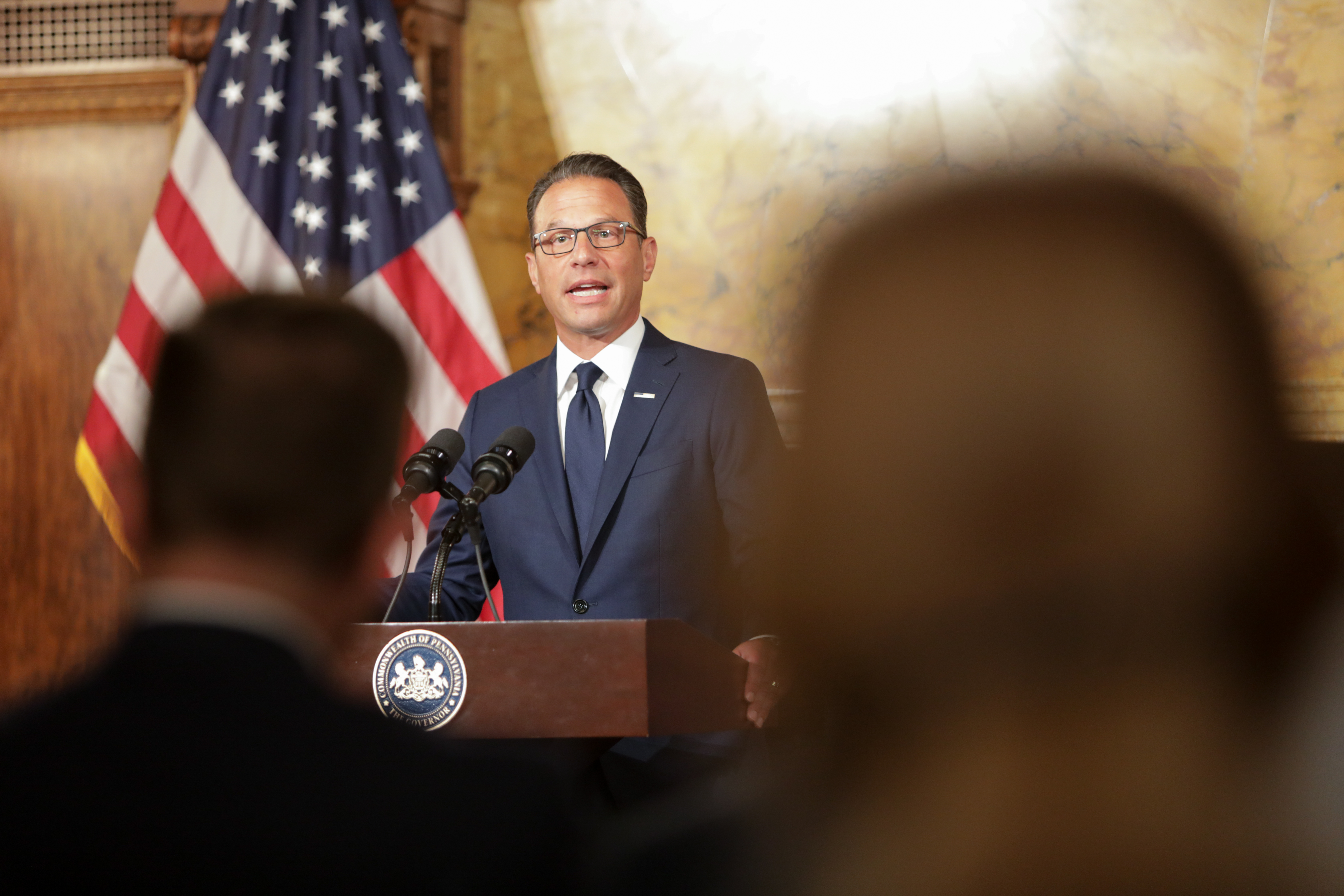
Gov. Josh Shapiro in August.Kalim A. Bhatti / For The Inquirer
“Corporations, labor unions, wealthy individuals want to have a powerful ally in a governor,” said Michael Beckel, an expert on money in politics at Washington, D.C.-based Issue One, a group that advocates for campaign finance restrictions.
“Being able to give through a group like the DGA or an RGA is a way to help secure your position as a friend and ally, who then in turn might be somebody that [governors] listen to on policy matters,” he said.
Many companies donate to these groups, but AmeriHealth’s corporate contributions have caught the attention of Pennsylvania lawmakers, including Senate President Pro Tempore Kim Ward (R., Westmoreland).
“The money should be used as appropriated for Medicaid because we are struggling with the increased funding needs for the program,” she said, adding that it doesn’t matter which party benefits from the donations.
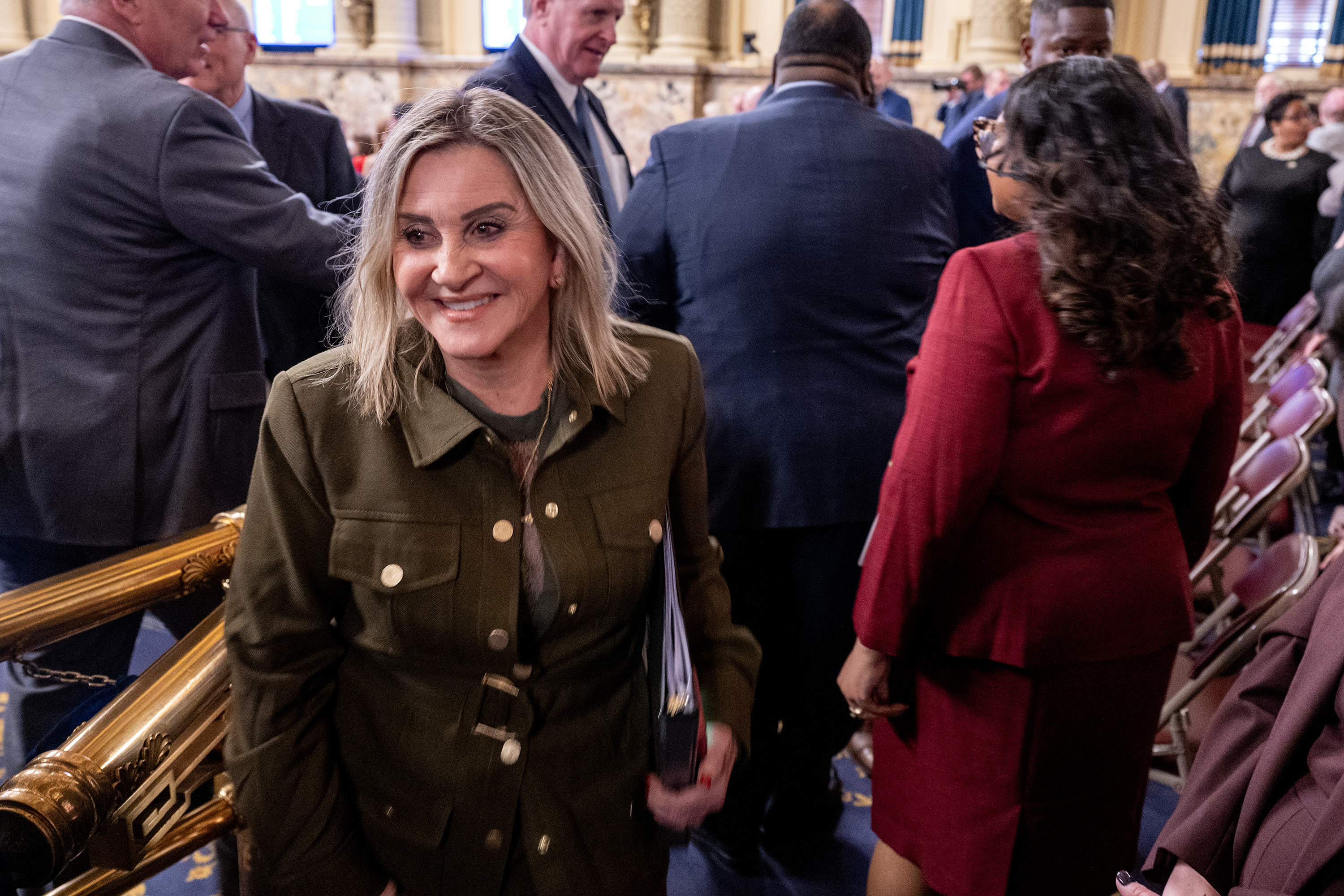
Pennsylvania Senate President Pro Tempore Kim Ward in Harrisburg in February.Tom Gralish / Staff Photographer
Ward said AmeriHealth has suggested that one of its contributions to the DGA “was comprised of the interest made off the principal of the Medicaid money.”
“To be clear, no matter if the political contribution is made up from the principal or the interest from Medicaid funds, it is all government money and shouldn’t be used for political purposes,” Ward said in a statement.
Under federal regulations, insurers are required to spend at least 85% of Medicaid funds on services for beneficiaries, leaving 15% for plan administration and profits. A spokesperson for the Pennsylvania Department of Human Services said AmeriHealth has complied with those rules.
AmeriHealth isn’t the only Medicaid insurer that donates to the DGA, RGA, Democratic Legislative Campaign Committee, and Republican State Leadership Committee — the latter two of which work to elect state legislators across the country.
The University of Pittsburgh Medical Center (UPMC), the No. 2 Medicaid insurer in Pennsylvania, has given three of the four groups a total of $330,000 since 2013, the year AmeriHealth significantly increased its giving. AmeriHealth gave $3.3 million over that period of time.
By contrast, St. Louis-based Centene Corp. has far outspent AmeriHealth, giving a total of nearly $18.8 million to the groups since 2013. Centene is the No. 3 Medicaid insurer in Pennsylvania and the largest in the country, operating in 30 states.
Neither UPMC nor Centene responded to requests for comment. Centene says on its website that its political activity is grounded in the company’s public policy positions “and the best interests of our business, our employees, and the members we serve, without regard to political party affiliation.”
From West Philly to 13 states
For-profit AmeriHealth is owned by nonprofits Independence Health Group and Blue Cross Blue Shield of Michigan.
Formerly known as AmeriHealth Mercy, the company started as a pilot program in the early 1980s at a West Philadelphia hospital. It now operates in 13 states and Washington, D.C., and employs almost 10,000 people.
AmeriHealth covered about 771,000 Pennsylvania residents enrolled for physical health — including for services such as medical visits, pregnancy and newborn care, and dental — and 176,000 for community services, including nursing homes, at the end of 2025. The company also manages benefits for behavioral health services.
In addition to its Medicaid business, AmeriHealth also offers Medicare Advantage plans for people eligible for both Medicare and Medicaid, as well as Affordable Care Act health insurance marketplace plans.
AmeriHealth had net income of $138 million last year after reporting a loss in 2024, though Independence Health — which includes insurer Independence Blue Cross — has continued to struggle financially.
Pennsylvania’s Medicaid program cost $49.3 billion in state and federal funds for the fiscal year that ended in July 2025, according to the Independent Fiscal Office. The state share of Medicaid expenditures, $14.4 billion, accounted for 31% of total general fund spending, among the highest ratios in the country, according to health research nonprofit KFF.
State spending on Medicaid was on track to increase 7.8% for the fiscal year that ended July 1, according to a June analysis by the IFO.
AmeriHealth’s $15.7 billion in revenue last year from contracts with the Pennsylvania Department of Human Services and county governments was up from $14.2 billion the prior year and $11.4 billion in 2021 — a 38% increase over the four year-period.
UPMC saw a 50% increase over that period, for $12.6 billion in revenue last year.
(function(){function e(){window.addEventListener(`message`,function(e){if(e.data[`datawrapper-height`]!==void 0){var t=document.querySelectorAll(`iframe`);for(var n in e.data[`datawrapper-height`])for(var r=0,i;i=t[r];r++)if(i.contentWindow===e.source){var a=e.data[`datawrapper-height`][n]+`px`;i.style.height=a}}})}e()})();
AmeriHealth has attributed its financial success last year — when it swung back to a profit a year after reporting losses in 2024 — in part to higher Medicaid rates as well as “work with state partners to support reliable access to high-quality care for the members we serve.”
Ali Fogarty, spokesperson for the Pennsylvania Department of Human Services, said rate increases are necessitated by costs that insurers incur administering the Medicaid program.
A big driver has been higher costs for GLP-1s, the drugs that manage Type 2 diabetes and obesity. Pennsylvania in 2023 started covering GLP-1s in Medicaid for weight loss only. Medicaid spending on the drugs in Pennsylvania increased from $223 million in 2022 to more than $1 billion last year, Fogarty said. The state stopped covering GLP-1s for weight loss this year.
“Realities like this can drive rate increases to ensure stability of our Medicaid program and solvency of MCOs that coordinate care, in addition to typical year-over-year increases in costs of care and operations,” she said.
AmeriHealth increased its lobbying, too
AmeriHealth spent $1.7 million on federal lobbying last year, up from $970,000 in 2024 and $400,000 in 2023, according to data compiled by OpenSecrets, a group that tracks money in politics.
The bill mentioned the most on the company’s lobbying reports in 2025 was H.R. 1, or the One Big Beautiful Bill Act. The sweeping domestic policy legislation — passed by the GOP-controlled Congress and signed into law by Trump — included $900 billion in cuts to federal Medicaid spending over the next decade.
(function(){function e(){window.addEventListener(`message`,function(e){if(e.data[`datawrapper-height`]!==void 0){var t=document.querySelectorAll(`iframe`);for(var n in e.data[`datawrapper-height`])for(var r=0,i;i=t[r];r++)if(i.contentWindow===e.source){var a=e.data[`datawrapper-height`][n]+`px`;i.style.height=a}}})}e()})();
The law reduces spending in part by imposing new work requirements on adults who are eligible for Medicaid under the Affordable Care Act, the 2010 law that sought to expand healthcare coverage. Pennsylvania expanded Medicaid in 2015.
Those requirements take effect Jan. 1. The new law also includes provisions requiring more frequent eligibility checks and cost-sharing requirements for enrollees in the so-called Medicaid expansion group.
The law’s Medicaid provisions are projected to increase the number of uninsured in 2034 by 7.5 million people, according to estimates from the Congressional Budget Office. About 300,000 Pennsylvanians could lose coverage due to the Medicaid restrictions, according to Shapiro’s administration.
Medicaid insurers opposed the cuts. After the House passed its initial version of H.R. 1 in May 2025, Medicaid Health Plans of America — a trade group that represents AmeriHealth and other insurers — cautioned Senate leaders against legislative provisions “that have been found to increase churn, set up additional barriers to receiving coverage, disincentivize essential care, hamstring states in financing the program, and that will likely cause disruption that radiates across the health care system.”
Republicans say the law will strengthen the integrity of programs like Medicaid and help ensure that able-bodied adults on public assistance are contributing to society. Democrats voted against the measure, accusing the GOP of cutting the safety net to finance tax cuts for the wealthy.
The One Big Beautiful Bill Act has big implications for state budgets. Starting in October, states including Pennsylvania will be restricted in their ability to finance Medicaid through taxes on healthcare providers such as hospitals, nursing homes, and insurers. States have traditionally used that financing mechanism to help draw federal matching funds.
Management consulting firm Oliver Wyman wrote that as states adjust their financing strategies, “plans may face more volatile rate-setting processes, delayed approvals, and growing tension between providers seeking to preserve revenue and payers managing constrained margins.”
As H.R. 1 is implemented, insurers like AmeriHealth are maintaining a strong presence in Washington. Records show AmeriHealth spent $1.5 million on federal lobbying through June — almost as much as it spent all of last year.
But as insurers seek to influence policymakers, they are facing increasing criticism from conservatives who say they have failed to improve patient outcomes, lower costs, or deter fraud. More broadly, Trump last year directed Health and Human Services Secretary Robert F. Kennedy Jr. to “take appropriate action to eliminate waste, fraud, and abuse in Medicaid.”
“Medicaid managed care creates strong incentives to maximize enrollment, as plans are generally paid a fixed amount for each enrollee,” Brian Blase, a former Trump White House official and president of the Paragon Health Institute, wrote in June. “Improper enrollment, duplicate enrollment, and phantom enrollment increase payments flowing to MCOs.”
The plans say they have taken action against fraud and abuse. The Medicaid Health Plans of America in a February report pointed to an inspector general report showing that insurers in recent years had steadily increased their fraud referrals to state law enforcement agencies.
Pennsylvania’s GOP-led Senate in July passed a resolution, largely along party lines, directing the Legislative Budget and Finance Committee (LBFC) to audit the state’s Medicaid program. The resolution calls for a review of the “standards used in Pennsylvania to evaluate Medicaid managed care program contracts.”
Democrats said they wanted to limit the scope of the audit, saying the state’s Medicaid program is already subject to federal reviews.
The resolution does not carry the force of law, but its lead sponsor, Dush, said he hopes the bipartisan LBFC — a committee that consists of 12 legislators from both chambers of the General Assembly — agrees to take up the cause.
Charitable giving
When the federal government shut down last fall amid a congressional spending impasse, the Trump administration paused the disbursement of food assistance, known as SNAP benefits, which help low-income families pay for groceries.
Within days of that announcement, North Carolina Gov. Josh Stein said the state would grant $10 million to local food banks — and that AmeriHealth Caritas and other private donors had also chipped in.
AmeriHealth, which had won a Medicaid contract with the state in 2019, gave $5 million, according to Stein’s announcement. “With the help of generous partners, North Carolina is taking action to keep families fed,” Stein, a Democrat, said in a news release at the time.
It’s an example of how AmeriHealth has made philanthropic gifts in line with causes promoted by political leaders in states where the company does business. Drutman, the lobbying expert, said supporting such causes can be seen as part of a company’s broader political strategy.
“As long as government is an important player in an industry, either as a regulator or purchaser of services, companies can have a strong interest in making sure that people in power have a positive opinion of the company,” he said. “Usually, the positive opinion of a company is not free.”
Stein’s office didn’t respond to a request for comment.
AmeriHealth told The Inquirer that the company and its foundation invest in community organizations “to improve access to care and address needs such as maternal health and food insecurity.”
“We invest in healthcare policy that is aligned with the needs of the nation’s most vulnerable populations,” the company said.
Another organization it partnered with was the Hope Florida Fund, a charity founded by Casey DeSantis, wife of Republican Gov. Ron DeSantis. The Governor’s Office announced in March 2023 that AmeriHealth had contributed $100,000 to reduce reliance on public assistance and make grants to local nonprofits.
The next month, the state started the bidding process for new Medicaid contracts. AmeriHealth ultimately lost its bid to remain in Florida, where it had operated since 2012. Gov. DeSantis’ office didn’t respond to a request for comment.
Sometimes AmeriHealth’s gifts are smaller.
Pennsylvania House Speaker Joanna McClinton, a Democrat who represents parts of West Philadelphia and Delaware County, reported on her 2025 financial disclosure form that AmeriHealth had donated 250 book bags at resource fairs in her district. She valued the gift at $2,500. A spokesperson for McClinton confirmed the gift but otherwise had no comment.
Other companies including insurers Highmark Wholecare and Independence Blue Cross gave similar gifts, according to the disclosure.
House Speaker Joanna McClinton during a Feb. 3 news conference at the Capitol in Harrisburg.Tom Gralish / Staff Photographer
AmeriHealth has won praise for some of its giving.
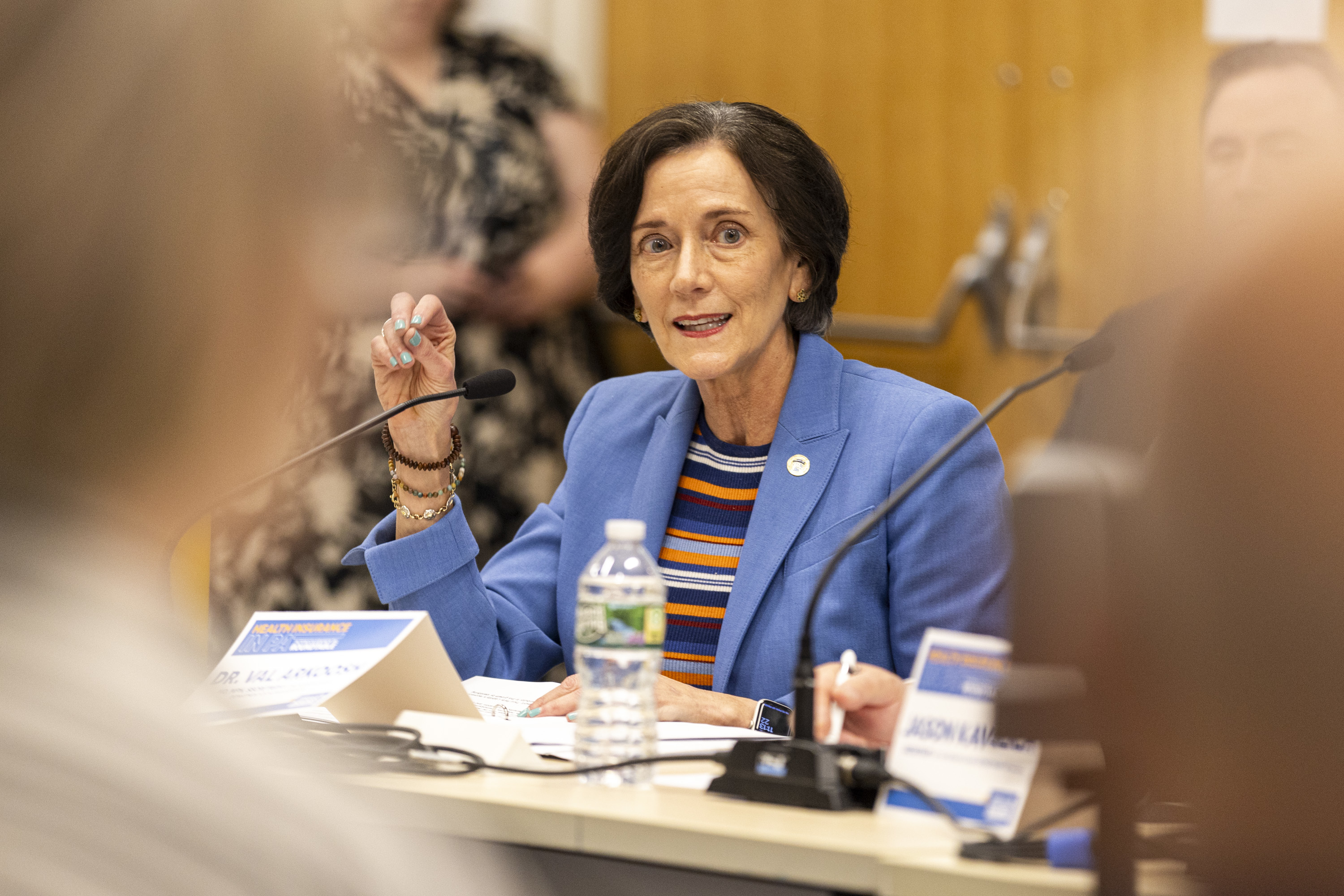
In May, Val Arkoosh, secretary of the Pennsylvania Department of Human Services, visited the Greater Philadelphia YMCA’s Willow Grove branch to highlight a maternal health initiative that provides a free membership and programming for expectant moms.
Arkoosh’s office said in a news release that the initiative “aligns perfectly” with the Shapiro administration’s “Healthy Moms, Vibrant Futures” strategic plan.
DHS Secretary Val Arkoosh in 2025.Tyger Williams / Staff Photographer
Fogarty, the DHS spokesperson, noted that the U.S. maternal mortality rate outpaces all other high-income countries and said Arkoosh, an obstetric anesthesiologist, is passionate about the issue. “We appreciate the many partners who work to address maternal mortality and are stepping up to support mothers and children in their community,” Fogarty said.
AmeriHealth’s foundation said in a news release that “providing children with healthy beginnings will help them avoid adverse experiences later in childhood.”
The release featured a photo of Arkoosh standing next to a YMCA executive and Steve Fera, an IBX executive and AmeriHealth Caritas Foundation board member.
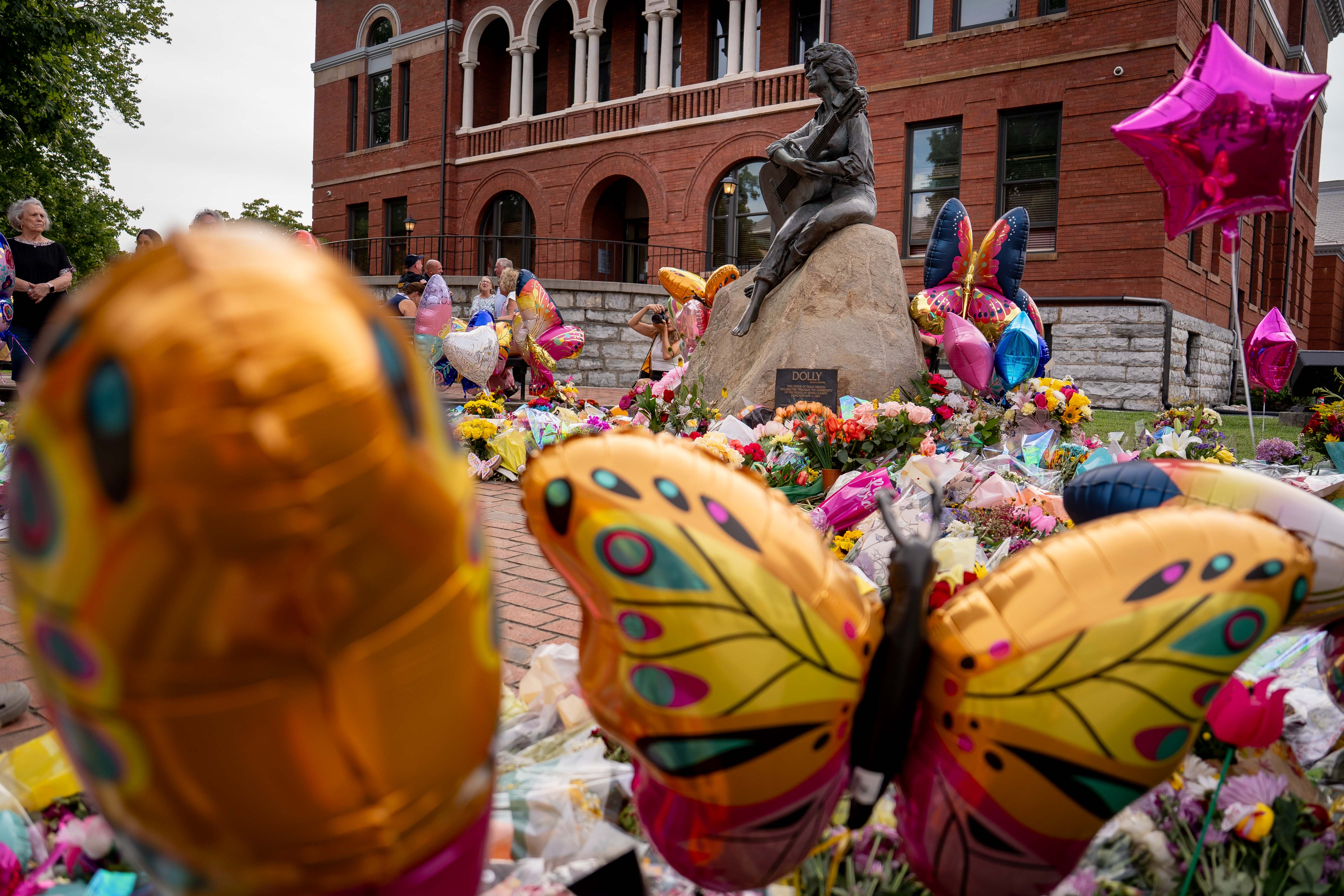
Americans of all stripes are mourning the loss of singer and philanthropist Dolly Parton, who died on Aug. 26 at the age of 80.
The outpouring of grief and mourning has exposed the complex and often contradictory identities Parton inhabited.
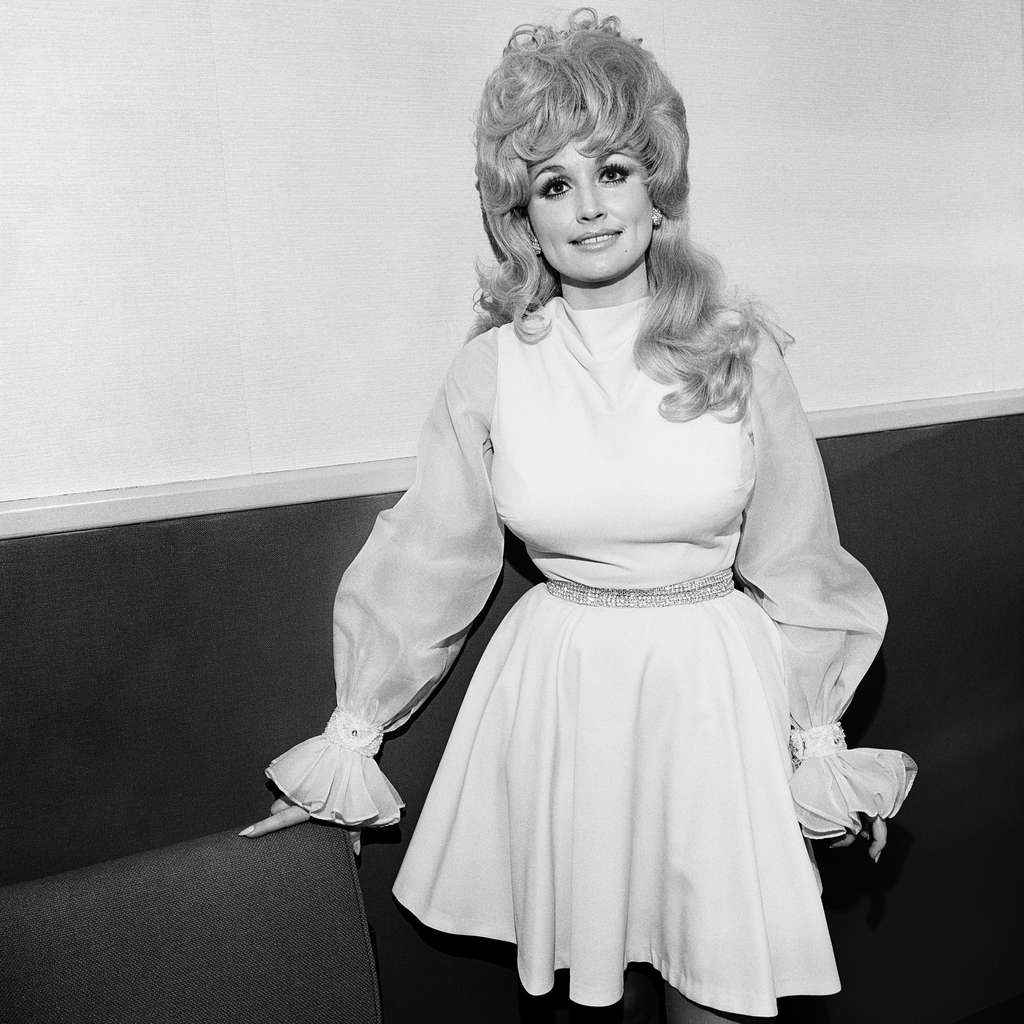
She was self-proclaimed poor “trash” from rural Appalachia — and proud of it. She regularly wore loud makeup and big hair, and had even bigger breasts, but she made sure she was taken seriously as a businessperson by the music establishment and Hollywood. She was a multimillionaire who connected with the working class.
Musically, Parton was a symbol of traditional country music, even as she crossed over into pop music in the 1980s. And she was a queer icon, yet, in her honor, the loudly anti-queer Trump administration ordered that flags be flown at half-mast.
Her complexities and contradictions reflected Parton’s enormous contributions to American history and culture, which crossed all sorts of ideological lines and made her genuinely beloved.
Dolly Parton’s aesthetic and style allowed her to celebrate a background that traditionally had been scorned. Women who were visibly sexual were branded trashy or sluts, and terms like “poor white trash” and hillbilly denoted racial and class hierarchies.
Parton, however, dismissed these historical connotations from her first days in the spotlight. She admitted that her style was “gaudy,” or “tacky,” and confessed that as a little girl she idolized a woman her mother called “trash.” She responded with, “Well mama, I want to look like trash.” She also embraced the “trash” label to talk about her hyperfeminine body presentation, which included ostentatious costumes, long nails and big hair.
As Parton’s star grew in the 1970s, and she refused to adopt markers of high-class femininity, she forced a rethinking of how society characterized women who had long been maligned for their sexuality and poverty.
For instance, in 1971, she released one of her biggest hits, “Coat of Many Colors,” which talked about her poor upbringing and a colorful coat that her mother made for her out of discarded rags. Her classmates ridiculed her, but rather than feeling ashamed, she felt pride in her “new” coat. This story demonstrated the hardscrabble, can-do spirit of the working class and illustrated the love Parton held for her family and her people.
The song’s reception also highlighted Parton’s unique knack for reaching multiple audiences. While its cultural dynamics shined through initially, years later, the song gained a new dimension when it became an anthem for LGBTQ Americans because of its message of pride in one’s self and the colorful similarities the coat shared with the LGBTQ pride flag.
“Coat of Many Colors” reflected how, throughout Parton’s career, her work subtly advocated for the marginalized. Nothing epitomized this better than “9 to 5,” one of her most famous songs and acting roles. In 1980, Parton released the iconic song as the theme for the movie of the same name.
The movie spoke to women, who were entering corporate America at an unprecedented rate. Yet, the Supreme Court had not yet declared sex discrimination illegal, and they encountered an environment full of glass ceilings, discriminatory language, sexual harassment and societal expectations to succeed even while maintaining a traditionally gendered home life. The song and the film took a clear stance: women belonged in offices and deserved to be treated with respect, regardless of their hair color or bust size.
In particular, Parton’s character Doralee spoke directly to the constraints clerical and administrative workers faced. Increasingly, as America deindustrialized, women constituted a growing percentage of the working class, and working class jobs became feminized. Invigorated by second wave feminism, working class women had been pushing for improved workplace conditions, including better wages and expanded opportunities for female administrative workers to move into management positions.
Made By History sponsors. FOR USE ON MADE BY HISTORY STORIES ONLY.Inquirer Staff
Parton’s title track directly addressed the frustrations driving these demands, lamenting, “They just use your mind and they never give you credit … for service and devotion you would think that I would deserve a fair promotion / Want to move ahead, but the boss won’t seem to let me / I swear sometimes that man is out to get me.”
The song was classic Parton, both celebrating workers’ daily grinds and speaking clearly about class exploitation.
The film itself presented these experiences of gender and class discrimination as part of a slapstick comedy. Yet, for mainstream audiences across the country, this softer, comedic approach to feminism and activism, made the very real plight of Judy (Jane Fonda), Violet (Lily Tomlin) and Doralee (Parton) relatable.
Two years later, in 1982, Parton once again used an acting role to speak up for women who were denigrated as disposable items when she starred in the movie adaptation of The Best Little Whorehouse in Texas. Parton’s character Miss Mona was a brothel owner who was fighting against moral crusaders attempting to close her down.
Denouncing the hypocrisy of men who privately availed themselves of women’s sexual services and then publicly shamed them as immoral, Parton’s character firmly established sex workers as people worthy of respect and dignity. Situated against the backdrop of a rising Moral Majority movement that fought to overturn reproductive rights, ban pornography and reverse anti-discrimination laws protecting people based on sexual orientation, Parton again used comedy to bring humor to a very real issue and, in doing so, made visible a group of people usually shunned by society.
Her devotion to calling for acceptance of people excluded from mainstream society continued throughout Parton’s career. In 1991, she released the song “Family,” which referenced LGBTQ people for the first time and exhorted people not to turn their backs on family members who were different. “Some are preachers / some are gay / some are addicts, drunks and strays / But not a one is turned away when it’s family.”
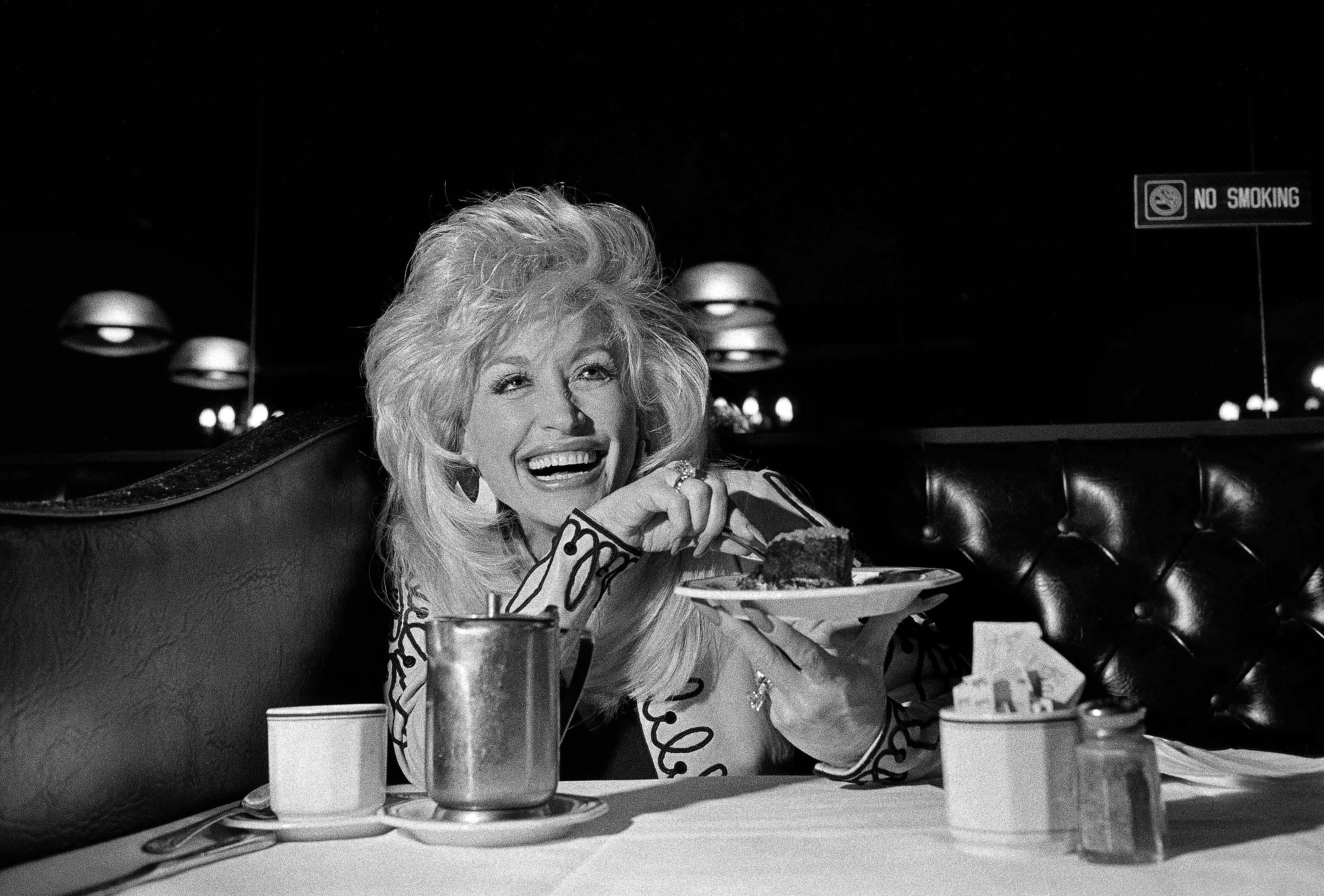
Dolly Parton savoring a chocolate mousse cake in New York in 1992. EDWARD KEATING
This was a powerful message at the height of the AIDS epidemic when gay men and intravenous drug users were among the most at-risk groups — both of contracting the virus, and of being shunned because of it.
At a moment when society was ostracizing and legislating against LGBTQ people, Parton instead called for acceptance. She stood by her message in “The Family” over the following decades. In a 2009 interview, she endorsed same-sex marriage, and in 2016 she opposed bathroom bans that limited transgender people’s access to public toilets.
Because of these stances, the LGBTQ community embraced Parton right back. Her songs and image have become mainstays used by drag performers, and in 2012 Parton related that she once lost a Dolly Parton look-alike contest to a drag queen. The ties between Parton and the queer community became so interconnected that, upon her death, CNN inadvertently aired an image of a drag performer during a tribute to the late singer.
Parton famously said, “Honey, there is no such thing as the real Dolly Parton.” She created a life of contradictions, and while her hair and makeup may have been fake, the power Parton held was very real.
She had a unique ability to transcend boundaries, allowing her to speak for people across classes, gender identities and sexualities. Her calls to support the downtrodden and shunned are her lasting legacy. Her ability to engage in such advocacy while continuing to be beloved across the political divide offers a lesson for all Americans.
Elyssa Ford is associate professor of history at Washington State University. Rebecca Scofield is professor of history at the University of Idaho.
Made by History takes readers beyond the headlines with articles written and edited by professional historians. Opinions expressed do not necessarily reflect the views of The Inquirer.
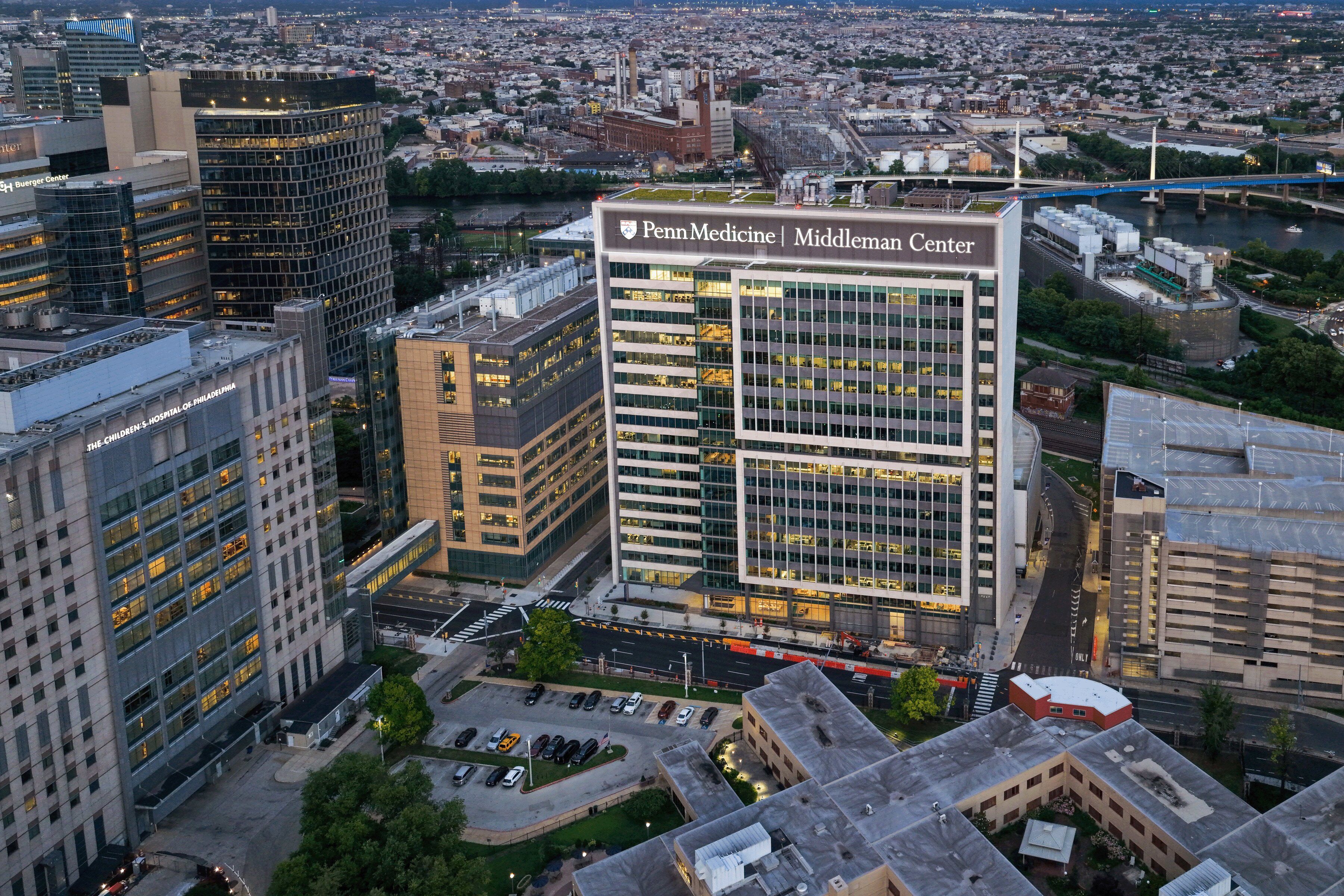
Penn Medicine announced a $50 million gift from Stanley C. Middleman on Thursday to support early-stage research and will name a recently expanded building at 3600 Civic Center Blvd. in the businessman’s honor.
Income from the fund will be used to accelerate work on therapies for cancer, autoimmune diseases, infectious diseases, and other serious conditions, with a goal ofshortening the path from the laboratory to the market, Penn said.
“I was born and raised in Philadelphia, and I’m proud to support Penn Medicine and the extraordinary work being done there to advance medicine and improve people’s lives,” Middleman said in a news release provided to The Inquirer in advance.
The Middleman Center “will bring together the people and ideas” to support new approaches to treatment and scientific discovery, he added.
The $50 million gift marks his first to Penn. He previously donated undisclosed amounts to his alma mater, Temple University, and to Children’s Hospital of Philadelphia, which named the main patient tower at its King of Prussia hospital for Middleman’s family.
Middleman founded privately owned Freedom Mortgage Corp. in South Jersey in 1990 and grew it into one of the nation’s largest lenders before moving the company’s headquarters to Florida in the early 2020s.
The building being renamed for Middleman underwent a $376 million, 217,000-square-foot expansion that opened last year. Itadded seven floors, including as many as 37 labs. Penn originally opened the building in 2018 with eight floors and 250,000 square feet of office space, which has also been renovated.
The new floors house the Colton Center for Autoimmunity at Penn and the High-Throughput Institute for Discovery, a specialized lab testing patient samples to help make diagnoses and guide treatments. The Middleman Center also includes a Biosafety Level 3 lab, which is specially equipped to handle infectious disease specimens.
“Anchoring the western edge of Penn Medicine’s campus, the Middleman Center is uniquely positioned to bring together biomedical researchers, physicians, medical students, patients, and experts from engineering, business, and other areas of the University of Pennsylvania,” said university president J. Larry Jamesonin the news release.
“This creates an extraordinary environment for discovery — not just sparking ideas but seeing them all the way through to the moments where lives change for the better, as a result of discovery,” he said.
The San Francisco 49ers face the Los Angeles Rams Thursday night in the first-ever NFL game in Australia (8:35 p.m., Netflix), and the streamer is bringing an Eagles legend along for the time-bending ride.
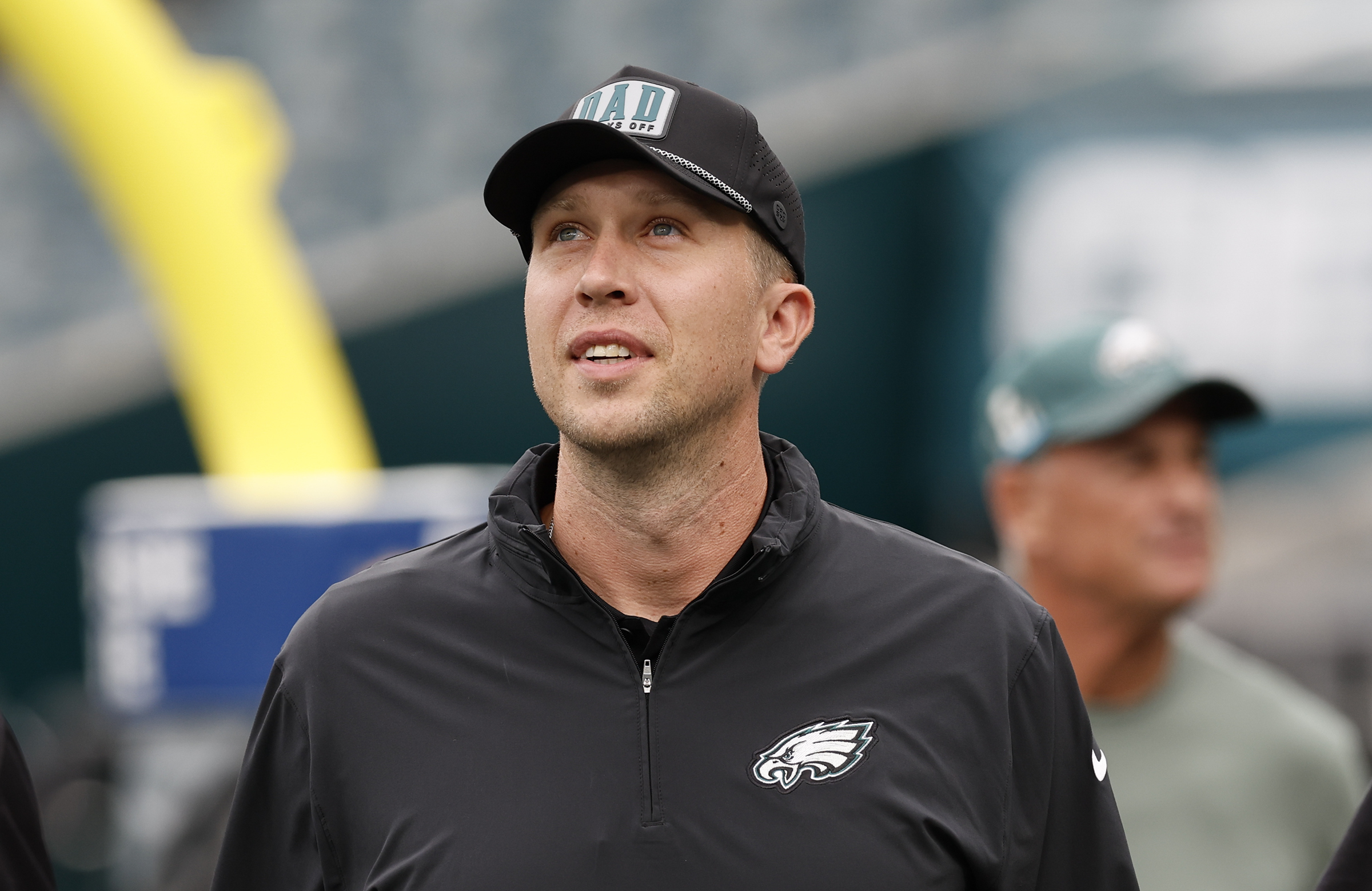
Nick Foles, the Super Bowl MVP whose statue sits outside Lincoln Financial Field, will be part of Netflix’s NFL studio show this season, which includes Thursday night’s game at the Melbourne Cricket Ground, Thanksgiving eve, two Christmas Day games, and a Week 18 matchup.
“These are primetime games. These are important games. And Netflix is obviously a huge company,” Foles said. “It’ll challenge me.”
Alongside Foles for pregame, postgame, and halftime coverage will be host Elle Duncan, Hall of Famer Michael Irvin, and former Green Bay Packers defender Clay Matthews III. Calling the game will be Noah Eagle and Hall of Famer Luke Kuechly, the former Carolina Panthers linebacker who also landed a color analyst role this season with CBS.
NBC is helping Netflix produce its five-NFL-game slate, and brought Foles and his new colleagues to their studios in Connecticut last month for something akin to a broadcast training camp. That included Foles and Matthews — the two TV newcomers — practicing situations without any preparation, including a mock kickoff.
“They wanted to see if we could even handle going to transition, having a producer in our ear,” Foles said. “We understand we’re rookies at it, and we’re just hungry to learn. … They want us to be ourselves and have fun.”
It’s a big jump for the Super Bowl champ, who is in his second season co-hosting The SZN podcast with his brother-in-law, former NFL tight end Evan Moore. But it’s also an ideal gig, allowing Foles to offer analysis to millions of viewers while only committing to a few extra days during the season.
“It was really just the right time, right situation,” Foles said.
It also offers him a chance to show off his nerdy side. While the game will kick off 8:35 p.m. Philly time Thursday, it will take place locally in Melbourne at 10:35 a.m. Friday, which could have an impact on the players. There’s also the long flight down, the longest Foles has ever taken.
“I got my compression tights. … I’m literally geeking out on the science,” Foles said.
If it feels like you haven’t heard much from Foles since he retired from football in 2024, that’s by design. He spent a year away from football to clear his head, spend time with his family, and coach his three children.
He began to receive media offers, but opted instead to focus on building the podcast with Moore. That gave him a comfortable spot to find his voice talking about football, which drew the attention of producers at Netflix.
Thankfully, Foles has plenty of broadcasters to turn to for advice, including Moore and former teammates like Jason Kelce and Brandon Graham. He also attends the same church as longtime Fox Sports college football analyst Joel Klatt, and squeezed some sage advice about the need to be quick.
“On a podcast, you can be long-winded and get your point our there at the end,” Foles said. “He said ‘No, start with the main point and then have a meaningful explanation …’ That’s simplistic, but it makes a world of difference.”
Unlike Kelce and Graham, Foles takes a quieter and more analytical approach to breaking down the game, which was on display last season when the Eagles offense struggled. He drew attention for comments he made about former offensive coordinator Kevin Patullo, but rather than just pile on, Foles tried to offer suggestions to help the team.
“I’m not going to be one of those guys that just crushes someone,” Foles said. “Maybe the Cowboys.”
Foles has one big concern about the Eagles
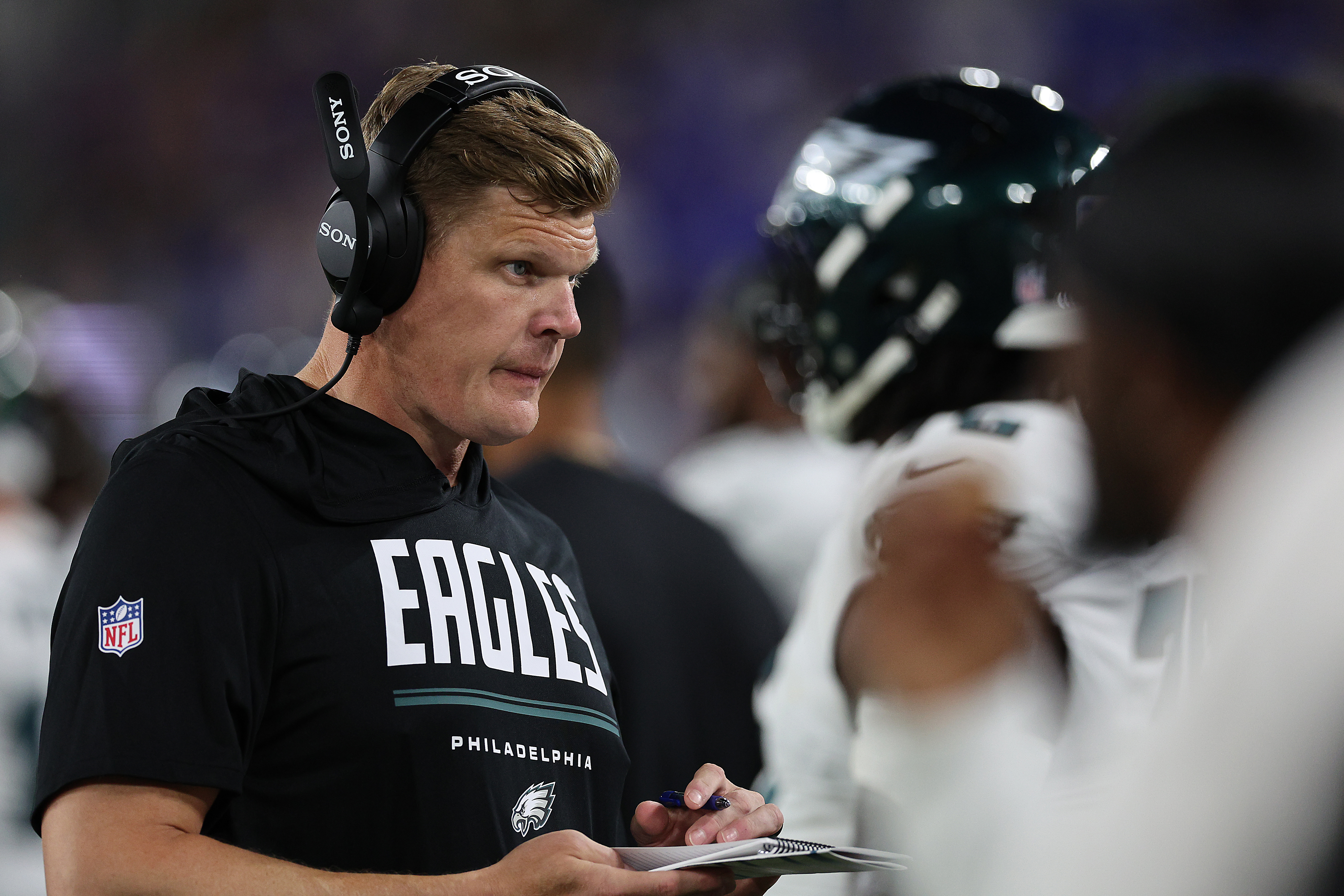
Nick Foles is most interested to see how well new offensive line coach Chris Kuper helps the Eagles. David Maialetti / Staff Photographer
While the Eagles aren’t slated to appear on Netflix this season, unless they land in their Week 18 game, Foles will spend plenty of time talking about the Birds on his podcast, which will air weekly on NBC Sports Philadelphia.
Heading into the season, Foles expects Vic Fangio’s defense to be solid and the offense to rebound after last year’s struggles.
It’s the offensive line he’s worried about. Specifically, how the loss of former offensive line coach Jeff Stoutland and his availability to develop players could impact the team.
“If you look at the Eagles the last couple of years, when has their season fallen apart? When the offensive line gets banged up,” Foles said.
While he has concerns, Foles said he’s heard nothing but good things about new offensive line coach Chris Kuper, who played eight seasons with the Denver Broncos and most recently served as offensive line coach with the Minnesota Vikings.
He’s part of a big overhaul under new offensive coordinator Sean Mannion that includes a different run blocking scheme and a new approach at the line. Kuper told reporters the squad has “come a long way” as the Birds prepare for their season opener against the Washington Commanders Sunday, but only time will tell how the team performs.
“There’s a lot of pressure on this guy. He played the position well. … [Kelce] said good things about him,” Foles said. “But I’m circling that.”
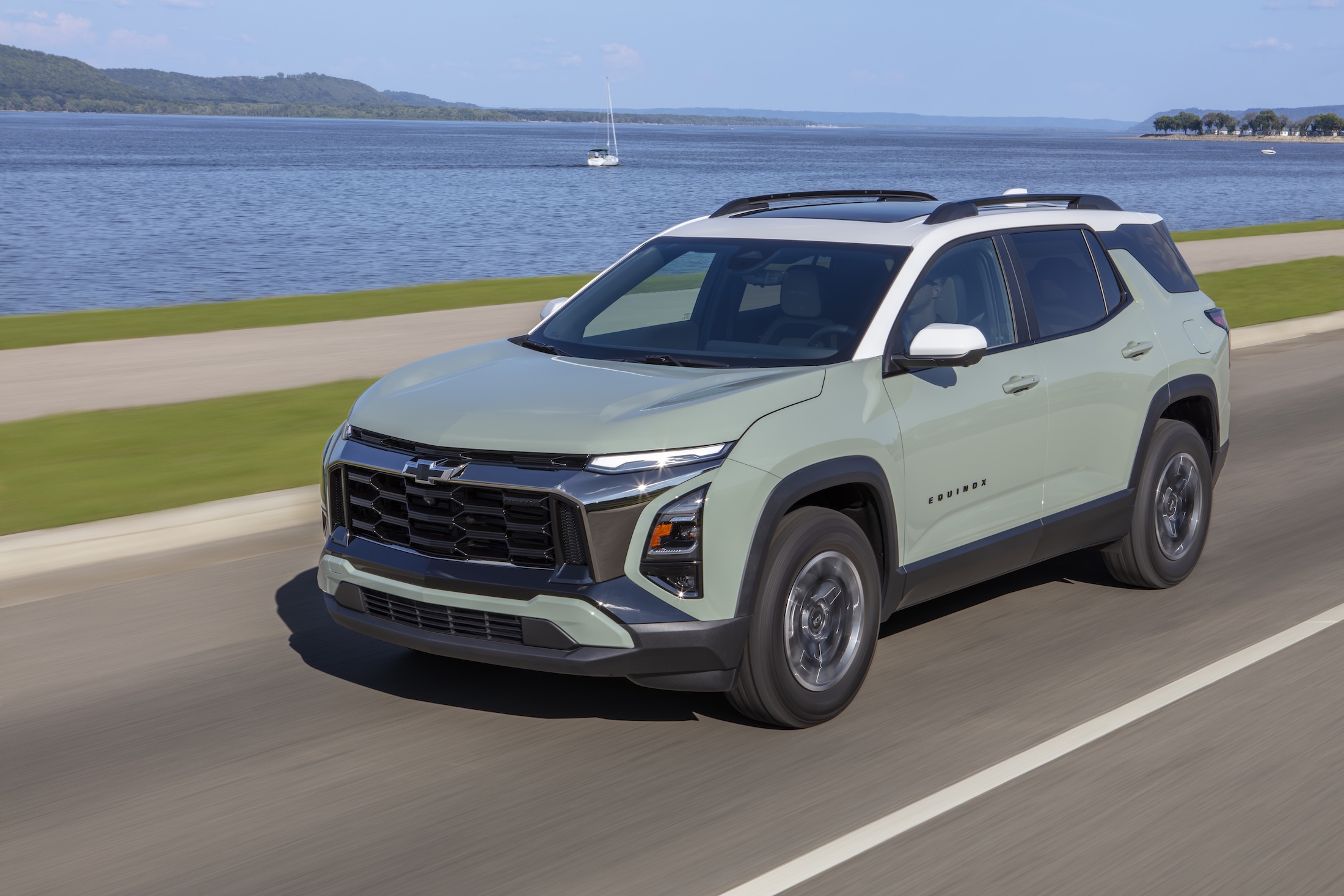
2026 Volkswagen Tiguan SEL R-Line Turbo vs. 2026 Chevrolet Equinox ACTIV AWD: Midsize SUVs flying under the radar.
This week: Chevrolet Equinox
Price: $40,985 as tested. Panoramic sunroof added $1,495. More options packages noted below. Advantage, Equinox, by about 10%. But is it?
What others are saying: “Highs: Attractive design, affordable pricing, impressive standard tech features. Lows: Lethargic acceleration, mediocre fuel-economy estimates, cabin is noisy at highway speeds,” reports Car and Driver.
What Chevrolet is saying: “Made to do more.”
Reality: Do more than what exactly?
What’s new: The Equinox was redone for 2025, so it pretty much carries over unchanged. The ACTIV trim is the lowest rung, not the level we usually get to test, as manufacturers like to show off their top tiers, so credit to Chevrolet for that.
In and out: The Equinox ACTIV sits up surprisingly high for a small SUV, high enough to mention from the outset, so plan for some leg raises. I was surprised it features just 17-inch wheels; they looked bigger. (More upscale trims get 19s or 20s.) But with 8 inches of ground clearance, what usually amounts to a side note may explain a lot about the Equinox’s overall performance.
Up to speed: The Chevrolet Equinox’s 1.5-liter turbocharged four-cylinder engine creates 175 horsepower, and it pales in comparison to the Tiguan’s 258.
So does its performance. The all-wheel-drive Equinox takes 8.6 seconds to get to 60 mph, according to Car and Driver. And that’s the only engine choice you get. Advantage, Tiguan, by almost 2 seconds. That high profile may be slowing the Equinox down.
Shifty: The all-wheel-drive Equinox gets an eight-speed automatic transmission. (Front-wheel-drive models are stuck with a continuously variable transmission.)
The steering column holds the stalk, and triggers can be used to change gears if needed. It’s not a lot of fun.
On the road: Speaking of not a lot of fun, neither are country roads in the Equinox — no zip, no zig, no other Z-words denoting any sort of hilarity or joie de vivre.
And yet, neither are highways, where the bumps come with enhancement and the potholes kinda hurt, if I’m being honest. I expected the Equinox’s country-road indifference but not the lack of highway manners. Strong advantage, Tiguan.
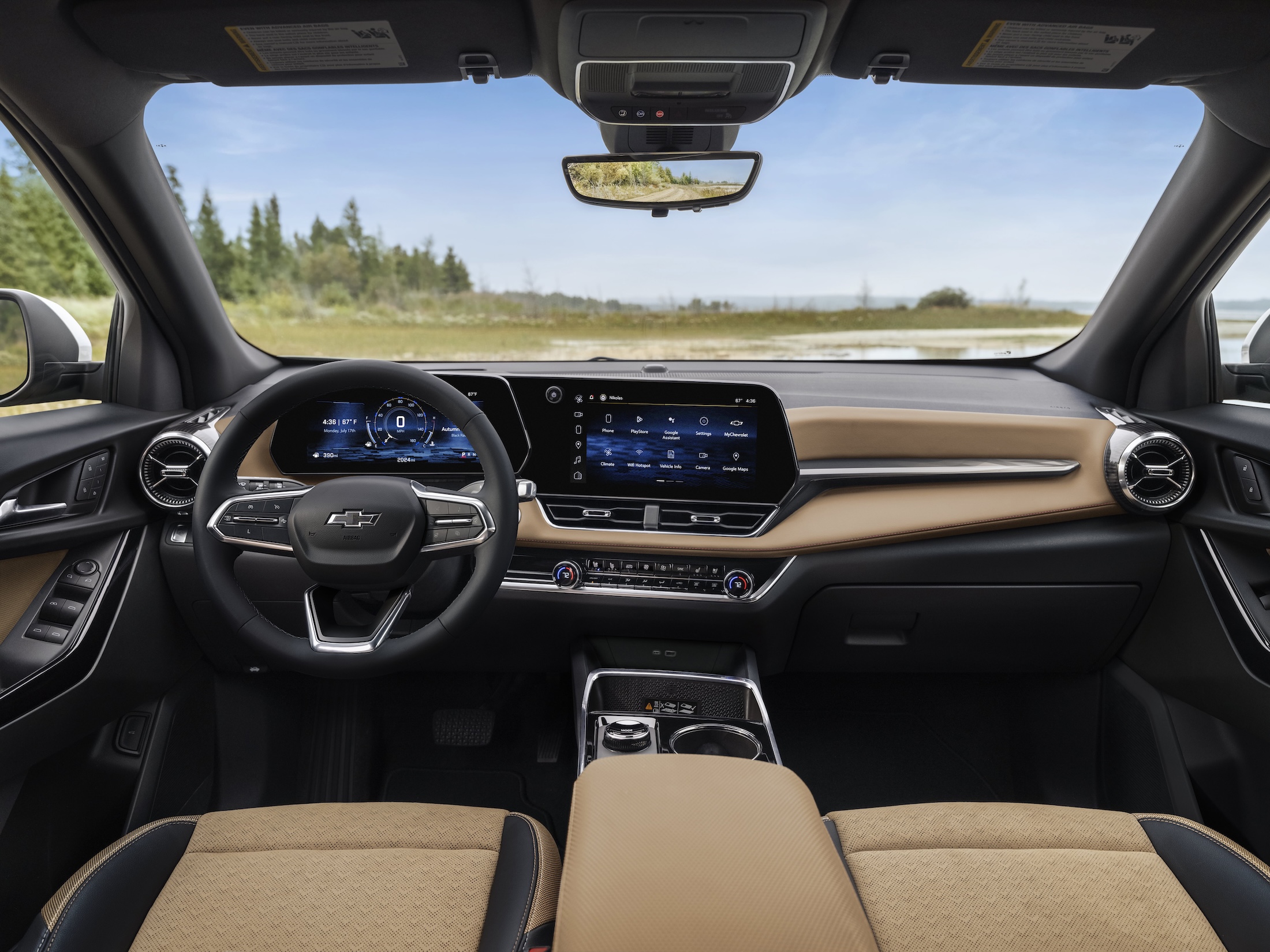
The interior of the 2026 Chevrolet Equinox is comfortable in the front but not quite so much in the rear.GM-DESIGN
Driver’s Seat: The Equinox seat was super comfortable and the materials seemed almost luxurious, not a given in a Chevrolet by any means.
Front seats were heated for free, and ventilated with the help of a $945 package, which also heated the rear corner seats and added more power controls and settings to the front seats. We finally have a tie among the competitors in this category, although the Tiguan upgrades give it a slight advantage.
I gave up a Subaru Trailseeker (think Outback EV) for the Equinox, and the Equinox seemed so much bigger and harder to see around or fit into snug spaces than the larger Subaru. The Equinox is shaped like a pyramid, while the Subaru has more vertical glass, allowing for better views all around. The short windows further hamper visibility to the side of the vehicle and into the corners.
Friends and stuff: The rear seat feels very … adequate. It’s not uncomfortable, the fabric feels OK, the Evotex in between the microsuede holds you in place. The center spot is bit of a hump, but the floor is quite flat, helping with legroom there. Still, this would not have been as much fun for my fellow vacationers as the Tiguan, I’m certain.
Cargo space is 29.8 or 63.5 cubic feet, as folded, about 10% smaller than the Tiguan.
Play some tunes: The 11.3-inch multimedia display seemed much larger, so getting around the system is easy. A volume knob is the only old-timey control.
Sound from the unnamed system was quite good, about an A, another tie with the Tiguan.
Keeping warm and cool: All the HVAC controls are in toggles underneath the infotainment systems. They’re not hard to figure out but the typeface could be a little bolder. Advantage, Equinox.
Fuel economy: 22 mpg average, which is not too far off the average for small SUVs. The Tiguan Turbo beat it by 5 mpg, though, while moving much more nicely, a real feat.
Where it’s built: San Luis Potosí, Mexico. Parts are 55% Mexican and 11% U.S. and Canadian.
This summer, Philadelphia threw a 250th birthday party and invited the world.
In the weeks surrounding Independence Day, Philadelphia welcomed visitors to major sporting events — including six FIFA World Cup matches at Lincoln Financial Field and the MLB All-Star Game at Citizens Bank Park — and bolstered the city’s annual traditions, including the Wawa Welcome America festival, which served as the centerpiece of its semiquincentennial celebrations.
Putting on the country’s largest Fourth of July party was a labor of love, requiring the vision and hard work of thousands of people behind the scenes, many of whom were Temple University Owls. The passion for the city they demonstrated in their roles can be traced back to their roots on North Broad Street, where they developed the skills and connections that prepared them for moments like this.
“It’s Temple alumni who drive and run this city behind the scenes,” said Jacki Mowery, Phambassador program director at the Philadelphia Visitor Center Corporation. “The positive outcomes from this summer all tie back to what we experienced and learned at Temple.”
Here’s how Mowery and three other Owls made Philly shine for the celebration of the century.
Jacki Mowery
Phambassador Program Director, Philadelphia Visitor Center
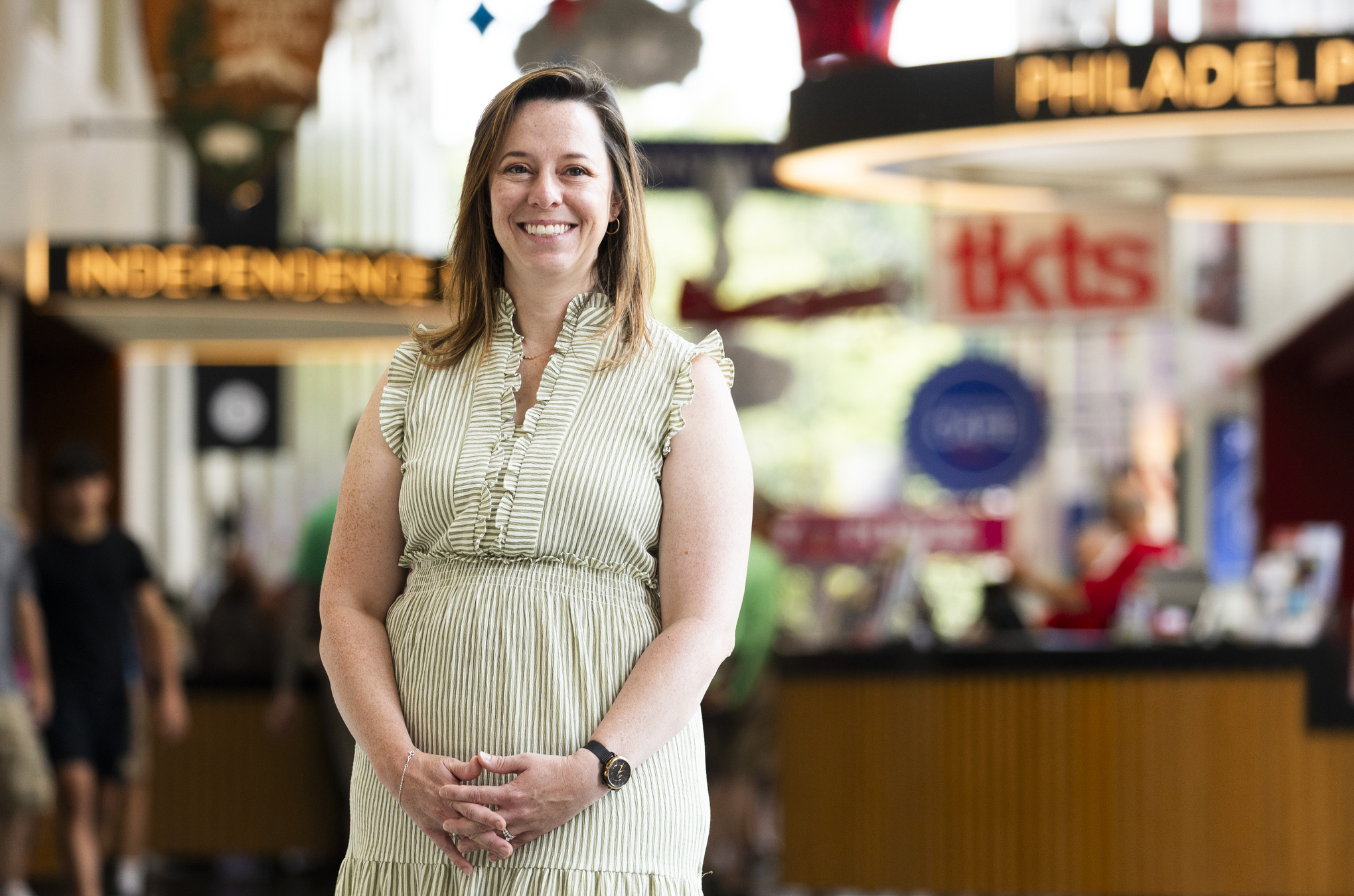
As Phambassador program director at the Philadelphia Visitor Center Corporation, Jacki Mowery recruited more than 10,000 volunteers (including Temple students) to serve as stewards of the city by showcasing the best of Philly to visitors this summer. She structured the program and spearheaded activations, beautification projects, and celebrations in preparation for Philadelphia’s moment on the global stage.
“My job has been to keep engagement going and to keep people excited, energized, and ramping up that love for Philly, which comes very naturally to me because I’ve always loved this city,” said Mowery, who majored in history as an undergraduate. She later returned to Temple for a second master’s degree in travel and tourism at the School of Sport, Tourism and Hospitality Management. Her graduate capstone project focused on how Philly can be known for food beyond cheesesteaks.
Before joining the Visitor Center, Mowery worked in international education, managing study abroad programs at Temple and elsewhere. She once helped Philadelphians discover the world. Now, she helps the world discover Philadelphia. “I’ve gotten the chance to explore the world, but I always came back to Philadelphia and found the world here,” she said.
Sean McClatchy
Account Executive, Service & Retention, Philadelphia Phillies
“Baseball is about as American as it gets,” said Sean McClatchy, an account executive with the Phillies’ season ticket sales and service team, graduate of Temple’s School of Sport, Tourism and Hospitality Management, and lifelong Phillies fan.
McClatchy manages relationships with more than 350 clients and played a key role in ticket fulfillment for the 2026 MLB All-Star Game, coordinating VIP ticketing for the organization’s executives, partners, and business leaders while ensuring guests enjoyed a seamless game-day experience.
He attributes his career opportunity with the Phillies to the resources offered to him at Temple. “I got this job because a guest speaker from the Phillies came to my class and I talked her ear off,” he said. “Here I am, eight years later.”
For McClatchy, working for the Phillies is about more than baseball. “It’s become like family,” he said. “To work for the team I grew up rooting for in the city I love is pretty close to living the dream.”
Whitney Constable
Volunteer Program Coordinator, Philadelphia Soccer 2026
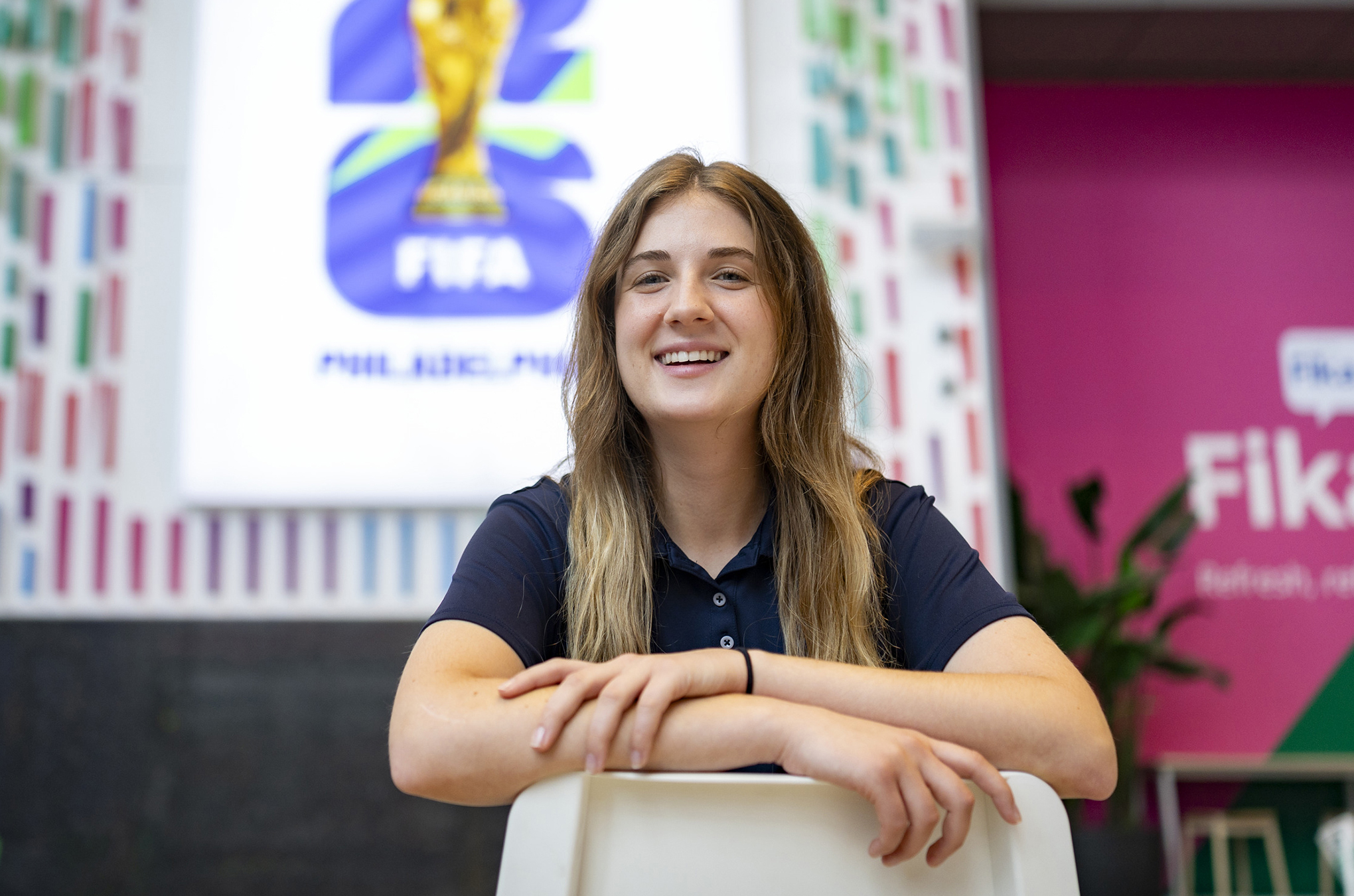
Whitney Constable, volunteer program coordinator of Philadelphia Soccer, thrives behind the scenes where careful planning creates unforgettable experiences for fans. This summer, she managed the daily operations of more than 750 host city volunteers who welcomed people to FIFA Fan Fest and greeted them as they entered Lincoln Financial Field before World Cup games.
“As someone who grew up in this region and attended Temple, it was special to play a part in welcoming international fans to share the love of soccer while showcasing Philadelphia’s history and culture at the same time,” said Constable.
A graduate of the School of Sport, Tourism and Hospitality Management, Constable studied event and entertainment management with a concentration in tourism and hospitality. Through internships and contract work with Wawa Welcome America, Philadelphia’s Thanksgiving Day Parade, and the Pennsylvania Horticultural Society’s Flower Show, she gained the hands-on experience that prepared her for large-scale event operations.
She hopes Philly left a lasting impression on visitors. “I wanted people to leave remembering not only the matches they attended, but also the kindness and hospitality they experienced here,” she said.
Zorita Dorsey
Festival Director, Wawa Welcome America
After building a career behind some of the nation’s biggest live events — including managing entertainment at Walt Disney World, coordinating scripts for Miss America’s Outstanding Teen Pageant, and overseeing transportation for six consecutive Super Bowls — Zorita Dorsey was tapped to lead Wawa Welcome America in 2022.
This year, as the Fourth of July tradition took on greater significance, the College of Liberal Arts grad was the driving force behind the signature event. At the same time, she served as producer of the Commonwealth Concert Series, helping bring marquee performances and civic celebrations to communities across Pennsylvania.
Dorsey has remained closely connected to her alma mater throughout her career and will join Temple as an instructor this fall. “Temple shaped me into who I am,” said Dorsey. “I have always wanted to give back to the university that gave so much to me.”
Fetterman’s disdain for the job — which comes with a $174,000 annual salary, free healthcare, and months off at taxpayer expense — has been well documented. He whined about missing a family beach trip during a lengthy debate last year over Donald Trump’s costly and harmful One Big Beautiful Bill.
Several major media outlets have chronicled the senator’s dysfunction. In May 2025, New York Magazine detailed Fetterman’s erratic behavior as staffers expressed concerns about his mental health since suffering a stroke. The New York Times quoted staffers who feared his mood swings and were warned not to get in the car if he is driving.
The Washington Post reported on Fetterman’s clashes with Democratic colleagues and increased isolation, while Politico detailed efforts by Republicans to get Fetterman to switch parties.
The Inquirer disclosed last year how Fetterman lashed out at representatives from the teachers’ union, and cited a half dozen former staffers who said he skipped meetings and spent hours alone in his office scrolling on his phone.
“It’s pretty impossible to overstate how disengaged he is,” a departed staffer said.
Last week, a devastating story in the Wall Street Journal underscored the senator’s disregard for voters and his job in a story headlined: “Behind Closed Doors, John Fetterman Shows Little Interest in the Work of a Senator.”
The story included text messages between Fetterman and staffers that showed him dismissing executives from Children’s Hospital of Philadelphia (CHOP) who wanted to discuss Medicaid cuts and changes to vaccine policy.
“Why do I have to keep having to meet with chop,” Fetterman texted an aide.
“Because they’re worried about Medicaid cuts,” the aide wrote.
Fetterman responded, “Well, I’m not,” before adding, “I’m convinced they just want free trips to DC.”
Fetterman later told CNN that comment was a “dumb joke, and for that, I sincerely apologize.”
In another exchange, Fetterman nixed a plan to attend a funeral for three police officers killed in the line of duty in York County, where he grew up. Apparently, Fetterman was put off by the time commitment.
“3 hours??” he wrote, before adding that attending the services “may be a nonstarter.” The senator did not go, but said he sent flowers and met with the families later.
The Journal reported that Fetterman also stiffed three disabled veterans who traveled to Washington to meet with him, alleging he was ill, only to appear later that day on Fox News to talk about Israel and the war in Iran.
Apparently, teachers, healthcare officials, police, and veterans take a backseat while Fox News and the Israel-Hamas war command Fetterman’s full attention. The senator has appeared on the conservative news outlet roughly 60 times this year and has gone on two junkets to Israel since 2024. (He even made a cameo at the GOP convention in Dallas Wednesday night to praise Trump and boost Republicans before the midterms.)
The Journal reported that Fetterman told aides he wanted to introduce a resolution to force lawmakers to vote on whether the war in Gaza constituted a genocide. But instead, Israel’s ambassador to the U.S., Yechiel Leiter, suggested he write an op-ed explaining his support for Israel, while many Democrats have turned against the country because of killings and destruction in Gaza.
Leiter even supplied the talking points. But Fetterman’s aides did not tell him about the talking points out of fear that the op-ed would violate the Foreign Agents Registration Act.
Fetterman did not publish the op-ed, but the incident reinforces the perspective of critics who argue that his tenure has been marked by complacency and carelessness: He was either unaware of the potential ramifications of penning the essay, or he chose to ignore them — both explanations should concern Pennsylvanians.
Like the previous reports, Fetterman called the Journal story a “hit piece.” The sad truth is the reports from his own staffers paint a picture of a lazy, unengaged, and unstable senator who is not up to the job.
Last year, this Editorial Board said Fetterman should either do his job effectivelyor step away.
In the private sector, most workers who fail to perform their basic job duties get fired. Unless Fetterman resigns, voters will get their chance to oust him in 2028.