Blog

  • Compare million-dollar homes for sale | Real Estate Newsletter

    Compare million-dollar homes for sale | Real Estate Newsletter

    It’s not often that you see a home for sale around here that’s priced at $1 million or more.

    As of last week, roughly 1,070 homes across the Philadelphia metropolitan area were for sale at this price point, according to Bright MLS. That was about 8% of all active home listings.

    This week, we’re going inside three million-dollar homes for sale in Burlington County, Bucks County, and Philadelphia for the latest in the Price Point series.

    Keep scrolling for that story and more in this week’s edition:

    — Michaelle Bond

    If someone forwarded you this email, sign up for free here.

    What $1 million can buy in our area

    What kind of home would you buy if you had a million dollars to spend?

    Listings in this segment of the market typically have some of the same features. Soaking tubs in the primary bedroom’s en-suite bathroom. Granite or quartz countertops in the chef’s kitchen. Room to spare.

    Location, outdoor spaces, and special features make million-dollar homes stand apart.

    In the latest Price Point story, I highlight three homes across our region that are listed for sale for $1 million:

    🏊🏾‍♀️ A Bucks County home on a large lot with a pool in an award-winning school district.

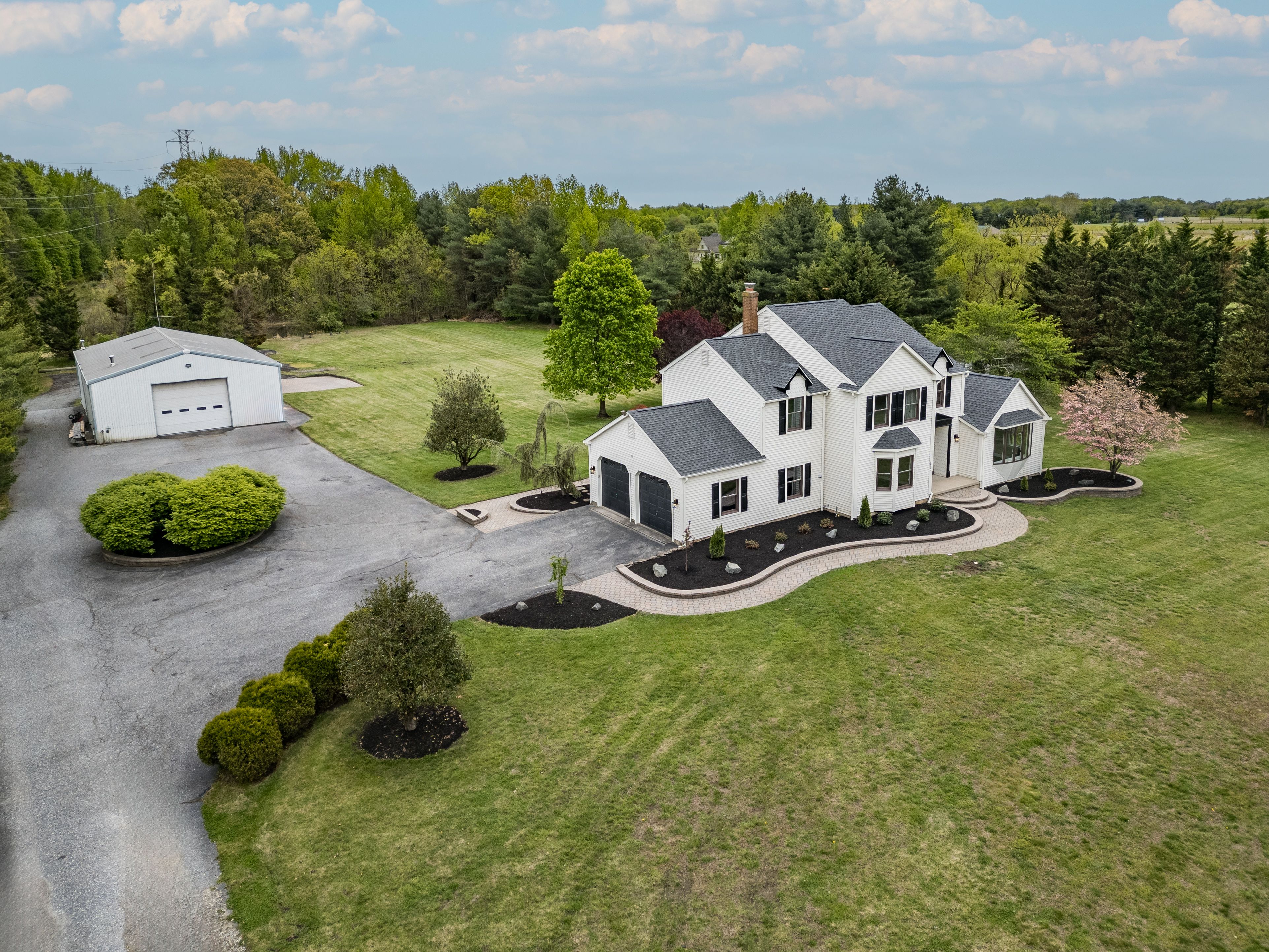
    🚗 A newly renovated Burlington County home on more than four acres with a pond and a 2,400-square-foot detached garage.

    🌇 A newly built townhouse in Philly’s Queen Village neighborhood with heated floors and a roof deck that offers unobstructed city views.

    Take a look inside these million-dollar homes.

    Building luxury at the Shore
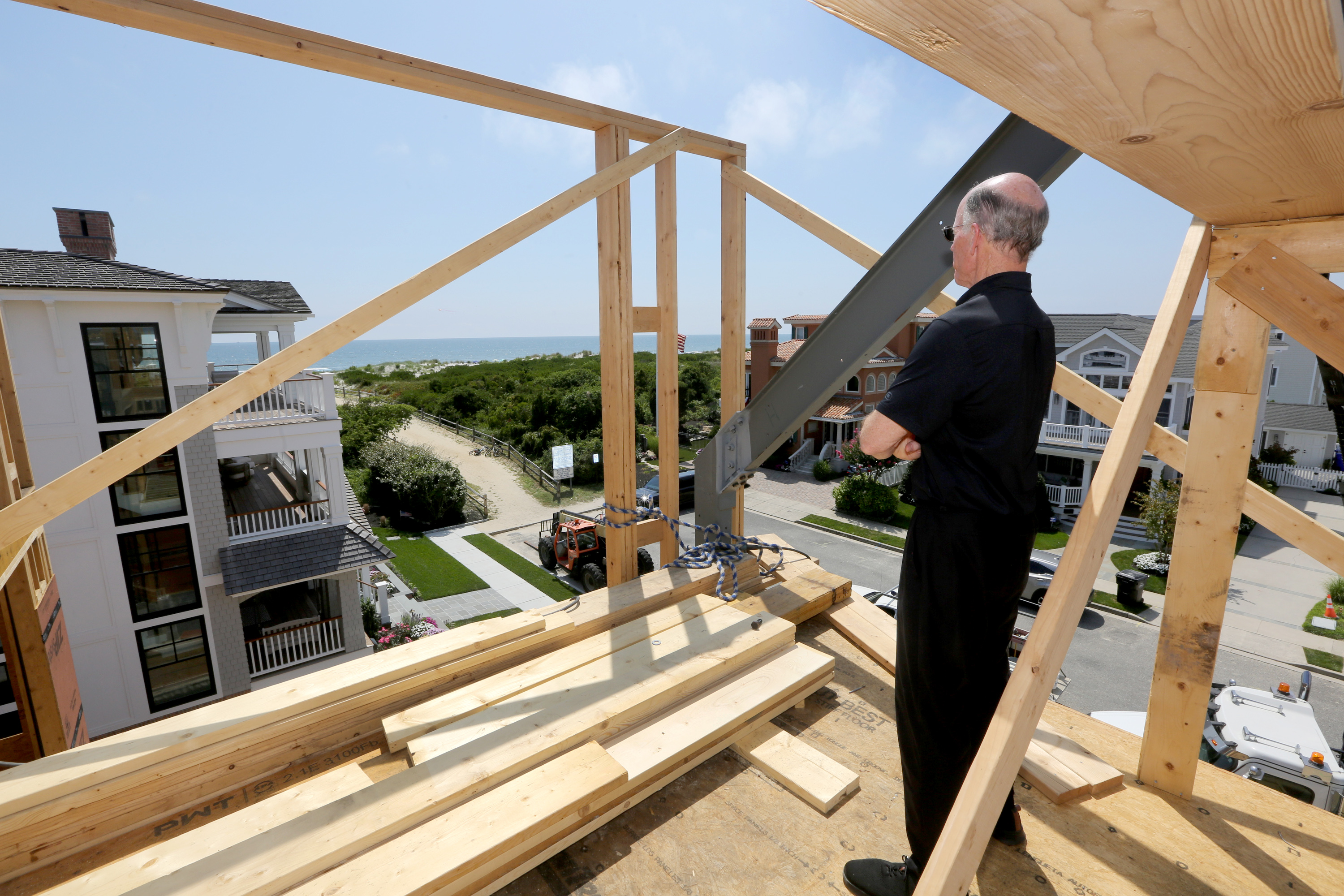
    Eustace Mita has invested hundreds of millions of dollars in luxury homes and hotels at the Jersey Shore.

    One of this companies, Achristavest, builds multimillion-dollar waterfront houses, including a mansion he’s planning that would be the biggest residential property in Avalon.

    Two decades ago, Mita was knocking down small Shore hotels to build condo complexes. Then the 2008 financial crisis hit, and business dried up. He said he “backed into” the hotel industry.

    Now Mita, founder of Icona Resorts, has seven luxury hotels and is planning to build more. He wants to spend $200 million to bring a resort to the site of the closed Gillian’s Wonderland Pier in Ocean City.

    Keep reading to learn more about how this real estate developer changed the Shore.

    The latest news to pay attention to

    Home tour: Fairmount gardens

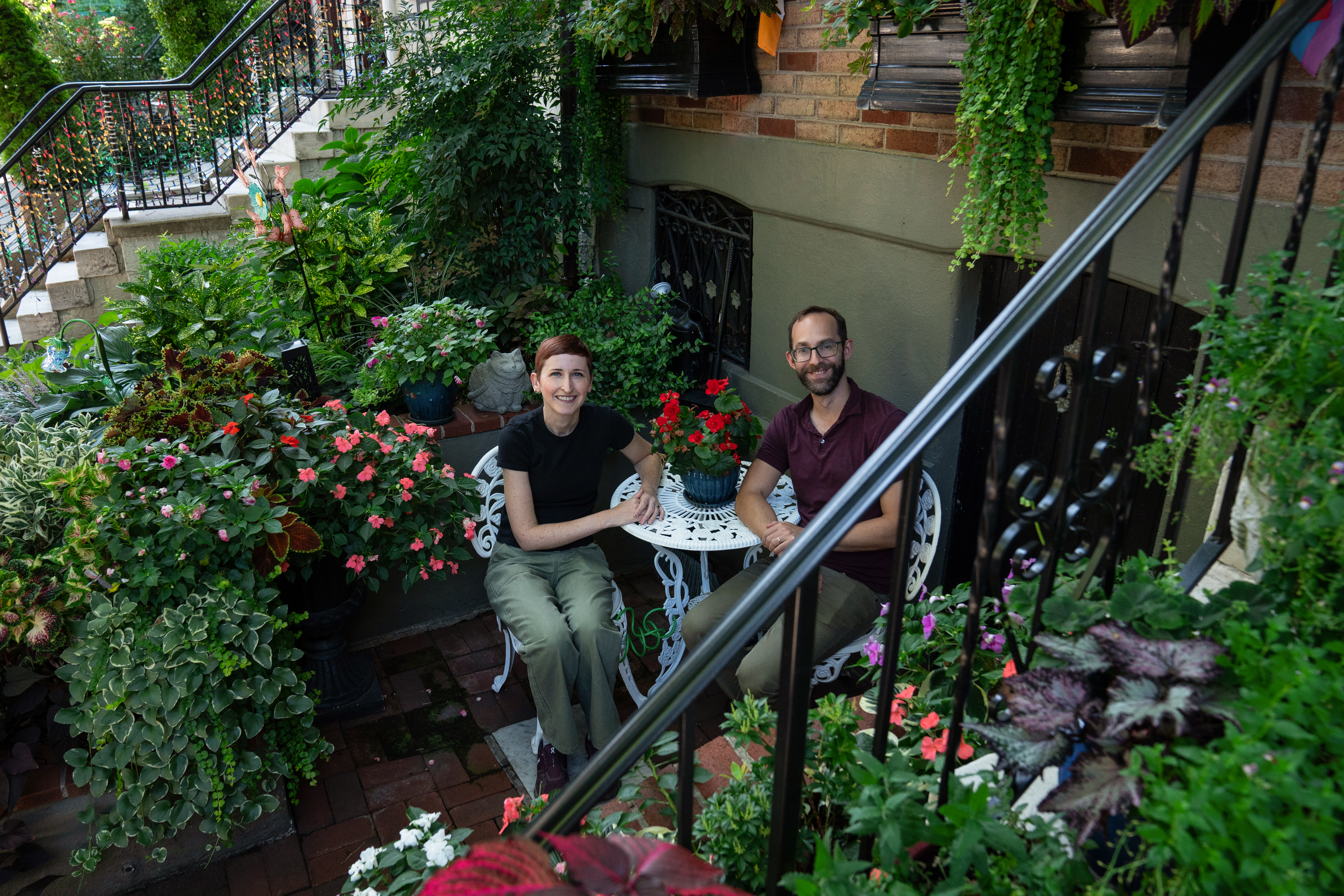
    My favorite thing to do on walks in the Fairmount area is to admire the gardens that homeowners without front lawns have created. So I’m selfishly glad that this week’s tour goes behind the scenes of some of them.

    I’ve stopped to stare at a mural on a garage wall that recreates a famous Claude Monet painting. Now I know it was painted by Brian Augustine, who lives next to the garage and is an amateur artist. (The mural looks professionally done to me.) Augustine planted vines in his garden that play off the mural’s water lilies.

    Charlotte Burns has won local gardening accolades for her plants in the ground, in window boxes, and in ceramic pots.

    Peek inside Burns’ garden and learn about the block that Fairmount residents call Centennial Boulevard, known for its cherry trees and rowhouse gardens.

    📷 Photo quiz

    What building is this?
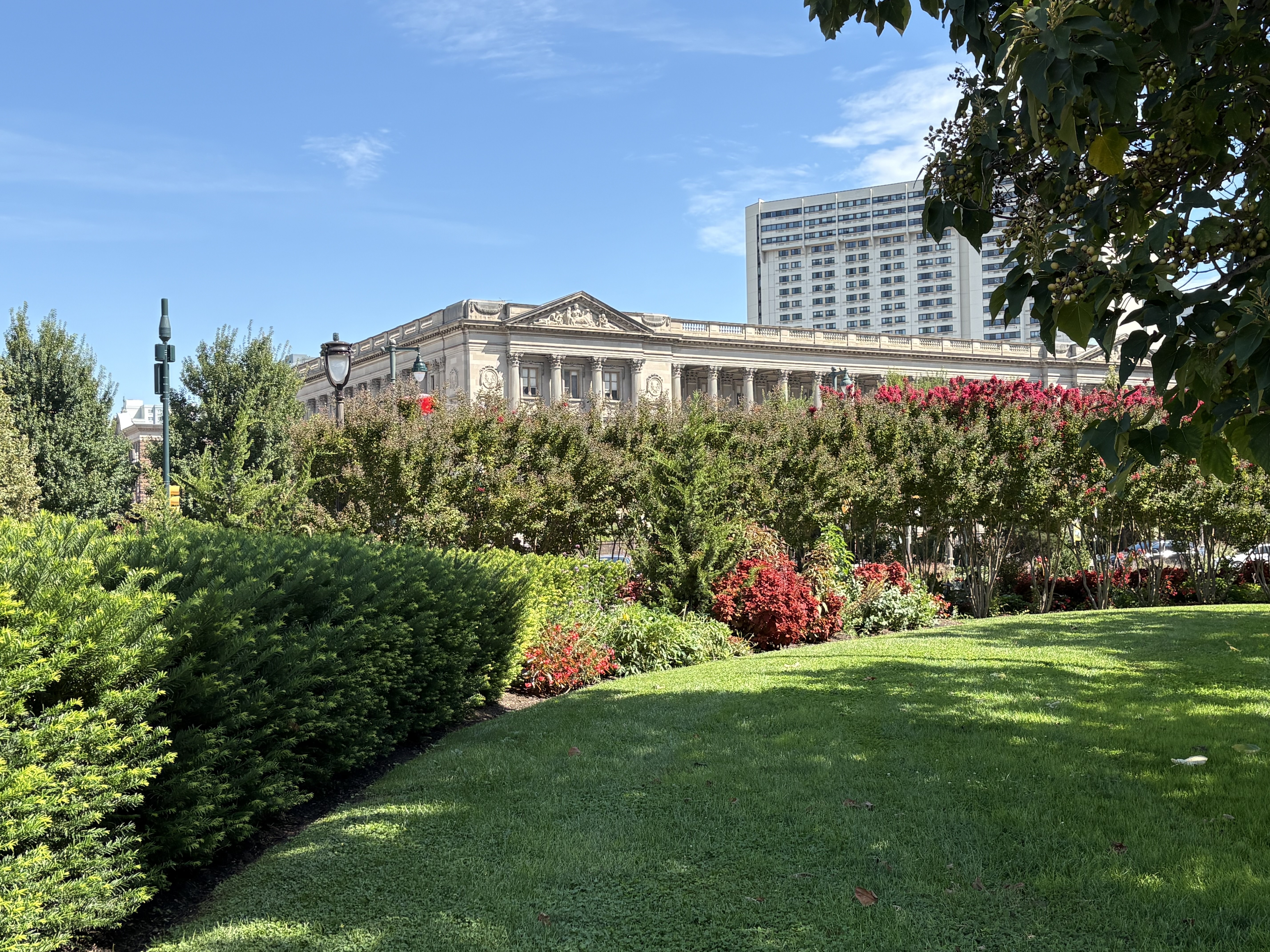
    📮 If you think you know, email me back.

    A bunch of readers recognized the Masonic Temple in Center City in last week’s quiz, even after I tried to throw you off a little by cropping a picture of it.

    Good job. Shout-out to Sean R. for being the first reader to answer.

    🏡 Your real estate experience

    Last week, I asked how you’ve enhanced your outdoor space to make it a place where you want to be.

    Reader Bill G. in Trenton said he furnished his front porch with cushioned chairs. And after enjoying that space, he decided to install a patio and gazebo in the backyard.
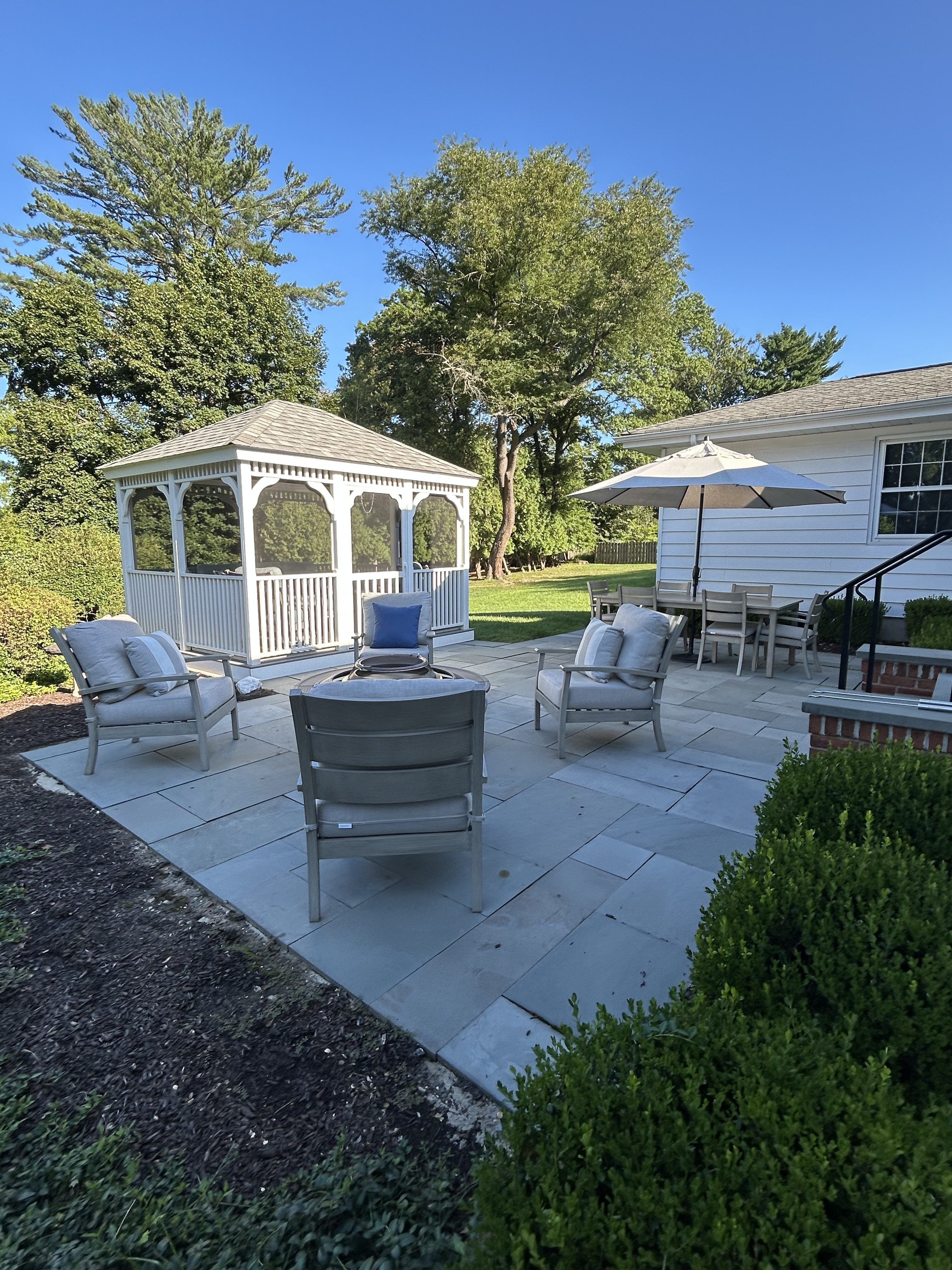
    Thanks for sharing, Bill.

    📹 On the street
    Philadelphia is at risk of losing thousands of subsidized rental homes during the next decade as agreements to keep them affordable expire.

    Affordability agreements between the federal government and the owner of 925 rentals in West and Southwest Philly have started to expire. And the owner wants to sell the properties.

    Renters are afraid they’ll be forced out of their homes. Mayor Cherelle L. Parker’s administration has committed to being “part of the solution” to preserve the homes, but the details still have to be hammered out.

    With the help of reporting from me and my fellow real estate reporter Jake Blumgart, our colleague Erin Reynolds made an easy-to-follow video explaining what’s going on. Join the conversation on YouTube.

    And enjoy the rest of your week.

    By submitting your written, visual, and/or audio contributions, you agree to The Inquirer’s Terms of Use, including the grant of rights in Section 10.
  • 🗳️ An independent opponent for Rabb | Morning Newsletter

    🗳️ An independent opponent for Rabb | Morning Newsletter

    Good morning, Philly. Today, we’re expecting highs in the upper 80s with a chance of showers.

    Up first, a race in a historically blue congressional district now has two candidates trying to shake up the status quo.

    Then, we hear from post-9/11 veterans about how their service shapes their lives to this day.

    Plus, N.J. Gov. Mikie Sherrill faces tough questions about her lieutenant governor, and more news of the day.

    — Laura Benshoff (morningnewsletter@inquirer.com)

    If someone forwarded you this email, sign up for free here.

    ‘Anti-MAGA’ and ‘anti-DSA’

    In solidly Democratic Philadelphia, the primary election can be the real race, with Democratic nominees coasting to victory in November. That’s especially true in Pennsylvania’s 3rd Congressional District, one of the bluest seats in the country.

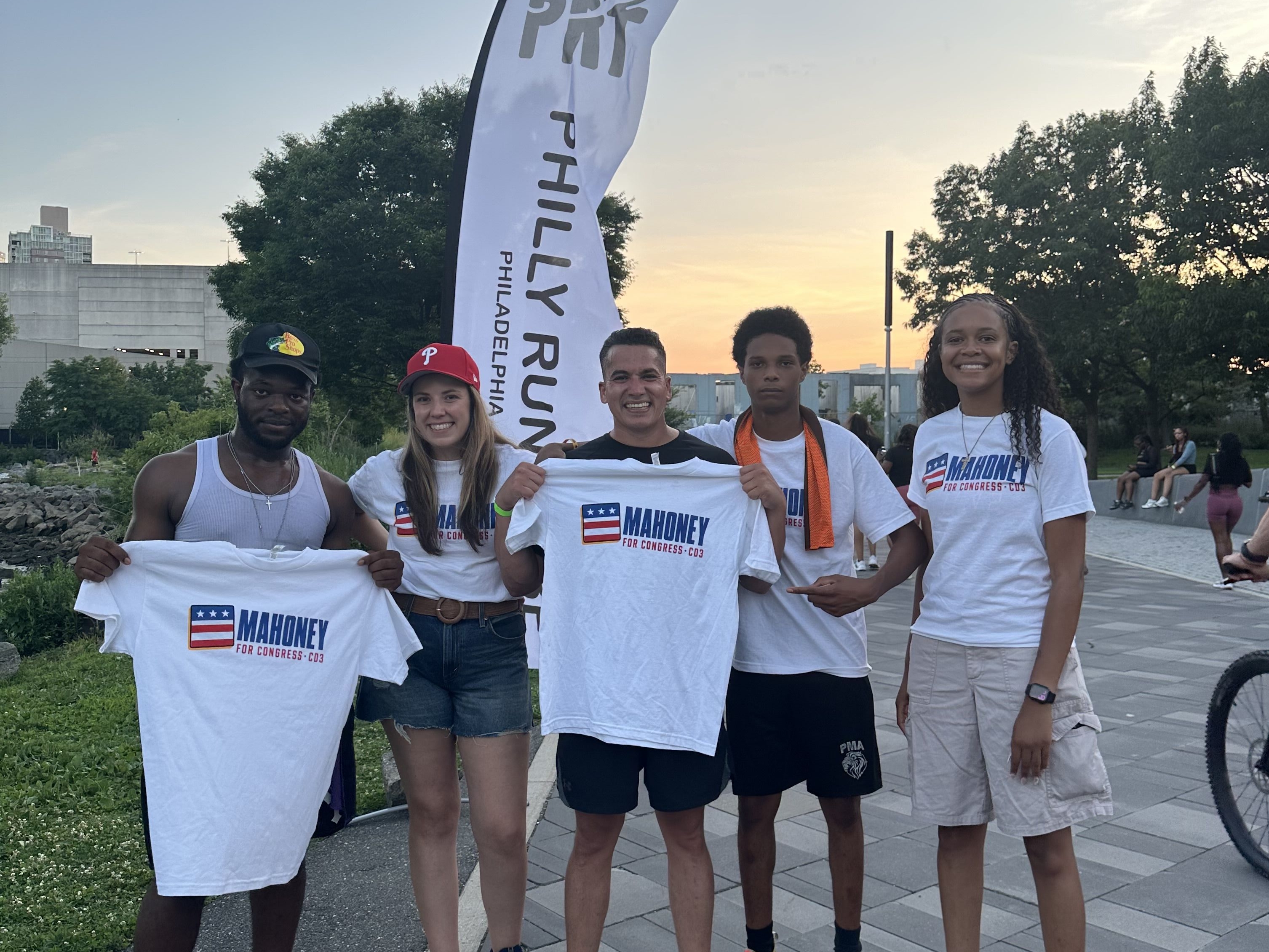
    Dennis Mahoney hopes to change that.

    The 34-year-old independent candidate is the only opponent challenging State Rep. Chris Rabb, a democratic socialist from Northwest Philly who beat out a crowded field in May to become the Democratic nominee.

    Mahoney, who said he was unable to find a home in either party, is backed by a Philly-based super PAC, Forward Party Victory Fund, which supports independent candidates described as both “anti-MAGA” and “anti-DSA.”

    While odds of an upstart win in Philly are long, there are signs U.S. voters are looking for alternatives outside the two-party system. A Gallup poll earlier this year found that 45% of U.S. adults identified as independents — a record high.

    Inquirer political reporter Fallon Roth has the full story.

    Post-9/11 veterans, in their words

    When Inquirer editors asked reporter Brett Sholtis to do a story about 9/11-affected veterans for the 25th anniversary of the attacks, it piqued his interest.

    “A lot of the world has kind of moved on,” Sholtis said, though he knew many veterans don’t ultimately survive their mental wounds. Tens of thousands have died by suicide in the years following their service. He was also acquainted with people who served in Iraq and Afghanistan, and knew that their experiences were diverse — and certainly not all tinged by tragedy.

    “The important thing is to let people tell their own story,” Sholtis said.

    So he did. For the four people he profiled in this story, 9/11 is a turning point. But the events of that day reverberated through their lives in entirely unique ways.

    For one woman, it was the start of a fruitful military career and the conduit to meeting her husband. For another man, a blast from an improvised explosive device led to yearslong mental health struggles that he now processes via poetry.

    Read on for their stories and more.

    What you should know today

    Quote of the day

    On the cusp of his 50th season calling Eagles games, Merrill Reese, 84, has no plans to retire.

    Read Inquirer sports reporter Matt Breen’s story on how he preps for the broadcast booth.

    🧠 Trivia time

    This Washington, D.C.-based bagel chain, known for its loaded sandwiches and pink and teal storefronts, just opened a location in Philly and has two more planned. What’s it called?

    A) Call Your Mother

    B) Schmaltz and Schmear

    C) Bart’s Bagels

    D) Bullfrog Bagels

    Think you know? Check your answer.

    What we’re …

    🎧 Listening to. Philadelphia band the War on Drugs has released its first new music in five years, “a synth-heavy slow-building rock song” called “Who’s That.”

    📺 Watching. Saturday Night Live returns with a new season, and local favorites like Jalen Brunson and Shane Gillis are among those hosting.

    🏈 Playing. We removed the ball from these photos of Eagles games. Can you guess where it was?

    🌸 Admiring. This prize-winning front garden on Fairmount’s Centennial Boulevard features flowering plants like roses and purple liriope.

    🧩 Unscramble the anagram

    Hint: Sean Mannion’s position with the Eagles

    FRONDOSE VOCIFERATION

    Email us if you know the answer. We’ll select a reader at random to shout out here.

    Many of you chimed in, but today’s cheers go to Rosalie Hawn for correctly guessing Wednesday’s anagram answer: the Spectrum. A new arena for the 76ers and Flyers is scheduled to open in 2030 on the site where the Spectrum stood until 2010.

    Photo of the day

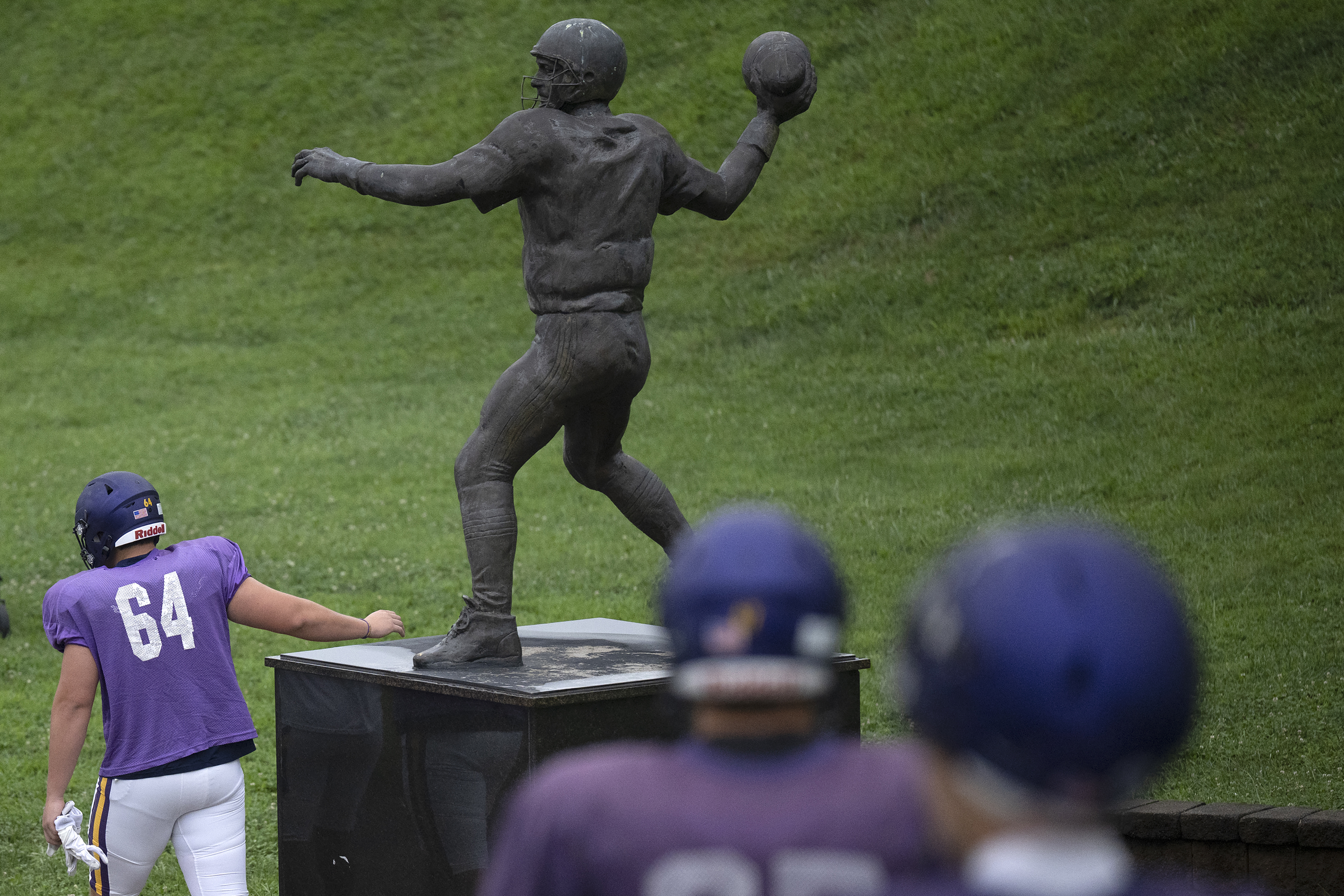
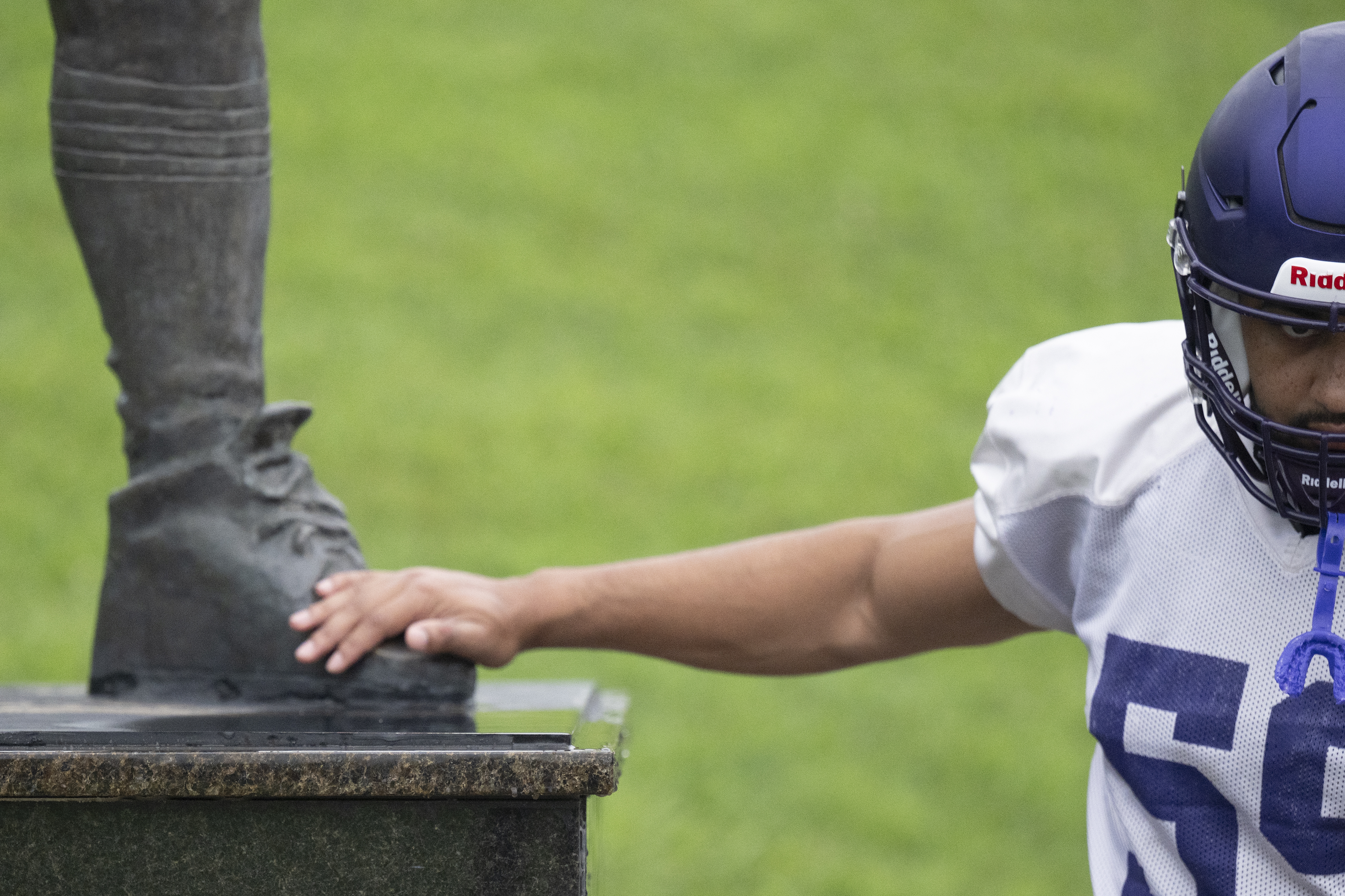
    West Chester University football players tap a statue honoring former quarterback Michael Horrocks before practice Monday, Aug. 17, 2026, at University Stadium in West Chester, Pa. Horrocks was one of the pilots of United Airlines Flight 175, which was hijacked and crashed into the World Trade Center on Sept. 11, 2001. Players traditionally tap the statue as they pass it on their way to the field before practices and games to honor Horrocks.Jose F. Moreno / Staff Photographer

    A lucky talisman and a memorial, all rolled into one.

    Here’s to Thursday! See you tomorrow.

    By submitting your written, visual, and/or audio contributions, you agree to The Inquirer’s Terms of Use, including the grant of rights in Section 10.

  • Flag Man marched around Veterans Stadium after 9/11. 25 years later, he’s better for it.

    Flag Man marched around Veterans Stadium after 9/11. 25 years later, he’s better for it.

    It had been six days since Dillon Minacci waited at school for his parents to finally pick him up. National Park rangers told the Minaccis to stay inside their Queen Village home — which sits on the grounds of the Gloria Dei Old Swedes Episcopal Church — as a precaution following the terrorist attacks that morning in New York.

    Could the old church where Betsy Ross was once married be next? So Dillon was one of the last kids to leave St. Mary School in the shadow of Independence Hall. No one knew what to think that day, Paula Minacci said of Sept. 11, 2001. And everyone seemed to struggle to find normalcy in the days that followed.

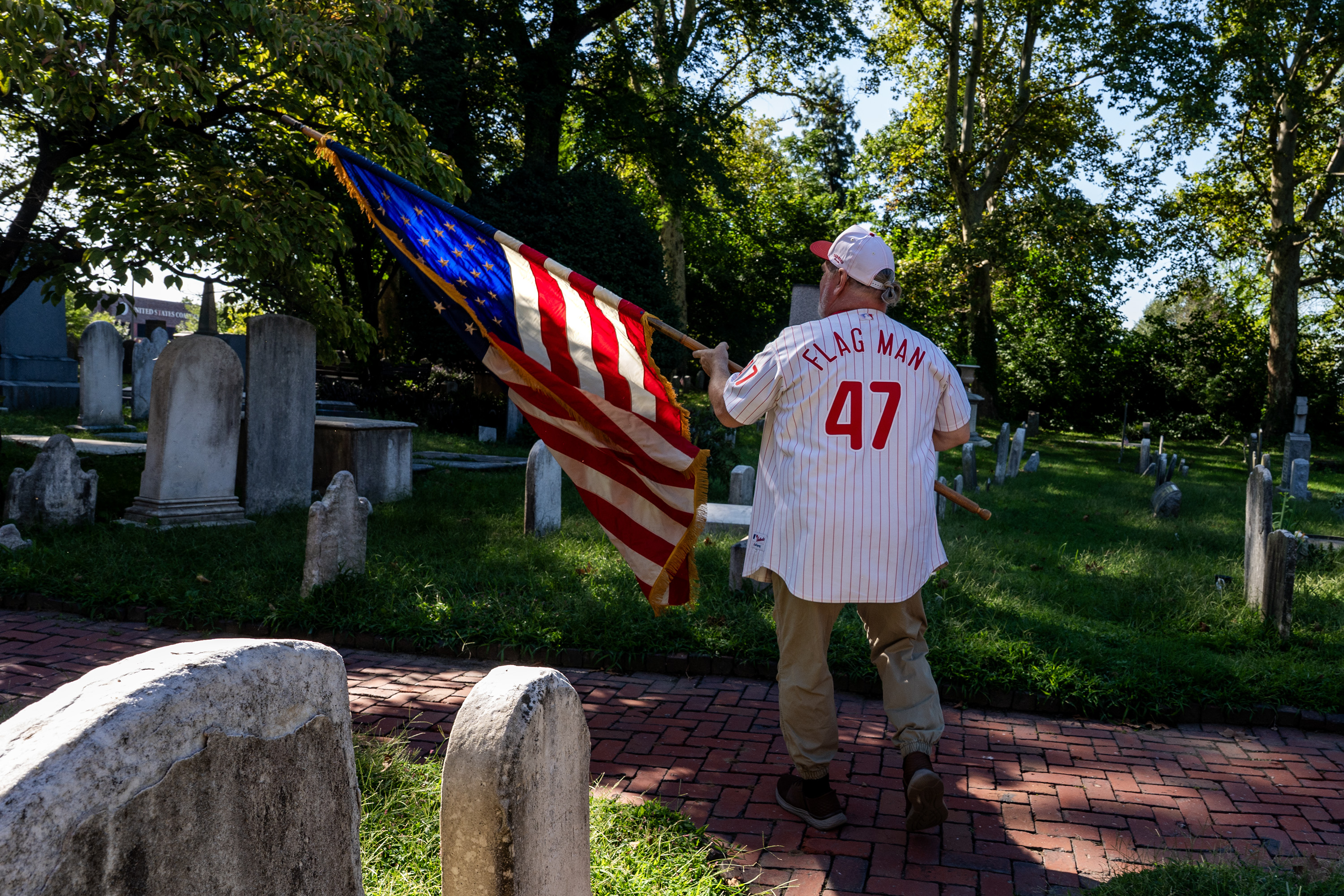
    Finally, the Phillies were back at Veterans Stadium. Their game against the Braves on Sept. 17 was the first major league game after the season was paused. Jim Minacci told his son they were going. Then he went to the church basement — where he still works with his wife as the sextons — and grabbed a big American flag on a wooden pole.

    “It was embarrassing, right?” said Dillon, who was then in the fourth grade and just old enough to roll his eyes at his parents. “I was like, ‘What are you doing? Why are you bringing a flag to the park? What are we doing?’”

    Paula Minacci dropped them off at the stadium and then waited to make sure they’d let them in with the big flag. The Vet was filled that night with American flags. People waved them in the stands and the players had them stitched on their uniforms. Phillies manager Larry Bowa cried during the anthem and Harry Kalas opened the telecast with an emotional monologue about how sports can be a diversion and a unifier.

    No one questioned Minacci’s flag.

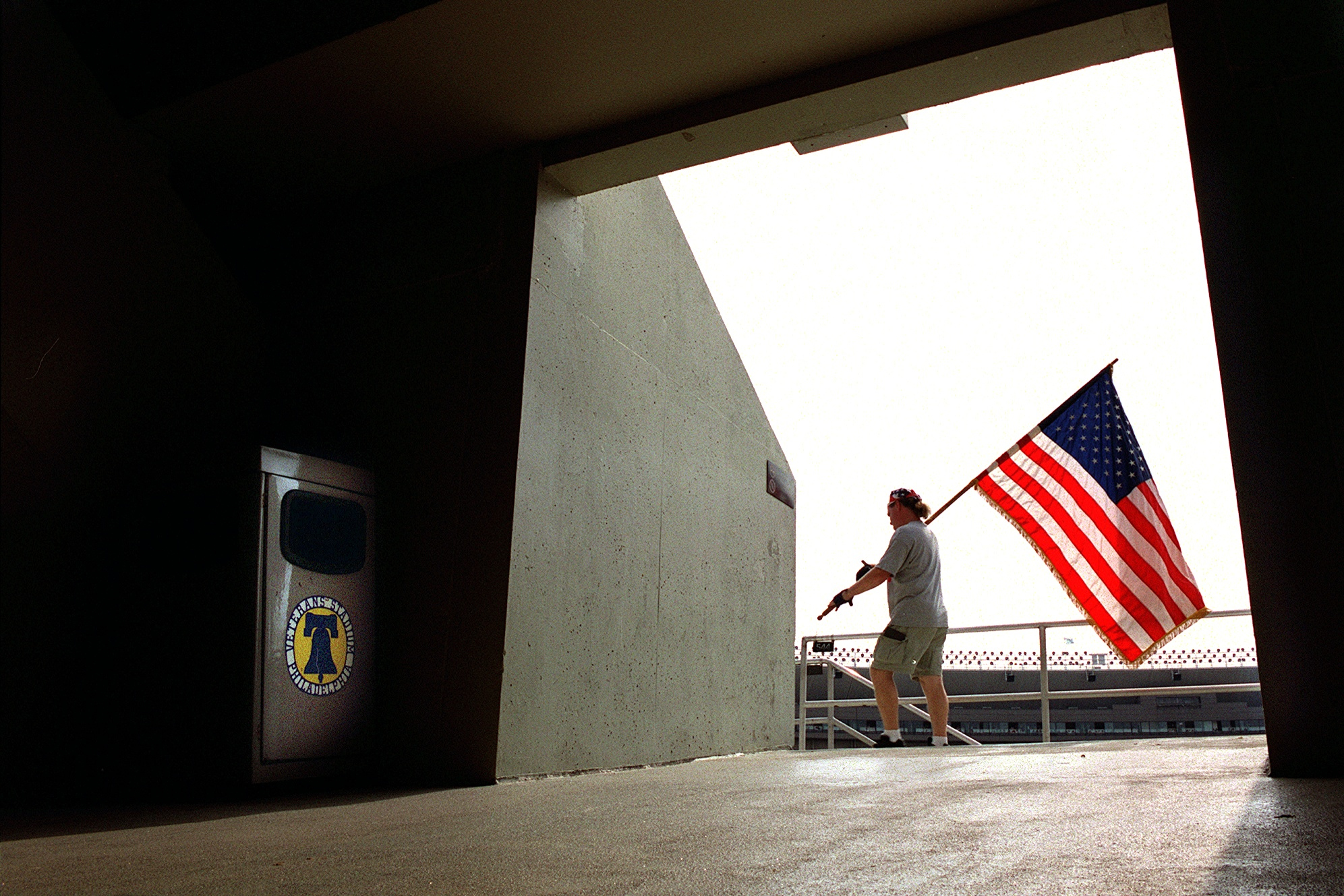
    Jim Minacci carries his large American flag as he walks around Veterans Stadium on Sept. 23, 2001.Tom Gralish / Staff Photographer

    He sat with the pole for a few innings in the upper deck before telling his son he wanted to take a lap around the stadium, which had a rung in front of the seating bowl. His son was embarrassed, but he told his dad he’d come with him. And then the cheers started. The fans chanted U-S-A and shouted for Minacci as he marched around a half-filled stadium with the flag over his shoulder like a patriot. Embarrassed? Not anymore, his son said.

    “For us, we were like, ‘Hell yeah. This is awesome,’” Dillon, 35, said. “We got back to our seats and he said, ‘We’re going again.’ OK. I didn’t expect this to be happening. Let’s go.”

    The Minaccis attended every game the rest of the season as the late-30s dad became Flag Man, a symbol of patriotism when everyone seemed to rally around the flag. They started their night marching around the upper deck before heading to the lower bowl where the chants were just as loud.

    A cast of kids would leave their seats every night to walk behind Flag Man, whom Pat Burrell called “the pied piper” when Minacci was featured in the team’s highlight video.

    Phillies general manager Ed Wade presented Flag Man with a custom jersey and a security guard started letting the Minaccis in without tickets. Flag Man’s hands were so sore from carrying the wooden pole that he started to wear fingerless gloves. He loved it.

    Jim Minacci, aka Flag Man, is trailed by a line of kids as he walks around the upper deck over the outfield at Veterans Stadium on Sept. 23, 2001.Tom Gralish / Staff Photographer

    The Vet already had the Wolf Pack and other fan groups that injected character to a concrete goliath. Flag Man fit right in. Minacci became part of the scene.

    All these years later, the 64-year-old Minacci is still not sure why he brought the flag that first night. He remembers watching the news and seeing people at Ground Zero, volunteering to dig through the rubble of the World Trade Center. Minacci wanted to be in Manhattan but had two jobs in Philly and a son. So he grabbed his flag and went to the game.

    “I probably brought the flag so it could represent all those people doing all that good work,” he said. “People were doing extraordinary things against the backdrop of this terrible disaster that in our lifetime was unprecedented. I felt a real sense of wanting to go to the game to enjoy myself and be free of all the struggle and strife but also be part of a community and be with my son in a moment that meant something.”

    “It was just being present and showing support for these people who were doing extraordinary things.”

    Flag Man grew up near Binghamton, N.Y., in a small town he said had more cows than people. His father Paul was a Yankees fan but he often took his family in the early 1970s to Philly — where he graduated from Penn — to see games at the Vet when tickets were easy to get.

    Minacci chased down players for autographs and can still remember how it felt to sit in the stands with his dad. He moved to Philly in the 1980s and soon found himself sitting in the same seats with his son.

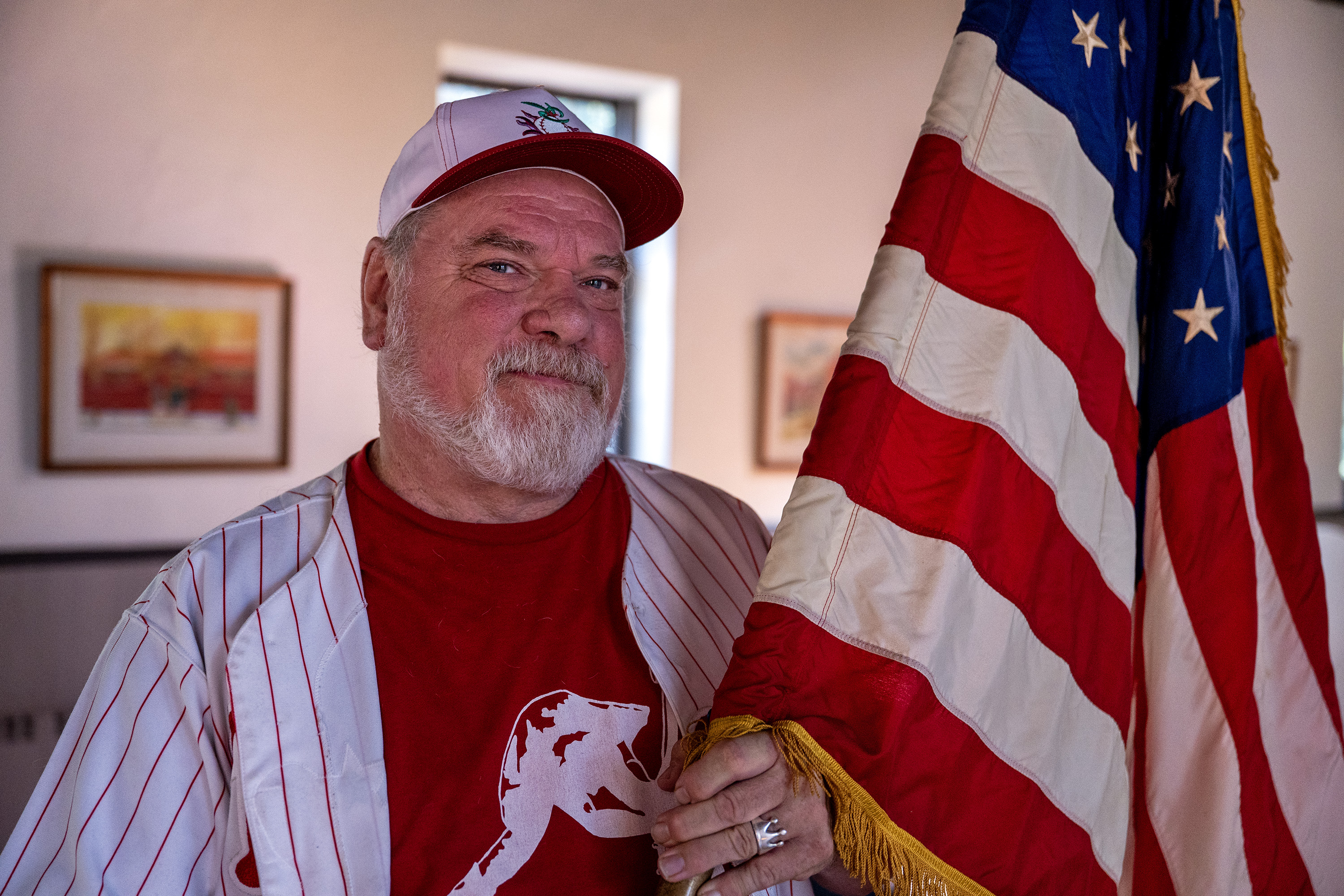
    Jim Minacci looks back on his Flag Man days as “a unifying visual. Something everyone could agree to. Back then, it was an agreeable moment.”Tom Gralish / Staff Photographer

    “I just always loved baseball and doing it with my dad just like he did it with his dad,” Dillon said. “Baseball is so unique in that you don’t really have to pay attention to it. That’s kind of the beauty of it. It’s an atmosphere that’s open to whatever you make it. Other sports, you’re kind of locked in on the time limit or the net you have to hit it into. Baseball is very much, ‘Are you paying attention or not? Can I take advantage of that?’ For a father and son, you get to spend time whether you’re talking or not.”

    The Vet was their place before 9/11 so it was where the Minaccis needed to be after that dark Tuesday. The Minaccis — just like the rest of the 27,910 fans — longed for an escape. They didn’t know their night would be the dawn of Flag Man.

    “We got home and he said, ‘We have to go again tomorrow,’” Dillon said. “I was like, ‘I’ll go to baseball every night of the week if that’s what this is.’ I was totally in. If you get a couple drinks in me, then I pull down the old video yearbook. Damn, that was cool. I can’t believe I was a part of that and my dad had the idea to do that.”

    He took a trip with his parents last month to a minor-league game in upstate New York and told his dad how impactful those nights at the Vet were. His parents were always “locally minded,” Dillon said, as their work at Old Swedes made them a fabric of the neighborhood. Flag Man was an extension of that. His dad always seemed to bring people together. Everyone just got to see it this time.

    “I know my son is a better person today for it. His awareness of being a part of a community,” Minacci said. “As a father, as a human being, that’s the reward.”

    Dillon now lives in Austin, Texas, and will often ask another Philly transplant if they remember Flag Man. Of course, they remember that guy who used to carry a flag around the Vet. That’s my dad, the proud son tells them. No way, he hears. Flag Man is a memory.

    Jim Minacci and his wife Paula at Gloria Dei Old Swedes Episcopal Church, where they work and live as sextons/caretakers.Tom Gralish / Staff Photographer

    “There’s the baseball game, the baseball team, the baseball staff, and then the crowd who fills the stadium,” Minacci said. “We got to be a part of that community.”

    Minacci brought his flag back to the Vet in 2002 and 2003 as he continued to march before the Vet closed. Citizens Bank Park opened in April 2004 and Minacci was there with his flag for the first game. The guy at the gate apologized. Minacci couldn’t bring the long wooden pole into the new park. Flag Man was finished.

    “I think what bummed him out the most was him not being able to end it in a way that he wanted to,” Dillon said. “He wanted the chance to say ‘Thank you.’ It really meant a lot to him and it meant a lot to me. We met a lot of people at the ballpark and became a part of the Phillies community. So it goes.”

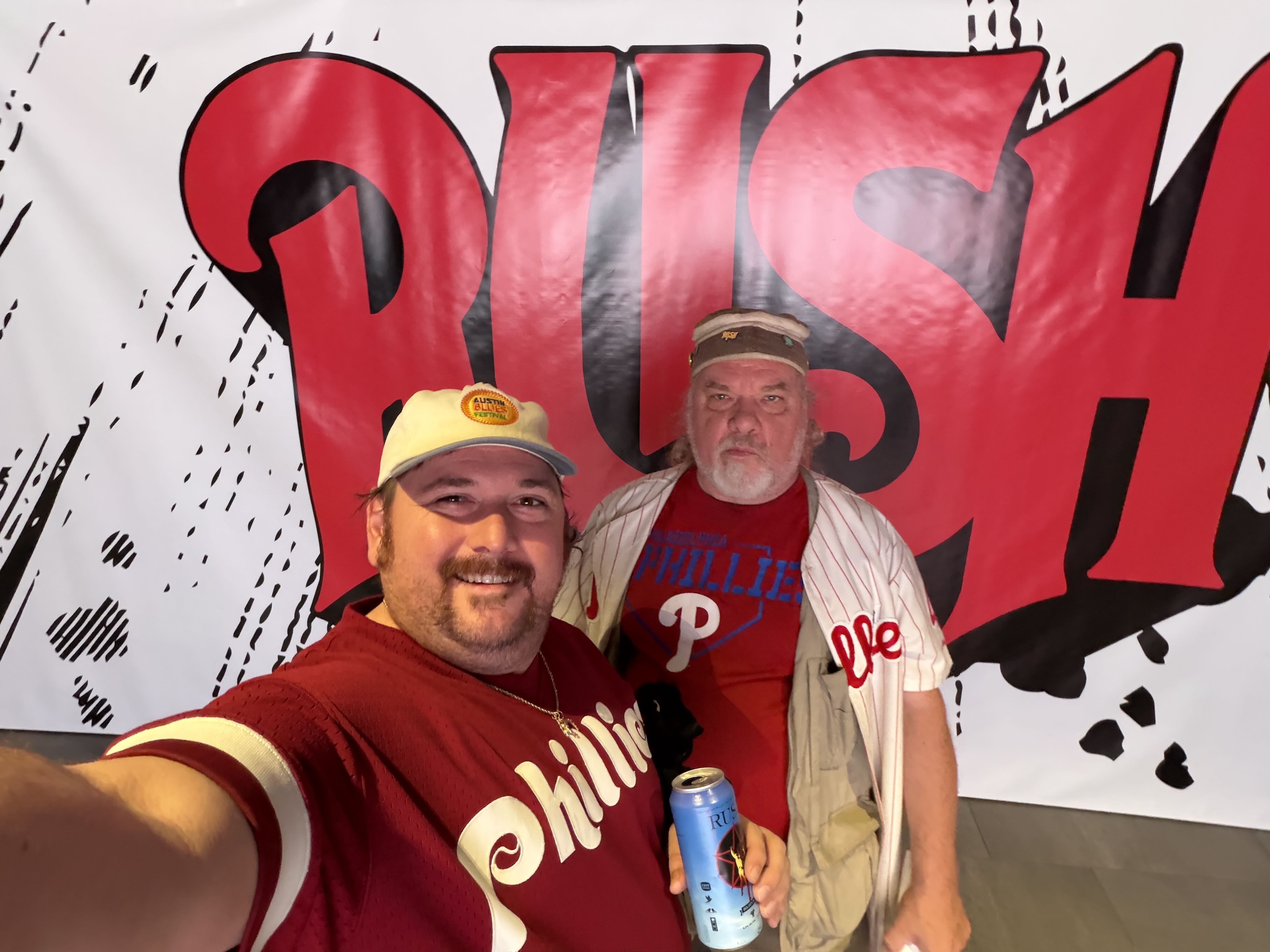
    Dillon (front) and Jim Minacci at the Rush concert earlier this month.Dillon Minacci

    Minacci stood outside the stadium that day before deciding to go home. It was over. He’s another fan now when he goes to the ballpark except that he still wears his Flag Man jersey — with No. 47 as a nod to Larry Andersen — when he sits in the seats. Kids who used to trail him at the Vet will stop him and tell him about those days. Now those kids have kids of their own. Minacci helped people come together that September. It was a time and place he’ll never forget.

    “It was a unifying visual,” Minacci said. “Something everyone could agree to. Back then, it was an agreeable moment. It would be hard to find that agreeable moment today. We’re all so segmented. It’s awful. It’s really hard.”

  • Willpower alone doesn’t work. Here’s what does, according to an expert.

    Willpower alone doesn’t work. Here’s what does, according to an expert.

    Swimmer Michael Phelps is famous for his work ethic, his incredible drive to succeed, and his unusual genetic makeup. He’s won more Olympic medals than any other athlete, most of them gold.

    But if you widen the aperture, you see his coach, Bob Bowman, giving him the confidence to succeed. You see his mother, Debbie Phelps, finding swimming as an outlet for her son’s endless energy. And it didn’t hurt that Phelps happened to grow up 10 minutes from one of the best training centers in the country, the North Baltimore Aquatic Club.

    “I spent the first half of my career studying individual effort and its importance to success,” said psychologist Angela Duckworth. “And I think that is important, but it’s not everything.”

    Duckworth, a professor at the University of Pennsylvania, is best known for her book on “grit” — which she defines as passion and perseverance toward long-term goals. She pointed to Phelps as an example of grit because of his extreme dedication to his sport. But he — and everyone else who finds success — had to be in the right situation with the right people for that effort to pay off.

    In her new book, Situated: Find the People and Places That Bring Out Your Best, Duckworth explains the research on what it takes to reach our goals, and why we shouldn’t try to muscle through challenges with willpower alone. Here’s what she said to do instead.

    Change your situation

    It may not be possible to change everything about your circumstances, but Duckworth said we often don’t realize how much is within our control.

    For example, in a new survey from Pew, more than half of American adults say they spend too much time on their phones. The number is even higher for younger adults. Many respondents have tried to cut back with little success.

    Duckworth said many people make New Year’s resolutions to spend less time on their phone, but continue to charge their phones next to their bed (as nearly 8 in 10 Americans do, according to a survey from YouGov in 2025). If your plan is to essentially use willpower to look at your phone less, it probably won’t work.

    “What my research shows is that it’s far more effective and also far less exhausting to change the situation,” Duckworth said.

    So if you want to spend less time on your phone, charge it in another room. If you want to exercise in the morning, put your workout clothes next to your bed. If you want to eat less of a certain type of food, don’t keep it easily within reach.

    “Essentially, use physical distance to create psychological distance,” Duckworth said. “Don’t rely on mental force of will.”

    In Duckworth’s research, young adults who were encouraged to change their situation were more successful at reaching a goal than those who only used self-discipline — and they experienced less temptation in the process.

    Phone a friend

    Looking at some of world’s most successful people, from Phelps to Taylor Swift, she said everyone needs help from peers, mentors, and friends to stay motivated and accountable.

    In her book, Duckworth examines the success of a start-up incubator that was behind companies like Dropbox, Airbnb, and Reddit. Unlike some other venture capital firms, it funded companies in groups so the founders had support and guidance.

    “We really need a feeling like we’re doing things in a group,” Duckworth said.

    People are more likely to reach goals when they work together, she said, explaining that people enjoy being asked for help more than we might think.

    Her daughters live near each other and have started going to the gym together.

    “You kind of have to show up for the other person,” Duckworth said. “But also it makes it more fun.”

    Get expert guidance

    Duckworth said the need for outside support also applies to problems, even though it can be harder to ask for help. She and her husband hit a rocky period in their marriage, she said, and it wasn’t until they “called in the cavalry” that things got better, with the support of family, friends, and therapy.

    “It was humbling for me to admit that I couldn’t work it out,” Duckworth said. “We overcame this strong sense that asking for help was like an admission of failure.”

    That experience didn’t just change her marriage. It also changed the way both she and her husband approached their work.

    Duckworth decided she wouldn’t do research alone anymore; she instead works with other scientists as collaborators. And her husband, the president of his real estate company, put together an advisory board of trusted mentors to help him make better decisions.

    “Find ways to make your situation your ally. And don’t be ashamed of it,” Duckworth said. “I think that to me is the perspective shift that has personally made a difference.”

  • Inside Ardmore’s massive ‘meat palace’ | Inquirer Lower Merion

    Inside Ardmore’s massive ‘meat palace’ | Inquirer Lower Merion

    Hi, Lower Merion! 👋

    Can you have too much Wagyu? Inquirer food critic Craig LaBan contemplates whether that’s the case at the recently opened OGYU in Ardmore. Also this week, charges have been brought against a man who allegedly stole nearly $800,000 in jewelry from two township homes, a Bala Cynwyd native continues to imprint his vision on the Jersey Shore, plus the school board will consider an embattled member’s resignation.

    If someone forwarded you this email, sign up for free here.

    Does OGYU serve too much of a good thing?

    The Miyazaki ribeye at Ogyu.Tyger Williams / Staff Photographer

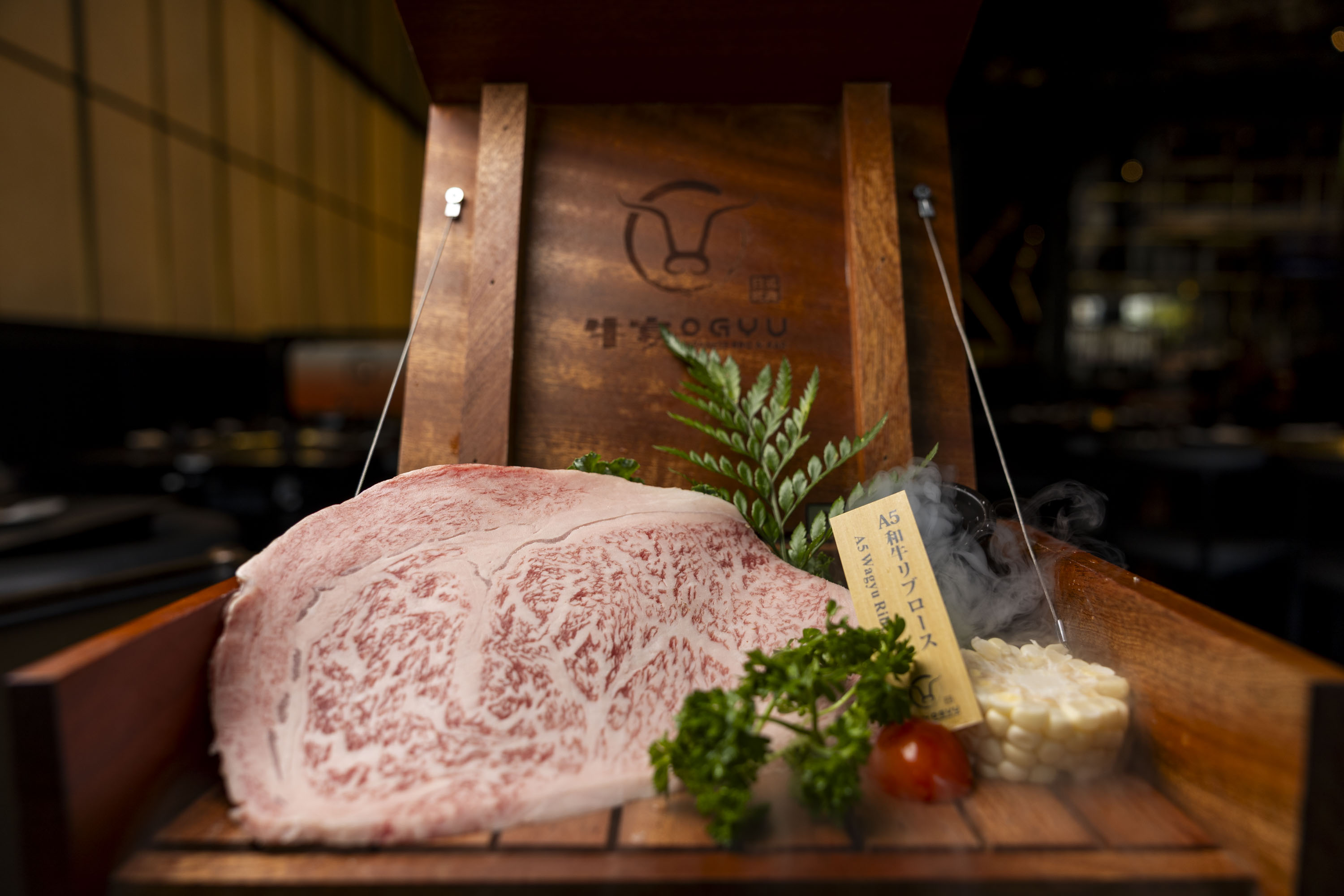
    When Inquirer food critic Craig LaBan paid a visit to recently opened Japanese restaurant OGYU in Ardmore — or as he calls it, “a 300-seat meat palace” — he was determined to try as much Wagyu as he could.

    But he soon found that in the case of the all-you-can-eat joint, there might just be too much of a good thing.

    While one cut of Wagyu rib cap, which arrived in a showy box billowing with smoke, was rich and tender, preparing it himself on a tabletop grill meant the finished product fell flat.

    Other dishes, however, impressed, including the New Zealand lamb chops, the “Meet Wagyu” nigiri, and the A5 ribeye.

    At the end of the day, does dining there add up to “a luxury experience the $120 check average should command?”

    Here’s LaBan’s verdict.

    💡 Community News

    • A 24-year-old Philadelphia man, Jabir Parker, was charged last week with several alleged burglaries, including two in Lower Merion, where police said he made off with nearly $800,000 in stolen jewelry.
    • Eustace Mita continues to put his fingerprints on the Jersey Shore by way of his Icona Resorts. The Bala Cynwyd native’s next project includes a $200 million proposed redevelopment of Wonderland Pier. The Inquirer’s Erin McCarthy looks at how he’s shaped the Shore and what’s still on the horizon.
    • Former Bryn Mawr resident Joan E. Lynaugh died this summer at the age of 90. Lynaugh was a pioneering primary care and nurse practitioner and an award-winning professor emerita of nursing at the University of Pennsylvania.
    • Filmmaker M. Night Shyamalan, who grew up in Penn Valley, has launched a new YouTube series. In the first episode, he takes viewers back to the era of one of his early films, Signs.
    • Bryn Mawr Hospital and Lankenau Medical Center, both owned by Main Line Health, earned high marks in the latest U.S. News Best Hospitals by Specialty ranking. Bryn Mawr was recognized in eight categories, including colon cancer and prostate cancer surgeries, while Lankenau scored top marks in 11 categories such as back surgery, and hip and knee replacement surgeries.
    • Spring Mill Road will be closed weekdays between Old Gulph and Conshohocken State Roads tomorrow through Tuesday from 9 a.m. to 4 p.m. for storm sewer replacement.
    • Expect work near the Narberth Avenue bridge over the next six to eight weeks, with overnight construction slated for Sundays through Thursdays from 9 p.m. to 5 a.m.

    🏫 Schools Briefing

    🍽️ On our Plate

    • Looking for a great rooftop spot to dine before summer comes to a close? Chef Nicholas Elmi’s Bala Cynwyd restaurant Lark is one of the best destinations in the region, according to The Infatuation.

    🎳 Things to Do

    🍂 Harvest How-To for Natural Holiday Decor: Learn how to gather, preserve, and use natural materials for decor. ⏰ Friday, Sept. 11, 10 a.m.-12:30 p.m. 💵 $25 for members, $30 for non-members 📍 Stoneleigh

    🎶 Narberth Music and Arts Festival: There will be live music, food, drinks, and a makers market. ⏰ Sunday, Sept. 13, noon-7 pm. 💵 Pay as you go 📍 Forrest and Haverford Avenues

    😱 Scream: Get in the spooky season spirit with a screening of the 1996 horror movie. ⏰ Monday, Sept. 14, 7 p.m. 💵 $11.75-$16.25 📍 Bryn Mawr Film Institute

    📖 One Book, One Lower Merion: The township-wide reading initiative features Harlan Coben’s new book, Plot Twist, and includes a Q&A with the author. ⏰ Tuesday, Sept. 15, 6 p.m. 💵 $40 📍 Welsh Valley Middle School

    🎷 Montco Jazz Fest: Now in its fifth year, the festival features performances at 20 venues throughout the county. ⏰ Tuesday, Sept. 15-Sunday, Sept. 20, times vary 📍 Locations vary

    🏡 On the Market

    An updated six-bedroom Bala Cynwyd Colonial

    The home has an eat-in kitchen with a fireplace that flows into a great room.Courtesy of Israela Friedman/Berkshire Hathaway Home Services Fox & Roach, Realtors

    This 1930 center hall Colonial has undergone a number of updates, blending past and present. The first floor features an open-concept kitchen, dining area, and great room with a fireplace, all near to a secondary prep kitchen. There’s also an office, a dining room, and a living room on the first floor. The home’s six bedrooms are spread across the upper levels, including the second-floor primary suite, with a steam shower and whirlpool tub. There’s an open house today from 5 to 6 p.m.

    See more photos of the home here.

    Price: $985,000 | Size: 3,803 SF | Acreage: 0.2

    🗞️ What other Lower Merion residents are reading this week:

    By submitting your written, visual, and/or audio contributions, you agree to The Inquirer’s Terms of Use, including the grant of rights in Section 10.
    This suburban content is produced with support from the Leslie Miller and Richard Worley Foundation and The Lenfest Institute for Journalism. Editorial content is created independently of the project donors. Gifts to support The Inquirer’s high-impact journalism can be made at inquirer.com/donate. A list of Lenfest Institute donors can be found at lenfestinstitute.org/supporters.

  • Philadelphia’s Carpenters Hall is where the seeds for American independence were sown

    Philadelphia’s Carpenters Hall is where the seeds for American independence were sown

    Until the 1750s, America was a community of loosely organized colonies where residents were content — if not happy — to be a part of the powerful British Empire.

    But, after the colonists joined Britain to help the Crown win the French and Indian War, they started to wonder if it was worth it to remain the King’s subjects.

    For one, King George III issued the Royal Proclamation of 1763 forbidding Americans west of the Appalachian Mountains, angering the land-hungry colonists.

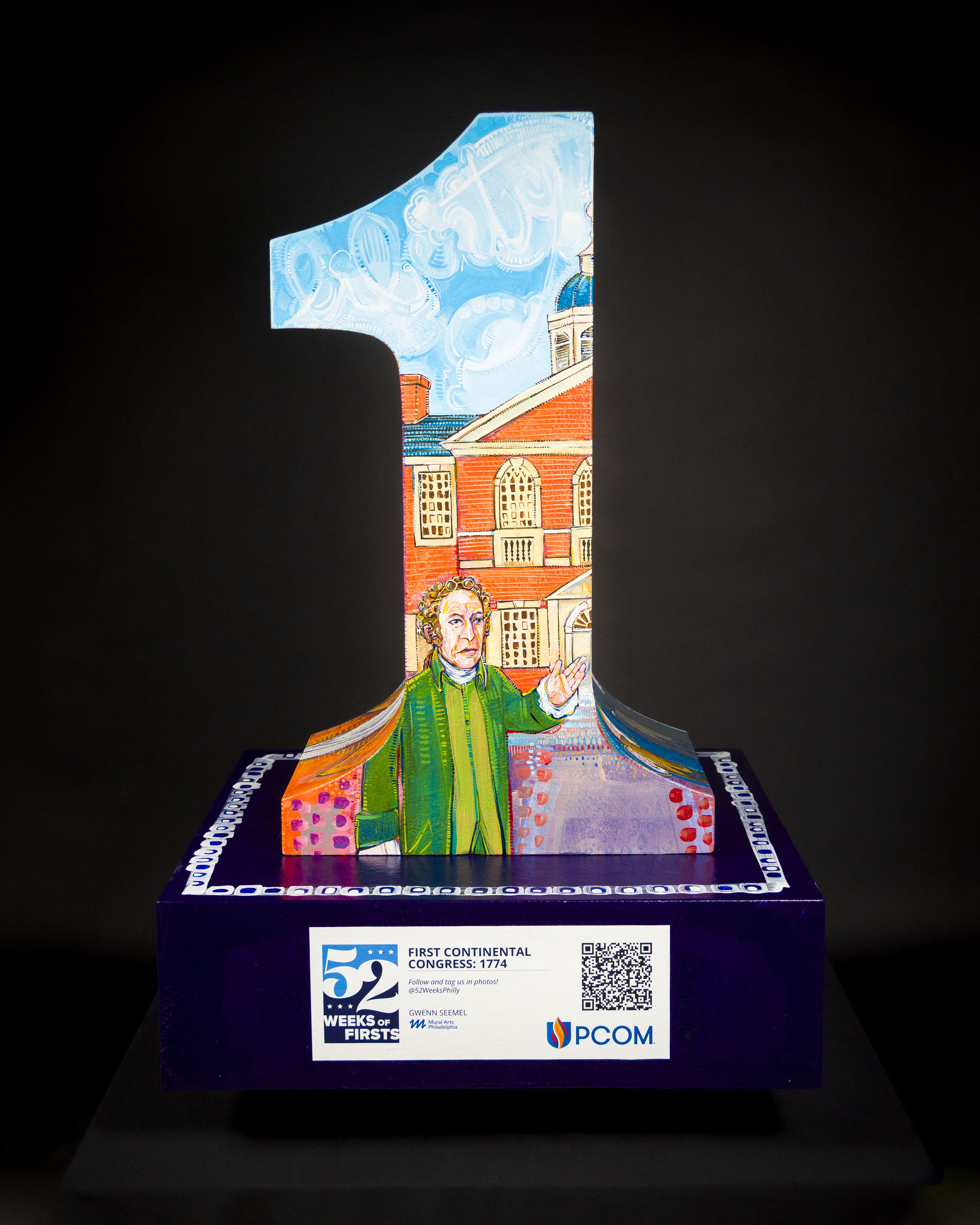
    Gwenn Seemel depicts Patrick Henry in front of Carpenters Hall for the No. 1 in honor of the First Continental Congress.Gwenn Seemel courtesy of Colibrí Workshop

    Then came the beginnings of taxation without representation. In 1765, England enacted the Stamp Act, levying a tax on every piece of paper, pamphlet, or card bought and sold in America. Eventually, the colonists rebelled and Britain repealed the act five months after it started.

    However, the seeds of rebellion were planted.

    Uncomfortable with angry subjects, Britain stationed troops in New England. Those rising tensions led to the Boston Massacre in 1770. In 1773, King George III taxed tea imported to the colonies from London. (He was insistent on collecting the colonists’ money by any means necessary.)

    When tea arrived from London in Boston Harbor in December of 1773, colonists dumped it into the Atlantic Ocean. In retaliation to the infamous Boston Tea Party, the Crown levied a series of Intolerable Acts.

    “In the eyes of the colonists, the Intolerable Acts were severe,” explained Michael Norris, the executive director of Carpenters Hall.

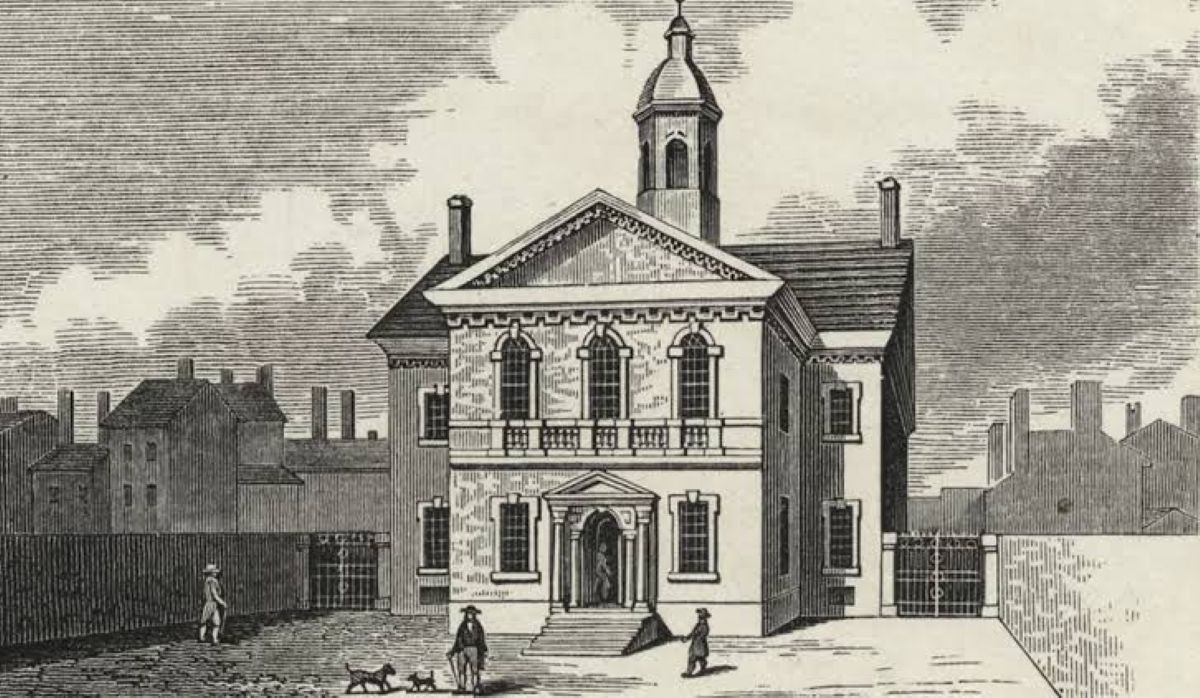
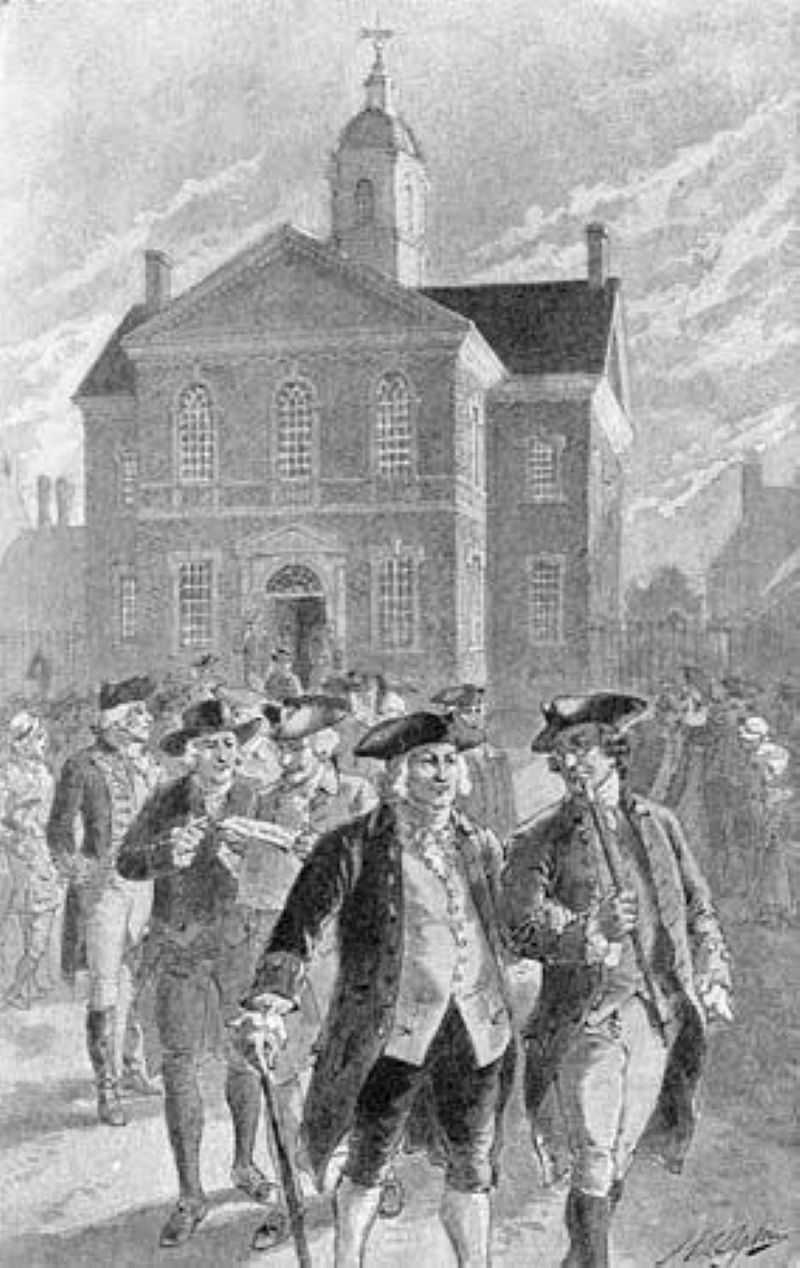
    An etching of what Carpenters Hall looked like in the 1700s.Courtesy of Carpenters Hall

    The acts, Norris explained, disbanded the Massachusetts legislature, putting Britain in charge of the state’s government. Britain closed the Port of Boston and stationed British troops in Massachusetts, requiring residents to feed, clothe, and house them.

    The colonists thought, “if Britain could do this in Massachusetts, what would that mean to the rest of the colonies?”

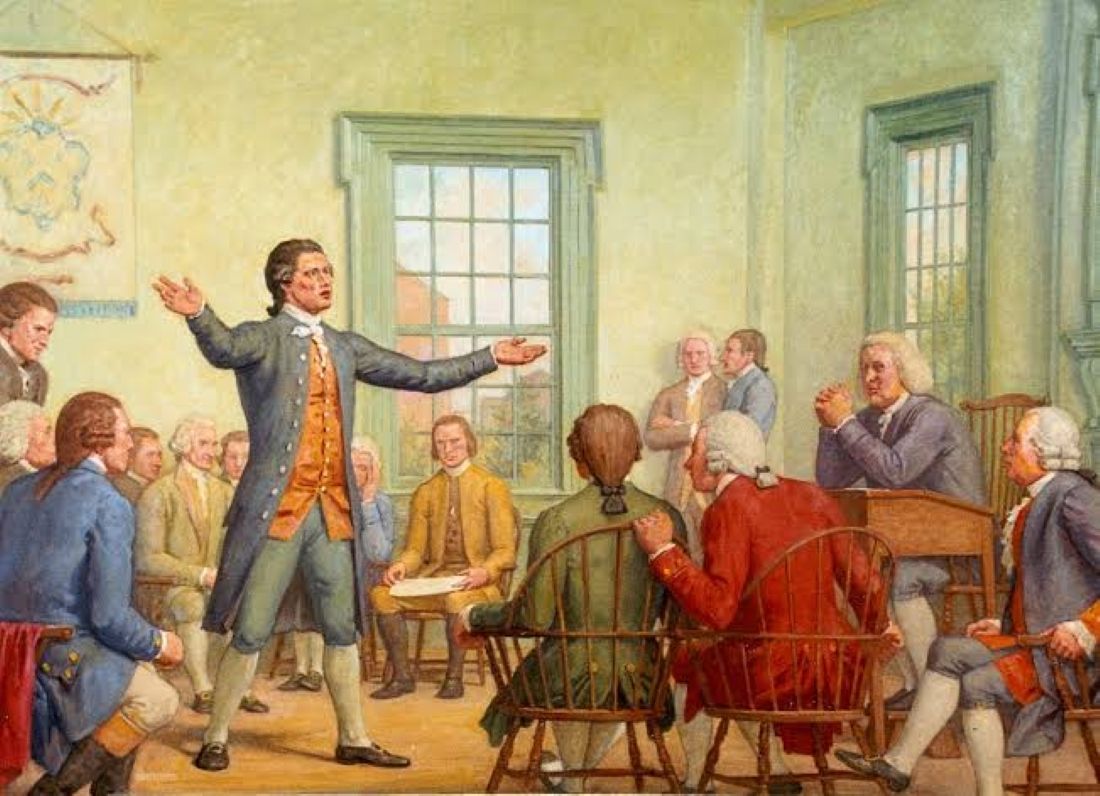
    On Sept. 5, 1774, 56 delegates from 12 colonies — Georgia didn’t come — convened at the then-new Carpenters Hall for the First Continental Congress. Their goal: to work out a deal between the colonies and their Mother Country so life in the New World could continue, albeit a bit smoother.

    That first meeting of the Continental Congress will be remembered Saturday at Carpenters Hall from 11 a.m. to 1 p.m. during the Philadelphia Historic District’s weekly “Firstival” celebration. Each Saturday this year, the district is throwing a day party honoring events that happened in Philadelphia that changed the world.

    For eight weeks, through Oct. 25, delegates hashed out a plan for independence and to heal their disagreement with the Crown.

    An etching of colonists and delegates gathering in front of Carpenters Hall.Courtesy of Carpenters Hall

    They drafted a Declaration of Rights & Grievances in which they demanded England send its troops home and stated they wouldn’t stand for taxation without representation. (Historians refer to this declaration as a prelude to the Declaration of Independence.) Delegates also adopted the Articles of Association, in which they voted to stop all trade with England until the Intolerable Acts were repealed.

    “They were trying to use their economic muscle to get England to the table,” Norris said.

    The First Continental Congress created a unity among the colonies that hadn’t existed before, Norris said. “Up until then, they thought of themselves as British subjects, more connected to the Mother Country than their neighbors. The Congress changed this dynamic.”

    This sentiment is best illustrated in Patrick Henry’s famous quote, during the opening sessions of that first Congress: “The distinctions between Virginians, Pennsylvanians, New Yorkers, and New Englanders are no more,” Henry said. “I m not a Virginian, but an American.”

    It is why the late historian David McCullough referred to Carpenters Hall as the “acorn of American democracy.” It is where, Norris said, “the seed of independence was built that ultimately grew into the United States of America.”

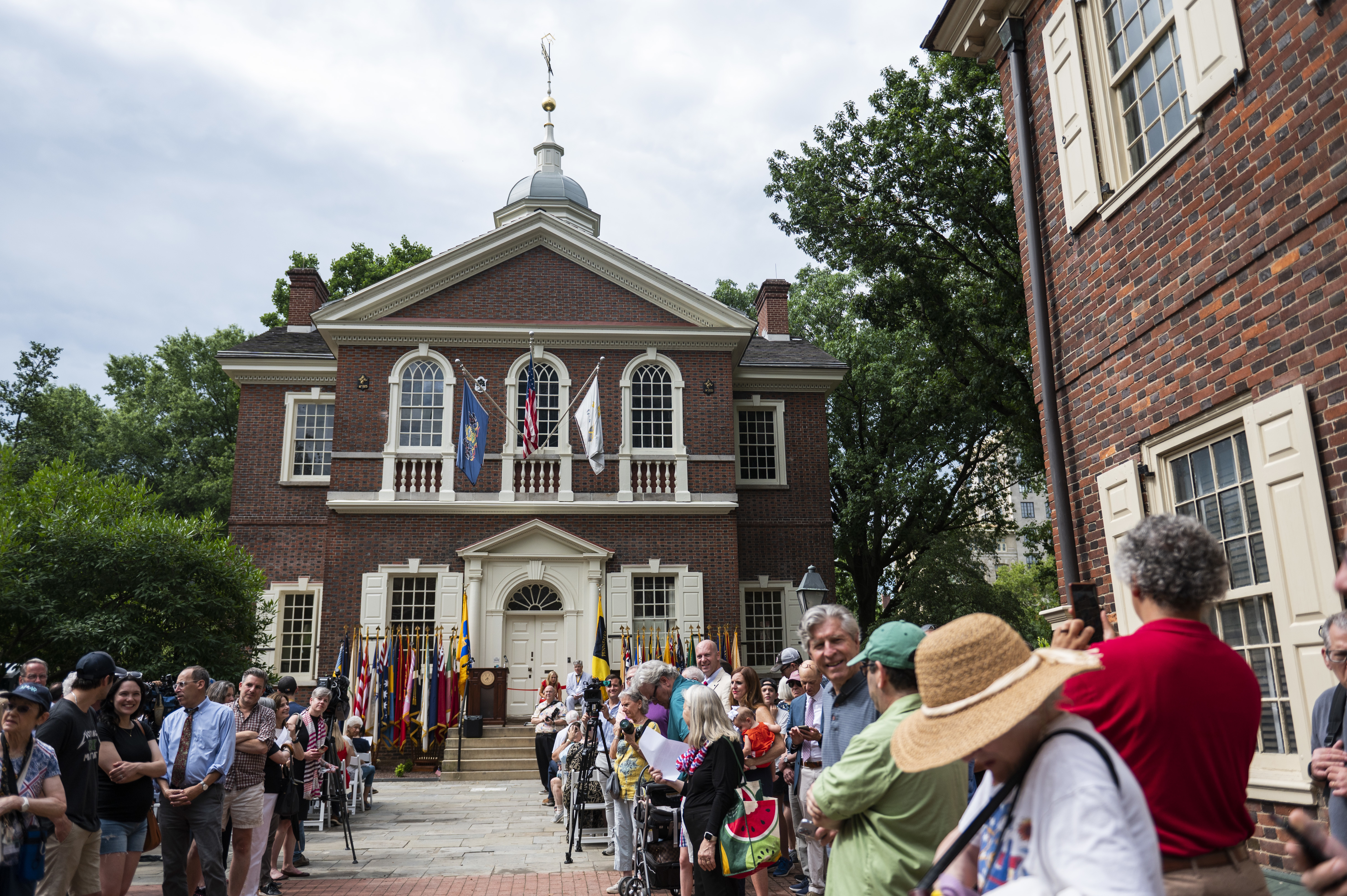
    A reopening ceremony at Carpenters Hall on Monday, July 3, 2023. The building opened to the public for the first time since April 2022.Allie Ippolito / Staff Photographer

    Delegates planned to reconvene in May of 1775 to address England’s response to their demands. But in April, the first shots of the Revolutionary War were fired and the Continental Army — victorious in the Battles of Lexington and Concord — were in a full-fledged war.

    Making nice with England was completely off the table.

    This week’s Firstival is Saturday, Sept. 12, from 11 a.m.-1 p.m., at Carpenters Hall, 320 Chestnut St., Philadelphia, Pa.

    Each week, The Inquirer is highlighting a “first” from the Philadelphia Historic District’s 52 Weeks of Firsts. A “52 Weeks of Firsts” podcast, produced by All That’s Good Productions, drops every Tuesday.

  • Remembering the local pilot who died on 9/11  | Inquirer Greater Media

    Remembering the local pilot who died on 9/11 | Inquirer Greater Media

    Hi, Greater Media. 👋

    Tomorrow marks the 25th anniversary of the Sept. 11, 2001 attacks. We look back on the life of the local pilot of one of the ill-fated flights and how his loved ones have ensured his legacy lives on. Also this week, Rose Tree Media School District’s proposed K-1 Early Learning Center moves one step closer to reality, a new breakfast and lunch joint is gearing up to open in a former Media cafe, plus an outdoors store will make its debut.

    If someone forwarded you this email, sign up for free here.

    Remembering Michael Horrocks, the local resident who died co-piloting one of the 9/11 flights

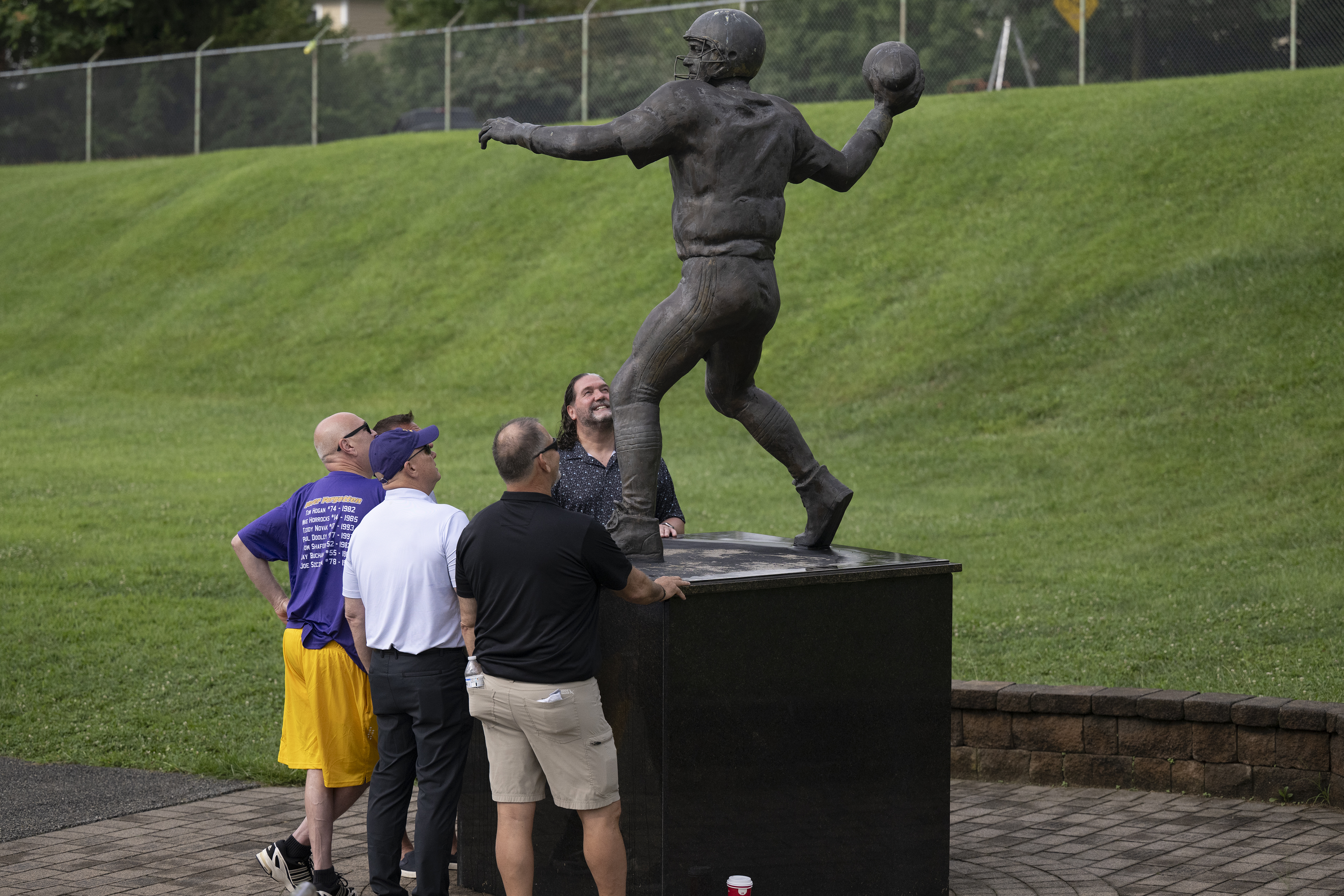
    Michael Horrocks’ former West Chester University teammates continue to pay tribute to their late friend, who died co-piloting United Airlines Flight 175 on Sept. 11, 2001.Jose F. Moreno / Staff Photographer

    When Bob Rafferty ran into Michael Horrocks at the Granite Run Mall in December 2000, neither likely expected it would be the last time they’d see one another. The former West Chester University football teammates briefly caught up amid holiday shopping, with Horrocks mentioning he’d become a commercial pilot.

    About nine months later, Rafferty had a feeling that Horrocks, a Glen Mills resident, might be on one of the hijacked planes that crashed into the World Trade Center on Sept. 11, 2001.

    The 38-year-old was co-piloting United Airlines Flight 175, which hit the South Tower.

    After Horrocks’ tragic death, former teammates like Rafferty came together to honor his legacy, including with a scholarship and statue at his alma mater, helping keep his memory alive.

    The Inquirer’s Alex Coffey looks back at Horrocks’ legacy and how his loved ones continue to honor his memory.

    📽️ Hear from his teammates in this Inquirer video.

    🗓️ Delaware County is hosting a remembrance ceremony at Rose Tree Park tomorrow at 11 a.m. to honor those who lost their lives in the 9/11 attacks.

    💡 Community News

    • In case you missed it, last week the boroughs of Rose Valley, Rutledge, and Swarthmore, along with Nether Providence and Upper Providence Townships, voted to establish a new emergency medical services authority. Media, which was previously contemplating joining, opted to continue with its current provider.
    • At its Tuesday meeting, the Middletown Township planning commission voted 4-2 to recommend conditional approval for Rose Tree Media School District’s proposed K-1 Early Learning Center, acting township manager Vincent M. Visoskas told The Inquirer. RTMSD has extended the timeline for the township to make a decision on its application to Nov. 21, he added. Council is next slated to meet on Wednesday.
    • New “outdoor lifestyle store” Media Mercantile is opening its doors on Saturday. Located at 21 E. State St., it’s taking over the former home of Homesewn, which moved about a block away earlier this year.
    • Nemours Children’s Health is slated to open a pediatric urgent care at its Glen Mills facility Wednesday.
    • Eric C. Fransen, 50, of Wallingford, has been charged with touching and secretly filming a girl in a bathroom, according to the Daily Times. Investigators found over 170 photos and videos of the victim that appeared to come from a hidden camera. Fransen is scheduled for a preliminary hearing next Friday.
    • Media native and Penncrest High School alum Norah Martin is one of a few individuals who’s been driving the Oscar Mayer Wienermobile throughout the U.S. this year. Known as “Nacho Dog Norah,” she earned degrees in public relations and Spanish from Penn State prior to embarking on the journey earlier this summer, according to Axios.
    • The county is hosting a household hazardous waste event Saturday at Rose Tree Park, where you can dispose of unwanted items like certain paints, chemicals, and batteries. Registration is required.

    🏫 Schools Briefing

    • Architectural firm KCBA is expected to present updated plans for Strath Haven High School’s renovation at the Wallingford-Swarthmore School District’s facilities committee board meeting Tuesday.

    🍽️ On our Plate

    • Dozens of new restaurants are opening throughout the region this fall, including a new breakfast and lunch spot in Media. The Hungry Hub will take over the former Rivalry Cafe and is targeting an Oct. 1 opening.

    🎳 Things to Do

    🖼️ Arts and Craft Festival: Gear up for fall with this festival featuring vendors, live music, and the start of Pumpkinland. ⏰ Saturday, Sept. 12 and Sunday, Sept. 13, 9 a.m.-5 p.m. 💵 Pay as you go 📍 Linvilla Orchards, Media

    🍺 Ship Bottom Oktoberfest: Raise a pint of German-style beer at this festival, complete with food trucks, games, live music, and a stein-holding contest. ⏰ Saturday, Sept. 12, 3-10 p.m. 💵 Pay as you go 📍 Ship Bottom Brewery, Swarthmore

    🍔 Middletown Township Food Truck Festival: Food trucks will descend on Longview Park, where there will also be music and games. ⏰ Thursday, Sept. 17, 4-8 p.m. 💵 Pay as you go 📍 Longview Park, Media

    🗞️ What other Greater Media residents are reading this week:

    By submitting your written, visual, and/or audio contributions, you agree to The Inquirer’s Terms of Use, including the grant of rights in Section 10.
    This suburban content is produced with support from the Leslie Miller and Richard Worley Foundation and The Lenfest Institute for Journalism. Editorial content is created independently of the project donors. Gifts to support The Inquirer’s high-impact journalism can be made at inquirer.com/donate. A list of Lenfest Institute donors can be found at lenfestinstitute.org/supporters.

  • After 9/11, these Pennsylvanians went to war. Here’s how their lives changed.

    After 9/11, these Pennsylvanians went to war. Here’s how their lives changed.

    Within weeks of the Sept. 11 terror attacks, the U.S. government launched airstrikes and sent American troops to Afghanistan. In March 2003, spurred by claims that Iraq possessed weapons of mass destruction, the U.S. bombed and invaded the country.

    In the two wars that followed, hundreds of thousands of Iraqis and Afghans died, with civilians making up a significant number of the dead.

    On the U.S. side, more than two million American military personnel served in Iraq or Afghanistan, and over 7,000 died in these conflicts. Hundreds of thousands more live with service-related disabilities, and according to Brown University research, more than 30,000 post-9/11 veterans have since died by suicide.

    Over 117,000 Pennsylvanians served in the military since 9/11, according to 2023 state data, and 295 died in Iraq and Afghanistan. At least 50,000 hailed from New Jersey, including 163 who died.

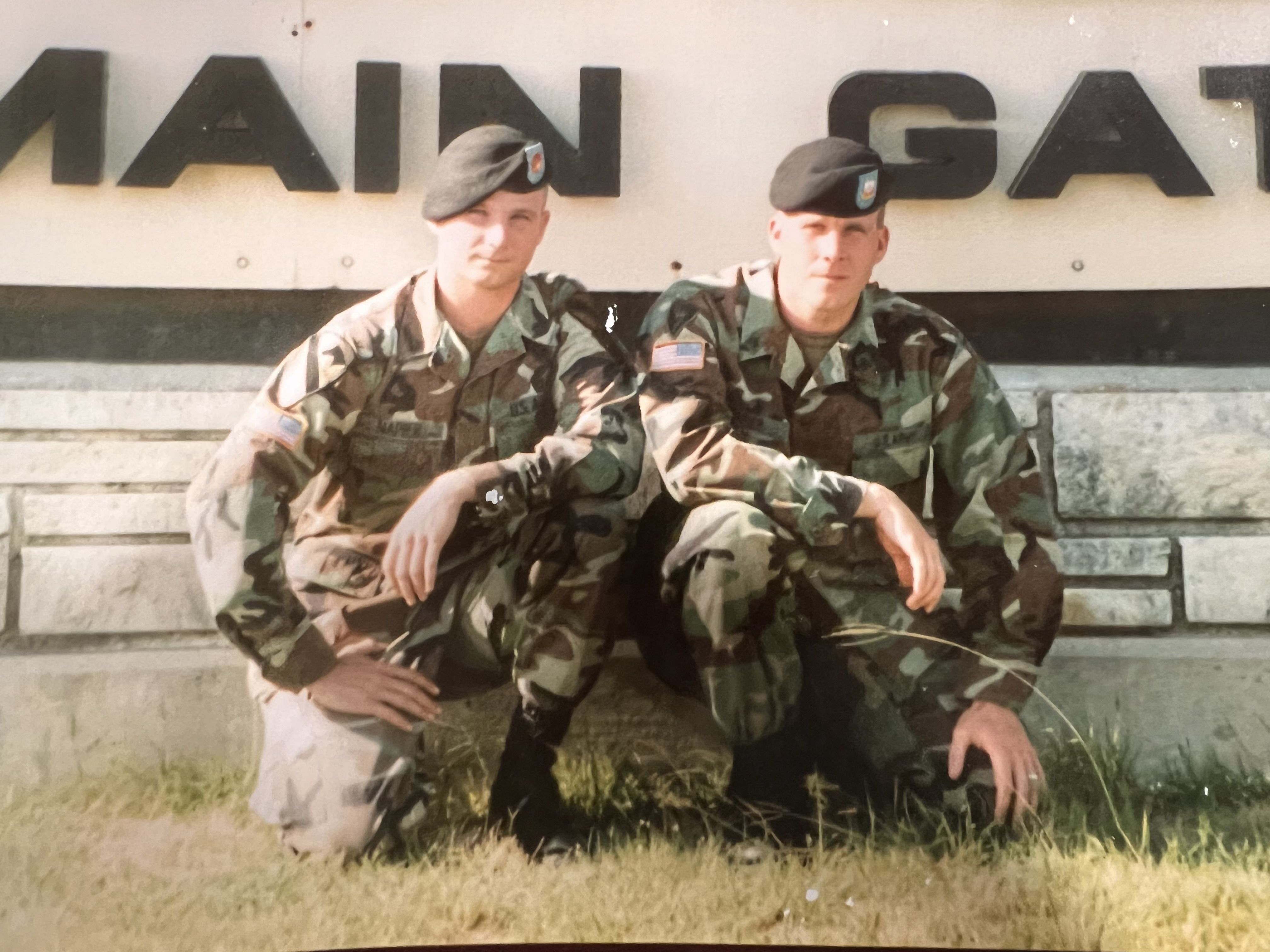
    Benjamin Napier (right) and Brian Napier crouch for a picture in front of the main gate at Fort Hood, an Army base in Texas, in 2005. The brothers enlisted two days after Sept. 11 and were deployed to Iraq in 2004.Courtesy of Benjamin Napier

    “I think it’s important, regarding the veteran population, to understand the diversity of experience,” said West Chester University historian Robert Kodosky, who has interviewed hundreds of post-9/11 veterans. “Some struggle. Some don’t. Some look back on their experience with pride. Some don’t want to talk about it at all.”

    As the nation marks the 25th anniversary of the Sept. 11 attacks, the stories of these four military veterans from the Philadelphia region offer a glimpse into the experiences of countless others whose lives have been shaped by the wars that followed.

    ‘I can’t believe I made it home’

    Benjamin Napier was 25 and living in Drexel Hill when 9/11 happened. The following evening, Napier and his younger brother, Brian, were gathered with friends in Upper Darby to attend a candlelight vigil, and Napier remembers noticing that the normally steady flow of air traffic had completely ceased. The skies were empty. That’s when he shared his thoughts with Brian.

    “And I kind of turned to him, and I was like, you know, I think I’m going to do it. I’m going to join. And he was like, if you do it, I’m going to do it,” Napier said.

    They enlisted in the Army on Sept. 13. Both were stationed at Fort Hood, Texas, and deployed to Iraq in 2004.

    After riding in a convoy for three days from Kuwait to Baghdad, Napier, whose specialty was setting up computer and telephone networks, was sent to Abu Ghraib Prison.

    The prison was not yet known for the horrific mistreatment of prisoners by Americans. But the squalid, cinderblock-walled compound, which had been a site of mass killings and torture under the Saddam Hussein regime, felt like “pure evil” to Napier.

    “The place just had a vibe to it,” Napier said. “And we’re thinking, we don’t have running water. We don’t have toilets. I’m sleeping on a cot. And you’re just thinking to yourself, what in the world is going on over there.”

    Soon, Iraqi insurgents began launching ferocious mortar attacks on the prison, Napier said.

    Only when the U.S. soldiers got access to a TV did they learn that Abu Ghraib had become infamous. Widely shared photos of tortured Iraqis, flanked by smiling American soldiers, had became a rallying cry for war opponents.

    The news also made the prison a target, and for the rest of Napier’s deployment, he said he witnessed sniper fire, shelling that killed and wounded prisoners, and the intervention of U.S. Apache helicopters that saved the prison from a hostile Iraqi takeover.

    “I can’t believe I made it home,” Napier said.

    It took him three years of intensive therapy to process his trauma, as well as extensive support from his wife and family, he said. Brian survived an improvised explosive device blast that left him disabled from the military due to post-traumatic stress disorder. The brothers now live in Delaware County and remain close.

    Napier said despite all that he and Brian went through, he’s still glad they enlisted.

    “A lot of the veterans that I talk to have that same sort of feeling. You raise your hand for something bigger than you. You’re kind of doing something for the greater good. And I think we still kind of feel that way,” Napier said.

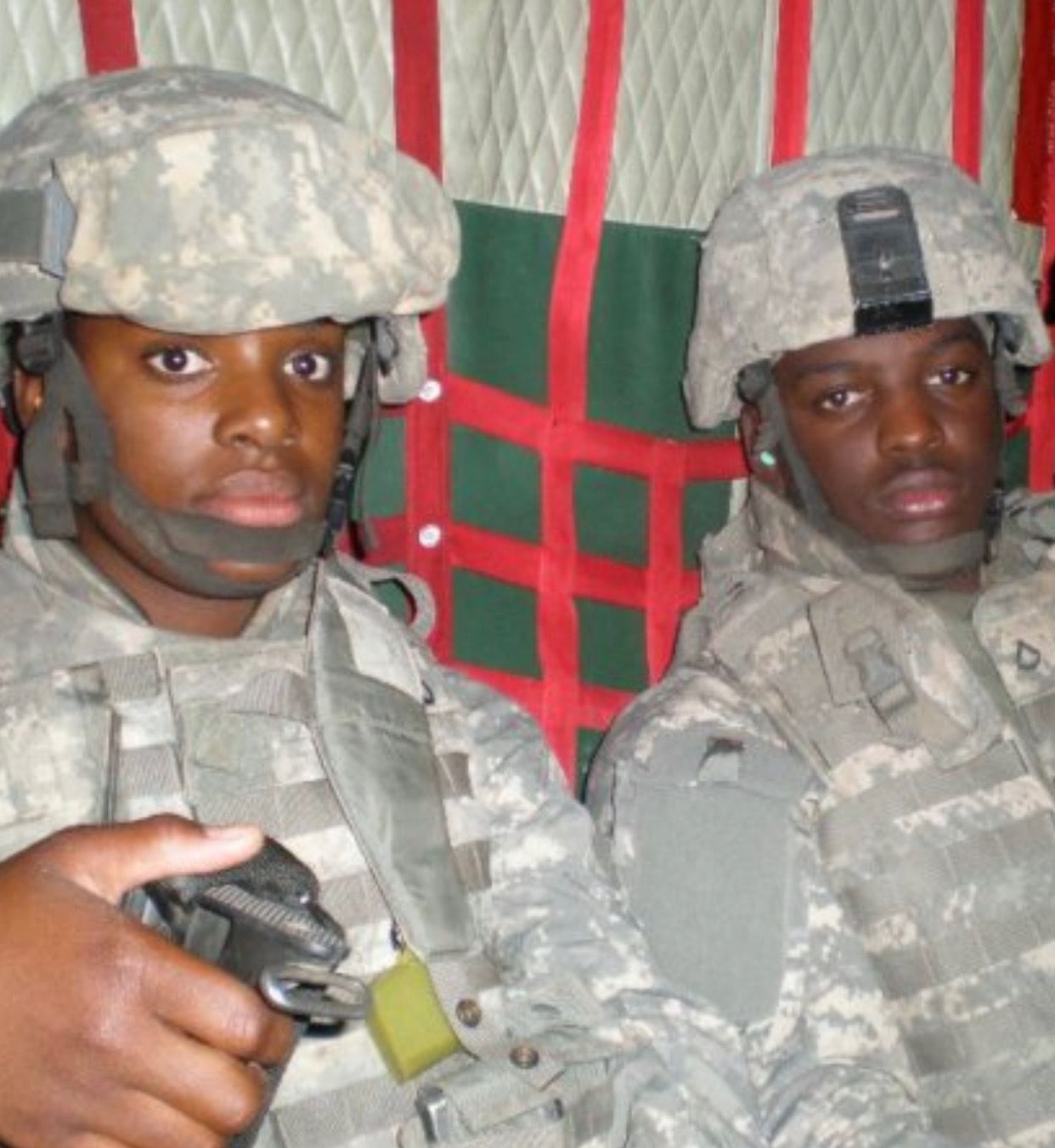
    Keshina Bouie (left) on board a C-130 aircraft, preparing to fly from Kuwait to Iraq in 2007. At right is her future husband, Anthony.Courtesy of Keshina Bouie

    ‘I wanted to do something positive’

    Keshina Bouie, 43, remembers being sent home from South Philadelphia High School on Sept. 11. Ironically, she said, her junior ROTC class is what got canceled.

    Bouie’s parents had been in the Air Force, but Bouie hadn’t planned to follow their path. However with no college scholarships lined up, she enlisted in the Pennsylvania Army National Guard to pay for school.

    “At that point in my life, I wanted to do something positive. And I wanted to get a degree and break generational cycles, and I was determined to be successful,” Bouie said.

    Bouie earned her degree at Cheyney University in 2007. One day before her college graduation ceremony, she received deployment orders to Iraq.

    Bouie was stationed at Balad Air Base, about 40 miles north of Baghdad. There, she guarded a secret Special Forces base that was embedded within the military installation. Exploding mortars and the rush of incoming wounded soldiers became part of her routine.

    “When I was in Iraq, I just wanted to focus on doing my job and getting home safe,” Bouie said.

    While on deployment, Bouie met Anthony, a soldier who grew up just blocks away from her Point Breeze home.

    A romance blossomed in the spare hours, though they remained separated by their jobs. When they returned home, they got married. They’ve since had two children.

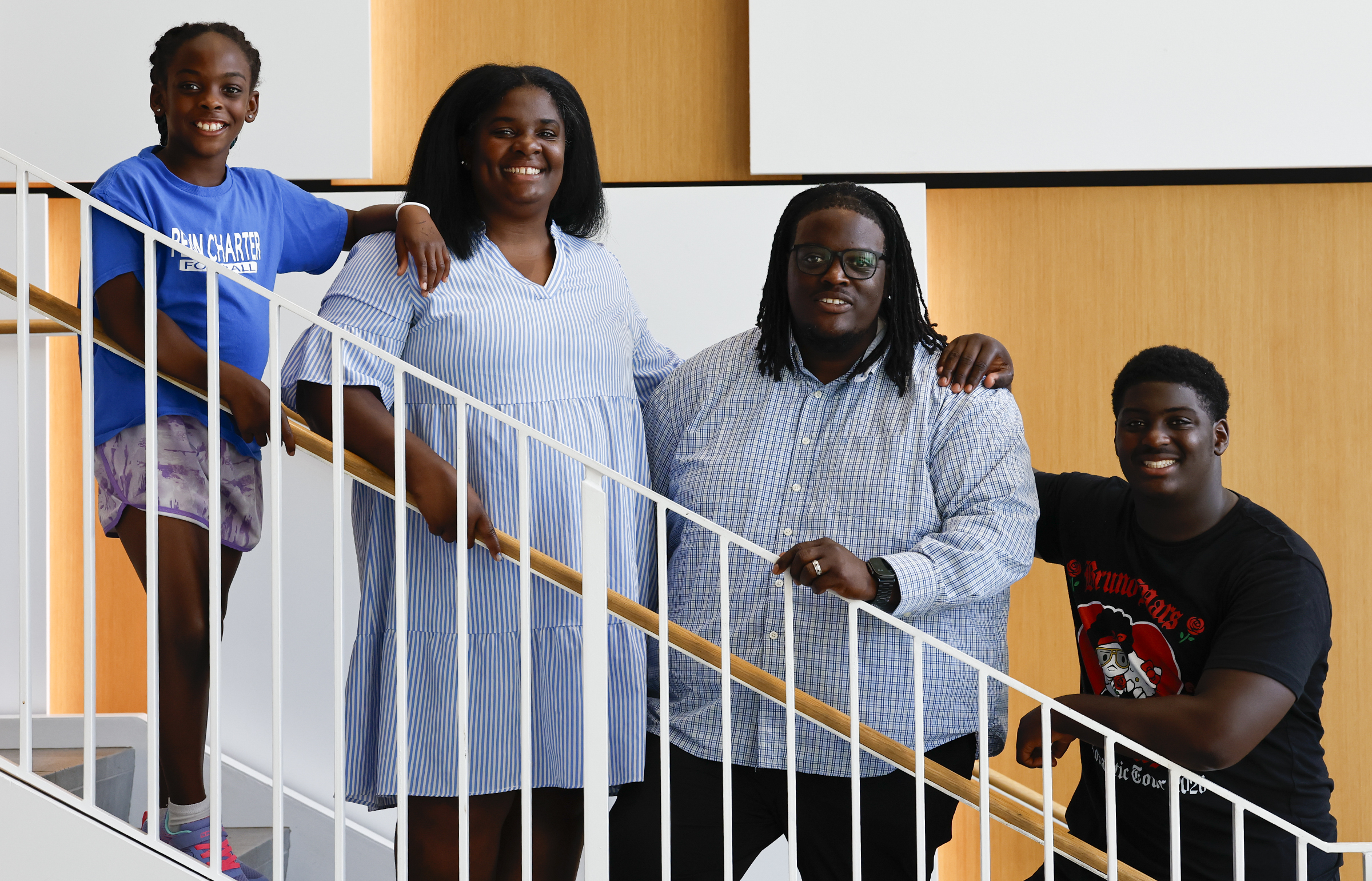
    The Bouie family (from left to right): daughter Savannah Bouie, mother Keshina Bouie, father Anthony Bouie Sr., and son Anthony Bouie Jr., at William Penn Charter School on Sept. 3. Army veteran Keshina Bouie grew up in Philadelphia and was in high school ROTC on Sept. 11, 2001. She joined the Army, which helped her reach personal educational goals and give her children a good life, and played a big role in her being who she is today.Yong Kim / Staff Photographer

    Bouie stayed in the Guard for 16 years, earned a master’s degree from La Salle University, and worked for the Department of Veterans Affairs and the Defense Logistics Agency. Her military service, she said, ultimately helped her provide a better life for her son and daughter.

    She said there are things she’s not proud of about her country, but she’s always proud of the people she served with in Iraq and glad she enlisted.

    “It was literally the best decision I made in my life. And I know not everyone can say that.”

    ‘What are we protecting?’

    Michael Miller, 52, grew up in City of Chester with seven brothers and one sister.

    “We grew up pretty poor. But being a child, you don’t know that you’re poor. We had fun. We did all the things that kids do,” Miller said.

    Already a father at 19, Miller joined the Marine Corps in 1994 to provide for his family. He returned home after eight years, but missed military life. He joined the Army National Guard in 2007 and deployed to Bagram Air Base, Afghanistan, in 2010.

    “For the first six months, it was like being on a weird vacation,” Miller said. “But let me tell you something: When the snow melted off those mountains, things totally changed.”

    Three of his comrades died in an IED blast that summer, and of the 370 people serving with him, about 300 returned home with Combat Action Badges, a designation given to soldiers involved in ground combat.

    Miller’s main job entailed driving a large truck known as a wrecker and using it to retrieve destroyed Army vehicles and cargo.

    But it was while on a mission delivering supplies that an IED detonated under his truck, launching it into the air “like it was a piece of paper.”

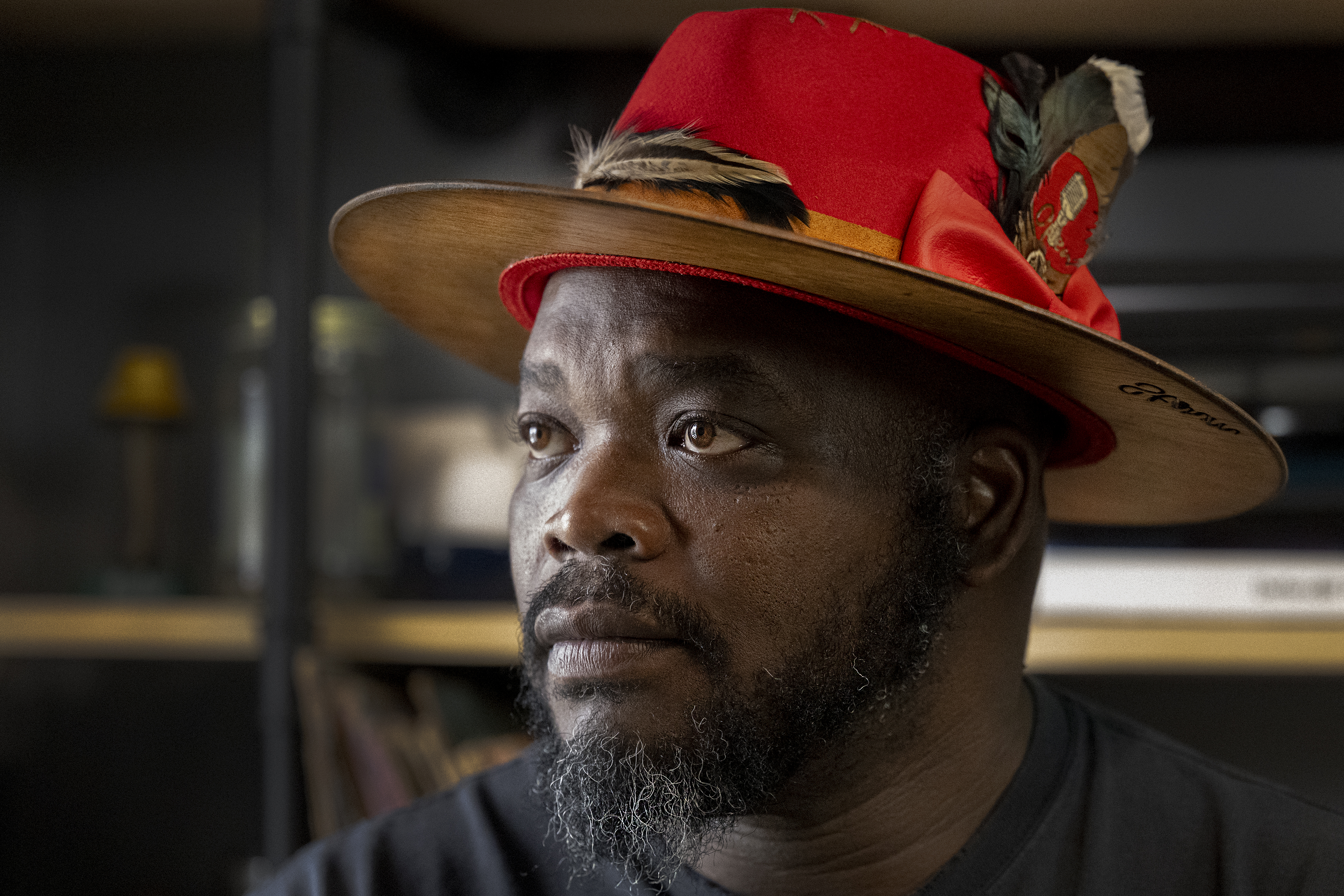
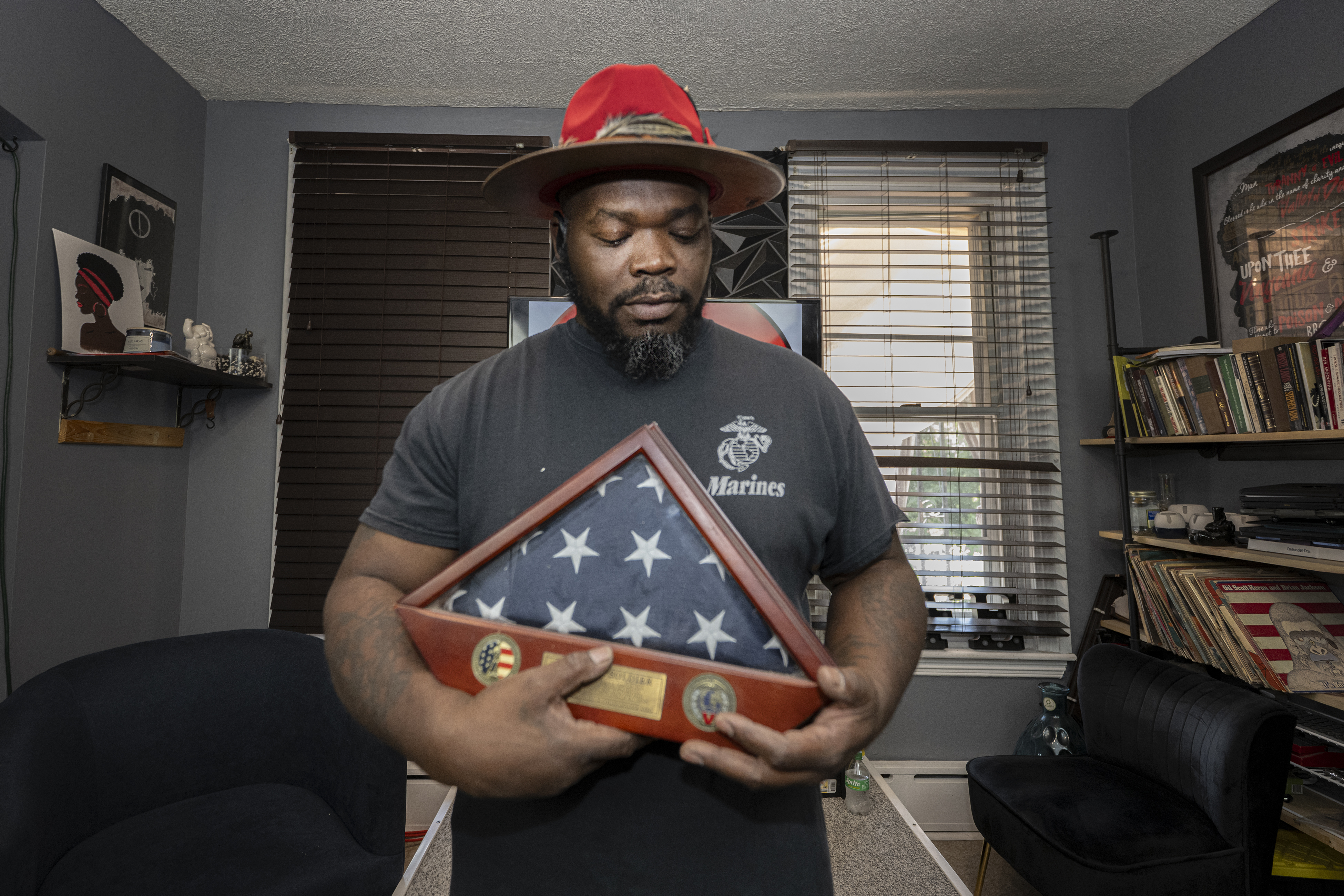
    Marine veteran Michael Miller holds an American flag given to him for his military service in Afghanistan as he poses for a portrait at his home in Chester on Aug. 31. Miller deployed to Afghanistan in 2010 and survived an IED blast that caused a traumatic brain injury. After returning home, he was diagnosed with PTSD and an anxiety disorder. Miller has turned to poetry, writing, and podcasting to help cope with his experiences and the loss of three comrades who died by suicide after returning home.Jose F. Moreno / Staff Photographer

    A doctor told Miller he had a concussion, he said, and he finished his deployment. It was only when he returned home that the extent of his traumatic brain injury and PTSD became clear. Panic attacks made him a “frequent flyer” at local emergency rooms.

    “I used to go to sleep fully dressed, because I wanted to make everything convenient for the paramedics, because I was sure I was dying,” Miller said.

    Miller joined Warrior Writers, a group of veterans who process their experiences through writing.

    “Honestly? I do poetry. I learned to express myself,” Miller said.

    What he struggles with now, Miller said, is that despite his efforts, three people he served with have since died by suicide. That’s left him feeling that the war wasn’t worth fighting.

    “Because, honestly, what are we protecting when the wealth gap gets so much larger? What are we protecting, when we have so many homeless? It’s a bunch of stuff that in the grand scheme of things wasn’t worth the blood that was left there.”

    ‘Shona ba shona’

    Milan Moncilovich, 62, said he learned about the Sept. 11 attacks while on duty at Methodist Hospital in South Philadelphia. By then, the pharmacist and hospital administrator was also a seasoned officer in the U.S. Navy Reserves.

    “My first thought was, this is the beginning of something that’s going to be big, and that’s going to take a while, and most likely I am going to be part of this, and be deployed at some point,” Moncilovich said.

    In 2010, the Navy sent him to Afghanistan to train Afghan medical personnel. He recalled seeing a stunning sunrise as his plane performed a tactical landing in Kandahar to avoid rocket attacks.

    “To me it was like a personal, spiritual kind of sign that said, ‘Hey, anything that’s going to come in the future, just take this in, take this beauty in, and remember where your inner soul is,’” Moncilovich said.

    In the northern Afghanistan city of Mazar-i-Sharif, Moncilovich and other American medical professionals worked closely with Afghan doctors and nurses, he said. As they got to know one another, their motto became “shona ba shona,” a Dari phrase that meant “shoulder to shoulder” or “together.”

    In this advisory role, Moncilovich’s team supervised treatment of Afghan soldiers and civilians who had been struck by IEDs or gunfire.

    “I can close my eyes at any time, and I can see those soldiers in that trauma bay and on those tables,” he said. “It’s not ever going to go away. I won’t say I’m OK with it. It’s just going to be there.”

    Moncilovich said he saw the positive side of the U.S. missions there, such as the construction of schools and medical facilities.

    The U.S. exit from Afghanistan in August 2021 angered him, he said.

    “Just to see 13 more American lives lost, it really, really upset me. That’s probably the only thing that really probably brought my rage up pretty high. Especially seeing everything we left behind,” he said.

    Moncilovich, who now works for Shriners Children’s hospital in North Philadelphia, said he would jump at a chance to return and get closure.

    “I know that it’s completely changed now, and I understand a little more how the Vietnam vets feel now. Time will kind of change things. I know how angry they were. But now, I know what our mission was, but at the end of the day, things kind of went back to the way they were.”

  • Gov. Josh Shapiro and Utah Gov. Cox condemn political violence in joint appearance on eve of anniversary of Charlie Kirk’s killing

    Gov. Josh Shapiro and Utah Gov. Cox condemn political violence in joint appearance on eve of anniversary of Charlie Kirk’s killing

    One year ago, Utah Gov. Spencer Cox was on his way to deliver one of the most sobering speeches of his political career.

    The conservative activist Charlie Kirk had been assassinated at a university in the state, and the nation was teeming with emotion — grief, vengeance, and celebration all mixed together.

    Amid a flurry of messages of support from other leaders, Cox, a Republican, said he spoke to Pennsylvania’s Democratic Gov. Josh Shapiro, who had experienced political violence of his own, and offered advice on how Cox could comfort a jostled community.

    “I called him on the way to the press conference, and he told me to ditch my talking points and to speak from the heart,” Cox recalled on the eve of the anniversary of Kirk’s killing. “I’m grateful for that advice. I took it, and it was really important in that moment.”

    Cox, whose new book on healing political divisions was released Tuesday, appeared on stage with Shapiro at the Kimmel Center for the Performing Arts in Philadelphia on Wednesday. The event marked a continuation of the relationship the two governors have built in part from the tragedy of politically motivated attacks.

    The event, moderated by New York Times journalist Lulu Garcia-Navarro, centered on how all members of society can hold respectful and productive conversations, even with people with whom they disagree. It comes less than two months before the midterm elections, as Democrats and Republicans wage heated campaigns for control of Congress and governors’ offices around the country, including in Pennsylvania.

    Shapiro, who along with his family narrowly escaped an arson attack on the governor’s mansion last year while they were staying there to celebrate Passover, said Americans should be “deeply concerned” about political violence and should not allow it to be rewarded or take deeper root in our nation.

    Since that April 2025 attack, threats have persisted, largely related to his Jewish faith, he said.

    “We’ve had six different people arrested in the last six or seven months for making terroristic threats against me and my wife, against our family, and oftentimes it’s rooted in an attack on me because of how I worship,” he said.

    Cody Balmer, the man who pleaded guilty to setting fire to the governor’s mansion, chose one of the holiest Jewish holidays to execute his plans and told a 911 dispatcher that night he would not take part in Shapiro’s “plans for what he wants to do to the Palestinian people.”

    The experience has left Shapiro conflicted.

    “I have a like a split-screen in my brain. I know that the incidents of political violence are rising. I know that the incidents of hate speech and hate crimes are rising, particularly against American Jews,” he said.

    Angrier rhetoric, he said, gets rewarded with online engagement and campaign donations.

    “Yet the other side of my brain gets to be governor in the greatest place, I think, in this nation, in the toughest swing state in the union, and as I go all across this commonwealth, I am met by good, decent people who offer prayers to my family, in ways that I don’t worship,” he said.

    After Kirk’s killing, Shapiro condemned all political violence and ordered flags to be flown at half-staff in his honor. He also called out “dark rhetoric” that rejoiced at Kirk’s death.

    “The talk of celebrating this man’s death, no matter how profound a disagreement over a policy should be, he left behind a wife and two children,” Shapiro said at the time. “No one should be celebrating that. No one. I think that kind of rhetoric is unhelpful on every level.”

    Shapiro, a possible 2028 presidential contender, has also talked about the assassination attempt against President Donald Trump in Pennsylvania during the 2024 campaign while pushing Trump to be more comprehensive when speaking out against political violence. On Thursday, he urged Cox to use his power within the GOP to call for unity.

    “I would say to my friend Governor Cox,” he said, “I hope he recognizes the power that he has from the perch that he occupies and the respect that you’ve earned across the country, and you use that power to help heal our politics and bring us closer together.”

    Cox, who has said Trump is “not interested in uniting the country” despite endorsing him in 2024, has ruled out a 2028 presidential run of his own but quipped Shapiro may be interested.

    “Somebody someday is going to run for president,” he said. “By the way, I just want to be clear, it may be somebody in this room. It’s not me.”

    The audience cheered for Shapiro, who smiled and said “Cox for president” into his microphone.

    Cox also praised Shapiro’s ability to “get stuff done” with a divided legislature, using the Pennsylvania governor’s signature slogan.

    “That’s going to be on a campaign ad,” Garcia-Navarro said.

  • Matt Campbell and K.C. Keeler meet for the first time as head coaches. They once took part in a historic playoff game.

    Matt Campbell and K.C. Keeler meet for the first time as head coaches. They once took part in a historic playoff game.

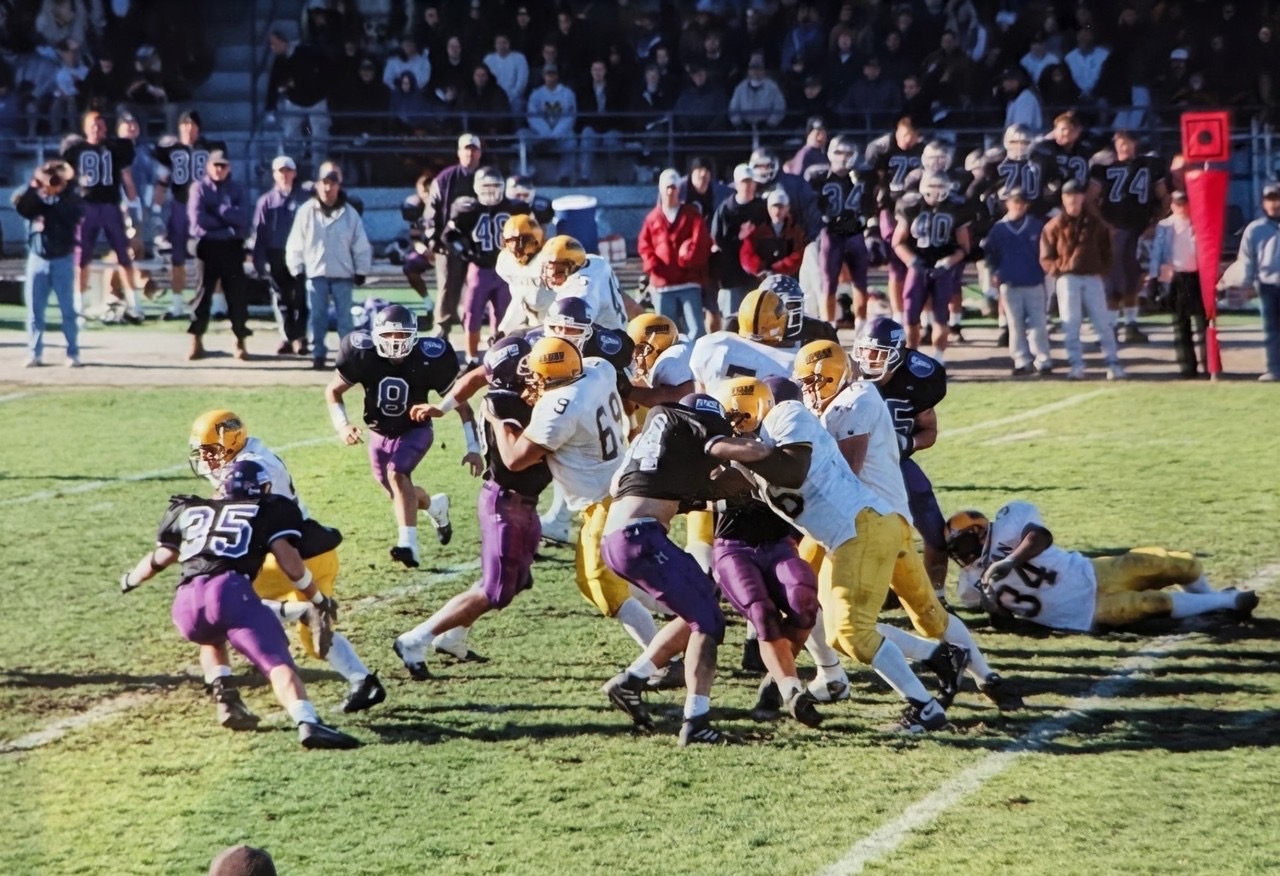
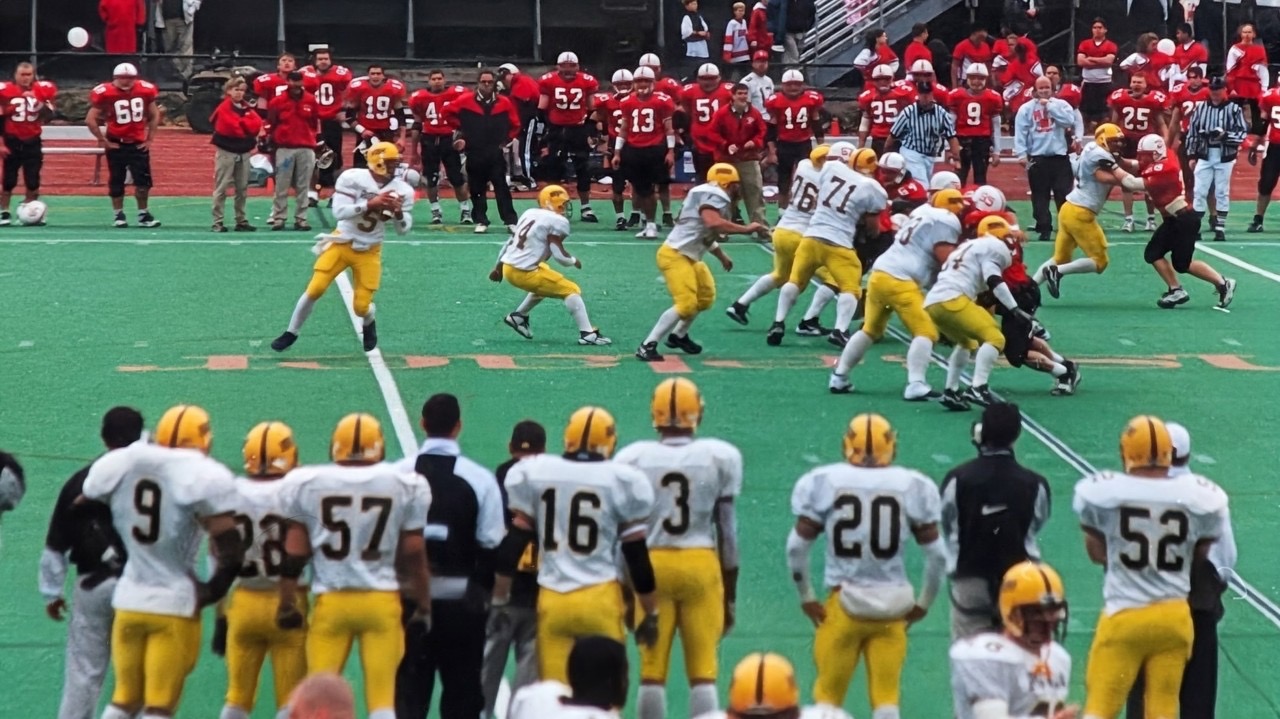
    Mount Union was facing a fourth-and-5 in overtime, trailing 24-17 in a Division III playoff semifinal on Dec. 11, 1999. The Purple Raiders, down to their last play, held a 54-game winning streak, then the longest in any division of football, and sought a fourth straight trip to the D-III title game, named the Stagg Bowl.

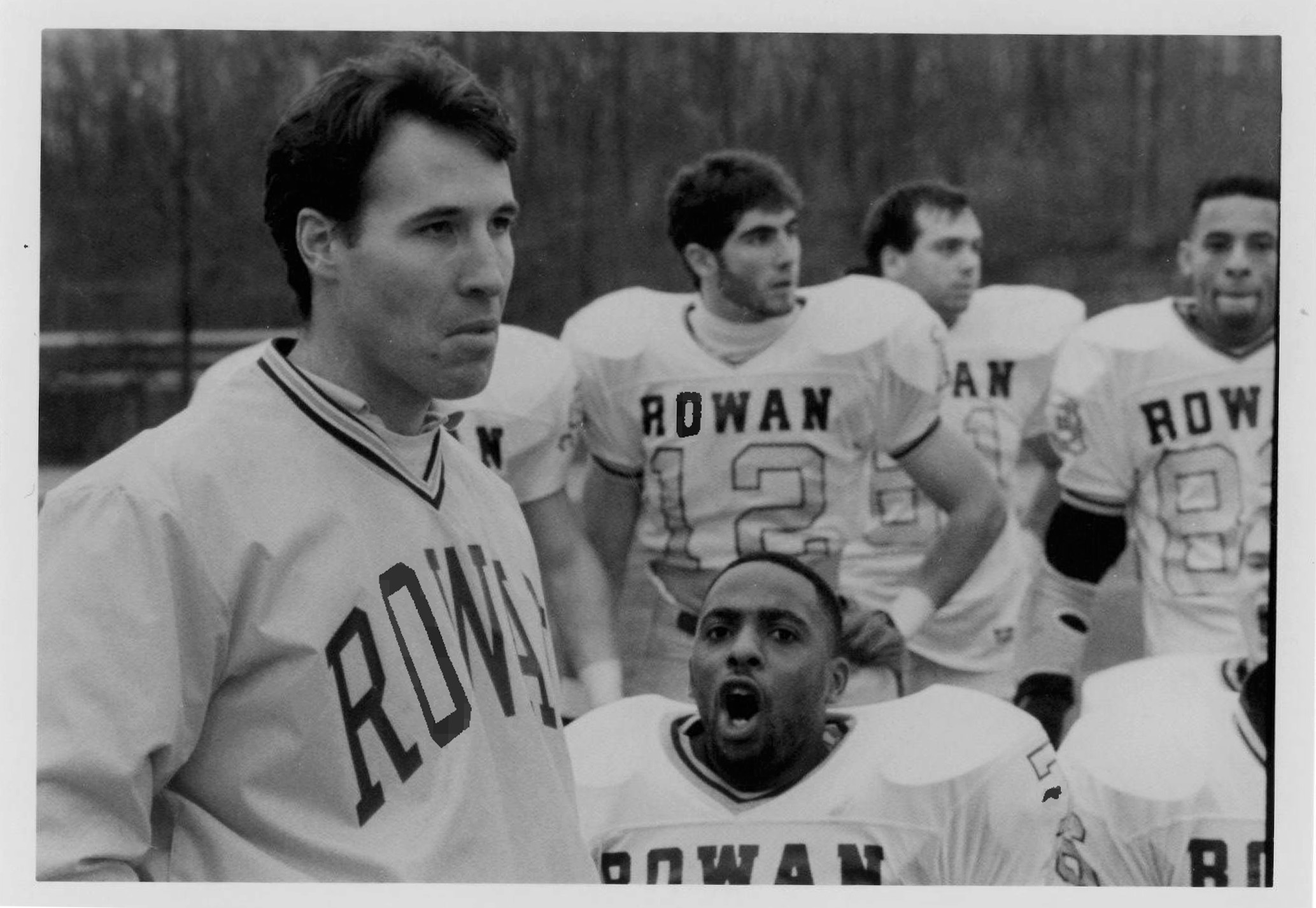
    Twenty-seven years later, K.C. Keeler still can see the play crystal-clear. Back then, he was Rowan’s head football coach, seeking his fourth title game appearance since becoming a 32-year-old head coach in 1993. And on this day, after losing to Mount Union in the championship game twice in the previous three years, something special was about to unfold for the Profs.

    “I remember the last play of the game, [Mount Union was] going to try to tie it up on fourth down, and they had a tight end, I believe it was, over the middle of the field, in the end zone, and the ball’s thrown,” Keeler, now Temple’s coach, recalled to The Inquirer. “I see the tight end go up in the air, and it looks like he’s going to come down with it. And Mark Hendricks, my middle linebacker, who was a two-time captain for me, he turns and runs and actually hits the tight end so hard he broke his ribs. And the ball comes squirting out, and he’s laying there, and we’re celebrating over top of him.

    “My 398th game [is] coming up here. … That was definitely one of those where you remember for a lifetime.”

    On the surface, Penn State head coach Matt Campbell, from Massillon, Ohio, and Keeler, from Emmaus, Pa., don’t share many commonalities beyond coaching in the same state ahead of their matchup on Saturday (noon, ESPN2). As it turns out, though, the 46-year-old Campbell, a former standout college defensive end turned coach, was not only on that Mount Union team in 1999, but on the field toward the end of the game.

    At a coaching clinic this winter, not long after Campbell became Penn State’s 17th football coach, Keeler says his counterpart had one thing on his mind to bring up after formally meeting.

    “First thing that comes out of [Campbell’s mouth], he goes, ‘I’m 1-1 against you.’ I’m like, ‘What do you mean you’re 1-1? You’re 0-1,’” Keeler says. “He goes, ‘No, I was a [graduate assistant] on the team that beat you then a couple years later.’

    “It’s like, ‘OK, we’ll give you that one.’ So he and Nick Sirianni were both on that team [in 1999], and I’ve had some fun with them on having that one up on them, for sure.”

    K.C. Keeler was Rowan’s football coach from 1993 to 2001.Rowan University Athletics

    Campbell, who quipped, “You’re kind of coming at me, huh?” when The Inquirer asked about that 1999 game against Rowan earlier this week, still harbors feelings over the only loss in his college career at Mount Union.

    “In that game, as a football player [who] won three national championships, and at that time, that was almost the spark for our program, to be quite honest with you,” Campbell said from his podium on Tuesday. “I was in on the last play, as the game ended, and that was tough.

    “I think for me, that was a great opportunity for me to learn what the standard of excellence was in the program at Mount Union losing that football game, and what it meant to never have that feeling again.”

    ‘Got over the hump’

    That 1999 game comes into focus as Keeler, now in his 33rd season as a head coach, will host in-state rival Penn State this weekend. It will mark the 46th meeting all-time between the programs.

    And the significance of Rowan’s win still reverberates with some of Keeler’s former players almost three decades later.

    Bobby Acosta, who played for Keeler at Rowan as a safety, lost his father as a freshman and left school without telling his coach. He later changed his mind, but the only way back on the football team, Keeler told him, was if Acosta “got a 4.0 [GPA] and passed 18 credit hours in the summer.”

    “I said to myself, ‘There’s no way I can do that,’ and I did it. And that’s where my life changed,” said Acosta, who now coaches high school football in Texas. “I was a young man. K.C. was like my dad. Ever since that point, I played for him. Then I worked for him at Rowan. Then I worked for him at Delaware with Joe Flacco.

    “He’s been a mentor to me for a lot of years. It was to the point I was babysitting his kids when I was in college. K.C. Keeler to me was someone that I looked up to.”

    Rowan faces Rensselaer Polytechnic Institute during a playoff game in 1999.Courtesy of Greg Gudis

    Greg Gudis, who was the starting left guard for Rowan during the 1999 season, took a different route to the program. He initially chose Gettysburg College out of Pennsauken High School, started as a freshman, but noticed the program “didn’t really prioritize” football.

    So Gudis transferred to Rowan, formerly named Glassboro State, in 1998, located “right in my backyard,” he said. The former offensive lineman appreciated that Keeler was honest and did not guarantee him a starting spot.

    “When I got to Rowan, the level of talent was so much higher than where I just come from,” said Gudis, who now resides in Arizona. “Some of the guys I played against that maybe should have been [playing at the Division I level]. It was a much different level of play, and Coach Keeler was a much different level of coach than where I had just come from.”

    Two things remained elusive for Keeler heading into Rowan’s 1999 season: Beating Mount Union and winning a Stagg Bowl, both of which he went winless three times prior.

    The 67-year-old coach, leading up to Rowan’s playoff matchup with Mount Union, made sure to keep newspaper clippings out of the locker room, Gudis said. Acosta added that the more than six-hour trip to Alliance, Ohio, where Mount Union was located, had the team “already down 20 points mentally,” but their mindset was “we have everything to gain and nothing to lose at their home place.”

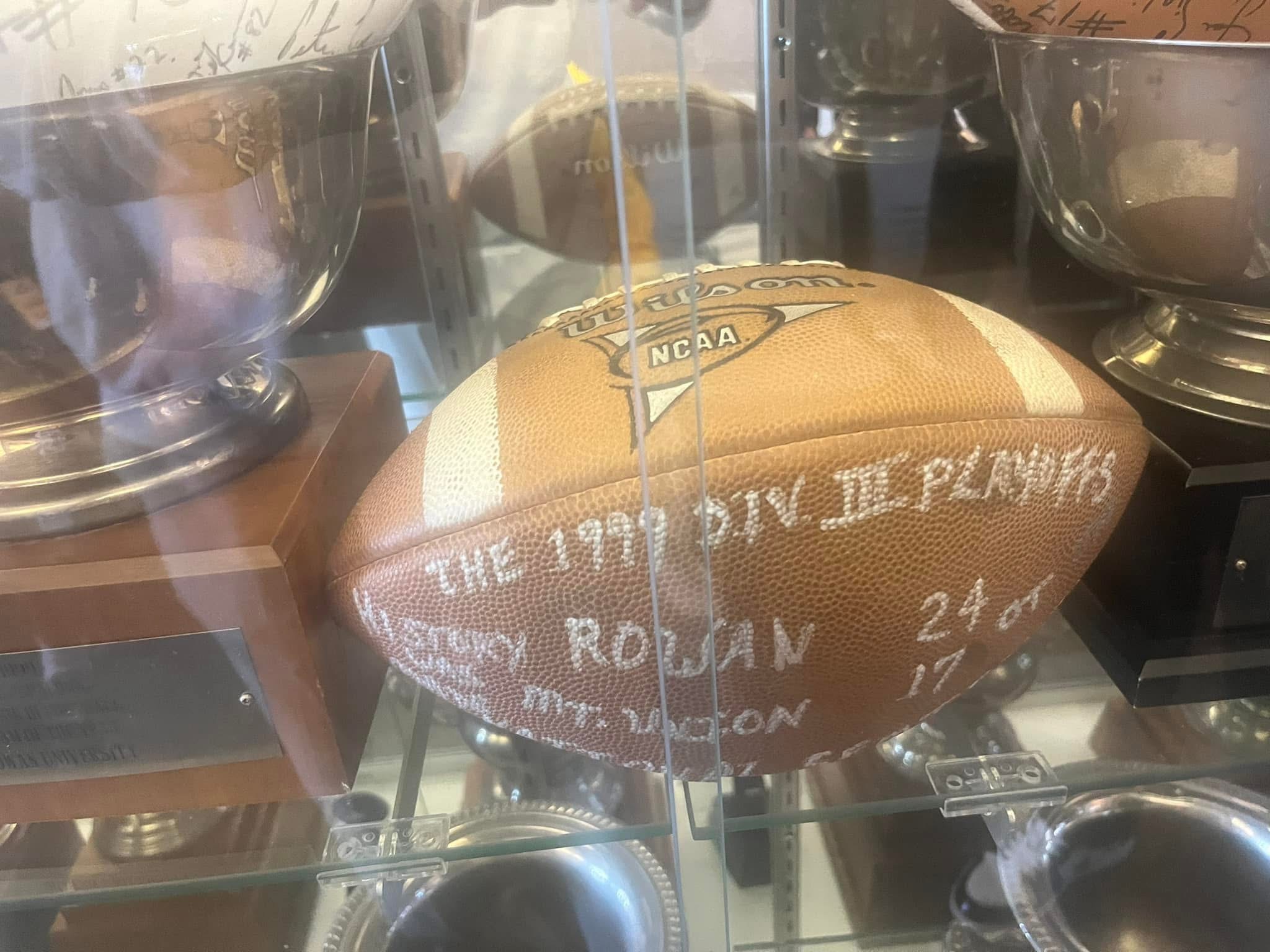
    A football in Rowan’s trophy case from their win over Mount Union in 1999.Courtesy of Bobby Acosta

    And it worked. Though Rowan lost to Pacific Lutheran the following week in the Stagg Bowl, that win over Mount Union was “our national championship that day,” Acosta said.

    “You almost wanted to win for Coach Keeler because number one, you respect him as a great coach, but number two, it’s like this guy knows nothing but losing [to] Mount Union,” Gudis said. ”And it was like, ‘Wow, I’m sure we probably finally brought some closure to that book for him to say I got over the hump.’”

    Added Keeler: “My wife always says that life’s about the moments, and one of my messages is always be in the moment, and that very much was the message when we played Mount Union. … Just keep on playing to the very end, and when you have really good teams, that’s what they do.”

    ‘A special place’

    When Penn State and Temple play at the Linc for the first time since 2015, which ended in a historic win for the Owls that springboarded an unbelievable two-year run, Keeler will be thinking of the teams that came before him. There’s a reminder every day of that 2015 game in the program’s facilities. The four team captains from the 2016 American Conference champion team will be recognized on Saturday.

    He also recognizes the challenge that lies ahead. Penn State, Keeler believes, has a chance to be a top 10 team, similar to Oklahoma last year, another Power Four team who came to the Linc to play Temple. Keeler added that Campbell will “do amazing things” during his time at Penn State.

    The respect is reciprocal.

    Matt Campbell (left) has a long history with K.C. Keeler, and Penn State athletic director Pat Kraft was previously Temple’s AD.Barry Reeger

    “[I have] a lot of respect for Coach Keeler, what he did [at Rowan], what that team was about,” Campbell said. “It was a physical football game [in 1999], and similar to what you expect to see on Saturday, a physical, well-coached football team that has done a great job putting any program he’s been at in a position to play great football.”

    While Campbell tips his cap to Keeler’s career success, including winning FCS national championships at Delaware and Sam Houston State, the Temple coach credits his first head coaching gig being at the core of it all.

    “Those years formed who I am now as a coach,” Keeler said. “[We] had a team meeting to go to before I left [for Delaware in 2002] and I walked into that team meeting, I get a standing ovation and at that point I realized because I had talked about my Delaware experiences so much that those guys knew that they got me that job and they were proud that they got me that job and then I realized for the first time, ‘Oh my God!’ I’m leaving a group of kids that were OK with me leaving because it was my dream job.

    “Rowan was a special place. They gave me an opportunity, they took a chance on me … obviously things worked out pretty well there.”