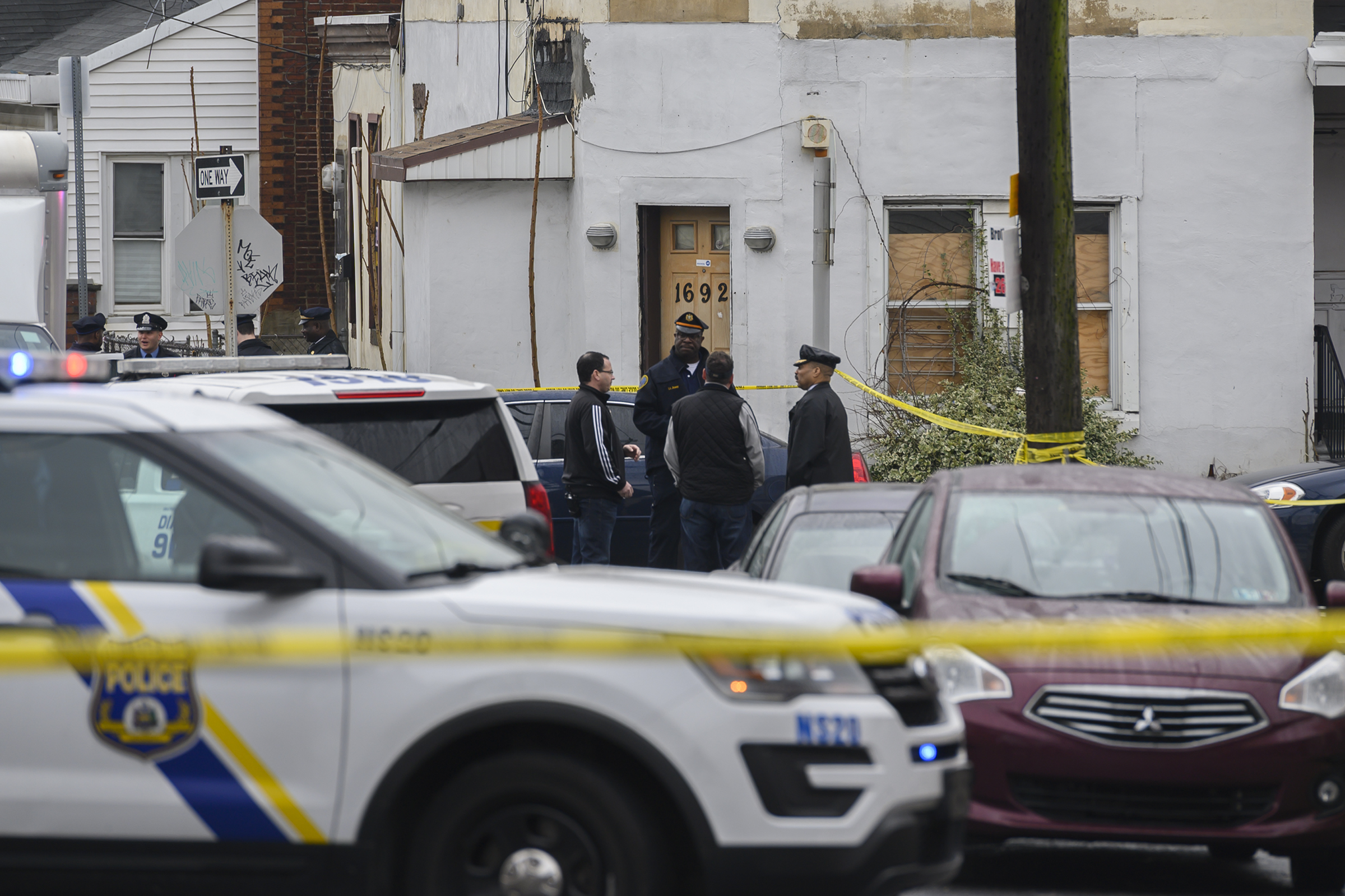
Kelvin Jimenez, 35, was not accused of participating in — or even being present for — O’Connor’s killing, which occurred inside a Frankford apartment building as SWAT officers sought to apprehend another gang member on a murder warrant.
But the U.S. Attorney’s Office said Jimenez was a top decision-maker for SG1700, a group that prosecutors said “ravaged” Frankford with drugs and violence. And because prosecutors said Jimenez was atop the gang’s hierarchy, they charged him with crimes including racketeering conspiracy, saying he was responsible for offenses his gang’s members committed, including four murders, 13 shootings, and a variety of gun and drug crimes.
Jimenez took his case to trial last year along with another accused SG1700 leader, Dominique Parker. Both were found guilty by a jury.
Jimenez said in court Wednesday that the panel got it wrong — that prosecutors, whom he called “evil,” had improperly tied him to crimes he had nothing to do with, and that there was not sufficient evidence to connect him to violent crimes committed by others.
“They find me guilty behind my [social] orbit,” he said. “They find me guilty that I actually get along with these guys.”
U.S. District Judge Juan R. Sánchez disagreed.
Sánchez said the shootings and drug dealing Jimenez oversaw while leading SG1700 were “horrendous.” The gang’s crimes often left bystanders wounded by bullets, Sánchez said, and evidence showed Jimenez was involved in leading the group’s wrongdoing.
“It’s a real serious problem when you have a gang and gang members who brazenly just go out and shoot and kill and shoot and hurt other people — just to maintain your drug operation and dominance in the community,” Sánchez said.
The judge said in addition to a life sentence, he was imposing a mandatory additional term of 30 years behind bars.
Jimenez was the second SG1700 member to be sentenced in connection with the case. Two other members have been convicted but are awaiting sentencing.
The man who shot O’Connor, Hassan Elliott — who fired his gun through the wall of an apartment while trying to avoid being arrested — was ordered to serve 75 years behind bars after he pleaded guilty before Sánchez last year.
Prosecutors have recommended that another man inside the apartment at the time, Khalif Sears, face a prison term of 35 to 50 years. He also pleaded guilty but has not yet been sentenced.
Meanwhile, Parker — also found guilty at trial of serving as a group leader — is, like Jimenez, facing a mandatory life sentence.
The crime that attracted the most attention, and that led to Jimenez’s arrest, occurred in March 2020.
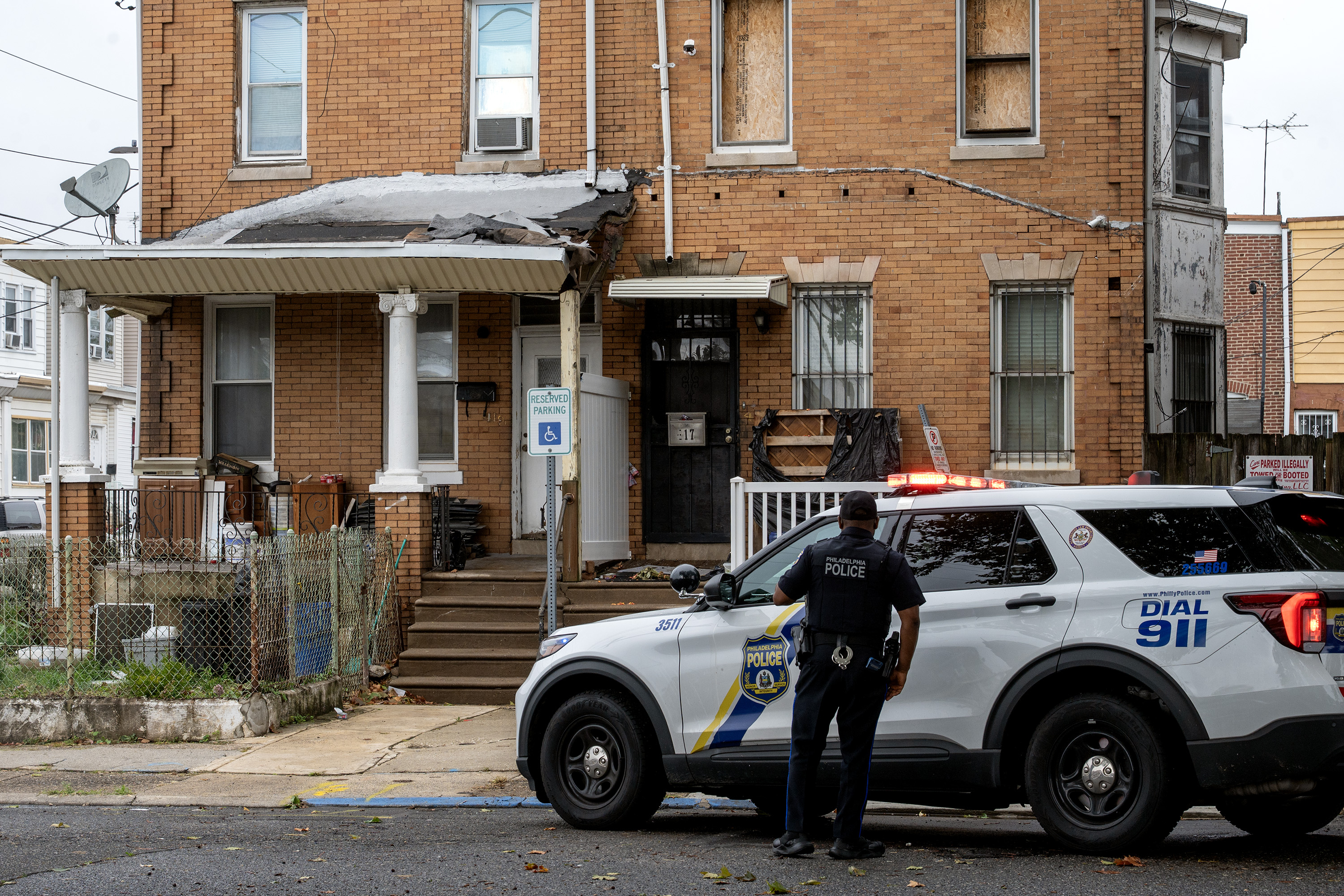
O’Connor and other SWAT officers had gone to the 1600 block of Bridge Street to arrest Elliott in the 2019 killing of Tyrone Tyree. But before they could get into Elliott’s apartment — where Jimenez was allowing the men to stay — Elliott picked up a .22-caliber rifle and shot through a door, fatally striking O’Connor.
Elliott and Sears were arrested at the scene and were charged with O’Connor’s murder.
Federal prosecutors later adopted the case amid a swirl of controversy, as the U.S. attorney at the time, William McSwain, faulted District Attorney Larry Krasner for dropping a drug case against Elliott a year before O’Connor was shot. (Krasner defended his office’s actions.)
In 2023, McSwain’s successor, Jacqueline C. Romero, announced an expanded racketeering case against Jimenez, Elliott, Sears, and Parker. All have since been convicted.
In addition to O’Connor’s murder, the men were charged with killing Kaseem Rogers in 2018; Tyree in 2019; and Dontae Walker later in 2019. Two of the murders sought to target rival gang members, prosecutors said, while Tyree’s was a botched robbery.
A bridal-boutique chain is opening its next store in Center City.
Luxe Redux Bridal, which sells sample designer gowns at discounted prices, is set to open its doors at 2300 Chestnut St. in early 2027, the company announced last week.
The retailer is moving into the former Daltile design studio at the recently renovated 104,000-square-foot office building, which sits on the Western edge of Rittenhouse, just before University City.
The shop will span more than 3,600 square feet across multiple floors and contain five bridal suites.
“We’re thrilled to bring Luxe Redux Bridal to Philadelphia and become part of such a vibrant, style-conscious community,” Lindsay Fork, founder and CEO, said in a statement. “We’re proud to introduce Philadelphia brides to the accessible luxury, one-on-one experience, and same-day take-home model that has fueled our growth.”
Luxe Redux Bridal sells designer gowns for between $500 and $12,000. The dresses are samples — meaning they’ve been tried on by others — and are sold off-the-rack at discounted prices.
The company, which Fork founded in Ohio in 2010, calls itself a place “where brides say yes for less.”
Luxe Redux Bridal customers can buy dresses online or take them home same-day at 15 brick-and-mortar stores, the closest of which is in Pittsburgh. Philadelphia will be the brand’s 16th location.
2300 Chestnut is owned by Bala Cynwyd-based Stoltz Management. The firm bought the property in 2017 for nearly $29 million, according to Philadelphia property records.
Luxe Redux Bridal’s arrival fills one of several ground-floor vacancies at the building. Next to Luxe Redux, another retail space is set to become an Alpha Fit Club, a circuit-style group-fitness studio, by the end of this year. A 5,700-square-foot corner parcel at the southwest corner of 23rd and Chestnut Streets is still being marketed for lease.
Raymond “R.C.” Horsch cut a deal with federal prosecutors and fed them information about criminal activity in order to greatly reduce his own prison sentence in a 2009 drug and gun case, court records show.
Horsch was facing the prospect of a 15-year minimum sentence after pleading guilty to manufacturing marijuana and possession of firearms connected to a drug trafficking crime. But a plea deal, brokered in 2012, allowed Horsch to secure just 4½ years in prison, thanks to the information he offered to prosecutors, according to a new filing in the Eastern District of Pennsylvania.
The details provided in a Tuesday court filing, in response to a motion filed by The Inquirer to unseal records in the 2009 drug case, offer new insight into Horsch’s dealings with law enforcement. They also show that, while Horsch bragged publicly about being an international criminal and a violent pornographer who rejected societal norms, he was also willing to feed valuable information to federal investigators in exchange for favorable treatment.
The case overlapped with Horsch’s conviction in an unrelated attempt to lure a 9-year-old girl into his vehicle in Kensington. Horsch sought a new trial in that case, initiated by the Philadelphia District Attorney’s Office in 2010, and the charges collapsed after the victim declined to appear a second time. It was not clear if federal prosecutors in the drug and gun case were aware of the other case in local court — or whether it factored at all into their decision to offer him a cooperating plea deal.
Many of Horsch’s prior criminal cases have come under intense scrutiny since the pornographer, who died last year at age 82, emerged at the center of a sprawling missing persons investigation involving at least seven women who are missing or presumed dead.
This month, an attorney for The Inquirer asked a federal judge to make public 14 sealed records from the 2009 case, arguing that they are now of public interest. Those records include a transcript of Horsch’s sentencing hearing and a motion by the government that sought to reduce Horsch’s sentence in exchange for cooperation.
In a response filed Tuesday, Assistant U.S. Attorney Justin Ashenfelter agreed to unseal the majority of the records, but opposed the release of the transcript and motion, indicating they contained information detailing the extent of Horsch’s cooperation with authorities.
“Raymond Horsch is dead,” Ashenfelter wrote. “The fact that he entered a cooperation plea agreement with the government need not be kept hidden any longer. However, the essence of the information he provided to the government during his cooperation is not subject to disclosure or public consumption.”
Ashenfelter argued that the federal criminal justice system must protect and reward cooperating witnesses, and that while Horsch “did not offer testimony against any criminal defendant,” the transcript of his sentencing was “law enforcement sensitive” and should remain sealed. The former prosecutor who handled the case, Liz Abrams, referred questions to the U.S. Attorney’s Office.
The Inquirer plans to push for the remaining records to be unsealed.
Exactly what Horsch told the federal prosecutors to secure his lighter sentence is not publicly available. Richard Zack, a former assistant U.S. attorney in Philadelphia, said it should have resulted in a significant arrest or conviction for the prosecution to justify such a generous plea deal, particularly since Horsch had recently been convicted of corrupting a minor.
Even though the child-luring charges fell apart on retrial, Zack said, the government should have considered those allegations when weighing Horsch’s credibility and his role in providing information in exchange for a reduced sentence.
“I think there are two questions: Was he vetted properly as a cooperator, and secondly, is the cooperation they got worth the bargain?” said Zack, now a partner at the Troutman Pepper Locke law firm. “It’s a very sordid tale, and the government should look at it with a lot of scrutiny.”
Horsch fought both criminal cases almost in parallel.
Just months before the Bucks County drug bust, Horsch was arrested in March 2009 by 24th District police in Philadelphia after allegedly attempting to lure a 9-year-old Kensington girl into his Jeep Wrangler. The vehicle contained binoculars, a high-powered photo lens, and a condom.
A few months later, on July 22, 2009, an intoxicated woman who was later determined to be a live-in sex worker hired by Horsch called 911 from his Chalfont home, believing that a burglar was on premises.
Township police searched the home but failed to locate an intruder. Instead, they discovered 455 marijuana plants in the basement, as well as two illegal sawed-off shotguns. Investigators later recovered a trove of homemade pornography from the home, including photos of bleeding women and a video labeled “Lora rape.”
The drug case was referred for federal prosecution, and Horsch was charged in December 2009 with possession with intent to distribute and firearms offenses.
He was in federal custody in the Bucks County prison in January 2010, the same month he appeared in Philadelphia Municipal Court to hear testimony from the child victim in his luring case.
Horsch was convicted on the misdemeanor corruption charge in Philadelphia in March 2010. It remains unclear when the second trial took place: Horsch later secured an expungement and the court records are no longer public.
In January 2011, he changed his plea to guilty in the drug and gun case. Prosecutors appear to have filed a motion to reduce his sentence in July 2012.
Horsch was ultimately sentenced to 4½ years in prison, serving concurrent sentences on the drug and gun charges. He was transferred from federal detention to the Metropolitan Correctional Center in Manhattan in November 2012 and moved to a halfway house about three months later.
He was released in June 2013 and spent four years on probation.
Horsch returned to prowling the streets of Kensington in search of models for his pornography. He lured women in addiction with drugs and cash to his Olney home — at least five of whom police now believe died or were killed there as early as 2016, based on photos and videos on hard drives recovered from the property. Two other women, Blair Tonzelli and Amy McHale, who were reported last seen at Horsch’s 417 W. Chew Ave. address, remain missing.
Horsch’s former attorney, Jerome Brown, who handled the 2009 drug case and now represents his son, Eugene Horsch, did not respond to a request for comment.
Prosecutors in the 2009 drug case stated in court filings that they were aware that Horsch had been convicted in 1985 on a charge of manufacturing methamphetamine.
In that case, too, Horsch received a light sentence. After his 1977 arrest at the Olney home, he fled to California and then New Zealand, assuming an alias to escape prosecution.
After the ruse was discovered by authorities in New Zealand, he fled again to Florida, where he was apprehended by federal authorities in 1984 and extradited to Philadelphia.
At the time of his guilty plea in 1985, federal law set no mandatory minimum prison term for manufacturing methamphetamine. His defense attorney commissioned a psychological exam, and his evaluator testified that Horsch was a highly intelligent and prodigious worker who would not be reformed by lengthy incarceration. Family and colleagues submitted letters to the judge pleading for leniency.
He was sentenced to four years in federal prison but served only two before his release in 1987.
The Inquirer’s motion to release the 2009 case records remains pending before U.S. District Judge Paul S. Diamond.
Staff writer Ellie Rushing contributed to this article.
This story has been updated to correct the name of the federal prosecutor who filed the government’s response.
For three days, Penn’s men’s and women’s golf teams competed at the oldest golf course in the world, Scotland’s St Andrews Links, the 15th century course that will host the Open Championship for the 31st time next summer.
Called the “Home of Golf” , St Andrews welcomed Penn, Texas, Washington, and University of St Andrews for the St Andrews Links Collegiate from Oct. 12-14. The matches were televised on the Golf Channel.
For senior Madeleine Zang, it was a “surreal experience.”
Zang had a special moment on the course, when the wind blew her putt into the hole. It was captured on camera and quickly went viral on the Golf Channel’s instagram. The video has 8.1 million views, one of the most viewed reels on the Golf Channel’s account.
“‘Oh my god, this is the luckiest putt in the whole world!’” Zang said. “We talked about it for the rest of the round.”
But the weather was otherwise difficult for the golf teams. Sophomore Arjun Caprihan said it felt like “play[ing] in a hurricane … it was blowing like 40 miles per hour and raining sideways.”
Women’s golf head coach Mark Anderson added: “I thought [the rain] was hail at first. It literally hurt your face.”
Penn women’s golf finished third in the tournament, and the men’s team placed fourth. Texas won both the men’s and women’s tournaments.
But for Penn’s student-athletes, it was much more than just a competition. For many, it was the experience of a lifetime and their first visit to Scotland.
“I thought it was really cool how Penn treated us properly and did this trip right,” Caprihan said. “They didn’t really cut corners for us.”
The players received jackets with both St Andrews Links and Penn logos on them and stayed at the Old Course Hotel. After the tournament, the men’s and women’s teams played a few friendly rounds and went sightseeing with the other schools.
“Just being able to compete with teams that are better than us was fun,” Caprihan said.
Even the coaching staff had their share of fun. Anderson got to know Penn’s strength and conditioning coach Cory Walts and athletic trainer Anthony Erz while playing pool with the St Andrews students.
Freshman Sophia Lu had to take a math exam right after the tournament, so Anderson printed out the exam and proctored her at 7:30 a.m. Besides the exam, Lu remembers the food they ate: pasta, bread, and cheese fondue.
Wesley Hu, Ryan Chang, Hayden Adams, Oliver Uribe were among the Penn golfers who went to the St. Andrews Links Collegiate.Penn Athletics
But she — and several members on the team — couldn’t bring herself to try haggis, a traditional Scottish dish of minced sheep offal stuffed into a sheep stomach.
“Three times I’ve gone over [to Scotland], yet to try haggis,” Anderson said, “I don’t think I’m ever going to try it.”
Part of the trip included a tour of the Royal and Ancient Golf Club, a members-only club that is not open to the public. At the club, the men’s and women’s teams saw the original Claret Jug, then called the Challenge Belt, from the 1700s that used to be given as a trophy, and the lockers of famed golfers like Ben Hogan.
After one week of competing at a historic course , Zang said, “It’s honestly kind of the peak of our student-athlete experience.”
“Makes you fall in love with golf all over again,” Lu added, “Nothing can top that honestly.”
A Brazilian Supreme Court justice on Tuesday ordered a police investigation into alleged ties between a donor network co-founded by Vice President JD Vance and the presidential campaign of Flávio Bolsonaro in the run-up to Sunday’s election.
Supreme Court Justice Flávio Dino directed the Brazilian federal police to investigate the “nature” of the contacts between the Rockbridge Network, which was founded in 2019, and any Brazilian companies or political operatives to aid or finance Bolsonaro’s run.
It’s a crime in Brazil for a political candidate to accept funding or other campaign assistance from a foreign source.
The investigation, Dino wrote, was “necessary to verify if there was the effective furnishment of resources — including human resources — services, or other measurable economic advantages, identifying its origin, its destination and its eventual use in the campaign.”
Rockbridge denied any such contact.
Vance has spoken at Rockbridge donor gatherings as recently as a year ago. His office on Tuesday declined to comment.
Bolsonaro, who lost the election to President Luiz Inácio Lula da Silva, fled Brazil for the United States on Tuesday in defiance of a separate Supreme Court order, three people with knowledge of the matter told The Washington Post. He and his family will be issued visas to stay in the U.S., a senior State Department official told The Post.
Before the election, Rockbridge’s alleged activities in Brazil triggered several complaints by Bolsonaro’s political opponents. One was by Lula’s Workers’ Party, which filed a complaint with the Supreme Court. Another was by presidential candidate Renan Santos, who took his case to the Supreme Electoral Court.
Santos, who was eliminated in the first round of the election, alleged that Brazilians who claimed to represent Rockbridge had discussed providing U.S. support with Bolsonaro campaign officials.
The representatives also approached Santos with offers of campaign help, according to a person with direct knowledge of the conversations, who spoke on the condition of anonymity to disclose private discussions.
The Rockbridge Network said it had no affiliation with the Brazilians who claimed to be its agents.
“The Brazilians made false representations about their relationship with Rockbridge and created documents representing or referencing Rockbridge without Rockbridge’s knowledge or consent,” the network said in a statement Tuesday.
Bolsonaro was already under investigation for his ties to a banker accused of involvement in an alleged multibillion-dollar fraud and to a man suspected of laundering money tied to Brazil’s betting industry.
The order also has the potential to further strain relations between the Brazilian government and the Trump administration, which have feuded in recent years over the prosecution of former president Jair Bolsonaro, who was accused of planning a military coup to stay in power after his 2022 election defeat to Lula. Jair Bolsonaro, Flávio’s father, is an ally of President Donald Trump.
Trump imposed a 50% tariff on Brazilian goods and sanctions on several officials last year to pressure them into dropping the prosecution. They did not. Jair Bolsonaro was convicted last year of attempting the violent overthrow of the democratic rule of law and sentenced to more than 27 years in prison.
Flávio Bolsonaro ran on promises to free his father, pardon supporters convicted in a Jan. 6-style assault on Brasília, and impeach the Supreme Court justices involved in their prosecution.
How were we so wrong? Heading into the season, the Eagles’ defense was supposed to be their strength. After Monday’s throttling by the Cowboys, the group reached a new low, especially on the defensive line, where major offseason investments and commitments were made. Why has a unit that showed promise in training camp failed to live up to expectations? And how will the Eagles’ five-game losing streak influence the organization’s approach to the NFL’s impending trade deadline? The Philadelphia Inquirer’s Jeff McLane and David Murphy tackle these topics and more the day after the Eagles’ 38-21 defeat to Dallas.
This super scary week in Philly music features Halloween night events with Alice Cooper, Ink & Dagger, Motionless in White, and Making Time. Plus Journey, Richard Thompson, Vince Staples, Afro-Cuban All Stars, and more.
Wednesday, Oct. 28
Journey
“The Final Frontier” is another alleged farewell tour, this one from the San Francisco band whose “Don’t Stop Believin’,” is a safe bet to the top of WXPN-FM’s upcoming 885 Greatest Songs from Movies & TV countdown for its role in the Sopranos finale. Since 2008, the band led by guitarist Neal Schon has been fronted by singer Arnel Pineda, who sings the hits recorded with vocalist Steve Perry during the band’s 1970s and 1980s heyday. 8 p.m. Xfinity Mobile Arena, 3601 S. Broad St., xfinitymobilearena.com
Folk City: The Kings of Steel
Steel guitar players Mike “Slo-Mo” Brenner and Paul Wilkinson will take seats behind their instruments at Old City’s 48 Record Bar as part of the monthly Wednesday night Folk City series hosted by John Train singer Jon Houlon and 48 Record Bar poobah Joey Sweeney. Houlon and Sweeney will both perform with backing by Brenner and Wilkinson, who will also spin records featuring the instrument that has long been a staple of traditional country music and is lately increasingly prevalent in indie rock. 7 p.m., 48 Record Bar, 48 S. Second St., 48recordbar.com
Allison Russell
Canadian-born songwriter Allison Russell has recorded with folk groups Po’ Girl and Our Native Daughters, and impressed with her outstanding solo debut Outside Child in 2021. Her new album, In the Hour of Chaos, copes with tumultuous times with the help of guests including Brittany Spencer, Norah Jones, Ruby Amanfu, and Delco soul singer Devon Gilfillian. Sug Daniels opens. 7:30 p.m., Colonial Theatre, 225 Bridge St., colonialtheatre.com
Marisa “Missy” Dabice, lead singer, as Mannequin Pussy, opens for the Foo Fighters’ “Take Cover Tour” at Lincoln Financial Field on Aug. 13, 2026.Allie Ippolito / For The Inquirer
Mannequin Pussy
This past summer, Mannequin Pussy absolutely slayed when it opened for Foo Fighters and Queens of the Stone Age at the Linc, with the Philly punk band making the most of its biggest ever hometown show. Now, the Marisa Dabice-led group is playing a decidedly smaller space. This show is a benefit for Carolyn Haynes, the group’s former tour manager and a touring member of the band, as she undergoes treatment for breast cancer. Dark Thoughts, Kulfi Girls, Commitment, and Cult Objects are also on the bill. 6 p.m., First Unitarian Church, 2125 Chestnut St, r5productions.com
Thursday, Oct. 29
Pat Finnerty & the Full Band
Bandleader and entertainer Finnerty, who assembles many leading Philly musicians for shows, will play two sets at this pre-Halloween-themed gig. The first will be Live Band Karaoke; the second will be all songs by the Cars, with prolific local artist Dave Cope filling Ric Ocasek’s shoes. 8 p.m. Johnny Brenda’s, 1201 N. Frankford Ave., johnnybrendas.com
Friday, Oct. 30
Richard Thompson
Is there another artist in folk-rock who writes songs and plays guitar at as high a level as Richard Thompson? In a word: No. On Friday, the Fairport Convention cofounder does Free at Noon in support of his new album, Hippies, Thugs and Heroes, in a show that will be a solo affair, with guest vocals from his wife, Zara Phillips. Then he’ll be back with a full band at Elkton Music Hall on Nov. 20 and Lansdowne Theater on Jan. 20. Noon, World Stage, 3025 Walnut St., xpn.org
The Florring Stones
This should be a blast. Florry, the Philly rocking country band fronted by Berwyn-raised songwriter Francie Medosch, is transforming for Halloween weekend into the Florring Stones. (They’re also playing shows in New York and Vermont.) Expect a ribald night of Stones covers displaying Medosch’s deep knowledge of all things Mick and Keith. Get there early to see an ad hoc band of Philly indie musicians play songs by Memphis power pop avatars Big Star. 8 p.m. Johnny Brenda’s, 1201 N. Frankford Ave., johnnybrendas.com
Vince Staples
Long Beach, Calif., rapper Vince Staples is on top of his game on Cry Baby, a pointedly political, wholly impressive album that takes on racism and injustice in America while blending rock riffage and soulful funk into the mix. 8 p.m., Franklin Music Hall, 627 N. Seventh St., franklinmusichall.com
The Afro-Cuban All Stars plays the Miller Theater on Friday.Tom Ehrlich / Courtesy of Allied Global Marketing
Afro-Cuban All Stars
Afro-Cuban All Stars bandleader Juan de Marcos Gonzalez is a vocalist, impresario, and musician whose specialty is the Spanish tres guitar. He has been a key player in the Buena Vista Social Club. This tour continues his ongoing work of bringing Cuban music to the world. 7:30 p.m., Miller Theater, 250 S. Broad St., ensembleartsphilly.org
Youbba Cissoka with De Tierra Caliente
Philly Latin-fusion band De Tierra Caliente will be joined by Senegalese kora player Youbba Cissoka, who is a 72nd-generation griot of his family to master the West African 21-stringed gourd instrument. Polyrhythmic cross-pollination is sure to ensue. 8 p.m., Black Squirrel Club, 1049 Sarah St., blacksquirrelclub.com
Rudresh Mahanthappa Hero Trio, featuring (left to right) Rudy Royson, Rudresh Mahanthappa, and Francois Moutin, play the Zellerbach Theatre on Friday.David Crow / Courtesy of Rudresh Mahanthappa
Arun Ramamurthy Trio and Rudresh Mahanthappa Hero Trio
This Penn Live Arts show gives equal billing to violinist Ramamurthy’s band, which melds jazz and South Indian Carnatic traditions, and alto saxophonist Mahanthappa’s freewheeling Hero Trio, which features bassist François Moutin and drummer Rudy Royston. 7:30 p.m., Zellerbach Theatre, 3680 Walnut St., pennlivearts.org
Mary Gauthier will perform at Arden Gild Hall on Friday.Alexa Kinigopolous
Mary Gauthier
Mary Gauthier writes country-folk songs about characters on the margins of society that are deeply empathetic and free of sentimentality. The Louisiana native will be celebrating 2005’s Mercy Now, which she’ll perform along with her album Reckoning. Jamie Harris, the Waco, Texas, native who is Gauthier’s musical and romantic partner, opens. 8 p.m., Arden Gild Hall, 2126 The Highway, Wilmington, ardenconcerts.com
Sam Coomes and Janet Weiss of Quasi. The band plays Ardmore Music Hall on Friday and Saturday with Built to Spill. John Clark.
Friday, Oct. 30 and Saturday, Oct. 31
Built to Spill & Quasi
These Pacific Northwest-born 1990s bands have both had long and fruitful careers. Since 2019, Doug Martsch’s Built to Spill — the original BTS! — has teamed the indie guitar god with drummer Teresa Esgera and bass player Melanie Radford. Sharing top billing is Quasi, the Portland, Ore., duo of former spouses Sam Coomes and Janet Weiss, the latter of whom spent two decades drumming in Sleater-Kinney. 8 p.m., Ardmore Music Hall, 23 E. Lancaster Ave., Ardmore, ardmoremusicalhall.com
Saturday, Oct. 31
Making Time Pure Halloween
One month post the annual Making Time ∞ blowout at Fort Mifflin, Dave. P’s mobile dance party is back indoors. The evening features industrial dance duo Boy Harsher, Boston rock band Model/Actriz, and British garage DJ-producer Conducta, plus Marie Davidson, Kassie Krut, and Dave P. himself. 8 p.m., Franklin Music Hall, 627 N. Seventh St., franklinmusichall.com
Motionless in White
Something scary from Scranton: Gothic metalcore band Motionless in White has built an arena-size audience with dark, disturbing, and danceable tunes that bear the influence of heavy rock and industrial leaning acts like Type O Negative and Nine Inch Nails. A ghastly and ghostly costume party. 8 p.m., Xfinity Mobile Arena, 3601 S. Broad St. xfinitymobilearena.com
Ink & Dagger
Philly hard core punk band Ink & Dagger existed from 1995 to 1999, a year before the death of singer Sean Patrick McCabe. Known for vampiric lyrics and fake blood spewing on stage, the band reunited in 2010 and 2011 with singer Geoff Rickly of the band Thursday. Then, they again reunited last year for three Halloween shows at First Unitarian Church. This year, the band, whose albums including Drive This Seven Inch Wooden Stake Though My Philadelphia Heart, have been reissued on Trust Records, is doing a Philly show at the location of its final gig in 1999. Uniform and Danny Death open. 8 p.m., Creese Student Center at Drexel University, 3210 Chestnut St, r5productions.com
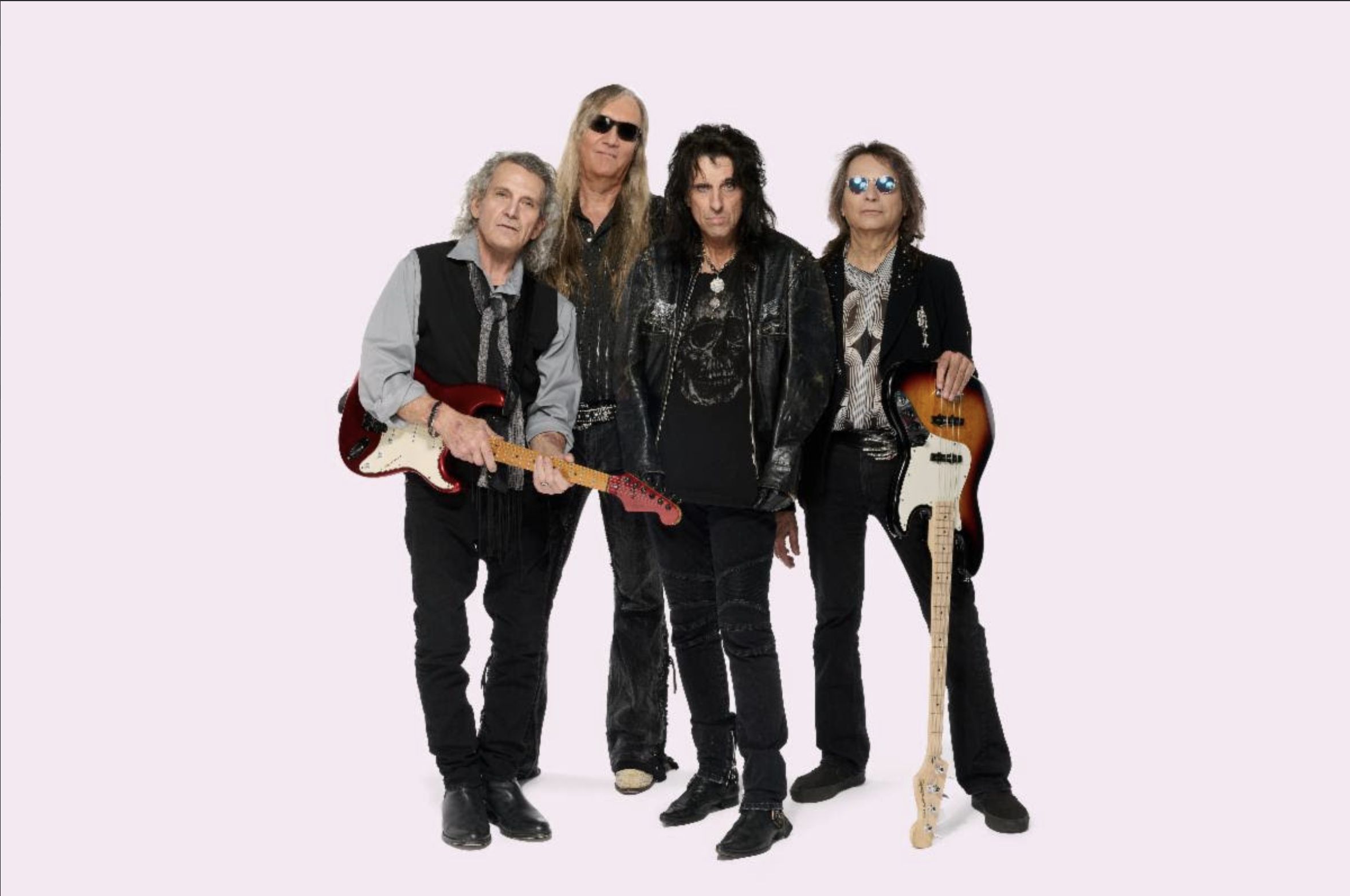
Alice Cooper plays the Tropicana in Atlantic City on Saturday and the Wind Creek Event Center in Bethlehem on Sunday.Jenny Risher
Saturday, Oct. 31 and Sunday, Nov. 1
Alice Cooper
Alice Cooper invented shock rock. Before there was Kiss or Marilyn Manson, the flamboyant showman born Vincent Furnier was goofing around with a guillotine on stage. What better time than Halloween to see the singer who tells the tale of his showbiz life in the memoir Devil on My Shoulder.8 p.m. Saturday, Tropicana Ballroom, 2831 Boardwalk, Atlantic City, caesars.com/tropicana-ac and 7 p.m., Wind Creek Event Center, 77 Wind Creek Blvd., Bethlehem, windcreekeventcenter.com
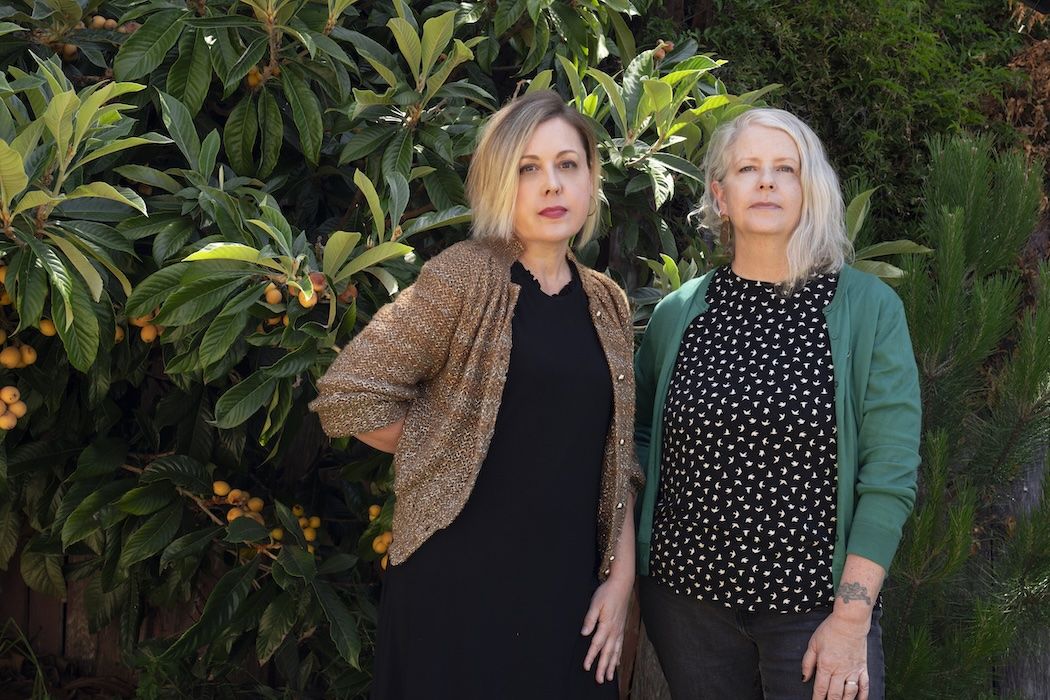
Corin Tucker and Tracy Sawyer of Heavens to Betsy play First Unitarian Church on Sunday.Chloe Aftel
Sunday, Nov. 1
Heavens to Betsy
After three decades apart, singer-guitarist Corin Tucker and drummer Tracy Sawyer, of influential riot grrrl duo Heavens to Betsy, have reunited for a 10-date tour. The band’s new album, Baby’s Gone, comprises unreleased recordings from the early 1990s, before Tucker became principal vocalist for powerhouse trio Sleater-Kinney. Calamity Jane opens. 8 p.m., First Unitarian Church, 2125 Chestnut St., r5productions.com
The document, which covers certain injectable peptides popular within the wellness industry, recently underwent regulatory review at the White House, typically the final step before publication.
The effort on peptides, driven by Kennedy’s Department of Health and Human Services, faced overwhelming pushback among FDA drug staffers who warned it could undermine the agency’s longstanding mission of keeping unproven health products off the U.S. market, according to the people familiar with its development.
The policy would direct the FDA not to take action against specialty pharmacies that sell certain widely used peptides — substances that would otherwise be considered illegal drugs because they haven’t gone through the agency’s rigorous review process for safety and effectiveness, according to three of the people.
The people spoke to The Associated Press on the condition of anonymity to discuss confidential government deliberations. An HHS spokesperson did not immediately respond to requests for comment.
Some peptides occur naturally in the human body, where they trigger hormones needed for growth, metabolism and healing. Drug companies have brought several to market as medications, including mainstay treatments for diabetes and weight loss.
The chemicals subject to the new policy haven’t gone through that rigorous vetting process. They include BPC-157 and TB-500, which are promoted to help heal injuries and build muscle. Both are considered doping substances by international sports authorities.
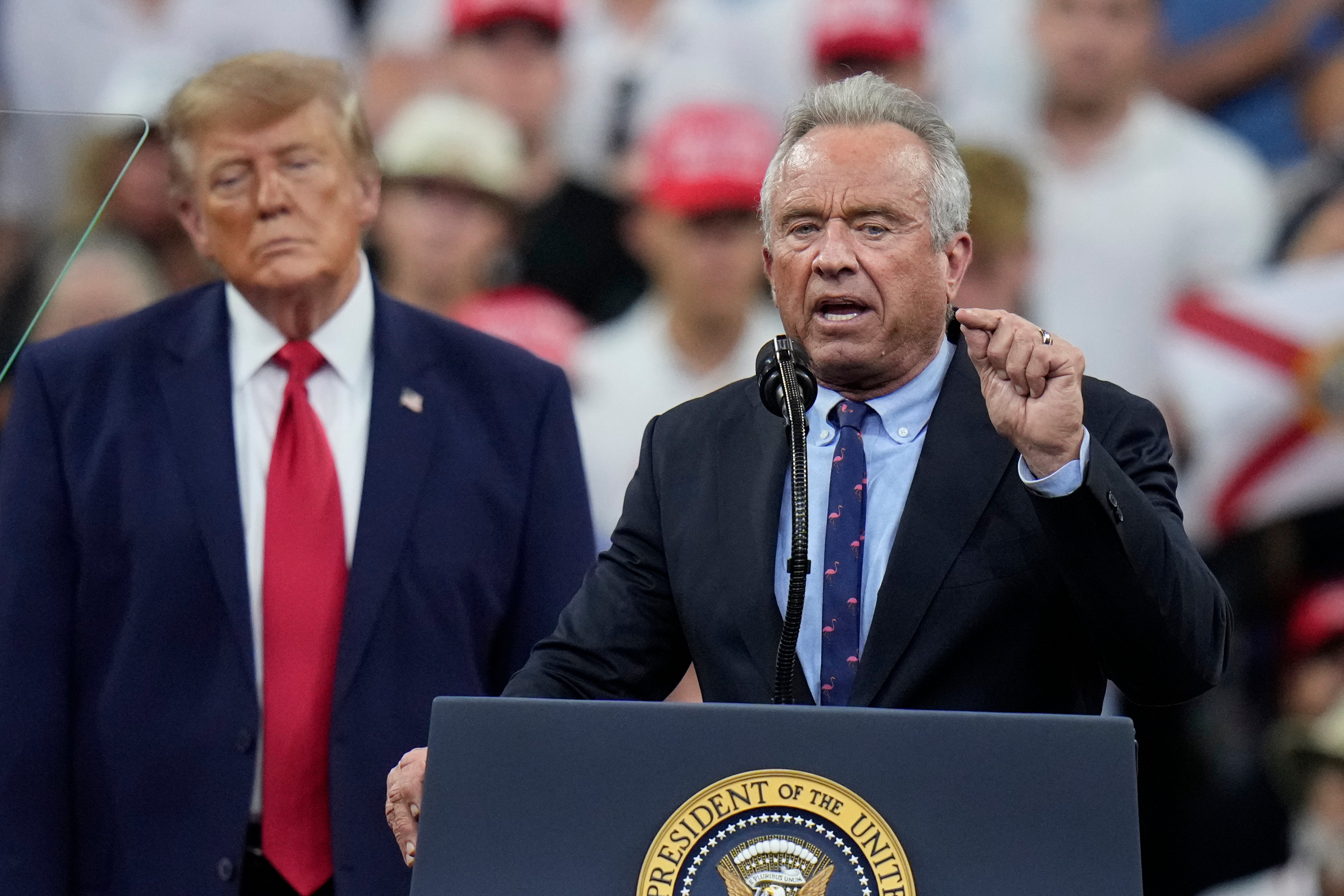
Kennedy has called himself a “big fan” of peptides and recently described using BPC-157 to treat a muscle injury.
The guidance document reviewed by the White House represents a step back from HHS’ original plans, according to two of the people who discussed its development.
Initially, HHS officials wanted the FDA to draft an official regulation that would add BPC-157 and other peptides to a list of drug substances deemed safe for use by compounding pharmacies, specialty businesses that make customized medications.
But FDA officials warned that the agency’s scientific staffers had major safety concerns and wouldn’t support a regulation deeming them safe. So HHS officials moved to a different approach that would direct the FDA not to enforce its rules against pharmacies that compound the substances.
Ultimately, FDA staffers provided technical assistance in drafting the HHS plan, including guardrails intended to improve safety, such as requiring pharmacies to use peptide ingredients from FDA-regulated factories.
Decisions over compounding have long rested with the FDA, not HHS
Kennedy has said repeatedly that U.S. compounding pharmacies must be allowed to sell peptides because Americans are turning to “gray market” products imported from China and other countries.
Decisions about regulating peptides and compounding pharmacies have almost always come from the FDA, which has an office dedicated to protecting Americans from unsafe or poor-quality compounded drugs.
The issue of compounding safety became a greater focus for the FDA after a deadly outbreak of fungal meningitis in 2012 was linked to contaminated injections from a Massachusetts compounding pharmacy. Once a niche business, compounding has grown into a multibillion-dollar industry, providing customized medications to doctors, clinics, and hospitals.
It’s extremely rare that HHS would take the lead in drafting policies over the compounding industry, former FDA officials have said. However, federal law technically gives HHS authority over essentially all drug regulations, which are then delegated to the FDA.
FDA has warned Americans about safety risks of unproven peptides
Many Americans using peptides today don’t deal with a doctor or a pharmacy to get the injections. Instead, they often order vials online sold by chemical manufacturers based in China. Peptide sellers often try to skirt U.S. regulations by labeling their products as “for research use only,” since the FDA doesn’t regulate research chemicals.
In 2023, the FDA added more than a dozen peptides, including BPC-157 and TB-500, to its list of substances that should not be compounded due to risks of allergic reactions, kidney damage, and tumor growth.
At a meeting in July, FDA staffers reiterated that more than half a dozen peptides brought forward for reconsideration remained unproven in terms of safety and effectiveness.
The policy pending at the White House avoids a direct confrontation with FDA staffers because it only directs the FDA not to enforce certain rules.
HHS ultimately included several safety measures suggested by FDA staffers, according to two of the people. Besides sourcing ingredients from FDA-registered facilities, compounders will be directed to collect information on side effects for safety analysis and verify the chemical identity of peptides.
Those measures are supported by some industry groups, including the Alliance for Pharmacy Compounding, which recently met with White House officials about the proposal.
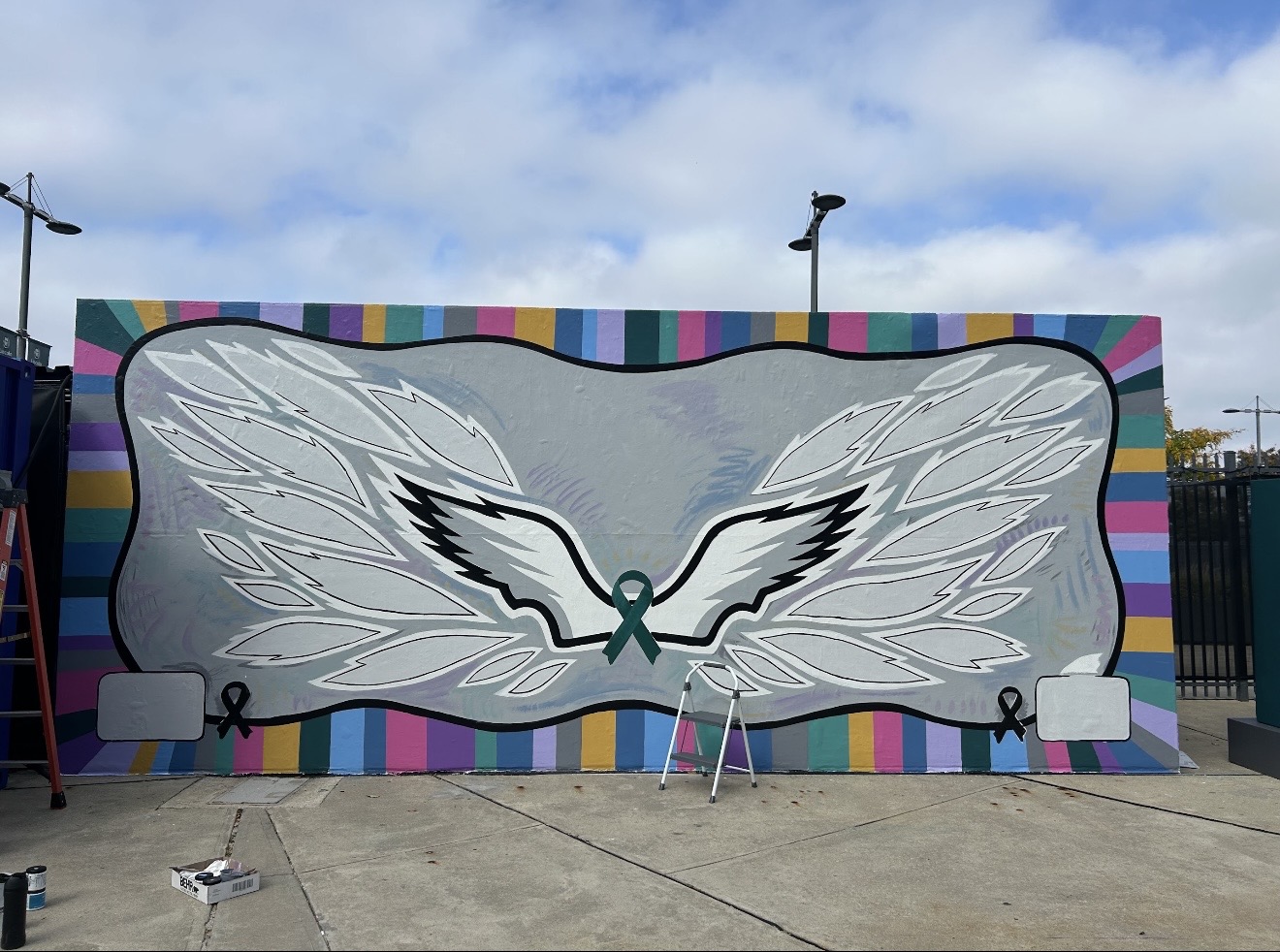
When the Eagles reached out to Sarah Fogg about painting a mural at Lincoln Financial Field, she thought it was too good to be true.
Fogg, who is an art teacher at Central Dauphin High School in Harrisburg, hadn’t applied for the opportunity. However, her artwork had caught the Eagles’ eye as they searched for an artist to capture the mission of the NFL’s Crucial Catch game.
Once Fogg realized she was not being scammed, she got to designing a mural that would honor cancer awareness and serve as a tribute to her mother.
“My mom had ovarian cancer, and she was a nurse, and she retired and then dedicated a lot of her time to the Sandy Rollman Ovarian Cancer Foundation,” Fogg said. “She created a special network of people [who] also had ovarian cancer. She unfortunately passed away in 2020, but her legacy lives on, and this mural is dedicated to her because she was a huge Eagles fan.”
Sarah Fogg created the Crucial Catch mural at Lincoln Financial Field. The gesture allowed her to honor her mother, who died of ovarian cancer in 2020. Courtesy of Sarah Fogg
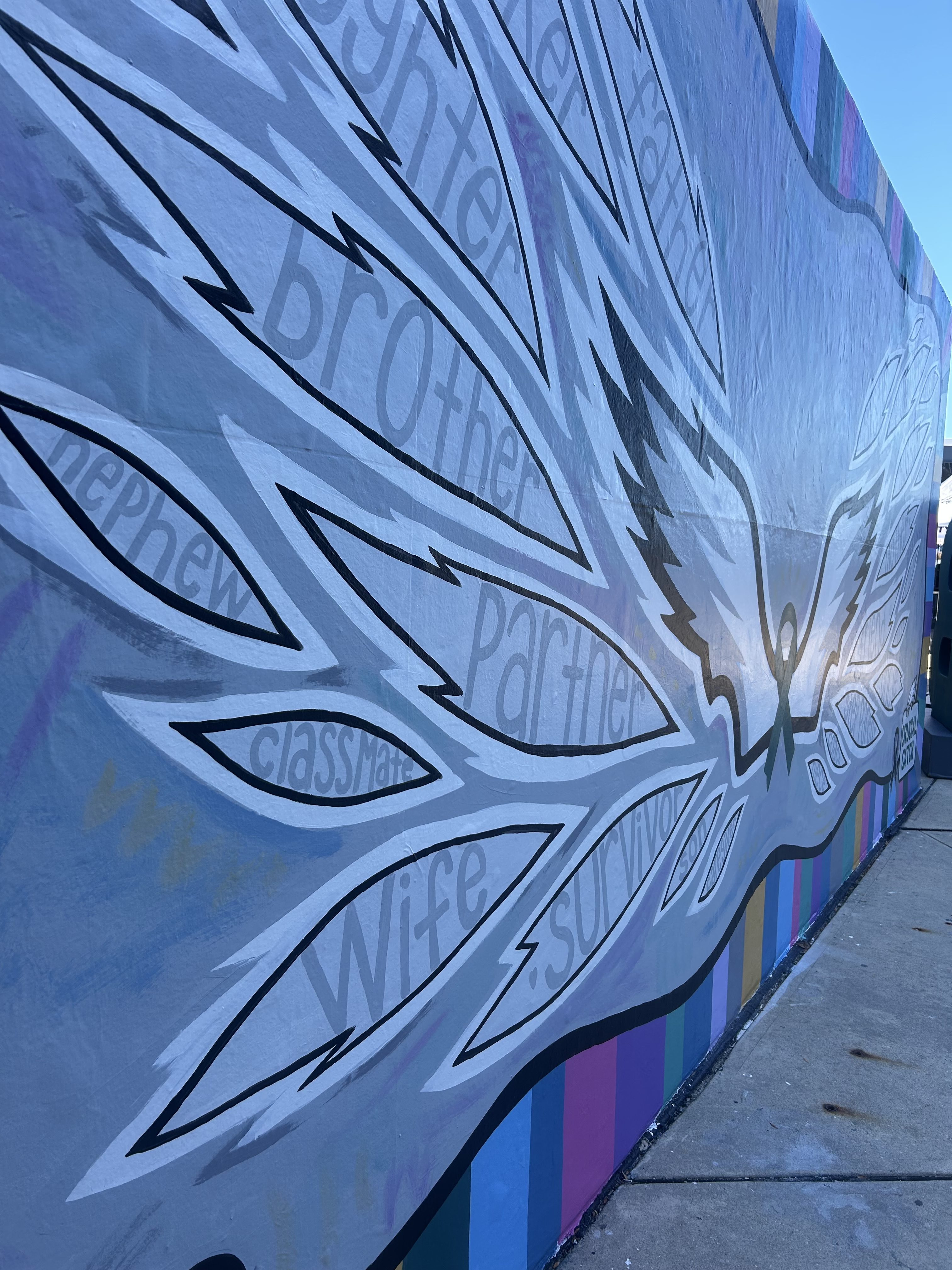
Fogg’s past artwork drew the Eagles to her. A butterfly mural she painted in Old City in 2024 in collaboration with the Sandy Rollman Foundation also brought awareness to ovarian cancer as the wings of the butterfly held the names of those affected.
She hoped to create something similar for the mural at Lincoln Financial Field, in a style known as a “wing wall.”
“The feathers can represent sort of the support system around someone who might be going through tough times, so it’s almost a physical representation of that network that you get,” Fogg said. “I also included all the colors around the outside to represent the different ribbons, representing different cancers.”
Harrisburg-based artist Sarah Fogg painted the mural as part of the Eagles’ involvement in Crucial Catch. Courtesy of Sarah Fogg
“My sister, Julie, flew all the way in from Florida to come help me, which was really special,” Fogg said. “It was so cool to have her be able to help me and to be a part of this memory that we’ll hold in our hearts forever.”
Fogg added, laughing: “I’m really thankful that she was able to, even though she’s not good at art.”
After completing the project in just a few days, Fogg said it all paid off on game day when she saw people lining up to take pictures in front of the mural.
The sisters attended the game, too. Fogg described it as a full-circle moment, as the last time they attended a game together was with their mother.
“It’s my way of giving back. It’s my way to use my art for good,” Fogg said. “That comes from being a teacher and being a helper, so it feels great to be able to use my art for really cool stuff like this.”
UNITED NATIONS — The U.N. General Assembly condemned the U.S. economic embargo of Cuba for the 34th year on Wednesday, even as Washington’s campaign to influence the outcome led to a number of countries voting against the resolution or sitting out the decision for the first time.
The vote was 130-17, with 25 abstentions — a notable decrease in support from last year, when more than 160 nations supported the measure and only 12 abstained. While such resolutions at the U.N. General Assembly are not legally binding, they do reflect world opinion.
For the first time in 34 years, Western countries like Germany, Italy, and Latvia were among those that refrained from voting. Bosnia, Colombia, Costa Rica, Ecuador, Lithuania, Morocco, North Macedonia, Paraguay, and Slovenia are among those member states that voted no — most for the first time.
It marks a stunning shift in international support at a time when the small island country weathers outages, shortages, and other deepening financial troubles as the Trump administration looks to force changes to Cuba’s political system by increasing an already punishing economic campaign. President Donald Trump last week once again raised the specter of U.S. military intervention, saying American warships could stop over in Cuba on their way back from the Iran war.
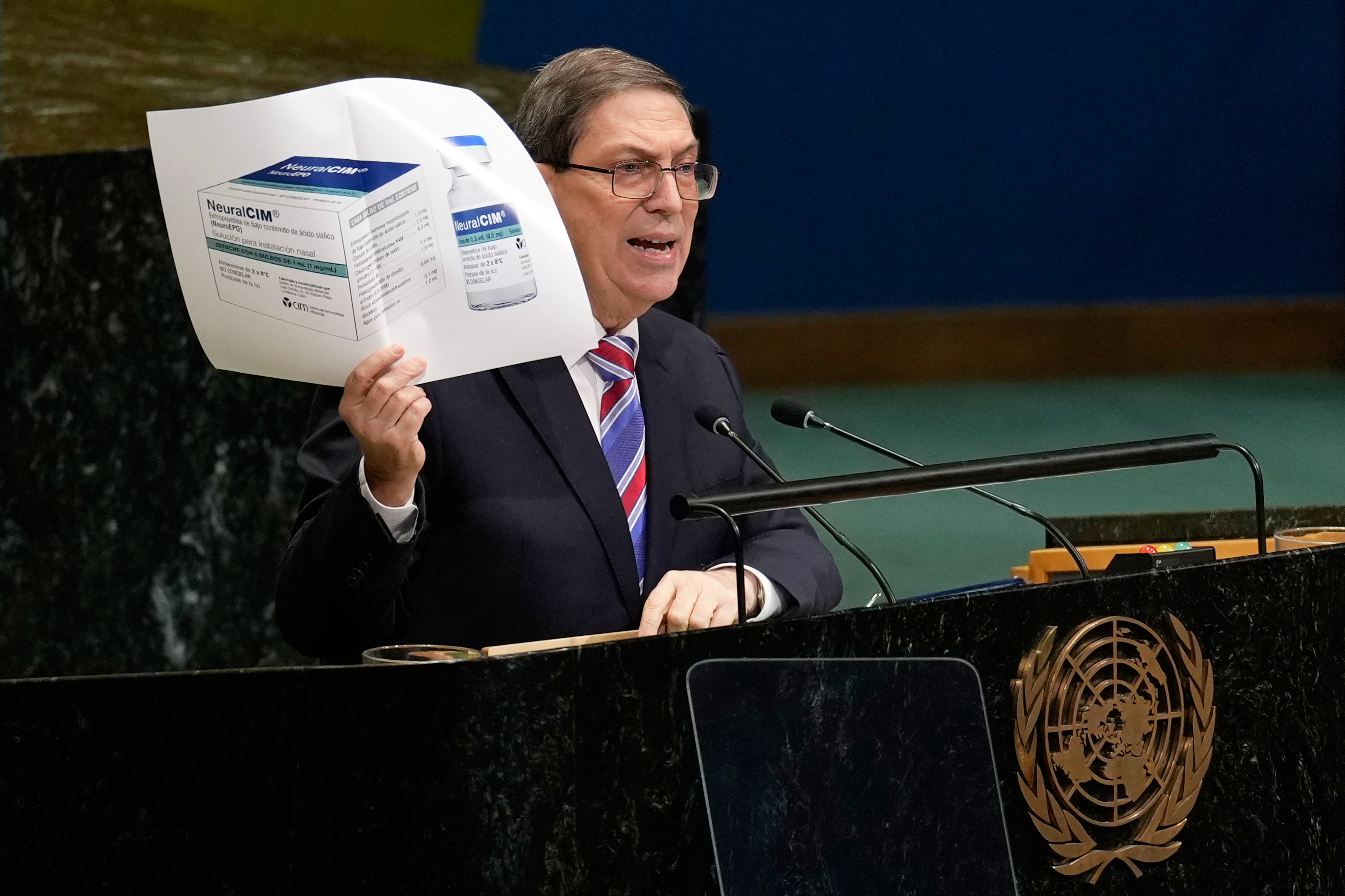
“A great power is attacking through economic war a member state of this organization,” Cuban Foreign Minister Bruno Rodríguez said ahead of the vote. “Cuba is not a threat. The blockade is a threat.”
U.S. Ambassador to the U.N. Mike Waltz told member nations that, “your vote today is the only thing standing between the corrupt, kleptocratic communist regime and using this body and your vote for another propaganda victory at the expense of the Cuban people.”
Tensions between Washington and Havana have spilled over into fiery public spats at the United Nations. On Tuesday, Waltz and Rodríguez got into a shouting match on the floor of the General Assembly while debating the embargo resolution.
Shortly after Waltz had begun his criticism of the socialist government, Rodríguez walked down to the podium where the U.S. envoy was addressing the hall and called him a liar while trying to get a point of order from the official presiding over the session.
“This individual needs to back away from this podium. He’s not going to intimidate me in the United States of America,” Waltz said as U.N. security and personnel tried to intervene. “You understand who you’re dealing with? This is America. Back up.”
In a post on X, Rodríguez reminded Waltz where he was making his remarks, saying he’s at the U.N., not at a national security meeting at the White House.
“With his crude lies at the UN General Assembly, the U.S. government has launched another desperate attempt to justify its economic aggression against Cuba and its criminal energy blockade,” he continued.
A week earlier, a similar interaction between Waltz and his Cuban counterpart, Ernesto Soberón Guzmán, took place outside a U.S.-hosted panel with Cuban dissidents and former prisoners that sought to highlight allegations of the oppressive behavior of the island’s government.
It all reflects a clear break from the traditional diplomatic decorum expected at the U.N. and the new phase of contentiousness between the U.S. and Cuba.
The U.S. embargo against Cuba was first imposed in 1960 after Fidel Castro led a revolution that toppled dictator Fulgencio Batista and nationalized properties belonging to U.S. citizens and corporations.
The warning has effectively cut off fuel to the island, leading to widespread power outages that impact basic services such as water supply and internet and telephone services.