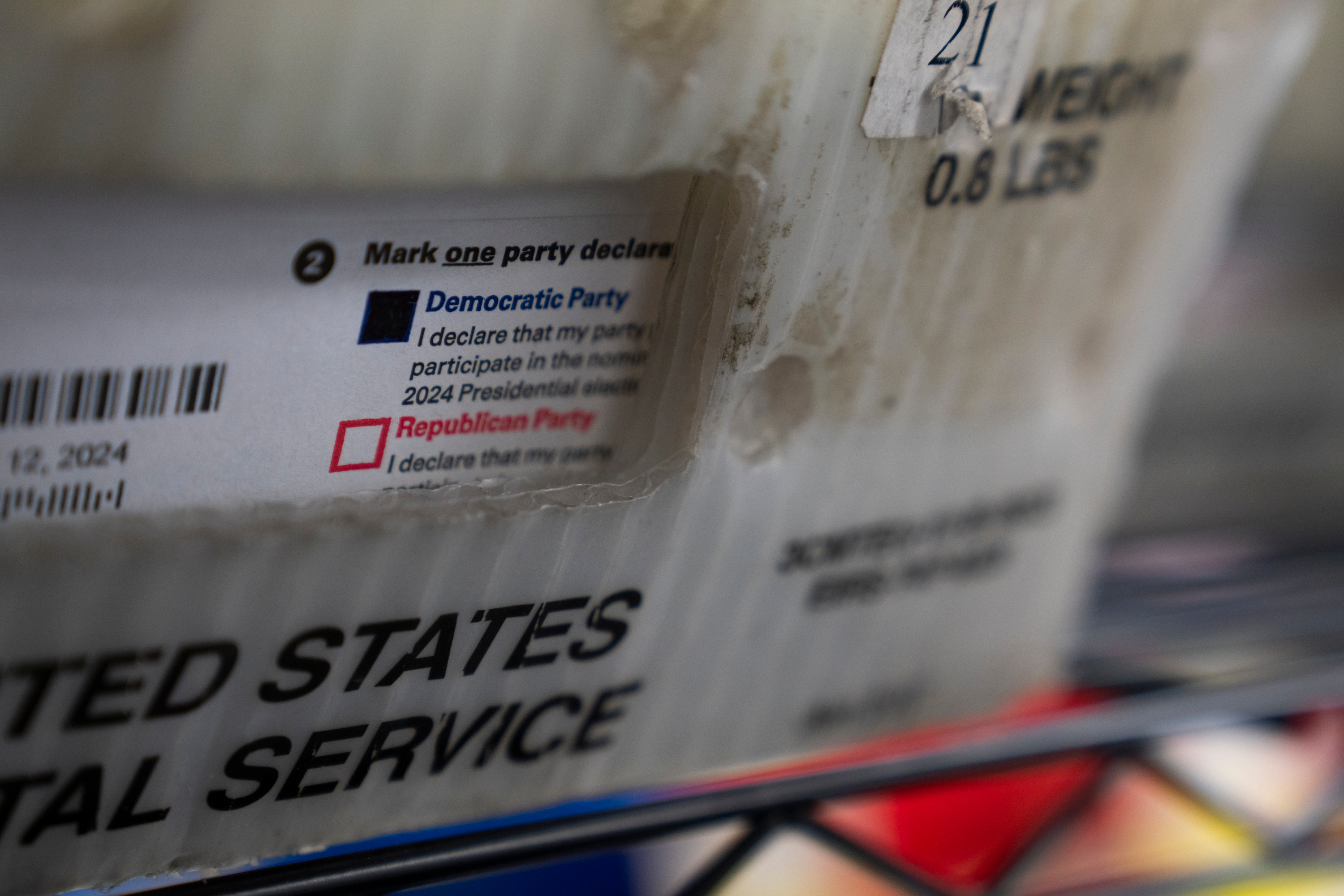
WASHINGTON — An appeals court on Thursday upheld a block on President Donald Trump’s executive order limiting mail voting, a decision that comes as the Supreme Court considers the same case and states have already started sending out ballots for the high-stakes midterm elections.
The three-judge panel refused to lift a preliminary injunction against the order issued last week by U.S. District Court Judge Indira Talwani. It prohibits the U.S. Postal Service from implementing Trump’s directive. The Postal Service has said it would not deliver ballots from states that did not pre-clear their envelope design with the federal government and submit a list of voters to an online portal, which has yet to be activated.
Election officials warn that it’s impossible to comply with those terms, especially with the first mail ballots already being sent out in Alabama, North Carolina, and Wisconsin.
The panel of three judges nominated by former President Joe Biden agreed with the plaintiffs that the president does not have the power to regulate states’ election policy.
“Appellants have not made a strong showing that the district court erred in determining that the Final Rule is likely unlawful,” they wrote, a reference to a rule published by the Postal Service to implement Trump’s order.
The panel wrote that the Trump administration had done little to dispel arguments by many election officials that the changes would bring “chaos and widespread disenfranchisement.”
“Indeed, appellants have not even seriously challenged this aspect of the district court’s ruling, much less demonstrated why it is clearly erroneous,” the order states.
The government also hasn’t shown evidence of past fraud to justify the restrictions, the judges said.
A request for comment from the White House was not immediately returned.
The panel’s decision comes even as the Supreme Court is already considering the same case, which is part of a frenzied legal rush as states are beginning to send out mail ballots for this fall’s midterm elections. Democrats and civil rights groups in a separate lawsuit in Washington, D.C., also are trying to halt the executive order.
The 1st Circuit also had upheld a previous hold Talwani placed on the executive order. But that ruling was lifted by the Supreme Court in a procedural decision that did not determine whether the plan was constitutional.
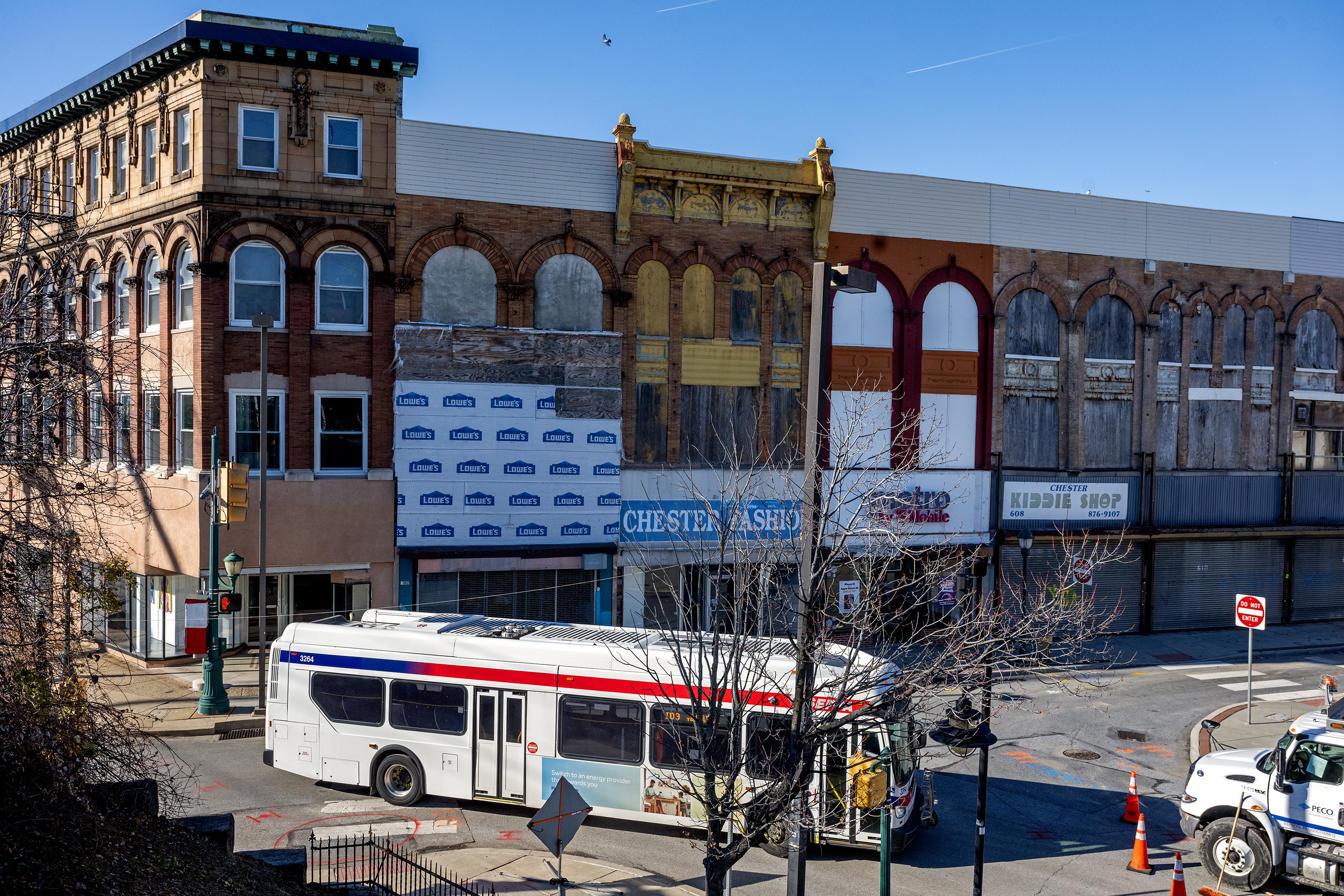
Approaching the fourth anniversary of its rare and historic bankruptcy, the City of Chester is about to get $97.1 million in public and private investments, Gov. Josh Shapiro announced Thursday.
“I might just be the happiest mayor in America,” said Chester Mayor Stefan Roots, among those who joined Shapiro for the announcement in Delaware County’s only city.
Shapiro, noting that the resolution of the protracted and often acrimonious bankruptcy “would take far longer than I’d like,” said “the time to invest in Chester is now.”
Roots said the money would go toward beautifying neighborhoods and dealing with blighted properties in the city of 33,000. “We’re going to be repairing homes. … We’re going to be improving roads and sidewalks,” he said.
The majority of the funding, $52.6 million, will go to “revamp and redesign” a section of Route 291/U.S. 13, part of the old “Industrial Highway,” which separates the riverfront from the city neighborhoods. The bulk of that money would come from the Pennsylvania Department of Transportation and the Delaware Valley Regional Planning Council.
The highway has long been a serious safety hazard for motorists and people who live along it, Roots said in an interview after the event. Speeding has been a major issue, he added.
PennDot also would be putting up $7.3 million for new sidewalks and walkways to Widener University, at the north end of town, in an effort to integrate the campus with the rest of the city.
“How do you be a city with a college, and not be a college town?” Roots said.
He said major efforts would be made to spruce up the Avenue of the States, which is a thoroughfare from City Hall to the campus about 10 blocks away.
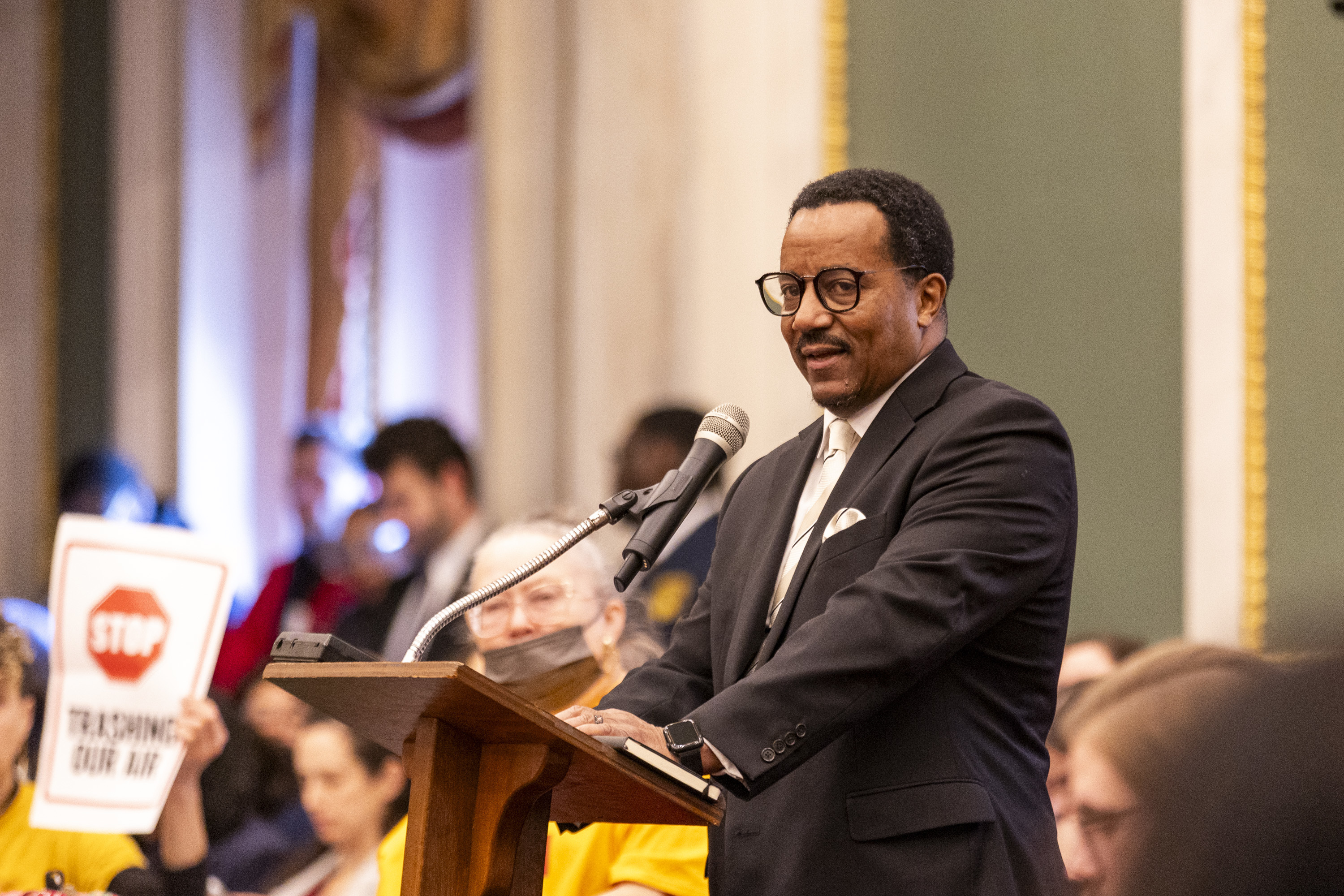
Mayor of Chester Stefan Roots speaks at a Philadelphia City Council meeting in January regarding the incinerator, which has been an important source of Chester’s revenue and a source of protests. Tyger Williams / Staff Photographer
The state and the Philadelphia Union soccer team are putting up $27.5 million to build “new outdoor fields, a 100,000-square-foot field house, indoor courts, academy space, and a performance center to expand youth programs and support school and community sports” at the riverfront Sportsplex in the city’s West End, according to a state news release.
Wawa, Essential Utilities Inc., Power Home Remodeling, and Delaware County are contributing $2 million for demolition work and to acquire 10 lots and two buildings, along with fixing up 25 other structures.
Shapiro said that Chester was now an “enterprise zone,” a Pennsylvania Department of Community and Economic Development program in which tax breaks and grant money would be made available to investors.
The department is overseeing the city’s bankruptcy process, which began in fall 2022, in part due to several years of missed pension payments.
But the city’s financial distress has been about 70 years in the making, as it has struggled to pay bills with the loss of businesses and its once-formidable industrial base. Among its prime sources of revenue today are an incinerator and a casino.
Among the nation’s more than 35,000 municipalities, only about 30 have filed for bankruptcy.
Neither Shapiro nor Roots made any mention of the bankruptcy beyond the governor’s opening comments.
State-appointed bankruptcy receiver Vijay Kapoor said in a statement: “We are very grateful for the commonwealth’s and the private sector’s investment in the City of Chester’s future.”
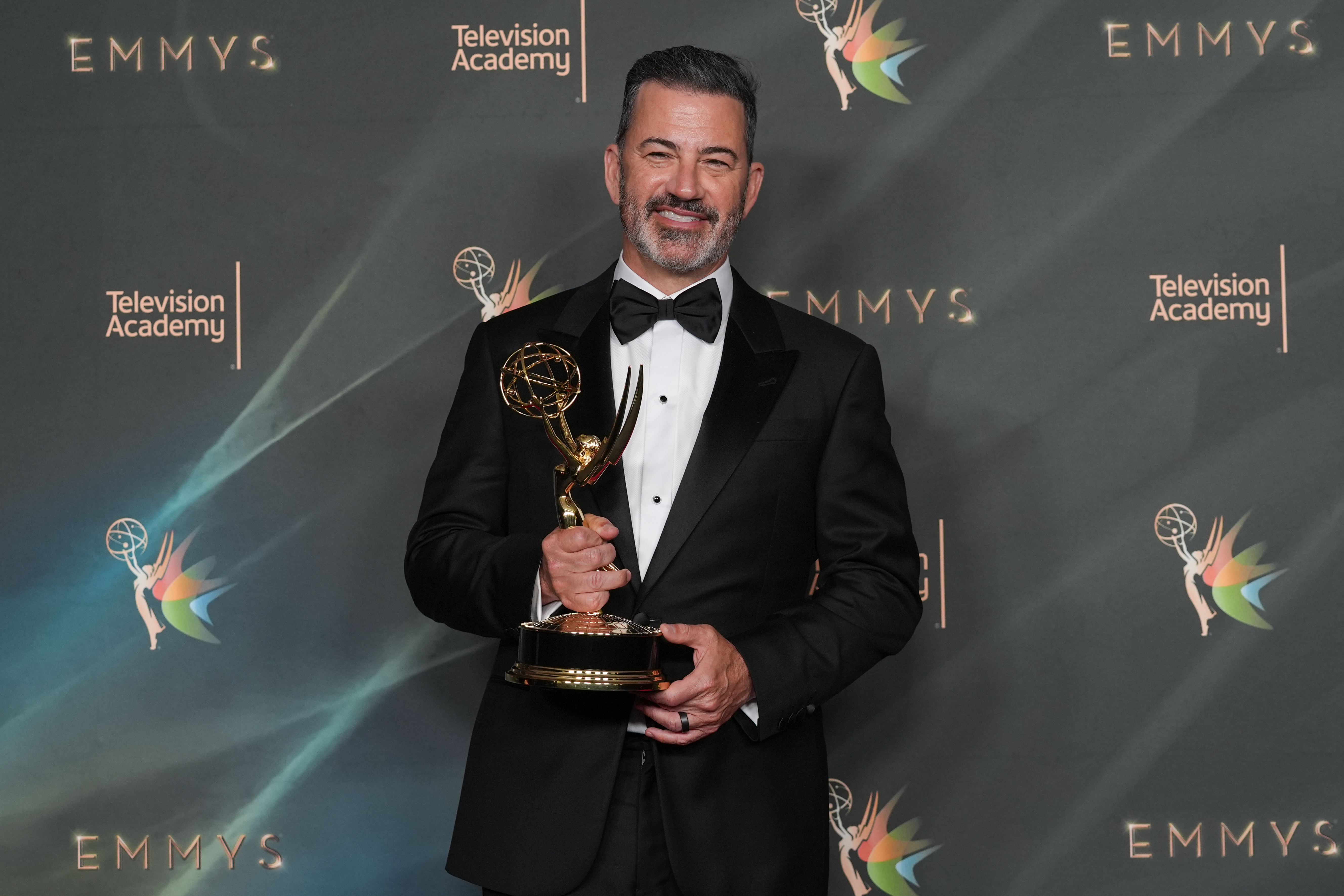
Late-night talk-show host Jimmy Kimmel said Wednesday that he would not broadcast an interview he conducted with Texas Democratic Senate candidate James Talarico because of pressure from the Trump administration.
Kimmel did not specify what that pressure was but said the Federal Communications Commission had “threatened” him, Jimmy Kimmel Live!, the ABC network, and ABC’s affiliate and local stations “based on simple traditional editorial decisions, guest bookings it would seem they don’t like.”
Kimmel also suggested the pressure was politically motivated. Polls show a close race between Talarico and his Republican opponent, Texas Attorney General Ken Paxton.
“They’re very nervous about the midterms, and rightly so. … They’re in danger of losing a Senate seat in Texas, of all places,” Kimmel said on his show Wednesday.
ABC has been in a monthslong feud with the FCC and its chair, Trump appointee Brendan Carr. Last year, the FCC successfully pressured ABC to briefly suspend Kimmel because of comments he made about the death of conservative activist Charlie Kirk.
In April, President Donald Trump and first lady Melania Trump again called on ABC to punish Kimmel for a joke he made about the first lady. Shortly afterward, the FCC formally ordered an early review of the eight broadcast licenses owned by Disney — which include ABC stations in major cities such as New York and Philadelphia — because of concerns about diversity policies.
Last month, ABC sued the FCC, alleging that the commission’s early review of its broadcast licenses is unconstitutional under the First Amendment.
Kimmel on Wednesday noted that he had interviewed several candidates for public office on his show in the past — including Trump himself when he was a presidential candidate in 2015 in 2016.
“And at that time, when he was the one sitting next to me, he seemed to have no problem with the idea of a talk-show host interviewing candidates. … But for some reason — and I can’t seem to figure out what that reason is — something has changed,” Kimmel quipped.
Representatives for the FCC did not immediately respond to a request for comment Wednesday. Representatives with Disney, ABC’s parent company, declined to comment.
FCC Commissioner Anna M. Gomez, the only Democrat on the commission, accused the Trump administration of waging a “campaign of censorship and control” and said the government agency does not have lawful authority to threaten broadcast licenses over guest bookings or editorial decisions.
“I urge broadcasters everywhere to keep resisting this pressure, and I hope courts will soon make clear that the FCC has no place dictating editorial choices or what viewers are allowed to see,” Gomez said in a statement Thursday.
Kimmel said he decided not to air his interview with Talarico during his broadcast in part so that ABC affiliates and local stations, especially those in Texas, would not “have to deal with this nonsense.” His interview with Talarico would instead be posted in its entirety on his YouTube channel on Thursday, he said.
“And thank goodness we have that, because in the America we live in right now, that is the best that we can do until November,” he said.
President Donald Trump on Thursday announced that his administration would issue $500 rebate checks to about 1 million Americans he said had been wrongly overcharged through the Affordable Care Act.
Administration officials said the funds would be drawn from fees that were used to fund operations of the ACA federal insurance exchange. Thirty states — including Florida, Iowa, Ohio, and others expected to be key battlegrounds in November’s midterm elections — use the federal exchanges for their ACA operations.
“Thanks to President Trump’s actions, nearly 1 million Americans will receive a refund check of $500 per person. Checks will be sent to eligible Americans beginning in October 2026,” the White House said in a fact sheet.
Democrats immediately panned the idea and compared it to the administration’s past ACA moves. Trump last year declined to support the extension of ACA tax credits that helped subsidize the costs of health coverage for more than 20 million Americans.
They also called it a stunt ahead of November’s elections.
“What an absolute joke,” Brad Woodhouse, president of Protect Our Care, a Democrat-aligned healthcare advocacy group, said in a statement. “Five hundred dollars is a drop in the bucket compared to what Americans are paying because Trump and Republicans gutted health care to bankroll massive tax breaks for billionaires and big corporations.”
Trump has floated multiple proposals to send dividends to Americans during his second term, but so far, they have not materialized. In February 2025, he said his administration was considering a proposal to give 20% of savings from the controversial DOGE government cost-cutting effort to Americans. That proposal would have delivered roughly $5,000 to each of the roughly 79 million households in which residents pay federal income tax.
That number was based on Elon Musk’s goal of cutting $2 trillion from the federal budget. A DOGE website claims that the initiative saved only a small fraction of that, and the Government Accountability Office has said the group’s accounting was riddled with errors.
Trump also claimed he would give Americans $2,000 stimulus checks, drawn from the revenue generated by his tariffs. His administration has had to refund much of the money gained from tariffs after the Supreme Court struck down many of the levies.
The Pennsylvania Horticultural Society (PHS) announced Wednesday that its popular pop-up beer garden in Manayunk will close permanently Oct. 5.
The property at 106 Jamestown Ave. is slated to become a six-story, 73-unit apartment building from local developer Dan Greenberg, although it faces community and political pushback.
Its hearing before the city’s Zoning Board of Adjustment was postponed last month.
“The day will serve as a celebration of PHS’s time in Manayunk and the many visitors, plant lovers, and community members who have made the garden a beloved gathering place over the years,” a PHS news release issued Wednesday said.
“PHS invites the community to come together this fall to enjoy the garden, share memories, and celebrate the lasting impact of this special green space in Manayunk,” the release said.
Since Greenberg’s plans were announced, community groups and neighbors have been pushing for the preservation of the public gathering space just off Main Street.
But PHS has emphasized that its pop-up beer gardens are not intended to be permanent.
The Manayunk location opened in 2020, while the site at 1438 South St. has been in operation since 2014.
As development plans for 106 Jamestown have advanced, PHS has been searching for another location in the city to open a new beer garden.
“Our team is actively assessing other potential sites and neighborhoods for future PHS Pop Up Gardens, but we don’t have a confirmed site to announce,” said Sin Gogolak, vice president of brand and communications for PHS.
The new location will not necessarily be in Manayunk or Northwest Philadelphia. But Gogolak confirmed they are looking in the city limits.
“PHS is grateful for the opportunity to have called Manayunk home for an extended period and is proud of what the garden has meant to the neighborhood,” PHS said in the news release.
A new zoning board hearing has not been scheduled for the apartment building at 106 Jamestown Ave.
The developer needs permission from the board to build apartments on land zoned for industrial and commercial uses and to build above the height limits set by the Main Street Manayunk zoning overlay.
Feedback from City Council and neighborhood groups will be considered by the zoning board.
“Fortunately for [Greenberg], he’s not finally purchased it yet because zoning is an essential part of the sale,” City Councilmember Curtis Jones Jr., who represents the area, said in an interview last month. The delay at the board “gives them the opportunity to talk to the community, but as it stands, I cannot support it.”
Among the many risks taken by Opera Philadelphia over the past two years, none has been greater than the current production of Mitridate, re di Ponto — the quirk of it all being that such a risk is attached to the name “Mozart.”
Yes, the ever-beloved composer is his ingratiating self in the rarely-heard, remarkably-evolved opera composed at age 14. Age is not an issue so much as the genre that prevailed in 1770 Milan, well before Mozart left behind stock plots about antique royalty that were once standard procedure.
Arias go on for as much as 10 minutes with false endings and expansive postscripts, requiring extraordinary virtuosity and stamina in an age where opera was as much about Olympic-style recreation as artistic communion.
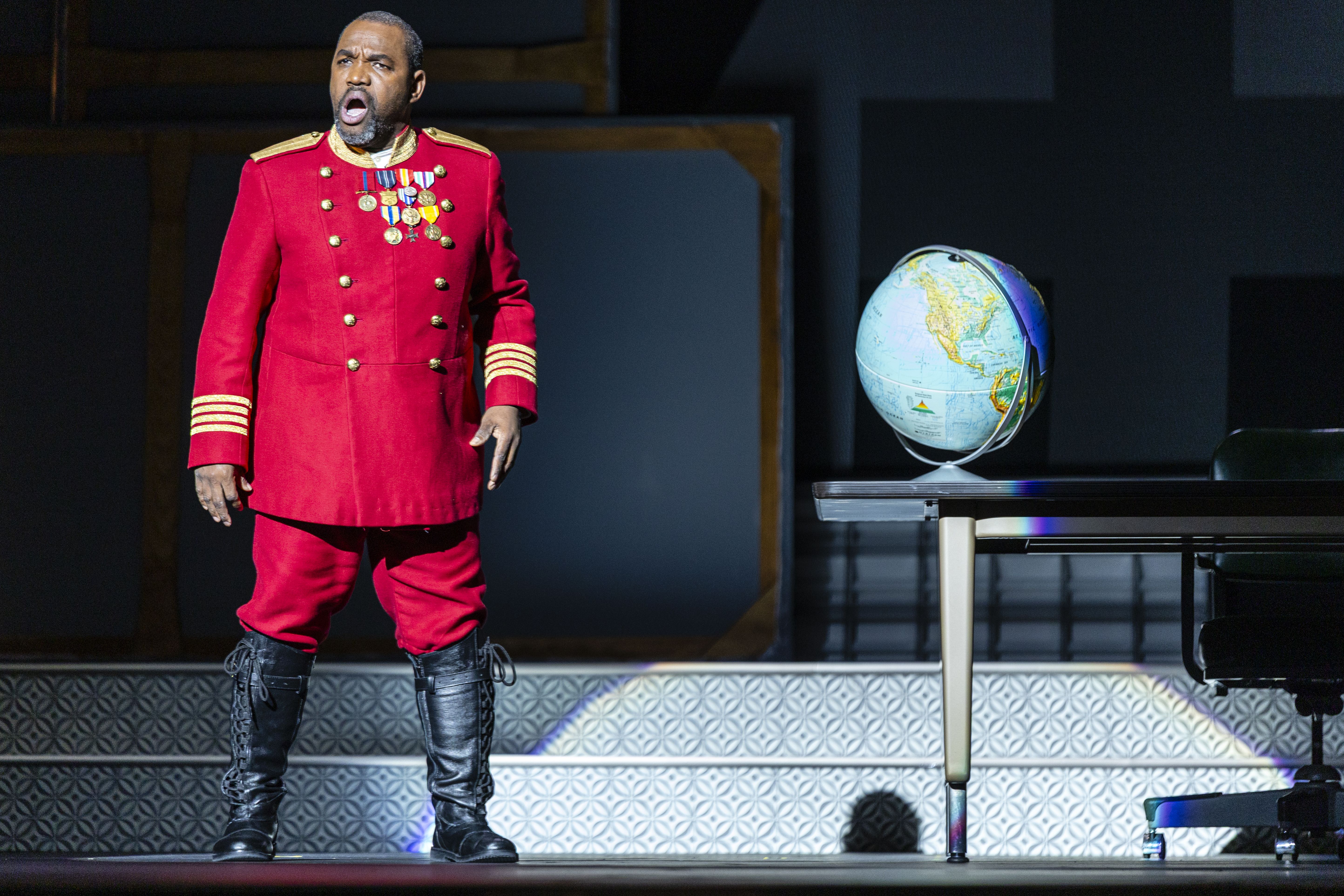
Tenor Lawrence Brownlee in Opera Philadelphia’s production of Mozart’s “Mitridate” at the Academy of Music. The work opened the company’s 2026-27 season.Dominic Mercier
Thanks partly to often electrifying singing in the cast led by star tenor Lawrence Brownlee, the audience seemed fully engaged Wednesday at the Academy of Music, even laughing with the recitatives that focused the characters and made the opera seem far less distant. In his customary pre-curtain speech, general director and president Anthony Roth Costanzo (who was also in the cast) suggested that Mozart was working out his father issues. Opera as psychotherapy? I won’t argue.
What emerged, for me, were parallels with King Lear in this story of the rage-prone monarch Mitridate, ca. 63 BC in the Crimea, whose one son is loyal and the other is plotting an overthrow with aggressive support from Rome. Romantic complications abound — in vocal writing that expects every voice to do everything — in arias that unfold with the dramaturgical formality of a chess game.
Without a lot of direct character interaction, soprano Brenda Rae was able to replace the previously scheduled Lauren Snouffer in the leading role of Aspasia with less-than-usual strain: Mostly, she needed to just show up for her arias, which exist like islands of characterization.
Lengthwise, the opera ranges from two-and-a-half to three-and-a half hours, this version coming in under three. With such flexibility, singers, in theory, can use the opera as a quarry, selecting what best suits them.
Soprano Brenda Rae as Aspasia in Opera Philadelphia’s fall 2026 production of Mozart’s “Mitridate, re di Ponto” at the Academy of Music.Dominic Mercier
With the convincingly brisk tempos of conductor Corrado Rovaris, the score felt a bit like Philip Glass — with Mozart inhabiting an infectious groove that suddenly changes complexion with the addition and subtraction of a well-targeted note. Long harpsichord-accompanied recitatives can sap the overall momentum, though Leon Schelhase revealed all manner of harmonic richness, creating a space where singers could give their characters greater specificity.
To her credit, stage director Emma Griffin basically left the singers alone — giving their characters a visual context but little physical stage business that would distract them from what they were there to do — sing.
It’s true that countertenor Costanzo (in the role of Farnace, the bad son) was able to sing with astounding accuracy and expressivity while being taken down and tied up. But that can’t be expected of any one else. It’s also true that Griffin had Brownlee’s angry king breaking various objects onstage, but always between phrases, and never stealing focus from his trademark high notes that take off like a skyrocket.
Among all cast members — including Meredith Wohlgemuth as Sifare, Nola Richardson as Ismene, and Sarah Coit as Arbate — the singing was effective but not always tidy, the heat of performance being much more important.
In Opera Philadelphia’s “Mitridate,” from the left: Lawrence Brownlee (Mitridate), Brenda Rae (Aspasia), Meredith Wohlgemuth (Sifare), Sarah Coit (Arbate), Nola Richardson (Ismene), and Anthony Roth Costanzo (Farnace). Dominic Mercier
Two special mentions: The emerging tenor Minghao Liu, as the Roman invader Marzio, is singing lots of Rossini in regional opera but is clearly headed for the top with the remarkable ease of his coloratura technique. In a somewhat different way, Rae is perhaps doing her best work in her middle years with a voice that’s showing some wear but is ever more interesting with the kind of shading she brings to what she sings.
She is able to encompass her entire character in a single cadenza. The depth of meaning she brought to her great Act II aria “Pallid’ombre, che scorgete” (roughly translated “Ghosts who look down from heaven” in which she contemplates the end of her life) was the opera’s most entrancing moment.
That and a number of other Act II arias for other characters (such as “Lungi da te, mio bene” with its horn obbligato) showed Mozart periodically leaping ahead in his maturity, creating music at a level of sophistication that would become customary a decade later. One can hear one of Western civilization’s great artists emerging before your very ears.
“Mitridate, re di Ponto” is performed Thursday at 7 p.m. and Sunday at 2 p.m. at the Academy of Music, Broad and Locust Sts. Tickets are $11-$250. The company’s next opera, “Suddenly Last Summer by Courtney Bryan,” opens Oct. 22 at the Forrest Theatre. operaphila.org, 215-732-8400.
September is concert season. Summer tours are still going, while fall tours are just getting started. This week in Philly music features both Charli XCX and Rod Wave launching tours in South Philly, plus Lil Wayne in Camden, John Fogerty and Steve Winwood in Atlantic City, Iron Maiden in Hershey, and Margo Price in King of Prussia.
Friday, Sept. 11
Charli XCX
“Yeah, we’re on to the next, I think the dance floor is dead,” Charli XCX sings on the opening track of her new album. “So now we’re making rock music.” The pivot isn’t quite radical for the woman behind the Brat summer of 2024. There is still music you can dance to on Music, Fashion, Film, the whip-smart British pop star’s eighth album, which represents its three titular disciplines with a photo of John Cale, Marc Jacobs, and Martin Scorsese on the cover. What will this tour look and sound like? I can hardly wait to find out. 8 p.m. Xfinity Mobile Arena, 3601 S. Broad St., xfinitymobilearena.com.
Rapper Lil Wayne performs during the Roots Picnic Philadelphia at The Mann in Fairmount Park on Sunday, June 2, 2024.Elizabeth Robertson / Staff Photographer
Lil Wayne
Lil Wayne has released 14 albums since making his debut in 1999 with Tha Block Is Hot. Six of those releases have been Tha Carter iterations, most recently with Tha Carter VI in 2025. (The New Orleans rapper’s given name is Dwayne Michael Carter Jr.) Wayne is calling this concert trek, which has 2 Chainz as the opening act, the “Carter Classics Tour,” meaning he will focus on selections from those six albums, no doubt including cuts like “A Milli,” “Lollipop,” “Mrs. Officer,” and “Money on My Mind.” 8 p.m., Freedom Mortgage Pavilion, 1 Harbour Blvd., Camden, freedommortgagepavilion.com.
Mdou Moctar
Nigerien Tuareg guitar hero Mdou Moctar comes to Bryn Mawr for an outdoor show under a gazebo. This solo show is likely to draw from Tears of Injustice, Moctar’s 2025 reworking of his 2024 electric album Funeral for Injustice. Always intriguing Philly guitarist Tim Motzer opens. 7 p.m., Bryn Mawr Twilight Concerts, 9 S. Bryn Mawr Ave., Bryn Mawr, brynmawrtwilightconcerts.com.
John Fogerty & Steve Winwood
Last year, John Fogerty released Legacy: The Creedence Clearwater Revival Years, an album of new versions of his old songs. That might have seemed cheesy coming from another artist, but Fogerty spent decades battling to regain control of his music, finally winning ownership of his songs in 2023. For the “Legacy Tour,” the “Proud Mary” and “Fortunate Son” songwriter is teaming up with his late-1960s contemporary Steve Winwood, who has his own legacy with the Spencer Davis Group, Traffic, and his “Higher Love” solo career. 8 p.m., Ovation Hall, Ocean Resort, 500 Boardwalk, Atlantic City, theoceanac.com.
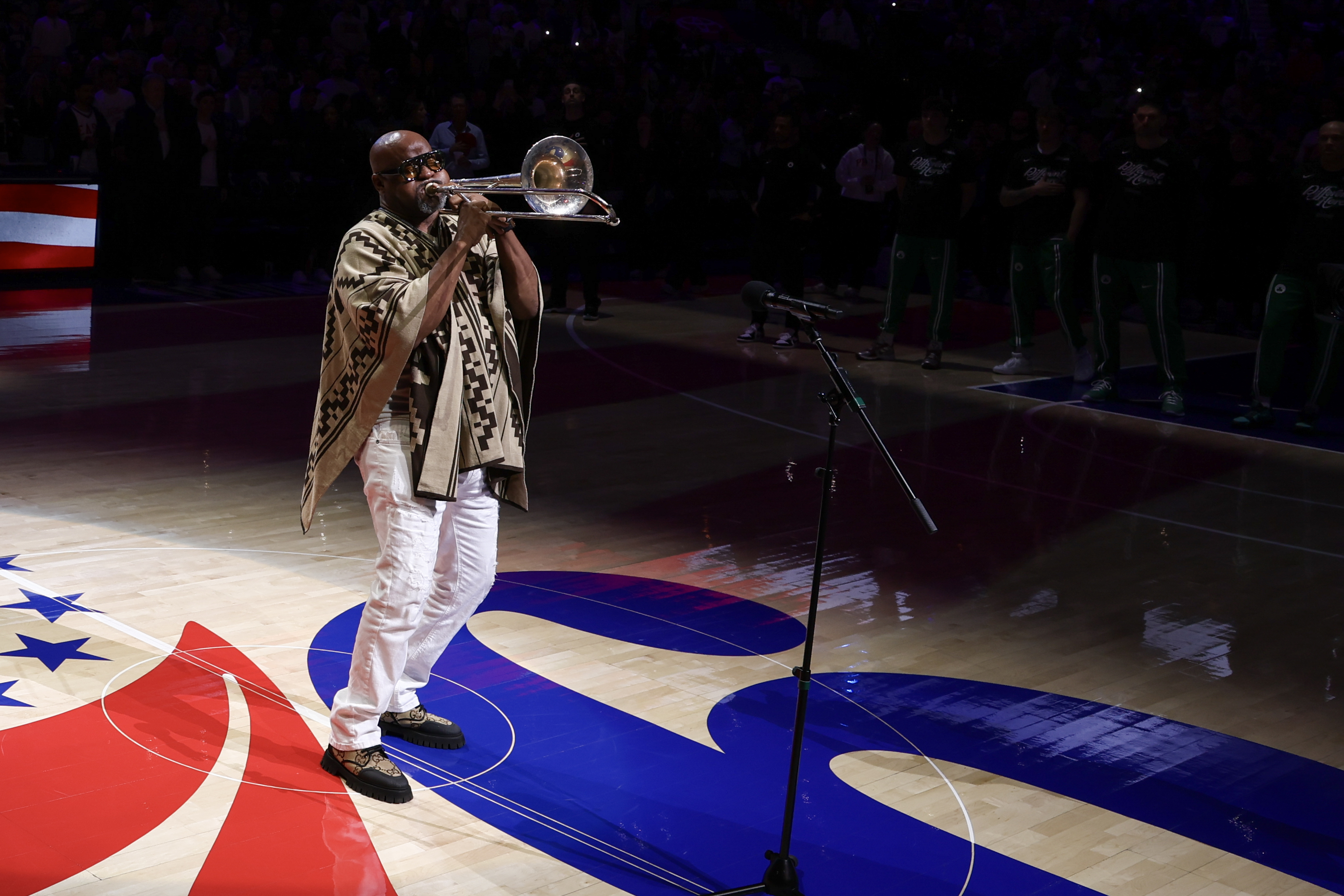
Jeff Bradshaw plays the National Anthem before Sixers play Game 6 against the Celtics in a first-round NBA playoffs basketball series Thursday, April 30, 2026, in Philadelphia. Bradshaw will perform as part of the Atlantic City Jazz Festival this weekend.Monica Herndon / Staff Photographer
Friday, Sept. 11 to Sunday, Sept. 13
Atlantic City Jazzfest
This smooth jazz weekend takes place at Sound Waves at Hard Rock Hotel & Casino Atlantic City. On Friday, Memphis sax player Kirk Whalum headlines a show hosted by Patty Jackson. Saturday, Philly trombonist Jeff Bradshaw tops the bill, and on Sunday morning, sax man Reggie E. Harris makes a jazz brunch go down easy. 7 p.m. Friday and Saturday; 11 a.m. Sunday at Hard Rock Hotel & Casino, 1000 Boardwalk, Atlantic City, theatlanticcityjazzfest.com.
Margo Price plays Concerts Under the Stars in King of Prussia on Saturday.Yana Yatsuk
Saturday, Sept. 12
Ray LaMontagne
Last week at the Ryman Auditorium in Nashville, Ray LaMontagne collapsed on stage, leaving audience members fearing for his life. But no worries: The cause apparently was dehydration, and the New Hampshire-born rustic rock songwriter, who is on tour celebrating the 20th anniversary of his Trouble album, was back on stage the next night in Louisville. Tara Lindeman’s environmentally conscious Canadian folk-rock band the Weather Station opens. 8 p.m., Met Philly, 858 N. Broad St., themetphilly.com.
Spring Garden Sunflower Fest
This third annual free fest — on Fairmount Avenue, not Spring Garden Street — will feature a full day of bands and DJs. Rising indie songwriter Maxwell Stern & the Good Light Band headline, and the lineup includes Celtic folk and Americana group the John Byrne Band, salsa group Un Toque de Cache, and a performance by the youngsters of Rock to the Future. Noon, Fairmount Avenue between 17th and 19th Sts., springgardensunflowerfest.com.
Margo Price
Margo Price got back to her country roots on Hard-Headed Woman, her 2025 album that includes a George Jones cover called “I Just Don’t Give a Damn.” It also offers some life advice with “Don’t Let the Bastards Get You Down,”which was written with her husband, Jeremy Ivey, and Rodney Crowell, plus a posthumous Kris Kristofferson credit. Price is calling this her “Wild at Heart Tour,” and Ivey opens the show. 7 p.m., Concerts Under the Stars, King of Prussia, 175 W. Valley Forge Road, King of Prussia, concertsunderthestarskop.com.
Saturday, Sept. 12 and Monday, Sept. 14
Rod Wave
Trap-soul rapper and singer Rod Wave — born Rodarius Green — has been rising so high of late it’s no wonder he’s titled his new album and tour “Don’t Look Down.” The St. Petersburg, Fla., native cites Tupac Shakur and Kanye West as influences on one hand, and Ed Sheeran and Adele on the other. He last played an arena show in South Philly in December, and now is back for two more to kick off the tour in support of the 24-track Don’t Look Down, which came out last month. Philly hip-hop singer Francis Leblanc — better known as Friday — is the opener. 8 p.m., Xfinity Mobile Arena, 3601 S. Broad St., xfinitymobilearena.com.
FILE – Sandra Denton, left, and Cheryl James, of Salt-N-Pepa, perform at the IHeartRadio Music Awards in Los Angeles on March 26, 2026. Salt-N-Pepa play the Freedom Mortgage Pavilion on Sunday. (AP Photo/Chris Pizzello, File)Chris Pizzello
Sunday, Sept. 13
TLC, Salt-N-Pepa & En Vogue
This triple bill — dubbed the “It’s Iconic Tour” — teams up three acts that were standout women in hip-hop and R&B beginning in the 1980s and into the 2000s. In their prime, TLC included Lisa “Left Eye” Lopes, who grew up in the Logan section of Philadelphia and died in a car crash in Honduras in 2002. Some dates on the tour so far have not included TLC’s Tionne “T-Boz” Watkins and have gone on with only Rozonda “Chilli” Thomas because Watkins has been ill with what the band’s manager called “a sickle cell crisis.” Hip-hop heroines Salt-N-Pepa, who were inducted into the Rock and Roll Hall of Fame in 2025, are co-headliners. Vocal group En Vogue opens. 7:30 p.m., Freedom Mortgage Pavilion, 1 Harbour Blvd, Camden, FreedomMortgagePavilion.com.
Canadian musician Rufus Wainwright returns after speaking to broadcasters outside Christ Church Cathedral for the National Commemorative Ceremony in honour of Queen Elizabeth II, in Ottawa, Ontario, on Monday, Sept. 19, 2022. He plays three nights at City Winery Philadelphia next week. (Justin Tang/The Canadian Press via AP)Justin Tang / AP
Tuesday, Sept. 15
Iron Maiden
British heavy metallers Iron Maiden was formed in East London in 1975. Now the Bruce Dickinson-fronted band is on its 50th-anniversary “Run for Your Lives World Tour,” which kicked off last year and makes its way to Hershey on Tuesday. Megadeth opens. 7:15 p.m., Hersheypark Stadium, 100 W. Hersheypark Drive, Hershey, hersheyentertainment.com.
Rufus Wainwright
Rufus Wainwright is always up to something interesting. There’s Hadrian, his opera about the last day of a Roman emperor, Dream Requiem, the singer and pianist’s work based on a text by Lord Byron, and recent albums like Unfollow the Rules in 2020 and Folkocracy in 2023, as well as projects like Rufus Does Judy (Garland), Rufus Does (Kurt) Weill. (How about Rufus does Kurt Vile? Now there’s an idea.) On Tuesday, Wainwright begins a three-night stand in which he can do whatever he wants. 7:30 p.m., City Winery Philadelphia, 990 Filbert St., citywinery.com/philadelphia.
Apple this week unveiled an iPhone that unfolds like a book to expand its screen size and closes up to fit in your pocket. It’s the biggest physical change to the iPhone’s design in nearly two decades.
But even though they’ve been around for years, foldable phones aren’t particularly popular. They’re expensive, awkward and not as durable as regular smartphones. So why did Apple build one?
The simple answer is that the novel design of today’s foldable phones could help reestablish the high end of the phone market. They are meant to stand out in a sea of standard-issue, if-you’ve-seen-one-you’ve-seen-them-all smartphones.
The quintessential rectangular smartphones have gotten so good over the years that the most expensive models priced upward of $1,000 have become nearly indistinguishable from their cheaper counterparts. (Carrying a phone with three camera lenses vs. two probably won’t impress people at parties.)
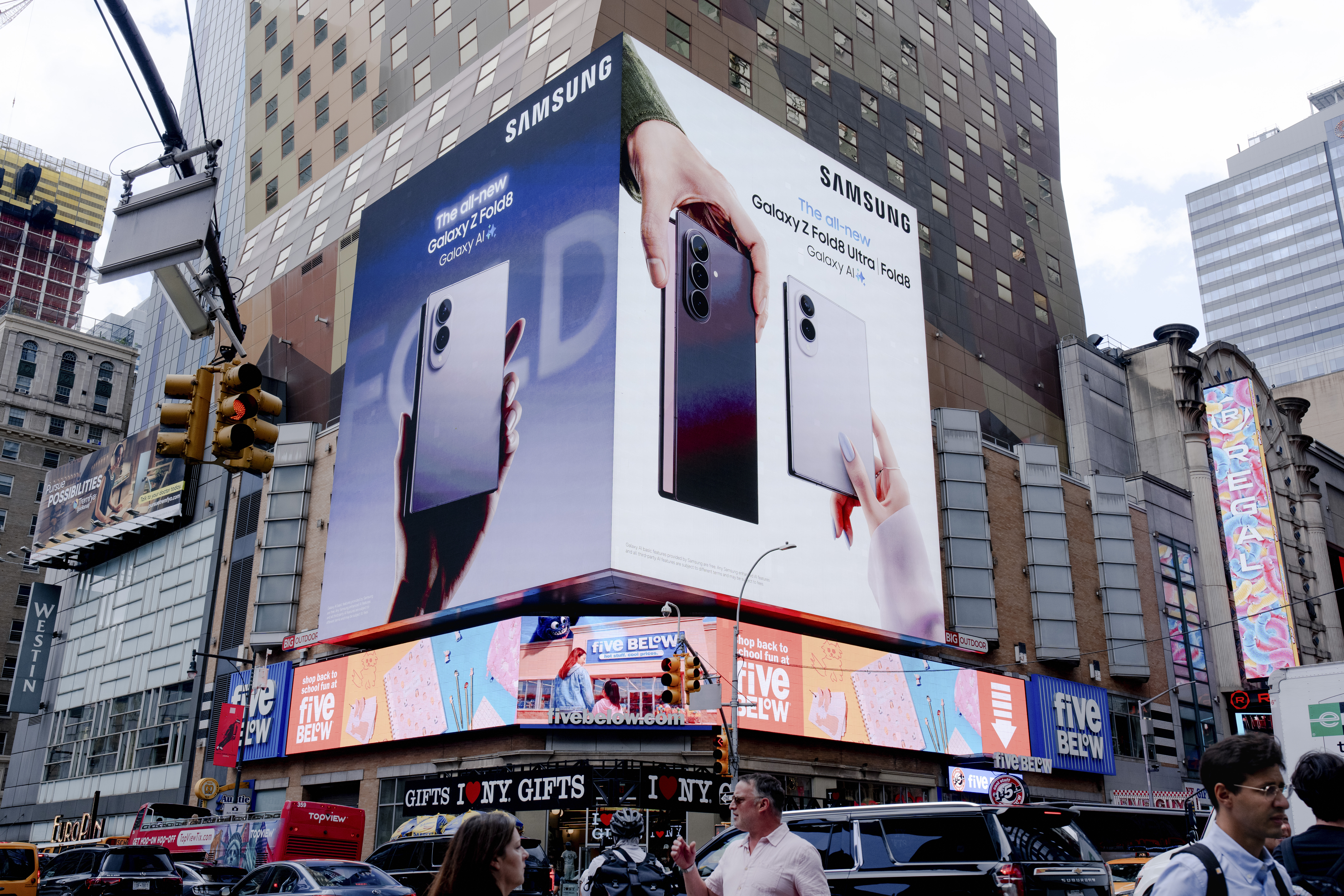
Foldable phones, on the other hand, are attention-getters. And for their price, they’d better be: Apple’s iPhone Duo will cost $1,999 when it arrives in October to compete with Samsung’s $1,900 Galaxy foldable.
Samsung billboards in Midtown Manhattan.Lexi Parra
“Whenever something is exclusive, limited and luxurious, automatically consumer psychology wants it,” said Nabila Popal, a director at IDC, a market research firm. “It’s like handbags. Why is someone buying a Chanel versus that? It’s not because of the leathers. It’s to show that they have a Chanel and they can afford it.”
Apple and its competitors are following a path that television makers took about a decade ago. When high-definition TVs became commoditized, anyone could buy a bright TV with a large, sharp screen for as little as $500. To find more ways to increase profits, companies like Panasonic, LG, and Sony experimented with quirky new designs, like TVs with curved displays and the ability to play movies in 3D, and charged $3,000 for them.
Those TV concepts turned out to be flops. But in later years, TV makers found success with a different type of high-end television featuring OLED technology, or organic LED, which had more accurate colors for making movies look better and cost upward of $1,000.
Apple’s foldable handset is arriving at a moment when people will need extra persuading to upgrade to a new phone. The costs of most consumer goods, and especially electronics, have skyrocketed.
In response to an industrywide memory chip shortage driven by the artificial intelligence boom, Apple increased prices this year for many of its popular products, including Macs and iPads, by as much as 29%. Apple’s new iPhone 18 Pro phones will cost $1,199, a $100 increase from last year’s model. The chip shortage has also forced companies to raise the prices of video game consoles and phones.
Foldable phones, which account for less than 2% of the handset market, may be the only part of the phone industry that will grow this year. IDC said it expected the chip-shortage-induced price increases to contribute to a 17% drop in worldwide smartphone sales this year — the steepest annual decline in history. However, sales of foldable phones could grow 12% to 22.9 million because of the iPhone Duo’s arrival, the research firm said.
Still, a foldable phone could be a tough sell even for a company as influential as Apple. Consumers have generally avoided buying foldable phones not only because of their cost but also because of their trade-offs. Their bendable screens are less durable than normal phone displays, which are protected with hard glass. Folded up, they can feel bulkier and heavier in a pocket.
Dan Frommer, a writer for the New Consumer, a tech research publication, said he had long been skeptical about the usefulness of foldable phones because so much online content, including the vertical videos on TikTok and Instagram, was produced for the small rectangular screens of normal smartphones.
“They’ve been used that way for 19 years now,” Frommer said. “What would you actually want a square, big screen for?”
Apple’s iPhone Duo appears to be addressing some of the shortcomings of previous foldable phones. The device’s name refers to two screens. Closed up, it has a 5.4-inch outer screen that people use as a normal rectangular phone; it opens up to reveal a 7.6-inch inner screen. The larger inner display shows pictures in the same aspect ratio as traditional phone screens. Apple also said the phone’s foldable inner screen was composed of a tougher material than competitors’.
The iPhone Duo appears to be addressing some of the shortcomings of previous foldable phones.Jason Henry
In my tests, when opened, the iPhone Duo was extremely thin, measuring two-tenths of an inch. I liked that a Netflix video took up the full screen instead of showing black bars on the sides, which has been the case with other foldables. Closed up, the phone felt dainty and was about the size of a passport. It also felt less chunky in my pocket than other foldables I’ve tested, such as the $1,900 Google Pixel 11 Pro Fold. The more compact and lightweight, the better.
The inner screen has a matte texture to reduce glare. Still, I occasionally noticed the crease in the center where the screen folds. I didn’t mind it, but that might bother nit-pickers.
Apple also had to leave out some components to make a phone this thin; the iPhone Duo lacks the advanced camera system featured in the $1,199 iPhone 18 Pro phones. It also doesn’t have a face scanner for unlocking the device, relying instead on a fingerprint sensor on the side of the phone.
Although Frommer predicted that the Apple foldable wouldn’t be the right fit for him, he admitted he couldn’t resist trying one out in a store.
“When Apple makes something, there’s an allure to it to encourage people to at least check it out,” he said.
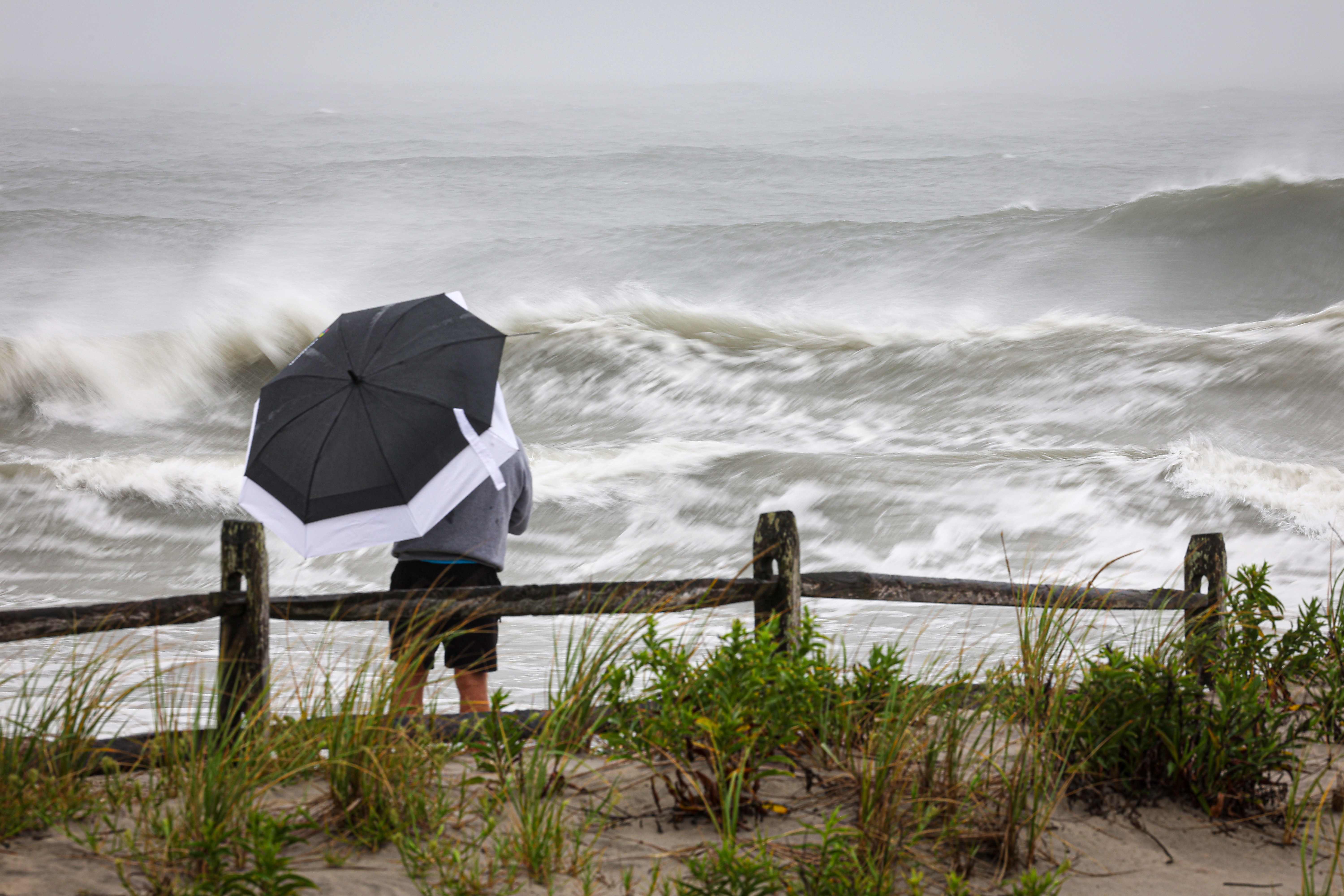
With the season at its climatological peak, it is about to set a record for the longest wait for the development of a first hurricane in the satellite era, dating to the 1960s, according to the National Oceanic and Atmospheric Administration.
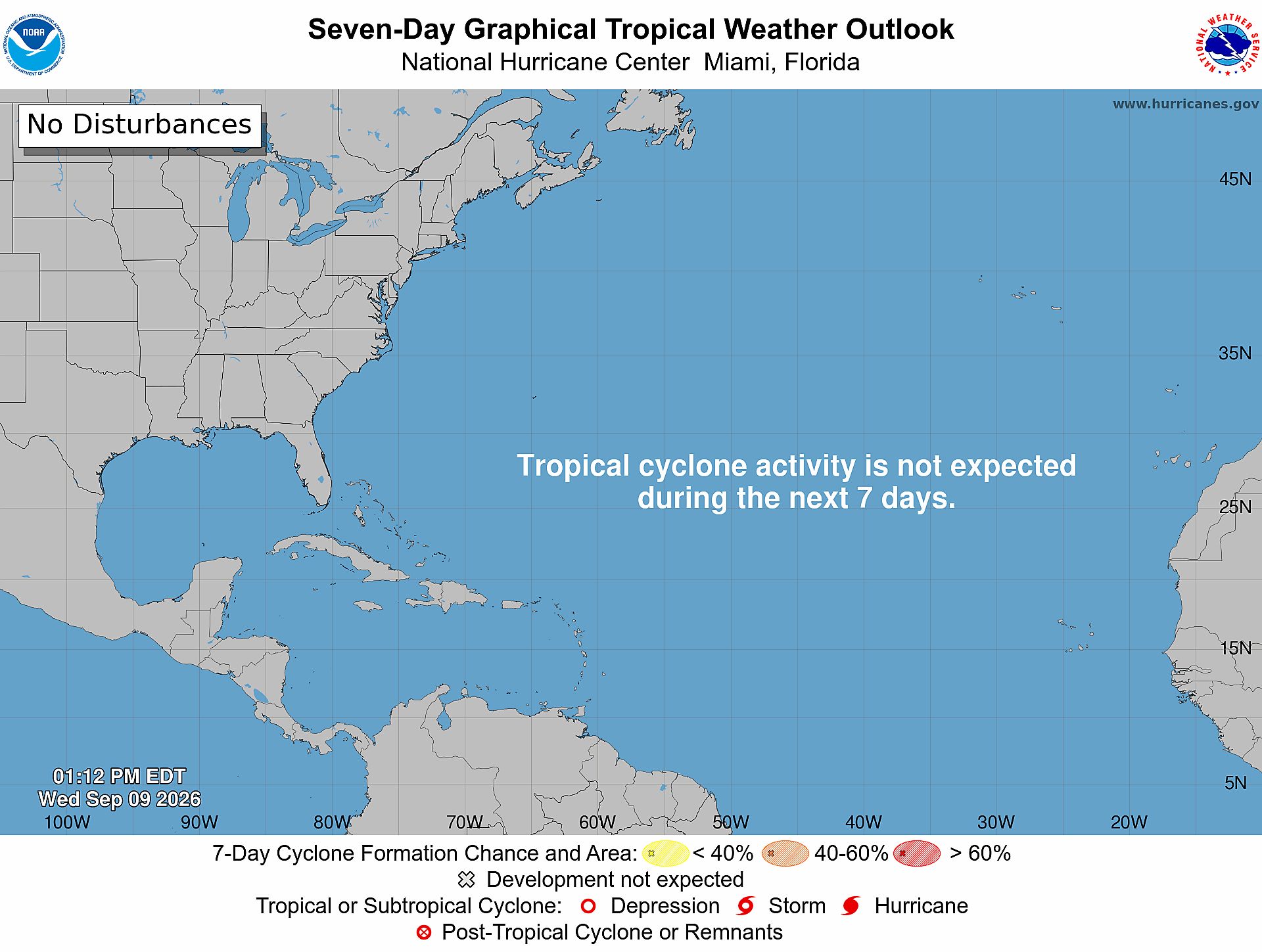
The standing record, Sept. 11, was set in 2002 and 2013, and this year the National Hurricane Center is seeing zero chances that a hurricane forms in the basin, which includes the Gulf and Caribbean, during the next seven days.
As the hurricane season approaches a peak, the National Hurricane Center map sums up the quiet of the Altantic Basin. National Hurricane Center
In 2013, only two hurricanes — storms with winds of at least 74 mph — formed during the season, which spans from June 1 to Nov. 30. That tied 1982 for the fewest number of hurricanes, said Matt Rosencrans, a scientist at NOAA’s Climate Prediction Center.
The 2026 season might make a run at that record, and the state of the atmosphere and history suggest it has a shot.
Who hit the mute button?
The explanation “is almost 100% El Niño,” said Philip Klotzbach, a hurricane specialist at the Colorado State University’s Tropical Meteorology Project, which has been issuing outlooks for over 40 years.
Would-be hurricanes in the Atlantic haven’t had a snowball’s chance to reach maturity.
Sea-surface temperatures in the vast, key El Niño monitoring zone have been running more than 3 degrees Fahrenheit above normal. That anomalous warmth is affecting the overlying atmosphere in such a way as to generate powerful upper-air winds from the west that are inhibiting the development of tropical storms in the Atlantic Basin.
For the strength of vertical shear across the western Atlantic, “we continue to crush” records, Klotzbach said, in observations dating to 1979.
Western tropical Atlantic/Caribbean (10-20°N, 85-50°W) vertical wind shear continues to shatter previous records, with average shear in the western Atlantic for the past 30 days >3 kt stronger than any other year in the global satellite era (since 1979). #ElNinopic.twitter.com/KM0elPofXY
How important is El Niño to the Atlantic hurricane season?
The El Niño effect on Atlantic hurricanes is evident in the available records. In the six years with El Niños of comparable intensity since 1950, hurricane activity has been well below normal.
Rosencrans cautions, however, that the data have limits. The era of satellite observation did not begin until 1966, and the credible El Niño records start with 1950.
Satellites have lifted the qualities of observation to dramatically different heights.
Klotzbach noted that in 1941 a first hurricane was not observed until Sept. 21, but neither satellite data nor aircraft reconnaissance was available. Plus transatlantic shipping, an important observation source, likely was limited because of the war. Thus, it is entirely possible that a hurricane had occurred earlier.
One of the strongest El Niño years, 1982, coincided with the record-low number of hurricanes.
But during the other record holder, 2013, the Pacific waters actually were slightly cooler than normal.
Even the strongest El Niño would not act in isolation in the chaotic environment of the atmosphere.
Early in this season, layers of Saharan dust in the atmosphere may have inhibited tropical storm development, said Benjamin Kirtman, dean of the University of Miami Rosenstiel School of Marine, Atmospheric, and Earth Science.
But the evidence of El Niño’s power over the Atlantic season is “pretty clear-cut.” And this one, he said, was especially precocious.
“Whereas El Niño episodes typically ramp up toward the peak of hurricane season, this event was already in place and strengthening well before the season’s most active months,” Kirtman said, creating “hostile shear conditions.”
Take the career of Dolly, which was knighted one of the season’s five tropical storms at 11 a.m. Aug. 27 and demoted to a remnant at 11 a.m. Aug. 28. The hurricane center said it had entered “a hostile environment with significant … shear.”
What does (or doesn’t) happen next?
The likelihood of El Niño’s retaining strength into the winter and the limited historical record argue against a late hurricane rally.
On average, six tropical storms, those with winds of at least 39 mph, have formed after Sept. 11, and four hurricanes. A total of only five hurricanes formed during all six of the comparable El Niño years.
“I fully expect there to be additional storm threats as the season progresses,” Kirtman said, “but the effects of El Niño remain, so it is unlikely that the season will suddenly become very active.
“That being said, it only takes one storm to affect where you live.”
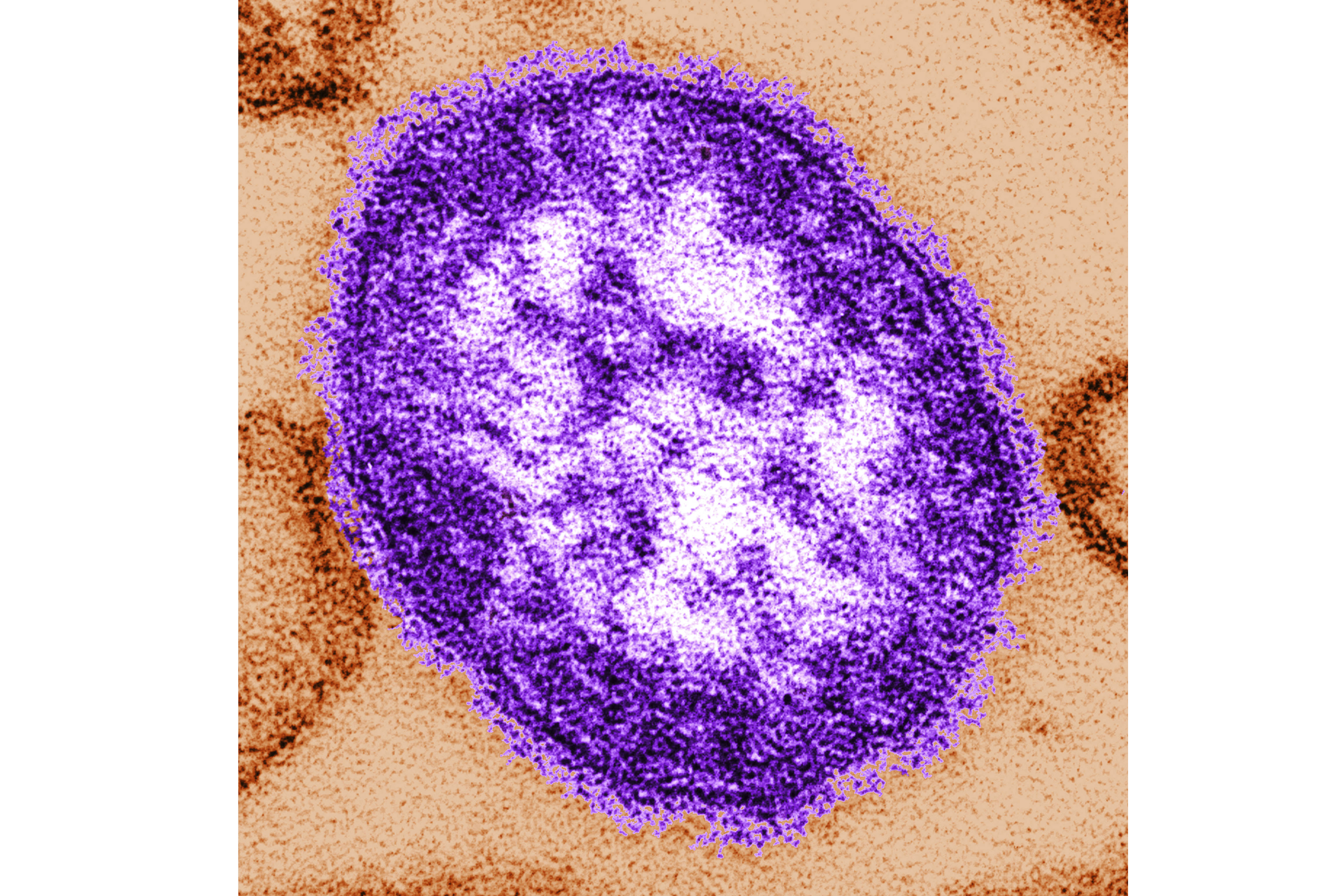
NEW YORK — The two measles-related deaths in Pennsylvania last month involved infants, and the virus itself caused one of the deaths, a Pennsylvania coroner confirmed Wednesday.
Lancaster County’s coroner, Dr. Stephen Diamantoni, said he told the Centers for Disease Control and Prevention of his conclusions. CDC officials, however, have not said whether they will count either death as measles-associated, and the agency’s website still carries a disclaimer about them.
Ivan Miller died on Aug. 14 shortly after his birth of a ruptured spleen, Diamantoni said.
Mary Stoltzfus was 6 weeks old when she died Aug. 18 at her home. She was born with a genetic birth defect that left her highly vulnerable to an infection. A measles infection killed her, Diamantoni told The Associated Press.
He said he was releasing the information in response to a state right-to-know law request by WPMT-TV, Fox 43.
The causes of death differed
Diamantoni’s office didn’t perform an autopsy on the girl. The cause of death was determined by the doctors caring for her, he said.
She had been born with a condition called Amish lethal microcephaly that causes an unusually small head and underdeveloped brain. Children with the condition typically live 6 months or less.
The girl’s immediate cause of death was listed as a cardiac arrest, due to hypoxemic respiratory failure, measles, and Amish lethal microcephaly, according to a coroner’s report obtained by The Inquirer through a right-to-know request. The manner of death was listed as “natural.”
Diamantoni’soffice did autopsy the boy, and determined he died from a ruptured spleen. Exactly how and when that happened is still under investigation, Diamantoni said.
The boy was infected with measles, which is listed on the death certificate as a contributing factor. But Diamantoni said measles did not contribute to what happened to the spleen, and that measles is noted only because it was considered “a significant condition” that the boy had at the time of death.
Ivan Miller’s death was attributed to a “traumatic torso injury,” and his manner of death was “pending investigation,” according to another document signed by the coroner and provided to The Inquirer through a public record request.
Neitherchild was old enough to be vaccinated; the first dose is typically given at around 1 year of age.
Because of the ongoing measles outbreak, Pennsylvania health authorities in recent months have recommended that children receive a first dose of a measles vaccine as early as six months old.
The deaths have received outsized attention
Details of the deaths have come under unusual national scrutiny and became the focus of a furious political battle between Pennsylvania’s Democratic governor, Josh Shapiro, and officials in Republican President Donald Trump’s administration.
Pennsylvania officials announced the deaths last month, with Shapiro stressing that vaccinations could have averted the deaths.
Soon after, U.S. Health Secretary Robert F. Kennedy Jr., a Trump administration appointee with a history of raising alarms about established vaccines, attacked Shapiro and suggested the deaths “may even have been altogether fabricated.”
Kennedy’s statements echoed ones he made last year, when three measles-related deaths were recorded. Kennedy questioned whether one of the children who died was killed by measles.
The health secretary oversees the CDC, and some public health experts have voiced concern about whether the CDC can still be counted on to post public health data that clashes with Kennedy’s worldview.
“Frankly, the CDC is not to be trusted in sharing information,” Dr. Georges Benjamin, executive director of the American Public Health Association, told the AP last week. “People are questioning their motives.”
CDC website still doesn’t show the deaths
That worry was fueled by some unusual edits to the CDC’s measles webpage. At one point, the webpage noted two measles-associated deaths but then was changed to say that the CDC was not counting the two deaths until it reviewed additional information.
The page, which was last updated Friday, now says, “CDC will update its reporting as additional information becomes available and relevant reviews are completed.” It still doesn’t reflect either Pennsylvania death.
In a social media post last week, Kennedy acknowledged Diamantoni’s conclusion that one of the deaths was due to measles.
Meanwhile, Pennsylvania’s measles outbreak continues to expand, with more than 620 cases across 37 counties this year, state officials said Wednesday.
The U.S. eliminated the domestic spread of measles in 2000 by maintaining high vaccination rates, but they have fallen in recent years to below the 95% coverage needed to prevent outbreaks. Meanwhile, measles infections have been surging in recent years.
In November, international health officials will meet to determine if the U.S. and Mexico have lost their measles-free status.
Inquirer staff reporter Aubrey Whelan contributed to this article.
Editor’s note: This article has been updated with additional information obtained by The Inquirer through a public records request.