Blog

  • A healthy Jett Luchanko is hoping to use rookie camp as a springboard ahead of a pivotal season for his Flyers future

    A healthy Jett Luchanko is hoping to use rookie camp as a springboard ahead of a pivotal season for his Flyers future

    ALLENTOWN — Jett Luchanko carried the puck up the ice with Alex Bump and Cole Knuble on his flanks during Friday’s drills. He passed it to Bump on the right side and drove to the net as the winger sent the puck back to the crashing forward for a scoring chance.

    Later in the first practice of the Flyers’ rookie camp at PPL Arena, the right-handed center cut across the slot and sent it past the glove of 2026 second-round pick Martin Psohlavec for a goal.

    Known for his high hockey IQ and his speed — “His name is Jett, so he should be fast,” as Lehigh Valley Phantoms coach John Snowden said jokingly — the knock on the Flyers’ 2024 first-round pick has been his lack of goal scoring. Part of that is down to his low shot total. He’s put only 21 shots on goal across a combined 25 American Hockey League and NHL regular-season and playoff games. Last year he managed just seven goals in 38 regular-season games in the Ontario Hockey League split between Guelph and Brantford.

    “I think the one thing that we all talk about is we want to squeeze that offense out of him,” Snowden said. “Obviously today seeing him shoot the puck and scoring goals from a distance in some different scenarios, that’s a huge plus.”

    Snowden, who is expected to have the newly 20-year-old in Allentown for the 2026-27 season, wants to see Luchanko take chances this weekend in the Rookie Series games against the New York Rangers. He wants to see his offensive game, which he believes he has, bubble to the surface.

    But the reality is that just having Luchanko on the ice is a big step. After putting on a show two years ago while skating with Matvei Michkov at the Phantoms’ arena, the centerman missed development camp and rookie camp last year because of a groin injury.

    He also missed development camp this summer after undergoing a procedure on his core approximately a month prior. According to Flyers assistant general manager Brent Flahr, the issue had been lingering for a year and a half.

    Flyers prospect Jett Luchanko has broken camp with the big club the last two seasons. This year, he might be better suited developing with Lehigh Valley.Yong Kim / Staff Photographer

    “Yeah, I feel good, ready to go for sure, and just excited to take part in his camp,” said Luchanko, who got back on the ice soon after development camp and looked like he was in midseason form on Friday.

    The hope was that having the summer to prepare would help Luchanko’s confidence. After back-to-back seasons of four-game NHL stints before returning to juniors, he is a full-time pro this year. Luchanko has yet to register a point in the NHL but has nine assists in 16 AHL contests and skated in the Flyers’ final playoff game last season. It was an eye-opening experience, as he learned firsthand the intensity the Stanley Cup playoffs bring.

    “We’re excited to see him turn pro. I think that’s great. … Stability will probably be a good thing for him,” Flyers general manager Danny Brière told The Inquirer at the beginning of June. “… The big thing with Jett is he has an elite skill in skating that is almost unmatched from anyone in the organization, other than maybe Owen Tippett. So that’s always going to have a lot of value for anybody to have a player like that.”

    This season, the hope is he will take the next step, and with a shortened preseason for the Flyers, the time for him to showcase his skills is now.

    At development camp, Luchanko spoke about using his speed and attacking with the puck. He noted that over the summer, every time he got on the ice, he put intent into working on those skills. He flashed that on Friday.

    “He’s a great player. He can fly; he’s a really good skater, so [he] opens up more space for me and he can make plays,” Bump said of Luchanko. “So just got to be ready and in the slot or be ready for when he can make a play and just put them in the back of the net.”

    Reading between the lines

    Although Snowden wouldn’t commit to line combinations or defensive pairings — not everyone can or will play both games this weekend (7 p.m. on Saturday and 5 p.m. on Sunday and streamed on the Flyers website) — there were some interesting looks.

    Outside of Luchanko, Bump, and Knuble together on a line, Denver Barkey — who said he put on a few pounds over the summer — and Porter Martone paired up with Phoenixville native Owen McLaughlin. Like Bump, Martone and Barkey are expected to make the Flyers’ roster. Martone said Brière and his agent, Paul Capizzano, spoke, and they decided that participating in rookie camp was the best thing to get him ready for the Flyers’ season opener.

    After missing out on the NHL roster initially last year, Alex Bump wants to hit the ground running in 2026-27.Isaiah Vazquez / For The Inquirer

    Alex Čiernik and Noah Powell, who will be in Lehigh Valley, had 2025-second rounder Matthew Gard between them; Gard will head back to Seattle of the Western Hockey League before attending Michigan State next fall.

    Ilya Pautov, a sixth-round pick in 2024 making his North American debut, skated with fellow Phantoms Riley Thompson and Devin Kaplan. Defenseman Ty Murchison, who could push for an NHL spot, was paired with first-year pro Spencer Gill, and second-year pro Oliver Bonk was with fellow London Knight Maksim Sokolovskii, the Flyers’ first-rounder in June.

  • Phillies-Braves ‘cat and mouse game’ has big implications this weekend

    Phillies-Braves ‘cat and mouse game’ has big implications this weekend

    ATLANTA — Four days after they last saw each other, the Phillies and Braves have come face to face yet again.

    Because of a scheduling quirk, the regular season matchups between the National League East rivals this year have been condensed within two weeks in April and 10 days in September.

    Interim manager Don Mattingly, for one, doesn’t mind it.

    “I kind of like the back-to-backs, especially planning-wise. You just saw them for four games. You get a couple days off, and you go again,” he said. “So I kind of like it. It’s always better if you’re playing good. The first time we saw them, we weren’t playing good. They were playing really good. Same with the Cubs. Kind of caught them on fire. We were kind of struggling, right in the same little period of time.”

    The Phillies entered Friday’s series opener trailing Atlanta by four games for the division lead — exactly where they were at the start of the previous series, which they split. Taking at least two of three games this weekend at Truist Park is essential for the Phillies to remain in contention for the NL East.

    window.addEventListener(“message”,function(a){if(void 0!==a.data[“datawrapper-height”]){var e=document.querySelectorAll(“iframe”);for(var t in a.data[“datawrapper-height”])for(var r,i=0;r=e[i];i++)if(r.contentWindow===a.source){var d=a.data[“datawrapper-height”][t]+”px”;r.style.height=d}}});

    Because of the scheduling, the Phillies just saw all three Braves pitchers planned to start this series: Chris Sale, Tyler Mahle, and Grant Holmes. On the other hand, the Braves just faced Friday starter Aaron Nola and Saturday starter Jesús Luzardo, who shut them out in his last outing. They missed Andrew Painter, who will take the ball on Sunday.

    There are advantages and drawbacks for both pitchers and hitters seeing each other in quick succession.

    “It kind of works both ways,” Mattingly said. “It’s like the cat and mouse game goes on and on. Like, how you pitched them last time, how did you get them out? Did you get them out? Did they hit you? What do you feel like they’re looking for? As a hitter, did he get me out? Is he going to go back there? It’s just back and forth.”

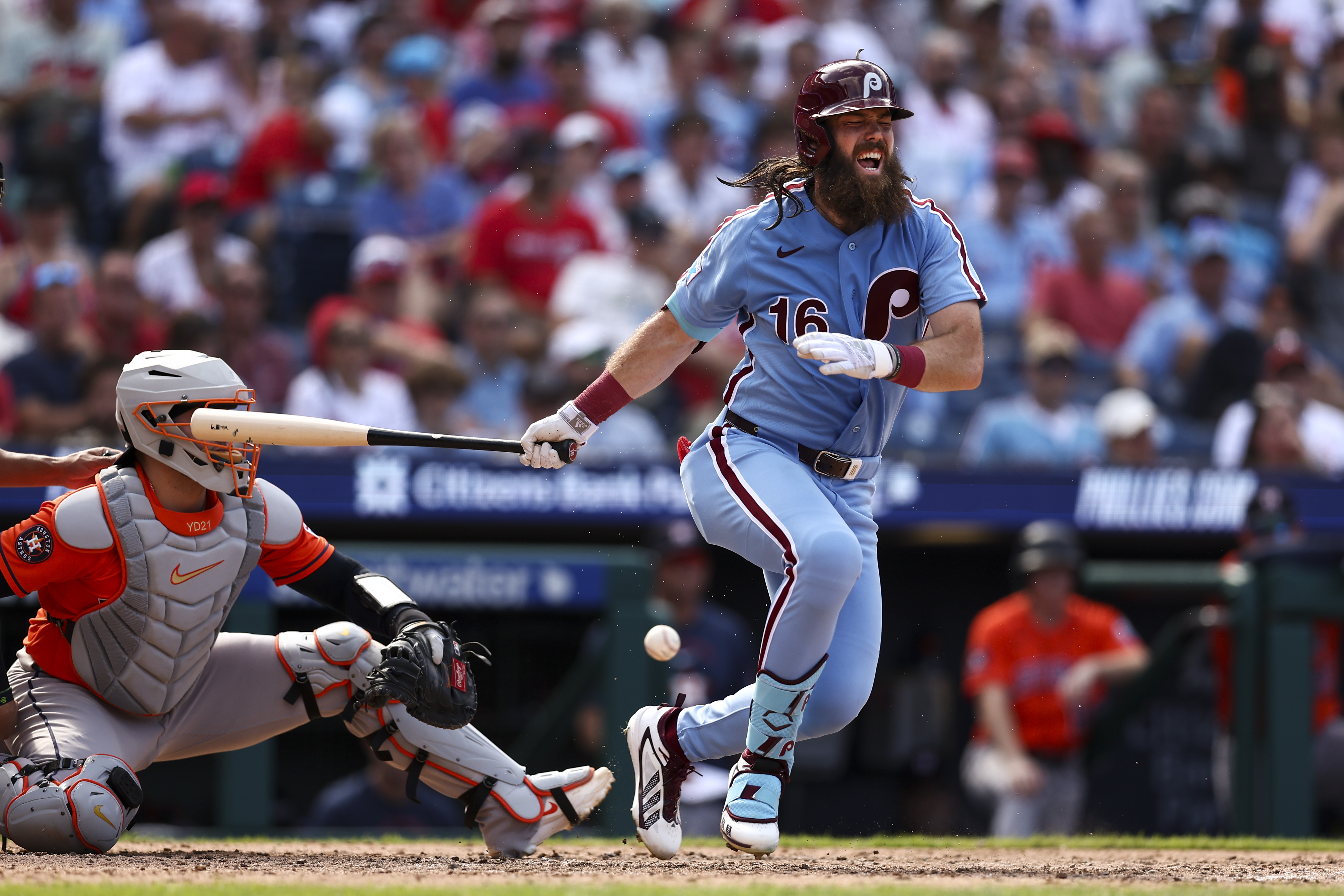
    Phillies left fielder Brandon Marsh fouled a ball off his foot in the series finale vs. the Astros and was out of the starting lineup Friday vs. the Braves.Monica Herndon / Staff Photographer

    Marsh and Marchán OK

    As expected, neither Brandon Marsh nor catcher Rafael Marchán were in the Phillies’ lineup Friday against Sale, but both of them are healthy after sustaining some bruises in Thursday’s day game.

    Marsh exited the series finale against the Astros with a bruised foot after fouling a ball off it in the bottom of the eighth inning. Marchán bunted a ball off his helmet in the sixth inning, though he remained in the game.

    With lefty Sale on the mound for Atlanta, the Phillies stacked right-handers in Friday’s lineup. Bryan De La Cruz started in left field and Derek Hill started in center, while Edmundo Sosa took over for Bryson Stott at third.

    J.T. Realmuto was back behind the plate after a planned day off Thursday.

    Keller stops by

    Brad Keller still has a ways to go in his recovery and rehab from the Tommy John surgery he underwent on July 29 to repair a torn UCL. But he has a locker in the visitor’s clubhouse in Atlanta this week and was there Friday catching up with his teammates.

    Keller, who is based in Georgia, is taking the opportunity to be back around the team for the three games this series. Before his injury, he was a key part of the bullpen mix and signed a two-year, $22 million deal to be the Phillies’ setup man this offseason. Since Keller’s season ended, Jonathan Bowlan often has filled that role, but has struggled lately with a 6.23 ERA in four appearances in September.

    Before his injury, Brad Keller was a big part of the Phillies’ bullpen.Yong Kim / Staff Photographer

    Outfielder Adolis García, who suffered a season-ending lat tear in June, was also back around the team during their last homestand.

    “It’s good to see guys that were a big part of what we were doing and had the injury, for him to come around. It’s kind of like [García],” Mattingly said. “It was the same way. To have those guys around, it feels good. Because sometimes I think when you’re on that, where you’re gone for a little bit of time, you feel like you’re not part of it anymore, and it’s just not a great feeling. So it’s good to have those guys come back around.”

    Extra bases

    Luzardo (14-5, 2.87 ERA) is scheduled to start opposite Braves right-hander Mahle (5-10, 4.05 ERA) on Saturday. In his last start, he limited Atlanta to two hits in his first career shutout.

  • Stopping ‘special’ Saquon Barkley is ‘not a one-man job,’ and what else the Commanders are saying about the Eagles

    Stopping ‘special’ Saquon Barkley is ‘not a one-man job,’ and what else the Commanders are saying about the Eagles

    The start of a new NFL season brings a certain kind of excitement. A new season against a division rival? Well, that brings the thrill of a whole other kind.

    After resting most of their starters in Week 18 and dropping their regular-season finale to the Commanders, the Eagles are ready to run it back against Washington on Sunday (4:25 p.m., Fox29).

    However, the feeling is mutual. Here’s what the Commanders are saying ahead of their Week 1 opponent.

    First-time coordinators

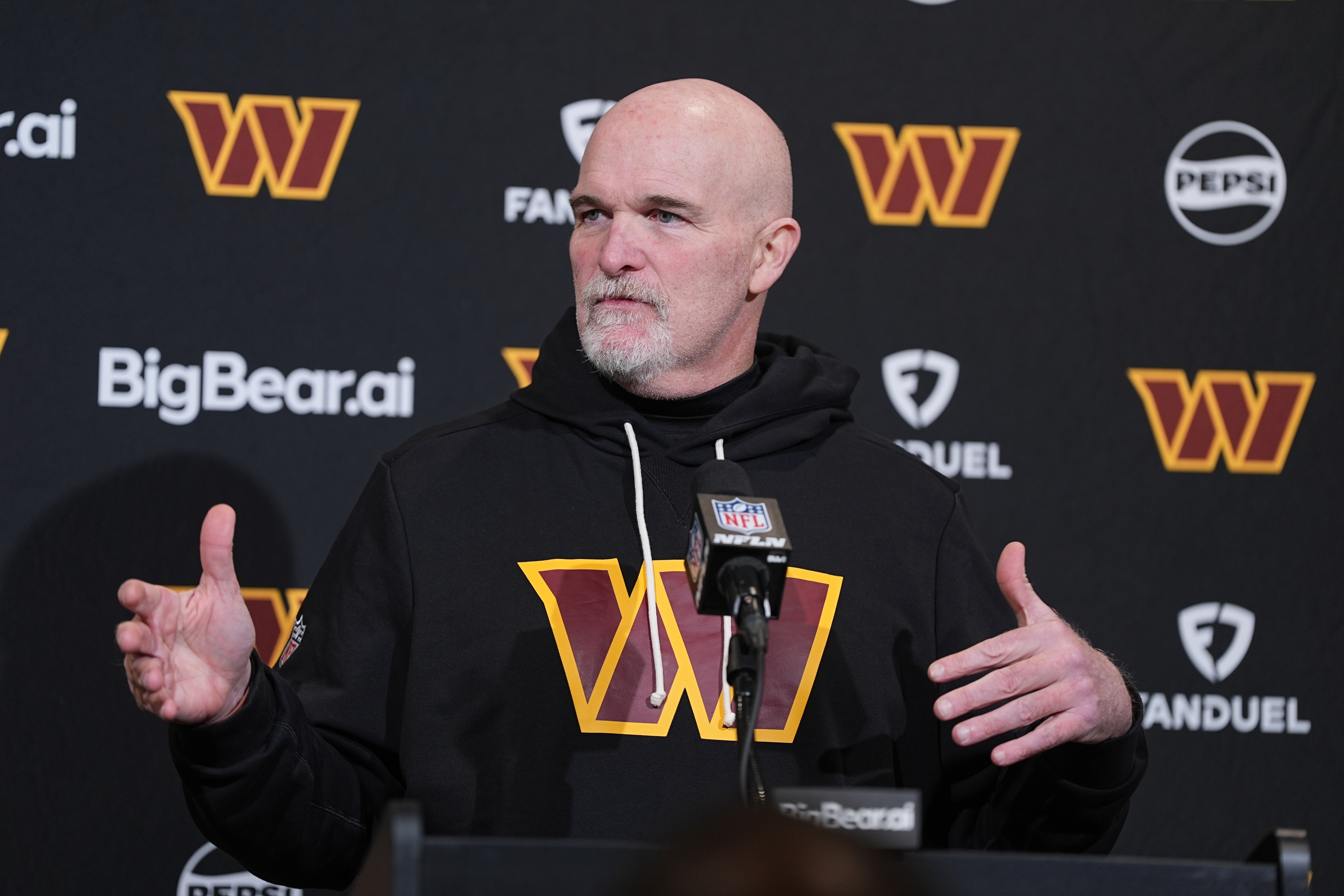
    The Commanders have two new systems in place with new play-callers on both sides of the ball. Daronte Jones is in his first season in Washington as defensive coordinator and will go against a new offensive system for the Eagles in Sean Mannion’s NFL debut as a play-caller. On the other side, David Blough, the Commanders’ first-year offensive coordinator, has the challenge of facing a well-established Vic Fangio defense.

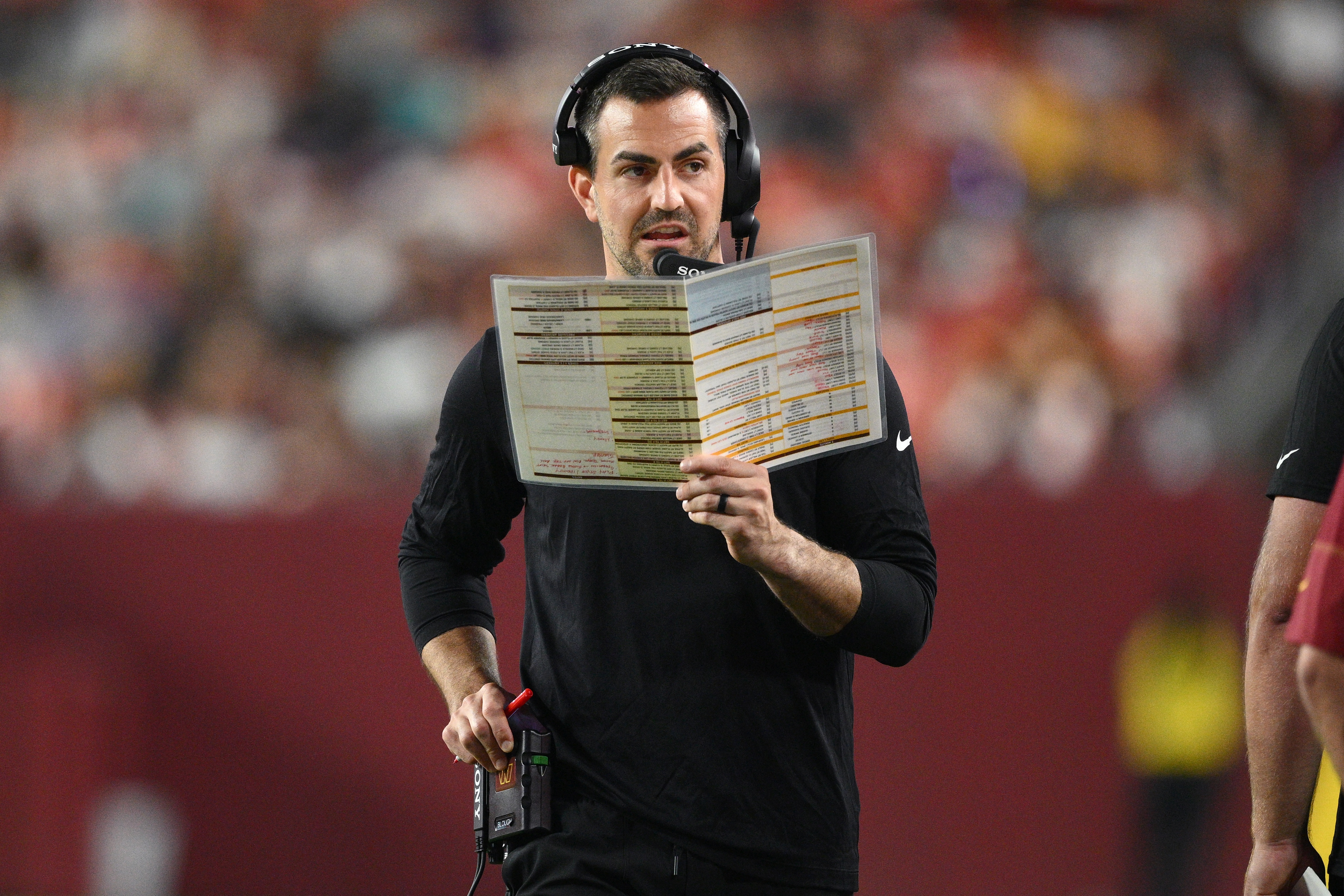
    Commanders offensive coordinator David Blough has seen a Vic Fangio defense firsthand, spending two seasons as an assistant quarterbacks coach in Washington. Nick Wass/AP

    Blough is in his third year with the Commanders after spending the past two seasons as an assistant quarterback coach. His few years with Washington have provided him a close look at Fangio’s defense and how it operates, a familiarity Blough is hoping will help come Sunday.

    “They’re so sound as a defense, how they attack you, where they try to stress you as an offense, and they got a lot of really good players who have been there for a long time,” Blough said about the Eagles defense Thursday. “We’ve seen matchups with some of our familiar players. We’ve seen things that Jayden [Daniels] does well. We’ve seen ways that they’ve tried to attack us. So, all of those data points for us kind of go into how we build the plan to get after him this week.”

    Eagles running back Saquon Barkley runs past Washington Commanders safety Quan Martin in Landover, Md., on Saturday, December 20, 2025.Yong Kim / Staff Photographer

    Stopping Saquon

    For Jones and the Commanders’ defense, a whole new problem is apparent. While there is less data to use to game plan for Mannion’s new offensive scheme, one thing is clear: in each of his four games, including playoffs, against the Commanders as the Eagles’ primary running back, Saquon Barkley has rushed for over 115 yards and has scored at least one touchdown.

    Whether Jones hasn’t yet figured out how to stop Barkley, or is just keeping his cards close to the chest, he offered a vague answer regarding his plan to slow down the running back.

    “Saquon is special,” Jones said. “It’s not a one-man job. It’s a team effort and even with that, I mean, his explosiveness, his playmaking ability, he’s very dynamic, and they’ve done a great job of using him in that way and finding different spaces to get him touches. And so, you take your hat off to the organization [for] how they utilize their personnel over there.”

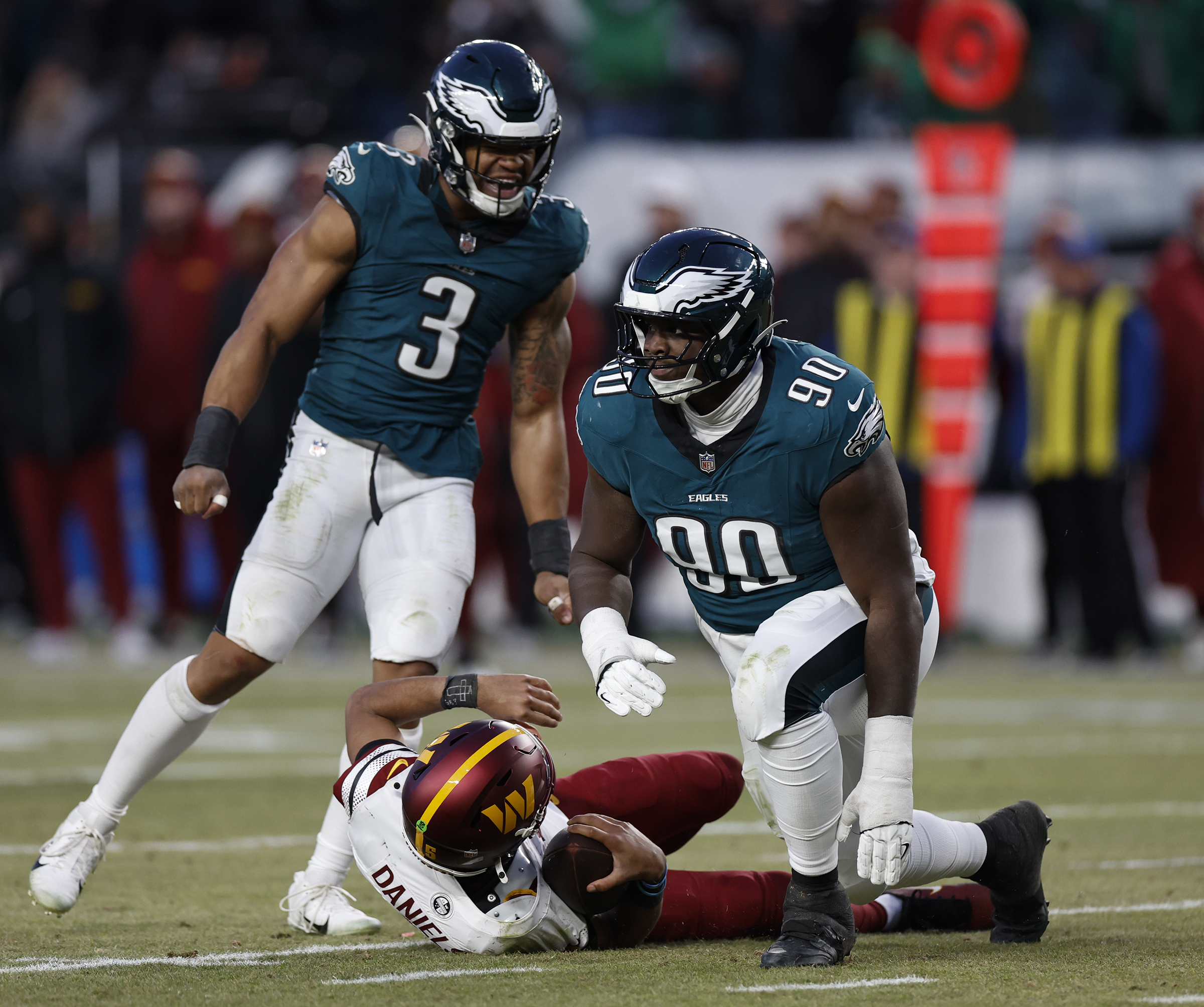
    Commanders quarterback Jayden Daniels (center) will have his hands full trying to stay away from the likes of Eagles linebacker Nolan Smith Jr., and the Birds’ rabid defensive front. Yong Kim / Staff Photographer

    ‘A hard-fought game’

    After a sophomore season riddled with injury, quarterback Jayden Daniels said he is ready to do “whatever it takes to win a football game” on Sunday.

    During his rookie season, Daniels faced the Eagles two times during the regular season, passing for 449 yards, rushing for 99 yards, and tossing six touchdowns compared to three interceptions. His most recent game against Philly did not go as well and ended with a 55-23 loss to the Eagles in the NFC Championship at Lincoln Financial Field.

    Head coach Dan Quinn said the fire in Daniels to get back out there has been burning since the end of last season, and while working through a new system and changes, Daniels has been “more accurate than he’s ever been,” and getting bigger and stronger.

    “It’s an exciting time just in general; football is back,” Daniels said. “I know [the Eagles are] not worried about who they play, who’s on the schedule. They’re just worried about executing, being the best version of themselves. And us too. So, go out there and just try to execute at a high level. Like I said, they got really good players over there. We got good players over here too, and this is going to be a hard-fought game.”

  • Contractor blames its own repairs, not vandals, for Reflecting Pool failure

    Contractor blames its own repairs, not vandals, for Reflecting Pool failure

    WASHINGTON — The contractor that renovated the Lincoln Memorial Reflecting Pool has told the Trump administration that errors in its own work and flaws in the repair plan, not vandalism, caused the pool’s new blue liner to peel and break loose, according to government documents reviewed by the New York Times.

    President Donald Trump has repeatedly blamed vandals wielding knives or box cutters for damage to the pool’s “American flag blue” liner, even after the Justice Department dropped charges that it had brought against people accused of vandalizing the national landmark.

    But the documents, which have not previously been reported, make clear that the contractor, Atlantic Industrial Coatings, found problems in the design and the execution of the renovation. The documents include Atlantic’s reports to the government as well as daily progress updates from the National Park Service over the past two months.

    Atlantic blamed its own errors in a report dated Aug. 14 and then provided more detail Sept. 2, the documents show. The Justice Department, which had charged several people with vandalizing the pool in early July, began moving to dismiss the cases July 31.

    Because of “human oversight,” workers in some areas did not spray enough of the primer that made the layers of the liner stick together, Atlantic said in the documents. But the bigger problem, the company said, was that the repair plan laid out in the contract called for the layers of liner to include two chemicals that turned out to be incompatible.

    The chemical on top reached a temperature hotter than what the compound underneath could withstand, and the heat caused the bottom layer to blister and come loose, the documents show. The contractor said it had not expected that outcome because it was very uncommon to mix the two products in that way.

    The failure illustrates the consequences of the Trump administration’s rushed effort to renovate the pool this spring. In a hurry to finish the work before the nation’s 250th birthday on July 4, the government bypassed competition and gave Atlantic a no-bid contract to carry out an untested approach designed in part by the general manager of one of Trump’s golf clubs.

    The government has agreed to pay Atlantic $14.7 million for its work. The contractor has said it will repair the pool, which is under warranty, again.

    Katie Martin, a spokesperson for the Interior Department, did not directly address questions about the contractor’s findings but issued a statement that appeared to continue blaming vandals for the damage, saying that they had “repeatedly reached into the pool and ripped at the coating.”

    Martin said Atlantic was now “well on its way” to repairing the pool. She did not say when it would be refilled.

    Representatives for Atlantic did not respond to requests for comment.

    The pool is still drained, and repairs appear to be ongoing: On Thursday, the pool was full of workers. Some were seen tearing up large strips of the blue lining, while another sprayed a new layer of coating as a man in a shirt reading “Atlantic Coating Inspection” watched.

    The documents show that, to redo the repairs, Atlantic said it would use a smaller team of workers that would be closely supervised, and that it would consult an adviser from the manufacturer of the compounds used in the liner.

    The manufacturer, Rhino Linings, did not immediately respond to a request for comment. Its CEO, Pierre Gagnon, said in a June statement that the peeling liner was “limited to isolated areas” of the pool.

    The documents also show that Atlantic did blame vandals for cuts in the caulking around the pool’s edge that National Park Service workers had previously reported to the police. But the company did not link those cuts to the peeling of the blue liner on the pool’s floor, which Trump repeatedly blamed on “sick people” wielding knives or razors.

    Federal prosecutors acted on the president’s claims on July 2, when they announced the indictment of David Hearn, a former Olympic canoeist accused of pulling up a piece of the liner, on a felony vandalism charge.

    But in a remarkable reversal a few weeks later, prosecutors sought to dismiss the charges against Hearn and three others accused of vandalizing the landmark. Jeanine Pirro, the U.S. attorney in Washington, wrote that the Interior Department had misled her staff about the extent to which the damage had stemmed from vandalism rather than a “botched installation.”

    Trump continued to blame vandals for the damage even after that, though he conceded in a social media post Aug. 9 that “there is no video or proof.”

    “There was also some contractor error done by rushing the job for a July 4th opening,” Trump said in that post. “But it was a very small area of this massive Pool, and was relatively inconsequential.”

    Trump said then that the pool would reopen “shortly.” But it remains drained a month later. The documents reviewed by the Times help explain why. They show that repairing the pool has been a challenging and involved task.

    On Aug. 13, the contractor began power-washing the pool to remove loose chunks of blue liner, according to the documents. By the end of the next day, workers had filled one large trash bag, but many more bits of liner remained stuck to the pool’s concrete slabs and would need to be removed later with razor blades, hammers, and crowbars.

    After removing the loose pieces, the documents show, Atlantic sought to reapply the blue coating, only to encounter the same problems as before: Blisters would appear under the surface, between layers of the lining. Early this month, the company concluded that the problem was the interaction between the two compounds and stopped layering the hotter one on top, the documents show.

    That reduced the blisters, the documents show. But it did not stop them completely.

    Also early this month, the contractor identified a new potential culprit: sweat. It said that a worker, wearing a protective suit under the hot Washington sun, was leaving droplets of sweat on the coating, which were then trapped when new layers were sprayed on top.

    To try to solve that problem, the documents show, the man then opened the top part of his protective suit and wrapped cloth around his head and wrists to contain the sweat. The documents reviewed by the Times do not say if that stopped the blisters.

    A National Park Service employee had notified workers Aug. 14 that Trump would be flying over the pool on Marine One that day, according to the documents. Gregory Wischer, a political appointee at the Interior Department, also visited the reflecting pool that day to personally supervise this work, the documents show.

    Wischer, a former executive at a metal processing company, originally joined the Trump administration last year to work on critical minerals policy. But he has since shifted his focus to the Reflecting Pool renovation and the president’s other pet projects in Washington.

    In March, Wischer met with David Schutzenhofer, the manager of a Trump Organization golf club in New Jersey who helped plan the pool’s renovations, according to Interior Department visitor logs. And Monday, Trump wrote on social media that Wischer had updated him on work to clean and wax statues of Italian poet Dante Alighieri and French hero Joan of Arc in a park in Northwest Washington.

    This article originally appeared in the New York Times.

  • At 17, he killed a 14-year-old outside Roxborough High — and then killed again. He faces decades in prison.

    At 17, he killed a 14-year-old outside Roxborough High — and then killed again. He faces decades in prison.

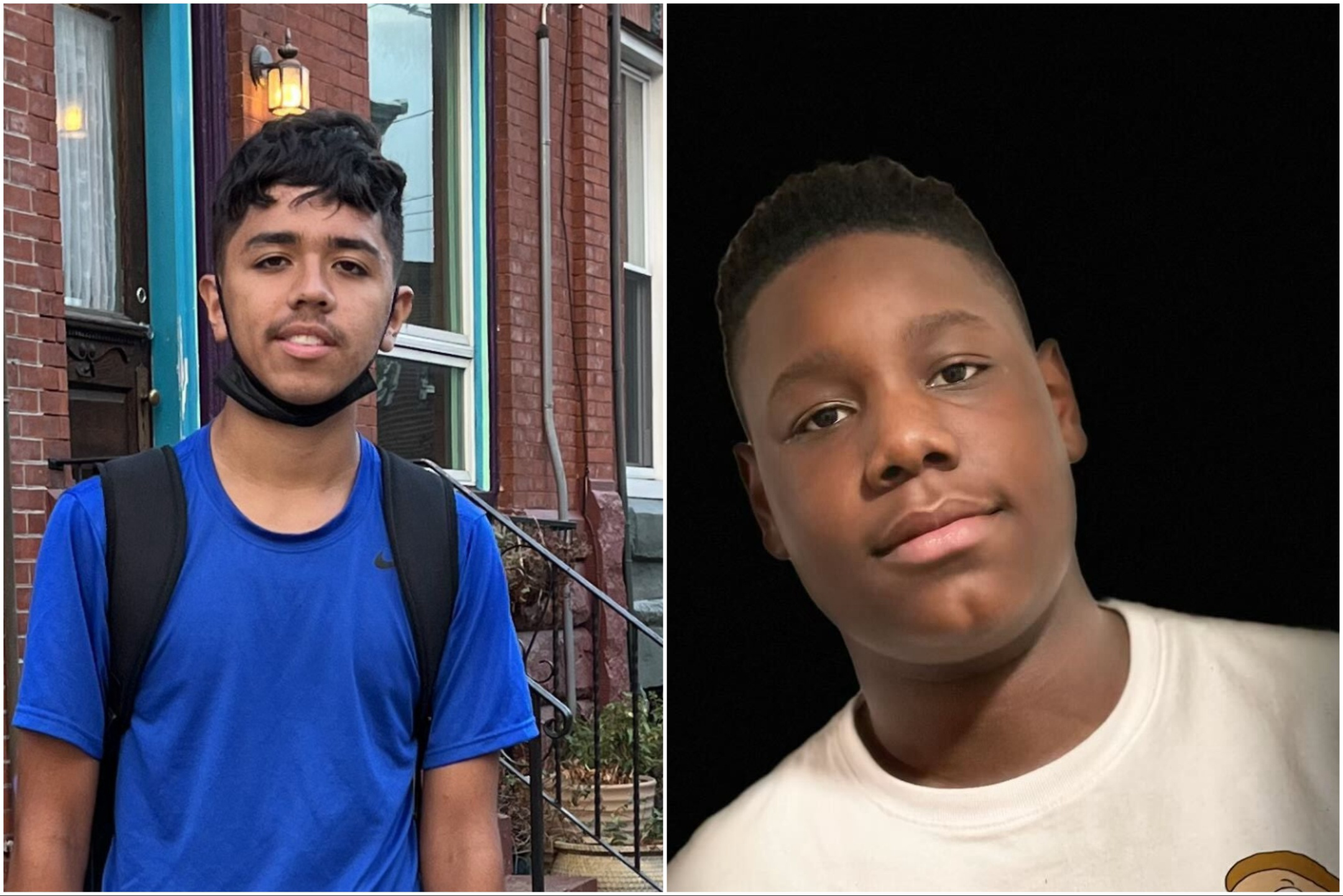
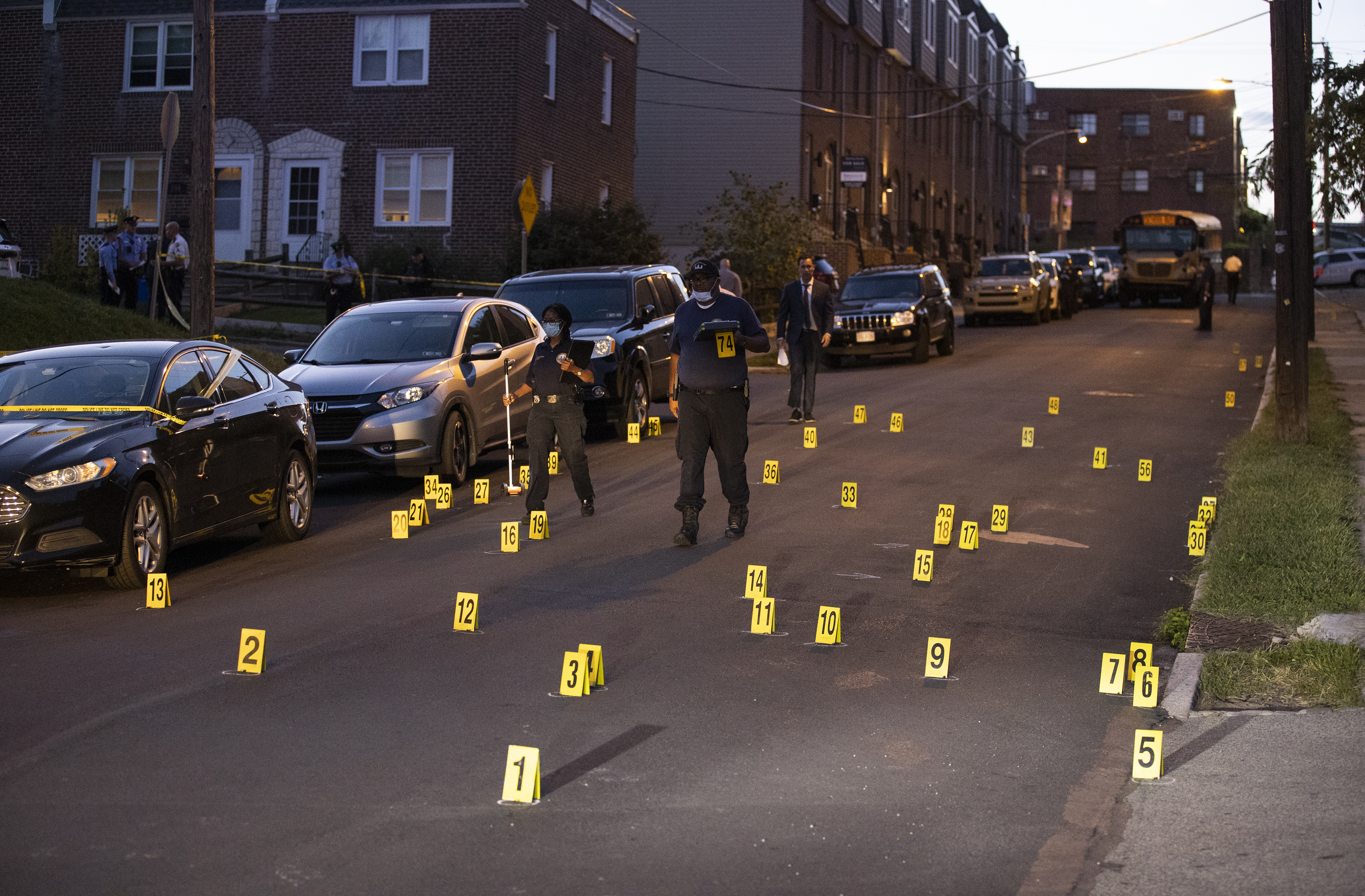
    A 21-year-old man was ordered to spend decades in prison for killing two teens in 2022 and 2023 — including firing dozens of bullets outside Roxborough High School in a shooting that left a 14-year-old dead and four other teens seriously wounded.

    Following an emotional sentencing hearing Friday, Common Pleas Court Judge J. Scott O’Keefe ordered Zaakir McClendon to serve 40 to 80 years in prison for his part in the shootings that killed Nicolas Elizalde and Nafis Betrand-Hill seven months apart.

    McClendon’s streak of violence began when he was 17. First, on Sept. 27, 2022, he and five others drove to Roxborough High School looking to shoot a teen who McClendon believed had hurt a young woman he was close to, said Assistant District Attorney Ashley Toczylowski.

    They parked their dark green Ford Explorer outside the school’s football field, and as dozens of kids walked toward the locker room, McClendon and four others fired more than 60 shots in all directions toward the players.

    More than 60 shots were fired outside Roxborough High School on Sept. 27, 2022.Charles Fox / Staff Photographer

    Five teens were shot. Nicolas Elizalde, a junior varsity player, was struck once in the chest by a stray bullet. His mother, Meredith, ran to his side in the aftermath, and held him as he died.

    “This was a planned, coordinated mass shooting at a high school football game,” Toczylowski said. “And [McClendon] was the reason why this happened.”

    In the months after the shooting, homicide detectives identified five of the six people involved, ranging in age from 15 to 21. But McClendon remained free and unknown to police for years.

    In that time, he killed again.

    On the night of April 13, 2023, McClendon and at least two others drove to 23rd Street and West Montgomery Avenue in North Philadelphia, where they shot Nafis Betrand-Hill, 16, multiple times near his home.

    McClendon was finally charged with both killings last year, after DNA evidence linked him to each crime scene: on a fired cartridge casing recovered at Roxborough and on a blue sweatshirt worn by one of the gunman who killed Betrand-Hill.

    He pleaded guilty to both murders in April.

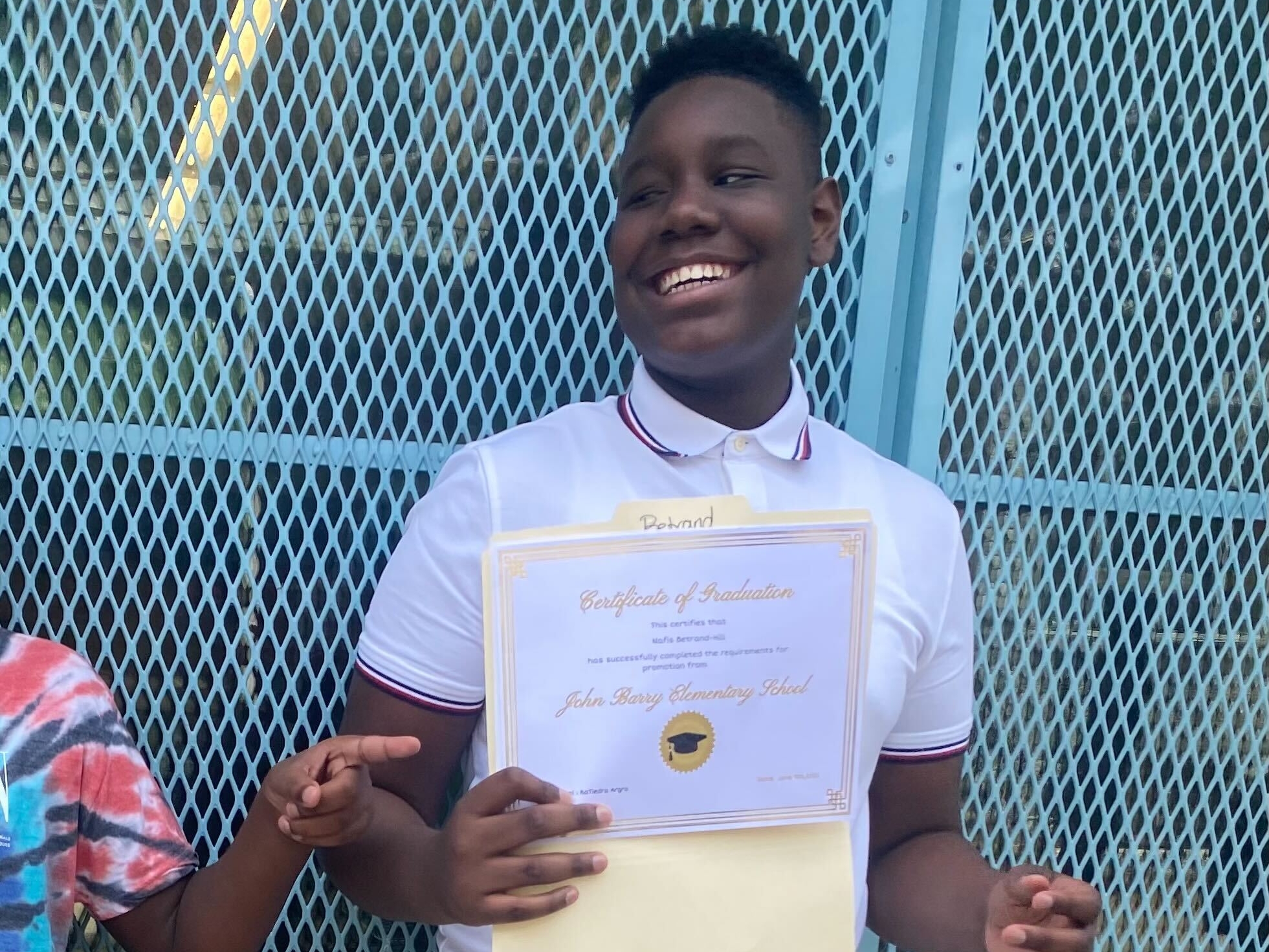
    Ashante Betrand on Friday remembered her stepson, Nafis, as full of life and joy, “a child who deserved to grow up surrounded by love.“ A sophomore at Sayre High School, he was the oldest of four brothers and three sisters. They called him ”Fisso” or “Bo.”

    Nafis Betrand-Hill, 16, was shot and killed in North Philadelphia in April 2023.Courtesy of Ashante Betrand

    Her family, she said, will never stop grieving the “many ordinary but precious moments of adulthood” that he will never experience. They still don’t understand why he was targeted, she said.

    “His life was worth more than a name, a reputation, a street,” she said, adding: “We will never stop loving him, we will never stop missing him and his light.”

    Nicolas Elizalde’s aunt and grandmother spoke next. They wanted McClendon to know about the gentle person he killed — how Nick loved rescuing animals, watching Marvel movies, playing with Legos, and swimming in the pool. He was a freshman at Walter B. Saul High, and should have been finally heading off to college this fall.

    “Did you know that, Mr. McClendon? Do you care?” Nick’s grandmother Marge LaRue asked.

    “I don’t know you, and I don’t want to,” she said. “But you brought evil to my family, and it’s ugly and it’s lonely here. We are joyless. We are empty.”

    Then, Meredith Elizalde stood up, ordering McClendon to look at her. It was the least he could do, she said, after ruining her life.

    McClendon, his small frame hunched in a wooden chair, looked toward her briefly, before turning away again as she spoke.

    When two other teens involved with the crime pleaded guilty last year, Elizalde was firm, but compassionate. She had met and spoken with each of them before their sentencings, and asked a judge to allow each of them to spend a piece of their lives free in Nick’s honor.

    But McClendon, she said Friday, mocked her family and her son’s life by running free for years after the shooting — and killing again. She said she would not ask for any leniency.

    “Did you watch my pleas on TV?” she asked. “I hope to leave this courtroom and never think of you again.”

    Meredith Elizalde at Franklin Fountain, where she and her son Nicolas used to go prior to his death, in Philadelphia, July 24, 2024.Jessica Griffin / Staff Photographer

    Finally, McClendon spoke. His actions, he said, were cowardly.

    “I was still young, your children were still young,” he said, beginning to cry. “I’m sorry. I’m mad it happened the way it did. I’m mad I even made that decision.”

    “I cannot look you in the eyes because I gotta live with what I did,” he said. “I am a menace to the community. … but I will try to be better.”

    His mother’s sobs filled the courtroom as he spoke. Moments earlier, she told the judge she’d raised her son in a loving home. He was a funny, curious child who grew up attending Catholic schools and playing sports. It didn’t make sense.

    At the judge’s sentence, she collapsed into herself.

    After the court hearing, Meredith Elizalde asked the public to remember her son and what he loved — nature, museums, learning — and to invest less in punishment for violence and more in the people, places, and institutions that can prevent it.

    “On Sept. 27, the fourth anniversary of Nick’s murder, the Academy of Natural Sciences — one of Nick’s favorite places and where he celebrated his ninth birthday — is closing its doors to the public.”

    “Think about what these places represent, where children encounter science and nature … and discover the world is bigger than them and there is a place for them in it,” she said. “We cannot punish our way into a healthy society. Prevention is investment, art, nature, community.”

    Accountability for her son’s death belongs to all Philadelphians, she said, and that means protecting the children who are still here.

    Elizalde and her family will return to the courthouse in February, when the three remaining defendants charged with her son’s death are expected to face trial.

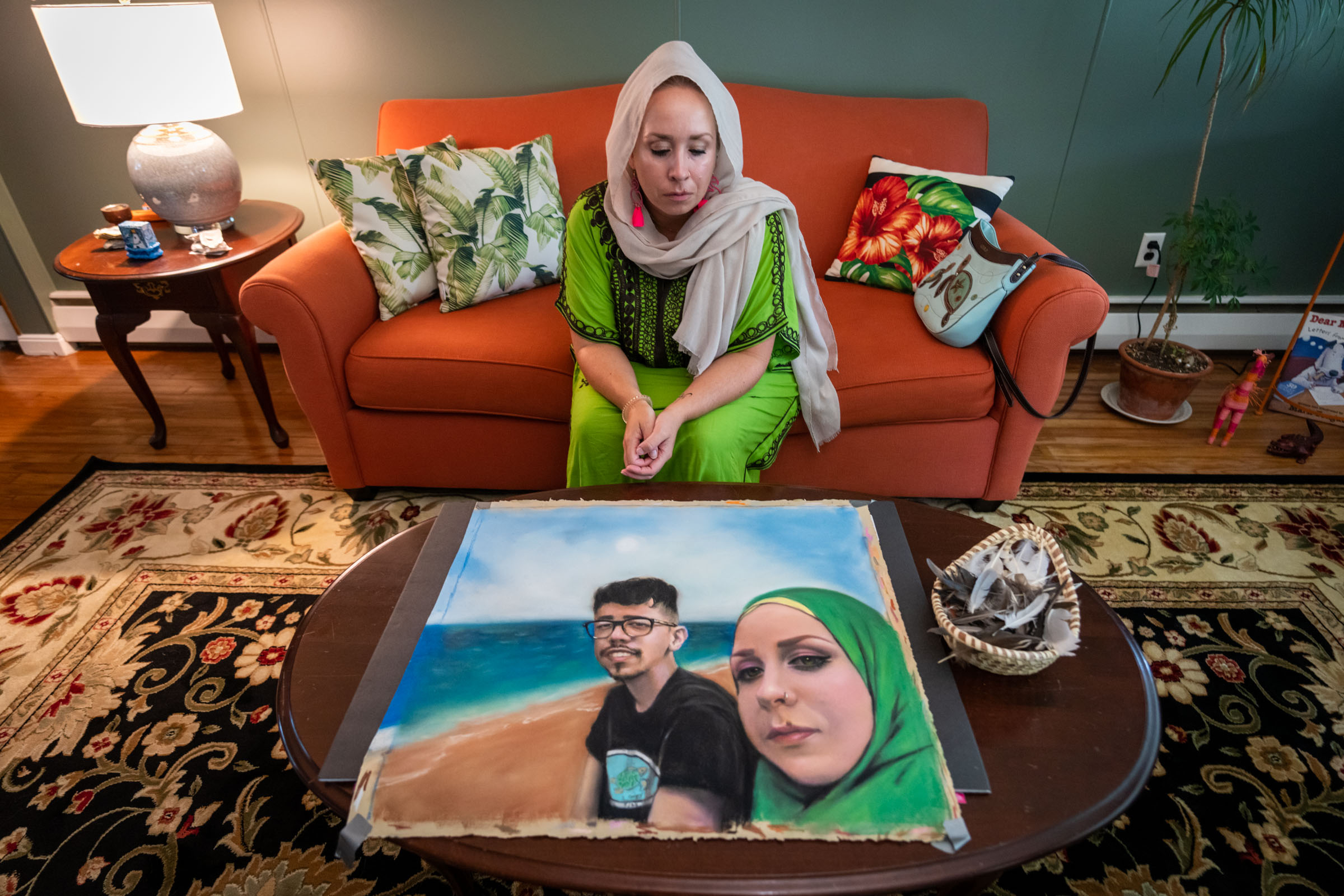
    Meredith Elizalde with a painting of her and her son Nicolas, by Laurie Cooper. Jessica Griffin / Staff Photographer
    Correction: This story has been updated to correct the spelling of the prosecutor’s name.
  • US stocks jump after oil prices ease and an inflation update comes in near expectations

    US stocks jump after oil prices ease and an inflation update comes in near expectations

    NEW YORK — U.S. stocks rebounded Friday and regained much of their losses for the week after oil prices eased off their recent spurt. An update on inflation across the United States that came in close to economists’ expectations, even if prices are still rising too quickly for everyone’s liking, also helped calm the market.

    The S&P 500 climbed 0.9% and snapped a four-day losing streak, its longest since June. The Dow Jones Industrial Average jumped 509 points, or 1%, and the Nasdaq composite rose 1%.

    They got help from a pullback in oil prices, which had jumped to their highest levels since May because of the ongoing war with Iran. The price for a barrel of Brent crude, the international standard, fell 2.8% to settle at $104.61 after getting near $110 overnight.

    That took a bit of pressure off inflation, which remains stubbornly high. A report on Friday showed that U.S. consumers had to pay prices for gasoline, food, and other costs of living that were 3.4% higher last month than a year earlier.

    While still high, that was close to what economists expected and what Wall Street was prepared for. The data also strengthened expectations among traders that the Federal Reserve will feel compelled to hike its main interest rate at its meeting next week.

    Such moves are the typical way the Fed tries to rein in high inflation, and they work by filtering through the bond market, making it more expensive for everyone to borrow money, slowing the economy, and hopefully removing fuel for further inflation.

    The rising expectations for an upcoming hike to rates drove up the yield of the two-year Treasury, which moves with guesses for upcoming Fed action, to 4.62% from 4.56% late Thursday.

    Longer-term Treasury yields held steadier, though. That could be a signal that investors in the bond market see upcoming hikes by the Fed as helping to keep control of inflation over the longer term. The yield on the 10-year Treasury rose more modestly to 4.97% from 4.95% late Thursday, while the 30-year yield eased to 5.36% from 5.37%.

    Economists say hikes could quiet questions about the Fed’s commitment to keeping inflation under control. Worries had risen earlier in the summer about its credibility and whether it would do what’s needed to bring inflation down, even if it causes pain for the economy in the near term.

    Federal Reserve Chairman Kevin Warsh has been adamant about not giving hints about where the Fed may take interest rates, though he did calm some concerns among investors at a speech late last month. President Donald Trump, meanwhile, has been pushing for interest rates to go lower rather than higher.

    “Symbolism can trump substance, even when it comes to monetary policy,” according to Brian Jacobsen, chief economic strategist at Annex Wealth Management.

    It’s all coming at a moment when confidence among Americans continues to sour. A preliminary report from the University of Michigan on Friday said U.S. consumer sentiment is falling, with declines for both Democrats and Republicans.

    Their expectations for inflation coming in the year ahead jumped to 4.6% from 4% last month. That’s the highest reading since June, and it’s concerning for the Fed and for economists because it can trigger a vicious cycle of behavior that worsens inflation.

    On Wall Street, Kroger rose 2.7% after the grocer reported a stronger profit for the latest quarter than analysts expected. It also held firm on its forecast for profit over the fiscal year, even though it trimmed its forecast for an important underlying measure of revenue growth.

    ACV Auctions, whose digital marketplace connects wholesale buyers and sellers of vehicles, soared 44.2% after Copart said it would pay $10.50 in cash for each of the company’s shares. Copart, whose online vehicle auctions sold more than 4 million units in the last year, fell 2.6%.

    An early jump for Oracle faded as trading progressed after the tech giant reported stronger profit and revenue for the latest quarter than analysts expected. After initially leaping 8.5%, its stock swiveled between gains and losses and finished with a loss of 1.7%.

    Stocks closely tied to the artificial-intelligence industry broadly became shaky this summer on worries that the AI frenzy may have sent prices too high.

    All told, the S&P 500 rose 65.28 points to 7,656.98. The Dow Jones Industrial Average added 509.19 to 52,573.29, and the Nasdaq composite climbed 251.31 to 26,333.04.

    In stock markets abroad, indexes rose in Europe as oil prices eased. London’s FTSE 100 added 0.4% after a report said the U.K. economy was stronger in July than economists expected.

    Stock markets were weaker in Asia, where Japan’s Nikkei 225 lost 1.9% and South Korea’s Kospi fell 1.8%.

    AP Business Writers Chan Ho-him and Michelle Chapman contributed to this report.

  • Rachel Blau DuPlessis, experimental poet, literary scholar, and Temple professor emerita, has died at 84

    Rachel Blau DuPlessis, experimental poet, literary scholar, and Temple professor emerita, has died at 84

    Rachel Blau DuPlessis, 84, of Philadelphia, experimental poet and essayist, literary scholar and critic, Temple University professor of English and creative writing emerita, mentor, artist, and world traveler, died Wednesday, Sept. 2, of respiratory failure at Penn Presbyterian Medical Center.

    Professor DuPlessis was an eclectic experimental poet who grew up in New York, lived in Swarthmore and Philadelphia for more than 50 years, and taught a variety of writing and women’s studies classes at Temple from 1974 to her retirement in 2011. She wrote hundreds of poems — she called many of them “drafts” — about feminism, modernism, connectivity, imagery, and consciousness.

    She was an expert on cultural poetics and told The Inquirer in 2002 that her poems generally reflect her “awe at the universe, grief at the barbarity of modernism, and sense of how it was to be in the world.” She enjoyed poetic wordplay, reviewers said, and tinkered freely with conventional syntax, sound, tone, and form.

    “Reading her is an adventure,” reviewer Robert Long said in The Inquirer in 1997, “and poets this adventurous must be cherished.”

    Her poems were published in more than 30 books and in several languages, and also appeared in The Inquirer, other newspapers, magazines, journals, and anthologies. In tributes, fellow poets praised her “unique combination of erudition and exuberance” and her “generosity, brilliance, expansive thinking, and attention to so many possibilities of writing and art.”

    “From what I can tell, DuPlessis doesn’t write poems so much as build them,” reviewer Andrew Ervin said in The Inquirer in 2005. “The manner in which she does that is what makes the Temple professor one of the most exciting and inventive writers of our time.”

    She told the Oxonian Review in 2015 that “being a poet is not only writing poems. It is an address to the whole apparatus of and the traditions of poetic practice.”

    A book publisher said: “She brought such intelligence, generosity, and curiosity to everything she did.” Penn professor Al Filreis told Professor DuPlessis’ husband, Robert: “It’s hard to imagine the Philly poetry world without Rachel in it.”

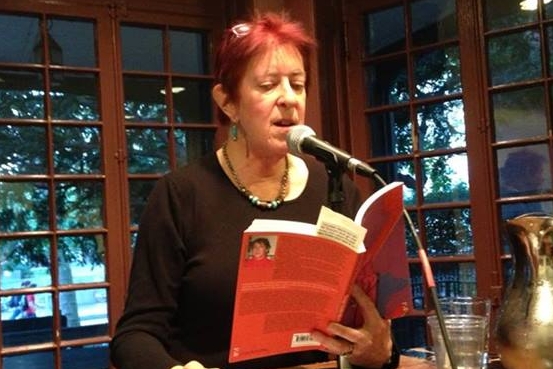
    Professor DuPlessis read her poems to people around the world. Courtesy of the family

    At Temple, Professor DuPlessis helped establish women’s studies classes and the school’s graduate program in creative writing. She mentored students and other professors, and the English department’s DuPlessis Lecture in Poetry and Poetics is named in her honor.

    “She loved being a mentor to people, to encourage them,” her husband said. “She loved being a poet and an academic. She prepared incredibly for her classes and was connected and attentive to her students.”

    Earlier, she taught briefly at what is now the College of New Jersey and Rutgers and Columbia Universities. She spent several of her research and study leaves from Temple working with students and colleagues at universities in the Netherlands, France, Belgium, and elsewhere.

    She was named a resident poet and distinguished visitor in Italy and New Zealand. She and her husband, a professor emeritus at Swarthmore College, visited every continent except Antarctica, and she spoke French and Italian as well as English.

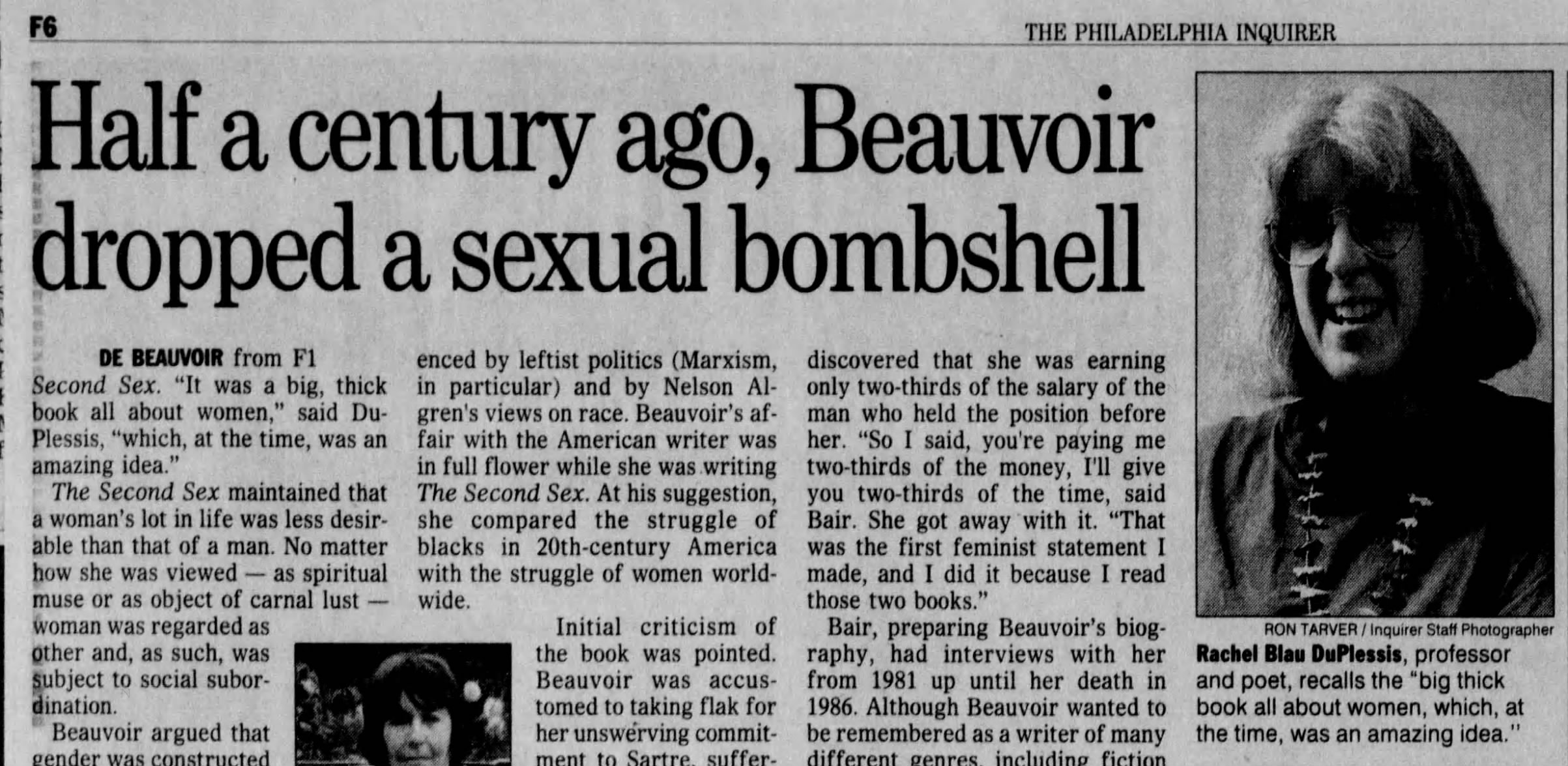
    This article featured Professor DuPlessis and appeared in The Inquirer in 1999.Newspapers.com

    She earned fellowships from the Pew Center, the Pennsylvania Council on the Arts, the National Humanities Center in North Carolina, and other groups. “She was constantly creating things,” her husband said. “She never stopped.”

    Professor DuPlessis also wrote and edited books and articles about writing and poetry, and she reviewed books for The Inquirer and other publications. She read her poems in public, was interviewed often, and earned achievement awards from Temple, the University of California in San Diego, the old Fund for Poetry, and other admirers.

    She created a comprehensive website, rachelblauduplessis.com, and made collage art that she augmented with poems. Thomas Devaney, a Philadelphia writer, called her “an important figure of American experimental poetry.”

    She told the Oxonian Review: “Poetry is an ethical practice as well as an aesthetic one. Just even thinking about what this means and how it is instantiated is a useful task.”

    Professor DuPlessis enjoyed time with her husband, Robert, and daughter, Kore.Courtesy of the family

    Rachel Maia Blau was born Dec. 14, 1941, in Brooklyn. She grew up in Queens and the Bronx, and earned a bachelor’s degree in English at Barnard College in New York in 1963 and a master’s degree and doctorate in English and comparative literature at Columbia in 1970.

    Her father was a professor, her mother a librarian. She met fellow Fulbright scholar Robert DuPlessis on a boat to France in 1966, and they married in 1968 and had a daughter, Kore.

    Professor DuPlessis enjoyed yoga, museums, art history, and long walks with her husband. They went to see and hear the orchestra, the opera, the ballet, and the theater.

    She doted on her daughter and grandchildren. “She always read me stories and sang me songs at night before bed,” her daughter said. “I would hold on to her leg because I didn’t want her to leave.”

    Professor DuPlessis started writing poems when she was 12, she said in an interview. “She was determined, hardworking, witty, and a lot of fun,” her husband said. “She was definitely intense.”

    Professor DuPlessis said she started writing poems when she was 12.Courtesy of the family

    In addition to her husband and daughter, Professor DuPlessis is survived by two grandchildren and other relatives. A sister died earlier.

    A memorial service is to be held from 1:30 to 3:30 p.m. Saturday, Oct. 17, at Temple University’s Charles Library, 1900 N. 13th St., First Floor, Philadelphia, Pa. 19122.

    Donations in her name may be made to Planned Parenthood, Online Services, Box 96771, Washington, D.C. 20090; Philabundance, 3616 S. Galloway St., Philadelphia, Pa. 19148; and the American Civil Liberties Union, 125 Broad St., 18th Floor, New York, N.Y. 10004.

  • Nicole Fusaro, missing since 2018, identified as woman who police believe Raymond Horsch killed

    Nicole Fusaro, missing since 2018, identified as woman who police believe Raymond Horsch killed

    The woman who police believe was killed by pornographer Raymond Horsch on camera has been identified by family members and law enforcement sources as Nicole Amanda Fusaro, who has been missing since July 2018.

    Fusaro was 27 when she was last seen in Kensington, and after she disappeared, her mother, Diane, combed the streets of the Philadelphia neighborhood looking for her only child. Diane died in January 2020 without answers, and Fusaro’s father, Thomas, had died in 2009. That left Fusaro’s friends and her cousin, Jonathan Halloran-Koren, to continue searching and hoping that one day she might turn up.

    Last month, investigators recovered a video on one of numerous hard drives recovered from Horsch’s decrepit Olney home while in search of clues for other missing persons linked to the property. Law enforcement sources said they believe the video shows Horsch strangling Fusaro to death.

    Nicole Fusaro was reported missing in 2018 when she was 27. Police believe she was killed by Raymond “R.C.” Horsch in his Chew Avenue home.Courtesy of Jonathan Hallo

    Police met with a member of Fusaro’s extended family several weeks ago to alert them of the discovery. Those relatives asked police not to publicly release her name. The relatives declined to speak with a reporter this week.

    Halloran-Koren, in an interview, said those relatives told him Thursday that police had visited their home in recent weeks with the news of his cousin’s death.

    He said he wants her name to be known so that she is not forgotten.

    “Hopefully more attention will be made to missing persons so this doesn’t happen again,” he said, adding that he is still seeking additional information from law enforcement.

    The police department is legally required to release the names of homicide victims, as they consistently do in a typical case. But because Fusaro’s body has not been found, the Office of the Medical Examiner has not ruled her death a homicide, creating a legal gray area.

    Police also have no suspect to charge: Horsch died last year, at the age of 82, of a lung condition.

    Sgt. Eric Gripp, a spokesperson for the police department, said the investigation into the Horsch home at 417 Chew Ave. remains extensive and ongoing. He said officials expect to provide an update to the public next week.

    “As part of that investigation, detectives have spoken with numerous family members, witnesses, and other individuals, and continue to review evidence gathered during the investigative process,” he said in a statement. “Because this is an active investigation, we are not confirming the identities of any individuals who may be connected to specific evidence or discussing information that has been shared privately with families.”

    Last month, police officials announced that they recovered photographic evidence that appeared to show two other missing women — Maribel Fresses and Gabrielle Amarando — dead inside the home.

    Fresses’ and Amarando’s bodies have also not been recovered, and the medical examiner has similarly not ruled a cause or manner of death. Their families gave the department permission to release their names.

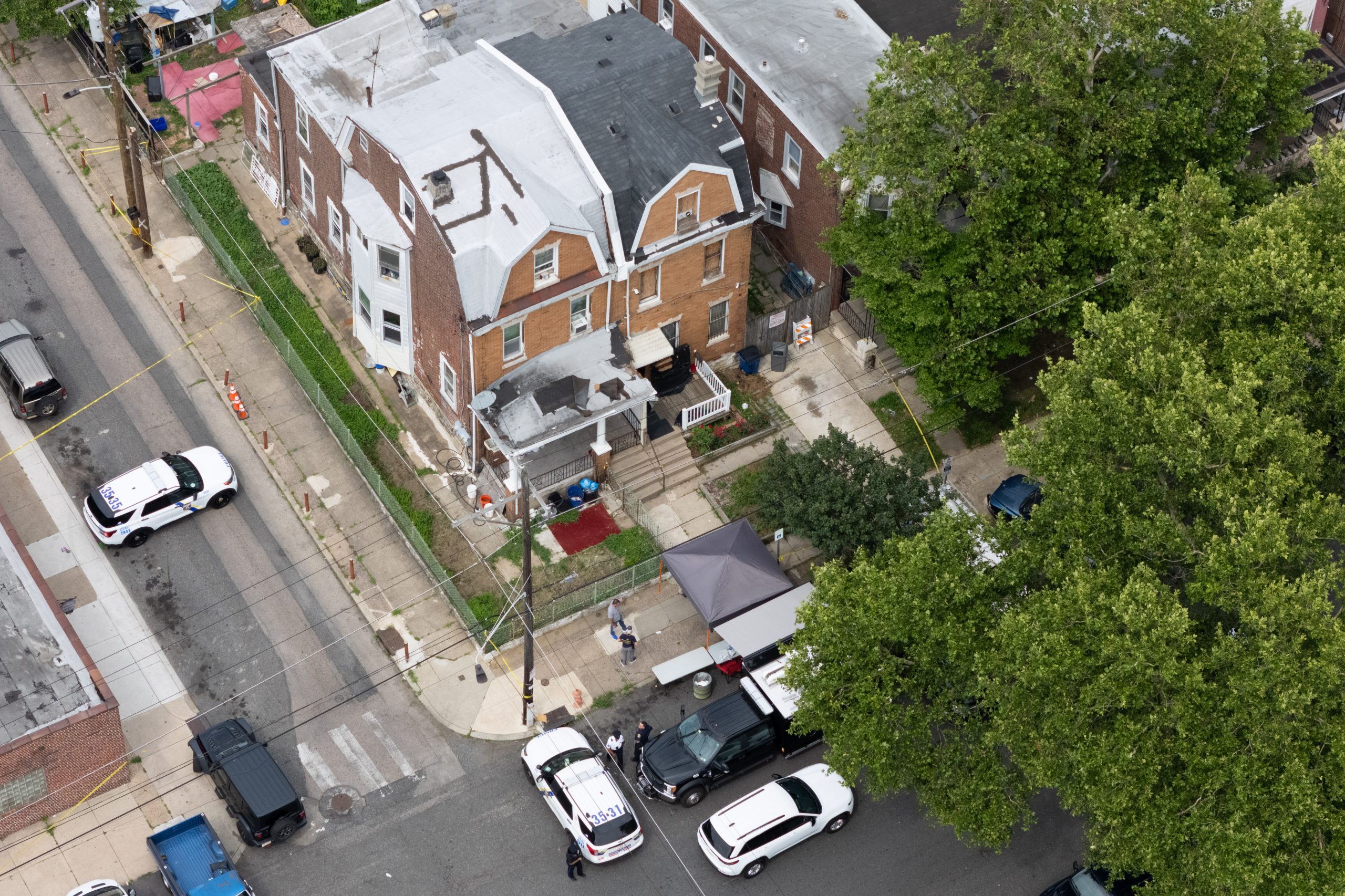
    Investigators searched the home of Eugene Albert Horsch on West Chew Avenue (grey roof) in the Onley section of Philadelphia in June 2026.Gabriel Coffey / Staff

    Fusaro is the fifth dead or missing woman to be tied to the home on Chew Avenue where Horsch lived with his son, Eugene, for decades. Raymond Horsch lured women in addiction with drugs and cash to star in his violent pornographic videos and photos.

    Halloren-Koren said he had come to terms with the reality that his cousin likely died several years ago after so much time had passed without a sighting.

    “I came to grips with that,” he said, of her death. “How it happened is something that is going to take me a little while.”

    Fusaro, who was raised in Northeast Philadelphia, attended George Washington High School, according to her Facebook page. She had dark brown hair and striking, light eyes, and was known as an outgoing young woman who enjoyed being around friends and family.

    Halloren-Koren said she was light-hearted and loved animals. As kids, he said, she enjoyed watching Vampire Diaries and listening to all types of music, from Green Day to the Notorious B.I.G.

    After Halloren-Koren moved overseas for work in 2003, he said he only saw her at sporadic family reunions. His family, he said, was splintered and scattered across the region, and Fusaro’s parents both struggled with addiction. His cousin started using drugs in her late teens, he said, and she fell deeper into addiction in her 20s before drifting into the streets of Kensington.

    When Halloran-Koren sought to reconnect with family in 2020, he learned his cousin was missing and tried to help his aunt’s friends find her, he said. He spoke to women across Kensington who knew her and heard various theories, including that she was last seen getting into a car near Kensington and Allegheny Avenues.

    He asked the women, he said, whether there were any strange men in the neighborhood, and they scoffed — this was Kensington, and there were men like that everywhere.

    But there were a few he said they mentioned: a guy who drove a van without a license plate, and a “creepy” man with the last name Horsch who picked up women on the Avenue.

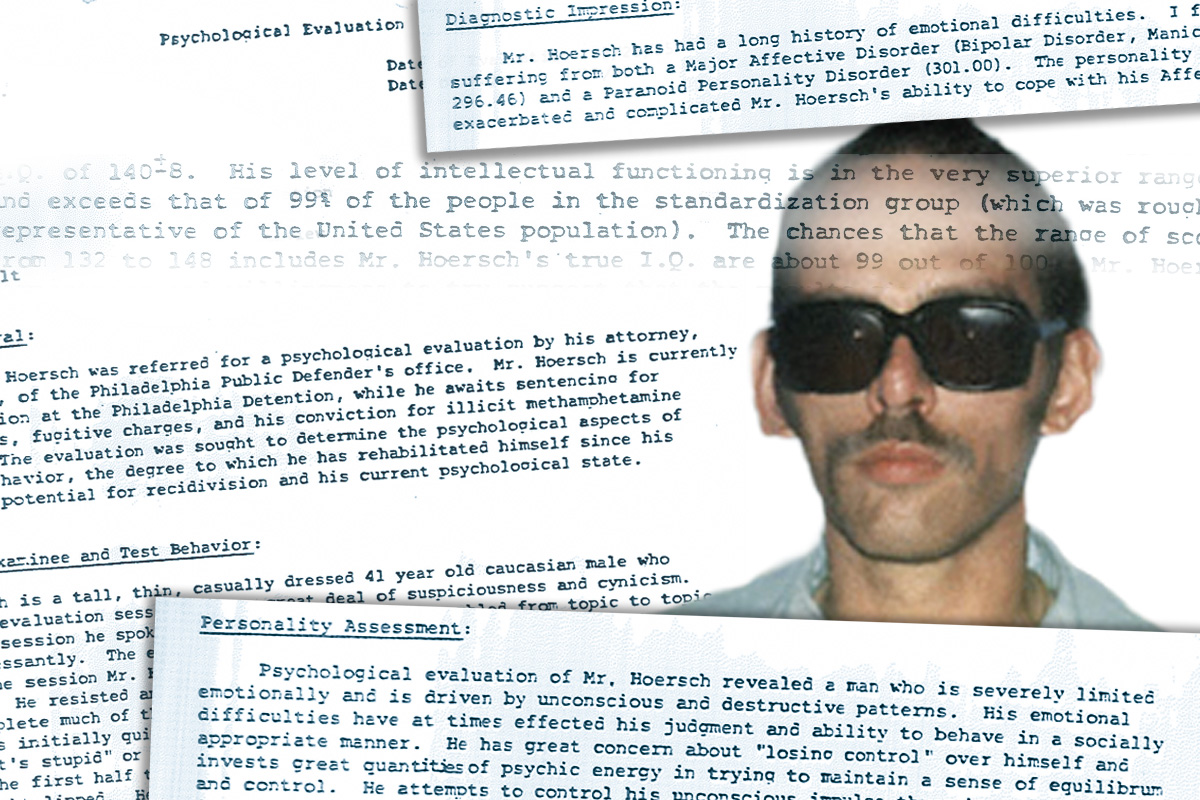
    Raymond Horsch underwent a psychological examination in 1985 with results showing an above-average intelligence, deep-rooted emotional problems, and a diagnosis of a paranoid personality disorder.John Duchneskie / Staff Illustration / Photo obtained by The Inquirer

    Horsch was known to trawl the streets of Kensington in search of sex workers, photographing some from the shadows. He’d offer to pay them in drugs and cash to be featured in his films or photos, often using drugs and in fantasies of being beaten, strangled, or killed.

    He had a lengthy criminal record for manufacturing drugs and other non-violent crimes. And while his ex-wife, Amy McHale, was last seen at his home in 2016 before she went missing, he was never charged with any crimes connected to her disappearance before he died last year.

    The investigation into his connection to the missing women began June 19, after his 44-year-old son, Eugene, was arrested near Independence Mall.

    A federal park ranger found a fake ID in the car in the name of Blair Tonzelli, another woman who was reported missing in 2023, and was last seen at Horsch’s home. Police then interviewed women who said Eugene Horsch had bragged about knowing how to use chemicals to melt bodies in his basement.

    Eugene Horsch has only been charged with illegal drug and weapons violations and has not been linked to any of the disappearances. He is currently in a federal detention center awaiting trial.

    After arresting Eugene Horsch, local and federal law enforcement searched the Horsch home, at 417 W. Chew Ave., even excavating the yard for clues to the disappearance of Tonzelli and McHale. They found drugs, guns, a 55-gallon drum and vats of liquid, as well as a mysterious letter referencing putting drug-addicted women out of their misery.

    Police also recovered dozens of hard drives that they said contained hundreds of thousands of images and videos — including some that showed several women presumably dead at the home. Investigators continue to pore over those materials to determine how far Horsch’s crimes extended and who was involved.

  • Blast shakes southern Lebanon as Israel destroys underground Hezbollah base

    Blast shakes southern Lebanon as Israel destroys underground Hezbollah base

    BEIRUT — A huge explosion sent shock waves across southern Lebanon overnight, as the Israeli military said it had destroyed an underground Hezbollah base in a strategically significant area of Israel’s conflict with the Iran-backed militia.

    The blast lit up the sky with a sudden orange flash and tore through the Ali al-Taher ridge, a commanding hilltop about 6 miles from the border between Israel and Lebanon that Israeli forces captured this month.

    Lebanese and Israeli officials say Hezbollah, a Lebanese militia supported by Iran, established a major underground installation beneath the ridge. Israel says the complex had for years served as a command center for planning and launching attacks against it. The ridge overlooks much of southeastern Lebanon, including Nabatiyeh, one of the country’s largest cities.

    “The explosion caused massive sounds in Nabatiyeh,” Abbas Fakhereddine, the city’s mayor, said Friday. “We felt the buildings shake.”

    The explosion generated ground waves that were likened to an earthquake measuring 4.2 on the Richter scale, Lebanon’s National News Agency reported, citing the country’s National Center for Geophysics. Videos shared on social media showed the explosion lighting up the night late Thursday.

    The Israeli destruction of the underground base at the ridge fueled concerns among residents about a deepening Israeli military presence and an expansion of military operations in southern Lebanon. Israel has in recent days and weeks carried out strikes and widespread demolitions of buildings and civilian infrastructure across southern Lebanon, according to local officials and human rights groups.

    The Israeli military said in a statement Thursday that it had located dozens of rockets, missiles, drones, machine guns, and explosive devices inside the underground base. The complex also included a Hezbollah command center, weapons storage rooms, and living quarters, the military said.

    On Friday, Hezbollah officials disputed the significance of the ridge and accused Prime Minister Benjamin Netanyahu of Israel of exaggerating the importance of the operation for political gain before elections next month.

    A Hezbollah media official, speaking on the condition of anonymity to discuss sensitive matters, downplayed the site’s importance to the group and rejected claims that the facility contained advanced missiles or significant military infrastructure.

    Under a U.S.-brokered ceasefire agreement reached in June, Israel is expected to gradually pull its forces back from areas it occupies in southern Lebanon, with the Lebanese armed forces deploying there to establish security and enable displaced residents to return. That arrangement is closely linked to the Lebanese government’s efforts to disarm Hezbollah, a process that is likely to prove difficult, given the government’s limited ability to control the powerful militia.

    On Friday, Lebanon’s General Directorate of State Security said in a statement it was resuming government patrols and reestablishing checkpoints in Nabatiyeh, in coordination with other security agencies and the Lebanese army, to protect the city and strengthen public confidence and safety.

    Some residents of southern Lebanon, along with political and security observers, have expressed anger that Hezbollah did not hand over the ridge to the Lebanese army and security services, arguing that the group had allowed a strategic position to be lost to Israel rather than place it under Lebanese state control.

    Moustafa Bayram, a former labor minister aligned with Hezbollah, said Israel’s decision to destroy the site was “an attempt to terrorize us and escalate the war.”

    This article originally appeared in the New York Times.

  • Ready rookies? Makai Lemon and Eli Stowers say they’re ready to contribute in their NFL debuts

    Ready rookies? Makai Lemon and Eli Stowers say they’re ready to contribute in their NFL debuts

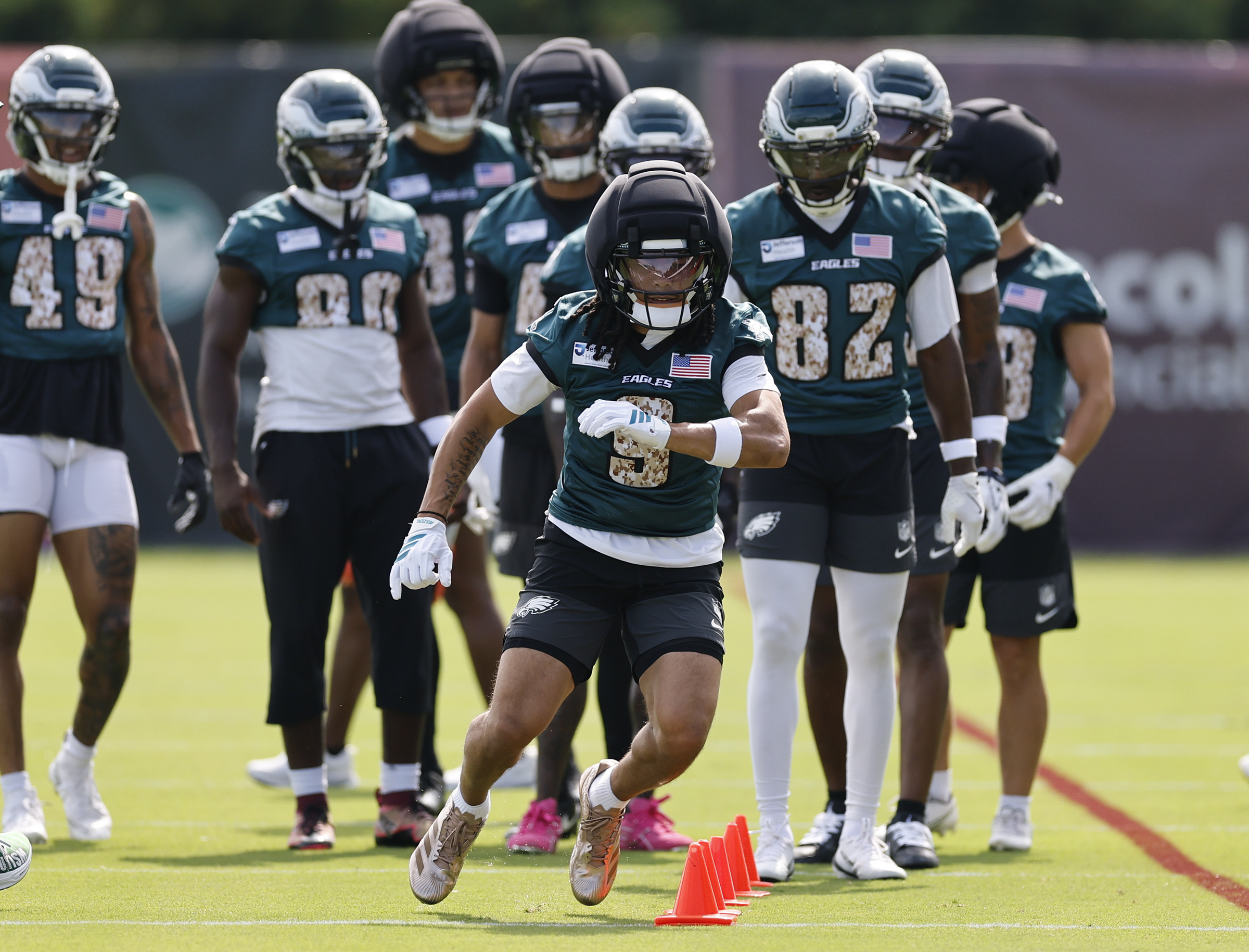
    After injuries sidelined both Makai Lemon and Eli Stowers for portions of training camp, the two top Eagles rookies are looking forward to their first regular-season game action on Sunday.

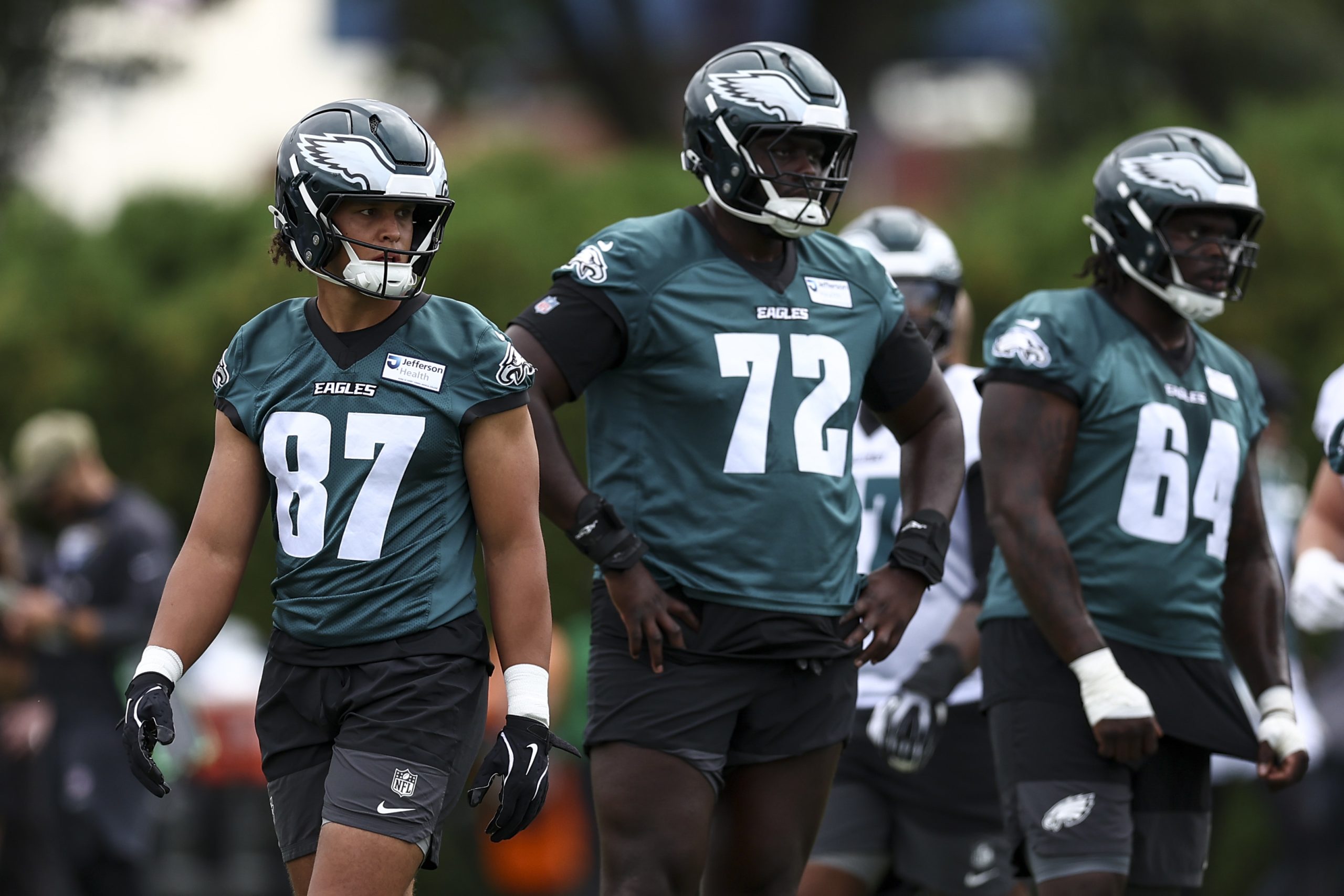
    Stowers, the second-round tight end out of Vanderbilt, is listed as questionable to play with a hamstring injury on the final injury report. However, he said on Friday that “the plan” is for him to play against the Washington Commanders.

    He sustained his hamstring injury in the second preseason game against the New England Patriots, and while he missed the final week of training camp and the last preseason game, he said he’s feeling good and doing well in practice as a limited participant.

    Lemon missed three weeks of camp, also with a hamstring injury, but he returned to action in time for the third preseason game against the Cincinnati Bengals.

    Makai Lemon (9) played sparingly in the preseason but did see some action against the Bengals. Yong Kim / Staff Photographer

    Two weeks after his preseason debut, Lemon said that he feels caught up from the time he missed in training camp. Even on Friday, he stayed late after practice working on the field with wide receivers coach Aaron Moorehead as he prepares for his first regular-season outing.

    “I feel like that’s an every day thing, getting extra reps,” Lemon said. “I feel like that’s what’s going to take me to that next level.”

    The Eagles took both players early in the draft to contribute to a new-look offense that features a retooled corps of pass-catchers and a first-time play-caller in Sean Mannion. But their precise roles for Week 1 are unclear.

    Both Lemon and Stowers could have special-teams roles in addition to their offensive responsibilities. Lemon, the first-round receiver out of USC, is listed on the depth chart as the first-string punt returner, but the Eagles could also elevate the incumbent Britain Covey from the practice squad to the game-day roster.

    Lemon didn’t return many punts at USC; he finished his career with six returns for 71 yards. He was the team’s top kick returner in 2024, totaling 19 kickoff returns for 514 yards (his longest was an 80-yarder). Lemon said he has been fielding punts after practice in addition to the work he is doing in special teams periods.

    “Just being ready, so whenever the coaches need me, I’m there,” Lemon said.

    Similarly, Stowers could see playing time on special teams on Sunday, even though he has a limited college background in that phase of the game.

    Tight end Eli Stowers (87) was listed as questionable on Friday’s injury report and could see most of his action on special teams. Monica Herndon / Staff Photographer

    Special teams coordinator Michael Clay acknowledged on Thursday that Stowers’ skill set as a tight end translates to the duties that might be required of him on special teams. He listed his blocking ability and his overall athleticism as boons to the special teams group.

    “A lot of special teams units, you use your athletic ability to your advantage and he progressively got better as the training camp went on,” Clay said.

    Their prospective playing time on offense is unknown. Compared to Stowers, Lemon has more experience working with the starters. Even though Lemon missed time with a hamstring injury, both during the offseason program and training camp, he was taking reps with Jalen Hurts and the rest of the starters when he was healthy.

    When he was injured, Lemon was still attentive, both on the sideline during team drills and in the meeting room. Now that he’s back in action, he’s continuing to build chemistry with Hurts.

    “Every rep, building that trust, really. We get limited reps out at practice,” Lemon said. “It’s only a short amount of time. So just making sure every rep counts. Just building that trust up so when we go out Sunday, we’re not even thinking.”

    While Lemon’s training camp reps with Hurts might have been limited, Stowers had even fewer. Most of his reps came with the second- and third-string offenses, catching passes from backup quarterbacks Andy Dalton and Tanner McKee.

    With the regular season underway, Stowers is working to build trust with Hurts. That effort from the rookie tight end occurs both on and off the field.

    “It’s on me to learn my assignment, understand what I have to do every single play so he can build that trust and know that I’m going to be in the right spot,” Stowers said. “And then from that point, it’s just reps, working with him on the timing, where the ball is going to be, where I’m going to be at, things like that.”

    Eli Stowers is trying to negotiate the NFL learning curve. Jose F. Moreno / Staff Photographer

    Stowers acknowledged that his transition to the NFL has required him to have patience, especially as he grows his skill set beyond his abilities as a receiver. At Vanderbilt, he displayed his pass-catching prowess, but blocking wasn’t one of his primary responsibilities.

    He called training camp a “really good opportunity” to learn as his role evolves at the next level. He noticed personal growth in every aspect of his game, including his route-running, blocking, and understanding of the overall playbook.

    Given that the Commanders have limited film of Stowers from the preseason — in a pared-down version of the offense at that — the Eagles could use their lack of familiarity with him to their advantage.

    “They’ve seen your college film, but how that translates to the new offense, to the new team, teams aren’t really sure what it’s going to be,” Stowers said. “So I think that is an advantage to some extent. I really just want to put my best foot forward.”

    Lemon will also have the opportunity to put together a better performance after he finished with three receptions for three yards in his limited preseason debut.

    Regardless of his shaky showing, Lemon said it was “definitely important” to get a game-like experience in the preseason.

    On Sunday, it’s for real.

    “It’s hard to put it into words, really,” Lemon said. “I’m just super excited.”