Good morning, South Jersey. Even if you’re not trick-or-treating or headed to a costume party, make a point to go outside. Temps should be pretty mild and it’s peak foliage time.
Speaking of being festive, Inquirer reporters went on a mission to find the best myths, places, and festivities in Philly and South Jersey to compare what each side of the Delaware River offers for Halloween.
Plus, a celebrity hairstylist who is also a Republican candidate for a Gloucester County commissioner seat is running a nonprofit that has been out of compliance with the state for years, and more news of the day.
For those who want to get into the Halloween spirit, there are usually two camps: the people who simply want to have harmless and family-friendly fun vs. those who are in it for the thrill.
In South Jersey, both wants can be satisfied:
If you’re looking for cute festivities, the Diggerfest Fall Festival in West Berlin and the Asbury Park Zombie Walk on the boardwalk are options that all ages can enjoy.
If you’re a horror lover, it’s hard to be beat our legends surrounding the Jersey Devil, the Atco Ghost, and the Absecon Lighthouse in Atlantic City. We also have the Night of Terror at Creamy Acres Farm in Mullica Hill, our massive Halloween park with a haunted hayride and zombie paintball.
After about a year and a half of business, Federal Donuts & Chicken in Marlton is closing on Saturday.
But doughnut lovers won’t go without for too long since the franchise owner already has plans to open a Randy’s Donuts in its place by the end of this year.
After it shutters, there will only be four Federal Donuts left in the area and they’re all franchises.
When it reopens as Randy’s Donuts, the California-based bakery will be the first one in New Jersey.
A grand jury indicted a Burlington Township man on multiple charges for posing as a young boy to solicit underage girls to send him explicit images and videos and then distributing them, Burlington County Prosecutor LaChia L. Bradshaw announced Wednesday.
Some local business owners and residents in Lavallette are skeptical of Netflix’s plans to film there and potentially delay the town putting up their holiday decorations, NBC10 reports.
🧠Trivia time
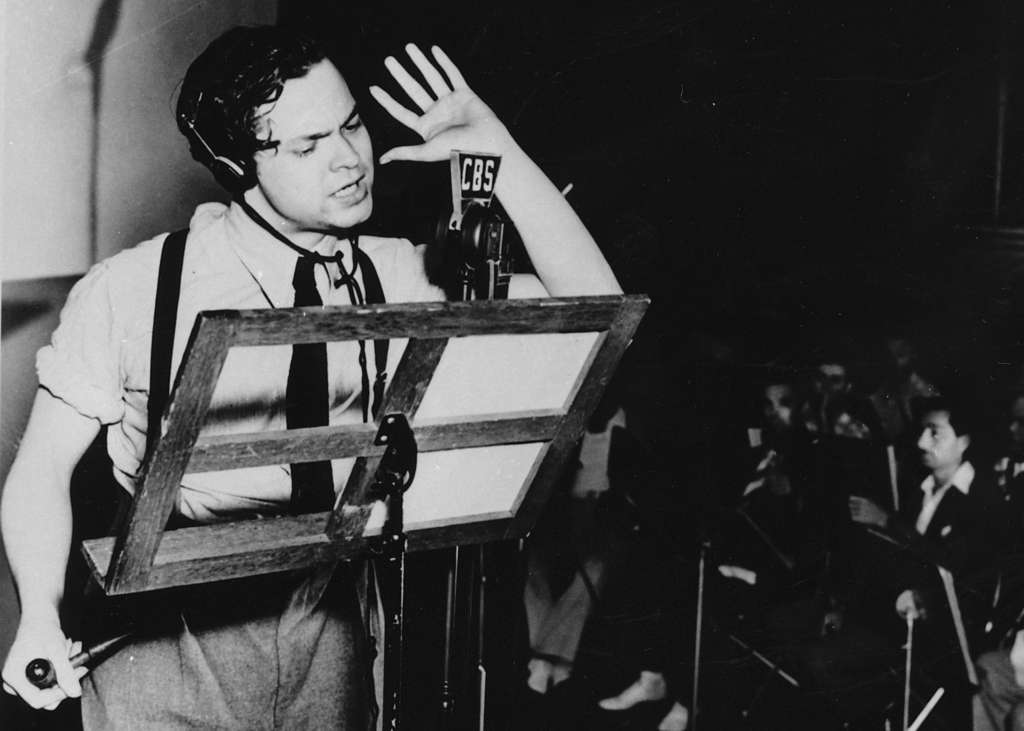
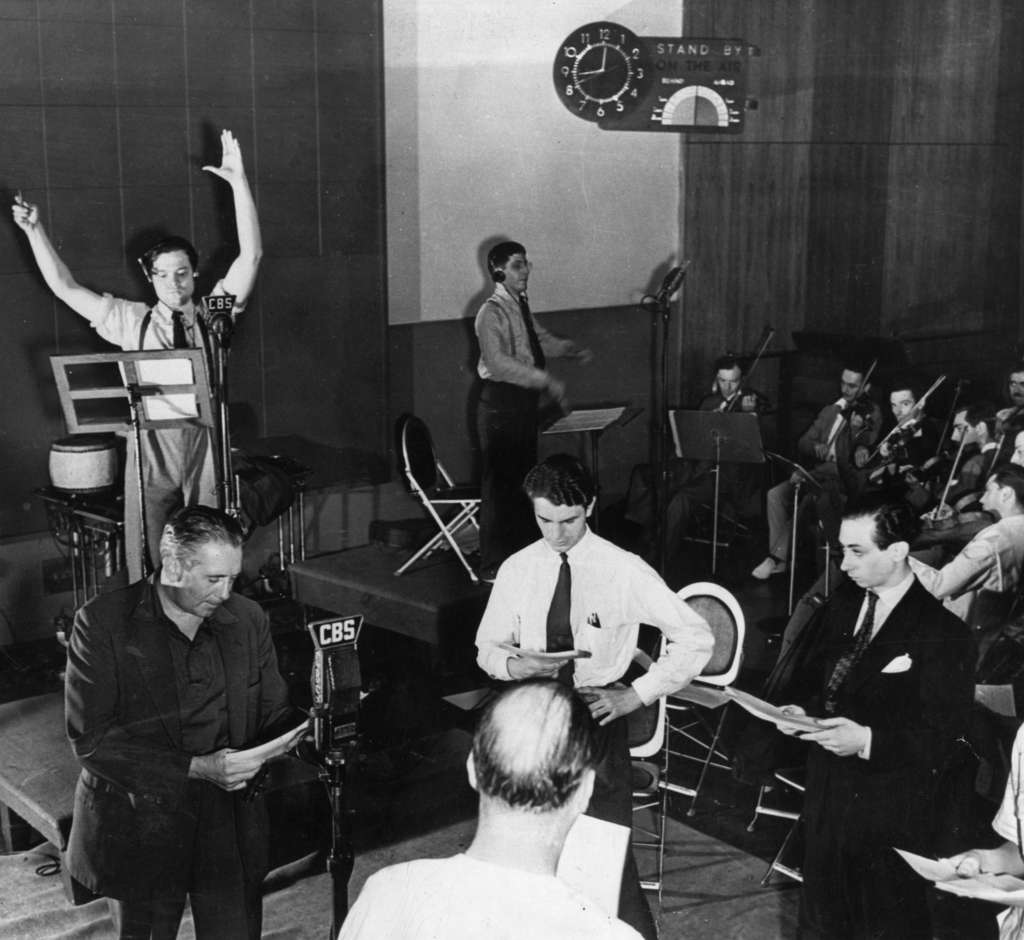
Orson Welles adapted H.G. Wells’ The War of the Worlds for radio that caused scores of people to believe Martians invaded New Jersey in what year?
Orson Welles had adapted for radio a classic sci-fi novel: H.G. Wells’ The War of the Worlds.
But scores of people missed it. A second disclaimer, reminding listeners the program was a dramatization, would not air for nearly 40 minutes.
In the meantime, a series of escalating news-like bulletins featuring first-person accounts from authoritative voices reached an incredible conclusion.
Martians had invaded New Jersey.
Space invaders
The novel started it.
Prior to its publication, life existing outside of our earthly bubble was a thrilling concept.
And then Wells published The War of the Worlds, serialized first in magazines before taking book form in 1898. The allegory for British imperialism planted a worrisome thought: What if the Martians were not friendly?
Science fiction started transitioning from stories about peaceful space visitors to tales of aggressive invaders.
Fast-forward to October 1938: The United States was in the throes of the Great Depression, violence was spreading across Europe, and it was Mischief Night.
Orson Welles directs the original radio broadcast of H.G. Wells’ “The War of the Worlds” in 1938, performed by “Mercury Theatre on the Air.” The show was convincing enough to make some think New Jersey was being invaded by aliens.
And this broadcast, despite two more times reminding listeners it was a fictional account, made it seem realistic that meteorite-shaped spacecrafts had landed in the farmlands of New Jersey carrying “the vanguard of an invading army from the planet Mars.”
Martians shooting ray-guns and spreading poisonous gas was a perilous thought, and it didn’t make listeners feel better when the invaders could not adapt to our atmosphere and were defeated by earthling germs.
Fact and fiction
People panicked.
In Philly, “women and children ran from their homes screaming,” and “families packed their belongings and prepared to leave their homes,” The Inquirer reported.
The Inquirer offices reportedly fielded more than 1,000 phone calls from frantic readers who wanted to know if the sky was falling and, if so, how city leaders planned to stop it.
But many newspapers, which were now second fiddle to the nearly ubiquitous radio, got carried away. Reports of emergency vehicles being dispatched, and neighbors kneeling together in prayer, were a bit overblown.
On Halloween, newspaper reporters interrogated Welles. Did he want to frighten people, and blur the line between fact and fiction?
They never did get a good answer.
And all the attention and controversy elevated Welles’ performance into an instant classic and then a legend. It helped catapult the actor’s career, which peaked with his movie Citizen Kane, which detailed the rise and fall of a newspaper magnate.
Last week, amid the worst measles outbreak in decades, doctors, nurses, and first responders in the state’s hardest-hit county came together to strategize.
Representatives from nine Pennsylvaniaagencies and healthcare groups servingMifflin County shared their experiences, the challenges they’ve faced, and ideas to more efficiently attack an outbreak involving nearly 1,400 reported cases statewide as of Wednesday.
Chief takeaways included the need to better educate nurses on treating an unfamiliar virus, how to cut through the bureaucratic red tape that has sometimes hindered vaccination efforts, and the need to monitor an upcoming Mennonite wedding season that could send case numbers surging.
The roundtable gathering — the first of its kind convened by the state’s Department of Health — comes six months into an outbreak in which nearly one in five infected has been hospitalizedand six people have died, according to reports by the state and local coroners. Healthcare workers across large swaths of the state arecontending with a disease they’ve rarely, if ever, encountered.
No county in the state has seen a higher ratethan Mifflin County, which has reported 198 cases to date. (Though Lancaster County has recorded the highest number of total cases with 487, Mifflin County’s rate of infection is nearly five times higher.)
“Our state metrics and data tell part of the story of the measles outbreak in Pennsylvania, but listening to the people on the ground caring for people in affected communities like Mifflin County is essential to refining our public health response,” state Secretary of Health Debra Bogen said in a news release. “We hosted this roundtable to hear directly from healthcare providers about the challenges they are facing.”
Earlier this month, The Inquirer spent several days in Mifflin County, documenting the lack of conversation and concern regarding the ongoing spread of measles cases in the area, both inside and outside the Amish community.
At the time, county officials declined to speak about the rising number of cases. The state emphasized its ongoing coordination with Mifflin County healthcare workers but did not mention plans for a roundtable event.
Residents expressed little worry over the county’s infection totals.
“I’m more worried about my kid [coming home with] lice,” said one mother of two from Lewistown, the Mifflin County seat, at the time.
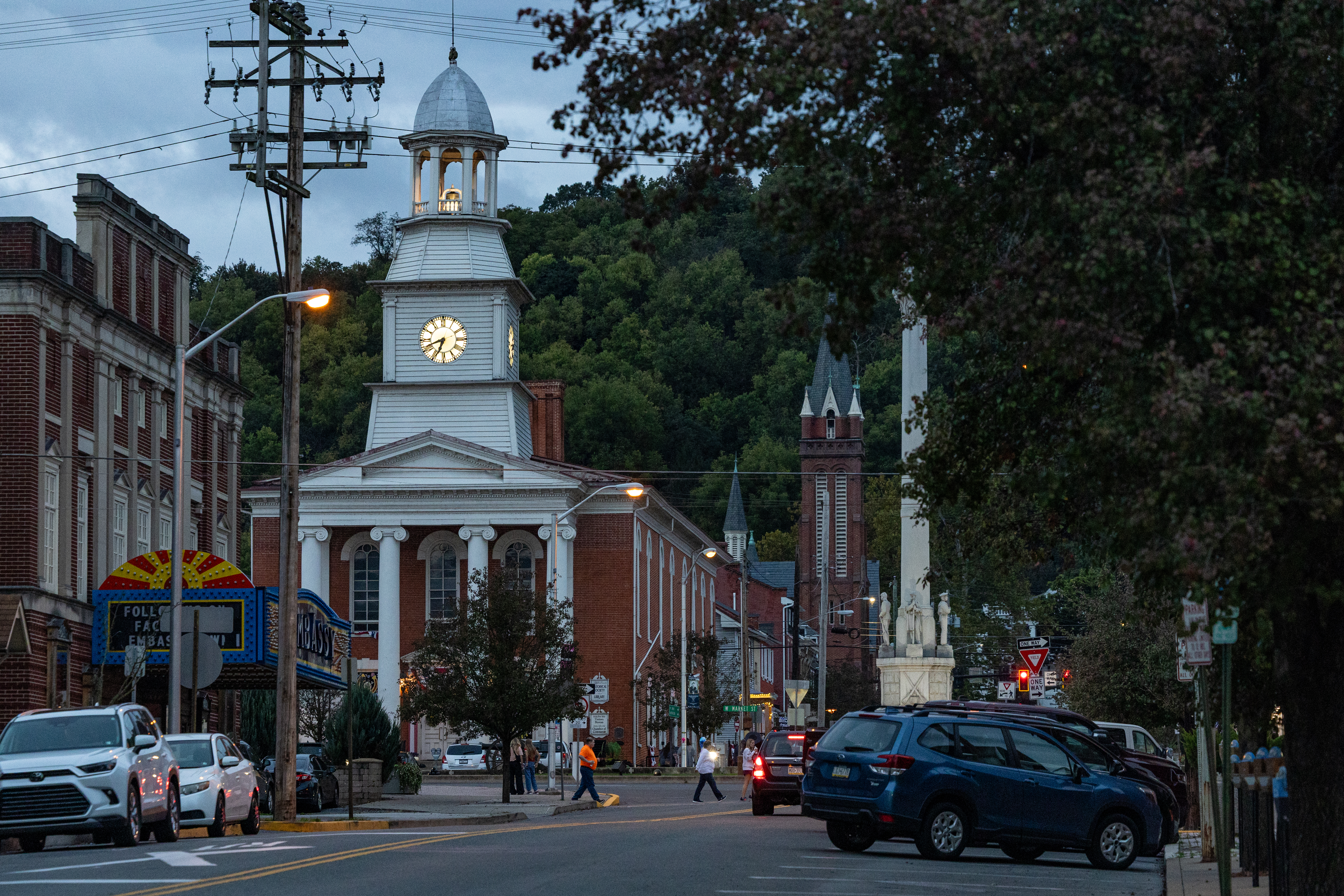
Residents walk around downtown Lewistown earlier this month. The borough is the county seat of Mifflin County. Aidan T. Gallo / Staff Photographer
Despite the high rate of infection in Mifflin County, the roundtable marks the first publicized event state officials have held locallyto address the measles outbreak.
“I think the major takeaway is how can we all work to our strengths at different organizations and help each other and help our community as we fight a virus that we haven’t seen in nearly three decades,” said Lilian McKinley, a pediatrician with Mount Nittany Health, who attended the roundtable.
Measles was declaredeliminated in the U.S. in 2000, but the highly infectious disease has started to resurge in recent years amid declining vaccination rates nationally.
Helge Hartung, a physician at the Central Pennsylvania Clinic in Belleville, said those in attendance had “mostly praise” for the Department of Health, though there was also discussion of how to improve logistical issues that have occasionally arisen.
At times, Hartung said, there have been instances where his clinic treating many members of Mifflin County’s significantAmish population has struggled to access vaccine doses due to bureaucratic holdups.
“Both federal and state programs for vaccine access are great, but they do not allow us to rapidly react to changing realities on the ground,“ Hartung said in an email. ”We want to be able to scale down vaccine storage and associated bureaucracy when we don’t need them, and then to rapidly scale up when we do.”
In Mifflin County, efforts to curb the infection’s spread have been complicated by widespread hesitancy toward the measles, mumps, and rubella (MMR) vaccine, which has proven 97% effective at preventing infection after two doses.
In the Amish community, which has been especially impacted by the outbreak,members have cited everything from religious beliefs to fears over potential side effects as reasons for avoiding inoculation.
A lack of information — both inside and outside the Amish community — has also been an ongoing challenge. Several who spoke to The Inquirer this month were unaware that an 18-year-old Amish woman from the county had died last month after contracting the measles or had heard misinformation about the role measles played in her death.
Scott Mickalonis, director of emergency management and business continuity for Penn State Health, said disseminatingstandardized messaging, along with the state’s robust data, were paramount to a successful response locally.
“The [DOH] has a lot of that information available,” said Mickalonis, who was also part of the roundtable. “We talked about how we could take that information and share it in the community.”
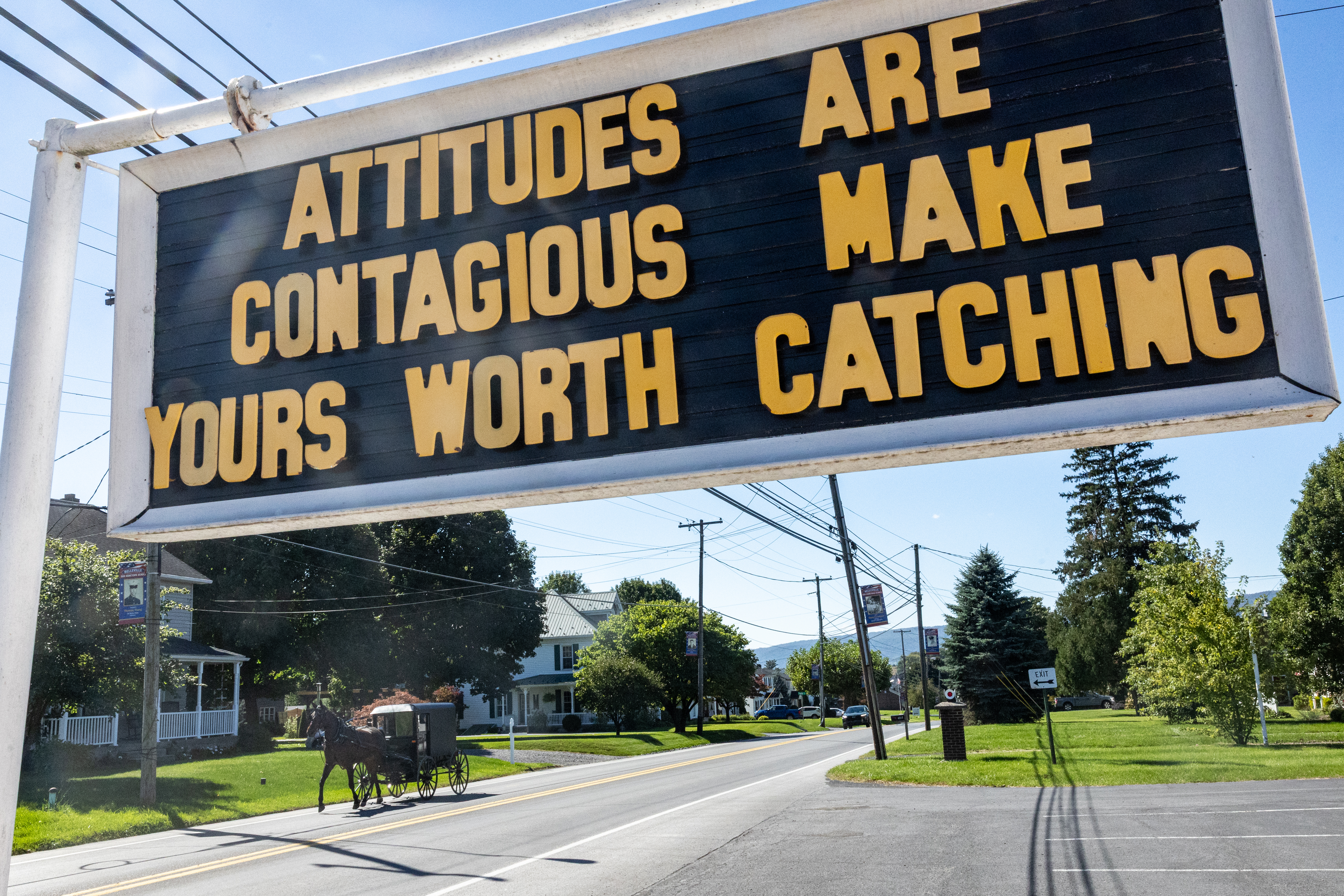
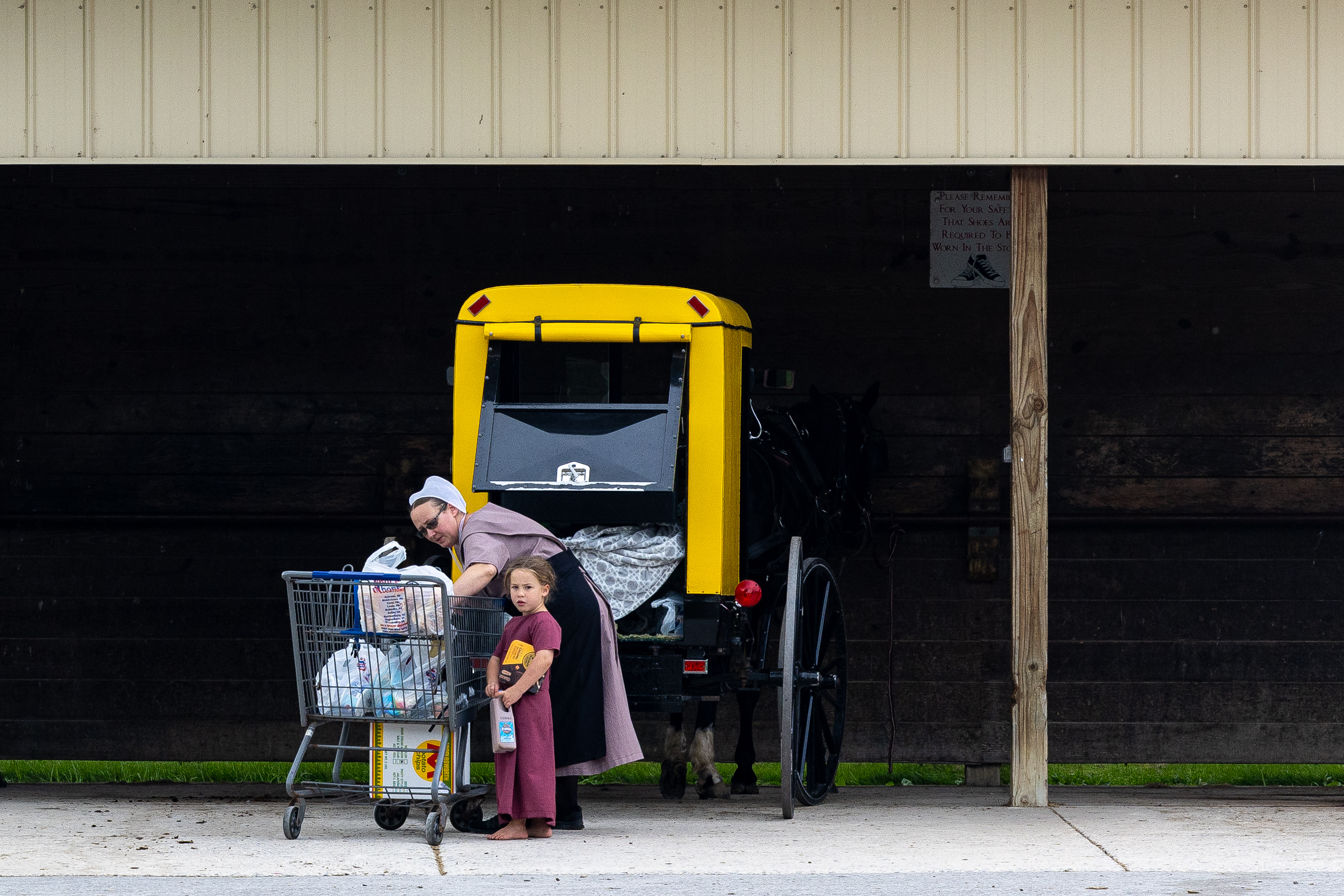
An Amish mother and daughter load up their buggy with groceries outside the Sharp Shopper grocery store in Belleville one afternoon earlier this month.Aidan T. Gallo / Staff Photographer
Statistics released Wednesday by the state show a recent decline in newly identified cases.
Still, some in Mifflin County worrythat the arrival of wedding season in the Mennonite community — which typically takes place in November and December and involves large gatherings — could produce another spike in cases.
Similar to theAmish community, there are high numbers of unvaccinated among the local population ofMennonites, a group that hasn’t yet experienced a significant spread and thus remains susceptible to infection, Hartung said.
“It’s a smaller community for sure,” he said. “But nonetheless, it could be another peak.”
The state Department of Health is exploring whether to hold additional roundtables in otherareas impacted by the measles outbreak, spokesperson Neil Ruhland said in an email this week.
Since April, state health centers have held 226 pop-up vaccination clinics. These clinics have administered more than 6,500 MMR vaccinations, according to numbers provided by the state.
The department is also working tocreate “additional educational opportunities for Pennsylvania nurses, as the vast majority of them have never treated measles before.”
In the meantime, those on the ground are bracing for whatever the fall and winter may bring.
“We all have the same goal in mind,” said Mickalonis, of Penn State Health. “And that is to really level off the incidents of measles before it becomes overburdening to our health systems.”
As the nights grow longer and spooky season arrives, what better time to reignite the long-standing rivalry between Jersey and Philly?
Inquirer reporters set out to find the spookiest sites, myths, and festivities on each side of the Delaware.
From Eastern State Penitentiary, where Al Capone once did time, to the Jersey Devil roaming the Pine Barrens, there are plenty of historic haunts. For a more family-friendly Halloween, catch a movie at the Delsea Drive-In in Vineland or grab a Wawa Spooky Sip. Whatever your tolerance for fright, there’s something for every kind of thrill-seeker in Philly and South Jersey.
story continues after advertisement
Cutest, Most Philly
CATS NAMED SHADOW – The most popular cat name in Philly.
FIREBALL WHISKY – This cinnamon, whiskey-based liqueur sees the biggest spike in sales on Halloween at Philly’s Fine Wine & Good Spirits stores.
WAWA’S SPOOKY SIPS – A seasonal offering based on the classic dirt cup, a popular ’90s dessert made with Oreo crumble, pudding, and gummy worms.
HOUND-O-WEEN – Philly’s biggest dog costume contest, which takes place in Northern Liberties.
PEANUT CHEWS – A classic Philly candy developed in 1890 by David Goldenberg at his candy store on Frankford Avenue.
GRITTY – The seven-foot, orange, fuzzy creature was pulled from the bowels of the Wells Fargo Center in 2018 and has haunted rivals ever since.
CHRYSANTHEMUM FESTIVAL AT LONGWOOD GARDENS – Catch some beautiful displays of meticulously curated chrysanthemum blooms from Oct. 16 to Nov. 15.
AWEBOT – The Ministry of Awe, a local interactive art collection, built this robot fever dream as a response to the Uber Eats delivery robots roaming around the city.
Julia Duarte / Staff Illustration, Photographs by The Inquirer, Getty, AP
Cutest, Most South Jersey
SPIRIT HALLOWEEN – Scrambling for a last-minute costume? You’ll find more Spirit Halloween stores on the Jersey side, or even a Spirit Christmas store if that’s more your thing.
SALTWATER TAFFY – Legend has it, saltwater taffy was named after an Atlantic City candy stand flooded with ocean water.
ASBURY PARK ZOMBIE WALK – Watch the slow shuffle of zombies process down the boardwalk.
THE DIGGERFEST FALL FESTIVAL – Family-friendly weekends throughout the fall feature Dig or Treat, a parade of heavy machinery and hayrides.
JERSEY SHORE CAST GROUP COSTUME – Break out your most outrageous Y2K outfit and get ready to Gym Tan Laundry.
DELSEA DRIVE-IN MOVIE THEATER – The only drive-in movie theater in the region is located in Vineland, N.J.
BIRD-WATCHING – Fall is the best time for bird-watching in South Jersey as raptors, shorebirds, and neotropical songbirds pass through key spots like Cape May Point State Park.
Julia Duarte / Staff Illustration, Photographs by The Inquirer, Getty, AP
Spookiest, Most Philly
SPROUTS PHANATIC – The fall display outside Sprouts Farmers Market on Broad Street gives new meaning to uncanny valley.
THE PHILADELPHIA EXPERIMENT – A conspiracy theory from the 1940s alleging the U.S. Navy teleported the USS Eldridge from Philadelphia to Virginia.
H. H. HOLMES – America’s first serial killer was convicted and executed in Philadelphia.
EASTERN STATE PENITENTIARY – The historic prison attracts a quarter of a million visitors each year to its haunted halls.
WITCHCRAFT TRIALS – Two women were tried and found guilty of having a witch’s reputation in the 17th century. Gov. William Penn himself attended the trial in present-day Delco.
EDGAR ALLAN POE – Poe called Philly home when he wrote two of his scariest tales: The Tell-Tale Heart and The Black Cat.
PHILLY’S WANDERING BUS – A supernatural SEPTA bus drives across the city looking for riders in deep despair.
BETSY ROSS HOUSE – Legend has it, people have claimed to hear the ghost of Betsy Ross sewing and crying in some of the rooms.
FORT MIFFLIN – Infamously known as one of the most haunted sites in the U.S., this is the Revolutionary War siege site of several alleged famous ghost sightings including the faceless man, screaming woman, and the man by the fire.
‘THE SIXTH SENSE’ – This M. Night Shyamalan horror classic was filmed throughout Philadelphia.
Julia Duarte / Staff Illustration, Photographs by The Inquirer, Getty, AP
Spookiest, Most South Jersey
NIGHT OF TERROR / CORN MAZE AT CREAMY ACRES FARM – The state's largest Halloween park with haunted mazes, a haunted hayride, and zombie paintball.
WILDWOOD’S WALL OF DEATH – A historic carnival stunt promising “chills” and “spills” with motorcycles circling a vertical wooden enclosure.
MISCHIEF NIGHT – An infamous night when prankers throw eggs and TP (toilet paper) houses.
ABSECON LIGHTHOUSE – Located in Atlantic City, visitors have reported ghostly sightings and mysterious sounds through the winding stairwell.
THE JERSEY DEVIL – The mythical creature that roams the Pine Barrens.
BURLINGTON COUNTY PRISON – This stone and brick fortress has loomed over Mount Holly since 1811.
THE ATCO GHOST – There have been sightings of the ghost of a young boy chasing a basketball on Burnt Mill Road in the Pine Barrens.
‘WAR OF THE WORLDS’ – When this Halloween episode aired, listeners who tuned in late and missed the initial disclaimer caused widespread panic after thinking an alien invasion actually happened in West Windsor, N.J.
SIX FLAGS FRIGHT FEST – Six Flags Great Adventure hosts an annual Halloween-themed festival filled with spooky events and thrilling scares until Nov 1.
Julia Duarte / Staff Illustration, Photographs by The Inquirer, Getty, AP
story continues after advertisement
Staff Contributors
Design: Julia Duarte
Development: Julia Duarte and Lizzie Mulvey
Data: Lizzie Mulvey
Editing: Suzette Moyer and Stephen Stirling
Copy Editing: Ann Applegate
Subscribe to The Philadelphia Inquirer
Our reporting is directly supported by reader subscriptions. If you want more journalism like this story, please subscribe today
Happy Halloween eve, Philly. Weather today and tomorrow should be a treat. We’re once again being graced by clear blue skies and highs in the 60s and 70s.
Today, we begin with some accounting. Namely, if money problems were at the root of the Academy of Natural Sciences museum closure, just how bad were they?
A budget deficit was a driving factor in the abrupt closure of the Academy of Natural Sciences of Drexel University.
But at a hearing in Philly City Council earlier this week, the Academy board chair and a Drexel University official presented two very different numbers for that shortfall.
The Inquirer has now reviewed financial documents showing that the museum’s deficit in 2025 was just $960,000. One nonprofit expert told The Inquirer that given the institution’s donors and stature in the city, that sum is an amount the Academy could raise “on a Friday afternoon.”
For Drexel’s part, Melissa Richman, the university’s executive director of operations, told Council that the Academy lost far more money last year: $4.4 million. That larger figure encompassed a number of Academy educational and civic programs rather than the operation of the museum’s galleries alone.
It was the loss of those galleries, which generations of Philadelphians visited, that caused tremendous public outcry. The museum’s relatively small operating deficit left Council members openly astonished about the decision to shut its doors.
For most of his 17 years with the Philadelphia School District, Ismael Jimenez rose steadily through the ranks, from social studies teacher to curriculum specialist to social studies curriculum director.
Now, he could become the first district educator to lose their job amid furor directed at Philly public schools over the handling of antisemitism.
The backstory: In 2024, a group calling itself School District of Philadelphia Jewish Family Association began lodging complaints about Jimenez, citing things like his personal social media posts and other concerns. Other groups followed suit, and the district commissioned an outside firm to investigate the possible improprieties.
Fast forward to this month: Superintendent Tony B. Watlington Sr. revealed to a GOP-led U.S. House panel that the district now seeks to fire Jimenez. That panel called Watlington to testify after it accused Philly public schools of teaching students to “hate Israel” and “embrace radical” ideas, allegations that district officials deny.
On Wednesday, Jimenez sued his employer in federal court, alleging violations of his First Amendment rights and accusing the district of “unlawful retaliation.”
Mayor Cherelle L. Parker’s administration plans to lease about 21 acres of city-owned land to a building trades union that donated to her 2023 mayoral campaign for the cool sum of $1 a year.
Raymond “R.C.” Horsch, the man who police say may have killed several women in his Olney home, provided federal prosecutors with information about a child prostitution ring, drug trafficking operations, and an existing fraud case in exchange for a shorter prison sentence, according to newly unsealed documents.
The Philly Sheriff’s Office will fight any attempt to independently audit its finances, a lawyer for the office told a judge during a contempt hearing Thursday.
Staff who provide medical care in Philly jails say they are still short pay months after the contractor they worked for went bankrupt.
Republican U.S. Rep. Brian Fitzpatrick filed a lawsuit to try to disqualify Bucks County Commissioner Diane Ellis-Marseglia from serving on the county election board ahead of a tight race between Fitzpatrick and his Democratic challenger, Bob Harvie.
An incident at Silk City Diner went viral after a server there allegedly used a customer’s belongings to clean the table while she was in the restroom with her child, before throwing the items away. The diner said the server was fired.
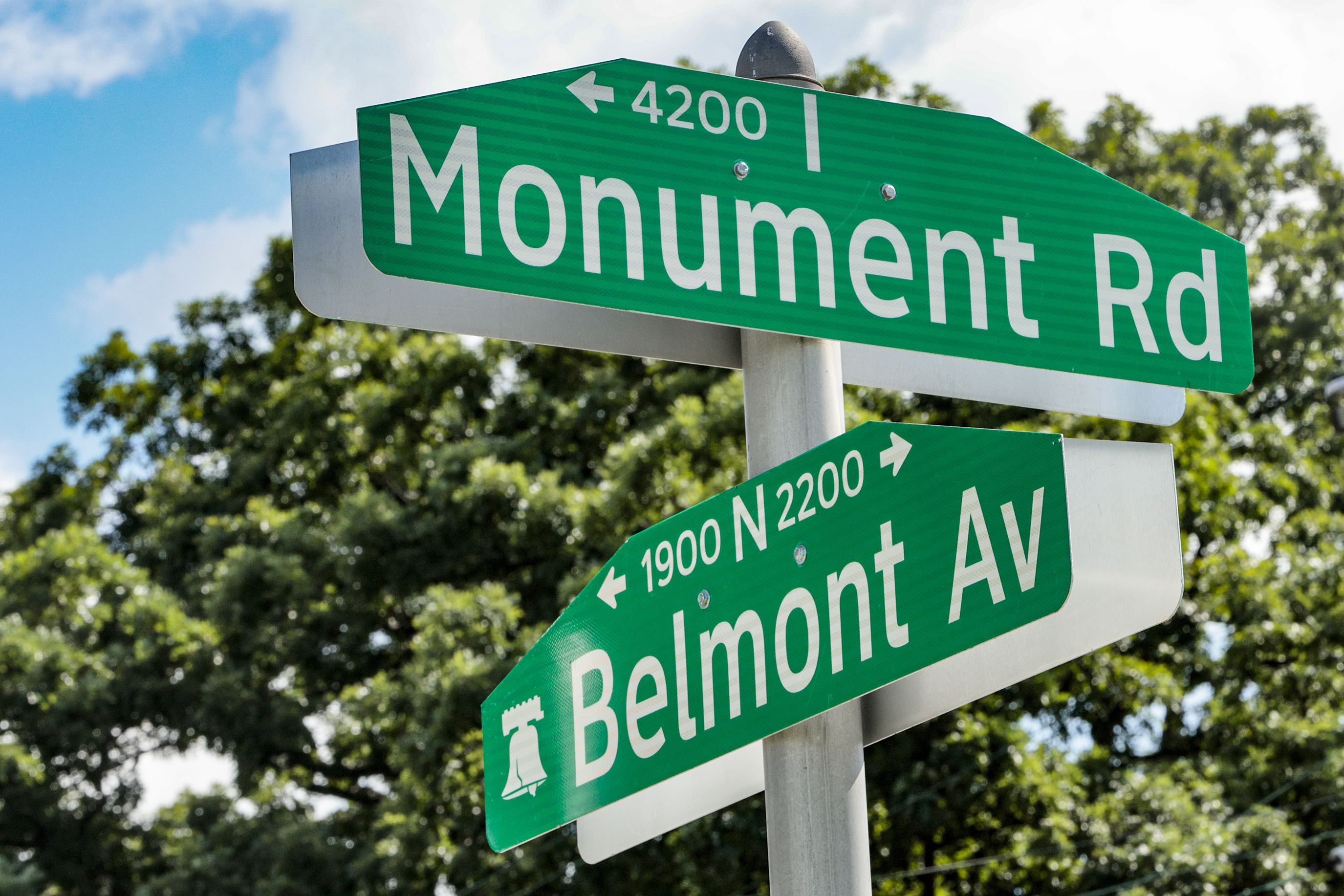
This week, we’re bringing back an article from 2023 on the origin of Monument Road in Fairmount Park. A reader asked: So, what was the monument?
While nothing remains of the stone structure today, Monument Road was so named in 1886 after a rough-hewn obelisk that stood on the farm of Judge Richard Peters.
🍕 Following. After a failed sale, Pizza Plus West is back under its original ownership with new pies and wings, per food writer Beatrice Forman.
🪞 Peering through (again). Just like the Portal itself, the fate of the interactive video installation has come full circle this week, writes Inquirer columnist Stephanie Farr. It is NOT leaving the City Hall courtyard after all.
Cheers to Joanne Walsh, who correctly solved Thursday’s anagram: Martino Cartier. The pink-blazer sporting hairstylist was on the reality show Tabatha’s Salon Takeover. Now, he’s running as a GOP candidate for Gloucester County commissioner.
Photo of the day
An early autumn adopter is not quite all red, yellow, and orange yet, but it was way ahead of its Cherry Hill neighbors along Kresson Road in the fall foliage department Thursday. The autumnal equinox was Sept. 22. And the forecast for this season’s colors is more promising after droughts in 2024 and 2025 produced less vibrant colors.Tom Gralish / Staff Photographer
It’s looking more and more autumnal out there.
👻 Have a wonderful, safe, and spooky weekend! Thanks for reading.
By submitting your written, visual, and/or audio contributions, you agree to The Inquirer’s Terms of Use, including the grant of rights in Section 10.
Mayor Cherelle L. Parker hopes to debut a new city program by the end of the year that is designed to offer affordable mortgages for city residents.
Parker discussed the program, known as “One Philly Mortgage,” at an Axios Live event this week, saying it would be the first of its kind for a major U.S. city. Once launched, it would provide 30-year fixed-rate mortgages for local first-time home buyers with credit scores of 620 or more with no private mortgage insurance.
“We want the lending industry, banking industry, to say, ‘Hey, we’ll take this risk,’” Parker said at the Tuesday event. “But the city of Philadelphia proper shoulders it.”
Parker added that the city has been working with Citizens Bank to serve as its first lending partner, and is in discussions with other financial institutions. The effort is part of Parker’s Housing Opportunities Made Easy initiative, which she proposed in February 2025.
Here is what you need to know:
What is the One Philly Mortgage program?
The One Philly Mortgage program aims to help “low- and moderate-income Philadelphians” buy their first homes, according to the Philadelphia Housing Development Corporation website. Some of the interest for the required loans will be paid for using public funds, and no mortgage insurance is slated to be paid as part of mortgages secured under the program.
Down payments of “no more than 3%” will be required, according to a city flier detailing the program. It would be open to households that make up to 120% of the area median income, which would be about $100,000 for single-person households, or $143,000 for four-person households, The Inquirer previously reported.
“There is an affordability and housing crisis across the nation. Philadelphia is not unique,” Parker said Tuesday. “Imagine getting a mortgage, a 30-year commitment, with no [private mortgage insurance], and we have in essence brought down the interest rates.”
The program is similar to one launched in Massachusetts known as the ONE Mortgage Program. That effort also offers 30-year fixed-rate loans with 3% down payments and waived mortgage insurance for first-time homebuyers with lower credit scores. It has assisted about 22,000 households, according to the Massachusetts state government website.
Parker’s H.O.M.E. initiative
The effort is being touted as part of Parker’s H.O.M.E. efforts, for which City Council previously approved $278 million in its first phase. So far, Parker’s administration has spent only $38 million of that allotted budget, according to a recent Inquirer report, and plans to spend the remaining $240 million by the end of the fiscal year in June.
One of the initiative’s goals is to preserve 30,000 housing units, and it is largely funded with $800 million in city bonds approved by Council in June 2025. However, it has faced some delays caused by negotiations with lawmakers over how those bond proceeds would be spent, The Inquirer previously reported.
In total, 29 housing programs are included under the H.O.M.E. umbrella, but as of Sept. 30, only four have reportedly received funding. Many efforts tied to the initiative have yet to launch.
Program receives some criticism
Despite not yet being launched, the One Philly Mortgage program has faced some criticism in the media following Parker’s discussion of it this week. Fox Business’ The Big Money Show, for example, discussed the effort Wednesday, with one host calling it “insanity.”
“It’s offering an on-ramp to ownership for people that can’t qualify for a mortgage,” said co-host Lou Basenese, adding that it would give “more people an opportunity to lose their home because the lenders get bailed out, the homeowner doesn’t.”
Others on the show Wednesday compared the effort to the 2008 subprime mortgage crisis, which resulted in a serious economic recession. That year, the U.S. housing market collapsed due in large part to subprime mortgage lending. Subprime borrowers, who are usually defined as having credit scores below 620, are seen as high credit risks by lenders.
Drexel University economist Kevin Gillen likewise cautioned in an interview with Axios that the program could face difficulties, saying that increasing homeownership levels was not desirable if the practice “just increases the foreclosure rate in the long term.”
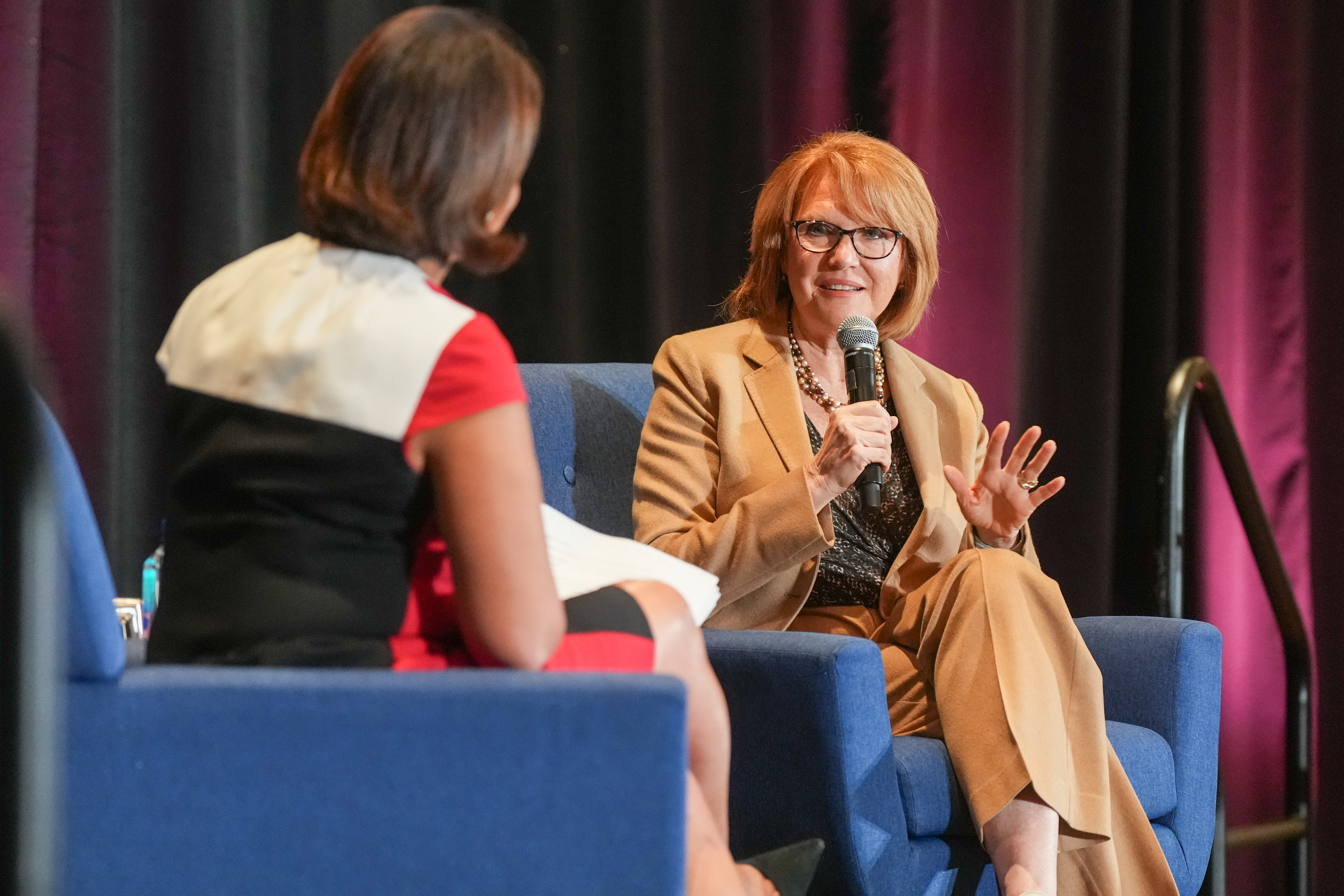
“I was really happy as a nurse,” said Bell, who stepped down this month from her role as CEO of Children’s Hospital of Philadelphia. “If somebody had given me a letter back when I was a nurse to say you’re going to be a CEO someday, I would have said they had the wrong person.”
Bell was CHOP’s first female CEO. Throughout her career, she was many times the only woman in the room, she said. While she tried not to focus on that, others made her aware of it at times, which “automatically makes you feel different, and feel a little less comfortable.”
She often turned to a small group of women leaders in healthcare who shared personal and professional support. When she was preparing for an interview to become a Comcast board member, women in the group coached her on what to expect.
Madeline Bell, the first female CEO of Children’s Hospital of Philadelphia, stepped down from her role this month. Jessica Griffin / Staff Photographer
For women CEO hopefuls, only a few role models exist at Philadelphia’s public companies.
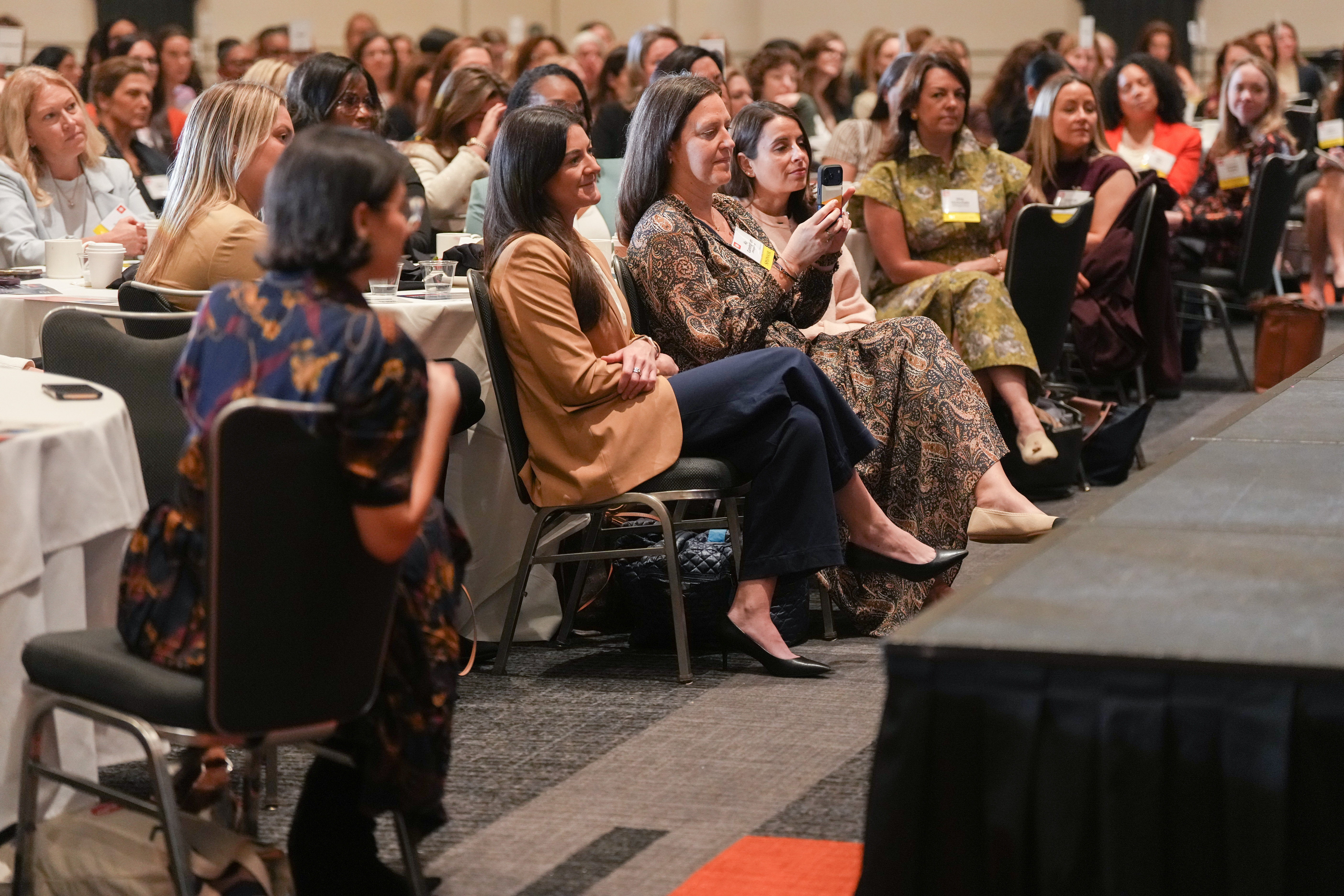
A woman is CEO at just eight of the largest 92 public companies in Philadelphia by revenue, according to an annual report released Friday by the Forum of Executive Women. Female representation on the boards of directors at those companies has also stalled.
“We’ve made significant gains over the past decade,” Forum CEO Meghan Pierce said. “But women remain underrepresented in the places where the most important decisions are made.”
“Progress doesn’t happen automatically, and it requires intentional leadership and a commitment to the next generation of women leaders if we’re really going to see these numbers change and not plateau year over year,” said Pierce.
Newcomers to the list are:
Lindsay Androski of Arbutus Biopharma
Lauren Ranalli of First Resource Bank
Women CEOs who reappeared on the list this year are:
Ellen Cooper of Lincoln National Corp.
Lori D. Koch of DuPont de Nemours Inc.
Denise Dignam of Chemours Co.
Winnie Park of Five Below
Suzanne Foster of AdaptHealth Corp.
Nicholle Taylor of Artesian Resources Corp.
Women held 28% of board seats at the top 92 companies in the most recent report, down from 30% the prior year.
At these companies, 22% of all executives were women, unchanged for the past two years.
Each year’s report is based on data from the prior year.
“It takes a long time for those limited C-suite positions to turn over, so if you’re not planning intentionally to create more diversity in your succession planning, these numbers are not going to change,” said Pierce.
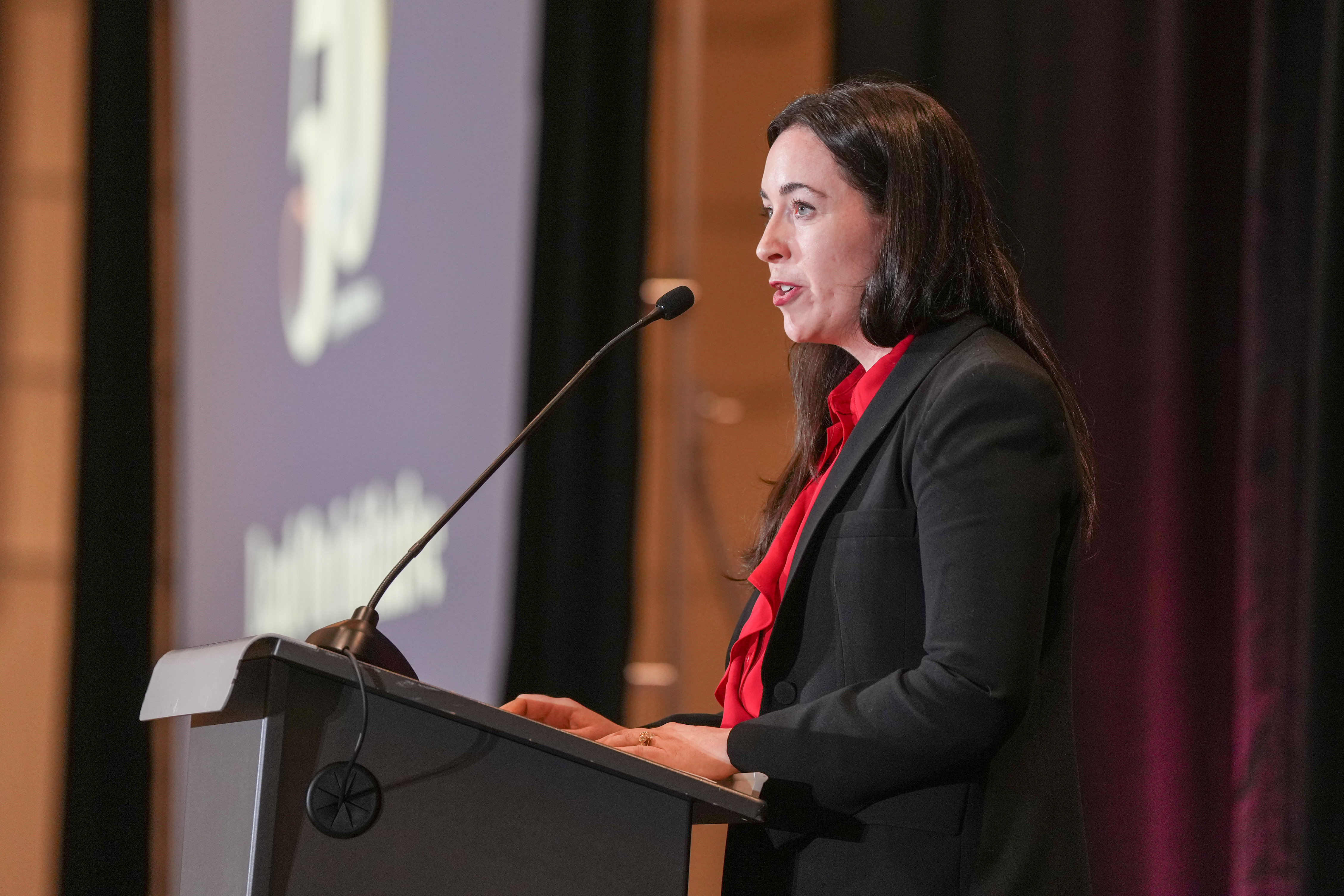
Meghan Pierce, CEO of The Forum of Executive Women, in Philadelphia on Friday during an event marking the launch of the forum’s annual report. Jessica Griffin / Staff Photographer
Corinne Low, an economist and professor at the Wharton School is studying what helps women advance in the workplace.
“I want the firms [in this year’s report] to take a hard look in the mirror and say, not ‘Where did women fail,’ but ‘Where did we fail, and how can we support them better?’” said Low.
This month, Wharton announced that Low will lead the school’s new Workforce Futures Lab, which is being launched with a $2.5 million grant. Those funds are part of a total $60 million the nonprofit Aspen Institute is disbursing, with funding from a group of organizations founded by Melinda French Gates. Low’s initiative is one of 18 chosen among 900 proposals for funding that are intended to help women succeed in the workplace.
Low aims to partner with companies to experiment with benefits like on-site childcare, meal service vouchers, or household management help to be used during work travel.
Companies shouldn’t just say, “Well, that’s their personal lives, and we can’t do anything to support that,” said Low. “I actually think that firms can get creative with that.”
Companies can support women by showing them that they can advance in their careers while maintaining some boundaries at work, said Low. That can look like sharing work among colleagues to allow someone to take time off when needed, or protecting some weekends from work. It also helps if bosses model taking vacation or male higher-ups use parental leave, she said.
Corinne Low will lead the Wharton School’s new Workforce Futures Lab. Melissa Lyttle / For The Inquirer
For high-level corporate women who are on the verge of becoming CEOs, Low recommends they look at how male CEOs spend their time.
“You need to think about what’s on your plate compared to them,” and eliminate some of that, said Low. That could mean outsourcing housework, for example.
“If you want to climb that corporate ladder, if you want to be a CEO, your time is too expensive for that,” she said. “We need to be willing to invest in ourselves, not just by taking out the loan to go to an MBA, but actually by hiring help and support.”
Choosing a partner is an important career choice too, said Low, adding that a CEO level career is “a joint venture.”
“You don’t meet people who are CEOs married to other CEOs,” said Low. “If there is somebody in the family who has a CEO-level career, it is typically not that the other person is having that career at the same time, because those careers are greedy.”
Last year, startled scientists reported that the average human brain they studied contained roughly the weight of a plastic spoon in microplastics and nanoplastics. Now, a deeper look suggests a much broader assortment of material from the outside world — silica, metals, soot, and other debris — is getting through.
Researchers from the Rush Alzheimer’s disease Center and other institutions examined, in extraordinary detail, brain tissue from 11 people who died at ages 80 to 91. They discovered that some particles had penetrated deep into the brain, reaching the amygdala, a region that helps shape emotion and memory.
The finding is part of a broad shift in how scientists are thinking about the link between air pollution and conditions that impact the brain such as dementia, Parkinson’s, and autism.
For years, a leading explanation has been that pollution harms the brain indirectly, by triggering inflammation and other changes throughout the body. That idea hasn’t gone away. But scientists are now exploring whether that pollution may also act more directly.
Exactly how the particles get there remains unsettled.
They are tracing how particles may travel into the brain and what happens once they arrive, while other studies are revealing potential changes in brain structure, proteins, and metabolism associated with pollution exposure. The work could help connect what people breathe today with diseases that may emerge years or decades later.
Caleb Finch, a professor emeritus at the University of Southern California’s Leonard Davis School of Gerontology, said there is growing evidence exposures may begin in pregnancy and accumulate across a lifetime.
“There’s a lot we don’t understand yet, but we do know that the risk of dementia increases in proportion to the amount of air pollution,” he said.
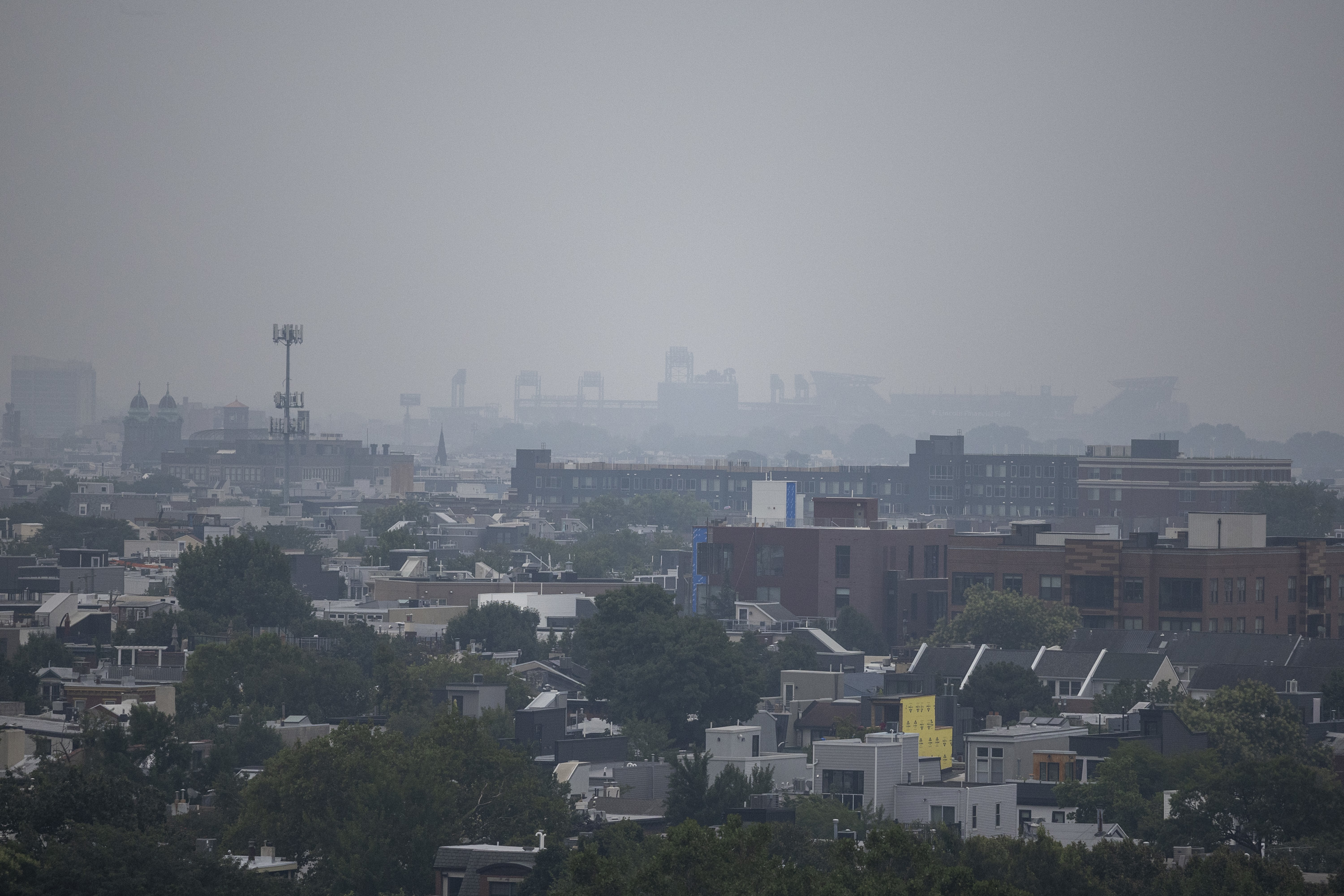
The questions are becoming more urgent as climate change alters the air around us. Hotter, drier conditions are fueling larger and more intense wildfires in many places, while drought and land degradation can increase the risk of dust storms — sending enormous clouds of smoke, soil, minerals, and other microscopic debris across cities, states, and even continents.
Here are three recent discoveries helping to fill in the picture.
A shrinking brain
Several studies published this year using the UK Biobank, a vast repository of health data on people in Britain, offer clues about how breathing polluted air might translate into physical changes in the brain.
One, published in April in the Journal of Nutrition, Health & Aging, followed more than 400,000 people over nearly 14 years exposed to varying levels of air pollution and ultimately recorded nearly 9,000 cases of dementia. Those with the highest exposure to PM2.5 — particles one-thirtieth the width of a human hair, which can enter the bloodstream and lungs when inhaled — had a 14% greater risk of developing dementia than those with the lowest exposure. They also showed signs that their bodies were aging faster biologically.
More surprising was what showed up on the brain scans: People exposed to more polluted air had what researchers described as a “reduction in global and several regional brain volumes.”
The findings suggested a possible progression from pollution to accelerated aging to brain atrophy and, ultimately, dementia.
A second study, published in May in Environmental Pollution, looked more closely at what might be happening inside the brain. Among nearly 270,000 people followed for about 14 years, greater exposure to PM2.5 was associated with structural changes in the hippocampus, a region essential to learning and memory.
The researchers also found clues about what might be driving the damage. Inflammation and changes in the way the body processes fats appeared to account for a small portion of the link between pollution and dementia, offering another possible path from the air people breathe to changes in the aging brain.
Neither study can prove cause and effect, and exposure was estimated from pollution levels near participants’ homes rather than measured individually, so the estimates may not reflect each person’s actual exposure. But the studies have started filling in the possible missing steps between exposure and disease.
Which particles are most dangerous?
One of the biggest questions is which parts of polluted air are most dangerous. What we breathe is not one thing but a shifting mixture of particles, metals, gases, and chemicals — and scientists are beginning to tease apart which components may matter most to the brain.
In a study published in September, researchers compared the effects of three very different pollutants: diesel exhaust, dust collected from the World Trade Center site, and wood smoke. Mice breathed each for five hours, after which researchers examined what had changed in their brains.
The surprise was how much diesel exhaust and World Trade Center dust had in common. Despite coming from very different sources, they altered more than 1,200 of the same genes, including ones involved in triggering inflammation, damaging to fats in cells, and processing amyloid, the protein that accumulates in the brains of people with Alzheimer’s. Wood smoke, in contrast, did not produce several of the Alzheimer’s-related changes.
Diesel exhaust and World Trade Center dust were rich in metals, while wood smoke was not, leading researchers to suspect that metals may make some forms of pollution particularly damaging to the brain.
Mouse studies do not always translate to humans, and a five-hour exposure is very different from the complicated pollution people encounter over a lifetime. But the experiment points to a possibility with important implications: When it comes to the brain, the amount of dirty air may be only part of the story. What makes up that pollution may matter, too.
Toxic clumps
In one of the largest studies yet to examine the connection between air pollution and Lewy body dementia, the second most common type of dementia after Alzheimer’s, researchers analyzed hospital records from 56.5 million Americans from 2000 through 2014. They found that people living in areas with higher levels of PM2.5 were more likely to be hospitalized with two diseases marked by toxic clumps known as Lewy bodies: dementia with Lewy bodies and Parkinson’s disease dementia.
Then the researchers went looking for what might explain the connection.
In experiments in mice, exposure to pollution triggered the abnormal folding and buildup of alpha-synnuclein, a protein that forms Lewy bodies.
“This is something we were so surprised to see,” said author Xiaobo Mao, a professor of neurology at Johns Hopkins and who will begin a new job in January as the director of the Houston Methodist Center for Translational Precision Dementia Research.
The exposed mice also developed brain shrinkage, nerve-cell death, and cognitive decline. But when researchers exposed mice genetically engineered without alpha-synnuclein to the same pollution, most of that damage largely disappeared, suggesting the abnormal protein played a key role. That makes the pathway a potential target for future therapies.
The findings, published in 2025 in Science, could also help solve a longstanding mystery about Lewy body dementia. Most people who develop the disease have no family history of it, leading scientists to suspect that environmental exposures may play an important role.
How a pollution scientist protects himself
Mao’s interest in air pollution began around the 2008 Beijing Olympics, when the city’s notoriously dirty air had become an international concern. Chinese officials were counting “blue-sky days,” restricting driving based on license-plate numbers, and temporarily shutting factories in an effort to clear the haze.
Mao was studying nanoparticles at the time — particles so tiny they are measured in billionths of a meter — and began wondering what all that material in the air might be doing inside the body.
He now lives in the United States, but decades of studying pollution have shaped how he thinks about the air he breathes every day. His precautions are mostly ordinary ones.
He pays attention to indoor air as much as outdoor pollution. Cooking, especially without adequate ventilation, can generate surprisingly high concentrations of particles. “Indoor cooking may sometimes be worse than anything else,” he said.
He would avoid living directly on a major road, where traffic-related pollution tends to be higher. At home, he changes his HVAC filters regularly. Then there are the basics: He eats a balanced diet, exercises, and gets outside in the sunshine.
Mao said can’t control everything that enters the air around us. But he works to control what he can. “That kind of prevention can go a long way,” he said.
As the Phillies’ representative in the players’ union, Garrett Stubbs is on the front lines of baseball’s upcoming labor dispute. The backup catcher, who was designated for assignment on Thursday, joined Phillies Extra to discuss why the players won’t go for a salary cap, sitting in on early negotiations, when baseball might be played in 2027, and (spoiler!) his plans to create content during the looming lockout. Watch here.
OK, some context: First, despite learning Thursday that the Phillies are designating him for assignment, a move that will likely make him a free agent, Stubbs expects to remain the team’s representative in the MLB Players’ Association through the offseason, which puts the backup catcher on the front lines of the labor conflict that is about to ensue.
And let’s be clear: It’s shaping up as a knock-down, drag-out fight that will plunge the sport into a deep freeze in the winter and impact when next season begins.
Because in one corner, the owners are making their most forceful push for a salary cap since 1994, when a 232-day strike wiped out the playoffs and World Series. It was baseball’s longest, most damaging labor dispute, and it took years — and steroids — for MLB to recover.
In the other corner, the players have opposed a salary cap for, oh, a half-century. At the World Series last week, interim union chief Bruce Meyer likened a cap to “a nuclear bomb,” a stance that has been passed down through the generations like it’s part of players’ DNA.
“No matter when we had these talks, they always wanted a cap,” said Larry Bowa, the Phillies’ World Series-winning shortstop in 1980. “That was the one thing that was embedded in our brain and our minds: ‘Don’t go for the cap. It’s not going to work. It’s going to hurt you guys.’
“I know there’s a lot of [former] players that tell these guys, ‘Hey man, whatever you do, don’t give up that.’”
Video: Phillies Extra: Aidan Miller is ready to play third base if needed
There are other issues at the bargaining table, including divisional realignment and the postseason format, and negotiations are taking place almost weekly. But until the core economics are settled, not much else matters.
And a salary cap is at the center of it all.
“Watching [MLB deputy commissioner] Dan Halem sit on the other side of the table and go over the proposals that he goes over with the salary cap attached to every single proposal — and obviously they know our stance on the salary cap — it is the biggest waste of time. It’s a charade,” Stubbs told The Inquirer’s Phillies Extra podcast. “And it’s exhausting sitting there watching him. I’m like, does he even believe some of the things that are coming out of his mouth?
“[T]he players want to play. We want to grow with the game. We want to sit at the table and actually have a conversation. But right now it’s, ‘Hey, you’re either going to suppress your salaries with the salary cap or we’re not discussing anything.’ … There’s no back and forth.”
And no chance of reaching a deal by 11:59 p.m. on Dec. 1, when the collective bargaining agreement runs out.
The expectation, based on everything commissioner Rob Manfred has said, is that owners will authorize MLB to lock out the players and shut down a nearly $13 billion industry.
It happened five years ago. For 99 days, until a new CBA was finalized, free agency, trades, and other offseason transactions were halted; team officials weren’t permitted to communicate with players; even players’ likenesses were scrubbed from team websites.
Stubbs said it’s “a huge bummer” and “not negotiating in good faith” for the league to lock out the players. Manfred has maintained that it’s a way of spurring negotiations.
But if past is prologue, talks won’t really get serious until there’s a threat of regular-season games being missed. And that won’t happen until late February or early March. The 2021-22 lockout ended on March 10, and after a truncated spring training, a 162-game season was shoehorned into the calendar.
Maybe the sides will figure things out by then. But a salary cap wasn’t on the table five years ago. And unless one side acquiesces, this fight could be more protracted.
Phillies owner John Middleton has authorized one of MLB’s highest payrolls since 2022.David Maialetti / Staff Photographer
Striking the balance
Thirty-two years after the fight over a salary cap led to a painful strike, MLB is taking another swing at it.
Why now?
Manfred maintains the league suffers from competitive imbalance caused by a payroll disparity between the bigger and smaller markets. In July, he cited a $441 million gap between the highest (Dodgers) and lowest (Marlins) payrolls.
“It defies human experience,” Manfred said at the All-Star Game, “to ask a fan to think that the bottom end of that gap has the same opportunity to win as the top end.”
And in case anyone won’t take his word for it, Manfred said MLB has conducted fan polling that backs up his assertion.
(It does seem strange, however, to officials from the players’ union that MLB launched a “Level the Field” advertising campaign for a salary cap, even though the league insists fans are already in favor of it.)
But baseball’s second-lowest payroll ($92.58 million calculated for the luxury tax, according to Spotrac) didn’t hold back the Guardians from getting to Game 6 of the American League Championship Series, while the Mets missed the playoffs with the second-highest payroll ($359.48 million).
The World Series pitted the Brewers and the Rays, who finished with the best regular-season records in each league. Milwaukee is MLB’s smallest market and ranked 19th in payroll ($154.71 million); Tampa Bay was 27th in payroll ($113.23 million).
“If you look at our results, not one year, but over the last two decades,” Manfred told reporters at the World Series, “there is a very strong relationship between market size, payroll, and your chances to get in the playoffs, and particularly your chances to go deeper.”
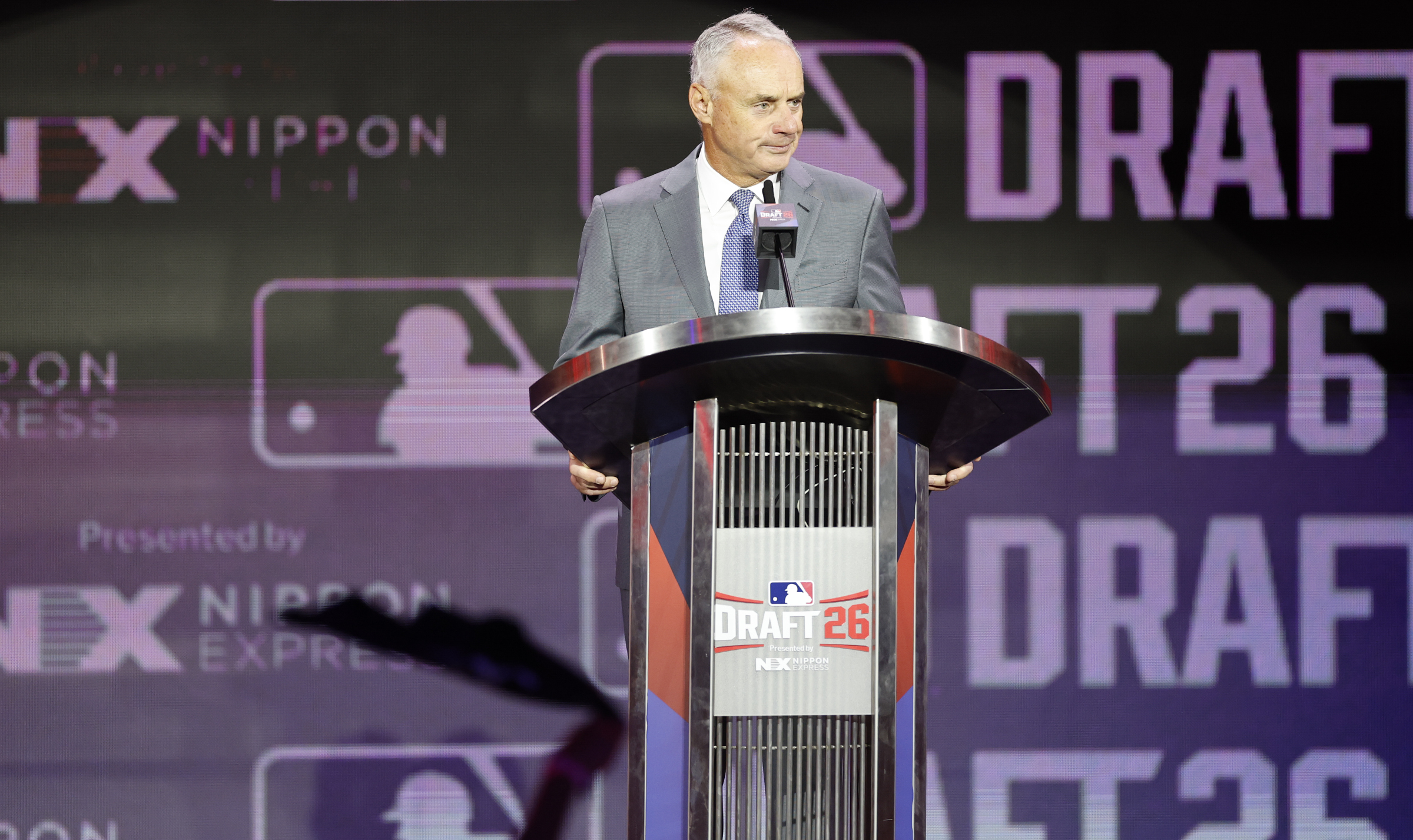
MLB commissioner Rob Manfred believes the league suffers from competitive imbalance due to the payroll disparity of large- and small-market teams.
OK, but the Brewers have made the playoffs in nine of 10 years, the Rays in six of the last eight, and the Guardians in eight of the last 11. Fans of those teams surely expect to contend.
And although Manfred often notes that a small-market club hadn’t won the World Series since the Royals in 2015 (until the Brewers), the Yankees haven’t won since 2009 and the Mets since … checking notes … 1986. The Phillies have spent $1.4 billion on player salaries since 2022, and owner John Middleton didn’t get his trophy back.
Manfred claims the owners are “more united than any group in my entire time in baseball” in pursuing a cap. Even as the Brewers were on the cusp of winning the first title in their 57-year history, owner Mark Attansio said “the system that’s being proposed, which is similar to other leagues in terms of revenue-sharing system, not only will help us compete but more importantly all of the teams with lower payrolls too, which is something also I think the fans want.”
To the players, the league is using competitive balance as a proxy for the real reason the owners want a salary cap: to boost the value of their franchises by fixing costs.
Video: John Middleton discusses Dave Dombrowski’s future with the Phillies
“The owners want a system that not only guarantees their profits, not only increases their franchise values, but essentially is a form of subsidized mediocrity,” Meyer said at the All-Star Game. “A salary cap is the ultimate excuse not to compete.”
Without naming names, Stubbs referenced Mariners president of baseball operations Jerry Dipoto, who said in 2023 that the club’s strategy was to win 54% of its games over a 10-year stretch, which averages out to 87-88 wins in a 162-game season.
“Fans are smart,” Stubbs said. “I think the majority of fans realize [a salary cap]’s not going to solve the overarching issue of certain owners not caring about winning. We have GMs or president of baseball ops literally coming out saying, ‘We want to win about 80-some games,’ and that’s their formula. That’s embarrassing.
“Whether there’s a salary cap or not, the owners that don’t care about winning, they’re not going to care about winning. And that’s not fair to fans.”
Phillies star Bryce Harper is among the faces of baseball.Monica Herndon / Staff Photographer
Divide and conquer
In the 2022 negotiations, the eight players elected to the MLBPA’s executive subcommittee unanimously opposed the owners’ last offer.
The players took the deal anyway.
If it didn’t signal a fissure in the union, it reflected the varied demographics and interests of a 1,200-player membership. An All-Star with a multiyear, nine-figure guaranteed contract may be more resolved to oppose a salary cap than a rookie making the league minimum or an arbitration-eligible player who hopes to someday reach free agency.
Based on the earliest proposals, the league seems to be targeting rank-and-file players, perhaps in an attempt to weaken or break the union. MLB proposed increasing the minimum salary and the pre-arbitration bonus pool, which would be viewed as gains for younger players, and eliminating the qualifying offer for free agents.
Of course, each incentive is tied to a salary cap.
Meyer predictably labeled the proposals “unserious.” But the league feels similarly about the union’s solutions, which include increasing the luxury-tax thresholds.
Stubbs insists the players will stick together, even as their individual circumstances differ. He bases that on what he hears from his now-former Phillies teammates (Stubbs and deputy player rep Orion Kerkering keep them abreast of updates through a message thread on WhatsApp) and other players around the league.
“It can’t be about one individual or anything else,” Bryce Harper said a few months ago in a conversation at his locker. “There’s a fine line of wanting that over what Curt Flood did for us and what the guys did all through the ’70s, ’80s, ’90s. All the guys that sat out, went through strikes, went through situations that I couldn’t fathom — missed checks, missed meals, all that kind of stuff — way back when.
“I don’t want our decisions to be a negative for what those guys did for us. I couldn’t fathom being part of the group that took [a salary cap] and was like, ‘OK, yeah, we’re good.’”
Video: Scott Boras: ‘Bryce Harper has a legacy that he wants to fulfill in Philadelphia’
Stubbs also wondered if the owners are as unified as Manfred says. In particular, he guessed that new Angels owner Stan Kroenke and Padres owners José E. Feliciano and Kwanza Jones don’t want to miss games after buying their teams for $4 billion and $3.9 billion, respectively.
It’s all part of the rhetoric from both sides — and it will only get hotter with one month before a lockout and a bone-chilling winter without the hot stove.
“It’s super unfortunate to be going into these meetings every single time and hearing from the other side that [a cap] is their solution,” Stubbs said. “I see some games getting missed because of where they stand on this salary cap idea. I think it would be moronic to not have a season or miss a substantial amount of games because of the [health] of where we’re at as a league. I don’t think that baseball has been in a better position than it is right now.
“We’ll see where Manfred and his team decide to land come Dec. 2.”