Travan and Travis Jasper had a fierce sibling rivalry when they were young. Anything could set it off: a pickup basketball game, a broken toy, or a quarter on the ground.
The identical twins — born 37 seconds apart in the early morning of July 24, 1969 — clashed about almost everything as they were growing up in Richmond.
But their relationship started to change when they were about 12 and their uncle was in the hospital. They said a doctor spoke to their family in a condescending tone about their uncle’s swollen veins — as if they wouldn’t understand his medical condition.
“We could do better than that,” the twins recalled telling each other in the hallway. It was then they decided they wanted to be doctors.
As they grew older, Travan and Travis not only began to get along, but they also started to lean on each other. They navigated college, medical school, and their residency program side-by-side. They realized, they said, that they were each other’s “superpower.”
About a decade ago, Travis was offered a job as the emergency department medical director at a Georgia hospital. He said he would accept only if it was a package deal, meaning his brother was also offered the job.
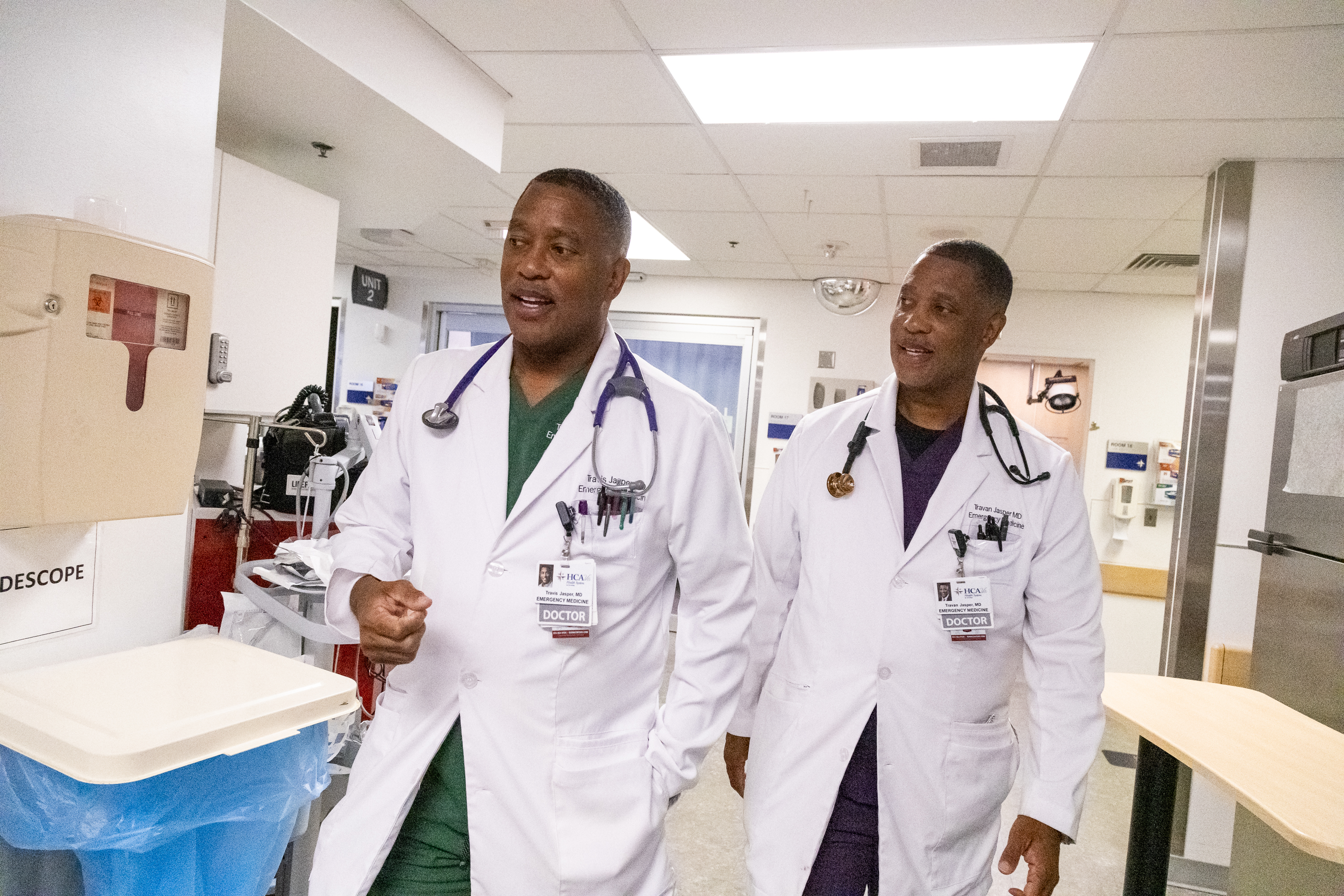
So they became co-directors. They wore different-colored scrubs — purple for Travan and green for Travis — so patients and colleagues could tell them apart.
In April, Travan and Travis returned to Richmond to serve as co-medical directors of the emergency department at Chippenham Hospital, a 466-bed medical facility with Level 1 trauma and burn centers. They’re the first duo to hold the position at the hospital, and they still wear the same color-coded scrubs.
“No matter how challenging the days are, life’s events, you can’t quit,” Travis said, “because you got somebody else that wouldn’t quit and … would never quit on you.”
After the twins were born, Travan, who is older, went home while Travis stayed in the hospital for a few days with a heart murmur. As children, people told them apart from Travis’s chipped front tooth, which happened after he fell down the stairs. (Travis said Travan pushed him; Travan said he didn’t recall what happened.)
Lindsey Brockington, the twins’ cousin, recalled Travan and Travis competing over who got the best grades — but in the end they both usually got straight A’s.
“It didn’t take long for us to realize that we had something special with these two guys,” Brockington said.
Teachers and coaches regularly confused the two. At track-and-field meets, Travan sometimes ran the heat after Travis, prompting race officials at the finish line to warn Travan that he couldn’t compete in multiple heats.
When the twins ran back-to-back in relays, they each ran faster.
“Instead of fighting each other, we were like, ‘Man, if we combine, we’ll be dominant,’” said Travan, who is about a centimeter taller than Travis.
They graduated from Stanford University with degrees in biological sciences in 1991. Their scores on the Medical College Admission Test were one point apart, they said, and they attended the University of Chicago’s medical school. There, they said, they learned to study together and trade tips so they could both ace their tests.
When applying for residency programs, the twins categorized themselves as a couple — the same label some married couples use — so they could work together. They landed at the University of Michigan’s emergency medicine residency program.
Once, in the middle of Travis’s shift, Travan was finishing his own shift when an attending doctor scolded him. The doctor thought Travan was Travis and was leaving in the middle of his shift, the twins said.
Sometimes, the twins have found their minds are bafflingly connected.
When finishing their residency program in 1998, the twins each interviewed for positions at Emory University’s school of medicine in Atlanta on different days. After his interview, Travan was driving back to Michigan when his rental car broke down at night in Tennessee.
About two hours later, someone knocked on Travan’s window. Travis, who was driving south to Atlanta for his interview, saw the rental car on the side of the highway and had an unexplained inkling that Travan was the driver.
Travan and Travis served as doctors at Emory Healthcare, where they typically worked different shifts so patients and colleagues didn’t mix them up. During a rare shift when they worked together, a nurse asked Travis how much medicine to give a patient Travan was treating.
They said they aim to explain medical conditions to patients in the most understandable ways.
They even had similar hobbies outside of work, coaching youth basketball together and watching action movies.
At Chippenham Hospital, they still work different shifts. When they want to be mischievous, they ignore colleagues unless they call them by their first names to test if they can tell them apart, the brothers said. They discuss their jobs and their families — they each have children — on daily walks.
While they are similar in many ways, Travan and Travis said that after they retire from working in medicine, they might pursue different jobs. Travan said he would work in ministry; Travis wants to be a high school science teacher.
But for now, they said they’re happy where they are, working together.
“There’s nothing you can tell me that’ll make me dislike my brother,” Travis said, “because ultimately, it’d be like I’d have to dislike myself.”
Butter chicken has taken an indirect route to South Street’s Pronto Pizza: from its roots in North India to a Pakistani family kitchen in Northeast Philadelphia, then into an Italian American pizza shop and, finally, onto a roll.
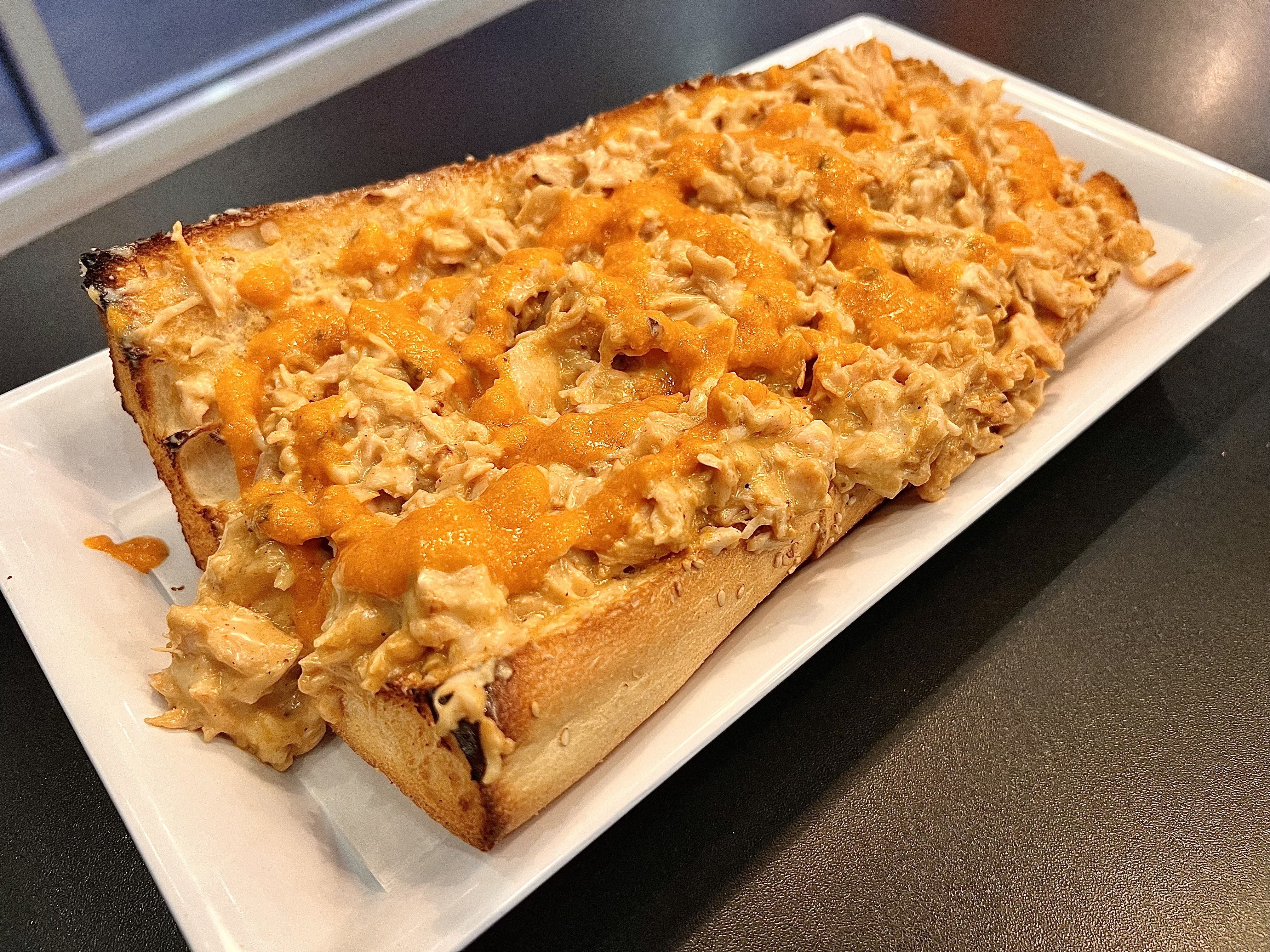
At Pronto, just off Broad Street, it’s a secret menu item. Owner Umair Cheema tops chopped marinated chicken with Cooper Sharp and butter chicken sauce based on his mother Asma’s recipe. The $12 sandwich is Cheema’s addition to a citywide assortment of cheesesteak variations that includes versions made with oxtail and salmon.
Cheema does not skimp. He lightly toasts the Liscio’s roll before adding nearly a pound of a mixture of chicken and melted cheese. Then comes a ladle or two of the rich butter sauce, which comes perilously close to gilding the lily.
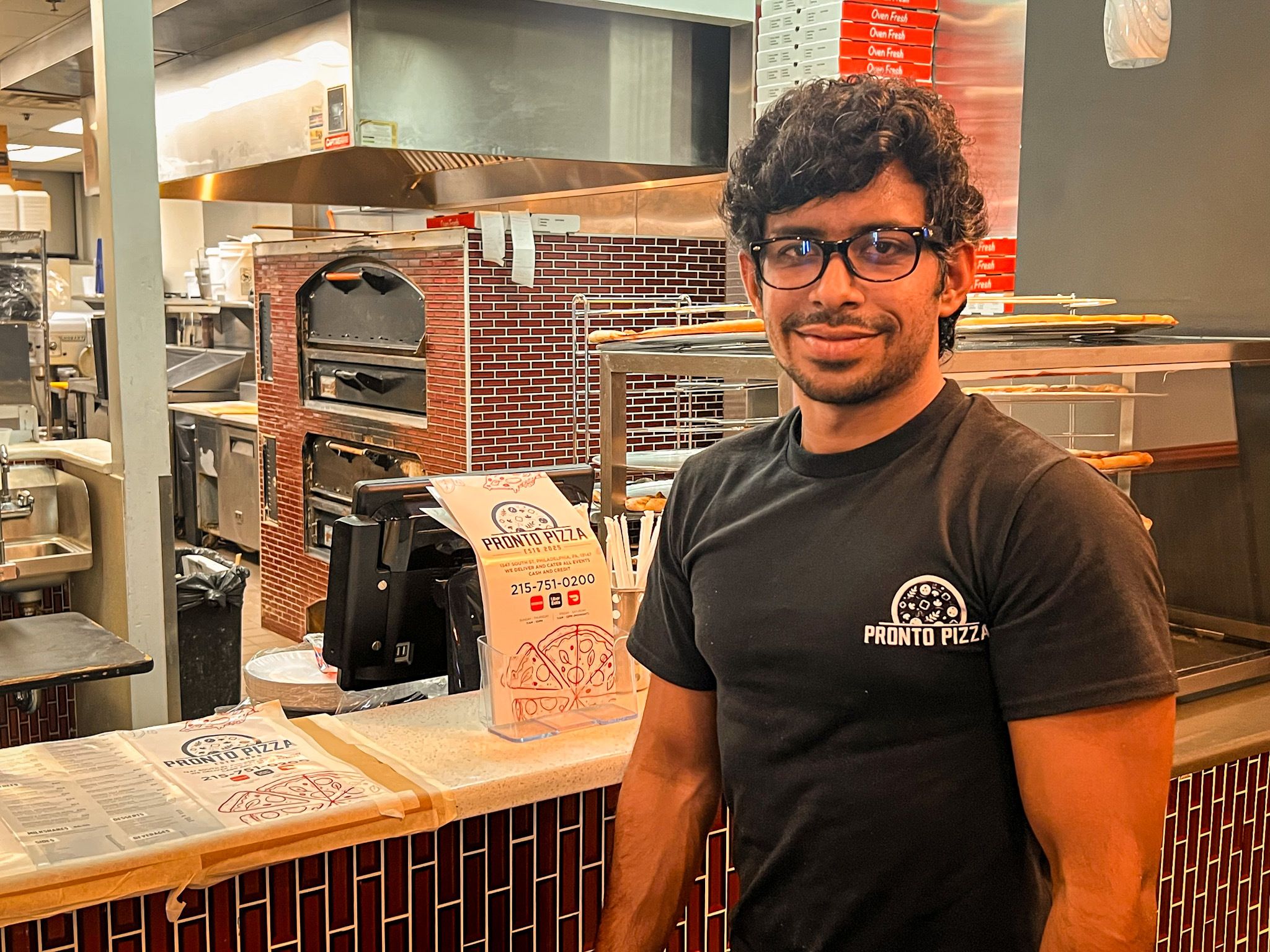
Umair Cheema owns Pronto Pizza, 1347 South St., which previously was LaScala’s Pronto.Michael Klein / Staff
Cheema, 28, had eaten plenty of butter chicken in Pakistan, but he credits his younger brother, Adil, with inspiring Pronto’s version. After the family moved to Northeast Philadelphia in 2019, Adil routinely asked their mother to cook for him.
“One day my mom made butter chicken, and I was like, ‘Mom, this is outstanding. This is the kind of butter chicken I eat at restaurants,’” Cheema said.
A staple entree on Indian restaurant menus in the United States, butter chicken typically features yogurt-marinated chicken in a mild, creamy tomato sauce seasoned with onions, garlic, and spices such as garam masala, turmeric, cumin, and coriander. The dish has proved adaptable to other formats. Chef Reuben Asaram, for example, has incorporated it into his Mexican-Indian “Reubychanga.”
Pronto is also not the area’s only shop making a butter chicken cheesesteak. Double Down Kitchen at Ridge Hall in Ambler serves one alongside versions made with jerk chicken and bulgogi-marinated rib-eye.
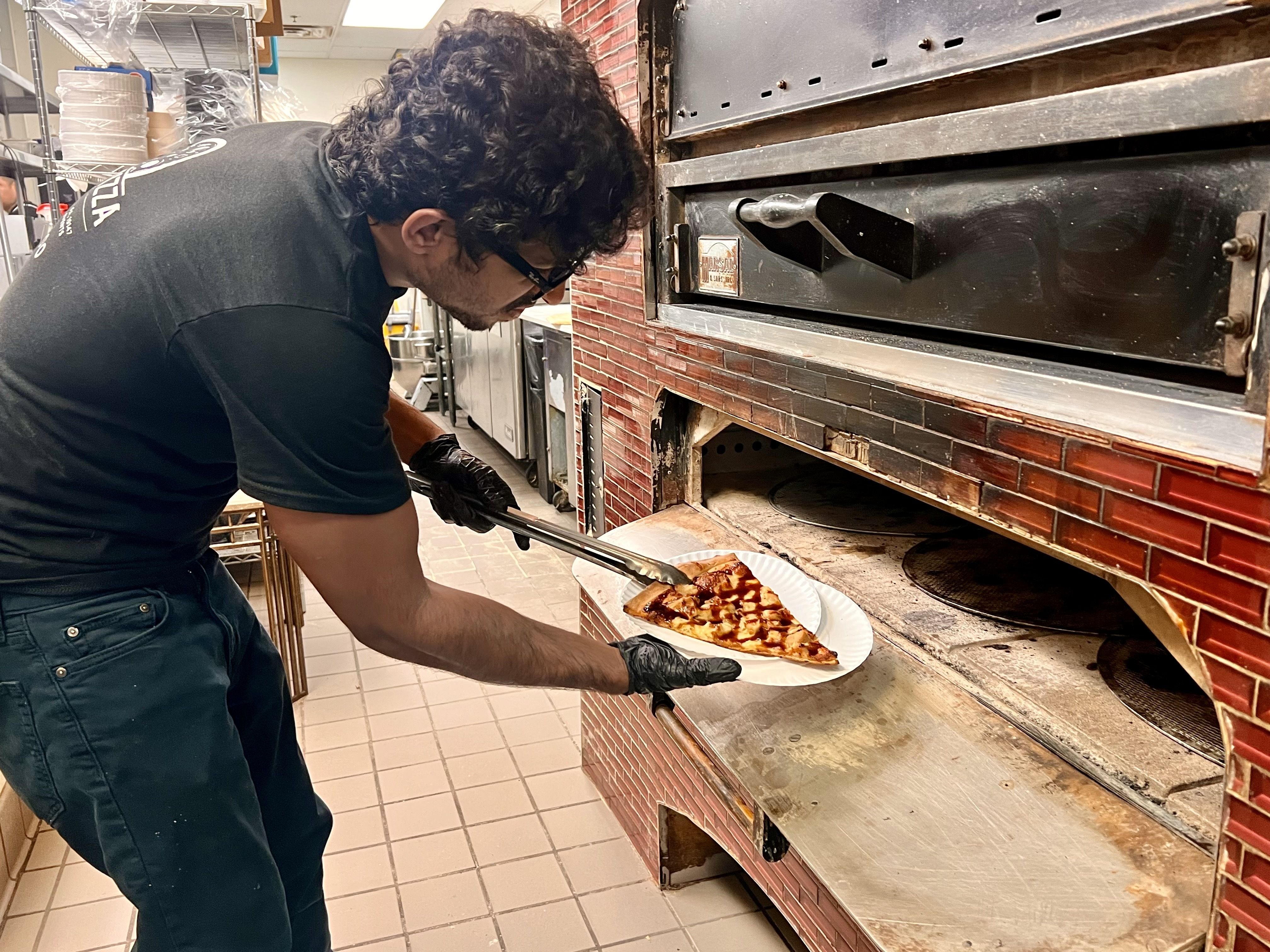
Owner Umair Cheema pulls a slice of pizza from the oven at Pronto Pizza, 1347 South St.Michael Klein / Staff
Cheema’s sandwich is part of his effort to broaden the menu at Pronto, which he bought from restaurateur Rob LaScala. He largely retained LaScala’s offerings of pizza, sandwiches, wings, pasta, meatballs, chicken Parmesan, and grilled salmon platters.
Cheema had not expected to enter the pizza business. After arriving from Pakistan, where his father had worked as a banker, he took a job at Kabobeesh, his aunt’s West Philadelphia restaurant. His father was diagnosed with severe diabetes soon afterward, while his mother found warehouse work.
“I took charge,” Cheema said. “I was like, ‘Let me deal with all of this now. It’s my time to handle this.’”
His opportunity came when an uncle learned that Naz’s Pizza in Chester was for sale.
“He called me and said, ‘Someone is really desperate. They want to sell their pizza shop. I know you have some money saved. If you really want to look into it, I’ll help you out, too.’”
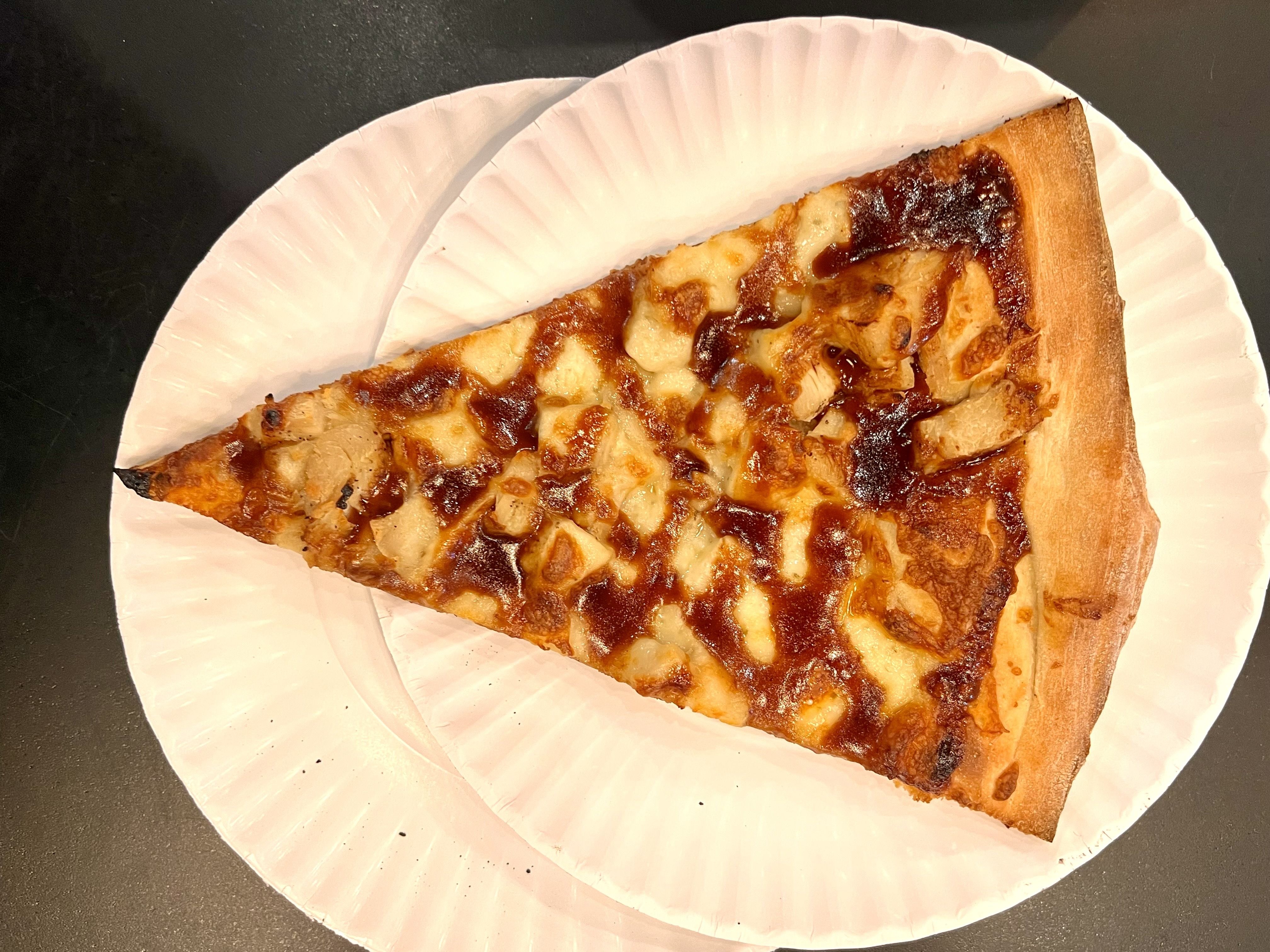
Barbecue chicken pizza slice at Pronto Pizza, 1347 South St.Michael Klein / Staff
Cheema drove to Chester the next day and arrived around 3 p.m., hardly primetime at most pizzerias. “I saw people coming in and the phones ringing,” he said. “That means a business is working. So I told my uncle, ‘Everything seems OK. They are short a couple of things, but we can fix it.’”
Cheema and his uncle bought the shop, and Cheema said sales doubled within six months. They eventually expanded to six shops before dividing the business to pursue separate growth; Cheema sold off the Chester store. Besides the Pronto at 1347 South St., Cheema owns another Pronto in Torresdale, Holme Style Pizza near Holme Circle, and Old English Style Pizza in Olney.
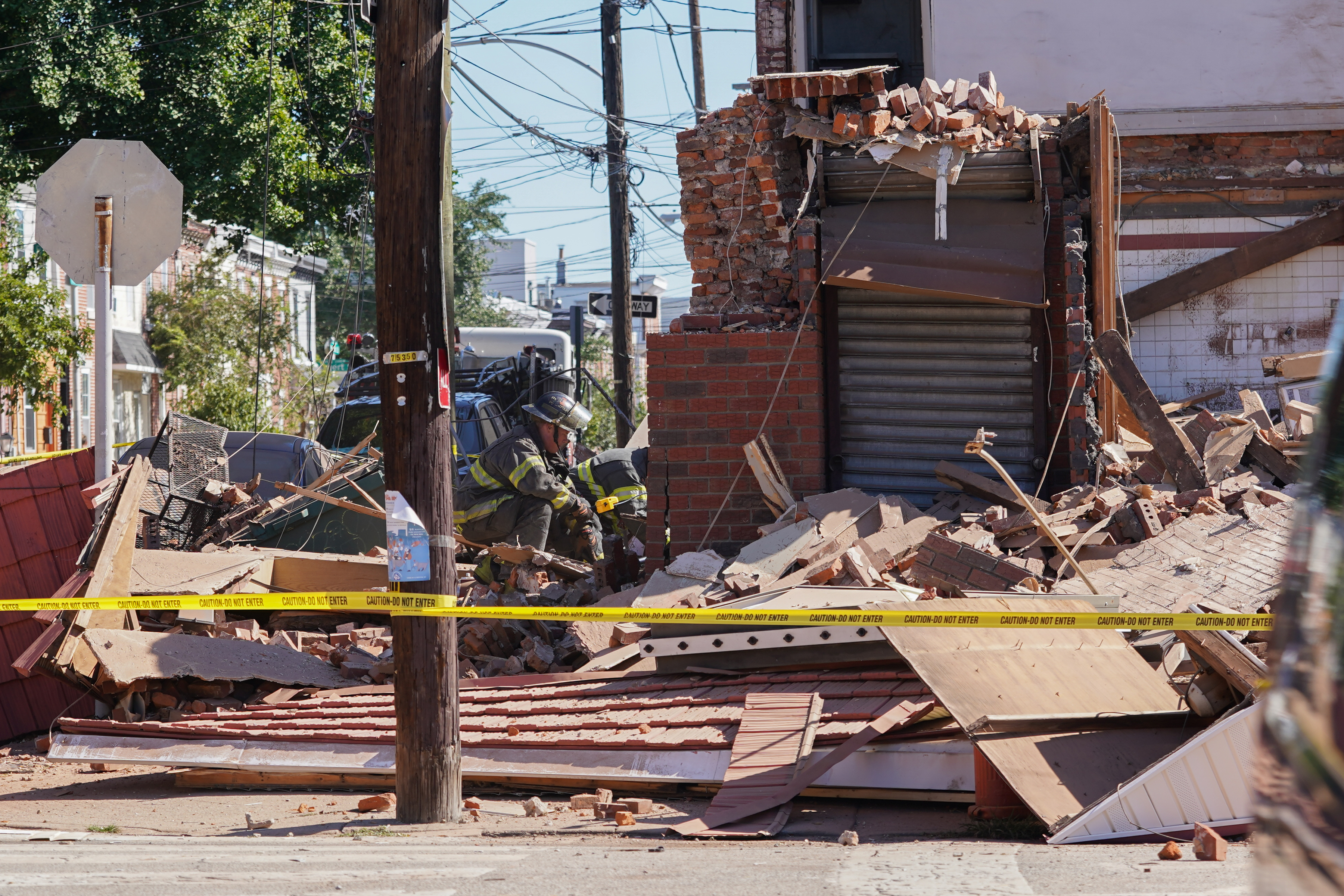
His most serious setback came in September 2022, when the three-story East York Street building housing Key Pizza, his busiest shop, collapsed. “You couldn’t tell there had been a pizza shop there the night before,” Cheema said. Construction work next door was blamed.
The roll-up door and some bricks are all that remained of Key Pizza at 2329 E. York St. after its collapse on Sept. 14, 2022.Jessica Griffin / Staff Photographer
No injuries were reported, but he lost the business, and the resulting insurance litigation was resolved only recently, about 3½ years later, he said.
Cheema does not plan to rebuild Key. He is focused instead on Pronto, its catering operation, and potential additional locations. The butter chicken cheesesteak gives him a way to integrate his family’s cooking into the kind of business in which he found his footing.
“Everybody in Philly knows what a cheesesteak is, and there are so many good places out there already selling cheesesteaks that are famous for them,” he said. “But I wanted to do something different, and something that still relates to Philly.”
Davina Neuson has been haunted for years by questions about the killing of her son Armand Hayes, who was fatally shot outside a West Philadelphia bar in 2022.
She never understood how the fight that ended her 30-year-old son’s life escalated into murder.
Now, finally, she may get an answer.
Lawrence Cary, 44, was arrested in late August and charged with murder and related crimes in connection with Hayes’ killing after the men got into a bar fight the evening of Aug. 15, 2022, according to court documents. He is set to appear Monday before Judge Gregory O. Yorgey-Girdy for a preliminary hearing.
“I don’t know how to put it into words,” Neuson said. “I’ve waited four years for this moment.”
Hayes, known by many as “Ace,” was a father of two daughters and beloved by his family, Neuson said.
He attended Strayer University and Philadelphia Community College and had been working as a compressor operator for Philadelphia Gas Works when he was killed.
“Ace was a genuinely good person, he had a personality that could light up a room,” Neuson said. “A smile of his was unforgettable.”
Neuson said she never has been able to stop wondering about his last moments.
Police investigators said Cary and Hayes got into a physical altercation around 11:45 p.m. in the Asmara Lounge on Haverford Avenue, not far from where Hayes was found laying in the street with multiple gunshot wounds through his body.
He was taken to nearby Lankenau Hospital and pronounced dead shortly after his arrival.
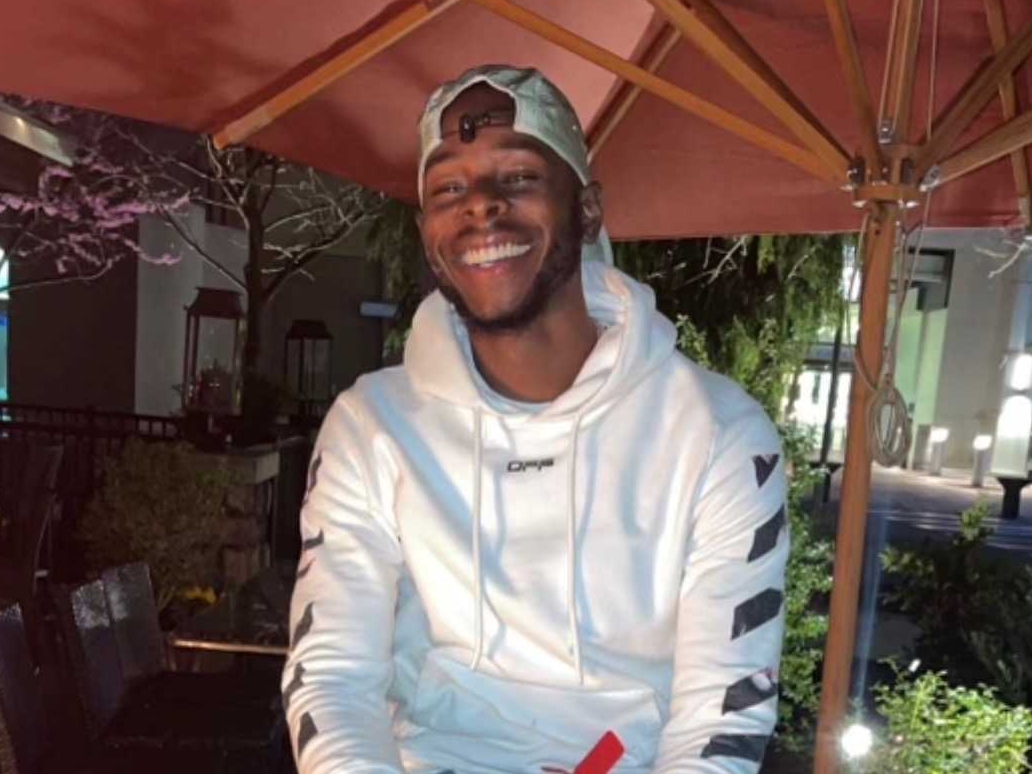
A photo of Armand Hayes.Davina Neuson
Surveillance footage showed Cary leaving the bar after the altercation and driving in the area of 64th and Vine streets, near where Hayes was found wounded, according to the affidavit of probable cause for his arrest.
Investigators later learned that Cary, seated in the driver’s seat of his Chevrolet Trailblazer, fired multiple shots from a handgun out his passenger window when he encountered Hayes, the document says.
Earlier in the evening, Hayes had told a bartender that Cary had bitten him during the scuffle, according to the document.
Investigators soon identified Cary using eyewitnesses, surveillance footage, and receipts from the bar marked with his name.
And in 2023, they learned that a week after the killing, Cary’s Trailblazer had been given a new title and gifted to another man who registered the vehicle in the name of a Bryn Mawr woman. The man asked the woman to do that for insurance purposes, according to the affidavit.
Neuson, Hayes’ mother, said she did not believe that Cary and her son knew each other before the incident.
She still cannot comprehend why her son’s life was taken.
“What hurts the most is knowing his life was taken so suddenly,” she said. “He had so much more life to live, so many more memories to make, so many people who loved him.”
Many of those people will be present in court as Cary’s case works through the system, Neuson added.
Cary is being held at the Curran-Fromhold Correctional Facility and was denied bail.
While Steve Gerben is known for having cocreated one of the year’s most popular Netflix comedy series, his friends and the internet are attempting to crown him with a more ribbing title: The “King of West Chester Golf.”
The Berwyn-born actor, comedian, and costar of Netflix’s Tires says the nickname is just a joke created by his costar and fellow Pennsylvanian Shane Gillis after Gerben “broke 80″ for the first time, scoring 79 on 18 holes of golf last year. It’s something that fewer than 10% of golfers worldwide reportedly do in their lifetime.
“I thought I would just get my friend to start videotaping in case it happened on the 18th hole. And then I did it,” Gerben, 43, remembers with fondness. “So Shane saw that video and was making fun of it on his podcast, calling me the ‘King of West Chester Golf.’”
Gerben’s character on Tires, Will, an anxious go-getter who sees the best in those around him, is not unlike Gerben in real life. Even when receiving praise for his golf prowess or growing television career, Gerben is more comfortable sharing credit with others and not taking the spotlight. And while he downplays his claim to the West Chester golf throne, Gerben does play golf every week in the Philadelphia region — from West Chester courses to the occasional charity event at Ardmore’s Merion Golf Club.
As his profile has grown with the success of Tires, Gerben continues to live in West Chester, cultivating a life around golfing near home and creating a local television production alongside his best friends.
“I can’t see myself leaving the area. I really love it here and it’s home,” he said. “Also, just given how I feel about golf, suburbs make way more sense — it’s just scratching the right itch for me.”
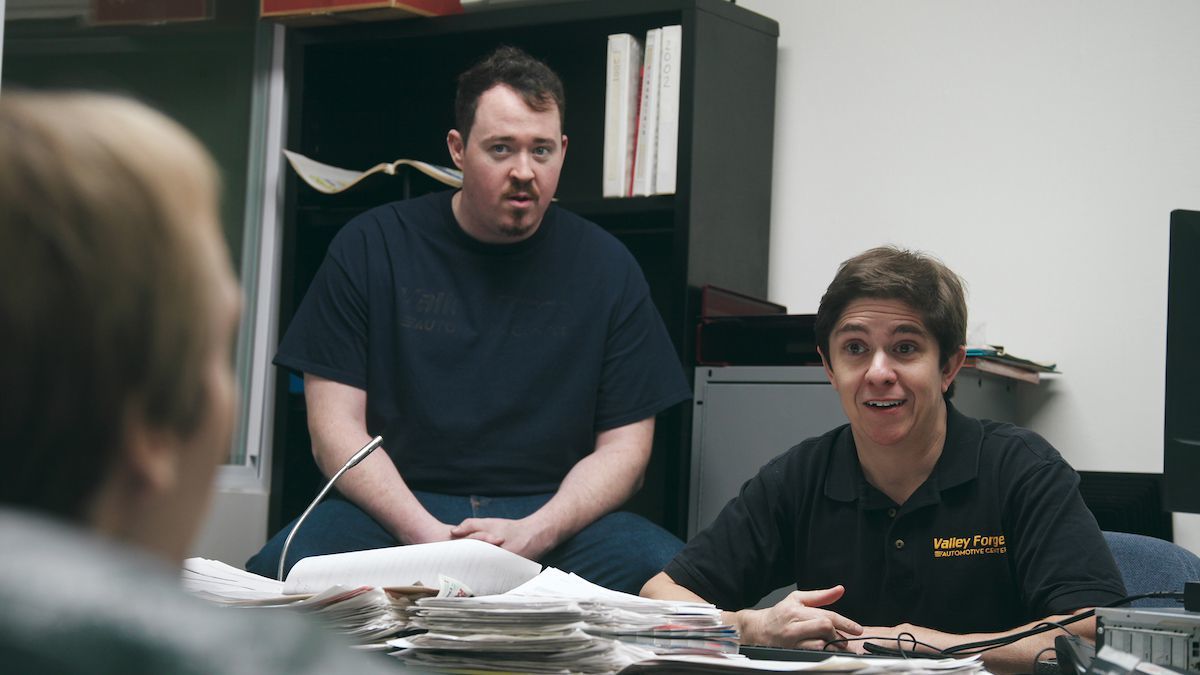
It also helps that the hit show Gerben cocreated with Mechanicsburg-born Gillis and Philadelphia’s John McKeever is filmed in West Chester off East Gay Street, inside an addition to the real-life tire shop of Gerben’s father.
Tires, which had its season three premiere Aug. 13, follows two cousins, Will (Gerben) and Shane (Gillis) as they run the fictional Valley Forge Automotive Center, named after the previous real-life automotive business of Gerben’s father, which was sold in 2011.
“I remember after season one, my dad was on the boardwalk and he saw a Valley Forge Auto shirt in one of the stores, and he was just like, ‘This is insane,’ because it’s this company that he had for 20 years, and then gone, and now we brought it back in a way,” Gerben said.
With Gerben and Gillis on screen, and McKeever as the magic behind the camera, the Tires crew navigates the world of a Pennsylvania small business, rivalries with a national tire chain, and coming to terms with life and romance in your late 30s and 40s.
Tires was recently renewed for a fourth season. That renewal, along with the suburban life he’s created with his girlfriend and cat, has Gerben doubling down on the Philly region. One factor that now rules his life is golf, and how to keep enjoying the sport that eases his mind and boosts his confidence.
“Playing golf is a flow state for me. I get out of a perfect golf swing what I’m sure people that meditate get out of meditation or when people feel a piece of art really speaks to them,” Gerben said.
What started as something to do as a senior at Conestoga High School, joining the Valley Forge Golf Club for $8 after school, has grown into a passion that has seen him playing alongside Eagles players like Jason Kelce and appearing in vlog-style golfing videos with comedian Andrew Santino.
Golf feels like meeting up with an old flame for Gerben, who essentially gave up on the pastime as he attempted to make it in the East Coast stand-up comedy circuit in the 2010s. That’s where he met Gillis and McKeever, doing open mics at the now-closed Raven Lounge and Helium Comedy Club.
While Gillis would continue to rise in stand-up comedy, Gerben said he struggled to find footing. Yet, constants in his life were Gillis and McKeever, who reportedly were known to not take on certain projects unless Gerben could be involved.
But one thing that always sat in Gerben’s back pocket was a script for a show based on his experience working at his father’s Valley Forge tire shop that he initially wrote nearly 15 years before Tires would premiere on Netflix in 2024. Two years later, Tires’ third season debuted in the No. 9 spot on Netflix with 2.4 million views in its opening weekend.
The success doesn’t get to Gerben’s head, as he’s focused on enjoying life in the burbs and golfing as much as possible, he said. With golf swinging back into his life, the sport brings a chance of pace in a busy work schedule and/ allows Gerben, who has had arthritis since he was 2, to stay active.
“I feel so unbelievably healthy because I think it’s about like a five- or six-mile walk each golf session, and you’re not even paying attention to that, given you’re doing this thing that you just absolutely love doing, and is a little bit easier on the joints,” Gerben said.
Gerben also sees golf as a way to meet friends.
“Golf is just a weird addiction that some people have that cuts across generational barriers because you spend so much time with people on the course who have the same passion as you,” he said.
In the meantime, Gerben will continue flirting with the idea of starting his own golfing YouTube career, like “Bryan Bros Golf.” But until Tires is wrapped, Gerben said there would be no official online golf career on the horizon.
Besides, if Gillis finds Gerben’s golf videos, Gerben will never hear the end of it from his best friend, he said.
Philadelphians reacted with outrage when Drexel University and the Academy of Natural Sciences announced the closing of its museum on the Ben Franklin Parkway earlier this month.
But the museum is only a part of what the academy does. And while most Philadelphians think of dinosaurs and dioramas,the main business of the academy — its “beating heart,” as one board member calls it — will continue, even if it has often escaped the notice of the general public.
Housed backstage beyond the museum walls is one of the world’s largest repositories of natural specimens: bird carcasses, fish, mollusks, minerals, and bones of various kinds — millions of them amassed over more than two centuries.
And now, amid reports that the academy’s building may be sold and the collection moved, all eyes are on the fate of this trove.
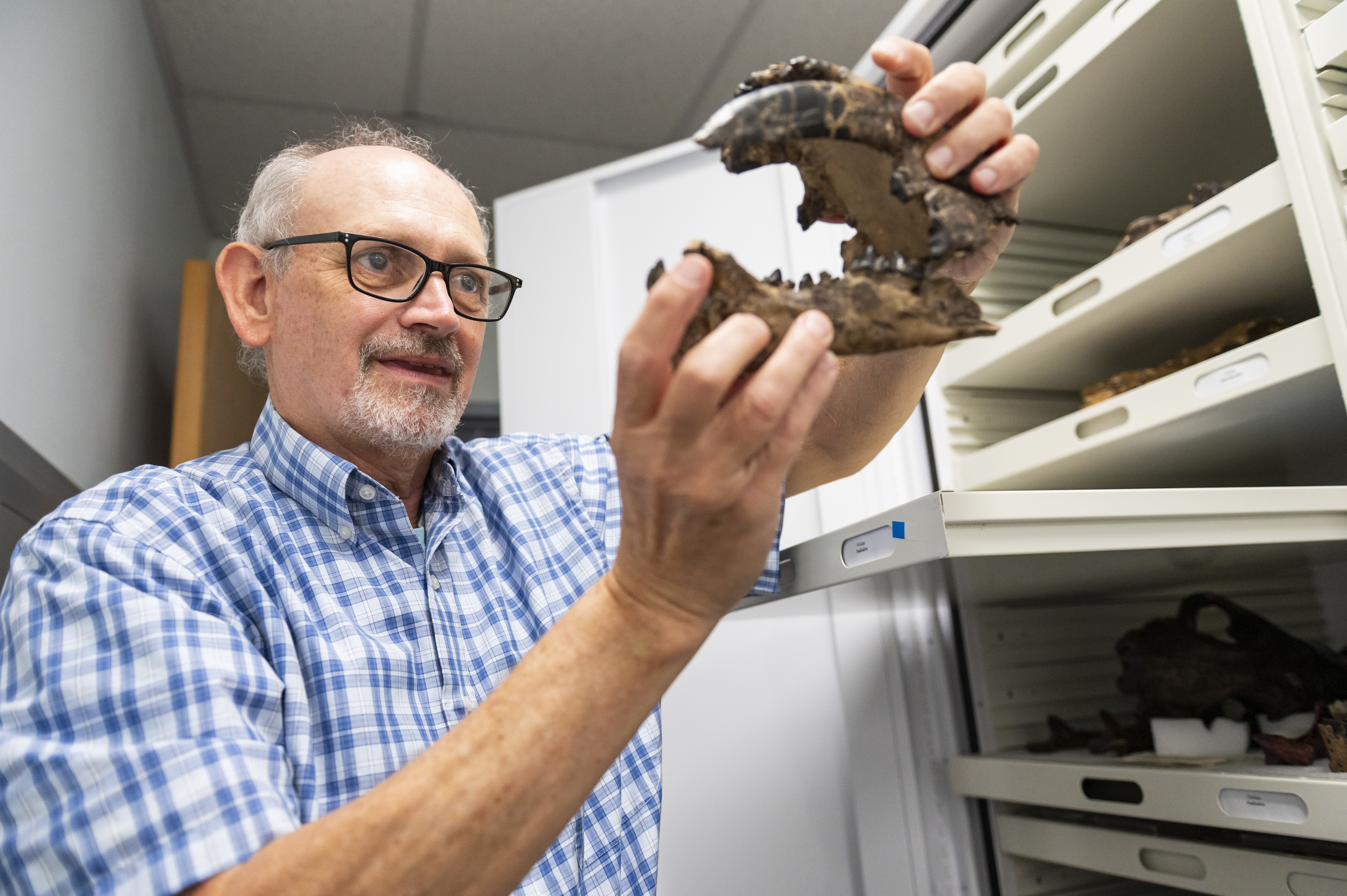
“It’s not just the scope of the collection that’s so important — 19 million specimens representing every aspect of the natural world,” says Robert McCracken Peck, curator of art and artifacts and senior fellow emeritus of the Academy of Natural Sciences of Drexel University. “The collections are not only important because of their associations with historical figures like Lewis and Clark and Thomas Jefferson.
“But these collections were made at specific times in history. We can never go back to collect more of these voucher specimens. They tell us how our world is changing.
“It is by definition irreplaceable.”
Microalgae too numerous to count
Among its peers, the academy’s group of species collections is one of the most significant in the world, and is perhaps unrivaled in certain areas of concentration and historical importance.
More than 220 plant specimens collected by Lewis and Clark on their landmark 1804-06 expedition between the Mississippi River and the Pacific Ocean are housed at the academy. Among the institution’s corresponding members over the years were Thomas Jefferson, John James Audubon, and Charles Darwin. The American Medical Association was founded here in 1847.
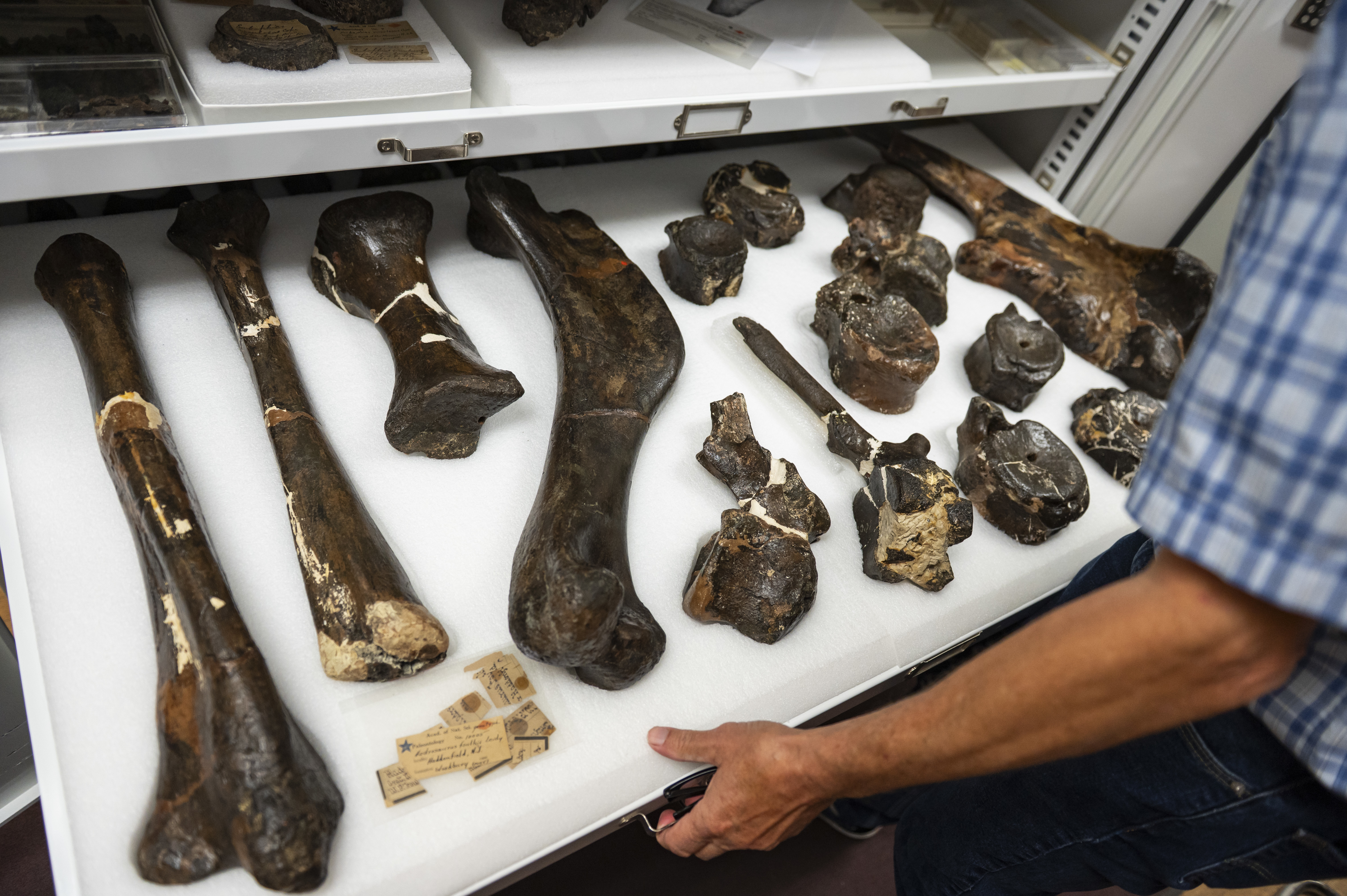
Ned Gilmore, collection manager for vertebrate paleontology, pulls out a drawer filled with bones from the Academy of Natural Sciences’ “Hadrosaurus foulkii.”Allie Ippolito / For The Inquirer
The plants and fungi collection holds 1.4 million specimens of algae, lichens, fungi, and slime molds and includes some of the oldest and most important plant collections in the Americas. The invertebrate paleontology collection is the oldest such collection in the United States.
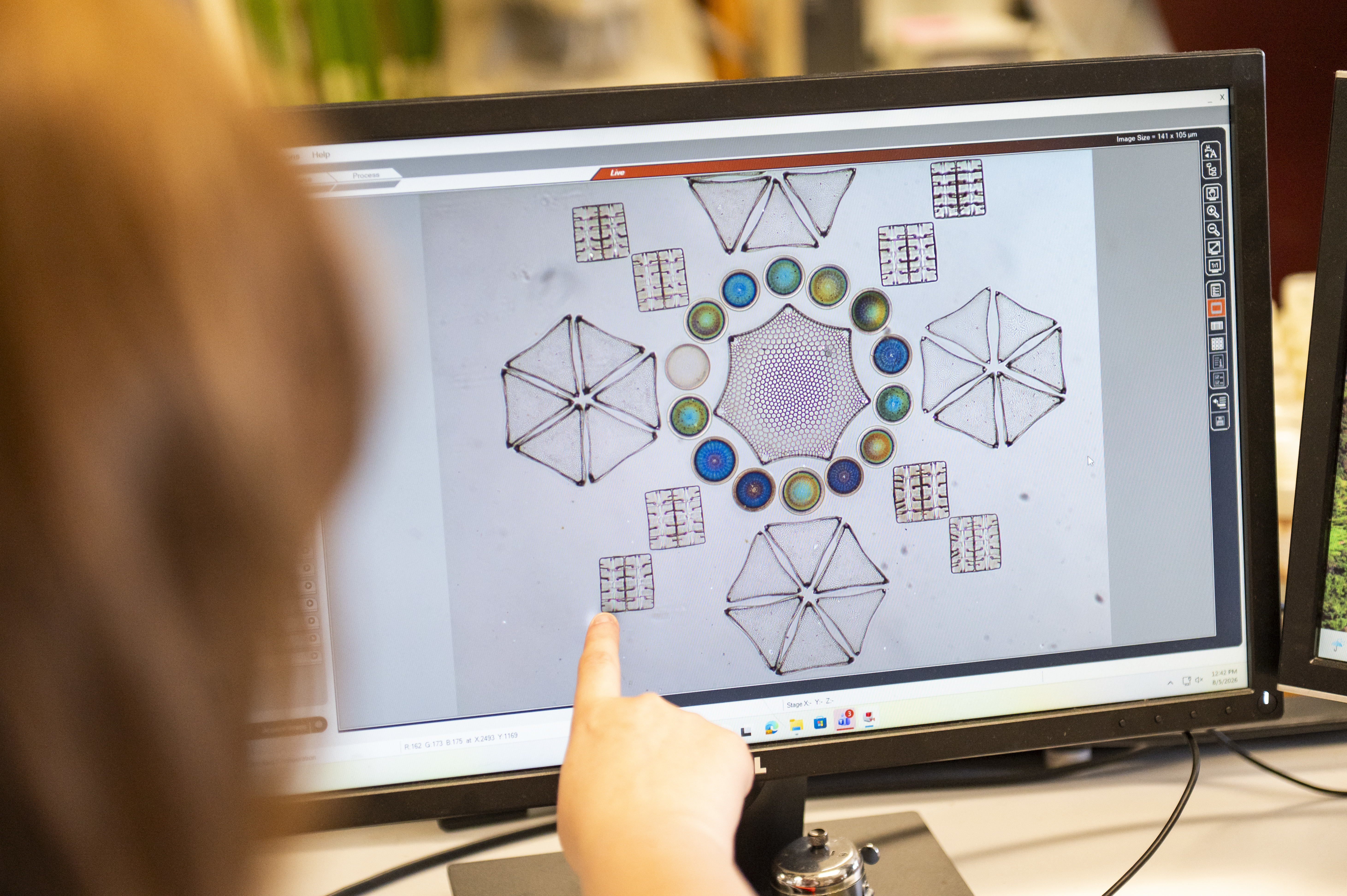
The number of diatoms in that collection is unknown, says Laura Aycock, manager of the academy’s hoard of the single-celled microalgae that are neither animals nor plants, though the academy has around 300,000 slides, with some slides containing upward of a hundred thousand diatoms.
“I’m not going to attempt to calculate that,” Aycock said.
Laura Aycock, collection manager of diatoms at the Academy of Natural Sciences. The diatoms serve as a time capsule.Allie Ippolito / For The Inquirer
The diatoms captured at the academy — which go back to the 19th century and come from around the world — serve as a time capsule.
“You can actually look at water quality and monitor how it’s changing and biodiversity of the diatoms looking at our slides,” says Aycock. “So people will reach out wanting to see, ‘Hey, can I see a snapshot of what this river looked like X many years ago?’”
The academy’s collections are a magnet internationally, says Ted Daeschler, professor emeritus, curator, and chair of vertebrate zoology at the academy.
“It’s a stopping point for people studying a wide variety of different things,” says Daeschler. “Every time I talk to any mollusk person in the world who’s done research, they’re like, ‘Oh yeah, I’ve been to the academy. I’ve done research there.’ Talk to anybody working on crickets and grasshoppers — ‘Oh yeah, I’ve been to the academy.’ People working on Devonian fish, they all came through at one point or another.”
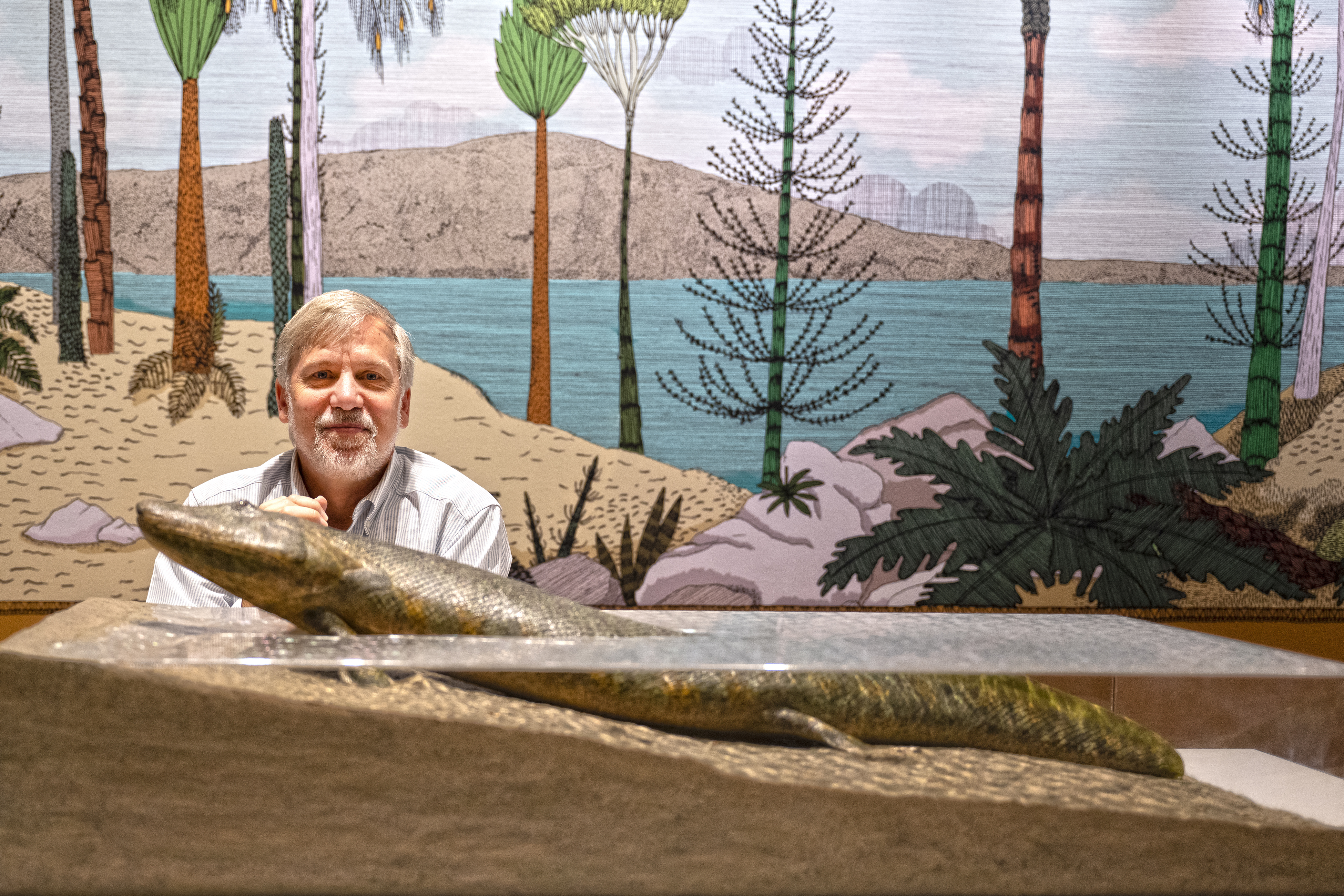
Ted Daeschler in 2023 with a model of “Tiktaalik roseae,” a 375-million-year-old beast whose discovery by Daeschler, Neil H. Shubin, and Farish A. Jenkins Jr. established a new link between fish and land creatures.Jose F. Moreno / Staff Photographer
The academy has seen some novelties over the years: an albacore tuna shipped to the institute from Ernest Hemingway in 1934, fingernail samples from now-retired U.S. Supreme Court Justice Stephen G. Breyer collected in 2010, and two red-eared sliders donated in 1977 by Sylvester Stallone as souvenirs from the original Rocky film.
Hemingway’s tuna remains. But Breyer’s fingernails were tested for stable isotopic composition of carbon and nitrogen to determine the justice’s diet and then discarded, and the turtles Cuff and Link are no longer with us, a spokesperson said.
A key to the ‘next pandemic’?
If some of the collections work and research going on at the academy seems esoteric, there’s no way of knowing what might become urgently relevant at some point.
“We all lived through a pandemic recently — pretty much hell on earth for most of us,” says Jason D. Weckstein, curator of the academy’s ornithology collection and professor at Drexel University College of Arts and Sciences.
“Understanding the ecological interactions that lead to those kinds of events is part of this kind of research. So why are some parasites specific to some hosts, whereas other ones can jump between hosts easily, and there are ecological characteristics that allow that?”
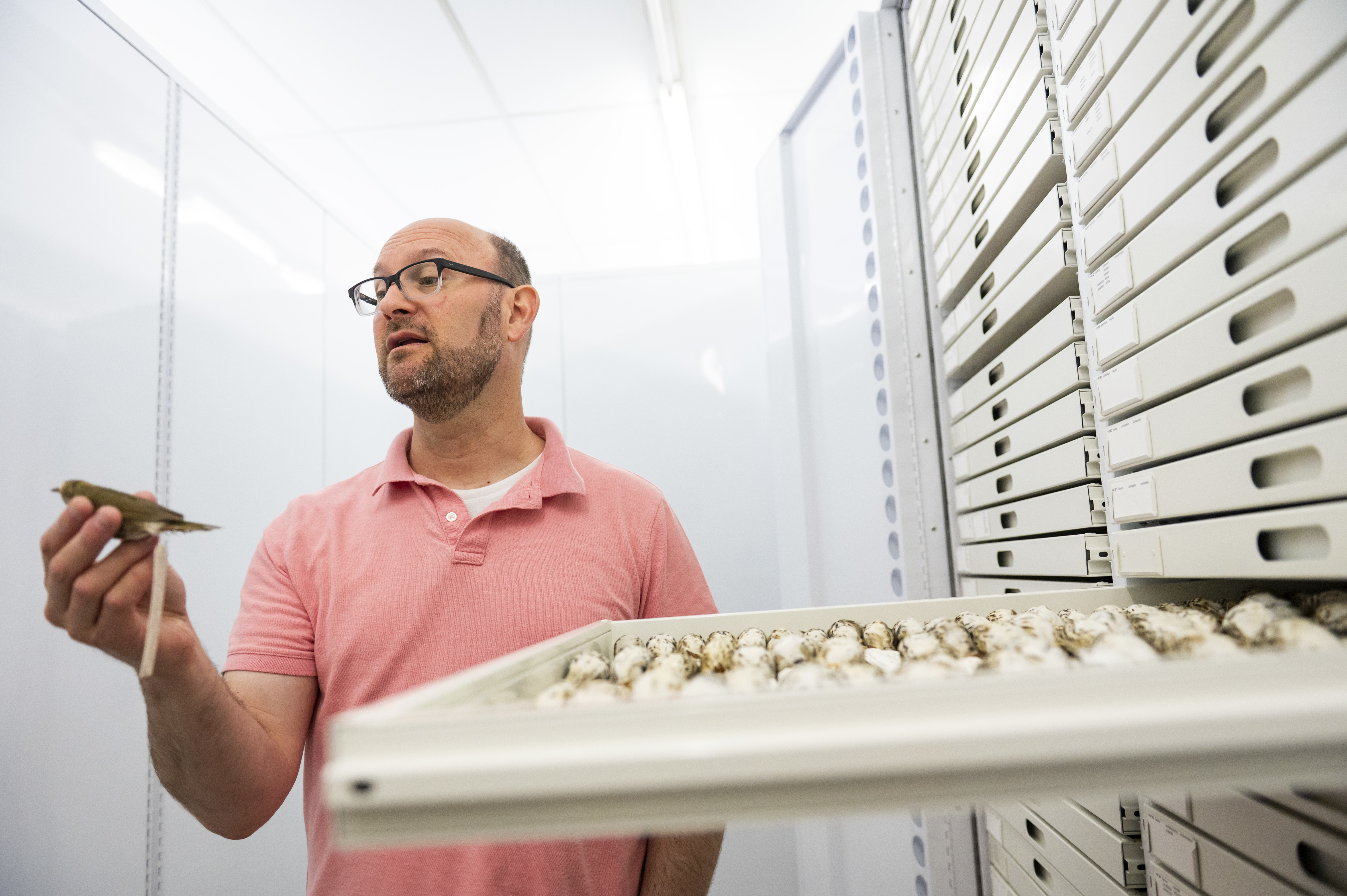
Jason Weckstein, curator of orninthology, holds a warbler at the Academy of Natural Sciences.Allie Ippolito / For The Inquirer
“You just never know when something’s going to happen in the world,” says Weckstein, “and then it turns out there’s something here. We have tissue samples from all over the world. It’s possible we could discover something in those samples that is important for understanding the next pandemic.”
That’s possible, in part, because in the future, specimens might be tested for characteristics whose existence is beyond our current base of knowledge.
Paul Callomon, the academy’s collection manager for malacology and general invertebrates, says that when the first snails entered the academy, “We had no idea what an isotope was. Nobody knew anything about that. But we had an unshakable faith that if we preserve and stabilize these things, as time goes on, they’ll become more important to more people. And so it’s turned out to be. And now of course, with climate change and with this enormous Anthropocene influence on the natural system, the number of ways in which our specimens are going to help tell that story is enormous.”
Each specimen functions as an irreplaceable snapshot in time. Organic materials in their environment are continually breaking down and becoming something else. But when a bird or fish is plucked from its environment, it becomes a permanent record — of itself, but also of the world as it existed at that particular moment.
Biological specimens are often called upon to help solve certain mysteries.
“There are examples in the world generally of new pharmaceutical products being developed from the study of mollusks and their venoms,” says Callomon, “or closer to the academy, we provided shells that were material evidence in the lawsuit against BP for the gulf [Deepwater] Horizon oil spill — historical specimens that proved there was oil in the gulf’s waters before any drilling started, but that it was of a very low level.”
There’s a bigger role now for the academy’s species collection to play, Callomon says.
“The real world is on fire. And the real natural world, the natural ecosystem that sustains all life on Earth, is undergoing enormous changes at the moment. And the only place that you can find material evidence for what it was like before that started, or what it was like at an earlier stage of that process, is natural history collections, and they are mostly housed in museums.”
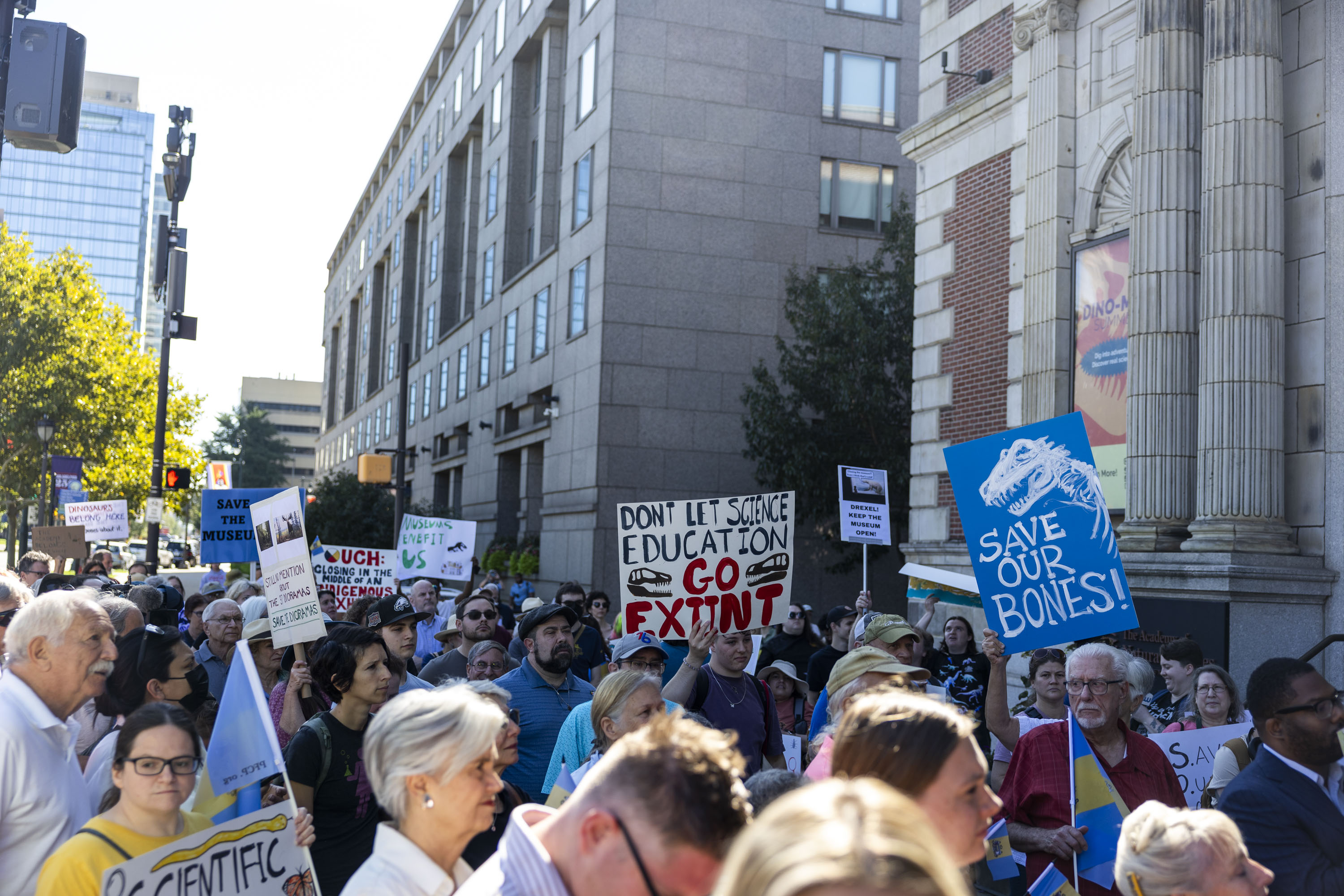
Several hundred Academy of Natural Sciences supporters came out to protest the decision by Drexel University and the Academy to close the Academy’s museum, Sept. 8, 2026.Tyger Williams / Staff Photographer
‘Profound concern’
Curators and scientists say that as the academy has arrived at a vulnerable juncture, its collections and research are more critical than ever given the march of climate change, microplastics contamination, biodiversity loss, and other crises.
The scientific powerhouse’s own future is a question mark at the moment. Drexel is facing deficits and a challenging enrollment environment, and, in a cost-cutting move a decade and a half after a partial merger of Drexel and the academy, the two groups announced last week that the academy museum will end its nearly two-century run at the end of the month.
The aim now is to move the collection and sell the building, according to a source close to the situation who asked not to be identified. This raises questions about the fate of the academy’s historic building and the critical mass of the Parkway’s cultural attractions, as well as concerns for the future of the collection and the academy’s historically significant library and archive, whose holdings span five centuries.
“Profound concern” is how a group whose board includes the largest and most important natural history and science centers in the U.S. has expressed its apprehension over the future of the academy.
“As the oldest natural science research institution and museum in the United States, the academy is a globally important natural history collection and center for biodiversity research,” the Washington, D.C.-based Natural Science Collections Alliance wrote in an April statement after news of a potential schism between Drexel and the academy.
“Any administrative or structural changes at the Academy must prioritize the integrity of these collections. The destabilization of the institutional support or the specialist staff required to maintain these specimens for active use in research would represent an immense loss to the city of Philadelphia, the state of Pennsylvania, and the global scientific community.”
The NSCA’s concerns remain, said president Trina E. Roberts this week, and while “we’re glad to see that the importance of the collection has been acknowledged in public statements,” she said, the closing of the museum was an unwelcome surprise.
“Education, research and collections are all part of a truly functioning natural history museum. It would be wonderful if the academy can find a way to maintain all of those,” she said.
Academy leaders say they will work to find “new and financially sustainable opportunities for the public display of elements” of its collections, but have not specified any details.
In a statement last week, the two institutions affirmed their attention to the trove of specimens, library, and archive.
“The stewardship of the Academy’s collections and their use to advance scientific knowledge will be the focus of our work for the near future,” said a statement from Drexel president Antonio Merlo and academy board chair Suzanne Biemiller.
A Drexel spokesperson this week said there were no immediate plans to move the collection, and, regarding a potential sale of the building, “no decisions have been made regarding its future disposition.”
“The academy’s home will continue to house its collections, library, archives, and laboratories while Drexel and academy leadership consider potential pathways forward,” said Britt Faulstick.
Should relocation become part of a future plan, Faulstick said, “maintaining appropriate access to the collections for research [during a move] would be an important consideration in that process.”
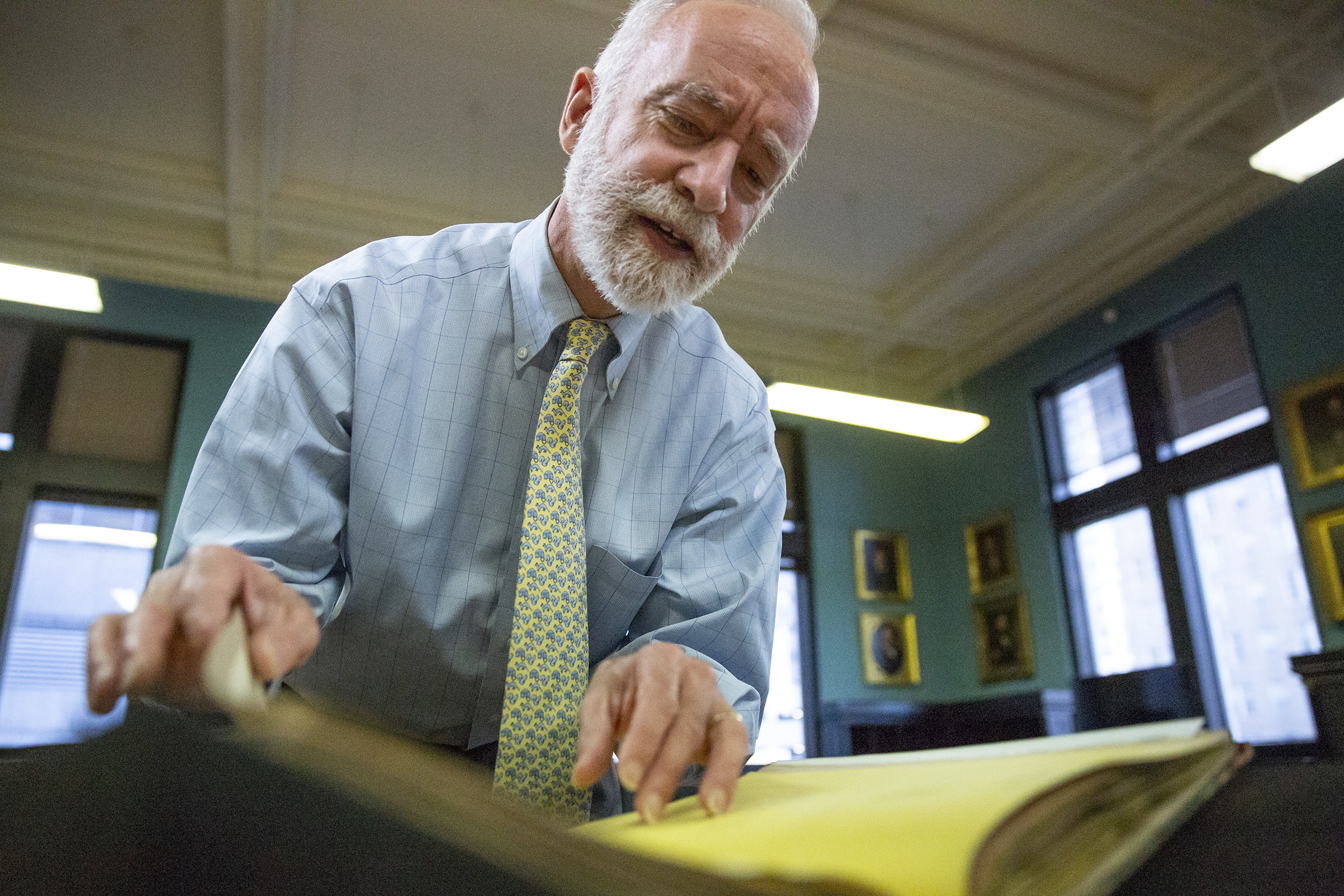
Robert McCracken Peck, curator of art and artifacts and senior fellow emeritus of the Academy of Natural Sciences of Drexel University.HEATHER KHALIFA / Staff Photographer
‘A recipe for disaster’
Moving the collection would be expensive and time-consuming, says Peck, who, with Patricia Tyson Stroud, co-authored AGlorious Enterprise: The Academy of Natural Sciences of Philadelphia and the Making of American Science.
Peck says that in the 1970s, parts of the collection were moved into the former Reliance Standard Life Insurance Co. building on Pennsylvania Avenue now occupied by the Philadelphia Museum of Art, and then, a short time later, were moved back.
“I imagine it would take a couple of years,” he says of a potential move now of 19 million specimens, “because that’s how long it took to move our collections to and from the Art Museum area, and they didn’t even move them all.”
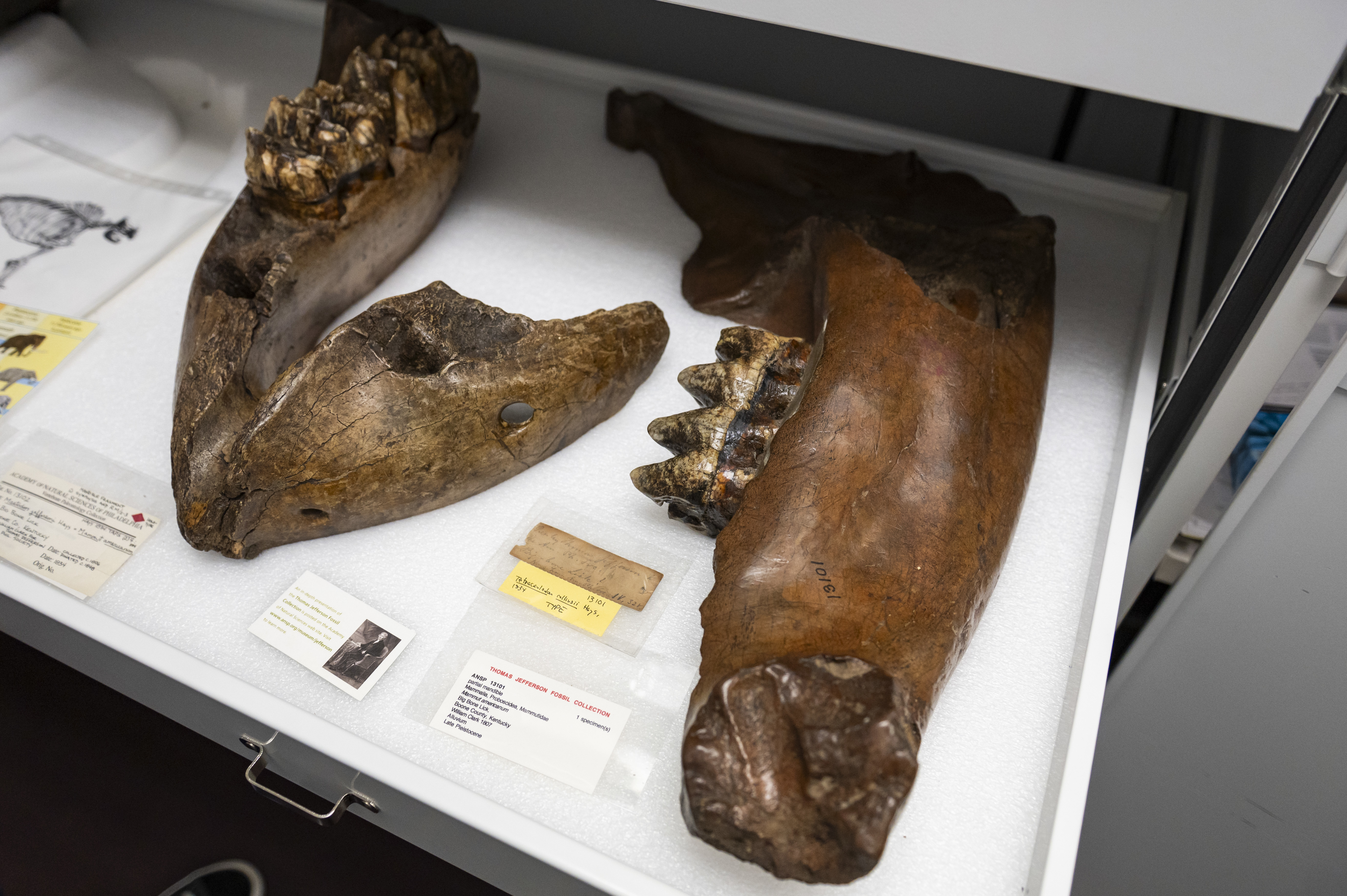
A partial mandible from an American mastodon from the Thomas Jefferson Fossil Collection at the Academy of Natural Sciences.Allie Ippolito / For The Inquirer
“It can be done, and it can be done in a professional and careful way that maintains the integrity of the collection, but you can’t do it in a hurried way,” says the NSCA’s Roberts. “That is a recipe for disaster for a collection of this size and importance. They need to plan for a year before they move any specimens out of the building.”
Collections like these require a specific kind of care, says Roberts, who is also associate vice president for collections at the Natural History Museums of Los Angeles County.
Specimens can degrade over time if not maintained properly, she said.
“We rely on good temperature and humidity control depending on what kind of specimen you have. A dinosaur bone that is basically stone is a lot less sensitive than a plant specimen that is a dried leaf. We’re also concerned about the curatorial and collections expertise that’s represented by the staff.”
Much of the academy’s collection is digitized, and a certain amount of information can be gleaned online, but for some purposes, the actual specimen must be available, which happens either by a visit to Philadelphia or a loan.
“DNA research is just exploding in natural history collections because it turns out that we have this resource we’ve been building for hundreds of years that can still be used for DNA,” says Roberts. “So a plant specimen, an insect specimen, a mammal specimen in a natural history collection from 100 years ago, you can get DNA out of that, and that’s an amazing resource. You absolutely cannot do that from a digitized record.”
It’s possible now, she says, “to look at actual gene expression patterns in different environments — for example, what genes are turned off or turned on in cold vs. hot conditions. That might be something important in an era of climate change if we want to understand how something like plant communities and animal communities are going to respond to that.”
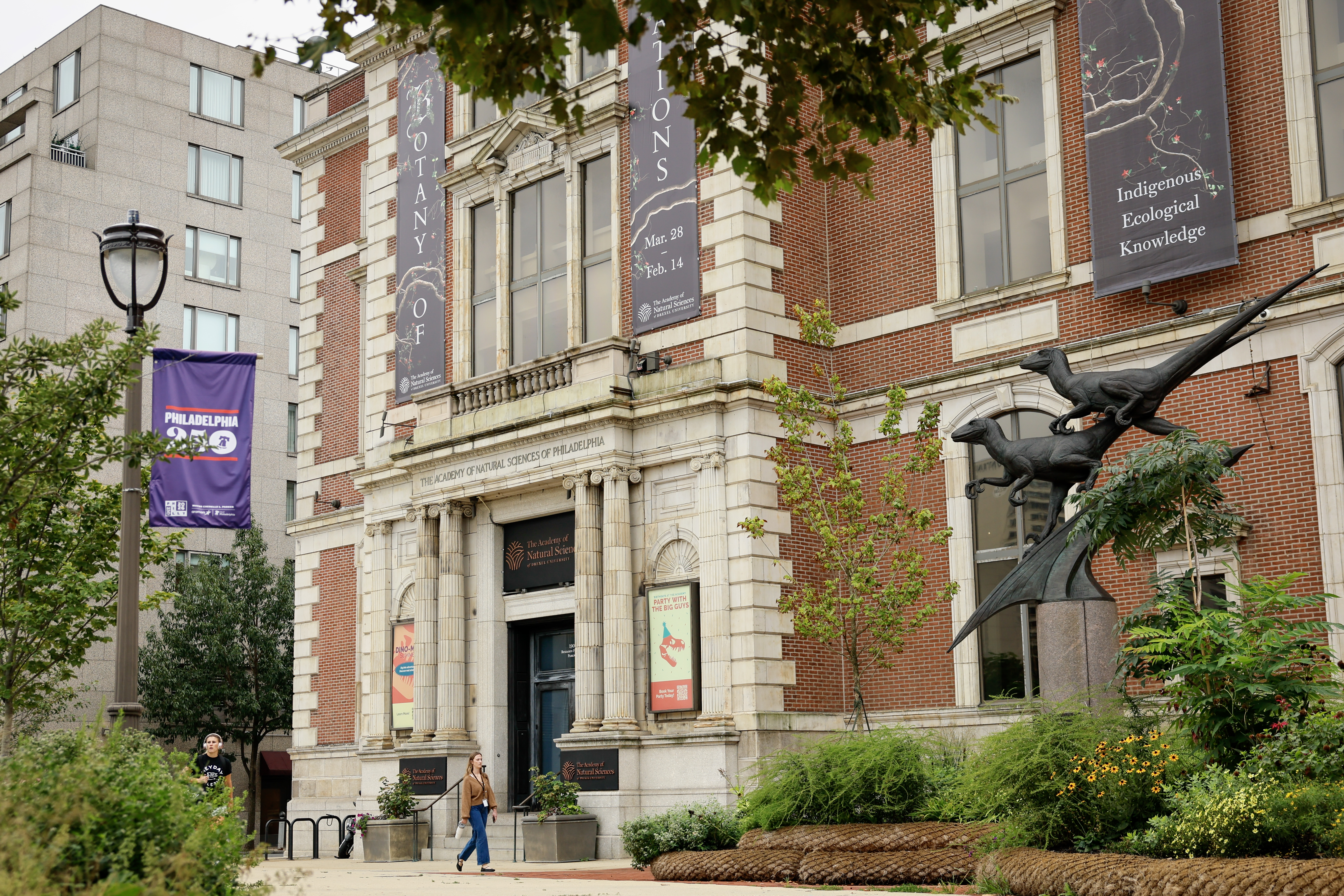
The Academy of Natural Sciences of Drexel University on the Ben Franklin Parkway.Elizabeth Robertson / Staff Photographer
‘It changed their minds completely’
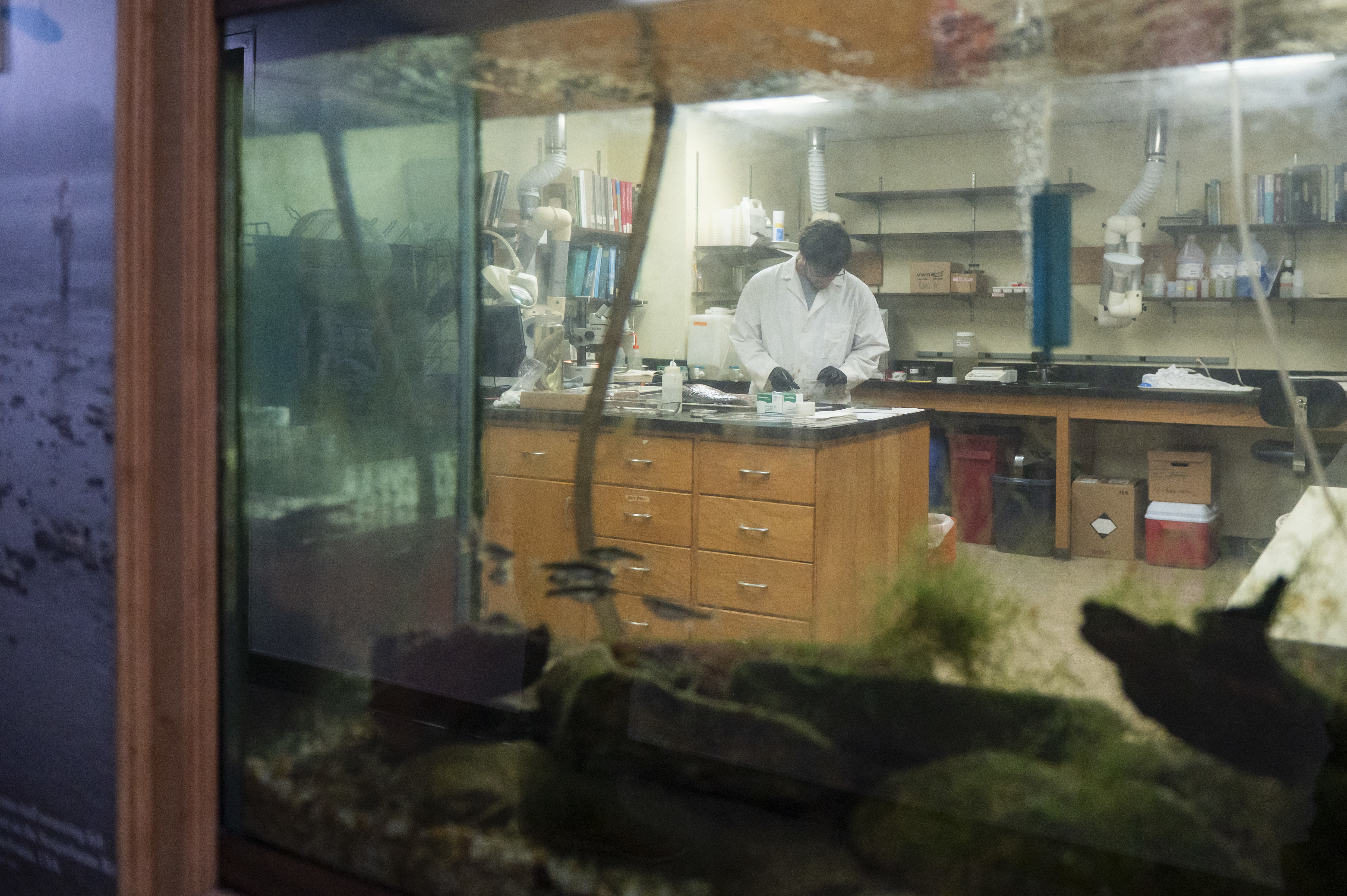
The academy-Drexel partnership, 15 years in, was much in evidence during a several hour visit in early August. In one room at the academy, a group of students was removing organs from birds, and in another, Drexel environmental sciences undergraduate Ean Geller-Nocella was examining a freshwater drum, an invasive species that’s recently turned up in local waters, to see what the fish has been eating.
“I’ve been cutting them open, taking out their stomachs and removing the stomach contents. All that is mussels — freshwater mussels,” he said, referring to a small cluster of crushed up shells.
Another invasive species is being looked at by the academy.
Ean Geller-Nocella, Drexel University co-op student, inspects the contents of the stomach of a freshwater drum in the fisheries department at the Academy of Natural Sciences.Allie Ippolito / For The Inquirer
“Ten years ago in Tinicum, snakeheads weren’t there and we got a picture of what the diet was for the resident fish,” said David Velinsky, senior scientist of the Patrick Center for Environmental Research and professor at Drexel University College of Arts and Sciences. “They’re now there, so we’re doing a study. We already have the samples collected, analyzing on the mass spectrometer how the food web changed, and this gives us an idea of what needs to be protected or not protected.”
Weckstein recently had a Drexel undergraduate student who sequenced the genomes of the parasitic lice living on vultures.
Having students working there “just adds a vibrancy to the place,” says Velinsky.
Says the malacology department’s Callomon:
“I think the role that I’m proudest of our collection’s playing is when Drexel undergrads come here on their co-op and we have successfully diverted careers in medicine, the law, and engineering in favor of working in our part of the world, in our part of science, because of the experience. They came and did a six-month co-op here and it changed their minds completely. It changed their minds because it moved their hearts, and your heart is what drives your mind. But they had no way of previously knowing.”
One persuading factor: at the academy, students have direct, hands-on contact with specimens in the collection.
“Other places use photographs,” says Peck. “Drexel students, thanks to the academy, get to work with real specimens, which dramatically enhances their interest in and understanding of the natural world.”
Just another reason, advocates say, that the academy’s treasures must be kept intact and accessible to all.
“My greatest concern is over keeping the collection together,” says Peck. “It needs to be cared for, for reasons that extend well beyond Philadelphia and the academy. These are collections we hold in trust for the world.”
Staff writer Susan Snyder contributed to this article.
You don’t need a weatherman to know which way the wind blows. You don’t have to be a longtime travel agent to have looked at the Los Angeles Rams’ Australia itinerary and thought, Hey guys, might be a tough turnaround there. And you don’t have to be a football savant to suspect that the Eagles’ season opener Sunday against the Washington Commanders is going to be a hard watch.
If the first two games of this NFL season weren’t enough to tell you just how rocky these opening weeks will be, Eagles-Commanders ought to drive home the point. Matthew Stafford and Drake Maye were so terrible, so far from the MVP (Stafford) and MVP runner-up (Maye) they were last season, that it would have been fair to check whether either of them had signed an endorsement deal with a prediction market earlier in the week.
The Patriots took a double-digit lead and couldn’t hold it. The Rams might as well have been on walkabout with Mick Dundee. Sam Darnold and A.J. Brown suffered serious injuries. Of the four teams that made up the NFL’s marquee matchups, only the 49ers were ready for prime time. Jeez, it’s almost like, even after a full offseason, having teams play on Wednesday and Thursday nights — or having two California teams start their seasons on a continent roughly 7,300 miles from their home state — leads to lousy football.
The game between the Los Angeles Rams and the San Francisco 49ers in Melbourne, Australia, wasn’t pretty.Scott Barbour
No one should expect the quality of Sunday’s game at Lincoln Financial Field to be much higher. The Commanders have a new offensive coordinator and a new defensive coordinator, neither of whom has ever coordinated anything in the NFL until now, and aside from Jayden Daniels, their roster resembles a piece of abstract art: You have to stare at it for a long time for it to make any sense (Odafe Oweh for as much as $96 million?), and in the end, it really doesn’t.
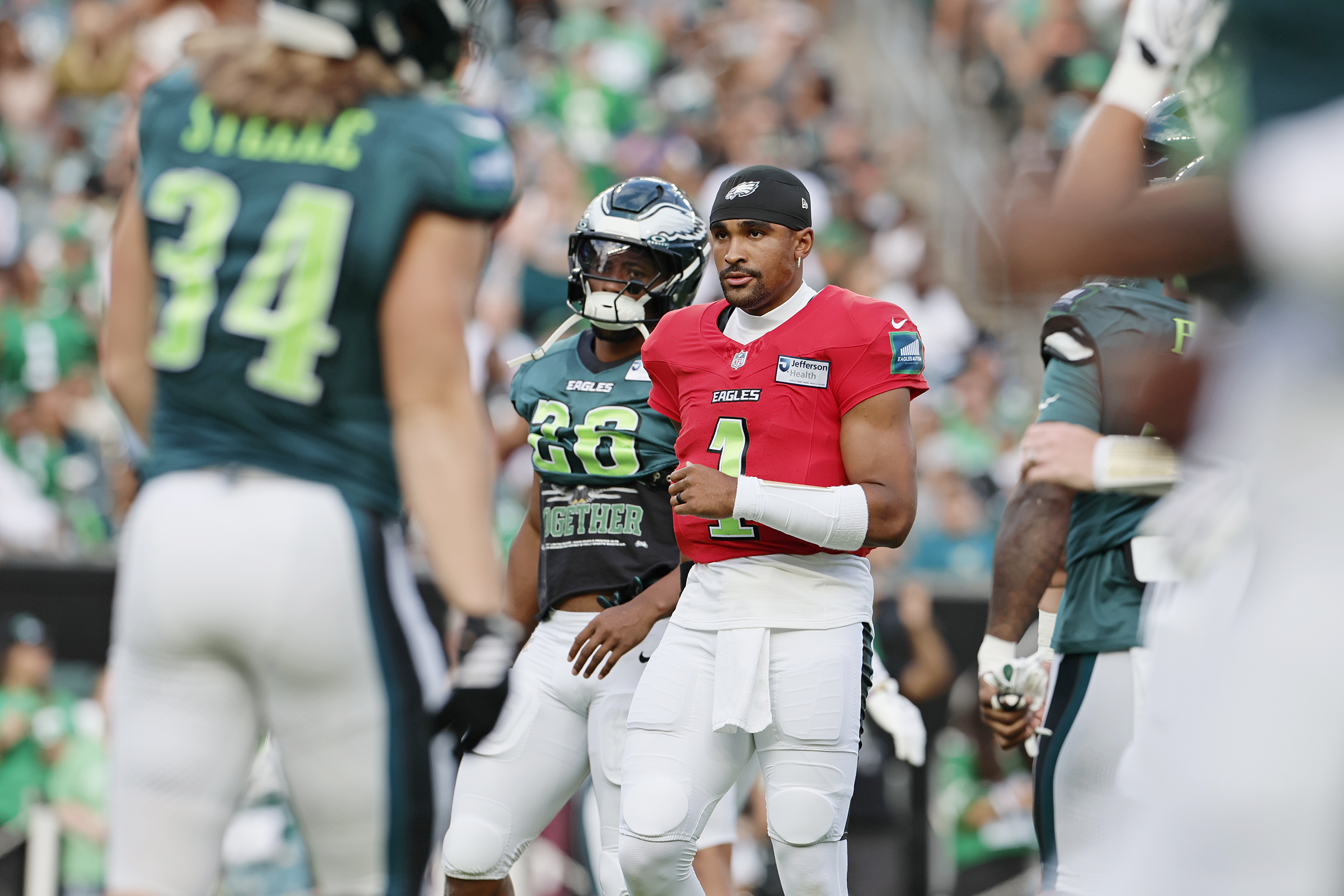
The Eagles ought to win, and win handily, because their defense is so strong and, relative to these teams’ other units, so stable. Their offense is a mystery and will remain one until their new coordinator, Sean Mannion, starts calling plays and reveals whether he’s a rookie who’s out of his depth or a nascent genius who’s been sandbagging everybody since training camp began. And whether Jalen Hurts can thrive in this latest new system. And whether any wide receiver other than DeVonta Smith can make a big play.
“Part of our goals for this week are to understand that … there are things that happen in Week 1 that you have to be ready for,” coach Nick Sirianni said Friday, “whether that’s live fundamentals, whether that’s errors in the kicking game, or whatever it may be. The standard doesn’t change [for] what we accept and what we require and what our guys do on the field. We practice like that every day. Anytime there’s something loose with the ball, or we miss a tackle, or whatever it may be, or miss our approach on a tackle, if we’re not tackling to the ground, it’s discussed. It’s watched. It’s critiqued. Our standard — your goal — is to be playing your best football by the end of the year. Our standard does not change.”
No, but the circumstances will. Starters who spent most, if not all, of the preseason sitting out eventually will kick off all the rust. It’s just that eventually likely will take more than one game. That’s the NFL now, with its three-game preseason and its 17-but-soon-to-be-18-game regular season and its insistence that its teams journey across oceans and, quite literally, suit up on every night of the week except Tuesdays.
The players themselves know better than anyone: You take the early victories if you can get them, and the crisp, clean performances probably will have to wait.
“You’re always striving for that,” said wide receiver Hollywood Brown, who is in his first season with the Eagles but his eighth in the league. “But I’ve played a lot of football, so I know that they’ve got a new defensive coordinator, and we’ve got a new offensive coordinator. You can try to study each other as much as you want, but there’s not much out there to go off of. You can go out there with everything we’ve studied and they’ve studied, and it could be something completely different.
“So it’s about knowing our principles, knowing what we’re trying to do, and knowing that’s just the stepping stone. Win or loss, it’s a stepping stone. You learn off it, and as we get into the year, you’re really trying to perfect your craft and identity.”
At what point in the season do players and teams find that identity?
“Usually, around Thanksgiving,” Brown said. “Around Thanksgiving, a lot of players are like, ‘That’s when the real football starts.’ That’s when we know what we are. We know what each team [is]. And it’s about executing the game plan and being at your best once December and January come around.”
Until then, everyone will just have to suffer through some sloppy football. It’s the price of this multi-billion-dollar business now. So if the Eagles win ugly Sunday, even if they somehow lose, don’t panic. Yet.
Somewhere in Philadelphia, thousands of people are about to experience something they never thought possible: getting money back from the PPA.
The Parking Authority voided 23,195 speeding tickets and is refunding $1.25 million in fines after discovering that a required speed-camera warning sign was missing from a stretch of North Broad Street. A construction crew had knocked it down, and somehow it took about three months to get a new one up.
To be clear, the drivers were still speeding. The PPA would very much like everyone to know that. But state law requires a sign warning drivers about the camera, so the tickets had to go.
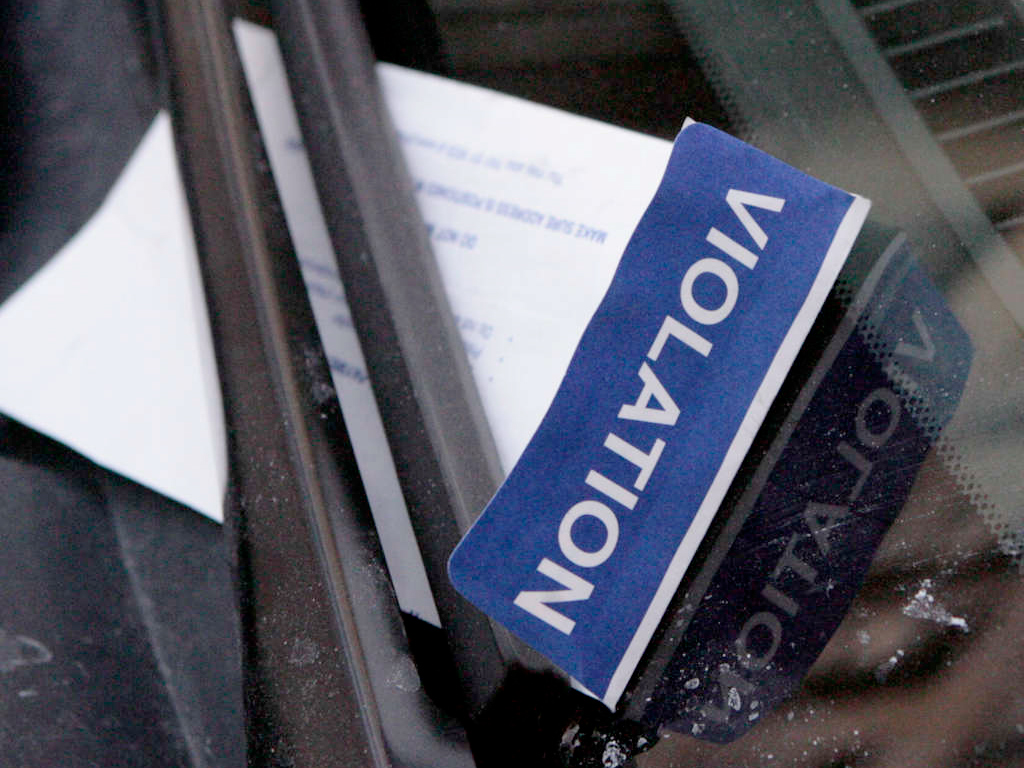
There is something deeply satisfying about this. Philly drivers have spent generations feeding parking meters, sprinting back to expired spots and discovering orange envelopes tucked under windshield wipers. The PPA is usually where your money goes, never where it comes from.
So check the mail, 12,214 lucky speeders. Somewhere out there is a refund from the Philadelphia Parking Authority.
And really you should frame the check, this may never happen again.
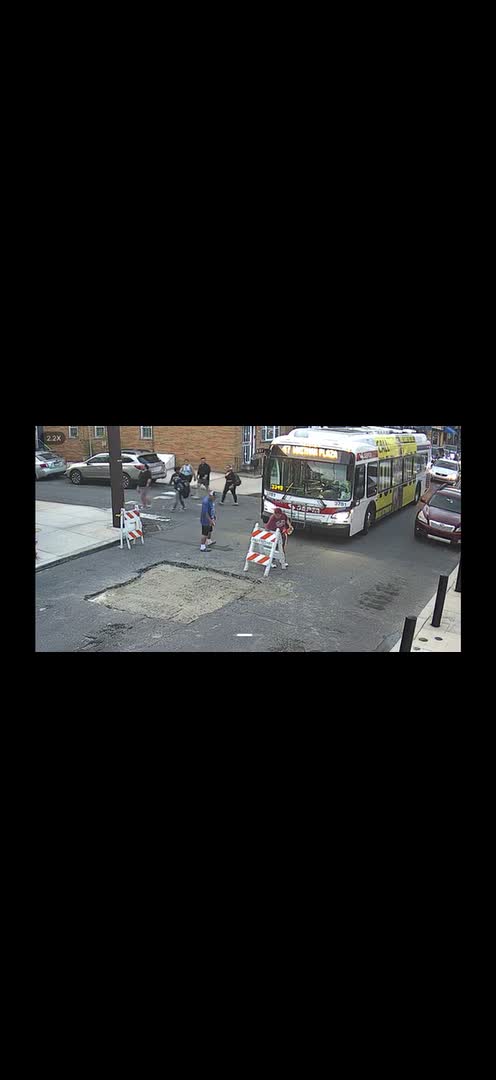
Video: SEPTA bus passengers direct bus driver to drive through wet concrete
How did it get there? Two passengers hopped off the bus, moved the street-closure barricades themselves, and then helped direct the driver around the construction. Shockingly, that did not go well.
It gets even better when you learn that the pothole-turned-sinkhole had been there for 14 months, long enough that it had started swallowing traffic cones. The city finally showed up to fix it, poured the concrete, and blocked off the street at 7:21 p.m. The 47 bus drove into it at 7:23.
Fourteen months waiting for a repair, and it took two minutes to ruin it.
And to once again make this story even better, it happened outside a century-old Italian bakery, the bus was covered in Top Dog Law ads, and when city workers returned the next morning to fix the fix, Joey Termini brought them cannolis.
An updated rendering of the new Flyers arena released Thursday appears to show more women fans following backlash this week against the original rendering.Courtesy of the Flyers
The first renderings dropped this week, and there’s plenty to like: a facade inspired by the old Spectrum, a huge outdoor plaza, food and drink pavilions, and a giant screen outside.
But the coolest part might be seeing three teams attached to it. When the doors open in 2030, the Sixers and Flyers will be joined by Philly’s still-unnamed WNBA team, which will begin play that same year.
Four years away suddenly feels a little more real. Now, we just need a name for the team (and, eventually, the building).
Eagle Saquon Barkley runs the sidelines during an open Eagles practice at Lincoln Financial Field in Philadelphia on Tuesday, August 25, 2026.Elizabeth Robertson / Staff Photographer
His forecast has Jalen Hurts doing the macarena on the first play of the season, Vic Fangio throwing up on a Dollywood roller coaster, Aaron Rodgers blaming a loss on Anthony Fauci and the illuminati, and Brandon Graham once again considering coming out of retirement. Somehow, amid all of this, the Eagles finish 12-5 and win the NFC East for a third straight year.
And you know what? Wouldn’t that be great? Twelve wins, another division title, football at Christmas, and several months spent planning Sundays around the Birds again. After an offseason of roster moves, coordinator questions, and endless predictions about what this team might be, we finally get to watch actual football.
And if we get to keep the 12-5 season, Hurts doing the macarena would just be the cherry on top.
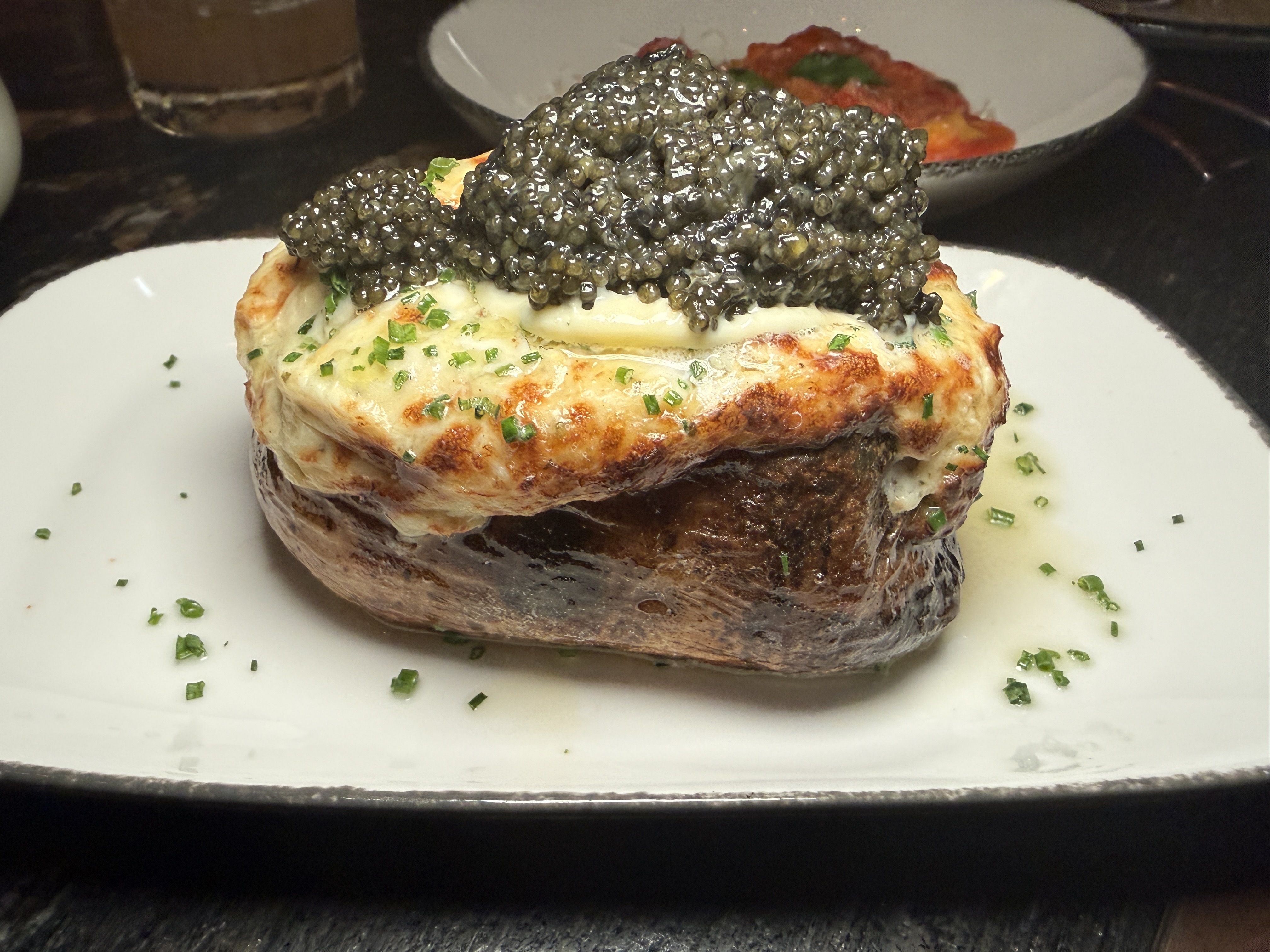
The baked potate loaded with lump crab au gratin and a caviar “blackout” at Mr. Edison in the Bellevue costs $88.Kiki Aranita / Staff /
An $88 potato?!: F
There are certain things an $88 potato should be able to do. Like maybe change your life or fix your credit. At minimum, make you briefly forget you just spent $88 on it.
The baked potato at Mr. Edison in the Bellevue starts at an already pricey $48, stuffed with nearly half a pound of crab au gratin. Add a “blackout” of caviar and suddenly you’re sitting in front of an $88 spud.
And according to Inquirer food writer Kiki Aranita, it wasn’t good.
An $88 potato should be so delicious that you spend the next week becoming an annoying person who tells everyone, “OK, but you have to try the potato.” Instead, Aranita described hers as “all mush” and pointed out that better baked potatoes can be found a few blocks away for a fraction of the price.
Caviar or no caviar, at the end of the night, it is still a potato.
Temple’s $55 million gift disappears: F
Less than a year ago, Temple was celebrating the largest donation in university history: $55 million from alumnus Christopher Barnett. This week, the school announced it was terminating the gift, removing Barnett’s name from its College of Public Health and other programs, and accepting his resignation from the board of trustees.
The reason is quite a turn. Barnett’s company, ABA Centers of America, is under federal criminal investigation over allegations including money laundering and wire fraud. Investigators allege the autism-services provider improperly billed insurers, including for treatment while clients were napping or watching television. Barnett has not been charged and “strenuously denies” the allegations.
There is a small piece of good news buried in this mess, though. Temple hadn’t gotten any of the $55 million yet, which makes it a lot easier to give the money back.
Trea Turner pulled his hands in, turned on the hanging sweeper from Paul Skenes, and lifted it into the left-field seats. It was July 1, the third game in a row that he got two hits and homered.
His numbers at day’s end: .239/.287/.368.
“They’re not going to look good,” Turner said then of his batting average and on-base and slugging percentages, “probably no matter what I do, for a while.”
Ten weeks later, it’s evident the Phillies’ $300 million shortstop’s stat line will never look good.
In baseball, nothing brings more comfort to struggling superstars than their track record. The season is so long, and failure is so common, that sometimes it’s all they have. Maybe that’s why the numbers are printed on the back of bubble-gum cards, as a reminder.
And even if the path is filled with potholes, the best players usually reach their standards. In Turner’s case, a .291 average and .812 OPS since he got to the majors 11 years ago with the Nationals. He’s a three-time All-Star, a two-time batting champion, and twice a fifth-place MVP finisher, including last year. Only Freddie Freeman has more hits in the 2020s.
Occasionally, though, the slumps get too deep and last too long and a season is unsalvageable. For Turner, a .241 average and .681 OPS through Thursday qualify as career worsts. Factor in defense — he led all players with 20 errors — and he was valued at only 1.1 wins above replacement, tied for 113th among 143 players with a minimum of 450 plate appearances.
Phillies shortstop Trea Turner was leading the majors with 20 errors through Thursday.Yong Kim / Staff Photographer
Turner, 33, knows all this. Maybe too well. Intelligent and self-aware, he’s prone to overthinking. And while he believed earlier in the season that he could boost his production to its typical level, he also realized weeks ago that he was running out of time.
Yet that doesn’t mean that his season is lost, because the Phillies are closing in on the postseason for the fifth consecutive year. Entering the weekend, they were one game ahead of the Cubs for the top NL wild card and still within sight of the Braves for the NL East crown.
And for Turner, the playoffs represent an opportunity to redeem a substandard regular season.
“Nobody’s going to remember if he had a bad April, a good May, a bad June if we play well down the stretch,” said interim manager Don Mattingly, who has stuck with Turner in the No. 2 spot in the order. “Nobody ever remembers anything besides that. I think you see guys like [Turner] who have been around long enough, they know they don’t stop trying to get better and feel right.”
So, Turner buries his head in an iPad to analyze video from each at-bat. He swings in the cage with hitting coach Kevin Long before and after batting practice, with grounders from infield coach Bobby Dickerson in between.
“If you get to know Trea a little bit, he does think a lot and he puts a lot of pressure on himself,” Dickerson said. “He wants answers scientifically a lot of times, and he starts to search for that more than actually playing the game, which is what he does well. When he lets his skills show up on the field, plays aggressively, we get a better version of him. And we’ve seen it.”
Turner’s hard-hit rate, defined as pitches that exit his bat at 95 mph or more, was 39.7% entering the weekend, down from 42.1% last season. He also swung at a higher rate of pitches out of the strike zone (34.8%, up from 31.2% last year) and was more susceptible to curveballs and sliders (.207 average, down from .250).
Trea Turner after hitting a two-run home run in the sixth inning against Houston on Tuesday night.Elizabeth Robertson / Staff Photographer
But Turner also had hit into some rotten luck, including a .281 average on balls in play (compared to .350 last season). He was hitting .427 on balls that had an exit velocity of 95 mph or more; league average was .488.
Turner’s search for answers led to a meeting with Ichiro Suzuki when the Phillies played in Seattle in late August. And he peppered the Hall of Famer with questions. How do you hit the ball the other way? What’s your approach in certain situations? If you’re doing this wrong, what would you do?
“I didn’t realize but kind of now looking at it, we’re pretty similar in our games in the sense that he didn’t walk a lot, he wanted to hit, hit the ball all over the field, could hit it out of the park sometimes,” Turner said. “Talking with him and his mindset and what he physically does, a lot of it kind of applied to me in my game. So, it was kind of nice.”
Maybe it helped. Because entering the weekend, Turner had 14 hits, including five doubles and two homers, in 13 games since the series in Seattle. He went deep in back-to-back games this week against the Astros and drove the ball the other way to right field for two hits Wednesday night.
It’s too late to rescue Turner’s season statistically. But after months of wondering whether any trace of a hot streak represented a return to normalcy, maybe it’s a building block for October.
“He’s handled it very well for the caliber of the player he is,” Kyle Schwarber said. “You see a guy that has had so much success in the big leagues, and he might not be getting the results. But it’s really refreshing to see a guy at his age, how much he’s been through in this game, you see him keep grinding. You can’t say enough about him.”
It’s not like Turner is alone. Across the sport, other underachievers may get a chance for an October rewrite. Call them the Second Chance All-Stars, players who can erase six frustrating months with a few strong weeks.
Braves third baseman Austin Riley has struggled through the worst season of his career.Yong Kim / Staff Photographer
1. Kyle Tucker, Dodgers: Even after coming within a triple of hitting for the cycle Wednesday, he entered the weekend batting .225 with a .684 OPS, full-season career worsts in his first year in Los Angeles — all for the low, low average annual salary of $60 million. The four-time All-Star outfielder has been especially putrid at home: .187, four homers, .572 OPS. “You’ve just got to keep going,” he told reporters. “Try and at least pick out the positives and just try to ride with that.” Something tells us Dodgers fans would forgive if Tucker repeats his two-homer Game 1 of the 2022 World Series for the Astros.
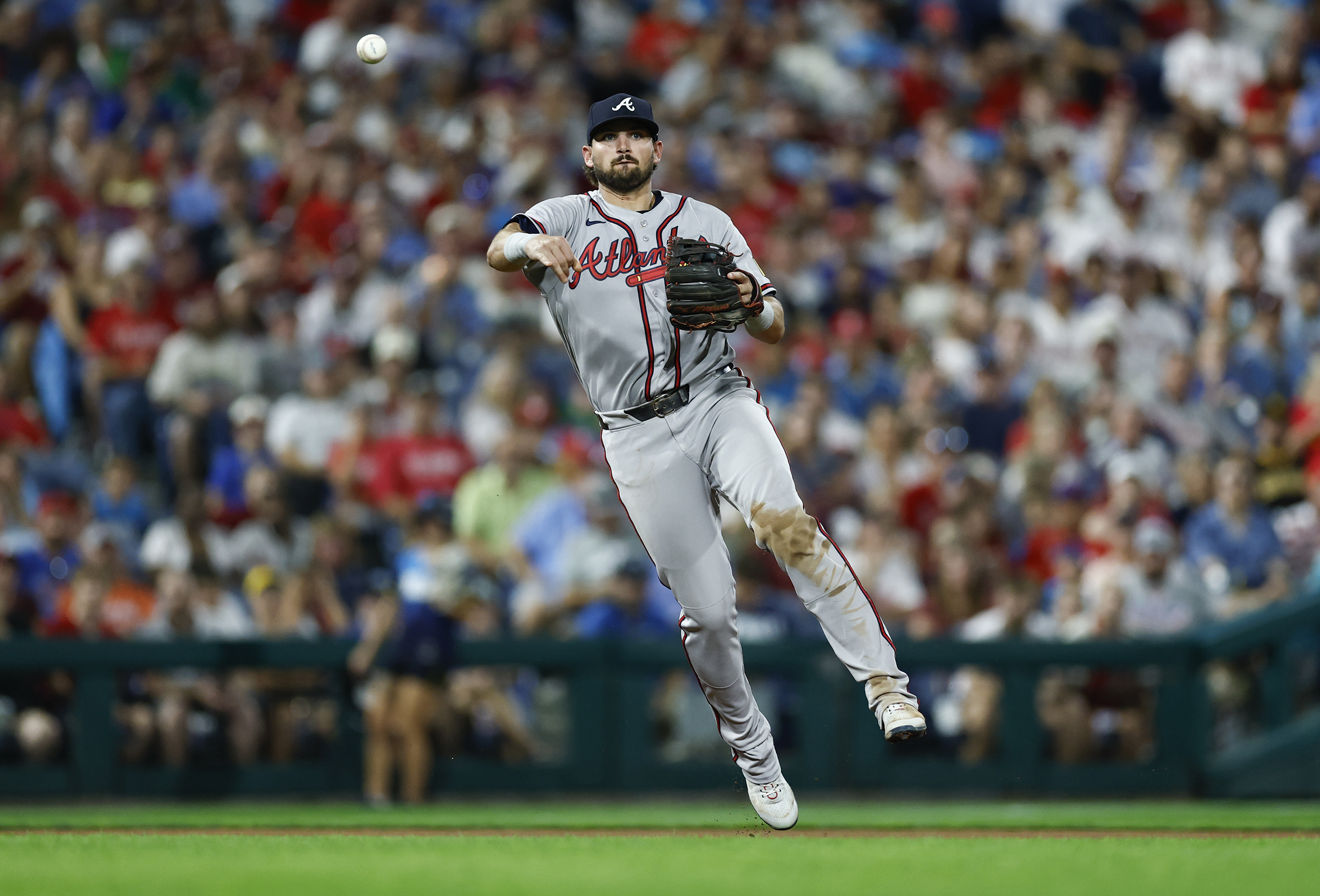
2. Austin Riley, Braves: The two-time All-Star third baseman dragged a .223 average and .658 OPS into the weekend against the Phillies, the nadir in a three-year decline since Atlanta locked him up to a 10-year, $212 million extension, the largest contract in franchise history. He would be wise, then, to take the advice of infield coach Ron Washington. “[He’s] always saying, ‘Say, hey, no one cares what you did yesterday. It’s about today. Close the yearbook,’” Riley told The Athletic in June. A few big October hits would make it easier. A potential start: Riley beat the Phillies last Sunday with a go-ahead triple in the ninth inning off Jhoan Duran.
3. Christian Yelich, Brewers: The former MVP stands out on a roster that lacks star power. But he has been barely above replacement level, with a .241 average, .712 OPS, and 0.4 WAR entering the weekend. It’s little wonder that manager Pat Murphy told reporters that he walked in on Yelich taking swings in the batting cage at 1 a.m. after a recent game. “You can say, ‘That’s not enough. He’s getting old.’ No, he’s not,” Murphy said of the 34-year-old face of the franchise. “He’s got another gear.” Maybe it will resurface in the postseason.
4. Vladimir Guerrero Jr., Blue Jays: It’s up there with any of baseball’s 2026 unsolved mysteries. How can it be possible midway through September, after 132 games, that the $500 million masher still hasn’t hit a homer at home this season? Woe, Canada. Guerrero went into the weekend slugging .352, 128th among 139 hitters who qualified for the batting title. He had only eight homers after averaging 31 over the previous five seasons. But the Jays were only one game out of a wild card in the mediocrity-riddled American League. Imagine if they get in and he finds the power switch.
And then there’s Turner, who can be the Phillies’ biggest difference-maker in October.
“The games that Trea gets going, it’s like a different dynamic with our offense,” Mattingly said. “We’re seeing him hopefully find a groove of hitting the ball hard for a number of games here in a row. It’d be huge for us.”
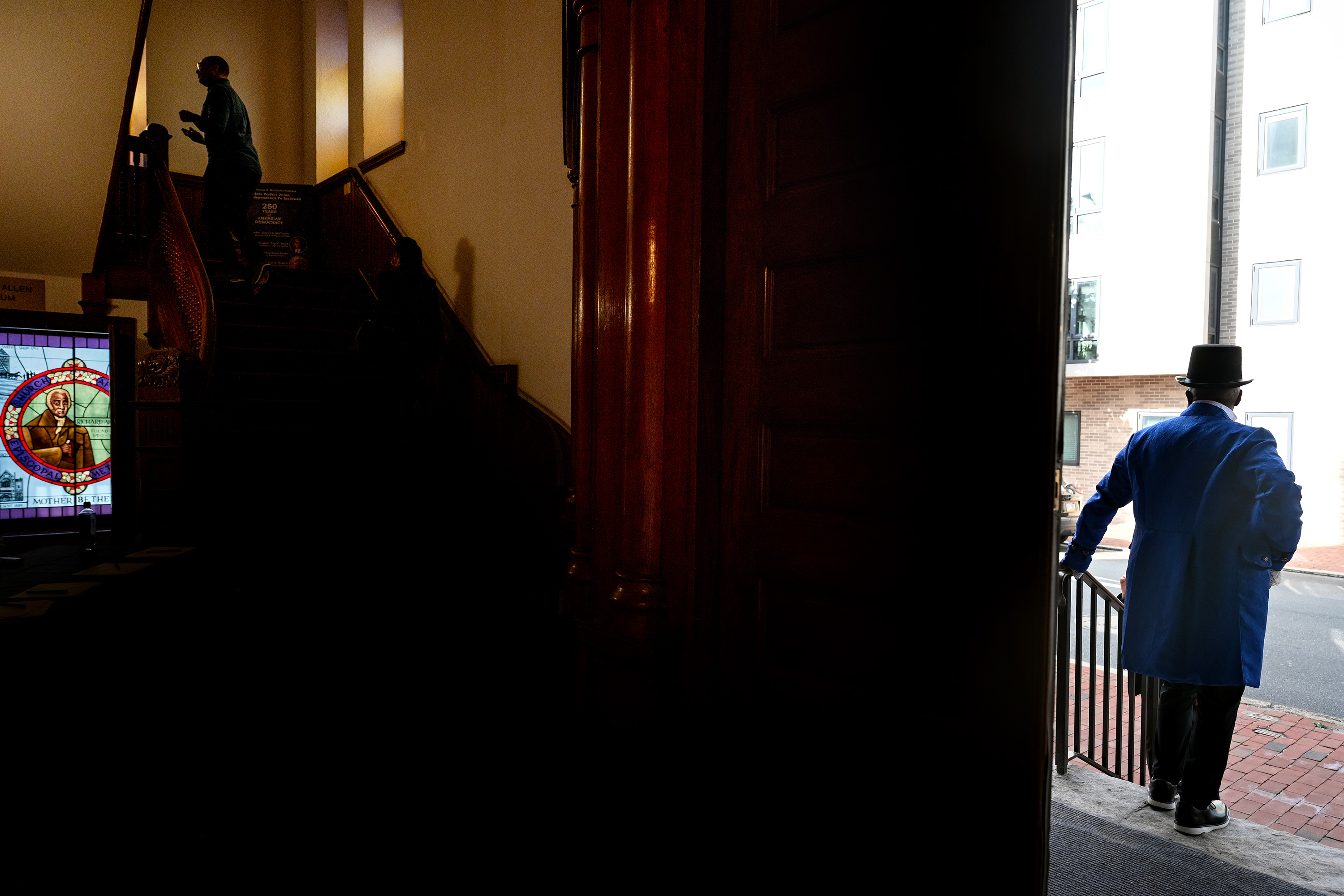
I was standing next to a big sign before the start of an event this week. It had a photo of the host and the large words “America 250.” More than one person arriving wondered out loud, “Why the 250?” Or, “Isn’t that passed?”
They weren’t asking me. I was just there, inside looking out the front door, waiting for re-enactor Chris Lewis to step into a favorable position so I could make the photo above.
The registration table was farther inside, so nobody was there to say something like, “Just because July 4 is behind us doesn’t meant we can’t continue the celebration of what was accomplished in 1776. Or we could think about what we want the next 250 years to look like.”
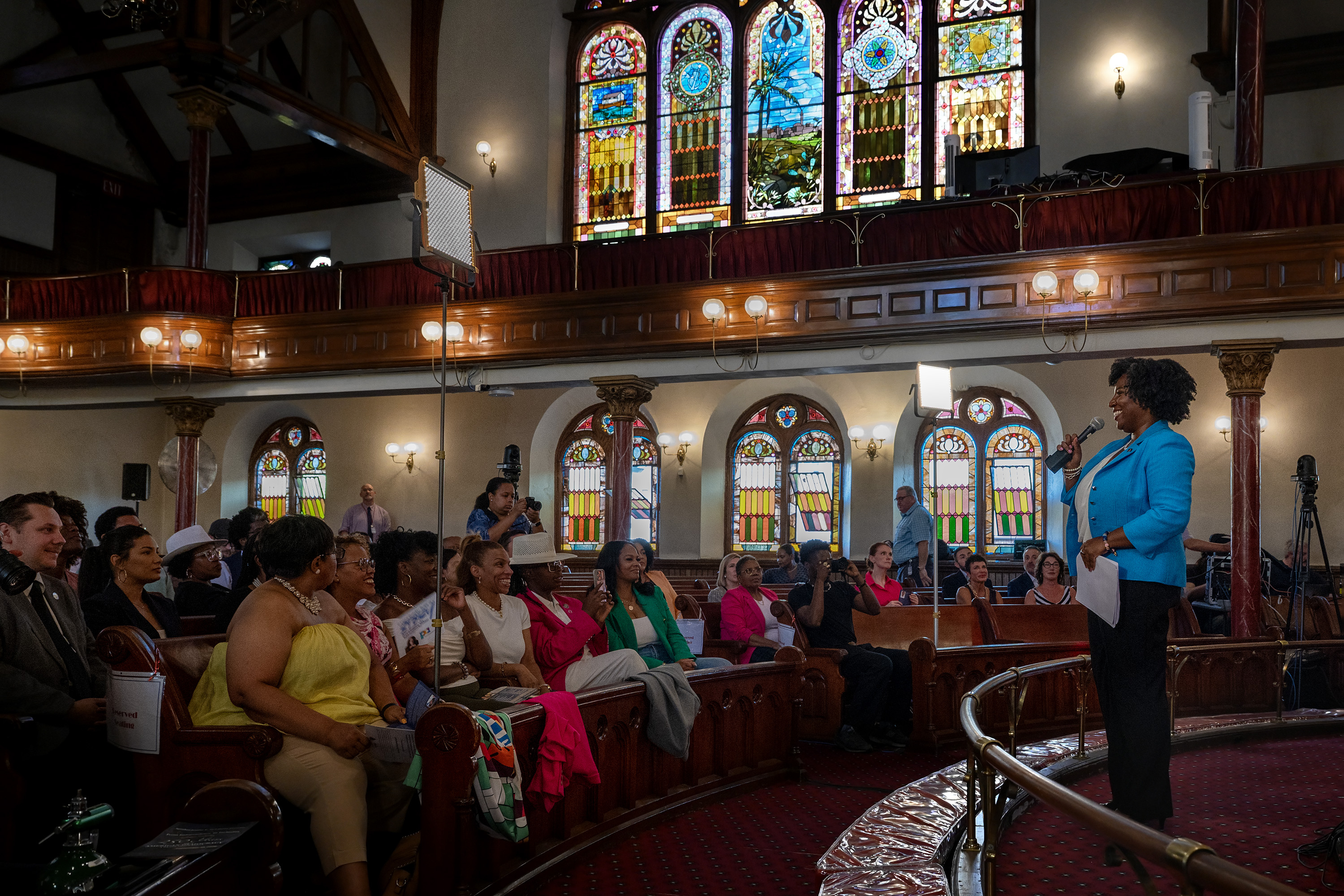
House Speaker Joanna McClinton hosts an America 250 Conversation at Mother Bethel AME Church Thursday Sept. 10, 2026.Tom Gralish / Staff Photographer
I did my own share of looking both back and forward while covering another anniversary this week. Those of us old enough to remember knew even on that day that nothing about our future would never be the same again.
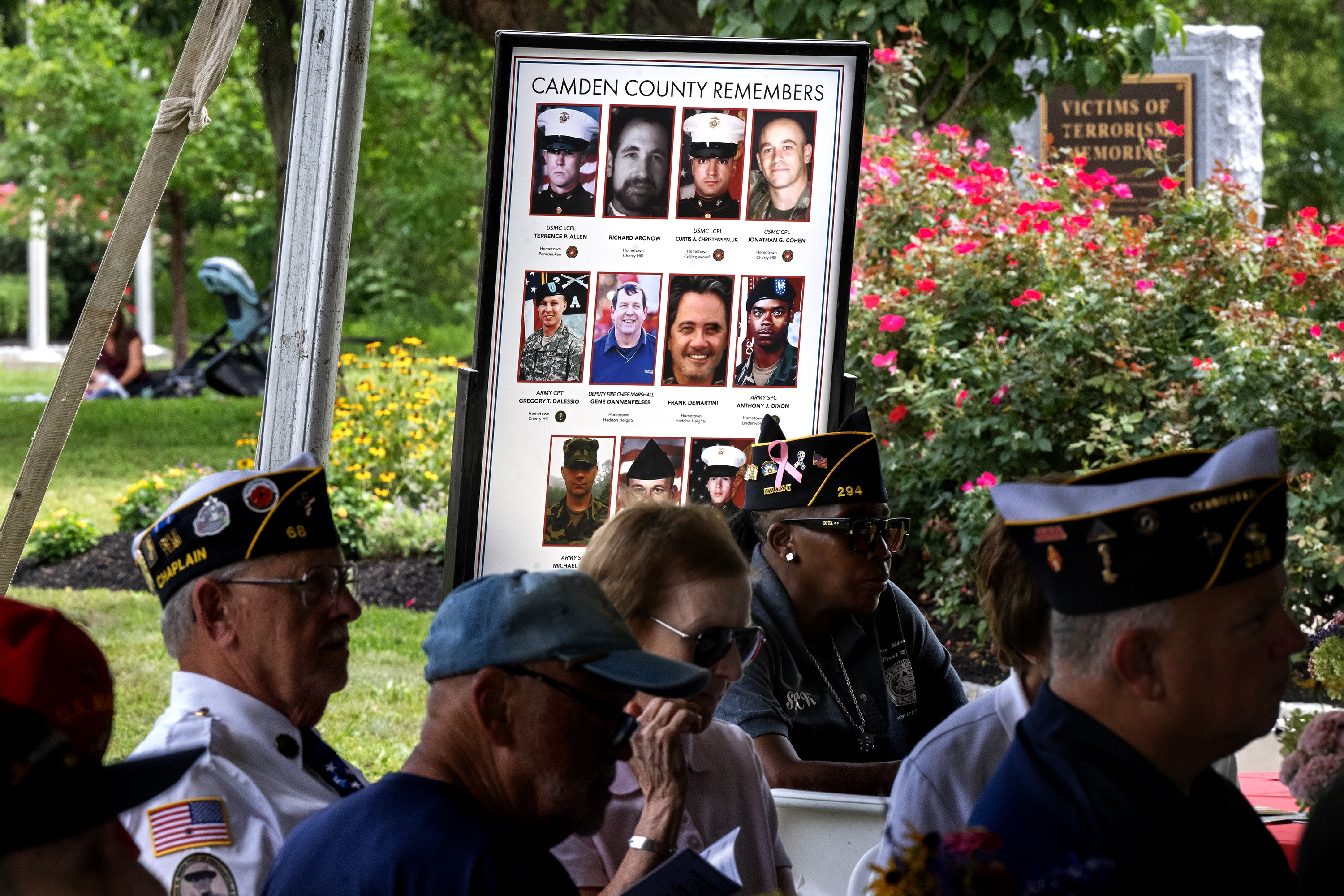
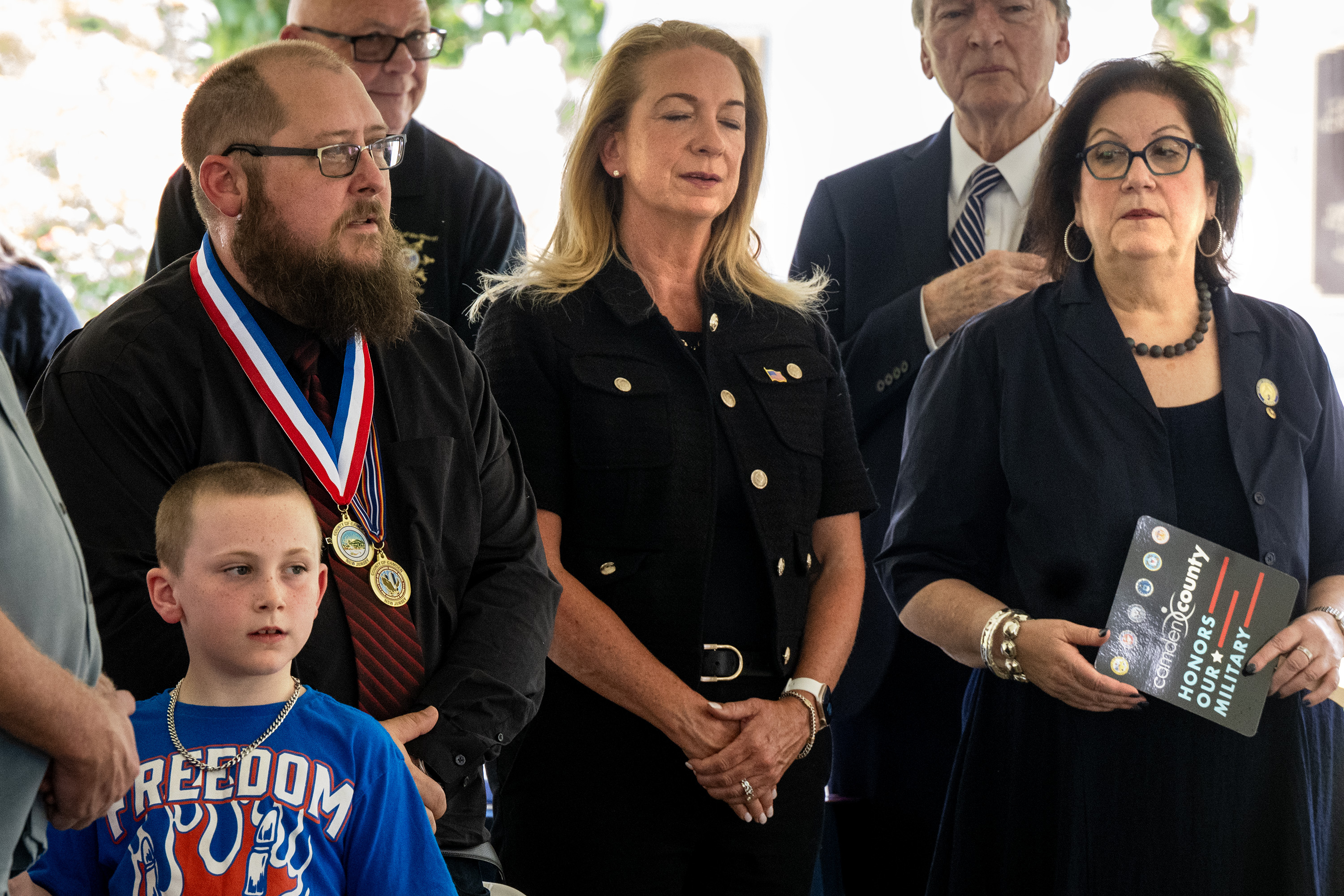
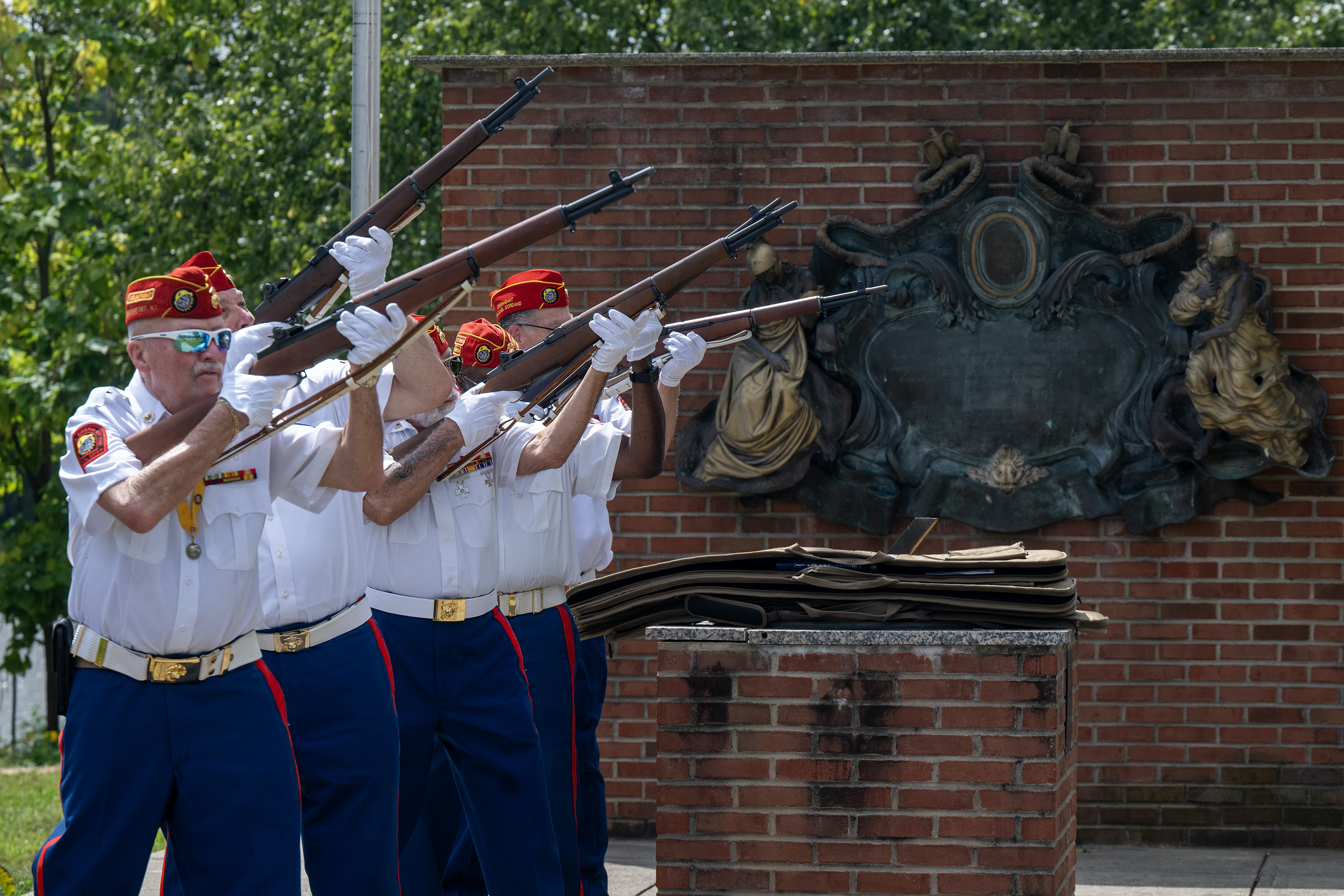
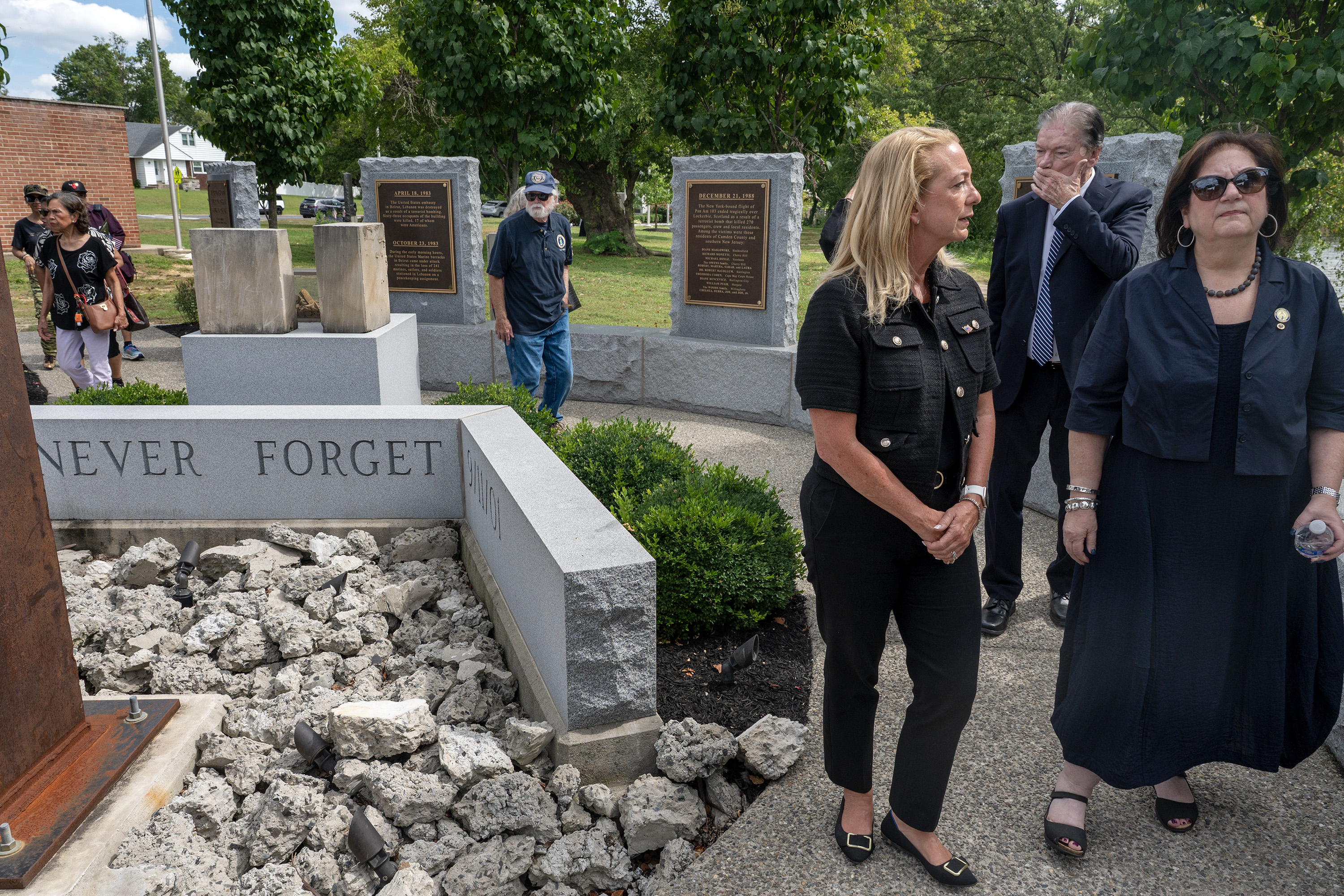
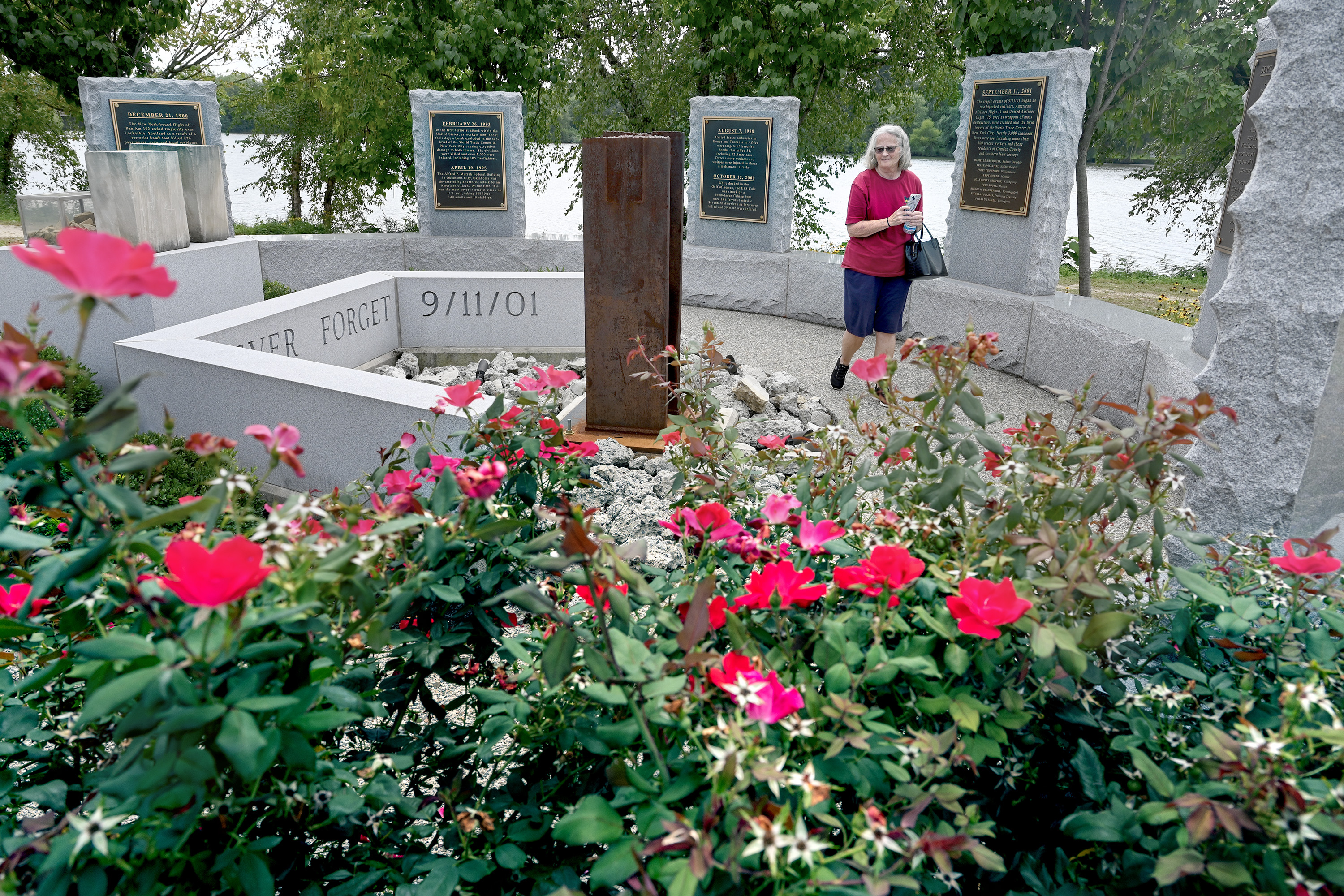
Names and photos of County residents who died on 9/11 and in the War on Terror following the September 11 attacks are posted during a medal ceremony at the Victims of Terrorism Monument in Cooper River Park in Pennsauken on Thursday, Sept. 10, 2026. Tom Gralish / Staff PhotographerOne of the medal recipients, U.S. Army veteran Michael R. Newberg of Chesilhurst and his son, Connor, 8, stand with elected officials during the ceremony.Tom Gralish / Staff PhotographerA Marine Corps League honor guard with the PFC Daniel Giordano detachment 200 in Somerdale fires a rifle salute.Tom Gralish / Staff PhotographerCamden County Commissioner Jennifer Cooley Fleisher (left) and State Assemblywoman Melinda Kane (right) visit the Victims of Terrorism Monument following the medal ceremony. Kane is a Gold Star Mother whose 22 year-old son, Marine Lance Corporal Jeremy Kane was killed in 2010 in Afghanistan. He was deeply affected and felt “compelled” to enlist, joining the Marines on Sept. 11, 2006—exactly five years after the terrorist attacks. Tom Gralish / Staff PhotographerAlice Hastings of Gloucester Township visits the Victims of Terrorism Monument. She was there with her husband Tom Hastings, who was among the local veterans honored for their bravery, sacrifice, and service. Hastings served in the U.S. Air Force, including with the dignified transfer of remains at Dover Air Force Base, Del. Tom Gralish / Staff Photographer
After 9/11 the flag became a symbol of shared feelings, giving people a way to express emotions that words could not.
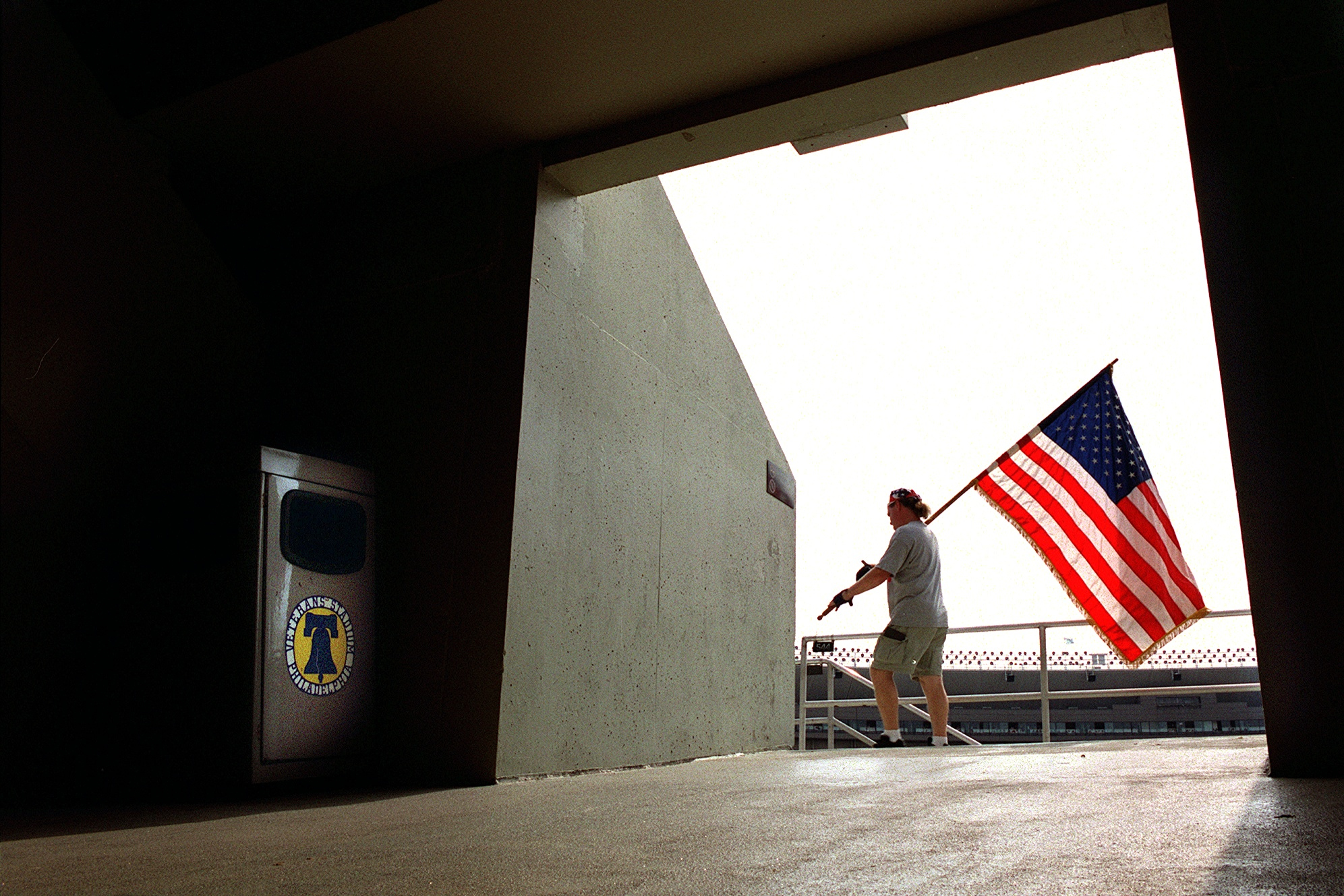
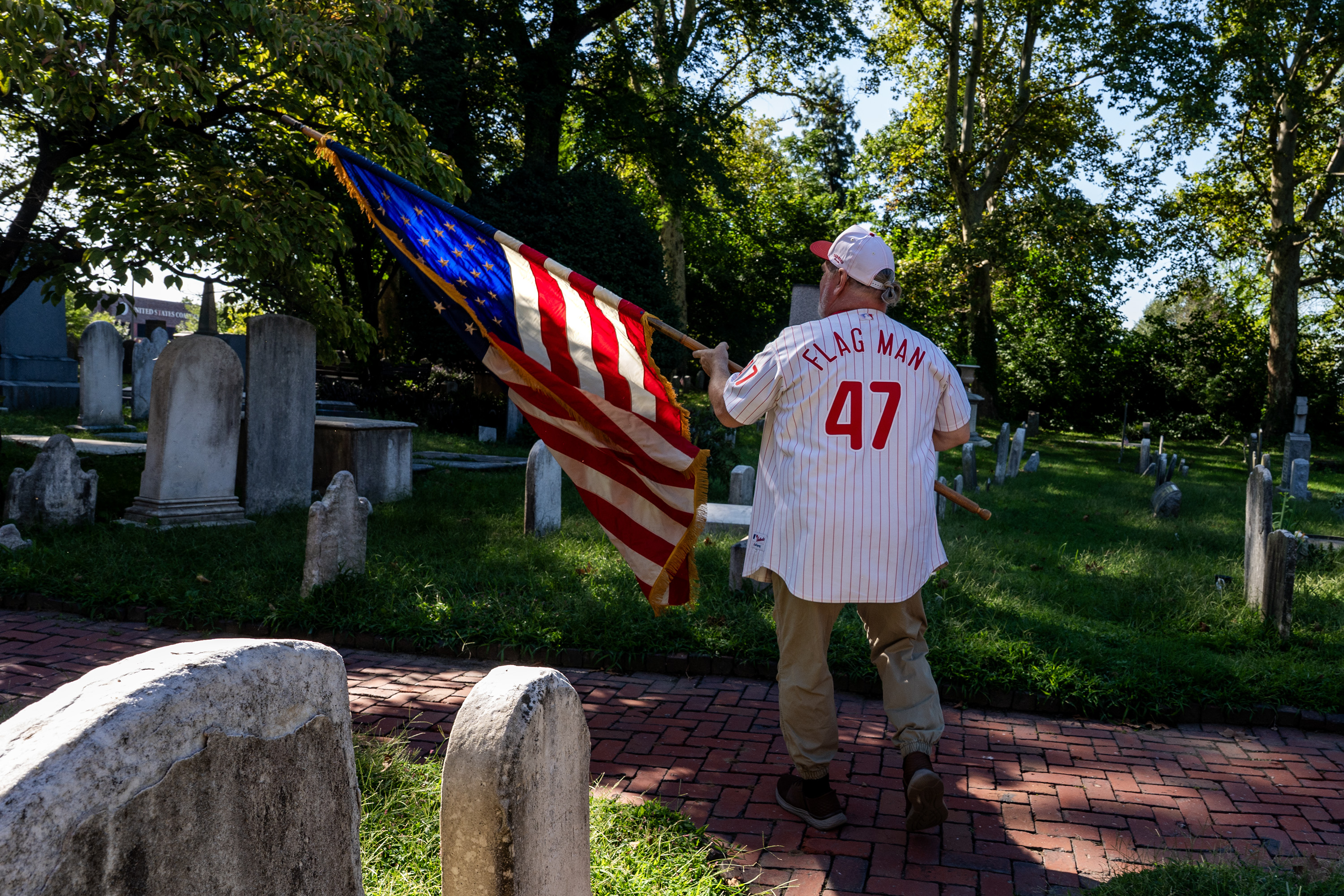
Sports reporter Matt Breen — a Northeast Philly native and Temple grad — writes the kind of stories I like to read, full of history and nostalgia, trivia, and tidbits. And plenty of “Only in Philadelphia” characters. Like Flag Man.
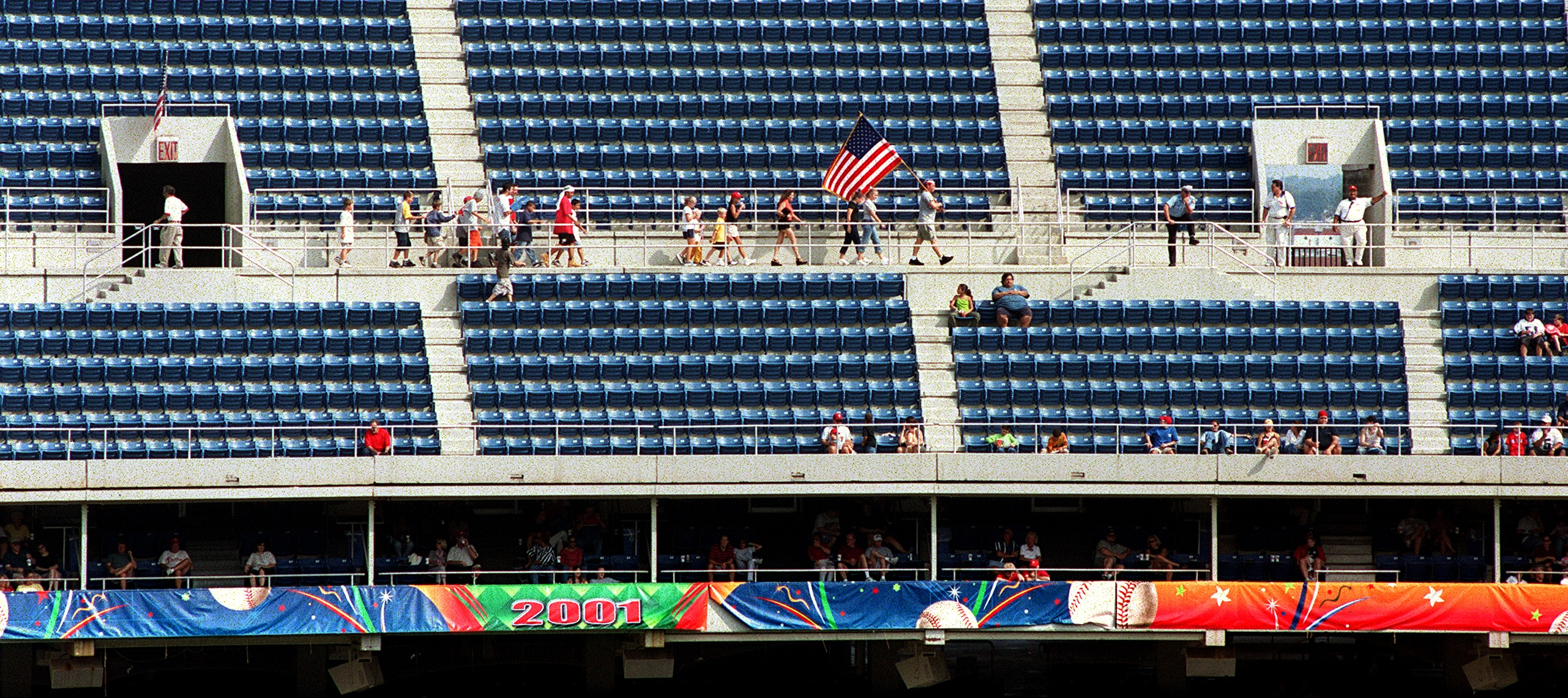
Jim Minacci at Veterans Stadium, September, 2001.Tom Gralish / Staff Photographer
I photographed Jim Minacci twenty-five years ago when the Phillies were back at Veterans Stadium after the season was paused following 9/11.
He and his son walked around all the concourses carrying a large American flag — trailed like the Piped Piper by a line of kids. They did it at every home game for the rest of that season as he became a symbol of patriotism.
Minacci still attends Phillies games and he still has the flag (but it’s too big to be allowed into Citizens Bank Park).
Jim Minacci at Gloria Dei Old Swedes Episcopal Church Tuesday, Sept. 8, 2026.Tom Gralish / Staff Photographer
Surprisingly, while there have been stories about the Minaccis — and the dozens of music events they host all yearlong to raise money for the historic church — it looks like Matt is the first one to write about Flag Man since 2001.
Looking ahead, it would be great if Americans could reclaim that feeling today, reclaim the sense of community that emerged from the tragedy (without something else terrible having to happen).
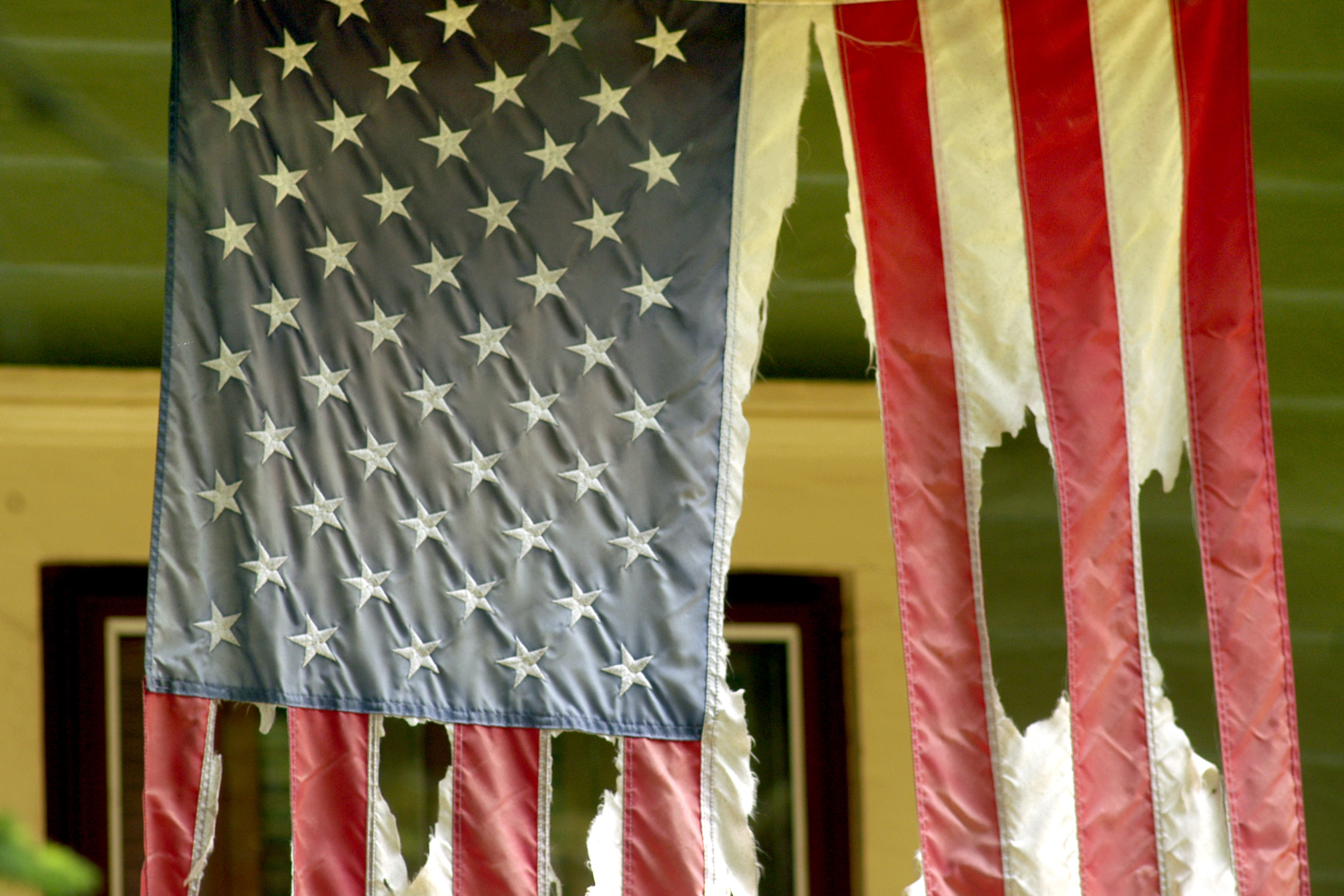
A flag at a South Jersey home on Flag Day, June 14, 2005, tattered, torn and tarnished by time over the years after 9-11, when well-intentioned home-owners bought flags to display in the heat of patriotism. Tom Gralish / Staff Photographer
Since 1998 a black-and-white photo has appeared every Monday in staff photographer Tom Gralish’s “Scene Through the Lens” photo column in the print editions of The Inquirer’s local news section. Here are the most recent, in color:
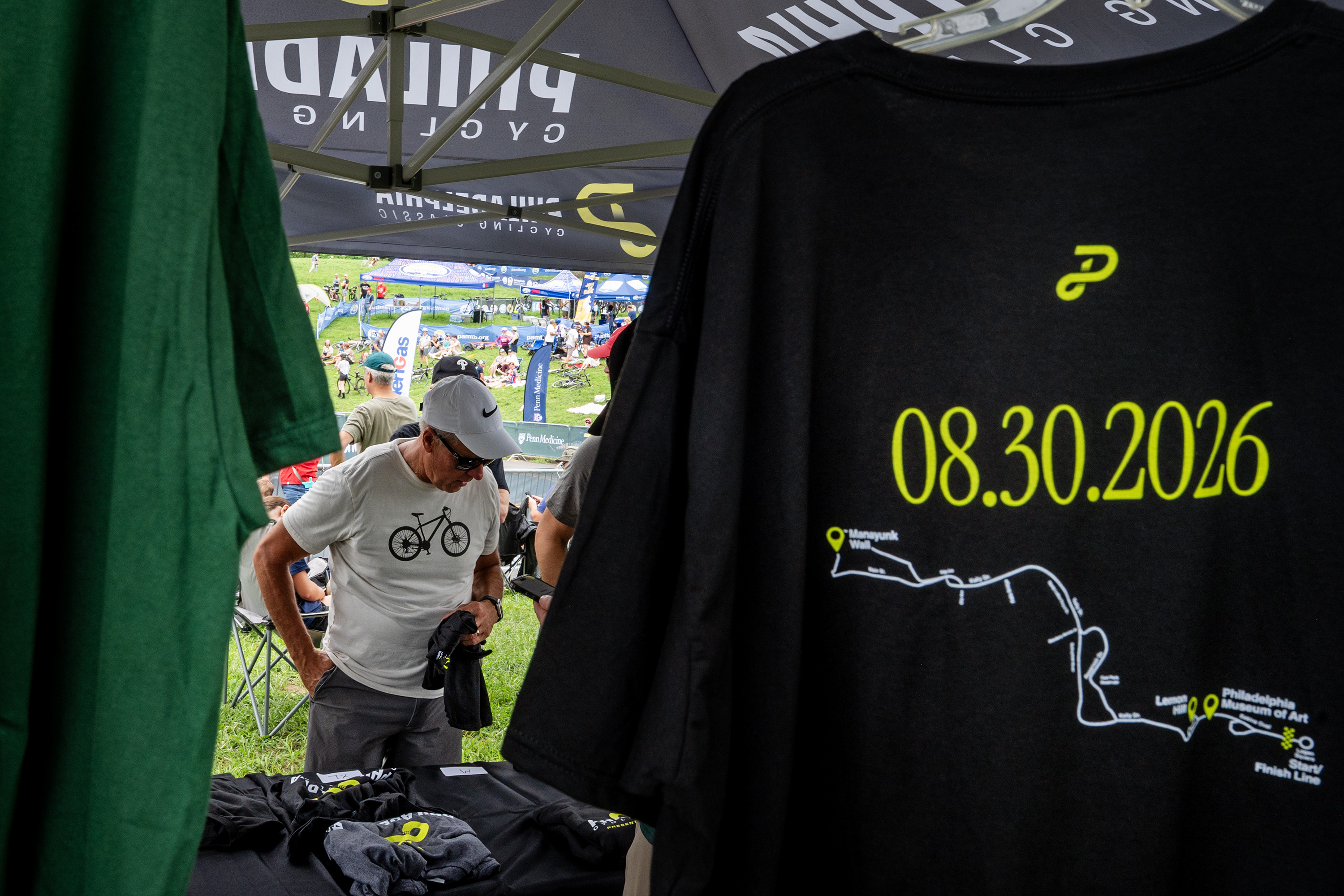
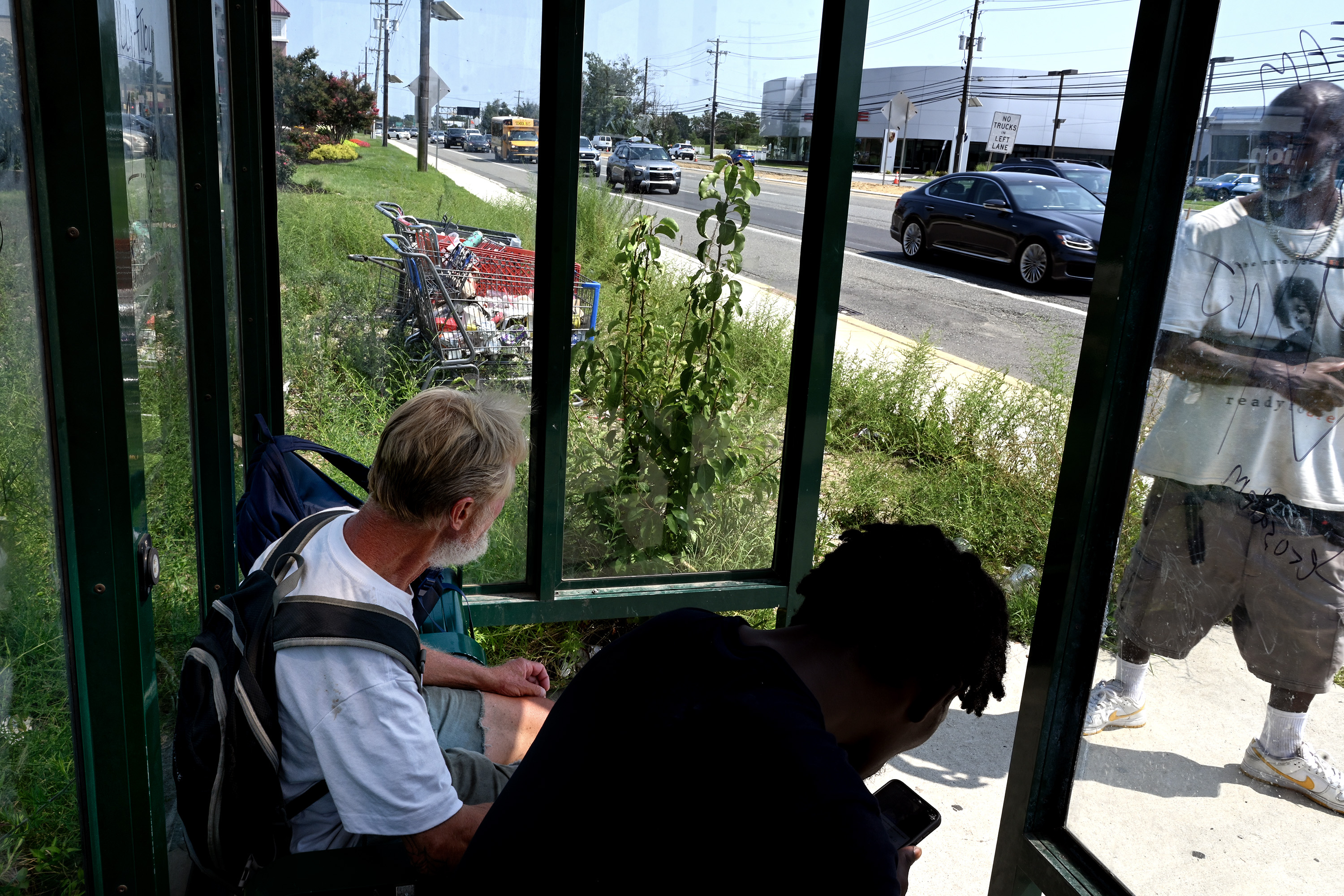
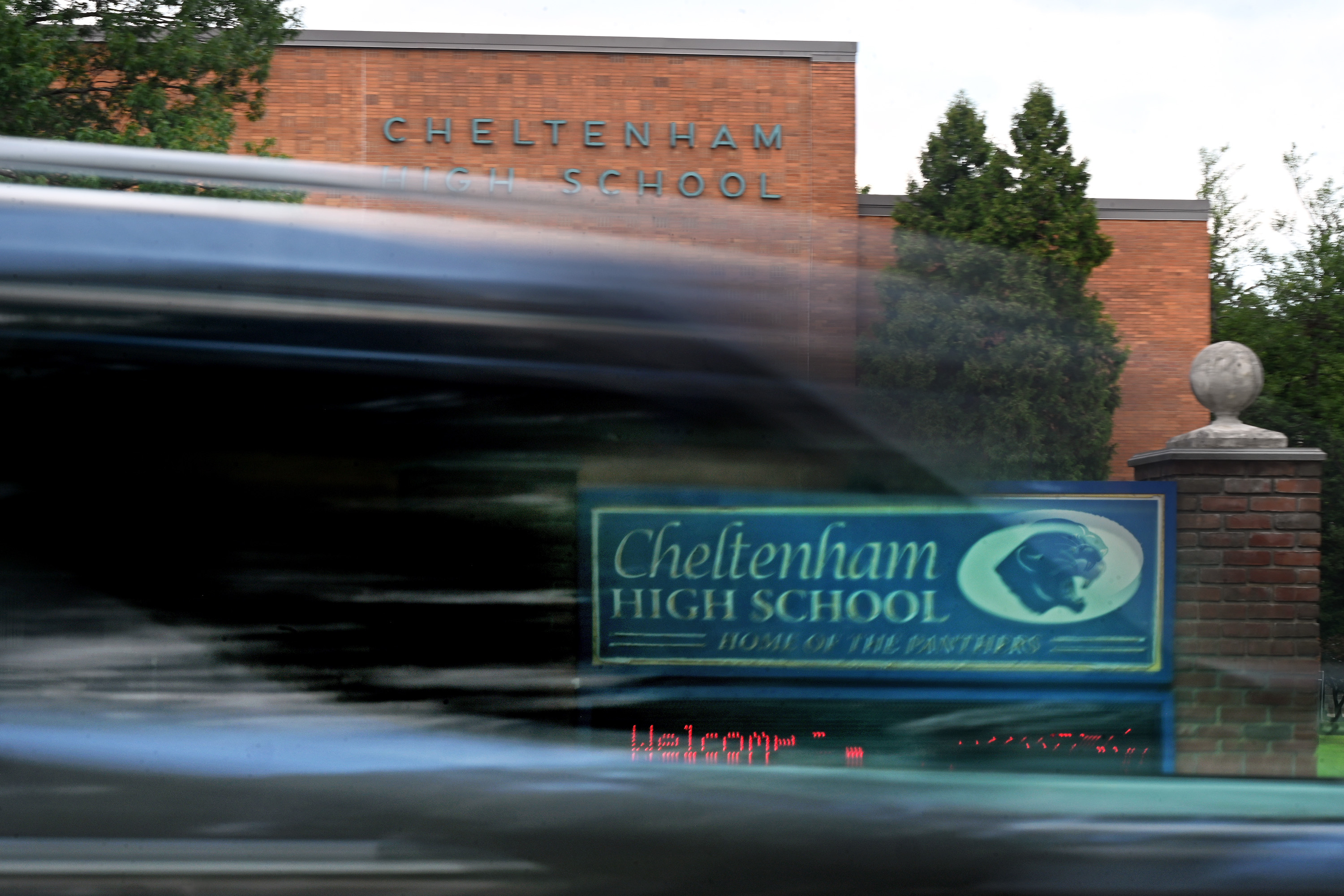
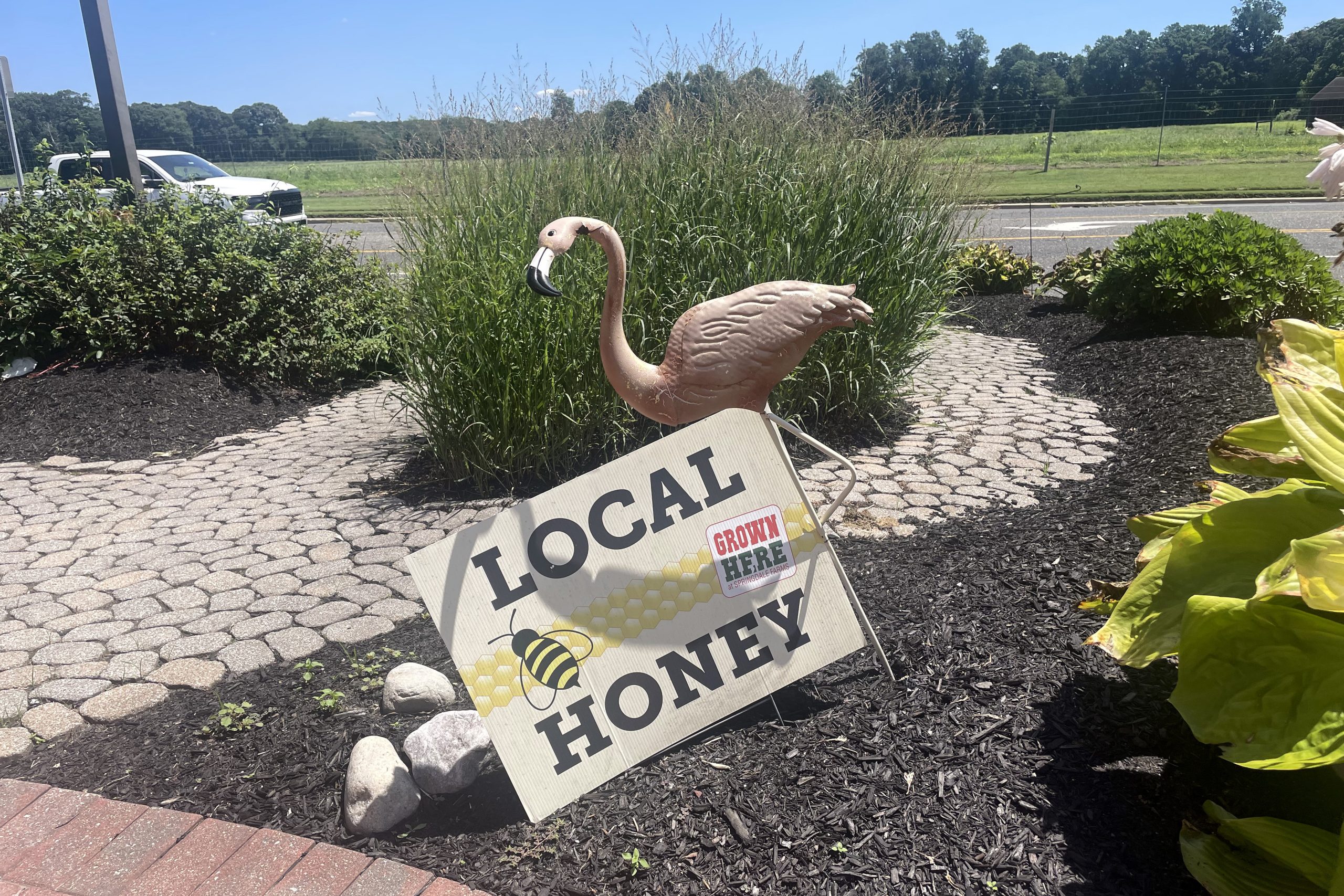
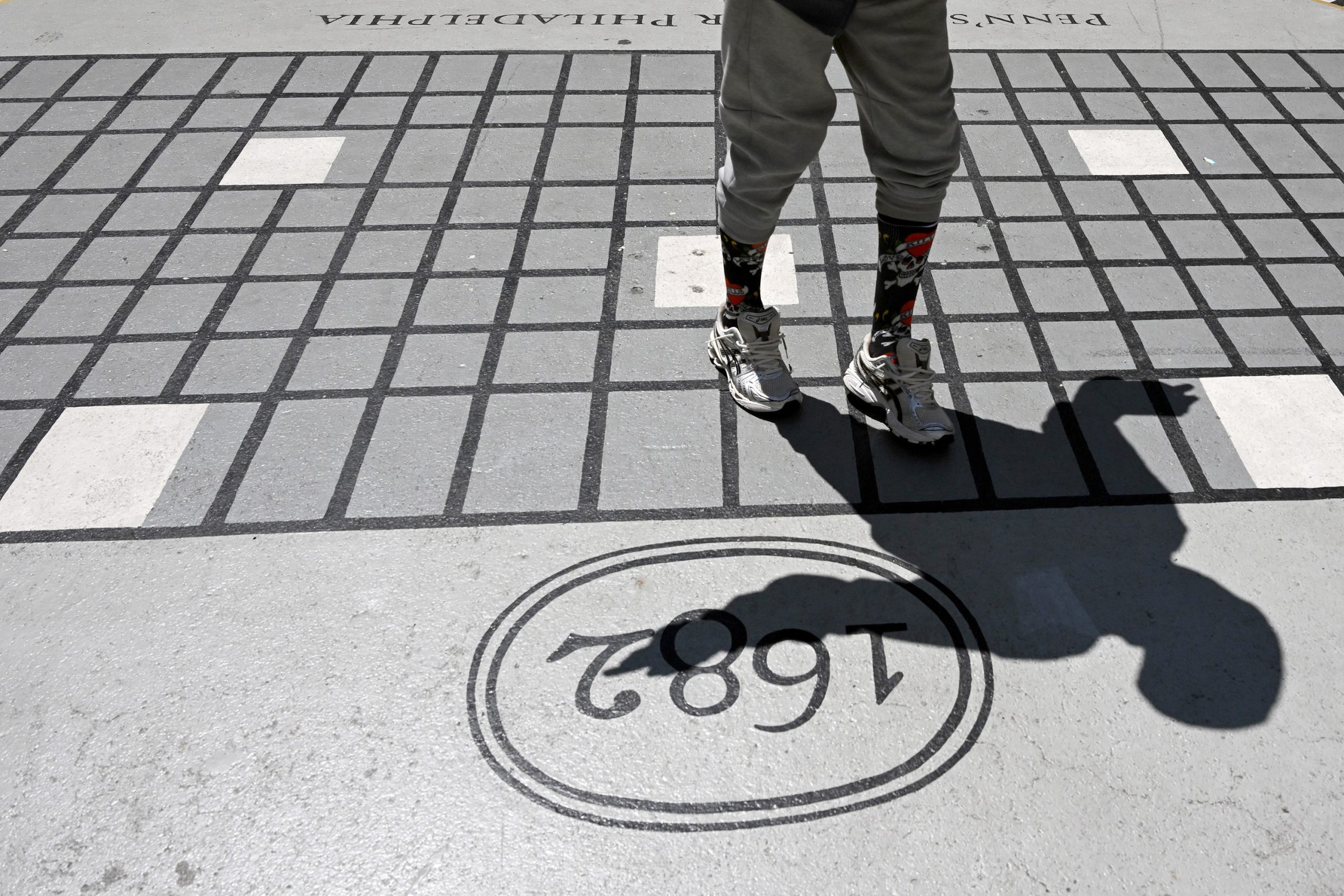
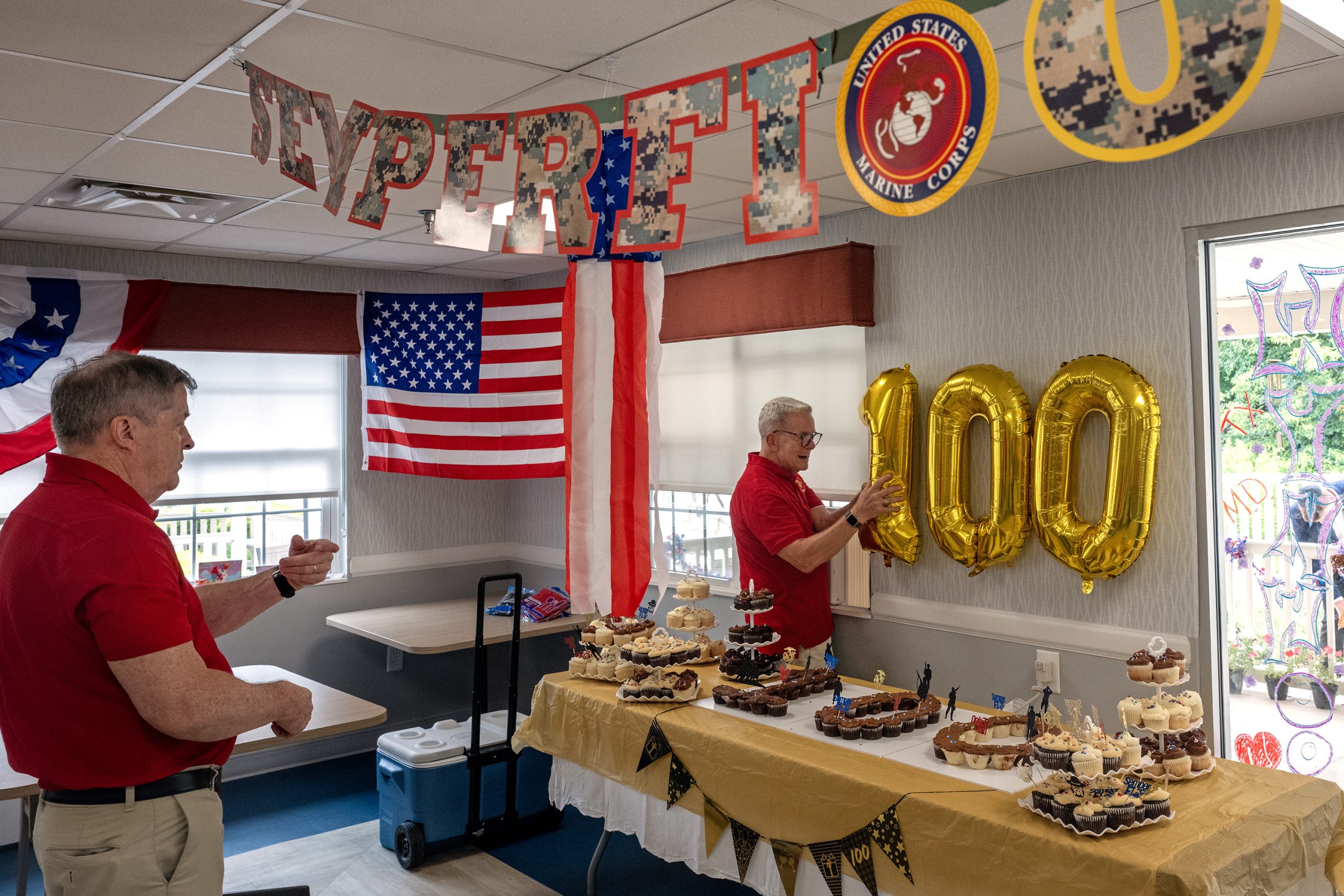
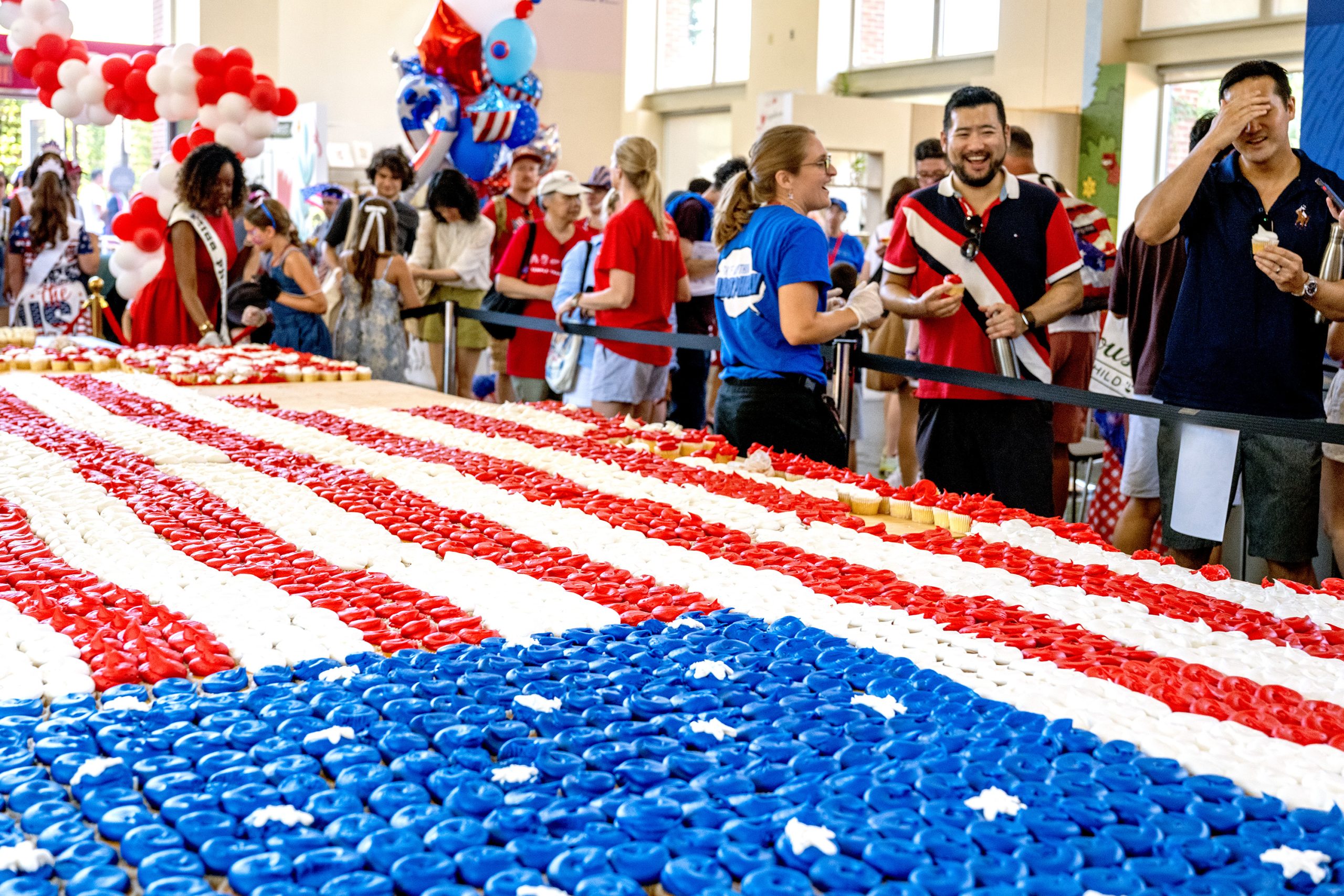
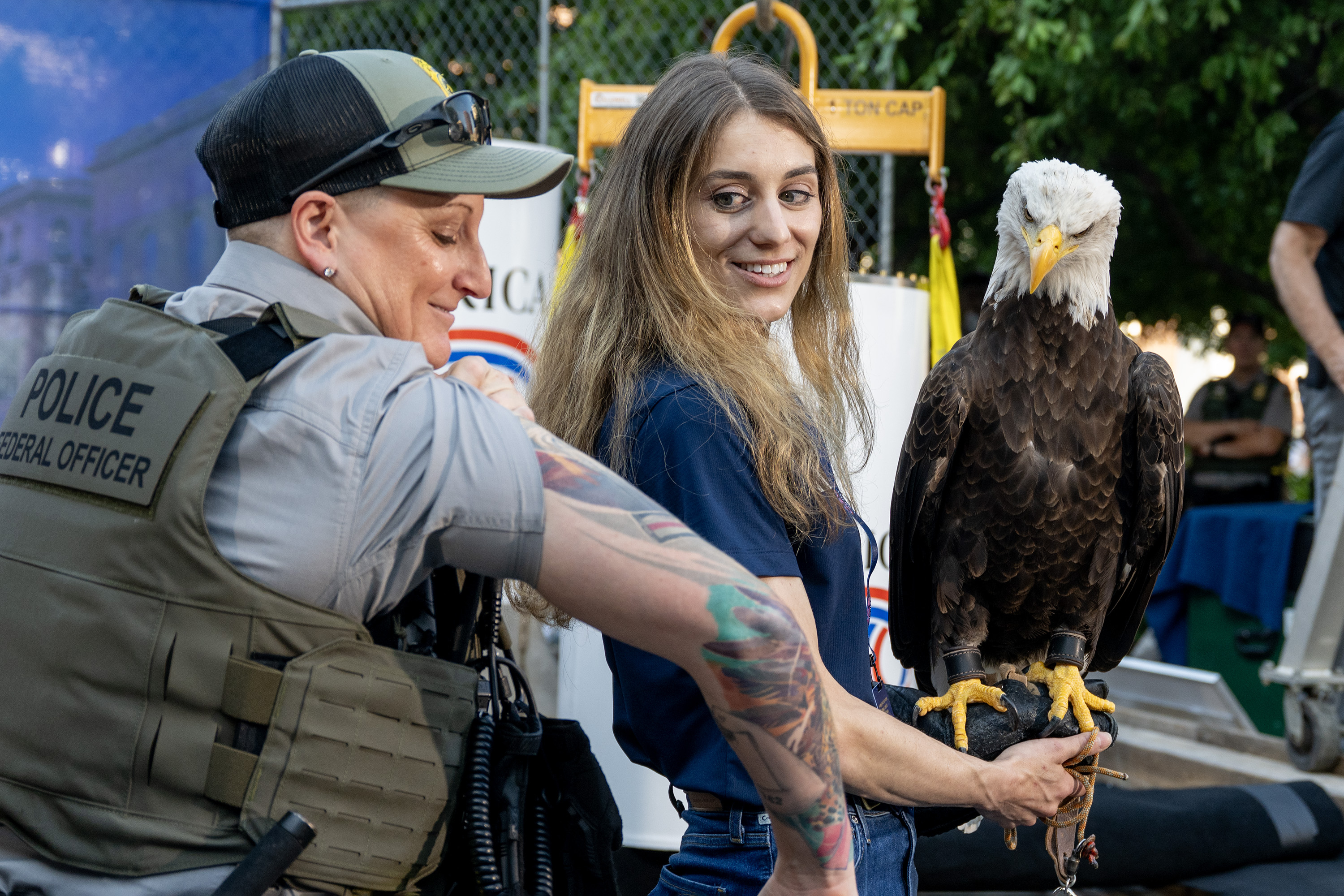
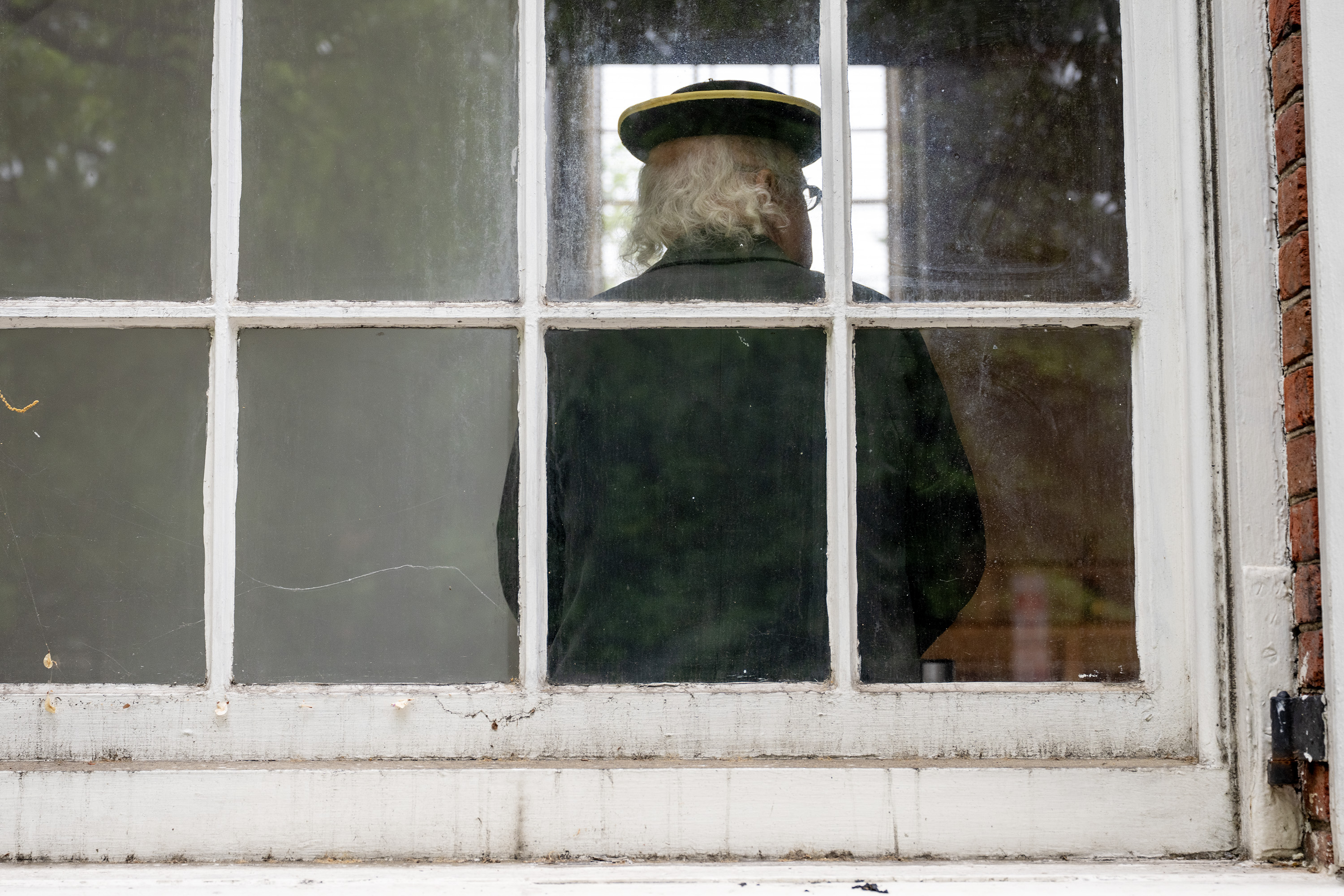
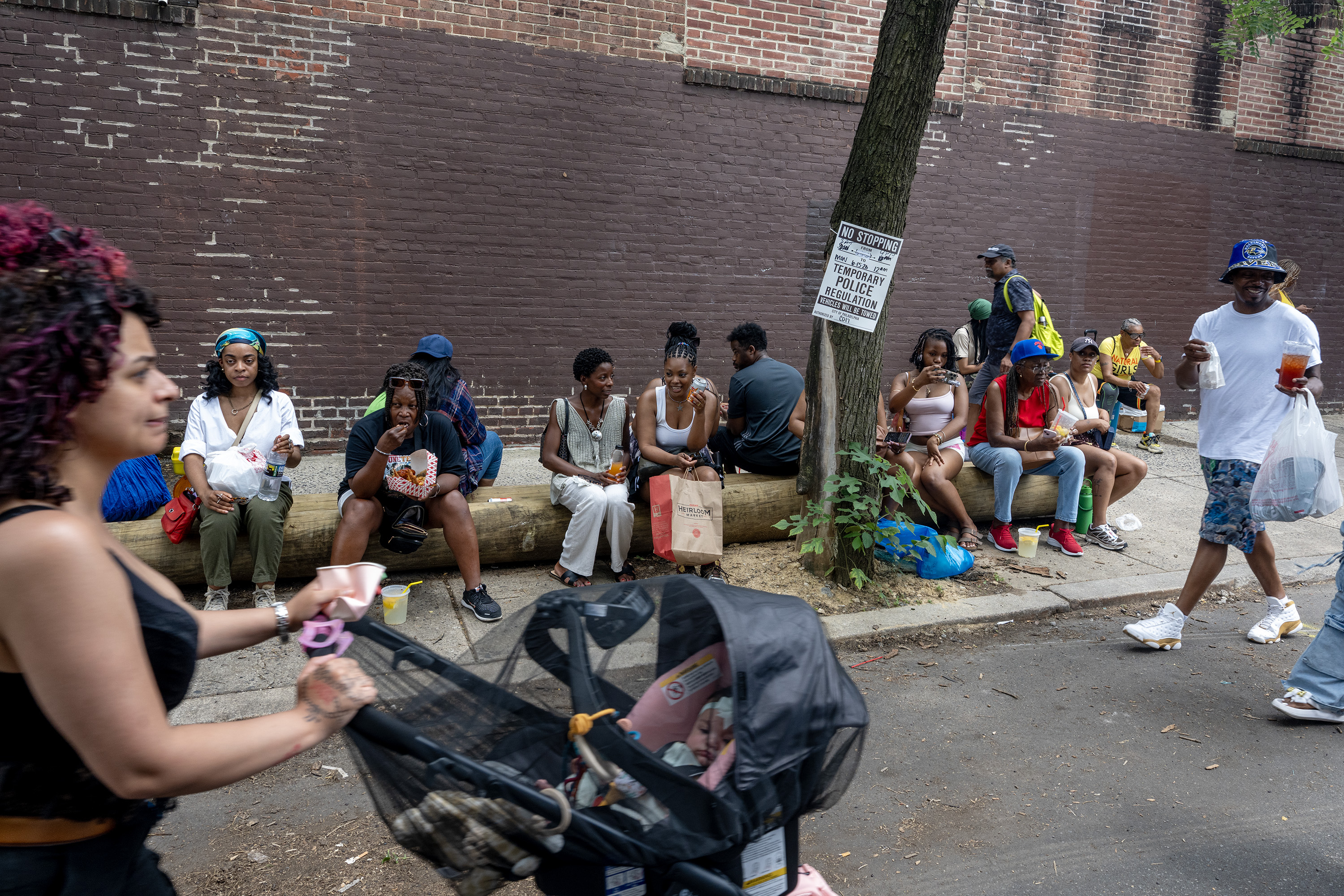
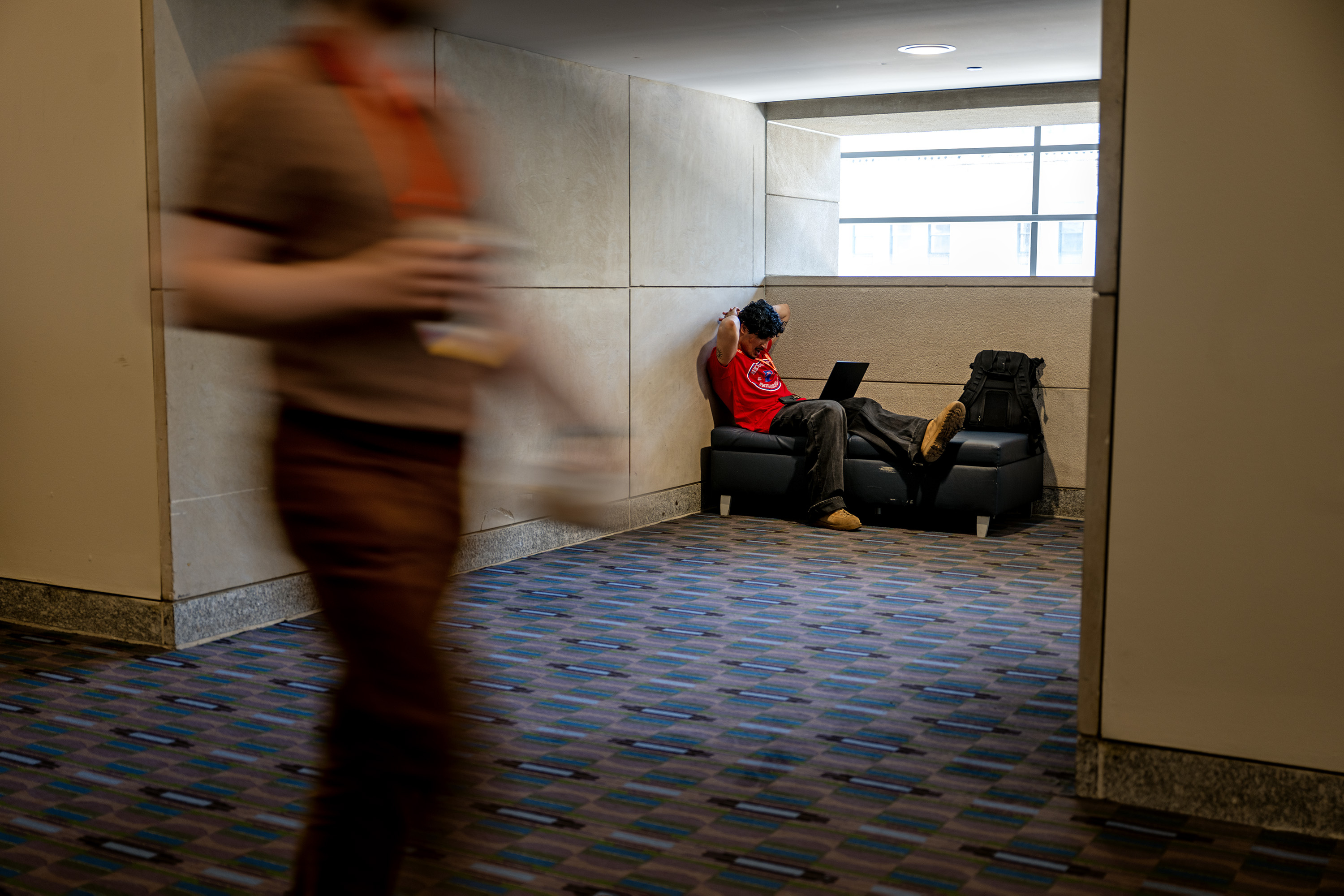
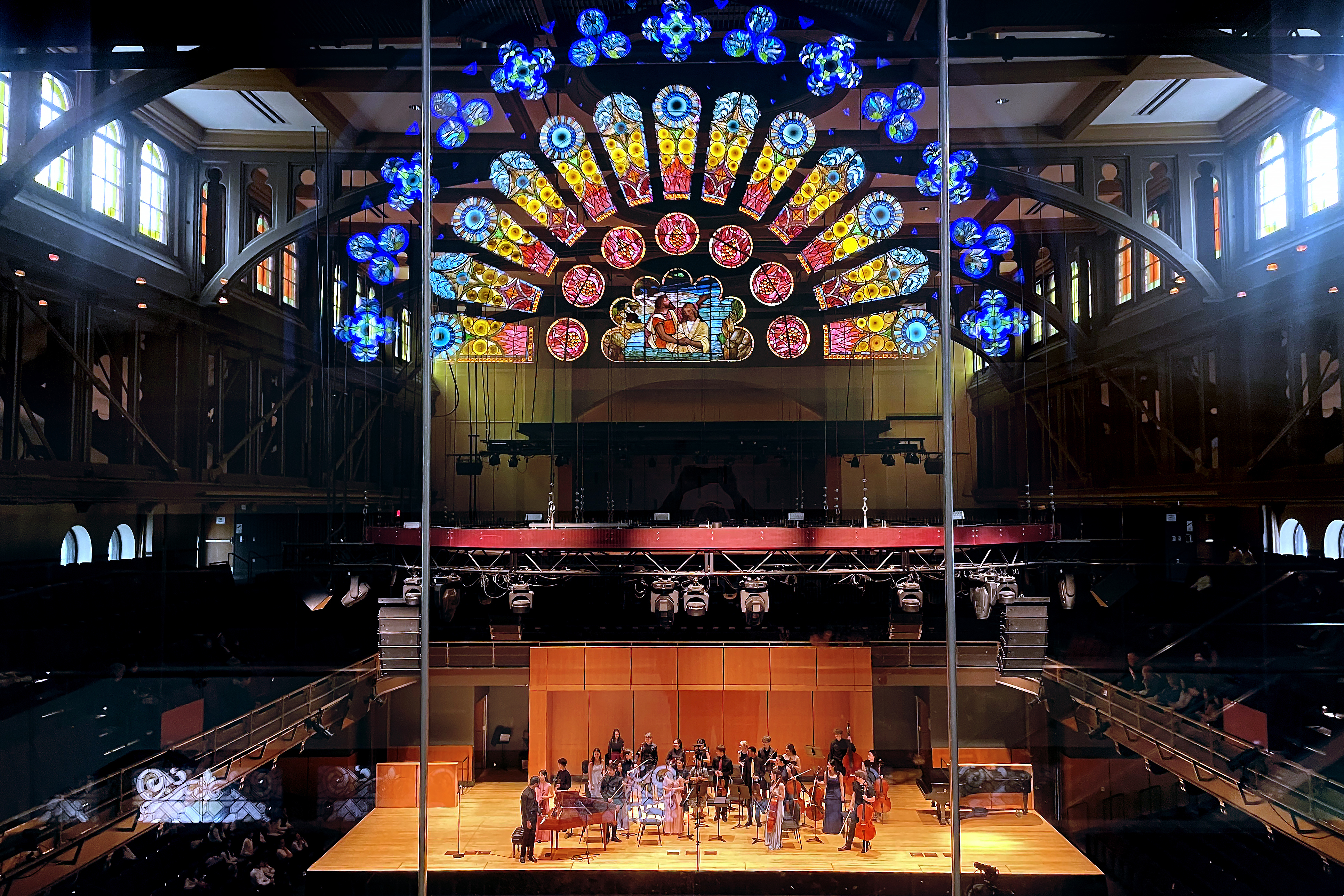
September 7, 2026: Joe Ackler of Skippack shops for a race T-shirt during a lull between laps in the Philadelphia Cycling Classic on Aug. 30. He is wearing a shirt he bought in 2003 when he attended the Tour de France. Tom Gralish / Staff PhotographerAugust 31, 2026: Robin P. Cooper (upper right) watches as Superintendent Tony B. Watlington Sr. (far left) gathers school and city officials for a group photo outside the district bus, stopped at McClure Elementary on the first day of school in Philadelphia. The bus was on its annual back-to-school celebration visit to schools throughout Philadelphia. Cooper later left the bus to join in the photo. Tom Gralish / Staff PhotographerAugust 24, 2026: Pencils were sharpened in the first-grade classroom of teacher Lauren Cucinotta at Fanny Jackson Coppin Elementary as she prepared for the start of the new school year for the Philadelphia School District on Monday.Tom Gralish / Staff PhotographerAugust 17, 2026: Wayne Peters (left) and Bobby White (right) wait for the #406 bus to Camden, on Rt. 70 in Cherry Hill, near the entrance to stores at the Garden State Pavilion shopping center and NJ Transit’s Cherry Hill station. Peters says it “Gotta be the worst bus stop in the state,” with White adding, “You’d think something in Cherry Hill would be better. How hard would it be to put a trash can here?” Before their bus arrives, Peters, trying to be positive about the shelter, reminds him “They fixed a broken window once.”Tom Gralish / Staff PhotographerAugust 10, 2026: Cheltenham High School in Wyncote, on the day the Montgomery County district attorney announced charges in connection with two assaults in the school’s football locker room. A photo of the static signs was made more visually interesting by using a slow camera shutter speed to blur the passing cars. Tom Gralish / Staff PhotographerAugust 3, 2026: Sign for locally “grown” honey outside the market at Springdale Farms, the only working farm left in Cherry Hill. Before WWII, when it was still known as Delaware Township, there were 82 farms in operation feeding South Jersey markets and supplying the massive fresh vegetable and crop demands of the Campbell’s Soup Company in Camden. Tom Gralish / Staff PhotographerJuly 27, 2026: Lyn-el “The Torch” Wright pauses on the City Hall Courtyard’s rendering of William Penn’s Philadelphia city grid plan. Penn designed the 1,200-acre “Greene Countrie Towne” between the Delaware and Schuylkill rivers with wide, crisscrossing streets to prevent the overcrowding and fires he had witnessed in London. Tom Gralish / Staff PhotographerJuly 20, 2026: Pat Dailey (left) and Ken Hopper with the Tun Legacy Foundation prepare a room at the Wynwood Rehabilitation & Healthcare Center in Cinnaminson, N.J., for a surprise 100th birthday party for WWII U.S. Marine Corps veteran Stephen Anderson. Dailey founded the nonprofit that supports veteran causes, Masonic charities, and educational scholarships. The organization is also rebuilding and reestablishing an authentic reproduction of the original Tun Tavern building in Philadelphia. The Tun, constructed in 1693, was the first documented lodge in North America and the birthplace of the U.S. Marine Corps in 1775.Tom Gralish / Staff PhotographerJuly 13, 2026: The Independence Visitor Center offers free birthday cake to the public on the Fourth of July, in the form of a massive American flag made of 5,000 cupcakes frosted red, white and blue.Tom Gralish / Staff PhotographerJuly 6, 2026: National Park Police Deputy Chief Rebekah Spedaliere shows off her own bald eagle tattoo while posing for a photo with bald eagle “Indy” and handler Amanda Sweeney with the Auburn University Raptor Center, during ceremonies over the July Fourth weekend. Indy came to Auburn, in Alabama, in 2018 after suffering a wing injury as a young bird and imprinted on humans during rehabilitation, so she couldn’t be released back into the wild. Now, she serves as an ambassador bird, teaching people about raptors, conservation, and the ecosystems that sustain them. Not her first rodeo in Philly, she made her first appearance at the Linc for an Eagles’ game in 2023. Tom Gralish / Staff PhotographerJune 29, 2026: Shecky Perlman as Ben Franklin is inside the Free Quaker Meeting House on Independence Mall as he and other historical reenactors receive their diplomas after weeks of intensive, immersive training for the 21st season of Historic Philadelphia’s Once Upon a Nation program — where costumed actors perform first-person interpretations of real 18th-century Philadelphians in the Historic District and at Valley Forge National Historical Park.Tom Gralish / Staff PhotographerJune 22, 2026: A downed utility pole serves as a quiet place to eat, away from the crowd at the Odunde Festival, billed as the largest African street market in North America.” Tom Gralish / Staff PhotographerJune 15, 2026: Bob Myers, president of Harris Blitzer Sports & Entertainment, owner/operator of the 76ers and the NHL’s New Jersey Devils, as well as a future Philadelphia WNBA team, talks to reporters after Mike Gansey made his first appearance as Sixers president of basketball operations at the Penn Medicine Philadelphia 76ers Training Complex in Camden. Tom Gralish / Staff PhotographerJune 8, 2026: Obet Montalvo, a digital strategist with Radicle Digital, finds a quiet nook at the Convention Center on Thursday June 4, 2026, while attending Netroots Nation, the country’s largest annual gathering for progressive political activists, and organizers. The fan fest is an outgrowth of the blog Daily Kos, and brings together thousands of grassroots organizers to participate in training sessions, panel discussions, and keynote addresses.Tom Gralish / Staff PhotographerJune 1, 2026: The signature half-rose stained glass window of the 1891 Grace Baptist Church is reflected in a glass wall inside the Temple Performing Arts Center, as a spring concert by Temple University Music Prep’s Center for Gifted Young Musicians gets underway below. A school started at the church so working men unable to afford traditional college could attend at night eventually became Temple University, and the congregation relocated to the suburbs. Over the years the building deteriorated and in 1986 university trustees voted to demolish it. Public outcry and help from the Preservation Alliance of Greater Philadelphia convinced Temple’s leaders to preserve the building, and a few years and $30 million later the old church was reborn in 2010 as a 1200-seat, multipurpose state-of-the-art event center. Tom Gralish / Staff Photographer
Rubber Band Gun’s ‘Bloodwork’: More musical gems from Historic New Jersey
Kevin Basko has a suggestion: Music might make everything better.
“If you don’t know what to do because you’ve never been this sad before,” Basko sings. “You don’t feel those problems when you’re singing the songs you love.”
That lyric about music’s comforting and healing power is from “Songs You Love,” the closing track on Bloodwork, the winning new album by Rubber Band Gun, Basko’s primary vehicle for the many, many songs he loves to write.
It’s been a good year for Historic New Jersey, the label that — somewhat confusingly — is based in South Philadelphia and whose emergence is one of the most heartening indie rock stories of 2026.
Basko and his Historic NJ pals Emily Moales, who records as Star Moales, and sibling act Sam and Louise Sullivan have been producing a steady stream of retro-leaning but wholly in-the-moment high-level songcraft for a few years now.
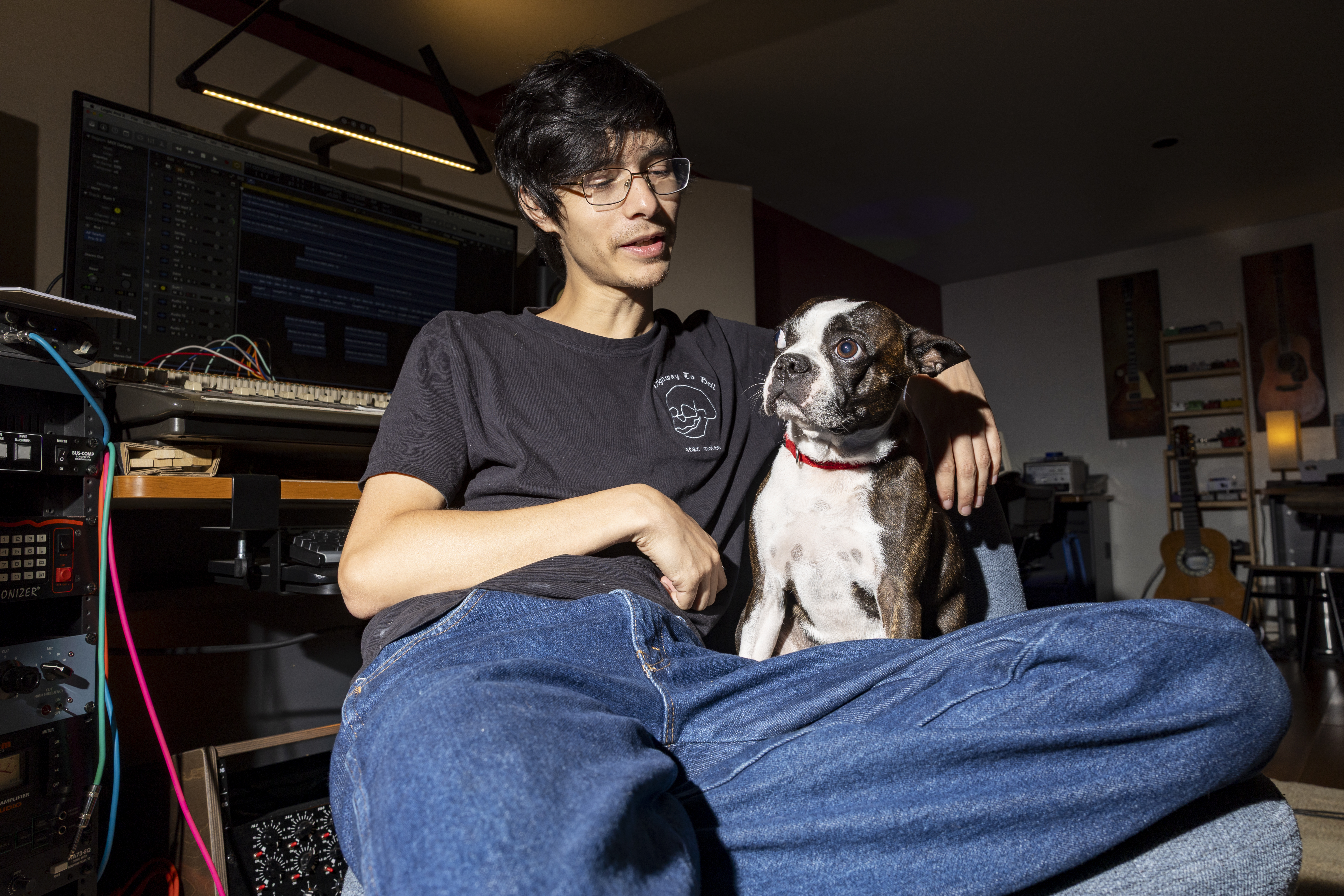
Emily Moles (center), known as Star Moles, passes a guitar to longtime collaborator Kevin Basko inside the Historic NJ studio in South Philadelphia on Friday, July 10, 2026.Aidan T. Gallo / Staff Photographer
Since the spring, the national and international music press has caught wind of what makes Historic NJ special, praising the warmth and camaraderie that comes through on Star Moales’ Highway to Hell and the Sullivans’ Love & Devotion.
Now, it’s Basko’s turn. Rubber Band Gun’s Bloodwork, like all of the other Historic NJ projects, was recorded and produced at Basko’s home studio in South Philly, with Moales and the Sullivans contributing musically and vocally.
The newest of the dozens of streamable releases on Rubber Band Gun’s Bandcamp page showcases Basko’s canny, inviting songwriting. Tunes like “Love Me Dawg” and “Money on My Mind” consistently offer subtle surprises and are never merely clever, even when Basko is punning on Rihanna and Rage Against the Machine lyrics while singing about feeling out of place in America in “Zombie in the Country.”
— Dan DeLuca
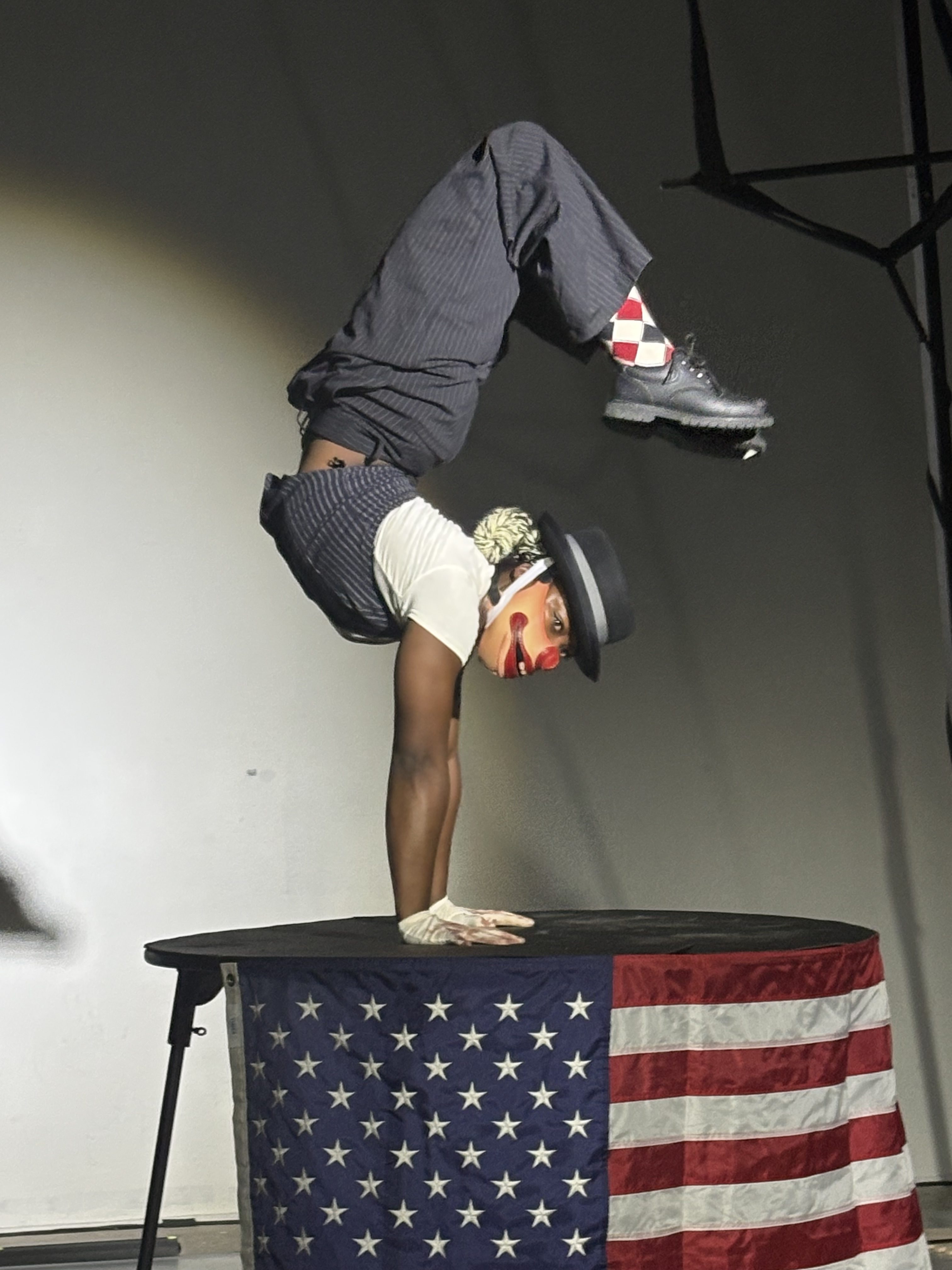
Julia Baccellieri as Joice Heth in “Strange Root, or the Murder of P.T. Barnum by Joice Heth.” Elizabeth Wellington
A Fringe Festival performance gives agency to enslaved member of P.T. Barnum’s 19th-century circus troupe
In 1835, showman, businessman, and politician P.T. Barnum bought an elderly enslaved woman, Joice Heth, from a Kentucky enslaver, added her to his circus, and falsely claimed she was George Washington’s 161-year-old nursemaid.
His advertisements described her as weighing 46 pounds and being blind and toothless — supposed evidence of her extreme age.
To reinforce the trope of the frail, subservient, illiterate Black person, Barnum insisted she use a poor, Southern dialect to regale the audience with stories about her relationship to Washington.
Heth died in 1836 at 80 and Barnum even exploited her in death, charging circusgoers 25 cents to see her dead body, an experience he marketed as a public autopsy.
Baccellieri doesn’t portray Heth as a weak woman beaten down by her circumstances. Instead, they use dance trapeze, aerial apparatus, Chinese pole, and hula hoops to give Heth power, agency, and beauty.
The music is contemporary and soulful, weaving in Nina Simone’s jazz with Kendrick Lamar’s bars. Baccellieri dons a clown mask during the performance. They affix it as the audience listens to Maya Angelou read Paul Laurence Dunbar’s 1896 poem “We Wear the Mask,” which speaks to Black Americans’ dual consciousness.
Alston’s portrayal of Barnum as a buffoon gives voice to the stupidity of racism, speaking truth to power: Racists who refuse to see the evil in their actions will cause their own demise.
Strange Root is short — it runs under 45 minutes — but it’s powerful.
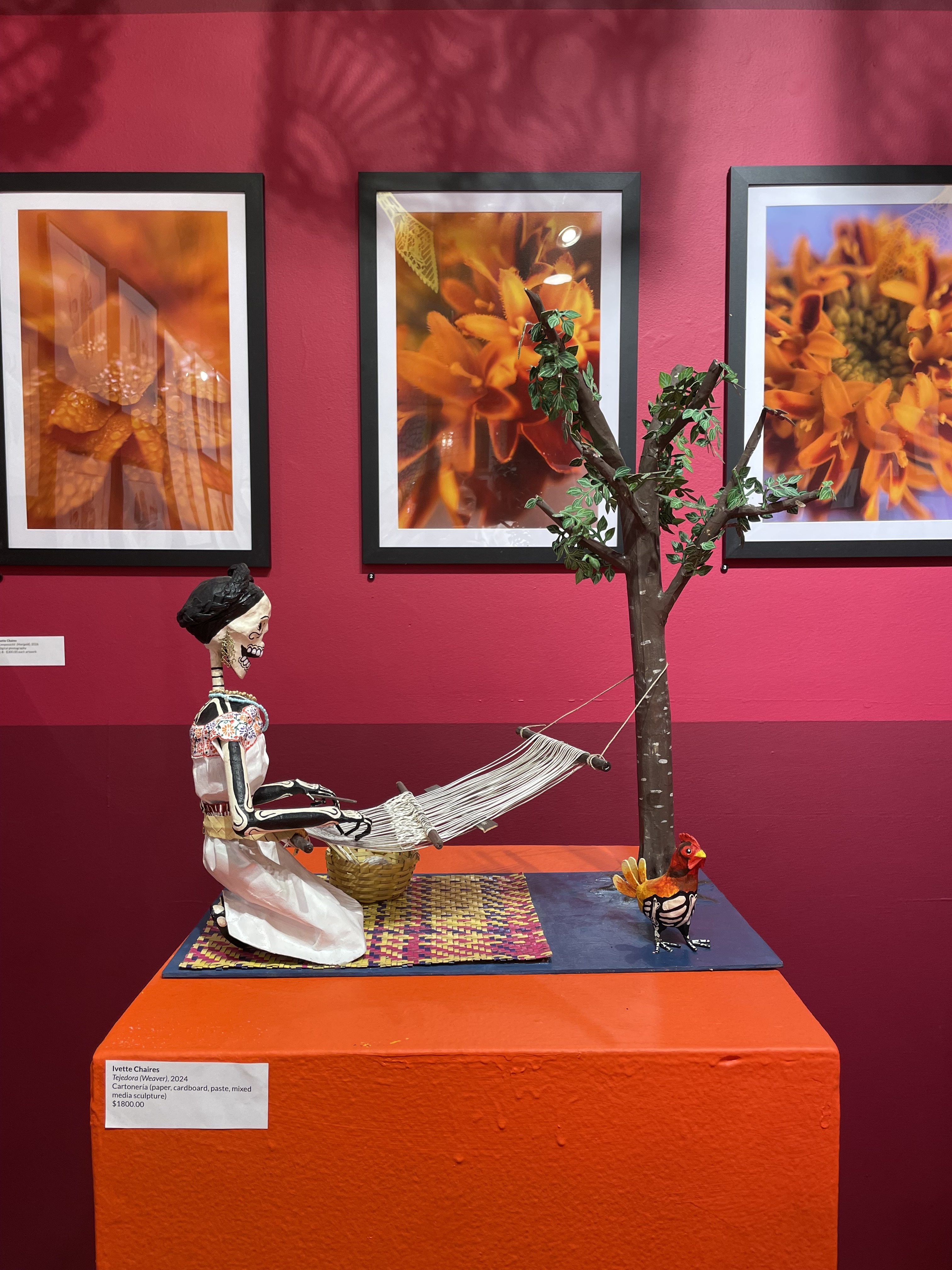
“Tejedora (Weaver)” from Puebla, Mexico, artist Ivette Chaires is on view at Philadelphia’s Magic Gardens as part of her solo show, “Living Through Death,” through Nov. 8.Rosa Cartagena
Skeletal spectacles
South Street’s Magic Gardens are often packed with tourists and fans walking through the outdoor mosaic labyrinth of mirrors, glass bottles, clay sculptures, and ceramic tiles lovingly built by South Philly legend Isaiah Zagar. Inside, though, the building hosts rotating exhibits from other artists; currently on view is “Living Through Death” from Puebla artist Ivette Chaires, who spent time working in Philadelphia as part of the Julia Zagar Residency for Women Artists.
Using papier-mâché, Chaires crafted 36 skeletal figures in the Mexican tradition of cartonería, often seen during Día de los Muertos celebrations. Her skeletons are strikingly animated, decked out in funky modern clothing and thick-rimmed glasses or posing cheekily. There’s a Frida Kahlo figure and an Edgar Allan Poe — and a football fan with an Eagles cap. Several works depict the Zagars, like one with Isaiah and Julia wearing colorful mosaic outfits. The show debuted five months after Zagar died, making it a powerful tribute to his legacy.
Each delightfully spooky sculpture contains incredible layers. Tejedora (Weaver) features a bony woman bending over a loom attached to a tree trunk on one end and wrapped around her waist on the other. The details are so carefully crafted, from her twisted belt to her intricately woven gold earrings. Nearby stands a sweet little chicken with a living head and a dead underbelly. It was a fascinating, fully-formed scene that accomplished Chaires’ goal — for the viewer to feel deeply connected to the dead.
“Living Through Death: Works by Ivette Chaires” is on view through Nov. 8 at Philadelphia’s Magic Gardens, 1020 South St., Philadelphia, 215-733-0390 or phillymagicgardens.org.