Saquon Barkley (hamstring/back) is available to play in the Eagles’ Week 9 game vs. the New York Giants Sunday afternoon.
The 29-year-old running back rushed for 83 yards on 15 carries at the Washington Commanders last week, but he was limited in practice again this week. He’s played in six of eight games this season due to injury and has been running on a pitch count.
Elsewhere on offense, the Eagles are still without their top two receivers, DeVonta Smith (hamstring) and Dontayvion Wicks (ankle). This will be the third straight week without the duo. They were officially ruled out Friday. Linebacker Jihaad Campbell (hamstring/quad), wide receiver Britain Covey (knee), safety Michael Carter II (abdomen), and cornerback Jonathan Jones (hamstring) were also ruled out.
Quarterback Tanner McKee (rib), who was a limited participant in Friday’s practice, was listed as questionable for Sunday’s game. McKee was benched for quarterback Joe Milton on Wednesday. If McKee can’t go, sixth-round rookie Cole Payton will be the backup quarterback. Outside linebacker Jalyx Hunt (knee/ankle) was also listed as a limited participant on Friday.
As for the positive news, linebacker Zack Baun (shoulder), tackle Markel Bell (finger), defensive tackle Jordan Davis (thumb), guard Landon Dickerson (hip), kicker Jake Elliott (right ankle), tight end Dallas Goedert (knee), outside linebacker Jonathan Greenard (ankle), tackle Jordan Mailata (elbow), wide receiver Elijah Moore (neck), defensive back Kenny Moore (glute) and defensive tackle Moro Ojomo (neck) were all listed as full participants on Friday.
The Eagles (2-6) enter Sunday’s game against the Giants (4-2-1) trying to snap a six-game losing streak, the franchise’s longest since 2012, ahead of the NFL trade deadline on Tuesday.
Nick Sirianni’s team will have a bye week in Week 10, a chance to get healthy ahead of a Week 11 meeting at the Linc against the Pittsburgh Steelers.
The resolution passed 75-50, with five faculty senators abstaining and five others not voting, according to an email sent to Faculty Senate members on Friday afternoon.
The vote followed weeks of debate among professors over whether Cornell President Michael Kotlikoff and other administrators handled the woman’s allegations properly and have done enough to curtail sexual misconduct at the prestigious university.
While the faculty body has no power over the university’s top leaders, backers of the resolution had said they hoped it would pressure Cornell’s trustees to address longstanding institutional failures they identified.
The board of trustees said Friday that the vote reflected deep anger on campus and sent a “clear signal that what happened to Jane Doe is unacceptable,” but added that Kotlikoff and his administration were the right leaders to “thoughtfully and comprehensively” address the issue.
“The Board fully supports President Kotlikoff and his administration as they continue to listen and act decisively in support of students,” board chair Anne Smalling said in a statement. She cited expanded sexual assault prevention education, additional victim advocates, and more staff at the university’s Office of Civil Rights as evidence of the administration’s response.
Thomas Giuffra, Jane Doe’s attorney, said in a statement Friday that “we are hopeful that this will be yet another step forward to educate and support the Cornell community by addressing the longstanding scourge of sexual assault on campus.”
Lawsuit sparked outrage on campus
The Cornell community has been distressed since mid-September, when a former student filed a lawsuit against the university and seven former members of the Chi Phi fraternity, saying she was given ketamine and raped at a fraternity house in October 2024.
All of the men have denied her allegations, saying the sex was consensual or that they weren’t involved. The local district attorney initially decided the woman had consented to the encounter and that no crime had been committed, but the investigation has since been reopened and handed to New York’s attorney general.
Cornell disciplined several of the accused students following a monthslong Title IX investigation. Two were expelled, two received suspensions and probation, and two were required to write “reflection” papers and complete bystander training. A seventh man had already graduated and was barred from campus, according to records obtained by the New York Times.
Kotlikoff also convened a task force to study the problem of sexual misconduct on campus, which released certain recommendations.
Some faculty members have criticized Kotlikoff for not acting more forcefully to strengthen the school’s disciplinary process, push for criminal investigations, and change campus party culture.
Paul Ortiz, a labor history professor who co-sponsored the no-confidence resolution, said last week that hundreds of students, staff, alumni, and faculty approached the resolution’s sponsors to emphasize that “the Jane Doe case is but a tip of the iceberg” and that “a veritable fortress of silence has been breached” around sexual violence since the resolution’s introduction.
Kotlikoff defended his leadership, arguing that replacing him would do little to solve complex problems and could damage Cornell’s reputation. He acknowledged he had not read the campus police report, explaining that university policy barred top administrators from interfering in criminal investigations. He also rejected suggestions he had been indifferent to the woman’s case, though he acknowledged only recently learning she had left Cornell.
Kotlikoff said the university needed to determine whether fraternities could operate safely and left open the possibility of sweeping restrictions on Greek life. He argued that decisions should be based on research and evidence rather than emotion.
Some professors had said faculty should wait to vote until the release of an independent investigation by former U.S. Deputy Attorney General Sally Yates, whom the university hired to examine both how Cornell responded to the woman’s initial rape report in 2024 and its overall procedures for handling similar reports from other students.
The no-confidence resolution did not call for Kotlikoff’s resignation.
Local advocacy groups and political leaders are poised to launch a major campaign to try to stop ICE arrests at Philadelphia International Airport.
Dozens of immigrant travelers have been taken into custody there in the last five months, they say, and an unknown number of people have been handcuffed at airports in other cities while attempting to fly home to Philadelphia.
Organizers believe the South Philadelphia airport has become one of the riskiest places in the region for noncitizens, where work authorizations, pending petitions for relief, and other types of immigration permissions have proven no barrier against arrest.
The leaders plan a formal Thursday announcement of a public-awareness campaign ― several City Council members are expected to attend ― that they said could escalate into exerting financial pressure upon companies that do business at the airport.
“The Philadelphia airport is our airport,” said one campaign leader, Aurora Muñoz, the organizing manager of the Pennsylvania chapter of the National Domestic Workers Alliance. “It’s horrible, the kinds of freedoms that people are losing, so that’s why we’re wanting to be in this fight.”
The airport is owned and operated by the city, which recently passed extensive “ICE Out” legislation to try to limit agency activities within Philadelphia. Sam Scavuzzo, chief of staff for the city law department, said in an earlier statement, however, that “federal law enforcement access to particular areas of the airport is governed by federal law.”
Campaign organizers say at least 50 immigrant travelers, young and old, mostly female, some the parents of young children, have been arrested at the airport since July.
Those numbers could actually be higher, as the known cases represent only people who reached out to lawyers or community organizations. Immigrant travelers without those connections or resources may simply have disappeared into detention.
Some of the incidents involving Philadelphia-area residents include:
On Sept. 15, Delaware County nurse Monica Ryadi was arrested when she stepped off a plane in Los Angeles, handcuffed in an ICE operation that she suspects began in Philadelphia. A stranger had approached her family in the boarding area, but didn’t get on the flight, Ryadi said. The 30-year-old hospital nurse, who with her husband was taking their 3-year-old son to Disneyland, has legal permission to live and work in the United States. A federal magistrate judge subsequently ordered her freed from ICE detention.
On Sept. 2, a Philadelphia man who thought he was waiting for approval of a green card was arrested outside the San Jose airport when he arrived to fly home from a business trip. Michael “Sandy” Sims, 42, an entertainment-lighting industry veteran, was deported to London after being held in detention for about a month. His wife, a U.S. citizen, unsuccessfully fought to keep her husband from being removed.
On July 11, a South Philadelphia babysitter was arrested at the Philadelphia airport as she prepared to fly to Kansas City to see the Argentina national soccer team play in the World Cup. Iliana Lick, 30, originally from Buenos Aires, was held in detention for about a month before a judge facilitated her release by setting bond. Homeland Security said Lick overstayed her visa, and that her work authorization and pending application for immigration relief did not confer legal status.
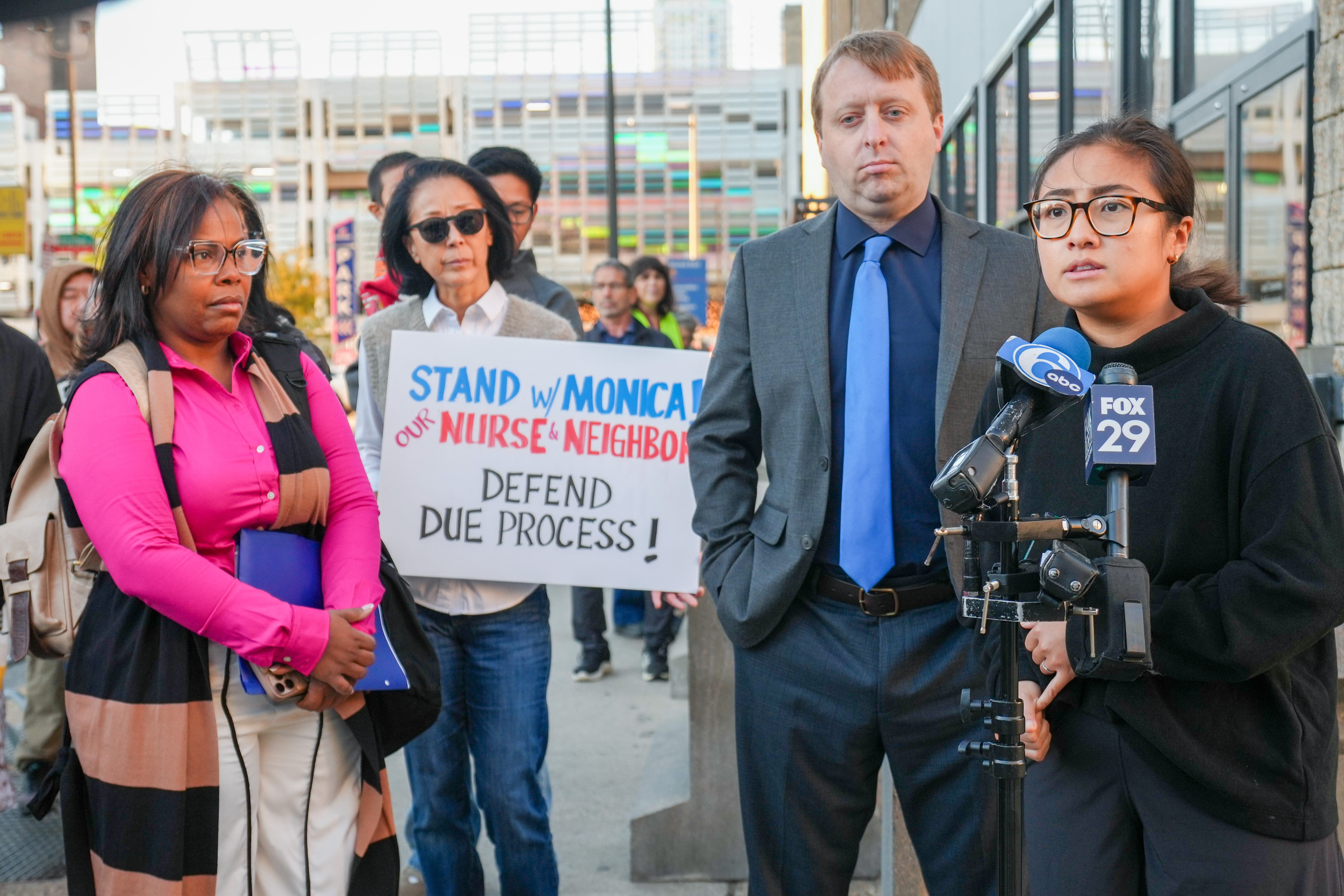
Delaware County nurse Monica Ryadi, at microphones, speaks to supporters outside of ICE headquarters at 8th and Race Streets last month. With her is immigration attorney Eric Rosenfeld. Ryadi was arrested by ICE on her way to take her child to Disneyland.Jessica Griffin / Staff Photographer
Asked about the airport campaign, a spokesperson for Homeland Security said on Friday that obstructing law enforcement is a federal crime and assaulting law enforcement is a felony offense.
“Our message remains: ICE is NOT slowing down,” the agency said in a written statement. “Enforcing federal immigration law is the responsibility of federal law enforcement. This administration does not ignore the rule of law and DHS will not pick and choose which laws we enforce.”
DHS said it had “reversed the horrendous Biden-era policy that allowed aliens in our country illegally to jet around our country. Under President Trump, DHS will no longer tolerate this. This administration is working diligently to ensure that aliens in our country illegally can no longer fly unless it is out of our country to self-deport.”
Philadelphia airport officials said in a statement Friday evening that they were “aware of the concerns related to immigration enforcement activity by federal agencies at Philadelphia International Airport,” and that “the safety and security of our airport and the PHL Airport community” was their top priority.
“PHL is a public-use airport subject to federal regulation, and federal agents have broad access to airport property,” including pre- and post-security areas in the terminals, the customs offices and screening area, the airfield, and public spaces like parking ramps and lots, the statement said.
Airport officials cannot interfere with law enforcement operations by federal agencies, including ICE, the statement said. They do not receive advance notice of immigration-related actions and cannot “confirm cases, incidents, or speculation about immigration enforcement activities.”
The new ICE OUT of PHL Airport Coalition consists of 50-some leaders and organizations, including labor and cultural groups, among them the Pennsylvania Immigration Coalition, Philadelphia Council AFL-CIO, the Worri Center, Puentes de Salud, the Coalition of African Communities, Amistad Law Project, Women Against Abuse, UNITE HERE Local 274, and the office of Councilmember Kendra Brooks.
They plan to hold a news conference at 3:30 p.m. Thursday at the airport’s Terminal E Departures.
“We want the general public to be aware that this is happening at the airport, so they can keep their community safe, their neighbors safe,” said Elena Emelchin Brunner, the immigration justice organizer at Asian Americans United. “We’re very open to working with airport leadership to see if and what they can do.”
The coalition is calling for specific actions.
They want airport leadership to ban ICE from entering airport property without a judicial warrant, to prohibit airport employees from assisting ICE, and to bar ICE from using city-owned airport spaces to stage arrests.
They want the airport to publish regular public reports documenting ICE activity, including the number of people detained and the airlines they intended to fly.
They want airlines that use the Philadelphia airport to bar ICE agents from going to flight gates, and to not share passenger information with the agency. They’re also asking airport concession companies to not discipline workers when they miss work due to fear of ICE activity.
The campaign comes as a response to President Donald Trump’s push for mass deportations ― including the targeting of immigrant travelers at airports around the country.
Immigrants who long thought they were safe, and who had previously been able to fly without incident, now are at risk, in some cases finding themselves suddenly surrounded by agents and shipped to far-off detention centers in places like New Mexico.
Airports rank among the nation’s most sensitive public spaces, traversed by millions of people that include U.S. citizens, noncitizens, and mixed-status families, California immigration lawyer Andrew Neitor wrote for the American Immigration Lawyers Association. The introduction of ICE agents, he said, blurs critical lines between airport security and immigration enforcement, around what authority is being exercised and by whom, and over the legal protections due to people who may be arrested.
Part of what enables the surge of airport arrests is that federal agencies have begun sharing information about travelers in a way that wasn’t done before.
Since May 2025 the Trump administration has used information that passengers provide to the Transportation Security Administration as a means to further immigration enforcement, according to documents obtained by American Oversight, a government watchdog group.
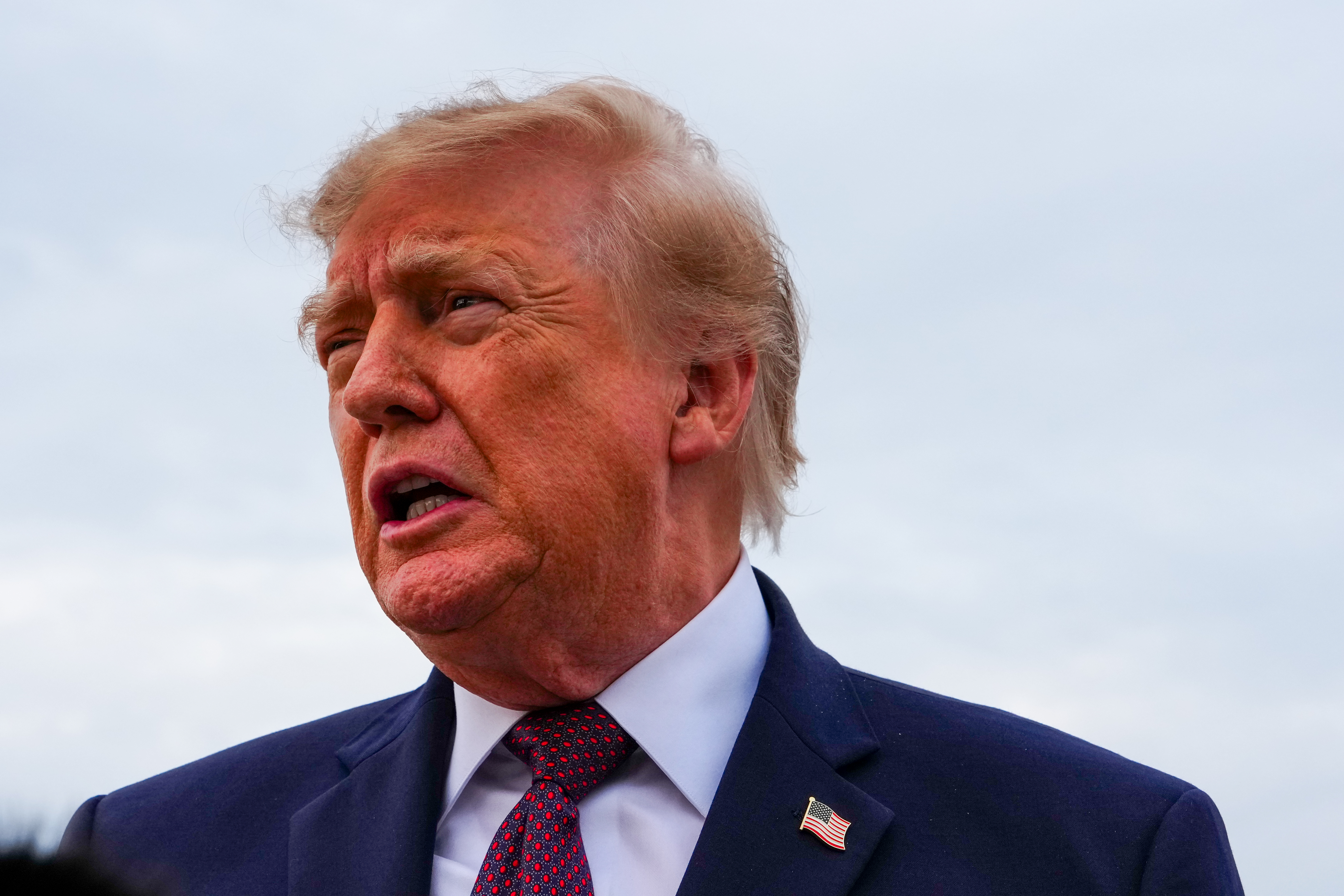
President Donald Trump speaks to reporters before boarding Air Force One at Joint Base Andrews in Maryland on Oct. 28, 2026.ALEX KENT
Those records outline a formal data-sharing agreement between TSA and U.S. Immigration and Customs Enforcement. The agreement said sharing the data would enhance national security, transportation safety, and immigration management, but civil liberties groups have said it breaches public trust and turns airports into immigrant checkpoints.
“We are really focusing on public awareness because we don’t want this happening in silence,” Emelchin Brunner said. “It is kind of like an invisible presence in Philadelphia, regarding ICE and their behavior, including at the airport. … We want to make sure that everyone feels safe connecting with their families.”
WASHINGTON — A federal court has temporarily blocked President Donald Trump from breaking ground for his towering memorial arch, but that hasn’t stopped his administration from pushing forward with the plans for building it, starting with a glitzy new website launched Friday.
The site’s debut is yet another sign of how much Trump is leaning into his efforts to make over the White House and Washington to his own gilded tastes, even after his party lost control of Congress in a midterm-election drubbing. It was the fourth day this week alone that the administration promoted his projects.
The website declares that the 250-foot-tall structure — which is slated to rise in a mass of blindingly gold ornamentation and stately gray granite between the Lincoln Memorial and Arlington National Cemetery — will be formally known as the United States Military Triumphal Arch.
Describing the arch as “an American vision finally realized,” the site offers bird’s-eye views of the proposal from many angles and shows off the declarations it will feature: “One Nation Under God” on one side and “Golden Age of America” on another. It’s also set to have towering gold doors complete with panels of sculptures at its base.
At its very top, the structure features a golden-hued cherub hoisting a flaming torch that recalls a smaller version of the Statue of Liberty.
The website does not say how much the project will cost or how it will be paid for, although some estimates have reached as high as $100 million.
The White House highlighted the website the morning after U.S. District Judge Tanya Chutkan issued a temporary restraining order that prohibits work on the site for 14 days. That order followed a vote to approve the arch by a federal planning commission that is stocked with Trump’s allies.
With Democrats taking control of Congress in January, Trump’s renovation projects will encounter far more scrutiny and roadblocks — from his effort to put his own name on the Kennedy Center to remaking a public golf course and building his massive White House ballroom and the arch.
The clouds of scrutiny are gathering
Rep. Jared Huffman of California, the top Democrat on the Natural Resources Committee with jurisdiction over the Interior Department that is involved with operations at parks and federal lands, spent much of the past year probing and questioning Trump’s projects, laying the groundwork for this moment.
“We’ve pushed back against vanity projects that seek to transform treasured public spaces into gaudy tributes to Trump. We exposed corruption, uncovered the efforts to hijack America’s 250th birthday, demanded accountability, and offered a compelling alternative governing vision grounded in science, fairness, environmental responsibility, and the rule of law,” Huffman said in a letter to colleagues seeking their support to be chairperson.
As chairperson with a strong Democratic majority, “I will ensure that the Committee’s full investigative and oversight authority is leveraged to uncover wrongdoing, demand accountability, and protect the public interest,” he said.
Trump has been rushing the various projects, a point Virginia Democratic Rep. Don Beyer made Thursday at a public hearing when he opposed construction of the memorial arch.
“The appropriations process beginning Jan. 3 will be controlled by Democrats. That will be one of the ways Congressman Beyer will step in,” said Beyer’s spokesperson Aaron Fritschner.
A less appreciated impact will be the change in who names the general counsel of the House. The House Speaker has that role, presumably Rep. Hakeem Jeffries.
While Democrats have joined in lawsuits opposing the various projects, their filings don’t carry the weight of Congress as the minority. “You’ll see the new majority pulling back the balance of power that (House Speaker) Mike Johnson was willing to cede,” Fritschner said.
The arch would feature an event space — and ‘provisions for a sniper nest’
The president on Monday focused his final remarks before the midterm elections talking up his costly and problem-plagued effort to overhaul the Lincoln Memorial’s Reflecting Pool. The day after the losses, on Wednesday, he took reporters on a tour of the ballroom’s construction site. And his first official action after his party lost control of Congress was to declare, on Thursday, that the Oval Office would become a national monument.
The arch plans feature an event space in the horizontal part of the structure reached by elevators and stairs.
But inside its “massive columns will be storage for munitions,” the site states, as well as areas on the pedestal and observation deck that will be “set aside for snipers, countersnipers, and provisions for a sniper nest.”
An open ground area at the monument’s base “will be designed for launching drones and other homeland security assets,” the site says, while also noting that the arch “will be Highly Secretive but, at the same time, a Top Level and Lethal structure, the likes of which has not been seen in this Country before.”
“It is long overdue, and has been sought for many years, especially by the Military,” it says.
Trump has said for months that the monument would be inspired by the Arc de Triomphe in Paris and that Washington has wanted a similar structure for centuries — even though that’s not true. He previously joked that it might be called the “Arc de Trump.”
The website repeats Trump’s inaccurate claims. It also features a picture of the president and quotes him as saying, “This will be the greatest and most beautiful triumphal arch, anywhere in the world.”
Growing up, Eagles staff member Jalen Cyrus always asked himself, “Am I ever going to succeed?”
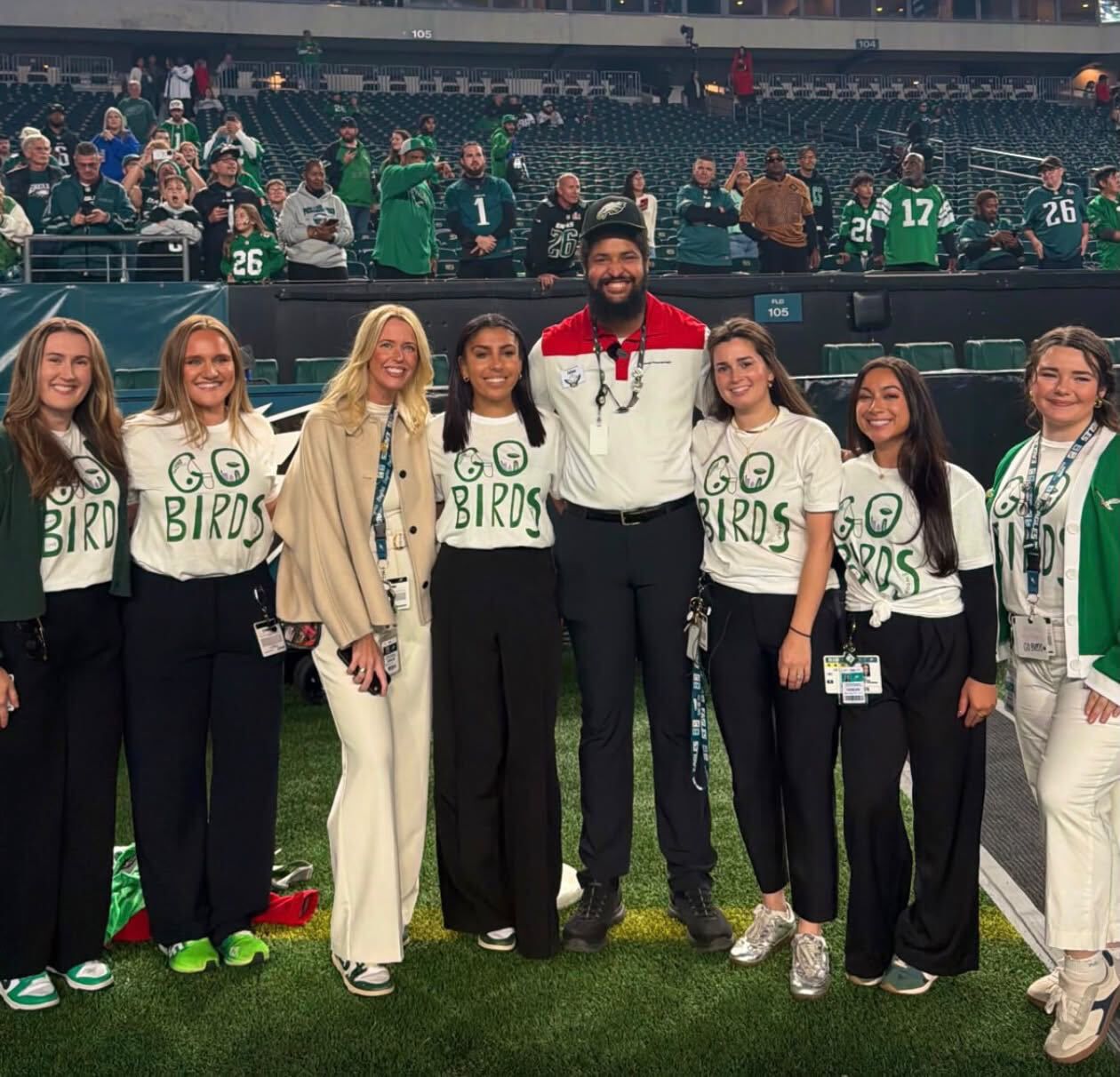
Now, the 24-year-old Folsom, Pa., native has no doubts after watching Eagles players wear his T-shirt design on Monday Night Football ahead of the Eagles game against the Dallas Cowboys.
“I was probably in middle school when I was like, ‘Why are people treating me not like everyone else?’” Cyrus said. “And then my parents told me I was born with autism and all that stuff, and I started thinking, ‘Am I ever going to be like everyone else? Am I ever going to succeed?’ But it turns out I am.”
Cyrus, a die-hard Birds fan, has worked with the Eagles for two seasons, starting in August 2025 as a game day event staffer working the escalators on the main concourse. But one of his main passions is art, and he holds a degree in art from Landmark College.
And two weeks ago, he had the chance to see his two worlds collide.
“One of the coordinators asked me if I could make a T-shirt design for the Eagles Autism Foundation because she noticed I had a degree in art,” Cyrus said. “I actually created multiple designs, and a lot of people liked the ‘Go Birds.’ I was just thinking of things that represent Philly, and I was just working with the only colored pencil and markers I had in my house. So I was creating things that represent Philly and the Eagles Autism Foundation.”
Cyrus created three designs, including one in the shape of an eagle head, another in the shape of a football, and the “Go Birds” shirt that features images paying homage to the city, the Eagles Autism Foundation, and Swoop.
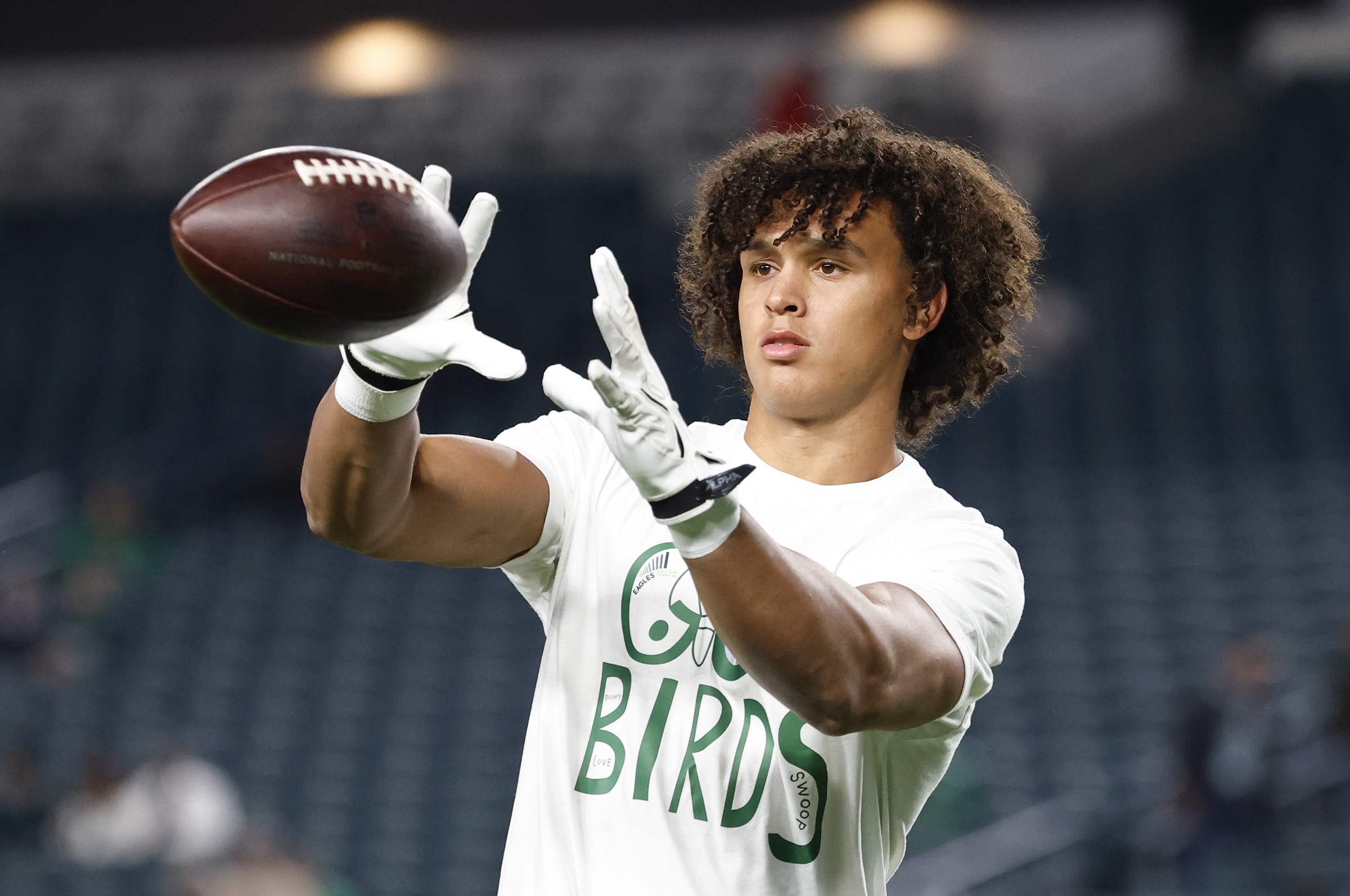
Eagles tight end Eli Stowers catches the ball during warmups while wearing his “Go Birds” T-shirt.Yong Kim / Staff Photographer
But Cyrus had no idea the team and Eagles staff would be wearing the T-shirt design ahead of Monday Night Football.
“I really wasn’t expecting that at all,” Cyrus said. “Like, they fully surprised me with the whole thing. When I walked on the field, I started to notice my design on the T-shirts and everything. But the whole time, I was just in shock.”
“To me, personally, I feel like it’s really important because I know there are some people that just don’t understand the autism community,” Cyrus said. “So I feel like EAF definitely shows people what the autism community is like and how important it is to include everybody.”
The Eagles Autism Foundation hosts clinics and social outings for neurodiverse game day staff members, including trips to Bates Motel, as well as Sixers and Phillies games. And as Cyrus continues to work with the Birds, he says he also will continue to post his artwork online through his Instagram page, @cryusartworks.
“I really like to create things, draw, take photos, and use iMovie to get into video editing,” Cyrus said. “With that Instagram page, I just want to post random stuff that I make. Even if I’m outside and taking landscape photos, I can post that too.”
The Pennsylvania Insurance Department will intervene in the high-stakes contract disputes between Jefferson Health and two major insurers, Highmark and Independence Blue Cross, to protect consumers from losing access to their doctors and hospitals if the three parties cannot agree to new contracts by Dec. 31, state officials said this week.
Under a 1975 law, the insurance commissioner can suspend a contract termination for up to six months, hold public hearings on the conflict, and use an arbitrator to help the health system and the insurer reach a deal.
However, regulators can’t force the parties to make a deal.
In Southeastern Pennsylvania, the conflict pits the region’s largest health system against its largest insurer. Jefferson says Independence pays 40% below national averages and wants significant increases. The insurer has countered that the rates it pays Jefferson are competitive locally and that it has offered a significant increase.
Jefferson owns 33 hospitals from South Jersey to Scranton. Its operations include Lehigh Valley Health Network, which serves areas of Pennsylvania where Highmark has a large market share.
Jefferson said it seeks rates from Highmark “that fairly support the care provided by Jefferson Health physicians and care teams.”
Before the insurance commissioner gets involved, the hospital system or the insurer has to notify regulators they may terminate their contract.That has happened in Jefferson’s negotiations with both Independence and Highmark, as have notifications to insurance brokers and patients.
As relic of the 1970s, the law applies only to Blue Cross Blue Shield companies, not to other insurers like Aetna, Cigna, or UnitedHealthcare.
An insurance department official testified at a 2011 hearing held by the state House of Representatives — during a high-profile dust-up between Highmark and UPMC in Western Pennsylvania — that the law had only been invoked twice, in 1996 and 2008.
In both cases, the insurers and health systems reached a deal before the insurance department held hearings.
The insurance department did not respond to a question Thursday about whether the law had been used on other occasions. The state attorney general brokered an agreement between UPMC and Highmark more than a decade ago, bypassing the full use of the law, known as Act 94.
Dan Tropeano, president of Highmark’s Southeastern Pennsylvania market, said in an interview Friday that it is appropriate for regulators to protect the health and safety of Pennsylvania residents.
Tropeano remains hopeful that Highmark will reach an agreement with Jefferson.
“We’re still negotiating in good faith. We feel like we’re making incremental progress, and I’m still confident, at least from a Highmark perspective, that this will be resolved before it comes to termination,” he said.
Jefferson Health said in a statement that it “would welcome the insurance commissioner bringing all parties together if we don’t come to a fair and sustainable reimbursement for the physicians and caregivers who take care of our communities. We should all want an agreement that protects patient access to the doctors, hospitals and specialized care they rely on.”
Independence said that it had complied with the law by providing 90 days’ notice to the insurance department of the possible Dec. 31.
Act 94 passed after lawmakers saw the disruption caused by the expiration of a contract between a group of Philadelphia hospitals and Blue Cross of Greater Philadelphia, now known as Independence Blue Cross.
Andrew Goretsky is the senior regional director for ADL Philadelphia.
Free speech protects the right to criticize a government and its policies. It does not protect a campaign of discriminatory action targeting Jewish and Israeli-owned businesses for removal from a city.
The people who work at the restaurants are our neighbors, and they are being told they do not belong.
These restaurants are owned by American Jews and Israelis. Everyone should see this for what it is: targeting people because of where they come from or the minority group they belong to.
For Yehuda Sichel, the chef and owner of one of the restaurants, the timing is particularly painful. His grandfather was just 10 years old in Germany during Kristallnacht, and later immigrated to the United States.
“We’re not going anywhere,” Sichel told a local news station.
That is not politics. It is hatred of Jews with a new label. Replacing the word “Jewish” with “Zionist” does not change who is being targeted.
We have seen this tactic before.
And when the stated goal is to push people out of the city, and the people chosen are Jewish business owners, this is discrimination and attempted intimidation.
The timing heightens the impact on the Jewish community. The ride falls on the eve of the 88th anniversary of Kristallnacht, when Nazi mobs destroyed thousands of Jewish businesses, homes, and synagogues.
We know where it leads when Jewish businesses are marked and the public is told to stay away.
Unlike the horrible riots during Kristallnacht, local leaders have spoken out forcefully and clearly. Mayor Cherelle L. Parker affirmed the right to protest peacefully while making plain that singling out businesses because of who owns them has no place in Philadelphia, and she directed the police to prepare for the weekend.
Pennsylvania Attorney General Dave Sunday called out the ride for targeting Pennsylvanians because of their Jewish identity, not because of any policy.
Gov. Josh Shapiro’s office condemned it as antisemitism meant to drive Jewish businesses out of our communities.
Council President Kenyatta Johnson, State Rep. Ben Waxman, and the co-chairs of the Pennsylvania Legislative Jewish Caucus all stood with the businesses —as did the Pennsylvania Restaurant & Lodging Association and the Philadelphia Council of Clergy.
These voices matter. They tell every Jewish Philadelphian that they are not alone.
Now we all have a role to play. The best answer to a discriminatory act is to show up for those it targets.
Here is what you can do:
Speak up. Tell your family, friends, coworkers, and neighbors that no one should be targeted because of who owns a business.
Share facts. Explain what this campaign is, and why the language matters. Criticizing a government is free speech. A campaign to push Jewish-owned businesses out of a city is not.
Show strength. Patronize these businesses. Do it today. Do it tomorrow. Keep doing it next week, next month and for years to come. Bring friends, leave a positive review, and book your next dinner or event there. Make them your regular spot. Hate counts on us staying away. Let’s fight it by showing up.
Philadelphia is stronger because these businesses are part of it. They belong here, and we will make sure they stay.
SACRAMENTO, Calif. — California Gov. Gavin Newsom said Thursday that he’ll change more than 500 death sentences in the state to life in prison without the possibility of parole, though the state Supreme Court will have the final say in hundreds of those cases.
“I take this action because I firmly believe that state-sanctioned killing is incompatible with California’s values, undermines the foundations of our legal system, and diminishes each of us,” Newsom said in a public letter.
Newsom’s decision comes as he prepares to leave office after eight years and considers a run for president. The Democrat, who’s long been opposed to the death penalty, placed a moratorium on executions in California in 2019.
His latest move came after he realized “the limits of what government can justly accomplish,” he said.
Newsom moved to grant clemency to 548 people currently sentenced to death in California, of whom 529 are men and 19 are women, according to numbers provided by his office.
The state constitution requires the California Supreme Court’s approval to grant clemency to anyone convicted of a felony more than once, which means the court would have to approve 382 of those commutations, or roughly 70%, according to Newsom’s office.
According to the Death Penalty Information Center, Newsom’s action represents the largest mass clemency in American history. If they are all approved, it would reduce the U.S. death row population by nearly 30%, the center said.
California voters upheld the death penalty
Americans have long been divided over the death penalty. Nearly half of U.S. states have banned capital punishment outright, but executions are still carried out routinely around the country. On Thursday alone, Florida, Alabama, and Indiana carried out lethal injections.
Californians voted to uphold the death penalty in 2012 and 2016 ballot measures. No one has been executed in the state since 2006 and California has the largest death row in the Western Hemisphere.
Among the most notorious convicted killers on California’s death row are Richard Allen Davis, who kidnapped and murdered 12-year-old Polly Klaas in 1993, and Randy Kraft, the so-called “Scorecard Killer” who kept a list of his 16 victims in the 1970s and ’80s. Other prominent killers, including Scott Peterson and the Manson family members, received death sentences that were later commuted to life in prison.
Jess Nichol, Klaas’ sister, said she previously believed Davis deserved the death penalty, but her views evolved.
“The system tells survivors that execution matters to our healing,” Nichol said in a statement. “It doesn’t. It’s a distraction from what we actually need.”
Newsom said the decision was among the most difficult choices of his career because it will surface painful memories for crime victims’ families.
“As Governor, I alone bear responsibility for this decision and its impact, just as I alone would bear responsibility for each execution,” Newsom wrote.
The American Civil Liberties Union, which has said the implementation of the death penalty reflects racial bias, applauded the announcement.
“These commutations reflect what justice demands: an end to a racist, error-prone, and inhumane punishment that has burdened California for far too long,” Executive Director Anthony Romero said in a statement.
The ACLU is involved in an ongoing legal challenge to California’s death penalty statute, alleging it is racially discriminatory and unconstitutional.
Victims’ groups and prosecutors decry the decision
Patricia Wenskunas, founder of the California advocacy nonprofit Crime Survivors, which opposed the abolition of the death penalty, criticized Newsom’s decision.
“My heart hurts for every one of the victims and every one of their family members,” she said, calling the decision “offensive” and “outrageous.”
Steve Herr, whose son Sam Herr was murdered along with his friend Julie Kibuishi by Daniel Wozniak in 2010, said he was “absolutely disgusted” by the governor’s decision. He said the death of his son’s killer would have meant closure.
“When somebody commits such a heinous crime, they do not deserve to live,” Herr said. “To hear what Newsom just did … he’s just an outright coward.”
The California District Attorneys Association condemned the decision. Last month, the group sent a letter to Newsom expressing “grave concerns” about him considering the move and warning that such a sweeping action would inflict additional pain on victims’ relatives.
“With the stroke of a pen, Governor Newsom has disregarded the decisions of hundreds of jurors and judges, and the anguish of families who lost loved ones to the worst crimes imaginable,” CDAA President Jeannine M. Pacioni said in a statement. “The victims were never given a commutation. Their families were never given a choice. They deserve far better than this.”
San Luis Obispo County District Attorney Dan Dow called the move a “sickening abuse of power.”
Dow referenced Rachel Newhouse and Aundria Crawford, two women who were kidnapped, raped, and murdered by Rex Allan Krebs in 1999, and Kesha Gurke, a 19-month-old girl tortured and murdered by Michael Whisenhunt in 1995.
“San Luis Obispo County juries sentenced both men to death. A unanimous California Supreme Court affirmed both judgments. Their families have waited decades for the State of California to keep its word. Today, the Governor broke it,” Dow said.
Orange County District Attorney Todd Spitzer also condemned the decision, calling it “mercy for the wolves and while inflicting the ultimate act of cruelty on the sheep.”
Other governors have taken similar actions
Newsom has said in the past that it is wrong for the government to kill its citizens and that capital punishment in practice has discriminated against mentally ill people and people of color.
Other governors have granted broad clemency to all death row prisoners in their states, including Gov. Kate Brown in Oregon in 2022 and Gov. Jared Polis in Colorado in 2020. Both are Democrats. In 1986, then-New Mexico Gov. Toney Anaya, a Democrat, commuted the death sentences of all five inmates then on death row.
In 2024, President Joe Biden also granted clemency to 37 out of 40 federal prisoners sentenced to death.
Xavier Becerra, a Democrat who will take over from Newsom in California in January, has said he will extend the state’s moratorium on the death penalty.
Voters across the country threw their support behind Democrats in historic fashion on Tuesday, delivering the party widespread control after lifting President Donald Trump’s GOP to power just two years ago.
Inquirer reporters Sam Janesch and Gillian McGoldrick took to Reddit to answer questions about what this “blue tsunami” means for Pennsylvania during a Reddit AMA with r/Pennsylvania. Here are some of the highlights. Some questions and answers have been edited for length, clarity, and tone.
Given 2024 as a baseline, which state House districts saw the greatest blue shift, and which saw the least? Is there an explanation for that difference?
According to our quick analysis of the unofficial 2026 results and the 2024 results, every one of the 92 state House races that had a Democrat and a Republican on the ballot in each year shifted toward the Democratic nominee this year — by between 3 and 28 percentage points.
The largest shift was in the 12th Legislative District in Butler County, where Democrat Brandon Dukes was running for a full term after winning a stunning upset in a special election over the summer. In a seat that went 65% to 35% for the Republican in 2024, Dukes was on track to lose in the general election this year 51% to 49%.
The second and third largest swings were in the 88th District in Cumberland County, where Democrats flipped a seat held by the retiring longtime Republican Sheryl Delozier, and in the 126th District in Berks County, where Democrat Jacklyn Rusnock won a second term.
The smallest shifts — again, according to our very unofficial analysis — were in open races in the 45th District in Allegheny County and the 121st District in Luzerne County. Both were represented by retiring Democrats, and the Democratic nominees won with slightly better margins this year. The next several races that saw relatively smaller shifts of between 7 and 11 percentage points were in very Republican seats that stayed red. — Sam Janesch
One defecting [Democrat] in the state Senate would be enough to kill any otherwise party-line bill. Now, a good floor leader should never lose a vote on the floor — because if a [Democratic] senator is against something, then that something ought never to be brought up for a vote! Which [Democratic] senators do you think will cause leadership the most headaches, and on what issues?
This is a great question, and one I’ve been thinking about a lot! The Pennsylvania Senate Democratic caucus is very politically diverse — from a member who is part of the Democratic Socialists of America (Sen. Nikil Saval of Philadelphia) to a somewhat conservative Dem member who sometimes votes with Republicans (Sen. Lisa Boscola of Lehigh County) — so it will definitely be a balancing act. Other senators, like Sens. Lindsey Williams (D., Allegheny) and Katie Muth (D., Chester), are really committed to good-government fixes to how Harrisburg operates, which I’m sure they’ll continue to make known.
But also, I think those headaches are months or even years away. There are so many things Democrats haveon their agenda they want to get done for so long that I think it will take a little bit for these divisions to be shown. Plus, Lt. Gov. Austin Davis is the presiding officer with special tie-breaking powers that he could utilize in most instances (except during a bill’s final consideration, which he’s not permitted to vote on). — Gillian McGoldrick
Observers online have been discussing the possibility of additional states joining the National Popular Vote Interstate Compact with new dem trifectas. Are any lawmakers is Harrisburg considering this? What are some other, lesser known legislative efforts that might see a path forward where there wasn’t one before?
Honestly, I haven’t heard anyone talk about joining that compact yet, but I’ll be sure to ask around about it in the coming weeks. I think Democrats are going to take on a lot of the Big Issues they’ve been waiting years to see through first, and begin working on some of their lesser known issues behind the scenes. I could see there being interest in some pretty ambitious tax changes, including an end to the state’s uniformity clause that many progressives see as a regressive tax structure designed to hurt working-class people. But the uniformity clause is written into the state constitution, and would require a constitutional amendment and ballot referendum to change it (which would take years and require Dems to hold on to a trifecta into the 2029-30 legislative session). — Gillian McGoldrick
What happened with the former Fetterman staffers threatening to go public in early September? Is it folly to hope he resigns?
As you might know, the “Former Fetterman Staffers” account on X went up in September soon after the Wall Street Journal reported on a series of issues around the senator. Our reporting at The Inquirer confirmed at the time that it was a legitimate group of former staffers who planned to share their real accounts of working for him.
But the account was also quickly criticized by other former Fetterman staffers who’d already gone public with their complaints — and said the anonymous staffers should put their names on their comments, too — and more who said it was a distraction from Democrats’ efforts to win the midterms.
It’s unclear exactly why the account went cold, but our reporting in October also revealed new behind-the-scenes issues around Fetterman as well as a more comprehensive accounting of how he’s spent his time in office. More than a half-dozen former Fetterman staffers told The Inquirer that the senator is almost entirely disengaged with the work, is frequently begged to take meetings and sometimes leaves Washington in the middle of session weeks to visit with his parents in York.
Even those who once knew him best say they did not know what he would do next, though resigning from office was not frequently mentioned as a possibility. — Sam Janesch
James Malone!!! We were all rooting so hard for him. Can you give us any context about so-called rapidly blueing Lancaster, or what future he might have in state politics? Also, women’s rights plans for the trifecta?
James Malone was always going to have an uphill battle to hold onto his seat. While parts of Lancaster are definitely rapidly blueing (Let’s talk about the 41st House District in a second!!), President Donald Trump won Malone’s district by 15 percentage points in 2024. It was really embarrassing for Republicans to lose it by a few hundred votes in a special election last year, so they made it a top target to win back. They left no stone unturned, with GOP groups digging up Malone’s old blog and Tumblr posts, including a 2023 Dungeons & Dragons fan fiction he wrote, as part of their strategy to knock out Malone.
Ultimately, Democrats ended up pulling out their funding in Malone’s race by Oct. 13, according to [media tracking firm] AdImpact, while Republicans more than doubled their spending for Tom Jones in the final weeks of the campaign.
It’s unclear whether Malone will have a future in state politics. But he can definitely be credited for restoring hope for Democrats, after months of mourning after the 2024 election results. He should also receive props for giving Democrats hope that a trifecta was possible, and received shoutouts from Gov. Josh Shapiro and other Democrats during a rally on Wednesday to celebrate the new trifecta.
Lancaster is definitely still getting bluer. Lancaster County as a whole voted for Shapiro, making him only the second Democratic governor to win the county. In the 41st House District outside Lancaster city, it looks like the Democratic challenger Brad Chambers will fall short by only a few votes.
And the TLDR on reproductive rights in a trifecta: Enshrining abortion rights in the state constitution is a top priority that Dems promise to vote on right away when they take control next year, but it’s a long and winding process that won’t get before voters until, at earliest, the 2029 primary election. — Gillian McGoldrick
Councilmember JefferyYoung Jr.’s bill to reduce fines for speeding violations caught by automated enforcement cameras has alarmed safety advocates who say it would weaken a program that saves lives.
Philadelphia roadways saw a 26% one-year drop in crash fatalities in 2025, according to the city’s annual Vision Zero report, released Monday. Officials credited increased use of automated speed-enforcement cameras.
“Consistent, visible enforcement changes behavior,” Lana Harshaw, executive director of the Bicycle Coalition of Greater Philadelphia, said in an interview. “Reducing the fines just goes against that goal.”
Young said in an interview that he supports heightened safety enforcement on North Broad Street, which runs through the heart of his 5th District, but introduced the bill “to make sure that the law is fair and equitable.”
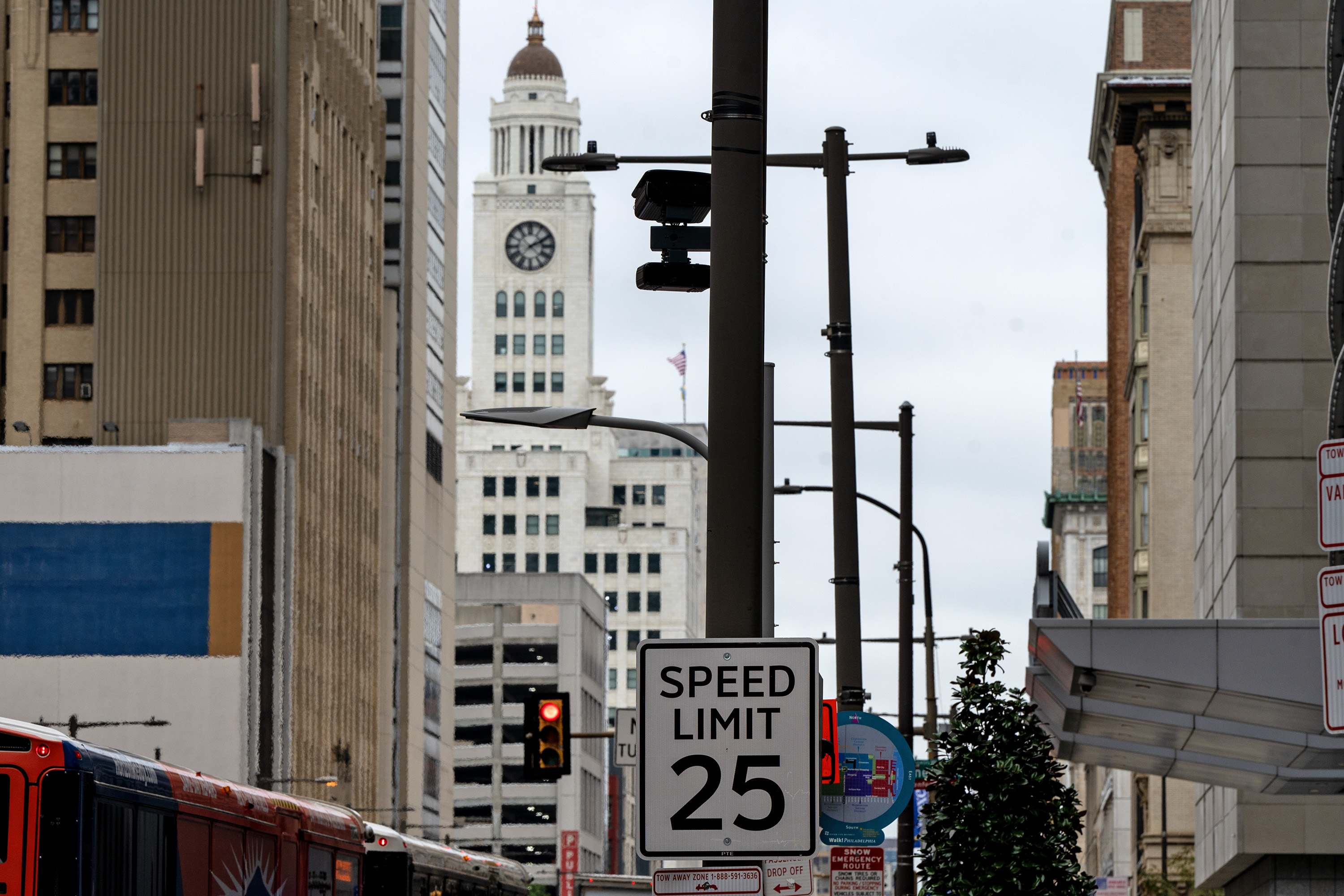
Speeding violations fell 67% on Broad Street between November 2025, when cameras began operating, and March 30, according to the Philadelphia Parking Authority, which runs the program.
Traffic fatalities have fallen by 40% on Roosevelt Boulevard since automated speed-enforcement cameras were installed there in 2020.
It is too early to see the cameras’effect on crashes, injuries, and deaths on Broad Street because they are too new. Crash statistics, which come from the Pennsylvania Department of Transportation, lag by a year.
But the experience on Roosevelt Boulevard shows “this is a successful public health effort, not a money grab,” said Corinne Lagermasini, executive director of 5th Square Advocacy.
“We worry that the costs will give permission” for elected officials to “wind down the program,” she said.
Harshaw said, “A monetary fine is minimal compared to a life lost because of a driver’s momentary decision.”
Speed cameras in Philadelphia issue violations starting at 11 miles over the speed limit, which is mostly 25 mph on Broad Street, except for the area around the sports stadiums on South Broad Street.
The fine is now $100 for traveling up to 20 mph over the limit in an area covered by speed cameras, $125 for going up to 29 mph over, and $150 for exceeding the speed limit by 30 mph or more.
Young’s legislation would change the fines to $50, $75, and $125, respectively.
No hearing date has been set for the legislation. Young said it may be amended to apply only to areas in the 5th and 8th Districts close to North Broad in response to concerns from colleagues.
Young said he believes that the fact of a fine itself is a deterrent to speeders, not the amount of the penalty.
New York City has a flat $50 fine for speeding violations issued by camera, he said, and still has reported a 94% reduction in fatal crashes. The NYC program operates only in school zones citywide.
“I don’t think people are going to say, ‘You know what, the fee is reduced, so I’m going to speed now because I can afford to speed,’” Young said. “Drivers don’t think like that.”
Correction: A previous version of this story misstated the former speed limit on North Broad Street. The error has been corrected.