
The Eagles take on the Titans. Join Ryan Novozinsky after the final whistle for a full breakdown of the game, biggest moments, standout performances, key takeaways and what’s next for Philadelphia.
Blog
-
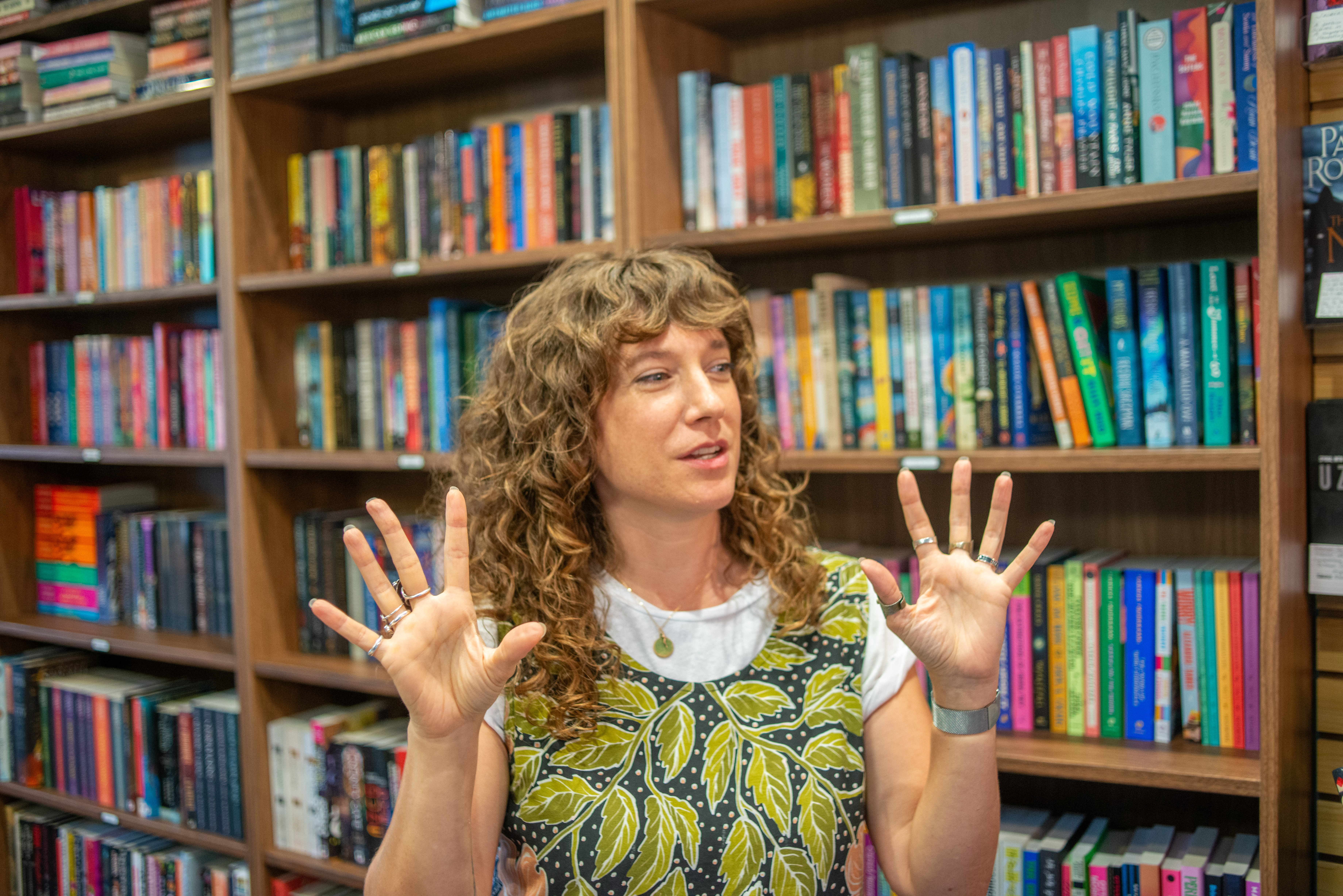
The best books that local booksellers have read so far this year
Books are back, in Greater Philadelphia and around the country.
The industry saw modest revenue growth the last four years in a row, an Association of American Publishers report found. Brick-and-mortars saw more than twice the growth of online retail in 2025, and hardcovers outpaced ebooks.

Jackie Botto looks for a book on the shelves while chatting with a customer at Capricorn Books in Jenkintown.William Thomas Cain / For The Inquirer Many Philly-area booksellers said they’re feeling the surge.
But what are they reading? Sixteen booksellers told us their favorites of 2026 so far.
- Angel by Elizabeth Taylor and The Princess of 72nd Street by Elaine Kraf — Ariel Censor, Little Yenta Books in South Philly
- Back for Blood: Never Whistle at Night Part II edited by Shane Hawk and Theodore C. Van Alst Jr. — Alex Schneider, A Novel Idea in East Passyunk
- Discipline by Larissa Pham — Richard De Wyngaert, Head House Books in Queen Village
- Exit Party by Emily St. John Mandel — Jackie Botto, Capricorn Books in Jenkintown
- Message to the Blackman in America by Elijah Muhammad — Shaykh Anwar Muhammad, The Black Reserve Bookstore in Lansdale
- Most Ardently Yours by Freya Sampson — Charity Herndon, Austen’s Shelf in Bordentown
- Partita by Barbara Kingsolver — Elizabeth Young, Commonplace Reader in Yardley
- The Pirate Queen by Ariel Lawhon — Shawn Clark, Glenside Book Garden
- The Practice of the Presence of God by Brother Lawrence — Ian Stowers, CLC Bookcenter in Wyncote
- Trad Wife by Saratoga Schaefer — Anthony Long, Thrillerdelphia
- Steelborn by Taylor J. LaRue and Lady Tremaine by Rachel Hochhauser — Lisa Strohl, Bookmarks in West Chester
- Tom’s Crossing by Mark Z. Danielewski — Krisy Elisii, Doylestown & Lahaska Bookshops
- The Unsettling of America by Wendell Berry — Buffy Hastings, Farley’s Bookshop in New Hope
- The Wedding People by Alison Espach — Janine Flanigan, Barnes & Noble
- Whidbey by T Kira Madden — Christina Rosso-Schneider, A Novel Idea in East Passyunk
- Whistler by Ann Patchett — Kathy Morrison, Newtown Bookshop
This suburban content is produced with support from the Leslie Miller and Richard Worley Foundation and The Lenfest Institute for Journalism. Editorial content is created independently of the project donors. Gifts to support The Inquirer’s high-impact journalism can be made at inquirer.com/donate. A list of Lenfest Institute donors can be found at lenfestinstitute.org/supporters.
-

The Trump administration will force Pa. to pay more for SNAP. Shapiro’s office says it can’t.
The Trump administration will be overhauling the SNAP program in two major steps, forcing Pennsylvania to pay more for the federal food program and jeopardizing those in need, according to Gov. Josh Shapiro’s office.
The first phase begins Oct. 1, when states will have to pay for 75% of the expense of administering the Supplemental Nutrition Assistance Program, an end to the 50-50 cost-sharing relationship between the federal government and the states that existed for decades.
The second and more dramatic change is scheduled to commence a year from now, when the Trump administration demands that states pay for a portion of SNAP benefits — an unprecedented arrangement that could put Pennsylvania on the hook for as much as $400 million of the approximately $4 billion the state receives in SNAP benefits annually.
That’s a price the state is not ready to pay.
“Pennsylvania’s state budget cannot make up for huge cuts to federal SNAP funding that will shift these costs onto states,” Shapiro spokesperson Rosie Lapowsky said in a statement. “And those cuts risk leaving hungry Pennsylvanians without food assistance.”
The Trump administration plan, part of President Donald Trump’s One Big Beautiful Bill Act, is roiling Democrats and SNAP advocates who view it as an effort to weaken the food benefits program by saddling Pennsylvania and other states with the responsibility of paying for something they cannot afford.
In anticipation of the first new rule going into effect in two weeks, Shapiro earmarked $87 million in the state budget to administer the SNAP program in the state, which includes paying for operating expenses.
Burdening states with increased financial demands is “catastrophic,” said St. Joseph’s University sociologist Maria Kefalas.
Kefalas said it will force states to make drastic moves to make up for lost dollars, including making eligibility rules harder and shrinking benefits.
“The pressure on states to push people off SNAP will be tremendous,” she said. “The Trump act was written to shift blame for cuts to safety-net programs from the federal government to the states. Now, the states will be seen as the bad guys.”
The original even split for administrative costs had the state and the federal government each paying $250 million in SNAP administrative costs, according to the Pennsylvania Independent Fiscal Office (IFO), a nonpartisan legislative agency that analyzes budgetary issues. But after Sept. 30, the state could be looking at as much as a $125 million increase in payments annually, IFO figures show.
Shapiro’s $87 million budget infusion covers that increase for a portion of the state fiscal year, said Brandon Cwalina, press secretary for the Pennsylvania Department of Human Services, which oversees SNAP.
The Trump administration says that by forcing states to put skin in the game, it is incentivizing them to cut waste, fraud, and abuse in the program.
“President Trump is strengthening SNAP for the Americans who need it by ensuring these programs are sustainable for future generations,” White House spokesperson Anna Kelly said in a statement.
She added that the One Big Beautiful Bill Act implements “reasonable” cost-sharing measures with states.
Kelly also said that by signing the bill into law, Trump is “uplifting every American’s financial situation by passing the largest tax cut in history.”
But concern is growing that by compensating for SNAP shortfalls, states will pull funds from other sources.
“Does this mean money will be taken from police, courts, and other critical functions to pay for SNAP?” asked State Sen. Art Haywood, the top Democrat on the Health and Human Services Committee, who represents part of Philadelphia and Montgomery County.
Error rates
How much the state will have to pay in SNAP benefits in October 2027 depends on its payment error rate, a measure of overpayments and underpayments of benefits.
Error rates are largely unintentional and are not fraud, according to the Food and Nutrition Administration of the U.S. Department of Agriculture, which runs the SNAP program.
“It’s like doing your taxes and accidentally switching numbers,” said Ann Sanders, director of public benefits policy and programs for Just Harvest, a Pittsburgh-based anti-hunger nonprofit. “Not a crime, just a mistake.”
In fiscal 2025, Pennsylvania’s error rate was 9.2%, mostly representing overpayments, said IFO director Matt Knittel.
Even though it is below the national error rate of 10.6%, if the 9.2% level holds, Pennsylvania could be made to pay as much as $400 million a year when the new rule takes effect, IFO figures show.
“These are costs Gov. Shapiro has made clear we cannot backfill,” Cwalina said. The Shapiro administration, which has had some success lowering error rates, has introduced new technology that helps flag potential errors before incorrect payments are made.
The reorganization of SNAP’s functions and financing comes during an ongoing affordability crisis, said George Matysik, executive director of the Share Food Program, which supplies many food pantries in the Philadelphia area.
“Instead of the federal government helping to solve it, it’s just passing the buck onto the consumer,” he said. “Prices are going up, while Washington punches down on the working class.”
While the new changes have yet to kick in, Trump’s One Big Beautiful Bill Act has already altered SNAP to help pay for his tax cut.
The administration has expanded work and documentation requirements for SNAP recipients, resulting in millions of people seeing their benefits lowered or eliminated.
Nationwide, between July 2025 and May, SNAP rolls have decreased by more than 5 million people, or 12%, according to the Center on Budget and Policy Priorities, a left-leaning Washington-based think tank.
As of July, the latest Pennsylvania DHS estimates show that 94,200 people have lost benefits since Trump’s law took effect.
The changing contours of the SNAP program worry legislators accustomed to its normally steady rhythms.
“There was a 60-year-long partnership between the federal government and the states on SNAP, without problems,” Haywood said.
“SNAP worked well since it got its start in 1964. But now, unfortunately, the current administration is dramatically changing it.”
-

The world economy is becoming wary of the U.S.
WASHINGTON — Global investors are balking at U.S. bonds. Talk of the dollar’s dwindling power is getting louder. Foreign governments are hauling their gold out of American vaults.
Almost two years into President Donald Trump’s second term, the world economy is increasingly looking for ways to distance itself from the United States. Concerns about a $40 trillion debt burden, the excessive use of sanctions to solve foreign policy problems, and Trump’s penchant for pushing the limits of the rule of law are raising questions about the appeal of the United States as a haven for global investment.
Despite pledges by foreign companies and nations to invest in the United States — in many cases to curry favor with the White House — capital is starting to seek alternative destinations.
“Geopolitical factors and U.S. weaponization of the dollar through financial sanctions are causing central banks and other official investors to attempt to diversify away from dollar assets,” said Eswar Prasad, the former head of the International Monetary Fund’s China division.
The United States is not yet an investment pariah. Private investors are still pouring money into American financial markets and stocks, artificial intelligence infrastructure is booming, and no rival currency is poised to topple the dollar imminently.
In testimony before Congress on Tuesday, Treasury Secretary Scott Bessent said he remained confident in the credibility of the U.S. financial system, arguing that bond auctions continue to operate successfully and that the dollar is still thriving as measured by its share of global transactions.
“The U.S. is in fact the leader, and the leader does not fear competition,” Bessent said. “Competition makes us better.”
But cracks in America’s economic dominance are starting to show.
Bond market jitters
The most glaring example has been in the bond market. Yields have been soaring as investors nervous about the mounting national debt demand a higher rate of return for buying Treasury bonds. This week, the yield on the 10-year Treasury topped 5%, reaching its highest level since 2007.
The decision to raise interest rates Wednesday could help to alleviate concerns about the Federal Reserve’s grip on elevated inflation, fears that have injected more jitters into bond markets.
The ominous bond threshold was crossed a week after the Treasury Department purchased $5.2 billion of its own debt maturing in the next 10 to 20 years, part of a plan to inject demand into the Treasury market to try to push prices higher and yields lower. Bessent said investors were failing to understand the underlying strength of the economy and dared them to bet against him.
“It’s my dream,” Bessent said recently at Southern Methodist University. “I have asymmetric information. I am the house now.”
With the United States’ long-term fiscal situation looking shaky, some countries are starting to wonder if the U.S. is a wise investment. This month, Norway’s sovereign wealth fund, the largest in the world, said it planned to reduce its holdings of U.S. Treasurys as it looks elsewhere for stronger returns.
And then there is the future of the dollar.
Nearly 90% of global foreign exchange transactions are in dollars. But the share of dollars being held in central bank reserves has been steadily declining over the past decade, falling to 56% at the end of 2025 from 64% in 2015.
Last year, Christine Lagarde, the president of the European Central Bank, said erratic policymaking in the United States was setting the stage for a “global euro moment.”
The United States has taken advantage of the greenback’s special status to use it as a foreign policy tool, imposing stiff sanctions on adversaries such as Iran and Russia. As the United States ramps up its use of sanctions to resolve global conflicts, the permanence of the dollar as the world’s reserve currency has come into question with greater frequency.
Digital currencies
Although the euro and China’s renminbi do not appear ready to overtake the dollar anytime soon, the emergence of central bank digital currencies, stablecoins, and cryptocurrencies give U.S. adversaries new avenues to circumvent the American financial system when making international transactions.
China has been leading the development of a cross-border digital currency platform with Hong Kong, Thailand, the United Arab Emirates, and Saudi Arabia that would allow money to move more quickly and with lower fees than what is possible with traditional banking transactions. A similar cross-border payments project led by some Group of 7 major industrialized nations and Western financial institutions is also in development but is not as far along as China’s initiative, which is known as mBridge.
Russia and India said recently that they are working on a plan that would let them use central bank digital currencies to settle international trade payments. Such a mechanism would allow the countries to expand their trade relationship and reduce reliance on Western financial institutions that can be targeted by U.S. sanctions.
“The story of moving away from the dollar is one of the oldest stories that exists,” said Josh Lipsky, the chair of international economics at the Atlantic Council. “Countries have thought about working around the dollar, and technology is making it a little cheaper and easier to do it than before.”
Going for the gold
While some countries are focused on digital money, others are going for the gold as they fret about the stability of the United States.
In 2025, world international reserves held in gold surpassed foreign official holdings of U.S. Treasury securities. This year, the price of gold exceeded $5,000 per troy ounce for the first time in history as central banks stocked up on the metal amid intensifying global conflicts and concerns over inflation.
Demand for gold is so high that some countries also want to keep theirs closer to home. With geopolitical unrest rising and Trump lobbing tariff threats against European allies, some have even taken the rare step of relocating the gold they keep in vaults at the Federal Reserve Bank of New York.
This month, the central bank of the Netherlands said it transferred a large part of its 95 tons of North American gold reserves out of the United States, citing “increasing geopolitical unrest” and the need to be prepared for crisis. In March, the Bank of France said it pulled 129 tons of gold from the Federal Reserve Bank of New York and moved it to Paris.
The Trump administration has not threatened to seize foreign gold held in the United States, but Trump has raised questions about his views of international law by floating the idea of colonizing places like Greenland and Canada.
‘It’s like the countries don’t trust the U.S.’
“It’s like the countries don’t trust the U.S.,” said Daniel Tannebaum, who served at the Treasury Department’s Office of Foreign Assets Control and as the OFAC compliance coordinator at the Federal Reserve Bank of New York. “I do think that there is a fear factor.”
That fear factor is also creating blowback for American companies that are trying to do business abroad.
Tannebaum, who is a partner in Oliver Wyman’s finance and risk practice, said the aggressive use of tariffs and export controls by the United States has made European countries and companies wary of adopting American technology for sensitive industries such as AI. They worry that if they are dependent on the United States for such infrastructure it could be used against them if Washington decides to ban or disable the technology, as it has done during disputes with China and Russia.
All of this has contributed to an erosion of the United States’ status as a safe haven.
“Governments and companies now have to ask what would happen if the United States turned its economic leverage against them,” Tannebaum said.
This article originally appeared in the New York Times.
-
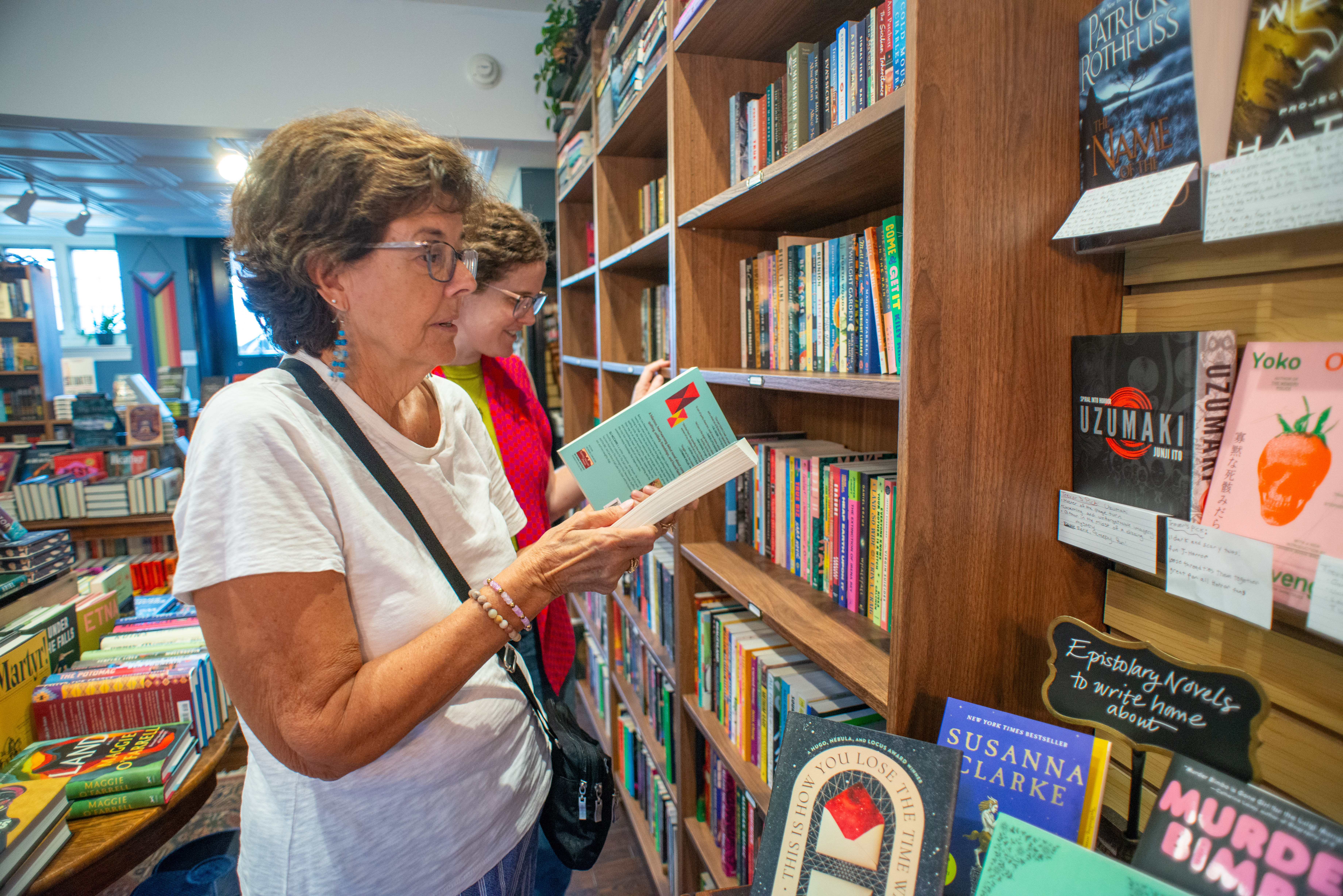
Bookstores are so back in the Philly area. Booksellers say it’s a backlash to all that doomscrolling.
Fishtown Books opened last weekend, the neighborhood’s fifth bookstore. In Manayunk, one couple opened two bookstores on the same street. The August opening of a West Chester fantasy shop wrapped a line around the building, ending early when the shelves were nearly emptied.
Across Greater Philadelphia, bookstores are back.
And despite the growing competition, many sellers said sales are up, mirroring national trends: The Association of American Publishers found the number of books sold via physical retail grew almost 34% over the past five years, outpacing online retail.
“I did not plan for it to be so busy,” said Jackie Botto, 41, of Capricorn Books, which expanded its Jenkintown storefront in July. “We’ve almost doubled our business.”
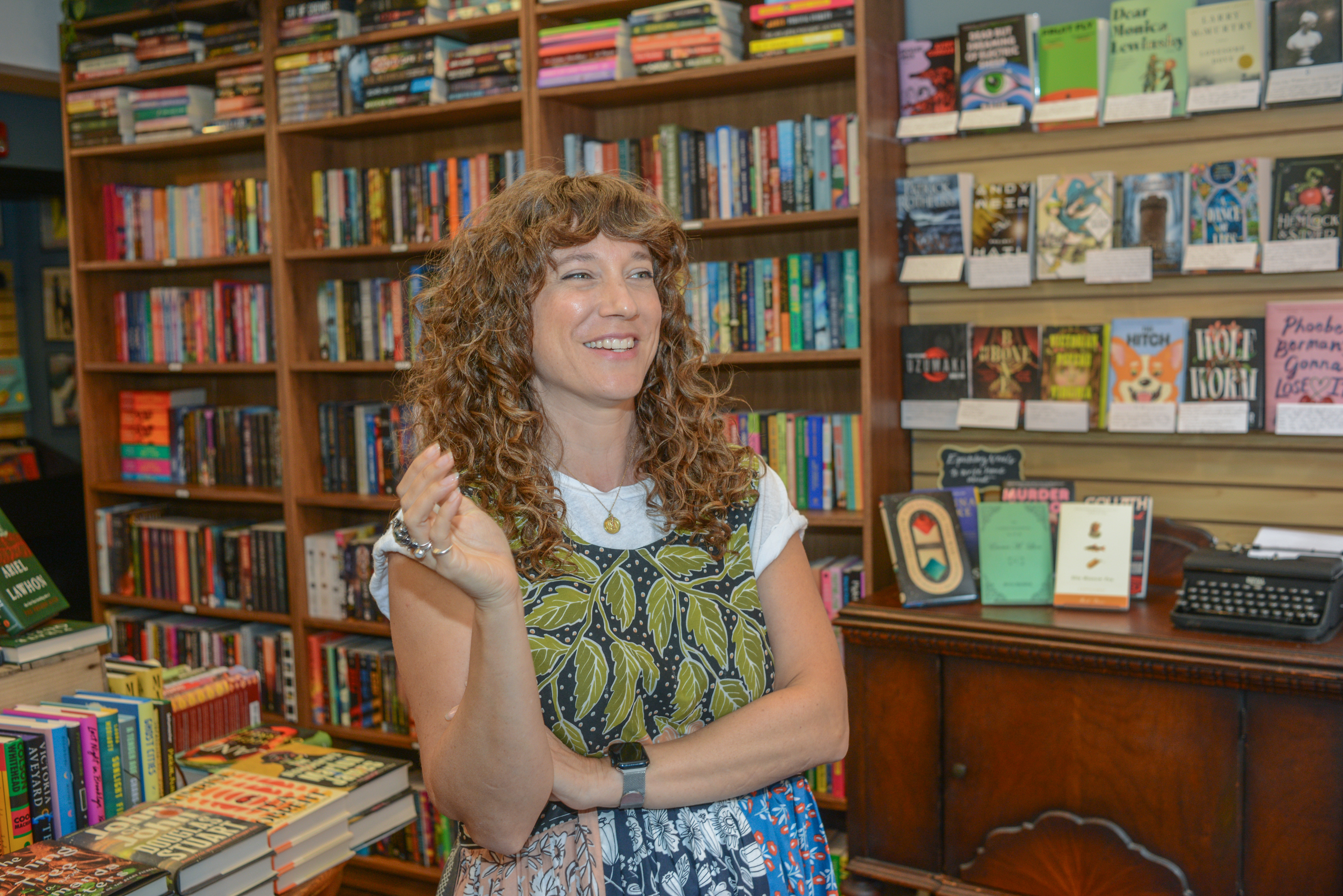
Capricorn Books owner Jackie Botto chats about the books and customers’ love of reading on Sept. 17 in her Jenkintown bookstore.William Thomas Cain / For The Inquirer Screen fatigue, a hunger for community, and a desire to support local businesses are fueling the surge, said sellers — many of whom are investing in niche genres and hosting creative events to meet their customers’ needs.
Readers are reading, book people say
The reading boom isn’t limited to stores. At Jenkintown and Abington libraries — which sit along the same corridor as Capricorn and a new Barnes & Noble — patronage is growing, and both libraries are mulling expansion.
Adult print circulation is up 10% in Abington, and children’s circulation is up 50% since last year. “People are consuming more literature and media in general,” said Abington’s head of circulation, Marcus Palm.
And parents are prioritizing reading for themselves and their kids, said the Abington library director, Elizabeth Fitzgerald: “There is a bit of backlash to the doomscrolling.”
At Bookmarks in West Chester, some customers have tried ebooks and are returning to print.
“They spend all day working on the computer,” owner Lisa Strohl said. “They’re tired of being on the screen.”
But some apps like TikTok — and its algorithmic niche known as BookTok — are also driving readers to the stacks.
BookTok and tailored offerings draw young readers
“The screen is helping them get back into reading,” said Charity Herndon, owner of Austen’s Shelf in Bordentown. “[BookTok] was the only way to reach the younger generation of readers.”
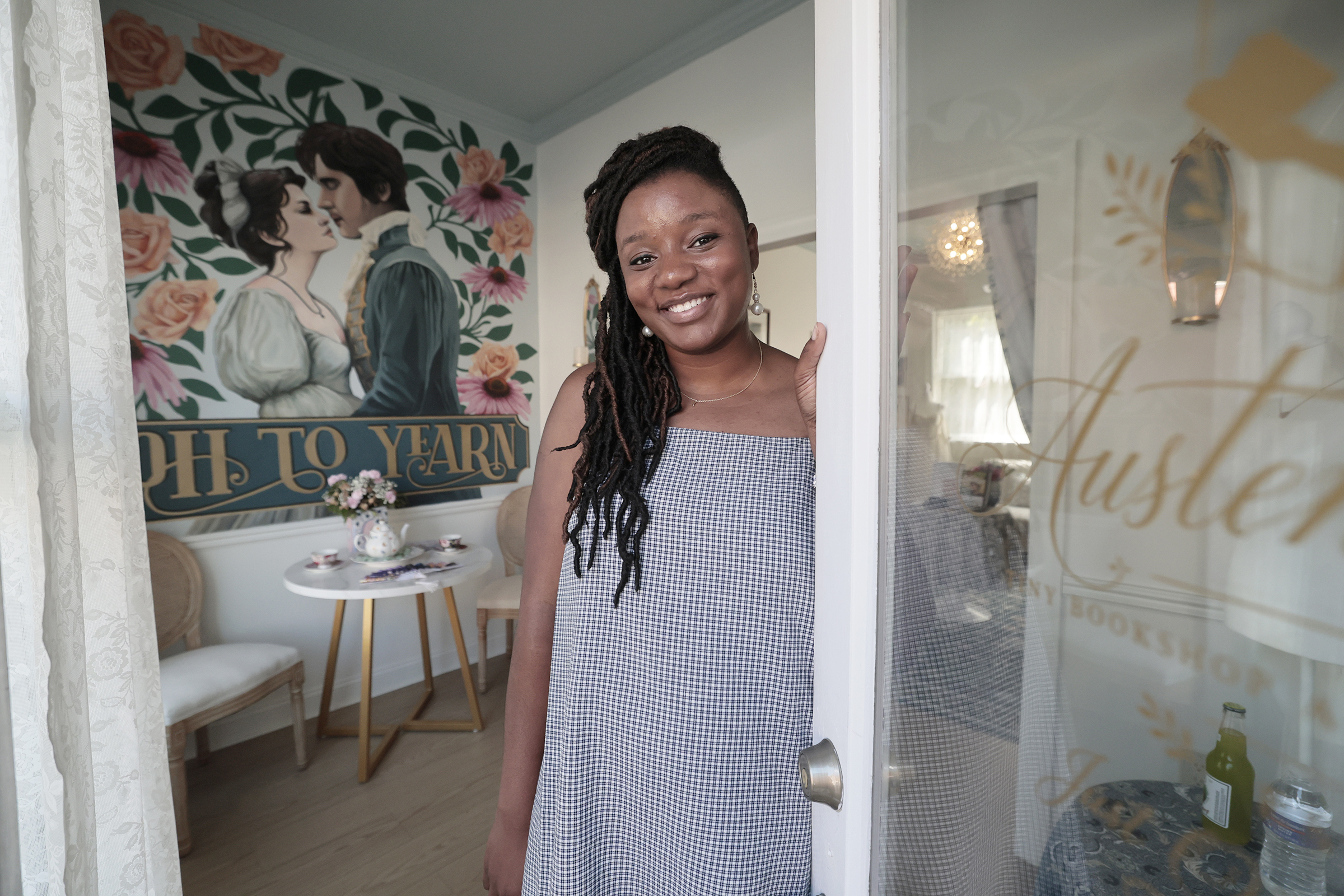
Charity Herndon, owner of Austen’s Shelf, stands in the entrance of her shop in Bordentown on June 13.Elizabeth Robertson / Staff Photographer Sellers like Herndon and Anthony Long — who opened Thrillerdelphia in Manayunk last year after helping his wife open romance-focused Cupid’s down the street — are using both digital and analog strategies to turn new customers into loyal fans by delivering the community hubs they crave.
In a recent Instagram reel, a Thrillerdelphia staffer played a guitar riff to match each book cover he displayed. In November, the store is hosting the horror punk band Blitzkid, a member of which is also an author.
“I know my customers,” Long said. “You can get the eyeballs, but you have to build the intrigue and make people want to come in.”
Active support from local residents is key, many sellers said. Literary agent Eric Smith decided to start the Philadelphia Book Crawl a few years ago. It’s become a kind of Black Friday for bookstores; several said it’s their best day of the year.
“I’m terribly invested in how things go for our local indie bookstores,” Smith said. “I want to see them thrive.”
(function(){function e(){window.addEventListener(`message`,function(e){if(e.data[`datawrapper-height`]!==void 0){var t=document.querySelectorAll(`iframe`);for(var n in e.data[`datawrapper-height`])for(var r=0,i;i=t[r];r++)if(i.contentWindow===e.source){var a=e.data[`datawrapper-height`][n]+`px`;i.style.height=a}}})}e()})();
Barnes & Noble is back
Some credit TikTok with helping to revive a declining Barnes & Noble, which opened more than 60 stores last year and plans another 60 by the end of 2026 after years of losses and an acquisition.
“[BookTok] was absolutely a key point, especially during COVID,” said Barnes & Noble vice president Janine Flanigan. “I’ve never seen the conversations around books the way we see them now.”
The chain has taken notice of successful indies: A news release for the new store in Abington — where a Barnes & Noble had closed more than a decade ago — highlighted plans for local author events and book clubs.
The Abington store’s stock will be selected more locally, Flanigan said. “The store managers are deciding what to put in front of their customer.”
The private equity-owned company’s shift to localized control only highlights the value of independent sellers, said Buffy Hastings, a co-owner of Farley’s Bookshop in New Hope.
“They got beat by us,” he said.
Botto, who owns Capricorn Books near the new Abington Barnes & Noble and has fond childhood memories of the chain, is optimistic that there’s room for everyone.
“Looking at our numbers we have no reason to be worried, which is great,” she said.
People buying books despite affordability crisis
Richard De Wyngaert, whose Queen Village store Head House Books opened during the online and big-box-bookstore boom of the early aughts, said those initial customers would always compare him to online vendors.
“Price was all that mattered,” he said. “That two-dollar savings.”
But a few years ago, he noticed a shift — “a new generation who wasn’t raised to think you had to match Amazon,” De Wyngaert said. “By then, we all knew the horrors.”

Mila Panchev (center), 9, and her father, Nikolay Panchev, look at the book “The Scroobious Pip” by Edward Lear and illustrated by Charles Santore and Nicholas Santore before a reading by Nicholas Santore at Head House Books in the Queen Village neighborhood on Jan. 25, 2025. Nicholas Santore finished the illustration started by his father, Charles Santore.Yong Kim / Staff Photographer Sellers say book prices have shot up in recent months, but the customers keep coming.
The relative price hike for other consumer luxuries like airfare may be part of the reason: The consumer price index for “recreational books” has yet to return to its 30-year peak in 2009.
“I have seen this summer someone who’s like, ‘I can’t go on vacation, so I’m going to read about Italy,’” Herndon of Austen’s Shelf said.
Readers want to ‘escape’, booksellers say
The genres driving much of the growth in stores with broad selections, sellers said, are romance — especially when mixed with fantasy, a subgenre known as romantasy — and horror.
There are also the blockbuster books they can’t keep in stock, like the sci-fi fantasy series Dungeon Crawler Carl, and a return to the classics.
What these books have in common, sellers said, is they’re totally disconnected from everyday life — or, as Hastings put it, “the realities of living in America in 2026.”
The bestsellers at Austen’s Shelf are “books that allow people to escape,” Herndon said. “People just want to tuck themselves into a different world.”
When Head House Books opened in 2005, “people thought I was nuts,” De Wyngaert said. “Today you see bookstores … springing up everywhere.”
It’s “good news,” he added, “for a world that needs some good news.”
This suburban content is produced with support from the Leslie Miller and Richard Worley Foundation and The Lenfest Institute for Journalism. Editorial content is created independently of the project donors. Gifts to support The Inquirer’s high-impact journalism can be made at inquirer.com/donate. A list of Lenfest Institute donors can be found at lenfestinstitute.org/supporters.
-
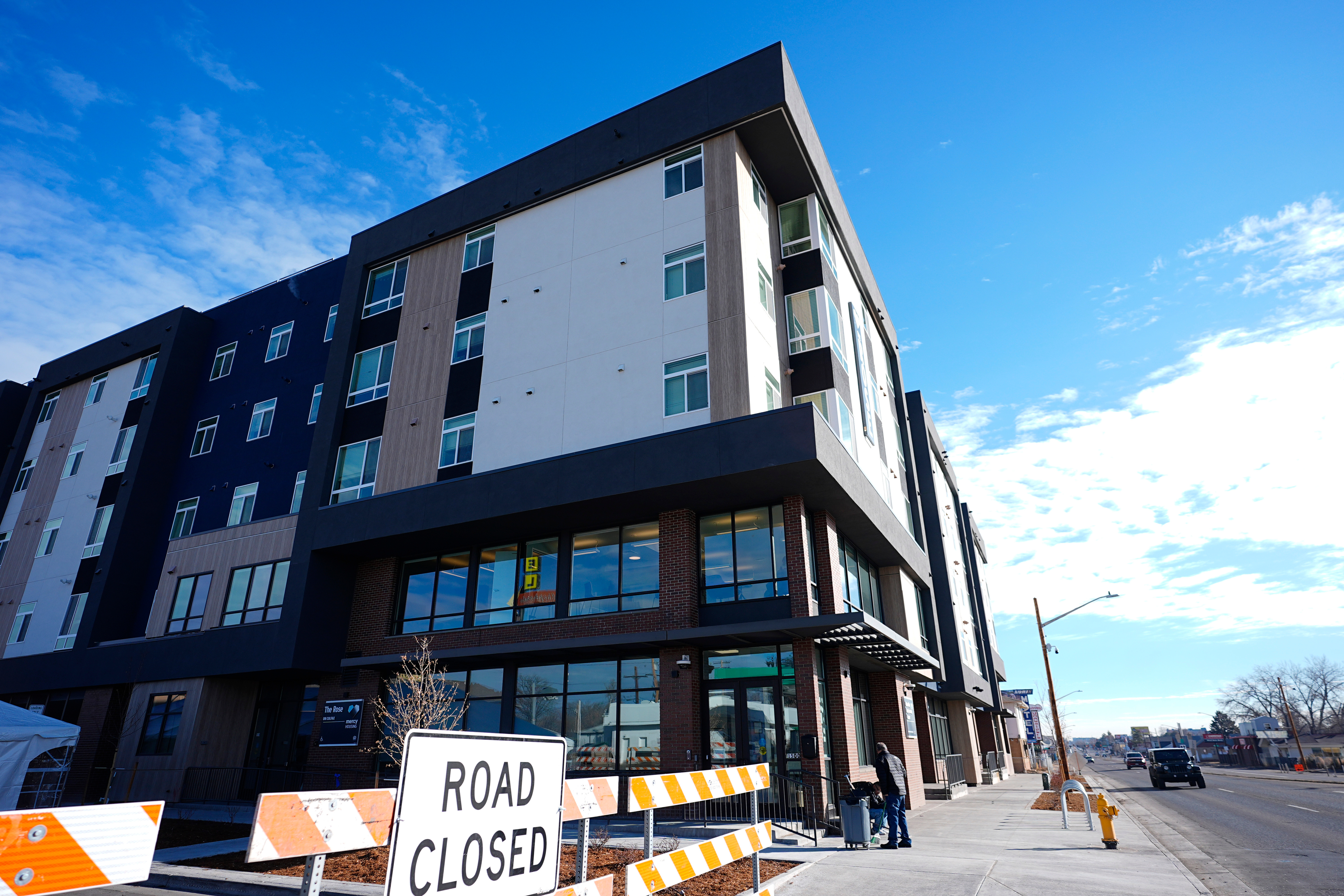
The poorest in the U.S. can’t find housing even as low-income units sit empty
PORTLAND, Ore. — Mathew Davis, who lives in a homeless shelter in Austin, Texas, would love an apartment of his own. But with the little money he makes donating blood plasma, even a $450-a-month tiny home with no running water and a communal bathroom would be a stretch.
Meanwhile, over 4,500 units the city classifies as affordable — nearly 16% — sit empty.
“I don’t make enough money really to afford anything,” Davis, 49, said of the few hundred dollars he earns a month. “I just keep trying to swim uphill.”
The poorest people in the U.S. face the most acute shortages of affordable homes. But the majority of low-income housing financed in recent years is for those earning 50% of an area’s median income or above, according to a survey of state housing agencies.
Some cities are now seeing an uptick in vacancies as rents for these units approach market rates. The result: Apartments designated as affordable sit empty because the poorest of the poor cannot afford them.
Meanwhile, some people are forced into homelessness and others into desperate circumstances to pay for housing they can’t afford.
The poorest have few housing options
There are only about 4 million affordable rental units available for the country’s 11 million extremely low-income renter households, according to the National Low Income Housing Coalition’s most recent annual report.
These are people with annual incomes either below the federal poverty guidelines — just under $16,000 for a single-person household — or 30% of the median income in their area, whichever is higher. They comprise about a quarter of U.S. renter households, and include many people working low-wage jobs, seniors, and those with disabilities living on fixed incomes.
About three-quarters of extremely low-income renter households pay over half their income on rent and utilities, the report said, leaving little leftover for other necessities.
Yet homes set aside for these renters were only about 12% of the affordable housing units financed in 2024 by the Low-Income Housing Tax Credit — a federal program providing tax credits to developers in exchange for keeping rents low for at least 30 years, according to figures from the National Council of State Housing Agencies.
The majority are for those earning at least 50% of an area’s median income, or AMI. In Austin, that’s a single person earning roughly $47,000 a year, as compared with an extremely low-income person earning under $28,000.
The program has financed nearly 4 million affordable units nationwide since its creation 40 years ago. But some experts say it’s inefficient — and more costly than housing vouchers.
“It’s enormously complex and bureaucratic, and it raises the cost of construction enormously because the rules are so complicated,” said Chris Edwards, an economist at the Cato Institute, a libertarian think tank, who told Congress the program’s complexity “spawned” an industry of law and accounting firms just to administer it.
“If you’re going to subsidize affordable housing, you should give the money directly to tenants,” he said, referring to housing vouchers.
Other experts say the two programs work together well because properties built with the tax credit are required to accept vouchers — while landlords of market-rate apartments in many states are not.
Still, there’s a major federal funding shortfall: Experts estimate only one in four eligible families ever receive vouchers. Vouchers can help the poorest pay for housing that’s targeted to higher income groups, but the waitlist can be yearslong.
Some affordable housing developers say that without vouchers, it’s not economically feasible to provide units for extremely low-income people.
True Ground Housing Partners, an affordable housing developer in the Washington, D.C., area, gives an example: A unit for those earning 60% of the area’s median income — nearly $70,000 a year — brings in $1,715 per month in rent. But after $1,575 in mortgage and operating expenses, only $140 is left.
“The math does not lie,” said president and CEO Carmen Romero, noting that an extremely low-income person would pay only half that rent.
“Our expenses don’t make it really possible to create a 30% AMI unit, unless there was this extraordinary amount of subsidy that just doesn’t exist.”
Affordable housing competes with market-rate rents
Meanwhile, affordable housing rents for 60% AMI units are approaching those of market-rate apartments in U.S. cities like Austin, Denver, and Portland, Ore.
As a result, some people are opting to pay a bit more for market-rate apartments with less income-verification and faster approval — leaving growing numbers of affordable units vacant.
In Austin, the vacancy rate for all affordable housing is nearly 16% with over 4,500 vacant units, according to real estate data and analytics firm CoStar. A healthy vacancy rate is around 5%.
LDG Development, an affordable housing developer, cited a 12% vacancy rate for its 60% AMI units in Austin. Chief portfolio officer Rebekah Fischer said LDG is “in direct competition” with the thousands of new market-rate apartments recently built in Austin.
“I have to have every bank statement, every pay check, every bill, every Venmo transaction that you had with your friends,” Fischer said of affordable housing applicants.
“When we’re almost going after the same renter, you can be approved within two minutes at a market-rate deal, where unfortunately in affordable housing … it takes time.”
In Denver, there’s a 13% vacancy rate among 60% AMI units financed by the federal tax credit program — and a 21% vacancy rate for 80% AMI units, according to the Colorado Housing and Finance Authority. Meanwhile, there is far too little housing for the city’s poorest.
In Portland, where there is also a housing shortage for the lowest income groups, there are over 1,700 vacant affordable units for an overall vacancy rate of 7.5%, according to the Portland Housing Bureau. Most are for those earning 60% AMI, or about $54,000 for a single-person household, with rent capped at $1,444 per month.
That’s close to the average rent of $1,581 for a one-bedroom market-rate apartment, according to CoStar figures shared by the bureau.
Portland resident Jaiden Barbee earns around 55% of the area median income and is on waitlists for affordable housing. But, he says, he’d pay more for a market-rate apartment to avoid the lengthy application process.
“I’d rather spend the $200 extra just to get into a place easier that’s wherever I want” and doesn’t have “all these hoops,” he said.
‘I want to shut the door at night and sleep’
Austin officials set a goal of building 20,000 units between 2018 and 2027 for extremely low-income people — 17% of the city’s households.
Just 543 were built as of 2024, city documents show.
Meanwhile, all 15,000 units planned for those earning between 60% and 80% of area median income were built.
In response to questions from the Associated Press, the Austin housing department said it recognized the need to do more to produce housing for the poorest people and was taking steps to do that, including giving preference to funding proposals that include 30% AMI units.
For Davis, who lived in his car for a year before getting a bed in the Austin shelter, the housing shortage for people like him is frustrating.
“I want to shut the door at night and be able to sleep,” he said. “I really just want to find the right place.”
Charlotte Kramon contributed to this article.
-

We made 10 Shore predictions for 2026. Here’s how we did.
Things not on my 2026 Jersey Shore predictions bingo card: a canceled luau, and a dispute over live outdoor music featuring audio of 911 complaints posted to Facebook.
But, at the start of the season, I did make 10 predictions on how the Shore summer would go.
Here’s how I did.
Full speed ahead for Icona in Wonderland. ✅
I’m calling this a win (for my predictions score; people have very different views of the hotel). In June, Eustace Mita finally got his dream of a declaration that the old Wonderland Pier site at 600 Boardwalk in Ocean City is “in need of rehabilitation.”
The Icona developer is now in negotiations with Ocean City about a hotel proposal, which he says will be a scaled-down version of his initial seven-story, 252-room plan that called for saving the Ferris wheel and historic carousel. City council is vowing to be guided by recommendations from a Boardwalk subcommittee. Meanwhile, council hired a lawyer to defend against a lawsuit by citizens’ groups.

Eustace Mita talks about the construction of this beachfront Achristavest home on 116th Street in Stone Harbor on Tuesday, August 18, 2026.Vernon Ogrodnek / For The Inquirer Atlantic City’s Irish Pub will rise again. ❌
Alas, not even the sale of the Irish Pub in Philadelphia appeared to jump-start any renovations in Atlantic City, where owner Cathy Burke has been in a stalemate with state inspectors over whether the iconic, beloved pub on St. James Place should be considered a high-rise. The pub has been closed since January.
Will locals have their fish and chips and Guinness on Christmas Eve as per usual? You never know. Burke did not answer a text message seeking an update. Asked about the Irish Pub’s status, Atlantic City spokesperson Andrew Kramer said he had “nothing new from my end on this one.”
But, in an upset, the city has begun paving Atlantic and Pacific Avenues, in a development Mayor Marty Small Sr. called “massive,” and said would be completed by year’s end.
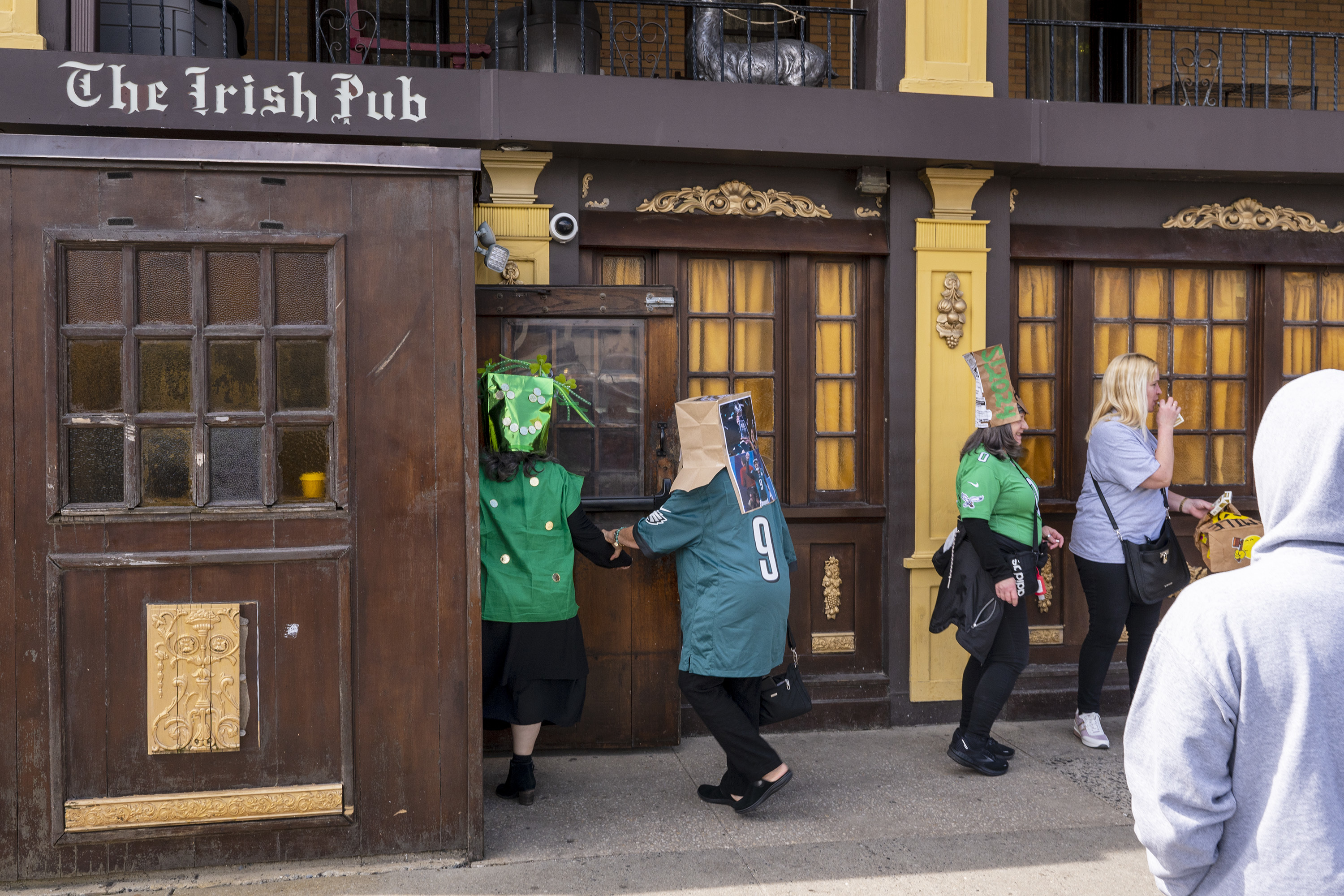
Fran Cann (left) helps Debbie Stiles (#9, right) get through the door, since she can’t see as well wearing a “St. Nick” Foles bag over her head, as they celebrates Bag Day at the Irish Pub in Atlantic City Monday, Mar. 18, 2024. The friends, from Berlin, N.J.were attending their first Bag Day. The tradition got started when a late-to-the-party patron showed up to the 24-hour bar a day after St. Patrick’s, then put a bag on their head.Tom Gralish / Staff Photographer Shore restaurants will tough it out, but struggle. ✅
Restaurants were stressed this summer. As is usual in late summer, many lost employees as the season wore on all the way to Sept. 7, and had to cut back seating or hours. Others pleaded with their clientele for patience. Still, there were lines down the block for coffee places, and booked up reservations for favorites like Steve & Cookie’s and Cafe 2825. New places were opening deep into summer, like Culina Mundi in Ventnor and Sabrina’s Kitchen in Atlantic City.
Bakeria 1010 owner and pizza savant Mike Fitzick posted a mock obituary for himself at summer’s end: “Welp that’s all she wrote folks. … Right from start I knew this season was gonna be rough. All the staff I tried to hire fizzled out and the staff I had last year were mostly gone. This summer was pretty treacherous in every aspect … June was trash, July was ok and we finally hit our stride in August. Better late than never, I guess. Unfortunately I have passed away due to self-inflicted cortisol poisoning. In lieu of flowers please donate to the Bakeria 1010 all winter. Jokes aside we WILL be open for lunch today…”
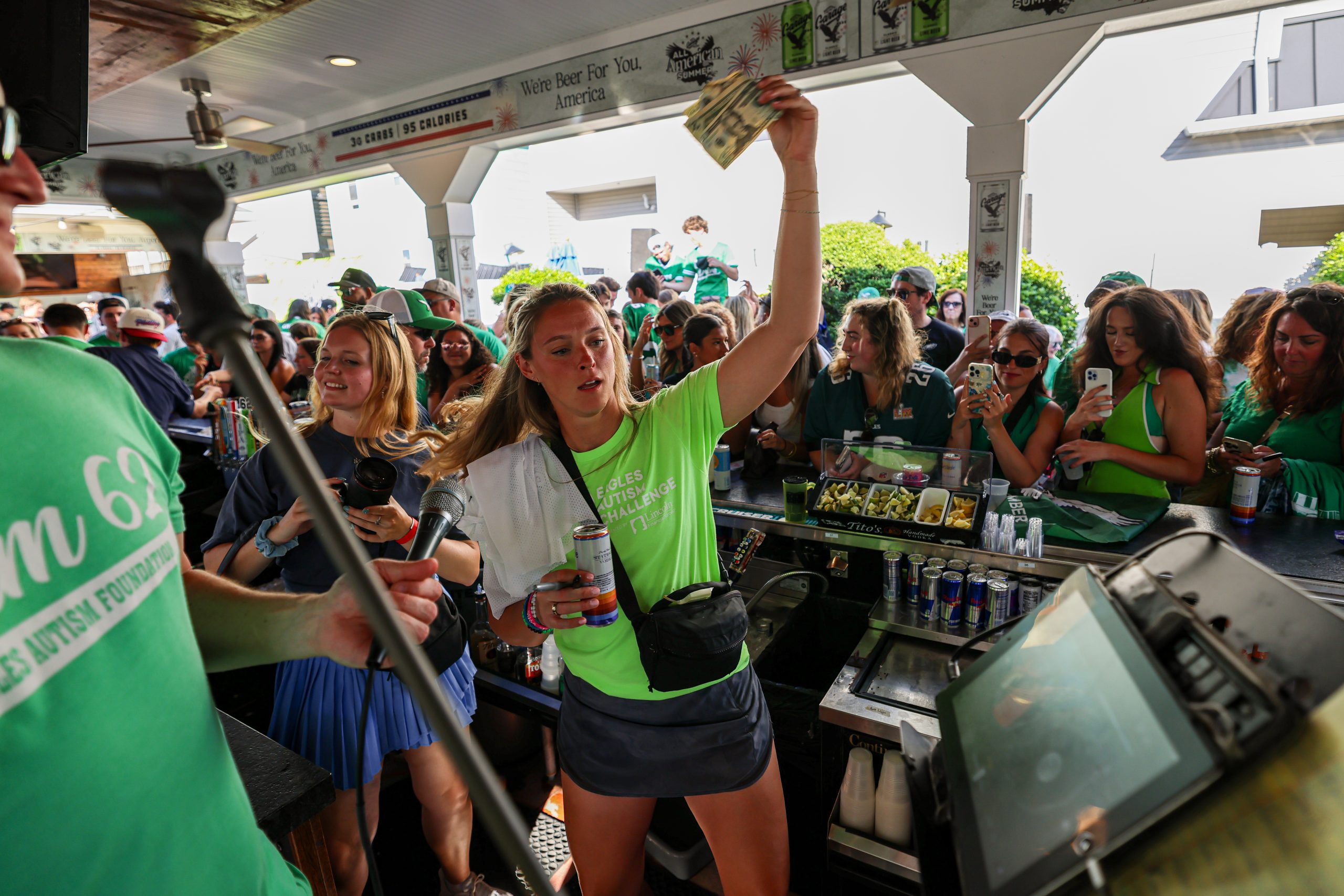
Kylie Kelce adds some money to the cash register during the Shore Birds celebrity bartending event in Sea Isle.Courtesy of the Philadelphia Eagles Taylor and Travis will not honeymoon in Sea Isle, but…? ✅ ❌
No, they did not honeymoon in Sea Isle, choosing instead Big Sky, Mont. (a lovely place), so that’s an easy one in my favor. But my leaving open the possibility that they would make an appearance in Sea Isle seems, on balance, ridiculous. Maybe they’re waiting for Jason and Kylie Kelce to finally make it off the waiting list for the Sea Isle Yacht Club. Maybe a celebrity bartending gig for Taylor at the Eagles Autism extravaganza next summer? Meanwhile, have fun in Ohio!
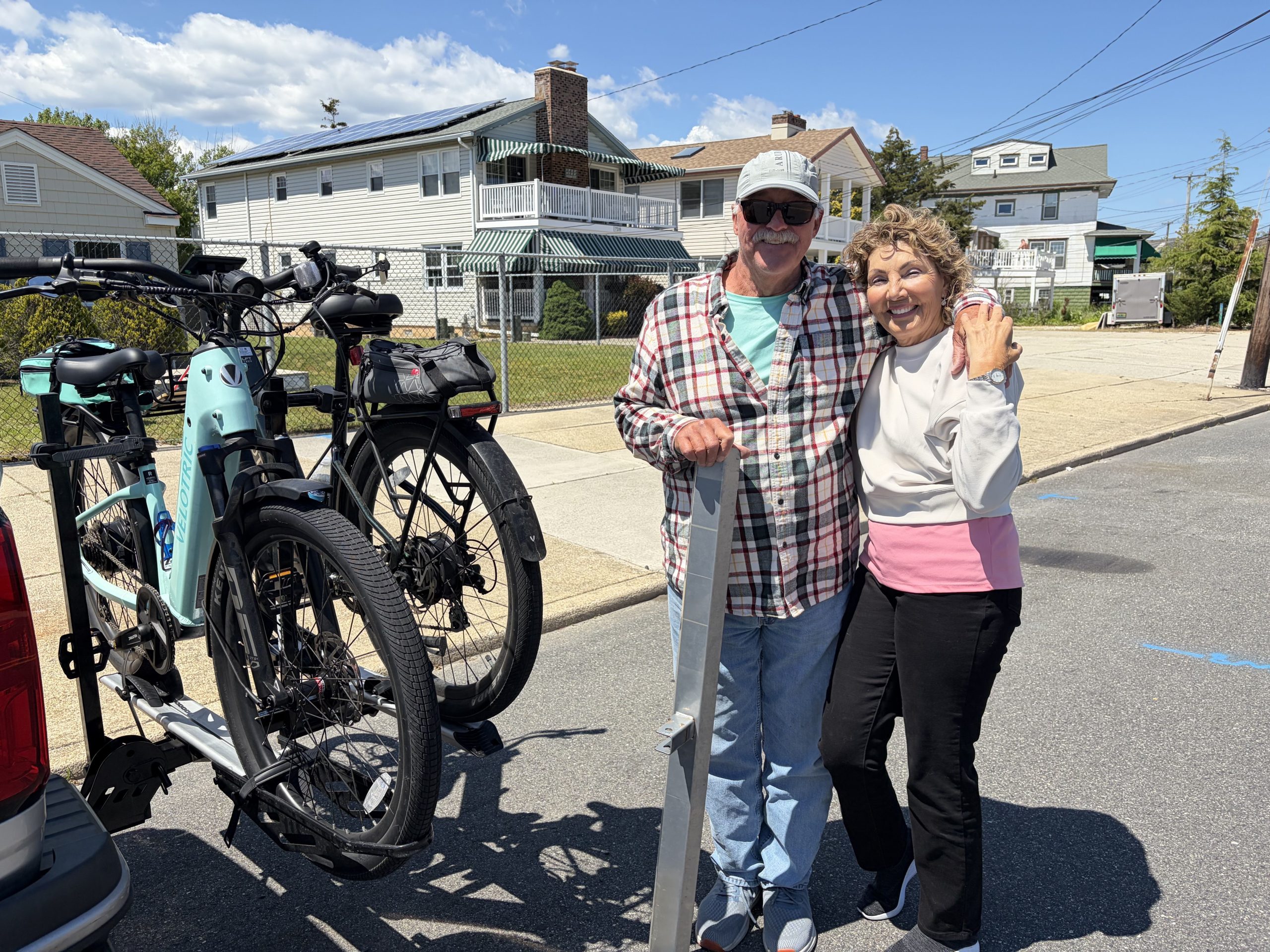
Mike and Annamarie Carr of Ventnor, owners of Jagielky’s candy shops, with the e-bikes they love to ride. Ventnor won’t allow them on its own Boardwalk. The couple drove to Ocean City on June 2 and started and ended from there.Amy S. Rosenberg / staff E-bikers will be hauled off the boardwalks and fill municipal court Zoom hearings. ❌
There was a lot of confusion over the new e-bike law in New Jersey.
First the state Motor Vehicles Commission said Pennsylvania visitors shouldn’t sweat the new registration requirements, then they changed their mind and said visitors should start their week down the Shore with a trip to the DMV. Adding to the confusion, the MVC requirements explainer page that says out-of-staters should comply now also says, “This page is intended for New Jersey Residents.”
In all, the MVC has issued a total of 13,850 e-bike registrations, according to commission statistics; 365 of those for out-of-state residents.
But police were generally light-handed on enforcement measures for the new law, with departments focusing on safety issues, like helmets, and age restrictions, rather than registrations.
Doug Bergen, a spokesperson for Ocean City, said no citations were issued there this summer under the new law.
In Ventnor, Lt. Bryan Gaviria said between May 1 and Sept. 10, the department issued six curbside warnings to juveniles, 10 e-bikes on the boardwalk warnings, and one ticket for riding on the boardwalk.
“We’re still in the education phase,” he said.
Statewide, statistics show 628 total citations under the e-bike and motorized bicycle law for July and August, according to data supplied by the New Jersey Judiciary.
Of those, just 77 were given for low-speed electric bicycles, 22 citations were for failing to have the registration required by the new law, and two were for drivers being under 15. The rest of the citations issued were for motorized bicycles, the higher speed classification.
Retiring boomers will continue their takeover of Shore towns. ✅
Yes, who else can afford to buy?
Real estate prices remained mostly in rarified air, like this adorable yellow 760-square-foot North Wildwood cottage that sold for $1.7 million in mid-August. It’s a tear down, naturally.
Or how about this 17,684-square-foot house in the Avalon dunes, built on spec by Eustace Mita (see above), with the distinction of being Avalon’s largest house and an expected price tag in the tens of millions.
In related news, the home elevator, once considered a luxury, is now considered an essential amenity for new homes in Ocean City, N.J., among other towns.

Rendering of a 17,684 square foot home being built as a spec house in the dunes in Avalon, at 5745 Dune Drive, by developer Eustace Mita. It will be the largest home in the borough.Courtesy Avalon Borough Wildwood boardwalk hours will again be expanded overnight, but all people will talk about are the electric Volvo SUVs driving the tram cars. ✅ ❌
Wildwood spokesperson Alicia Deluca says the hours remained curtailed, with the boardwalk closing between 1 and 5 a.m.
The grumbling over the new Volvo tram cars continued all summer, though. People do not like change. Meanwhile, though, Wildwood is preparing a 20-year redevelopment plan for its boardwalk that will see mixed-use projects, including hotels, apartments, condominiums, businesses, and centralized parking garages.
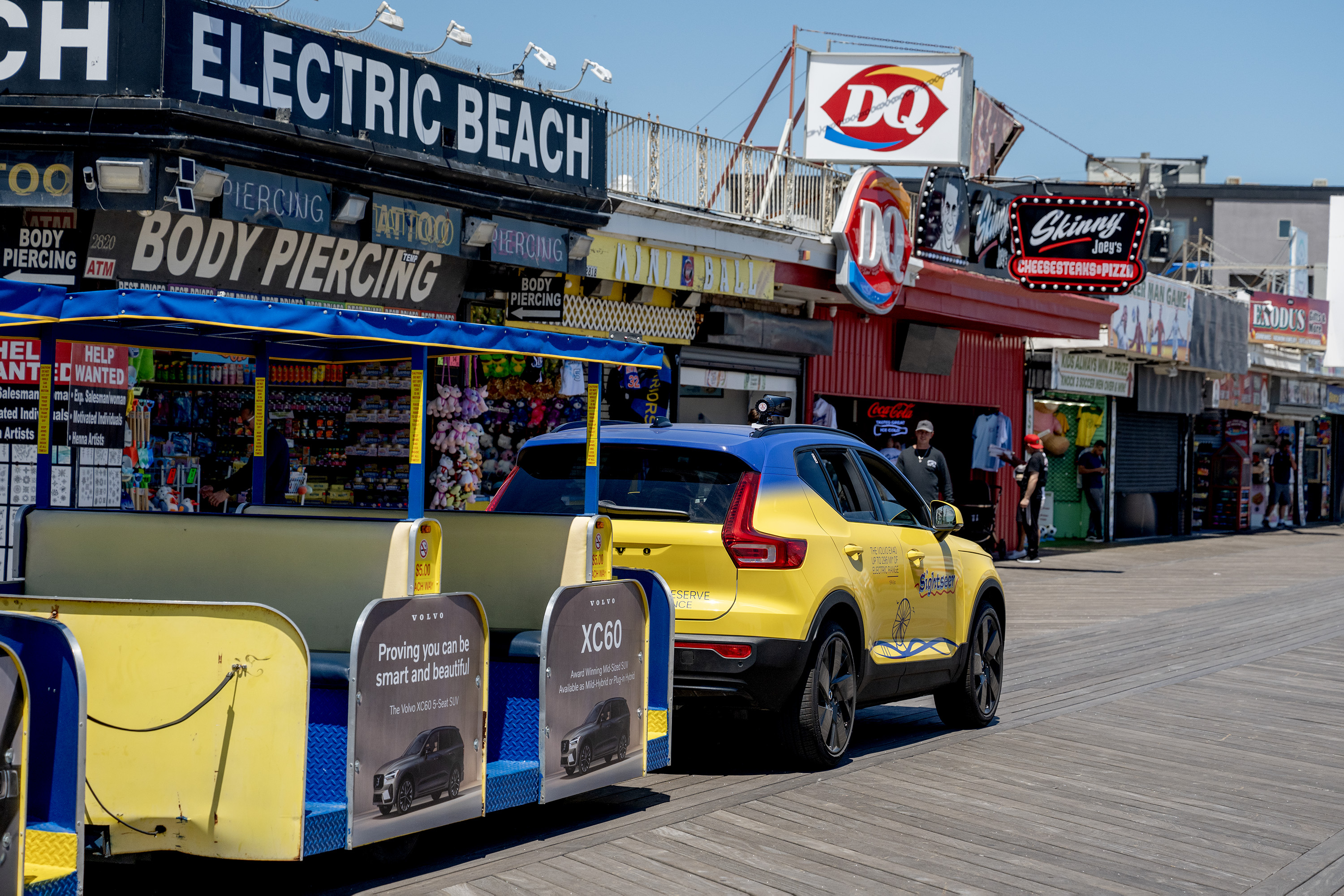
A Sightseer tram car is pulled by a Volvo EX40 electric vehicle on the Boardwalk in Wildwood Tuesday, June 2, 2026. The Wildwoods Boardwalk Special Improvement District struck a deal with Volvo to provide three free electric vehicles in return for ads placed on the individual tram cars. Four of the older engines remain in use for now.Tom Gralish / Staff Photographer There will be a lot of complaining about changing parking regulations. ❌
I didn’t hear much over the din of loud music from Gully’s, and Facebook groups seemed preoccupied with other things: flies, shaming noise complainers, and finding the best chicken Parm.
The return of the day-tripper. ✅
This prediction was a good one. Costs continued to rise, making shorter trips and day trips appealing. I predicted Atlantic City would get renewed attention, and it did, with groundbreakings for new housing developments, a container retail park close to opening, and the enduring appeal of a wide, free beach and a relatively inexpensive real estate picture.
Obvious miss on the predictions front: Atlantic Avenue is finally being paved. The odds were very long on this one.
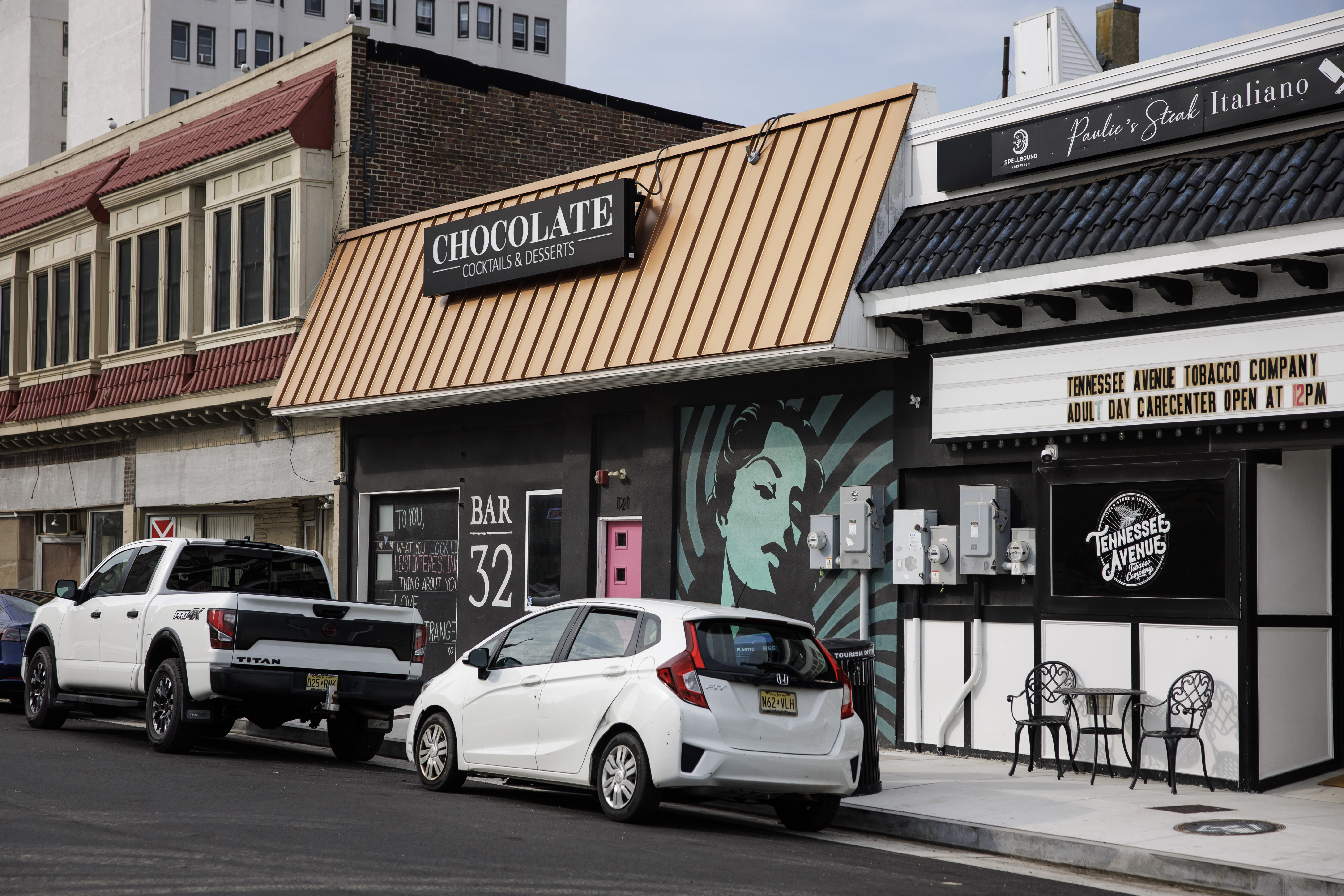
The exterior of Bar 32 on Thursday, June 11, 2026 in Atlantic City, NJ. Bar 32 offers bean-to-bar chocolate, handmade desserts, and craft cocktails.Monica Herndon / Staff Photographer The summer will seem verrrrry long. ✅
So long. How long? Basically an extra week until the Sept. 7 Labor Day. Which left beach patrols, restaurants, and other business strapped for employees, and rewarded marathon beach lovers with two days of atrocious flies on the beach Sept. 4 and 5, worse than anyone had ever experienced, like, really terrible! See ya next year!
Total score: 6/10. We’ll get ‘em next summer, hopefully over a plate of lollipop meatballs at the Irish Pub.
-

Letters to the Editor | Sept. 20, 2026
School parking problem
Academy at Palumbo’s Home and School Association is disappointed by City Council President Kenyatta Johnson’s inaction regarding the school parking crisis highlighted in Kristen A. Graham’s recent article.
Johnson’s spokesperson said that “… any discussion of changes to parking policy must consider the impact on the broader community.” For the past three years, we have repeatedly appealed to Johnson’s office for assistance. He has had plenty of time to conduct discussions, assess the impact, and propose a resolution.
The irony is that Palumbo staff already use parking spots in the surrounding neighborhood during school hours. The immediate impact falls on our teachers and students. Teachers consistently face a choice: either disrupt instructional time to move their car every two hours or incur costly tickets. Academy at Palumbo’s working conditions are our students’ learning conditions. The parking crisis impacts working conditions.
Businesses and residents can apply for parking permits through the Philadelphia Parking Authority. Why can’t a similar permit system be established for school district staff? It’s time for leadership to stop stalling and come up with a plan to support our educators.
Julie Kaeli, former president, Academy at Palumbo Home and School Association, and Alex Du, president, Academy at Palumbo Home and School Association, Philadelphia
Raising leaders
An African proverb asserts, “The ruin of a nation begins in the homes of its people” — an expression that offers profound commentary on recent events in Center City, in which large groups of teenagers were involved in confrontations with the police. Diverging from a broader national frame, an examination of the Philadelphia community reveals acute challenges regarding youth engagement in destructive behaviors. This reality necessitates a rigorous inquiry into behaviors that border on juvenile delinquency, marked by a lack of structural boundaries, the erosion of respect for authority, and a diminishing moral compass during sporadic social media gatherings. Many of these gatherings lead to vandalism and open acts of aggression toward authority figures.
It is also important to recognize that these negative behaviors are not indicative of all children, as many youths demonstrate socially healthy and responsible behaviors during meetups with peers. However, because of social media, these events typically lead to generalizations about children, thereby influencing policy.
Investigating these dynamics requires analyzing content, the extent and efficacy of parental and caregiver involvement, alongside efforts to reconstruct and adopt a newfound lens of social values and expectations within the community. A fundamental question arises concerning the precise level of responsibility borne by parents and primary caregivers. It is imperative that households actively instill prosocial virtues prior to a child’s entry into the public sphere. Ultimately, while fostering individualism and character, in-home adults must maintain accountability for conduct that borders on juvenile delinquency, ensuring youth positively represent both the family and the wider community.
We realize it is not solely on the family to achieve this aim; it also takes a healthy community. Likewise, city administrators need to think outside the box when investing in and creating educational, recreational, and vocational opportunities that align with children’s interests. This must include a 21st-century approach to devising a solution to this dilemma.
Darin Toliver, vice president, cofounder, Black Men at Penn Inc.
Eyes closed
Recent accounts of Washington’s lukewarm response to the artificial intelligence crisis are chilling. The leaders of tech companies have said AI could end humanity as it grows so powerful it can’t be controlled. So how does the president of our country respond? He calls it a “hoax,” which is what he calls everything he chooses not to believe. His position is that we cannot fall behind China in AI development, so he will just ignore the very real consequences. Unless a change in policy or direction benefits him, he is not interested.
So will our congressional leaders step up and do the right thing?
Senate Majority Leader John Thune thinks we should address the AI problem with a “light touch.” Apparently he, too, does not take the opinions of the experts seriously.
Meanwhile, Speaker of the House Mike Johnson is promoting Donald Trump’s plan to give $5,000 to every American adult if the Republicans hold the House and Senate on Nov. 3. Never mind that this is clearly a bribe that will never be paid.
Johnson also does not seem to recognize the urgency of the AI situation, or simply does not care.
The lack of an appropriate response from our Republican leaders is just further evidence they need to be removed from leadership positions — all of them.
Kathleen Clements, Philadelphia
City-owned censorship
The recent decision to forbid the rapper Macklemore from performing at Lincoln Financial Field because of his criticism of the situation in Gaza is an utter embarrassment. While it is becoming unfortunately common for those in power to censor views and voices that are critical of them, this is a particularly egregious example made worse by the stadium operators’ lack of transparency.
Why can’t they give us an answer about how the owner of the New England Patriots, of all people, was allowed to deliver an ultimatum to Ed Sheeran (whom Macklemore was set to be the opening act for) on behalf of our publicly owned stadium here in Philadelphia? Regardless of your opinions on Macklemore’s comments, everyone should condemn this assault on free expression that utilizes a city-owned asset.
Tim Schautz, Philadelphia
. . .
Perhaps today’s era of oversensitivity that Jonathan Zimmerman describes in his recent column also applies to the situation in Gaza. These days, when you are critical of the Israeli government, you are subject to being called an antisemite. Don’t believe it? Rapper Macklemore was removed as an opening act for Ed Sheeran’s tour because he said two words: “Free Palestine.” He also said: “To all of my Jewish brothers and sisters: Criticism of Israel, criticism of apartheid, being against genocide in no way is criticism of you. My message is for peace, love, and for all human beings to be treated with dignity, respect, and equality.”
It’s a shame that in America today, criticizing another country’s government can get you canceled. What about our First Amendment rights?
Roy Lehman, Woolwich Township
Greenhouse gas limits
As the Environmental Protection Agency goes rogue, ignoring the growing toll of climate change on humanity and canceling climate pollution limits, states are called on to step up. Pennsylvania, the nation’s second-largest producer of natural gas, has a special obligation to rein in its industry’s emissions of methane, a highly potent climate pollutant and threat to public health. This is all the more critical with the data center stampede let loose here, threatening to add massive new gas-fired power.
Gov. Josh Shapiro and the state Department of Environmental Protection have announced plans for new state limits on methane emissions. They need to make those rules the strongest possible. Seeking a weaker path palatable to the gas industry would fail Pennsylvanians’ health and welfare.
Robin Mann, Rosemont
Join the conversation: Send letters to letters@inquirer.com. Limit length to 150 words and include home address and day and evening phone number. Letters run in The Inquirer six days a week on the editorial pages and online.
-

Horoscopes: Sunday, Sept. 20, 2026
ARIES (March 21-April 19). In relationships where emotional safety is the norm, you’ll care less about how you’re being perceived and more about a lot of other things, like what you’re giving, how much joy is circulating and the other opportunities that might be present.
TAURUS (April 20-May 20). How you love busy people! They do, however, require you to make plans in advance, so those whirlwind lives have a chance to meet up at the same place and time. Put it on the books — the anticipation will be sweet.
GEMINI (May 21-June 21). People who like the usual way of doing things may have opinions about your method. Hear them out if you want to, and expect to be amused and in no way obligated to change. Bottom line: what works, works.
CANCER (June 22-July 22). Other people may judge by shallow things, like who gets attention or has the fanciest stuff. You use your own ideas instead: Did I enjoy this? Did I do a good job? Was I kind? It’s more fun without watching yourself from the outside.
LEO (July 23-Aug. 22). They learned some facts, read up, and yet they are stuck in the task because some things make sense only after you do them. That’s where you come in. You’ll share what you’ve learned from experience. You’ll be the hands-on guide.
VIRGO (Aug. 23-Sept. 22). When something interests you, you often meander through the land of “maybe” before you decide yes or no. But today, you’ll see something that’s an immediate “yes, please,” and it’s nice to just know. This one checks all the boxes.
LIBRA (Sept. 23-Oct. 23). Just because you’re checking flights doesn’t mean you’re taking off, but the mere idea of adventuring will be a kind of vacation from the usual stressors. So fantasize. “Life is either a daring adventure or nothing at all.” — Helen Keller
SCORPIO (Oct. 24-Nov. 21). Friendships really blossom when you’re at your best, giving the effort, fun and attention only you can give. Good friendships can also survive the late reply, the long story, the bad mood. You’re here for it all.
SAGITTARIUS (Nov. 22-Dec. 21). Remember when you gave way more than you wanted to just to get out of any possible confrontation? It made sense then, but things are different now. You’re brave enough to take on unpleasantness in the name of fairness.
CAPRICORN (Dec. 22-Jan. 19). Unfamiliar activities beckon. When you’re new at something, you don’t pretend you know any more than you do about it, and that’s just the humble stance that will endear you to those who can teach you more.
AQUARIUS (Jan. 20-Feb. 18). Emotional healing usually means the memory remains, but it stops being the only thing you think about. Your body stops reacting as though it is happening again. You may have feelings about it, but they don’t stop you from choosing what’s next.
PISCES (Feb. 19-March 20). You’re full of ideas today. Some amuse you for a minute and disappear. But there’s this one that sticks around. It’s tucked in the back of your mind all day and makes its way to the front by night. It could even keep you up.
TODAY’S BIRTHDAY (Sept. 20). You will play a card nobody expected in this your Year of the Wild Card. A choice that looks odd at first will make more sense as the game goes on. And the best part is, it comes intuitively to you, and you make moves sometimes before even knowing the grace of your own strategy. More highlights: Your charm attracts friends, makes sales and lands you in novel and interesting places. Family additions. Serene personal time. Scorpio and Taurus adore you. Your lucky numbers are: 5, 44, 39, 2 and 6.
-

Dear Abby | Good neighbor learns inclusivity has limits
DEAR ABBY: I am a single woman in a friendly neighborhood. Every month, I have the neighbors over for dinner and a movie. I like to be inclusive — bring the kids, bring the dogs! One couple recently had their elderly mom move in, and I installed a ramp so she could join us. Babies cry, dogs bark, women breastfeed, but all are welcome. I put sleeping bags on the floor for the kids to sit on while grownups sit on the couches. Cleanup is a bear, but every squished meatball on the floor reminds me how much I love everyone.
Recently, a new couple moved in, so of course I invited them and their 6-year-old to join us. They warned me that he has severe autism, but I told them everyone is welcome, that he wouldn’t be expected to be quiet and that the house is thoroughly kid-proofed. When the family showed up to join us, their child was horrible, even by my nonexistent standards for kiddo behavior. He screamed, threw food, bit, spit and hit the other kids and the dogs for an hour. Finally, everyone started to leave before the movie was over. The boy’s parents really did try their best, and I was genuinely sympathetic. They apologized the next day and said that if they were welcome in the future, they would alternate one parent staying home with their son while the other joined us. That sounds reasonable, but I don’t like it. I can’t be inclusive just when it suits me. They have since invited me to their home for dinner, and their son was just as bad there, banishing my thoughts that maybe it was just a strange house he was reacting to. I don’t know what to do with all this. I’m looking for a magic wand. Any suggestions?
— NEIGHBORLY IN THE EAST
DEAR NEIGHBORLY: You are a caring, lovely person, but there is no magic wand that will make that child’s severe autism and behavior problems go away. Because you are determined to entertain the entire family, the practical solution would be to invite them and their son over on another evening when other children and pets won’t be at risk of injury. Your movie night will be history if it is disrupted like that again. While I commend you for wanting to befriend the family, I think the parents had the right solution.
** ** **
DEAR ABBY: I’m 70 now, and many of my friends and family spend our time together complaining about their various ailments. I, too, have had some problems but do not make them a part of our visits unless I’m asked about them. How can I rethink how to make these times more positive for everyone involved?
— POSITIVE IN OREGON
DEAR POSITIVE: Sometimes, people of a certain age talk about their health problems because they have become less active and can find little else to talk about. To keep the energy flowing in a more positive direction, help your friends find hobbies and other interests to discuss. Even if they have medical issues, most people can manage quiet activities like board games, card games, a book club or a knitting circle. If all else fails, you can always ask them about their families as a change of subject.