Category: Washington Post

  • Before Reflecting Pool, algae contractor had troubled project on a trash-infested river

    Before Reflecting Pool, algae contractor had troubled project on a trash-infested river

    A year before Greenwater Services got a $1.7 million contract to clean the algae-infected Reflecting Pool, it had received another no-bid government contract to deploy at the trash-plagued Tijuana River.

    Greenwater, which is owned by a Trump donor, was hired to treat sewage in the Tijuana River with its “nanobubble technology,” a system that injects ozone into water. But the monthlong water purification pilot to evaluate the technology was cut short last October when a storm flooded the river’s banks. The remnants of machinery were washed into the border river, with diesel leaking along the way, frustrating scientists and environmentalists at federal agencies who had questioned internally whether the company’s project would work in a flood-prone area.

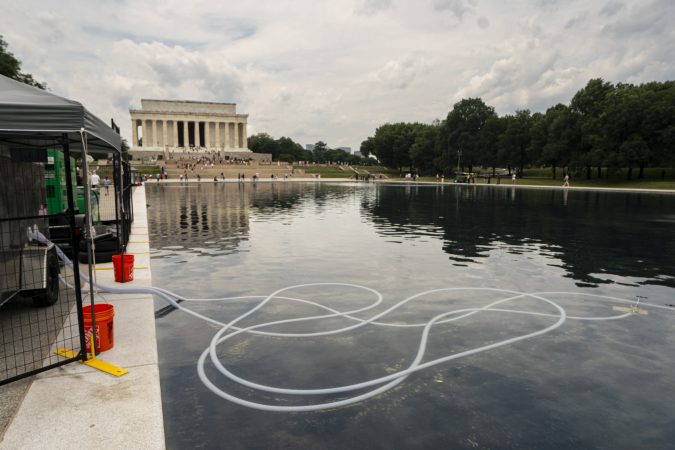
    Eight months later, the company brought its equipment to clean up a mess at the Reflecting Pool in Washington. In April, as part of his effort to remake the nation’s capital city ahead of America’s 250th birthday, President Donald Trump drained the pool at the base of the Lincoln Memorial to add a new coating to the bottom that would make the water shine “American flag blue.” But a week after the $14 million renovation was finished in June, an outbreak of algae floated along the water’s surface, hiding the new blue coating under a thick, mossy shade of green. Algae had long been a problem for the pool, but a Washington Post analysis of satellite data found that the post-renovation bloom was the worst outbreak dating back at least five years.

    The Department of Interior gave Greenwater and its nanobubble technology an expedited, no-bid contract to clean up the muck, even though other companies had expressed interest in the work to the National Park Service. Administration officials cited an urgent need to solve the problem before the 250th celebrations, and said they didn’t have time to allow companies to compete for the bid, according to a federal contracting document.

    Greenwater, founded in 2019 in Ohio, is owned by J.J. Cafaro Investment, according to the contracting documents it filed with the government. J.J. Cafaro is an heir to an Ohio-based mall development company and a Republican donor who has given about $350,000 to Trump-related political committees and owns a $16 million mansion down the road from Mar-a-Lago. He said he considers the president “a friend,” and Trump once described Cafaro as “a man who made a lot of money in Cleveland, does a good job and a fantastic man.” Cafaro has denied his relationship with Trump played a role in securing Greenwater’s contract for the Reflecting Pool.

    Chas Antinone Jr., Greenwater’s president and chief operating officer, has said the company has been expanding on the use of its technology, mostly in small bodies of water under 100 acres — such as a free demo to Trump’s Bedminster resort in 2024, Antinone told the San Diego Union-Tribune. The manager of Trump National Golf Club Bedminster brought Greenwater into conversations with the Interior Department about cleaning the Reflecting Pool, the New York Times reported.

    In total, the federal government has paid Greenwater $2.8 million between the Tijuana River and Reflecting Pool contracts.

    Company spokesperson Erin Kramer said Cafaro is not involved in the company’s day-to-day operations, and she shared research showing the technology has cleaned algae in studies. (Cafaro did not respond to requests for comment.)

    “Private demonstrations, self-funded projects, research partnerships, and public-agency work are ways new environmental technology moves from research to adoption,” Kramer said in response to questions about the Bedminster demo.

    Asked about the Bedminster connections, the Interior Department press office emailed a statement saying the White House was not involved in the selection process for any contract.

    Since the Times reported last month on his company’s no-bid contract, Cafaro has become a sort of bogeyman for liberals online. On Monday, the Democratic National Committee’s rapid response X account shared a photo of Cafaro along with news that the Interior Department planned to use the same contractor that installed the liner to repair the pool, even though Cafaro doesn’t own or operate that company.

    That photo featured Cafaro posing with former Real Housewives of Orange County star Kelly Dodd. But Dodd later posted a video clarifying that she merely posed with him because “he looked a little peculiar, and I liked his whole [get up]” but she only met him once at an event in Palm Beach, where she also saw Trump.

    “This has gone viral. I don’t know why I got lumped in with this guy,” she said. “I can safely tell you I don’t know this man.”

    ‘Hope it doesn’t rain’

    Flowing along the U.S.-Mexico border and discharging into the Pacific Ocean, the Tijuana River has been plagued by untreated wastewater, sewage, and debris dating back decades.

    The U.S. International Boundary and Water Commission gave a no-bid contract for Greenwater last year, initially offering more than $2 million for a pilot that would encompass 120 days of work. Officials said there was an “urgent need to assess the effectiveness of this technology in addressing the public health threat” and that “the technology is proprietary and not in use by any other company.”

    Until permanent infrastructure to address the pollution problems is in place, officials must “think creatively and evaluate every credible tool that can bring relief to affected Americans now,” Frank Fisher, an IBWC spokesperson, said in a statement to the Post.

    After Greenwater secured the project but before work got underway, career scientists exchanged emails asking about the initial $2 million cost and the feasibility of the project. Environmental Protection Agency staff who were consulting IBWC questioned their plans.

    “Wow. $2.4m for 90 days?” Thomas Konner, an environmental engineer for the EPA, wrote to IBWC and EPA officials on July 1.

    “Hope it doesn’t rain on their parade!” he followed up on Aug. 25.

    Months before, another scientist questioned the approach and called it a “Sisyphean task” — and forecast the storm. “I really don’t think the ozone will do any good unless you are able to ozonate the entire flow, but that’s based on my gut feeling and nothing else,” Douglas Liden, then an environmental engineer with the EPA, wrote to colleagues. “I also think the first storm will wash out any equipment you install, just as it did in Nogales, AZ.”

    Phillip Musegaas, executive director of the nonprofit San Diego Coastkeeper, which obtained the emails through a Freedom of Information Act request, said local groups have long hoped for a solution to one of the nation’s worst environmental disasters, which has sickened residents, closed beaches, and contaminated the air and water. Greenwater was supposed to take the nanobubble technology to the noxious hot spot — Saturn Boulevard — where the pungent water foams, an IBWC official wrote in the emails planning the project. But the company’s pilot was cut short by the storm and it never went to Saturn.

    Debris from the equipment washed into a barrier set up to collect trash along the river, according to photos shared with Voice of San Diego.

    “We were skeptical about it, but we wanted to see if it would work properly,” Musegaas said. “The fact that the whole project ended early because they let the equipment get washed away was pretty frustrating.” The company later acknowledged that the nanobubble machines could not operate continuously as intended because trash floating in the river clogged the machines.

    The company also said, in a report to the government about that pilot, that its machines hadn’t been affected by a previous rainstorm. The night of the next big storm, Greenwater said, it moved the machines to “a higher elevation” because of rising water levels, but “an unexpected flooding event occurred” that “carried large quantities of trash and debris that inundated and damaged” the machines. The company then said it shut the project down because of “safety concerns and site conditions.” The IBWC said in a December news release, citing the Greenwater report, that the project was “successfully completed” and the “technology has the capability to kill bacteria and eliminate odors associated with sewage.”

    Heather Raymond, the water quality director for Ohio State University’s College of Food, Agricultural, and Environmental Sciences, has tested Greenwater Service’s technology for years. Raymond, who does not work for the company nor on the Reflecting Pool and the Tijuana River projects, said the technology showed promise in trials when her team tested it in large tanks in controlled settings where algae levels were reduced, and small lakes where they saw some improvements in the local advisories for toxin levels.

    “There’s still a lot to learn in scaling this up in the water quality conditions and amount of treatment needed to be successful,” Raymond said.

    In the case of the Reflecting Pool, workers from the National Park Service used hydrogen peroxide and vacuuming to clear the algae in addition to the temporary units. Greenwater also said it had temporary units running by June 7, but the units were taken offline on June 12. Within 24 hours, an algae bloom developed, and the units returned. The company has since installed a permanent system in the Reflecting Pool’s pipes and said the water has cleared even though green sediment remains at the bottom.

    This week, the Reflecting Pool has been fenced off following the Fourth of July fireworks display, and Interior Secretary Doug Burgum said the workers will drain the pool and repair the peeling coating.

    The nanobubble technology has been turned off ahead of the draining, a person familiar with the plan said, speaking on the condition of anonymity out of fear of retaliation. By the middle of the week, the pool appeared green and murky, its bottom invisible under the mossy shade.
  • Judge ends Jan. 6 case against Proud Boys with warning about Trump pardons

    Judge ends Jan. 6 case against Proud Boys with warning about Trump pardons

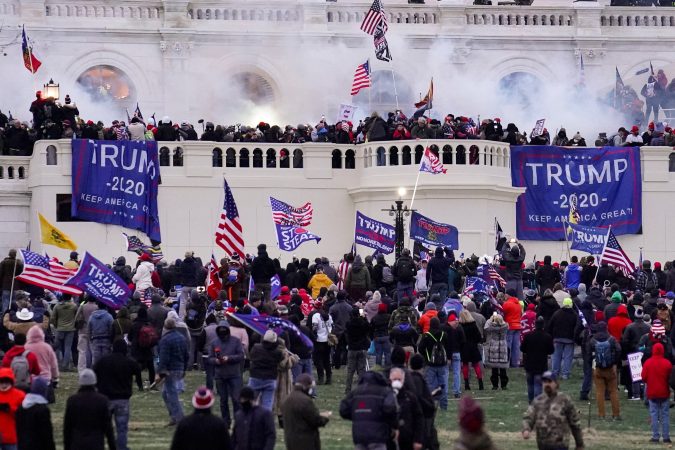
    A federal judge on Friday night granted the Justice Department’s request to dismiss the seditious-conspiracy case against four top members of the Proud Boys who led a violent mob into the U.S. Capitol on Jan. 6, 2021.

    But in his ruling, U.S. District Judge Timothy J. Kelly gave a stark warning about President Donald Trump’s efforts to lift penalties against those who instigated and carried out the storming of the Capitol. The attack — by the mob seeking to overturn Trump’s loss to Joe Biden in the 2020 election — left more than 140 police officers injured and caused an estimated $3 million in damage.

    The judge indicated he was wiping out the Proud Boys’ charges — against Ethan Nordean; Joseph Biggs; Zachary Rehl, former leader of the Philadelphia Proud Boys; and Dominic Pezzola — under protest, saying legal precedents left him no choice but to accede to the request by the Trump administration’s prosecutors.

    “As the Court has said many times, the attack on the Capitol on January 6, 2021 was a perilous event,” wrote Kelly, who is a Trump appointee.

    “It was an attack on people, including police officers, many of whom were injured. It was an attack on a coordinate branch of government — Congress — that the Founders saw fit to give a place of primacy in Article I of the Constitution. And it was an attack on the Constitution’s mechanism to facilitate the peaceful transfer of power from one president to the next.”

    The Jan. 6 riot followed a rally where Trump repeated his false claims that he won the 2020 election. As rioters rampaged through the Capitol, lawmakers were forced to evacuate, delaying the certification of Biden’s victory for hours.

    Friday’s ruling wipes out some of the most serious criminal charges from the riot, cementing Trump’s bid to unravel the largest Justice Department investigation in U.S. history.

    Trump pardoned nearly all the rioters — more than 1,500 — who were charged by the Justice Department in the wake of Jan. 6. But that blanket pardon, issued on the president’s first day in office last year, did not extend to about a dozen leaders and prominent members of two extremist groups behind the violence, the Proud Boys and the Oath Keepers.

    Those defendants were convicted of carrying out a seditious conspiracy against the United States or related offenses. Trump initially commuted their prison terms, stopping short of a full pardon. But this year, while those cases were being appealed, Justice Department officials filed legal papers to vacate the convictions altogether.

    The D.C. Circuit federal appeals court granted that request in May. U.S. Attorney Jeanine Pirro, a Trump ally who serves as the top federal prosecutor in D.C., then filed motions to dismiss the underlying charges in U.S. district court.

    Kelly said in his opinion on the Proud Boys case that judges are constrained to dismiss charges once prosecutors ask to drop them.

    Under Supreme Court precedent, prosecutors have “exclusive authority and absolute discretion to decide whether to prosecute a case,” and they may drop charges “in the interests of justice” even after defendants have been convicted.

    The moves by the Justice Department were unusual — prosecutors rarely ask to throw out guilty verdicts — and Pirro’s office initially did not give detailed reasons for scrapping the highest-profile cases related to the Jan. 6 attack.

    In a brief court filing, a prosecutor in Pirro’s office wrote only that the government “has determined in its prosecutorial discretion that dismissal of this criminal case is in the interests of justice.”

    Proud Boys leader Enrique Tarrio separately had his conviction vacated and charges dismissed last year, also at the Justice Department’s request. Tarrio, who had been convicted of organizing members of his group, was not present at the Capitol on Jan. 6.

    Pezzola was acquitted at trial of the seditious conspiracy charge but convicted of assaulting a police officer and other offenses from the riot.

    “We took the worst they threw at us the raids, the solitary, the lies and we stood tall,” Tarrio posted on X after the ruling was issued Friday night. “Trump dropped the pardons and now the rest is crumbling. Justice is SERVED!”

    Before dismissing the set of charges against the Oath Keepers, U.S. District Judge Amit P. Mehta, an appointee of President Barack Obama, asked Pirro’s office to supply detailed reasons for its request. Mehta has not yet issued a ruling on the Oath Keepers’ charges.

    A prosecutor, G.A. Massucco-LaTaif, said Trump’s blanket pardon proclamation also directed the Justice Department to drop all pending charges stemming from the Jan. 6 attack. Prosecutors can no longer put any Jan. 6 defendants on trial and judges cannot effectively impose any prison time, he wrote in a court filing, because the presidential proclamation would immediately kick in to prevent those outcomes.

    “In any event, the public’s interest in a trial of these defendants has already fully vested,” Massucco-LaTaif wrote. “This Court presided over two public trials of the charges in this indictment. … Dismissal of these cases with prejudice will not erase this public record.”

    The president and top officials in his administration have moved aggressively to recast and minimize the threat posed by the mob of Trump supporters on Jan. 6.

    Earlier this year, the Justice Department acknowledged that it had deleted reams of news releases it had posted online, which detailed the prosecutions of those charged in the riot.

    The Washington Post identified several webpages that led to error messages, including news releases about the arrest and conviction of Tarrio and other rioters whose convictions were undone by Pirro. The Justice Department said in a social media post that it was erasing what it considered “partisan propaganda.”

    “We are proud to reverse the DOJ’s weaponization under the Biden administration,” the department posted on its rapid-response account on X. “We will do everything in our power to make whole those who were persecuted for political purposes. This includes stripping DOJ’s website of partisan propaganda.”

    Copies of hundreds of those news releases, which had been hosted on the website of the U.S. attorney’s office for D.C., have been archived by an independent website, the Internet Archive’s Wayback Machine.

    A spokesperson for Pirro did not say who ordered the deletions or how many releases were affected, referring questions to Justice Department headquarters. A searchable database of all charges and convictions stemming from the Jan. 6 investigation was taken offline by the Justice Department last year.

    Pirro has denounced political violence in other cases, such as the incident this year in which a lone gunman allegedly tried to assassinate Trump during the White House correspondents’ dinner, but routinely declines to take questions about the Jan. 6 riot at her public appearances.

    She has also pursued Trump’s perceived political foes with shaky allegations of misconduct, including then-Federal Reserve Chair Jerome H. Powell as well as six Democratic lawmakers who angered the president by posting a video on social media reminding U.S. service members that they could refuse illegal military commands. A grand jury refused to indict the six Democrats, and Pirro closed the investigation into Powell after failing to find evidence of a crime.

    In addition to the pardons, commutations, and court filings seeking to dismiss cases, Trump appointees have fired many of the FBI officials and prosecutors who investigated the attack.

    The Justice Department has also taken steps to vacate the conviction of Stephen K. Bannon, a former Trump adviser who was convicted of contempt of Congress for defying a subpoena related to Jan. 6. And the department has stopped defending a similar conviction for Peter Navarro, a top trade adviser to the president who is appealing his case.

    The Trump administration had announced plans for a $1.776 billion fund to provide payments to people who claim they were unfairly targeted by law enforcement, and dozens of Jan. 6 rioters said they intended to apply for a cut of the money. The payments would have been funded by taxpayers, raising bipartisan concerns in Congress. A federal judge issued an injunction blocking the “Anti-Weaponization Fund” from being established, and Trump administration officials have said that effort is dead.

    In dismissing the Proud Boys’ seditious conspiracy charges, Kelly invoked remarks from President Ronald Reagan’s first inaugural address in 1981 describing the peaceful transfer of power as a miracle of self-governance.

    “President Trump’s views about the prosecution of those who attacked the U.S. Capitol on January 6 — whether those views are based on fact or fiction — are well known, as is his intention to extend clemency to them through the Executive Order,” Kelly wrote in the opinion.

    “Moving forward, if this Nation’s experiment in self-government is to last another 250 years, the American people — no matter their partisan preferences — will have to act together to preserve, protect and defend that miracle through our constitutional framework,” he wrote.

  • Minnesota school faces threats after Trump posts clip of Somali kindergartners

    Minnesota school faces threats after Trump posts clip of Somali kindergartners

    Hateful emails and phone calls targeted a Minnesota school serving Somali families after President Donald Trump shared a video of its kindergartners on Truth Social this week, an episode that many Somali Americans see as an escalation of a sustained campaign of political and rhetorical attacks during Trump’s second term, community leaders said.

    On Wednesday, Trump reposted a video from a kindergarten graduation ceremony at Gateway STEM Academy, a K-8 charter school in St. Paul. In the clip, children wearing blue graduation gowns, including girls wearing hijabs beneath their mortarboards, sing in Somali as they celebrate the end of the school year.

    Trump amplified another user’s caption: “Every girl is in a hijab … in kindergarten.”

    The faces of the young children were clearly visible in the video shared with Trump’s 12.9 million followers. Members of the Somali community said that exposure could open the door to attacks on some of the community’s most vulnerable members. The replies to Trump’s post quickly filled with anti-Muslim invective, including one user who called the children “future terrorists.”

    For many Minnesotans of Somali descent, the post was the latest salvo in a monthslong campaign in which Trump has repeatedly singled them out while his administration has mounted an aggressive immigration and law enforcement operation in the Twin Cities.

    “The first term of Donald Trump was a cakewalk compared to this,” said Suleiman Adan, deputy executive director of the Council on American-Islamic Relations’ Minnesota chapter. “In the first term, you saw attacks on equality, belonging, and justice. In the second term, it’s an attack on basic human dignity. Right now, the crosshairs are on the Somali community.”

    Adan said he and other advocates had been in contact with officials at the school, who told them they have been contending with hateful emails, phone calls, and social media posts.

    Reached Friday, the White House did not directly address questions about the president’s decision to share the video, the harassment the school says followed, or concerns about posting identifiable children to millions of followers.

    “President Trump is right,” White House spokesperson Abigail Jackson said. “Aliens who come to our country, complain about how much they hate America, fail to contribute to our economy, rip off Americans, and refuse to assimilate into our society should not be here.”

    The ceremony featured in Trump’s post took place on the last day of school for the rising first-graders, who have not been back to the building since, Adan said.

    The school is mulling safety measures for when classes restart. The incident has also increased concern around Saturday schools that teach Somali language and culture.

    Gateway STEM Academy’s parent handbook describes the school as a STEM-focused charter that seeks to “embrace” students’ cultural backgrounds and encourages family participation in cultural celebrations, while emphasizing academic rigor, attendance, and discipline. It also offers Arabic among its electives alongside science, technology, and math programming.

    The video featured in the social media post began as a recording of an ordinary school celebration before ricocheting through the online right. The song, in Somali, is benign: it speaks of the pride of being a student, the joy of reaching a milestone, and hopes for continued success, said Malika Dahir, the executive director of Reviving the Islamic Sisterhood for Empowerment.

    Members of the Somali community routinely stream milestone moments for friends and relatives who live in other countries or states, Dahir added.

    “There isn’t a graduation or a wedding that isn’t livestreamed,” she said. “We share these online, because family members are all over the world. It’s a way to share momentous occasions. To feel like now these moments might be weaponized, there’s just a sense of loss, like our joy has been stolen.”

    The video was circulated by End Wokeness, an influential conservative social media account, with a caption drawing attention to the girls’ hijabs. Trump reposted the clip, first without explanation and later with the account’s caption attached.

    The post was consistent with Trump’s frequent use of Truth Social to share racially charged, often inflammatory, imagery. Earlier this year, his account posted a video depicting Barack and Michelle Obama as apes, which was deleted after bipartisan condemnation. He later shared a doctored image of the Obamas beside a graffiti-covered Air Force One bearing “BLM” and Arabic writing.

    Minnesota is home to roughly 80,000 people of Somali descent, the largest Somali community in the United States. Trump has repeatedly singled out Somali immigrants during his second term, seizing on a series of sprawling fraud investigations involving state and federal social-service programs. Many of those charged are Somali or Somali American.

    The largest fraud allegation centered on a nonprofit whose operators and affiliates were accused of diverting about $250 million from a federally funded child-nutrition program. Federal prosecutors have also brought separate cases involving programs intended to provide housing assistance to vulnerable adults and therapy for children with autism. Prosecutors say defendants used some of the money to buy cars, real estate, and other personal luxuries.

    Trump has used the scandals to justify large-scale federal intervention in Minnesota, dispatching thousands of immigration officers to the Twin Cities in an operation that extended well beyond the people accused of fraud. The deployment prompted weeks of protests and confrontations between agents and residents.

    During the operation, federal officers fatally shot Renée Good and Alex Pretti, both 37-year-old U.S. citizens, in separate encounters that were captured on video and became flash points in the national debate over Trump’s immigration crackdown.

    The administration subsequently changed leadership of the operation and began drawing down the federal presence. In February, border czar Tom Homan announced that 700 officers would leave Minnesota, although he attributed the withdrawal to increased cooperation from state and local authorities rather than directly to the shootings.

  • Trump denies this Congress what could be its last major bill-signing ceremony

    Trump denies this Congress what could be its last major bill-signing ceremony

    Invitations were sent. American flags lined the back of the red stage set in Statuary Hall. Bright spotlights lit the signing table donned with the presidential seal.

    President Donald Trump so abruptly canceled what might have been the last major presidential signing ceremony of this Congress that it caught lawmakers, top aides and housing industry officials all completely by surprise.

    Trump said he would not sign the bipartisan 21st Century Road to Housing Act, but it went into law anyway on Friday without his signature.

    The axed signing ceremony delivered Trump’s punishment of lawmakers for failing to pass his bill to limit voting rights ahead of the midterms, even though the housing bill represents the most significant housing legislation since the aftermath of the financial crisis.

    Trump doubled down on his decision not to sign the bill in a Truth Social post Friday morning.

    “I will not sign the Housing Bill, which has been fully approved by Congress and sent to the White House, in PROTEST over the fact that the United States Senate is not capable of passing THE SAVE AMERICA ACT,” Trump wrote. “THE SAVE AMERICA ACT’S non-passage is CRAZY, and a serious threat to any politician who votes against it!”

    Trump’s decision to ax the signing ceremony, and his comments referring to the bill as a “yawn,” represent a missed opportunity for lawmakers and the president to demonstrate to Americans that they are addressing their affordability concerns, some congressional watchers say.

    “This is the exact kind of bill they want to point to and say Republicans are working on issues that their voters care about, and Democrats would want the same,” said Julian Zelizer, a history and public affairs professor at Princeton University. “That’s not the signal that the administration is sending.”

    One housing leader who received an invite to the ceremony from House Speaker Mike Johnson’s office said they were on the way to the event in their Lyft when they received a text with a screenshot of Trump’s post that read: “Today’s Housing News Conference and Signing is hereby cancelled until such time as we pass the desperately needed SAVE AMERICA ACT.”

    The housing leader, who spoke on the condition of anonymity, said they then received an email from the speaker’s office shortly after. The housing leader’s first reaction: “incredibly disappointed, but not shocked.”

    One business lobbyist who was set to attend the signing ceremony was standing on the Capitol steps, when another attendee told them to check their email, as the event was canceled. Seconds later they received a message with a screenshot of Trump’s Truth Social post.

    “When I found out the reason why, it was disappointing, but it wasn’t shocking,” said the lobbyist, who spoke on the condition of anonymity. “With the president in the White House, things can happen on a dime.”

    Trump’s last-minute decision to cancel the signing ceremony represents a broader pattern of the president suddenly reversing course on policies previously deemed a priority, including a canceled public signing ceremony in May for an executive order to create a system to vet powerful new AI models before they are released publicly. Trump ultimately signed a revised version of the order weeks later.

    Lawmakers were equally blindsided by Trump’s decision on the housing bill. Especially considering that Senate Republicans had already expressed they lacked enough support to pass the Save America Act, which would impose stricter election rules.

    House GOP leadership was in the middle of a news conference when Trump canceled the ceremony on social media. House Financial Services Committee Chairman French Hill (R., Ark.) had just discussed his work with Senate Banking Committee Chairman Tim Scott (R., S.C.) to get the bill through both chambers.

    When Johnson opened the floor for questions, a reporter notified him of Trump’s social media post. When asked if Trump would sign the bill at a later date, Johnson said, “It’s my estimation he’ll do it within that 10-day window.”

    A president has 10 days, excluding Sundays, to either veto or sign a bill after they receive it from Congress. If the president does not act within the window, the bill automatically becomes law if Congress is in session. So Congress is poised to notch a concrete legislative achievement to tout on an issue widely expected to loom large in the midterm elections.

    Johnson sent the bill to Trump on Monday, June 29, which meant the 10-day window closed at the end of Friday at midnight.

    While many housing advocates have said the bill does not go far enough to address the nation’s housing shortage, they argue it is an important first step.

    The bill, which received overwhelming bipartisan support in Congress, would bar institutional investors from buying more than 350 single-family homes, expand federal grant programs to give cities money for building new homes and eliminate an outdated federal construction rule to make manufacturing mobile homes cheaper, among other measures.

    Zelizer said Trump’s negative comments about the bill could make it more difficult for some lawmakers, particularly vulnerable Republicans, to sell that idea to voters.

    The business lobbyist who was planning to attend the signing ceremony said the cancellation and Trump’s comments hurt the positive momentum around the bipartisan success in passing the bill, but they don’t see that having much sway on Americans’ minds on the matter.

  • Trump tanked EV sales, but car shoppers have found another way to save fuel

    Trump tanked EV sales, but car shoppers have found another way to save fuel

    Toyota took heat for years for being slow to jump on the electric-vehicle bandwagon.

    But the world’s largest automaker was planning later this year to showcase its revved-up EV ambitions with the debut of a new flagship Lexus EV. It was supposed to kick-start Toyota’s hopes of making the brand all-electric by 2035. Bye-bye, gas.

    Then President Donald Trump killed off the $7,500 tax credit for buying or leasing a new EV, allowing the popular program to expire in September. The White House rolled back fuel economy standards. Auto loans got more expensive as interest rates shot up.

    Within months, U.S. EV sales cratered — down 27% in the first quarter this year compared with 2025, said Cox Automotive.

    As a result, automakers have been busy scrapping EV models and writing off billions in investments.

    In May, Toyota abandoned its electrified Lexus “in light of the surrounding environment.” Honda canned three EV models for the American market and took a $9 billion EV-related write-down. Even all-electric Tesla mothballed its Model S and Model X vehicles. Stellantis said it would suffer a $26 billion charge due, in part, to “the cost of overestimating the pace of the energy transition.”

    But automakers have not seen a surge in consumers buying traditional gas vehicles. Buyers instead are pivoting to the market’s surprising bright spot: hybrids.

    Sales of hybrid vehicles have increased more than 80% from 2023 to 2026, to a pace of more than 2 million vehicles a year, according to Cox.

    Hybrids — which use a mix of electric and gas power — made up a record high of 14.1% of new vehicle sales, nearly three times as much as EVs, in the first quarter this year.

    The bulk of new cars and trucks sold still run on gas alone. But hybrids have more than doubled their market share over the past three years — taking gains from the shrinking share going to EVs and gas vehicles.

    “Hybrids are definitely having their moment,” said Stephanie Valdez Streaty, director of industry insights at Cox.

    The success of hybrids has received less attention than the politicized downfall of EVs, which can seem to reduce car-buying options to either environmentally conscious EVs or gas-guzzling behemoths. The future vs. the past.

    But the rapid rise of hybrids shows that American car buyers are open to electrified vehicles while hedging their bets. They want better fuel efficiency without sacrificing the things they love about their cars and trucks, according to analysts.

    “I think the future is still electric,” Streaty said. “The timeline has just shifted.”

    Car buyers want both more miles per gallon and familiarity, said Joseph Yoon, a consumer insights analyst at Edmunds, an automotive research platform. They want a vehicle they already know. And they can’t afford to pay too much more for it. The average new vehicle costs about $50,000.

    Yoon said Edmunds ran a small survey of car shoppers just before the EV tax credit expired and found that one of the main reactions was people wanting an electrified version of their favorite vehicle. With price a priority, that often meant a hybrid.

    “For a lot of people, hybrids add a layer of fuel savings without changing anything else in their life,” Yoon said. “I think that’s a heck of a value proposition.”

    Today, some hybrid models outsell traditional gas ones. A majority of Toyota Highlanders sold earlier this year were hybrids — same with Hyundai Sonatas and Honda CRVs.

    “It’s the stealth rise of hybrids,” Yoon said.

    The United States’ EV struggles are an outlier. Worldwide, about 25% of vehicles sold last year were EVs, said the International Energy Agency. In China, EVs amounted to more than half of new cars. By contrast, in the U.S., EVs accounted for less than 10% of sales for the entire year, boosted by the tax credits.

    So far, the spike in gas prices caused by the war in Iran hasn’t boosted U.S. EV sales. Consumers have been looking and researching EVs more, Yoon said, but that hasn’t translated into more sales.

    “It’s hard for us to say what’s going on,” he said.

    Electric vehicles tend to be more expensive than gas and hybrid ones. The tax rebates are gone. Interest rates are high.

    “Buyers are more focused on value than trying to get into a new platform,” he said.

    Automakers, once full of plans for EVs, have been forced to change directions.

    Ford replaced its fully electric F-150 Lightning with a hybrid model.

    The long-delayed plan to launch an all-electric Ram 1500 pickup is gone, replaced by the promise of a hybrid truck.

    “What we are registering is a higher interest on hybrids. This is the power train that is fastest-growing in the market, hybrids,” Antonio Filosa, CEO of Stellantis and owner of Ram, said on an April earnings call.

    General Motors CEO Mary Barra said the automaker was scaling back its EV production because it was “operating in a U.S. regulatory and policy environment that is increasingly aligned with customer demand.” But Barra said GM wasn’t giving up entirely on EVs.

    “We know EV drivers don’t often go back” to internal combustion engines, Barra said.

    The popularity of hybrids has been a win for Toyota’s original strategy.

    The automaker’s entire fleet has been slowly shifting to hybrid-only. Its Sienna minivan went that route in the 2021 model year. The Land Cruiser went hybrid with its 2024 model. The Camry followed the next year. The biggest switch came with the 2026 model of the RAV-4 — America’s best-selling compact SUV.

    It is available only as a hybrid. Sales have held up.

    “The conundrum for the industry is there is interest in electric vehicles,” said Stephanie Brinley, associate director at S&P Global Mobility. “We’re just not quite there yet.”

  • Trump plan would fence Pennsylvania Avenue outside White House

    Trump plan would fence Pennsylvania Avenue outside White House

    The Trump administration plans to erect new fences on the ends of Pennsylvania Avenue NW outside the White House, the latest effort to boost presidential security, according to three people who spoke on the condition of anonymity because they were not authorized to publicly discuss the plans.

    The White House and Secret Service would be able to close the new fences, planned where Pennsylvania Avenue intersects 15th and 17th streets NW, and prevent pedestrian access in front of the White House if they determine there are security risks, the people said.

    The White House has long relied on temporary barriers, staffed by Secret Service personnel, to shut down Pennsylvania Avenue to pedestrians. Secret Service officials have previously suggested building permanent fences on Pennsylvania Avenue, but faced resistance from past administrations over the perception of restricting public access to the White House, the people said.

    Asked about the planned fencing, a White House official said that conversations about improving campus security were ongoing and that any proposed projects would go through a review process.

    The National Capital Planning Commission and the Commission of Fine Arts, a pair of federal agencies that oversee design matters related to construction projects in the capital region, have historically reviewed major changes to the White House and its grounds. That process often can stretch months or years, although the commissions — which are now led by Trump allies — have rushed several of the president’s projects.

    The Secret Service referred questions to the White House.

    The Trump administration also plans to build new permanent fencing around Lafayette Square, the public park across from the White House mansion, the Washington Post previously reported.

    Trump officials and the Secret Service have conducted additional reviews of presidential security risks after an April shooting at the White House correspondents’ dinner, the third time in less than two years that Trump found himself under the threat of gunfire.

    The stretch of Pennsylvania Avenue in front of the White House — which offers the closest view of the building for pedestrians — has long drawn visitors from around the world. The space has also been used by protesters for a wide array of political causes.

    Several organizations, such as the Smithsonian American Art Museum’s Renwick Gallery and the Milken Center for Advancing the American Dream, are also located on Pennsylvania Avenue outside the White House. Spokespeople for the Renwick Gallery and the Milken Center did not respond to questions about whether their organizations had been briefed on the planned fences and the effect on their workforce.

    Past administrations have considered a range of efforts to boost security around the White House grounds, including building more and higher fencing.

    President Bill Clinton in 1995 shut down Pennsylvania Avenue in front of the White House to cars, turning a long-standing road into a pedestrian thoroughfare.

    “It should be seen as a responsible security step necessary to preserve our freedom, not part of a long-term restriction of our freedom,” Clinton said in a radio address announcing the change.

    Officials in the early 2000s repaved the stretch of Pennsylvania Avenue and made other changes to make it more pedestrian-friendly, an effort overseen by then-first lady Laura Bush. The project also included building new security booths and bollards that remain in use today.

    Michael McGill, a former General Services Administration official who served on the commission at the time, said he was concerned that new fencing around the White House and the Secret Service’s push for security measures would lead to Pennsylvania Avenue being wrongly shut down for pedestrians.

    “This would mean that residents and tourists alike would be unable to see the White House from any reasonable distance, especially if Trump plants more trees in the Park,” McGill wrote in an email Thursday, alluding to the president’s separate plan to plant 47 trees in Lafayette Square.

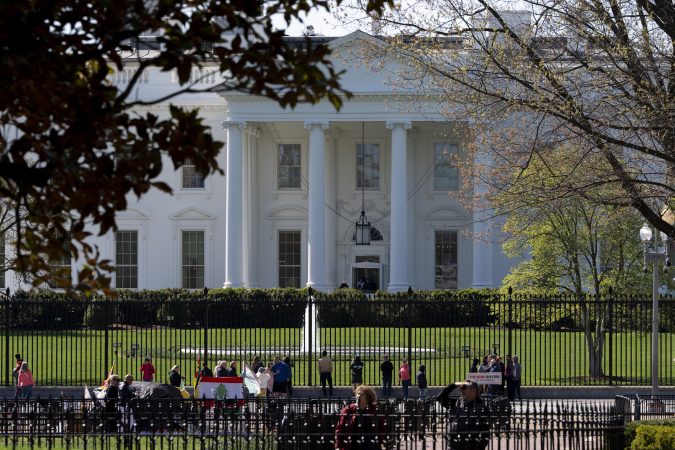
    Reflecting Pool being drained again

    Elsewhere in Washington, the Associated Press reports, crews are again draining the Lincoln Memorial Reflecting Pool as Trump’s problem-plagued efforts to revamp the waterway push well past his initial goal of having it ready by July 4 to mark the nation’s 250th birthday.

    The president at first suggested his renovations would last a century. But, within weeks of the project originally reaching completion last month, the water was beset by an algae bloom and pieces of the new coating appeared to be peeling off the bottom.

    Trump has blamed the peeling on vandals, though critics allege it’s from shoddy repair work.

    Interior Secretary Doug Burgum, whose agency oversees the National Park Service, told conservative podcaster Katie Miller in an interview released earlier this week that the new round of draining was planned. He also said that the water might still contain debris from an extensive Independence Day fireworks display over the National Mall.

    “Drain the water, clean up the fireworks stuff,” Burgum told Miller, who is the wife of deputy White House chief of staff Stephen Miller. “Repair the vandalism that was done. Fill it back up again.”

  • Patriot missile deal and Trump’s praise for Zelensky put pressure on Russia

    Patriot missile deal and Trump’s praise for Zelensky put pressure on Russia

    The U.S. agreement this week to allow Ukraine to produce Patriot missiles and President Donald Trump’s praise for President Volodymyr Zelensky are leading the Kremlin to recalibrate its message on the war.

    The Kremlin has downplayed the developments but says they will make a peaceful resolution more difficult.

    Dmitry Peskov, the spokesperson for Russian President Vladimir Putin, accused Ukraine on Friday of being “unwilling” to engage in a peace process, while Moscow remains open to ending the war through diplomacy. He reiterated that Putin was open to scheduling another phone call with Trump.

    The Kremlin has, in fact, repeatedly rejected Zelensky’s offers to meet with Putin and rejected his calls for a full ceasefire.

    “One must give credit to Zelensky’s diplomacy,” the Russian political scientist Vladimir Pastukhov wrote Friday on Telegram. “Ukraine managed to reconfigure the anti-Russian alliance into a new alignment — one far more advantageous for itself and increasingly threatening to Russia.”

    Zelensky, Trump told reporters Wednesday at the NATO summit in Ankara, Turkey, has “done an amazing job.” It was a dramatic departure from Trump’s comments during his first year back in office, when he accused the Ukrainian leader of ingratitude for U.S. help and “gambling with World War III.”

    “We’re going to give a license to you to make Patriot missiles,” Trump said Wednesday. “That’s pretty cool. This way, you can’t complain that we’re not giving them enough. I said, ‘Make them yourself.’ We haven’t informed the company of that yet, but that’ll work out all right.”

    The Patriot missiles, long sought by Kyiv, are among the few Western weapons capable of shooting down the ballistic missiles Russia is increasingly firing at Ukrainian cities.

    Secretary of State Marco Rubio, speaking alongside Trump, said Russia was finding it harder to defend its own skies. He expressed hope the deal would “create the space now to negotiate the end of this war.”

    “It’s an escalation,” Trump added, “but it’s also an escalation that can help lead to an end.”

    Peskov, in response, said the Kremlin does not “see an escalation” but said there were “certain misconceptions within the White House administration … regarding the idea that escalation and military pressure can help pave the way for a peaceful settlement.”

    He called this “a flawed judgment” and warned it might cause what Russia calls its “special military operation” in Ukraine to go on longer.

    “It will result in our having to establish a larger security zone — a larger buffer zone,” he said. “Consequently, stoking tensions and taking actions that drive escalation will in no way contribute to the peace process.”

    Peskov downplayed the Patriot deal.

    “Yes, it is an obvious fact that the U.S. is continuing full-scale deliveries of weaponry and military technology to Ukraine — we are aware of this,” he said. “At the same time, however, there is a certain duality in the United States’ position: Unlike the Europeans, the U.S. maintains a desire to facilitate a move toward a peace process.”

    Russia, which invaded Ukraine, has pressed maximalist demands on Kyiv, including the surrender of territory its forces have not captured. The Kremlin has invited Zelensky to come to Moscow, while the Ukrainian leader has dismissed the offer as a stalling tactic.

    “The Kremlin appears to be struggling to adjust its narrative line in response to the Trump administration’s recent denial of Russian negotiating tactics and acknowledgment of Ukrainian battlefield successes,” the Washington-based Institute for the Study of War said in a recent analysis.

    Pastukhov, who is based in London, said Zelensky had “succeeded in altering — not so much the ‘reality on the ground’ that Putin is so fond of citing, but rather the West’s perception of that reality.”

    “Now,” he said, “it is Putin who must rack his brains over how to present the ‘realities on the ground’ in a more favorable light.”

    While the U.S. deal is a diplomatic win for Zelensky, military analysts warn it won’t address Ukraine’s immediate needs. Russia is firing ballistic missiles at Ukrainian cities almost daily. Given strict U.S. technology controls and the complexity of the missile systems, full-scale production is likely years away.

    Zelensky thanked the United States for the “positive decision.”

    “President Trump has repeatedly emphasized that only two or three countries in the world are currently capable of producing Patriots because the others are not technologically ready,” he told reporters Friday. “The United States has recognized Ukraine as a country that is ready to do this.”

    Now, he said, his teams need to work out a timeline to set up production. “The sooner we reach an agreement, the sooner we’ll be able to produce Patriots.”

  • Assigning FEMA staff to immigration enforcement hurt disaster work, House report says

    The Department of Homeland Security misused Federal Emergency Management Agency resources when it diverted dozens of staff to help with immigration enforcement, says a new report by a group of House Democrats shared first with the Washington Post. The lawmakers describe the deployments as an example of how the Trump administration has hindered FEMA’s ability to properly prepare for and respond to disasters.

    Beginning last summer, the Trump administration reassigned FEMA personnel to immigration enforcement roles that were largely outside the scope of emergency and disaster work for long stretches of time when the agency was grappling with extensive cuts and leadership changes, according to the report from Democrats on the House Transportation subcommittee on economic development, public buildings, and emergency management. The probe was based on interviews with 15 current and former FEMA employees and disaster and immigration policy experts.

    “Overall, the Administration’s sweeping immigration agenda has used FEMA resources and personnel to aid in carrying out large-scale immigration enforcement operations, distracting the agency from its statutorily required responsibilities, jeopardizing its workforce levels and expertise, and reducing its ability to respond to disasters and aid survivors,” the report said.

    To assess the probe’s findings, the Post separately reviewed previously unreported documents from the Government Accountability Office related to the report, and spoke with two current FEMA employees with direct knowledge of the agency’s immigration deployments, as well as four former senior FEMA officials and two federal officials who specialize in homeland security.

    Two current and former FEMA officials interviewed said some of the lawmakers’ findings were mischaracterized, because DHS has called on FEMA personnel and specialized teams to support immigration work in the past. They did, however, agree with the report’s conclusion that FEMA’s primary mission “has been measurably undermined by DHS’ policy goals surrounding border security.”

    DHS and FEMA did not provide a comment to the Post by the time of publication.

    The Post reported in August that DHS began to move dozens of FEMA staffers to help immigration agencies with vetting and onboarding new hires, as well as other administrative work. The lawmakers’ report, as well as separate interviews with six current and former federal officials and documents from GAO reviewed by the Post, reveal in greater detail how involved FEMA was with immigration initiatives for nearly a year.

    At the time, some FEMA leaders raised concerns about the legality of using disaster-funded resources for this kind of work, according to one former senior official with direct knowledge of the situation who, like others interviewed for this story, spoke on the condition of anonymity because they were not authorized to speak publicly about FEMA’s immigration work.

    But “they still were sent over,” the former official said.

    FEMA employees worked in detention centers, including in Minneapolis, where protesters surrounded one staffer en route to an Immigration and Customs Enforcement facility, according to witness accounts summarized in the report. FEMA human resources staffers reviewed applications and issued job offers for the surge of new immigration enforcement officers, according to details the agency sent to GAO in connection to the probe and reviewed by the Post.

    “ICE could not have done this work without FEMA,” a former agency official who specialized in national incident management and homeland security, and who had field experience at a Texas detention facility, told lawmakers for the report. “ICE is good at law enforcement, but operations, strategy, and the big picture — FEMA created that structure for them, building the plan and the operation toward the mission end-goal.”

    The influx of immigration work consumed FEMA’s hiring and administration capacity and delayed its ability to process some work, even as disaster staffers were losing their contracts, according to the report. A current FEMA official with knowledge of the situation also described the strain on that department.

    “Basically all human resourcing actions ground to a halt,” the official said. “We couldn’t process even simple things like annual salary adjustments for current staff on time.”

    FEMA helped oversee a group of civilians who volunteered with the Defense Department for immigration enforcement, and whose duties included planning support for arrests, raids, and patrols, and “managing the physical flow of detained noncitizens from arrest to deportation,” according to one GAO document. The current FEMA official similarly described how staffers managed that workforce.

    Because the agency can quickly coordinate resources and logistics, previous administrations have tapped FEMA to support or lead complex missions outside its usual scope. That has included processing the entry of refugees; helping shelter, transport, and provide medical support to migrants; or leading the nation’s coronavirus pandemic response.

    Still, five current and former agency officials described a stark difference in how this administration has deployed FEMA — not for humanitarian work, as had happened in the past, but for coordinating and supporting mass immigration raids, arrests, and deportations across the United States. Former FEMA leaders said this administration’s use of the agency sets a new precedent.

    “I’ve spent almost two decades in emergency management, including leading FEMA. The agency has always faced resource constraints and competing pressures. That’s not new,” said Pete Gaynor, who ran FEMA during President Donald Trump’s first term and oversaw the agency’s coronavirus operation. “What these findings describe, however, raises serious questions that deserve honest answers.”

    Chris Currie, GAO’s director for emergency management issues, said that while FEMA has been asked to do a wide range of tasks outside disaster response and recovery, he was not aware of any previous situation in which FEMA personnel were reassigned to other agencies for the purpose of hiring employees for those agencies.

    Other aspects of the reassignments also raised questions, he said.

    “A valid question is to what extent were they making decisions in the hiring of those candidates? Were they involved in interviews? Were they making qualitative decisions about their ability to perform the function?” Currie asked. “But given the number of ICE officers hired in the last year, it’s clear that DHS needed additional help.”

    The reassignments came as FEMA was mired in internal upheaval.

    Since January 2025, FEMA has lost about 30% of its staff — about 5,000 people, according to the probe — a number higher than previously reported. The losses reflect cuts by the Trump administration, voluntary departures, and involuntary reassignments, the report notes. FEMA has also lacked a Senate-confirmed leader since Trump returned to office last year.

    FEMA has long had a workforce problem, Currie said. Even before the latest Trump administration took over, numerous GAO reports over the years identified staffing issues that contributed to prolonged disaster recoveries, he said.

    “So it’s concerning anytime I see resources redirected away from FEMA,” he said. “Because they have struggled for so long.”

    In May, FEMA told Currie’s office that starting in August 2025, DHS reassigned about 125 people from its security and human resources offices. Earlier that year, 41 FEMA employees volunteered to help DHS at the southern border as part of an internal immigration enforcement mission.

    DHS offered in some cases to renew the expiring contracts of disaster-specific workers if they raised their hands for immigration assignments, according to the lawmakers’ report. Some of these workers, known as CORE, or Cadre of On-Call Response/Recovery Employees, were dismissed en masse last winter, only to then be rehired months later when new FEMA leaders came in.

    In response to questions from GAO, FEMA said DHS instructed the agency to permanently reassign two staffers to ICE. One person declined and chose to voluntarily transition out of DHS. The other initially accepted but resigned before their start date.

    Many FEMA employees stayed in their immigration roles for periods “far exceeding prior administrative practice,” the report found, including for longer than 120 days, which former FEMA administrator Deanne Criswell said was a timeline the agency’s Office of Chief Counsel developed years ago. Some assignments lasted more than 200 days, which Criswell said is concerning because “these employees are hired under special hiring authority to be used to support disaster response and recovery.”

    FEMA told GAO in writing that all details should have ended in May.

    One current FEMA official with knowledge of the situation said that FEMA’s new leaders were winding down the agency’s involvement in immigration support “so we can pivot to our core mission and focus on hurricane season.”

    The lawmakers’ investigation includes other examples of how the Trump administration has hindered FEMA’s ability to coordinate large-scale disaster response efforts.

    During the disastrous Texas floods that killed at least 137 people last July, internal documents included in the report note that lapsed contracts for call centers, which were not renewed by then-Homeland Security Secretary Kristi L. Noem, kept hundreds of disaster survivors waiting in exceptionally long call lines. Emails show how FEMA had warned about the lapse and was trying to work around it, all while processing 60,000 disaster survivor caseloads.

    Rep. Greg Stanton (Ariz.), the subcommittee’s ranking Democrat who led the report, said in an interview that federal law put in place due to failures after Hurricane Katrina was meant to protect FEMA from “politics getting in the way of delivering disaster response.”

    “I’m very angry about what I learned,” he said. “I think the American people will be pretty shocked and disappointed that the United States is not focused on natural disaster preparation and response, that a third of [FEMA] employees are gone, and some that are left are being used for other purposes, especially supporting an agency that has an ungodly amount of increased resources.”

    The lawmakers lay out recommendations that call for strengthening the autonomy and oversight of FEMA. Those include a call to make FEMA an independent, Cabinet-level agency — which has previously been a bipartisan push — and a suggestion that DHS reimburse the disaster agency for its immigration work.

  • Trump fires members of bipartisan elections commission

    Trump fires members of bipartisan elections commission

    President Donald Trump dismantled a long-standing bipartisan elections board Thursday, four months before a midterm contest that will determine which party controls Congress.

    Trump dismissed members of the Elections Assistance Commission less than two weeks after the Supreme Court gave the president broad leeway to reshape boards that were designed to be independent. Congress created the panel to strengthen and secure elections in response to the challenges of the 2000 contest and structured it so no more than two of its four members belong to the same political party.

    Trump’s actions weaken the commission, which is responsible for maintaining the federal voter registration form and certifying electronic voting equipment. New appointees would need to be confirmed by the Republican-controlled Senate.

    The move is the latest in Trump’s broad effort to exert authority over elections as he falsely claims the 2020 election was stolen from him. Trump has spent years casting doubts on elections and pushed to limit the use of mail ballots and voting machines.

    In recent months, Trump has sought to overhaul how the midterm elections will be run, in part by directing the commission to redesign a form so that people would have to provide proof of citizenship to register to vote. Many of Trump’s actions on elections, including his attempt to change the form, have been thwarted by courts.

    The White House said the president “reserves the right to remove individuals that may not be totally aligned with the important task of securing America’s elections and ensuring every legal vote is counted.” It did not say whether he planned to name replacements and when he might do so.

    Late last month, the Supreme Court ruled Trump could fire a Democratic member of the Federal Trade Commission in a decision that gave presidents broad powers to determine who controls federal agencies. The ruling was tempered by a separate decision that came the same day that prevented Trump from dismissing a member of the Federal Reserve Board. His latest actions could prompt new litigation and determine the extent of the president’s authority.

    Trump on Thursday fired the two Democratic members of the elections commission, Thomas Hicks and Benjamin Hovland, and accepted the resignation of a Republican member, Christy McCormick. The other Republican member, Donald Palmer, resigned this spring.

    Despite the firings, the commission’s staff can certify voting equipment, disburse funds, and maintain the federal voter registration form, according to the Institute for Responsive Government, a nonprofit group aimed at making government more accessible. The staff cannot establish new policies or guidelines without commissioners, the group said.

    Trump’s move “is a blatant part of his plan to politicize our elections,” said Sen. Alex Padilla (Calif.) and Rep. Joe Morelle (N.Y.). The two are top Democratic members of committees that oversee election policies.

    “Americans deserve elections that are safe, secure, and run free from political interference — not overseen by partisan loyalists and election deniers beholden to Trump,” they said in a statement.

  • Why does cancer seem so common right now? An oncologist explains. | Expert Opinion

    Why does cancer seem so common right now? An oncologist explains. | Expert Opinion

    Q: I know so many people who have been diagnosed with cancer. Are rates really going up? Why does it seem so common now?

    A: Cancer is a global problem. If it seems like there are more cancer diagnoses than ever, you’re right: In 1975, about 400 per 100,000 people in the United States were diagnosed with cancer. In 2023, the incidence was 456 per 100,000, though overall rates have been mostly stable since 2014.

    While more people are being diagnosed with cancer today compared with 50 years ago — either because of an increase in actual cases, better detection, or a changing definition of what’s considered cancer — the good news is that fewer are dying of it. Since 1999, age-adjusted cancer death rates fell dramatically, from 201 per 100,000 people in 1999, to 142 per 100,000 people in 2023.

    To understand how these can both be possible at the same time — and how, ultimately, the outlook for those diagnosed with cancer is quite positive — it helps to first understand what cancer is, how it occurs, and how modern treatments have learned how to exploit the diagnosis for good.

    What is cancer and how does it start?

    Put simply, cancer involves the uncontrolled growth of cells in the body. While there are a number of possible causes, they are all related to errors that happen in the cell’s genetic instructions, or DNA.

    The cell can make a random mistake when replicating, resulting in a cell that grows faster than other cells around it. Or, the cell can be damaged by carcinogens, such as ultraviolet light or the chemicals in cigarettes.

    Some cancers can also occur when a cell’s “self-destruct” code malfunctions. Our bodies recognize when cells are damaged, grow too rapidly, or otherwise behave abnormally, then react by sending out chemical signals that tell the cells to stop growing or self-destruct. Errors can alter that signal or affect a cell’s ability to recognize it; the cell turns a deaf ear to the instructions from the body to cease and desist.

    Most genetic errors that cause uncontrolled cell growth occur because of bad luck. The longer we live, the more of our cells divide, increasing the statistical likelihood that one of those cells will make a mistake when replicating and develop into cancer. This is why most cancers are diagnosed in older adults.

    Another form of bad luck includes genetic mutations we’re born with. It is estimated that up to 10% of cancers are caused by inherited genetic abnormalities such as BRCA1 and BRCA2, which are linked to breast, ovarian, and prostate cancers, among others.

    Some genetic errors are introduced by viruses. Anywhere from 13 to 20% of cancers worldwide are thought to be due to viruses, such as human papilloma virus, or HPV, Epstein-Barr virus and hepatitis B and C, and bacteria, such as Helicobacter pylori.

    Other extrinsic or “outside of the body” factors can break or damage a cell’s DNA and lead to cancer, including smoking, alcohol intake, and exposure to ultraviolet radiation from the sun or other sources, such as tanning beds. Less common DNA-damaging culprits include environmental exposures such as industrial chemicals, nuclear radiation, chemotherapy, or radiation therapy used to treat other cancers.

    Once created, cancer cells are insidious: They can instruct blood vessels to grow toward tumors, thus ensuring their own survival by having an adequate supply of oxygen and nutrients; they can hide from the immune system, cloaking themselves to prevent their own destruction; and they can even trick the immune system into helping them survive and thrive.

    Why have cancer rates increased over time?

    Overall, people are living longer because deaths from cardiovascular disease, stroke, and other medical conditions have declined. As we extend our life span, though, we increase that statistical likelihood that our cells accumulate genetic mutations.

    Cancer rates can also change depending on how we define “cancer.” For example, many of my patients have a type of bone marrow cancer called myelodysplastic syndromes. It was only about 25 years ago that the Centers for Disease Control and Prevention and the National Cancer Institute formally recognized this condition as a cancer, and started tracking it alongside more common cancers like those of the lung, breast, or prostate. Once these government agencies decided to call myelodysplastic syndromes a cancer, overnight the numbers of cancers diagnosed in the U.S. increased by about 20,000 per year.

    And much of the increase in cancer diagnoses can be attributed to better detection. Radiology scans have become more refined and sensitive, making them better at detecting abnormalities that lead to cancer diagnoses. Laboratory tests have been developed to identify markers in the blood (such as certain proteins) that suggest cancer may be present before it otherwise would have been discovered.

    Cancer screening programs, which are designed to detect cancer in its early stages, when it is potentially more curable, have uncovered more slower-growing cancers — including ductal carcinoma in situ of the breast in women or early stage prostate cancer in men — that previously never would have been diagnosed.

    While there are increases in certain kinds of cancer (which generate a lot of discussion), such as colorectal cancer in people under 50, it’s also true that cancer rates are dropping in other groups, like colorectal cancer in people over 50.

    Treatments to target and eliminate cancer keep getting better

    There is some good news: People are living longer than ever following a cancer diagnosis. The National Cancer Institute’s Division of Cancer Control & Population Sciences estimates that there are over 18 million cancer survivors in the U.S. and that this number is expected to grow to 26 million by 2040. Seventy percent of survivors live five or more years following their diagnosis, approximately half live 10 or more years and three-quarters of survivors are 60 years or older.

    While some of the improved survival from cancer can be attributed to the increased number of early-stage cancers detected, we can also thank advancements in cancer therapies. Traditional chemotherapies damage cells during the division process, taking advantage of those rapidly dividing cancer cells. Other drugs, called angiogenesis inhibitors, help prevent the growth of blood vessels that feed the tumor. These treatment approaches, though, are not always specific to a given person’s cancer, and tend to affect the growth of noncancerous cells, too.

    But over the past two to three decades, medications have been developed that target specific genetic mutations within the cancer cells, such as the HER2 abnormality in breast cancer, ALK in lung cancer, FLT3 in leukemia, and more recently KRAS in pancreatic cancer, among many, many others.

    And within the past 10 to 15 years, there has been a revolution in the use of immunotherapy to treat cancer, with drugs that specifically target proteins on the outside of cancer cells, or that harness a patient’s own immune system to essentially train it to find and eliminate cancer. These newer, innovative treatments have improved the rates and duration of remission and even survival for a number of cancers, and have retooled how we treat cancer.

    So while it is true that there seems to be more cancer than ever, there is also more hope than ever, as cancer is being detected earlier, eliminated more effectively, or transformed to a chronic condition rather than a life-threatening one.

    Mikkael A. Sekeres, MD, MS, is the chief of the division of hematology and professor of medicine at the Sylvester Comprehensive Cancer Center at the University of Miami. He is author of the books “When Blood Breaks Down: Life Lessons from Leukemia” and “Drugs and the FDA: Safety, Efficacy, and the Public’s Trust.”