Category: Wires

  • Netanyahu rejects Trump-backed Gaza plan for Hamas disarmament, Israeli withdrawal

    Netanyahu rejects Trump-backed Gaza plan for Hamas disarmament, Israeli withdrawal

    TEL AVIV — Israeli Prime Minister Benjamin Netanyahu rejected a U.S.-backed plan Sunday for Hamas to lay down its weapons in Gaza in exchange for Israeli withdrawal from the territory — a proposal President Donald Trump recently touted as a breakthrough toward ending the conflict there.

    Netanyahu, at the start of a government meeting, said that “Israel does not accept the 15-point document” and that an Israeli withdrawal will be carried out only after “genuine disarmament, not fictitious disarmament.” His demands included that the Palestinian militant group give up all weapons: “Heavy weaponry, lighter weaponry, all weaponry,” he said.

    Israel is “talking with the Americans about this issue,” Netanyahu said. “They have ideas, some of which are acceptable to us and some of which are unacceptable, and we know how to stand firm against these things.”

    Hamas said in a statement Sunday that it reaffirms its commitment to the 15-point plan that it agreed on with the Board of Peace, calling on parties to help ensure its implementation. However, the militant group and Israel disagree as to which should come first: Israeli withdrawal or Hamas disarmament.

    “The existence of Israel and the security of all Israeli citizens are not up for negotiation. We stand firm on these interests,” Netanyahu said in his remarks Sunday. “Unlike all those who lecture us, we do what needs to be done for Israel’s security, and we can and know how to stand our ground, even against our best friends when necessary.”

    The Board of Peace, the State Department, and the White House did not immediately respond to requests for comment.

    Netanyahu’s stance on the Hamas deal was another setback for Trump’s efforts to address Middle East conflicts.

    With Trump’s unpopular war on Iran now in its sixth month, comments from Iranian officials Saturday cast further doubt on an end to hostilities that have driven up global oil prices and dragged down the president’s approval ratings.

    Iranian officials on Saturday laid out a list of demands they are seeking from the United States in exchange for reopening the Strait of Hormuz, including withdrawing U.S. forces from the region, paying war damages, and lifting sanctions.

    Former defense secretary Mark Esper told ABC News’s This Week that Iran’s aggressive demands showed that they have been “emboldened” and feeling “confident about their position in the world.”

    However, in an interview with Axios on Sunday, Trump suggested that pressure on Iran was building because of the toll that U.S. strikes and a naval blockade have taken on its economy.

    Trump said the U.S. is “only semi-negotiating” with Tehran and “low-keying it.”

    “We are just watching Iran with its huge inflation and the fact they have no money,” Trump told Axios’ Barak Ravid, “It will work out. It always works out. It’s like a chess game.”

    The Hamas plan was unveiled on July 30 by Trump’s Board of Peace. It gave Hamas and Israel two weeks to agree on a timetable and process for implementing the disarmament of Hamas and the withdrawal of Israeli forces from Gaza.

    There was almost immediate disagreement on the order in which each should happen. Hamas said Israel must end its military campaign in Gaza as a first step; Israel’s position has been the complete disarmament of Hamas and removal of weapons from Gaza as a prerequisite. That disarmament would see Hamas surrender its weapons, which would be held by the National Committee for the Administration of Gaza, run by Palestinian technocrats.

    Trump, in announcing the plan late last month, said on Truth Social that the Board of Peace — a group that was set up in the aftermath of the 2025 deal to release the remaining hostages that Hamas seized during the Oct. 7, 2023, attack on Israel — “reached a HISTORIC agreement for the COMPLETE DISARMAMENT of Hamas and all other armed groups in Gaza.”

    He called it “a monumental step toward lasting PEACE and SECURITY.”

    Israeli Finance Minister Bezalel Smotrich said in a video on X, “There is no Hamas in Gaza, that is the goal of the war, and we are committed to it.” He added that “the IDF cannot withdraw a single millimeter from the Gaza Strip … prior to the disarmament of Hamas.”

    The 15-point plan also “shall create appropriate conditions for a credible pathway towards achieving Palestinian self-determination and statehood,” the framework states.

    But Netanyahu on Sunday reiterated: “As long as I am prime minister, a Palestinian state will not be established.”

  • Pentagon presses defense firms to build weapons as Iran war depletes stocks

    Pentagon presses defense firms to build weapons as Iran war depletes stocks

    The Pentagon is asking the U.S. defense industry to rapidly escalate the production and delivery of weapons, including munitions that are in extreme shortage due to the war with Iran, according to a Defense Department memo obtained by the Washington Post.

    Deputy Defense Secretary Steve Feinberg wrote to industry leaders on Wednesday, saying they had no more than 21 days to submit plans to “drive significantly faster, more aggressive delivery schedules and/or increased production for critical capabilities,” according to the memo, which is previously unreported.

    “Yearslong development cycles are not acceptable,” Feinberg wrote. “We must dramatically accelerate our program schedules and expand our production capacity now.”

    The directive comes as the weapons shortage has been a source of tension between President Donald Trump and the Defense Department, two people familiar with the issue recently told the Washington Post. It is also the latest in a series of actions the Pentagon and the White House have taken to address an issue that may largely remain unsolved until a gridlocked Congress releases additional defense spending, according to industry experts.

    Trump on Thursday said that the United States has “massive amounts” of munitions, posting on Truth Social that “large amounts are being manufactured and shipped to the U.S. as needed.”

    Feinberg’s note comes after efforts by the White House to enlist the defense industry to unlock military funds.

    In late July, legacy defense contractors and Silicon Valley weapons startups were summoned to the White House to meet with Trump’s chief of staff, Susie Wiles, Defense Secretary Pete Hegseth, Office of Management and Budget Director Russell Vought and White House Legislative Affairs Director James Braid, according to three people familiar with the event, who spoke on the condition of anonymity to discuss sensitive matters.

    In the meeting — which included firms such as Lockheed Martin, Northrop Grumman, Boeing, autonomous weapons firm Anduril, and data analytics company Palantir — company executives were asked to directly lobby lawmakers to increase defense spending through congressional reconciliation, the people said. Fox News earlier reported this meeting.

    The Pentagon has in recent months announced several “framework agreements” with the largest U.S. defense contractors and emerging startups to increase its supply of both low-cost munitions and sophisticated air defense weapons, like the Terminal High Altitude Area Defense (THAAD) and Patriot missile interceptors.

    These framework arrangements are legal, nonbinding contracts between the U.S. government and private sector partners that signal the Defense Department’s intent to purchase weapons but rely on congressional funding to become final, industry experts said.

    “They are agreements to agree, and so they’re not contracts,” said Tom Karako, director of the Missile Defense Project at the think-tank Center for Strategic and International Studies. “Almost nothing has been contracted, and that’s the problem.”

    “Working directly with industry leaders to accelerate production is not new. It has been the clear intent of the President and this Secretary from the start,” Pentagon chief spokesperson Sean Parnell said in a statement.

    He added that the Feinberg memo “is real” and “will inform the fiscal year 2028 budget submitted to Congress for funding, and it is entirely consistent with our ongoing push to rebuild the defense industrial base.”

    An empty arsenal

    In the first month of the Iran war alone, the U.S. fired off more than 850 Tomahawk cruise missiles and more than 1,000 Patriot and THAAD interceptors, the Post previously reported. The U.S. also used more than 1,300 of the Army’s tactical ballistic missiles in the initial weeks of fighting.

    As of last week, the global inventory of Patriot missiles has fallen from 2,200 before the war to fewer than 827, and THAAD missiles from 452 to fewer than 278, according to an analysis by CSIS.

    The depleted U.S. stockpile of munitions and defense systems has increased the risk to U.S. service members and forced the White House to back away from escalating attacks, the Post previously reported.

    The Pentagon has made efforts over the past few months to increase its weapons supply. On Aug. 3, the Defense Department announced a framework agreement with Northrop Grumman and Lockheed Martin to increase production of the Patriot Advanced Capability-3 (PAC-3) and THAAD missiles. Last week, the Pentagon awarded Lockheed Martin a contract worth up to $58.6 billion to triple production of PAC-3s by 2030.

    In May, the Pentagon announced several framework agreements with defense tech companies, including Anduril, Castelion, CoAspire, Leidos, and Zone 5, to “aggressively expand” the U.S. military’s strike capabilities and purchase their low-cost missiles. The department in late June also hosted leaders from various Silicon Valley startups, indicating they will be crucial in resupplying the U.S. with weapons.

    Speaking in November at the National War College in Washington, Hegseth outlined his vision to overhaul the Pentagon’s acquisition process in partnership with U.S. industry to ensure it can operate on a wartime footing.

    “American industry and its innovative spirit are begging to be unleashed to solve our most complex and dangerous warfighting problems,” he said. “We need to get out of our own way, out of your way, and enter into real partnership with you rather than overprescribe and decelerate your natural progress.”

    ‘The dilemma’

    The Pentagon has brought in former Silicon Valley business leaders such as former Uber executive Emil Michael to serve as the Defense Department’s under secretary for research and engineering, and to overhaul the defense innovation and procurement process.

    But moving forward with the Pentagon’s framework agreements to purchase weaponry, crucial to Defense Department strategy to expedite acquisition, depend on congressional passage of a $1.15 trillion defense spending bill, which remains deadlocked as Democrats object to massive spending increases.

    “That’s the dilemma, that’s the danger,” Karako said. “This really, really critical thing is in jeopardy because of congressional inability to appropriate.”

    In the memo, Feinberg said the Defense Department is “fundamentally shifting how [it] develops, produces, and fields military capabilities to meet current and future challenges.”

    Feinberg deemed several weapons programs critical and “under consideration for acceleration or increased procurement” during the 2028 fiscal year budget review. It included the Next Generation Interceptor missile defense program, the National Advanced Surface-to-air Missile System, a mobile air defense radar system, an advanced pilot training system, and a space-based system for missile tracking.

    The Feinberg memo tasked “industry leaders” to plan for “accelerated delivery” that would “provide the fastest production schedule to deliver projected orders and increase capacity.”

    It also asked defense firms to “propose specific capital investments and facility expansions … to support the Department’s commitment to higher volume, sustained orders,” Feinberg added.

    “Address how we will collaborate as partners and demonstrate your willingness to put skin in the game,” he wrote.

    Karako said some defense contractors are spending their own money to fund production costs while Congress is in gridlock and framework agreements await approval. But he said that comes with a risk for industry.

    “It’s a little bit of a gamble because they’re sticking their neck out,” he said. “They’re publicly traded companies, and you’re not supposed to really stick your neck out on a promise.”

  • The advice about rooftop solar panels is changing. Do this instead.

    The advice about rooftop solar panels is changing. Do this instead.

    For a decade, it was a better deal to own, not lease, rooftop solar panels. The end of solar tax credits for homeowners may flip that on its head.

    New subscription offerings are making solar more like subscribing to a cellular or streaming service: Pay monthly to reap the benefits, and cancel when it no longer suits you. If you don’t like the deal you’re getting, the company will remove the panels free of charge.

    The solar industry has long used the word subscription to describe something rather different: long-term, often 25-year leases or power purchase agreements, known as PPAs, that could be canceled only by paying fees or penalties.

    But a new model from an upstart company called Terra Energy is shaking things up in Florida, Texas, and soon California. After subscribing for three years, customers can cancel and have the panels removed from their roof free of charge. If they keep them, they lock in a low, predictable electricity rate relative to their local utility, like any other leasing model.

    Bankrupt companies litter the solar industry. An estimated 50% of residential solar systems in the U.S. are “orphaned,” installed by companies that no longer exist, said Sam Thompson of the solar and home electrification marketplace EnergySage. Although most solar systems deliver on their promises to homeowners, shady sales practices and bankruptcies have plagued the market.

    But industry analysts and some of Terra Energy’s customers say this subscription model might just be the future.

    Here’s why the loss of federal tax credits means that leasing now dominates new home solar sales, and why subscribing to the sun can now be a better bet than owning those rooftop panels.

    When renting beats owning

    Bob Scheeler, 65, had been interested in going solar for years. But as a retired real estate agent in Cape Coral, Fla., he had seen homeowners run into trouble with leased solar panels when securing insurance coverage, qualifying for financing, or reselling their property.

    Then he ran across Terra Energy’s subscription offer and signed up. Earlier this year, the company installed about two dozen panels on his roof, with the option to add more. His typical $250 utility bill has since fallen by about 40%: He pays $120 to Terra and $30 to his utility.

    Scheeler said the subscription offered the most appealing package. “This actually came out the least expensive and the best bet,” he said. “I think it’s great.” He has no plans to remove the panels once he reaches the three-year mark, when Terra would do it for free.

    Solar deals typically come in three flavors: leases, purchase power agreements (PPA), or ownership.

    Leases get panels onto your roof for a fixed monthly payment, often 25 years, but the company you’re leasing from owns the solar array (some let you purchase them after a fixed period).

    PPAs are similar, but a homeowner pays only for the electricity that the panels on their roof produce, generally for less than what the utility charges.

    Finally, homeowners can finance or purchase their own solar systems. Self-financed ownership is still likely to deliver the best return on investment in the long term: a cash purchase of a home solar system averages $30,500 before any incentives, with average savings of $61,093 over 25 years, EnergySage estimates, a roughly 10-year payback period.

    But the elimination of a 30% tax credit for homeowners in the One Big Beautiful Bill last year effectively raised the cost of the average home solar system by $8,000.

    While homeowners lose out, businesses enjoy the solar investment tax credit through 2027, making leases and PPAs more attractive. That’s scrambling two decades of “own, don’t lease” advice because only businesses like Terra and others can pass on the tax credit to homeowners.

    Third-party ownership now makes up the majority of new residential solar sales, according to Wood Mackenzie, an energy research firm, up from a minority share last year.

    “Our view has historically been that ownership is the best path,” said Thompson of EnergySage. “But not everyone can pony up $30,000 or get a loan. New leasing models are a vehicle that gives people the opportunity.”

    Free of commitment

    Terra Energy, which was founded in Mexico in 2016 and started operating in the United States in 2023, placed a bold bet as its home country began deregulating its electricity market. It offered to remove its solar panels at company expense if customers weren’t happy after the first few years.

    Terra faced huge bills if many customers canceled. But founder and CEO Jaime Martinez said the promise eliminated one of new customers’ biggest fears: commitment. “We’re going to be your best energy provider,” Martinez argued when I asked about the strategy. “We’re proving that by allowing customers to cancel. They almost never do.”

    Terra says that its retention rates beyond the three-year mark are 98% in Mexico and 100% in Florida, where it launched in 2023 and is now one of the largest residential solar providers. When people do cancel, Martinez said, it tends to be because the home is no longer occupied. The company runs sales, financing, and installation under one roof, so it can deliver good customer service with electricity prices 20% to 60% below utility rates where it operates.

    In Texas, where Terra launched in June, it offers a package of rooftop solar panels, a 40-kWh whole-home battery backup system, and retail electricity in a single monthly bill.

    The company is now adding about 1,000 new customers per month, said Martinez, with plans to expand to California later this year and then across the South.

    Can you trust a subscription?

    I asked EnergySage to review a sample Terra Energy contract. “The customer opt-out options are more consumer-friendly than typical. Otherwise, most contents are fairly standard,” wrote EnergySage energy adviser Matt Schuler. “[But] every homeowner should evaluate the contract to see if the subscription costs pencil out with their electric rates and usage.”

    The major difference was the option to cancel free anytime after three years. Terra will remove the panels and then repair the roof so it remains “watertight” at no cost.

    Otherwise, the 10-year lease continues and then renews annually at the customer’s discretion once the decade is up. Terra repairs and maintains the system, and will remove and reinstall the panels for free if roof repairs are needed. (Doing that triggers a 36-month extension of the contract.)

    Buyers of a home that already has a Terra system may assume the contract, if they pass a credit check, or choose to end it free of charge. Martinez said the company ensures that annual cost increases, or escalators, are under 2%. Escalators above 3% risk negating the energy bill savings from solar.

    The primary restriction is that you can’t buy the system even if you want to. While that could cut into long-term returns, Terra says it has historically upgraded customers’ solar panels over the course of their 10-year contract as technology improves.

    The home solar market, researchers said, is maturing. Residential solar remains more expensive in the United States than almost anywhere else in the developed world. It’s one of the reasons that utility and community solar is a more cost-effective way for society to deploy panels and electrify.

    But for most individual homeowners, subscribing pencils out as a positive and should only get more attractive as utility rates surge. After a wild-west period, the solar industry will keep consolidating into something more professional and profitable, even after the remaining tax credits expire.

    For homeowners on the sidelines, subscriptions prioritize flexibility and convenience over maximizing long-run savings, a deal many are willing to make.

    “It has the potential to be the national model,” says EnergySage’s Thompson.

  • Trump goes unmentioned but not ignored as Clinton, Bush, and Obama step up as essayists on presidents

    Trump goes unmentioned but not ignored as Clinton, Bush, and Obama step up as essayists on presidents

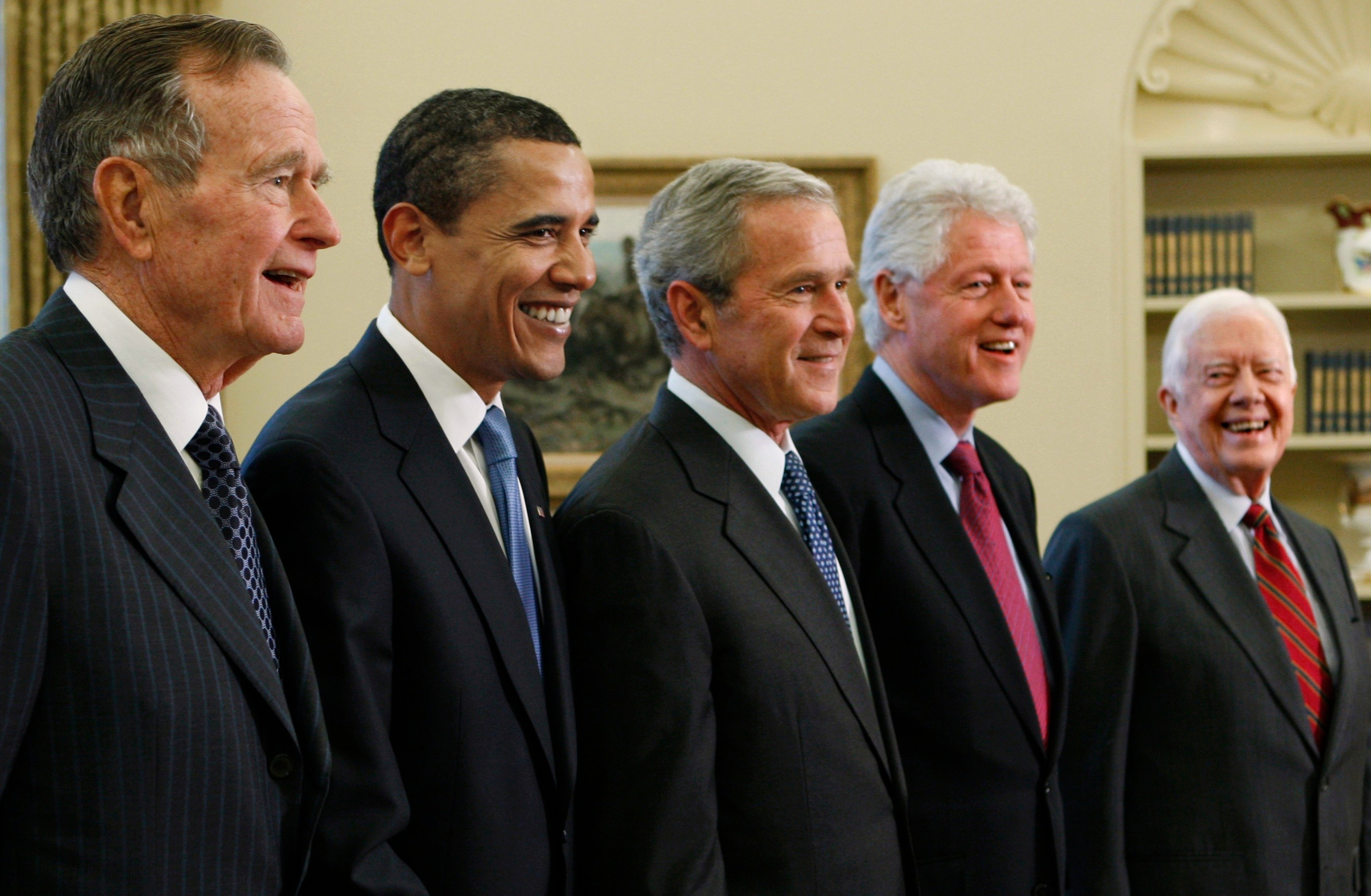
    WASHINGTON — When George W. Bush wrote an essay this year about another president named George, he avoided mentioning the one named Donald.

    So did Barack Obama and Bill Clinton. The three ex-presidents joined a roster of historians and authors in contributing to the In Pursuit project, a 250th-anniversary series that had each writer produce an essay about a president or first lady.

    Though the project was explicitly designed to transcend today’s politics, some of its essays nevertheless reflect anxieties that are flaring in the era of President Donald Trump over the use of power, the health of the democracy, and the integrity of the presidency.

    The project is being curated by Colleen Shogan, the U.S. archivist who was fired without explanation by Trump last year. She instructed contributors not to be partisan or ideological. “Everybody took those instructions and that guidance very seriously,” she told the Associated Press. The goal was for all Americans to “feel welcome to be able to read these lessons and essays and learn something from them.”

    The mission, Shogan said, “is to surface the lessons from the past 250 years of American history, so that we can learn from those lessons, from both our successes and our failures, so we can plan for the present and the future. It’s what has been described as debriefing the American story.”

    The essays cover 43 presidents — all but Democrat Joe Biden and Republican Trump — and 30 first ladies. They are being published online at inpursuit.org and on Substack chronologically and weekly into December.

    Trump and Biden were judged too fresh to be appraised by history, a call that may have also set aside passions of the moment.

    Without naming Trump, Bush’s essay is difficult to read without thinking of Trump’s reluctance to cede power after his 2020 election defeat and his musings about a third term in defiance of the Constitution’s two-term limit.

    Bush hails the heroism of humility

    Bush’s essay celebrates George Washington, the original “No Kings” guy. Bush, a Republican, hails a man whose legacy only grew larger because he modeled the limits of the presidency for centuries to come.

    “Our first president could have remained all-powerful,” Bush writes, “but twice he chose not to. In so doing, he set a standard for all presidents to live up to.” First, Washington resigned as commander in chief of the Continental Army, then set the precedent of serving only two presidential terms before that limit was enshrined in the Constitution.

    Bush went on: “George Washington’s humility in giving up power willingly remains among the most consequential decisions and important examples in American politics.” Bush’s essay, released Presidents Day as the first in the series on Substack, drove heavy engagement.

    Retired Gen. Stanley McChrystal, who led U.S. and international forces in the Afghanistan War, sized up a fellow general, Ulysses S. Grant, in another essay that drew much attention for its parallels with today.

    History offers lessons on ‘law over loyalty’

    McChrystal presents the Union general and post-Civil War president as a leader who displayed “an absolute commitment to principles larger than personal ambition” and who, before his presidency, resisted pressure on military leaders to “align with political factions and be loyal to a person rather than the Constitution.”

    The emphasis on personal loyalty resonates in a time when Trump has repeatedly demanded fealty from officials in his administration.

    The “temptation to bend institutions toward personal power is not unique to Grant’s era,” McChrystal writes. “Our future still depends on whether our leaders choose law over loyalty.”

    This month, in the latest In Pursuit installment, Democrat Bill Clinton writes about Theodore Roosevelt, focusing on that president’s drive to expand the universe of “we the people” at the expense of powerful corporate interests, while also emphasizing Roosevelt’s exclusionary views on Black and Indigenous people.

    The essays frequently address presidents’ failures alongside their accomplishments, a contrast with Trump’s calls for federal cultural institutions to stick to patriotic interpretations of American history.

    Presidents, the chief justice, and first ladies contribute

    Among the In Pursuit contributors are Chief Justice John Roberts (writing about William Howard Taft, the only president who also served on the Supreme Court); Hillary Clinton (Eleanor Roosevelt); Michelle Obama (Jacqueline Kennedy); GOP operative Karl Rove (William McKinley); documentarian Ken Burns (Franklin D. Roosevelt); and historian Michael Beschloss (Lyndon Johnson). Democrat Barack Obama presents Abraham Lincoln.

    The project is being staged by More Perfect, a nonpartisan alliance of dozens of presidential centers along with academics and organizations dedicated to advancing democracy. It is where Shogan now practices her archivist craft that Trump shut down by firing her in February 2025.

    She still has not been told why. Nor has Congress apparently been notified of the reason. The law requires Congress to be told but does not specify a deadline. The National Archives is the central repository of federal documents both precious and routine, and its leader has discretion over which records to preserve and display, and how.

    “That is a position that used to be a nonpartisan position, much like the Librarian of Congress, the secretary of the Smithsonian,” she said. “And I took that very seriously and acted the entire time when I was archivist in a nonpartisan way.”

    The White House did not respond when asked why Trump fired the archivist and whether the administration will tell Congress the reason.

    Trump has long begrudged the archives for notifying the Department of Justice of his alleged mishandling of classified documents after he left office following his first term, though Shogan was not working for the agency then.

    Shogan sees hunger for history without a slant

    Shogan said she has been overwhelmed with the public response to the series so far and figures that speaks to a hunger for history shorn of partisanship. The essays have received more than 1 million cumulative views on Substack and her podcast of the same name registered 160,000 audio downloads and nearly 64,000 YouTube views at last count. A documentary about the series is scheduled to air on PBS in October.

    In the essays, readers learn something new not just about the giants, but about presidents such as Millard Fillmore — “a historic punchline — best remembered, ironically, for being so forgotten,” in the words of his essayist, former New York congressman Steve Israel.

    Then there was Franklin Pierce, presented by his essayist as a pro-slavery president and “permanent victim” of Washington’s alcohol-soaked culture.

    Yale history professor David W. Blight recounts how Pierce won the presidency for the Democrats in 1852 despite vicious trolling by the Whigs. Fielding Mexican War veteran Gen. Winfield Scott in that election, they labeled Pierce, who also served in the war, the “hero of many a well-fought bottle.”

  • Lake Mead hits historic low water level as Colorado River struggles

    Lake Mead hits historic low water level as Colorado River struggles

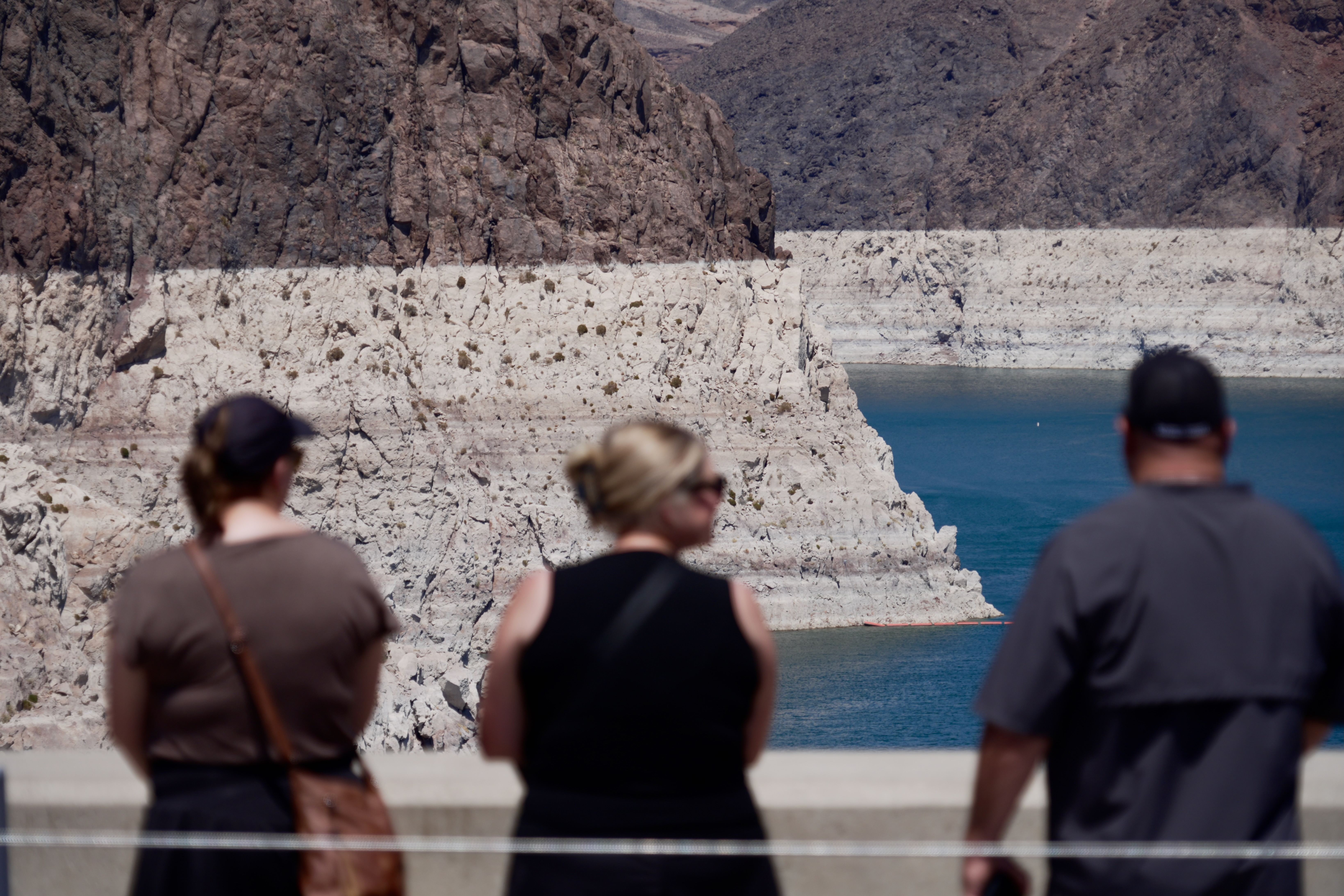
    BOULDER CITY, Nev. — Lake Mead, the largest reservoir in the United States, has plummeted to its lowest water level since it was filled some 90 years ago, another sign of the crisis plaguing the Colorado River system.

    Water levels at Lake Mead hit 1,040.4 feet above sea level on Friday, according to federal data. That’s just below the elevation of 1,040.58 feet recorded on July 28, 2022, at the reservoir that straddles the Arizona-Nevada border outside Las Vegas.

    The record follows a winter that produced the worst snowpack on record in the Colorado River Basin. Melting snow feeds the river, which is relied upon by farmers, industries, wildlife, hydropower producers, and more than 40 million people across seven U.S. states, tribal nations, and Mexico.

    It comes a week after federal officials announced a short-term proposal to stave off a crisis in the beleaguered waterway. Federal officials stepped in after states that rely on the river — California, Colorado, Arizona, Nevada, New Mexico, Wyoming, and Utah — failed to reach an agreement on how to share the dwindling resource long term. Under the proposal, California, Nevada, and Arizona would share water cuts.

    Years of overuse combined with drought and rising temperatures have been depleting Lake Mead and Lake Powell, the country’s second-largest reservoir. Together, the two bodies of Colorado River water are the lowest they’ve been in nearly seven decades.

    To protect the strained system’s ability to produce hydropower, federal officials said Thursday that they will not release cool Lake Powell water from Glen Canyon Dam in northern Arizona to protect a threatened native fish whose habitat is between the reservoirs.

    Severe drought in 2022 on Lake Mead, which is held back by the Hoover Dam, exposed human remains and forced water officials in Las Vegas to pump water from deeper within the reservoir to continue to supply water to millions of people.

  • Pirro, Trump’s longtime champion, is on the outs over Reflecting Pool move

    Pirro, Trump’s longtime champion, is on the outs over Reflecting Pool move

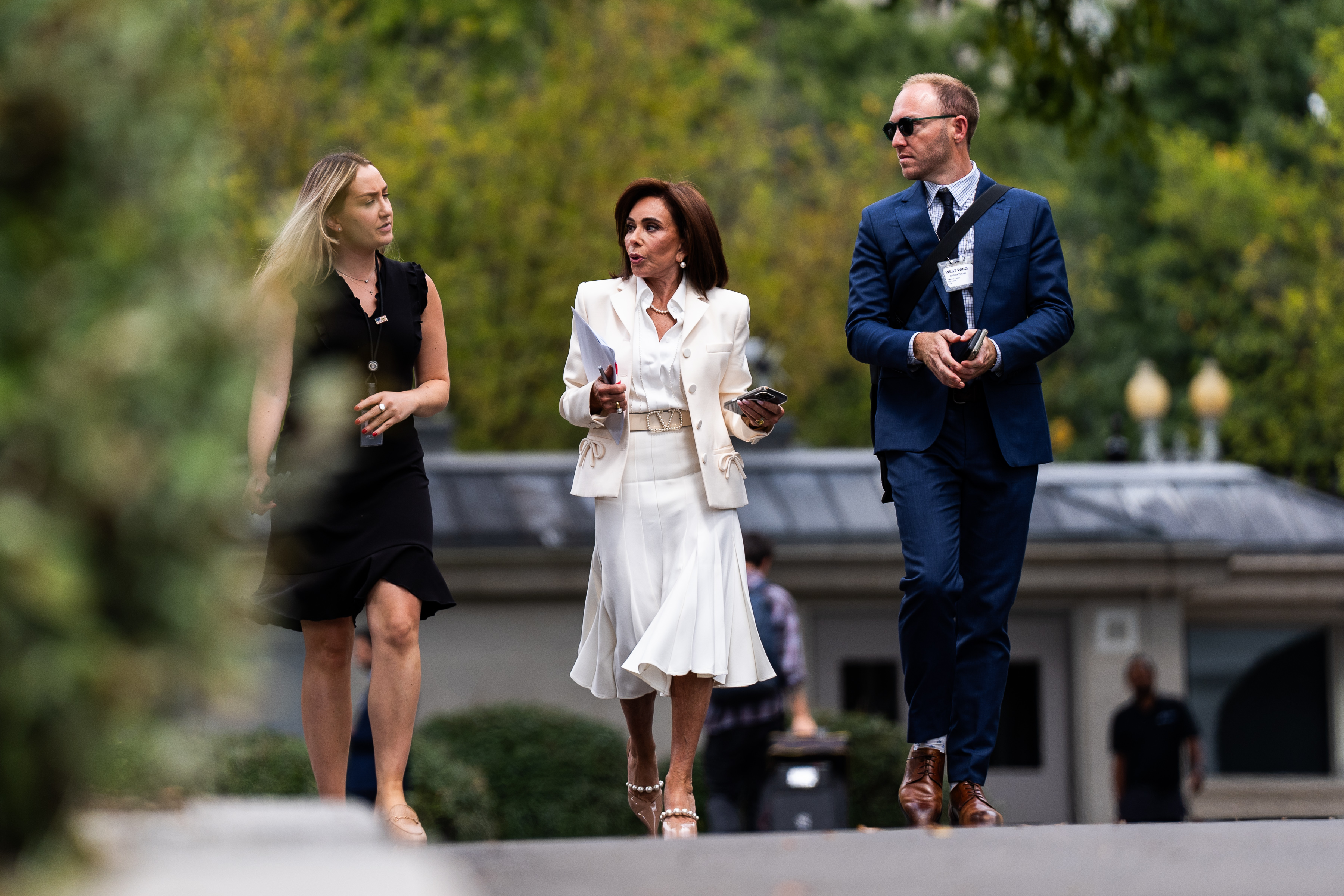
    Jeanine Pirro swept into Washington last year as a camera-ready prosecutor and staunch ally of President Donald Trump. Suddenly she was everywhere: crime scenes and community forums, court hearings and TV interviews, TikTok-style videos and black-tie dinners.

    But after more than a year in office as U.S. attorney in the nation’s capital, Pirro now finds herself at odds with Trump — with her job at risk — over scraps of blue liner that peeled off the Lincoln Memorial Reflecting Pool.

    Pirro, who left her job as a Fox News host to become the top federal prosecutor in D.C., immediately began seeking the toughest charges possible for violent crimes. She launched criminal probes of more than a half-dozen public officials who had drawn Trump’s ire — then punted the blame to judges and juries when those efforts collapsed.

    But her moves to drop several cases of alleged vandalism at the newly renovated pool contradicted Trump and blamed the administration’s handpicked contractor for botching a project the president had championed. And in the end, they exposed a crack in Pirro’s ability to balance Trump’s demands with her legal responsibilities.

    “She thought she had covered all of her bases — that’s what she thought — and then, of course, things went south,” a person who has known Pirro for decades said of her current predicament with the president.

    People who have followed Pirro’s trajectory as a judge, district attorney, conservative author, and TV personality say she is a prosecutor at heart who has long been passionate about fighting crime and protecting victims, and who found a renewed sense of purpose when Trump tapped her to run one of the busiest U.S. attorney’s offices in the country.

    Her detractors say few in the Justice Department have been as willing as Pirro to gin up prosecutions or test the boundaries of the system in pursuit of Trump’s fixations and antagonists.

    This account of Pirro’s tumultuous time as U.S. attorney, and how she has handled being the prosecutor in Trump’s backyard, is based on court records and interviews with 11 people familiar with key events. Almost all spoke on the condition of anonymity to offer candid assessments of Pirro while her job is seemingly on the line. Pirro, through a spokesperson, declined an interview request.

    Her troubles began after the Trump administration installed a coat of blue sealant at the Lincoln Memorial Reflecting Pool in anticipation of this year’s July Fourth festivities. Pieces of paint quickly started coming apart and floating to the surface, and some visitors who reached out to grab them were arrested, court records show.

    Trump claimed vandals had torn up the pool’s “beautiful facade,” and Pirro initially filed criminal charges against four people, including a former Olympic canoeist who was indicted on a felony count of destruction of property. In her booming New York brogue, Pirro castigated that defendant at a news conference and said her office was “committed to protecting our national resources, our monuments, and our parks from vandals.”

    But Pirro abruptly dropped all four cases weeks later, blamed the Interior Department for misleading prosecutors into filing unsupported criminal charges, and was soon inside the Oval Office to explain herself.

    A former judge and district attorney who served for decades in Westchester County, N.Y., Pirro arrived at the White House on Monday with boxes of evidence showing that the Interior Department had awarded a no-bid contract to a company that misapplied the liner, according to people familiar with the matter. That evidence is detailed in an explosive, 20-page court filing that the U.S. attorney’s office submitted last week, which stated that “the damage was the result of a botched installation and not vandalism.”

    Pirro had personally reviewed and signed off on the filing, and it conveyed her frustration that the documents from Interior were not quickly turned over to prosecutors, as well as her view that they “demolished” any chance of building a winning case against the alleged vandals, according to people with knowledge of her thinking. Interior Secretary Doug Burgum pushed back, writing on X that the “evidence is clear” that vandalism was what damaged the pool.

    One person familiar with Pirro’s thinking described her approach to the White House meeting as: “Stand her ground, be focused, make her case, and do the right thing.”

    The rift between Trump and Pirro, over peeling bits of paint at a national monument, came after she had launched criminal probes into six Democratic lawmakers who criticized the administration’s military actions, as well as the Federal Reserve chair at the time, Jerome H. Powell, who refused Trump’s demands to resign or institute lower interest rates.

    A federal judge rejected Pirro’s attempts to issue subpoenas in the Fed investigation, and she later closed that probe without seeking criminal charges, but Trump praised her doggedness in taking the case as far as she could. A grand jury declined to indict the Democratic lawmakers, and Trump soon moved on to other issues.

    This time, Pirro’s office said in the Reflecting Pool court filing, prosecutors were voluntarily dismissing the charges. Trump said Pirro “folded like an umbrella.”

    “I just think she was totally wrong,” Trump told reporters Wednesday, noting that National Park Service employees had told authorities they saw vandals in action. He described problems with the contractor as “a couple of little things” and said he hadn’t made a determination on whether to keep Pirro on the job.

    Trump continued his criticism Friday, saying on social media that “U.S. Attorney Jeanine Pirro should revisit her hastily made decision.”

    Pirro had befriended Trump decades ago in New York’s social circles, but they had never worked together, and one dynamic underlying their rare public break is that both are more comfortable calling the shots than deferring to others, said the longtime friend, who has seen them together.

    “She has a lot of respect for the president,” this person said, adding, “They have a relationship that for the first time has now transformed into a professional subordinate situation.”

    Pirro, 75, leads the only U.S. attorney’s office in the country with the dual mandate to prosecute local crimes and complex federal cases. Trump named her interim U.S. attorney in May 2025. She was later confirmed by the Senate, earning support from Republicans that Trump’s first pick for the job, Ed Martin, couldn’t muster.

    She came into a deep-blue city where only 6.5% of D.C. voters cast ballots for Trump in the 2024 election. Protests flared when immigration raids and street arrests swept up hundreds of people after Trump declared a crime emergency in D.C. last year, bringing in teams of federal officers and National Guard troops to patrol city streets. Pirro has often been the one absorbing the blowback from heated community meetings and in court, where juries have voted down felony charges for some defendants and acquitted others of assaulting federal officers.

    “The truth is that with the federal surge — whether you like it or you don’t like it — crime is down,” Pirro told the dozens of community members in the D.C. police’s Fifth District office in Northeast Washington after a tense weekend last October in which 12 people were shot.

    Homicides last year declined by roughly one-third, totaling 127, according to D.C. police statistics. They have dropped another 32% this year, and stood at 66 as of Thursday. Robberies and property crimes also have declined, but assaults with dangerous weapons have risen 42% this year, to 758 instances, according to the police data.

    “President Trump said, ‘I’m going to make D.C. safe and beautiful,’” Pirro added at the October meeting. “And you know what? He’s going to do it. … Every day we’re pushing. Pushing against juries, pushing against judges.”

    On social media, she frequently repeats a similar message, crediting the president with making the city safer.

    Those who have worked with Pirro describe her as a decisive boss, quick to grasp legal nuances and less abrasive than her brash TV persona. She has taken a particular interest in a new task force to disrupt international cryptocurrency scams, and she has called on the D.C. Council to toughen sentencing laws for juvenile crimes and partnered with Mayor Muriel E. Bowser (D) on efforts to strengthen domestic violence legislation. Pirro, according to those who know her, is meticulous about her fashion choices, known for her sweet tooth, and on friendly terms with some of her staff, attending trivia night at a brewery/pizzeria this year.

    Pirro has attempted to rebuild the U.S. attorney office’s ranks, which were decimated by staff departures and Martin’s purge of prosecutors who had investigated the Jan. 6, 2021, attack on the U.S. Capitol. The Justice Department is now offering $25,000 bonuses to lawyers who sign a commitment to stay at the office for two years, according to two people familiar with the matter, who spoke on the condition of anonymity because they were not authorized to discuss it.

    “I think that U.S. Attorney Pirro, over the past year and a half that she’s been there, has led an unprecedented effort to literally turn this city on its head to be a safe place for all of us to live and eat,” acting attorney general Todd Blanche said at a news conference Wednesday, a notable show of support that buoyed Pirro’s allies. Blanche added that Trump was allowed to dismiss any U.S. attorney.

    Although Pirro’s office has had a mixed record with jury trials in U.S. district court over the past year, there have been no major setbacks in the office’s biggest cases. Those include the prosecutions in the killing of a 21-year-old congressional intern; the fatal shooting of a young couple outside the Capital Jewish Museum last year; the ambush-style attack in which one National Guard member was killed and another wounded; and the case of Cole Tomas Allen, who has been charged with attempting to assassinate Trump at the White House correspondents’ dinner this year. The trial of an alleged terrorist behind the infamous bombing of Pan Am Flight 103 over Lockerbie, Scotland, is scheduled for this year in D.C., with Pirro’s office running the prosecution.

    But critics say Pirro has curtailed prosecutors’ autonomy and jacked up their workloads by ordering them to seek the maximum possible charges in every case. Judges and public defenders have criticized Pirro’s office for bringing cases during Trump’s federal law enforcement surge that were based on incomplete or shoddy investigations, leading to multiple instances in which the U.S. attorney’s office dismissed charges after the defendants spent time in jail.

    “I think many Americans have a sense that in Trump 2.0, prosecutions are being brought for reasons other than public safety,” Paul Butler, a Georgetown University law professor, said in an email assessing Pirro’s record as U.S. attorney. “We are now seeing many jurors more carefully scrutinizing cases, and that’s a good thing in terms of how the system is supposed to work.”

    Longtime defense attorney Joe Flood, who practices in the D.C. area, recalled that he first encountered Pirro in the 1990s when she was the Westchester County district attorney, and he was defending people facing the death penalty in New York. She made death-penalty cases central to her political ambitions, he said, as she geared up for a potential run for state attorney general or governor, but she never got a defendant sentenced to death and eventually left elected office for her television career.

    In Trump’s second term, Flood said, some U.S. attorneys in key offices have discovered that being a responsible prosecutor is sometimes a fireable offense. He noted that Erik S. Siebert, whom Trump had appointed as the interim U.S. attorney for the Eastern District of Virginia, was forced out last year after declining to seek criminal charges against former FBI director James B. Comey and New York Attorney General Letitia James. Career prosecutors in both cases had said the evidence was too flimsy to take to court.

    “The reality is if you’re an ethical U.S. attorney, and you won’t be bent to Trump’s will, you’re gone,” Flood said. Of Pirro’s decision to drop the Reflecting Pool cases, he added: “She gets some credit for standing up to Trump.”

    Judges have also criticized Pirro’s office for wiping out the most serious convictions from the Jan. 6 riot — the seditious conspiracy cases against the far-right Proud Boys and Oath Keepers.

    Members of the extremist groups stockpiled firearms and led the charge into the Capitol, according to the evidence presented at their trials. Pirro this year signed on to key court filings to clear those charges as a matter of loyalty to Trump, according to people familiar with the matter. But she declines to take questions about those moves, even as federal judges bemoan the historical consequences of undoing convictions for crimes against the country.

  • Ukraine honors its ‘collector of souls’ killed while recovering the war dead

    Ukraine honors its ‘collector of souls’ killed while recovering the war dead

    KYIV, Ukraine — Ukraine paid tribute on Saturday to Oleksiy Yukov, a volunteer who spent more than two decades recovering the bodies of civilians and soldiers — many of them Russian — killed by war. He was 40.

    An Orthodox Christian service was held at the Cathedral of Saint Volodymyr, in central Kyiv, where thousands of people gathered to pay their respects following his death in a landmine explosion during a recovery mission on Aug. 5. Mourners also gathered at Kyiv’s main Maidan Square before the service.

    Yukov founded the Platsdarm (“bridgehead”) organization because he believed all the dead require a proper burial. He became known as a “collector of souls.”

    Yukov, from the war-torn Donbas region, was a martial arts instructor. He began recovering the dead as a teenager after encountering the remains of Soviet and Russian soldiers from World War II.

    Platsdarm’s volunteers go into fields and forests, among ruins and across territory, where the ground is often mined.

    Yukov’s widow, Evhenyia Kaluhyna, promised to continue his work, sobbing as she spoke at the funeral, wearing an embroidered white dress and standing over her husband’s open casket.

    “The work was difficult and terrifying,” she said. “But I promise you we will continue it because the (dead) deserve it, and you deserve it for everything you did.”

    Yukov had suffered leg injuries and lost an eye in a mine blast in 2022. Still recovering from those injuries, he returned to the front line.

    In a social media post last month, Yukov described the landscape in which he worked.

    “Remote mines, shelling, drones — everything is against you. But you go and do everything to ensure that every soul returns home,” he said.

    He also addressed those who believed Russian bodies should simply be left behind: “When they say: ‘Let them rot,’ I do not agree. This is how we fight for every soul.”

    Yukov spoke of his work in religious terms, saying a body was a soul waiting to go home.

    “This is action,” he wrote. “Action every day in the fields, in the forest belts, among the ruins, where your life can end at any moment.”

  • Hunter Biden opens up about his pardon and Joe Biden’s cancer

    Hunter Biden opens up about his pardon and Joe Biden’s cancer

    Hunter Biden, son of former President Joe Biden, opened up about his father’s prostate cancer, saying he has been in a lot of pain as the disease has spread.

    In a wide-ranging interview Friday with BBC Newsnight, Biden said that it has been “really sad to watch” his father suffer. The cancer has spread and “metastasized into his bones and further,” he said.

    He said that despite that, Joe Biden has continued to speak out in public about issues that he cares about.

    “He so believes in this country,” Hunter Biden said. “And as long as he is alive, I promise you, he is going to continue to fight.”

    He also discussed his feelings about receiving a presidential pardon from his father, saying that it was not good for the country.

    BBC correspondent Paddy O’Connell pressed Biden on whether he thought his father went “too far as a dad” in issuing a pardon to his son. In December 2024, as one of his final acts as president, Joe Biden issued a full and unconditional pardon for his son despite having previously promised not to intervene in Hunter Biden’s legal problems.

    Hunter Biden said it was “not fair” and that he is “the most privileged person in the world” as it related to getting that kind of treatment from a father and president.

    “Was it good for our constitution? Was it good for the American people? Was it good for my dad’s legacy?” he asked. “No. On all counts.”

    However, Biden said they did not discuss the pardon before it happened. He is “eternally grateful for it because I think Donald Trump has proven to be exactly who my dad thought he was going to be, as it relates to revenge and retribution.”

    Critics had a good reason to lambaste the move, Hunter Biden said. But then he asked: “What would you have thought of my dad if he did not do it for me?”

    After steering clear of the spotlight during much of his father’s presidency, Hunter Biden has in recent months taken on a higher public profile, including engaging on social media with critics and supporters alike and granting media interviews, including one with right-wing podcaster Candace Owens.

    In the BBC interview, O’Connell also asked the former president’s son if his yearslong descent into drugs, alcohol, and legal issues “precipitated more decline” for Joe Biden’s health.

    “This is a very difficult thing to talk to you about,” O’Connell said. “But do you think you made life worse and the health worse for Joe Biden?”

    After a pause, Biden responded: “Of course I did.”

    The former president refused to shut the door on him or let him go, his son said, but the stress took a toll.

    “My dad never let me off the hook,” he said. “But what my dad did was always make it clear that, when I was ready to come back, the door was open.”

    In response to questions about his father’s controversial decision to seek a second term, Biden said that he wielded no influence over Joe Biden, nor did anyone. He was, however, just as shocked as everyone at the former president’s state during the June 2024 debate with Trump, during which Joe Biden struggled to finish sentences.

    “I could tell as soon as my father came out that something was wrong,” Hunter Biden said. “I have never seen him with kind of the hundred-yard stare that he had.”

    In May 2025, Joe Biden’s office revealed that he had been diagnosed with Stage 4 prostate cancer that had metastasized to his bones.

  • Voter turnout surges in Tennessee after Black-majority district is erased

    Voter turnout surges in Tennessee after Black-majority district is erased

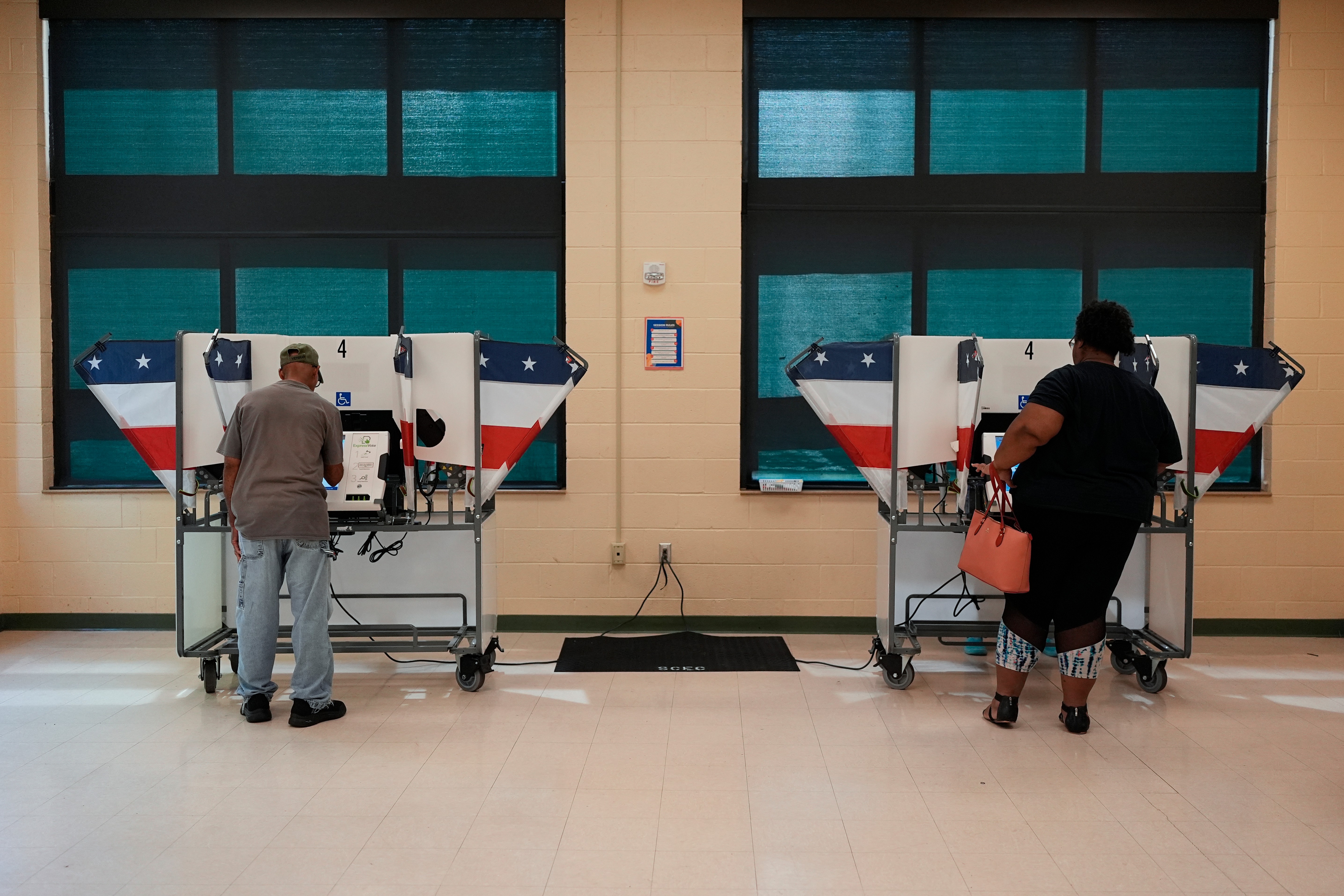
    Democratic turnout for House primaries in a majority-Black Tennessee county surged to the highest level in a decade Thursday, the latest sign that redistricting may be energizing Black voters across the South.

    A fifth of active registered voters cast a ballot in three Democratic U.S. House primaries held Thursday in Shelby County, which includes Memphis. That’s more than double the turnout percentage for similar contests in 2024.

    Organizers said the outpouring was motivated by anger over the Republican-led legislature’s action to break up the state’s only majority-Black congressional district after the U.S. Supreme Court eliminated minority voter protections in the Voting Rights Act this year. Lawmakers dispersed the Black voters of Shelby County into three separate districts that stretch into rural white communities.

    “People are pissed off,” said Kristal Knight, chairperson of the voting rights group Organize Tennessee. Memphis is “the densest part of the African American vote in the state, and people really took it personally — you are trying to come into our county, break up our county, and split our vote? And what better way to push back than to say we’re going to turn out.”

    President Donald Trump has pushed red states to draw new congressional districts to help the GOP maintain control of the House in elections this fall. The Supreme Court’s gutting of protections in the Voting Rights Act made that easier. Louisiana, Alabama, and Tennessee quickly drew new maps that dilute Black voting power, raising fears that the civil rights gains of the past 60 years are being destroyed.

    But the actions have galvanized Black voters, who have mobilized protests in many states and turned out in historic numbers in primaries in South Carolina. That turnout helped prompt the South Carolina legislature to abandon plans to dissolve a majority-Black district. The Georgia legislature also opted not to act after an outpouring of opposition.

    “People are really amped up about … what is happening across the South,” Knight said. “People need to show the rest of America, this is not the way you treat voters.”

    Democrats and voting rights organizers had worked overtime in Tennessee over the past few weeks to ensure a big presence in primary elections there for governor, a U.S. Senate seat, and the state’s nine House districts, even though Republicans are heavily favored to win those races in November.

    “A night like last night lets you know it’s not all in vain,” said the Rev. Earle Fisher, pastor at Abyssinian Missionary Baptist Church in Memphis, who was among an outspoken, ardent group of faith leaders in the city who ramped up turnout efforts after redistricting.

    Memphis resident Harmony Lucas, 26, was one of the young voters who helped to boost turnout — urging friends, family, and even co-workers to join her at the polls. Lucas said she has voted in the past, but the GOP effort to break up the state’s only majority-Black district “made me realize I had to get more serious that my voice is heard. It matters.”

    Ian Randolph, who founded the Shelby County Voter Alliance to boost voter participation, attributed the jump in turnout in part to such efforts, including by unions and other civic organizations. In recent months, they have had poll parties, done texting and phone banking, and gone door to door to canvass voters.

    “Everything that touches a voter, we are involved in,” Randolph said. “Working those things got us a better turnout.”

    Rep. Steve Cohen, Tennessee’s lone Democratic congressman, decided not to seek reelection after the 9th District, which he represents, was overhauled. Justin Pearson — a charismatic Black preacher who received national attention in 2023 for his expulsion from the state legislature after protesting at the Capitol in Nashville — won the Democratic nomination to wage the uphill battle to replace Cohen.

    In his victory speech Thursday night, Pearson depicted his candidacy as an act of defiance against redistricting and the undermining of the Voting Rights Act, calling those steps “a blatant attempt to keep people like us out of power and an attempt to make us quit.”

    GOP strategist Ward Baker, who is working in the 9th District with Republican nominee Brent Taylor, disputed the idea that Black voters are turning out in bigger numbers out of anger over redistricting.

    “It’s the first time there’s a contested primary in a long time, and several people are running,” Baker said. He pointed out that Republican voters overall still outnumber Democrats by a wide margin.

    Beyond redistricting, Randolph said voters in the majority-Black county have been energized by other issues including an attempted state takeover of Memphis-Shelby County Schools and the presence of federal immigration agents and the National Guard in the city.

    Democrats’ task gets harder heading into general elections this fall. Tennessee’s 9th District, which had been the state’s only blue seat, is now rated Solid Republican by the Cook Political Report and went for Trump by 21 points in 2024.

    “Everyone that came out last night — that needs to double for November,” Knight said.

    Fisher said he and other pastors have been planning another “Souls to the Polls” rally like the one that drew more than 1,000 people this spring. Thursday’s show of force gives him cautious optimism for November.

    “At least some of what we did worked,” Fisher said. “It’s one of those instances where you can log it as a win and build on it, but it’s not like a victory lap.”

  • A pillar of environmental enforcement is targeted by Trump and Musk’s AI company

    A pillar of environmental enforcement is targeted by Trump and Musk’s AI company

    WASHINGTON — Right-leaning legal activists along with Elon Musk ‘s artificial intelligence company have brought sweeping challenges against a cornerstone of legal enforcement in the United States: the right of private groups, people, and local governments to sue over violations of many major laws.

    Their argument, supported by the Trump administration, is that the Constitution reserves tremendous power for the president and federal agencies to decide how — or whether at all — to enforce federal law. They contend Congress should never have handed that power to others through so-called citizen suits that are part of environmental, campaign finance, and certain other laws.

    Environmentalists say it would be devastating to lose this essential, decades-old tool that is used to impose fines and halt lawbreaking by bad actors. Citizen suits, for example, have extracted millions from heavily polluting oil and gas operations, and ensured that lead pipes in Flint, Mich., would be removed after its water crisis.

    Legal experts say four pending federal cases — one of them filed last week — are moving forward at a time when the conservative majority on the Supreme Court gives opponents of citizen suits a greater chance than ever of success. The hard part for those opponents now is winning early federal cases and creating disagreement between the country’s appeals courts, which may help convince the Supreme Court the issue is important enough for a nationwide ruling.

    Back in 2000, a Supreme Court opinion opened the door for that possibility.

    “Many of us who worked in this area have been waiting basically 26 years for this shoe to drop,” said Richard Lazarus, a Harvard professor with decades of experience in environmental law.

    A more inviting Supreme Court could take up the issue

    Lazarus was referring to former moderate Justice Anthony Kennedy’s comments in a Clean Water Act case that citizen suits raised “difficult and fundamental” questions about whether they improperly dilute executive power. The late conservative Justice Antonin Scalia wrote in a dissenting opinion in the same case that citizen suits turn “over to private citizens the function of enforcing the law.” He avoided explicitly saying they were constitutional.

    “The court is more like Scalia’s court since he died than it ever was when he was there,” said Lazarus.

    He observed that those who lost cases where Scalia dissented are rushing back to today’s court hoping for a more favorable result.

    The critical issue for citizen suits is who — the government or private citizens — collects fines and has control. A person filing a citizen suit must tell the government ahead of time. The government can stop the suit if it sufficiently pursues the case itself, but its options are limited and the person suing can stay involved. Citizen suits can force compliance with the law and result in fines, which go to the U.S. Treasury.

    Prominent law firms, companies push against citizen suits

    Efforts to increase presidential power and limit who can sue have grown in recent years. They gained vital federal support this summer.

    That’s when the Pacific Legal Foundation, a right-leaning organization with recent Supreme Court success, chose a routine citizen suit in Tennessee federal court for a broader constitutional challenge.

    They signed on as attorneys for Springfield, a town of roughly 19,000 north of Nashville, that was in the early stages of fighting allegations brought by Tennessee Riverkeeper that it had let too much sewage flow from its treatment plant into a nearby creek, violating the Clean Water Act.

    It was the thirty-first citizen suit Tennessee Riverkeeper had filed under the Clean Water Act since 2010. Pacific Legal argued this was part of the problem — a private group of unelected activists had repeatedly forced others to expend resources defending themselves.

    It’s better when “the government is the one wielding the power because the government remains accountable to the people,” said Sean Radomski, a Pacific Legal Foundation attorney on the case.

    Radomski isn’t targeting every lawsuit a person can bring under federal law — he takes exception to those where fines go to the Treasury and where he says people are improperly taking on the government’s powers. Civil rights lawsuits, for example, where damages are paid directly to those wronged, wouldn’t be touched. Nor would many procedural challenges.

    Musk’s AI company also getting into the fight

    Elon Musk-led xAI argued many similar points in its ongoing bid to rid itself of the NAACP’s lawsuit accusing it of operating dozens of gas turbines near Memphis to power a data center without first getting permits. The civil rights group told a Mississippi federal court that the turbines are a pollution threat to those who lived nearby, many of whom are Black. One of their demands was to halt the gas turbines until the company complied with the law.

    The Trump administration intervened in support of Musk’s company, arguing that turning off the power to artificial intelligence that supports the Department of Defense would harm national security. Because the Trump administration wants the suit dismissed, the NAACP shouldn’t be allowed to proceed with it — prudent enforcement requires balancing interests, including national security, the DOJ said.

    Laura Thoms, director of enforcement at Earthjustice, which is representing the NAACP, said the government traditionally gets involved in cases to enforce the law, not to argue that it doesn’t matter if the law is broken.

    “This administration has determined that the company should be allowed to continue to pollute and that therefore, they should have the unilateral and unreviewable authority to veto our citizen suit,” she said.

    Changing the law would have profound consequences

    Citizen suits were written into foundational environmental laws because Congress understood that the federal government had limited resources to go after polluters and that the politics of some cases could be dicey — the government sometimes is the polluter. That’s why outside groups are necessary to fulfill the law’s purpose, according to Lazarus.

    Some argue that dynamic is especially important now. The Trump administration has slashed air and water protections and promoted fossil fuels. They’ve also constrained enforcement that could slow energy projects to only the most extreme cases, such as an “imminent and substantial threat to human health,” according to a federal guidance memo. Environmentalists say citizen suits are vital for filling the enforcement gap this administration created.

    Leaner budgets in many states make the problem worse.

    Thoms said the potential for corruption could increase, too — the president could unilaterally waive laws to benefit friends.

    She said that those who live in states with strong protections may be fine if citizen suits end, but other areas will be “sacrifice zones” where citizens have few options to fight pollution in their backyard. And the unprotected are more often poor and majority-minority communities.

    Many experts are skeptical of the challengers’ claims of a powerful president that gets to unilaterally shape enforcement even outside of criminal law. They argue the country’s history is rife with examples of that task falling to private individuals, too — a contention the challengers reject.

    David Adelman, a law professor at the University of Texas at Austin School of Law, said before the current conservative majority on the Supreme Court, he would have thought there was a close to zero percent chance the challenges would succeed.

    “But this court has been so protective of the executive branch’s complete control of implementation of federal law,” he said, “that it’s not implausible that something like this could prevail.”