Category: Wires

  • WHO says Congo’s fast-moving Ebola outbreak started months before it was declared

    WHO says Congo’s fast-moving Ebola outbreak started months before it was declared

    BUNIA, Congo — The fastest-growing Ebola outbreak on record started in February, months before it was officially declared in mid-May, the World Health Organization said Monday as responders in eastern Congo struggle to catch up.

    The WHO regional director for Africa, Mohamed Yakub Janabi, told a news conference that sequencing indicated the outbreak’s start. He said some cases early on were wrongly attributed to other diseases, including malaria and typhoid.

    “So we are chasing the virus, the virus is ahead of us,” Janabi said.

    Thierno Balde, WHO’s incident manager for the Ebola response, said the genetic sequencing was conducted under the leadership of Steve Ahuka, head of the virology department at Congo’s National Institute for Biomedical Research.

    Confirmed cases of Ebola in this outbreak have reached 4,200, including over 1,900 deaths, according to the latest government figures.

    WHO assesses the global risk of spread as low because Ebola does not travel through the air, making it much harder to spread than respiratory viruses. Cases detected outside the affected region have so far been quickly identified and contained without leading to sustained transmission, according to the agency.

    The outbreak declared on May 15 is unlike most previous ones for Ebola because the rare Bundibugyo virus responsible for it has no approved vaccines or treatments. Early testing was conducted for the more common type of Ebola, contributing to delays.

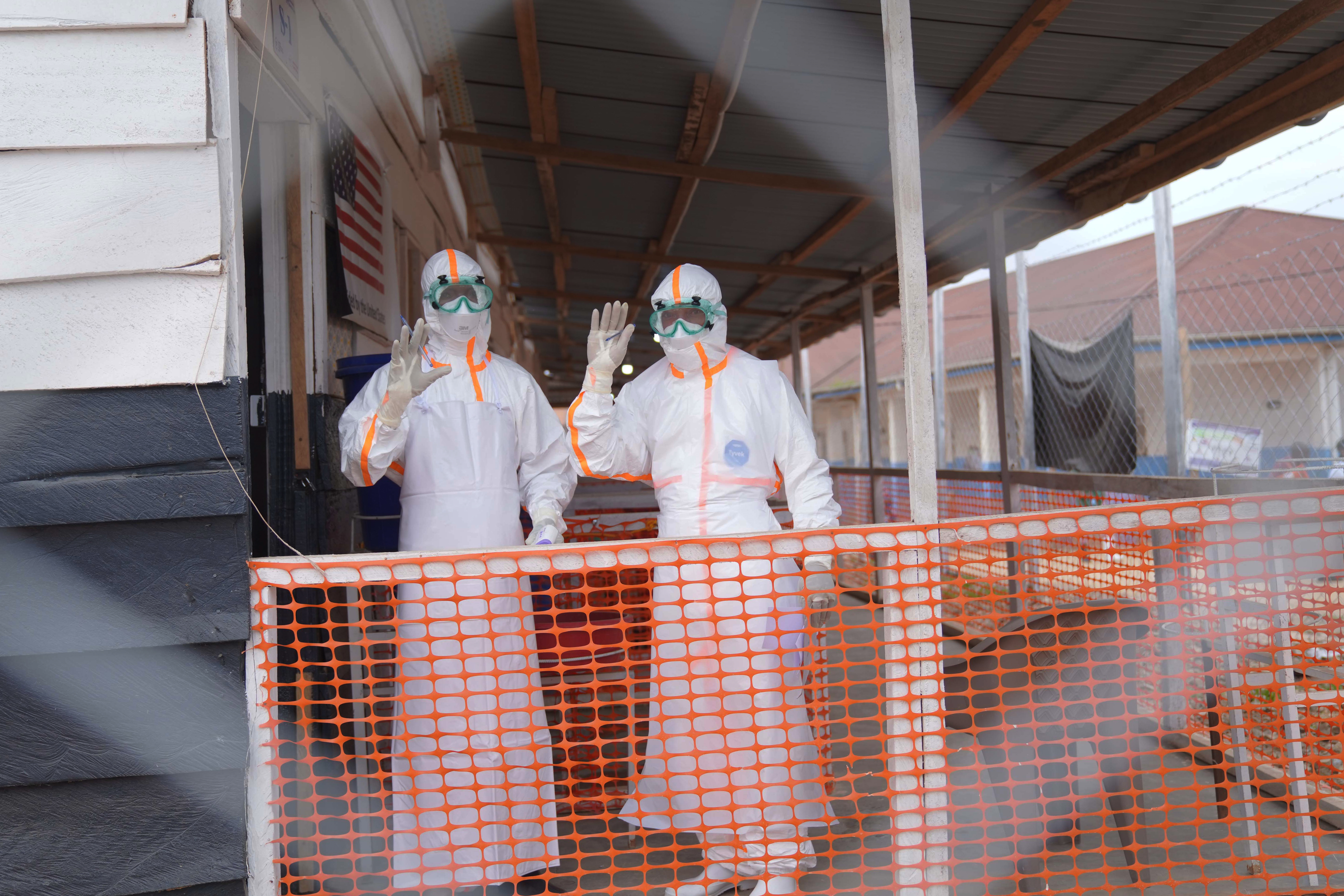
    The outbreak is unfolding in some of the most challenging conditions imaginable, with strikes by some unpaid health workers, threats by rebel groups, anger from long-traumatized communities, and misinformation asserting that Ebola isn’t real. Health teams travel remote, unpaved roads and have reported shortages of protective gear, while a vast population of displaced people struggles to find reliable water sources for washing hands.

    This Ebola outbreak has killed more people at a quicker rate than any other, including the 2014-2016 outbreak in West Africa that is considered the worst on record with over 11,000 deaths out of at least 28,000 cases. That one took about eight months to reach 1,000 deaths.

    Ebola is rare but highly contagious and can be contracted from bodily fluids such as vomit, blood, or semen and from contaminated surfaces and materials such as bedding and clothing. The disease it causes is severe and often fatal.

    Last week, WHO Director-General Tedros Adhanom Ghebreyesu said Ebola is spreading faster than efforts to fight it. New cases are doubling in some hot spots, Tedros said on X after meeting with officials in the capital, Kinshasa.

    Health authorities have said between 60% and 70% of new cases are recorded outside of contacts being monitored, and that the outbreak is spreading at an “alarming” rate.

    Access to healthcare in the region already had been challenged by years of rebel conflict in one of Congo’s most remote and vulnerable areas, near the borders of South Sudan, Uganda, and Rwanda. Now some pregnant women and others are avoiding health centers for fear of the virus, at risk to their lives.

    Several past Ebola outbreaks have also been declared weeks or months late, including the 2014-2016 West Africa outbreak. That outbreak was declared in March 2014, although the first human case later was found to have occurred in December 2013.

  • Zuckerberg spokesperson says his yacht did not hear call for maritime assist

    Zuckerberg spokesperson says his yacht did not hear call for maritime assist

    A yacht owned by Mark Zuckerberg didn’t respond immediately to a call for help from a small skiff that ran out of fuel off the coast of Alaska, but a maritime law expert said Monday the crew may not have been obligated to after the Coast Guard determined the boat wasn’t in distress.

    A spokesperson for the Meta CEO also said the crew didn’t immediately hear the radio call for help and by the time it did, another nearby ship had already rendered assistance.

    The Aug. 3 incident gained attention in recent days after a passenger on the cruise ship posted on social media that the captain had said Zuckerberg’s yacht “refused” to respond.

    The U.S. Coast Guard said the 21-foot Hewescraft vessel first hailed it for assistance at approximately 9:32 p.m., using a radio frequency all boats are expected to monitor. About 25 minutes later, the Coast Guard determined the vessel was not in distress and issued an assistance request. The skiff was able to make it safely to Farragut Bay after the Wilderness Legacy cruise ship towed it there and helped it refuel.

    When another ship is in distress, everyone in the area is obligated to respond as long as doing so doesn’t put their own ship at risk. But maritime law expert Ian Ralby said this situation appears different, and the crew of Zuckerberg’s yacht wouldn’t face that legal obligation.

    “It’s the difference between calling AAA and 911. You need an ambulance on site, that’s a distress call. You need somebody to give you a jump or to tow your car, you call AAA,” said Ralby, who is president of Auxilium Worldwide. It is a big difference in terms of the emergency type, he said. “Both concerning, both needing assistance, but the legal obligations to respond are very different.”

    Zuckerberg and his family were not on the 387-foot Launchpad yacht when this happened, according to his spokesperson.

    “As the Coast Guard noted, the boat was not in distress, and by the time the crew reviewed the Coast Guard contact on a different radio channel from the one they were operating on, the assist was already underway. We’re grateful all parties are safe,” Zuckerberg’s spokesperson Brian Baker said.

    The Alaska Beacon first reported on what happened after Michael Love, who said he was a passenger on the Wilderness Legacy cruise ship, posted on Bluesky on Aug. 5.

    “Our boat rescued a stranded vessel last night and apparently we did that after the Coast Guard radioed Mark Zuckerberg’s yacht — which was closer — and they repeatedly refused to respond. (There was near unanimous booing when the captain announced this),” he said.

    The Coast Guard said in a statement that they determined within half an hour of when the skiff radioed in that the small ship wasn’t in distress. A marine assistance request was broadcast on their behalf, and the Wilderness Legacy responded, reaching the 21-foot vessel about an hour later.

    It’s a little unusual that the Launchpad crew missed the call for help because it is common practice for ships to always be monitoring channel 16 on their radios and keep it as the default frequency. That’s where this call for help was transmitted, but it is also where the Coast Guard would broadcast warnings about any hazards in the area, whether that’s a brewing storm or anything else.

    “The situation was resolved without any harm to life,” said Ralby. ”It does not seem that there was any immediate issue in terms of threat to life of mariners or concerns for the marine environment, which are the two main things that lead to that urgent distress call where all mariners no matter who they are are legally obligated to try and respond.”

  • Alexandria Ocasio-Cortez says she’s freezing her eggs

    Alexandria Ocasio-Cortez says she’s freezing her eggs

    Rep. Alexandria Ocasio-Cortez (D., N.Y.) made a public video announcement over the weekend about a private matter: The congresswoman is freezing her eggs.

    Ocasio-Cortez, 36, posted a series of videos on social media in which she said this is a decision she made to “feel more in control of my life.” She said she had been weighing the decision and saving up for the pricey fertility procedure, which often isn’t covered by insurance, for a long time.

    The congresswoman said she was going public with her decision against the backdrop of steps by the Trump administration to curtail abortion access and some forms of reproductive care across the country. It also comes amid speculation that she could seek higher office. She said that she was making the egg-freezing decision in a “privileged position” and said that, unlike men, women applying for jobs or running for office face intense scrutiny about when, or if, they will have children.

    “I think it’s important for us as leaders to have these conversations and share these processes, especially for working women across the country, and normalize them,” Ocasio-Cortez said on ABC’s This Week With George Stephanopoulos on Sunday morning.

    Egg freezing is an increasingly popular procedure in which a woman’s eggs are extracted from her body, frozen, and then stored. Those eggs can later be fertilized. The fertilized eggs then grow, and when the embryos are ready, they are transferred into the uterus in the hope that the woman becomes pregnant, according to UCLA Health.

    Women opt to have the procedure for many reasons, including to preserve their eggs and reproductive ability if they are undergoing chemotherapy or other medical treatments that could affect their fertility.

    But many healthy women who are not ready to have children during their biologically prime reproductive years also use the process.

    A 2025 UCLA study found that between 2014 and 2021, there was a sharp increase in the number of planned elective egg-freezing cycles. In that period, women began freezing their eggs at younger ages, with the average age dropping from 36 years in 2014 to 34.9 in 2021.

    The study also landed on the surprising finding that only a small number of women — 5.7% who froze their eggs between 2014 and 2016 — returned to use their eggs in the next five to seven years.

    In her videos, Ocasio-Cortez showed viewers the array of medications she is required to self-administer for the process.

    The medication process typically lasts 10 to 12 days, with women injecting themselves with two or three hormone medications every day, according to Johns Hopkins Medicine. During that time, women will have frequent bloodwork and four to six pelvic ultrasounds.

    Once the eggs have matured, a medical professional will retrieve them in a 20-to-30-minute ultrasound-guided surgical procedure during which the patient is under anesthesia.

    Ocasio-Cortez filmed herself injecting hormones into her abdomen, jokingly telling her viewers: “Don’t be weird about this. Even though I know all of you will be.”

    When it was done, she said it “wasn’t so bad.”

  • Trump nominates loyalist to office that would oversee Reflecting Pool review

    Trump nominates loyalist to office that would oversee Reflecting Pool review

    President Donald Trump nominated Project 2025 author and former political appointee Dennis Kirk to lead the Interior Department’s inspector general office, raising concerns about the independence of the watchdog that has been asked to review the troubled Reflecting Pool renovation.

    Kirk, who was nominated Friday, previously had been working within the office of the inspector general of the intelligence community while serving as an adviser to then-Director of National Intelligence Tulsi Gabbard as of last year. At the time, lawmakers and watchdog advocates raised concerns that his dual roles blurred the lines between Gabbard and the office investigating the use of the Signal messaging app to discuss a pending U.S. military strike.

    The Interior Department’s inspector general’s office recently has been receiving inquiries from Democrats to investigate the troubled Reflecting Pool renovation. Democrats also have sought investigations into senior administration officials’ potential conflicts of interest. One of those officials, Interior Associate Deputy Secretary Karen Budd-Falen, acknowledged in a video that she was involved in changes to grazing policies that benefited ranching businesses such as her family’s, The Washington Post previously reported.

    Rep. Jared Huffman (Calif.), the top Democrat on the House Natural Resources Committee, called Kirk a “fake and fraudulent watchdog” and a “political puppet” who shouldn’t be in the office overseeing ethics and corruption investigations that involve senior administration officials. “It’s no surprise the White House suddenly wants its own man inside the one place that Trump’s cronies still have reason to fear,” Huffman said in a statement.

    A spokesperson for the inspector general’s office declined to comment on Kirk’s role. White House spokesperson Taylor Rogers said in a statement that “Kirk has consistently demonstrated loyalty to the rule of law during his long career within government.” The Interior Department and Kirk did not immediately respond to requests for comment.

    Kirk co-wrote a key section about the federal workforce for Project 2025, the blueprint for Trump’s second term. In the first Trump term, Kirk held senior roles at the Office of Personnel Management and was nominated to serve as chairperson of the Merit Systems Protection Board, though he faced steep opposition from unions that said he lacked experience, and his nomination was withdrawn by President Joe Biden.

    Mark Lee Greenblatt, a former Interior Department inspector general who was fired amid Trump’s purge of inspectors general early last year, called on the Senate to reject Kirk’s nomination. Greenblatt, who was nominated by Trump in his first term, said Kirk’s involvement would damage the credibility of the office’s investigations amid controversy related to recordkeeping and chill whistleblowers’ openness to speaking out.

    “This is a particularly fraught moment with respect to the Interior Department in light of the very public allegations that are flying around regarding the Reflecting Pool and the arch,” Greenblatt said in an interview, referring to the monument Trump wants to build near Arlington National Cemetery. “I would think that the White House and President Trump would want an independent review, an independent actor in that position, because otherwise those reports won’t have credibility.”

    The Center for Western Priorities, a conservation advocacy organization, also condemned Kirk’s role and called on Congress to use its subpoena power to compel records after Politico reported that Interior Department staffers had routinely shredded documents and used disappearing Signal messages.

    “Interior’s watchdog was fired, left vacant for 18 months, and is now hosting one of the architects of Project 2025,” said the center’s executive director, Aaron Weiss. “At least five investigation requests from members of Congress are sitting in that office right now, and its integrity has been compromised.”

  • Trump scoffs at Iran’s demand for war reparations and other Mideast developments

    Trump scoffs at Iran’s demand for war reparations and other Mideast developments

    President Donald Trump on Monday scoffed at Iran’s demand for reparations for devastation caused to the country by the U.S. and Israeli bombardment over the past five months — a demand he said Tehran’s negotiators hadn’t raised until now.

    Trump’s social media post Monday came after Iranian Foreign Ministry spokesperson Esmail Baghaei stressed that Iran will not reopen the Strait of Hormuz until the U.S. meets its conditions.

    Tehran wants the U.S. to end its blockade of Iranian ports, lift economic sanctions, and release Iran’s frozen assets. It also said the U.S. must pay compensation for war damage.

    “It is up to the U.S. side to stop and make amends for its illegal and destructive actions,” Baghaei said.

    Trump responded that he is now demanding “compensation from Iran, for all of the people that they have killed and gravely wounded with their roadside bombs and many conflicts.”

    The U.S. government has blamed Iran-backed militants for the deaths and injuries of hundreds of Americans over several decades. They include a 1983 bombing that killed 241 U.S. military personnel at a Marine compound in Beirut and the deaths of at least 603 U.S. troops in Iraq between 2003 and 2011.

    Trump said he also wants Tehran to compensate the families of Iranian protesters who were killed.

    “I have instructed my representatives to put this firmly into any, and all, future negotiations,” Trump said in his post.

    The closure of the Strait of Hormuz — through which roughly one-fifth of the world’s traded oil supplies passed before the war — has kept energy prices as a major focus of U.S. politics ahead of November’s midterm elections.

    Iran’s supreme leader is said to want ‘unity’

    Iran’s president said Monday the country’s supreme leader is calling for “unity and cohesion” as the Islamic Republic faces economic hardships and sanctions stemming from its war with the United States.

    President Masoud Pezeshkian described a nearly seven-hour meeting with Ayatollah Mojtaba Khamenei in an interview with Iranian state television that aired amid apparent tensions among the Islamic Republic’s leaders.

    Pezeshkian told the state-run IRIB that he and Khamenei discussed “people’s livelihoods, the state of the market, employment, people’s housing,” as well as “problems that are now being created as a result of the (U.S.) sanctions.” He didn’t say when or where they met.

    Most important, he said, was Khamenei’s emphasis on unity.

    “All of the enemy’s plans are aimed at creating division,” Pezeshkian said. “What we have to do is prevent divisions from emerging.”

    It is only the second time the Iranian president said he has met with the new supreme leader since Khamenei was appointed in March following a U.S.-Israeli strike that killed his father. Khamenei, believed to have been wounded in the same attack, has not appeared in public since then.

    Iran names former Revolutionary Guard leader to top security post

    Iran on Sunday appointed Mohsen Rezaei, a military adviser to its new supreme leader, to head its powerful Supreme National Security Council.

    Rezaei commanded Iran’s paramilitary Revolutionary Guard from 1981 to 1997, a period that includes Iran’s 1980s war with Iraq. The 71-year-old hard-liner last week threatened American forces with “serious risks and casualties” if the U.S. did not lift its blockade of Iranian ports.

    Rezaei replaces Mohammad Bagher Zolghadr, who will become a political adviser to Khamenei.

    While Rezaei appears willing to negotiate with the U.S. to “secure Iran’s maximalist aims, including control of the Strait of Hormuz,” he has also been “unwilling to present any Iranian concessions,” wrote the Institute for the Study of War, a U.S.-based think-tank.

    Israel declares closed military zone in Taybeh

    Israel’s military said Monday it had declared a Christian-majority town in the occupied West Bank a closed military zone to keep out Israeli settlers and other non-residents.

    The new tactic is designed to keep Israelis out of Taybeh, which has been subject to arson, vandalism, and settlers coming onto private and village property. The army said Palestinian residents and journalists would be allowed unless soldiers determine their presence poses a threat. The army said its troops would detain suspects and disperse gatherings to keep the peace.

    The designation comes after months of the army and police struggling to maintain order throughout the territory, where at least 87 Palestinians have been killed by Israeli settlers or soldiers in 2026, according to the Ramallah-based Palestinian Health Ministry.

    Yemen provides death toll on Sunday’s Houthi attack

    Yemen’s Iran-backed Houthi rebels attacked a Red Sea port town controlled by government forces on Sunday, killing seven and injuring 30 people. Yemen’s Defense Ministry — which operates under its internationally recognized government — said four military personnel and three civilians were killed.

    Clashes continued Monday near the village of Taiz. The Houthi group said a 13-year-old child was killed by artillery shelling and another child was injured.

    The attack on Mokha is the latest in one of the largest waves of Houthi strikes on Yemeni military positions and areas held by the Saudi-backed government since a 2022 truce. It comes as threats to shipping through the Strait of Hormuz have renewed focus on the Red Sea and Bab el-Mandeb Strait at its southern tip.

  • Trump officials propose new scrutiny of food additives and ingredients

    Trump officials propose new scrutiny of food additives and ingredients

    WASHINGTON — U.S. health officials on Monday proposed a rule change that would require food manufacturers to notify regulators before introducing new ingredients or additives into processed or packaged foods.

    The proposal would change a decades-old policy that advocates have called a regulatory loophole, blaming it for allowing thousands of unvetted ingredients into the U.S. food supply.

    Under the proposed rule from the Food and Drug Administration, companies would have to document and submit their safety findings for new ingredients, giving regulators the opportunity to investigate if they see a potential safety risk. Currently companies can decide for themselves if an ingredient or additive is “generally recognized as safe” and there is no requirement for companies to notify or submit evidence to the FDA, although some do.

    “Shifting to a mandatory notification system closes a decades-old information gap, giving the FDA the comprehensive visibility needed to enhance postmarket safety,” acting FDA Commissioner Kyle Diamantas told reporters on Monday.

    The FDA will take comments on the proposal for 120 days.

    Consumer advocates who have long pushed for changes said FDA’s proposal should require more than giving advance notice about new ingredients.

    “It must also include strong, science-based safety standards and thorough, independent FDA review before chemicals are allowed in our food,” said Melanie Benesh of the nonprofit Environmental Working Group.

    Scrutiny of ultraprocessed food continues, but with few details

    In a separate move, the FDA said it completed work on the federal government’s first-ever definition of ultraprocessed food, but did not release any details or the proposed language. The agency said it has submitted the definition to the White House for further review.

    Health advocates consider an official definition of ultraprocessed food a key step toward bringing greater scrutiny to packaged foods that are blamed for multiple chronic health problems afflicting Americans. A government-backed definition could pave the way for more federal research and, eventually, possible labeling or other restrictions on processed foods.

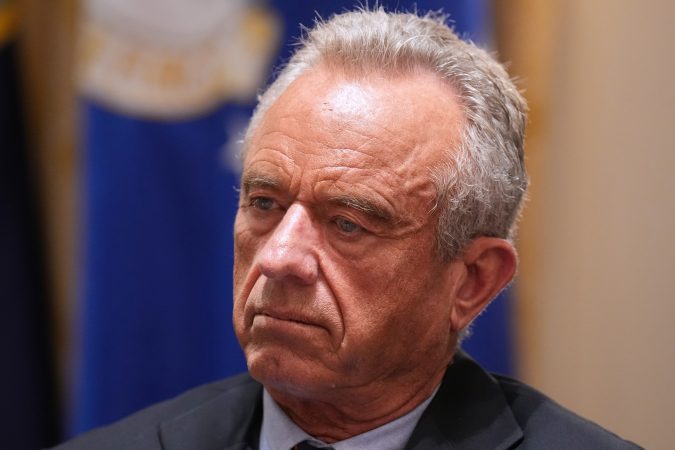
    Neither of Monday’s announcements is likely to immediately impact American diets, which are packed with fats, sodium, and sugar and are blamed for a host of chronic diseases such as obesity, diabetes, and heart disease. But both initiatives are considered top priorities for Health Secretary Robert F. Kennedy Jr., who entered government vowing to crack down on artificial colors, additives, and other ingredients.

    “These two actions will change how the federal government oversees what’s in our food and how we understand the foods that Americans eat,” Kennedy said at an event Monday at HHS headquarters.

    Ultraprocessed foods are made using industrial processing and additives, colors, preservatives, or other ingredients not found in home kitchens. The foods include sugary cereals, sodas, chips, frozen pizzas, and other grocery items.

    Scientists have been working to define and classify processed foods for well over a decade. But sweeping definitions come with downsides. They can be often applied to foods like whole grain bread, yogurt, and granola that are all highly processed but still considered nutritious. Some recent efforts to define ultraprocessed foods include carve-outs for foods that meet nutrition standards, despite having processed ingredients.

    FDA proposal would bring new insights on additives

    In the U.S., an estimated 10,000 additives are allowed in food, including thickeners, preservatives, and packaging ingredients.

    Consumer advocates have long argued that many of those ingredients have never been properly vetted because of the FDA’s policy allowing manufacturers to certify for themselves that new additives are “generally recognized as safe,” or GRAS.

    FDA’s Diamantas stressed Monday that the new policy would not require all new ingredients to undergo FDA review. He said that type of mandatory review would need to be enacted by Congress to rewrite FDA’s food authorities.

    “What we’re doing is requiring companies that utilize the pathway to notify us of their conclusions so that we have greater visibility into those conclusions and consumers have awareness,” Diamantas said.

    Under the proposal, the FDA would be expected to review new ingredient submission within 180 days. If FDA regulators have safety concerns they could request additional information from manufacturers or request that they delay introducing the ingredient.

    Kennedy said the Trump administration would ask Congress to grant FDA additional powers over food ingredients.

    “Congress needs to give FDA the additional tools it needs to keep pace with the changing food supply and protect the American people,” Kennedy said.

    Rule change in the 1990s created what advocates call a loophole

    Any substance intentionally added to food is supposed to undergo formal review — unless the additive is considered safe. Since the late 1950s, the government recognized that many common ingredients in foods, such as spices and vinegar, were widely consumed and understood to be safe for consumption.

    The FDA policed the GRAS exemption for years, but it took time and resources. Starting in 1997, the FDA began allowing companies to independently determine that a new additive is safe based on publicly available scientific evidence and the consensus of qualified experts.

    However, the list of products deemed GRAS by companies grew to include many synthetic and natural additives, all incorporated into the food supply without independent review.

    The process has created a “secret GRAS loophole,” according to the consumer advocacy group Center for Science in the Public Interest, that “undermines the integrity of our food safety system.”

    Food industry officials contend their internal reviews of additives are as rigorous as the FDA’s own processes.

  • Trump picks longtime aide Will Scharf as new top White House lawyer

    Trump picks longtime aide Will Scharf as new top White House lawyer

    President Donald Trump has named Will Scharf as the next top White House lawyer, replacing David Warrington, who is “going on to the Private Sector,” Trump wrote in a social media post Sunday.

    The change in the office of White House counsel will take place Sept. 1.

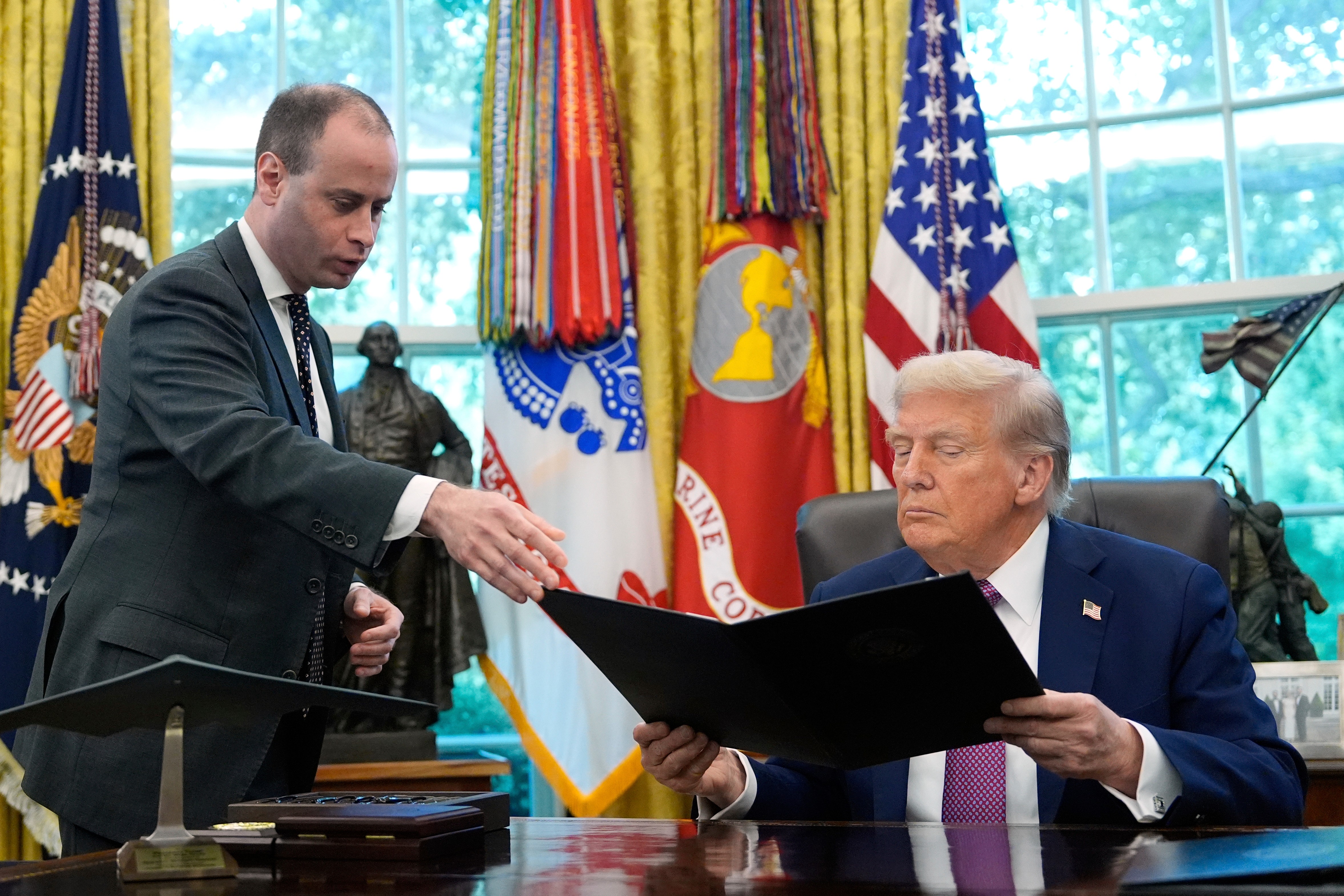
    Scharf, currently the White House staff secretary, is perhaps best known as the lawyer frequently standing over Trump’s shoulder in the Oval Office when he signs executive orders and explaining their details.

    Before that, Scharf, 40, was an unsuccessful candidate for Missouri attorney general in 2024, who also worked as one of Trump’s personal lawyers.

    “I know Will well! He previously represented me in numerous cases, including at the Supreme Court, during the Biden Administration’s corrupt and illegal campaign of Weaponization,” Trump wrote on his Truth Social website.

    Trump added that Warrington did “a truly outstanding job” as counsel. The change is the latest example of Trump White House staff — many of whom have had longer tenures than aides in Trump’s first term — increasingly leaving the administration in recent months.

    Before being brought on at the White House, Warrington served as Trump’s campaign general counsel during the 2024 election, after joining Dhillon Law Group, the firm owned by current Assistant Attorney General Harmeet K. Dhillon. There, he represented controversial Trump allies like Michael Flynn and Sebastian Gorka.

    Scharf has also served since last year as the chairperson of the National Capital Planning Commission, a low-profile federal agency charged by Congress with overseeing federal construction projects in the Greater Washington region. In that role, Scharf has expedited several of Trump’s handpicked projects, including the president’s planned White House ballroom, which the commission approved in April.

    Scharf has also sped up the commission’s reviews of Trump’s planned triumphal arch, which is expected to be approved by the commission at its next public meeting in September.

    Trump, who is seeking to complete the projects before he leaves office in January 2029, has cheered the commission’s swift approvals. The commission historically has taken much longer to review significant changes to the White House and new monuments around Washington.

    In his role as the commission’s chairperson, Scharf has also argued that the planned 250-foot-arch and other federal projects should not be subject to a federal law that restricts most construction in Washington to a maximum height of 130 feet, a position echoed by the Trump administration but opposed by historic preservationists.

  • At least 111 dead, buildings collapsed after 7.4-magnitude earthquake shakes western Colombia

    At least 111 dead, buildings collapsed after 7.4-magnitude earthquake shakes western Colombia

    CALI, Colombia — A powerful 7.4 magnitude earthquake struck western Colombia on Monday, killing at least 111 people, damaging hundreds of buildings, and leaving many trapped under debris while their loved ones and rescue workers searched through rubble.

    Colombia’s President Abelardo de la Espriella, who reported the death toll, said at least 87 people were injured and around 1,600 buildings were damaged, including at least 61 that completely collapsed. He declared an emergency to expedite funding for the quake recovery while saying he would visit the disaster zone.

    “We aren’t going to leave people alone. They are in our hearts and we are going to tend to people with our full determination,” he said.

    The epicenter was in San Jose Del Palmar, a community of about 4,800 people in the Choco region about 250 miles west of Bogota, the U.S. Geological Survey said. The quake also was felt in neighboring Ecuador and Panama, though minimal damage was reported there.

    The quake ravaged cities across western Colombia, including Pereira, Quibdo, Cali, and Manizales.

    In the country’s third-largest city, Cali, search teams and civilians picked through the remains of destroyed buildings, passing large pieces of concrete and other rubble down a long line of volunteers. The desperate scene brought memories of the searches still ongoing in neighboring Venezuela weeks after that country was devastated by two powerful earthquakes.

    Most powerful quake recorded in Colombia this century

    Colombia’s Geological Service said Monday’s quake was the strongest recorded in Colombia “in the 21st century,” and that it was followed by 21 less powerful aftershocks.

    Colombia’s Pacific region around the quake’s epicenter lies along the Ring of Fire, the line of seismic faults encircling the Pacific Ocean where most of the world’s earthquakes occur. The Pacific, particularly the Choco region, is one of the poorest regions in the country. Nestled in the dense jungle, much of Choco is only reachable by boat or plane, which may pose a problem for authorities in assessing the wider toll.

    Jorge Moncayo, a 64-year-old taxi driver in Cali, said he saw plumes of dust shoot up across the city as buildings collapsed. Residents and rescue workers were searching the rubble for survivors.

    “My entire house shook. I’ve never lived through such a powerful earthquake,” he said. “We’re thanking God we’re alive.”

    Local authorities said the death toll included at least 40 people who were killed in the Risaralda region, where the hard-hit city of Pereira is located, as well as 27 people in the Valle del Cauca region, where Cali is located, including three children. Authorities also confirmed nine people killed in Choco, two in the Caldas region, and a 73-year-old in the Antioquia region. It was not immediately clear where the other 32 people died.

    Authorities said flights were suspended in the airports of Manizales, Quibdo, Armenia, Cartago, Buenaventura, and Pereira as they assessed damage.

    The earthquakes left many in the Andean nation unnerved after two back-to-back quakes devastated neighboring Venezuela in late June, destroyed hundreds of buildings, and killed more than 5,000 people.

    Little was known about the extent of the damage in Choco, a remote region where officials reported dozens of injured people and damaged buildings but few other details. Phone signals were out in many parts of region’s capital, Quibdo. The town closest to the earthquake’s epicenter, San Jose del Palmar, has no airport, and is located on top of a mountain ridge along a highway linking the cities of Cali and Pereira.

    In Pereira, further south in the coffee-producing mountains of Colombia, photos and videos published by local media showed pieces of the airport ceiling falling down on travelers taking shelter and screaming. In the city, people were shown running through rubble and plumes of dust. Pereira’s mayor, Mauricio Salazar, told a local radio station that more people were trapped under “a massive quantity of collapsed buildings.”

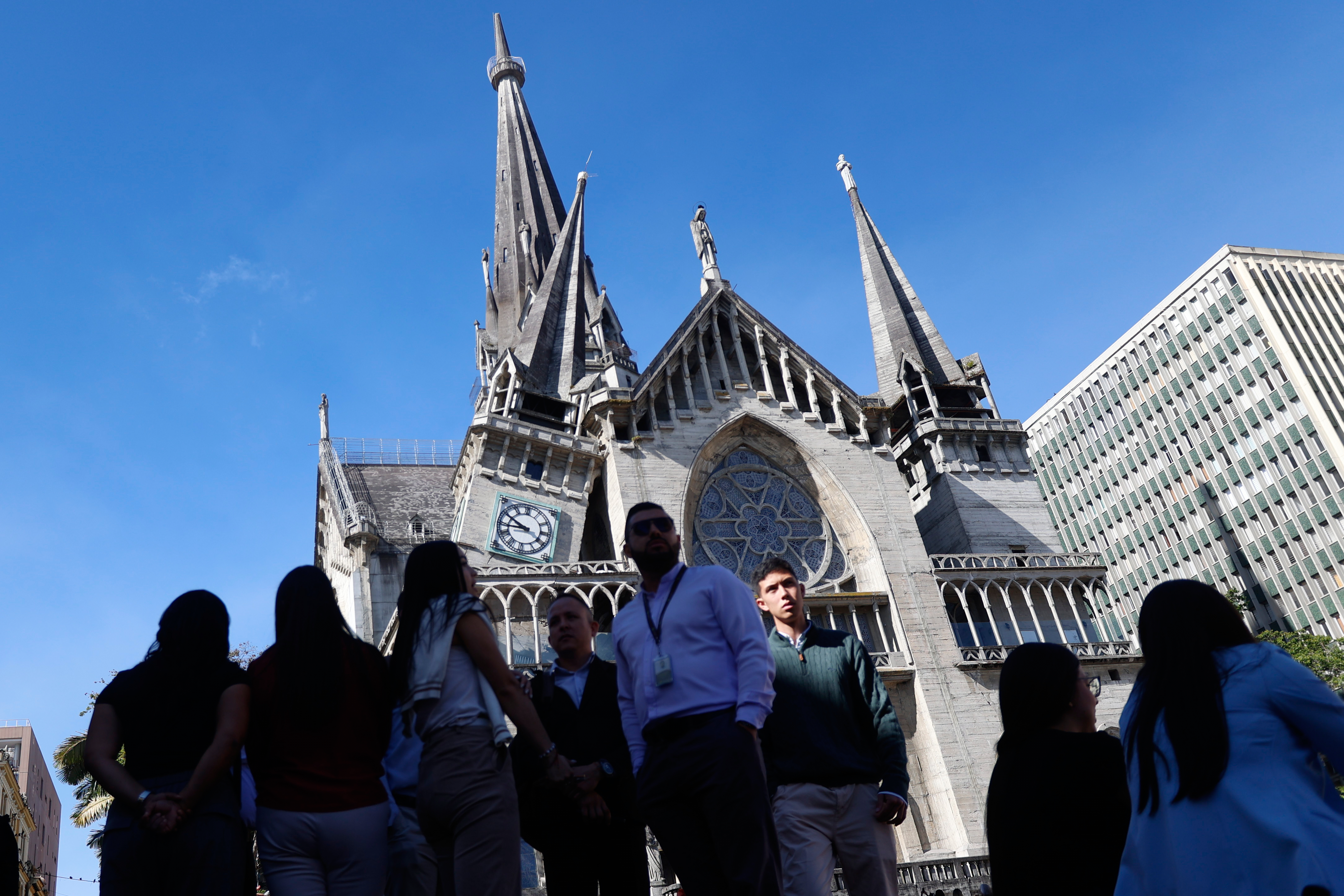
    In nearby Manizales, one of the towers of the neo-Gothic cathedral collapsed and fell on the nave. Mayor Jorge Eduardo Rojas asked residents to stay outside in case of aftershocks.

    In Cali, a city of 2 million people, Mayor Alejandro Eder said that residents were trapped in at least 19 buildings that had collapsed.

    Powerful quakes rare in Colombia, smaller quakes common

    Small earthquakes, known as “temblores,” are common in central and western Colombia, but those above 6.0 magnitude are rare. In 1999, a 6.2 magnitude quake near the city of Armenia killed more than 1,100 people.

    Colombia’s newly inaugurated president said Monday that he had personally taken charge of the government’s response to the emergency.

    “You are not alone. The state is present and taking action,” he said.

    Response to the earthquake presents the first major challenge to de la Espriella, a Trump ally who was sworn in as president over the weekend.

    Messages of support rolled in from leaders across the Americas, including Mexico, Brazil, Ecuador, El Salvador, and the United States.

    “The Trump administration is closely monitoring the large earthquake that struck Colombia and stands ready to support the people of Colombia,” U.S. Secretary of State Marco Rubio wrote in a post on X.

    A number of countries offered aid, and the U.N. deputy spokesperson, Farhan Haq, said, “We stand ready to help as needed.”

  • This may be one of the most mysterious parts of a total eclipse

    This may be one of the most mysterious parts of a total eclipse

    On Wednesday, a total solar eclipse will plunge a swath of Greenland, Iceland, and Spain into a sudden midafternoon darkness. A deep twilight azure will descend over the landscape. Venus will shine as daylight disappears.

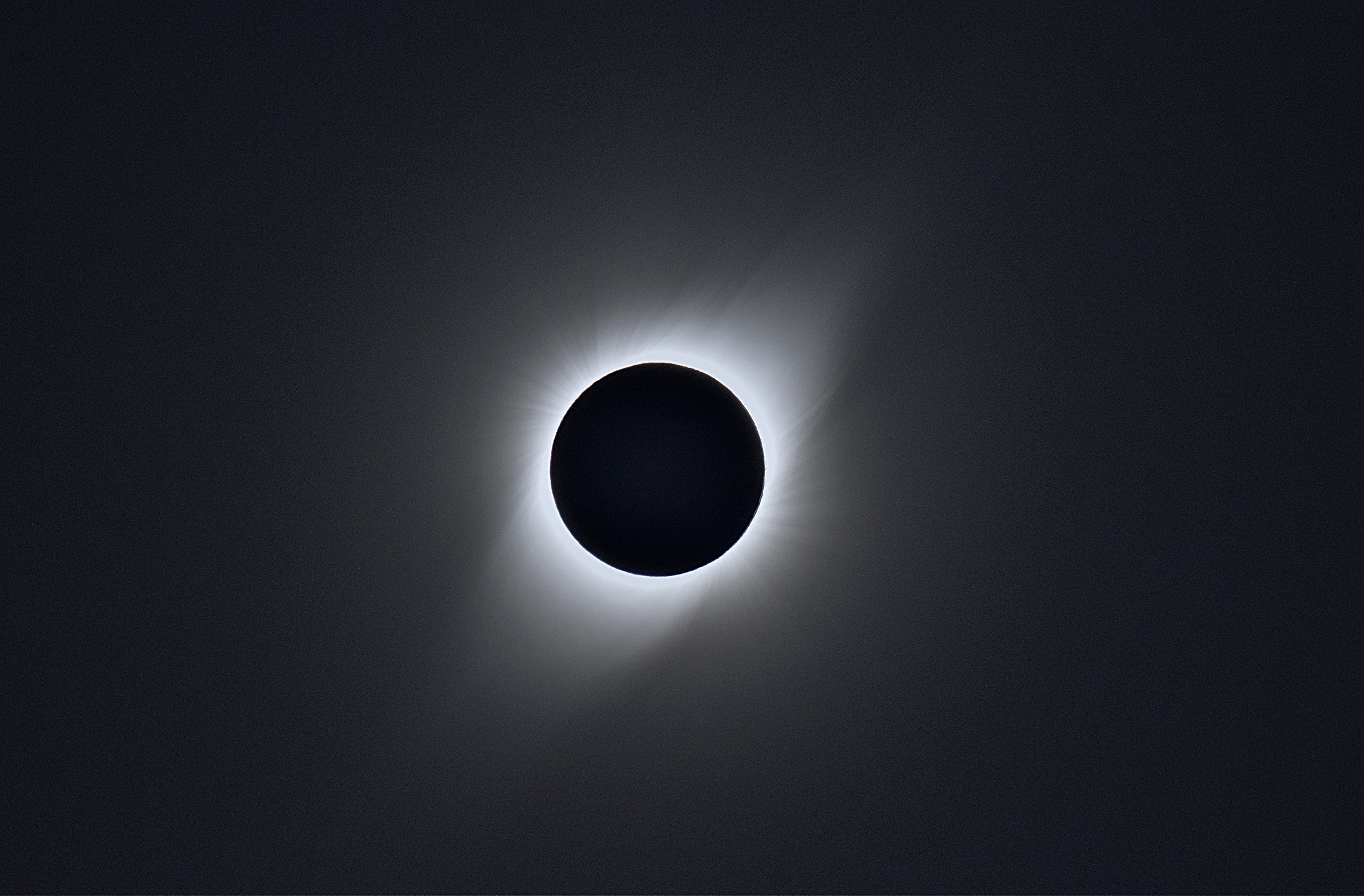
    But the most stunning spectacle will be as scientifically valuable as it is visually scintillating: the corona, or the sun’s atmosphere.

    The corona is the outermost part of the sun’s atmosphere. It’s normally obscured by the sun’s brightness. It’s never visible from Earth unless the sun’s light is somehow extinguished. That can happen only during a total solar eclipse. (The northern portion of the United States, from Alaska to North Carolina, will see only a partial eclipse.)

    The corona is beautiful. It radiates millions of miles into space, appearing as hairlike silver tendrils blowing away from the sun. The light is sculpted by the sun’s ever-evolving magnetic field; it traces currents of the solar wind. Witnessing it is magical.

    But despite advances in science, the corona remains mysterious. Heliophysicists, or scientists who study the sun, still aren’t sure why it’s so hot. The visible surface of the sun, known as the photosphere, is about 10,000 degrees Fahrenheit. But the corona? About 1.8 million to 5.4 million degrees.

    “It’s a fundamental question that we’re still working on,” said Jon Linker, a heliophysicist and the president of Predictive Science, a group that models the sun’s magnetic field. “It’s called the coronal heating problem. I think to a large extent that we know that heating is coming from the solar magnetic field itself, and that also ties into how the solar wind is accelerated.”

    The solar wind carries high-energy particles and magnetic energy toward Earth. That can have implications for terrestrial navigation systems, satellites and aviation.

    “On a very large scale, [magnetic fields] get twisted up, and we see flares and coronal mass ejections,” Linker said. Coronal mass ejections, sometimes nicknamed “solar storms,” are akin to shock waves in the solar wind. Strong coronal mass ejections interact with Earth’s magnetic field, often producing widespread displays of the aurora.

    But on the small scale, Linker said, contortions in the sun’s magnetic field help to dissipate heat, potentially making the corona hotter.

    “The field is also getting braided and twisted and things, and that leads to current sheets that can then dissipate heat,” he said.

    That’s why scientists are anxiously awaiting this latest eclipse, eager to get a glimpse of — and document — the intricacies of the corona. In the meantime, Linker’s team has built an ultracomplex model to predict what the corona will look like.

    After all, as the sun’s magnetic field changes, so does the shape of the corona.

    “We model that with what are called the magnetohydrodynamic equations,” Linker explained, likening the process to how meteorologists use weather models. “But [solar magnetism] equations are actually far more complex, and have more surprises and difficulties.”

    The sun’s magnetic field is most complicated every 11 years, at the peak of the solar cycle. During what’s known as solar maximum, the sun is blotted in sunspots, or bruiselike discolorations that spew magnetism. The more sunspots, the more chaotic the magnetic field and the wonkier the corona.

    The last solar maximum was in late 2024. We’re now in the descending phase of the solar cycle, but there are still lots of sunspots.

    “We’re still in a phase of the sun that is very active” Linker said. “I think it’ll probably still have more of a structure … with perhaps some [streamers] that are a little bit more pronounced.”

    That’s exactly what Linker’s model depicts — the north and south poles of the sun’s magnetic field are visible, but lots of loops and hairlike streamers fan out in all directions. That should make Wednesday’s eclipse memorable.

    In the meantime, Linker is looking forward to watching the eclipse in — of all places — the town of A Coruña, Spain. That’s where a cosmology, or solar physics, conference will be running from Monday to Friday.

    A Coruña translates to crown, or corona, and the town is in the heart of the path of totality.

  • Scientists race to save Florida’s coral reef as El Niño heats the ocean

    Scientists race to save Florida’s coral reef as El Niño heats the ocean

    The waters off the coast of South Florida were already growing warm by late June — ominously warm to Ken Nedimyer and other scientists and conservationists still scarred by a devastating 2023 marine heat wave that led to the worst mass coral bleaching event on record in the state.

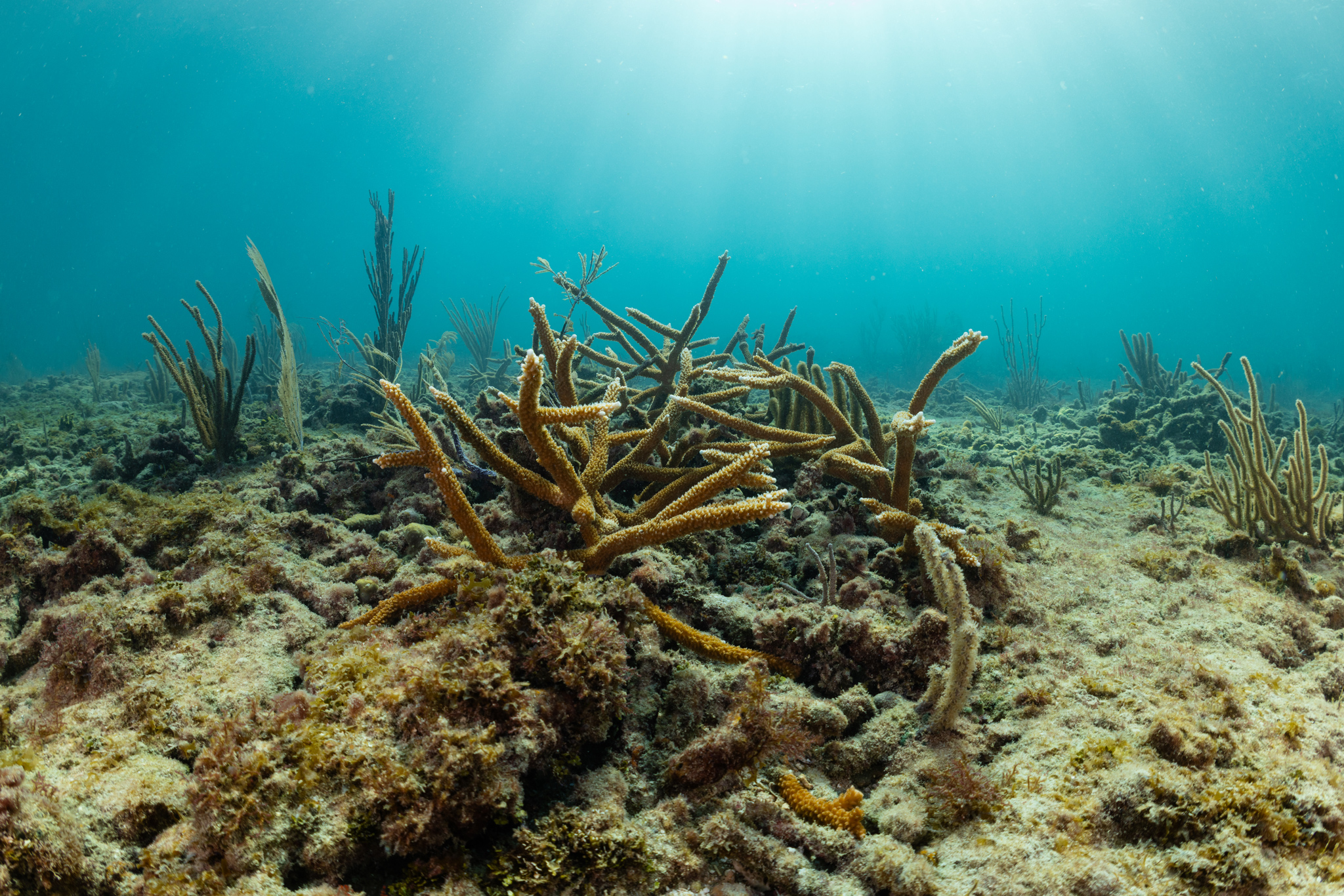
    Nedimyer, technical director for the nonprofit Reef Renewal USA, and other colleagues kicked into gear. They moved dozens of vulnerable elkhorn and staghorn corals from offshore nurseries into deeper, cooler water. They took other specimens to onshore labs, where temperature-controlled systems will offer refuge until ocean temperatures return to safer levels.

    “It was like Noah’s ark,” Nedimyer, weary from a late night spent off Key Largo, monitoring corals during their annual spawning, said of the recent effort. “Keeping them alive is our main focus right now.”

    Three years after a blistering marine heat wave created a full-blown emergency along the only living coral barrier reef in the continental United States, researchers determined to protect coral species from extinction are taking steps to be better prepared as another potentially scorching summer unfolds.

    The National Oceanic and Atmospheric Administration has warned that the most intense El Niño event in 150 years is contributing to exceptionally warm waters. Already, the agency has issued an “alert level 2” for parts of the Florida Keys, meaning there is a risk for reef-wide bleaching and mortality, particularly among heat-sensitive corals. An even higher alert level could soon follow.

    Climate models predict that perilously warm seas could linger into fall, and the stress on corals could continue.

    “The temperatures we are seeing right now are basically mimicking what we saw at this same time in 2023,” said Cynthia Lewis, director of the Florida Institute of Oceanography’s Keys Marine Laboratory. “It’s the calm before the storm.”

    For Lewis and others who work on coral conservation, the memory of that catastrophic marine heat wave and the damage it inflicted on Florida’s roughly 360-mile-long reef — the third largest on the planet — looms large.

    “It was traumatic. It was horrible. I’ve never seen anything like it in my life,” Lewis said, recalling the monthslong frenzy to rescue and rehabilitate as many stressed corals as possible in land-based labs around the state.

    Coral bleaching is a stress response. It occurs when heat upends a coral’s metabolism, causing it to turn white as it expels the symbiotic algae that provide it with nutrients and color. Prolonged bleaching, which scientists say rising sea temperatures is making more frequent and severe around the globe, can lead to mortality.

    That is what happened along much of Florida’s reef in 2023, one of multiple bleaching events the region has faced in the past decade. Underwater temperatures reached 93 degrees in some spots, more than five degrees above normal.

    A NOAA-led study published last year found that around the Florida Keys and Dry Tortugas, the event left ecologically critical elkhorn and staghorn corals functionally extinct — at least 98% of their colonies died. Along southeastern Florida where cooler sea temperatures remained, mortality was lower but still nearly 40%.

    Derek Manzello, coordinator of NOAA’s Coral Reef Watch program, later described the episode as “unprecedented,” saying it “started earlier, lasted longer, and was more severe than any previous event in that region.”

    The ripple effects are shaping how scientists around the state are responding.

    “Everybody who experienced that in 2023 has a little PTSD from it,” Lewis said. But, she added, “I think we are better prepared mentally and physically, as well as structurally.”

    At her laboratory on Long Key, that preparation has meant the recent completion of a new temperature-controlled system, which added 20 more seawater tables to support coral restoration. Each is equipped with the machinery needed to keep rescued corals thriving until they can be returned to the reef.

    “It’s keeping them as happy as possible, keeping them growing so they can propagate,” Lewis said.

    Meanwhile, a group of 11 of the state’s leading coral conservation and restoration organizations recently announced an effort to team up during what could prove to be another record-breaking summer for ocean temperatures.

    In recent days, dive teams from the groups have headed out repeatedly into the waters near Key Largo to collect coral eggs and sperm before transporting them to a temporary laboratory set up by Mote Marine Laboratory at nearby John Pennekamp Coral Reef State Park.

    The effort is part of a NOAA-funded partnership to collect, fertilize, and grow a more resilient generation of elkhorn and staghorn corals. Many of the corals selected for the effort survived the crippling 2023 heat wave, making them among the most heat-tolerant in Florida’s waters.

    “We have the parents of the corals of the future, if we just take care of them,” Nedimyer said.

    Katey Lesneski, research and monitoring coordinator for a NOAA program created to restore iconic reefs throughout the Keys, said other scientists will soon experiment with a different approach, placing shading structures above corals off Big Pine Key to try to reduce the sunlight and heat they receive.

    “This is the first real field trial during an actual bleaching event,” she said. “This is a perfect opportunity to test this new intervention.”

    The approaches unfolding all along the reef matter more than ever, say advocates who are intent on preventing another disaster like the one in 2023.

    “Nobody is giving up,” said Lewis, because so much is at stake.

    The sprawling reef, she said, protects the state’s coastline against hurricane-fueled storm surges. It attracts tourists that boost the economy and supports fisheries. The reefs are also “are an incredibly diverse ecosystem of all kinds of plants and animals and fish,” she said.

    For all those reasons, Nedimyer said, the long days and significant investment he and many others have put in to prepare is worth it.

    “The outcome if we do nothing,” he said, “is pretty clear.”