Category: Wires

  • Trump votes by mail again in Florida

    Trump votes by mail again in Florida

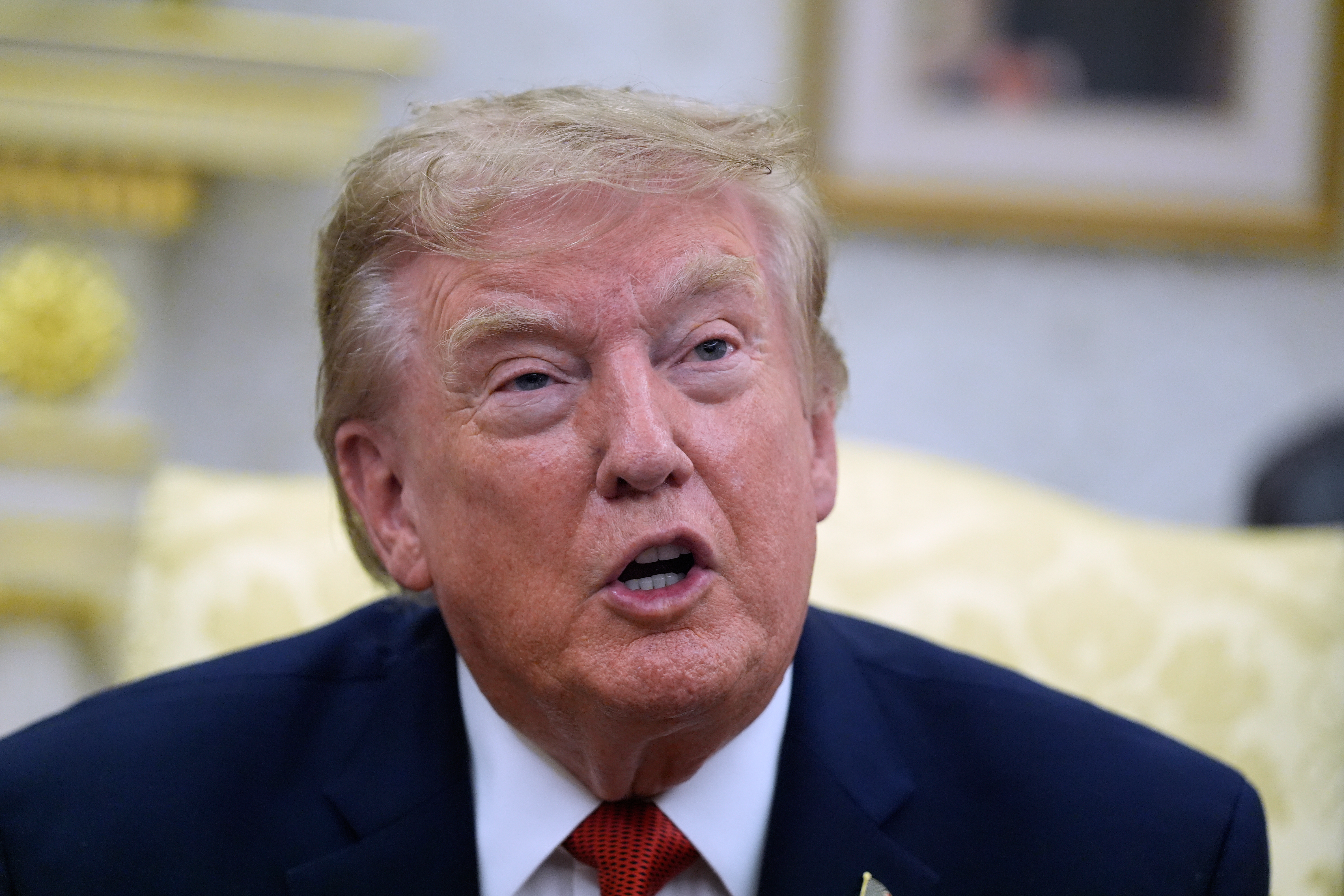
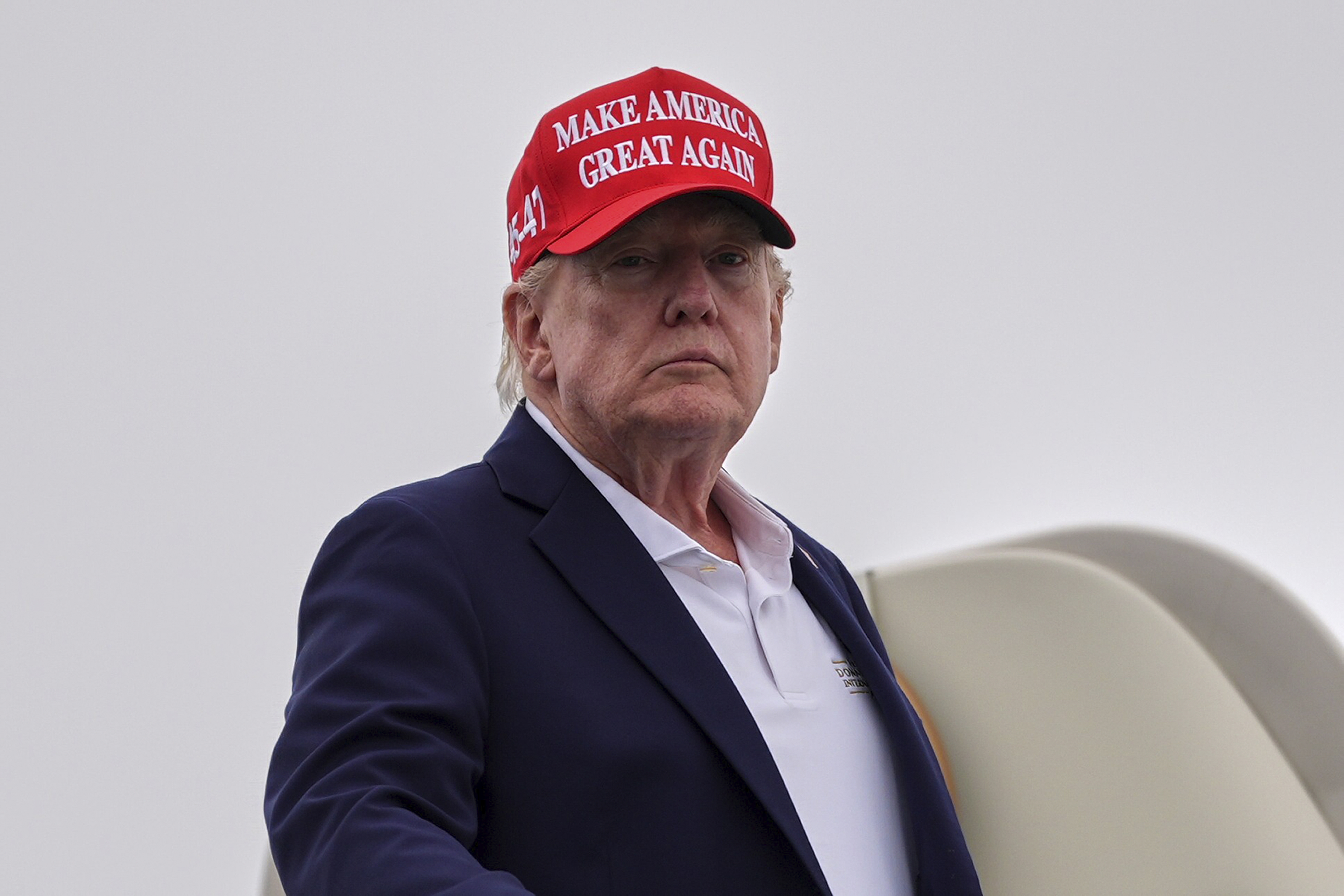
    WASHINGTON — President Donald Trump voted by mail before Florida’s Republican primary on Tuesday, according to the White House, participating for at least the third time in a practice that he has railed against for years and has equated to cheating.

    Trump voted by mail in Palm Beach County in 2020, and did so again this year in the special election between Democrat Emily Gregory and Republican Jon Maples to represent the district in the Florida statehouse. Records show Trump has been registered to vote there since 2019.

    Politico earlier reported that Trump had voted by mail in Tuesday’s primary, citing voting records from Palm Beach Country, home to Mar-a-Lago, his private club. The New York Times could not access these records through the Palm Beach County Supervisor of Elections website, which said that Trump’s voting record was “protected from public disclosure.”

    In an unsigned statement, the Palm Beach elections office confirmed that it had blocked access to Trump’s voting records, saying that the publicly available documents were “intended for use by a registered voter to determine his or her voter registration and voting status. Voters with protected information will not appear in this search.”

    Olivia Wales, a White House spokesperson, confirmed that Trump voted by mail in the primary, saying that “this is a nonstory.”

    “As everyone knows, the president is a resident of Palm Beach and participates in Florida elections, but he obviously primarily lives at the White House in Washington, D.C.,” she said, repeating a White House statement about Trump’s last vote by mail, in March.

    Trump has continued to push for Republicans in Congress to pass legislation before the midterms that would strengthen voter identification requirements and make mail-in voting significantly more difficult. There was not enough Republican support to push through the legislation this year, and senators abandoned the effort so they could get home to their states to campaign for reelection.

    Trump has long fixated on mail-in voting to bolster his baseless claims of widespread voter fraud, and has called the SAVE Act one of the most consequential pieces of legislation in the country’s history. During his State of the Union address, Trump falsely claimed that “cheating is rampant in our elections” and called for “no more crooked mail-in ballots,” though states that vote entirely by mail see little fraud.

    This article originally appeared in the New York Times.

  • Bill Rasmussen, ESPN co-founder, dies at 93

    Bill Rasmussen, ESPN co-founder, dies at 93

    LAND O’ LAKES, Fla. — Bill Rasmussen, who co-founded ESPN in 1979 after being fired from a public relations job in the World Hockey Association, died Tuesday. He was 93.

    ESPN historian Mike Soltys said Mr. Rasmussen died at his Florida home from the effects of Parkinson’s disease. Mr. Rasmussen announced in 2019 that he had been diagnosed with the degenerative disease in 2014.

    “Bill was a remarkable man — a visionary and an innovator who conceived the idea of a network entirely devoted to sports,” ESPN chairperson Jimmy Pitaro said in a statement. “Quite simply, none of us would be here today if it wasn’t for Bill’s passion and all the hard work and entrepreneurial spirit he put into building ESPN in the late 1970s — key aspects of our company culture that still carry on to this day.”

    Mr. Rasmussen and his son Scott came up with the idea of a network carrying sports around the clock, and it would revolutionize Americans’ TV-watching habits. But the pair didn’t stick around long. They were forced out after only a year by ESPN majority owner Getty Oil.

    Bill Rasmussen’s original idea was a cable channel covering only Connecticut sports. Many cable operators in the state were skeptical, but someone suggested buying satellite time to reach a national audience.

    ESPN was launched on Sept. 7, 1979. George Grande welcomed viewers to the first SportsCenter broadcast before the network’s first live event, a slow-pitch softball game between the Kentucky Bourbons and the Milwaukee Schlitz.

    “In those days, we didn’t know if we’d last four weeks, four years, let alone 40-some, but we knew it was special,” Grande said. “Bottom line was Bill Rasmussen was the true purveyor of the original American dream, and he gave us all something very special that we still have today.”

    The Rasmussens secured financial backing from Getty Oil and a rights deal with the NCAA, and built a studio in Bristol, Conn., still under construction when ESPN went on the air.

    The Getty investment and the deal with the NCAA occurred on the same day.

    “When someone tells you you can’t do something, you want to prove them wrong,” Bill Rasmussen said. “Many, many people told us there wasn’t enough sports to do a 24-hour channel. I didn’t argue with anybody. I just thought they were wrong and I was right.”

    When the Rasmussens were forced out of ESPN in 1980, Getty owned 85% of the network. Texaco, which had acquired Getty, sold its interest in ESPN to ABC in 1984.

    Bill Rasmussen and ESPN were estranged until 1999, when company executives invited him to the 20th anniversary celebration. Since then, he has been embraced and recognized for his vision of creating an all-sports network. He toured the country in 2019 for the 40th anniversary and gave speeches at Walt Disney Co. and ESPN events.

    “Bill was our George Washington and a good friend,” said veteran anchor Chris Berman, who joined ESPN three weeks after the network launched in 1979. “He was such a grateful person and every sports fan can be grateful for Bill. He wasn’t a glass half-full guy; his glass was always overflowing with optimism. He greeted everyone with a smile and we can all smile knowing Bill’s legacy.”

    Born in Chicago, Mr. Rasmussen earned degrees from DePauw University in Indiana and Rutgers University and served in the Air Force. He started an advertising services business, then worked in radio and television as a broadcaster during the 1960s.

    He was hired in 1974 as public relations director for the WHA’s New England Whalers in Hartford, Conn. The team’s entire front office was fired in 1978, and Mr. Rasmussen soon turned his attention to brainstorming with his son on the creation of sports on cable TV with the help of a $9,000 credit card advance.

    “There was a whole lot of chutzpah and a whole lot of vision, and they’re maxed out on their credit cards. It’s the American dream,” said Bob Ley, one of the network’s original anchors.

    Mr. Rasmussen was inducted into the Sports Broadcasting Hall of Fame in 2025.

    Mr. Rasmussen was preceded in death by his wife of 56 years, Lois, in 2011 and is survived by two sons, Scott Rasmussen and his wife, Laura, and Glenn Rasmussen, daughter Lynn Van Hollebeke and her husband, Louie, seven grandchildren, one great-grandson, and one great-granddaughter. In addition to his wife, Mr. Rasmussen was predeceased by his brothers Robert and Donald Rasmussen, sister Vivien, and a grandson.

  • Justice Department pushes to revive criminal case against Kilmar Abrego Garcia

    Justice Department pushes to revive criminal case against Kilmar Abrego Garcia

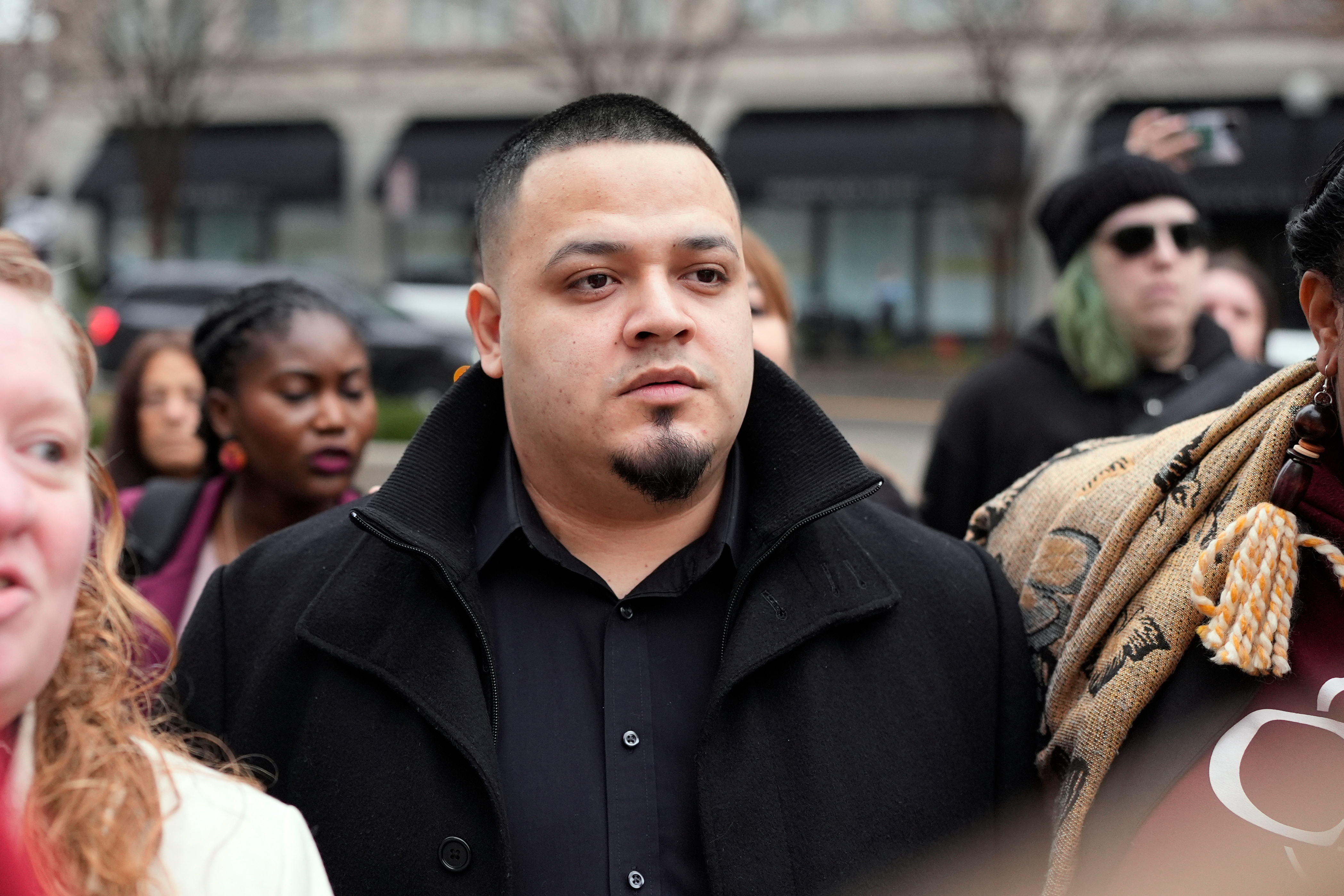
    NASHVILLE — The Justice Department is pushing to revive criminal charges against Kilmar Abrego Garcia, telling a federal appeals court late Monday that a judge erred in his scathing ruling that called the case against the man mistakenly deported to an El Salvador prison an “abuse of prosecuting power.”

    The government is appealing the May ruling by U.S. District Judge Waverly Crenshaw that threw out charges of human smuggling against the Salvadoran national. The ruling amounted to an extraordinary rebuke of a Justice Department that under President Donald Trump has repeatedly been accused of targeting defendants for political purposes.

    Crenshaw found that Abrego Garcia would never have faced criminal charges had he not successfully sued the government over his 2025 deportation. The ruling was an embarrassment for the Trump administration, which only brought him back after securing a criminal indictment against him.

    Crenshaw stopped short of finding the government acted with “actual vindictiveness,” a rarely-met standard that usually requires evidence like a prosecutor admitting that charges were filed in retaliation against someone. But the judge did find there was enough evidence of “presumptive vindictiveness.” That included the timing of the indictment.

    Homeland Security had been aware of the 2022 traffic stop in Tennessee that was the basis for the human smuggling charges for more than two years before Abrego Garcia was deported. The agency only reopened the case and began investigating in earnest after Abrego Garcia was ordered returned to the U.S.

    Crenshaw also found that statements by U.S. Attorney General Todd Blanche, who was a deputy at the time, suggested the Justice Department was targeting Abrego Garcia because he won his wrongful-deportation case.

    In a brief filed Monday night with the 6th U.S. Circuit Court of Appeals, federal prosecutors argued that Crenshaw got it wrong. Blanche’s statements, they argue, demonstrated a legitimate motive for prosecuting him. His rationale reflected a “normal assessment of the societal interest in punishment,” not an “improper penalty,” they said. The statements “explained that the government was seeking to protect the public and confirm its prior assertions about Abrego’s criminal activity,” the brief states.

    But even if Blanche’s statements reflected an animus against Abrego Garcia, they are irrelevant because the person who actually brought the charges was then-Acting U.S. Attorney for the Middle District of Tennessee Rob McGuire, the brief states — rehashing an argument thoroughly rejected by Crenshaw that McGuire’s motives were the only motives that mattered in the case.

    Crenshaw’s ruling noted the sustained oversight of the case by top Justice Department officials, including regular communications between McGuire and Associate Deputy Attorney General Aakash Singh, in finding that the criminal case was thoroughly tainted. Crenshaw also noted that prosecutors never called as a witness the investigator who actually reopened the case, to explain why.

    Abrego Garcia, 31, is a Salvadoran citizen with an American wife and child who has lived in Maryland for years although he immigrated to the U.S. illegally as a teenager. A 2019 order by an immigration judge prohibited his deportation to El Salvador, finding he had a “well founded fear” of a gang that had targeted his family there. The judge allowed him to live and work in the U.S. under Immigration and Customs Enforcement supervision, but he was not given residency status.

    Blocked from re-deporting Abrego Garcia to El Salvador, the Trump administration has vowed to deport him to a third county, threatening to send him to Uganda, Eswatini, Ghana, and, most recently, Liberia. Abrego Garcia has said he would agree to be deported to Costa Rica, which has said they will accept him, but the government has so far declined to send him there.

    He is fighting deportation to Liberia in a separate federal court case in Maryland.

  • ICE pitches legal insurance to help shield local officers who make immigration arrests

    ICE pitches legal insurance to help shield local officers who make immigration arrests

    U.S. Immigration and Customs Enforcement is pitching a plan to help shield local police officers who make immigration arrests from possible financial consequences if they are accused of on-duty misconduct.

    The agency is proposing to subsidize liability insurance for state and local officers who are trained and deputized to enforce federal immigration laws, according to a planning document published Friday.

    ICE’s partnerships with local departments have soared since President Donald Trump returned to the White House last year and may get an additional boost with liability insurance by removing a hurdle that has made some local police departments reluctant to join. The Associated Press is the first to report on this insurance proposal.

    Under the plan, officers would purchase insurance covering up to $500,000 in personal liability, which typically funds legal fees, settlements, and judgments. Officers would be reimbursed up to $250 annually — roughly what the insurance is expected to cost.

    One prominent critic of ICE’s immigration crackdown said the program would be yet another way for officers to avoid personal accountability for misconduct.

    “The concern here is that ICE is going above and beyond to guarantee law enforcement does not have even the slightest risk of liability for violating Americans’ rights while helping ICE arrest people,” said David Bier, director of immigration studies at the Cato Institute, who has called on Congress to make it easier to sue ICE agents for wrongdoing.

    ICE outlined the plan in a document informing industry officials that it is considering hiring a contractor to help provide outreach, training, and communications support for its so-called 287(g) partnerships with local departments, which are named for a section of a 1996 immigration law. The contractor would hire the insurance vendor and process the reimbursements, among other tasks.

    ICE has asked for industry feedback by Thursday. The proposed timeline for launching the program and its estimated cost are unclear.

    ICE had no immediate comment on the plan.

    Arrests by ICE’s local partners have spiked since last year

    During Trump’s second term, ICE has offered generous financial incentives to participating local agencies, increasing the number who have partnered with the federal government, as well as the number of arrests.

    Nearly 1,600 agencies in 32 states now have agreements to participate in ICE’s task force model, in which trained local officers can interrogate, arrest, and charge people suspected of being in the country illegally, according to ICE data.

    Departments qualify for funding to help cover expenses like their officers’ pay, equipment, and vehicles. With encouragement from state and local Republican officials, agencies in Florida, Texas, Oklahoma, and Georgia have been among the leaders.

    Arrests made through such programs jumped to an average of 3,000 per month in the first two months of 2026, according to the most recent ICE data provided to the University of California Berkeley’s Deportation Data Project. That compares to a monthly average of 250 in 2024 under President Joe Biden.

    Local departments, officers worried about liability for ICE work

    As local officers increasingly carry out federal immigration work, they and their departments have expressed concerns about the civil liability that could result from claims alleging excessive use of force, wrongful arrest, and illegal search and seizure, among other things.

    That’s because insurance policies that cover their local work may not apply. Pennsylvania’s risk pool, for instance, recently made clear that it would exclude “proactive immigration enforcement activities” from coverage, forcing several participating counties to search for other insurance options.

    Butler County Sheriff Michael Slupe said he found insurance to cover his 13 deputies participating in the program at a cost of $20,000 in annual premiums.

    “I want to make sure the guys are additionally covered, so we had to spend the money,” he said, adding that federal funding would cover the cost.

    Federal officers usually enjoy legal immunities and a government-funded defense when they face lawsuits. But those protections may not always apply to local officers, which has heightened their concerns over liability and the need for insurance.

    While lawsuits are the main concern, professional liability insurance typically helps cover legal fees for officers facing criminal investigations as well.

    Sheriffs’ group says ICE’s idea sounds promising

    Justin Smith, a former Colorado sheriff who is executive director of the National Sheriffs’ Association, said ICE’s plan sounds promising and that he was anxious to speak with ICE about how the plan would work.

    Smith said he has shared concerns with ICE that some sheriffs are reluctant to join the partnerships because of the potential liability at a time when immigration enforcement faces intense public protests and media scrutiny. Smith said others who are partnering with ICE have already started facing legal claims tied to their immigration work, which can be costly whether or not deputies are ultimately found to have done anything wrong.

    “Right now, any time you are working on immigration there is going to be a much higher potential for there being problems and having suits and issues,” he said. “They’re recognizing that it is a different environment. And I think trying to be good partners with us as best they can.”

    Under their agreements, ICE warns local departments that they are responsible for the costs of incidents that give rise to liability. But it seeks to reduce the risk by saying local officers performing ICE-authorized functions are “acting under color of federal authority,” which would bar lawsuits against individual officers.

    The agreements also state that local officers who face lawsuits can ask the U.S. Department of Justice to represent them, and that ICE will generally support their requests. But the final decision on whether to do so rests with the Department of Justice.

  • Pentagon weighing smaller U.S. military presence in Gulf once Iran war ends

    Pentagon weighing smaller U.S. military presence in Gulf once Iran war ends

    The Pentagon is evaluating its military footprint in the Middle East in an early sign of the Iran war’s potential to transform the U.S. presence in the region, according to eight people, including officials and others familiar with the matter.

    One of the key areas the Defense Department is assessing is whether to pull back troops from the Persian Gulf, where America’s large overseas military bases have been battered by months of Iranian strikes, two people familiar with the ongoing analysis said.

    The damage to these facilities has prompted a once-in-a-generation chance for the Pentagon to reconsider its presence in the region. The Defense Department has already signaled that it might not rebuild its bases as they were before the conflict.

    The evaluation is being led by the Pentagon’s policy office, though a senior Pentagon official, who like others spoke on the condition of anonymity to discuss the sensitive analysis, said that the Joint Staff and U.S. Central Command were also studying the issue.

    Defense Secretary Pete Hegseth had not yet ordered a formal review of U.S. posture in the region, the official said. Instead, the official cast the analysis as “prudent planning” that could eventually inform how the administration addresses whether to rebuild the bases damaged during the war.

    “Decisions are going to have to be made on some of this stuff,” the official said.

    U.S. Central Command, which runs U.S. military operations in the Middle East, normally stations about 40,000 troops across almost 20 sites in a 1,500-mile arc from Jordan to Oman.

    Since early this year, the military has surged warships, fighters, air defense assets and other scarce military equipment to the region to defend U.S. forces and carry out more than 13,000 strikes against Iran.

    America’s largest and most permanent bases in the Middle East are in the Persian Gulf, where Bahrain hosts the headquarters of the U.S. Fifth Fleet and where other states, such as Kuwait, house Army and Air Force assets.

    Allies in the Gulf have for decades depended on U.S. forces for their defense. Any regional drawdown could leave states unable to defend themselves against Iranian attacks. Investing in domestic capabilities or partnering with other powers to offset the shortfall could take months to years.

    People familiar with the Pentagon’s analysis said the issue is likely to intensify a debate between camps within the administration that support military interventions and others that have argued the Pentagon should curtail some of its security commitments to refocus on defending the U.S. homeland or deterring more powerful adversaries, like China.

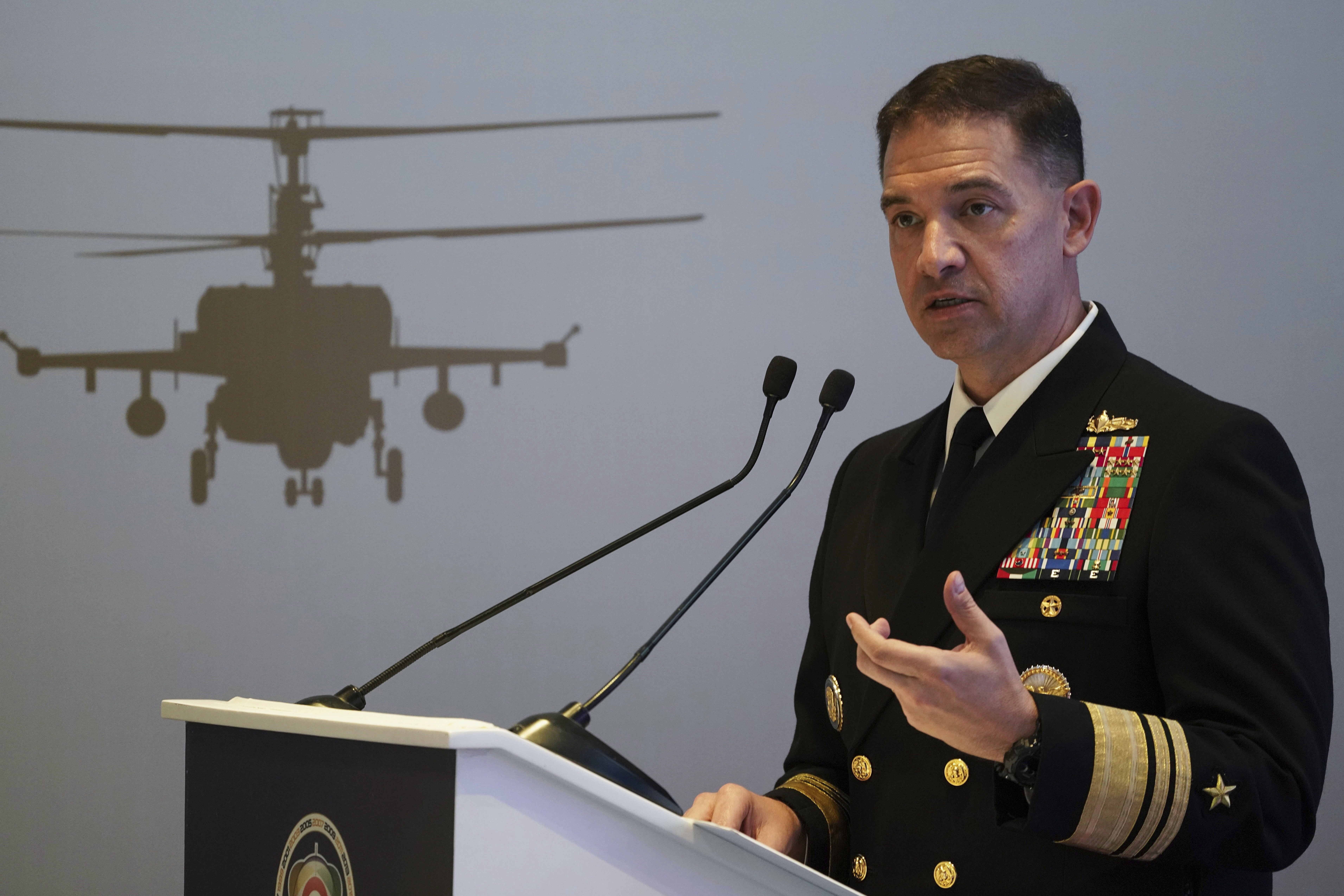
    The discussions have also involved Adm. Bradley Cooper, the head of U.S. Central Command, who supports deliberations about potentially moving U.S. troops west from the Persian Gulf, said a U.S. official.

    A spokesperson for U.S. Central Command declined to comment.

    Before the start of the war in February, U.S. Central Command evacuated many of its bases, judging them too vulnerable to Iranian missile and drone attacks to maintain normal staffing levels. Some of the shifts away from the major Gulf facilities might last after the war, a person familiar with the posture adjustments said.

    “Iran thinks we are in the traditional places,” the person said, declining to specify the changes so as not to put U.S. service members at risk. “And we are not.”

    Six U.S. service members were killed in a March strike on Port Shuaiba, a military facility in Kuwait, and more than 200 U.S. facilities have been damaged or destroyed during the conflict, the Washington Post reported in May.

    While defending its personnel in the region, the U.S. military has also expended more than 1,000 sophisticated air-defense interceptors, draining the Pentagon’s stockpile of Patriot and Terminal High Altitude Area Defense missiles, the Post reported in March.

    “The war really did highlight the vulnerability … of U.S. forces in the region,” said Michael Ratney, a former diplomat who served as the U.S. ambassador to Saudi Arabia and the deputy chief of mission in Qatar.

    Moving troops and equipment further west to Jordan, Israel, or the Red Sea coast of Saudi Arabia could help alleviate some of the pressure, he argued, while noting the added distance wasn’t a “perfect solution to this problem.”

    Iran has already demonstrated it can strike faraway targets in Jordan and Israel. Last month an Iranian attack on Jordan killed four U.S. service members.

    Tehran’s retaliatory attacks against bases in the Persian Gulf plunged the region into crisis and are stoking frustration among core U.S. allies there, who feel they were not properly consulted by the Trump administration before starting the war.

    Allison Minor, who served during the first Trump administration as the director for Arabian Peninsula affairs on the National Security Council, said the Gulf countries could maintain elements of their security partnership with the U.S. — such as arms sales and intelligence sharing — while hosting a smaller troop presence.

    “But you need to be discussing all of those comprehensively and not just the question of the sheer number of troops,” she said.

    The Pentagon has publicly estimated that the war’s cost will reach about $37.5 billion by the end of September, but that price tag does not account for the money it will take to rebuild bases in the region.

    Jules Hurst III, the Defense Department’s comptroller, told the Senate in May that the reconstruction costs were being left out because the administration has not yet decided how it wants to rebuild from the damage.

    In April, the center-right American Enterprise Institute estimated it would cost $5 billion to repair the U.S. bases that have been targeted.

    Multiple people familiar with the Pentagon’s analysis cautioned that any permanent changes to U.S. posture were still distant and would require the approval of senior administration officials.

    In June, President Donald Trump signed a preliminary peace deal with Tehran and signaled that the war was coming to a close. The agreement later collapsed, and the two sides have sporadically exchanged strikes in the months since.

    A recent policy proposal from Defense Priorities, a think tank that advocates for military restraint, calls for closing U.S. bases in close striking range of Iran’s missiles and drones, such as Kuwait. The proposal also calls for moving forces dispersed in the United Arab Emirates, Jordan, and Bahrain to more secure facilities such as the Prince Sultan Air Base near Riyadh.

    More hawkish voices in Washington have sought to influence the Pentagon’s planning by proposing the movement of U.S. troops in the region to Israel. A report by the pro-Israel group Jewish Institute for National Security of America in March called for more U.S. military assets to be moved to Israel’s Ovda Airbase.

    This winter, in the run-up to Operation Epic Fury, Washington sent F-22 Raptor fighter jets to the base in a sign of deepening U.S.-Israel military relations.

    There is disagreement within the Trump administration over that recommendation given concerns that an expanded U.S. presence there could pose a counterintelligence vulnerability amid the Pentagon’s growing concern about Israeli espionage.

    Also, the office of Undersecretary of Defense for Policy Elbridge Colby has launched a public review of America’s military presence in NATO, after the Trump administration announced it was pulling thousands of troops out of Germany and Poland. The study is set to conclude in December.

  • Google just made it easier for campaigns to send you fundraising emails

    Google just made it easier for campaigns to send you fundraising emails

    Google quietly rolled out a new program Monday that will allow candidates, political parties, and political action committees to more easily bypass Gmail’s spam filter and send fundraising appeals to the inboxes of the company’s many millions of email users.

    The change comes after years of complaints from Republicans that Gmail’s spam algorithm unfairly blocked their committees’ emails more than those of their Democratic counterparts, although those complaints were dismissed in court. For campaigns and PACs that meet the terms of the program, it is expected to route an influx of cash solicitations into Gmail inboxes, helping campaigns raise millions of dollars more in the final sprint to the midterm elections.

    Google chose not to debut the new program with any fanfare, instead posting an update to its Help Center on Monday. The company began to reach out to some political committees in both parties Monday after publishing the change, according to three people briefed on the outreach who spoke on the condition of anonymity to describe private conversations.

    Political strategists in both parties said the new policy could be deeply consequential for candidates — even if frustrating for users in the United States, who are likely to be bombarded with pleas for donations.

    “Heading into the 2026 elections, Gmail users are going to be flooded with unwanted political spam because Google decided to create a VIP lane for campaigns,” said Kenneth Pennington, a Democratic digital strategist and veteran online fundraiser. “This is a bad deal for Gmail users and a gift to bad actors in the political fundraising space.”

    José Castañeda, a spokesperson for Google, said the new program resulted from an effort to provide long-term clarity for both campaigns and users.

    “This program is designed to connect people with the emails they want to receive while keeping them fully in control of their inboxes,” he said in a statement. “To participate, bulk senders must meet strict security and compliance requirements, ensuring that messages people receive are relevant, useful, and verified.”

    The new program is set to begin Sept. 8, the day after Labor Day — and the day before Republicans are set to hold a rare midterm convention in Dallas.

    The change comes four years after Google rolled out a similar program on a pilot basis that was discontinued months later.

    At the time, the Republican National Committee sued the technology giant, accusing it of “throttling its email messages,” though Google said the party had not signed up for the program. A federal court later dismissed the case, with Judge Daniel J. Calabretta writing of the RNC’s claims, “This is pure speculation, lacking facts from which the Court could infer animus or an absence of good faith.”

    The Federal Election Commission also dismissed a formal complaint from Republicans that Gmail’s spam filter was biased against the party.

    Whether a fundraising email winds up in users’ spam folders or inboxes can be worth millions of dollars to campaigns over time.

    It is not immediately clear whether the changes would affect one party more than the other, but some Republicans appeared optimistic.

    “For years Google’s algorithm silenced Republican voices, burying our emails in spam while Democrats’ landed in the inbox,” said Will Kiley, the communications director for the National Republican Congressional Committee. “This program is a real chance to fix it and let voters hear from the candidates they choose to follow. We’ll be watching closely to make sure Google follows through.”

    Some Democrats feared the change could open the door for so-called scam PACs, which spend little of their money on actual campaigns, to more easily reach inboxes. Other Democrats hoped the change might help deliver the party an advantage because Democrats generally have been better at online fundraising than Republicans.

    The RNC did not immediately respond to a request for comment.

    Google’s new program will require that candidates, PACs, and party committees register the domain they send emails from and that their spam rates, the percentage of emails that users mark as spam, remain below 0.3%, according to the policy.

    Pennington feared that Google made the change because of pressure from Republicans.

    “While there could theoretically be another reason for this policy shift, it appears that Google is sacrificing the inbox sanity of its customers simply to placate a false, bad faith narrative from Republicans claiming partisan spam bias,” he said.

    Amanda Elliott, a Republican digital strategist, said the mistrust on the right with the tech industry runs deep, especially around the issue of whether fundraising emails wind up in inboxes or spam folders.

    “For everyone who’s been talking about censorship and bias, this could be a put-up or shut-up moment,” she wrote in a text message. “Are your emails landing in spam filters because you’re a Republican or because you’re just running a subpar email program and not following best practices? Perhaps we’re about to find out!”

    This article originally appeared in the New York Times.

  • Jaguars are ready to come back, but the border wall might stop them

    Jaguars are ready to come back, but the border wall might stop them

    Movement triggers a trail camera in a wildlife preserve in northern Sonora, Mexico, 2 miles south of the border with the United States. It captures two adult jaguars winding through oak thickets and tall grasses. The cats look relaxed, softly vocalizing to each other.

    It’s remarkable to see any jaguars in these borderlands. But to observe two together is unheard of, said Ganesh Marín, a researcher with the environmental group Borderlands Restoration Network. Even more jaw-dropping is that one of the big cats looks to be a female. “When I saw it, I was excited,” Marín said of watching the video in 2023. “I thought, ‘This is fantastic.’”

    No native female jaguars have been seen in the United States, or anywhere particularly close, for more than 70 years. So Marín waited for more evidence before he went public. He collected several more sightings of the cat, which he and his adviser named Adela. Then, this year, a camera-trap video surfaced that gave a clear view of another jaguar’s rear end, proving, according to Marín and other cat experts, that the individual in question is a female.

    “It’s a game changer,” said Eamon Harrity, a researcher with Sky Island Alliance, a conservation science group.

    Including Adela, five or six jaguars have been recorded at the wildlife preserve, Cuenca Los Ojos, since 2020, suggesting that the jaguar is closer than previously thought to reestablishing a population on the doorstep of the United States. “It totally deflates the narrative that female jaguars are over 100 miles to the south,” Harrity said. “They could be a day away from the U.S., or already here.” At the same time, the only known jaguar in the United States, a male named Cinco, has been roaming throughout southern Arizona. He has everything he needs — except a mate.

    Geopolitics might get in the way of his acquiring one. Since 2025, contractors working for the Department of Homeland Security have finished 56 miles of new wall along the U.S.-Mexico border and 48 miles of secondary fencing. In Arizona, many areas of the border will soon have two 30-foot walls right next to each other. This barrier is poised to cut off three of the four most important remaining wildlife corridors between Mexico and Arizona, threatening the jaguar’s re-expansion despite all the positive recent signs. The wall, Harrity said, would make it “very unlikely the jaguars can come back on their own to the U.S. — at least for now.”

    ‘No campfire dies without talk of him’

    Jaguars once roamed much of Sonora, western New Mexico, and Arizona, as far north as the Grand Canyon. The size of the population is unknown, but it was probably small and widely dispersed. Although they have long been revered in both countries — naturalist Aldo Leopold wrote in 1949 that the jaguar’s mythic nature so pervaded the borderlands that “no campfire dies without talk of him” — jaguars were also once regularly killed on sight, by government officials as well as hunters.

    Since 1949, when a hunter killed a female jaguar near Arivaca in southern Arizona, no native female had been seen in the United States, or anywhere particularly close to the border in Mexico. The northernmost core breeding population was thought to be centered near the community of Sahuaripa, more than 100 miles south of the border, which includes a private protected area for the species called the Northern Jaguar Reserve.

    A turning point came in early March 1996, when rancher Warner Glenn set off to hunt cougars in the Peloncillo Mountains, which start at the Mexican border and run north, straddling Arizona and New Mexico. His dogs caught the scent of a large cat and gave chase, and the feline finally stopped on a rocky outcropping. Peering up through pinyon pines, the rancher realized this was no mountain lion; it was a full-grown male jaguar.

    Still, in 1997, with only a few such sightings of roaming males, the jaguar was listed as endangered. In 2014, the U.S. Fish and Wildlife Service designated more than 760,000 acres of critical habitat for the big cats, but after lawsuits from mining and ranching groups, that dropped to 640,000 acres.

    Soon after Marín set up the camera network in 2020 for a doctoral project at the University of Arizona, he was elated to record a male jaguar he named Bonito, and a second male shortly after. Then came Adela and yet another male in 2023.

    When Marín first saw the video of the two jaguars, he thought Adela was female because she has a smaller frame. Also, two males are unlikely to appear together and vocalize, he explained.

    This year, he reinspected a video from April 2023 that showed a clear view of a jaguar’s rear end, and did a double take: No testicles were visible. And the spot pattern looked different from Adela’s, suggesting it could be a second female.

    He sent the clip to Brett Dickson, a wild cat expert with Conservation Science Partners. “I was struck right away that I was likely looking at a female,” said Dickson, who forwarded the video to jaguar experts. (The video also shows the cat has skin folds that look like mammary glands. The possibility that this could be a lactating female “cannot be ruled out,” Dickson said.) Seven of the nine scientists agreed it was female; two are unsure.

    While male jaguars can range hundreds of miles from their birthplace in search of new territory and mates, females generally do not travel as far from where they were born, and their mobility is a limiting factor in the species’ expansion. Seeing a female in Cuenca most likely means that she was born nearby, and that the breeding range of the jaguar extends farther north into the species’ historical territory than previously thought.

    The ‘fabric of the jaguar’

    To revisit the spot where Adela first showed up, Marín and Valerie Gordon, executive director of Cuenca Los Ojos, drove into the northernmost foothills of the Sierra Madre. A hike through grassy hills punctuated by oaks and mesquite took them to a spot where Marín lashed a camera around an alligator juniper back in 2020.

    Less than 2 miles away — a brief stroll for a jaguar — they pointed out the short vehicle barrier on the U.S. border. This is one of the most important remaining unwalled wildlife corridors in the Southwest United States, Marín said.

    A walk into the mountains took them to another camera that filmed Adela, showing her softly huffing as she passed. Marín gestured southward, where he envisions female jaguars making up a continuous thread that stretches vast distances through Mexico and far beyond. “The fabric of the jaguar is closer than we thought,” he said.

    Under the first Trump administration, 30-foot fencing impervious to most large animals went up along more than 220 miles of the border in Arizona, curtailing north-to-south wildlife movement and depleting aquifers, since contractors use vast quantities of water for construction, said Myles Traphagen, a researcher with Cuenca. As codified in the Real ID Act of 2005, the homeland security secretary has the authority to waive nearly any law — including the Endangered Species Act — in building border walls.

    John Mennell, a DHS spokesperson, said in a statement that the department planned to incorporate an unknown number of small wildlife passages, and referred further questions to the Fish and Wildlife Service, which declined to comment. These openings would be 8.5 inches by 11 inches, too small for jaguars.

    Cameras on both sides of a 30-foot border wall in Cuenca Los Ojos have shown large wildlife pacing, trying to get through. Animals including bears, mountain lions, and jaguars have to move long distances to find water in arid areas, and border fencing makes this more difficult, Gordon said.

    In the spring, Traphagen took a drive to check on the status of the wall, passing through the Baboquivari Mountains, a sacred place within the Tohono O’odham Nation. To the south, he saw contractors putting up 30-foot panels of new wall, one of about six places in Arizona where such work has begun, and miles of razor wire had been strung up.

    “That corridor has been open since time immemorial,” said Kinley Ragan, a biologist with the Phoenix Zoo, who manages a network of cameras in the area. “We know this will have serious impacts on wildlife. It’s quite devastating.”

    Several groups have worked to protect jaguars in Mexico, where the species is listed as endangered. For example, to change attitudes and make the animals more valuable alive than dead, the Northern Jaguar Reserve started a program in 2002 that compensates ranchers for trail camera photos of cats.

    Since 2010, jaguar populations have increased throughout Mexico by about 30%, to a total of more than 5,300, according to a Mexican jaguar census released last year and led by Gerardo Ceballos, an ecologist and a senior researcher at the National Autonomous University of Mexico.

    Among the main threats have been illegal hunting and retaliatory killings for perceived cattle predation, though research shows the cats much prefer native wildlife. Killings still happen, but the situation seems to have improved over the last two decades. Ceballos has argued for years that a female jaguar could return to the United States soon, if the two countries continue working together to protect habitat and connectivity.

    While jaguars might not be welcomed back by every segment of society, they are rare and shy enough that they present no risk to humans. The return of an apex predator would be good for the area’s ecology, and an indicator that the environment is doing well, said Susan Malusa, director of the University of Arizona wild cat research center.

    Females would enjoy the same legal protection as males, as endangered species, but ecologically and symbolically, the return of females would be a much bigger deal and would make jaguar conservation more urgent rather than theoretical.

    Back at the spot where the first video was taken, Gordon mused about how vast this tract of wilderness is, and Marín noted how important it will be to keep this border free of 30-foot-tall walls while reestablishing wildlife corridors where possible.

    “Jaguars are coming back,” Marín said, if we don’t get in their way. “I hope the U.S. is prepared for that — prepared to let that happen.”

    This article originally appeared in the New York Times.

  • What do students lose when they stop writing?

    What do students lose when they stop writing?

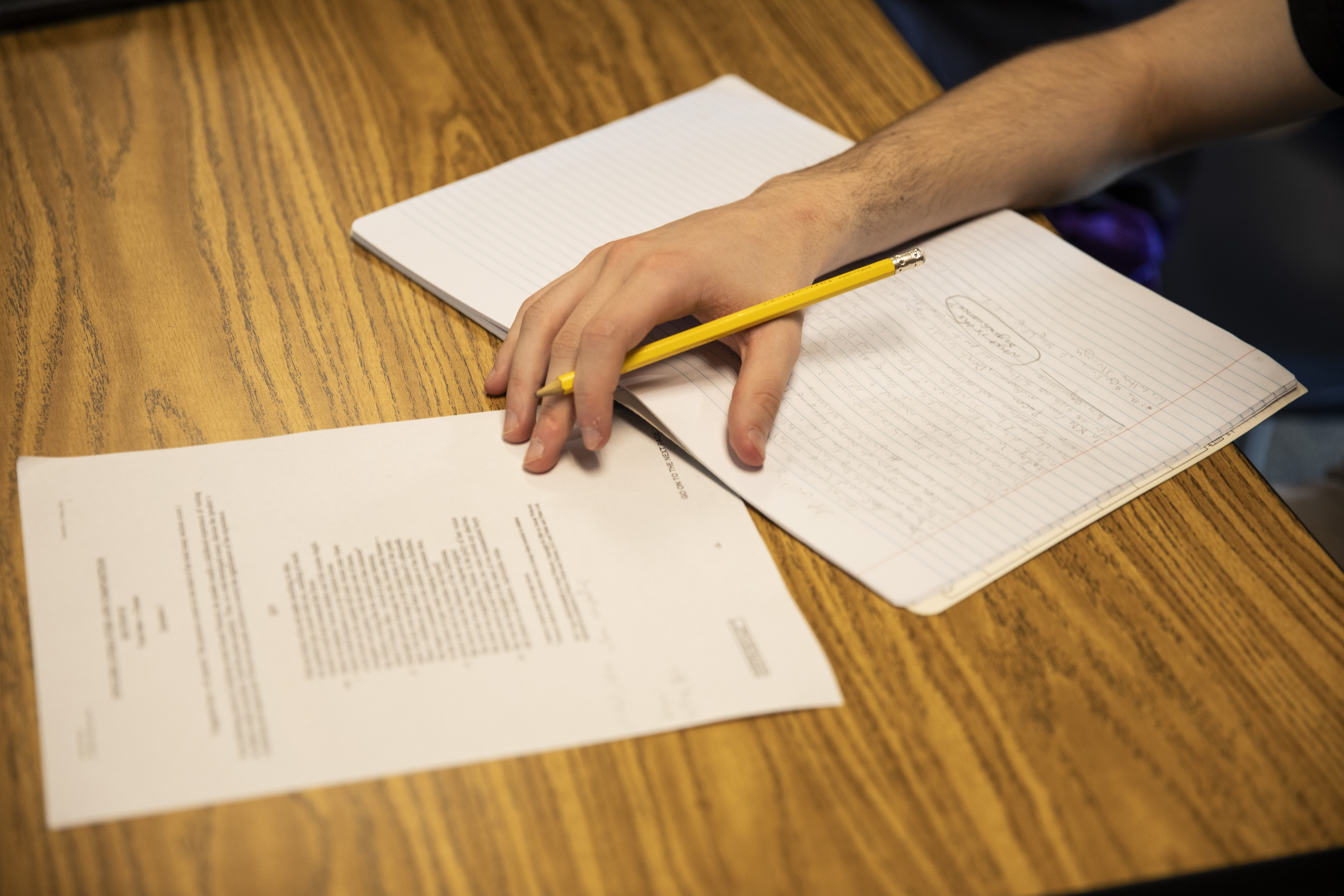
    After years of studying how humans write, cognitive psychologist Ronald T. Kellogg concluded that drafting a basic persuasive essay was as mentally taxing as digging a ditch was physically exhausting.

    Writing well requires a command of vocabulary, spelling, and grammar. It forces writers to comprehend a subject, to sift through their working memory of that topic, to organize and plan. Writing an essay is so difficult that a person in the throes of it can do hardly anything else — as anyone who has shushed a spouse or child while trying to compose a decent sentence can attest.

    Very few people would volunteer to dig a ditch. Likewise, it is hard — almost impossible, many English teachers will admit — to turn a reluctant writer into an enthusiastic one.

    Yet the American education system expects nearly all students to learn how to write an essay. It’s little wonder, then, that as soon as a tool arrived promising to lessen the pain people grabbed it.

    Like it or not, artificial intelligence is now firmly embedded in how students produce text. Somewhere between two-thirds and 90% of high school and college students are already using AI for schoolwork, according to recent surveys, often requesting help with writing assignments.

    A growing number of educators are alarmed, and insist that students should write without AI. These teachers are returning to handwriting, blue books, and proctored, in-class essay tests — all attempts to prevent students from outsourcing their writing to chatbots.

    This is baffling to tech industry leaders, who see AI rejection as a form of educational malpractice. They point out that writing is already the leading use of AI in the workplace, and argue there is no need to continue suffering through the task without help. After all, they say, chatbots now exceed the ability of most humans to produce fluent prose.

    All this points to some questions about writing itself: Why work so hard to learn it? And what do students stand to lose when they stop facing down a blank page, alone with their thoughts?

    The scholars who study writing and cognition are rarely reflexively opposed to AI. Many have spent decades anticipating a leap in computer-assisted writing, just like the one we are living through. They tend to be excited by the technology’s potential.

    Still, their work casts doubt on the tech-industry push to embed AI at every stage of the student writing process, from brainstorming to drafting to revising. Research shows that traditional, unassisted composition is valuable, not despite its difficulty, but because of it. Writing builds our working memory, executive planning skills, and metacognition — the ability to think about our thinking, weigh alternate viewpoints, and revise for clarity and style. It takes decades to develop writing skills, from toddlerhood into adulthood.

    “Writing is a technology for thinking,” Kellogg said.

    Writing substitute or helper?

    Learning to write did not always matter so much.

    Before the 1870s, American students were tested through oral exams. College seats were reserved for the elite — future ministers and lawyers, professions where public speaking dominated.

    But the rise of the modern, urban economy, and the invention of the typewriter, produced jobs that dealt more heavily with the written word, like office clerks and advertising copywriters. Starting in the late 19th century, students needed to learn how to write more fluently, and school curriculums, tied closely to the demands of industry, adapted. As more students went to college, and class sizes grew, administering oral tests also became too time-consuming, according to linguist Naomi S. Baron, who traces this history in her book Who Wrote This?

    Besides, teachers discovered that writing itself deepened knowledge. “If you want to think, understand, and learn something, text really is preferable,” Baron said.

    Cognitive research confirms that writing is a powerful aid in helping us to retain information we read. The work of writing forces us to stress-test our ideas, allowing the writer to respond to counterarguments and cite sources. Revision is a practice of self-critique and self-improvement, and can be social, as well, if feedback is elicited. Writing can also be empowering, allowing us to share our experiences and express our views. It can even be healing, which is why therapists sometimes suggest keeping a journal.

    It is not clear if these benefits can be fully realized when writing alongside artificial intelligence. There are reasons to be wary.

    Last year, a small study from the Massachusetts Institute of Technology showed that individuals who wrote in partnership with AI chatbots recorded lower brain activity while they wrote, compared with those who worked without chatbots. The writers who used AI struggled to remember what, exactly, they had written, and felt little ownership over their work.

    The findings join a growing body of research suggesting that frequent AI use can degrade critical thinking.

    Nevertheless, tech companies are aggressively marketing AI writing assistants to students and schools.

    Jenny Maxwell, general manager for education at Superhuman, the AI company that makes the popular writing app Grammarly, told me we are living through a “burn it down” moment for teaching and learning. Educators who try to withhold AI writing tools are essentially announcing to their students — “consumers,” she called them — that their coursework is irrelevant to the job market.

    She did acknowledge that some basic, human writing skills remain valuable. Students need to write well enough to have a sense of which AI text suggestions to accept and which to reject, she said. Maxwell also insisted that creativity in writing would persist, because people would still want to express their personal voice and style.

    To that end, companies such as Grammarly, Google, and OpenAI are creating so-called Socratic versions of their chatbots, sold to schools as writing helpers that will guide students through assignments without doing the work for them.

    The need for limits

    AI is already ubiquitous: on every device, in every web search, insisting that it can summarize for us, analyze for us, write for us. It steps in even when we have not invited it.

    For students with still-developing minds, the most urgent question, then, is how to protect thinking in a world where it has become so easy to outsource writing.

    We might begin by considering what AI is actually good at when it comes to composition. AI can be especially useful for those with disabilities or who are non-native English speakers, said Steve Graham, a writing expert and educational psychologist at Arizona State University. Chatbots can correct grammar and suggest potential trims or revisions for clarity. With AI, there have been immense strides in accurate voice-to-text transcription for writers who cannot physically type or write by hand.

    And AI can offer all of this help privately, with no need to be vulnerable and expose a rough first draft to another person’s judgment. For many American students, especially the third with below-basic literacy skills, the writing process can be painful and embarrassing, and a reason many dread homework and exams.

    But, Graham cautioned, there is no part of the writing process that can be handed over to AI without some cost. Intellectual growth occurs at every stage, from brainstorming to fine-tuning a final draft. If writing is thinking, then any part of the struggle that is outsourced to technology amounts to relinquishing some freedom to perceive. How will students ever know what they really think of anything — whether it’s The Crucible or AI itself — if they ask a machine to spit out an answer for them?

    Last year, a group of writing experts, including Graham, assembled at the University of California, Irvine, to produce recommendations to schools.

    They did not reject AI. Instead, they called on schools to resist the temptation to devote less time to writing — not because it will continue to be such a critical skill in the workplace, where it’s already waning, but to sharpen the mind.

    Writing should be embedded across the curriculum, they advised. Students should continue to do the hard work of drafting their own sentences, paragraphs, and eventually full essays about their lives and about what they have read, both fiction and nonfiction. All this teaches grammar and vocabulary, certainly. But it also allows students to master the knowledge they are gaining.

    There is room for AI, these experts suggested: The technology can help educators generate engaging writing prompts on whatever subjects they are teaching.

    Teachers might also encourage students to use AI to get initial feedback on their writing before turning it in. Anna Mills, a writing instructor at the College of Marin in California, has developed detailed AI prompts that students can use to elicit useful feedback without outsourcing all the work.

    Still, there is probably a need to limit access to the technology.

    The University of Sydney has developed a policy known as the two-lane approach. Across every discipline, professors are required to give some assessments in person under secure conditions, limiting AI use. But they must also allow AI for other assessments, so students can show they know how to apply the technology.

    Jessica Binney is dealing with AI as an English teacher at John Jay High School in the New York suburbs.

    In a creative-writing class, she had students prompt a chatbot to write a poem. The results were predictably generic, so students then asked the chatbot to make revisions, considering where the bot performed well and where it fell short.

    Still, like many educators, she had tired of policing AI misuse on take-home assignments. In her Advanced Placement English course, she moved much of the essay writing, produced inside the classroom, to pen and paper.

    For the most part, students did not complain. Many had already been through an initial whirlwind romance with AI, before rethinking their relationship with the tools. Ainsley Graham, a junior, said she was thrilled by ChatGPT’s ability to help with data analysis in a science research class, but recognized the risks of using chatbots to write essays about literature.

    “You’re not strengthening that muscle by actually analyzing these really hard texts,” she said. “They’re meant to be hard.”

    When Cassady Tondorf, 17, learned how chatbots produced writing, she realized their utter lack of originality. “The entire internet is open to it,” she said. “It’s just regenerating the same things, over and over.”

    If she wanted to be valuable on the job market, she felt, she would need to have ideas and skills that were uniquely her own.

    This article originally appeared in the New York Times.
  • Trump threatened to bomb Oman because he’s unhappy with the country’s deal with Iran, officials say

    Trump threatened to bomb Oman because he’s unhappy with the country’s deal with Iran, officials say

    CAIRO — U.S. President Donald Trump threatened to bomb Oman because he is unhappy the country is close to a deal with Iran to manage ship traffic through the Strait of Hormuz, two regional officials said Tuesday, a day after Trump leveled the threat.

    The officials said the Trump administration has told Oman it is opposed to parts of the yet-to-be-announced deal, including the joint Iranian and Omani management of the exit route out of the passage that’s critical to global supplies of oil and natural gas. The officials were briefed on the U.S. position and how the administration views Oman’s position.

    Meanwhile, a projectile hit a ship as it sailed out of the strait, according to the British military’s maritime monitoring agency, and an Iranian official said the waterway would not reopen until the United States meets Iran’s conditions.

    U.S. believes Oman has not been tough enough with Iran

    The U.S. believes Oman has not been tough enough in its negotiations with Iran and is unhappy with Oman’s agreement to collect voluntary fees from vessels, even if the charges are related to security and maritime environmental protection, according to the officials, who spoke on condition of anonymity because they were not authorized to talk to journalists.

    Trump on Monday threatened to bomb Oman as it works with Iran on a deal to open the strait and pave the way for the U.S. and Iran to resume negotiations to end the war.

    He posted a map on social media Tuesday depicting the strait as a U.S. territory. The president first mentioned the idea in an offhand comment last week. On Monday, he told reporters in the Oval Office, “I like the idea of declaring it a territory,” without providing details.

    The White House on Tuesday referred to Trump’s remarks in the Oval Office and declined to comment further about Oman.

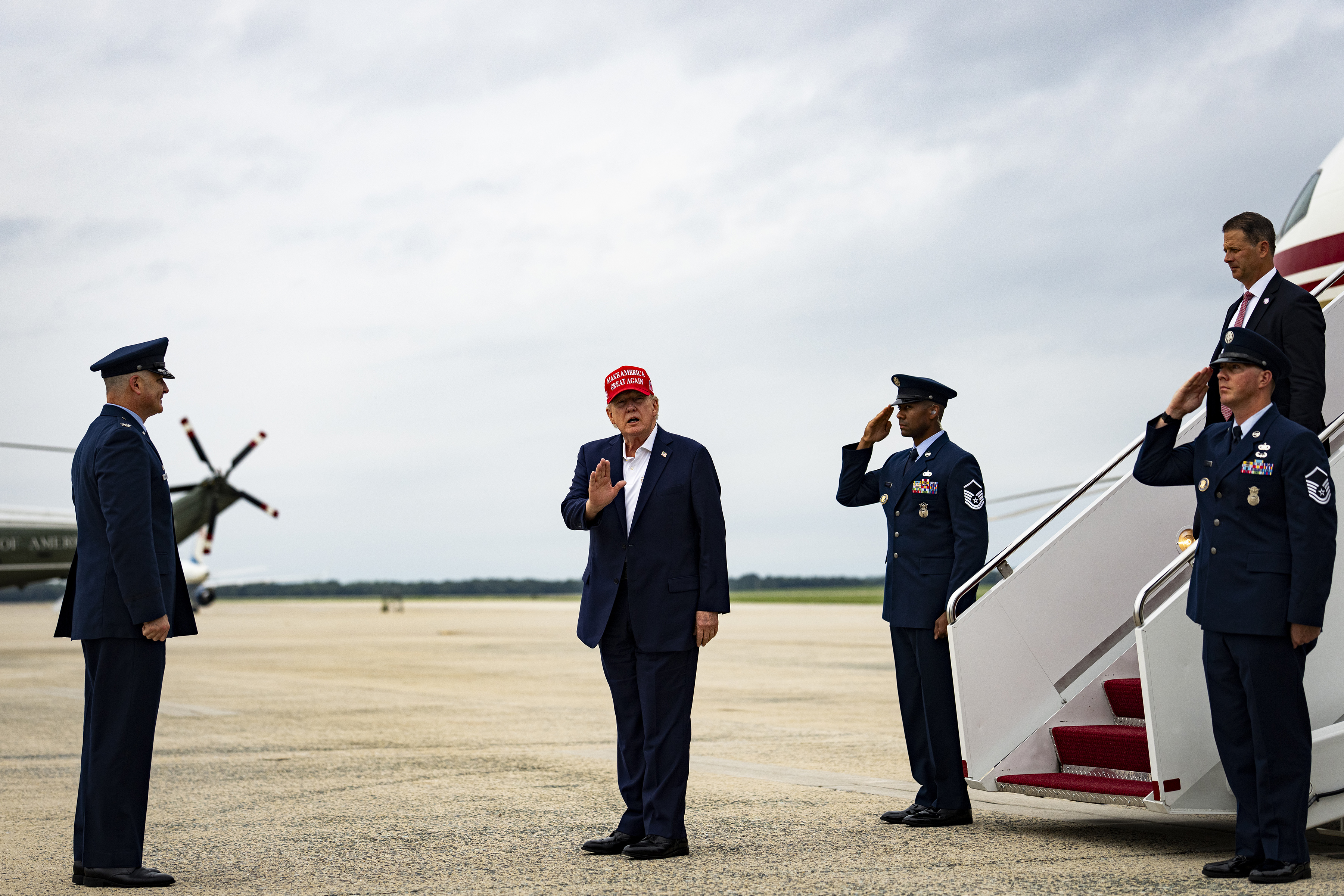
    President Donald Trump speaks in the Oval Office of the White House on Monday, Aug. 17. Manuel Balce Ceneta

    Iran refers to Trump’s ‘delusion’ about the strait

    Iranian Deputy Foreign Minister Kazem Gharibabadi appeared to respond to Trump’s post on social media depicting the strait as American territory.

    “Just as Trump correctly wrote the name of the eternal Persian Gulf, his delusion regarding the Strait of Hormuz will soon either be corrected, or we will correct this deluded man’s delusions for him,” Gharibabadi wrote on X.

    Trump’s comment on Monday was not the first time he has threatened Oman. In May, he told reporters during a Cabinet meeting that Oman “will behave just like everybody else, or we will have to blow them up.”

    Iran reiterated Tuesday that Tehran plans to maintain its grip on shipping traffic until Washington meets its conditions.

    “Until the United States fulfills its commitments under the agreement, including lifting the blockade, releasing frozen assets, lifting oil sanctions, ending threats and military operations on all fronts, and implementing the other conditions to which it committed, the Strait of Hormuz will not reopen,” said Mohammad Bagher Qalibaf, Iran’s parliamentary speaker and negotiator in previous talks with the U.S.

    The Egyptian Foreign Ministry said Tuesday that the Iranian-Omani deal could pave the way for Washington and Tehran to return to negotiations for a “comprehensive and permanent deal that addresses all concerns and enhances regional security and stability.”

    The statement came after a meeting between Egyptian Foreign Minister Badr Abdelatty and Omani counterpart Badr al-Busaidi. But it did not address Trump’s latest threat against Oman.

    President insists strait is open as more attacks are reported

    Trump said Tuesday the U.S. has no planned talks with Iran but insisted the strait is “open and operating,” despite limited traffic, the reported boat strike and the end on Monday of the 60-day negotiating period between the countries.

    Trump wrote on social media that a U.S. blockade of the strait remains “in full force and effect,” adding that all water mines have been removed.

    As the talks between Iran and Oman continue, more attacks were reported in the region.

    An unidentified projectile hit a ship early Tuesday in the strait off the coast of Oman, damaging the engine room and causing a casualty, according to the U.K. Maritime Trade Operations center.

    The monitoring agency did not release any details about the ship or its cargo, and it was unclear whether the crew member was killed or wounded. The agency said the Omani Coast Guard was assisting other crew members and that authorities were investigating.

    And Yemen’s Iran-backed Houthi rebels claimed they fired drones at an oil refinery in neighboring Saudi Arabia, the latest attack that threatened to reignite Yemen’s civil war and open another front in the Middle East.

    The attack targeted a facility run by Saudi Aramco, Saudi Arabia’s state-owned oil company, according to a report by the Houthi-run SABA news agency. There were no immediate reports of damage or comment from Saudi Arabia.

  • The U.S. national debt is set to hit $40 trillion this week

    The U.S. national debt is set to hit $40 trillion this week

    The U.S. national debt is likely to surpass $40 trillion this week, months earlier than forecasters previously expected, in part because of billions of dollars in lost revenue from President Donald Trump’s invalidated tariffs.

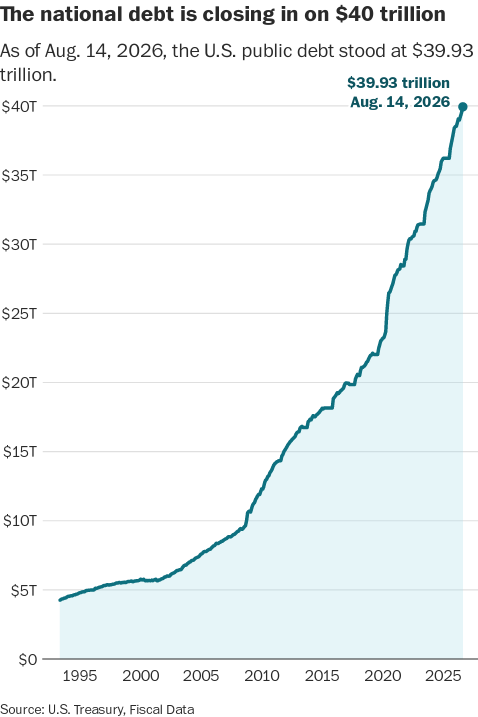
    The lost revenue has forced the U.S. Treasury Department to borrow more rapidly to cover the nation’s bills: Six months ago, the nonpartisan Congressional Budget Office projected that total borrowing would top out at $39.4 trillion this fiscal year. But on Monday, Treasury reported that the debt stood at $39.9 trillion and counting.

    The faster accumulation of debt means the next deadline for raising the legal limit on borrowing is also likely to arrive ahead of schedule. Just last year, Congress set the debt limit at $41.1 trillion. Budget analysts now say borrowing could hit that threshold by early next year, forcing lawmakers either to suspend it or raise it again to avoid the risk of an economy-shaking default.

    Trump is already focused on the debt limit, which has repeatedly plunged Washington into a dangerous game of legislative chicken. Late last month, the president urged the Senate to address “the ever looming Debt Ceiling disaster” before leaving town for its August recess.

    Senate leaders did not comply, but Majority Leader John Thune (R-South Dakota) told reporters at the time that “we’ll have to be dealing with it.” He added: “$40 trillion in debt — seems to me that should get our attention.”

    For the past quarter-century, the national debt has grown under both parties, through the tax cuts of the George W. Bush era, the wars in Iraq and Afghanistan, the Great Recession, the 2017 Trump tax cuts and the nearly $2 trillion Biden administration initiative to prop up the economy during the coronavirus pandemic. Trump pledged during his first campaign in 2016 to eliminate the debt within eight years; instead, it has doubled since he first took office.

    This year, the gap between spending and revenue was already expected to approach $2 trillion, the CBO reported in February. Days later, the U.S. Supreme Court struck down Trump’s “Liberation Day” tariffs, cutting federal revenue by an estimated $250 billion. The Treasury has also increased borrowing lately to build up its cash reserves.

    Military spending tied to the conflict with Iran could add more to the debt in the months ahead, according to the Bipartisan Policy Center, a nonpartisan Washington think tank that tracks federal spending.

    “Our current fiscal trajectory is plainly unsustainable, and that’s the best-case scenario,” BPC president and CEO Margaret Spellings said in a statement. “AI disruption, a recession, global war, or any number of other events could quickly push us over the edge from a challenge into a full-blown crisis. Even in the rosiest scenarios, we’re speeding toward a cliff and refusing to turn the wheel.”

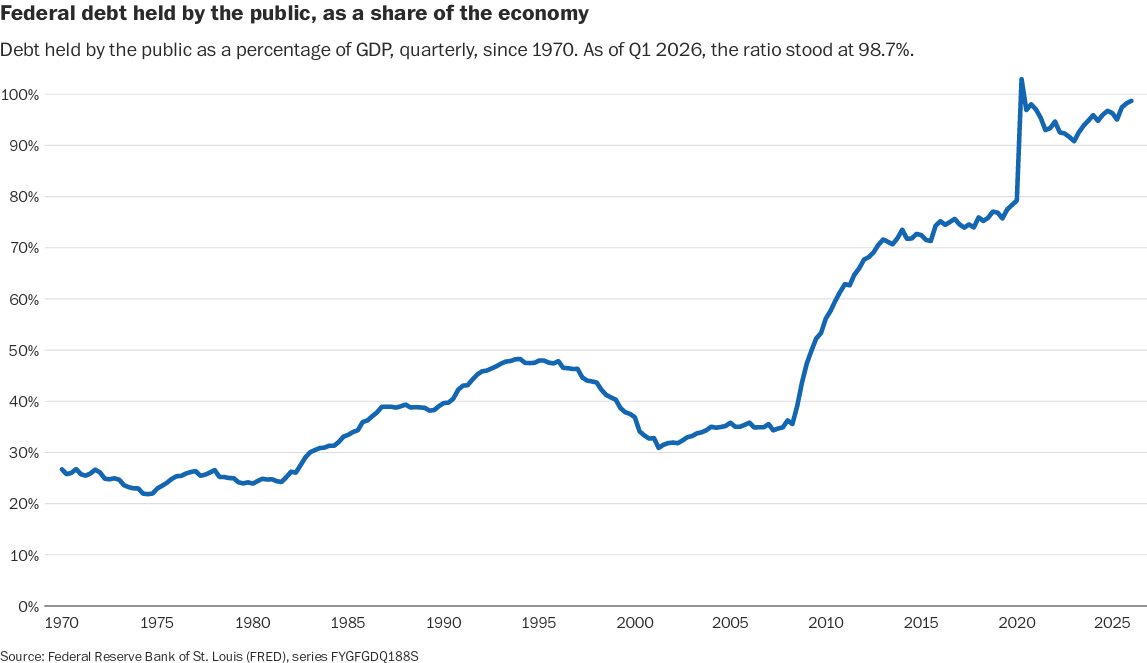
    In an email, White House spokesman Kush Desai said that “the Trump administration remains focused on slashing waste, fraud, and abuse across the federal government while accelerating economic growth, policies that will get America’s debt-to-GDP ratio trending in the right direction.”

    So far, Washington lawmakers have raised or suspended the debt limit every time it has been reached, but often after dramatic, deadline-pushing partisan battles. Even these near misses have rattled markets and carried a price: Standard & Poor’s, Fitch and Moody’s have each downgraded the credit rating of U.S. government debt since 2011, moves tied at least partly to debt ceiling brinkmanship.

    Congress last raised the debt limit in quieter fashion, adding $5 trillion to the debt ceiling as part of the One Big Beautiful Bill Act, the Republicans’ marquee tax and spending law. Measures to raise the debt ceiling often include spending cuts aimed at reducing the annual budget deficit. But the One Big Beautiful Bill Act, which Trump signed in July 2025, did the opposite: That law added $4.7 trillion to projected deficits over the next decade, according to CBO estimates.

    According to preliminary projections by the BPC, Washington is on track to next hit the debt limit between late winter and midsummer 2027. Based on the latest borrowing figures, the center’s estimate is “trending toward the earlier end” of that range, Shai Akabas, the center’s vice president of economic policy, said in a statement.

    Hitting the debt ceiling would not by itself trigger a default. Once the borrowing limit is reached, Treasury can pay bills by drawing on its cash reserves and using stopgap accounting maneuvers known as “extraordinary measures,” which typically buy another six to nine months, according to the BPC. Only after that runs out does the government reach what’s known as the X-date, when the Treasury risks running out of cash and defaulting on its obligations.

    If Republicans lose one or both chambers of Congress in the Nov. 3 midterm elections, they could attempt to raise the debt limit in the lame-duck period during November and December — before the new Congress is seated in January. Otherwise, they could be forced to make policy concessions to Democrats that Republicans — and the White House — would prefer not to make.

    But raising the debt ceiling could prove challenging even under total GOP control. Especially in the House, where the GOP holds a slim majority, party leaders would be forced to win over their fiscal hawks, who have previously revolted when a debt ceiling increase was not accompanied by an agreement to cut spending.

    “You have to raise the debt limit just the same way that you have to pay your credit card bill,” said Marc Goldwein, senior policy director for the Committee for a Responsible Federal Budget, a nonpartisan group focused on deficit reduction. It reflects spending choices you’ve already made, he said. “But if you keep getting credit card bills that are more than you can afford, it’s probably a good time to reassess how much you’re spending, or to get a second job, right?”

    As with many credit cards, interest is itself becoming a bigger part of the problem. Last week, the U.S. government sold 30-year bonds at 5.216 percent, the highest rate in a quarter-century, Bloomberg News reported. Treasury rates ripple into mortgage rates, corporate debt and other borrowing.

    Annual interest payments on the debt are projected to top $1 trillion this year, according to CBO — about the size of the Pentagon budget. They now consume about 19 percent of federal revenue, according to the Peter G. Peterson Foundation, a nonpartisan group that tracks the debt and advocates for fiscal discipline, and are projected to climb to 26 percent by 2036.

    “Interest costs are paying for your past, not paying for your future,” said Peterson Foundation chief executive Michael Peterson, and unfairly burden future generations.

    “It’s immoral to, year after year, trillion after trillion, just keep borrowing the money, not paying your bills for immediate consumption and deferring not only the principal balance but the interest costs onto our kids and grandkids,” he said.

    Peterson pointed to Social Security as a preview of what happens when Washington puts off big problems: Unless Congress acts, the program’s trust fund is projected to become insolvent in 2032, triggering an automatic 22 percent cut in benefits.

    “Can a democracy that’s run by all of us collectively make tough decisions to sacrifice in the short term for long-term benefit?” Peterson said. “The political system hasn’t risen to this challenge in recent decades.”

    Theodoric Meyer and Jarrell Dillard contributed to this report.