Category: Wires

  • Frank Beard, drummer of boogie-rock trio ZZ Top, has died at 77

    Frank Beard, drummer of boogie-rock trio ZZ Top, has died at 77

    NEW YORK — Frank Beard, the drummer for the Texas boogie-rock trio ZZ Top who kept the tempo for the band’s biggest hits like “Sharp Dressed Man,” “Gimme All Your Lovin’,” and “Legs,” has died. He was 77.

    Mr. Beard was in hospice care when he died Tuesday at his ranch in Richmond, Texas, with family members at his side, according to publicist Bob Merlis. Band cofounder and guitarist Billy Gibbons, on tour with bassist Elwood Francis, hailed Mr. Beard in a statement.

    “Today, Elwood and I lost a great friend and collaborator, and the world lost one of the most naturally innovative drummers and a great and true son of Texas. His signature backbeat was key to keeping ZZ on top. The band of which he was part for six decades is going to keep on keeping on as he had wished,” Gibbons said.

    ZZ Top sold more than 50 million records and had six singles that reached No. 1 on Billboard’s Mainstream Rock Airplay chart. Seven of their albums have been in the Billboard 200’s Top 10 and they earned three Grammy Award nominations.

    “I’ve found the people I was meant to play with,” Beard says in the 2019 documentary ZZ Top: That Little Ol’ Band from Texas. “I never wanted to quit, and never wanted to get fired.”

    Drummers went to social media to pay tribute to Mr. Beard’s influence, including Rage Against the Machine’s Brad Wilk, who wrote his mind was blown seeing Mr. Beard’s two-hand shuffle live in high school. Former Guns N’ Roses drummer Matt Sorum called Mr. Beard “a very special and unique man behind the kit.”

    How the band came together

    Mr. Beard, from Frankston, Texas, met Gibbons in a band called the Moving Sidewalks and later introduced bassist and vocalist Dusty Hill who had been in several bands with Mr. Beard.

    The trio formed ZZ Top in 1969, naming themselves in part after blues singer Z.Z. Hill and influenced by the British power trio Cream and Jimmy Reed. They maintained their original lineup for more than five decades. Their signature look — long, bushy beards on Gibbons and Hill, and dark sunglasses for all — didn’t change much, either.

    When Rolling Stones guitarist Keith Richards helped induct the trio into the Rock & Roll Hall of Fame in 2004, he joked: “These cats know their blues and they know how to dress it up. When I first saw them, I thought, ‘I hope these guys are not on the run, because that disguise is not going to work.’ ”

    ZZ Top songs — with their sly and humorous lyrics — were popular in Hollywood, which used “Gimme All Your Lovin’” in Happy Feet, “Sharp Dressed Man” in Evan Almighty, “Legs” in Air, “Sleeping Bag” in I, Tonya, “Tush” in Dazed and Confused, “Mexican Blackbird” in From Dusk Till Dawn, and “La Grange” in Armageddon.

    “The best way to describe ZZ Top is we’re interpreters of a great American art form,” Gibbons told the Dallas Morning News.

    Their debut release, ZZ Top’s First Album, came out in 1970. Their sound was described as a hybrid mixing elements of rock, blues, and funk into a steaming-hot Houston stew. They called themselves a “Little Ol’ Band From Texas.”

    Breaking through

    Three years later, they broke through commercially with “La Grange,” a funky blues song on the album Tres Hombres that paid tribute to the Chicken Ranch, a brothel outside of the Texas town of La Grange that operated from 1905 until 1973 and was immortalized in the Broadway show and the film The Best Little Whorehouse in Texas. Gibbons has ascribed the power of “La Grange” to its simplicity — just two chords and a Robert Johnson-inspired guitar solo.

    The band went on to have such hits as “Tush” and “Cheap Sunglasses.” But their 1983 Eliminator — named after one of Gibbons’ custom cars — added more production elements, synthesizers, and drum machines to their stripped-down sound and yielded the hits “Gimme All Your Lovin’,” “Legs,” and “Sharp-Dressed Man.” The band toured with a Texas-shaped stage, live rattlesnakes, and a longhorn steer.

    Long beards weren’t always part of the band’s look. Gibbons said it happened by accident: In 1976, the trio took a long break and scattered. Mr. Beard went to Jamaica, Hill went to Mexico, and Gibbons went to France.

    “Although we were speaking by phone, this was pre-video phone. And Dusty and I did not know that we had gotten so lazy that we had decided to forget to shave,” Gibbons told The Tribune in San Luis Obispo in 2010. “So after three years we returned and showed up, and lo and behold here was this sort of wacky-looking image. And it just kind of stuck with us.”

    A boost from MTV

    The band’s rock-chic cool played well on the nascent MTV crowd and their videos, featuring models in short skirts emerging from one of Gibbons’ custom roadsters, became a mainstay.

    They kept the beards, hats and cheap sunglasses in the video trilogy of “Gimme All Your Lovin’,” “Sharp Dressed Man,” and “Legs,” made with director Tim Newman.

    “ZZ Top reveled in the humor and ridiculousness of it all, busting their synchronized dance moves and spinning their white-fur guitars. These guys always got the joke, at a time when other bands were still just nervously lip-syncing in front of brick walls,” Rolling Stone said in 2021.

    In 2012, superstar producer Rick Rubin helped update the trio’s sound with the band’s comeback album, La Futura. The album landed at No. 6 on the Billboard chart, their highest position since 1990’s Recycler, some 22 years previously.

    Hill died in 2021.

    In March 2025, the band announced via Instagram that Mr. Beard would temporarily step away from the band’s tour to tend to foot and ankle problems. Mr. Beard died weeks after ZZ Top called off its Aug. 5 concert at the Hollywood Bowl due to his health issues.

    Mr. Beard is survived by his wife, Debbie Meredith, and three children.
  • Whistleblower alleges political pressure, lack of evidence in antisemitism probes targeting schools

    Whistleblower alleges political pressure, lack of evidence in antisemitism probes targeting schools

    WASHINGTON — A Trump administration task force created to combat antisemitism pushed for settlements with Ivy League universities despite government investigations that were rushed and incomplete or that failed to establish legal violations by the schools, a former Justice Department lawyer alleged in a whistleblower disclosure obtained by the Associated Press.

    The complaint alleges that the investigations into some of the nation’s most prestigious academic institutions were designed to strong-arm the schools into cutting deals for political purposes. Outcomes of the investigations were “predetermined, without regard to the evidence” in a “politically mandated effort” to extract money from schools through settlement demands and funding freezes under the pretext of rooting out antisemitism, the complaint alleges.

    The work of the multiagency task force, launched by the Justice Department under then-Attorney General Pam Bondi in February 2025, was “marked by extraordinary procedural irregularities, predetermined outcomes without factual or legal support” and disregard for the law and Constitution, lawyers for the former government attorney wrote in seeking watchdog investigations into their client’s complaints.

    The complaint taps into a broader public discussion about the administration’s efforts to confront allegations of antisemitism at colleges, a problem that received renewed attention during campus protests over Israel’s war in Gaza that some Jewish students said made them feel unsafe. President Donald Trump returned to the White House with a goal of rooting out antisemitism that he said had gone unchecked during the Biden administration, but critics have called his government’s response heavy-handed and said it infringed on free speech rights and coerced concessions from public institutions.

    A key House Democrat is publicizing whistleblower’s allegations

    Lawyers for the former Justice Department attorney, identified as Haley Van Erem, filed the disclosure Tuesday with the inspectors general at the departments of Justice and Health and Human Services and the Office of Special Counsel.

    Van Erem spent nearly a decade working in the Justice Department’s Civil Rights Division before being involuntarily assigned to HHS to work on the Title VI investigations into the universities, the complaint says.

    The health department assignees were initially told to scrutinize allegations of antisemitism at medical school commencement ceremonies — the lawyers were advised of a New York Post story describing antisemitic conduct at graduation events, the complaint says — but the inquiries were later expanded to focus on the entire schools in the cases of Columbia and Brown, according to Van Erem’s account.

    She left the Justice Department in May 2025 because she was “unwilling to be made vulnerable to further participation in politically motivated investigations unsupported by facts and contrary to law,” says the complaint, which also accuses the task force of having targeted Muslim professors.

    Kiersten Pels, a Justice Department spokesperson, said the department “stands behind the integrity” of its investigations. A spokesperson for the Health and Human Services Department did not immediately respond to requests seeking comment Tuesday.

    Rep. Jamie Raskin, the top Democrat on the House Judiciary Committee, wrote separately to Harmeet Dhillon, who as the assistant attorney general in charge of the Justice Department’s Civil Rights Division has been a public face of the department’s efforts to counter antisemitism. In his letter, Raskin said antisemitism at colleges and medical schools is a real problem that needs to be investigated.

    “But,” he told Dhillon, “your ‘investigation’ into antisemitism was fake, a pre-baked frame-up operation thoroughly political in nature.”

    Raskin wrote that “the whole project was designed to harass professors and administrators at major universities, to curtail their freedom of speech and academic freedom, and to strip targeted institutions of hundreds of millions of dollars in grants that they had already been awarded on the merits of their applications.”

    Scrutiny over the handling of investigations into elite schools

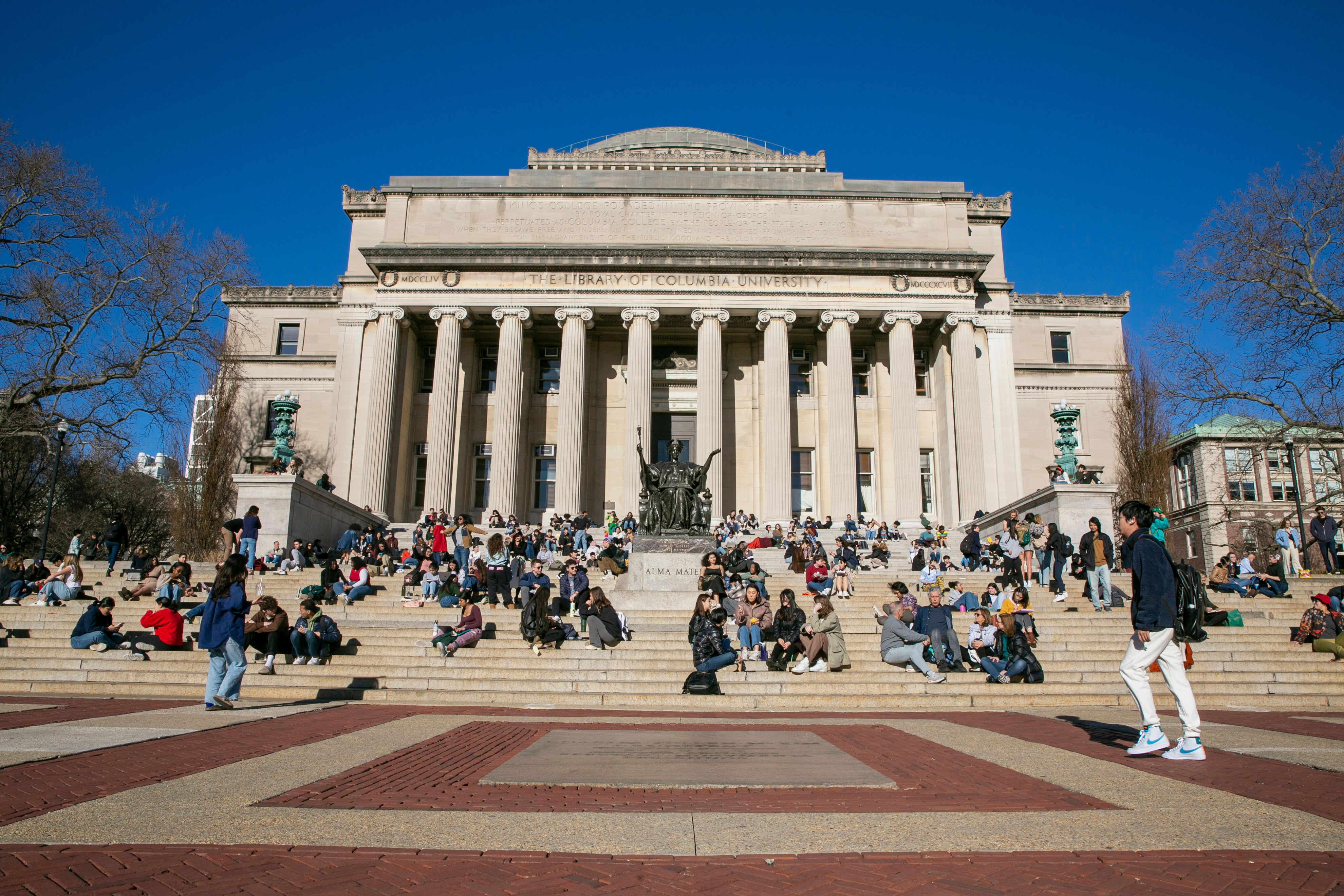
    The whistleblower complaint deals chiefly with investigations into three Ivy League universities: Brown, Harvard, and Columbia.

    It alleges that in the case of Brown, the investigative team did not find evidence to support a violation of Title VI, the section of the Civil Rights Act that bars discrimination on the basis of race, color, or national origin in programs that receive federal funding, but that “leadership refused to permit a notice of no violation and instead sought some form of settlement or resolution despite acknowledging the absence of a legal basis for doing so.”

    Investigators did find evidence of discrimination at Columbia, the complaint says, but the investigation was done on an accelerated timetable before adequate factual development and legal review were completed and relied on allegations that “were unsupported, based on news reports or litigation filings, or that implicated protected First Amendment activity.”

    Columbia University agreed to pay the government $200 million as part of an agreement restoring access to federal funding. Brown University separately agreed to pay $50 million to Rhode Island workforce development organizations to end the three federal investigations involving allegations of antisemitism and racial bias in admissions, with no findings of wrongdoing.

    In the investigation into Harvard, Trump administration officials discussed “extraordinary funding freezes and sweeping proposed settlement terms” before an investigation had been completed that could establish Title VI violations. Sean Keveney, then-HHS acting general counsel, said he believed Harvard would settle because they were “over a barrel,” according to the complaint.

    A federal judge last year ordered the Trump administration to reverse its cuts of more than $2.6 billion in research funding for the university, saying the government “used antisemitism as a smokescreen for a targeted, ideologically-motivated assault on this country’s premier universities.” And a different judge last week dismissed a Trump administration lawsuit that accused Harvard University of turning a blind eye to harassment of Jewish students.

  • Trump says U.S. has no talks planned with Iran, says Strait of Hormuz is open

    Trump says U.S. has no talks planned with Iran, says Strait of Hormuz is open

    U.S. President Donald Trump said Tuesday the U.S. has no talks planned with Iran but insisted the Strait of Hormuz remains “open and operating,” despite limited traffic and a reported strike on a ship exiting the waterway.

    Earlier this week, Trump threatened to bomb Oman as the country sought a deal with Iran to manage shipping traffic through the strait, two regional officials said Tuesday, a day after Trump reportedly leveled the threat if Oman “gets in the way.” Iran says the waterway will not be reopened until the U.S. meets its conditions.

    As talks between Iran and Oman continue, a projectile hit a ship in the strait and Iran-backed Houthi rebels claimed they fired drones at an oil refinery in Saudi Arabia.

    Trump looms over negotiations to reopen Strait of Hormuz

    As Oman and Iran say they are nearing a deal to reopen the Strait of Hormuz, Trump said on social media Tuesday that the U.S. blockade of Iranian ports remains “in full force and effect,” but asserted that all water mines have been removed and that other marine traffic was free to pass.

    Trump posted a map depicting the strait as U.S. territory.

    Iranian Deputy Foreign Minister Kazem Gharibabadi appeared to respond to Trump’s post.

    “Just as Trump correctly wrote the name of the eternal Persian Gulf, soon his delusion regarding the Strait of Hormuz will either be corrected or we will correct the delusions of this deluded man,” he wrote on X.

    The Trump administration has told Oman it opposes parts of the yet-to-be-announced deal, according to officials briefed on the U.S. position. Those include joint Iranian and Omani management of the passage’s exit route and the collection of voluntary fees from vessels, even if the money is used for security and maritime environmental protection.

    The officials spoke on condition of anonymity because they were not authorized to talk to journalists.

    The White House on Tuesday referred to Trump’s remarks in the Oval Office and declined to comment further about Oman.

    Egypt says Iran-Oman agreement could open door to Iran-U.S. deal

    The Egyptian Foreign Ministry said Tuesday that the Iranian-Omani deal could pave the way for Washington and Tehran to return to negotiations for a “comprehensive and permanent deal that addresses all concerns and enhances regional security and stability.”

    The statement came after a meeting between Egyptian Foreign Minister Badr Abdelatty and Omani counterpart Badr al-Busaidi. But it did not address Trump’s latest threat against Oman.

    The 60-day negotiating period ended this week between the U.S. and Iran with no clear end to the war in sight.

    Ship traffic drops significantly in Strait of Hormuz

    Ship traffic through the Strait of Hormuz dropped significantly last week, with confirmed crossings falling 19.5% to 95 transits. Only three vessels made it through the waterway on Sunday, according to shipping data platform Kpler.

    The ships used the Iranian-designated route through the strait, with no crossings recorded through the Omani routes.

    Crossings through the Bab el-Mandeb Strait increased 6.7% to 254 transits, while so-called dark transits, in which ships turn off the transponders that broadcast their location, fell from 40 to 16, Kpler said.

    Projectile damages ship in strait causing casualty

    An unidentified projectile damaged the engine room of a ship in the Strait of Hormuz near Oman and “resulted in a crew casualty,” according to the British military’s U.K. Maritime Trade Operations center.

    The maritime monitoring agency did not release any details about the ship or its cargo, and it was not clear whether the crew member was killed or wounded.

    No environmental damage has been reported and the agency said the Omani Coast Guard was assisting other crew members and authorities were investigating.

    Iran-backed Houthis claim an attack on a Saudi oil refinery

    Yemen’s Iran-backed Houthi rebels claimed they fired drones at an oil refinery in neighboring Saudi Arabia, the latest attack threatening to reignite Yemen’s civil war and open another front in the Middle East.

    The attack targeted a facility run by Saudi Aramco, Saudi Arabia’s state-owned oil company, according to a report by the Houthi-run SABA news agency. There were no immediate reports of damage or comment from Saudi Arabia.

    The Houthis have escalated attacks against government forces in Yemen and oil facilities in Saudi Arabia, which supports the Yemeni government, and the kingdom’s shipping in the Red Sea, an important alternative to the Strait of Hormuz.

    Israel strike on Gaza City kills 7 people

    An Israeli strike hit Gaza City on Tuesday, killing six people, including a child, and wounding 14 others, according to Shifa Hospital, where the casualties were taken.

    The Israeli military said it struck Hamas commanders in the Shati area who it said were planning to carry out attacks against Israeli forces.

    The heaviest fighting has subsided since a ceasefire in the more than two-year war took hold in October. Israeli forces have carried out repeated airstrikes since then, killing at least 1,266 Palestinians, according to health officials in Gaza.

    The Gaza Health Ministry, which is part of the Hamas-led government, maintains detailed casualty records that are seen as generally reliable by U.N. agencies and independent experts. But it does not give a breakdown of civilians and militants.

    Missiles fired at the United Arab Emirates

    The defense ministry of the United Arab Emirates said two ballistic missiles were launched from Iran toward the UAE on Tuesday.

    One landed outside of the country’s waters, and the other landed within them, the Emirati Defense Ministry said. It was unclear whether the missiles were shot down by air defenses or fell. No damage or injuries were reported. There was no immediate statement from Iran.

    In the weeks after the U.S. and Israel launched a war against Iran on Feb. 28, the UAE was frequently targeted by Iranian missiles and drones, but Tuesday’s reported attack was the first in weeks.

  • Pentagon orders audit of 30 universities’ partnerships with foreign institutions

    Pentagon orders audit of 30 universities’ partnerships with foreign institutions

    The Department of Defense has ordered 30 U.S. universities to audit their partnerships with mostly Chinese universities and military training institutions as the Trump administration scrutinizes the country’s growing global influence.

    If the schools don’t complete a review and terminate any arrangements deemed problematic within the next two weeks, they face losing funding. The goal is to protect taxpayer-funded research from theft and exploitation, the Pentagon said Monday.

    “The Department of War has zero tolerance for academic partnerships that compromise our national security,” Emil Michael, the Pentagon’s chief technology officer, said in a news release.

    The release didn’t name the schools, but a U.S. official who spoke on condition of anonymity to discuss internal matters said they include Harvard University, the Massachusetts Institute of Technology, and Johns Hopkins University.

    The schools didn’t immediately respond to emails from the Associated Press seeking comment.

    Sarah Spreitzer, vice president at the American Council on Education, which represents college and university presidents, raised concerns that the announcement suggests, without any evidence, that the schools are engaged in wrongdoing.

    The order comes after the Pentagon last month released an updated list of 130 foreign institutions it accused of engaging in “activities that increase the likelihood of U.S. government-funded research and development efforts being misappropriated.”

    While the vast majority were Chinese, such as the University of Science and Technology of China and the country’s Academy of Military Medical Sciences, several Iranian and Russian institutions also appeared on the list.

    The first version of the list was developed during Trump’s first term, with the help of the American Council on Education, Spreitzer said.

    She said most of the council’s member institutions moved away from research partnerships with those institutions in the years that followed. She said she worries U.S. schools will be held liable for partnerships that predate the creation of the list.

    “We don’t appreciate the implication that we are not good partners on research security, given that we helped create this list, and given that we’ve always partnered with the federal government when there has been national security concerns,” she said.

    The audit comes as the Trump administration continues to express deep concern about China’s activities in the Americas, pushing back on Chinese ownership of ports at either end of the Panama Canal, infrastructure projects funded by China’s Belt and Road initiative in the region, and Chinese investment in the telecommunications sector.

    The Justice Department also is investigating whether Harvard University is allowing Chinese donors to create scholarships that exclude American students, adding to the barrage of federal inquiries the Trump administration has opened in its battle against the Ivy League school.

    A spokesperson for the Chinese embassy said in a statement that the country opposes what it described as the politicization of “normal scientific, educational, and academic exchanges.”

    “The U.S. side,” the statement continued, “should abandon the Cold War mentality and foster an open, fair, and non-discriminatory environment for educational, scientific, and people-to-people exchanges between China and the United States.”

  • Minnesota attorney general sues Texas governor to compel extradition of ICE agent for trial

    Minnesota attorney general sues Texas governor to compel extradition of ICE agent for trial

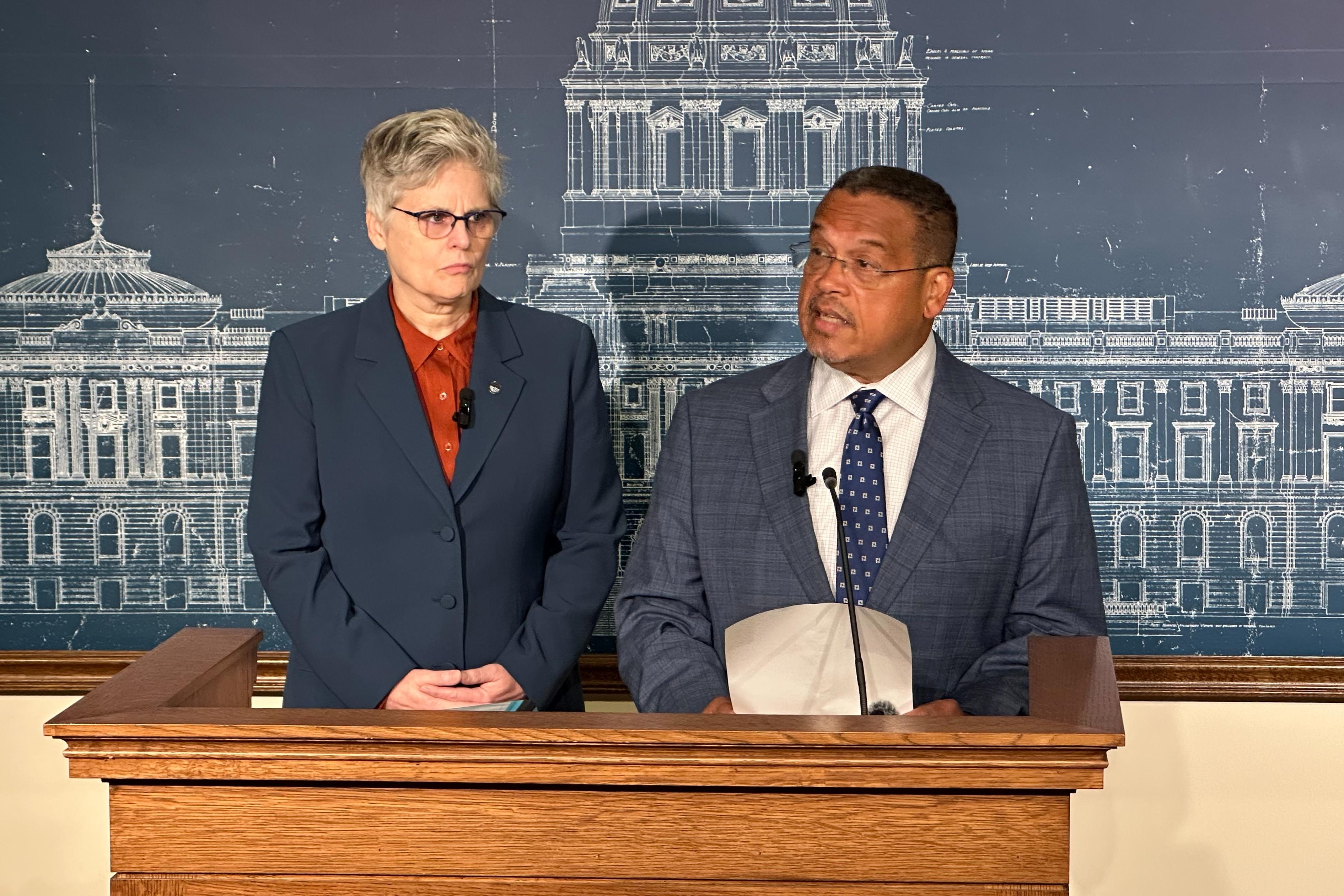
    ST. PAUL, Minn. — Minnesota’s attorney general sued the governor of Texas on Tuesday, seeking to compel the extradition of an Immigration and Customs Enforcement agent charged with wounding a man and then lying to justify the shooting during the agency’s crackdown in Minneapolis.

    Attorney General Keith Ellison is asking a federal judge to bar the sheriff in Cameron County, Texas, from releasing ICE agent Christian Castro, and to order Texas Gov. Greg Abbott to sign his extradition warrant so that Minnesota officers can take custody.

    Minnesota officials have clashed with the federal government over who has jurisdiction to investigate and prosecute federal officers for on-duty conduct. Ellison is a Democrat and Abbott is a Republican ally of President Donald Trump.

    Castro was arrested in Texas in May on Minnesota charges of assault and falsely reporting a crime in the Jan. 14 wounding of Julio Cesar Sosa-Celis. Castro, 52, is accused of firing a gun through the front door of a Minneapolis home, striking Sosa-Celis in the leg with a bullet that lodged in a child’s bedroom wall. Prosecutors say Castro then falsely accused Sosa-Celis and another man of attacking an ICE officer with a broom handle and a snow shovel.

    Minnesota officials fear ICE agent could flee

    Ellison told a news conference that unless he’s extradited, Castro could be released from jail next week — 90 days since he was detained — under Texas law. And if he’s freed, Castro could slip into Mexico from the border town where he’s being held, Ellison said. The lawsuit said Castro has been making calls from jail to a woman in Mexico, talking “about marrying her and buying a house in Mexico when he is released.”

    “Christian Castro has been charged with breaking the law in Minnesota,” Ellison said. “He must face justice in Minnesota. Gov. Abbott should have granted Gov. Walz’s extradition request long ago and is required to do so now.”

    It was not immediately known if Castro had a lawyer who could speak for him. Online court records in Minnesota and county jail records in Texas did not list a defense attorney.

    Abbott’s office said in a statement that it would not comment on “pending extradition matters.”

    Hennepin County Attorney Mary Moriarty said the legal action to compel Castro’s extradition “should be a completely unnecessary lawsuit.” She said jail officials and prosecutors in Texas have been “very cooperative,” and that an extradition “is not supposed to be controversial.”

    The office of Cameron County Sheriff Manny Trevino declined to comment Tuesday on the case.

    Federal agency has called agent’s prosecution a ‘political stunt’

    Authorities say Sosa-Celis was shot after Castro and another officer chased a different man, Alfredo Alejandro Aljorna, to the Minneapolis apartment duplex where he and Sosa-Celis lived. Sosa-Celis and Aljorna were legally in the U.S., according to Minnesota officials.

    Federal authorities initially accused Sosa-Celis and Aljorna of beating an officer. A federal judge later dismissed the charges, and ICE and the Justice Department opened an investigation into whether agents lied about what happened.

    Regardless, the U.S. Department of Homeland Security has called Moriarty’s prosecution of Castro “unlawful and nothing more than a political stunt,” saying only federal authorities have jurisdiction in the case.

    The federal government took a similar stance following the fatal shootings of Renee Good and Alex Pretti during the Minneapolis enforcement surge. Moriarty sued the Trump administration to gain access to evidence in those cases before federal prosecutors turned it over last month.

    The extradition lawsuit Ellison filed in U.S. District Court in Texas cites a 1987 U.S. Supreme Court ruling that compliance with the Constitution’s extradition clause is mandatory, affording no discretion to the governor or courts of a state where a defendant is being held.

    Moriarty said that since Castro’s arrest, Texas has extradited three unrelated criminal defendants without incident to Minnesota.

    “Gov. Abbott has received communication with us on an ongoing basis, including recently,” Ellison said. “We have to take the position that they are refusing to honor the extradition request.”

  • San Francisco’s Chase Center, Valkyries to host 2027 WNBA All-Star Game

    San Francisco’s Chase Center, Valkyries to host 2027 WNBA All-Star Game

    SAN FRANCISCO — The WNBA All-Star Game is coming to the Bay Area next summer.

    League commissioner Cathy Engelbert announced Tuesday that the game will be July 31, 2027, at Chase Center after a weekend of All-Star activities around the San Francisco region.

    “We are thrilled to bring AT&T WNBA All-Star to the San Francisco Bay Area for the first time,” Engelbert, a Collingswood native, said in a statement. “The Golden State Valkyries have brought incredible energy and excitement to the WNBA from the moment they were announced as an expansion team in 2023, and the response from fans across the Bay Area has been remarkable. Valkyries fans have embraced this team with an extraordinary level of passion and enthusiasm, and we can’t wait to see that energy on full display for an unforgettable All-Star weekend next summer.”

    At the All-Star Game in Chicago last month, players’ union president Nneka Ogwumike, who played at Stanford, said many players felt that Golden State would be a great host for next year’s midsummer exhibition.

    The Valkyries have sold out all of their home games at the Chase Center, which opened in 2019, since the franchise’s inception last year. They became the first expansion organization to make the playoffs in its inaugural year and ultimately lost to the top-seeded Minnesota Lynx. The Valkyries clinched a playoff berth for this year on Monday night with a win over Dallas.

    The NBA All-Star Game was played at Chase Center last year.

    “Hosting AT&T WNBA All-Star in only our third season is an incredible honor and a reflection of everything this fanbase, this region, and this organization have built together,” Valkyries president Jess Smith said. “From Day 1, the Bay Area has shown up for this team in a way that’s redefined what’s possible in women’s basketball, and we can’t wait to put that same energy on display for the entire league next summer.”

    Last week, Major League Baseball announced the 2028 All-Star Game would return to nearby Oracle Park, home of the San Francisco Giants.

    The Super Bowl was played in February at Levi’s Stadium in Santa Clara, Calif., which then hosted the World Cup this summer.

  • Trump administration moves to allow logging in pristine national forests

    Trump administration moves to allow logging in pristine national forests

    WASHINGTON — The Trump administration on Tuesday advanced a plan to open nearly 45 million acres of wilderness in national forests to road construction and logging, removing protections that had been in place for a quarter century.

    The proposal by the U.S. Forest Service would repeal the 2001 “roadless rule,” enacted during the Clinton administration to preserve the wild nature of forest land. It comes as President Donald Trump pressures the agency to increase logging and to thin forests to prevent wildfires.

    The repeal would hand a major victory to Republican-led states and industry groups that have argued for years that the prohibitions have hindered economic development. More than a dozen lawsuits have unsuccessfully sought to strike down the rule.

    During his first term, Trump stripped protections from Alaska’s Tongass National Forest, the largest intact temperate rainforest in the world, only for the Biden administration to restore them in 2023.

    This time, the Forest Service is eliminating protections for the 9 million undeveloped acres within the Tongass, as well as millions more acres of pristine wilderness across the rest of the United States.

    “For too long, outdated restrictions have kept tens of millions of forested acres off-limits to the very treatments that improve forest health and reduce wildfire risk to our communities,” Brooke Rollins, the secretary of the Agriculture Department, which includes the Forest Service, said in a statement.

    Environmentalists said the plan would destroy untouched landscapes, including crucial habitats for migratory species and headwaters for major municipal water supplies. Multiple advocacy groups are expected to sue to block the repeal.

    “By ripping protections from some of our oldest intact forests, the Trump administration is endangering the drinking water supplies of tens of millions and threatening wildlife habitats and recreation opportunities in almost every state,” said Drew McConville, a senior fellow at the Center for American Progress, a liberal research organization.

    Roadless areas make up about 30% of all national forest land, encompassing nearly 60 million acres of America’s last wild areas and old-growth forests. They are home to more than half of imperiled wildlife, including grizzly bears, wolves, elk, salmon, and wolverines. Forest land in the United States also absorbs millions of tons of carbon per year, helping slow climate change.

    The proposal would affect the management of 44.7 million acres nationally. Idaho and Colorado have their own regulations that supersede the federal rule and insulate those states from being affected by any change in national policy.

    Damien Schiff, a senior attorney with the Pacific Legal Foundation, a libertarian public interest law firm that has been fighting the roadless rule in the Tongass National Forest, said he believed the federal protections had harmed mining, timber production, and other economic development. In Alaska, he argued, restrictions around the Tongass have made it difficult for surrounding communities to connect to electric grids.

    “It has had a depressing impact on the use of the national forest for productive activity generally,” Schiff said.

    The Trump administration and many Republicans argue that the ability to build roads would enable firefighters to more easily reach forest fires.

    “For 25 years, the heavy thumb of Washington, D.C., has hindered Montana’s ability to properly manage wildfire risk and road development on nearly 60% of Forest Service land across the Treasure State,” Montana Gov. Greg Gianforte, a Republican, said in a statement.

    Ecologists largely agree that the government needs to improve the ways it manages forest land. But experts do not agree that cutting down pristine forests to build more roads is the best way to do it.

    In fact, some warned, roads could actually increase the threat of wildfires — partly because roads bring people. Nearly 85% of wildfires begin with human activity such as discarded cigarette butts, burning debris, or sparks from equipment, research has shown. Roads can also be corridors for invasive species, including flammable grasses.

    “Introducing roads and human activities in areas that are otherwise undisturbed will increase wildfires where the risk is currently low,” said Alexandra D. Syphard, a senior research ecologist at the Conservation Biology Institute, a nonprofit group based in Oregon. “The unintentional impact of this could actually be creating a worse situation.”

    Camille Stevens-Rumann, director of the Colorado Forest Restoration Institute and an associate professor of fire ecology at Colorado State University, added that new roads would not necessarily help address the most destructive wildfires because they tend to ignite near existing roads. Fires in remote areas, which often are sparked by lightning strikes, tend to burn far fewer acres, she said.

    “We have smokejumpers for one, that’s how you get into those remote areas,” said Sen. Martin Heinrich (D., N.M.). He noted that prescribed burns, pruning and other treatments are routine across millions of acres of forests, and those areas are afterward closed again to motorized access.

    Democrats from Western states said they believed wildfire arguments were designed to hide the administration’s real goal: enabling more logging.

    Trump has made timber production a top priority. Last year, he called for a 25% increase in logging from national forests and directed agencies to bypass endangered species protections and other environmental regulations to make it possible.

    Rollins then issued a secretarial memo declaring an “emergency situation” in national forests, establishing a process for the Forest Service to fast-track logging by cutting short public participation and legal reviews.

    After the proposal is published in the Federal Register, which is expected later this week, the Forest Service will accept public comments before making the rule final.

    This article originally appeared in the New York Times.

  • The Moscow region is hit by a drone blitz as Russian missiles kill 10 in a Ukrainian village

    The Moscow region is hit by a drone blitz as Russian missiles kill 10 in a Ukrainian village

    KYIV, Ukraine — Ukrainian forces launched one of their biggest drone attacks on Russia since Moscow’s invasion over four years ago, firing almost 800 drones only two days after a similar salvo, officials said Tuesday.

    Meanwhile, a Russian missile strike on a village in northeastern Ukraine’s Kharkiv region killed at least 10 people and wounded 17 others as the barrage demolished homes, officials said.

    The countries are locked in an escalating duel of long-range aerial strikes. Fighting on the roughly 780-mile front line in eastern and southern Ukraine is restricted by large numbers of drones and ground robots threatening troop movements, and neither side is making significant battlefield progress, analysts say.

    Putin resists pressure for peace talks

    In the past year, Ukraine has devised and deployed domestically produced long-range drones for strikes deep inside Russia. Its drone technology has impressed governments and defense manufacturers around the world.

    Officials in Kyiv aim to make the Russian public feel the war’s consequences and pressure Russian President Vladimir Putin into negotiating a peace settlement. Putin has so far shown no sign he intends to stop the invasion.

    “Putin continues to drag out the war instead of accepting Ukraine’s realistic ceasefire proposals and ending the bloodshed,” Ukrainian Foreign Minister Andrii Sybiha said in a post on X.

    Russian air defenses overnight intercepted 791 Ukrainian drones over a number of regions, as well as annexed Crimea and the Black and the Azov seas, the Defense Ministry in Moscow said, in what was the second-largest drone attack since January 2025, according to an Associated Press tally.

    More than 600 Ukrainian drones flew toward the Moscow region, where 180 were shot down, Moscow Mayor Sergei Sobyanin said without elaborating.

    Officials reported no deaths or major damage. Ukraine has increasingly launched swarms of hundreds of drones to try to overwhelm Russian air defenses.

    In the region that surrounds the capital, three people were wounded, Gov. Andrei Vorobyov said.

    Three people were also wounded in the adjacent Ryazan region where three private houses were damaged, Gov. Pavel Malkov said.

    The overnight attack started a fire at a warehouse of Wildberries, Russia’s biggest online retailer, in an industrial zone. Ukraine has repeatedly targeted the company, which it says helps supply the Russian military, an allegation Moscow denies.

    Wildberries said its facility sustained “insignificant damage.”

    Russian TV doesn’t report news of the attack

    Coverage of the attack in state and Kremlin-backed Russian media was mostly muted, as is often the case. Russia’s main TV channels — state-run Russia 1 and Channel One — did not mention the attack at all in their morning news bulletins.

    But Russian state news agency RIA Novosti featured it among the main news on its website’s homepage, describing it as “one of the most large-scale attacks on Moscow since the beginning of the summer.”

    State newspaper Rossiyskaya Gazeta on its website prominently featured a roundup of what Moscow regional Gov. Andrei Vorobyov reported about the attack, describing it as “massive” in the headline. Pro-Kremlin tabloid MK featured a news brief about it on its home page.

    Zelensky accuses Russia of a ‘brutal attack’ on civilians

    A Russian missile strike on the village of Pechenihy in Ukraine’s Kharkiv region killed 10 civilians, according to preliminary information, said Oleh Syniehubov, head of the Kharkiv regional military administration.

    Another 17 people were wounded, he said. Ukrainian President Volodymyr Zelensky called it “a brutal attack” that damaged 10 homes, a cafe, a post office, a store, and at least seven vehicles, according to Syniehubov.

    “We will definitely respond to this Russian strike,” he said on social media.

    Also, three people were killed and three others were wounded over the past day in Russian attacks on Ukraine’s Sumy region, Ukraine’s National Police said.

    U.K. vows continued Ukraine support

    British Prime Minister Andy Burnham, who took office last month, said the U.K. will continue to stand by Ukraine after Russia said that Kyiv’s reported use of British drones for attacks on Russian soil would bring unidentified consequences.

    “We are providing support so that Ukraine can defend itself, and that’s been the British position all the way through this conflict by previous prime ministers,” Burnham said. “It remains the case with me.”

    British newspaper the Sunday Times reported that two U.K. companies made drones used by Ukraine to hit Russia.

    Following the report, the Russian Embassy in the U.K. said in a statement that “London’s actions will inevitably carry consequences.”

    Russian Foreign Minister Sergey Lavrov told Russian state TV that Moscow has the right to view British involvement in strikes on Russian territory as “participation in the war, with all the ensuing consequences.”

  • Russians pull billions from banks, fearing Kremlin will seize deposits for war

    Russians pull billions from banks, fearing Kremlin will seize deposits for war

    Russians are pulling billions from the country’s banking system ― a record cash outflow amid intensifying Ukrainian drone attacks and rising fear that the Kremlin could start seizing deposits to finance its war.

    Nearly $3.4 billion (286.4 billion rubles) was withdrawn in the first two weeks of August, on top of the $7.3 billion withdrawn in July and more than $4.5 billion in June, according to Russian Central Bank data.

    Total withdrawals this year could nearly double the amount taken out in the first year of Russia’s full-scale invasion of Ukraine, according to Taras Skvortsov, a senior executive at Sberbank, Russia’s biggest retail financial institution.

    The withdrawals are causing liquidity problems, according to Skvortsov and a former senior Russian finance official, overstretching a financial sector already strained by increasing levels of bad debts following a government-directed lending boom to ramp up military output.

    “Drones are flying. Things are burning down. Nervousness is growing. And people’s everyday wisdom may be kicking in that they need to have cash under their pillow and not somewhere in banks where it may never be returned,” said the former finance official, who like others spoke on the condition of anonymity to discuss sensitive issues.

    “For some banks this really is a problem,” the former official said. “They didn’t expect this, and they invested all the cash elsewhere, and yet people are coming and taking out half a trillion rubles a month.”

    Alexandra Prokopenko, a former adviser to the Russian Central Bank, said the withdrawals reflected deepening fear among the Russian public.

    “It means people have no trust in the Russian banking system or in the Russian financial system,” Prokopenko said. “This is all a consequence of the fear that the government will do something with the banking system, that it could nationalize deposits.”

    She said she believed that such a nationalization was unlikely but added, “I would not exclude that the authorities could impose limits on withdrawals.”

    The total siphoned out this year already exceeds the $24.7 billion (2 trillion rubles) removed in the first year following the February 2022 invasion.

    In the first two weeks of the invasion, $23 billion fled the system, and banks appeared to be imperiled by depositors and businesses lining up to empty their accounts, until the government stemmed the drain by imposing tough capital controls and sharply raising interest rates.

    Now, big businesses are also seeking to move money out of the reach of Russian regulators as anxiety grows over potential asset seizures. That is further exacerbating the problems, the former official said.

    In all, more than $9.4 billion was transferred out of Russia in the second quarter of 2026, according to Central Bank data.

    “Each month there is a big outflow,” Skvortsov told RBK Radio, a Russian radio station. “If the trend continues things are not going to get better.”

    The withdrawals have already undermined the Russian government’s efforts to raise money to finance the war through issuing state bonds.

    The Finance Ministry last month was forced to cancel planned bond issues, even though it has become ever more dependent on them as a means of filling a yawning budget deficit as spending on the military continues to grow while the economy stalls.

    Skvortsov told RBK Radio that the banks’ liquidity problems mean many cannot spare cash to buy government bonds.

    “If there is an ominous sign of imperial overreach, this is clearly one of them,” said Craig Kennedy, a former vice chairperson in investment banking at Bank of America Merrill Lynch who is now a scholar at Harvard University’s Davis Center for Russian and Eurasian Studies.

    “Great powers don’t have repeated treasury bond failures in the middle of a war,” Kennedy said.

    As a result of government orders to ramp up lending to the defense sector, Russian banks “appear to have so much exposure to nonviable borrowers that they’re not certain how it’s going to get restructured, when it’s going to get restructured, and how much of that they are going to have to eat,” Kennedy added.

    In a sign of how sensitive the strain on Russia’s finances is becoming for the Kremlin, the chief economist at VEB, one of the country’s biggest state banks, Andrei Klepach, was fired from his post this weekend after commenting that Russia could not win a war of attrition against Ukraine while Kyiv is supported by the West.

    “We won’t win the competition in this war of attrition,” Klepach said in a presentation he made in May, which was circulated in the media last week. “We’re under the illusion that everything [in Ukraine] will collapse. It hasn’t, and it won’t. Meanwhile, the costs we bear are mounting.”

    Ever since Ukraine began expanding its drone campaign against Russian oil facilities this spring, taking out more than 30% of the country’s refining capacity and causing the worst fuel crisis since the fall of the Soviet Union, anxiety has intensified.

    In June, the Russian Central Bank was forced to limit an expected interest rate cut because of fears that fuel price hikes could spur inflation. Panic spiraled through the bond market, driving interest rates up to 17% for the government’s 10-year bonds and forcing the Finance Ministry to postpone further issues.

    With the budget deficit for January to July already at 6.46 trillion rubles ($76.1 billion) — far exceeding the 3.8 trillion rubles forecast for the entire year — fears are mounting that the Kremlin could seize big businesses’ revenue to finance the war.

    “If the government needs cash, Putin will just do a grab for assets. He doesn’t care,” said an associate of one Russian billionaire. “And that’s where I think it’s heading.”

    In addition, “there is the feeling that political power is becoming not quite as stable, and this is such a period when it is better not to be present,” the former finance official said.

    Already several businesses owned by Russian billionaires have been targeted by the government in a nationalization drive that last year alone saw $51.5 billion in assets seized for the state, according to Russian prosecutors.

    In June, the Russian state seized $7.6 billion (550 billion rubles) of assets linked to Vadim Moshkovich, who founded Rosagro, one of Russia’s biggest agricultural holdings, after the billionaire was detained and charged with large-scale fraud.

    It was the biggest asset seizure in Russia since the start of the full-scale invasion. Others who have lost assets to the state include Dmitry Kamenschik, who previously owned Domodedovo airport in Moscow; and Konstantin Strukov, who controlled one of the country’s biggest gold mines.

    Some economists argue that the Kremlin’s drive to direct bank lending into cranking up military output is strangling the civilian economy, especially because high interest rates and inflation leave banks and companies with few funds left for investment in nonmilitary sectors.

    The Russian economy ground to a halt in the first half of 2026, with gross domestic product growth falling to 0.3%, compared with 1.2% in the first half of 2025.

    For now, however, the Trump administration’s war with Iran has pushed oil prices back up and given the Kremlin a partial reprieve from its budget squeeze.

    Russian state oil and gas revenue increased by 60% in July compared with the same month the previous year, as global oil prices rose, but it is still down 11% between January and July compared with the same period last year.

    Ukraine’s attacks on Russian oil refineries as well as on the sprawling network of warehouses belonging to Wildberries, Russia’s largest online retailer, are also hitting Russian billionaires’ bottom line.

    “It’s costing these guys money,” said the associate of the Russian billionaire, referring to Russia’s richest individuals. “They have to put their hands in their pocket. They’re not used to having all these problems.”

    Ukraine has hit more than 20 Wildberries warehouses since it began targeting the company’s facilities on July 18, in an onslaught that some economists estimate has destroyed more than $6 billion in goods and caused more than $3 billion in damages to Wildberries infrastructure.

    “It’s not a place you want to be doing business,” the billionaire’s associate added. “If you can pull money out, you do it.”

    One Moscow business executive said, “Everyone who can is trying to move money out of the country, but it’s getting more and more difficult to do so.”

    A key channel for removing money from Russia, amid increasing government restrictions on large cash transfers abroad, involves opening brokerage accounts in neighboring Kazakhstan, Kyrgyzstan, and Armenia, according to the Moscow business executive and the former finance official.

    “From there this money can be invested across the world,” the former finance official said.

    As concerns grow over the war’s mounting financial toll, several senior officials have staged rare public interventions in recent weeks.

    German Gref, the head of Sberbank, broke ranks at the end of June by publicly saying everyone wanted the war to end as soon as possible.

    Then early in August, the powerful Moscow mayor, Sergei Sobyanin, spoke out against calls by hard-line members of parliament to further focus the economy on the war.

    “If there’s no economy of peaceful life itself, there will be no taxes, no income for the population, the political situation will be completely different, and then we won’t achieve success in the war either,” Sobyanin told Tass, a state news agency. “And to kill life, to kill the civilian economy, is to kill the country itself.”

  • Pirro challenges release of woman accused of vandalizing World War II Memorial

    Pirro challenges release of woman accused of vandalizing World War II Memorial

    Jeanine Pirro, the U.S. attorney for the District of Columbia, criticized a federal judge’s order releasing a woman charged with vandalizing the World War II Memorial in Washington.

    The judge ordered the release Monday, rejecting a request from prosecutors that she remain in custody while awaiting trial on two felony charges.

    Federal prosecutors led by Pirro asked the court to reverse the decision, arguing that Melissa L. Farris posed an “exceptionally high risk of flight.”

    In a motion filed Monday, prosecutors cited evidence that Farris, 41, had searched for bus and airline tickets on the day the incident took place, as well as her lack of stable housing or ties to Washington and a previous failure to appear in court.

    Pirro criticized the judge’s decision in a statement. “If anyone is a flight risk, it is certainly her,” she said.

    Magistrate Judge Matthew J. Sharbaugh instead released Farris, though he ordered her to remain outside Washington, report to federal pretrial officials in Ohio, and surrender her passport. She was also ordered to stay away from the memorial. The judge did not impose electronic monitoring or require a third-party custodian, restrictions that prosecutors later requested.

    Farris, of Elizabethtown, Ky., was charged Friday with two federal felonies after investigators said she spray-painted “Clean Hands Dirty $” on the memorial and splattered paint on its stonework. Prosecutors said she also poured detergent into a fountain, causing it to fill with foam and bubbles.

    The National Park Service estimated that cleanup and restoration costs had exceeded $1,000, and the memorial was closed for most of the day, according to the filing.

    Farris livestreamed the incident and later posted videos in which she acknowledged that she had defaced federal property and predicted that police would pursue her. The next morning, she turned herself in at the federal courthouse in Alexandria, Va.

    Days earlier, Farris had been cited by U.S. Park Police for unlawfully camping on federal property a few blocks north of the World War II Memorial.

    Earlier this month, President Donald Trump publicly criticized Pirro, a key ally, over her handling of another case involving what he said was vandalism at the Lincoln Memorial Reflecting Pool. Trump said Pirro had “choked” after her office dropped charges against a man accused of damaging it. But Pirro concluded that the damage had been caused by faulty installation.

    Hours after publicly criticizing Pirro, Trump met with her in the White House, though she was not fired and did not offer her resignation, according to two people briefed on the outcome.

    The president has also denounced the vandalism of the World War II memorial, calling it an insult to Americans who died in the war. In a Truth Social post Friday, he also linked the episode to the recent controversy over the Reflecting Pool.

    In a social media post on the same day, Pirro wrote that defacing the memorial “is a despicable attack on a sacred monument honoring the Americans who fought and died for our freedom.” She also noted that the felony charges in the case carry potential punishment of up to 10 years in prison.

    This article originally appeared in the New York Times.