Category: Wires

  • ICE arrests jumped to nearly 50,000 in July, the highest monthly total of Trump’s second term

    ICE arrests jumped to nearly 50,000 in July, the highest monthly total of Trump’s second term

    WASHINGTON — U.S. Immigration and Customs Enforcement arrested nearly 50,000 people in July, the highest single monthly arrest total during the second Trump administration, according to new figures.

    The spike in immigration arrests shows that the administration has continued to advance its mass deportations agenda despite a shift in approach earlier this year from high-profile operations in large American cities that sparked a public outcry to arrests that have garnered less attention but have nonetheless been disruptive.

    The July arrest tally of 49,571 marks a 15% jump from 43,021 arrests a month earlier, and a 70% increase from 29,241 in February, in the aftermath of the Trump administration’s enforcement surge in Minnesota, according to government data that was provided by ICE to the Deportation Data Project based at U.C. Berkeley and UCLA and analyzed by the Associated Press.

    As part of the surging arrest numbers over recent weeks and bolstered by a hiring surge, ICE has made arrests at traffic stops. The agency has increasingly relied on state and local law enforcement partners who are assuming immigration enforcement duties. And ICE officers have started to arrest people from Haiti who’ve seen their protections from deportation stripped away.

    The new arrest numbers show the administration “didn’t stop the enforcement,” said Mark Krikorian of the Center for Immigration Studies, which advocates for more immigration restrictions.

    “They changed the tactics and are, if anything, being more effective.”

    State partnerships becoming key to immigration enforcement

    Immigration arrests the month before President Donald Trump returned to office hovered at a little over 8,000, a figure largely made up of immigrants transferred from city or state jails and prisons and turned over to ICE to remove from the country. During Trump’s first year back in office, the numbers started climbing as the administration loosened restrictions on where and whom ICE could arrest while it also infused the agency with billions of dollars.

    By December, the number of arrests jumped to more than 40,177, according to the data, which was obtained through a Freedom of Information Act lawsuit. Homeland Security largely stopped reporting immigration enforcement data at the beginning of the second Trump administration, making the data from the Deportation Data Project one of the few insights into how the agency is operating.

    In the aftermath of two fatal shootings in Minnesota in January that sparked protests and an uproar from Democratic lawmakers, arrests began to fall in February. After remaining stagnant for months, the numbers surged in June and then again in July.

    The number of arrests made by state and local police departments who partner with ICE has dramatically increased over the last year. Those partnerships, which ICE has grown with the help of generous financial incentives for participating agencies, accounted for 6,500 arrests in July, or about 13% of the total, the data showed. A year earlier, they accounted for less than 5% of ICE’s monthly arrests.

    Texas and Florida accounted for nearly 20,000 of the July arrests, in a sign of how important those states have become to the Trump administration’s mass deportation agenda. Both states have leaned heavily into those cooperation deals with ICE, known as 287g agreements, which allow local and state law enforcement to essentially operate as arms of federal immigration enforcement.

    That close cooperation is increasingly resulting in arrests like one last week in Florida’s Key West. The manager at the Half Shell Raw Bar said Tuesday that one of his staff members, a 36-year-old asylum seeker who fled Haiti in 2017 after receiving death threats, was arrested by local police and turned over to ICE.

    The manager, Bobby Kuchinsky, said the man had worked as a cook and supervisor at the restaurant and was the main provider of his family. Kuchinsky declined to identify the man out of concern for his safety while in custody.

    “He was an excellent worker, he learned very fast, he never had any problem with the law,” Kuchinsky said in an interview with the AP, noting that it will be a challenge to replace him. “He was a nice kid, he was a family man.”

    DHS secretary pledged quieter approach but mass deportations still a priority

    In his confirmation hearing earlier this year, Homeland Security Secretary Markwayne Mullin pledged to keep ICE out of the headlines, suggesting that the administration’s immigration crackdown might take a softer approach. But his tenure has been marred by a number of fatal shootings of immigrants in encounters with ICE officers. And the figures show Mullin hasn’t shifted the agency from Trump’s vision for mass deportations.

    Under Mullin’s predecessor, Kristi Noem, immigration enforcement was often characterized by high-profile operations that targeted specific Democratic cities such as Chicago, Los Angeles, and Minneapolis. Operations, often led by former Border Patrol agent Greg Bovino, were blasted out on social media videos showing officers bursting out of moving vans to chase people or rappelling from helicopters onto apartment rooftops.

    But Krikorian said those tactics were “provoking a lot of ordinary people, turning them off even if they liked the idea of the immigration law being enforced.”

    New data shows most immigrants arrested didn’t have criminal history

    The administration has often said its immigration enforcement operations target people who have committed crimes in the U.S. as a way to make the country safer.

    But the data shows that more than half of those arrested in July had not been convicted of any crimes and were not facing any criminal charges. Less than a quarter of those arrested had been convicted of a crime.

    And half of the arrests were noncustodial, which means ICE agents arrested people in the community rather than someone already behind bars or held by local police.

    Patricia Quiñonez, a journalist at Utahzolanos, which covers the Venezuelan immigrant community in Utah, said immigration arrests during traffic stops have increased sharply in recent months.

    “They stop you for whatever reason — for example, you don’t have a driver’s license, your vehicle tags are expired, your windows are more tinted than what is allowed. From there, they take advantage of the situation and ask about immigration.”

    People with valid work permits and pending asylum claims are among those arrested, said Quiñonez, who believes they are being targeted by race.

  • Federal judge rejects Ghislaine Maxwell’s ‘miscarriage of justice’ claims and bid for prison release

    Federal judge rejects Ghislaine Maxwell’s ‘miscarriage of justice’ claims and bid for prison release

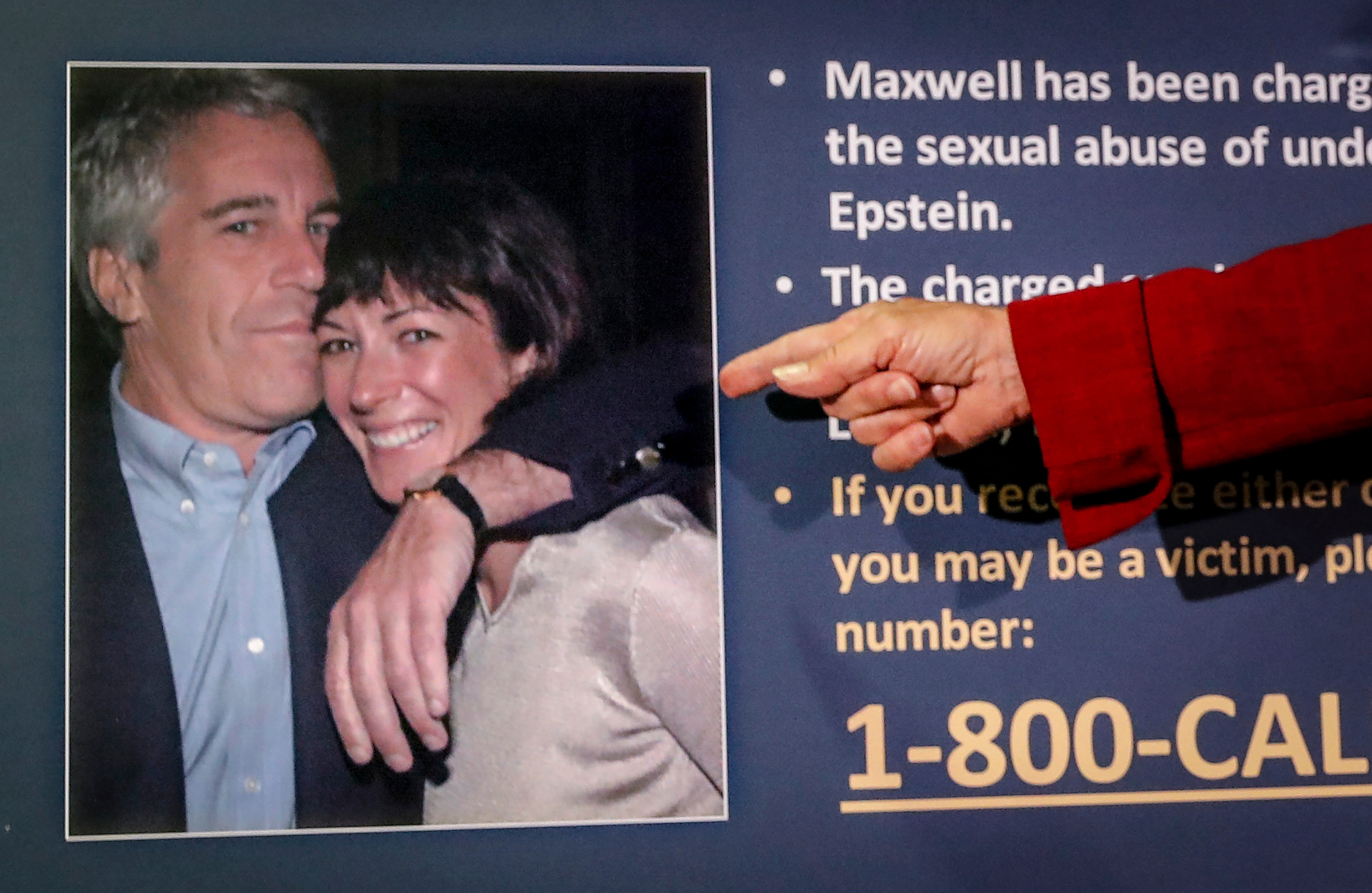
    NEW YORK — Ghislaine Maxwell’s bid to overturn her sex trafficking conviction and be freed from prison was rejected by a federal judge Tuesday who said the claims by Jeffrey Epstein’s former girlfriend and longtime associate that new evidence had emerged were “demonstrably meritless.”

    Maxwell filed a habeas petition last December seeking to set aside her conviction and free her from a 20-year prison sentence, claiming exonerating information was withheld and false testimony presented at her trial, resulting in a “complete miscarriage of justice.”

    Judge Paul A. Engelmayer rejected her arguments, saying in his written ruling they “all or almost all are frivolous” and that she had presented nothing that could upend the outcome of her trial.

    “Nearly all its claims are procedurally barred; the overwhelming testimonial and documentary evidence adduced at trial conclusively established her guilt; and her petition’s claims are demonstrably meritless, and generally based on speculation, distortions, and/or outright falsehoods,” Engelmayer wrote.

    A request for comment was sent to lawyers who represented Maxwell in the past.

    Habeas petitions are often filed as a last resort and to protect against unlawful confinement after appeals are exhausted, as happened after Maxwell’s conviction and sentencing.

    Epstein, a millionaire financier, was arrested in July 2019 on sex trafficking charges. Ordered detained until trial, he was found dead in his cell at a New York federal jail in August 2019 and his death was ruled a suicide.

    Maxwell, a British socialite, was arrested a year later and was convicted of sex trafficking in December 2021. She was moved from a Florida prison to a prison camp in Texas last year, shortly after she was interviewed by the Justice Department’s then second-in-command, Todd Blanche, President Donald Trump’s former criminal defense attorney and now U.S. attorney general.

    The judge noted that many of Maxwell’s claims of “new evidence” stem from documents released under the Epstein Files Transparency Act.

    As a result of that law, the Justice Department over the last eight months has released 18 categories of investigative materials gathered in the massive sex trafficking probe, including search warrants, financial records, notes from interviews with victims, and data from electronic devices.

    Engelmayer said that material is “largely irrelevant to the charges against Maxwell and does not support her claims of error.”

    “On the contrary, to the extent it is relevant, far from exculpating her, it incriminates her or reinforces the correctness of the legal rulings Maxwell challenges,” he wrote.

    The judge also rejected Maxwell’s claim that she was selectively prosecuted and made a “scapegoat” when the Justice Department did not indict four co-conspirators named in a government document or 25 men who settled with victims.

    Engelmayer said she could have raised that claim on appeal after her trial, but he found it to be frivolous nonetheless.

    Among the recently released Justice Department documents, “she does not cite any that reveals the existence of an uncharged confederate, let alone one as instrumental as she in facilitating Epstein’s horrific crimes,” the judge said.

  • Study’s alarming finding: At least 1 in 4 NFL players gets brain disease

    Study’s alarming finding: At least 1 in 4 NFL players gets brain disease

    Since the degenerative brain disease known as CTE was first scientifically linked to football about 20 years ago, and as hundreds of former professional football players have been diagnosed with the disease after their deaths, a haunting question has lingered:

    Just how many NFL players will end up with CTE?

    New data provides a sobering indication: At least 1 in 4 of all the people who have played in the NFL might expect to end up with chronic traumatic encephalopathy, according to a study of hundreds of cases over a recent six-year period.

    Researchers considered every former NFL player who died from 2016 to 2021. There were 878. Some died in their 20s, some in their 80s, most in between.

    The study’s main finding was simple math: At least 215 of those 878 former players — 24.5% — had CTE.

    The actual prevalence could be far higher. The roughly 25% rate does not consider the 643 brains that were not examined. Some of those, maybe many of them, likely had CTE too.

    CTE is a progressive neurological disease caused by repeated impacts to the head. It can be definitively diagnosed only by examining the brain after death.

    Studies have shown that the rate of CTE in people who have not sustained repeated impacts to the head is nearly zero.

    If the new study’s statistics were applied to today’s players — 1,696 on the league’s 32 regular-season rosters, not including more than 500 members of practice squads and those ineligible due to injury — at least 400 of them would be diagnosed with CTE.

    Experts say that the rate of brain disease represents an occupational safety hazard with little comparison in the American workplace.

    “There are workers who’ve been exposed to high levels of asbestos exposure, which leads to very high rates of lung disease,” said David Michaels, who led the Occupational Safety and Health Administration during the Obama administration and is now a professor at the George Washington School of Public Health. “And certainly, you know, a lifetime working in coal mines leads to very high risk of black lung disease.

    “But a degenerative neurological disease — I’ve never seen anything comparable.”

    CTE was first discovered in boxers nearly a century ago and termed “dementia pugilistica.” Symptoms can include memory loss, confusion, and uncharacteristic mood swings, decreases in executive function, and increases in erratic and impulsive behavior, including addiction.

    These days, CTE is most commonly associated with football players, but it has been found in the brains of other athletes who sustained repetitive blows to the head, including hockey, rugby, and soccer players, as well as wrestlers and bobsledders. Those in the military who work with artillery also seem susceptible to the disease.

    For years, the NFL downplayed the risks of repeated head trauma, often insisting that not enough is known about CTE to draw conclusions about its dangers, origins, and prevalence. Uncertainty has left room for inaction; scientists have yet to decipher, among many things, why some people can play football for decades and not get CTE, while others have had severe cases in their teens.

    But the prevalence rate now reported by researchers might be hard to ignore. It is the latest research from neuropathologists and other scientists mostly affiliated with Mass General Brigham, Boston University, and the UNITE Brain Bank, which have led CTE research and handled most donated brains of former athletes over the past two decades.

    Researchers involved in this study, published Tuesday in the BMJ, hope to produce a subsequent paper in the coming months estimating the overall rate of CTE in all NFL players at the time of their death.

    Making such an estimation is complicated by unknowns. What is certain, researchers said, is that CTE is preventable.

    “We know what’s causing it,” said Daniel Daneshvar, the lead author of the study, the chief of brain injury rehabilitation at Spaulding Rehabilitation Hospital and an associate professor at Harvard Medical School. “It’s a neurodegenerative disease where we know and have complete control over the risk. And understanding the extent of that risk is one of the steps into making sure that we can mitigate and decrease that risk.”

    Daneshvar said the biggest predictor of CTE is the cumulative force of hits to a head over a lifetime — including those sustained before reaching the NFL.

    “We can change that cumulative force without changing the game of football,” he said, suggesting that children refrain from playing tackle football and that teams at all levels eliminate hits during practices.

    The 25% rate cited in the latest research may surprise fans or others who view the game from a distance, but not those close to football.

    “I bet the real number is a lot bigger,” said Randy Grimes, 66, who played center for the Tampa Bay Buccaneers from 1983 to 1992. “Obviously, it’s going to be a lot bigger if you add the untested ones.”

    At least two of his former offensive linemates, both guards, were diagnosed with it: Tom McHale, who died at 45; and John Bruhin, who died at 57. Another teammate, linebacker Keith McCants, had CTE and died at 53.

    If the new data were applied to the rest of his teammates over his career, Grimes is likely to have played with dozens of CTE victims, who either died without being tested or who are aging quietly in the shadows.

    Grimes said he has yet to feel the symptoms that would make him worry about his own cognitive health. But he runs a nonprofit organization that counsels retired athletes, including football players, and sees symptoms that he suspects are associated with CTE.

    “It’s not something that’s brought up, it’s not something that players want to talk about,” Grimes said. “We probably could move forward faster in our research if we did talk more about it. But players don’t want to do it. They don’t want to think they have it, they don’t want to think they’re seeing it. Deep down, we all know that probably the majority of us are going to have some form of CTE.”

    While hundreds of former NFL players have been diagnosed with CTE, typically after loved ones donate the brains because of worrisome symptoms, most CTE cases are not publicly disclosed.

    Only a few cases reach public consciousness, usually when attached to a famous name, like Junior Seau, Ken Stabler, and Frank Gifford, all inducted into the Pro Football Hall of Fame.

    Others become notorious because of criminal behavior that might later be explained, in part, by CTE, like Aaron Hernandez and Phillip Adams, who committed murder and were diagnosed with CTE after their own deaths. In July 2025, Shane Tamura, who played football but did not reach the NFL, killed four people in a New York City building that houses the league’s headquarters. After Tamura’s death, an autopsy confirmed that he had CTE.

    CTE cannot be diagnosed in the living, though some ex-football players, like Hall of Fame running back Tony Dorsett, presume they have it. Some players, like Chris Borland and John Urschel, walked away from their professional careers early as a preventive measure to protect their brains.

    The growing roster of CTE cases has done little to diminish football’s popularity. The NFL reportedly earned more than $23 billion in revenue in 2024.

    “The NFL continuously strives to make the game of football safer, including by implementing strategies to reduce concussions and head impacts,” the league said in a statement. “The NFL remains committed to ensuring that the NFL community has access to a robust — and expanding — set of resources to enhance their physical and mental well being.”

    The NFL Players Association, the union representing players, said the new study “is a sobering reminder that football carries real risks, and those risks can have lasting consequences for players and their families.”

    It added: “The findings should serve as a call to action across the entire football ecosystem.”

    Scientists hope to soon be able to clinically diagnose CTE in the living with a large degree of certainty, the way that other neurodegenerative diseases, like Parkinson’s and Alzheimer’s, often are.

    For now, most brains of NFL players are never examined, so an unknown number of possible CTE cases go undiagnosed. As awareness of the disease grows, family members are increasingly donating the brains of recently deceased former players who displayed CTE’s stew of symptoms. The brains that are donated are not a random sample. Telltale signs of the disease were often evident.

    In 2017, 110 of the first 111 brains of former NFL players that had been donated to that point were diagnosed with CTE.

    What is different for the latest study is that it applied CTE cases to the broader context of a general NFL population in the same time period — not just those whose brains were donated.

    Researchers tallied all of the former NFL players known to have died between 2008 and 2021 (2,079 of them) and found that 16.6% — 1 in 6 — had been diagnosed with CTE.

    They narrowed the data to the most recent six-year period because, they said, it coincided with a surge of brain donations after several well-publicized cases of CTE and the 2015 film Concussion. (In 2014, 17 brains were donated to what is now called the UNITE Brain Bank. In 2018, 53 were.)

    In that subset, 235 brains had been donated for examination. Most of them, 215, were found to have at least some level of CTE.

    That means, “under the most conservative of assumptions,” researchers wrote, 24.5% of the players who died had CTE. The total does not include several other brains examined by scientists not affiliated with the researchers, and thus unverifiable, or those widely presumed to have had CTE due to the severity of symptoms but who were not tested at death.

    The identity of most CTE diagnoses is not made public, but loose extrapolation can be revealing. How many CTE victims in NFL history played for, say, the New York Giants? (Thousands, perhaps.) Or for coaches like Bill Belichick or Pete Carroll? (Hundreds, probably.) How many were teammates of Tom Brady? (Scores, at least.)

    The growing sample size of CTE cases makes for stark realizations. For example, eight members of the 1972 Miami Dolphins, the only undefeated team in modern NFL history, have been diagnosed with CTE.

    The latest, previously unreported, was Mercury Morris, the speedy halfback who played eight seasons in the NFL, struggled with headaches and drug addiction in retirement, and died in 2024 at age 77.

    Not all CTE cases belong to long-retired players in their geriatric years. The 2001 New England Patriots, who won the Super Bowl, had seven former players die between the ages of 35 and 50, according to the Boston Globe. At least three were diagnosed with CTE, researchers said.

    The latest research, however, suggests that at least 10 others from that team might have CTE, if the 1-in-4 ratio applies.

    The 2009 Chargers, a team that went 13-3 in the regular season, already have three deceased players who were found to have CTE and whose names were made public.

    One was Vincent Jackson, a three-time Pro Bowl receiver who died in a hotel room of alcohol poisoning at 38. Another was Kevin Ellison, a defensive back who died at 31 when he was struck by a car after wandering onto a California freeway.

    The other was defensive back Paul Oliver, who was 29 in 2013 when he shot himself on the stairs of his family home in front of his wife, Chelsea, and their two young sons.

    Chelsea Oliver said she occasionally hears from her husband’s former teammates or their family members, worried that they, too, are feeling the effects of CTE. She suspects that the 25% figure is far lower than the reality.

    “I feel like if we were able to test everybody for CTE while they’re still alive, the majority would have CTE,” she said.

    Her husband played four years in the NFL and sustained a series of concussions, she said, and then became someone “who just wasn’t him.” He lived with headaches, became delusional and paranoid, and began drinking heavily, she said. The couple discussed the prospect of CTE shortly after Seau, the longtime Chargers star who finished his career with New England, shot himself in the chest to preserve his brain for testing.

    Learning that, statistically, her husband might have had a dozen or more teammates with CTE, that he was not alone with his disease, does not bring any measure of solace, Oliver said. “It just makes me sad.”

    She does not expect fans to understand. She reads comments on stories about former football players behaving badly or dying by suicide. “You’ll see multiple people, like, ‘Bet they’re going to blame CTE.’ I just shake my head. These people have no clue. They just don’t, because they haven’t lived it firsthand. So I can’t fault them.”

    “To them,” she added, “concussions, CTE, that’s a not-them problem.”

  • China rebukes Trump’s economic pressure campaign seeking to isolate Iran

    China rebukes Trump’s economic pressure campaign seeking to isolate Iran

    China sharply condemned the sweeping new sanctions campaign against Iran and its trading partners announced by the United States, vowing retaliation against measures that would target countries doing business with Tehran.

    Treasury Secretary Scott Bessent said Monday he is contacting unspecified world leaders as part of an effort to “economically asphyxiate” Iran’s economy and force an “endgame” to the drawn-out conflict in the Middle East.

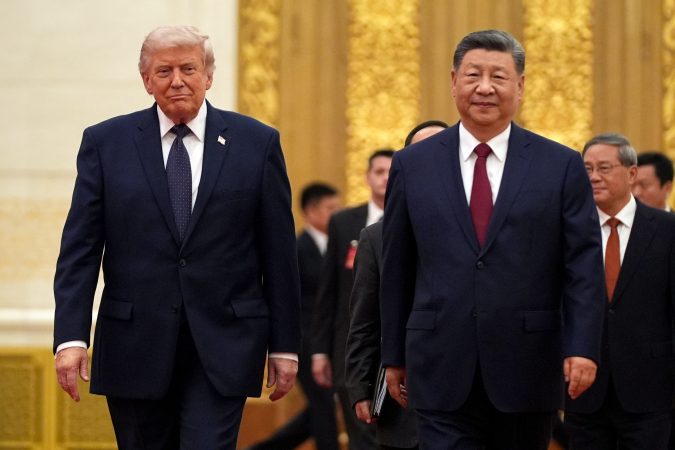
    China is Iran’s top trading partner and the newly announced U.S. economic pressure campaign risks a flare-up in relations just as President Donald Trump has sought to ease tensions and secure a broader economic deal with Beijing.

    A Treasury list released Monday includes more than a dozen small Chinese and Hong Kong firms, most linked to shipping and supply chains, suggesting Washington’s opening salvo includes targeting illicit shipments to Iran without directly hitting major Chinese refineries or banks.

    Still, the move rankled Beijing, which in recent months has sent envoys to Washington to lay the groundwork for a meeting between Trump and Chinese leader Xi Jinping at the White House in late September.

    “China will do everything necessary to firmly safeguard its rights and interests,” said Chinese Foreign Ministry spokesperson Lin Jian on Tuesday, criticizing what he described as “illicit unilateral sanctions that have no basis in international law.”

    Analysts say the rebuke is a warning sign that further actions could derail the fragile truce built between Washington and Beijing.

    “Washington has a difficult needle to thread: isolating Iran economically while trying to keep U.S.-China relations stable,” said Wendy Cutler, a former U.S. trade negotiator and now senior vice president at the Asia Society Policy Institute.

    “Depending on how far the U.S. goes, it’s not out of the question that Beijing would threaten to cancel or postpone Xi’s planned U.S. visit next month,” she said.

    China is the primary buyer of Iran’s oil, importing an estimated 1.4 million barrels a day before the war, largely through an unreported shadow network of hundreds of tankers operating outside normal legal channels.

    Economically isolating Iran from that support would be difficult, requiring far-reaching sanctions on Chinese banks and refineries, and perhaps including military and investigative resources to disrupt an ever-shifting network of hundreds of Chinese-linked shipping firms and shell companies spread across Asia and the Middle East.

    Bessent on Monday said the “economic D-Day”sanctions will be “the single greatest financial offensive ever” against Iran and will target countries that support Iran’s economy to sever the “economic lifeline that sustains Tehran.”

    He suggested China would not be exempt from the penalties.

    “If they facilitate transactions and are part of the ecosystem that turns Iranian oil into money, into repression, they will be targeted. … We want to make clear here today that no one is above the reach of U.S. sanctions.”

    Without naming Beijing, Bessent said the U.S. Treasury is prepared to engage in “frank discussions” with relevant countries to shut down Iran’s oil sector.

    Foreign Ministry spokesperson Lin defended China’s cooperation with Tehran on Tuesday, saying it is “conducted within the framework of international law” and “should not be disrupted.”

    Washington has already attempted this year to crack down on the shadow trade in oil and chemicals between China and Iran, imposing sanctions on hundreds of vessels and entities, and seizing sanctioned ships carrying Iranian oil. But analysts say those efforts represent a game of maritime whack-a-mole, as targeted networks adapt quickly.

    In one such raid in April, when U.S. forces commandeered the Tehran-bound ship Touska, which had docked at a Chinese port known as a loading point for chemicals used as rocket-fuel precursors, Trump said U.S. authorities found “a gift from China” on the ship, “which wasn’t very nice.”

    That seizure temporarily spiked oil prices but did little to upset relations between Beijing and Washington, as the two leaders met with friendly fanfare the following month.

    But Bessent’s new maximum pressure sanctions campaign could have deeper impacts, analysts say, beyond just a canceled summit.

    “In light of the retaliatory toolbox Beijing has been building in recent years, it has many levers to pull to harm U.S. interests, including export restrictions, sanctions on U.S. companies, and slowing down or even halting U.S. agricultural purchases,” Cutler said.

  • Kennedy Center finances deteriorated sharply after Trump name change

    Kennedy Center finances deteriorated sharply after Trump name change

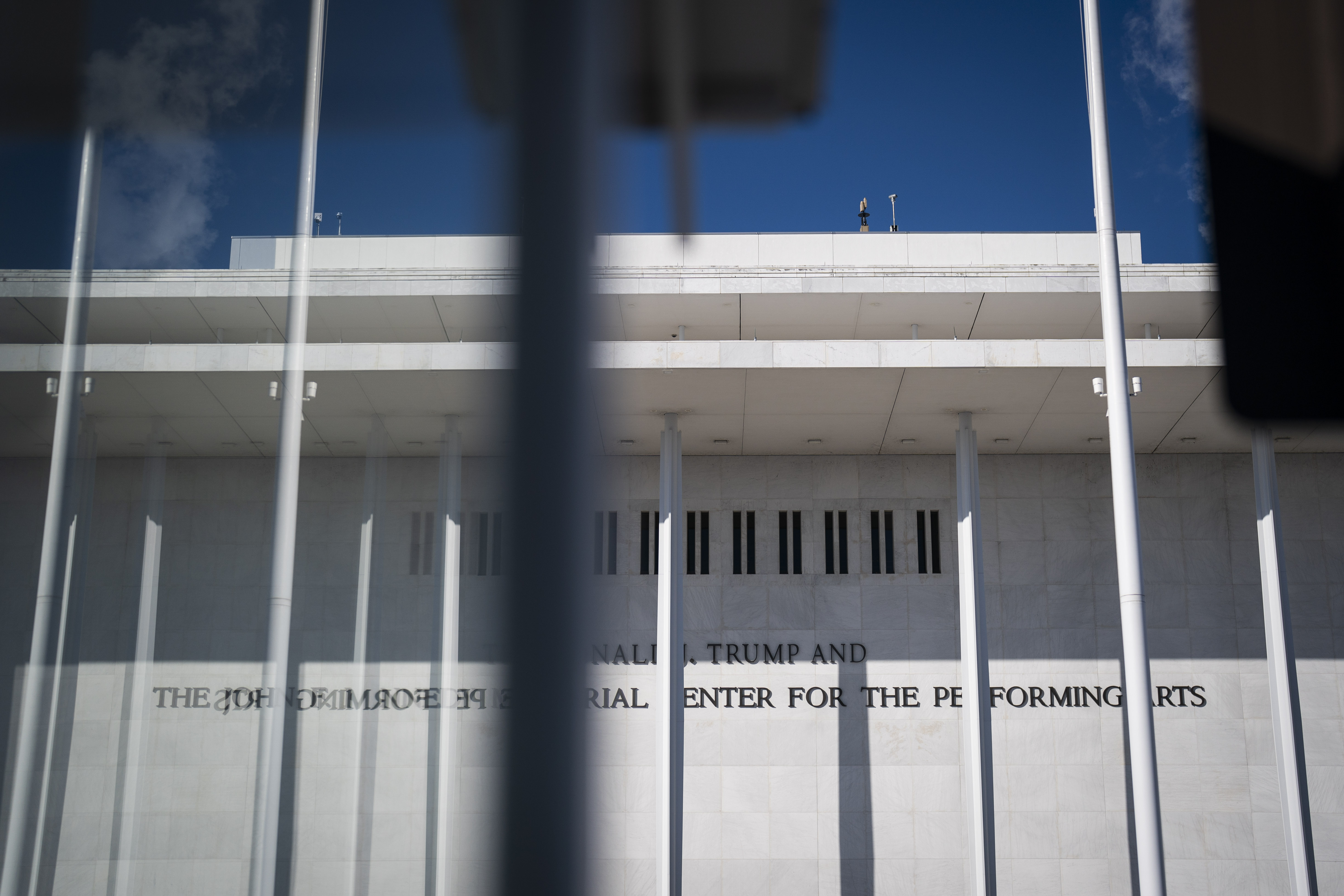
    Ticket sales and fundraising collapsed after President Donald Trump’s name was added to the John F. Kennedy Center for the Performing Arts, even as the center’s leaders publicly touted a financial turnaround, according to confidential documents obtained by the Washington Post.

    Ticket sales had already dropped in the 10 months following Trump’s takeover, but both ticket sales and donations plunged after the Trump-led board of trustees voted in December to rename the center after him and put his name on the front of the building, according to the records.

    The documents show that leaders knew both were cratering even as they publicly portrayed Trump’s takeover as a financial rescue. In a failed June request to keep Trump’s name on the building, for instance, a Justice Department lawyer wrote that renaming the center after Trump “represented a saving of The Kennedy Center which, if this doesn’t happen, would go into financial and structural collapse” — even suggesting in a new filing Monday that without Trump’s name and renovation plan, the building “will be required to be taken down.”

    Just the week before the June filing, the center’s own financial projections showed ticket revenue and fundraising had plummeted after the name change, putting it on track to fall nearly $100 million short of its revenue target.

    The records — internal budgets, management forecasts, board minutes, and financial presentations — provide the first comprehensive accounting of the center’s financial deterioration in the year and a half since Trump replaced dozens of board members with allies and installed himself as chairperson. Even after slashing expenses, center officials projected earned revenue this fiscal year to miss its budget target by 70% and contributed revenue to fall 25% short. The revenue miss was projected to leave the center with a $23 million deficit.

    “The center took a huge hit when the takeover happened,” and then appeared to stabilize, according to an official familiar with the center’s financial situation. But after the name change, “it was just an absolute fiscal cliff. Donors disappeared, ticket sales disappeared, artists disappeared — like it was doomsday.”

    Andrew Taylor, director of American University’s arts management program, who reviewed the documents at the Post’s request, described the declines as “a nosedive.”

    Trump’s takeover “had a consequence,” Taylor said, “and the consequence was a catastrophic drop in revenue.”

    In response to detailed questions from the Post, a Kennedy Center spokesperson blamed the center’s financial problems on its previous leadership, saying it inherited years of financial mismanagement. Putting Trump’s name on the building attracted new donors and helped raise money for renovations, the spokesperson said, adding that a proposed fiscal 2027 budget is balanced. The center did not dispute the Post’s account of its internal fiscal 2026 projections.

    The center is months late to releasing its independently audited financial statements for its first fiscal year under Trump’s leadership, which should include definitive data about its financial condition through the first months of the takeover.

    Promising a turnaround

    Upon taking control of the Kennedy Center, Trump and his allies said they had inherited a troubled institution.

    They accused the previous leadership of spending too much on unpopular programming, running persistent deficits, and obscuring its financial condition, which past leaders denied. Trump promised to remake the institution, while Richard Grenell, the ally he installed to lead the center, repeatedly argued that the new administration was imposing fiscal discipline.

    Grenell defended deep staff cuts as prudent and said the center had raised $117 million from donors. He told the Washington Examiner in November that every department had been instructed that its shows needed to break even: “If you can’t sell enough seats, you find a donor.” Corporations, he said, were “writing checks because they trust us not to turn every show into a political statement.”

    The White House on Monday defended Trump’s stewardship of the center by citing his renovation plans but did not directly address questions about this year’s drop in revenue.

    “President Trump did what Democrats wouldn’t by finally committing the resources and the leadership needed to restore the Kennedy Center and make it the finest performing arts facility in the world,” spokesperson Liz Huston said in an email.

    Leaders also credited Trump with securing $257 million from Congress for repairs last year, an enormous amount relative to the center’s usual federal appropriation.

    The center’s board has gone further. In a resolution this month supporting another effort to install Trump’s name on the building, trustees argued that the Kennedy Center “would be in financial ruin” without the president’s “unique stature as both an unparalleled fundraiser and world-class developer.”

    But the internal projections told a different story.

    The center had budgeted about $220 million in revenue for fiscal 2026, which began in October and ends Sept. 30. By late May, officials projected it would bring in only about $124 million.

    Officials cut projected expenses by roughly a third, but even that was not enough: The center still projected a $23 million deficit.

    The cuts involved slashing staff and programs, which the center has described in court filings as a logical part of the board’s decision to close for repairs.

    Industry experts described a chicken-or-the-egg dynamic, saying cuts can be a reasonable response to falling revenue but can also hollow out the staff and programming an organization depends on to generate future income.

    Karen Gahl-Mills, director of the Indiana University arts administration program who reviewed the financial records for the Post, said the documents showed that some of the decline in spending simply reflected a smaller institution.

    “They’re smaller than they were,” she said.

    Taylor said the financial problems were striking in light of what the center’s board appeared to be focused on. During their March board meeting, Trump and the other trustees talked almost entirely about the building, renovations, and aesthetic details without addressing the artistic performances that happen inside before voting to close the center for two years, according to minutes of the meeting.

    “The conversation is really about real estate development,” Taylor said, adding: “It’s almost nothing about programming in that meeting, except for how we’re going to wind down programming when we shut down.”

    The center defended the planned renovation as a way to improve its finances, saying it would produce a projected $3.4 million surplus. An alternative, involving rolling closures throughout the building over four years, would produce a projected deficit of about $78 million, the spokesperson said.

    Rep. Joyce Beatty (D., Ohio), one of the few trustees not appointed by Trump, has challenged the board’s actions in federal court, arguing that in voting to close for two years, its majority has put the president’s interests ahead of its responsibility to the center’s duty to bring performing arts programming to the public.

    Ticket buyers and donors retreat

    Audiences began retreating soon after Trump took control of the center, but the confidential documents show revenue troubles became far more severe in fiscal 2026, which covers the bulk of the first programming season under new leadership, the name change, and the attempted closure.

    The Post previously reported that ticket sales dropped by half in the week after Trump announced his takeover in February 2025. By that fall, ticket buyers were spending less at the center than during any comparable period since 2018 except the pandemic, and subscriptions were down sharply. At the time, current and former employees attributed the decline to an audience boycott over the politicization of the center.

    By June, officials were reviewing an annotated line chart that showed quarterly ticket sales over several years: a recovery from the pandemic, a drop after the board overhaul, and a precipitous fall after the name change.

    At the same time, the center had downsized its fundraising operation as donations faltered. One internal report said fundraising at the beginning of this year contrasted sharply with the months before the name change. Pledges fell by more than 100% because of “adjustments and write-offs,” according to the report — an unusual figure that Taylor said may reflect older pledges that donors withdrew or that the center determined it was unlikely to collect.

    The simultaneous decline in audiences and philanthropy can be particularly damaging for performing arts organizations because the two sources of revenue are closely connected: Many ticket buyers are also donors.

    Together, the losses in audiences and donors helped leave the center projecting nearly $100 million less in total revenue than it had anticipated — a decline experts said went far beyond the broader financial pressures facing cultural institutions.

    An outlier

    Preliminary fiscal 2025 data compiled by SMU DataArts, an arts research center at Southern Methodist University, shows a far different picture across the cultural sector. Large cultural organizations generally remained financially stable, ending the year with modest surpluses even as some experienced declines in ticket sales and philanthropy.

    Jennifer Benoit-Bryan, executive director of SMU DataArts, said the Kennedy Center’s trajectory was “remarkably different” from the broader pattern, with severe reductions in both earned and contributed income and a sizable deficit.

    “That’s a huge hole for an organization to recover from, even one as significant and sizable as the Kennedy Center,” Benoit-Bryan said.

    The center has traditionally been unusual among cultural institutions because it makes more money selling tickets than collecting donations, Benoit-Bryan said. Most arts nonprofits lean more heavily on philanthropy, which makes up about 60% of revenue on average.

    That reliance on ticket sales and other earned income makes the board’s vote to close for two years of renovations particularly consequential, she said, calling it “a questionable choice.”

    Beatty argued in her lawsuit that the decision was worse than misguided. Her lawyers characterized the closure as a betrayal of the center’s mission to bring the performing arts to the public — and an attempt to hide the “embarrassing fact” that renaming the center after Trump had sparked a financial collapse.

    “Such a self-interested gambit, sacrificing the Kennedy Center to save face, represents a quintessential breach of fiduciary duty,” they wrote.

  • Dolly Parton, superstar whose songs spoke to millions, dies at 80

    Dolly Parton, superstar whose songs spoke to millions, dies at 80

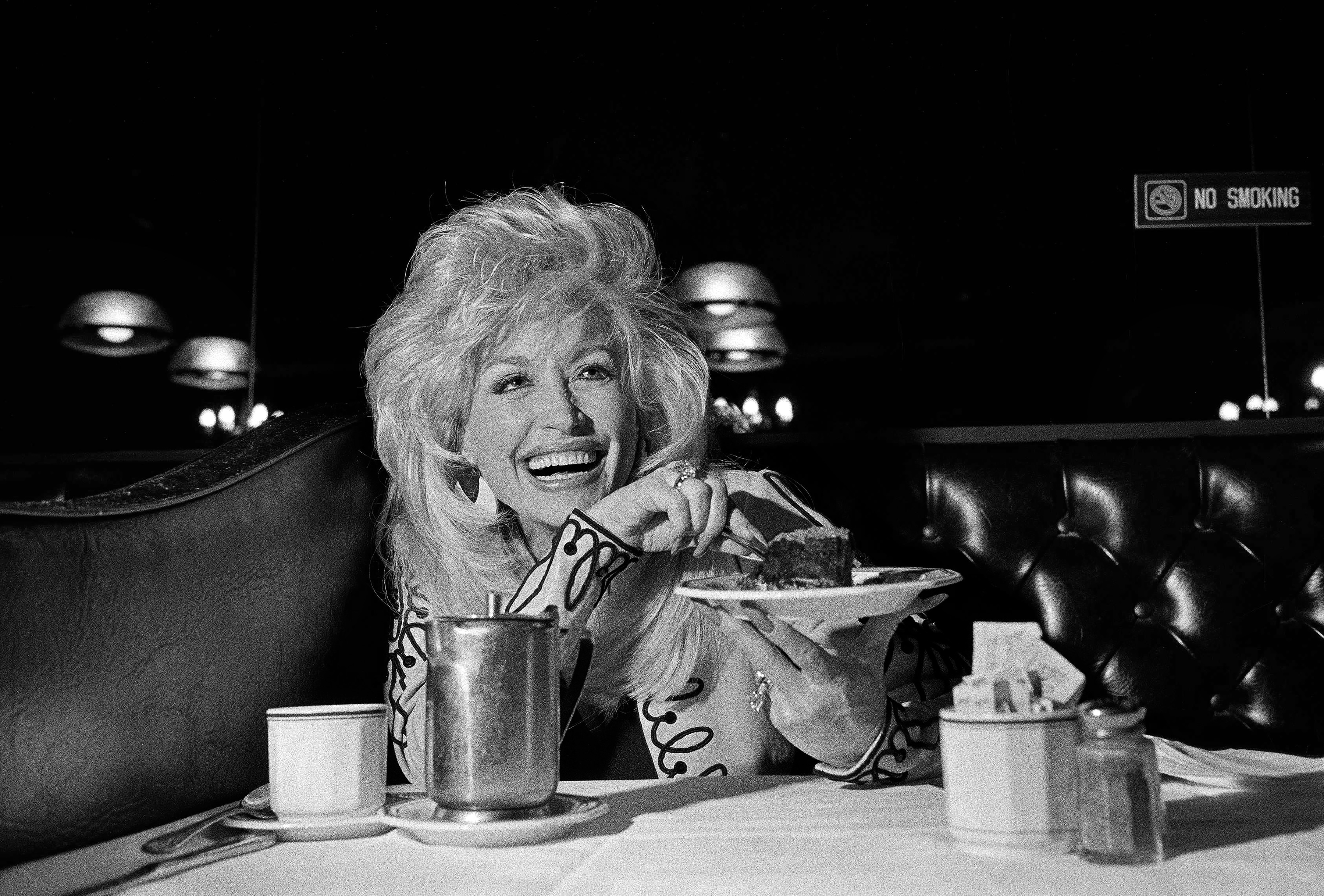
    Dolly Parton, the rhinestones-to-riches daughter of Appalachia who for six decades ruled country music with an outsize personality and country wit that enshrined her as one of the 20th century’s most cherished American originals, died Tuesday in Nashville, Tenn. She was 80.

    The death was announced in a video posted on social media by her nephew, Bryan Seaver. No cause was provided. Concerns about Ms. Parton’s health, which began last year as she postponed and later canceled a Las Vegas residency, grew to the point that she took to social media last fall to confirm that “I ain’t dead yet.” In May, she said she had responded well to treatment after, as she put it, her immune and digestive systems “got all out of whack” in recent years.

    Ms. Parton’s life, as depicted in autobiographical songs such as “Coat of Many Colors” and “My Tennessee Mountain Home,” was the stuff of make-believe, from her hardscrabble beginnings in Appalachia to her glittering stardom in Nashville and beyond.

    Writer Chet Flippo likened her to the Big Rock Candy Mountain, the Depression-era symbol of abundance personified by Ms. Parton’s voluptuous figure, rhinestone-studded stage costumes, and blond bouffant wigs. Her songs spoke to millions, confronting privation and loss even as they radiated possibility and hope.

    She was, quintessentially, a uniter of people. In 2019, the New York Times ran a story with the headline “Is There Anything We Can All Agree On? Yes: Dolly Parton.”

    Ms. Parton cannily exploited — and transcended — rural stereotypes and kitsch to fashion a down-home chic entirely her own. (“A country girl’s idea of glam,” she called it in the song “Backwoods Barbie.”) In the process, she became an international celebrity who headlined stadium tours, starred in Hollywood movies, built a business empire, and appeared on the cover of Rolling Stone. Her at times girlish soprano notwithstanding, she was anything but the “dumb blonde” invoked in the title of her 1966 single.

    “I’ve created this and played it up — the makeup, the whole persona,” Ms. Parton said, alluding to her plastic surgeries as well as her colloquial “Dollyisms” in a 2002 interview with the Times.

    “But this isn’t all I am,” she added. “It’s not even most of what I am. Hopefully people can see beneath the hair to know there’s a brain, beneath the boobs to know there’s a heart and behind all the other stuff to know there’s some talent.”

    Inducted into both the country music and rock ’n’ roll halls of fame, Ms. Parton was the top-ranking female singer on country radio from 1967 to 1993, and had a total of 25 No. 1 country singles.

    Her early breakthrough came in 1967 when she was hired as the “girl singer” on The Porter Wagoner Show, a syndicated country music television variety program. Several years later, she had No. 1 country hits with records including “Jolene” and “I Will Always Love You.”

    Both songs were among about 3,000 titles she published in her lifetime, hundreds of which have been recorded by other artists, including Tina Turner, Norah Jones, the White Stripes, Merle Haggard, RuPaul, and Whitney Houston.

    Featured in the 1992 movie The Bodyguard, Houston’s version of “I Will Always Love You” spent 14 weeks at the top of the pop chart. The song had previously been a No. 1 country single twice, in versions released by Ms. Parton in 1974 and 1982.

    With Loretta Lynn and Tammy Wynette, Ms. Parton blazed a trail for women in country music, inspiring such contemporaries as Linda Ronstadt and Emmylou Harris, as well as latter-day hitmakers including Carrie Underwood, Kacey Musgraves, and Taylor Swift. She recorded a pair of albums, Trio and Trio II, with Ronstadt and Harris.

    “I can’t imagine anybody, especially in country, who doesn’t try to emulate Dolly in some way,” Harris said on the occasion of Ms. Parton’s Kennedy Center Honors award in 2006.

    Ms. Parton was one of country music’s greatest ambassadors, but she also collaborated widely with artists outside traditional Nashville circles, including Mavis Staples, Queen Latifah, Julio Iglesias, and Ladysmith Black Mambazo. “Islands in the Stream,” a triple platinum-selling duet Ms. Parton recorded with Kenny Rogers, topped both the country and pop charts in 1983. (The song was written by Barry, Maurice, and Robin Gibb of the Bee Gees.)

    Stylistically, Ms. Parton’s music ran the gamut: mountain bluegrass and soul-inflected countrypolitan, disco-era pop and covers of classic rock touchstones written by Neil Young and Led Zeppelin — all of it rendered indelible by her irrepressible spirit and alternately keening and gossamer soprano drawl.

    She wrote unabashedly, in simple Southern vernacular, about growing up as the daughter of an illiterate sharecropper.

    “I’ve seen Daddy’s hands break open and bleed / And I’ve seen him work ’til he’s stiff as a board,” she sang over wistful harmonica and acoustic guitar in “In the Good Old Days (When Times Were Bad).” “I’ve seen Mama layin’ in sufferin’ and sickness / In need of a doctor we couldn’t afford. / Anything at all was more than we had / In the good old days when times were bad.”

    In “Coat of Many Colors,” maybe her most beloved original, Ms. Parton plumbed childhood feelings of pride and humiliation. In this case, the coat in question — quilted from rags and originally a source of delight and the expression of a mother’s love — becomes an object of ridicule when Dolly’s classmates poke fun at her for wearing it to school.

    So with patches on my britches

    And holes in both my shoes,

    In my coat of many colors

    I hurried off to school

    Just to find the others laughing

    And making fun of me

    In my coat of many colors

    My Mama made for me

    “That little song is like a world of things,” Ms. Parton said of “Coat of Many Colors” in Dolly Parton, Songteller: My Life in Lyrics (2020), written with Robert K. Oermann. “It teaches about bullying, about love, about acceptance, about good parents. That little story has even been written into a schoolbook to teach children about being different.”

    Empathy was a hallmark of Ms. Parton’s songwriting, perhaps nowhere so much as in “Down From Dover” and “Daddy Come Get Me,” harrowing Southern gothic ballads about teen pregnancy and how patriarchy blames and victimizes young women.

    Assertive women populated Ms. Parton’s songs, whether through her protofeminist rewrite of Jimmie Rodgers’ “Mule Skinner Blues (Blue Yodel No. 8)” or by advocating parity in the bedroom (“Touch Your Woman”) and in the workplace (“9 to 5”).

    “It’s a rich man’s game / No matter what they call it / And you spend your life / Putting money in his wallet,” Ms. Parton sang, with a mixture of fury and resolve, in the 1980 pink-collar comedy 9 to 5. Besides writing and performing the movie’s theme song, a No. 1 pop and country hit, she also starred in the film as a beleaguered secretary drudging for a sexist boss, alongside Jane Fonda and Lily Tomlin.

    Ms. Parton would go on to star in other films, among them The Best Little Whorehouse in Texas (1982), with Burt Reynolds; Steel Magnolias (1989), with Julia Roberts and Shirley MacLaine; and Straight Talk (1992), with James Woods.

    In 1976, she became the first woman in country music to host her own syndicated TV series; a decade later, she had an hourlong variety show on ABC. But for all her reach and command as an entertainer — including her ubiquitous appearances on TV talk shows and specials — Ms. Parton viewed herself, first and foremost, as a songwriter.

    “Writing’s just as natural to me as getting up and cooking breakfast,” she told the Times in 2002. “I ain’t never far away from a pencil and paper or a tape recorder. I write every day, even when I’m on a plane, in the tub or on the bus. It burns in me.”

    She continued: “Songwriting is my way of channeling my feelings and my thoughts. Not just mine, but the things I see, the people I care about. My head would explode if I didn’t get some of that stuff out. Not everything I write is good, but it’s all good for me — like therapy.”

    Dolly Rebecca Parton was born Jan. 19, 1946, the fourth of 12 children of Robert Lee and Avie Lee (Owens) Parton, in a one-room cabin on the banks of the Little Pigeon River in Sevier County, Tenn. Her father was a tenant farmer, and her mother was a homemaker who sang old Anglo-Celtic ballads and hymns while doing housework.

    The Partons were so poor that Dolly’s father had to pay the doctor who attended her birth with a sack of cornmeal. Ms. Parton may have grown up without plumbing, heat, electricity, and other modern conveniences, but she always insisted that she also grew up happy, and that music offered her a refuge from want.

    “Most of us in the household learned to play early on,” she said in Dolly Parton, Songteller. “Every time anybody showed up, any uncle or aunt who knew how to play an instrument, I’d have them show me how to play a little bit on the banjo, the guitar, the autoharp or whatever instrument was around.”

    When she was 5 or so, she wrote her first song, a ditty about a corncob doll with corn-silk hair called “Little Tiny Tasseltop.” She started singing on radio and on TV at 10, on the Cas Walker Farm and Home Hour in Knoxville, Tenn., securing bookings with the help of her uncle Bill Owens, who also bought her her first guitar. The two would go on to write many songs together.

    Ms. Parton made her recording debut in 1959, the same year she made her first appearance at the Grand Ole Opry. In 1962, she signed a songwriting deal with Tree International Publishing (now part of Sony Music Publishing). Two years later, she became the first person in her family to graduate from high school.

    In 1966, Ms. Parton married Carl Dean, an asphalt contractor who shunned the limelight. The couple had met two years earlier, at a laundromat in Nashville, when Ms. Parton was 18. Dean died in 2025.

    Ms. Parton is survived by six of her siblings: Willadeene Parton, Robert Lee Parton Jr., Stella Parton, Cassie Parton, Freida Parton, and Rachel Ann Parton George.

    In 1965, Ms. Parton signed a recording contract with Monument Records, not long before she and her uncle wrote two Top 10 country songs for singer Bill Phillips. She released the first of her roughly 90 Top 40 country hits — “Dumb Blonde,” a plucky denunciation of female stereotypes — in 1966.

    In 1967, she began her seven-year tenure with The Porter Wagoner Show. She and Wagoner would go on to release 21 hit duets together, including “Holding On to Nothin’” (1968) and “Just Someone I Used to Know” (1969).

    But with the arrival of the 1970s — and in no small part because of the national exposure she received on Wagoner’s show — Ms. Parton started to eclipse her employer in popularity.

    The tension that resulted was further aggravated when she began steadily producing No. 1 country singles such as “Joshua” and “Jolene.” Ms. Parton parted ways with Wagoner in 1974 to concentrate on her solo career, but not before writing “I Will Always Love You” as an expression of gratitude and farewell.

    The separation initially proved difficult for Ms. Parton, both emotionally and financially, but it also opened doors to new opportunities like the chance to host her own TV show. She was named female artist of the year by the Country Music Association in each of the two years (1975 and 1976) after her break with Wagoner.

    Embracing a more pop approach than she had earlier in her career, Ms. Parton continued her ascendance on the charts in the late ’70s with blockbuster hits including “Here You Come Again” and “Heartbreaker.” Both were No. 1 country singles that crossed over to the pop Top 40. The Country Music Association awarded her its top honor, entertainer of the year, in 1978.

    After her 1980 recording of “9 to 5” earned her two Grammy Awards and an Oscar nomination, Ms. Parton turned her attention to movies, TV appearances, and the development, in the mid-1980s, of Dollywood, her Smoky Mountain theme park, among other business ventures.

    In 1987, she released the first of her two albums with Ronstadt and Harris, the platinum-selling Trio. She hosted Saturday Night Live in 1989 and teamed up with Lynn and Wynette to record the album Honky Tonk Angels in 1993.

    She published her memoir, Dolly: My Life and Other Unfinished Business, a New York Times bestseller, in 1994. The next year, she established the Imagination Library, a philanthropic endeavor through which more than 200 million books have been distributed to babies and young children. A show about her life, Dolly: A True Original Musical, is scheduled to open on Broadway in early 2027.

    Endowed with a surfeit of creativity and an unflagging work ethic, Ms. Parton admitted in interviews to sleeping as few as three hours a night. She was nominated for more than 50 Grammy Awards, 10 of which she won, along with being recognized for lifetime achievement by the Recording Academy in 2011.

    Ms. Parton was inducted into the Country Music Hall of Fame in 1999 and the Songwriters Hall of Fame in 2001, and was awarded the National Medal of Arts in 2005. In 2022, she was inducted into the Rock & Roll Hall of Fame.

    But perhaps even more remarkable than the profusion of accolades and awards was Ms. Parton’s unstinting generosity of spirit — her commitment, born of deep religious convictions and an immense heart, to seeing the humanity in all people.

    Ms. Parton not only sang the traditional Southern gospel music her mother taught her; she also wrote and sang “Travelin’ Thru,” an Oscar-nominated song from Transamerica, the 2005 movie about a transgender woman seeking to connect with her son. In 2017, Parton collaborated with Miley Cyrus, her goddaughter, to record “Rainbowland,” a tribute to gay pride and liberation.

    “You have to accept everything and everybody,” she said in Songteller, talking about the lessons to be learned about open-mindedness and inclusion from “Coat of Many Colors.”

    Time and again in her career, Ms. Parton reflected on her impoverished upbringing and how she followed her dreams to escape it. “I wanted to be free,” she told Rolling Stone in 1977. “I had my songs to sing, I had an ambition, and it burned inside me.”

    She added: “It was something I knew would take me out of the mountains. I knew I could see worlds beyond the Smoky Mountains.”

  • Dolly Parton, music star, actor and beloved figure who spanned generations has died at 80

    Dolly Parton, music star, actor and beloved figure who spanned generations has died at 80

    Dolly Parton, the country music icon whose soaring vibrato vocals, poignant songwriting and sparkling costumes defined her rise from a log cabin in the Tennessee mountains to the height of stardom and acclaim, has died. She was 80 years old.

    Known for her curvy physique, massive blonde wigs and skin-tight outfits that served her self-deprecating wit, she was among the most beloved personalities in music and beyond — the rare celebrity whose appeal transcended generations, geography and politics.

    She wrote hundreds of songs, including classics like “Jolene,” “Coat of Many Colors” and “I Will Always Love You,” that totaled more than 100 million worldwide sales and more than 1 billion online streams. Parton, who plucked bejeweled banjos, guitar and dulcimers with her long fingernails during performances, was a generous philanthropist and successful businesswoman whose projects included a theme park in the Smoky Mountain foothills near her birthplace.

    Her career was forever influenced by her upbringing as one of 12 children born into what she called a “dirt poor” Tennessee family. She started her education nonprofit, Imagination Library, to send free books to children in Tennessee because her father, who quit school to work on the farm, struggled to learn to read.

    Parton’s first musical performances were in church, where her grandfather was a preacher. By age 10, she was learning guitar and singing on local television shows. At 13, she appeared on the Grand Ole Opry in Nashville, where Johnny Cash introduced her as “a little girl here from up in East Tennessee.”

    With a suitcase of songs, she followed her uncle, Bill Owens, also a songwriter, to Nashville after graduating high school in 1964. Fred Foster, who produced Roy Orbison, Willie Nelson and more, saw her potential and got her songs cut by other artists, as well as recording and releasing Parton singing her own material. By the mid-1970s, Parton was a Nashville queen.

    A key collaboration with Porter Wagoner

    Parton’s partnership with Porter Wagoner, a pencil-thin pompadoured star with flashy rhinestone outfits, was key to her career. She honed her acting skills on his syndicated TV show and he advocated for her to get a record deal at RCA. Their first duet, “The Last Thing On My Mind,” was released in 1967, the same year she started her own publishing company.

    While their duets were often big radio hits, Parton’s solo singles didn’t chart as high at first. With Wagoner as a co-producer, she began to adjust her country warble to a more polished, pop-leaning style.

    She got her first No. 1 solo single with “Joshua,” and reached the Top 5 with the ballad “Coat of Many Colors,” about how her mother sewed together scraps of clothes to make a coat Parton wore “so proudly” even as her peers mocked her for being poor. The song, with its Biblical references and ode to maternal love, was later made into a children’s book and a TV movie.

    In 1973, she had the hit that made her career — “Jolene,” a country music standard with its steady, churning rhythm and Parton’s repeated delivery of the title as she pleads for the woman not to steal her man.

    The song topped the country charts, crossing over to pop and later being released internationally, opening up new audiences for Parton. “Jolene” is one of her most covered compositions, including by Miley Cyrus (Parton’s goddaughter), Olivia Newton-John and The White Stripes.

    She left Wagoner’s show in 1974, amid reports of squabbling between the two, although they continued to record together and Wagoner stayed her producer for years after that. But the relationship turned litigious when Wagoner sued her in 1979 for millions in management fees and royalties.

    A pop crossover star

    She followed “Jolene” with a huge hit in 1974, “I Will Always Love You,” an ode and farewell to Wagoner that helped her win the Country Music Association’s female vocalist of the year back-to-back in 1975 and 1976. She famously turned down Elvis Presley, who wanted to record it, because she would not share publishing rights.

    Decades later, Whitney Houston’s version of “I Will Always Love You” became a smash for the soundtrack of her 1992 film “The Bodyguard,” and broke sales records. Houston won a Grammy for her performance in 1994, presented to her by Parton.

    “Here You Come Again,” a pop crossover hit and one of the few she didn’t write, further established Parton as a multi-genre entertainer and brought her first Grammy Award in 1979.

    “A lot of people thought I had totally lost my mind,” she told The Associated Press in 1979 of changing her singing style. “But I had no fear of change. I expected success, but I was braced for failure. I didn’t care if people thought I was wrong. In my own heart, I knew I was doing the right thing.”

    Parton’s other crossover hits included the title song from “9 to 5,” the 1980 comedy starring Parton, Jane Fonda and Lily Tomlin; and her duet with longtime friend Kenny Rogers, “Islands in the Stream,” written by brothers Barry, Maurice and Robin Gibb of the Bee Gees. In 1987, she collaborated with Linda Ronstadt and Emmylou Harris on the million-selling “Trio” album.

    Down home charm

    For millions of fans, she was simply “Dolly,” a mixture of Southern charm, humor and glamour. But she was also considered a feminist role model for holding the reins of her own career, writing her own songs, owning her content and looking after her finances in an entertainment world dominated by men.

    Parton was open to making fun of herself; when she hosted “Saturday Night Live” in 1989 she told the writers that her only restrictions were she wouldn’t curse and she wouldn’t make fun of Jesus. She regularly joked about her breasts or her dumb blonde appearance, but with a wink that she was the one controlling the laughs. In the memoir “My Life So Far,” Fonda remembered Parton’s way with a wisecrack, “usually high raunch,” and a laugh that was “somewhere between a girl’s giggle, an explosive shriek, and a cascade of little bells.”

    After her gown split down the front when she won CMA’s entertainer of the year in 1978, Parton quipped: “My Daddy said that’s what I got for putting 50 pounds of mud in a five-pound bag.”

    Throughout her career, she embraced her glamorous style, often wearing custom curve-hugging rhinestone dresses and bodysuits even if they drew tsk-tsks from others in the industry. Her look was always a part of her larger musical business plan.

    “I knew my songs were good even if I had been ugly as sin,” she told the AP in 2014. “So I thought, ‘Well, I would have probably chose to look this way even if I had been a waitress.’ I mean, this is my look. I mean, I like a lot of makeup. I like a lot of hair. I like flashy clothes. I like to show it off. But that’s just who I am.”

    She married Carl Dean, an asphalt paving contractor, in the mid-1960s; they were together until his death in 2025 at the age of 82. Though rarely seen in public, he was an influence on her career. She told NPR that she wrote “Jolene” about a flirty bank teller who seemed to take an interest in Dean.

    ‘9 to 5’ to Hollywood and Broadway

    In her first major film role, Parton played alongside Fonda and Tomlin as office workers who rebel against their tyrannical boss in “9 to 5.” Critic Roger Ebert called her a “natural-born movie star” and the title song earned her two Grammy Awards and a ranking of 78 on the American Film Institute’s list of top 100 movie songs. Starring roles in the “The Best Little Whorehouse In Texas” and “Steel Magnolias” followed.

    “I never thought of myself as a movie star,” she told AP’s Bob Thomas in 1979. “I knew I’d be a star, but as a singer or as a writer of songs or books or poetry. I wanted to be a famous performer and wear flashy clothes, but singing in movies was not one of my ambitions. My family lived in the mountains and we didn’t see movies.”

    Her love affair with TV and film continued for decades, with appearances alongside Cyrus on “Hannah Montana” and adaptions of her music for Christmas specials, films and streaming series. She also became an author, her books ranging from the memoir “Dolly” to a bestselling novel co-authored by James Patterson, “Run, Rose, Run,”

    The stage adaptation “9 to 5: The Musical” debuted in 2009, and “DOLLY: A True Original Musical” had been set to open in December 2026.

    United States of Dolly

    Beyond her music, Parton’s most lasting legacy might be her generosity and broad appeal.

    When a deadly wildfire swept through the Smokies in 2016, she held an all-star telethon and set up a foundation that sent monthly checks to residents whose homes were damaged or destroyed.

    She opened up her Dollywood theme park in East Tennessee, a major economic driver in Appalachia that draws tourists from around the country, and established the Dollywood Foundation. She wrote books and memoirs, was inducted into the Country Music Hall of Fame and was given a lifetime achievement award by the Recording Academy. She was selected for the Jean Hersholt Humanitarian Award from the Academy of Motion Picture Arts and Sciences in 2025.

    With 55 Grammy nominations and 10 wins, Parton is the third-most nominated woman in Grammy history, only behind Beyoncé and Taylor Swift.

    Parton spanned social and political divides, through multiple generations of fans, urban and rural and in between. In tumultuous election years, it wasn’t uncommon to see “Dolly for President” shirts. But she was strict in not voicing her own political beliefs, often turning aside questions about presidents, candidates, policies and other controversies.

    “I don’t do politics,” Parton told host Jad Abumrad on his hit podcast “Dolly Parton’s America.”

    “I have too many fans on both sides of the fence. Of course, I have my opinion about everything, but I learned years ago to keep your mouth shut about things.”

    When the Rock & Roll Hall of Fame Foundation sent out a ballot in 2022 with her name on it, though she said she felt she hadn’t earned it, the voters answered with a “Hello, Dolly.” Parton showed up to the induction ceremony, performed and then put out a rock album.

  • Under Trump, protected wild horses are going to slaughter

    Under Trump, protected wild horses are going to slaughter

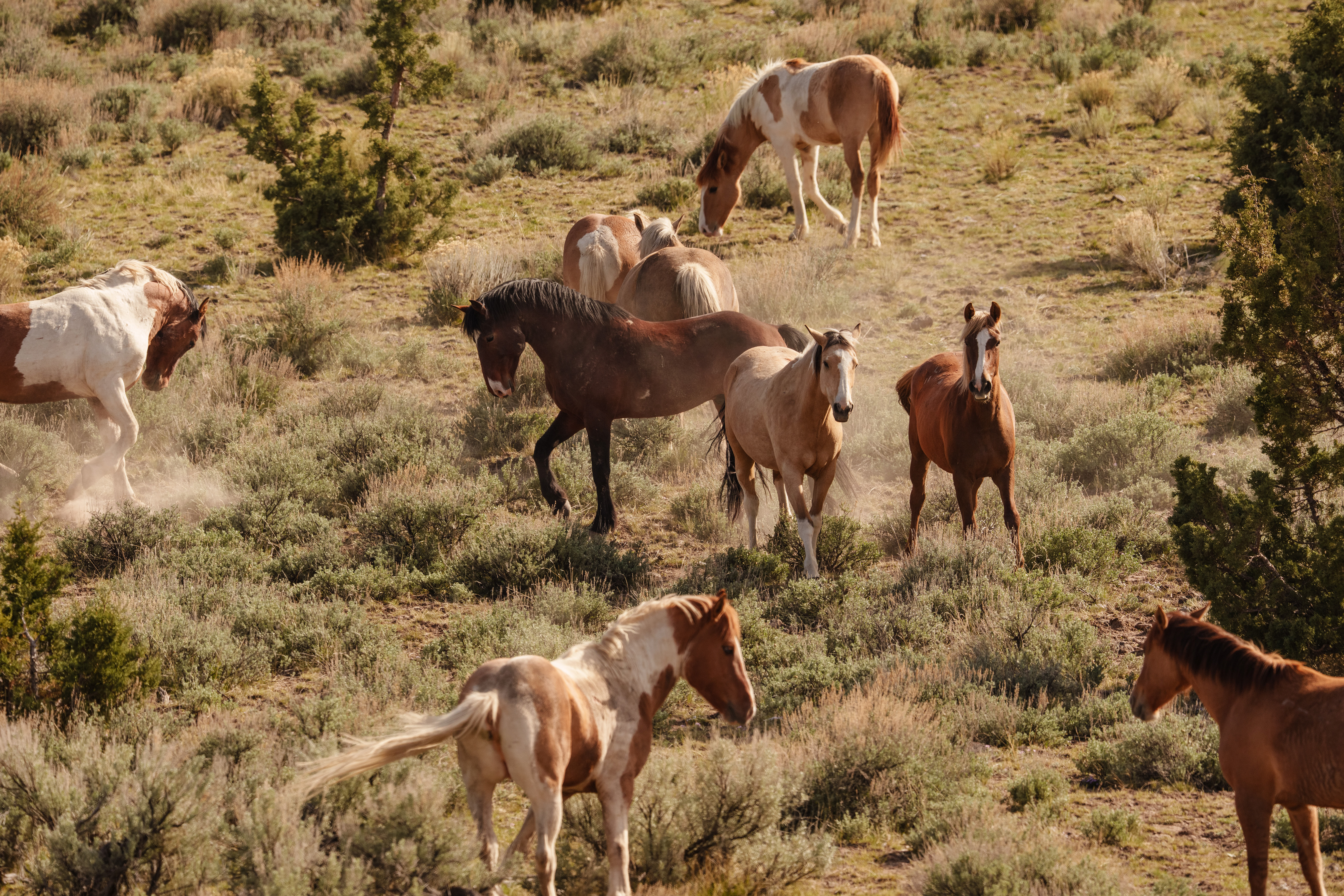
    They once had run free through the desert mountains of the West, a multicolored band of 68 wild mustangs that had never been saddled or corralled.

    Then the federal government rounded them up with helicopters in an attempt to control wild populations on public lands. The horses were held for years in a feed lot in Idaho while the government tried to find them what it called “loving homes.”

    Abruptly this March, the government found a home. Whether it was loving didn’t seem to matter.

    The horses were packed into metal trailers and trucked 1,800 miles east to the pens of a livestock trader in Ohio named Brandon Jones, who bought them for $25 each.

    A day later, two double-decker cattle trucks pulled up at midnight, loaded the mustangs, and quickly drove off into the night.

    From there, the mustangs disappeared. The trader won’t say where they went. Wild horse advocates suspect the horses were shipped to slaughter.

    But that’s not the government’s concern. It got what it wanted: two more truckloads of wild horses off its books.

    An examination of government records by the New York Times found that all over the country, the Bureau of Land Management, the agency in charge of protecting wild horses, is quietly selling thousands of horses to buyers like the one in Ohio. Slaughtering wild horses is illegal, but the bureau’s actions create a loophole that enables people to get mustangs on the cheap and then quickly resell them to be exported alive, processed into cuts of meat, and sold abroad.

    Livestock inspection records show mustangs sold by the government soon ended up on trucks bound for slaughter plants in Canada.

    The U.S. government’s sales of wild horses were once rare but started to rise after President Donald Trump took office. In 2025, they more than doubled to 3,700 horses, according to bureau records.

    In that time, the bureau has sent about 500 horses to Jones.

    In an interview, Jones said he was able to resell the horses quickly, though he didn’t advertise online or even post a “For Sale” sign at his corral. He would not say where the horses went and denied selling any to slaughter.

    The government can spend more than $3,000 to capture a mustang and bring it to market but sells each for as little as $25. A horse can fetch up to $750 at a slaughter plant. The potential for profit keeps buyers coming.

    By selling mustangs at a huge loss, animal welfare organizations say, the agency in charge of protecting wild horses is, instead, subsidizing their destruction.

    “The BLM is saying to the public that slaughter is off the table, but they’re doing it in plain sight using a third party,” said Clare Staples, who runs a wild horse sanctuary in Oregon called Skydog Ranch.

    The bureau did not respond to questions about its sales or make leaders available for comment. An unattributed statement from the agency said it “remains dedicated to placing animals into good homes, protecting their welfare, and upholding its statutory responsibilities on behalf of the American public.”

    About 73,000 wild horses roam federal public lands in the West, where they are protected from hunting or capture. For decades, in an attempt to keep the population sustainable, the bureau has rounded up 9,500 on average each year and offered them for adoption. But it finds adopters for only about half.

    The rest go into a labyrinth of feedlots and pastures that the bureau calls “the holding system.” The system now stores 58,000 wild horses at an annual cost of $100 million. Caring for them eats up most of the bureau’s $142 million wild horse budget.

    Over the years, bureau leaders have floated various lethal proposals for reducing the herds. But Congress — aware that the public wants mustangs protected — has barred the bureau from spending any money to kill healthy wild horses.

    There are alternatives to the roundups that have left so many horses in storage. For 20 years, the bureau has had access to inexpensive fertility-control drugs delivered by dart gun. They have been used effectively to control a few wild herds, and the government’s own experts have repeatedly urged the bureau to use them more widely.

    But because the bureau is spending so much on storage, it has little left to make the changes that would save it from storing more.

    And because the bureau has been unable to stop horses from coming into the storage system, it is now focused on getting them out.

    While the bureau can’t kill wild horses, it can use a series of bureaucratic maneuvers and financial transactions to transform them on paper into domestic livestock, stripping their legal protections.

    First, the bureau has to show a wild horse can’t be adopted. It does this by posting hundreds of horses at a time on its online adoption site. After a horse has three one-week listings with no takers, the law permits the government to designate it as unadoptable.

    Then it can be put up for sale.

    That’s an important legal distinction because a wild horse that is adopted retains its federal protections. One that is sold loses those protections immediately.

    A sold horse still can’t be legally killed — at least not yet — because the buyer is required to sign a contract promising not to slaughter the horse or “knowingly” sell it to anyone who intends to resell it for slaughter.

    But if the buyer resells to a middleman without asking questions, the buyer is safe from prosecution.

    The middleman has not signed a contract with the bureau and is free to legally sell the mustang to slaughter.

    Jones, 35, appeared out of nowhere in the wild horse world last spring and quickly became the bureau’s biggest buyer, bureau records show.

    He said he sold horses only two or three at a time to good owners. “I’m not dealing with traders,” he said. “I’m dealing with a farmer, come up the road, who wants to buy a horse.”

    Shown photos and video of the trucks of horses that left his property at midnight — taken by a local wild horse lover and shared with the Times — he questioned whether it had happened.

    “Could have been cattle,” he said.

    To buy large numbers of mustangs, Jones had to get approval from top officials in the bureau. His application stood out.

    Nearly all of the other buyers who have qualified over the years have well-established mustang sanctuaries. Not Jones.

    He had no ties to the wild horse world and no history of working with mustangs. The application asked what veterinarian would care for the horses. He listed an office an hour away from his land with a website that says it treats only small animals.

    On Facebook, he was friends with a number of livestock dealers but no wild horse rescues.

    For a year, his application sat at the bureau with no action. Then, in March 2025, a federal court ordered an end to one of the bureau’s leading ways of off-loading horses — the program that paid adopters $1,000 per horse.

    A few weeks later, Jones’ application was approved.

    He denied selling mustangs to the traders. He said it was wrong to see him as a bad guy. By reselling mustangs, he said, he had saved the government millions.

    There are small clues to what may have happened to the wild horses sold to Jones.

    Four showed up late last fall at an auction in Tennessee frequented by slaughter buyers.

    Jones said the horses in Tennessee were the result of just one bad sale to an irresponsible buyer.

    Another clue emerged at the Canadian border.

    The United States has no horse slaughter plants. The industry here was shut down in 2007, so horses are now exported to Canada.

    Jones lives about an hour from the main Canadian horse export crossing.

    Last summer, a few weeks after Jones received a load of 97 mares, export records show that one of the largest exporters of slaughter horses to Canada, an Ohio man named Fred Bauer, shipped two truckloads of horses to Canada. Grainy photos of the trailers’ interiors taken by border inspectors show some of the horses had distinctive serial numbers on their necks — government wild horse brands.

    Jones denied that his horses went to Canada through the exporter, saying, “I’d never deal with Freddy Bauer. Me and Freddy Bauer don’t get along.”

    Reached by phone, Bauer declined to say whether he had bought mustangs from Jones. When asked where Jones’ horses were going, Bauer said it would be simple for authorities to track the horses.

    “The government put Brandon Jones in charge of this whole wild horse situation,” he said. “There’s all kinds of records. So they ought to be able to find out what he’s doing if they want to.”

    This article originally appeared in the New York Times.

  • Canada to announce retaliatory tariffs as Trump tells its leaders to ‘fall in line’

    Canada to announce retaliatory tariffs as Trump tells its leaders to ‘fall in line’

    TORONTO — Canada will announce retaliatory tariffs against the United States on Tuesday after relations deteriorated sharply Monday, with President Donald Trump telling Canadian leaders to “fall in line” or face consequences “far WORSE” than existing tariffs and Prime Minister Mark Carney accusing Washington of trying to subordinate Canada.

    Trump also threatened new 50% tariffs on Canadian vehicles, auto parts and steel, while Carney said U.S. trade demands showed Washington wanted to “destroy our major industries,” including autos, steel and aluminum.

    Finance Minister François-Philippe Champagne and three other Cabinet ministers are also expected Tuesday morning to share details of supports for workers affected by tariffs. Carney said earlier Monday that Canada may need to move away from matching U.S. tariffs dollar for dollar and instead use more targeted retaliation aimed at protecting Canadian workers and businesses.

    “An attitude at the negotiation table that Canada is a subsidiary of the United States” is “not something we’re going to accept,” Carney said.

    Carney was even more blunt in French.

    “We learned during the negotiations that the Americans want to destroy our major industries, including autos, steel and aluminum,” Carney said. “That was one of the main reasons we said no. It was a bad deal.”

    The fiery words from both sides show how U.S.-Canada relations have deteriorated since Carney walked away from trade negotiations with the Trump administration late Friday, triggering the president’s threatened 50% tariffs the next day on about $20 billion worth of Canadian goods.

    Canada and the United States share one of the world’s largest trading relationships, with deeply integrated supply chains across autos, energy, agriculture and manufacturing, making a prolonged trade fight potentially costly for businesses and workers on both sides of the border.

    Carney cast doubt on the U.S.’s dependability, saying Canada was finding reliable partners “everywhere in the world, except in the United States. Except in the United States. And Russia.”

    Trump unleashes personal attacks on Canadian leaders

    On Monday, Trump came back with further tariffs, warning that he would impose them on Canada’s auto industry beginning next year.

    “Canada has been ripping off the United States of America for years,” Trump wrote on social media, criticizing what he called the country’s “ridiculously high tariffs” on American farmers.

    Carney said Washington’s auto-sector proposals would gradually have the effect of dismantling Canadian production.

    “This is the most successful automotive partnership in history,” Carney said, referring to the deeply integrated Canada-U.S. industry.

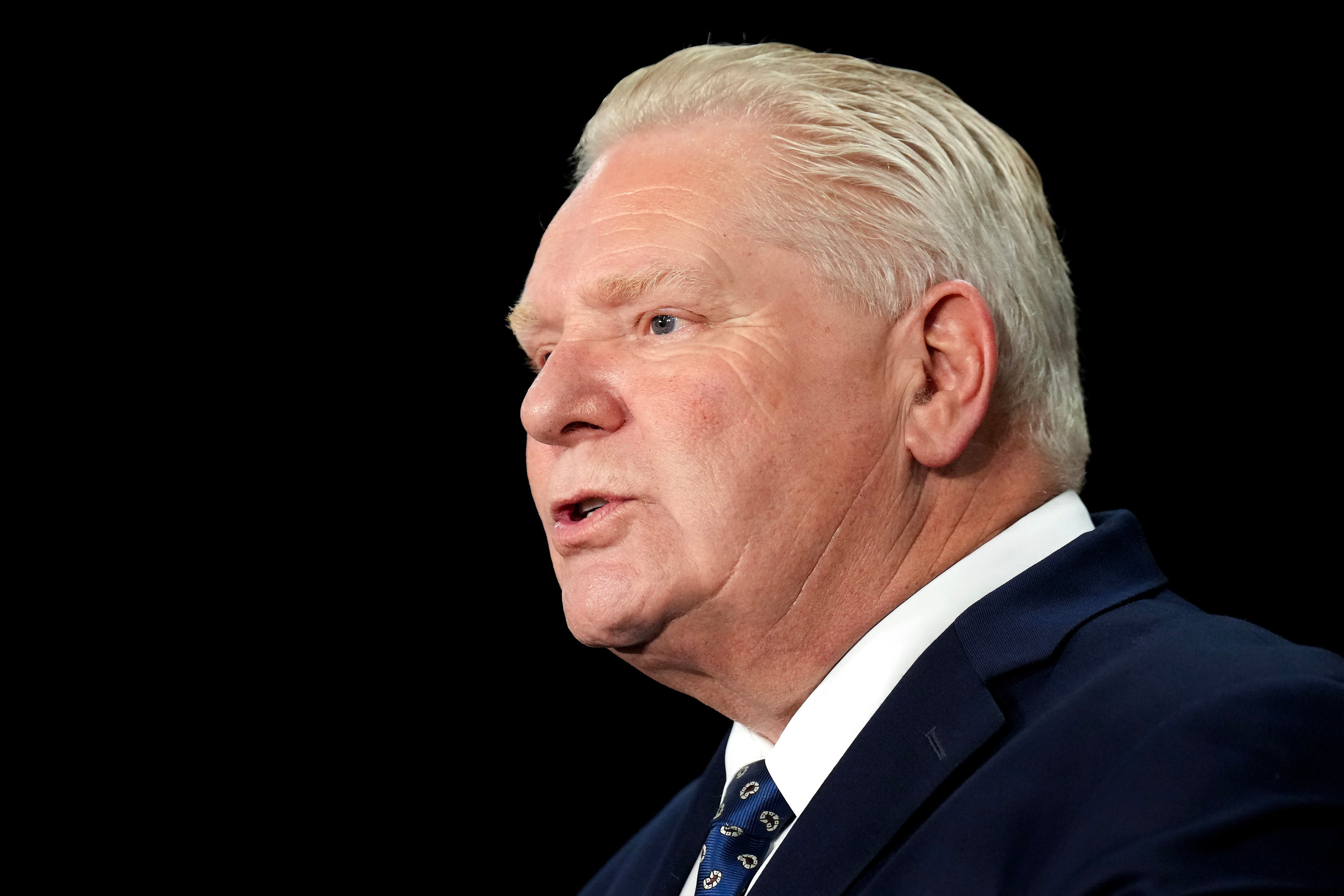
    Meanwhile, Ontario Premier Doug Ford unleashed his own tirade. In an interview with The Associated Press, he said Trump had underestimated Canadians’ willingness to endure economic pain rather than give in to U.S. pressure.

    “We’re all in,” Ford said. “Up here, we’re at a fever pitch; everyone’s in for an economic war. They know they’re going to have to sacrifice.”

    Trump responded in a social media post by attacking Ford personally, calling him “the less charismatic, intelligent, and overall unimpressive brother of the late, great, Rob Ford,” and once again referring to Canada’s prime minister as “Governor Carney.”

    Ford dismissed the insults: “If you think an insult from him hurts me? Well, bring it on, buddy, I’m ready.”

    Ford is a Progressive Conservative whose party differs from that of Carney, a Liberal, but the two underscore broad political unity in Canada over the trade fight with Trump.

    Ford threatens critical minerals and electricity

    Ford said “everything is on the table” if the dispute worsens, including cutting off electricity and critical minerals from Ontario.

    Critical minerals are increasingly important to U.S. national security and manufacturing. The Pentagon has sought more secure supplies of minerals used in military aircraft, missiles, munitions and electronics as Washington tries to reduce reliance on China, which dominates the mining or processing of several strategically important minerals.

    Ford said Canada should also consider increasingly severe retaliation if Trump continues targeting Canadian industries, including oil and potash, while Ontario could raise electricity prices or stop sending power south.

    “We power 1.5 million homes and businesses,” Ford said. “Everything’s on the table. I’ll do whatever it takes.”

    Ford has used electricity as leverage before. During an earlier phase of the dispute, Ontario imposed a 25% surcharge on electricity exported to Michigan, Minnesota and New York. Trump responded by threatening to double tariffs on Canadian steel and aluminum before both sides backed away.

    Auto industry becomes a central battleground

    Ford accused Trump of not simply seeking a better trade deal but aiming to hollow out Canadian industries and move production south.

    Ford said Trump wants to make Canada a vassal state.

    “He wants to bleed out every single sector and bring them down to the U.S.,” Ford said.

    The auto sector is especially important to Ontario, the center of Canada’s vehicle manufacturing industry. Plants and suppliers in Ontario are tightly integrated with factories in Michigan and other U.S. states, with parts routinely crossing the border multiple times during production.

    Automakers including Ford, General Motors and Stellantis operate major assembly plants in Ontario, and the wider supply chain supports tens of thousands of jobs. Trump’s new threat of a 50% tariff on Canadian vehicles and parts puts that sector directly at the center of the escalating dispute.

    U.S. Trade Representative Jamieson Greer said Monday that “the only reason Canada has auto production in the first place” was because of the 1960s Auto Pact, under which Canada used access to its market to encourage vehicle production north of the border.

    Ford says he opposed preliminary deal

    Ford also disclosed that he had opposed the preliminary agreement Carney was considering before Canada walked away from negotiations, and that he was unwilling to restore American liquor to Ontario store shelves as part of an agreement.

    “I wasn’t going to put the booze back on the shelves,” Ford said. “I was ready to go out there and call a press conference … and say I’m not buckling over.”

    Ford said he understood Washington had sought language late in the negotiations that would have restricted Canada’s ability to negotiate trade agreements with other countries without U.S. approval. Carney has called that demand unacceptable and a question of Canadian sovereignty.

    Carney said the dispute also exposed a deeper divide over language and culture, saying protections for French and Canadian culture that Washington views as trade irritants are considered fundamental rights in Canada.

    “Who does he think he is?” Ford said of Trump. “You gotta be kidding.”

  • Deportees who refused to exit a U.S. flight in Liberia are sent to Equatorial Guinea

    Deportees who refused to exit a U.S. flight in Liberia are sent to Equatorial Guinea

    DAKAR, Senegal — Six people who were deported by the United States to Liberia last week resisted getting off the plane and instead were sent to Equatorial Guinea, another ‌African nation that signed a third-country deportation agreement with the Trump administration, a person on the plane and a lawyer in contact with the six said Monday.

    Under a series of often secret agreements, the Trump administration has deported thousands of people to two dozen countries that aren’t their own as it pushes ahead with its immigration crackdown, advocates say. Immigration lawyers say the practice is being used as a legal loophole to indirectly return some asylum seekers to countries they fled.

    The group who refused to get off the plane in Liberia on Thursday include four Cuban men, a Brazilian man, and a Cameroonian woman, the person and lawyer said.

    A Honduran deportee aboard the flight said the group refused to disembark, saying Liberia was “not their country” and that they would face danger there. They were then separated from the others, he said. He spoke on condition of anonymity out of fear of reprisals.

    He said the other passengers got off in Liberia because they feared officers would force them.

    Meredyth Yoon, litigation director for Asian Americans Advancing Justice-Atlanta, said the deportees who resisted leaving the plane in Liberia were told they would be returned to the United States but instead were flown to Malabo city in Equatorial Guinea.

    “It was a really heartbreaking and chaotic scene when they arrived in Malabo on Thursday,” Yoon said.

    Some arrived in chains and in extreme distress, she said, including the Cameroonian woman and one of the Cuban men, who Yoon said has a large abdominal growth and uses a colostomy bag that must be drained regularly.

    There is no medical staff at the hotel in Equatorial Guinea where the six are being held, alongside around 40 other deported migrants, she added.

    Conditions at the hotel have worsened in recent months, Yoon said, with food sometimes withheld and guards accused of threatening, beating, and choking some of the migrants.

    Equatorial Guinea’s government did not immediately respond to a request seeking comment.

    Under an opaque $7.5 million deal with the Trump administration, Equatorial Guinea’s all-powerful president, Teodoro Obiang Nguema Mbasogo, has turned the hotel owned by his family into a prison for asylum seekers deported from the U.S.