Category: Wires

  • Tim Curry, star of ‘Rocky Horror’ and much more, dies at 80

    Tim Curry, star of ‘Rocky Horror’ and much more, dies at 80

    Tim Curry, the British-born actor whose gift for garish eccentricity lit up stage and screen, most notably as the outlandish, cross-dressing mad scientist in the midnight cult film The Rocky Horror Picture Show, died Tuesday at his home in Los Angeles. He was 80.

    The death was confirmed by Marcia Hurwitz, his longtime agent and manager. In 2012, Curry suffered a serious stroke, from which, he said last year, “I’ve been recovering for quite a long time.”

    With a mischief-maker’s good looks, a casual athletic grace, and a supple and resonant voice, Curry was a favorite in roles calling for expressive villainy or general cartoonishness.

    In the first screen version of Annie (1982), adapted from the comic strip turned stage musical and directed by John Huston, he brought more than a dollop of slime to the part of Rooster Hannigan, the con artist who concocts a plot to kidnap the plucky orphan of the title.

    In Clue (1985), a suspense spoof derived from the popular board game, he played Wadsworth, a logorrheic butler who leads a cast full of murder suspects (played by Madeline Kahn, Christopher Lloyd, Martin Mull, Eileen Brennan, and others) around a spooky mansion with the speed-talking fervor of a manic Sherlock Holmes.

    As a greedy gazillionaire presumed to be the chief malefactor in Charlie’s Angels, the 2000 movie adaptation of the television series about three female detectives, Curry laid on the oily self-satisfaction until the moment he was killed by the real bad guy.

    And in Spamalot, the stage musical based on the Monty Python troupe’s bottomlessly goofy retelling of the King Arthur legend, which opened on Broadway in 2005, he played Arthur himself and was nominated for a Tony Award. It was the most straight-faced role in the show, and yet, as Ben Brantley wrote in his review in The New York Times, he was “the best of the cast at translating classic Python style into a musical-comedy idiom.”

    “His stalwart, plummy-voiced Arthur wears a smile as inflexible as armor,” Brantley wrote, “and it deflects any suggestion that this manly king is in on the show’s jokes.”

    No other role marked Curry’s career as emphatically, however, as Dr. Frank-N-Furter, the “sweet transvestite from Transsexual, Transylvania,” as he proclaimed himself in The Rocky Horror Picture Show, the 1975 screen adaptation of The Rocky Horror Show, the hit London stage musical that played for seven years in different theaters, and in which Curry originated the role in 1973. He also starred in the premiere American production in Los Angeles in 1974 and on Broadway in 1975, where it was a notable flop, closing after 45 performances.

    Although Frank-N-Furter would become Curry’s signature role, he initially had doubts about taking it. “I was hesitant in that, if it worked, it might be a difficult image to shake off,” he said in a television interview in England just as The Rocky Horror Picture Show was opening in 1975. “But then, really, I’ve always thought it wasn’t worth doing unless you took a risk, really. So I just took the risk.”

    Forty years later, when he received a lifetime achievement award from the Actors Fund, Los Angeles magazine asked him to reflect on his career-making role. How did he look at it in retrospect?

    “With a sort of bemused tolerance,” he said. “It’s neither a blessing nor a curse. I was lucky to get it.”

    FILE — British actor and author Tim Curry in Los Angeles, Sept. 18, 2025. Curry, the British-born actor whose gift for caricature and garish eccentricity informed a variety of performances on stage and screen, notably as the puerile Mozart in the original Broadway production of “Amadeus” and as the outlandish cross-dressing mad scientist in the midnight cult film “The Rocky Horror Picture Show,” died on Tuesday, Aug. 25, 2026. He was 80. (Maggie Shannon/The New York Times)MAGGIE SHANNON
    FILE — Michael McGrath, left, as Patsy and Tim Curry as King Arthur in “Spamalot” at the Shubert Theater in New York, Feb. 12, 2005. Curry, the British-born actor whose gift for caricature and garish eccentricity informed a variety of performances on stage and screen, notably as the puerile Mozart in the original Broadway production of “Amadeus” and as the outlandish cross-dressing mad scientist in the midnight cult film “The Rocky Horror Picture Show,” died on Tuesday, Aug. 25, 2026. He was 80. (Sara Krulwich/The New York Times)SARA KRULWICH
    FILE — Tim Curry, center, as King Arthur in “Spamalot” at the Shubert Theater in New York, Feb. 12, 2005. Curry, the British-born actor whose gift for caricature and garish eccentricity informed a variety of performances on stage and screen, notably as the puerile Mozart in the original Broadway production of “Amadeus” and as the outlandish cross-dressing mad scientist in the midnight cult film “The Rocky Horror Picture Show,” died on Tuesday, Aug. 25, 2026. He was 80. (Sara Krulwich/The New York Times)SARA KRULWICH
    FILE — Tim Curry on screen during a silent disco showing of “The Rocky Horror Picture Show” at Damrosch Park in New York, Aug. 7, 2015. Curry, the British-born actor whose gift for caricature and garish eccentricity informed a variety of performances on stage and screen, notably as the puerile Mozart in the original Broadway production of “Amadeus” and as the outlandish cross-dressing mad scientist in the midnight cult film “The Rocky Horror Picture Show,” died on Tuesday, Aug. 25, 2026. He was 80. (An Rong Xu/The New York Times)AN RONG XU
    FILE — Tim Curry and Marcia Hurwitz, his longtime agent and manager, at a Museum of the Moving Image event in New York, Feb. 11, 2011. Curry, the British-born actor whose gift for caricature and garish eccentricity informed a variety of performances on stage and screen, notably as the puerile Mozart in the original Broadway production of “Amadeus” and as the outlandish cross-dressing mad scientist in the midnight cult film “The Rocky Horror Picture Show,” died on Tuesday, Aug. 25, 2026. He was 80. (Hiroko Masuike/The New York Times)HIROKO MASUIKE
    FILE — Tim Curry as King Arthur in “Spamalot” at the Shubert Theater in New York, Feb. 12, 2005. Curry, the British-born actor whose gift for caricature and garish eccentricity informed a variety of performances on stage and screen, notably as the puerile Mozart in the original Broadway production of “Amadeus” and as the outlandish cross-dressing mad scientist in the midnight cult film “The Rocky Horror Picture Show,” died on Tuesday, Aug. 25, 2026. He was 80. (Sara Krulwich/The New York Times)SARA KRULWICH
  • The Kremlin says the CIA director held talks in Moscow with his intelligence counterparts

    The Kremlin says the CIA director held talks in Moscow with his intelligence counterparts

    The Kremlin said Wednesday that CIA Director John Ratcliffe held talks in Moscow with his intelligence counterparts, a rare and secretive visit at a time when relations with Washington remain strained over Russia’s war in Ukraine.

    Kremlin spokesman Dmitry Peskov said Ratcliffe did not meet with Russian President Vladimir Putin, who was informed of the contacts that were “on the intelligence agencies’ level.”

    “Of course, President Putin is immediately informed of everything,” Peskov added, refusing to say what was discussed.

    Russian state news agencies reported that a U.S. military plane landed in Moscow’s Vnukovo airport on Tuesday and departed later that day.

    U.S. President Donald Trump played down the significance of Ratcliffe’s trip, saying it was “sort of semi-routine.”

    “I hate to disappoint people,” he said on conservative broadcaster Glenn Beck’s radio show Wednesday.

    A senior Ukrainian official told The Associated Press that Washington informed Kyiv a delegation would be traveling to the Russian capital and asked it to suspend strikes until it left. The official said the request did not apply to all Russian territory, but specifically to Moscow, St. Petersburg and some northern regions. Strikes on other parts of Russia continued, the official said, speaking on condition of anonymity because he is not authorized to talk publicly.

    CBS News first reported on the visit.

    Kremlin says US-Russia relations are in a ‘profound crisis’

    Peskov said that “contacts between intelligence agencies are, in and of themselves, a positive phenomenon, a positive process,” but he stressed that Russia-U.S. relations remain in a “profound crisis.”

    He added that it was “too early to say” what impact Ratcliffe’s visit would have on the ties between the two countries.

    Andrei Soldatov, an expert on Russia’s security services, told AP that visits like the one by Ratcliffe do not “happen every year.”

    Official channels of communication between Moscow and Washington have been kept alive since the 1980s and exist so both sides can talk if American or Russian lives are in danger or for other reasons, Soldatov said.

    In 2021, Nikolai Patrushev, the secretary of Putin’s Security Council, met CIA Director William Burns in Moscow months before Russian forces invaded Ukraine. Burns later met Sergei Naryshkin, the head of Russia’s foreign intelligence agency, in Turkey in November 2022 to warn Russia not to deploy a nuclear weapon in Ukraine.

    Details of Tuesday’s discussions have not been revealed, but such meetings normally take place only when there is a matter of pressing national security and when it is in “American national interests,” Soldatov said.

    Russia-U.S. relations sank to Cold War lows after Moscow’s full-scale invasion of Ukraine in 2022, but appeared to warm after Trump returned to office. He had promised to end the war swiftly, holding multiple phone calls with Putin and even hosting him in Alaska a year ago.

    In his radio appearance Wednesday, Trump repeated that he wants to see the Russia-Ukraine war end.

    Efforts to negotiate a peace deal have largely stalled, with U.S. attention turning to its war with Iran and both Moscow and Kyiv stepping up their long-range attacks on each other. Putin has rejected Ukrainian President Volodymyr Zelenskyy’s push for an immediate ceasefire, arguing that Russia wants a comprehensive settlement, not a temporary truce.

    Russia has proposed to mediate in the U.S. and Israel’s war with Iran, Moscow’s important ally in the Middle East.

    Russia and Iran have a partnership treaty

    After Putin sent troops into Ukraine in February 2022, Tehran provided Russia with Shahed drones and later licensed their production in Russia. In January 2025, Moscow and Tehran signed a “comprehensive strategic partnership” treaty. But even as it has built ties with Iran, Russia also has remained friendly with Israel, and analysts have described its relations with Iran as complex and challenging.

    In March, AP reported that Russia provided Iran with information that could help Tehran strike American warships, aircraft and other assets in the region, according to two officials familiar with U.S. intelligence on the matter. The officials, who were not authorized to comment publicly on the sensitive matter and spoke on the condition of anonymity, cautioned that the U.S. intelligence has not uncovered that Russia is directing Iran on what to do with the information.

    Asked at the time whether Russia would go beyond political support and offer military assistance to Iran, Peskov said there has been no such request from Tehran. Pressed on whether Moscow provided any military or intelligence assistance to Tehran since the Iran war’s start, he refrained from comment.

    Soldatov said it’s possible Tuesday’s meeting involved protecting U.S. personnel, bases or facilities in the Middle East that have been targeted by Iran. Ratcliffe could have traveled to Moscow to try to influence this relationship, he added.

  • Trump mulls renaming Lake Ontario as ‘Lake America.’ Canadians balk at the idea

    Trump mulls renaming Lake Ontario as ‘Lake America.’ Canadians balk at the idea

    WINDSOR, Ontario — With his trade war with Canada intensifying, President Donald Trump floated the idea of renaming Lake Ontario to become “Lake America.” America’s northern neighbors quickly panned the idea.

    “He can blow out his hole as much as he wants to, but it’s never going to happen, because Canadians are strong,” said Patricia Wiseman, an Ontario resident, as she walked along the waterfront of the Detroit River.

    It may be more complicated than that. Trump has wide latitude over how the U.S. government recognizes geographic places and landmarks. But the Republican president cannot force Canada or individual citizens on either side of the border to follow his preferred naming conventions. And his latest branding idea — reminiscent of his move to rechristen the Gulf of Mexico as the “Gulf of America” — highlights how much his rhetoric and trade policy have sundered the previously warm relationship between Washington and Ottawa.

    “I believe the American people love us, and we love them,” Wiseman said. “They’re going through as much turmoil as we are. Hopefully, one day we can reunite.”

    Trump introduced the idea of renaming the easternmost area of the Great Lakes hours before Canadian Prime Minister Mark Carney’s scheduled announcement of reciprocal tariffs on U.S. imports into his country.

    “The United States is giving serious consideration to changing the name of Lake Ontario to Lake America in that we don’t expect to doing much business with Ontario any longer,” Trump posted Tuesday on Truth Social.

    The White House followed later in the day by posting on social media a toy Lego map of the U.S. labeling the Gulf of Mexico with Trump’s preferred name, Gulf of America.

    Ontario is leading trade partner for many U.S. states

    The U.S. and Canada, which share borders along multiple Great Lakes, including Lake Ontario, are locked in an extended trade dispute, with the Trump administration imposing 50% tariffs on $20 billion worth of Canadian goods over the weekend after talks between the countries broke down. That ratcheted up lower tariffs that Trump imposed in 2025, shortly after his second presidency began.

    Trump has also threatened new 50% tariffs on Canadian vehicles, auto parts and steel, while Carney said U.S. trade demands showed that Washington wanted to “destroy our major industries,” including autos, steel and aluminum.

    The official U.S.-Canada border stretches across the water between Lake Ontario’s northern and southern shores. The body of water forms much of New York State’s coastline and separates Buffalo from Toronto, the capital of the province of Ontario. Toronto is Canada’s most populous city and Ontario its most populous province.

    Ontario is also the single largest export destination for more than a dozen U.S. states.

    “It’s disappointing,” Ontario resident Paul Butler said of Trump’s policy and rhetoric. “The more you hear it, it just gets downright infuriating.”

    Ontario Premier Doug Ford, who traded personal insults with Trump on Monday, dismissed the Lake Ontario threat as “a lot of rhetoric” and urged the two countries to resume negotiations. Ford acknowledged in a CNN interview that the dispute had “got a little personal” and agreed it was time to lower the temperature, saying the trade fight was hurting both countries and that Canada and the United States should “get back to the table” to negotiate.

    Lake Ontario’s name predates either country

    The lake’s name comes from the Huron Indigenous people’s word “oniatarí:io,” which means “lake of shining waters,” and it predates European settlement in the region. The province, founded in 1867, took its name from the lake.

    The International Hydrographic Organization — of which both the United States and Canada are members — works to ensure that the world’s seas, oceans and navigable waters are surveyed and charted uniformly, and also names some of them. But there is no single international body that determines names of international bodies of water.

    “It’s been like that for so long, so, why do we need to change it?” said Nancy Minard, an Ontario resident. “It seems to work for Canada and I think probably works for the U.S., too.”

    Trump has at least some support for his idea on Ontario’s south shoreline.

    “I like it. Absolutely. Because I like America, and right now Canada’s not treating us very nicely,” said Jim Fetterhoff, a resident and fisherman in Port Ontario in upstate New York.

    He cited Canadian tariffs on dairy and other products. Nothing against Canadians themselves, Fetterhoff added, “just the Canadian government. I love Canadians.”

    Trump has been antagonizing U.S. neighbors

    Canada and Mexico are the largest U.S. trading partners but have drawn Trump’s ire throughout his second presidency on trade, immigration and crime. He has called for Canada to become the 51st state, alternating between joking tones and seemingly serious assertions that Carney and other Canadians have rejected and mocked.

    On the day of his second inauguration, Trump fulfilled one of his 2024 campaign promises with an executive order to rename the Gulf of Mexico to the Gulf of America. The body of water forms a shared border between Mexico and the U.S.

    Mexico does not recognize the change, nor do many other countries and international bodies.

    In 2015, President Barack Obama changed the name of Alaska’s Mount McKinley, named for the 25th U.S. president, to Denali, its historical name given by Alaska Natives as well as the preference of many Alaska residents. Trump, the same day he ordered the Gulf of Mexico to be renamed, returned McKinley’s name to the Alaska mountain to honor “a great president.”

    That back-and-forth in Alaska could be a preview for a certain ancient lake. Said Wiseman of Trump, “He’s not going to be in the presidency forever.”

    ___

    This story has corrected to reflect that Trump floated the idea in a social media post on Tuesday, not Monday.

    ___

    Barrow reported from Atlanta. Gillies reported from Toronto. Associated Press writer Cara Anna in Lowville, N.Y., contributed to this report.

  • At least 160 killed and hundreds missing after flash floods in Nepal and China

    At least 160 killed and hundreds missing after flash floods in Nepal and China

    UDIN DHUNGA, Nepal — Massive flash floods in a border area of Nepal and China on Wednesday killed at least 160 people and left hundreds of tourists, workers and others missing after sweeping through communities and bringing travel in some areas to a halt. Experts said an avalanche from a glacier was the likely cause.

    Police in Nepal reported at least 157 dead. China’s state broadcaster CCTV said a mudslide in the Tibet region’s Gyirong County near the border killed at least three and left 265 missing. Drone footage showed roads destroyed and buildings buried. State news agency Xinhua reported significant casualties.

    Nepal’s steep valleys are economic lifelines and travel corridors but precarious ones when disaster strikes. Images showed what appeared to be the second floors of buildings in hard-hit Nuwakot district slathered in mud after the torrent rushed by. Debris hung from tree branches and wires, vehicles were buried and stunned survivors were caked in mud.

    Many missing were on pilgrimage to a sacred site

    Officials in Nepal said 403 people, including 341 foreign nationals, were reported missing. Sunil Sharma, a tourism board spokesperson, said 133 were from India on pilgrimage to Mount Kailash in Tibet, a sacred site for Hindus. Also missing were 47 from the United States, 34 from Australia, 33 from Britain and 24 from Canada, he said. The State Department said it was aware of Americans affected.

    At least 62 missing Nepali citizens were among hundreds of locals trekking in the Gosaikunda Lake area in Rasuwa, coinciding with the local festival of Janai Purnima on Friday, Sharma added. Nepal police spokesperson Abi Narayan Kafle told The Associated Press at least 28 police officials were missing.

    Officials warned residents in several districts to stay away from the banks of the Bhotekoshi, Trishuli and Narayani rivers. The Bhotekoshi flooded around 9 a.m. Wednesday, destroying several villages and hydropower projects, officials said. At least 19 bridges were swept away.

    “We have asked both India and China to help us with the rescue efforts,” said government spokesperson Sasmit Pokharel.

    The U.S. Geological Survey had reported a magnitude 4.4 earthquake early Wednesday, about 60 miles north of Kathmandu, near the border with China’s autonomous region of Tibet.

    Though the current monsoon season is less favorable for trekking in Nepal, it’s a major season for Kailash trekking in Tibet, which follows the route in Nepal’s Rasuwa district bordering Tibet’s Gyirong.

    Countries express alarm over missing citizens

    South Korean government officials said nine citizens working on building a hydropower plant in Nepal were among those reported missing. Malaysia’s foreign ministry said its embassy received reports from travel agencies that they had lost contact with 11 Malaysians believed to be in Rasuwa district. Russia’s embassy in Nepal said four citizens reportedly in the affected area were missing.

    Indian Prime Minister Narendra Modi spoke with Nepal’s Prime Minister Balendra Shah and offered help. “India is prepared to provide Nepal with all possible types of humanitarian assistance. Our teams are closely coordinating on rescue and relief efforts,” Modi said on social media.

    Some United Nations bodies were deploying “in an effort to meet what will clearly be massive humanitarian need,” U.N. spokesperson Stephane Dujarric said.

    In a joint statement, Australia, Britain, the European Union, Finland, France, Norway and Switzerland expressed solidarity with people in Nepal, adding: “We encourage all those in affected areas to follow the guidance of local authorities and official safety advisories as the situation continues to evolve.”

    The same region saw flash floods last year

    Climate experts at the Kathmandu-based International Centre for Integrated Mountain Development said an avalanche from a glacier likely caused Wednesday’s flash flood.

    “Hydrological observations indicate the exceptional speed and magnitude of the flood wave,” they said in an emailed statement, noting that water levels at one point on the Trishuli river rose by as much as 27 feet over half an hour.

    The Lhende Khola River, a tributary of the Bhotekoshi, had maximum flooding, they said.

    “The Lhende Khola has flooded twice in 14 months, this time triggered by an ice rock avalanche from a glacier on the Nepal side that blocked the river and released a sudden surge downstream,” said Saswata Sanyal, a disaster risk reduction specialist at the climate research group.

    He noted the importance of early warnings in “a warming Himalaya.”

    The region saw similar flash floods in August last year, when a glacial lake in Tibet overflowed because of high temperatures. Nine people were killed, and critical infrastructure, including a bridge connecting Nepal and China, was damaged.

    The Himalayan region, which spans several countries including India, is especially vulnerable to heavy rains, floods and landslides because of warming due to human-caused climate change. Research shows that extreme weather events, including heat waves, rains and melting glaciers, have become more frequent.

    Researchers in Kathmandu found earlier this year that glaciers across the Hindu Kush Himalaya region are melting at an accelerating rate, with ice loss rates doubling since 2000, primarily due to rising global temperatures and climate change.

  • In headache for Republicans, second Dan Sullivan advances in Alaska Senate race

    In headache for Republicans, second Dan Sullivan advances in Alaska Senate race

    Dan J. Sullivan, a retired teacher who is challenging Republican Sen. Dan S. Sullivan of Alaska, won a spot on the general election ballot Tuesday, according to The Associated Press.

    His emergence from the state’s nonpartisan primary poses a headache for the incumbent.

    Dan J. Sullivan is not expected to wage a competitive general-election campaign. But Republicans have worried for months that some voters may confuse the two Sullivans in November, potentially depriving Sen. Sullivan of votes and lifting his well-funded Democratic challenger, former Rep. Mary Peltola, to victory.

    Sen. Sullivan and Peltola easily earned spots on the general election ballot; soon after polls closed a week ago, The Associated Press said they both had advanced. But Dan J. Sullivan won just a few thousand votes, and it took a little more than a week for it to become clear that he had secured one of the four spots on the November ballot.

    Democrats and Republicans alike see Dan J. Sullivan as no mere campaign curiosity. If he wins even a sliver of general-election votes, it could be decisive in a narrow race. Alaska uses a ranked-choice general-election system, which means that voters confused about the Sullivans could simply rank them both before Peltola — but it is unclear how the dynamic may play out in voting booths.

    Sen. Sullivan trailed Peltola by more than 5 percentage points in the nonpartisan primary.

    The contest in Alaska is one of a handful of competitive races seen as the most likely to determine which party wins control of the Senate. With Republicans now holding 53 seats, Democrats would have to keep all their seats and flip four to win the chamber in the midterms. Democratic leaders consider Alaska to be one of their most promising targets.

    It was not always clear that Dan J. Sullivan, running as a Republican, would even be eligible.

    The Alaska Division of Elections, which is overseen by the state’s Republican lieutenant governor, removed Dan J. Sullivan in June from the primary ballot, finding that his candidacy was intended to confuse voters and was not a “good-faith” effort. An Alaska judge, in turn, restored his spot on the ballot, saying that the elections agency had exceeded its authority.

    Republicans have claimed that Peltola’s campaign planted Dan J. Sullivan in the race to trick voters. But the Peltola campaign has denied coordinating with him. He said in a recent interview that he had voted for Peltola in her bids for the House of Representatives in 2022 and 2024, but that he was running in good faith and was not a secret Democrat.

    Broadly, Democrats in Alaska have dismissed allegations of foul play, casting Dan J. Sullivan’s candidacy as an amusing but far from unheard-of quirk of the insular world of Alaska politics.

    When Sen. Sullivan was first elected to the Senate in 2014, another Republican named Dan Sullivan, then the mayor of Anchorage, was also on the primary ballot as a candidate for lieutenant governor.

    On the day of this year’s primary, the former mayor weighed in on the Senate race. “As the OG Dan Sullivan, I urge Alaskans to vote for Sen. Daniel S. Sullivan,” he said in a statement on social media. “He’s been great for Alaska.”

    When Dan J. Sullivan announced in May that he was entering the race, he said in a statement, “It’s time for Alaska to elect a Sullivan that’s on their side.”

  • Bill Gates warns AI is more dangerous than Big Tech will admit

    Bill Gates warns AI is more dangerous than Big Tech will admit

    SEATTLE — Bill Gates, the billionaire co-founder of Microsoft, is loudly warning that artificial intelligence poses a grave threat to jobs and human life, and that urgently addressing the risks should be “the world’s top priority.”

    In an hourlong interview with The New York Times last week, Gates said the tech industry was knowingly downplaying those threats because there was too much money on the line.

    “In private, people who understand how good this stuff is, and how much better it’s getting, they’re very worried,” he said. But few tech executives, Gates said, are willing to publicly admit that. “They’re now saying to each other: ‘Hey, man, don’t say that. It’s bad for us — the next trillion dollars we’re trying to raise.”

    On Wednesday, Gates published a nearly 6,000-word essay on his personal website laying out his concerns about AI and offering solutions, such as new taxes and bans. He said he was motivated to speak now because recent improvements in AI had far surpassed his expectations and because the industry had ignored technology milestones — like AI’s escaping the control of its creators or making recipes for bioweapons — that it once said would warrant more caution.

    “They’re just full speed ahead and hoping that the good outweighs the bad,” he said.

    Gates, 70, is the latest in a string of tech luminaries to call out the risks of AI as the industry spends trillions of dollars on new data centers, and as young AI companies edge toward some of the largest initial public offerings in history.

    He is taking his stand as he emerges from an extended period of scandal. Early this year, the release of sexual predator Jeffrey Epstein’s emails brought renewed attention to Gates’ interactions with him.

    Gates had to pull out of an AI conference in February, and he testified for six hours in June before a House committee. Disclosures of his infidelity, combined with his 2021 divorce, have also badly damaged his reputation. He acknowledged that they were all “mistakes” of his own doing.

    He appears more willing to step back into the spotlight after answering every question from the House Oversight Committee. “I think people understand what I did do, what I didn’t do, and that I learn when I make mistakes,” he said in the interview.

    Gates conceded that he also might be a flawed messenger simply because of his vast wealth and history as Microsoft’s aggressive CEO. In a landmark federal case, Microsoft was found in 2000 to have repeatedly abused its monopoly during his watch. (Gates left the company’s board of directors in 2020.)

    While Gates avoided criticizing Microsoft or other companies by name, he argued that he was uniquely positioned to work on the AI issue. He is a technologist and industry insider who is no longer driven by the profit incentives of running a company, and he has spent decades addressing inequality through his philanthropic foundation.

    “The irony of ‘innovation lover is scared and says we’re not ready and we’re crossing thresholds,’ maybe it’s even more poignant,” he said.

    Gates said technological advances had truly stunned him three times: In 1980 when he first saw a graphical user interface, which led to the modern personal computer. In 2022 when the leaders of OpenAI came to his house to demonstrate what would soon become ChatGPT. And this year when he looked closely at the advances being made by Claude Code, Anthropic’s AI tool.

    Coding, Gates said, is the subject he knows best, and Claude’s abilities shocked him. “The idea that now these things are in a meaningful sense better than I am is like: What the hell?” he said.

    Technological breakthroughs in the past created more jobs than they eliminated, Gates said. But he is in disbelief that industry boosters say that will happen again this time.

    The AI era is “utterly, absolutely, completely, totally different,” he said. He acknowledged that this unpopular opinion (in tech circles) was “a hell of a claim, and I’m staking everything I know — everything — saying, ‘Are you kidding?’”

    He said mass job losses, if not addressed, were inevitable because AI would spread across the economy and leave little room for one industry to absorb the refugees from another. The biggest tech companies in the world, including Microsoft, are racing to help corporate customers adopt AI, which could replace many workers.

    Gates said that companies were just responding to market incentives, but that those incentives might conflict with what was best for society.

    He proposed a new tax on AI use, known as a “token tax,” to make it more expensive to replace people and provide money to help those who do lose work. A token is a basic unit of AI computing. The idea of taxing it has gained some traction, including on Wall Street, as a way to increase the cost of using machines instead of human labor.

    Some jobs, Gates said, should be prohibited from being replaced by AI — an idea he called “Human Reserved” — because the role is deeply personal, like a caregiver, or the people in those jobs are unlikely to find new employment.

    Gates argued for new international agreements to set clear criteria to monitor and restrict extreme risks like bioterrorism. He said it could take only a few people with access to advanced AI to develop new pathogens.

    He said he would happily debate anyone who argued against mandatory reviews of any AI system that could be weaponized to make new molecules and unleash a pandemic. Gates added that he was dumbfounded by the kind of voluntary measures that the White House and industry leaders were developing.

    “Self-regulation on the most dangerous tool ever invented?” he said incredulously. “No, thanks!”

    Gates said he was in a “state of shock” as to why there was not more urgency on these issues. Many of his concerns echo those raised by Anthropic co-founder Dario Amodei, but Amodei’s warnings have put him at odds with the Pentagon, the White House and much of the tech industry.

    “You have people attacking the person who’s the most open about the downsides,” Gates said.

    (The Times has sued OpenAI and Microsoft, claiming copyright infringement of news content related to AI systems. The two companies have denied those claims.)

    Along with global health issues, Gates vowed to make his AI concern part of every conversation he had with world leaders. “I only have two issues where I’m going to say, ‘Please think more about this, please care more about this,’” he said.

    Gates acknowledged that he was in an odd spot: He has arguably done as much as anyone in the world to evangelize for and shape the modern computer industry. But now he is warning that the technology it is creating presents global risks.

    “I don’t like bringing bad news to people, and I don’t like saying that innovation may be a net negative,” he said. “But that’s where we are.”

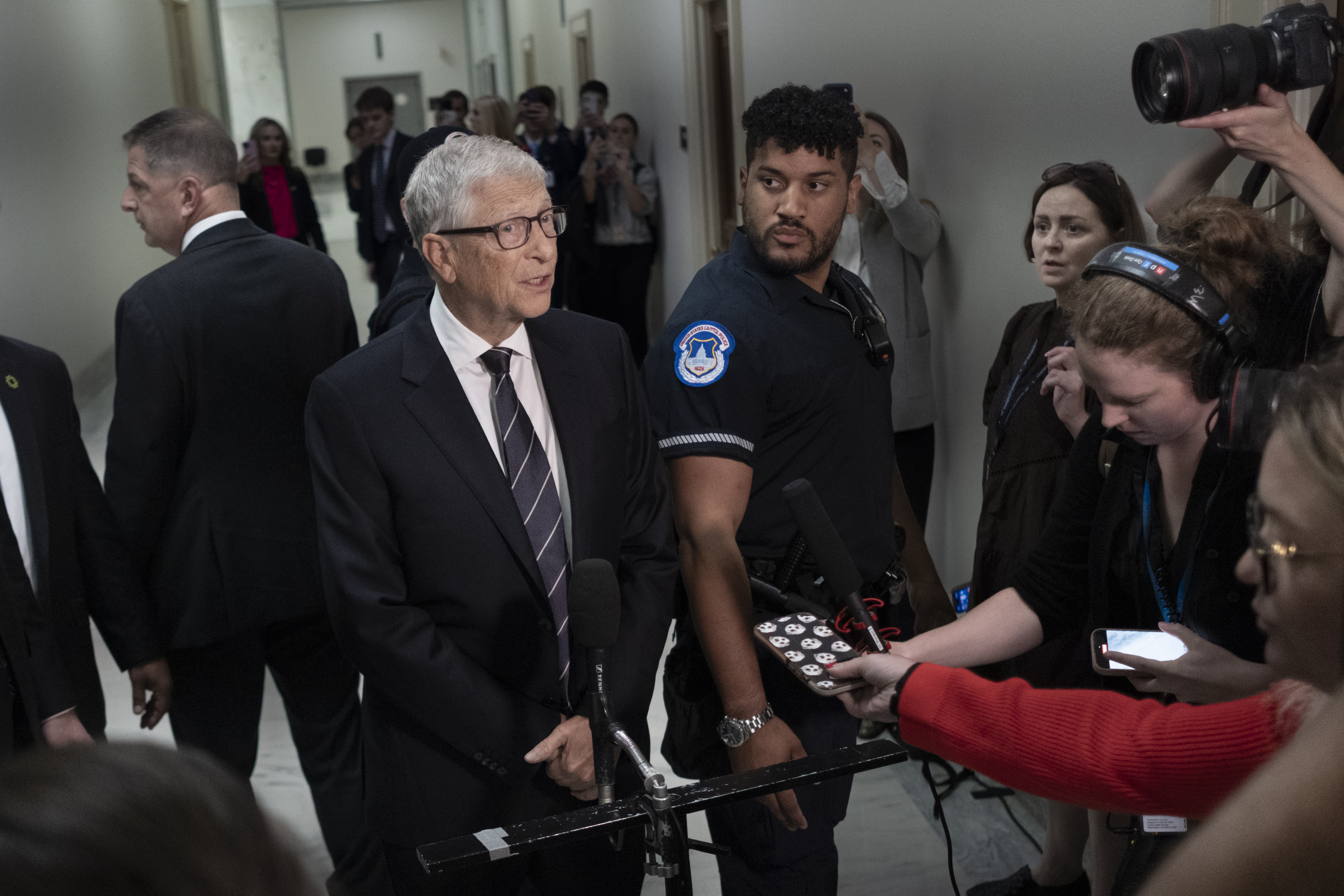
    FILE — Bill Gates arrives for a House committee hearing in the Jeffrey Epstein investigation in Washington on June 10, 2026. Gates, the billionaire co-founder of Microsoft, is loudly warning that artificial intelligence poses a grave threat to jobs and human life, and that urgently addressing the risks should be “the world’s top priority.” (Chona Kasinger/The New York Times)CHONA KASINGER
    Bill Gates at his office in Kirkland, Wash., on Aug. 21, 2026. Gates, the billionaire co-founder of Microsoft, is loudly warning that artificial intelligence poses a grave threat to jobs and human life, and that urgently addressing the risks should be “the world’s top priority.” (Chona Kasinger/The New York Times)CHONA KASINGER
    FILE — Anthropic’s Code With Claude event in San Francisco, May 7, 2026. Bill Gates, the billionaire co-founder of Microsoft, is loudly warning that artificial intelligence poses a grave threat to jobs and human life, and that urgently addressing the risks should be “the world’s top priority.” (Jason Henry/The New York Times)JASON HENRY
  • Before Hegseth fired him, top general was advised to drop Kid Rock probe

    Before Hegseth fired him, top general was advised to drop Kid Rock probe

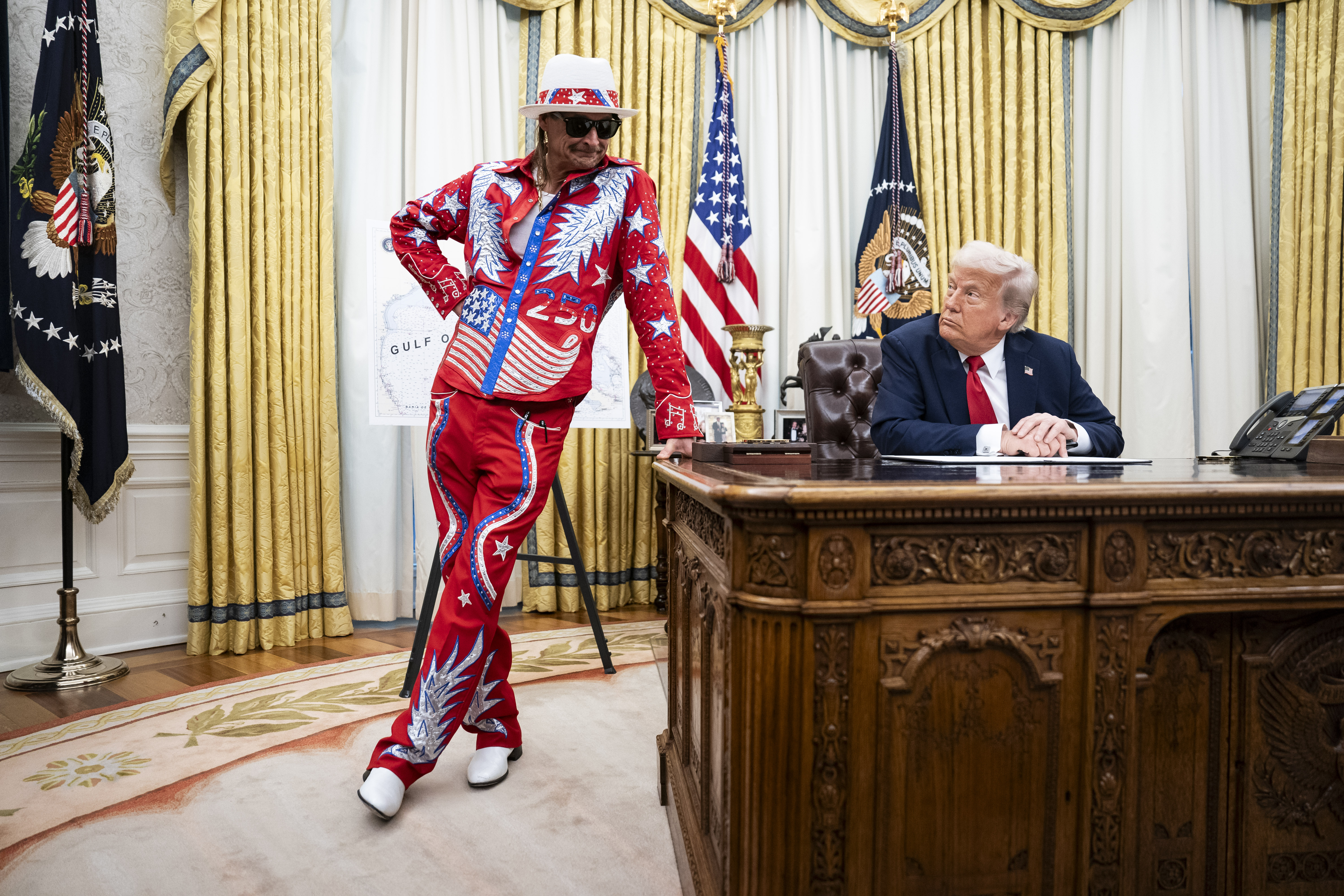
    Days before the Army’s top officer was abruptly fired earlier this year, he was advised by a fellow general now vying to replace him to stop the military’s investigation into an unauthorized helicopter flyby of musician Kid Rock’s Tennessee estate, three people familiar with the matter said.

    Gen. Randy George, whom Defense Secretary Pete Hegseth removed as the Army chief of staff without explanation, felt it was important to follow typical protocol and determine whether any safety regulations had been violated during the March 28 flyby, these people said. Like some others, they spoke on the condition of anonymity to discuss the episode.

    Gen. Chris LaNeve, the Army’s No. 2 officer, told George that Hegseth did not want the investigation to proceed, one person said. The two others said that George later confided in colleagues about the encounter with LaNeve and seemed troubled by it. George told them that LaNeve suggested it would be best if the review was scuttled, those people said.

    The revelation, which has not previously been reported, adds a new layer of understanding to Hegseth’s potential motivations for firing George on April 2. Kid Rock, whose legal name is Robert Ritchie, is a vocal supporter of President Donald Trump and avowed critic of many Democratic politicians and causes.

    Through a spokesman, George, who is now retired, declined to comment. Army officials did not respond to questions about LaNeve, whose candidacy for the chief of staff job faces resistance in Congress.

    Hegseth, in a statement provided to The Washington Post, did not directly address the discussion between the two generals and described LaNeve as “precisely the kind of leader the U.S. Army needs right now,” interested in strengthening the Army, and “not interested in playing politics in Washington.”

    “He is a back-to-basics, no politics, no-nonsense General — exactly what President Trump expects,” Hegseth’s statement said. “The critics coming after him are the same out-of-touch so-called insiders who’ve spent years undermining our military with woke policies and endless wars. They hold deep grudges against any commander willing to put America and our troops first, but their days of influence are over.”

    Sean Parnell, a spokesman for Hegseth, said that the new reporting about George’s departure amounted to a “regurgitating” of a “tired, old story simply to manufacture drama.”

    Hegseth and his advisers have for months declined to say what precipitated George’s ouster, even when asked directly by Republican and Democratic lawmakers who objected to the firing. He has long been at odds with the service’s senior leadership — including Army Secretary Dan Driscoll, a fellow Trump appointee who at one time was viewed as a potential replacement for Hegseth. Driscoll is now expected to leave the administration soon, perhaps within weeks, officials said.

    Others familiar with George’s firing have said that multiple factors were probably at play, including his close working relationship with Driscoll.

    Since taking charge of the Pentagon in January 2025, Hegseth, a former Fox News personality who spent years in the Army National Guard, has overseen the dismissal of more than two dozen top officers. The firings typically occur without cause, though he has complained broadly that the military’s upper ranks are insufficiently loyal to the president or caught in old ways of thinking. Many of those removed have been women and minorities.

    LaNeve’s actions in the Kid Rock investigation could further complicate his ascension to the Army’s top post. While he has filled the role on an acting basis since George’s ouster nearly five months ago, Trump administration officials have not yet formally nominated him to become the chief of staff amid concerns that he lacks support within the Republican-led Senate Armed Services Committee, said three separate people familiar with the views on Capitol Hill.

    Sen. Joni Ernst, an Iowa Republican and retired Army National Guard officer initially skeptical of Hegseth’s nomination to lead the Pentagon, opposes LaNeve, these people said. Both George and Gen. James Mingus, another top Army officer forced out by Hegseth, are from Iowa.

    Without votes from Democrats, nominees require unanimous Republican support on the committee to advance.

    Ernst’s office did not respond to a request for comment.

    The Wall Street Journal first reported her opposition to LaNeve.

    Parnell, Hegseth’s spokesman, downplayed the situation, saying in his statement that Pentagon officials are “actively coordinating with our Senate partners to lock in the optimal moment to formally submit his nomination, and we intend to do so.”

    On March 31, three days after two AH-64 Apache helicopters flying outside Nashville buzzed the home of Kid Rock, Army officials with the 101st Airborne Division at nearby Fort Campbell announced they were grounding the pilots and launching an administrative investigation.

    Video shared on social media by the musician showed the aircraft at low altitudes. In his post, he also criticized California Gov. Gavin Newsom, a Democrat who is a frequent critic of the Trump administration. “This is a level of respect,” Kid Rock wrote, that Newsom “will never know.”

    At the time, the Army said it also was reviewing the flight path of a helicopter that flew the same day over a “No Kings” protest against Trump in nearby Clarksville, Tennessee. Flight tracker data showed that the aircraft dipped to as low as 625 feet, at one point circling over where protesters were gathered.

    When the incidents attracted unflattering news coverage, Hegseth promptly intervened. He terminated the Army’s investigation and exonerated the aircrews involved — encouraging them to “Carry on, Patriots.”

    A few weeks later, Hegseth and Kid Rock flew in Apache helicopters from Fort Belvoir in Virginia, located in suburban D.C. Parnell said then that it was part of a broader community relations event.

    LaNeve, 59, was not viewed by his Army peers as a likely future chief of staff before the Trump administration came into office, but he caught the president’s attention with a congratulatory call during the Commander-in-Chief Inaugural Ball, people familiar with the matter said. At the time, LaNeve was commanding U.S. soldiers in South Korea and called the president from there.

    LaNeve was moved into a more influential position as Hegseth’s senior military aide after the defense secretary’s team ousted Lt. Gen. Jennifer Short from the role the following month.

    This past fall, Hegseth elevated LaNeve again, nominating him to become the Army’s vice chief of staff while forcing Mingus into retirement early.

    In a May hearing before the House Armed Services Committee, LaNeve faced sharp questions from Republicans over the Pentagon’s decision to cancel the deployment of an Army brigade to Poland, a NATO ally that borders Ukraine.

    When Rep. Don Bacon (R-Nebraska) asked him about the Poland decision, LaNeve declined to say why the deployment was canceled, arguing he was not part of the military’s “policy side.”

    “But you’re the chief of staff of the Army,” Bacon responded, noting his acting role.

    George had been expected to serve as the Army’s chief of staff until fall 2027, completing a typical four-year assignment in the role. Hegseth asked him to retire early during a phone call, news of which was leaked minutes later to CBS News, officials have said previously. The move thwarted any effort by Driscoll, the Army secretary, to save the general’s career before the decision was publicized.

    Hegseth’s campaign of firings and forced retirements has removed a number of other candidates who may otherwise have been considered for elevation to Army chief of staff, officials said. They include Mingus, who retired early this year; Gen. David Hodne, who was fired without explanation in April; and Gen. Christopher Donahue, who is expected to retire soon after Hegseth stonewalled efforts within the Army and on Capitol Hill to extend his career.

    Amid the purge, Driscoll has begun to consider his own departure, officials familiar with the matter said. The Wall Street Journal reported Friday that he could leave the Trump administration by the end of the year. That appears likely, officials said, but no firm plan has emerged yet.

    As The Post and others reported in the immediate aftermath of George’s firing, aides to Hegseth have touted Parnell, the Pentagon spokesman, becoming Army secretary. Parnell has told colleagues privately that he is interested in the job should it become open.

  • State Dept. pauses immigrant visa appointments worldwide, says staff need training

    State Dept. pauses immigrant visa appointments worldwide, says staff need training

    The Trump administration has temporarily paused immigrant visa appointments worldwide, saying it needs time to train all consular staff on screening applicants who might become dependent on public benefits.

    Appointments for visa services at U.S. embassies were being “adjusted” because of the “global training initiative” launched this month, the State Department said in a statement. It did not say when the appointments would resume.

    “A more prosperous America means ensuring that visa applicants are not likely to become a public charge, as defined under U.S. law and regulation, and not likely to become dependent on U.S. public benefits reserved for qualified Americans in need,” the statement said, adding the training would ensure consular officers “are fully equipped to evaluate every visa applicant comprehensively and consistently.”

    A former State Department official said immigrant visa appointments worldwide had been paused Monday through the end of the month. The training materials were being rolled out after a federal judge struck down the administration’s 75-country visa ban, which was framed as a way to prevent immigrants from entering who might use public benefits, on Friday.

    As of Tuesday, the training materials still had not been disseminated, said the former official, who spoke on the condition of anonymity to share information on internal operations.

    President Donald Trump has made several moves to tighten legal immigration pathways to the United States since his return to office last year. Many of those efforts have faced legal challenges.

    In Friday’s ruling, the judge said that the visa ban violated antidiscrimination protections in federal immigration law, and was “a direct abrogation” of consular officers’ exclusive, congressionally granted authority to determine if someone is eligible for a visa.

    The Trump administration has also taken other steps to curb migration. On Tuesday, the State Department said it planned to revoke the business and tourism visas of people who have claimed asylum after arriving in the country.

    It is expected to affect those granted B1 and B2 visas — typically issued for tourism and business travel — between 2016 and 2026, who have sought asylum or are now seeking asylum. The department did not confirm the number of visas that could be revoked, but said it would be done on a “rolling basis.”

    The department has also proposed charging employers seeking skilled foreign workers through the H-1B visa program a $103,265 fee, according to a regulation posted Monday.

    The administration argues that the H-1B program, created by Congress in 1990, has been used to take jobs away from Americans.

    Trump attempted to introduce a $100,000 fee last year through a presidential proclamation, but it was invalidated by a federal judge in June.

  • Democratic states file new lawsuit seeking to block Trump’s order limiting mail voting in midterms

    Democratic states file new lawsuit seeking to block Trump’s order limiting mail voting in midterms

    Democratic-controlled states on Wednesday filed another lawsuit challenging President Donald Trump’s executive order seeking to limit mail voting in this year’s midterm elections.

    The action, filed by about two dozen states against the U.S. Postal Service, marked a new phase in the high-stakes litigation just two days after the Supreme Court ruled against them in a separate case, but did not say Trump’s order was legal.

    The high court majority found the Democratic lawsuit was premature, but that was before the Republican administration issued a rule governing Postal Service delivery of mail ballots. Election officials warn it will be impossible to implement in the days before the first wave of mail ballots are sent out next week.

    “Across the country, states are already deep into preparations for the 2026 elections. Now, at the last moment, the federal government is attempting to meddle in those preparations and potentially threaten countless Americans’ right to vote,” New York Attorney General Letitia James, one of 25 Democratic attorneys general filing the lawsuit, said in a statement. “USPS has no authority to decide who can and cannot vote by mail.”

    Trump’s executive order remains barred from taking effect under a separate injunction that the administration argues needs to be immediately rescinded in light of the high court’s ruling in the previous Democratic state lawsuit. It also had succeeded in a third case filed in May in the District of Columbia, convincing a judge that it was too early to prevent its implementation of the executive order.

    All previous challenges were filed before the administration published its mail ballot rule Friday night. The rule says that if states want their mail ballots delivered, they will need federal approval of the design of their envelopes and must give the Postal Service a list of voters eligible to receive them.

    White House spokesperson Lauren Bis on Wednesday said the Postal Service’s proposals were “commonsense measures that protect the security of mail-in ballots” and that the administration would continue to work to implement them to boost “the safety and security of our elections.”

    The Postal Service said it would not comment because of the pending lawsuit.

    National Democrats on Tuesday cited the rule in asking the federal judge in the Washington case to block Trump’s order after he declined to do so last spring, saying the administration at the time had not taken concrete action. In Boston, U.S. District Judge Indira Talwani also found that the administration moving forward with the mail ballot rule had violated a separate injunction she had placed on the Postal Service prohibiting it from enacting Trump’s order, although she did not take any action against the government.

    Talwani, who was nominated by Democratic President Barack Obama, had issued the injunction against Trump’s executive order in the prior Democratic state case, which is the one the Supreme Court overturned on Monday. She has yet to act on the administration’s urging her to revoke her second injunction. It was issued Aug. 11 in a case against the executive order and was filed by the League of Women Voters and other voting rights groups while the Supreme Court was considering the administration’s appeal of the judge’s first order.

    Trump has long targeted mail voting, which he falsely blames for his 2020 election loss and is disproportionately used by Democrats as a result of Trump’s condemnations. Since returning to power, Trump has tried to claim authority over election rules, saying he thinks Republicans should “take over” vote counting in Democratic areas.

    He issued his first election executive order just months after retaking office, attempting to require documentary proof of citizenship to vote, among other changes. He has also been pushing a sweeping election bill that has stalled in the Senate amid opposition from Democrats and even some within his own party.

  • Democratic states file new lawsuit seeking to block Trump’s order limiting mail voting in midterms

    Democratic states file new lawsuit seeking to block Trump’s order limiting mail voting in midterms

    Democratic-controlled states on Wednesday filed another lawsuit challenging President Donald Trump’s executive order seeking to limit mail voting in this year’s midterm elections.

    The action, filed by about two dozen states against the U.S. Postal Service, marked a new phase in the high-stakes litigation just two days after the Supreme Court ruled against them in a separate case, but did not say Trump’s order was legal.

    The high court majority found the Democratic lawsuit was premature, but that was before the Republican administration issued a rule governing Postal Service delivery of mail ballots. Election officials warn it will be impossible to implement in the days before the first wave of mail ballots are sent out next week.

    “Across the country, states are already deep into preparations for the 2026 elections. Now, at the last moment, the federal government is attempting to meddle in those preparations and potentially threaten countless Americans’ right to vote,” New York Attorney General Letitia James, one of 25 Democratic attorneys general filing the lawsuit, said in a statement. “USPS has no authority to decide who can and cannot vote by mail.”

    Trump’s executive order remains barred from taking effect under a separate injunction that the administration argues needs to be immediately rescinded in light of the high court’s ruling in the previous Democratic state lawsuit. It also had succeeded in a third case filed in May in the District of Columbia, convincing a judge that it was too early to prevent its implementation of the executive order.

    All previous challenges were filed before the administration published its mail ballot rule Friday night. The rule says that if states want their mail ballots delivered, they will need federal approval of the design of their envelopes and must give the Postal Service a list of voters eligible to receive them.

    White House spokesperson Lauren Bis on Wednesday said the Postal Service’s proposals were “commonsense measures that protect the security of mail-in ballots” and that the administration would continue to work to implement them to boost “the safety and security of our elections.”

    The Postal Service said it would not comment because of the pending lawsuit.

    Pennsylvania is one of the states suing the Trump administration.

    “Absolutely nothing has changed here in Pennsylvania. You can vote in person on Election Day or you can vote by mail before Nov. 3,” Democratic Gov. Josh Shapiro said Tuesday evening before the suit was filed.

    “Your vote will be counted. Your vote is safe and secure,” Shapiro said. “No matter how many times the president wants to try and undermine people’s right to vote in this commonwealth, he needs to know that he will be met with a swift rebuke from me.”

    National Democrats on Tuesday cited the rule in asking the federal judge in the Washington case to block Trump’s order after he declined to do so last spring, saying the administration at the time had not taken concrete action. In Boston, U.S. District Judge Indira Talwani also found that the administration moving forward with the mail ballot rule had violated a separate injunction she had placed on the Postal Service prohibiting it from enacting Trump’s order, although she did not take any action against the government.

    Talwani, who was nominated by Democratic President Barack Obama, had issued the injunction against Trump’s executive order in the prior Democratic state case, which is the one the Supreme Court overturned on Monday. She has yet to act on the administration’s urging her to revoke her second injunction. It was issued Aug. 11 in a case against the executive order and was filed by the League of Women Voters and other voting rights groups while the Supreme Court was considering the administration’s appeal of the judge’s first order.

    Trump has long targeted mail voting, which he falsely blames for his 2020 election loss and is disproportionately used by Democrats as a result of Trump’s condemnations. Since returning to power, Trump has tried to claim authority over election rules, saying he thinks Republicans should “take over” vote counting in Democratic areas.

    He issued his first election executive order just months after retaking office, attempting to require documentary proof of citizenship to vote, among other changes. He has also been pushing a sweeping election bill that has stalled in the Senate amid opposition from Democrats and even some within his own party.

    Staff writer Jeff Neiburg contributed reporting.