Category: Wires

  • How these people used exercise to cope with unbearable grief

    How these people used exercise to cope with unbearable grief

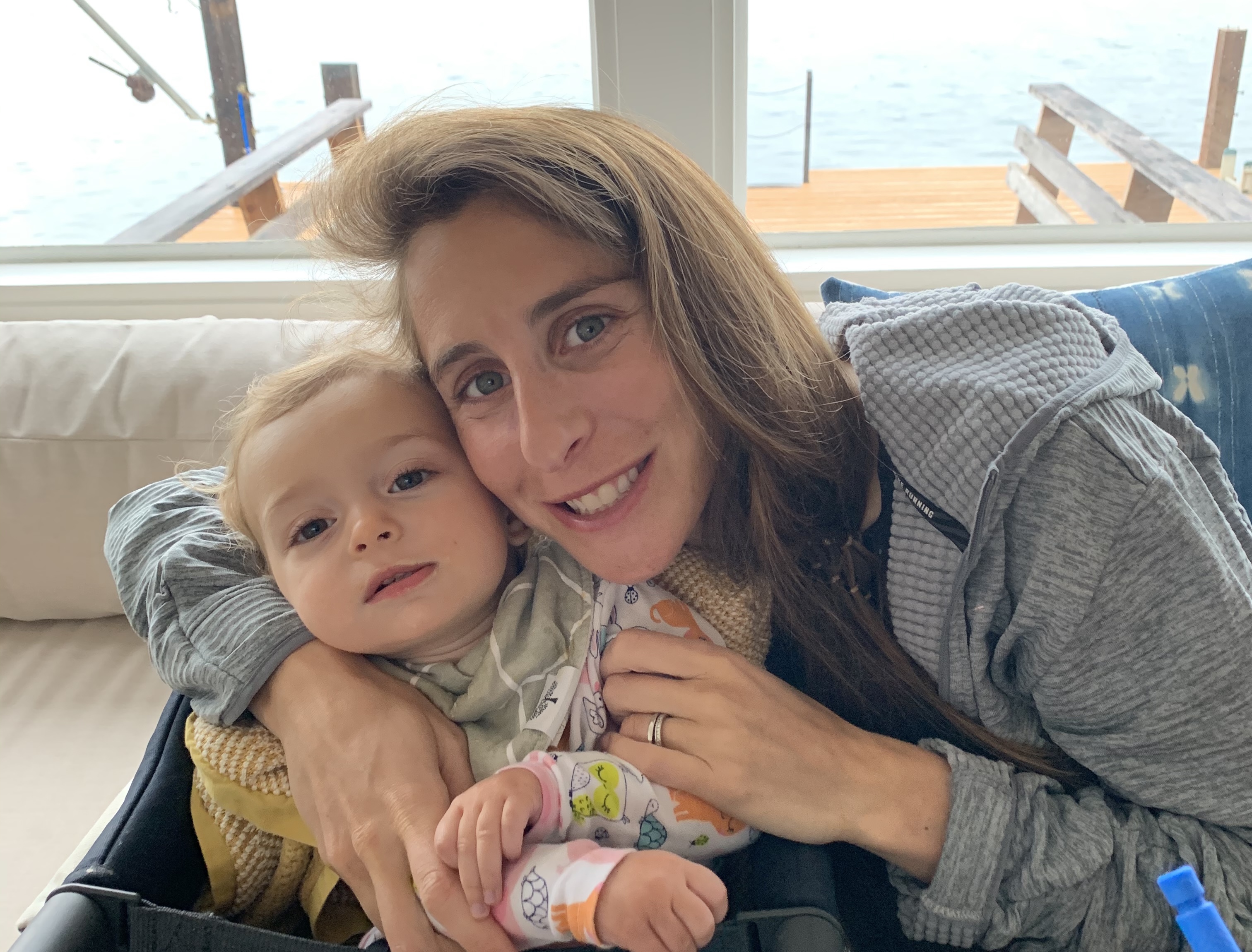
    Myra Sack has always been an athlete. She was picked first for neighborhood basketball games when she was growing up outside of Philadelphia.

    Sack, 38, went on regular jogs throughout most of her pregnancy. After Sack’s daughter Havi was born, the little girl loved the movement of the running stroller.

    Havi was 15 months old when she was diagnosed with Tay-Sachs, a rare and fatal genetic disease. Sack and her husband had done screening before conceiving, but they said they were given results that turned out to be incorrect.

    Havi died in 2021 when she was 2 years, 4 months old.

    “I remember someone saying to me, ‘You’re going to meet these incredible people who have also lost children,’” Sack said. “And at the time, I was like, ‘I don’t want to be a part of this community at all. I hate this.’”

    Over time, Sack said her grief made her feel like “an alien.” She wanted to talk about Havi but not in the windowless room she imagined when she pictured a grief circle.

    A little more than a year after Havi died, Sack reached out to friends, hospitals, and the local running community, and she found 18 people who, like her, had suffered a life-altering loss. The group gathered at mile 21 of the Boston Marathon route with a plan to meet weekly for a couple months to talk and train for a half-marathon.

    One of the acquaintances Sack reached out to was Maria Rodrigues, whose 17-year-old son, Jairom, had died in a rock climbing accident while the family was on vacation in her home country of Brazil.

    “Of course I said yes,” said Rodrigues, even though she hadn’t been running in years. “And immediately I opened the computer, and I Googled, ‘How does a 60-year-old woman train for a half-marathon?’”

    Before their first run, the group members gathered in a circle and introduced themselves with their name and the name of the person they had lost. The group repeated their loved one’s name back to them.

    Each week, two or three people would share a brief story about their loved one with the group. Then they went for a run.

    The training was difficult, but Rodrigues stuck with it and completed the half-marathon in Newport, R.I.

    Rodrigues was surprised she made it across the finish line and said it helped her see she was stronger than she realized.

    “There’s a little bit of a parallel,” Rodrigues said. “As hard as this is, grief and the half-marathon, I can do it.”

    The loose curriculum of this first running grief group was based on Sack’s research and conversations with grief and trauma experts Joanne Cacciatore and Bruce Perry. It became the blueprint for her nonprofit E-Motion, which trains facilitators to run groups across the country and outside of the United States.

    ‘This is grief’

    When people are grieving, there are physiological changes as well as emotional ones: Heart rate, blood pressure, and the stress hormone cortisol all rise. There’s more inflammation, the immune system is suppressed, and many people experience exhaustion and brain fog.

    “You think about grief and you think about sadness, maybe you think about anger, but you don’t ever hear about the physical aspects of grief,” said Sarah McCarthy, a psychologist at Boston Children’s Hospital who helps support families after the sudden loss of a child.

    McCarthy was already working in this field when her daughter was diagnosed with leukemia. Even with everything she knew about grief, McCarthy was stunned by the way her body seemed to fall apart after her daughter’s death.

    “I was exhausted all the time,” McCarthy said. “I went to my PCP, and I was like, ‘What is wrong with my body?’ Nobody really sat down and said, ‘This is grief.’”

    Why exercise helps

    McCarthy moved to Boston after her daughter died, and she ended up meeting Sack through her work. Sack encouraged McCarthy to join a running group.

    “I actually hate running,” McCarthy said. Sack told her it didn’t matter and that the groups were for people at all levels. McCarthy bought a pair of running shoes and started training for a 10-kilometer race with an E-Motion group. It was as hard as she feared.

    “There was one day that I was like, ‘I’m going to quit,’” McCarthy said. “Another mom must have sensed that, and she just ran with me.”

    The pair took regular walk breaks. McCarthy stuck with the training and finished the 10K.

    “Afterward I told Myra, ‘This is amazing, and we need to study it,’” McCarthy said.

    While studies of E-Motion are still in early phases, research for years has shown that exercise is effective at improving mental health. Grief is different from anxiety and depression, but many of the symptoms can look similar, and scientists are beginning to turn their attention to whether exercise could help bereaved people, too.

    In research done in the United Kingdom in 2021, psychologists found that physical activity “allowed a sense of freedom” and gave people the opportunity to express emotions while finding more social support.

    In 2023, a longitudinal study showed that physical activity can promote resilience and help protect people against some of the most devastating consequences of traumatic loss. The bereaved people in the study who exercised more were less likely to develop chronic depression than those who exercised less.

    “I think that a lot of what is happening in grieving is actually not about verbal processing,” said Mary-Frances O’Connor, a grief expert and author of The Grieving Body: How the Stress of Loss Can Be an Opportunity for Healing.

    Though O’Connor wasn’t involved in these studies, she has spent much of her career looking at how our bodies and minds respond to grief. In her research, she found that muscle relaxation exercises, in which people tense and release muscles one at a time, are surprisingly effective at helping bereaved people feel better.

    She said that in addition to the physiological and mental health benefits of exercise, physical activity gives people a sense of agency at a time when the world feels out of control. Being part of a running or walking group means people are supporting each other and holding each other accountable.

    “Those are the things that I think help return us to community life, which is a vital and really difficult and under-discussed aspect of grieving,” O’Connor said.

    Connection

    Grief can be isolating, often because people don’t know what to say to someone who has been through a terrible loss.

    “They’re scared of saying the wrong thing or they’re just too scared of this topic in general, and they just pull away,” McCarthy said.

    Sack and McCarthy said groups like E-Motion help people connect with others who have been there.

    Rodrigues described how, walking or running side by side, participants fall in and out of conversation. Sometimes they talk about their loved ones but often they don’t.

    “You just simply, very fluidly pick up, slow down,” she said.

    Most of the E-Motion groups meet weekly for two months or so, but people form deep bonds in that short time. Many see each other between meetings and stay in touch for years, often finding close friends.

    “I think the beauty of death is that it cracks you open,” Rodrigues said. “We make connections because we’re vulnerable.”

  • Economists don’t expect reopening the U.S. to Mexican cattle imports to reduce high beef prices

    Economists don’t expect reopening the U.S. to Mexican cattle imports to reduce high beef prices

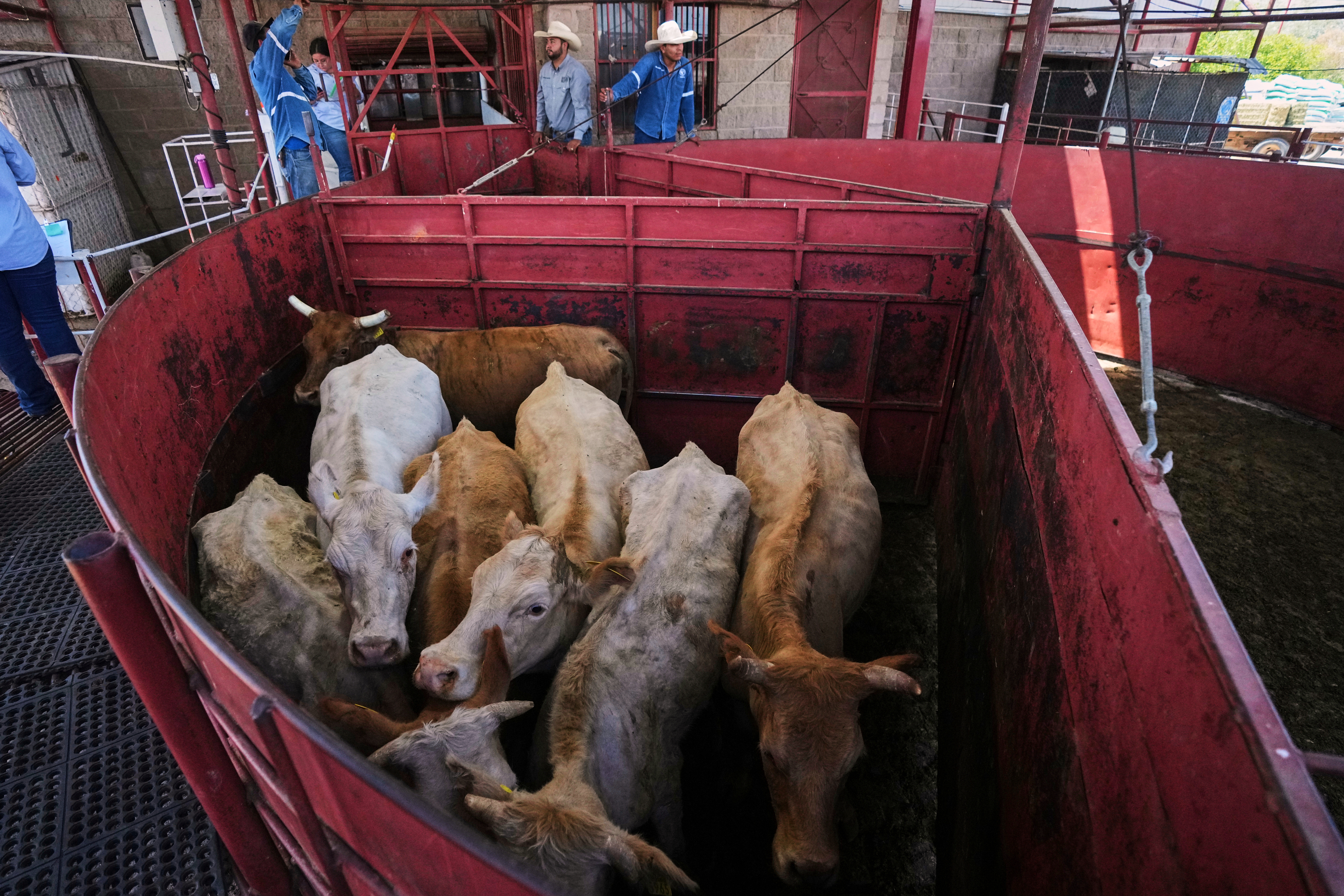
    The U.S. reopened a border crossing in Arizona to cattle from Mexico on Monday as part of a broader effort by the Trump administration to reduce record-high beef prices, though economists doubt the move will mean much to grocery store shoppers.

    The U.S. Department of Agriculture has said concerns about the New World screwworm’s spread lessened enough to allow the movement of cattle from Mexico at a crossing in Douglas, Ariz., about 230 miles southeast of Phoenix. Over time, it hopes to reopen other crossings in New Mexico and Texas.

    “Today, the border in Sonora is open for livestock,” Mexican President Claudia Sheinbaum said during a Monday morning news conference in Mexico City, referring to the Mexican state bordering Arizona.

    Cattle were coming across the border by mid-afternoon Monday.

    Beef prices clearly are a concern for President Donald Trump, who announced Friday that he would allow up to 331,000 tons (300,000 metric tons) of imported ground beef into the U.S., tariff-free, to be sold at below-market prices over the next 90 days. In February, the White House said closing the border to livestock imports from Mexico more than a year ago was “essential” to containing the screwworm, but it has exacerbated a shortage of cattle for slaughter in the U.S.

    “The administration obviously has a lot of incentive to try to be able to say that they’re doing something about high beef prices in particular,” said Derrell Peel, a professor of agribusiness at Oklahoma State University. “Beef has been singled out because it is an expensive product and because it’s just high profile.”

    The Trump administration closed the border to cattle imports in May 2025 as part of its response to the screwworm, a parasite with flesh-eating larvae that can infest and even kill cattle or other animals. The move came as the U.S. already was struggling to meet beef demand, thanks to a cattle herd that has been shrinking for five years and now is the smallest in decades.

    Because the USDA plans a phased reopening of the border, it will take months for Mexican imports to return to their traditional levels, Peel said. Mexico has traditionally provided 1.1 million head, or about 3% of the U.S. cattle supply.

    “I don’t expect to see any measurable impact on cattle prices or beef prices soon,” Peel said.

    The smallest U.S. herd in decades fueled record prices

    The USDA reported that on Jan. 1, the U.S. cattle herd had dropped to 86.2 million head, the lowest figure in 75 years. Beef prices skyrocketed over the past five years, rising significantly faster than food prices as a whole, according to the U.S. Bureau of Labor Statistics.

    The average price of a pound of ground beef rose nearly 57% from July 2021 to July 2026, from $4.39 to $6.89 — hitting a peak of $6.90 in May — with a 10% increase over the previous year. Food prices have risen about 25% overall in those five years, according to the bureau’s numbers.

    The price for a pound of uncooked steak rose 35% over the past five years, reaching a record $13.06 per pound in July, also 10% higher than a year before.

    But Glynn Tonsor, a professor of agricultural economics at Kansas State University, said the potential effect on beef prices from the smaller supply of cattle was lessened because the U.S. beef industry is more efficient and has been able to get more meat from each animal than in past years.

    The USDA says the reopening starts at a safe spot

    U.S. government and industry officials view the New World screwworm fly as a major threat to the nation’s $113 billion cattle industry. It was an annual warm-weather scourge for U.S. ranchers from at least the 1930s through the 1960s, until the U.S. largely eradicated it. The fly was contained for years near the Panama Canal, but returned to southern Mexico in late 2024 and advanced toward the U.S., with the first case in Texas since 1966 reported June 3.

    Since then, more than 40 cases have been confirmed in southern Texas and southeastern New Mexico, with infestations of cattle, sheep, goats, and dogs.

    In her July announcement of plans for a phased reopening of the border, U.S. Agriculture Secretary Brooke Rollins said it was possible to start with an Arizona crossing because the northern Mexican states of Sonora and Chihuahua had stronger animal health programs than other parts of Mexico. She also said each animal would be inspected and declared free of the parasite before crossing the border.

    U.S. Senate Agriculture Committee Chair John Boozman said the USDA is taking a “careful, science-based” approach to reopening the border and imposing strong animal health protocols.

    “This is an important step for America’s cattle producers, especially our feeders in the border states,” Boozman, an Arkansas Republican, said in a statement. “Restoring this long-standing trade is critical to strengthening our cattle supply and supporting a healthy, competitive beef industry.”

    Drought, low prices led to the smallest U.S. herd in 75 years

    Drought in cattle-producing regions of the U.S. is a major reason the national herd is so small, said David Anderson, professor of agricultural economics at Texas A&M University. If grass doesn’t grow, cattle have nothing to graze upon, forcing ranchers to sell them off. Low cattle prices over the past two decades also are a factor.

    “Where we are today is sort of the culmination of some 18, 19, 20 years of very low cattle prices,” he said. “That forces us to reduce our herds. Drought forces us to reduce them even further.”

    The shortage of cattle also has left beef processing plants operating below capacity.

    Tyson Foods, one of the nation’s largest meat processors, announced in November that it was reorganizing its beef operations and closing a plant in Lexington, Neb., about 220 miles southwest of Omaha. Earlier this month, it announced plans to close a plant in Utah outside Salt Lake City and another in Illinois about 150 miles southeast of Chicago.

    In June, another major U.S. processor, JBS USA, announced plans to close beef plants in Memphis and outside Philadelphia, though it later said it would keep some operations at the Pennsylvania plant to preserve 400 jobs there.

    Rebuilding the U.S. herd — and ultimately lowering prices — likely will take years, largely because a cow typically has only one calf a year, Peel said. In addition, breeding a heifer keeps her out of the food supply, tightening it further as the herd is rebuilt.

    Peel said prices will remain high for some time and for elected officials, “There’s nothing you can do.”

  • SEC joins Big Ten in banning pros from returning to college, includes basketball players

    SEC joins Big Ten in banning pros from returning to college, includes basketball players

    The Southeastern Conference passed a rule Tuesday banning players who have been drafted by NFL, NBA or WNBA teams or listed on rosters in those leagues, joining the Big Ten in taking a strong stand against this month’s unexpected surge of pro players trying to return to college.

    The SEC’s rule differs from the one adopted by the Big Ten, which only included football in its decision released earlier in the day.

    Combined, it leaves little doubt about where the nation’s two biggest conferences stand in the wake of court orders that were allowing players who had been on pro rosters, then released, to return back to college.

    It puts LSU on notice. This week, Tigers coach Lane Kiffin added Dae’Quan Wright and Zxavian Harris, a pair of undrafted players out of Mississippi who had tryouts in the NFL over the summer, but were released by their teams during training camp.

    The rule would also apply to basketball player R.J. Luis, who Monday won a court ruling that allowed him to sign with Will Wade’s program at LSU despite having briefly been under contract with the Jazz and Celtics of the NBA.

    There was no immediate comment from LSU.

    The Big Ten’s penalties for violating its rule include a half-season suspension for the head coach and a fine to the school. The SEC did not immediately divulge its penalties.

    The burst of rulemaking marked the latest chapter in a remarkable month for college sports, which was suddenly faced with the once-unthinkable but now court-approved return to college of players who had signed and sometimes played for professional teams.

    “I feel like I took a freaking gummy,” said Sean McVay, the coach of the Los Angeles Rams, when asked about the prospect of a player he released returning to college. “I don’t even understand it.”

    Kiffin was much more in tune with the change, suggesting in a news conference Monday that if LSU didn’t take such players, other teams certainly would. Now, nobody can — at least not among the 34 teams that make up the two biggest leagues in college and play an outsize role in spearheading policy across the industry.

    Another Power Four league, the Atlantic Coast Conference, was set to discuss the issue Wednesday.

    They are reacting to a series of losses in state courts around the country, where judges are granting players who graduated high school in 2022 a fifth year of eligibility. In June, the NCAA passed a rule giving most players five years to finish five seasons of eligibility in college, but did not grandfather in the Class of ’22.

    Hundreds of those players saw their fourth — and supposedly final — year of eligibility run out last spring. They are arguing in courts that they’re being denied educational opportunities and the chance to earn name, image and likeness money that they could get in a fifth year.

  • Watchdog files bar complaint against Jeanine Pirro over bid to indict 6 Democratic lawmakers

    Watchdog files bar complaint against Jeanine Pirro over bid to indict 6 Democratic lawmakers

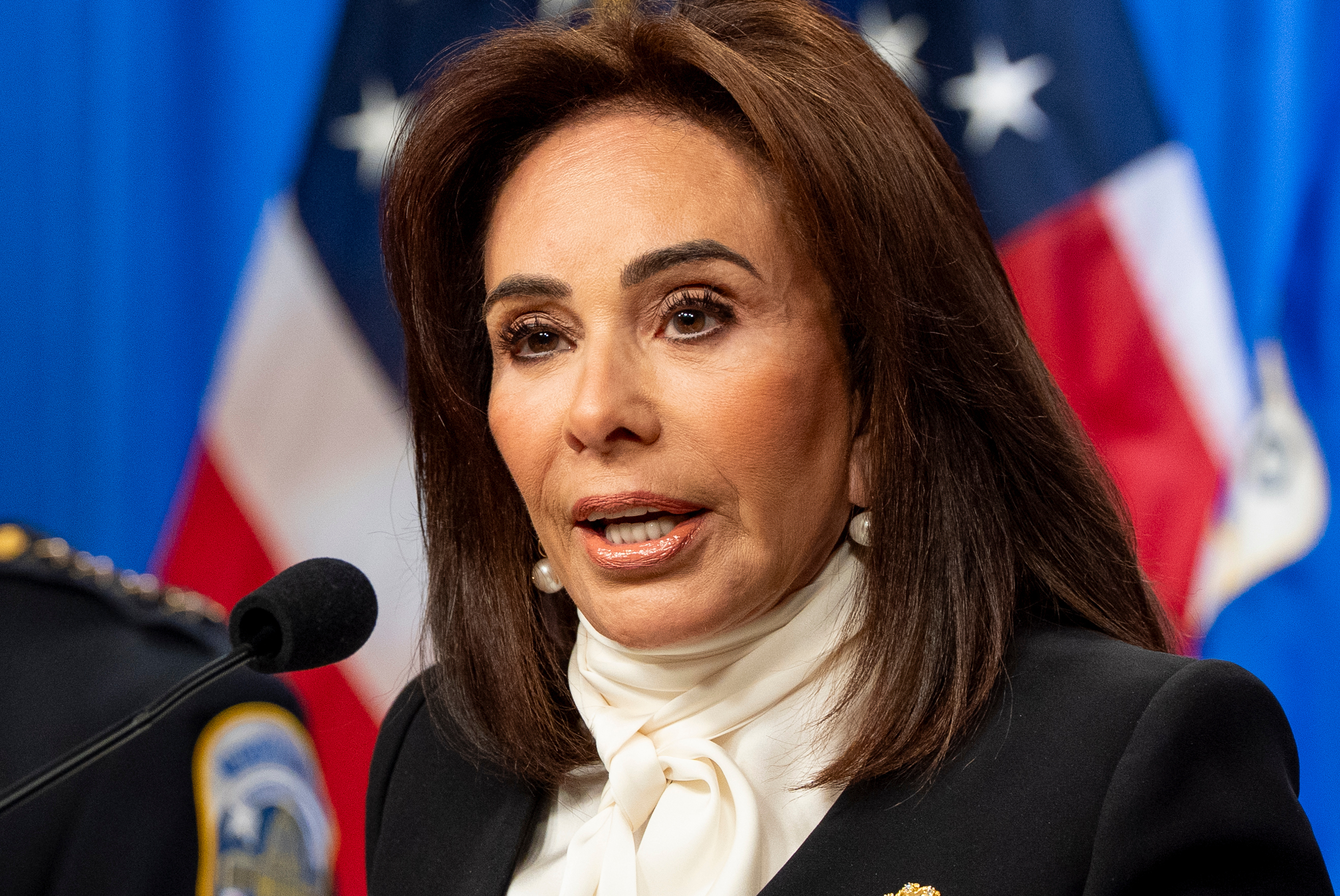
    WASHINGTON — A legal watchdog says it filed bar complaints on Tuesday accusing U.S. Attorney Jeanine Pirro and two lieutenants of violating their ethical duties in seeking to charge six Democratic lawmakers with federal crimes for appearing in a video that called on troops to resist unlawful orders.

    The Legal Accountability Center’s bar complaints, filed in New York and Virginia, claim Pirro and her subordinates, Carlton Davis and Steven Vandervelden, abused their prosecutorial powers to seek “meritless” indictments against President Donald Trump’s “perceived political enemies.”

    Tim Lauer, a spokesperson for Pirro’s Washington-based office, noted that it’s a grand jury’s job — not prosecutors’ — to decide whether to hand up an indictment.

    “Attempting to weaponize the disciplinary process against prosecutors for doing their jobs amounts to nothing more than a frivolous complaint,” Lauer said in a statement.

    In February, a grand jury in Washington refused to indict Sens. Mark Kelly and Elissa Slotkin and four House Democrats for urging U.S. service members to follow established military protocols and reject orders they believe to be unlawful. All six lawmakers previously served in the military or at intelligence agencies. Trump accused them of sedition “punishable by DEATH” in a social media post.

    A grand jury’s refusal to return an indictment is extraordinarily rare, but it has become increasingly common in Washington during Trump’s second term. Pirro’s critics have accused her of pursuing other legally dubious and politically motivated cases at the Republican president’s behest, such as the recently abandoned felony charge against a former Olympian who was accused of defacing the Lincoln Memorial Reflecting Pool.

    The center has filed complaints against other Trump administration officials, including Ed Martin Jr., Pirro’s predecessor as U.S. Attorney for the District of Columbia. Martin has been a leading figure in Trump’s campaign to use the Justice Department to prosecute his political opponents.

    In its complaint against Pirro, the center asks bar officials to investigate whether she and her colleagues violated rules of professional conduct for attorneys — and to “pursue appropriate discipline” against them. Its complaint against Pirro says her office had no legal basis for its “patently improper effort” to secure an indictment against the six lawmakers.

    “The only purpose could have been political animus and a desire to intimidate perceived enemies of the federal government and the President, who personally criticized the lawmakers’ video as seditious and punishable by death,” the complaint says.

    Defense Secretary Pete Hegseth has tried to punish Kelly, a former Navy pilot representing Arizona, for participating in the video. Kelly sued in federal court to block the censure from Hegseth. A district court judge ruled in his favor. Hegseth has asked an appeals court to review the decision.

    The center filed its complaint against Pirro and Vandervelden with a grievance committee based in White Plains, N.Y. In New York, the state Supreme Court’s appellate division governs ethical complaints against attorneys. The center filed its complaint against Davis with the Virginia State Bar.

    “Prosecutors have enormous power, and with that power comes an obligation to exercise independent legal judgment rather than use the criminal justice system to carry out a president’s political demands,” the center’s co-founder, Michael Teter, said in a statement.

    Pirro, who served as a county prosecutor and judge in New York, left her Fox News hosting job to become the top federal prosecutor for Washington last year.

  • FEMA crew broke law by skipping homes with Trump signs, federal watchdog says

    FEMA crew broke law by skipping homes with Trump signs, federal watchdog says

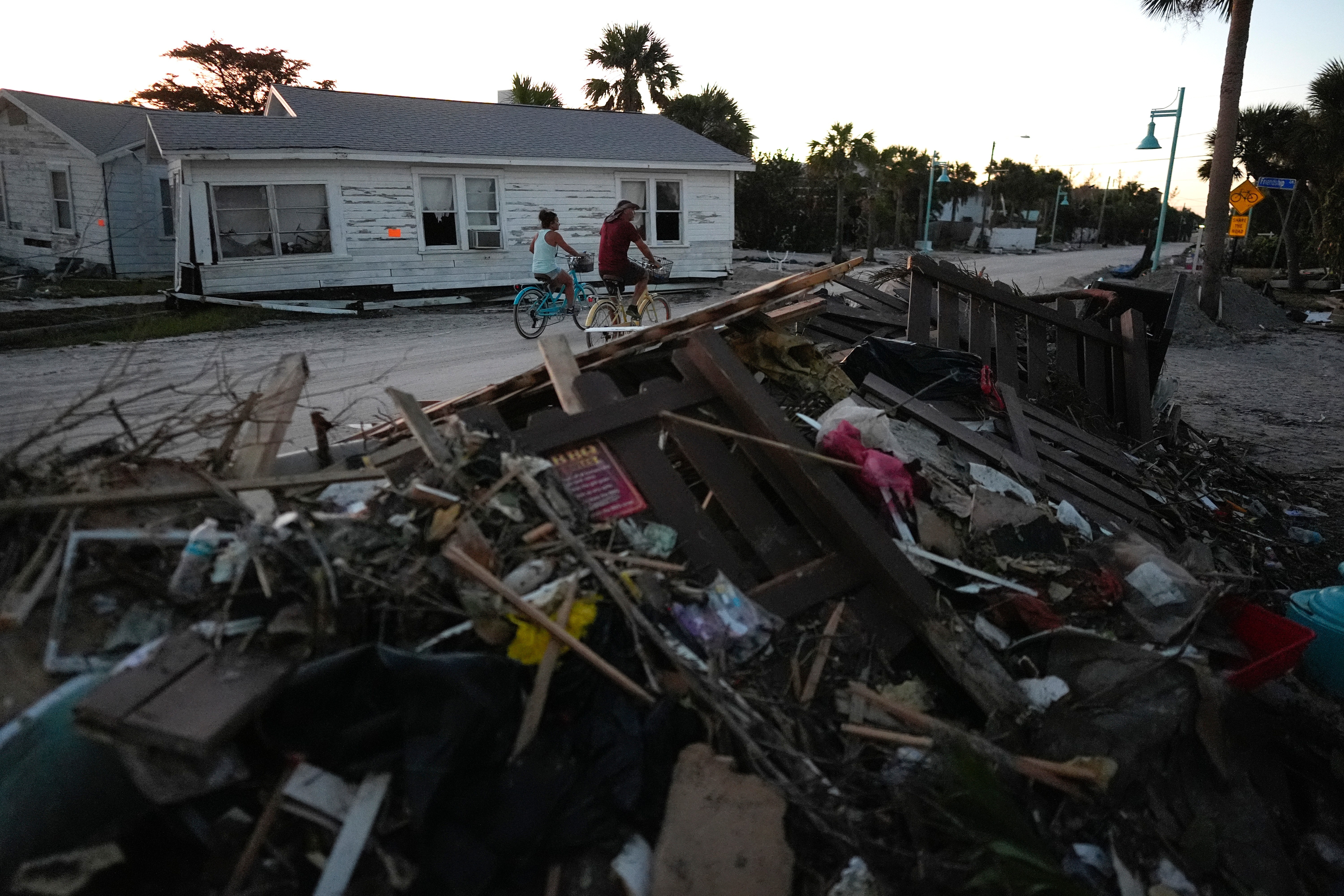
    A crew of Federal Emergency Management Agency staffers working on the response to Hurricane Milton in 2024 violated the law and agency policy by skipping nearly a dozen homes displaying signs supporting then-presidential candidate Donald Trump, a federal watchdog said Tuesday.

    The new report by the Department of Homeland Security’s Office of Inspector General found that the decision by a crew with the agency’s Disaster Survivor Assistance program “eroded public trust in FEMA’s ability to treat everyone impartially, offer unbiased and consistent assistance, and ensure equal access to resources and tools.”

    Back-to-back hurricanes hit Florida within two weeks of each other in late September and early October 2024, prompting emergency declarations and federal assistance. FEMA Disaster Survivor Assistance crews canvassed 744,288 homes and other sites in response, according the report, and did not contact “555,374 locations for reasons such as private property signs or safety concerns.”

    During FEMA’s hurricane response, which was unfolding during the last few weeks of the pivotal election, a FEMA crew lead instructed team members to avoid homes with Trump signs due to safety concerns. The same crew bypassed those 11 homes in Florida, according to survey notes obtained by the inspector general’s office.

    At the time, the crew leader did not feel safe given the heightened tension and “was looking for ways to define safety. People were not getting good guidance, so she made her own way,” said a former senior FEMA official with direct knowledge of the situation.

    After several FEMA workers filed a complaint, the agency started its own investigation and officials referred the complaint to the Office of Special Counsel and DHS’ inspector general office. Gov. Ron DeSantis (R) blamed the Biden administration, writing online that it represented a “blatant weaponization of government by partisan activists in the federal bureaucracy.” FEMA quickly fired the crew leader and several other staffers involved in the incident.

    The watchdog found that the incident highlighted weaknesses in “FEMA’s training, documentation, and oversight.” Those Disaster Survivor Assistance crews did “not receive ethics and Hatch Act training before deploying to disasters,” the report said, nor was there a policy that required “crews to explain why they skipped homes.”

    Deanne Criswell, who headed FEMA during the Hurricane Milton response, said in a Signal message Tuesday that the report “validates the actions we took at FEMA when this incident was brought to our attention. Politics should never play a role in disaster response, and even one home skipped is unacceptable.”

    Criswell said that after they learned that the crew had bypassed those homes, officials ensured the “neighborhoods were recanvassed.”

    The agency did not have a formal system for reporting potential safety threats at the time, said the senior official, who spoke on the condition of anonymity because they were not authorized to speak publicly about the internal investigation. The inspector general report also identified this as a hole in the agency’s operations.

    Criswell and the other former official noted that FEMA’s internal review found that the Hurricane Milton incident was isolated to that crew.

    “FEMA personnel conducted more than 744,000 canvassing visits following Hurricanes Helene and Milton, and the Inspector General identified 11 homes skipped for political reasons by the same crew — findings that reinforce my confidence this was an isolated incident and not a systemic practice within FEMA,” Criswell said.

    However, safety concerns during disaster response are common, the former senior official said, with most of the encounters that FEMA canvassers faced involving guns.

    The inspector general report said that after FEMA learned of the crew skipping homes, it provided mandatory training to all disaster survivor teams, including those deployed in the field.

    FEMA concurred with all of the inspector general recommendations. In a letter from July, the agency said that “when concerns were raised regarding adherence to law and policy in performance of this work — FEMA leadership acted swiftly to investigate, remediate, and strengthen training and oversight. As a result, FEMA increased mission readiness training and no longer conducts FEMA-led door-to-door outreach efforts. Staff now provide support to survivors from fixed locations determined by state and local officials through a data-informed approach.”

  • FBI sets $25,000 minimum reward for dozens of unsolved Indian Country cases

    FBI sets $25,000 minimum reward for dozens of unsolved Indian Country cases

    SIOUX FALLS, S.D. — The Federal Bureau of Investigation has established a minimum reward of $25,000 in cases where people went missing or were killed in Indian Country, part of a broader effort to address high rates of violence affecting Native American communities.

    The new minimum applies to more than 50 unsolved homicides and missing-person cases in tribal communities. Most of the cases are less than 10 years old, though a dozen have been unsolved for more than two decades, an AP analysis found.

    Victims’ families and experts are unsure the higher amounts will be enough to get tipsters to come forward, citing people’s fears and distrust of the federal government.

    “Everybody’s scared in Oglala,” said Lisa Carlow, whose father, Patrick Carlow Sr., was found dead in his Pine Ridge Reservation home in 2023. “So to me it’s like, OK, what do you guys know that you’re not saying?”

    The FBI investigates federal crimes on nearly 200 Native American reservations, along with the U.S. Bureau of Indian Affairs. At the end of 2025, the FBI’s National Crime Information Center recorded just under 1,500 active cases involving missing Native Americans, though not all become federal cases. There isn’t a minimum reward that applies across all FBI cases.

    The FBI cited several cases in its recent announcement, including that of 8-year-old Maleeka Boone, who it said was likely struck by a vehicle on the Navajo Nation, and San Carlos Apache teenager Emily Pike, whose body was found after she disappeared from an Arizona group home.

    Higher rewards could stir new interest

    Mary Kathryn Nagle, a citizen of the Cherokee Nation of Oklahoma and an attorney who advocates for families of missing Native Americans, said federal investigators often “parachute in” to investigate crimes in tight-knit communities where witnesses may stay silent because of distrust and fear of retribution.

    Still, she said, larger rewards could provide an incentive for people to talk, and show families their loved ones’ cases are being taken seriously.

    “We have people in Indian Country who know what happened to our relatives,” she said.

    Luana Ross, who is Bitterroot Salish and a co-director of the Native Voices program at the University of Washington, said cash rewards could boost interest but often aren’t paid out.

    “It is my opinion that in reservation communities, people would be extremely reluctant to turn a friend or relative into a criminal justice system that hasn’t served them well,” she said.

    Lisa Foster’s longtime friend Mona Renee Vallo was found dead after a suspected hit-and-run along historic Route 66 in Laguna Pueblo, N.M., in 2022. Foster hopes the higher reward money will renew interest in the investigation.

    Foster described Vallo as a positive, bubbly friend who could have fun no matter what. She was a member of the Confederated Tribes and Bands of the Yakama Nation.

    “Someone knows something there,” Foster said. “They have to. I mean, it’s weird that she went to work and then all of a sudden this happened to her.”

    Frustration mounts as families seek answers

    The reward in Carlow’s case was increased to $25,000 in July, up from $10,000.

    Carlow’s family says the 73-year-old rancher was respected in the Oglala community. He mowed the grass for others and spent time with his grandchildren. The family said more calls started coming in after the reward was increased, but the wait for answers continues.

    Meanwhile, the FBI declined to provide the Associated Press an update on the case.

    “It’s so hard to get your hopes up like that and think, ‘This is it, we finally got Dad’s killer.’ And then nothing comes of it,” Lisa Carlow said.

    She said fear keeps community members who may have information from contacting authorities.

    “I think that’s like deep-rooted within our people,” said her sister, JoDee Carlow. “It’s not just on Pine Ridge. It’s on every reservation.”

    Relatives don’t want cases to be forgotten

    The FBI initially offered $5,000 for information in the deaths of two brothers from Ohio, Matthew and Philip Reagan. The reward was later doubled and now will hit $25,000. Though not Native Americans, they were killed on the Navajo Nation and are featured on the FBI’s Indian Country cases website.

    The brothers planned to visit Canyon de Chelly National Monument during a trip to California. Authorities believe their SUV got stuck in mud after GPS sent them off course near Sawmill. They were shot multiple times while walking to seek help, authorities said.

    Matthew Reagan’s wife, Faye Wurstner-Reagan, said she doubts a $25,000 reward will persuade anyone in the small community to come forward.

    “You would have to promise someone, like, actual protection,” she said. “I mean, they brutally murdered two men.”

    She suggested the FBI instead put resources toward law enforcement to keep the cases from going cold and for liaisons to keep families informed.

    FBI spokesperson Brooke Brennan in Phoenix said investigating crimes in Indian Country often is complex because of the remoteness, limited resources, and extensive workload.

    Wurstner-Reagan hopes that families united in pain and grief over missing loved ones and unsolved killings might one day see justice.

    “We’re just getting forgotten, like no one is remembering any of us, and we’re just told it’s an active investigation,” she said.

  • Iran may have little to lose as U.S. tries to squeeze its economy

    Iran may have little to lose as U.S. tries to squeeze its economy

    Facing a fresh economic assault from the United States, Iran’s leaders are gambling that they can weather the coming storm and make the cost of their suffering felt in an oil-rich region that is critical to the global economy.

    As Iran’s ever more devastating economic crisis deepens, experts warn, Iranian leaders may feel they have little to lose by responding to U.S. pressure with the kind of military escalation President Donald Trump now seems keen to avoid.

    “The danger is that ‘economic D-Day’ is being presented almost as a substitute for further war when it may instead become another mechanism for escalating it,” said Sina Toossi, an Iran expert at the Center for International Policy. “The harder Washington pushes third countries to sever Iran’s remaining lifelines, the stronger Tehran’s incentive becomes to demonstrate that participating in Iran’s isolation carries costs of its own.”

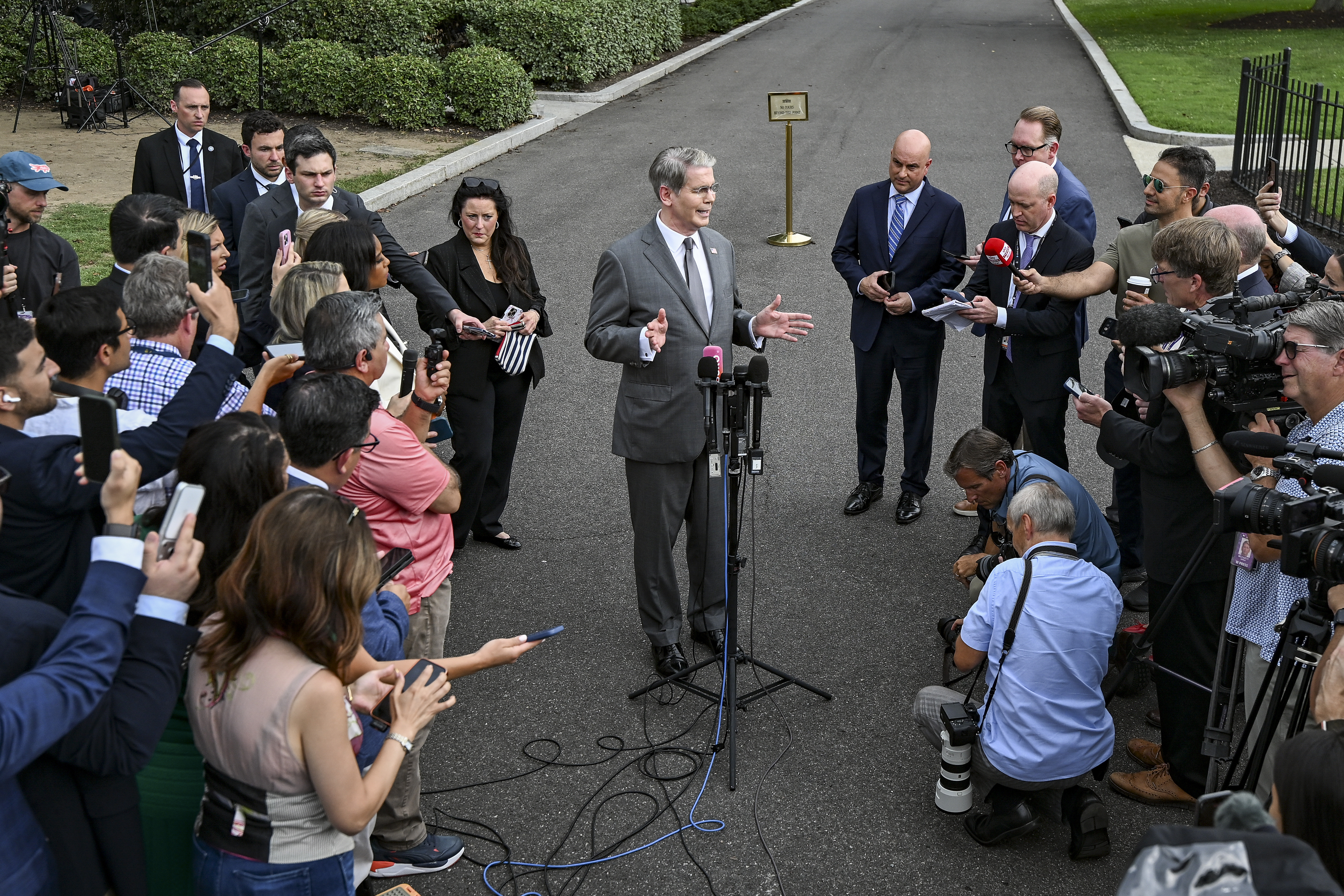
    Treasury Secretary Scott Bessent on Monday announced a new package of U.S. measures to disrupt Iran’s economy, although he offered few details. The success of the U.S. efforts will also depend on how much the Trump administration can persuade other countries to go along with its plan — especially critical trade partners for Iran, such as Turkey, Russia, and China.

    Still, as the Trump administration reached for military metaphors to convey the severity of its plans — calling them an “economic D-Day”— Iran responded in kind. Iranian officials have labeled the U.S. campaign the next phase of the war that Washington has waged since U.S.-Israeli strikes were launched in February.

    Economic warfare is the “main battlefield” in the current confrontation, Iran’s Revolutionary Guard was quoted as saying in a statement Monday cited by Press TV, an Iranian state news outlet.

    In statements broadcast after Bessent’s news conference, Iran’s economy minister, Ali Madanizadeh, warned that the country would find ways to push back.

    “The enemies intend to launch an economic terrorist attack on us, but we also have our own tools and know how to play the game,” he said, in comments carried by the semiofficial news agency, Tasnim.

    A day before Bessent’s announcements, Iran’s top security chief, Mohsen Rezaei, vowed that “not a single drop” of oil would leave the region if its Persian Gulf neighbors joined the U.S. effort, and that they would be considered enemy states.

    The severity of the Iranian warnings also highlights just how bad Iran’s current economic crisis is — and it is worsening by the day.

    A report Monday by Iran’s most prominent economic newspaper, Donya-e-Eghtesad, said Iran’s rial has depreciated to new lows. It has plummeted 41% since December, when the currency rate sparked protests that morphed into weeks of nationwide unrest. Iranian security forces responded with a deadly crackdown.

    Inflation and unemployment have soared, with prices of everyday goods increasingly out of reach for many Iranians. At the same time, the U.S. strikes that damaged Iranian energy infrastructure and the ongoing U.S. naval blockade have intensified an ever-worsening fuel supply crisis — an issue that sparked massive protests in 2019.

    But Iranian officials are projecting confidence that their leadership can survive because this new wave of U.S. measures looks similar to old ones. For decades, U.S. leaders have vowed to devastate the Iranian economy through ever harsher sanctions that the Islamic Republic’s leaders have learned to withstand.

    Iran’s leadership “has been planning to confront U.S. sanctions for a long time and is fully prepared for new sanctions,” Madanizadeh said late Monday. He said the government had a two-year plan in place for dealing with such sanctions.

    Iran’s ability to withstand the Trump administration’s economic pressure campaign will depend on the attitude of Iran’s key trading partners.

    Mahdi Ghodsi, an economist at the Vienna Institute for International Economic Studies, said that “faced with sufficiently credible secondary-sanctions risks,” those trading partners may “prefer to protect their much more important financial and commercial interests with the United States and reduce the services they provide to Iranian entities.”

    Some analysts also warn that the brunt of further economic pain is likely to be borne by ordinary Iranians, not Iran’s leaders.

    Among the sectors Bessent identified as being targeted in the new U.S. campaign were gold, digital assets, technology, aviation, and shipping — sectors that Esfandyar Batmanghelidj, who heads the Bourse & Bazaar Foundation, a London-based think tank focused on Iran’s economy, called “lifelines for the Iranian people.”

    “Digital assets and gold are how ordinary Iranians protect their savings from inflation,” he wrote in a social media post. “Technology keeps Iranians connected with the world. Aviation keeps Iranian families connected with loved ones across borders. Shipping is how essential goods, including food and medicine, reach Iran.”

    This article originally appeared in the New York Times.

  • Trump officials propose sale of ‘woke’ painting by Kehinde Wiley

    Trump officials propose sale of ‘woke’ painting by Kehinde Wiley

    The State Department wants to sell a painting by celebrated artist Kehinde Wiley that the director of its Art in Embassies program called “very woke” and “aesthetically terrifying.” It was removed from the U.S. Embassy in the Dominican Republic last week.

    The painting by Wiley, who rose to fame after being selected to create President Barack Obama’s official portrait, features four Dominican models against a floral backdrop. It was commissioned by the federal government in 2013 and paid for with taxpayer dollars.

    State Department officials removed the painting from the embassy last week, after first hiding it behind a tarp designed with an image of the American flag.

    Erin Scavino, the director of Art in Embassies, criticized Wiley’s painting in a recent podcast interview and pointed out the artist’s connection to Obama. Leah Campos, the U.S. ambassador to the Dominican Republic, celebrated its removal on social media with a video playing the rock anthem “We’re Not Gonna Take It,” writing that the painting was an example of “globalist and woke ideologies.”

    Neither elaborated on what she found objectionable.

    In a statement on Monday about the removal of the painting, a State Department spokesperson did not directly address the artwork. The statement instead criticized comments Wiley had made in 2023 about his “Judith and Holofernes” painting, which he described as “a play on the ‘kill whitey’ thing.” It also cited accusations of sexual assault that Wiley has denied.

    “The work of an individual with such violent and racist words and depictions has no place in the America First State Department,” the spokesperson said.

    The statement said the State Department is determining whether it can legally sell the painting of Dominicans, which is titled “Young Artists After Siamesas 1960.”

    “If that is feasible,” the spokesperson said, “it would be the goal of Art in Embassies to proudly do so.”

    A smaller painting by the artist sold at a Phillips auction in 2024 for nearly $845,000. Wiley and his gallerist, Sean Kelly, did not respond to requests for comment.

    Virginia Shore, who commissioned the Wiley painting, established many of the embassy art collections as director of acquisitions and chief curator for the Art in Embassies program between 2000 and 2017. She described the work as nonpartisan and said there was no precedent for selling embassy artworks.

    “Calling this woke is difficult for me to understand,” she said. “This is a program validated and financially backed under Bush. There is a science of building trust and empathy across borders.”

    Wiley received an award from the State Department in 2015 because of his contributions to cultural diplomacy. He often takes inspiration from historic paintings, asking contemporary Black models to pose inside his version of the compositions. For “Young Artists After Siamesas 1960,” he spent two years studying paintings by Dominican artists Celeste Woss y Gil and Gilberto Hernández Ortega, working with art students in the country to finish the scene.

    The artwork’s removal was the latest attempt to politicize the State Department’s art program, which became part of the government during the Kennedy administration in 1963 to foster cultural diplomacy. The program was strengthened in 1999 under the Secure Embassy Construction and Counterterrorism Act, which led to embassies developing their own permanent art collections.

    This year, Scavino claimed to have gotten an ambassador in Bucharest, Romania, fired over “satanic baby art,” though the diplomat’s departure was reported as a planned retirement. She also selected a friend with no curatorial experience to serve as the commissioner of the U.S. Pavilion at the Venice Biennale, bypassing normal procedures. In July, Scavino organized an exhibition in Washington that aimed to “Make Art Great Again” with nearly 70 versions of the American flag on display.

    In a statement about the removed Wiley painting, Campos, the U.S. ambassador, said, “It is my intention that everything we project from U.S. Embassy Santo Domingo, including the art and décor, reflect the beauty, strength, and commitment to liberty of the United States of America and its people.”

    Online, she had a stronger perspective: “Under the Trump administration and my leadership, we are leaving behind globalist, ‘woke’ ideologies to embrace, instead, American patriotism and the beauty of our great country.”

    She ended the sentence with an emoji of the American flag.

    This article originally appeared in the New York Times.

  • More than 50 kidnapped as violent gang attack in Haiti leaves 47 dead

    More than 50 kidnapped as violent gang attack in Haiti leaves 47 dead

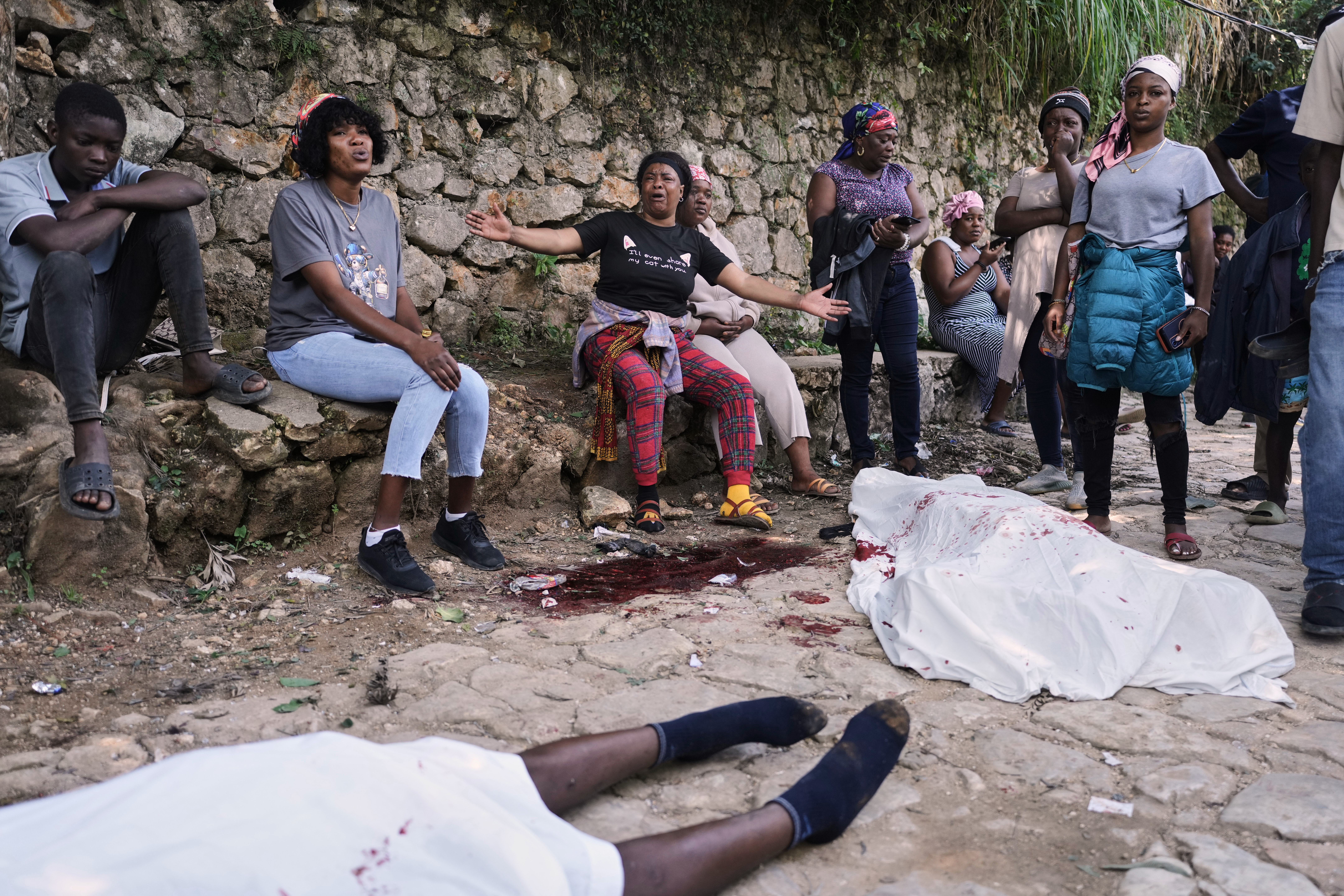
    PORT-AU-PRINCE, Haiti — At least 47 people were killed and more than 50 others kidnapped when armed men attacked a once-peaceful community near Haiti’s capital earlier this week, the United Nations said Tuesday.

    It is believed to be one of the largest mass kidnappings in Haiti in recent years, and one gang leader is threatening to kill the hostages if authorities kill any gang members as they try to secure the community nestled in the hills above Port-au-Prince.

    Sunday’s attack on Kenscoff pierced the belief that security in the troubled Caribbean country was improving.

    “This is a major political and security test, for the government, for the police, and for the international mission alike,” said Romain Le Cour, head of the Haiti Observatory at the Global Initiative Against Transnational Organized Crime.

    He said the threat of executing hostages is a trap: If forces don’t act, they’ve failed to protect them; if they do and hostages die, the gangs will blame the state.

    Kenscoff resident Marc Paul, 42, said gangs kidnapped his brother, stepmother, stepfather, and two cousins. He said his 16-year-old niece also was kidnapped and raped but was able to escape and has reunited with him.

    “I had to run over bodies,” he said as he recalled how he ran during the attack. “I can’t sleep knowing all these people died.”

    Paul and his family had already lost their home to a previous gang attack in January 2025, but he said it was not as violent as Sunday’s attack.

    “It’s horrible,” he said, adding that he was upset about the video the gangs posted. “My brother is probably going to die.”

    A threat posted on social media

    In a video posted on social media, the gang leader threatened Vladimir Paraison, director of Haiti’s National Police.

    “Paraison, if any of our soldiers are hurt, I will kill all of them,” he said, referring to the hostages.

    The gang member identified himself as Izo 2, a reference to Izo, or Johnson André, one of Haiti’s most powerful gang leaders.

    Le Cour said Izo 2 is also known as “Didi” and leads the armed group in Kenscoff on behalf of and in coordination with Izo and other gang leaders.

    He said the aim of Sunday’s attack could be to force Haiti’s police and the U.N.-backed gang suppression force to disperse even more of their limited resources.

    “They don’t have enough personnel,” Le Cour said in a phone interview. “If you force them to deploy more troops, it would inevitably be at the expense of other areas.”

    The attack might also just be a show of force and a message to Haiti’s government and police as the country prepares to hold general elections on Dec. 13 for the first time in more than a decade.

    “This is a message to the government and the police that their claims of protection do not match reality,” Le Cour said. “The gangs are saying: When we choose to attack, we can, and we will succeed.”

    Attacks on Kenscoff have escalated

    The first major attack on Kenscoff occurred in January 2025, and since then, there have been sporadic attacks in the mountains surrounding the city center.

    But Sunday’s attack was the largest yet. At least five of the 47 people killed were children, according to the United Nations Integrated Office in Haiti, known as BINUH.

    U.N. Secretary-General António Guterres condemned the attack on Tuesday, noting that 22 of the victims were reportedly executed in a church compound where they had sought shelter: “The relentless gang attacks on communities and the loss of lives underscore the alarming security conditions in Haiti,” he said.

    Kenscoff Mayor Jean Massillon told the Associated Press on Tuesday that gangs set fire to 25 homes and killed two government employees including his cousin, who served as his security detail.

    “The atrocity of this crime reminds us that we have to continue working stronger every day to bring peace to the community,” Massillon said. “I’m optimistic that the state will continue working to eradicate the gangs in Kenscoff.”

    Gangs are coveting Kenscoff because it allows them to surround and control the upscale community of Pétion-Ville and alternate routes connecting Haiti’s capital to its southern region, said María Fernanda Arocha, a researcher with the nonprofit Armed Conflict Location & Event Data.

    Between January and August this year, security operations had managed to reduce violence in Kenscoff by 66% prior to the attack, she said in a statement.

    “While security forces have concentrated their efforts on operations aimed at regaining control in the central areas of Port-au-Prince, criminal groups have instead sought to expand into rural communities that are vulnerable due to the limited response capacity of the police, but which remain strategic hubs,” she added.

    Haitians demand police protection

    Some survivors accused the government of not providing enough protection prior to the attack, with Haiti’s National Police rejecting those accusations.

    Le Cour said that if police and armored vehicles were indeed stationed in Kenscoff prior to the attack, then the assertion is concerning: “You let the gangs come in even if you had everything in place?”

    Armed men control an estimated 70% of Port-au-Prince and swaths of land in Haiti’s central region and beyond.

    Gang violence has displaced a record 1.5 million people across Haiti, where more than 3,050 people were reported killed from January to June and another 1,400 injured, according to U.N. statistics released Tuesday.

    The U.N. noted that nearly 800 rapes were reported from April to June, with 87% of those cases representing collective rapes.

    At least 81 people also were reported kidnapped during that time period, according to a new U.N. report.

    “These figures represent only a portion of the total number of people kidnapped,” it stated. “In many cases, victims’ relatives do not report kidnappings to the police or service providers and choose to negotiate directly with the kidnappers, believing that this approach allows for a quicker release and avoids possible reprisals.”

    The number of kidnappings reported from April to June represents a more than 40% increase compared with the previous quarter.

  • Secret Service says it is aware of Iranian state media video threatening Barron Trump

    Secret Service says it is aware of Iranian state media video threatening Barron Trump

    The Secret Service has said it is aware of a video broadcast by Iranian state media appearing to threaten Barron Trump, President Donald Trump’s son.

    The footage, which was reportedly released by media linked to Iran’s Islamic Revolutionary Guard Corps, claimed a $10 million bounty had been placed on him.

    The video opens with the title: “Where to kill Barron Trump?” It depicts a man resembling him and suggests general locations where he might be found.

    “The U.S. Secret Service is aware of the video and investigates anything that can be perceived as a threat toward our protectees,” Nate Herring, a Secret Service spokesperson, said in an emailed statement. “Out of concern for operational security, we do not discuss matters of protective intelligence.”

    The White House did not immediately respond to a request for comment Tuesday morning.

    Trump, who was 10 years old when his father was first elected president and is now 20, has kept a much lower profile than others in his family.

    He has occasionally appeared at high-profile events with his father, such as at his Inauguration Day ceremony in January 2025.

    Concerns about Iranian plots against U.S. officials, including the president, have existed for decades. Those fears have escalated in recent years because of the U.S. role in the killing of Iranian military and political leaders, including the U.S. airstrike that killed Gen. Qasem Soleimani in January 2020.

    The president has cited Iran’s efforts in 2024 to assassinate him as a factor in ordering the joint U.S.-Israeli operation that killed Ayatollah Ali Khamenei.

    In July, an Iranian assassination threat against the president prompted a clandestine operation in which he flew secretly from Turkey on an alternate military aircraft while the White House said he was aboard Air Force One. The operation was first reported by the Washington Post a month later.

    The threat was relayed by the Israeli government to the CIA. U.S. intelligence officials were skeptical and conveyed that view to the Trump administration.

    One official described it as “Israeli-derived, not U.S.-generated, and viewed as low confidence.”