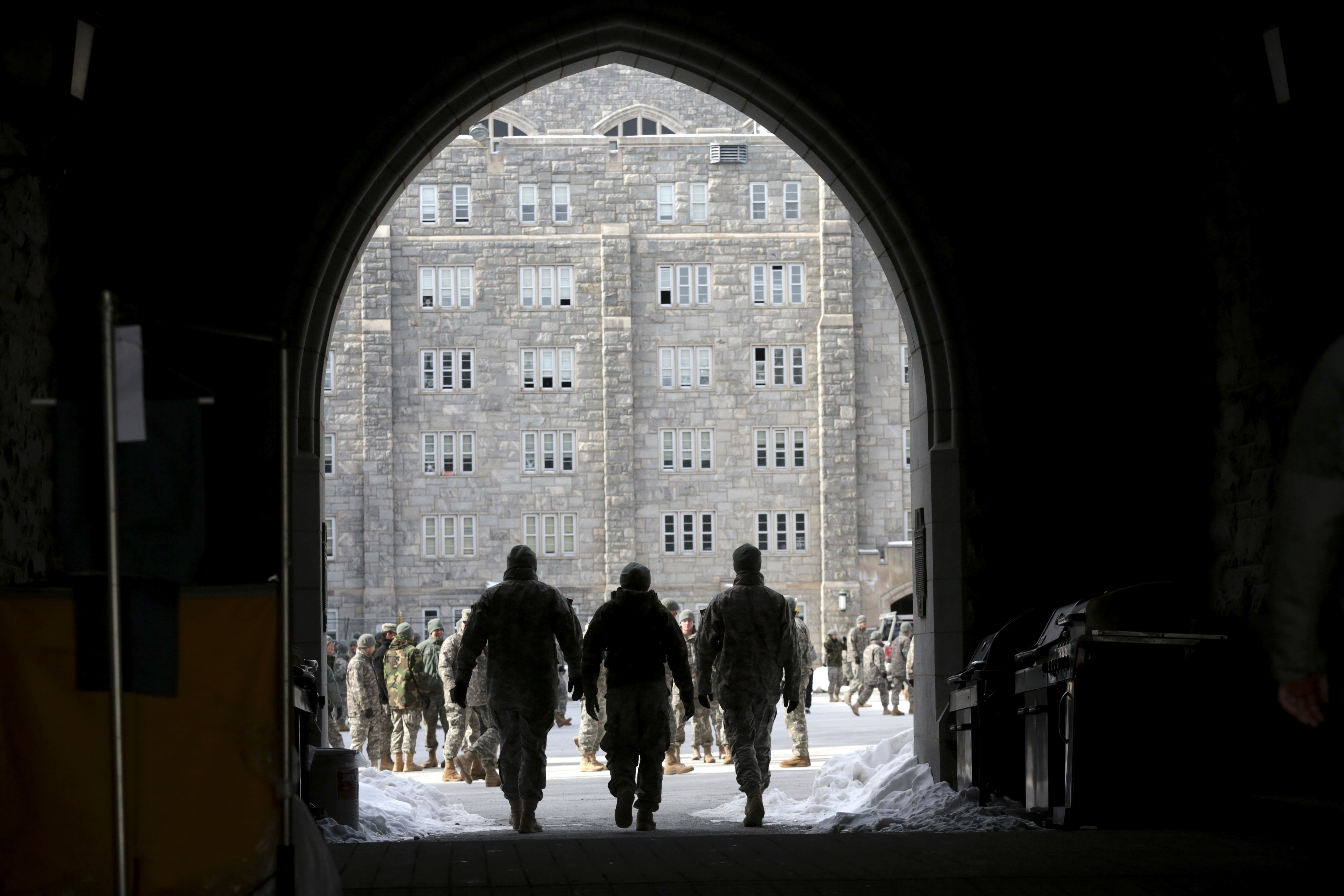
After 17 years of teaching science at West Point, Adam Kalkstein says he was suddenly ordered last year to cut from his curriculum information about the human causes of climate change, according to a new lawsuit filed against the U.S. Military Academy.
The change was immoral and potentially illegal, Kalkstein says he told Brig. Gen. Shane R. Reeves, who at the time was dean of West Point. Instead of upholding Army values, Kalkstein said he felt like a liar and a fraud.
Reeves stormed out of the room when Kalkstein declined a suggestion that he resign, according to the lawsuit. Six months later, the tenured professor was told his contract would not be renewed.
Filed in the Southern District of New York, the lawsuit accuses West Point of breaking the law by violating Kalkstein’s First Amendment rights by forbidding him from teaching about human-driven climate change, an order that required him “to omit a massive, fundamental, essential component of the course and to defy science,” according to the suit. Spokespeople for the Pentagon, West Point, and White House did not return requests for comment.
Michael Sussman, the lawyer for Kalkstein, said his client is a conservative Republican who believes the military needs to be taught the true causes of climate change when it comes to national security. In a letter to Defense Secretary Pete Hegseth, Kalkstein said understanding the causes of global warming was important not for social justice reasons but for things like competing with the Russians in the Arctic and knowing why sea ice was melting.
“He is loyal to the cadets and the academy,” Sussman said about the professor. “And to his perspective, edicts that he can’t say what’s true in a classroom is beyond his tolerance and totally counterproductive.”
Kalkstein’s lawsuit is the latest example of the Trump administration’s attempt to force conservative cultural changes on the education system. President Donald Trump has made frequent public statements dismissing scientific consensus on global warming, and his administration has categorized federal and international climate change programs as “woke, weaponized and wasteful spending” along with diversity, equity and inclusion initiatives and transgender policies.
The administration has repeatedly targeted the military for cultural change. Last year the administration banned hundreds of library books at the U.S. Naval Academy that did not align with Trump’s political agenda. Many of the books have since been returned, according to a Defense Department spokesperson.
In May, Judge Cathy Seibel of U.S. District Court in White Plains, New York, ruled in favor of another West Point professor, Tim Bakken, the longest-serving law professor in the military academy’s history, who had sued over the school’s new restriction on expressing his opinions to students in the classroom on subjects he teaches.
The latest lawsuit comes against the backdrop of a push by Hegseth to remake the service academies by dramatically scaling back the number of civilian professors and revising their curricula. A draft memo circulating inside the Pentagon this summer argued that the academies had been infected by “civilian academic norms” that were diluting the “focus on lethality.” The memo’s existence was first reported by CBS News.
The memo argued that tenure had led the academies to elevate the “research priorities of the tenured academics” over the needs of the military. The memo also called for “a comprehensive review” that would examine the “operational relevance” of all course offerings at the academies.
Hegseth in his 2024 book, The War on Warriors, bashed the academies as “Marxist-adjacent” institutions and blamed civilian professors for the shift.
“Civilian professors were welcomed on campus for reasons of ‘diversity’ as well as expediency. And with them came the predictable, radical left-wing educational philosophies,” Hegseth wrote.
Critics of Hegseth’s view have maintained that the civilian professors have improved and broadened the quality of instruction at the academies at a time when winning wars requires agile thinkers.
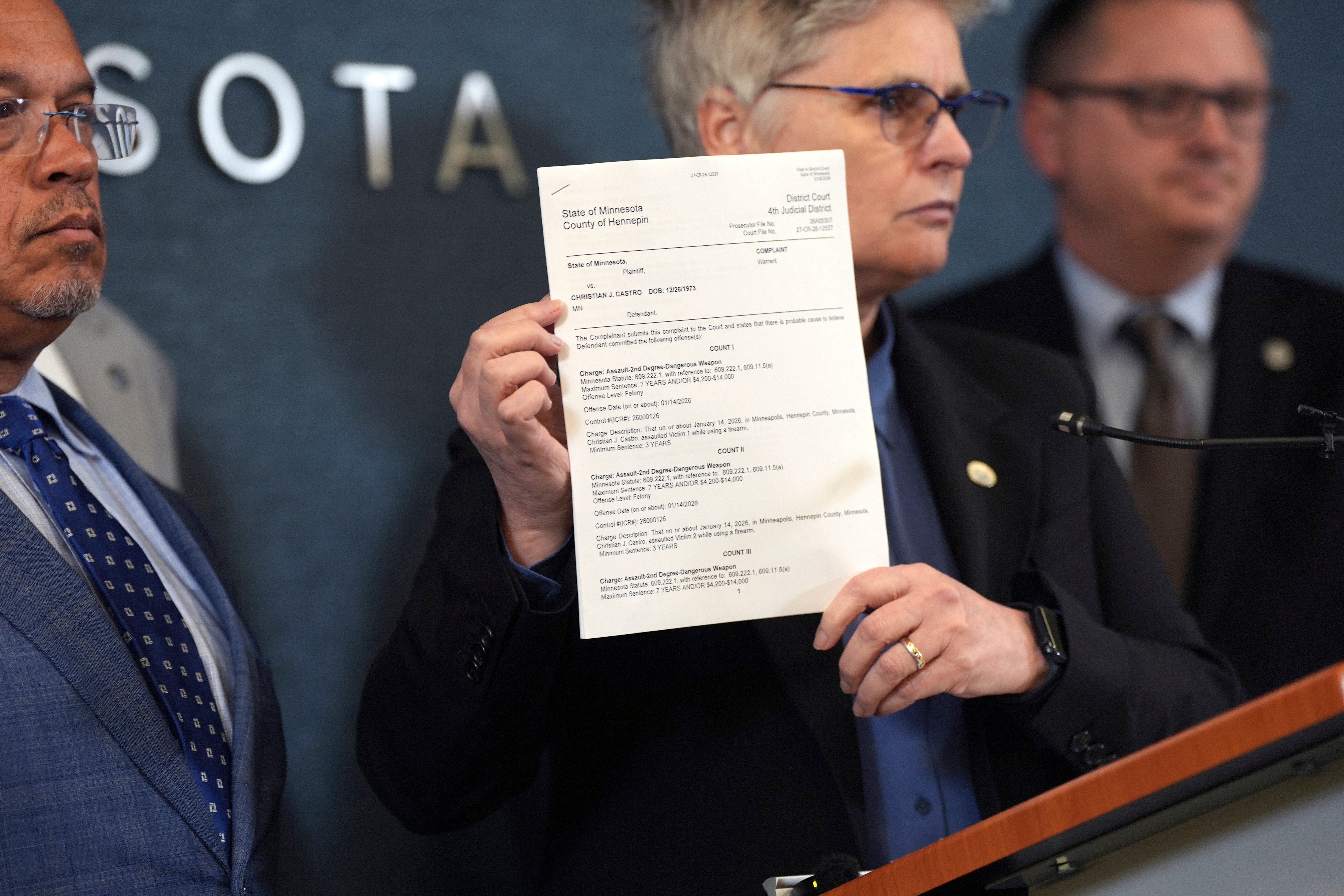
BROWNSVILLE, Texas — An Immigration and Customs Enforcement officer charged with shooting a man and lying about it during the immigration crackdown in Minneapolis was released from a Texas jail Thursday, after a judge refused to order his return to Minnesota.
Christian Castro was released at the break of dawn from a detention center in Brownsville. He motioned his hand toward a few camera operators and a reporter crowding around him and quickly got into an SUV that drove off.
A day earlier, U.S. District Judge Fernando Rodriguez Jr. wrote in an order that said he couldn’t prevent a county sheriff from releasing Castro or order Texas Gov. Greg Abbott to sign his extradition warrant.
Castro is charged in Minnesota with assault and falsely reporting a crime in the Jan. 14 shooting of 24-year-old Julio Cesar Sosa-Celis.
Castro is accused of firing gun through door of home
Castro is accused of firing a gun through the front door of a Minneapolis home, shooting Sosa-Celis in the leg. Prosecutors say Castro also falsely accused Sosa-Celis and another man of attacking an ICE officer with a broom handle and a snow shovel.
After a Minnesota judge issued a nationwide warrant for Castro’s arrest in May, authorities, including Minnesota’s Bureau of Criminal Apprehension, arrested Castro in Cameron County on May 29. Minnesota authorities have sought his extradition since his arrest, but he remained in custody in Brownsville, a city bordering Mexico.
Under Texas law and barring extradition, Castro had to be released after 90 days of detention, which was Thursday.
Minnesota officials believe Castro could flee to Mexico.
Minnesota Attorney General Keith Ellison filed a request for a temporary restraining order last week seeking to block Castro’s release or to order his return to Minnesota.
Abbott waiting for internal state investigation about Castro
Texas attorneys on Tuesday argued the judge could not rule on a decision that’s still pending. Abbott has not denied the extradition. Instead he is waiting for the outcome of an internal state investigation considering whether Castro was legally a “fugitive” under the Extradition Clause, the lawyers said.
The judge wrote in Wednesday’s order that the court couldn’t yet step in.
“The Court concludes that it lacks subject matter jurisdiction because the case is not ripe for adjudication,” the order read. “Minnesota cannot premise its causes of action on the allegation that Governor Abbott may violate those authorities in the future; it must prove that a violation has already occurred.”
The judge said in his order that the extradition laws do not outline how long the Texas governor can take to make that decision.
Abbott said last week he would not respond to the extradition request, citing the ongoing investigation into fraud in government social service programs in Minnesota, which President Donald Trump used to justify his immigration crackdown there.
Abbott directs ‘bad lawyers’ comment at Minnesota attorney general
After the judge’s decision, Ellison posted online that the Texas governor had an obligation to extradite Castro. And by refusing to extradite him, “Greg Abbott is turning Texas into a sanctuary state for violent criminals.”
Abbott responded to Ellison.
“You guys are such bad lawyers. You showed up unprepared, uninformed & unpersuasive,” Abbott wrote online. “You don’t know the law & it showed.”
The Texas governor accused Minnesota of refusing to enforce immigration laws and threatened to send immigrants in the future to their state as he did with New York City, when thousands were released into Texas under President Joe Biden’s administration.
A message seeking reaction from Ellison was sent to his office Thursday.
Minnesota officials say Castro could flee the country, citing calls he made from jail to a woman in Mexico, talking “about marrying her and buying a house in Mexico when he is released,” according to the lawsuit.
The judge conceded that Castro could flee the country but added that “the threat of injury by itself does not create an issue ripe for adjudication.”
Ratko Mladic, the former Bosnian Serb general whose actions during the Balkan wars of the 1990s led to him being called the “Butcher of Bosnia” and who was held responsible for Europe’s deadliest massacre since World War II, the killing of some 8,000 Muslim men and boys at Srebrenica in 1995, has died. He was 83.
His death was announced Thursday by Serbian state media.
Mladic was captured May 26, 2011, in a farming village north of Belgrade, Serbia’s capital, after almost 16 years as a fugitive, ending one of the longest searches in modern history. His 2017 conviction by an international tribunal on charges of genocide, crimes against humanity, and war crimes marked the end of a dark and bloody chapter.
In pronouncing a life sentence, the presiding judge, Alphons Orie, said Mladic’s crimes ranked “among the most heinous known to humankind.” Mladic appealed the verdict, which was upheld in 2021.
The Balkan wars erupted as Yugoslavia was breaking up into independent states. Slobodan Milosevic, the nationalist president of Serbia, one of those states, was intent on creating a Greater Serbia. He reawakened old ethnic and religious enmities and started wars pitting Serbs against Slovenes, Croats, Bosniaks, and the Albanians of Kosovo.
Roughly 100,000 people died during the conflict, and more than 2.5 million were displaced.
A ruddy-faced and intimidating man with a bellowing voice, piercing blue eyes and a grandiose sense of himself, Mladic, an officer in the Yugoslav People’s Army, led the army of the Bosnian Serbs in the early 1990s.
On the eve of the Srebrenica massacre, he promised to avenge the conquest of Serbia centuries before by the Ottoman Muslim Turks. Over 10 days, his soldiers hunted down, captured, and summarily executed thousands of Bosniaks, lining them up with hands tied behind their backs and shooting them. Women were raped. International pleas for restraint were ignored.
Serb forces buried the remains, dug them up again, and scattered them in distant mass graves in an organized effort to hide damning evidence of war crimes.
Mladic’s trial was among the last high-profile ones at the International Criminal Tribunal for the former Yugoslavia in The Hague. The tribunal wound down after trying nearly 100 of those responsible for the atrocities of the Balkan wars, including Mladic’s boss, Radovan Karadzic, the political leader of the Bosnian Serbs.
Arrested in 2008, Karadzic was convicted in 2016 on charges almost identical to Mladic’s, and his sentence was extended to life in prison three years later.
Mladic’s arrest was a signal moment in Serbia’s long effort to shed its status as a pariah nation. It removed a major obstacle to the country’s still-pending accession to the European Union, which had grown weary of the refusal of successive Serbian governments to capture him.
When he was finally tracked down, he was hiding in the house of a cousin and was so desperate for money that one of his repeated demands was the restoration of his frozen military pension.
During his trial, Mladic, once a seemingly invincible warrior, at times appeared reduced to a meek old man as witness after witness offered harrowing testimony about the violence he had unleashed. His right arm was impaired by the effects of at least two strokes he suffered while a fugitive, and he was unable to take notes.
Flashes of the mercurial, domineering general remained, though. In his first court appearance in June 2011, he dismissed the charges against him as “obnoxious” and “monstrous.” At other times, he yelled at the judges.
At one point, he was absent from a session, apparently to receive treatment for high blood pressure. When he returned, he raged at the bench, shouting, “Everything you are saying is a pure lie!” He was removed from the court.
In addition to masterminding the massacre at Srebrenica, Mladic was eventually also convicted of multiple crimes tied to the nearly four-year siege of Sarajevo, Bosnia’s capital, in which 10,000 people died, including 1,500 children.
During the siege, the longest in the history of modern warfare, Mladic’s men shelled the city from surrounding mountains and terrorized civilians with sniper bullets. Judges also found him guilty of the persecution and extermination of non-Serbs living in large swaths of Bosnia.
Within Serbia, Mladic’s military prowess was legendary. Ljiljana Bulatovic, who wrote a biography of him, said he remained a hero to many Serbs, who would always regard him as “the mythical protector of the Serbian people.”
But the magnitude of the crimes he was accused of — and the immense suffering he inflicted on Bosnians and Croats driven from lands slated for Serbs — provoked international revulsion and the offer of a $14 million reward for his capture, though it was never claimed after Serbian war crimes investigators seized him.
His early life of desolation and struggle may have helped sustain him during his long, spartan years as a fugitive.
“He had a strong psychological makeup,” Ratko Skrbic, a former general who served under him, later said. “It has to do with military honor. He was brought up never to surrender.”
Ratko Mladic was born into poverty in the remote village of Bozanovici on March 12, 1943, when the area was part of the Independent State of Croatia, a Nazi puppet state dominated by fanatical Croat nationalists.
His father, Neda Mladic, an ethnic Serb member of the communist-led partisan resistance, was killed when Ratko was a toddler, and his mother, Stana (Lalovic) Mladic, raised him and his two siblings. His family’s experience planted in Mladic a deep fear that ethnic Serbs, unless they held the upper hand, would always face persecution by Croats and other ethnic groups.
He was a metalworker as a young man but soon turned toward the military for his schooling. With his sharp mind, physical strength, and a charisma that inspired deep loyalty, Mladic rose swiftly in the Yugoslav People’s Army.
He was said to have adhered early in his military career to Josip Broz Tito’s brand of communism, which rejected nationalism and called instead for Yugoslav brotherhood as a way of holding together Yugoslavia’s fragile assemblage of multiethnic, multireligious republics.
Tito died in 1980, and after Milosevic stirred up nationalist grudges and Yugoslavia had begun to disintegrate in the early 1990s, Mladic took up Milosevic’s cause: halting separatism and assuring the dominance of the Serbs, the largest ethnic group. In 1992, a month after the Bosnian Republic’s declaration of independence, Mladic’s forces began the siege of Sarajevo.
In 1994, his daughter, Ana, a medical student in her early 20s, killed herself with his prized military pistol, apparently distraught by her father’s actions in the war.
Zoran Stankovic, a former Serbian minister of defense and friend of Mladic’s who performed her autopsy, later said Mladic had asked him to cut off a lock of her hair and extract the bullet from her head, and to give them both to him as mementos.
Friends said he became unhinged after her death, and he insisted on visiting her grave under guard before his extradition from Serbia to The Hague.
“After the suicide,” Stankovic said, “I never saw brightness in his eyes, only sadness.”
Before the massacre at Srebrenica, Mladic summoned the Dutch commander of a United Nations peacekeeping force that was protecting the Muslim community there and ushered him to a room where a live pig was tied up.
Mladic ordered his men to slit the pig’s throat, sending blood gushing over the floor. “That’s how we deal with our enemies,” Mladic said, according to witnesses.
In July 1995, with video cameras rolling, Mladic’s bodyguards handed out candies to Bosniak children. “No one will be harmed,” Mladic told terrified women and children July 12, patting a young boy on the head. At the time, his soldiers were preparing to conduct the mass killings.
After the massacre, the outrage in Washington and Europe prompted a NATO bombing campaign that overcame Bosnian Serb forces and led to the Dayton Accords that ended the Balkan wars in December 1995, though conflict in the former Yugoslavia erupted again in 1998 over Kosovo.
In 1995, the international tribunal in The Hague, which had been created two years earlier, indicted Mladic on war crimes and genocide charges related to the Sarajevo siege and the Srebrenica massacre.
Mladic, who had the protection of Milosevic, did not immediately lie low. He moved among military barracks, according to friends who said they would visit him to play table tennis or chess. For several years, he visited his daughter’s grave. Surrounded by bodyguards, he attended a Chinese-Yugoslav soccer match in Belgrade in 2000.
Milosevic fell from power in 2000 and the next year was arrested and sent to The Hague to stand trial. (He died in 2006, as his trial was nearing its end.)
Mladic was forced underground, and is believed to have been protected by allies in the Serbian military and intelligence services. His wife, Bosiljka, and his son, Darko, sought unsuccessfully to have him declared dead. They survive him.
In the end, he was captured alone, with two loaded pistols at his side, and surrendered willingly.
“Congratulations,” he said when officers stormed in. “I’m the one you’ve been looking for.”
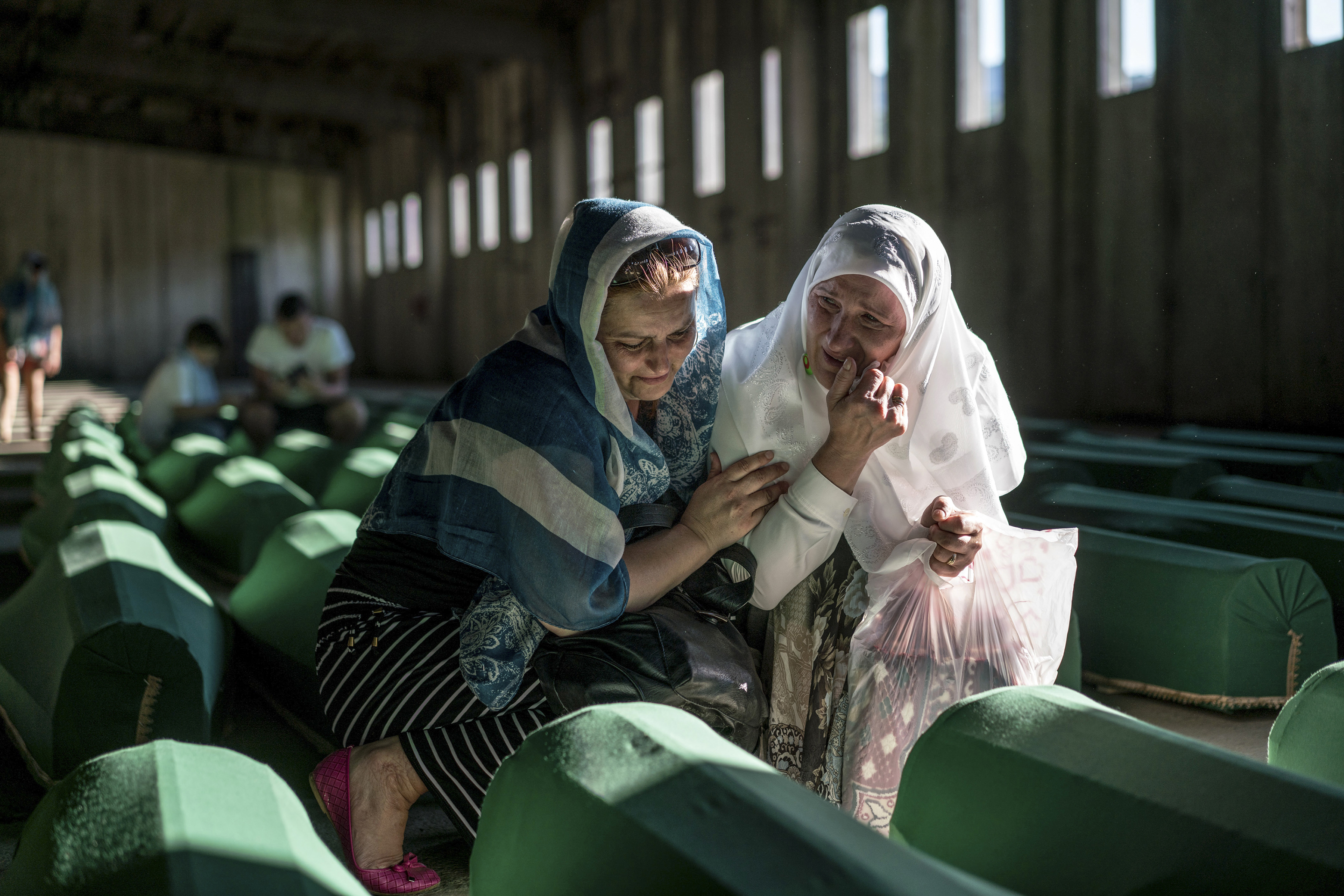
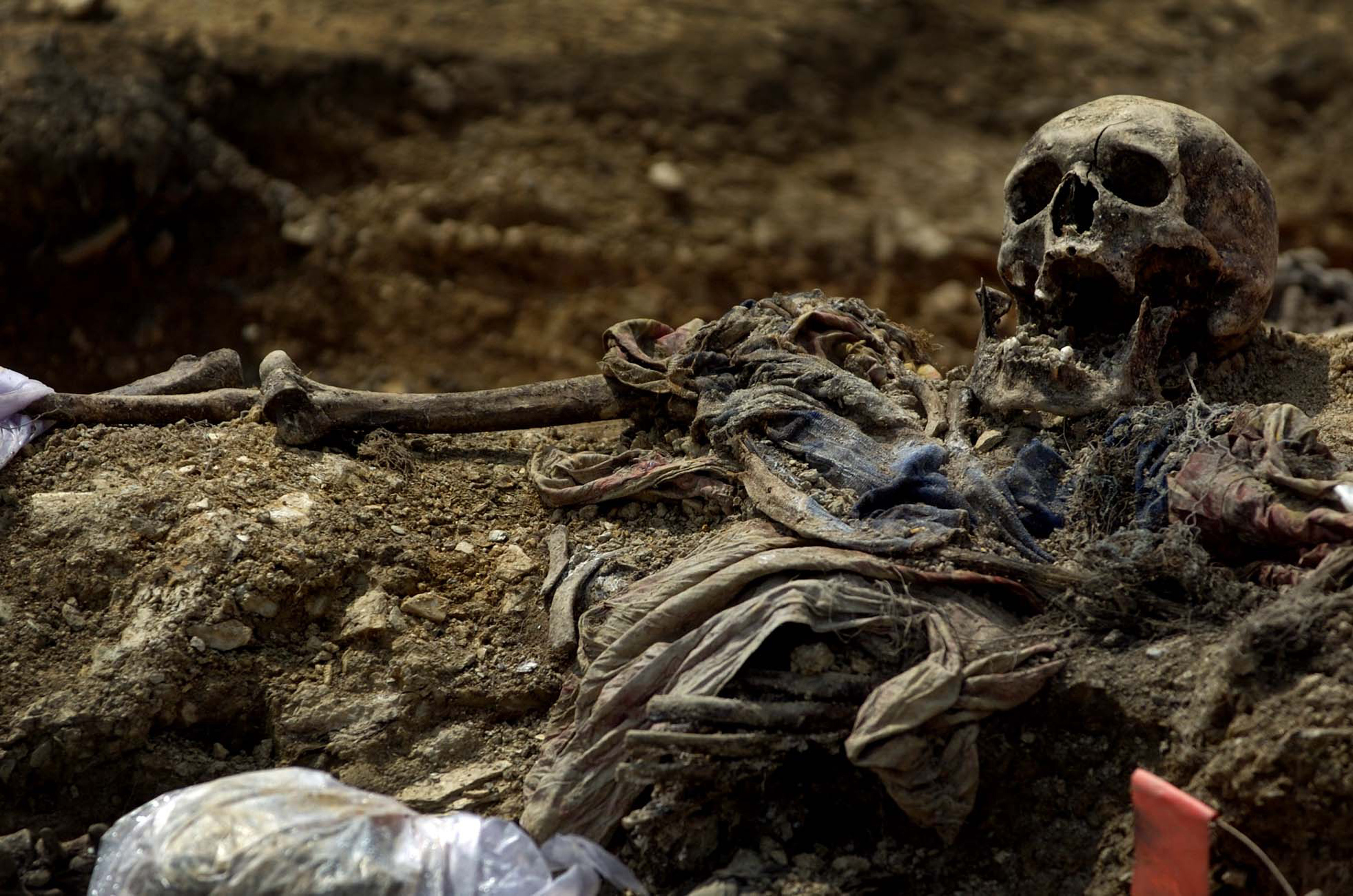
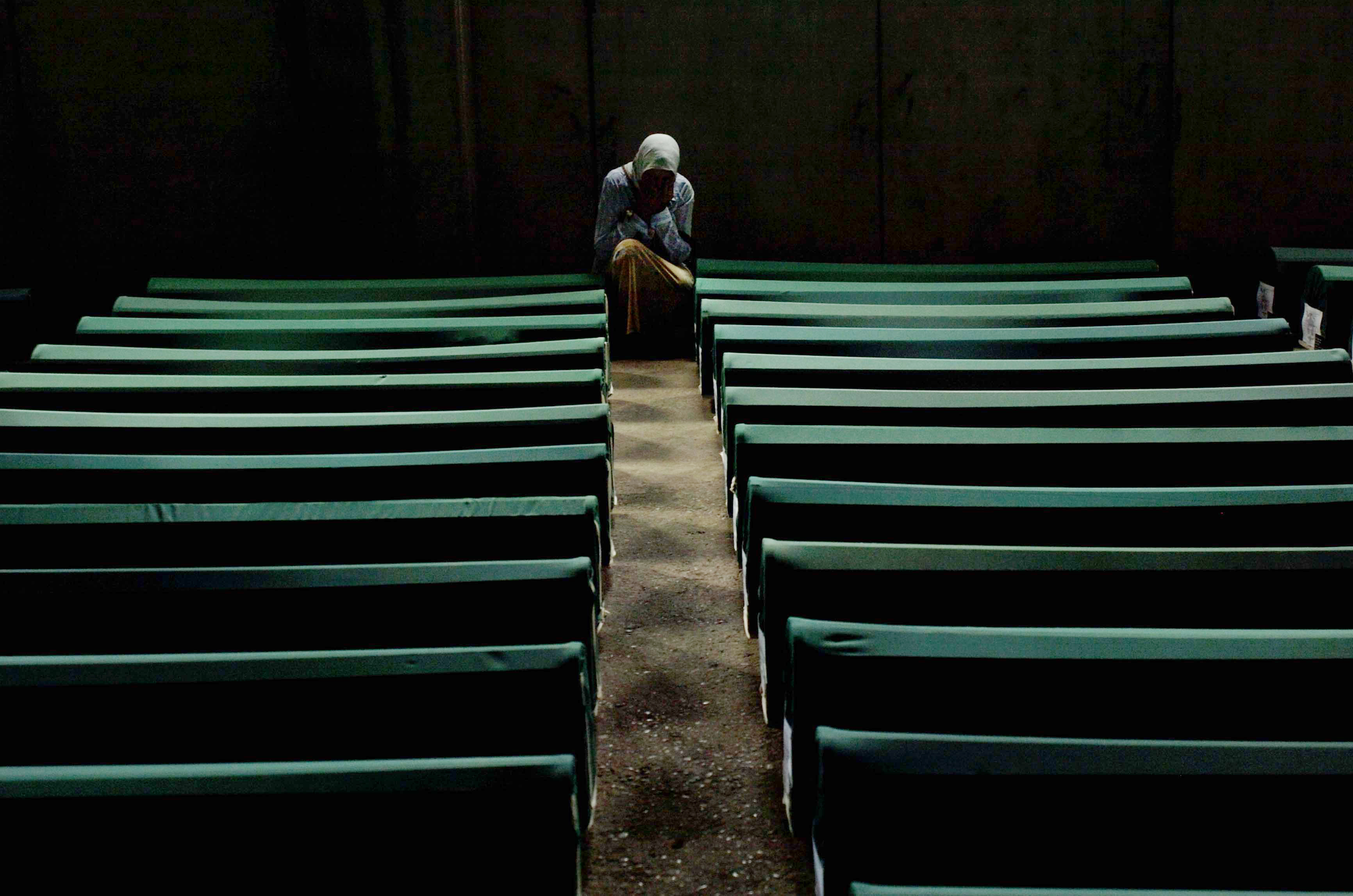
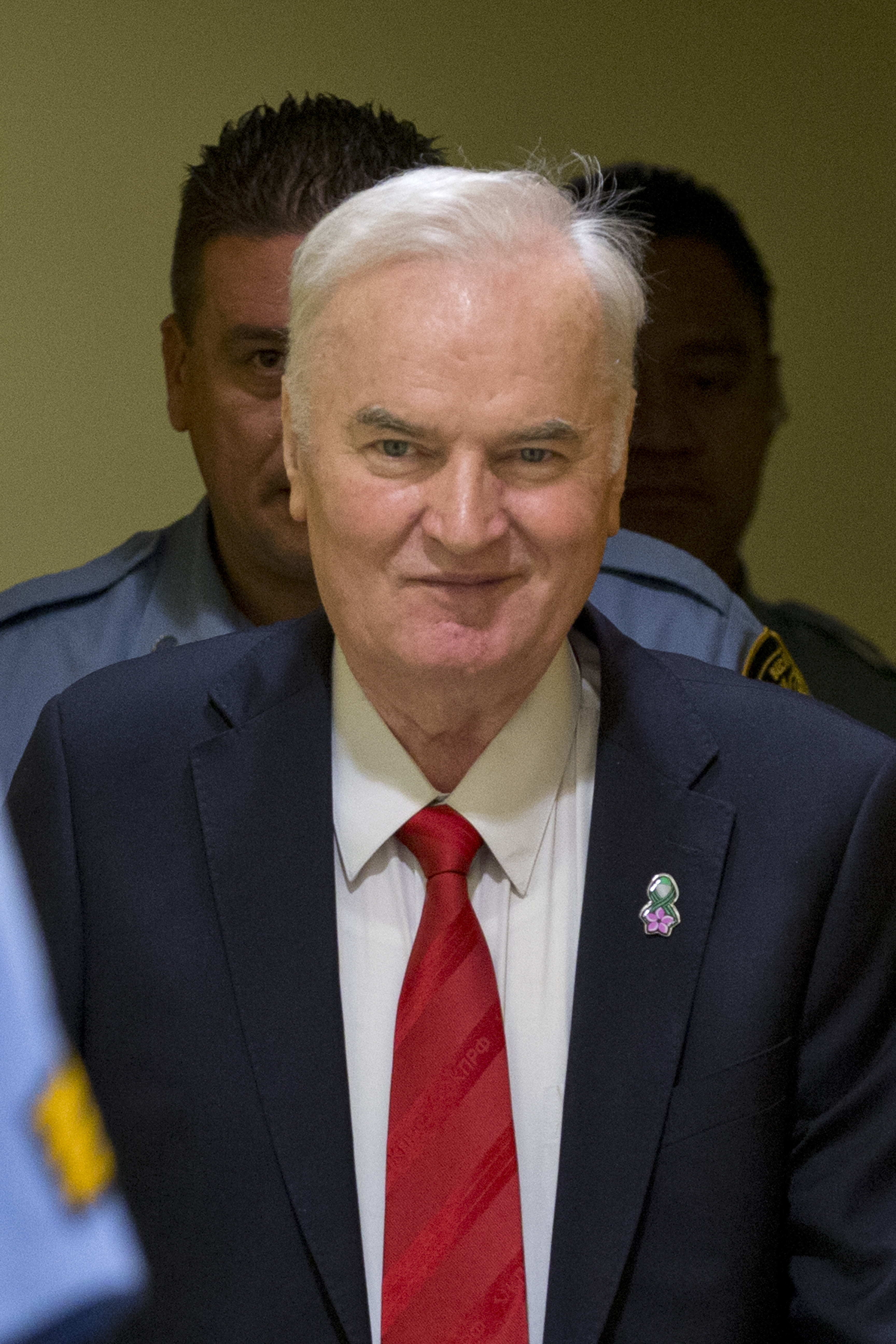
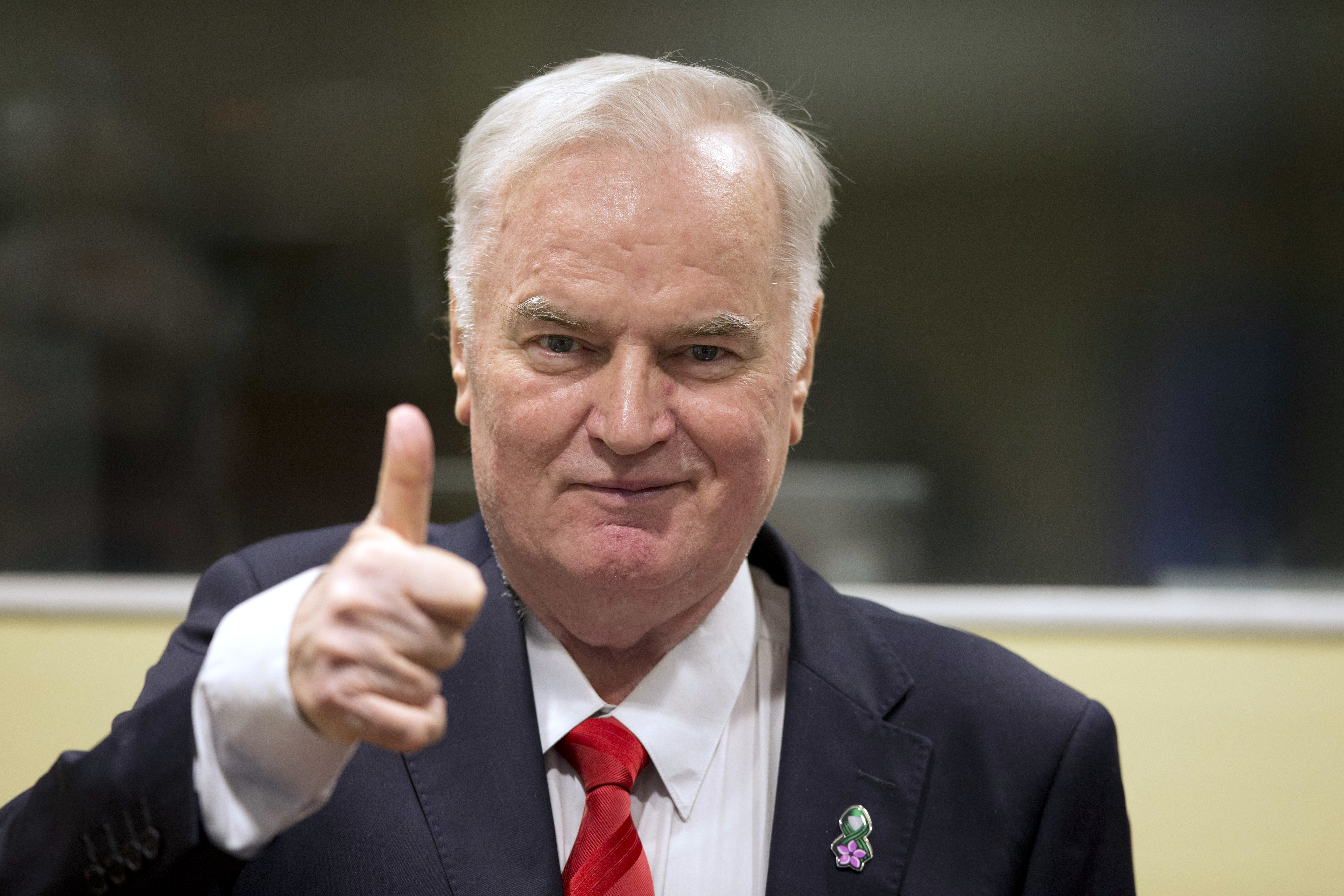
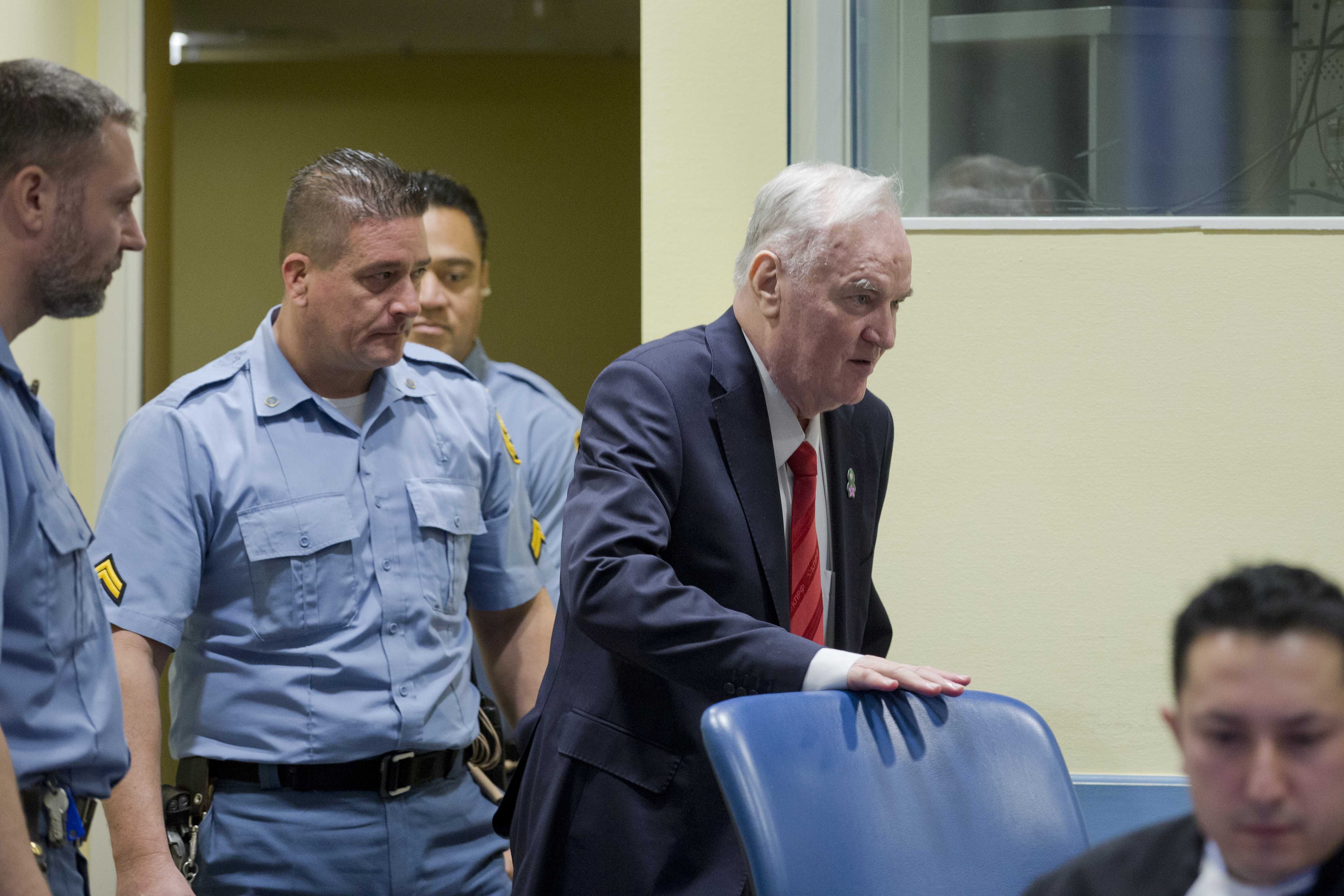
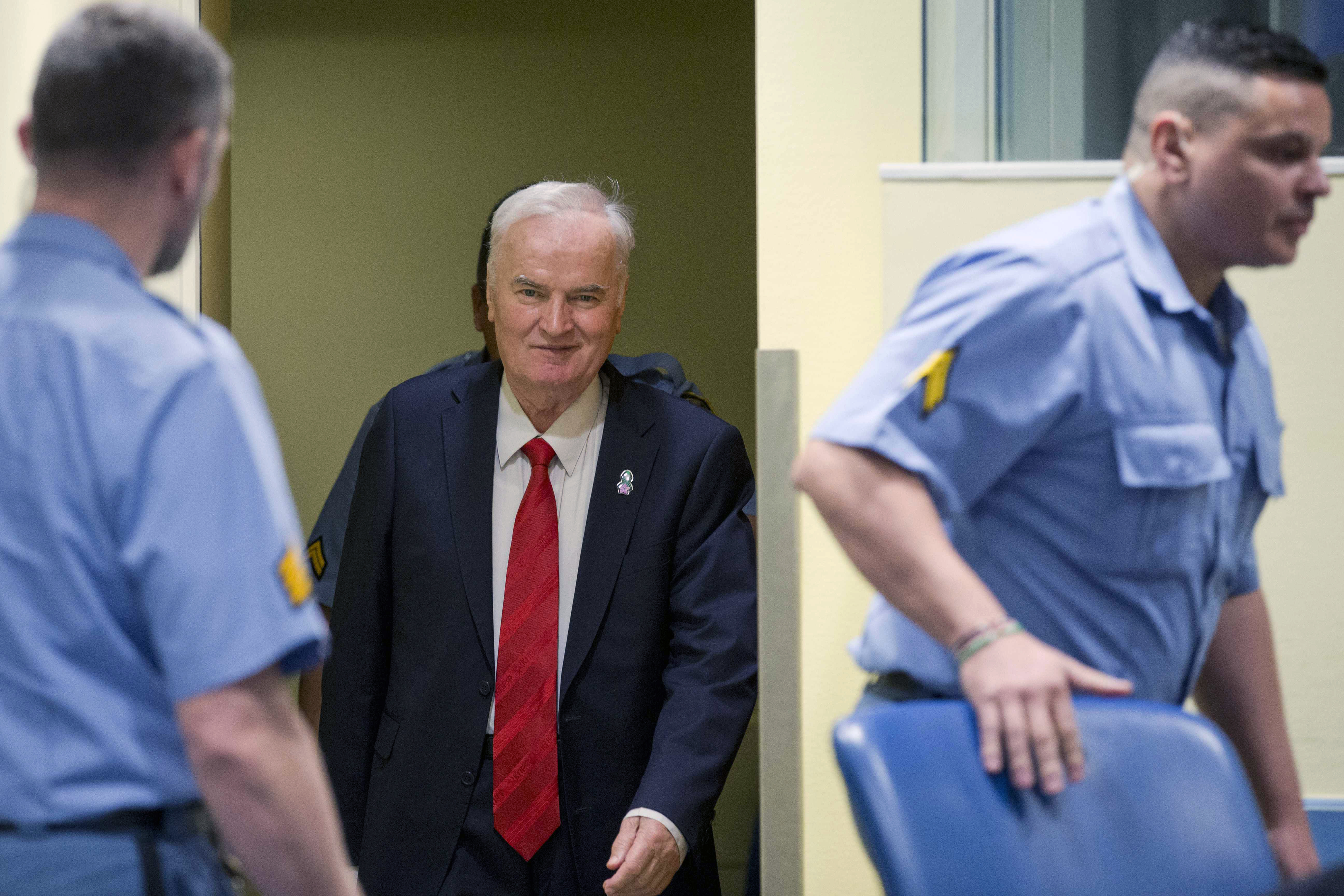
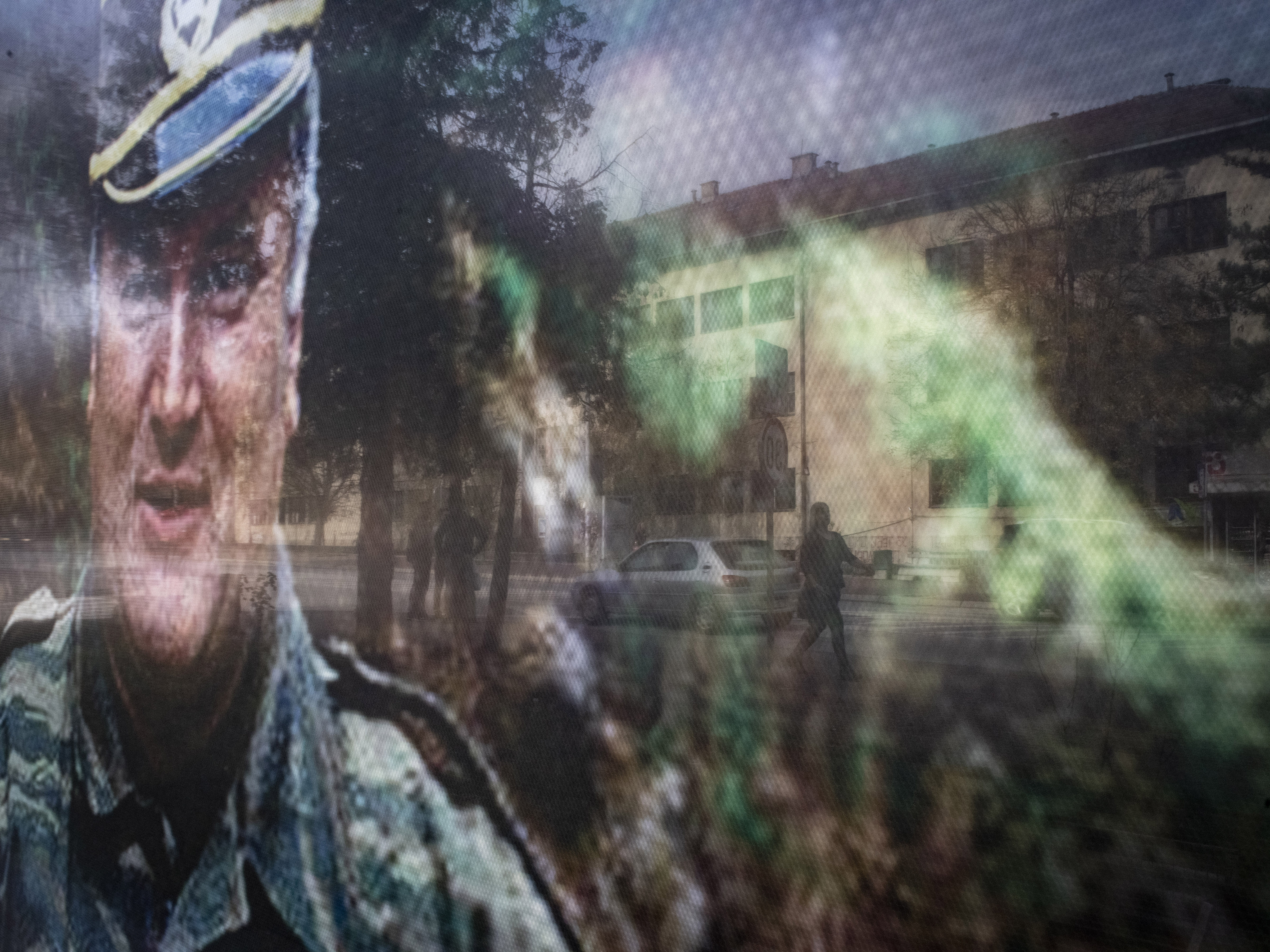
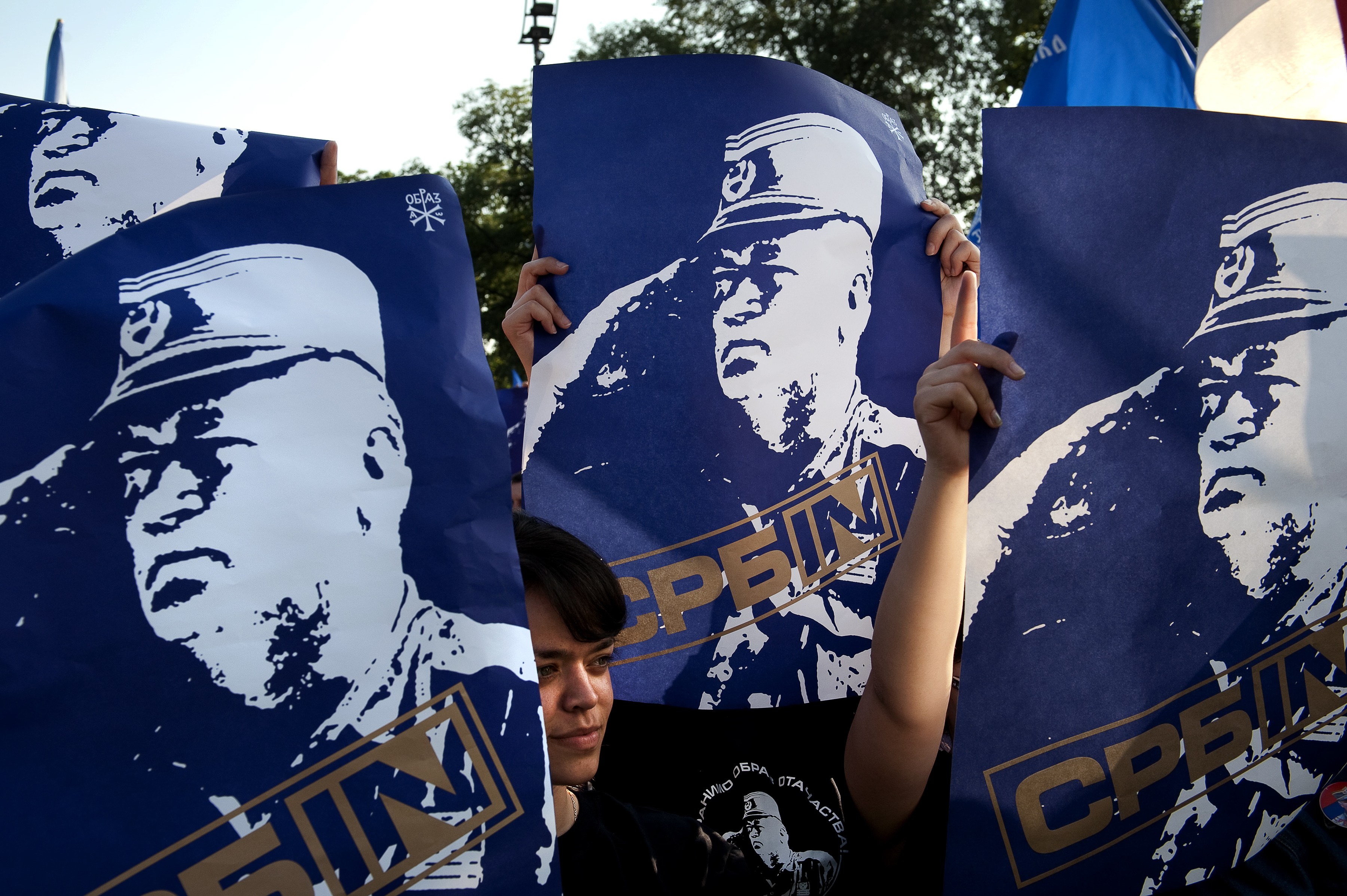
FILE — The body of a victim of the Srebrenica massacre, the worst ethnically motivated mass murder on the continent since World War II, lies in a mass grave in Budak, Bosnia on July 9, 2005. Ratko Mladic, the former Bosnian Serb general who was captured in 2011 and convicted in international court of responsibility for the killing of some 8,000 Muslim men and boys at Srebrenica, has died, Serbian state media announced on Aug. 27, 2026. He was 83. (Andrew Testa/The New York Times)ANDREW TESTAFILE — A woman mourns among the coffins of the nearly 600 victims of the Srebrenica massacre, the worst ethnically motivated mass murder on the continent since World War II, in Potocari, Bosnia on July 9, 2005. Ratko Mladic, the former Bosnian Serb general who was captured in 2011 and convicted in international court of responsibility for the killing of some 8,000 Muslim men and boys at Srebrenica, has died, Serbian state media announced on Aug. 27, 2026. He was 83. (Andrew Testa/The New York Times)ANDREW TESTAFILE — Ratko Mladic, the former Bosnian Serb general dubbed the “Butcher of Bosnia” for his actions during the Balkan wars of the 1990s, enters a courtroom in The Hague on Nov. 22, 2017, to hear the verdict from a United Nations war crimes tribunal. Mladic, who was captured in 2011 and convicted here of responsibility for the killing of some 8,000 Muslim men and boys at Srebrenica, has died, Serbian state media announced on Aug. 27, 2026. He was 83. (Peter Dejong/Pool via The New York Times) — NO SALES. FOR EDITORIAL USE ONLY —PETER DEJONGFILE — Ratko Mladic, the former Bosnian Serb general dubbed the “Butcher of Bosnia” for his actions during the Balkan wars of the 1990s, enters a courtroom in The Hague on Nov. 22, 2017, to hear the verdict from a United Nations war crimes tribunal. Mladic, who was captured in 2011 and convicted here of responsibility for the killing of some 8,000 Muslim men and boys at Srebrenica, has died, Serbian state media announced on Aug. 27, 2026. He was 83. (Peter Dejong/Pool via The New York Times) — NO SALES. FOR EDITORIAL USE ONLY —PETER DEJONGFILE — Ratko Mladic, the former Bosnian Serb general dubbed the “Butcher of Bosnia” for his actions during the Balkan wars of the 1990s, enters a courtroom in The Hague on Nov. 22, 2017, to hear the verdict from a United Nations war crimes tribunal. Mladic, who was captured in 2011 and convicted here of responsibility for the killing of some 8,000 Muslim men and boys at Srebrenica, has died, Serbian state media announced on Aug. 27, 2026. He was 83. (Peter Dejong/Pool via The New York Times) — NO SALES. FOR EDITORIAL USE ONLY —PETER DEJONGFILE — Ratko Mladic, the former Bosnian Serb general dubbed the “Butcher of Bosnia” for his actions during the Balkan wars of the 1990s, enters a courtroom in The Hague on Nov. 22, 2017, to hear the verdict from a United Nations war crimes tribunal. Mladic, who was captured in 2011 and convicted here of responsibility for the killing of some 8,000 Muslim men and boys at Srebrenica, has died, Serbian state media announced on Aug. 27, 2026. He was 83. (Peter Dejong/Pool via The New York Times) — NO SALES. FOR EDITORIAL USE ONLY —PETER DEJONGFILE — An image of Ratko Mladic, the former Bosnian Serb general dubbed the “Butcher of Bosnia” for his actions during the Balkan wars of the 1990s, is projected on a building in the Serbian part of Sarajevo, Bosnia and Herzegovina, on Nov. 3, 2018. Mladic, who was captured in 2011 and convicted in international court of responsibility for the killing of some 8,000 Muslim men and boys at Srebrenica, has died, Serbian state media announced on Aug. 27, 2026. He was 83. (Laura Boushnak/The New York Times)LAURA BOUSHNAKFILE — Supporters of Ratko Mladic, the former Bosnian Serb general dubbed the “Butcher of Bosnia” for his actions during the Balkan wars of the 1990s, demonstrate in Belgrade, Serbia, on May 29, 2011. Mladic, who was captured in 2011 and convicted in international court of responsibility for the killing of some 8,000 Muslim men and boys at Srebrenica, has died, Serbian state media announced on Aug. 27, 2026. He was 83. (Andrew Testa/The New York Times)ANDREW TESTAFILE — Supporters of Ratko Mladic, the former Bosnian Serb general dubbed the “Butcher of Bosnia” for his actions during the Balkan wars of the 1990s, demonstrate with flags and posters bearing his image in Belgrade, Serbia, on May 29, 2011. Mladic, who was captured in 2011 and convicted in international court of responsibility for the killing of some 8,000 Muslim men and boys at Srebrenica, has died, Serbian state media announced on Aug. 27, 2026. He was 83. (Andrew Testa/The New York Times)ANDREW TESTA
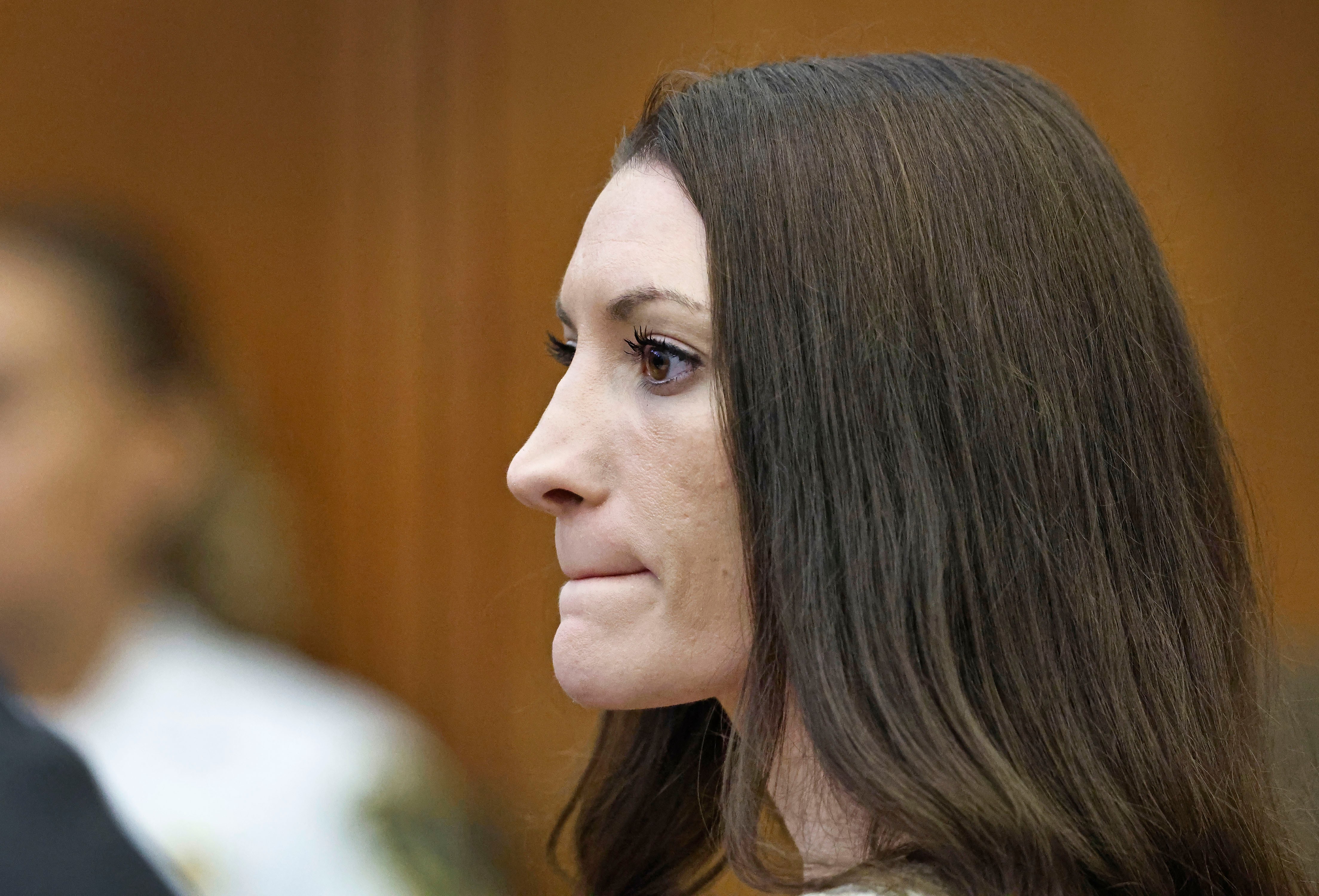
PLYMOUTH, Mass. — Lindsay Clancy strangled her three children because she was depressed and tired of living, not because of failings with mental healthcare, a prosecutor told jurors Thursday before they began deliberating in her murder trial.
“It was a choice to take them with her,” prosecutor Jennifer Sprague said. “It is a choice that we don’t want to think about that a mother could make.”
“But it’s a choice she made,” Sprague said.
Clancy’s mental state is at the center of the closely watched trial that has drawn attention to maternal mental health after childbirth. The debate has stirred deep divisions among the public over whether she should be held criminally responsible for the January 2023 killings.
Her attorney contends she was experiencing postpartum psychosis when she killed her children, telling jurors she was a loving mother before her mental health spiraled and that she repeatedly sought help that failed her. The rare mental illness is linked to stress, sleep deprivation and hormonal changes following childbirth.
Clancy, who did not testify during the monthlong trial, has pleaded not guilty by reason of lack of criminal responsibility. Clancy, now 36, had sought treatment from multiple providers in the months before the killings and was prescribed various drugs.
Less than three weeks after being discharged from a psychiatric hospital, she killed Cora, Dawson and Callan Clancy, ages 5, 3 and 8 months, at the family’s Massachusetts home. She then jumped from a second-floor window and remains paralyzed from the waist down.
Lindsay Clancy was depressed, prosecutor says
During more than four weeks of testimony, jurors heard differing views from medical experts about Clancy’s mental state after Callan’s birth.
Defense attorney Kevin Reddington said her condition worsened “because of the damned medicine and the lousy medical care that she got.”
Clancy dabbed her eyes with a tissue and put a hand to her forehead as the prosecution described how she killed her children and confronted a central question in the case:
Why would a mother who loved her children kill them?
“She was depressed. She was exhausted. She was done. She didn’t want to try anymore. She felt damaged,” Sprague said. “But those kids, those kids were her protective factor. Those kids were keeping her from ending her misery.”
Sprague said the case shouldn’t be a referendum on the nation’s mental healthcare system or how it treats women. She argued that Clancy had access to many providers and a wealth of family support.
If convicted of murder, Clancy faces life in prison without parole. If found not guilty due to a lack of criminal responsibility, she still could be committed to a state mental health facility.
Mental health is at the heart of Clancy trial
Clancy’s decision not to tell her mental health providers about thoughts she had in December 2022 of harming her children showed that she understood those thoughts were wrong, Sprague said.
She also made sure she had just enough time to kill her children on Jan. 24, 2023, Sprague said, by sending her husband to pick up dinner and medicine for one of the kids.
The prosecutor acknowledged that Clancy sought help for her mental health struggles, but said she did not always take medications as prescribed or give her providers complete and accurate information.
Both Clancy’s mother and sister testified in the trial that she became anxious, paranoid and suicidal.
Lindsay Clancy lived for her kids, attorney says
Clancy’s attorney criticized the prosecution’s case and raised doubts about the police investigation while painting Clancy as a good mother.
He said prosecutors tried to suggest her suicide attempt wasn’t serious. “You know that is not what happened,” he said.
He said investigators didn’t take pictures or test blood found at the home. He held up a copy of the book “Good Moms have Scary Thoughts” that investigators found at the Clancy house. He said a mental healthcare provider gave it to her.
He showed jurors a small “wish box” that Clancy and then-husband Patrick bought on their honeymoon. Over the years, the couple filled the box with slips of paper wishing to have healthy, successful kids, Reddington said as Lindsay Clancy wiped away tears.
Reddington told the jury that Clancy “lived for her kids” but after she starting seeing a doctor that “it was not a wonderful life anymore.”
“You have the medical records. You heard the testimony. You know her concerns. You know her fears,” he said.
When fires swept through the Great Smoky Mountains in 2016, killing 14 and displacing thousands, a local legend answered the call to help.
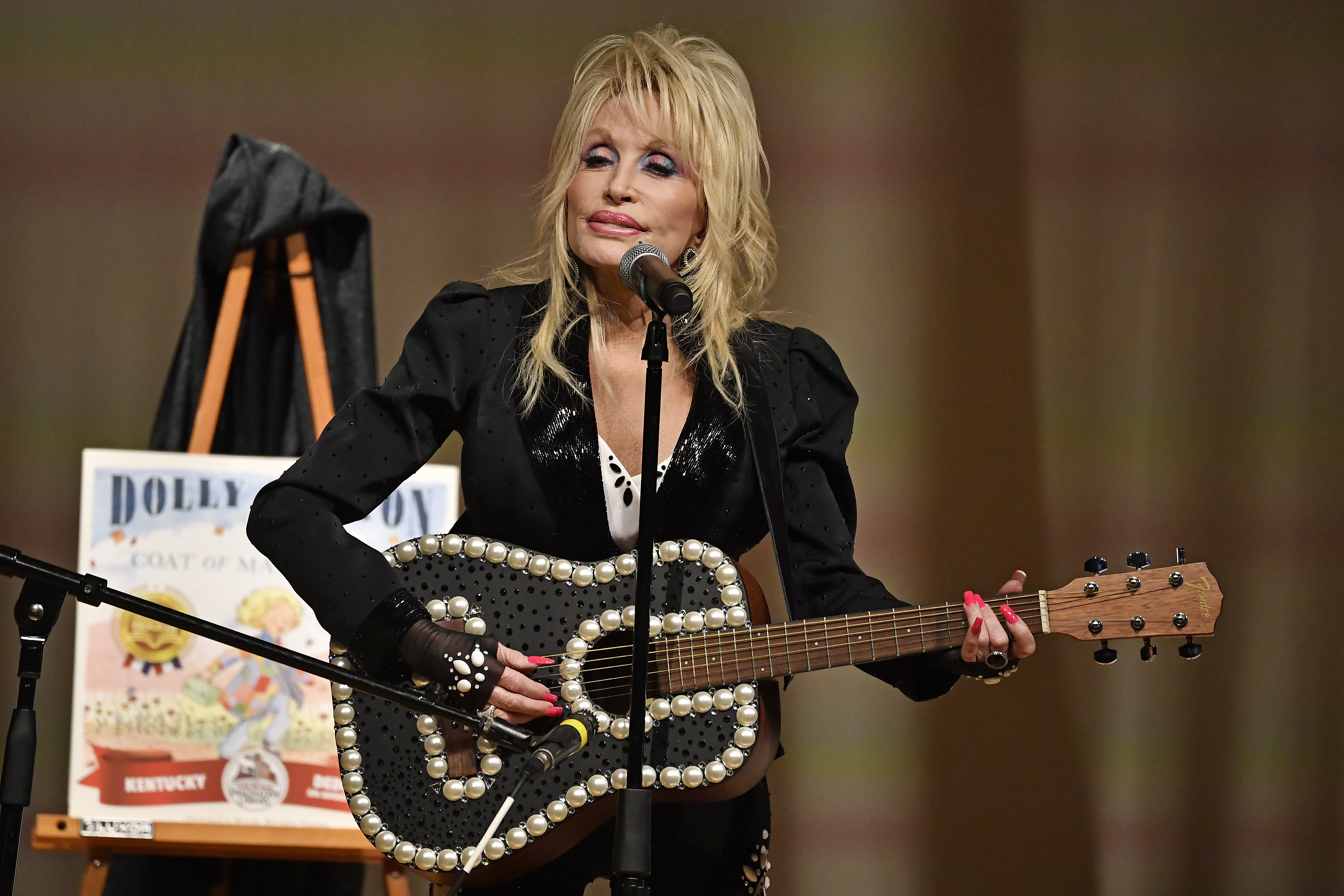
Dolly Parton, the country music luminary, who died this week at 80, offered $1,000 per month to families who had lost their homes in Sevier County. The money kept flowing for months, and the songwriter and star behind hits including “My Tennessee Mountain Home” ultimately sent $12.5 million back to the county where she was born.
Parton’s support for the fire victims was just one node in a constellation of charitable activities that distinguished her as one of pop culture’s most prolific philanthropists. With cash gifts, benefit concerts, and telethons, Parton supported causes that included early childhood literacy, wildlife conservation, and the development of the COVID-19 vaccine.
She became so effective at distributing her own money that the ultrawealthy asked her to distribute theirs. In 2022, Amazon founder Jeff Bezos and his future wife, Lauren Sanchez, gave Parton $100 million to distribute to causes of her choosing. And this summer, Taylor Swift and Travis Kelce gave Parton’s Imagination Library $2 million to fund the distribution of children’s books.
“Her philanthropy was so much more significant and serious than what you see from other celebrities,” said Stacy Palmer, CEO of the Chronicle of Philanthropy. “As a woman, she was a standout giver, and she gave to the kinds of causes that a lot of rich people don’t give to, ones that were based on her life experience.”
Parton started her own charitable organization, the Dollywood Foundation, in 1988, the same year that Trio, her album with Emmylou Harris and Linda Ronstadt, won album of the year at the Academy of Country Music Awards.
The foundation was initially focused on reducing school dropout rates in Sevier County, in part by offering $500 gifts to graduates. Cold, hard cash proved a powerful incentive; high school dropout rates plummeted to just 6% in the county, from 35%. The Dollywood Foundation, which reported $141 million in assets last year, also offers local high school graduates $15,000 scholarships.
“She gave cash gifts to people in need long before it was popular,” Palmer said. ”She trusted the people that she wanted to help.”
At her theme park, Dollywood, Parton opened a special attraction: a 30,000-square-foot aviary to house rehabilitated bald eagles that could not be released into the wild.
In 1995, Parton started the Imagination Library, a program that sent one book per month to children in Sevier County from birth until their first year of school. The inspiration for the effort came from Parton’s father, who didn’t know how to read.
“As we see all these superwealthy people thinking about strategic plans, her brilliance was just making it so easy for people to read,” Palmer said. “Send them the book.”
The program expanded across the world, and last year, the Imagination Library said it had distributed some 305 million books.
“I just give from my heart,” Parton said in 2022, when accepting the Carnegie Medal of Philanthropy in New York. “I never know what I’m going to do or why I’m going to do it. I just see a need and if I can fill it, then I will.”
Parton often saw need in the aftermath of disasters. After Hurricane Helene cut a swath of devastation across the Southeast, she personally donated $1 million to the Mountain Ways Foundation to support flood victims, while her businesses and the Dollywood Foundation pledged $1 million more.
She announced her gift in a Walmart parking lot in Newport, Tenn., not far from where she was born, and sang a Hurricane Helene-themed version of her classic song “Jolene” to the crowd.
“There’s any number of celebrities who could give money after disasters, and don’t,” said David Callahan, the founder of Inside Philanthropy, a news site that writes about charitable giving. “But she had a powerful sense of empathy.”
In the months after the COVID-19 virus emerged, Parton learned that Vanderbilt University in Nashville was helping with the early trials of the vaccine made by Moderna, and she gave $1 million to support the effort.
“It was a shot in the arm,” said Mark Denison, emeritus professor of pediatrics at the Vanderbilt School of Medicine. “We were starting this work but we didn’t have specific funding for it, and she recognized that this was a critical human problem that was going to impact the country and the world. It allowed us to quickly scale up and get into the lab.”
For the staff at Vanderbilt, her gift was also an enormous morale booster.
“We’re all in Nashville, and there were some people who were serious fans,” Denison said. “The fact that she was supporting our work was something that you could not put a price on.”
The next year, she made a $1 million gift to Vanderbilt to support work on infectious diseases in children, and the year after that, she created an endowment to support additional research.
“This is an area that is undersupported and not really popular for charity,” Denison said. “But she was really good at recognizing short-term needs but maintaining a long-term vision.”
In 2021, Denison and his wife had dinner with Parton. Over the three-hour meal, she mostly asked questions about their work and why they had chosen their careers, he said. Denison has traded on the story ever since.
“I got more credibility with my family and friends from that one interaction than I did from 40 years of research,” he said.
Parton’s support for medical issues went well beyond the COVID-19 vaccine.
In 2007, she performed at a benefit concert for a new hospital in Sevier County, and the Dollywood Foundation donated funds for the new building as well. When the hospital opened in 2010, it featured a 30,000-square-foot Dolly Parton Center for Women’s Services.
In 2017, following the release of a children’s album, I Believe in You, Parton donated $1 million to the Monroe Carell Jr. Children’s Hospital at Vanderbilt University Medical Center. The gift was made honor of her niece, who was treated for leukemia at that hospital.
In February, officials at the East Tennessee Children’s Hospital in Knoxville renamed it the Dolly Parton Children’s Hospital after receiving what they called a “generational commitment” from Parton. The amount has not been disclosed.
“Sometimes philanthropists have tons of fundraisers who come to them and say, ‘Put your name on this building, do this important thing, and it’ll get you access to a museum or the other people you want to hang out with,’” Palmer said. “She just never really forgot about the roots that she grew up in, and this obligation she felt to the people who helped her thrive in life.”
Palmer said the question now was what will become of Parton’s remaining fortune, which is estimated to be about $500 million, according to Forbes.
“She did so much while she’s alive, but I’m super curious what her will says,” Palmer said. “Because she had so much wealth, and she did not have children. So we may yet see more of her.”
This article originally appeared in the New York Times.
When Randy Madden saw the way diesel prices were rising, he decided to delay purchasing the fuel that powers his 3,000-acre farm in Iowa.
Except prices are at around the same level as when he made that decision in May.
Now, going into harvest season, he expects to spend more than $40,000 on fuel — roughly double what he typically pays from late summer through the end of the year.
“The volatility and the price is coming at a very bad time,” he said.
The average price of diesel in the United States was $5.62 a gallon Wednesday, 53% higher than a year earlier, according to the AAA motor club. Because fuel supplies were disrupted after the United States and Israel went to war with Iran, diesel prices are now hovering close to a record high and could drive up prices of many other goods and services.
Diesel powers a vast chunk of America’s economy. It fuels equipment on farms like Madden’s, as well as trains, trucks, and other heavy machinery. As prices climb, businesses often have to pass on that higher cost to their customers.
“Gasoline is mostly a consumer fuel, used for driving, whereas I would characterize diesel as the workhorse fuel used mostly by the corporate sector and small businesses,” said Daan Struyven, a Goldman Sachs commodities analyst.
The last time U.S. diesel prices rocketed up was in 2022 after Russia invaded Ukraine, hitting a peak of $5.82 a gallon.
This is a global crunch
To understand why diesel prices are rising, it’s important to understand the big picture. There is simply not enough diesel available to meet the world’s needs.
Refineries produce diesel, gasoline, jet fuel and other fuels by “cracking,” or heating, crude oil. The United States and China have most of the world’s refining capacity, followed by countries such as Russia and India.
But Russia’s ability to make diesel has been severely hamstrung because Ukraine has damaged many of its refineries. In July, Bank of America analysts said Russian refineries were processing around 3.9 million barrels per day, down from 5.3 million barrels a year ago. That has forced Russia to suspend diesel exports.
“We estimate that now 40% of Russian refining capacity has been impacted by drone strikes,” said Debnil Chowdhury, who tracks the refining business for S&P Global. “And the reason that that’s important is it’s a global market.”
The effective closure of the Strait of Hormuz, the narrow waterway through which about a fifth of the world’s crude oil is shipped, has also limited the flow of crude oil, diesel, and other petroleum products. As a result, the global oil price has climbed around 20%, to about $86 a barrel.
The volume of crude oil refined in the Middle East has dropped to about 8 million barrels a day in 2026, down 1.6 million barrels a day from 2025 levels, S&P Global analysts said in an Aug. 1 report.
U.S. refineries have made up for some of that shortfall by operating at around 97% of their capacity, according to the Energy Information Administration. Exports of diesel and related fuels are up by around 28% compared with last year, and U.S. inventories of those fuels have fallen sharply.
Higher prices benefit refineries but hurt buyers
There’s one clear winner from higher diesel prices: refineries that are still able to sell fuel.
When oil is trading at a modest $70 a barrel, refineries typically earn $20 to $30 a barrel on the diesel they sell, Struyven said. Now, U.S. refineries are earning close to $90 for every barrel of diesel.
In earnings reports for the second quarter, firms including Valero Energy and Marathon Petroleum said their profit margins on turning a barrel of crude into fuels have roughly doubled from a year earlier.
But users like farmers and truckers are hurting.
Farmers need operating loans every year to cover the cost of equipment repairs, seed, fertilizer, and fuel.
John Boyd, a founder of the National Black Farmers Association, said many farmers did not budget for bigger expenses when taking out their loans. Higher costs for fuel and other items have strained budgets and driven some farmers he knows to the brink of losing their properties.
“These are generational farmers going under,” said Boyd, who lives in Boydton, Va.
The trucking industry has also been affected. Large logistics companies are typically able to pass on all or most of their higher fuel costs to customers, but smaller operators or drivers who operate independently may not be able to do so.
“It really just eats into your operations because you basically break it out into what is my cost per mile traveled,” said Zach Miller, vice president of government affairs at the Trucking Association of New York. “What’s left over is your profit margin.”
Producing more diesel won’t be easy
The last U.S. refinery was built in 1977, in Louisiana, according to the Energy Information Administration. Since then, the industry has mostly invested in existing refineries rather than building new ones.
Building these hulking industrial facilities takes years and costs billions of dollars. Because refineries are built to operate for many decades, investors want to know that demand for fossil fuels will remain strong for a long time. But nobody can predict demand over the next couple of decades with any certainty given the rise of electric vehicles, including trucks.
Even if no new refineries are built, the supply of diesel could increase if China decided to export more fuel, Struyven said. But Chinese policymakers have placed restrictions on its refineries since the war began to make sure the country has enough fuel to meet domestic demand.
While refining capacity growth has slowed in most countries, most of the new growth is now coming from developing countries like India where a new refinery started in July, Struyven said.
In Nigeria, a major oil producer, the Dangote Petroleum Refinery has recently increased its crude processing capacity by 25% and plans to double its refinery’s total capacity by 2028. It has helped push seaborne petroleum shipments from the country to 350,000 barrels a day in the second quarter of 2026, a jump from an annual average of 46,000 barrels a day in 2023, according to the Energy Information Administration.
Your smartphone can make your life better — if you’re smart about it.
The technology — and the time we spend on it — isn’t inherently good or bad. But “it can certainly worsen your mood, even among healthy people, depending on what you’re using it for,” said Jon Elhai, a distinguished university professor at the University of Toledo in Ohio who studies cyberpsychology.
Most adults under 45 say they want to spend less time looking at screens, according to a 2025 YouGov poll. And many popular apps, such as TikTok, are designed to hold your attention longer than you would like. A lot of that time spent might not be all that pleasurable in the end.
If you want to create a healthier smartphone habit, “you have to know yourself,” said Joseph Bayer, an associate professor in the School of Communication at Ohio State University who studies smartphone and social media habits. “You have to know what are your goals as a person and in terms of using your phone,” and whether they align.
There are many approaches to reduce the time you spend on your phone, but another strategy is to change how you use it. Here are some ways to spend time on your phone that may give you more positive experiences.
Play an online game
Cognitive engagement is good for your brain, and fast-paced action video games — such as “Call of Duty” and “Fortnite” — have been found to boost cognition. Research has also linked games such as crosswords and board games to cognitive benefits. Smartphone apps have made these games easy to pick up anywhere you have your phone and service.
“I like board games, and some board games also have mobile versions,” said Bayer, who enjoys playing the bird-themed game Wingspan on his phone. The app allows you to take turns asynchronously, meaning you can play during spare moments; Bayer’s friend, who is a therapist, likes to take her turns between patients.
“Playing an online board game for a minute makes you feel a little boost of energy in between work tasks,” Bayer said.
Other popular board games converted from tabletop to phone include Catan, Codenames, Ticket to Ride, Ark Nova, and Terraforming Mars.
Get the Libby app
Curling up with a good book — or magazine or newspaper — is good for your brain, and it has been linked to increased longevity and slower rates of cognitive decline.
The Libby or Hoopla apps — both of which are free — give you ready access to read or listen to all the e-books, audiobooks, and magazines from your local library. You can also try different e-reading apps to make it easy for you to bring your latest novel with you on your commute.
Find a subreddit about your favorite hobby
Smartphones can link you to all the knowledge and community about your hobbies outside of work. Research has found that hobbies are linked to better mental health and that pursuing creative hobbies, including music, dance, and art, is linked to delayed brain aging.
Reddit can be a great resource because “you can find a subreddit [community] for any hobby you have,” said Elhai, who finds Reddit “helpful in terms of gaining more information about different hobbies.”
Try a mindfulness app
Research has found that mindfulness exercises can be as effective as anxiety medication in reducing anxious feelings and that even short bouts of meditation can help people achieve “relaxed alertness.” Popular apps include Headspace and Calm.
Plus, mindfulness can help you reach other health goals, potentially including a better relationship with your smartphone. Research finds that having more mindful awareness is linked to healthier uses of the smartphone.
People who are more in tune with how they use their smartphone — and when to put it down — are more protected from problematic use “than people who just mindlessly, instead of mindfully, keep scrolling on their phone,” Elhai said.
Learn a new language
Learning another language is a great way to stimulate your brain; research has found that being multilingual is linked to delayed dementia diagnoses and that the brains of people who spoke two or three languages looked six years younger compared with those who spoke only one.
Smartphones allow you to take your language lessons on the go.
“It’s not like you can spend all the time in person talking to people in that target language,” but if you have time on your phone, that can be beneficial, said Elhai, who uses Pimsleur for language learning and Italki to practice with native speakers.
Jot down what you’re grateful for
Giving thanks for the good in your life is good for you, and research shows that having more gratitude is linked to less loneliness.
Instead of scrolling through your social media feed, you can consider “apps that have been designed for you to journal and to indicate what you’re grateful for every day to try to help keep an optimistic mood,” Elhai said.
Some example apps include Three Good Things and Gratitude. But even just opening up your default note-taking app can be a place to jot down your thoughts, feelings, and remembrances about your day.
Text, call, or send a funny meme
We tend to be happiest when we’re with other people in person, and research finds that doing almost anything is better with friends.
But socializing with another person through our phone — through texting, social media, or even good old-fashioned calling — may be the next best thing. Connecting with others — the original goal of phones — may be the most rewarding use of smartphones.
“When people are just using their phones in nonsocial ways, like they’re just listening to music, they’re watching movies, maybe in the short term, it’s pleasurable,” Elhai said. “But it’s not as pleasurable as engaging in social use.”
Research shows people tend to underestimate how rewarding reaching out to others can be, for both parties, even out of the blue. Being on your phone is an opportunity to reconnect with someone. A few minutes might be enough to send a “thinking of you” or start setting up plans to meet up or share a funny meme.
BROWNSVILLE, Texas — A federal judge on Wednesday refused to order Texas to extradite an Immigration and Customs Enforcement officer charged with shooting a man and lying about it during the immigration crackdown in Minneapolis.
Christian Castro is charged in Minnesota with assault and falsely reporting a crime in the Jan. 14 shooting of 24-year-old Julio Cesar Sosa-Celis. Minnesota authorities have sought his extradition since his arrest, but he remains in custody in Brownsville, Texas, a city bordering Mexico.
Under Texas law and barring extradition, Castro must be released after 90 days of detention, which is Thursday.
Minnesota Attorney General Keith Ellison filed a request for a temporary restraining order last week, asking a federal judge to prevent the sheriff in Cameron County, Texas, from releasing Castro, and to order Texas Gov. Greg Abbott to sign his extradition warrant.
Minnesota officials believe Castro could flee the country, citing calls he made from jail to a woman in Mexico, talking “about marrying her and buying a house in Mexico when he is released,” according to the lawsuit.
Castro is accused of firing a gun through the front door of a Minneapolis home, shooting Sosa-Celis in the leg. Prosecutors say Castro also falsely accused Sosa-Celis and another man of attacking an ICE officer with a broom handle and a snow shovel.
At a federal hearing in Brownsville on Tuesday, attorneys with the Minnesota Attorney General’s Office argued it would be hard to compel Castro to face charges in their state if he is released, and they fear Castro may flee the country, citing his phone conversations with a woman who lives in Mexico.
Texas Gov. Greg Abbott said last week he would not respond to the extradition request, citing the ongoing investigation into fraud in government social service programs in Minnesota, which President Donald Trump used to justify his immigration crackdown there.
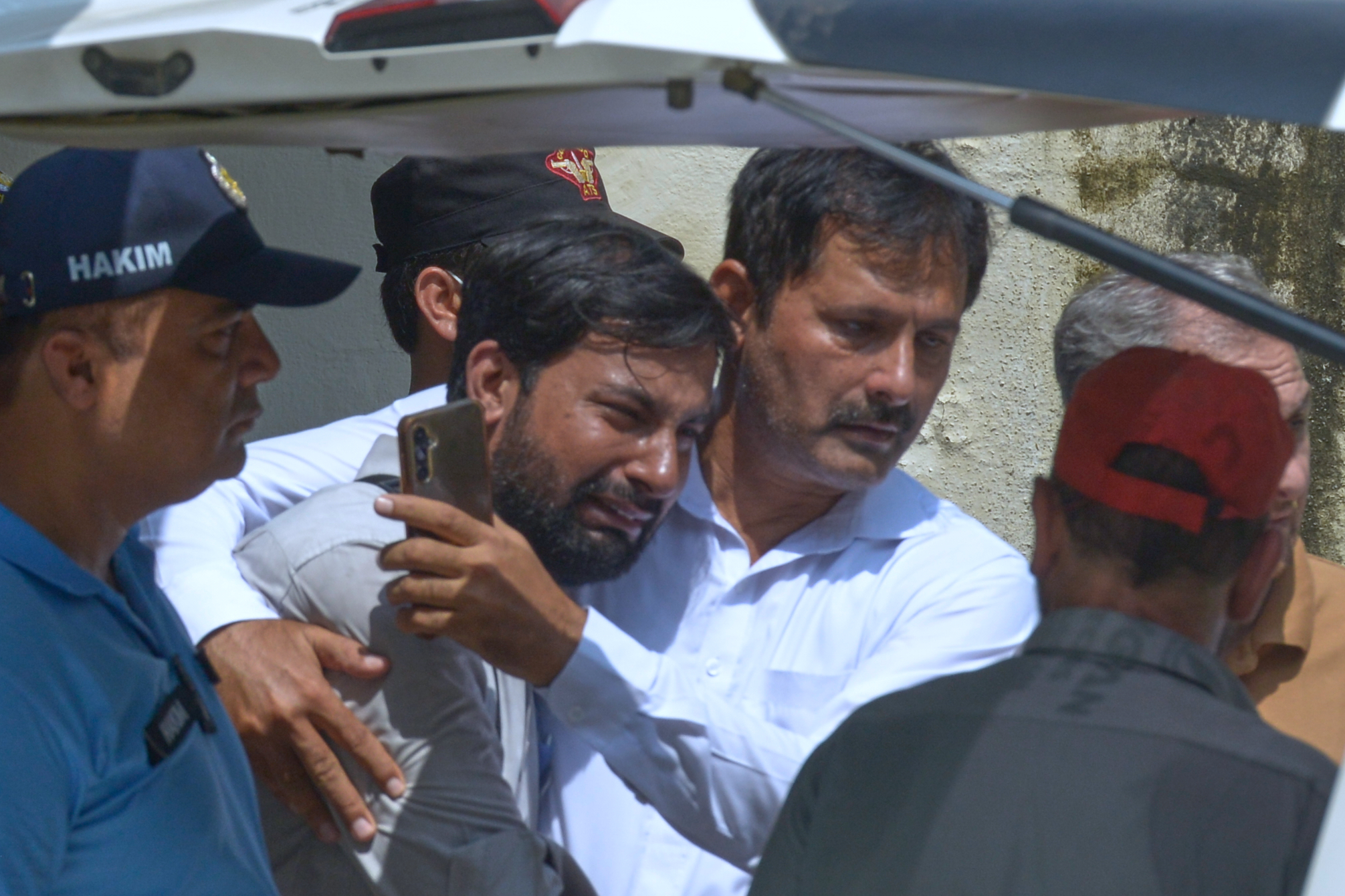
ISLAMABAD — A fire triggered by an exploding air conditioner killed 14 newborns in a hospital nursery in Pakistan’s capital on Wednesday, officials said.
One baby of the 15 who were in the nursery at the Pakistan Institute of Medical Sciences was rescued, the hospital said.
Television footage showed rescue workers using ladders to reach the third-floor nursery through broken windows. Grieving parents and relatives gathered at the hospital, some weeping while others demanded answers about how the fire began and whether the nursery had adequate firefighting equipment.
The government has opened an investigation, and Prime Minister Shehbaz Sharif ordered Health Secretary Aslam Ghauri, the Health Ministry’s highest civil servant, to be removed from office.
A woman who identified herself as Mrs. Mohammad Sami said she gave birth three days earlier and her baby was receiving intensive care in the nursery when the fire broke out.
“I don’t know what to say or whom to blame,” she said through tears. “I have lost my child.”
The fire was confined to the hospital’s nursery
The fire was confined to the nursery at the institute, which is one of Islamabad’s largest public hospitals. The rest of the facility was unaffected with no other injuries reported, according to hospital officials and witnesses. The blaze was later extinguished, Islamabad Chief Commissioner Suhail Ashraf said.
It was among Pakistan’s deadliest recent tragedies involving children. In June, 14 schoolchildren were killed when the roof of a tutoring center under construction collapsed in the eastern city of Lahore.
Health Minister Mustafa Kamal, who confirmed the death toll, told the Geo News channel that he was traveling from Karachi to Islamabad to oversee the investigation.
Dr. Aneeza Jalil, a hospital spokesperson, said a doctor rescued one baby. She said the bodies of six babies had been handed over to their families, while the remaining bodies would be released soon.
The government is investigating how the fire started and the response
The Islamabad district magistrate appointed a fact-finding committee and asked it to submit a report within 24 hours. The panel will investigate the cause of the fire and its spread, determine whether adequate fire-safety measures were in place, and evaluate the emergency response, according to a government order.
Interior Minister Mohsin Naqvi and Sharif, the prime minister, expressed sorrow over the fire.
“A tragedy involving children is an irreparable loss,” said Sharif, who held a high-level meeting with officials from relevant agencies hours after the fire.
President Asif Ali Zardari also offered condolences to the families, describing the deaths as “heartbreaking and an irreparable loss.” He called for those responsible to be brought to justice and urged hospitals to ensure effective fire-safety measures and emergency procedures.
Testimony concluded Wednesday in the murder trial of Lindsay Clancy, a mother accused of strangling her three young children in a case that has drawn attention to postpartum mental health.
Closing arguments are expected to begin Thursday, before the jury begins deliberating.
Clancy, 36, has pleaded not guilty by reason of lack of criminal responsibility, with her lawyers arguing she was experiencing postpartum psychosis when she killed 5-year-old Cora, 3-year-old Dawson and 8-month-old Callan Clancy at the family’s home in coastal Duxbury, Massachusetts, in January 2023. The rare mental illness is linked to the stress, sleep deprivation and hormonal changes that follow childbirth.
___
EDITOR’S NOTE: This story includes discussion of suicide. If you or someone you know needs help, the national suicide and crisis lifeline in the U.S. is available by calling or texting 988.
___
Prosecutors say Clancy planned the killings and understood her actions were wrong.
Clancy did not testify during the trial, which is in its fifth week. The defense called 10 witnesses, including some of Clancy’s friends and relatives, while prosecutors called more than 70 witnesses, including her then-husband.
Testifying as the final rebuttal witness for the prosecution, a forensic psychiatrist at the University of Virginia and a senior psychiatrist for the FBI’s Behavioral Analysis Unit said Wednesday that he did not believe Clancy’s account that a voice ordered her to kill the children.
Prosecutor Jennifer Sprague asked Dr. Gregory Saathoff a series of questions about Clancy’s account: Did the voice tell her where to kill the children? How to kill them? What to use? In what order? Saathoff answered no each time.
“Having no instructions as to how to do it, but being able to execute those decisions … that is surprising that she’s able to accomplish all of this without any other kind of direction or plan,” he said.
All three children were strangled with exercise bands in the family’s basement before Clancy tried to kill herself while her husband was getting takeout and at a pharmacy on Jan. 24, 2023. Saathoff said her ability to accomplish everything she did without direction indicated Clancy “had control, control of the sequence of what she was doing throughout.”
“In the small amount of time that Miss Clancy had in the home without her husband, it was important, in order to carry this out, as well as her suicide, to do this quickly, methodically, and alike,” he said.
On Tuesday, Saathoff said he found it unusual that Clancy said the voice stopped once she was done strangling the children, that the voice was constant rather than intermittent and that she never previously reported hearing a voice to her medical providers. She also gave a different timeline to other evaluators about when she first heard the voice that day, he said.
“Committing the act is not curative of the voice,” Saathoff said of the voice stopping abruptly. “I’ve not ever seen that.”
Defense attorney Kevin Reddington began his cross-examination of Saathoff on Wednesday by trying to cast doubt on Saathoff’s expertise in postpartum psychosis and portray him as someone closely aligned with law enforcement, questioning him about his work with prisons, the Justice Department and the Virginia attorney general’s office.
Saathoff testified that he treated women with postpartum psychosis while working at a state hospital in the 1980s and 1990s, while much of his more recent research has focused on such subjects as extremist violence, national security and political radicalization.
Reddington also asked Saathoff about Clancy’s attempts to search online for information about postpartum depression, her visits to multiple maternal and mental health providers, disclosures to her mother and then-husband that she was suicidal and feared that she would harm her children, and calls to a suicide hotline — all attempts that Reddington contended establish Clancy realized something was seriously wrong and made a sincere effort over time to get help.
Reddington asked whether Saathoff believes that Clancy decided to kill her children because she “no longer liked the life she thought she wanted” and was making “a selfish choice” to “manipulate her providers, seek out a quick and easy fix when she was feeling depressed and anxious.”
“I think that statement that you read really minimizes what she was going through,” Saathoff responded.