Category: Wires

  • EPA proposal could leave the public in the dark on data center plans

    EPA proposal could leave the public in the dark on data center plans

    WASHINGTON — A plan by the Environmental Protection Agency could make it harder for the public to learn about and comment on proposed AI data centers that have sparked backlash in communities across the United States and transformed the midterm election landscape.

    The EPA proposal would eliminate a federal requirement that states notify the public and seek comment before issuing air pollution permits for data centers and other industrial facilities. States could still offer opportunities for public comment, but the EPA would no longer mandate them as a condition for states to grant permits.

    Critics say the move could thwart local residents from learning about proposed data centers or making their voices heard before projects are approved and construction begins. The move comes during a widespread backlash as tech giants build hundreds of massive server warehouses to fuel artificial intelligence and cloud computing.

    “By eliminating the long-standing federal requirement for public notice, this proposal continues efforts by the Trump administration to turn its back on the fundamental EPA principle of transparency,” said Mike Koerber, a former deputy director of EPA’s air quality office.

    If made final, the plan could create “an unlevel playing field where citizens in one state are kept completely in the dark about new data centers and heavy industrial emissions in their backyards, while neighboring states maintain oversight,” he said.

    Under the EPA plan, states with weak or no requirements for public comment could speed permits for data centers, power plants and other pollution sources without consulting the public or even informing communities where the facilities are located, Koerber and other critics said.

    Communities deserve a chance to weigh in, advocates say

    “Data centers and other industrial sources should not be able to get their air pollution permits in secret,” said Keri Powell, senior attorney for the Southern Environmental Law Center, an advocacy organization that leads a coalition of nearly 200 environmental, health and community groups that filed comments with the EPA opposing the plan. “Communities deserve a chance to weigh in” before potentially harmful projects are approved.

    An EPA spokesperson called that a false narrative.

    “In our proposal we are saying that states get to pick how they want their permitting process to go for minor sources” of air pollution, spokesperson Carolyn Holran said.

    The EPA proposal does not specifically identify data centers, she said, noting that the plan also would apply to laundromats, car repair shops and even landfills and steel mills that are considered “minor” pollution sources under the federal Clean Air Act.

    The proposal does not demand that states make particular changes to their programs, nor does it alter federal emission standards or weaken environmental protections, Holran said. “Rather, the proposal simply aligns the national program with the Clean Air Act language to ensure that states are in the lead regarding their programs.”

    EPA Administrator Lee Zeldin, who has made U.S. leadership in AI a top agency priority, said in a statement that the plan is aimed at “cutting unnecessary and burdensome red tape, unleashing American energy and advancing cooperative federalism” with states. The EPA is expected to make the rule final next year.

    President Donald Trump continues to stick up for data centers, even as politicians from both parties criticize them and many communities try to block them. Trump said on social media this week that U.S. communities that don’t have data centers will “end up being backwards and poor.”

    Trump says data centers are crucial in the AI race against China

    Trump has acknowledged that data centers need “a little public relations help” and has pushed tech companies to generate their own electricity to shield consumers from higher utility bills. The Republican president calls data centers critical to winning the AI race against China.

    Environmental groups and other critics say the EPA proposal ignores the reality that many states, particularly in the South and Midwest, don’t require public notice or hearings beyond those set by federal agencies. The federal plan would leave many communities in the dark before data centers show up in their backyards, they said.

    “It’s beyond cruel for Trump’s EPA to silence front-line communities who bear the brunt of unhealthy air,” said Brandon Jones-Cobb, a senior attorney at the Center for Biological Diversity, another environmental group.

    The EPA “has already turned its back on science, cut enforcement against industrial polluters and eliminated life-saving air pollution measures,” he said. “Now it wants to shut the public out of decisions to build or expand facilities that expose communities to dangerous air pollution, including data centers.”

    Powell, whose organization focuses on six Southern states from Virginia to Alabama, said many states “only do what is required by federal law” when it comes to public notice of land-use projects and other environmental concerns.

    “We rely on a minimum federal requirement to ensure we have environmental protections and a voice,’’ she said in an interview, calling regulation of data centers a crucial issue in a region where the energy-hungry behemoths are proliferating. Virginia and Georgia are both among states with the highest concentration of current and proposed data centers.

    Americans worry data centers could cause pollution, job losses

    Besides powering AI and cloud computing, data centers are often sources of nitrogen oxide, which helps form ozone, as well as carbon monoxide and other air pollutants. Local communities also have expressed concerns about excessive water use and noise from data centers. Many Americans worry that AI could increase economic disparities and cause widespread job losses.

    Data center advocates stress that local taxes paid by the centers can help fund public schools, reducing the financial burden on homeowners.

    Jane Williams, executive director of California Communities Against Toxics, said even if data centers ultimately are approved, “every community should be able to participate robustly in governmental decisions that can pollute our air.’’

    Rolling back the EPA rule “pulls a dark cloud, filled with soot and toxic chemicals, over communities’ right to know what polluting facilities are planned in their community,” she said.

  • A federal judge has blocked Trump’s second try to restrict birthright citizenship

    A federal judge has blocked Trump’s second try to restrict birthright citizenship

    A federal judge in Maryland temporarily blocked much of President Donald Trump’s latest effort to withhold citizenship from babies born in the United States to noncitizen parents, ruling that the Supreme Court had already settled questions reopened by an executive order Trump signed in August.

    While the decision was limited to children born after Feb. 19, 2025, including those born in the future, Judge Deborah L. Boardman wrote that the order would likely affect babies the Supreme Court had already defined as citizens. The ruling delivered a sharp rejection of the president’s renewed efforts to restrict birthright citizenship, after the Supreme Court ruled 6-3 in July that a previous, more sweeping, executive order from 2025 was unconstitutional.

    “No presidential executive order can undo what the Supreme Court has done,” she wrote.

    Boardman’s order took a dim view of the Trump administration’s reasoning, which she characterized as a thinly veiled attempt to get around the Supreme Court’s decision. She wrote that the president and others named in the lawsuit “completely misread” the majority’s opinion and embraced a “distorted interpretation” of its conclusions.

    In a 35-page opinion, she described the latest order as only the most recent attempt to curtail birthright citizenship by any means that could survive legal scrutiny.

    “Since his second term in office began on January 20, 2025, the president has tried, through executive order, to upend our country’s longstanding tradition of birthright citizenship and eliminate, for large swaths of Americans, the right to citizenship by birth, a right enshrined in the Citizenship Clause of the Fourteenth Amendment,” she wrote.

    Boardman described a number of ways that children covered by the lawsuit could have their citizenship rescinded, including if the Trump administration moved to label their parents members of terrorist groups or “alien enemies” under arbitrary legal determinations. She cited a pattern in which the administration has accused Venezuelan nationals of being affiliated with the criminal organization Tren de Aragua, often without evidence, in deportation proceedings.

    While she stressed that it was too soon to find that the order itself was unconstitutional, she wrote that it already appeared clear that it was unconstitutional as applied to the class of babies defined when immigration groups initially sued last year to block Trump’s first order.

    The order this year had included other measures to create novel categories of babies that could be disqualified from citizenship, including those born to parents engaged in so-called “birth tourism,” through which mothers deliberately traveled to the United States to give birth.

    It was unclear how the Trump administration planned to tag those it suspected of traveling to the United States to have their children. But Boardman noted that the executive order was broad, describing anyone who engaged in a “commercial transaction” — such as purchasing a plane ticket — as traveling to access birthright citizenship.

    The Supreme Court’s decision upholding birthright citizenship “is the law of the land,” Boardman wrote. “The President must follow it.”

    This article originally appeared in The New York Times.

  • NBA suspends Clippers owner Ballmer, fines team $30M, Kawhi Leonard $700K in cap circumvention case

    NBA suspends Clippers owner Ballmer, fines team $30M, Kawhi Leonard $700K in cap circumvention case

    LOS ANGELES — The NBA imposed a sweeping punishment against the Los Angeles Clippers on Wednesday for violating salary cap circumvention rules, suspending owner Steve Ballmer for one year and forcing the team to forfeit five draft picks.

    Also, two-time NBA Finals MVP Kawhi Leonard was hit with a $700,000 penalty, president of basketball operations Lawrence Frank was banned for six months and team president of business operations Gillian Zucker was suspended for one year.

    The league came down hard on the organization after a nearly yearlong investigation led by an outside law firm.

    The Clippers had said multiple times that they had done nothing wrong and expected to be exonerated.

    The team maintained that stance after the league’s announcement.

    “We vehemently reject the NBA’s findings, which are the result of a heavily biased investigation seeking to justify a predetermined narrative rather than facts and evidence,” the team said in a statement. “What the league told us privately differs from what it announced today publicly, and they have not held themselves close to the standard Commissioner (Adam) Silver set at the start of this investigation to ensure its fairness and accuracy.”

    The Clippers said they will “now fight just as hard to demonstrate our innocence. We intend to vigorously challenge these findings and penalties through every avenue available to us and look forward to an ethical and impartial arbitration process.”

    The league said it and the players’ union agreed to confirm the penalties as final and binding on all parties. It said the outside law firm continues to receive information involving the investigation, and the league “will consider further action as appropriate.”

    “I am deeply disappointed by the flagrant violations of our rules and by the Clippers’ institutional and leadership failures that led to this misconduct,” Silver said in a statement. “The severity of the penalties reflects the seriousness of the violations.”

    The NBA began investigating in September 2025 whether a $28 million endorsement contract between Leonard and Aspiration Fund Adviser LLC — a company that filed for bankruptcy last year — broke league rules, following a report by journalist Pablo Torre. Earlier this year, Aspiration co-founder Joseph Sanberg was sentenced to 14 years in federal prison after pleading guilty to defrauding investors and lenders of at least $248 million.

    The league said Ballmer knowingly sought to help Leonard obtain off-court income deals, approved a business deal that he knew was a precondition for Aspiration to enter into an endorsement contract with Leonard, and for failing to create conditions under which his team followed league rules.

    “I accept full responsibility for lapses in judgment by people within my inner circle and regret the distraction this situation has caused the fans and my family,” Leonard said in a statement issued through his new agent, Harrison Gaines.

    The NBA said Leonard, through his former business manager and uncle Dennis Robertson, “violated the circumvention rules by pressuring the Clippers to assist him in obtaining off-court income opportunities, successfully obtaining those opportunities, and failing to reimburse payments by the Clippers for personal expenses.”

    “I entered into my contract with the Clippers as well as the agreements in question in good faith, fully committed to fulfilling my obligations and with no knowledge of any intent on anyone’s part to circumvent the salary cap,” Leonard said in his statement.

    The league said Ballmer was suspended for “knowingly seeking to help Mr. Leonard obtain off-court income opportunities,” among other issues.

    Leonard’s trade to the Toronto Raptors has been on hold pending the outcome of the investigation. The Raptors had said they still want Leonard, and he apparently is just as eager to return to the team where he won an NBA title and was Finals MVP in 2019.

    “As I return to Toronto, I am focused on what I can control, closing this chapter, and moving forward with a clean slate,” Leonard said in his statement.

    The Clippers and their personnel will be under a compliance and monitoring program by the league for five years and Robertson was banned from doing business with NBA teams for five years.

    The league penalized Frank for his involvement with the impermissible endorsement arrangements and for approving impermissible expenses incurred by Leonard and his family. Zucker was banned for being primarily and directly culpable for the illegal endorsement arrangements and for lying to investigators. Both will lose their salaries during their bans.

    It’s not the first time the Clippers have run afoul of NBA rules under Ballmer, who bought the team for $2 billion in August 2014.

    They were fined $250,000 a year later for violating rules against offering unauthorized business or investment opportunities to players during their courting of free agent DeAndre Jordan. A presentation to him improperly included a $200,000-per-year deal with luxury carmaker Lexus.

    Ballmer, 70, was CEO of Microsoft from 2000 to 2014.

  • Gary Glitter pleads not guilty to child sexual abuse charges

    Gary Glitter pleads not guilty to child sexual abuse charges

    LONDON — Gary Glitter, the British glam rock singer whose music is still regularly played at U.S. sports events, pleaded not guilty at a London court Wednesday to four counts of indecently assaulting a girl more than four decades ago.

    The musician, whose real name is Paul Gadd, also pleaded not guilty to two counts of indecency and two of sexual intercourse with the same girl when she was between 8 and 11 years old.

    Tony Baumgartner, the presiding judge at Southwark Crown Court, said Gadd would face trial starting Nov. 22, 2027.

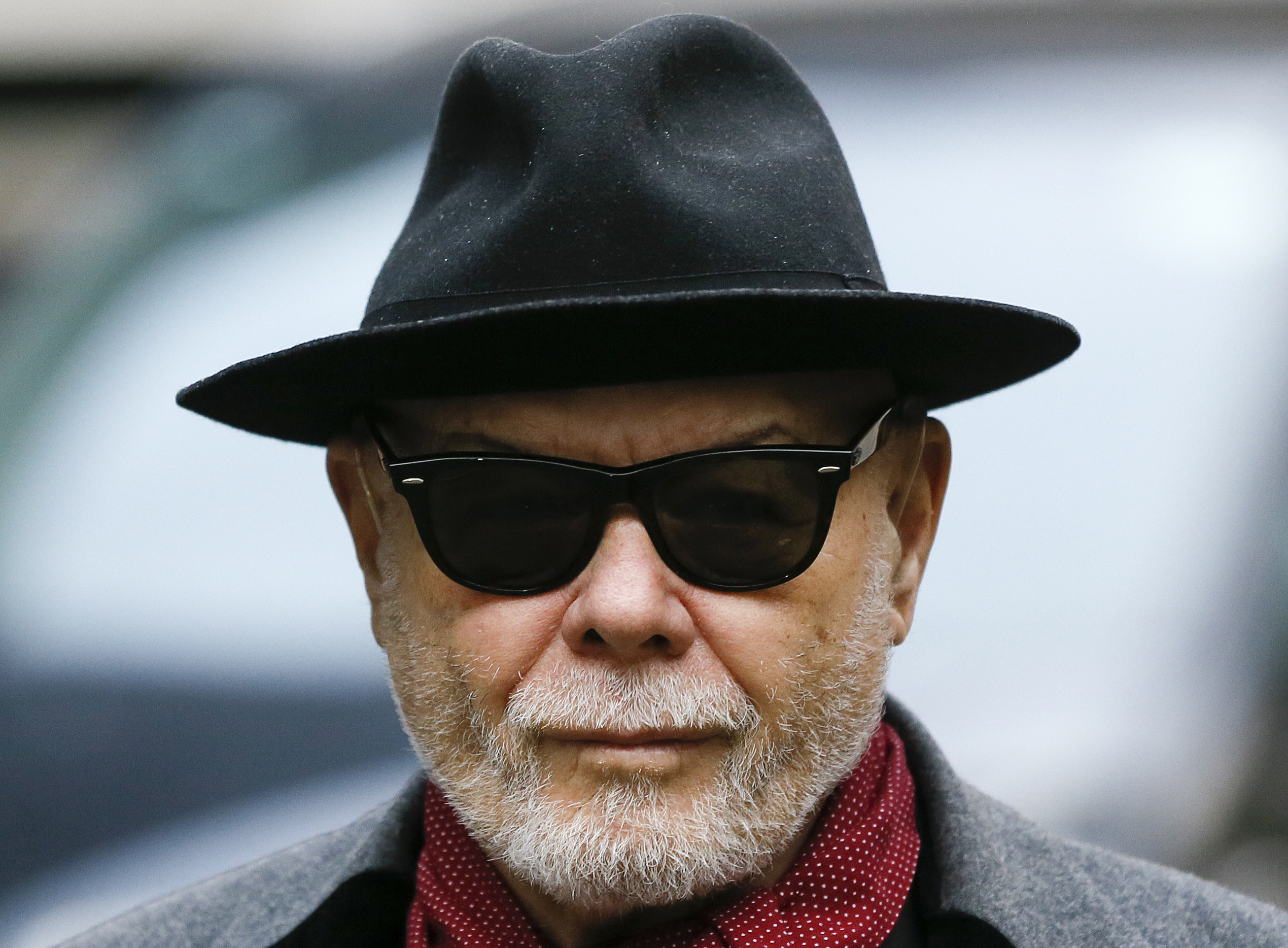
    During the hearing, Gadd, 82, who appeared via video link from a prison in Devon, England, and wore a gray jacket and hat, confirmed his name before a clerk read out brief details of the counts and asked for his pleas.

    When prosecutors and police announced initial charges in July, they said the abuse occurred between 1978 and 1981 at a residential address in the Kensington district of London and that it involved a woman who reported the accusations to police early last year.

    The clerk said Gadd was accused of having sex with the girl on at least five occasions.

    Gadd, who was sitting behind a table, said “Not guilty” to each charge, although he said “Absolutely not guilty” to two counts.

    Under British law, it is illegal for the news media to report information that could identify someone who has made such sexual abuse allegations, and they have lifelong anonymity.

    Gadd was a star of the glam rock era of the early 1970s that also included acts such as David Bowie and T. Rex. His 1972 hit “Rock and Roll (Part 2),” which reached No. 7 on the Billboard Hot 100 chart, is still regularly played at sports events in the United States. It also served as the soundtrack to a pivotal scene in the 2019 movie “Joker.”

  • Texas sees extreme flooding as more than a foot of rain falls in areas

    Texas sees extreme flooding as more than a foot of rain falls in areas

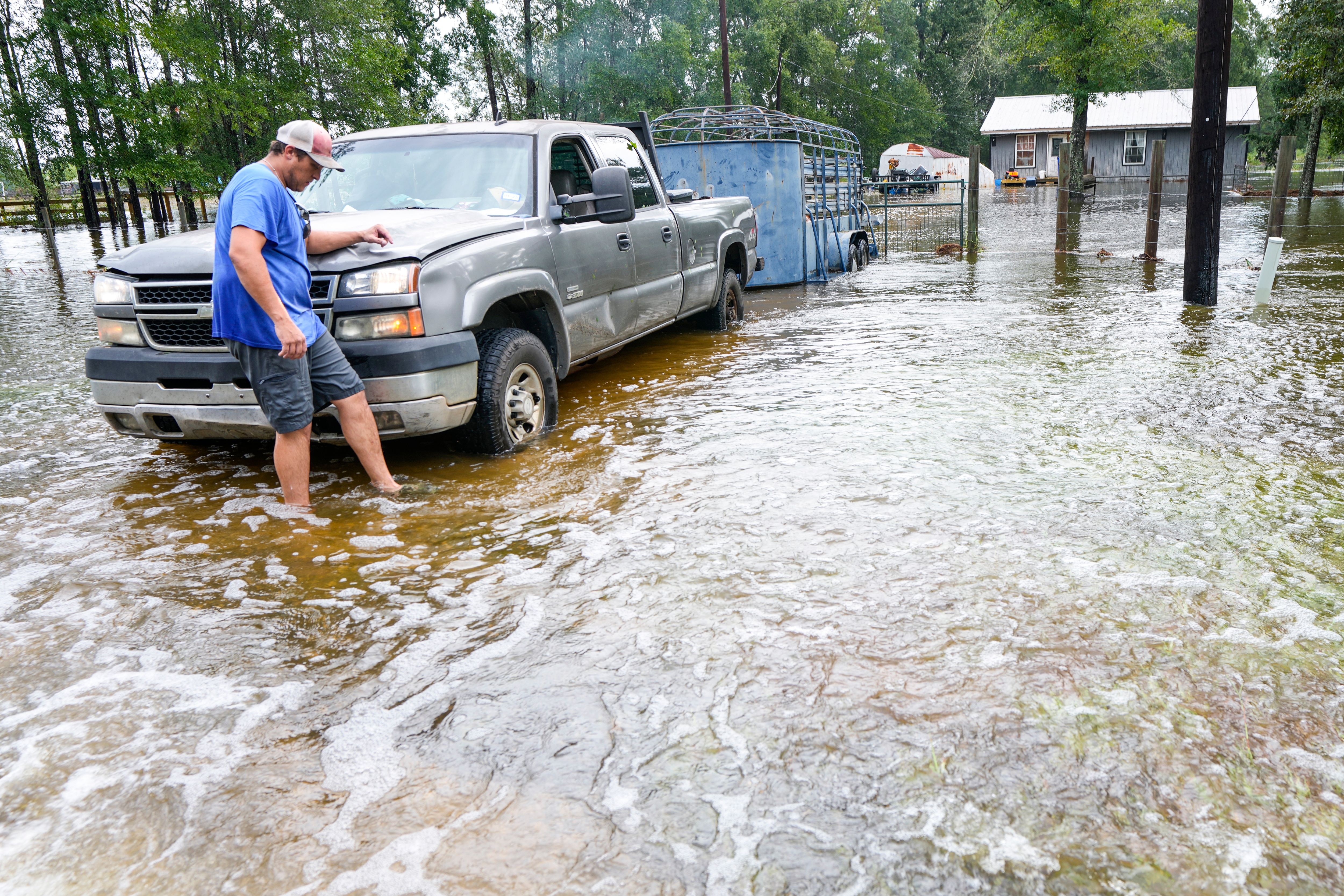
    HOUSTON — An extreme flood scenario was underway Wednesday in Southeast Texas with the remnants of Edouard.

    The storm, now a tropical depression, has dumped an estimated 15 to 22 inches of rain in spots, and some areas could experience rain totals of 25 to 30 inches.

    A flash flood emergency was issued for Hardin and Tyler counties until 10:45 a.m. local time. By noon local time, a weather station near Saratoga, Texas, was up to 17.75 inches — 5.91 inches of which fell between 5 and 6 a.m. A station south of Ivanhoe, Texas, near Warren, has recorded 15.68 inches of rain. Another near Wildwood is up to 16.52 inches. And considerably more has probably fallen in the rural areas away from weather stations.

    At least one person had to be evacuated in the East Texas town of Kountze after water entered a structure as heavy rain swept the area, according to staff at the National Weather Service office in Lake Charles, Louisiana.

    Forecasters urged people to get to higher ground as rain continued to fall early Wednesday, delaying damage assessments.

    “Move to higher ground now!” wrote the National Weather Service in Lake Charles. “This is an extremely dangerous and life-threatening situation. Do not attempt to travel unless you are fleeing an area subject to flooding or under an evacuation order.”

    Texas deployed rescue aircraft, boats and high-water vehicles, and the state’s emergency operations center has been activated, along with 1,500 state personnel.

    “We are getting it pretty good over here,” Kountze Mayor Glenn Matthews said by phone from his home, which has been without power since Tuesday night, noting crews were out doing welfare checks for the roughly 2,000 residents.

    Matthews said he had not heard any reports of injuries or deaths related to the storm, and there were no evacuation orders for the area. But there was concern about elderly residents like his parents who were without power and sometimes need oxygen.

    “What we’re doing now is making sure everyone is okay. Then we can try to assess the damage after the rain has let up some,” Matthews said. “It’s still raining as we speak. The city is pretty much flooded because this much rain at one time, there’s nothing the drainage can do about it. But it dissipates pretty well when it stops. This is not our first rodeo: We’ve been through this before many times.”

    He noted that the rains came after a lengthy dry spell: “We had just declared a burn ban. Be careful what you ask for.”

    At least 80,000 people were without power Wednesday morning across hard-hit areas of East Texas, the majority – about 50,000 — in coastal Port Arthur, an industrial refinery town of about 56,000.

    “We’re out doing damage assessments this morning in between wind and rain bands. It’s still an organized storm, albeit moving to our north. The winds are stronger than what had been forecast,” said Jeff Branick, chief executive for Jefferson County surrounding Port Arthur.

    Branick said the areas has “mostly debris issues, very little flooding” compared with Kountze and other areas to the north, where the state’s emergency management division has sent search-and-rescue boat teams.

    But he noted that the area has “some industrial upsets because of the loss of power,” including widespread complaints overnight of gas and burning rubber odors near refineries.

    “The investigation is still ongoing. Fortunately, after the odor appeared they determined one of their flares that’s used to offset the loss of power had not ignited and they got it ignited and the issue went away,” Branick said of a Valero refinery.

    Downtown Houston has seen only about a tenth of an inch of rain, if that. The edge of the heaviest rain is razor-sharp, with a flood disaster 50 to 75 miles away.

    Rainfall totals of 5 to 6 inches per hour are common in the heaviest bands. A staggering 5.91 inches fell in a single hour along Highway 787 west of Lumberton, Texas.

    Edouard is a waterlogged system, making for extremely efficient precipitation processes. Not only is there more water in the atmosphere to work with, but the saturated atmosphere means there’s little to no evaporation of the raindrops on the way down.

    There are even some indications that Edouard intensified a bit overnight. That’s because of several factors.

    For starters, diurnal — day/night — processes often lead to enhanced convection, or thunderstorm, activity after nightfall. That sometimes allows tropical cyclones to strengthen a bit after dark, even if they’re moving inland.

    The system also has an umbilical cord of moisture and instability, or thunderstorm fuel, feeding it from the southeast. That Gulf of Mexico connection helped fuel the storm, even far inland.

    But the tiny core has remained remarkably intact. It’s not often a well-defined eye is present 115 miles inland. Edouard’s decay may also be slowed by something called the “brown ocean effect,” a rare phenomenon in which a tropical system that has made landfall behaves as if it’s over water.

    It occurs when hot, saturated soils mimic a tropical ocean, allowing a cyclone to extract heat energy.

    That may seem surprising considering there’s a drought in Texas. But the hot, sunbaked soils may have become a bit warmer due to the drought. Then they were resaturated by the initial rains from Edouard’s outer bands. Soil temperatures in the top 6 inches of ground in Southeast Texas were between 82 and 85 degrees as Edouard made landfall.

    Marshall Shepherd, a researcher at the University of Georgia and a specialist on this process, likened it to a “flash brown ocean feedback.” In an email, he suggested the initial dry environment may have played a role.

    Something similar happened with the remnants of Tropical Storm Erin, which came back to life over Oklahoma on Aug. 18, 2007. Research from 2021 noted that dry conditions preceded Erin but that the storm re-wet the hot soils, allowing the brown ocean effect to occur.

    In the case of Edouard, the storm’s small size made it extra prone to interacting with the landscape, noted Brad Johnson, a research meteorologist and specialist on the role of land type.

    In the interim, Edouard will continue to dump prolific moisture.

    Steering currents are very weak, so there’s not much to scoot the system along. The storm was moving northwest at 5 mph — a brisk walking pace.

    An additional 6 to 14 inches of rain may still fall in some spots.

  • Coin with Trump’s face and gold finish to go on sale

    Coin with Trump’s face and gold finish to go on sale

    The $1 coin designed to celebrate America’s 250th birthday — and seemingly President Donald Trump, whose face gazes from one side of the gold finish — will go on sale Wednesday, according to the U.S. Mint.

    The coin’s design — Trump’s visage as “heads” and the Great Seal of the United States as “tails” — received the stamp of approval this year from the U.S. Commission of Fine Arts, whose members Trump appointed. In past comments, the president said that the idea to stamp his face on a coin was “very unusual” but that he was “honored by it.”

    The president’s second term has brought several such brandings, or attempts at them, that have become tangled up in lawsuits. That includes moves to put Trump’s name on the Kennedy Center and the U.S. Institute of Peace, as Trump works to leave his stamp on history and on Washington, D.C.

    The coins, which can be used as legal tender, drew some criticism, particularly because of federal law that bars the depiction of a living president on U.S. currency. But in some circumstances, the Treasury Secretary does have authority to authorize the minting and issuance of special coins.

    The coins were struck to “honor 250 years of great American heritage,” the U.S. Mint wrote on its website. In an arc above Trump’s face is written “LIBERTY,” and below is “1776 (tilde) 2026.” On the flip side is the Great Seal of the United States, with the bald eagle gripping arrows in one claw and an olive branch in the other. In a banner clutched in its beak is written “E PLURIBUS UNUM,” Latin for ”out of many, one.”

    A roll of 25 coins will cost $61, and a bag of 100 will cost $154.50, and the U.S. Mint said it randomly hid some special-issue coins among the rolls and bags. Those will be marked “July 4th” because they were struck on that day, the anniversary of the Declaration of Independence.

    Households are limited to only two orders, the U.S. Mint wrote, but that cap will be lifted at 2 p.m. Thursday.

  • Trump’s ‘lightning speed’ outpaces the courts

    Trump’s ‘lightning speed’ outpaces the courts

    WASHINGTON — The courts cannot keep up with President Donald Trump.

    In cases on immigration, spending, mass firings, and restructuring agencies, the administration has barreled ahead in the face of slow-moving legal challenges. If Trump loses when those lawsuits are finally resolved, it may be too late as a practical matter to undo what he has achieved.

    The challenge to Trump’s enormous White House ballroom project is just the latest example of a mismatch between a judicial system characterized by unhurried deliberation and a presidency built for speed.

    “Trump is going to get his ballroom — even if courts conclude it’s illegal,” said Leah Litman, a law professor at the University of Michigan.

    Over the past few months, three judges and four justices concluded that Trump likely violated a federal law by razing the East Wing and replacing it with a luxury building.

    Five other justices did not dispute that conclusion, ruling instead that the challengers probably lacked a direct interest in the matter sufficient to give them standing to sue.

    The litigation continues — but so does the construction. Trump said Tuesday that the project will be done by next year.

    Dissenting from an order in a different case last week, on mail-in voting, Justice Ketanji Brown Jackson wrote that she detected a pattern: a “Catch-Me-If-You-Can approach to pursuing the president’s policy agenda.”

    Davis Ingle, a White House spokesperson, said velocity was a virtue.

    “President Trump is moving at lightning speed,” he said, “because we don’t have time to waste in our mission to make America greater than ever before.”

    When the ballroom case was argued before a three-judge panel of the U.S. Court of Appeals for the District of Columbia Circuit in June, Judge Patricia A. Millett asked a telling question.

    If the government were to move very quickly to bulldoze the Statue of Liberty, she asked, was it true that “nothing can be done” by the courts?

    Yaakov Roth, a Justice Department lawyer, did not try to duck the question. “I think that’s right, yes,” he said.

    The panel ruled for the historic preservationists who had challenged the project by a 2-1 vote, affirming a ruling from a lower court judge blocking the project about four months after it was issued. That is pretty fast by judicial standards.

    But the injunction had been paused while the case moved along, and the appeals court added another two weeks. Then Chief Justice John Roberts added another pause, one that would turn out to last 10 days.

    During all of this, construction continued at a furious pace.

    When the case reached the Supreme Court last month, the challengers warned the justices that Trump had “decided to try to outrun judicial review.”

    In response, Solicitor General D. John Sauer did not exactly deny the charge. He crowed that a 250-person crew had been working 20 hours a day, seven days a week, and that the project, which he said included key security upgrades for the White House, had passed the point of no return. Echoing the challengers, he wrote that “the executive has raced to ‘outrun’ the extraordinary security threats facing this president.”

    In a decision Monday that let the project proceed for now, no justice said the project was lawful. The five-member majority, in an unsigned opinion, instead tentatively determined that the challengers had not suffered the sort of direct injury that would allow them to sue.

    Indeed, the majority went out of its way to say that “we do not pass upon the legality of the government’s East Wing project.”

    A frustrated Roberts, joined by the court’s three liberal members, wrote in dissent that “construction of the ballroom has proceeded apace for the better part of a year” even though it was most likely in violation of a federal law that requires Congress’ express permission to erect a building on federal property in Washington.

    Should Democrats capture one or both chambers of Congress in the coming election, they may be able to challenge the project in court or through legislation. But it will almost surely be too late.

    Aziz Huq, a law professor at the University of Chicago, said there was a pattern.

    He pointed to cases in which he said the administration had “immediately shut off funding in violation of law when the recipient depends on the funding and is discouraged from suing by even the temporary loss of funding.”

    This, Huq said, “is a striking use of practical power to outrun law.”

    The Supreme Court’s deliberate pace helped Trump during his last campaign, too.

    Jack Smith, the special counsel prosecuting him on charges that he had tried to subvert the 2020 election, sought to put the case on a fast track, one that would yield a trial before the 2024 election. Trump argued that he was immune from prosecution because his actions had been part of his official duties as president.

    Sauer, who was then Trump’s personal lawyer, urged the justices to go slow. The question, Sauer’s brief said, should be “resolved in a cautious, deliberative manner — not at breakneck speed.” He urged the justices not to “rush to decide the issues with reckless abandon.”

    The Supreme Court turned away a first appeal in 2023 and did not agree to hear the case until late February 2024, scheduling arguments for that April.

    The court’s decision, that July, granted Trump broad but not unlimited immunity, and Smith might in theory have been able to proceed with some elements of his case.

    But it had taken the court long enough to decide the immunity issue that the prospect of a trial before the election evaporated. After Trump won, the Justice Department dismissed the charges against him.

    “It was entirely foreseeable that the Roberts court’s decisions allowed Trump to outrun both the prosecutors and the lower courts,” said Jed Shugerman, a law professor at Boston University.

    The general problem, said Litman, a frequent critic of Trump, is that the Supreme Court, intentionally or not, “keeps missing the forest for the trees,” focusing on technical issues in the face of brazen conduct.

    “The court has created a maze of obstacles — and invented obstacles — that have the effect of allowing the executive branch to get away with lawlessness,” she said, “at least for enough time to accomplish what they’re trying to.”

    But Samuel Bray, a law professor at the University of Chicago, said courts are so powerful they must observe certain restraints. They cannot decide disputes not brought to them, for instance, and they can decide only cases in which the plaintiffs have a real stake.

    “Courts have the special power of giving judgments that are obeyed, even in the bitterest disputes,” he said. “But the special powers and special constraints of courts go together. And in the long run, the legitimacy of a judicial system depends on the judges’ commitment to working in a judicial mode, come what may.”

    Many presidents have been aggressive in pursuing their policies, and few have been eager to be second-guessed by the courts. But Trump’s actions are different in kind, said Pamela Karlan, a law professor at Stanford University.

    “He really has decided that he can just go ahead and do what he wants,” she said, “daring courts to stop him across a huge range of subject matters.”

    FILE — President Donald Trump boards Air Force One at Joint Base Andrews in Maryland, Aug. 27, 2026. In his breakneck construction of a grand ballroom and in many other initiatives, critics say, the president has tried to outrun judicial review. (Haiyun Jiang/The New York Times)Haiyun Jiang
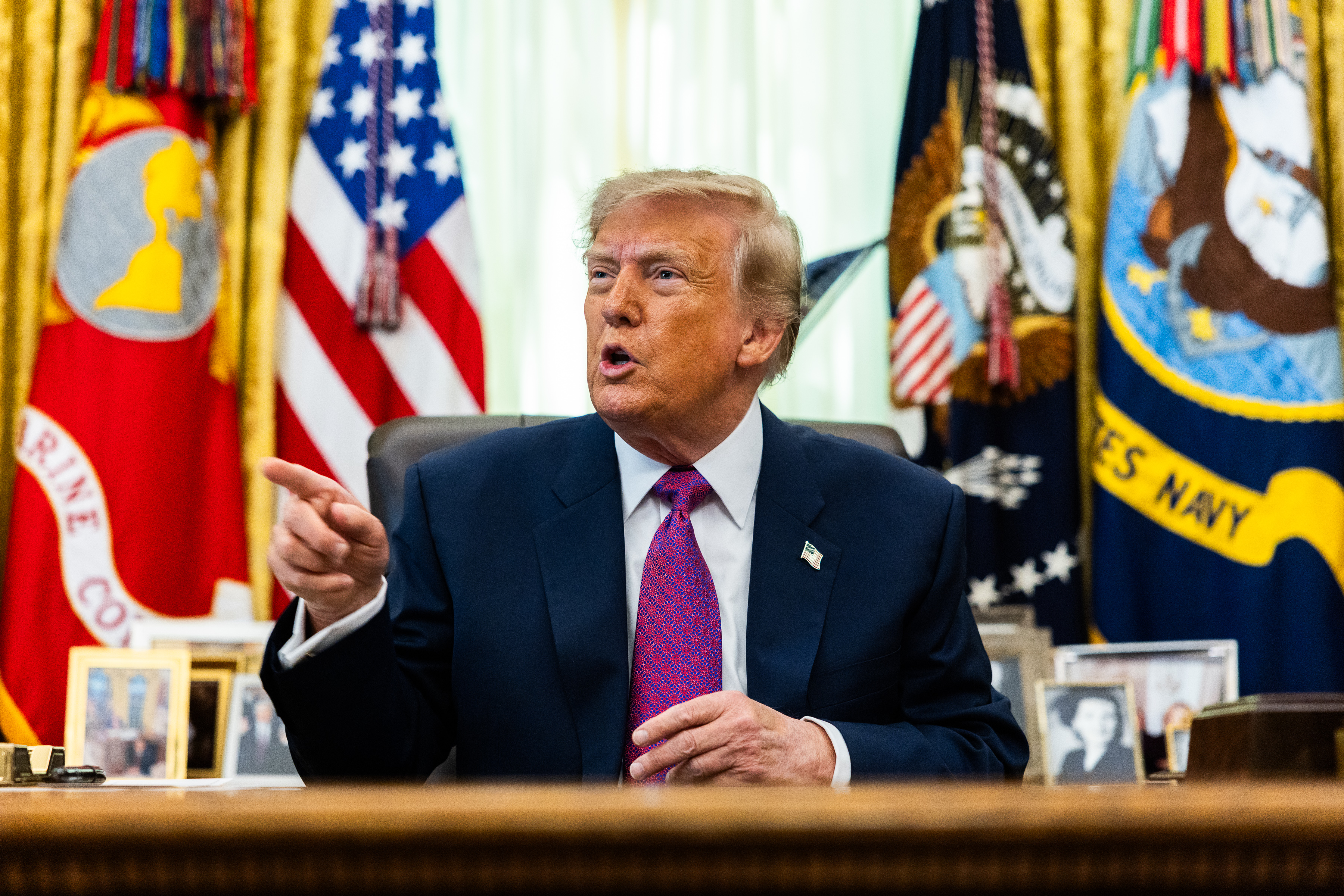
    President Donald Trump speaks to reporters in the Oval Office after ordering the name of Lake Ontario to Lake America, on Thursday, Aug. 27, 2026. On Tuesday night, after the latest exchange of fire over control of the Strait of Hormuz, Trump called on the Iranian people to rise up — something he did six months ago, before he backed off and acknowledged that his command was easier said than done. (Demetrius Freeman/The New York Times)DEMETRIUS FREEMAN
  • Symbolic funerals held in Nepal for those feared lost as some missing tourists make contact

    Symbolic funerals held in Nepal for those feared lost as some missing tourists make contact

    KATHMANDU, Nepal — Tourists previously reported missing in Nepal have made contact with authorities, officials said Wednesday, as families of locals still unaccounted for after last week’s catastrophic floods held symbolic funerals for their loved ones.

    Nepal’s Foreign Ministry said 324 foreign nationals have been rescued, while another 590 from 39 countries remain missing following the Aug. 26 floods that killed at least 1,118 people and left more than 3,900 missing.

    Australian Prime Minister Anthony Albanese said Wednesday that the number of Australians missing in the disaster had fallen from 43 to 38 after five were confirmed safe overnight.

    “Amidst all of this tragedy, we are seeing some positive news. Today, another five Australians have been confirmed safe,” Albanese told reporters in Palau, where he is attending a regional summit.

    “We hope, of course, for positive news further, and we’re doing everything we can to work with authorities,” Albanese added.

    Sunil Sharma, a spokesperson for the Nepal Tourism Board, said at least five other tourists who were previously reported missing had contacted authorities by email or telephone in recent days.

    It is thought the disaster happened when a glacial collapse in the Himalayas sent rock, ice and meltwater into valleys below, triggering powerful floods downstream. The surge entered rivers flowing through Tibet and Nepal, causing them to rise rapidly. Floodwaters swept away homes, buildings, roads and bridges, carrying mud and rocks downstream.

    Families hold symbolic funerals

    Some families in Nuwakot, one of Nepal’s worst-affected districts, have held symbolic funerals for relatives still missing, hoping to free their souls after they were presumed dead.

    In Hindu tradition, cremation is an important final rite, and for some families, performing the ceremony even without the bodies of their loved ones provides a sense of spiritual release.

    Mukunda Rijal said his cousins and their daughters had not been found, prompting the family to perform a symbolic funeral for them.

    Along the banks of the Trishuli River, a priest placed straw effigies representing the missing family members and covered them with small piles of wood before setting them alight. The symbolic funeral pyres were surrounded by offerings to Hindu deities as relatives gathered to perform the final rites.

    Authorities in Nepal have also been burying recovered bodies in temporary graves until they can be identified. They are preserving DNA samples, photographing distinguishing facial features and recording other identifying details to help match the remains with missing people and eventually return them to their families.

    China builds access road for rescue crews

    On the Chinese side, rescue crews completed a makeshift road to the disaster site at Gyirong Port on the Nepal border, state broadcaster CCTV reported on Wednesday.

    Crews have been clearing access for heavy machinery to be used in the search at the border crossing complex, which was washed away by the floods. The road leading to the crossing was destroyed and buried under water, mud and rocks.

    At least 21 people have been killed and 541 remain missing in China, according to the Chinese state news agency Xinhua.

    Survivors find shelter in Kathmandu

    Some flood survivors are fleeing the devastation to seek shelter in Nepal’s capital, Kathmandu.

    Around 400 survivors, mostly from the town of Timure, about 65 miles west of Kathmandu, have been staying at the Yellow Gumba monastery. The shelter is being organized by locals and relatives, with relief supplies donated by individuals and charity organizations.

    Riya Tamang, 21, who fled with her 10-month-old baby as the floodwaters approached, is among those taking shelter at the monastery. She lost her grandparents in the disaster.

    “I was the last one to leave the house. It was so difficult to escape,” she said.

    Her husband, who works as a cook in Gyirong town on the Chinese side of the border, also survived, and the couple now stays in touch through video calls.

  • How much is that gene-edited dog in the window?

    How much is that gene-edited dog in the window?

    For thousands of years, we have been trying to craft our ideal canine companions. We have honed their abilities to perform an array of specific tasks, from fetching waterfowl to staring down wayward sheep. We have reshaped and refined their bodies, producing sausage-shaped dachshunds, polka-dotted Dalmatians, bushy-browed schnauzers, and deeply wrinkled Shar-Peis.

    And we have done it using nothing more sophisticated than good old-fashioned selective breeding.

    Now our canine engineering efforts are entering a new era. Earlier this month, Kindred Companion Sciences, a biotech startup based in New York, revealed that it had used the technique known as CRISPR to create the first gene-edited, hypoallergenic dogs. Thanks to a single genetic tweak, the dogs — two undeniably adorable beagles — appear unable to produce a protein that can leave some people red-eyed and wheezing.

    Still, it’s a long way from the lab to the laps of pet owners across America. (It has been 2½ years since scientists announced a gene-edited, hypoallergenic cat, but such felines are not yet available to the public.) More time and data are needed to determine whether Kindred has truly delivered on its promise of hypoallergenic dogs, experts said. Can a single gene edit reliably stave off the sniffles in humans?

    An even more critical question: What does it mean for dogs? Will our efforts to create pets that are more convenient for us have unintended health consequences for them?

    History is not encouraging. Since the Victorian era, when dog fanciers began to create and codify modern dog breeds, our quest for the perfect pooch has yielded dogs that are inbred, disease-prone, and saddled with extreme physical traits — super flat faces and ultralong backs — that compromise their welfare.

    “We’ve created an enormous amount of inherited diseases in dogs, often unintentionally, because of our pursuit of certain traits that appeal to us,” said Rowena Packer, an expert on companion animal welfare at the Royal Veterinary College in London. “I just think we have a lot more responsibility to think more critically about the dogs that we create.”

    Dog design

    For all the canine diversity we’ve managed to create through selective breeding, a truly hypoallergenic dog remains something of a holy grail. Breeders have created all manner of low-shedding dogs and purportedly hypoallergenic dogs (behold the labradoodle and all of its doodle-y descendants). But these dogs still produce proteins that, secreted through their skin, saliva, and urine, can trigger human allergies.

    Gene editing provides a “simple, elegant” way to solve the problem at the source, said Matt Walker, cofounder and CEO of Kindred, who has suffered from dog allergies his whole life.

    Kindred began with canine cells, using CRISPR to disable a gene known as Can f 1, which codes for one of the main canine allergens. Then, the scientists used a basic cloning technique to transfer the edited genomes from these cells into dog embryos. They implanted the embryos in a surrogate beagle mother, who gave birth to two puppies: Alfie and Bailey, who are now almost 2 years old.

    The company has detected no trace of the allergen in either dog, and Walker, who adopted Bailey, has experienced no allergic reactions. (Alfie was adopted by one of Walker’s colleagues.) The dogs appear to be developing normally.

    “No red flags, no yellow flags — so far, the animals seem completely healthy,” Walker said. “That said,” he added, “this is the starting point of our work.”

    Indeed, for all its purported precision, gene editing can have unpredictable consequences. Medical issues might appear later in the dogs’ lives, or when the company starts producing enough dogs to spot rare side effects.

    Or, of course, they could turn out to be perfectly healthy. But it’s too soon to say, and we’re likely to see more efforts to create gene-edited dogs in the future. Where do we want to draw our ethical lines?

    Thirty years ago, when genetic engineering was still in its infancy, philosopher Bernard Rollin proposed an ethical principle he called the “conservation of welfare,” which held that we should not modify animal genomes in ways that left the animals “worse off, in terms of suffering” than their unmodified forebears.

    That’s a sensible starting point. But it’s a low bar. And it doesn’t address all the ethical implications of making gene-edited dogs, which may require using additional animals to serve as test subjects, egg donors, and surrogate mothers.

    “I think we get sometimes so excited about the idea of what technology can fix, particularly biotechnology — we’ve got to remember that, generally, we use a lot of animals to get to that end ‘product,’” said Lisa Moses, a veterinarian and bioethicist at Harvard University.

    Ethicists have also questioned whether we should bring gene-edited dogs into a world that already has more dogs than it can care for, especially when the goal is not to create a healthier animal, but one that better meets our human needs.

    “Should we use sophisticated biotechnology to create the animals we want, rather than changing how we relate to the animals who already exist?” said Jessica Pierce, a bioethicist at the University of Colorado Anschutz Medical Campus. “That’s a question of priorities, and perhaps misplaced priorities.”

    Walker sees it differently. His allergies would prevent him from ever adopting a shelter dog, he said; gene editing is the only thing that has made it possible for him to have a relationship with dogs. “I’m also really invested in applying this work to service dogs for people who are allergic,” he said.

    “People’s ethical barometers are set differently,” he added. “For me, this feels justified by the potential benefits, as long as animal health is protected.”

    Good breeding

    Dog lovers can, in good faith, come down on different sides of the Kindred question. But if we’re going to discuss the ethics of dog creation, experts agreed, we need to ask ourselves some hard questions not just about our new gene-editing tools, but also about our long-standing breeding practices.

    “At the end of the day, they’re both producing animals for companion purposes,” said Alison Van Eenennaam, an expert on animal genomics and biotechnology at the University of California, Davis. “It’s not the technology that’s creating the ethical issues.”

    We’ve done plenty of harm without modern biotechnology. And there are ways to use gene editing to improve canine lives — even, in some cases, to undo some of the damage done through selective breeding. In a 2022 study, scientists showed that it was technically possible to use gene editing to “correct” a genetic mutation associated with hip problems in Labrador retrievers.

    But these hip problems stem from a variety of risk factors — both genetic and environmental — and most canine health conditions probably cannot be cured by editing just one gene, experts said.

    Improving dog welfare is likely to require an array of complementary approaches. These include revising breed standards, opening up closed breeding pools, performing widespread genetic screening, and educating the public about the welfare costs of breeding dogs with certain physical traits.

    Experts have been calling for these reforms for years, with limited success. But they are necessary if we want to bring our behavior in line with the values we claim to hold. We are, after all, a society that is so besotted with dogs that we have startups trying to develop canine longevity drugs — and editing genes so that people can live alongside creatures that would otherwise give them hives.

    Life with Bailey has been “amazing,” Walker said. “I didn’t really appreciate, when people say pets are part of your family, what that really means. But she really is a part of our family.”

    His wife had grown up with dogs, he added, and had long bemoaned his allergies. “She always said that this was the one thing she wished she could change about me,” he said.

    Indeed, as news of Kindred’s hypoallergenic dogs spread across the internet this month, one Facebook commenter raised precisely that possibility: “Why doesn’t he alter himself instead of the beagles?”

    Alas, we can’t yet edit dog allergies out of our own genomes. But that doesn’t mean we can’t evolve.

    This article originally appeared in the New York Times.

  • Advocacy groups, fearing federal intimidation, plan to deploy poll watchers

    Advocacy groups, fearing federal intimidation, plan to deploy poll watchers

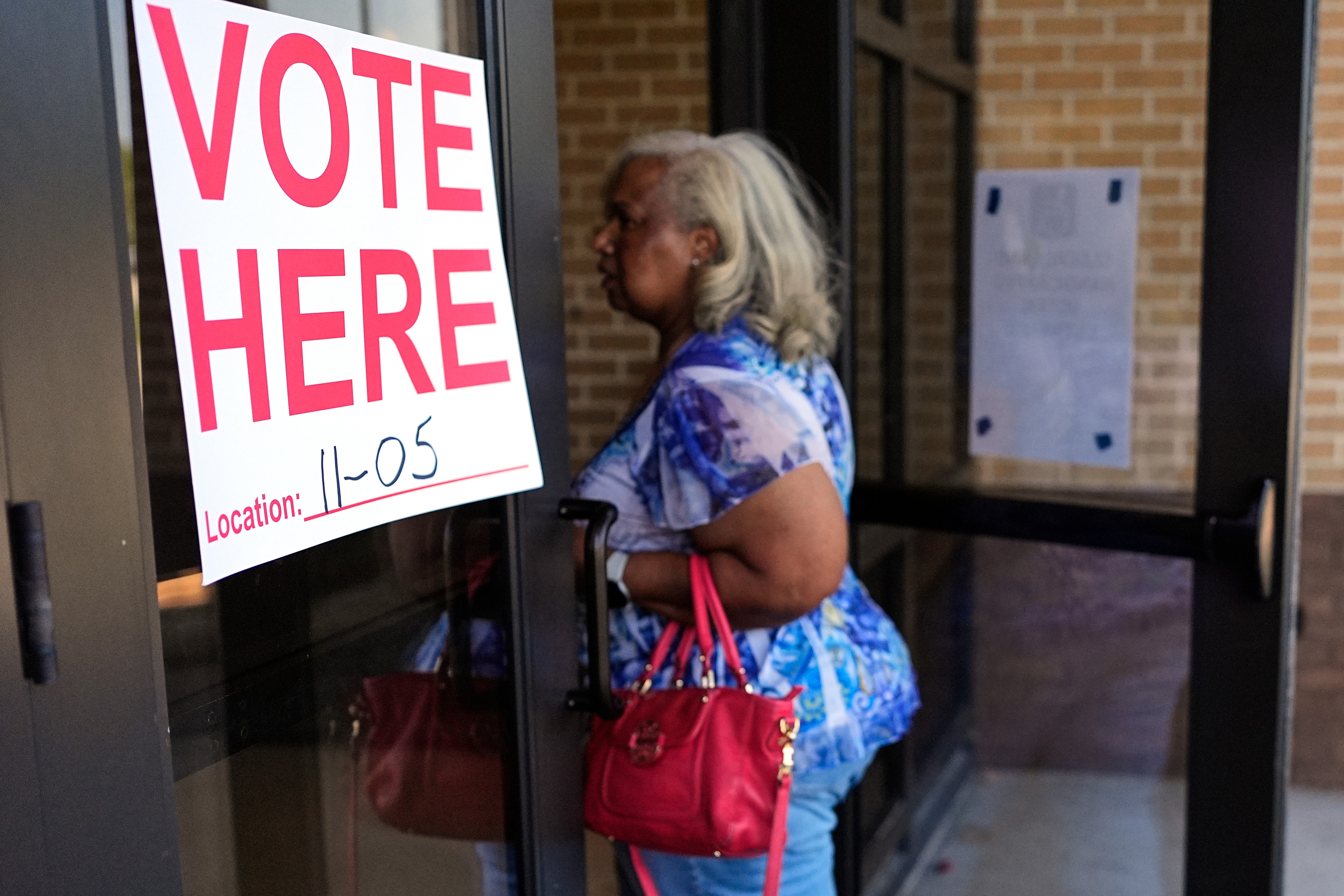
    A coalition of civil rights and advocacy groups plans to deploy hundreds of poll watchers this fall at heavily minority precincts to counter what organizers say is a threat of voter intimidation from President Donald Trump’s administration.

    The National Action Network, the American Federation of Teachers, and the Save America Movement are launching the Vote Safe project, which they described as a nonpartisan initiative set to begin during early voting and culminate in the Nov. 3 midterm elections. They are focusing on Michigan, Ohio, Georgia, and North Carolina, all of which are competitive in the battle for control of the Senate.

    Trump has routinely raised alarms about the threat of voter fraud this fall, stoking fears among his followers and prompting calls for preemptive action. He has urged Republicans to nationalize elections, and some administration officials haven’t ruled out deploying agents to polls, even though federal law prohibits doing so.

    “There is really an unprecedented threat to our elections this year, and it’s coming from our own government,” Mary Corcoran, executive director of the Save America Movement, said in an interview. Corcoran co-founded the group along with Lincoln Project co-founder Steve Schmidt to counter what they see as the excesses of Trump’s MAGA movement.

    Those locations were chosen as politically significant areas with large populations of people of color that could be vulnerable to intimidation, she said. The idea is to have trained community members — such as faith leaders, teachers, veterans, and firefighters — at polling places, so voters “can go there with confidence,” Corcoran said. “We want to replace that fear with comfort and knowledge.”

    Homeland Security Secretary Markwayne Mullin said at a news conference Tuesday that Immigration and Customs Enforcement agents aren’t meant to patrol polling places but may be present if they are serving a warrant or responding to a threat. Then-White House spokeswoman Karoline Leavitt said at a news conference this year that she “can’t guarantee that an ICE agent won’t be around a polling location in November” but added that she hadn’t heard Trump discuss plans to do so.

    Former Trump strategist and podcaster Stephen K. Bannon has suggested that ICE deployments at airports could serve as a “test run” for similar efforts at election sites.

    While both political parties have increasingly deployed poll watchers since 2020, recent years have seen clashes over charges of voter intimidation. During 2022’s midterm elections, a court order stopped armed, masked individuals from photographing people casting early ballots in Arizona. This year, the Justice Department has said it plans to send 1,000 monitors to the polls.

    Organizers said they modeled the Vote Safe initiative after a project the Save America Movement undertook last year to station observers and videographers in areas of the country with a heavy ICE presence in hopes of preventing violence.

    Corcoran said volunteers are being trained in local election laws and techniques to de-escalate tense situations. They will be clearly identified with Vote Safe insignia, she said, and none will be armed.

    Vote Safe plans to deploy poll watchers around Detroit, Atlanta, Cleveland, and Charlotte, in the 20 precincts in each area with the highest expected turnout of racial-minority voters.

    Citing the Supreme Court’s recent weakening of protections for minority voters in the Voting Rights Act, the organizers said they want to ensure that voters of every ethnicity feel welcome at polling places. They also want to protect voters from having their immigration status inappropriately challenged.

    “No voter should have to wonder whether exercising their constitutional right will put them at risk,” the Rev. Al Sharpton, founder of the National Action Network, said in a statement. “If anyone thinks the presence or threat of federal agents will frighten our communities away from the polls, they are badly mistaken.”

    Randi Weingarten, president of the American Federation of Teachers, said in a statement that the coalition’s goal is for voters to feel there is “someone standing beside them who knows their rights and knows the law,” so they can cast a ballot with confidence.