Category: Wires

  • Trump to use Qatari plane for international trip despite security worries

    Trump to use Qatari plane for international trip despite security worries

    President Donald Trump plans to fly to Ireland next week aboard the Boeing 747 gifted to him by Qatar, a senior White House official said, marking his first international trip on the jet since a security threat in July prompted him to leave Turkey secretly aboard an alternate aircraft.

    The trip underscores Trump’s continued fondness for and reliance on the Qatari jet despite concerns that it lacks some of the security features of the highly customized, heavily fortified Boeing 747-200B jumbo jets that have carried presidents for decades.

    Trump said in July that the new plane would be sent away to be “maxed out” to address those concerns. Despite suggestions that the security upgrades would be made this fall, the White House has not announced a schedule for the work, which could slip until after the midterm elections.

    “We don’t comment on specific upgrades or modifications to Air Force One,” said a senior administration official in a statement. “We maintain a consistent posture that ensures a safe, secure, and reliable capability for the President of the United States and routinely evolve the capability as required to maintain that posture.”

    In the absence of those upgrades, Trump is poised to use the Qatari-gifted plane more frequently as he ramps up his campaign-season travel. He is scheduled to travel to Texas next week to headline the Republican miniconvention in Dallas and said this week that he will be traveling to Alaska and other states with tight races before the Nov. 3 elections.

    The Ireland trip, however, is more personal to Trump. He plans to attend the Irish Open, which is being held at his golf course in Doonbeg. Officials say he also will hold some official meetings. The BBC has reported that he plans to meet with Irish President Catherine Connolly and Prime Minister Micheál Martin.

    The United States already has spent $400 million retrofitting the Boeing 747 from Qatar. The administration has not said how much more it will need to pay to improve the jet in the coming months.

    Former White House press secretary Karoline Leavitt previously told the Washington Post that the modifications would begin in the fall and take about a month to complete, but security experts have been skeptical that the necessary upgrades could be made on that fast a timeline.

    The gift of the plane from the Qatari government and royal family is an unprecedented arrangement largely intended to address Trump’s frustration with delays in replacing the fleet of decades-old planes that are known as Air Force One when ferrying the president. The Air Force awarded a contract to Boeing in 2017 to purchase two 747s for use as presidential transports. It is not clear if they will be ready before Trump’s term ends in January 2029.

    The Government Accountability Office has estimated that the costs to enhance the 747s now exceed $5.6 billion. Lawmakers have questioned why those upgrades have cost so much more than the changes made to the Qatari jet, and whether the jet is as secure as the government-purchased planes.

    In early July, Trump began traveling on the new plane with the red, white, and navy livery to events celebrating the 250th anniversary of the nation’s founding, including the opening of the Theodore Roosevelt presidential library in North Dakota.

    But questions about the security of the aircraft emerged just weeks into its use, when the president traveled on it internationally for the first time to the NATO summit in Ankara, Turkey.

    He did not take the jet on his return flight after the government received intelligence about a potential Iranian threat to attack it.

    Trump initially claimed that he departed Turkey on the “former Air Force One,” writing on social media that he took the trip for “old time’s sake” and so that U.S. troops stationed in Britain could see the former Qatari aircraft.

    Reporting by the Post revealed that Trump did not actually take that plane out of Turkey. After boarding the old Air Force One in front of TV cameras, he was secretly shuttled to an Air Force C-32A on a catering truck.

    Trump flew the C-32A to Britain with a few personal aides and Defense Secretary Pete Hegseth. Several other Cabinet members, White House staff, and the traveling pool of reporters scheduled to fly with Trump remained on the old Air Force One, which had become a decoy. The press and at least some of the government officials on board were not aware of the switch.

    After the operation, the White House defended the security of the Qatari plane.

    “The new Air Force One is a state-of-the-art aircraft that has been fitted with high-level security protocols that ensure the safety of the President and his staff,” White House communications director Steven Cheung told the Post last month.


  • Women gathered in a small Iranian town for a wedding. Then deadly strikes hit

    Women gathered in a small Iranian town for a wedding. Then deadly strikes hit

    KUHESTAK, Iran — Women with their children were gathered in the house and yard, waiting for the bride and groom to arrive to kick off a wedding celebration in this small town in southern Iran. Then an explosion turned the scene to carnage.

    The town of Kuhestak is still reeling from a barrage of strikes that killed five people during an American bombardment of southern Iran on Tuesday evening. Lampposts at the entrance to the town displayed large posters of four of the dead — a 4-year-old boy, a 16-year-old, and two women. Another woman, one of more than 60 people wounded in the blasts, died Thursday at a hospital.

    On Friday, an Associated Press team made a rare visit to the town on the coast overlooking the Strait of Hormuz. Within a densely built neighborhood of houses and unpaved alleys stood the compound of the Mallahi family, which was struck as relatives celebrated their daughter’s wedding.

    A U.S. weapons expert who reviewed images from the scene said the evidence suggests the strikes were carried out with American guided bombs.

    Blast left a gaping hole in the roof

    Ali Mallahi, a cousin of the bride, pointed to a gaping hole in the roof of a room that took a direct hit in one of the compound’s four houses. Big cracks ran through walls decorated with floral designs. Windows were shattered, and twisted sections of roofing and metal framework lay across the courtyard, among carpets and household appliances that the family had pulled out of other damaged rooms.

    Video of the immediate aftermath aired in Iranian media showed colorful decorations and palm fronds strewn across the ground.

    Weddings in the area are traditionally segregated by gender, and on Tuesday evening, roughly 150 women were gathered in the house, while the men held a separate celebration in another building about 50 yards away, Mallahi said.

    A strike hit the room where the women were due to be served dinner, but at the time, celebrations were only just getting started, Mallahi said. The bride and groom had not yet arrived.

    “Thank God, the casualties were not higher,” he said. The father of the bride, his uncle, is also named Ali Mallahi.

    Sasan Zarei, a neighbor, said she rushed to the Mallahis’ home and helped people out of the rubble. “Most of the injured were kids. The scenes were very heartbreaking.”

    Vance says US is investigating

    U.S. Vice President JD Vance said Thursday that he was briefed on the wedding attack. “We’re investigating it very fully,” he said. He said the U.S. never targets civilians in combat but added, “Sometimes things happen.”

    Residents described to the AP how a series of heavy explosions shook Kuhestak, lighting up the night sky. The blasts came amid the latest round of American bombardment in southern Iran that the U.S. military said targeted air defenses, radar systems, and maritime assets.

    Also hit was a communications tower by Kuhestak’s port, just over 100 yards from the Mallahis’ home. AP footage showed the tower toppled and heavy damage to the neighboring building that houses the town’s telecommunications department.

    Hassan Sayadi, a technician with the department, said the tower had provided telephone and internet connections across the area. The Hormozgan provincial telecommunications department said Wednesday that U.S. attacks had disrupted landlines and mobile phone service in multiple locations, including Kuhestak, and that it was working to restore services. On Friday, mobile phones and data services were operating.

    Town is not far from site where U.S. hit a primary school.

    Kuhestak is about 18 miles from the town of Minab, where more than 100 children were killed in an American missile strike that hit a primary school on Feb. 28, the opening day of the war launched by the U.S. and Israel.

    Following Tuesday’s strikes, residents and Iranian media showed fragments of munitions found at the scene, including a thermal battery unit, a segment of a control fin, and part of the exterior body of the munition.

    Weapons experts told the AP that they believe imagery of fragments found at the site points to an American guided munition. Trevor Ball, a former U.S. Army explosive ordnance disposal technician and an analyst at Armament Research Services, said the imagery shows remnants of both a JSOW and GBU-39, which are types of guided, air-delivered glide bombs.

    The images were “being evaluated to determine if one of these munitions, or another model, was responsible,” he said.

    Videos released by U.S. Central Command of its operations that night in Iran show aircraft heading on missions, including an F/A-18E loaded with a JSOW.

    The AP could not immediately determine where the remnants were collected or whether they all came from the wedding venue or also from the communication tower.

  • Rescuers pull 2 trapped workers from a hydropower tunnel 9 days after Nepal floods

    Rescuers pull 2 trapped workers from a hydropower tunnel 9 days after Nepal floods

    KATHMANDU, Nepal — Rescuers in Nepal pulled two workers alive from an underground tunnel at a hydropower plant Friday, raising hopes of reaching dozens of others believed to be trapped nine days after deadly floods swept away villages and submerged the Himalayan region in mud and debris.

    Search teams first heard voices from inside the tunnel in the morning, allowing them to locate the two men, Nepalese lawmaker Shri Ram Neupane said. Images showed a rescuer carrying one of the workers, covered in mud, on his back, while soldiers on either side helped.

    One of those rescued said more people are alive inside the tunnel, according to army spokesperson Brig. Gen. Raja Ram Basnet, and the search is ongoing.

    “I can’t explain what we are feeling at the moment. We are just grateful to god,” Amir Maharjan, the brother of one of those rescued, told the Associated Press.

    Basnet confirmed the first trapped worker’s rescue, and Neupane posted about the second on his Facebook page shortly after.

    Both men were flown to a hospital in Kathmandu, and Maharjan said his family was on its way there. One of the survivors was in critical condition, according to a statement from the prime minister’s office.

    Officials identified the men as a mechanical foreman and a mechanical supervisor. They were rescued from a tunnel at the Trishuli 3A plant.

    About 900 workers are missing from 12 hydropower projects in Nepal, with roughly 500 believed to be trapped in various tunnels, according to authorities.

    About 115 are believed trapped in the tunnel at Trishuli 3A alone, according to the Independent Power Producers Association of Nepal.

    Nepal’s Communication Minister Bikram Timilsina wrote on his Facebook page that officials “are waiting for the rescue of more and more people.”

    At least 1,287 people were killed in the Aug. 26 floods, likely caused by a glacier collapse, and more than 5,000 remain missing, according to Nepal’s disaster management agency. China said Friday 31 people were killed and 531 were missing on the Tibet side of the border, according to Chinese official news agency Xinhua.

    Nepal’s disaster agency estimated Friday that flooding caused at least 387.5 billion Nepalese rupees ($2.5 billion) in damage to infrastructure and property.

  • WNBA commissioner Cathy Engelbert, a South Jersey native, to retire in December

    WNBA commissioner Cathy Engelbert, a South Jersey native, to retire in December

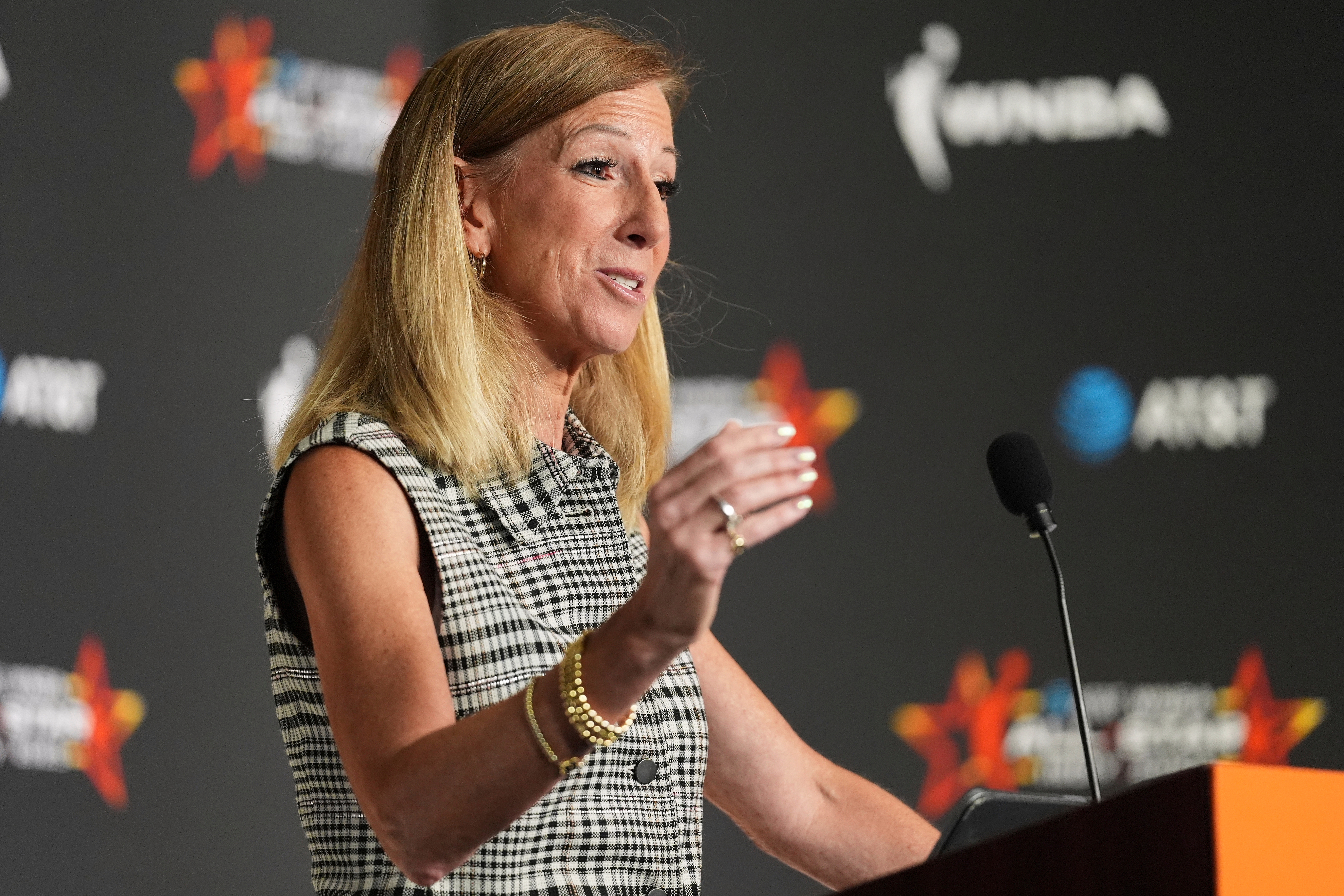
    WNBA commissioner Cathy Engelbert is retiring at the end the year, bringing to a close her seven-plus years at the helm of the league and a stewardship that has been transformative and at times tumultuous.

    Engelbert is the second-longest tenured WNBA president or commissioner, and she helped negotiate a lucrative collective bargaining agreement this past spring that resulted in the league’s first set of million-dollar player salaries. Philly-based lawyer Deb Willig helped lead negotiations for that CBA.

    “Cathy has presided over the WNBA through the most significant period of growth in the league’s 30-year history,” NBA commissioner Adam Silver said Friday when announcing Engelbert’s decision. “We are grateful for Cathy’s leadership and unwavering commitment to the advancement of women’s basketball.”

    Engelbert, a Collingswood native who turns 62 in November, told the Associated Press that she has been thinking about retiring for months.

    “When I first came to the league, I intended to do this for 3½ years,” she said in a phone interview. “The 7½ years exceeded that time. This is a really good time, given the financial transformation journey we’ve been on. Getting the collective bargaining agreement done, getting a long-term media rights deal done, getting expansion done.”

    Engelbert insists that the decision to leave was her own and that she did not feel any pressure to step down from NBA or WNBA stakeholders.

    Who’s next?

    The commissioner said she has been working on a succession plan over the last few years. While she didn’t give any specifics on who might be considered for the position, Engelbert did say there are both internal and external potential candidates on the league’s radar.

    “It’s a good time to hand it off to the next leader to take the ‘W’ into a better phase,” she said. “I’m proud of the team we built and everything we accomplished. A leader knows when it’s time to drop the mic and move on after building a powerhouse team in the league office.”

    Engelbert said she has mixed emotions about leaving.

    “I love women’s basketball, and am not going anywhere yet,” said Engelbert, who was a point guard for Muffet McGraw at Lehigh. “We’ll run a real succession process in the remaining four months. If we don’t find someone, I’ll stay on. I had no transition. I walked in the door, and I was by myself as no one transitioned me into this role.

    “Hopefully I can help this next leader transition in especially considering the elevation of this league.”

    The WNBA has grown at an exponential rate during Engelbert’s tenure as commissioner, with record television ratings, strong attendance, a new long-term media rights deal and expansion to 18 teams by the end of the decade. That run of expansion will be capped by a team coming to Philadelphia in 2030.

    “I was brought in as a business leader to transform the business,” she said. “I look at revenue and merchandise, viewership and attendance,” she said, noting how they’ve all improved. “A great leader senses when it’s time for someone else to come in. When I came in, this league was facing questions about our long-term viability and sustainability.”

    Turmoil, tension

    Engelbert said the growth of the league has “blown away her expectations” since she stepped into her role after leaving her previous position as president of Deloitte in 2019.

    Besides the new CBA, the list of things she is most proud of includes getting charter travel for players, keeping the league going during the coronavirus pandemic, the historic media rights deal and exponential increase in the value of WNBA franchises. In 2019, the average value of a WNBA franchise was $10 million; in 2026, it is about $460 million.

    Along with the financial gains, however, turmoil and tension have accompanied the WNBA’s growth.

    Players say they have seen more social media vitriol directed toward them over the last few years, and some don’t feel the league has done enough to ensure their safety. The league also has been at the center of discussions about transgender athletes playing in the league.

    Engelbert has repeatedly said the online attacks of players are unacceptable and she backs league initiatives to protect players. She also said there should be no confusion on the transgender question.

    “We have no current eligibility issues in the WNBA,” Engelbert said, adding that “if we did, we would have a thoughtful policy discussion with the [players’ association] and the players.”

    While there was a strained partnership between the commissioner and players during the recent CBA negotiations, Engelbert insists she has a good relationship with them.

    Talks between the commissioner and players have been complicated.

    New York Liberty forward Breanna Stewart, who’s vice president of the WNBA players’ union executive committee, said before the All-Star Game that there is a respect for Engelbert among the players, just not much of a relationship.

    New York Liberty forward Breanna Stewart (30) defends as Indiana Fever guard Caitlin Clark looks to pass in the first half of a game on Aug. 11 in Indianapolis.Michael Conroy

    Engelbert’s future

    Engelbert said she is ready to do what most retirees plan: spend more time with family.

    She also admitted that the online hate she receives has affected her family as well, though she did not share details of the impact.

    “There have been some hard parts of that on my family with the vitriol and hate I get online,” Engelbert said.

    Sixers majority owner Josh Harris (left), Detroit Pistons vice chairman Arn Tellem, WNBA commissioner Cathy Engelbert, and Cleveland Cavaliers CEO Nic Barlage celebrate the announcement of three new teams, including a franchise coming to Philly.Jonathan Tannenwald

    Her retirement will make her mother happy. Her father, Kurt, was a Hall of Fame basketball player at St. Joseph’s who died in 1987. Her parents were from Northeast Philly, and five of her siblings attended Villanova, according to a 2019 Inquirer article.

    “My mom is turning 90 this year, and she said that ‘it would be good if you were retired to spend more time with me,’” Engelbert said, laughing. “I have two children, one I barely see.

    “I’m one of eight kids [and I] have five brothers. They always say can you retire so you can spend more time with us.”

    Come Jan. 1, her family will get its wish.

  • New study reveals a major perk of being single

    New study reveals a major perk of being single

    Marriage has been well-studied and has even been linked with certain mental and physical health benefits. But new research suggests that singlehood comes with its own boon.

    In a series of three studies, which included two diary studies followed by an experimental one, researchers examined what they call “singlehood self-expansion potential,” or the belief that being single offers opportunities to broaden your sense of self via exposure to new experiences, perspectives, and relationships in a way that has previously been associated with being in a partnership.

    “Self-expansion theory has assumed that self-expansion happens in the context of close relationships,” said Yuthika Girme, an associate professor at Simon Fraser University and co-author of the study published in August 2026 in the Personality and Social Psychology Bulletin. “While that is true, our findings also highlight the potential benefits of personal growth and expansion during solo activities.”

    With this research, “we hoped to deviate from the existing social narrative that romantic relationships are the key to living a fulfilling life and personal growth, and recognize singlehood itself as an opportunity for self-expansion,” said Elina Moreno, the study’s lead author who conducted the research as a social-personality undergraduate mentee at Simon Fraser University and is now a graduate student at the University of Toronto.

    The value of self-expansion while single

    Psychologists have extensively studied self-expansion, or the idea that people are wired to want to develop new perspectives, abilities, and identities throughout life. Much of that existing research has focused on romantic relationships, with findings showing that a partner can introduce you to new people, interests, and ideas.

    Researchers set out to see how this concept may apply to single people, in particular. “The lived experiences of single people are understudied despite the rising numbers of folks who are delaying romantic relationships and choosing to remain single instead,” Moreno said.

    Across three studies, the researchers measured how strongly single participants believed their relationship status offered them opportunities for expansion and examined how those beliefs affected their experiences and emotional well-being.

    Here’s what they found: People with stronger beliefs in singlehood’s potential for growth engaged in more self-expanding activities, from hiking and trying new restaurants to learning skills and playing sports. Those beliefs were also linked to greater satisfaction with singlehood and life overall, less fear of being single, and stronger feelings of autonomy, competence, and connection to others.

    But single people weren’t always engaging in these enriching experiences by themselves. Up to 82% relied on friends and family to join them in these moments of self-expansion — no romantic relationship required.

    Why mindset matters

    Generally, how you look at a situation can influence how you respond to it. “So much of what we experience and perceive in daily life is influenced by our mindset,” Moreno said. But there’s some nuance to that idea when it comes to this study’s findings.

    People who already had higher self-esteem and felt happier about being single were more likely to view singlehood as an opportunity for expansion. Similarly, those who were more anxious about remaining single or felt a romantic relationship was necessary for their happiness were less likely to see that potential.

    “The important variable may not simply be whether someone is single, but what being single means to that person,” said psychologist Avigail Lev, director of Bay Area CBT Center, who was not involved in this research.

    In the third study, the researchers asked participants to imagine specific scenarios meant to encourage them to see singlehood as an opportunity for growth. They found that this did little to change people’s preconceptions.

    “Although people reported engaging in more self-expanding activities and positive mood after our intervention, we were not able to increase people’s singlehood self-expansion potential scores,” Girme said. “This was surprising and highlights that shifting people’s overall mindsets about singlehood may be more challenging than anticipated.”

    Other research on singlehood points in a similar direction. One study of lifelong singles found that those who chose to remain single viewed their relationship status as a source of autonomy and self-fulfillment, while those who felt forced into that choice expressed more regret. Another study on young adults found that those who attributed being single to self-enhancing motivations or a lack of interest in relationships reported greater well-being than those who reported “self-defeating” reasons.

    That distinction is important, said Mandolin Moody, an associate therapist at Gateway to Solutions in New York City who was not part of this research. Singlehood can create room to explore interests and identities independently, but that doesn’t mean everyone experiences it positively, particularly when being single isn’t what they want.

    The study series has a few limitations: Most participants were young adults, Girme said. People in this group may have more time or social permission to prioritize exploration than older adults who may be juggling more responsibilities. More research is needed to determine whether the findings apply across different stages of life.

    Additionally, the well-being boost from solo self-expanding activities — such as an increase in life satisfaction and strong feelings of autonomy and competence — was short-lived. “The research showed that benefits were largely limited to same-day associations rather than indicating prolonged benefits,” Moody said.

    How to make singlehood more expansive

    Self-expansion doesn’t require booking an expensive bucket-list vacation, for instance. Trying a new hiking trail, sampling a cuisine that’s new to you, or joining a pickup pickleball game can count, Girme clarified. What matters is allowing yourself to try something new and step outside your usual routines. Consider the following tips:

    • Try something new. Take an online class, pick up a new hobby, or start learning about new subjects you’ve always been curious about.
    • Get to know yourself better. Journaling can create space to reflect on what interests you and what you’re learning about yourself. “Therapy can be a great resource for enhancing self-discovery and for evaluating belief systems that may be impacting your self-esteem or personal singlehood self-expansion potential,” Moody said.
    • Find new communities. Look for opportunities to meet people who share your interests, whether that’s through a recreational sports team, book club, sewing circle, or community garden. Moody recommends staying consistent and open-minded as you build connections outside of romantic ones.
    • Travel solo. “Solo travel is known to be a great opportunity for self-expansion, as it fosters the full exercise of personal freedom, decision-making, self-reliance, and socializing outside of your usual environment,” Moody said.

    Think of being single as an opportunity to focus more of your time and energy inward, Moody added.

    Ultimately, the goal isn’t to decide whether being single or partnered is better than the other, Lev said. “It’s to stop treating singlehood as a state that must be escaped. When we approach it as an opportunity rather than a deficiency, we gain the freedom to use it for exploration, connection, and growth, and to become more intentional about who we want to be.”

  • Shein’s lackluster IPO shows a fast-fashion model left behind

    Shein’s lackluster IPO shows a fast-fashion model left behind

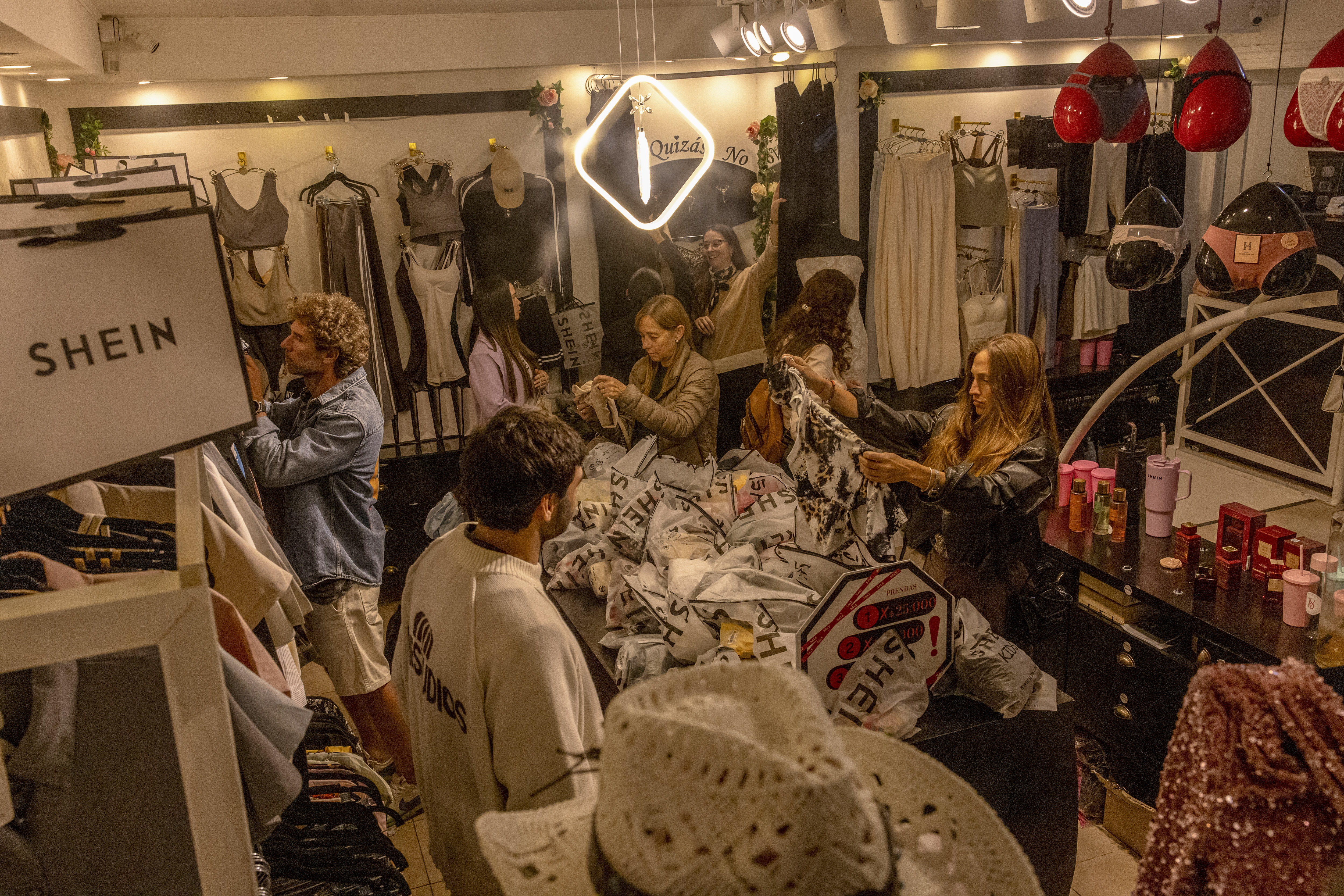
    When Shein unveiled itself to the world at the height of its popularity several years ago, it touted a modern era for fashion — one built on speed, technology, and an on-demand system capable of creating 4,700 new styles a day.

    Today, that model is increasingly looking like a relic.

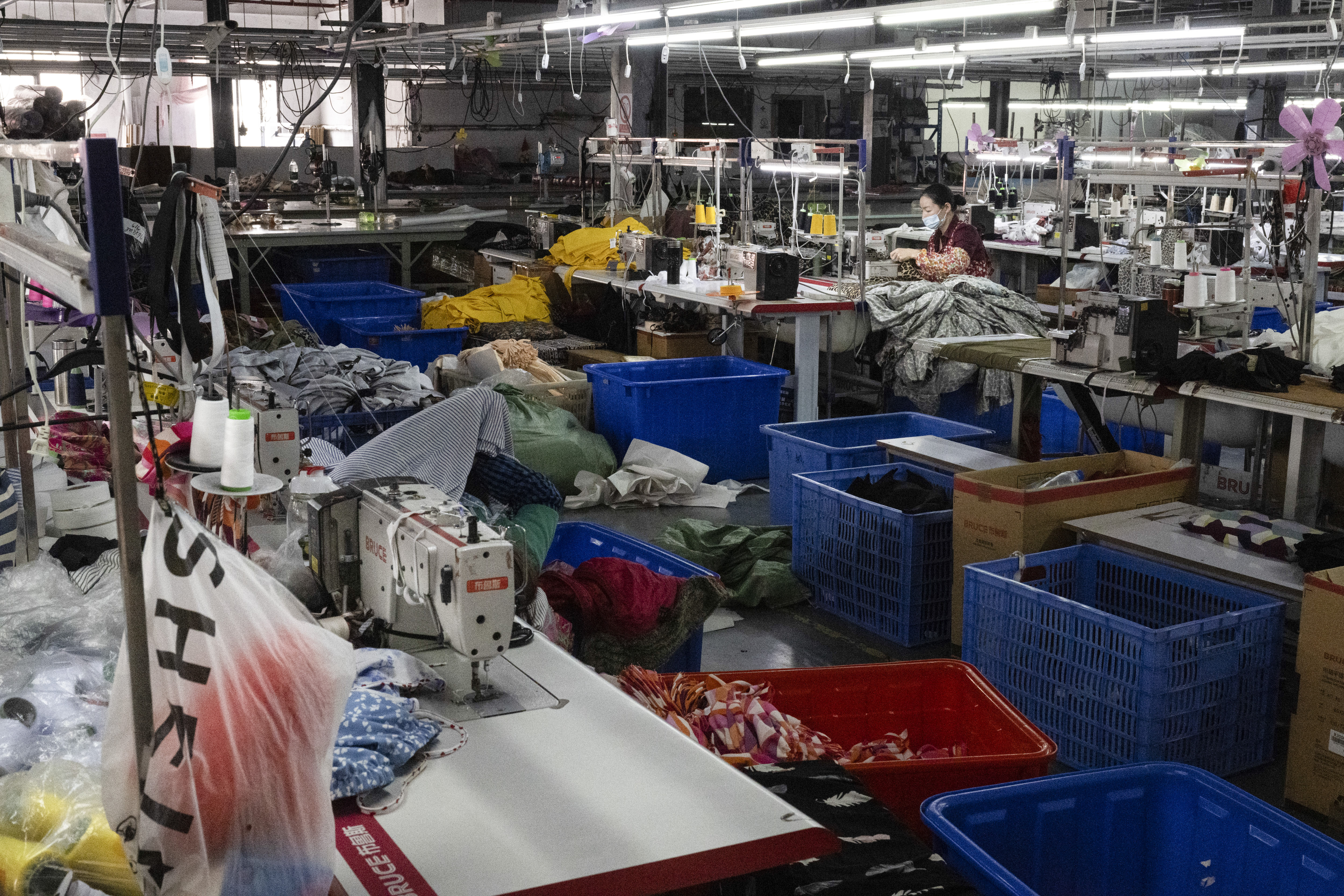
    In the small factories that form the backbone of Shein’s operations in China’s southeastern manufacturing hub of Guangdong, there are no humanoid robots, quantum computers, or state-of-the-art technology. Instead, there are dozens of workers toiling away in 10- to 14-hour shifts — in a way that, some say, feels almost like China of yesteryear.

    “It represents the old tech, as opposed to the new tech,” said Nirgunan Tiruchelvam, who leads the consumer and internet division at Aletheia Capital, an investment advisory firm focused on Asia. “Shein would have had a lot more traction with investors in the 2021 vintage. But the world has moved on from blockbuster e-commerce listings.”

    On Tuesday, investors largely agreed. Shares in Shein fell 6% in early trading, a humbling debut for a company once valued at $100 billion but now worth about a quarter of that. Its initial public offering came after a wave of Chinese AI companies went public in Hong Kong and Shanghai, and years after Shein tried, and failed, twice in its efforts to list in New York and London amid opposition from officials and activists over working conditions at its facilities.

    The drop in valuation reflects questions many investors have about the sustainability of Shein’s business — and whether it can find new ways to grow after the United States and Europe, two of the company’s biggest markets, ended tariff exemptions on cheap goods that had helped propel its low-cost model.

    Shein’s offering comes weeks after shares of Unitree Robotics and CXMT — two companies that are driving the AI investment boom in China — skyrocketed in their public listings in Shanghai. Both firms are textbook examples of what the Chinese government calls “new, quality productive forces” — the slogan for the country’s plan to drive economic growth and innovation through high-value-added manufacturing.

    Weiheng Chen, a senior partner at Wilson Sonsini, a law firm in Hong Kong, and head of its Greater China practice, noted that institutional buyers that were offered Shein shares before the stock went public took up just over 20% of the offering, compared with the roughly 50% typical of popular public listings.

    “It’s a fashion company that is not that fashionable to today’s investors,” said Chen, who has been an adviser on many high-profile listings.

    The challenge for Shein will be to regain interest among Generation Z, the group that powered the company’s rise during the pandemic. Michael Gunther, senior vice president of research and market intelligence at Consumer Edge, a firm that tracks spending data in the United States and Europe, said Shein had continued to cede market share in the United States, with the steepest losses among 18- to 34-year-olds.

    “The fact that it’s continuing to lose share more with that group than other groups is notable,” Gunther said, adding that affordability and sustainability concerns could have prompted the shift. In May 2025, Shein raised prices in the United States to offset the surge in import costs.

    In Britain, Shein’s market share gains have slowed despite no change in government policy, Gunther said. In Europe, where there is a fee of 3 euros on parcels entering the bloc, Shein’s market share has continued to slide, with declines most pronounced in France and Spain, he said.

    Its current fortunes are a stunning reversal for a company that came out of nowhere to become the world’s largest online fashion retailer.

    Shein got its start in 2012 when Sky Xu Yangtian, a Chinese search engine expert, founded the company with three former colleagues. The company compressed the fashion cycle from months to days, using algorithms to track emerging trends and placing initial orders of a few hundred units to test demand.

    But behind its success are tens of thousands of garment workers subjected to a punishing pace. To complete orders on time, workers say, they put in 20 or more consecutive days without a single day off, according to a forthcoming report by China Labor Watch, a U.S.-based nonprofit that investigates labor conditions in China. The report, which has not yet been made public, was shared with the New York Times.

    The organization interviewed 13 workers who made apparel at suppliers to the company as well as Shein employees who worked at its warehouses and corporate offices. The workers said they were given 10-minute breaks and reprimanded if they took too long to sew — for a pay of 7 to 28 cents per item.

    Workers earn, on average, $850 to $1,130 per month, but only by working weekends and taking no days off, according to China Labor Watch.

    Li Qiang, the director of China Labor Watch, said garment factories in China generally limited work hours to around 60 per week. “None are quite like Shein,” he said. “With Shein, working 100 hours a week is entirely possible.”

    The findings from China Labor Watch appear to contravene Shein’s official supplier policy, which states that workers should not work more than 60 hours a week, including overtime.

    In a written statement, Shein said it categorically rejected these characterizations of working conditions within Shein’s supplier ecosystem. It also said that the payment figures presented in the report “are not factual and misrepresent the wage structures used by suppliers.”

    Shein has also come under fire for copying other people’s designs. Since 2021, it has been named as a defendant in 58 lawsuits in the United States alleging trademark infringement and racketeering, according to court records. The company said being named as a defendant in litigation “does not establish the validity of the allegations made” and that it continues to strengthen its intellectual property protection and enforcement.

    Taken together, the challenges have complicated the story that Shein once sold investors — that it had reinvented fashion for the digital age. Now, the technology cycle has moved on.

    Winston Ma, a former managing director at the China Investment Corporation, the country’s largest sovereign wealth fund, compared Shein’s stock to that of Zoom, which surged during the pandemic but has since fallen from its valuation highs.

    “It was a superpromising concept during COVID,” Ma said of Shein. “But now it’s overshadowed by the new AI era.”

    This article originally appeared in the New York Times.

    A worker sews garments for Shein in Guangzhou, China, on Feb. 12, 2025. In the small factories that form the backbone of Shein’s operations, there are no humanoid robots, quantum computers, or state-of-the-art technology.GILLES SABRIE
  • Trump officials say work will start on triumphal arch within two weeks

    Trump officials say work will start on triumphal arch within two weeks

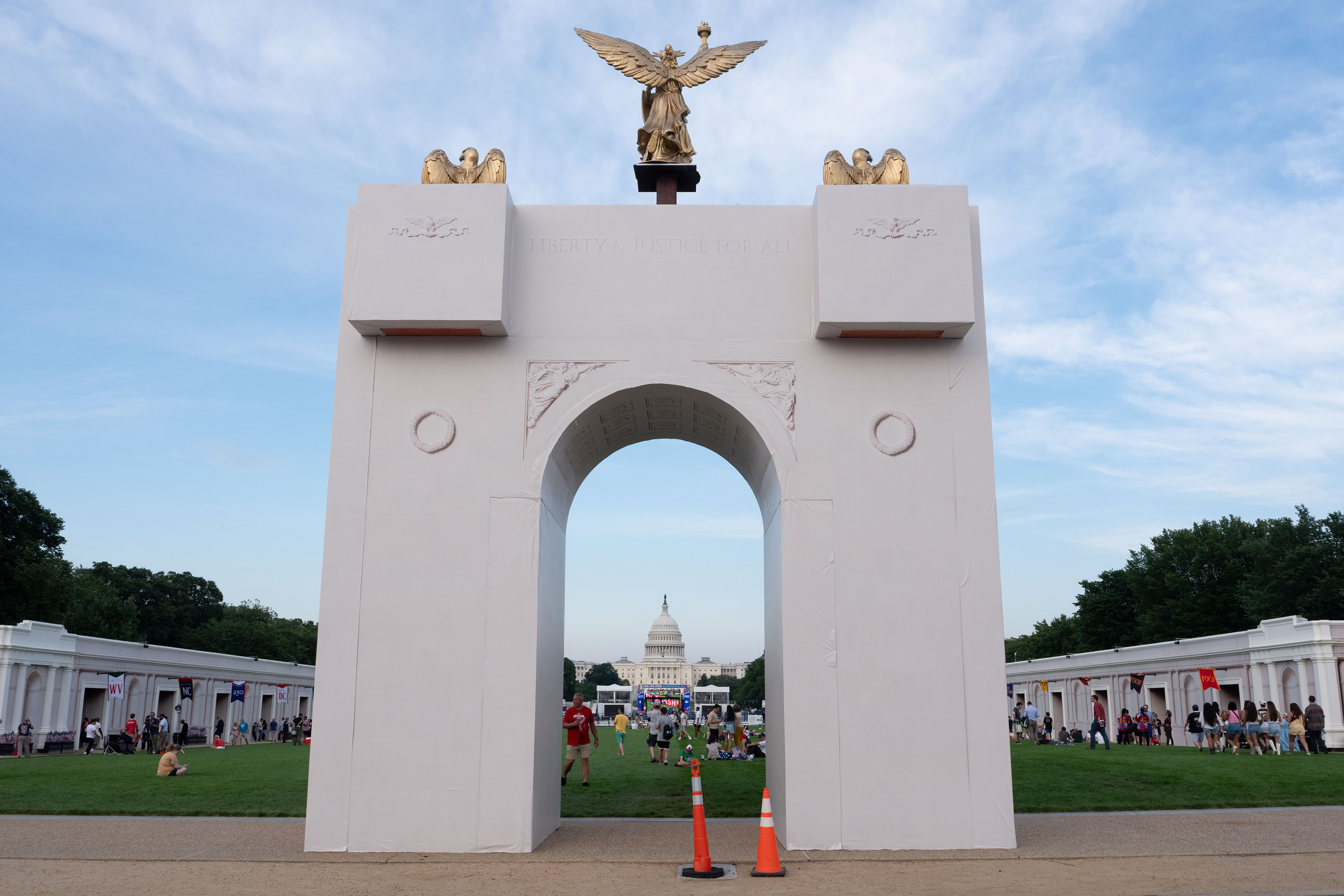
    Administration officials Thursday announced they would soon begin work to build President Donald Trump’s planned 250-foot-tall triumphal arch, his most significant change to Washington’s skyline.

    “We are preparing to start, over the next two-week period, the excavation work necessary,” Interior Secretary Doug Burgum wrote on X.

    The announcement comes three days after the Supreme Court allowed Trump to keep building his planned White House ballroom, with a 5-4 ruling that historical preservationists who sought to block that project lacked legal standing to bring their case to court.

    That decision created new hurdles to other court challenges of Trump’s projects, legal experts warned, and Justice Department lawyers invoked it Thursday as they sought to dismiss a legal challenge to the arch.

    The administration plans to build the arch in Memorial Circle, a traffic roundabout tucked inside Washington’s boundaries near Arlington National Cemetery. Trump has said that the arch will honor the nation’s 250th anniversary, vowing that it will be the largest triumphal arch in the world — about 86 feet taller than France’s famed Arc de Triomphe.

    Historical preservationists, Democratic lawmakers, and some Washington residents have opposed the project, calling it an oversize and inappropriate structure that will disrupt the historically solemn corridor between the military cemetery and the Lincoln Memorial.

    It is also the subject of a lawsuit brought by several military veterans who say the towering structure would alter their experience when visiting the nearby military cemetery.

    Administration lawyers Thursday asked a federal court to throw out the military veterans’ challenge to the arch, citing the Supreme Court ruling on the ballroom as precedent.

    “Plaintiffs’ distaste for the perceived symbolism of the proposed arch does not establish a concrete and particularized injury,” Justice Department lawyers wrote.

    Administration officials have laid out an aggressive timeline to potentially complete the arch within two to three years, saying that crews would work 20 hours per day, year-round. Trump and his deputies also contend that they do not need approval from Congress because lawmakers authorized a somewhat similar project a century ago that was never built.

    “It was meant to be built for many years,” Trump said in the Oval Office in May. “The land is owned by secretary, by the Interior Department. We don’t need anything from Congress.”

    The project already has received approval from the Commission of Fine Arts, a federal panel that reviews local design projects. The National Capital Planning Commission, a second federal panel that has been reviewing the project, has yet to issue final approval.

    Democratic lawmakers have said that the arch must go through congressional review.

    Lawyers for Public Citizen, a watchdog group that is representing the military veterans, have urged a federal judge to halt the project, too.

    “Frankly, I’m befuddled as to what sort of legal authority the administration thinks it has behind it,” Nicolas Sansone, Public Citizen’s lead attorney on the case, said Thursday, citing the lack of final approval from the National Capital Planning Commission.

    Trump administration lawyers had told the judge that the project should not be halted because it had not officially begun. Officials also told the judge that they would provide the public at least 14 days’ notice before beginning construction.

    Fifty-two percent of Americans are against the planned arch, compared with 21% who favor it, according to a Washington Post-ABC-Ipsos poll conducted in April.

    Trump has prioritized construction of the arch, along with the ballroom and other Washington-area projects.

    “When completed, it will be, without question, the Greatest Arch of them all!” the president wrote on his Truth Social platform in June.

  • Cassandra Wilson, the 2-time Grammy Award-winning jazz singer, dies at 70

    Cassandra Wilson, the 2-time Grammy Award-winning jazz singer, dies at 70

    NEW YORK — Cassandra Wilson, the two-time Grammy Award-winning jazz singer, songwriter and producer has died. She was 70.

    Dubbed America’s best singer by Time magazine in 2001, Ms. Wilson was best known for her genre-bending voice, which expanded the boundaries of traditional blues-based jazz and worked effortlessly across folk, pop, R&B, country, and beyond. At the heart of all her work was her idiosyncratic contralto, a soulful sound distinctly tied to her roots.

    As Jon Batiste put it in a eulogy on Wednesday, Ms. Wilson sounded like the South.

    She died in her native Jackson, Mississippi, on Tuesday morning, the Hinds County Coroner Jeramiah Howard confirmed.

    “It is with profound sadness that we announce the passing of Cassandra Wilson, the Grammy Award-winning and legendary jazz artist. Cassandra Wilson transitioned peacefully at home, surrounded by family, close friends, and her manager,” said a statement from her manager to jazz radio station WBGO.

    From Jackson to the world

    Born and raised in Jackson to musician Herman B. Fowlkes and teacher Mary Fowlkes, Ms. Wilson showed an early love of music listening to Motown, Miles Davis, and Thelonious Monk. At 6, she started piano lessons. She played clarinet in marching bands. She performed at coffeehouses and in cover bands while studying at Millsaps College and Jackson State University.

    In the early ‘80s, she mentored under jazz greats in New Orleans before moving to New York City and joining Steve Coleman’s M-Base Collective — eventually becoming its main vocalist.

    Her instantly recognizable voice earned her four Grammy nominations and two wins for best jazz vocal album. Those were in 1997 for New Moon Daughter and 2009 for Loverly.

    In 2015, it was Ms. Wilson who gave a special concert at the famed Apollo Theater to commemorate the 100th birthday of blues singer Billie Holiday, the legendary American jazz vocalist who died in New York City at age 44. That same year, Ms. Wilson released her last album, Coming Forth by Day, an homage to Holiday.

    In 2022, Ms. Wilson was named a National Endowment for the Arts Jazz Master, one of the highest honors awarded to jazz musicians in the United States.

    Tributes pour in

    “She had an unmistakable vocal tone, phrasing, and her approach of weaving folkloric, R&B, and diasporic music together with experimental and popular genres had a major impact on me,” Batiste said in his tribute to Ms. Wilson on Instagram.

    “Her Mississippi heritage was always present in everything no matter how expansive her artistry evolved,” he wrote in the caption of a clip showing them together on Brazilian TV in 2009. “She was one of the first people to take me on tour around the world, the great Cassandra Wilson.”

    Jackson Mayor John Horhn said the city “has lost an extraordinary native daughter, and the world has lost a singular musical voice.”

    “Cassandra Wilson carried the sound, spirit and history of Mississippi with her wherever her music reached,” said the mayor’s statement, shared with WJTV. “Her work had rare depth of character and a profound understanding of how music moves people, tells stories and connects generations.”

  • U.S. Forest Service closing 23 research facilities as part of reorganization under Trump

    U.S. Forest Service closing 23 research facilities as part of reorganization under Trump

    BILLINGS, Mont. — The U.S. Forest Service is closing 23 research and development stations in more than a dozen states as part of an organizational overhaul under President Donald Trump that is intended to trim costs and concentrate the agency’s resources in Western states, officials said Thursday.

    The work being done at the research stations will continue at other sites, Forest Service Associate Chief Chris French said in an interview. An additional 41 research facilities that faced possible closure will remain open after local officials and members of Congress raised concerns about the reorganization, which was announced in March.

    “Our primary goal was to get our facilities costs under control,” French told The Associated Press. “We’re not closing any ongoing science activities. We’re not closing any of the experimental forests that are important to our researchers.”

    Research by forest service employees ranges from studies on invasive species and protecting water resources to how wildfires are changing as climate change dries out and heats up forests.

    Bill Avey of the National Associated of Forest Service Retirees, an advocacy group, said the forest service has long struggled to pay for all its facilities and some opportunities for consolidation exist. But Avey, who worked at the service for four decades, said its current leaders including Chief Tom Schultz need to defend the importance of forest research more vocally.

    “He should be doing a much better job of pushing back and justifying and explaining some of the research work,” Avey said. He added that the 41 facilities being retained likely would have closed as well if not for pushback from his group and others.

    The 95 employees at the research stations slated for closure will be shifted to other sites within their commuting areas, Forest Service Communications Director Chad Douglas said. The closures — along with previously announced plans to shut regional offices in Atlanta, Milwaukee, and Portland — will save about $16 million, officials said.

    The reorganization also includes moving the agency’s headquarters from Washington to Salt Lake City. Agriculture Secretary Brooke Rollins has said the move, expected to be completed by next summer, will bring leaders closer to the landscapes they manage and the people who depend on them.

    Conservation groups have criticized the changes, warning that they could reduce access to forests and threaten wildlife habitat and clean air and water.

    Federal data shows that the Forest Service has lost about 6,000 employees, or about 15% of its workforce, during Trump’s second term as part of the Republican administration’s sweeping cuts to agencies that oversee the nation’s natural resources.

    During Trump’s first term, he moved the Bureau of Land Management to Colorado, citing many of the same reasons, including a desire to put top officials closer to the public lands they oversee. Former President Joe Biden’s administration reversed course, returning the bureau’s headquarters to Washington after two years.

  • ICE officer charged with lying to investigators in the shooting of Venezuelan man, AP source says

    ICE officer charged with lying to investigators in the shooting of Venezuelan man, AP source says

    WASHINGTON — Federal prosecutors have charged a U.S. Immigration and Customs Enforcement officer with lying to investigators about the events leading up to the shooting of a Venezuelan man during the Minneapolis immigration crackdown earlier this year, a person familiar with the matter told The Associated Press.

    Christian Castro, the officer who authorities say shot Julio Cesar Sosa-Celis in the leg in January, has been charged with making false statements to federal investigators, according to the person, who was not authorized to publicly discuss the investigation and spoke on condition of anonymity.

    The federal charges, which remain under seal, follow Castro’s release from jail last week after Texas’ governor refused to immediately sign an extradition warrant to hand him over to Minnesota authorities, who have charged him separately with assault and false reporting of a crime related to the same shooting.

    Federal authorities had initially accused Sosa-Celis and another man of beating an officer with a broom handle and a snow shovel during the confrontation. But federal prosecutors dropped charges against the men after video evidence showed the officers may have lied about the encounter, and officials opened an investigation.

    Charges stem from nonfatal shooting during Operation Metro Surge

    Castro is the first federal immigration officer to be prosecuted by the Trump administration related to actions taken during the massive Operation Metro Surge in the Twin Cities that began in January 2026. No attorney is listed for Castro in the case brought by Minnesota, and it was not immediately clear if he had a lawyer to speak on his behalf.

    Thousands of officers were sent to the Minneapolis and St. Paul area by the Department of Homeland Security in what was its largest immigration enforcement operation ever. The shooting deaths of U.S. citizens Renee Good and Alex Pretti by federal officers drew condemnation and raised questions over officers’ conduct, prompting changes to the operation.

    Earlier this week, a federal prosecutor working on the case told lawyers for Sosa-Celis and other victims that Justice Department officials blocked the prosecutor’s push to bring a more serious civil rights charge against the officer for the shooting, ProPublica reported on Wednesday.

    But the person familiar with the investigation disputed the prosecutor’s characterization, saying the civil rights probe is continuing and there has been no final decision on whether to bring additional charges. The prosecutor, Matthew Evans, has been fired and is under investigation for alleged obstruction of a grand jury probe, the person said.

    An automatic email response from Evans’ Justice Department account said he was on leave. Other attempts to reach him were not immediately successful.

    An attorney for Sosa-Celis said the Justice Department has “grossly undercharged this case,” adding that Castro’s statements were made to “cover up the fact that he shot my client through the door of an occupied house without a self-defense justification.”

    “Mr. Sosa Celis wants Mr. Castro to be held fully accountable for his crimes,” said the attorney, Robin Wolpert. The American Liberties Union of Minnesota said Thursday that Sosa-Celis also plans to seek damages from the federal government.

    Castro is also facing charges from Minnesota authorities

    Castro was initially arrested in May in the Minnesota case, and he was held in custody in Brownsville, Texas, a city bordering Mexico, while Minnesota officials sought his extradition. But Texas Gov. Greg Abbott refused to immediately sign off, citing continuing investigations of fraud in government social service programs in Minnesota, which Trump used to justify his immigration crackdown there.

    Minnesota officials had sought to stop the sheriff in Cameron County, Texas, from releasing Castro, out of fear that he would flee to Mexico. According to a lawsuit filed by Minnesota, Castro had a conversation with a woman, while he was incarcerated, where he spoke about marrying her and buying a house in Mexico after his release.

    But Castro was released a week ago after a federal judge refused to order Texas to extradite him.

    The Department of Homeland Security previously called Minnesota’s prosecution of Castro “unlawful and nothing more than a political stunt,” saying only federal authorities have jurisdiction in the case.

    Castro was placed on leave during the federal probe

    Castro was suspended from ICE without pay in February while federal authorities conducted the investigation.

    “The men and women of ICE are entrusted with upholding the rule of law and are held to the highest standards of professionalism, integrity, and ethical conduct,” ICE’s acting director at the time, Todd Lyons, said then. “Violations of this sacred sworn oath will not be tolerated. ICE remains fully committed to transparency, accountability, and the fair enforcement of our nation’s immigration laws.”

    Minnesota officials alleged that Castro, 52, fired through the front door of a home and shot Sosa-Celis in the thigh.

    Castro and another officer had chased a different man, Alfredo Alejandro Aljorna, to the Minneapolis apartment duplex where he and Sosa-Celis lived. Minnesota prosecutors said the officer then falsely accused Sosa-Celis and another man of attacking an ICE officer with a broom handle and a snow shovel.

    Attorneys for Sosa-Celis and Aljorna didn’t immediately respond to emails Thursday from the AP.