Category: Wires

  • Trump claims rebate checks are on the way for people overcharged by ACA

    Trump claims rebate checks are on the way for people overcharged by ACA

    President Donald Trump on Thursday announced that his administration would issue $500 rebate checks to about 1 million Americans he said had been wrongly overcharged through the Affordable Care Act.

    Administration officials said the funds would be drawn from fees that were used to fund operations of the ACA federal insurance exchange. Thirty states — including Florida, Iowa, Ohio, and others expected to be key battlegrounds in November’s midterm elections — use the federal exchanges for their ACA operations.

    “Thanks to President Trump’s actions, nearly 1 million Americans will receive a refund check of $500 per person. Checks will be sent to eligible Americans beginning in October 2026,” the White House said in a fact sheet.

    Democrats immediately panned the idea and compared it to the administration’s past ACA moves. Trump last year declined to support the extension of ACA tax credits that helped subsidize the costs of health coverage for more than 20 million Americans.

    They also called it a stunt ahead of November’s elections.

    “What an absolute joke,” Brad Woodhouse, president of Protect Our Care, a Democrat-aligned healthcare advocacy group, said in a statement. “Five hundred dollars is a drop in the bucket compared to what Americans are paying because Trump and Republicans gutted health care to bankroll massive tax breaks for billionaires and big corporations.”

    Trump has floated multiple proposals to send dividends to Americans during his second term, but so far, they have not materialized. In February 2025, he said his administration was considering a proposal to give 20% of savings from the controversial DOGE government cost-cutting effort to Americans. That proposal would have delivered roughly $5,000 to each of the roughly 79 million households in which residents pay federal income tax.

    That number was based on Elon Musk’s goal of cutting $2 trillion from the federal budget. A DOGE website claims that the initiative saved only a small fraction of that, and the Government Accountability Office has said the group’s accounting was riddled with errors.

    Trump also claimed he would give Americans $2,000 stimulus checks, drawn from the revenue generated by his tariffs. His administration has had to refund much of the money gained from tariffs after the Supreme Court struck down many of the levies.

  • Foldable phones are unpopular. Why is Apple selling one?

    Foldable phones are unpopular. Why is Apple selling one?

    Apple this week unveiled an iPhone that unfolds like a book to expand its screen size and closes up to fit in your pocket. It’s the biggest physical change to the iPhone’s design in nearly two decades.

    But even though they’ve been around for years, foldable phones aren’t particularly popular. They’re expensive, awkward and not as durable as regular smartphones. So why did Apple build one?

    The simple answer is that the novel design of today’s foldable phones could help reestablish the high end of the phone market. They are meant to stand out in a sea of standard-issue, if-you’ve-seen-one-you’ve-seen-them-all smartphones.

    The quintessential rectangular smartphones have gotten so good over the years that the most expensive models priced upward of $1,000 have become nearly indistinguishable from their cheaper counterparts. (Carrying a phone with three camera lenses vs. two probably won’t impress people at parties.)

    Foldable phones, on the other hand, are attention-getters. And for their price, they’d better be: Apple’s iPhone Duo will cost $1,999 when it arrives in October to compete with Samsung’s $1,900 Galaxy foldable.

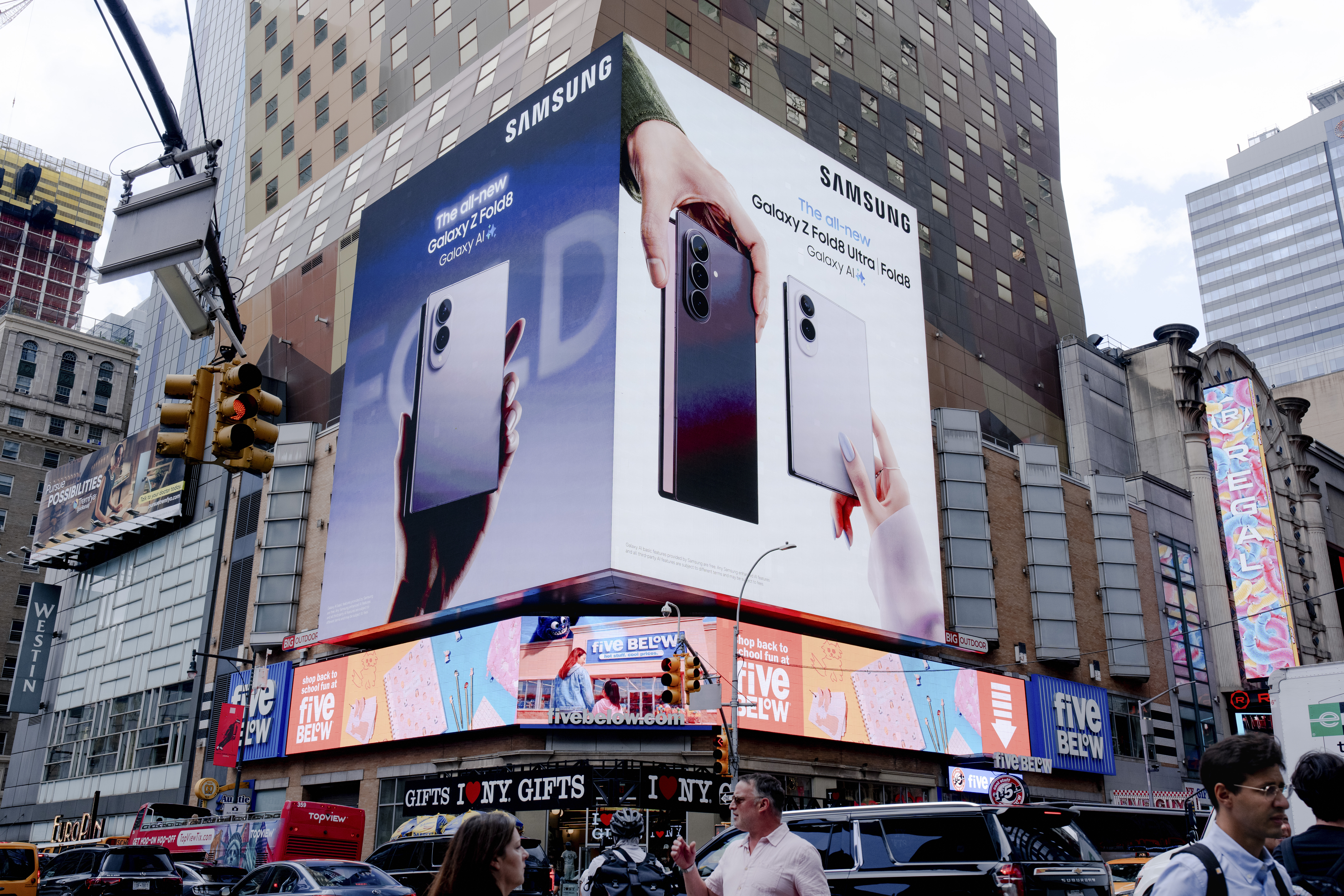
    Samsung billboards in Midtown Manhattan.Lexi Parra

    “Whenever something is exclusive, limited and luxurious, automatically consumer psychology wants it,” said Nabila Popal, a director at IDC, a market research firm. “It’s like handbags. Why is someone buying a Chanel versus that? It’s not because of the leathers. It’s to show that they have a Chanel and they can afford it.”

    Apple and its competitors are following a path that television makers took about a decade ago. When high-definition TVs became commoditized, anyone could buy a bright TV with a large, sharp screen for as little as $500. To find more ways to increase profits, companies like Panasonic, LG, and Sony experimented with quirky new designs, like TVs with curved displays and the ability to play movies in 3D, and charged $3,000 for them.

    Those TV concepts turned out to be flops. But in later years, TV makers found success with a different type of high-end television featuring OLED technology, or organic LED, which had more accurate colors for making movies look better and cost upward of $1,000.

    Apple’s foldable handset is arriving at a moment when people will need extra persuading to upgrade to a new phone. The costs of most consumer goods, and especially electronics, have skyrocketed.

    In response to an industrywide memory chip shortage driven by the artificial intelligence boom, Apple increased prices this year for many of its popular products, including Macs and iPads, by as much as 29%. Apple’s new iPhone 18 Pro phones will cost $1,199, a $100 increase from last year’s model. The chip shortage has also forced companies to raise the prices of video game consoles and phones.

    Foldable phones, which account for less than 2% of the handset market, may be the only part of the phone industry that will grow this year. IDC said it expected the chip-shortage-induced price increases to contribute to a 17% drop in worldwide smartphone sales this year — the steepest annual decline in history. However, sales of foldable phones could grow 12% to 22.9 million because of the iPhone Duo’s arrival, the research firm said.

    Still, a foldable phone could be a tough sell even for a company as influential as Apple. Consumers have generally avoided buying foldable phones not only because of their cost but also because of their trade-offs. Their bendable screens are less durable than normal phone displays, which are protected with hard glass. Folded up, they can feel bulkier and heavier in a pocket.

    Dan Frommer, a writer for the New Consumer, a tech research publication, said he had long been skeptical about the usefulness of foldable phones because so much online content, including the vertical videos on TikTok and Instagram, was produced for the small rectangular screens of normal smartphones.

    “They’ve been used that way for 19 years now,” Frommer said. “What would you actually want a square, big screen for?”

    Apple’s iPhone Duo appears to be addressing some of the shortcomings of previous foldable phones. The device’s name refers to two screens. Closed up, it has a 5.4-inch outer screen that people use as a normal rectangular phone; it opens up to reveal a 7.6-inch inner screen. The larger inner display shows pictures in the same aspect ratio as traditional phone screens. Apple also said the phone’s foldable inner screen was composed of a tougher material than competitors’.

    The iPhone Duo appears to be addressing some of the shortcomings of previous foldable phones.Jason Henry

    In my tests, when opened, the iPhone Duo was extremely thin, measuring two-tenths of an inch. I liked that a Netflix video took up the full screen instead of showing black bars on the sides, which has been the case with other foldables. Closed up, the phone felt dainty and was about the size of a passport. It also felt less chunky in my pocket than other foldables I’ve tested, such as the $1,900 Google Pixel 11 Pro Fold. The more compact and lightweight, the better.

    The inner screen has a matte texture to reduce glare. Still, I occasionally noticed the crease in the center where the screen folds. I didn’t mind it, but that might bother nit-pickers.

    Apple also had to leave out some components to make a phone this thin; the iPhone Duo lacks the advanced camera system featured in the $1,199 iPhone 18 Pro phones. It also doesn’t have a face scanner for unlocking the device, relying instead on a fingerprint sensor on the side of the phone.

    Although Frommer predicted that the Apple foldable wouldn’t be the right fit for him, he admitted he couldn’t resist trying one out in a store.

    “When Apple makes something, there’s an allure to it to encourage people to at least check it out,” he said.

    This article originally appeared in The New York Times.

  • U.S. Supreme Court again rejects push to use Trump-backed congressional map in Missouri

    U.S. Supreme Court again rejects push to use Trump-backed congressional map in Missouri

    Missouri is poised to hold its November election with congressional districts passed after the last census, after the U.S. Supreme Court on Thursday again rejected a new map backed by President Donald Trump that Republicans hoped could help them win an additional seat in the pivotal midterms.

    The Supreme Court’s decision marked a defining moment in a pitched legal battle that has lasted nearly a year and caused confusion for voters. Citing the court’s latest action, Missouri’s chief election official directed local authorities to use U.S. House districts passed in 2022, as the state’s highest court had ordered.

    The Trump administration had urged courts to allow use of the president’s preferred map, drawn at his request last year.

    The decision means Missouri could run the November general election with different U.S. House districts than were used in the August primary — an extremely rare situation that could switch the candidate choices for more than a million potential voters, or nearly 1 in 4 voters statewide, according to an Associated Press estimate.

    No Supreme Court justices publicly dissented from the brief order. It did not detail the court’s legal reasoning, as is typical in emergency appeals.

    The White House did not immediately respond to a request for comment on the U.S. Supreme Court decision.

    Missouri’s highest court scrutinizes secretary of state’s actions

    Earlier Thursday, Missouri’s top court convened a hearing on whether to hold Republican Secretary of State Denny Hoskins in contempt for not following its orders to use the districts passed after the last census. Hoskins had instead told local election authorities to use the new Trump-backed map, pointing to a competing order from a federal judge on Tuesday that forbade him from using anything other than the new districts.

    Missouri Supreme Court judges, while questioning a state attorney representing Hoskins, repeatedly pressed for Hoskins to send out guidance Thursday to use the 2022 version of the congressional districts.

    “We’re in a precarious situation,” Chief Justice W. Brent Powell said.

    Hoskins later released a statement acknowledging the U.S. Supreme Court decision, saying “my Office is directing local election authorities to use the 2022 congressional map.”

    The court then reconvened, finding Hoskins in contempt for violating its order not to use the Trump-backed map but then quickly declaring that he had corrected the problem with his latest order to use the 2022 map. The court imposed no consequences on Hoskins.

    Voters could face significantly different districts

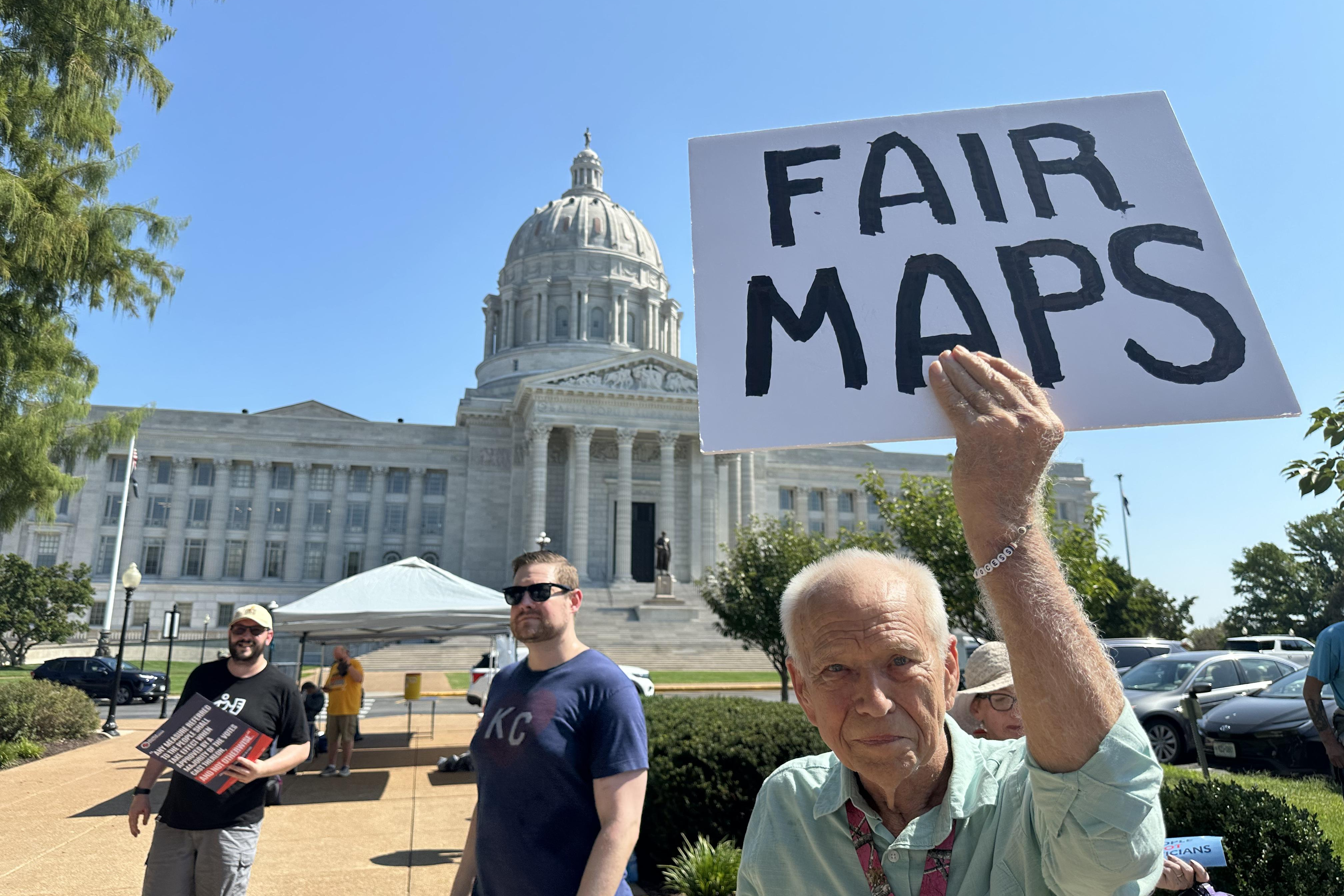
    Outside the court, progressive activist Keith Rose stood in the rain protesting Hoskins’ legal maneuverings to try to use the Trump-backed map. Rose, who helped gather petition signatures to put the new map to a statewide vote, said he hopes the U.S. Supreme Court’s decision Thursday ends the uncertainty.

    “We need some finality. We need to focus on the real issues that Missourians care about,” Rose said.

    Candidates who won Missouri’s August primary already have been certified for the November ballot according to the number of the district they won. But those districts could substantially change shape.

    The 5th Congressional District encompasses only the Kansas City area under the 2022 map that Republican lawmakers passed after the last census. Under the revised map backed by Trump, portions are shed to neighboring districts and the remainder is stretched into rural Republican areas. About 59% of the potential voters are new to the district under that version, according to an AP estimate.

    Some other states that have switched congressional districts after their primaries have redone their primary votes. Alabama held a new primary in August under revised districts when the U.S. Supreme Court allowed a change to occur after voting in the original May primary.

    In Missouri’s case, however, no court has suggested redoing the primary.

    Redistricting battle began over a year ago

    Missouri’s battle over its congressional districts has spanned more than a year and spawned confusion over which districts will be in place for voters.

    It was the second Republican-led state, after Texas, to enact new districts after Trump urged Republicans last year to redraw House districts to their advantage ahead of the midterm elections.

    The revised districts target a Kansas City-based seat held by Democratic Rep. Emanuel Cleaver of Kansas City, aiming to help Republicans win seven of the state’s eight House seats in the midterm elections.

    Redistricting opponents collected hundreds of thousands of petition signatures seeking to force a statewide vote on the new districts. They submitted the signatures in December. But Hoskins waited until August — on the same day as Missouri’s primary — to reject the petition. Hoskins asserted that a referendum petition could not be used for congressional redistricting.

    The delay allowed Missouri to use the new districts in its August primary. Cleaver was unopposed for the Democratic nomination. State Sen. Rick Brattin won the Republican primary for the right to challenge Cleaver. Brattin was among those suing in federal court to try to prevent the state from reverting to the prior districts.

    Republican U.S. Rep. Bob Onder, who was also among those suing, said Thursday, “This isn’t over.” He noted that the 8th U.S. Circuit Court of Appeals will hear arguments on the merits of his case.

    Republican state officials have argued it would violate voters’ federal rights to switch districts before the general election.

    But the Missouri Supreme Court last week ordered Hoskins to put the redistricting referendum on the November ballot, which he did. It also ruled that the new districts never became law and instead were suspended retroactively to the December petition submission. The court barred Hoskins from using the new map and said the old map — passed by Republican lawmakers in 2022 after the last census — must be used in the November election.

    The state then appealed to the U.S. Supreme Court to block the state court decision. Justice Brett Kavanaugh rejected the request.

    The group People Not Politicians Missouri, which sponsored the redistricting referendum, applauded the Supreme Court decisions that left the state court ruling in place.

    “The law is the law, the Missouri constitution is clear as was the Missouri Supreme Court,” said Executive Director Richard von Glahn. “The courts have settled this, now it’s up to Missouri voters to finish the job and vote NO on Proposition A.”

  • Willpower alone doesn’t work. Here’s what does, according to an expert.

    Willpower alone doesn’t work. Here’s what does, according to an expert.

    Swimmer Michael Phelps is famous for his work ethic, his incredible drive to succeed, and his unusual genetic makeup. He’s won more Olympic medals than any other athlete, most of them gold.

    But if you widen the aperture, you see his coach, Bob Bowman, giving him the confidence to succeed. You see his mother, Debbie Phelps, finding swimming as an outlet for her son’s endless energy. And it didn’t hurt that Phelps happened to grow up 10 minutes from one of the best training centers in the country, the North Baltimore Aquatic Club.

    “I spent the first half of my career studying individual effort and its importance to success,” said psychologist Angela Duckworth. “And I think that is important, but it’s not everything.”

    Duckworth, a professor at the University of Pennsylvania, is best known for her book on “grit” — which she defines as passion and perseverance toward long-term goals. She pointed to Phelps as an example of grit because of his extreme dedication to his sport. But he — and everyone else who finds success — had to be in the right situation with the right people for that effort to pay off.

    In her new book, Situated: Find the People and Places That Bring Out Your Best, Duckworth explains the research on what it takes to reach our goals, and why we shouldn’t try to muscle through challenges with willpower alone. Here’s what she said to do instead.

    Change your situation

    It may not be possible to change everything about your circumstances, but Duckworth said we often don’t realize how much is within our control.

    For example, in a new survey from Pew, more than half of American adults say they spend too much time on their phones. The number is even higher for younger adults. Many respondents have tried to cut back with little success.

    Duckworth said many people make New Year’s resolutions to spend less time on their phone, but continue to charge their phones next to their bed (as nearly 8 in 10 Americans do, according to a survey from YouGov in 2025). If your plan is to essentially use willpower to look at your phone less, it probably won’t work.

    “What my research shows is that it’s far more effective and also far less exhausting to change the situation,” Duckworth said.

    So if you want to spend less time on your phone, charge it in another room. If you want to exercise in the morning, put your workout clothes next to your bed. If you want to eat less of a certain type of food, don’t keep it easily within reach.

    “Essentially, use physical distance to create psychological distance,” Duckworth said. “Don’t rely on mental force of will.”

    In Duckworth’s research, young adults who were encouraged to change their situation were more successful at reaching a goal than those who only used self-discipline — and they experienced less temptation in the process.

    Phone a friend

    Looking at some of world’s most successful people, from Phelps to Taylor Swift, she said everyone needs help from peers, mentors, and friends to stay motivated and accountable.

    In her book, Duckworth examines the success of a start-up incubator that was behind companies like Dropbox, Airbnb, and Reddit. Unlike some other venture capital firms, it funded companies in groups so the founders had support and guidance.

    “We really need a feeling like we’re doing things in a group,” Duckworth said.

    People are more likely to reach goals when they work together, she said, explaining that people enjoy being asked for help more than we might think.

    Her daughters live near each other and have started going to the gym together.

    “You kind of have to show up for the other person,” Duckworth said. “But also it makes it more fun.”

    Get expert guidance

    Duckworth said the need for outside support also applies to problems, even though it can be harder to ask for help. She and her husband hit a rocky period in their marriage, she said, and it wasn’t until they “called in the cavalry” that things got better, with the support of family, friends, and therapy.

    “It was humbling for me to admit that I couldn’t work it out,” Duckworth said. “We overcame this strong sense that asking for help was like an admission of failure.”

    That experience didn’t just change her marriage. It also changed the way both she and her husband approached their work.

    Duckworth decided she wouldn’t do research alone anymore; she instead works with other scientists as collaborators. And her husband, the president of his real estate company, put together an advisory board of trusted mentors to help him make better decisions.

    “Find ways to make your situation your ally. And don’t be ashamed of it,” Duckworth said. “I think that to me is the perspective shift that has personally made a difference.”

  • Ding! Ding! Ding! The long, strange fight over your car’s seat-belt chime.

    Ding! Ding! Ding! The long, strange fight over your car’s seat-belt chime.

    David Kidd is an expert in something that some people hate and others tend to just tolerate: seat-belt warning systems — the “ding ding ding” chimes and flashing dashboard lights that serve as reminders to buckle up.

    He’s spent years testing different systems in cars and trucks as part of his work at the Insurance Institute for Highway Safety. So he knows very well that the incessant chimes can be annoying.

    They’re “an irritant,” he admits. But he prefers a different term.

    “We use the word ‘motivating,’” Kidd said.

    The lowly seat belt is still considered the best way to avoid serious injury or death in a crash. Forget air bags, anti-lock braking systems, or any other new-fangled safety technology. Unbelted occupants are roughly twice as likely to be killed in a car crash.

    Buckling up works.

    So does nagging. Kidd’s research found that belt warnings came in a variety of tones and volumes, but if they are “heard and persistent,” people respond.

    The seat-belt chime is such a recognizable refrain that when pop star Olivia Rodrigo needed an iconic car sound to open her hit song “Drivers License” a few years ago, she reportedly used a recording of the seat-belt beep in her mom’s car.

    The “buckle up” reminders were set to become even more widespread this month, when new federal safety regulations were supposed to require more persistent chimes not just for the driver’s seat but for the front passenger seat, as well. But automakers objected, saying they couldn’t be ready in time. Regulators backed down. So the new rules have been delayed for another two years — 2028 at the earliest — when some rear-seat warnings would be required, too.

    The National Highway Traffic Safety Administration said in a statement that it found the automakers’ worries “have merit.”

    Others were not convinced.

    “It was a bit of mystery to us why this has taken so long already. And now it’s going to take even longer,” said Peter Kurdock, general counsel for Advocates for Highway and Auto Safety, which began pushing for the new rules in 2007.

    “It’s disappointing,” he said.

    The technology is not cutting-edge. Europe has required seat-belt alarms in new vehicles since 2021. Some automakers, such as Volvo and Subaru, already have voluntarily installed them in vehicles sold in the U.S.

    But the fight over the warning chimes feeds into Americans’ long-running love-hate relationship with seat belts.

    Seat belts are still seen by some as a question of choice and freedom.

    State laws and education campaigns have helped soften some of those attitudes. Today, 49 states require adults in the front to buckle up. The lone holdout is New Hampshire, which lives up to its license plate motto of “Live Free or Die.” Just 34 states plus D.C. require adults to wear seat belts in rear seats. (Children are covered by different restraining-device requirements.)

    Still, researchers know some people remain militant in their opposition. They’re the ones buying $6 devices and printing 3D tools to fool the alarm. They sit on top of buckled seat-belt straps. They watch online videos claiming to reveal the hidden tricks to deactivate the warning chimes.

    “Those that don’t like seat belts are really hardcore against buckling up,” Kurdock said.

    These holdouts are why U.S. seat-belt usage rates have largely flatlined in the last decade, according to NHTSA observational studies. The unbuckled make up a minority of all vehicle occupants, but they die at a much higher rate in crashes: Roughly half of all vehicle fatalities involve unbuckled occupants.

    At one point, federal officials tried a much tougher tactic than just chimes.

    In 1974, the federal government required many cars to have ignition interlock devices that prevented a car from even starting until the front occupants were buckled up. Motorists hated it. It blew up in NHTSA’s face.

    “That got a lot of blowback that reached Congress,” Kidd said.

    The idea was quickly pulled, and Congress banned NHTSA from requiring interlocks. Lawmakers then went further and limited seat-belt warning chimes to a fleeting eight seconds.

    Some advocates say this is why NHTSA has seemed reluctant ever since to even tinker with seat-belt warnings.

    In 2007, Public Citizen and Advocates for Highway and Auto Safety petitioned NHTSA to change the belt-reminder rules and add them for rear seats.

    Little happened for years.

    In 2012, Congress passed a bill that abolished the eight-second chime limit and required federal officials to create new warning rules for seating positions besides the driver’s seat. It was a start, but a very slow one.

    “The chime is very important,” said Shaun Kildare, research director for the Advocates for Highway and Auto Safety.

    While NHTSA worked on a plan, the lack of government action created an opening for the Insurance Institute for Highway Safety, which rates vehicles on a series of safety metrics. It began rating cars and trucks on the quality of their seat-belt reminders with the 2021 model year.

    IIHS wants seat-belt chimes to last at least 90 seconds and be easy to hear, among other criteria. The chimes should annoy drivers enough to get them to buckle up — but not so much that they complain.

    “It was: Get them to wear a seat belt, but at the same time not email their congressperson to demand a change,” Kidd said.

    Compliance has been voluntary, but some automakers have jumped at the chance to make a good showing. IIHS saw rapid adoption, even without federal regulations, Kidd said.

    At first, less than 20% of vehicles scored IIHS’s top “good” ranking for seat-belt reminders. Five years later, 71% of vehicles qualified.

    “You’ve had a complete change in the seat belt reminders in the new vehicles,” he said.

    In 2025 — 13 years after Congress asked for a plan — NHTSA finally unveiled its blueprint for overhauling the nation’s seat-belt warning system.

    The new rules will require a chime lasting at least 30 seconds for either an unbuckled driver or front passenger when the vehicle starts up, and if they are still unbuckled when the vehicle reaches slightly faster than 6 mph, a second chime will play endlessly until the seat belt is secured.

    That’s the rule that was supposed to hit new vehicles on Sept. 1. A rule requiring a 30-second chime if someone unbuckled a seat belt in the rear seats was set to start in September 2027.

    But in April, NHTSA acquiesced to arguments from the Alliance for Automotive Innovation, an industry trade group, that the changes “require significant hardware and software changes” and would need more testing.

    Now, regulations for both front- and rear-seat warnings are being pushed back to September 2028.

    Despite the delay, automakers still “support efforts to increase seat belt use and for decades have voluntarily and proactively installed seat belt reminder systems across the vehicle fleet,” Audrey LaForest, communications director for the Alliance, said in a statement last week.

    Kurdock, whose group first petitioned for this change nearly 20 years ago, was in disbelief.

    “This is not a new technology. Seat-belt reminders have been in cars for a very long time,” he said.

    Kidd said he was frustrated with what he saw as an unnecessary delay. He has estimated that nearly 1,600 lives could be saved annually if all vehicles had more noticeable and persistent seat-belt warnings leading to more people buckling up.

    “The disappointing piece is we’ve known what to do for a long time,” he said, “but we just haven’t done it.”

  • Hockey player and coach-turned-broadcaster Barry Melrose dies at age 70

    Hockey player and coach-turned-broadcaster Barry Melrose dies at age 70

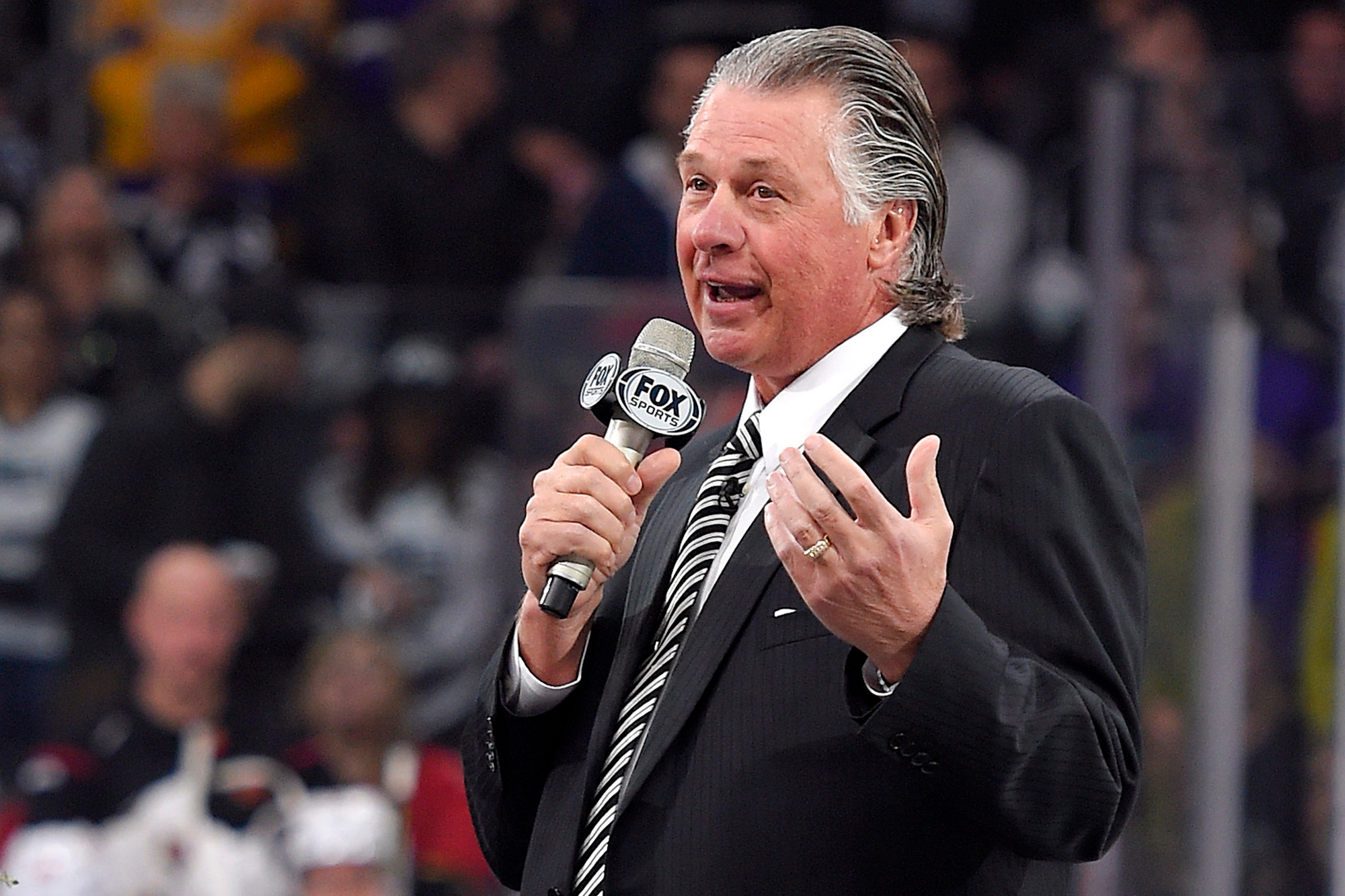
    Barry Melrose, a hockey player-turned-coach who led the Los Angeles Kings to the 1993 Stanley Cup Final before going on to a long career in broadcasting the sport, has died. He was 70.

    ESPN announced Melrose’s death Wednesday after his wife informed the network.

    “From the flowing locks of his distinctive mullet to the flared lapels of his trademark long suit coats, Barry Melrose cut an unmistakable figure whenever you were fortunate enough to run into him at a rink or catch him on your television screen,” NHL Commissioner Gary Bettman said. “You were even more fortunate if you engaged him in conversation or listened to his analysis because he never failed to boost your love of the game of hockey.”

    Melrose stepped away from his analyst role in 2023 after being diagnosed with Parkinson’s disease. Wayne Gretzky at the time said Melrose was “bigger than any team.”

    Melrose had a relatable everyman’s broadcasting style, bringing a sense of humor to his insights, and was easily recognized by his goatee and slicked-backed hair.

    “For decades, Barry Melrose was one of the most distinctive and trusted voices in hockey,” ESPN said in a statement. “His knowledge of the game was deep, his candor was refreshing and his passion was unmistakable.”

    From rural Kelvington, Saskatchewan, Melrose broke into pro hockey with the Cincinnati Stingers of the now-defunct World Hockey Association in 1976. He played three seasons in Cincinnati — the last teaming with a young Mark Messier — and, following the WHA’s demise, made the transition to the NHL with Winnipeg in 1979.

    Melrose went on to play for Toronto and Detroit, where he closed his career following the 1985-86 season.

    He finished with 10 goals and 33 points and 728 penalty minutes in 300 career NHL regular-season games, and he skated in seven more in the playoffs. His WHA totals were five goals and 32 points and 343 penalty minutes in 178 games with Cincinnati.

    Melrose turned to coaching and led the Adirondack Red Wings to win the American Hockey League Calder Cup championship in 1992.

    The following year, Melrose was hired by the Kings, where he brought a sense of colorful flare and instant success to Los Angeles. In his rookie season, he coached a Kings team that featured Gretzky to make a memorable playoff run. They reached the final before losing to Montreal in five games.

    Melrose finished with a record of 79-101 and 29 ties over two-plus seasons in L.A. before being fired midway through the 1994-95 season.

    He was hired by ESPN in 1996 and left broadcasting for what became a brief stint coaching the Tampa Bay Lightning in Steven Stamkos’ rookie season in 2008-09. Melrose was fired 16 games into the season following a 5-7-4 start and returned to broadcasting.

    Melrose also was known for his long-ball hitting prowess in fast-pitch softball, joining fellow Kelvington-area NHL players Wendel Clark, Joey Kocur, Kelly Chase and Kevin Kaminski and others in the offseason in Saskatchewan to form what some call the “the toughest team there ever was.”

  • Supreme Court is asked to settle Missouri dispute causing electoral chaos

    Supreme Court is asked to settle Missouri dispute causing electoral chaos

    A group seeking to block Missouri from using a new congressional map that favors Republicans in November’s midterm elections has asked the Supreme Court to intervene.

    The appeal is the latest twist in an extraordinary legal fight that has plunged the state into electoral confusion just as it was supposed to finalize ballots and shortly before it begins distributing mail-in versions to voters.

    People Not Politicians, an anti-gerrymandering group, asked the Supreme Court to review the case late Wednesday afternoon, just minutes after its appeal was rejected by a federal appeals court.

    In a brief ruling, a three-judge panel of the U.S. Court of Appeals for the 8th Circuit said they did not have jurisdiction, or the plaintiffs had not met the legal bar, to obtain an injunction against Missouri’s use of the new map.

    The legal uncertainty has left voters and election administrators unsure about what Missouri map will be in play less than two months before voters head to the polls on Nov. 3.

    Roy Temple, a longtime Democratic strategist in Missouri and former head of the state Democratic Party, said voters “can’t possibly understand who they’re going to be voting for.”

    “There is a great deal of chaos,” Temple said. “The sad part is that it’s almost entirely inflicted by people whose responsibility was to ensure the orderly conduct of elections.”

    The appeals court ruling came after a furious night of legal developments Tuesday, as Supreme Court Justice Brett M. Kavanaugh and a federal judge in Missouri issued conflicting rulings less than a half-hour apart about whether the state could use the new map.

    Republicans currently hold six of Missouri’s eight congressional seats, and the new map, adopted by the GOP-controlled state legislature, is designed to give the party a good shot at picking up an additional seat.

    Kavanaugh denied an appeal by Missouri Secretary of State Denny Hoskins to overturn a Missouri Supreme Court ruling last week blocking the new map, without giving his reasoning. The state high court had ordered Missouri to use a 2022 map that gives Democrats a better chance of keeping two seats.

    But soon after Kavanaugh denied the appeal, a federal judge, Stephen Clark, a Trump appointee in the St. Louis area, ordered Hoskins in a separate case to use the new, more GOP-friendly electoral map.

    Hoskins and the state’s Republican leadership quickly announced that they would abide by that ruling. But the anti-gerrymandering group, People Not Politicians, appealed Clark’s temporary restraining order to the U.S. Court of Appeals for the 8th Circuit.

    “If the TRO remains in effect, elections officials will effectively be in contempt of either the Missouri Supreme Court or the federal district court if they implement either HB 1 or the 2022 map, leaving ballots and voters in flux,” attorneys for People not Politicians wrote in the group’s filing.

    HB1 refers to the law that created the new map. It was adopted by the legislature last year at the behest of President Donald Trump, who has urged GOP-controlled states to draw maps more favorable to Republicans to help the party retain control of Congress in a difficult election year.

    The result has been a nationwide redistricting war in which at least 20 states have redrawn — or are in the process of redrawing — legislative maps to favor one party or the other.

    The Missouri Supreme Court also threatened to hold Hoskins, the state’s top election official, in contempt late Tuesday. The state’s high court ordered Hoskins to explain why he approved the new congressional map favoring the GOP despite its order blocking it. It was set hold a hearing on the issue on Thursday.

    People Not Politicians collected more than 300,000 signatures to force a statewide referendum on the new Missouri map in November’s election.

    Hoskins rejected the petitions, saying the state constitution did not permit referendums on congressional redistricting. People Not Politicians sued.

    A federal judge upheld Hoskins’s move, and the state held its August primaries for November’s contests using the GOP-friendly map. Afterward, the state Supreme Court issued its ruling blocking the use of the new map.

    Missouri Attorney General Catherine Hanaway, a Republican, said in a statement that this would leave state officials in an impossible position: holding a general election using different maps than were used in the primaries.

    “We maintain that changing the congressional map in between the primary and general elections is simply not feasible and profoundly unjust to Missouri voters,” Hanaway said.

    State Sen. Rick Brattin, the GOP nominee in the district redrawn to favor Republicans, said in a social media post that he was disappointed in the U.S. Supreme Court ruling. He is taking on Democratic Rep. Emanuel Cleaver.

    Brattin praised the temporary restraining order from the lower court that preserves the maps used in the primaries, saying it would ensure that “voters will not be disenfranchised by being forced to vote in a different district for November.”

    “The stakes are high for our nation in the upcoming election,” Brattin posted on X, “and I look forward to continuing to campaign across the 5th District, where I know many voters feel like it’s time to send eleven-term incumbent Emanuel Cleaver home.”

    Former U.S. senator Claire McCaskill, a Democrat, called Hoskins “lawless” and said he had intentionally waited to act until “he thought it was too late for anybody to do anything about it.”

    It was extraordinary that the conservative state Supreme Court ruled against him, McCaskill said, noting that five of its seven members were appointed by Republicans.

    “So it was really a very strong signal that they had gone too far, but according to the new Republican Party, the law is a mere nuisance that can be avoided if there is political gain to be made,” McCaskill said.

    Boone County court clerk Brianna L. Lennon said that she has been left “in a holding pattern” while the various courts and officials decide the shape of this fall’s elections.

    “I am hoping that they move quickly,” Lennon said, adding that her county and its 125,000 voters are “heavily impacted by which map we’re going to use.”

    About 40% of Boone County voters are directly affected, she said, both because the congressional district numbers change depending on which map is in effect and because the boundary shifts across the entire county.

    Because the situation has been fluid for much of the year, Boone County has preset its election systems with both maps, Lennon said. That process involves manually linking each street address to a particular precinct based on each of the competing maps, she said, so that every voter has double precinct assignments until the situation is resolved.

    “So the question is not, ‘Oh my gosh, what do we do?’ It’s just, ‘Tell us which map to use,’” she said.

    But the clock is ticking. Missouri uses paper ballots, and court clerks have been in regular contact with printing vendors to ensure there’s time to get them prepared. Ballots have to go to military and overseas voters by Sept. 18, Lennon said, and early absentee voting begins Sept. 22.

    In Boone County, the practice is to test voting equipment three to four weeks before Election Day, which means officials will need paper ballots by then. Election Day — Nov. 3 — is now seven weeks away.

    “So it will be a crunch, I think, to get the ballots printed,” Lennon said. “But it’s still doable at this time.”

  • Jerry Sandusky appears remotely in court as lawyers prepare a federal court bid to seek a new trial

    Jerry Sandusky appears remotely in court as lawyers prepare a federal court bid to seek a new trial

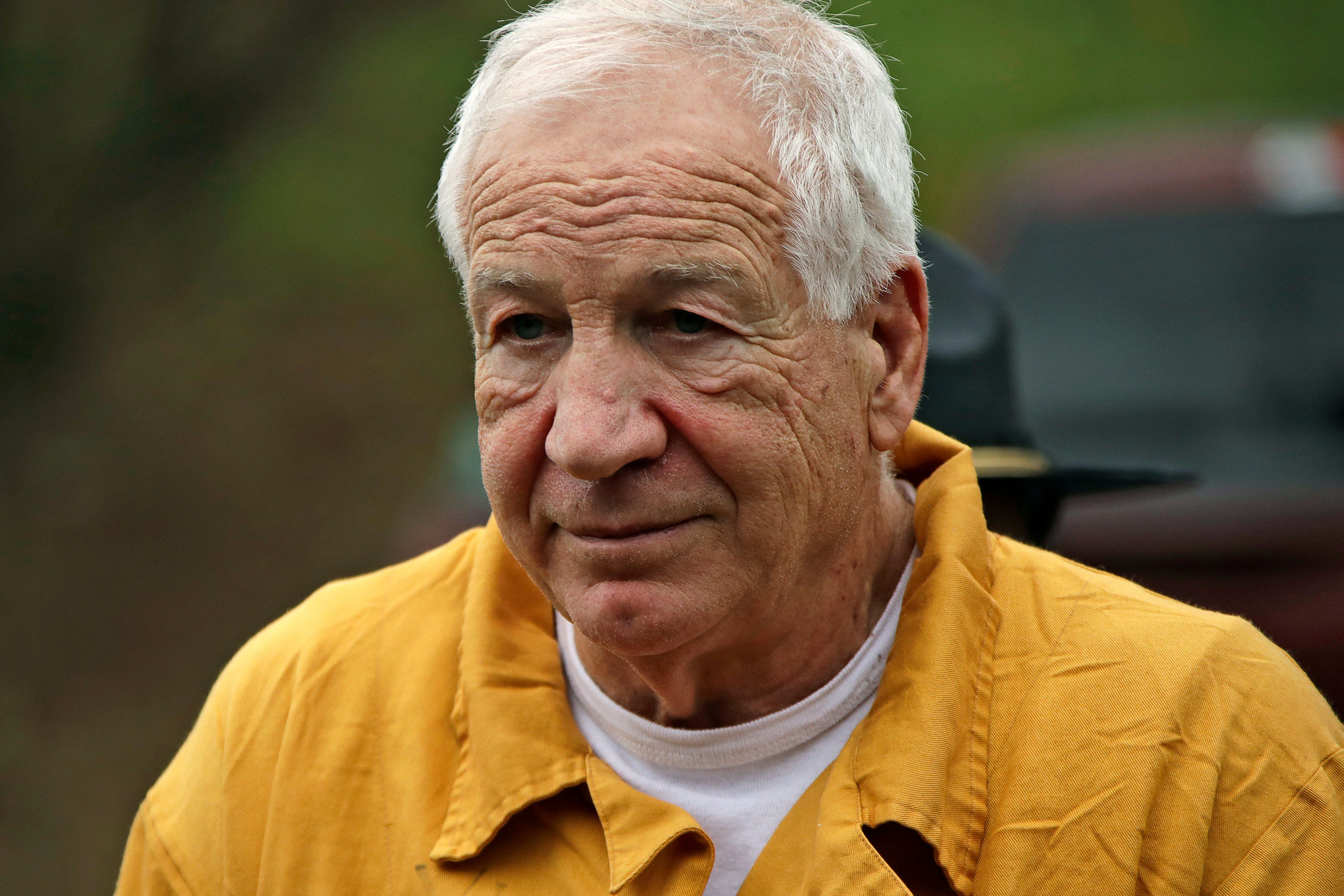
    BELLEFONTE, Pa. — Former Penn State assistant football coach Jerry Sandusky appeared in court remotely Tuesday, where he said he agreed with his lawyers not to go forward with testimony from an accuser who wants to recant allegations that Sandusky sexually abused him years ago.

    The hearing was part of the latest bid by Sandusky’s lawyers to secure a new trial for him as his lawyers prepare to seek one in federal court after failing repeatedly in state courts.

    In court, Sandusky, 82, appeared on a video screen in a spare room in Laurel Highlands state prison, seated at a small table in a maroon-colored shirt looking up at the camera through glasses.

    Under questioning, he told Centre County Court Judge Maureen Skerda he had consulted with his lawyers about the decision not to present the accuser’s testimony recanting the allegations from Sandusky’s 2012 trial.

    “I’m making this decision on advice of counsel,” Sandusky said, his arms on the table in front of him, a notepad between them. “Is there anything wrong with that?”

    Sandusky has been serving a decades-long prison sentence since he was convicted of 45 counts of sexual abuse in 2012, after eight young men testified about what happened to them as boys.

    Sandusky’s lawyer, Jerry Russo, told reporters later that state courts frown on granting new trials based on a witness recantation, seeing it as “inherently unreliable.”

    Instead, Russo said, he plans to take Sandusky’s broader claims for a new trial to federal court — Sandusky has made at least three attempts in state courts — after one more procedural appeal in state court.

    Last year, Sandusky’s lawyers had asked for a new trial, claiming that there were inconsistencies in the accusers’ testimony and that their testimony was driven by the possibility of financial gain, coaching by prosecutors, and “therapy intended to [help] them reconstruct memories of alleged abuse.”

    Skerda months ago had refused to hear the claims, except for the recantation of the victim identified in court documents as R.R.

    On Tuesday, Russo suggested that it was not worth taking the time for the judge to hear and consider the recantation testimony if it has no chance to win a new trial in a state court.

    “If that’s the only issue that remains for us to litigate, there’s no purpose being served litigating it here in state court,” Russo said.

    Skerda told Russo and Sandusky that withdrawing the request to present the recantation from the accuser, identified in court documents as R.R., meant that it could not be litigated again in state or federal court.

    Russo agreed with that assessment, saying “technically” it is true, but also suggested that the recantation could find its way into federal court, saying that “there are other witnesses that can testify” about R.R.’s recantation.

    The Pennsylvania Office of Attorney General had said that the supposed recantation was “highly suspect” and that it had prepared to rebut the recantation claim with testimony from six witnesses and other evidence.

    In a statement, Attorney General David Sunday called Sandusky a “convicted child predator” and said he is making another attempt to “avoid accountability and escape punishment for years of abuse he perpetrated.”

    Sandusky was the defensive coordinator at one of the country’s top football programs under Hall of Fame head coach Joe Paterno. The scandal led to Paterno’s firing, and the university paid more than $100 million to people who said they were abused by Sandusky.

    Authorities said he found and groomed boys at the Second Mile, a charity he founded for at-risk youth. Sandusky has repeatedly declared his innocence.

    R.R., who was 25 years old at trial, testified that when he was 11, Sandusky sexually abused him in the coach’s basement in 1998, a transcript shows.

  • New Apple CEO unveils latest iPhone lineup, including a foldable model called Duo

    New Apple CEO unveils latest iPhone lineup, including a foldable model called Duo

    CUPERTINO, Calif. — Apple on Wednesday unveiled its latest generation of iPhones, including a widely anticipated foldable version called Duo.

    The company’s new CEO, John Ternus, who took over from Tim Cook on Sept. 1, introduced the latest lineup at the company’s Cupertino, Calif., headquarters.

    After cycling through other updates to the iPhone, the Apple Watch and AirPods, Ternus told the audience inside the Steve Jobs Theater that “actually there is one more thing,” in a nod to the trademark phrase from Jobs that the company’s legendary late founder himself borrowed from the 1970s detective show Columbo.

    The foldable phone has the “largest display ever on an iPhone, yet fits into your pocket,” Ternus said.

    The phone opens to a 7.6-inch display that is 80% larger than the newest iPhone 18 Pro. It will let people use an Apple Pencil on the phone, a capability previously reserved for iPad users. Duo, Ternus said, “will redefine the experience of using a foldable phone.”

    The Duo lets users split the screen to use two different apps on the device, or two windows of the same website for things like comparison shopping. With a starting price of $1,999, it is the most expensive iPhone yet.

    The Duo “was always going to eclipse Apple’s other announcements at the event,” said Ben Wood, chief analyst at CCS Insight. “The device adds a distinctive new design to the iPhone lineup and marks the company’s entry into the niche foldable smartphone category.”

    Wood said that while there is certain to be demand for the Duo, which costs less than some analysts had anticipated, foldables still account for less than 5% of the overall smartphone market.

    New iPhone 18 models

    The iPhone 18 Pro and 18 Pro Max, Ternus said, bring improvements to the battery, camera, and performance. They will start at $1,199 and $1,299, respectively. Customers can preorder the phones starting on Sept. 12 and they will be available on Sept. 18, although the Duo will be available on Oct. 23.

    The new models feature a long battery life — 45 hours of video playback for the Pro Max — and faster charging. The camera offers what Apple called “cinematic effects” from regular video captured on the phone, as well as new options for manual controls and “smart focus tracking,” which lets users focus on a single moving subject, such as a kid during a soccer game.

    Apple is also focusing on Siri’s new AI capabilities with the new phones, emphasizing privacy and security to stand apart from rivals who are further along in incorporating AI.

    Many of Apple’s biggest rivals, such as Samsung, Motorola, and Google, have already come out with foldable smartphones. But Apple is not one to rush on new technologies.

    “The foldable launch is straight out of Apple’s playbook: Wait for the product to work out its kinks and for the market to offer glimpses of viability, then enter and shape the category,” said Forrester analyst Dipanjan Chatterjee. But, he added, the question will be whether it can expand demand for what’s still a niche product category.

    Compared with earlier generations, the iPhone 18 costs about $100 more due partly to a global memory chip shortage. The iPhone 17’s price ranges from $799 to $1,999 depending on the model.

    Earlier this year, Apple unveiled artificial intelligence advances, including upgrades to its Siri assistant, emphasizing a focus on privacy and day-to-day use as the company tries to catch up with rivals on AI.

    Ternus takes center stage

    The keynote address for Ternus was his opportunity to set the tone for his vision of Apple’s future, Chatterjee said.

    “John Ternus inherits perhaps the most successful consumer technology juggernaut in modern times. That is both a boon and a burden for him. Tim Cook’s perfected execution, scale, and monetization set a high bar, and Ternus must extend that run,” Chatterjee said. “But he must sustain that momentum while positioning Apple to disrupt itself in the near future, when the iPhone, or any smartphone for that matter, will cease to be the consumer’s primary conduit to the world.”

    Wood noted that, with all the excitement around the Duo, the official arrival of Ternus as CEO “felt like less of a story” than he’d expected.

    “This event marks a seamless transition from Tim Cook, and its timing to coincide with the iPhone Duo was undoubtedly planned,” Wood said. “However, despite the media frenzy about this new device, it is the broader strength of Apple’s hardware, software and services that will drive the company forward.”

  • Trump administration proposes changes to census that could exclude millions

    Trump administration proposes changes to census that could exclude millions

    Millions of residents could be excluded from the U.S. census, congressional representation could be reshaped, and federal funds could be reallocated across states under changes proposed by the Trump administration.

    In the proposal posted to the federal register Wednesday, the Census Bureau suggested adding a citizenship question to the decennial questionnaire, which President Donald Trump has wanted since his first term.

    The proposal argues that the census count should exclude any undocumented immigrants and noncitizens without permanent residency because they are “not true inhabitants, members of the body politic, or persons with a ‘usual residence’ in the United States due to their lack of a sufficient tie and allegiance to the United States.”

    Under the newly proposed rules, refugees and asylum seekers would be excluded from the population count.

    Trump administration officials also want to prohibit the Census Bureau from asking certain demographic questions, including about race, ethnicity or sexual orientation, claiming the survey “should be colorblind and should not be distorted in any way by questions about immaterial personal characteristics.”

    The census has collected data on race and ethnicity since 1790.

    Trump has for years pushed to alter how the American population is tallied every decade, including unsuccessful efforts to add a citizenship question to the 2020 Census. The Supreme Court ultimately froze that plan, saying Trump officials had provided a “contrived” reason for wanting such information.

    Trump later said the citizenship question was needed to affect the redistricting process, an argument the Justice Department did not use in its legal defense. Census results every 10 years determine how the House’s 435 seats are allocated among states.

    “Number one, you need it for Congress — you need it for Congress for districting,” Trump said in 2019. “You need it for appropriations — where are the funds going? How many people are there? Are they citizens? Are they not citizens? You need it for many reasons.”

    Last August, Trump announced he was directing the Department of Commerce to again overhaul the census, amid a nationwide redistricting battle.

    “People who are in our Country illegally WILL NOT BE COUNTED IN THE CENSUS,” he wrote on Truth Social then.

    The Trump administration’s latest proposal will almost certainly face legal challenges. The 14th Amendment of the U.S. Constitution mandates that representatives in Congress be apportioned to states based on “the whole number of persons in each state,” without specifying citizenship or immigration status.

    Currently, the U.S. census counts native-born U.S. citizens, naturalized U.S. citizens, non-citizen U.S. nationals, lawful permanent residents and temporary migrants, such as foreign students, refugees, asylum seekers and undocumented immigrants.

    New York Attorney General Letitia James, who led a lawsuit against Trump’s efforts to change the 2020 Census, said Wednesday the state is again exploring legal options to fight back against the administration’s proposed changes to the 2030 Census.

    “The Constitution is clear. Every person living in the United States, regardless of immigration status, must be counted in the census,” she wrote on X.

    Civil rights and public health groups have also warned against the removal of questions about race and ethnicity from the census, saying doing so would hamper officials’ ability to address health disparities, starting with how to appropriately allocate federal funding.

    “If you change what the census counts, then you change where the money can help most,” Vi D. Le and Melanie Klein of the Federation of American Scientists wrote last week.

    “Removing race and ethnicity data does not make health disparities go away,” they wrote. “It merely makes them harder to find, harder to measure, and harder to fix.”