Category: Wires

  • More than 500,000 Russian troops killed in Ukraine, UK defense chief says

    More than 500,000 Russian troops killed in Ukraine, UK defense chief says

    KYIV, Ukraine — More than half a million Russian troops have been killed in Ukraine since the start of Moscow’s full-scale invasion in February 2022, a senior British defense official said Friday.

    The dead are part of 1.5 million Russian casualties in Ukraine, Air Chief Marshall Sir Richard Knighton, chief of the U.K’s Defense Staff, said.

    The U.K. figures roughly coincide with those published by the Ukrainian military. There was no immediate comment from Russian officials.

    Moscow’s bigger army is struggling to make headway on the battlefield. Western officials and analysts say the Russian rate of advance has slowed significantly this year.

    Russia’s armed forces have also lost an “enormous” amount of military materiel, Knighton told reporters. That includes more than 10,000 armored and protected vehicles, close to 3,000 air defense and artillery systems, and over 370 aircraft and helicopters, Knighton said.

    He didn’t say what Ukraine’s losses were.

    Neither Moscow nor Kyiv give regular updates on their battlefield losses.

    Russian drones target Kyiv gas stations

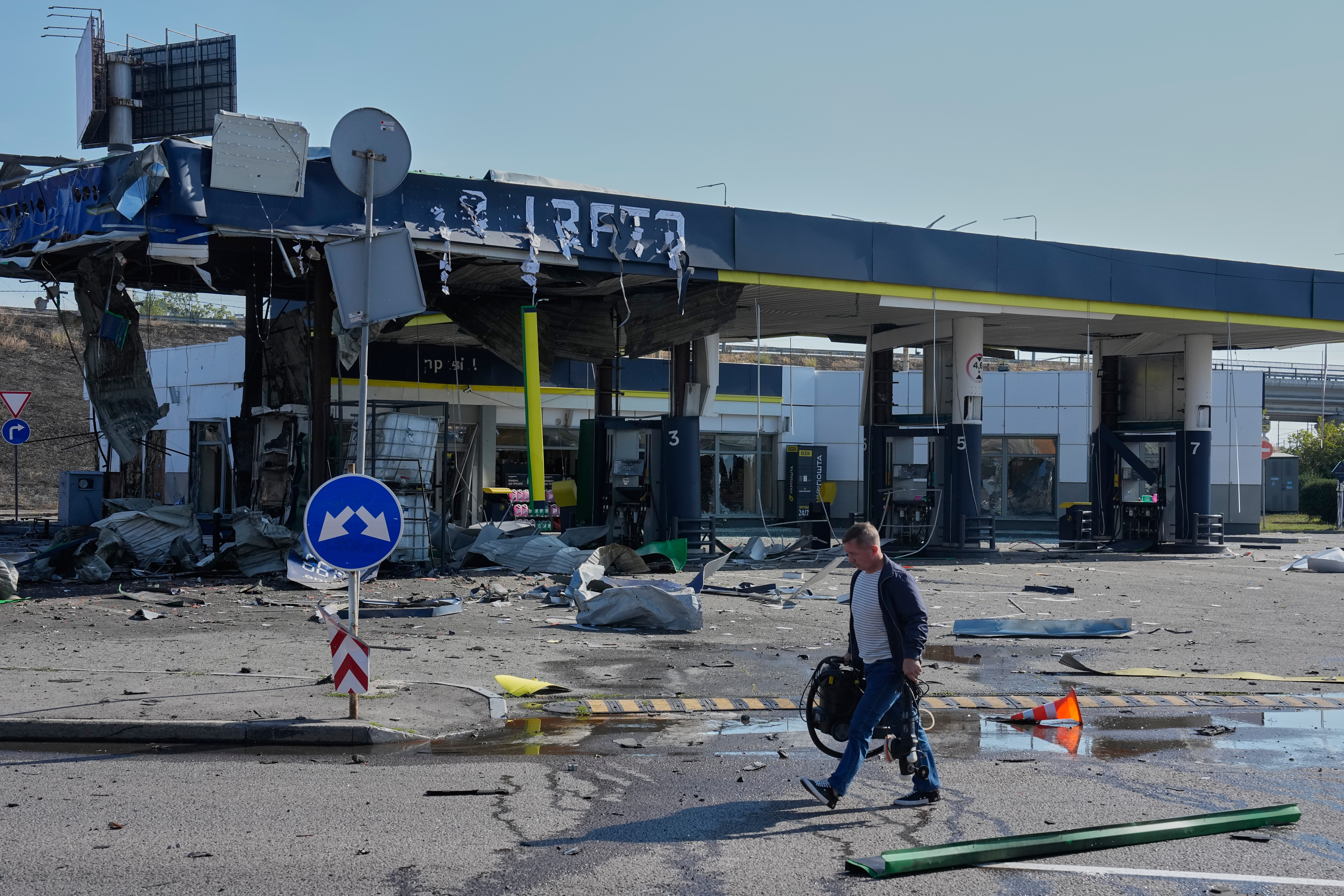
    Russian drones targeted roadside gas stations in Kyiv for a second straight day Friday, as Moscow broadened its air war in what Ukrainian officials say is an effort to rattle civilians.

    The attacks struck two Ukrnafta gas stations, killing two people and wounding six at one of them, the prosecutor’s office said.

    Russian strikes on urban gas stations have intensified in recent months, mostly in regions near the front line in eastern and southern Ukraine. It is part of a campaign to disrupt civilian life and weaken morale that has also included attacks on food distribution hubs, sporadically leaving some supermarket shelves bare in the Ukrainian capital.

    “Russia is systematically attacking places where it knows people will be spending their time going about their daily lives, seeking to maximize casualties, spread fear, and put pressure on Ukrainian society,” Foreign Minister Andrii Sybiha said on X late Thursday.

    Authorities have urged residents not to linger near gas stations and other exposed infrastructure during air raid alerts.

    Ukraine is urgently trying to improve its air defenses as Russia’s invasion stretches into its fifth year, and on Thursday won pledges of more support from Canada.

    Russian shopping mall strikes kill 5 in central Ukraine

    Pavlohrad, a city in central Ukraine, observed an official day of mourning Friday for five residents killed near shopping malls in broad daylight by Russian drones the previous day.

    The attack also wounded 67 people, Sybiha said on X.

    In the southern city of Zaporizhzhia, a 32-year-old woman and her 10-year-old son were wounded in an overnight Russian drone attack, Ukraine’s State Emergency Service said. The drones struck a nine-story apartment block and a shopping mall, it said.

    Efforts to put out the blazes were slowed by the constant threat of repeat strikes, forcing firefighters to stop working and take shelter, it added.

    In Dnipro, a city in central Ukraine, a Russian daylight attack Friday wounded 12 people, according to local officials.

    Russia says it stopped 777 Ukrainian drones

    Ukraine, meanwhile, has extended its own long-range drone campaign deep into Russia, straining air defenses across its bigger neighbor’s vast territory. On Thursday, its military reported hitting a refinery more than 1,800 miles away in Siberia as Kyiv tries to hurt Russia’s vital oil sector. Its strikes have caused fuel shortages in Russia, one of the world’s biggest energy producers.

    Russia’s oil product exports hit record lows in August, and Moscow is importing fuel from South Korea and India, the Center for Research on Energy and Clean Air said in a report.

    “Ukrainian strikes on Russia’s refining capacity have turned tables on the world’s once largest oil product exporter to see them start importing fuels, with imports surging to a record 172,000 metric tons (189,600 tons) in August — more than seven times the previous monthly high,” the Finland-registered nonprofit said Thursday.

    Ukraine launched a major barrage overnight from Thursday to Friday, with the Russian Defense Ministry saying air defenses intercepted 777 Ukrainian drones over 16 Russian regions, as well as occupied Crimea and the waters of the Azov and the Caspian seas.

    Two people were killed and three others wounded overnight in a Ukrainian drone attack on the Tula region south of Moscow, local officials said Friday.

    A Ukrainian drone strike during the night started a fire at the Saratov oil refinery in southwestern Russia, Russian independent online outlet Astra said Friday. Kyiv has repeatedly targeted that refinery, which was last hit in early August.

    Major online retailer Ozon said its logistics facility in the same city was struck and set ablaze by a Ukrainian drone, though no casualties were reported. Ozon is a competitor to Wildberries, whose facilities Ukraine has also targeted.

    Ukrainian President Volodymyr Zelensky said long-range strikes overnight hit eight Russian regions, including a business and an oil industry facility in the Saratov region.

    The attacks were “aimed at reducing Russia’s capacity to wage war,” he said on X Friday.

  • Elevated inflation keeps pressure on Fed to raise interest rates

    Elevated inflation keeps pressure on Fed to raise interest rates

    U.S. inflation stayed stubbornly high in August, bolstering the case for the Federal Reserve to raise interest rates at its meeting next week.

    The consumer price index report, released Friday, showed overall inflation remained elevated at an annual pace of 3.4%, after a 0.4% rise from July. “Core” inflation, which strips out volatile food and energy items, rose 0.3% in August, or 2.4% from a year earlier.

    The data is factoring heavily into the Fed’s forthcoming policy deliberations, set for Tuesday and Wednesday. Policymakers stipulated this summer that if inflation did not soon moderate, they stood ready to raise rates. Officials have yet to precisely define what “soon” means, but many have run out of patience.

    The Fed’s preferred inflation gauge is the personal consumption expenditures price index, but officials closely scrutinize the CPI report and other metrics for a comprehensive picture of the backdrop. Core measures are paid the most attention given that they are seen as a reliable way to track how persistent inflation is proving to be.

    Policymakers are also digesting a multitude of new risks. The global price of oil is back up above $100 a barrel as the Iran war continues to disrupt supply. President Donald Trump has reignited a trade war with Canada. And on Wednesday, he vowed to distribute a $5,000 check to every American adult if Republicans keep control of Congress in November midterm elections, a bump to economic activity that could further fuel inflation.

    In the wake of Friday’s data release, traders in federal funds futures markets now see 90% odds that the Fed will raise rates by a quarter of a percentage point next week. Since January, they have stood at a range of 3.5% to 3.75%.

    Raising rates just months before the election would undoubtedly stoke tension with Trump. Last week, the president threatened to halt a broad swath of U.S. trade unless the Fed slashed rates. Cutting borrowing costs is not even under consideration.

    Still, that has not stopped the administration from trying to tamp down borrowing costs using its own tools. Treasury Secretary Scott Bessent has over the past month embarked on a series of interventions to keep a lid on long-term Treasury yields to little success. The 10-year Treasury yield is now trading just shy of 5%.

    This tension no doubt makes the stakes for Kevin Warsh, the Fed chair, exceptionally high heading into the meeting. Late last month, Warsh delivered a closely watched speech at the central bank’s annual conference in Jackson, Wyo., that sought to underscore his commitment to fighting inflation after some doubts had emerged.

    He indicated enough of an openness to raising rates that investors quickly piled on bets that the Fed would raise rates in September. But Warsh last month purposely left vague what specifically would tip him in that direction.

    “Here is my standard: We must be confident that underlying inflation is moving to our objective, clearly and at sufficient speed,” he said. “Otherwise, we have work to do.”

    What Warsh is trying to avoid is a redux of the reaction he faced after the Fed’s last meeting in July. Then, he failed to provide sufficient reasoning for standing pat and sowed confusion about how he planned to make good on his pledge to return inflation to the 2% target.

    Warsh’s job as chair next week will be to corral his colleagues, while also providing a clear-cut rationale for whatever decision is ultimately made.

    There is already a group of policymakers who support higher rates on the basis that the Fed’s current policy settings are not restraining demand. Higher rates would not only expedite the return of 2% inflation, they argue, but also ensure that expectations about inflation do not suddenly shift higher.

    The counterargument to raising rates rested on the assumption that inflation was going to decelerate in the latter half the year, giving the Fed flexibility to hold off on taking action. John C. Williams, who as president of the Federal Reserve Bank of New York is vice chair of the policy-setting committee, espoused this view, arguing that policy was in a “good place.” Still, he made clear that he would support higher rates if the data did not cooperate.

    Christopher J. Waller, a Fed governor, also recently suggested that he was inclined to hold rates steady next week, but only if inflation continued to cool.

    August’s data challenges the narrative that inflation is indeed cooling in a timely way.

    One closely watched subset of the CPI report is called supercore inflation, which tracks prices of services excluding energy and housing. It accelerated to 0.5% in August and is up 3% from a year ago.

    Energy prices were a big driver of overall inflation. Gasoline costs were up 3.9% in August. Prices for fuel oil, which is used to heat homes, jumped even more, at 10.1%. That also helped to drive a rise in airline fares, which jumped 2.7% in July. Compared with the same time last year, they are up nearly 25%.

    The impact of Trump’s initial round of tariffs, however, seems to have faded. Goods prices appear to have stabilized after last year’s shocks. Household furnishings are up less than 1% since this time last year. Apparel prices were up 3.6% over the year, but were flat in August compared with July. Still, these prices were recorded before Trump’s latest round of punishing tariffs on Canadian imports.

    This article originally appeared in The New York Times.

  • Isao Harimoto, Hiroshima survivor and a baseball star in Japan, dies at 86

    Isao Harimoto, Hiroshima survivor and a baseball star in Japan, dies at 86

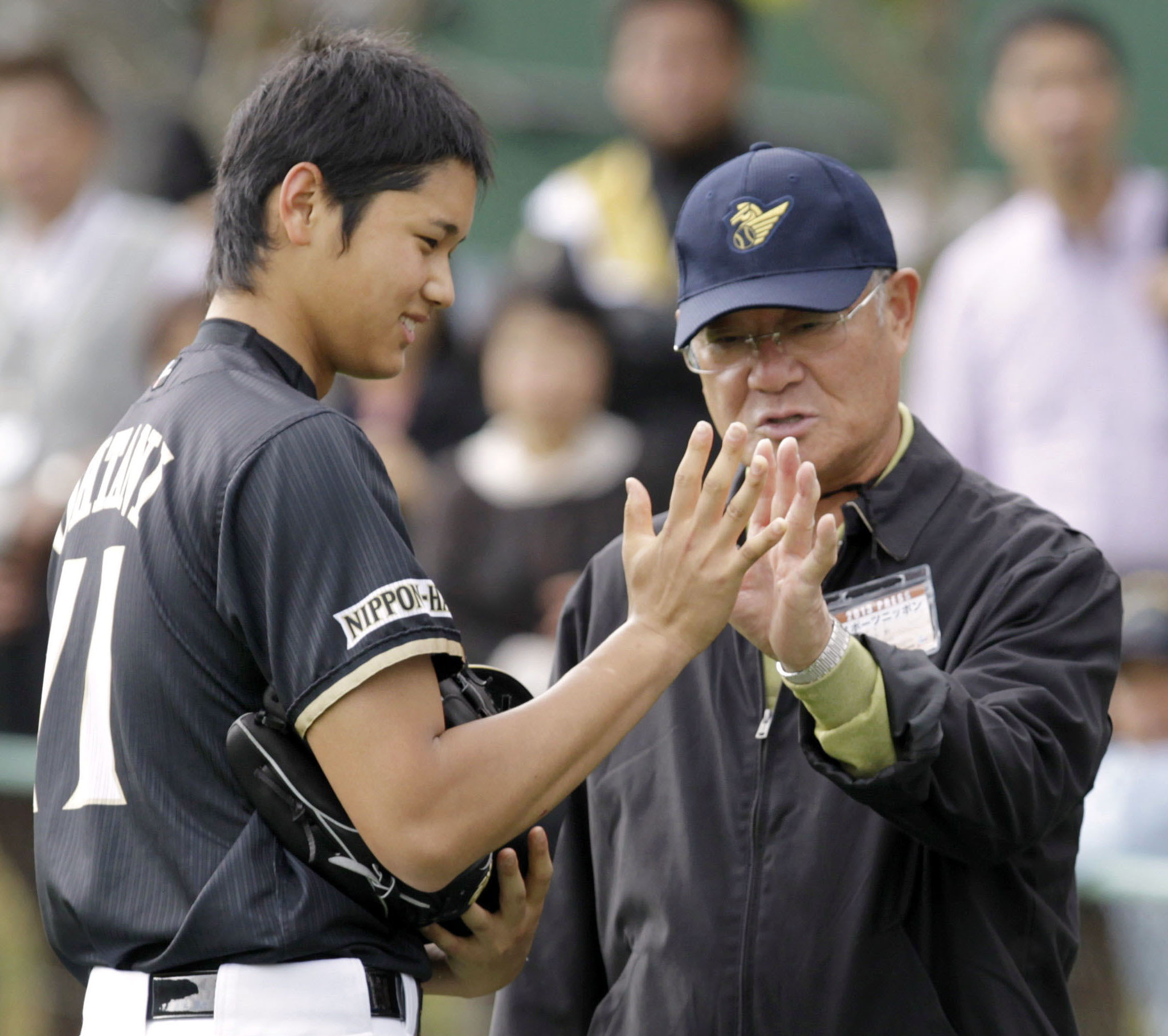
    Isao Harimoto, who survived the Hiroshima atomic bombing as a child and went on to have more hits than anyone else in the history of Japanese baseball, died Wednesday in Tokyo. He was 86.

    His death, in a hospital, was announced by the Meikyukai, or the Golden Players Club, one of Japan’s baseball halls of fame. No cause was given.

    Mr. Harimoto earned the nickname Hit Machine for collecting a record 3,085 of them in a long career than stretched from the late 1950s to the early ’80s. He won seven league batting titles.

    He was the only player to collect 3,000 hits in Japan. (Ichiro Suzuki had 4,367, but more than 3,000 came after he moved to the American major leagues.)

    But Mr. Harimoto was far from a slap hitter; 504 of those hits were home runs, putting him seventh on the all-time list for Japan. He also stole 319 bases, won an MVP award, and was an 18-time All Star.

    After his time as a player, he became an outspoken commentator on the game.

    Isao Harimoto was born on June 19, 1940, in Hiroshima, Japan, to Korean parents who had emigrated the year before. His Korean name was Jang Hun. His mother, Pak Sun Bun, was a cook and his father, Jang Sang Jeong, sold scrap metal and various secondhand items from a cart.

    Harimoto was 5 when the atomic bomb was dropped on the city, about a mile and a half from where he lived. “There was a flash and an enormous roar,” he told the Chugoku Shimbun newspaper in 2011. “The next thing I knew, my mother was shielding me and my sister, three years older, with her body, though her back was covered in blood due to flying shards of glass.”

    The event was not frequently discussed in his home. “My mother wanted to forget; I think she wanted to completely erase her memories of that day,” he told the Mainichi, a Japanese English-language newspaper, in 2020. He lost a sister, Jang Jeom Ja, in the bombing, and his mother burned all photographs of her, he said. He himself did not discuss the cataclysm publicly until well after his baseball career.

    He was proud of his Korean heritage despite being bullied for it as a child and facing prejudice during his career.

    “A lot of ethnic Koreans in Japan assimilate into Japanese society,” said Robert Whiting, author of You Gotta Have Wa (1989), the definitive book in English about Japanese baseball. “Harimoto did not. He talked about the fact that his mother never spoke Japanese in the house, and he was very proud of that fact.”

    Mr. Harimoto was also critical of other athletes in Japan with Korean backgrounds who hid their ethnicity. Only late in life did he become a Japanese citizen.

    He burned his right hand in an accident as a young child, an event that contributed to his becoming a left-handed hitter when he took up baseball in fifth grade. Despite his talent, he lost a few chances at places on top high school teams because of a reputation as a troublemaker, deserved or not.

    In 1958, he visited South Korea for the first time with a team of Korean Japanese high school students. He met his grandparents and later said he truly connected with his Korean roots for the first time.

    His rigorous, disciplined approach to batting, and an ability to consistently hit up the middle, soon brought him to the top leagues. In 1959, playing with the Tokyo-based Toei Flyers, he hit .275, good enough to be named rookie of the year. He got much better over the next two seasons, hitting .302, and then .336. He played left field, and fielding was not his strong suit, but as a hitter, he performed strongly and consistently for two decades.

    Many of the teams he played on were not among the elite in the Japan leagues. He was part of a Japan Series-winning team only once, in 1962, when his Flyers beat the Hanshin Tigers in seven games. That was also the year he was named the Pacific League’s most valuable player. (The Flyers adopted their current name, the Nippon Ham Fighters, during his time with the team.)

    Mr. Harimoto’s most spectacular season was 1970, when he hit .383 with 34 home runs and 100 RBI, all career highs.

    He was a large player by the Japan leagues’ standards at the time, listed at 5 foot 11 and 187 pounds. And he was not afraid of players, American or Japanese, who were bigger still. “If there was a brawl on the field, he was always in the middle of it,” Whiting said. “He was a scary guy; no one wanted to fight him. He wasn’t afraid to show his temper and challenge people on the field.”

    Despite Mr. Harimoto’s batting success, he never could shake a reputation in Japan for being a bit of a bad boy. He enjoyed a drink and was involved in a few fights.

    He moved on to the Yomiuri Giants in 1976 and the Lotte Orions in 1980. He retired after the 1981 season at 41.

    After his playing days were over, Harimoto became a commentator on the game with a reputation for saying what he thought. “He didn’t seem to have a filter,” Whiting said. “He was very protective of the Japanese game and critical of players who went to the States to play, thinking they should be loyal to the Japan leagues.”

    Harimoto worked for the Korea Baseball Organization and helped establish that country’s national league in 1982, though he later split with the group over slights he believed he received.

    Speaking out against nuclear weapons was also a big part of his later life. “Which is more important: protecting human lives or holding on to nuclear weapons?” he asked in the Chugoku Shimbun in 2011. “These two things are poles apart. It’s inhuman to permit the existence of weapons that can annihilate people in an instant, when they’re just trying their best to live.”

    This article originally appeared in the New York Times.

  • Prosecutor leading probe into Trump foes resigns, vows investigation will continue

    Prosecutor leading probe into Trump foes resigns, vows investigation will continue

    The top prosecutor leading a wide-ranging conspiracy investigation into President Donald Trump’s political foes resigned Thursday afternoon.

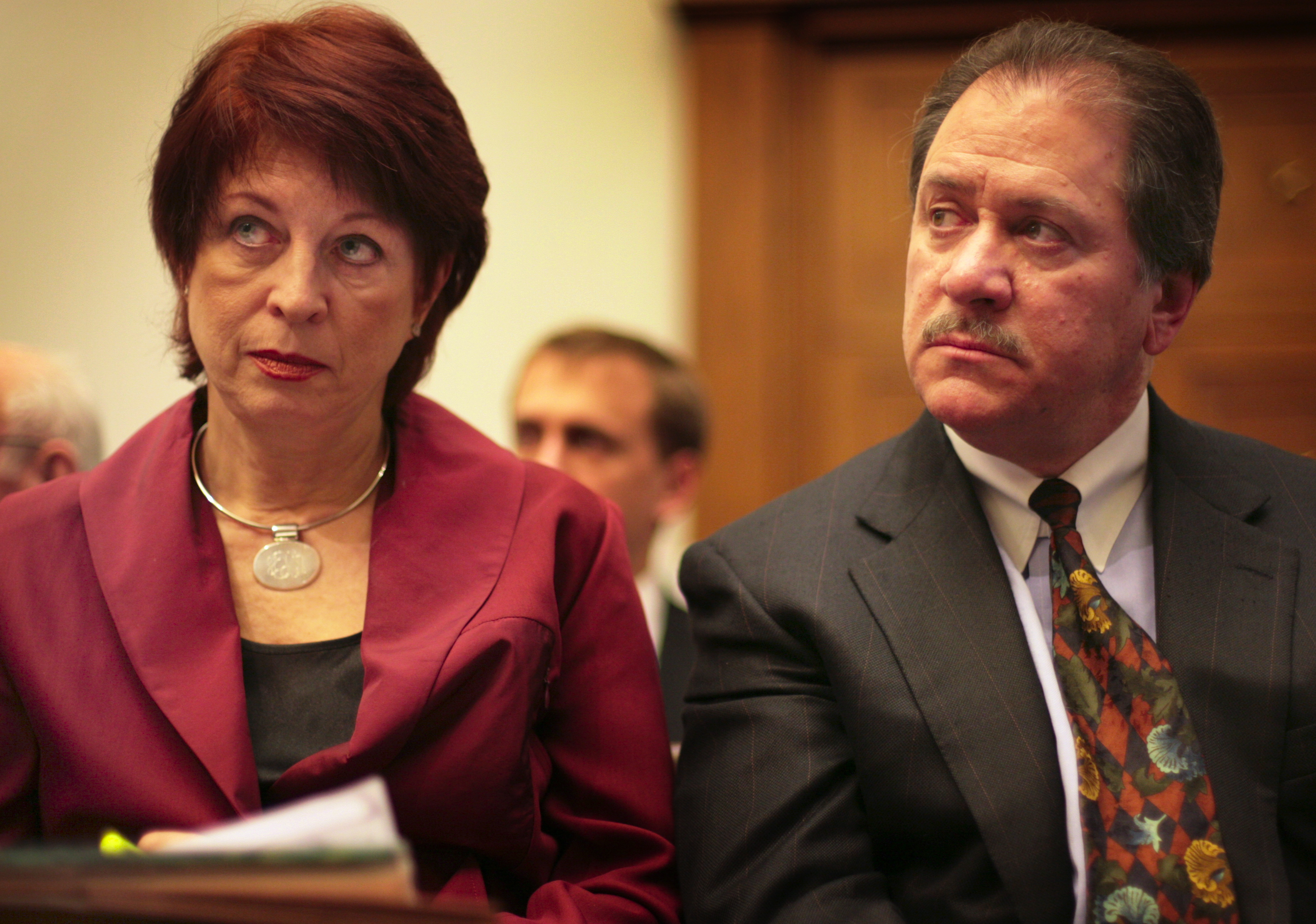
    Joseph diGenova — a Trump loyalist who has pushed a baseless theory that the FBI was out to get Trump during his 2016 campaign — told the Washington Post that he has submitted his resignation papers to Attorney General Todd Blanche amid disagreements over the pace of the investigation.

    He did not elaborate on what specific disagreements led to his sudden departure at what appears to still be an early stage of the high-profile investigation.

    DiGenova’s wife, Victoria Toensing, an attorney who was brought in as part of the prosecution team alongside him, was expected to resign Friday, diGenova added.

    “It was a privilege and an honor to serve the [Justice] Department and president,” diGenova said in a brief interview, noting that the probe would continue after his departure.

    DiGenova’s departure comes as the Trump administration has put pressure on the Justice Department to prosecute the president’s political foes. Trump repeatedly expressed frustration with former Attorney General Pam Bondi’s pace — and limited success — in overseeing efforts to target his rivals.

    The president fired Bondi in April.

    DiGenova added Thursday evening in a text that he believed there was evidence to build cases in the conspiracy probe, but said “time was needed to build those cases” and “people differ on how long that should take.”

    ABC News first reported on his resignation. The Justice Department did not immediately respond to a request for comment. Toensing confirmed that she would be resigning, but declined to comment further.

    DiGenova, a former U.S. attorney for the District of Columbia, has suggested without evidence that an FBI investigation into potential ties between Russia and the 2016 Trump campaign was a hoax perpetrated to keep Trump from becoming president. He was tapped in April to lead the conspiracy investigation, among the biggest and most legally complicated that the Justice Department is pursuing as part of Trump’s vow to prosecute his political enemies.

    The investigation, which is based in Florida, hinges on an unusual and untested legal theory: that previous administrations conspired for years to violate Trump’s rights through a series of investigations, beginning with the Obama administration’s scrutiny of ties between Russia and the 2016 Trump campaign.

    The probe is looking in part at the decade-old actions of former Obama administration officials, including former director of national intelligence James R. Clapper Jr. and former CIA director John Brennan, who played significant roles in investigating the possible Russia ties.

    So far, prosecutors have issued a flurry of subpoenas but have not issued any indictments, according to people familiar with the probe, speaking on the condition of anonymity to discuss an ongoing investigation.

    DiGenova, 81, was U.S. attorney during the Reagan administration and later served as a lawyer for the Trump campaign. He was brought into the Justice Department this year specifically to work on the sprawling conspiracy investigation in Florida, landing the job after publicly lobbying for it.

    In an interview this summer on the podcast of former Trump lawyer Rudy Giuliani, diGenova claimed that Trump’s decision to fire Bondi was at least in part tied to a lack of progress on the investigation into Brennan as part of the conspiracy probe.

    “The president was ripping mad about the fact that there was no progress on the lawfare investigation in Miami,” diGenova said. He was hired weeks after Bondi’s firing.

    DiGenova took over the investigation from a career national security prosecutor in South Florida, Maria Medetis Long, who left the case after expressing discomfort with its direction, the Post previously reported.

    While diGenova headed the operations of the probe itself, it falls under the broad jurisdiction of Jason Reding Quiñones, the Senate-confirmed prosecutor who runs the U.S. attorney’s office in South Florida. DiGenova said he expects Quiñones to continue pushing forward with the inquiry.

    “I am sure he will continue the investigation vigorously,” he said.

  • Trial remains elusive for purported mastermind accused of plotting 9/11 attacks

    Trial remains elusive for purported mastermind accused of plotting 9/11 attacks

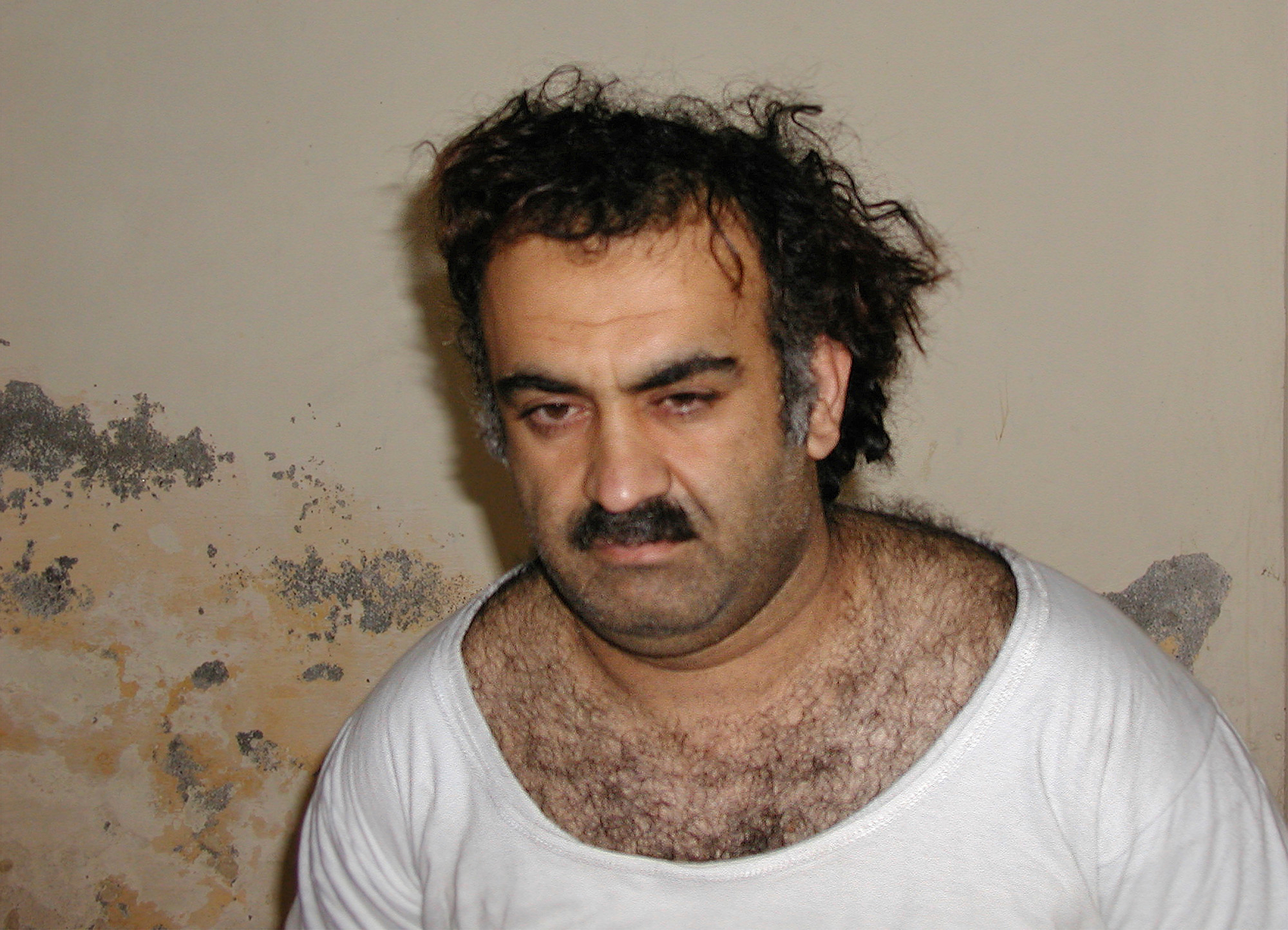
    NEW YORK — Two decades after U.S. authorities locked Khalid Sheikh Mohammed away at a military detention center in Cuba, the purported mastermind of the Sept. 11 attacks sometimes seems barely any closer to being put on trial than the day he arrived.

    A judge recently set a 2028 date for Mohammed to finally be tried before a military tribunal, but some lawyers predict it will never happen — not that year or any other year. They say the maze of legal issues that arose because Mohammed was tortured following his 2003 capture in Pakistan is too twisted to ever be straightened out.

    A fleeting bid to put him on trial in a civilian court in New York City was shouted down years ago over security concerns.

    A plea agreement that would have kept Mohammed imprisoned for life, but spared him from a possible execution, began to collapse shortly after it was announced in 2024, and finally died for good last year.

    “It’s all contaminated by politics and the lack of accountability on torture,” said Joshua Dratel, an attorney who played a part in assuring that Mohammed has proper legal representation.

    In late August, the U.S. military judge who set a June 5, 2028, trial date for Mohammed and three others charged in the Sept. 11 attacks ruled that prosecutors could not use an alleged confession he made to the FBI in 2007. Those statements were deemed tainted because Mohammed was subjected to “enhanced interrogation techniques” overseas, including the simulated drowning technique called waterboarding.

    While the ruling was a blow to the prosecution, the U.S. government decided not to appeal, in part because doing so could have further delayed a possible trial.

    Meanwhile, Mohammed remains jailed in Guantanamo Bay, where he was brought on Sept. 5, 2006, following more than three years in secret prisons in other countries.

    Victims’ families still hope a trial will happen

    Terry Strada, whose husband, Tom, died at the World Trade Center on Sept. 11, said that she and other people who lost family members still hope a trial will someday happen.

    “We very much want to see this come to an end at some point. We do want to see justice served. It’s just as important as 25 years ago,” she said.

    But Strada, the national chair of the group 9/11 Families United, also said she would rather have Mohammed rot at Guantanamo Bay indefinitely than get behind a resolution that would involve dropping the death penalty as a possibility. Strada said she worries that if Mohammed is not executed, future U.S. leaders might someday be tempted to swap him for Americans held prisoner elsewhere in the world.

    The death penalty, she said, “fits the crime and it would prevent that from ever happening. And that’s important to me.”

    Mohammed was captured in Pakistan in 2003, accused of developing and directing the 9/11 attacks, as a leader of the Islamic militant group al-Qaeda. Some of the delays in his legal proceedings have stemmed from his treatment after he fell into U.S. control. A U.S. Senate report pointed to his extended torture in CIA custody, including 183 sessions of waterboarding.

    Plans for a civilian trial were dropped

    For a time in 2009, it seemed Mohammed was headed to New York after then-Attorney General Eric Holder announced plans to try him and four other men charged in the Sept. 11 attacks in a Manhattan courthouse just blocks from the World Trade Center site.

    Then-President Barack Obama, who had pledged to close the Guantanamo detention center, said Mohammed would face “the most exacting demands of justice.”

    Almost immediately, opposition arose. Some critics predicted Mohammed would use a trial as a platform to spread hateful views of America and its allies. Others cited security concerns, saying it could again make New York a terrorist target. Former New York City Mayor Rudy Giuliani, a Republican, called the plan unwise and said it showed “a lack of concern for the rights of the public.”

    Plans for a civilian trial were dropped.

    “It was a charade in many respects,” Dratel said.

    The military tribunal system, he said, has proven itself to be a worse solution, unable to function efficiently, without a proper structure, and without fidelity to federal courts.

    “Each time you reach an impasse, no one knows what to do,” he said.

    David Raskin, a Washington lawyer now in private practice who would have led the government’s prosecution of Mohammed in New York if it hadn’t been abandoned, said in an essay published in the Washington Post on Wednesday that he is confident a civilian trial would have ended with a conviction. The military commissions, on the other hand, “became a defense lawyer’s dream,” beset by “endless litigation over their legality and procedures.”

    “I predict there will never be a completed military commission trial for Mohammed and the other Sept. 11 defendants,” he said.

  • CIA releases intelligence sent to White House before Sept. 11

    CIA releases intelligence sent to White House before Sept. 11

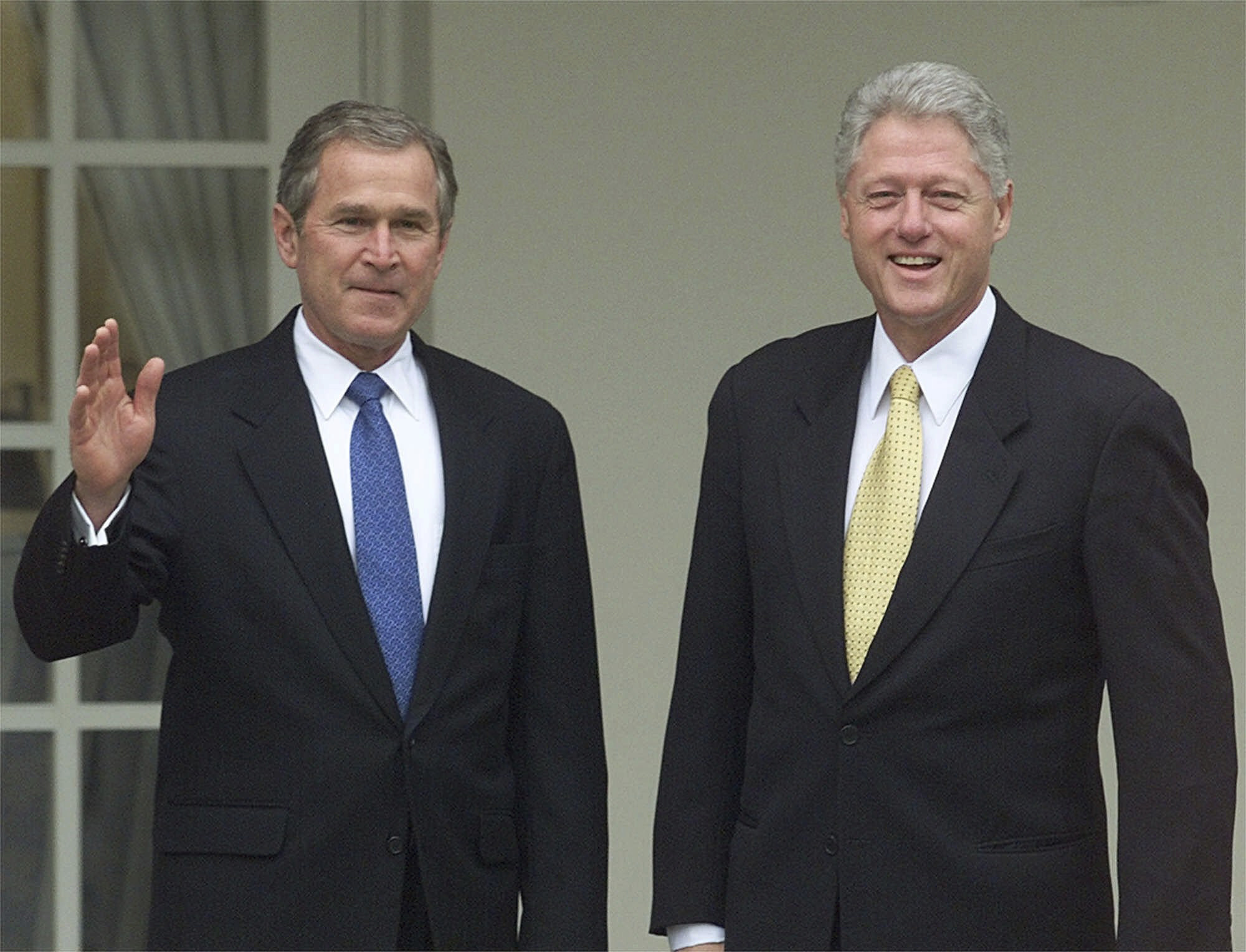
    WASHINGTON — Tucked at the end of a Sept. 10, 1998, intelligence report sent to President Bill Clinton’s White House was a warning about al-Qaida that more than a quarter-century later seems prescient.

    Al-Qaida, a CIA analyst wrote, “may fly an explosive-packed airplane into a U.S. city.”

    On Friday, the 25th anniversary of the Sept. 11, 2001, terrorist attacks, the CIA released 69 never-before-seen presidential intelligence briefs detailing what it had discovered about Osama bin Laden and al-Qaida in the run-up to the day.

    The release, according to agency officials, is their largest focused on the Sept. 11 attacks. The intelligence analyses that were sent directly to the president and senior policymakers are among the agency’s most closely guarded documents, and the CIA’s standard practice is to release them only after about 40 years, to ensure no sources are compromised and minimize any potential tension with allies.

    The documents do not appear to contain major new revelations, and they remain redacted to obscure the sources of the information. But the briefings provide details of what the CIA was telling Presidents Clinton and George W. Bush in the months and years before the attacks, along with an intelligence report provided in the early morning hours of Sept. 12.

    The documents released Friday reinforce the central findings of the National Commission on Terrorist Attacks Upon the United States and its 2004 report: U.S. intelligence agencies warned about al-Qaida consistently but failed to understand the scale of the attack the group had in mind.

    John Ratcliffe, the CIA director, said the documents were being released to honor the memory of those killed on Sept. 11, along with the CIA officers who subsequently gave their lives.

    “Twenty-five years ago, the 9/11 attacks struck a blow to our nation, but they did not break us,” Ratcliffe said. “Generations of CIA officers have since dedicated their careers to securing justice for our fallen Americans and ensuring al-Qaida would never again harm our country.”

    Still, the documents demonstrate that the CIA repeatedly brought to Bush and Clinton the threat posed by bin Laden to directly attack the United States.

    In a briefing Thursday, CIA analysts said that before Sept. 11, terrorist threats were not a primary focus to collect intelligence on, and reporting on bin Laden and al-Qaida was limited. Reading the old reports, the analysts said, it was clear that the agency knew al-Qaida wanted to attack America. But what that would look like, intelligence officials said, was not clear, with a large amount of noise obscuring the clues.

    Working through the newly released documents, dating from Feb. 13, 1998, to Sept. 12, 2001, various strands of threat intelligence rise to the surface and then disappear. The 1998 intelligence about the explosive-laden plane, for example, does not make another prominent appearance in the warnings given to the White House.

    The CIA analysts said it was rare that the agency could follow the full story arc of a threat or plot. Various threats come and go from the agency’s warnings.

    Part of the problem was finding ways to provide effective warnings, said a senior CIA official, who spoke on the condition that their name not be used, in keeping with the agency’s practice. As the CIA wrote more presidential-level reports on al-Qaida, there were concerns about “warning fatigue,” the CIA official said.

    A senior CIA counterterrorism analyst said collection from human sources before the attacks was “not fantastic.” The overall collection on al-Qaida, CIA officials said, was spotty.

    A small group of intelligence analysts worked on terrorism threats. But it was nothing like the priority it became on Sept. 12, 2001. As a result, there was a steady drumbeat of warnings, yet almost all were frustratingly vague.

    The idea that the intelligence community was aware of plotting around explosive-laden planes in September 1998 has been known. The commission mentions a report circulating about al-Qaida’s interest in using an airplane with explosives aboard to attack the United States, but it did not say the report reached the president.

    Bush and Clinton told the commission they understood the threat of al-Qaida, although the final report concluded that “we do not believe they fully understood just how many people al-Qaida might kill, and how soon it might do it.”

    The CIA released one document from after the fact, a “situation report” for the president sent to the White House at 4 a.m. on Sept. 12. Such updates are supposed to be factual, with minimal analysis. And despite the gravity of what happened on that day 25 years ago, the analysts wrote in their usual detached style.

    Before the attack, analysts wrote regularly about the threat, but the CIA officials acknowledged that their warnings did not capture the scope of what al-Qaida had in mind. That was in part because the reporting was not there. But the commission said this also resulted from a failure of imagination.

    The senior CIA counterterrorism analyst said the agency since Sept. 11 had come a long way and was better at “thinking outside the box.” The lesson of Sept. 11, she said, was that intelligence agencies had to think more creatively.

    Those intelligence failures, as well as the others identified by the commission such as a lack of information sharing between the CIA and FBI, led to a reorganization of the federal government’s national security structure. The Department of Homeland Security was created, bringing together various law enforcement agencies, as was the Office of the Director of National Intelligence, which works to improve collaboration among the FBI, the CIA, and other spy agencies and set analytical standards.

    The postattack reviews also changed how intelligence reports were written. The documents released Friday reflect the earlier era. Today, intelligence reports are peppered with assessments of analysts’ “confidence level,” how well-sourced a particular conclusion is. Although it is clear from the old reports that the CIA had high confidence in al-Qaida’s goal to strike the United States, and doubts about the specifics of various plots, that assessment was not made explicit for policymakers.

    Two members of the commission were allowed to review the presidential daily briefs from the time leading up to the attacks, but the agency fought against distributing them more widely. Two briefs were released amid pressure from the commission and the public.

    Jamie Gorelick, a commission member who reviewed the presidential daily briefs, said the summary of the documents that she co-wrote informed the commission’s work, although the commission was not allowed to release or quote the documents.

    These presidential briefs “are consistent with the commission’s assessment of the preattack intelligence,” said Gorelick, who served as deputy attorney general in the Clinton administration.

    Still, even if the underlying material has been well understood, the newly released documents are likely to be closely examined by historians of the intelligence agency.

    A July 1998 document, given to Clinton five weeks before al-Qaida attacked two embassies in Africa, outlined the group’s intent to attack America. That document tracked the warning repeated years later in the Aug. 6, 2001, presidential briefing released by the government under pressure from the 9/11 Commission.

    That 1998 report cited four “questionable sources” but said al-Qaida’s ambitions to strike the United States were “plausible,” given bin Laden’s comments.

    A document from Aug. 3, 1999, discussed the possibility that the intelligence being collected on al-Qaida could be a deception. That document was generated in response to questions from senior Clinton administration officials. The analysis noted that because so many potential targets came up in intelligence collection, al-Qaida could have been engaged in “a deliberate effort to mislead us.”

    “The diverse targets mentioned in the reporting, combined with a high incidence of Bin Ladin-related walk-ins, suggest a deliberate effort to mislead us,” the CIA wrote, using the government’s spelling for bin Laden.

    The commission also highlighted the intelligence community’s worries about deception, noting that Defense Secretary Donald Rumsfeld had leaned into the theory that al-Qaida was spreading misinformation that it intended to attack.

    A presidential intelligence document from July 24, 2001, appeared to describe the lull that the commission outlined in its report. The document reported that for the second time in two weeks, “an expected imminent Bin Ladin-sponsored terrorist operation has been postponed, but preparations for other near-term attacks may still be in train.”

    The intelligence report noted suspicious activity among individuals who had received a cryptic message the previous month. At the time, the collection was fuzzy. After the fact, the report looks like a missed warning.

    The last document release by the agency before the Sept. 11 attacks came on Aug. 28, 2001. That document in some ways read like a follow-up to the Aug. 6 report, potentially explaining why no attack had occurred despite the earlier warning.

    The report insisted that al-Qaida remained a threat, though it made no mention of attacks on the homeland or attacks with planes. Instead, the presidential note mentioned “assassination, kidnapping, the use of rockets, mortars and other longer-range weapons, as well as crude chemical or biological attacks.”

    The intelligence report also discussed how Qaida operations could be delayed or disrupted.

    In a final note that foreshadowed how bin Laden would ultimately be found nearly a decade later, the Aug. 28 report concluded that “inexperienced couriers or suicide bombers also make mistakes that expose plot details.”

    This article originally appeared in the New York Times.

  • The Houthi advance in Yemen raises concerns about a key shipping choke point

    The Houthi advance in Yemen raises concerns about a key shipping choke point

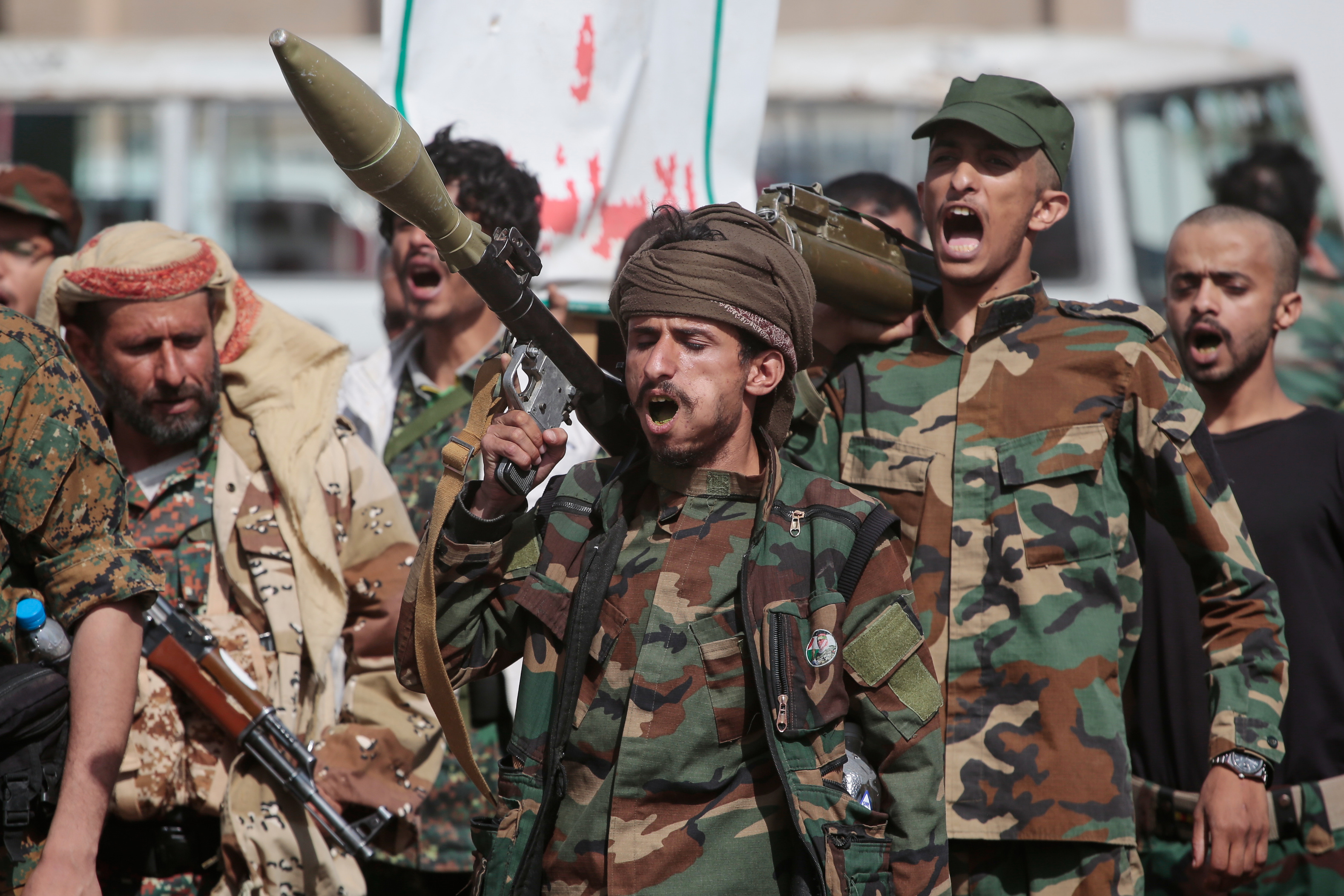
    FRANKFURT, Germany — The capture of the Red Sea port of Mokha and a strategic island by Iran-backed Houthi rebels in Yemen brings their forces to the heart of a key choke point for the global economy: the Bab el-Mandeb Strait leading out of the Red Sea.

    The Houthis took Mokha on Thursday and on Friday captured Mayun, also known as Perim, off Yemen’s coast, two officials said, in a swift advance that extends their reach near one of the world’s key commercial lanes.

    The strait had been a vital route for crude oil supplies from Saudi Arabia to Asia after shipping through the Strait of Hormuz was restricted due to threat of Iranian attack — until Houthi targeting of Saudi tankers largely ended that safety valve.

    The Houthi advance is focusing renewed attention on the Bab el-Mandeb Strait and further risks to shipping there, despite efforts by the Houthis to reassure shipowners that vessels other than those covered by their embargo on Saudi-linked shipping remain safe.

    Bab el-Mandeb was key workaround for Saudi oil exports

    The Strait of Hormuz was long the main highway for Saudi oil. But when Iran choked off most ship traffic at the Strait of Hormuz, the Saudis ramped up shipments through a pipeline running across the desert to Yanbu on the Red Sea.

    Oil loaded on tankers in Yanbu could head out of the Red Sea through the Bab el-Mandeb Strait and then east to Asia. That helped the Saudis maintain a share of their exports to customers there.

    The Red Sea route helped keep global oil prices in check, along with other improvised alternatives. In recent weeks the U.S. military has guided tankers through the Strait of Hormuz in defiance of Iranian demands that ships pass through a vetting lane near the Iranian coastline. And the United Arab Emirates has used a pipeline to Fujairah on the Gulf of Oman to skirt the Strait of Hormuz.

    Houthi attacks on shipping through the Bab el-Mandeb Strait started in late 2023 over Israel’s war in Gaza, leading many companies to abandon the route because of safety concerns. Traffic overall remains down some 60% from levels before then, although it remains a key freight route for goods moving between Asia and Europe.

    Alternate routes helped restore much of Middle East oil flows

    In August, alternative routes helped restore some two-thirds of the roughly 15 million barrels that transited Hormuz before the war. That took some of the economic pressure off the U.S. amid politically sensitive higher gas prices ahead of the midterm elections.

    However, Houthi threats have weighed heavily on Saudi oil exports in the Red Sea. In August, Red Sea oil loadings fell from 3.8 million barrels per day to 2.2 million barrels per day, according to the International Energy Agency. Overall, Saudi supply fell 2.3 million barrels per day to 6 million barrels, the lowest in three decades, according to the IEA.

    By now, “Saudi shipping has largely routed away from this risk anyway,” said Richard Meade, editor-in-chief of Lloyd’s List.

    While the Houthi advance “doesn’t change the immediate risk profile” because Saudi and Israeli shipping is already high risk, it does raise the question of whether the Houthis, who have insisted that other shipping is safe, will expand their threats if they face further attack, Meade said.

    “It puts the Houthis in a strong position to take further control if they want to,” he said.

    Meanwhile, increased attacks on shipping in the Strait of Hormuz this week have put use of the U.S. route on hold. Iran said it attacked 10 ships there Wednesday after the U.S hit five Iranian tankers.

    Suez Canal is a workaround for the workaround

    With the Houthis threatening Bab el-Mandeb, Saudi tankers have turned northwest instead of southeast from Yanbu and headed for the Suez Canal.

    Tankers that are too big to pass through the canal have offloaded oil at Ain Sokhna in Egypt to a pipeline to Sidi Kerir on the Mediterranean coast, where the oil is picked up by tanker. Some 70% of Yanbu crude exports are now heading that way, either by pipeline or by tanker, according to Lloyd’s.

    That, however, is a time-consuming and expensive workaround for customers in Asia, since ships must then transit the Mediterranean, pass the Strait of Gibraltar and sail around the Cape of Good Hope at the southern tip of Africa. The Suez route enables the Saudis to redirect as much as 3 million barrels per day.

    But that more than doubles transit time to an Asian destination like South Korea, from 24 days to 54 days, according to senior research analyst Victoria Grabenwöger at energy data firm Kpler.

    That adds to the cost, given that tankers cost tens of thousands of dollars per day to charter even in normal times, while prices have risen in some cases above $100,000 per day during the current global energy turmoil.

  • ‘You know what happens if you don’t vote’: 7 takeaways from the GOP convention

    ‘You know what happens if you don’t vote’: 7 takeaways from the GOP convention

    Vice President JD Vance was billed as the headliner of the second night of the Republican convention, but President Donald Trump stole the show.

    With a hug and a handshake, Vance exited stage right after his speech as Trump returned to the place he likes most — center stage — to make his final pitch of the convention to keep Republicans in power.

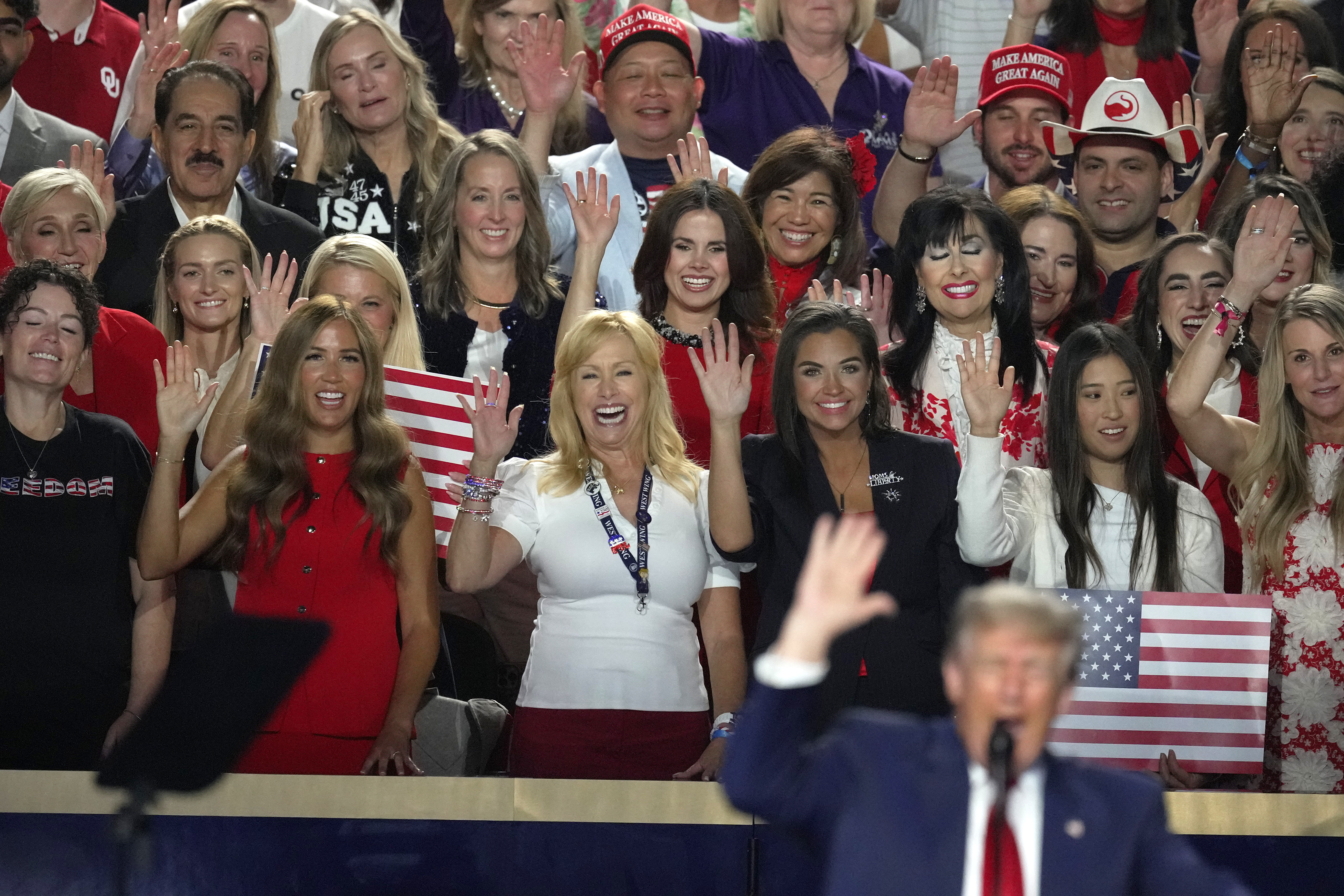
    At one point Trump asked attendees to raise their right hands and pledge to him that he would vote with their family and friends. Dutifully, they did.

    “You know what happens if you don’t vote?” Trump said. “You go to hell.”

    The two-day rally in Dallas came as Trump’s approval has sagged below 40% and Republicans fear losing control of both the House and Senate. Republicans hoped the gathering would help energize a base beleaguered by high prices and the Iran war to turn out in droves. But the two days of red meat tossed from the stage seemed unlikely to satiate independent voters whose support has flagged.

    Here are seven takeaways from the convention:

    Vance makes his 2026 (and 2028) pitch

    Vance arrived in Dallas widely considered the front-runner in the 2028 Republican presidential primary. His speech offered some early clues about how he might approach a campaign.

    Vance focused on restoring the primacy of the traditional nuclear American family, a theme he has championed in the administration. He did not mention the war in Iran, an operation he has defended publicly but raised concerns about privately. But he issued a plea for conservatives not to abandon the White House over policy.

    “Do not throw the baby out with the bathwater,” he urged.

    Vance speaks in a far more scripted political style than Trump. He caught fire with the crowd when he snapped back at a protester who interrupted his remarks by waving Palestinian and Mexican flags. “My friend, if you love Mexico so much, get your a— over there,” he said.

    But he failed to sustain the kind of enthusiasm that Trump commanded either night. Nor did he win anything beyond perfunctory praise from the president, who quickly ushered him off the stage.

    As the balloons fell, it was the president alone, along with a tenor singing. Trump is not giving up his crown quite yet.

    Trump throws an affordability Hail Mary

    Trump has called affordability — a top buzzword for Democrats this year — a “hoax.” In his speech Wednesday night, the president claimed that prices are on their way down. At the same time, he rolled out an audacious plan to address people’s concerns about costs: a massive cash giveaway.

    He branded his dubious and detail-free plan to send $5,000 to every American adult a “Trump Dividend.”

    But Trump was virtually the only one talking about it.

    A day later, the splashy $1 trillion-plus plan barely made a ripple on the convention stage.

    The president’s own son, Donald Trump Jr., didn’t so much as mention it.

    Neither did the speaker of the House.

    Neither did the vice president.

    Only Trump did.

    If the president wants the dangled cash to be a major factor in the midterms, the rest of the Republican Party didn’t use the rest of the convention to sell it.

    Republicans have a new rogues’ gallery of liberal villains

    Forget about Nancy Pelosi.

    In Dallas, Republicans made clear that the former House speaker has been dethroned from her decades-long position as the party’s favorite political villain.

    Speaker after speaker assailed Hasan Piker, a leftist online streamer, and Abdul El-Sayed, the Democratic Senate nominee in Michigan, for pushing what they described as an extreme and anti-American agenda. Their images, including Piker’s naked torso, were broadcast on the jumbotron over the stadium. Even Rep. Alexandria Ocasio-Cortez of New York, who is a frequent target of the right, got less airtime.

    At one point, Speaker Mike Johnson outlined the new rogues’ gallery of liberals — “Hasan Piker and Bernie Sanders and AOC and Abdul El-Sayed and Zohran Mamdani” — while casting the rest of the Democratic Party as squishes who would succumb to them.

    In their attacks on Piker and El-Sayed, several convention speakers embraced anti-Muslim rhetoric, including a promise popular among conservative activists to “ban Shariah law.”

    “We must stand and defeat the Islamists,” Sen. Ted Cruz of Texas said in his speech.

    GOP frames the election as common sense versus crazy

    Republicans know that Trump is unpopular. They are banking on making Democrats unpopular, too — or at least unappealing and unelectable.

    Over and over, speakers cast Democrats as out of the mainstream, frequently calling them socialists, communists, and even worse. At times they stretched the truth. Democratic socialists might have won a number of Democratic primary victories since 2024, but no serious figure in the party is promoting communism.

    “You guys are going to trigger the commies,” Donald Trump Jr., the president’s son, said at one point as the crowd chanted “USA! USA! USA!”

    Vance, in the closing of his speech, summed up the message so many had delivered before him over two days: “It’s about the party of common sense beating the party of the crazies.”

    Texas is a 2026 battleground

    Six months ago, when it first emerged that Republicans were likely to pick Dallas for this convention, it was unclear whether Texas would wind up as a top midterm battleground.

    It’s clear now.

    A parade of speakers — from the president on down — used their precious time onstage to talk about Texas’ razor-close Senate race. They sought to boost Ken Paxton, the Texas attorney general (even as Trump mocked his sartorial choices on back-to-back nights), and tear down James Talarico, the Democratic nominee. On the eve of the convention, Trump’s super political action committee had reserved $10 million in ads to help Paxton.

    “Tala-freako maybe tops the list,” Vance said of Trump’s nickname for Talarico.

    But it wasn’t just the Senate race. Republicans gerrymandered the state in 2025 to create as many as five new safely Republican House seats. But Republicans running in several of those seats appeared at the convention, seeking a boost in regions that Trump won handily.

    Was it must-see TV? Early signs suggest no

    Trump has long been known as a master of the television audience. Not this time. An average of 2.5 million people tuned in to watch his Wednesday night speech on Fox News, one of the few major TV networks that aired the remarks in full, according to preliminary figures from Nielsen. That was an average primetime audience for the network, based on the most recent quarterly statistics, and below the usual viewership for programs at that time.

    In other words, no Trump bump.

    To be fair, the president’s programming faced some steep competition. The first game of the National Football League season was on at the same time as his speech. The season’s second game was on Thursday during Vance’s and Trump’s speeches.

    Republicans make their bid to buck history

    Parties in power traditionally attempt to expand their appeal in midterm elections through targeted outreach to independent voters. That was not the strategy charted by Trump and his allies in Dallas.

    Only a handful of speakers offered any kind of outreach to moderate voters. (One of those exceptions was Rep. Mike Lawler of New York.) Far more focused their remarks on stoking fears of Shariah, transgender athletes, and Democratic candidates who were repeatedly described as communists. Again and again, Trump begged his supporters to “pretend” that he would be on the ballot — an attempt to get enough of them out to prevent the usual losses for the party in power.

    Trump and his allies are staking their chances on their ability to drive their own voters to the polls. At the top of the list are Trump loyalists who typically skip midterm elections.

    This article originally appeared in the New York Times.

  • Diesel jumps above $6 a gallon, adding to inflation pressure

    Mounting fears that widening clashes in the Middle East could further disrupt energy supplies briefly pushed the price of oil to about $110 a barrel Friday, while U.S. diesel prices rose above $6 a gallon.

    The jump in fuel prices has stoked fears of broader inflation. On Friday, a report showed overall inflation in the United States remained elevated at an annual pace of 3.4%.

    Concerns over oil supplies, already heightened by the U.S. war against Iran, broadened this week with reports that the Houthi militia had seized a critical port on the Red Sea, presenting a new threat to shipping in the area.

    The price of Brent crude oil, the international benchmark, surged before easing to about $103 a barrel, after the International Energy Agency lowered its forecast for global oil demand by 2.5 million barrels a day this year, from a drop of 1.6 million barrels a day it predicted last month.

    “The continuing impasse in negotiations between the United States and Iran delays the prospect of a normalization of flows into next year,” it said, adding that demand for oil is expected to rebound in 2027, “narrowly offsetting this year’s losses.”

    West Texas Intermediate crude, the U.S. standard, traded as high as $104 a barrel before falling to about $99.

    But the rise in oil prices “pales in comparison with those for refined products, where market tightness is now most acute,” the IEA wrote in its report.

    The average price of a gallon of diesel fuel jumped to $6.06, according to the AAA motor club, a 60% rise since the United States and Israel attacked Iran on Feb. 28.

    Iran has effectively blocked most ships from passing through the Strait of Hormuz, the narrow waterway between the Persian Gulf and the Gulf of Oman. During normal times, about a fifth of the world’s crude oil flows through the strait.

    With assistance from the U.S. Navy, a few tankers have been able to get through, but Iran has signaled in recent days that it was willing to be more aggressive in exerting control over the strait.

    U.S., European, African, and Asian oil refineries have increased production of diesel, gasoline, and other fuels to make up for the loss of supplies from the Middle East and Russia, where refineries have come under attack by Ukraine.

    But demand for energy is still outstripping supply. As a result, governments, businesses, and farmers are having to pay more for the diesel they need to run trucks, farm machinery, and other heavy equipment. And homeowners who use heating oil, which is similar to diesel, are growing concerned about their monthly bills as winter nears.

    Fuel accounts for as much as 30% of food costs in the United States, said Kate Gordon, a former senior adviser in the Department of Energy and now the chief executive of California Forward, a nonprofit business group.

    “So far, farmers and trucking companies have been absorbing a lot of this cost increase,” she said, “but with the war continuing on with no end in sight, they are going to pass through more and more of the price jump to consumers.”

    Oil remains elevated

    The price of Brent crude, which has been edging higher all week, was trading at about $104 a barrel.

    West Texas Intermediate crude, the U.S. benchmark, was around $99 a barrel.

    Gasoline prices rise

    The national average for gas prices rose to $4.30 a gallon, according to AAA. The price has risen 44% since the war began.

    Gas prices don’t move in lock step with crude, usually trailing increases or drops by a few days.

    This article originally appeared in The New York Times.

  • New iPhones arrive, but you can keep your old phone longer by caring for it

    New iPhones arrive, but you can keep your old phone longer by caring for it

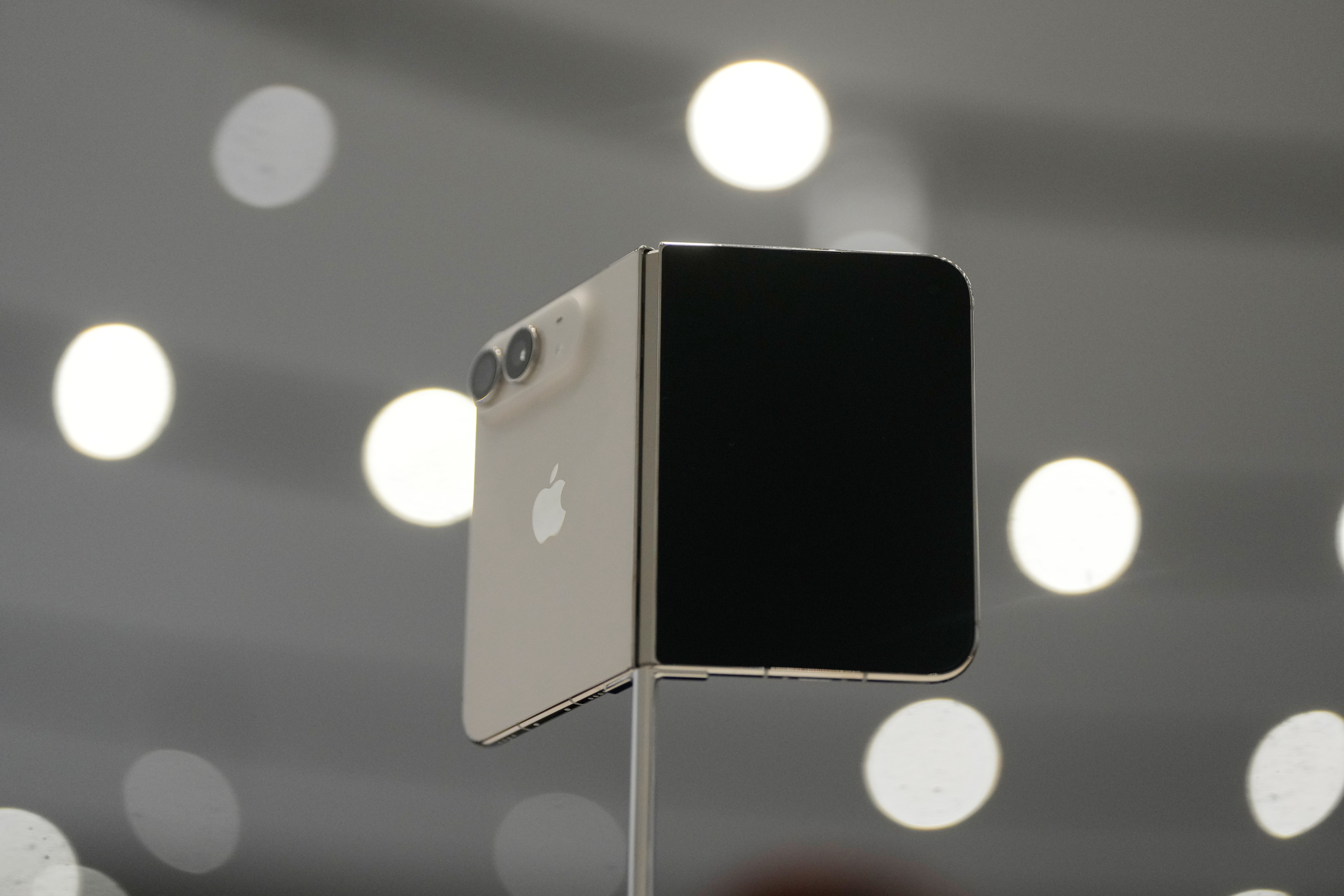
    Apple’s latest iPhones, unveiled this week, come with new features, better cameras, and hefty price tags — including a folding model with a starting price of $1,999. If you’re planning to splurge on a new iPhone 18, you will want to take care of it to make it last as long as possible.

    Or save money by holding on to your current device, whether it is Apple or Android, to get the most life out of it.

    As smartphone technology has matured and innovations have become more incremental, people have stopped buying into the idea that they need to upgrade to the newest phone. There is also an environmental push to keep old phones out of landfills as electronic waste becomes a larger sustainability issue. Modern smartphones are also just sturdier and better able to survive dunks and drops.

    The typical smartphone replacement cycle is now four years, according to Counterpoint Research. Some device owners boast in online forums that they have had phones last more than seven years.

    Here are some pointers on extending your phone’s life:

    Take care of your phone’s battery

    The biggest factor in a phone’s longevity is the battery. A rechargeable battery’s life span is related to its “chemical age,” which is based not only on the manufacturing date but also on factors including “temperature history and charging pattern,” according to Apple. The company says that as lithium-ion batteries chemically age, they hold less charge, which results in “reduced peak performance.”

    Samsung warns against running a lithium-ion battery down completely, because that could shorten its life.

    “The battery is absolutely often the first thing to go in most people’s phones,” said Elizabeth Chamberlain, director of sustainability at the device-repair website iFixit.

    Lithium-ion batteries typically last about 300 to 500 charging cycles before degrading noticeably to the point that they can’t last a day without needing a charge, she said. “Many people will hit 500 cycles in two years. Heavy users will get there faster.”

    Batteries get stressed if they are completely drained or fully charged, Chamberlain said.

    So avoid letting your battery die, and also avoid charging it all the way to 100%, “unless you really need a full charge,” she said. “Aim to keep the battery between 20% and 80% charged.”

    If you are in the habit of plugging in your phone when you go to bed, Apple and Samsung both have charging optimization technology that improves battery life by delaying a full charge based on your daily routine.

    This feature, which is on by default in iOS, pauses charging at 80% and then charges to 100% just before you wake up.

    Phone batteries shouldn’t get too hot or cold

    Device makers warn against exposing phones to extreme heat or cold, both of which can damage batteries.

    Apple says batteries warm up as they charge, which can shorten their life span. It warns against using your phone or charging it in very hot temperatures, above 95 degrees.

    Samsung says you shouldn’t leave your phone in, for example, a car’s glove box when it is very hot or cold. And don’t put it in a freezer either — it’s a myth that it can prolong battery life.

    Google, which makes the Android operating system and Pixel phones, says hot batteries drain faster, even when they are not in use, and that can damage the battery.

    Adjust your phone’s power options to boost battery life

    Tweak your device settings so apps or features use less power, which extends your battery’s daily life and the time between charging cycles.

    You can turn down your phone’s screen brightness, turn on the dark theme and reduce the time for the screen to power off. Enable the auto-brightness feature, which adjusts screen brightness according to the level of ambient light. Also check battery usage in your settings to see if there are any power-hungry apps you can switch off or uninstall.

    If the power level dips below 10%, iPhone users can turn on low power mode to stretch their battery’s life before it needs recharging. Samsung’s Android phones have a similar “power saving mode.” You can also leave it on all the time, but it might affect your phone’s performance.

    Phone cases and screens are essential protection

    Phones are sleek capsules with glossy surfaces, meaning they can easily slip from your hand. A sturdy protective case is essential to help cushion the blow from accidental drops.

    However, beware that some phone cases can retain heat, so your phone might stay hot even if it seems cool, Chamberlain warns.

    Don’t forget a screen protector. Plastic versions are cheap but can scuff easily, according to iFixit, which recommends TPU film or tempered glass because they offer better protection against scratches and drops.

    Keep your device clean

    Keeping your phone in your pocket or purse means ports and sockets collect debris that needs to be cleaned out.

    Chamberlain said that when a phone stops charging, often the problem is simply that the charging port is jammed with lint, preventing the cable from connecting.

    You can buy kits with brushes, picks, swabs and dust blowers to give your phone’s ports, speaker and microphone grilles a thorough cleaning. But in a pinch, use a toothpick and a clean toothbrush.

    Update the software regularly

    Software is another important factor in a phone’s life span. Experts advise keeping your operating system and apps up to date so they have the latest privacy, security and battery management features.

    That will be easier to do as your phone ages because some device makers have been extending the time limit for providing updates.

    Google has pledged to provide Pixel 8 and newer phones with seven years of Android and security updates, compared with four to five years for older models. Samsung pledged in 2024 to extend its operating system updates to seven years.

    Apple said Wednesday that iOS 27 will be available on Sept. 14 and the oldest phone with which it will be compatible is iPhone 11, released in 2019.

    Some phones are designed to be easily repaired

    Sometimes your phone will have a problem that can only be solved by repairing it, usually involving paying someone else to fix it.

    But there are device makers that are making it easier to repair phones yourself. Netherlands-based Fairphone makes phones it says are designed for longevity, which come with a stripped-down version of Android and can be easily disassembled using a mini screwdriver. Replacement batteries, screens and other spare parts can be ordered online.

    Fairphone’s Chief Technical Officer Chandler Hatton said the company aims to have its devices last at least five years.

    “What we’re trying to do is to support people to be able to use their device for longer,” Hatton said.