Category: Wires

  • Why are birthrates down? You might be looking at the answer

    Why are birthrates down? You might be looking at the answer

    The enduring mystery of the fertility decline has a new culprit: the smartphone.

    Experts have long wondered if phones played a role in the birthrate decline — which began in 2007, the same year that Apple introduced the iPhone — but until now there had not been hard evidence to prove it.

    Two new papers, one published Monday and the other in May, are the first academic endeavors that test whether the smartphone was a cause.

    They are the most recent efforts to explain the sweeping fertility rate decline in the United States and other countries over the past 20 years. Researchers have already looked at contraception use, abortion rates, rising levels of female education, and even the popular television show 16 and Pregnant.

    Proving phones caused the decline is a tricky endeavor. There were a number of major events in those years, including the Great Recession, and isolating smartphone use is difficult.

    The gold standard for scientific evidence is known as random assignment. It compares outcomes for people randomly chosen to receive a treatment (like getting a smartphone) with people who are not.

    But that is not possible when it comes to ferreting out reasons for declining fertility.

    So researchers sought out data about smartphones that introduced randomness.

    Caitlin Myers, an economist at Middlebury College, and Ezekiel Hooper, her student, used the spotty early rollout of the iPhone as a way to isolate the effects of the phone on fertility. The first iPhone was released in June 2007, they wrote, and was available only on the AT&T network until February 2011. The study compared fertility rates in U.S. counties that had near-universal AT&T coverage with counties that had little or none.

    Their paper, published in the National Bureau of Economic Research, found that the iPhone caused as much as half of the fertility decline between 2007 and 2011. The most pronounced effects were among young people aged 15 to 24.

    What happened in the counties with iPhones? One theory, Myers said, is that young people began to socialize more on their phones and less in person, and consequently were less likely to have sex and become pregnant.

    Myers said iPhones may also have made pornography more accessible, which led young people to substitute it for sex, or young people may have used them to obtain better information on avoiding pregnancy, including contraception and abortion.

    Researchers not involved in the study said the results were persuasive.

    Phillip B. Levine, an economist at Wellesley College, said he was “a little jealous” of the Middlebury data, which he said provided a real insight into a potential driver of a major social change.

    He said some variation in the AT&T data could throw off the final finding. For example, the company may have set up in counties that were wealthier, or more densely populated, introducing a pattern “that’s not likely to be random anymore,” he said.

    He said Myers tried to account for those variations, and that her findings made sense.

    But, he cautioned: “You shouldn’t take the result so literally and say: Oh, it’s the iPhone’s fault. It’s an example of the kinds of social influences that have led to the decline in birth rate.”

    Dropping birthrates, once a feature of rich societies, are now a near-global phenomenon. The sweep of the decline has researchers looking for common drivers. The authors of the second study also decided to look at smartphones.

    “Countries with very different healthcare systems, welfare regimes, abortion laws, religious traditions, recessions and demographic trends all saw similar breaks in the same window,” wrote the authors, Hernan Moscoso Boedo, an economics professor at the University of Cincinnati, and Nathan Hudson, a doctoral student.

    “Whatever caused it was something global — something that arrived in roughly the same form in all of these places at roughly the same time,” they wrote.

    They analyzed World Bank data measuring smartphone penetration and teenage fertility rates in 128 countries. In countries as varied as Iran, Costa Rica, Guatemala, Chile, Mexico, and Turkey, they found that teenage fertility declines accelerated once smartphones became a mass phenomenon.

    They tested their technology theory in the United States using data on wired broadband and 4G high-speed mobile networks. They looked at where access was better and worse and found a substantial effect: that fertility rates for teenagers declined fastest in counties with more high-speed access.

    Theodore Joyce, an economist at Baruch College, said he was skeptical of both studies. Teenage births have been falling since the 1990s, he said, long before smartphone technology came on the scene. Myers’ paper, he said, examined a short period before smartphones had fully penetrated.

    The hypothesis, he said, could be correct but “remains speculative.”

    This article originally appeared in the New York Times.

  • Republican senators warn surveillance program may lapse after Trump intel pick backlash

    WASHINGTON — Republicans are warning the White House that a critical surveillance authority is likely to lapse this week amid bipartisan backlash over President Donald Trump’s pick to lead the nation’s intelligence community.

    Sen. Tom Cotton, the chairperson of the Senate Intelligence Committee, and Sen. Chuck Grassley, chairperson of the Senate Judiciary Committee, sounded the alarm over the weekend after a failed procedural vote to extend the program.

    The senators in a letter urged Secretary of State Marco Rubio to prepare “for a potential significant gap in foreign intelligence collection” if the authority expires. Section 702 of the Foreign Intelligence Surveillance Act, set to lapse June 12, allows agencies including the CIA, National Security Agency, and FBI to collect communications from foreign targets overseas without a warrant.

    “We have a deadline ahead of us. We need Democrat votes,” Senate Majority Leader John Thune said Monday.

    Efforts to secure a long-term extension of the program already faced hurdles because of bipartisan concerns that the program can incidentally collect Americans’ communications. Privacy advocates and some lawmakers have been pushing to create a new warrant requirement before those communications can be searched.

    Senate leaders from both parties appeared to be nearing agreement on a long-term extension. But the effort collapsed after Trump selected federal housing finance regulator Bill Pulte to serve as acting director of national intelligence.

    “Why the president would throw this live hand grenade of Bill Pulte in 10 days before this is due to expire, I’m not sure,” Sen. Mark Warner, the top Democrat on the Senate Intelligence Committee, said on ABC’s This Week.

    Pulte pick upends bipartisan deal

    Early Friday morning, after senators spent the night debating separate immigration legislation, seven Republicans joined nearly all Democrats in blocking a long-term extension of the surveillance authority.

    Democrats and several Republicans registered their opposition to Trump’s selection of Pulte, arguing the federal housing finance regulator lacks the experience needed to oversee the nation’s 18 intelligence agencies.

    “The naming of Pulte to that position, although the timing arguably wasn’t the best, I still don’t think it ought to derail something that’s this important,” Thune said Friday.

    Thune has expressed concern over Pulte’s pick, saying the nation’s top intelligence post should not be “weaponized” and that the job should be filled by “professionals.” Cotton, who rarely strays from supporting Trump and is a leading advocate for the surveillance authority, declined to endorse Pulte, saying only that he had “no observations on the matter.”

    “He’s not qualified for the long-term position,” Republican Sen. James Lankford, another member of the Intelligence Committee, told Fox News Sunday. “That’s been clear on this. He has no national security background.”

    Both Republican and Democratic senators skeptical of Pulte pointed to his record at the Federal Housing Finance Agency. In the role, he’s been linked with criminal referrals over allegations of mortgage fraud by public officials Trump sought to punish, including New York Attorney General Letitia James, a Democrat; Sen. Adam Schiff (D., Calif.); and Lisa Cook, a board member of the Federal Reserve.

    Republicans will need to garner some Democratic support to pass any extension of the surveillance authority in the Senate, and likely the House as well. But a breakthrough appears difficult so long as Pulte remains in the position, which Trump said last week would only be temporary.

    “Clearly to get to good-faith negotiations the effort to elevate Bill Pulte as the acting director of national intelligence should be reversed. Immediately,” House Democratic Leader Hakeem Jeffries said.

    A key surveillance tool

    The current reauthorization debate is hardly the first time that lawmakers have grappled with the fate of the surveillance program, particularly after a flurry of revelations about government misuse of the vast trove of intelligence it collects.

    The topic in recent years has scrambled predictable partisan alliances, with Democratic critics of the Trump administration uniting with skeptics of government power on the right in voicing concerns about Section 702’s renewal.

    In 2024, for instance, those divisions nearly caused the program to lapse. The Senate barely missed its midnight deadline that year before approving by a 60-34 margin legislation to reauthorize Section 702 that was subsequently signed by then-President Joe Biden.

    A spokesperson at the Justice Department did not immediately return messages seeking comment Monday about the national security concerns that would be created if the program lapses. The Office of the Director of National Intelligence referred inquiries to the White House, which did not immediately respond to a request for comment.

    “America faces real threats from foreign adversaries, terrorists, cyber actors, and hostile intelligence services,” Defense Secretary Pete Hegseth said on social media Sunday. “Section 702 remains one of our nation’s most effective tools for identifying and disrupting those threats before they reach our shores.”

    Cotton and Grassley said they believed Democratic leaders would not support another short-term extension of the surveillance authority and urged Rubio to prepare contingency plans. They said Trump should consider an executive order to prevent a disruption in intelligence collection.

    Cotton and Warner had said they were close on a bipartisan deal on a long-term extension and could still move quickly should a change occur before Friday. Still, the bill would likely need to go through the House — and the two chambers so far have disagreed on a separate issue regarding central banking digital currency.

    Republicans leaders are already warning of the consequences if Congress fails to act.

    “If it goes dark, then it would be a calamitous situation for the country,” House Speaker Mike Johnson said.

  • Trump’s $100,000 fee on H-1B visas for highly skilled workers is struck down

    Trump’s $100,000 fee on H-1B visas for highly skilled workers is struck down

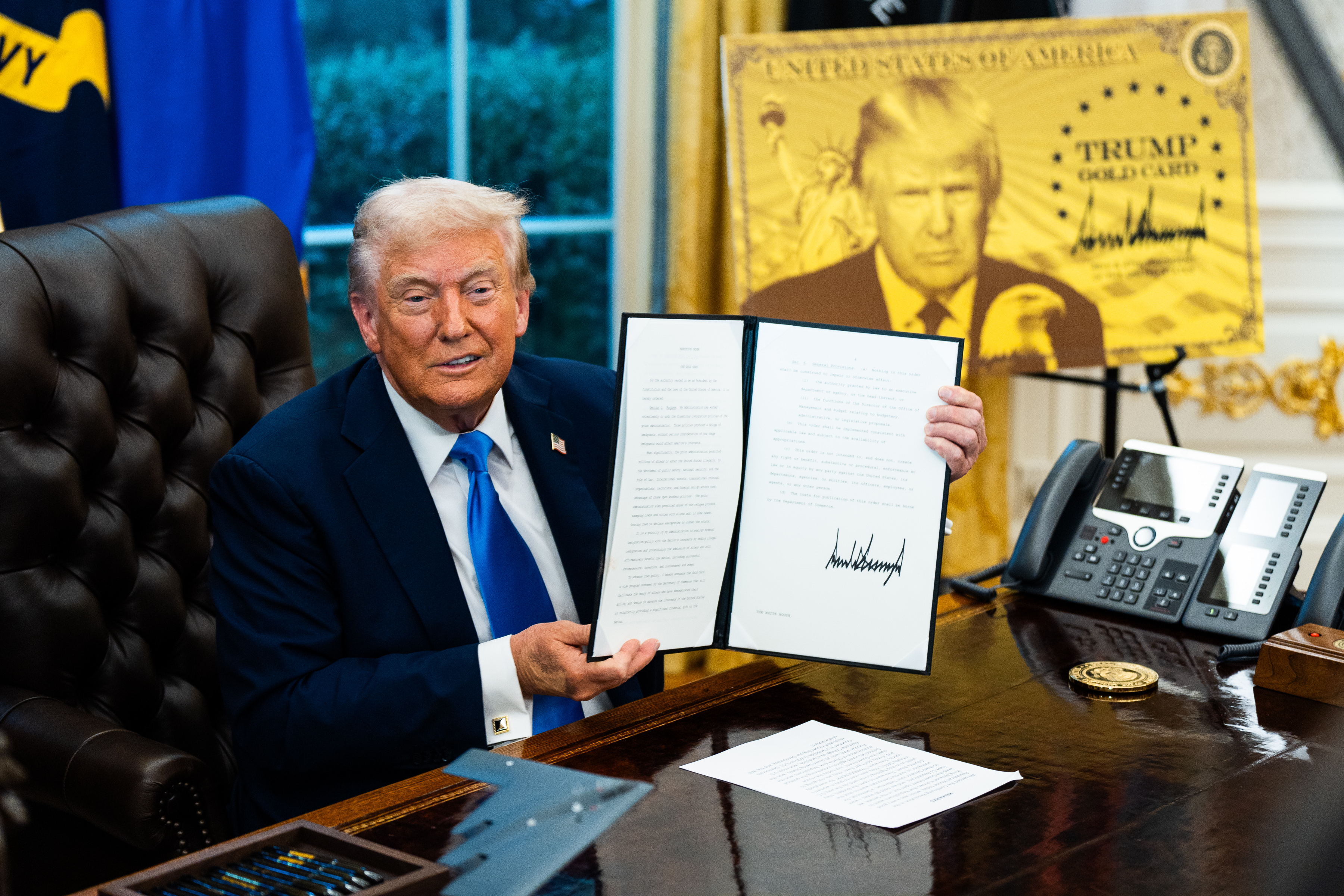
    A federal judge threw out the Trump administration’s $100,000 fee on H-1B visas for highly skilled workers Monday, which had been challenged by California Attorney General Rob Bonta with 19 other states.

    In the ruling, U.S. District Judge Leo T. Sorokin of Massachusetts declared President Donald Trump’s fee unlawful and said it basically amounted to an illegal tax, essentially agreeing with the states that the $100,000 fee usurps Congress’ constitutional authority to set immigration policy and raise revenue, according to the decision.

    The fee narrowed a major pathway for legal immigration that is used by Silicon Valley tech companies, as well as hospitals and universities. The U.S. Chamber of Commerce also had challenged the fees in a separate lawsuit, but the court sided with the Trump administration late last year.

    Before Trump’s decree, H-1B visa applications fees rarely exceeded $5,000 a worker in total, excluding lawyers’ expenses. Universities and nonprofits paid a lower fee than private employers.

    The Trump administration is expected to appeal the ruling.

    “President Trump has clear legal authority to restrict entry of any class of aliens he determines is not in America’s best interests, and that is exactly what he did,” said Taylor Rogers, a White House spokesperson. “The H-1B program has been abused for decades, and President Trump finally took action to fix it.”

  • China reasserts itself, to contain North Korea’s tilt toward Russia

    China’s top leader, Xi Jinping, arrived in North Korea on Monday and delivered what analysts said was a subtle reminder to the country’s newly emboldened dictator, Kim Jong Un, that China is his most important benefactor, economic partner, and bulwark against the United States.

    According to an official summary of the leaders’ talks released by Chinese state media, Xi called for “close strategic communication” with Kim and for strengthening exchanges “at all levels and in all fields.” He said he was willing to deepen relations with Kim in “the new era,” a phrase Xi has used to project China’s growing strength on the world stage.

    In many ways, Xi’s two-day trip to Pyongyang, North Korea’s capital, is an effort to balance influence from Russia, which signed a mutual defense pact with North Korea two years ago. That deal has helped revive North Korea’s economy, by allowing Kim to trade weapons and troops with Russia for badly needed oil, food, and weapons technology, and given him a stronger hand in talks with Xi.

    Xi was received by Kim and his wife, Ri Sol Ju, when he landed in Pyongyang, his first trip there in seven years. His motorcade was greeted by a military honor guard and throngs of citizens waving both national flags, with children dancing and clutching bright balloons. North Korea gave Xi a similar welcome the last time he visited Pyongyang.

    At a meeting at the Kumsusan Guest House, Xi pledged to cooperate with Kim in trade, agriculture, science, tourism, and healthcare.

    North Korea had not released a statement about the meeting by late Monday. Kim was expected to press Xi for more economic support and possibly a greater acceptance of North Korea’s nuclear weapons program.

    China’s summary made no mention of the nuclear program, instead stressing that the two countries should “jointly safeguard regional peace and development.”

    China’s long held position is that it opposes a nuclear North Korean state, largely over concerns about driving U.S. allies like South Korea to seek nuclear weapons. Statements about working toward ending the program used to be standard for the two sides during diplomatic engagements, but they have been omitted since last September, when Kim visited Beijing to attend a military parade.

    “China’s approach to North Korea has shifted markedly over the past seven years, from the role of a mediator for North Korea—U. S. denuclearization talks to that of a strong strategic partner in countering the United States,” said Hong Min, an expert on North Korea at the Korea Institute for National Unification, a research institute based in Seoul, South Korea.

    The change may reflect China’s desire to placate North Korea. But it could also suggest that the Chinese government believes that a nuclear-armed North Korea would provide leverage over the United States and South Korea, analysts said.

    Xi evoked the two countries’ history fighting the United States together in the Korean War, reminding Kim that their “traditional friendship” had been “forged in blood.”

    “The overall message that Beijing wants to project through this summit is the unity and the unbreakable bonds between the two countries,” said William Yang, a senior analyst for the International Crisis Group.

    In a letter published Monday in North Korea’s main state-run newspaper, Rodong Sinmun, Xi declared that relations between China and North Korea were at a “new historical starting point.”

    He called on the two countries to “oppose hegemonism and power politics,” an oblique reference to the United States. In a veiled swipe at Japan, with whom China has been in a monthslong feud, Xi wrote that they should also oppose “any scheme or action aimed at reviving militarism and undermining regional security and stability.”

    As with Russia and Iran, Xi has cast North Korea as a close partner in a new world order free of what China sees as U.S. dominance and meddling.

    Kim has said North Korea should boost trade with China to further stimulate its economy and generate hard currency. Yet all its top exports — coal, iron ore, fish, and textiles — remain prohibited under United Nations sanctions, creating a huge trade deficit with China that has threatened to drain its foreign currency reserves.

    Xi’s offers on trade and tourism could change that, but it is not clear whether it is possible to do so without violating U.N. sanctions.

    Both China and Russia have grown increasingly reluctant to enforce those sanctions in recent years, as tensions with the United States have worsened. In a joint statement issued last month, Xi and President Vladimir Putin of Russia declared their opposition to “the use of diplomatic isolation, economic sanctions, force, and pressure” against North Korea.

    Such backing has emboldened Kim to hold on to his nuclear arsenal and insist on being​ treated as a nuclear-armed state. In the days preceding Xi’s arrival, he visited a missile factory and a newly operational weapons-grade uranium enrichment facility, vowing to “beef up our state’s nuclear forces at an exponential rate.”

    This article originally appeared in the New York Times.

  • After Mormon lawmakers object, Pentagon revises Christian religious categories

    After Mormon lawmakers object, Pentagon revises Christian religious categories

    The Defense Department on Monday edited its new list of religious “codes” for service members so that no group is labeled “Christian” — drawing praise from Mormon lawmakers who were angered last week when their faith was categorized as outside of Christianity.

    On Friday, the Pentagon released a new, dramatically pared-down list of religious groups. It classified groups including Catholic, evangelical, and Methodist, among others, with the tag: “Christian.” The Church of Jesus Christ of Latter-day Saints was listed without the tag.

    After the outcry from several leaders who are members of the Mormon Church, the revised list simply states religious groups, without adding the tag “Christian” to any.

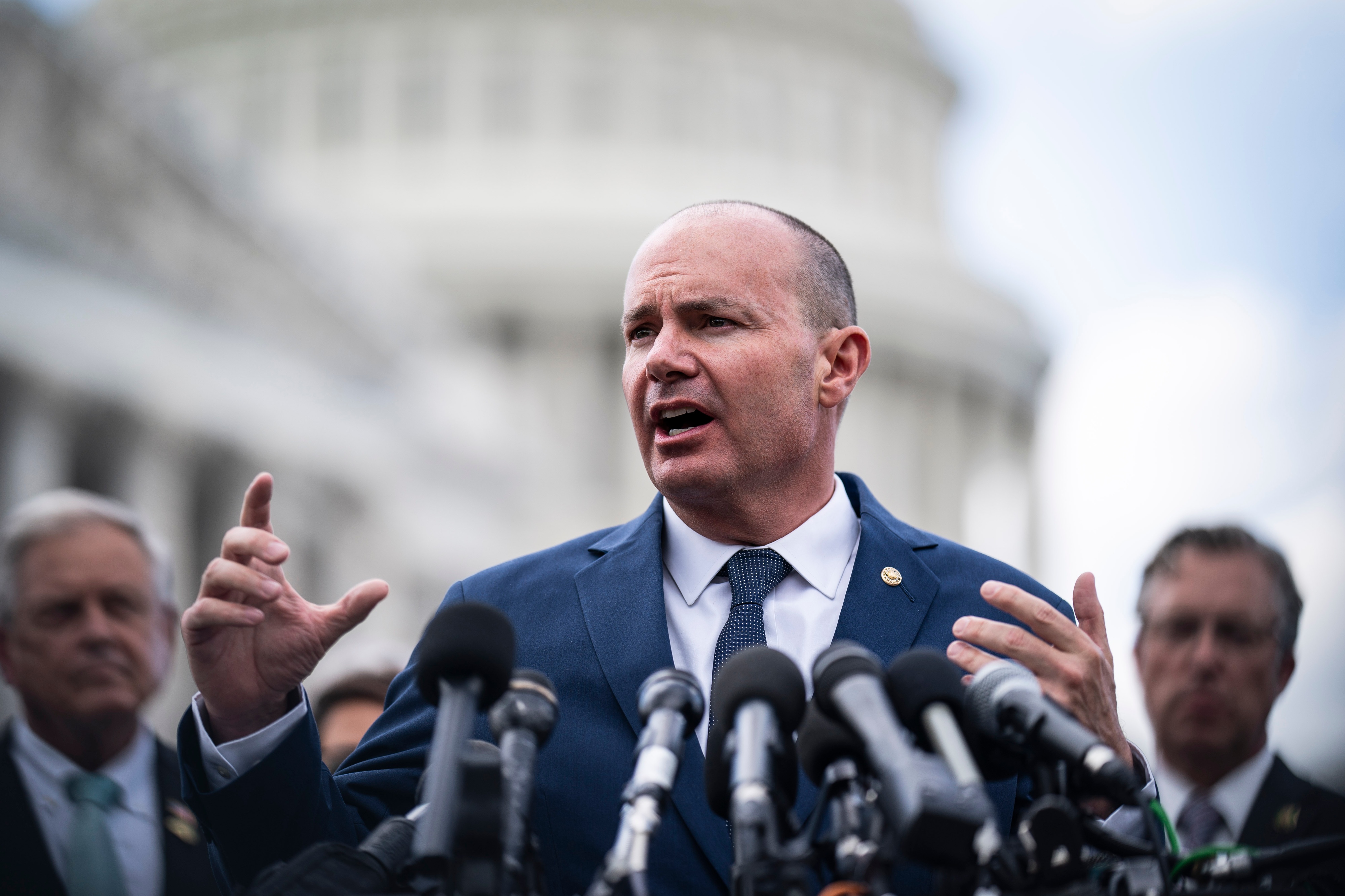
    U.S. Sen. Mike Lee (R., Utah), who is Mormon and had spoken out multiple times over the weekend on social media against the list, posted on X on Monday that he was “grateful” to Defense Secretary Pete Hegseth for the change.

    A spokesperson for Lee said he had spoken to President Donald Trump and Hegseth about the issue “and they assured him that the classification will be fixed.”

    The Defense Department on Monday declined to comment on whether it changed the list because of Lee’s campaign. The White House did not respond immediately to a request for comment.

    The Defense Department said last week that it removed 180 faith groups from its coding list — going from 211 to 31 — because the list was too large and “unmanageable.”

    “This decrease in religious affiliation codes is not designed to make any claims on the legitimacy of any faith or religious belief, nor is it intended to provide a list of ‘officially approved’ religions,” the statement said. “Rather, it is designed to allow chaplains to quickly look at the religious composition of their units and determine how they structure resources to best provide for warfighters of all faith groups.”

    In speaking earlier this year about his plan to trim down the code list, and to scrap the Army’s spiritual fitness guide, Hegseth has talked about his own view of faith, saying military religious services should be more focused on “truth” and less on self-care.

    The former Fox News host‘s handling of religion within the Defense Department has repeatedly been questioned. He has urged chaplains to speak more about scripture than psychology, and hosts monthly evangelical worship services that legal experts say are unprecedented. His social media profile and public comments routinely espouse his understanding of Christianity, which says that the faith is a defining aspect of American life, and casts those who disagree with him as God’s enemies. Hegseth has brought clergy from his small Christian denomination to preach at the Pentagon, including a prominent pastor who says women shouldn’t have the right to vote.

    The military has made many changes over time in how it recognizes different faiths, but experts say it had shifted in a more inclusive direction in recent decades. When the list of religious codes was expanded under the first Trump Administration, in 2017, the Defense Department said the broader list was needed to understand the military’s religious demographics and to “enable better planning for religious support.”

    The Defense Department press office Monday declined to comment on who was consulted as the department built its latest coding list.

    Among the dozens of faith groups no longer named in the codes are Wicca, atheists, and humanists. Also removed were Unitarian Universalists, the faith group with which multiple Founding Fathers were associated, including John Adams and Thomas Jefferson.

    Retired Maj. Gen William D. Razz Waff, the executive director of the Military Chaplains Association, predicted that the removal of religious and spiritual specifics will significantly complicate chaplains’ ability to do their job.

    Within the broad groupings of, for example, “Baptist” or “Jewish,” he said, are major differences — for the enlisted and for the chaplains themselves. For example, he wondered how marriage retreats that chaplains organize will work if it’s not clear how the participating soldiers or the chaplains themselves feel about topics like same-sex marriage.

    “As we used to say, ‘this breathes well,’ it looks good on paper, but wow, is the execution is going to be a mess,” Waff said.

    Lee, in his social media posts, mostly focused on arguing that his own denomination should be recognized as Christian, but also addressed the role of the government in making such decisions.

    “I’m not talking about what individual Christians might think. I’m talking about the U.S. government,” he wrote on X on Sunday. “I can say confidently that the U.S. government has no business recognizing the Christianity of literally every other religious sect that worships Jesus Christ — with one exception.”

    Whether Mormons are considered Christian has come up often in recent years, especially with the high-profile presidential campaigns of church member Mitt Romney. Concern about the issue prompted the group a few years ago to formally change all its marketing material to remove the word “Mormon” and replace it with the full name, which includes the words “Jesus Christ.”

    In a 2022 Pew Research poll, Mormons received the lowest favorability rate among Americans of the seven religious groups included. Among Christian denominations, evangelicals — a group that includes Hegseth and a large part of Trump’s base — are particularly skeptical of the Church of Jesus Christ of Latter-day Saints.

    Sen, John Curtis (R., Utah), who also is a member of the church, on Monday on X thanked the Pentagon for “engaging thoughtfully” with his office and “delivering a swift correction.”

    He had previously written in a Saturday post that it is “unacceptable for a government entity to characterize a faith in a manner that contradicts the religion’s own foundational tenets.”

    “Latter-day Saints are among the most patriotic, service-oriented individuals in our country. They are also unequivocally Christian — just look at who is in the name of the Church,” he wrote.

    In a statement, the Unitarian Universalist Association said that it is working on a “strategic response” to the pared-down list.

    “This may make it more difficult for our uniformed UUs to access the spiritual care that they need,” the statement said. “No government action can erase our faith nor lessen the powerful and necessary grounding it provides for those who serve.”

  • A flesh-eating cattle parasite spreads beyond Texas as new screwworm cases are found

    Two more cases of the New World screwworm have been confirmed, including one outside the main cluster in Texas, demonstrating the difficulty of stopping a pest that could potentially devastate the nation’s cattle industry, the U.S. Department of Agriculture announced Monday.

    The screwworm is actually a fly larva that eats living flesh instead of dead material. Females lay their eggs in open wounds of warm-blooded animals like cattle, but wildlife, pets, and occasionally even humans can be infested. A government program to breed sterile male flies and drop swarms of them from planes to mate with wild females had kept screwworm contained at the southern end of Panama for decades.

    So far, there are four confirmed cases: three calves in Texas and a dog from neighboring Lea County, New Mexico. The dog, which the USDA initially reported as a Texas case, lives in New Mexico and was reclassified as the first in that state. The animal’s travel history is being investigated.

    The first two screwworm cases were discovered last week in calves a few miles apart in south Texas. The third was announced Monday in La Salle County, southwest of San Antonio.

    Scientists expect a handful of new cases could pop up in the coming days and weeks, but it doesn’t mean screwworm is spreading rapidly, said Edward Burgess, a University of Florida entomologist who studies the fly.

    “When that first case is seen, everyone is being vigilant and their eyes are on it more intensely,” Burgess said. “And when you are looking for something, you are more likely to see it.”

    The USDA and the U.S. cattle industry have been racing to prevent an infestation since screwworm was detected in Mexico late in 2024. The annual warm-weather scourge of cattle ranchers had been eliminated in the U.S. in the 1960s.

    So far, its reappearance hasn’t greatly affected beef prices, which are already near record levels because there are fewer cows in the U.S. Although the parasite attacks live cattle, it does not infest meat or fruit. There are also a dozen government-approved medications to treat livestock.

    Canada temporarily stopped importing cattle, horses, or other livestock from Texas on Friday. The parasites prefer humid areas where temperatures are at least 77 F, making them more of a summer problem up north.

    USDA Secretary Brooke Rollins was scheduled tol hold a news conference about the infestation Monday afternoon following a briefing at the U.S. Livestock Insects Research Laboratory in Kerrville, Texas.

    Burgess said the long-term solution — breeding sterile male flies — is months away. Since wild female flies mate just once, if that encounter is with a sterile male, outbreaks can eventually be halted as the flies die out.

    The USDA is working to both increase sterile fly production in plants outside the U.S. and build a massive fly factory in Texas.

    However, Texas Agriculture Commissioner Sid Miller said the federal response will take too long and risks crippling the cattle industry. Instead, he says, a poison bait could eliminate the screwworm problem in a few months, even if USDA and other experts say the bait hasn’t been proven to work and could poison other flies, animals, and even humans.

    “What the hell is a good fly?” Miller said in an interview Monday.

  • Houthis threaten to widen Iran war by blocking Israeli shipping in Red Sea

    Houthis threaten to widen Iran war by blocking Israeli shipping in Red Sea

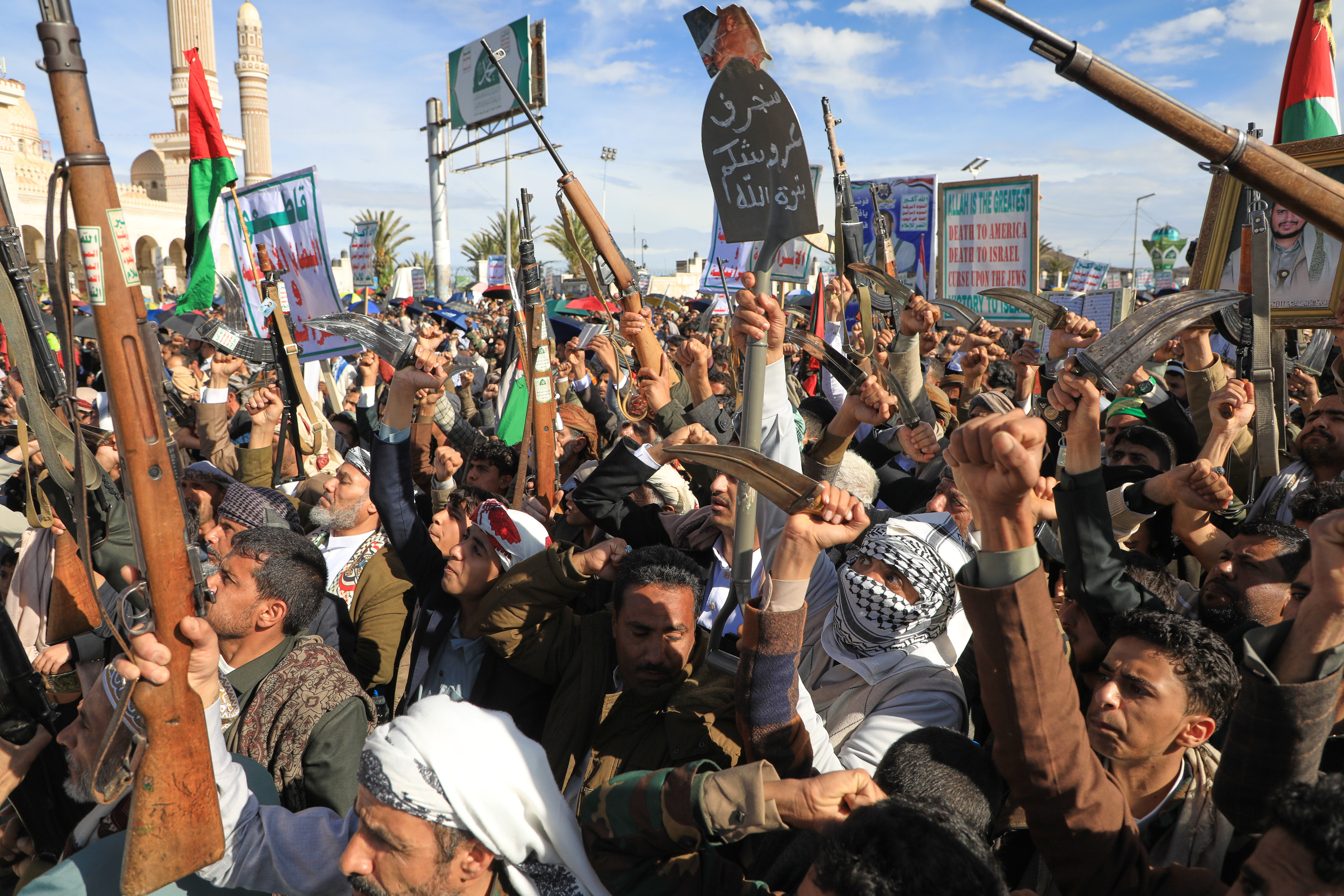
    SANAA, Yemen — The Iran-backed Houthi militia in Yemen said Monday that it would stop Israeli ships from operating in the Red Sea and had fired missiles at Israel, threatening to widen the Iran war and impede navigation through a crucial global trade route.

    The Houthis have largely sat out the U.S.-Israeli war with Iran, despite frequently warning that they could join the fighting. But the group’s threat Monday appeared to signal a shift that could further disrupt shipping and energy markets roiled by Iran’s effective blockade of the Strait of Hormuz, a waterway through which much of the world’s oil and gas is shipped.

    Yahya Saree, a Houthi military spokesperson, said in a statement on social media that the partial naval blockade would take effect immediately. Iran and Israel traded waves of attacks Monday as a two-month truce between the countries broke down.

    Saree also said that the Houthis had launched a “salvo of missiles” against Israel in response to “aggression” against Iran, Lebanon, the Palestinians, and other targets.

    “We will meet escalation with escalation,” he said.

    It was unclear what the Houthi threat to Israeli ships would mean in practice. The territory controlled by the Houthis in Yemen sits alongside Bab al-Mandab, a narrow waterway that enters the southern end of the Red Sea. Cargo ships that cannot pass through the area must sail around the southern tip of Africa to transit between Asia and markets in Europe and the Americas, significantly lengthening travel times. Many shipping groups had already been avoiding the area.

    During Israel’s war in the Gaza Strip, the Houthis regularly attacked ships in the Red Sea in what they described as an effort to try to force Israel to end its bombardment of the Palestinian enclave.

    Since the United States and Israel attacked Iran in late February, the Red Sea has become a key outlet for Saudi Arabia, the world’s largest oil exporter, to reach international markets by avoiding the Strait of Hormuz.

    Mohammed al-Bukhaiti, a senior Houthi political official, said that the group would target only vessels linked to Israel, but he cautioned other states, such as Saudi Arabia, not to intervene.

    “Any state that becomes involved will be targeted,” he said in a phone interview.

    It would not take much for the Houthis to hinder shipping by increasing the risks for vessels transiting the Red Sea, a move that would also raise insurance premiums for shipping companies, said Farea Al-Muslimi, a research fellow focused on Yemen at Chatham House, a London-based think tank.

    “They can just send a signal and only one attack has to happen — and that will send a shock across insurance companies,” Al-Muslimi said. “I won’t be surprised now if you have a joint lockdown of Hormuz and Bab al-Mandab.”

    Rashid al-Haddad, an economic analyst based in Yemen, said that if the U.S. military or other countries’ armed forces were deployed to the Red Sea to counter the Houthis, it could turn the entire waterway “into a theater of military confrontation.”

    “This would also drive up maritime insurance costs and divert a significant portion of global trade,” he said. “If hostilities escalate, the Houthis will resort to a complete closure of the Bab al-Mandab strait.”

    This article originally appeared in the New York Times.

  • A 7.8 magnitude quake in the Philippines kills at least 35, collapses buildings, and sparks tsunami

    DAVAO, Philippines — An offshore earthquake with a magnitude of 7.8 hit the southern Philippines on Monday, killing at least 35 people, injuring more than 200 others mostly in ruined buildings, and sending a 3-foot tsunami into nearby coasts.

    Several mostly low-rise buildings collapsed or sustained heavy damages in the hard-hit city of General Santos. Tsunami damage was reported in at least one southern coastal village. Smaller waves were measured in Indonesia and Palau and as far away as southern Japan.

    The quake also triggered a landslide in Glan, a municipality in the province of Sarangani, that killed 13 villagers, Rene Punzalan, a provincial disaster-mitigation official, told the DZBB radio network. Four other villagers died in Sarangani, he said.

    The major earthquake was the strongest to hit the Philippines this year, Teresito Bacolcol, the director of the Philippine Institute of Volcanology and Seismology, said. He warned people to seek advice before returning to damaged buildings and houses, which could collapse due to aftershocks.

    The United States, a treaty ally of the Philippines, said it was coordinating with Manila and was ready to support Philippine response efforts. France, Japan, and New Zealand also expressed support.

    “Our pickup truck suddenly jerked and I thought we had a flat tire,” Rod Sosmeña, a regional director of the Office of Civil Defense, told the Associated Press from General Santos, where he was traveling when the quake struck at 7:37 a.m.

    “The shaking was very strong and people dashed out of houses into the streets,” Sosmeña said.

    Epicenter in sea off Mindanao

    More than 100 students in uniforms and a dozen teachers had gathered for a flag-raising ceremony in a coconut tree-ringed grade school compound in the rural town of Malita in Davao Occidental province when the ground shook, turning the first day of school after a two-month summer break into chaos.

    “Their excitement on the first day of school turned to trauma,” school principal Rosavel Cachuela told the AP.

    Some of the young students screamed in panic and wept but most remained seated and still, preventing any injuries, Cachuela said, adding that a motorcycle was damaged when a shed crumbled to the ground.

    At least four people remained missing in General Santos, a port city of more than 700,000 people and a regional hub for the tuna export industry. Search and rescue teams worked to find people who may have been trapped in a supermarket, a warehouse, a grade school, and other small buildings that either collapsed or were severely damaged, officials said.

    The international airport in General Santos was temporarily shut due to the earthquake and 17 domestic flights were canceled, the Civil Aviation Authority of the Philippines said.

    The quake was centered at sea off Mindanao, the second most populous island in the Philippine archipelago. According to Bacolcol, the quake occurred at a depth of 20 miles, about 20 miles southwest of Maasim town in Sarangani province.

    Assessing damage and casualties

    President Ferdinand Marcos Jr. ordered the cancellation of classes and directed disaster-response agencies to immediately get to work in quake-hit provinces, saying, “The national government is moving and we will not leave Mindanao behind.”

    The Pacific Tsunami Warning Center said the threat of a tsunami largely passed about five hours after the quake. Philippine officials also lifted a tsunami warning by mid-afternoon. Six shanties on stilts were damaged in a coastal village in Zamboanga del Sur province due to the quake and taller waves, officials said.

    Aside from the landslide in Sarangani, most of the other deaths were caused by collapsing buildings and falling debris, including in a damaged mosque, in the southern provinces of South Cotabato and Davao Occidental, and on Balut Island, according to Sosmeña and another disaster-mitigation official, Ednar Dayanghirang.

    The DZRH radio network in Manila reported that a four-story commercial building where its provincial station was located partly collapsed and staffers dashed to the ground floor without injuries.

    Tsunami waves near 3 feet measured

    Waves of 3 feet were monitored in the provinces of Sultan Kudarat and Sarangani. A 4.6-foot wave hit at one time in Kiamba town, Bacolcol said.

    The quake was also felt in Malaysia’s Sabah state on Borneo island. Sabah is just a boat ride away from southern Philippines. A 2.7-foot tsunami was measured by a gauge off Indonesia’s Sulawesi island, and the PTWC said 1-foot waves were measured in Palau.

    Waves up to 7.8 inches were detected on the remote Japanese island of Chichijima and the central Japanese town of Kushimoto, the Japan Meteorological Agency said.

    The Philippines is often hit by earthquakes and volcanic eruptions due to its location on the Pacific “Ring of Fire,” an arc of seismic faults around the ocean.

    The archipelago is also battered by about 20 typhoons and tropical storms each year, making it one of the world’s most disaster-prone countries.

  • How the drive to find a conspiracy against Trump rocked the Justice Department

    WASHINGTON — It was an investigation long sought by Kash Patel, the FBI director, and it was announced not in court papers, but through a haze of cigar smoke on Joe Rogan’s podcast in early June 2025.

    Patel’s prized criminal inquiry, known as “the grand conspiracy case,” sought to tie together actions by a group of people that President Donald Trump blamed for various investigations into him, going back to the examination of possible ties between his 2016 campaign and Russia, and extending into events surrounding the 2020 election and the criminal prosecutions of Trump in 2023 and 2024. In the view of Trump and his supporters, there was a “deep state” cabal that had sought across multiple administrations and agencies to bring him down.

    Patel told Rogan he had found a secret room of evidence inside FBI headquarters confirming his long-held suspicions.

    “You know how I caught these guys?” Patel asked. “Because these guys were so arrogant, they would write everything down, and I found the documents.”

    To Patel, those documents, found in government burn bags — large brown paper bags with red and white stripes used to store papers designated for destruction — justified a sweeping investigation of former officials. To the former officials and the career investigators who looked at the evidence, the papers in the burn bags were nothing like a smoking gun. The administration’s efforts to find prosecutors willing to pursue such theories became a defining feature of the Trump administration’s politicization of the Justice Department — and the internal resistance to it.

    New details of how that period unfolded show how Patel’s drive to target critics of the president set off cascading crises with U.S. attorneys’ offices, derailed distinguished careers, and undercut the Justice Department’s credibility with judges. This account is based on interviews with multiple people with knowledge of the effort, all of whom requested anonymity because they were not authorized to speak publicly.

    Asked for comment on this account and the roles of Patel and other officials, a Justice Department spokesperson, Emily Covington, said the department “enforces federal law fairly, consistently, and without regard to politics,” adding that all investigative and prosecutorial decisions “are grounded in evidence and the law.”

    On July 14, barely a month after Patel told millions of podcast listeners about a supposed vault of dirty secrets, Todd Gilbert became the interim U.S. attorney for the Western District of Virginia.

    Hours after he was sworn in, Gilbert got a phone call from Patel that would wreck his new job. On his first day, when most employees are still getting their work email set up, the new U.S. attorney was told by Patel to pursue the grand conspiracy.

    Patel instructed him to investigate how classified documents had been placed inside the burn bags found inside Room 9582 of FBI headquarters.

    Some of the documents related to events from 2016 and 2017 that Patel wanted examined, specifically the actions of James Comey, who was the FBI director at the time, and John Brennan, who had been the CIA director. Patel wanted both men investigated for lying to Congress and suggested that the documents supported charging them.

    His call to Gilbert was unusual. FBI directors do not typically assign U.S. attorneys to open cases. Such a directive, particularly for high-profile investigations, would normally come from Justice Department headquarters. And investigations that involved purported lies to Congress were assigned to prosecutors in Washington, not in Roanoke, Va. It was also strange to give such a weighty assignment to a U.S. attorney with little authority to question orders because he was still awaiting confirmation by the Senate.

    But the administration had good reason to think of Gilbert as a loyal and willing hunter. A lifelong Republican with strong ties to Virginia’s GOP leaders, he had given up a powerful position in the state legislature to become the U.S. attorney.

    The premise of the “grand conspiracy” was that Comey and his allies had concocted the FBI’s investigation of Russian interference in the 2016 presidential contest to damage Trump, and that conspiracy extended into the 2020 election and the 2022 appointment of Jack Smith as special counsel to investigate him.

    To Patel, the case consolidated years of his complaints and accusations about Democrats and national security officials.

    To many career Justice Department veterans, the case looked more like Frankenstein’s monster — a motley assortment of long-dead investigations that were now supposed to be stitched together and brought to life.

    From the start, FBI leadership wanted near-daily updates on the case — a level of attention usually reserved for national crises. The Virginia prosecutors were confused why the case received so much interest from Patel and so little from their actual boss, Deputy Attorney General Todd Blanche, who had been Trump’s personal lawyer.

    Gilbert tried repeatedly to get advice and instruction from Blanche, even driving to Washington unannounced to try to speak to him. Instead, one of Blanche’s deputies, Aakash Singh, urged Gilbert to pursue the case aggressively. But Singh did not address many of Gilbert’s legal and factual questions. One senior Justice Department official said Gilbert and Blanche eventually did speak about the case.

    Gilbert’s team decided that the law gave his office jurisdiction over only one of the issues Patel had directed him to investigate — whether the documents in the burn bags had been mishandled as part of a criminal scheme to hide them.

    The other two prongs he was assigned — whether Comey had lied in congressional testimony in 2020 about leaks and Russia-related intelligence, and whether Brennan had lied to Congress about a 2017 intelligence assessment of Russian election interference that referenced a dossier compiled by a former British spy — had no legitimate venue in western Virginia, they concluded.

    Gilbert angered the administration by resisting pressure to impanel a grand jury to investigate the burn bag case, since he and his team did not believe there was yet a sufficient factual basis for that step.

    A related disagreement over personnel assignments in his office also hurt his standing. In mid-August, Sergio Gor, a powerful White House official, called Glenn Youngkin, then Virginia’s Republican governor, and told him that Gilbert was going to be fired and that the governor should not try to stop it.

    Gilbert lasted just 37 days as a U.S. attorney. After his departure, prosecutors in his office wrote a lengthy legal analysis, called a declination memo, detailing why no criminal charges were warranted in the burn bag case. The senior FBI agent on the investigation endorsed the memo’s conclusions.

    At that point, a number of current and former law enforcement officials concluded that the administration had embarked on a new kind of fishing expedition — not for dirt on the people they did not like, but to find a prosecutor willing to file charges based on the threadbare evidence they already had.

    Resistance by officials in western Virginia did not stop the pressure campaign from senior administration officials. Instead, that pressure simply migrated across the state, to the federal prosecutor’s office in Alexandria, Va.

    Trump’s pick to lead that office, Erik Siebert, was an experienced lawman, and unlike Gilbert, he had allies among the Justice Department’s leaders. Siebert’s law enforcement career began as a D.C. police officer, and he heartily embraced Trump’s agenda.

    But in the summer of 2025, Siebert suddenly found himself on thin ice, having inherited not just the Comey case but a separate investigation of Letitia James, the New York attorney general who successfully sued Trump over his business accounting. Bill Pulte, the head of the Federal Housing Finance Agency, had made a criminal referral to the Justice Department against James in April 2025, accusing her of having falsified information in mortgage paperwork to get a more favorable interest rate.

    Pulte leveled a similar allegation against Sen. Adam Schiff (D., Calif.), who while in the House had led impeachment proceedings against Trump. Pulte suggested that Schiff had claimed two different places as his primary residence.

    In July, Blanche summoned FBI agents, Virginia prosecutors, and senior FHFA officials to a meeting at the Justice Department to talk about the James investigation. The meeting began with a detailed presentation from FBI agents, emphasizing the lack of evidence of criminality surrounding James’ mortgages.

    Then Blanche declared that the evidence simply did not support a criminal case against James for either property. When Pulte’s aides tried to argue or interject, Blanche shot them down.

    The agents and prosecutors on the case were encouraged to see the deputy attorney general back them up. Their optimism, however, was short-lived. Within days of the meeting, law enforcement officials were told that the White House still wanted to see James charged. (One senior Justice Department official who was not authorized to speak publicly disputed that characterization of the meeting as “inaccurate and oversimplified,” saying that investigators still wanted to pursue the case against James.)

    The administration was not giving up on the Comey investigation either. Siebert had been handed the case in mid-August, after the federal prosecutors in western Virginia successfully argued that they did not have jurisdiction. It was the second time in months that Siebert and his team were pressured by superiors to investigate Comey.

    In May, deputies to Blanche had pushed Virginia prosecutors to open a criminal investigation of the former FBI director for posting a photo on Instagram of seashells arranged on a beach to read “86 47,” the slang reference “86” meaning “get rid of” — in this case the 47th president.

    Trump and his supporters called the message a criminal threat of violence. Comey denied that was his intent, saying he knew it as a restaurant term for nixing items on a menu, or removing an unruly patron.

    The morning after Comey’s post, Blanche’s deputies told prosecutors in Siebert’s office to investigate the seashells. Secret Service agents tracked Comey and his wife as they traveled from the North Carolina seashore to their home in Virginia — a level of surveillance that some agents said they felt was overkill.

    Comey quickly agreed to sit down with Secret Service agents for an interview, and he insisted again that he had no intention whatsoever of threatening Trump. Given Comey’s cooperation and statements, Secret Service investigators concluded there was no point in opening a full investigation.

    Blanche’s deputies disagreed and pressed both the Secret Service and the FBI to pursue the case. The Secret Service is part of the Department of Homeland Security and therefore did not report to Blanche. Their agents refused to pursue the case, a decision that made it easier for the FBI and prosecutors in Virginia also to say no.

    The seashell case revealed just how badly administration officials wanted to arrest Comey. That June, Trump had declared himself “the hunter,” and federal law enforcement officials came to believe that Comey was the president’s most sought-after prey.

    Just two months later, Siebert was again pressed to go after him — this time over his statements to Congress on Sept. 30, 2020, the investigation initially given to Gilbert. Siebert was under the gun, since the five-year statute of limitations gave him less than two months to investigate and indict a former FBI director.

    Through deputies, Blanche pressured the Virginia prosecutors to be “tough” and see the Comey case through. Personally, though, Blanche kept a certain distance from the conversations, relying on aides to relay his wishes. Three Blanche deputies, Singh, Christopher-James DeLorenz, and Diego Pestana, were most involved in the discussions about the Comey case. (The senior Justice Department official insisted the case against Comey was strong, and denied that Blanche’s office pressured career prosecutors to file criminal charges.)

    When Virginia prosecutors outlined the ways in which the evidence was weak, Pestana suggested the prosecutors were weak — a particularly galling critique to the prosecutors given that Pestana had never worked as a prosecutor. Inside the Justice Department, experienced lawyers chafed at being hectored by the deputy attorney general’s younger, greener aides, who often came across as cocky and uninformed. Behind their backs, some career lawyers referred to them as “Blanche’s bros.”

    The pressure from Blanche’s office to indict Comey intensified in early September. FBI officials were told to draft a criminal complaint against Comey, while prosecutors were told to draft an indictment. One senior department official denied prosecutors were pressured to bring charges, and also insisted the case against Comey was strong.

    On the weekend of Sept. 13, 2025, Patel told officials that Comey would be charged in three days. When no charges were produced in that window, it seemed that his big talk had served only to ratchet up the pressure on Siebert to deliver.

    Siebert would happily have charged Comey with crimes if he thought the evidence warranted it, but he felt it was not even a close call, according to colleagues.

    On Thursday, Sept. 18, Singh called Siebert to warn him that the president planned to fire him, and the hammer fell one day later.

    In a social media post that was written as if it was a private message to Attorney General Pam Bondi, the president expressed outrage that Comey, James, and Schiff hadn’t been charged with any crimes.

    “We can’t delay any longer, it’s killing our reputation and credibility,” he wrote, adding, “JUSTICE MUST BE SERVED, NOW!!!”

    Trump then picked Lindsey Halligan, a White House aide with no prosecutorial experience, to replace Siebert. She quickly secured indictments of Comey and James, though those cases were dismissed by a judge who found Halligan’s appointment was unlawful.

    The spree of firings and indictments showed just how much control Trump had over basic Justice Department functions long considered off-limits to the White House. Blanche had pushed for the Comey indictment, and fought against the James indictment, but in the end it did not much matter because prosecutorial discretion was superseded by presidential directive.

    The president’s fishing expedition for his kind of prosecutor continued. The “grand conspiracy” case was transferred to the U.S. attorney in Miami, Jason Reding Quiñones.

    In April, prosecutors in North Carolina indicted Comey over the “86 47” photo. Blanche, by then the acting attorney general, declared the seashell charges were the product of work by career agents and prosecutors. He never mentioned that other career prosecutors and agents had previously rejected the case.

    This article originally appeared in the New York Times.

  • The Kennedy Center drops ‘Trump’ branding as Bill Maher’s Twain Award guests are revealed

    NEW YORK — John Mellencamp, Jay Leno, and Whitney Cummings will be among the guest speakers when Bill Maher receives the Mark Twain Award for American Humor during a June 28 ceremony at the Kennedy Center.

    The center disclosed the list Monday in an email sent to members, who were offered packages ranging from $99 for a seat reservation to $1,500 and more for seating and admission to pre- and post-show receptions. The announcement also marks a notable change in how the center is identifying itself: The news came from the Kennedy Center, not the “Trump Kennedy Center,” a switch that also appears on the center’s home page.

    Last month, a federal judge ruled that President Donald Trump’s handpicked board of trustees had acted illegally when they voted to add Trump’s name to the venue, which Congress in 1964 named for the recently assassinated President John F. Kennedy.

    “The Kennedy Center’s organic statute makes crystal clear that the Center is to be named for President Kennedy, and it cannot bear any other formal name or public memorial based on the Board’s unilateral say-so. Congress gave the Kennedy Center its name, and only Congress can change it,” wrote U.S. District Judge Christopher Cooper.

    Although a Kennedy spokesperson suggested the venue might appeal the decision, the center received an email last week from its general counsel that laid out steps for cooperation, including the removal of Trump’s name.

    After mostly ignoring the Kennedy Center during his first term, Trump soon made the center a key part of his overall mission to purge federal cultural institutions of so-called “woke” influences. He ousted the leadership, filled the board of trustees with supporters, and presided over such signature events as the Kennedy Honors ceremony.

    In response, numerous performers canceled planned appearances at the center, including Issa Rae, Bela Fleck, and Renée Fleming.

    Maher is the 27th recipient of the Twain Award, which has previously been given to Leno, Steve Martin, and Tina Fey, among others. Trump and Maher have publicly feuded in recent years, but the HBO host is otherwise the kind of comedian that many Republicans have found palatable — a self-styled independent who regularly attacks Hollywood as “woke” and has interviewed everyone from liberal stalwarts like Jane Fonda to conservative commentators like Ben Shapiro and Charlie Kirk to such “canceled” cultural figures as Woody Allen.

    Other guests expected at the Twain ceremony include the comedian Louis C.K., who has been touring regularly since allegations of sexual misconduct briefly upended his career after they were reported in 2017, and the controversial ESPN personality Stephen A. Smith, whose blunt comments on sports and beyond have led to fierce exchanges with NBA star Jaylen Brown and commentator Keith Olbermann, among others.