Category: Wires

  • FIFA’s yearslong effort to woo Trump culminates with the World Cup

    FIFA’s yearslong effort to woo Trump culminates with the World Cup

    For the past year, FIFA, the governing body of international soccer, has leased an office on the 17th floor of New York’s Trump Tower that has sat all but empty. The rent goes to President Trump’s family business, but soccer officials say the space sits largely idle.

    Paying rent to the Trumps was the choice of Gianni Infantino, FIFA’s president, who has made being close to Trump a top priority. He has lavished the president with praise, trophies and a medal. He has made pilgrimages to Mar-a-Lago, the Trump National Doral golf club and even the “Melania” documentary premiere.

    Infantino has publicly boosted the president through impeachments and plummeting poll numbers.

    It was all in service, Infantino’s supporters say, of ensuring that the World Cup, which begins this week, goes off without a hitch. Trump could disrupt the games in any number of ways. Infantino, allies say, is handling a volatile president who responds to praise and gifts.

    “He’s straightforward in terms of what you need to do to manage the relationship,” said Majed Al Sahib, a soccer official from Saudi Arabia who said that Infantino was being pragmatic.
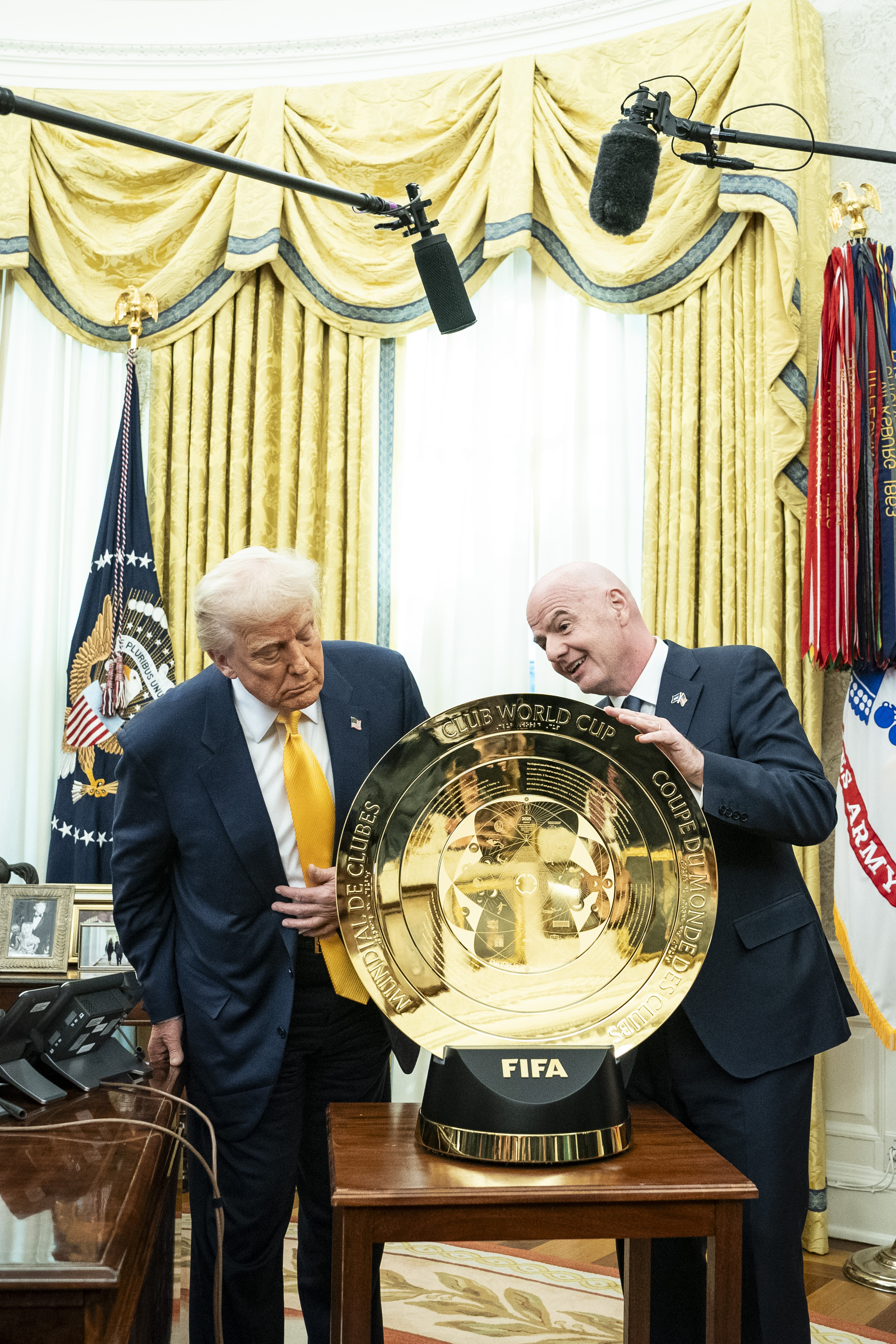
    President Trump and Gianni Infantino at the White House in 2025 with a trophy intended for the winner of the Club World Cup competition. Trump kept it, and FIFA commissioned another.Haiyun Jiang / The New York Times

    FIFA officials are clear about what they want from the World Cup. They want a higher profile in the United States and more growth in the world’s biggest consumer market. They also want to shed the reputation for corruption and cartoonish excess that led to Justice Department prosecutions.

    Infantino failed to woo the Biden administration, former government officials said. But he found a receptive ear in Trump, who calls him “the king of soccer.” A decade ago, soccer executives were terrified to travel to the United States, fearing they’d be arrested. Now, Infantino is an Oval Office regular.

    Infantino presided over the previous two World Cups, in Russia and Qatar, and drew criticism for cozying up to autocrats in both countries. His amity with Trump has him once again defending his way of operating in what is supposed to be a politically neutral position.

    “I think it is absolutely crucial for the success of a World Cup to have a close relationship with the president, with the government,” Infantino said last year. “I have a lot of friends.”

    This World Cup will be a test of whether that friendship pays off.
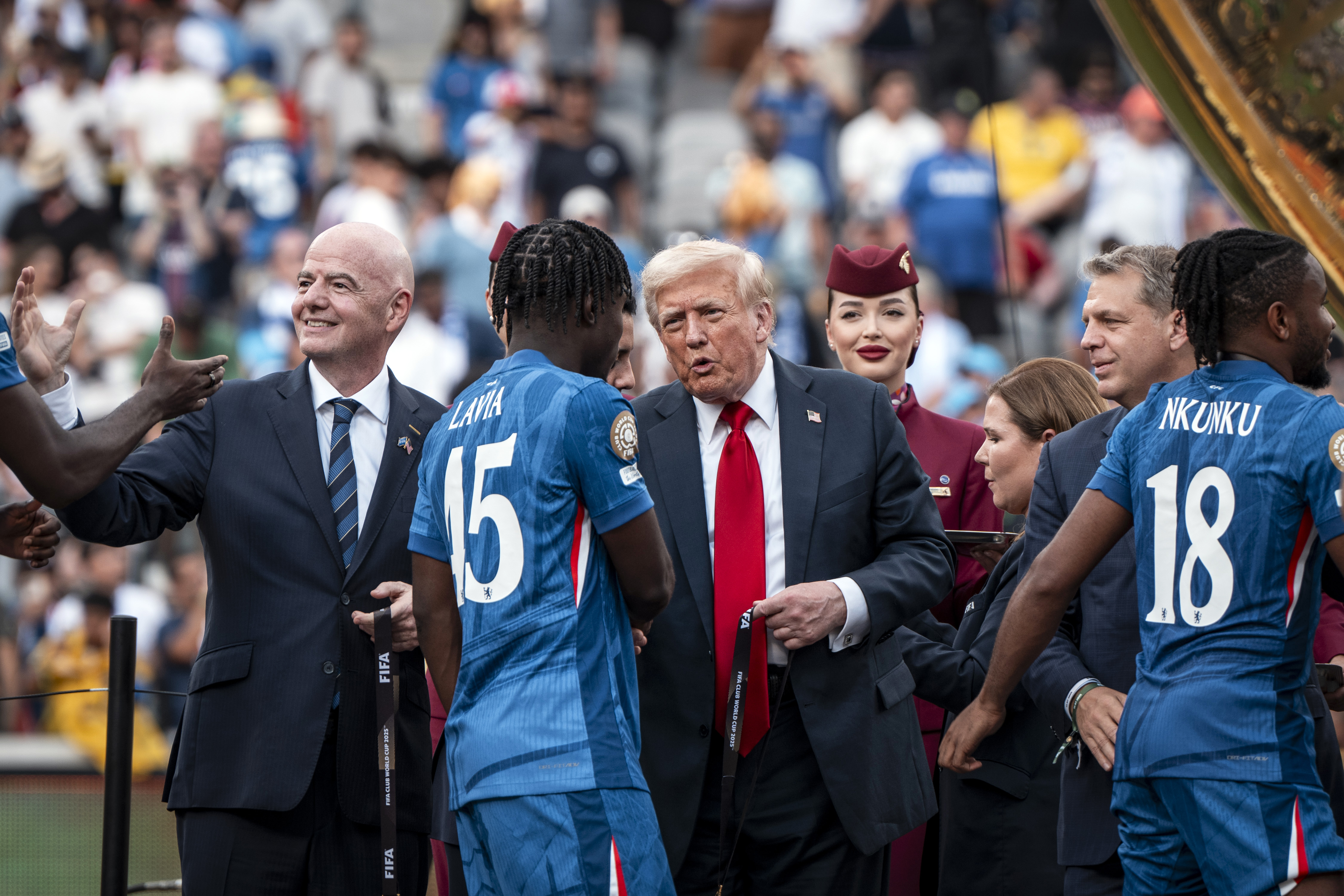
    Infantino and President Trump onstage during the Club World Cup final in New Jersey last year.Haiyun Jiang / The New York Times

    A top FIFA official says he believes there is an unofficial understanding that the authorities will not conduct immigration enforcement outside of stadiums. (A FIFA spokesman denied any deal and said enforcement was up to the government. The Department of Homeland Security did not address the question.)

    The Justice Department also recently dismissed long-running criminal charges as part of its FIFA investigation. Prosecutors said the case “doesn’t fit within the administration’s priorities.”

    And Trump seemed to defer to Infantino this spring on allowing Iranian players to come to the United States. “If Gianni said it,” the president said, “I’m OK.”

    Still, Trump undercut Infantino recently by criticizing the high cost of tickets. And whatever reassurances may have been made on immigration, support staff for Iran’s national team was denied visas, along with a Somali referee.

    Infantino’s coziness with the president also appears to be influencing FIFA in Trump-like ways that could outlast the tournament.

    FIFA is exploring hotel deals that would license its name just as the Trump family has long done, according to three people familiar with the discussions. He has also expressed interest in launching a FIFA cryptocurrency, just as the Trumps have done.

    A FIFA spokesman said the organization was paying “market rent” in Trump Tower and that the office would be used during the World Cup.

    Inside FIFA, many officials privately question whether this has all been in service of Infantino himself. He has accompanied Trump on state visits, sat center stage at the inauguration and has attended diplomatic events.

    What does any of that, his critics ask, have to do with soccer?

    Infantino declined to be interviewed. His yearslong campaign to curry favor with Trump, and the hand-wringing it has prompted, was described in dozens of interviews with FIFA insiders and others close to the two men. Some spoke on condition of anonymity to describe private conversations.

    “Infantino thinks he’s the leader in the relationship,” said Sepp Blatter, the former FIFA president whose ouster at the height of the corruption scandal paved the way for Infantino’s ascension. “But nobody can lead Trump.”
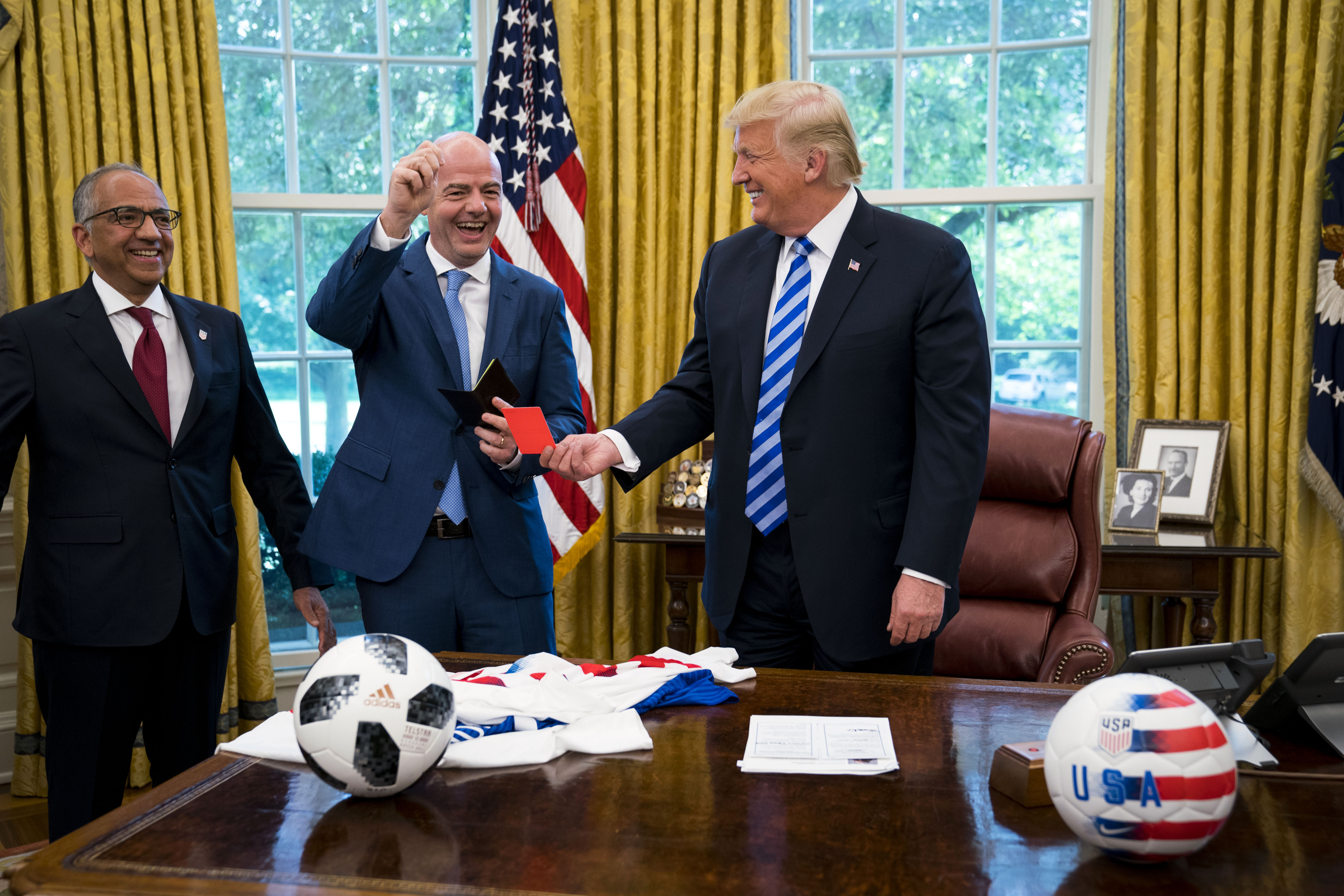
    Infantino meets with Trump for the first time in the Oval Office and jokes about penalty cards.Doug Mills / The New York Times

    The first meeting

    The men first met in the Oval Office in the summer of 2018. The United States had just won the right, along with Canada and Mexico, to host the World Cup, and the mood was celebratory.

    “You’re pretty famous, right?” Trump asked. “Pretty important and pretty famous.”

    “Yeah,” Infantino replied. “It looks like it.”

    Infantino, a lawyer and the son of an Italian immigrant who worked on Switzerland’s railways, had secured the FIFA presidency the same year that Trump was elected.

    In that first White House meeting, he presented the president with a Trump jersey and a set of penalty cards that the men joked could be used on the news media.

    “You are part of the FIFA team now,” Infantino said.

    It was a remarkable turnabout. Three years earlier, the Justice Department had unveiled an indictment detailing corruption in world soccer. Major brands did not renew their sponsorship deals, and the organization suffered financial losses.

    But if Infantino was eager to welcome the president onto FIFA’s team, he quickly found himself on the Trump Team — a pretty important, pretty famous endorser of a president in the middle of an impeachment inquiry.

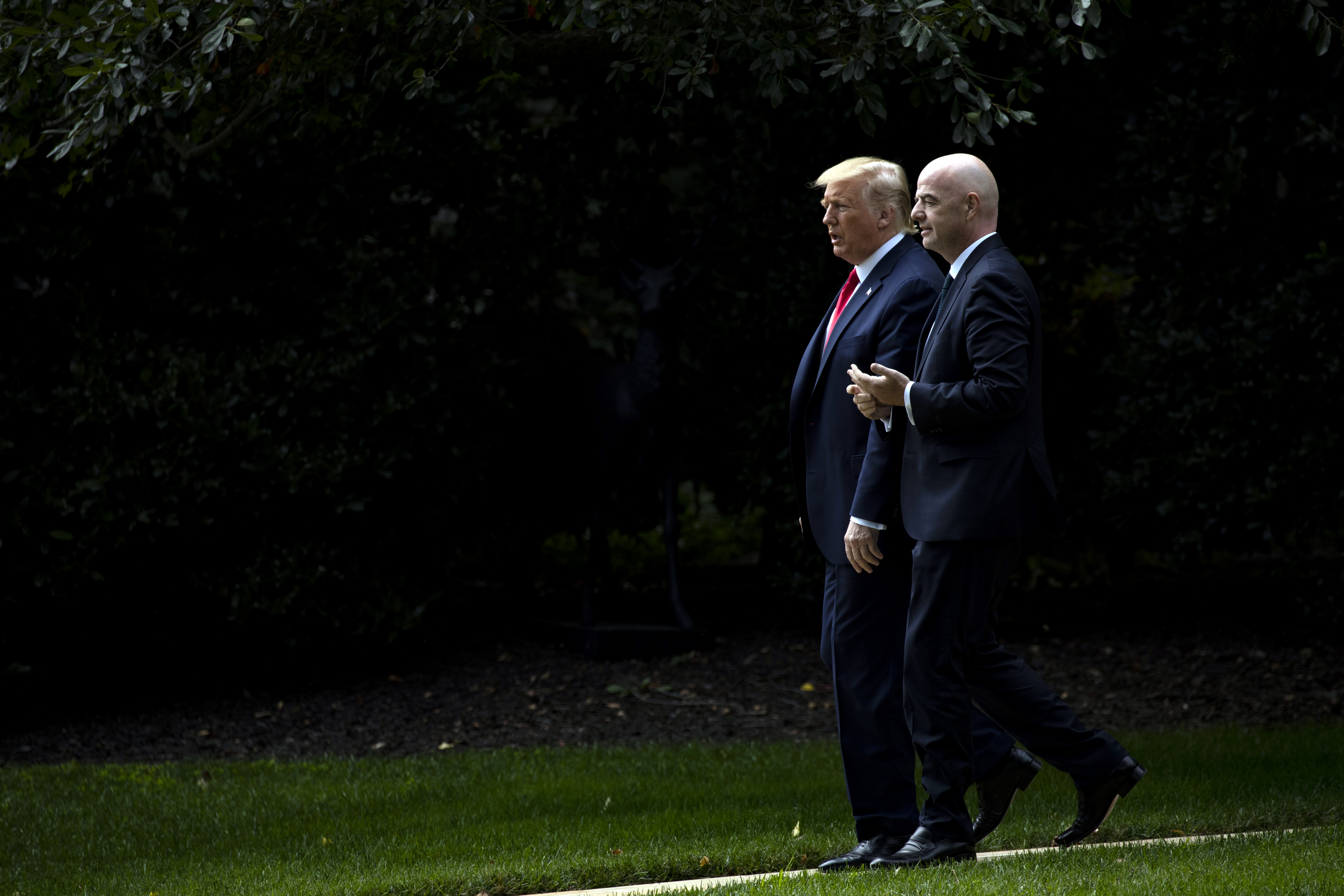
    “Gianni, we’re going to have to extend my second term,” Trump said on the South Lawn in September 2019, as Infantino smiled beside him.

    Months later, as lawmakers debated charges of obstruction and abuse of power against Trump, Infantino praised him before business leaders in Davos, Switzerland.

    “You might wonder why the president of FIFA is introducing the president of the United States of America,” Infantino said. He joked that it had been suggested that the two of them might be the most important people in attendance.

    Soon, Infantino was back at the White House, this time as an unusual guest for the signing of the Abraham Accords, which established diplomatic ties between Israel and some Arab nations. He also arranged a “courtesy visit” with the attorney general, who was overseeing the FIFA cases.

    “I am fully convinced,” Infantino said after that meeting, “that the credibility and reputation of FIFA is being restored at the highest level.”

    Then came the 2020 election, and Infantino’s fortunes changed.
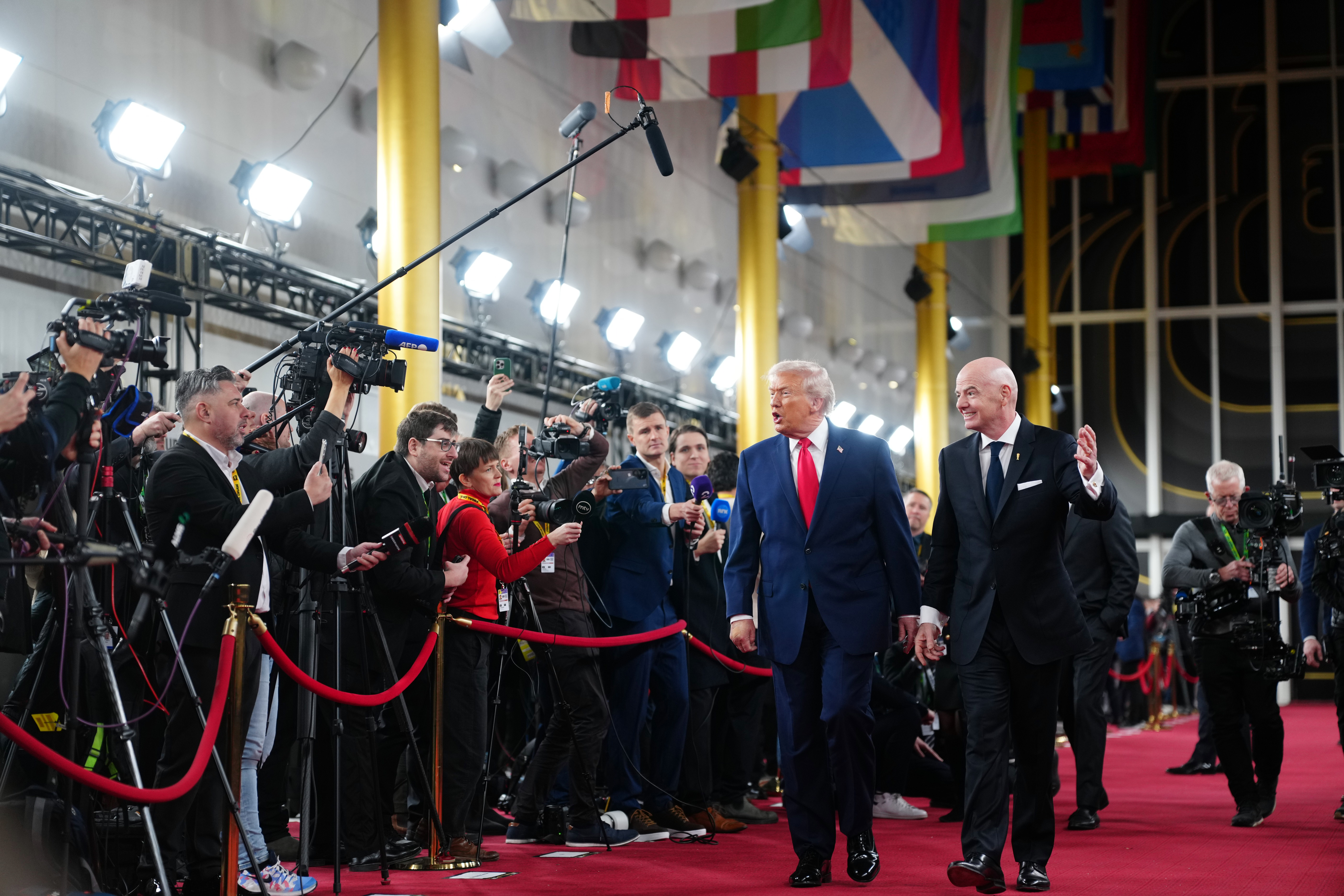
    President Trump and Infantino attended the World Cup draw at the John F. Kennedy Center for the Performing Arts last December. FIFA had planned to have the event in Las Vegas but moved it to Washington.Tierney L. Cross / The New York Times

    A chilly reception, and then a thaw

    President Joseph R. Biden Jr. proved to be less welcoming to FIFA than his predecessor. There were no Oval Office greetings.

    Administration officials said they had been wary of getting too close to a scandal-tainted organization. They saw no benefit in putting the president alongside Infantino.

    “There was definitely a hands-off, keep-them-at-a-distance approach at the White House,” said Caitlin Durkovich, a former National Security Council official who helped oversee World Cup planning. She said FIFA repeatedly tried to arrange meetings with top officials.

    In interviews, FIFA officials said that Infantino had been trying to raise FIFA’s profile. More practically, they said, he wanted people, when they Googled “FIFA,” to find anything but stories about bribery and kickbacks.

    But even an attempt to meet formally with Secretary of State Antony J. Blinken at the 2022 World Cup in Qatar fell flat, according to three people familiar with FIFA’s efforts to arrange a meeting. Infantino’s few interactions with American officials were mostly perfunctory and private, like a half-hour meeting with the national security adviser to address security and visa wait times.

    So when Trump won re-election in 2024, there was an opportunity to build on Infantino’s foundation. And Trump seemed eager to pick up where they had left off.

    Days before Trump’s second inauguration, the men convened at Mar-a-Lago, the president’s private club in South Florida, and flashed thumbs-up signs for a photo that Infantino posted to Instagram.

    Trump thanked him by name at a victory rally. And Infantino had an elevated seat behind Trump at the inauguration.

    Infantino eagerly promoted all of it, sounding at times like Trump’s campaign partner. “Together we will make not only America great again, but also the entire world,” he said.

    Infantino, it seemed, had achieved everything he wanted: accolades, endorsements and a World Cup task force, proposed by Infantino himself, that gave FIFA a formal place among Trump’s inner circle.

    But soon it was clear that such closeness had drawbacks.

    ‘Private political interests’

    When the world’s top soccer officials gathered in Paraguay for their annual meeting in May 2025, Infantino was on the other side of the globe, tagging along on Trump’s state visit to Persian Gulf countries.

    The trip had little to do with soccer, and when he finally arrived at the FIFA meeting, he was several hours late. European soccer officials walked out, protesting his prioritization of “private political interests.”

    “I felt that I needed to be there to represent football and all of you,” Infantino told them.

    It was then that behind-the-scenes grumbles exploded into view. FIFA is an unusual amalgam of 211 countries and territories, each with its own politics. Infantino’s closeness to Trump had impressed some constituencies and alienated others.

    “It’s a matter of priorities, and at that moment Trump was the priority for Infantino,” said David Goldblatt, author of “The Ball Is Round: A Global History of Football.”

    But Infantino was undeterred.

    One of his signature innovations was a 32-team tournament for the world’s best professional teams: the Club World Cup. But when he plugged the event from the Oval Office, he suddenly credited Trump as a co-creator. (After Trump kept the original Tiffany & Company trophy, FIFA presented the winners with another.)

    Then, on the eve of the tournament, U.S. Customs and Border Protection announced that agents would be “suited and booted ready to provide security for the first round of games.”

    Tournament officials panicked, terrified that immigration agents would arrest fans, according to three people who participated in planning discussions. Such a spectacle could deter attendance at the 2026 World Cup and potentially lead to a global backlash against FIFA.

    By then, Infantino was living in Miami, in the president’s orbit. His advisers strategized about asking Trump for a moratorium on immigration actions, both during the club matches and the World Cup.

    While no one close to either man has indicated what, exactly, they discussed privately, FIFA officials said that Infantino pressed the immigration matter. Whether for that reason or not, the government’s social media post was removed and ICE raids never materialized.

    Soccer officials said they believed there was a similar understanding for the World Cup. But, as is often the case with Trump, nobody can say for sure.

    The Department of Homeland Security, which oversees Immigration and Customs Enforcement, did not acknowledge any such agreement.

    “U.S. Customs and Border Protection, in coordination with D.H.S. and other agencies, is dedicated to ensuring the safety and success of the FIFA World Cup,” a D.H.S. spokesperson said.

    By some measures, the club tournament represented a win for Infantino’s strategy. He got an Oval Office platform, Ivanka Trump participated in the draw, immigration agents stayed away, and Trump attended the final match.

    But it was also a reminder that when there is a limelight, Trump often seizes it for himself.

    Appearing onstage after the final whistle, Trump lingered longer than planned, upending meticulous choreography, confusing the winning team and standing squarely before the cameras during the trophy presentation. FIFA and Secret Service officials were alarmed, and fireworks were delayed because of the president’s presence.

    It went viral, with Trump basking in FIFA’s moment.

    The FIFA Peace Prize awarded to President Trump. The trophy, co-produced by a FIFA employee’s father, was spontaneously sourced from miscellany in FIFA’s possession.Tierney L. Cross / The New York Times

    The FIFA Peace Prize

    Oval Office visits are now routine for Infantino.

    “Always happy to be here, at home, if I can say that,” he said last year.

    “You are home,” Trump replied.

    When Trump assembled dignitaries and business titans for a state dinner for Crown Prince Mohammed bin Salman of Saudi Arabia, Infantino was there.

    “I think we should all support what he’s doing,” Infantino said at a business conference in Miami. “Because I think it’s looking pretty good.”

    Infantino has sought to capitalize on access to Trump allies. Under his watch, FIFA discussed with former Treasury Secretary Steven Mnuchin an investment in a streaming service, according to a senior FIFA official. Nothing materialized, only because the venture was put on hold, according to a person who was part of the talks.

    More recently, FIFA has explored hotel licensing deals with a prominent South Florida developer who is poised to develop the waterfront opposite Mar-a-Lago.

    Infantino also lobbied for Trump to be awarded the Nobel Peace Prize, which the president has craved. When the award went to the Venezuelan politician María Corina Machado, Infantino had an idea.

    Three weeks after the Nobel announcement, senior FIFA officials were told that Infantino wanted to announce a peace prize of his own. How long, they asked, did they have to work out the details — the criteria, for example, or the makeup of the nomination committee? Those questions went unanswered.

    Some of the most senior officials were told straightaway whom the first honoree would be, according to a person with direct knowledge of the plans, who learned about the prize and its recipient on the same day.

    FIFA did not have time to consider what its prize would look like. But luckily, the father of an employee was a sculptor, and FIFA had in its collection of miscellany a miniature version of one of his pieces, according to two soccer officials. The trophy was in hand.

    The FIFA Peace Prize was announced Nov. 5, with the award to be bestowed at the World Cup tournament draw a month later.

    FIFA had planned to have that event in Las Vegas. But Paolo Zampolli, a longtime Trump ally serving as a presidential envoy, encouraged Infantino to reconsider.

    “To move the president of the United States is a big process,” he recalled saying. Last-minute events might prevent a trip to Las Vegas, he said, but a local venue would better assure his attendance. “You know how important FIFA is for us,” Zampolli added. (FIFA said Zampolli had no influence over the choice.)

    Infantino moved the event to the John F. Kennedy Center for the Performing Arts in Washington, teasing that the site might be called the Trump-Kennedy Center. Trump attended and, to nobody’s surprise, was the first recipient of the FIFA Peace Prize. He received a certificate, a medal and the repurposed trophy.

    Trump called it “truly one of the great honors of my life.”

    The award angered many soccer officials, who said that it had embarrassed FIFA and cast the organization as partisan.

    Lise Klaveness, the president of Norway’s soccer federation and a human rights lawyer, said the prize breached FIFA’s rules on political neutrality. She announced that Norway would back an ethics complaint against Infantino.

    Ms. Klaveness said in an interview that she recognized that FIFA needed “friendly relations” with the governments hosting World Cup games. But she said there needed to be “checks and balances,” to keep FIFA from being used for political purposes.

    Infantino, though, has worn his friendship with the president on his sleeve. And his head. At one public meeting, world leaders and delegates were given red “USA” baseball caps. Infantino happily donned his, emblazoned with the numbers 45-47, signifying the Trump presidencies.

    This winter, as Infantino marked a decade in the job, he celebrated with a party at a Four Seasons hotel in Miami. Ivanka Trump and her husband, Jared Kushner, attended.

    The celebration carried into spring, when Infantino announced at a soccer meeting in Vancouver that he would run for a third term. He argued that the organization had repaired its reputation and played a slide show that included Trump.

    “We have definitely come a long way these last 10 years,” he told soccer officials. FIFA, he said, was now “sitting at the top tables, in every aspect.”

    This article originally appeared in The New York Times.
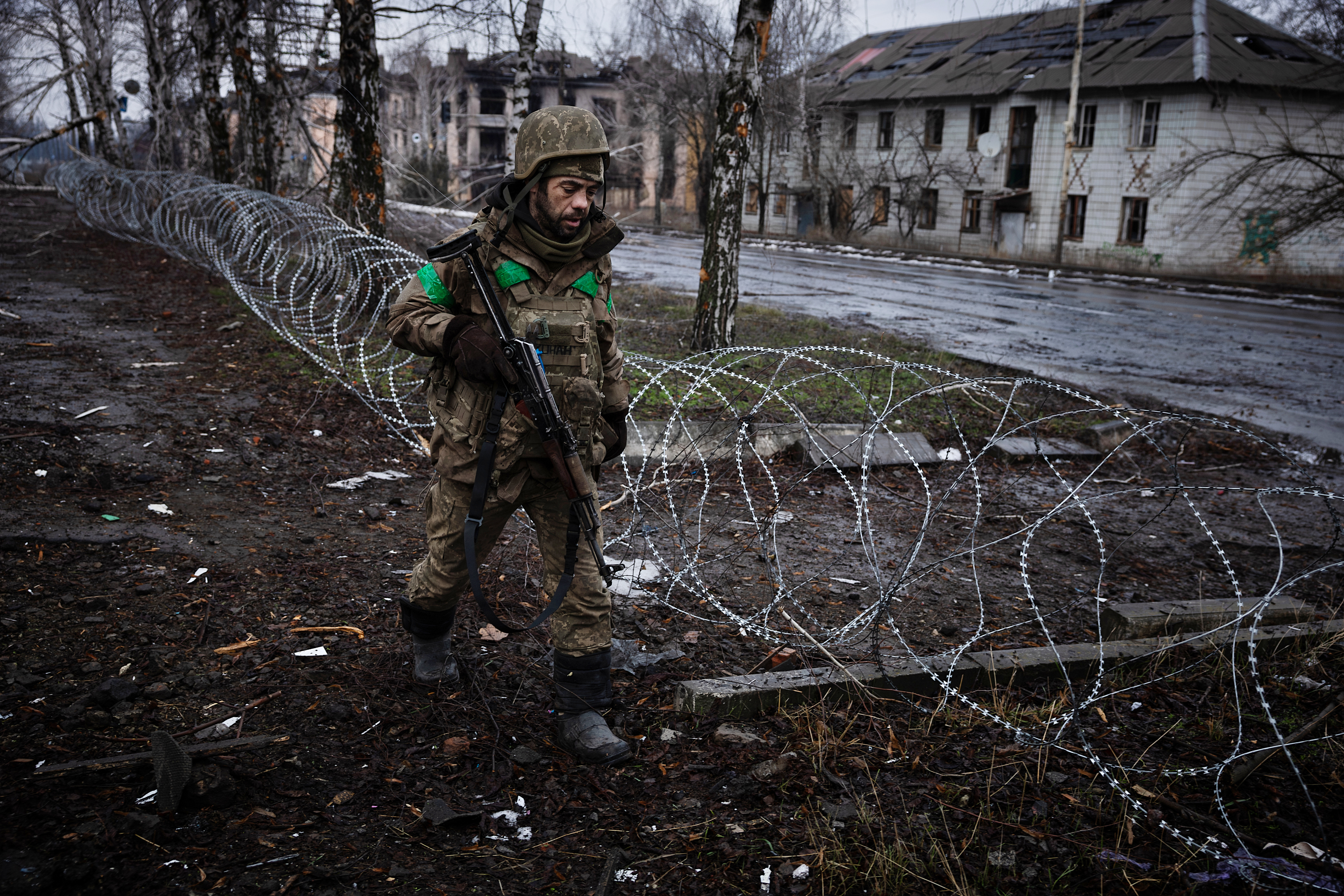
  • The war in Ukraine has now gone on longer than World War I

    The war in Ukraine has now gone on longer than World War I

    The war in Ukraine has often been compared to World War I for its brutal infantry assaults and heavy casualties. Yet the idea that it could, by any measure, surpass a conflict so long and bloody that French soldiers hoped it would be “the last of the last” once seemed unthinkable.

    That is just what happened on Thursday. The war in Ukraine — which reached 1,569 days, or more than four years and three months — has now outlasted World War I.

    When President Vladimir Putin of Russia sent his troops into Ukraine in February 2022, he believed the country would fall within days. After Ukraine pushed the Russians back and the conflict settled into a war of attrition, even many of those fighting could not imagine it would last this long.

    “I thought maybe two or three years, and then politicians will find some kind of consensus,” said a Ukrainian soldier who, for security reasons, gave only his call sign, France, a nod to his time in the French Foreign Legion.

    But the war has raged on, and, with peace talks stalled, it shows no sign of ending soon. Polls suggest that about half of Ukrainians believe it will not end before next year, which would push it closer to another threshold: the duration of World War II, which lasted six years. And there are many Ukrainians who would argue that the current war really began in 2014 when Russian troops seized Crimea.

    Historians caution that drawing parallels with the two world wars has limits. The global scale of those conflicts, involving many theaters and armies, makes comparisons about casualties and firepower difficult. Ukraine did not exist as a country during World War I.

    Still, the war in Ukraine, like World War I, is likely to rank among the most consequential conflicts in modern European history, said Yaroslav Hrytsak, a Ukrainian historian. Both wars transformed Europe’s geopolitics by reshaping military alliances and driving a defense buildup not seen in decades.

    Military analysts also note that both conflicts reshaped the nature of warfare through the introduction of new technologies — planes and tanks a century ago; drones across the air, sea and land today. In both cases, the advances made war only more brutal for humans.

    “In many respects, this war in Ukraine is the one that most closely resembles World War I,” said Michel Goya, a former French colonel and a military historian.

    The comparison begins with the opening phase of both wars. In 1914, the Germans launched a rapid offensive toward Paris in the hope of securing a swift victory. Russian forces had the same objective when they raced toward Kyiv, Ukraine’s capital, in 2022. In both cases, the attackers came close to their target but were ultimately driven back.

    Eventually, both wars settled into mostly static fighting along a largely frozen front. When soldiers on the Ukrainian battlefield hunkered down in trenches and bunkers in late 2022, historians described it as a return to World War I-style trench warfare.

    Scenes from the trenches of eastern Ukraine closely echoed those in northern France a century earlier. Ukrainian and Russian troops were often separated by just a few hundred yards, sometimes close enough to see one another. Assaults began with artillery barrages to pin down the opponent, followed by the storming of enemy trenches by infantry squads.

    “In general, when the front freezes, you’re back to World War I,” Goya said.

    In both wars, he added, it was the intensity of firepower, mainly artillery, that forced armies to turn to trenches. “You bury yourself to protect yourself,” he said.

    That calculus later changed in Ukraine with the introduction of a new class of weapon: drones. Networks of open trenches were rendered unsafe as drones monitored the battlefield around the clock and struck with greater precision than artillery shells.

    Now, Ukrainian soldiers say, survival depends on going smaller and deeper. Instead of sprawling trench systems, troops shelter in dugouts housing no more than a handful of soldiers. Such bunkers are small enough to be difficult to spot from the sky and deep enough to withstand strikes. A soldier operating on his own will often dig a position barely larger than a foxhole.

    In a recent interview near Ukraine’s southern front, a Ukrainian commander, who also only gave his call sign, Sour, for security reasons, recalled how his troops had to storm a well-fortified Russian dugout four times before forcing the soldier inside to surrender. The dugout had right-angled corners reinforced with metal sheets designed to absorb an explosive shock wave, he said.

    The commander, who leads the 5th Center of the International Legion, part of Ukraine’s military intelligence forces, said he took the captured Russian soldier to his unit’s training ground and asked him to dig a similar position so he could study how it was built.

    “In this environment, the people who dig survive longer and stay safer,” France, the Ukrainian soldier, said.

    As drones have come to dominate the battlefield, World War I-style opposing trench networks, separated by a narrow buffer zone, have given way to a miles-wide contested combat area scattered with dugouts. In this “kill zone,” any movement is quickly targeted by drones.

    Large-scale troop assaults of the kind seen a century ago have become all but impossible under the constant gaze of drones. Such assaults have been replaced with attacks by just one or two soldiers.

    Tanks, first introduced in 1916, were still a feared weapon in the first years of the war in Ukraine. They are rarely used now because their size makes them easy targets for drones, though some tanks have been retrofitted with protective metal cages that turn them into “Mad Max”-style vehicles.

    While the battlefield today bears less and less resemblance to that of a century ago, the scale of the destruction looks remarkably similar.

    In Ukrainian command posts near the front, live footage from reconnaissance drones shows scenes reminiscent of World War I battlefields: splintered trees, ruined houses, and fields pockmarked by shell craters.

    Casualties are difficult to compare, given the difference in scale between the two wars. A century ago, millions of soldiers were sent into battle across multiple fronts in Europe. Today, the forces involved number in the hundreds of thousands. Roughly 9 million to 11 million soldiers died in World War I, compared with about half a million in Ukraine so far.

    Still, military analysts and officials, including Adm. Pierre Vandier, who holds the post of Supreme Allied Commander Transformation in NATO, say drones have made the Ukrainian battlefield lethal at levels comparable to World War I. Vandier made the comparison after a study trip to Ukraine this spring.

    A mother cries at the coffin of her son Oleh Borovyk, a Ukrainian serviceman who was killed in fighting with Russian forces near Pokrovsk, during his funeral ceremony in Boiarka, Ukraine, on Dec. 3, 2025. Evgeniy Maloletka

    So grinding is the fighting in Ukraine that Russian advances have at times been slower than those in some of World War I’s most deadlocked battles.

    Russia’s offensive on Pokrovsk, an eastern Ukrainian city it recently fully captured, progressed at an average pace of about 75 yards per day, slower than in the bloody Battle of the Somme during World War I, according to an analysis by the Center for Strategic and International Studies, a Washington-based think tank.

    The question now is whether either side can break the deadlock.

    In World War I, the Allies prevailed by combining economic pressure on Germany through a tight naval blockade with military pressure through relentless offensives.

    Ukraine’s strategy to end the war carries some echoes of that approach.

    Drone strikes on Russia’s oil assets, the backbone of its economy, are designed to curb Moscow’s ability to finance its war effort. Kyiv lacks the manpower to replicate the offensives of World War I, but it has flooded the battlefield with small attack drones in the hope of inflicting unsustainable losses on the Russian army.

    “This is World War I, but with drones,” Hrytsak, the historian, said.

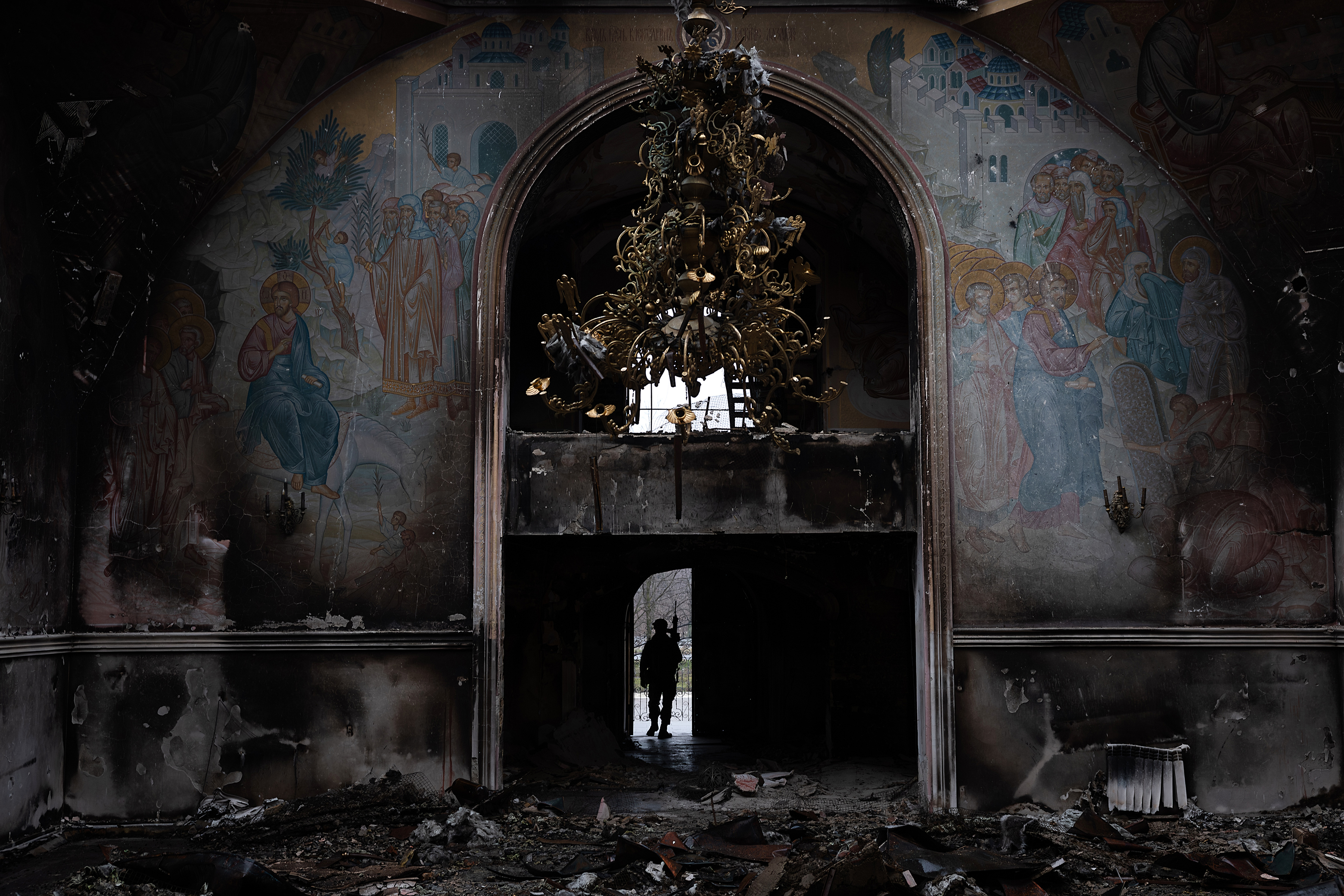
    A Ukrainian soldier is seen through the door of a destroyed church in Kostiantynivka, Ukraine, on Jan. 8.Tyler Hicks

    This article originally appeared in The New York Times.

  • Trump sees 22 medical specialists, appearing to set new bar for presidents

    For George H.W. Bush’s first medical checkup as president in 1989, he was seen by five specialists, the White House said at the time. His son George W. Bush was seen by 12 in his first presidential checkup, White House officials said a dozen years later.

    President Donald Trump appears to have set a new bar: 22 medical specialists assessed him as part of his latest checkup, according to a medical report recently released by the White House.

    That figure is nearly double the number of specialists who assessed Trump for his past medical checkups as president, according to a review of publicly available statements by Trump’s doctors.

    The figure also represents the most medical specialists to assess a president for a single visit, based on a review of public statements and records, prompting questions from outside physicians who said they were already skeptical of the White House’s disclosures around the nearly 80-year-old Trump’s health.

    “It is an extraordinary number,” said Jonathan Reiner, a longtime cardiologist for former vice president Dick Cheney. “What specialties do they represent? Why so many?”

    White House officials said that the number was commensurate with the need to perform a “complete and preventive evaluation” of the president. Sean Barbabella, the president’s physician, said the assessment found that Trump was in “excellent health.”

    “The involvement of multiple specialists reflects a comprehensive, multidisciplinary evaluation consistent with best practices for executive-level medical care,” the White House said in a statement.

    A White House official said that physicians affiliated with Harvard University, Duke University and other prominent institutions helped perform the evaluation. The official also said that some generalist physicians were included in the administration’s count of 22 specialists.

    “We have nothing to hide,” the official said.

    The White House has often declined to answer specific questions about Trump’s medical assessments, such as what prompted the president to undergo a second physical exam at Walter Reed National Military Medical Center last year. Presidents usually make one annual trip unless they have an urgent condition. Nearly three months after the visit, and after initially telling reporters that he had undergone an MRI exam, Trump and the White House clarified that the president had received a CT scan as part of his assessment.

    Trump’s medical reports also no longer include a common hair-loss prevention drug that his physicians said he routinely used during his first term in office. White House officials have declined to comment on Trump’s past use of the drug, finasteride, and whether he had stopped taking it.

    The scrutiny of Trump’s health comes amid broader questions about the fitness of the current president and his predecessor, Joe Biden, to serve as commander in chief. Biden, who was 82 when he left office, and Trump, who turns 80 on June 14, are the two oldest men to serve as president.

    Karine Jean-Pierre, who served as Biden’s press secretary, said at a February 2024 press briefing that a team of “20 doctors” participated in Biden’s medical evaluation at Walter Reed that year.

    Past administrations have often elected not to disclose the specific number of specialists who consult on the president’s medical evaluations, which are traditionally performed at Walter Reed.

    Presidents are not required to disclose their health records, although lawmakers in both parties have called for more checks on chief executives, such as creating an independent commission that could assess the president’s health.

    But publicly available records and statements indicate that the number of specialists reviewing presidential health appears to have ballooned.

    The five specialists involved in President George H.W. Bush’s checkup in May 1989 included an ophthalmologist, a urologist, a dermatologist and two allergists — White House officials said at the time. The 65-year-old Bush then saw eight specialists the following year, including a radiologist, cardiologist, and rheumatologist, the White House said.

    His son, President George W. Bush, saw 12 specialists for his 2001 checkup, White House officials said then.

    As questions swirled about Trump’s fitness during his first year in office, Ronny Jackson, who served as Trump’s physician during his first term and is now a Republican member of Congress from Texas, arranged 13 specialists to see the president, he wrote in his memoir.

    “I didn’t do this physical by myself; I was assisted by an entire committee of top-of-the-line specialty doctors at Walter Reed, including ones who specialized in dermatology, orthopedics, gastroenterology, ophthalmology, urology, pulmonary medicine, otolaryngology, and cardiology,” Jackson wrote in his book, Holding the Line.

    “The cardiologist did his heart exam. The pulmonologist did his lung exam and pulmonary function testing, the dermatologist did his skin exam, and so on.”

    Trump saw 11 specialists for his 2019 checkup and 14 specialists for his checkup last year, according to past medical reports released by the White House.

  • Want to invest in SpaceX? Here’s what to know before its IPO

    Want to invest in SpaceX? Here’s what to know before its IPO

    SpaceX, Elon Musk’s rocket ship company, plans to sell shares publicly for the first time ever this week. It’s an unusual event in several ways.

    The company’s initial public offering would earn it the title of the world’s largest IPO. SpaceX is also giving everyday investors a much larger slice of its shares than is typical for a public offering. And the IPO could create the world’s first trillionaire by increasing the net worth of the company’s CEO, Musk.

    Here’s what you need to know before SpaceX’s first day of trading Friday.

    What is an IPO?

    An initial public offering, or IPO, is a company’s debut in the stock market. It’s the first time the general public can buy a piece of the company. Firms do this to tap into a bigger pool of capital to help them expand their business.

    When a company decides to go public, it works with an investment bank to figure out how much the company is worth and the price at which it should sell its shares.

    SpaceX has set its price at $135 a share, which would value the company at $1.77 trillion. Since last week, SpaceX’s bankers have been discussing with prospective investors how many shares they are willing to buy at that price. On Thursday night, all orders for shares will become final, and the offering process will close.

    On Friday, the shares will start trading publicly on Nasdaq. After trading starts, the stock price is likely to fluctuate as the shares change hands on the open market. Bankers generally try to price an IPO so that it has room to rise once its shares are public. Some analysts question how much more the value of SpaceX may rise, given its already lofty valuation.

    Why does the SpaceX IPO matter?

    Hundreds of companies introduce their stock on the market every year. But what makes SpaceX stand out is its size.

    At a $1.77 trillion valuation, it would dethrone Saudi Aramco — Saudi Arabia’s state-owned oil company, which debuted in 2019 with a valuation of $1.7 trillion — as the largest IPO ever.

    “It’s a big deal because it’s literally a big deal,” said Matt Kennedy, senior strategist at Renaissance Capital.

    If SpaceX’s IPO flops, it could send a shudder through a market that has been riding a wave of optimism related to artificial intelligence and other technology. The outcomes could include a chilled IPO market or a broader market sell-off.

    “If SpaceX does poorly and the rest of the market goes down with it, we’ll all be pointing to that as the sign that the market peaked,” Kennedy said.

    Still, it’s possible investors will stick with the company for reasons beyond the “Elon Musk factor” or AI-related exposure, he added.

    Who makes money from the IPO?

    The immediate beneficiaries of the IPO are those who already own private shares of SpaceX. They include Musk, who owns a majority of the company’s shares and could see his net worth rise to over $1 trillion.

    Others include SpaceX employees who have been compensated in company stock, and investors, including venture capital funds. The banks helping SpaceX go public will make money, too, earning a fee of more than $500 million, the largest payout ever.

    The banks are also using the IPO as an opportunity to woo clients in their wealth management businesses, giving them access to SpaceX’s initial offering shares.

    If shares of the company pop, investors who buy Thursday evening can sell those shares and make a profit.

    Over the long term, SpaceX’s stock performance may depend on whether Musk can deliver on his promises to install tens of thousands of new satellites in orbit and develop a viable AI model.

    How can I buy SpaceX stock?

    It’s possible for everyday investors to buy shares of the company at its $135 price, though not guaranteed.

    When firms go public, they usually reserve a small sliver of their stock for individuals, with the bulk going to giant investors like asset managers and hedge funds.

    SpaceX, however, is seeking commitments from individuals for up to 30% of its shares, much larger than a typical offering.

    Some of those shares set aside for individual investors will be available under the SPCX ticker on online brokerage platforms like Robinhood, Fidelity, Charles Schwab, and SoFi.

    For anyone looking to buy SpaceX shares, the brokerages have said investors may not get the total number that they request, given a limited supply of stock at the initial offering price.

    “Here, you ask for 1,000 shares — maybe you’ll get 300; maybe you’ll get 50,” said Jay Ritter, an IPO expert at the University of Florida.

    Individuals may find themselves owning SpaceX shares even if they didn’t actively choose to invest.

    The Nasdaq-100, a popular index that tracks the top 100 nonfinancial companies listed on that exchange, recently relaxed its rules to make it easier and faster for SpaceX to be included. That will force funds that track the index to invest in SpaceX practically overnight.

    How much could investors make from the IPO?

    Nearly 16 years ago, investors piled onto the IPO of Musk’s electric vehicle company, Tesla, which proved lucrative for those who held on. Someone who bought $1,000 of Tesla shares in 2010 would have seen their value soar to around $400,000 today.

    SpaceX is the biggest company in the space industry by a wide margin, which makes it a defining stock to own for those interested in that sector. It has also been around for over two decades and has hosted several funding rounds since then.

    “The time for being an early investor in SpaceX has sort of passed,” Kennedy said.

    This article originally appeared in the New York Times.

  • Love coffee? Have the last cup at this time for a better night’s sleep. | Expert opinion

    Love coffee? Have the last cup at this time for a better night’s sleep. | Expert opinion

    How long does caffeine stay in my system? If I drink an afternoon cup or two, will it mess with my sleep?

    Java lovers, you may be in for a brewed awakening.

    A 2023 randomized trial published in the New England Journal of Medicine found that people who drank one or more cups of coffee each day lost on average 36 minutes of sleep compared with those who didn’t over a two-week period.

    There’s a catch though: People who were assigned to drinking coffee were also more active, taking an average of 1,000 more steps — the equivalent of walking about half a mile — per day than those randomized to the no-coffee group. The researchers speculated that perhaps the boost in activity is part of why coffee has consistently been shown to have many health benefits, including maybe even for longevity.

    That trade-off between energy and sleep is something many of us coffee drinkers know intimately. Miscalculate, and you can end up “tired and wired”— a miserable state of mind I was in too often during medical training, living cup to cup.

    Here’s the good news: You don’t need to quit. But you may need to move up your last cup to much earlier in the day than you think. Rather than the vague advice we’ve all heard to avoid coffee “close to bedtime,” researchers now have a more specific number. A 2023 meta-analysis of 24 studies on the effect of a standard cup of coffee (about 100 milligrams of caffeine) found that for the best night’s sleep, you need to finish drinking coffee at least nine hours or so before you sleep.

    So if you’re in bed by 10 p.m., your last cup should be by 1 p.m.

    Oof.

    My guess is that’s earlier than a lot of us have been operating. (I’m looking especially at you, my four-cups-and-counting-per-day friends). Otherwise, the study found, coffee could reduce total sleep time by 45 minutes and increase how long it takes to fall asleep — or the sleep onset latency — by around nine minutes. (And for context, sleep onset latency of less than 30 minutes is the goal.)

    Why some people can drink coffee in the evening

    Avoiding coffee nine hours before bedtime is a solid, general guideline, but as with anything in medicine, each of us responds a bit differently. Older studies looking at the half-life of caffeine in our systems found that it varies from two to 10 hours, depending on the individual.

    Some of the variation is written in your DNA. Scientists have identified several genes involved in how quickly we metabolize caffeine and how caffeine activates our brain’s reward system. The CYP1A2 gene controls how quickly your liver processes caffeine, while the ADORA2A gene encodes an adenosine receptor in the brain, which regulates how sensitive you are to coffee’s stimulating effects. Variants in the ADORA2A gene are associated with why some people feel anxious after coffee (*raises hand*) — and why some people experience more insomnia than others after the same cup.

    So that friend who’s sipping their after-dinner espresso at 9 p.m. and still sleeps beautifully? Thank (or envy) their genes.

    You may assume that regular coffee drinking could build a tolerance, eventually overcoming the sleep effects. However, the data supporting this in humans is surprisingly scarce — despite being popularly believed.

    How much coffee is too much coffee?

    The U.S. Food and Drug Administration advises adults to consume no more than 400 milligrams of caffeine per day, and not all cups are created equal. For instance, a medium iced latte from Dunkin’ has about 166 milligrams of caffeine and a grande Nitro Cold Brew from Starbucks has about 280 milligrams of caffeine. A typical Keurig pod contains 75 to 150 milligrams per eight-ounce cup.

    A randomized controlled trial in adult men found that, on average, a 100-milligram dose of caffeine consumed four hours before bedtime had little impact on sleep whereas a 400-milligram dose consumed 12 hours before bedtime had an impact. So if you crave an afternoon cup, switch to a less potent option to minimize the chances you’ll get the receipts at bedtime.

    What I want my patients to know

    Coffee is one of those wonderful rarities that science keeps finding reasons to love. Because it’s such a regular part of our daily lives, making some tweaks to how and when we drink it can have an outsize impact on our health in the long term. It may not just be sleep that benefits from morning coffee drinking: In one study, people who restricted their coffee drinking to the morning hours seemed to have a mortality benefit compared with those who drank throughout the day. A disrupted circadian rhythm, which plays an important role in inflammation and your immune system, is thought to be at least one possible contributor.

    Trisha Pasricha is a physician and journalist who writes the Washington Post’s Ask a Doctor column. She is an instructor in medicine at Harvard Medical School and author of “You’ve Been Pooping All Wrong.”

  • A new wave of anti-immigrant violence hits U.K. as riots convulse Belfast

    BELFAST — Masked men set houses, vehicles, and a city bus ablaze in Belfast on Tuesday night, torching neighborhoods across the city after a graphic video of an alleged knife attack by a Sudanese asylum seeker went viral, igniting the latest anti-immigration violence to convulse the United Kingdom.

    Ignoring pleas for calm from politicians and clergy, rioters rampaged through heavily immigrant neighborhoods in Belfast, the capital of Northern Ireland, in some cases going door-to-door and causing some families to flee under police protection.

    Men in balaclavas and hoods shouted “foreigners out,” witnesses said. One family with children had to be escorted from a burning house, according to the BBC, and a family of Ukrainian refugees fled through their back door as the front door burned.

    Attackers set cars alight in an eastern Belfast neighborhood, stopping in one case after a neighbor told them the vehicle was owned by “locals.” A member of Parliament from the Belfast area described the actions as a “race-based pogrom.”

    The riots spread from Belfast to towns across Northern Ireland and reached into Scotland and England by nightfall. A heavy police presence remained Wednesday morning as officials braced for unrest to continue. Officials said some 200 backup officers from other parts of the U.K. were due to arrive Thursday.

    The Rev. Brian Anderson of the East Belfast Methodist Mission, who was at the scene overnight, said that many of the rioters were “young men out of control” but that the attacks seemed to be directed by a smaller number of older men.

    Anderson’s congregation of native-born and immigrant parishioners was terrified, he said Wednesday morning amid the burned-out cars and broken glass along Lendrick Street. Many parents kept their children home from school, he said.

    Anderson condemned the violence but said underlying social tensions must be addressed.

    “I do believe this community does want to welcome immigrants, but they also want to have their housing issues and their employment issues dealt with,” he said.

    The transit agency suspended services in parts of Belfast, after rioters pushed burning trash bins into a public bus. The Police Service of Northern Ireland said it received 13 reports of criminal damage and at least five of arson, some of which were treated as hate crimes.

    The unrest was the most serious to grip the United Kingdom in nearly a year and placed fresh strain on a government already battered by a running national argument over race, immigration, and police conduct that has been building since last summer.

    The immediate trigger this time was a knife attack late Monday in north Belfast, in which a man in his 40s suffered significant injuries to his eyes and slash wounds to his face and back. Bystanders, including one man wielding a hurling stick, intervened to stop the attack and were credited with saving the victim’s life.

    Word spread rapidly on social media that the attacker was a foreign-born asylum seeker.

    The suspect, a Sudanese national, was charged Tuesday with attempted murder.

    During an appearance at Belfast Magistrates’ Court by video link Wednesday, he was identified as Hadi Alodid, 30, and was denied bail.

    The victim’s family put out a statement Wednesday condemning the riots. “We want to make it absolutely clear that overnight unrest is not welcome, and peaceful protest is the only way forward,” the statement said. “We have many migrants who make a deeply valuable contribution to our country, including in our healthcare system and hospitality sector and we depend on them to make our country work. We do not want this terrible tragedy to be used to divide people or fuel hostility.”

    Northern Ireland’s chief constable, Jon Boutcher, confirmed Tuesday that the suspect was living in the United Kingdom on a five-year visa granted in September 2023. Boutcher said the man was believed to have traveled to Paris from Sudan and then to Dublin before claiming asylum in Belfast.

    “There is no trace of this suspect on any of our national security databases, and he was not known to the Police Service of Northern Ireland,” Boutcher said. Police said the attack was not being treated as terrorism.

    Though Ireland and France are both members of the European Union, Ireland is not part of Europe’s visa-free travel zone. It was not clear how he had traveled between the two nations.

    The Republic of Ireland and the United Kingdom are part of a common travel union, and movement between them is unregulated. Anti-immigration activists have accused Ireland of being an easy entry point for asylum seekers and other migrants into Britain.

    Jim Allister, a member of Parliament from the Traditional Unionist Voice party said he believed unfettered access had made Northern Ireland “an open house” and blamed Prime Minister Keir Starmer’s Labour Party for not doing more to stem migration.

    “We have a man probably fighting for his life because he is a victim of the open borders that this government has permitted,” Allister said in a BBC interview.

    Tensions over immigration long predate Starmer’s government, which took office in 2024 after 14 years of Conservative Party rule.

    Video of the attack spread on social media Tuesday, and some right-wing leaders called for mass protests.

    The English anti-immigrant activist Tommy Robinson called the knife attack “yet another invader attack on our people.”

    Elon Musk, the South Africa-born American billionaire, reposted Robinson’s call for nationwide protests on X, writing: “Only by protesting REPEATEDLY and LOUDLY will there be any change!!”

    The leaders of Northern Ireland’s five main political parties issued a joint statement condemning the stabbing and urging calm, saying that “there is no place in our society for this kind of brutality.”

    First Minister Michelle O’Neill wrote on social media that groups of masked men burning families out of their homes amounted to “nothing less than disgusting cowardice.” O’Neill said there were “dangerous attempts to exploit” the attack to target innocent people simply trying to live, work and raise their families in Belfast.

    Starmer called the knife attack “horrific” and “sickening.” His office said “it is time for calm,” and urged that police be given “time and space to investigate appropriately.” Starmer and other senior politicians urged the public not to share the graphic video circulating online or to spread disinformation.

    The Belfast riots, with some of the unrest concentrated in traditionally unionist parts of the city, are the latest upheaval in a prolonged crisis over race and immigration in Britain. Last June, Northern Ireland endured two weeks of anti-immigration rioting triggered by an alleged sexual assault in the town of Ballymena, which drove much of the town’s Roma population to flee.

    More recently, violent protests erupted in May after Vickrum Digwa, 23, a Sikh man was convicted of murdering Henry Nowak, 18, university student stabbed in Southampton in December 2025.

    Police body-camera footage showed Nowak, who had been handcuffed, pleading with responding officers who did not recognize that he was seriously injured, saying: “I can’t breathe” and “I’ve been stabbed.” An officer told him: “I don’t think you have, mate.”

    Nowak died at the scene. Critics said officers treated Digwa, who claimed Nowak had attacked him “racially,” with more deference than the victim. The footage fueled claims that British police were institutionally biased against white Britons, claims that prosecutors and ministers have rejected.

  • Trump sticks with Pulte for intel job as risk grows of lapse in spy powers

    WASHINGTON — A lapse in a law that allows the U.S. to gather intelligence abroad grew more likely on Wednesday as President Donald Trump resisted calls from Republicans and Democrats on Capitol Hill to immediately name a permanent head of the nation’s intelligence agencies.

    Trump has doubled down on his temporary pick for director of national intelligence, federal housing finance regulator Bill Pulte, even though he has little experience for the job. Democrats say they won’t support the renewal of Section 702 of the Foreign Intelligence Surveillance Act, known as FISA, unless he withdraws Pulte’s appointment and nominates a permanent replacement.

    The impasse could soon result in limitations on what intelligence the U.S. government can collect abroad just as World Cup games begin in cities around the country and ahead of celebrations for the nation’s 250th anniversary. The law expires on Friday at midnight.

    Trump on Wednesday asked Congress for a short-term extension of the law to “provide time for the selection and confirmation” of a permanent director.” But he stuck with Pulte as the acting head and said he wants to begin downsizing intelligence agencies.

    “We can’t let them extort us,” Trump said of Democrats.

    Senate Republicans floated a two-week extension of the law after Trump’s request, but it was immediately rejected by Democrats who argued that it’s up to the president to replace Pulte.

    As the bill stalled in the Senate, Speaker Mike Johnson announced the House would hold a vote Thursday on a two-week stopgap even as the chances of passage appeared slim.

    “We’re going to ask every member here to do the right thing,” Johnson said. “We cannot allow that to go dark.”

    House Democratic leader Hakeem Jeffries said if Trump wants a shot at a short-term extension, he needs to pull the Pulte appointment. Pulte is a “disgraceful individual” and a “partisan political hack” who is deeply unqualified for the job, Jeffries said.

    GOP leaders lobby the White House, to no avail

    Congressional Republicans have lobbied Trump all week to quickly nominate a permanent replacement. But he said he needs more time to do so.

    Senate Majority Leader John Thune (R., S.D.) said Wednesday that Republican leaders have “made our views known” to the White House about the easiest way to get the bill passed, and “we’re just doing what we can here to ensure that the White House understands what will be necessary in order to make that happen.”

    Trump said on Friday that he is interviewing five candidates for his pick to lead the agency permanently and that all have a national security background.

    “It’s an important position and one that I think will be filled by a highly qualified person,” said Johnson, who met with Trump twice this week to talk about the FISA impasse.

    Trump made it very clear, Johnson said, that Pulte will serve a “very short term — a sort of renovation role” to help the Office of the Director of National Intelligence be “renovated and downsized.”

    To unlock votes for FISA, the pick would have to be soon — and Trump’s choice would have to satisfy both Republicans and Democrats.

    One of several possible replacements could be Pete Hoekstra, Trump’s ambassador to Canada and a former chairman of the House Intelligence Committee. The White House has reached out to Hoekstra about the job and conversations are ongoing, according to a person familiar with the outreach who requested anonymity to discuss the private conversations.

    FISA will lapse at midnight Friday

    Section 702 of FISA allows agencies such as the CIA, National Security Agency, and FBI to collect communications from foreign targets overseas without a warrant.

    While members of both parties who cite privacy issues have long wanted to limit the authority, there was broad bipartisan support to renew it, especially after Republicans and Democrats recently worked out a compromise bill.

    Virginia Sen. Mark Warner, the top Democrat on the Senate Intelligence Committee, has worked with Republicans on the compromise legislation to renew the authority. But he called Pulte’s appointment to replace outgoing DNI Tulsi Gabbard “a live hand grenade” as they were trying to pass it. Republican leaders tried to start the process last week, but seven Republicans joined nearly all Democrats in blocking a long-term extension after Pulte was appointed.

    Warner said Wednesday that the only way he’ll support a short-term extension of the surveillance law is if the principal deputy director of national intelligence, Aaron Lukas, is the acting leader during the duration of that extension.

    Sen. Tom Cotton, the chairman of the Senate Intelligence Committee, and Sen. Chuck Grassley, chairman of the Senate Judiciary Committee, have warned the administration that the spy tool is likely to lapse.

    The administration should prepare “for a potential significant gap in foreign intelligence collection,” they wrote in a letter.

    Trump doesn’t back down on Pulte

    After bipartisan pushback to Pulte’s temporary appointment, Trump said last week that he would not permanently nominate him to the position. But Democrats, and some Republicans, want his appointment pulled immediately and for Trump to nominate a replacement that can be confirmed by the Senate.

    On Tuesday, though, Trump announced that Pulte would not only take over as acting director — he’d also start earlier than expected, on June 19.

    And he stuck with Pulte on Wednesday, posting that he needed more time to find a permanent replacement and telling reporters that the agencies need to be downsized.

    Both Republican and Democratic senators skeptical of Pulte have pointed to his lack of intelligence experience and also his record at the Federal Housing Finance Agency. In the position, the Trump loyalist has been linked with criminal referrals over allegations of mortgage fraud by public officials Trump sought to punish, including New York Attorney General Letitia James, a Democrat; Sen. Adam Schiff (D., Calif.); and Lisa Cook, a board member of the Federal Reserve.

  • Pope honors Barcelona’s Sagrada Familia as masterpiece of stone, color, and light on Gaudí centenary

    BARCELONA, Spain — Pope Leo XIV celebrated the Sagrada Familia Basilica as a masterpiece of “stones, colors, and light,” as he marked the centenary of the death of its architect, Antoni Gaudí, with a Mass on Wednesday to inaugurate its final soaring sandcastle spire.

    Leo called Gaudí’s unfinished temple, one of the world’s most visited monuments, a “sign of unity and harmony for all of Spain,” an ongoing building project like the lifelong journey all Christians make to find God.

    “We are all the living stones of this edifice,” Leo said from the altar of the basilica, with Spanish King Felipe VI and Queen Letizia sitting to his side and a hundreds-strong choir filling the basilica with song.

    The service marked the highlight of Leo’s weeklong visit to Spain, the first by a pope in 15 years to the once staunchly Catholic European country that, like many others, has experienced secularizing trends.

    The trip, though, has underscored how the country of 50 million people, which experienced a religious crisis after its 20th century dictatorship ended, still has plenty of faithful Catholics who have turned out in droves to welcome the American pope.

    An estimated 120,000 people lined the streets around Sagrada Familia for the event, with streets closed to traffic and a heavy police presence, given the attendance of the royal couple and Prime Minister Pedro Sánchez. The crowds remained after Mass to watch as Leo inaugurated the basilica’s final Tower of Jesus Christ that has made it the world’s tallest church.

    Speaking in Catalan and Spanish, Leo blessed the tower and its illuminated ceramic cross from outside the basilica, surrounded by bishops craning their mitre-capped heads to look up. An angelic boy’s choir sang as a spectacular light show lit up the basilica’s stained glass windows from the inside and fireworks shot off its facade.

    Honoring Catalonia’s Christian traditions

    Earlier Wednesday, Leo celebrated a more ancient sacred monument, traveling to Montserrat, a mountain complex outside the city that is dear to many Catalans. The complex, which includes an 11th-century Benedictine abbey and a 16th-century basilica, is revered for its Black Madonna statue and is home to a boys choir that has existed since the 13th century and is Europe’s oldest.

    Thousands of faithful arrived early at the monastery, with groups of nuns and schoolchildren singing and waving signs and photographs of the pope outside the basilica. Bells rang out over the spire-like rock formations that top Montserrat and the valley below as Leo arrived in a golf cart.

    In recent years, the Montserrat abbey has faced numerous accusations from survivors of clergy sexual abuse and was included in the Spanish ombudsman’s 800-page report on the crisis in 2023. The report found 15 victims and three alleged perpetrators linked to the abbey.

    “It’s very painful because there are members of the church who committed errors,” said the Rev. Cesario Escarda, a Toledo priest, as he waited for Leo at the abbey. “What the pope wants to do is shine a light on the truth and ask forgiveness and bring in the victims and listen to them and accompany them.”

    The Bible carved in stone

    The highlight of Leo’s visit, though, was his Mass at Sagrada Familia to commemorate the 100th anniversary of the death of its famed Catalan designer, Gaudí, who died at age 73, three days after he was hit by a tram.

    A century after construction began during the pontificate of Leo’s namesake, Pope Leo XIII, the basilica has become one of the world’s most visited but unfinished monuments, annually drawing upward of 5 million visitors a year.

    Commemorating Gaudí’s death, Leo said he wanted to give thanks to all the supporters, artists, and workers who “cooperated in the construction of an architectural masterpiece, which is also an eloquent catechesis made of stones, colors, and light.”

    Gaudí, who is on the path to possible sainthood, spent four decades designing and building the temple as the summary of the Christian faith carved in stone. The most important stories of Jesus’ life, the Nativity and Passion, are etched into the basilica’s east and west facades. A third facade facing south, the Glory, will serve as the basilica’s main entrance when finished.

    The temple is an architectural and geometrical masterpiece inside and out, an art nouveau celebration in form and symbol of Christianity and God’s creation through stone and light.

    “Much more than a monument, the Basilica of the Sagrada Familia remains a work in progress today, reminding us that the Christian life is always a journey, because it is a project that God is carrying out,” Leo said in his homily.

    A total of 18 sandcastle spires rise up from the top and pierce Barcelona’s skyline: 12 to symbolize Christ’s 12 apostles, four for each of the four Evangelists who recorded Christ’s life in the Gospels, one topped with a star over the apse honoring the Virgin Mary and, tallest among them, the Tower of Jesus Christ.

    When the final Christ tower was finished last year at a height of 564 feet, it made Sagrada Familia the world’s tallest church.

    “The entire structure of the Sagrada Familia is striking,” said Laura Rincón, who was on hand outside along with two friends for the Mass, after she finished work in a nearby shop. She said that she was sure the pope would be impressed by the church she marvels at every time she passes by.

    “If you look at it just for its architecture, it is amazing,” she said. “Inside, its columns make you feel like you are inside a forest.”

    An interior that looks like a forest

    The cross-shaped interior, with the altar at the apse, is an homage to light and nature. Treelike columns soar to the sky, colored by constantly changing light filtered through stained glass windows like the sun poking through leaves in a forest.

    “Nature is my teacher,” Gaudí once said. “Everything comes from the great book of nature, always open that we must read.”

    The colors of the window glass have meaning: The blues and greens of the eastern portal windows, where the facade depicts Christ’s birth, look more joyful and are most brilliant when the sun rises and light passes through. The coarser shades of red and orange, illuminated by the setting sun on the western portals, color the side of the basilica that depicts Christ’s Passion. Behind the altar and above the cross are yellows and gold that glimmer in the noonday sun.

    Historian Mònica Santín, who leads tours of the basilica, said that in designing Sagrada Familia, Gaudí was guided by two books: the Gospels and nature.

    “The way he lets in the natural light is also an invitation to the Christian mystery,” she said, citing the three facades depicting Christ’s birth, death, and glory.

    “And when you enter inside, it is all light,” Santín said. “What is that the symbol of? We can’t see God, but we perceive his light all around us. I think that is how you can read this message, and it is fascinating.”

  • Texas Tech defends playing QB Brendan Sorsby amid gambling addiction, says ‘it’s not murder’

    HOUSTON — Sports leadership at Texas Tech on Wednesday defended their plans to play quarterback Brendan Sorsby next season while he treats his gambling addiction, insisting they are not trying to “engineer his eligibility” through the courts and dismissing widespread criticism that includes the president of the NCAA.

    Speaking to the Houston Touchdown Club, coach Joey McGuire acknowledged the “rage” surrounding the situation, with athletic directors across college football saying that the NCAA ban on players who gamble should remain sacrosanct and a court order won this week by Sorsby crossed a line that should never be crossed.

    “For some reason, as a society, we’ve been OK with other things that happen and allowing players to play, and this has been the one thing that has united people, that they were against,” McGuire said. “It’s crazy because it’s not murder, it’s not beating somebody — so there’s a lot of things that we’re working through. None of this is OK.”

    Athletic director Kirby Hocutt also released a statement to “offer a few facts that seem to be getting lost in the noise” and noting the school is not part of Sorsby’s lawsuit against the NCAA.

    “A young man in treatment for a clinically diagnosed addiction exercised his legal right to seek a remedy in court and a judge agreed with him,” Hocutt said. “Our role has been to support his recover, not to engineer his eligibility.”

    Under the court order, Sorsby will be suspended for the first two games of the season. The NCAA plans to appeal the ruling, with President Charlie Baker telling reporters in Las Vegas that the case illustrated “a new low” in college sports.

    McGuire likened Sorsby recovering from his addiction to fellow Texas Tech quarterback Will Hammond’s recovery from knee surgery.

    “He’s recovering,” McGuire said. “I’ve sat down with this young man multiple times and the things that he is going through and what he’s been through, it’s serious.”

    “And I have a number of people in my family that were addicted to different stuff and so I’ve seen what addiction does to people,” he said. ”And so, us even saying to the point before we get to the legal part, that he could be ready in Week 3 against Houston is still a stretch because guess what, he’s still recovering.”

    McGuire added that Sorsby was “back in the building” after spending some time away from the facilities while he was dealing with his issues.

  • Trump officials lay out aggressive timeline to build triumphal arch

    Trump officials lay out aggressive timeline to build triumphal arch

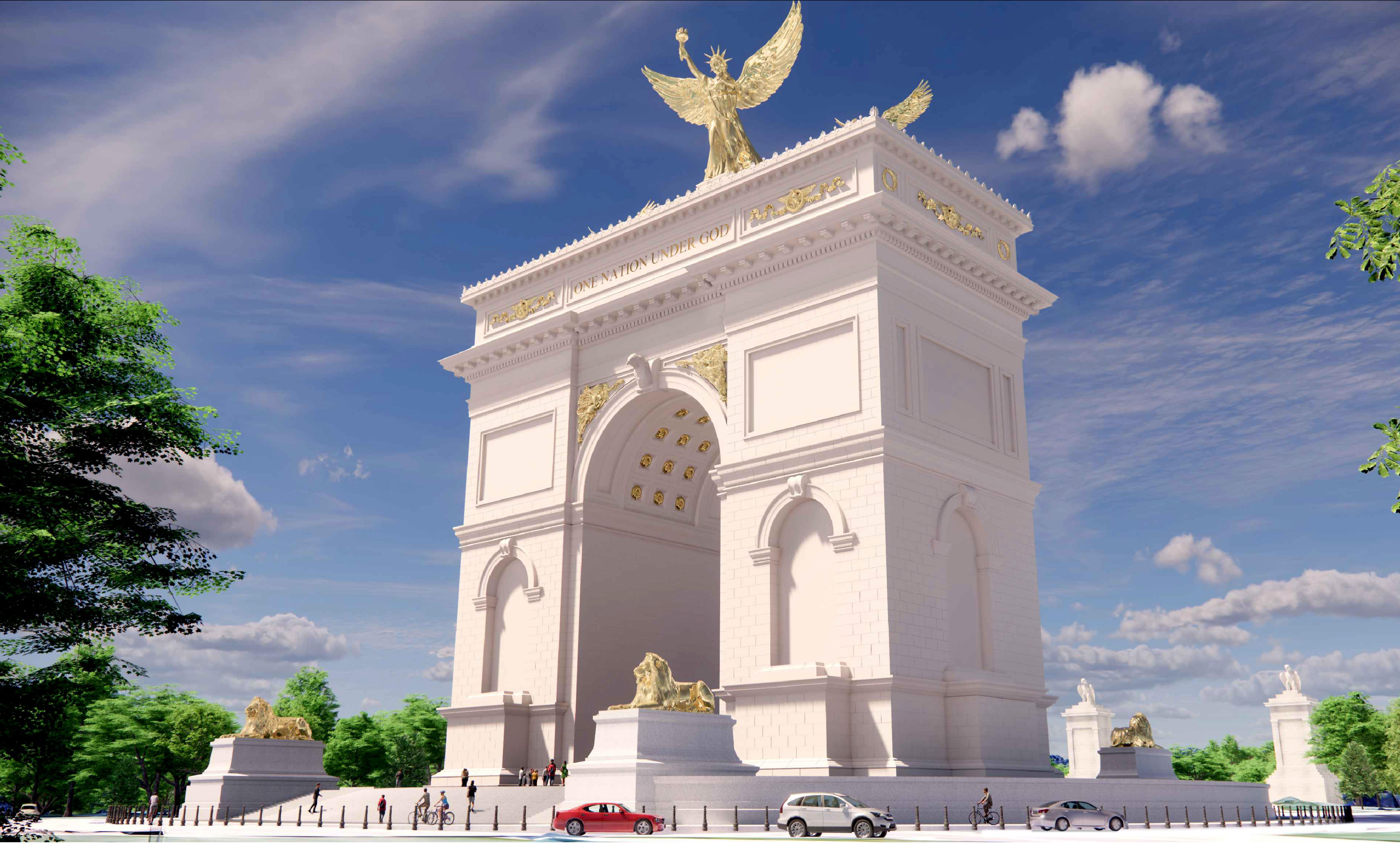
    Federal officials are laying more groundwork to begin construction on President Donald Trump’s planned 250-foot-tall triumphal arch, sharing additional documents that detail the project’s scope and an aggressive timetable for potentially completing work before Trump’s term ends.

    According to National Park Service documents posted this month, the administration envisions 20 hours per day of construction on the arch, year-round, in hopes of completing the project within two to three years. Construction experts said that timeline — which would involve two 10-hour daily shifts — is unusually aggressive for a nonemergency project.

    The arch also would be built with concrete clad in granite, unlike the nearby Lincoln Memorial and other monuments that were constructed with natural stone like marble and limestone — another way to expedite its construction, experts said.

    “He’s obviously in a hurry to try to get this all done before he leaves office,” said Matthew Bell, a University of Maryland architecture professor, commenting on the timeline and materials. “Most of the major monuments in D.C. are stone.”

    The Park Service said the project would require large cranes, including one that may be 320 feet tall and another that could be as high as 300 feet. The planned site for the arch is on a flight path to nearby Reagan National Airport, where planes can sometimes fly at around 500 feet of altitude, raising concerns about safety.

    The Federal Aviation Administration has said it is reviewing whether the arch’s planned height would present risks to airplanes transiting the area, concluding in a preliminary report last week that the arch would need red blinking lights to alert planes at night. An FAA spokesperson said Tuesday that the agency was still conducting a full study on the project.

    FAA, Transportation, and Interior Department spokespeople did not respond to questions about whether the additional height of the cranes would pose further risk.

    The White House declined to comment on the Park Service documents. Officials said they planned to begin construction as soon as all approvals are received.

    “The Triumphal Arch in Memorial Circle is going to be one of the most iconic landmarks not only in Washington, D.C., but throughout the world,” Davis Ingle, a White House spokesman, said in a statement.

    Trump has insisted that the 250-foot-tall arch be built to mark America’s 250th anniversary, and two federal panels led by Trump allies have rushed the project through reviews. The arch would be erected at Memorial Circle, a traffic roundabout near Arlington National Cemetery that is tucked inside Washington’s boundaries, and it would represent the president’s most significant change to Washington’s skyline.

    The administration is not planning to seek authorization for the project from Congress, drawing rebukes from Democrats who say the president continues to flout long-established laws and norms. Trump has also demolished the White House East Wing to clear space for his planned ballroom, decided unilaterally to renovate the Lincoln Memorial’s Reflecting Pool, and undertaken other construction projects without going through the usual legally required reviews or seeking approval from Congress.

    “Running through all these incidents is an inexplicable disregard for legal process,” Sen. Richard Blumenthal (D., Conn.), the top Democrat on the Senate’s permanent subcommittee for investigations, wrote in a letter Tuesday to Park Service leaders.

    Blumenthal asked for the Park Service to explain and justify its use of urgent procedures, including no-bid contracts, to complete Trump’s projects; to share its internal records on the arch, the Reflecting Pool, and other work driven by the president; and to provide a full list of projects underway or under consideration on Park Service land in the D.C. area. The letter was shared with the Washington Post.

    Some construction and design firms have declined to work on the arch, worried that they could not meet the administration’s aggressive timeline and wary of the risks of participating in the controversial project, according to two people who spoke on the condition of anonymity to describe internal deliberations around the project.

    Fifty-two percent of Americans are against the planned arch, compared with 21% who favor it, according to a Washington Post-ABC-Ipsos poll conducted in April.

    The project is also the subject of a lawsuit brought by several military veterans who say the towering structure would alter their visiting experience to nearby Arlington National Cemetery. Lawyers for Public Citizen, a watchdog group that is representing the military veterans, have urged a federal judge to halt the project.

    “With every passing day, Defendants’ arch moves closer to construction,” Public Citizen lawyers argued in a filing to U.S. District Judge Tanya Sue Chutkan last week.

    Trump administration lawyers have argued that the project should not be halted because it has not officially begun. Administration officials have also said they will provide at least 14 days’ notice before beginning construction of the arch.

    The Park Service last week opened a 10-day comment period for the public to weigh in on the arch project. The comment period, which the agency and administration officials have not publicized on their communications channels, according to a Post review, is a legally required step before beginning construction.

    The Park Service has acknowledged the potentially adverse effects of the arch on Arlington National Cemetery and other nearby monuments — “all of which derive significance in part from their planned visual, commemorative, and spatial relationships across the Potomac River and through the monumental core,” one report concluded.

    The Interior Department last month awarded a contract to Otak Inc., a Portland, Oregon-based architectural firm, to perform compliance-related work related to the arch project. Otak declined to answer questions about the contract and its involvement in the project, referring comment to the Trump administration.

    The project has already received approval from the Commission of Fine Arts, which reviews designs for major federal projects. A second panel, the National Capital Planning Commission, is expected to approve the project as soon as next month.

    Will Scharf, the Trump-appointed chairman of the National Capital Planning Commission, also said last week he believed a federal law limiting the height of construction in Washington should not apply to the arch. The law restricts most construction in Washington to a maximum height of 130 feet.

    Meanwhile, Trump officials have declined to include a half-dozen historic preservation and advocacy groups, such as the National Trust for Historic Preservation and the Cultural Landscape Foundation, in a federally required process to consider the arch’s potential effects on historic properties. All of the excluded organizations, which have historically offered input on past federal projects, have sued the Trump administration over the president’s planned ballroom, his Reflecting Pool and other initiatives.

    “Each of these organizations brings subject area expertise that could be helpful,” Charles Birnbaum, the president of the Cultural Landscape Foundation, wrote in a letter Monday to the Park Service, asking to participate in the process. The letter was shared with the Post.