Category: Wires

  • Death of woman released by ICE on a winter day is now ruled a homicide

    Death of woman released by ICE on a winter day is now ruled a homicide

    The grainy security footage from the Pittsburgh transit authority shows Daphy Michel seated on a steel bench. She had been released hours earlier from U.S. Immigration and Customs Enforcement custody, and temperatures that night would dip to freezing. The 31-year-old asylum seeker wore a hooded sweatshirt to keep herself warm.

    Over the course of three days, Michel appears to have never left that bench, said her family’s attorney, who viewed the security footage and shared stills with the Washington Post. She had a history of untreated mental health issues and sat staring as people passed by, a plastic bag with her belongings, including a cellphone, placed beside her.

    By March 2, the Haitian woman was no longer sitting. The last image captured in the footage, according to the attorney, shows her lying on the ground. Emergency responders arrived at the scene and transferred Michel to a hospital, where she died that day.

    It was at least the second death this year involving an individual who was released by federal immigration authorities and died days later of complications related to hypothermia. The Allegheny County medical examiner’s office ruled Michel’s death a homicide on Friday. That conclusion means officials determined her death was the result of someone else’s actions, but it does not necessarily imply criminal wrongdoing.

    “The opinion of the forensic pathologist in this case is that Ms. Michel was a vulnerable adult, suffering from untreated severe mental health issues and a significant language barrier when she was released from federal custody on February 27,” Jim Madalinsky, the county’s public information officer, said in a statement. “Based on all available information during the investigation, the pathologist ruled Ms. Michel’s death a homicide.”

    The finding comes as ICE is eliminating its requirement to report deaths that occur within 30 days of people being released from its custody, and as the Trump administration continues to detain large numbers of migrants. Michel entered the country through the southern border in 2022 and was granted humanitarian parole, said her family’s attorney, Joseph Patrick Murphy. She died before the first hearing in her immigration case.

    A spokesperson for the Department of Homeland Security, which oversees ICE, did not say what time agents released Michel on Feb. 27 but stated that she had all her possessions and a fully charged phone. That day, temperatures in Pittsburgh reached a high of about 55 degrees, though they dropped nearly 30 degrees at night before a cold front brought flurries later that weekend, according to airport weather data.

    “ICE had NOTHING to do with this woman’s death,” DHS spokesperson Lauren Bis said. “She passed away THREE days after ICE encountered her.”

    The circumstances of Michel’s death echo those of the death of a visually impaired refugee in Buffalo in February. Immigration agents left Nurul Amin Shah Alam, 56, a Rohingya refugee from Myanmar who spoke little English, outside a closed coffee shop on a cold winter night. His body was found days later and his death also was ruled a homicide.

    The investigation of Alam’s death is ongoing.

    It’s unclear whether Pennsylvania officials will open an investigation of what happened to Michel days before her death. The Allegheny County district attorney’s office said in a statement that it is still gathering records and declined to comment on any possible investigation.

    “We do express our heartfelt sympathy to the family of Ms. Michel,” officials with the prosecutor’s office said.

    Guerline Jozef of the Haitian Bridge Alliance, an immigrant advocacy organization, said Michel came to the country at a time of massive domestic upheaval in the Caribbean nation following the assassination of its president. Armed groups violently took control of the nation’s capital while Haiti experienced a series of natural disasters that displaced thousands.

    Thousands of Haitians fled to South America and, eventually, the United States. Many, like Michel, were allowed to enter during the Biden administration while pursuing asylum claims but were targeted for removal once President Donald Trump took office.

    Jozef said that given Michel’s mental health struggles, ICE could have ensured she was in contact with a relative before her release.

    “We know that, allegedly, ICE is saying that they are not responsible. But we beg to differ,” she said. “There are certain protocols they could’ve taken to make sure she was released into her family and community safely,” Jozef said. “None of that happened.”

    ICE detention standards require agents to prioritize safety and consider “any special vulnerabilities” when deciding when, where, and how to release someone. Agents are instructed to provide detainees with a free phone call to make arrangements and are permitted to leave people near public transportation during operating hours.

    The guidelines also say ICE “must provide transportation” to detainees who “are not reasonably able to walk” because of issues such as age and mental health, or any conditions that endanger health and safety.

    In September, local authorities arrested Michel on charges of making terroristic threats and harassment, court records show. Charleroi regional police alleged she had been yelling in the street at “imaginary people,” according to Murphy. He said Michel struggled with undiagnosed and untreated mental illness. She remained in jail for six months. Then a judge dismissed her case, Murphy said, because she could not be prosecuted for making threats against people who did not exist.

    A day later, ICE agents took her into custody, affixed a tracking monitor to her ankle, and released her.

    “She was released with all of her belongings, including a fully charged phone, in sunny weather in the middle of Pittsburgh, where public transport is readily available,” said Bis, the DHS spokesperson.

    Murphy said Michel lived with her brother, who never received a phone call from ICE or his sister alerting him of her release. It wasn’t until the morgue contacted him three days later that Michel’s brother learned what had happened. He declined to comment through the attorney.

    Michel underwent repeated psychiatric examinations while at the county jail, Murphy said. When the judge ordered her release, Washington County authorities contacted ICE. It was unclear whether county officials communicated what they knew about Michel’s mental state to immigration agents. The county jail did not respond to requests for comment.

    Murphy believes it was “outrageous” and grossly negligent for ICE to have released Michel by herself on a winter day.

    “Even a 10-year-old could do more to help themselves,” he said. “She couldn’t speak English and she was effectively unable to care for herself.”

    An obituary for Michel shared on the website for Hogan-Melenyzer Funeral Home & Cremation Services says that she was born in Aquin, a port city on Haiti’s southern coast. After arriving in the United States, she settled in Charleroi, a community where about 1,200 Haitians had come to live in recent years. Now, according to local media reports, only a few hundred remain, driven away by fear over the immigration crackdown and the closure of several businesses.

    “Daphy was a person with a kind heart, who loved her family very much,” the obituary says. “… She was always ready to help those who needed her help and her presence brought joy and happiness and light into the lives of all who knew her.”


  • He’s studied procrastination for 40 years. Here’s what he’s learned.

    He’s studied procrastination for 40 years. Here’s what he’s learned.

    Joseph Ferrari has a nickname for procrastinators — procs — and he’s been studying them for 40 years. He became fascinated with procrastination when he was working on a Ph.D. in experimental psychology and realized that no one had studied the psychology of why some people put off completing tasks. Because he is not a proc, he immediately got to work, exploring what causes procrastination across various cultures and demographics.

    He went on to write multiple books on the topic, including Still Procrastinating? in 2010. He now teaches at DePaul University and has found that 20% of people are chronic procrastinators — meaning they habitually, intentionally, and irrationally delay a target task, often to the point that they cause discomfort for themselves and others. “That’s high,” Ferrari said. “Higher than depression, phobia, panic attacks, alcoholism, substance abuse.”

    And that’s a problem, he went on: “For 20 percent of people, they’re missing life. Life is too short. You need to get things done.”

    Here’s what decades of studying procrastination have taught Ferrari, and the five things he’d like people to know.

    Anyone can be a procrastinator, though certain jobs can be procrastination-prone

    According to Ferrari, neither gender nor age nor race makes someone more or less likely to procrastinate. Those who dwell in cities procrastinate as often as those who live in rural areas, and people who live in South Korea, India, Israel, and England are as likely to do it as Americans.

    The one difference he noticed was between blue-collar and white-collar workers. “If I’m an electrician, a plumber, a carpenter, and I don’t work, I don’t get paid,” Ferrari said. “But if I am white-collar — a corporate person — I’m going to get my paycheck every two weeks or a month anyway.”

    You can’t blame your procrastination on technology or your busy life

    Ferrari often hears people blame their procrastination on technology. Similarly, he hears people say that modern lives are just busier than they used to be.

    “Wow,” Ferrari said. “What an insult to our ancestors.” Our forebears were often farmers, for example, who “had to get up early in the morning and fix the fence, feed the animals, get the hay done, plant the seeds, get the roof done, can those goods. They had a lot to do.”

    Ultimately, though, every excuse he hears is just that — and, as Ferrari said, “procrastinators are great excuse makers.”

    Years ago, a reporter called Ferrari to ask him what he thought about the alarm clock snooze button, because, the journalist claimed, it was an example of how technology played a role in procrastination.

    Ferrari responded, “What about the automobile that came out in 1885?” At one point in history, if you wanted to visit a friend five or seven miles away, you had to have a horse that you fed and took care of and then take time to harness the animal to a carriage and travel to see your friend. “Then this thing called the automobile comes along, and you can go quickly,” he said. Suddenly, there was no preparation involved; you could wait until the last second to get up and go.

    These days, we carry our devices everywhere, which means distractions are ever-present, but so are shortcuts. We no longer need paper and pen and stamps to get in touch with people, for instance. And that’s why Ferrari isn’t buying this common excuse that technology is the reason you can’t get things done: Technology has an equal if not greater capacity to make our lives more efficient, not less, he said.

    Deadline pressure is not the solution

    Some people say procrastination is not a problem for them; they simply need the pressure of an imminent deadline to do their best work. But Ferrari’s research over the years doesn’t support that claim. In one paper, Ferrari documented the results of two experiments that compared the performances of procrastinators and non-procrastinators who were given limited time to complete tasks. Then researchers asked the participants how they thought they did. Procrastinators, as it turned out, took longer and performed worse. And yet they thought they’d done well; in fact, they thought they’d done better than other participants.

    In short, Ferrari said, “I found ‘working best under pressure’ was a myth, and they failed.”

    There are ways to kick the habit

    “Procrastination is sabotage,” Ferrari said, and there are various reasons people engage in it. One is a lack of self-confidence: If a person is not sure whether they can complete a task, Ferrari said, they may introduce obstacles, such as a lack of proper preparation time. If they fail, then, they can blame the obstacle rather than themselves. “And imagine if I succeed with the obstacle,” Ferrari said. “Then I look even better.”

    Because procrastination has emotional triggers, Ferrari doesn’t believe it’s a problem that can be solved with time management training. Instead, he recommends cognitive behavioral therapy, a goal-directed type of therapy that aims to adjust behavior to get a better result. “You have to change the way you think and the way you act,” he said.

    The solution to procrastination may be a cultural one

    “In our culture, we punish for being late,” Ferrari said. “We need to reward for being early.” He believes incentives could transform the collective tendency to put things off. What if, for example, the government gave people a discount if they filed their taxes early, or stores offered their biggest holiday sales on the day after Thanksgiving rather than Christmas Eve?

    “People laugh when I tell them this,” he said. But he does it in his own classes: He tells his students that if they turn papers in early, they’ll get extra points. Not everyone will do it, of course, but if he can get half of them to take the incentive, then he’s conditioning them to embrace positive behaviors. Plus, he said, “that’s less work for me at the end.”

  • Under Trump, Democrats draw red lines on national security

    Under Trump, Democrats draw red lines on national security

    In early June, Sen. Mark Warner was preparing to argue that despite deep distrust of the Trump administration, his fellow Senate Democrats should take a risk and help renew a controversial surveillance law that was soon due to expire.

    Then, hours before a meeting with his colleagues, the senator from Virginia learned that President Donald Trump had tapped Bill Pulte, a mortgage agency official and staunch loyalist, as his acting intelligence czar.

    “I said: ‘Holy crap, I just didn’t think Donald Trump could still surprise me,’” said Warner, the top Democrat on the Senate Intelligence Committee, in an interview.

    Pulte’s appointment, which tanked the renewal of Section 702 of the Foreign Intelligence Surveillance Act, is a glimpse into the frustrating life for national security Democrats in the second Trump administration.

    Center-left lawmakers who built their political brands around support for the U.S. military and intelligence community are increasingly drawing red lines on Trump policies they see as dangerous or incoherent — including the war in Iran, lethal strikes against alleged drug traffickers around Latin America, and personnel moves like tapping Pulte, who has no national security experience, as the acting director of national intelligence.

    In some cases, Democrats are voting to curtail the funding and authorities for these agencies — a trend that could have lasting consequences for one of Washington’s last areas of relative bipartisan consensus.

    “It is a sign of the times,” said Sen. Elissa Slotkin (D., Mich.), in an interview. “People who love this country, who have put their life on the line for the country — in uniform, in the intelligence community — are now pushing back on this president abusing it.”

    Multiple Democratic lawmakers said that their constituents were urging them to take hard-line stances against the Trump administration, including on national security issues.

    “It’s a reflection of where America is,” said Rep. Jason Crow (D., Colorado.), an Army veteran and member of the House Armed Services and Intelligence committees. “The vast majority of Americans do not want this war in Iran. The vast majority of Americans don’t think that just continuing to throw money at the [Defense Department] is the way to solve our problems.”

    In response to a request for comment, the White House listed instances where Section 702 has helped protect U.S. citizens, including by thwarting a “mass casualty terror attack” at a Taylor Swift concert in Austria and stopping North Korean cyberattacks.

    More than 60% of the information included in the president’s daily intelligence briefing contained information gathered through the program, the White House said.

    “Democrats will oppose anything to attack President Trump,” said White House spokesperson Anna Kelly in a statement, noting the president “will continue to prioritize maintaining ‘peace through strength’ and safeguarding America’s national security as Commander-in-Chief — just as he was elected to do.”

    Slotkin, a career CIA officer, is one of the few Democrats in Congress who has professionally relied on the information gathered under Section 702, which allows national security agencies to surveil the texts, emails, and calls from foreigners living abroad and suspected of posing a threat.

    But when the Republican-led Senate sought to renew the program in June, she and other Democrats united against it, demanding that Trump first backtrack on appointing Pulte.

    Joining a group of GOP civil libertarians who argued the program risked abusing Americans’ privacy rights, Democrats allowed the program to expire over the outcry of other Republicans, who argued the lapse would endanger U.S. citizens during the FIFA World Cup and conflict in Iran.

    “The consequences, to be frank, could be fatal,” said Sen. Tom Cotton (R., Ark.), the chairperson of the intelligence committee, in a speech last week. “Americans should not have to face that risk because of partisan game-playing.”

    Democrats have instead argued that it is the Trump administration that is endangering Americans by launching military operations without the approval of Congress and appointing unqualified people to leading national security roles.

    “To me, one of the only things more risky than letting FISA lapse is putting in a man with no experience and who is being sent to weaponize the DNI’s office against the American public,” Slotkin said.

    Hours after a last-ditch effort to renew the program failed last Friday, Trump nominated Jay Clayton, a senior Justice Department attorney, as the director of national intelligence. Democrats have signaled they will support Clayton, whose confirmation hearing is Wednesday, potentially opening a path for Congress to reauthorize Section 702.

    But the normally broad bipartisan consensus on core national security legislation is increasingly under pressure.

    In the past two weeks, an extraordinary number of Democrats on the House and Senate armed services committees opposed their panel’s version of the National Defense Authorization Act, Congress’s must-pass defense policy bill.

    Last year, only one Democratic senator voted against the bill in the committee’s markup. This year, nine did.

    In the House, that number went from two to 12 in the same period. Half of the Democrats who opposed the bill are veterans.

    The opposition came after Republicans voted down Democrat-led amendments that would have constrained the war in Iran and slashed the $1.15 trillion authorized in defense spending, a massive jump from last year’s budget.

    “I’ve usually voted for the [National Defense Authorization Act] because I support the troops, but this is just totally out of control,” said Rep. Seth Moulton (D., Mass.), a Marine Corps veteran who led multiple failed amendments in the committee’s markup.

    Over the weekend, the administration announced a preliminary deal with Iran to halt the fighting and eventually reopen the Strait of Hormuz, a vital waterway for global energy supplies that has been almost entirely closed for months.

    Some Democrats offered cautious support for the deal, while criticizing the Trump administration’s decision to launch the war without the approval of Congress in late February. Many have already signaled they will oppose any bid for supplemental funding to cover the costs incurred by the war.

    The war, which according to Pentagon estimates has cost about $30 billion, has led to a spike in global energy prices.

    Rep. Chrissy Houlahan (D., Pa.), an Air Force veteran, voted for the NDAA despite reservations that the committee was doing too little to rein in Defense Secretary Pete Hegseth.

    Still, she argued, Democrats needed to find points of “leverage” to exert oversight of the administration. When the House voted last week on a last-minute bid to extend FISA, Houlahan, who also serves on the intelligence committee, opposed it.

    In an interview, Houlahan described her discomfort in blocking what she considers a vital intelligence tool. Ultimately, she decided that she needed to help send a signal to the administration that Pulte’s appointment was unacceptable.

    “There’s strong hope that this is going to not be the new norm,” said Sen. Andy Kim (D., N.J.), who worked in the Pentagon and State Department before being elected to Congress. “I’m somebody that’s still a deep believer that the last place that partisan politics belongs is in national security.”

  • COVID vaccine linked to broad protections against heart conditions, study finds

    COVID vaccine linked to broad protections against heart conditions, study finds

    The coronavirus vaccine reduced the risk of major cardiovascular events linked to COVID-19 — strokes, heart attacks, and hospitalization from heart disease — by about 40%, according to a new study. The findings, the latest in a growing body of research about the vaccine’s benefits for heart health, suggest such benefits observed in earlier studies have persisted for years.

    The study, published Monday in JAMA Internal Medicine, also suggested the vaccine has a broader public health benefit. The vaccine modestly reduced cardiovascular conditions, hospitalizations, and deaths of all causes, including those not linked to COVID, researchers said.

    “It tells us that these vaccines have actually brought beneficial effects even in people who don’t really know that they actually have contracted COVID-19,” said Ziyad Al-Aly, a physician-scientist and senior clinical epidemiologist at Washington University in St. Louis and co-author of the study.

    Previous studies have indicated the coronavirus vaccine reduces the incidence of heart attacks and strokes, including a study of around 46 million adults in England between 2020 and 2022.

    Researchers behind the latest findings set out to determine if those benefits persisted in the years after the onset of the pandemic.

    “Vaccine formulations have changed, and also the virus itself has changed over time,” Al-Aly said. But he said they found the more recent vaccine formulas still protected against heart conditions.

    The study, conducted among veterans who used the Department of Veterans Affairs health system, examined around 1 million veterans between 2024 and 2025. The research compared those who took the seasonal influenza vaccine and those who opted to take both the flu vaccine and the updated COVID-19 vaccine that season. The research reviewed multiple types of vaccines, including mRNA shots and Novavax.

    The researchers followed up with the cohorts after around eight months, noting whether they had a COVID-19-associated cardiovascular event, defined as a severe heart condition contracted soon after a COVID-19 infection.

    The cohort that took the COVID vaccine had a 37.7% lower risk of COVID-associated heart conditions, the study found. The benefit was most pronounced among patients over 75 and those with preexisting conditions such as cardiovascular disease, diabetes, or chronic lung disease.

    “To me, this continues to emphasize that we should be encouraging vaccination, especially amongst older individuals,” said Nisha Viswanathan, a physician and director of the Long COVID program at the University of California Los Angeles, who was not involved in the study.

    Patients who took the COVID vaccine were also around 6% less likely to suffer from severe heart conditions overall, including ones not linked to a COVID-19 infection, according to the study. The vaccine was also associated with reduced deaths and hospitalizations of all causes by around 7%.

    Al-Aly said that while those percentages appeared low, it still translated to averting around 23 major cardiovascular events, 30 hospitalizations, and 16 deaths per 10,000 vaccinated individuals.

    “Extrapolating these estimates to a population of 1 million people, vaccination could plausibly be associated with averting approximately 2370 [major cardiovascular] events and 1580 deaths over an 8-month period,” the study states.

    Al-Aly and Viswanathan both noted that the study’s population was largely older, white, and male, and that the extrapolations on the vaccine’s public health benefit should be treated with caution.

    Why did the vaccine produce some protection against heart conditions not connected to a COVID diagnosis? Al-Aly suggested that the trend could suggest patients are contracting mild cases of the virus without realizing it.

    “This study actually gives us a glimpse of the hidden burden of COVID-19 that’s actually still likely circulating in the population,” Al-Aly said.

    Viswanathan said that was plausible, but that it was also possible that the COVID vaccine could have additional benefits and side effects on the body. She noted studies have shown that other vaccines can help prevent a wider host of illnesses and chronic conditions, and that research is ongoing on the potential secondary effects of mRNA vaccines such as the COVID vaccine.

    COVID vaccines have also been linked to a risk of myocarditis and pericarditis, inflammation of the heart muscle and lining, but cases are rare and generally mild, and experts have said the benefits of vaccination outweigh the risk of side effects.

    In October, researchers at the University of Florida and the University of Texas published a study that found the COVID vaccine improved cancer patients’ responses to immunotherapy.

    “MRNA vaccines are doing something else to our system that we haven’t completely understood yet, and I do think there’s probably a lot of positive that is going to come,” Viswanathan said.

  • U.S. infant mortality rate fell to an all-time low, though it still trails other similar nations

    NEW YORK — Infant mortality in the U.S. dropped to a new all-time low in 2025, according to preliminary government data.

    There were slightly fewer than 5.4 infant deaths per 1,000 live births in 2025, according to the Centers for Disease Control and Prevention.

    While that appears to be a small decline from about 5.5 in 2024 and 5.6 in the two years preceding, researchers say it is statistically meaningful and translates to hundreds of fewer infant deaths per year.

    It’s difficult to pinpoint what’s driving the recent developments, but “this is an encouraging data point, and we hope that this trend will continue,” said Michael Warren, chief medical and health officer for the March of Dimes.

    Infant mortality is the measure of how many babies die before reaching their first birthday. Because the number of babies born in the U.S. varies year to year, researchers calculate rates to compare infant mortality over time.

    The overall numbers, too, have been going down. U.S. infant deaths fell to about 19,350 last year, according to provisional CDC data that may rise a little as additional analysis is completed. The final tally is still expected to be down from about 20,050 in 2024 and about 20,160 in 2023, according to the agency.

    The U.S. rate has inched down over the decades — it was at 7.5 per 1,000 three decades ago — thanks to medical advances and public health efforts.

    But it has remained worse than in other high-income countries, which experts have attributed to poverty, inadequate prenatal care, and other problems. A study published last year found the U.S. infant mortality rate in 2022 — when the rate rose — was nearly twice as high as what was seen in several other high-income democratic nations, including Italy, Japan, Spain, and Sweden.

    That was the year of the first statistically significant jump in the U.S. rate in about two decades. Experts attributed that rise to a rebound in RSV and flu infections.

    In 2023, U.S. health officials began recommending two new measures to prevent the toll on infants: One was giving a lab-made antibody shot for infants that helps the immune system fight off the virus, and the other was giving an RSV vaccine to women between 32 weeks and 36 weeks of pregnancy. A March of Dimes expert last year said the effort likely contributed to the improvement in 2024.

    Meanwhile, a decline in sudden infant death syndrome could be connected to an increase in education around safe sleeping for infants, Warren said in a statement.

    The CDC posted the 2025 provisional data in late May. On Tuesday, the agency released a more in-depth analysis of 2024 infant mortality data, offering details not yet available for 2025. Among that report’s highlights:

    — Death rates declined both for the youngest infants, less than 28 days old, and for older infants. Those declines continued last year, the 2025 provisional data indicate.

    — In 2024, infant mortality continued to differ by race, sometimes dramatically. Death rates for infants born to Black women were more than twice as high as those for the infants of Hispanic, white, and Asian American women.

    — Researchers noted a decline in the mortality rate for infants born at full term, at 39 to 40 weeks. But rates did not change significantly for other gestational age groups.

    — Mississippi had the highest infant mortality rate, at 9.65 deaths per 1,000 births, and New Hampshire had the lowest, at just under 3 per 1,000.

    “These differences are reflective of a variety of reasons related to access to care, community factors, and policies that improve health and outcomes,” Warren said.

  • John Tortorella will not return as coach of the Vegas Golden Knights

    LAS VEGAS — John Tortorella will not return as coach of the Vegas Golden Knights after guiding them to the Stanley Cup Final on an interim basis.

    Uncertainty lingered over the situation through the team’s elimination in Game 6 of the final against Carolina on Sunday night. General manager Kelly McCrimmon announced Tuesday that Tortorella, the former Flyers coach, would not be back.

    “We thank Torts for the guidance he provided our team since joining the organization in March,” McCrimmon said. “When the decision was made to bring Torts to Vegas, we needed an immediate impact to help us at a pivotal point in the season. Torts’ experience and leadership proved to be the boost that we were looking for, helping guide us to the Stanley Cup Final. We are grateful for Torts’ passion, sincerity, and commitment to our organization, and we wish him and his family the best.”

    McCrimmon hired Tortorella on March 30 when he fired Bruce Cassidy with eight games left in the season. The Golden Knights won seven of them and then got through three rounds before losing to the Hurricanes in the final.

    Tortorella, who turns 68 next week, is 22 years removed from coaching Tampa Bay to the Stanley Cup in 2004. After his time with the Lightning, he spent time running the bench for the New York Rangers, Vancouver, Columbus and the Flyers and was out of the league for roughly a year before getting the call from McCrimmon. He won 97 games in three seasons leading the Flyers.

    Players spoke highly of how Tortorella handled jumping in this spring, and that praise continued on exit day after finding out he would not return. Rasmus Andersson said Tortorella “was a perfect fit at a perfect time for us.”

    “Torts was awesome,” fellow defenseman Shea Theodore said. “I think he was really what our group needed at the end to kind of push us in the playoffs. A lot of credit to him. He was a fantastic coach.”

    “It’s a tough situation for a coach to come in with that little time left,” said Vegas’ Noah Hanifin, who won gold at the Olympics when Tortorella was on staff as an assistant. “And just the way he was able to kind of get us back on the right track fast, and give us a chance, was pretty impressive.”

    Tortorella took criticism in recent days for deciding to stick with goaltender Carter Hart, whose .863 save percentage was the lowest in the final since Minnesota’s Jon Casey in 1991. Hart and Tortorella overlapped with the Flyers from ’22-24.

    McCrimmon is scheduled to speak to reporters on Wednesday. One avenue Vegas could go with for Tortorella’s successor is promoting Ryan Craig, who has been coach of its top affiliate, the Henderson Silver Knights of the American Hockey League, for the past three seasons.

  • ICE removed detainee protections after private outreach from top contractor

    ICE removed detainee protections after private outreach from top contractor

    When U.S. Immigration and Customs Enforcement was revising the federal standards that govern immigration detention centers, one of its top contractors privately asked for changes that could benefit its business, according to a person briefed on the discussions.

    Geo Group, which oversees more than a dozen ICE detention facilities, has faced lawsuits in three states alleging it violates minimum-wage laws by paying some immigrant detainees $1 a day to work. The company maintains that the work is voluntary and that it operates the program at the direction of the government.

    Geo asked that ICE remove lines saying contractors needed to follow state and local laws around the treatment of detainees and that ICE amend language to support its legal position in these cases, the person said, speaking on the condition of anonymity for fear of reprisal. The company also asked that the standards specify that detainees are not employees of the facilities where they work.

    The new national detention standards, which ICE posted to its website Monday, include some of Geo’s requested changes. The document says detainees are not employees “and are not entitled to wages or benefits under applicable wage laws or labor regulations.”

    The revised rules no longer say detainees must be paid at least $1 per day, and no longer include several references to contractors having to comply with state or local laws.

    ICE standards are the key rules that govern the conditions of detention centers, where hundreds of thousands of people are held each year. The policies, which ICE enforces through its contracts with private companies and local governments, cover a wide range of facility operations, including how body cavity searches must be conducted as well as when detainees should be placed into solitary confinement.

    Geo’s input in the new standards, which has not been previously reported, highlights the ICE contractor’s influence over the agency that is both its regulator and, corporate filings show, its biggest customer.

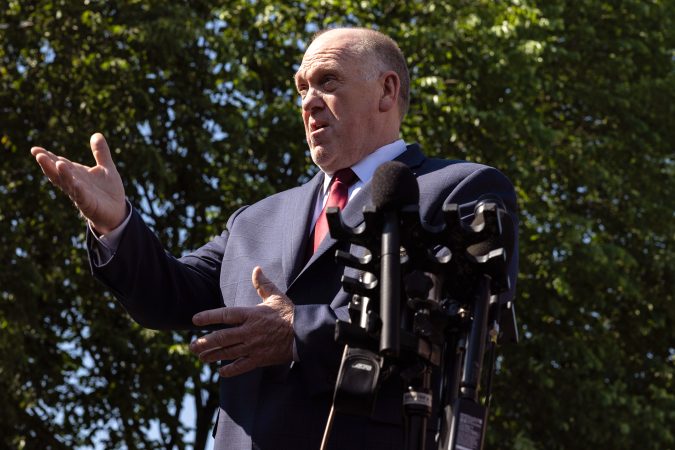
    Two of the Trump administration’s top immigration officials — border czar Tom Homan and ICE’s acting director, David Venturella — previously worked for Geo Group, prompting Sen. Elizabeth Warren (D., Mass.) to question in a letter last month “whether ICE enforcement priorities are being driven by the financial interests of politically connected detention contractors.”

    As the administration has ramped up arrests of immigrants, it has relied on Geo to help it significantly expand the nation’s capacity for holding ICE detainees. Advocates for immigrants and some state regulators say poor oversight at many of these facilities has led to the mistreatment of migrants.

    This month, New Jersey sued Geo for refusing to allow state health inspectors full access to its Delaney Hall facility, in Newark, where the state says detainees have staged hunger strikes to protest being fed spoiled or rotten food and not being given access to basic hygiene products. Geo’s lawyers have said in court filings that only ICE can grant state inspectors access to the facility.

    In the new standards, ICE said part of the goal of the revisions was to “reduce the burden on our detention operators.” At least one other detention contractor, CoreCivic, was consulted on the new standards, the person said. It’s unclear whether CoreCivic offered input.

    “As part of the revision process, ICE consulted with a variety of stakeholders, including facility operators responsible for implementing the standards,” Lauren Bis, a spokesperson for the Department of Homeland Security, said in a statement. “ICE considered that input alongside operational, legal, and policy requirements when making a final decision on the standards.”

    Ryan Gustin, a CoreCivic spokesman, said that the company is sometimes asked by government partners for input on standards but that “ultimately, government officials decide on the standards and policies they develop and enforce.”

    Abigail Jackson, a White House spokesperson, said Homan adheres to federal ethics and conflict-of-interest rules. Geo Group did not respond to requests for comment.

    It’s not uncommon for federal agencies to solicit feedback on policy changes from the industries they regulate, said Steve Schooner, a professor of government procurement law at George Washington University.

    But typically, these discussions are done through a comment period that is open to businesses, advocacy groups, and other members of the public, he said. ICE did not hold a public comment period on the new standards.

    “The reason we do public commenting is because there are various stakeholders,” Schooner said. ICE’s contractors, he added, “are probably not the best voice to represent the people who are being detained.”

    Venturella, who was picked to lead ICE last month, is a former senior executive at Geo Group, where he earned millions of dollars overseeing the company’s detention business, corporate filings show. He worked as an executive at Geo from 2012 to 2023 and as a paid consultant for Geo through Jan. 31, 2025, the company said in a filing.

    Venturella joined DHS as a senior adviser less than two weeks later, and was granted a waiver from a federal ethics rule that generally bars government employees from working on contracts awarded to their former employers for one year, the Washington Post reported last year, based on interviews and documents.

    DHS declined a request to share this waiver, arguing that doing so would jeopardize the privacy of a government employee.

    Geo Group and CoreCivic each donated $500,000 to Donald Trump’s presidential inaugural fund in December 2024, election spending data shows. A Geo Group subsidiary, Geo Reentry Services, has contributed $2 million to MAGA Inc., a Trump-aligned super-PAC, since last October, the records show.

    Gustin said CoreCivic has consistently contributed to inauguration events for both Democrats and Republicans.

    New versions of ICE standards go into effect gradually, as they become incorporated into new or modified contracts. At least one new detention center in Appleton, Minn., already has agreed to follow the 2026 rules, federal procurement records show.

    It’s unclear how the revisions would help Geo fend off legal challenges to its $1-a-day work program, said Jacqueline Stevens, the founding faculty director of Northwestern University’s Deportation Research Clinic. Federal law and state laws define employees broadly as people who work for pay, she says, and ICE cannot override those laws by changing its contractual standards.

    “ICE cannot magically wipe out those protections,” Stevens said.

    ICE previously has made two revisions to the standards under Trump, and each time critics accused the agency of weakening protections for immigrant detainees. Revisions in 2019 removed the mandatory minimum ratio of toilets per detainee, as well as a line that banned the use of “hog-tying” or unnecessarily tight restraints.

    The 2026 standards added some protections for detained immigrants, including an effort to expand access to language translation services, stricter rules around who can be put into solitary confinement, and a requirement that facilities alert ICE when they cannot accommodate the medical needs of any detainee.

    ICE also specified in the new standards that facilities do not have the right to refuse any person that the agency decided to detain.

    One of Geo’s recommendations, which proposed stipulating that the government would reimburse contractors up to $100 million for legal losses associated with wage lawsuits, was not reflected in the new standards, the person familiar with the discussions said.

  • Shinnecock Hills study starts before US Open practice rounds to avoid long waits

    SOUTHAMPTON, N.Y. — The U.S. Open brought big wind and not nearly as much activity for a Monday, typical these days of practice rounds at majors that move to a different course each year.

    More players are coming early, not so much to avoid the rush but to avoid the wait.

    “It’s gotten terrible,” Justin Thomas said leading into the third major of the year. “You have to sign up for tee times at the (British) Open and U.S. Open, and then people sign up with you and play in a foursomes. You can’t play nine holes in less than three hours.”

    The way around that is to follow a script from Jack Nicklaus back in his prime — see the course early before it becomes populated with pros and amateurs, contenders and dreamers.

    Scottie Scheffler and Rory McIlroy took a detour on their way to Ohio two weeks ago to play Shinnecock Hills, the first time seeing it for the No. 1 player, a refresher course for McIlroy.

    Jon Rahm arrived last Friday to see what he should expect for the U.S. Open. Patrick Reed, who hasn’t played since the PGA Championship last month, is said to have played the course more often than some of the Shinnecock members.

    This is one of the most energy-draining weeks of the year, a product of the mental stress a course like Shinnecock — and a major like the U.S. Open — tends to elicit.

    Thomas and Jordan Spieth arrived over the weekend and played practice rounds two days before the official start of practice rounds. They didn’t have the course all to themselves, but it felt like it. And it beat the alternative of long rounds when players hit different clubs off the tee, dozens of shots from the rough and closely mown area around the green, putting to all four corners of the green.

    Their preparation largely done, official practice days are now light work. That’s the Nicklaus way.

    “That’s why I never wanted to practice then,” Nicklaus said of the early part of the week at the majors. “I got my practice in the week before so I knew what I wanted to do, instead of waiting for everybody else. I didn’t like that. So I tried to get my practice in, and go back on Tuesday (of major week). I didn’t want to get stuck in that six hours.

    “If I had been there the week before, why did I need to get there on Monday?”

    McIlroy had limited practice time at the PGA Championship because of a nagging blister on his right toe. But then, he had come to Aronimink two weeks earlier for serious practice.

    But there was one image during his practice round when McIlroy had a small army tagging along inside the ropes, from television personalities to equipment staff and photographers. It didn’t feel very productive to him.

    “Too many people inside the ropes I think is the big part of it,” he said of the long practice rounds at the majors. “I think as well, guys are resigned to the fact that they’re going to play nine holes, so it’s OK to be out there for three hours. No one plays 18-hole practice rounds anymore the week of (a major). I guess it gives everyone the ability to play slow and hit as many balls as they like.”

    Tiger Woods used to have his own routine, playing first to have at least nine holes to himself.

    One year at the Masters, he walked out of the clubhouse at 7:25 a.m. toward the first tee unaware of a wooden clock at the tee box indicating the course would open at 8 a.m. Not to worry. His caddie, Steve Williams, moved the hands back a half-hour.

    Woods stepped onto the tee at 7:28 a.m., saw the clock and moved the big hand back two more minutes and fired away. He was on the links courses of the British Open around 6 a.m. Anything much later than that meant he had overslept.

    Scheffler had a dream day of practice at the PGA Championship before he won at Quail Hollow last year. He was the only PGA Tour player on the course the Sunday before official practice because most everyone else was at two PGA Tour events that day.

    Monday through Wednesday can be as slow.

    “I don’t remember it being as bad as it is,” Thomas said. “The U.S. Open and PGA Championship to me are the worst. It’s getting treated more like the range and chipping green. I get that you need to get used it — I totally understand that. But it’s gotten to be a lot.”

    The wind ushered away overnight rain clouds and bathed Shinnecock in bright sunshine on Monday. Wind and the greens are the greatest defense on this century-old course, and it was a preview of the test that awaits. Wyndham Clark already knew that.

    “The one thing today is I actually didn’t do a practice round,” he said. “I came in earlier and did some work. This wind is not the normal wind, so if there’s any time to take a day off, it was today.”

    ___

    AP golf: https://apnews.com/hub/golf

  • Iran says the deal to end war with U.S. requires Israel to withdraw from Lebanon

    DUBAI, United Arab Emirates — Iran’s top diplomat said Tuesday that the tentative deal to end the war with the United States would require Israel to withdraw from Lebanon — a condition Israel has already rejected and that could sink the agreement, leading to the resumption of all-out war.

    The deal, which is between the U.S. and Iran, has not been made public, and officials have sometimes offered contradictory interpretations of what is in it. While Israel is not party to the agreement, it is part of the war: It joined the U.S. in launching strikes on Iran on Feb. 28, and has since fought the Iran-backed Hezbollah militant group in Lebanon and seized large swaths of that country.

    Iranian Foreign Minister Abbas Araghchi said Israel’s continued occupation of southern Lebanon would violate the deal.

    “Without the withdrawal of Israeli forces from the territories they occupied during this war, the war has not fully come to an end,” Araghchi said.

    A U.S. official, who spoke on condition of anonymity to discuss outlines of the agreement, has said the deal does not call for an Israeli withdrawal. And Israeli Prime Minister Benjamin Netanyahu said Monday that Israel would remain in Lebanon “as long as necessary.”

    The negotiations to end the war have been plagued by such disagreements before, leading to a prolonged but uneasy ceasefire that has failed to develop into a permanent end to hostilities and has left the Strait of Hormuz, a crucial waterway for the world’s energy supplies, effectively shut.

    In other developments, Switzerland’s foreign ministry said the signing ceremony for the deal will take place Friday at the Bürgenstock resort near the city of Luzern. Ministry officials said Tuesday that the location was proposed by Pakistani and Qatari mediators, along with the U.S. and Iran.

    Lebanon tests the durability of the deal

    Pakistan, a key mediator, has said the deal called for an end to military operations, including in Lebanon, as Iran long insisted. But Araghchi’s call for an Israeli withdrawal adds a new wrinkle.

    It puts Israel into a dilemma as it tries to degrade Hezbollah’s military capabilities without undermining an agreement championed by its most important ally, the United States. Israel invaded southern Lebanon after Hezbollah fired missiles across the border during the first week of the war. Since then, it has expanded its military footprint to levels unseen in decades and struck targets deep inside Beirut.

    Though Hezbollah has been weakened, it retains the ability to strike Israel, leaving open questions about the effectiveness of Israel’s campaign.

    As of Tuesday evening, Netanyahu had not seen the memorandum of understanding between the U.S. and Iran, said a person familiar with the situation, who spoke on condition of anonymity to discuss closed-door details. Another person, who also spoke on condition of anonymity to discuss private conversations between Israel and the U.S., said Israeli officials have not asked U.S. negotiators for the memorandum.

    Netanyahu’s office did not immediately respond to a request for comment from the Associated Press. The White House declined to comment on whether Netanyahu or Israeli officials have reviewed the agreement.

    The Israeli ambassador to the U.S., Yechiel Leiter, told NPR that while Israel does not know the details of the deal, the apparent inclusion of Lebanon is “unnecessary and unhelpful.”

    The extent of Israel’s strikes has at times opened a public fracture between its leaders and U.S. President Donald Trump, who told reporters Tuesday that he was “not happy with the way Israel has handled themselves with Lebanon and with Hezbollah.”

    “It just goes on forever,” he said of Israel’s strategy. Israeli strikes in Lebanon have killed nearly 4,000 people, including hundreds of civilians, and displaced more than 1 million. “Israel’s fighting Hezbollah too long, and too many people are being killed,” he said.

    Trump said he’s open to sending the emerging agreement to the U.S. Congress for review.

    Speaking on the sidelines of the Group of Seven summit in the French Alps, Trump said, “I like the idea, send it to Congress please.” He added, “I mean, who wouldn’t approve it.”

    Republicans on Capitol Hill say they want Trump to provide more information about the agreement, with some expressing skepticism that the deal can deter Iran from pursuing a nuclear weapon.

    Israel and the Lebanese government have entered into their own U.S.-mediated direct negotiations, of which Hezbollah was not a part. Those talks have yielded several announced ceasefires that were never implemented on the ground. Lebanese officials initially tried to keep Lebanon separate from the U.S.-Iran negotiations, not wanting to be seen as beholden to Iran, but they have since welcomed the announcement that the deal to end the U.S.-Iran war would include a ceasefire in Lebanon.

    Araghchi’s latest comments appear to match the understanding of two regional officials with direct knowledge of the interim deal. The officials, speaking to AP on condition of anonymity to discuss the closed-door negotiations, said it would require Israel to leave nearly all the territory it occupies in Lebanon, minus a few hilltop points along the border seized earlier.

    The officials say Iran insisted the accord include Lebanon in the last days of the negotiations.

    U.S. allies push to make deal work at G7 summit

    Lebanon is only one of several major questions hanging over the ceasefire ahead of the planned ceremonial signing.

    The agreement is meant to provide a meaningful truce in a monthslong war that has killed thousands across the Middle East, including the top leaders of Iran’s theocracy, and raised the prices of fuel, food, and other basic goods far beyond the region.

    The agreement provides for the “immediate” opening of the Strait of Hormuz and the lifting of the American naval blockade of Iranian ports, according to a senior U.S. official who spoke to reporters Monday on condition of anonymity to discuss outlines of the agreement.

    Pakistani officials who helped broker the agreement also described plans for the simultaneous lifting of Iran’s closure of the strait and the U.S. blockade.

    The United States and Iran will then begin 60 days of negotiations over Iran’s nuclear program and the potential lifting of sanctions, Pakistani officials who helped broker the interim deal said, speaking on condition of anonymity about the unpublished text.

    The pact also includes the possibility of releasing Iran’s frozen funds and a $300 billion fund to help rebuild Iran if Tehran meets certain benchmarks, senior U.S. officials told reporters Monday. Trump later said the United States would not “invest” funds in Iran.

    Regarding the timeline, regional officials who spoke to AP about the deal said the release of frozen Iranian assets would be tied to Tehran implementing the deal. Gulf Arab states also have pledged to inject billions of dollars in Iran’s economy, they added, speaking on the condition of anonymity to discuss the negotiations.

    Iran’s nuclear program, specifically the fate of its stockpile of highly enriched uranium, would be subject to the 60-day clock. Iran has agreed to discuss ways to possibly “dilute or remove” it, the officials said. However, it remains unclear whether Tehran would agree to that, particularly with hard-liners opposed to giving it up.

    U.S. officials have not yet explained how they see the agreement addressing Iran’s nuclear program, including who will be in charge of verifying that Iran is in compliance and who will destroy or remove highly enriched uranium believed to be buried under nuclear sites that were badly damaged by U.S. strikes last summer.

  • Trump’s Iran deal greeted with skepticism and scrutiny on Capitol Hill

    WASHINGTON — Republicans on Capitol Hill said Monday they need more information about the agreement between the United States and Iran announced by President Donald Trump, and some are expressing skepticism as they ask the White House for details.

    The agreement announced Sunday to end the war in Iran, set for a ceremonial signing Friday in Geneva, is centered around reopening the Strait of Hormuz and lifting the United States’ naval blockade in the region, along with financial incentives for Iran if it meets certain benchmarks. But Senate Republicans and Democrats who returned to Washington on Monday said there were still many unanswered questions about the deal and they need thorough briefings before it is finalized.

    “I just don’t know enough about it,” Senate Majority Leader John Thune (R., S.D.) told reporters in the Capitol. “Even the people who follow this stuff closely up here don’t know that much about it.”

    Congressional leaders and intelligence committees generally receive higher-level intelligence briefings before rank-and-file members, and they are notified of major developments before they are announced. But Thune said he had not been personally briefed on the deal.

    “I think that my understanding of what it entails — and, again, not having seen anything — it would require, I think the issues are going to be compliance, and how are you going to enforce that,” Thune said.

    Thune’s concerns were echoed by several other GOP senators.

    “If it’s a secret deal then how can I take it seriously?” asked Republican Sen. Thom Tillis of North Carolina.

    Vice President JD Vance told ABC News on Monday that the White House would release the text this week, “and what everybody will see is that Iran doesn’t get a dime of money unless they perform their obligations.”

    Senators have questions about details

    Trump has not yet explained how his agreement will address Iran’s nuclear program, including who will be in charge of verifying that Iran is in compliance and who will destroy or remove highly enriched uranium believed to be buried under nuclear sites that were badly damaged by U.S. strikes last summer.

    A memorandum of understanding also includes the possibility of releasing Iran’s frozen funds, sanctions relief, and a $300 billion fund to help rebuild Iran if Tehran meets certain benchmarks, senior U.S. officials told reporters Monday. But the document has not been released.

    Thune said he wants to know more about the conditions on the financial incentives for Iran. He said the deal would be a “good one” if the incentives are conditioned upon Iran winding down its nuclear program and getting rid of the enriched uranium, “preventing them from having a nuclear capability in the future.”

    Sen. John Kennedy (R., La.) said he is hopeful but “until you see the final document, it’s hard to make an assessment.”

    “I go into it very skeptical of the government of Iran,” Kennedy said. “They learn to lie before they learn to talk. So any agreement we make with them has to have guardrails. It has to have a way to judge through independent inspection if they’re doing what they say they’re doing.”

    Senate could have a vote

    Under the Iran nuclear agreement review act passed by Congress during the Obama era, any deal the U.S. reaches concerning Iran’s nuclear material must be submitted within a certain amount of time to Congress for review. But it is up to Congress whether that happens — it is not required.

    President Barack Obama’s 2015 nuclear agreement with Iran, known as the JCPOA, was submitted for what’s called a vote of disapproval in the Senate. The outcome did not roll back the agreement, but put the senators on record with their support or opposition.

    Sen. Lindsey Graham, a close ally of Trump and a longtime hawk on Iran, has appeared skeptical over the emerging agreement. He said he is “pulling for a deal” but Congress will need to review and vote on it, and he wants to see the memorandum that the two countries have agreed on.

    “The way Iran describes it, it’s awful. The way we describe it, it makes sense to me,” Graham (R., S.C.) said. “Let’s look at it and see what it actually is.”

    Graham has said he wants Vance, whom he called “the architect of the deal,” to present it to lawmakers.

    Vance responded to Graham on Monday, saying in the interview with ABC that he would “caution Lindsey Graham and anybody else not to believe the hard-liner propaganda in Iran, but to believe what’s actually in the agreement.”

    Even though Iran’s new supreme leader, Mojtaba Khamenei, is the son of the last supreme leader, and Iran’s paramilitary Revolutionary Guard still has significant authority in Iran, Vance told CNN in a separate interview that “fundamentally, it is a much different group of people.” He insisted that the conflict had unlocked much more direct communication with high-level Iranian officials and that the relationship was “fundamentally transformed.”

    Next steps in Congress unclear

    Most Senate Republicans said they want to review the deal, but it was still unclear whether they would have a vote, or if Congress could pass it.

    Republican Sen. Eric Schmitt of Missouri said he doesn’t think an up-or-down vote is necessary.

    “You have the camp that wants us to lose and then you have a camp that wants a forever war,” Schmitt said. “President Trump’s not in either one of those camps, and neither am I.”

    Sen. Ted Cruz (R., Texas) said he expects the Senate will get the final say. But he praised Trump for making “the single most consequential decision of his presidency” by attacking Iran.

    “I think he made America safer,” Cruz said. “The president as commander in chief acted decisively to stop that ayatollah from getting nuclear weapons.”

    Sen. James Lankford, an Oklahoma Republican who serves on the Intelligence Committee, said he expects there are still many more steps to the process before any package would come to Congress for review.

    “Seems like early reports are showing that this is kind of the first step,” he said. “Once we have a final agreement, we need to take it up and pass it. … If you want a long-term agreement it’s got to be law.”

    Democrats ask what has changed

    Democrats questioned how the deal will improve upon the U.S. position before the war — and how it differs from Obama’s 2015 nuclear deal.

    “For all his critique of JCPOA, we had international observers, we actually had an alliance there that included the Europeans, and Russia and China were all signatories,” Virginia Sen. Mark Warner, the top Democrat on the Intelligence Committee, told CBS’ Face the Nation on Sunday.

    Sen. Elizabeth Warren (D., Mass.) said there are more questions than answers, including what happens to the Iranian nuclear program and sanctions on Iranian oil.

    Trump has spent “tens of billions of dollars” and service members and Iranians have died, “and he still cannot explain how one family in Massachusetts is better off,” Warren said.

    Democratic Sen. Tim Kaine of Virginia said an end to what has been a costly and unpopular war would be a good resolution, but he wants to hear more details.

    “An off ramp is good because it was a war that should have never been started,” he said.