Category: Wires

  • Manhattan high-rise is still unstable after columns buckle, forcing evacuations

    Manhattan high-rise is still unstable after columns buckle, forcing evacuations

    NEW YORK — An under-renovation high-rise in Manhattan was still unstable Tuesday after buckling columns and sagging floors raised fears of a collapse, forcing the tower and other nearby buildings to be evacuated, officials said.

    The 1970s-era office building is being converted to luxury apartments, and is the former global headquarters of pharmaceutical giant Pfizer. Initial reports of falling bricks at around 8 a.m. sent firefighters rushing to the busy corridor near Grand Central train station and the landmark Chrysler Building.

    New York City officials were using drones to monitor the building to avoid having to send people inside. A nearby school that has 400 students was among the evacuated buildings, Mayor Zohran Mamdani said.

    “The building remains unstable,” Mamdani said at a news conference at the scene. “This is an extremely serious situation.”

    Fire Chief John Esposito said the way the steel-framed building is constructed, “it would not be a total collapse, it would be more of a localized collapse.”

    Ahmed Tigani, the city’s building commissioner, said officials had not seen evidence that debris fell off the building. Nevertheless, nearby streets remained closed to people and vehicles. Mamdani said there were no reports of injuries.

    The office-to-residential conversion would add more than a dozen stories and redesign an adjoining tower, according to Gensler, the architectural firm leading the project. With more than 1,600 units, it has been billed as the largest conversion in the city’s history, Gensler says.

    A spokesperson for Gensler did not return a voicemail and email seeking comment.

    Officials found two columns had buckled on the 21st and 22nd floors and floors were sagging between the 21st and 26th floors.

    First responders and city officials were working closely with the project engineer to develop plans to shore up the impacted flooring, Mamdani said. If it’s deemed to be secure, engineers will enter and begin making repairs.

    “This is a minute-by-minute assessment,” the mayor said.

    The building commissioner said workers will need to add emergency beams and columns to stabilize the compromised ones.

    “Our top priority right now,” the mayor said Tuesday morning, “is the safety of those who live in this area and the safety of those who work in this area.”

  • U.S. resumes strikes on Iran after 3 tankers hit in Strait of Hormuz,

    U.S. resumes strikes on Iran after 3 tankers hit in Strait of Hormuz,

    DUBAI, United Arab Emirates — The U.S. military launched a series of strikes against Iran early Wednesday, hours after three merchant ships were struck in the waters off Oman in the Strait of Hormuz.

    The renewed attacks from both sides threaten the interim deal reached last month, with the U.S. and Iran both saying the strikes violate that initial agreement. The fresh assaults will add to the difficulty of the negotiations aimed at fully reopening the strait, rolling back Tehran’s disputed nuclear program, and reaching a permanent end to the war launched Feb. 28.

    In a statement posted to social media, U.S. Central Command said American forces launched the strikes “to impose heavy costs for targeting and attacking commercial shipping crewed by innocent civilians in an international waterway.”

    “Iran’s demonstrated aggression was unwarranted, dangerous, and a clear violation of the ceasefire,” the command said in their statement.

    The latest exchange followed a similar spate of Iranian attacks on shipping and U.S. retaliation that occurred late last month.

    Hours after the three tankers were struck by projectiles, the United States revoked a license that had authorized the sale of Iranian oil as part of the interim deal to end the fighting between the U.S. and Iran.

    The new assaults in the fuel-shipping waterway were the most in a single day since late April, according to the U.N. International Maritime Organization. The fresh attacks threatened to choke off the flow of traffic in the strait just as countries hoped to restore normal shipping practices and ease the global economic strain of the war.

    A U.S. official said the license was revoked because Iran’s actions in the strait were unacceptable and needed to be met with consequences. The official spoke with the Associated Press on the condition of anonymity to share insight into the reasoning behind the move.

    The Iranian mission to the United Nations did not immediately respond to a request for comment.

    One tanker caught fire after getting hit

    One tanker was traveling off the coast of Oman when it was hit and caught fire, the United Kingdom Maritime Trade Operations center said. Iranian state television said the liquefied natural gas tanker came under attack after ignoring warnings but did not directly claim the assault.

    The other two ships sustained some damage, but no one was injured, and both continued on their way, the U.K. maritime agency said.

    Tehran, which has repeatedly declared that only its approved route through the strait is safe, is suspected of attacking other ships that have used another route close to the Omani shore.

    Location details provided by the U.K. agency showed that all three attacks occurred off the coast of Oman or the neighboring United Arab Emirates, making it likely that the ships were using the route near Oman.

    Talks between U.S. and Iran are on hold

    The U.S. is eager to press ahead with negotiations with Iran aimed at fully reopening the strait, rolling back Tehran’s disputed nuclear program and reaching a permanent end to the war launched Feb. 28.

    Previous attacks in the strait have sparked retaliatory strikes by the U.S. Iran then attacked Gulf Arab states.

    In peacetime, a fifth of all traded oil and natural gas passed through the channel.

    The license issued by the U.S. authorized the production, delivery and sale of Iranian oil through Aug. 21. U.S. Vice President JD Vance said at the time that lengthy talks with senior Iranian officials in Switzerland created a “good foundation for a successful final deal” to end the war.

    U.S. sanctions on the purchase of Iranian oil had been in place since the 1979 Iranian Revolution. After the U.S. and Israel launched the war, and after the closure of the strait, the U.S. had authorized the temporary sale of Iranian oil at least twice as an incentive toward a deal.

    Meanwhile, talks between Iran and the U.S. appeared to be on hold until after the burial of Iran’s Supreme Leader Ayatollah Ali Khamenei, who was killed at the beginning of the war.

    Qatar calls attack a violation of international law

    One tanker was carrying liquid natural gas south through the strait near Limah, Oman, when a projectile hit the left-side engine room and sparked a fire, the U.K. Maritime Trade Operations center said.

    Majed Al-Ansari, a spokesperson for the Qatari Foreign Ministry, said the Qatari tanker Al Rekayyat was targeted in an “unacceptable attack” on international navigation and global energy security. He called it a “serious and explicit violation” of international law.

    In a post on X, he said Qatar holds Iran “fully legally responsible.”

    Later Tuesday, the U.K. maritime agency reported that an oil tanker was hit on its left side as it exited the strait near the Omani-Emirati border. A third tanker was struck by a drone off Oman, the agency said.

    The Joint Maritime Information Center, a multinational body overseen by the U.S. Navy, told shippers Monday that the route around Oman “has been expanded and remains available for all traffic.”

    Ships going to the north on the Iranian route must register with Tehran. Those going south work with Oman and the U.S.

    Iran and the United States agreed as part of an interim deal to allow ships to pass without paying charges for 60 days. But Tehran insisted it must control the vessels’ routes and later charge fees for passage, which would upend decades of practice in the waterway.

    The U.S. and many Gulf Arab states say they will not agree to Iran charging for passage through the strait.

    The data firm Kpler reported that at least 108 ships crossed through the strait last weekend using various routes.

    Mourners gather in Qom for Khamenei’s funeral

    Authorities flew Khamenei’s body to the Shiite seminary city of Qom, where mourners honored him Tuesday.

    Iranian state television aired live images of hundreds of thousands of people walking toward Jamkaran Mosque, just south of Qom, for the funeral service. Shiites believe the mosque once hosted Muhammad al-Mahdi, the 12th and last Shiite imam, who disappeared in the 9th century and is supposed to one day reappear to bring justice to the world.

    Khamenei’s son, Iran’s new Supreme Leader Ayatollah Mojtaba Khamenei, has yet to make an appearance at the ceremonies, which began Saturday in Tehran. He is believed to be in hiding after reportedly being wounded in the airstrike that killed his father.

    Khamenei’s body arrived late Tuesday in Najaf, Iraq, where it was received by senior officials from both countries. Processions are planned for Wednesday in Najaf and Karbala, the two holy cities of Iraqi Shiism. Iraq has a sizable Shiite population and is home to major Shiite religious sites and centers of learning.

    Khamenei, who was 86, will then be returned to Iran to be buried Thursday at the Imam Reza shrine in Mashhad, his birthplace.

  • Farage says he will resign as U.K. lawmaker to trigger a special election

    Farage says he will resign as U.K. lawmaker to trigger a special election

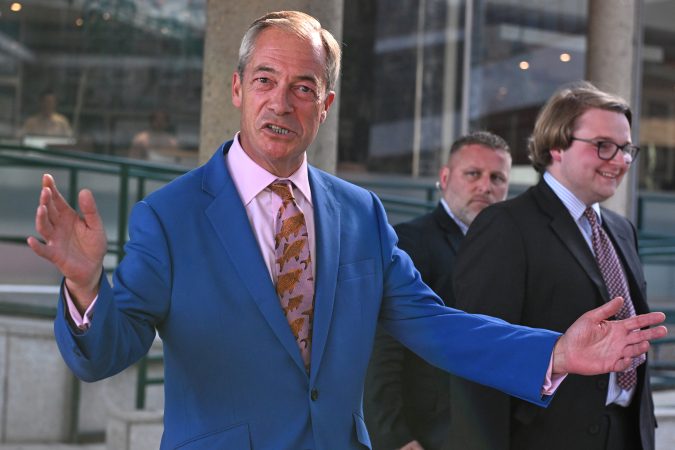
    LONDON — Nigel Farage, the leader of the populist right-wing Reform UK party, on Tuesday said he would resign his seat in Parliament and run for reelection in his Clacton seat to answer criticism of his financial affairs.

    The unexpected move comes after recent revelations about gifts and financial support received by Farage, both from a cryptocurrency billionaire and from a political ally who was once convicted of fraud in the United States.

    “I have decided that the people of Clacton should be the judges of my actions,” Farage said in a statement that was broadcast on his party’s YouTube channel. “This will be a ‘people versus the establishment’ by-election,” he added, referring to a special parliamentary election.

    The success of Farage, whose anti-immigration party has led in opinion polls for more than a year, was instrumental in destabilizing Prime Minister Keir Starmer, who announced his resignation last month.

    But Farage has suffered several setbacks lately amid growing scrutiny of his financial affairs.

    In May, it emerged that he had received an undisclosed gift of 5 million pounds (about $6.7 million) from a cryptocurrency billionaire, Christopher Harborne, a Briton who lives in Thailand.

    Farage argues that the gift was unconditional, was made before he won a seat in Parliament in the general election in 2024, and there was no requirement to declare it. However, Daniel Greenberg, Parliament’s standards commissioner, has opened an investigation into whether the money should have been made public under rules that require new lawmakers to declare some financial benefits received in the 12 months before their election.

    Over the weekend, the Sunday Times of London reported that Farage had separately failed to declare benefits provided by a political ally, George Cottrell, a convicted fraudster who served prison time in the United States.

    According to the newspaper, Cottrell’s support included providing social media staff members who worked for Farage in the year before he was elected, as well as the use of a property rented by Cottrell near Buckingham Palace.

    Farage has insisted he followed all of the rules and has accused journalists of “despicable behavior” and of hounding his family.

    However, in his statement Tuesday, Farage suggested that the Sunday Times article had now triggered a second investigation, saying that, “Despite the fact that many of the things that were written in the article were inaccurate or irrelevant, yet another standards investigation is underway.”

    If Greenberg finds that the gift from Harborne should have been declared, Farage might, under British parliamentary rules, have been suspended from Parliament and forced to fight for reelection in his parliamentary constituency of Clacton, in eastern England. So the announcement Tuesday effectively preempts that possible outcome, although it would not stop the findings being published.

    Farage, a highly effective campaigner and a longtime disrupter of British politics, will likely be confident of winning the seat again, having achieved a majority of 8,405 votes in the 2024 general election. Polling suggests he remains popular in the area.

    However, even a convincing victory there would not guarantee an end to the scrutiny of Farage and his finances as he attempts to convince the country he should become its next prime minister. The next general election must take place by 2029.

    Reform UK has recently faced competition on its right flank from a far-right party called Restore Britain, which was founded by Rupert Lowe, once an ally of Farage, after a bitter public rift with him.

    Despite Reform’s success in May in local elections in Wales, Scotland, and British municipalities in England, the party has also suffered some reverses. Last month it lost a crucial special parliamentary election in Makerfield, in northwest England, which was won by Andy Burnham, who is expected to succeed Starmer.

    Earlier this year, it lost in another special election in nearby Gorton and Denton to an insurgent Green Party. And last year, it suffered a similar fate in Caerphilly in Wales, in a special election to the Welsh parliament, which was won by the center-left nationalist Plaid Cymru party.

    In national polls, Reform’s support has fallen from about 30% last year to about 25% now, with Labour and the Conservatives around 20% each.

    This article originally appeared in the New York Times.

  • AP-NORC poll: About 3 in 10 US adults believe Israel has committed genocide against Palestinians

    NEW YORK — After decades of reliable bipartisan backing for Israel, a new AP-NORC poll reveals a dramatic erosion of support for the longtime U.S. ally, with rising opposition from Democrats and signs of division among Republicans.

    The survey by the Associated Press-NORC Center for Public Affairs Research arrives at a moment when a once-consensus foreign policy issue is increasingly polarizing Americans along partisan and generational lines, driven by criticism for Israel’s conduct nearly three years after the outbreak of its latest war with Hamas in Gaza.

    About one-third of U.S. adults — including roughly half of Democrats — believe that Israel has committed genocide against Palestinians during the war in Gaza, an accusation that’s been leveled by some human rights organizations and vehemently denied by Israel and the U.S. government. About 2 in 10 Americans say Israel has not and the rest, about half, don’t know enough to say.

    A similar share, 30%, of Jewish adults say Israel has committed genocide, although about half, 49%, say it has not.

    Harold Kalmus, a 69-year-old Democrat from Arden, Del., who describes himself as Jewish by birth, said he remembers being proud of Israel when he was younger. Not anymore.

    “I realize that there is a threat from Hamas. And I realize they’re in a very difficult situation, but what they have done is just an unspeakable horror,” he said of Israel’s military action against the Palestinians. “They’re trying to wipe out a civilization as far as I’m concerned.”

    The findings show sharply eroded views of Israel in the U.S., nearly three years after Hamas’ attack on Oct. 7, 2023, which left 1,200 people dead in Israel, mainly civilians, while 251 hostages were taken back to Gaza. More than 73,000 Palestinians have died in Gaza according to the Hamas-run Gaza Health Ministry, which doesn’t distinguish between civilian and militant deaths, including more than 1,000 killed since the beginning of the latest ceasefire. American sympathies had been shifting toward the Palestinians and away from the Israelis since around 2020, according to other polling, but has nose-dived since the latest war in Gaza began.

    Many Americans, about 4 in 10, don’t know enough to say whether Israel’s immediate military response to Hamas’ attack or its ongoing military operations were justified. Among those who did have an opinion in each case, most say the initial retaliation was justified — but a majority think its current actions are not.

    About three-quarters of Jewish adults said Israel’s initial response was justified, but only about 4 in 10 believe that about its ongoing operations.

    Only about one-third of U.S. adults view Israel as an “extremely” or “very” important issue to them personally. But it’s been a searing topic in American politics as the relationship between the two countries remains tense, just four months before high-stakes midterm elections determine the balance of power in Congress for President Donald Trump’s final two years in office. Vice President JD Vance recently criticized Israeli leaders who have expressed frustration with Trump, while vocal critics of Israel recently defeated establishment-backed Democrats in New York and Colorado primaries.

    Democrats’ support for Israel drops

    The AP-NORC poll reveals a decisive shift within the Democratic Party.

    About 58% of Democrats now say the U.S. is “too supportive” of the Israelis, up from 45% in an AP-NORC poll from January 2024 when former President Joe Biden was in office. That includes 51% of Jewish Democrats in the new poll.

    Roughly 6 in 10 Democrats, 62%, say the U.S. is “not supportive enough” of the Palestinians, up from 49% in 2024. Younger Democrats — those 45 and younger — are still more likely than older ones to say that the United States is “not supportive enough” of the Palestinians, but older Democrats are catching up to their younger counterparts. About 57% of older Democrats now say the U.S. should do more for the Palestinians, up from 39% two years ago.

    Joy Jennik, a 73-year-old Democrat from Brookfield, Wis., said she didn’t have strong opinions about the U.S. relationship with Israel until after Hamas’ Oct. 7 attack.

    Now, she believes Israel is guilty of genocide.

    “The Gaza Strip, there’s not a lot left of it. Those poor people are barely living,” said Jennik, a retired home economics teacher.

    GOP stays behind Israel, but less so among young Republicans

    Just a sliver of Republicans, 13%, describe Israel’s actions as genocide, although there is an apparent age gap. About 2 in 10 Republicans under 45 say Israel has committed genocide, while about 1 in 10 Republicans ages 45 and older say the same.

    Overall, 60% of Republicans describe the U.S. support for Israel as “about right.” Only about 2 in 10 Republicans say that the United States is “too supportive” of the Israelis, although Republicans under 45 are more likely to say this.

    The share of Republicans overall who say the U.S. is “too supportive” of Israel has not changed meaningfully since 2024, but the share who say the U.S. is “not supportive enough” has shrunk from 39% to 15%.

    Mike Cardona, a 70-year-old Republican from suburban Phoenix, said he’s pleased with the level of support that the U.S. is giving Israel and rejects the notion that Israel has committed genocide.

    “I wish they’d gone in harder and better,” Cardona, a retired industrial supply salesperson, said of Israel’s military action in Gaza. “Unfortunately, some innocents will be hurt, but Hamas and Hezbollah never took that into consideration when they were killing children and women in Israel.”

    Netanyahu is broadly unpopular, while views of Mamdani are split

    In interviews, several respondents emphasized that their criticism of Israel was focused on its leaders, especially Prime Minister Benjamin Netanyahu, who is perceived as closely aligned with Trump after repeated clashes with Democratic presidents.

    Overall, only 20% of U.S. adults have a favorable view of the Israeli prime minister, while about twice as many, 38%, have an unfavorable view. About 41% don’t know enough to have an opinion.

    Netanyahu is particularly unpopular among Jewish adults: about 6 in 10 view him unfavorably, while about one-third see him positively.

    Younger adults, regardless of party, are more likely than older adults to say they don’t have an opinion about Netanyahu. But while older Republicans see Netanyahu more positively than negatively, younger Republicans’ views tilt unfavorably.

    New York City Mayor Zohran Mamdani has gained prominence as an outspoken critic of Israel, and 27% of U.S. adults have a favorable opinion of the 34-year-old democratic socialist. Another 28% of U.S. adults have an unfavorable opinion, while 44% don’t know enough to say.

    Jewish adults, who overwhelmingly identify as Democrats, have a more positive view of Mamdani than of Netanyahu, with 44% viewing the New York City mayor positively, 39% viewing him negatively, and 17% saying they don’t know enough to say.

    About half of Democrats overall have a favorable impression of Mamdani and only about 1 in 10 have an unfavorable view of him, while the rest, about 39%, don’t have an opinion.

    Meanwhile, the U.S.-Israel relationship is not top of mind for many Americans as they think about the upcoming midterm elections.

    For people like Michael Ripka, a 34-year-old stage hand from Casper, Wyo., who typically votes Republican, the economy is by far the most important thing on his mind.

    “Everything is mad expensive,” he said. The conflicts in the Middle East, he added, is “100% a very big distraction.”


  • Rahm Emanuel to tell Israel its alliance with the U.S. cannot ‘survive as it has been’

    Rahm Emanuel to tell Israel its alliance with the U.S. cannot ‘survive as it has been’

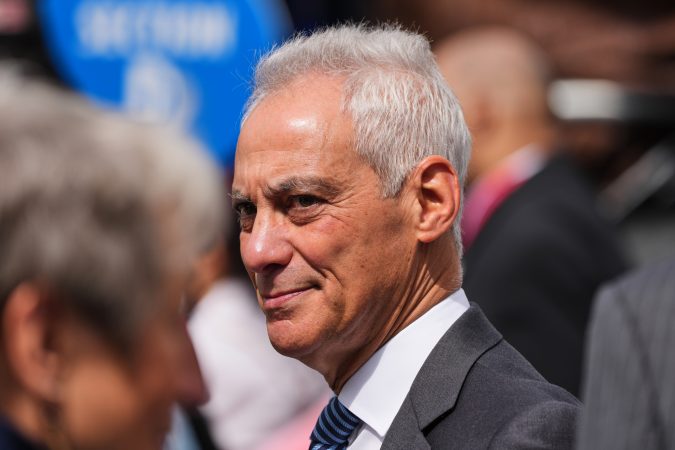
    Rahm Emanuel, the former Chicago mayor and potential Democratic presidential candidate, plans to use a speech in Tel Aviv on Wednesday to warn that America’s relationship with Israel is “not sustainable” unless the Israeli government sharply changes course.

    Emanuel, according to draft remarks provided to the Washington Post, plans to offer criticism of all parties involved in the decades-long conflict between Israel and its Arab neighbors — warning that Israel has become a “pariah” under Prime Minister Benjamin Netanyahu, calling out “the corruption of the Palestinian leadership” and challenging the “unconditional support” the United States has offered Israel.

    Emanuel, who is Jewish and whose father was born in Jerusalem, plans to tell the Israeli audience that the relationship between the United States and Israel is “at a crossroads” and cannot “stand or survive as it has been,” given the country’s harsh treatment of Palestinians in the Gaza Strip and the West Bank.

    “The United States cannot continue to finance and support that cynicism in silence,” Emanuel plans to tell the audience at Tel Aviv University. “You cannot fight indefinitely against a world that has stopped believing you have the right to fight. You must instead find a new sustainable path to peace, security, and economic prosperity.”

    The debate over Israel and Palestinian territories is causing enormous upheaval in the Democratic Party, where negative views of Israel have shot up since its lethal invasion of Gaza following the Hamas attacks of Oct. 7, 2023.

    Democratic lawmakers in New York and Colorado suffered primary defeats recently against political newcomers critical of their past backing of Israel, while Democrats weighing 2028 presidential runs are already facing tough questions on the Middle East. Party leaders have yet to find a way to navigate between those who still fundamentally support Israel, most of whom nonetheless criticize the Netanyahu government, and those who want to end all economic and military cooperation.

    Emanuel may be in a particularly sensitive spot because his connections to Israel are notable. His uncle is buried in Jerusalem, and he served as a civilian volunteer for the Israeli military during the 1991 Gulf War. He also worked on Arab-Israeli peace as a top aide to presidents Bill Clinton and Barack Obama.

    Emanuel said in an interview that he opted to “come and be frank” by speaking in Israel, rather than “shooting spitballs from across the Atlantic.” In a possible shot at other Democrats considering presidential runs, he added, “I don’t think it takes a lot of courage to criticize Israel from the opinion pages of any publication or from the floor of the Senate.”

    In his prepared remarks, the former congressman says the push for a “Greater Israel,” one that includes Gaza and the West Bank, is as “self-destructive and fanatical” as the demands for a Palestine stretching “from the river to the sea.”

    Emanuel also plans to outline a three-part proposal: full diplomatic relations between Israel and its Arab neighbors, who will be responsible for standing up a credible Palestinian authority; economic investment to deepen connections between Israel and its Arab neighbors; and an end to the “American taxpayer’s subsidy of Israel’s defense budget.”

    But the tone of his speech could be as important as the content. “Hear me now: Israel will be alone if its leaders choose to attempt to annex the West Bank and pursue the fantasy of a Greater Israel,” he plans to say. “America will not and cannot be complicit or complacent in that endeavor.”

    In the interview, Emanuel said his central message is that the status quo cannot continue.

    “I happen to think the alliance, if done right, serves American interests. But if it doesn’t, I’m going to say, ‘This is going to change,’” Emanuel said. “And if it doesn’t change, it can’t stay as is. This is not sustainable for the United States.”

    Netanyahu comes in for particular criticism. “The prime minister and his government have led Israel into a dead end,” Emanuel plans to say.

    Emanuel and Netanyahu have a tangled history. While working as Obama’s chief of staff, Emanuel challenged the prime minister on new housing in the West Bank, leading to headlines in Israel that Netanyahu called Emanuel and Obama adviser David Axelrod “self-hating Jews.”

    Emanuel now wields that insult like a badge of honor, given Netanyahu’s low standing among Democrats. “I didn’t need a war to know that what he was going to do was going to lead to perpetual war. That’s what I said to him in 2009,” Emanuel said in the interview. “If there was a prediction I wanted to be wrong on, that was it.”

    Still, the speech reads like a statement of tough love from a friend, one that finds the former mayor leaning on his connections to the nation to deliver blunt criticism. Emanuel plans to open by noting his uncle’s grave site on Jerusalem’s Mount of Olives and his father’s service in the Irgun, a Jewish underground militia, during the 1948 Arab-Israeli War.

    “The most important thing a true friend can do is to tell the truth even when it’s painful,” he plans to say. “And today is a day for truth.”

    Emanuel, unlike many critics of Israel, contends in his speech that Israel over the years has repeatedly offered the Palestinians sovereignty in exchange for security, only to be rebuffed.

    Emanuel said his trip to Israel is part of a broader strategy to mount a nontraditional presidential campaign, should he “decide to take the dive into the deep end.”

    “I’m not going to do a campaign the traditional way,” Emanuel said, adding that if he chooses to run, he will not make any announcement until after the 2026 midterms.

    The dramatic shift in Democrats’ position on Israel began in the Biden administration. President Joe Biden, a traditional pro-Israel Democrat, flew to Israel to show support in October 2023 after Hamas militants surged over the Gaza border and killed some 1,200 people.

    As Israel mounted an aggressive retaliatory military campaign that ultimately killed more than 70,000 Palestinians, Biden was increasingly besieged by progressive protesters at his events hurling chants of “Genocide Joe.”

    Even with the 2028 election more than two years away, potential Democratic hopefuls are already facing questions about their stance toward Israel.

    California Gov. Gavin Newsom in March referred to Israel as “sort of an apartheid state,” a remark he later walked back under pressure. Illinois Gov. JB Pritzker was sharply critical of AIPAC, the influential pro-Israel group, after it spent lavishly on political campaigns in his state.

    Kentucky Gov. Andy Beshear, asked in a Politico interview in March whether Israel was guilty of genocide in Gaza, responded, “That’s becoming one of those new litmus tests that we said we would never do as a party again.”

    He added that he supports Israel and its right to exist but disapproves of Netanyahu’s handling of the Gaza war.

  • Platner should drop out of Maine’s U.S. Senate race after sexual assault allegation, Sanders says

    PORTLAND, Maine — Sen. Bernie Sanders on Tuesday became the latest and most notable lawmaker to pull support for Maine Democratic U.S. Senate nominee Graham Platner following an allegation of sexual assault, adding to a chorus of calls for him to step aside as party leaders scramble to determine the next steps.

    Sanders, a Vermont independent who caucuses with Democrats, has long backed Platner in the high-stakes race against Republican Sen. Susan Collins, but he said in a statement that he spoke with the candidate and “in light of these very serious allegations, I have recommended that he step aside.”

    Platner, who denies the allegation, has not heeded the wave of calls to resign as the nominee. Instead, he posted a video on Monday saying he’s considering the next steps for his campaign while canceling town hall events.

    Platner posted the video after reports that a woman who previously dated the first-time candidate said he drunkenly forced her to have sex after she told him to stop.

    The allegation is the latest in a string a controversies Platner has faced and so far weathered since the oyster farmer and Marine veteran entered the race. But the seriousness of the assault claim has put the Maine contest — and Democrats’ ability to win control of the Senate — at risk, with even some of his strongest supporters questioning whether Platner should continue his campaign.

    A Platner voter is ‘heartbroken’

    Joanie Monteith, a passionate supporter from the southern Maine town of York who organized a trivia night about Platner in March, said through tears Tuesday that she was “numb” and “heartbroken” at the news. She was waiting for another public statement from Platner before making a decision about whether she could keep supporting him.

    “I’m in tears. I’m numb and I’m waiting for what Graham has to say. I’m trying not to be a part of this public trial. And I’m heartbroken. And I’m heartbroken for him and his wife.”

    She added she believes the allegations are serious.

    “I’m not going to blame a victim. Because if this is true I feel very bad for the woman,” she said. “You just don’t know how to feel.”

    Jenny Racicot, who lives in Maine, told Politico that Platner entered her home in 2021 while drunk and assaulted her. Racicot said she had been in an on-and-off relationship with Platner, but she cut off contact with him after that night and told him the incident wasn’t consensual. She said in a CNN interview on Monday evening that she opted not to fight back for fear of Platner, a former Marine, becoming more violent.

    Another Maine voter, Lee Holman, said she wants Platner to stay in the race.

    “I feel like the people of Maine have spoken,” the Democrat said. “If they wanted Janet Mills, they could have voted for her.”

    She said the allegation against Platner may be legitimate, but she questions the timing. Democrats, she added, can be too quick to “throw the baby out with the bathwater” by calling on politicians facing allegations to resign.

    “Every time we think we have a chance to snatch our democracy back, something gets in the way,” she said.

    Replacing Platner may further divide Democrats

    The pressure for Platner to withdraw from the Senate race has only increased given the short deadlines Maine law allows for replacing general election candidates. There is no mechanism for Democrats to remove Platner from the ballot, meaning Platner must first opt to drop out of the general election before a replacement can be selected. The deadline to withdraw is 5 p.m. on July 13.

    Just who should replace Platner if he drops out appeared to already be further splintering Democrats. Some argued the next Democrat should echo Platner’s progressive messaging, pointing to his success at rallying voters across the state. Others cautioned that having ties to Platner will only doom an already uphill campaign against Collins.

    Joe Baldacci, a Democratic state senator, said he’s concerned about what the latest allegations will do to the voter excitement over the past year.

    “I think the major concern, even with a nominee, a new replacement, is that person is going to start very much behind the eight ball,” Baldacci added.

    Gov. Janet Mills, who sought the Democratic nomination but dropped out before the June 9 primary, could be considered as a nominee. Mills was supported by Democratic Senate leader Chuck Schumer but abandoned her campaign, saying she couldn’t raise the money needed to compete.

    Another possible replacement is Troy Jackson, Maine’s former state senate president, who unsuccessfully ran to be the Democratic gubernatorial nominee earlier this year with the backing of Platner and Sanders.

    While he hasn’t publicly said he’d run for the Maine Senate seat, U.S. Rep. Ro Khanna threw out his name as someone who stands up for “progressive values” after the California Democrat withdrew his support for Platner.

    Other names include Nirav Shah, the former director of Maine’s Center for Disease Control and Prevention. Shah came in second in this year’s Maine Democratic gubernatorial primary, where he was considered more moderate compared with Jackson.

    In a statement Tuesday, Shah said he’s “evaluating” whether he should enter the race should Platner step aside.

    Other potential replacements include Shenna Bellows, the current Maine Secretary of State; Dan Kleban, founder of Maine Beer Company; Maine U.S. Rep. Jared Golden, who is not running for reelection; and Hannah Pingree, currently Maine’s Democratic gubernatorial nominee.

  • U.S. gave Tehran details on Iranian asylum seekers, lawsuit alleges

    U.S. gave Tehran details on Iranian asylum seekers, lawsuit alleges

    A lawsuit filed Tuesday in Washington alleges the Trump administration violated U.S. law by providing Iran’s government with confidential information detailing the asylum applications for Iranians it planned to deport.

    The extraordinary claim, outlined in court papers submitted by the Iranian American Legal Defense Fund and Public Citizen Litigation Group, contends that the materials it alleges were shared with the Iranian government could jeopardize the lives of pro-democracy protesters along with members of religious minorities and the LGBTQ community and their families.

    An annual State Department report on human rights in Iran, released last year under the Trump administration, called the situation in Iran “severe” and worsening, with political protest movements and religious minorities targeted by authorities. Previous U.S. administrations have reported that Iranian authorities have targeted LGBTQ people for prosecution and subjected them to humiliating treatment.

    “The law couldn’t be more clear that information in asylum applications is protected,” said Michael Kirkpatrick, a Public Citizen attorney involved with the complaint. He called the case “potentially a matter of life and death” for Iranian asylum seekers who end up deported back to Iran.

    Since returning to office last year, immigration hard-liners in the Trump administration have taken several steps that opponents say has eroded the United States’ established practice of allowing migrants who say they are fleeing persecution to seek asylum in the country. The administration and its allies have argued that the asylum system had become overwhelmed and, in some cases, abused by individuals making dubious claims.

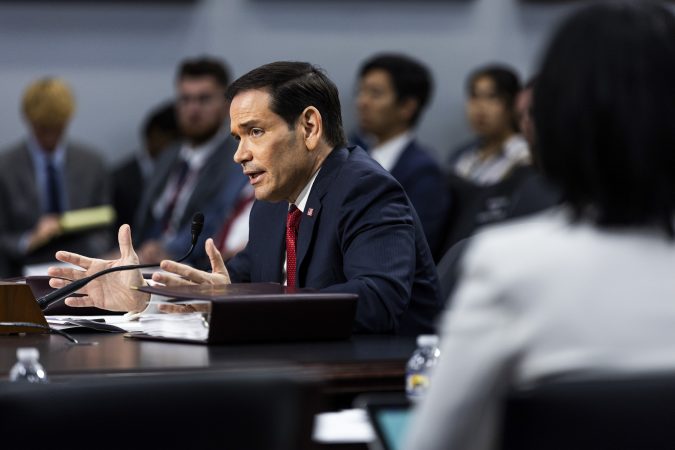
    The lawsuit names as defendants Secretary of State Marco Rubio, Homeland Security Secretary Markwayne Mullin, and acting director of U.S. Immigration and Customs Enforcement (ICE) David Venturella, along with the agency each leads.

    Spokespeople for the three agencies did not provide comment. The Iranian Mission to the United Nations did not respond to a request for comment.

    The lawsuit seeks an end to the alleged practice and to require that the U.S. government notify anyone whose personal information was shared with the Iranian government without their consent. It is not immediately clear how the government might respond or whether the case would succeed.

    Despite long-running tensions between the U.S. and Iranian governments, which escalated into all-out warfare in February, the Trump administration has deported more than 100 Iranians back to the country since President Donald Trump’s return to office in 2025, according to advocate groups that track deportations and reports in the Iranian news media.

    Iranian officials said last year that they had reached an agreement with the Trump administration to accept approximately 400 Iranian deportees. More recently, the administration included at least one Iranian national among a group of people deported from the United States to the Central African Republic, lawyers for the group have said.

    The lawsuit filed Tuesday in U.S. District Court in D.C. includes accounts of alleged secret meetings between officials from the Trump administration and representatives of the Iranian government dating to March 2025.

    Because the United States does not have diplomatic relations with Iran, the government in Tehran is represented in Washington by the Iranian Interests Section at the Embassy of Pakistan.

    Kirkpatrick told the Washington Post that the allegations contained in the lawsuit are based, in part, on the account of an Iranian government official who is assigned to the Pakistani Embassy and accounts from deportees who have said that Iranian officials knew details from their applications seeking asylum in the United States.

    The lawsuit does not identify the Iranian government officials or the deportees to whom attorneys spoke. The Pakistani Embassy did not respond to a request for comment.

    At the initial meeting in March 2025, the lawsuit alleges, State Department officials met with representatives of the Iranian Interests Section in Washington. The lawsuit alleges that the discussion encompassed the Trump administration’s desire to deport Iranians to Iran, with the administration officials handing over a list of roughly 150 names. The lawsuit does not identify by name any of the meeting’s participants.

    After this encounter, the lawsuit alleges, it was agreed that officials from ICE and the Iranian government representatives would hold monthly meetings so that the administration could share information about Iranians in U.S. custody.

    ICE falls under the Department of Homeland Security, which at that time was led by Kristi L. Noem. Mullin took over as secretary in March after Trump removed Noem from the post. Noem now serves as the special envoy to the Shield of the Americas, a State Department position. The State Department did not respond when asked if she wanted to comment.

    The lawsuit also alleges that while in-person meetings between ICE officials and Iranian officials were halted after Feb. 28, when the U.S. and Israel started the war with Iran, ICE officials continued to send documentation to the Iranians.

    Roughly 115 Iranian nationals are believed to have been sent back to Iran on three U.S. deportation flights, according to advocacy organizations that track the deportations. The most recent is said to have occurred Jan. 26, only weeks after anti-government protests there were met with a severe response that is estimated to have left thousands dead.

    Trump had earlier this year expressed sympathy with the protesters, telling them on Jan. 13 that “help is on the way.”

    It is not clear how many of those deported back to Iran had asylum claims pending before the U.S. government. Lawyers for some of the deported Iranians have said that people from at-risk groups were among those deported on the flights.

  • Democrats begin pulling Platner endorsements after Maine candidate faces sexual assault allegation

    A woman who previously dated Maine Democratic Senate candidate Graham Platner said he drunkenly forced her to have sex after she told him to stop, according to a Politico report released Monday, leading prominent supporters to pull their endorsements and throwing a must-win race for the party into turmoil.

    Platner denied the allegation, but said he would be considering next steps for his campaign.

    “Regardless of the inaccuracy of the reporting but mindful of the political reality it will inflict, we’re taking the time to reflect on the best path forward,” he said in a video released on social media.

    Jenny Racicot, who lives in Maine, told Politico that Platner entered her home in 2021 while drunk and assaulted her. Racicot said she had been in an on-and-off relationship with Platner, but she cut off contact with him after that night and told him the incident wasn’t consensual. A voicemail left at a number listed for Racicot seeking comment did not receive an immediate response, but she said in a CNN interview on Monday evening that she opted not to fight back for fear of Platner, a former Marine, becoming more violent.

    “He violated multiple layers of consent that night,” Racicot said.

    Platner’s campaign did not immediately respond to an email and phone message from The Associated Press seeking comment.

    “Any accusation of non-consensual behavior is categorically false,” Platner said in his video.

    Uproar in the Democratic Party

    Platner won the Democratic nomination last month, setting himself up to face Republican Sen. Susan Collins, who has beaten back previous attempts to dislodge her from the seat that she’s held for nearly three decades.

    Although Platner has long been controversial, the sexual allegation sparked a flight away from the candidate, who canceled a handful of town hall events. The main campaign arm of Senate Democrats called on Platner to drop out and said it would spend no money on the race, which is considered critical to control of the chamber, if he is the nominee.

    “Graham Platner needs to immediately withdraw as the Democratic nominee for Senate and allow Maine Democrats the opportunity to choose a new candidate who can defeat Susan Collins,” Kirsten Gillibrand, chair of the Democratic Senatorial Campaign Committee, and Chuck Schumer, the top Senate Democrat, said in a joint statement.

    The Democratic National Committee sent out an email soliciting money for Senate races hours after the Politico report posted, but Maine was not one of them. Ken Martin, the party chair, said, “Maine Democrats should select a new nominee.”

    Rep. Ro Khanna, a California Democrat who stood by Platner even as the candidate faced previous controversies, said Monday’s allegation was enough. “I’ve been very clear that sexual assault or violence against women is a red line,” Khanna said. “These allegations are very serious and credible. Graham Platner should drop out from the race. I am withdrawing my endorsement.”

    Arizona Sen. Ruben Gallego and Massachusetts Sen. Elizabeth Warren announced they were pulling their endorsements and called on Platner to drop out. The Democratic leaders of Maine’s legislature and top officials at the state Democratic Party did the same.

    “This Senate race comes at a pivotal moment in the struggle against a government, supported by Senator Collins, that serves the interests of the wealthy and powerful at the expense of ordinary Maine people. It is essential that we refocus this campaign on that struggle,” party chair Charlie Dingman, vice chair Imke Schessler and executive director Devon Murphy-Anderson said in a joint statement.

    Collins issued only a brief statement.

    “These allegations are appalling,” she said. “Nevertheless, it is not up to me to choose the Democratic nominee for Senate.”

    State law allows Platner to be replaced on the ballot if he withdraws by July 13. The replacement candidate must be named by July 27.

    The Associated Press generally does not name victims of sexual assault, but in this case Racicot spoke in an interview with Politico.

    A succession of campaign controversies

    Platner had never before held elected office, and Democratic leaders in Washington preferred Gov. Janet Mills in the primary. However, Mills, 78, dropped out as Platner, 41, consolidated support with help from progressive leaders at a time when Democratic voters have grown disenchanted with the party establishment.

    While some Democrats came around to support him after his commanding primary win, Platner’s controversial history had already left others openly despairing of their chances of winning the race. A veteran who also worked for a private security contractor, Platner has a chest tattoo recognized as a Nazi symbol, reportedly sexted with other women shortly after getting married and had a history of inflammatory comments on social media.

    In 2013, Platner posted on Reddit that people shouldn’t get so drunk “they wind up having sex with someone they don’t mean to” and that sexual assault victims should “just take some responsibility for themselves.” He’s since apologized for the post and says he no longer holds those beliefs.

    The New York Times also reported that Platner had volatile relationships with previous girlfriends, one of whom said an argument became physical. Platner denied the allegation.

    Hasan Piker, a leftist commentator and streamer who backed Platner, seemed to reverse himself Monday following the Politico report.

    “If new evidence presents itself, I’m going to change my perspective — it’s that simple,” Piker said during a livestream on Twitch, adding: “This is a clear-cut instance of verifiable sexual assault allegations. It’s completely irredeemable.”

    Our Revolution, a progressive organization founded by Sen. Bernie Sanders of Vermont, said Platner should withdraw because the allegations “are too serious to treat as a distraction from the campaign or the issues.”

    It also hinted at the potential battle over who would replace Platner.

    “Whoever leads this movement forward must be someone who has actually lived the fight Graham Platner ran on: a record with working people, with unions, against corporate money, already tested and trusted by the same base that delivered this result,” said a statement from Joseph Geevarghese, executive director of Our Revolution.

    Platner had pitched himself as a blue-collar oysterman and veteran who could reach disaffected voters. But as controversies mounted, some state Democrats had heartburn, embodied by Mills’ refusal to endorse Platner after she dropped out of the primary. Chatter circulated about possible replacements, including former state senator and logger Troy Jackson and Secretary of State Shenna Bellows.

    “I’ve known this has been coming,” said Marie Follayttar, a Democrat and community organizer in Maine, talking about the growing whispers inside the state’s small population that had been bracing for yet another revelation surrounding Platner. “I’ve been scared and I’ve been sick waiting.”

    Mike Connelly, a business owner and Democrat in Brunswick, Maine, said in an interview that he wants Platner to drop out after the latest allegations. But Connelly said he’d vote for him if he stays in.

    “I would vote for a comatose Democrat before I would vote for Susan Collins,” Connelly said.

  • Here’s what we know about Sen. Mitch McConnell’s health

    Sen. Mitch McConnell has been hospitalized for more than three weeks, and his office still will not say what sent the 84-year-old Kentucky Republican there, his latest condition, or when he might return.

    McConnell, who has served in the Senate since 1985 and led Senate Republicans from 2007 until 2025, has not cast a vote since June 11. His absence comes as Republicans are navigating a narrow Senate majority. It has helped stall spending bills in the Appropriations Committee and added uncertainty around a senator already in the final months of his career.

    Here’s what we know about his health.

    What happened to McConnell?

    McConnell was admitted to the hospital on the morning of June 14, according to a statement from his office that said that he was “receiving excellent care.”

    EMS dispatch audio from the morning of June 14 suggests that emergency medical personnel were sent to McConnell’s home to attend to an unconscious person in cardiac arrest.

    According to the dispatch audio, a call went out at 8:36 a.m. for an “unconscious” person at McConnell’s address, and an ambulance was sent with an advanced life support crew. Six minutes later a medic radioed that CPR was “in progress.” At 8:43 a.m., a dispatcher relayed the emergency as a “cardiac arrest.” McConnell is named nowhere in the recording, though the address is his.

    The next day, Senate Majority Leader John Thune (R., S.D.) and Senate Majority Whip John Barrasso (R., Wyo.) — the top two Senate Republicans — told reporters that they had spoken to McConnell.

    What else do we know?

    McConnell’s office has been quiet on his condition in the weeks since and has not provided additional information on his treatment or the cause for his hospitalization.

    On June 22, eight days after McConnell was hospitalized, his office said that he wouldn’t be voting that week “as he continues his recovery.”

    Thune, on the same day, told reporters that he spoke with McConnell “toward the end of last week” and that McConnell “sounded good and was anxious to get back.”

    A July 2 statement from McConnell’s office provided little new information but said he was still in the hospital.

    “The Senator continues to improve, and is working closely with his staff on Kentucky and Senate matters while the Senate is out of session,” his office said.

    His office has not provided additional information since and did not respond to a request for comment on Monday.

    What does his continued absence mean?

    Any extended absence for McConnell could make matters more difficult for Republicans to pass legislation this year, as it would temporarily shrink their majority to 52-47 in the chamber.

    McConnell’s absence also further complicates matters for the Senate Appropriations Committee, which is already running behind schedule. The committee has not advanced any spending bills for the 2027 fiscal year due to disagreements over defense funding.

    Without McConnell, the Senate Appropriations committee is split evenly between Republicans and Democrats. This could prevent Republicans from advancing their spending priorities if all Democrats vote against them, as any vote within the committee that splits evenly along party lines would fail.

    The committee already had postponed plans to mark up spending bills during the week of June 22 due in part to McConnell’s absence, according to a Republican aide who spoke on the condition of anonymity.

    McConnell did not run for reelection this year and is set to retire from the Senate in January at the end of his term.

    What health issues has McConnell faced before?

    McConnell’s health has drawn repeated attention in recent years.

    McConnell had polio as a child and has long had difficulty climbing stairs.

    In March 2023, he was hospitalized after falling at a Washington hotel and was away from the Senate floor for several weeks. Months later, he had two highly public episodes in which he stopped speaking during news conferences and had to be helped by others.

    He was injured again in December 2024 after tripping outside a Senate Republican lunch, and earlier this year, he spent more than a week in the hospital after his office said he had flulike symptoms.

  • Macron arrives in Syria as first major western leader to visit war-torn country under new leadership

    DAMASCUS, Syria — French President Emmanuel Macron arrived Monday in Syria, making him the first major western leader to visit the war-torn country since the ouster of Bashar al-Assad in 2024.

    Ukrainian President Volodymyr Zelensky visited in April but Macron is the first leader from western Europe or North America to do so.

    The French president’s visit comes during a period of relative calm in the Middle East after the monthslong war in Iran and Lebanon. He will travel next to Ankara, Turkey, for the NATO summit, where Syrian President Ahmad al-Sharaa is also expected to attend and hold a high-profile meeting with U.S. President Donald Trump.

    Syria’s state-run SANA news agency said Macron would visit with a business delegation to discuss regional security as well as business and investment opportunities.

    The French president was greeted at Damascus airport by Syrian Foreign Minister Asaad al-Shibani.

    “I have come to express France’s commitment to the Syrian people. For a sovereign Syria, united in its diversity and at peace with its neighbors,” Macron said in a post on X. “Together, let us open a new chapter of stability and peace.”

    France supports all those who can “contribute to build a new Syria” in line with the aspirations expressed since the 2011 Arab Spring, Macron’s office said, referring to a period of widespread uprisings across the Middle East that called for political change and reform.

    Macron will meet with al-Sharaa at the presidential palace and “engage directly with diverse Syrian people,” his office said.

    The French president’s meetings are scheduled throughout Tuesday, beginning with members of Syrian civil society, his office said, though no details were disclosed. Macron will then meet with al-Sharaa, before holding economic talks and signing memorandums of understanding. The two leaders will hold a joint news conference afterward.

    Macron hosted al-Sharaa in Paris in May 2025, where he urged European and U.S. leaders to lift longstanding sanctions on Damascus. Most of those sanctions have since been lifted.

    Paris supported Syria’s new leadership even at a time where others were skeptical of al-Sharaa’s Islamist-led rule and former role as the head of the Hayat Tahrir al-Sham militant group, previously linked to al-Qaida.

    Western governments were especially concerned about the treatment and inclusion of women and minorities, and whether Syria’s new government would transition into a more democratic rule.

    Syria has managed to sidestep the region’s recent conflicts, but the country is still battered from 13 years of war that left much of it in ruins, drove millions into poverty, and will cost hundreds of billions of dollars to rebuild. While Syria has signed memorandums of understanding with states and large companies for large investment projects, they have not yet come to fruition.