Category: Wires

  • Royals slugger Jac Caglianone latest to commit to participating in the Home Run Derby

    Royals slugger Jac Caglianone latest to commit to participating in the Home Run Derby

    Kansas City Royals slugger Jac Caglianone is the latest to commit to participating in the Home Run Derby on Monday in Philadelphia.

    The 23-year-old Caglianone joins Ben Rice from the New York Yankees and Tampa Bay’s Junior Caminero in the competition. The other five participants have not yet been announced.

    Five Kansas City players have previously participated in the event: Bo Jackson (1989), Danny Tartabull (1991), Mike Moustakas (2017), Salvador Perez (2021) and Bobby Witt Jr. (2024). None have come away with the title.

    Witt was the runner-up in 2024 when he hit 50 home runs in total. He hit 13 HRs in the final round, one shy of Teoscar Hernandez’s 14.

    In his first full season with the Royals, Caglianone is hitting .258/.322/.455 (77-for-299) with a team-high 14 home runs and 33 RBIs in 85 games. His 14 home runs have averaged 418 feet in length, which is tied for the best average in the majors this season.

  • The Vances added a chicken coop to the vice president’s residence. We had questions.

    The Vances added a chicken coop to the vice president’s residence. We had questions.

    Vice President JD Vance and his family are raising chickens at their residence at the U.S. Naval Observatory. The family has a dozen hens pecking inside a custom-made coop on a 72-acre federal observatory — but many other details about their experiment in raising chickens are unknown.

    The coop was designed to mirror the Queen Anne-style architecture of the vice president’s residence at Number One Observatory Circle. As such, the henhouse is not cheap: It cost between $100,000 and $120,000, according to the owner of the North Carolina company that built the structure. But U.S. taxpayers didn’t foot the bill. The coop was donated by the company.

    So who exactly will be raising the hens? And why are the Vances taking on this project? For eggs? For educational purposes? For feathered pets? A spokesperson for Vance did not respond to multiple emails seeking comment.

    The Washington Post turned to former and current backyard chicken keepers to gather insights on what may be going on at Number One Observatory Circle. We also talked to the guy who built the pricey coop. We even checked with a city official to discuss whether the Vances are following the proper protocols to raise hens in Washington.

    Who built the Vances’ coop?

    The henhouse and run were custom-built by Carolina Coops, which specializes in high-end structures for those looking to pamper their backyard birds. Owner Matt DuBoise said Fox & Friends Weekend co-host Rachel Campos-Duffy, wife of Transportation Secretary Sean P. Duffy, recommended him to the Vances. DuBoise had built a coop for the Duffys.

    The Vances’ henhouse is elevated — about 2 feet off the ground — and situated inside a shed that is protected from the elements, DuBoise said. The design is such that the owner does not have to walk through “chicken droppings and chicken bedding” to tend to the birds. The keeper can access the hens via interior shed doors. The attached run is predator-proof, DuBoise said, and includes a solid roof, which helps prevent avian flu from spreading to the flock, as it can be “transmitted with migratory birds flying overhead,” he said.

    Why are the Vances raising chickens?

    In the run-up to the 2024 presidential election, Vance raised alarms about the high cost of eggs, which was apparently affecting his family’s budget. He and his wife, Usha, have three children. At a supermarket stop in Reading, Pa., Vance turned to his kids and said, “These guys actually eat about 14 eggs every single morning. Is that right?”

    “Yeah!” one child responds, off-camera.

    The family’s daily consumption is probably a joke, but it highlighted a possible reason the Vances wanted a coop: In their prime, the second family’s 12 hens may each lay up to six eggs a week, nearly enough to cover the Vances’ daily needs. Like many hen keepers, the Vances will have to figure out what to do with their eggs: Eat some, give away some, maybe even donate some to a food bank that will accept them.

    The addition has led to speculation that there may be political motivations behind the flock’s appearance. It’s a theory that resonates with Danny Bowers, who keeps 19 chickens on a suburban property in Utah County, Utah. Bowers, who uses they/them pronouns, points out that some conservatives have embraced the values espoused by “trad wife” influencers, many of whom raise chickens.

    Who will do the actual work of raising the hens?

    It’s not clear, but Usha Vance, who is due to deliver the family’s fourth child later this month, may be off the hook for a little while — numerous state health departments say pregnant women should avoid handling chickens, especially chicks, because of the risk of salmonella infection.

    DuBoise said he expects the family to take a hands-on approach with the chickens. When he was at the Naval Observatory, installing the coop, the Vance children were “very, very active, asking great questions,” DuBoise said. “That’s always a great sign when the kids are very curious and wanting to get involved.”

    Is it legal to raise chickens in D.C.?

    Yes, but chicken keepers must meet some requirements before the city will issue them a permit. Every coop in Washington must be located at least 50 feet from a building “used for human habitation,” according to regulations. A henhouse and run must also be at least 250 feet from any property line or, failing that, the owners must get written permission from all neighbors located within 100 feet of their property line.

    There’s also a rule that you can’t keep roosters, said Tony Tomelden, the D.C. hospitality veteran who owns the Pug on H Street NE. Tomelden and his family raised chickens in their Brookland backyard for years, starting in the 2010s. Tomelden said it’s not easy to determine whether your chicks are cockerels (male) or pullets (female), unless you’re trained to know the difference. It’s only later, when a cockerel matures into a rooster, that owners learn — the hard way.

    “What they say is, ‘You’ll know it’s a rooster when it lets you know,’” Tomelden said. “And so one of them did.”

    I tried to confirm the regulations with a few people at D.C. Health. No one returned my calls or responded to my emails. But one city official said D.C. regulations don’t typically apply to federal property. He spoke on the condition of anonymity because he wasn’t authorized to talk to the media.

    But locals don’t follow the rules, either, the official said. “I know we have plenty of people in the city that are raising chickens on properties that don’t meet [the] requirements,” he said.

    Are there benefits to raising hens aside from eggs?

    Backyard keepers often develop an emotional attachment to their chickens. Take Clara Cho. Her parents, Yon and Francie, have raised hens at their suburban New Jersey home, outside New York City, since Clara, now 27, was a senior in high school. Clara had grown up with dogs and cats.

    The chickens “weren’t as affectionate as the cats or the dogs,” Clara remembered. “But they’d come for pets, and they would come out when you called them from the coop and everything. It was definitely sad when they passed away.”

    Bowers, the Utah chicken keeper, thinks of their hens, especially a bearded white Silkie bantam named Karen, almost as emotional support animals. When Bowers is having a particularly bad day — they suffer chronic pain from several autoimmune disorders — they will cuddle up with Karen.

    “You wouldn’t think a chicken could be such a comfort,” Bowers said. “But all I know is she’s 6 years old, and she better live to be, like, 20.”

    Is this the first time a president or vice president has raised livestock in office?

    Plenty of presidents have had livestock at the White House, including horses and cows, but the White House Historical Association found only one instance of a president raising chickens.

    According to White House chief usher Irwin Hood “Ike” Hoover’s 1934 memoir, Forty-Two Years in the White House, an admirer sent two dozen live chickens to the White House during Calvin Coolidge’s presidency in the 1920s. Coolidge apparently kept the chickens near a mint patch that Theodore Roosevelt started for his mint juleps.

    The White House Historical Association has not been able to verify the account from other contemporary sources.

    DuBoise, however, believes Vance will be the first to raise chickens at the vice president’s residence.

    Will the Vances save money on eggs by raising their own hens?

    It depends on how you crunch the numbers.

    The Post’s Unearthed columnist Tamar Haspel raised chickens for 15 years with her husband, Kevin, on their property in Cape Cod, Mass. If you read Haspel’s book To Boldly Grow, you quickly learn she and Kevin know how to stretch a dollar when it comes to raising birds.

    I asked Haspel to calculate how much it would cost the Vances to produce a dozen eggs, based on the best information we could gather. She figured a laying hen would produce about 24 dozen eggs a year, which, based on feed costs alone, would come to $1.46 per dozen. That’s more than 70 cents cheaper than the average price per dozen of large white Grade A eggs, which stood at $2.19 in May.

    But that price doesn’t factor in expenses such as water, supplemental feed, bedding, and the cost of the chicks. Nor does it factor in the price of the fancy coop, which the Vances did not pay for, but most Americans would. Haspel said that if you amortize the coop over the remaining months of the Trump administration, it would add $139 to every dozen eggs. If you amortize the structure over 10 years, it adds $35 to every dozen eggs.

    In other words, it wouldn’t be a bargain.

    “If you get a coop like that,” Haspel wrote via email, “don’t ever expect to make up the money in eggs. But mostly that’s not why people get chickens.”

  • George Hutchinson, the Supreme Court’s last official crier, dies at 102

    George Hutchinson, the Supreme Court’s last official crier, dies at 102

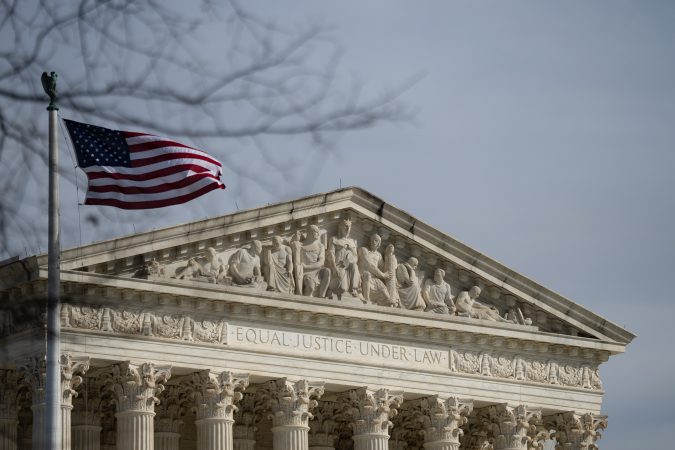
    George Hutchinson’s words were far from the most important spoken during Brown v. Board of Education. But they were the first.

    With a cry of “Oyez, oyez, oyez,” Mr. Hutchinson announced the arrival of the justices and gaveled the court to order, as he did for virtually every Supreme Court case from 1952 to 1962.

    Mr. Hutchinson, who died June 14 at 102, was the last crier of the U.S. Supreme Court, tasked with carrying out ceremonial duties that were later turned over to the court marshal.

    His tenure as crier coincided with one of the most momentous periods in the court’s history, a time when the justices extended constitutional protections to Mexican Americans, refused to review the espionage convictions of Julius and Ethel Rosenberg, and, in Brown v. Board, held that segregated schools were “inherently unequal” and unconstitutional.

    As court crier, Mr. Hutchinson opened many of those consequential moments and, as if in a high school cafeteria, shepherded discreet notes to the justices, including messages sent from one end of the bench to the other.

    Decades later, he provided a window into the day-to-day activities of one of the government’s most secretive bodies, said Clare Cushman, a historian for the Supreme Court Historical Society. Mr. Hutchinson could speak about the court’s Christmas parties or the carpenter shop in its basement, or recall the way soldiers were deployed to the court building following the Japanese attack on Pearl Harbor.

    “The big pieces are always recorded,” Cushman said, “but the little pieces, no.”

    Mr. Hutchinson was 15 when he joined the court in 1938 as a page, one of the knicker-clad young people who would assist the justices. There were two requirements: You had to be short, according to Mr. Hutchinson, who grew to 5-foot-8, and you had to have a financial need.

    Mr. Hutchinson’s father had died when he was an infant, and his meager page’s salary helped support his mother and sister. He spent his afternoons in the Supreme Court, running books and water to the justices, before being drafted into the Army at age 19, dispatched to Europe in the final months of World War II.

    When he came home, he rejoined the court, working out of the marshal’s office and eventually taking the job of crier, which dates to the Supreme Court’s first meeting in 1790. He was given a handwritten script — the words of the opening proclamation, which concludes, “God save the United States and this honorable court” — as well as a distinctive gavel.

    “There was no handle. All it was was the clonk,” he recalled in a 2019 interview. “I said, ‘Where’s the handle?’ They said, ‘This is tradition. You’ve got to use this.’ So for 10 years I was banging like this.”

    As crier, Mr. Hutchinson oversaw the pages, a group that grew to include Charles V. Bush, the first Black Supreme Court page, who was hired in the aftermath of Brown v. Board at the urging of Chief Justice Earl Warren.

    Mr. Hutchinson worked alongside the pages while assuming a sneakier job within the court each October. Many of the justices were baseball fans and wanted updates on the World Series, said Vance Morrison, a former page who as a teenager worked under Mr. Hutchinson. They would pass a paper to Mr. Hutchinson or a page, who would run to the offices, listen to the radio and quietly report the score.

    “We just worked with discretion,” Morrison said.

    In October 1960, as the Supreme Court considered the conviction of a man who had failed to comply with the House’s anti-communist investigations, Mr. Hutchinson helped Justice Potter Stewart follow along to Game 7 of the World Series, providing score updates every inning and, as the game neared its end, every half-inning. He delivered his final update to Stewart after Bill Mazeroski hit a walk-off home run, giving the Pirates the win over the Yankees.

    “His eyes lit up and he sent the note down to the court,” Mr. Hutchinson recalled.

    Mr. Hutchinson also shared a bond with Justice Felix Frankfurter, according to his daughter, Sara Hutchinson. One day, he was unexpectedly called into the justice’s office to serve as a witness as Frankfurter finalized his will.

    “He said, ‘Have you ever faced death?’ I said, ‘What?’ I had to think about it,” Mr. Hutchinson recounted. “‘I was in the service in World War II.’ He laughed, he said, ‘Here,’ and he threw me his will.”

    George Edward Hutchinson, a fourth-generation Washingtonian — according to his family, two of his relatives were at Ford’s Theatre the night of Lincoln’s assassination — was born Aug. 31, 1923. His father was a lawyer, and his mother was a schoolteacher.

    While working at the Supreme Court, Mr. Hutchinson went to school part time, earning a law degree at George Washington University, and ultimately becoming a member of the Supreme Court Bar.

    After leaving the court in 1962, he became the marshal and then the clerk of the U.S. Court of Customs and Patent Appeals, where he was charged with saying “Hear ye” instead of “Oyez.” Two decades later, when the court merged with the Court of Claims to become the Court of Appeals for the Federal Circuit, he was named its first clerk.

    Mr. Hutchinson retired from federal service in 1985 to join the law firm Finnegan, Henderson, Farabow, Garrett & Dunner, where he remained on staff until 2023, the year he turned 100.

    Few people could recount the customs and procedures of the American court system like Mr. Hutchinson, said James Barney, managing partner at the firm.

    “I always viewed George as a living history,” Barney said.

    His death, at home in Arlington, Va., was confirmed by his daughter, his only immediate survivor. Mr. Hutchinson was predeceased by his wife of 63 years, Dorothy U. Hutchinson, and by another daughter, Carol Hutchinson.

    In 2018, 80 years after he joined the Supreme Court as a page, Mr. Hutchinson returned to the courtroom as a visitor. “He remains a member in good standing of our bar,” Chief Justice John G. Roberts Jr. said from the bench. “Mr. Hutchinson, welcome back!”

  • Trans people are fleeing red states for Seattle. The city can’t keep up.

    SEATTLE — Crow Harmony never felt at ease living in Florida as a transgender guy. The state has some of the most restrictive anti-LGBTQ+ laws in the country, and Harmony said he struggled to find employers willing to hire trans people. Last fall, after Harmony’s boyfriend transitioned, the couple lost their housing.

    They were just 21 and 20 with no money or job prospects, so Harmony reached out to a Seattle nonprofit for help getting out of Florida. The nonprofit, a trans-led organization called Traction, welcomed the couple with a place to sleep and money for moving.

    But unbeknownst to Harmony, Traction was struggling, too.

    Since the 2024 election, Traction has helped 1,500 trans people flee red states — more than 20 times the 70 people it aided in the 18 months before the election. And it’s just one of several Seattle nonprofits whose leaders say they don’t have the resources to help the number of trans people who’ve left their homes for the safety of the Pacific Northwest.

    Though trans people make up just 1% of the population in Washington state, the nonprofits that help them say their budgets are drained and their staffs are stretched so thin that last month the Seattle LGBTQ Commission asked Mayor Katie Wilson (D) to declare a civil state of emergency. Such a declaration would free up general fund dollars to bolster the nonprofits’ finances as they help transplants find housing and jobs.

    “The conditions,” the commission wrote in a June 2 letter to Wilson and the City Council, “are an urgent policy concern and a life-and-death matter for internal displaced persons fleeing to Seattle for safety.”

    Though no one tracks the migration of LGBTQ+ people from one place to another, a poll conducted by NORC suggests that roughly 400,000 trans adults fled red states in the six months after the 2024 election, a time when President Donald Trump issued a slew of executive orders aimed at restricting nearly every facet of trans life. Another 1.2 million trans people were estimated to be considering such moves.

    In the year since, the need for aid has skyrocketed, nonprofit leaders say, as states such as Kansas and Idaho have stripped trans people of their drivers’ licenses and threatened to jail them if they didn’t use bathrooms that conform to the sex they were assigned at birth. Meanwhile, private donations have shrunk and grant opportunities have disappeared as Trump warns against using federal funding to “promote gender ideology.”

    Wilson has said she will decide by the end of August whether to authorize a state of emergency, which could free up $2.1 million and create a program to help LGBTQ+ newcomers navigate the city’s social services. In a nearly three-hour council committee meeting in late June, commission members said that without the declaration, some LGBTQ+ organizations might close, further straining the city’s already overtaxed safety net.

    “We need help,” LGBTQ Commissioner Kody Allen told the City Council. “Our community needs help. And this is the only place we can get it.”

    Seattle has long been known as one of the country’s most trans-friendly cities. It banned discrimination on the basis of gender 40 years ago. Its hospitals were among the first to offer gender transition care to young people. And Washington state was the first in the nation to allow trans athletes to compete.

    Those protections have always drawn trans people from elsewhere, but in the years before Trump won reelection, nonprofit leaders say, the numbers were small enough, and the newcomers so prepared, that organizations could easily help people settle in. Most arrived with jobs and rental agreements. But after Trump took office and further emboldened conservative lawmakers to strip trans people of rights, Seattle leaders say they began to hear from people with no plan, only a desperate need to move immediately.

    “Most people don’t come to us saying, ‘I want to move to Seattle.’ They say, ‘I need to get the hell out now,’” said Aspen Coyle, a program manager for Traction. “It’s been chaos. We have been scaling up as fast as we can, but there is so much need out there. It is this massive, massive wave of people coming in.”

    Nearly 400 people have asked for help in the past two months alone. For a nonprofit that took in less than $84,000 in revenue before the election, those requests can feel “immense.” But Coyle and Traction founder Michael Woodward said securing money has become increasingly difficult under Trump. Last year, the organization applied for a dozen grants and won only two small ones — worth just $17,500. Individual donors have stopped giving as much, too, and some are afraid to donate to organizations Trump might consider part of “a radical ideology.”

    When Harmony and his boyfriend contacted Traction last year, the couple had nearly no resources to rebuild their lives. They were too young to have amassed any real savings, and they were leaving all of their friends and most of their possessions behind.

    A Traction peer navigator met the couple at the airport. Three different couples who volunteer with the group offered to house Harmony and his boyfriend for weeks at a time. The navigator helped Harmony sign up for health insurance and food benefits, and eventually, Traction helped the couple find jobs and enroll in college. A few months ago, the couple signed a lease for their own apartment.

    “For the very first time, I felt like I didn’t have to do it all myself,” Harmony said. “We never had to wonder, ‘What are we going to do now?’ They were already thinking ahead of what we might need.”

    In a council committee meeting in late June, dozens of trans people told similar stories. A person from Kansas said they lost their job driving a bus after the state forced trans people to surrender their licenses. Others from New Orleans and Georgia said they lost access to medical care. And several described themselves as “refugees” who would have been homeless if not for Seattle’s nonprofits.

    Leaders from multiple nonprofits told the council that they were now hearing “every day” from people who were afraid to continue living elsewhere. But Taylor Farley, the executive director of the Queer Power Alliance, said they worried local groups don’t have the resources to help everyone who needs it.

    “Our costs are rising nearly twice as fast as our funding is coming in,” said Farley. “Our community is under attack, and organizations protecting LGBTQIA+ people are struggling to survive.” (One conservative influencer in Seattle decried the “emergency” as an attempt by left-wing groups to tap public tax dollars unnecessarily.)

    Declaring a civil emergency would be a “significant step,” commission members acknowledged in a letter to Wilson this spring — one that could cost the city $2.1 million if it addresses the immediate needs. Seattle is facing a nearly $500 million shortfall over the next three years, and some city officials have told commission members they worry about the financial feasibility of declaring an emergency. But it’s not without precedent: Eight months ago, city leaders set aside $8 million in discretionary dollars to declare a state of emergency after the federal government cut food stamp funding.

    In a written reply to the commission, Wilson said that even though the city is facing “challenging budget restraints,” she will “proactively search for ways” to meet the need and ensure Seattle remains “a place of safety, dignity, and inclusion” for LGBTQ+ newcomers.

    Wilson, whose office did not respond to a request for comment, has convened an interdepartmental group that now meets every other week to evaluate the needs and the city’s capacity to address them. She has said that group will make a recommendation by August.

    If the city chooses not to declare a state of emergency, commission leaders said, they worry what will happen not only to Seattle’s LGBTQ+ organizations but also to ones that help all city residents. Many of the newcomers need shelter, food aid, and subsidized healthcare. And the city’s homeless population has already reached a record high this year.

    Allen, who also works for a youth homeless shelter, said his organization is turning away at least 10 young trans people a night from the shelter because it doesn’t have space.

    The one positive nonprofits say they have seen is an uptick in volunteers. Early last year, Traction had only three or five volunteers. Now it has more than 70, including Harmony. In the months since his life stabilized, Harmony has helped other newcomers navigate Seattle. Many have told him they don’t want to leave their home states, but they have to.

    “If there’s no state of emergency, we’re still going to have an influx of trans people who have been displaced from their homes, their lives,” Harmony said. “Half of them have no connections. They just want to be able to live safely. So it’s up to us to say, ‘Here is your chance. You deserve one.’”

  • Atlanta Dream trio of Angel Reese, Rhyne Howard and Allisha Gray among All-Star reserves

    Angel Reese felt that Atlanta Dream teammates Rhyne Howard and Allisha Gray were snubbed by not being selected as All-Star starters.

    Now the Dream trio will get to play together in Chicago at the WNBA All-Star Game on July 25 after all three players were selected as reserves by the league’s coaches on Tuesday.

    Reese had said after the All-Star starters came out that she felt her two Dream teammates should have been starting. It’s the fourth time that Atlanta has had three All-Stars.

    Joining the Dream players as reserves are Washington teammates Sonia Citron and Kiki Iriafen. Both made the All-Star Game as rookies last season.

    Toronto’s Marina Mabrey will be making her first All-Star appearance and gave the expansion franchise a player in the game. She matched the WNBA record with a 53-point game last month.

    Other players selected by the coaches were New York’s Jonquel Jones, whose adoptive mother is Temple women’s basketball coach Diane Richardson, Minnesota’s Courtney Williams, Las Vegas’ Jackie Young and Seattle’s Dominique Malonga, who will also be making her All-Star debut.

    Los Angeles teammates Nneka Ogwumike and Kelsey Plum also were picked. Ogwumike has been an All-Star 11 times and moved into a second-place tie with Diana Taurasi for most All-Star appearances, only trailing Sue Bird’s 13.

    Coaches couldn’t vote for their own players.

    Plum has been sidelined for the last few weeks with a leg injury and will be evaluated again later this month. If she can’t play, WNBA commissioner Cathy Engelbert will choose a replacement.

    New this year, WNBA greats Cynthia Cooper and Teresa Weatherspoon will serve as honorary general managers and select the two teams from the pool of All-Stars. The pair will select the teams at some point soon.

    Chicago, Portland, Connecticut and Phoenix all don’t have All-Stars.

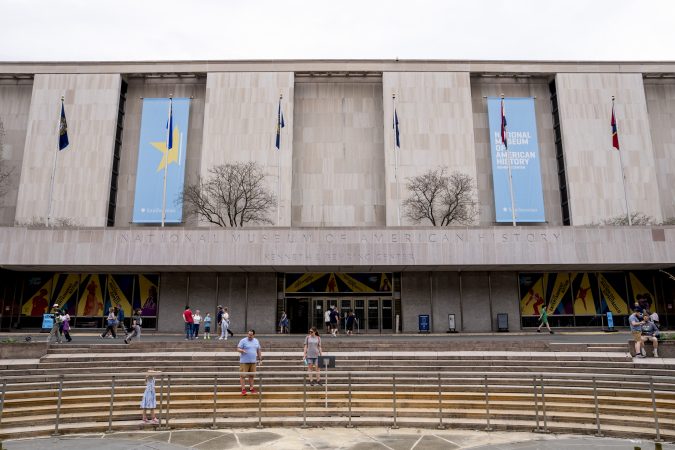
  • Historians reject White House’s criticism of Smithsonian museum

    Historians reject White House’s criticism of Smithsonian museum

    On July 4, the White House posted a lengthy report condemning the Smithsonian Institution’s National Museum of American History, accusing it of promoting “extreme ideological activism” while denigrating the nation’s founders and its founding.

    Historians have started to reply with failing grades of their own.

    The Organization of American Historians, the nation’s largest group of scholars of U.S. history, blasted the report in a statement Monday, accusing the administration of presenting a partisan ideological attack in the guise of historical critique.

    “The National Museum of American History interprets America’s history through its vast collection,” it said. “This report’s objective is to punish it for doing that in a way that makes U.S. history accessible to and reflective of all Americans. The report is only the latest chapter in a broader, systematic campaign that now targets an institution that was never meant to answer to any single administration.”

    The group accused the administration of ignoring decades of scholarship and trying to “erase the conflict, struggle, and diversity — the complexity — that have always defined the American experience.”

    “Make no mistake: The report represents an attempt to turn back the clock to a time when U.S. history was taught as the history of white Christian men who conquered a continent, U.S. military leaders who rarely lost a battle and U.S. presidents who were single-handedly responsible for national greatness, all under the cover of ‘anti-DEI’ and ‘anti-woke’ crusading,” it said.

    The White House report presents a wide array of charges, including that the museum promotes transgender issues and engages in “pro-illegal immigrant activism.” But at its core is a complaint that it fails to tell an “inspiring and unifying” national story that focuses on the heroism of the founders and acknowledges Christianity’s “constructive role” in “shaping the nation and its freedoms.”

    In a separate email to the New York Times, the president of the Organization of American Historians, Marc Stein, questioned the symbolic timing of the report.

    “Released on July 4, 2026, the 250th birthday of the U.S. Declaration of Independence, the report is a declaration of independence from history,” he said.

    Stein, a history professor at San Francisco State and the author of a recent history of the 1976 Bicentennial, defended the museum’s director, Anthea M. Hartig, a scholar of architectural history and cultural heritage who took over that role in 2019.

    The report “mischaracterizes and misrepresents the words of Anthea Hartig, who has consistently worked to educate and inform visitors to the museum with innovative exhibits and inspirational programs,” he said. (Hartig is a past president of the Organization of American Historians.)

    Some historians have questioned the accuracy of some of the report’s claims, including that the museum largely ignores the American Revolution and figures such as George Washington.

    Sarah Weicksel, the executive director of the American Historical Association, which has more than 10,000 members, noted in an email that the museum includes some “extraordinary” Revolutionary-era objects, like the newly restored gunboat Philadelphia, which it is highlighting for the nation’s 250th anniversary.

    Weicksel questioned some of the report’s criticisms of specific wall labels — for example, one about the history of U.S. education that refers to portraits of George Washington that have hung in many classrooms to promote patriotism. The report faults the label for not including biographical information about Washington and why he is important.

    “Studies of museum visitation have shown that labels should be presented no higher than an eighth-grade reading level and that most visitors will read no more than a brief label,” she said. “If every label that mentions Washington or Lincoln needs to recount a rote interpretation of their importance to the country, visitors will never learn anything new.”

    This article originally appeared in the New York Times.

  • Jalen Brunson has left wrist surgery, Knicks star expected back on court this summer, AP source says

    NEW YORK — Jalen Brunson has undergone left wrist surgery and is expected to be back on the court when the New York Knicks begin defense of their NBA title, a person with knowledge of the details said Tuesday.

    The NBA Finals MVP is expected to resume basketball activities later this summer, the person told The Associated Press on condition of anonymity because there was no announcement about Brunson’s procedure.

    Brunson’s surgery was first reported by SNY.

    Brunson, who is left-handed, didn’t let the wrist injury slow him down on the Knicks’ run to their first championship since 1973. The former Villanova standout scored 45 points when the Knicks won the title in Game 5 in San Antonio, after finishing with 36 when they made a record-setting comeback from a 29-point deficit in Game 4. The point guard averaged 32.6 points in the finals.

  • Ben Rice will participate in Home Run Derby, looking to become Yankees’ first winner since 2017

    Ben Rice will participate in Home Run Derby, looking to become Yankees’ first winner since 2017

    New York Yankees slugger Ben Rice will be swinging for the fences in Philadelphia on Monday.

    Rice, who leads the Yankees with 25 homers this season, announced Tuesday that he will be participating in the Home Run Derby at Citizens Bank Park.

    He’ll look to become the first Yankees player to win the derby since Aaron Judge in 2017.

    The 27-year-old Rice said on social media that his father, Dan, who was a pitcher on Brown’s baseball team in the 1980s, will throw to him. Rice said they’ve already been practicing for the contest.

    Rice has 58 homers over his first three seasons in the majors.

    This is the second straight a year a Yankees player will appear in the Home Run Derby. Jazz Chisholm Jr. entered last year but was eliminated in the first round.

    Judge is one of four Yankees players to win the Home Run Derby. The others are Tino Martinez (1997), Jason Giambi (2002) and Robinson Canó (2011).

    Tampa Bay’s Junior Caminero also is participating in the event. The full field has not yet been announced. The Phillies’ Kyle Schwarber and Bryce Harper are still deciding whether they will participate.

  • Repression turns to rage after quakes in Venezuela

    Repression turns to rage after quakes in Venezuela

    LA GUAIRA, Venezuela — As postquake efforts in Venezuela start shifting from rescue to recovery, a crack has opened in Venezuelan society, and people are speaking out against their repressive government with a force and openness that has not been seen in years.

    Across La Guaira, the northern state hardest hit by the twin quakes, grieving citizens have shouted down police officers and national guard members, accusing them of standing by as civilians and international aid workers dig for the living, and now, the dead.

    In interviews, Venezuelans are openly criticizing the country’s ruling party and its leader, Delcy Rodríguez, something that would have been unthinkable just a year ago.

    They are also turning their anger toward the Trump administration, which has spent the last few months facilitating economic deals between U.S. companies and Venezuela, and has stood by the government’s management of the disaster.

    Inside Venezuela, fears of imprisonment, torture, and forced exile, once powerful incentives for silence, are being pushed aside as feelings of frustration and impotence grow.

    “Why would I be afraid?” said José Silva, 47, who on Friday was resting on a sidewalk not far from a giant public housing complex now turned to rubble. Some 700 families had lived inside.

    Silva’s clothes were drenched with sweat; it was evening, only partway through his 10th day pulling survivors and bodies from under slabs of concrete. He lashed out at the government: the police were rescuing only their own, he said, and the government had sent only “second rate” tools.

    “Why would I be afraid,” to speak out, he said, “if I was born to die?”

    This anger runs parallel to growing political tension over the leadership of Rodríguez. When U.S. forces captured her predecessor, Nicolás Maduro, in January and greenlit her ascension from vice president to president, the Trump administration characterized Rodríguez as a force of stability.

    Before the quake, President Donald Trump said that she was doing a “very good job” running the country.

    But criticism of her government’s response to the disaster, particularly in the critical first 72 hours when victims are most likely to be rescued alive, and the growing fury in the streets, has raised questions about whether she can cement that stability.

    The public outrage could also complicate the Trump administration’s strategy of supporting Rodríguez so the United States can benefit from Venezuela’s resources.

    Trump’s envoy to Venezuela, John Barrett, has supported Rodríguez, saying in a television interview after the quakes that Washington had “a great deal of confidence” in the Venezuelan authorities.

    But in recent days a chorus of hard-line congressional Republicans have doubled down on criticism of her management, calling for political change as soon as possible.

    “They’re failing at their job right now,” Rep. Carlos Gimenez (R., Fla.) said in an interview with CNN, calling Rodríguez an “interim dictator.”

    Venezuelans have gathered outside the U.S. Embassy, pleading with Barrett to do more to help victims. One man, yelling into news media microphones outside the embassy recently, harangued Barrett for sitting with government officials the United States had once deemed criminals and terrorists, while victims suffered “just two blocks away.”

    “The grievance is indeed directed at John Barrett,” he shouted. “Why has he not sat with Venezuelan civil society — the honest ones, the ones who haven’t stolen anything?”

    Maria Corina Machado, the country’s popular opposition leader, has been trying to get back into the country, but she does not have a passport, or permission from Rodríguez or the United States, to enter Venezuela.

    At a news briefing on Thursday, Rodríguez defended her government’s response to the disaster, saying she had immediately dispatched 4,000 government workers to respond to the quakes, a number that had grown to 19,000.

    “What happened in Venezuela on June 24 was a natural tragedy of a scale we never imagined,” she said.

    In response to accusations of a poor state response, Rodríguez asserted repeatedly that “media laboratories” were inventing a narrative of chaos.

    As evidence of the government’s mobilization, official social media accounts have heavily publicized a handful of state-supported rescues, including one in which dozens of well-equipped emergency workers from Chile rescued a man who had survived a week in the rubble. Rodríguez visited the man at the hospital.

    But these videos contrast sharply with the reality in La Guaira, where civilians in sneakers and T-shirts are doing a vast amount of the rescue and recovery work, using shovels and pickaxes and their bare hands to pull friends, neighbors, children, spouses, siblings, and parents from the rubble. Some lack masks to protect themselves from the dust and stench of decomposing bodies.

    Rodríguez was widely criticized in Venezuela as out of touch after she was photographed wearing a luxury ski jacket, a logo of the Italian brand Moncler on her arm, to visit quake victims.

    “It’s a lie that the government is helping,” Silva said.

    Soon after he spoke, darkness fell. Not far way, a group of men had just discovered five bodies in a hole they had dug in the side of the mountain of broken concrete.

    The men wrapped the bodies in sheets and then laid them gently on the ground. Survivors looking for relatives crowded around, pulling back the sheets to try to identify the deceased. One was the body of a little girl. The others were unrecognizable.

    Thousands of people are now homeless, and the death toll, officially over 3,500, is likely to be far greater. In the coming weeks, the government will be under intense pressure to address an increasingly complex humanitarian crisis.

    Outside of another collapsed public housing building, Kimberling León, 39, a resident of the complex, described the government response in the hours and days after the quakes hit.

    She was searching for her sons, ages 9 and 13, who she believed were trapped in the rubble.

    “The police came by, normal, filming, they didn’t help us,” she said, her voice flat, like a person still in shock.

    “We said to them: ‘help us, help us,’ they didn’t come to our aid. We started digging with our hands, but the smoke was too much, the flames rose high, the gas tanks had exploded.”

    The second or third day, a shovel and pickax arrived, she said.

    “We started digging, digging, digging. We called for machines to help, but they just passed us by, headed to the private buildings” where people could pay, she said.

    Silence has been one of the most valuable commodities in La Guaira, as rescuers try to make out the taps and calls of any living that might still be buried in the rubble.

    Often, rescuers shoot a fist in the air and call for quiet, instructing drivers to cut motors and people to stop walking.

    On a recent day, profanities rained down on the interior ministry workers who rolled past a silent zone with sirens blaring. Civilians banged on the car in anger.

    While the quakes have opened space for people to vent years of pent up fury, this public outcry could also spur a crackdown, leading to questions about how the United States would respond to any repression.

    The last major social outburst was in 2024, after the ruling party stole a presidential election.

    Venezuelan officials halted protests in a matter of days by sending the military into the streets, killing protesters and locking up civilians accused of minor expressions of dissent.

    Last week, a volunteer rescuer named Wilmer Cruz who had been filmed speaking out about the government response disappeared, according to human rights groups.

    When activists publicly accused the government of retaliating against Cruz, the authorities released him from prison.

    Oscar Murillo, who leads Provea, a human rights group, said the arrest highlighted for him that the quakes have not changed the “authoritarian model” in Venezuela.

    This article originally appeared in the New York Times.

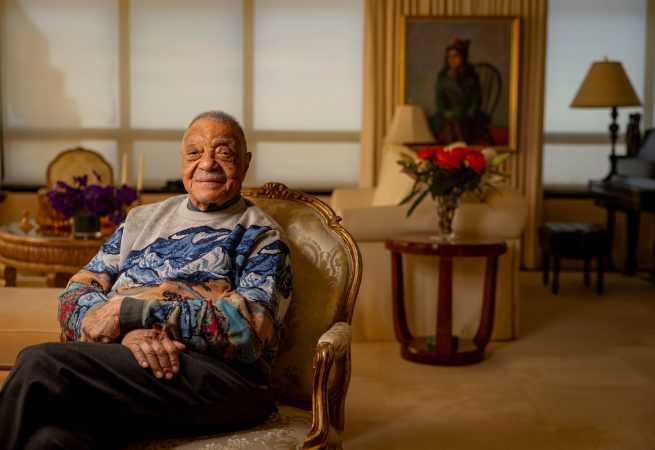
  • George E. Johnson, who built a Black hair care empire, dies at 99

    George E. Johnson, who built a Black hair care empire, dies at 99

    George E. Johnson, a hair care magnate who rose from a sharecropper’s cabin to found, with his wife, Joan, what was said to be the first Black-owned company listed on a major American stock exchange, and who made a fortune on products like Ultra Sheen and Afro Sheen, died on Monday at his home in Chicago. He was 99.

    His death was confirmed by his second wife, Madeline Murphy Rabb, who said the cause was respiratory illness.

    Long before sports figures, entertainers, and Fortune 500 executives commanded sky-high salaries, the Johnson Products Company, which sold Black hair products and cosmetics, made its founder, Mr. Johnson, one of the nation’s wealthiest African Americans.

    He also helped found one of the first, and largest, Black-owned banks, the Independence Bank of Chicago, where he served as chairperson until it was sold in 1995. And for decades, Johnson Products indirectly influenced pop culture through its sponsorship of the nationally syndicated television dance show Soul Train.

    Johnson Products originated in the laboratory of Samuel B. Fuller, a Black cosmetics entrepreneur, where Mr. Johnson worked after dropping out of high school. Up to that point, his experience — starting at the age of 9, when an aunt gave him a shoeshine box — had been menial jobs.

    Mr. Johnson started at Fuller Products as a salesperson — “carrying the black bag,” as he put it — though he initially found it distressing to peddle pomade and face powder amid urban deprivation.

    “I had a problem with it unless I really needed money,” he said in an interview for this obituary. “Then I would sell like hell.”

    After requesting to work indoors, Mr. Johnson created his first product, a hair relaxer for men he called Ultra Wave. With Fuller’s blessing, Mr. Johnson teamed up with his wife and a barber to found Johnson Products in 1954.

    After one branch of a finance company rejected his request for a business loan as a “ridiculous” idea, Mr. Johnson secured the $250 in seed money from another branch by saying he needed the funds to take Joan on a vacation to California. Those early financing troubles later inspired him to help start a bank.

    He found himself on the road again to peddle his product when his partnership with the barber soured. From his station wagon, he sold Ultra Wave and other products to barbers from the Upper Midwest to New York City.

    But he soon found that barbers were not loyal. “They couldn’t resist the next deal that came along, although it involved poor quality, cheaper stuff,” Mr. Johnson told the New York Times in 1976.

    So he started eying beauty shops, where he observed women using hot combs and mineral oil to straighten hair, a smoky and unhealthful process. He modified Ultra Wave for the women’s market, creating Ultra Sheen, which he said reduced smoke by as much as 75% and could be used in the home.

    Sales took off. In the 1960s, the company had an estimated 80% of the Black hair care market, and by 1970 it had annual sales of $12.6 million, or more than $100 million today. The company listed on the American Stock Exchange in January 1971.

    Johnson Products spent heavily on advertising in its heyday — $5 million in 1975, or more than $31 million today — and was the first Black-controlled company to sponsor a national television program, Soul Train, which aired weekly for almost 35 years, until 2006.

    (Johnson Products is not related to Johnson Publishing Company of Chicago, the former publisher of Ebony and Jet magazines. Nor is it related to Robert L. Johnson, a co-founder of Black Entertainment Television.)

    Cultural and regulatory challenges — and even severe weather — exacted a toll on Johnson Products, which was struggling for survival by the late 1970s and posted its first loss in the mid-1980s.

    The company, which relied on straighteners, was late to adapt to the growing popularity of Afro hairstyles in the 1960s. Near the end of that decade, its reformulation of Ultra Sheen as Afro Sheen resulted in a poor product for long, curly hair, Mr. Johnson acknowledged.

    In the 1970s, a Federal Trade Commission investigation into the marketing of hair straighteners disrupted the industry, and in 1976 Johnson Products negotiated a consent order to add a warning that its products containing sodium hydroxide, or lye, and could cause scalp irritation and eye injury. This was over a year before Revlon, its far larger competitor, agreed to similar warning labels, a lag that may have given Revlon an edge with Black consumers.

    While African Americans made up a small part of Revlon’s market, they represented almost all of Johnson Products’, and its share of the relaxer market skidded to 45% from 85% in two years.

    Mr. Johnson also said he faced racial discrimination, contending that distributors “don’t seem to want Black products to be exposed to all Americans.”

    In early 1979, a heavy snowstorm in Chicago brought the company to a near standstill for more than a month, blocking truckers from transporting supplies or shipments and damaging its plant.

    George Ellis Johnson was born June 16, 1927, in a sharecropper’s shack in Richton, Miss., and moved to Chicago with his mother, Priscilla, when he was 2. Although his education ended in 11th grade, he was awarded nine honorary doctorates over his lifetime.

    Last year, Mr. Johnson published Afro Sheen: How I Revolutionized an Industry with the Golden Rule, From ‘Soul Train’ to Wall Street, a memoir, written with Hilary Beard.

    Joan Johnson wound up with control of the company when the couple divorced in 1989. After some disruptions, including the departure of her son Eric as president and CEO, she sold Johnson Products to the Ivax Corporation in 1993, netting about $32 million, or about $75 million today.

    The Johnsons remarried in 1995. She died in 2019.

    In addition to Rabb, whom he married in 2022, Mr. Johnson is survived by his sons, Eric, John, and George Jr.; his daughter, Joan; 10 grandchildren; and seven great-grandchildren.

    Ivax sold the company to Procter & Gamble in 2004 before it was bought by a consortium of African American investment firms in 2009.

    “When I think about pioneers, the real pioneers are the people who are able to make a path where none exists,” Eric Johnson told CNN after his mother died in 2019. “Johnson Products in many ways was that company. She and my father had no provided path. They created a path where there was none.”

    This article originally appeared in the New York Times.