Category: Wires

  • Comcast adds heft with Sky’s deal for British broadcaster ITV

    Comcast adds heft with Sky’s deal for British broadcaster ITV

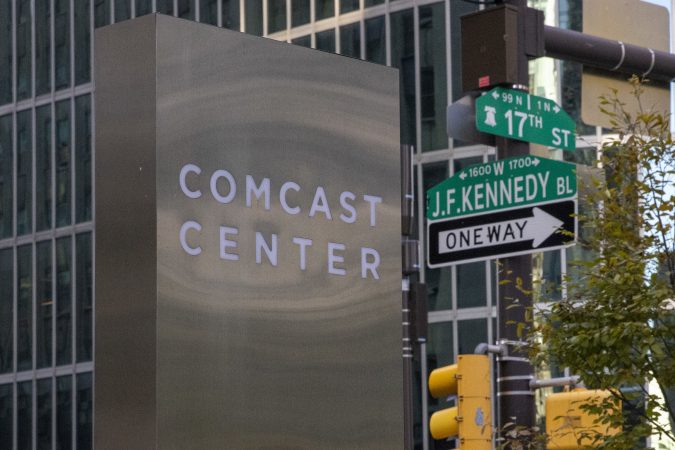
    LONDON — Sky, the British media group owned by Comcast, said Monday that it was buying the television arm of ITV in a deal that would vastly expand its audience and help Comcast compete with rival streaming platforms.

    The 1.6-billion-pound ($2.1-billion) takeover would combine two major media brands into a broadcaster that is expected to account for 20% of home viewing in Britain. The deal includes ITV’s free-to-air channels and its streaming platform.

    Last week, Philadelphia-based Comcast announced it would spin off NBCUniversal and Sky into a separate company focused on media and entertainment, while Comcast would center on its cable and internet services. Earlier this year, Comcast moved its cable channels, including MS NOW and CNBC, into a new company called Versant.

    Dana Strong, the CEO of Sky Group, called the merger “a defining moment for British media” in a statement. Comcast acquired Sky in 2018.

    “ITV will remain a public service broadcaster at the heart of British life, and we’re excited about the future we can build together,” she said.

    ITV, the oldest commercial network in Britain, has suffered as viewers and advertisers have shifted to YouTube and streaming giants such as Netflix and Disney. Sky said that under the merger, ITV’s channels would remain free to air and that ITV News and Sky News would remain distinct news outlets.

    Sky is acquiring ITV for 1.2 billion pounds ($1.6 billion) in cash, with add-ons for advertising performance potentially bringing the transaction up to 1.6 billion pounds. As part of the deal, Comcast is expected to sell its Love Productions business, which makes The Great British Baking Show, to ITV.

    ITV Studios, the production arm, is not included in the acquisition by Sky and is to operate independently. Sky has agreed to spend at least 2.1 billion pounds ($2.8 billion) over five years on content from ITV Studios, which the company said would help to support creative jobs and British-centric production.

    The deal faces regulatory approval and is not likely to be completed until next year.

    This article originally appeared in the New York Times.

  • Islandwide blackout hits Cuba as its fuel reserve dwindles and aging grid crumbles

    Islandwide blackout hits Cuba as its fuel reserve dwindles and aging grid crumbles

    HAVANA, Cuba — An islandwide blackout hit Cuba on Monday as fuel reserves dwindle and its electric grid continues to crumble.

    The blackout in the country of 10 million people was reported by the state-run Electric Union, which said on X that the cause is under investigation. The Ministry of Energy and Mines wrote on X that it has activated protocols to restore electricity.

    Fuel has been running out across Cuba since January, when U.S. President Donald Trump threatened tariffs on any country that sells or provides oil to the island, deepening the island’s ongoing economic and financial crisis. Public transportation has largely been halted, and officials have canceled tens of thousands of surgeries.

    Cuba produces only 40% of the fuel it needs, while the 730,000 barrels of oil delivered by a Russian tanker in late March ran out by the end of April.

    The government also has been rationing power with intentional outages that can stretch to more than 24 consecutive hours.

    A blackout in mid-May affected the island’s eastern provinces, while a blackout in mid-March struck the entire island.

  • After America’s 250th, Trump will test how far he can push NATO allies

    Fresh off a week of star-spangled celebrations of America’s 250th, President Donald Trump departs for Turkey on Monday to meet with fellow leaders of NATO. They hope he wouldn’t declare independence from them.

    Trump has long been skeptical about NATO and European allies, asserting that the alliance the United States forged after World War II to fend off the Soviet Union has been taking advantage of Washington’s largesse. Deep into his second term, the president is now well acquainted with the theatrics of NATO gatherings, reveling, according to his associates, in the drama of threatening fellow leaders and watching them scramble to keep him happy.

    The strains increase every year, with Trump’s popularity sinking in Europe after he threatened to seize Greenland in January and sent energy prices spiking with his attack on Iran. The president has fumed that European allies didn’t do enough to help Washington in its war. And in recent days, he has renewed complaints about their defense spending, though he has successfully driven big increases.

    Now, the alliance will again attempt to weather Trumpian pressure, by flattering him where possible and avoiding unnecessary confrontations.

    Trump is scheduled to arrive in the Turkish capital of Ankara on Tuesday and will meet Turkish President Recep Tayyip Erdogan before having dinner with fellow NATO leaders that evening.

    The substantive meeting will be Wednesday morning, which diplomats have kept short to minimize potential disruptions. Afterward, Trump plans to meet with Ukrainian President Volodymyr Zelensky and Syrian President Ahmed al-Sharaa before holding a news conference and returning to Washington, according to White House spokesperson Anna Kelly.

    The president’s grievances have already subsumed much of NATO’s business. NATO Secretary General Mark Rutte laid the foundation last month, praising the president’s stewardship and delivering a presentation in the Oval Office of what he called the “Trump trillion,” with poster boards in golden, “Art of the Deal”-style lettering boasting increases in Europe’s defense spending over the last decade.

    Trump told Rutte that he would skip the gathering altogether were it not being hosted by Erdogan, who for 23 years has ruled his nation with an increasingly tight grip.

    Asked what he wanted from allies, Trump said alongside Rutte that “I just want their loyalty.”

    He has rewarded allied leaders in recent months whom he perceives as friends, including Polish President Karol Nawrocki, whose country has been promised 5,000 more U.S. troops. And he has moved to punish those he views as insufficiently deferential, including German Chancellor Friedrich Merz, who faced weeks of open criticism from Trump after questioning the president’s Iran strategy during a public conversation with schoolchildren.

    Trump began and ended one day last week with angry posts about NATO on his social media account, declaring that “the United States spends more money on NATO than any other country, by far, to protect them, without getting any benefit from so doing.” But behind the public criticism, a senior White House official said, the president views the summits as an opportunity to impose pressure, leaning into his tough-guy role and seeing how leaders respond.

    The last summit, held in June 2025 in the Netherlands, “was great fun,” the official said, referring to an event in which Rutte called Trump “daddy,” comparing him to a father who needs to use authority to stop kids from fighting on a schoolyard. The comment went viral online and was boosted by the White House’s edit of the video clip with the Usher song “Hey Daddy (Daddy’s Home).”

    “The president always has fun at NATO, contrary to what people think,” the White House official said, speaking on condition of anonymity to speak candidly about the sensitive politics of these encounters.

    NATO officials and diplomats from NATO countries don’t expect Trump to threaten to pull from the alliance this year, as he did in 2018. But they know the president likes to surprise, and they say much will depend on his mood when he lands in Turkey. It is expected to be the first international trip on the refurbished, luxury Boeing 747 that he pushed Qatar to give him for use as Air Force One.

    One senior European diplomat fretted that Trump would arrive in Turkey exhausted and angry after a week of tiring travel, including a 3:30 a.m. Saturday return from an event at Mount Rushmore and a rally on the National Mall later that day in the sweltering Washington heat.

    Europeans are “nervous that the way [Trump] feels about NATO is that this is not fundamentally in U.S. interests and so [they] are nervous that the summit could be more calamitous,” said Max Bergmann, an expert on U.S.-Europe relations at the Center for Strategic and International Studies, a think tank. “Especially now as there’s more domestic political pressure on European leaders to be seen as standing up to Trump.”

    NATO officials are coming to the summit armed with big numbers that play to Trump’s wishes. They will trumpet an extra $139 billion spent on defense by European allies and Canada last year. They will make a show of signing billions of dollars of weapons deals and letters of intent, according to senior NATO diplomats speaking on condition of anonymity to discuss the sensitive planning around the meeting.

    And they hope to promise as much as they can to help ensure security in the Strait of Hormuz, although many countries say they need Tehran’s assent if they are to deploy naval missions there to remove the Iranian mines that are hampering shipping traffic.

    But many of NATO’s core security issues have been overshadowed by Trump’s dispute with the alliance. Ukraine and Russia have stepped up attacks on each other in recent weeks, but U.S. efforts to mediate a peace deal have all but halted. Trump’s peace envoys, Steve Witkoff and Jared Kushner, have been focused on Iran, and the White House hasn’t empowered other officials to engage, despite the deep ranks of policymakers who might do so.

    NATO diplomats are negotiating a pledge for Ukraine of about $70 billion in military aid for this year and the next, to be announced at the summit. Washington would not take part, but it has not opposed language supportive of Ukraine, as it sometimes did last year, two diplomats said, speaking on the condition of anonymity to share internal deliberations.

    The alliance has shelved work on a strategy for responding to threats from Russia, a consequence, European diplomats say, of White House caution about doing anything that would portray Moscow as an adversary.

    Some U.S. officials have downplayed the tensions. The U.S. ambassador to NATO, Matthew G. Whitaker, said last week that the summit “really is going to be a measurement of the progress,” since allies pledged last year to each spend 5% of their annual economic output on defense by 2035.

    Whitaker offered assurances that “the U.S. isn’t going away” but said the administration would try to reward the countries that are spending the most. He said the Pentagon and State Department have discussed possible benefits such as “more time with leaders” and “priority in acquisition and procurement.”

    Asked if the U.S. was considering measures targeting nations that are lagging behind, he said yes, but did not elaborate.

    The Trump administration has made disjointed troop announcements in recent months, with the Pentagon at times out of step with the White House. After the Pentagon surprised Poland by canceling a planned troop rotation, for instance, Trump scrapped it and promised an increase. In other cases, the president has suggested some cuts were punishment for European criticism of the war on Iran.

    European leaders plan to declare their commitment to assume increased responsibility of the continent’s defenses — a message many of them have converged on with the Trump administration, which is intent on pulling U.S. resources.

    European policymakers describe their vow to rearm as a response to an increasingly tense confrontation with Russia and shifting U.S. priorities, rather than just a bid to placate Trump. But policymakers including in France and Germany have pressed their U.S. counterparts to coordinate any military drawdown.

    Some Europeans, especially those in Western Europe, have started to work with Pentagon planners on an orderly handover. French Deputy Defense Minister Alice Rufo said Paris has long led calls for greater European autonomy, and “today it is the Americans saying it” too.

    “What we need to achieve at this summit is for this shift to happen in a coherent manner for collective defense, which also concerns the Americans,” Rufo said. “It’s in our best interest to ensure that this shift takes place in an orderly, efficient manner to deter our adversaries, and not to create frictions among us.”

    But the effort is creating strains in the alliance. Rutte is still trying to preserve a robust U.S. presence in Europe. And many policymakers in countries that border Russia still trust Washington more than France and Germany to defend them in a war with Moscow. They believe that old American instincts to defend democracies would kick in, along with pressure from hawkish Republican lawmakers.

    A senior NATO diplomat said there was a sense of optimism ahead of the summit but also a recognition that “things can derail.”

    The diplomat mentioned Italian Prime Minister Giorgia Meloni, a far-right leader who shares much of Trump’s skepticism about migration and is sympathetic with many of his issues. But the two leaders traded barbs in recent weeks in a dispute that originated with Trump’s anger at Italy’s caution about allowing its bases to be used to attack Iran.

    “Can I totally exclude that something like that will happen? No. I’m optimistic because I think the leaders know what is at stake,” the NATO diplomat said. “And if something does occur, then we always have the ultimate marriage counselor, Mark Rutte, to smooth things over.”

    The Trump-Meloni kerfuffle took on a new dimension after Trump claimed she had “begged” for a photo with him at a recent Group of Seven meeting in France.

    It escalated further over the weekend as the president posted a meme to Truth Social of Meloni looking at him during the G7, under the headline “Restraining Order Needed.” The post sparked a fresh wave of coverage in the Italian press and thinly veiled distaste within the ranks of Meloni’s coalition.

  • Efforts to help smokers quit stall under Trump

    Efforts to help smokers quit stall under Trump

    WASHINGTON — The ads were jarring: a man with a hole in his throat where his larynx, or voice box, had once been. A woman whose teeth and jaw had been removed after oral cancer. Another woman speaking in a robotic voice, which was altered when her larynx was removed: “I wish I’d never seen a cigarette in my entire life.” A black screen followed, saying she died two days later.

    The Centers for Disease Control and Prevention’s 14-year ad campaign, called Tips From Former Smokers, was highly memorable and, research shows, highly effective in motivating people to quit. Last year, though, as tobacco companies gave millions to political organizations related to the Trump administration, the campaign went dark.

    There is no definitive evidence linking the donations to the lapse of the ad campaign. But the decision to terminate it was one of several steps the administration has taken to unravel federal government antismoking initiatives that had long had bipartisan support during a time when the administration has delivered significant policy wins to tobacco companies.

    The CDC’s Office on Smoking and Health, which managed the campaign and worked with states on smoking cessation measures, has been shut down for more than a year, after its staff was laid off as part of the administration’s government downsizing efforts. While hundreds of other federal health employees were eventually rehired, the smoking office staff members have not been.

    Even after Congress restored the office’s funding late last summer, its employees have remained on paid leave as litigation challenging the firings plays out.

    In recent weeks, under pressure from Congress, the CDC has given states diminished funding to air ads from the campaign’s archive, but the federal government will not produce new ads or negotiate contracts for them to air nationwide. The ads had prompted millions of smokers to dial state quit lines for help on how to stop smoking. In interviews, people who ran quit lines in several states said that since the ads went off the air, calls have plummeted along with enrollment in programs that offered counseling and nicotine gum and patches.

    The abandonment of an effort that was widely regarded as a public health triumph has puzzled antismoking activists who point out that Health Secretary Robert F. Kennedy Jr.’s platform was based on ending chronic diseases, which are a well-known consequence of smoking.

    “We find it very ironic in an administration that wants to make America healthy again that we’re cutting all of these resources related to smoking and vaping,” said Nancy Brown, CEO of the American Heart Association.

    Helping adults stop smoking is one of the most evidence-backed ways to improve the public’s health. Smoking rates in the United States have fallen significantly, to less than 10% of adults, compared with 42% of adults in the early 1960s. Still, smoking remains the leading cause of preventable death and disease in the country, causing about 490,000 premature deaths each year.

    A national survey of adults who smoked from 2012 through 2018 found that the Tips from Former Smokers campaign was associated with more than 16 million people attempting to quit smoking and 1 million succeeding. During those years alone, the campaign was associated with saving an estimated $7.3 billion in healthcare costs.

    “It’s crazy that they have cut this funding if they really want to save lives and save money,” said Sally Herndon, who ran North Carolina’s tobacco control program until her retirement last year.

    Emily Hilliard, a spokesperson for the Department of Health and Human Services, said in a statement that the CDC “remains committed to tobacco prevention and control and continues to support this priority through outreach, education, and surveillance.”

    The cuts have come as tobacco companies have aggressively lobbied the administration for policy changes that would likely increase their market share of vaping and other nicotine products.

    The New York Times recently reported that Reynolds American, which makes Newport and Camel cigarettes, saw a coveted new federal policy take shape that would allow an entire new class of flavored e-cigarettes onto the market. The initiative was announced just days after a $5 million donation and lunch with President Donald Trump at his golf course in Florida. Executives from Altria, which makes Marlboro cigarettes, were also present.

    The new policy was crafted over the objections of Marty Makary, then the FDA commissioner, who cited it as the reason for his resignation in May. It stunned some public health experts, who say the FDA set aside one of its central authorities: to approve or reject individual products based on their merits.

    “It’s very clear this guidance is a gift to the tobacco industry on a silver platter with a side of public health malpractice,” said Brian King, a former leader of the FDA’s tobacco division and executive vice president for U.S. programs of the Campaign for Tobacco-Free Kids.

    Opponents of the policy say flavored vapes will introduce young people who have never smoked to nicotine products.

    But Hilliard, the health department spokesperson, said the FDA was focused on protecting youth and a “science-based review process for tobacco products.”

    She added: “Cigarette smoking remains the leading cause of preventable disease and death in the United States. And the agency supports the development of products that may provide less harmful alternatives for adults who smoke.”

    The federal cuts to antismoking programs and what some view as lenient new policies represent a reversal of decades of setbacks for tobacco companies under both Democratic and Republican administrations.

    The CDC’s shuttered Office on Smoking and Health employed experts on effective tobacco interventions who worked with state health officials to advance antismoking policies such as bans on indoor smoking, higher tobacco taxes, and education for parents about e-cigarettes.

    The office sent most of its $240 million budget to states each year, but shortly after laying off the staff, in April 2025, the CDC notified states that their annual funding for tobacco control would not be coming.

    Many state tobacco control offices cut their own staff as a result, including in New York, Texas, and North Carolina. Late last year, Congress reinstated some funding to states that had relied on the CDC office for expertise.

    “We know that we really save lives and save money with tobacco prevention and control,” said Herndon, who until recently led North Carolina’s tobacco control efforts. “But without the training and technical assistance and support from the Office on Smoking and Health, a lot of the newer staff coming along are struggling to know what to do.”

    The Tips From Former Smokers campaign went off the air around September of last year, though some larger states such as New York and California continued to run some antismoking ads.

    Since then, calls to 1-800-QUIT-NOW lines — which traditionally experience a 30% spike in the weeks after an ad campaign — have fallen off significantly.

    National data on the quit line call volume was not compiled for the last year after the federal employee in charge was let go, said Thomas Ylioja, president of the North American Quitline Consortium.

    But at Quit for Life, an organization that operates quit lines in 19 states, Guam, and Washington, D.C., calls fell by 25% in the first half of 2026 compared with the first half of 2025 when the ads were on the air, according to Nick Fradkin, the group’s director of public health strategy.

    Officials in other states said calls had fallen off too — by about 45% in Texas, 25% in California, and 18% in New York. In Virginia, enrollment in the quit line counseling services fell by half from October 2025 through February 2026, said Logan Anderson, a spokesperson for the Virginia Department of Health.

    In recent weeks, the CDC offered $40 million, down from the usual $65 million, for states to air archived antismoking ads. It is unclear whether new ads will be created.

    In North Carolina, at least, “we don’t have the media machine that produced those fabulous ads,” Herndon said.

    This article originally appeared in the New York Times.

  • Trump says red card call on Folarin Balogun was ‘horrible’ but insists he left outcome to FIFA

    Editor’s note: This article was updated to reflect a statement made by FIFA president Gianni Infantino

    President Donald Trump on Monday took credit for getting FIFA to review a red card issued against the United States’ star forward Folarin Balogun at the World Cup but said he did not demand an outcome.

    “All I did was ask for a review,” Trump said when asked about it during an unrelated Oval Office event. “I didn’t say, ‘You have to do this.’”

    Trump confirmed that he called FIFA president Gianni Infantino and asked for a second look at the punishment against Balogun in the United States’ 2-0 win against Bosnia-Herzegovina last week. But he said FIFA made the final call to lift Balogun’s mandatory one-game ban for a foul tackle, allowing him to play in Monday’s round of 16 match with Belgium in Seattle.

    Hours later, Infantino released a statement coming off of Trump’s remarks, which read, in part:

    “Yes, I regularly discuss matters related to the FIFA World Cup with the President of the United States, and on this matter, I did receive a call from President Donald Trump, just as I receive calls from heads of state, government officials, football stakeholders, and business executives from around the world on many different issues.

    “During our conversation, I explained that there was an ongoing legal process involving FIFA’s independent judicial bodies and that the case would be decided in due course by those competent bodies. That is how FIFA’s system works, and it is a principle I will always uphold. I read the decisions of the FIFA Disciplinary Committee when they are issued. Sometimes, I am surprised by them. Sometimes I agree with them, and sometimes I disagree.”

    FIFA’s decision to suspend the one-game ban was celebrated by many in the United States but brought condemnation in the international sports world, where some called it an improper intrusion.

    In remarks on Monday, Trump called the referee’s decision a “horrible” call. He added that it would have been a stain on the tournament if Balogun, the U.S.’s leading scorer at this year’s World Cup with three goals, was held out against Belgium and the U.S. lost. He praised FIFA for making what he described as a brilliant decision in suspending the punishment.

    “I didn’t think it was a foul,” Trump said. “I thought it was two great athletes that crashed into each other and got entangled.”

    The president, who said he understands sports “really well,” acknowledged that he did not initially know what a red card is or the consequences it brings. When he learned it would lead to a one-game suspension for Balogun, he said, he decided to step in. He also took issue with the use of video review to issue the red card, arguing that slowed-down reviews can make plays look aggressive.

    Among those joining Trump for the Oval Office event was Republican Sen. Ted Cruz of Texas, who thanked Trump for stepping in.

    “On behalf of all Americans, thank you for getting rid of that ridiculous red card,” Cruz said. “It was spectacular. There was a reason the FIFA trophy sat here for as long as it did.”

    Cruz appeared to be referring to a White House event last year at which Infantino visited and brought the World Cup trophy.

  • Yosemite offers many wonders. Crushing crowds are now among them.

    Yosemite offers many wonders. Crushing crowds are now among them.

    YOSEMITE NATIONAL PARK, Calif. — At the base of Yosemite Falls, where white waters roared down a granite cliff, a couple jockeyed through dense crowds to try to take the perfect waterfall selfie. A family of five traded off resting in the single available seat on a wooden bench. A tourist tripped over a toddler, who fell and began wailing.

    There was one spectacle at Yosemite National Park last weekend not in the glossy brochures: the visitors themselves.

    The crown jewel of the nation’s park system, Yosemite is even more crowded than usual this year, after a decision by the Trump administration to do away with summer reservations here and at other popular parks.

    In the first half of 2026, visitors to and employees of California’s regal wilderness park reported hourslong traffic jams, waits at entrance stations, and long lines just to purchase a bite to eat.

    Employees of Yosemite and organizations that support it say that the hordes of visitors are demoralizing staff and damaging the park, as well as its reputation. Many visitors are determined to make the most of their visit, even with long waits. But some travelers have abandoned their plans altogether and driven out of the park’s gates after being turned away from every at-capacity major attraction.

    ”This is a far cry from the awe-inspiring sights Yosemite is known for,” the state’s two U.S. senators, Democrats Adam Schiff and Alex Padilla, wrote in a letter last week to the administration criticizing the cancellation of Yosemite’s reservation system.

    July is already the busiest month across national parks. And at Yosemite, it’s shaping up to be chaotic.

    On the morning of July 3, so many people had already arrived at Yosemite Valley, known for its sprawling meadows and towering palace of granite rock faces, that by 7 a.m. drivers were circling lot after lot as they tried to find a spot.

    “The traffic is terrible in the park,” said Lakshmi Duddukuru, 41, who spent 45 minutes of her first trip to Yosemite searching for a parking space. She spoke as she scaled the steep Mist Trail, where throngs of hikers were ascending in a slowly snaking line.

    Yosemite offers free shuttles to transport visitors between popular destinations, but many were too full to pick up any of the dozens of people waiting at the stops. On one bus, a frustrated driver trying to squeeze in more sightseers shouted, “If you’re not touching somebody, you’re not close enough.”

    Yosemite Valley helped inspire the creation of the national park system, as it was the first federally protected land to be designated for public use, under an act signed in 1864 by President Abraham Lincoln. Its waterfalls and glacier-carved monoliths, such as Half Dome and El Capitan, have made it one of the country’s most beloved national parks — and most visited.

    In 2020, Yosemite began experimenting with a summer reservation system to manage its ever-growing summer crowds. But Yosemite, as well as Arches National Park and Glacier National Park, did away with reservations this year, after President Donald Trump signed an executive order urging parks to rescind restrictions to improve access and help local economies.

    Ray McPadden, Yosemite’s superintendent, said that a reservation system should be a last resort. In previous years the park had to turn families away because they hadn’t booked a visit in advance, he said, which was unfair to them and meant a loss of fees that could have gone toward fixing up trails, campgrounds, and bathrooms.

    McPadden thinks the park is not overly crowded, except on holidays and Saturdays, he said. He expects a 12% increase in visits compared with last year, which would be about 4.7 million visitors, and the second-busiest year in the park’s history.

    “No secret: Yosemite is really popular,” he said. “We are having a great summer.”

    Some park employees disagree. The union local representing Yosemite staff, NFFE Local 465, said in a statement that the decision to end the reservation system had undermined staff and was “disheartening and disappointing,” particularly when the park was short-staffed after federal cuts. Gridlock traffic inside lengthens staff members’ commutes and makes it difficult, if not impossible, for them to perform their duties, the local said.

    Advocacy organizations point out that Yosemite did not benefit much from fee revenue over the holiday weekend. As part of his overhaul of the National Park Service, Trump ended free park entry on some days, such as Martin Luther King’s Birthday, while granting free park admission to U.S. residents on Trump’s birthday, which coincides with Flag Day, as well as July 3, 4, and 5.

    They worry that overcrowding encourages people to go off trail, and that guests aren’t as supervised as they once were. The bumper-to-bumper traffic also means that ambulances and other emergency vehicles can be delayed.

    The overcrowding “is an environmental disaster for the park, and it’s a safety issue for visitors,” said Mark Rose, the Sierra Nevada program manager for the nonprofit National Parks Conservation Association.

    For the most part, however, visitors seemed unfazed by the crowds. The magnificence of Yosemite’s glassy rivers and giant sequoias is difficult to diminish, and tourists said they expected summer crowds when they traveled.

    Duddukuru, who was visiting from Chicago, said that despite the delays the park was “wonderful.” She and her family had to wait 45 minutes to board a shuttle, but then spotted a bear, so the delay felt worth it, she said.

    Sasha Rubeiz, 23, said one particularly narrow trail felt a little dicey with so many other hikers, but they were mostly not a bother on her first, “unreal” visit here. She tilted her head up toward soaring pine trees and blue skies.

    “I’m looking up more than down,” said Rubeiz, who lives in Sacramento, Calif.

    McPadden said he was working on solutions to some of the crowding issues, including new fencing and boulders to stop people from parking illegally. He said he hoped to install digital signs showing guests which parking lots are already full so they don’t waste time circling.

    He would not say whether a reservation system would return next year. “I try to follow the facts, which generally are very, very positive here in the park,” he said.

    Brett Birkbeck, a police officer who lives in Huntington Beach, Calif., ate a hot dog and drank red wine out of a plastic cup as he set up camp at dusk under pine trees.

    Birkbeck, 49, said the crowds could not put a damper on his annual summer trip to Yosemite, during which he and his friends hike and grill ribs for a week in one of the most spectacular places on Earth.

    “I call it pressing the reset button on the year,” he said.

    This article originally appeared in the New York Times.

  • Victoria Cruz, veteran of the trans rights movement, dies at 79

    Victoria Cruz, veteran of the trans rights movement, dies at 79

    Victoria Cruz, a matriarchal figure in the New York transgender community who was at the Stonewall Inn in 1969 when a police raid set in motion the gay liberation movement, and who later worked as an advocate for survivors of antitrans violence, died on June 25 in New York City. She was 79.

    Her partner, Charles Wright, confirmed the death, in a hospital, and said the cause was liver cancer.

    Ms. Cruz spent 17 years working for the New York City Anti-Violence Project, which provides counseling and other services for LGTBQ+ and HIV-affected survivors of violence. There, she focused on domestic abuse, but her role in the organization — and in the community — extended far beyond her official duties.

    She understood the intersectional threats that trans people faced in areas like housing discrimination and workplace harassment — expertise that made her a unique resource to thousands of trans New Yorkers.

    “People would come into the office and just ask for Miss Vicky,” Catherine Shugrue-Dos Santos, a former deputy executive director at the organization, said in an interview. “They wouldn’t give their names; they wouldn’t talk to anybody else. She really had the trust of the community.”

    She was especially effective because she came to the group as a survivor herself: In 1996, while working at a nursing home in Brooklyn, she was repeatedly harassed and assaulted by four co-workers.

    “I was very angry. Very angry,” she told Vanity Fair in 2017. “The worst part of it is that I couldn’t feel the ground beneath me.”

    One day she brought a knife to work, intent on fighting back, but then thought better of it. A friend suggested she contact the Anti-Violence Project, which at the time was run by Christine Quinn, who later became the first female and first openly gay speaker of the New York City Council.

    The group helped her file police reports and led protests outside the nursing home. Eventually, two of the four co-workers were convicted of harassment — one of the first times that someone was held legally accountable for antitrans violence in New York State.

    Quinn brought Ms. Cruz on as a volunteer, then hired her to manage the front desk. The job also had her answering the organization’s hotline, a task that connected Cruz with countless at-risk New Yorkers.

    “She was perhaps the strongest person I have ever met,” Quinn said in an interview. “She was part of the birth of the modern LGBT rights movement in New York, and therefore across the country. She was someone who had survived a terrible sexual assault and transformed that horrible moment into beaconlike strength that you felt whenever you were around her.”

    Ms. Cruz was a central figure in David France’s 2017 documentary, The Death and Life of Marsha P. Johnson, about the 1992 death of a trans activist that police ruled a suicide, but many, including Ms. Cruz, suspected was murder.

    The documentary tracks her search for answers and ends with her conclusion that Johnson was murdered by the mafia.

    Ms. Cruz did not know Johnson, but their lives overlapped. Both were at the Stonewall Inn on the night of June 28, 1969, when police conducted one of their routine raids at the bar. This time, though, the largely transgender clientele inside fought back, and a riot ensued.

    Ms. Cruz had been outside with her boyfriend, one of the bar’s bouncers. As the violence escalated, he told her to go home. When she returned in the morning, she found the bar in ruins. She grabbed a beer sign and other memorabilia, and also took home the bar’s dog, Rusty.

    The Stonewall riot sparked the beginning of the gay liberation movement, which had a strong trans presence. Johnson and another well-known community figure, Sylvia Rivera — a friend of Ms. Cruz’s — became particularly active, ensuring that trans people had a place within the movement.

    Ms. Cruz played a quieter role, but over time she became a central figure as well — and a recognizable one, with her homemade outfits topped with a headband adorned with feathers and cowrie shells, in honor of her heritage as a descendant of the Taíno people of Puerto Rico.

    “She was an elder in that community,” France said in an interview. “She was a transgender woman of color who had lived into old age, which is so rare.”

    Victoria Cruz was born on Sept. 19, 1946, in Guánica, on Puerto Rico’s southwestern coast. When she was 4, her family moved to the Red Hook section of Brooklyn, where her father worked as a longshoreman; her mother was a seamstress.

    She identified as female from an early age, and her family was strongly supportive. Her mother made her dresses, and her father, who affectionately called her “El Negro,” on account of her dark skin, switched to using the word’s feminine form, “La Negra.”

    She studied cosmetology in high school and worked as a model, but soon found both routes closed to her because she was trans.

    After high school, she found a doctor in Coney Island who provided her with the medical treatment to help her transition.

    Through the 1970s she was a sex worker and a dancer in West Village clubs. She also developed an addiction to crack cocaine, though she eventually became sober.

    She enrolled at Brooklyn College in 1978 and graduated four years later with a degree in theater.

    But she continued to struggle financially, and ended up on public assistance. The program required her to work, which is how she ended up on the staff at the Brooklyn nursing home.

    Her survivors include Wright and her sister Hedye Cruz. A complete list of survivors was not immediately available.

    In 2012, Ms. Cruz received the National Crime Victims’ Service Award from the U.S. Department of Justice.

    In an interview for the Anti-Violence Project in 2022, Ms. Cruz explained why she committed her life to counseling.

    “If you have been in that situation — everybody’s situation is different but similar,” she said. “If you have the empathy to help out people, that’s half the ordeal. Just having the empathy and letting them know that you’re there to help them, not to judge them.”

    This article originally appeared in the New York Times.

  • Supreme Court’s dramatic moves will reshape elections — and give the GOP a midterm boost

    Supreme Court’s dramatic moves will reshape elections — and give the GOP a midterm boost

    The Supreme Court dramatically reshaped elections in recent months, sharply limiting a law that has been a cornerstone of minority voter empowerment, allowing states to gerrymander maps, and loosening campaign finance regulations.

    The conservative majority says the series of decisions helps correct an election system that has run afoul of the Constitution. In rulings, they cite ideas they have long championed — undoing programs that advantage minorities, allowing partisan redistricting, and eliminating restrictions that impinge on free speech rights.

    Most of the rulings, which have rolled out as the country heads toward pivotal midterm elections, benefit Republicans. That’s led critics — starting with some of the court’s liberal justices — to complain the court’s conservative majority has gone beyond enunciating broad legal principles and put a thumb on the scale in upcoming races.

    What is clear is that the Supreme Court has tilted this fall’s electoral landscape toward Republicans as they struggle with voter discontent.

    In one of the most consequential rulings of the term, the conservative majority in April significantly weakened the Voting Rights Act’s last pillar, which required states to draw congressional districts to ensure the voting power of minorities under certain circumstances. In its opinion, the court said the protection was no longer needed by a country that has made “great strides in ending entrenched racial discrimination.” That decision touched off a push by Republican-controlled states to eliminate districts mostly held by Black Democrats across the South.

    Other rulings cleared the way for specific voting maps preferred by Republicans. And one loosened campaign finance limits — a change that brings the most immediate boost to Republican candidates.

    Democrats notched few outright victories, but they avoided some outcomes that they would have viewed as particularly disruptive. In one case, the court allowed states to continue to tally mail-in ballots even if they arrive after Election Day. Mail voting in recent years has become more popular among Democrats than Republicans.

    Legal experts said the justices’ intervention amid an election cycle and the pace at which the court is moving to implement changes that largely benefit one party is all but unprecedented in recent years.

    Richard L. Hasen, an expert in election law and political science at UCLA, said Chief Justice John G. Roberts Jr., who is known for his slow, methodical approach, lately appears to be a justice “in a rush.”

    “The court has been moving toward weakening voting rights, freeing up campaign money, and letting partisan actors run loose — that’s not a new trend,” Hasen said. “But the speed with which things are happening is much faster.”

    The decisions represent a dramatic coda to more than a decade of work by the justices, who have rewritten election law under Roberts in ways that one analysis found have pushed it to the right of any other court over the past 70 years.

    Republicans face an uphill battle in November’s contests because the president’s party historically loses seats in the midterms, and Trump’s low approval rating, the high price of gas, and the unpopular conflict in Iran have been a drag on GOP candidates.

    Democrats have a shot at taking the House and Senate, but the Supreme Court’s moves have erected a higher hurdle. Today, Republicans control 219 seats to Democrats’ 212 in the House, while Republicans enjoy a more solid advantage in the Senate, with 53 seats to 47.

    Earlier this year, the nonpartisan Cook Political Report had rated 217 House seats out of 435 as leaning Democratic, and projected Democrats needed to win only one of the tossups in November to capture the House.

    Cook recalibrated after the Supreme Court’s landmark Voting Rights Act ruling sparked the push to redistrict. It now lists 206 House seats as leaning toward Democrats, meaning Democrats need to win at least 12 of 18 tossups to gain control.

    “The fundamental question for 2026 is whether or not the structural firewall that Republicans have built up around their majority is strong enough to withstand what is shaping up to be a punishing political environment,” said Amy Walter, the publisher and editor of Cook.

    Democrats have issued bitter recriminations over the rulings as polling shows many in their base believe the court’s rulings are motivated by politics.

    “This is the most partisan Supreme Court in the history of the nation,” Sen. Ruben Gallego (D., Ariz.) recently posted on X.

    Roberts publicly addressed such criticisms at an appearance in early May, denying politics was a factor in the court’s rulings.

    “I think at a very basic level, people think we’re making policy decisions. … We’re saying we think this is what things should be as opposed to this is what the law provides,” Roberts said. “I think they view us as truly political actors, which I don’t think is an accurate understanding of what we do.”

    In its latest ruling, the court struck down limits on political parties spending money in coordination with candidates, finding they violated parties’ constitutional free-speech rights. Justice Brett M. Kavanaugh, writing for the majority, said the ruling ”treats all political parties equally” and will allow them to “participate more freely and compete more fully in the political process.”

    It’s unclear which party will benefit long term, but there’s one clear winner for the midterms: the GOP.

    Republican party committees have amassed a more than $100 million advantage over their Democratic counterparts, some of whom have struggled to raise money.

    Several of the high court’s other rulings have centered around how officials split their states into voting districts, creating maps that can give either political party an edge.

    In one of its earlier cases of the term, the high court greenlit Texas Republicans’ unusual move to redraw the state’s congressional maps between censuses, an effort that touched off a nationwide redistricting war. The decision could net the GOP up to five additional congressional seats in Texas alone.

    The justices later blocked New York from redrawing the district of Republican Rep. Nicole Malliotakis. That reversed the mandate of a state court, which had ordered officials to include more Black and Latino voters, a change that could have likely flipped the seat to Democrats.

    And in May, the court rejected a longshot emergency bid by Virginia Democrats to revive a gerrymandered voting map that would have allowed the party to pick up as many as four seats in the House in November.

    In its most sweeping decision of the term related to voting, the high court pared back a key part of the Voting Rights Act known as Section 2 that required states to draw maps that help minority communities elect candidates of their choice under certain circumstances. In the process, the court struck down a second Black-majority district in Louisiana, saying it was an unconstitutional racial gerrymander.

    With the help of the ruling, Republicans have drawn 16 districts with more favorable lines since last year, compared to six for Democrats.

    In the wake of the VRA ruling, a complicated fight over Alabama’s congressional map has raised questions about what room remains for minority communities to pursue claims that discriminatory redistricting violates the Constitution, possibly signaling even greater gains for Republicans.

    In June, the high court allowed Alabama to revert to a map with one Black-majority congressional district instead of two, a move that will likely flip a Democrat-controlled seat to the GOP.

    The decision came over a lower court finding that Alabama intentionally discriminated against the state’s Black voters in creating the map and then defied a court order to remedy the racial bias. In its ruling, the high court’s majority rejected that finding, citing “our colorblind Constitution.”

    The ruling was notable because the conservative majority held its Voting Rights Act ruling did not disturb the Constitution’s protections for minorities from “present-day intentional racial discrimination regarding voting.”

    But voting rights and minority advocates said the Alabama ruling indicates that protection might be a dead letter. Deuel Ross, director of litigation at the Legal Defense Fund, which advocates for racial justice, said in a statement he worries minority groups will lose political power.

    “The Supreme Court’s decision gives cover to Alabama and others to deliberately and openly discriminate against Black voters without fear of any consequence,” Ross said.

    Not every case went Republicans’ way. The Supreme Court dealt the GOP a setback when it upheld a Mississippi law that allows mail-in ballots to arrive up to five days after polls close. The ruling could have affected 13 other states with similar laws. Voting by mail is particularly popular with Democrats.

    Nevada Secretary of State Cisco Aguilar (D), who oversees elections in his battleground state, praised the Watson v. Republican National Committee case on mail ballots, but said the decision meant less in light of other rulings this term.

    “The fact that they destroyed the Voting Rights Act is detrimental to the fundamental foundation of our democracy,” he said. “Yes, they may have done something with Watson, but in the totality of it, the Supreme Court has become politically active in the overall administration of our election.”

    The clearest win for Democrats came when the court allowed California to gerrymander its voting maps to give Democrats up to five additional House seats. The California push came in response to Texas’ move to redraw its maps.

    The court’s liberals and some legal scholars have not just taken issue with the substance of the court’s decisions, but how the justices have arrived at them.

    The Supreme Court has regularly invoked the Purcell principle, a doctrine that holds federal courts should not change election law too close to elections because it can create confusion among voters.

    In the Texas redistricting case in December, with primary elections a few months away, the conservative majority referenced Purcell in allowing the use of redrawn maps favoring Republicans. A lower court had blocked the maps.

    “The District Court improperly inserted itself into an active primary campaign, causing much confusion and upsetting the delicate federal-state balance in elections,” the majority wrote of the primary scheduled for March.

    But in April during an active primary, the conservative majority struck down Louisiana’s second majority-Black congressional district in the Voting Rights Act decision. The seat is held by a Democrat.

    The decision came after thousands of voters had already returned mail-in ballots in the contest. The Supreme Court then expedited the ruling, paving the way for Louisiana Republicans to quickly redraw the district to favor Republicans.

    Liberal Justice Ketanji Brown Jackson issued a sharp rebuke, saying the conservative majority was willing to employ the Purcell principle in the Texas case when it favored Republicans, but ignore it in Louisiana when it did not.

    “The Court unshackles itself from both constraints today and dives into the fray,” Jackson wrote in a dissent. “And just like that, those principles give way to power.”

    Conservative Justice Samuel A. Alito Jr. shot back in a concurrence that the claim the court was acting in a partisan manner was “a groundless and utterly irresponsible charge” and it needed to act to prevent an election in Louisiana from going forward with an unconstitutional map.

    The court’s liberals have also accused conservatives of misusing Purcell in the Alabama and New York redistricting cases.

    Legal scholars differ over whether the court was employing Purcell in an evenhanded fashion. Edward B. Foley, who specializes in election law at Ohio State University, said the rulings were hard to square.

    “They may think they are being principled and consistent, but it sure doesn’t look that way,” he said of the court’s use of Purcell. “This principle seems to favor Republican partisan results.”

    Derek Muller, a Notre Dame law professor who specializes in election law, said he saw a legal logic to the court’s moves.

    “The Supreme Court is stepping back from cases in Alabama and Louisiana. It’s not issuing a rule to alter the rules of the election,” Muller said. “It’s allowing the legislatures to issue the rules they want.”

    The way the court handled the New York redistricting case also became an issue of contention. Liberal Justice Sonia Sotomayor accused the conservative majority of carrying out an “unprecedented” power grab by ruling before a state Supreme Court had a chance to weigh in.

    Sotomayor said the move trampled precedent against federal courts intervening in state court cases while litigation is still ongoing.

    “The Court’s 101-word unexplained order can be summarized in just 7: ‘Rules for thee, but not for me,’” Sotomayor wrote.

    Alito wrote in a concurring opinion that the intervention was necessary because New York courts approved a map that “blatantly discriminates on the basis of race.”

    Justin Riemer, former chief counsel at the Republican National Committee, rejected the notion the court is making partisan rulings, saying it had issued rulings favoring Democrats in recent years.

    He highlighted decisions dismissing a challenge to Trump’s 2020 election loss and rejecting arguments put forward by Republicans in 2023 that state legislatures could set election rules without interference from state courts.

    “I really don’t think that they’re in the tank one way or the other,” said Riemer, president of the group Restoring Integrity and Trust in Elections. “I think they have a judicial philosophy that they apply … that works for the types of claims we bring.”

    The redistricting and campaign finance decisions may provide immediate benefits to Republicans, but they may not last for long, said New York University law professor Richard Pildes.

    Democrats will have opportunities to redraw congressional districts in states they control after the midterms and political parties typically adapt to campaign finance rulings to keep up with their opponents, he said.

    Democratic anger over the decisions is intense, and it could fuel efforts to ban mid-decade redistricting, limit partisan gerrymandering, and pack the Supreme Court with more justices, he said. One Democratic congressman went so far as to introduce articles of impeachment against Roberts.

    “This is a real sort of avalanche that’s kind of been unleashed,” Pildes said.

    Legal experts said the court’s decisions this term are of a piece with its rulings on voting rights and campaign finance over the last 15 years.

    Those include the 2010 Citizens United decision that loosened campaign finance restrictions on corporations and unions, the 2013 Shelby County ruling that knocked down a section of the Voting Rights Act that required states with a history of racial discrimination to get federal pre-clearance to change voting laws, and the 2019 Rucho decision that found federal courts could not hear partisan gerrymandering claims.

    Guy-Uriel Emmanuel Charles, a Harvard law professor who focuses on political power and race, said regardless of which party benefits, this term’s cases could supercharge the era’s bare-knuckle politics.

    “This Court is sending a clear message: It will not impose many limits,” Charles wrote in an email. “The Court is incentivizing political parties to push the boundaries as far as possible to gain an advantage.”

  • Justice Department defends dropping charges against Indian billionaire

    Justice Department defends dropping charges against Indian billionaire

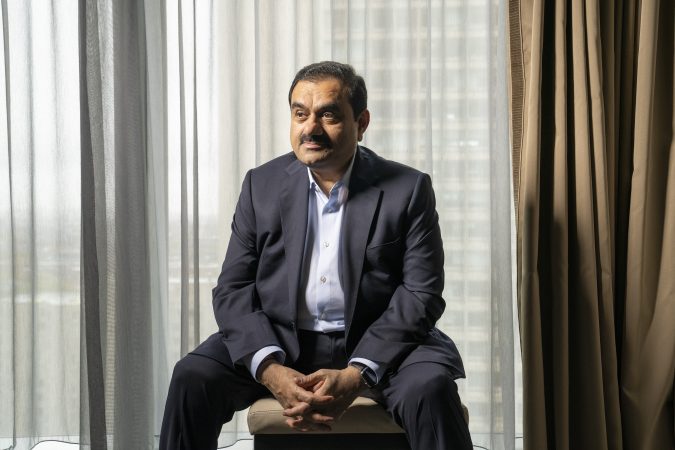
    The Justice Department on Saturday forcefully argued that an offer from India’s richest man, Gautam Adani, to invest billions of dollars in the United States played no role in the department’s decision to abandon criminal charges against him.

    In a letter filed Saturday, Trent McCotter, the principal associate deputy attorney general, defended the Justice Department’s decision after a federal judge demanded that the government explain its move. McCotter accused people within the department of leaking to media outlets about the case and acting “unethically.”

    The New York Times reported in May that Robert J. Giuffra Jr., a lawyer for Adani, had met privately with Justice Department officials to argue why the case should be abandoned. He asserted that prosecutors lacked basic evidence, and said that Adani could invest $10 billion in the United States and create tens of thousands of jobs, if the charges were dropped.

    McCotter appeared to acknowledge the existence of such an offer, but said that the decision to end the criminal case had been reached before the offer was made.

    “Before that topic first arose, I had already firmly concluded I would seek dismissal of the securities charges no matter what,” McCotter wrote in a letter to Judge Nicholas G. Garaufis of the Eastern District of New York.

    McCotter assailed Justice Department lawyers, current or former, whom he accused of leaking information in hopes of preventing a flawed case from being dismissed.

    Giuffra declined to comment. The Justice Department did not respond immediately to a request for comment.

    Adani, an industrial titan in India and a close ally of Prime Minister Narendra Modi, was indicted along with seven co-defendants in November 2024, in the last weeks of the Biden administration. Federal prosecutors in Brooklyn said that he had paid hundreds of millions of dollars in bribes to Indian officials to secure lucrative solar energy contracts for his company, Adani Green Energy.

    Although the bribes took place in India, Adani and his co-conspirators were subject to American law because his company had sought investments from people in the United States, prosecutors said at the time.

    Adani’s lawyers and McCotter have vigorously disputed that reasoning. On Saturday, McCotter wrote that no harm was done to U.S. investors and that the case was fundamentally about Indians bribing other Indians, which the Justice Department had no interest in litigating.

    McCotter wrote that if someone searched for the word “India” in the indictment, it would appear more than 200 times.

    Yet the trajectory of the case against Adani — particularly the investment proposal — has highlighted the highly transactional approach to justice during President Donald Trump’s second term.

    In May, days after federal prosecutors wrote that they had chosen “not to devote further resources” to the criminal case, multiple Justice Department lawyers withdrew from the case, signaling internal disagreement over the move.

    The next month, Sens. Elizabeth Warren (D., Mass.) and Richard Blumenthal (D., Conn.) wrote in a letter to Todd Blanche, the acting attorney general, that the department’s decision “gives the appearance that the DOJ is an equal partner in corrupt behavior.”

    Federal prosecutors cannot unilaterally decide to end a case. Garaufis, who will ultimately decide whether to drop charges, ordered prosecutors to provide a more detailed explanation for their decision.

    Judges have little ability under federal law to stop the government from abandoning criminal cases. But experts say that increasingly, under Trump, judges have scrutinized the rationale behind such decisions.

    After the Justice Department in 2025 moved to dismiss federal bribery charges against Eric Adams, then the mayor of New York City, the judge overseeing the case, Dale E. Ho, called the government’s rationale — that the case was harming Adams’ ability to help with Trump’s immigration crackdown — “unprecedented and breathtaking in its sweep.”

    On Saturday, McCotter chided Garaufis for what he called a “judicial inquisition.” Such queries, he argued, risked exposing “privileged internal debates” within the Justice Department.

    This article originally appeared in the New York Times.

  • Trump administration rolls back dozens of gun regulations

    Trump administration rolls back dozens of gun regulations

    The Trump administration is scrapping more than three dozen firearms regulations, abandoning a crackdown on illegal sales, restoring gun rights to some people with mental illness, and loosening oversight of private weapons transactions.

    The drastic retrenchment at the Bureau of Alcohol, Tobacco, Firearms, and Explosives, the federal agency responsible for enforcing the nation’s gun laws, was not entirely unexpected: President Donald Trump campaigned as a champion of gun rights.

    In the view of critics and even some ATF veterans, the agency, in closely mirroring the demands made by gun owners and manufacturers to lighten their regulatory burden, is enacting changes at the expense of public safety. The moves, they worry, come as the bureau has already been weakened, with hundreds of its officials diverted to immigration enforcement.

    Proponents of the changes point out that some of the reversals would return regulations to what they were only a few years ago, before President Joe Biden took office. After a series of deadly mass shootings, Biden signed into law gun control measures, ending nearly three decades of gridlock over whether and how to regulate firearms.

    The divisiveness illustrates the complicated landscape for gun policy.

    “With the Biden regulations that we got and put in place, we advanced the ball,” said Kris Brown, the president of the Brady Campaign to Prevent Gun Violence, one of the country’s biggest gun control organizations.

    But the Trump administration’s approach “takes us back 100 years,” she said. “It’s really decimating ATF’s ability to regulate this industry.”

    A White House official said the administration’s policies reflected Trump’s commitment to ensuring that Americans could exercise their Second Amendment rights, accusing the Biden administration of bypassing Congress and using the regulatory process to restrict gun rights.

    Mark Oliva, a spokesperson for the National Shooting Sports Foundation, the firearms industry’s trade association, said the changes were meant to clarify gun regulations.

    “We want clarity to know how we’re going to be able to conduct business,” he said, “to be able to produce and to be able to sell firearms in accordance with the laws and regulations that govern our industry.”

    Already, the administration has done away with major policies, including a zero-tolerance approach toward gun dealers who repeatedly broke the law. The more than three dozen rules that it has moved to eliminate would raise the legal threshold for revoking a dealer’s license; extend gun rights to buyers who had faced restrictions because of mental illness or inability to manage their own finances; and end extra scrutiny of stabilizing braces, gun accessories that have been used in mass shootings to lethal effect.

    The administration is now targeting gun regulations that Democrats have passed at the state and local levels. It has challenged bans on semiautomatic rifles in Colorado, the District of Columbia, and Virginia. On Wednesday, it sued California for its restrictions on the sale of Glock and Glock-style handguns, and Virginia for limits on the sale of semiautomatic rifles, hours after both laws went into effect.

    Since his first run for office, Trump has positioned himself as an ardent supporter of gun rights. In the run-up to the 2024 election, he vowed to be “the best friend gun owners have ever had in the White House.” Days after being inaugurated, he signed an executive order instructing the attorney general to scrutinize what he described as “ongoing infringements of the Second Amendment rights of our citizens.”

    By May 2025, the ATF had overturned its “zero-tolerance” policy, which had empowered its inspectors to revoke the licenses of federal gun dealers who were known to have broken the law. Pam Bondi, then the attorney general, said it had “unfairly targeted law-abiding gun owners and created an undue burden.” The policy increased the chances that dealers who had falsified business records, skipped background checks, or otherwise sold guns to people prohibited from owning them would face consequences. The agency ultimately revoked more than 600 licenses. But critics say that the new standards seriously curb the agency’s ability to do so.

    It is a part of a broader bid across government to enact changes in line with the president’s directive. The Veterans Affairs Department in February removed the requirement that veterans who require a fiduciary to manage their benefits be prohibited from buying firearms, and veterans who were previously reported to the FBI were being removed from its list. The Health and Human Services Department slashed funding for research into gun violence prevention. The U.S. Postal Service has proposed allowing people to ship handguns in the mail, upending a nearly century-old law.

    In realigning the Justice Department’s priorities to bolster Trump’s agenda, the agency said in December that it would balance defending the right to own a gun with ensuring the public’s safety.

    But when the ATF announced in April nearly three dozen changes, the administration’s own analyses acknowledged the pitfalls to public safety.

    The ATF’s director, Rob Cekada, defended the agency’s approach. In a statement, he said that it reflected an effort to be as explicit as possible about “the full range of costs and benefits, including even remote scenarios.”

    “This was an honest attempt to fully and transparently inform the public and is exactly the kind of analysis the comment period exists to test,” he said.

    In unveiling more changes on Friday, including eliminating fingerprinting requirements for certain firearms applications, Cekada again asserted that the agency was committed to public safety, pointing to a news release that heralded how its shift in priorities had led to the seizure of nearly 50,000 firearms and the handling of nearly 950,000 gun trace requests. Still, the data is far from a complete picture because it does not reflect all the policies the Trump administration has rolled back and because many of its proposals have yet to go into effect.

    Todd Blanche, the acting attorney general, in announcing the proposals in April, said that the moves struck a careful balance between the interests of the gun industry and gun owners, as well as public safety. “For too long, regulations were written without any real understanding of how firearms businesses operate, how lawful gun owners actually handle their firearms, or what truly improves public safety,” he said.

    One proposed change allowing more people with a history of mental illness to have a gun would mean that the public safety risk could range from minimal to considerably greater, “up to and including potential mass casualty events,” according to a cost analysis by the agency. For instance, people involuntarily committed to a mental health institution would still be barred from owning a gun, whereas those who voluntarily enter those facilities would not. The rule also seeks to extend the Veterans Affairs Department’s policy to ensure that all Americans unable to manage their financial affairs, not just veterans, are not automatically prohibited from buying a gun.

    In the analysis of another proposal, seeking to undo a Biden-era rule intensifying scrutiny of the use of stabilizing braces, the agency acknowledged that the gun accessory to create “dangerous, easily concealed weapons would pose an increased public safety problem.”

    The agency is also proposing a higher bar to revoke a federal gun dealer’s license, instead requiring evidence that the dealer knew that it was violating the law. The agency said in its analysis that it expected the number of federal firearms licenses it revoked to drop “considerably” both under the new rule and “shifting enforcement priorities.”

    Another rule would end the so-called gun show loophole, which required background checks for gun shows and certain private sales as a way to crack down on straw purchasers, or people who illegally buy guns on behalf of another.

    Critics warned of the potential consequences. The rapid changes under the Trump administration flew in the face of its vow to be tough on crime, they said, crediting the Biden-era measures for helping to bring down the murder rate after coronavirus pandemic highs, though experts have suggested that a number of factors could have contributed to the drop.

    “These guns are going to start to percolate back out into the community over the next couple of years,” said Marianna Mitchem, a former ATF official who now advises Everytown for Gun Safety, a nonprofit advocacy group founded by Michael Bloomberg, the former mayor of New York.

    She added, “I sadly expect that we will see an increase in violent crime.”

    Even as the proposals have yet to take effect, some supporters of gun rights are pushing for the regulations to be loosened even further.

    Erich Pratt, the senior vice president of Gun Owners of America, one of the country’s largest gun advocacy groups, said it was not enough to simply revert to regulatory standards on the books before the Biden administration.

    His group, for instance, opposes the Justice Department’s approach to a 2022 rule directing federal licensed gun dealers to hold on to records indefinitely, reducing the amount of time that gun dealers have to keep records of sales. It has argued that the administration should eliminate the requirement altogether.

    “The ATF proposals are a mixed bag,” he said, adding, “Gun owners would expect better from our Republican Justice Department.”

    This article originally appeared in the New York Times.